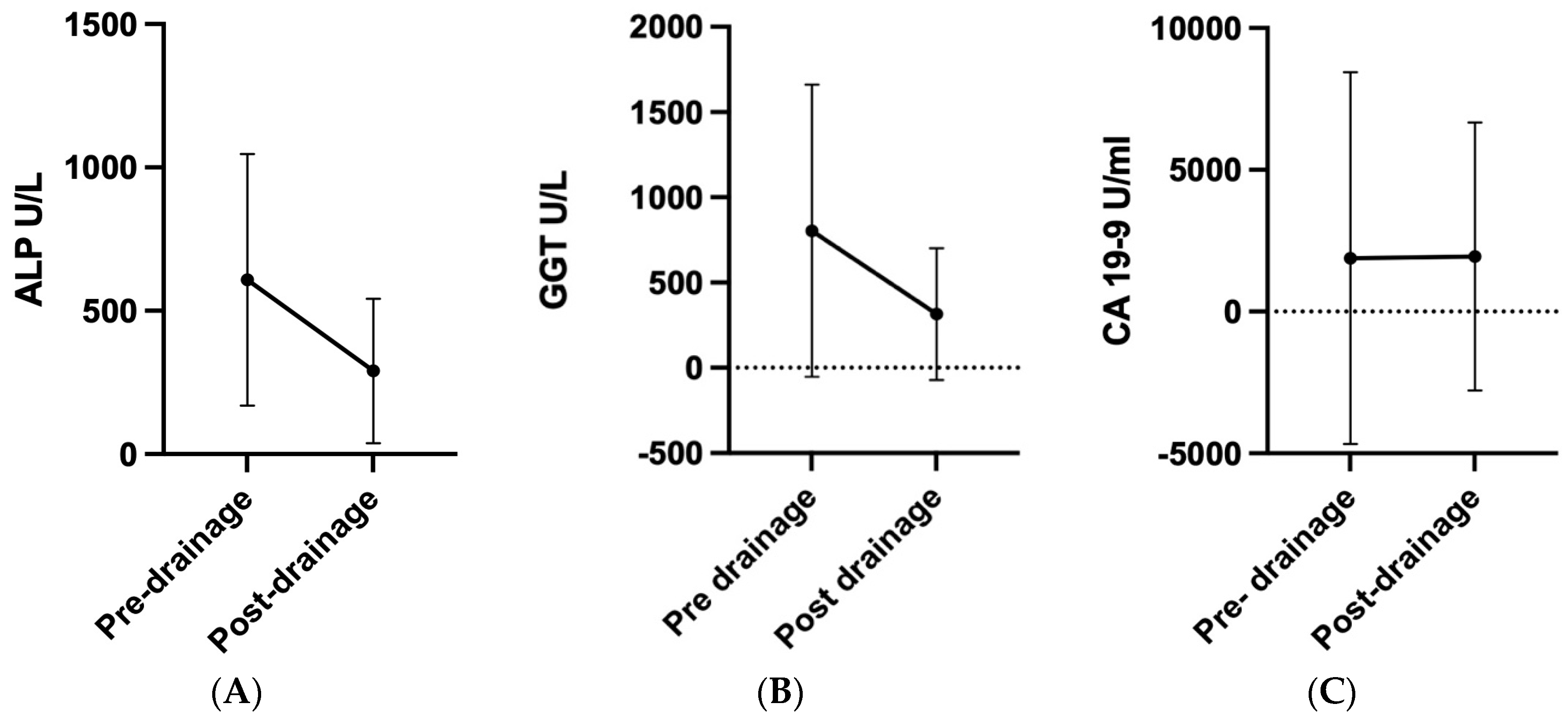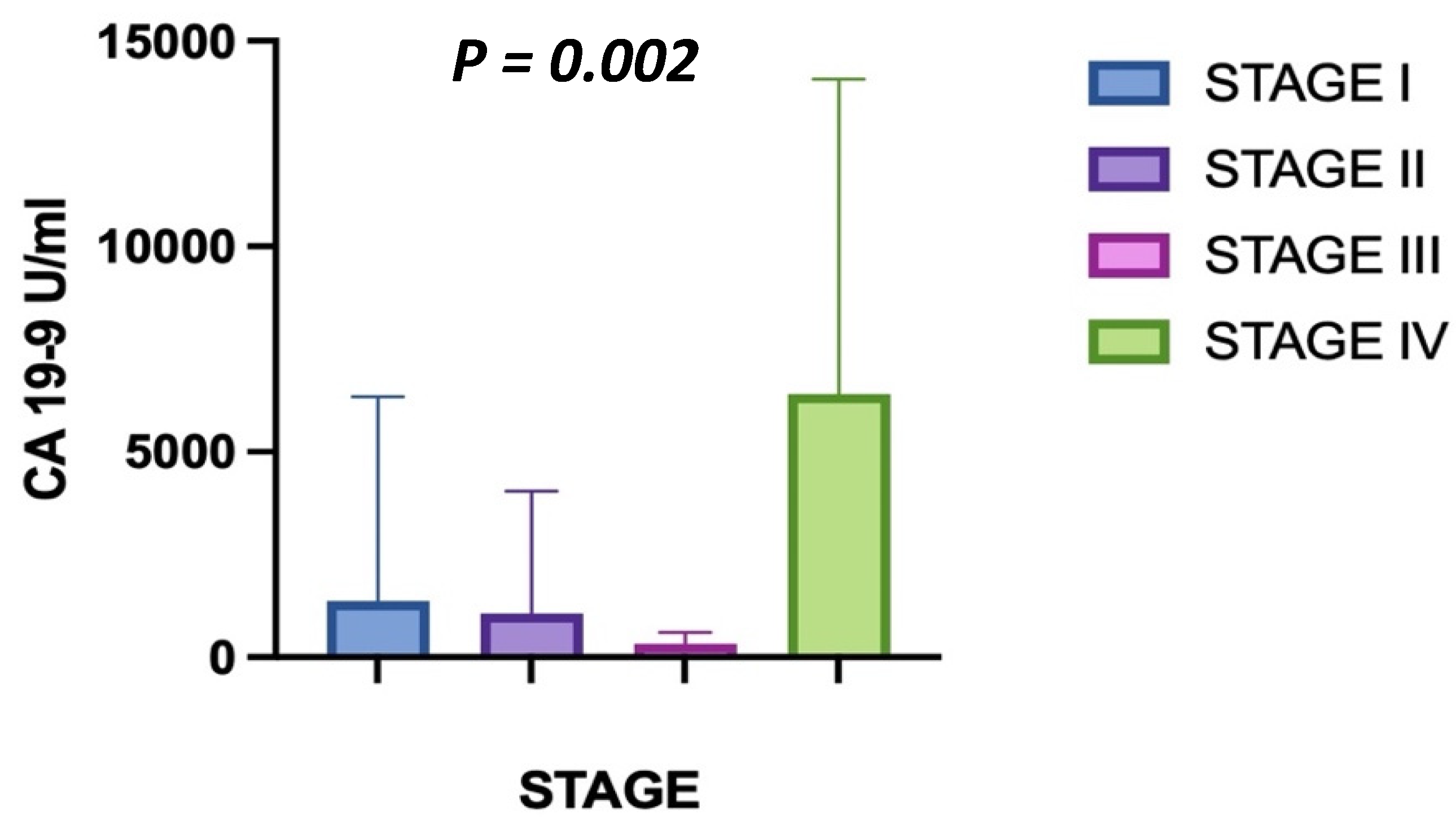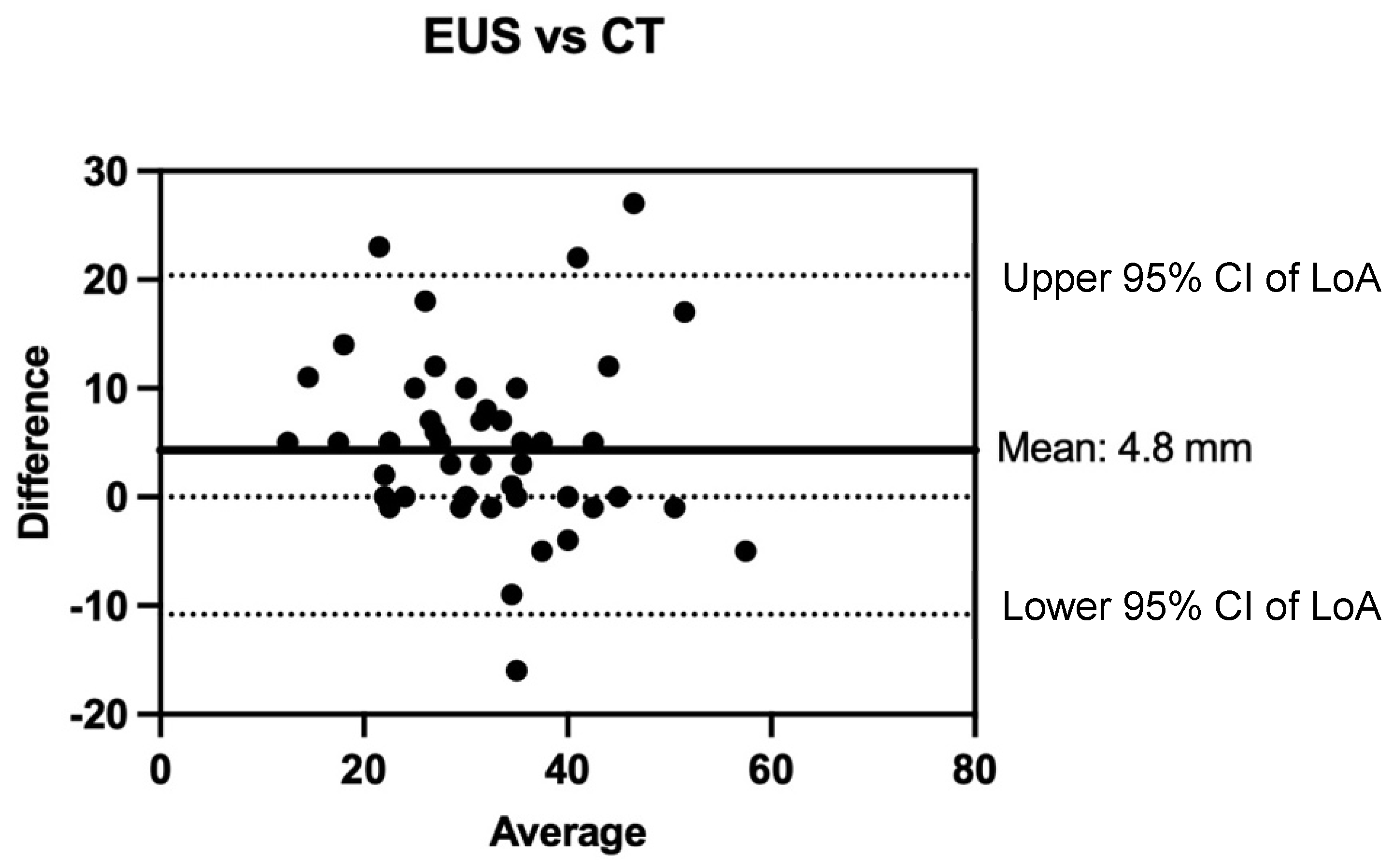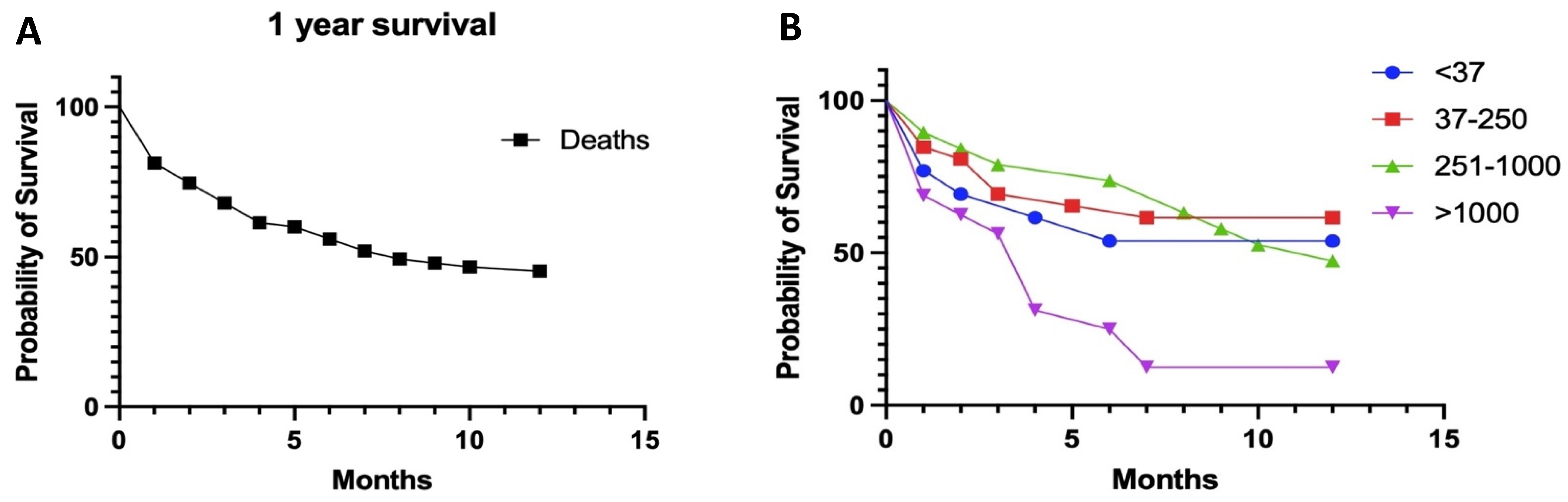

Traditional Biomarkers in Patients with Pancreatic Cancer Staged by Computed Tomography and Endoscopic Ultrasound: Is There Still a Role in the Molecular Era?

 ,
, Abstract
Share and Cite
Demarzo, M.G.; Facchini, C.; Bisso, G.R.; Marrone, C.; Parodi, M.C. Traditional Biomarkers in Patients with Pancreatic Cancer Staged by Computed Tomography and Endoscopic Ultrasound: Is There Still a Role in the Molecular Era? Gastrointest. Disord. 2024, 6, 733-741. https://doi.org/10.3390/gidisord6030049
Demarzo MG, Facchini C, Bisso GR, Marrone C, Parodi MC. Traditional Biomarkers in Patients with Pancreatic Cancer Staged by Computed Tomography and Endoscopic Ultrasound: Is There Still a Role in the Molecular Era? Gastrointestinal Disorders. 2024; 6(3):733-741. https://doi.org/10.3390/gidisord6030049
Chicago/Turabian StyleDemarzo, Maria Giulia, Chiara Facchini, Giuliana Rosa Bisso, Ciro Marrone, and Maria Caterina Parodi. 2024. "Traditional Biomarkers in Patients with Pancreatic Cancer Staged by Computed Tomography and Endoscopic Ultrasound: Is There Still a Role in the Molecular Era?" Gastrointestinal Disorders 6, no. 3: 733-741. https://doi.org/10.3390/gidisord6030049
APA StyleDemarzo, M. G., Facchini, C., Bisso, G. R., Marrone, C., & Parodi, M. C. (2024). Traditional Biomarkers in Patients with Pancreatic Cancer Staged by Computed Tomography and Endoscopic Ultrasound: Is There Still a Role in the Molecular Era? Gastrointestinal Disorders, 6(3), 733-741. https://doi.org/10.3390/gidisord6030049