
Influence of Imposed Strain Rate on Stress Corrosion Damage Mechanisms in Synthetic Seawater of Austenitic–Ferritic Stainless Steel X6CrNiMoCu25-6


Abstract
1. Introduction
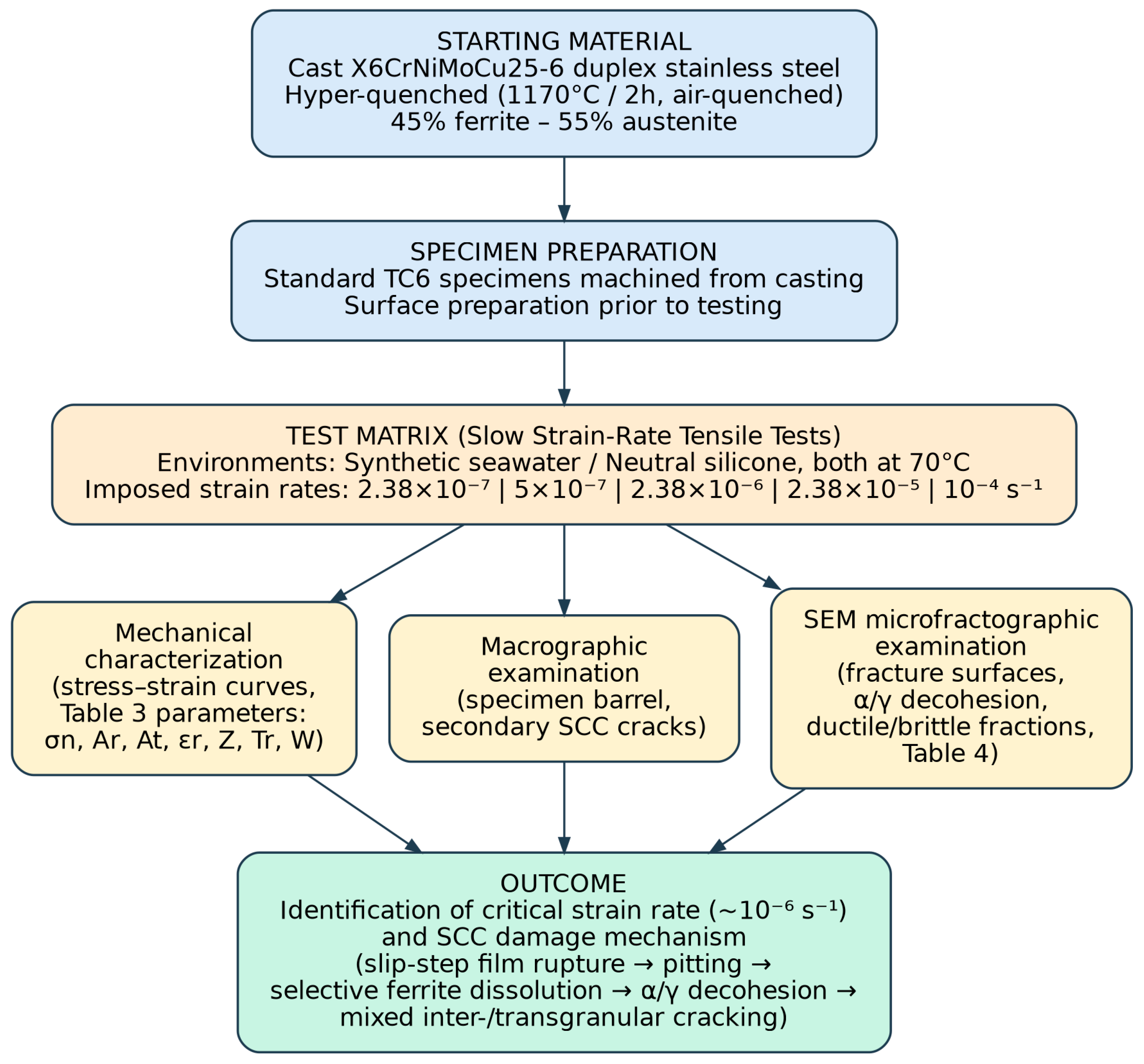
2. Materials and Methods
3. Results
3.1. Susceptibility to Cracking by SCC
3.1.1. Mechanical Characterization
3.1.2. Microstructural Characterization
- -
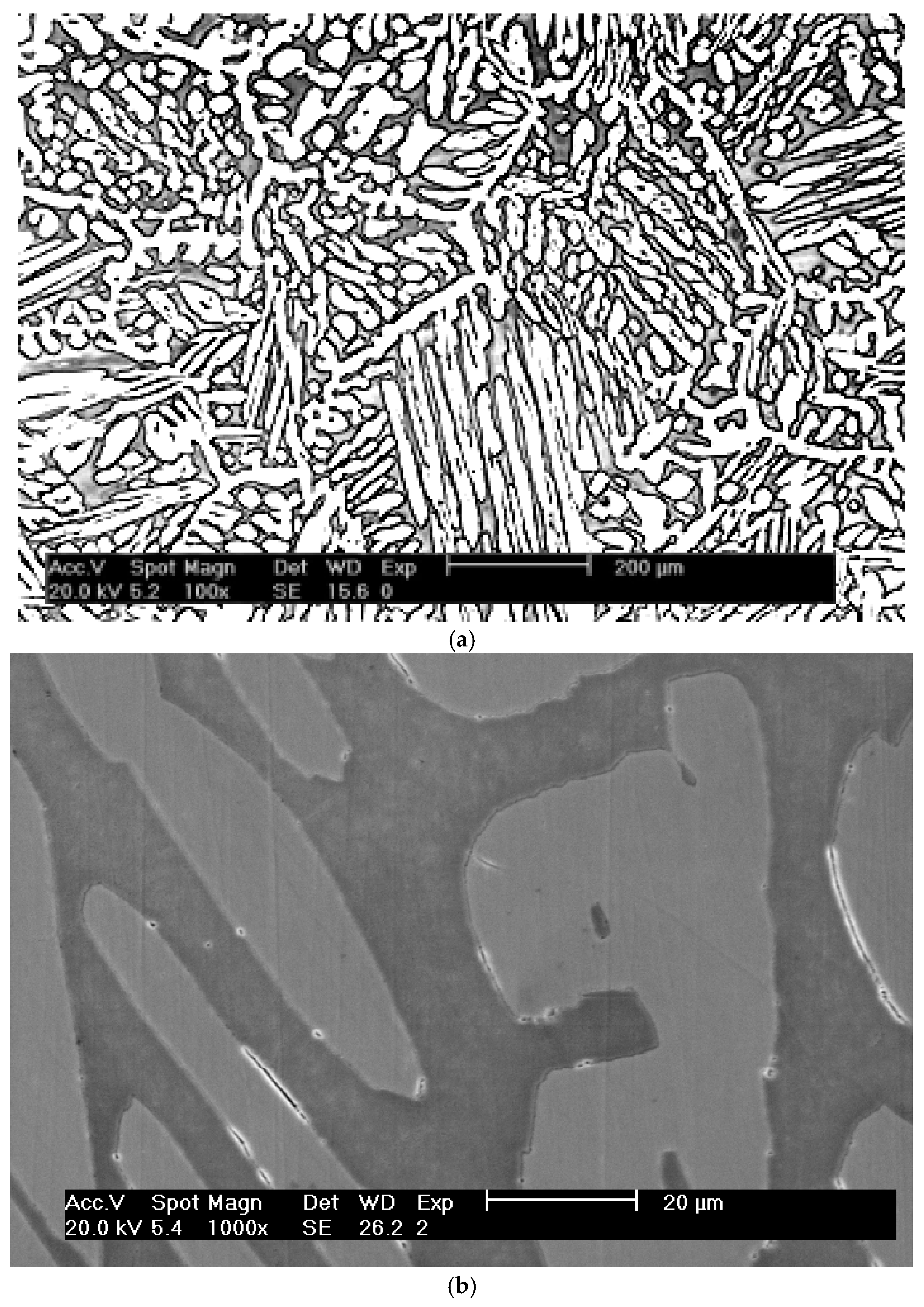
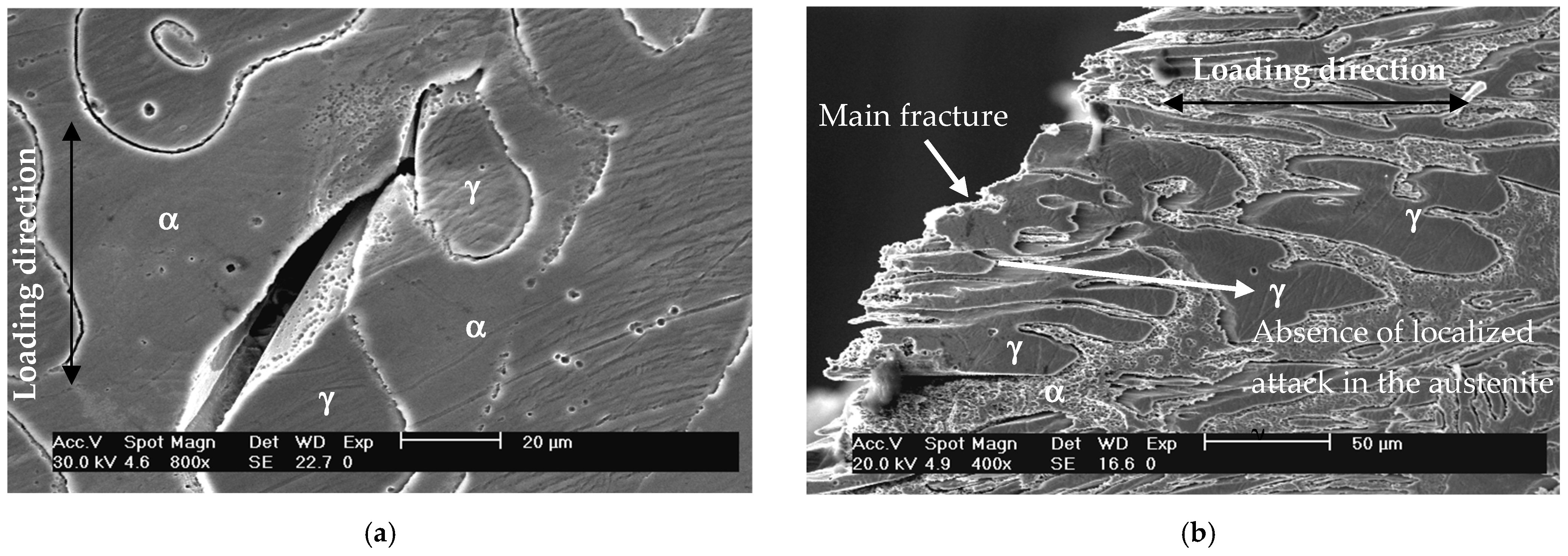
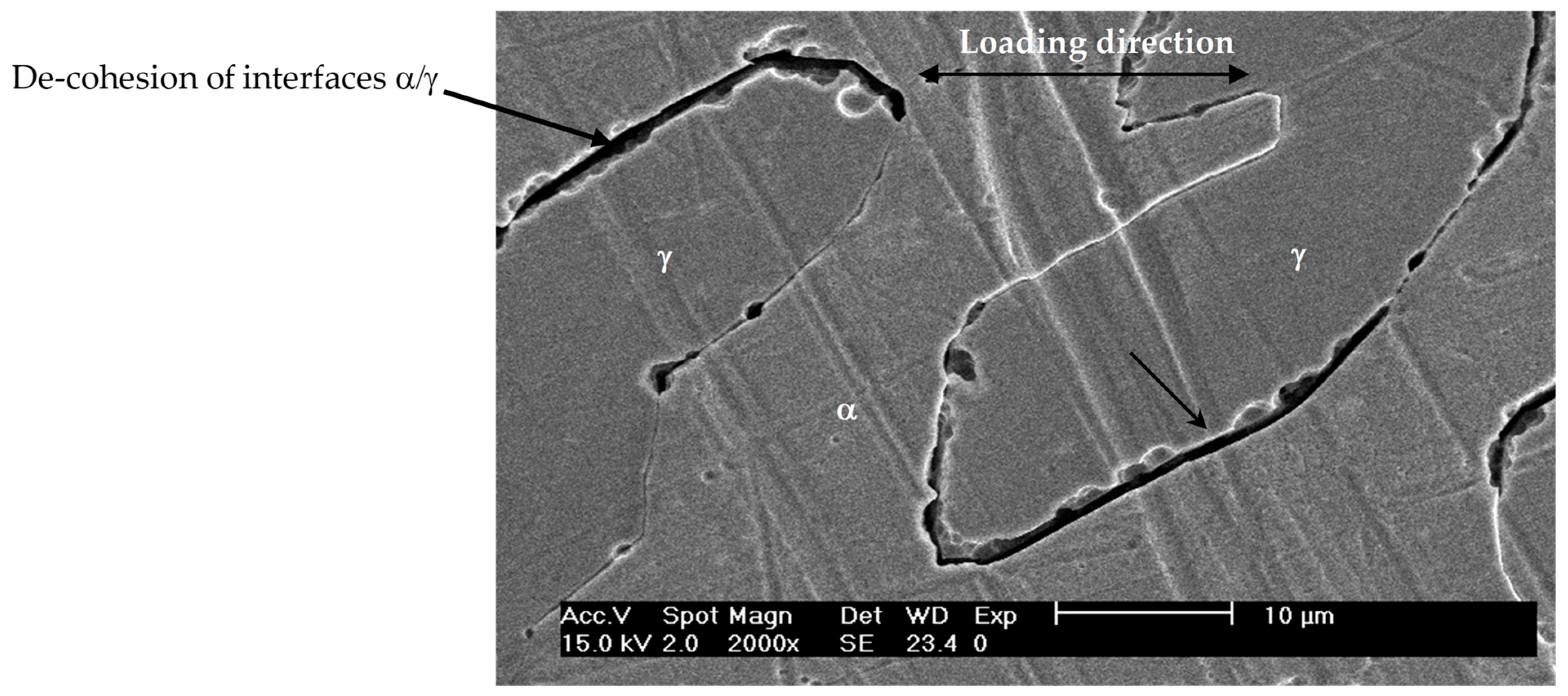
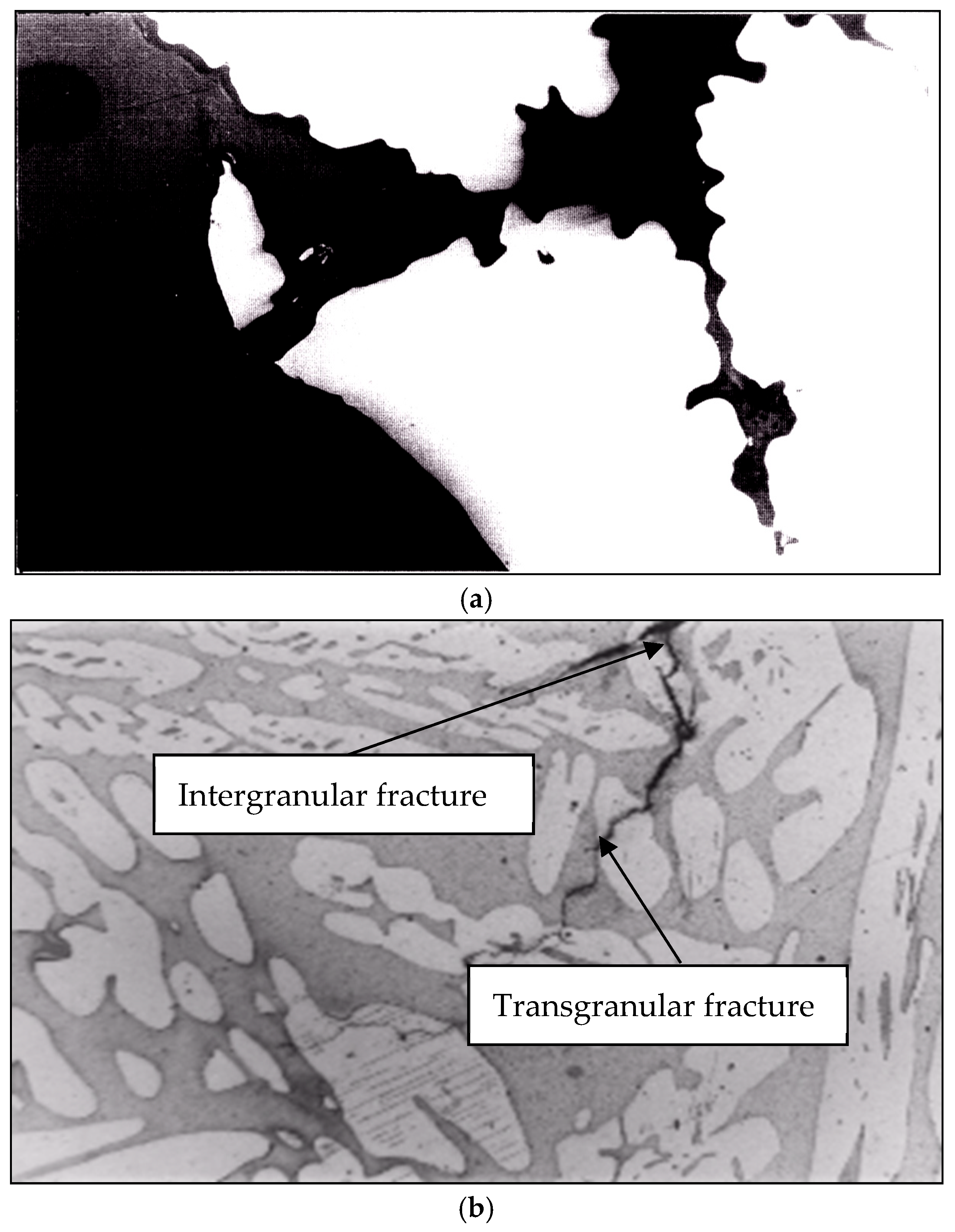
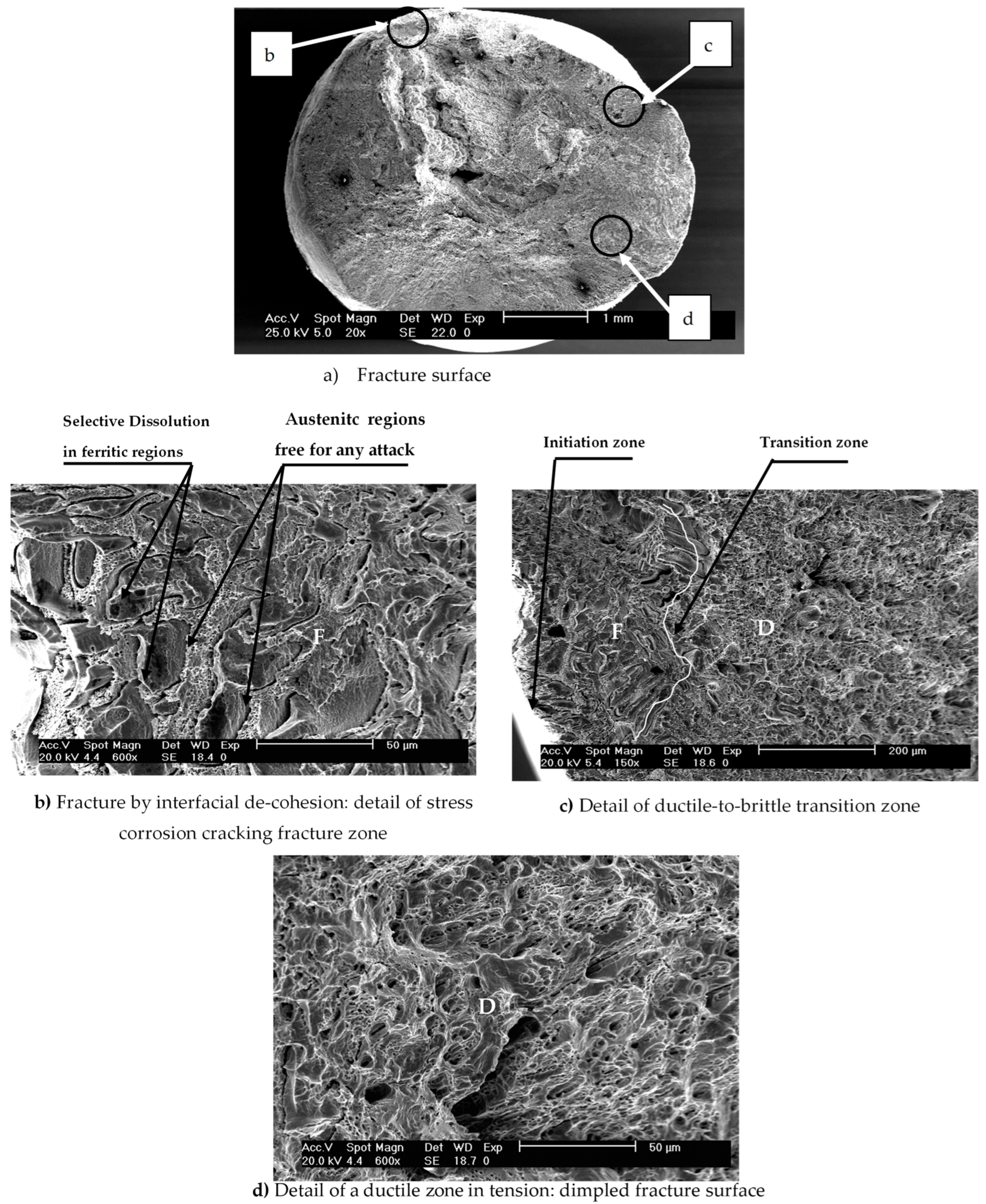
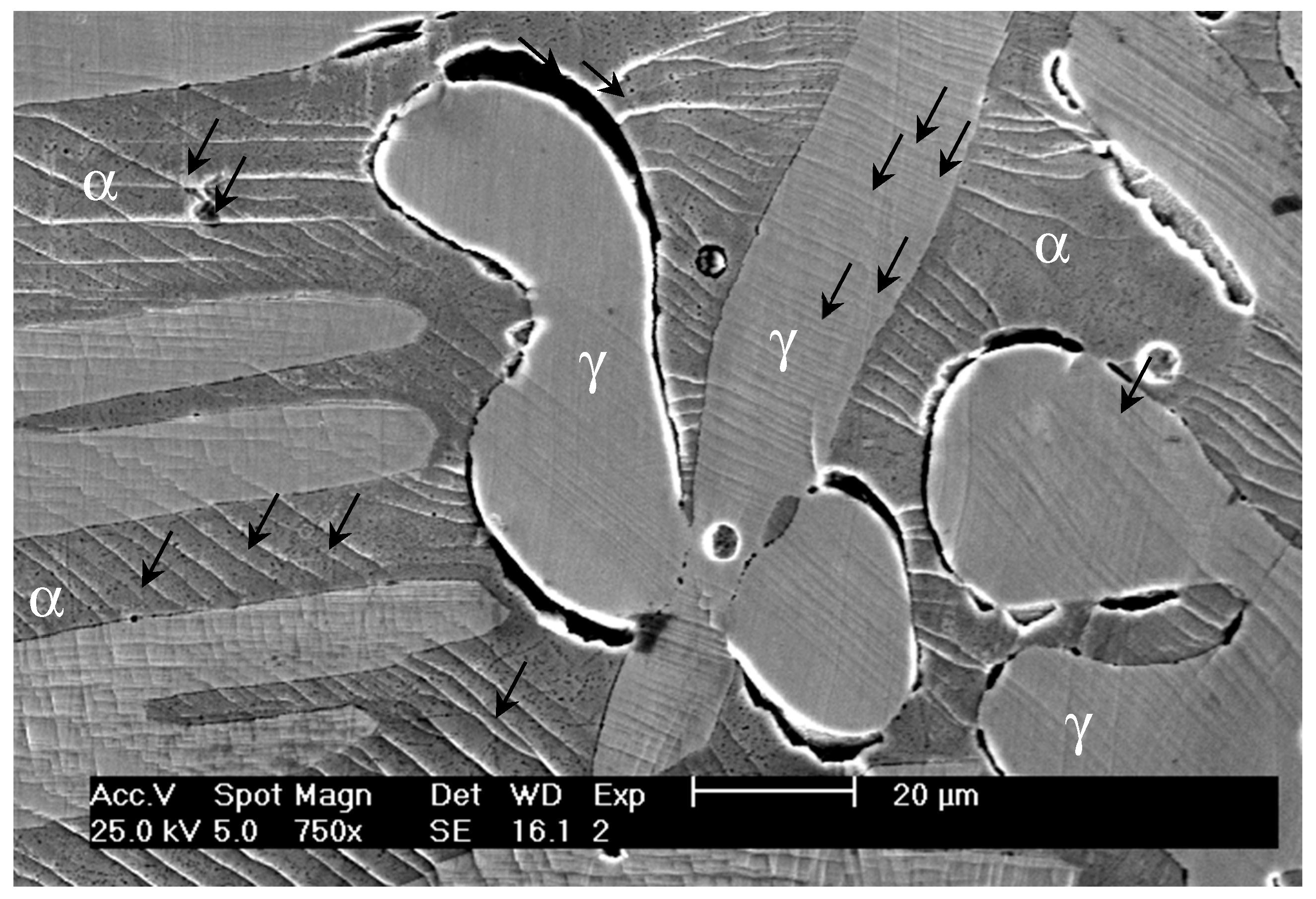
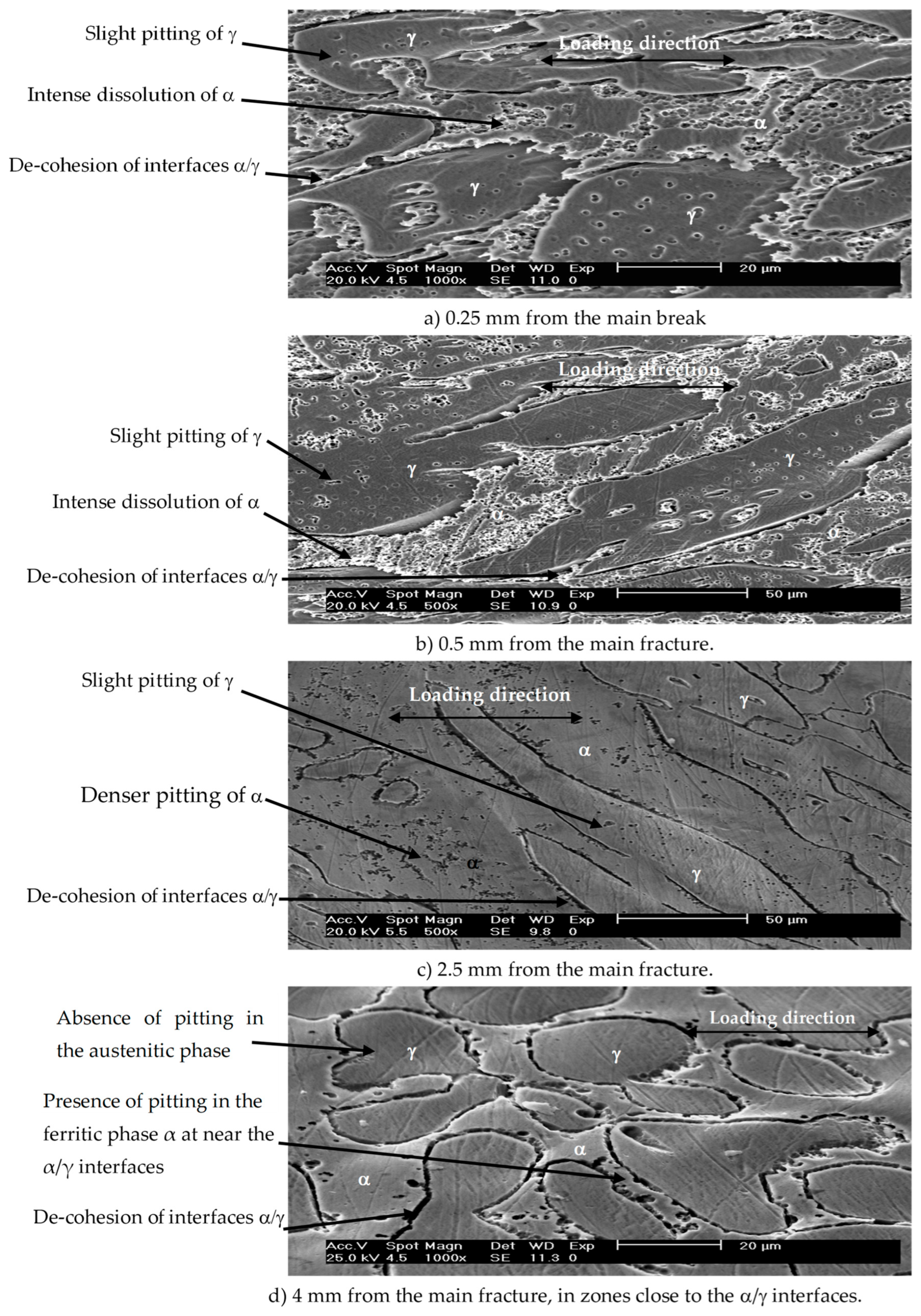
- The presence of α/γ interfacial decohesion is evident in the proximity of both the primary fracture and its immediate vicinity (Figure 9a,b). However, as the fracture is approached, the severity of this decohesion increases. Decohesions at the austenite-ferrite interfaces in synthetic seawater heated to 70 °C (Figure 9a). These decohesions are the precursors of the final stress corrosion cracking (SCC) fracture of duplex steel (Figure 9b).
- -
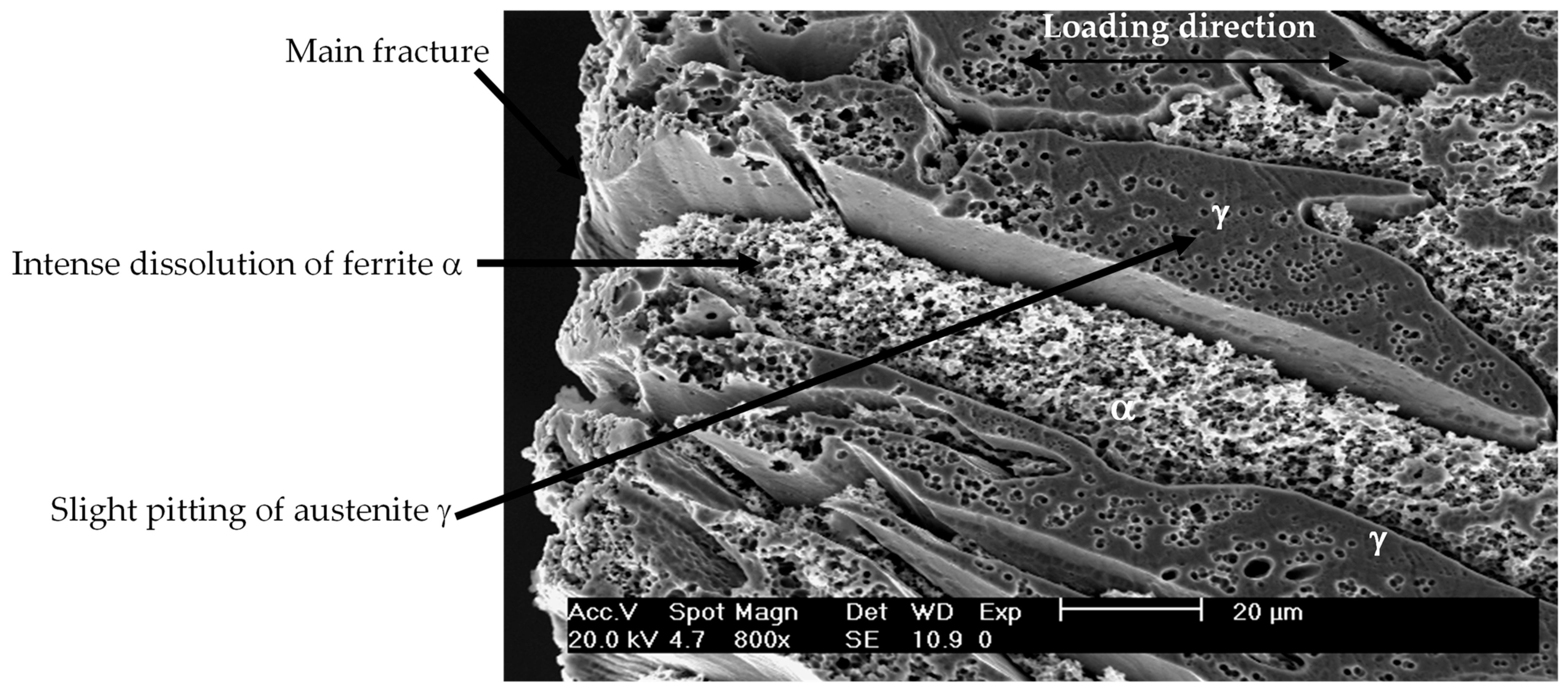
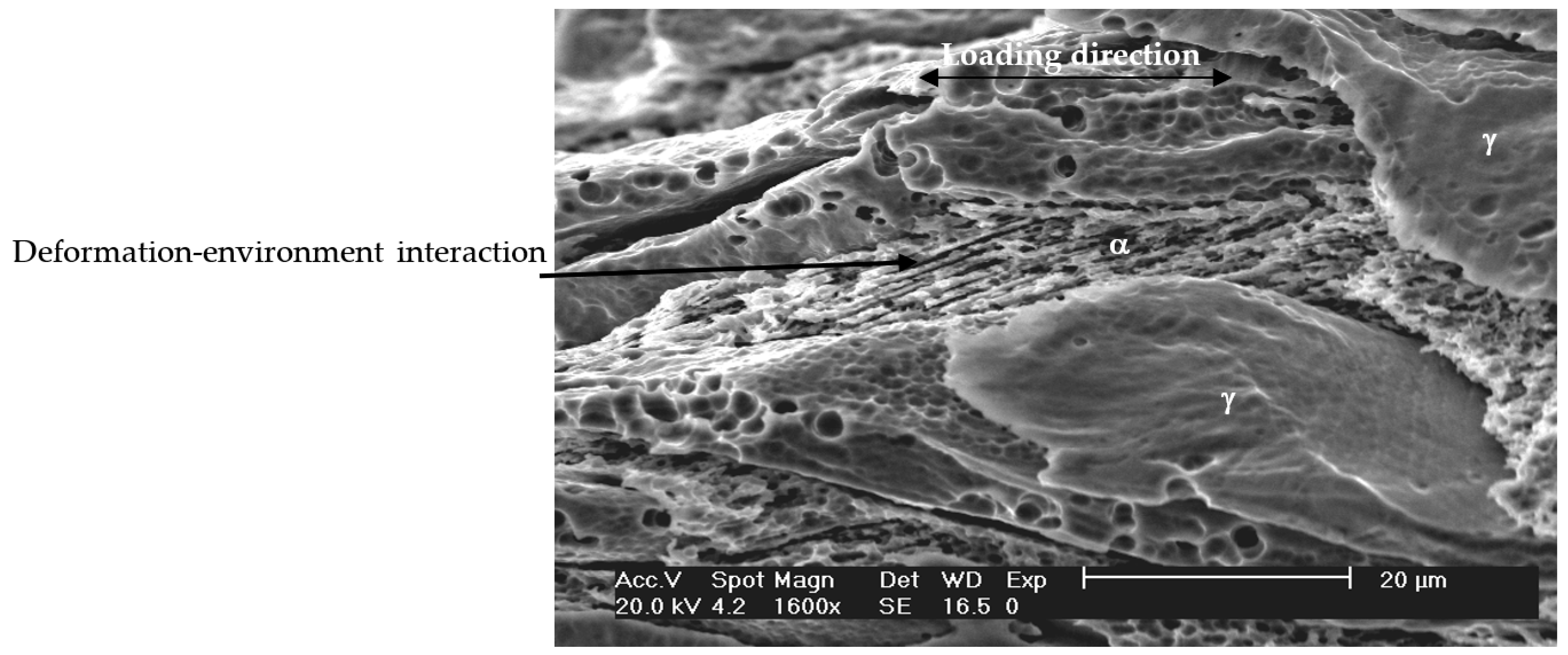
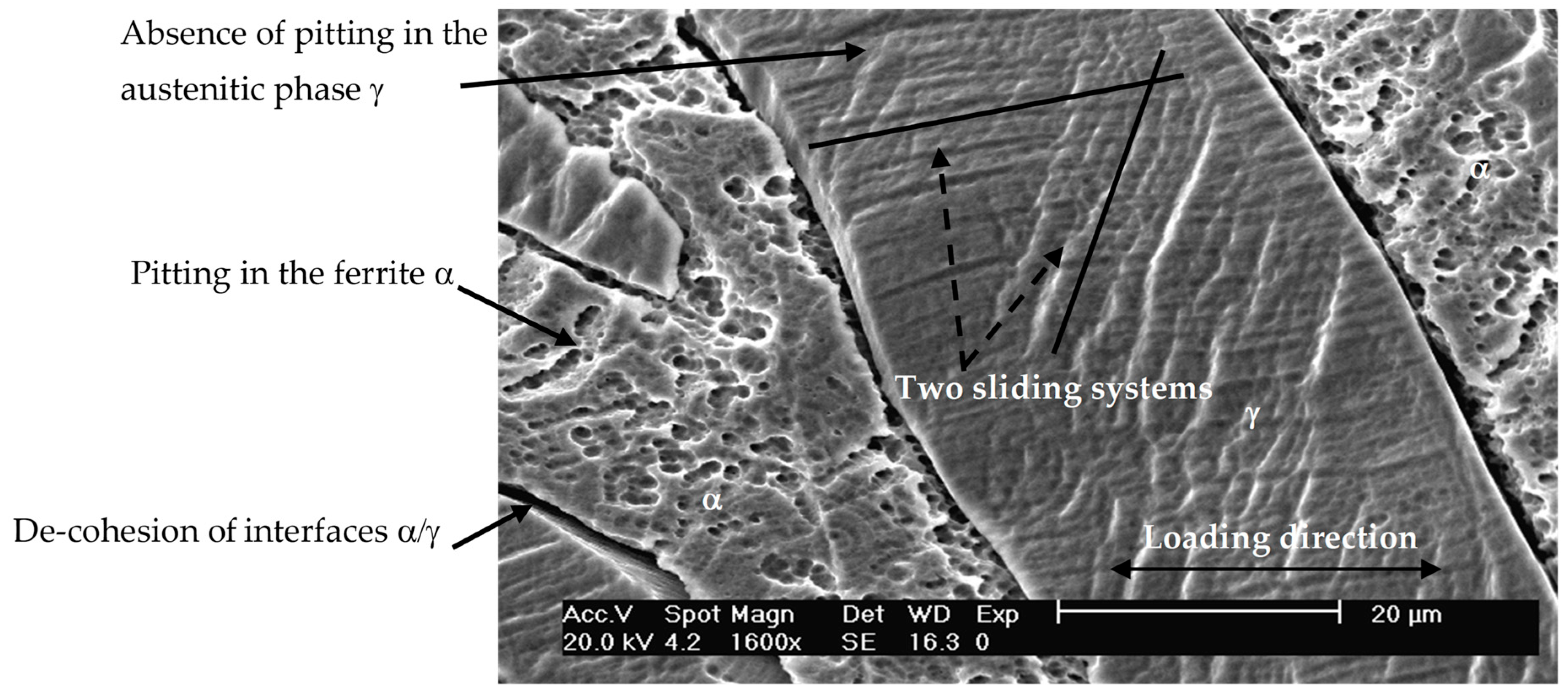
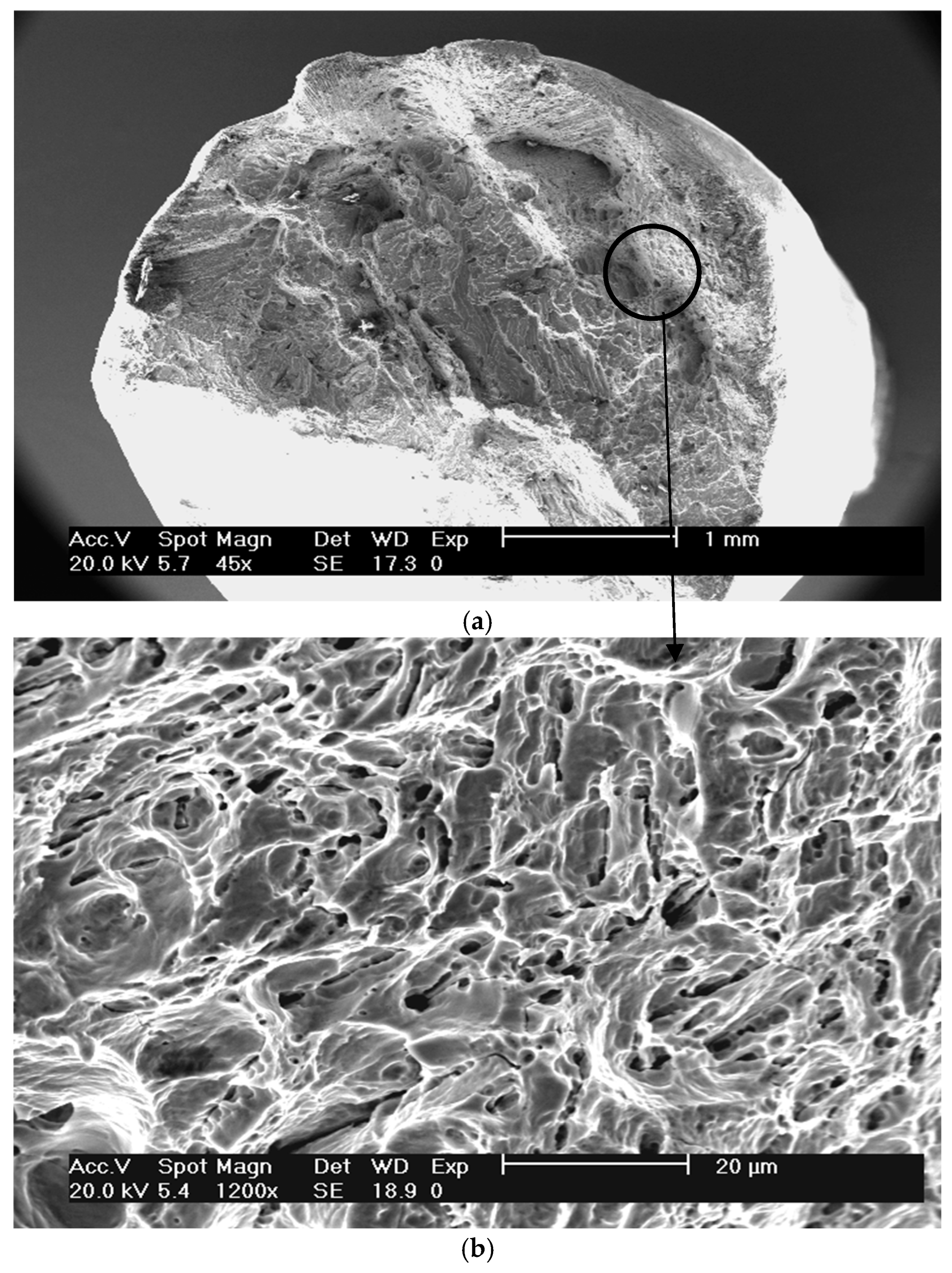
- There is also a mainly intergranular failure by slow traction, which appears to be accelerated by the selective dissolution of ferrite, particularly in zones close to the α/γ interfaces. As demonstrated in Figure 10, ferrite dissolution is essentially complete in the immediate vicinity of the fracture, while austenite exhibits only slight pitting. This confirms the phase-selectivity of the attack. This is related to traces of plastic deformation (sliding step). This dissolution weakens as one move away from the main fracture zone where the plastic deformation of the ferrite is less significant (Figure 11).
3.1.3. Slow Tensile Deformation Mechanism
- -
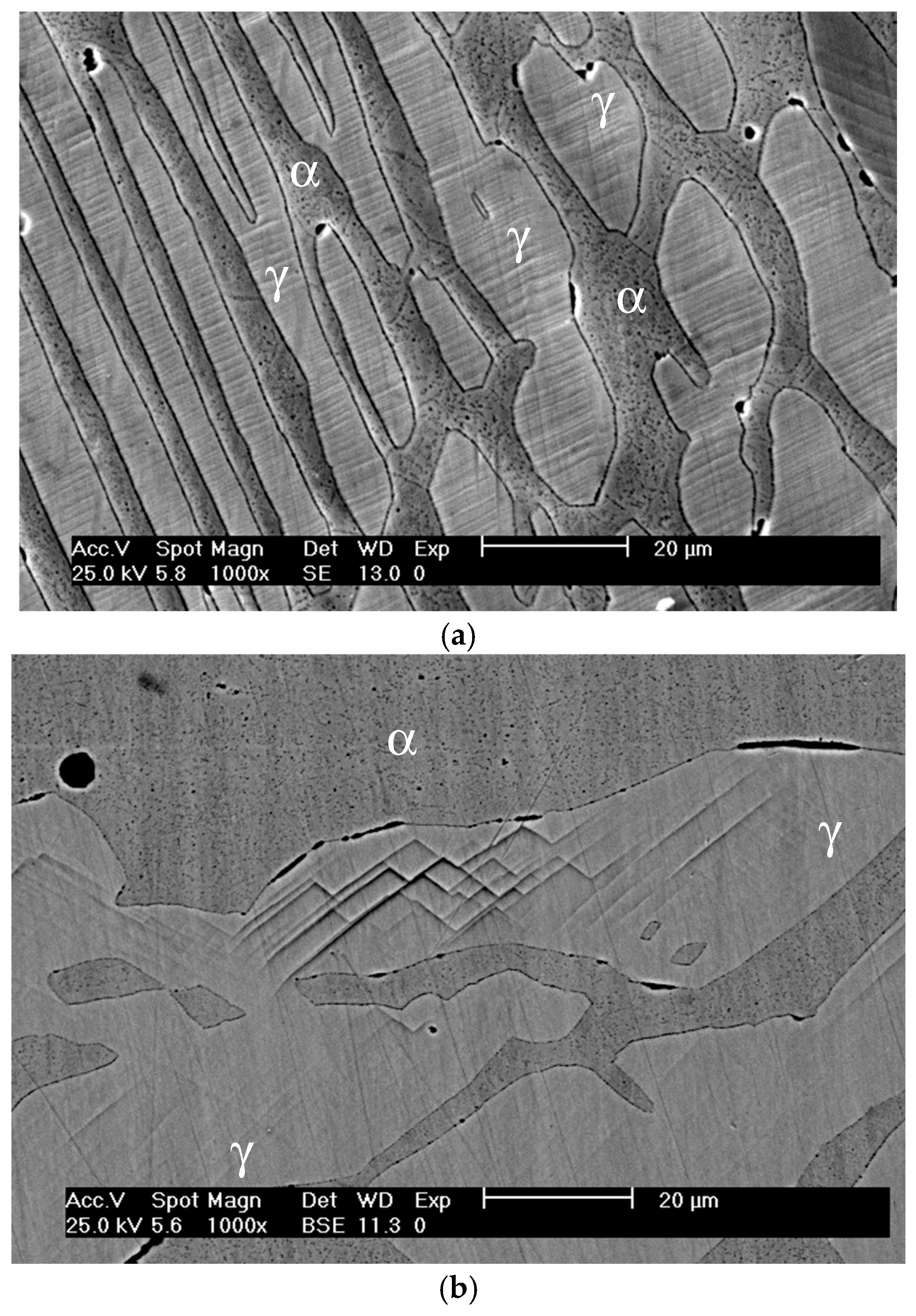
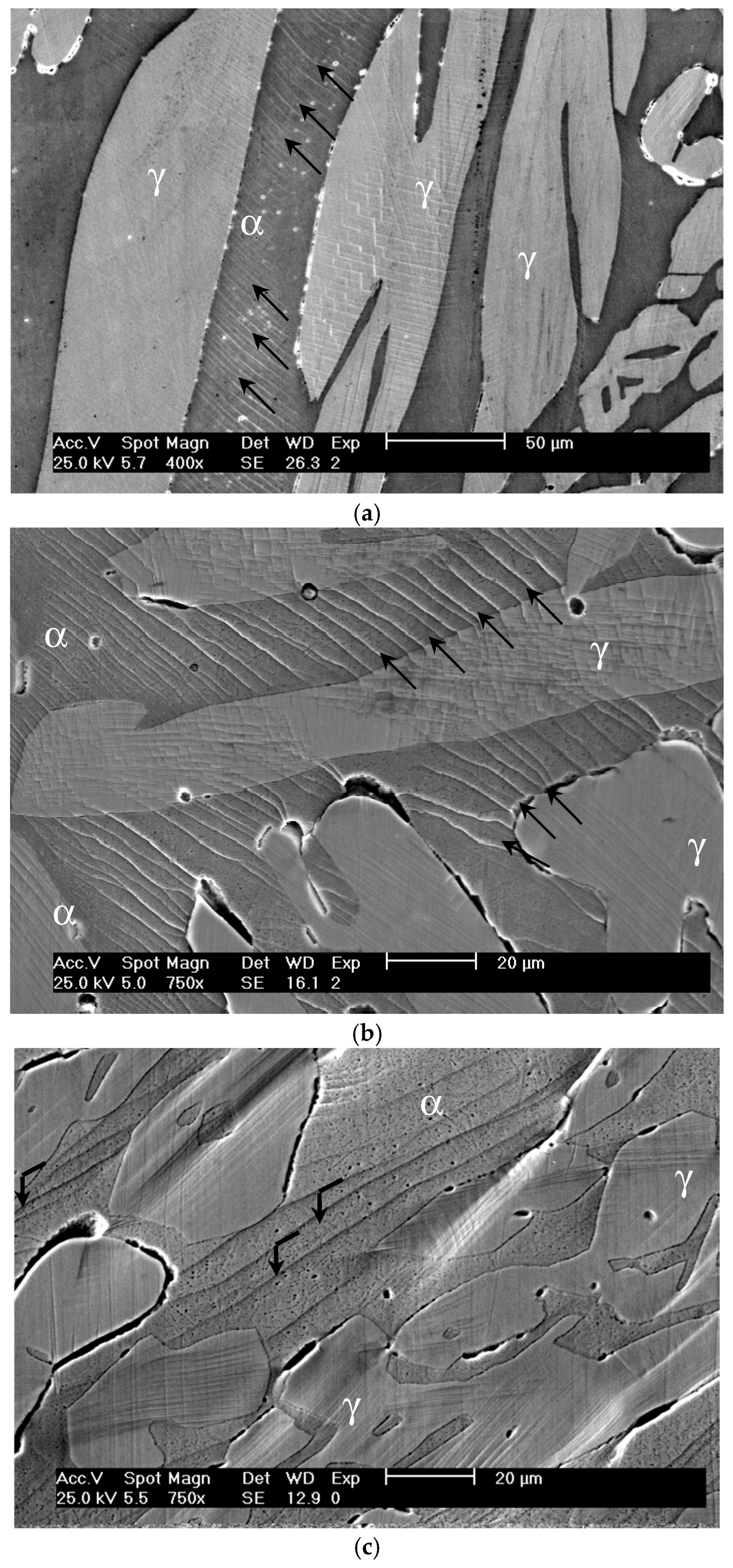
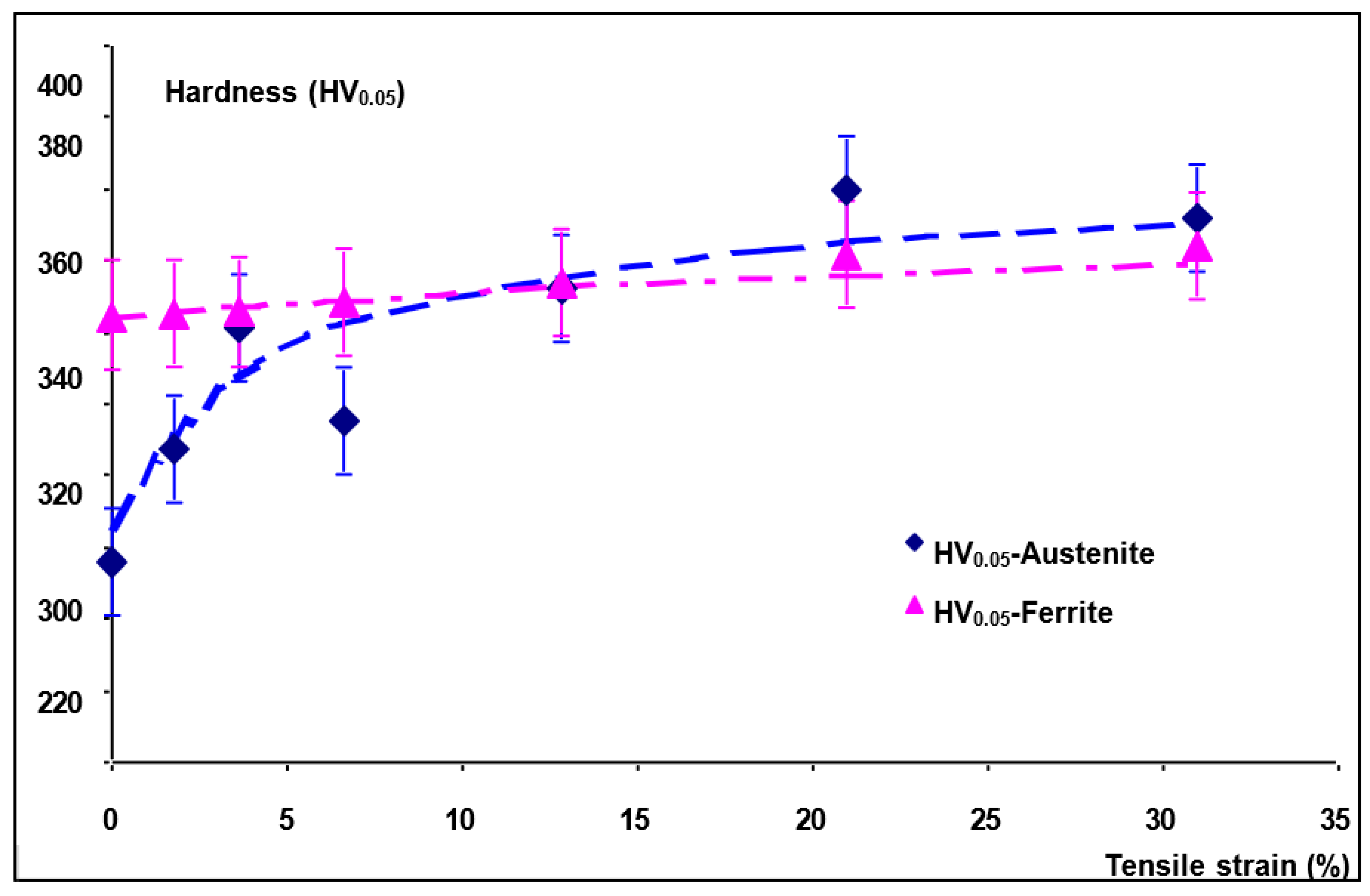
- Plastic deformation begins in the austenitic phase, which is lower in hardness (260 HV0.05) than the ferritic phase (325 HV0.05). In fact, traces of activation of a slip system are revealed in the austenitic islands at a total deformation rate of less than or equal to 1%, regardless of the deformation rate (slow or conventional) (Figure 19a).
- -
- When the deformation rate increases to greater than or equal to 3%, other slip systems are activated in the austenite. The spacing between the slip tracks is 2 µm or less, which testifies to the high deformability of this phase. This phase is reputed to be more ductile than ferrite (Figure 19b). This deformation is partially transmitted to the ferrite via the undamaged α/γ interface (Figure 19a).
4. Discussion
5. Conclusions
- -
- The strain-rate/dissolution-competition framework established for X6CrNiMoCu25-6 is expected to be transferable to other cast or wrought duplex and super-duplex stainless steels, and potentially to other two-phase or multiphase corrosion-resistant alloys exposed to chloride-containing environments under sustained or cyclic straining. This is due to the fact that the critical strain rates and dissolution kinetics are grade-specific.
- -
- In the longer term, the coupling of this experimental strain-rate/dissolution-competition description with physics-based or data-driven predictive models could allow the critical strain rate and SCC risk of a given duplex microstructure and environment to be predicted a priori. This would support the development of updated design codes and inspection standard for cast duplex components in seawater-cooling and other chloride-service applications, and guide future research on SCC of other stainless-steel families under similarly aggressive corrosive conditions.
Author Contributions
Funding
Data Availability Statement
Conflicts of Interest
References
- Ben Rhouma, A.; Braham, C.; Fitzpatrick, M.E.; Lédion, J.; Sidhom, H. Effects of surface preparation on pitting resistance, residual stress, and stress corrosion cracking in austenitic stainless steels. J. Mater. Eng. Perform. 2001, 10, 507–514. [Google Scholar] [CrossRef] [Scilit]
- Wang, J.; Wang, J.; Wang, L.; Ling, X. Comparison of corrosion behavior of 310S stainless steel in liquid Sn under saturated and low oxygen environment. Sol. Energy Mater. Sol. Cells 2025, 292, 113799. [Google Scholar] [CrossRef] [Scilit]
- Yang, G.; Cui, H.; Huang, T.; Liang, B.; Zhang, J.; Wang, L.; Liu, Z.; Du, C.; Li, X. Stress corrosion cracking behavior and mechanism of stainless-steel coiled tubing served for CO2 flooding injection well in CCUS-EOR environments. Eng. Fail. Anal. 2025, 180, 109847. [Google Scholar] [CrossRef] [Scilit]
- Kosaba, T.; Muto, I.; Sugawara, Y. Effect of anodizing on galvanic corrosion resistance of Al coupled to Fe or type 430 stainless steels in diluted synthetic seawater. Corros. Sci. 2021, 179, 109145. [Google Scholar] [CrossRef] [Scilit]
- Ramezani, M.; Mohd Ripin, Z.; Pasang, T.; Jiang, C.-P. Surface engineering of metals: Techniques, characterizations and applications. Metals 2023, 13, 1299. [Google Scholar] [CrossRef] [Scilit]
- Tang, Z.; Wang, B.; Aday, X. Impact of strain on the corrosion resistance of 304 stainless steel welded joints using electrochemical methods and numerical modeling of stress corrosion. Int. J. Electrochem. Sci. 2025, 20, 100910. [Google Scholar] [CrossRef] [Scilit]
- Mishra, P.; Misra, S. Investigating the influence of sustained service loading on the mechanical resistance of concrete to corrosion-induced cover cracking: The role of triaxial stress conditions. Constr. Build. Mater. 2025, 478, 141423. [Google Scholar] [CrossRef] [Scilit]
- Lee, J.K.; Szklarska-Smialowska, Z. Stress corrosion cracking of sensitized AISI 304 stainless-steel in aqueous chloride solutions containing sulfur species at 50 through 200 °C. Corros. Sci. 1988, 44, 560–565. [Google Scholar] [CrossRef] [Scilit]
- Sriram, R.; Tromans, D. Pitting Corrosion of Duplex Stainless Steels. Corrosion 1989, 45, 804–810. [Google Scholar] [CrossRef] [Scilit]
- Zhao, Y.; Tian, G.; Liu, D.; Ren, B.; Zhang, W.; Zhu, Y. Evaluation of Stress Corrosion Cracking Susceptibility of 2195-T8 Al-Li Alloy in Propellant Environment Using Slow Strain Rate Testing. Aerospace 2025, 12, 830. [Google Scholar] [CrossRef] [Scilit]
- Cole, I.S.; Marney, D.J.C.S. The science of pipe corrosion: A review of the literature on the corrosion of ferrous metals in soils. Corros. Sci. 2012, 56, 5–16. [Google Scholar] [CrossRef] [Scilit]
- Pal, S.; Bhadauria, S.S.; Kumar, P. Studies on stress corrosion cracking of F304 stainless steel in boiling magnesium chloride solution. J. Bio- Tribo-Corros. 2021, 7, 62. [Google Scholar] [CrossRef] [Scilit]
- Alkateb, M.; Tadić, S.; Sedmak, A.; Ivanović, I.; Marković, S. Crack growth rate analysis of stress corrosion cracking. Teh. Vjesn. 2021, 28, 240–247. [Google Scholar] [CrossRef] [Scilit]
- Xu, B.; Sun, B.; Dai, Y.; Xie, F.; Huang, F.; Liu, Z.; Li, X. Understanding the Non-Steady Electrochemical Mechanisms of the Stress Corrosion Cracking of X70 Pipeline Steel in a Marine Environment. Materials 2025, 18, 2073. [Google Scholar] [CrossRef] [Scilit] [PubMed]
- Josefsson, B.; Nilson, J.O.; Wilson, A. Phase transformation in duplex stainless steels and relation between continuous cooling and isothermal heat treatment. In DSS’91; Charles, J., Bernhardsson, S., Eds.; EDP Sciences: Beaune, France, 1991; Volume 1, pp. 67–78. [Google Scholar]
- Chen, K.; Zhou, Y.; Lozano-Perez, S. Insights into the complexities of diffusion-induced grain boundary migration in Fe-Cr-Ni ternary alloys. Acta Mater. 2026, 305, 121836. [Google Scholar] [CrossRef] [Scilit]
- Park, C.-J.; Kwon, H.-S. Effects of aging at 475 °C on corrosion properties of tungsten-containing duplex stainless steels. Corros. Sci. 2002, 44, 2817–2830. [Google Scholar] [CrossRef] [Scilit]
- Park, C.-J.; Kwon, H.-S. Electrochemical noise analysis of localized corrosion of duplex stainless steel aged at 475 °C. Mater. Chem. Phys. 2005, 91, 355–360. [Google Scholar] [CrossRef] [Scilit]
- Amadou, T.; Ben Rhouma, A.; Sidhom, H.; Braham, C.; Lédion, J. Influence of thermal ageing on the reactivity of duplex stainless-steel surfaces. Metall. Mater. Trans. A 2000, 31, 2015–2024. [Google Scholar] [CrossRef] [Scilit]
- Guo, F.; Xu, Y.; Li, J.; Gu, H.; Tang, Z.; Chen, L. Corrosion behaviour of the 347H stainless steel in molten NaCl-KCl-AlCl3 salts containing aluminum at 500 °C. Sol. Energy Mater. Sol. Cells 2025, 291, 113715. [Google Scholar] [CrossRef] [Scilit]
- Zhou, Y.; Chen, K.; You, Y.; Shang, X.; Lic, Y.; Shia, H.; Danga, J.; Zhang, K.; Lozano-Perez, S.; Zhang, L.; et al. Oxide stress and fracture susceptibility on a surface gradient microstructure of an additively manufactured steel. Acta Mater. 2026, 304, 121779. [Google Scholar] [CrossRef] [Scilit]
- Vakili, M.; Koutník, P.; Kohout, J.; Gholami, Z. Analysis, Assessment, and Mitigation of Stress Corrosion Cracking in Austenitic Stainless Steels in the Oil and Gas Sector: A Review. Surfaces 2024, 7, 589–642. [Google Scholar] [CrossRef] [Scilit]
- Pan, Y.; Sun, B.; Liu, Z.; Wu, W.; Li, X. Hydrogen effects on passivation and SCC of 2205 DSS in acidified simulated seawater. Corros. Sci. 2022, 208, 110640. [Google Scholar] [CrossRef] [Scilit]
- Trigui, I.; Sidhom, H.; Braham, C. Influence des mécanismes de décomposition de la ferrite sur la résistance à la corrosion d’un Aciers inoxydables Austéno-Ferritiques vieilli. Matér. Tech. 2005, 93, 319–330. [Google Scholar] [CrossRef] [Scilit] [PubMed]
- Hertzman, S.; Roberts, W.; Lindenmo, M. Microstructure and Properties of Nitrogen Alloyed Duplex Stainless Steel After Welding Treatment. In Proceedings of the DSS 86, Den Hague, The Netherland, 13 June 1986; pp. 257–262. [Google Scholar]
- Park, C.-J.; Kwon, H.-S.; Lohrengel, M.M. Micro-electrochemical polarization study on 25 % Cr duplex stainless steel. Mater. Sci. Eng. A 2004, 372, 180–185. [Google Scholar] [CrossRef] [Scilit]
- Perren, R.A.; Suter, T.A.; Uggowitzer, P.J.; Weber, L.; Magdowski, R.; Böhni, H.; Speidel, M.O. Corrosion resistance of super duplex stainless steels in chloride ion containing environments: Investigations by means of a new microelectrochemical method I. Precipitation-free states. Corros. Sci. 2001, 43, 707–726. [Google Scholar] [CrossRef] [Scilit]
- Heuze, J.L.; Hempel-Loe, C.; Gaillard, F.; Leguyader, H.; Cozar, R.; Mayonobe, B.; Rouby, M. Ambient and low temperature ductility control in duplex steel forgings. In DSS’91; Charles, J., Bernhardsson, S., Eds.; EDP Sciences: Beaune, France, 1991; Volume 1, pp. 765–778. [Google Scholar]
- Combrade, P.; Audouard, J.-P. Duplex stainless steels and localised corrosion resistance. In DSS’91; Charles, J., Bernhardsson, S., Eds.; EDP Sciences: Beaune, France, 1991; Volume 1, pp. 257–281. [Google Scholar]
- Zhou, B.; Chen, Y.; Zhou, Y.; Gao, Y.; Wang, J.; Zhang, L.; Zhao, W.; Shen, Z.; Chen, K.; Wang, H.; et al. Effect of dissolved oxygen on autoclave grid-to-rod fretting corrosion behavior of Cr coated fuel cladding in simulated primary water. Corros. Sci. 2026, 263, 113715. [Google Scholar] [CrossRef] [Scilit]
- Dong, L.; Zhang, G.; Li, S.; Wu, C.; Wang, H.; Zheng, H.; Wang, Q. Insights into the stress corrosion cracking of M54 ultra-high-strength steel in the marine environments at varying temperatures by comparison of slow strain rate tensile and crack growth tests. Corros. Sci. 2024, 241, 112543. [Google Scholar] [CrossRef] [Scilit]
- Zheng, Y.; Wang, Z.; Zhang, X.; Su, Z.; Liu, J.; Yu, R.; Wu, K. Mechanistic insight into pre-strain influenced stress corrosion cracking of advanced high-strength steels in marine environment. Corros. Sci. 2025, 255, 113057. [Google Scholar] [CrossRef] [Scilit]
- Desjardins, D.; Puiggali, M.; El Kheloui, A.; Petit, M.C. Etude de la susceptibilité à la corrosion d’aciers inoxydables AISI 304 et AISI 316. Matér. Tech. 1991, 79, 37–56. [Google Scholar] [CrossRef] [Scilit]
- Tsai, W.T.; Chen, M.S. Stress corrosion cracking behaviour of 2205 duplex stainless steel in concentrated NaCl solution. Corros. Sci. 2000, 42, 545–559. [Google Scholar] [CrossRef] [Scilit]
- Tsai, W.T.; Chou, S.L. Environmentally assisted cracking behaviour of duplex stainless steel in concentrated sodium chloride solution. Corros. Sci. 2000, 42, 1741–1762. [Google Scholar] [CrossRef] [Scilit]
- Yeh, C.-P.; Tsai, K.-C.; Huang, J.-Y. Environmental Factors Influencing Stress Corrosion Cracking Behavior of Austenitic Stainless Steels in Simulated Seawater. Materials 2025, 18, 4317. [Google Scholar] [CrossRef] [Scilit] [PubMed]
- Liu, S.; Liu, M.; Shangguan, Y.; Mei, K.; Zhu, S.; Liu, K.; Liao, R. Role of Environmental Chemistry in Governing the Corrosion and Stress Corrosion Cracking Mechanism of L415 Pipeline Steel in Acidic Soils. Materials 2025, 18, 5492. [Google Scholar] [CrossRef] [Scilit] [PubMed]
- Liu, X.; Du, H.; Liao, L.; Yang, J.; Houc, L.; Luo, H. Optimizing microstructure and corrosion behavior of a low Cr ferritic stainless steel via adjusting annealing temperature. Surf. Interfaces 2025, 72, 106960. [Google Scholar] [CrossRef] [Scilit]
- López-Ortegaa, A.; Bayóna, R.; Aranab, J.L. Evaluation of protective coatings for offshore applications. Corrosion and tribocorrosion behavior in synthetic seawater. Surf. Coat. Technol. 2018, 349, 1083–1097. [Google Scholar] [CrossRef] [Scilit]
- Liu, W.; Zhao, L.; Gong, B.; Tang, R.; Chen, H. Corrosion behavior and slow strain rate tensile testing of Inconel 718 alloy in reaerated supercritical water at 650 °C. J. Mater. Res. Technol. 2025, 35, 5945–5955. [Google Scholar] [CrossRef] [Scilit]
- Wang, X.; Qian, X.; Li, Y.; Liu, J.; Liu, Y.; Okugawa, M.; Koizumi, Y.; Liu, J.; Xie, H.; Zou, Y. Synergistic enhancement of strength, corrosion resistance, and stress corrosion cracking resistance in WE43 Mg alloy via T6 treatment. Corros. Sci. 2025, 255, 113096. [Google Scholar] [CrossRef] [Scilit]
- Ma, R.; Su, R.; Cui, C.; Liu, Y.; Hu, H.; Chen, A. Corrosion characteristics and mechanical properties degradation of stressed high-strength steel wires in acidic environment. Case Stud. Constr. Mater. 2025, 22, e04773. [Google Scholar] [CrossRef] [Scilit]








| C | Cr | Ni | Mo | Cu | Mn | N | Si | S | P | Co | V | Fe |
|---|---|---|---|---|---|---|---|---|---|---|---|---|
| 0.068 | 24.56 | 6.69 | 2.52 | 2.32 | 0.59 | 0.137 | 0.7 | 0.0008 | 0.024 | 0.109 | 0.11 | Bal. |
| Tensile Properties | KCV J/cm2 at 20 °C | Microhardness | Hardness HV2 | ||||
|---|---|---|---|---|---|---|---|
| Re (MPa) | Rm (MPa) | At (%) | Z (%) | Austenite | Ferrite | ||
| 293 | 790 | 31 | 61 | 192 | 260 | 325 | 280 |
| Strain Rate s−1 | 2.38 × 10⁻⁷ | 5 × 10⁻⁷ | 2.38 × 10⁻⁶ | 2.38 × 10⁻⁵ | 10−4 |
|---|---|---|---|---|---|
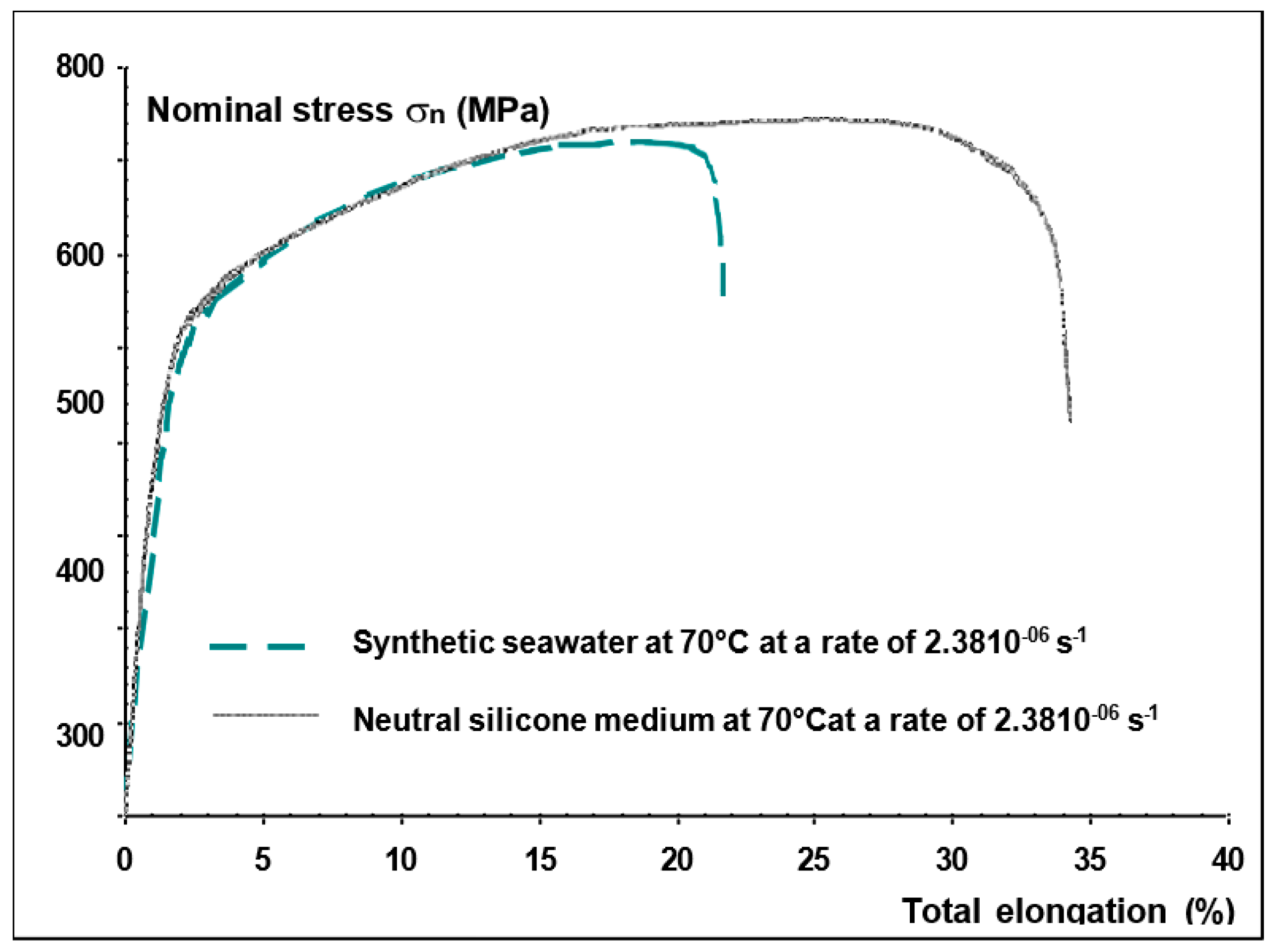
| σn (MPa) | 733 | 730 | 725 | 740 | 745 |
| Ar (%) | 20 | 24.7 | 15.8 | 22.2 | 26 |
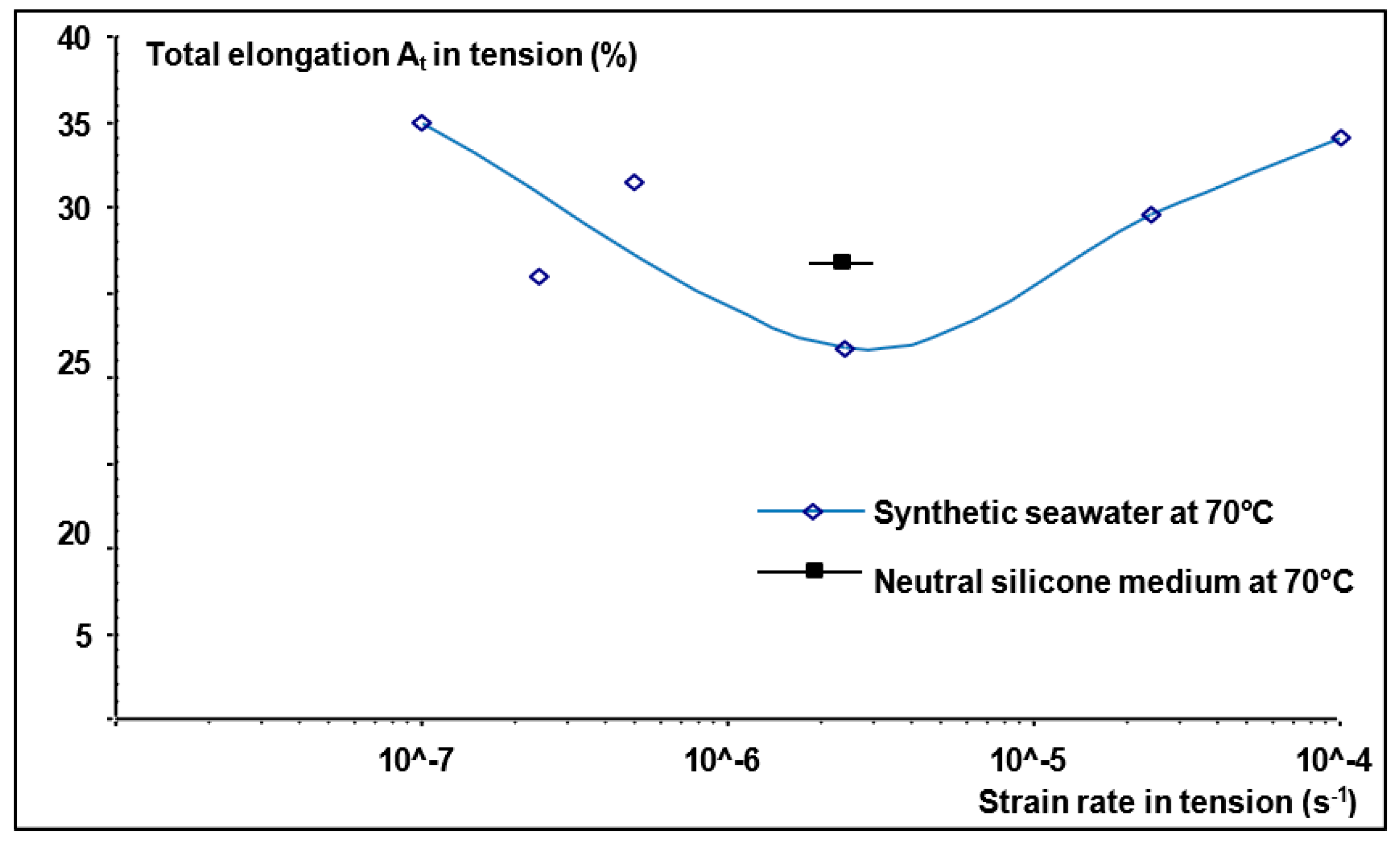
| At (%) | 26 | 31.5 | 21.8 | 29.5 | 34 |
| εr (%) | 17 | 20 | 14.5 | 19 | 21.7 |
| Z (%) | 19 | 20 | 17 | 21 | 26 |
| Tr (h) | 300 | 169 | 25.5 | 3.5 | 2 |
| W (106 J/m3) | 119 | 142 | 94.6 | 136 | 160 |
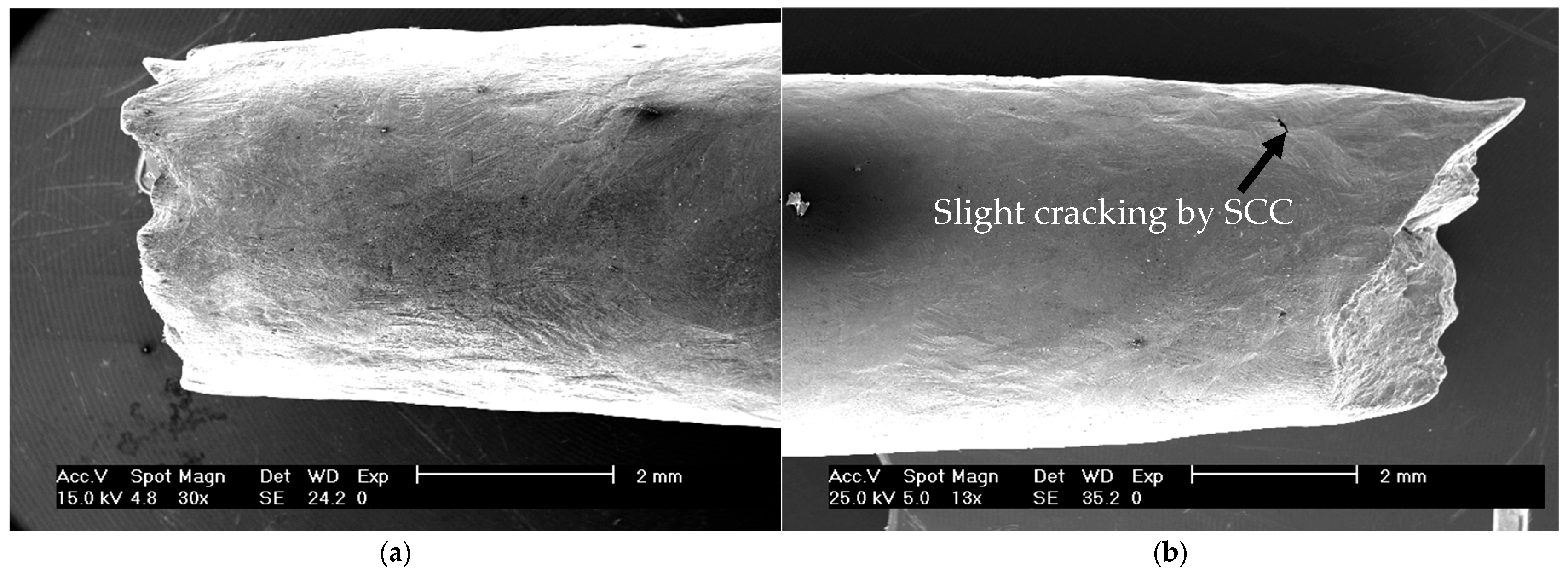
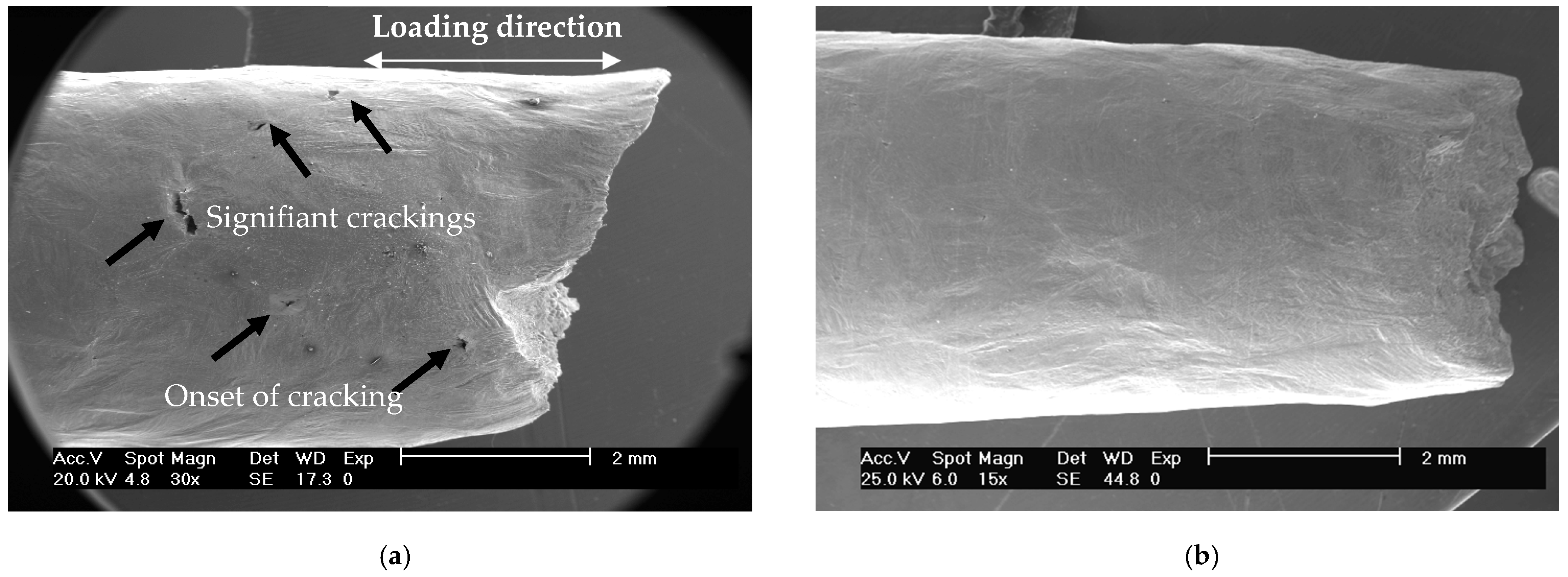
| Results of the macrographic analysis of the test specimen barrel | Slight cracking by SCC | Slight cracking by SCC | Cracking by SCC | Slight cracking by SCC | No cracking by SCC |
| Corrosion Medium | Speed | Fraction of Facies Resulting from Fracture by SCC (%) | Fraction of Facies Resulting from Slow Tensile Fracture (%) |
|---|---|---|---|
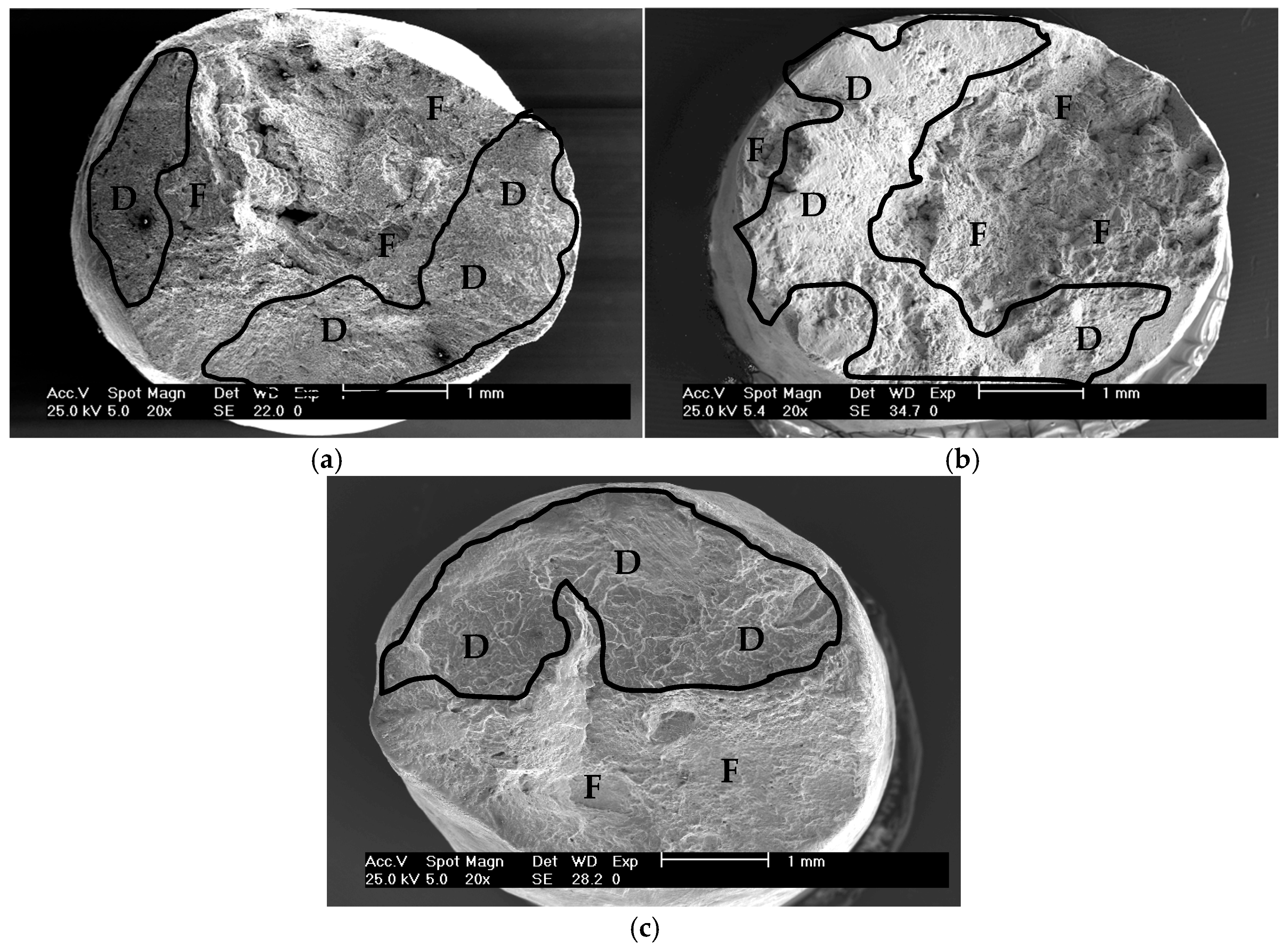
| Synthetic seawater at 70 °C | 2.38 × 10⁻⁷ | 47 | 53 |
| 5 × 10⁻⁷ | 50 | 50 | |
| 2.38 × 10⁻⁶ | 60 | 40 | |
| 2.38 × 10⁻⁵ | 10 | 90 | |
| 10−4 | 0 | 100 |
| Study (Material) | Environment/Temperature/Cl− Content | Strain Rate (Tested/Critical) | ΔRm (%) | Dominant Fracture Mode | Distinguishing Feature vs. Present Study |
|---|---|---|---|---|---|
| Present study—X6CrNiMoCu25-6 (cast, hyper-quenched duplex, 45% α–55% γ) | Synthetic seawater, 70 °C, | 5 rates: 2.38 × 10⁻⁷–10−4 s−1; critical ≈ 10−6 s−1 | ≤5% | Mixed inter-/transgranular; ferrite-selective dissolution + α/γ decohesion | — (reference case) |
| AISI 316 austenitic Stainless steel [35] | 26% NaCl solution, 90 °C | Critical strain rate ≈ 4.1 × 10⁻⁶ s−1 | ≈20% | Predominantly transgranular (typical of austenitic SCC) | Wrought, single-phase austenite markedly higher susceptibility than present duplex grade |
| 2205 duplex stainless steel [34,37] | 26% NaCl solution, 90 °C, imposed controlled electrochemical potential | SSRT under controlled potential (strain-rate matrix not directly comparable) | not directly comparable | Mixed inter-/transgranular; interface-related cracking | Wrought (not cast); imposed potential (not free corrosion); higher Cl−/T |
| General duplex stainless steel [7,19,26] | Various chloride often aged/welded | Strain rate not systematically varied | Not announced | Localized/pitting-assisted cracking associated with phase decomposition | Establishes that duplex grades generally outperform austenitic grades in Cl− media, but does not quantify strain-rate dependence |
Disclaimer/Publisher’s Note: The statements, opinions and data contained in all publications are solely those of the individual author(s) and contributor(s) and not of MDPI and/or the editor(s). MDPI and/or the editor(s) disclaim responsibility for any injury to people or property resulting from any ideas, methods, instructions or products referred to in the content. |
© 2026 by the authors. Licensee MDPI, Basel, Switzerland. This article is an open access article distributed under the terms and conditions of the Creative Commons Attribution (CC BY) license.
Share and Cite
Trigui, I.; Louhichi, B.; Terres, M.A. Influence of Imposed Strain Rate on Stress Corrosion Damage Mechanisms in Synthetic Seawater of Austenitic–Ferritic Stainless Steel X6CrNiMoCu25-6. Corros. Mater. Degrad. 2026, 7, 57. https://doi.org/10.3390/cmd7030057
Trigui I, Louhichi B, Terres MA. Influence of Imposed Strain Rate on Stress Corrosion Damage Mechanisms in Synthetic Seawater of Austenitic–Ferritic Stainless Steel X6CrNiMoCu25-6. Corrosion and Materials Degradation. 2026; 7(3):57. https://doi.org/10.3390/cmd7030057
Chicago/Turabian StyleTrigui, Imededdine, Borhen Louhichi, and Mohamed Ali Terres. 2026. "Influence of Imposed Strain Rate on Stress Corrosion Damage Mechanisms in Synthetic Seawater of Austenitic–Ferritic Stainless Steel X6CrNiMoCu25-6" Corrosion and Materials Degradation 7, no. 3: 57. https://doi.org/10.3390/cmd7030057
APA StyleTrigui, I., Louhichi, B., & Terres, M. A. (2026). Influence of Imposed Strain Rate on Stress Corrosion Damage Mechanisms in Synthetic Seawater of Austenitic–Ferritic Stainless Steel X6CrNiMoCu25-6. Corrosion and Materials Degradation, 7(3), 57. https://doi.org/10.3390/cmd7030057