


Microbially Induced Corrosion of Carbon Steel in Oilfield Waters from the Romashkino Oilfield (Republic of Tatarstan): Immersion Corrosion Testing

Abstract
1. Introduction
2. Materials and Methods
2.1. Production Mixture Sampling and Analysis
2.2. Corrosion Experiments
2.3. Corrosion Degree Analysis
2.4. Scanning Electron Microscopy and Elemental Analysis
2.5. Analysis of Microbial Communities
2.6. Statistical Analysis
3. Results and Discussion
3.1. Characteristics of Oilfield Waters
3.2. Corrosion Potential of Unstimulated and Stimulated Microbial Communities of Produced Waters
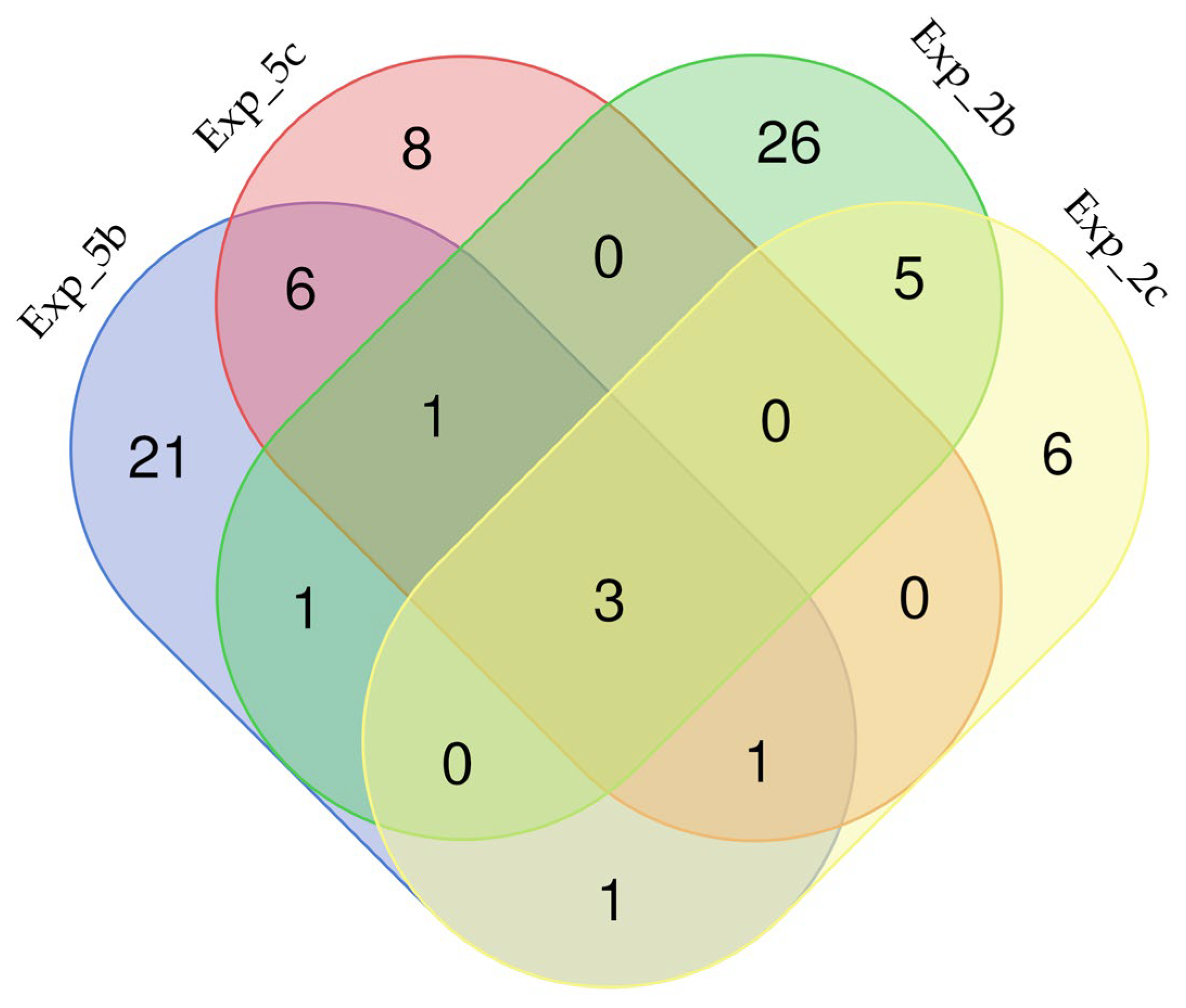
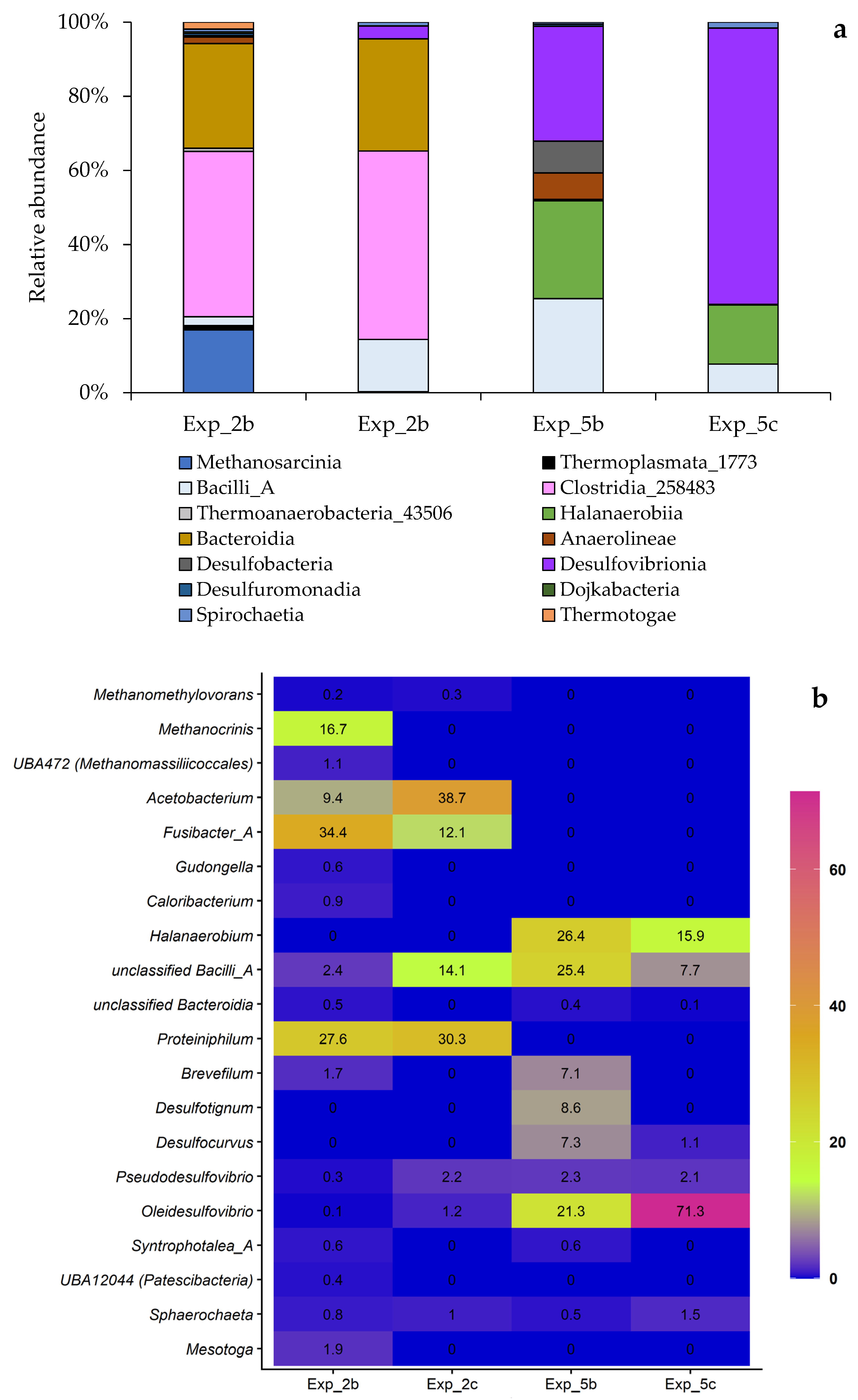
3.3. Taxonomic Distribution of Microbial Communities
4. Conclusions
Author Contributions
Funding
Data Availability Statement
Conflicts of Interest
Abbreviations
| MEOR | microbial enhanced oil recovery |
| MIC | microbiologically influenced corrosion |
| SEM | scanning electron microscopy |
| SRM | sulfate-reducing microorganisms |
| CWS | corrosion witness samples |
References
- Li, S.; Li, C.; Wang, F. Computational experiments of metal corrosion studies: A review. Mater. Today Chem. 2024, 7, 101986. [Google Scholar]
- Sokolova, D.S.; Kruglova, A.A.; Semenova, E.M.; Mayorova, T.A.; Mardanov, A.V.; Nazina, T.N. Molecular and cultural evidence of corrosive microorganisms in an offshore oil field in the Arctic (Russia). mSystems 2025, 10, e0116125. [Google Scholar] [CrossRef] [PubMed]
- Kannan, P.; Su, S.S.; Mannan, M.S.; Castaneda, H.; Vaddiraju, S. A Review of characterization and quantification tools for microbiologically influenced corrosion in the oil and gas industry: Current and future. Ind. Eng. Chem. Res. 2018, 57, 13895–13922. [Google Scholar] [CrossRef]
- Telegdi, J.; Shaban, A.; Trif, L. Review on the microbiologically influenced corrosion and the function of biofilms. Int. J. Corros. Scale Inhib. 2020, 9, 1–33. [Google Scholar] [CrossRef]
- Puentes-Cala, E.; Tapia-Perdomo, V.; Espinosa-Valbuena, D.; Reyes-Reyes, M.; Quintero-Santander, D.; Vasquez-Dallos, S.; Salazar, H.; Santamaría-Galvis, P.; Silva-Rodríguez, R.; Castillo-Villamizar, G. Microbiologically influenced corrosion: The gap in the field. Front. Environ. Sci. 2022, 10, 924842. [Google Scholar] [CrossRef]
- Knisz, J.; Eckert, R.; Gieg, L.M.; Koerdt, A.; Lee, J.S.; Silva, E.R.; Skovhus, T.L.; Stepec, B.A.A.; Wade, S.A. Microbiologically influenced corrosion–more than just microorganisms. FEMS Microbiol. Rev. 2023, 47, fuad041. [Google Scholar] [PubMed]
- Das, A.; Das, N.; Pandey, P.; Pandey, P. Microbial enhanced oil recovery: Process perspectives, challenges, and advanced technologies for its efficient applications and feasibility. Arch. Microbiol. 2025, 207, 106. [Google Scholar] [CrossRef]
- Parthipan, P.; Cheng, L.; Dhandapani, P.; Rajasekar, A. Metagenomics diversity analysis of sulfate-reducing bacteria and their impact on biocorrosion and mitigation approach using an organometallic inhibitor. Sci. Total Environ. 2023, 856, 159203. [Google Scholar]
- Dou, W.; Xu, D.; Gu, T. Biocorrosion caused by microbial biofilms is ubiquitous around us. Microb. Biotechnol. 2021, 14, 803–805. [Google Scholar]
- Wang, X.; Xu, J.; Sun, C.; Yan, M. Effect of oilfield produced water on corrosion of pipeline. Int. J. Electrochem. Sci. 2015, 10, 8656–8667. [Google Scholar] [CrossRef]
- Arslan, D.; Ozdemir, A.S.; Cansever, N.; Sungur, E.I. Corrosion behavior of N80 tubing steel in the produced water. Sigma J. Eng. Nat. Sci. 2024, 42, 414–424. [Google Scholar]
- Didouh, H.; Khurshid, H.; Meliani, M.H.; Suleiman, R.K.; Umoren, S.A.; Bouhaik, I.S. Exploring NRB biofilm adhesion and biocorrosion in oil/water recovery operations within pipelines. Bioengineering 2024, 11, 1046. [Google Scholar] [CrossRef]
- Oliveira, E.S.D.; Pereira, R.F.C.; Lima, M.A.G.A.; Filho, S.L.U. Study on biofilm forming microorganisms associated with the biocorrosion of x80 pipeline steel in produced water from oilfield. Mater. Res. 2021, 24, e20210196. [Google Scholar] [CrossRef]
- Nazina, T.N.; Pavlova, N.K.; Tatarkin, Y.V.; Shestakova, N.M.; Babich, T.L.; Sokolova, D.S.; Ivoilov, V.S.; Khisametdinov, M.R.; Ibatullin, R.R.; Tourova, T.P.; et al. Microorganisms of the carbonate petroleum reservoir 302 of the Romashkinskoe oilfield and their biotechnological potential. Microbiology 2013, 82, 190–200. [Google Scholar] [CrossRef]
- Ziganshina, E.E.; Mohammed, W.S.; Ziganshin, A.M. Microbial diversity of the produced waters from the oilfields in the Republic of Tatarstan (Russian Federation): Participation in biocorrosion. Appl. Sci. 2023, 13, 12984. [Google Scholar] [CrossRef]
- Ziganshina, E.E.; Bulynina, S.S.; Yureva, K.A.; Ziganshin, A.M. Optimization of photoautotrophic growth regimens of Scenedesmaceae alga: The influence of light conditions and carbon dioxide concentrations. Appl. Sci. 2023, 13, 12753. [Google Scholar] [CrossRef]
- Liu, Y.; Jiang, H.; Xu, T.; Li, Y. CO2 corrosion prediction on 20# steel under the influence of corrosion product film. Petroleum 2023, 9, 427–438. [Google Scholar] [CrossRef]
- Liu, T.; Cheng, Y.F.; Sharma, M.; Voordouw, G. Effect of fluid flow on biofilm formation and microbiologically influenced corrosion of pipelines in oilfield produced water. J. Pet. Sci. Eng. 2017, 156, 451–459. [Google Scholar] [CrossRef]
- Phan, H.C.; Blackall, L.L.; Wade, S.A. Effect of multispecies microbial consortia on microbially influenced corrosion of carbon steel. Corros. Mater. Degrad. 2021, 2, 133–149. [Google Scholar] [CrossRef]
- Oliveira, E.S.D.; Pereira, R.F.C.; Melo, I.R.; Lima, M.A.G.A.; Filho, S.L.U. Corrosion behavior of API 5L X80 steel in the produced water of onshore oil recovery facilities. Mater. Res. 2017, 20, 432–439. [Google Scholar] [CrossRef]
- Kumar, A.S.; Dhandapani, P.; Sivakumar, L.; Narenkumar, J.; Elumalai, P.; Duraimurugan, R.; Rajasekar, A.; Rajadesingu, S.; Punniyakotti, P. Mitigation of sulphate-reducing bacterial consortium induced corrosion on API 5LX carbon steel using bioactive compounds from Capsicum annuum fruit derivatives. J. Environ. Chem. Eng. 2026, 14, 120483. [Google Scholar]
- Caporaso, J.G.; Kuczynski, J.; Stombaugh, J.; Bittinger, K.; Bushman, F.D.; Costello, E.K.; Fierer, N.; Pena, A.G.; Goodrich, J.K.; Gordon, J.I. QIIME allows analysis of high-throughput community sequencing data. Nat. Methods 2010, 7, 335–336. [Google Scholar] [CrossRef] [PubMed]
- Al-Ghouti, M.A.; Al-Kaabi, M.A.; Ashfaq, M.Y.; Dana, D.A. Produced water characteristics, treatment and reuse: A review. J. Water Process Eng. 2019, 28, 222–239. [Google Scholar]
- Eldos, H.I.; Khan, M.; Zouari, N.; Saeed, S.; Al-Ghouti, M.A. Characterization and assessment of process water from oil and gas production: A case study of process wastewater in Qatar. Case Stud. Chem. Environ. Eng. 2022, 6, 100210. [Google Scholar] [CrossRef]
- Patni, H.; Ragunathan, B. Recycling and re-usage of oilfield produced water—A review. Mater. Today Proc. 2023, 77, 307–313. [Google Scholar] [CrossRef]
- Malahov, A.O.; Saifullin, E.R.; Varfolomeev, M.A.; Nazarychev, S.A.; Mustafin, A.Z.; Yuan, C.; Novikov, I.P.; Zharkov, D.A.; Sagirov, R.N.; Kadyrov, R.I. Screening of surfactants for flooding at high-mineralization conditions: Two production zones of carbonate reservoir. Energies 2022, 15, 411. [Google Scholar] [CrossRef]
- Venzlaff, H.; Enning, D.; Srinivasan, J.; Mayrhofer, K.J.; Hassel, A.W.; Widdel, F.; Stratmann, M. Accelerated cathodic reaction in microbial corrosion of iron due to direct electron uptake by sulfate-reducing bacteria. Corros. Sci. 2013, 66, 88–96. [Google Scholar] [CrossRef]
- Kahyarian, A.; Schumaker, A.; Brown, B.; Nesic, S. Acidic corrosion of mild steel in the presence of acetic acid: Mechanism and prediction. Electrochim. Acta 2017, 58, 639–652. [Google Scholar] [CrossRef]
- Ismail, M.R.; Ismail, M.C.; Shah, S.Z.H. Effect of acetate on microbiologically influenced corrosion of internal pipeline surfaces. Metals 2023, 13, 1974. [Google Scholar] [CrossRef]
- Xu, D.; Gu, T. Carbon source starvation triggered more aggressive corrosion against carbon steel by the Desulfovibrio vulgaris biofilm. Int. Biodeterior. Biodegrad. 2014, 91, 74–81. [Google Scholar]
- Kato, S.; Yumoto, I.; Kamagata, Y. Isolation of acetogenic bacteria that induce biocorrosion by utilizing metallic iron as the sole electron donor. Appl. Environ. Microbiol. 2015, 81, 67–73. [Google Scholar] [CrossRef]
- Zhang, Z.; Liu, C.; Lin, Z.; Guo, L.; Shuai, Y.; Cheng, Y.F. Effect of nutrient concentration on corrosion mechanism of X80 pipeline steel caused by sulfate-reducing bacteria. J. Electroanal. Chem. 2024, 956, 118096. [Google Scholar] [CrossRef]
- Okoro, C.; Amund, O.O.; Samuel, O.B. Biologically active solid deposits in biocide treated oil and gas pipelines from a Nigerian onshore oil production facility. Int. J. Ecol. Environ. Sci. 2013, 39, 51–58. [Google Scholar]
- Yan, X.; Du, Q.; Zhang, W.; Wang, Y.; Jiang, W.; Shang, F.; Hao, H.; Liu, R. Discussion on the relationship between iron content and corrosion rate in production fluid of oil wells. IOP Conf. Ser. Earth Environ. Sci. 2018, 199, 042036. [Google Scholar]
- Callbeck, C.M.; Agrawal, A.; Voordouw, G. Acetate production from oil under sulfate-reducing conditions in bioreactors injected with sulfate and nitrate. Appl. Environ. Microbiol. 2013, 79, 5059–5068. [Google Scholar] [CrossRef]
- Muyzer, G.; Stams, A.J. The ecology and biotechnology of sulphate-reducing bacteria. Nat. Rev. Microbiol. 2008, 5, 441–454. [Google Scholar] [CrossRef] [PubMed]
- Liu, P.; Conrad, R. Syntrophobacteraceae affiliated species are major propionate degrading sulfate reducers in paddy soil. Environ. Microbiol. 2017, 19, 1669–1686. [Google Scholar] [CrossRef]
- Sun, M.; Wang, X.; Cui, W. Corrosion of sulfate-reducing bacteria on L245 steel under different carbon source conditions. Microorganisms 2024, 12, 1826. [Google Scholar] [CrossRef]
- Khilyas, I.V.; Ziganshin, A.M.; Pannier, A.J.; Gerlach, R. Effect of ferrihydrite on 2,4,6-trinitrotoluene biotransformation by an aerobic yeast. Biodegradation 2013, 24, 631–644. [Google Scholar] [PubMed][Green Version]
- Ziganshin, A.M.; Ziganshina, E.E.; Byrne, J.; Gerlach, R.; Struve, E.; Biktagirov, T.; Rodionov, A.; Kappler, A. Fe(III) mineral reduction followed by partial dissolution and reactive oxygen species generation during 2,4,6-trinitrotoluene transformation by the aerobic yeast Yarrowia lipolytica. AMB Express 2015, 5, 8. [Google Scholar] [CrossRef]
- Chen, F.; Ma, Z.; Nasrabadi, H.; Chen, B.; Mehana, M.; Wijk, J.V. Reuse of produced water from the petroleum industry: Case studies from the Intermountain-West region, USA. Energy Fuels 2023, 37, 3672–3684. [Google Scholar] [CrossRef]
- Ziganshina, E.E.; Ibragimov, E.M.; Ilinskaya, O.N.; Ziganshin, A.M. Bacterial communities inhabiting toxic industrial wastewater generated during nitrocellulose production. Biologia 2016, 71, 70–78. [Google Scholar] [CrossRef]
- Bulynina, S.S.; Ziganshina, E.E.; Terentev, A.D.; Ziganshin, A.M. Treatment of wastewater from the fish processing industry and production of valuable algal biomass with a biostimulating effect. Phycology 2026, 6, 2. [Google Scholar]
- Khomyakova, M.A.; Merkel, A.Y.; Slobodkin, A.I.; Sorokin, D.Y. Phenotypic and genomic characterization of the first alkaliphilic aceticlastic methanogens and proposal of a novel genus Methanocrinis gen.nov. within the family Methanotrichaceae. Front. Microbiol. 2023, 14, 1233691. [Google Scholar] [CrossRef] [PubMed]
- Feng, G.; Zeng, Y.; Wang, H.Z.; Chen, Y.T.; Tang, Y.Q. Proteiniphilum and Methanothrix harundinacea became dominant acetate utilizers in a methanogenic reactor operated under strong ammonia stress. Front. Microbiol. 2023, 13, 1098814. [Google Scholar] [CrossRef]
- Ravot, G.; Magot, M.; Fardeau, M.L.; Patel, B.; Thomas, P.; Garcia, J.L.; Ollivier, B. Fusibacter paucivorans gen. nov., sp. nov., an anaerobic, thiosulfate-reducing bacterium from an oil-producing well. Int. J. Syst. Evol. Microbiol. 1999, 49, 1141–1147. [Google Scholar] [CrossRef]
- Smii, L.; Hania, W.B.; Cayol, J.L.; Joseph, M.; Hamdi, M.; Ollivier, B.; Fardeau, M.L. Fusibacter bizertensis sp. nov., isolated from a corroded kerosene storage tank. Int. J. Syst. Evol. Microbiol. 2015, 65, 117–121. [Google Scholar] [CrossRef]
- Feio, M.J.; Zinkevich, V.; Beech, I.B.; Llobet-Brossa, E.; Eaton, P.; Schmitt, J.; Guezennec, J. Desulfovibrio alaskensis sp. nov., a sulphate-reducing bacterium from a soured oil reservoir. Int. J. Syst. Evol. Microbiol. 2004, 54, 1747–1752. [Google Scholar] [CrossRef]
- Thakur, P.; Gopalakrishnan, V.; Saxena, P.; Subramaniam, M.; Goh, K.M.; Peyton, B.; Fields, M.; Sani, R.K. Influence of copper on Oleidesulfovibrio alaskensis G20 biofilm formation. Microorganisms 2024, 12, 1747. [Google Scholar] [CrossRef]
- van der Kraan, G.M.; Bruining, J.; Lomans, B.P.; van Loosdrecht, M.C.; Muyzer, G. Microbial diversity of an oil-water processing site and its associated oil field: The possible role of microorganisms as information carriers from oil-associated environments. FEMS Microbiol. Ecol. 2010, 71, 428–443. [Google Scholar] [CrossRef] [PubMed]
- Liang, R.; Davidova, I.A.; Marks, C.R.; Stamps, B.W.; Harriman, B.H.; Stevenson, B.S.; Duncan, K.E.; Suflita, J.M. Metabolic capability of a predominant Halanaerobium sp. in hydraulically fractured gas wells and its implication in pipeline corrosion. Front. Microbiol. 2016, 7, 988. [Google Scholar] [CrossRef]
- Scheffer, G.; Chakraborty, A.; Amundson, K.K.; Khan, R.; Wilkins, M.J.; Evans, P.; Hubert, C.R.J. Polymer biodegradation by Halanaerobium promotes reservoir souring during hydraulic fracturing. Appl. Environ. Microbiol. 2025, 91, e0225324. [Google Scholar] [CrossRef] [PubMed]
- Wang, Y.; Zhang, R.; Duan, J.; Shi, X.; Zhang, Y.; Guan, F.; Sand, W.; Hou, B. Extracellular polymeric substances and biocorrosion/biofouling: Recent advances and future perspectives. Int. J. Mol. Sci. 2022, 23, 5566. [Google Scholar] [CrossRef] [PubMed]
- Booker, A.E.; Borton, M.A.; Daly, R.A.; Welch, S.A.; Nicora, C.D.; Hoyt, D.W.; Wilson, T.; Purvine, S.O.; Wolfe, R.A.; Sharma, S.; et al. Sulfide generation by dominant Halanaerobium microorganisms in hydraulically fractured shales. mSphere 2017, 2, e00257-17. [Google Scholar] [CrossRef]
- Bidzhieva, S.K.; Sokolova, D.S.; Tourova, T.P.; Nazina, T.N. Bacteria of the genus Sphaerochaeta from low-temperature heavy oil reservoirs (Russia). Microbiology 2018, 87, 757–765. [Google Scholar] [CrossRef]
- Nazina, T.N.; Shestakova, N.M.; Semenova, E.M.; Korshunova, A.V.; Kostrukova, N.K.; Tourova, T.P.; Min, L.; Feng, Q.; Poltaraus, A.B. Diversity of metabolically active bacteria in water-flooded high-temperature heavy oil reservoir. Front. Microbiol. 2017, 8, 707. [Google Scholar] [CrossRef]
- Wakai, S.; Sakai, S.; Nozaki, T.; Watanabe, M.; Takai, K. Accelerated iron corrosion by microbial consortia enriched from slime-like precipitates from a corroded metal apparatus deployed in a deep-sea hydrothermal system. Microbes Environ. 2024, 39, ME23089. [Google Scholar] [CrossRef]
- Elumalai, P.; AlSalhi, M.S.; Mehariya, S.; Karthikeyan, O.P.; Devanesan, S.; Parthipan, P.; Rajasekar, A. Bacterial community analysis of biofilm on API 5LX carbon steel in an oil reservoir environment. Bioprocess Biosyst. Eng. 2021, 44, 355–368. [Google Scholar]
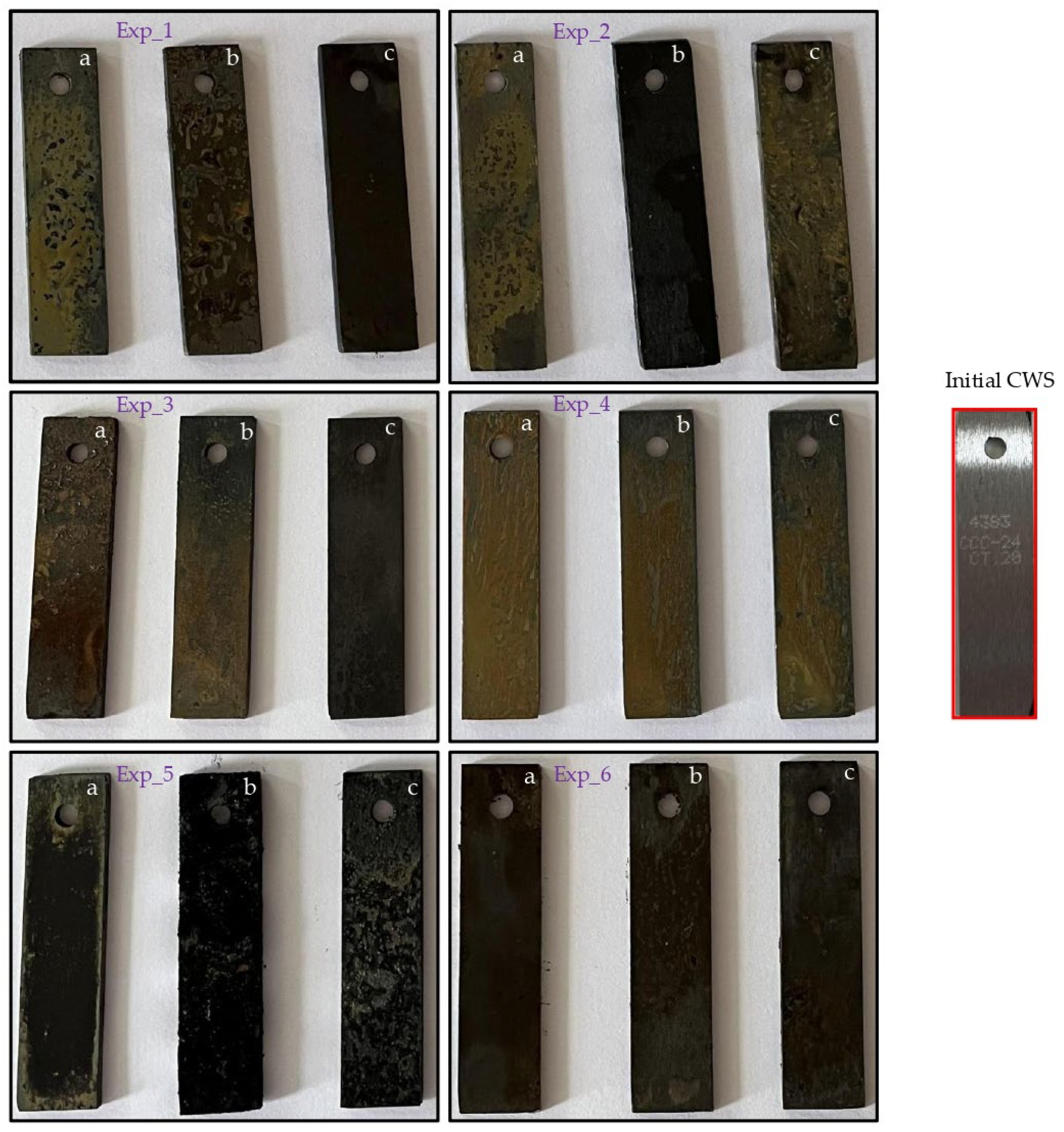
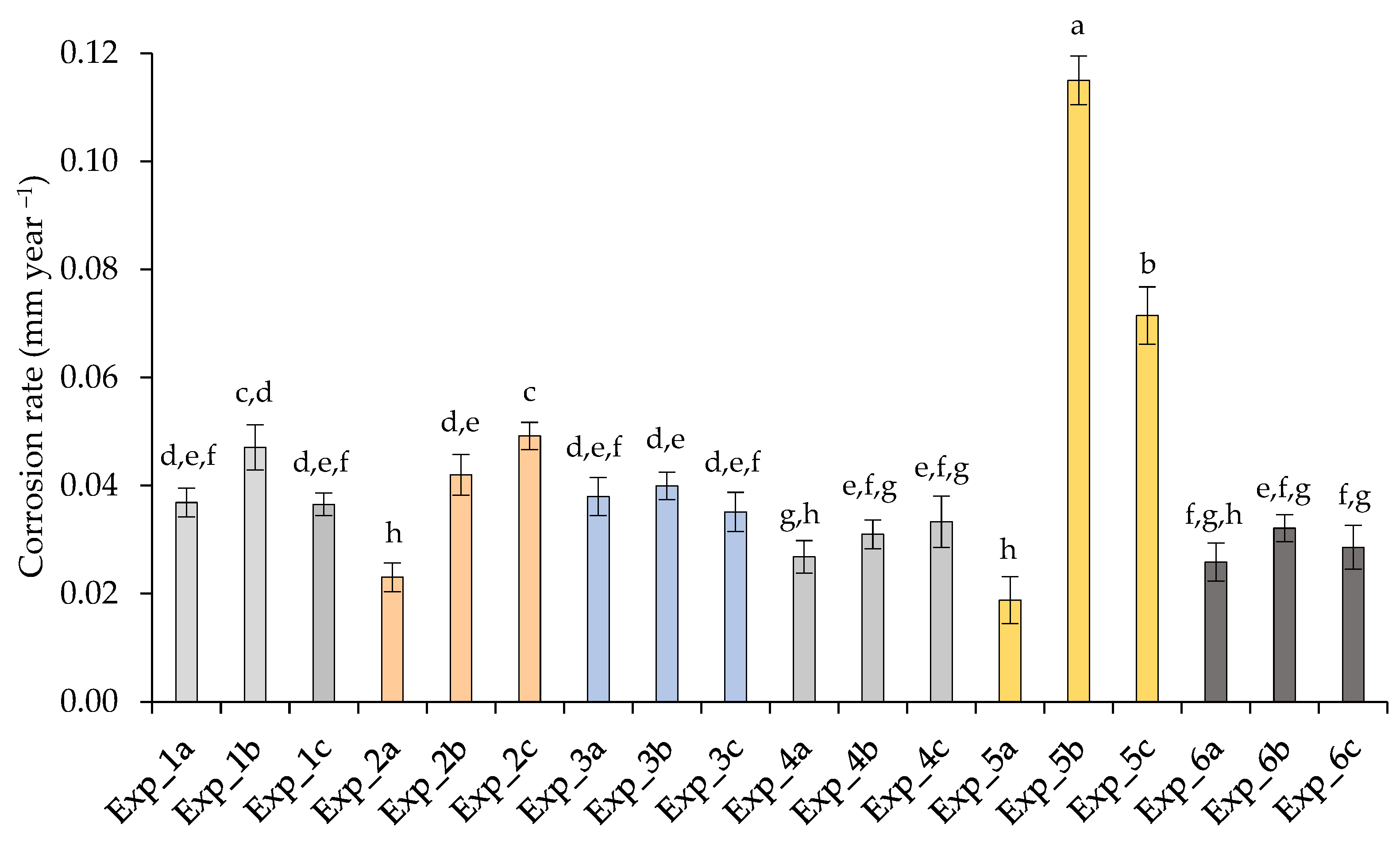
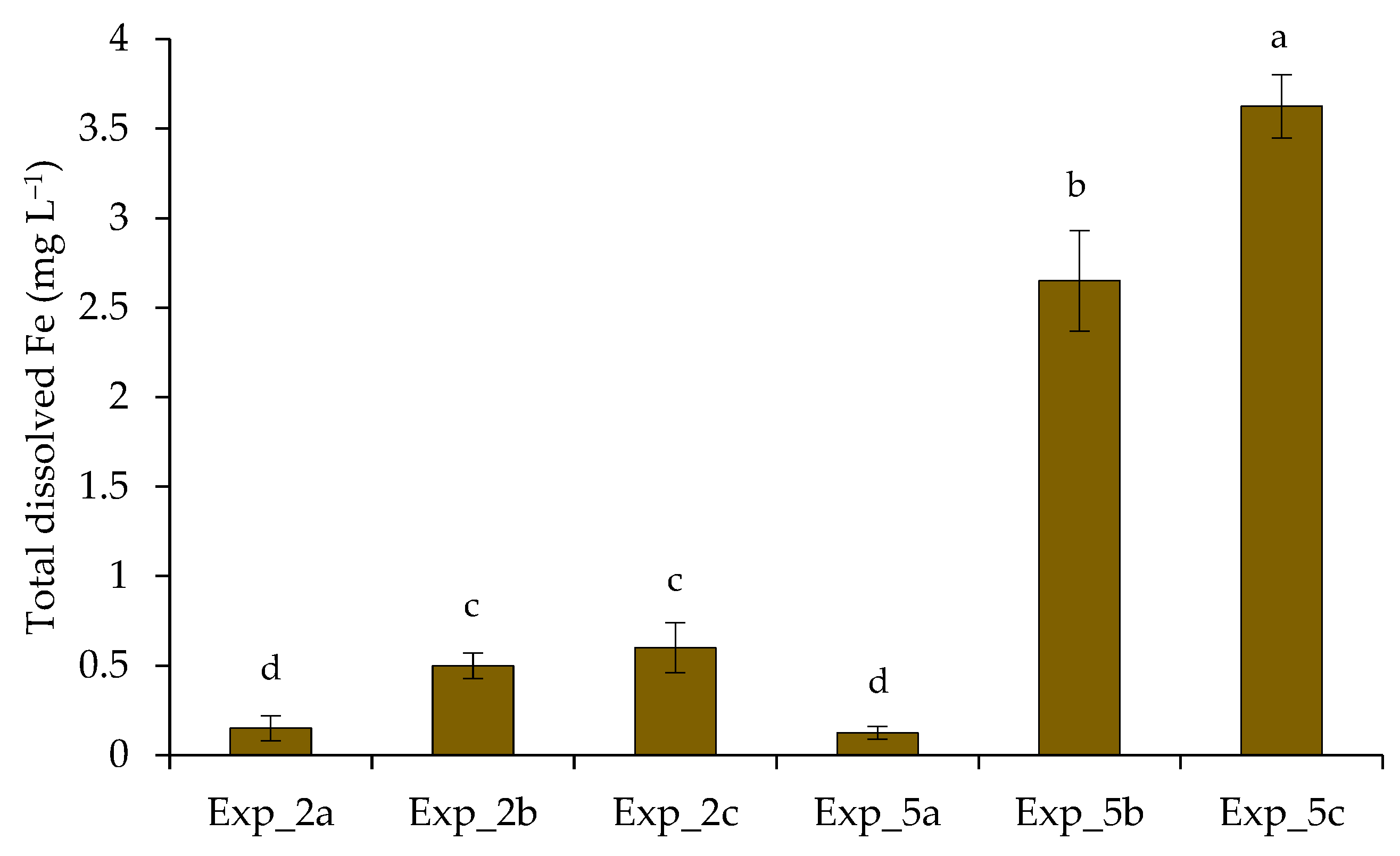
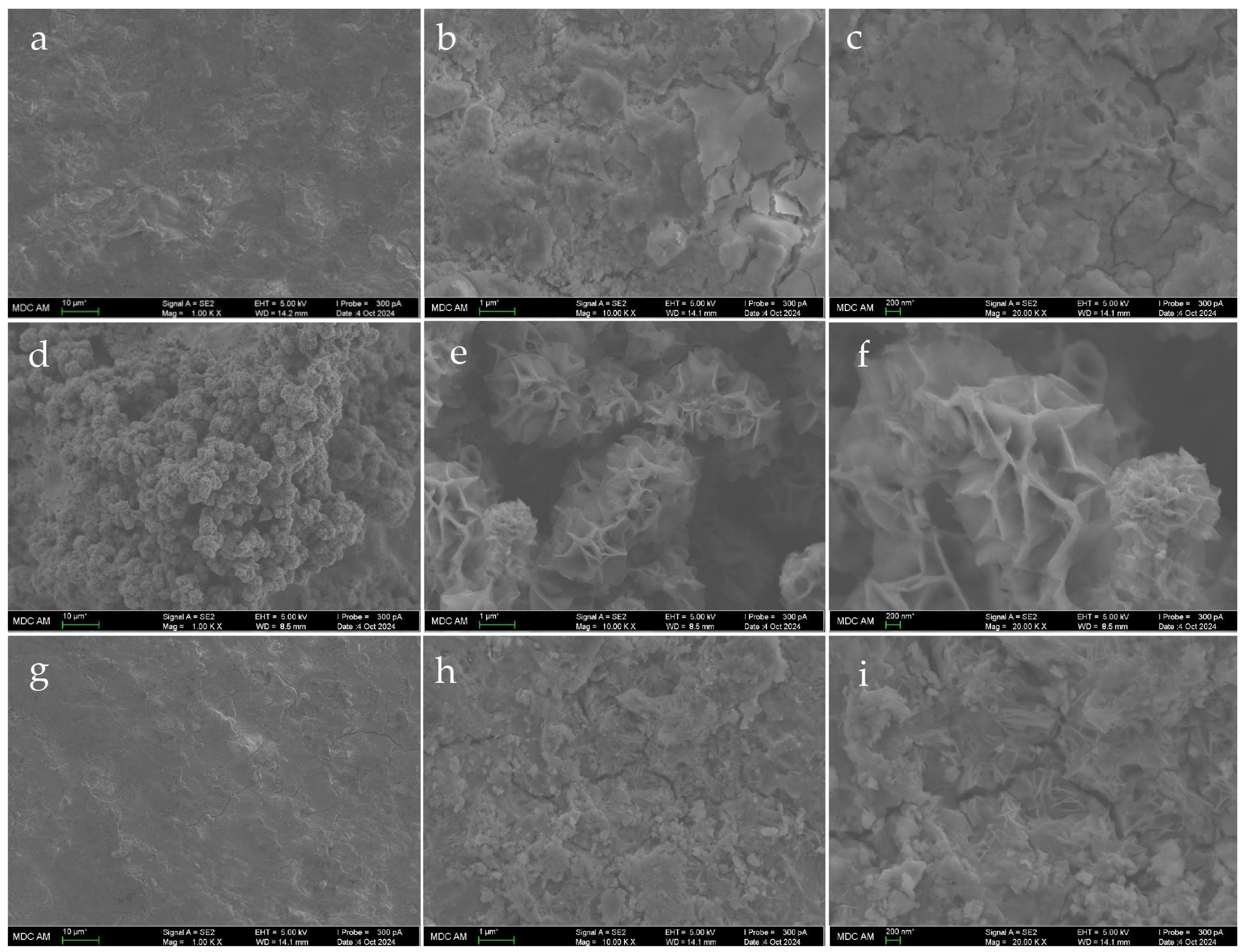

| Experiments | Production Wells | Brief Description of Tests |
|---|---|---|
| Exp_1a | 5705 | Control experiments |
| Exp_1b | Stimulation with acetate, yeast extract, and sulfate | |
| Exp_1c | Stimulation with lactate, yeast extract, and sulfate | |
| Exp_2a | 6024 | Control experiments |
| Exp_2b | Stimulation with acetate and yeast extract | |
| Exp_2c | Stimulation with lactate and yeast extract | |
| Exp_3a | 10,081 | Control experiments |
| Exp_3b | Stimulation with acetate, yeast extract, and sulfate | |
| Exp_3c | Stimulation with lactate, yeast extract, and sulfate | |
| Exp_4a | 11,030 | Control experiments |
| Exp_4b | Stimulation with acetate, yeast extract, and sulfate | |
| Exp_4c | Stimulation with lactate, yeast extract, and sulfate | |
| Exp_5a | 11,407 | Control experiments |
| Exp_5b | Stimulation with acetate, yeast extract, and sulfate | |
| Exp_5c | Stimulation with lactate, yeast extract, and sulfate | |
| Exp_6a | 21,498 | Control experiments |
| Exp_6b | Stimulation with acetate, yeast extract, and sulfate | |
| Exp_6c | Stimulation with lactate, yeast extract, and sulfate |
| Parameters | Produced Water Samples | |||||
|---|---|---|---|---|---|---|
| 5705 | 6024 | 10,081 | 11,030 | 11,407 | 21,498 | |
| pH | 6.08 ± 0.16 | 5.80 ± 0.15 | 6.04 ± 0.13 | 5.94 ± 0.21 | 6.01 ± 0.15 | 6.14 ± 0.09 |
| Total solids (%) | 20.46 ± 0.71 | 10.01 ± 0.41 | 21.31 ± 0.45 | 21.70 ± 0.47 | 22.50 ± 0.60 | 10.85 ± 0.36 |
| Total Fe (mg L−1) | n.d. | n.d. | 2.0 ± 0.5 | 1.1 ± 0.3 | 1.5 ± 0.4 | n.d. |
| NH4+ (mg L−1) | 171.2 ± 5.6 | 126.1 ± 3.9 | 193.7 ± 3.8 | 245.9 ± 3.0 | 231.8 ± 3.3 | 126.4 ± 4.2 |
| Na+ (g L−1) | 66.9 ± 0.3 | 26.7 ± 1.4 | 71.2 ± 0.9 | 73.2 ± 1.1 | 75.4 ± 1.3 | 25.9 ± 1.1 |
| K+ (g L−1) | 0.4 ± 0.1 | 0.3 ± 0.1 | 0.3 ± 0.1 | 0.5 ± 0.1 | 0.3 ± 0.1 | 0.7 ± 0.2 |
| Ca2+ (g L−1) | 11.4 ± 0.1 | 5.8 ± 0.2 | 16.7 ± 0.8 | 11.8 ± 0.8 | 11.7 ± 0.5 | 7.0 ± 0.4 |
| Mg2+ (g L−1) | 3.2 ± 0.9 | 1.7 ± 0.1 | 4.0 ± 0.2 | 2.9 ± 0.5 | 3.1 ± 0.1 | 1.3 ± 0.1 |
| NO2− (mg L−1) | n.d. | n.d. | n.d. | n.d. | n.d. | n.d. |
| NO3− (mg L−1) | n.d. | n.d. | n.d. | n.d. | n.d. | n.d. |
| PO43− (mg L−1) | 1.5 ± 0.4 | 1.2 ± 0.2 | 3.1 ± 0.4 | 1.5 ± 0.5 | 1.8 ± 0.3 | 2.5 ± 0.8 |
| SO42− (mg L−1) | 125 ± 14 | 2230 ± 75 | 154 ± 17 | 380 ± 47 | 450 ± 44 | 187 ± 14 |
| Cl− (g L−1) | 103.2 ± 1.2 | 53.3 ± 2.3 | 97.8 ± 0.8 | 98.2 ± 0.5 | 102.5 ± 0.9 | 53.9 ± 0.3 |
| Atomic % | C | O | Na | Mg | Al | Si | P | S | Cl | K | Ca | Cr | Mn | Fe | Cu |
|---|---|---|---|---|---|---|---|---|---|---|---|---|---|---|---|
| Exp_2b | 37.26 | 29.30 | 2.13 | – | – | – | 0.17 | 0.95 | 1.47 | – | 0.44 | – | 0.20 | 28.08 | – |
| Exp_2c | 37.01 | 18.91 | 1.61 | 0.37 | – | – | 1.06 | 0.73 | 0.56 | – | 0.89 | – | 0.23 | 38.63 | – |
| Exp_5b | 20.83 | 41.12 | – | – | 0.26 | 0.34 | 0.09 | 1.97 | 2.58 | – | 0.17 | 0.17 | 0.26 | 31.90 | 0.31 |
| Exp_5b_f | 31.00 | 21.48 | 3.91 | 0.90 | – | – | – | 15.59 | 2.17 | 0.05 | 1.03 | – | – | 23.87 | – |
| Exp_5c | 17.84 | 41.37 | 0.89 | – | – | 0.13 | – | 2.68 | 3.73 | – | 0.11 | 0.07 | 0.18 | 32.86 | 0.14 |
| Alpha Diversity Metrics | Samples from Stimulated Tests | |||
|---|---|---|---|---|
| Exp_2b | Exp_2c | Exp_5b | Exp_5c | |
| Observed OTU number | 36 | 16 | 34 | 19 |
| Chao estimated OTU number | 47 | 24 | 59 | 31 |
| Shannon entropy | 3.24 | 3.01 | 4.07 | 2.07 |
| Simpson’s dominance | 0.84 | 0.83 | 0.91 | 0.54 |
Disclaimer/Publisher’s Note: The statements, opinions and data contained in all publications are solely those of the individual author(s) and contributor(s) and not of MDPI and/or the editor(s). MDPI and/or the editor(s) disclaim responsibility for any injury to people or property resulting from any ideas, methods, instructions or products referred to in the content. |
© 2026 by the authors. Licensee MDPI, Basel, Switzerland. This article is an open access article distributed under the terms and conditions of the Creative Commons Attribution (CC BY) license.
Share and Cite
Ziganshina, E.E.; Ziganshin, A.M. Microbially Induced Corrosion of Carbon Steel in Oilfield Waters from the Romashkino Oilfield (Republic of Tatarstan): Immersion Corrosion Testing. Corros. Mater. Degrad. 2026, 7, 36. https://doi.org/10.3390/cmd7020036
Ziganshina EE, Ziganshin AM. Microbially Induced Corrosion of Carbon Steel in Oilfield Waters from the Romashkino Oilfield (Republic of Tatarstan): Immersion Corrosion Testing. Corrosion and Materials Degradation. 2026; 7(2):36. https://doi.org/10.3390/cmd7020036
Chicago/Turabian StyleZiganshina, Elvira E., and Ayrat M. Ziganshin. 2026. "Microbially Induced Corrosion of Carbon Steel in Oilfield Waters from the Romashkino Oilfield (Republic of Tatarstan): Immersion Corrosion Testing" Corrosion and Materials Degradation 7, no. 2: 36. https://doi.org/10.3390/cmd7020036
APA StyleZiganshina, E. E., & Ziganshin, A. M. (2026). Microbially Induced Corrosion of Carbon Steel in Oilfield Waters from the Romashkino Oilfield (Republic of Tatarstan): Immersion Corrosion Testing. Corrosion and Materials Degradation, 7(2), 36. https://doi.org/10.3390/cmd7020036

