Article

Effects of Inhibitors on Corrosion Resistance of Acrylic–Amino Resin Coatings in Alkaline Solution for Industrial Measuring Tapes


1
Electrochemistry and Corrosion Laboratory, School of Mechanical Engineering and Rail Transit, Changzhou University, Changzhou 213164, China
2
Jiangsu Kexiang Anticorrosion Materials Co., Ltd., Changzhou 213251, China
*
Author to whom correspondence should be addressed.
Corros. Mater. Degrad. 2026, 7(1), 12; https://doi.org/10.3390/cmd7010012
Submission received: 24 December 2025 / Revised: 28 January 2026 / Accepted: 1 February 2026 / Published: 10 February 2026

Abstract

During industrial construction, steel measuring tapes are frequently exposed to alkaline cement environments, leading to rapid degradation of protective coatings and corrosion of the steel substrate. In this study, acrylic–amino resin composite coatings incorporating three different inhibitor systems (RZ/ZMP, RZ/ZPO, and RZ/ZPA) were prepared, and their corrosion resistance in alkaline media was systematically evaluated. The microstructure and composition of the coatings were characterized by SEM, EDS, and XRD, while surface wettability was assessed by water contact angle measurements. Corrosion protection performance was investigated using potentiodynamic polarization, electrochemical impedance spectroscopy (EIS), and long-term alkaline immersion tests. The results show that the incorporation of inhibitors significantly enhances the corrosion resistance of the coatings. Compared with the inhibitor-free acrylic–amino resin coating, the corrosion current density of the RZ/ZPA coating decreases by approximately 1.9 times, while that of the RZ/ZPO coating decreases by about 1.7 times. EIS analysis further reveals that the RZ/ZPO/acrylic–amino resin coating exhibits the highest coating resistance (1.41 × 10⁷ Ω·cm2), which is approximately 4.2 times higher than that of the inhibitor-free coating and 188 times higher than that of the steel substrate, indicating the strongest ion-blocking capability. Based on combined electrochemical parameters and long-term alkaline immersion behavior, the corrosion resistance of the coatings increases in the following order: acrylic–amino resin coating < RZ/ZPA < RZ/ZMP < RZ/ZPO. Overall, the synergistic effect of multiple inhibitors significantly improves both the electrochemical corrosion resistance and long-term alkaline durability of acrylic–amino resin coatings.

1. Introduction

Reinforced concrete structures represent the most fundamental load-bearing and protective units in modern construction engineering and are widely applied in critical fields such as high-rise buildings, infrastructure, and underground engineering [1,2,3]. However, cement-based concrete inevitably contains strongly alkaline components, and metal tools in contact with concrete during construction are prone to corrosion, resulting in considerable economic losses [4,5,6]. As one of the most commonly used metal measuring tools in construction and industrial applications, steel tape measures are widely adopted due to their portability and durability. To improve the service stability of steel tapes under complex environmental conditions, protective coating systems such as polyester films, acrylic coatings, and epoxy resins are commonly applied to their surfaces [7,8,9]. These coatings can effectively block external corrosive media and mitigate substrate reactions to a certain extent [10]. Nevertheless, once the coating undergoes aging or local damage, the exposed metal surface is rapidly attacked by alkaline media, leading to coating blistering, delamination, or corrosion propagation [11], which directly compromises measurement accuracy and operational safety. Therefore, elucidating the failure behavior and corrosion resistance of tape-measure coatings under alkaline environments is of significant engineering importance.
Among various protective strategies, the incorporation of corrosion inhibitors represents an effective and economical approach. Puig et al. [12] reported that introducing zinc molybdophosphate (ZMP) into epoxy powder coatings markedly enhanced the ionic barrier capability, increasing the polarization resistance by an order of magnitude and thereby effectively delaying corrosion of the steel substrate. Gimeno et al. [13] compared the performance of zinc phosphate and zinc molybdophosphate pigments in epoxy systems and found that coatings containing Nubirox 106 exhibited higher polarization resistance, lower double-layer capacitance, and superior interfacial stability under long-term immersion. Wan et al. [14] demonstrated that incorporating zinc phosphate into waterborne acrylic coatings effectively suppressed anodic reactions at coating defects, enhanced wet adhesion, and retarded corrosion propagation. Furthermore, Localized Electrochemical Impedance Spectroscopy (LEIS) investigations by Zhang et al. [15] confirmed that zinc phosphate pigments could induce the formation of protective phosphate films at defect sites, thereby hindering defect growth.
In recent years, increasing attention has been paid to the synergistic effects among different corrosion inhibitors [16,17]. For example, Sharma et al. [18] reported that SiO2 and ZrO2 exhibit a pronounced synergistic barrier effect in epoxy systems, increasing the interfacial resistance by approximately 2.66 times. Similarly, Yang et al. [19] found that the combined use of zinc phosphate (ZP) and BaSO4 significantly improved the salt-spray resistance of powder coatings and effectively delayed corrosion propagation. These studies collectively demonstrate that rational design of inhibitor systems plays a critical role in enhancing corrosion resistance.
Acrylic–amino resin coatings are a typical class of crosslinked organic protective coating systems, in which the acrylic resin serves as the primary film-forming component, providing good adhesion performance, while the amino resin is usually employed as a crosslinking agent. During the curing process, the amino resin undergoes condensation reactions with the acrylic resin, forming a dense three-dimensional crosslinked network structure, thereby significantly enhancing the corrosion resistance of the coating. However, under strongly alkaline construction service environments, acrylic–amino resin coatings applied on steel tape measures inevitably suffer from coating degradation, deterioration of barrier properties, and corrosion of the steel substrate.
Based on this, multiple commercial corrosion inhibitors (RZ, ZPO, ZMP, and ZPA) were incorporated into acrylic–amino resin coatings in this study. The corrosion resistance performance and failure mechanisms of different inhibitor systems and their synergistic effects in alkaline media were systematically evaluated through electrochemical measurements and immersion corrosion tests, as well as surface morphology and compositional characterization.

2. Materials and Methods

2.1. Raw Materials

In this study, an acrylic–amino resin coating supplied by Jiangsu Kexiang Anticorrosion Materials Co., Ltd. (Changzhou, China) was used. The coating has a solid content of 75%, a relative molecular weight of approximately 2000, an acid value of 40 mg KOH·g−1, and a hydroxyl value of 90 mg KOH·g−1. Its main components consist of acrylic resin and amino resin, and it also contains titanium dioxide, leveling agents, deionized water, and other additives. The steel substrates were 50# carbon steel (GB/T 699) [20] plates with dimensions of 200 × 25 × 0.5 mm, which were also provided by Jiangsu Kexiang Anticorrosion Materials Co., Ltd.
The corrosion inhibitors used in this study were purchased from Heubach GmbH (Langelsheim, Germany), including modified zinc aluminum phosphate (ZPA), modified phosphate (ZMP), modified zinc phosphate (ZPO), and an organic corrosion inhibitor (RZ). Deionized water (D.I. water) used throughout the experiments was produced using a ultrapure water system (UPC-III-40L, Ulupure, Chengdu, China).

2.2. Sample Preparation

Different proportions of anticorrosive pigments were added to the acrylic–amino resin coating according to the formulation and then introduced into a small horizontal sand mill (SF400). The inhibitor concentrations were selected based on preliminary formulation optimization conducted within an industrial research project. Zirconia beads accounting for 60–70% of the total slurry weight were added, and the mixture was ground and dispersed at a rotational speed of 3600 r·min−1 for 45–60 min. The fineness of the dispersion was measured using a coating scraper fineness gauge. The viscosity of the coating was determined with a Ford cup viscometer (Ind-1), and an appropriate amount of deionized water was added to adjust the viscosity, with the efflux time controlled within 35–45 s.
The prepared coatings were applied onto the convex surface of steel plate substrates using a 100# wire-bar coater at a uniform speed and pressure. After coating, the film surface was required to be free of bubbles and pinholes. The coated samples were then placed at an inclination angle of 80° in a muffle furnace (SX-10-12) and cured according to different processing conditions to obtain the steel tape specimens. At least three tape samples were prepared for each coating system. The experimental schemes and preparation procedures for the different coatings are summarized in Table 1 and Figure 1.

2.3. Characterization

The cross-sections of the samples were sequentially ground using metallographic abrasive papers with grit sizes ranging from 5 to 20 μm, followed by polishing with a 0.5 μm diamond suspension. The coating thickness was measured using a digital optical microscope (OM, VH-Z500R, Keyence, Osaka, Japan).
The surface morphology and elemental composition of the samples were analyzed using a scanning electron microscope (SEM, model JSM-6510, JEOL Ltd., Tokyo, Japan) equipped with an energy-dispersive X-ray spectrometer (EDS, Oxford X-act, Oxford Instruments, Abingdon, UK). The SEM operated at an accelerating voltage of 30 kV, with a data acquisition time of 40 s per scan point.
Phase composition and crystalline structure of the coatings were characterized using an X-ray diffractometer (XRD, D/max–2500PC, Rigaku, Tokyo, Japan) equipped with a vertical wide-angle goniometer. The instrument operated at 40 kV and 40 mA with graphite-monochromated Cu-Kα radiation (λ = 1.5406 Å) in a Bragg–Brentano (θ–2θ) geometry. The diffractometer utilized a para-focusing geometry, and data were collected over the 2θ range of 20° to 90° at a scanning rate of 0.01°·min−1 to enhance both intensity and angular resolution.

2.4. Hydrophilicity

The contact angle was measured using a contact angle goniometer (JC2000D1, Shanghai Zhongchen, Shanghai, China). For each sample, measurements were taken at three different positions, and the average value was recorded.

2.5. Electrochemical Corrosion

The electrochemical performance of the samples was evaluated using an electrochemical workstation (CHI660E, Chenhua, Shanghai, China). Electrochemical corrosion tests were conducted in 1 mol/L NaOH solution using a conventional three-electrode setup. The working electrode was the steel sample, the reference electrode was an Ag/AgCl electrode, and the counter electrode was a platinum sheet. The sample was connected to a conductive wire using conductive adhesive and sealed with silicone gel, exposing an effective surface area of 1 cm2. The open circuit potential (OCP) was recorded for 1800 s to ensure a steady-state condition. Electrochemical impedance spectroscopy (EIS) measurements were performed at the open circuit potential over a frequency range of 10−2–105 Hz with an AC perturbation amplitude of 10 mV. Potentiodynamic polarization curves were recorded at a scan rate of 1 mV/s. All electrochemical measurements were carried out at 25 °C.

2.6. Long-Term Alkaline Immersion

An alkaline detergent (QiQiang, Nanfeng Chemical Industry Group Co., Ltd., Yuncheng, China) was dissolved in deionized water to prepare a customized corrosive solution with a concentration of 6 wt.%. The main alkaline constituents of the detergent formulation include sodium hydroxide, sodium carbonate, and sodium silicate, and the free alkali content of the finished detergent powder (expressed as NaOH) ranges from 5.0 to 7.0%. These alkaline components dissolve and undergo hydrolysis in water, resulting in a significant increase in the OH concentration and thus establishing a stable alkaline corrosive environment. The pH value of the corrosive solution was measured to be approximately 11.0.
The prepared samples were placed obliquely in the corrosive solution, with approximately two-thirds of the coating area immersed in the medium, and the surface condition of the samples was periodically monitored during the immersion process. When obvious degradation features such as discoloration, blistering, cracking, or peeling were observed, and the coating could be damaged by gentle finger scratching, the coating was considered to have failed and the test was terminated.

3. Results

3.1. Characterization

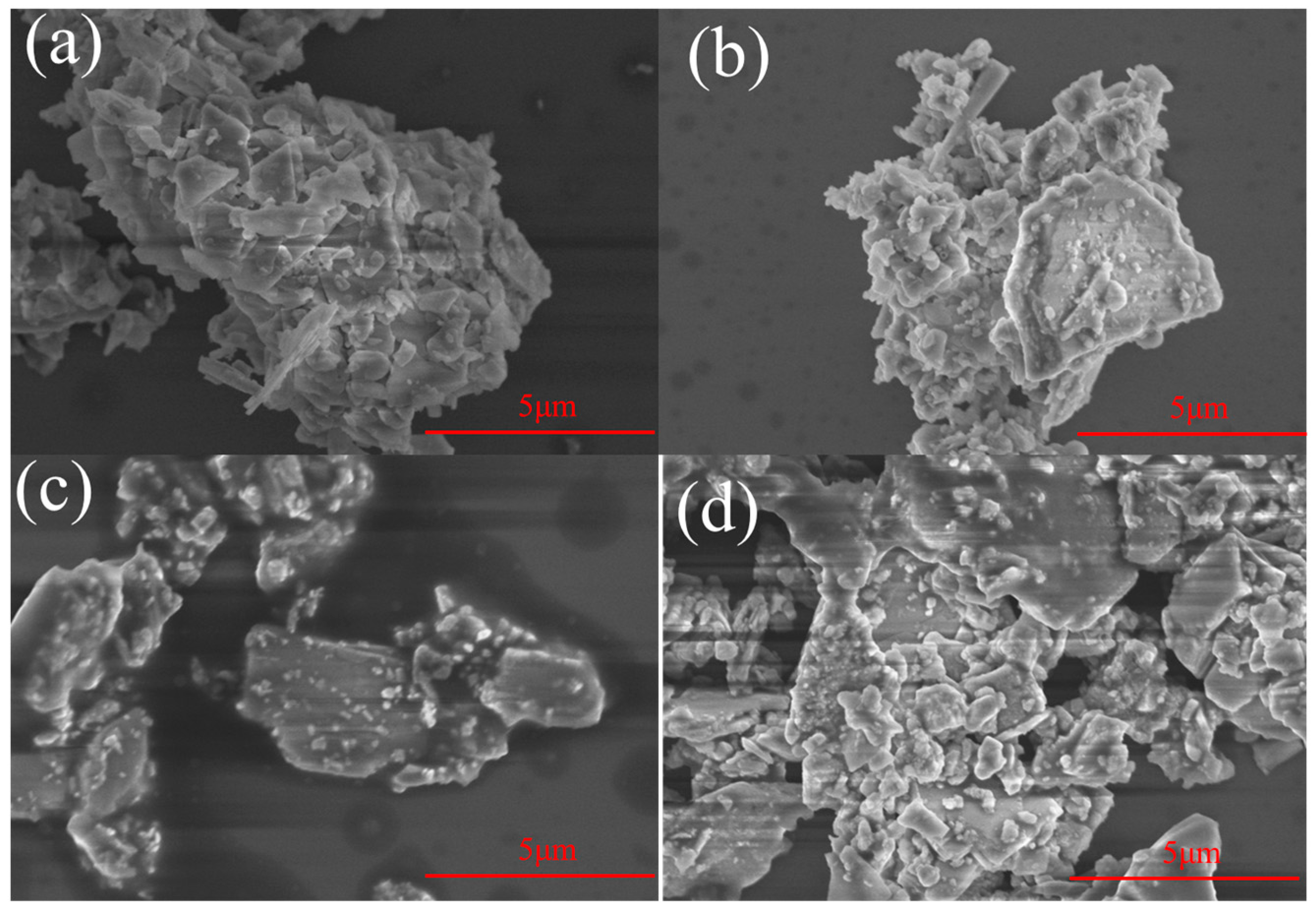
The particle morphologies of these inhibitor powders are shown in Figure 2, while their elemental compositions are summarized in Table 2. The RZ powder mainly exhibits irregular block-like agglomerates with a relatively compact structure and a rough surface. The ZPA powder is composed of layered and block-shaped particles, with locally smooth plate-like surfaces. The ZPO powder mainly consists of relatively dispersed plate-like or short flake-shaped particles with a smaller particle size. In contrast, the ZMP powder shows pronounced agglomeration behavior, being formed by the accumulation of numerous fine irregular particles, resulting in a rough and heterogeneous surface morphology. EDS analysis indicates that RZ is primarily composed of C, O, and Zn elements, with no detectable P or Al, whereas ZPA, ZPO, and ZMP are dominated by O, P, and Zn; additionally, Al is detected in ZPA and a trace amount of Mo is identified in ZMP.
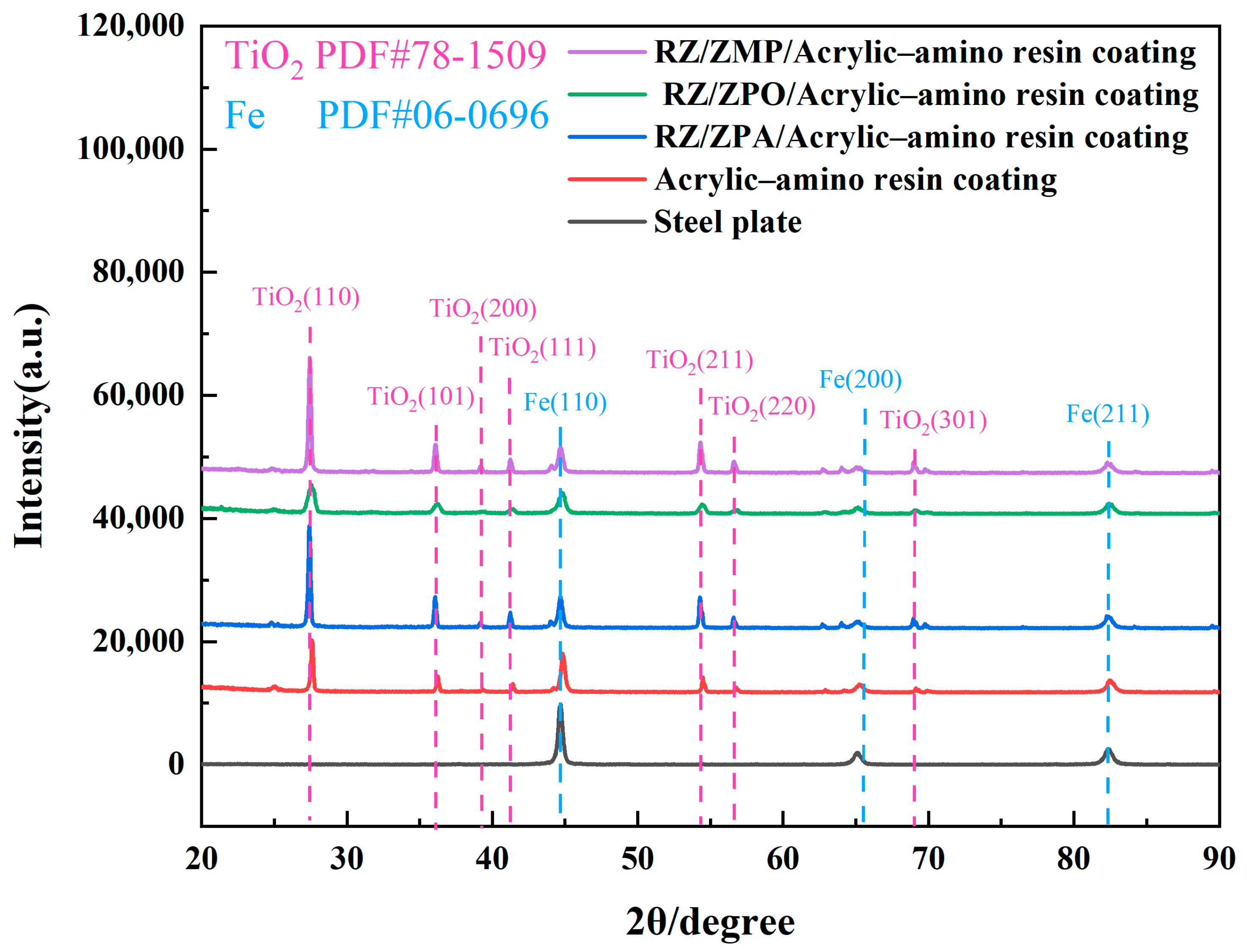
Figure 3 shows the XRD patterns of different coatings. The uncoated sample #5 exhibits only the diffraction peaks corresponding to α-Fe, while TiO2 peaks are detected in the coated samples. Since only TiO2 originating from the acrylic–amino resin coating was detected, and not the other fillers within the coating, this may be attributed to the small amount of anticorrosive pigments added—too low to be detected by XRD. Distinct diffraction peaks observed at 27.43°, 36.08°, 39.19°, 41.24°, 54.31°, 56.62°, and 69.00° correspond to the (110), (101), (200), (111), (211), (220), and (301) planes of TiO2, respectively, indicating that the coating consists of tetragonal TiO2 phase (PDF Card No. #71-0650). In addition, the sharp and narrow diffraction peaks demonstrate that TiO2 exhibits good crystallinity [21].
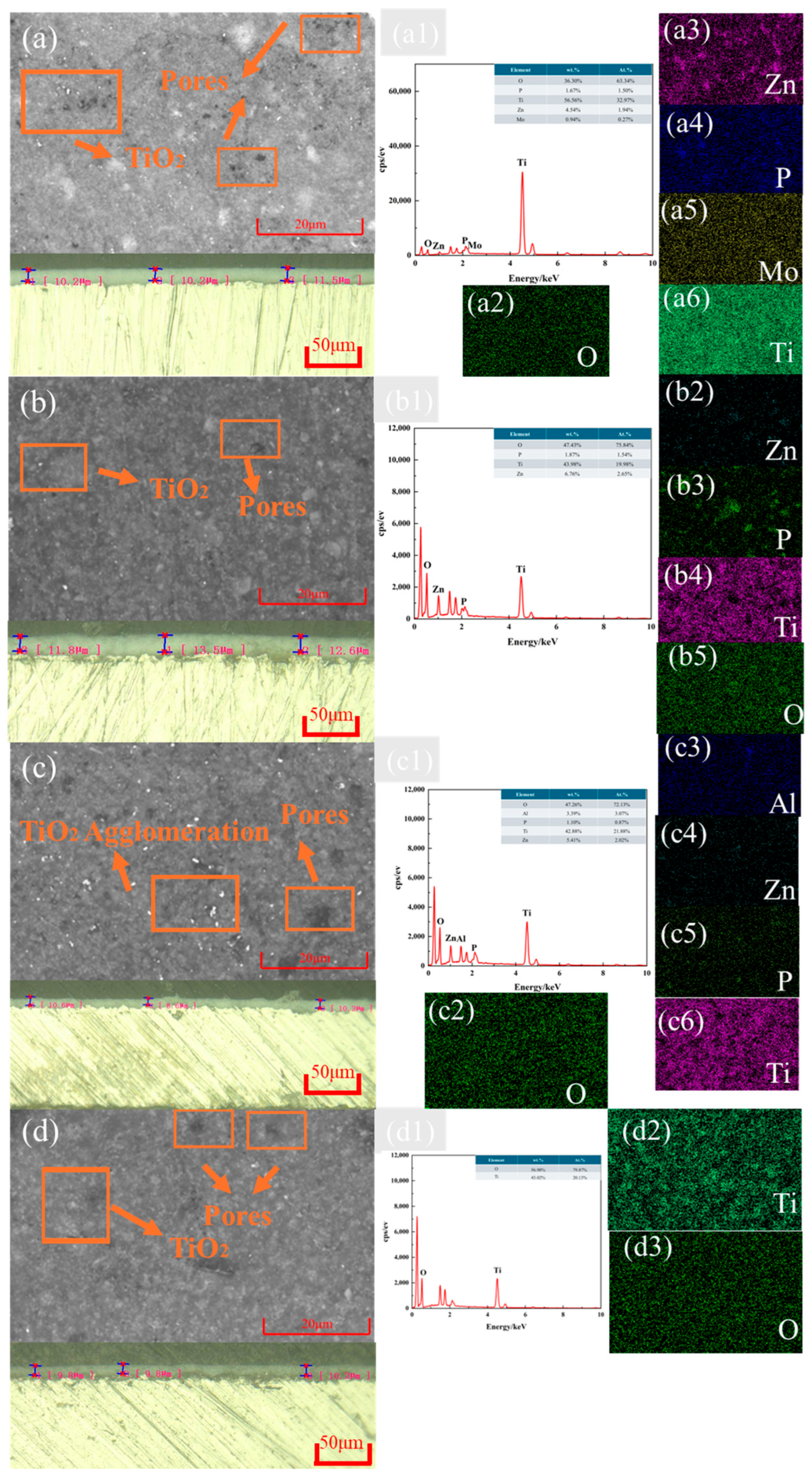
Figure 4 shows the surface SEM morphologies, cross-sectional optical microscopy (OM) images, EDS spectra, and the corresponding elemental mapping results of the different coatings. As shown in Figure 4a–d, a large number of interconnected, network-like pore structures can be observed, which are typical microstructural features formed during the curing of organic coatings [22]. The optical microscopy images further indicate that the coatings prepared using the film applicator exhibit good adhesion to the steel substrate, with a uniform distribution and a relatively stable thickness. Specifically, the average coating thicknesses of samples #1, #2, #3, and #4 are 10.63 ± 0.75 μm, 12.63 ± 0.85 μm, 9.80 ± 1.06 μm, and 9.93 ± 0.23 μm, respectively. In addition, the introduction of TiO2 nanoparticles leads to their attachment on the coating surface, effectively filling the pores within the film [21]. However, as shown in Figure 4c, partial agglomeration of TiO2 particles can still be observed, which is attributed to the inherent difficulty of completely dispersing nanoparticles through mechanical stirring.
In the EDS spectrum shown in Figure 4(d1), both O and Ti elements are detected, originating from the TiO2 incorporated in the acrylic–amino resin coating. The corresponding elemental mapping images (Figure 4(d2,d3)) reveal that the elements are uniformly distributed within the coating, with no noticeable segregation.
Furthermore, as shown in Figure 4(a1,b1,c1)), Zn and P elements are detected in all samples. These elements primarily originate from two sources: (i) the RZ powder itself contains Zn; and (ii) all three anticorrosive pigments—ZMP, ZPO, and ZPA—contain Zn as a common component. The P element is likewise derived from these three pigments. The Al detected in Figure 4(c2) originates from the ZPA pigment, whereas the trace amount of Mo observed in Figure 4(a2) results from the incorporation of ZMP powder.
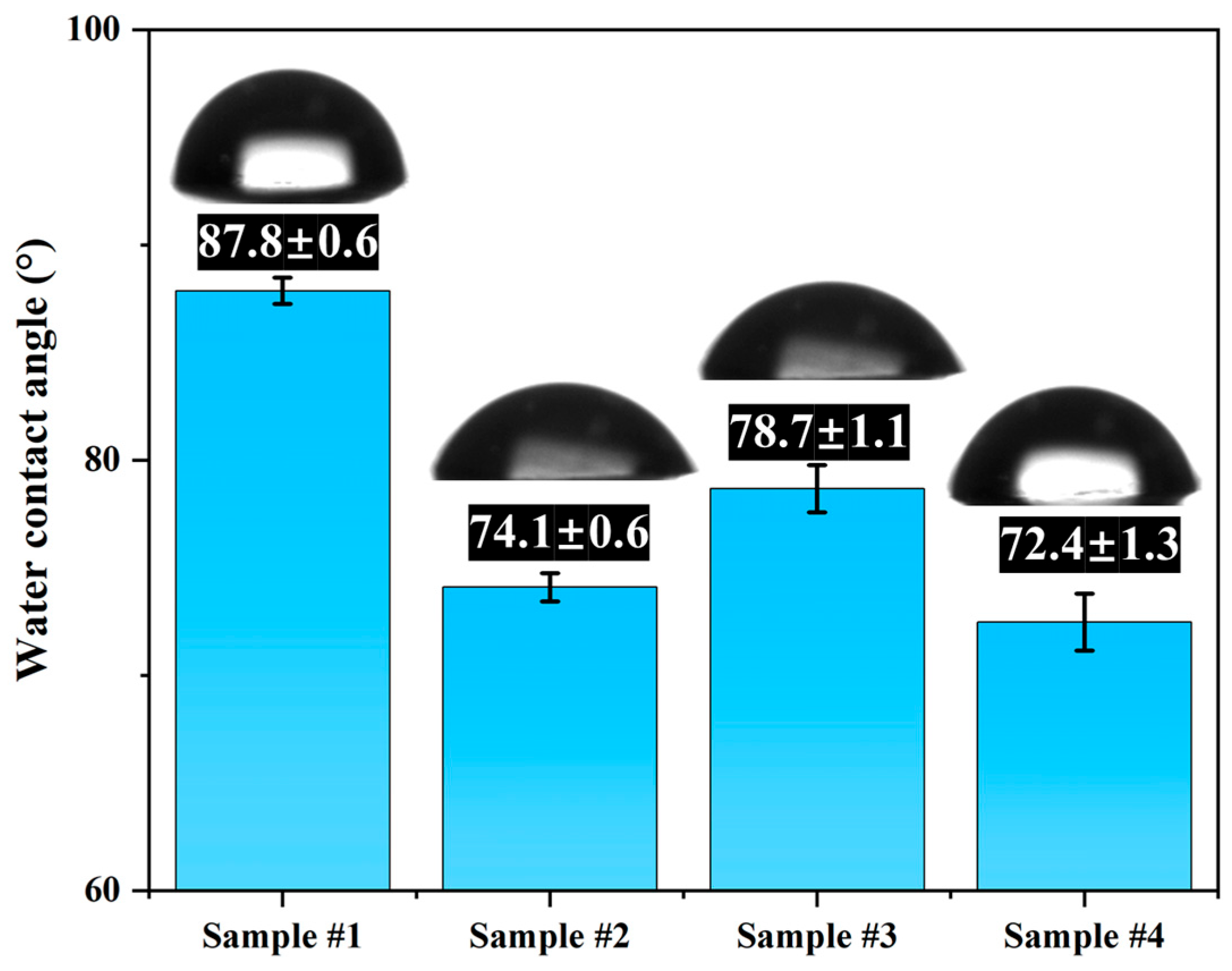
Figure 5 shows the water contact angles of the different coatings. The acrylic–amino resin coating (sample #4) exhibits strong hydrophilicity due to the presence of TiO2, with a contact angle of 72.4 ± 1.3°. In contrast, the RZ/ZPO/acrylic–amino resin coating and the RZ/ZPA/acrylic–amino resin coating (samples #2 and #3) display slightly increased contact angles of 74.1 ± 0.6° and 78.7 ± 1.1°, respectively. This increase is mainly attributed to the filling effect of phosphate-based pigments, which enhances the compactness of the coating, reduces capillary water-absorption pathways, and consequently weakens surface wettability [23]. Notably, the RZ/ZMP/acrylic–amino resin coating (sample #1) exhibits the highest water contact angle of 87.8 ± 0.6°, indicating the lowest surface wettability and the strongest resistance to water wetting among all samples.

3.2. Long-Term Alkaline Immersion

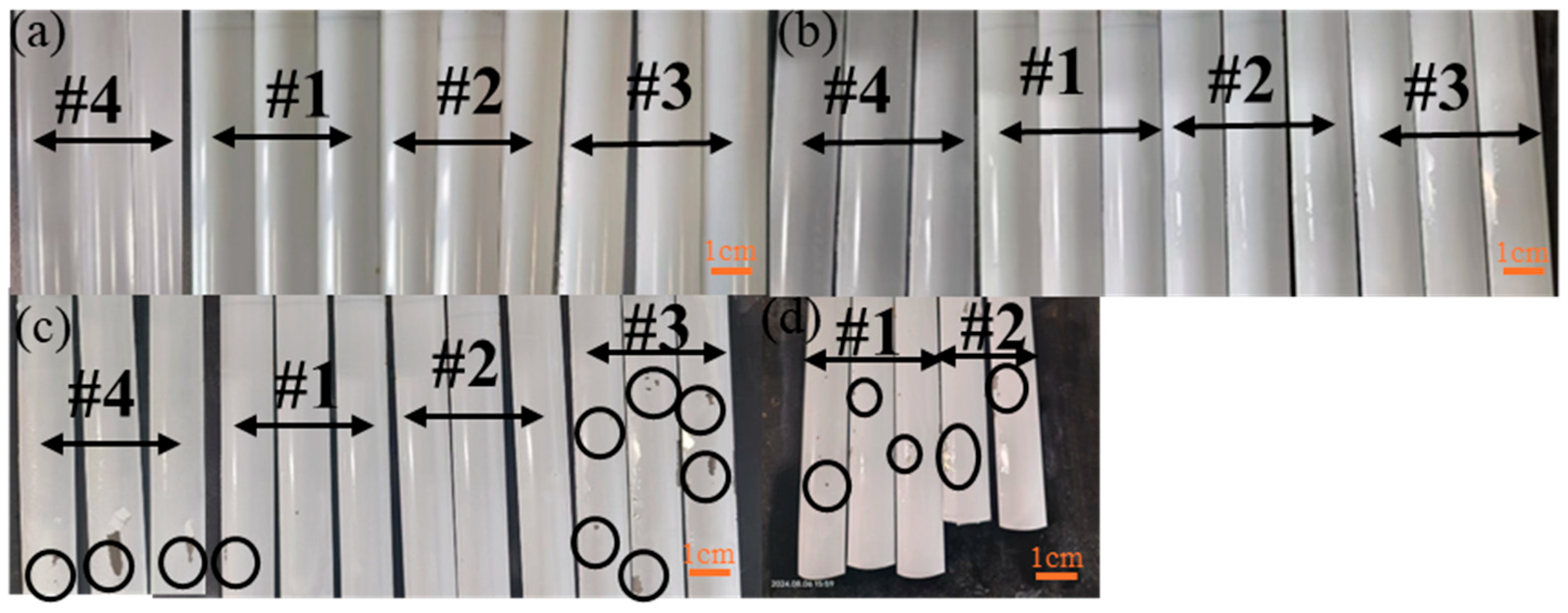
Figure 6 shows the appearance of different coatings after immersion in an alkaline detergent solution for 0, 12, 24, and 30 h. At 0 h, all samples remained transparent and smooth, indicating good film-forming quality. After 12 h of immersion, all coatings were still intact, with no obvious signs of failure. When the immersion time was extended to 24 h, sample #3 began to exhibit localized whitening and slight defects, whereas the coating on sample #4 had clearly lost adhesion and exhibited extensive peeling. In contrast, sample #1 showed only a minor local delamination, and sample #2 still displayed no noticeable changes. After 30 h of immersion, the peeling of sample #2 became more pronounced, and the remaining two coating strips of sample #1 also experienced complete detachment.
The above failure behavior can be mainly attributed to the enhanced wettability and permeability of the alkaline detergent solution induced by the presence of surfactants, which facilitates the penetration of OH ions along coating micro-pores and interfacial defects to the coating/steel substrate interface, thereby triggering localized electrochemical corrosion reactions [24]. Meanwhile, continuous water ingress leads to water uptake and swelling of the coating, generating additional interfacial stresses and further weakening the adhesion between the coating and the substrate. When the interfacial bonding strength is insufficient to withstand the shear stress arising from corrosion reactions and volumetric swelling, coating delamination and eventual peeling occur [25]. Based on the appearance changes observed at different immersion times, the alkaline resistance of the four coatings can be ranked from strongest to weakest as: Sample #2 > Sample #1 > Sample #3 > Sample #4.

3.3. Electrochemical Corrosion Resistance

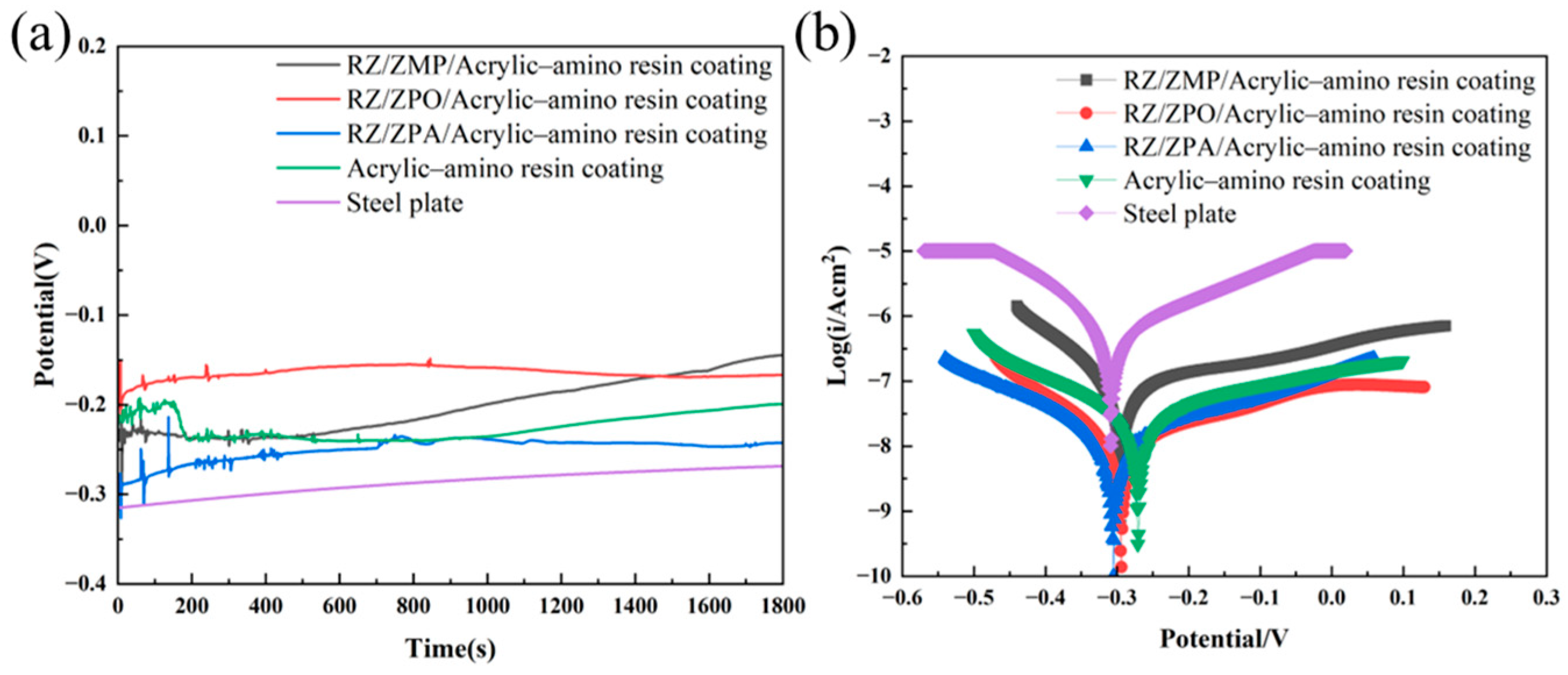
Figure 7 shows the electrochemical corrosion behavior of different coatings in 1 mol·L−1 NaOH solution. Figure 7a presents the open-circuit potential (OCP) curves of different coatings after immersion for 30 min. The steel substrate exhibits the most negative steady-state OCP (−0.2685 V), indicating the poorest corrosion resistance in the alkaline environment. In contrast, all coated samples show a pronounced positive shift in steady-state OCP, demonstrating that the acrylic–amino resin coating effectively hinders the penetration of the alkaline medium and suppresses the anodic dissolution of the substrate. Considering only the variation trend of steady-state OCP, the preliminary corrosion resistance of the samples follows the order: RZ/ZMP/acrylic–amino resin coating > RZ/ZPO/acrylic–amino resin coating > acrylic–amino resin coating > RZ/ZPA/acrylic–amino resin coating > steel plate.
Figure 7b shows the potentiodynamic polarization curves, and the corresponding electrochemical corrosion parameters are summarized in Table 3. Based on the corrosion current density ( i c o r r ), the steel substrate exhibits the highest i c o r r value of 7.39 × 10⁻⁸ A·cm−2, confirming its lowest corrosion resistance. After coating with the acrylic–amino resin, the   i c o r r value decreases to 2.78 × 10⁻⁸ A·cm−2, corresponding to an improvement in corrosion resistance by approximately 2.7 times compared with the bare steel.
After incorporating anticorrosive pigments, distinct differences in electrochemical corrosion behavior are observed. The RZ/ZMP/acrylic–amino resin coating exhibits an i c o r r of 1.17 × 10⁻⁷ A·cm−2, which is approximately 1.6 times higher than that of the steel substrate, indicating relatively inferior corrosion resistance at the early immersion stage. This behavior may be attributed to the time-dependent inhibition effect of the ZMP pigment. In contrast, the RZ/ZPA/acrylic–amino resin coating shows a significantly reduced i c o r r of 1.48 × 10⁻⁸ A·cm−2, corresponding to an enhancement in corrosion resistance by approximately 5.0 times relative to the steel substrate and 1.9 times compared with the pigment-free acrylic–amino resin coating. Similarly, the RZ/ZPO/acrylic–amino resin coating exhibits an i c o r r of 1.65 × 10⁻⁸ A·cm−2, indicating a corrosion resistance improvement of approximately 4.5 times compared with the steel substrate. It should be noted that the OCP results mainly reflect the thermodynamic corrosion tendency, whereas the quantitative evaluation of corrosion resistance is primarily based on the i c o r r values. Accordingly, the corrosion resistance of the samples can be ranked in ascending order as follows: steel plate < RZ/ZMP/acrylic–amino resin coating < acrylic–amino resin coating < RZ/ZPO/acrylic–amino resin coating < RZ/ZPA/acrylic–amino resin coating.
Overall, the coating failure sequence observed during long-term alkaline immersion shows good agreement with the corrosion resistance trends obtained from electrochemical measurements. The minor differences in the ranking of intermediate samples mainly arise from the different aspects of corrosion behavior emphasized by each testing method: electrochemical tests are more sensitive to short-term interfacial reactions and ion transport processes, whereas long-term immersion tests comprehensively reflect the coating barrier properties, water uptake and swelling behavior, as well as the evolution of coating–substrate interfacial adhesion.
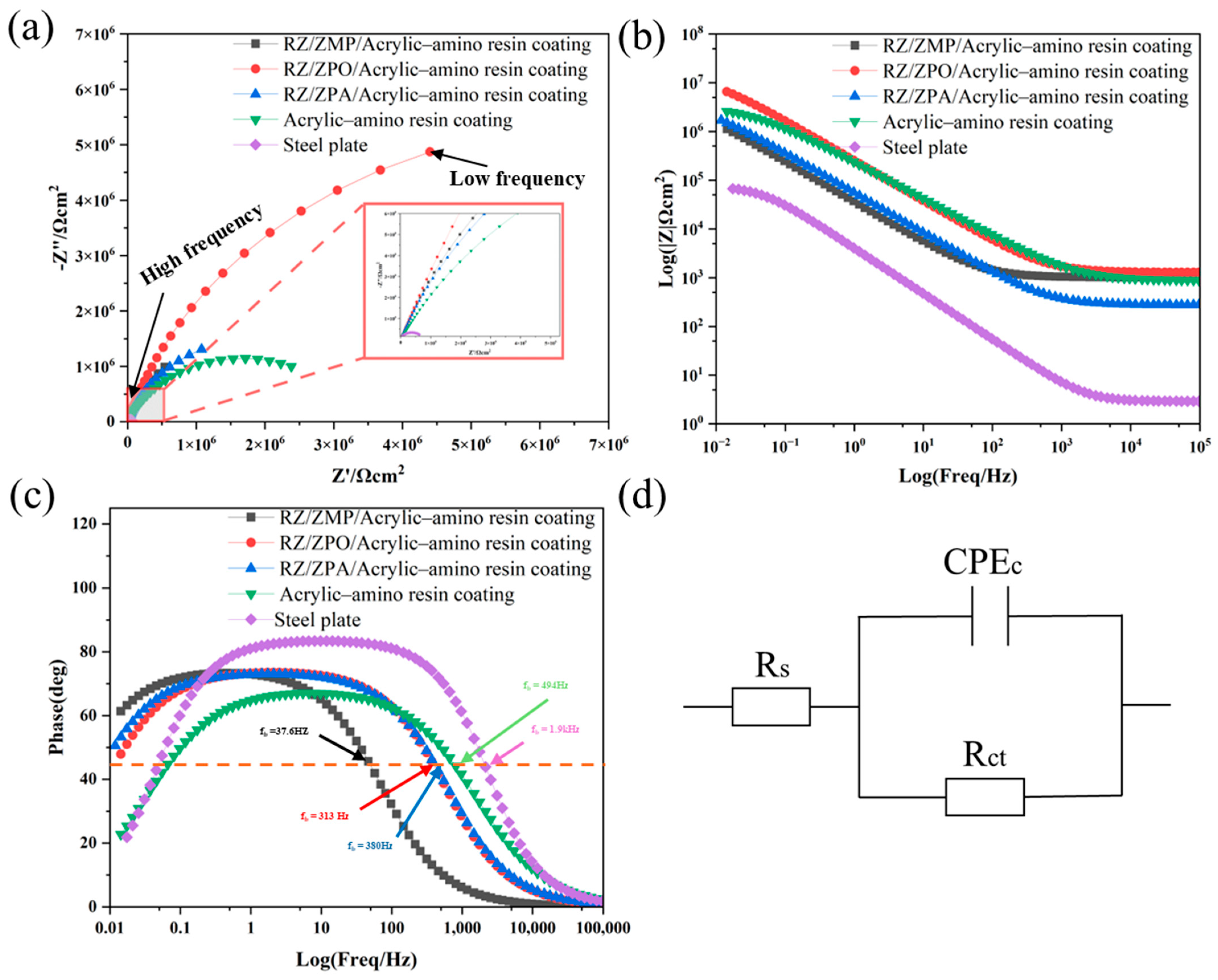
Figure 8 presents the electrochemical impedance spectroscopy (EIS) results of different coating samples measured in 1 mol·L−1 NaOH solution. All impedance data were fitted using the equivalent circuit shown in Figure 8d, and the corresponding fitting parameters are summarized in Table 4. In this circuit, R S represents the solution resistance, Rct denotes the charge-transfer resistance at the metal/electrolyte interface, and C P E c is the constant phase element associated with the coating interface, which is used to describe the non-ideal capacitive behavior arising from coating heterogeneity and interfacial roughness [26].
As shown in the Nyquist plots (Figure 8a), the steel substrate exhibits the smallest impedance arc radius, indicating that the charge-transfer process occurs most readily and that the corrosion resistance is the poorest. After applying the acrylic–amino resin coating, the impedance arc radius increases markedly, accompanied by an increase in the fitted R c t value from 7.52 × 10⁴ to 3.35 × 10⁶ Ω·cm2, corresponding to an enhancement of approximately 45 times. This result indicates that the coating effectively suppresses the penetration of corrosive species through coating defects to the metal surface, thereby significantly reducing the interfacial charge-transfer rate.
With the incorporation of anticorrosive pigments, the impedance arc radius further increases, suggesting a stronger suppression of the interfacial charge-transfer process. Among all samples, the RZ/ZPO/acrylic–amino resin coating exhibits the largest impedance arc radius, with an R c t value reaching 1.41 × 10⁷ Ω·cm2, which is approximately 188 times higher than that of the steel substrate and 4.2 times higher than that of the pigment-free acrylic–amino resin coating. This result demonstrates that the coating provides a stronger barrier against corrosive species in alkaline environments and significantly delays the occurrence of corrosion reactions.
The RZ/ZPA/acrylic–amino resin coating exhibits an Rct value of 4.31 × 10⁶ Ω·cm2, corresponding to an approximately 57-fold improvement in corrosion resistance compared with the steel substrate. In comparison, the RZ/ZMP/acrylic–amino resin coating shows a slightly higher R c t value of 4.68 × 10⁶ Ω·cm2, indicating a stronger inhibition of interfacial charge transfer than that of the ZPA-containing coating, but still inferior to that of the ZPO-containing coating.
The Bode magnitude and phase-angle plots (Figure 8b,c) further support these observations. The RZ/ZPO/acrylic–amino resin coating maintains the highest |Z| values over the entire frequency range, particularly in the low-frequency region, indicating the most effective suppression of corrosion reactions. In addition, this coating exhibits a broader and higher phase-angle plateau in the medium-to-low frequency range, suggesting a more stable interfacial structure and a more effectively inhibited charge-transfer process. Based on the fitted R c t values, the corrosion resistance of the samples can be ranked in ascending order as follows: steel substrate < acrylic–amino resin coating < RZ/ZPA/acrylic–amino resin coating < RZ/ZMP/acrylic–amino resin coating < RZ/ZPO/acrylic–amino resin coating.

3.4. Corrosion Mechanism

Santarelli et al. [27] reported that in acrylic–amino resin coating systems, the hydroxyl (–OH) and carboxyl (–COOH) groups on the molecular chains of the acrylic resin can undergo crosslinking condensation reactions with amino resins such as methylated melamine and benzoguanamine under thermal curing conditions, forming covalently crosslinked structures dominated by ether bonds. This crosslinking reaction constructs a three-dimensional polymer network with a high crosslinking density, thereby effectively enhancing the corrosion resistance of the coating. In addition, titanium dioxide particles can effectively fill microvoids within the coating, further improving its compactness and barrier properties.
RZ powder is an organic zinc salt–type anticorrosive pigment mainly composed of zinc 5-nitroisophthalate. Its corrosion-inhibition performance primarily originates from the synergistic effect of the slow release of Zn2+ ions and the adsorption of organic anions. Under the action of corrosive media, RZ can gradually release Zn2+, which participates in the formation of zinc-based passivation products on the metal surface, thereby suppressing anodic dissolution, This process can be expressed as follows [28]:
Z n 2 + + 2 O H Z n O H 2
Meanwhile, 5-nitroisophthalate anions adsorb onto the metal surface through carboxylate groups, forming an organic interfacial barrier layer. The aromatic backbone reduces the affinity of the surface toward aqueous corrosive media, while the electron-withdrawing effect of the nitro groups contributes to the suppression of cathodic reactions [29,30,31]. This adsorption-based inhibition mechanism is consistent with the reduced corrosion current density observed for RZ-containing coatings.
ZPA powder is a modified zinc aluminum orthophosphate anticorrosive pigment with adjusted phosphate content. Its protective mechanism is mainly based on phosphate passivation. The released Zn2+ and Al3+ ions react with iron species on the metal surface, promoting the formation of a dense and stable phosphate protective layer, thereby increasing interfacial resistance and enhancing anti-permeation capability [29,30,31,32]. The related interfacial corrosion and phosphate passivation processes can be schematically described as follows [14]:
  F e F e 2 + + 2 e
O 2 + 2 H 2 O + 4 e 4 O H
Z n 3 ( P O 4 ) 2 + 2 H 2 O + 4 O H 3 Z n ( O H ) 2 + 2 H P O 4 2
F e 2 + + H P O 4 2 F e P O 4
When RZ and ZPA are incorporated simultaneously into the coating system, the organic adsorption inhibition provided by RZ and the inorganic phosphate passivation induced by ZPA act synergistically, resulting in a more compact and stable protective layer. This synergistic mechanism explains the enhanced electrochemical corrosion resistance observed for the RZ/ZPA-containing coatings.
ZPO, as a modified zinc orthophosphate anticorrosive pigment, mainly provides corrosion protection through the formation of a zinc phosphate deposition layer, which effectively covers active metal sites and suppresses anodic reactions under alkaline conditions. The incorporation of RZ further strengthens interfacial adsorption and electronic inhibition effects, leading to a significant improvement in coating barrier performance. This mechanism is in good agreement with the highest coating resistance and strongest ion-blocking capability revealed by the EIS analysis for the RZ/ZPO/acrylic–amino resin coating.
In contrast, ZMP is a composite anticorrosive pigment primarily composed of zinc phosphate with the incorporation of molybdenum oxides. Its protective performance arises from the combined effects of phosphate passivation and the stabilizing role of molybdenum species on the passive film. When used in combination with RZ, organic adsorption inhibition and inorganic passivation act cooperatively, improving interfacial stability and resistance to corrosive media penetration. However, compared with the ZPO-containing system, the overall protection efficiency of the RZ/ZMP system is relatively moderate, which is consistent with the electrochemical results obtained in this study.

4. Conclusions

In this study, acrylic–amino resin composite coatings incorporating three different inhibitor systems (RZ/ZMP, RZ/ZPO, and RZ/ZPA) were prepared, and their corrosion resistance in alkaline environments was systematically evaluated through water contact angle measurements, electrochemical analysis, and alkaline immersion tests. The main conclusions are summarized as follows:
(1) Water contact angle measurements indicate that the introduction of corrosion inhibitors significantly alters the surface wettability of the coatings. Among all samples, the RZ/ZMP/acrylic–amino resin coating exhibits the highest water contact angle (87.8 ± 0.6°), indicating that the synergistic interaction among different inhibitors effectively enhances the surface hydrophobicity of the coating and reduces water wetting on the coating surface.
(2) Long-term alkaline immersion test results reveal pronounced differences in the durability of the coatings in alkaline environments. Based on the evolution of surface morphology during immersion, the alkaline corrosion resistance of the coatings can be ranked in ascending order as: acrylic–amino resin coating < RZ/ZPA/acrylic–amino resin coating < RZ/ZMP/acrylic–amino resin coating < RZ/ZPO/acrylic–amino resin coating.
Among them, the RZ/ZPO/acrylic–amino resin coating exhibits the most outstanding corrosion stability and structural integrity under prolonged alkaline exposure.
(3) Electrochemical test results indicate that, compared with the inhibitor-free acrylic–amino resin coating, all inhibitor-containing composite coatings exhibit significantly enhanced corrosion resistance. Among them, the corrosion current densities of the RZ/ZPA and RZ/ZPO systems decrease by approximately 1.9 and 1.7 times, respectively. EIS analysis shows that the RZ/ZPO/acrylic–amino resin coating exhibits the highest charge-transfer resistance, indicating the strongest suppression of interfacial corrosion reactions. It should be noted that electrochemical measurements mainly reflect short-term interfacial corrosion behavior, whereas long-term alkaline immersion tests emphasize coating durability and structural stability. The good agreement between the trends obtained from these two methods further confirms the superior comprehensive corrosion protection provided by the RZ/ZPO system.

Author Contributions

Conceptualization, X.H. and W.W.; methodology, X.H.; software, A.Z.; validation, X.H., W.W. and Y.-A.A.; formal analysis, X.H.; investigation, X.H.; resources, K.L.; data curation, A.Z.; writing—original draft preparation, X.H.; writing—review and editing, W.W.; visualization, Y.-A.A.; supervision, W.W.; project administration, K.L. and D.L.; funding acquisition, W.W. All authors have read and agreed to the published version of the manuscript.

Funding

This research received no external funding.

Data Availability Statement

All data and materials are available upon request from the corresponding author. The data are not publicly available due to ongoing research involving part of the data.

Conflicts of Interest

Authors Kunming Liu and Danfeng Li were employed by the company Jiangsu Kexiang Anticorrosion Materials Co., Ltd. The remaining authors declare that the research was conducted in the absence of any commercial or financial relationships that could be construed as a potential conflict of interest.

References

  1. Saxena, D.; Vishwakarma, A.; M., V. Use of Primary Steel Rebar and Its New Techniques Used in High-Rise Building in Construction Industries: A Review. IJRASET 2022, 10, 1803–1808. [Google Scholar] [CrossRef]
  2. Qureshia, T.; Wang, G.; Mukherjeea, S.; Islama, M.A.; Filleter, T.; Singh, C.V.; Panesar, D.K. Graphene-based anti-corrosive coating on steel for reinforced concrete infrastructure applications: Challenges and potential. Constr. Build. Mater. 2022, 351, 128947. [Google Scholar] [CrossRef]
  3. Zhao, Z.; Mei, Y.; Zhang, A.; Zeng, C.; Li, F.; Huang, L.; Xu, H. Research on Impact Compression Strength and Explosion Resistance of Layered Gradient Rubber Concrete in Underground Engineering. IJST-Trans. Civ. Eng. 2025, 49, 2427–2444. [Google Scholar] [CrossRef]
  4. Lloyd, R.R.; Provis, J.L.; van Deventer, J.S.J. Pore solution composition and alkali diffusion in inorganic polymer cement. Cem. Concr. Res. 2010, 40, 1386–1392. [Google Scholar] [CrossRef]
  5. Nürnberger, U. Corrosion of metals in contact with mineral building materials. In Corrosion of Reinforcement in Concrete; Woodhead Publishing: Cambridge, UK, 2007; pp. 1–9. [Google Scholar]
  6. Ortolan, V.K.; Mancio, M.; Tutikian1, B.F. Evaluation of the influence of the pH of concrete pore solution on the corrosion resistance of steel reinforcement. J. Build. Pathol. Rehabil. 2016, 1, 10. [Google Scholar] [CrossRef]
  7. Motlatle, A.M.; Ray, S.S.; Ojijo, V.; Scriba, M.R. Polyester-Based Coatings for Corrosion Protection. Polymers 2022, 14, 3413. [Google Scholar] [CrossRef]
  8. Abadchi, M.R.; Mirzaee, M.; Dorkhani, E.; Zolriasatein, A.; Noori, N.R. Surface modification of acrylic coating with anti-corrosion and anti-UV materials. Chin. Chem. Soc. 2022, 69, 912–924. [Google Scholar] [CrossRef]
  9. Chopra, I.; Ola, S.K.; Priyanka; Dhayal, V.; Shekhawat, D.S. Recent advances in epoxy coatings for corrosion protection of steel: Experimental and modelling approach—A review. Mater. Today 2022, 63, 1658–1663. [Google Scholar]
  10. Cao, H.; Lyu, Z.; Dong, W.; Zhao, Z.; Gan, W.; Wang, Y. Corrosion Experimental Research on Local Damage of Epoxy-Coated Steel Bars in Concrete Under Marine Environment. Front. Mater. 2022, 8. [Google Scholar] [CrossRef]
  11. Ren, K.; Zhang, J.; Liu, Y.; Hou, Q.; Zhang, R.; Krishnamurthy, M.; Zuo, Z.; Zhao, Y.; Yu, Z. Failure mechanisms and corrosion behavior of epoxy-based protective coatings prepared on 20# steel exposed to cooling water. Int. J. Electrochem. Sci. 2025, 20, 101207. [Google Scholar]
  12. Puig, M.; Gimeno, M.J.; Gracenea, J.J.; Suay, J.J. Anticorrosive properties enhancement in powder coating duplex systems by means of ZMP anticorrosive pigment. Assessment by electrochemical techniques. Prog. Org. Coat. 2014, 77, 1993–1999. [Google Scholar] [CrossRef]
  13. Gimeno, M.J.; Chamorro, S.; March, R.; Oró, E.; Pérez, P.; Gracenea, J.; Suay, J. Anticorrosive properties enhancement by means of phosphate pigments in an epoxy 2k coating. Assessment by NSS and ACET. Prog. Org. Coat. 2014, 77, 2024–2030. [Google Scholar] [CrossRef]
  14. Wan, H.; Song, D.; Li, X.; Zhang, D.; Gao, J.; Du, C. Effect of Zinc Phosphate on the Corrosion Behavior of Waterborne Acrylic Coating/Metal Interface. Materials 2017, 10, 654. [Google Scholar] [CrossRef]
  15. Zhang, W.; Xia, W.; Chen, Z.; Zhang, G.; Qian, S.; Lin, Z. Comparison of the cathodic protection of epoxy resin coating/Zinc-rich coatings on defective areas under atmospheric and immersion conditions: The secondary activation of Zinc Particles. Coatings 2024, 14, 336. [Google Scholar] [CrossRef]
  16. Zin, I.M.; Lyon, S.B.; Pokhmurskii, V.I. Corrosion control of galvanized steel using a phosphate/calcium ion inhibitor mixture. Corros. Sci. 2003, 45, 777–788. [Google Scholar] [CrossRef]
  17. Pokhmurs’kyi, V.I.; Zin’, I.M.; Layon, S.B.; Bilyi, L.M. Synergistic effect of phosphate and calcium-containing pigments on the corrosion resistance of galvanized steel. Mater. Sci. 2003, 39, 153–160. [Google Scholar] [CrossRef]
  18. Samad, U.A.; Alam, M.A.; Abdo, H.S.; Al-Zahrani, S.M. Synergistic effect of nanoparticles: Enhanced mechanical and corrosion protection properties of epoxy coatings incorporated with SiO2 and ZrO2. Polymers 2023, 15, 3100. [Google Scholar] [CrossRef] [PubMed]
  19. Yang, S.; Huang, J.; Chen, J.; Noël, J.J.; Barker, I.; Henderson, J.D.; He, P.; Zhang, H.; Zhang, H.; Zhu, J. A comparative study on the anti-corrosive performance of zinc phosphate in powder coatings. Coatings 2022, 12, 217. [Google Scholar] [CrossRef]
  20. GB/T 699-2015; Steel for Mechanical Structure. Standardization Administration of China: Beijing, China, 2015.
  21. Muthee, D.K.; Dejene, B.F. Effect of annealing temperature on structural, optical, and photocatalytic properties of titanium dioxide nanoparticles. Heliyon 2021, 7, e07269. [Google Scholar] [CrossRef] [PubMed]
  22. Zhu, L.; Feng, C.; Peng, B.; Hui, X.; Bai, X.; Yu, Z. Performance research of natural mica modified with zirconium-based metal–organic frameworks for an epoxy resin anti-corrosion coating. Molecules 2023, 28, 7106. [Google Scholar] [CrossRef]
  23. Chen, Y.; Wang, J.; Wen, S.; Zhang, J.; Yu, X.; Mao, Y. Synthesis of rose-like sheet zinc phosphate by the induction-calcination method and its application as a corrosion inhibitor in coatings. Int. J. Electrochem. Sci. 2021, 16, 210456. [Google Scholar] [CrossRef]
  24. Sørensen, P.A.; Dam-Johansel, K.; Weinell, C.E.; Kiil, S. Cathodic delamination of seawater-immersed anticorrosive coatings: Mapping of parameters affecting the rate. Prog. Org. Coat. 2010, 68, 283–292. [Google Scholar] [CrossRef]
  25. Deflorian, F.; Rossi, S.; Kamarchik, P.; Fedrizzi, L.; Bonora, P.L. Degradation mechanism of electrodeposited coatings in alkaline solution. Prog. Org. Coat. 2003, 47, 103–111. [Google Scholar] [CrossRef]
  26. Kasatkin, V.E.; Kasatkina, I.V.; Korosteleva, I.G.; Kornienko, L.P.; Dorofeeva, V.N.; Andreev, N.N. Corrosion behavior and EIS study of steel in an alkaline medium containing chlorides with Catechol inhibitor. Int. J. Corros. Scale Inhib. 2023, 12, 1791–1805. [Google Scholar] [CrossRef]
  27. Santarelli, M.; Bonse, B.C.; Rocha Poço, J.G. Selection of Crosslinking Agents for Acrylic Resin Used in External Coatings for Aluminum Packaging in the Beverage Industry. Coatings 2024, 14, 585. [Google Scholar] [CrossRef]
  28. Biryukov, A.I.; Kozaderov, O.A.; Batmanova, T.V. Features of the corrosion of coatings based on zinc alloys: Oxidation products and the selective dissolution of zinc. Review. Condens. Matter Interphases 2024, 26, 25–36. [Google Scholar] [CrossRef] [PubMed]
  29. Maltseva, A.; Lamaka, S.V.; Yasakau, K.A.; Mei, D.; Kurchavov, D.; Zheludkevich, M.L.; Lefèvre, G.; Volovitch, P. In situ surface film evolution during Mg aqueous corrosion in presence of selected carboxylates. Corros. Sci. 2020, 171, 108484. [Google Scholar] [CrossRef]
  30. Roscher, J.; Liu, D.; Xie, X.; Holze, R. Aromatic metal corrosion inhibitors. Corros. Mater. Degrad. 2024, 5, 513–560. [Google Scholar] [CrossRef]
  31. Belkheiri, A.; Dahmani, K.; Mzioud, K.; Khattabi, M.; Kharbouch, O.; Galai, M.; Merroun, Y.; Dkhireche, N.; Benzekri, Z.; Boukhris, S.; et al. Assessment of 14-(4-nitrophenyl)-14H-dibenzo [a, j] xanthene as an effective organic corrosion inhibitor for mild steel in 1 M HCl: Electrochemical, theoretical, and surface analysis. Int. J. Electrochem. Sci. 2025, 20, 100907. [Google Scholar] [CrossRef]
  32. Naderi, R.; Attar, M.M. The role of zinc aluminum phosphate anticorrosive pigment in protective performance and cathodic disbondment of epoxy coating. Corros. Sci. 2010, 52, 1291–1296. [Google Scholar] [CrossRef]
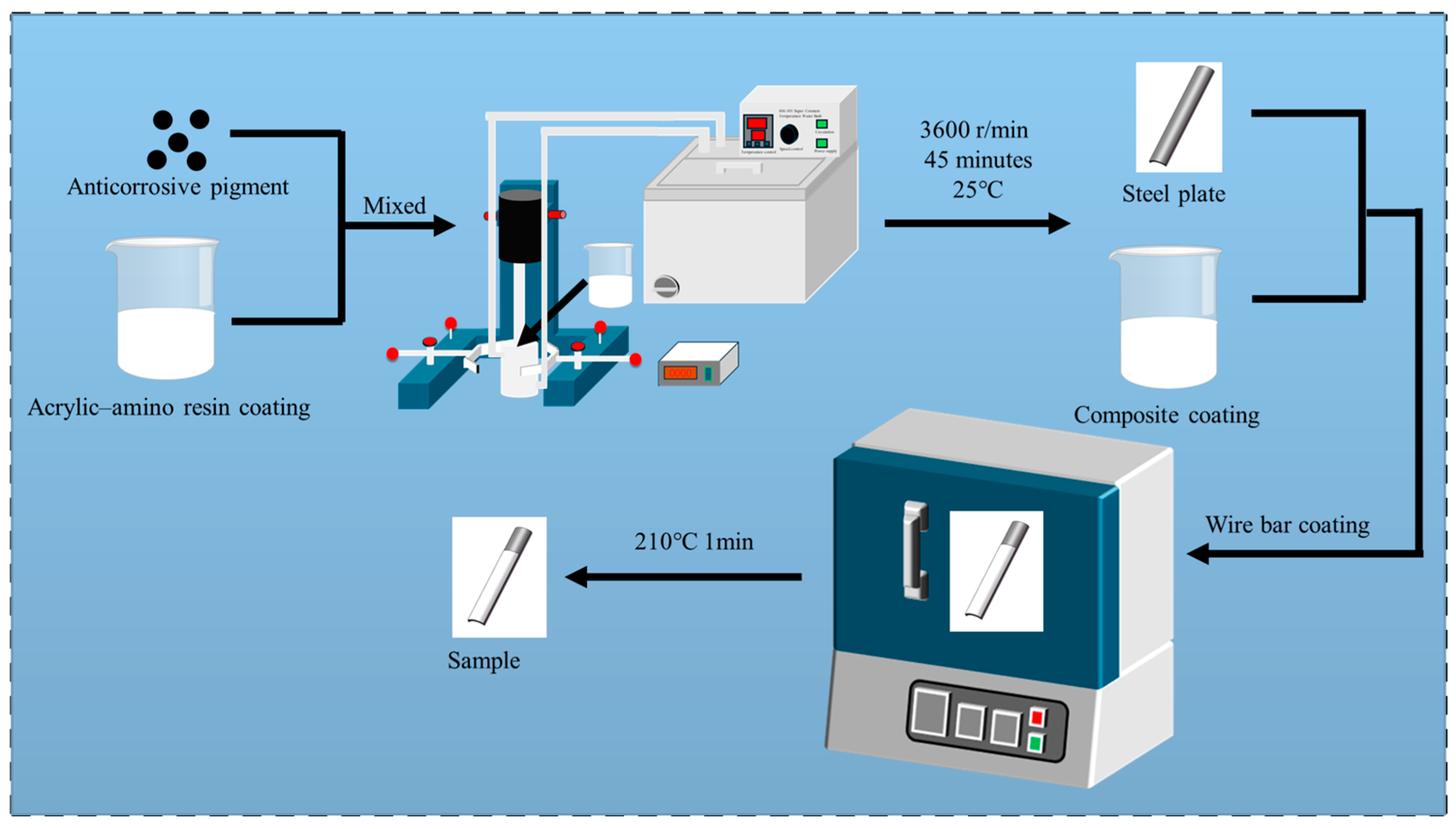
Figure 1. Flowchart of sample preparation for different coatings.
Cmd 07 00012 g001
Figure 2. SEM morphologies of different corrosion inhibitor powders ((a) RZ; (b) ZPA; (c) ZPO; (d) ZMP).
Cmd 07 00012 g002
Figure 3. XRD patterns of samples with different coatings.
Cmd 07 00012 g003
Figure 4. SEM morphologies, cross-sectional optical microscopy (OM) images, EDS spectra, and corresponding elemental mapping results of different coatings ((a,a1a6) RZ/ZMP/acrylic–amino resin coating; (b,b1b5) RZ/ZPO/acrylic–amino resin coating; (c,c1c6) RZ/ZPA/acrylic–amino resin coating; (d,d1d3) acrylic–amino resin coating).
Cmd 07 00012 g004
Figure 5. Water contact angles of different coatings.
Cmd 07 00012 g005
Figure 6. Digital images of different coatings after immersion in alkaline detergent solution. (a) 0 h; (b) 12 h; (c) 24 h; (d) 30 h.
Cmd 07 00012 g006
Figure 7. Electrochemical corrosion behavior of different coatings in 1 mol·L−1 NaOH solution ((a) Open-circuit potential (OCP) curves of different coatings after immersion for 30 min; (b) Potentiodynamic polarization curves of the coatings and steel substrate).
Cmd 07 00012 g007
Figure 8. Electrochemical impedance spectroscopy (EIS) results of different coatings in 1 mol·L−1 NaOH solution ((a) Nyquist plots; (b) Bode magnitude plots; (c) Bode phase-angle plots; (d) Equivalent electrical circuit used to fit the EIS data).
Cmd 07 00012 g008
Table 1. Experimental protocol for different coatings.
NumberCoatingPowder Content (wt.%)Baking Process
#1RZ/ZMP/Acrylic–amino resin coating0.5 RZ + 2.5 ZMP210 °C 1 min
#2RZ/ZPO/Acrylic–amino resin coating0.5 RZ + 2.5 ZPO210 °C 1 min
#3RZ/ZPA/Acrylic–amino resin coating3 RZ + 1 ZPA210 °C 1 min
#4Acrylic–amino resin coating /210 °C 1 min
#5Steel plate//
Table 2. EDS elemental composition of different corrosion inhibitor powders.
At.%COPZnAlMo
RZ25.4915.69058.82//
ZPA11.5757.6410.8215.774.92/
ZPO5.3255.611.6627.430/
ZMP7.9259.769.3522.3800.6
Table 3. Electrochemical corrosion parameters of different coatings.
CoatingEocp/VEcorr/VIcorr/A·cm−2
RZ/ZMP/Acrylic–amino resin coating−0.1457−0.2951.174 × 10−7
RZ/ZPO/Acrylic–amino resin coating−0.1667−0.2941.649 × 10−8
RZ/ZPA/Acrylic–amino resin coating−0.2424−0.3051.477 × 10−8
Acrylic–amino resin coating−0.1993−0.2712.780 × 10−8
Steel plate−0.2685−0.3097.389 × 10−8
Table 4. Electrochemical impedance parameters obtained from equivalent circuit fitting.
CoatingRs/Ωcm2Rct/Ωcm2CPEc
RZ/ZMP/Acrylic–amino resin coating1.010 × 1034.675 × 1065.982 × 10−6
RZ/ZPO/Acrylic–amino resin coating1.276 × 1031.411 × 1078.631 × 10−7
RZ/ZPA/Acrylic–amino resin coating2.043 × 1044.309 × 1069.646 × 10−7
Acrylic–amino resin coating8.696 × 1023.345 × 1061.012 × 10−6
Steel plate2.8967.515 × 1044.434 × 10−5
Disclaimer/Publisher’s Note: The statements, opinions and data contained in all publications are solely those of the individual author(s) and contributor(s) and not of MDPI and/or the editor(s). MDPI and/or the editor(s) disclaim responsibility for any injury to people or property resulting from any ideas, methods, instructions or products referred to in the content.