Article

In-Situ Corrosion Testing of Carbon Steel and EHLA Clad Materials in High-Temperature Geothermal Well

by
Andri Isak Thorhallsson
1,2,*,
Gunnar Skulason Kaldal
3,
Thorri Jokull Thorsteinsson
3,
Deirdre Elizabeth Clark
3,
Erfan Abedi Esfahani
4,
Tomaso Maccio
5,
Helen Osk Haraldsdottir
6 and
Lilja Tryggvadottir
2
1
Faculty of Mechanical Engineering, Industrial Engineering and Computer Science, University of Iceland, Hjardarhagi 2-6, 107 Reykjavik, Iceland
2
Reykjavík Energy, Baejarhals 1, 110 Reykjavik, Iceland
3
ÍSOR—Iceland GeoSurvey, Urdarhvarf 8, 203 Kopavogur, Iceland
4
The Welding Institute (TWI), Granta Park, Cambridge CB21 6AL, UK
5
The Welding Institute (TWI), Wallis Way, Catcliffe, Rotherham S60 5TZ, UK
6
ON, Baejarhals 1, 110 Reykjavik, Iceland
*
Author to whom correspondence should be addressed.
Corros. Mater. Degrad. 2025, 6(4), 65; https://doi.org/10.3390/cmd6040065
Submission received: 30 October 2025 / Revised: 23 November 2025 / Accepted: 3 December 2025 / Published: 8 December 2025

Abstract

Carbon steel casing material in high-temperature deep geothermal wells can be prone to severe corrosion and premature failure due to the oxidation capacity of H2O, H2S, CO2, and more corrosive species in geothermal fluid. Due to the higher temperature and pressure and phase state of fluid in high-temperature deep geothermal wells, the rate and extent of corrosion can be expected to be different than in low-temperature geothermal wells. To reduce the extent of corrosion damage and corrosion rate, and increase the lifetime of geothermal wells, one mitigation method is to clad the internal surface of the geothermal casing with a more noble, corrosion-resistant material. Conventional cladding, however, has been an expensive and time-consuming process up to the current date, but recently, a more economical and productive method has been established, i.e., EHLA cladding. In this study, a 14-day corrosion performance test was conducted on stainless steel and nickel-based alloy clads on a carbon steel substrate in a 262 °C and 95 bar geothermal well in the Hellisheidi geothermal field (SW Iceland). Samples were partially or fully cladded, and some samples were stressed to investigate the clads’ susceptibility to general corrosion and stress corrosion cracking, as well as the substrate’s vulnerability to galvanic corrosion. Corrosion analysis of pure carbon steel substrate was also investigated for comparison. Samples were microstructurally analysed with SEM, and chemical analysis was performed with EDX. The results indicated that the clad materials have good corrosion resistance in the geothermal environment tested, suggesting that EHLA cladding is a more feasible option for strengthening the corrosion resistance of geothermal casing and equipment.

1. Introduction

In geothermal energy production, geothermal fluid is in a liquid, vapour, or mixed state at high temperatures and pressures. The fluid is discharged from the feed zones of the subsurface of the earth through a perforated liner and casing to utilise the fluid energy for energy production. Geothermal fluid, containing mainly H2O, can also contain H2S, CO2, and more dissolved and/or corrosive substances that can reduce the production efficiency of the geothermal well and/or reduce the lifetime of the casing and liner (and surface equipment) due to corrosion [1]. The corrosion rate and forms of construction and equipment materials can vary in a geothermal environment, but factors such as material composition, temperature, H2S and CO2 concentration, pH level, conductivity, scaling, and chemical composition of the fluid can affect the corrosivity [1,2,3,4]. Water containing dissolved H2S has been reported to corrode carbon steel at a high temperature in such a way that an inner iron oxide layer and a sulphide-rich outer corrosion layer form. This has been concluded to occur due to rapid oxide layer formation from the reaction of H2O with the iron, but the more thermodynamically stable iron sulphide forms when H2S reacts with the iron oxide film. Hence, inner iron oxide films and outer sulphide films are detected in such an environment [5,6], but similar corrosion behaviour has also been reported in a water vapour at a condensing state containing H2S, CO2, and HCl [7].
Laser cladding (LC) is a technology [8] where a metallic coating is formed on a substrate by melting alloy powders on the surface with a high-energy laser beam. The benefits of laser cladding are a small heat-affected zone in the substrate, high bond strength between the coating and substrate, low thermal deformation, and a small dilution zone [9]. Laser cladding has been proposed as one possible future solution for the geothermal industry to mitigate the corrosion of casing and equipment. Laser cladding is, however, not a straightforward process, with many process parameters [10], and in order to have a continuous, defect-free, crack-free, and porous-free coating, the cladding must be optimised in terms of the preheating of the substrate, heat input, heat distribution, cooling rate, coating thickness, production rate, etc. [9]. When there is a difference in the coefficient of thermal expansion between the clad layer and the substrate, residual stresses can form during heating or cooling, which can result in cracking of either the clad or the substrate material. Solidification cracking occurs when the residual stresses exceed the yield limit of either material, or stress corrosion cracking when the clad material experiences stress and is prone to corrosion simultaneously, resulting in cracking.
High-speed laser cladding (HSLC) or extra-high-speed laser application (EHLA) is a laser cladding method where the powder is melted above the melt pool on the surface of the substrate, and the scanning or production speed of the cladding can be up to 100 times higher than conventional laser cladding [11,12]. The benefit of EHLA is a smaller heat-affected zone, a thinner clad layer, and more productivity in comparison with the conventional LC. This implies that EHLA is more economical than LC, which could make cladding one step closer to being a feasible and economical solution for the geothermal industry to mitigate corrosion damage in casing, liner, and surface equipment.
If not optimised, EHLA cladding can be loaded with residual stresses in production, which can contribute to stress corrosion cracking of the EHLA clad layer when exposed to corrosive environment. Higher tensile stresses, chloride concentration, temperature and oxidation capacity of the corrosive environment, and surface condition of the material, are factors that favour stress corrosion cracking of austenitic steels such as UNS S31603 [13,14,15,16]. Corrosion performance testing of UNS NS31603 clad plates has been performed by Jin et al. [17] and the material has shown good corrosion and crack resistance in standard tests. In terms of flawless clad manufacturing, a nickel-based alloy is more challenging to manufacture than UNS S31603. Various forms of cracks have been addressed in the laser cladding of nickel-based alloys, which sometimes limit their application [18]. Due to recently established EHLA technology, there is a lack of stress corrosion cracking studies on EHLA clads of stainless steel and nickel-based EHLA clads in a geothermal environment.
Galvanic corrosion between two different materials can be expected when both materials are in contact with a corrosive fluid. The extent and rate of galvanic corrosion depends on several factors, including the reduction potentials of the two materials in the corrosive environment, temperature, cathode to anode surface area ratio, conductivity of the electrolyte, alloying elements, passivation of the materials, and more [19,20,21,22,23]. Stainless steel or nickel-based alloys can be expected to have higher reduction potentials than carbon steel; therefore, carbon steel can be subject to galvanic corrosion when in contact with more noble clad material and corrosive fluid [19,20,21,23,24]. Galvanic corrosion is dependent on various factors, and the affected area from the bimetallic junction can also vary. From the literature, the area of the anode, which can be affected by galvanic corrosion, has been found to range from a fraction of a millimetre to a few millimetres [25,26]. It should be noted that the affected area is highly dependent on the properties of the corrosion cell.
In this article, a corrosion performance test was conducted on UNS N06625 and UNS S31603 EHLA clad materials on carbon steel substrate in a high-temperature geothermal well. Well HE-52, located in the Hellisheidi geothermal field (SW Iceland), operated by ON Power, a subsidiary of Reykjavik Energy, was chosen as the testing well. The tests were conducted at 1300 m depth at 262 °C and 95 barG pressure. The corrosion samples tested were of three types: (1) 2 × 5 cm clads of UNS N06625 and 2 × 5 cm long UNS S31603, partly coating a carbon steel bar to investigate galvanic corrosion and general corrosion behaviour; (2) five stressed samples, two with a stress level of 30% yield strength (YS) and three with a 100% YS of the clad materials; and (3) two cladded carbon steel coupons, fully covered with clad material.
This study aims to analyse the corrosion behaviour of the EHLA clad and carbon steel materials in a high-temperature geothermal well. The tests include conditions with or without applied stress and galvanic corrosion to promote a high cathode-to-anode surface area ratio, to verify the corrosion resistance of the novel clads for high-temperature well applications.

2. Materials and Methods

2.1. Test Sample and Downhole Sample Holder Design

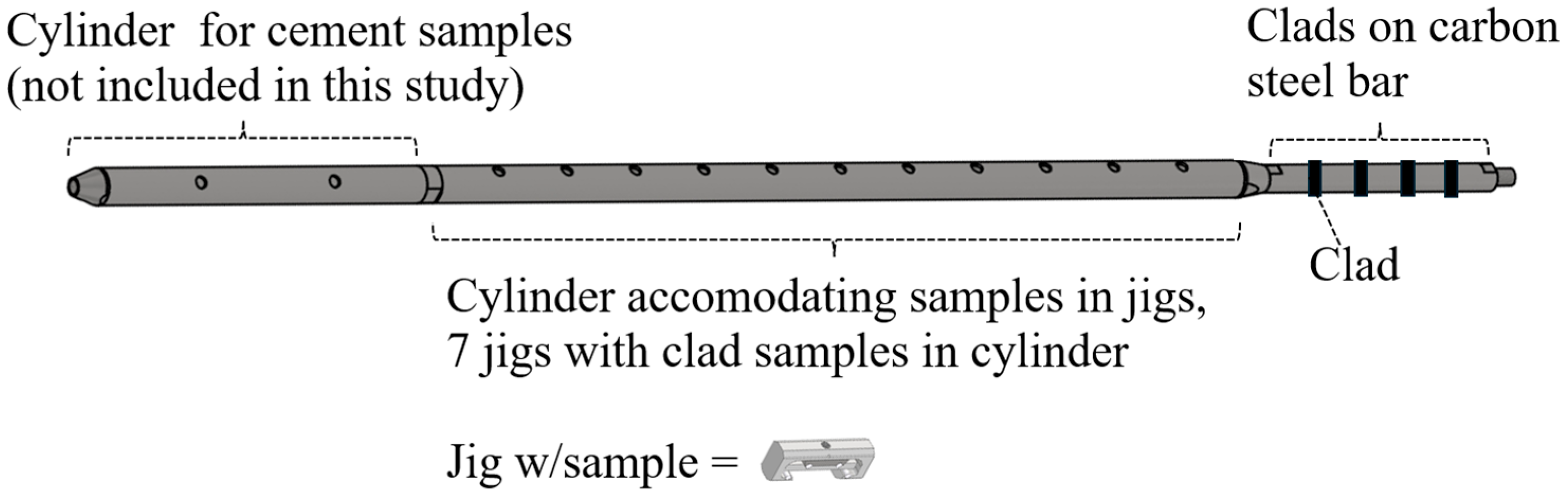
The testing aimed to address general corrosion, localised corrosion such as stress corrosion cracking (SCC), and galvanic corrosion of the substrate in a high-temperature geothermal well (HE-52 located in the Hellisheidi geothermal field, SW Iceland, operated by ON Power, a subsidiary of Reykjavik Energy, Hellidsheidi, Iceland). All test samples were accommodated in a sample holder unit and lowered down on a wire from a slick-line unit operated by ÍSOR (Reykjavik, Iceland GeoSurvey). The sample holder unit was assembled by:
(1)
Hollow cylinder/storing unit for cement samples (not the subject of this article);
(2)
Hollow cylinder for seven samples in jigs (5 stressed and 2 samples without stress);
(3)
Partially cladded, carbon steel bar, as seen in Figure 1.
Two cladding materials were evaluated in the testing: stainless steel UNS S31603 and nickel-based alloy UNS N06625. Due to limitations in the size and weight of the samples and sampling unit, the number and size of the test samples had to be limited. The sample holder unit was custom-made for this in situ test. The sample holder unit was designed by ÍSOR, made from UNS S30403 stainless steel and machined by Stálorka.
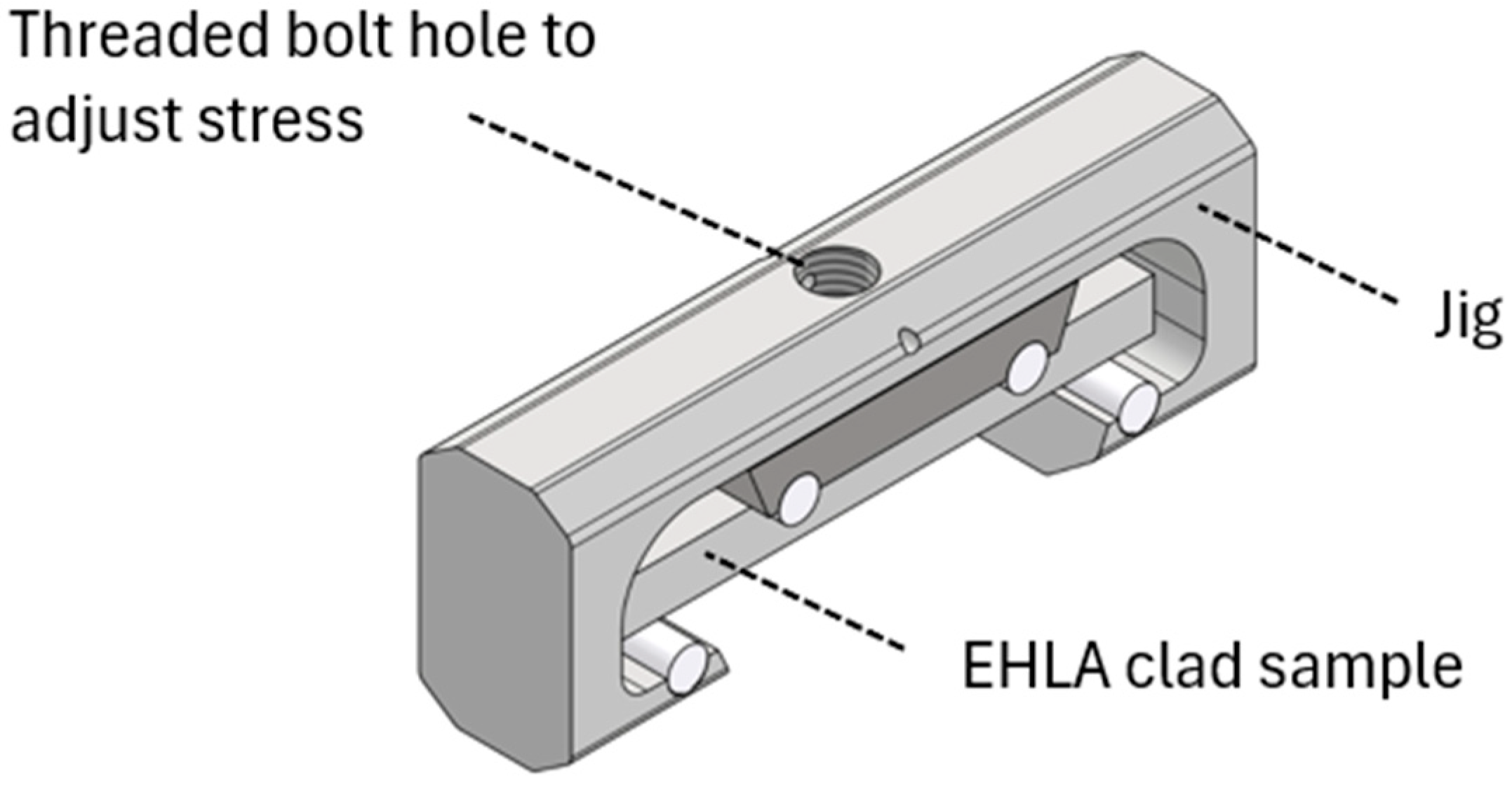
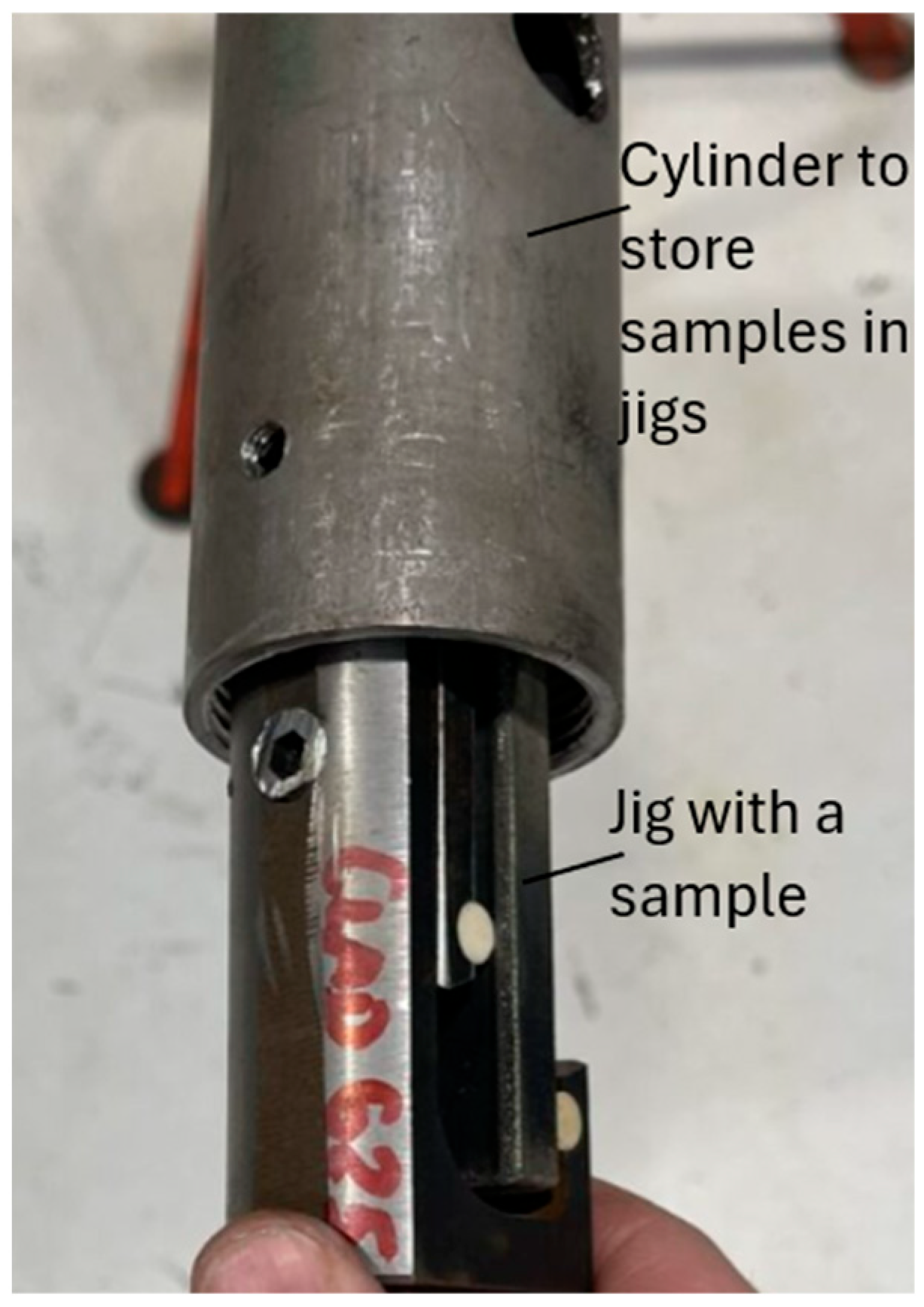
To investigate the SCC susceptibility of the clads, five samples were pre-stressed at The Welding Institute (TWI) before exposure in well HE-52 in jigs, as seen in Figure 2 and Figure 3. Samples were stressed with a 4-point bend test (4 pbt) according to ASTM G39-99 [27]. Ceramic rods (Alumina 99.5) were used to insulate the test specimen from the jig material and prevent galvanic corrosion. The 0.2% yield strength and associated strain values of the cladding material were calculated based on the tensile tests carried out on the specimens extracted from a sufficiently thick cladding material (12 mm in thickness) produced using EHLA cladding. The elevated tensile tests were performed based on ASTM E21-20 [28]. Some of the samples were prestressed up to 30% of the yield stress (YS), and some were stressed up to 100% of the YS at the testing temperature. Strain gauges were attached to the mid-length/mid-width location of the stressed surfaces of each specimen to measure the strain while loading the specimen. Once the target strain was achieved, the specimen was left for a minimum of 12 h to allow for relaxation and reloaded if required until the strain remained steady on the target value. Due to the spatial limitations of samples in the sample holder, some samples could not be stressed more than 30% of the YS. The design of the jigs was performed by ÍSOR, and the load/stress tolerances of the jig parts were analysed in the software ANSYS 2024 R2. When stressed samples were retrieved from the downhole test, a cut in middle of the samples in the longitudinal direction (or perpendicular to the expected direction of crack formation) was made.
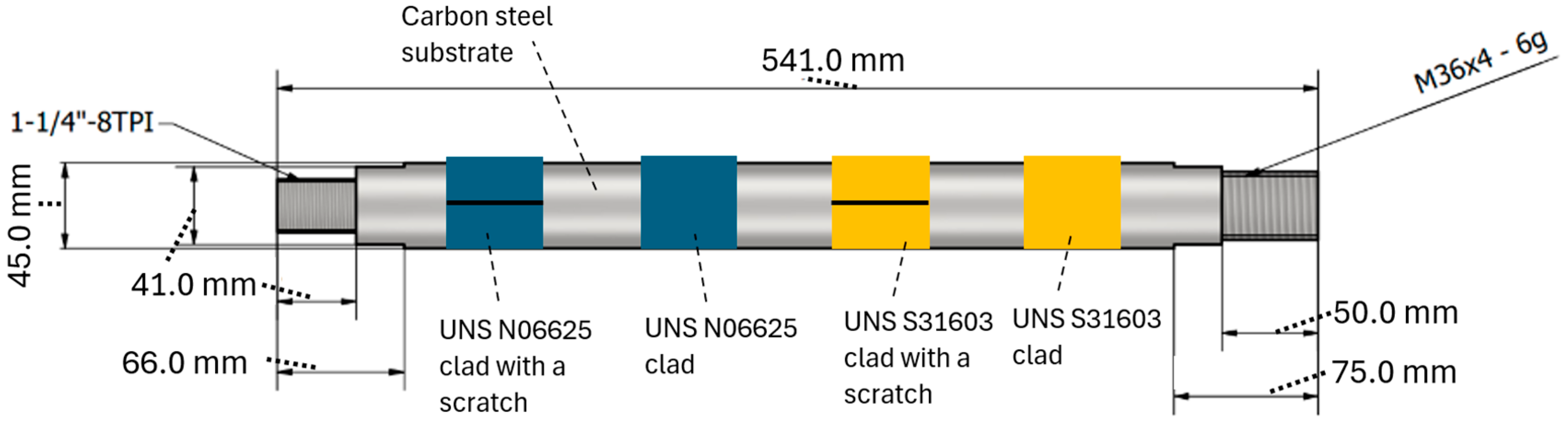
To study the corrosion behaviour of the clads and carbon steel substrate, and the possible galvanic corrosion susceptibility of the substrate, the carbon steel bar was partially cladded with 4 × 50 mm long clad segments (Figure 4). Two clads were made of stainless-steel alloy UNS S31603 and two clads were made of nickel-based alloy UNS N06625. One clad segment of each alloy had been scratched through the clad with a 1 mm-wide scratch to expose a small surface area of the carbon steel under the cladding. The small width of the scratch was selected to promote galvanic corrosion of the carbon steel substrate inside the scratch with a high cathode-to-anode surface area ratio (the clad was the cathode and the carbon steel was the anode), as seen in Figure 5.
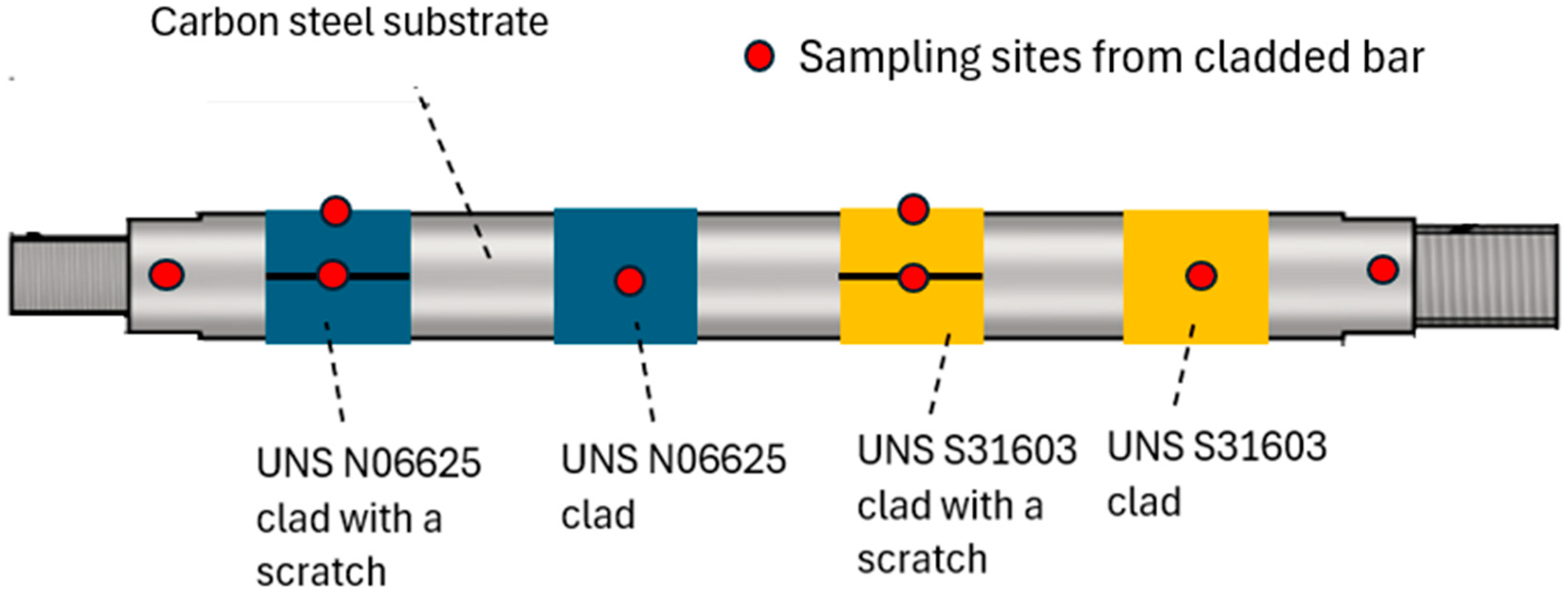
To estimate the galvanic corrosion effect, samples were cut and extracted from the partially cladded carbon steel bar at several locations, as seen in Figure 6: Firstly, in the middle of the scratch, at a high cathode-to-anode surface area ratio, where the galvanic effect is likely to be most effective. Secondly, on the other side of the scratched clad segment (where the scratch was not in the clad), and on the other clad segment, in the middle of it, with no scratch, to estimate the corrosion effect on the clad (when the effect of the sacrificial anode was at a minimum). Thirdly, on the carbon steel substrate, at the end of the bar, where the effect of the clad (and the stainless-steel cylinder connected to the carbon steel bar) was minimal, to estimate the corrosion effect of the geothermal fluid on the carbon steel (with minimum galvanic effect of the clad on the carbon steel).
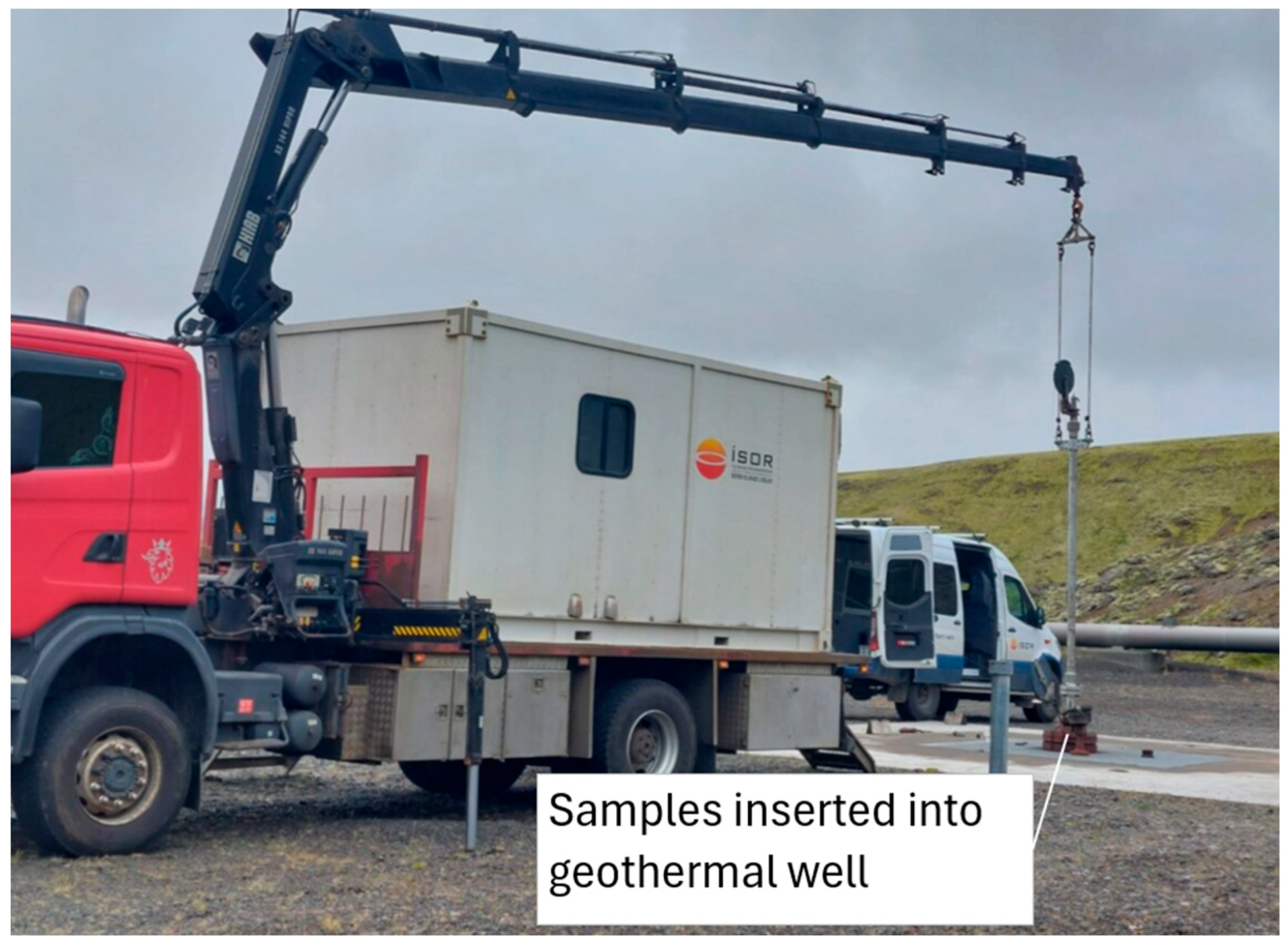
After sample manufacture and preparation, the two cylinders accommodating the cement and jig samples and the cladded bar were fastened together to make one sample holder unit. The sample holder unit was then fastened to a steel wire and lowered slowly into well HE-52 (to prevent thermal shocking of water-saturated cement samples) with a slick-line unit operated by ÍSOR’s slick line-unit (Figure 7). The samples were kept at a constant depth of 1300 m for 14 days before they were extracted for post-exposure analysis.
An overview of the samples tested in this article can be viewed in Table 1:

2.2. Testing Samples

The carbon steel substrate steel samples and clad bar were provided by Apollo Metals and machined by TWI in Yorkshire, UK. The powder mixture for the UNS S31603 clad was CT POWDERRANGE 316LF from Carpenter Additive (Athens, AL, USA), with a particle range of 15–45 µm. The powder mixture for the UNS N06625 clad was a spherical nickel alloy 625 powder from AP&C with a particle range of 25–45 µm. The nominal composition of the carbon steel substrate and the clad materials can be seen in Table 2:

2.3. EHLA Cladding Machine

The EHLA cladding machine was provided by Hornet Laser Cladding; the machine is available to coat external surfaces and internal bores, and can conduct 10-axis manipulation with a 6-axis robot. The power output capacity of the laser is 11.5 kW with an adjustable spot size for enhanced process flexibility. The key parameters in the EHLA cladding machine to produce the clad materials can be seen in Table 3:
In the tuning of the cladding parameters, micro-images were used to quantify the cladding density using ImageJ version 1.53k software. A micro-hardness (HV0.1) survey was carried out through the cross-section of the specimen to measure the hardness of the deposited material and the substrate. The as-received surface was also subjected to 3D scan analysis to measure the roughness (Ra).

2.4. Downhole Test Setup and Fluid Sampling Procedures

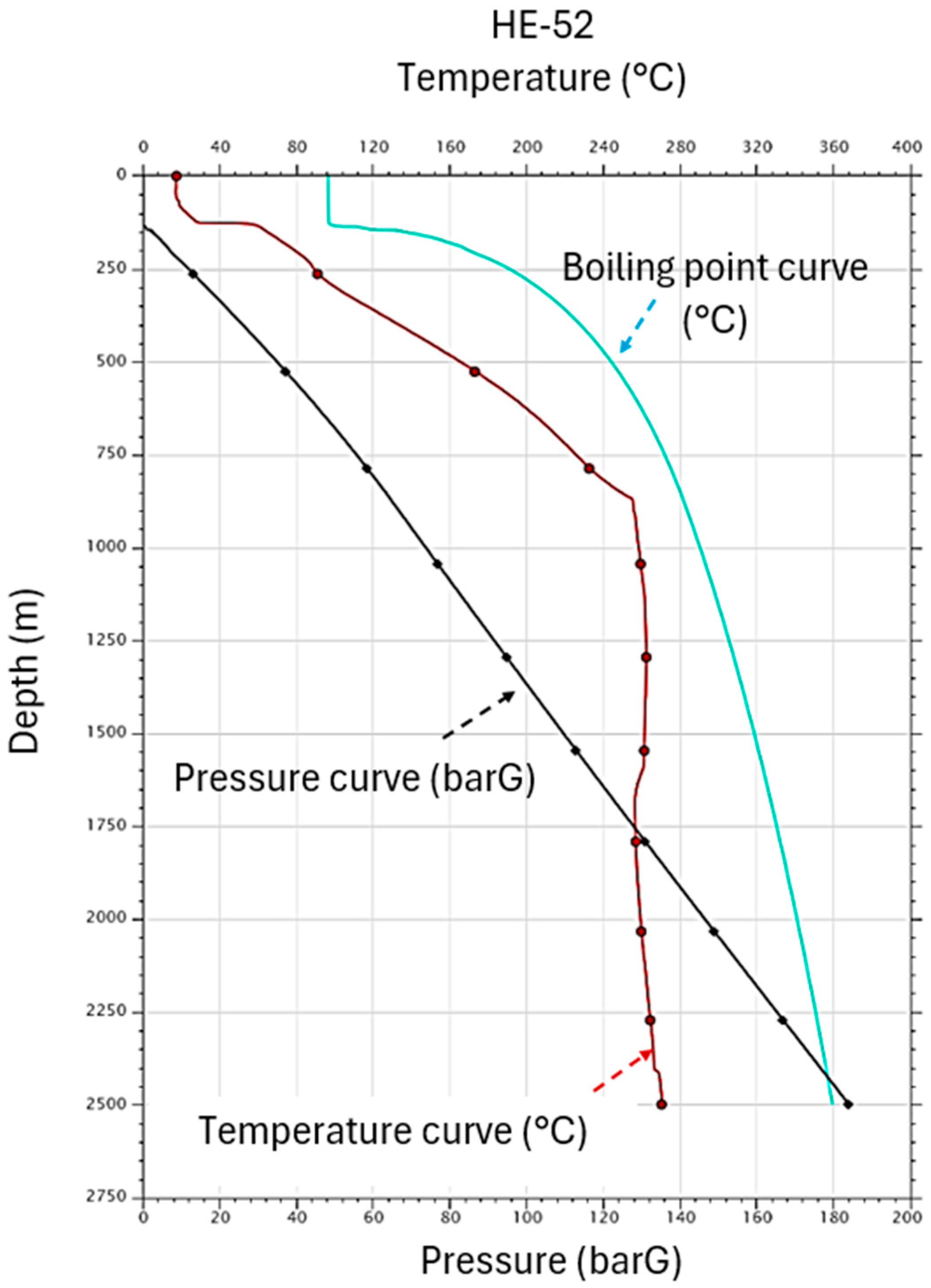
Well HE-52 was logged with a pressure-temperature (PT) tool on a slickline unit on 24 June 2025. A deep fluid sampling unit operated by ÍSOR collected a liquid phase sample at 750 m depth during the same campaign, which was analysed at ÍSOR’s chemical laboratory. Only a liquid-phase sample was collected; no separate gas sample was taken. Dissolved CO2 was determined by titration, anions by ion chromatography (IC), and cations by inductively coupled plasma optical emission spectroscopy (ICP-OES). The PT measurements and resulting fluid chemistry of HE-52 are reported in Section 3.3.

2.5. Microstructural and Chemical Analysis of Test Samples

Test samples were analysed on the external surface and in the cross-section after the test. Unexposed samples were also analysed for comparison in the same manner. Samples assigned to cross-sectional analysis were cut with a diamond blade and mounted in phenol-formaldehyde under elevated temperature and pressure. Mounted samples were then ground to 2000 grit with SiC abrasive paper and polished down in a few steps with 3 and 1 µm diamond paste in the final polishing steps. Microstructural analysis was performed with a field emission scanning electron microscope (SEM) from JEOL type JSM IT800. Elemental analysis was conducted with an energy X-ray dispersive analyser (EDX), type X-MaxN, with an 80 mm2 detector and AZtec Energy Advanced version 6.2 software from Oxford Instruments.

3. Results

3.1. As-Received Cladding Characterisation

The as-received surfaces were analysed using a 3D surface profilometer and the Ra values were measured as 4.9 μm and 5.4 μm for the UNS N06625 and UNS S31603 EHLA deposits, respectively. The cross-sections of the samples were polished and examined by optical light microscopy. The examination of the prepared sections has shown a good adhesion of the cladding material to the substrate at the interface. The analysis of the captured micrographs by ImageJ version 1.53k software revealed a density > 99.8% for both manufactured claddings. The metallographic sections were used for Vickers micro-hardness survey through the cladding and interface, and hardness values for the UNS S31603 ranged between 171 and 205 HV (average 187 HV), 169–198 HV (184 HV), and 194–219 HV (average 205) for the substrate, HAZ, and cladding, respectively. The Vickers micro-hardness values (HV0.1) of the UNS N06625 ranged between 169 and 194 HV (average 183 HV), 201–214 HV (208 HV), and 281–327 HV (average 300) for the substrate, HAZ, and cladding, respectively. The high magnification SEM images of UNS N06625 material fabricated by EHLA presented in a paper published by co-authors of this work [28] revealed some degree of chemical segregation consistent with niobium and molybdenum elements. The poor electrochemical behaviour of the nickel-based alloy cladding, the same as those tested here, was attributed to this elemental segregation. No segregation or secondary phase formation was reported for UNS S31603 EHLA deposits [28].

3.2. Cladded Carbon Steel Bar (Sample #8)—SEM and EDX Analysis

3.2.1. Carbon Steel in Partially Cladded Steel Bar

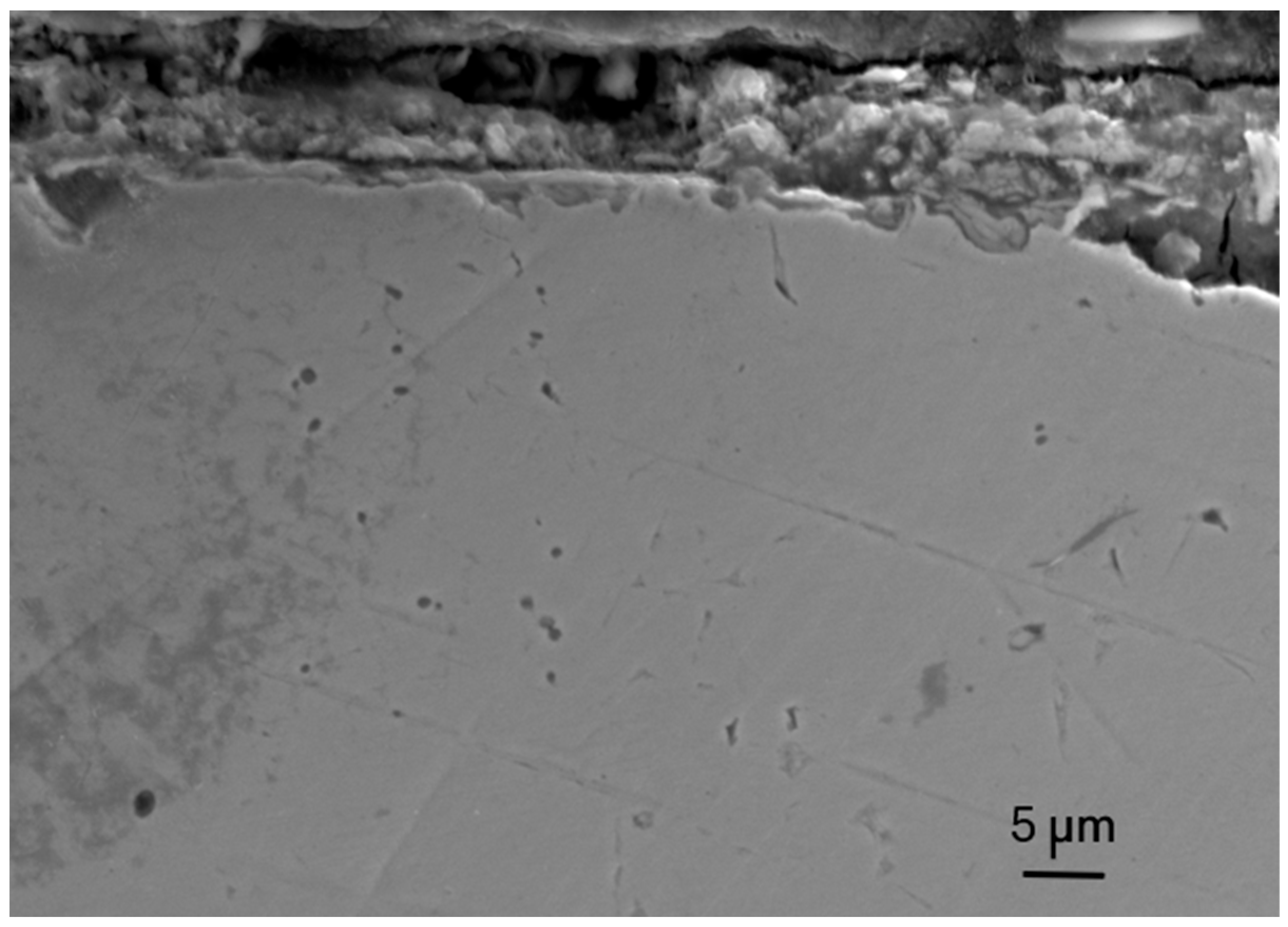
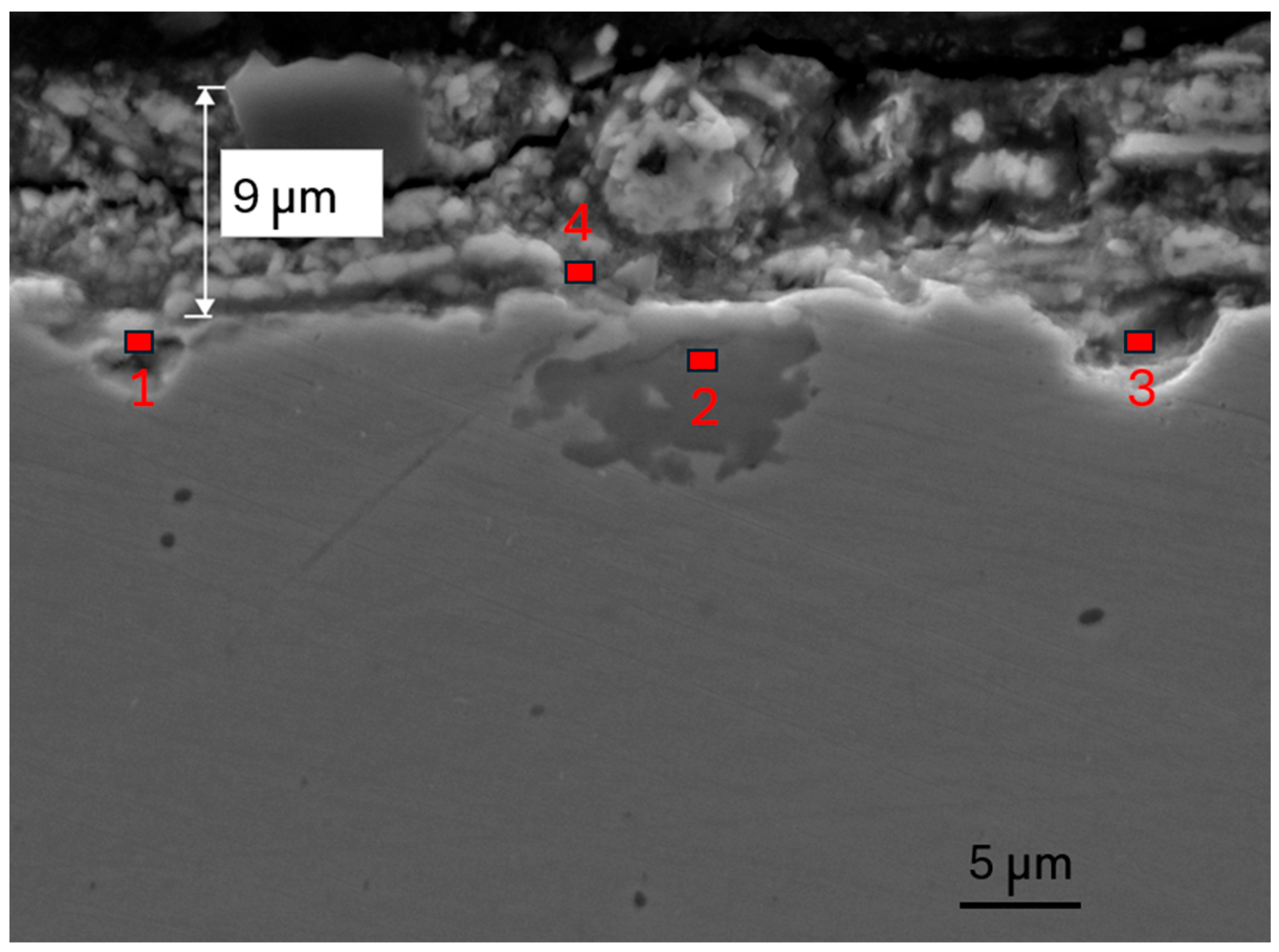
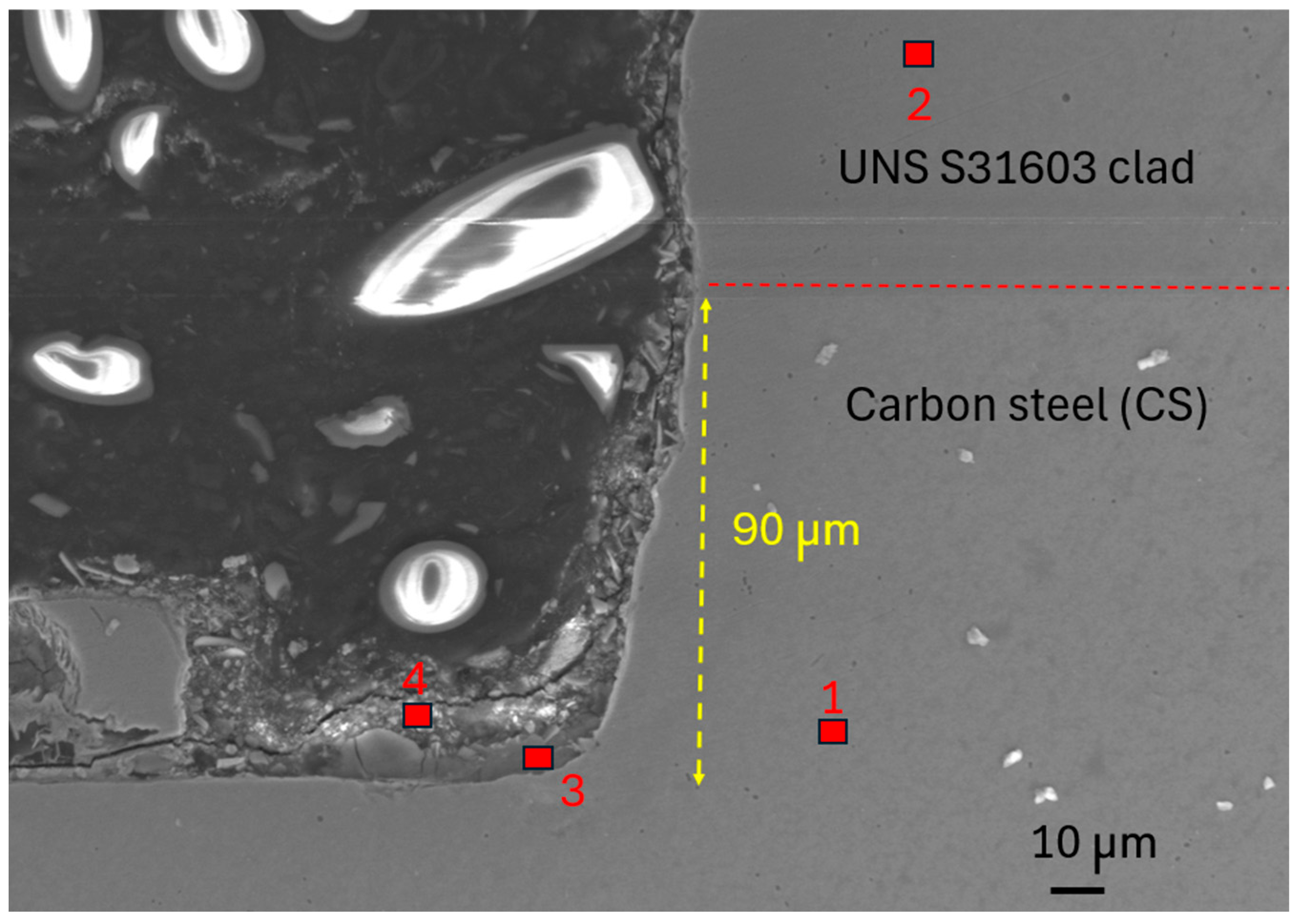
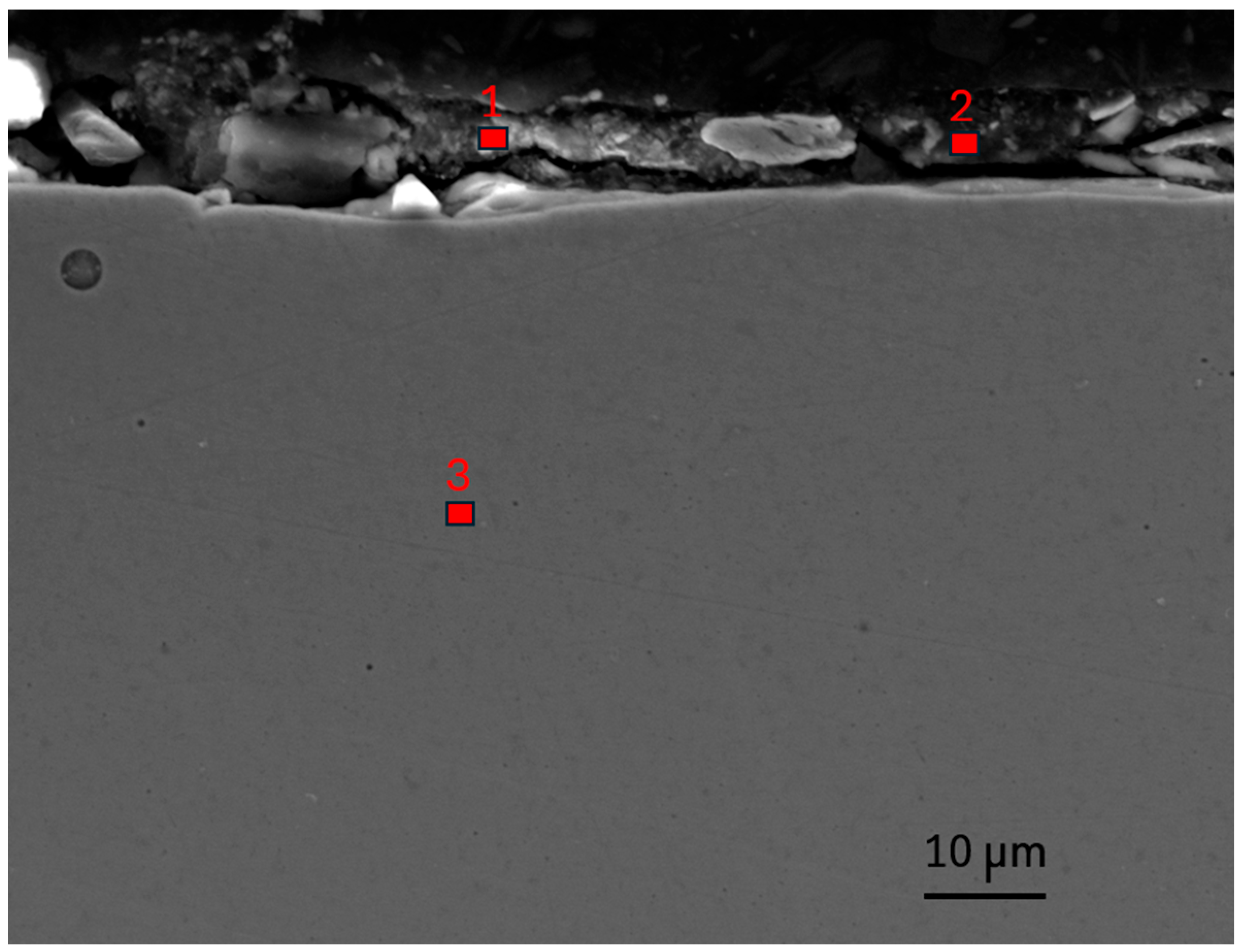
Sampling and analysis were also performed on an unexposed partially cladded bar at the same locations for comparison with the sample exposed to the geothermal fluid. For the exposed carbon steel in the cladded bar, general corrosion and localised corrosion was observed in the carbon steel after the test. The corrosion film had, on many occasions, an inner oxide-rich film and outer sulphide-rich corrosion layer, as seen in Figure 8 and Figure 9 and Table 4 respectively. This indicates that corrosion propagation occurred as proposed by Gao et al. [5,7].

3.2.2. UNS S31603 Stainless Steel Clad in Partially Cladded Carbon Steel Bar

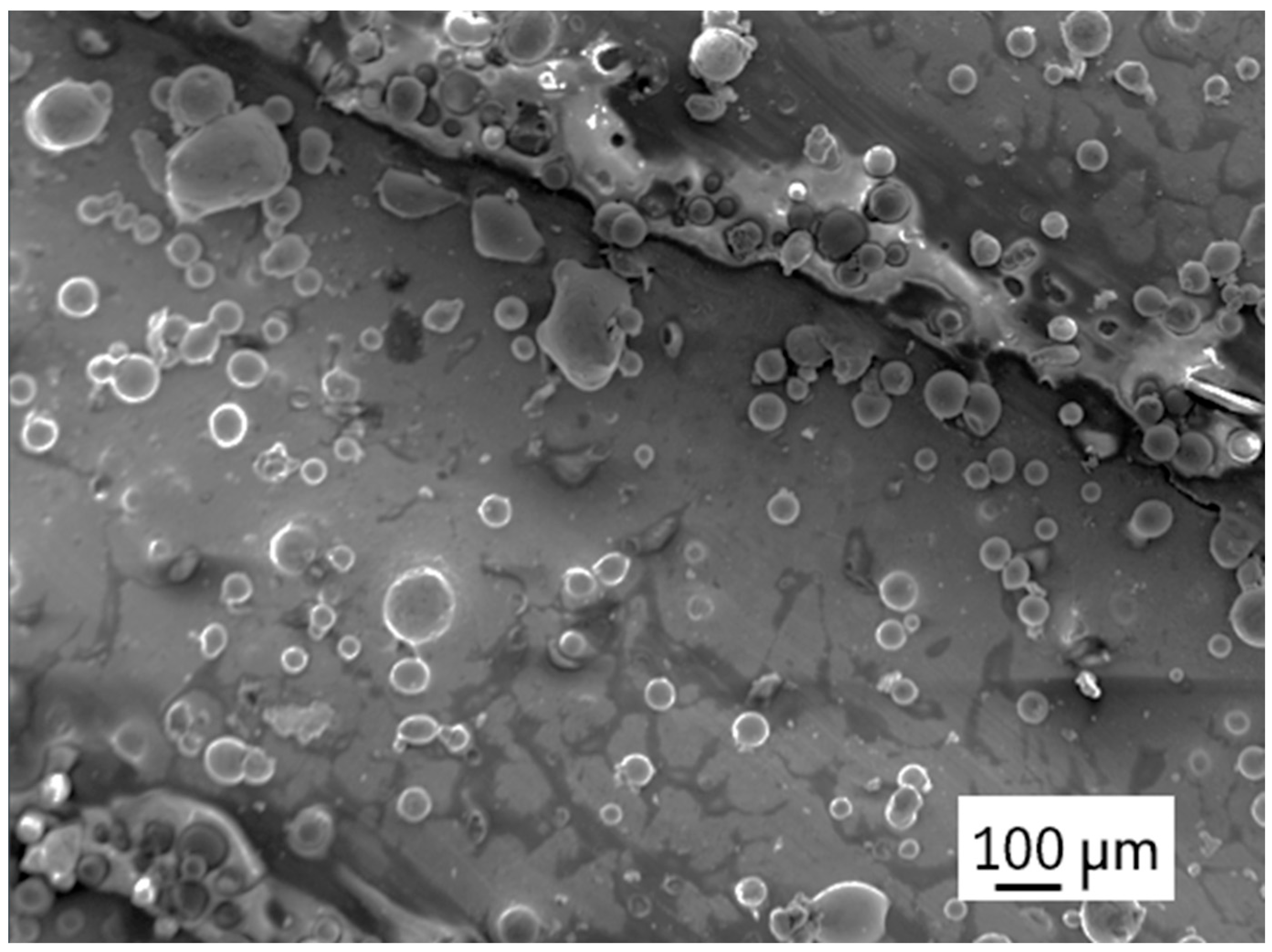
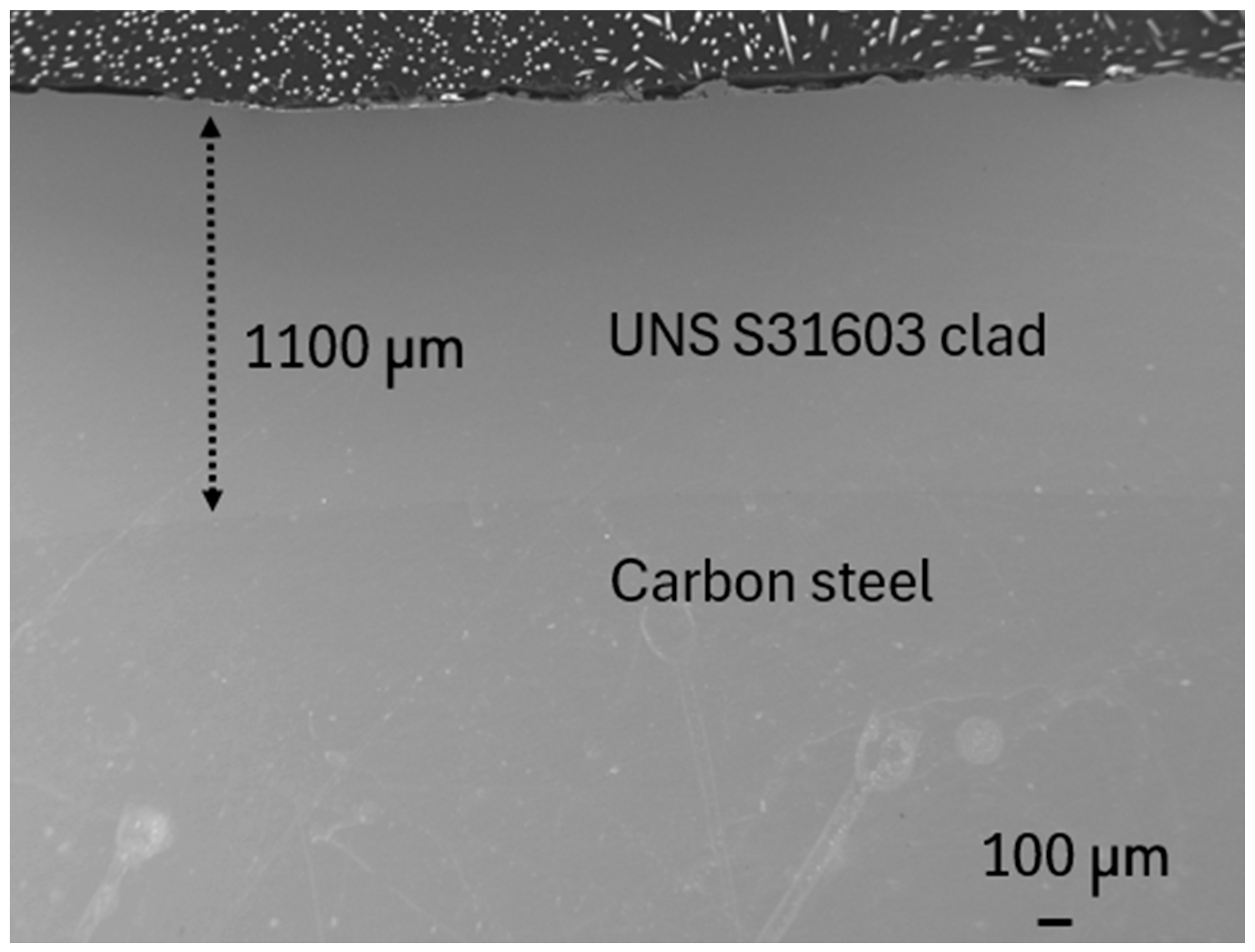
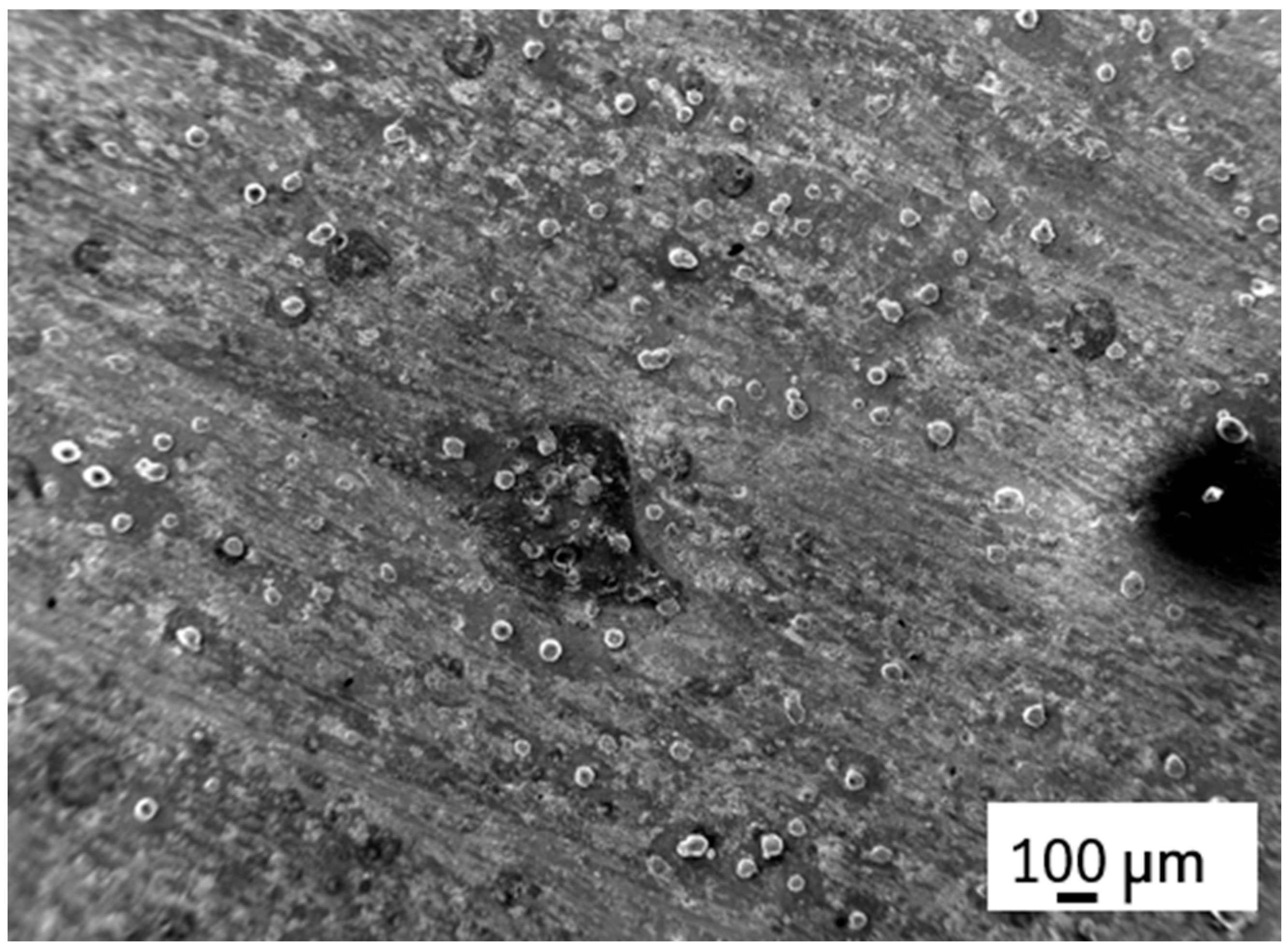
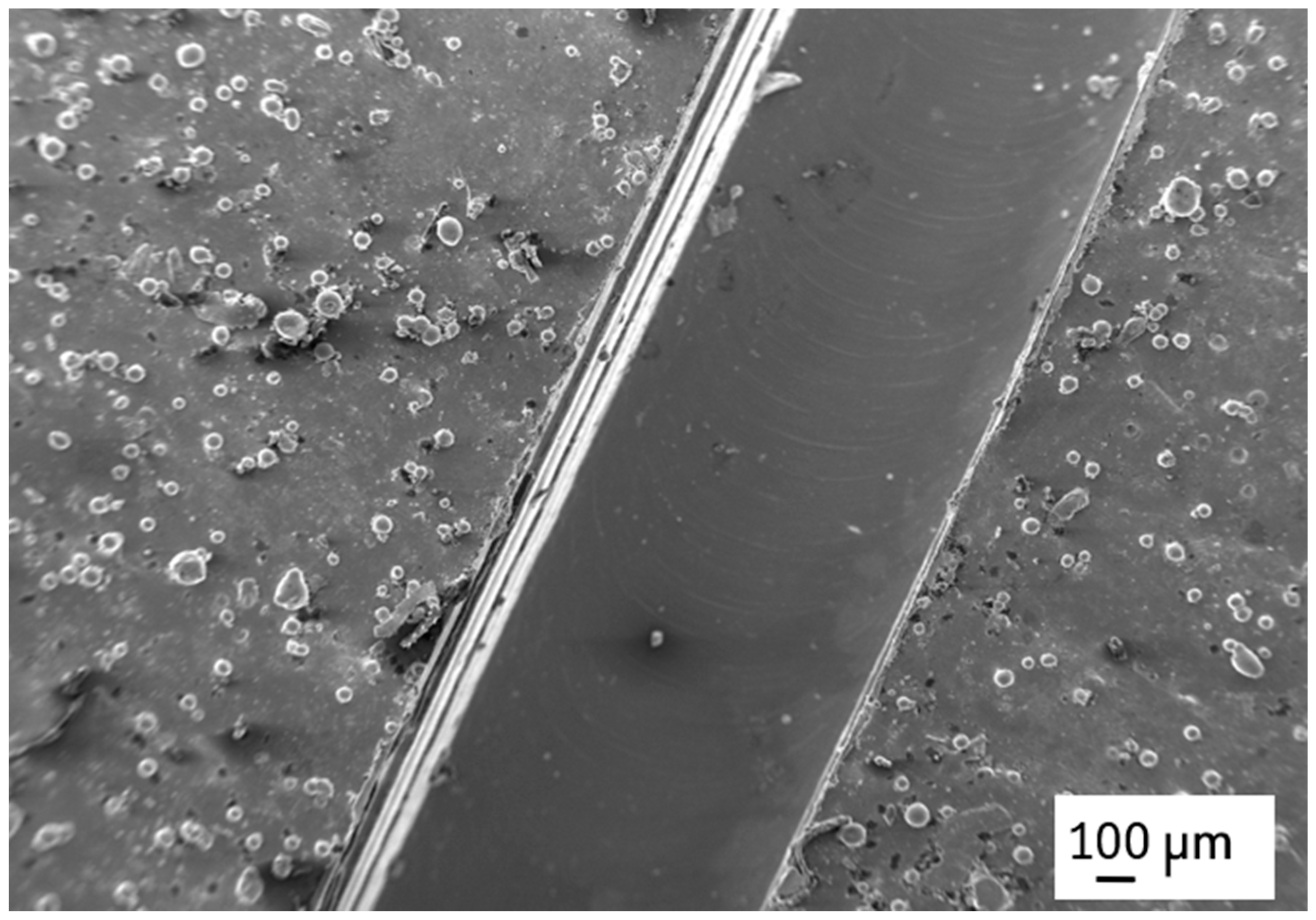
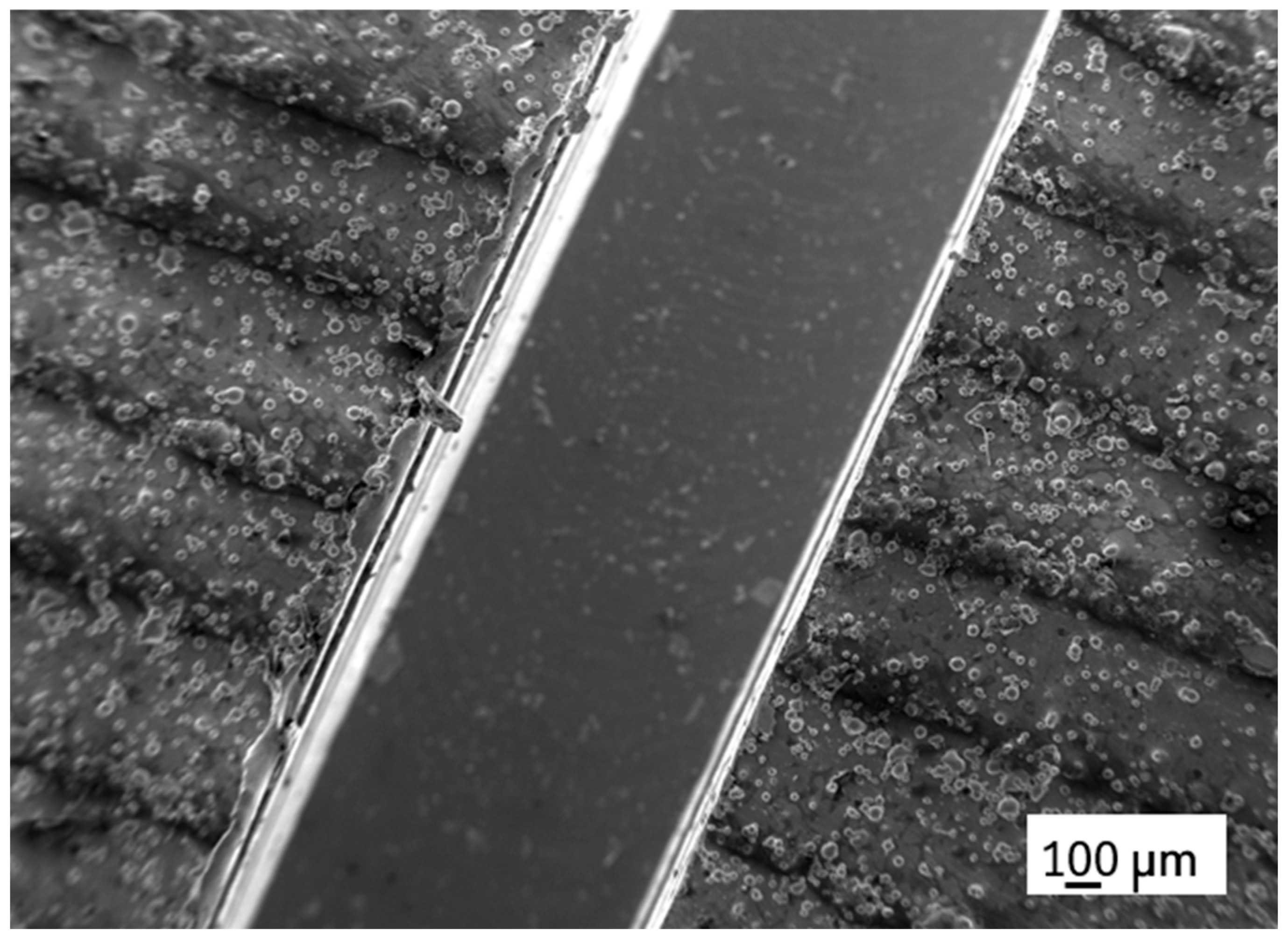
Some unfused powder residuals were observed on the external surface of the cladded carbon steel cylinder, as seen in Figure 10 and Figure 11. Samples were extracted from the middle of the scratched surface, on the opposite side of the same clad segment where no scratch was in the clad, and finally, a sample was extracted from the other clad segment that had no scratch. The clad thickness was about 1100 µm, as seen in Figure 12. No significant difference was, however, observed in the corrosion behaviour between the three samples. An inner oxide-rich layer and outer sulphide-rich layer were observed on the carbon steel substrate surface in the scratch where the galvanic effect of the clad material could occur. The thickness of the corrosion film on the carbon steel in the scratch and the extent of the corrosion damage indicated, however, that the corrosion inside the scratch was similar to the corrosion on the carbon steel substrate that was not in contact with the clad material, as can be seen in Figure 13 and Figure 14 (and Table 5). This result implies that the corrosion effect of the geothermal fluid dominated over the galvanic corrosion effect of the clad material (the reduction potential of the corrosive species might shift insignificantly, or the corrosion rate might be affected insignificantly by the higher reduction potential of the corrosive species).
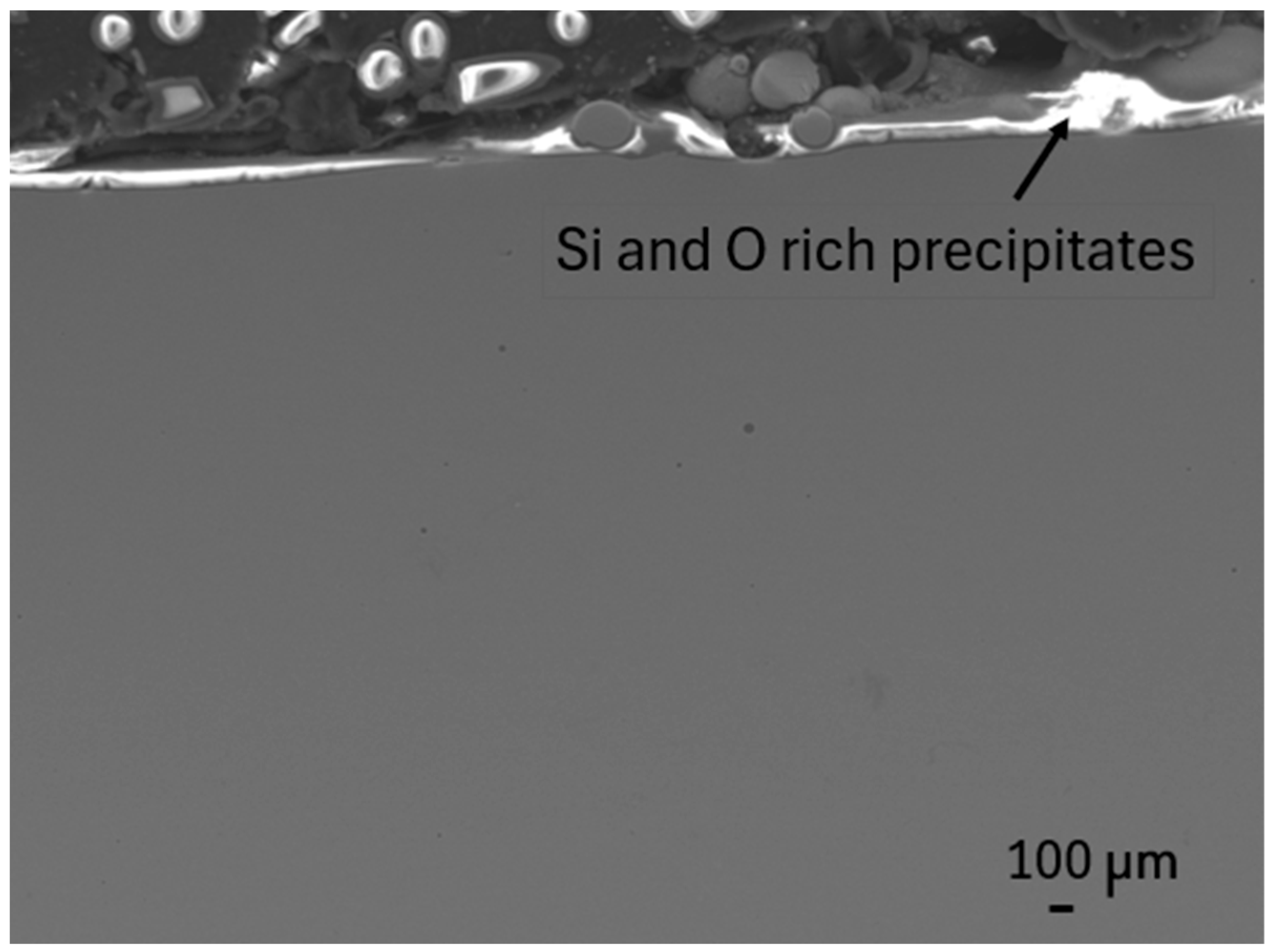
Some Si and O-rich deposits were observed on some locations on the external surface, as seen in Figure 15. This might indicate that hot geothermal fluid might have been entrapped in the test cylinder during the extraction of the sample holder from the well. As the entrapped fluid was pulled up towards the surface, towards a colder environment, the silica in the geothermal fluid might have supersaturated and precipitated onto the surface of the sample.
In general, insignificant corrosion damages were observed on the surface of the UNS S31603 clad in the partially cladded bar, but sulphide and oxide deposits were detected, as seen in Figure 16 (and Table 6).

3.2.3. UNS N06625 Nickel-Based Clad in Partially Cladded Carbon Steel Bar

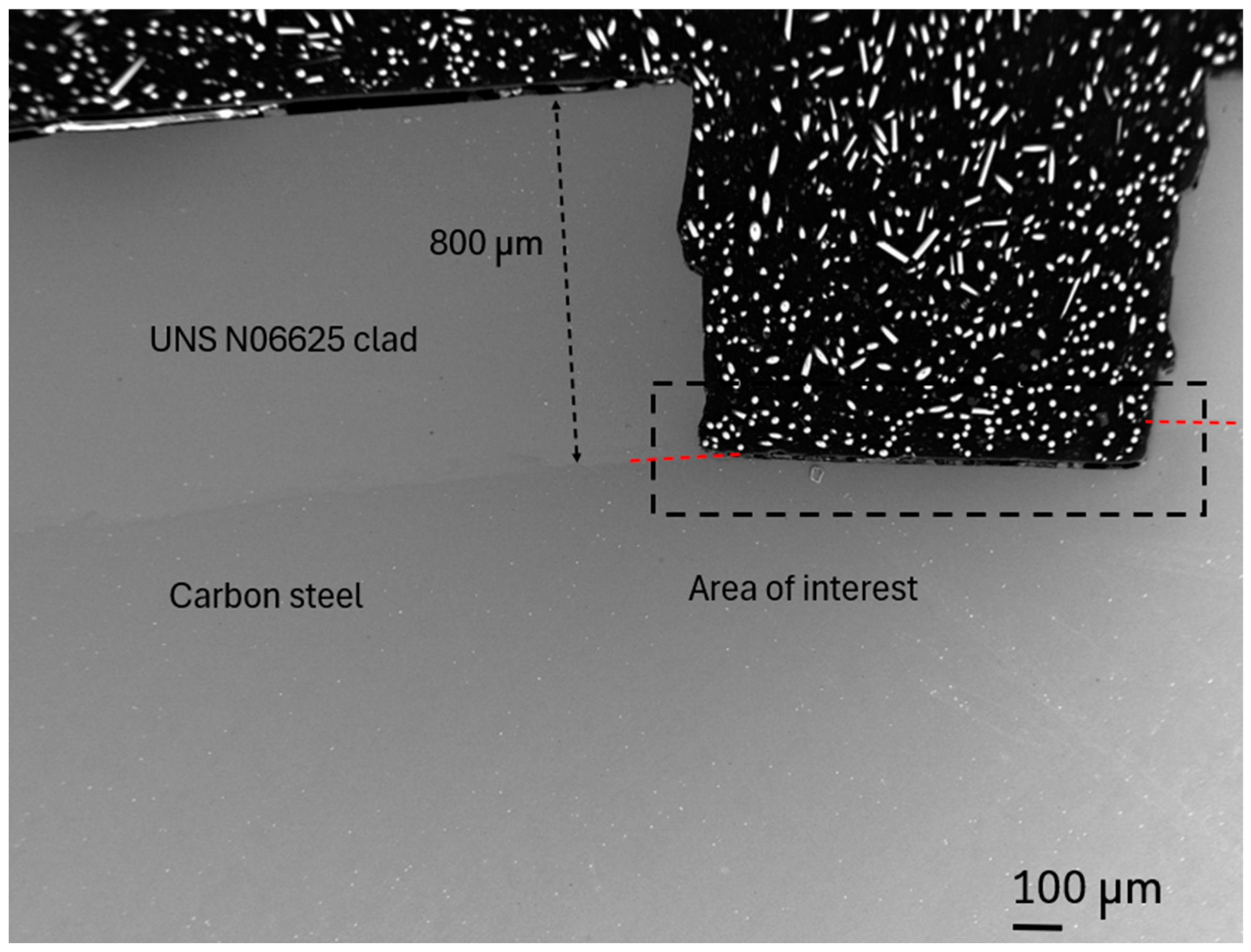
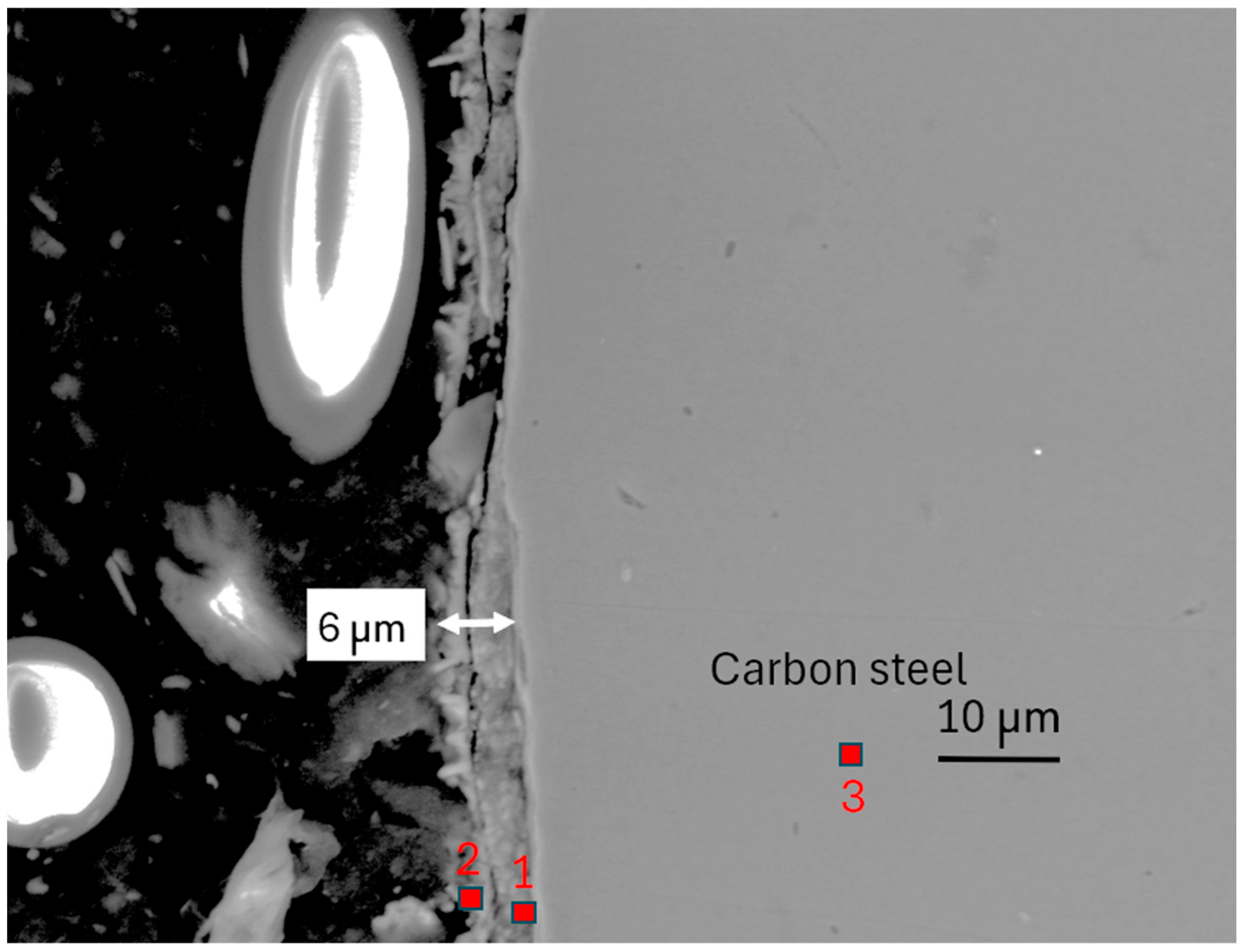
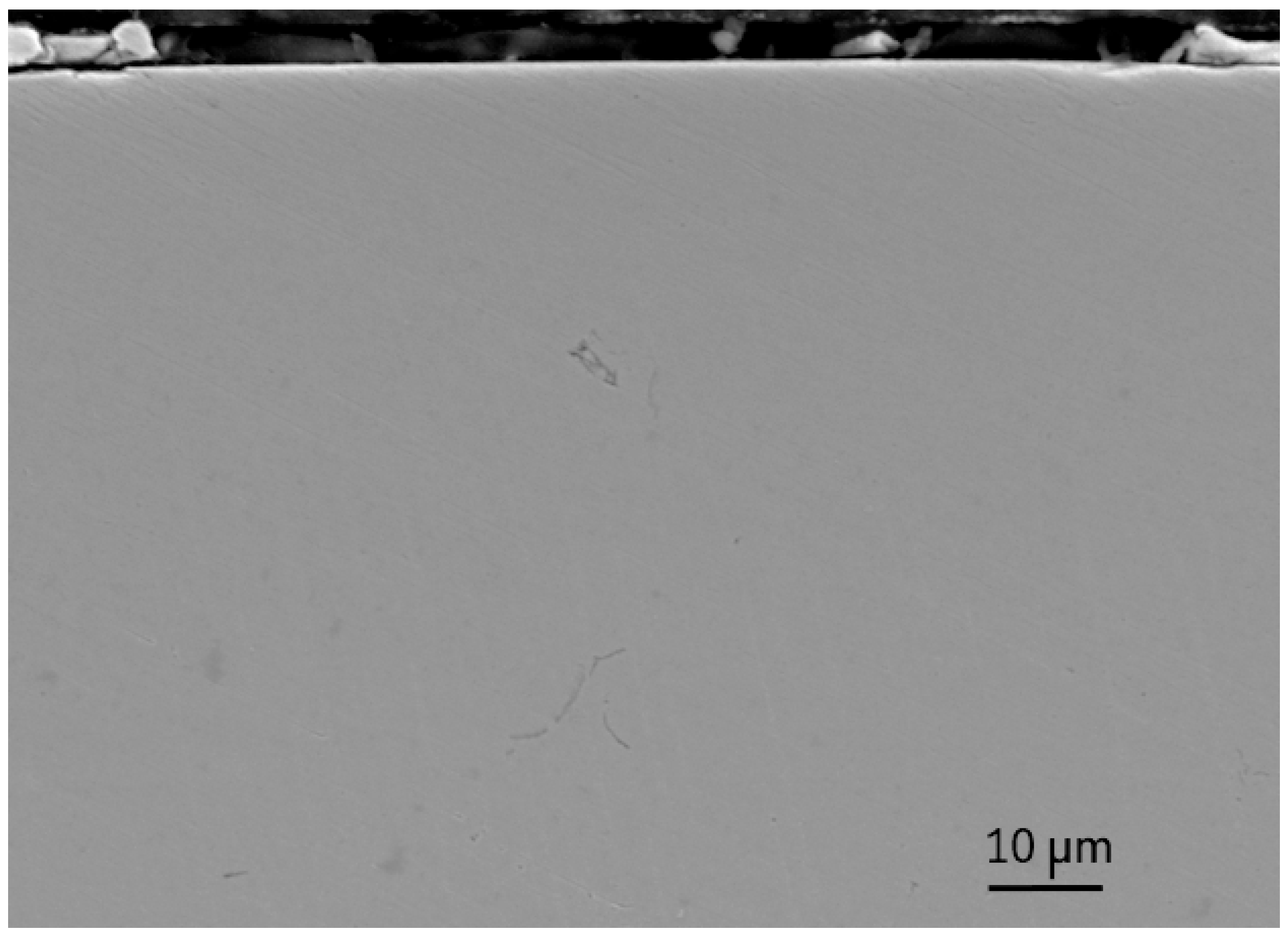
The corrosion resistance performance and the corrosion behaviour of the exposed carbon steel substrate in the scratch of the UNS N06625 clad were similar to the corrosion behaviour of the UNS S31603 case, i.e., negligible corrosion damage was observed in the UNS N06625 clad material; see Figure 17, Figure 18 and Figure 19. An inner oxide-rich corrosion layer and an outer sulphide-rich corrosion layer were observed on the carbon steel substrate in the scratch. The thickness of the corrosion film and extent of the corrosion damage also indicated that the corrosion effect of the geothermal fluid was dominant, and the galvanic effect of the clad material had negligible contributions to the corrosion of the carbon steel; see Figure 20 and Table 7. Negligible corrosion damage was observed on the UNS N06625 clad (see Figure 21), but traces of sulphides and oxide deposits were detected. Banding patterns within the dendritic structure are consistent with elemental segregation, specifically niobium and molybdenum. Localised chemical segregation and its potential adverse effect on corrosion performance has been reported for EHLA-fabricated UNS N06625 with the same production method and raw materials [29]. However, the downhole corrosion tests conducted in this study did not show any sign of corrosion pits or cracking in the tested specimens. The same observation was reported in the other work by Martelo et al. [29], where poor electrochemical corrosion behaviour was observed, but did not cause pitting in a 30-day test in simulated geothermal brine at 70 °C or failure of the ASTM G150 [30] test up to 80 °C.

3.3. Samples in Jigs (Samples #1–#7)—SEM and EDX Analysis

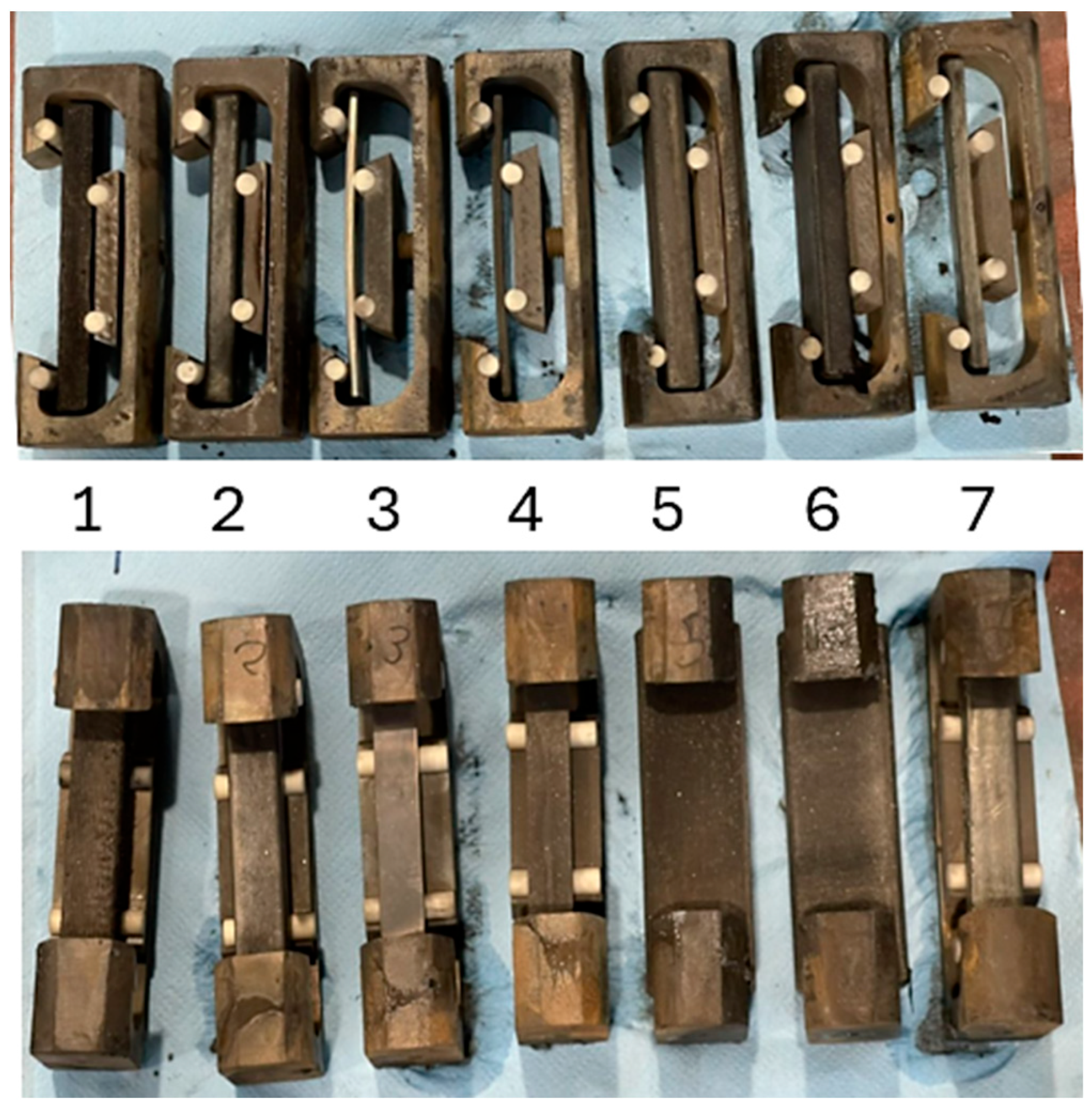
Seven samples in total were put in jigs (see Figure 22), of which five were stressed (two with 30% YS and three with 100% YS) at the testing temperature. Two of the samples in the jigs were tested with no stress. The aim of testing the stressed samples was to investigate the clad’s susceptibility to SCC. The aim of testing the two cladded unstressed samples was to investigate the corrosion effect of the geothermal environment on the clads when the external surface of the carbon steel substrate was fully covered with clad material (i.e., with no galvanic effect between the clad and substrate).

3.3.1. UNS S31603 and UNS N06625 Clads on Carbon Steel—No Stress Applied (Samples #5 and #6)

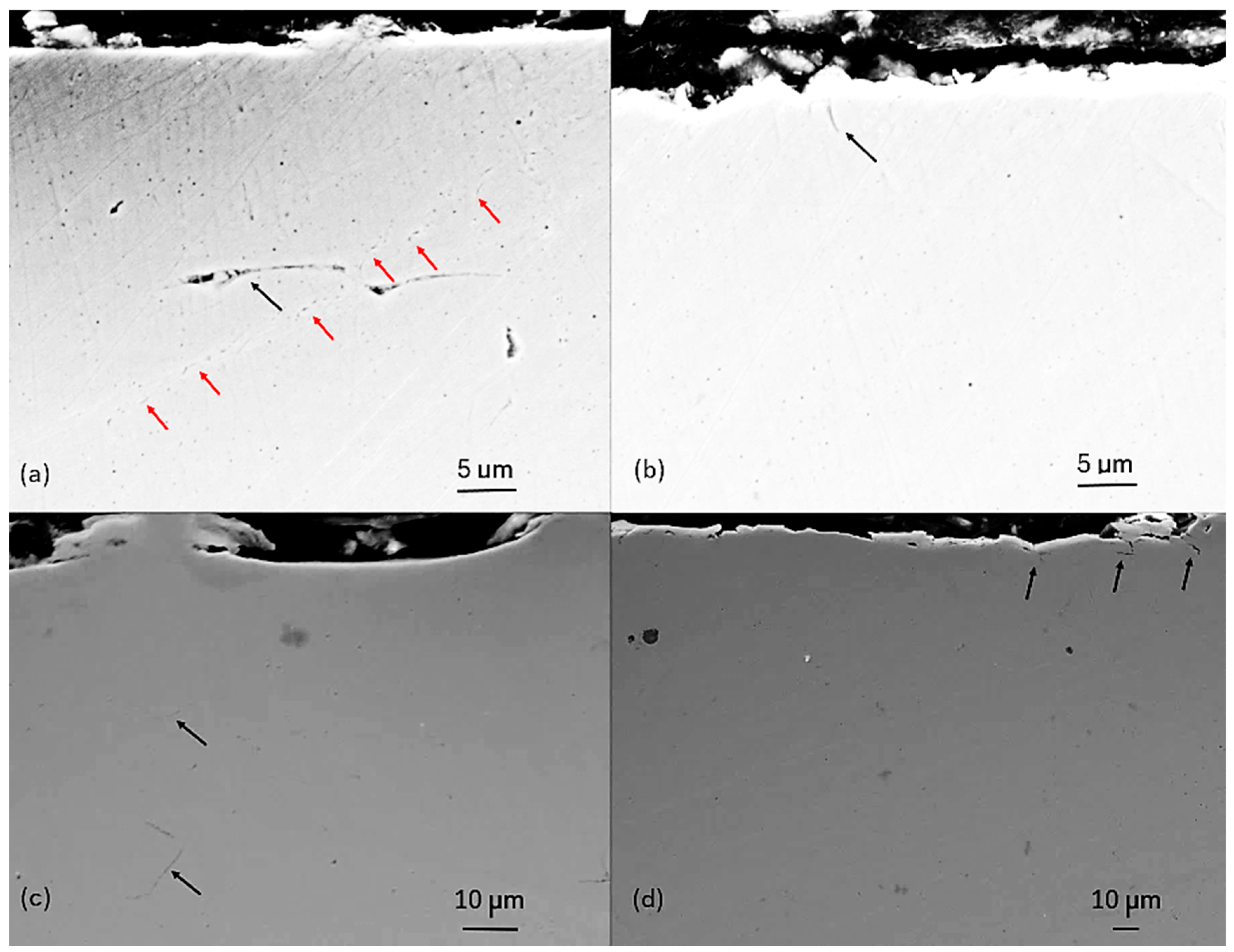
Carbon steel coupons, fully cladded with UNS S31603 or UNS N06625, were installed in jigs. Ceramic rollers were put between the samples and the jigs to disconnect electrical contact between the jigs and the samples (to prevent galvanic corrosion or the galvanic effect). The extent of corrosion on the clads was negligible, like the insignificant corrosion and deposits detected on the clad samples on the partially cladded bar. Cracks were observed on both clad samples, at the surface and in the bulk clad layer (see Figure 23). These cracks were, however, like the cracks observed in samples unexposed to the geothermal environment. These results indicate that the cracks observed in the clads were due to production, i.e., solidification cracks but might also be cracks resulting from inclusions within the material. The different morphology and orientation of the cracks within the alloy could be because some cracks evolved from unfused powder at the surface, some other cracks were within the bulk material but not at the surface, and the cut on samples with applied stress was performed in parallel to the length of the samples, i.e., the cross-section was analysed at the length of the sample, whereas samples with no stress were analysed at the cross-section of the width of the samples.

3.3.2. UNS S31603 and UNS N06625 Clads on Carbon Steel—Stress Load 30% YS (Samples #1 and #2)

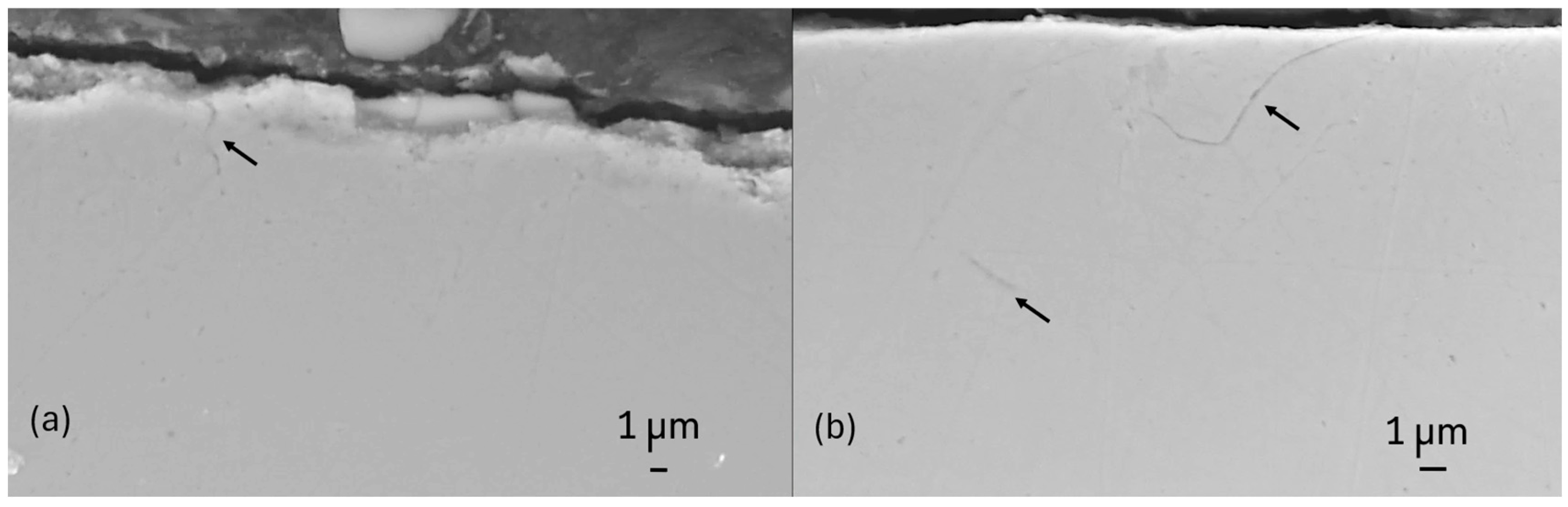
No indication of SCC was observed in the samples with a stress level of 30% YS. No corrosion products were observed in the cracks. Crack size and orientation were similar to those of the cracks observed in unexposed samples and samples tested with no stress. As a result, the cracks were concluded to be from the production of clads, i.e., solidification cracks but they might also be originated from inclusions within the material as seen in Figure 24.

3.3.3. UNS S31603 and UNS N06625 Pure Clads and UNS N06625 Clad on Carbon Steel—Stress Load 100% YS (Samples #3 and #4 Pure Clads, Sample #7 Clad on CS Substrate)

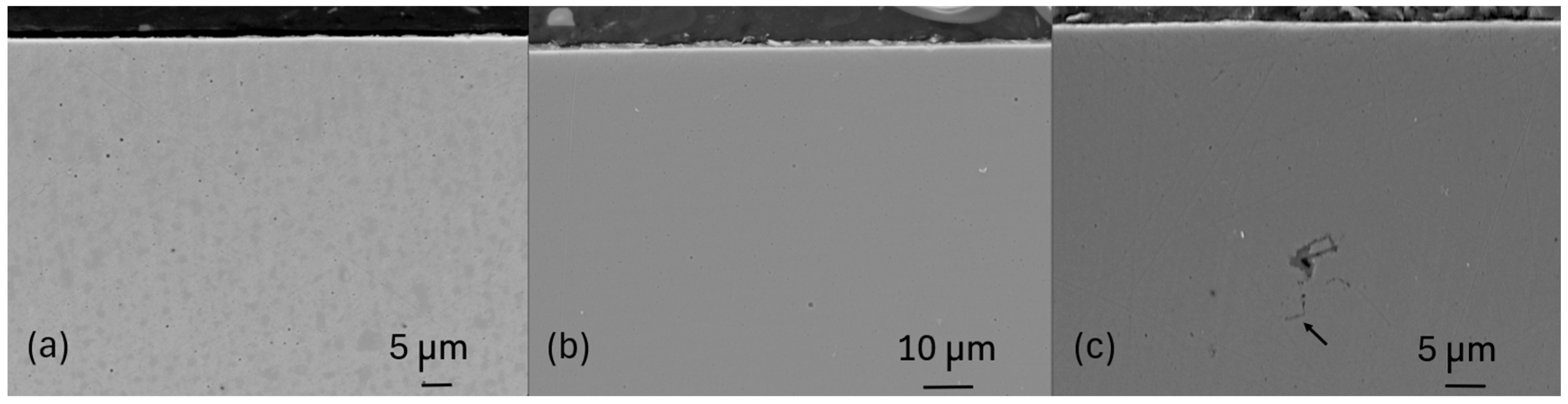
No indication of SCC was also observed in the samples with a stress load level of 100% YS. As before, no corrosion products were observed in the cracks. Crack size and frequency were negligible in the pure clads (Figure 25a,b), which might indicate that the solidification cracks in the clads on carbon steel substrate (see Figure 25c) occurred due to the difference in thermal coefficients between the clads and the substrate materials and residual stresses that form during solidification.

3.4. Operating Environment and Implications for Corrosion

Figure 26 and Table 8 summarise the well environment during testing of the clad materials. Only the liquid phase was sampled and analysed; no separate gas phase was collected. Accordingly, the CO2 value in Table 8 represents the dissolved liquid-phase concentration and does not include any gas-phase component present at depth. H2S was not measured in the downhole liquid sample, and being volatile like CO2, may partition to a gas phase; therefore, older wellhead (surface) samples were used to estimate a range of possible reservoir H2S values that reflects both liquid and gas phases.
The June 2025 downhole liquid sample matches historical HE-52 compositions for conservative majors (SiO2, Na, Cl), supporting its representativeness during exposure of the clad materials. Elevated Fe and Ca may reflect wellbore effects associated with the static period of HE-52 for a couple of years, although depth-dependent variability cannot be excluded.
In HE-52, the interval tested was liquid-dominated with a near-neutral pH, i.e., a class IV corrosivity environment in Nogara et al. [1]. Lower pH promotes general corrosion and accelerates rates, while temperature influences both the corrosion forms and rates as well as scaling and passivation. Under the mildly acidic conditions present in HE-52, the combination of H2S and CO2 was sufficient to significantly corrode the carbon steel. H2S markedly increases corrosion in acidic fluids [31], while dissolved CO2 lowers pH, and in the absence of H2S, can promote FeCO3 scaling that is nevertheless vulnerable to localised attack in acidic solutions [32]. The joint effect of CO2 and H2S, therefore, plausibly explains the observed carbon steel degradation.
By contrast, no significant corrosion was observed for the UNS S31603 stainless steel or the UNS N06625 (Alloy 625) clads in any test condition. Austenitic stainless steels can exhibit SCC in saline geothermal environments [1], but it was not observed here; the low salinity of HE-52 may contribute to the apparent immunity of UNS S31603 in this case. Literature shows UNS S31603 can be susceptible to localised corrosion at lower temperatures [33], and in situ tests of UNS N06625 (Alloy 625) at higher temperatures have revealed localised corrosion in Nb-depleted phases [34], though it generally exhibits good corrosion resistance in harsh high-temperature geothermal fluids [35]. Large cathode-to-anode area ratios were imposed by an intentional surface scratch on the clads, and some clads were stressed to promote SCC; even under these conditions, the clads showed no significant damage. The short testing period of 14 days could possibly be insufficient to promote observable corrosion in the clad alloys, but it verifies, however, the good corrosion resistance or very slow corrosion mechanism of the clad alloys in the testing environment. The crack length and frequency of the clad alloys on the carbon steel substrate were very similar. The crack length was normally in the range 5–20 µm, and the cracking frequency was estimated to be on the scale of 1 crack/100 µm length of the clad material, but no cracking was observed in the pure clad materials tested (without substrate). EHLA cladding can be up to 100 times faster than conventional LC, which increases the economic feasibility of cladding application for future projects. In this study, the corrosion test was performed in a near-neutral and low-saline geothermal well, and is therefore not representative of lower pH or higher saline wells where corrosivity can be expected to be more aggressive. To further probe the limits of performance, future work should extend exposure duration and test more acidic wells, since pH strongly affects both corrosion rate and the integrity of protective scaling [1,36,37].

4. Conclusions

From this study, the following conclusions can be made:
  • In the geothermal environment tested, the corrosion of the UNS S31603 stainless steel clad and the UNS N06625 nickel-based alloy was not observed.
  • Carbon steel was prone to general and localised corrosion; an inner oxide concentrated layer and an outer sulphide concentrated layer were formed in the general corrosion, and oxide concentrated pits were formed locally.
  • The galvanic corrosion effect of the clad materials on the carbon steel was insignificant in the geothermal environment tested.
  • The clad materials were not prone to SCC corrosion in the geothermal environment tested.
  • Solidification cracks were observed in both clad materials that formed during protection. The solidification cracks were short, and no corrosion products were observed in the cracks, which are concluded to have no effect on the corrosion performance of the clad materials.
  • These results suggest that the clad materials produced are feasible as a corrosion mitigation option for a casing and liner in a similar geothermal environments.

Author Contributions

Conceptualisation, A.I.T., G.S.K., T.J.T., E.A.E., T.M. and H.O.H.; methodology, A.I.T., G.S.K., E.A.E., T.M. and H.O.H.; software, A.I.T., G.S.K. and T.J.T.; validation, A.I.T., G.S.K., E.A.E., T.M. and H.O.H.; formal analysis, A.I.T., G.S.K. and H.O.H.; investigation, A.I.T., G.S.K., E.A.E. and H.O.H.; resources, A.I.T., G.S.K., E.A.E., T.M. and H.O.H.; data curation, A.I.T. and G.S.K.; writing—original draft preparation, A.I.T.; writing—review and editing, A.I.T., G.S.K., T.J.T., D.E.C., T.M., E.A.E., H.O.H. and L.T.; visualisation, A.I.T., G.S.K. and H.O.H. supervision, A.I.T.; project administration, L.T.; funding acquisition, H.O.H. All authors have read and agreed to the published version of the manuscript.

Funding

This work was supported by the European Union’s Horizon Europe research and innovation programmes under grant agreement No. 101084623 (COMPASS). The authors thank all project partners and contributors.

Data Availability Statement

The original contributions presented in this study are included in the article. Further inquiries can be directed to the corresponding authors.

Acknowledgments

The authors would like to give gratitude to Birgir Johannesson at Tæknisetur for SEM/EDX assistance.

Conflicts of Interest

Authors Andri Isak Thorhallsson and Lilja Tryggvadottir were employed by the company Reykjavík Energy. Authors Erfan Abedi Esfahani and Tomaso Maccio were employed by the company TWI. Author Helen Osk Haraldsdottir was employed by the company ON. The remaining authors declare that the research was conducted in the absence of any commercial or financial relationships that could be construed as a potential conflict of interest.

Abbreviations

The following abbreviations are used in this manuscript:
CO2Carbon dioxide
EDXEnergy X-ray dispersive
EHLAExtra high-speed laser application
H2SHydrogen sulphide
LCLaser cladding
SCCStress corrosion cracking
SEMScanning electron microscope
XRDX-ray diffraction
YSYield strength

References

  1. Nogara, J.; Zarrouk, S.J. Corrosion in Geothermal Environment: Part 1: Fluids and Their Impact. Renew. Sustain. Energy Rev. 2018, 82, 1333–1346. [Google Scholar] [CrossRef]
  2. Mundhenk, N.; Huttenloch, P.; Sanjuan, B.; Kohl, T.; Steger, H.; Zorn, R. Corrosion and Scaling as Interrelated Phenomena in an Operating Geothermal Power Plant. Corros. Sci. 2013, 70, 17–28. [Google Scholar] [CrossRef]
  3. Nogara, J.; Zarrouk, S.J. Corrosion in Geothermal Environment Part 2: Metals and Alloys. Renew. Sustain. Energy Rev. 2018, 82, 1347–1363. [Google Scholar] [CrossRef]
  4. Sun, W.; Nesic, S.; Papavinasam, S. Kinetics of Corrosion Layer Formation. Part 2—Iron Sulfide and Mixed Iron Sulfide/Carbonate Layers in Carbon Dioxide/Hydrogen Sulfide Corrosion. Corrosion 2008, 64, 586–599. [Google Scholar] [CrossRef]
  5. Gao, S.; Brown, B.; Young, D.; Singer, M. Formation of Iron Oxide and Iron Sulfide at High Temperature and Their Effects on Corrosion. Corros. Sci. 2018, 135, 167–176. [Google Scholar] [CrossRef]
  6. Gao, S.; Jin, P.; Brown, B.; Young, D.; Nesic, S.; Singer, M. Corrosion Behavior of Mild Steel in Sour Environments at Elevated Temperatures. Corrosion 2017, 73, 915–926. [Google Scholar] [CrossRef] [PubMed]
  7. Thorhallsson, A.I.; Karlsdottir, S.N. Corrosion Behaviour of Titanium Alloy and Carbon Steel in a High-Temperature, Single and Mixed-Phase, Simulated Geothermal Environment Containing H2S, CO2 and HCl. Corros. Mater. Degrad. 2021, 2, 190–209. [Google Scholar] [CrossRef]
  8. Liu, M.; Cai, Y.; Duan, C.; Li, G. Key Techniques in Parts Repair and Remanufacturing Based on Laser Cladding: A Review. J. Manuf. Process. 2024, 132, 994–1014. [Google Scholar] [CrossRef]
  9. Li, M.; Huang, K.; Yi, X. Crack Formation Mechanisms and Control Methods of Laser Cladding Coatings: A Review. Coatings 2023, 13, 1117. [Google Scholar] [CrossRef]
  10. Wang, K.; Liu, W.; Hong, Y.; Sohan, H.M.S.; Tong, Y.; Hu, Y.; Zhang, M.; Zhang, J.; Xiang, D.; Fu, H.; et al. An Overview of Technological Parameter Optimization in the Case of Laser Cladding. Coatings 2023, 13, 496. [Google Scholar] [CrossRef]
  11. Pacheco, J.T.; Veiga, M.T.; dos Santos, M.T.; Trabasso, L.G. Status of High-Speed Laser Cladding Process: An up-to-Date Review. Prog. Addit. Manuf. 2024, 9, 1857–1868. [Google Scholar] [CrossRef]
  12. Zhou, L.; Ma, G.; Zhao, H.; Mou, H.; Xu, J.; Wang, W.; Xing, Z.; Li, Y.; Guo, W.; Wang, H. Research Status and Prospect of Extreme High-Speed Laser Cladding Technology. Opt. Laser Technol. 2024, 168, 109800. [Google Scholar] [CrossRef]
  13. Du, D.; Chen, K.; Lu, H.; Zhang, L.; Shi, X.; Xu, X.; Andresen, P.L. Effects of Chloride and Oxygen on Stress Corrosion Cracking of Cold Worked 316/316L Austenitic Stainless Steel in High Temperature Water. Corros. Sci. 2016, 110, 134–142. [Google Scholar] [CrossRef]
  14. Nishimura, R. The effect of potential on stress-corrosion cracking of type-316 and type-310 austenitic stainless-steels. Corros. Sci. 1993, 34, 1463–1473. [Google Scholar] [CrossRef]
  15. Rao, M.A.; Babu, R.S.; Kumar, M.V.P. Stress Corrosion Cracking Failure of a SS 316L High Pressure Heater Tube. Eng. Fail. Anal. 2018, 90, 14–22. [Google Scholar] [CrossRef]
  16. Ren, Z.; Ernst, F. Stress-Corrosion Cracking of AISI 316L Stainless Steel in Seawater Environments: Effect of Surface Machining. Metals 2020, 10, 1324. [Google Scholar] [CrossRef]
  17. Jin, J.-C.; Cho, S.; Kim, K.; Sim, H.; Park, B.G.; Lee, Y.-K. Microstructures and Intergranular Corrosion Resistances of Hot-Rolled Austenitic Stainless Steel Clad Plates. J. Mater. Res. Technol. 2023, 26, 1–13. [Google Scholar] [CrossRef]
  18. Tan, Q.; Liu, K.; Li, J.; Geng, S.; Sun, L.; Skuratov, V. A Review on Cracking Mechanism and Suppression Strategy of Nickel-Based Superalloys during Laser Cladding. J. Alloys Compd. 2024, 1001, 175164. [Google Scholar] [CrossRef]
  19. Charqy, Y.E.; Radouani, R.; Essahli, M. FE Modeling of the Effect of Conductivity in Galvanic Corrosion between Different Types of Stainless Steel and Carbon Steel in a Structure Bolted Joint. Int. J. Build. Pathol. Adapt. 2023, 41, 574–587. [Google Scholar] [CrossRef]
  20. Choi, K.J.; Yoo, S.C.; Kim, S.; Kim, T.; Ham, J.; Lee, J.; Kim, J.H. Microstructural Evolution and Corrosion Behaviour of Thermally Aged Dissimilar Metal Welds of Low-Alloy Steel and Nickel-Based Alloy. Corros. Sci. 2019, 153, 138–149. [Google Scholar] [CrossRef]
  21. Liu, J.; Lu, Z.; Zhang, L.; Li, C.; Ding, R.; Zhao, X.; Zhang, P.; Wang, B.; Cui, H. Studies of Corrosion Behaviors of a Carbon Steel/Copper-Nickel Alloy Couple under Epoxy Coating with Artificial Defect in 3.5 Wt.% NaCl Solution Using the WBE and EIS Techniques. Prog. Org. Coat. 2020, 148, 105909. [Google Scholar] [CrossRef]
  22. Song, G.-L.; Yang, M. Strategy of Galvanic Corrosion Mitigation for Mg Alloys. Front. Mater. 2025, 12, 1582380. [Google Scholar] [CrossRef]
  23. Wu, T.; Qin, J.; Zhang, X.; Qu, S.; Feng, X.; Guo, R. Galvanic Corrosion of Mill-Scaled Carbon Steel Coupled to AISI 304 Stainless Steel in the Chloride-Contaminated Mortars. J. Mater. Civ. Eng. 2023, 35, 137463. [Google Scholar] [CrossRef]
  24. Okonkwo, B.O.; Ming, H.; Li, Z.; Li, L.; Chen, Y.; Peng, J.; Wang, J. Insight into the Galvanic Corrosion Behaviour of Low Alloy Steel A508/309 L/308 L Stainless Steel Dissimilar Metal Weld at Different Temperatures. Mater. Today Commun. 2024, 38, 107963. [Google Scholar] [CrossRef]
  25. Huang, Y.; Zhang, J.; Xuan, F.-Z.; Ma, Y. Modeling and Prediction of Galvanic Corrosion for an Overlaying Welded Structure. J. Mater. Eng. Perform. 2023, 33, 6111–6123. [Google Scholar] [CrossRef]
  26. Zhang, X.G. Galvanic Protection Distance of Zinc-Coated Steels Under Various Environmental Conditions. Corrosion 2000, 56, 139–143. [Google Scholar] [CrossRef]
  27. ASTM G39-99; Standard Practice for Preparation and Use of Bent-Beam Stress-Corrosion Test Specimens. ASTM: West Conshohocken, PA, USA, 2021.
  28. ASTM E21-20; Standard Test Methods for Elevated Temperature Tension Tests of Metallic Materials. ASTM: West Conshohocken, PA, USA, 2021.
  29. Martelo, D.; Abedi Esfahani, E.; Kale, N.; Maccio, T.; Paul, S. Investigation of Scaling and Materials’ Performance of EHLA-Fabricated Cladding in Simulated Geothermal Brine. Coatings 2025, 15, 1366. [Google Scholar] [CrossRef]
  30. ASTM G150-18; Standard Test Method for Electrochemical Critical Pitting Temperature Testing of Stainless Steels and Related Alloys. ASTM: West Conshohocken, PA, USA, 2024.
  31. Ma, H.; Cheng, X.; Li, G.; Chen, S.; Quan, Z.; Zhao, S.; Niu, L. The Influence of Hydrogen Sulfide on Corrosion of Iron under Different Conditions. Corros. Sci. 2000, 42, 1669–1683. [Google Scholar] [CrossRef]
  32. Aristia, G.; Hoa, L.Q.; Baessler, R. Corrosion of Carbon Steel in Artificial Geothermal Brine: Influence of Carbon Dioxide at 70 °C and 150 °C. Materials 2019, 12, 3801. [Google Scholar] [CrossRef]
  33. Faes, W.; Lecompte, S.; Van Bael, J.; Salenbien, R.; Baessler, R.; Bellemans, I.; Cools, P.; De Geyter, N.; Morent, R.; Verbeken, K.; et al. Corrosion Behaviour of Different Steel Types in Artificial Geothermal Fluids. Geothermics 2019, 82, 182–189. [Google Scholar] [CrossRef]
  34. Dacillo, K.B.; Zarrouk, S.J. Stress Corrosion Cracking in Metal Alloys Exposed to Geothermal Fluids with High Non-Condensable Gas Content. Geothermics 2023, 111, 102724. [Google Scholar] [CrossRef]
  35. Karlsdottir, S.N.; Thorbjornsson, I.O.; Ragnarsdottir, K.R.; Einarsson, A. Corrosion Testing of Heat Exchanger Tubes in Steam from the IDDP-1 Exploratory Geothermal Well in Krafla, Iceland. In Proceedings of the CORROSION 2014, San Antonio, TX, USA, 9–13 March 2014. [Google Scholar]
  36. Bowman, S.; Agrawal, V.; Sharma, S. Role of pH and Eh in Geothermal Systems: Thermodynamic Examples and Impacts on Scaling and Corrosion. Geothermics 2023, 111, 102710. [Google Scholar] [CrossRef]
  37. Einarsson, K.; Pálsson, B.; Gudmundsson, Á.; Hólmgeirsson, S.; Ingason, K.; Matthíasson, J.; Hauksson, T.; Ármannsson, H. Acid Wells in the Krafla Geothermal Field. Available online: https://api.semanticscholar.org/CorpusID:73570961 (accessed on 2 December 2025).
Figure 1. Sample holder unit. A cladded carbon steel bar (clad segments not on figure) and a stainless-steel cylinder that stored the samples in jigs were connected. The cylinder for the jig samples had an opening to allow the flow of geothermal fluid around the samples during the test. The cement samples shown in the figure are not the subject of this paper.
Cmd 06 00065 g001
Figure 2. Sample in a jig isolated with ceramic rods (Alumina 99.5). Five samples were prestressed in the test (for SCC analysis), but two samples had no stress (corrosion analysis).
Cmd 06 00065 g002
Figure 3. A sample in a jig was inserted in the hollow cylinder before the whole sample unit was assembled and fastened together.
Cmd 06 00065 g003
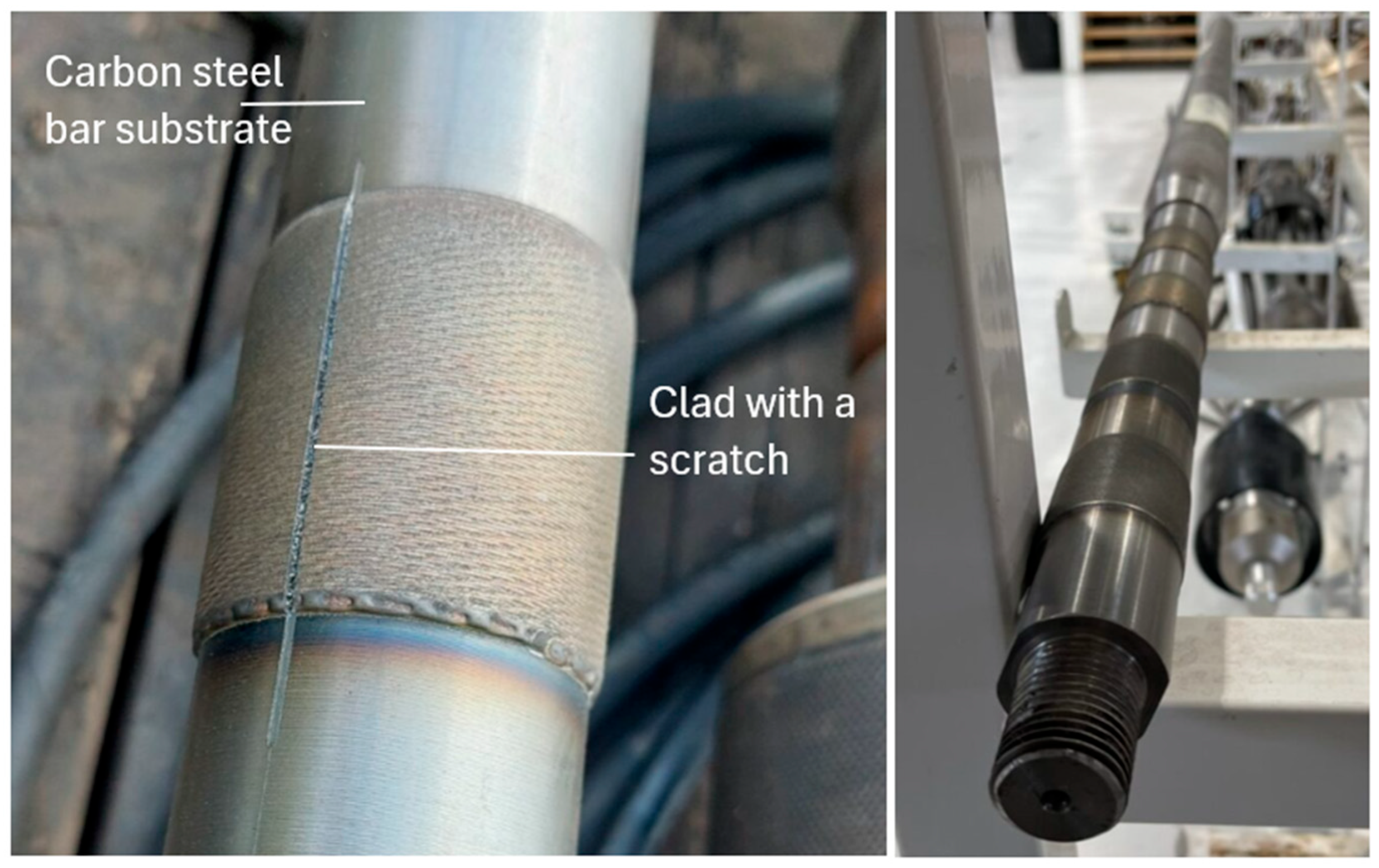
Figure 4. Partially cladded carbon steel bar. Two clad segments for each of the clad alloys tested, with a total of four clad segments. One clad segment of each alloy had a scratch for a high cathode-to-anode surface area ratio in the middle of the scratched surface.
Cmd 06 00065 g004
Figure 5. Four clad segments were prepared on the carbon steel substrate bar. There were two segments for each alloy, and one segment of each alloy had a scratch through the clad to promote galvanic corrosion.
Cmd 06 00065 g005
Figure 6. Sampling sites from the partially cladded carbon steel bar (sample #8).
Cmd 06 00065 g006
Figure 7. Samples in the sample holder unit were inserted down to a 1300 m depth in well HE-52, where the temperature was 262 °C and the pressure was 95 barG.
Cmd 06 00065 g007
Figure 8. Cross-sectional analysis of the carbon steel in the partially cladded bar after exposure to the test environment. Corrosion film and corrosion in bulk steel are evident.
Cmd 06 00065 g008
Figure 9. Cross-sectional analysis of the carbon steel in a partially cladded bar after exposure to the test environment. Oxide and sulphide-rich corrosion products are observed in the corrosion film. Oxide concentration was generally higher in the bulk material, but sulphide concentration was normally higher in the corrosion film, farther from the bulk material.
Cmd 06 00065 g009
Figure 10. Unfused powder residuals on the external surface of the UNS S31603 clad material on the partially cladded bar.
Cmd 06 00065 g010
Figure 11. A roughly 1 mm-wide scratch through the clad into the carbon steel substrate was made for one of the two UNS S31603 clad segments on the partially cladded carbon steel bar.
Cmd 06 00065 g011
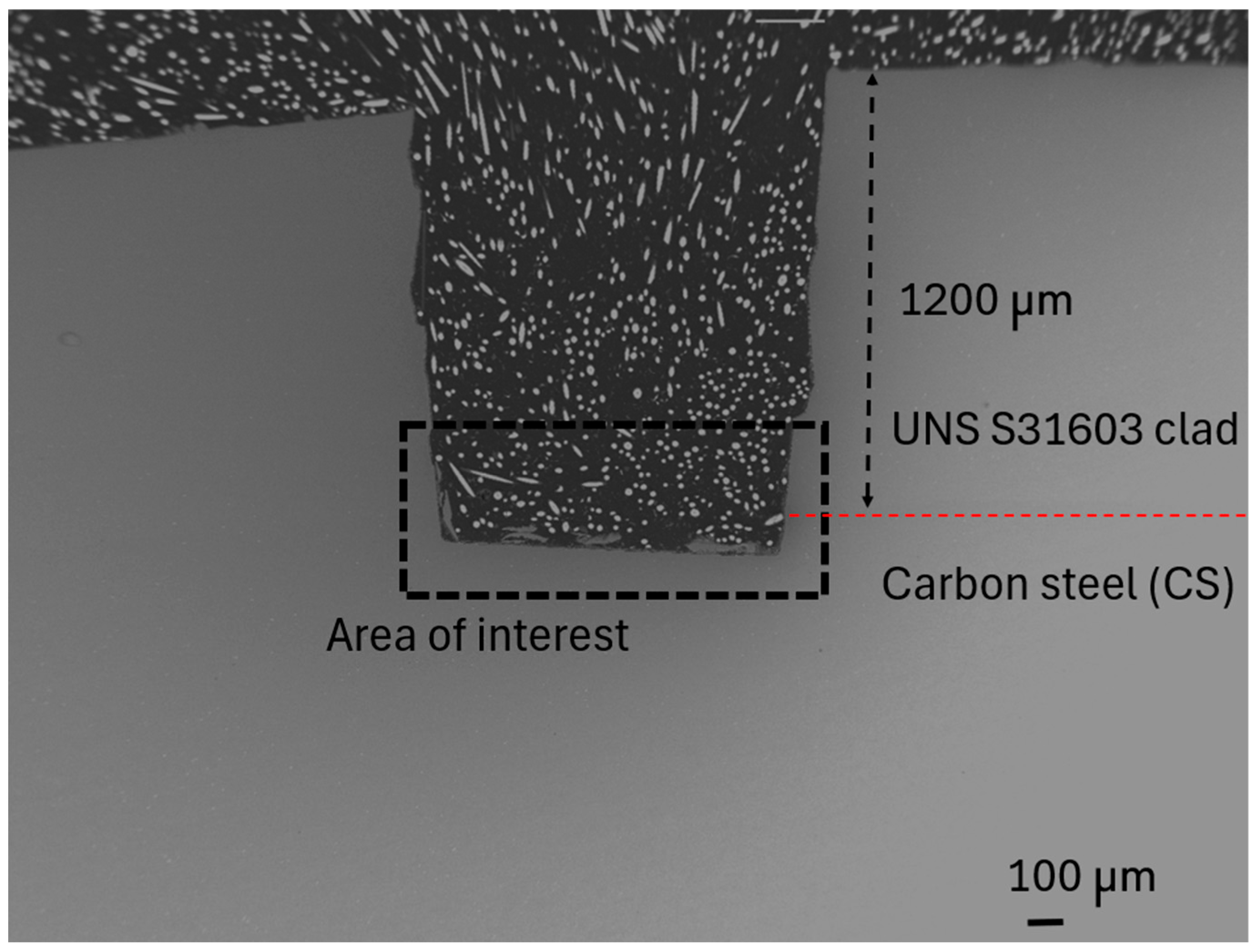
Figure 12. The clad thickness was about 1100–1200 µm for the UNS S31603 clad layer on the partially cladded bar. Corrosion of the clad material was negligible; some sulphides and oxides were detected on the surface, but there was no indication of significant corrosion damage.
Cmd 06 00065 g012
Figure 13. The bottom of the scratched clad layer on the partially cladded bar. The UNS S31603 clad layer, the carbon steel substrate, and the geothermal fluid are all in contact, which can promote galvanic corrosion of the carbon steel substrate.
Cmd 06 00065 g013
Figure 14. In the bottom of the scratched clad layer UNS S31603 on a partially cladded bar, an oxide-rich inner corrosion layer and a sulphide-rich outer corrosion layer were observed.
Cmd 06 00065 g014
Figure 15. Si- and O-rich deposits (silica, SiO2) were observed in some locations on the external surface of the samples extracted from the partially cladded bar.
Cmd 06 00065 g015
Figure 16. Negligible corrosion damage was observed in the UNS S31603 clad in the partially cladded bar, but some oxides and sulphide deposits were detected.
Cmd 06 00065 g016
Figure 17. Unfused powder on the surface of the UNS N06625 clad in a partially cladded bar; some oxide-rich inclusions (production defects) were also observed.
Cmd 06 00065 g017
Figure 18. A scratch, 1 mm-wide, on the UNS N06625 clad (in a partially cladded bar) into the carbon steel substrate to promote galvanic corrosion of the carbon steel inside the scratch.
Cmd 06 00065 g018
Figure 19. The thickness of the UNS N06625 clad was about 800 µm in the partially cladded bar. The galvanic corrosion effect can be expected where the nickel-based clad material and the carbon steel are both in contact with the geothermal fluid.
Cmd 06 00065 g019
Figure 20. An oxide-rich inner corrosion layer and sulphide-rich outer corrosion layer were observed on the carbon steel (in the partially cladded bar) in the scratch, close to the contact with the UNS N06625 clad layer, where a galvanic effect between the clad material and the carbon steel was expected.
Cmd 06 00065 g020
Figure 21. No corrosion damage in the UNS N06625 clad layer was observed in the partially cladded bar. Some oxide and sulphide deposits were observed on the surface of the clad material.
Cmd 06 00065 g021
Figure 22. Samples in jigs 1 to 7 (according to Table 1). Samples #5 and #6 had no stress, samples #1 and #2 had a stress load level of 30% YS, and samples #3, #4, and #7 had a stress load level of 100% YS.
Cmd 06 00065 g022
Figure 23. Solidification cracks (a) in the bulk of the UNS S31603 clad layer, (b) at the surface of the UNS S31603 clad, (c) in the bulk of the UNS N06625 clad layer, and (d) at the surface of the UNS N06625 clad. Samples had no applied stress during the test period.
Cmd 06 00065 g023
Figure 24. Solidification cracks (a) at the surface of the UNS S31603 clad layer, and (b) at the surface and in the bulk of the UNS N06625 clad layer. Samples had 30% YS stress load level during the test period.
Cmd 06 00065 g024
Figure 25. Samples with 100% YS stress load: (a) Pure UNS N06625 clad material; (b) Pure UNS S31603 clad material; and (c) UNS N06625 clad on carbon steel substrate.
Cmd 06 00065 g025
Figure 26. Temperature and pressure in well HE-52. A fluid sample was taken at 750 m depth (225 °C, 55 barG), and cladding material samples were placed at 1300 m depth (262 °C, 95 barG).
Cmd 06 00065 g026
Table 1. Samples tested in well HE-52.
Corrosion Form Test Factor
Test PartSample No.CladStress LevelApplied Stress
[MPa]
Micro-StrainSubstrateLength [mm]Width [mm]Thickness [mm]Diameter [mm]General & LocalisedSCCGalvanic
Jigs1UNS S3160330% YS98.4638CS1101510-XX
2UNS N0662530% YS157.2785CS1101510-XX
3UNS N06625100% YS524.12617pure clad110153-XX
4UNS S31603100% YS328.02126pure clad110153-XX
5UNS S31603none--CS1103010-X
6UNS N06625none--CS1103010-X
7UNS N06625100% YS524.12617CS110155-XX
Cladded bar8UNS S31603 and N06625none--CS50 --45X X
Table 2. Nominal composition of the carbon steel (CS) and the two clad materials.
ElementUNS S31603 wt%UNS N06625 wt%CS Substrate wt%
FeBalance≤5Balance
Cr16.0–18.020.0–23.0-
Ni10.0–14.058.0 min-
Mo2.0–3.08.0–10.0-
Nb-3.15–4.15-
Al-≤0.40-
Ti-≤0.4-
Mn≤2.0≤0.500.8
Si≤1.0≤0.500.2
C≤0.03≤0.10≤0.03
Table 3. Key process parameters of the EHLA cladding machine for the clads produced.
ParameterUNS S31603UNS N06625Unit
Spot Size0.0030.003m
Laser Power25002000W
Clad speed0.16670.1667m/s
Powder Feed rate0.000420.00025kg/s
Pitch0.480.4mm
Table 4. Elemental analysis from the locations in Figure 9.
wt%
ElementSpectrum 1Spectrum 2Spectrum 3Spectrum 4
O3.525.89.111.6
Al-0.1--
Si0.51.40.62.2
S0.91.80.427.7
Ca0.1-0.10.1
Cr--0.1-
Mn0.90.50.90.2
Fe94.070.488.858.2
Th0.1---
Table 5. Elemental analysis from the locations in Figure 14.
wt%
ElementSpectrum 1Spectrum 2Spectrum 3Spectrum 4
O--21.95.9
Na---0.8
Al---0.4
Si0.30.81.11.6
S--4.08.9
Ca-0.20.20.9
Cr-15.8-1.0
Mn0.70.70.60.5
Fe99.069.971.977.2
Ni-11.2--
Mo-1.6--
Table 6. Elemental analysis from the locations in Figure 16.
wt%
ElementSpectrum 1Spectrum 2Spectrum 3
O4.711.1-
Na-1.6-
Mg0.71.0
Al-1.8-
F--1.6
Si21.212.90.7
S3.37.5-
K-0.5-
Cl451.4-
Ca3.64.9-
Cr3.817.618.4
Mn0.84.70.6
Fe13.831.364.1
Ni1.02.912.8
Mo-0.71.9
Table 7. Elemental analysis from the locations in Figure 20.
wt%
ElementSpectrum 1Spectrum 2Spectrum 3
O0.93.2-
Mg-0.2-
Si0.1-0.2
S2.133.1-
Ca0.40.2-
Mn 0.8
Fe96.563.399.0
Table 8. Chemical composition of the liquid sample collected at 750 m depth with a deep sampling unit in well HE-52 on 24 June 2025. Concentrations are in mg/L, unless otherwise stated.
ParameterValue
pH/Temp (°C)6.5/26.6
Conductivity (µS/cm)/25 °C756
CO2 *371
H2S **49–140
B0.481
SiO2367
Na146
K25.2
Mg0.05
Ca4.4
F0.9
Cl71
Br0.3
SO423.4
Al0.09
As<0.01
Ba0.1
Cr<0.007
Cu<0.01
Fe2.2
Li0.04
Mn0.16
Mo0.04
Ni0.1
P0.03
S9.5
Sr0.1
Ti<0.002
Zn0.1
* Measured in the liquid phase of the well fluid; excludes any gas phase at depth. ** Values are estimated from older wellhead samples; they were not measured in the June 2025 liquid sample.
Disclaimer/Publisher’s Note: The statements, opinions and data contained in all publications are solely those of the individual author(s) and contributor(s) and not of MDPI and/or the editor(s). MDPI and/or the editor(s) disclaim responsibility for any injury to people or property resulting from any ideas, methods, instructions or products referred to in the content.