

Catalytic Properties of Mechanochemically Exfoliated MoS2 in the Hydrogenation of Bromoquinolines

 , , ,
, , ,  and
and
Abstract
1. Introduction
2. Experimental Section
2.1. General Procedures
2.2. Synthesis of MoS2-1 and MoS2-2
2.3. Catalytic Hydrogenation of Quinoline and Substituted Quinolines
3. Results and Discussion
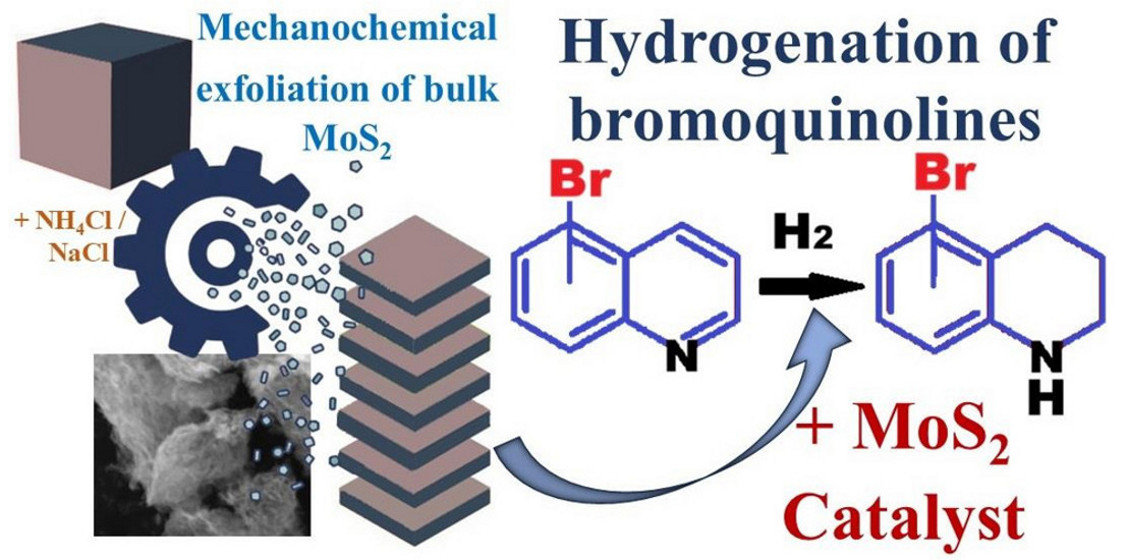
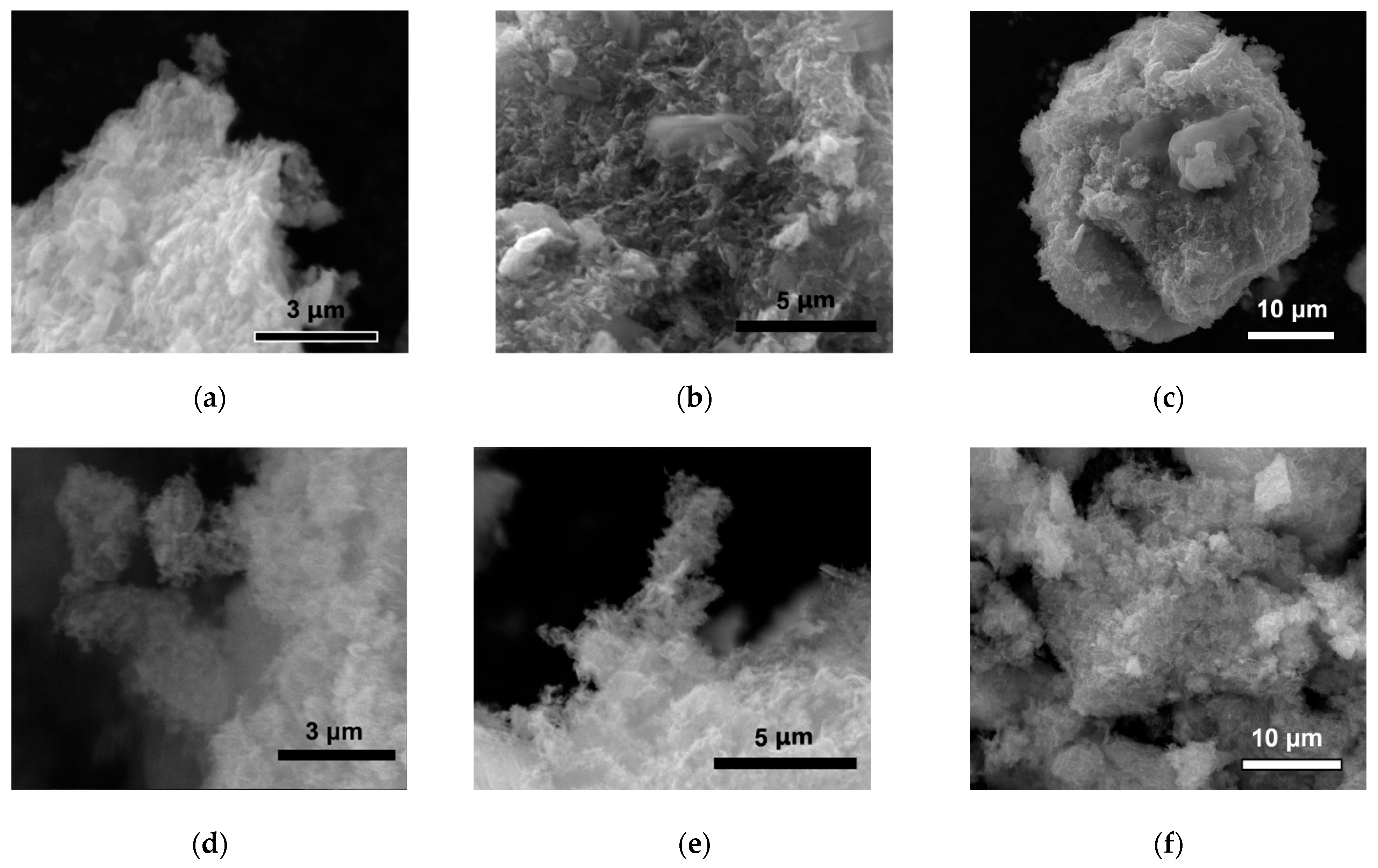
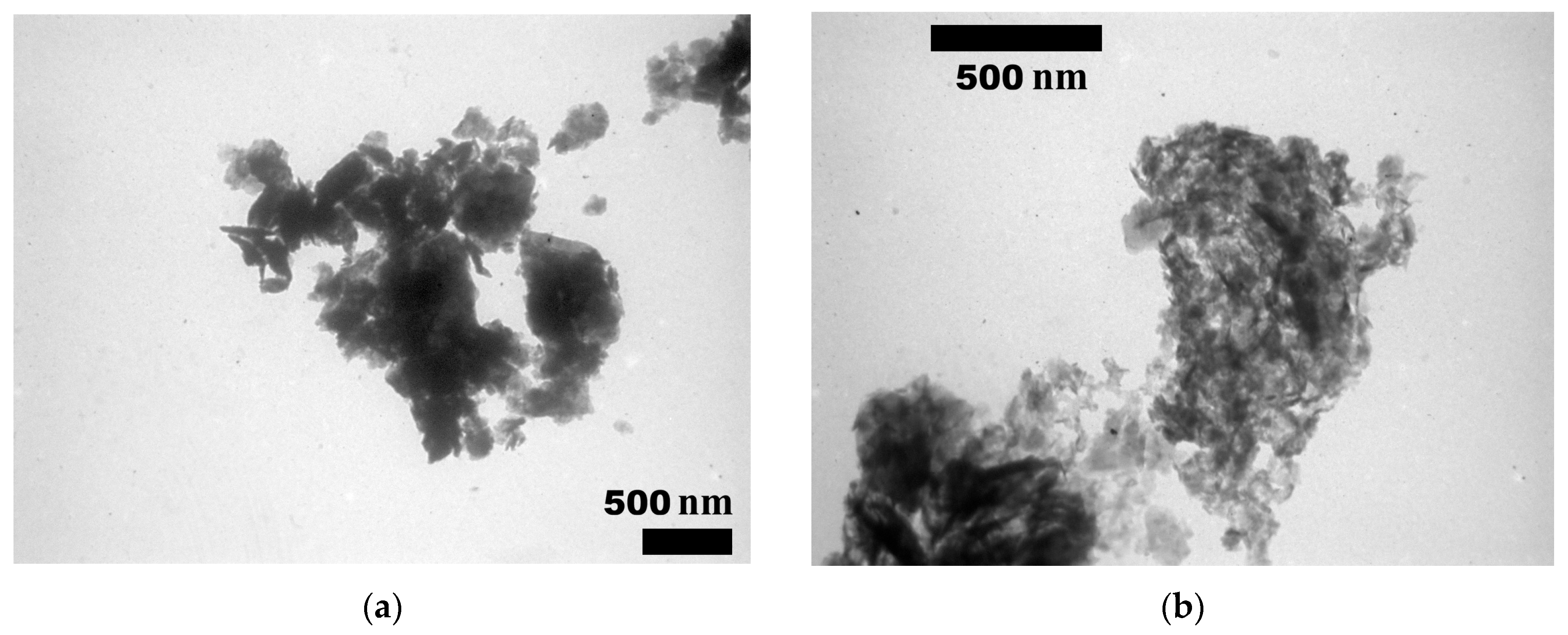
3.1. Synthesis of the Materials and SEM and TEM Characterization
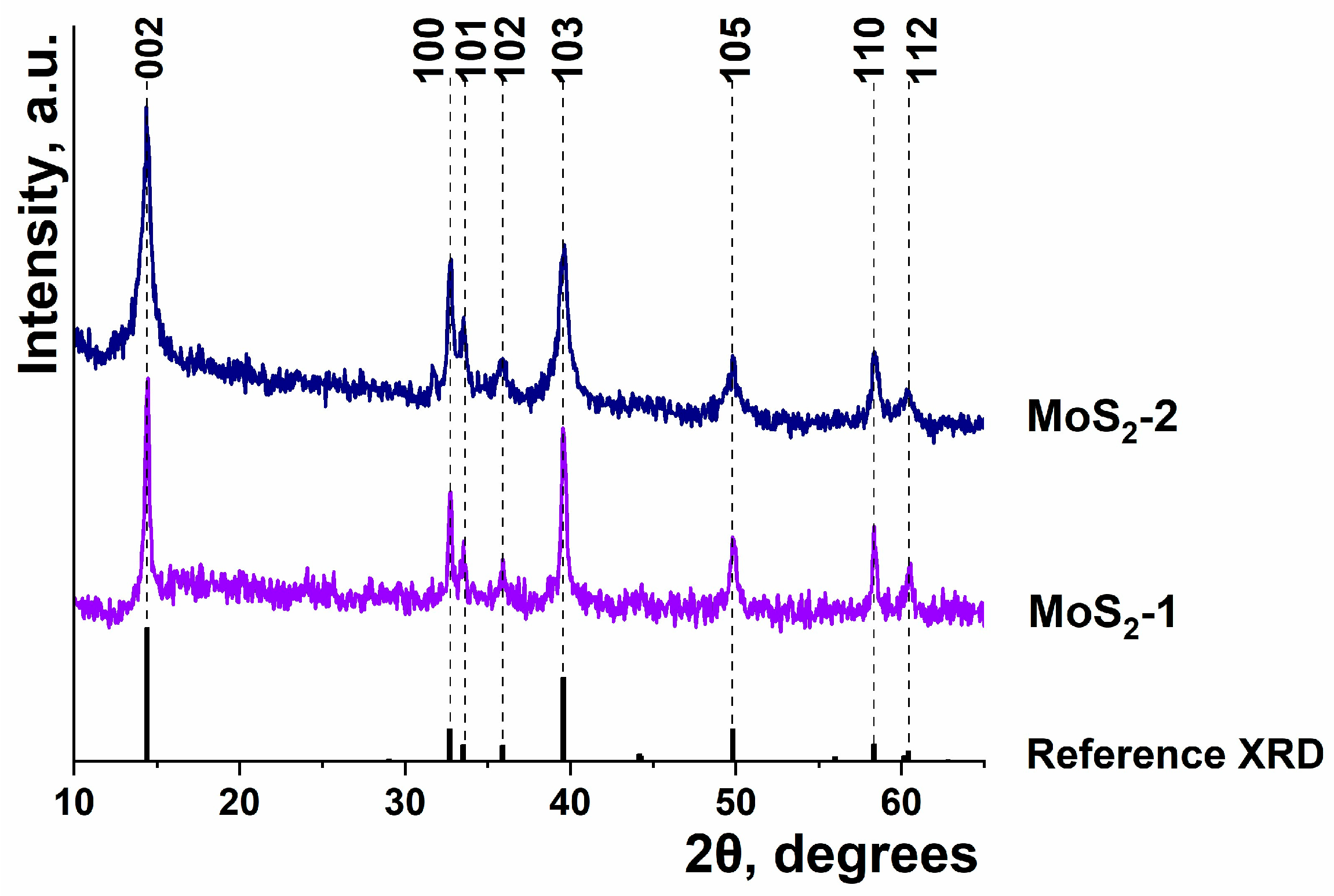
3.2. XRD Analysis
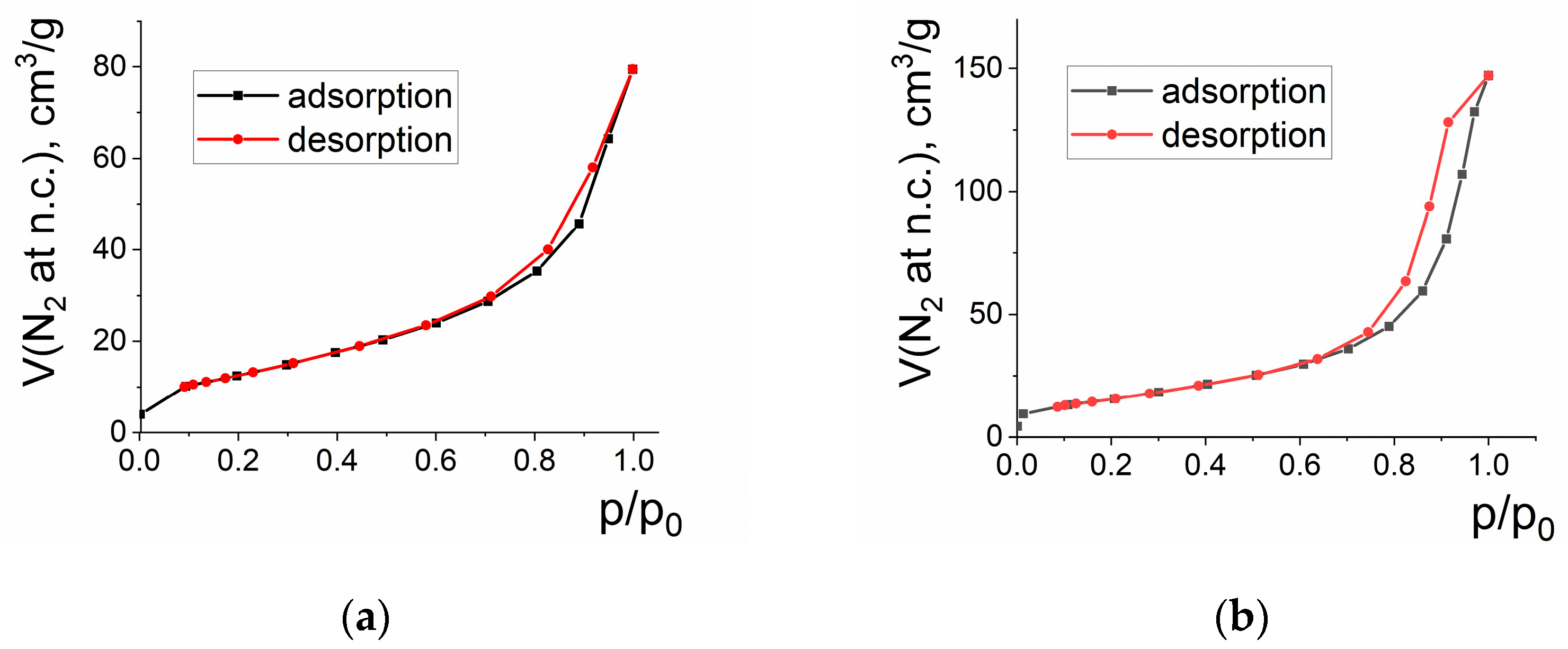
3.3. Surface Area and Textural Properties
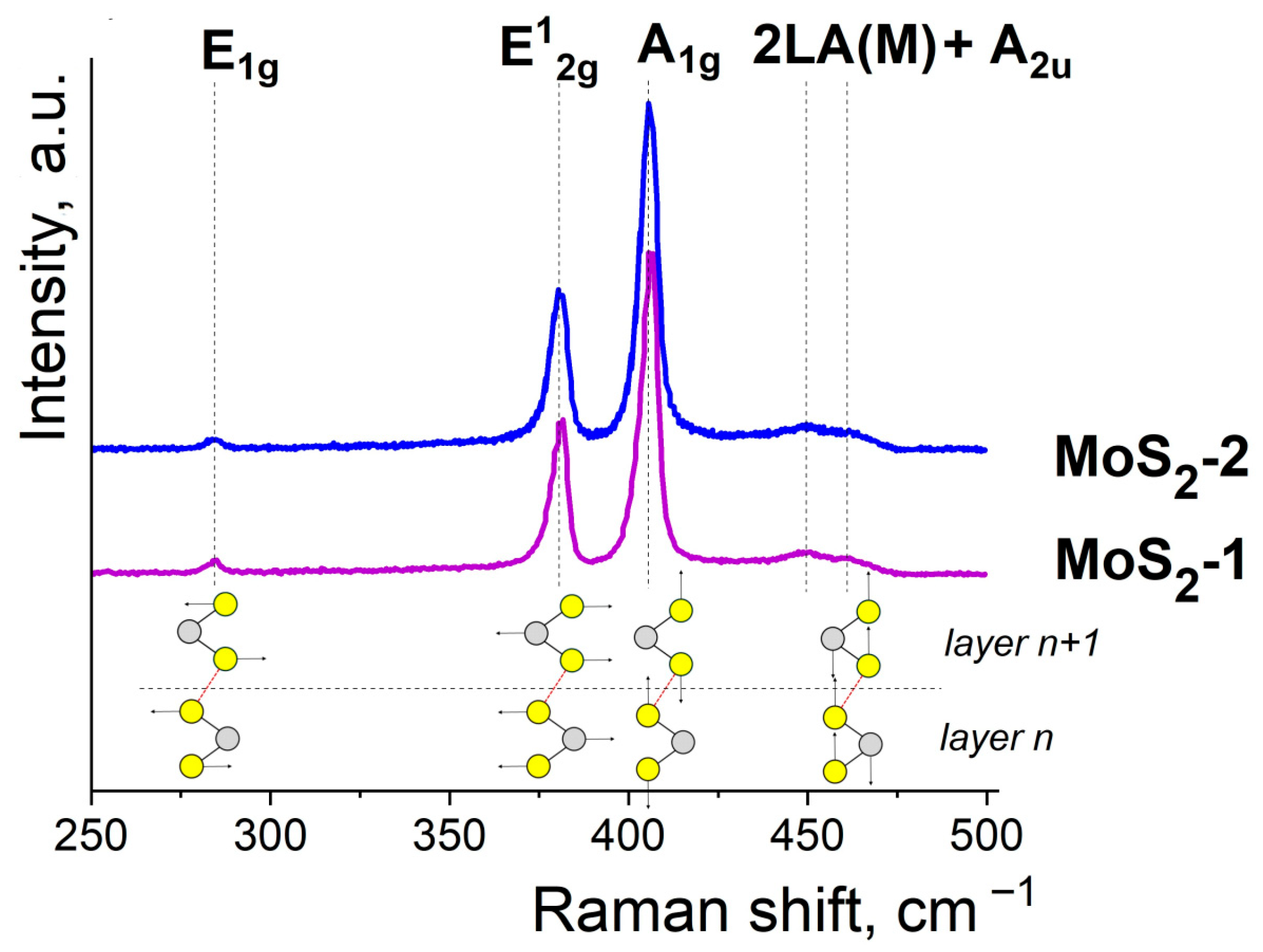
3.4. Raman Spectroscopic Characterization
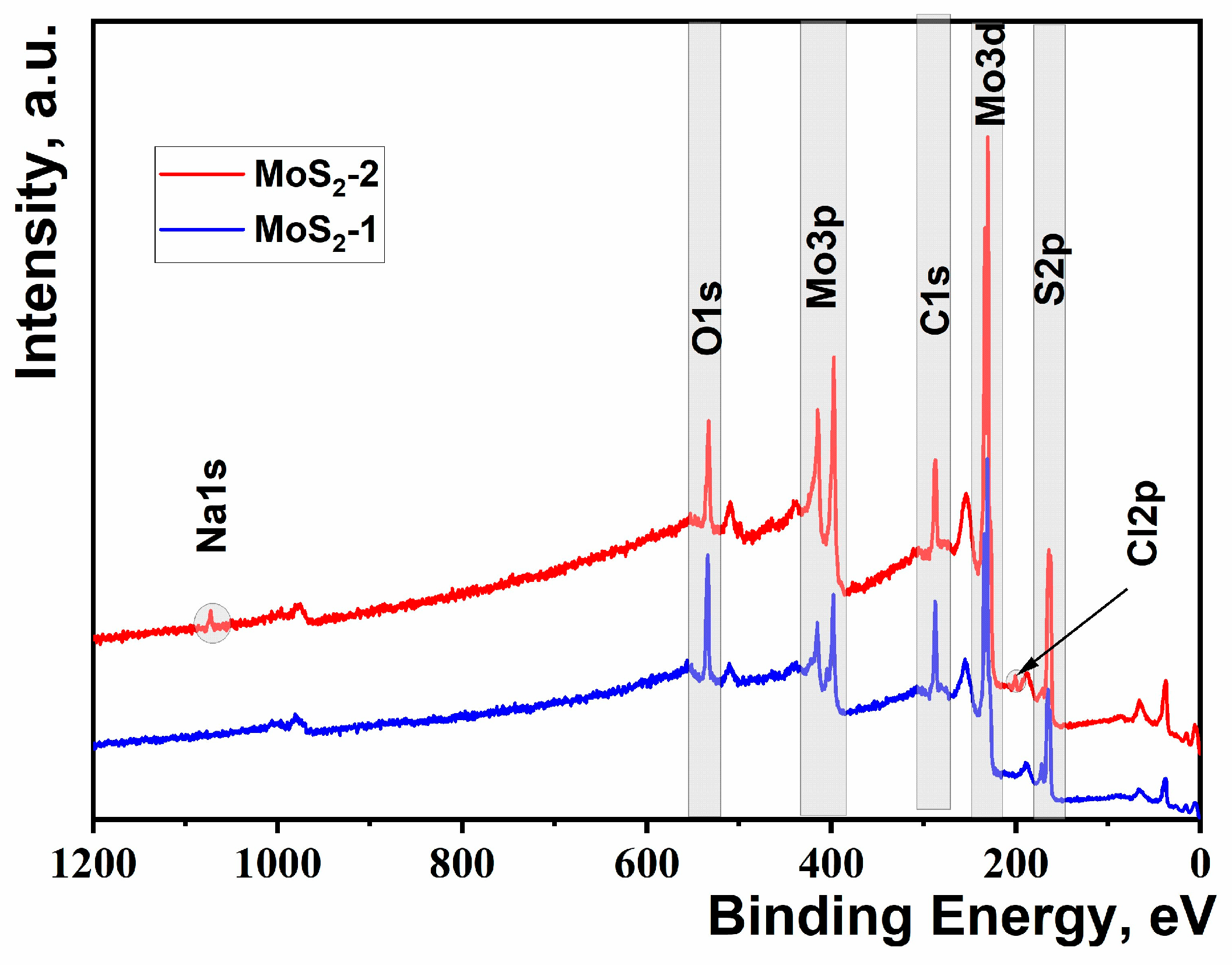
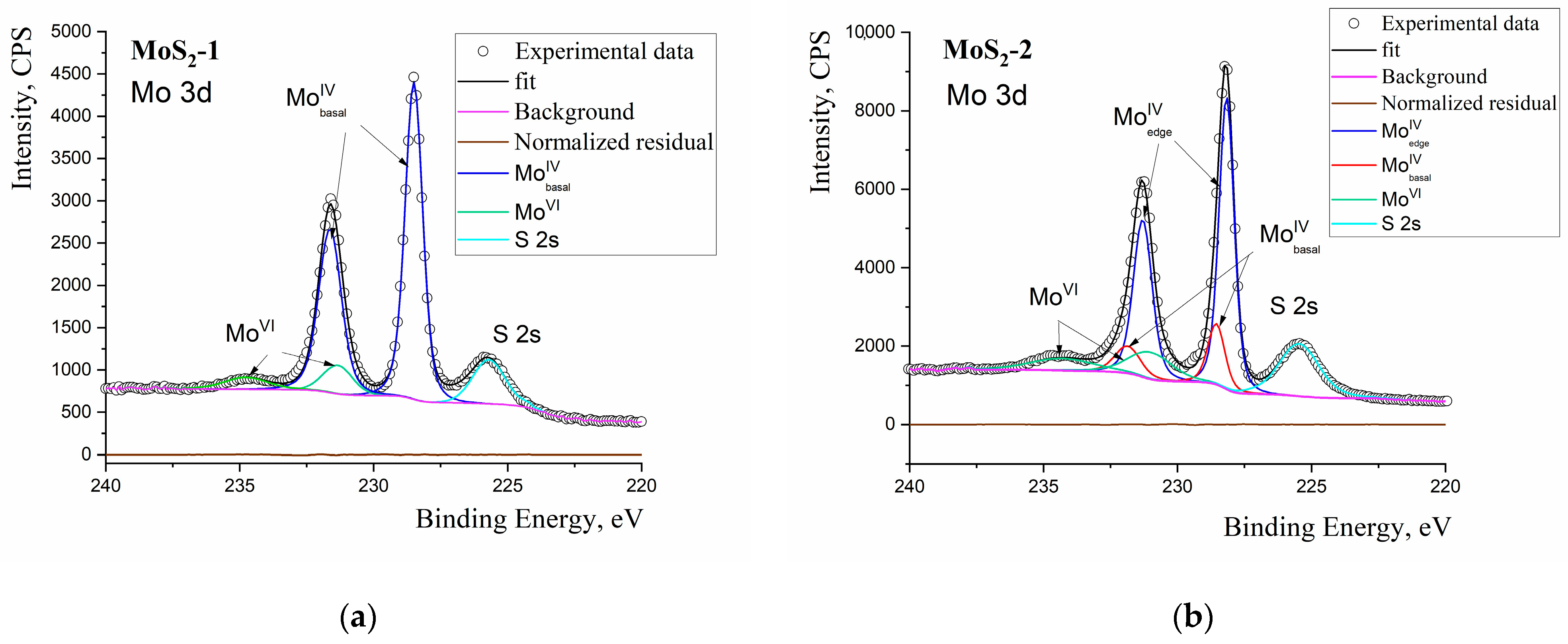
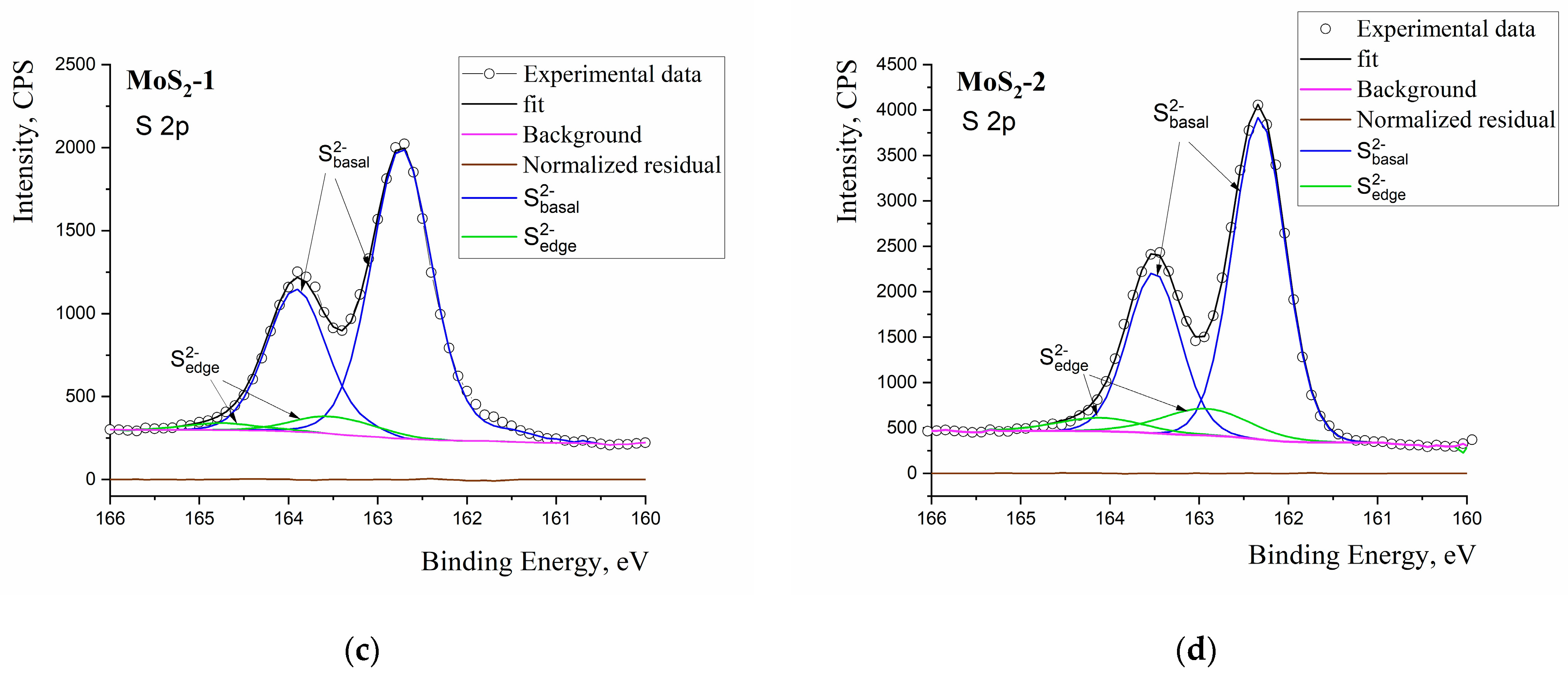
3.5. Surface Chemical State Analysis Using XPS
3.6. The Catalytic Properties of MoS2
4. Conclusions
Supplementary Materials
Author Contributions
Funding
Institutional Review Board Statement
Informed Consent Statement
Data Availability Statement
Acknowledgments
Conflicts of Interest
Abbreviations
| a.u. | arbitrary units |
| Dmeso | Diameter of mesopores, calculated from N2 desorption isotherms using BJH method |
| GCMS | Gas chromatography with mass spectral control |
| NMR | Nuclear magnetic resonance |
| SBET | Specific surface, calculated using the model of Brunauer–Emmett–Teller from N2 adsorption isotherm |
| SEM | Scanning electron microscopy |
| SP | Specific performance of the catalyst |
| TEM | Transmission electron microscopy |
| THQ | 1,2,3,4-tetrahydroquinoline |
| XPS | X-ray photoelectron spectroscopy |
| XRD | X-ray diffraction |
References
- Zecchina, A.; Califano, S. The Development of Catalysis: A History of Key Processes and Personas in Catalytic Science and Technology; John Wiley & Sons: Hoboken, NJ, USA, 2017. [Google Scholar]
- Ivanytsya, M.O.; Subotin, V.V.; Gavrilenko, K.S.; Ryabukhin, S.V.; Volochnyuk, D.M.; Kolotilov, S.V. Recent advances in catalytic hydrogenation chemistry. Chem. Rec. 2024, 24, e202300300. [Google Scholar] [CrossRef]
- Fasolini, A.; Martelli, G.; Piazzi, A.; Curcio, M.; De Maron, J.; Basile, F.; Mazzoni, R. Nickel-based catalysts for selective hydrogenation reactions. ChemCatChem 2024, 16, e202400393. [Google Scholar] [CrossRef]
- Lakhani, P.; Srifa, A. A comprehensive review of the catalytic transformation of biomass derivatives into high-value fuels and chemicals over bimetallic Ni–Re catalysts. Fuel Process. Technol. 2025, 278, 108326. [Google Scholar] [CrossRef]
- Barbera, E.; Naurzaliyev, R.; Asiedu, A.; Bertucco, A.; Resurreccion, E.P.; Kumar, S. Techno-economic analysis and life-cycle assessment of jet fuel production from waste cooking oil via in situ catalytic transfer hydrogenation. Renew. Energy 2020, 160, 428–449. [Google Scholar] [CrossRef]
- Veldsink, J.W.; Bouma, M.J.; Schöön, N.H.; Beenackers, A.A.C.M. Heterogeneous hydrogenation of vegetable oils: A literature review. Catal. Rev. Sci. Eng. 1997, 39, 253–318. [Google Scholar] [CrossRef]
- Chen, Y.; Fayad, E.; Binjawhar, D.N.; Qin, H.-L. Raney nickel catalyzed highly chemoselective hydrogenation for synthesis of tetrahydroquinolines and indolines in water. Chem. Asian J. 2025, 20, e202500939. [Google Scholar] [CrossRef]
- Lv, Y.; Wang, H.; Wu, H.; Luo, Q.; Wang, L.; Xiao, F.-S. Silica modulation of Raney nickel catalysts for selective hydrogenation. Precis. Chem. 2023, 1, 309–315. [Google Scholar] [CrossRef]
- Qiao, Y.; Xu, C.; Lv, Z.; Zhao, Y.; Huang, P. Study of the reaction pathways for the hydrogenation of quinoline over nickel phosphide catalysts. Catalysts 2025, 15, 976. [Google Scholar] [CrossRef]
- Yun, R.; Ma, W.; Hong, L.; Hu, Y.; Zhan, F.; Liu, S.; Zheng, B. Ni@PC as a stabilized catalyst toward the efficient hydrogenation of quinoline at ambient temperature. Catal. Sci. Technol. 2019, 9, 6669–6672. [Google Scholar] [CrossRef]
- Asaula, V.M.; Lytvynenko, A.S.; Mishura, A.M.; Kurmach, M.M.; Buryanov, V.V.; Gavrilenko, K.S.; Ryabukhin, S.V.; Volochnyuk, D.M.; Kolotilov, S.V. In situ formation of NiₓB/MIL-101(Cr) and Pd/MIL-101(Cr) composites for catalytic hydrogenation of quinoline. Inorg. Chem. Commun. 2020, 121, 108203. [Google Scholar] [CrossRef]
- Ivanytsya, M.O.; Subotin, V.V.; Yaremov, P.S.; Ryabukhin, S.V.; Volochnyuk, D.M.; Kolotilov, S.V. Catalytic properties of nickel deposited on activated carbon by low-temperature decomposition of nickel(0) complexes in hydrogenation of quinoline and its derivatives. Theor. Exp. Chem. 2024, 60, 208–216. [Google Scholar] [CrossRef]
- Westerhaus, F.A.; Jagadeesh, R.V.; Wienhöfer, G.; Pohl, M.-M.; Radnik, J.; Surkus, A.-E.; Rabeah, J.; Junge, K.; Junge, H.; Nielsen, M.; et al. Heterogenized cobalt oxide catalysts for nitroarene reduction by pyrolysis of molecularly defined complexes. Nat. Chem. 2013, 5, 537–543. [Google Scholar] [CrossRef]
- Chen, F.; Surkus, A.-E.; He, L.; Pohl, M.-M.; Radnik, J.; Topf, C.; Junge, K.; Beller, M. Selective catalytic hydrogenation of heteroarenes with N-graphene-modified cobalt nanoparticles (Co3O4–Co/NGr@α-Al2O3). J. Am. Chem. Soc. 2015, 137, 11718–11724. [Google Scholar] [CrossRef] [PubMed]
- Asaula, V.M.; Buryanov, V.V.; Solod, B.Y.; Tryus, D.M.; Pariiska, O.O.; Kotenko, I.E.; Volovenko, Y.M.; Volochnyuk, D.M.; Ryabukhin, S.V.; Kolotilov, S.V. Catalytic hydrogenation of substituted quinolines on Co–graphene composites. Eur. J. Org. Chem. 2021, 2021, 6616–6625. [Google Scholar] [CrossRef]
- Pariiska, O.O.; Mazur, D.O.; Asaula, V.M.; Buryanov, V.V.; Socha, R.; Kurys, Y.I.; Kolotilov, S.V.; Koshechko, V.G.; Pokhodenko, V.D. Influence of the structure of nanocomposites based on Co,N,S-doped carbon and Co9S8 on catalytic properties in quinoline hydrogenation. Theor. Exp. Chem. 2023, 58, 417–426. [Google Scholar] [CrossRef]
- Tafesh, A.M.; Weiguny, J. A review of the selective catalytic reduction of aromatic nitro compounds into aromatic amines, isocyanates, carbamates, and ureas using CO. Chem. Rev. 1996, 96, 2035–2052. [Google Scholar] [CrossRef]
- Mackenzie, K.; Frenzel, H.; Kopinke, F.-D. Hydrodehalogenation of halogenated hydrocarbons in water with Pd catalysts: Reaction rates and surface competition. Appl. Catal. B 2006, 63, 161–167. [Google Scholar] [CrossRef]
- Oba, M.; Kojima, K.; Endo, M.; Sano, H.; Nishiyama, K. Palladium-catalyzed transfer hydrogenation of organic substrates by hypophosphite in water containing a nonionic surfactant. Green Chem. Lett. Rev. 2013, 6, 233–236. [Google Scholar] [CrossRef][Green Version]
- Chen, J.; Zhang, Y.; Yang, L.; Zhang, X.; Liu, J.; Li, L.; Zhang, H. A practical palladium-catalyzed dehalogenation of aryl halides and α-haloketones. Tetrahedron 2007, 63, 4266–4270. [Google Scholar] [CrossRef]
- Díaz de León, J.N.; Ramesh Kumar, C.; Antúnez-García, J.; Fuentes-Moyado, S. Recent insights in transition metal sulfide hydrodesulfurization catalysts for the production of ultra-low sulfur diesel. Catalysts 2019, 9, 87. [Google Scholar] [CrossRef]
- Zhang, L.; Zhou, M.; Wang, A.; Zhang, T. Selective hydrogenation over supported metal catalysts: From nanoparticles to single atoms. Chem. Rev. 2020, 120, 683–733. [Google Scholar] [CrossRef]
- Terebilenko, A.V.; Olenchuk, M.V.; Mazur, D.O.; Nikolenko, A.S.; Popenko, V.I.; Dovbeshko, G.I.; Bezkrovnyi, O.; Sabov, T.; Romanyuk, B.M.; Poroshin, V.N. Influence of formation temperature on the morphology of MoS2 and its catalytic properties in the hydrogenation of isomeric bromoquinolines to bromo-1,2,3,4-tetrahydroquinolines. Dalton Trans. 2025, 54, 13057–13070. [Google Scholar] [CrossRef]
- Shirley, D.A. High-Resolution X-Ray Photoemission Spectrum of the Valence Bands of Gold. Phys. Rev. B 1972, 5, 4709. [Google Scholar] [CrossRef]
- Terebilenko, A.V.; Olenchuk, M.V.; Dovbeshko, G.I.; Kotenko, I.E.; Pashkevych, V.P.; Kolotilov, S.V. Influence of formation conditions of nanosized MoS2 and its catalytic properties in the hydrogenation processes of bromoquinolines. Theor. Exp. Chem. 2025, in press. [Google Scholar]
- Amrute, A.P.; De Bellis, J.; Felderhoff, M.; Schüth, F. Mechanochemical synthesis of catalytic materials. Chem. Eur. J. 2021, 27, 6819–6847. [Google Scholar] [CrossRef]
- Baby, M.; Rajeev Kumar, K. Structural and optical characterization of stacked MoS2 nanosheets by hydrothermal method. J. Mater. Sci. Mater. Electron. 2018, 29, 4658–4667. [Google Scholar] [CrossRef]
- Vattikuti, S.V.P.; Byon, C. Synthesis and characterization of molybdenum disulfide nanoflowers and nanosheets: Nanotribology. J. Nanomater. 2015, 2015, 710462. [Google Scholar] [CrossRef]
- Bu, S.H.; Cho, W.; Lee, C.; Ham, G.; Yang, B.; Jung, J.; Cha, H.; Park, C. Mechanochemical engineering and supramolecular reconstruction of MoS2 nanosheets with C60–γCD complexes for enhanced photocatalytic and piezoelectric performances. Chem. Eng. J. 2024, 502, 157688. [Google Scholar] [CrossRef]
- Xu, J.; Tang, H.; Tang, G.; Li, C. Facile synthesis and characterization of flower-like MoS2 microspheres. Chalcogenide Lett. 2014, 11, 265–270. [Google Scholar]
- Thommes, M.; Kaneko, K.; Neimark, A.V.; Olivier, J.P.; Rodriguez-Reinoso, F.; Rouquerol, J.; Sing, K.S.W. Physisorption of gases, with special reference to the evaluation of surface area and pore size distribution (IUPAC technical report). Pure Appl. Chem. 2015, 87, 1051–1069. [Google Scholar] [CrossRef]
- Feldman, S. Sodium Chloride; Wiley: New York, NY, USA, 2011. [Google Scholar]
- National Gem Lab. Salammoniac; National Gem Lab: Beijing, China, 2017.
- Wang, Y.; Qu, M.; Liu, W.; Peng, G. Efficient exfoliation of few-layer graphene using ammonium-based deep eutectic solvents with strong graphite interactions. J. Mol. Liq. 2025, 435, 128078. [Google Scholar] [CrossRef]
- Ramana, C.; Becker, U.; Shutthanandan, V.; Julien, C. Oxidation and metal insertion in molybdenite surfaces: Evaluation of charge-transfer mechanisms and dynamics. Geochem. Trans. 2008, 9, 8. [Google Scholar] [CrossRef]
- Li, H.; Zhang, Q.; Yap, C.C.R.; Tay, B.K.; Edwin, T.H.T.; Olivier, A.; Baillargeat, D. From bulk to monolayer MoS2: Evolution of Raman scattering. Adv. Funct. Mater. 2012, 22, 1385–1390. [Google Scholar] [CrossRef]
- Lee, C.; Yan, H.; Brus, L.E.; Heinz, T.F.; Hone, J.; Ryu, S. Anomalous lattice vibrations of single- and few-layer MoS2. ACS Nano 2010, 4, 2695–2700. [Google Scholar] [CrossRef]
- Kong, D.; Wang, H.; Cha, J.J.; Pasta, M.; Koski, K.J.; Yao, J.; Cui, Y. Synthesis of MoS2 and MoSe2 films with vertically aligned layers. Nano Lett. 2013, 13, 1341–1347. [Google Scholar] [CrossRef]
- Zhou, Y.; Liu, W.; Huang, X.; Zhang, A.; Zhang, Y.; Wang, Z.L. Theoretical study on two-dimensional MoS2 piezoelectric nanogenerators. Nano Res. 2016, 9, 800–807. [Google Scholar] [CrossRef]
- Watts, J.F.; Castle, J.E. The application of X-ray photoelectron spectroscopy to the study of polymer-to-metal adhesion. J. Mater. Sci. 1984, 19, 2259–2272. [Google Scholar] [CrossRef]
- Vasi, S.; Giofrè, S.V.; Perathoner, S.; Mallamace, D.; Abate, S.; Wanderlingh, U. X-ray Characterizations of Exfoliated MoS2 Produced by Microwave-Assisted Liquid-Phase Exfoliation. Materials 2024, 17, 3887. [Google Scholar] [CrossRef] [PubMed]
- Eda, G.; Chhowalla, M. Graphene patchwork. ACS Nano 2011, 5, 4265–4268. [Google Scholar] [CrossRef] [PubMed]
- Voiry, D.; Mohite, A.; Chhowalla, M. Phase engineering of transition metal dichalcogenides. Chem. Soc. Rev. 2015, 44, 2702–2712. [Google Scholar] [CrossRef]
- Splendiani, A.; Sun, L.; Zhang, Y.; Li, T.; Kim, J.; Chim, C.-Y.; Galli, G.; Wang, F. Emerging photoluminescence in monolayer MoS2. Nano Lett. 2010, 10, 1271–1275. [Google Scholar] [CrossRef]
- Subotin, V.V.; Ivanytsya, M.O.; Terebilenko, A.V.; Yaremov, P.S.; Pariiska, O.O.; Akimov, Y.M.; Kotenko, I.E.; Sabov, T.M.; Kurmach, M.M.; Ryabukhin, S.V.; et al. Air-stable efficient nickel catalyst for hydrogenation of organic compounds. Catalysts 2023, 13, 706. [Google Scholar] [CrossRef]
- Posudievsky, O.Y.; Khazieieva, O.A.; Cherepanov, V.V.; Dovbeshko, G.I.; Shkavro, A.G.; Koshechko, V.G.; Pokhodenko, V.D. Improved dispersant-free liquid exfoliation down to the graphene-like state of solvent-free mechanochemically delaminated bulk MoS2. J. Mater. Chem. C 2013, 1, 6411. [Google Scholar] [CrossRef]
- Benoist, L.; Gonbeau, D.; Pfister-Guillouzo, G.; Schmidt, E.; Meunier, G.; Levasseur, A. X-ray photoelectron spectroscopy characterization of amorphous molybdenum oxysulfide thin films. Thin Solid Films 1995, 258, 110–114. [Google Scholar] [CrossRef]
- Goyal, V.; Sarki, N.; Narani, A.; Naik, G.; Natte, K.; Jagadeesh, R.V. Recent advances in the catalytic N-methylation and N-trideuteromethylation reactions using methanol and deuterated methanol. Coord. Chem. Rev. 2023, 474, 214827. [Google Scholar] [CrossRef]
- Late, D.J.; Liu, B.; Matte, H.S.S.R.; Dravid, V.P.; Rao, C.N.R. Hysteresis in single-layer MoS2 field effect transistors. ACS Nano 2012, 6, 5635–5641. [Google Scholar] [CrossRef]
- Naguib, M.; Halim, J.; Lu, J.; Cook, K.M.; Hultman, L.; Gogotsi, Y.; Barsoum, M.W. New two-dimensional niobium and vanadium carbides as promising materials for Li-ion batteries. J. Am. Chem. Soc. 2013, 135, 15966–15969. [Google Scholar] [CrossRef] [PubMed]
- Helveg, S.; Lauritsen, J.V.; Lægsgaard, E.; Stensgaard, I.; Nørskov, J.K.; Clausen, B.S.; Topsøe, H.; Besenbacher, F. Atomic-scale structure of single-layer MoS2 nanoclusters. Phys. Rev. Lett. 2000, 84, 951–954. [Google Scholar] [CrossRef]
- Zheng, P.; Xiao, C.; Song, S.; Duan, A.; Xu, C. DFT insights into the hydrodenitrogenation mechanism of quinoline catalyzed by different Ni-promoted MoS2 edge sites: Effect of the active phase morphology. J. Hazard. Mater. 2021, 411, 125127. [Google Scholar] [CrossRef]
- Moses, P.G.; Mortensen, J.J.; Lundqvist, B.I.; Nørskov, J.K. Density functional study of the adsorption and van der Waals binding of aromatic and conjugated compounds on the basal plane of MoS2. J. Chem. Phys. 2009, 130, 104709. [Google Scholar] [CrossRef]
- Ramalingam, A.; Samaraj, E.; Venkateshwaran, S.; Senthilkumar, S.M.; Senadi, G.C. 1T-MoS2 catalysed reduction of nitroarenes and a one-pot synthesis of imines. New J. Chem. 2022, 46, 8720–8728. [Google Scholar] [CrossRef]
- Daage, M.; Chianelli, R.R. Structure-function relations in molybdenum sulfide catalysts: The “rim-edge” model. J. Catal. 1994, 149, 414–427. [Google Scholar] [CrossRef]
- Kronberg, R.; Hakala, M.; Holmberg, N.; Laasonen, K. Hydrogen adsorption on MoS2 surfaces: A DFT study on preferential sites and the effect of sulfur and hydrogen coverage. Phys. Chem. Chem. Phys. 2017, 19, 16741–16752. [Google Scholar] [CrossRef] [PubMed]
- Wu, Z.; Wang, D.; Sun, A. Preparation of MoS2 by a novel mechanochemical method. J. Alloys Compd. 2010, 492, L5–L8. [Google Scholar] [CrossRef]
- Prajapati, R. Role of catalyst defect sites towards product selectivity in hydrotreating reactions. Fuel 2022, 312, 122939. [Google Scholar]



| Sample (1) | Specific Surface Area SBET (m2/g) | THQ Yield (%) | Specific Performance (μmol/m2) | Ref. |
|---|---|---|---|---|
| MoS2-1 | 47.7 | 53 | 694 | this work |
| MoS2-2 | 57.6 | 62 | 673 | this work |
| MoS130 | 32.2 | 37 | 718 | [23] |
| MoS135 | 24.4 | 38 | 973 | [23] |
| MoS140 | 16.1 | 42 | 1630 | [23] |
| MoS150 | 13.5 | 14 | 648 | [23] |
| MoSS130 | 28.1 | 66 | 1468 | [25] |
| MoSS140 | 16.2 | 67 | 2585 | [25] |
| MoSS150 | 15.6 | 75 | 3005 | [25] |
| Bulk MoS2 | <1 | <5 | [25] |
| Substrate | Product | Catalyst | Yield, % | Conversion, % | Selectivity, % | By-Products (Yield, %) |
|---|---|---|---|---|---|---|
 |  | MoS2-1 | 85 | 97 | 88 | 5-Bromo-N-Methyl-THQ (12) |
| MoS2-2 | 100 | 100 | 100 | – | ||
| MoS130 (1) | 99 | 100 | 99 | 5-Bromo-N-Methyl-THQ (1) | ||
| MoSS140 (2) | 96 | 100 | 96 | 5-Bromo-N-Methyl-THQ (4) | ||
 | 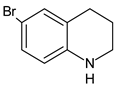 | MoS2-1 | 21 | 33 | 63 | 6-Bromo-N-Methyl-THQ (12) |
| MoS2-2 | 32 | 100 | 32 (3) | 6-Bromo-N-Methyl-THQ (14) THQ (45) N-Methyl-THQ (9) | ||
| MoS130 (1) | 23 | 99 | 24 (3) | 6-Bromo-N-MethylTHQ (15) THQ (44) N-Methyl-THQ (7) | ||
| MoSS140 (2) | 15 | 20 | 75 | 6-Bromo-N-MethylTHQ (5) | ||
 |  | MoS2-1 | 0 | 100 | 0 (3) | 7-Bromo-N-MethylTHQ (98) THQ (2) |
| MoS2-2 | 0 | 100 | 0 (3) | 7-Bromo-N-MethylTHQ (100) | ||
| MoS130 (1) | 97 | 97 | 100 | – | ||
| MoSS140 (2) | 40 | 40 | 100 | - | ||
 |  | MoS2-1 | 93 | 100 | 93 | 8-Bromo-N-MethylTHQ (7) |
| MoS2-2 | 100 | 100 | 100 | - | ||
| MoS130 (1) | 94 | 97 | 97 | 8-Bromo-1-N-MethylTHQ (2) THQ (1) | ||
| MoSS140 (2) | 42 | 57 | 74 | 8-Bromo-N-MethylTHQ (15) |
Disclaimer/Publisher’s Note: The statements, opinions and data contained in all publications are solely those of the individual author(s) and contributor(s) and not of MDPI and/or the editor(s). MDPI and/or the editor(s) disclaim responsibility for any injury to people or property resulting from any ideas, methods, instructions or products referred to in the content. |
© 2026 by the authors. Licensee MDPI, Basel, Switzerland. This article is an open access article distributed under the terms and conditions of the Creative Commons Attribution (CC BY) license.
Share and Cite
Terebilenko, A.V.; Kondratyuk, A.S.; Olenchuk, M.V.; Yaremov, P.S.; Zhuchenko, A.M.; Buryanov, V.V.; Kolotilov, S.V. Catalytic Properties of Mechanochemically Exfoliated MoS2 in the Hydrogenation of Bromoquinolines. Surfaces 2026, 9, 34. https://doi.org/10.3390/surfaces9020034
Terebilenko AV, Kondratyuk AS, Olenchuk MV, Yaremov PS, Zhuchenko AM, Buryanov VV, Kolotilov SV. Catalytic Properties of Mechanochemically Exfoliated MoS2 in the Hydrogenation of Bromoquinolines. Surfaces. 2026; 9(2):34. https://doi.org/10.3390/surfaces9020034
Chicago/Turabian StyleTerebilenko, Anastasia V., Andrii S. Kondratyuk, Maryna V. Olenchuk, Pavlo S. Yaremov, Andrii M. Zhuchenko, Volodymyr V. Buryanov, and Sergey V. Kolotilov. 2026. "Catalytic Properties of Mechanochemically Exfoliated MoS2 in the Hydrogenation of Bromoquinolines" Surfaces 9, no. 2: 34. https://doi.org/10.3390/surfaces9020034
APA StyleTerebilenko, A. V., Kondratyuk, A. S., Olenchuk, M. V., Yaremov, P. S., Zhuchenko, A. M., Buryanov, V. V., & Kolotilov, S. V. (2026). Catalytic Properties of Mechanochemically Exfoliated MoS2 in the Hydrogenation of Bromoquinolines. Surfaces, 9(2), 34. https://doi.org/10.3390/surfaces9020034