1. Introduction
Lithium hexafluorophosphate (LiPF
6) is a common electrolyte salt used in commercial lithium-ion batteries due to its high ionic conductivity, wide electrochemical stability window, and compatibility with carbonate-based solvents, thus enabling high energy density and reliable electrochemical performance [
1,
2]. Regardless of these advantages, LiPF
6 suffers from low chemical stability, mainly due to its susceptibility to hydrolysis and thermal decomposition, which leads to the formation of hydrogen fluoride (HF) and fluoride-containing species. Even trace amounts of HF are highly detrimental to the battery performance, as these species can accelerate degradation of both cathode and anode materials and promote undesired interfacial reactions [
3]. Degradation induced by HF typically occurs through reactions with electrolyte components and electrode surfaces, resulting in the formation of LiF-rich solid electrolyte interphase (SEI). While LiF can contribute to the mechanical stability of the SEI, excessive accumulation leads to an increase in interfacial resistance, hinders lithium-ion transport, and alters interfacial morphology, even at very low HF concentrations [
4,
5]. Consequently, minimizing HF content in LiPF
6-based electrolytes is critical for improving battery efficiency, lifetime, and safety.
Although LiPF
6 has been employed in energy storage technologies for decades [
6]. Its synthesis remains chemically demanding, and the attainment of electronic-grade LiPF
6 is even more challenging—traditional experimental methods, such as those reported by Kemmitt et al. [
7] and Stacey [
8], involve dissolving lithium fluoride (LiF) in anhydrous HF, followed by reaction with phosphorus pentafluoride (PF
5) gas at ambient temperature. These methods typically yield crude LiPF
6 contaminated with residual HF, requiring extensive purification. Furthermore, LiPF
6 is prone to post-synthesis degradation upon exposure to trace moisture, initiating subsequent hydrolysis reactions that generate HF as a by-product, as represented below by Equations (1)–(3) [
9]:
In addition to hydrolysis, LiPF
6 can undergo spontaneous thermal decomposition at room temperature to form PF
5, which readily reacts with residual moisture to produce HF [
2,
9]. In HF-containing environments, LiPF
6 is known to form adducts of the type LiPF
6·xHF [
10]. Kinetic studies have shown that these HF-coordinated species exhibit higher activation energies for thermal decomposition compared to anhydrous LiPF
6, suggesting enhanced visible stability arising from adduct formation [
11]. As a result, LiPF
6·xHF complexes are often significant constituents of crude LiPF
6 materials, making their structural and electronic characterization essential for improving synthesis, purification, and handling strategies. Since the electronic structure—particularly the band-gap magnitude—plays a key role in determining chemical reactivity and electron-accepting ability [
12], understanding the electronic properties of HF-containing LiPF
6 species is also important for assessing their reactivity and for the development of purification methods thereof.
In addition to the synthesis-related issues, the presence of HF and fluoride species strongly influences the electrolyte–electrode interactions during the battery operation [
3,
13]. In particular, fluoride ions (F
−), generated through LiPF
6 decomposition, interact strongly with lithium ions, leading to LiF formation at electrode interfaces. While controlled LiF formation can stabilize the SEI, excessive fluoride accumulation leads to thick, poorly conductive interphases that degrade lithium-ion transport and increase cell resistance. Moreover, fluoride ions may coordinate with phosphorus centers in LiPF
6, altering electrolyte speciation, solubility, and chemical stability, thereby further complicating degradation pathways [
14].
Therefore, surface chemistry plays a critical role in these processes, as interfacial reactions are governed by surface-specific interactions between adsorbates and distinct crystallographic terminations. Surface-sensitive theoretical studies have demonstrated that adsorption energetics, surface stability, and electronic structure vary significantly with surface orientation and termination, providing a more realistic description of electrolyte–solid interfaces than bulk models alone [
15,
16]. In this context, a detailed atomistic understanding of HF and F
− interactions with LiPF
6 surfaces is necessary to elucidate the mechanisms influencing the addition of these adsorbates, surface stabilization, and crystal growth behavior.
In this work, density functional theory (DFT) calculations are employed to thoroughly investigate the interaction of HF and F− with different LiPF6 surface terminations. The surface energies of low-index (101) and (003) LiPF6 facets are evaluated to identify the most stable surface orientations, followed by an analysis of adsorption energetics, an analysis of the electron localized function (ELF) isosurfaces, and an analysis of local potential profiles to obtain work function, ionization potential, and electron affinity for each surface-adsorbent complex. Lastly, the electronic structure was analyzed to obtain the density of states (DOS) properties, band gap, and optical properties. Through correlating surface stability with reactivity, this study aims to identify surface orientations that are less prone to HF incorporation, thereby providing fundamental insights that may guide the development of improved synthesis and purification strategies for low-HF LiPF6 electrolytes. Moreover, theoretical insight into the interactions between fluoride ions (F−) and LiPF6 or any surface reactivity of LiPF6 can enable the rational design of materials with improved optoelectrochemical properties for battery and energy-storage applications.
3. Results
3.1. Bulk and Surface Structures of LiPF6
LiPF
6 exists in two different phases, the R3m [
25] and the Fm-3m [
16]. The Fm-3m cubic phase of LiPF
6 was used as the bulk reference, providing a high-symmetry, computationally efficient structure with averaged PF
6− anion orientations. Surface slabs for the (003) and (101) facets were constructed from this model, allowing systematic comparison of stoichiometric and polar terminations in surface and adsorption analyses [
2,
16]. As shown in
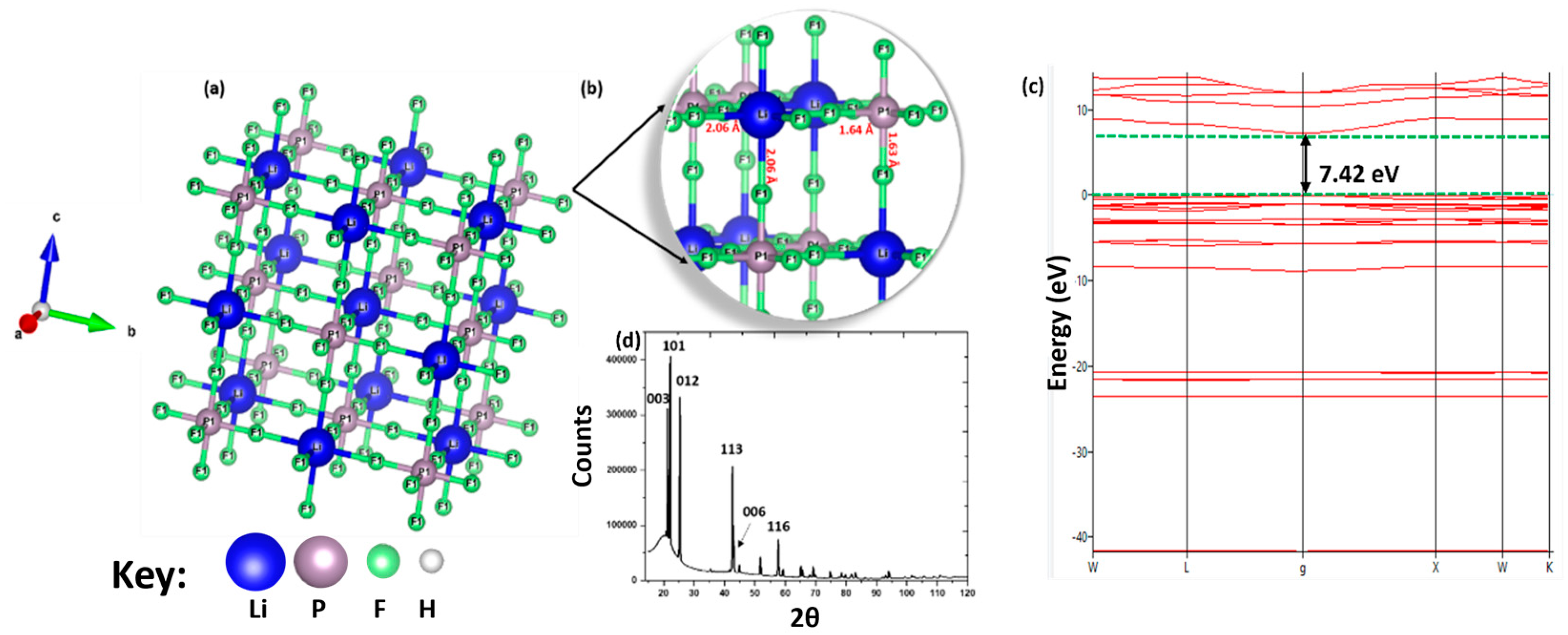
Figure 1a, the cubic LiPF
6 structure was fully optimized. Lithium atoms in the LiPF
6 crystal are bonded to the PF
6 anion in an octahedral arrangement; see
Figure 1a. As shown in
Figure S1 (Supporting Information), convergence studies were conducted to obtain appropriate plane-wave energy cutoffs and Brillouin-zone sampling for the structural optimization of LiPF
6.The optimized lattice parameter a = b = c = 7.39258 Å is consistent with theoretical predictions, as the experimental crystallographic data for this space group is not available. However, the optimized bond angle values of 177.4° align closely with the experimental F-P-F bond angle of 177.2° [
23], as shown in
Table 1. The calculated P-F bond lengths of 1.64 Å (y-axis) and 1.63 (z-axis), in
Figure 1b, agree with the literature value of 1.64 Å [
26]. The observed differences in the bond arise from the higher electronegativity of fluorine compared to phosphorus and lithium [
27,
28]. This results in a pronounced dipole moment between lithium and fluorine. Consequently, bond lengths of 1.64 and 2.06 Å were measured for P-F and Li-F, respectively (
Figure 1b).
The electronic properties, such as the band structure, further corroborate the successful convergence of the bulk structure of the LiPF
6. The calculated band gap of 7.42 ev, shown in
Figure 1c, is comparable to the literature values of 7.33 to 7.63 eV [
12,
29].
Figure 1d shows the pXRD pattern of LiPF
6 synthesized and analyzed by Lekgoathi et al. [
2]. The prominent peaks correspond to the (101), (012), (003), and (113) planes, with (101) being the most dominant (
Figure 1d). To investigate HF and F
− adsorption, the focus was on the two lowest facets, (101) and (003), as they are most representative of the material’s behavior under real-world conditions. The (003) facet provides insights into adsorption on high-symmetry, low-index planes, whereas the (101) facet offers a contrasting perspective on less symmetric planes.
3.2. Surface Terminations and Stability
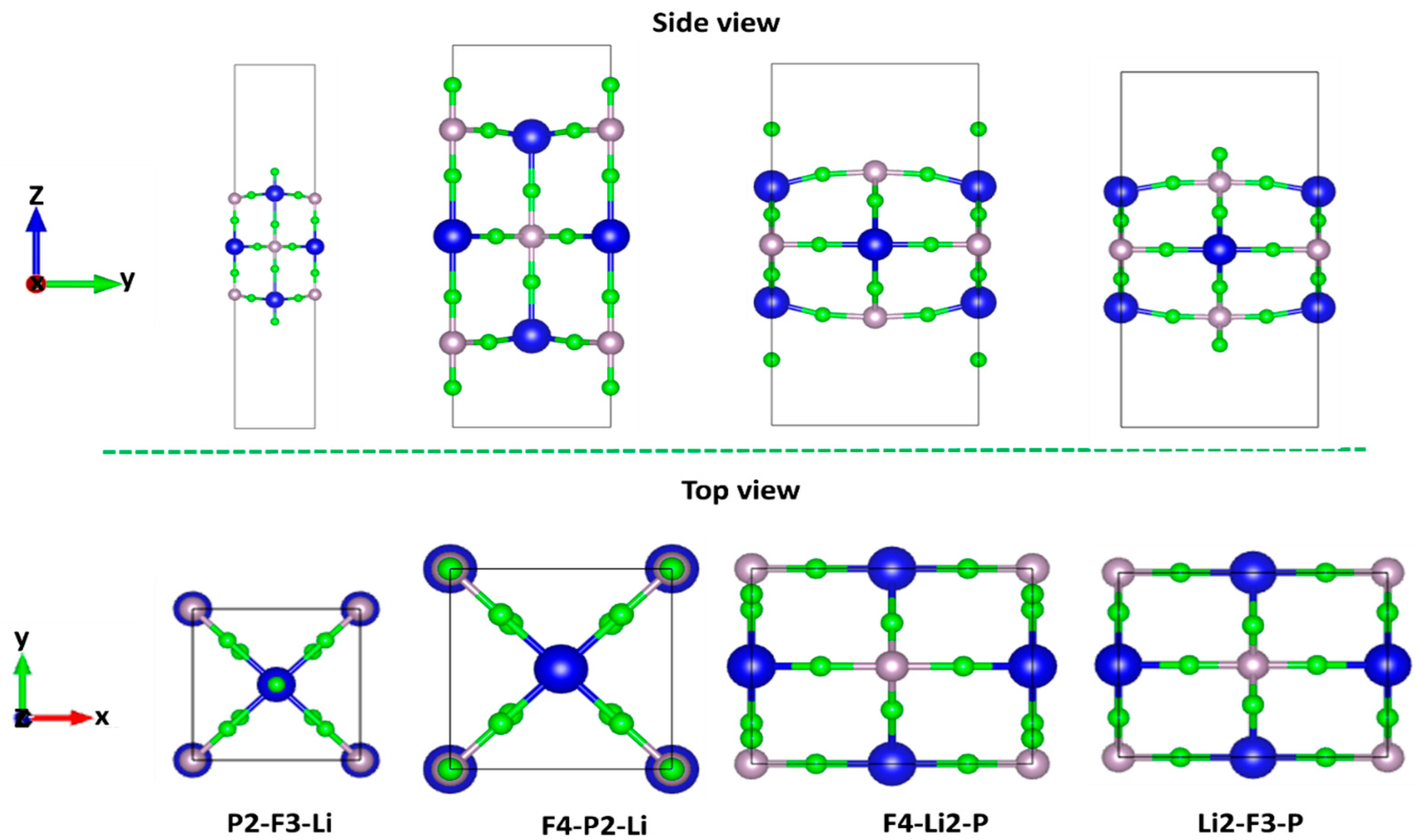
As shown in
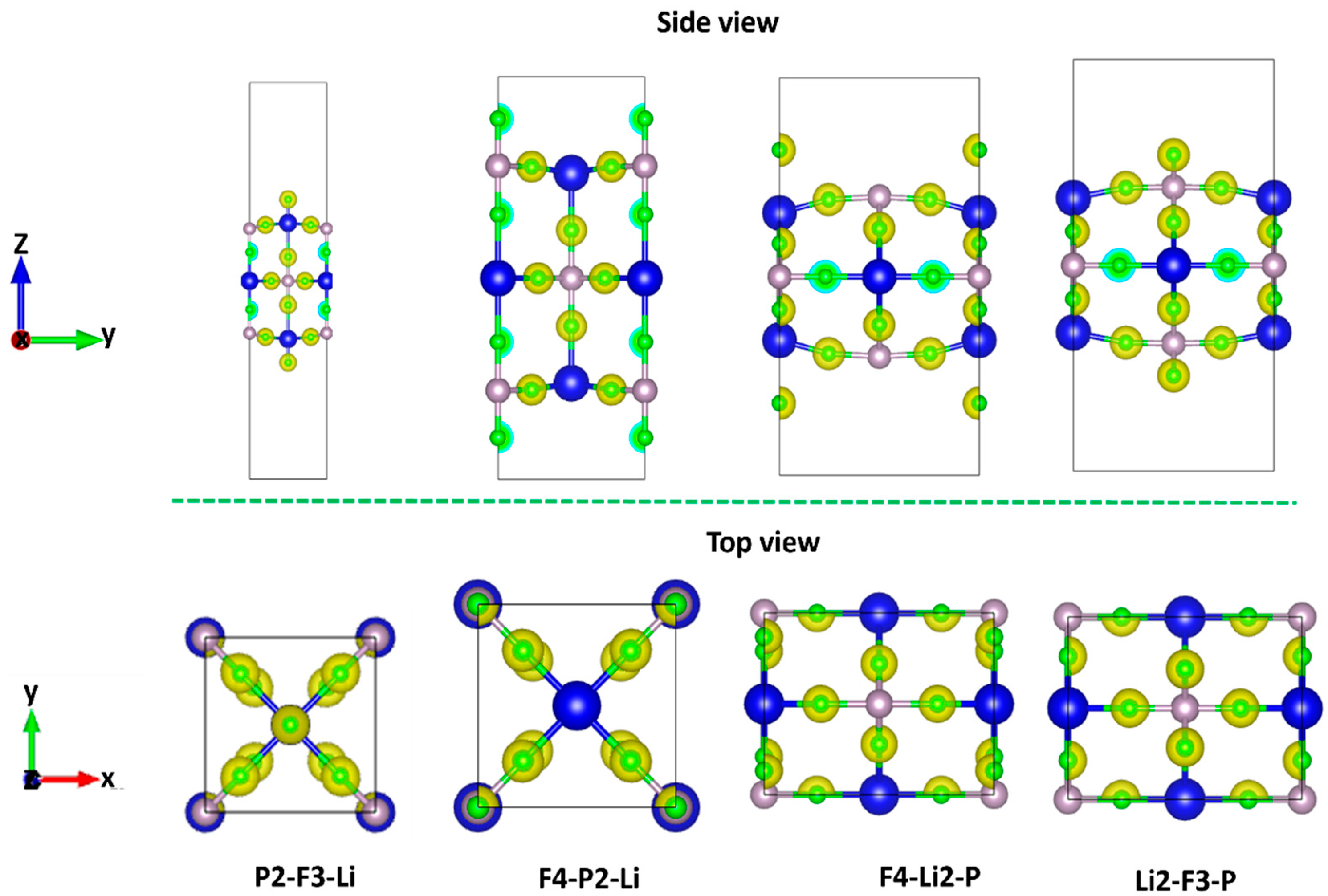
Figure 2, cleaving the (003) facet yielded two surface terminations labeled F4-P2-Li and P2-F3-Li. These terminations correspond to fluorine-rich and lithium-coordinated fluorine, respectively. Similarly, two surface terminations were cleaved for the (101) facet and were labeled F4-Li2-P and Li2-F3-P, respectively. The slab name numbers correspond to the quantity of each element present at the exposed surface. These terminations are characterized by fluorine-rich and phosphorus-coordinated fluorine. All four slab models are symmetric, with the same stoichiometry as the bulk structure, and comprise approximately nine atomic layers with a thickness exceeding 1 nm (
Table 1). The major difference amongst these slab models is the amount of fluorine and the atom coordinating the exposed fluorine in the center. The study will focus on how fluorine species in different surface environments interact with F
− and HF molecules.
The terminated surfaces in
Figure 2 showed geometric changes after optimization, which are indicated by bond length changes observed in
Table 2. There were changes between Li-F bond lengths, both in the z-axis and y-axis, compared to the P-F bonds, where there was minimal to no change; see
Table 2.
The surface energy (γ) was evaluated using Equation (5) [
14,
15]. It is defined as the energy required per unit area of the new surface formed by splitting the crystal into two parts, as shown in the expression below (Equation (5)):
where E
slab is the total energy of the slab, N is the number of bulk unit cells in the slab, E
bulk is the total energy per unit cell of the bulk material, A is the surface area of one side of the slab, and the factor of 2 takes into consideration both surfaces of the slab.
The least thermodynamically stable surfaces were the F4-P2-Li and the F4-Li2-P at 3.08 and 2.22 eV for the (003) and (101) surface terminations, respectively. As shown in
Table 1, the lithium-centered and the phosphorus-centered surface terminations are the most thermodynamically stable in both (003) and (101) slab models, with the (003) surface being the least thermodynamically stable overall. Studies have shown that the surface energy of a low-index surface is generally lower than that of a high-index surface, and this depends on the number of atomic bonds created when cutting the surfaces [
30]. Although (003) is a low-index surface, it exhibits higher surface energies than the higher-index (101) facet due to increased bond cleavage and reduced charge compensation at the termination [
31]. Furthermore, the (003) and (101) LiPF
6 slabs differ not only in orientation but also in surface unit-cell area, which directly affects the density of exposed surface sites (
Table 1). The smaller surface area of the (003) facet, ranging between 25 and 28 Å
2, resulted in a higher concentration of under-coordinated Li and F species per unit area, contributing to its higher surface energy obtained. In contrast, the larger surface area of the (101) facet, ranging between 37 and 39 Å
2, led to a lower surface site density and improved charge distribution, consistent with its lower surface energy.
Previous computational studies have demonstrated that surface charge distributions strongly influence surface energetics, with poorly compensated surfaces characterized by significant dipole moments or electrostatic imbalance exhibiting higher surface energies unless charge compensation mechanisms are present [
32]. In the present work, the (003) and (101) facets terminated as F4-P2-Li and F4-Li2-P display relatively high surface energies, which can be attributed to the exposure of multiple fluorine atoms and the resulting electrostatic imbalance at the surface. In contrast, slab models featuring a single exposed fluorine atom exhibit more effective local charge compensation, leading to comparatively lower surface energies (
Figure 3).
3.3. HF Molecular Adsorption
Surface terminations respond uniquely to external stimuli, such as adsorbing molecules [
33,
34]. To understand the interaction properties of F
− and HF molecules with the stable LiPF
6 surfaces, adsorption energies (σ) were calculated for varying F
− and HF content using Equation (6), Ref. [
15].
where E
slab+ads is the energy of the slab with the adsorbed HF or F
−, E
ads is the energy of the adsorbent, i.e., F
− or HF, N
ads is the number of atoms of the F
− or HF on the slab, and the E
r,slab is the energy of the relaxed slab.
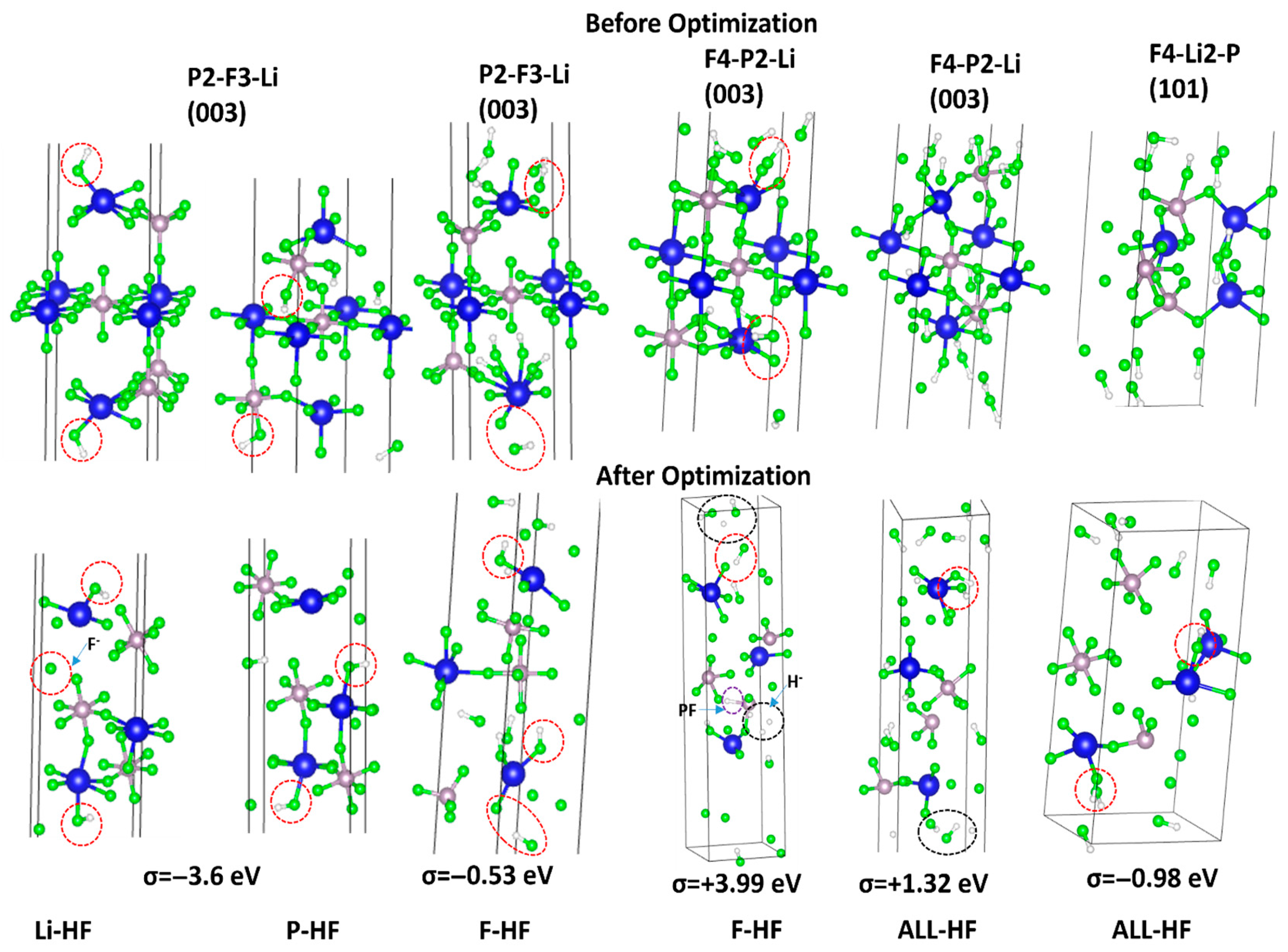
The F4-P2-Li surface of the (003) facet in
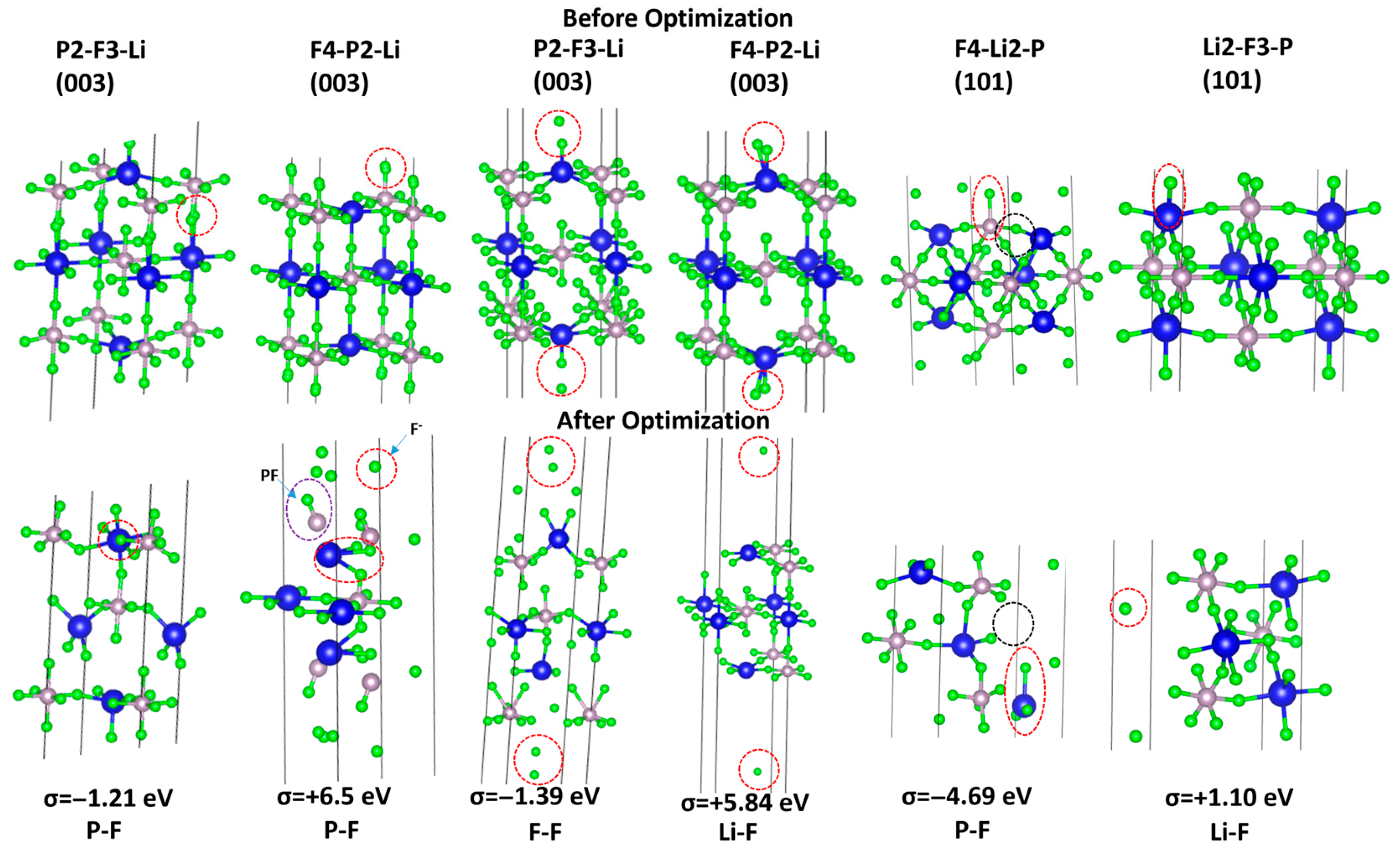
Figure 4 does not prefer to interact with fluoride atoms, as supported by large positive energies in the range of 5.8 to 6.5 eV. This is a typical dissociative property related to the formation of a deliquescent phase.
A strong interaction between Li and HF results in a Li-HF bond in the surface P2-F3-Li, with a low adsorption energy of −3.6 eV; see
Figure 5. Also, a weak interaction to form F-HF is permissible for the (003) facet. Contrary to these observed interactions, the F4-P2-Li surface of the (003) facet does not favorably interact with HF, resulting in a deliquescent phase formation, with unstable adsorption energies in the range of +1.32 to 3.99 eV. This deliquescent phenomenon has also been observed in alkali metal polyhydrofluorides and has been published in the literature [
35,
36,
37].
In contrast, the (101) surface demonstrates limited direct HF bonding, with adsorption energies suggesting a weaker interaction (−0.98 eV); see
Figure 5.
Strong chemisorption is observed with HF on the (003) facet based on the preferred interaction with P and F sites of the P2-F3-Li surface, having adsorption energies of greater than −1.4 eV. The (101) facet, however, interacts with fluoride to form P-F and F-F bonds on the surface of F4-Li2-P, with adsorption energies of −4.69 and −1.72 eV, respectively. A strong repulsion is observed between the fluoride and the F4-P2-Li surface, suggesting that this surface is not interacting with fluoride.
There is HF bonding observed in the (003) facet, preferably targeting the Li sites, based on the adsorption energy of −3.6 eV. Similarly, a bond formation between HF and the Li surface is observed in the (101) facet, with an adsorption energy of −1.62 eV. Generally, a strong HF chemisorption is observed on the (101) surface, with adsorption energy values higher than −1 eV. As a result, the F4-P2-Li surface of the (003) facet is relatively more stable in the presence of the HF molecule. However, the two fluorine-rich layers in both (101) and (003) facets are even more stable against reaction with HF.
Therefore, to reduce or eliminate the unwanted HF content in the LiPF6 crystal, the fluoride-rich surfaces must be dominant in the crystal.
3.4. Work Function, Ionization Potential and Electron Affinity Analysis
The work function (
) of the four most stable surfaces was calculated according to Equation (7). The work function represents the minimum energy required to remove an electron from the bulk of a material through the surface to a point in the vacuum. Practically, it refers to the energy required at 0 K to remove an electron from the Fermi level of the surface to the vacuum level [
33]. The work function can be expressed as
where e is the electron charge,
is the electrostatic potential in the vacuum near the surface, and EF is the Fermi level (electrochemical potential of electrons) within the material.
The surface electrostatic forces, arising from charged particles at the material’s boundaries, such as the liquid–solid interfaces [
38], play a crucial role in HF adsorption [
33]. The ease of HF adsorption depends on the surface charge distribution.
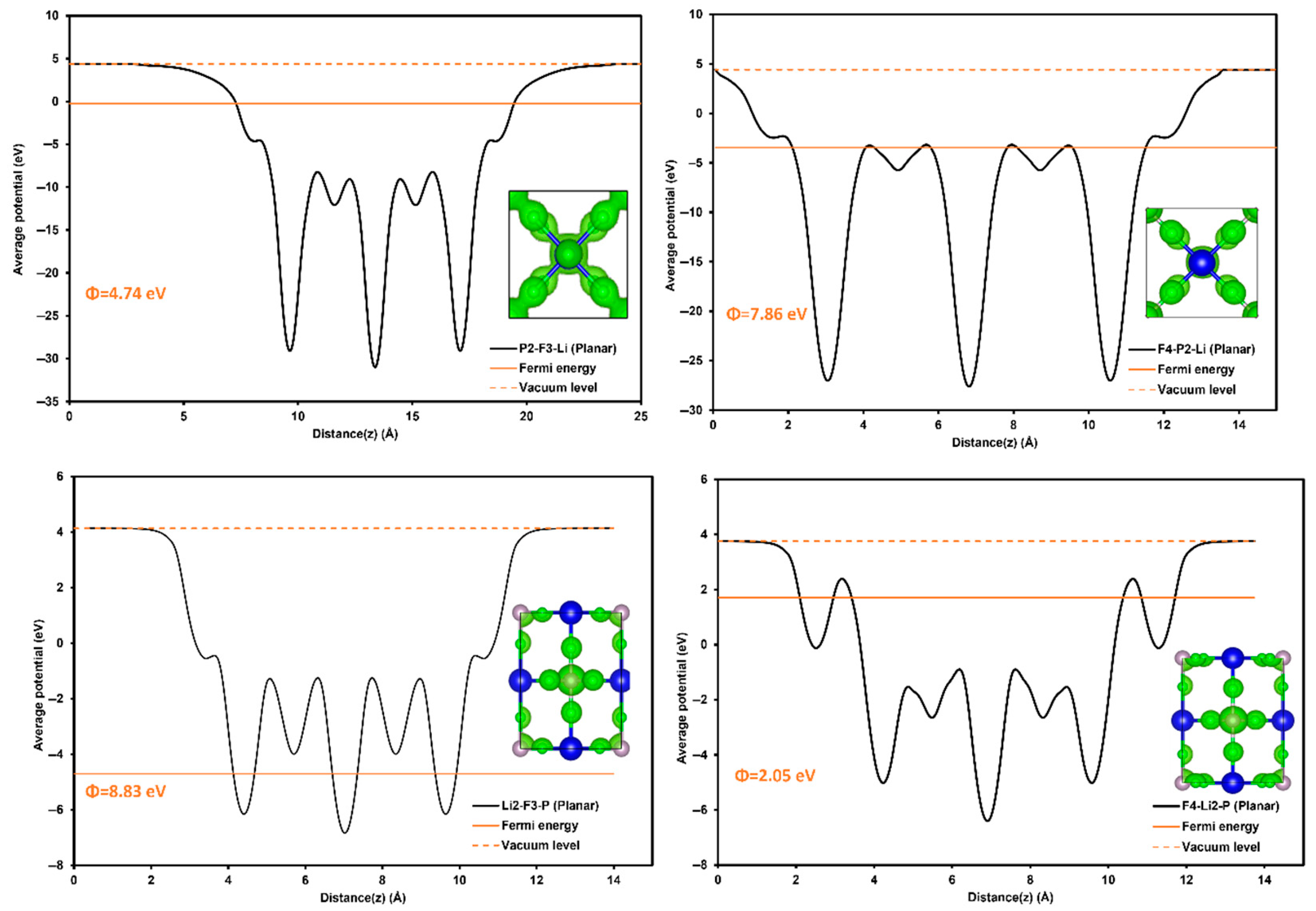
The reactivity of the investigated surfaces toward hydrogen fluoride (HF) correlates strongly with their calculated work functions, which govern surface charge availability and the extent of charge transfer during adsorption. HF bonding is preferentially observed on the (003) facet, also see
Figure S2, Supporting Information, targeting exposed Li sites, with a strongly exothermic adsorption energy of −3.6 eV. This behavior is consistent with the relatively low work function of Li-terminated surfaces (Φ ≈ 4.7 eV), which facilitates electron donation to the antibonding orbital of HF, promoting H–F bond polarization and Li–F bond formation. A similar Li–HF interaction is observed on the (101) facet, where HF adsorption yields an energy of –1.62 eV, indicating strong chemisorption. In general, the (101) surface exhibits pronounced HF chemisorption, also see
Figure S3, Supporting Information with adsorption energies exceeding −1 eV, reflecting its higher density of reactive Li sites. In contrast, fluorine-rich surface terminations display substantially higher work functions (Φ > 7.8 eV), indicative of electron-poor, passivated surfaces that suppress charge transfer to HF. As a result, the F4–P2–Li termination of the (003) facet demonstrates enhanced stability in the presence of HF.
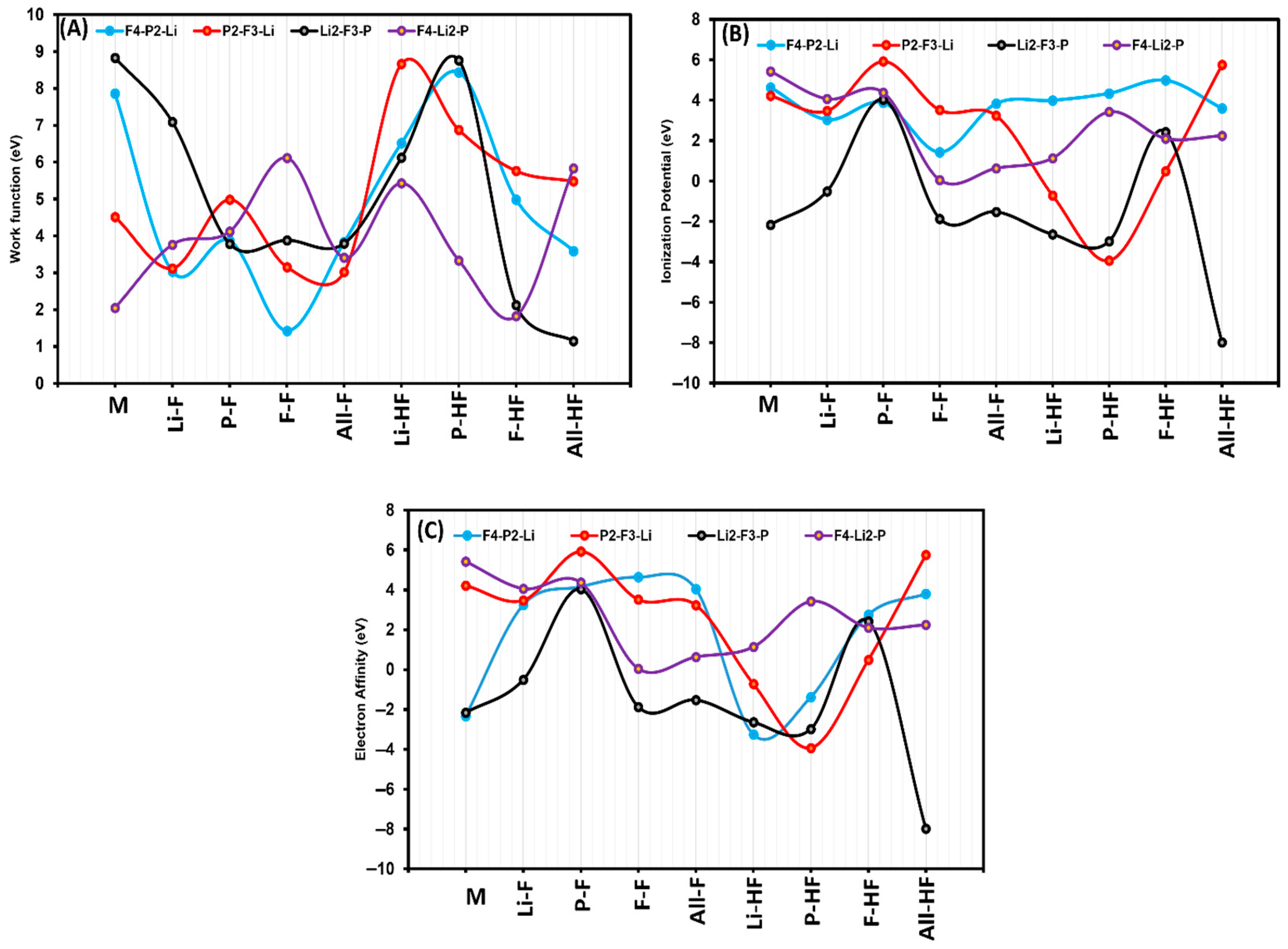
The calculated work functions across different surface terminations and adsorption configurations show a strong correlation with HF reactivity and surface stability. Li-rich surfaces consistently exhibit lower work functions (
Figure 6), reflecting higher surface electron density and enhanced chemical reactivity toward HF. Upon HF adsorption, these surfaces undergo pronounced work-function shifts, indicative of substantial charge transfer and chemisorption. Conversely, fluorine-rich surfaces maintain high work functions with minimal variation upon HF exposure, demonstrating intrinsic resistance to HF adsorption. The stability of the F4–P2–Li termination of the (003) facet is particularly evident, as its relatively high work function suppresses HF-induced charge transfer despite the presence of subsurface Li. In this regard, the fluorinated layers can potentially act in various applications as effective passivation barriers against HF attack due to their high work function.
Overall, as shown in
Figure 6 and
Tables S1 and S2 (Supporting Information), a correlation is observed between the work function within a specific range and the corresponding ionization potential (I), electron affinity (A), and band gap (Eg). The results indicate a direct proportional relationship between the work function and the ionization potential. Materials exhibiting a work function greater than 6 eV tend to possess low (predominantly negative) electron affinity values and wide band gaps, consistent with insulating behaviour (
Figure 6 and
Tables S1 and S2, Supporting Information). In contrast, facets with work function values in the range of 1–6 eV display comparatively higher electron affinity (characterized by positive values) and smaller or negligible band gaps, corresponding to semiconducting or metallic character, respectively (
Figure 6 and
Tables S1 and S2, Supporting Information).
3.5. Total Local Potential and Electron Localization Function Analysis
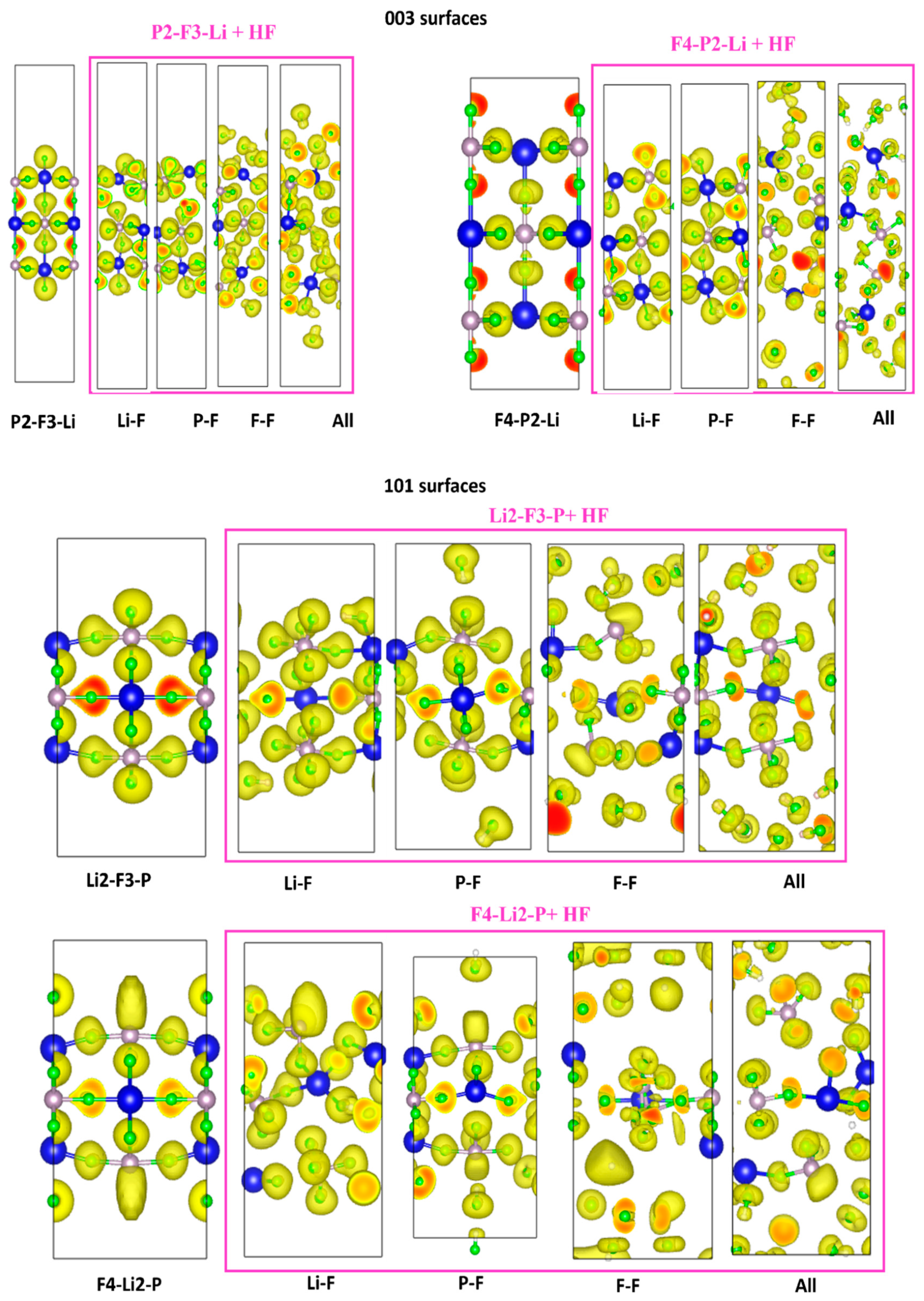
The electron localization function (ELF) provides insight into the spatial distribution of localized versus delocalized electronic states at the LiPF
6 surfaces. In general, low ELF values correspond to regions of electronic delocalization, while high ELF values indicate strongly localized electron pairs, such as those associated with closed-shell anions or lone pairs [
39,
40]. The ELF values are generally low in the regions where localized orbitals dominate [
39]. The planar-averaged electrostatic potential profiles illustrate the variation in work function among the different surface terminations. Li-exposed surfaces, such as P2–F3–Li, display a relatively shallow vacuum potential, corresponding to a moderate work function of ~4.7 eV, which promotes electron donation to adsorbed HF molecules. This electronic environment facilitates H–F bond polarization and stabilizes Li–F bond formation. In contrast, fluorine-rich terminations (F4–P–2Li and Li2–F3–P) exhibit significantly deeper vacuum levels, resulting in high work functions (>7.8 eV), indicative of electron-poor and strongly passivated surfaces. Notably, the F4–Li2–P termination presents an exceptionally low work function (~2.05 eV), explaining its extreme chemical reactivity and strong affinity for HF. Overall, the electrostatic potential profiles directly rationalize the facet- and termination-dependent HF reactivity observed in the adsorption calculations.
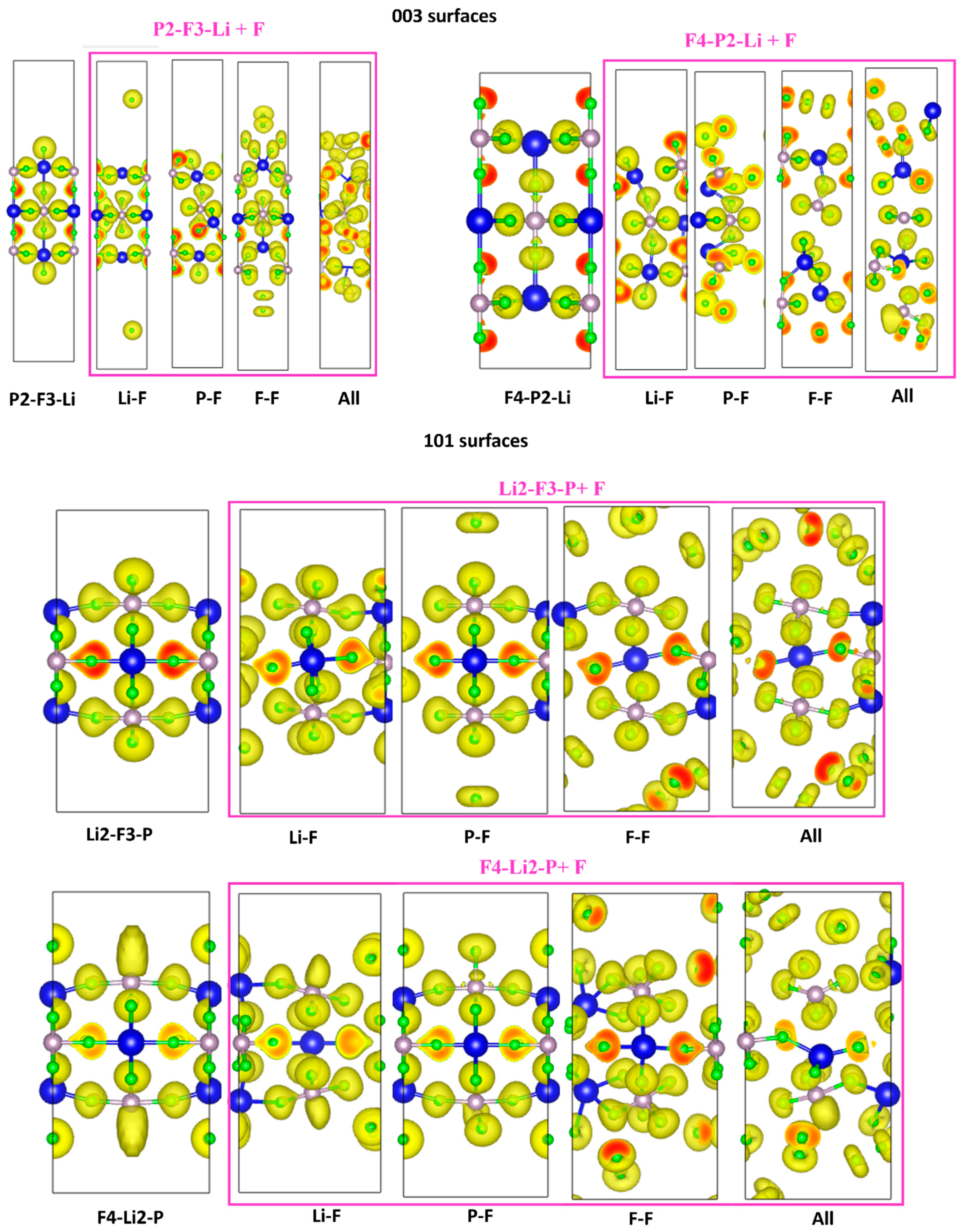
The ELF distributions in
Figure 8 and
Figure 9 were examined to clarify the electronic nature of F and HF adsorption on the (003) and (101) surface facets and their corresponding terminations [
41,
42,
43]. For the (003) facet, both the F4–P2–Li and F4–Li2–P terminations exhibit strong electron localization around the adsorbed F atom, with ELF values approaching unity, while negligible localization is observed in the interatomic region between F and the surface cations. This behavior confirms that F adsorption proceeds via predominantly ionic chemisorption on both terminations, driven by charge transfer from surface Li atoms to the electronegative F species [
42,
44,
45]. The pronounced localization around F suggests significant surface polarization, particularly on the higher-energy F4–P2–Li termination, where under-coordinated surface atoms enhance electrostatic imbalance and promote stronger adsorbate stabilization [
46,
47].
A similar trend is observed for F adsorption on the (101) facet, where intense ELF accumulation is again confined to the fluorine atom, with no evidence of shared electron density along the F–surface bond path. The greater ELF redistribution on the more polar (101) terminations indicates an increased tendency for charge compensation through ionic bonding, consistent with their relatively higher surface energies [
46,
48].
In contrast, ELF maps for HF adsorption on both the (003) and (101) facets show pronounced electron localization along the intrinsic H–F bond, confirming that its covalent character is preserved upon adsorption [
41,
43]. Across all terminations, minimal ELF accumulation is detected at the surface–HF interface, indicating weak electronic coupling and the absence of dissociative adsorption [
49]. Notably, the charge-balanced F4–Li2–P termination of the (003) facet exhibits the least ELF perturbation upon HF adsorption, highlighting its enhanced electrostatic stability and reduced surface reactivity [
47,
50].
Overall, the facet-resolved ELF analysis demonstrates that isolated F adsorption strongly perturbs the electronic structure of polar, high-energy terminations through ionic chemisorption and surface charge compensation, whereas HF adsorption remains largely molecular across all facets, inducing minimal electronic redistribution. These findings underscore the critical role of surface termination and polarity in governing adsorption mechanisms and surface stability [
45,
46,
48,
50].
3.6. Optoelectronic Properties of the Bulk and Surface Structures of LiPF6
The bulk structure of the LiPF
6 is generally an insulator, with a calculated band gap of 7.42 eV, as shown in
Figure 1, comparable to the literature values of 7.33 to 7.63 eV [
12,
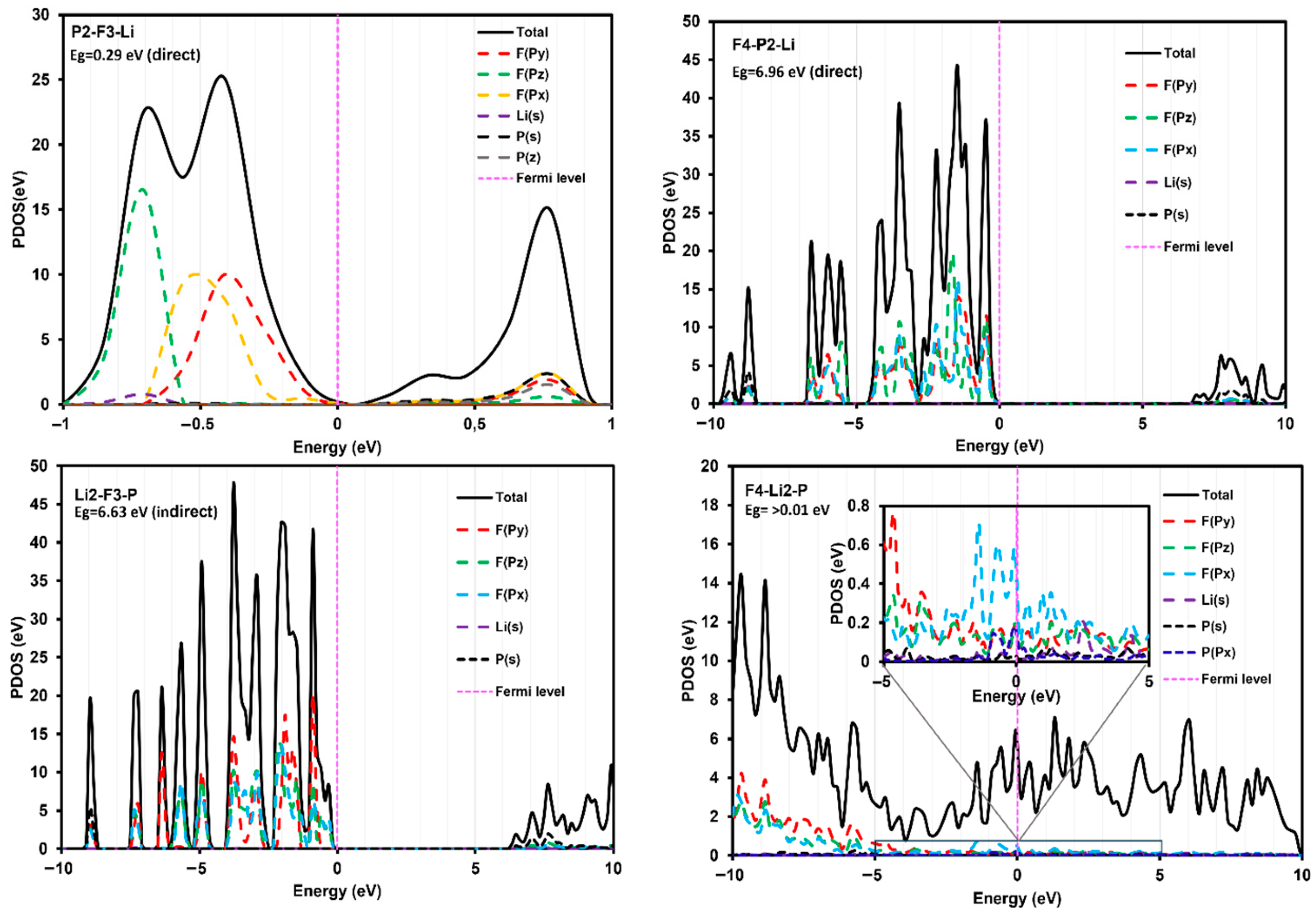
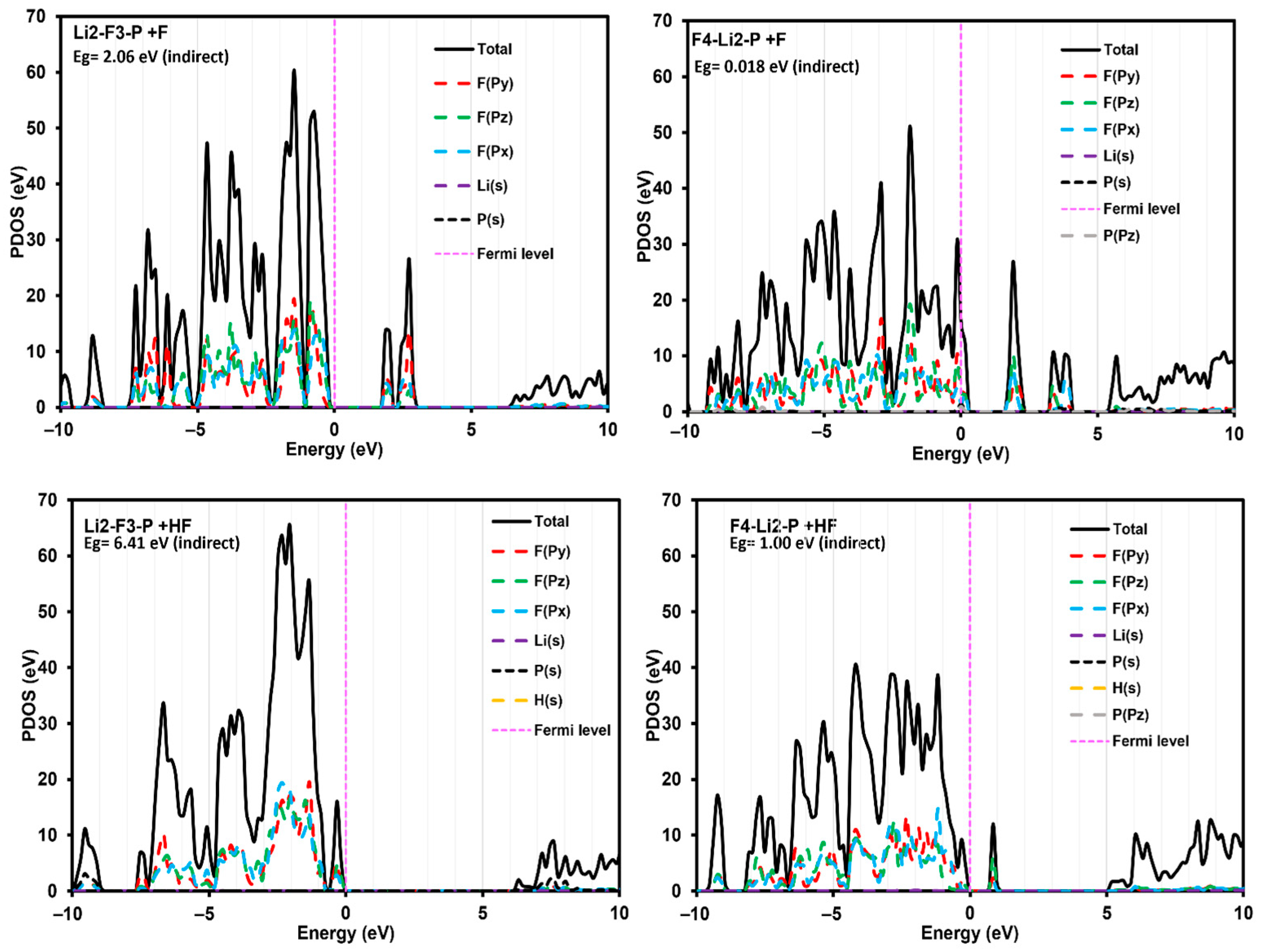
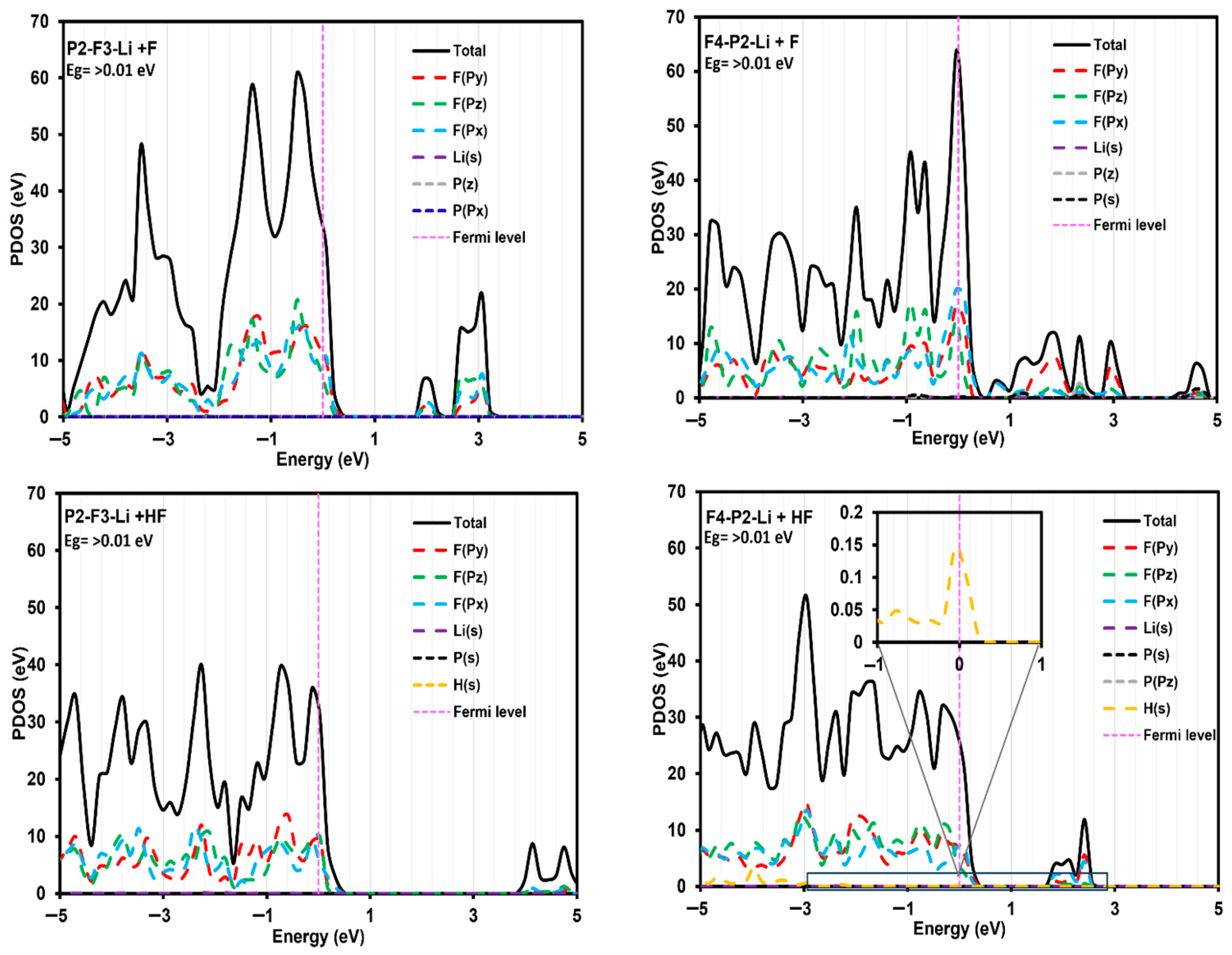
30]. The insulating property is also observed in the Li2-F3-P (101) and F2-P2-Li (003) facets. There is a major contribution from the Py and Px orbitals of the F in the VB. The CB comprises s and p orbitals of phosphorus. Li (s) orbital has minimal contribution in CB and VB. Upon introduction of HF and fluoride onto the LiPF
6 surface, the contributions of F-p orbitals and H-s orbitals to the conduction band from the added reactants are evident (
Figure 10,
Figure 11 and
Figure 12).
The DOS reveals the electronic signature of HF chemisorption on Li-terminated surfaces. For the P2–F3–Li surface, states near the Fermi level are dominated by Li-s and F-p orbital contributions, indicating an electron-rich surface capable of charge transfer. Upon HF adsorption, a noticeable redistribution of states occurs near the Fermi level, accompanied by the emergence of hybridized H-s and F-p orbital states, confirming strong HF–surface interaction and bond formation in some instances. In contrast, the F4–P2–Li surface exhibits a reduced density of states at the Fermi level, characteristic of a more electronically passivated, fluorine-rich termination. After HF adsorption, only minor changes in the DOS are observed, indicating limited charge transfer and weaker interaction. These electronic trends are consistent with the calculated adsorption energies and demonstrate that HF chemisorption is favored on low-work-function, Li-exposed surfaces, while fluorinated surfaces resist HF-induced electronic perturbation.
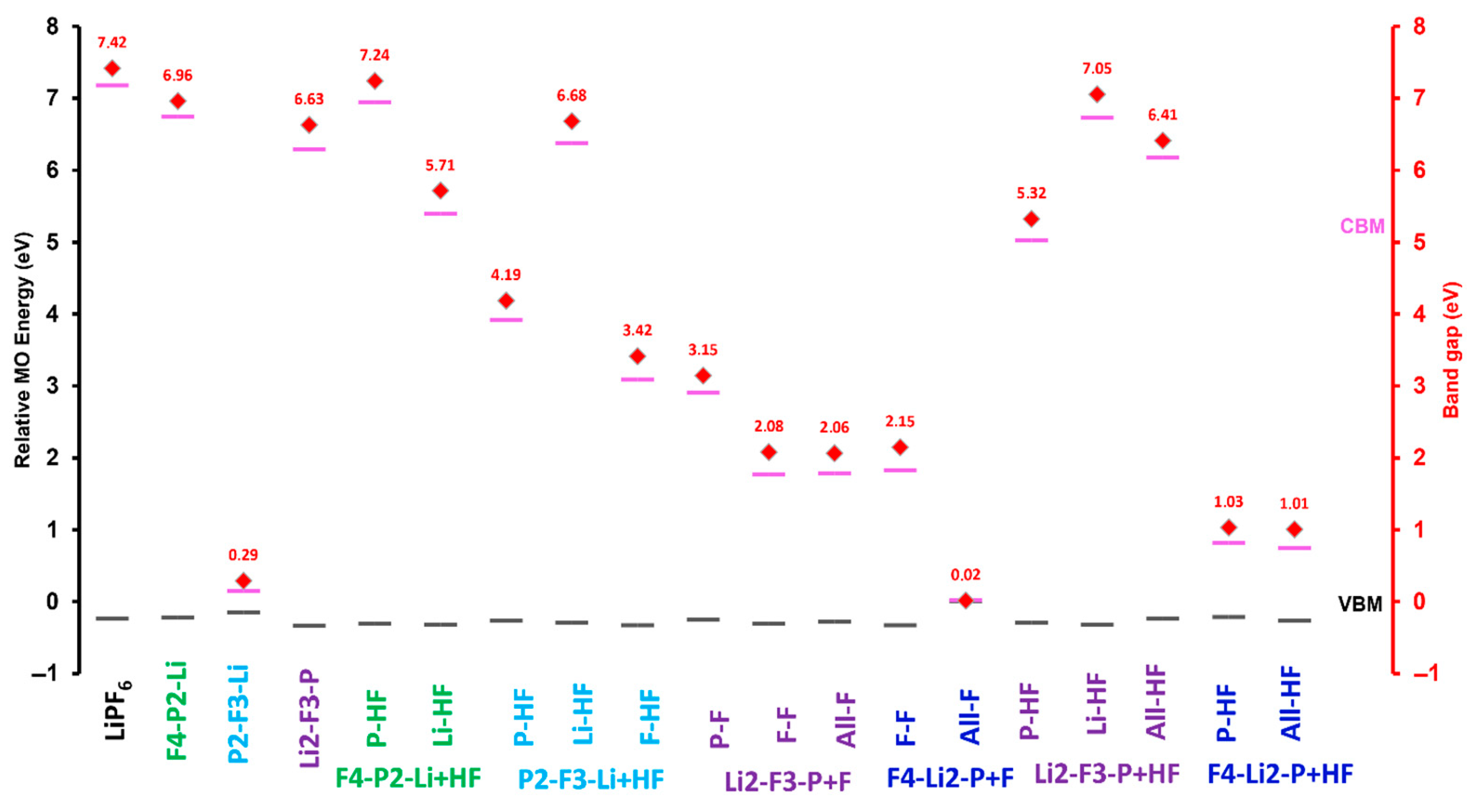
The relative molecular orbital energy plots in
Figure 13 reveal insulating and semiconducting surface terminations; metallic surfaces are omitted owing to overlap between the valence band maximum (VBM) and conduction band minimum (CBM). For the (003) facet, the F4–P2–Li and P2–F3–Li terminations exhibit direct band gaps of 6.96 and 0.29 eV, corresponding to insulating and semiconducting behavior, respectively. In contrast, within the (101) facet, the Li2–F3–P termination shows an indirect band gap of 6.63 eV, indicative of insulating character, whereas the F4–Li2–P termination is metallic. Adsorption of F
− on the (003) facets induces a transition to metallic behavior, whereas HF adsorption leads predominantly to insulating surfaces, particularly when interacting with Li and P sites on the P2–F3–Li termination (
Table S1, Supporting Information). Notably, HF interaction with the P site on the F4–P2–Li surface yields a direct band gap of 7.24 eV, comparable to bulk LiPF
6, suggesting minimal electronic perturbation. Compared with the (003) facets, the (101) facets display greater electronic diversity, spanning metallic to insulating behavior. However, HF adsorption on the Li site of the Li2–F3–P termination results in an indirect band gap of 7.05 eV, closely matching that of bulk LiPF
6 (
Table S2, Supporting Information). Collectively, these results indicate that Li and P sites on the (003) facets are relatively inert toward HF, as evidenced by the preservation of bulk-like band gaps. In contrast, the metallic F4–Li2–P termination of the (101) facet undergoes a metal-to-semiconductor transition upon HF adsorption, yielding a narrow band gap of approximately 1 eV (
Figure 13). This electronically activated state is consistent with the strong adsorption energies reported in
Table 3 and
Table 4 and suggests an enhanced susceptibility of this surface to further chemical reactions with HF and F
−.
Relative molecular orbital alignment further distinguished the fundamentally different roles of F
− and HF. Fluoride adsorption was governed by ionic chemisorption, characterized by deep-lying F 2p states, negligible covalent orbital overlap, and strong electrostatic stabilization via surface Li+ sites. This interaction promotes surface passivation rather than degradation. In contrast, HF molecular orbitals aligned closely with the surface valence band on low-work-function terminations, enabling charge transfer, H–F bond polarization, and surface-driven solvation processes, particularly on the (101) facet (
Figure 13).
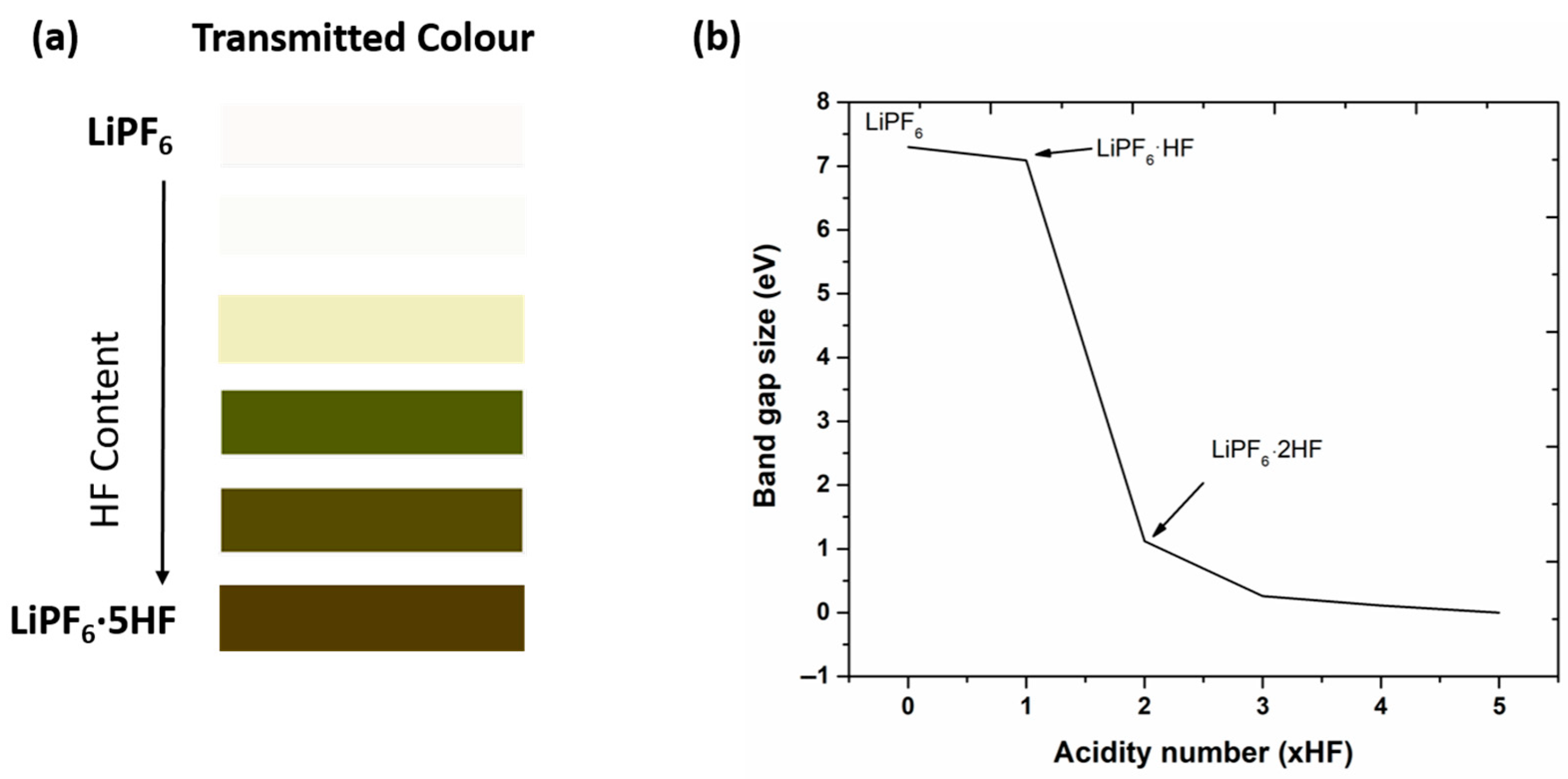
The band gap primarily contributes to the observed material color as indicated in
Figure 14a and
Table S3, Supporting Information. The color variations are due to a change in material wavelength from UV–visible to near-infrared. As the HF content is increased, the LiPF
6 changes from a predominantly hard molecule to a soft molecule based on perturbations in the band gap from high to lower values (
Figure 14). The softer molecules are known to have a lower HOMO-LUMO gap when compared to hard molecules, making them more reactive [
12]. This implies that LiPF
6·HF with a band gap of 7.09 eV will be relatively more stable.
4. Conclusions
This study successfully employed first-principles density functional theory to systematically investigate the surface stability and adsorption behavior of LiPF6 in the presence of fluoride (F−) and hydrogen fluoride (HF), with a particular focus on the interplay between surface energy, work function, molecular orbital alignment, electron localization, and surface polarity. By combining these complementary descriptors, a coherent mechanistic picture of facet and termination-dependent reactivity emerges.
It was found that the least thermodynamically stable surfaces were the fluorine-rich F4-P2-Li and the F4-Li2-P at 3.08 and 2.22 eV for the (003) and (101) surface terminations, respectively. The lithium- and phosphorus-centered counterparts were found to be the most thermodynamically stable counterparts in both (003) and (101). Work function analysis revealed a strong correlation between surface stability and electronic accessibility. Terminations characterized by Li2-F3-P for (101) and F4-P2-Li for (003) coordination displayed the highest work functions, reflecting tightly bound electronic states and reduced propensity for charge transfer. Conversely, low-work-function surfaces exhibited elevated valence band maxima and enhanced electronic reactivity, consistent with their higher surface energies and increased tendency to interact with HF.
Electron localization function analysis corroborated these findings by revealing intense localization around adsorbed F atoms with minimal interatomic ELF accumulation, confirming the ionic nature of F adsorption across all facets. For HF adsorption, ELF maps showed preserved covalent H–F bonding and limited surface–adsorbate electron sharing, with significant ELF redistribution occurring only on polar, lithium-exposed terminations. The (003) facet, especially in its charge-balanced fluorine-rich termination, exhibited minimal ELF perturbation and enhanced electrostatic stability, whereas the (101) facet displayed localized electronic rearrangements that facilitate HF interaction and solvation.
Taken together, the combined surface energy, adsorption energy, work function, MO alignment, ELF, and dipole moment analyses identify the (003) facet as the primary structural and electronic stabilizing surface in LiPF6, while the (101) facet acts as the dominant initiation site for HF-induced solvation and degradation. These results demonstrate that LiPF6 instability in HF-containing environments is governed not by uniform bulk reactivity but by localized surface electronic structure and polarity.
The insights gained from this work provide clear design principles for improving LiPF6 stability, including preferential crystal growth along the (003) direction, surface fluorination to suppress low-work-function terminations, and targeted HF scavenging strategies. More broadly, this study establishes a robust framework for linking surface energetics and electronic structures to degradation mechanisms, offering guidance for the rational design of more stable electrolyte salts and interfaces in advanced electrochemical systems.