
Article

Investigating Commensal Practices in Iron Age Communities of Southern Italy Through Functional Analysis of Local Pottery

1
Department of Cultural Heritage, University of Salento, 73100 Lecce, Italy
2
Department of Chemistry, University of Bari, 70126 Bari, Italy
*
Author to whom correspondence should be addressed.
Heritage 2026, 9(4), 125; https://doi.org/10.3390/heritage9040125
Submission received: 2 February 2026 / Revised: 18 March 2026 / Accepted: 23 March 2026 / Published: 25 March 2026
(This article belongs to the Special Issue New Advances in Biomolecular Approaches to Archaeological Heritage)

Abstract

Iron Age settlements in the Salento peninsula (Southern Italy, 8th–6th century BC) underwent fundamental transformations in social organization, marked by the emergence of local elites through trade development and intense contacts with the Greek world. This study examines organic residue assemblages from 99 ceramic sherds from one key Iron Age site to clarify the role of locally produced ceramics—both coarse ware containers and Japigian matt-painted vessels—in commensal and beverage production practices. Chromatographic analyses identified a wide variety of animal and plant by-products, including fats, oils, waxes, and resin compounds. Integrated phytolith and starch analysis revealed evidence consistent with fermentation processes, particularly through the identification of fungal remains and damaged starch granules suggesting brewing activities in a subset of vessels. Matt-painted pottery forms—characterized by conical rims, funnel-shaped necks, bowls, and jugs—show distinctive use-alteration patterns and residue profiles associated with fermented beverage consumption and preparation in approximately 26% of the analyzed assemblage. Integrating organic residue analysis, experimental archaeology, and microfossil investigation suggests the central role of locally produced pottery in Iron Age commensal activities and status display, though alternative interpretations for some biomarker profiles cannot be excluded. This multiproxy approach demonstrates functional differentiation and consumption practices, refining interpretations of vessel use and providing new insights into food economies and social life during the Iron Age in southern Italy.

1. Introduction

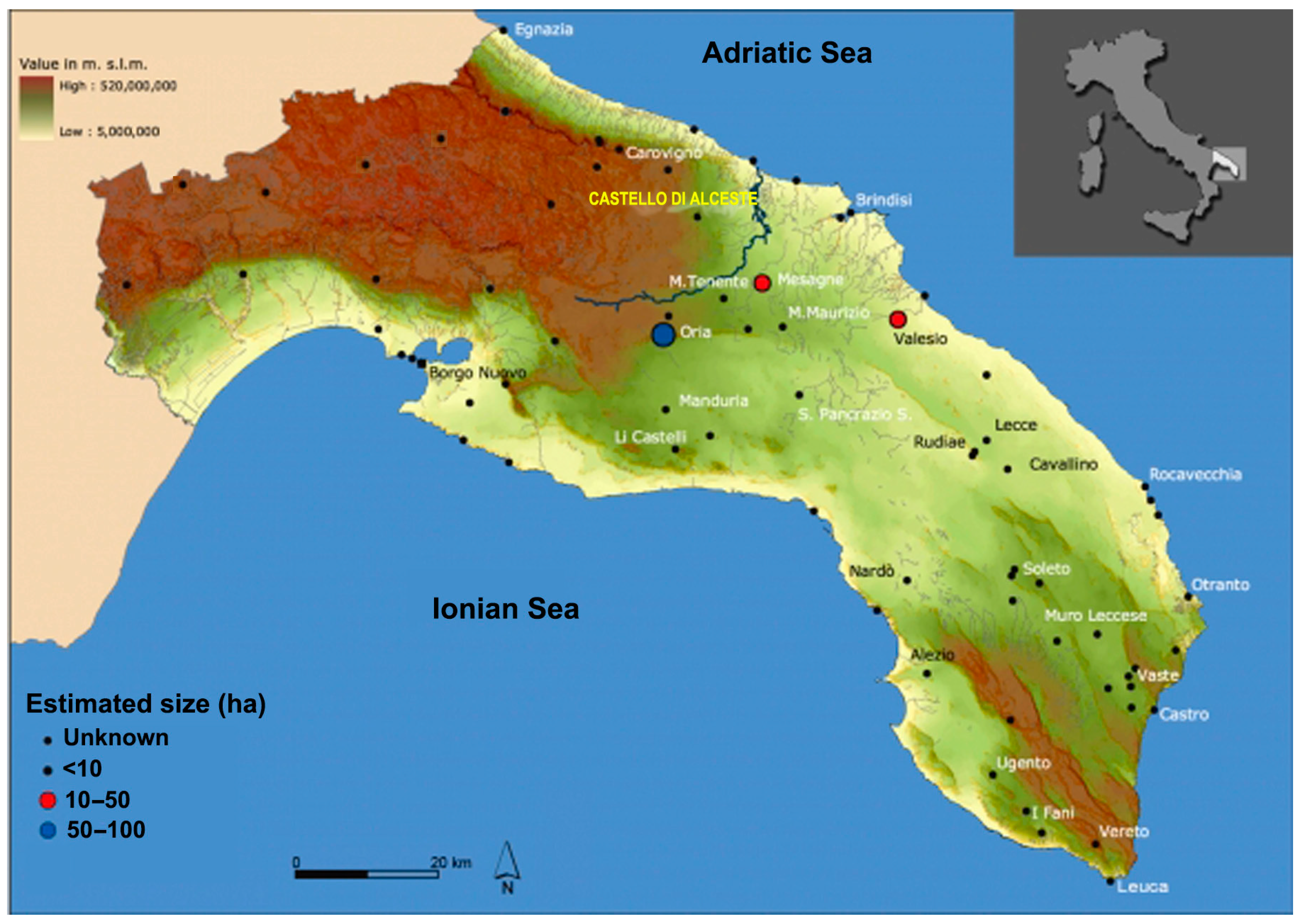
The Salento peninsula in southern Italy occupies a strategic geographical position between the Ionian and Adriatic seas (Figure 1), which enabled the development of constant relations within the framework of Mediterranean mobility during the Iron Age (8th–6th century BCE). This period witnessed significant demographic growth and social transformations within the native Iapygian populations. These changes included progressive settlement expansion, socioeconomic differentiation, and elite proliferation, accelerating especially after the mid-8th century BCE. These developments occurred within broader Mediterranean mobility patterns, which also led to the foundation of the Greek colony of Taras [1,2].
This phenomenon intensified contact networks and the circulation of prestige goods—especially imported Greek pottery and wine-related vessels—fundamentally altering local social dynamics and introducing new cultural practices, facilitating wealth accumulation among emerging power groups [3,4]. However, the Iapygian populations simultaneously maintained and elaborated their own subsistence practices and ceramic traditions, particularly the production of local geometric matt-painted pottery (Salento Late Geometric). These locally produced wares display geometrical decorative patterns reflecting indigenous traditions, but increasingly incorporate ornamental elements inspired by Greek ceramics, particularly in the later 8th century BCE as imports increased [5].
Evidence for commensal practices—communal meals and consumption of valued food and beverages—appears as rich assemblages of locally produced drinking and serving vessels. The distribution of specialized vessel forms and the concentration of tableware in certain settlement contexts suggest that communal gatherings and feasting events played important roles in Iron Age social organization [6,7].
This study focuses on Castello di Alceste (San Vito dei Normanni, Brindisi), a key Late Iron Age site in southern Italy that exemplifies settlement development, elite emergence, and the ritualization of commensal practices during the Iron Age-to-Archaic transition.
Archaeological research at this site has revealed a settlement trajectory from Iron Age hut villages to a structured Archaic settlements featuring a monumental “Big Building” (approximately 700 square meters), encompassing evidence of multiple activity zones, including residential spaces, a purported banqueting hall, and areas with clear ritual deposits [8,9].
Our aim is to better understand the function and meaning of the ceramic assemblage at Castello di Alceste through the application of organic residue analysis (ORA) and by comparing the results across functionally distinct vessel categories. This comparative analysis enables investigation of processes of cultural appropriation and indigenous consumption practices that extend far beyond previous discussions based solely on vessel morphology or formal typologies. Specifically, integrating ORA with use-wear analysis, spatial distribution patterns, and archaeological context allows us to reconstruct how Iron Age Iapygian communities sourced, prepared, and consumed valued foodstuffs and beverages in both domestic and ceremonial contexts. The material expressions of these practices—embedded in the ceramic assemblage, settlement architecture, and spatial organization—provide tangible evidence for understanding how indigenous communities negotiated cultural identity, maintained community cohesion, and engaged with Mediterranean exchange networks during a period of significant social transformation.

2. Archaeological Background: Castello Di Alceste

Castello di Alceste (San Vito dei Normanni, province of Brindisi) is located in northern Messapia, approximately 40 km from the Adriatic coast. The site belongs to a series of new settlements founded during the 8th century BCE, a period of significant settlement expansion in the region [2]. The settlement is strategically positioned on elevated terrain and was surrounded by enclosure walls, a defensive configuration typical of contemporary Iron Age villages in the Salento peninsula.
The site demonstrates growing complexity in Iapygian societies, particularly in social organization, craft specialization, and engagement with external trading networks. Excavations have revealed intra-site differences in dwelling sizes, architectural quality, and material assemblages—including imported Mediterranean pottery and an extensive corpus of local ceramic wares—suggesting status and craft-related differentiations within the village community [10].
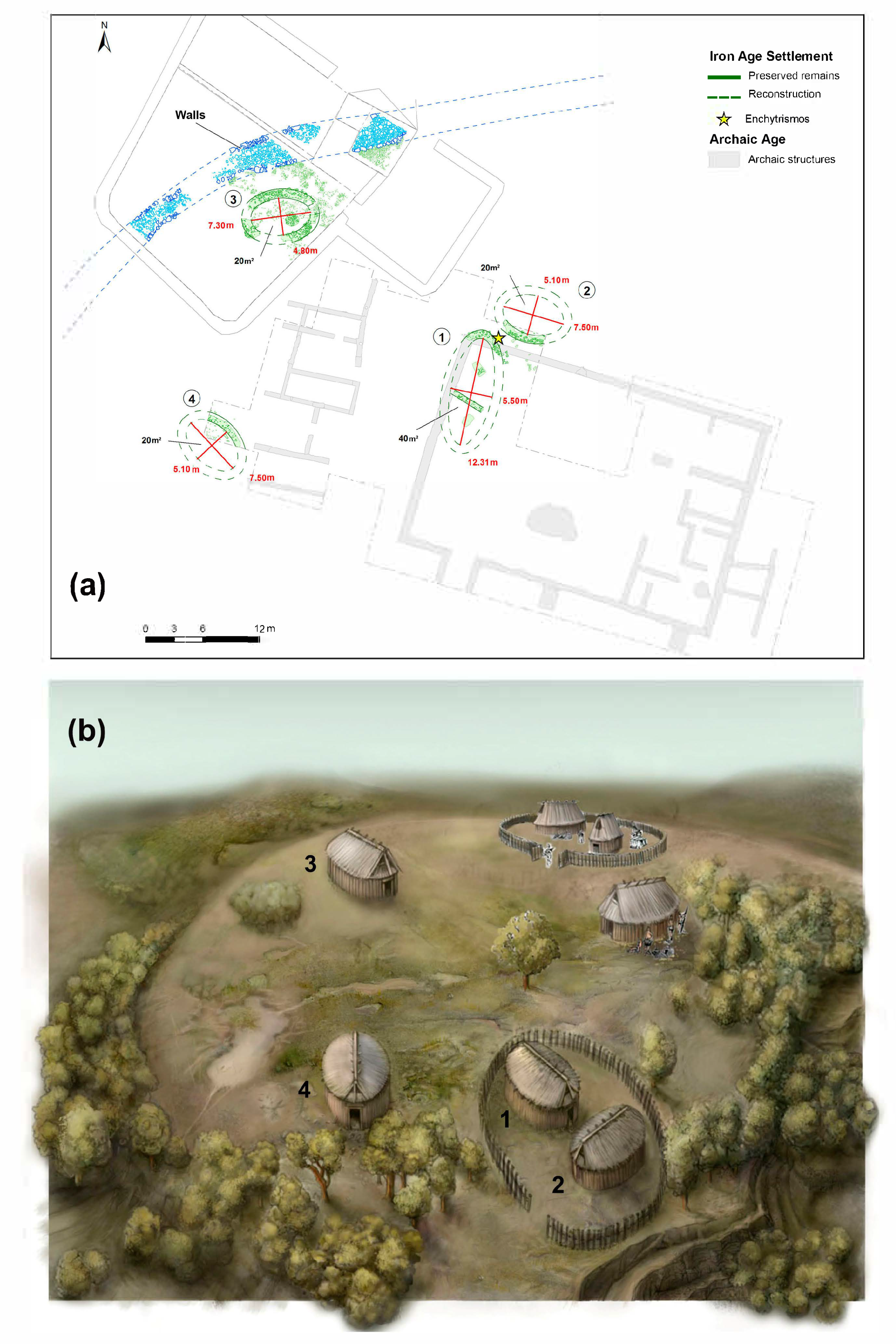
The Iron Age occupation at Castello di Alceste is characterized by distinctive oval and apsidal dwelling structures distributed across the site and delimited by low dry-stone walls [11,12], arranged in spatial clusters that suggest organization according to kinship relationships or clan units (Figure 2a,b). Cereal cultivation was confirmed by botanical analyses of samples from hearths and pits, which showed the presence of burnt wheat, barley and legumes [13].
The arrangement of these village nuclei provides material evidence for the structured social organization of the community, reflecting processes of community building and identity consolidation through spatial means.
The ceramic assemblage from Iron Age contexts at Castello di Alceste is compositionally diverse and includes multiple functional categories. Large storage vessels and coarse ware containers represent utilitarian storage and food preparation activities. These practical vessels are accompanied by a large corpus of local matt-painted geometric pottery, which comprises both high forms (jars with narrow necks and globular bodies) and low forms (bowls and beakers). A limited quantity of imported Greek ceramics is also present in Iron Age contexts at the site, including geometric pottery from Corinth and western Greek production centers. These imports appear in spatial association with larger dwellings or specialized activity areas, suggesting their concentration among ascendant elite groups who participated in Mediterranean exchange networks. The relative scarcity of these high-value imported goods, combined with their selective distribution, indicates that access to Mediterranean exchange networks remained restricted to a limited segment of the community.
Pottery forms from Iron Age contexts at Castello di Alceste—particularly conical-necked jars with globular bodies and specialized low forms—possess morphological characteristics consistent with serving, food and drink preparation, transport, and storage functions, based on comparative ethnographic and archaeological studies [14].
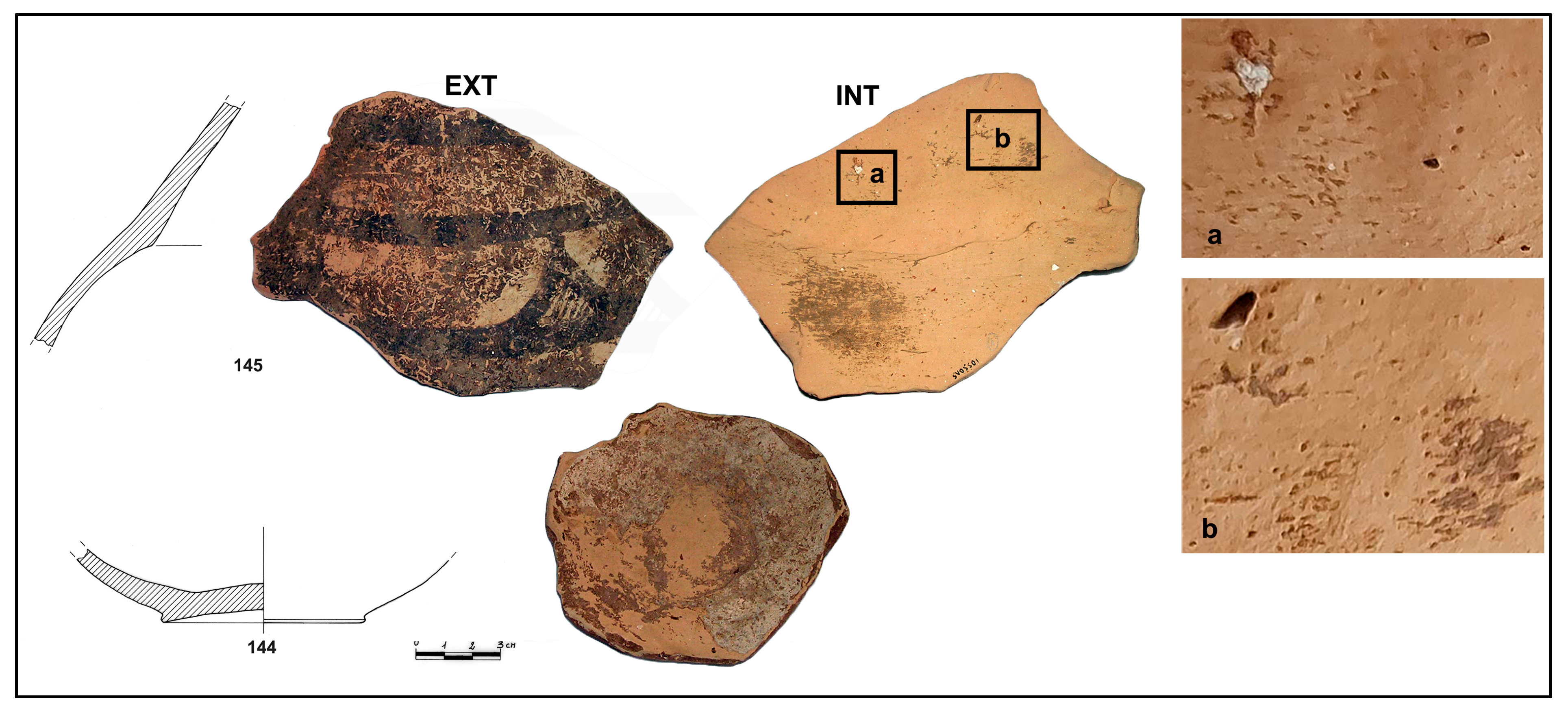
Furthermore, many of the ceramic vessels from the site exhibit distinctive modifications to their interior walls (Figure 3), characterized by pitting and corrosion [15]. Experimental and ethnoarchaeological studies show that similar alterations on ceramic surfaces can develop through prolonged contact with acidic contents, including fermented beverages, which produce characteristic patterns of superficial cracking and detachment visible as irregular depressions or pits on interior vessel walls [16,17]. However, similar surface alterations can also result from other processes including salt crystallization, thermal shock, post-depositional weathering, manufacturing defects, or biological activity in the burial environment. These alternative formation mechanisms cannot be entirely ruled out based on macroscopic observation alone.
At Castello di Alceste, these use-alteration traces suggest the repeated storage or preparation of acidic liquids, potentially including fermented beverages, though this interpretation gains confidence only when correlated with organic residue and microfossil evidence (see Section 4.1 and Section 4.2).

3. Materials and Methods

3.1. Archaeological Samples

A total of 99 samples were selected for organic residue analysis by GC-MS. Table 1 shows the characteristics of the studied vases. The correspondence between sherd samples and individual vessels is indicated in Supplementary Table S1, which lists for each sample its vessel ID, fabric, form, sampled part and main analytical results.
The selected assemblage comprises two main ceramic classes representing distinct production traditions: coarse ware vessels (28 samples) and locally produced Japigian matt-painted pottery (71 samples). In one case, two sherds from the same original vessel were sampled (144/145; Figure 3). For functional interpretation, we treated these fragments as a single vessel. The two sherds from this vessel yielded closely comparable biomarker profiles, indicating no significant differences in residue composition between the sampled parts.
The corpus of sampled vessels derives predominantly from collapse and abandonment contexts, with supplementary samples from selected accumulation deposits directly associated with Iron Age occupation phases. The sampled vessels come from all the main excavated areas, including hut clusters, the central sector with denser accumulations, and peripheral zones. Quantitative details on spatial distribution are provided in Section 5.3.
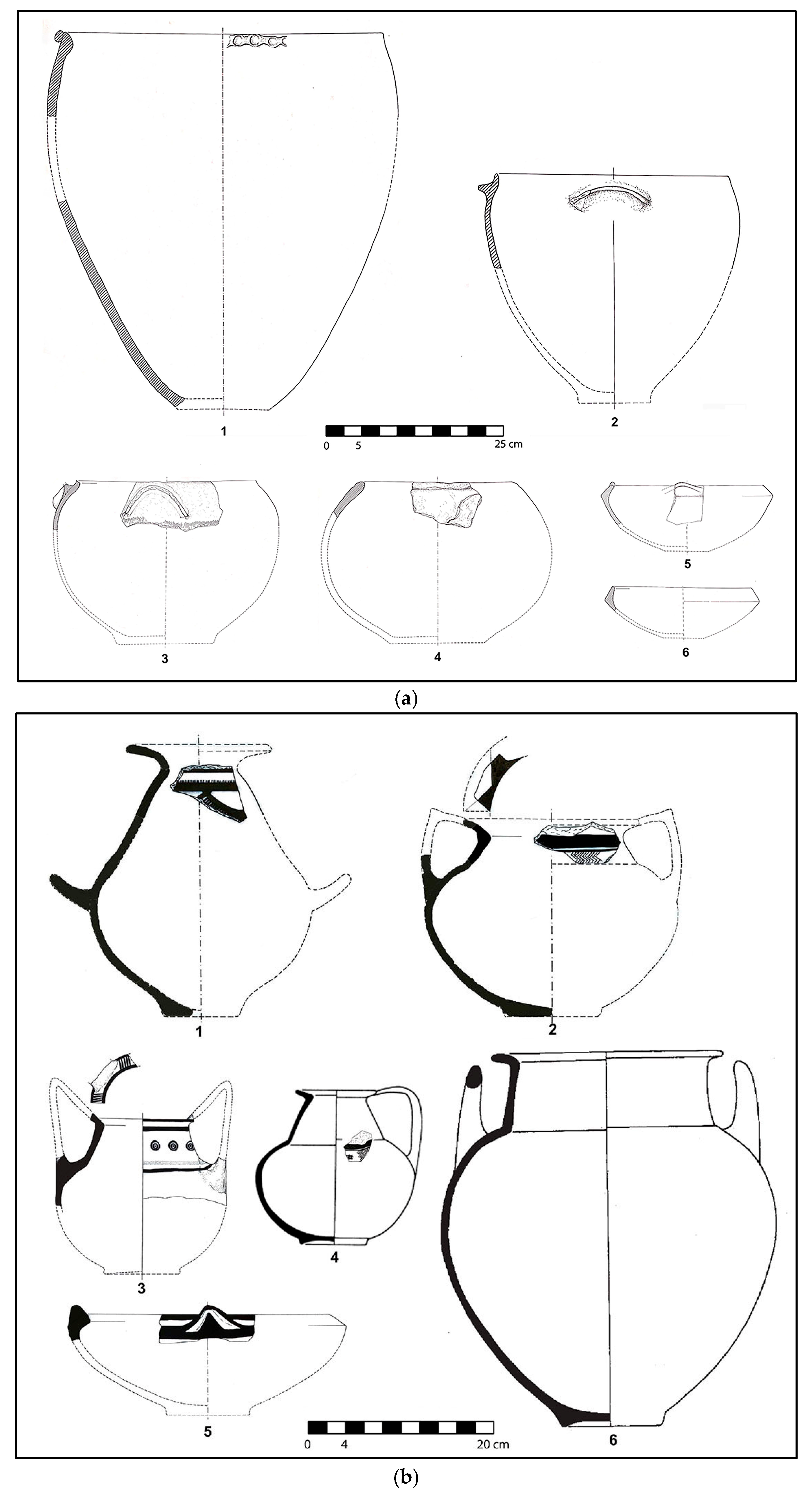
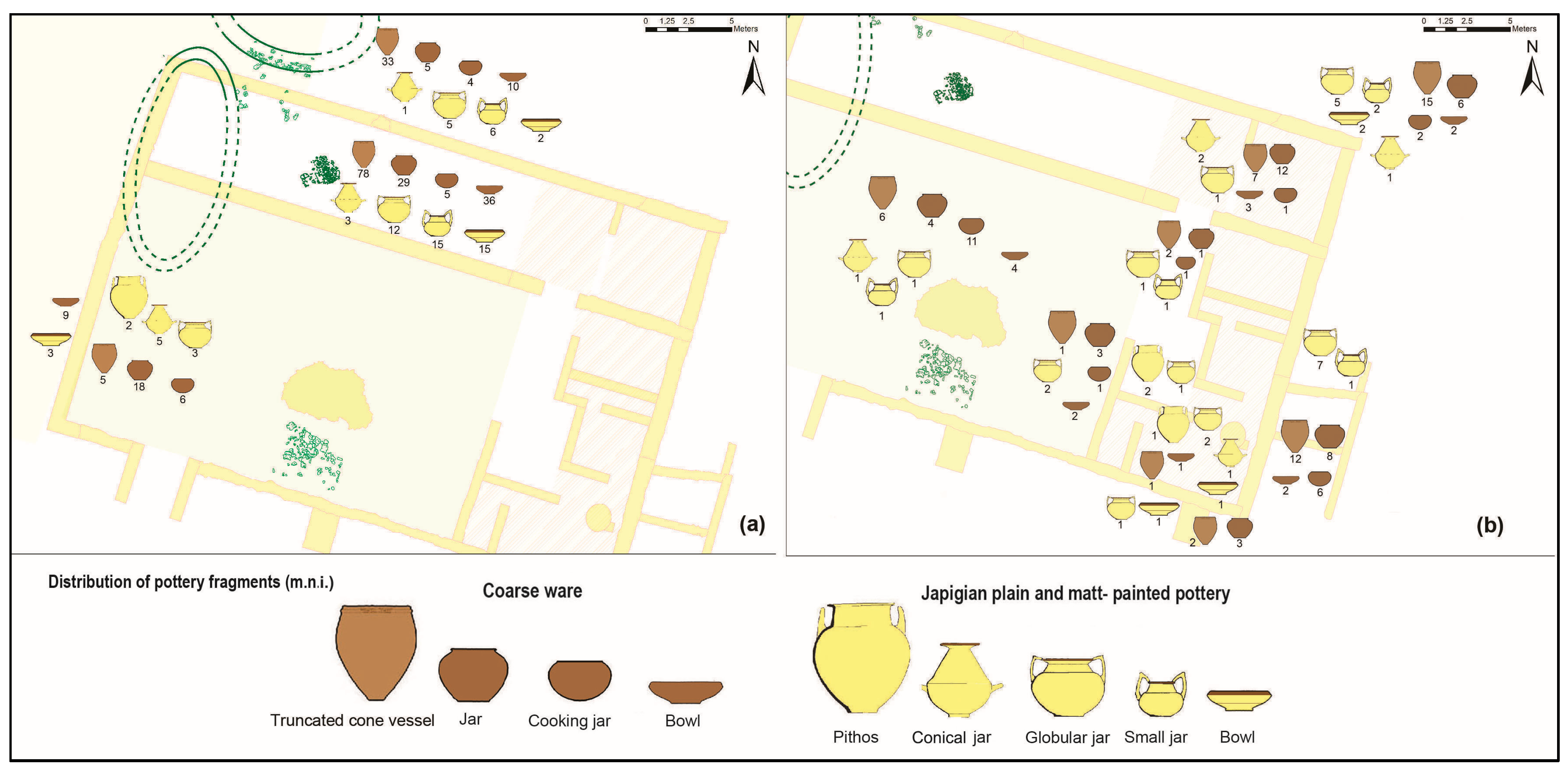
Coarse ware vessels (Figure 4a) are characterized by handmade utilitarian forms representing long-lived ceramic traditions. The vessels include large storage containers (truncated cone vessels), cooking jars, serving vessels (bowls and cups), and occasional specialized forms. These containers represent the practical, everyday pottery for food preparation and storage.
Japigian matt-painted pottery (Figure 4b) comprises locally produced vessels displaying geometric decorative patterns characteristic of the Salento Late Geometric style. The assembled vessels represent a variety of containers including high forms such as globular jars, conical-necked vessels, smaller specialized serving vessels (juglets), preparation/storage containers (pithoi) and low forms such as bowls. Matt-painted pottery vessels demonstrate morphological characteristics commonly associated with serving, beverage preparation, transport, and storage functions in Mediterranean ceramic traditions. Within this assemblage, closed forms represent the most abundant category, indicating primary emphasis on containers designed for the storage and serving of liquids.
Sampling included different parts of individual vessels (rim, shoulder, base) to capture potential variation in use-related residue distribution. Ceramic samples included small sherds pertaining to undetermined closed vessel shapes characterized by the presence of pitting and corrosion. These sherds are grouped under the ‘closed form’ category in Table 1.
A subset of samples (40 vessels) was selected for extraction procedures to recover botanical micro-residues (phytoliths and starches). Sample selection prioritized vessels exhibiting encrustation on internal walls, large mixing containers, and closed vessel forms in plain or matt-painted ware.

3.2. Gas Chromatography–Mass Spectrometry (GC-MS)

Ceramic vessels were sampled with acetone-sterilized instruments (tweezers and hammers) and wrapped in tin foil. Both inner and outer surfaces of the samples were cleaned with a modelling drill to remove potential exogenous contamination and kept for ORA to assess contamination from the burial environment or from handling and storage. The drilled ceramic fragments were then crushed into powder using a mortar and a pestle.
The powdered sherds (1–2 g) were solvent-extracted by ultrasonication following the established protocol based on one-step methanol/sulfuric acid extraction [18,19] to enhance the recovery of lipid residues. Aliquots of the total lipid extract were trimethylsilylated using N,O-bis(trimethylsilyl) trifluoroacetamide (BSTFA, 50 μL) before analysis by GC-MS.
BF3/BuOH/cyclohexane treatment [20] was applied to a subset of fifteen sherds showing the most complex biomarker profiles to target short-chain carboxylic acids, markers of fruit products and fermented beverages, after lipid extraction (Dichloromethane-Methanol, 2:1, v:v) by ultrasonication [21].
GC-MS analyses were performed using an Agilent Technologies 8860 GC System series (Santa Clara, CA, USA) coupled to an Agilent Technologies 5977C MSD with a quadrupole mass analyzer.
Samples were analyzed by using an Agilent DB-5 ms (5% phenyl) methylpolysiloxane column (30 m × 0.25 mm × 0.25 μm). The ionization energy of the mass spectrometer was 70 eV and spectra were obtained by scanning between m/z 50 and 600. The carrier gas used was helium. The GC oven temperature was held at 50 °C for 2 min, then increased 10 °C/min up to 300 °C held isothermally for 14 min. Peaks were identified by comparison of their mass spectra with the NIST mass spectral database (2023), and with published data.
Analysis of lipids from ceramic sherds was compared to control samples (drilled outer and inner surfaces of samples and laboratory blanks).

3.3. Microfossil Analysis

Samples were collected prior to the sampling conducted for GC-MS analyses. The extraction protocol was customized and adapted from Katz’s rapid extraction process [22]. Two samples were collected from each pottery sherd, one external control sample and one internal sample, obtained by rinsing the surface with distilled water and collecting the solution using a disposable pipette. The wet sample was subsequently dried in an oven at 100 °C prior to solid fraction recovery. Each sample was precisely weighed to four decimal places, targeting 20–50 mg, then transferred to a 0.8 mL glass vial. Hydrochloric acid (6N HCl, 50 μL) was added to dissolve carbonates in the sediment. Following acid reaction, 450 μL of sodium tungstate dihydrate (Na2WO4·2H2O, density 1.44 g/mL) was introduced. The test tube was placed in an ultrasonic bath for 5 min at 20 °C, then vortexed and centrifuged at 4000 rpm for 8 min. The supernatant was transferred to a new 0.5 mL test tube, followed by a final vortex step. Subsequently, 50 μL of this solution was deposited on a rectangular microscope slide and covered with a 24 × 24 mm cover slip. This 50 μL aliquot represents 10% of the initial 500 μL volume, allowing phytolith concentration calculation during data interpretation. The slides were observed at 200× and 400× magnification using an optical microscope equipped with transmitted and polarized light (Nikon Eclypse LV100N POL, Tokyo, Japan), as well as an image acquisition (Nikon Digital Sight 100) and processing system (Nikon NIS Elements software, v. 5.21.00).
This procedure enabled simultaneous observation of both phytoliths and starches on a single slide, eliminating the need for duplicate extractions and thereby expediting the analytical process. Additionally, it allowed for the identification of other micro-remains commonly associated with fermentation processes, such as sporangiophores and yeasts [23]. Three samples were collected from the interior walls of an experimental vessel used for modern beer fermentation. Samples were collected from three parts of the vessel to assess potential variations in micro-residue concentration: the bottom (SPE1), the carinated portion of the shoulder (SPE2), and below the rim (SPE3). The experimental vessel samples were analyzed to establish a reference collection of botanical micro-remains and fermentation by-products, enabling reliable identification of analogous specimens in the archaeological samples [24,25].
Slides containing fewer than 200,000 phytoliths per gram of sediment were classified as negative; however, these slides are discussed further when additional types of microfossils are present. Phytolith recognition and description followed the International Code for Phytoliths Nomenclature (ICPN) 2.0.
Sample preparation and GC-MS analysis were conducted at the Bio-Organic Chemistry Laboratory of the University of Salento, Lecce, Italy.
Observations with an optical microscope were carried out at the Heritage Materials Science Lab (CNR-ISPC) in Lecce.
Supplementary Table S1 specifies which vessels were subjected to BF3/BuOH extraction and which were additionally analyzed for microfossils, thus summarizing the different extraction protocols and analytical approaches applied to each sample.

4. Results

4.1. Organic Residue Analysis (ORA)

GC-MS analysis of 99 ceramic sherds recovered from Castello di Alceste revealed remarkably well-preserved organic residues, almost all exceeding 5 μg/g [26], with diverse assemblage distributed across two distinct ceramic productions: coarse ware utilitarian vessels (n = 28) and Japigian geometric matt-painted pottery (n = 71).
Fatty acids (FAs) are the most abundant class of lipids encountered in archaeological materials and may derive from both animal fats and plant oils. In the Castello di Alceste assemblage, saturated and unsaturated fatty acids are present in varying proportions across the different samples, reflecting contributions from multiple lipid sources. The specific origins of these residues (animal fats, plant oils, cereal- and fruit-derived substrates) are therefore inferred below through the combined evaluation of fatty acid ratios and more specific molecular biomarkers, rather than from bulk fatty acid distributions alone.
GC-MS enabled us to identify organic compounds serving as archaeological biomarkers that can be associated with specific substances.
Diterpenoid compounds, including methyl dehydroabietate, dehydroabietic acid, and 7-oxodehydroabietic acid, were detected in most samples, suggesting that Pinaceae products had been used to seal the vessels, but they could also have been intentionally added to alcoholic beverages to preserve, enhance, and change their flavor [27]. While these compounds are found in fermented beverages, they can also derive from vessel waterproofing, exposure to hearth smoke, or storage of resinous materials. Their interpretation as beverage additives is most supported when they co-occur with other fermentation-specific markers.
Vanillic acid, found in red fruits and alcoholic beverages [28], was detected in four vessels. Lactic acid, determined in four vessels, is one of the essential products of bacterial fermentation [29]. However, lactic acid is heat-vulnerable and rarely survives in vessels used for high-temperature cooking; its presence in cooking contexts may therefore indicate post-depositional microbial activity or low-temperature fermentation processes. Furthermore, both lactic and benzoic acids can result from post-depositional soil microbial action and should be interpreted with caution. Control samples from exterior vessel surfaces were analyzed to assess potential contamination, and their interpretive value increases substantially when they co-occur with other fermentation indicators such as bacteriohopanoids, specific dicarboxylic acid profiles, and microfossil evidence.
Azelaic, oxalic and suberic acids were identified in most of the vessels. Their presence may suggest that the residues originated from grain products, including wheat, rye, or barley, though these acids also occur in degraded plant oils and are not specific to cereals [30]. Fumaric acid, detected during beer fermentation and wort production, was present exclusively in sample 131. Another significant marker is benzoic acid, determined in 30% of samples. Its presence may indicate that the residues originated from plants, as it is a component of plant tissues, especially fruits and vegetables. Carvacrol, present in many vegetable sources, including various kinds of thyme and oregano, was detected in two vases.
GC-MS analysis also revealed the presence of bacteriohopanoid markers (m/z 191, C29–C31 series dominant) in eight ceramic sherds of Japigian matt-painted samples. While bacteriohopanoids occur ubiquitously in modern environments, their presence in archaeological ceramics is interpreted as evidence of fermented beverages (beer, cider, millet-based drinks), bitumen (less likely in pottery contexts) or degraded bacterial biofilms [31]. The diagnostic power increases when bacteriohopanoids co-occur with miliacin (a cereal-specific marker), Pinaceae resins (fermentation additives), and lactic acid (a bacterial metabolite).
In addition, many samples yielded homologous series of n-alcohols and n-alkanes extending into the long-chain range (C21–C30). Such series are typically associated with plant waxes and, in archaeological contexts, may also derive from degraded beeswax and honey-processing residues [32].
To assist in the identification of the original sources of archaeological residues and provide further information regarding the contents of the samples, this study combined two complementary analyses: fatty acids ratios and the identification of characteristic biomarkers [33].
In the following sections, residue compositions are discussed separately for coarse ware utilitarian vessels and Japigian matt-painted pottery, and within these, with reference to specific vessel forms and functional categories defined in Table 1.

4.1.1. Coarse Ware Vessels

Truncated-Cone Storage Vessels
Truncated-cone vessels, the numerically largest group among utilitarian vessels, show lipid profiles dominated by medium- to long-chain saturated fatty acids (predominantly C16:0 and C18:0), traces of C18:1 and monoacylglycerols, and generally medium-low lipid yields. In numerous samples, these profiles can be cautiously interpreted as “undetermined”, compatible with dry contents or heavily degraded generic food fat residues. A subgroup of truncated-cone vessels shows mixed signatures with saturated fatty acids and C18:1 associated with monoacylglycerols, n-alcohol and n-alkane series, plus β-sitosterol and, occasionally, dehydroabietic and methyl-dehydroabietic acid, indicating combinations of plant oils/fats and contact with Pinaceae resin products (samples 54, 55, 57, 59, 63, 92, 98, 132). In some cases, the co-occurrence of dicarboxylic acids (suberic, sebacic, or azelaic), benzoic and oxalic acid, together with these resinous markers, suggests that at least part of the truncated-cone vessels was used not only for dry storage but also for processing plant products, likely cereal-, fruit-, or vegetable-based fermented beverages.
Cooking Jars
Cooking jars predominantly feature profiles dominated by saturated fatty acids (C12–C24) and C18:1, sometimes associated with n-alcohols, n-alkanes, and β-sitosterol, with generally moderate-high lipid yields. In two samples, the pattern is compatible with the cooking and preparation of animal fats in domestic contexts. Other samples (48, 56) show combinations of saturated fatty acids, C18:1, monoacylglycerols, and β-sitosterol, indicating food preparation with significant plant oil contributions.
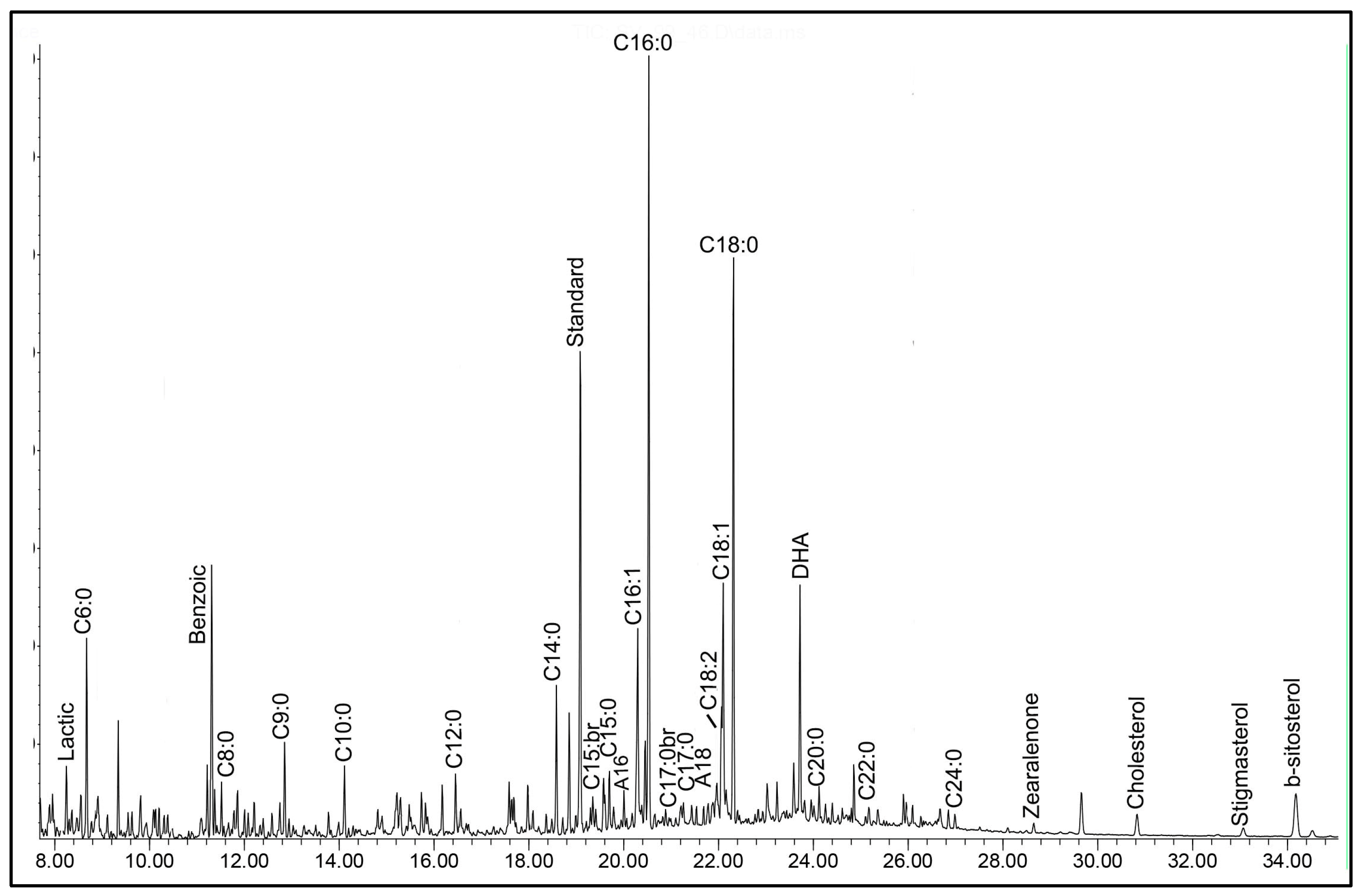
Sample 46, a cooking jar, stands out with very high lipid yield (240 μg/g). It contains a broad spectrum of fatty acids (C6–C24), branched fatty acids (C15br, C17br), n-alcohol and n-alkane series, multiple plant sterols (stigmasterol, β-sitosterol, isofucosterol), dehydroabietic acid, benzoic and lactic acids, and the mycotoxin zearalenone. This combination of plant markers, lactic fermentation markers, resinous additives, and animal fats is consistent with controlled fermentation of plant products in a cooking vessel.
Bowls and Cups
The single bowl analyzed (sample 52) shows a complex mixed signature with fatty acids C8–C24, unsaturated fatty acids C16:1 and C18:1, branched fatty acids, monoacylglycerols, n-alcohols, β-sitosterol, dehydroabietic acid, and benzoic acid. This profile suggests use of the vessel as a serving container for plant beverages with conifer resin additives, likely in consumption rather than purely preparation contexts.
The coarse ware cup (sample 61) instead shows a very simple pattern (C16:0 and C18:0), consistent with heavily degraded residues no longer distinguishable between animal and plant fats.
Jars
The single coarse ware jar (sample 70) shows very high lipid yield (716 μg/g) and a composite assemblage including a broad spectrum of saturated and unsaturated fatty acids (C9–C26), monoacylglycerols, sebacic acid, n-alcohols and n-alkanes, β-sitosterol, dehydroabietic and 7-oxo-dehydroabietic acid, plus benzoic and oxalic acids. This profile suggests the jar was used for storage of plant liquids (oils or beverages) with resinous additives and possible fermentative or acidic aging processes, in line with a medium- to long-term storage role within a beverage production/consumption circuit.

4.1.2. Japigian Matt-Painted Vessels

Conical-Necked Jars
Japigian conical-necked jars generally show medium-high lipid yields and profiles with medium- to long-chain fatty acids (C8–C30), unsaturated acids (C16:1, C18:1, C18:2), monoacylglycerols, n-alcohols and n-alkanes, β-sitosterol and other plant sterols, and Pinaceae resin markers. These assemblages indicate use of conical-neck vessels for storage and serving of plant liquids with conifer resin additives.
A particularly significant subgroup includes samples 116, 119, 123, 126, and 144/145 (single vessel), characterized by high yields (up to ~650 μg/g), presence of dicarboxylic acid series (adipic, pimelic, suberic, azelaic, sebacic), benzoic, lactic, oxalic acids (occasionally succinic), plus dehydroabietic/methyl-dehydroabietic acid, terpenic compounds (e.g., longifolene), sometimes bacteriohopanoids, and in 144/145, carvacrol ethyl ether and p/o-cymene. These profiles indicate complex plant-based fermented beverages (cereals, fruits, honey) flavored with herbs (Thymus/Origanum spp.) and resins, likely subjected to controlled aging. This combination in the samples is highly consistent with intentional addition of aromatic Thymus herbs and alcoholic fermentation with prolonged aging of the beverage.
Globular Jars
Japigian globular jars feature lipid assemblages dominated by fatty acids C12–C20 with C16:1 and C18:1, monoacylglycerols, β-sitosterol, and Pinaceae resin compounds; in many cases benzoic and oxalic acids also appear, and in part of the group, bacteriohopanoids (BH29–BH31). Sample 131 in particular is characterized by a very rich profile: a broad spectrum of fatty acids (C8–C24), C16:1, C18:1 and C18:2, n-alcohols and n-alkanes, β-sitosterol and stigmastane, dehydroabietic/methyl-dehydroabietic/7-oxo-dehydroabietic acid, labdane terpenes, benzoic, succinic, fumaric, methylmaleic acids, and multiple bacteriohopanoids (BH29–BH31). The profile indicates a complex fermented beverage content (likely cereal/honey/fruit-based) subjected to prolonged fermentation and aging, with possible honey use and clear microfossil evidence of fermentative processes.
Small Jars and Juglets
Matt-painted small jars and juglets generally show high yields and coherent but heterogeneous profiles, with fatty acids C8–C26, C16:1, C18:1 and C18:2, monoacylglycerols, n-alcohols, β-sitosterol (sometimes with stigmasterol and campesterol), dehydroabietic/methyl-dehydroabietic acid, benzoic, vanillic, succinic acids, and in some cases elemental sulfur. These small containers were probably used for storage and serving of relatively limited batches of plant beverages (cereals, fruits, honey) resined and/or flavored, perhaps in individual consumption or controlled distribution contexts. Some of these juglets and small jars (e.g., 113, 115, 136a) are also associated with Aspergillus microfossils, strengthening the fermentative interpretation.
Pithoi
Japigian pithoi (samples 10, 13, 89) show very high lipid yields (up to over 1200 μg/g) and extremely complex profiles with numerous fatty acids C7–C30, C18:1, monoacylglycerols, dicarboxylic acid series (adipic, pimelic, suberic, azelaic, sebacic), n-alcohols and n-alkanes, β-sitosterol, dehydroabietic acid, benzoic acid, and oxidative markers such as 9-hydroxynonanoic acid and 4-oxododecanedioic acid. In one case (sample 89), bacteriohopanoids also appear. Given the small sample size (n = 3), generalizations about pithoi as a vessel class should be made cautiously. These three vessels were not simple dry storage containers but may have played a key role in storage and possibly fermentation/aging of resined fermented beverages, though alternative uses including storage of plant oils or mixed contents cannot be excluded. The single bacteriohopanoid-positive sample suggests specialized use in that instance but does not support broad functional generalizations for all pithoi.
Matt-Painted Bowls
The matt-painted bowl (sample 67) shows a relatively simple pattern with fatty acids C12–C26, C18:1, n-alcohols, and traces of β-sitosterol. In the absence of specific fermentative markers, this vessel appears to have been used mainly for serving or consuming non-fermented oily plant products or plant fat-based food preparations.
Closed Forms
Undetermined closed vessels constitute the largest group within Japigian matt-painted pottery and mostly show profiles dominated by saturated fatty acids C12–C18, C18:1 in traces or low concentrations, monoacylglycerols, and n-alcohols, with β-sitosterol as the main plant sterol. Many samples (3, 5, 64, 71, 73, 78, 79, 94, 136b, 136d, 150–152) indicate non-fermented plant oil/fat contents, consistent with storage and serving of oily products or plant preparations.
A subgroup of closed forms shows more complex signatures, with systematic presence of dehydroabietic/methyl-dehydroabietic acid, benzoic acid (and occasionally oxalic), dicarboxylic acids, and in some cases Aspergillus microfossils. Significant are samples 74, 75, 77, 91, 101, 128, 136a, 136c, 137–139, where the combination of plant oils, resinous additives, and oxidative/fermentative markers suggests use for plant-based fermented beverages or mixtures of oils and acidic liquids consumed in commensal contexts.

4.1.3. Fatty Acid Ratios

Multivariate analysis of normalized fatty acid percentages followed the approach proposed by Eerkens [34], as further developed in later applications of ratio-based discrimination of archaeological lipids [35]. In this study, fatty acid ratios are used as heuristic indicators to differentiate broad trends (animal-derived vs. plant-derived lipids, presence of bacterial overprint) rather than as strict diagnostic criteria, because the original signals can be modified by the mixing of different substrates, differential degradation, and contamination during burial or handling [33].
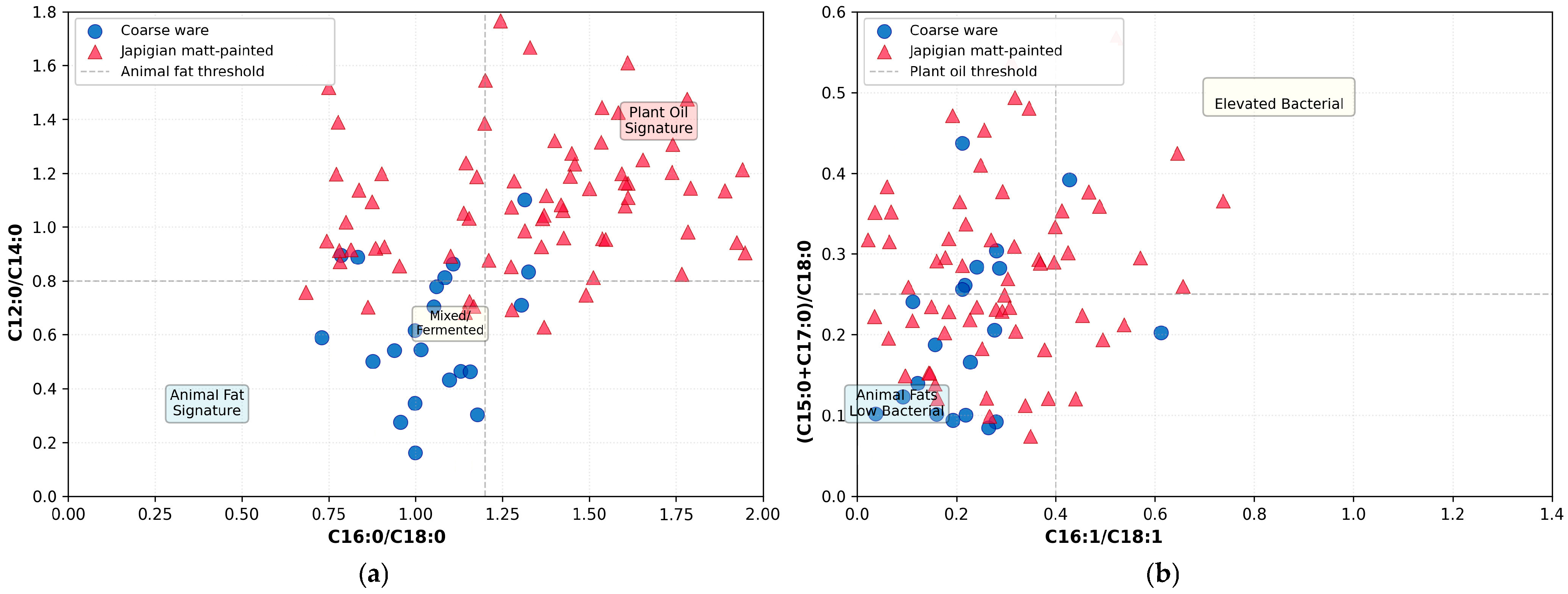
Three primary ratios were calculated from normalized fatty acid percentages for a subset of 90 samples (20 coarse ware and 70 matt-painted pottery vessels) where sufficient fatty acid data were available (Supplementary Table S1; Figure 5a,b):
-
C16:0/C18:0 ratio: commonly used to distinguish predominantly animal-derived fats from predominantly plant-derived lipids, with animal fats typically showing values around 0.8–1.2 and plant-rich residues tending toward higher values; high C16:0/C18:0 ratios indicate relative enrichment in palmitic acid, often associated with plant oils and plant-based substrates.
-
C12:0/C14:0 ratio: used as an indicator of plant product metabolism, with low ratios (<0.8) generally associated with animal fats or degraded residues and higher ratios (>1.0) more typical of undegraded plant products, cereals and fermentation substrates.
-
(C15:0 + C17:0)/C18:0 ratio: used as an index of bacterial degradation, because iso- and anteiso-branched fatty acids (C15:0 and C17:0) may derive from ruminant bacteria or fermentation microbiota; low values (<0.3) are often observed in plant-oil-rich samples, which helps distinguish them from ruminant fats.
We treat these threshold values as empirical ranges derived from experimental work and archaeological case studies, not as rigid cutoffs. We always interpret them alongside specific biomarkers and an archaeological context.
Coarse ware samples demonstrate a cohesive clustering in the lower-left region of the C16:0/C18:0 vs. C12:0/C14:0 bivariate plot, with mean ratios of C16:0/C18:0 = 1.04 (SD ± 0.18) and C12:0/C14:0 = 0.62 (SD ± 0.26). This profile is consistent with a predominance of animal-derived fats, in line with cooking residues and food preparation in utilitarian storage vessels and heating contexts. Furthermore, most coarse ware samples (~80%) contained exclusively or predominantly saturated fatty acids (C12:0, C14:0, C16:0, C18:0) and cholesterol, with minimal plant sterols or oxidized compounds.
Two exceptional coarse ware samples (samples 46 and 69) deviated markedly from the animal fat profile. Sample 46 (cooking jar, Figure 6) yielded C16:0/C18:0 = 1.14 and C12:0/C14:0 = 0.55, combined with a set of fermentation-related biomarkers including lactic acid, multiple plant sterols (stigmasterol, β-sitosterol), zearalenone (a fungal mycotoxin-associated cereal) contamination and processing (including malting/fermentation) [36,37], and dehydroabietic acid. Zearalenone has only moderate stability and can be microbially transformed, which limits its specificity as a standalone biomarker [33,34,35,36,37,38]. In this case, however, its co-occurrence with cereal-compatible microfossils and other fermentation markers supports the interpretation of a fermented cereal substrate within a broader multi-compound package.
Sample 69 (a large, truncated cone storage vessel) exhibited ratios C16:0/C18:0 = 0.63 and C12:0/C14:0 = 0.20, with lactic acid, three fruit-derived plant sterols, oxalic acid, methylmaleic acid, benzoic acid, and dehydroabietic acid.
These profiles suggest specialized use for fermented beverage preparation despite their primary classification as utilitarian forms.
Japigian matt-painted pottery demonstrated significantly higher ratios, with mean C16:0/C18:0 = 1.42 (SD ± 0.32) and C12:0/C14:0 = 1.08 (SD ± 0.31), clustering in the upper-right quadrant of the bivariate plot and indicating predominance of plant-derived lipids. This differentiation was statistically significant, reflecting the morphological specialization of Japigian vessels toward storage and serving of plant products and beverages.
Within the Japigian assemblage, samples segregated into three functional subcategories:
Subgroup A: Plant Oil Residues (n = 44)—Samples exhibiting elevated C16:0/C18:0 ratios (mean 1.51 ± 0.28), consistent C12:0/C14:0 ratios (mean 1.15 ± 0.21), low (C15:0 + C17:0)/C18:0 (<0.2), and biomarker profiles dominated by β-sitosterol and other plant sterols without fermentation evidence. These samples reflect storage and serving of culinary oils or fresh plant products without fermentation or significant oxidation.
Subgroup B: Mixed/Intermediate Residues (n = 20)—Samples with intermediate ratios (C16:0/C18:0 = 1.0–1.3, C12:0/C14:0 = 0.8–1.2) and moderate biomarker complexity, including plant sterols, dehydroabietic acid, benzoic acid, and dicarboxylic acids (azelaic, suberic). These samples suggest contact with Pinaceae resin and possible light fermentation or storage of semi-oxidized plant materials. The presence of multiple dicarboxylic acids together with oleic acid (C18:1) increases the possibility that these samples contained acid-rich plant oils or derivative mixtures [39].
Subgroup C: Fermented Beverage Residues (n = 7)—A distinctive cluster of samples (SV113–119) characterized by exceptionally complex biomarker assemblages.
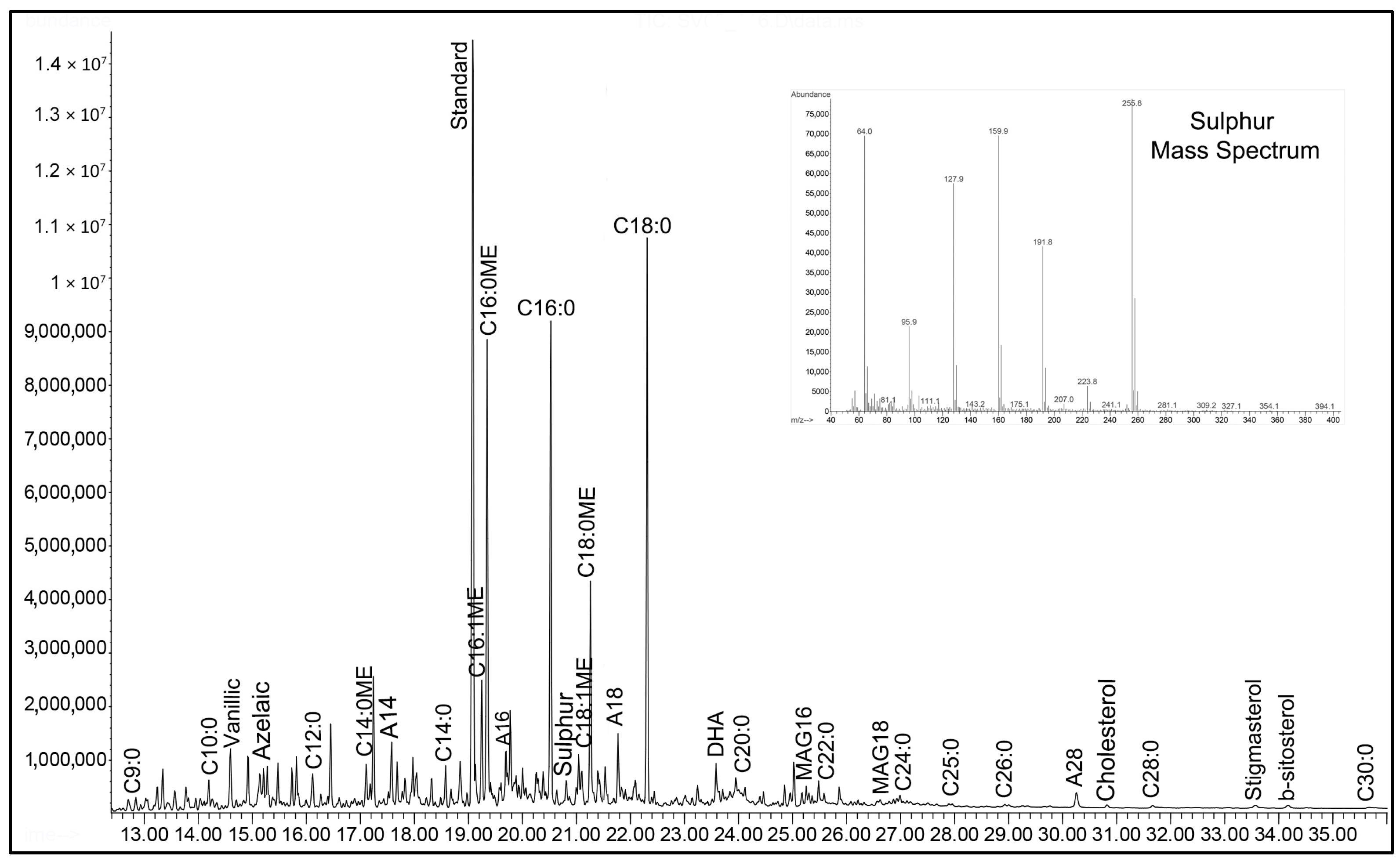
Samples in this group (approximately 10% of the Japigian assemblage) exhibited vanillic acid, multiple dicarboxylic acids (adipic, pimelic, suberic, azelaic, sebacic, undecanedioic acids), and in samples 115–117, a distinct peak attributable to cyclic octaatomic sulfur (S8), which may reflect the intentional addition of sulfur during beverage processing or preservation, although alternative ritual and technological uses of sulfur must also be considered [40] (Figure 7).
Fatty acid ratios varied within expected ranges (C16:0/C18:0 = 0.82 ± 0.09; C12:0/C14:0 = 0.89 ± 0.15), indicating mixed plant and bacterial lipid contributions consistent with prolonged fermentation. Minor animal fat contribution is possible in multi-use vessels, though the dominance of plant-derived biomarkers and low C16:0/C18:0 ratios suggest plant substrates were primary.

4.1.4. Biomarker Integration

The spatial separation observed in ratio plots correlated with discrete biomarker signatures:
-
Animal fat signature (coarse ware cluster): predominance of saturated C12:0–C18:0, cholesterol, absence of plant sterols or fruit markers.
-
Plant oil signature (Japigian Subgroup A): β-sitosterol, stigmasterol, campesterol, benzoic acid, occasional trace of dehydroabietic acid, MAG as degradation products.
-
Fermented beverage signature: vanillic acid, lactic acid, multiple dicarboxylic acids (6–8 compounds per sample), elevated (C15:0 + C17:0)/C18:0 indicating active bacterial fermentation.
Two coarse ware samples (46, 69) show specialized fermented beverage signatures (see Section 4.1.1 and Section 4.1.3 for full profiles), representing exceptional uses within the otherwise culinary coarse ware cluster. The convergence of biomarkers (zearalenone, lactic acid, plant sterols) is consistent with controlled cereal-based fermentation (e.g., barley or millet malt fermentation), especially when considered alongside the microfossil evidence, although this pattern cannot be regarded as uniquely diagnostic on its own. Because zearalenone has multiple potential environmental and taphonomic sources and uncertain long-term stability, we treat it as a supporting indicator that gains interpretive weight only when combined with other cereal- and fermentation-related markers.
The presence of dehydroabietic acid suggests contact with resinous additives or containers during initial fermentation. This is an exception within the purely culinary cluster of coarse ware vessels, indicating specialized use of a cooking vessel for fermentation.
Sample 69 shows instead a fatty acid profile C6:0–C23:0, with anomalous C16:0/C18:0 ratio (0.63) indicating a mixed substrate. The sequence of organic acids (oxalic, benzoic, methylmaleic) suggests that the vessel was used for long-term storage of a fruit-fermented beverage, possibly derived from red fruits (as pomegranate) with a resinous additive.
The presence of Pinaceae resin markers in coarse ware cooking vessels (samples 46, 69) could reflect several scenarios: use of the vessel for fermentation of resinated beverages before or between cooking episodes; application of resin for vessel waterproofing or repair; exposure to hearth smoke containing resinous fuel; cross-contamination from storage of resinated products; or deliberate addition of resin to cooked foods for preservation or flavoring. The co-occurrence of other markers (lactic acid, plant sterols, dicarboxylic acids) with resin compounds in these samples supports the interpretation of resinated beverages as most parsimonious, but alternatives cannot be definitively excluded.
GC-MS analysis revealed also the presence of bacteriohopanoid markers in eight ceramic sherds of Japigian matt-painted samples. Contrary to expectations of random environmental contamination, bacteriohopanoid distribution is highly concentrated in specific spatial and depositional contexts and shows tight association with functionally distinct ceramic forms. Three samples, one conical-necked jar, one globular jar and one small jug (123–125) show the simultaneous presence of bacteriohopanoids and other biomarkers: oxalic acid, succinic acid, benzoic acid, methyl-dehydroabietic and dehydroabietic acid. These three samples represent a chemically coherent family of fermented residues. The repetition of the biomarker pattern across three different ceramic forms suggests not random contamination but controlled production and storage of a fruit-fermented beverage with an intentional resinous additive.
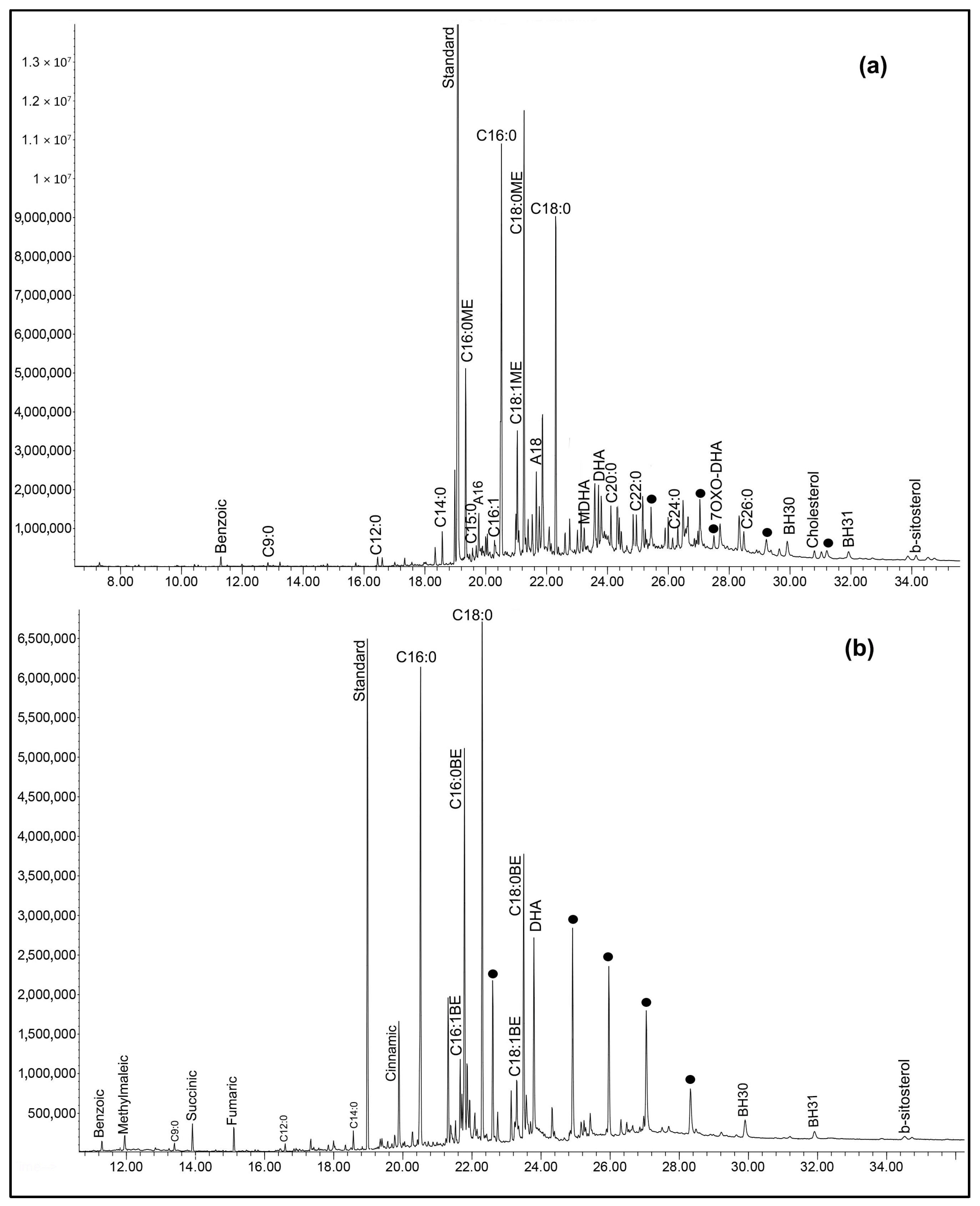
The most complex profile in the assemblage is sample 131 (Figure 8a), one globular jar, showing the presence of bacteriohopanoids together with Pinaceae products (dehydroabietic acid, methyl-dehydroabietate, 7-oxo-dehydroabietic acid). The occurrence of n-alkane series is consistent with the degradation of waxy substrates. In addition, the sequence of mono- and dicarboxylic acids (benzoic, succinic, fumaric, methylmaleic, cinnamic) identified in the BF3/BuOH extract (Figure 8b) reflects complex oxidative degradation during controlled aging.
In two samples of the same conical-necked jar (144/145), carvacrol was identified in the form of carvacrol ethyl ether, in association with p/o-cymene. Carvacrol is a monoterpenoid phenol present in Thymus spp. and Origanum spp. [41]. Furthermore, carvacrol is a natural antimicrobial, which selectively inhibits bacteria while permitting growth of lactic acid bacteria beneficial for fermentation. Its presence, combined with hopanoid markers, suggests deliberate beverage formulation rather than accidental contamination. This combination in the samples is highly consistent with intentional addition of aromatic Thymus herbs and alcoholic fermentation with prolonged aging of the beverage. The overall profile (fatty acids ranging from C8:0 to C30:0, dicarboxylic acids, oxalic and lactic acids, dehydroabietic acid) represents the most sophisticated fermented beverage of the entire site.
For a subset of fifteen sherds (samples 46, 69, 113–119, 123–125, 131, 144/145) showing complex fermented beverage signatures, BF3/BuOH/cyclohexane derivatization was applied to enhance recovery of short-chain carboxylic acids and fruit markers. In these samples, tartaric acid—the diagnostic biomarker of Vitis vinifera—was not detected, despite the presence of multiple other fermentation indicators (vanillic and lactic acid, dicarboxylic acids, bacteriohopanoids). Vanillic acid occurs naturally in many plant materials, but its co-occurrence with lactic acid, bacteriohopanoids, and multiple dicarboxylic acids in specific vessel forms suggests it derives from fermentation products or flavoring agents rather than simple plant contamination. Taken together with substrate-specific markers, this pattern suggests that the fermented beverages in the Castello di Alceste assemblage do not correspond to grape wine, but rather to cereal-, fruit-, or honey-based drinks, although the BF3/BuOH extraction protocol applied to selected samples did not yield wax esters to confirm beeswax preservation. At the same time, because BF3/BuOH analysis was performed on a limited subset of samples rather than on the entire sample assemblage, a low-level or contextually restricted presence of tartaric acid elsewhere cannot be entirely excluded.

4.2. Microfossil Analysis

The results of microfossil analysis revealed considerable variability in terms of both phytolith concentration per gram of sediment and the diversity of observable micro-remains (Table 2). Phytolith preservation and dissolution showed high variability, with an average preservation index of 27%, reaching peaks of 75%.
Phytoliths were predominantly observed in wet samples 50, 136A, and 136C. The first sample was collected from a large coarse ware storage vessel, while the other two samples belong to matt-painted closed forms.
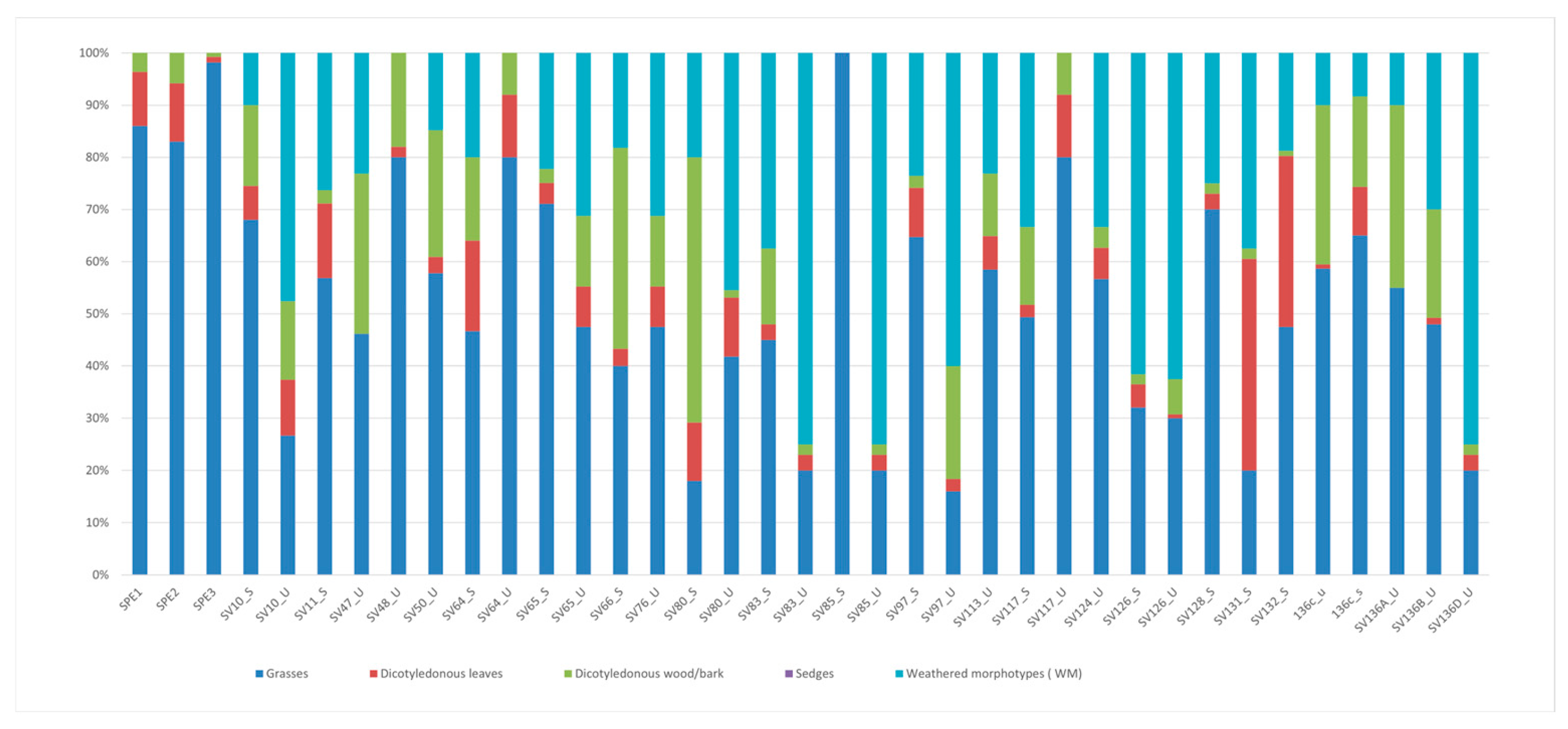
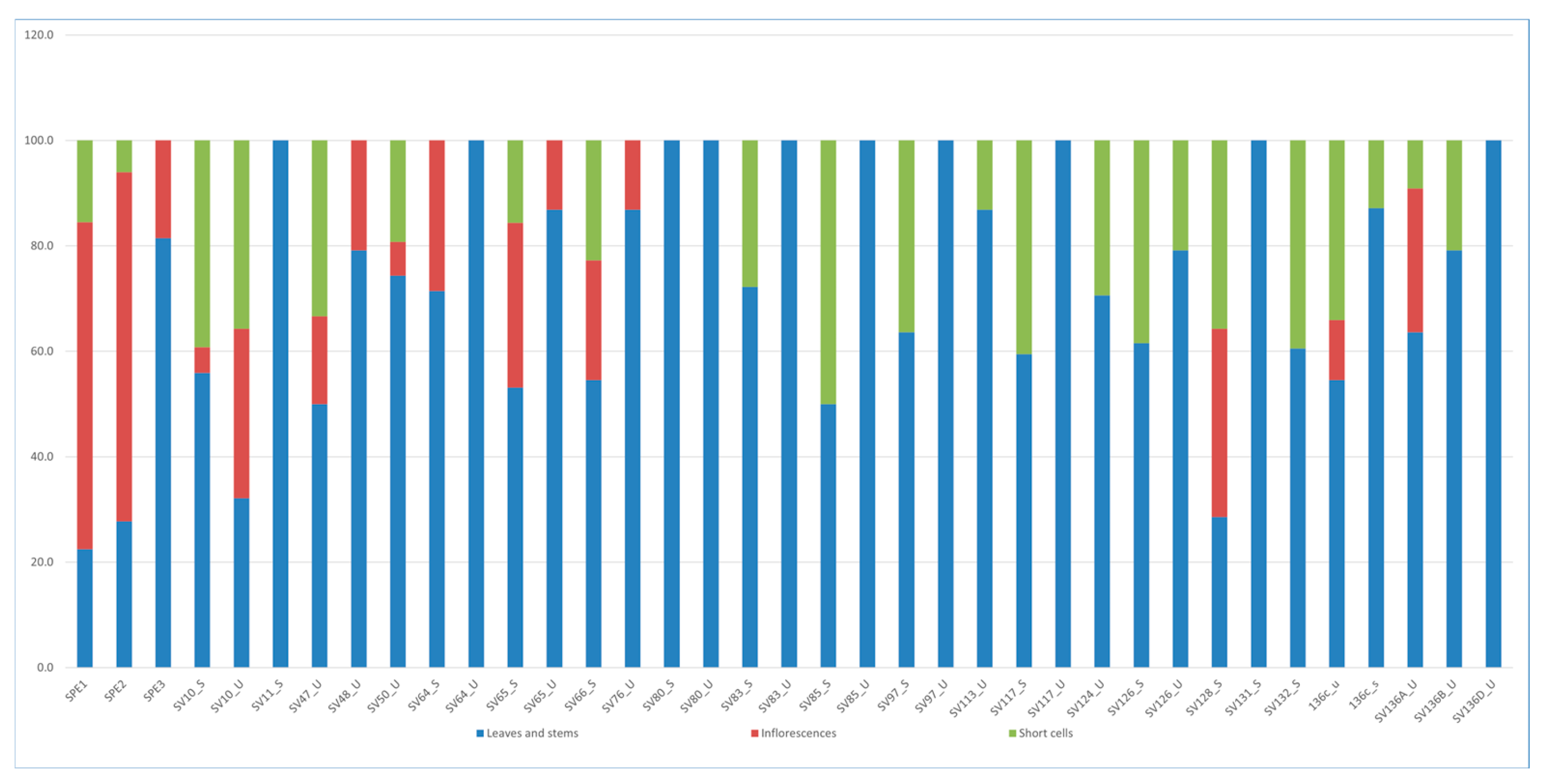
Analysis of botanical micro-remains (Figure 9) reveals a predominance of grasses (Fam. Poaceae) from the Pooideae subfamily, which includes the most common domesticated cereals. Due to the absence of silica skeletons from the inflorescence portion of the plant, definitive identification of these grasses cannot be provided. The absence of phytoliths attributable to wild grasses and the relative scarcity of those from dicotyledonous plants suggest that the cereals underwent selection and winnowing processes before storage and use [42]. The limited number of inflorescence phytoliths (Figure 10) in both samples 50 and 136C indicates that the cereals were dehulled prior to storage and consumption.
This contrasts markedly with the experimental samples (SPE1–3), which yielded substantially higher percentages of inflorescence phytoliths, attributable to the fact that the barley employed for experimental fermentation had not been hulled. Sample 136A exhibited a similar quantity of inflorescence phytoliths, suggesting a potentially different use for this vessel type compared to the other two samples (50 and 136C), possibly linked to fermentation of unhulled cereals. The samples with the lowest preservation indices are 83, 126, and 136D, which are closed forms of Japigian pottery. These samples contained few diagnostic phytoliths, predominantly associated with grasses (Fam. Poaceae) and statistically insignificant. Notably, abundant calcium oxalate monohydrate crystals were present in both samples 83 and SV136D. This compound derives from the degradation of organic material, occurs naturally in certain plants, and serves as an intermediate in oxalic acid production. Among the statistically insignificant samples, at least two additional specimens (10, a Japigian conical-necked vessel, and 48, a cooking jar) displayed elevated average inflorescence phytolith values, suggesting the presence of unhulled cereals. In both cases, the microfossil assemblage also included starches.
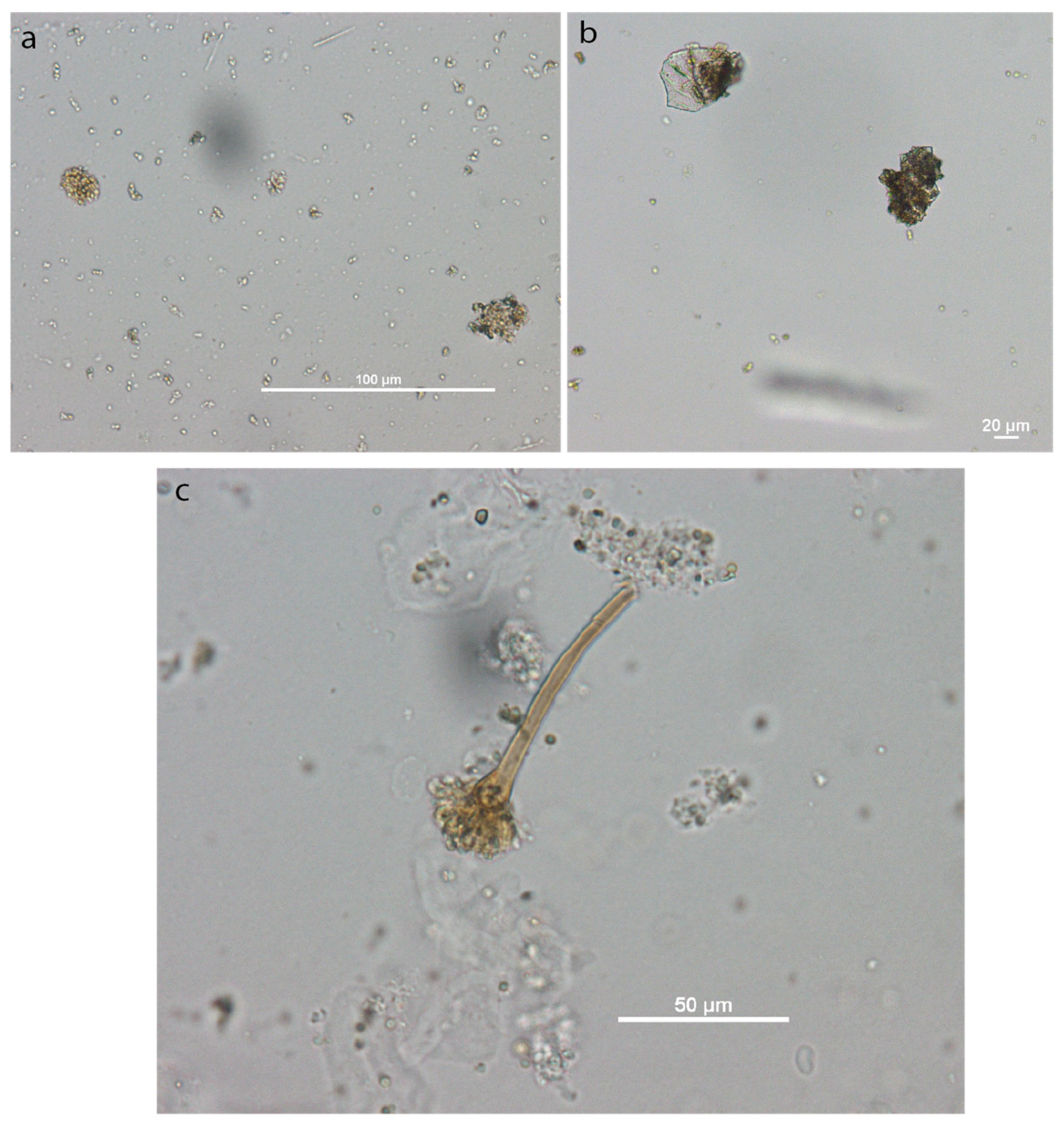
Aspergillus microfossils—specifically filamentous hyphae and conidiophore structures—were identified in both experimental samples and archaeological samples 66, 76, 83, 131, 132, and 136A [23,43]. These fungal structures are better preserved in modern reference samples but remain recognizable in the archaeological specimens (Figure 11).
Aspergillus represents a complex fungal group essential for transforming organic matter into organic acids and enzymes, particularly during fermentation processes. A notable distinction emerged among these samples: in four samples (66, 76, 83 and 131), Aspergillus was associated with starch granules, consistent with the reference literature; in two cases (132 and 136A), this association was absent.
The generally low concentrations of phytoliths and starches, consistent with what has already been observed on ceramic fragments from this site [44], are best interpreted as being due to the preservation conditions of the fragments rather than as a limit of the analytical procedures.
Two samples bearing Aspergillus microfossils—sample 132 (coarse ware truncated cone vessel) and sample 136A (matt-painted closed form)—yielded negligible starch concentrations despite the presence of diagnostic fungal conidiophores. This decoupling of fungal markers from starch indicators suggests fermentation substrates not primarily grain-based. Aspergillus species are metabolically versatile and produce complex organic acids (citric, malic, oxalic) and enzymatic complexes capable of transforming diverse organic substrates during solid-state and liquid-phase fermentation. The presence of Aspergillus in conjunction with elevated dicarboxylic acids, benzoic acid, and bacteriohopanoids—without corresponding cereal markers—supports the interpretation that these vessels participated in fermentation of fruit or honey-derived substrates. It is noteworthy that a ground stone tool was also recovered from the same stratigraphic context and, more generally, that the same central area yielded one saddle quern, one handstone and eight fragments of lithic tools. This pattern strengthens the interpretation of these vessels as active participants in processing chains involving fermentation.
Another particularly significant vessel (sample 50) comes from the southeastern sector, one of the areas with the highest concentration of ceramic fragments. In this part of the plateau, archaeological investigations have not revealed any Iron Age hut remains. However, the area shows a strong productive character, and the presence of remains of husked cereals in sample 50 supports the interpretation that this sector may have been dedicated to the storage and/or handling of food resources, possibly including cereal-based beverages. While the sample size from this zone is limited, the pattern is consistent with functional differentiation observed elsewhere at the site. Further sampling and complementary archaeobotanical analysis are needed to confirm this preliminary interpretation.

5. Discussion

5.1. Functional Differentiation and Ceramic Production

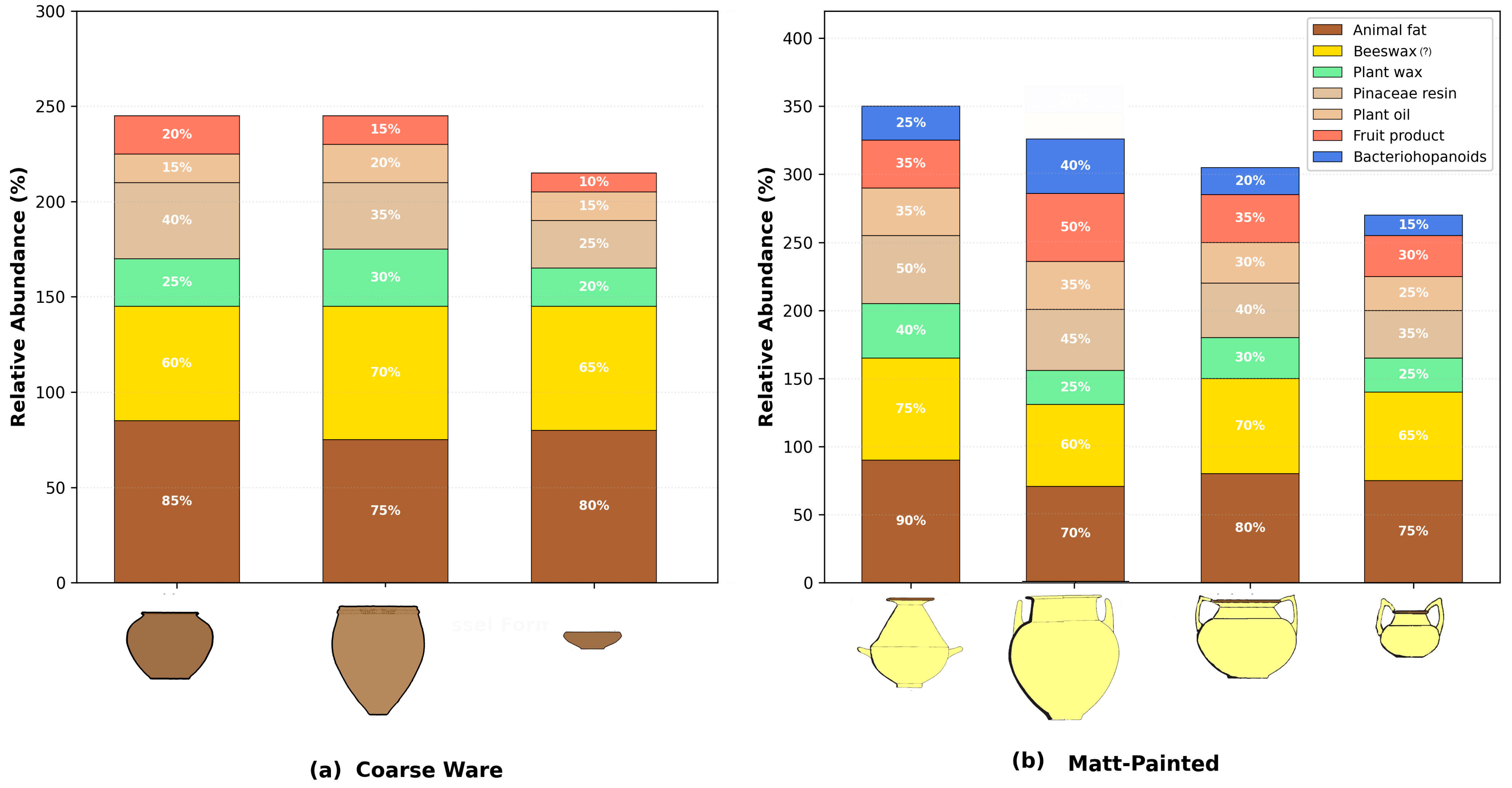
The combined evidence from fatty acid ratios, biomarker signatures, vessel morphology, microfossil content, and spatial distribution indicates a clear functional partitioning within the ceramic assemblage from Castello di Alceste. Coarse ware vessels are consistently associated with animal fats and simple plant lipids, whereas Japigian matt-painted pottery predominantly contains plant-derived residues, with a more complex subset linked to fermented beverages (Figure 12). Fermentation-related residues represent approximately 26% of the total assemblage, while most vessels (about 74%) show plant oil or animal fat signatures without clear fermentation evidence. Bacteriohopanoids, which are compatible with—but not exclusive to—fermentation processes, appear in eight samples (8% of the assemblage), underlining that strong fermentation signatures are confined to a limited number of vessels rather than characterizing the entire corpus. This distribution suggests that fermented beverages formed a significant but numerically restricted component of ceramic use, embedded within a broader system of everyday cooking, storage, and serving activities.
Functionally, coarse ware vessels appear to have supported domestic food production and routine subsistence, providing heating, short-term storage, and preparation of animal products and utilitarian plant oils (Figure 12a). The vessel morphology—dominated by large truncated-cone storage vessels and cooking jars—supports this functional interpretation. Interior surface pitting observed in some cooking vessels is compatible with chemical corrosion by acidic contents, consistent with heating of fermented or otherwise acidic foods, but this feature is interpreted as supportive rather than diagnostic and is evaluated together with the organic residue and microfossil evidence.
Japigian pottery shows pronounced functional specialization for plant products and beverage preparation/serving (Figure 12b). Overall biomarker complexity is substantially higher than in coarse ware, reflecting repeated use, mixing of ingredients, and the handling of more elaborated liquid products. Matt-painted vessels—with their predominance of closed forms, conical-necked jars, and small serving containers—are more closely tied to the handling of plant-based liquids, including a subset associated with fermented beverages and complex additives.
This functional differentiation has clear social implications: coarse ware underpins everyday household food economies, whereas selected matt-painted forms participated in more formalized commensal and status-related practices.
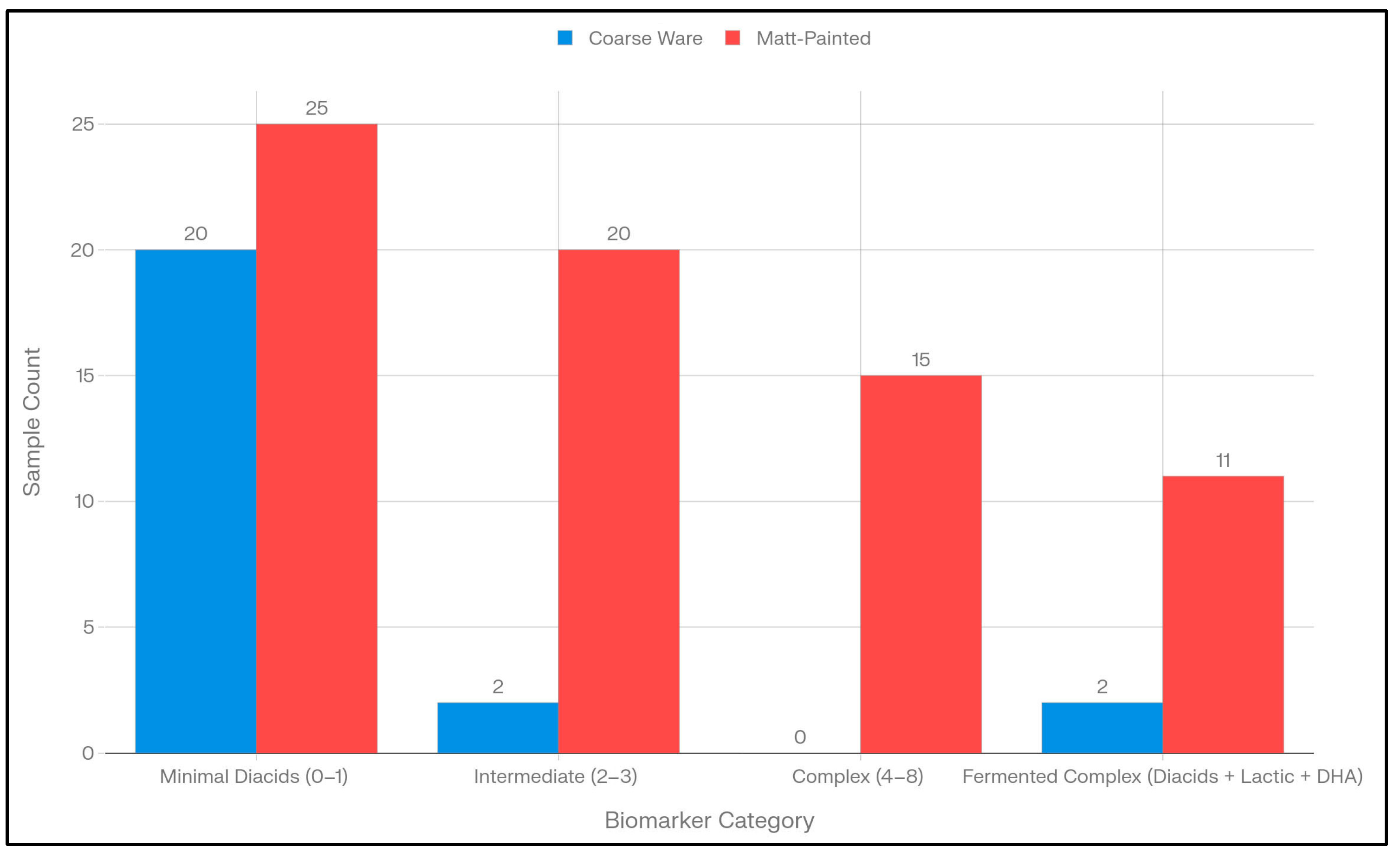
The biomarker complexity distribution (Figure 13) reveals a clear functional and social differentiation across the ceramic assemblage. Four groups can be distinguished, ordered by increasing oxidative complexity and number of fermentation markers.
Category 1 comprises vessels with simple profiles dominated by animal fats and non-oxidized plant oils, consistent with routine cooking and food preparation. Coarse ware dominates this category (71% of coarse ware assemblage).
Category 2 includes sherds with intermediate oxidative markers and limited fermentation indicators, suggesting brief fermentation cycles or semi-processed plant products. In this group only 2 coarse ware samples show intermediate oxidative markers, while ~20 matt-painted vessels exhibit this profile.
Categories 3 and 4 show increasingly complex combinations of dicarboxylic acids, lactic and vanillic acid, bacteriohopanoids and resin markers, which point to controlled fermentation and aging of beverages in specialized matt-painted forms.

5.2. Fermented Beverage Production and Consumption

A comprehensive analysis of fatty acid ratios, biomarkers, microfossils, and spatial distribution identified three distinct beverage categories:
-
Cereal-Based Fermented Beverages
The combined lipid and microfossil evidence indicates that a limited subset of vessels (two coarse ware and seven matt-painted vessels) contained cereal-based fermented beverages, most plausibly derived from barley or other Pooideae cereals. These cases are defined not by single biomarkers, but by the convergence of cereal indicators, fungal remains and fermentation-compatible lipid profiles, as detailed in Section 4.1 and Section 4.2 (see especially samples 46, 69, 131–132).
In analytical terms, the safest definition is that of cereal-based fermented beverages; in the strongest cases these may have been beer-like drinks, but the precise beverage type cannot be determined with complete certainty from the available evidence.
This interpretation is framed with reference to recent methodological discussions on the chemical identification of ancient beer [45], even though not all the criteria proposed in that study can be fully evaluated here. In contrast to Perruchini et al. (2018), our dataset does not include all the specific fungal and cereal-derived compounds that define their ten-compound ‘beer’ package [45], and for this reason the present study adopts the more cautious terminology of cereal-based fermented beverages.
-
Fruit-Fermented Beverages
A distinct group of vessels shows residue patterns consistent with fruit-based fermented beverages, likely involving tannin-rich fruits such as pomegranate combined with resin additives. These interpretations rest on the co-occurrence of fruit-compatible acids and resin markers described in Section 4.1 (samples 59, 69, 70, 74, 89, 102, and 123–125), but here we emphasize their implications: they document an indigenous repertoire of fruit-based drinks that could complement or pre-date imported wine in commensal settings. The absence of tartaric acid in the analytically most promising subset subjected to BF3/BuOH/cyclohexane derivatization argues against a dominant role for grape wine in the assemblage, although we cannot exclude low-level or spatially restricted wine consumption in some contexts.
-
Honey-Based Fermented Beverages with Herbal Additions
The most complex biomarker assemblages belong to a very small group of matt-painted conical-necked jars (sample 144/145) and juglets, where aromatic herbs, waxy substrates and—in some cases—sulfur (samples 115–117) were combined. The detection of n-alcohols and n-alkanes suggests that waxy resources—most plausibly beeswax associated with honey—formed part of the ingredients employed in drink production.
While the exact recipes remain uncertain, these vessels likely contained high-prestige beverages enriched with honey and herbal additives and were subjected to careful preservation and aging. Such formulations suggest specialized producers and strongly structured knowledge systems, aligning with elite-controlled prestige goods.

5.3. Spatial Organization, Elite Production, and Commensal Practice

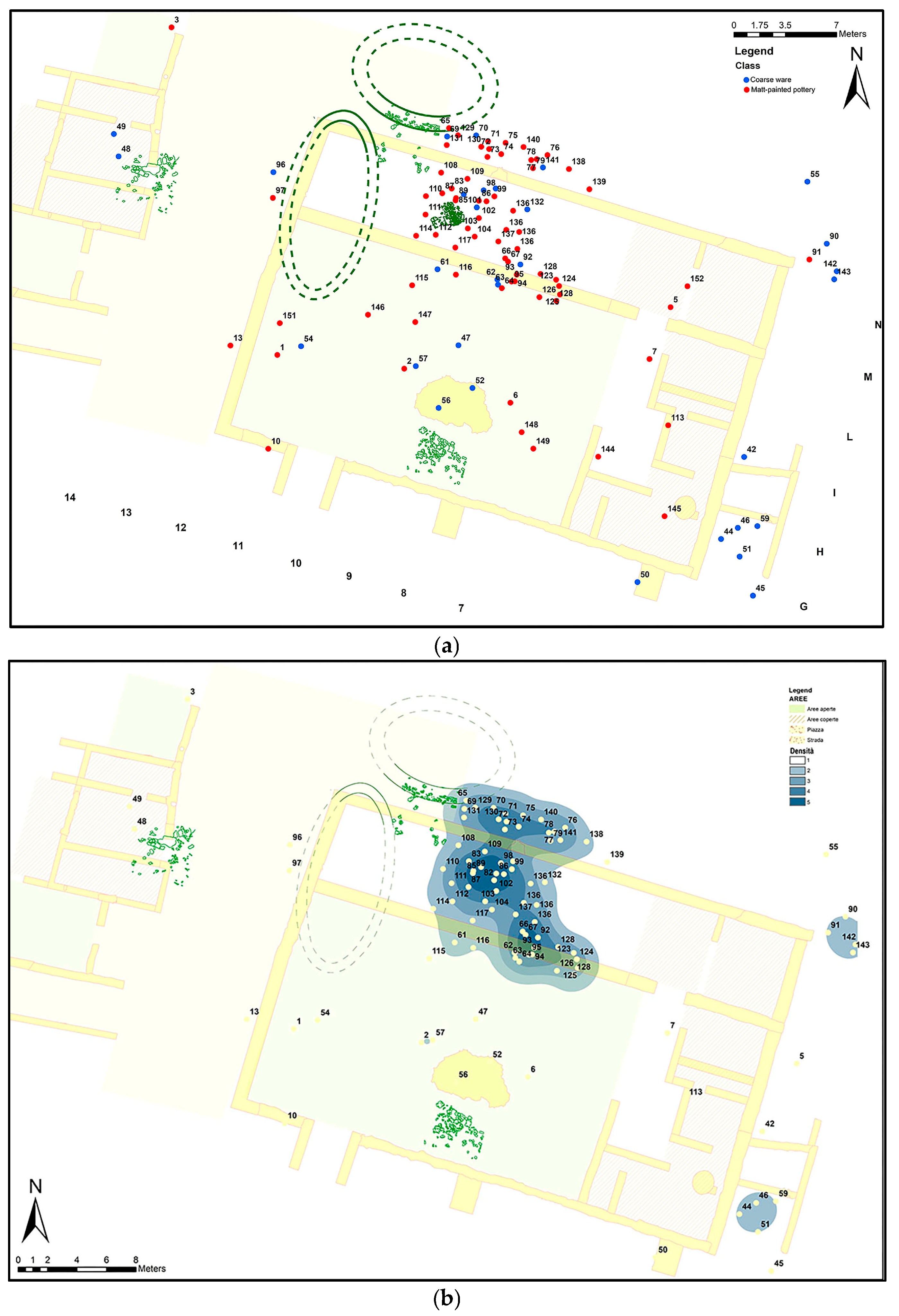
Spatial analysis of pottery shows the distribution patterns of ceramic samples across the excavated areas (Figure 14a) and provides critical context for interpreting the results of ORA and microfossil evidence. Approximately one third of the samples (35 out of 99) derive from the central occupation zone, while the remaining vessels are distributed across other excavated areas: 22 samples from the western zone, 18 samples from the eastern sector, 12 samples from the south-eastern area, and 12 samples (12%) from the northern zone.
The central sector exhibits the highest concentration of samples with fermentation markers (samples 113–119, 131–132, 144/145) in spatial association with densest Iron Age pottery concentrations (Figure 14b), ground stone tools (saddle querns, handstones) diagnostic of cereal and spice grinding, mixed botanical and faunal assemblages indicating diverse food processing, and the highest concentration of decorated Japigian fine ceramics.
The southeastern sector contains samples (10, 13) with intermediate fatty acid ratios and cereal fermentation evidence, suggesting secondary processing or grain storage. Archaeological investigations revealed strong productive character with high ceramic fragment concentration, supporting interpretation of this area as dedicated to food resource storage and/or handling.
Peripheral and western zones show predominantly plant oil and animal fat residues without fermentation markers, consistent with routine domestic food preparation activities, supporting functional differentiation across settlement zones.
The concentration of bacteriohopanoid markers specifically in the central occupation zone represents statistically significant patterning, contrary to random environmental contamination. The tight association between fermented beverage residues and specialized serving morphologies, ground stone tools for grain processing and rich ceramic deposits from collapse/abandonment contexts indicates these beverages were consumed in ceremonial, feasting, or status-display contexts. The morphological specialization of serving vessels and association with grinding tools and rich deposits suggest elite control of prestigious fermented beverage production used to structure communal gatherings and reinforce social hierarchies.
While fermentation-related residues represent only ~26% of the assemblage, the functional differentiation related to fermentation appears spatially concentrated and socially significant: spatial distribution suggests organized production and social implications indicating specialized production and serving practices.
The spatial clustering of pottery assemblages (Figure 15a,b) reveals that beverage production was geographically segregated from routine domestic food preparation. This pattern reflects specialization and social stratification: botanical knowledge and controlled preservation strategies were not routine household products but elite-controlled prestige commodities. The morphological specialization of serving vessels (conical-necked jars, juglets) and their association within archaeological deposits suggests these products were consumed in ceremonial or status-display contexts, reinforcing emerging elite identity during the Iron Age–Archaic transition.

5.4. Cultural Responses to Mediterranean Contact: Local Production of Prestige Commodities

Rather than passive adoption of Mediterranean prestige goods (imported Greek pottery, wine), Iron Age Iapygian elites actively developed indigenous fermented beverage production as a high-prestige category, leveraging locally cultivated resources and adapting Mediterranean techniques selectively. However, because targeted grape-marker analyses were applied to only a few sherds, this interpretation should be understood as the most parsimonious explanation given current analytical coverage, not as absolute exclusion of grape wine in all contexts.
Iapygian communities adopted fermented beverage production as a symbol of elite status and communal gathering but chose substrates and techniques reflecting local ecological conditions and indigenous food traditions. This selective appropriation is also archaeologically visible in ceramic morphology: Japigian vessels decorated with matt-painted geometric patterns maintain local decorative traditions while adopting Mediterranean closed-vessel serving forms and decorations.
Batch fermentation in large vessels and specialized serving in juglets suggests communal or feast-based consumption patterns, consistent with documented Iapygian social organization, rather than individual wine consumption typical of classical Mediterranean elite.
This phenomenon—local elite controlling fermented beverage production as a prestige good—is documented in other Iron Age societies, in particular Celtic contexts [27] and in central Europe [46], as a strategy for reproducing social power.
The fermented beverage economy of Castello di Alceste during the Iron Age suggests a development pathway that is technologically sophisticated but locally determined and indigenously independent rather than derivative from Greek contact.
Previous chemical investigations of archaic transport amphorae from Castello di Alceste [47], which addressed provenance and contents by combined XRF/FP and GC–MS analyses, provide a broader framework for understanding the transformations of supply systems and exchange networks at the site during the Iron Age-to-Archaic transition. Archaic transport amphorae (6th c. BC) from diverse origins (Corcyra, Corinth, southern Italy) yield tartaric acid, fruit markers, and pine resin, evidencing resinated wine import alongside occasional oil/fat reuse. This integration marks economic transformation via Mediterranean trade, reconfiguring commensal practices from locally produced beverages to imported wine dominance.

6. Conclusions

This multiproxy study demonstrates functional differentiation between coarse ware (animal fats, cooking/storage/domestic) and matt-painted pottery (plant oils, with a subset showing evidence consistent with fermented beverages) at Iron Age Castello di Alceste. Fermentation-related biomarkers appear in approximately 26% of the assemblage, concentrated in specific vessel forms and spatial contexts. This study suggests that indigenous elites may have selectively adopted Mediterranean fermentation techniques while maintaining local botanical resources and cultural traditions, though alternative interpretations for some biomarker profiles remain viable.
Anthropological research demonstrates that in many past societies, food and beverage consumption was integral to everyday domestic life while simultaneously fulfilling crucial roles in ritual, ceremonial, and feasting contexts [48,49]. At Castello di Alceste, these practices are evident in distinctive ceramic forms for beverage serving/consumption, spatial segregation of production zones, architectural evidence for communal gatherings, and concentrations of faunal/botanical remains.
The convergence of organic residue analysis, ceramic morphology, use-wear patterns, archaeobotanical data, and microfossil evidence offers multiproxy support for fermented beverage production at the site, moving beyond purely speculative interpretations. Nevertheless, systematic organic residue studies of Iron Age sites in southern Italy remain limited, making our dataset a pioneering contribution that requires corroboration from additional sites.

Supplementary Materials

The following supporting information can be downloaded at: https://www.mdpi.com/article/10.3390/heritage9040125/s1, Table S1. List of vessels analyzed using GC-MS, along with information about vessel’s provenance, pottery technology and shape, the sampled vessel part, lipid yield, molecular compounds present, and their final interpretation, together with the main fatty acid ratios discussed in Section 4.1.3 for each sample and the number of samples subjected to BF3/BuOH extraction and microfossils analysis. Lipid quantification is reported as μg of lipid per g of sherd. Cx:y = fatty acid with x carbon atoms and y representing the number of unsaturations; Cx:ybr = branched fatty acid; Ax = n-alcohols; ax = n-alkanes; MAG = monoglycerides; DHA = Dehydroabietic acid; BH = bacteriohopanoids; tr = traces.

Author Contributions

Conceptualization: F.N. and G.S. (Grazia Semeraro); methodology: F.N., F.M. and G.S. (Gaia Sabetta); sampling and GC-MS analysis: F.N. and F.M.; sampling and microfossil analysis: G.S. (Gaia Sabetta); writing—original draft preparation: F.N.; writing—review and editing in Section 1 and Section 2: G.S. (Grazia Semeraro); writing—review and editing in Section 3.1, Section 4.1, Section 5.1 and Section 5.2: F.N.; writing—review and editing in Section 3.2: F.M.; writing—review and editing in Section 3.3 and Section 4.2: G.S. (Gaia Sabetta); review and editing in Section 5.3: F.N. and G.S. (Gaia Sabetta); review and editing in Section 5.4 and Section 6: F.N. and G.S. (Grazia Semeraro); supervision: G.S. (Grazia Semeraro). All authors have read and agreed to the published version of the manuscript.

Funding

This research was funded by European Union-Next Generation EU, under the National Recovery and Resilience Plan (NRRP), Mission 4, Component 2, Investment 1.1, Call for Tender No. 1409 published on 14.9.2022 by the Italian Ministry of University and Research (MUR)—Project Title: POTOR. People, Pots and Drinks. An interdisciplinary approach to drinking and commensal practices in pre-Roman southern Italy—CODE: P20222SLSM-CUP: F53D23011360001—Grant Assignment Decree No. 1373 adopted on 1 September 2023 by the Italian Ministry of Ministry of University and Research (MUR).

Data Availability Statement

All the relevant data supporting this research are available within the paper.

Conflicts of Interest

The authors declare no conflicts of interest.

References

  1. Yntema, D. The Archaeology of South-East Italy in the First Millenium BC: Greek and Native Societies of Apulia and Lucania Between the 10th and 1st Century BC; Amsterdam University Press: Amsterdam, The Netherlands, 2013. [Google Scholar]
  2. D’Andria, F. Il Salento nella prima Età del Ferro (IX-VII sec. a.C.): Insediamenti e contesti. In Atti del 50° Convegno di Studi sulla Magna Grecia; ISAMG: Taranto, Italy, 2012; pp. 551–592. [Google Scholar]
  3. Semeraro, G. Methods and Practices in Studies of the Economy of Messapia. In Messapia: Economy and Exchanges in the Land Between Ionian and Adriatic Sea; D’Andria, F., Semeraro, G., Eds.; Propylaeum: Heidelberg, Germany, 2022; pp. 3–16. [Google Scholar]
  4. Semeraro, G. Organizzazione degli abitati e processi di costruzione delle comunità locali nel Salento tra IX e VII sec. a.C. In Social Change in Early Iron Age Southern Italy; Proceedings of the International Workshop; Burgers, G.J., Saltini Semerari, G., Eds.; Papers of Royal Netherlands Institute in Rome; Edizioni Quasar: Rome, Italy, 2011; Volume 63, pp. 204–219. [Google Scholar]
  5. Yntema, D.G. The Matt-Painted Pottery of Southern Italy; Congedo Editore: Galatina (Lecce), Italy, 1990. [Google Scholar]
  6. D’Andria, F. Cavallino in the framework of archaic Messapian settlements. Hesperia 2023, 43, 119–162. [Google Scholar] [CrossRef]
  7. Burgers, G.J.; Crielaard, J.P. The Migrant’s Identity: ‘Greeks’ and ‘Natives’ at L’Amastuola, Southern Italy. In Conceptualising Early Colonisation; Donnellan, L., Nizzo, V., Burgers, G.J., Eds.; Palombi Editoria: Rome, Italy, 2016; pp. 225–238. [Google Scholar]
  8. Semeraro, G. Nuovi orizzonti per nuove comunità. Qualche riflessione sui processi di definizione delle società arcaiche della Puglia meridionale. In Contexts of Early Colonization; Acts of the Conference; Donnelan, L., Nizzo, V., Burgers, G.J., Eds.; Palombi Editoria: Rome, Italy, 2016; pp. 351–370. [Google Scholar]
  9. Semeraro, G. Archeologia delle cerimonialità nelle comunità preromane della Puglia meridionale. Contesti e materiali. In Il Sacro Pasto. Le Tavole degli Uomini e degli Dèi. Atti del Convegno Internazionale; Buttita, I.E., Mannia, S., Eds.; Fondazione Ignazio Buttitta: Palermo, Italy, 2017; pp. 467–473. [Google Scholar]
  10. Semeraro, G. Dinamiche relazionali ed identitarie nell’orizzonte iapigio di età arcaica. Contesti e materiali: L’area messapica settentrionale. In Atti del 54° Convegno di Studi sulla Magna Grecia; ISAMG: Taranto, Italy, 2014; pp. 317–329. [Google Scholar]
  11. Cocchiaro, A.S. Vito dei Normanni (Brindisi), Castello. Taras 1995, 16, 57–59. [Google Scholar]
  12. Cocchiaro, A. L’area archeologica di località Castello a S. Vito dei Normanni (1994–1995). In La Ricerca come Risorsa; Tipolitografia Editrice Brindisina: Brindisi, Italy, 1998; pp. 13–26. [Google Scholar]
  13. D’Oronzo, C. Strutture di Combustione e Contesti Archeologici: Indagine Archeobotanica e Definizione del Protocollo d’Intervento. Ph.D. Thesis, Università Cattolica del Sacro Cuore, Milano, Italy, 2011. [Google Scholar]
  14. Arthur, J.W. Pottery Use-Alteration as an Indicator of Socioeconomic Status: An Ethnoarchaeological Study of the Gamo of Ethiopia. J. Archaeol. Method Theory 2002, 9, 331–355. [Google Scholar] [CrossRef]
  15. Notarstefano, F.; Perrone, S.; Messa, F.; Semeraro, G. Early Evidence for Alcohol Consumption in Iron Age Messapia (Southern Italy) through Organic Residue Analysis, Use-Alteration Traces and Vessel Morphology. Open Access J. Archaeol. Anthropol. 2024, 5, 619. [Google Scholar]
  16. Forte, V. Use Activities, Wear Mechanisms and Residues: The Use Alterations Variability on Pottery in Light of the Latest Research Advancements. In Pottery Function and Use: A Diachronic Perspective; Vuković, J., Bikić, V., Eds.; Faculty of Philosophy, University of Belgrade and Institute of Archaeology: Belgrade, Serbia, 2022; pp. 13–36. [Google Scholar]
  17. Arthur, J.W. Brewing Beer: Status, Wealth, and Ceramic Use Alteration among the Gamo of South-Western Ethiopia. World Archaeol. 2003, 34, 516–528. [Google Scholar] [CrossRef]
  18. Correa-Ascencio, R.; Evershed, R.P. High Throughput Screening of Organic Residues in Archaeological Potsherds Using Direct Acidified Methanol Extraction. Anal. Methods 2014, 6, 1330. [Google Scholar] [CrossRef]
  19. Papakosta, V.; Smittenberg, R.H.; Gibbs, K.; Jordan, P.; Isaksson, S. Extraction and Derivatization of Absorbed Lipid Residues from Very Small and Very Old Samples of Ceramic Potsherds for Molecular Analysis by Gas Chromatography–Mass Spectrometry (GC–MS) and Single Compound Stable Carbon Isotope Analysis by Gas Chromatography–Combustion–Isotope Ratio Mass Spectrometry (GC–C–IRMS). Microchem. J. 2015, 123, 196–200. [Google Scholar]
  20. Garnier, N.; Valamoti, S.M. Prehistoric Wine-Making at Dikili Tash (Northern Greece): Integrating Residue Analysis and Archaeobotany. J. Archaeol. Sci. 2016, 74, 195–206. [Google Scholar] [CrossRef]
  21. Mottram, H.R.; Dudd, S.N.; Lawrence, G.J.; Stott, A.W.; Evershed, R.P. New Chromatographic, Mass Spectrometric and Stable Isotope Approaches to the Classification of Degraded Animal Fats Preserved in Archaeological Pottery. J. Chromatogr. A 1999, 833, 209–221. [Google Scholar] [CrossRef]
  22. Katz, O.; Cabanes, D.; Weiner, S.; Maeir, A.M.; Boaretto, E.; Shahack-Gross, R. Rapid Phytolith Extraction for Analysis of Phytolith Concentrations and Assemblages During an Excavation: An Application at Tell es-Safi/Gath, Israel. J. Archaeol. Sci. 2010, 37, 1557–1563. [Google Scholar] [CrossRef]
  23. Liu, L.; Wang, J.; Liu, H. The Brewing Function of the First Amphorae in the Neolithic Yangshao Culture, North China. Archaeol. Anthropol. Sci. 2020, 12, 118. [Google Scholar] [CrossRef]
  24. Wang, J.; Liu, L.; Ball, T.; Yu, L.; Li, Y.; Xing, F. Revealing a 5000-y-old Beer Recipe in China. Proc. Natl. Acad. Sci. USA 2016, 113, 6444–6448. [Google Scholar] [CrossRef] [PubMed]
  25. Wang, J.; Liu, L.; Georgescu, A.; Le, V.V.; Ota, M.H.; Tang, S.; Vanderbilt, M. Identifying Ancient Beer Brewing through Starch Analysis: A Methodology. J. Archaeol. Sci. Rep. 2017, 15, 150–160. [Google Scholar] [CrossRef]
  26. Evershed, R.P. Organic Residue Analysis in Archaeology: The Archaeological Biomarker Revolution. Archaeometry 2008, 50, 895–924. [Google Scholar] [CrossRef]
  27. Rageot, M.; Mötsch, A.; Schorer, B.; Gutekunst, A.; Patrizi, G.; Zerrer, M.; Cafisso, S.; Fries-Knoblach, J.; Hansen, L.; Tarpini, R.; et al. The Dynamics of Early Celtic Consumption Practices: A Case Study of the Pottery from the Heuneburg. PLoS ONE 2019, 14, e0222991. [Google Scholar] [CrossRef]
  28. Goodner, K.L.; Jella, P.; Rouseff, R.L. Determination of Vanillin in Orange, Grapefruit, Tangerine, Lemon, and Lime Juices Using GC–Olfactometry and GC–MS/MS. J. Agric. Food Chem. 2020, 48, 2882–2886. [Google Scholar] [CrossRef]
  29. Li, H.; Liu, F. Changes in Organic Acids During Beer Fermentation. J. Am. Soc. Brew. Chem. 2015, 73, 275–279. [Google Scholar] [CrossRef]
  30. Farag, M.A.; Elmassry, M.M.; Baba, M.; Friedman, R. Revealing the Constituents of Egypt’s Oldest Beer Using Infrared and Mass Spectrometry. Sci. Rep. 2019, 9, 16199. [Google Scholar] [CrossRef]
  31. Rageot, M.; Motsch, A.; Schorer, B.; Bardel, D.; Winkler, A.; Sacchetti, F.; Chaume, B.; Della Casa, P.; Buckley, S.; Cafisso, S.; et al. New Insights into Early Celtic Consumption Practices: Organic Residue Analyses of Local and Imported Pottery from Vix-Mont Lassois. PLoS ONE 2019, 14, e0218001. [Google Scholar] [CrossRef]
  32. Regert, M.; Colinart, S.; Degrand, L.; Decavallas, O. Chemical Alteration and Use of Beeswax Through Time: Accelerated Ageing Tests and Analysis of Archaeological Samples from Various Environmental Contexts. Archaeometry 2001, 43, 549–569. [Google Scholar] [CrossRef]
  33. Whelton, H.L.; Hammann, S.; Cramp, L.J.; Dunne, J.; Roffet-Salque, M.; Evershed, R.P. A Call for Caution in the Analysis of Lipids and Other Small Biomolecules from Archaeological Contexts. J. Archaeol. Sci. 2021, 132, 105397. [Google Scholar] [CrossRef]
  34. Eerkens, J.W. GC–MS Analysis and Fatty Acid Ratios of Archaeological Potsherds from the Western Great Basin of North America. Archaeometry 2005, 47, 83–102. [Google Scholar] [CrossRef]
  35. Buonasera, T.Y.; Tremayne, A.H.; Darwent, C.M.; Eerkens, J.W.; Mason, O.K. Lipid Biomarkers and Compound Specific δ13C Analysis Indicate Early Development of a Dual-Economic System for the Arctic Small Tool Tradition in Northern Alaska. J. Archaeol. Sci. 2015, 61, 129–138. [Google Scholar] [CrossRef]
  36. Ropejko, K.; Twarużek, M. Zearalenone and Its Metabolites—General Overview, Occurrence, and Toxicity. Toxins 2021, 13, 35. [Google Scholar] [CrossRef] [PubMed]
  37. Yu, H.; Zhang, J.; Chen, Y.; Zhu, J. Zearalenone and Its Masked Forms in Cereals and Cereal-Derived Products: A Review of the Characteristics, Incidence, and Fate in Food Processing. J. Fungi 2022, 8, 976. [Google Scholar] [CrossRef]
  38. Mizutani, K.; Nagatomi, Y.; Mochizuki, N. Metabolism of Zearalenone in the Course of Beer Fermentation. Toxins 2011, 3, 134–141. [Google Scholar] [CrossRef]
  39. Roffet-Salque, M.; Dunne, J.; Altoft, D.T.; Casanova, E.; Cramp, L.J.; Smyth, J.; Whelton, H.L.; Evershed, R.P. From the Inside Out: Upscaling Organic Residue Analyses of Archaeological Ceramics. J. Archaeol. Sci. Rep. 2017, 16, 627–640. [Google Scholar] [CrossRef]
  40. Parras, D.J.; Sánchez, A.; Tun, J.A.; Rueda, C.; Ramos, N.; García-Reyes, J.F. Sulphur, fats and beeswax in the Iberian rites of the sanctuary of the oppidum of Puente Tablas (Jaén, Spain). J. Archaeol. Sci. Rep. 2016, 4, 510–524. [Google Scholar] [CrossRef]
  41. Zotti, M.; Colaianna, M.; Morgese, M.G.; Tucci, P.; Schiavone, S.; Avato, P.; Trabace, L. Carvacrol: From Ancient Flavoring to Neuromodulatory Agent. Molecules 2013, 18, 6161–6172. [Google Scholar] [CrossRef]
  42. García-Granero, J.J.; Hatzaki, E.; Tsafou, E.; Ayala, G.; Serpetsidaki, I.; Bogaard, A. From Storage to Disposal: A Holistic Microbotanical Approach to Domestic Plant Preparation and Consumption Activities in Late Minoan Gypsades, Crete. J. Archaeol. Method Theory 2021, 28, 307–331. [Google Scholar] [CrossRef]
  43. Wang, J.; Jiang, L.; Sun, H. Early Evidence for Beer Drinking in a 9000-year-old Platform Mound in Southern China. PLoS ONE 2021, 16, e0255833. [Google Scholar] [CrossRef]
  44. Sabetta, G.; Semeraro, G.; Notarstefano, F.; Portillo, M. First Results of Plant Processing on Ground Stone Tools: Phytolith Evidence and GC-MS from Archaic Messapian Settlements—San Vito dei Normanni and Cavallino (Puglia, Italy). In Proceedings of the 2023 IMEKO International Conference on Metrology for Archaeology and Cultural Heritage, Rome, Italy, 19–21 October 2023; pp. 957–961. [Google Scholar]
  45. Perruchini, E.; Glatz, C.; Hald, M.M.; Casana, J.; Toney, J.L. Revealing invisible brews: A new approach to the chemical identification of ancient beer. J. Archaeol. Sci. 2018, 100, 176–190. [Google Scholar] [CrossRef]
  46. Rosiak, A.; Józefowska, A.; Sekulska-Nalewajko, J.; Gocławski, J.; Kałużna-Czaplińska, J. Funerary vs. Domestic Vessels from the Hallstatt Period. A Study on Ceramic Vases from the Milejowice Settlement and the Domasław Cemetery. Sci. Rep. 2024, 14, 19942. [Google Scholar] [CrossRef]
  47. Semeraro, G.; Notarstefano, F.; Caldarola, R.; Quarta, G.; Calcagnile, L. Investigations on provenance and content of archaic transport amphorae from Castello di Alceste (S. Vito dei Normanni–Br) by chemical analyses through XRF/FP and GC–MS. In Proceedings of the 3rd IMEKO International Conference on Metrology for Archaeology and Cultural Heritage, Lecce, Italy, 23–25 October 2017; pp. 344–349. [Google Scholar]
  48. Dietler, M. Alcohol: Anthropological/Archaeological Perspectives. Annu. Rev. Anthropol. 2006, 35, 229–249. [Google Scholar] [CrossRef]
  49. Dietler, M.; Hayden, B. (Eds.) Feasts: Archaeological and Ethnographic Perspectives on Food, Politics, and Power; Smithsonian Institution Press: Washington, DC, USA, 2001. [Google Scholar]
Figure 1. Messapian Iron Age settlements of the Salento peninsula (in yellow: the site studied).
Heritage 09 00125 g001
Figure 2. (a) General plan of the settlement of Castello di Alceste (San Vito dei Normanni, Brindisi), with enclosure walls, dwelling clusters and main architectural features. Numbers 1–4 indicate the principal hut structures identified during the excavations. All linear measurements are expressed in meters (m), and m2 indicates surface in square meters. (b) Graphical reconstruction of the Iron Age settlement corresponding to the plan in (a), showing the spatial organization of hut clusters. This is an interpretive reconstruction based on excavation data; spatial positions have been verified against the archaeological plan for accuracy. The blue part indicates the sections of the settlement’s wall identified during the excavations.
Heritage 09 00125 g002
Figure 3. Drawings and macro-photographs of a matt-painted conical-necked jar (sample 144/145). The interior wall (145-int) shows localized pitting and surface corrosion compatible with prolonged contact with acidic liquids, while the exterior surface (145-ext) is unaffected and preserves the painted decoration. a and b indicate the specific spots on the interior surface where pitting occurs, and the insets provide enlarged views of these same areas.
Heritage 09 00125 g003
Figure 4. Selected pottery shapes from Castello di Alceste. (a) Coarse ware vessels: truncated cone vases (1–2); jar and cooking jar (3–4); cup and bowl (5–6). (b) Japigian matt-painted pottery: conical-necked jar (1); globular jar (2); small jar and jug (3–4); bowl (5); pithos (6).
Heritage 09 00125 g004
Figure 5. Fatty Acid Ratios—(a) C16:0/C18:0 vs. C12:0/C14:0: Bivariate scatter plot displaying pottery samples according to normalized fatty acid ratios. X-axis represents C16:0/C18:0 ratio, discriminating between animal-derived fats (low values, ~0.8–1.2) and plant-derived lipids (high values, >1.3). Y-axis represents C12:0/C14:0 ratio, marking plant product and fermentation substrates (>1.0) versus animal fats (<0.8). Blue points indicate coarse ware vessels, predominantly clustering in lower-left quadrant (animal fat signature). Red points indicate Japigian matt-painted pottery, predominantly clustering in upper-right quadrant (plant oil signature), with subset in intermediate area representing fermented residues. (b) C16:1/C18:1 vs. (C15:0 + C17:0)/C18:0: Bivariate scatter plot showing secondary discrimination ratios for pottery samples. X-axis displays C16:1/C18:1 ratio, with low values indicating animal fats and high values indicating plant oils. Y-axis shows (C15:0 + C17:0)/C18:0 (iso-/anteiso-branched fatty acid index), marking bacterial degradation products from ruminant metabolism or fermentation microbiota. Coarse ware samples (blue) cluster in lower-left (animal fats, low bacterial markers). Matt-painted samples (red) distribute across the plot, with those showing elevated bacterial markers indicating active fermentation and microbial colonization.
Heritage 09 00125 g005
Figure 6. Partial Total Ion Chromatogram (TIC) showing the molecular constituents in sample 46 (coarse ware cooking jar). Cx:y = fatty acid with x carbon atoms and y representing the number of unsaturations, DHA = dehydroabietic acid.
Heritage 09 00125 g006
Figure 7. Partial Total Ion Chromatogram (TIC) showing the molecular constituents in sample 116 (matt-painted conical-necked jar). RT = 20.8 min peak identified as cyclic octaatomic sulfur (S8); right inset: mass spectrum of S8 (characteristic fragments m/z 256 [M]+, 192, 160, 128). Cx:y = fatty acid with x carbon atoms and y representing the number of unsaturations; DHA = dehydroabietic acid; MAG = monoglycerides.
Heritage 09 00125 g007
Figure 8. (a) Partial Total Ion Chromatogram (TIC) showing the molecular constituents in sample 131 (matt-painted globular jar). Cx:y = fatty acid with x carbon atoms and y representing the number of unsaturations, ME= methyl ester, MDHA = methyl-dehydroabietic acid, DHA = dehydroabietic acid, 7OXO-DHA = 7 oxo-dehydroabietic acid, BH = bacteriohopanoids, • = n-alkanes. (b) Partial Total Ion Chromatogram (TIC) of the BF3/BuOH extract of sample 131 showing a sequence of mono- and dicarboxylic acids (benzoic, succinic, fumaric, methylmaleic, cinnamic), Cx:y = fatty acid with x carbon atoms and y representing the number of unsaturations, BE = Butyl ester, DHA = dehydroabietic acid, BH = bacteriohopanoids, • = n-alkanes.
Heritage 09 00125 g008
Figure 9. Types of plants identified in the samples.
Heritage 09 00125 g009
Figure 10. Anatomical origin of plant phytoliths identified in the samples.
Heritage 09 00125 g010
Figure 11. Aspergillus from samples 132 (a), 136a (b) and from experimental vessel (c).
Heritage 09 00125 g011
Figure 12. Relative abundance (%) of organic substances identified in distinct coarse ware and matt-painted vessel forms. (a) Cooking jars and truncated cones show dominant animal fat signatures (75–85%) with elevated plant waxes and long-chain alcohols (60–70%), consistent with utilitarian storage and heating functions. While these n-alcohol series could include contributions from beeswax, definitive wax ester markers for beeswax were not recovered in the analytical subset, and epicuticular plant waxes represent the most parsimonious source. Bowls and cups exhibit reduced biomarker diversity and abundance, indicating secondary contexts or frequent cleaning. (b) Matt-painted vessels exhibit significantly elevated total organic residue complexity compared to coarse ware, with mean biomarker abundance exceeding 300% (indicating multiple superimposed residue signatures within individual vessels). Conical-necked drinking vessels and globular jars show elevated bacteriohopanoid markers (20–25%), indicating consumption of fermented beverages in elite contexts. Pithoi show relatively high proportions of fruit-related markers and, in one case, bacteriohopanoids, suggesting that at least some large storage vessels participated in fermentation and/or aging of fruit-based beverages, although the very small sample size (n = 3) precludes broader generalizations. Small jars/juglets display reduced but persistent bacteriohopanoid markers (15%), suggesting these were portioned servings of mature fermented beverages, potentially for feasting distribution or elite gifting.
Heritage 09 00125 g012
Figure 13. Biomarker complexity distribution by vessel type: Coarse ware shows predominantly minimal oxidative profiles consistent with cooking/heating functions, while matt-painted pottery displays systematic progression toward complex fermentation signatures with presence of multiple diacids, fermentation metabolites (lactic acid, vanillic acid), and preservation compounds (DHA, bacteriohopanoids).
Heritage 09 00125 g013
Figure 14. Distribution maps of sampled vessels by pottery class: (a) coarse ware vessels (blue), Japigian plain and matt-painted pottery (red). Scale 1:200; (b) kernel density distribution map, based on samples points. Scale 1:200. Numbers indicate sample numbers (see Supplementary Table S1). Green lines represent Iron Age structures (hut clusters).
Heritage 09 00125 g014
Figure 15. Distribution of pottery assemblages by minimum number of individuals (m.n.i.) in the central area (a) and in the eastern area (b) of the settlement. Scale 1:150. Numbers represent the minimum number of specimens from individual stratigraphic units. Green lines represent Iron Age structures (hut clusters).
Heritage 09 00125 g015
Table 1. Morphological and functional characteristics of the analyzed ceramic samples (n = 99).
ShapeFunctional CategoryN (Samples)Sampled Portion
WallRimBaseShoulder
Coarse ware
Cooking jar Preparation/Heating51400
Truncated cone Vessel Storage/Preparation2041420
Bowl Serving/Consumption11000
Cup Drinking/Consumption10100
Jar Storage/Preparation11000
Total 2871920
Matt-painted
Closed form *Drinking/Consumption & Serving2821061
Conical-necked jar Consumption & Serving1811025
Globular JarPreparation/Presentation & Serving1411102
Small jug Drinking/Consumption & Serving77000
Pithos Storage/Preparation32010
Bowl Serving/Consumption11000
Total 7153198
* Closed form = matt-painted closed vessels, including sherds from undetermined closed shapes.
Table 2. Description of samples and main micro-residue results. Bullet indicates the presence of micro-residues in the samples, while the empty spaces indicate their absence.
SamplePhyto/1 g SedimentStarchesFungiYeastsCalcium Oxalate Crystals
SPE 1200,204Aspergillus
SPE2122,015
SPE3204,375Aspergillus
10 dry196,988
10 wet141,588
11 dry131,631
47 wet152,366
48 wet91,682
50 wet331,917
64 dry139,347
64 wet34,567
65 dry63,978
66 dry125,769
66 wet--
76 wet152,982
80 dry80,711
80 wet113,829
83 dry63,805
83 wet36,845
85 dry12,457
85 wet59,455
97 dry184.073
97 wet12,801
113 wet136,25
117 dry133,651
117 wet16,108
124 wet49,924
126 dry77,857
126 wet166,624
128 dry67.423
131 (L1)37.371
132 dry96.176
136 A wet249.618
136 B wet84.278
136 C dry117.134
136 C wet500.510
136 D wet43.600
137 dry--
Disclaimer/Publisher’s Note: The statements, opinions and data contained in all publications are solely those of the individual author(s) and contributor(s) and not of MDPI and/or the editor(s). MDPI and/or the editor(s) disclaim responsibility for any injury to people or property resulting from any ideas, methods, instructions or products referred to in the content.