


Abstract
Mountain cultural landscapes represent dynamic systems where heritage, policy, and tourism intersect to shape local resilience. This study explores how public incentives and adaptive reuse frameworks can transform traditional settlements into sustainable tourism destinations. Building on an established Conservation–Development model, an additional “Investigation” axis is introduced to empirically link policy intent, investment implementation, and demographic outcomes. Combining archival research, quantitative indicators and spatial analysis, the study examines the impact of successive development laws (1982–2022) on the evolution of heritage hospitality, focusing on small-scale, high-altitude enterprises that integrate cultural preservation with local entrepreneurship. The UNESCO cultural landscape of Zagori, Greece, serves as the empirical context of this analysis. The results reveal that heritage hospitality, driven by policy incentives rather than spontaneous market growth, has formed a micro-network of small-scale hotels, reinforcing both preservation and local resilience. Municipal-level patterns indicate that population decline was mitigated where heritage hospitality coexisted with diversified tourism infrastructure. Conversely, overconcentration or policy gaps led to stagnation. These findings position Zagori as a model for policy-driven, heritage-based sustainability in mountain cultural landscapes, emphasizing the interplay between legislation, built heritage and population vitality.
1. Introduction
Mountain destinations are increasingly recognized as fragile socio-ecological systems, where tourism development generates both opportunities and vulnerabilities. In such environments, heritage hospitality has emerged as a vital mechanism for linking cultural preservation with sustainable tourism, particularly through the adaptive reuse of traditional architecture [1,2]. Heritage hotels embody cultural narratives, reinforce local identity and contribute to socio-economic resilience [3]. However, despite their growing significance, research on heritage hospitality is fragmented and often lacks a systematic analytical framework [4,5].
In Greece, the development of heritage hotels has been shaped by a combination of public policy, local entrepreneurship, and the socio-economic characteristics of mountain regions. The Presidential Decrees of 1978 and 1979 established the institutional basis for recognizing “traditional settlements” and development laws provided investment incentive systems to promote the adaptive reuse of vernacular architecture for tourism purposes. Most existing studies emphasize either the legislative framework of traditional settlements [6] or the conservation of architectural heritage [7,8]. However, few have analyzed how policy instruments, hospitality structures and population dynamics, interact to shape resilience in mountain regions—a gap that has become particularly salient following the Zagori’s inscription on the UNESCO World Heritage List in 2023, which has intensified visibility and development pressures.
Zagori, a mountainous municipality in the Epirus region, was inscribed on the UNESCO World Heritage List in 2023. Although it is often presented as a successful example of heritage-led tourism, questions remain concerning the impact of incentive policies and the structural features of heritage hotels on population resilience.
Accordingly, this study addresses the following research questions:
- RQ1: What are the public policies and legal frameworks that have shaped the protection of architectural heritage in mountain settlements, with a focus on Zagori?
- RQ2: How have public policies and Incentives driven the development of heritage hospitality in mountain settlements, with reference to Zagori?
- RQ3: In what ways have policy implementation and investment dynamics facilitated the conversion of traditional buildings into heritage hotels in Zagori?
- RQ4: What is the structural profile of heritage hospitality in Zagori?
- RQ5: To what extent has heritage hospitality contributed to the demographic resilience and revitalization of Zagori’s mountain settlements?
This paper’s methodological contribution lies in extending the Conservation–Development framework of Zhao et al. [1] by introducing a third analytical axis—“Investigation”. This addition enables the systematic linkage of public policy planning, tourism investment, accommodation data, and demographic dynamics, operationalized through quantitative indicators such as beds per capita, investment efficiency ratios, and correlations between tourism and population change. By combining policy analysis, archival research and spatial-temporal quantitative methods, the paper provides a comprehensive view of heritage hospitality as a means of promoting the resilience of mountain regions.
The paper makes two contributions: First, it proposes a replicable model for assessing heritage hospitality that connects policy frameworks with measurable territorial outcomes. Second, it provides the first comprehensive assessment of Zagori’s heritage hospitality sector since its UNESCO designation. The findings emphasize the interplay between policy and conservation frameworks, investment incentive systems, heritage hospitality, total accommodation, and population change. This provides a broader understanding of how heritage-driven tourism can promote the sustainability and adaptive resilience of mountain destinations.
2. Conceptual and Theoretical Framework
2.1. Mountain Heritage Destinations
Mountains cover approximately 27% of the Earth’s surface, while mountain destinations attract 16–20% of global tourism demand [9]. Despite their importance, they are characterized by considerable heterogeneity and limited data availability, which complicates their management [10]. A review of the relevant literature and international policies highlights two fundamental characteristics of “mountainness”:
First, mountain areas are recognized as “hybrid nature–culture spaces”, combining high levels of ecological, landscape, and cultural diversity [11]. About 43% of Natura 2000 sites in the EU are located in mountain regions [11,12], while 17.5% of UNESCO World Heritage Sites are situated in such areas. Out of the 199 mountain-related sites, the majority are associated with architectural heritage; 115 are classified as cultural and 15 as mixed cultural landscapes [2,13].
Second, mountain regions worldwide face demographic decline and economic downturn, a trend that intensified after World War II [14,15]. In Southern Europe, extensive depopulation during the 1950s and 1960s led the EU to classify mountain areas as “Less-Favoured Areas” requiring specific policy support [12]. In Italy, 72% of abandoned municipalities are located in mountainous regions [16], while in Greece, less than 10% of the population inhabits 50% of the national territory classified as mountainous [17]. Similar trends have been observed in Eastern Europe since the 1990s [18], and in China, where the protection of traditional villages has gained national attention since 2012 due to urbanization and depopulation [19]. The abandonment of these regions seriously threatens their cultural and architectural heritage, leading to degradation and loss of identity [20].
The promotion of sustainable tourism, particularly heritage tourism, is internationally recognized as a key policy tool for the revitalization of mountain regions [19,20,21]. The UNESCO guidelines for integrated management of mountain World Heritage Sites, such as the Dolomites, are considered best practices for sustainable tourism development [22]. The European Union regards the cultural heritage of mountain regions as a strategic asset for sustainable development [23], supporting initiatives such as the EU Strategy for the Alpine Region (EUSALP) and funding through Interreg Europe and the European Regional Development Fund (€4.7 billion, 2014–2020). Cultural heritage thus emerges as a competitive advantage, enhancing local identity and attracting visitors through the uniqueness and intrinsic beauty of mountain landscapes [3,11,20,24].
2.2. Heritage Hotels as Vehicles for Sustainable Development in Mountain Destinations
A heritage hotel is a type of accommodation closely linked to the cultural, historical, or architectural identity of a place [5]. It is typically housed in renovated or historically significant buildings [4] and combines the preservation of cultural heritage with the enhancement of destination competitiveness [25]. Heritage hotels provide authentic experiences that connect local history with production and consumption [25,26], while their adaptive reuse meets both preservation requirements and the expectations of contemporary travelers [27,28]. Reflecting the principles of post-Fordist tourism, they emphasize uniqueness and personalization [29] and contribute to the sustainable development of rural and mountain regions by attracting visitors seeking authentic cultural experiences [3,30]. Moreover, they generally achieve higher occupancy rates and attract higher-income tourists [31,32].
Research on heritage hotels as a distinct field remains limited, particularly in disadvantaged areas such as mountain destinations. However, successful models exist, such as the Albergo Diffuso concept, developed in Italy in the 1980s and later expanded across Eastern Europe. This model promotes the revitalization of local heritage, socio-economic development, and employment creation in small settlements [33,34,35]. It integrates hospitality infrastructure with local community life and culture [36,37]. Similarly, “hotel villages” such as Postignano, Castelfalfi, and Finochietto involve the full restoration and management of entire areas as tourism resorts, emphasizing cultural landscape preservation [16]. The Chinese RTTVR framework (Rural Tourism-based Traditional Village Revitalisation) promotes renewal through the enhancement of natural and cultural environments and the strengthening of local identity. In Yuanjia village, for example, family-run guesthouses increased household incomes and fostered entrepreneurship, boosting the local economy [19]. In Norway and Austria, traditional støl/alpe farms operate as tourist lodgings, offering authentic experiences while preserving traditions and the “sense of place” [38]. Overall, these initiatives reinforce cultural identity, employment, and sustainable development in rural and mountain regions.
At the policy level, international and European institutions such as UNESCO and the European Union emphasize the importance of developing appropriate forms of tourism for the revitalization of mountain areas [2,13]. Heritage hospitality serves both as a mechanism of protection and a competitive advantage, promoting local arts, crafts, music, and agri-food products as part of an integrated cultural tourism offer [30,39]. The Chinese Cultural–Tourism Integration (CTI) model, formally introduced in 2018, enhances sustainability by systematically linking the cultural and tourism industries [40]. CTI conceptualizes cultural and natural landscapes as interdependent subsystems within a broader socio-ecological framework, offering valuable parallels with European experiences in heritage hospitality.
In conclusion, heritage tourism in mountain areas is a critical and dynamically evolving field. The success of this field is dependent on adequate funding and close collaboration among public authorities, entrepreneurs, and local communities [5,41]. Evidence from mountain UNESCO World Heritage destinations, Italian heritage “hotel villages,” Albergo Diffuso and RTTVR models, as well as Nordic farm-based lodgings, demonstrates that heritage-based and small-scale hospitality can mobilize ensembles of historic buildings and culturally significant landscapes. This reinforces cultural identity, generates employment and supports sustainable development. Concurrently, such revitalization processes have the potential to engender tensions between economic upgrading, rising living costs and shifting meanings of authenticity in small communities exposed to global demand. However, the majority of studies on mountain UNESCO sites and heritage “hotel villages” focus on governance, visitor management and landscape conservation, with little quantitative analysis of how heritage hospitality relates to long-term demographic trajectories. Research on Albergo Diffuso and RTTVR likewise emphasizes economic revitalization, entrepreneurship, and community participation, without systematically connecting incentive policies, the structural evolution of the hospitality sector, and indicators of demographic resilience in small mountain municipalities. Against this background, the present study uses Zagori—a high-mountain, UNESCO-listed destination with a long history of incentive-driven adaptive reuse—as an empirical laboratory to map the evolution and spatial configuration of heritage hotels, trace the role of public policies and investment frameworks in shaping this ecosystem, and quantitatively relate heritage hospitality, secondary residence, and total hospitality sector to patterns of population decline, stabilization, or revitalization across different mountain settlements.
3. Materials and Methods
3.1. The Case of Zagori’s Designation as a UNESCO World Heritage Site in 2023
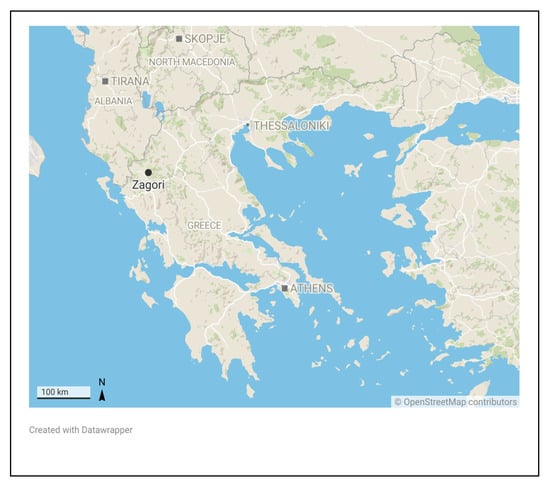
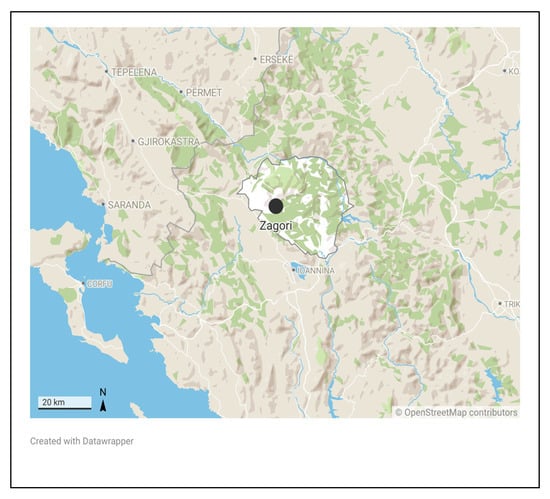
Zagori extends over approximately 1000 km2 in the Pindus mountain range of northwestern Greece (Figure 1 and Figure 2). Its geographic isolation and rugged terrain have shaped a distinct identity, fostering the development of 46 stone-built villages, known as the Zagorochoria, interconnected by cobbled paths and arched bridges that reflect centuries of adaptation to the mountainous landscape. Natural landmarks such as the Vikos Gorge, the Aoos River, and Valia Kalda are protected within the Northern Pindus National Park and the Natura 2000 network, while the designation of Zagori as a UNESCO World Heritage Site in 2023 affirmed its outstanding value as a cultural landscape.
Figure 1.
Location of the Municipality of Zagori within Greece and southern Europe. Source: Open-access Datawrapper platform (https://www.datawrapper.de/maps; accessed on 4 December 2025).
Figure 2.
Detailed location of the Municipality of Zagori and its municipal boundaries in Epirus, north-western Greece. Source: Open-access Datawrapper platform (https://www.datawrapper.de/maps; accessed on 4 December 2025).
Historically, the local economy combined subsistence agriculture and livestock farming with extensive trade networks across the Balkans and Europe. Between the 17th and 19th centuries, Zagorian merchants amassed significant wealth, investing in schools, churches, and mansions, while the tradition of benefaction became a central social institution [42,43,44]. This period of prosperity left a lasting imprint on the built environment, shaping an architectural heritage that reflects both economic vitality and cultural sophistication. Despite post-war depopulation, tourism emerged as a key mechanism of resilience.
Organized tourism development began in 1965, when the GNTO converted traditional houses into guesthouses, primarily in Papigo and nearby villages. From 100,000 annual visitors in the 1980s, arrivals rose to 600,000 by 2008, before declining during the financial crisis and subsequently recovering in the following years [45]. Today, foreign visitors—mainly from the Netherlands, Germany, and Israel—constitute about 60% of the total, with an average stay of 2.5 nights [46]. The local economy now relies on heritage hotels, guesthouses, rooms to let and second homes, supported by state programs for the adaptive reuse of historic buildings and regional policies that recognize architecture as a key cultural asset.
Architecturally, Zagori represents a fusion of natural landscape and cultural identity. Its stone houses, with slate roofs and simple geometric forms, demonstrate both adaptation to the mountain environment and respect for local materials [44]. Churches, schools, and mansions bear witness to a past era of prosperity, while traditions and social customs reinforce community cohesion and an enduring ethic of generosity [47]. The region’s multicultural history has produced a mosaic of identities that converge into a shared mountain consciousness.
Overall, Zagori exemplifies a mountain heritage destination where geography, environment, architecture, and culture coexist harmoniously. Heritage tourism today serves as a mechanism for reconciling preservation and development, transforming Zagori into a living cultural landscape and a model of sustainable mountain tourism.
3.2. Data Collection and Analysis
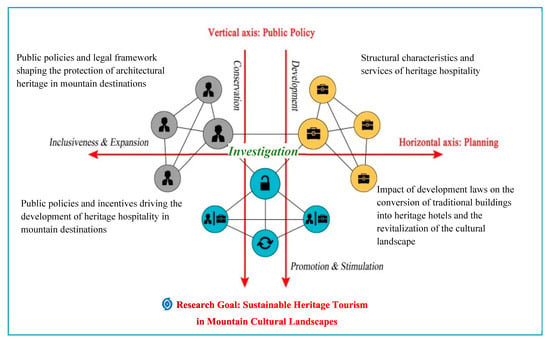
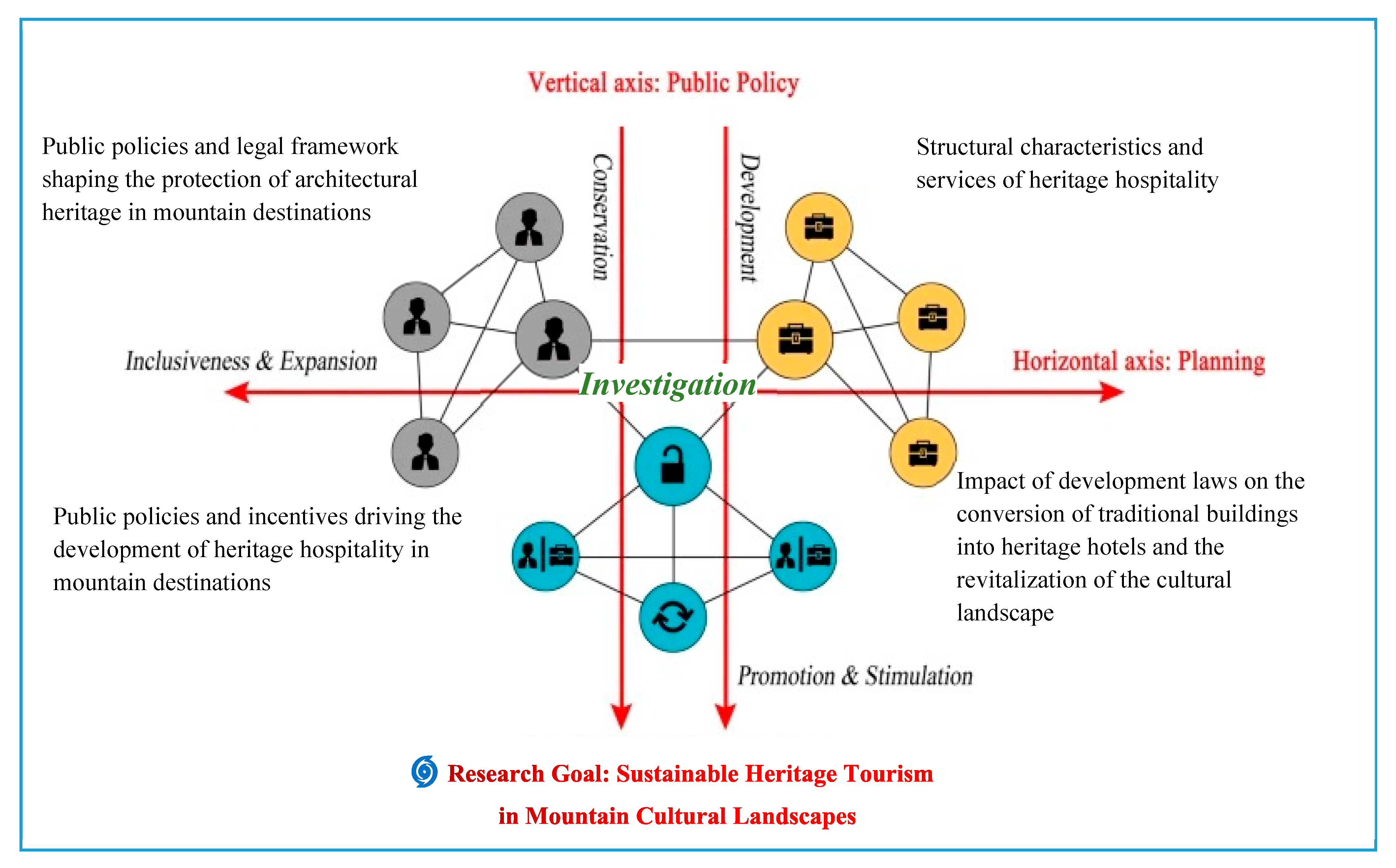
This study explores how policy planning and investment incentives transform traditional mountain settlements into heritage-led tourism destinations, focusing on Zagori as a representative case. Building on Zhao et al.’s [1] Conservation–Development framework, we introduce a third analytical axis—Investigation—which operationalizes planning instruments through empirical evidence (Figure 3). In doing so, the axis links policy intentions and incentive implementation to their observable outcomes in total hotel sector and population dynamics.
Figure 3.
Adapted Conservation–Development–Investigation framework [1], implemented to the case of Zagori.
The framework connects policy intent to on-the-ground outcomes through three axes:
- Conservation: heritage protection rules, spatial planning and UNESCO designation;
- Development: tourism incentives and development laws;
- Investigation: empirical operationalization through indicators.
The Investigation axis converts policies into measurable variables—heritage hotel structure and quality, investment efficiency, and municipal units dynamics—revealing how successive incentive phases shaped spatially uneven heritage hospitality growth and its interaction with demographic stability across Zagori’s municipal units.
Within the Investigation axis, policies were operationalized through a concise set of indicators, including subsidy intensity (percentage of public contribution to total investment), completion time (in years), cost efficiency per bed (in constant 2021 euros), heritage beds per capita, total hotel beds per capita, population change (in percentage terms per decade) and the correlation between tourism density and demographic evolution. Additionally, a Quality Intensity Index was introduced to measure improvements in hospitality quality standards, i.e., star category upgrades in accordance with legislation and on a per-unit basis, capturing the qualitative dimension of development outcomes. These metrics quantify the impact of successive incentive phases on the scale, efficiency and spatial distribution of heritage hospitality, as well as its demographic impact.
Three complementary datasets were integrated:
- Policy and planning corpus: National legislation and Greek National Tourism Organization (GNTO)/government circulars (1950s–2020s) concerning heritage protection and tourism incentives. Documents were coded thematically (heritage protection, hotel incentives, mountain zones, etc.) and chronologically to trace the shift from subsidy-driven frameworks (1990s–2000s) to second-generation sustainability-oriented incentives (post-2010).
- Heritage-hotel register: This is the inventory of the Hellenic Chamber of Hotels (HCH) for the Zagori municipality, containing details such as name of units, bed capacity, star category, opening period, altitude, legal form and amenities. The following were derived: heritage hospitality structural characteristics, development phase (pre-1989, 1990s, 2000s and 2010–2024) and spatial dynamics (municipal units).
- Investment files: The Greek Ministry of Development approvals for the conversion of traditional/listed buildings into hotels, including information on the investment cost, subsidy share, loan/private capital combination, completion time, job creation and bed capacity. Records were harmonized by law (1982, 1990, 1998, 2004, 2011 and 2016) to allow cross-phase comparisons.
The analysis unfolded in three stages:
- Policy sequencing → investment phases: Mapping legislative frameworks against hotel formation periods, to identify policy ‘windows’ for heritage-hospitality development.
- Structure → capacity → geography: profiling heritage hospitality in terms of size, quality and operation period, and then comparing their spatial distribution with the total tourism accommodation capacity, in order to assess whether heritage hospitality is marginal or central to upgrading the mountain destination.
- Socio-spatial reading: juxtaposing heritage and total tourism densities with decadal population change and residences data to interpret correlations with tourism and demographic resilience—or, conversely, decline and over-concentration.
The results are presented in the form of tables, figures and maps that combine: (i) policy phases versus the evolution of heritage hospitality (ii) changes in the structure and quality of heritage hospitality over time and (iii) municipal unit tables showing population change, heritage hotel beds per capita (HBPC)/total beds per capita. The resulting data were recorded in Excel and analyzed graphically using charts and thematic maps generated with the open-access Datawrapper platform (https://www.datawrapper.de/maps; accessed on 4 December 2025).
This policy–archival–quantitative framework enables the tracing of transformation pathways from regulation to outcomes. It demonstrates how the policy implementation and heritage hospitality development jointly shape the revitalization and resilience of mountain destinations such as Zagori.
3.2.1. Data Sources and Time Frames
To operationalize the Conservation–Development–Investigation framework, four primary datasets covering the period from 1950 to 2025 were integrated. Table 1 provides an overview of the datasets’ sources, spatial coverage, timeframes, main variables and key preprocessing steps. Further details on the structure, cleaning and matching of the HCH and Ministry datasets are provided in Appendix A.
Table 1.
Data sources and preprocessing used to operationalize the Conservation–Development–Investigation framework for the Zagori case study.
Airbnb-type short-term rental estimates were sourced from Airdna and the Research Institute for Tourism. These estimates are used descriptively in Section 4.5.2. All bed-per-capita indicators refer exclusively to formal accommodation, such as hotels and rented rooms. They do not include short-term rentals via platforms such as Airbnb, nor do they include second homes.
3.2.2. Quantitative Indicators Used in the Analysis
In order to make the above datasets comparable, the analysis relies on a set of quantitative indicators describing tourism intensity, investment efficiency ratios and demographic change. These indicators are explicitly defined here to ensure transparency and reproducibility. Table 2 summarizes the symbols, calculation rules and interpretation of each indicator used in the empirical analysis.
Table 2.
Definition of composite indicators used in the analysis.
This analysis relies on secondary data (administrative registers, investment files and census statistics), complemented by policy and planning documents. While these sources allow us to reconstruct policy trajectories, investment patterns and structural changes in the hospitality sector, they do not directly observe the underlying social mechanisms–such as individual entrepreneurial choices, the mobilization of diaspora capital or forms of community participation–which are therefore discussed as plausible interpretations informed by the existing literature rather than as directly measured causal processes.
4. Results
4.1. Public Policies and Legal Frameworks Shaping the Protection of Architectural Heritage in Mountain Settlements, with a Focus on Zagori (RQ1)
In Greece, the systematic protection of modern architectural heritage effectively began after the 1975 Constitution, which explicitly mandated the preservation and safeguarding of traditional settlements as well as individual buildings or structures of architectural significance. A few years later, in 1978 and 1979, special Presidential Decrees designated 30 settlements in the Prefecture of Ioannina—most of them located in the Zagori region—as traditional, while an additional 60 settlements were placed under protection zones. Strict urban planning regulations were introduced, defining permitted land uses, the design of public spaces, and the restoration or construction of buildings. All building activity was brought under the supervision and approval of the Committee for Urban and Architectural Control. Thus, by the late 1970s, a new state policy emerged, aimed at preserving and promoting the identity of traditional settlements.
Over the following decades, the legal and institutional framework for heritage protection in Greece was further strengthened. In 1981, Greece ratified the 1972 UNESCO Convention (Paris) on the Protection of the World’s Natural and Cultural Heritage, and in 1992, it ratified the 1985 Granada Convention on the Protection of the Architectural Heritage of Europe. The latter established the obligation to adopt a comprehensive policy for the protection of architectural heritage and emphasized the importance of integrating protected assets into the economic and social life of their communities.
An examination of the spatial distribution of traditional settlements in Greece reveals that the majority are found in island and lowland areas, while only 15.2% are located in mountainous zones (above 600 m). Significant concentrations exist in areas such as Zagorochoria and Pelion, where intense tourism activity has developed [6]. This low percentage reflects the demographic decline of mountain regions, since the designation of traditional settlements—and, more broadly, the protection of modern built heritage—largely depends on the active participation of local authorities and communities. This condition highlights both the lack of administrative capacity to retain population and the dynamic role of tourism as a driver of preservation and revitalization in mountain settlements.
4.2. Public Policies and Incentives Driving the Development of Heritage Hospitality in Mountain Settlements, with Reference to Zagori (RQ2)
The evolution of heritage hospitality in Greece’s mountain regions, particularly in Zagori, has been directly shaped by public incentive policies that encouraged the adaptive reuse of traditional architecture. Over the past seven decades, distinct policy phases can be identified, each characterized by specific objectives, instruments, and legislative interventions (see Table 3).
Table 3.
Key development laws, incentives, objectives, and implementation in Zagori.
The 1970s marked Greece’s accelerated entry into the international tourism scene [15]. During this period, the GNTO laid the foundations for linking tourism and architectural heritage by including Papigo village in Zagori in the Traditional Settlements Revitalization Program (1975–1992). Moreover, the 1973 Development Law introduced targeted incentives, encouraging the conversion of traditional and listed buildings into hotels by private investors. Disadvantaged mountain areas were classified as Development Zone D, and long-term loans covering up to 85% of reconstruction costs established the first substantial financial mechanism for adaptive reuse. Although implementation was limited, this period laid the groundwork for future heritage hospitality policies. Under GNTO’s supervision, 45 heritage buildings in Zagori received authorization for use as tourist accommodation.
In the 1980s, incentive policies shifted significantly towards supporting small and medium-sized decentralized tourism enterprises through grants and interest-rate subsidies. The Development Law 1262/1982 redefined the restoration and conversion of traditional buildings as productive investments, offering grants of up to 50%. The primary aims were to counter rural depopulation and create new income sources for local communities, linking tourism to cultural heritage preservation. This period proved crucial for Zagori, where traditional mansions were restored and converted into family-run guesthouses.
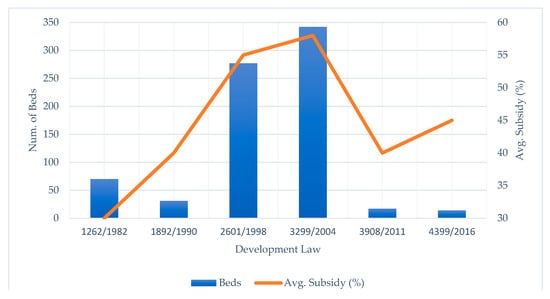
During the next two decades (1990–2009), incentive frameworks (Laws 1892/1990, 2601/1998, and 3299/2004) emphasized high subsidies (40–58%) and financial leasing mechanisms favoring small-scale restoration projects. The institutional recognition of “traditional accommodations” by the GNTO established heritage hotels as a distinct category within the national hospitality sector. In Zagori, these policies mobilized local and diaspora capital, leading to a wave of mansion and house restorations that made heritage hospitality the cornerstone of local tourism development.
The 2010s, under the strain of Greece’s financial crisis, brought a radical revision of investment frameworks. Direct grants were replaced by tax incentives and sustainability-based criteria aligned with EU austerity measures and the Green Agenda (Laws 3908/2011 and 4399/2016). Zagori’s heritage hotels increasingly relied on EU-funded programs such as the NSRF 2014–2020 and the Recovery and Resilience Facility to improve energy efficiency and promote digital transformation. Despite financial constraints, this era fostered “second-generation incentives” focused on resilience, environmental adaptation, and smart growth.
The current policy phase (2021–present), shaped by Law 4887/2022, introduces differentiated incentives based on the level of tourism development, with particular emphasis on mountain regions such as Zagori. Aligned with the EU Green Deal and the Sustainable Development Goals (SDGs), it prioritizes digital transformation, circular economy practices, and low-impact adaptive reuse. The designation of Zagori as a UNESCO World Heritage Site in 2023 has further reinforced its role as a laboratory for sustainable, heritage-based tourism policy in mountain territories.
The development of heritage hospitality in Zagori clearly illustrates the shift from isolated architectural reuse projects—supervised by a centralized state authority—to an integrated policy framework that embeds cultural preservation within the principles of sustainability. Public policies have not only enabled the creation of heritage hotels but have also redefined architectural heritage as an active economic resource. Consequently, Zagori stands as a model of policy-driven rural regeneration, where long-term incentives, spatial planning, and adaptive reuse converge to create both a distinct tourism identity and a framework for community resilience.
4.3. Policy Implementation and Investment Dynamics Converting Traditional Buildings into Heritage Hotels (RQ3)
Between 1982 and 2016, 44 out of 52 heritage hotels (85%) in Zagori received funding under six major development laws, confirming the direct link between legislative frameworks and the growth of heritage hospitality (see Table 4).
Table 4.
Heritage hotels in Zagori by Development Law.
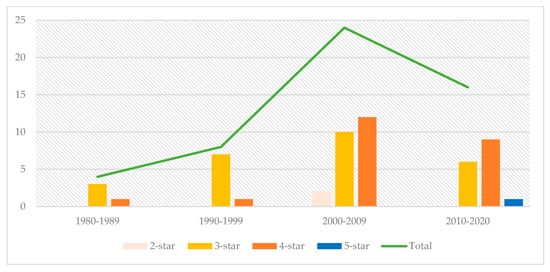
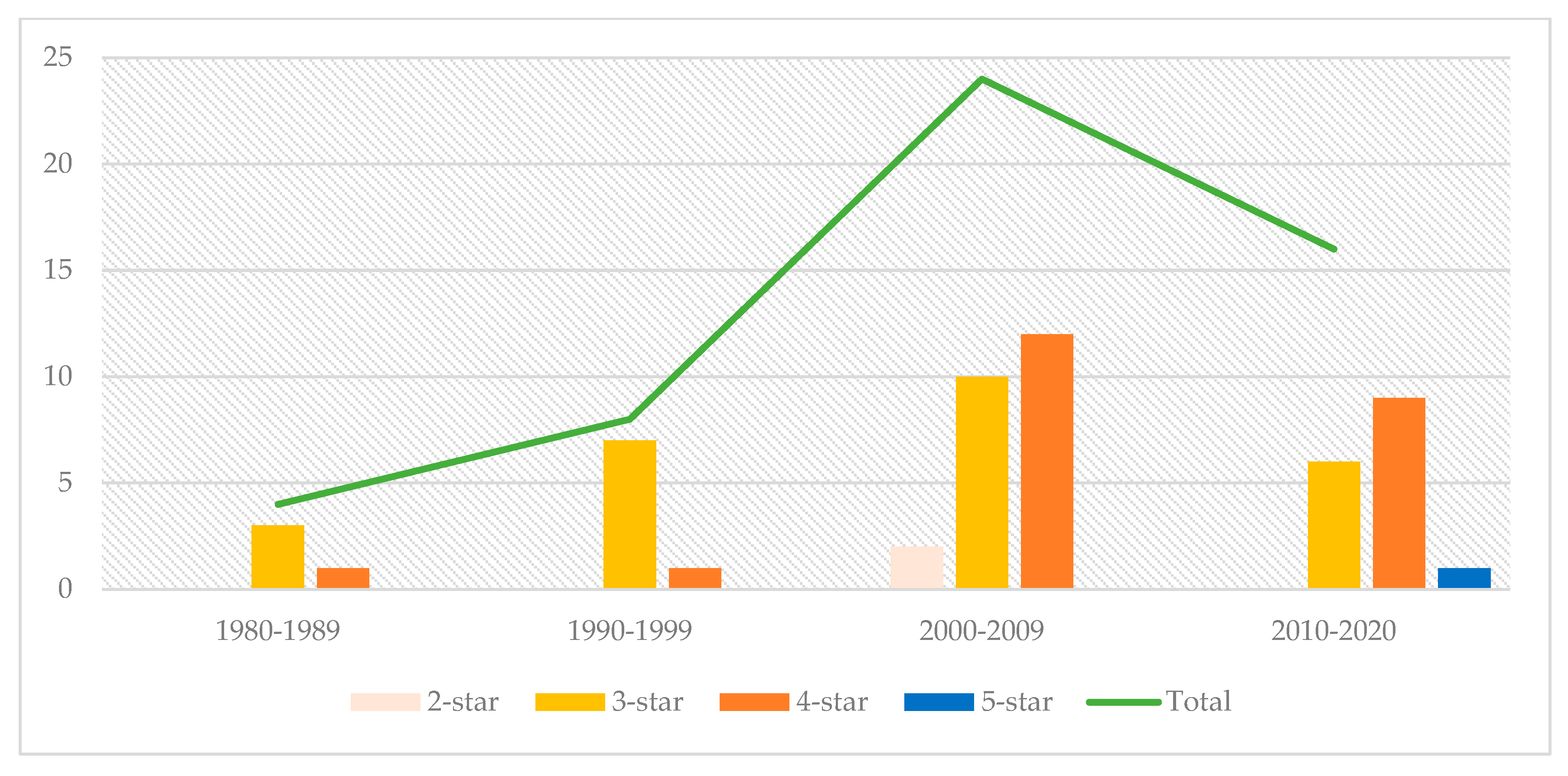
Three policy cycles stand out in the history of heritage hotel investment (see Table 4 and Figure 4):
Figure 4.
Evolution of heritage hotels in Zagori by star rating and opening period. Source: Authors’ own processing data based on the Hellenic Ministry of Development 1982–2023 and the HCH databases 2025.
- The 1980s: The early frameworks (Law 1262/1982) introduced the concept of productive investment for restoration, offering grants of up to 50%. These schemes catalyzed the conversion of traditional mansions into small, family-run guesthouses, linking tourism development with local entrepreneurship.
- The 1990–2009 period: Laws 2601/1998 and 3299/2004 were the most transformative, covering over half of total costs and generating 36 new heritage hotels with 619 new beds. They also signaled a qualitative shift towards higher standards of hospitality, with the first 4-star and 5-star heritage hotels being established during this period.
- Post-2010: Growth slowed after 2010 due to the economic crisis and the development laws (3908/2011 and 4399/2016) emphasized sustainability and tax relief over direct subsidies. Many existing heritage hotels used EU funds (such as the NSRF 2014–2020 and the Recovery and Resilience Facility) to improve energy efficiency and digital transformation, thereby reinforcing their long-term resilience.
Investment efficiency indicators highlight the strong symbiosis between the state and the market that shaped this evolution (see Table 4, Table 5 and Figure 2). Subsidy intensity peaked during the 1998–2004 period, with public funding often exceeding 50% of total investment. Completion efficiency improved over time, with average project durations falling from 4.5 years under the 1990 framework to just over 3 years in the 2000s, reflecting more efficient administrative processes.
Table 5.
Investment Indicators by Development Law.
The Quality Intensity Index measured by the increase in the number of projects in the 4-star and 5-star categories, indicates a deliberate policy orientation towards upgrading quality and achieving cultural differentiation (see Figure 5). This quality leap has coincided with rising costs per bed, highlighting the trade-off between improved hospitality standards and greater financial intensity. At constant 2021 prices, the average cost per bed increased from €36,500 in 1998 to €41,200 in 2004, indicating higher quality standards and more complex restoration work.
Figure 5.
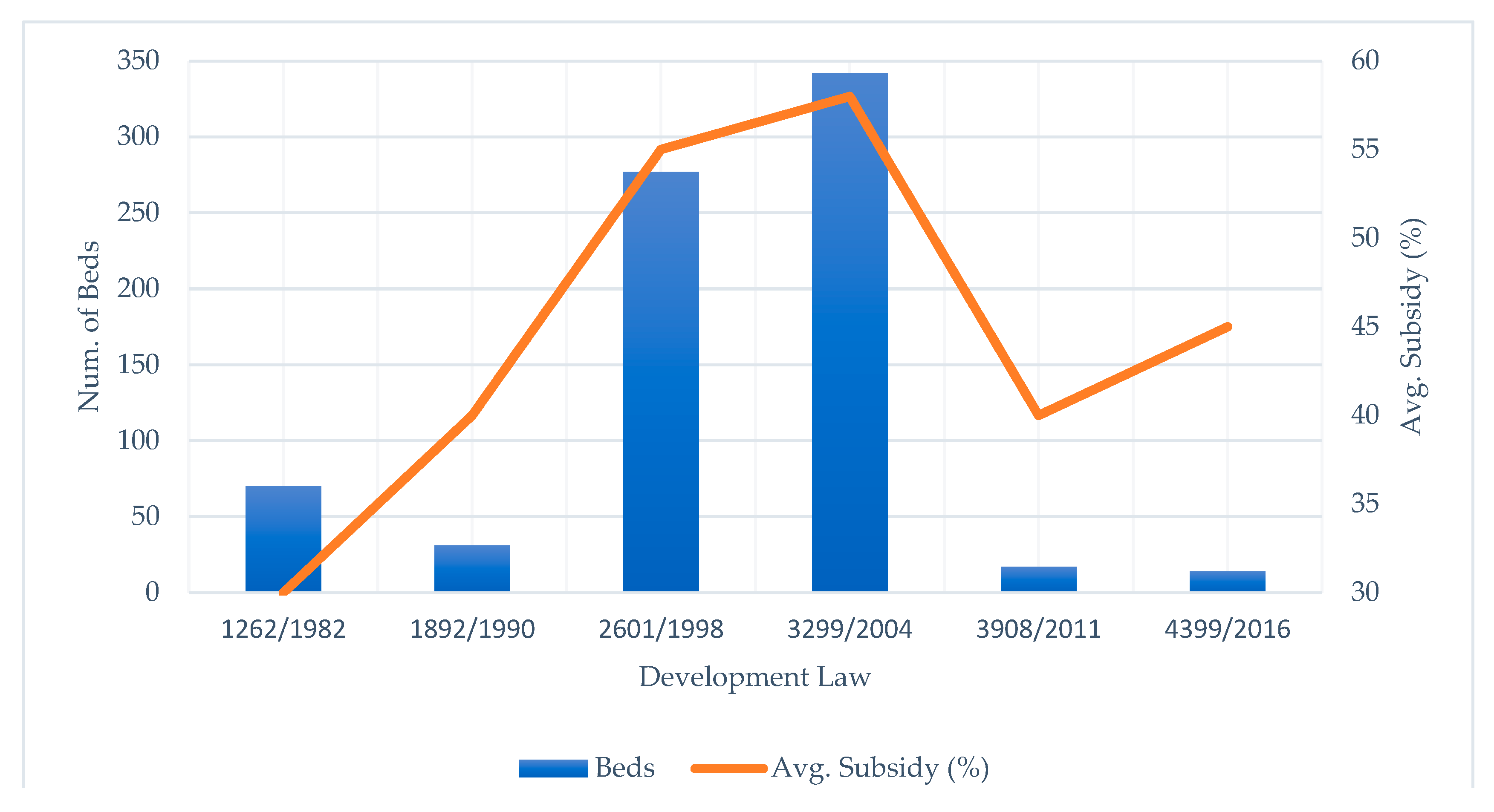
Heritage hotels Development in Zagori: Beds and Subsidy Rate by Law. Source: Authors’ own processing data based on the Hellenic Ministry of Development 1982–2023 and the HCH 2025 databases.
These illustrate the cumulative effect of policy continuity, including sustained funding, administrative refinement and an increasing focus on cultural quality. The result was a dual transformation of the built environment and local entrepreneurship. Heritage hotels became the embodiment of the state’s developmental vision, transforming architectural conservation into a profitable enterprise.
By 2010, total hotel capacity in Zagori had doubled compared to the 1990s, with heritage hotels accounting for the majority of new rooms and setting a standard for architectural integrity and service quality. Even when subsequent frameworks prioritized sustainability over expansion, the heritage hospitality proved remarkably resilient, adapting through small-scale digitalization, renewable energy retrofits and experiential tourism offerings.
The implementation of development laws transformed Zagori from a marginal mountain region into a developed mountain heritage destination. Consistent support from the state, combined with local entrepreneurship and cultural continuity, has turned the adaptive reuse of historic buildings into an important conservation tool and a vital means of enhancing rural resilience.
The overall impact of these legislative frameworks can be seen in both the number of restored buildings and the structure, ownership and spatial configuration of the resulting heritage hotels. Public incentives have shaped both the number of conversions that have taken place and the type of enterprises that have emerged, which are typically small-scale, family-run and deeply rooted in local society.
4.4. Structural Profile of Heritage Hotels in Zagori (RQ4)
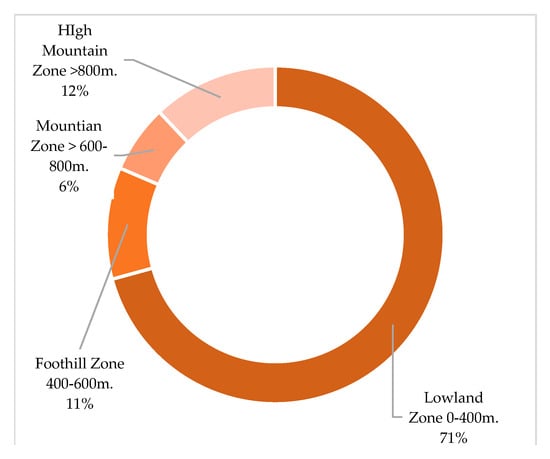
At the national level, Greece has 739 heritage hotels, accounting for 7.35% of total hotel capacity. The majority of these hotels are located in coastal and lowland areas (0–400 m), accounting for 71% of the total. Only 6% are located in mountain zones (600–800 m), and 12% are in high mountain zones above 800 m (see Figure 6).
Figure 6.
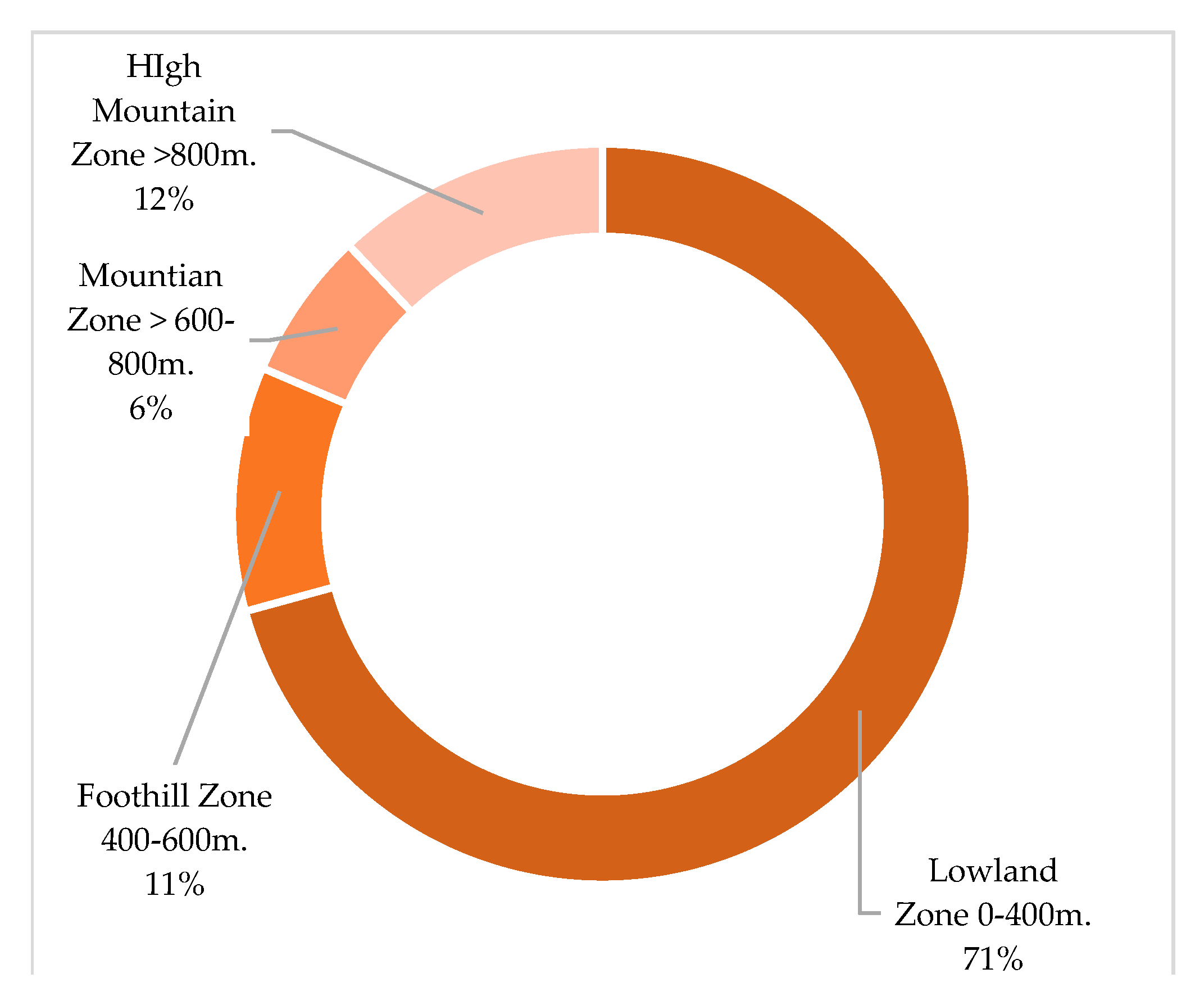
Distribution of heritage hotels by elevation zone in Greece. Source: Authors’ own processing data based on the HCH database 2025.
The Ioannina Regional Unit has the third largest share of heritage hospitality in Greece, accounting for 10% of the total (72 units). The Municipality of Zagori alone accounts for 68% of these, comprising 52 units with 850 beds distributed across 19 villages. Notably, 49 of these hotels (94%) are located above an altitude of 800 m, confirming Zagori’s unique concentration of high-mountain heritage hospitality.
These hotels of Zagori are small–scale, independent enterprises, averaging 7 rooms (or 16 beds). They are predominantly owner-managed and family-run, operating all year-round, which reflects their deep local integration. This pattern is also evident in the legal form of their enterprise: 87% are personal companies (37% are sole proprietorships and 50% are general or limited partnerships), while only 13% are incorporated companies (S.A.), which are often the result of family enterprises transforming in order to secure long-term institutional stability and access investment incentives [48]. This ownership profile positions Zagori’s heritage hotels within the broader tradition of community-based entrepreneurship, connecting social cohesion with economic vitality.
In terms of facilities and amenities, nearly half of Zagori’s heritage hotels have in-room fireplaces, which reinforce their mountainous character. Other common facilities include restaurants, bars, room service, minibars, parking and pet-friendly policies. The absence of swimming pools highlights the hotels’ focus on nature-based tourism destination rather than a mass tourism market one.
Architecturally, over 90% of the hotels preserve vernacular features (stone walls, slate roofs, and timber interior elements). Beyond their structural and service attributes, the way heritage hotels present their identity online is a crucial factor. Many highlight the historic narrative of their buildings by presenting information such as construction dates, former uses and restoration details. In marketing terms, they are positioned as traditional hotels or guesthouses that foreground local materials, furniture, crafts and narratives, embedding tourism accommodation within the cultural landscape.
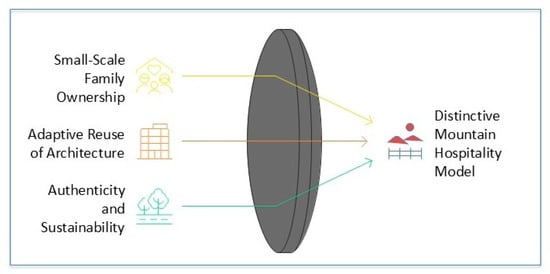
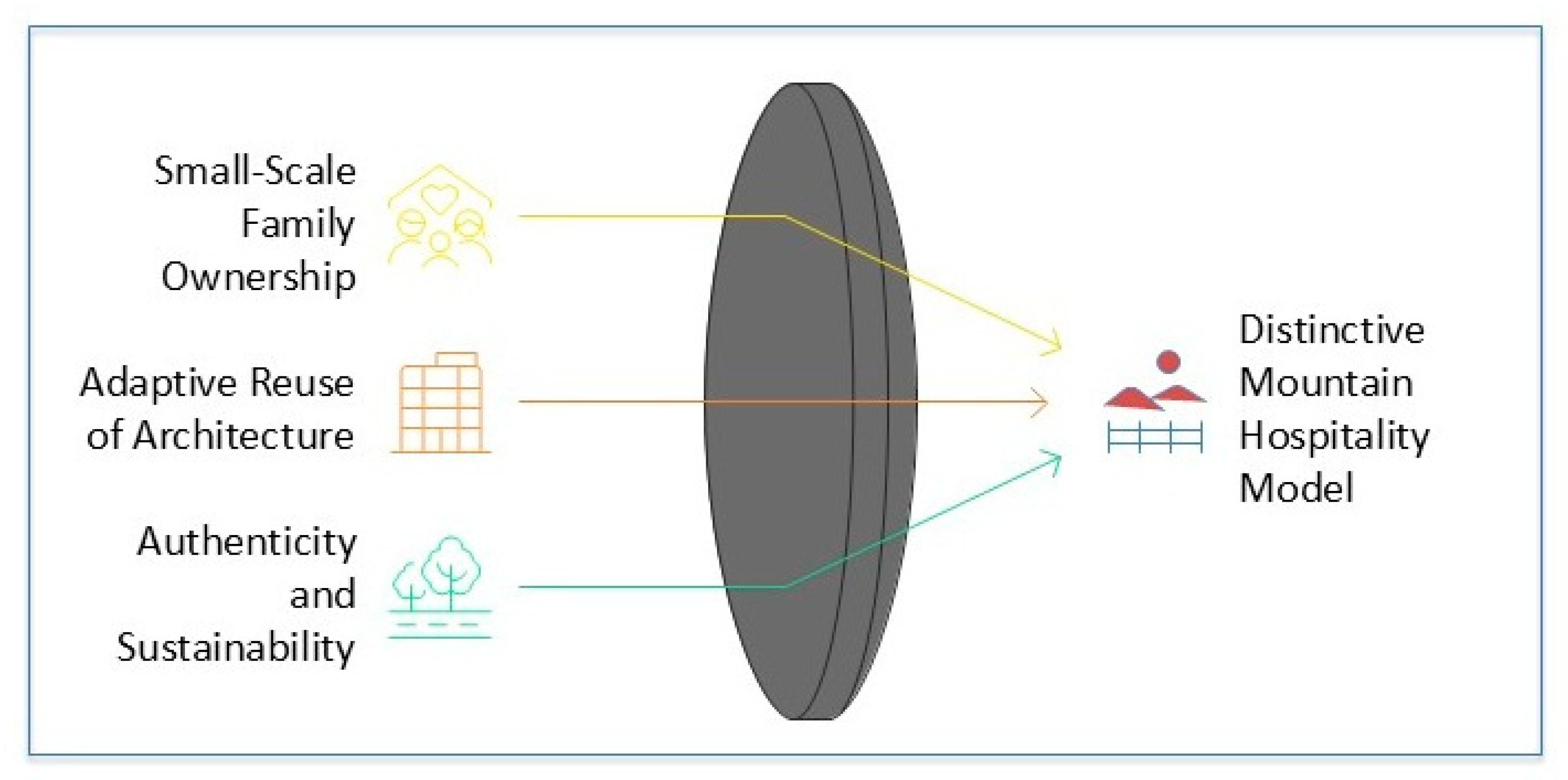
In summary, Zagori’s heritage hotels constitute a distinctive mountain hospitality model, defined by three interrelated attributes (see Figure 7):
Figure 7.
Zagori’s Heritage Hospitality Ecosystem. Source: Authors’ own processing data.
These findings confirm that Zagori’s heritage hotels constitute a distinct, high-altitude hospitality ecosystem that differs significantly from Greece’s dominant coastal model (see Table 6). This ecosystem did not emerge as a result of spontaneous market forces, but rather through sustained state intervention through incentive laws and adaptive reuse policies. This policy–entrepreneurship synergy shaped both the physical and institutional landscape of tourism in Zagori, transforming heritage preservation into a driver of local development.
Table 6.
Structural profile of heritage hotels in Zagori, 2024.
4.5. The Contribution of Heritage Hospitality to the Demographic Resilience and Revitalization of Zagori’s Mountain Settlements (RQ5)
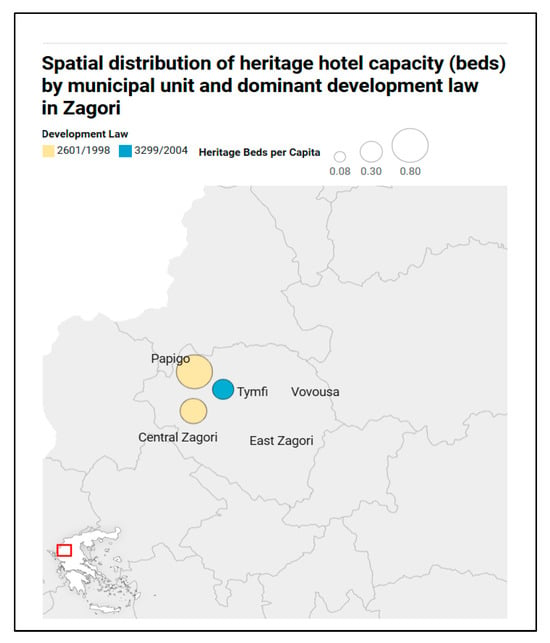
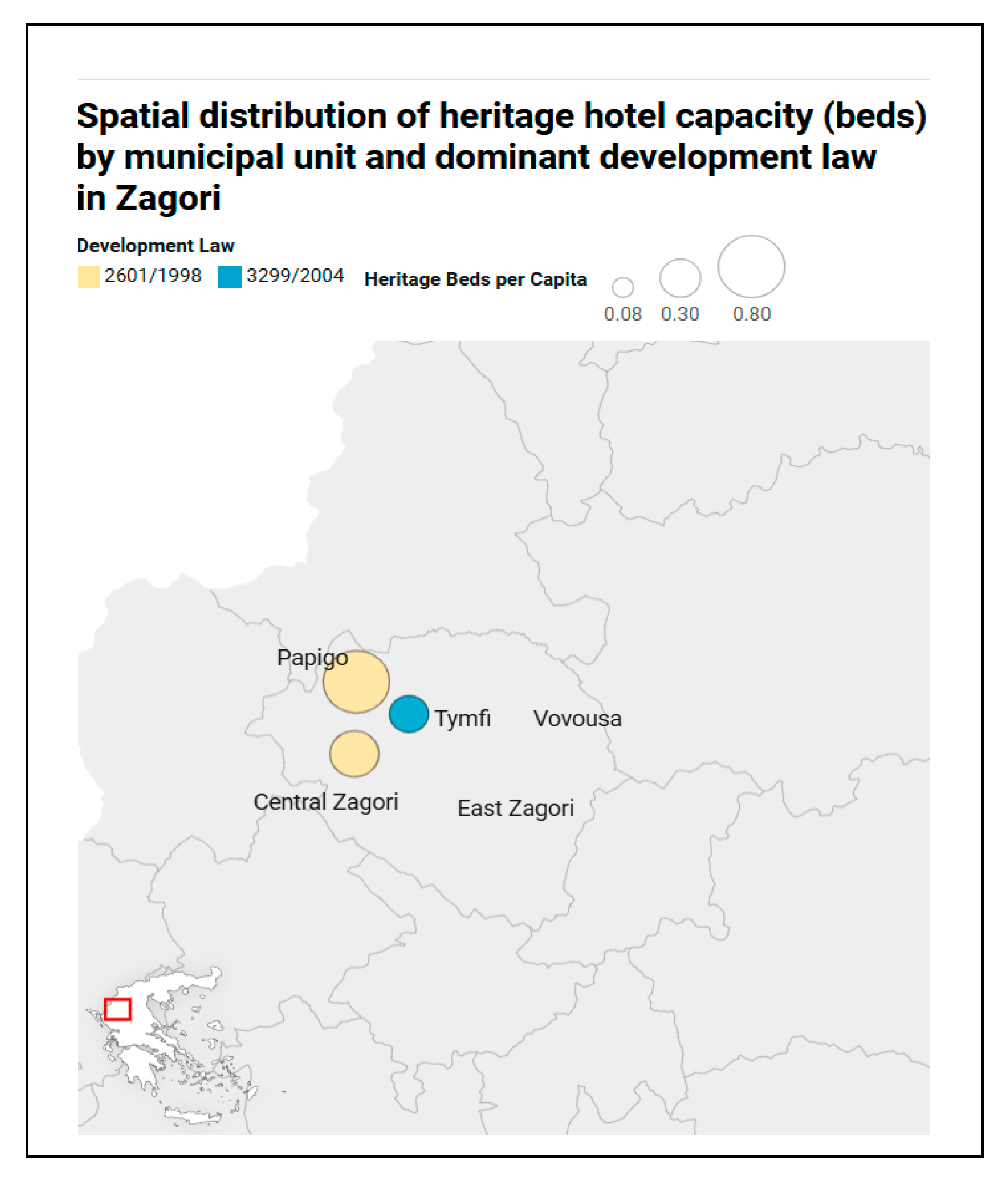
The evolution of Zagori’s population between 2001 and 2021 illustrates the dual role of tourism—and particularly heritage hospitality—as both a stabilizing and a transformative force within the wider context of rural depopulation in Greece. The growth of heritage hospitality has reshaped local settlement patterns, creating distinct spatial differences across the municipality’s units (see Table 7; Figure 8 and Figure 9).
Table 7.
Population change and Heritage hotels capacity in Zagori, 2001–2021.
Figure 8.
Spatial distribution of heritage hotel capacity by dominant development law. The red box in the locator map indicates the position of Zagori within Greece. Source: Authors’ own processing data based on the ELSTAT censuses 2021, the Hellenic Ministry of Development 1982–2023 and the HCH 2025.
Figure 9.
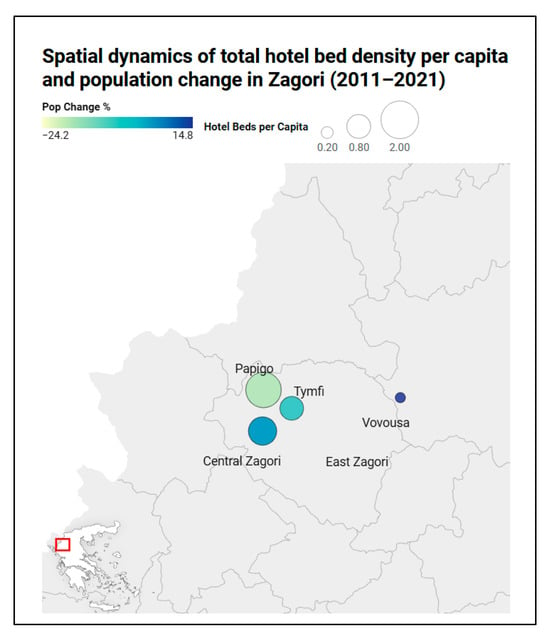
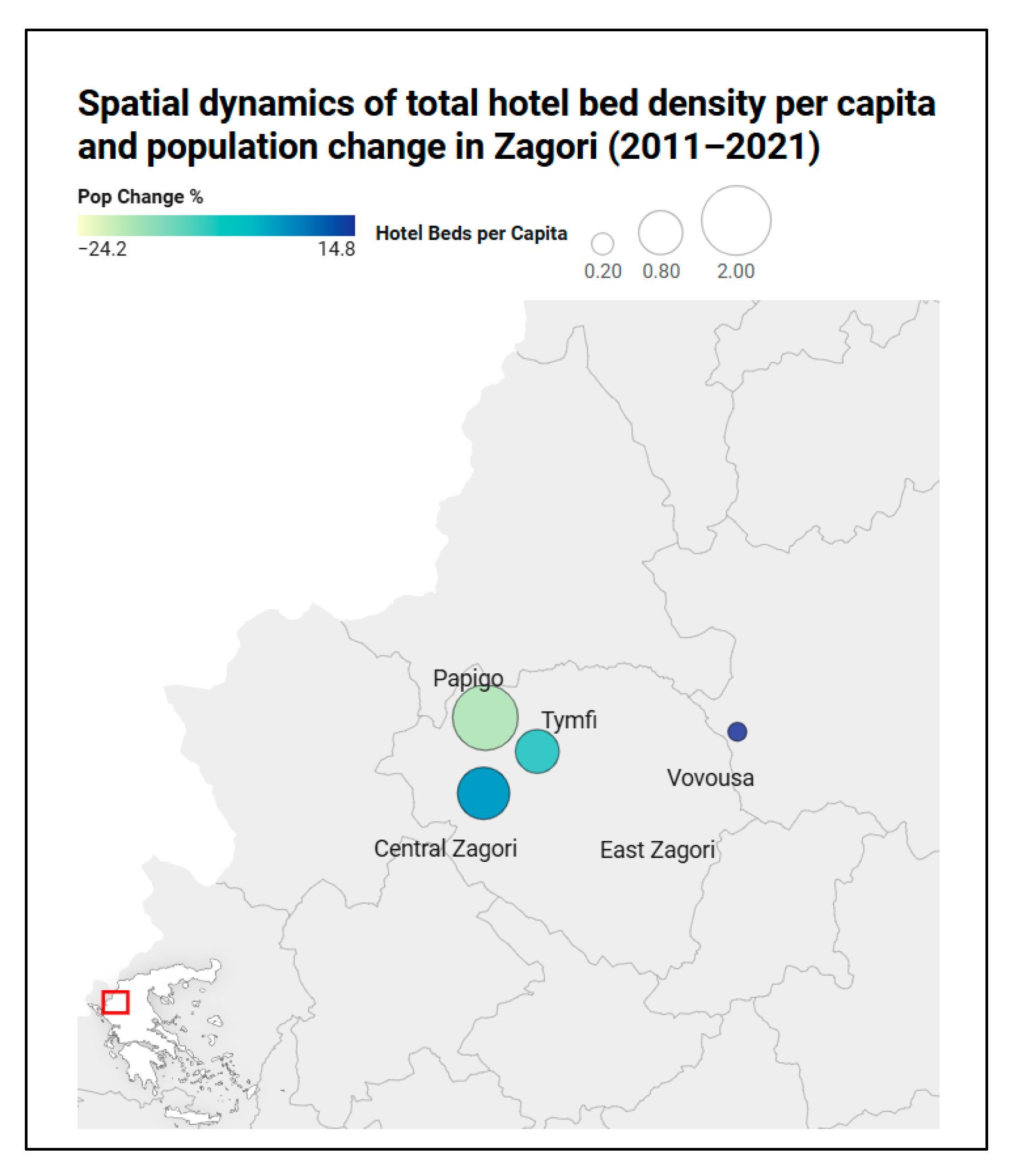
Spatial dynamics of total hotel-bed density and population change 2011–2021. The red box in the locator map indicates the position of Zagori within Greece. Source: Authors’ own processing data based on the ELSTAT censuses 2021, the Hellenic Ministry of Development 1982–2023 and the HCH 2025.
4.5.1. Demographic Change, Tourism Intensity and Spatial Hierarchies
During the decade 2001–2011, the rate of population decline slowed immediately following the hotel investment boom (Laws 2601/1998 and 3299/2004). This relative stabilization was due to the direct and indirect impacts of tourism-related employment and the adaptive reuse of traditional housing stock. Papigo stands out with its remarkable population increase (65.8%), coinciding with the establishment of heritage hotels and the highest bed density per capita (0.80).
In the subsequent decade (2011–2021) a lack of new large-scale incentives and limited establishment of new heritage hotels resulted in an overall demographic contraction of −9.4%. However, local patterns diverged sharply (see Table 7 and Table 8; Figure 8 and Figure 9), revealing a clear hierarchy of tourism development closely aligned with demographic resilience.
Table 8.
Tourism Accommodation structure in Zagori by municipal unit, 2025.
Central Zagori has been identified as the hub of the region’s hospitality infrastructure, with 60 hotels (1168 beds) and 27 rental rooms (278 beds), achieving a combined density of 1.4 beds per capita and moderate population recovery. Tymfi exhibits intermediate resilience. The district boasts a balanced combination of 36 hotels (637 beds) and 19 rent rooms (178 beds), equating to 0.96 beds per capita. The population of the region has exhibited a negligible decline of 1.7%, indicating that strategic investment initiatives may be instrumental in arresting the ongoing trend of depopulation.
Papigo, on the other hand, is a notable exception, as it exhibits a unique cultural landscape and a smaller settlement size, yet it experiences the highest intensity of tourism accommodation (1.78 beds per capita). This is indicative of a combination of heritage hotels and small rent rooms (1.18 in total and 0.53 in heritage hotels). However, the region is also experiencing a decline in population (–16.5%), suggesting limitations to its carrying capacity and the consequences of overconcentration.
Conversely, East Zagori has experienced the most precipitous decline in population, with a decrease of 24.2%. The dearth of tourism infrastructure (with only four rental rooms offering 39 beds), despite the area’s size (with a population of 1113 in 2021), underscores the repercussions that an absence of tourism investment can have on demographic sustainability. Finally, Vovousa, which has only one hotel (with 15 beds) and five small rental rooms (with 48 beds), grew by 14.8%, reflecting the importance of local social capital and environmental assets in fostering resilience beyond tourism.
The analysis of these data indicates that the presence of heritage hospitality has been associated with the maintenance of demographic resilience in certain areas, and, in some cases, with modest levels of revitalization where it is sufficiently developed and embedded, as evidenced in Central Zagori and Tymfi. Conversely, the absence of heritage hospitality has been linked to acute decline in East Zagori, and its overconcentration in small settlements has the potential to generate demographic tensions, as observed in Papigo.
4.5.2. Residential Patterns, Secondary Homes and Tourism Interactions
The residential patterns in Zagori reflect the deep interconnections between tourism development, seasonal habitation and demographic resilience. The 2021 data reveal a remarkably high ratio of secondary residences across all municipal units—a key indicator of residential dynamics related to tourism in mountainous areas (see Table 9).
Table 9.
Distribution and intensity of secondary residences by municipal unit in Zagori (2021).
The ratio of 0.64 secondary residences per capita at the municipal unit level is exceptionally high, highlighting Zagori’s dual residential and tourism character. In some units, such as Central Zagori and East Zagori, the number of secondary residences is almost equal to the number of permanent residents. This reflects an ongoing process of “touristification of residence”, whereby traditional homes are increasingly converted into intermittently used holiday homes or Airbnb-type short-term rentals.
Further evidence underscores the scale of this transformation. Drawing on Airdna data processed by the Research Institute for Tourism, it is estimated that in 2025 the municipality of Zagori hosts between 600 and 700 Airbnb-type short-term rental units. When compared with the 189 officially registered tourist accommodation units (117 hotels and 72 rental rooms; see Table 9), this corresponds to approximately three to four short-term rentals per conventional tourism accommodation. The short-term rental sector thus numerically surpasses the formal tourism accommodation supply, with significant implications for housing availability, secondary residence patterns and the restructuring of the building stock.
Heritage hotels have acted as catalysts in this transformation. Their adaptive reuse of listed buildings not only preserved vernacular architecture but also stimulated the rehabilitation of surrounding housing stock, particularly in Papigo and Central Zagori. The growth of short-term rentals to non-listed properties has spread the ‘heritage aesthetic’ more widely, creating a hybrid landscape that combines regulated heritage hospitality with flexible private rentals—which has become a new form of rural tourism economy in Zagori.
The uneven spatial distribution of secondary homes reflects contrasting trajectories of resilience (see Table 8). Central Zagori and Tymfi exhibit relatively balanced patterns of heritage tourism and seasonal residence, supporting mild demographic resilience. In contrast, East Zagori’s high proportion of secondary residences (0.63 per inhabitant) without equivalent tourism infrastructure points to a pattern of empty or intermittently unused settlements where investment does not lead to sustained vitality. Conversely, Vovousa and Papigo demonstrate the limitations of tourism-driven habitation; while heritage and holiday housing can reinforce the local economy, they do not necessarily secure long-term demographic stability and may intensify seasonalization and housing pressures.
Many residences that were previously registered as secondary or vacant properties have gradually been converted into short-term rental units, reflecting a wider transformation of rural housing markets under tourism pressure. These dual-use properties, which are part residence and part tourism asset, represent the interface between heritage conservation, tourism diversification and housing dynamics.
5. Discussion
The findings demonstrate that the evolution of heritage hospitality in Zagori has been shaped by long-term policy consistency, family entrepreneurship and the adaptive reuse of vernacular architecture, rather than spontaneous market forces. In this respect, the case study supports the argument that policy-driven investment frameworks can foster resilience in mountain cultural landscapes [2,3,12,13,14,15]. The Conservation–Development–Investigation model employed in this study provides an analytical bridge between heritage governance and tourism performance by operationalizing the transition from legislative intent to measurable socio-spatial outcomes.
The results reveal three key patterns. Firstly, heritage hospitality in Zagori emerged through continuous public intervention, initially via preservation policy frameworks and subsequently through the Development Laws of 1982–2016 [6,7,33]. These successive frameworks directed public and private resources towards the restoration of traditional houses, mansions and listed buildings, thereby creating a network of small-scale, high-altitude hotels that combine cultural authenticity with sustainable development. The evolution of small-scale tourism accommodation more broadly mirrors this temporal logic: a phase of strong expansion between 1990 and 2009, followed by a period of stagnation and qualitative upgrading after 2010, shaped by the financial crisis and changes to national incentive frameworks (Laws 3908/2011 and 4399/2016). A significant proportion of existing heritage hotels have relied on EU funds (including the NSRF 2014–2020 and the Recovery and Resilience Facility) to improve energy efficiency and digital capabilities, thereby reinforcing their long-term resilience.
Secondly, in municipal units where policy incentives align with local initiatives, such as Central Zagori and Tymfi, heritage-driven tourism appears able to counteract depopulation and generate more diversified income structures. The findings support the view that rural tourism, when firmly grounded in place-based heritage, can enhance community resilience, in line with international evidence [3,33,34,35,36,37]. At the same time, the significant prevalence of secondary residences and the rapid proliferation of short-term rentals suggest that revitalization is increasingly mediated by hybrid dwelling forms, whereby houses function concurrently as residences and tourism assets. This “touristification of residence” generates revenue streams and conservation incentives, but also raises concerns regarding housing affordability, the viability of permanent habitation and the seasonal polarization of local communities.
Thirdly, the contrasting cases of Papigo and East Zagori illustrate two key limitations of the model: overconcentration, which risks exceeding local carrying capacity, and lack of investment, which leads to functional decline. From a policy perspective, the study provides empirical evidence that investment incentives shape not only tourism infrastructure but also the socio-spatial structure of municipal units. Heritage hotels have acted as catalysts for broader processes of spatial regeneration, reviving abandoned mansions and houses, sustaining local crafts and reinforcing landscape integrity. However, the rapid spread of short-term rentals has blurred the distinction between heritage hospitality, tourism accommodation and seasonal housing, underscoring the need to regulate more effectively the interface between tourism and residence. The spatial analysis (Figure 8 and Figure 9) visually confirms these uneven dynamics, illustrating the clustering of total tourism accommodation and the demographic outcomes associated with different development paths.
The transformation of Zagori from a marginal mountain region into a consolidated mountain heritage destination was primarily driven by the evolution of development legislation, with the 2018 Spatial Framework of the Epirus Region and the revision of the 1979 Presidential Decree on traditional settlements seeking to align regulatory tools with the broader intent of safeguarding architectural authenticity and preventing superficial morphological imitation. More recently, the inscription of Zagori on the UNESCO World Heritage List in 2023 has acted as a “non-financial driver”, enhancing the symbolic value of the cultural landscape, attracting new visitors and prompting the Ministry of Culture to extend state protection by designating 13 traditional settlements as historic sites. Taken together, these processes emphasize that heritage hospitality is the outcome of two main forces: financial instruments (subsidies, tax relief, incentive regimes) and symbolic–regulatory drivers (designation, spatial planning, UNESCO recognition).
In comparative terms, Zagori represents a distinct Mediterranean model of heritage hospitality, differing from the more fragmented rural tourism Albergo Diffuso trajectories found in southern Italy. Building on the Albergo Diffuso concept, it embeds adaptive reuse within a coherent legal and planning framework, with quality improvements driven by family entrepreneurship [33,34,35,36,37,48]. The region’s long tradition of benefaction and social capital—mobilizing both residents and diaspora networks—has underpinned collective stewardship of architectural identity [43,44], demonstrating that heritage preservation is as much a social practice as a regulatory project. The resulting hospitality ecosystem is characterized by three interlocking attributes: (i) small-scale, family-based ownership structures; (ii) policy-driven adaptive reuse of traditional architecture; and (iii) a consistent aesthetic of authenticity aligned with cultural and environmental sustainability. This model stands in sharp contrast to the prevailing coastal tourism paradigm in Greece, which relies more heavily on larger-scale facilities, highly seasonal demand and standardized mass-tourism products.
Simultaneously, the accelerated proliferation of short-term rentals has contributed to a notable transformation of Zagori’s built environment into a tourism-mediated landscape, characterized by the co-existence of heritage hotels, renovated houses and platform-based rentals. While the concentration of secondary residences reflects the area’s appeal for cultural and alternative tourism, it also raises questions about the affordability of permanent residence and the conditions under which long-term habitation remains viable. In this context, heritage hotels appear to constitute the most regulated and conservation-oriented component of the system, linking architectural preservation with managed tourism development rather than unregulated expansion. The spatial analysis corroborates these findings by illustrating the clustering of total tourism accommodation, the concentration of secondary residences and the differentiated demographic outcomes associated with distinct development trajectories.
From a methodological perspective, adding the Investigation axis to Zhao et al.’s Conservation–Development framework enables the operationalization of policy sequencing, investment efficiency and bed-to-population ratios as monitoring tools. This approach is particularly useful for small destinations where detailed datasets are scarce but the impacts of policies are tangible [1]. As such, it offers a transferable template for linking policy frameworks and investment incentive schemes to outcomes in mountain cultural landscapes.
Finally, the findings have implications for sustainable heritage governance. As Zagori enters a new phase following its inscription as a UNESCO World Heritage Site in 2023, managing growth without compromising authenticity becomes central. Future governance should emphasize participatory mechanisms, continuous monitoring of carrying capacity and differentiated policies between core and peripheral municipal units—principles that are consistent with EU mountain guidance and sustainable heritage agendas [12,13,14,15,22,23]. Taken together, the findings across RQ1–RQ5 point to four priorities for planning and management in mountain cultural landscapes: (i) legal protection of traditional settlements in mountain areas must be coupled with targeted socio-economic measures, rather than relying on designation alone; (ii) incentive schemes should continue to support small-scale, locally embedded adaptive reuse projects in non-saturated, high-altitude destinations such as Zagori; (iii) preserving the distinct small-scale, high-mountain hospitality model requires avoiding large-scale developments, strengthening family and community-based enterprises and reinforcing linkages with local value chains; and (iv) spatial asymmetries must be addressed by consolidating heritage hospitality and basic services in under-provided municipal units, while managing tourism intensity and housing pressures in over-concentrated settlements through capacity limits, zoning and short-term rental regulation.
6. Conclusions
This study shows that heritage-based tourism led by policy can foster socio-economic and demographic resilience while reinforcing conservation goals. By linking public incentives with measurable demographic and spatial outcomes, the research demonstrates that heritage-led tourism in Zagori was the result of sustained policy planning rather than spontaneous development. The adaptive reuse of traditional buildings under successive incentive laws has created a micro-scale, high-altitude hospitality network that contributes to preservation and livelihood diversification.
The main conclusions are:
- Policy continuity matters: long-term incentive schemes and the recognition of traditional settlements created the institutional foundation for sustainable heritage reuse.
- Community participation amplifies policy: family-run heritage hotels converted subsidies into durable, place-rooted assets, sustaining authenticity and local identity.
- Heritage hospitality supports demographic resilience: municipal units combining heritage and general tourism accommodation (Central Zagori and Tymfi) experienced stabilization or modest growth, while units without investment declined.
- Balanced spatial distribution is essential: overconcentration (e.g., Papigo) and neglect (e.g., East Zagori) lead to asymmetries in population trends and landscape management.
The study makes theoretical contributions to debates on mountain cultural landscapes and rural tourism in three ways. First, it conceptualizes heritage hospitality as a policy-mediated rather than purely market-driven outcome, highlighting the combined role of financial instruments and regulatory drivers (designation, planning, UNESCO status). Second, it extends the Conservation–Development framework of Zhao et al. by introducing an Investigation axis that operationalizes policy intent through demographic, investment and tourism indicators, offering a transferable analytical tool for small destinations. Third, it frames Zagori as a tourism-mediated landscape in which heritage hotels, the wider hospitality sector and secondary residences collectively influence patterns of resilience, thus linking heritage-governance debates with broader housing and territorial dynamics.
From a practical perspective, the findings provide concrete guidance for the planning and management of heritage hospitality in mountain territories. Policy for such areas should: (i) combine legal protection of traditional settlements with targeted socio-economic measures and long-term incentive schemes; (ii) prioritize small-scale, locally embedded adaptive reuse projects that reinforce family and community-based entrepreneurship; (iii) integrate heritage hotels into wider local value chains (agri-food, crafts, outdoor activities) to maximize local multipliers; and (iv) regulate tourism intensity and housing pressures—particularly in over-concentrated settlements—through capacity limits, zoning tools and appropriate governance of short-term rentals. For UNESCO-listed or candidate sites such as Zagori, these recommendations underline the need to treat heritage hospitality as part of an integrated cultural landscape policy rather than as an isolated tourism product.
These findings position Zagori as a reference case for heritage-led mountain development, in line with the Sustainable Development Goals—particularly SDG 11 (Sustainable Cities and Communities) and SDG 15 (Life on Land). The policy insights derived from this study can inform the planning of other Mediterranean mountain regions facing similar challenges of depopulation and landscape degradation, while recognizing context-specific differences.
This study also has several limitations. First, it relies on secondary data sources—official hotel registers, investment files, census statistics and policy archives—which, de-spite triangulation, may under-report informal or seasonal tourism activities and short-term population movements, and do not allow for the direct observation of key social mechanisms. Second, the observational design is correlational: the analysis identifies associations between heritage hospitality, policy incentives and demographic trends but can-not establish causal relationships. Third, the empirical focus on a single UNESCO-listed mountain region limits the generalizability of the findings beyond comparable cultural landscapes. Finally, the quantitative indicators used here cannot fully capture qualitative dimensions such as visitor experience, cultural attachment or local governance dynamics. As a result, mechanisms such as entrepreneurial decision-making, the mobilization of diaspora funding and forms of community participation are discussed as empirically grounded hypotheses inferred from spatial, temporal and structural patterns in the data, rather than as definitive causal claims.
Therefore, future research should expand the empirical base by conducting house-hold and visitor surveys, as well as longitudinal tracking of heritage-hospitality performance and housing dynamics. Comparative studies of other Mediterranean mountain destinations could test the transferability of the Conservation–Development–Investigation framework and refine its policy implications for heritage-led sustainability.
Author Contributions
Conceptualization, A.V., G.T. and E.S.; methodology, A.V. and G.T.; validation, A.C. and E.S.; formal analysis, A.V., A.C. and E.S.; investigation, G.T.; resources, A.C. and G.T.; data curation, A.V. and G.T.; writing—original draft preparation, A.V. and G.T.; writing—review and editing, A.C. and E.S.; visualization, A.V.; supervision, A.V.; project administration, G.T. All authors have read and agreed to the published version of the manuscript.
Funding
This research received no external funding.
Institutional Review Board Statement
Not applicable.
Data Availability Statement
The original contributions presented in this study are included in the article material. Further inquiries can be directed to the corresponding author.
Acknowledgments
The authors are grateful for the assistance of the Hellenic Chamber of Hotels in the provision of data from the register of heritage hotels of Zagori.
Conflicts of Interest
The authors declare no conflicts of interest.
Appendix A. Summary of HCH and Ministry Datasets
The heritage hotel dataset is derived from the Hellenic Chamber of Hotels (HCH) register for the municipality of Zagori (as of 2025). For each hotel, the file provides basic identification and structural information, including title, address, municipal unit, hotel type, star category, number of rooms and beds, opening period, legal form and main amenities. The cleaning process involved removing duplicate entries and hotels that had permanently ceased operation, as well as harmonizing village and municipal-unit names with ELSTAT and municipal nomenclature. Following this process, the dataset comprises 52 heritage hotels with 850 beds, spread across 19 villages and five municipal units.
The investment dataset is based on project lists and files from the Greek Ministry of Development for the Prefecture of Ioannina. All projects referring to the conversion, extension, or upgrading of traditional and listed buildings into hotels in Zagori were extracted from these lists (Laws 1262/1982, 1892/1990, 2601/1998, 3299/2004, 3908/2011 and 4399/2016). For each project, the key variables are the development law, the year of approval, the location (municipal unit and village), the project type, the total investment cost, the public subsidy, the number of beds and the number of jobs expected to be created, and the completion year. Canceled or never-completed projects and non-hotel uses were excluded. Projects were matched to HCH heritage-hotel units primarily through hotel title and municipal unit, with manual verification. In total, 44 out of the 52 heritage hotels in Zagori were found to have benefited from at least one supported investment project. Table A1. Summary of HCH and Ministry records for Zagori.
Table A1.
Summary of HCH heritage-hotel and Ministry investment records for Zagori.
References
- Zhao, L.; Li, Y.; Zhang, N.; Zhang, Z. Public policies and conservation plans of historic urban landscapes under the sustainable heritage tourism milieu: Discussions on the equilibrium model on Kulangsu Island, UNESCO World Heritage site. Built Herit. 2023, 7, 2–20. [Google Scholar] [CrossRef] [Scilit]
- Rössler, M. World Heritage and Mountain Sites. In Book Montology Palimpsest: A Primer of Mountain Geographies; Sarmiento, F.O., Ed.; Springer: Cham, Switzerland, 2022; pp. 413–425. [Google Scholar] [CrossRef] [Scilit]
- Lane, B.; Kastenholz, E. Rural tourism: The evolution of practice and research approaches—Towards a new generation concept? J. Sustain. Tour. 2015, 23, 1133–1156. [Google Scholar] [CrossRef] [Scilit]
- Xie, P.F.; Shi, W.L. Elucidating the characteristics of heritage hotels. Anatolia 2020, 31, 670–673. [Google Scholar] [CrossRef] [Scilit]
- Sarantakou, E.; Tsamos, G.; Vlami, A.; Christidou, A.; Maniati, E. Factors of Authenticity: Exploring Santorini’s Heritage Hotels. Tour. Hosp. 2024, 5, 782–799. [Google Scholar] [CrossRef] [Scilit]
- Pozoukidou, G.; Papageorgiou, M. Protection of traditional settlements in Greece: Legislation and practice. In Proceedings of the International Conference on Changing Cities: Spatial, morphological, Formal & Socio-Economic Dimensions, Skiathos Island, Greece, 18–21 June 2013. [Google Scholar]
- Poulios, I. Discussing strategy in heritage conservation: Living heritage approach as an example of strategic innovation. J. Cult. Herit. Manag. Sustain. Dev. 2014, 4, 16–34. [Google Scholar] [CrossRef] [Scilit]
- Palaskas, T.; Papatheodorou, A.; Tsampra, M. Cultural Heritage as a Growth Factor in the Greek Economy; Study No. 4; Academy of Athens: Athens, Greece, 2006; ISBN 960-404-087-1. [Google Scholar]
- Batista e Silva, F.; Barranco, R.; Proietti, P.; Pigaiani, C.; Lavalle, C. A new European regional tourism typology based on hotel location patterns and geographical criteria. Ann. Tour. Res. 2021, 89, 103077. [Google Scholar] [CrossRef] [Scilit]
- Sarantakou, E. Contemporary Challenges in Destination Planning: A Geographical Typology Approach. Geographies 2023, 3, 687–708. [Google Scholar] [CrossRef] [Scilit]
- Interreg Europe. Mountain Cultural Heritage: Policy, Solutions, and EU Support; Interreg Europe: Lille, France, 2021.
- EEA. European Ecological Backbone: Recognising the True Value of Our Mountains; Office for Official Publications of the European Communities: Copenhagen, Denmark, 2010.
- Euromontana, V.D.D. Cultural heritage: An asset rooted in the territory synonymous with attractiveness and the future of our mountains! In Proceedings of the XI European Mountain Convention, Vatra Dornei, Romania, 25–27 September 2018. [Google Scholar]
- European Commission. Mountain Areas in Europe: Analysis of Mountain Areas in EU Member States, Acceding and Other European Countries; European Commission: Brussels, Belgium, 2004.
- Vlami, A.; Tsamos, G.; Zacharatos, G. Tourism planning and policy in selected mountainous areas of Greece. Tourismos 2012, 7, 481–494. [Google Scholar] [CrossRef]
- Di Figlia, L. Turnaround: Abandoned villages, from discarded elements of modern Italian society to possible resources. Int. Plan. Stud. 2016, 21, 278–297. [Google Scholar] [CrossRef] [Scilit]
- Beriatos, H. A spatial and environmental approach to mountain areas. In Mountain Areas: Environment, Society, Development; University of Thessaly Press: Volos, Greece, 2005. [Google Scholar]
- Vaishar, A.; Vavrouchová, H.; Lešková, A.; Peřinková, V. Depopulation and extinction of villages in moravia and the czech part of silesia since world war ii. Land 2021, 10, 333. [Google Scholar] [CrossRef] [Scilit]
- Gao, J.; Wu, B. Revitalizing traditional villages through rural tourism: A case study of Yuanjia Village, Shaanxi Province, China. Tour. Manag. 2017, 63, 223–233. [Google Scholar] [CrossRef] [Scilit]
- European Parliament. Resolution on the EU Agenda for Rural, Mountainous and Remote Areas; European Parliamen: Brussels, Belgium, 2018.
- Duglio, S.; Bonadonna, A.; Letey, M.; Peira, G.; Zavattaro, L.; Lombardi, G. Tourism Development in Inner Mountain Areas—The Local Stakeholders’ Point of View through a Mixed Method Approach. Sustainability 2019, 11, 5997. [Google Scholar] [CrossRef] [Scilit]
- Della Lucia, M.; Franch, M. The effects of local context on World Heritage Site management: The Dolomites Natural World Heritage Site, Italy. J. Sustain. Tour. 2017, 25, 1756–1775. [Google Scholar] [CrossRef] [Scilit]
- European Commission. Towards an Integrated Approach to Cultural Heritage in Europe; European Commission: Brussels, Belgium, 2014.
- European Commission. Economic Benefits of Material Cultural Heritage in Mountain Areas; European Commission: Brussels, Belgium, 2019.
- Munar, A.M.; Ooi, C.-S. What Social Media Tell Us About the Heritage Experience; CLCS Working Paper Series; Department of International Economics and Management, Copenhagen Business School: Frederiksberg, Denmark, 2012. [Google Scholar]
- Moscatelli, M. Heritage as a driver of sustainable tourism development: The case study of the Darb Zubaydah Hajj Pilgrimage Route. Sustainability 2024, 16, 7055. [Google Scholar] [CrossRef] [Scilit]
- Chhabra, D. A cultural hospitality framework for heritage accommodations. J. Herit. Tour. 2015, 10, 184–190. [Google Scholar] [CrossRef] [Scilit]
- Kastenholz, E.; Gronau, W. Enhancing competences for co-creating appealing and meaningful cultural heritage experiences in tourism. J. Hosp. Tour. Res. 2020, 46, 1519–1544. [Google Scholar] [CrossRef] [Scilit]
- Henderson, J.C. Post-Fordist tourism: Trends and implications. Tour. Recreat. Res. 2011, 36, 209–218. [Google Scholar]
- Henderson, J.C. Selling the past: Heritage hotels. Tourism 2013, 61, 451–454. [Google Scholar]
- Elshaer, I.A.; Azazz, A.M.S.; Fayyad, S. Authenticity, Involvement, and Nostalgia in Heritage Hotels in the Era of Digital Technology: A Moderated Meditation Model. Int. J. Environ. Res. Public Health 2022, 19, 5784. [Google Scholar] [CrossRef] [Scilit]
- Elshaer, I.A.; Fayyad, S.; Ammar, S.; Abdulaziz, T.A.; Mahmoud, S.W. Adaptive Reuse of Heritage Houses and Hotel Conative Loyalty: Digital Technology as a Moderator and Memorable Tourism and Hospitality Experience as a Mediator. Sustainability 2022, 14, 3580. [Google Scholar] [CrossRef] [Scilit]
- Cucari, N.; Wankowicz, E.; Esposito De Falco, S. Rural tourism and Albergo Diffuso: A case study for sustainable land-use planning. Land Use Policy 2019, 82, 105–119. [Google Scholar] [CrossRef] [Scilit]
- Hrvatin, S.; Markuz, A.; Miklošević, I. Analysis and evaluation of albergo diffuso as sustainable business model. Oeconomica Jadertina 2022, 12, 22–35. [Google Scholar] [CrossRef] [Scilit]
- Morena, M.; Truppi, T.; Del Gatto, M.L. Sustainable tourism and development: The model of the Albergo Diffuso. J. Place Manag. Dev. 2017, 10, 447–460. [Google Scholar] [CrossRef] [Scilit]
- Confalonieri, M. A typical Italian phenomenon: The “albergo diffuso”. Tour. Manag. 2011, 32, 685–687. [Google Scholar] [CrossRef] [Scilit]
- Presenza, A.; Messeni Petruzzelli, A.; Sheehan, L. Innovation trough tradition in hospitality. The Italian case of Albergo Diffuso. Tour. Manag. 2019, 72, 192–201. [Google Scholar] [CrossRef] [Scilit]
- Daugstad, K.; Kirchengast, C. Authenticity and the pseudo-backstage of agri-tourism. Ann. Tour. Res. 2013, 43, 170–191. [Google Scholar] [CrossRef] [Scilit]
- Floričić, T.; Jurica, K. Wine Hotels—Intangible Heritage, Storytelling and Co-Creation in Specific Tourism Offer. Heritage 2023, 6, 2990–3004. [Google Scholar] [CrossRef] [Scilit]
- Wu, H.; Liu, S.; Li, H.; Niu, L.; Zhang, H. Evaluation and Enhancement of Landscape Resilience in Mountain-Water Town from the Perspective of Cultural and Tourism Integration: Case Study of Yinji Town, Wugang City. Sustainability 2025, 17, 9806. [Google Scholar] [CrossRef] [Scilit]
- Lee, W.; Chhabra, D. Heritage hotels and historic lodging: Perspectives on experiential marketing and sustainable culture. J. Herit. Tour. 2015, 10, 103–110. [Google Scholar] [CrossRef] [Scilit]
- Vlachopoulou-Oikonomou, A. The Zagoria of Epirus: History from the Palaeolithic Era to Roman Rule. In Epirus: Ioannina–Nisos Ioanninon–Metsovo–Zagorochoria; Kathimerini: Athens, Greece, 1997; pp. 146–149. [Google Scholar]
- Karametou, P. The Role of Social Capital in the Development of Mountainous Rural Areas in Greece: A Case Study of the Pelion and Zagori Regions. Ph.D. Thesis, Harokopio University, Athens, Greece, 2009. [Google Scholar]
- Toufegopoulou, A. Alternative Forms of Tourism and Emerging Tourist Destinations. The Role of Planning in Their Spatial Structure and the Conditions for Their Development. Ph.D. Thesis, National Technical University of Athens, Athens, Greece, 2014. [Google Scholar]
- Syngounas, S. Analysis and evaluation of visitor numbers and the tourist profile of Zagori. In Proceedings of the Contribution of the National Technical University of Athens to the Integrated Development of Zagori, Research Center of the National Technical University of Athens, Ano Pedina, Zagori, Greece, 20 July 2013. [Google Scholar]
- Tzimas, O.P. Rural Tourism in the Zagori Region, Epirus, and the Evaluation of the Tourist Experience by Visitors. M.Sc. Thesis, Hellenic Open University, School of Social Sciences, Athens, Greece, 2023. [Google Scholar]
- Giotis, A. Traditional Settlements: Transition from the Traditional Regime to Modern Reality. Ph.D. Thesis, University of the Aegean, Athens, Greece, 2023. [Google Scholar]
- Harlaftis, G.; Vlami, A. Greek Family Business of the Tertiary Sector, 19th–20th Centuries: Shipping and Tourism. In Global Family Capitalism: A Business History Perspective; Fernández Pérez, P., Ed.; Routledge: London, UK, 2025; pp. 129–146. [Google Scholar]

Disclaimer/Publisher’s Note: The statements, opinions and data contained in all publications are solely those of the individual author(s) and contributor(s) and not of MDPI and/or the editor(s). MDPI and/or the editor(s) disclaim responsibility for any injury to people or property resulting from any ideas, methods, instructions or products referred to in the content. |
© 2025 by the authors. Licensee MDPI, Basel, Switzerland. This article is an open access article distributed under the terms and conditions of the Creative Commons Attribution (CC BY) license (https://creativecommons.org/licenses/by/4.0/).