4.2. Forecasting Evaluation
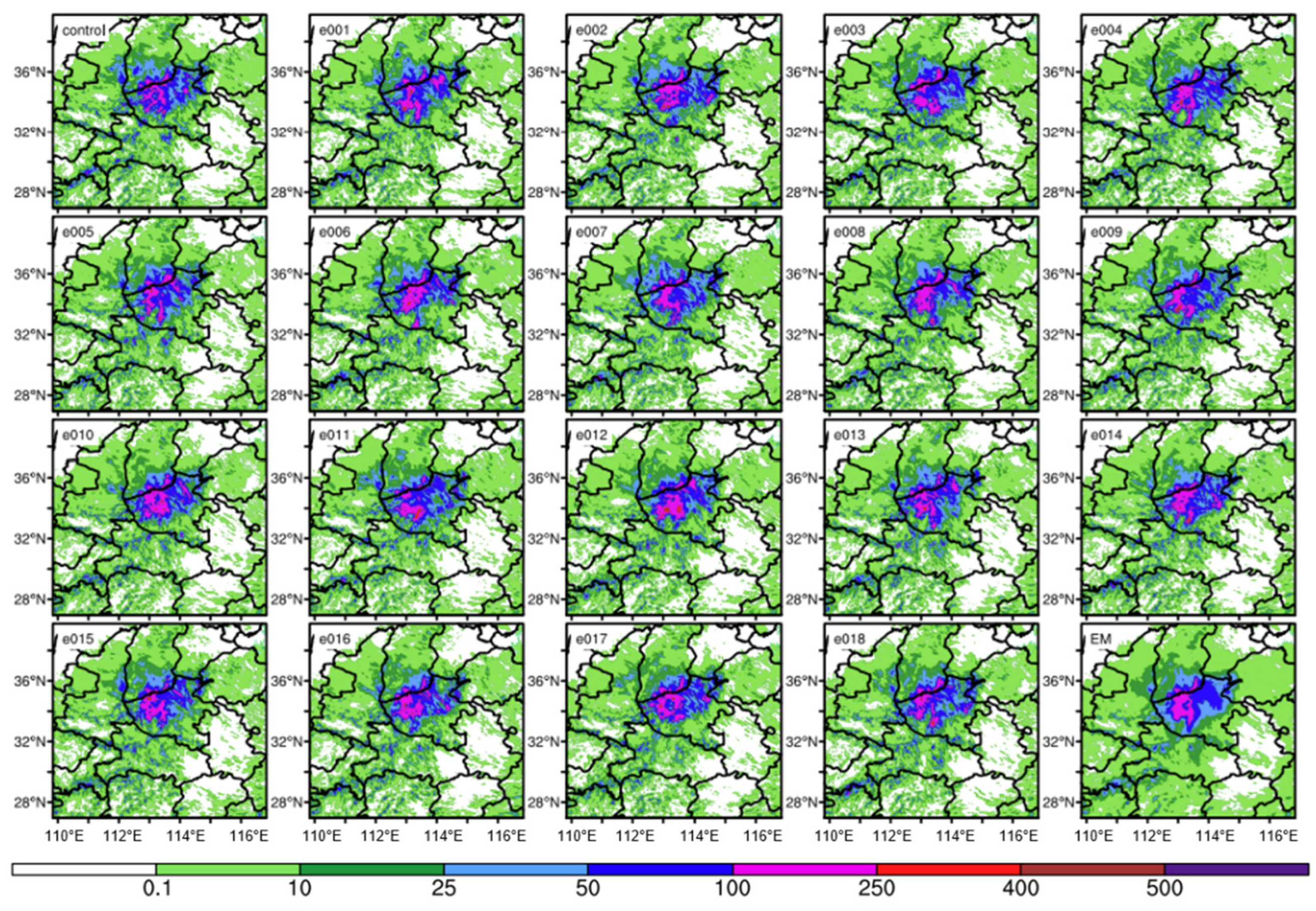
Through the traditional objective scoring method, the control forecast and disturbance forecast in the ensemble forecasting system are tested and analyzed, and the evaluation geographical range is limited to the region of 110° to 117° east longitude and 31° to 37° north latitude, including 1 control forecast member and 18 perturbed forecast members. In addition, according to the standards of the China Meteorological Administration, the precipitation intensity was divided into five grades according to the 24-h cumulative precipitation: light rain (0.1~9.9 mm), moderate rain (10.0~24.9 mm), heavy rain (25~49.9 mm), rainstorm (≥50.0 mm) and heavy rainstorm (≥100.0 mm).
During the analyzed precipitation period, as the precipitation intensity level increases,
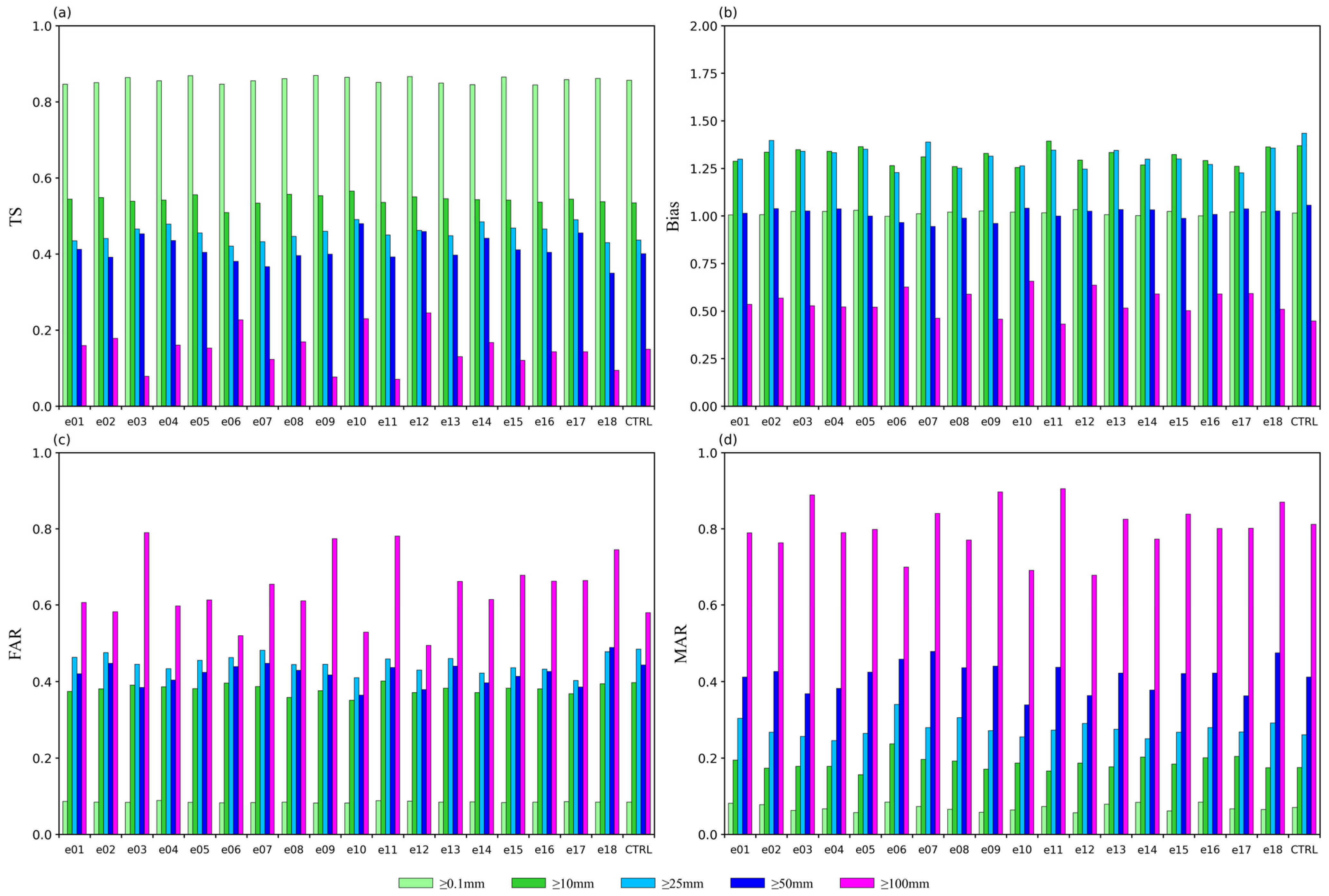
Figure 5a shows that the Threat Score (TS) of the 19 forecast members exhibits an overall declining trend. This indicates that the overall forecast skill of the ensemble prediction system weakens with higher precipitation thresholds. From
Figure 5b, it can be observed that the Bias Score of the 19 forecast members shows a fluctuating pattern, with all members approaching 1 more closely at the heavy rain threshold. This suggests that the forecasted areas of heavy rain by the ensemble prediction system are relatively close to the observed areas, demonstrating greater advantage in predicting the spatial distribution of heavy rain events.
Figure 5c,d reveal that at lower precipitation thresholds, both the missing alarm rate and false alarm rate of the 19 forecast members approach 0, indicating better forecast performance.
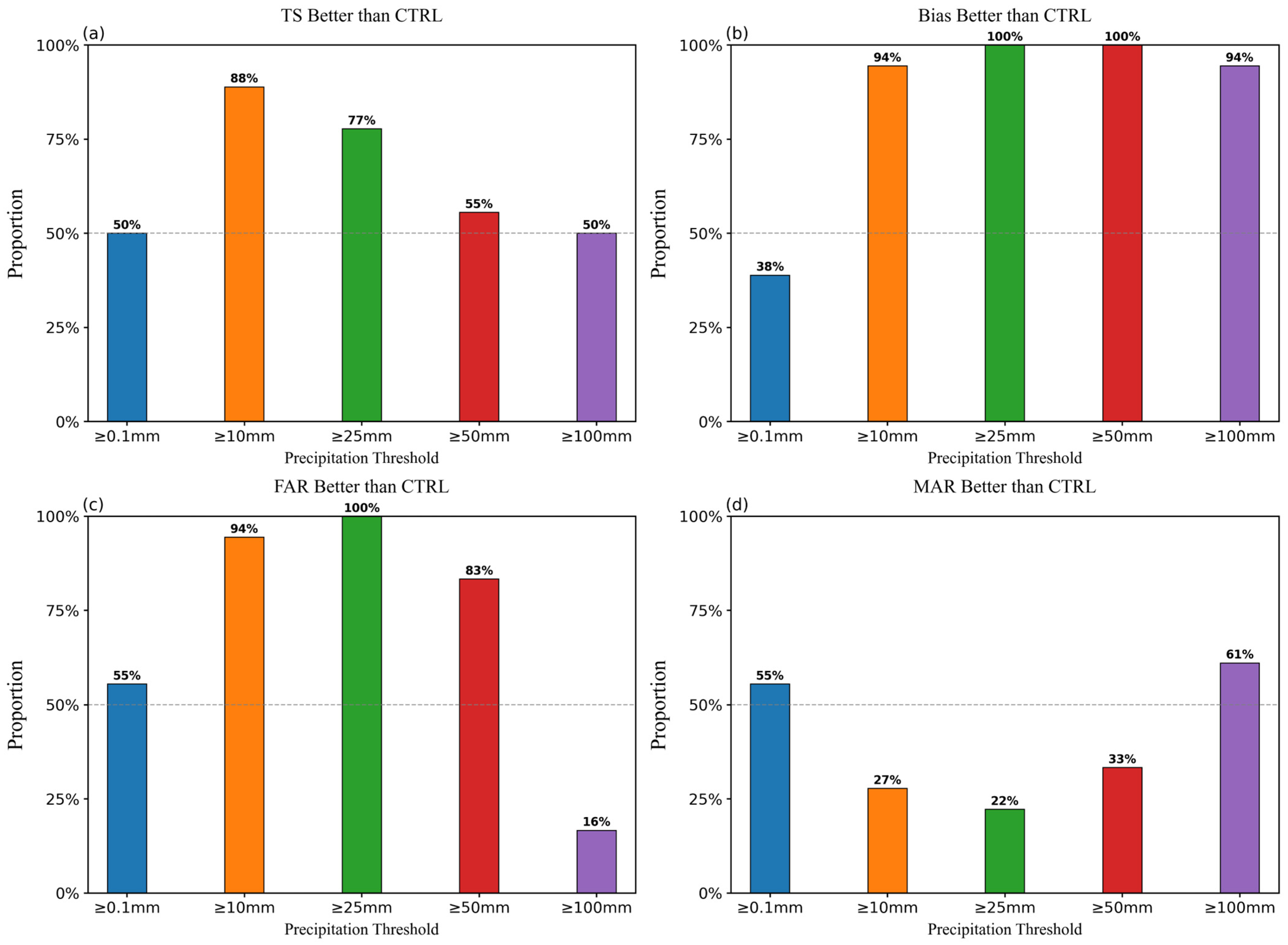
We calculated the proportion of perturbed forecast members that outperformed the control forecast across different rainfall thresholds for various verification scores. Combined with
Figure 5 and
Figure 6, it can be observed that for the heavy rainstorm threshold, the TS of the control forecast during this period is 0.15.
Figure 6a indicates that the proportion of members with a TS higher than the control forecast is 50%. Although
Figure 6b shows a relatively high proportion of Bias scores outperforming the control forecast,
Figure 5b reveals that all members’ Bias scores deviate significantly from 1. The member with the Bias score closest to 1, e10, has a score of 0.66, suggesting that the ability of traditional scores to evaluate the spatial distribution of heavy precipitation for this extreme rainstorm event requires further investigation. Simultaneously, the proportions of members outperforming the control forecast for the FAR and MAR metrics are 16% and 61%, respectively. Furthermore, the trends in the proportion of members outperforming the control forecast across different rainfall thresholds vary among the scores. Compared to the moderate rain, heavy rain, and rainstorm thresholds, the proportions of members outperforming the control forecast for the TS, Bias score, and FAR score at the heavy rainstorm threshold are lower or similar. However, for the MAR score, the proportion of members outperforming the control forecast at the heavy rainstorm threshold is more advantageous compared to the moderate rain, heavy rain, and rainstorm thresholds.
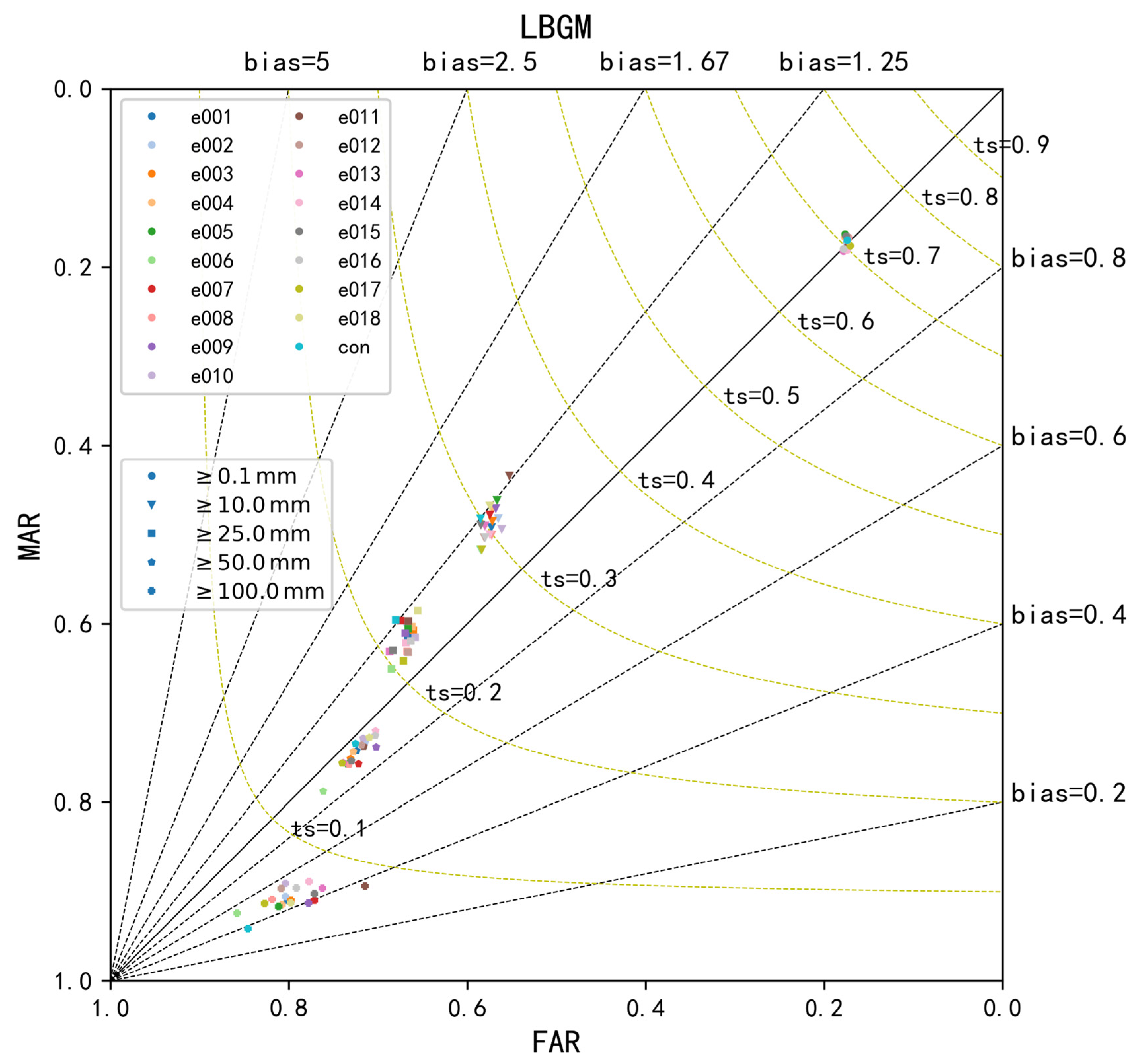
Traditional binary classification metrics are diverse, and different verification results are often obtained under different scoring systems. To fully utilize various scoring indicators and simultaneously evaluate the overall forecast performance of ensemble forecast members, multiple scoring metrics across different ensemble members and precipitation thresholds are plotted in a comprehensive verification diagram (
Figure 7). Along the direction indicated by the yellow-green dashed curve, the Threat Score (TS) gradually increases, indicating an overall improvement in forecast performance. Along the coordinate axes, the False Alarm Rate (FAR) and Missing Alarm Rate (MAR) gradually decrease. The closer the points are to the diagonal (solid black line), the closer the Bias score is to 1, indicating that the number of hits for predicted precipitation at that threshold is closer to the observed precipitation, and thus better forecast performance. In the figure, different shapes represent five precipitation thresholds from light rain to heavy rainstorm, while different colors represent the 18 perturbed forecast members (e01–e18) and the control forecast member. From
Figure 7, it can be observed that as the precipitation threshold increases, the TS and Bias deviations among the ensemble members gradually exhibit larger discrepancies. When forecasting at the heavy rainstorm threshold, it becomes difficult to treat the forecast members as a unified whole for prediction. Given the extreme nature of this precipitation event, we focus on the heavy rainstorm threshold for further analysis.
Figure 7 shows that the heavy rainstorm threshold scores for perturbed forecast members e10 and e12 are closer to the diagonal. However, combined with
Figure 5, it is found that perturbed forecast member e12 performs best, with the highest TS and the best performance in FAR and MAR among all members. Meanwhile, perturbed forecast member e10 has slightly lower TS, FAR, and MAR scores at the heavy rainstorm threshold compared to member e12, but its Bias score is closer to 1. Perturbed forecast members e11 and e18 perform poorly across all evaluation metrics at the heavy rainstorm threshold.
In summary, the perturbed forecast members e10 and e12 exhibit relatively superior comprehensive forecast performance. They not only achieve favorable TS and Bias scores across various precipitation thresholds but also demonstrate relatively low false alarm and missing alarm rates for heavy rainstorm events. In contrast, members e11 and e18 show poorer performance scores for heavy rainstorms. Additionally, as the traditional verification model employs point-to-point evaluation, which introduces a “double penalty” effect, the assessment of the spatial distribution of heavy precipitation in extreme rainstorm processes becomes less objective. Therefore, it is necessary to conduct a more detailed evaluation of the positional biases in precipitation areas using spatial verification methods and to investigate the underlying causes.
Traditional verification models rely on direct point-to-point matching between forecast and observed data. However, when applied to high-resolution forecasts, this matching approach tends to amplify minor spatial displacements, leading to a “double-penalty” effect. Consequently, even if the model provides rich information at convective scales, the overall evaluation may be underestimated due to minor positional errors, failing to accurately reflect true forecast performance [
31]. In view of this, for evaluating convective-scale ensemble precipitation forecasts, the more adaptive Fraction Skill Score (FSS) is preferred. This metric more accurately accounts for the spatial pattern match between forecast and observation, thereby reducing evaluation errors introduced by positional biases.
The spatial verification domain is selected to be the same as that used in traditional verification. Utilizing accumulated precipitation data from the convection-permitting ensemble prediction system and gridded observational data, the performance of spatial verification methods in precipitation assessment is examined. Eighteen grid spatial scales are chosen for the neighborhood fuzzy scale, ranging from 1 to 65 times the grid spacing. Since both forecasts and observations are interpolated to a 3 km resolution during verification in this experiment, the neighborhood fuzzy scales correspond to areas from 9 km × 9 km to 195 km × 195 km. First, the precipitation forecast skill of ensemble members under different spatial scales is investigated. Based on the research by Li Ziliang et al., similar to deterministic forecast metrics for synoptic fields, the FSS also has a threshold (e.g., an ACC of 0.6 indicates usable forecast skill). The FSS can be simply defined such that, under different precipitation thresholds, the spatial scale at which the score exceeds 0.5 is considered the “usable forecast scale” for precipitation prediction [
31].
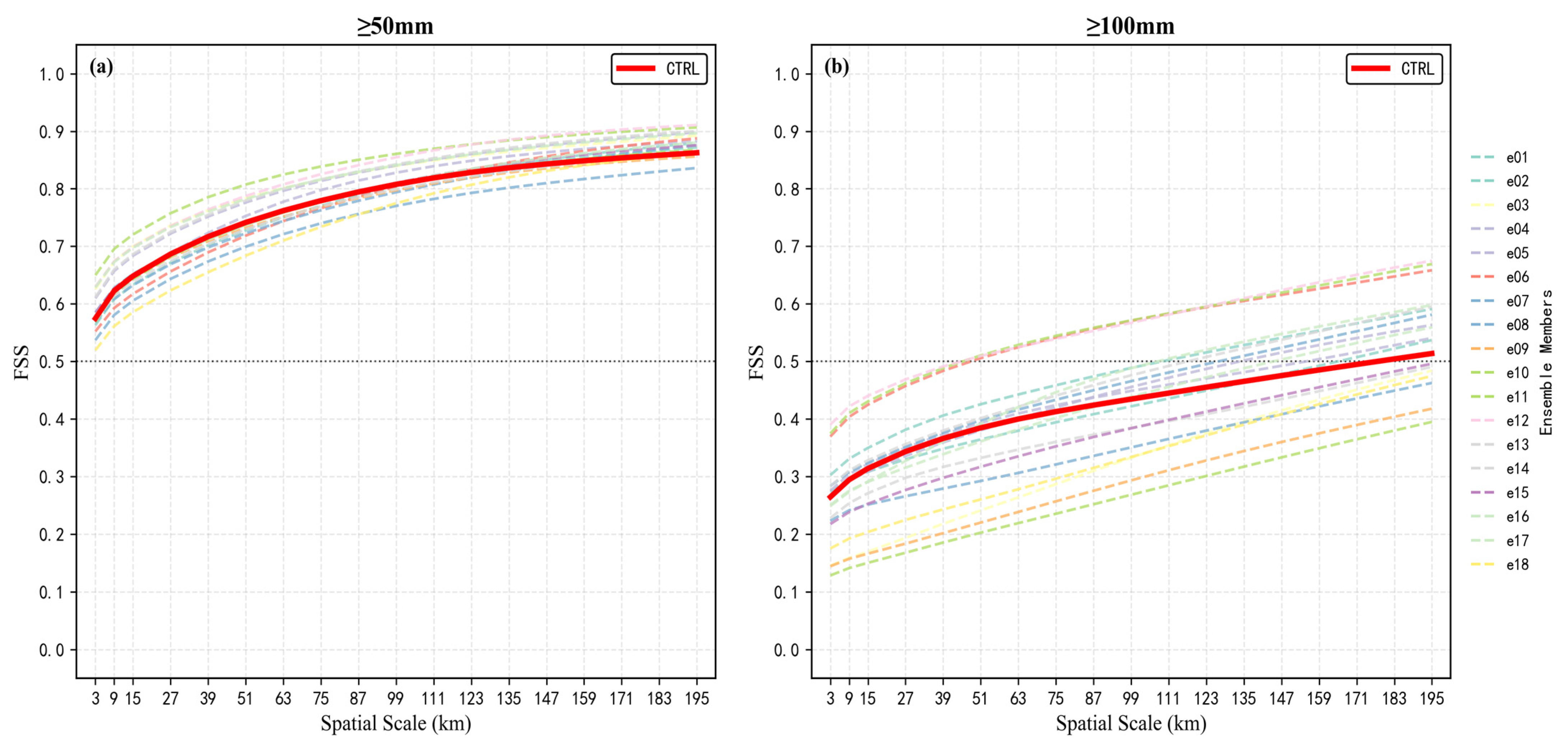
Figure 8 illustrates the distribution characteristics of the Fraction Skill Score (FSS) for 24-h accumulated precipitation across different ensemble forecast members, various precipitation thresholds, and multiple neighborhood spatial scales from 00:00 on the 20th to 00:00 on the 21st. It can be observed that as the considered neighborhood spatial scale expands, the skill scores for precipitation forecasts generally increase. This phenomenon may be attributed to the concentrated and continuous nature of the rainfall area in this studied event, coupled with the relatively small selected evaluation region, allowing the ensemble forecasts to demonstrate relatively good precipitation prediction performance even at smaller scales. Specifically,
Figure 8a shows that even at a spatial scale of 3 km, forecast members exhibit relatively high forecast skill for rainstorm-level precipitation. For heavy rainstorm-level precipitation and above, as shown in
Figure 8b, although forecast skill improves with increasing spatial scale, most forecast members still show limited skill for heavy rainstorm-level and above precipitation within the spatial scales examined in this study. Notably, members e06, e10, and e12 achieve FSS exceeding the threshold of 0.5 when the spatial scale is extended to 51 km. This aligns with the perturbed forecast members identified as having better performance through traditional verification evaluation. It also indicates that for forecasting heavy rainstorm-level precipitation in this extreme rainfall event, an appropriate minimum effective spatial scale is approximately 51 km, indirectly demonstrating the significant influence of meso- and micro-scale weather systems on this extreme precipitation process.
This extreme rainstorm event featured extreme hourly precipitation. To illustrate the differences in forecast skill for hourly accumulated precipitation between the perturbed forecast members and the control forecast member of the ensemble prediction system, we selected perturbed forecast members with better performance (e06, e12) and those with poorer performance (e11, e18). A more detailed accuracy verification of the FSS method was conducted using finer hourly precipitation data.
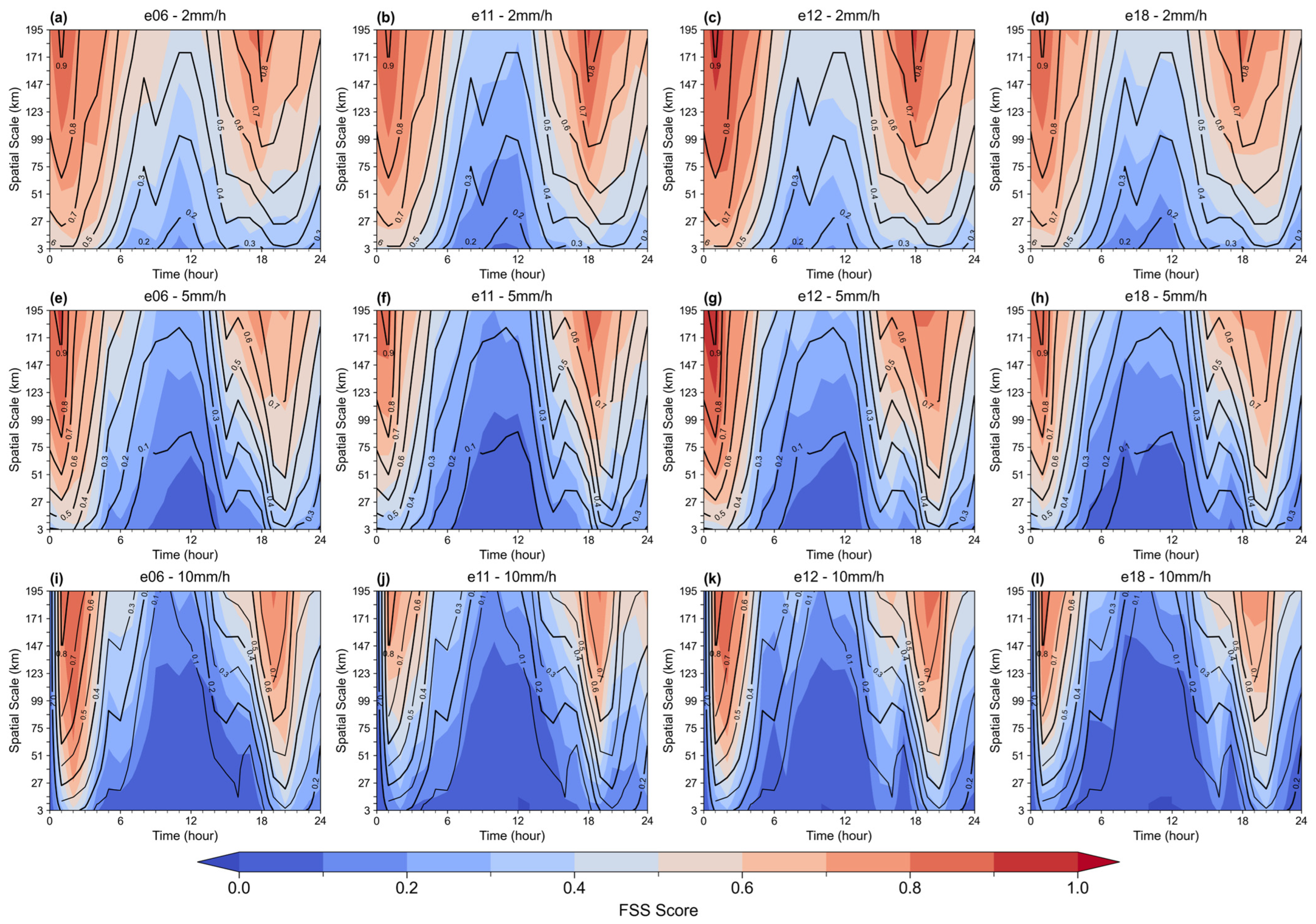
Figure 9 shows the temporal evolution of the FSS for probability forecasts of hourly precipitation for the selected perturbed forecast members and the control forecast member. The probability thresholds are set at 2 mm (moderate rain), 5 mm (heavy rain), and 10 mm (rainstorm). The shading represents the FSS of the perturbed forecast members corresponding to each subplot, while the contours represent the FSS of the control forecast member. From
Figure 9, it can be observed that at each precipitation threshold, the evolution trends of the FSS for different perturbed forecast members and the control forecast member are generally similar. However, members e06 and e12 exhibit broader spatial and temporal regions where their FSS exceed 0.5 compared to members e11 and e18. This indicates that members with better 24-h accumulated precipitation forecasts also demonstrate better forecast skill for hourly accumulated precipitation. Focusing on rainstorm-level precipitation, from a temporal evolution perspective, periods of higher forecast skill appear at 0–3 h and 18–21 h. Under certain spatial scale conditions, both perturbed and control forecast members demonstrate forecast skill during these periods. Furthermore, we observed that perturbed forecast member e12, which performed well in 24-h accumulated precipitation forecasting, also exhibited relatively high forecast skill for hourly rainstorm-level precipitation during the 16–18 h period.
According to
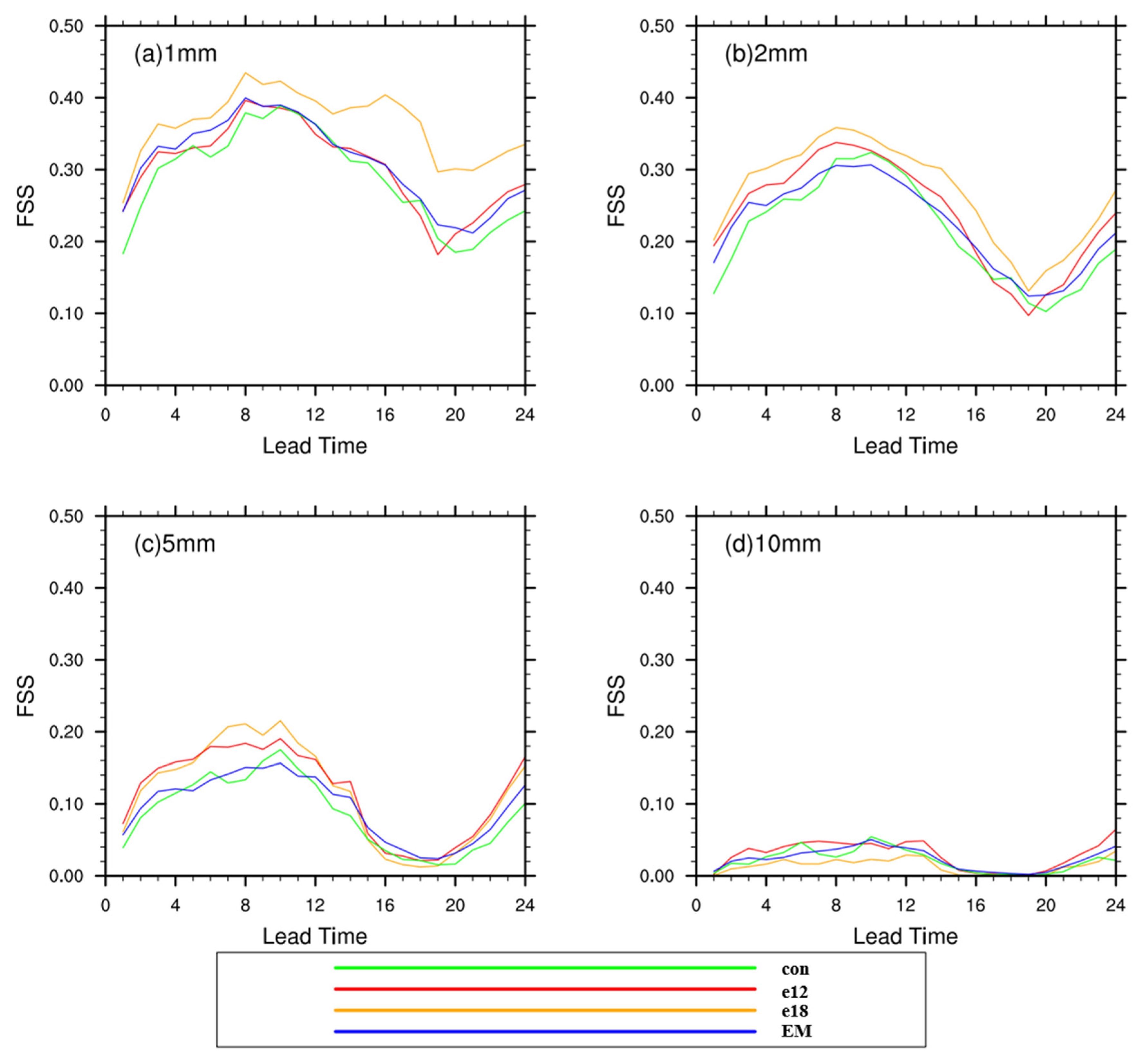
Figure 9, we can see that the evolution trend of FSS of different members in different rainfall levels converges, so we select the smallest window to further analyze the time evolution,
Figure 10 is the minimum window scale to calculate the FSS from the hourly probability forecast results of the LBGM from 00:00 on the 20th to 00:00 on the 21st, and the FSS is higher during the precipitation concentration period from 02:00 to 12:00, and with the division, rotation and merger of the precipitation center, the FSS drops sharply to a low peak. In the merger enhancement stage after 20 o’clock, the FSS slowly increased. In this case analysis, the FSS has a good indicative significance for the precipitation forecast of the order of 5 mm/h and below, and for the hourly precipitation forecast, the ensemble average method can often achieve better forecasting results, which may be because there is a time error in the forecast of the overall precipitation process, which will be magnified when the time scale is reduced, and at the same time, the simple ensemble mean can balance the errors in all directions of different ensemble members, so it shows advantages in forecasting. At the same time, we found that although member e18 performed better in the smaller magnitude, member e12 had a better hourly FSS in the rainstorm magnitude, which was consistent with the good scoring effect of member e12 in the rainstorm magnitude above.
The FSS cannot directly reflect the differences in location and intensity between forecasted and observed heavy precipitation. A comparison with observations reveals that ensemble forecast system members exhibit certain displacements in both the intensity and location of forecasted heavy precipitation. Therefore, further in-depth quantitative evaluation is necessary. The CRA method focuses on individual precipitation objects or rainbands rather than the entire forecast field, making it more convenient for forecasters to understand the model’s quantitative spatial biases in precipitation under different influencing systems. Building upon the suitable minimum effective spatial scale identified by the FSS method, this experiment employs the CRA method to evaluate this extreme precipitation process.
The CRA method requires matching the observation field and the model field within a certain spatial scale and precipitation threshold to define the Contiguous Rain Area (CRA). Considering the prominent characteristics of heavy precipitation levels in this extreme rainfall event, we define the precipitation thresholds at the rainstorm level (≥50.0 mm) and the heavy rainstorm level (≥100.0 mm). When the spatial scale reaches 51 km, members e06, e10, and e12 demonstrate relatively good FSS, suggesting that the simulation of local mesoscale convection is better at this spatial scale. Therefore, this spatial scale is selected for matching the observation and simulation fields. Since the spatial scale in the CRA method is defined by the number of grid points, approximately 400 grid points (rounded to the nearest integer) are used to define the spatial scale for matching. When matching the observation field and the model field, we adopted the object identification, object matching, and object merging methods from the MODE approach. To make heavy precipitation centers more prominent, we applied convolution smoothing to the original precipitation field, with a convolution radius set to 4. During the verification of this extreme rainstorm event, this convolution radius effectively highlighted heavy precipitation centers and successfully identified heavy precipitation objects.
Based on traditional verification scores and FSS from earlier evaluations using conventional verification models, we selected perturbed forecast members with better performance (e06 and e12), those with less ideal performance (e11 and e18), and the control forecast member for CRA method verification.
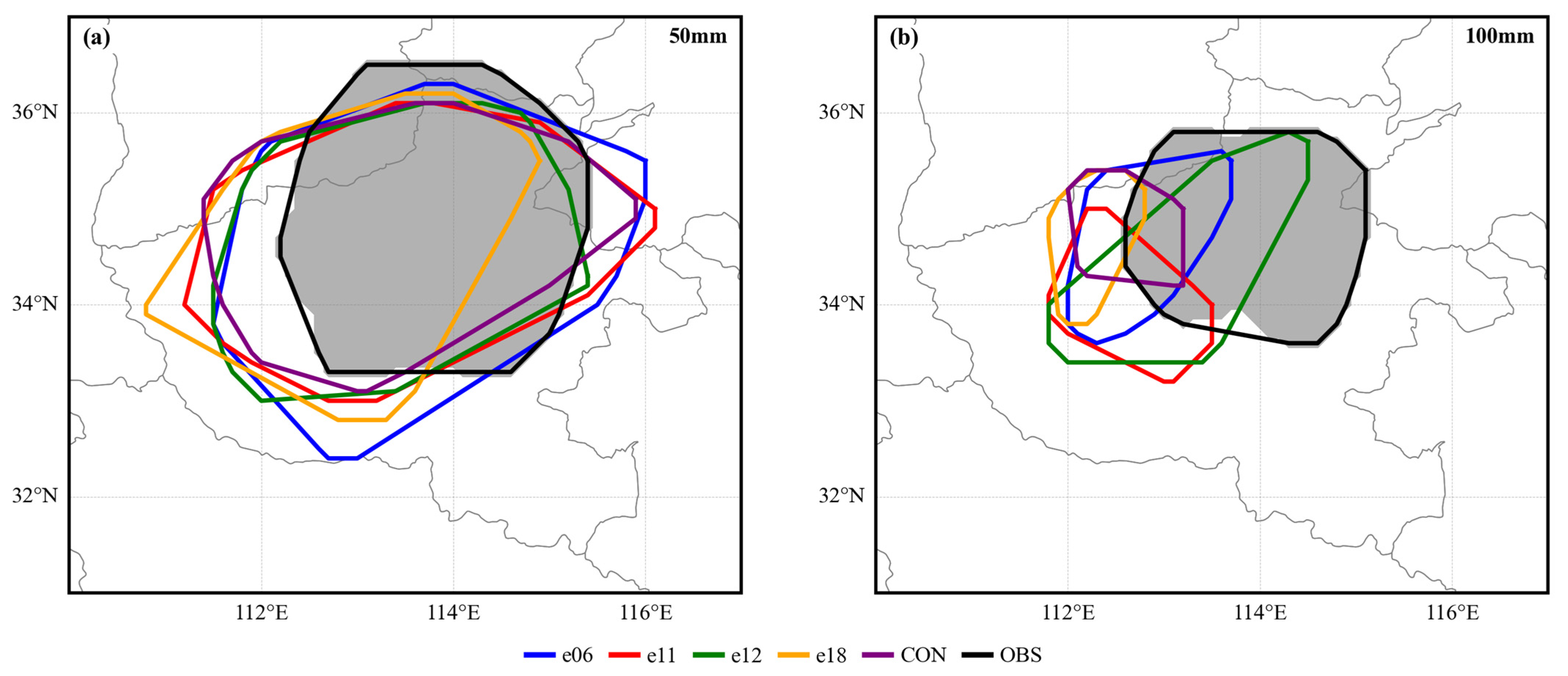
Figure 11 shows the Contiguous Rain Areas (CRAs) defined after matching the observation field with the forecast fields of the selected members.
Figure 11a visually demonstrates that at the rainstorm level, the contiguous rain areas of the selected ensemble forecast system members generally cover the contiguous rain area of the observation field. However, member e18 exhibits a westward displacement component.
Figure 11b visually shows that at the heavy rainstorm level, all ensemble forecast system members have a westward displacement component relative to the observation field. Nonetheless, member e12, which performs better in forecasting, has a larger matched precipitation object area, and its contiguous rain area better covers the core heavy precipitation zone of Zhengzhou compared to other members. Additionally, compared to the control forecast, the better-performing member e06 still shows superior performance in location forecasting, while the poorer-performing member e18 performs worse than the control forecast in location forecasting. However, the poorer-performing member e11 has a larger precipitation area than the control forecast, further verifying that point-to-point traditional evaluation has verification errors in convection-permitting scale models. It also indicates that perturbed members of the ensemble forecast system have certain advantages over a single control forecast in predicting extreme precipitation areas.
The CRA method can also examine intensity bias and pattern bias in precipitation forecasts. From
Table 1, it can be observed that for forecasts at the heavy rainstorm level and above, all members exhibit a westward bias in longitude. Among them, member e06 has the smallest bias of −0.56°, while member e18 has the largest bias of −1.45°. In terms of latitude bias, the control forecast member and member e10 show relatively small north-south displacements, whereas members e06 and e11 exhibit significant biases. The target inclination bias represents errors in pattern, with smaller absolute values indicating that the orientation of the rainband is closer to observations. Member e12 has an extremely small inclination error, suggesting its rainband orientation is almost identical to observations. In contrast, member e11 and the control forecast have very large inclination biases, which may indicate completely opposite or orthogonal orientations. Intensity error reflects systematic bias in precipitation amount, calculated as the ratio of average precipitation intensity between forecast and observation within the overlapping area, indicating systematic overestimation or underestimation of precipitation intensity. As shown in the table, intensity errors from smallest to largest are: e12 (29.29) < e06 (39.16) < e18 (59.41) < e11 (71.38) < con (90.14). Members e12 and e06 have the smallest intensity errors, indicating the most reliable quantitative precipitation forecasts, while the control forecast has the largest intensity error, reflecting significant underestimation. Pattern error reflects spatial similarity. Member e12 has the smallest pattern error, combined with an extremely low inclination bias, indicating its overall spatial structure matches observations most closely. However, e06 has a small intensity error but the largest pattern error, due to differences in the shape of its precipitation area compared to observations. In summary, compared with traditional evaluation methods, member e12 demonstrates relatively better forecasts relative to observations. Meanwhile, members e06, e11, and e18 performed worse relative to the control forecast in traditional evaluations. However, spatial verification reveals that member e06 has better intensity forecasting but poorer location and pattern matching. Furthermore, all three members show certain advantages over the control forecast, further highlighting the necessity of employing spatial verification methods for convection-permitting scale forecasts.
4.3. Mechanism Analysis of Precipitation Deviation
Following the evaluation and assessment of ensemble forecast results using traditional evaluation methods, the FSS, and the CRA method, both better-performing and poorer-performing ensemble forecast members were identified. By combining physical quantities that represent different characteristics, diagnostic analysis of the ensemble forecast results was conducted. This was further extended to analyze favorable conditions for disaster-causing heavy precipitation and to reveal the bias mechanisms underlying the differences between better and poorer members through characteristics of dynamic fields, thermodynamic fields, and moisture conditions. Four time points during this extreme rainstorm event were selected: 16:00 on 19 July, and 00:00, 08:00, and 16:00 on 20 July. Using physical quantities such as isentropic potential vorticity, relative vorticity, water vapor flux divergence, relative humidity, and pseudo-equivalent potential temperature across different vertical levels, the ability to reproduce Mesoscale Convective Vortex (MCV) was analyzed for the control forecast, the better-performing perturbed forecast member e12, and the poorer-performing perturbed forecast member e18.
Isentropic Potential Vorticity (IPV) can effectively track the downward transport of upper-level high potential vorticity anomalies along isentropic surfaces to lower levels. It is a key indicator for identifying whether upper-level dynamic forcing successfully couples to the middle and lower troposphere. Rao et al. noted in their study that when IPV > 1.5 PVU appears in the middle troposphere (500–700 hPa), it is often regarded as a sign of downward transport of high potential vorticity anomalies, which can significantly enhance local upward motion and convective instability [
32].
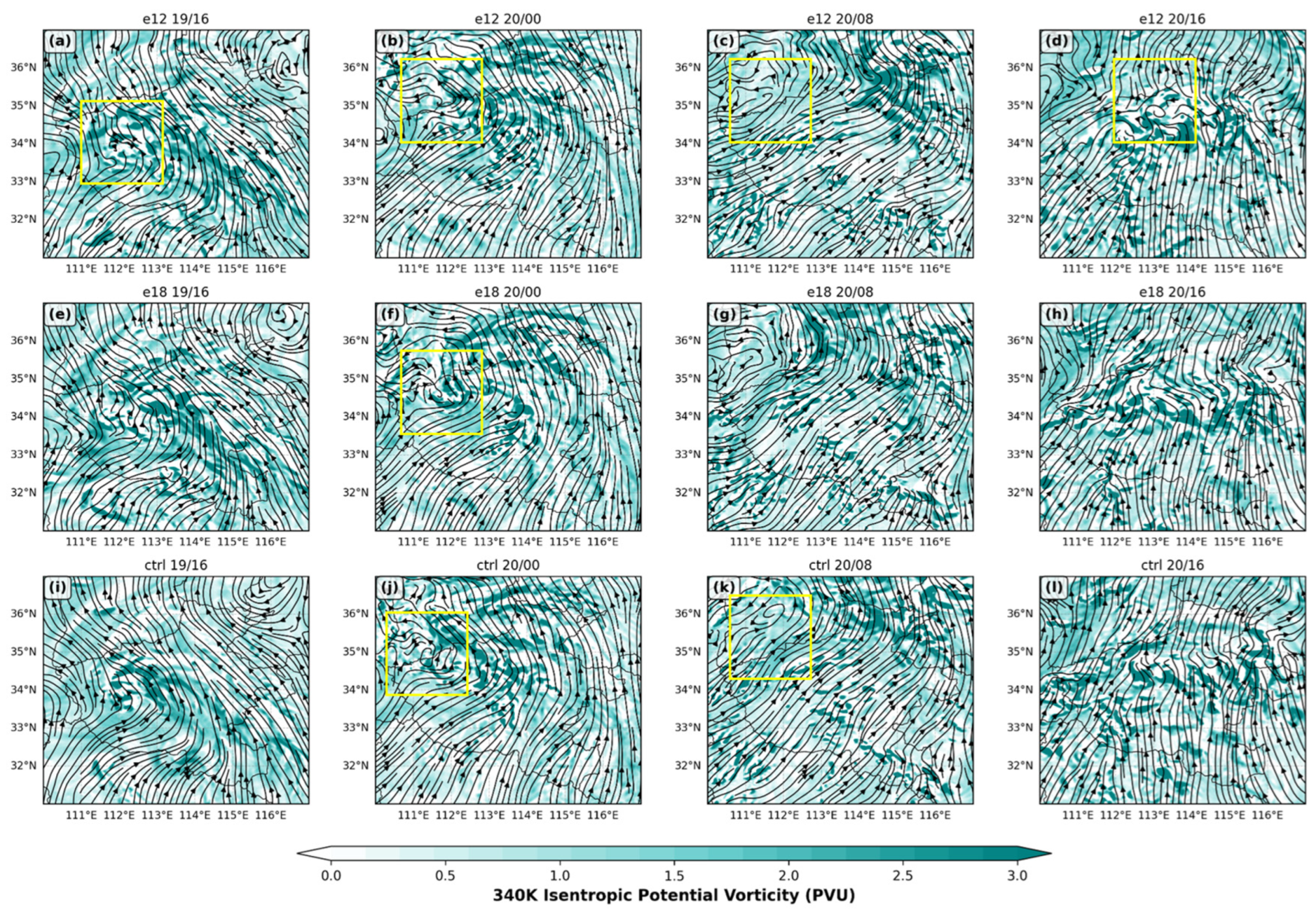
Figure 12 displays the 500 hPa flow field and 340 K isentropic potential vorticity for perturbed forecast members e12 and e18, as well as the control forecast member, at 16:00 on 19 July, and 00:00, 08:00, and 16:00 on 20 July. We observed that both perturbed forecast members e12 and e18 showed tendencies to form vortex within regions of high IPV values (IPV > 1.5). This tendency was well maintained in e12, leading to the formation of a distinct mesoscale vortex within the high IPV region by 16:00 on 20 July. In contrast, for e18, the vortex structure largely dissipated by 08:00 on 20 July, and by 16:00, no clear trough or ridge structure remained. Although the control forecast formed a distinct vortex by 00:00 on 20 July, which persisted until 08:00, the vortex did not coincide with the region of high isentropic potential vorticity values. This indicates that only member e12 exhibited significant downward transport of upper-level potential vorticity.
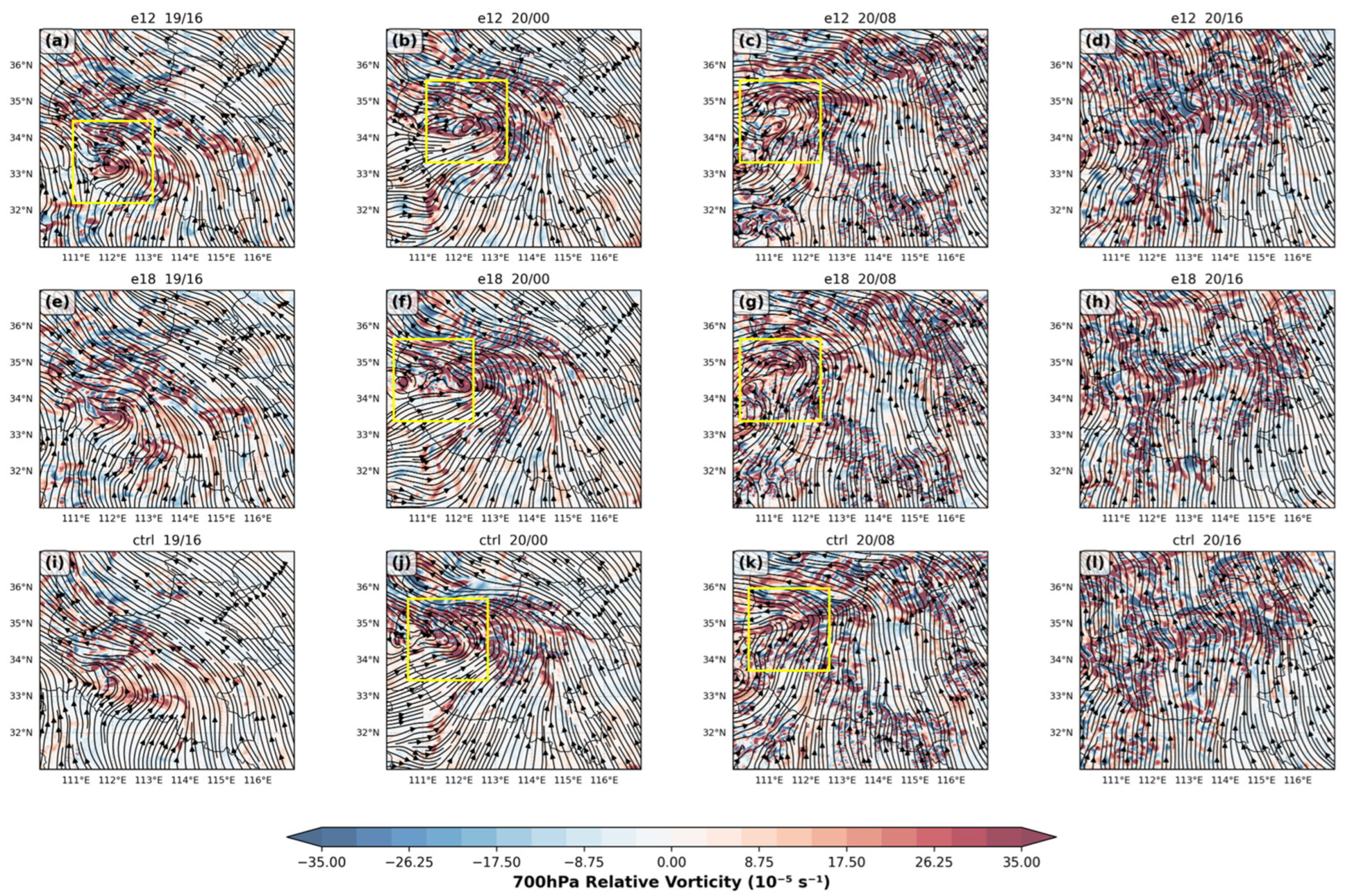
Figure 13 shows the 700 hPa flow field and relative vorticity for perturbed forecast members e12, e18, and the control forecast member at 16:00 on 19 July, and 00:00, 08:00, and 16:00 on 20 July. Research by Li et al. found that the record-breaking hourly rainfall intensity in Zhengzhou (201.9 mm/h) was highly synchronized with a mesoscale γ-vortex with a lifespan of approximately 2–3 h. Its low-level (<3 km)
center coincided with the heavy precipitation area, indicating that
is a direct dynamic indicator for locating the core of an MCV [
33]. From
Figure 13, we observe that member e12 exhibits a distinct mesoscale convective vortex at 700 hPa, which persists from 16:00 on 19 July to 08:00 on 20 July. Although member e18 also shows a clear mesoscale convective vortex, its position is notably westward, and its duration is very short—appearing at 00:00 on 20 July and largely dissipating by 08:00 on 20 July. In contrast, the control forecast member (ctrl) displays cyclonic curvature but lacks a closed center. Combining
Figure 12 and
Figure 13, we find that the vortex center in member e12 not only corresponds to the high-value area of relative vorticity at 700 hPa but also coincides with the high-value area of 340 K isentropic potential vorticity. However, although the vortex center in member e18 corresponds to the high-value area of relative vorticity at 700 hPa, it does not align with the high-value area of 340 K isentropic potential vorticity. This indicates that the downward transport of upper-level potential vorticity is a key dynamic process for the maintenance and intensification of mesoscale vortex.
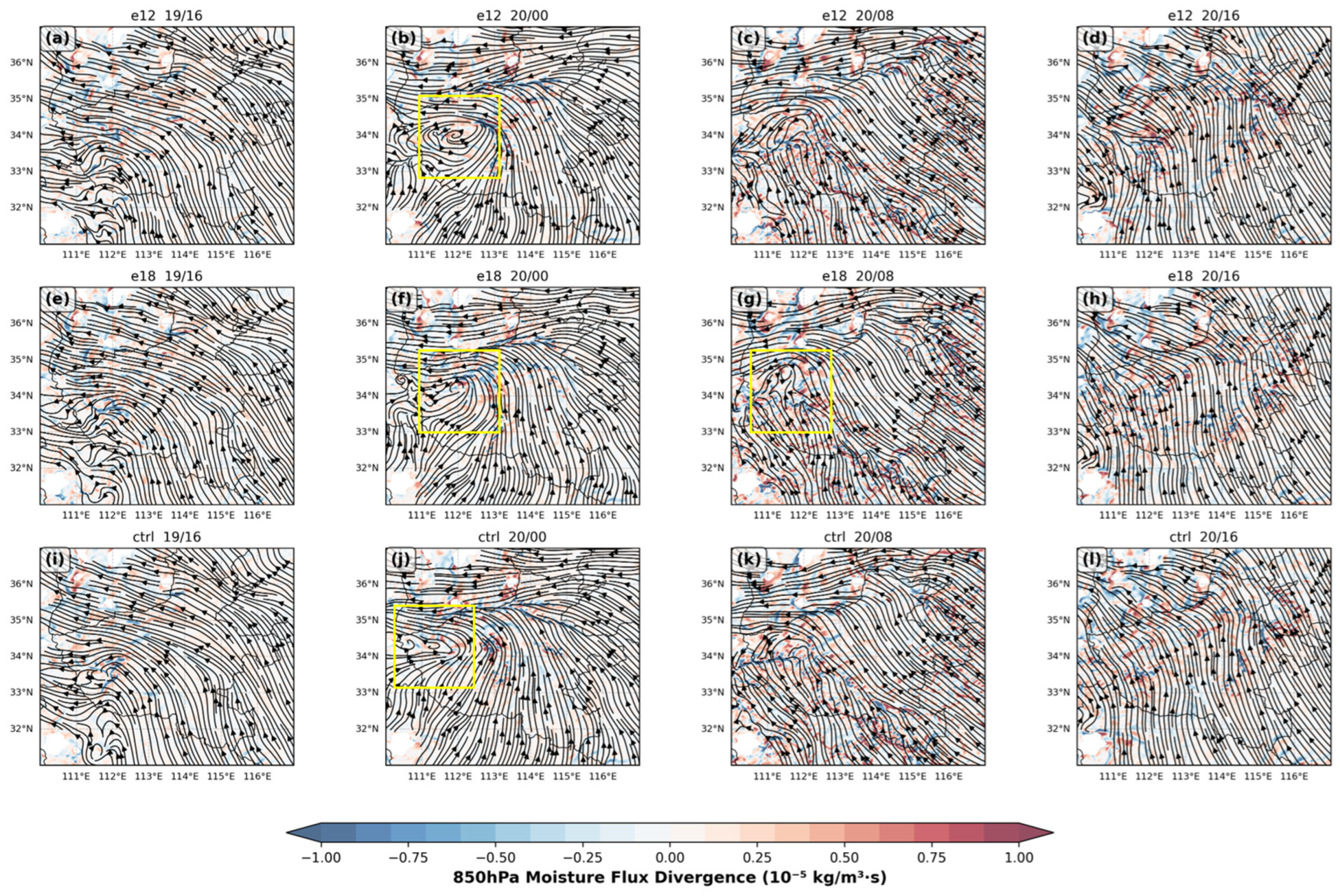
Figure 14 shows the 850 hPa flow field and water vapor flux divergence for perturbed forecast members e12 and e18, as well as the control forecast member, at 16:00 on 19 July, and 00:00, 08:00, and 16:00 on 20 July. Rao et al. found in their study that the strong convergence center of the vertically integrated water vapor flux during this extreme rainstorm event completely coincided with the core rainfall area [
34]. From
Figure 14, we observe that at 00:00 on 20 July, member e12 exhibits a distinct mesoscale vortex at 850 hPa, along with a region of high water vapor flux divergence values, indicating strong moisture convergence and ascent. Combined with
Figure 13, it can be seen that this vortex coincides with the vortex at 700 hPa, demonstrating that this mesoscale vortex is deep and possesses sufficient moisture conditions. Even though the vortex at 850 hPa for member e12 dissipates by 08:00 on 20 July, there remains noticeable cyclonic curvature and a region of high water vapor flux divergence values. This provides dynamic conditions for the maintenance of the mid-to-upper-level mesoscale vortex and supplies moisture conditions for the extreme precipitation. Although member e18 also displays a clear vortex structure with a longer duration, its intensity is significantly weaker than that of member e12. Additionally, the water vapor flux divergence values at the vortex center of member e18 are noticeably smaller than those of member e12, indicating that, compared to e12, member e18 lacks relatively sufficient moisture conditions. This is the reason why member e18 forecasts lower precipitation intensity. Simultaneously, through comparative analysis with the control forecast member, we find that the water vapor flux divergence field of the control forecast member is weaker and more scattered. Moreover, the region of high water vapor flux divergence values corresponding to the cyclonic curvature is distinctly shifted westward, which aligns with the control forecast member’s prediction of lower precipitation intensity and a westward displacement of the rainfall area.
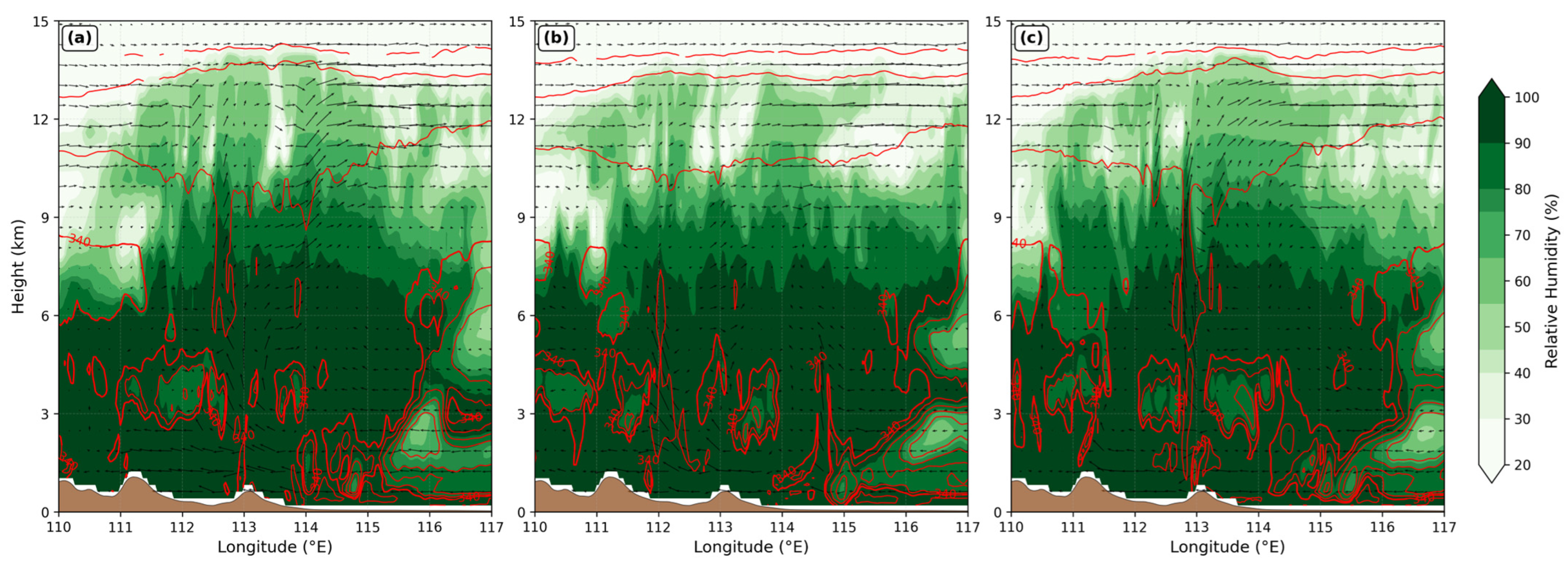
Figure 15 shows the vertical cross-sections along 34.5° N of relative humidity, pseudo-equivalent potential temperature, and vertical velocity for perturbed forecast members e12, e18, and the control forecast member at 00:00 on 20 July. As seen in
Figure 15, all members exhibit sufficient moisture in the lower troposphere. In
Figure 15a, e12 displays a distinct column of high pseudo-equivalent potential temperature and a region of high relative humidity. Furthermore, combined with
Figure 13 and
Figure 14, it can be observed that the area of high water vapor flux divergence in the lower troposphere coincides with the moist region where pseudo-equivalent potential temperature exceeds 350 K, providing ample dynamic and moisture conditions for the development of the rainstorm. In the middle troposphere, the pseudo-equivalent potential temperature of 340 K slopes upward, further contributing to the maintenance of upward motion. Additionally, the overlap of a core of high relative vorticity in the middle troposphere, a high pseudo-equivalent potential temperature core, and a moisture column with relative humidity greater than 80% [
35] represents typical characteristics of a Mesoscale Convective Vortex (MCV). This promotes latent heat release and is one of the important reasons for the occurrence of extreme rainstorms. Although member e18 exhibits clear relative vorticity and vortex center alignment in
Figure 13, in
Figure 15b, insufficient lifting dynamics prevent moisture from being transported to the upper troposphere. Moreover, the presence of a low-value center with potential temperature below 340 K eliminates conditions for latent heat release, hindering further convective development. Consequently, member e18 fails to forecast the extremity of precipitation. In contrast, while the control forecast member in
Figure 15c shows a high pseudo-equivalent potential temperature core and a moisture column with relative humidity greater than 80%, similar to member e12, and even exhibits stronger vertical upward motion, combined analysis with
Figure 12,
Figure 13 and
Figure 14 reveals poorer dynamic configuration conditions. Despite clear cyclonic curvature, an MCV does not form. This is the reason why the control forecast performs poorly in forecasting extreme precipitation.
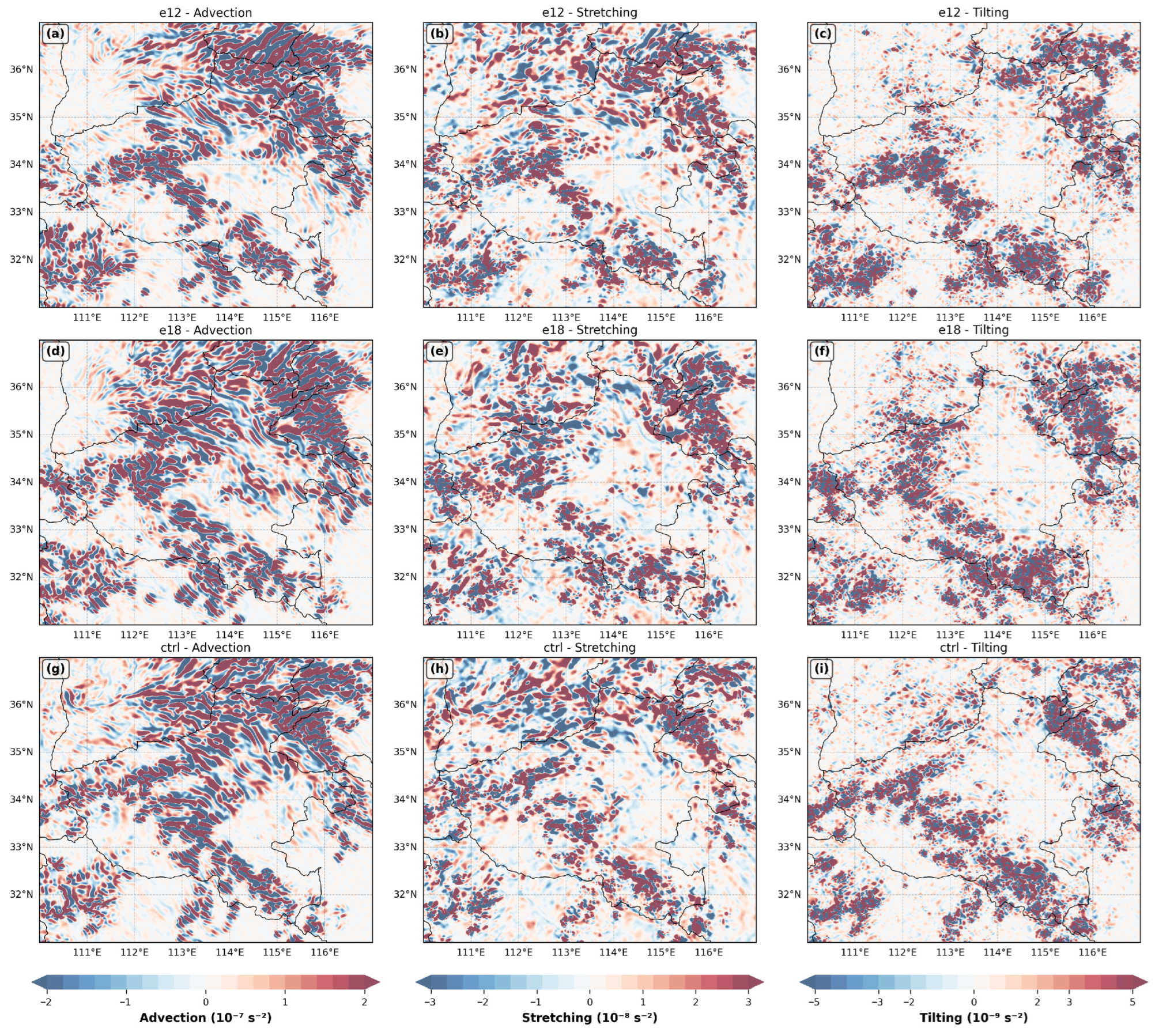
By analyzing the configuration and temporal evolution of physical quantities such as isentropic potential vorticity, relative vorticity, water vapor flux divergence, relative humidity, and pseudo-equivalent potential temperature across different vertical levels, we reveal the thermal and dynamic structures of the mesoscale convective systems simulated by perturbed forecast members e12 and e18, as well as the control forecast member. To further explain the generation mechanisms of the MCV in the model, we analyze the decomposed terms of the vorticity equation for the three members at 00:00 and 08:00 on July 20.
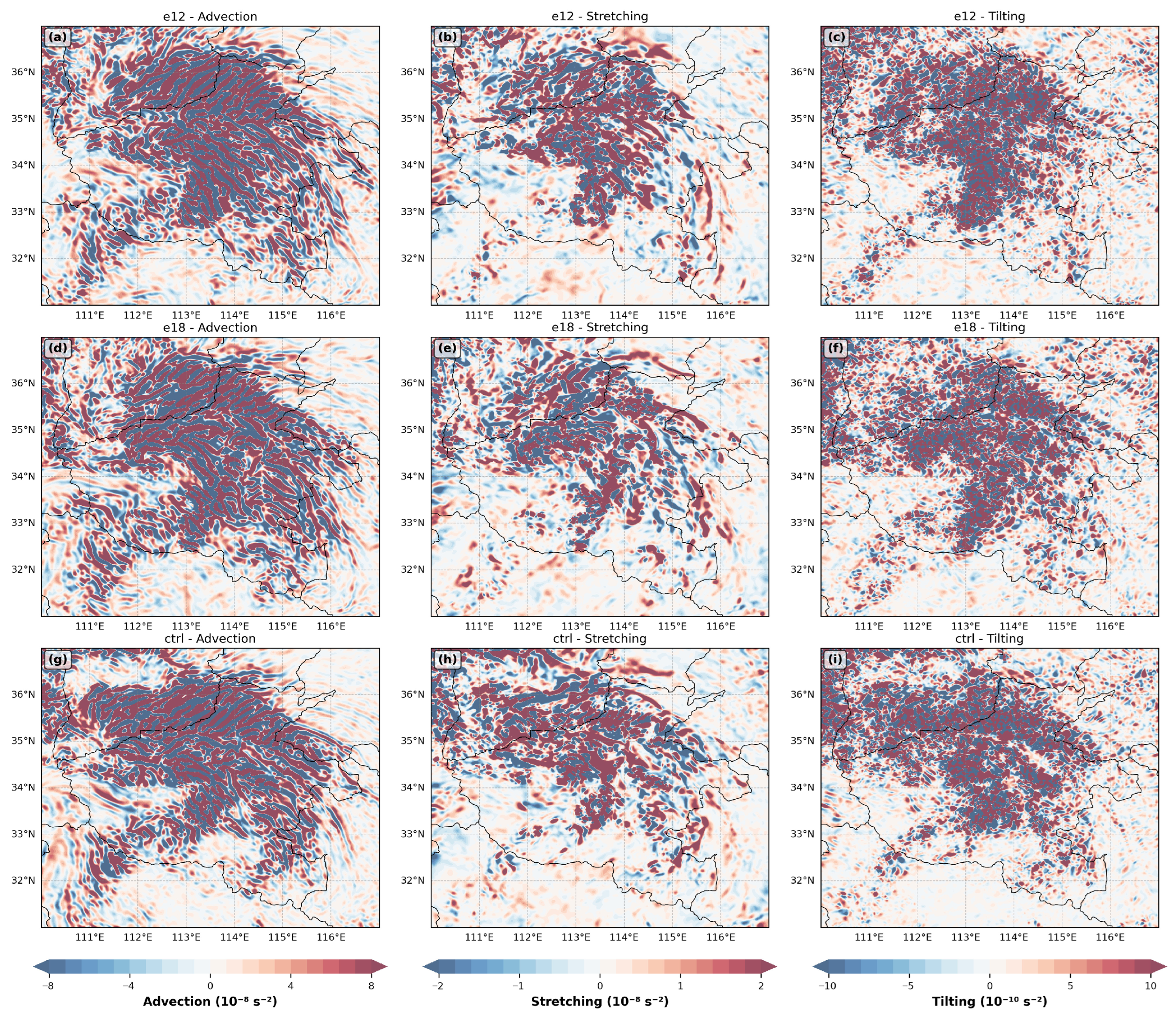
Figure 16 and
Figure 17 display the 500 hPa advection term, stretching term, and tilting term for perturbed forecast members e12 and e18, and the control forecast member (ctrl) at 00:00 and 08:00 on 20 July, respectively. First, comparing the magnitudes, at 00:00 on 20 July, the magnitudes of the advection and stretching terms are on the order of 10
−8, while the tilting term is on the order of 10
−10. This indicates that the primary contributions to vorticity at this time are from the advection and stretching terms. Similarly, at 08:00 on 20 July, the magnitude of the advection term exceeds those of the stretching and tilting terms, suggesting that the advection term is the main contributor to vorticity at this time. Overall, at 00:00 on 20 July, the mesoscale convective system is in the initial stage of intense development. The dynamic sources for vortex formation primarily include the advection of large-scale environmental vorticity into the convective region and the stretching and amplification of the vortex by strong low-level convergence and lifting. By 08:00 on 20 July, the mesoscale convective system has entered an organized, mature stage, where the vorticity advection by the large-scale circulation field becomes the main energy source sustaining the deep vortex. Referring to
Figure 12,
Figure 13 and
Figure 14, both members e12 and e18 form distinct MCV. However, at 00:00 on 20 July, the advection term for member e18 shows a clear westward ascent along the flow field, which explains why the MCV forecasted by e18 is shifted westward. Additionally, combined with
Figure 15, we observe that in the mid-to-upper troposphere, the horizontal advection for member e18 and the control forecast is significantly weaker than that for member e12. Since the advection of large-scale environmental vorticity into the convective region is the primary contributor, the MCV simulated by member e18 does not persist for long. The control forecast only exhibits cyclonic curvature without generating an MCV. Consequently, member e18 forecasts a precipitation area that is westward-shifted but with moderate intensity, while the control forecast not only has a westward-shifted precipitation area but also lower intensity. In contrast, member e12 forecasts both the location and intensity of precipitation, covering the core area of the heavy rainstorm threshold. This further underscores the crucial role of the MCV in this extreme precipitation event.
In summary, the perturbed forecast members that performed better in the ensemble prediction system exhibited superior simulation of the dynamic and thermodynamic factors influencing the extreme heavy rainfall process. They were able to more accurately simulate the mesoscale convective vortex that played a critical role in this event. Since the mesoscale convective vortex was a key system determining the intensity and location of the precipitation, these better-performing members achieved higher scores in the ensemble forecast verification. Conversely, both the control forecast and the poorer-performing perturbed forecast members showed inferior simulation of the dynamic and thermodynamic processes associated with this extreme rainfall event, resulting in lower verification scores.