1. Introduction
The fine pollutants of oily wastewater are challenging to separate effectively by sedimentation and static flotation, especially fine oil droplets suspended in the sewage [
1,
2]. In wastewater treatment applications, current research has established that microbubbles offer distinct advantages over conventional large bubbles in treating fine suspended particles, owing to their higher specific surface area and slower rising velocity [
3,
4,
5,
6]. These characteristics are obviously beneficial in improving the probability of fine oil droplet and bubble collision, just as Ahmadi Rahman et al. [
7] found that using microbubbles to float fine particles increased the recovery rate by 16–21% compared with conventional bubbles. Nalaka Rajapakse et al. [
8] and Sumaya L. Al-dulaimi et al. [
9] analyzed the effect of bubble size on the efficiency of flotation systems through experiments and suggested that small-sized bubbles can greatly improve flotation efficiency.
Consequently, microbubble flotation kinetics have become the focus of more scholars’ research. Nevertheless, microbubbles are minute, weakly buoyant, and susceptible to the forces of the surrounding flow field. Schubert and Bischofberger [
10] divided the turbulence in flotation into macroturbulence and microturbulence; macroturbulence affects the transport of particles, and microturbulence controls the dispersion of bubbles and bubble–particle compounds, attachment, and detachment [
11]. Then, the flotation flow characteristics in terms of velocity field and turbulence degree are analyzed by changing the flow field morphology [
12]. It was found that changing the flow field pattern enhanced the flotation system mass leaving and promoted oil and gas adherence. Similarly, the KYF-type flotation machine system was simulated, and the effect of cross-flow on the flow circulation characteristics and turbulent energy of the flotation tank was numerically analyzed using CFD methods [
13]. Wenbing Su [
14] investigated the impact of flotation column height on the flotation flow field. Their findings revealed that an excessively high flotation column can impair the separation effect. Furthermore, the effect of oscillating airflow on flotation performance is analyzed, and concluded that high-frequency oscillating airflow improves flotation performance, and low-frequency oscillating airflow reduces flotation efficiency [
15]. A simulation was conducted to investigate the capture of solid particles by bubble clusters subjected to high-frequency, small-amplitude vibrations in a liquid [
16]. The results demonstrated that high-frequency vibrations have a minimal effect on bubble clusters, while low-frequency pulsations promote the capture of particles by bubbles.
Understanding the fundamental behavior of bubbles in flotation systems is essential for optimizing separation performance in wastewater treatment. The rising dynamics of single bubbles in quiescent liquids have been extensively studied, revealing complex path instabilities and shape deformations that influence collision efficiency [
17]. When multiple bubbles are present, interactions such as coalescence and wake effects become significant, further complicating the flow field [
18]. Recent advances in numerical methods have enabled more detailed investigations of bubble interactions in complex fluids. For instance, a central-moment lattice Boltzmann study of two parallel rising bubbles in shear-thinning viscoelastic fluids revealed that bubble interaction patterns transition from non-coalescence to coalescence and back to non-coalescence as the Weissenberg number increases, with shear-thinning effects promoting non-coalescence behavior [
19]. Similarly, direct numerical simulations based on Weber number criteria have provided insights into side-by-side rising bubble coalescence behavior, demonstrating that vortex interactions and film drainage play critical roles in determining whether bubbles coalesce or rebound [
20].
These behaviors are strongly dependent on the liquid properties, with Newtonian and non-Newtonian fluids exhibiting markedly different bubble rise characteristics that must be considered in practical applications such as industrial wastewater treatment [
21]. Recent experimental investigations have provided detailed measurements of bubble trajectory and velocity fluctuations, confirming that even under quiescent conditions, bubble motion exhibits complex oscillatory patterns [
22]. Furthermore, direct numerical simulations using advanced methods such as the three-component pseudo-potential lattice Boltzmann approach have elucidated the microscopic interaction mechanisms between rising bubbles and oil droplets, demonstrating that the collision and attachment processes are governed by local flow fields and interfacial forces [
23].
The attachment process itself is a critical determinant of flotation efficiency. A comprehensive review of bubble–particle contact times has highlighted that attachment efficiency depends on the interplay of collision, sliding, and attachment interactions, with water velocity fields near bubble surfaces and particle dynamics playing essential roles [
24]. Advanced numerical frameworks, such as volume-of-fluid methods coupled with Lagrangian particle tracking, have been developed to simulate bubble–particle attachment, incorporating collision detection algorithms based on theoretical relationships between bubble and particle diameters and validating attachment probabilities against experimental data [
25].
Recent technological innovations have further expanded the capabilities of flotation systems. Electrical flotation technology has emerged as an effective method for enhancing the separation of oil-in-water emulsions in compact flotation units used in wastewater treatment. Studies have demonstrated that applying electric fields can significantly promote oil droplet coalescence, increasing the Sauter mean diameter and thereby improving the removal efficiency of fine oil droplets [
26]. Research on electrochemical treatment of fracturing flowback water has identified optimal operational parameters for achieving high comprehensive removal rates while minimizing energy consumption, with factors such as reaction time, current density, and pH playing critical roles [
27].
The hydrodynamics of pneumatic flotation cells have also been extensively investigated using CFD approaches. Two-phase analyses of Imhoflot™ G-06 separators revealed that bubble size and inlet design critically affect local gas holdup and flow patterns, with smaller bubbles remaining well entrained and uniformly distributed due to strong fluid coupling, while larger bubbles exhibit buoyancy-driven segregation [
28]. Similarly, studies on XFD-type flotation machines have demonstrated that altering flow field patterns enhances turbulence in the mixing zone, improves three-phase fluid velocity distribution at the tank bottom, and promotes bubble–particle contact, collision, and adhesion [
29].
Microbubble generation and characterization remain active areas of research. Experimental studies on micro–nano bubble flotation for oily wastewater treatment have shown that gas flow rate and dissolution pressure significantly affect treatment performance, with optimal conditions achieving oil removal rates exceeding 90% [
30]. Solution chemistry plays a crucial role, as pH alters microbubble zeta potential and influences bubble coalescence and attachment behavior, with acidic conditions yielding superior flotation performance. The presence of salt ions can screen electrostatic interactions and modify the electrical double layer structure, further impacting separation efficiency.
In practical wastewater treatment systems, the various airflow disturbances discussed above arise from specific operational and design features. Vertical upward flow is commonly generated by spargers or diffusers installed at the bottom of flotation tanks, where compressed air is released through porous materials or nozzles. Bilateral oblique upward airflow typically results from strategically positioned injection points along the tank walls or from specially designed inlet configurations that create directed flow patterns. Positive pulsation—characterized by sudden increases in airflow rate—can occur during compressor cycling or when multiple flotation cells share a common air supply manifold with intermittent demand. Negative pulsation, or sudden decreases in airflow, may arise from pressure fluctuations in the air delivery system or from the opening and closing of valves in automated control systems. Surface disturbances and the resulting recirculation vortices are often induced by weirs, baffles, or the discharge of treated water, which create local velocity gradients that promote mixing but may also increase the residence time of oil–gas compounds. Understanding how these disturbances originate in full-scale equipment is essential for translating laboratory findings to industrial wastewater treatment applications.
Oily water treatment in the petroleum industry imposes substantial economic and environmental burdens, primarily driven by high energy consumption for separation, costs of chemical demulsifiers, and disposal fees for treated effluents. In large-scale petroleum storage and separation systems, inefficient flotation processes often lead to prolonged operational times, increased energy waste, and elevated waste generation, all of which directly escalate total treatment costs. Optimizing flow field disturbances—such as transient pulsation, liquid surface fluctuations, and directional airflow—offers a cost-effective approach to enhance bubble–oil droplet collision–coalescence efficiency, shortens separation time, and reduces reliance on energy-intensive or chemical-intensive treatments. This improvement not only lowers operational costs but also aligns with the industry’s pursuit of energy conservation and emission reduction, making the optimization of flow disturbances technically and economically viable for industrial applications.
In conclusion, variations in the flow field and associated forces exert a significant influence on bubble motion and air flotation efficiency in wastewater treatment. Nevertheless, the precise manner by which imposed flow field perturbations affect oil removal from wastewater remains insufficiently understood. Consequently, this study examines the impact of three common airflow disturbances—vertical upward flow, bilateral oblique upward airflow, and pulsating flow conditions—on oil removal by air flotation in wastewater treatment systems. By analyzing the adhesion and ascent behaviors of bubbles and oil droplets under different disturbance patterns, this work aims to identify flow configurations that are more conducive to the upward flotation of oil–gas compounds and to provide guidance for optimizing the design and operation of wastewater flotation systems.
3. Results and Discussion
Flow field perturbations in industrial flotation systems mainly originate from three typical sources: transient pulsations during bubble–oil contact, surface fluctuations and recirculation vortices, and directional inlet airflows. Although these perturbations differ in form and intensity, they all alter the force balance, pressure distribution, and flow structure around bubble–oil aggregates, thereby affecting coalescence, rising dynamics, and flotation efficiency.
Section 3.1,
Section 3.2 and
Section 3.3 investigate these three representative perturbation types sequentially, forming a comprehensive analysis of flow field effects on flotation performance.
3.1. Effect of Pulsing of the Fluid
As the most direct transient disturbance during bubble–oil interaction, fluid pulsation occurs immediately at the collision–attachment stage and dominates the early-stage force state of the aggregate. This section first clarifies how vertical pulsation affects the pressure gradient and rising behavior of bubble–oil droplets.
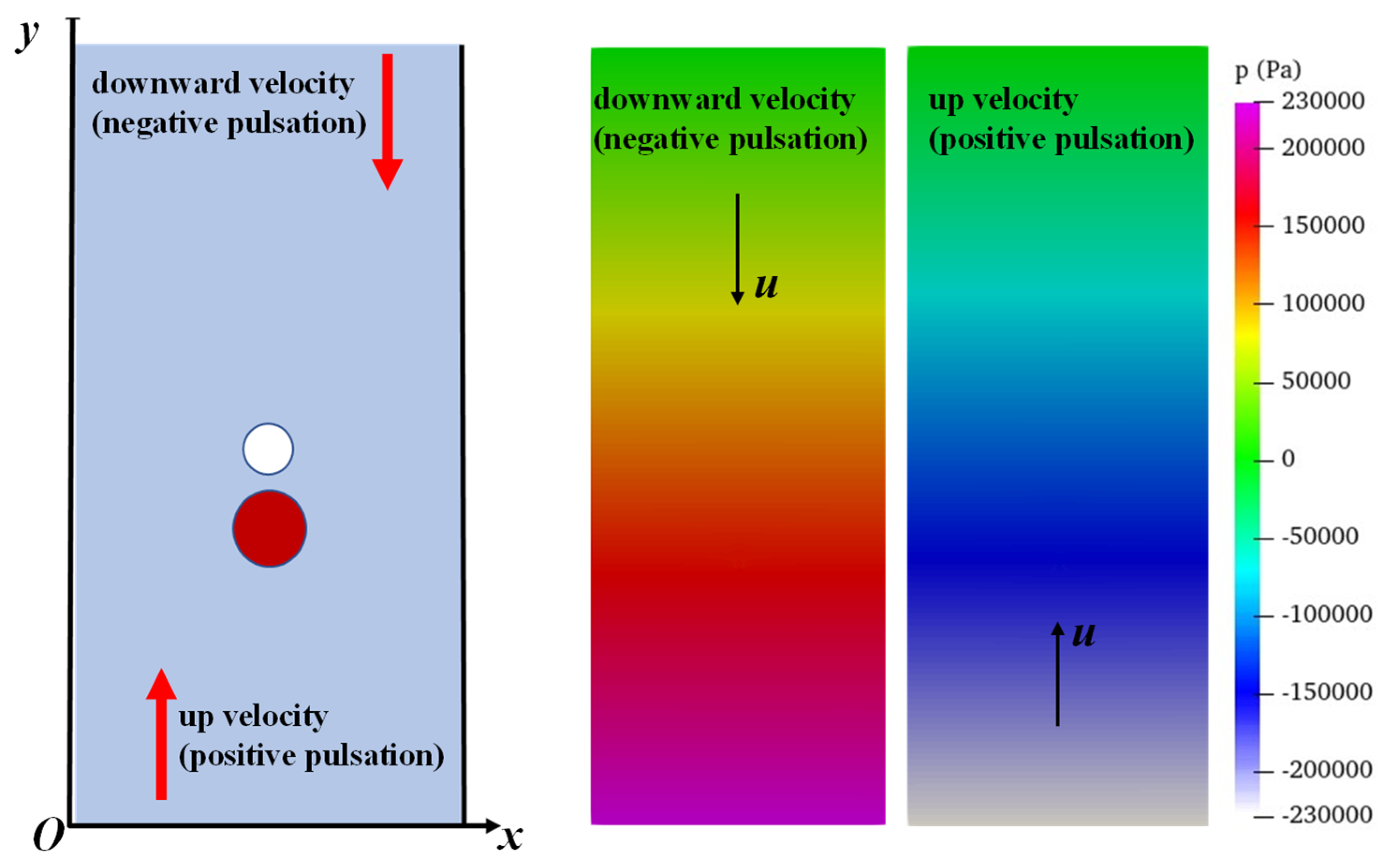
Fluid pulsation in this work is a transient impulse vibration introduced at the initial stage of bubble–oil contact, rather than a periodic oscillation. Computationally, it is realized by imposing a vertical upward (positive) or downward (negative) initial velocity on the fluid domain at
t = 0, mimicking transient mechanical shocks from industrial pump cycling or valve operations. This pulsation modulates the pressure difference across the fluid domain, thereby promoting bubble rise or inhibiting bubble–oil adhesion.
Figure 5 shows that the initial downward velocity (negative pulsation) of the fluid results in a pressure difference between the bottom and top of the flow field, with the pressure below being greater. Conversely, the initial upward pulsation velocity (positive pulsation) results in a pressure difference between the top and bottom of the flow field, with the pressure above being greater. Adhesion time (
t) refers to the time taken by the bubble–oil droplets from contact to coalescence.
Sorting out the flotation results of bubbles and oil droplets with different pulsation velocities shows that negative pulsation speed promotes the combination of bubbles and oil droplets, while positive pulsation speed delays the combination of bubbles and oil droplets.
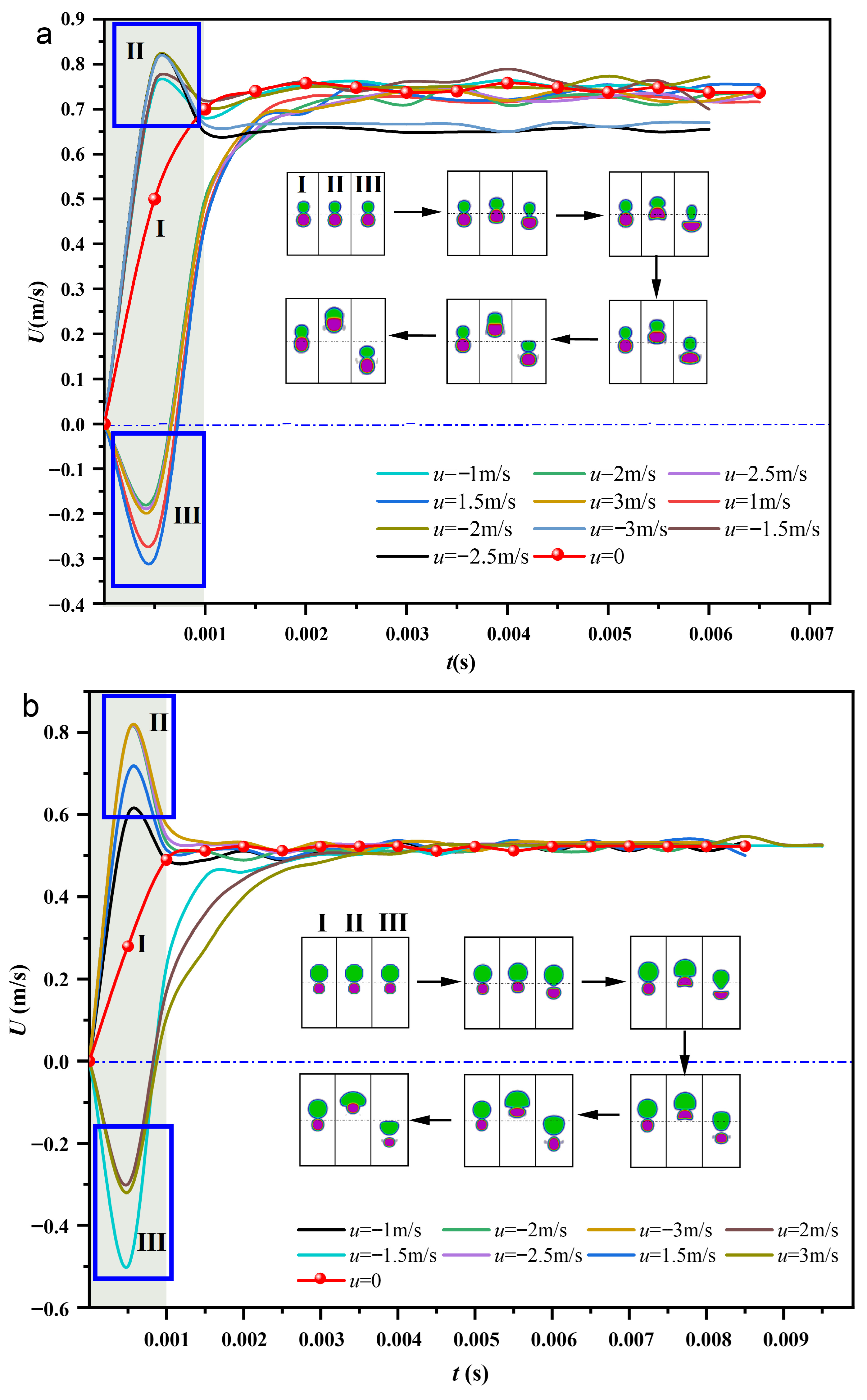
Figure 6 (where I is the bubble–oil droplet aggregation process when there is no pulsation at rest; II is the bubble–oil droplet aggregation process when there is negative pulsation; III is the bubble–oil droplet aggregation process when there is positive pulsation) shows that the addition of negative pulsation accelerates the aggregation of bubbles and oil droplets in the phase of accelerated aggregation (II), resulting in a rapid increase in bubble velocity that peaks in the early stage before gradually decreasing until it levels off. This effect occurs regardless of whether the oil/gas diameter ratio is
L < 1 or
L > 1. The phenomenon occurs due to the effect of pulsation on the pressure difference between the top and bottom of the fluid domain. The negative pulsation velocity results in an upward pressure gradient force in the fluid domain, promoting the rise of bubbles and oil droplets. The addition of positive pulsation had an inhibitory effect on the aggregation of bubbles and oil droplets. This led to the initial settling phenomenon of bubbles and oil droplets with a negative rate of rise (III). The analysis suggests that the positive pulsation in the fluid creates a downward pressure gradient force, which increases the resistance to the rise of bubbles and oil droplets. As a result, bubbles and oil droplets settle at the initial stage. As the pulsation rate decreases over time, the bubbles and oil droplets combine to form compounds and gradually rise. However, the process of settling prolongs the aggregation time and reduces the flotation efficiency. There is not much difference in the flotation rate under the two pulsations when the oil and gas compounds rise steadily.
In terms of morphological evolution, the bubble bottom accelerates and rises to catch up with the oil droplet, which is the first to undergo agglomeration. This occurs when comparing the stationary fluid state (I) and negative pulsation speed (II). Under positive pulsation speed (III), both the bubble and the oil droplet initially move downwards. The bubble is depressed downwards, and the oil droplet is also vertically stretched. This is the longest time for both of them to complete the agglomeration. Additionally, the distances between compounds under negative and positive pulsation conditions increase as bubbles and oil droplets move under different pulsations. Therefore, negative pulsation accelerates the flotation process, while positive pulsation delays it. To optimize the process and improve efficiency, it is important to control the pulsation speed effectively.
Furthermore, the pulsation rate has a significant impact on the attachment time between bubbles and oil droplets.
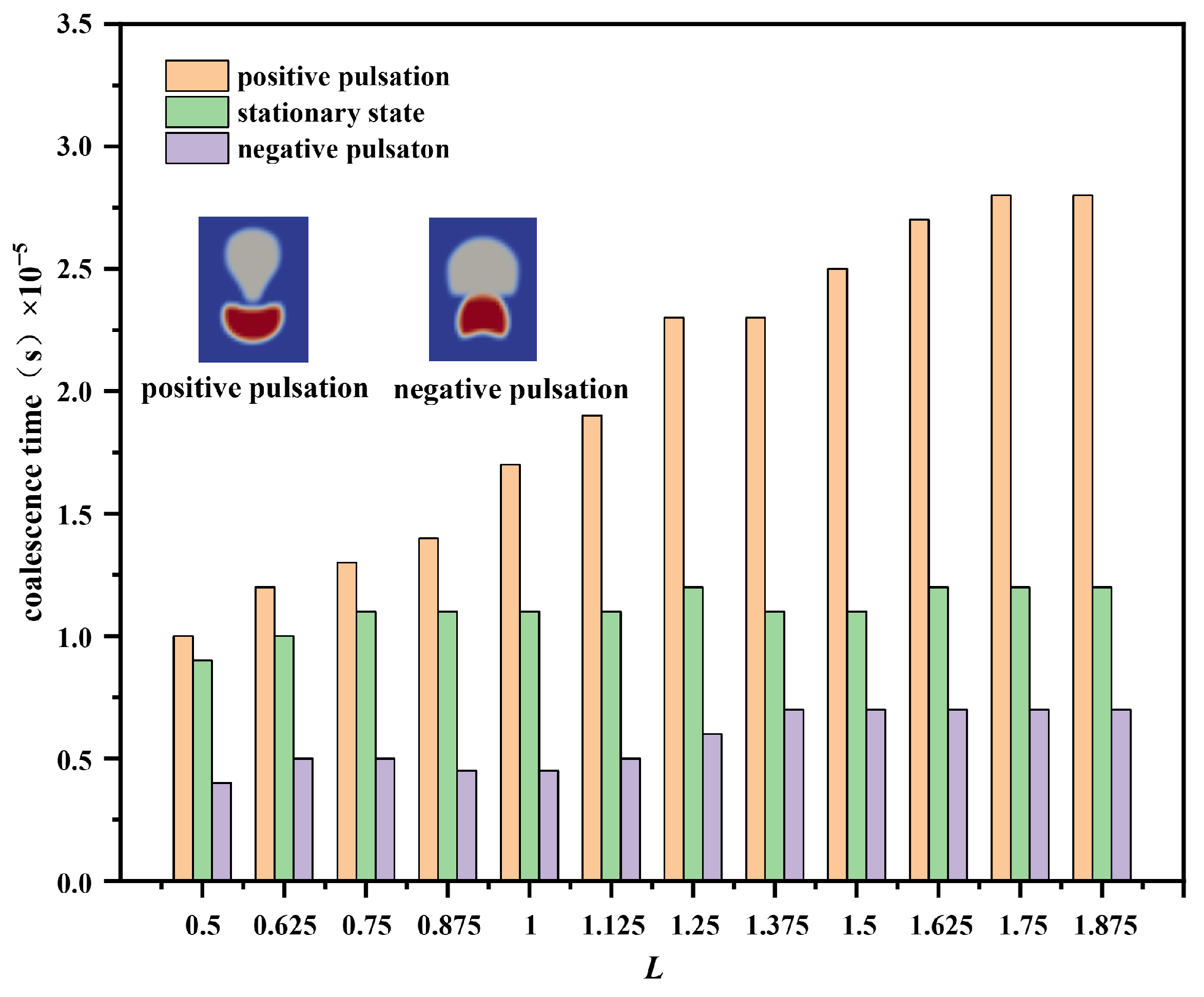
Figure 7 illustrates the correlation between the adhesion time of bubble–oil droplets and the diameter ratio of oil and gas. It is evident that negative pulsation reduces the diffusion adhesion time of bubbles and oil droplets, thereby enhancing flotation efficiency compared to the non-pulsating stationary state. Conversely, positive pulsation prolongs the aggregation time of bubble–oil droplets. Moreover, the diffusion and aggregation time of the oil droplets and bubbles is shorter under negative pulsation when the ratio of oil to gas diameter is less than 1. This is because the smaller oil droplets have weak buoyancy and rise slowly, while the larger bubbles are more affected by the pressure gradient force and rise quickly, causing them to merge earlier. On the contrary, the adhesion time for bubble–oil droplet diffusion during positive pulsation gradually increases with the increase in the oil–gas diameter ratio. This is due to the downward pressure gradient force generated by positive pulsation, which causes the simultaneous settling of bubbles and oil droplets. However, as the size of the oil droplets increases, the degree of deformation increases, resulting in an increase in falling resistance. This causes the oil droplets to fall faster than the bubbles, leading to a prolonged combination of the two.
From the perspective of oil removal efficiency, the reduction in attachment time under negative pulsation has direct implications for flotation performance. Shorter attachment times mean faster aggregate formation and rising, which increases the throughput of the flotation system and enhances the overall oil removal rate per unit time. In practical terms, this corresponds to higher treatment capacity and improved separation efficiency. The pulsation velocities simulated in this study correspond to pressure variations of approximately ±5–10%, which are representative of typical pressure fluctuations encountered in industrial wastewater treatment systems due to pump cycling, valve operations, or sudden changes in flow rate. Therefore, maintaining stable system pressure to avoid frequent positive pulsations is a practical design consideration for optimizing flotation performance. In reactor design, this suggests the need for pressure stabilization devices or surge tanks to dampen flow variations, particularly during startup and shutdown phases.
3.2. Effect of Fluctuations in the Surface of the Liquid
After the formation and rising of bubble–oil aggregates, liquid surface disturbance becomes the main external flow field influence near the free surface. Unlike the initial transient pulsation, surface fluctuation induces steady recirculation vortices that change the residence time and structural stability of aggregates. This section reveals the influence mechanism of surface vortex perturbation.
Figure 8 displays the oil and gas compounds’ rising velocity and vortex changes under natural liquid level fluctuations. It is evident that in the natural state, the disturbance to the rising process of bubbles and oil droplets is not significant because the liquid level changes are small. Based on the trailing and vortex characteristics, the oil and gas compounds rise to the liquid level with a slight oscillation or in a straight line, indicating good uplift stability. However, maintaining a stable liquid level under practical working conditions can be challenging. The Reynolds number is used to characterize the liquid surface fluid flow.
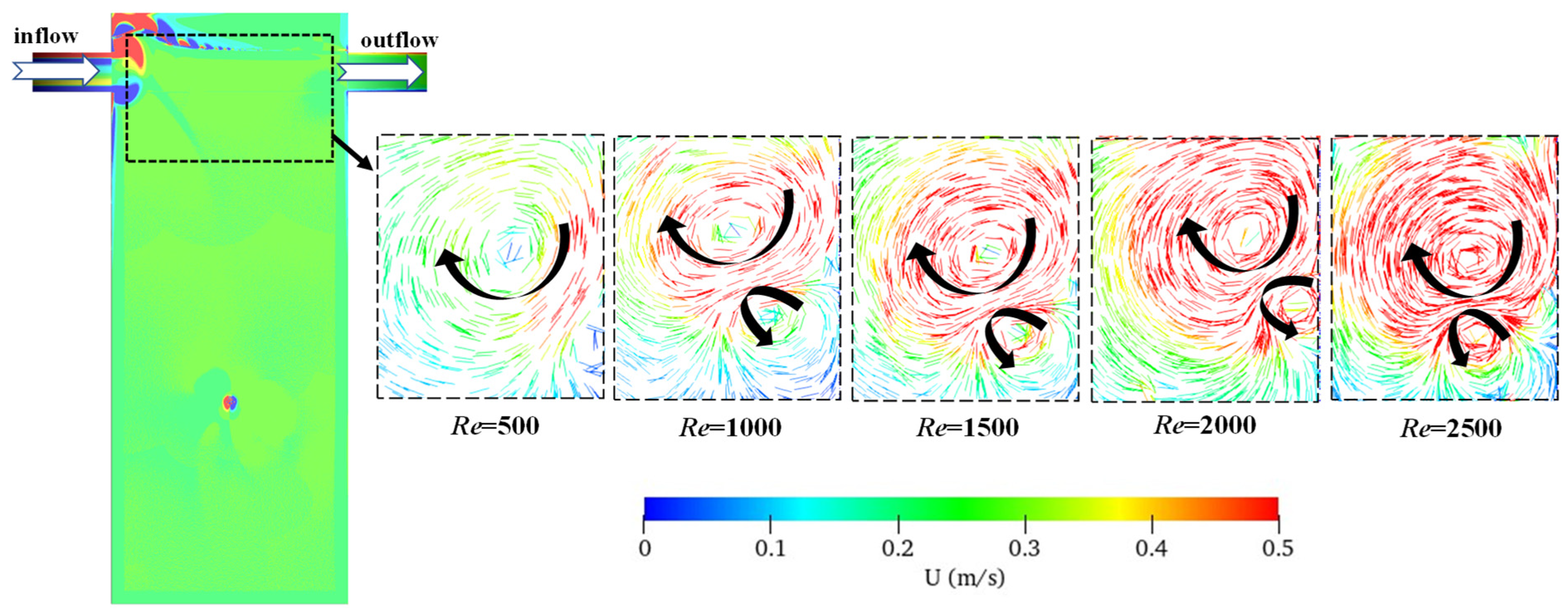
Figure 9 illustrates the liquid surface flow model and the liquid surface velocity field at different Reynolds numbers. The improved three-phase model simulates the complex perturbation of the liquid surface during the actual flotation process by adding an air inlet and outlet. Currently, the liquid surface disturbance originates from two sources: air disturbance from the inlet and spontaneous fluctuation caused by the free liquid surface under the influence of atmospheric pressure. The liquid surface fluctuation intensity and Reynolds number are positively correlated. As the flow rate increases, the Reynolds number increases, resulting in more intense collisions between the fluid and the wall, which can lead to the formation of turbulent vortices. Additionally, as the airflow velocity increases, the resulting vortex intensity is enhanced, and the impact area expands, increasing the scope of influence. At a lower Reynolds number (
Re = 500), the flow exhibits mainly a single clockwise reflux vortex. As the liquid level
Re increases (
Re = 1000–2500), two vortices with opposite directions appear in the flow field, and a vortex with a counterclockwise direction appears below the original vortex. The two vortices with opposite directions are interdependent and move slowly.
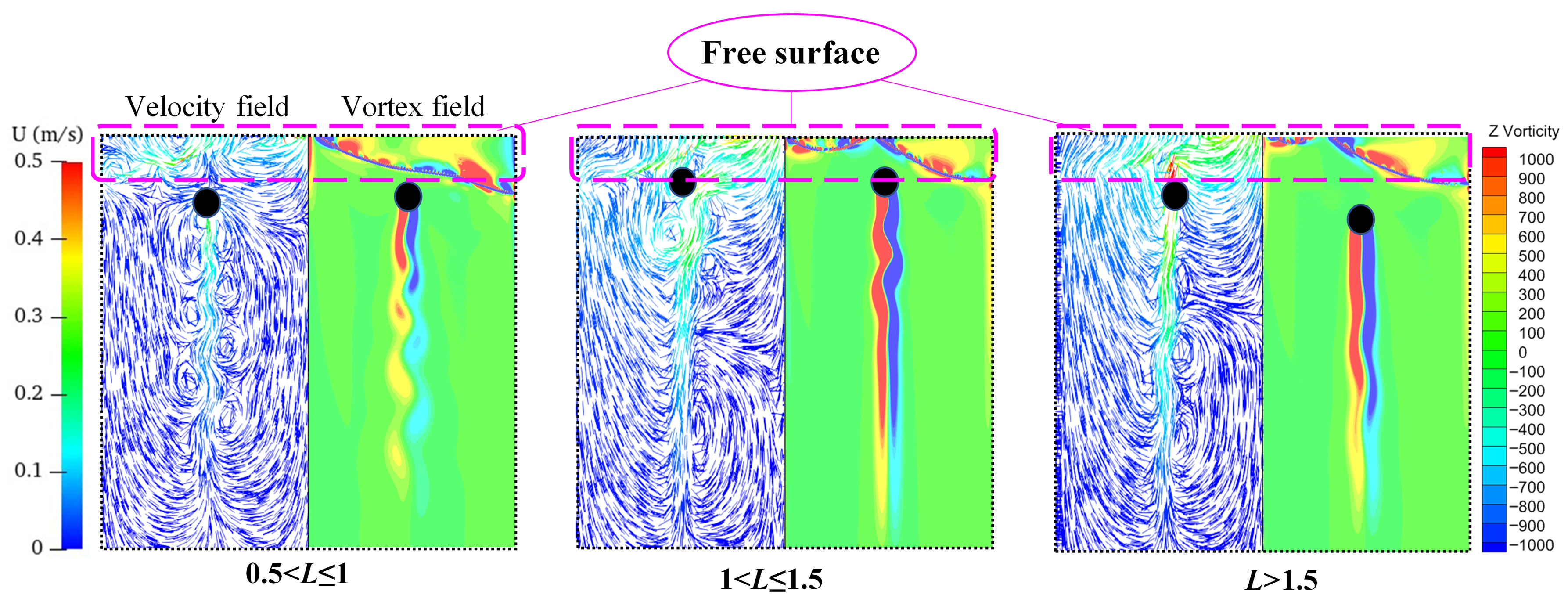
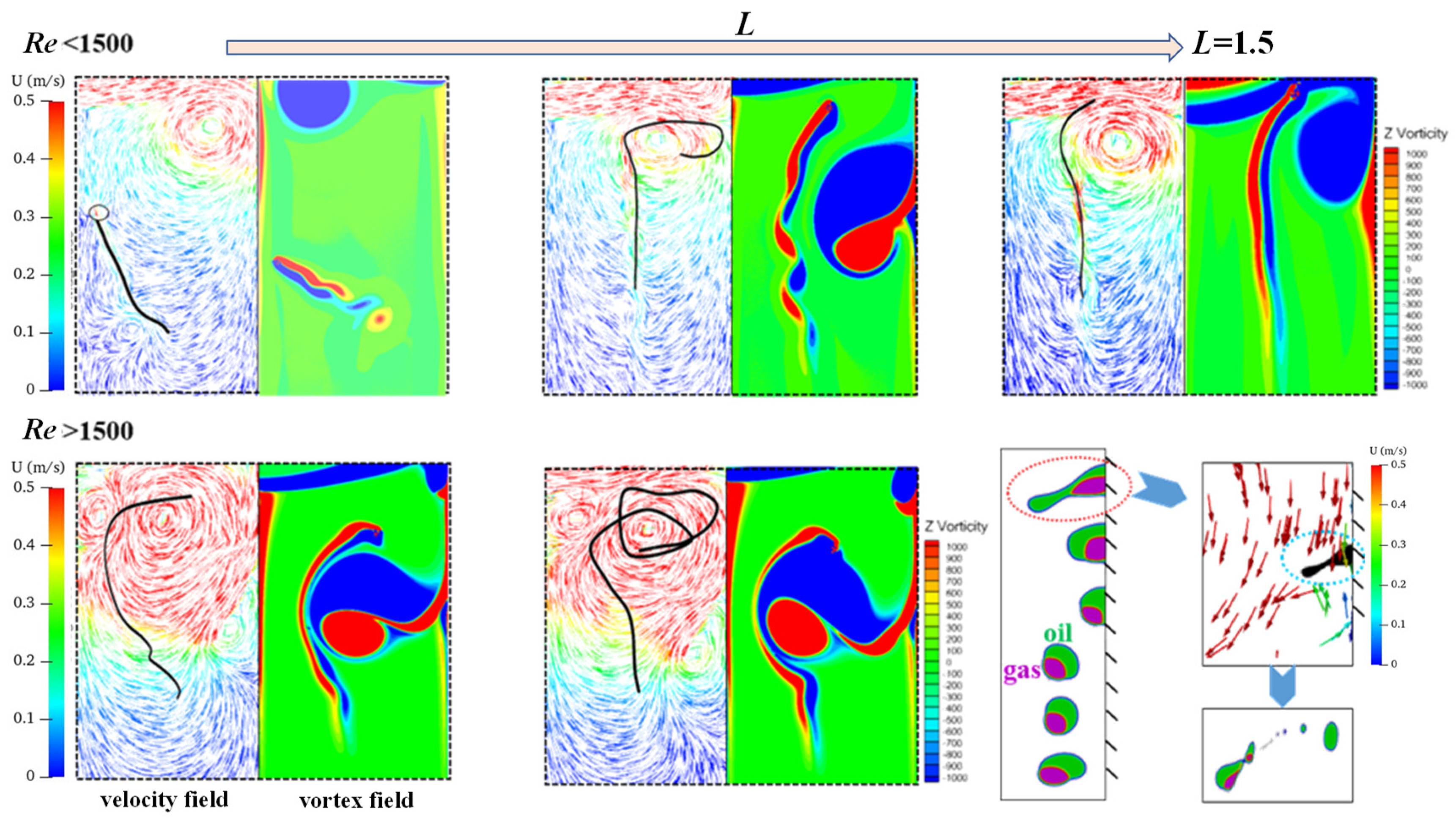
Figure 10 illustrates the impact of liquid surface disturbance on the ascent of oil and gas compounds with varying diameter ratios. The figure displays the velocity and vorticity fields. Analysis of the velocity field shows that oil and gas compounds with a liquid surface Reynolds number
Re < 1500 and a smaller diameter ratio experience less buoyancy and are more susceptible to the force of the liquid surface during ascent. This can cause an imbalance of forces, resulting in premature wall attachment and difficulty reaching the liquid surface. As the oil and gas diameter ratio increases, the buoyancy of the aggregate also increases. This is sufficient to resist the obstruction caused by liquid surface disturbance. However, when rising to the liquid surface area, the compound is forced to be involved in the vortex movement, which prolongs the time required for oil and gas aggregate separation. The intensity of the vortex increases when the Reynolds number of the liquid surface exceeds 1500, and its scope of influence expands. The oil–gas compound is caught in a vortex movement and begins to rotate in the direction of the larger vortex during the initial stages of aggregate aggregation and completion of the rise. As the oil–gas compound approaches the liquid surface, the curvature of rotation decreases. The vortex diagram on the right shows that as
Re increases, the liquid flows from left to right when it hits the wall and produces a reflux. The formation of the reflux vortex then begins to move to the left again, cutting off the rise of the oil and gas compounds. This results in changes in the trajectory of the oil and gas compounds, which are forced to rotate clockwise. Special attention is given to the high-intensity vortex disturbance and the diameter ratio
L > 1.5. The oil and gas compound is affected by vortex shear and can break apart, mainly due to the small surface tension of the large-diameter compound, making it easy to deform. As a result, when the clockwise rotation of the vortex generates downward shear near the liquid surface, the aggregate is torn and ultimately broken, making it difficult to reach the liquid surface.
The Reynolds number range examined in this study (Re = 500–2500) covers the transition from laminar to weakly turbulent flow conditions commonly found in industrial flotation tanks. At Re < 1500, surface disturbances are manageable and do not severely compromise aggregate stability. However, at Re > 1500, the formation of strong recirculation vortices leads to aggregate breakup, particularly for larger oil droplets with a diameter ratio L > 1.5. This directly compromises oil removal efficiency, as aggregate breakup prevents oil droplets from reaching the surface for collection. In industrial wastewater treatment systems, such surface disturbances arise from specific operational features: scraper movement during skimming, air–water interface interactions due to turbulent inflow, or feed-induced fluctuations from uneven distribution. The critical threshold of Re = 1500 identified in this study provides a practical design target. To mitigate these effects, baffles or flow dampeners should be installed near the liquid surface to limit turbulence intensity. Additionally, optimizing scraper speed and ensuring uniform feed distribution can help maintain Re below the critical threshold, preserving aggregate integrity and ensuring efficient separation.
3.3. Effect of Airflow in Various Directions
In actual flotation equipment, continuous inlet airflow provides sustained directional disturbance, which determines the overall flow pattern and rising trajectory of aggregates. Complementary to transient pulsation and surface vortex, directional airflow acts on the whole rising process. This section compares three typical airflow patterns to identify the optimal inlet configuration.
In the flotation system’s flow field, compounds of oil and gas are impacted by multidirectional airflow, which significantly affects their upward flotation behavior. To simulate the industrial flotation process more realistically, this section constructs three new models that simulate the complex airflow disturbances generated when air bubbles are introduced by adding air inlets and regulating the inlet velocity.
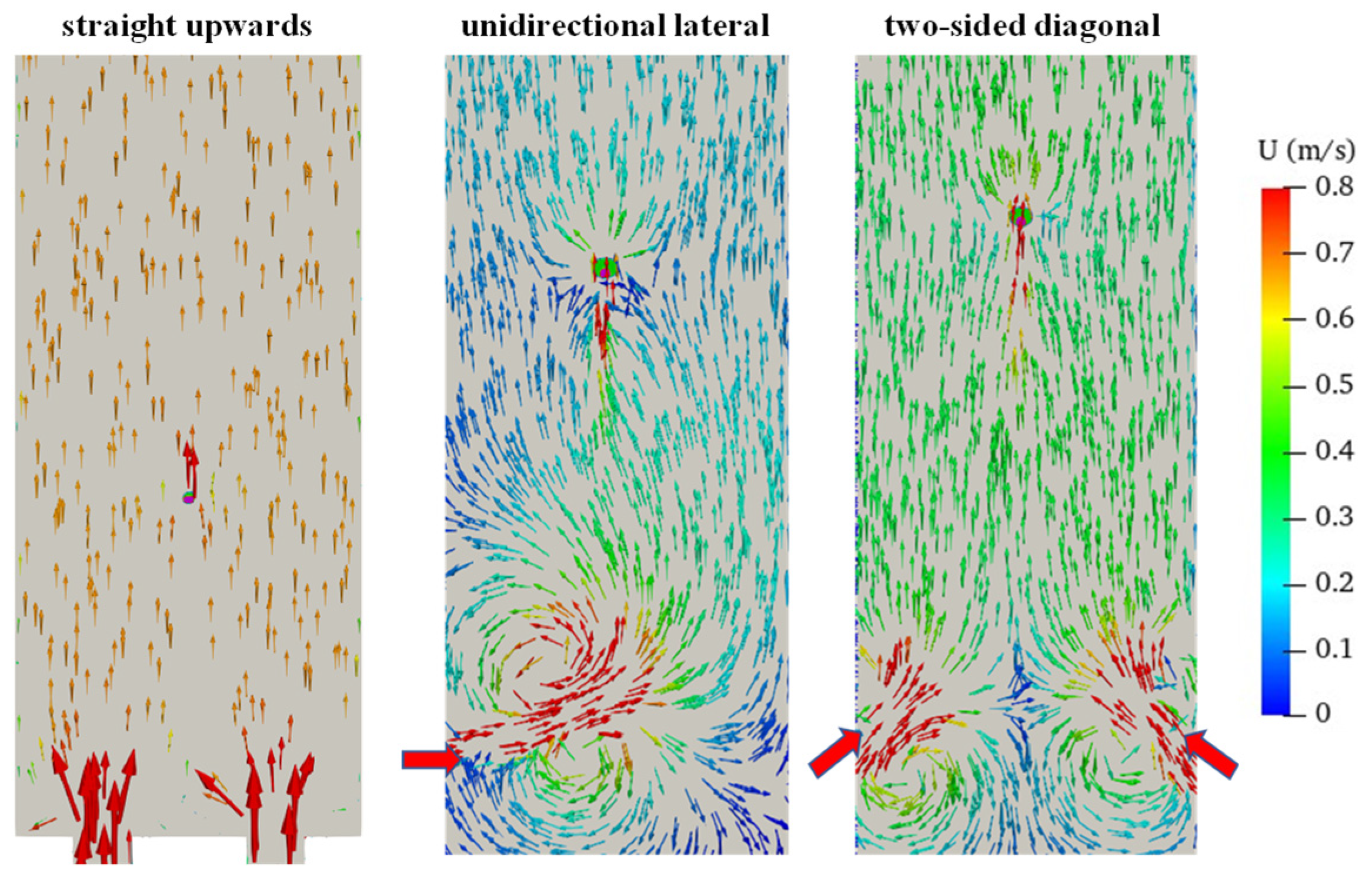
Figure 11 illustrates three common airflow directions: vertical upward, unidirectional horizontal, and diagonal upward on both sides.
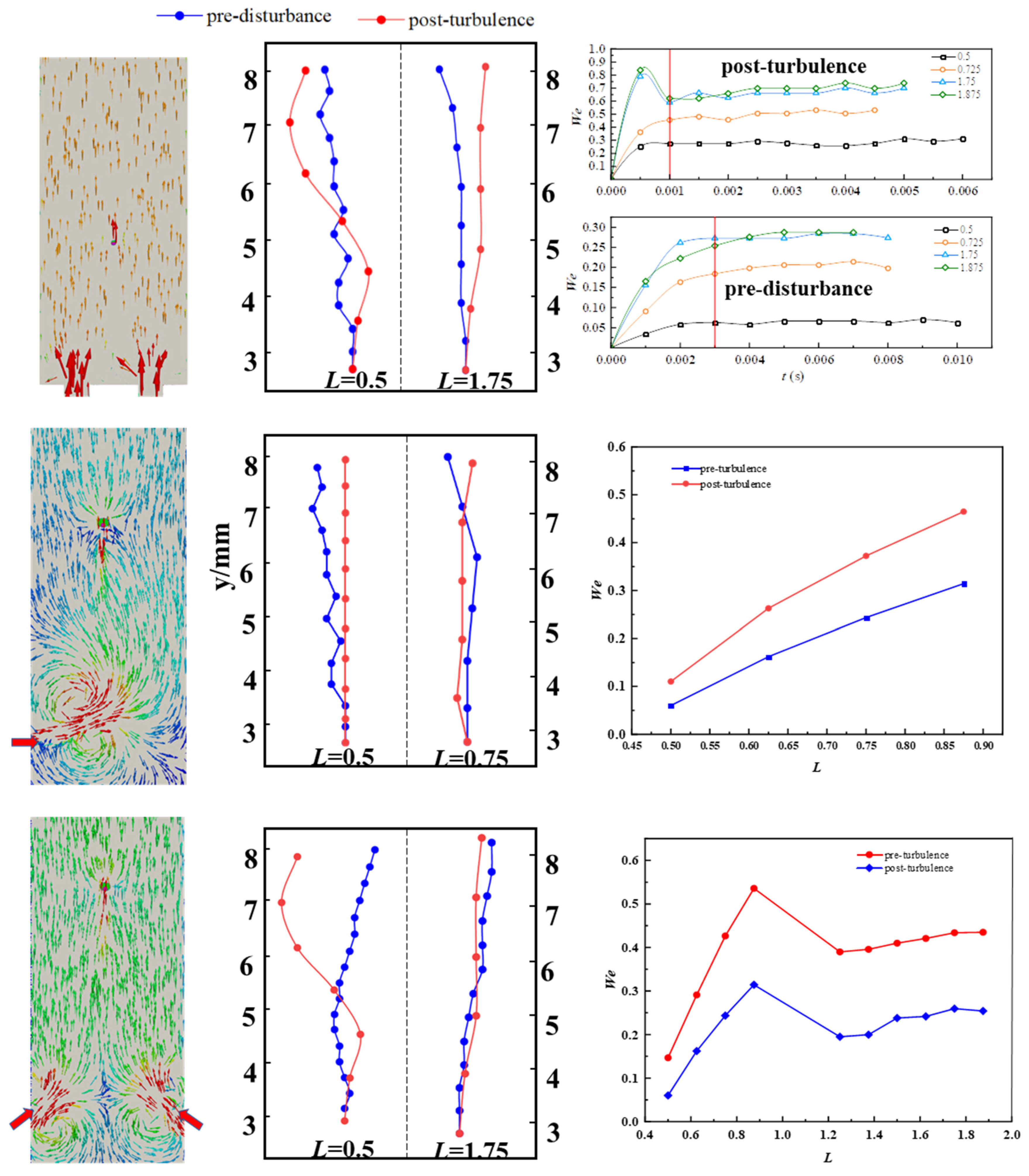
Figure 12 compares the effects of three inlet flow perturbations on the upward trajectory and upward Weber number (
We) of the compounds before and after the perturbations were added. It is evident that the horizontal flow perturbation in one direction reduces the amplitude of the left-right oscillation of the upward path when the oil–gas diameter ratio is less than one. On the other hand, the vertical upward flow and the bilaterally sloping flow perturbations significantly increase the amplitude of the upward trajectory oscillation, resulting in a clear Z-shaped trajectory. Furthermore, it is evident from the change in the rising
We that the inclusion of the three types of airflow perturbation can enhance the rising Weber number of the oil and gas compounds, hasten the flotation speed, reduce the flotation time, and improve the efficiency of air flotation. Quantitatively, compared with the quiescent condition, vertical upward and bilateral oblique upward flows increase the rising Weber number by 25–30% and reduce the overall flotation time by a comparable margin. In summary, it is evident that both vertical upward flow and two-way diagonal flow enhance the aggregation and uplift of bubbles and oil droplets, thereby improving air flotation efficiency. However, unidirectional horizontal flow only promotes the rise of compounds when the diameter ratio is
L < 1 and is not conducive to the rise of oil and gas compounds with a diameter ratio of
L > 1 or more. This can lead to the adhesion of compounds on the wall surface. Notably, bilateral oblique upward flow reduces flotation time by 20–30% compared with unidirectional horizontal flow for large oil droplets (
L > 1), while effectively preventing wall attachment.
The increase in Weber number observed with vertical upward and bilateral oblique flows indicates enhanced flotation kinetics, which directly translates to faster oil removal and improved separation efficiency. The simulated airflow velocity of 1 m/s used in this study is within the typical range employed in industrial dissolved air flotation (DAF) systems, where superficial gas velocities of 0.5–2 m/s are commonly applied for oily wastewater treatment. The finding that bilateral oblique flow outperforms unidirectional horizontal flow—particularly for large oil droplets with diameter ratio L > 1—has important implications for reactor design. In practical flotation systems, different airflow patterns correspond to specific sparger or nozzle configurations: vertical upward flow is generated by bottom-mounted spargers, unidirectional horizontal flow may arise from improperly aligned nozzles, and bilateral oblique flow is achieved through symmetrically positioned injection points along the tank walls. Based on these results, it is recommended that inlet designs adopt symmetric layouts, such as bilateral oblique upward spargers, to avoid the wall adhesion issues associated with unidirectional flow. This design approach improves separation efficiency across a broader range of oil droplet sizes and aligns with the trend toward multipoint, symmetric aeration systems in modern flotation equipment. Furthermore, the increased flotation speed enabled by optimized airflow patterns can reduce hydraulic retention time, allowing for more compact reactor designs or higher treatment capacities within existing tank volumes.
To clearly summarize the key findings under different flow field perturbations, a comparative table is provided below to quantify adhesion time, rising Weber number, and flotation performance with respect to perturbation type and oil–bubble diameter ratio
L, as shown in
Table 1.
4. Conclusions
It can be demonstrated that flow field perturbation has a significant effect on the rising efficiency and flotation results of micro-gas and oil droplet compounds. This paper employs the MultiphaseInterFOAM solver to investigate the effect of applied forces in the flow field on the adhesion behavior of bubbles and oil droplets. The flow field conditions that are more favorable for the uplift of bubble–oil droplets are summarized below.
- (1)
The addition of negative pulsation velocity to the fluid domain vibration velocity at the early stage of contact was conducive to the rise of bubble–oil droplets and promoted the aggregation of bubble–oil droplets. The addition of positive pulsation velocity is not conducive to the rise in bubble–oil droplet aggregation. Instead, it leads to the phenomenon of settling at the initial stage of their aggregation, which prolongs the flotation time of bubble–oil droplets.
- (2)
The formation of a liquid surface disturbance by a reflux vortex increases the aggregate’s retention time in the water, which is unfavorable for the aggregate’s ability to float. In particular, when the Reynolds number of the liquid surface reaches 1500, the larger diameter aggregate is shredded by the shear force and is unable to float. Consequently, in practice, in an air flotation tank, it is important to pay attention to the amplitude of the liquid surface disturbance when stirring or passing the aggregate into the bubble.
- (3)
The effects of vertical upward, unidirectional horizontal flow, and bilateral oblique upward airflow on the flotation of compounds were compared. It was found that vertical upward flow and bilateral oblique upward airflow can increase the flotation speed, improve the trajectory, and improve the flotation efficiency. Therefore, it can be referred to as the bottom of the air bubbles or the two sides of the oblique upward air bubbles in the actual flotation system.
For industrial applications, these findings support clear practical recommendations: install baffles to keep the surface Reynolds number below 1500, and use bilateral oblique upward spargers in modern dissolved air flotation (DAF) units. These measures can effectively reduce chemical demulsifier dosage and lower energy consumption, bringing significant economic and environmental benefits. However, this study is based on 2D numerical simulations, and further pilot-scale validation is still needed before full industrial implementation.
In summary, optimizing flow field perturbations is key to improving flotation efficiency in wastewater treatment. Negative pulsation, controlled surface disturbances (Re < 1500), and symmetric inlet flow configurations are beneficial for enhancing oil removal. These insights provide practical guidance for the design and operation of industrial flotation systems, including the placement of baffles, selection of sparger arrangements, and control of operational parameters to maintain stable and efficient separation.