Article

Efficiency of Advanced Oxidation Processes for Treating Wastewater from Lithium-Ion Battery Recycling


1
Fraunhofer IWKS, Brentanostraße 2a, 63755 Alzenau, Germany
2
Institute IWAR, Technical University Darmstadt, Karolinenplatz 5, 64289 Darmstadt, Germany
3
Institute of Material Science, Technical University Darmstadt, Karolinenplatz 5, 64289 Darmstadt, Germany
4
Department of environmental Process Engineering, Technical University Berlin, Straße des 17. Juni 135, 10623 Berlin, Germany
5
Berliner Wasserbetriebe, Neue Jüdenstraße 1, 10179 Berlin, Germany
*
Author to whom correspondence should be addressed.
Clean Technol. 2026, 8(1), 13; https://doi.org/10.3390/cleantechnol8010013
Submission received: 4 November 2025 / Revised: 15 December 2025 / Accepted: 23 December 2025 / Published: 13 January 2026
(This article belongs to the Topic Wastewater Treatment Based on AOPs, ARPs, and AORPs)

Abstract

A treatment process was developed for effluents from direct physical lithium-ion battery (LIB) recycling with a focus on the removal of organic contaminants. The high chemical oxygen demand to biological oxygen demand ratio (COD/BOD5) of 3.9–4.6 indicates that biological treatment is not feasible. Therefore, three advanced oxidation processes were evaluated: UV/H2O2 oxidation, the Fenton process and electrochemical oxidation. Two target scenarios were considered, namely compliance with the limit for discharge into the sewer system (COD = 800 mg/L) and compliance with the stricter limit for direct discharge into surface waters (COD = 200 mg/L). Under the investigated conditions, UV/H2O2 oxidation and the Fenton process did not meet the required discharge limits and exhibited high chemical consumption. In contrast, electrochemical oxidation achieved both discharge criteria with a lower energy demand, requiring 32.8 kWh/kgCODremoved for sewer discharge and 95.3 kWh/kgCODremoved for direct discharge. An economic assessment further identified electrochemical oxidation as the most cost-effective option, with treatment costs of EUR 6.63/m3, compared to EUR 17.31/m3 for UV/H2O2 oxidation and EUR 28.66/m3 for the Fenton process. Overall, electrochemical oxidation proved to be the most efficient and environmentally favorable technology for treating wastewater from LIB recycling, enabling compliance with strict discharge regulations while minimizing the chemical and energy demand.

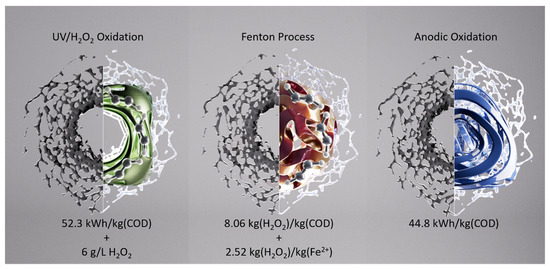
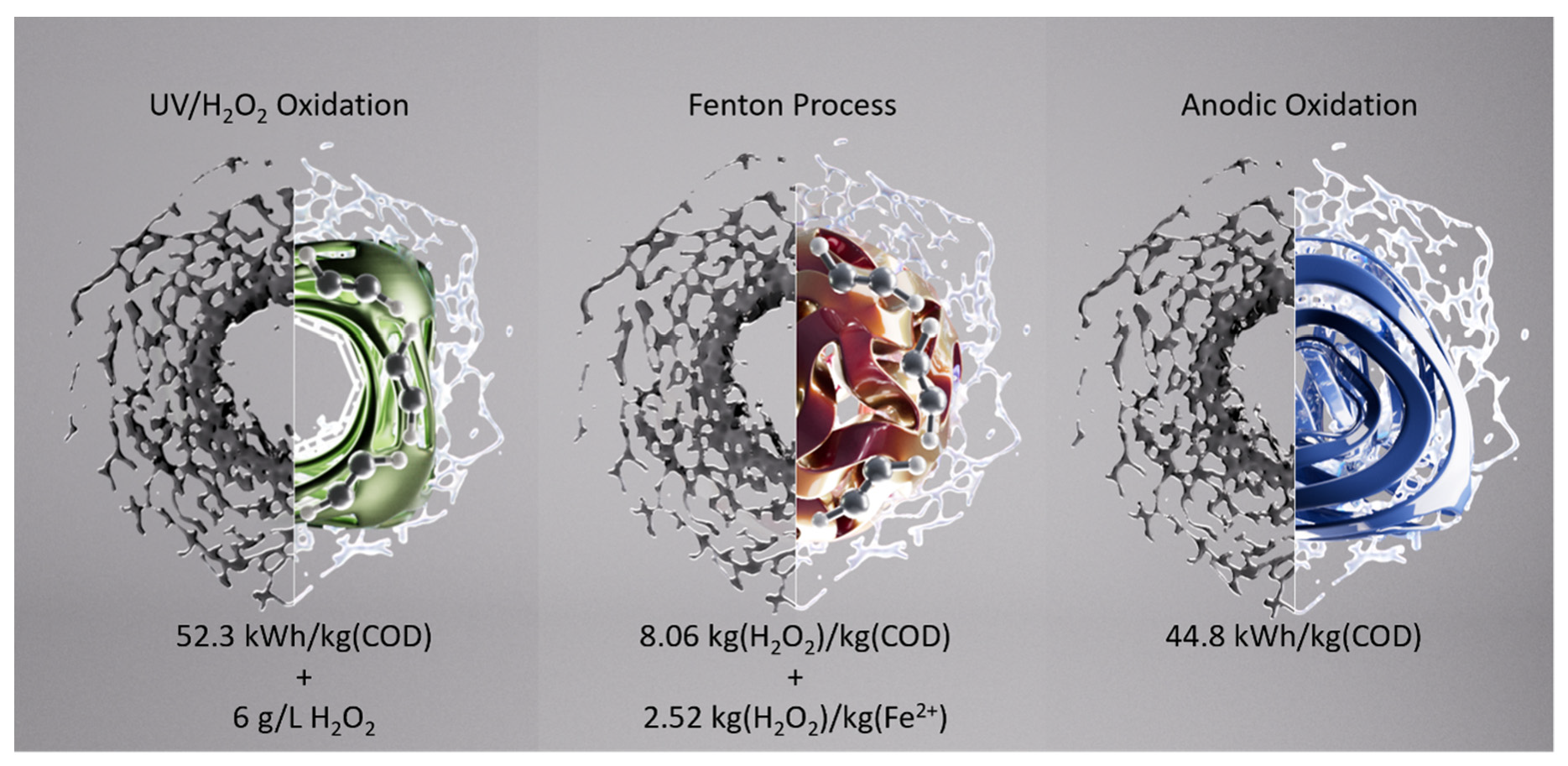
Graphical Abstract

1. Introduction

To preserve critical raw materials and to reduce dependency on external sources, the European Union (EU) is actively working to develop a comprehensive lithium-ion battery (LIB) recycling infrastructure within Europe. This initiative aims to enhance resource efficiency, minimize environmental impacts and support the transition to a circular economy by recovering and reusing key materials such as lithium, cobalt and nickel from end-of-life batteries. Kampker et al. predict a volume of recycled batteries corresponding to a storage capacity of 38.8 GWh in 2030 in the EU [1]. Consequently, it is critical to assess and mitigate the environmental impact of recycling processes by reducing emissions and optimizing energy efficiency [2]. To achieve this, the development of holistic recovery and treatment methods is essential. Within this context, a water-based direct physical recycling process of LIBs was developed at Fraunhofer IWKS [3,4,5], resulting in the recovery of a high-quality black mass in addition to metallic components (Cu, Al and steel) and plastic foils as value-added byproducts. However, this process requires water. As the process water becomes mainly contaminated with the electrolytes of LIBs, which consist of aprotic organic solvents and conducting salts, a procedure to remove the contaminants from the process water was developed in the current work. In particular, the degradation of these poorly biodegradable organic carbonates by using advanced oxidation processes (AOPs) was investigated and assessed [6].
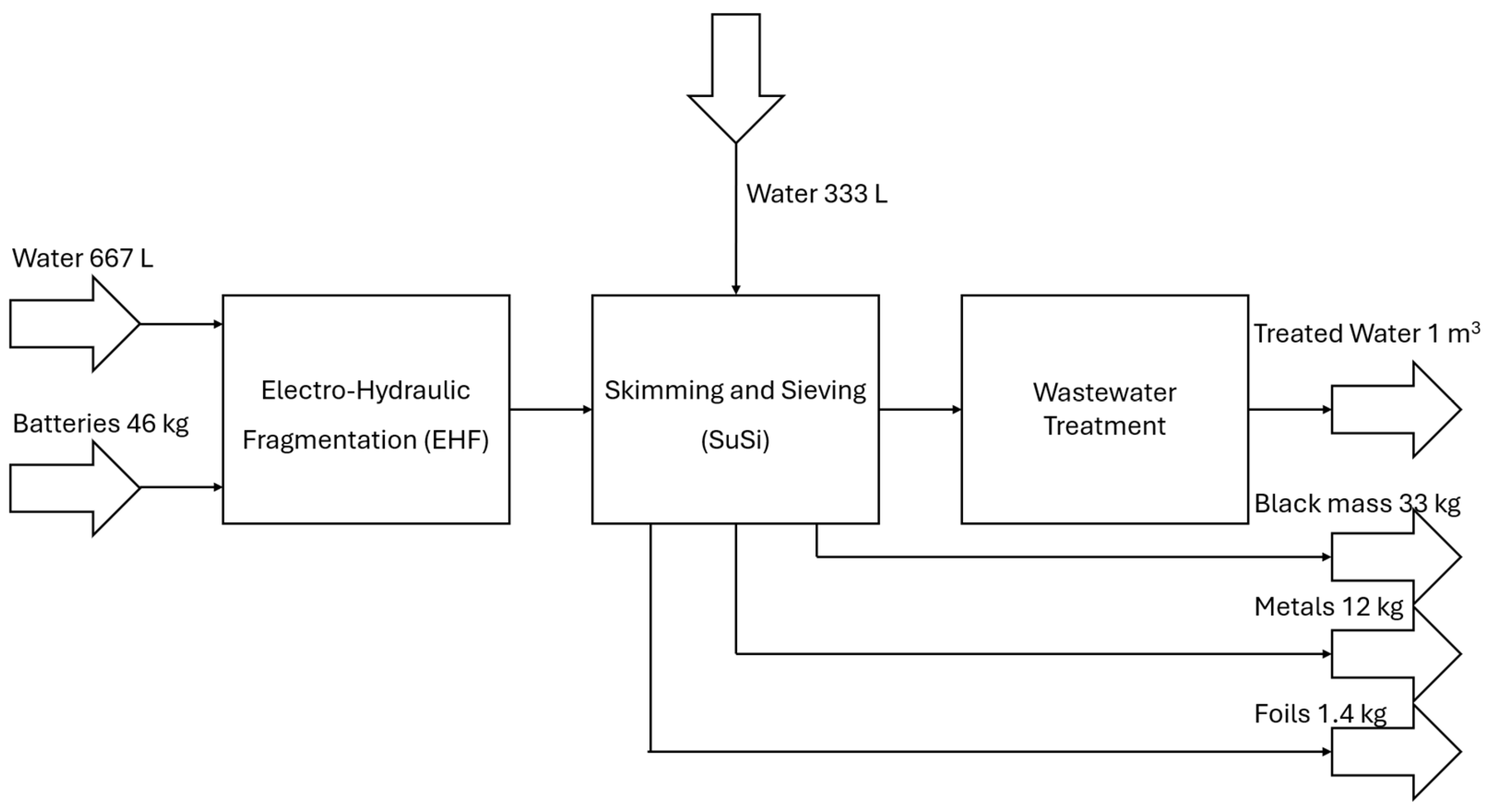
Figure 1 schematically shows the developed LIB recycling procedure, where the LIBs are opened and cathode and anode foils are delaminated in a reactor filled with water by using electrohydraulic fragmentation (EHF) [3,4,5]. The various battery components are subsequently separated by a combination of skimming and sieving (SuSi) processes. The resulting process water possesses high concentrations of phosphorus and fluorine, as well as a high chemical oxygen demand (COD) [7]. Table A1 in Appendix A shows the nominal composition of the process water. Three methods have been considered in the present study to reduce the COD: UV/H2O2 oxidation, the Fenton process and electrochemical oxidation. During UV/H2O2 oxidation, hydroxyl radicals (OH radicals) are generated by the homolytic cleavage of H2O2 by UV irradiation [8]. Depending on the cleaning objective and the type of wastewater, between 0.0025 and 2 kg/kgCODremoved are typically used [9,10,11,12,13]. The classic Fenton process is a catalytic conversion that uses Fe2+ as the catalyst and H2O2 as the oxidizing agent [14]. The principal reactions are shown in Equations (1) and (2):
F e 2 + + H 2 O 2 F e 3 + + O H + O H
F e 3 + + H 2 O 2 F e 2 + + O H ° 2 + H +
A literature review has shown that between 0.96 and 2 kg/kgCODremoved H2O2 is used and that the mass ratio of H2O2/Fe2+ is between 0.32 and 290 [15,16,17,18,19,20,21]. During electrochemical oxidation, organic material is mainly degraded by OH radicals, but there is also direct oxidation at the electrode surface and indirect oxidation by other oxidative species such as H2O2 [22]. Typical current densities reported in the literature are 6.6–66 mA/cm2, with energy demands of 17–534 kWh/kgCODremoved [23,24,25,26,27,28,29,30]. It is difficult to draw meaningful comparisons based on the values in the literature, as the cleaning targets vary widely. They range from 31.4 to 100% COD removal [9,23,27]. There are differences in input concentrations. Here, the COD ranges between 397 and 60,500 mg/L [10,19]. In addition, the types of wastewaters and their composition vary significantly, e.g., wastewater from textile manufacturing, pulp production and petrochemicals. Therefore, direct comparisons under similar conditions are essential for drawing meaningful conclusions.
The AOPs were evaluated and qualified for two cases:
(i)
Discharge of the treated process water into the sewer system to be further treated in a municipal wastewater treatment plant with a COD limit value of 800 mg/L [31].
(ii)
Direct discharge of industrial wastewater into a water body. According to the German legal framework, the COD needs to be reduced to at least 200 mg/L to comply with the limit values defined in Annex 27, “treatment of waste by chemical-physical plants” [32].
The wastewater is currently treated in a chemical–physical plant because it exceeds the sewer system’s limits for COD, fluoride and total phosphorus. Since, at the time of publication, there is no annex to the wastewater ordinance that deals with the recycling of batteries, one aim of this work is to provide recommendations for the future preparation of such an annex. Based on this background, the following objectives have been set for this publication:
(i)
Investigate whether the recovery of organic carbonates is an option for wastewater treatment.
(ii)
Evaluate the treatment performance of three AOPs: UV/H2O2 oxidation, the Fenton process and electrochemical oxidation.
(iii)
Compare the AOPs in terms of energy demand, chemical requirements and discharge compliance, considering two scenarios: discharge into the sewer system and direct discharge into a water body according to German wastewater ordinance limits.
(iv)
Provide the levelized treatment costs per m3 for the three AOPs.
(v)
Derive recommendations for the most suitable treatment option for LIB recycling process water and for potential regulatory parameters in future wastewater legislation.

2. Materials and Methods

2.1. Analytical Methods

All samples were filtered using a 0.45 µm polyvinylidene fluoride (PVDF) filter prior to analysis. The COD and biological oxygen demand (BOD5) were analyzed with cuvette tests (LCK114 and LCK555) (Hach Lange GmbH, Düsseldorf, Germany) by measuring absorbance at wavelengths of 605 nm and 620 nm with the Hach Lange (Düsseldorf, Germany) DR3900, respectively. The COD/BOD5 ratio was used to evaluate the biodegradability of the process water.
Total organic carbon (TOC) was measured as non-purgeable organic carbon (NPOC) using an multiN/C 3100 TOC Analyzer (Analytik Jena, Jena, Germany). To ensure that only organic carbon was measured, CO2 was stripped by adding two drops of 2 mol/L hydrochloric acid to each 5 mL cuvette.
The concentration of organic carbonates was determined using an AZURA Compact high-performance liquid chromatography (HPLC) system. An Eurospher III 150 × 4 mm 100-5 C 18 column (Knauer Wissenschaftliche Geräte GmbH, Berlin, Germany) was used in the chromatograph. The carbonates were analyzed by a diode array detector (DAD) (Knauer Wissenschaftliche Geräte GmbH, Berlin, Germany) at 194 nm. Organic carbonates have a comparatively high limit of detection and limit of quantification [33,34,35]. To increase the concentration of organic carbonates, a battery cell was opened and immersed in 35 mL of ultrapure water.
To check how much of the COD was still present as organic carbonates, the measured COD was compared with the calculated COD. The COD was calculated using the following Equation (3), which assumes the complete oxidation of carbon to CO2 (3).
C O D c a l . = c o r g . c a r b o n a t e · x C a r b o n M ˜ o r g . c a r b o n a t e · M ˜ O 2
c o r g . c a r b o n a t e   Concentration of organic carbonates [mg/L]
x C a r b o n   Number of carbon atoms in the carbonate molecule [-]
M ˜ o r g . c a r b o n a t e   Molar mass of organic carbonates [g/mol]
M ˜ O 2   Molar mass of oxygen molecules [g/mol]
Using a DR6000 spectrophotometer (Hach Lange GmbH, Düsseldorf, Germany), a spectrum was measured over the spectral range from 200 to 800 nm. An inductively coupled plasma optical emission spectrometer (ICP-OES) 3800 (Perkin Elmer, Waltham, MA, USA) was utilized to quantify the content of aluminum, calcium, magnesium, phosphorus, sulfur and silicon in the precipitate. The sample was digested using aqua regia at 240 °C for 1 h in a Turbowave (MLS-MWS GmbH, Leuchtkirch im Allgäu, Germany).
Phase analysis of the precipitates was conducted using powder X-ray diffraction (PXRD) with an Empyrean diffractometer (Malvern Panalytical, Malvern, UK) operated in the Bragg–Brentano geometry. The diffraction patterns were recorded at 40 mA and 40 kV using a cobalt X-ray source (λ = 1.78901 Å) over a 2θ range from 10 to 75°, with a scan speed of 0.006°/s and a step size of 0.013°. Phase identification was performed using HighScore Plus version 4.9 software (Malvern Panalytical, Malvern, UK) in combination with the Inorganic Crystal Structure Database (ICSD; FIZ Karlsruhe, Karlsruhe, Germany).

2.2. LIB Recycling Route

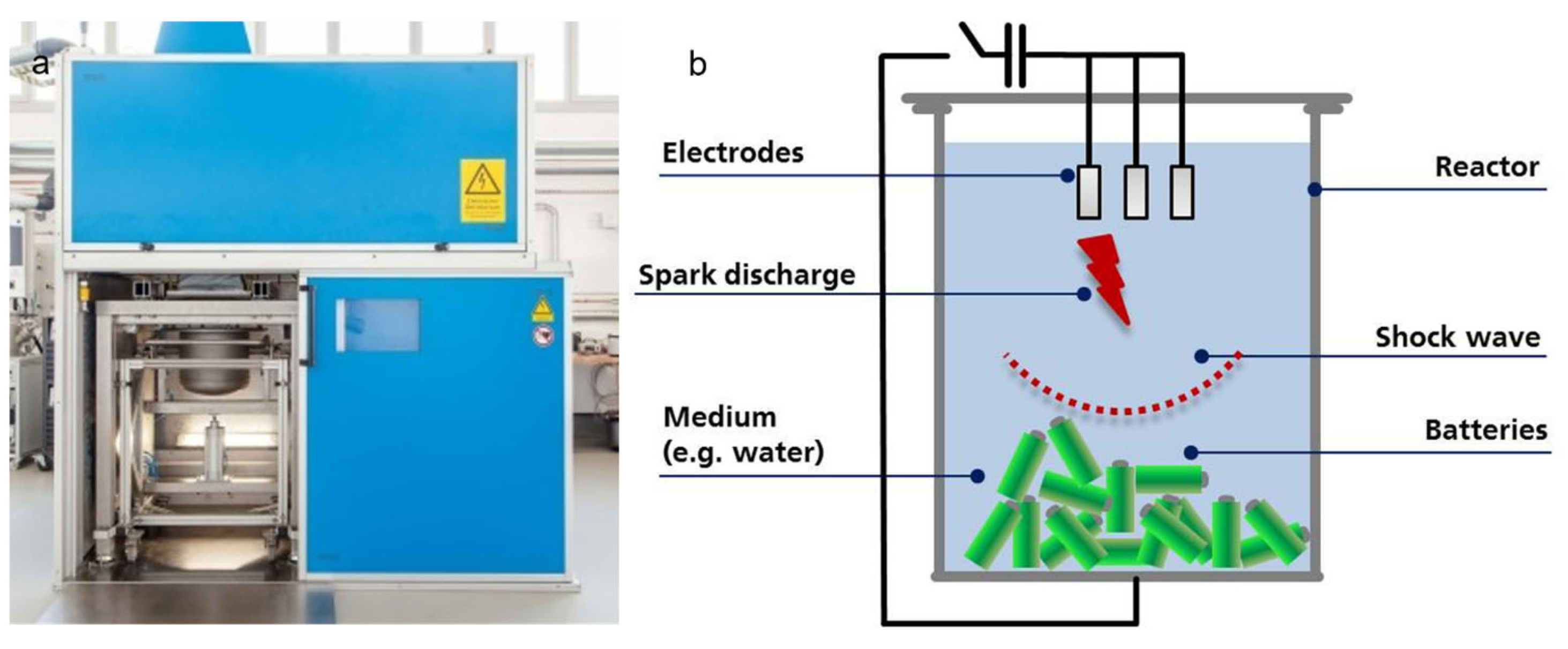
The input material was end-of-life Bosch e-bike battery systems, each containing 40 cells (type 18650) with NMC811 (LiNi0.8Mn0.1Co0.1O2) cathode material. In the first step, the battery systems were dismantled manually. For safety reasons, the batteries were discharged to a 10% state of charge. The EHF -400 plant (ImpulsTec GmbH, Radebeul, Germany) with the dimensions width = 1940 mm; height = 2430 mm and depth = 1400 mm was used to open the battery cells and to delaminate the anode and cathode foils. The EHF system is shown in Figure 2a and its operating scheme is illustrated in Figure 2b. Three electrodes were immersed in a reactor containing 30 battery cells and 20 L of water. The high-voltage (40 kV) discharge of the electrodes led to the formation of pressure waves in the water. The pressure waves opened the battery cells at the material interfaces. This process had an energy demand of 1.78 kWh/kgBatteries [2,3]. Afterwards, the SuSi process was used to separate the EHF slurry into separate fractions of black mass, plastics and metals, which required an additional 10 L of water.

2.3. Advanced Oxidation Processes

UV/H2O2 oxidation experiments were conducted on a 500 mL laboratory scale. A 15 W low-pressure mercury vapor lamp with a radiation maximum at 254 nm was used. The system was cooled using water. The H2O2 concentration was between 3 and 9 g/L and the pH value was set at 4.
The Fenton experiments were also carried out at laboratory scale (50 mL). The process water was prepared with FeSO4 ∙ 7 H2O and 30% hydrogen peroxide solutions. The concentrations of FeSO4∙ 7 H2O and H2O2 solutions were varied in the range of 1–12 g/L and 1–16 g/L, respectively. COD removal was tested at different reaction times of 30 min, 1 h, 2 h, 6 h and 24 h.
The electrochemical oxidation experiments were carried out at laboratory scale (200 mL). The experiments were performed with a boron-doped diamond (BDD) anode and two steel cathodes. The area of each electrode was 40 cm2, and the distance between the anode and cathodes was 0.5 cm. The system was operated at a constant direct current of 25–100 mA/cm2 with the corresponding voltages. A schematic illustration of the experimental setup is provided in Figure A1 in the Appendix A.

2.4. Economic Analysis

For the economic analysis, upscaling was performed to treat 16.7 m3/d of wastewater. The period of 2024/2025 was considered. These conditions were chosen because a battery recycling plant of this scale was planned. The upscaling was carried out according to a three-step method described by Weyand et al. [37]. The service life was determined using official amortization tables and listed in Table A2 in Appendix A. A time horizon of 20 years was considered. Since all three processes had comparable maintenance and personnel costs, these costs were not taken into account.
The capital expenditures (CAPEX) are the summed up investment costs of the plant parts, and operational expenditures (OPEX) are energy, chemical and disposal costs. These costs are listed in Table A2 in Appendix A as well. The investment costs were based on supplier quotations. Equation (4) shows the calculation of the levelized treatment costs (LTCs) to treat 1 m3.
L T C = 1 V ˙   C A P E X t + O P E X
V ˙   Volume flow (in this case 16.7   m 3 / d )
t Time

3. Results and Discussion

3.1. Process Water Composition

The process water composition is described in detail in our previous publication, and the results are summarized in Table A1 [7]. Several wastewater samples were analyzed, with COD ranging from 916 to 2270 mg/L and TOC from 452 to 687 mg/L. The present work focuses on the organic components. First, it was investigated whether the recovery of the organic carbonates is a viable option.
Because of the high limit of detection of the organic carbonates, a highly concentrated sample was prepared. Here, the COD was measured to be 108,000 mg/L. Table 1 lists the concentration of the detected organic carbonates that were found in the HPLC/DAD analysis. The COD of the organic carbonates was then calculated according to Equation (1). Comparing the measured and the calculated COD, it was found that only 39.6% of the COD was present as pure organic carbonates. The remainder were degradation products such as methanol, ethanol, fluorobenzene and cyclohexylbenzene [35]. This was mostly due to the fact that the batteries were at the end of their lives. During the use phase, the electrolyte is degraded [35,38]. Additionally, the recycling process can also lead to further degradation of the organic components. In the case of unused batteries, e.g., from surplus production, there would likely be fewer degradation products. In this case their recovery should be evaluated separately. Thus, since the organics are mainly present as degradation products of the organic carbonates due to the recycling of end-of-life batteries, the organic carbonates themselves are not recovered. Their recovery is complex and would involve cost-intensive processes such as distillation. Moreover, highly pure organic carbonates are required for marketing and reuse in LIBs.

3.2. UV/H2O2 Oxidation

In general, two main approaches are available for the degradation of organic compounds: biological treatment and AOPs. A COD/BOD5 ratio below 2 indicates that biological treatment may be effective. Wastewater from LIB recycling has a COD/BOD5 ratio of 3.9–4.6. Therefore, AOPs were chosen for the removal of the organic load [7].
Figure 3a shows the TOC removal for different H2O2 concentrations. The experiment with 3 g/L was aborted prematurely. Figure 3b shows the COD removal over time of the sample using 6 g/L H2O2.
Only the COD limit value for discharge into the sewer system was reached. The limit value was reached after 158.5 min. The direct discharge limit might have been achieved if the reaction time were extended. A linear regression yielded a reaction time of 221 min. Extending the reaction time by 23% also increased the energy demand by 23% and the process became less economically feasible. A further increase in concentration of the oxidation agent showed the same degradation rates. However, lower H2O2 concentrations led to slightly lower degradation rates. Nevertheless, TOC removal reached 100% using a H2O2 concentration of 6 g/L beyond 180 min. Although a complete degradation of the TOC was observed (see Figure 3a), the COD value was only reduced by 78%. This may be the case for three possible reasons. Firstly, H2O2 can lead to incorrect and increased measurement results in analyzing the COD [39]. According to Kang et al., the error can be as high as 16 mgCOD/mmolH2O2residual [40]. Secondly, CO2 was purged during the TOC measurement process, which can also lead to the removal of volatile carbon compounds, so-called purgeable organic carbon. To evaluate their influence, the COD was measured before and after purging of CO2, and it was found that the COD decreased by 9%. This is, however, not sufficient to fully explain the discrepancy between the TOC and COD removal.
Lastly, inorganic substances that are not oxidized during UV/H2O2 treatment may subsequently be oxidized under the strongly oxidative conditions of dichromate-based COD digestion, resulting in elevated COD values. In particular, reduced phosphorus and sulfur species act as electron donors during dichromate digestion and are therefore detected as oxygen demand, despite not contributing to organic carbon. However, the discrepancy between TOC and COD raises the question of whether TOC is, for highly inorganically contaminated wastewater, a more appropriate sum parameter for the organic load when discussing necessary parameters for an annex in the wastewater ordinance for battery recycling.
An important comparison parameter is the energy requirement of the process. An initial COD of 1632 mg/L is assumed in order to be able to better compare the energy and chemical requirements of the three oxidation processes. The process requires 56.3 kWh/kgCODremoved or 43.3 kWh/m3 to reach the COD limit value to allow for discharge into the sewer system after 158 min of treatment. Schwaickhardt et al. require 38.6 kWh/kgCODremoved to treat hospital laundry wastewater, whereas Babaei et al. require 131.1 kWh/kgCODremoved to treat petrochemical wastewater [9,13]. The experiments were performed on a similar experimental scale. Nevertheless, the energy requirements of the battery process water were of the same order of magnitude as the energy demands found in the literature for other process waters.
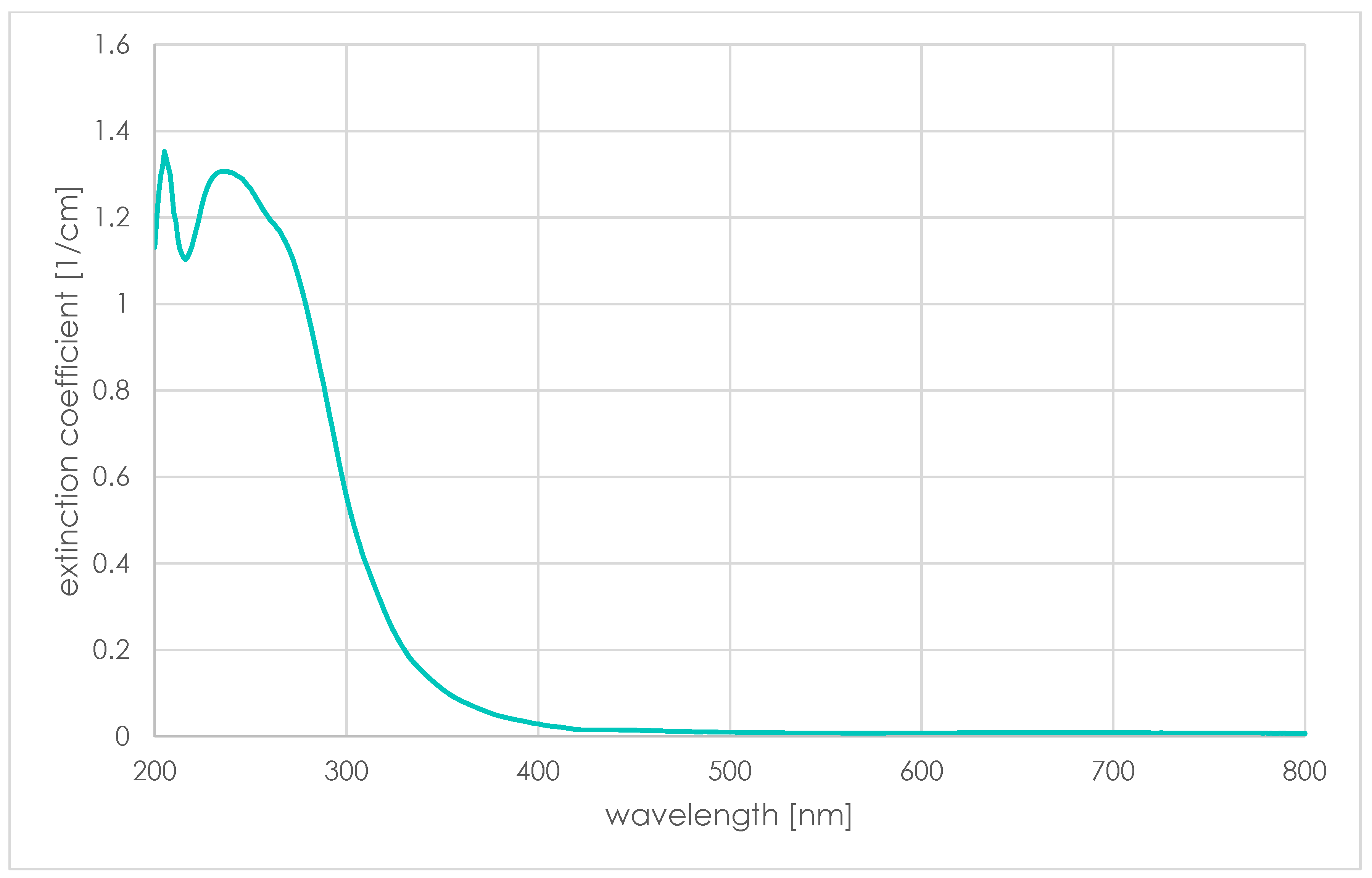
Another important factor was the amount of chemicals needed. This process had a high H2O2 requirement. at 7.8 kgH2O2/kgCODremoved, compared to the values in the literature, which range between 0.0025 and 2 kgH2O2/kgCODremoved [10,11,12,13]. One factor that negatively influences the energy and chemical requirements of the process is the fact that the process water absorbs light at the wavelength of the UV lamp (254 nm). The absorption spectrum is shown in Figure A2 in Appendix A. Due to strong absorption of UV radiation by the wastewater matrix at 254 nm, not all energy emitted by the UV lamp was available for hydroxyl radical generation, as part of it is dissipated as heat. However, the reaction system was actively temperature-controlled and remained close to ambient conditions, indicating that removal efficiency was primarily limited by reduced photon availability rather than by temperature-dependent reaction kinetics.
Another disadvantage with regard to the maintenance of the UV/H2O2 oxidation plant for this particular water is that the process water from battery recycling contains the anion hexafluorophosphate (PF6). PF6 hydrolyzes to hydrofluoric acid (HF) and phosphoric acid (H3PO4) at low pH values [7]. Dissolved fluorine occurs in different species (F, HF or HF2) depending on the pH. At higher pH values, fluoride is predominantly present as F, whereas decreasing the pH below 4 leads to a steep increase in the proportion of HF [7]. For this reason, the UV/H2O2 experiments were conducted at pH 4, representing a compromise between favorable conditions for hydroxyl radical formation and operational constraints related to fluoride hydrolysis and material compatibility.

3.3. Fenton Process

First, the concentration of FeSO4 ∙ 7 H2O, which yielded the highest COD removal, was tested. The results are shown in Table 2. The experiment was carried out at pH 4 and with an H2O2 concentration of 4 g/L.
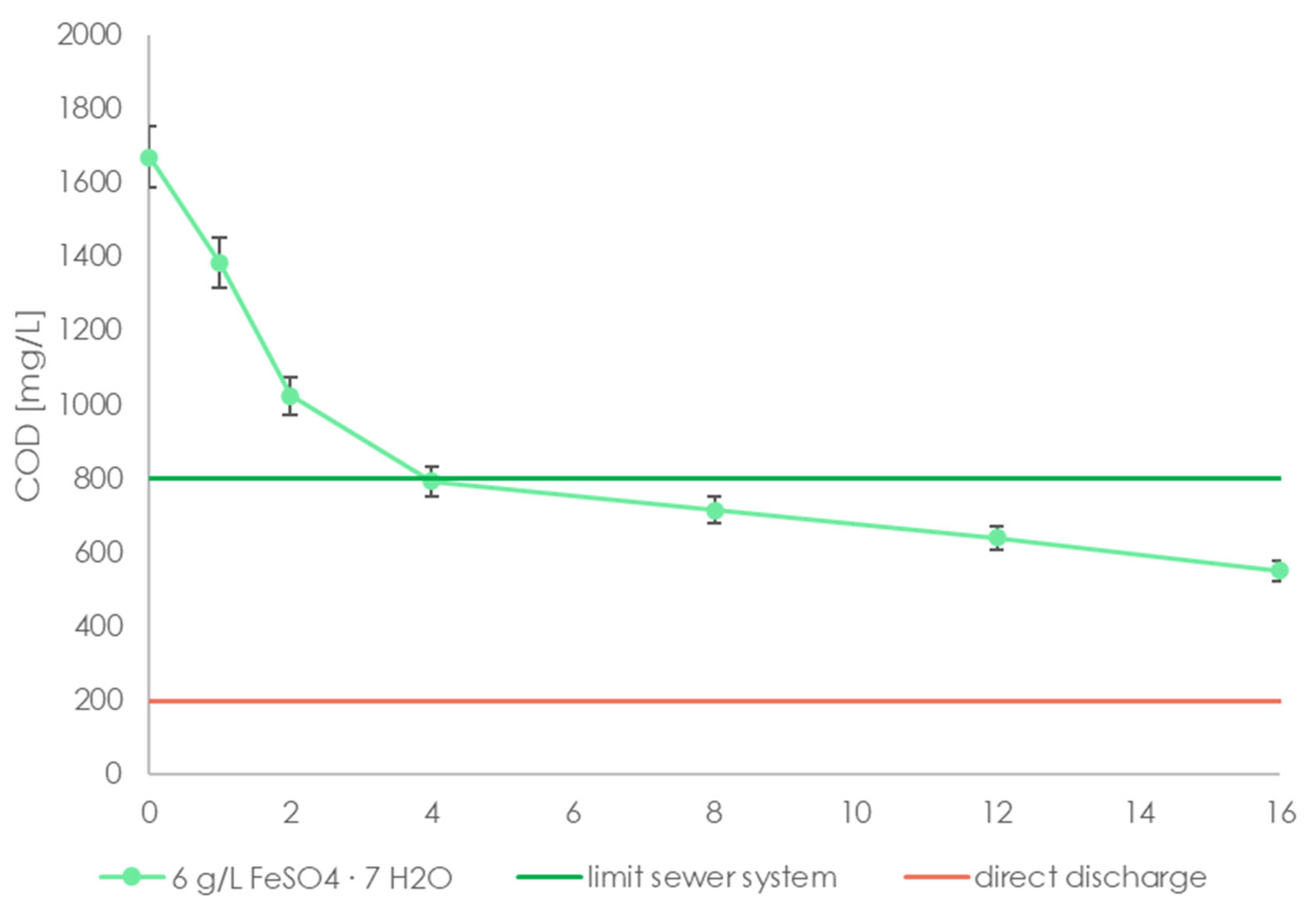
COD removal increases until a concentration of 6 g/L. Thereafter, COD removal stagnates. Figure 4 shows the COD removal at different H2O2 concentrations and a constant FeSO4 ∙ 7 H2O concentration of 6 g/L.
At an H2O2 concentration below 4 g/L, a strong increase in residual COD can be seen. From a concentration of 8 g/L H2O2, the COD removal rate increases only slightly. None of the samples met the requirement of COD removal to allow for discharge directly into a water body. However, removal rates of over 95.4% were achieved in the TOC measurements carried out for quality control.
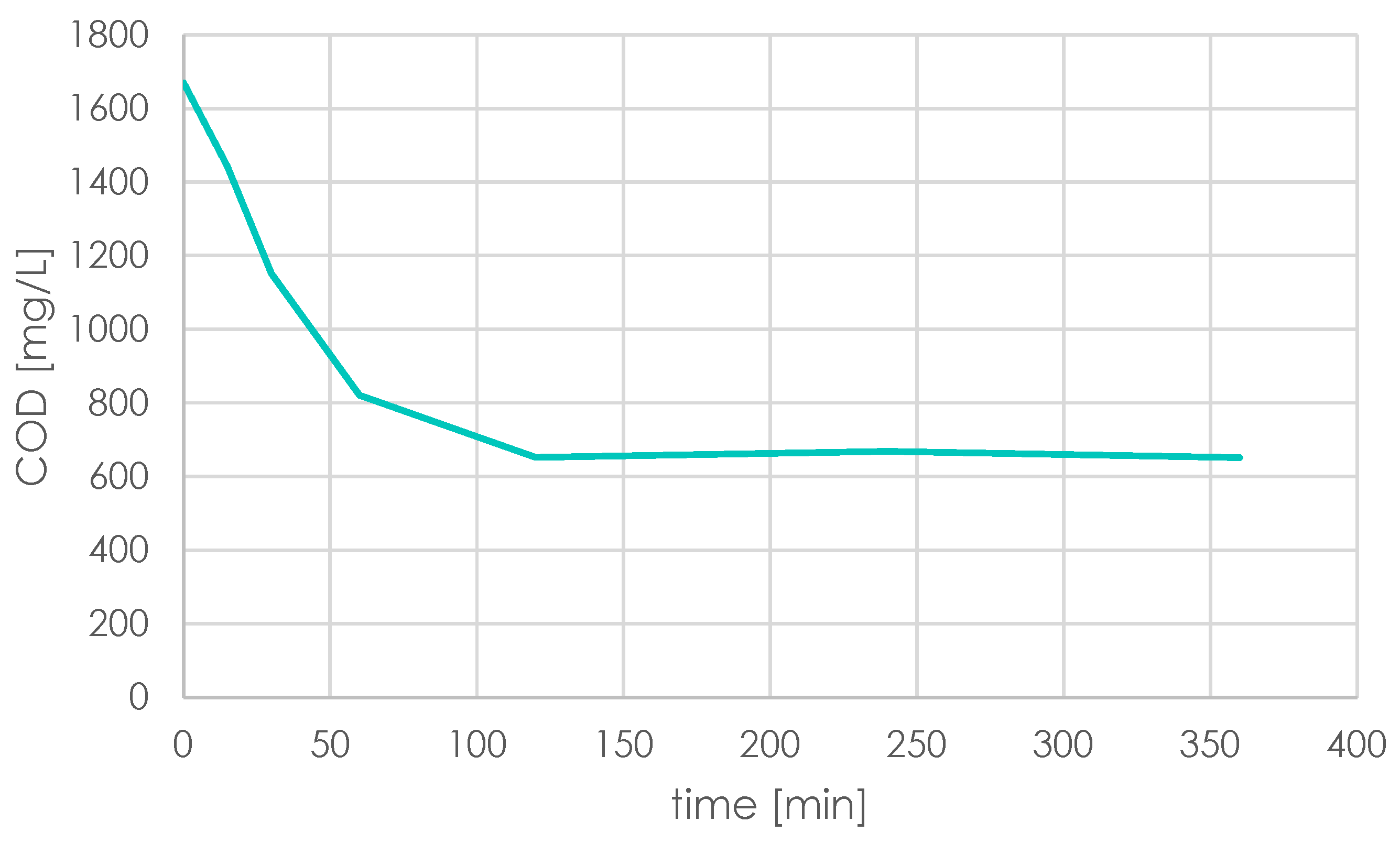
The optimum pH value for Fenton processes is 2.5–4, since, at higher pH values, inactive iron oxohydroxides are formed and ferric hydroxide precipitates [41]. Due to the hydrolysis of the PF6 anion and the resulting formation of HF, the pH value was not set below 4. It can be assumed that lower pH values would have yielded better results. COD degradation stagnated at around 67%, while TOC was almost completely removed. As with UV/H2O2 oxidation, complete COD degradation does not take place with near-complete TOC degradation. Compliance with the limit values for direct discharge by increasing the reaction time is questionable, as the reaction is complete after 24 h. Figure A3 in Appendix A shows the COD removal over time. Table 2 and Figure 4 show that increasing the concentration of the reagents does not result in a significantly higher degradation rate. Changes to the process design, e.g., through cascading, are also conceivable in order to maintain a constant concentration of the reagents.
Due to the high reaction time, the measurement error due to the presence of H2O2 can be excluded. As the loss of purgeable organic carbon was the same in all three oxidation processes, the only remaining reason is that inorganic components were oxidized in the cuvette test.
If the values achieved are compared with data in the literature for different industrial wastewaters, it is noticeable that there was a comparatively high oxidizing agent consumption of 8.06 kgH2O2/kgCODremoved. The values in other publications are between 0.96 and 2.00 kgH2O2/kgCODremoved and, therefore, significantly lower [15,16,19,20]. The H2O2/Fe2+ ratio of 2.52 shows that the iron requirement is also comparatively high [15,16,17,18,19,20,21]. In summary, it can be stated that the chemical requirement for this process water was relatively high compared to other Fenton processes. One advantage of the Fenton process is the low energy demand, but it must be noted that the sulphate concentration is too high for discharge into the sewage system in the case of industrial implementation. This cannot be sufficiently reduced by a precipitation reaction. Therefore, for example, nanofiltration would have to be performed downstream, thus increasing the energy demand of the process.

3.4. Electrochemical Oxidation

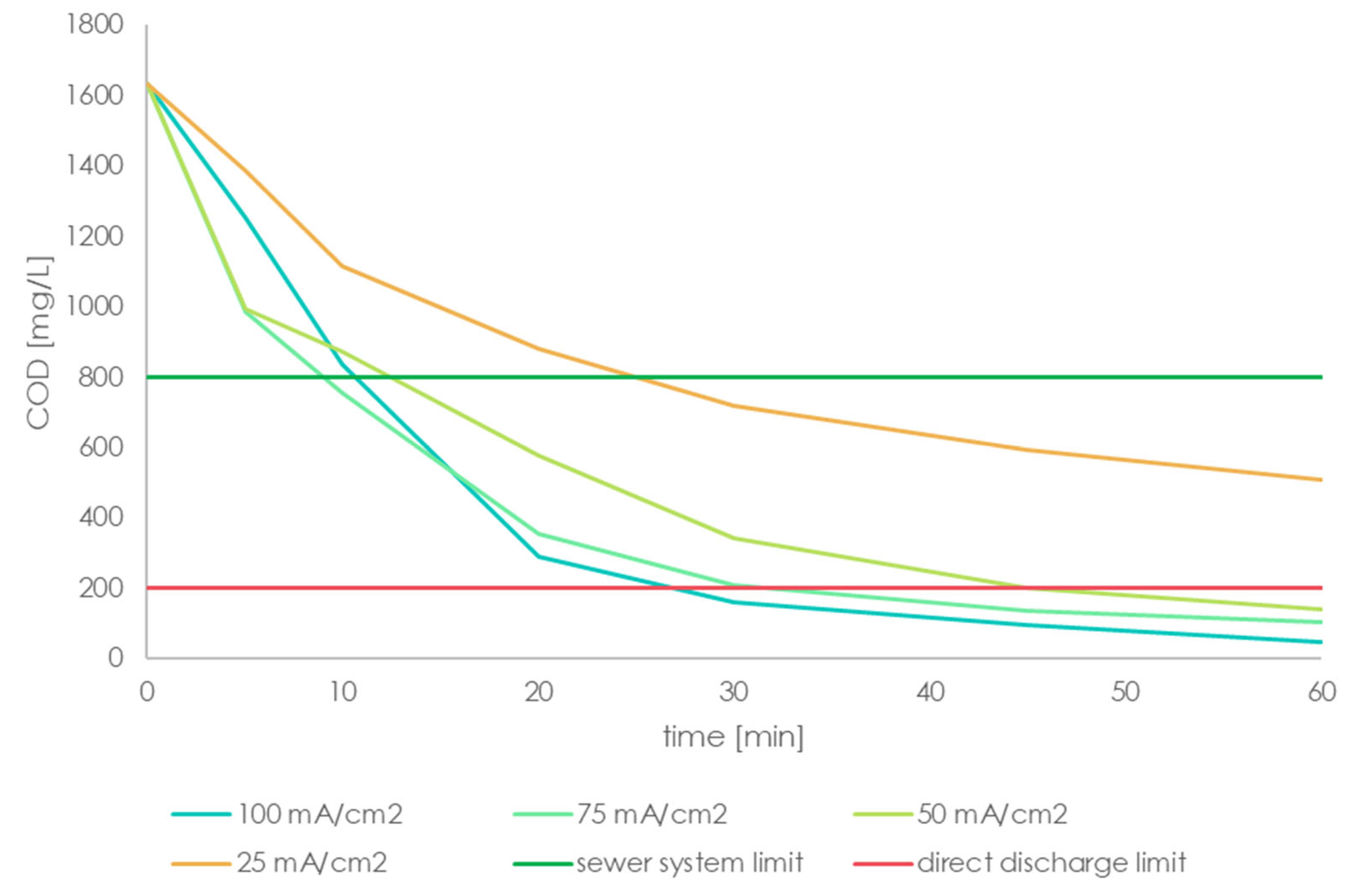
Figure 5 shows COD degradation by electrochemical oxidation at currents of 25–100 mA/cm2 over a period of 1 h.
Electrochemical oxidation is the only AOP that achieves both discharge limits. With a current density of 25 or 50 mA/cm2, the limit values for discharge into the sewage system or direct discharge were reached, respectively. It is noticeable that a plateau of 67–78% of the removed COD was reached in previously investigated processes, as well as when using electrochemical oxidation at a current density of 25 mA/cm2. Since electrochemical oxidation also reaches these limits at 25 mA/cm2 with a COD removal of 70%, this cannot be explained by measurement error due to the use of H2O2 as an oxidation agent, since no oxidation agent was used. This again indicates the oxidation of inorganic components. During the experiment, solids precipitated in the samples when current densities of 50, 75 and 100 mA/cm2 were applied.
In terms of energy consumption, it is more efficient to use low current densities with longer reaction times, as otherwise, more waste heat is produced. To reach the limit value for discharge into the sewage system, 32.8 kWh/kgCODremoved (reaction time: 22.9 min, current density 25 mA/cm2) is required, or 95.3 kWh/kgCODremoved (reaction time: 58.7 min, current density 50 mA/cm2) for direct discharge into a water body. This means the energy demand per cubic meter would be 27.3 kWh/m3 for discharge into the sewer system and 136.5 kWh/m3 for direct discharge into a water body. A comparison with values in the literature (see Table A3) shows that the energy required to treat the process water from the present study is comparable to other types of industrial wastewater [23,24,25,26,27,28,29,30]. This means that the electrochemical oxidation process uses 41.7% less energy for the same COD removal result compared to UV/H2O2 oxidation. Due to the lower energy requirements and the fact that the process does not need the addition of chemicals, electrochemical oxidation is recommended for the treatment of battery recycling process water.
Analysis of the Solid Precipitate
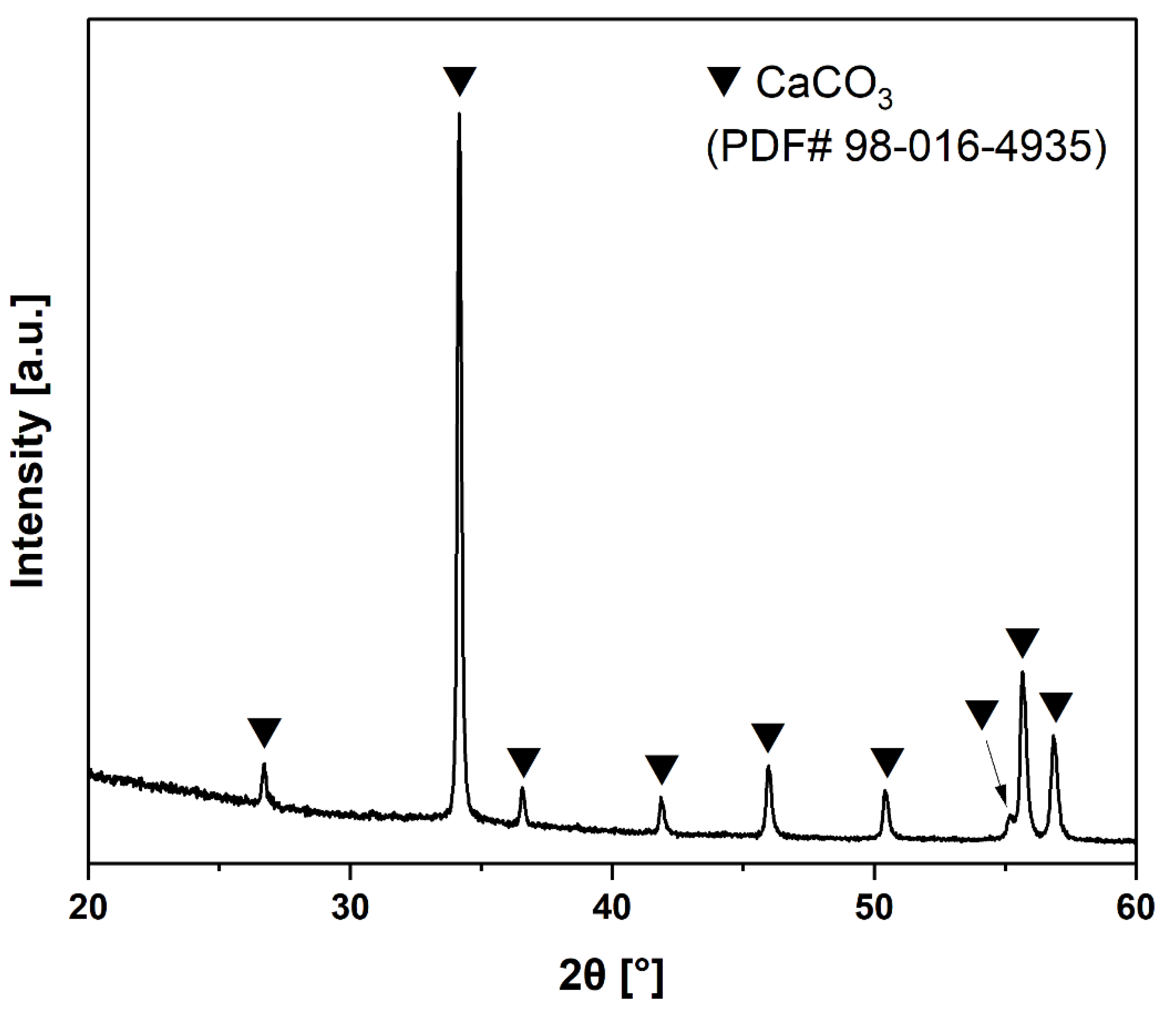
The resulting precipitate was characterized via ICP-OES, with the results shown in Table 3, and with structural analysis using PXRD, with the results given in Figure 6. The elements were selected based on the wastewater composition and ICP-OES measurements before and after oxidation [7].
PXRD analysis was carried out to determine the phase composition of the solid precipitate.
In accordance with the chemical analysis (Table 3), CaCO3 with trigonal symmetry (PDF No. 98-016-4935) was detected by PXRD as the predominant Ca compound in the precipitate. In addition, CaCO3 is known to be able to incorporate smaller amounts of Mg into its crystal lattice, a phenomenon known in both the minerals calcite and aragonite, as well as from cement studies [42,43]. Other elements such as Al, P, S and Si did not display a crystalline phase within the diffraction pattern, which could be due to their low volume fraction or to the formation of amorphous precipitates that could not be detected using this technique.
Operationally, CaCO3 precipitation during electrochemical oxidation can cause scaling on electrodes or downstream piping, which may reduce process efficiency over time and necessitate regular cleaning or descaling. At higher current densities, pronounced local pH gradients and enhanced ion migration near the electrode surfaces promote supersaturation with respect to CaCO3, particularly due to cathodic hydroxide formation and increased local concentrations of calcium and carbonate species, thereby favoring salt precipitation. However, in electrochemical systems, scaling on electrodes can be effectively mitigated by periodically reversing the current direction, which promotes the detachment or dissolution of mineral deposits and enables in situ electrode cleaning. While CaCO3 is environmentally inert and non-toxic, it may still be relevant with respect to compliance with limit values for total solids (sewer system: sedimentable solids = 10 mL/L; direct discharge: n/a [31,32]). Although the amount of sedimentable solids was below 1 mL/L in the present study, this limit value should be considered in future applications. In the current study, the precipitate was retained within the reactor and regular rinsing combined with polarity reversal effectively removed deposits from the electrodes and reduced operational risks.
A more detailed analysis of the process water composition suggests that several inorganic species are responsible for the discrepancy between TOC and COD. The ICP-OES results (Table 3) reveal the presence of phosphorus and sulphur in reduced forms, which were oxidized during electrochemical oxidation. For phosphorus these could be the intermediate products of the hydrolysis of the conducting salt phosphoryl fluoride, difluorophosphoric acid or monofluorophosphate, and for sulfur, these could be sulphites or thiosulfates. They act as reductants in the dichromate-based COD test. These compounds were therefore detected as ‘oxygen demand’, despite not containing organic carbon. Additionally, carbonate equilibria play a role: the precipitation of CaCO3 observed during electrochemical oxidation suggests that some of the inorganic carbon was mobilized under the acidic digestion conditions of the COD test, in which carbonate and bicarbonate species could be partially oxidized. These inorganic contributions explain why COD removal stagnated at around 70% while TOC was almost completely degraded. Consequently, TOC appears to be the more reliable parameter for monitoring the organic load of LIB recycling wastewater.
In summary, it can be said that all three factors likely explain the discrepancy between the measured COD and TOC values. However, the precipitation of inorganic compounds had the greatest influence. In this case, considerable energy is consumed in carbonate precipitation. In addition to the organic load, the process water was also contaminated with the anions of the conducting salt from the electrolyte of the LIBs. A byproduct of this work is the finding that less than 4% of the conducting salt anions were converted to fluoride or phosphate in the specified time frame for both UV/H2O2 oxidation and electrochemical oxidation. Therefore, an oxidative solution to hydrolyze the conducting salts in wastewater was ruled out due to the very high energy requirement. Muschket et al. have shown that the anions of the conducting salt were not retained in a municipal wastewater treatment plant and were released into the environment [44].
Economic Analysis
The following section will clarify how the costs of the three AOPs behave when the processes are scaled up. The approach by Weyand et al. was chosen for upscaling [37]. This follows a three-step system:
Upscaling definition:
Upscaling was carried out based on the results obtained in the laboratory. The aim of the upscaling was to treat 16.7 m3/d of wastewater. The technology was scaled up from technology readiness level 4 to 8 to reach the limit values of the sewer system.
Upscaling leap:
The process was scaled up in consultation with UV oxidation system manufacturers. Since no system with the same ratio of lamp surface area to wastewater volume was available, it was assumed that reaction times might need adjustment. For the economic analysis, it was assumed that the reaction time corresponds to that in the experiments. The chemical requirements of the Fenton process were scaled linearly with the treated volume. A reaction time of 2 h was assumed. For electrochemical oxidation, the ratio of BDD surface area to wastewater volume was kept the same as in the tests.
Upscaling Model and Data:
The upscaling model and data can be found in the upscaling Excel sheet in Appendix A.
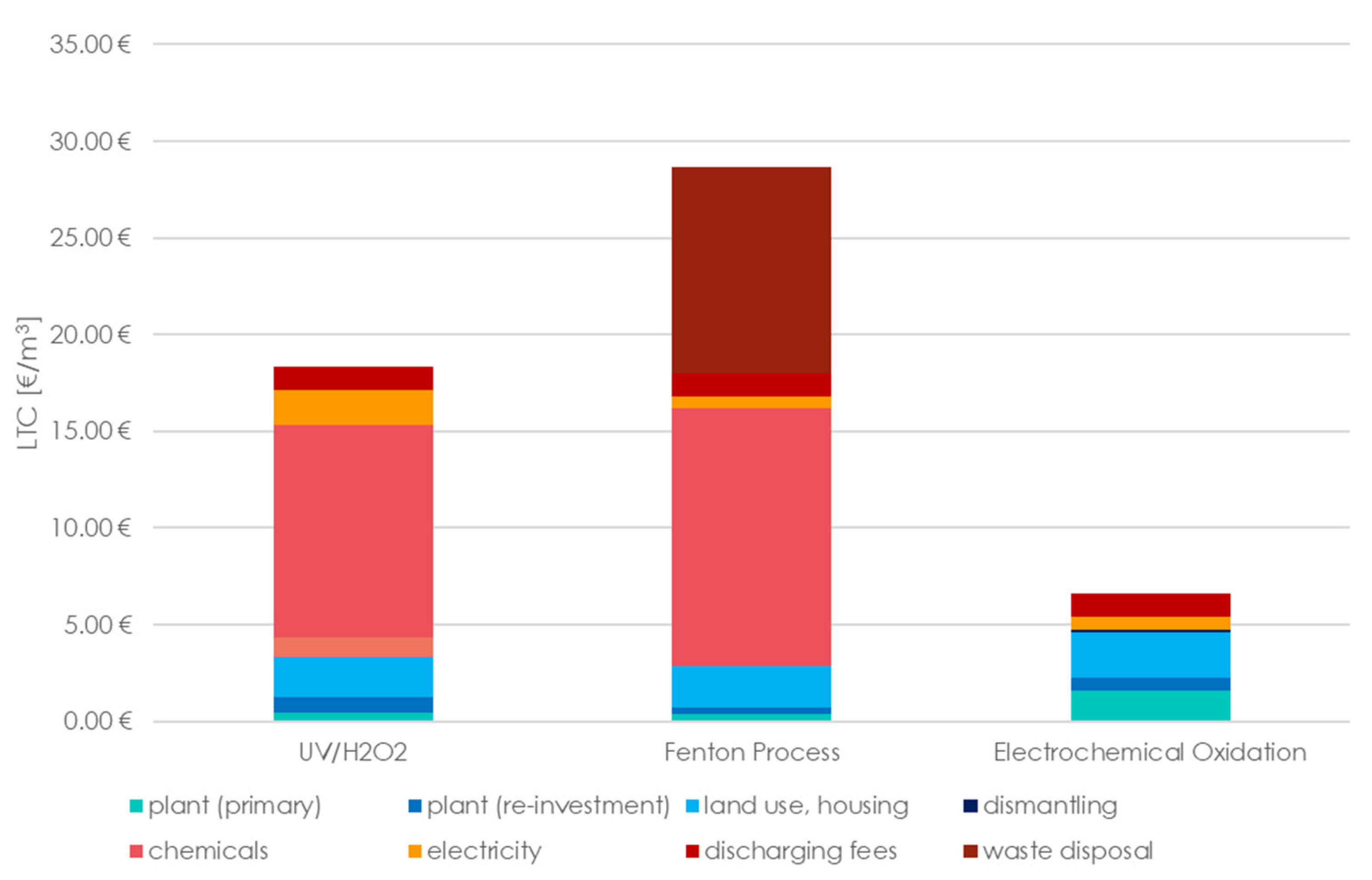
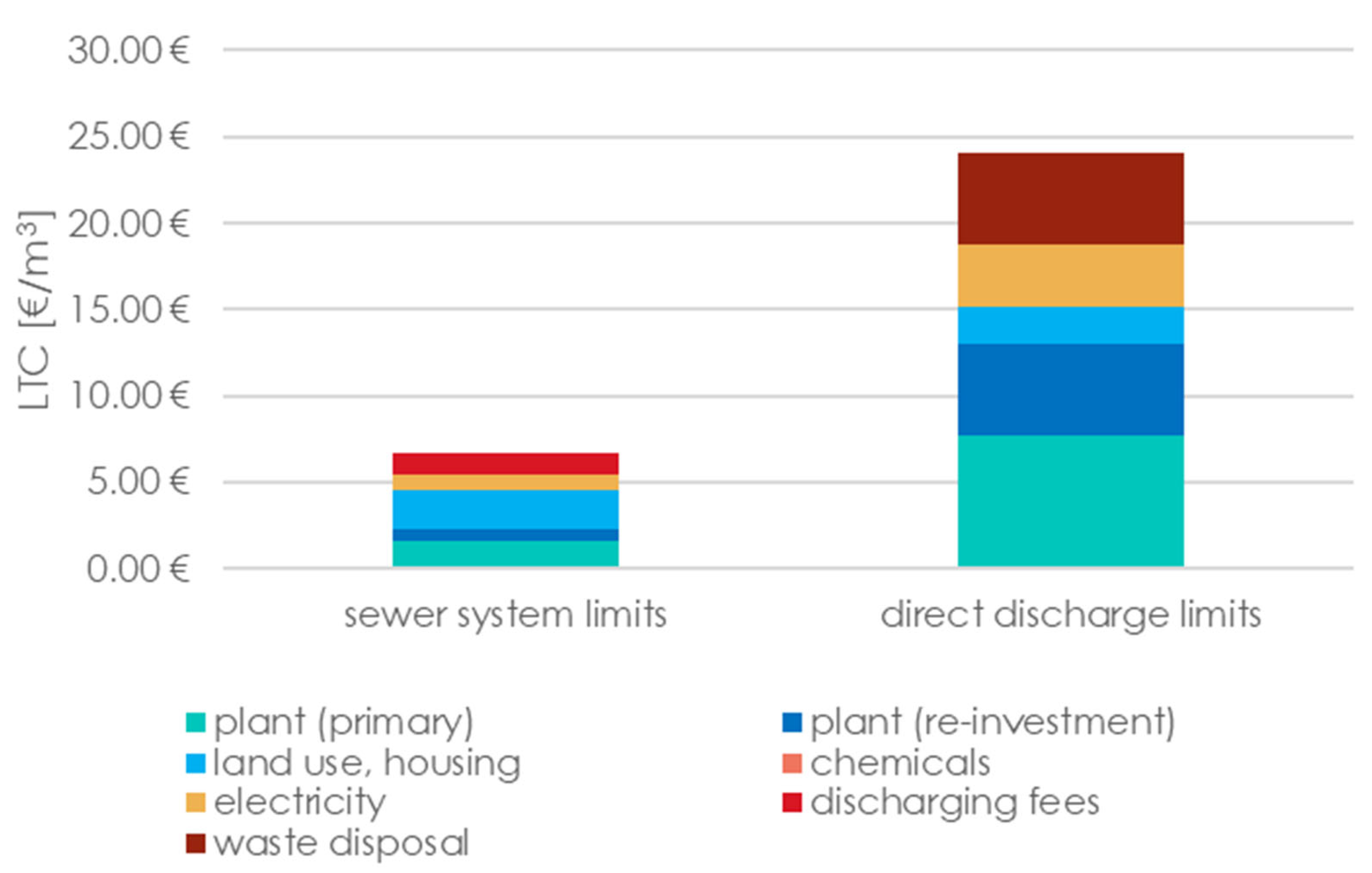
Figure 7 compares the LTCs of the three AOPs for treating 1 m3 of wastewater from LIB recycling in order to achieve the limit value for discharge into the sewer system. A distinction is made between investment costs, highlighted in different shades of blue, with the primary investment, re-investments over the operation time, land use with housing and operating costs, compared to the cost of needed chemicals, cost of electricity, discharging fees and waste disposal fees, which are highlighted in different shades of red.
In comparison, the Fenton process had the highest costs at EUR 28.66/m3, while electrochemical oxidation was the most cost-effective at EUR 6.63/m3. For UV/H2O2 oxidation (EUR 17.31/m3) and the Fenton process, chemical consumption was the primary cost driver. The Fenton process also incurs high disposal costs due to the inorganic sludge produced. Although electrochemical oxidation involved higher investment costs than the other two processes, this was of minor relevance over the plant’s lifetime. In order to discharge the wastewater into the sewer system, an additional treatment step would have to be installed to ensure compliance with the fluoride limit and total phosphorus limit. Therefore, the economic analysis can only provide a comparison of the three AOPs and no absolute conclusions can be drawn. A further analysis including fluoride and total phosphorus removal would be required. Currently, the wastewater must be disposed of by a waste management company in a chemical–physical treatment plant at a cost of EUR 661/m3. A comparison of electrochemical oxidation for compliance with the limit values for discharge into the sewer system and direct discharge into the receiving water body can be found in Appendix A (Figure A4).

4. Conclusions

This study systematically evaluated three advanced oxidation processes, UV/H2O2 oxidation, the Fenton process and electrochemical oxidation, for the treatment of wastewater generated during lithium-ion battery recycling. Owing to the unfavorable BOD5/COD ratio and the predominance of degradation products over intact organic carbonates, neither biological treatment nor solvent recovery represents a feasible treatment strategy for this type of wastewater.
Both UV/H2O2 oxidation and the Fenton process achieved compliance only with the sewer discharge limit and were characterized by high oxidant consumption and elevated energy or secondary treatment requirements compared to the data in the literature for other industrial wastewaters. In contrast, electrochemical oxidation was the only process capable of meeting both the sewer and direct discharge limits, while operating without chemical additives and at a lower energy demand for sewer discharge.
The economic evaluation confirmed these findings, identifying electrochemical oxidation as the most cost-effective treatment option. Taken together, the results demonstrate that electrochemical oxidation provides a technically robust, economically favorable and environmentally advantageous solution for the treatment of wastewater from LIB recycling.

5. Outlook

Further research should focus on validating the scalability of the proposed wastewater treatment concept by long-term stability tests prior to pilot-scale implementation. Process optimization, such as the integration of membrane processes to enable permeate recirculation and concentrate treatment, could substantially reduce the water footprint. While this study addresses the removal of the organic load, LIB recycling wastewater also contains high concentrations of inorganic contaminants. Therefore, future treatment concepts should simultaneously consider organic degradation, inorganic contaminant control and resource recovery, while ensuring compliance with regulatory discharge limits. Based on the present and previous findings, the introduction of TOC as a sum parameter and total fluorine as a monitoring parameter is recommended to improve environmental protection for wastewater from LIB recycling.

6. Patents

Patent pending Deutsche Patentanmeldung 10 2024 204 322.2
“Verfahren und Anlage zur Abreicherung von oxidierbaren organischen Substanzen und Anionen in Prozesswasser”.

Author Contributions

Conceptualization, R.W.-W.; methodology, R.W.-W. and R.P.; investigation, R.W.-W., F.F., R.P. and T.N.; resources, F.B.; writing—original draft preparation, R.W.-W. and F.F.; writing—review and editing, R.W.-W., F.F. and T.N.; visualization.; supervision, M.P., M.E., A.W. and E.I.; project administration, R.W.-W.; funding acquisition, A.W. and E.I. All authors have read and agreed to the published version of the manuscript.

Funding

This research was funded by BMBF, grant number 03XP0339A.

Data Availability Statement

The raw data supporting the conclusions of this article will be made available by the authors on request.

Acknowledgments

We would like to thank the BMBF for funding the research and Christina Pouss for designing the Abstract Art.

Conflicts of Interest

The authors declare no conflicts of interest.

Abbreviations

The following abbreviations are used in this manuscript:
AOPsAdvanced Oxidation Processes
BDDBoron-Doped Diamond
BOD5Biological Oxygen Demand (5 days)
CAPEXCapital Expenditures
CICCombustion Ion Chromatography
CODChemical Oxygen Demand
DECDiethyl Carbonate
DMCDimethyl Carbonate
ECEthylene Carbonate
EDXEnergy-Dispersive X-Ray Spectroscopy
EHFElectrohydraulic Fragmentation
EMCEthyl Methyl Carbonate
EUEuropean Union
Fe2+Ferrous Ion
HFHydrofluoric Acid
HPLCHigh-Performance Liquid Chromatography
ICP-OESInductively Coupled Plasma Optical Emission Spectroscopy
ICSDInorganic Crystal Structure Database
IEIon Exchange
KPF6Potassium Hexafluorophosphate
LIBLithium-Ion Battery
LTCLevelized Treatment Cost
MBRMembrane Bioreactor
NMCNickel Manganese Cobalt Oxide
NPOCNon-Purgeable Organic Carbon
OPEXOperational Expenditures
PCPropylene Carbonate
PF6Hexafluorophosphate
PXRDPowder X-Ray Diffraction
SISupporting Information
SuSiSkimming and Sieving
TOCTotal Organic Carbon
UVUltraviolet

Appendix A

Table A1. Composition of the process water using cuvette test, HPIC and ICP-OES. The table has been adapted for this publication [7].
Parameters Tab WaterProcess Water
Volume [L][L]-30–42
pH value[-]6.87.1–7.4
Conductivity [µS/cm]4001280–2280
Chemical oxygen demand (COD)[mg/L]-916–1570
Biological oxygen demand (BOD5)[mg/L]-235–340
COD/BOD5 ratio[-]-3.9–4.6
Al[mg/L]0.030.31–0.56
Ca[mg/L]67.326.2–35
Co[mg/L]-0.08–0.12
Cu[mg/L]0.170.12–0.59
Li[mg/L]0.19127–157
Mg[mg/L]13.26.0–7.3
Mn[mg/L]-0.08–0.20
Na[mg/L]1.762.8–40.5
Ni[mg/L]-0.36–0.60
P[mg/L]0.9461.2–84.6
S[mg/L]13.7165–200
Ftotal[mg/L]-123–468
F[mg/L]-29.6–38.3
Cl[mg/L]40.746.4–51.2
SO42−[mg/L]42.539.1–45.2
PO43−[mg/L]--
Figure A1. Schematic illustration of the experimental setup of the electrochemical oxidation (dark grey: steel electrode, light grey: boron-doped diamond electrode).
Cleantechnol 08 00013 g0a1
Figure A2. Extinction spectrum in the wavelength range between 200 and 800 nm of the process water.
Cleantechnol 08 00013 g0a2
Table A2. Fixed asset service life, primary investment demand, reinvestment demand and costs per item or per m2 [45,46,47,48].
Fixed AssetsService LifePrimary Investment DemandReinvestment DemandCosts Per Item
Wastewater treatment plant20 years10-
Housing33 years0.60EUR 2827/m2 in Hanau, Germany
Pumps7 years35.6EUR 6477 acid-resistant centrifugal pump
EUR 3450 centrifugal pump
EUR 6900 screw pump
Tank20 years20EUR 3500
UV oxidation plant7 Years11.9EUR 49,950
Anodes6.3 years1.9 m24.1 m2EUR 19,993/m2
Cathodes10 years1.9 m23.8 m2EUR 994/m2
Mixer14 years10.43EUR 168
Figure A3. Fenton process COD removal over time.
Cleantechnol 08 00013 g0a3
Table A3. Process parameters of advanced oxidation processes from the literature.
UV/H2O2 OxidationCOD [mg/L]CODremoved [%]H2O2/COD [kg/kg]E/COD [kWh/kg]Treated Volume [mL]Source
Battery wastewater 1632517.856.3500 this work
Hospital laundry wastewater636431.4-38.6250[9]
Textile wastewater39786.70.0025-300[10]
Oil recovery21,000392--[11]
Wastewater from the production of pharmaceuticals158084.60.32- 300[12]
Petrochemical wastewater95052.60.6131.1250[13]
Fenton processCOD [mg/L]CODremoved [%]H2O2/CODremoved [kg/kg]H2O2/Fe2+ [kg/kg]Treated volume [mL]Source
Battery wastewater1632518.062.5250this work
Pulp production3756321.190.32250[15]
Petro chemistry436550.962.22500[16]
-612.003.51500
11,50097.5-50150[17]
Carpet dyeing2576Up to 95 95–290100[18]
Olive oil wastewater 60,500701.7515500[19]
Livestock 5000–5700881.055100[20]
Cork-cooking500087.3 5750[21]
Anodic OxidationCOD mg/LCODremoved [%]E/COD [kWh/kg]Current density [mA/cm2]Treated volume [mL]Source
Battery wastewater 16325132.825200 mLthis work
163291.795.350200 mL
Textile wastewater 72910011.126010,000[23]
Landfill water105083.1 (TOC removal) 22.1-100[24]
Wastewater containing phenol63377.1 31204501[25]
Vinasse-43176.6150[26]
Wastewater from wine production349010027.560200[27]
Wastewater containing phenol54075.984.8-4501[25]
Hydrothermal carbonization process28,050 (PW-AD)9520.266-[28]
Hydrothermal carbonization process
Post-hydrothermal liquefaction
11,233 (MBR 1-1)-22.166
30
60[29]
11,233 (MBR 1-1)
675 (MBR 1-10)
-46.6
41241
675 (MBR 1-10)
36,000
99534
9928
Aqueous phase of thermo-catalytic reforming of sewage sludge-9539–58.35030[30]
Figure A4. Comparison of the electrochemical wastewater treatments required to reach the limit values for discharge into the sewer system and direct discharge.
Cleantechnol 08 00013 g0a4

References

  1. Kampker, A.; Heimes, H.H.; Offermanns, C.; Frank, M.; Klohs, D.; Nguyen, K. Prediction of Battery Return Volumes for 3R: Remanufacturing, Reuse, and Recycling. Energies 2023, 16, 6873. [Google Scholar] [CrossRef]
  2. Wagner-Wenz, R.; van Zuilichem, A.-J.; Göllner-Völker, L.; Berberich, K.; Weidenkaff, A.; Schebek, L. Recycling routes of lithium-ion batteries: A critical review of the development status, the process performance, and life-cycle environmental impacts. MRS Energy Sustain. 2023, 10, 1–34. [Google Scholar] [CrossRef]
  3. Öhl, J.; Horn, D.; Zimmermann, J.; Stauber, R.; Gutfleisch, O. Efficient Process for Li-Ion Battery Recycling via Electrohydraulic Fragmentation. MSF 2019, 959, 74–78. [Google Scholar] [CrossRef]
  4. Horn, D.; Zimmermann, J.; Stauber, R.; Gutfleisch, O. New efficient Recycling Process for Li-ion Batteries. Environ. Sci. Mater. Sci. Eng. 2018. [Google Scholar]
  5. Holzer, A.; Zimmermann, J.; Wiszniewski, L.; Necke, T.; Gatschlhofer, C.; Öfner, W.; Raupenstrauch, H. A Combined Hydro-Mechanical and Pyrometallurgical Recycling Approach to Recover Valuable Metals from Lithium-Ion Batteries Avoiding Lithium Slagging. Batteries 2023, 9, 15. [Google Scholar] [CrossRef]
  6. Coha, M.; Farinelli, G.; Tiraferri, A.; Minella, M.; Vione, D. Advanced oxidation processes in the removal of organic substances from produced water: Potential, configurations, and research needs. Chem. Eng. J. 2021, 414, 128668. [Google Scholar] [CrossRef]
  7. Wagner-Wenz, R.; Teppala, D.T.; Necke, T.; Brückner, F.; Fabian, A.; Horn, D.; Woth, J.; Zimmermann, J.; Balke-Grünewald, B.; Weidenkaff, A.; et al. Removal and recovery of phosphorus and fluorine in process water from water based direct physical lithium-ion battery recycling. Water Res. 2025, 268, 122476. [Google Scholar] [CrossRef]
  8. Oppenländer, T. Photochemical Purification of Water and Air; Wiley-VCH: Weinheim, Germany, 2003; ISBN 352761088X. [Google Scholar]
  9. Schwaickhardt, O.; de Machado, R.; Leandro, E.; Lutterbeck, C.A. Combined use of VUV and UVC photoreactors for the treatment of hospital laundry wastewaters: Reduction of load parameters, detoxification and life cycle assessment of different configurations. Sci. Total Environ. 2017, 590–591, 233–241. [Google Scholar] [CrossRef]
  10. Tuncer, N.; Sönmez, G. Removal of COD and Color from Textile Wastewater by the Fenton and UV/H2O2 Oxidation Processes and Optimization. Water Air Soil Pollut. 2023, 234, 70. [Google Scholar] [CrossRef]
  11. Dincer, A.R.; Karakaya, N.; Gunes, E.; Gunes, Y. Removal of COD from oil recovery industry wastewater by the advanced oxidation processes (AOP) based on H2O2. Glob. NEST J. 2008, 10, 31–38. [Google Scholar]
  12. Azizi, E.; Fazlzadeh, M.; Ghayebzadeh, M.; Hemati, L.; Beikmohammadi, M.; Ghaffari, H.R.; Zakeri, H.R.; Sharafi, K. Application of advanced oxidation process (H2O2/UV) for removal of organic materials from pharmaceutical industry effluent. Environ. Protect. Eng. 2017, 43, 183–191. [Google Scholar] [CrossRef]
  13. Babaei, A.A.; Ghanbari, F. COD removal from petrochemical wastewater by UV/hydrogen peroxide, UV/persulfate and UV/percarbonate: Biodegradability improvement and cost evaluation. J. Water Reuse Desalination 2016, 6, 484–494. [Google Scholar] [CrossRef]
  14. Andreozzi, R. Advanced oxidation processes (AOP) for water purification and recovery. Catal. Today 1999, 53, 51–59. [Google Scholar] [CrossRef]
  15. Brink, A.; Sheridan, C.; Harding, K.G. The Fenton oxidation of biologically treated paper and pulp mill effluents: A performance and kinetic study. Process Saf. Environ. Prot. 2017, 107, 206–215. [Google Scholar] [CrossRef]
  16. Grötzner, M.; Melchiors, E.; Schroeder, L.H.; dos Santos, A.R.; Moscon, K.G.; de Andrade, M.A.; Martinelli, S.H.S.; Xavier, C.R. Pulp and Paper Mill Effluent Treated by Combining Coagulation-Flocculation-Sedimentation and Fenton Processes. Water Air Soil Pollut. 2018, 229, 364. [Google Scholar] [CrossRef]
  17. Ghosh, P.; Samanta, A.N.; Ray, S. COD reduction of petrochemical industry wastewater using Fenton’s oxidation. Can. J. Chem. Eng. 2010, 88, 1021–1026. [Google Scholar] [CrossRef]
  18. Gulkaya, I.; Surucu, G.A.; Dilek, F.B. Importance of H2O2/Fe2+ ratio in Fenton’s treatment of a carpet dyeing wastewater. J. Hazard. Mater. 2006, 136, 763–769. [Google Scholar] [CrossRef]
  19. Lucas, M.S.; Peres, J.A. Removal of COD from olive mill wastewater by Fenton’s reagent: Kinetic study. J. Hazard. Mater. 2009, 168, 1253–1259. [Google Scholar] [CrossRef]
  20. Lee, H.; Shoda, M. Removal of COD and color from livestock wastewater by the Fenton method. J. Hazard. Mater. 2008, 153, 1314–1319. [Google Scholar] [CrossRef]
  21. Guedes, A.M.; Madeira, L.M.; Boaventura, R.A.; Costa, C.A. Fenton oxidation of cork cooking wastewater—Overall kinetic analysis. Water Res. 2003, 37, 3061–3069. [Google Scholar] [CrossRef]
  22. Karim, A.V.; Nidheesh, P.V.; Oturan, M.A. Boron-doped diamond electrodes for the mineralization of organic pollutants in the real wastewater. Curr. Opin. Electrochem. 2021, 30, 100855. [Google Scholar] [CrossRef]
  23. Zou, J.; Peng, X.; Li, M.; Xiong, Y.; Wang, B.; Dong, F.; Wang, B. Electrochemical oxidation of COD from real textile wastewaters: Kinetic study and energy consumption. Chemosphere 2017, 171, 332–338. [Google Scholar] [CrossRef] [PubMed]
  24. Zhao, G.; Pang, Y.; Liu, L.; Gao, J.; Lv, B. Highly efficient and energy-saving sectional treatment of landfill leachate with a synergistic system of biochemical treatment and electrochemical oxidation on a boron-doped diamond electrode. J. Hazard. Mater. 2010, 179, 1078–1083. [Google Scholar] [CrossRef] [PubMed]
  25. Zhu, X.; Ni, J.; Wei, J.; Chen, P. Scale-up of B-doped diamond anode system for electrochemical oxidation of phenol simulated wastewater in batch mode. Electrochim. Acta 2011, 56, 9439–9447. [Google Scholar] [CrossRef]
  26. Martinez, E.J.; Rosas, J.G.; Gonzalez, R.; Garcia, D.; Gomez, X. Treatment of vinasse by electrochemical oxidation: Evaluating the performance of boron-doped diamond (BDD)-based and dimensionally stable anodes (DSAs). Int. J. Environ. Sci. Technol. 2018, 15, 1159–1168. [Google Scholar] [CrossRef]
  27. Candia-Onfray, C.; Espinoza, N.; Da Sabino Silva, E.B.; Toledo-Neira, C.; Espinoza, L.C.; Santander, R.; García, V.; Salazar, R. Treatment of winery wastewater by anodic oxidation using BDD electrode. Chemosphere 2018, 206, 709–717. [Google Scholar] [CrossRef]
  28. Blach, T.; Engelhart, M. Electrochemical oxidation of refractory compounds from hydrothermal carbonization process waters. Chemosphere 2024, 352, 141310. [Google Scholar] [CrossRef]
  29. Ciarlini, J.; Alves, L.; Rajarathnam, G.P.; Haynes, B.S.; Montoya, A. Electrochemical oxidation of nitrogen-rich post-hydrothermal liquefaction wastewater. Algal Res. 2020, 48, 101919. [Google Scholar] [CrossRef]
  30. Kick, C.; Uchaikina, A.; Apfelbacher, A.; Daschner, R.; Helmreich, B.; Hornung, A. Aqueous phase of thermo-catalytic reforming of sewage sludge—Quantity, quality, and its electrooxidative treatment by a boron-doped diamond electrode. Sep. Purif. Technol. 2022, 286, 120392. [Google Scholar] [CrossRef]
  31. Stadtrecht Abwassersatzung. 2020. Available online: https://www.hanau.de/mam/abwassersatzung_.pdf (accessed on 3 January 2026).
  32. Federal Ministry of Justice. Verordnung über Anforderungen an das Einleiten von Abwasser in Gewässer: AbwV. Available online: https://www.gesetze-im-internet.de/abwv/AbwV.pdf (accessed on 3 January 2026).
  33. Schultz, C.; Kraft, V.; Pyschik, M.; Weber, S.; Schappacher, F.; Winter, M.; Nowak, S. Separation and Quantification of Organic Electrolyte Components in Lithium-Ion Batteries via a Developed HPLC Method. J. Electrochem. Soc. 2015, 162, A629–A634. [Google Scholar] [CrossRef]
  34. Bhalkikar, A.; Marin, C.M.; Cheung, C.L. Method development for separating organic carbonates by ion-moderated high-performance liquid chromatography. J. Sep. Sci. 2016, 39, 4484–4491. [Google Scholar] [CrossRef] [PubMed]
  35. Wolke, M.; Schröder, K.; Arnold, K.; Mozumder, P.; Beuerle, T.; Jasch, K.; Scholl, S. Analyzing Organic Electrolyte Solvents from Spent Lithium-Ion Batteries as a Basis for Distillative Value Component Recovery. Recycling 2025, 10, 19. [Google Scholar] [CrossRef]
  36. Herdegen, J.; Benner, W.; Bokelmann, K.; Hartfeil, T.; Gellermann, C. Separationsmethoden zur Aufarbeitung von Metallhaltigen Verbundwerkstoffen. Recycling Rohstoffe 2016, 601–609. [Google Scholar]
  37. Weyand, S.; Kawajiri, K.; Mortan, C.; Schebek, L. Scheme for generating upscaling scenarios of emerging functional materials based energy technologies in prospective LCA (UpFunMatLCA). J. Ind. Ecol. 2023, 27, 676–692. [Google Scholar] [CrossRef]
  38. Gachot, G.; Grugeon, S.; Armand, M.; Pilard, S.; Guenot, P.; Tarascon, J.-M.; Laruelle, S. Deciphering the multi-step degradation mechanisms of carbonate-based electrolyte in Li batteries. J. Power Sources 2008, 178, 409–421. [Google Scholar] [CrossRef]
  39. Wu, T.; Englehardt, J.D. A New Method for Removal of Hydrogen Peroxide Interference in the Analysis of Chemical Oxygen Demand. Environ. Sci. Technol. 2012, 46, 2291–2298. [Google Scholar] [CrossRef]
  40. Kang, Y.W.; Cho, M.-J.; Hwang, K.-Y. Correction of hydrogen peroxide interference on standard chemical oxygen demand test. Water Res. 1999, 33, 1247–1251. [Google Scholar] [CrossRef]
  41. Babuponnusami, A.; Muthukumar, K. A review on Fenton and improvements to the Fenton process for wastewater treatment. J. Environ. Chem. Eng. 2014, 2, 557–572. [Google Scholar] [CrossRef]
  42. Berner, R.A. The role of magnesium in the crystal growth of calcite and aragonite from sea water. Geochim. Cosmochim. Acta 1975, 39, 489–504. [Google Scholar] [CrossRef]
  43. Zhang, R.; Panesar, D.K. Investigation on Mg content in calcite when magnesium calcite and nesquehonite co-precipitate in hardened cement paste. Thermochim. Acta 2017, 654, 203–215. [Google Scholar] [CrossRef]
  44. Muschket, M.; Reemtsma, T.; Zahn, D.; Neuwald, I.; Knepper, T.P.; Schumann, P. Persistente Mobile Organische Chemikalien in der Aquatischen Umwelt: Quellen, Vorkommen und Technische Möglichkeiten zu ihrer Entfernung in der Trinkwasseraufbereitung (PROTECT): Project Report. 2022. Available online: https://edocs.tib.eu/files/e01fb23/1877065498.pdf (accessed on 3 January 2026).
  45. der Finanzen, B. AfA-Tabelle für den Wirtschaftszweig “Molkereien und Sonstige Milchverwertung”; Juris, 1992. Available online: https://www.bundesfinanzministerium.de/Content/DE/Standardartikel/Themen/Steuern/Weitere_Steuerthemen/Betriebspruefung/AfA-Tabellen/AfA-Tabelle_Molkereien-und-sonstige-Milchverwertung.pdf?__blob=publicationFile&v=5 (accessed on 12 August 2025).
  46. der Finanzen, B. AfA-Tabelle für den Wirtschaftszweig “Ölmühlen und Margarineindustrie”; Juris, 1995. Available online: https://www.bundesfinanzministerium.de/Content/DE/Standardartikel/Themen/Steuern/Weitere_Steuerthemen/Betriebspruefung/AfA-Tabellen/AfA-Tabelle_Oelmuehlen-und-Margarineindustrie.pdf?__blob=publicationFile&v=5 (accessed on 24 July 2025).
  47. der Finanzen, B. AfA-Tabelle für den Wirtschaftszweig “Eisen-, Stahl- und Tempergießereien”; Juris, 1996. Available online: https://www.bundesfinanzministerium.de/Content/DE/Standardartikel/Themen/Steuern/Weitere_Steuerthemen/Betriebspruefung/AfA-Tabellen/AfA-Tabelle_Eisen-Stahl-und-Tempergiessereien.html (accessed on 12 August 2025).
  48. der Finanzen, B. AfA-Tabelle für die Allgemein Verwendbaren Anlagegüter (AfA-Tabelle “AV”); Juris, 2000. Available online: https://www.bundesfinanzministerium.de/Content/DE/Standardartikel/Themen/Steuern/Weitere_Steuerthemen/Betriebspruefung/AfA-Tabellen/Ergaenzende-AfA-Tabellen/AfA-Tabelle_AV.pdf?__blob=publicationFile&v=5 (accessed on 24 July 2025).
Figure 1. Flow chart of the recycling route, including a mass assessment for the treatment of 1 m3 of wastewater.
Cleantechnol 08 00013 g001
Figure 2. (a) Front view of EHF plant and (b) schematic diagram of EHF showing the three electrodes in the water-filled reactor with batteries [3,36].
Cleantechnol 08 00013 g002
Figure 3. (a) TOC removal for different H2O2 concentrations ranging from 3 to 9 g/L over a time period of 180 min at a pH value of 4. (b) COD removal of the 6 g/L H2O2 concentration. Limit value in green (sewer system) and limit value in red (direct discharge). The error of the analytical method has been included.
Cleantechnol 08 00013 g003
Figure 4. COD removal at various H2O2 concentrations (6 g/L FeSO4 ∙ 7 H2O, pH = 4, reaction time 24 h). The limit values for two discharge cases are indicated in dark green (sewer system) and in red (direct discharge). The error of the analytical method has been included.
Cleantechnol 08 00013 g004
Figure 5. COD removal over 1 h at current densities between 25 and 100 mA/cm2. Limit values for discharge cases are indicated by the dark green (sewer system) and red lines (direct discharge). The error of the analytical method has been included.
Cleantechnol 08 00013 g005
Figure 6. PXRD pattern of the solid precipitate obtained after electrochemical oxidation. All of the recorded diffraction peaks can be attributed to trigonal CaCO3 (PDF# 98-016-4935). The diffraction pattern was recorded at 40 mA and 40 kV using a cobalt X-ray source (λ = 1.78901 Å).
Cleantechnol 08 00013 g006
Figure 7. Levelized treatment costs of UV/H2O2 oxidation, the Fenton process and electrochemical oxidation.
Cleantechnol 08 00013 g007
Table 1. Concentration of organic carbonates in concentrated process water samples and the calculated COD.
Organic CarbonateEthylene Carbonate (EC)Propylene Carbonate (PC)Dimethyl Carbonate (DMC)Ethyl Methyl Carbonate (EMC)Total
Concentration [mg/L]3760467023,9905920-
CODcal [mg/L]4099585525,567727942,800
Table 2. COD removal at different FeSO4 ∙ 7 H2O concentrations at pH 4, dosage of H2O2 4 g/L.
Concentration FeSO4 ∙ 7 H2O [g/L]136912
COD removal [%]38.942.758.158.357.9
Table 3. Composition of the precipitation product after electrochemical oxidation for 1 h at 100 mA/cm2, measured by ICP-OES.
Al (wt%)Ca (wt%)Mg (wt%)P (wt%)S (wt%)Si (wt%)
0.2732.791.931.480.330.04
Disclaimer/Publisher’s Note: The statements, opinions and data contained in all publications are solely those of the individual author(s) and contributor(s) and not of MDPI and/or the editor(s). MDPI and/or the editor(s) disclaim responsibility for any injury to people or property resulting from any ideas, methods, instructions or products referred to in the content.