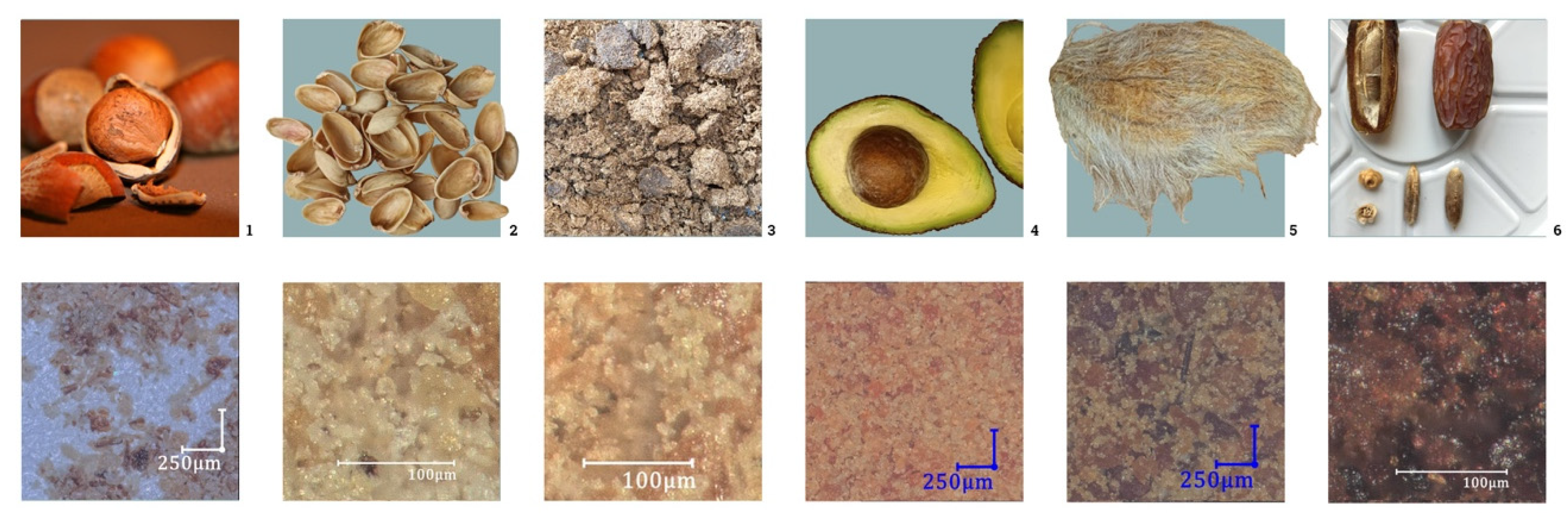


Valorizing Food Waste into Functional Bio-Composite Façade Cladding: A Circular Approach to Sustainable Construction Materials



Abstract
1. Introduction
2. Materials and Methods
2.1. Setting the Scene: Identifying Food Waste Streams in The Netherlands
2.2. Selecting the Resources for Plausible Filler Material
2.2.1. Mango Teguments & Kernels
2.2.2. Avocado Pits
2.2.3. Hazelnut Shells
2.2.4. Pistachio Shells
2.2.5. Beer-Brewing Waste
2.2.6. Spent Tea Leaves
2.2.7. Date Seeds
2.3. Preparing the Filler Materials
2.3.1. Pre-Processing (Cleaning & Preparation)
2.3.2. Milling
2.3.3. Sieving
2.4. Additional Bio-Composite Components
2.4.1. Furan Resin
2.4.2. Functional Fillers
2.5. Preparing the Samples—Composition Parameters
2.5.1. Mixing/Kneading
2.5.2. Pressing
2.6. Testing Protocols
3. Results
3.1. Optical Microscopy
3.1.1. Powdered Fillers (<0.125 μm)
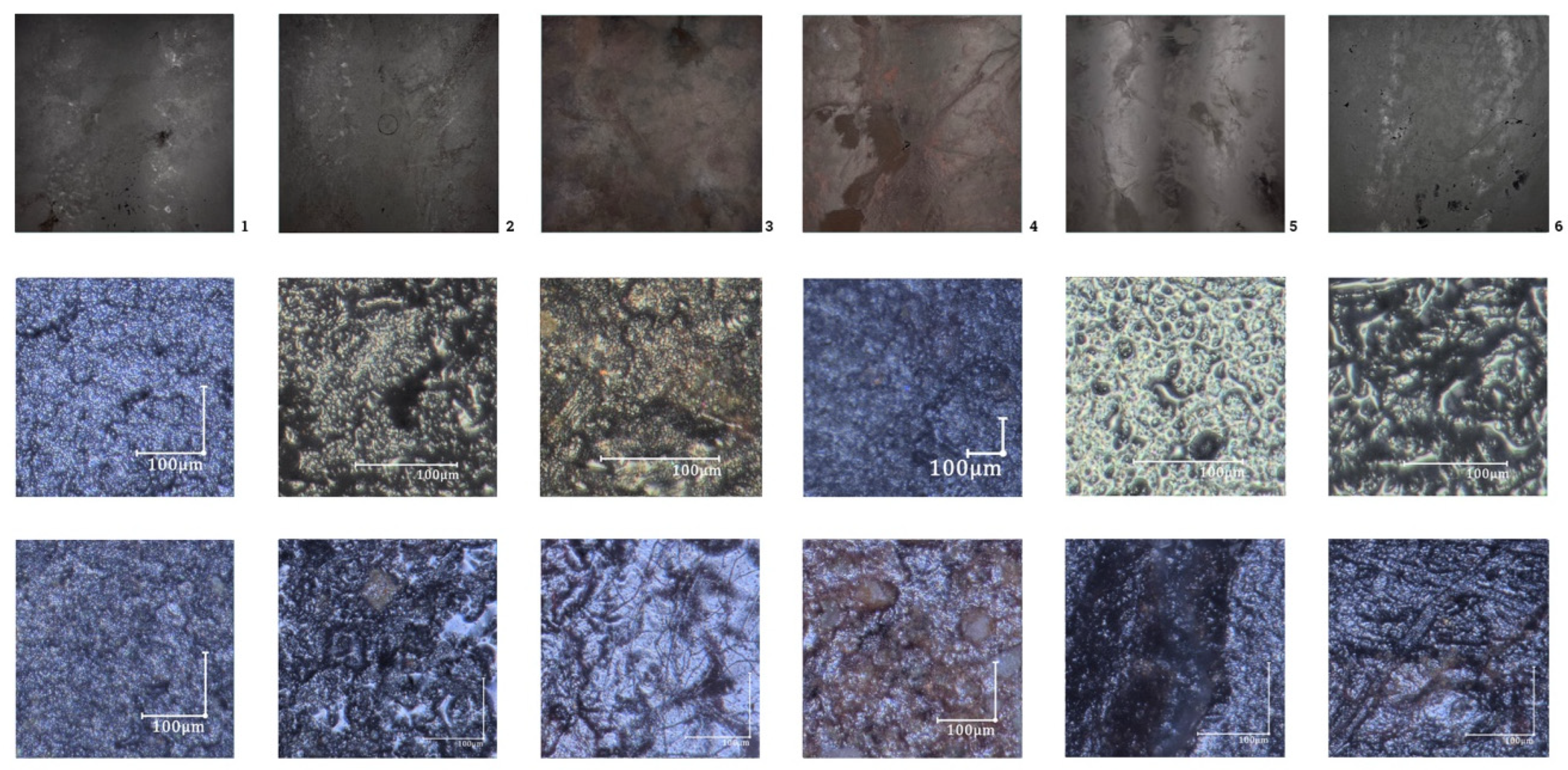
3.1.2. Sample Specimens
3.1.3. Sample Specimens After Freezing/Thawing
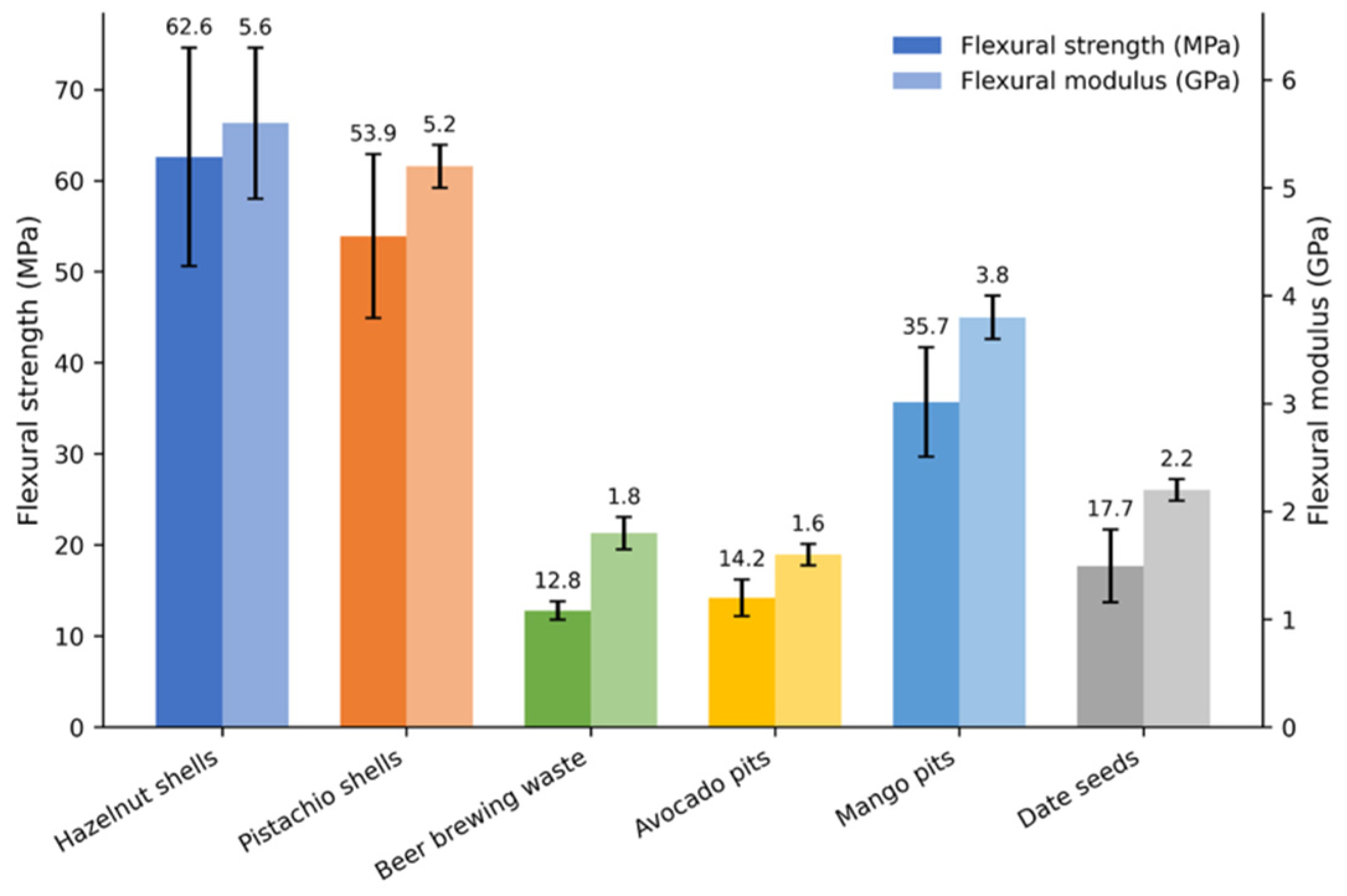
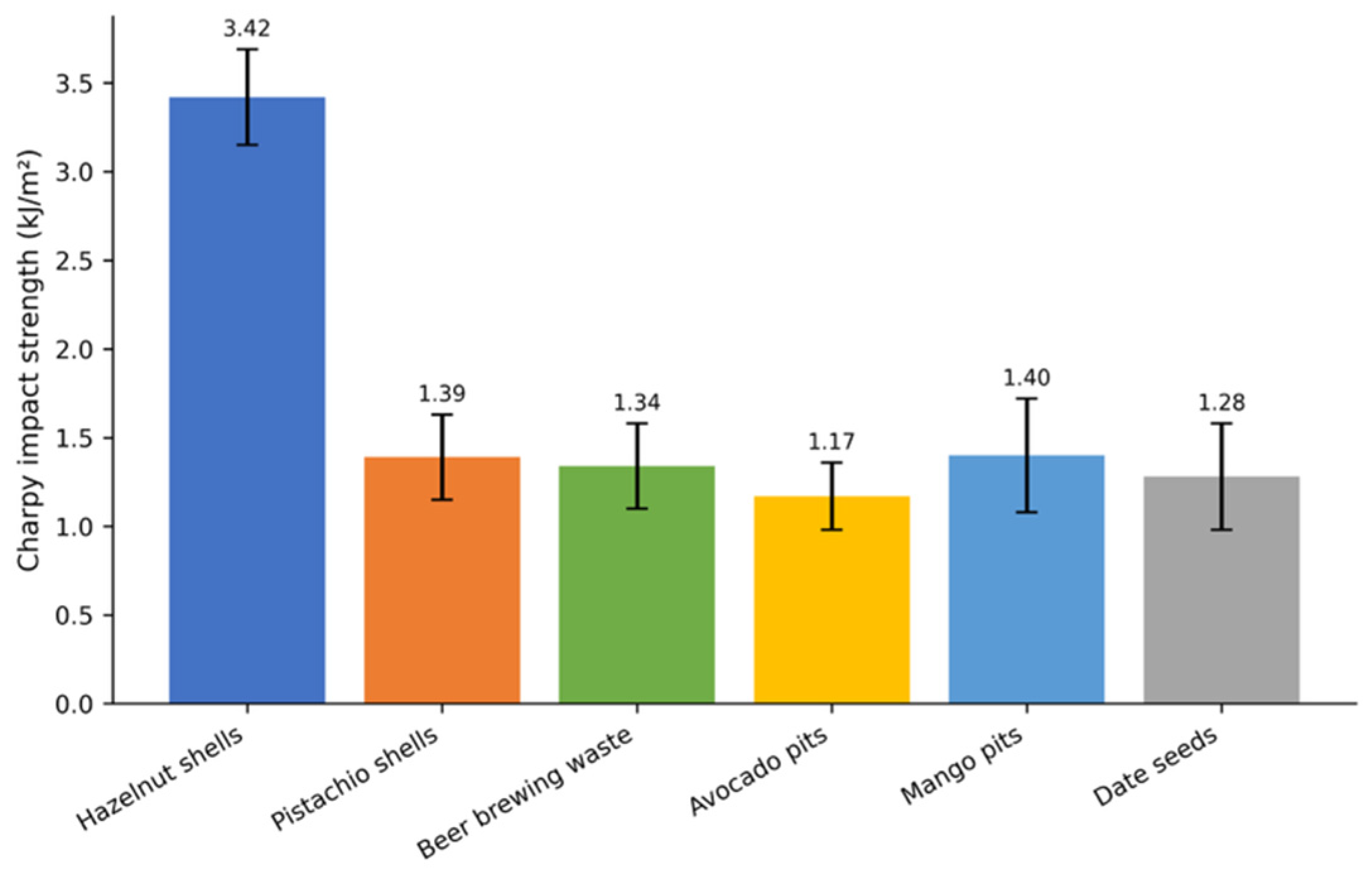
3.2. Three-Point Bending & Charpy Testing
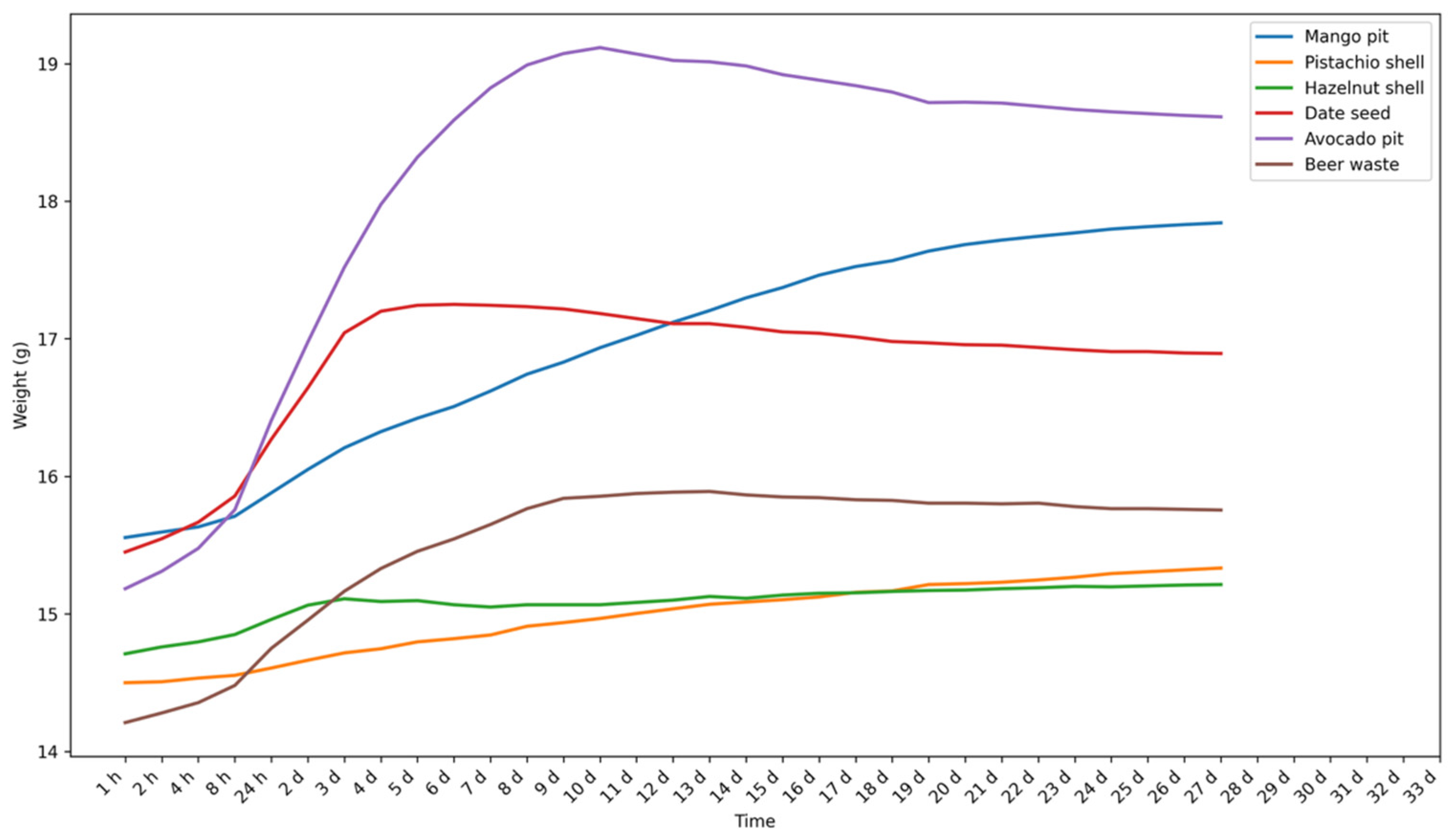
3.3. Water Absorption
3.4. Filler Processibility
3.4.1. Milling
3.4.2. Sieving
3.5. Filler Content
3.6. Density
4. Discussion
4.1. Food-Waste Information Retrieval and Data Uncertainty
4.2. Interpretation of Material Performance Results
4.3. Processing Behavior and Implications for Composite Design
4.4. Scalability and Systemic Considerations
5. Conclusions
6. Limitations and Future Research
Author Contributions
Funding
Data Availability Statement
Acknowledgments
Conflicts of Interest
References
- Baptista, J.F.; Kokare, S.; Francisco, A.V.; Godina, R.; Aelenei, D. A comparative life cycle assessment of ETICS and ventilated façade systems with timber cladding. Energy Build. 2024, 304, 113842. [Google Scholar]
- European Union. Regulation (EU) 2021/1119 of the European Parliament and of the Council of 30 June 2021 establishing the framework for achieving climate neutrality and amending Regulations (EC) No 401/2009 and (EU) 2018/1999 (European Climate Law). OJL 2021, 243, 1–17. [Google Scholar]
- Intergovernmental Panel on Climate Change. Climate change: Implications for buildings. Ecos 2014, 15, 29–34. [Google Scholar]
- Churkina, G.; Organschi, A.; Reyer, C.P.O.; Ruff, A.; Vinke, K.; Liu, Z.; Reck, B.K.; Graedel, T.E.; Schellnhuber, H.J. Buildings as a global carbon sink. Nat. Sustain. 2020, 3, 269–276. [Google Scholar] [CrossRef]
- Dutil, Y.; Rousse, D.; Quesada, G. Sustainable buildings: An ever evolving target. Sustainability 2011, 3, 443–464. [Google Scholar] [CrossRef]
- Göswein, V.; Reichmann, J.; Habert, G.; Pittau, F. Land availability in Europe for a radical shift toward bio-based construction. Sustain. Cities Soc. 2021, 70, 102929. [Google Scholar] [CrossRef]
- Tomei, J.; Richard Helliwell, R. Food versus fuel? Going beyond biofuels. Land Use Policy 2016, 56, 320–326. [Google Scholar] [CrossRef]
- Rathmann, R.; Szklo, A.; Schaeffer, R. Land use competition for production of food and liquid biofuels: An analysis of the arguments in the current debate. Renew. Energy 2010, 35, 14–22. [Google Scholar] [CrossRef]
- Graham-Rowe, D. Agriculture: Beyond food versus fuel. Nature 2011, 474, S6–S8. [Google Scholar] [CrossRef]
- Motamedi, S.; Rousse, D.R.; Promis, G. The evolution of crop-based materials in the built environment: A review of the applications, performance, and challenges. Energies 2023, 16, 5252. [Google Scholar] [CrossRef]
- Singh, R.; Das, R.; Sangwan, S.; Rohatgi, B.; Khanam, R.; Peera, S.K.P.G.; Das, S.; Lyngdoh, Y.A.; Langyan, S.; Shukla, A.; et al. Utilisation of agro-industrial waste for sustainable green production: A review. Environ. Sustain. 2021, 4, 619–636. [Google Scholar] [CrossRef]
- United Nations Environment Programme. Food Waste Index Report 2024. Think Eat Save: Tracking Progress to Halve Global Food Waste; UNEP: Nairobi, Kenya, 2024. [Google Scholar]
- De Jong, B.; Boysen-Urban, K.; De Laurentiis, V.; Philippidis, G.; Bartelings, H.; Mancini, L.; Biganzoli, F.; Sanye Mengual, E.; Sala, S.; Lasarte Lopez, J.; et al. Assessing the Economic, Social and Environmental Impacts of Food Waste Reduction Targets—A Model-Based Analysis; Publications Office of the European Union: Luxembourg, 2023. [Google Scholar]
- Graham-Rowe, E.; Jessop, D.C.; Sparks, P. Identifying motivations and barriers to minimising household food waste. Resour. Conserv. Recycl. 2014, 84, 15–23. [Google Scholar] [CrossRef]
- Prasertsan, P.; Prasertsan, S.; H-Kittikun, A. Recycling of agro-industrial wastes through cleaner technology. Biotechnology 2010, 10, 1–11. [Google Scholar]
- Vilaboa Díaz, A.; Francisco López, A.; Bello Bugallo, P.M. Analysis of biowaste-based materials in the construction sector: Evaluation of thermal behaviour and life cycle assessment (LCA). Waste Biomass Valorization 2022, 13, 4983–5004. [Google Scholar] [CrossRef]
- Kurnik, K.; Krzyżyński, M.; Treder, K.; Tretyn, A.; Tyburski, J. Study on utilizing solid food industry waste with brewers’ spent grain and potato pulp as possible peroxidase sources. J. Food Biochem. 2018, 42, e12446. [Google Scholar] [CrossRef]
- Soares, M.; Faria, L.; Miranda, T.; Pereira, E.; Vilarinho, C.; Carvalho, J. The potential of agri-food waste to solve construction’s environmental problems: A review. Clean. Circ. Bioecon. 2025, 10, 100138. [Google Scholar] [CrossRef]
- LETI Embodied Carbon Primer. Supplementary Guidance to the Climate Emergency Design Guide; LETI: London, UK, 2020.
- Ortega-Exposito, F.; van der Burgh, F.; Böttger, W. Biobased façade materials in Europe. In Bio-Based Building Materials—Proceedings of ICBBM 2023; Amziane, S., Merta, I., Page, J., Eds.; RILEM Bookseries; Springer: Cham, Switzerland, 2023; pp. 123–143. [Google Scholar]
- Raja, P.; Murugan, V.; Ravichandran, S.; Behera, L.; Mensah, R.A.; Mani, S.; Kasi, A.; Balasubramanian, K.B.N.; Sas, G.; Vahabi, H.; et al. A Review of Sustainable Bio-Based Insulation Materials for Energy-Efficient Buildings. Macromol. Mater. Eng. 2023, 308, 2300086. [Google Scholar] [CrossRef]
- Sandak, A.; Sandak, J.; Brzezicki, M.; Kutnar, A. Bio-Based Building Skin; Springer: Singapore, 2019. [Google Scholar]
- Klein, T. Integral Façade Construction: Towards a New Product Architecture for Curtain Walls. Ph.D. Thesis, Delft University of Technology, Delft, The Netherlands, 2013. [Google Scholar]
- Roig, I. Biocomposites for interior façades and partitions to improve air quality in new buildings and restorations. Reinf. Plast. 2018, 62, 270–274. [Google Scholar] [CrossRef]
- Morganti, L.; Vandi, L.; Astudillo Larraz, J.; García-Jaca, J.; Navarro Muedra, A.; Pracucci, A. A1–A5 embodied carbon assessment to evaluate bio-based components in façade system modules. Sustainability 2024, 16, 1190. [Google Scholar] [CrossRef]
- Lau, K.; Hung, P.; Zhu, M.-H.; Hui, D. Properties of natural fibre composites for structural engineering applications. Compos. Part B Eng. 2018, 136, 222–233. [Google Scholar] [CrossRef]
- Shanmugam, V.; Mensah, R.A.; Försth, M.; Sas, G.; Restás, A.; Addy, C.; Xu, Q.; Jiang, L.; Neisiany, R.E.; Singha, S.; et al. Circular economy in biocomposite development: State-of-the-art, challenges and emerging trends. Compos. Part C Open Access 2021, 5, 100138. [Google Scholar] [CrossRef]
- Salasinska, K.; Barczewski, M.; Górny, R.; Kloziński, A. Evaluation of highly filled epoxy composites modified with walnut shell waste filler. Polym. Bull. 2018, 75, 2511–2528. [Google Scholar] [CrossRef]
- Karaagac, B. Use of ground pistachio shell as alternative filler in natural rubber/styrene–butadiene rubber-based rubber compounds. Polym. Compos. 2014, 35, 245–252. [Google Scholar] [CrossRef]
- Barczewski, M.; Matykiewicz, D.; Krygier, A.; Andrzejewski, J.; Skórczewska, K. Characterization of poly(lactic acid) biocomposites filled with chestnut shell waste. J. Mater. Cycles Waste Manag. 2018, 20, 914–924. [Google Scholar] [CrossRef]
- Neuhaus, L. Bio-Composites from Food-Waste. Master’s Thesis, Delft University of Technology, Delft, The Netherlands, 2024. [Google Scholar]
- Ghosh, S.; Merhi, N.; Neuhaus, L.; Sathyamurthy, P.; Sel, E.; Bilow, M.; Ioannou, O.; Overend, M. Towards Environmentally Sustainable Bio-Based Load-Bearing Components in Buildings: The Feasibility, Early-Stage Development and Testing of Five Possible Building Components to Meet Specific Performance requirements. In Bio-Based Building Materials—Proceedings of ICBBM 2025; Amziane, S., Toledo Filho, R.D., da Gloria, M.Y.R., Page, J., Eds.; RILEM Bookseries, 60; Springer: Cham, Switzerland, 2025; pp. 751–763. [Google Scholar]
- Neuhaus, L.; Overend, M.; Ioannou, O. Bulk fillers from food waste for polymeric bio-composites: The influence of filler type, particle size and volume ratio on furan-matrix composites. Constr. Build. Mater. 2025, 502, 144303. [Google Scholar] [CrossRef]
- CBS. Netherlands Is the EU’s Second-Largest Exporter and Importer of Goods. Available online: https://www.cbs.nl/en-gb/news/2024/17/netherlands-is-second-largest-exporter-and-importer-of-goods-in-eu#:~:text=Netherlands%20is%20the%20EU’s%20second,Source:%20CBS%2C%20Eurostat (accessed on 20 August 2025).
- CBI. The Netherlands: Market Potential for Fresh Fruit and Vegetables. Available online: https://www.cbi.eu/market-information/fresh-fruit-vegetables/netherlands/market-potential (accessed on 20 August 2025).
- Eurostat. The Fruit and Vegetable Sector in the EU—A Statistical Overview. Available online: https://ec.europa.eu/eurostat/statistics-explained/index.php?title=The_fruit_and_vegetable_sector_in_the_EU_-_a_statistical_overview#Output_values (accessed on 20 August 2025).
- Bos-Brouwers, H.E.J.; Kok, M.G.; Viquez-Zamora, A.M. Climate Footprint of Food Waste in The Netherlands; Wageningen Food & Biobased Research: Wageningen, The Netherlands, 2024. [Google Scholar]
- CBS. Industrial Waste. In Trends in The Netherlands 2019; Statistics Netherlands: The Hague, The Netherlands, 2019. Available online: https://longreads.cbs.nl/trends19-eng/society/figures/environment/#industrieelafval-en (accessed on 20 August 2025).
- StatLine. Agricultural Data. CBS Open Data Portal. Available online: https://opendata.cbs.nl/#/CBS/en/dataset/80783eng/table (accessed on 20 August 2025).
- Welink, J.H. Meer Waarde uit de Reststromen: Toekomstverkenning van Mogelijkheden Recycling Reststromen uit Voeding-en Genotsmiddelen Industrie. Master’s Thesis, Delft University of Technology, Delft, The Netherlands, 2014. [Google Scholar]
- CBS. More Restaurants and Catering, Fewer Bars and Cafés. Available online: https://www.cbs.nl/en-gb/news/2024/43/more-restaurants-and-catering-fewer-bars-and-cafes#:~:text=Nearly%20half%20of%20all%20food,per%20capita%20in%20Noord%2DHolland (accessed on 20 August 2025).
- Milieu Centraal. Hoeveel Voedsel Verspillen We? Available online: https://www.milieucentraal.nl/eten-en-drinken/voedselverspilling/hoeveel-voedsel-verspillen-we/ (accessed on 20 August 2025).
- Rabobank. Horeca Verspilt 5–6 Miljoen Kilogram Minder Voedsel, Maar Nog Altijd voor Bijna 650 Miljoen Euro. Available online: https://www.rabobank.nl/kennis/d011381929-horeca-verspilt-5-6-miljoen-kilogram-minder-voedsel-maar-nog-altijd-voor-bijna-650-miljoen-euro (accessed on 20 August 2025).
- Rijkswaterstaat, Ministry of Infrastructure and Water Management. Afvalverwerking in Nederland: Cijfers 2020. Available online: https://www.afvalcirculair.nl/actueel/nieuws/afvalnieuws/2022/afvalverwerking-nederland-cijfers-2020/ (accessed on 20 August 2025).
- European Environmental Agency. Netherlands: Waste Prevention Country Profile 2021. Available online: https://www.eea.europa.eu/themes/waste/waste-prevention/countries/2021-waste-prevention-country-profiles/netherlands-waste-prevention-country-profile-2021.pdf (accessed on 7 August 2025).
- VANG: Huishoudelijk Afval. Afvalpreventieprogramma Nederland. Available online: https://vang-hha.nl/kennisbibliotheek/afvalpreventieprogramma-nederland/ (accessed on 7 August 2025).
- European Parliament and Council. Directive 2008/98/EC of the European Parliament and of the Council of 19 November 2008 on waste and repealing certain Directives. Off. J. Eur. Union 2008, 312, 3–30. [Google Scholar]
- Rood, T.; Muilwijk, H.; Westhoek, H. Food for the Circular Economy; PBL Netherlands Environmental Assessment Agency: The Hague, The Netherlands, 2017.
- Sezer, A.A.; Fredriksson, A. Environmental impact of construction transport and the effects of building certification schemes. Resour. Conserv. Recycl. 2021, 172, 105688. [Google Scholar] [CrossRef]
- Ajila, C.M.; Aalami, M.; Leelavathi, K.; Prasada Rao, U.J.S. Mango peel powder: A potential source of antioxidant and dietary fiber in macaroni preparations. Innov. Food Sci. Emerg. Technol. 2010, 11, 219–224. [Google Scholar] [CrossRef]
- Thoden van Velzen, E.U.; Molenveld, K.; Brouwer, M.T.; van der Zee, M.; Smeding, I. Issue Paper: Recycling of Different Waste Streams; Wageningen Food & Biobased Research: Wageningen, The Netherlands, 2021. [Google Scholar] [CrossRef]
- FAO. FAOSTAT Database. Available online: www.fao.org/faostat (accessed on 8 August 2025).
- García-Mahecha, M.; Soto-Valdez, H.; Peralta, E.; Carvajal-Millan, E.; Madera-Santana, T.J.; Lomelí-Ramírez, M.G.; Colín-Chávez, C. Production and Characterization of Cellulosic Pulp from Mango Agro-Industrial Waste and Potential Applications. Polymers 2023, 15, 3163. [Google Scholar] [CrossRef]
- Bangar, S.P.; Dunno, K.; Dhull, S.B.; Kumar Siroha, A.; Changan, S.; Maqsood, S.; Rusu, A.V. Avocado seed discoveries: Chemical composition, biological properties, and industrial food applications. Food Chem. X 2022, 16, 100507. [Google Scholar] [CrossRef]
- CBS. Avocado Imports Up by 19 Percent in 2020. Available online: https://www.cbs.nl/en-gb/news/2021/07/avocado-imports-up-by-19-percent-in-2020 (accessed on 8 August 2025).
- Zhu, J. Reducing the Waste of Fresh Avocados from Kenya into The Netherlands by Using the Iceberg Model. Master’s Thesis, Inholland University of Applied Sciences, Delft, The Netherlands, 24 June 2023. [Google Scholar]
- Schepers, H.T.A.M.; Kwanten, E.F.J. Selection and breeding of hazelnut cultivars suitable for organic cultivation in The Netherlands. Acta Hortic. 2005, 686, 87–90. [Google Scholar] [CrossRef]
- OEC. Shelled Hazelnuts/Filberts—Bilateral Trade Netherlands. Available online: https://oec.world/en/profile/bilateral-product/shelled-hazelnutsfilberts/reporter/nld (accessed on 7 August 2025).
- Ollani, S.; Peano, C.; Sottile, F. Recent innovations on the reuse of almond and hazelnut by-products: A review. Sustainability 2024, 16, 2577. [Google Scholar] [CrossRef]
- Tareq Noaman, A.; Abed, M.S.; Al-Gebory, L.; Al-Zubaidi, A.B.; Al-Tabbakh, A.A. Production of Agro-Waste Cement Composites: Influence of Nutshells on Mechanical and Hardened Properties. Constr. Build. Mater. 2023, 394, 132137. [Google Scholar] [CrossRef]
- Ferguson, L.; Polito, V.; Kallsen, C. The pistachio tree. Botany and physiology and factors that affect yield. In Pistachio Production Manual, 4th ed.; University of California, Fruit & Nut Research Information Center: Davis, CA, USA, 2005. [Google Scholar]
- CBI. Pistachios: Market Potential. Available online: https://www.cbi.eu/market-information/processed-fruit-vegetables-edible-nuts/pistachios/market-potential (accessed on 8 August 2025).
- Fereidooni, L.; Morais, A.-R.C.; Shiflett, M.B. Application of pistachio shell waste in composites, nanocomposites, and carbon electrode fabrication: A review. Resour. Conserv. Recycl. 2024, 203, 107403. [Google Scholar] [CrossRef]
- CBS. First Fall in Number of Breweries Since 2010. Available online: https://www.cbs.nl/en-gb/news/2025/09/first-fall-in-number-of-breweries-since-2010 (accessed on 8 August 2025).
- Rachwał, K.; Waśko, A.; Gustaw, K.; Polak-Berecka, M. Utilization of brewery wastes in food industry. PeerJ 2020, 8, e9427. [Google Scholar] [CrossRef]
- Soceanu, A.; Dobrinas, S.; Popescu, V.; Buzatu, A.; Sirbu, A. Sustainable Strategies for the Recovery and Valorization of Brewery By-Products—A Multidisciplinary Approach. Sustainability 2024, 16, 220. [Google Scholar] [CrossRef]
- Chattaraj, S.; Mitra, D.; Ganguly, A.; Thatoi, H.; Das Mohapatra, P.K. A critical review on the biotechnological potential of Brewers’ waste: Challenges and future alternatives. Curr. Res. Microb. Sci. 2024, 6, 100228. [Google Scholar] [CrossRef]
- CBI. Tea in The Netherlands: Product Factsheet. Available online: https://www.cbi.eu/sites/default/files/market-information/cbi_2016_-_tea_-_pfs_nl_-_final_draft_redacted.pdf (accessed on 8 August 2025).
- Duan, J.; Obi Reddy, K.; Ashok, B.; Cai, J.; Zhang, L.; Varada Rajulu, A. Effects of spent tea leaf powder on the properties and functions of cellulose green composite films. J. Environ. Chem. Eng. 2016, 4, 440–448. [Google Scholar] [CrossRef]
- Rahman, A.; Chowdhury, M.A.; Hossain, N.; Shuvho, M.B.A.; Kowser, M.A.; Rahman, M.R.; Chani, M.T.S.; Kuok, K.K.; Rahman, M.M. Improvement of Mechanical, Thermal, and Physical Behaviors of Jute/Cotton Biocomposites Reinforced by Spent Tea Leaf Particles. J. Compos. Sci. 2022, 6, 145. [Google Scholar] [CrossRef]
- CBI. Dates: Market Potential. Available online: https://www.cbi.eu/market-information/processed-fruit-vegetables-edible-nuts/dates-0/market-potential (accessed on 8 August 2025).
- Abdillah, L.; Andriani, M. Friendly alternative healthy drinks through the use of date seeds as coffee powder. In Proceedings of the ICEBM 2012 International Conference on Entrepreneurship and Business Management, Jakarta, Indonesia, 22–23 December 2012. [Google Scholar]
- Ghnimi, S.; Umer, S.; Karim, A.; Kamal-Eldin, A. Date fruit (Phoenix dactylifera L.): An underutilized food seeking industrial valorization. NFS J. 2017, 6, 1–10. [Google Scholar] [CrossRef]
- Daffee. Date Seed Coffee. Available online: https://daffee.nl/pages/daffee (accessed on 8 August 2025).
- Fragassa, C.; Vannucchi de Camargo, F.; Santulli, C. Sustainable biocomposites: Harnessing the potential of waste seed-based fillers in eco-friendly materials. Sustainability 2024, 16, 1526. [Google Scholar] [CrossRef]
- Fabris, H.J.; Knauss, W.G. Synthetic polymer adhesives. In Comprehensive Polymer Science and Supplements; Allen, G., Bevington, J.C., Eds.; Pergamon: Oxford, UK, 1989; Volume 7, pp. 131–177. [Google Scholar]
- Pascault, J.-P.; Höfer, R.; Fuertes, P. Mono-, Di-, and oligosaccharides as precursors for polymer synthesis. In Polymer Science: A Comprehensive Reference; Matyjaszewski, K., Möller, M., Eds.; Elsevier: Amsterdam, The Netherlands, 2012; pp. 59–82. [Google Scholar]
- Fink, J.K. Furan resins. In Reactive Polymers Fundamentals and Applications; Fink, J.K., Ed.; William Andrew Publishing: Norwich, NY, USA, 2005; pp. 307–320. [Google Scholar]
- Wiersma, J. Recycling of Bio-Composite Façades Panels: Exploring the Possibilities of Recycling bio Composites into Filler for a New Bio Composite Façade Product. Master’s Thesis, Delft University of Technology, Delft, The Netherlands, 2025. [Google Scholar]
- ISO 14125:1998; Fibre-Reinforced Plastic Composites—Determination of flexural properties. International Organization for Standardization: Geneva, Switzerland, 1998.
- ISO 179 1:2023; Plastics—Determination of Charpy Impact Properties. International Organization for Standardization: Geneva, Switzerland, 2023.
- Garnett, T.; Roos, E.; Little, D.C. Lean, Green, Mean, Obscene…? What Is Efficiency? And Is It Sustainable? Animal Production and Consumption Reconsidered; Food Climate Research Network (FCRN): Oxford, UK, 2015. [Google Scholar]
- NWO. Food Waste-Based Bio-Composites (FoWaBa-Bio). Available online: https://www.nwo.nl/en/projects/dkiuk90955 (accessed on 7 August 2025).



| Composition | |||
|---|---|---|---|
| Component | Description | Recipe 1—45% Filler | Recipe 2—55% |
| Resin–Catalyst | Furan + HM1448 | Hazelnut, Pistachio, BBW, Dates: 52% | Avocado: 41.81% Mango: 44.53% |
| Filler | Food-Waste | Hazelnut, Pistachio, BBW, Dates: 45% | Avocado: 56.88% Mango: 54.07% |
| Releasing agent | Linseed oil | 1.68% | 1.31% |
| Test | No of Specimens | Specimen Size | Standard |
|---|---|---|---|
| Three-point bending | 6 | 80 × 15 | ISO 14125:1998 [80] |
| Charpy Impact | 10 | 80 × 10 | ISO 179 1:2023 [81] |
| Water absorption | 3 | 50 × 50 | Submersion for 28 days with weight measurements every 24 h |
| Freeze/Thaw cycling | 3 | 50 × 50 | 10 cycles of freezing and thawing |
| No | Filler Material | Flexural Strength | Flexural Modulus | Charpy Impact Resistance | |||
|---|---|---|---|---|---|---|---|
| Mean [MPa] | Std Dev [MPa] | Mean [GPa] | Std Dev [GPa] | Mean [kJ/m2] | Std Dev [kJ/m2] | ||
| 1 | Hazelnut shells | 62.6 | 11.91 | 5.62 | 0.72 | 3.42 | 0.27 |
| 2 | Pistachio shells | 53.9 | 9.02 | 5.24 | 0.15 | 1.39 | 0.24 |
| 3 | Beer brewing waste | 17.7 | 4.40 | 2.20 | 0.11 | 1.34 | 0.24 |
| 4 | Avocado pits | 14.2 | 2.55 | 1.62 | 0.10 | 1.17 | 0.19 |
| 5 | Mango kernels | 35.7 | 5.13 | 3.84 | 0.24 | 1.4 | 0.32 |
| 6 | Date seeds | 12.8 | 1.05 | 1.79 | 0.16 | 1.28 | 0.30 |
| Filler | 24 h [wt%] | 28 Days [wt%] |
|---|---|---|
| Hazelnut | 3.13% | 4.18% |
| Pistachio | 2.31% | 5.80% |
| Beer Brewing Waste | 3.63% | 10.55% |
| Avocado | 12.26% | 30.07% |
| Mango | 2.75% | 17.45% |
| Dates | 2.90% | 3.57% |
| Filler Resource | Mean Density (kg/m3) | Standard Deviation (kg/m3) | No of Specimens |
|---|---|---|---|
| Hazelnut shells | 1391 | 54 | 5 |
| Pistachio shells | 1379 | 45 | 6 |
| Beer brewing waste | 1256 | 18 | 6 |
| Avocado pits | 1368 | 23 | 6 |
| Mango pits | 1361 | 18 | 6 |
| Date seeds | 1330 | 17 | 6 |
| Filler Resource | Estimated Cost (€/kg) | Estimated Availability (kt/year, NL) | Processability Score |
|---|---|---|---|
| Hazelnut shells | 0.10–0.30 | 20–30 | High |
| Pistachio shells | 0.15–0.30 | 5–10 | High |
Disclaimer/Publisher’s Note: The statements, opinions and data contained in all publications are solely those of the individual author(s) and contributor(s) and not of MDPI and/or the editor(s). MDPI and/or the editor(s) disclaim responsibility for any injury to people or property resulting from any ideas, methods, instructions or products referred to in the content. |
© 2026 by the authors. Licensee MDPI, Basel, Switzerland. This article is an open access article distributed under the terms and conditions of the Creative Commons Attribution (CC BY) license.
Share and Cite
Ioannou, O.; Konijnenberg, F. Valorizing Food Waste into Functional Bio-Composite Façade Cladding: A Circular Approach to Sustainable Construction Materials. Clean Technol. 2026, 8, 11. https://doi.org/10.3390/cleantechnol8010011
Ioannou O, Konijnenberg F. Valorizing Food Waste into Functional Bio-Composite Façade Cladding: A Circular Approach to Sustainable Construction Materials. Clean Technologies. 2026; 8(1):11. https://doi.org/10.3390/cleantechnol8010011
Chicago/Turabian StyleIoannou, Olga, and Fieke Konijnenberg. 2026. "Valorizing Food Waste into Functional Bio-Composite Façade Cladding: A Circular Approach to Sustainable Construction Materials" Clean Technologies 8, no. 1: 11. https://doi.org/10.3390/cleantechnol8010011
APA StyleIoannou, O., & Konijnenberg, F. (2026). Valorizing Food Waste into Functional Bio-Composite Façade Cladding: A Circular Approach to Sustainable Construction Materials. Clean Technologies, 8(1), 11. https://doi.org/10.3390/cleantechnol8010011