Article

Effects of Water Management and Rice Varieties on Greenhouse Gas Emissions in Central Japan

by
Sunchai Phungern
1,2,*,
Siti Noor Fitriah Azizan
3,
Nurtasbiyah Binti Yusof
1 and
Kosuke Noborio
4
1
Graduate School of Agriculture, Meiji University, Kanagawa 214-8571, Japan
2
Department of Soil Science, Kasetsart University, Nakhon Pathom 73140, Thailand
3
Organization for the Strategic Coordination of Research and Intellectual Properties, Meiji University, Kawasaki 214-8571, Japan
4
School of Agriculture, Meiji University, Kanagawa 214-8571, Japan
*
Author to whom correspondence should be addressed.
Soil Syst. 2023, 7(4), 89; https://doi.org/10.3390/soilsystems7040089

Submission received: 17 August 2023 / Revised: 13 October 2023 / Accepted: 16 October 2023 / Published: 18 October 2023

Abstract

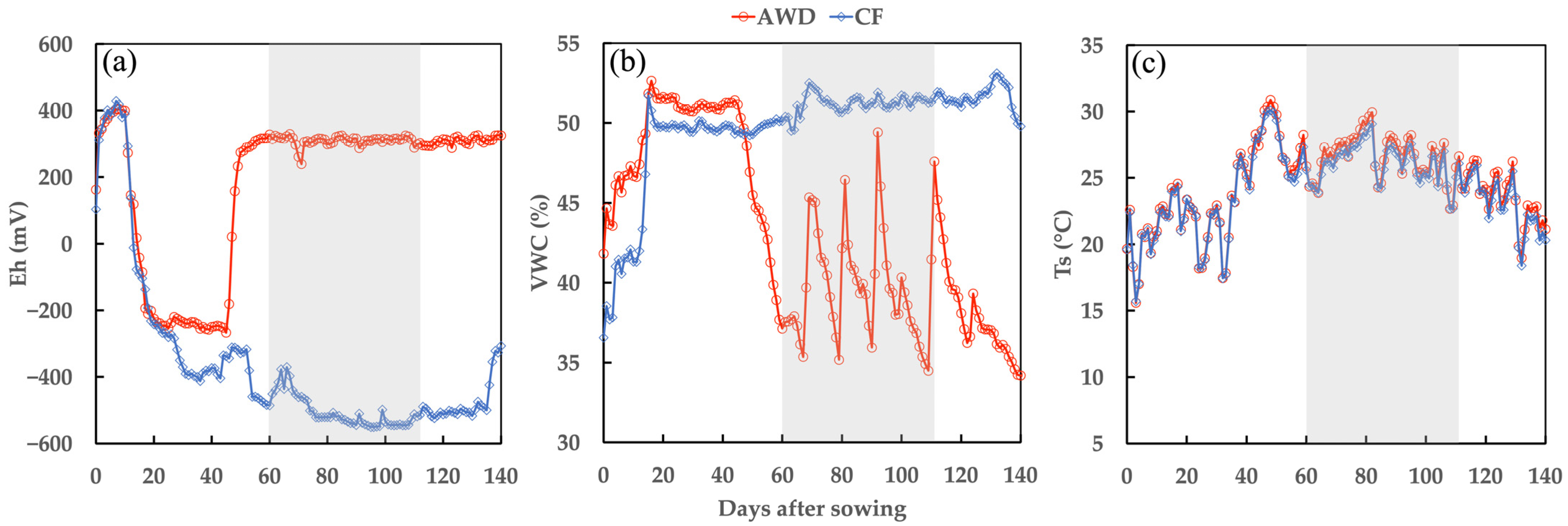
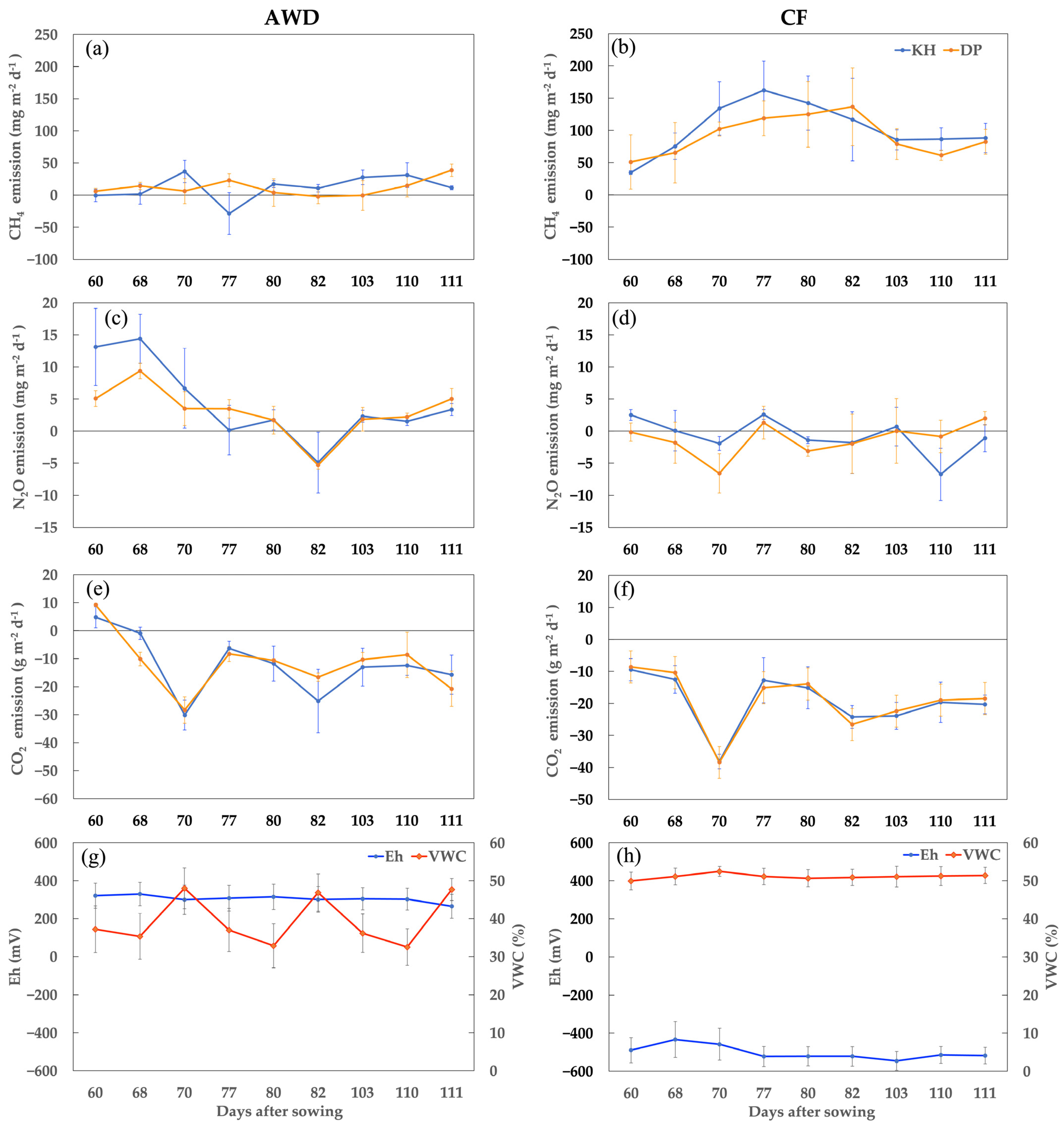
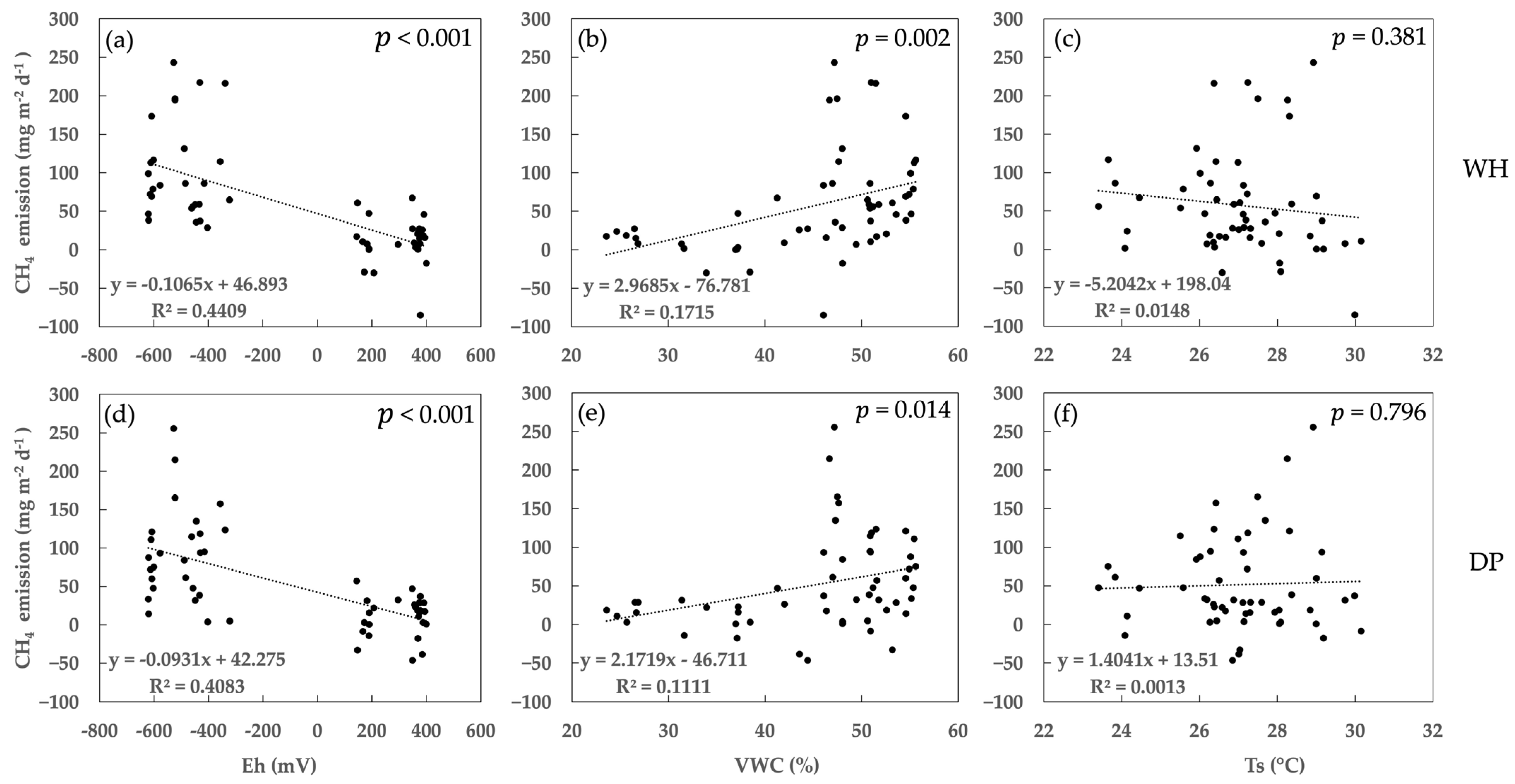
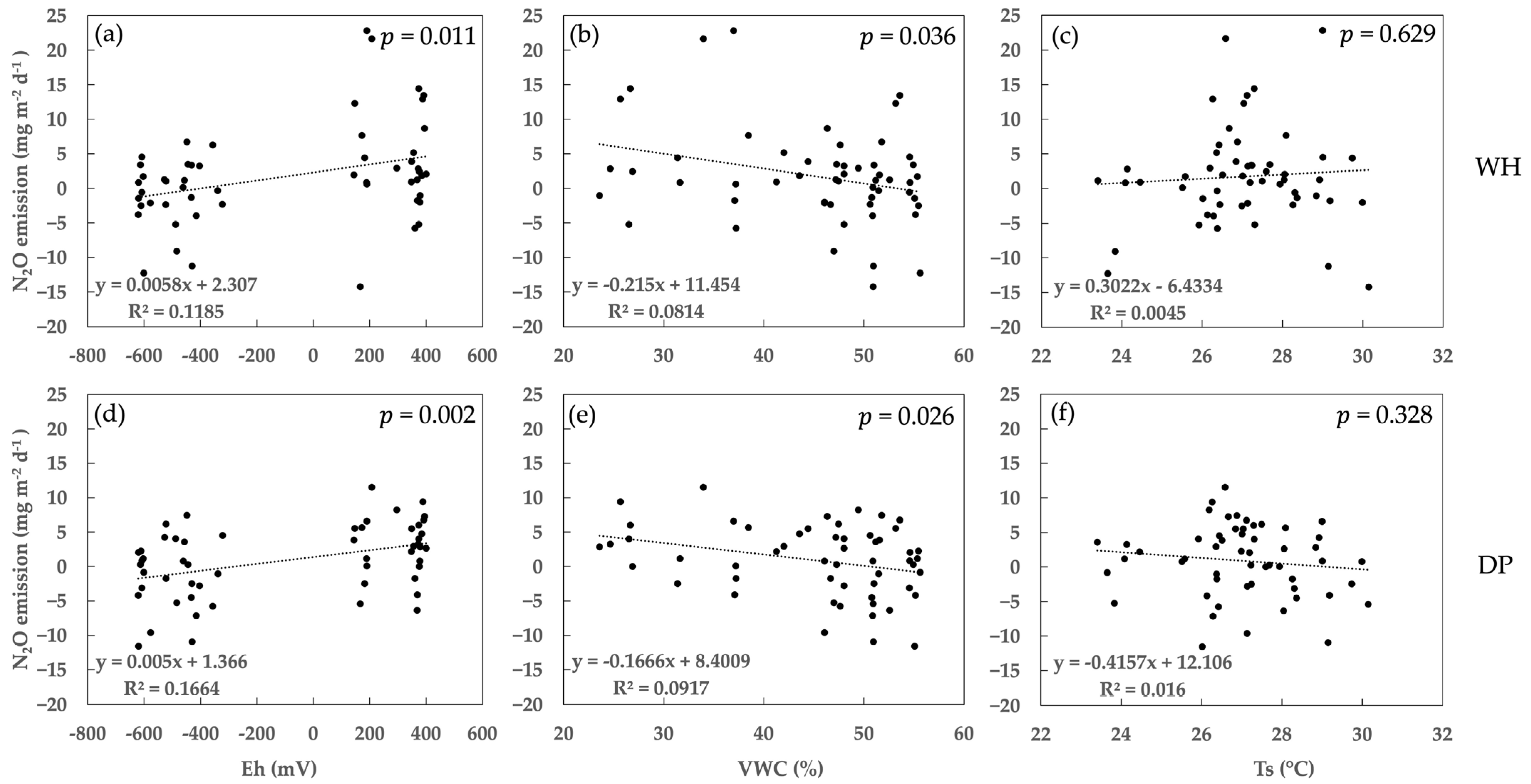
Greenhouse gas (GHG) emissions from paddy fields depend on water management practices and rice varieties. Lysimeter experiments were conducted to determine the effect of rice varieties (lowland; Koshihikari (KH) and upland; Dourado Precoce (DP)) on GHG emissions under two water management practices: alternate wetting and drying (AWD) and continuous flooding (CF). A repeated cycle of drying and wetting in AWD irrigation was performed by drying the soil to −40 kPa soil matric potential and then rewetting. Consequently, the closed chamber method was used to measure direct emissions of methane (CH4), nitrous oxide (N2O), and carbon dioxide (CO2). The result revealed that water management significantly affected CH4 and N2O emissions (p < 0.05), while no significant effect was observed between different rice varieties. Although, AWD irrigation reduced CH4 emissions, it increased N2O emissions compared to CF irrigation, likely due to increased oxygen supply. AWD irrigation decreased GWP by 55.6% and 59.6% in KH and DP, respectively, compared to CF irrigation. Furthermore, CH4 and N2O emissions significantly correlated with soil redox potential and volumetric water content. These results suggest that AWD irrigation might be an effective water management method for mitigating GHG emissions from rice fields in central Japan.
Keywords: alternate wetting and drying; rice cultivars; methane; nitrous oxide; emission factor alternate wetting and drying; rice cultivars; methane; nitrous oxide; emission factor