
Article

Long-Term Effects of Forest Plantation Species on Chemical Soil Properties in Southern Rwanda
by
Peter Rwibasira
1,2,*,
Francois Xavier Naramabuye
3,
Donat Nsabimana
3 and
Monique Carnol
1,*
1
Laboratory of Plant and Microbial Ecology, InBioS, University of Liège, Botany Bât. 22, Chemin de la Vallée 4, 4000 Liège, Belgium
2
College of Science and Technology (CST), University of Rwanda, KN 73 St., Nyarugenge, Kigali P.O. Box 3900, Rwanda
3
College of Agriculture, Animal Sciences and Veterinary Medicine (CAVM), University of Rwanda, Huye Campus, Butare P.O. Box 56, Rwanda
*
Authors to whom correspondence should be addressed.
Soil Syst. 2021, 5(4), 59; https://doi.org/10.3390/soilsystems5040059

Submission received: 31 July 2021 / Revised: 10 September 2021 / Accepted: 20 September 2021 / Published: 26 September 2021
(This article belongs to the Special Issue Forest Soils: Functions, Threats, Management)

Abstract

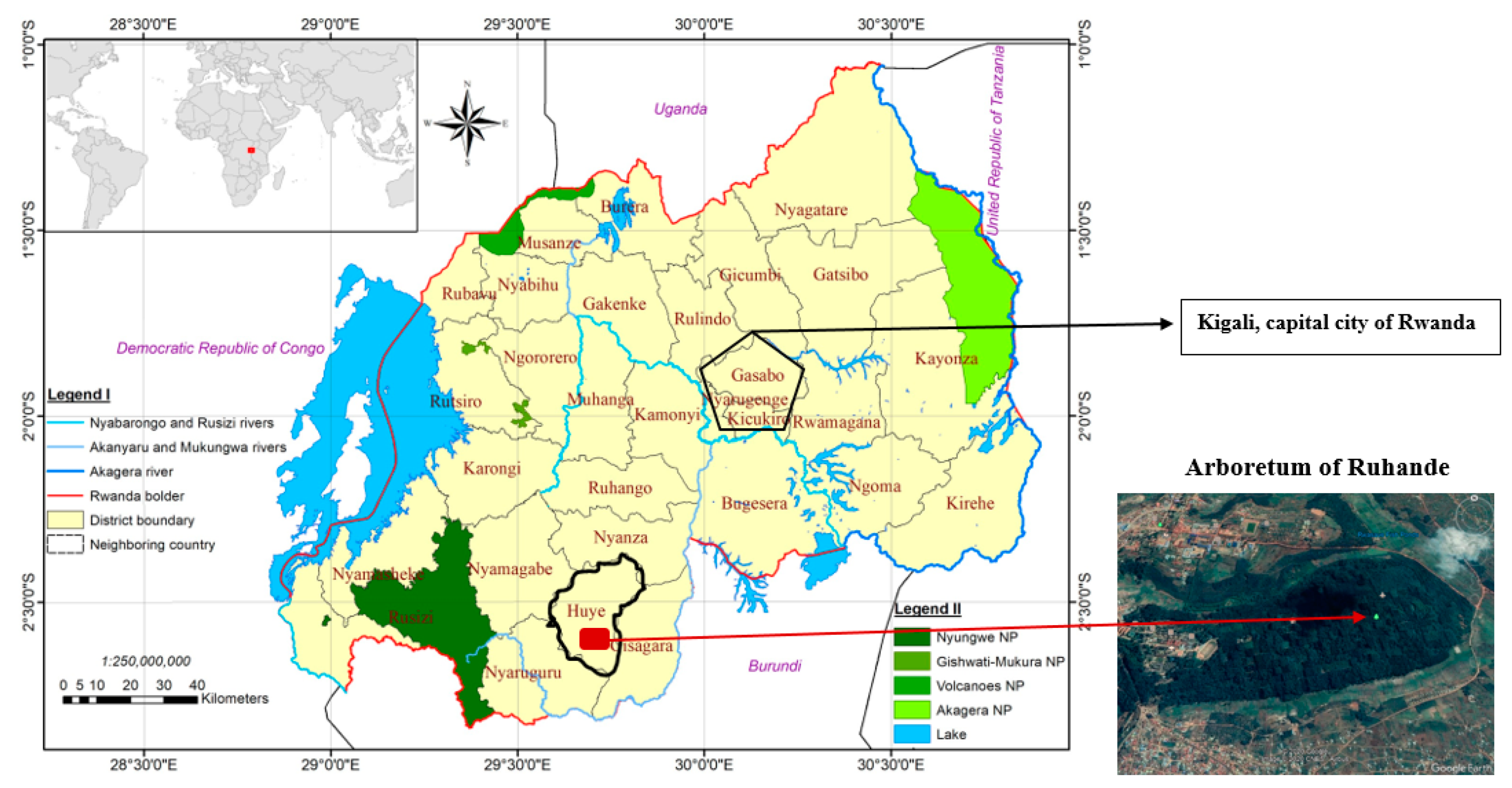
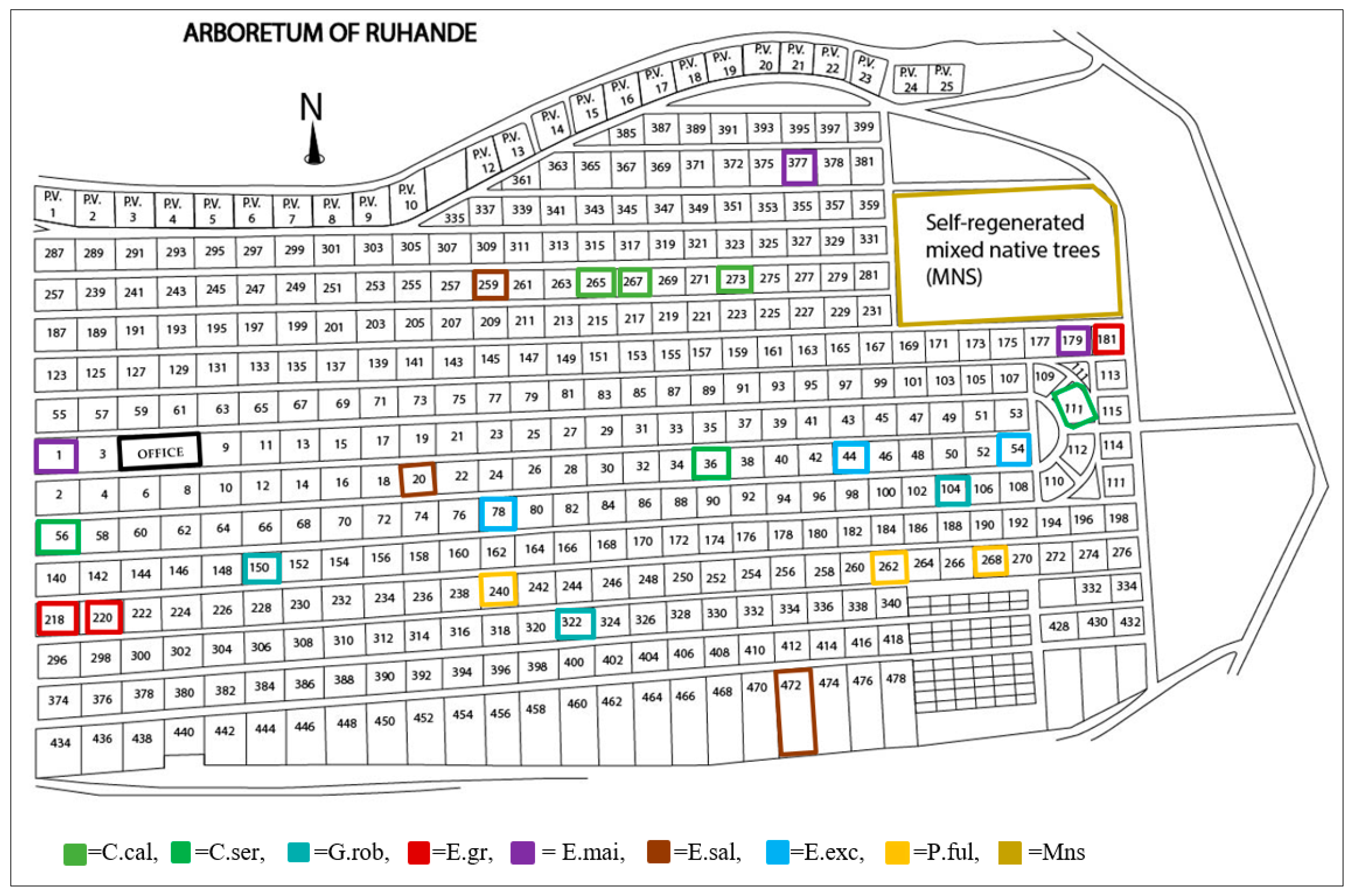
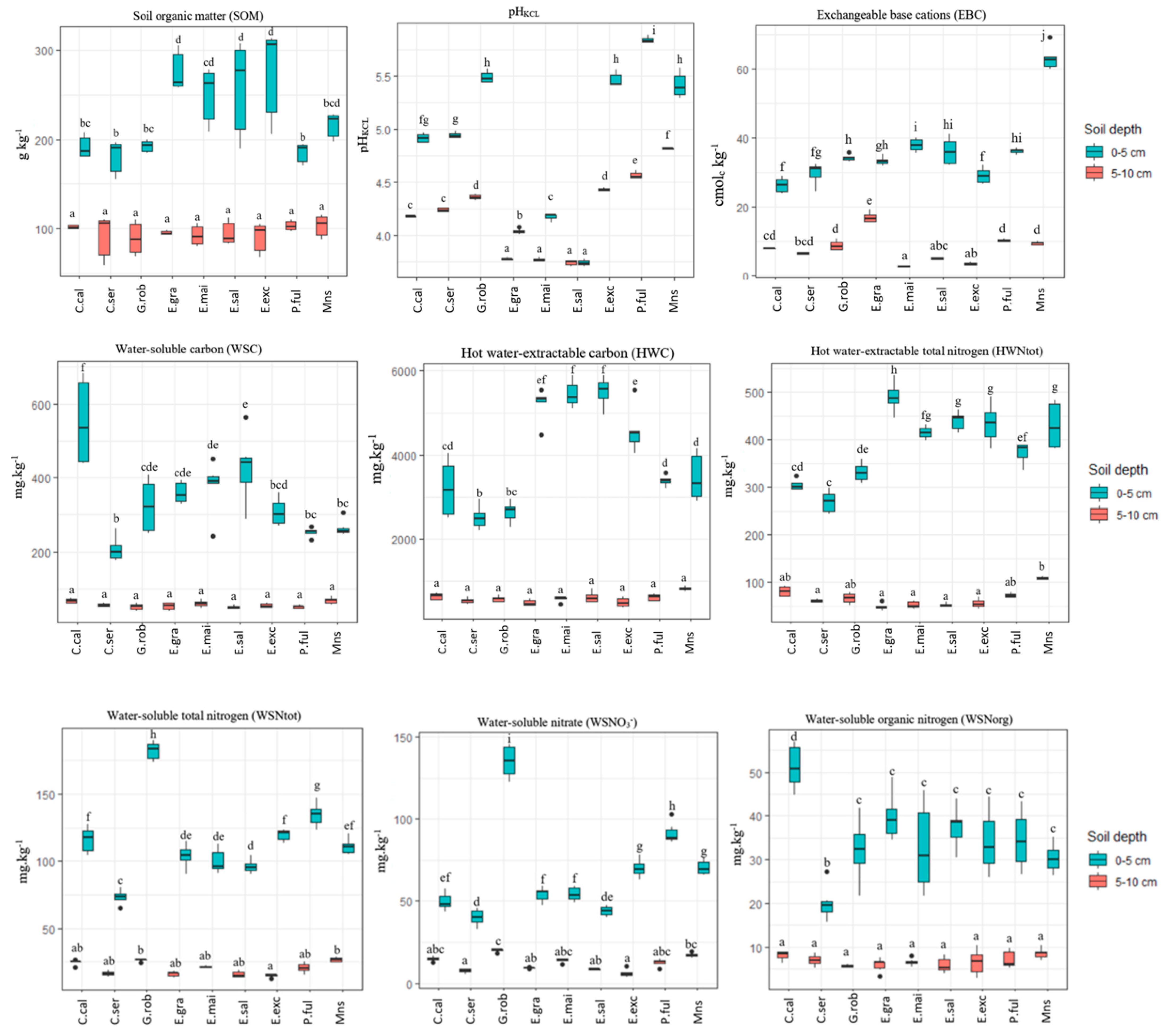
Understanding the long-term effects of tree species on soil properties is crucial for the development of forest restoration policies in relation to the choice of species that meet both environmental and local livelihood needs. This study was performed in the Arboretum of Ruhande, Southern Rwanda, where monocultures of 148 deciduous and 56 conifer species have been established in 0.25 ha replicated plots from 1933 onwards. We investigated the effects of six exotic and two native tree species planted in monoculture plots and native species mixed within one self-regenerated plot on soil properties in two layers (0–5 cm and 5–10 cm depth). We measured general soil properties (pH, SOM, exchangeable base cations) and water-soluble C and N as a proxy for soil functioning. Changes in soil properties were observed in the upper soil layer for all tree species. Planting Eucalyptus species caused soil acidification, whereas soil exchangeable cations and pH were higher under native species (Entandrophragma excelsum and Polyschias fulva) and mixed native species. The effects of tree species were more pronounced for hot water-extractable C and N than for other soil properties. Their analyses could be used for detecting changes in soil functioning linked to vegetation types.
Keywords: soil quality; soil functions; Eucalyptus species; soil acidity; exchangeable cations; water-extractable C and N; Ruhande Arboretum; Rwanda soil quality; soil functions; Eucalyptus species; soil acidity; exchangeable cations; water-extractable C and N; Ruhande Arboretum; Rwanda