Article

Legacy Effects of 32 Years of Tillage and Crop Diversification on Soil Biological Activity in Paraguay


by
Carlos Alcides Villalba Algarin
1,2,*,
Marcos Fabian Sanabria Franco
3,
Alodia Concepción González
1 and
José Lavres
4
1
Capitán Miranda Research Center, Paraguayan Institute of Agricultural Technology, Route VI, Km 21.5, Capitán Miranda 070504, Paraguay
2
“Luiz de Queiroz” College of Agriculture, University of São Paulo, 11 Pádua Dias Avenue, Piracicaba 13418-900, SP, Brazil
3
Faculty of Agricultural Sciences, National University of Asunción, Campus of the National University of Asunción, Route Mcal. José Félix Estigarribia, Km 10½, San Lorenzo 2160, Paraguay
4
Center for Nuclear Energy in Agriculture, University of São Paulo, Piracicaba 13416-000, SP, Brazil
*
Author to whom correspondence should be addressed.
Soil Syst. 2026, 10(6), 66; https://doi.org/10.3390/soilsystems10060066 (registering DOI)
Submission received: 2 May 2026 / Revised: 7 June 2026 / Accepted: 10 June 2026 / Published: 15 June 2026
(This article belongs to the Topic Soil Quality: Monitoring Attributes and Productivity)

Abstract

Soil biological activity integrates microbial processes involved in organic matter decomposition and nutrient cycling, yet its long-term response under agricultural systems in Paraguay remains poorly documented. This study evaluated soil biological activity in a 32-year field experiment in the Eastern Region of Paraguay, comparing cropping systems differing in tillage intensity and crop rotation diversification. Soil samples from the 0–20 cm layer were analyzed for microbial biomass carbon (MBC), β-glucosidase (BG), urease (URE), acid phosphatase (AP), arylsulfatase (ARS), soil organic carbon (SOC), total nitrogen (TN), available phosphorus (P), sulfur (S), and pH. Our results revealed that BG, URE, and AP increased under no-tillage, particularly in the most diversified no-tillage rotation, with 71%, 90%, and 51% higher activities, respectively, than conventional tillage. MBC and ARS were not significantly affected by cropping systems. Principal component analysis, Spearman correlations, and Mantel analysis indicated that enzymatic responses were associated with SOC, TN, P, S, and pH, linking soil biological activity with chemical attributes related to nutrient cycling. These findings show that diversified no-tillage strengthens soil biological functioning under representative Paraguayan grain-production conditions, providing long-term local evidence to guide soil-health management, crop diversification strategies, and more sustainable agricultural systems in the region.

1. Introduction

Soil biological activity occupies a central position in soil multifunctionality within agricultural systems because it synthesizes the intensity of residue turnover, nutrient transformation, and the microbial regulation of biogeochemical processes [1,2]. Through the action of microorganisms and their extracellular enzymes, soil sustains the decomposition of organic compounds, the release of plant-available forms, and the continuity of nutrient cycling that underpins fertility [3]. These processes not only condition the productive capacity of the system, but also influence the efficiency of carbon and nitrogen use, with direct implications for environmental functions associated with greenhouse gas balance [4,5]. Soil biological activity therefore represents a key component of soil health and ecosystem service provision, integrating processes that support agricultural production and long-term ecological balance [6]. Consequently, evaluating biological indicators and understanding how management practices modulate their expression are essential for advancing toward more functional and sustainable agricultural systems.
Within soil biological activity, enzymatic activities provide a direct functional expression of the biochemical processes that govern organic matter decomposition and the release of nutrient forms available to plants and microorganisms [7]. In this context, beta-glucosidase (BG), urease (URE), acid phosphatase (AP), and arylsulfatase (ARS) are widely used as sensitive indicators of nutrient cycling [8,9], whereas microbial biomass carbon (MBC) reflects the size of the metabolically active microbial pool that sustains these transformations [10]. More specifically, BG is associated with C cycling because it participates in the degradation of cellulose-derived compounds, releasing glucose and indicating the capacity of soil microorganisms to process plant-derived C substrates [11]. URE is linked to N cycling through the hydrolysis of urea into ammonium, contributing to mineral N formation and potential N availability [12]. AP is involved in the hydrolysis of organic P compounds, reflecting the biological mobilization of P, especially when inorganic P availability is limited [13]. ARS contributes to S cycling by hydrolyzing organic sulfate esters and releasing sulfate forms that can be used by plants and microorganisms [9]. Considered together, these attributes capture complementary aspects of soil biological activity, ranging from the immediate expression of extracellular catalytic processes to the broader microbial reservoir that supports them [6,14].
The expression of these biological indicators is regulated by both the physical and chemical environment in which microorganisms and enzymes operate [15]. Soil aggregation, pore continuity, aeration, moisture, and temperature dynamics define microbial habitat conditions and influence substrate diffusion, oxygen supply, and enzyme–substrate contact, thereby affecting soil extracellular enzyme activity [16,17]. Soil organic C provides energy and substrate for microbial growth, while nutrient availability influences the metabolic demand for extracellular enzymes involved in nutrient acquisition [15]. Soil pH is particularly important because it regulates microbial community structure, enzyme stability, nutrient solubility, and the interaction between enzymes, substrates, and mineral surfaces [18]. In this sense, changes in pH, available P, S availability, N-related attributes, and organic C supply can modify the intensity and direction of biological responses [18]. These interactions are especially relevant in long-term agricultural systems, where management practices simultaneously alter organic inputs, nutrient supply, and the chemical conditions that support or constrain soil biological activity [19].
Mechanical soil disturbance is one of the main drivers of soil biological activity because it directly modifies the physical and biochemical environment in which microorganisms and extracellular enzymes operate [20,21,22]. Recurrent soil mobilization destabilizes aggregates, interrupts pore continuity, redistributes residues throughout the tilled layer, and modifies aeration, temperature, and moisture dynamics, thereby reshaping microbial habitat space and the conditions that regulate nutrient turnover [23,24,25]. This disturbance can accelerate the exposure of previously protected organic matter to decomposition, reduce the spatial stability of microbial microhabitats, and alter the interaction among enzymes, substrates, and mineral surfaces [21,26]. By contrast, systems with lower soil disturbance tend to preserve structural continuity, maintain residues near the soil surface, and create a more buffered environment for microbial activity, often favoring the accumulation of organic substrates and a greater expression of biological processes in surface layers [27,28]. However, the biological response of soil is not determined by disturbance alone, since the quantity, quality, and temporal continuity of organic inputs supplied by crops can intensify or attenuate the effects of soil mobilization [29].
Recent evidence indicates that crop diversification in rotation can broaden the biological pathways through which agricultural systems shape soil activity [29,30]. By incorporating cover crops and more varied crop sequences, these systems increase the diversity of residues, roots, and rhizodeposits entering the soil, thereby expanding the range of substrates available to soil biota [31,32]. This is especially important because crop species differ in residue composition, nutrient stoichiometry, rooting depth, root architecture, and exudation profiles, all of which condition decomposition pathways, microbial resource use, and the activity of enzymes involved in C and nutrient cycling [33,34]. More diversified rotations may therefore sustain a more continuous biological activation of soil across seasons, rather than concentrating biological processes around a few recurrent commercial crops [35,36]. However, the extent to which these benefits are expressed depends on several interacting factors, including the functional traits of the species involved, their adaptation to local conditions, climatic constraints, residue production, and the agronomic management accompanying the system, particularly the adequacy of fertilization and soil acidity correction [32,37,38]. Together, these factors regulate biomass production, residue quality, nutrient supply, and the chemical environment in which soil biological activity develops [38].
In Paraguay, grain production in the Eastern Region has expanded largely under no-tillage [39,40], although the predominant commercial systems remain mostly structured around simplified winter–summer crop succession, especially wheat (Triticum aestivum L.)–soybean (Glycine max L.), while more diversified rotations and the consistent use of cover crops are much less widely integrated into production systems [41,42]. In addition to this low diversification, these systems are often accompanied by agronomic practices that are not always adequately adjusted to local soil conditions, particularly insufficient fertilization and limited correction of soil acidity. Under this configuration, understanding the biological performance of conservation-oriented systems becomes especially relevant, because reduced soil disturbance may coexist with low temporal diversity of organic inputs and with management constraints that influence the extent to which soil biological processes are expressed. Local evidence has focused mainly on the chemical and physical quality of soil [42,43], whereas soil biological activity under the predominant long-term production systems of Paraguay has not yet been specifically investigated [44]. This local gap weakens the evidence base needed to identify systems with greater potential to sustain soil health and to guide management strategies more closely aligned with soil conservation, ecosystem service provision, and the development of more sustainable and ecologically balanced agricultural systems.
Against this background, and to our knowledge, we conducted one of the first studies on soil biological activity in Paraguay using a 32-year field experiment under management conditions representative of the predominant agronomic practices adopted by grain producers in the country. The experiment includes contrasting soil preparation methods and crop sequences, allowing the evaluation of systems with soil disturbance under crop succession, no-tillage under crop succession, and no-tillage with different levels of crop rotation diversification. We hypothesized that, compared with systems under soil disturbance or simplified crop succession, long-term no-tillage systems with greater crop rotation diversification would sustain higher soil biological activity and a stronger functional coupling between microbial and enzymatic indicators and the soil chemical attributes associated with organic matter decomposition and nutrient cycling. Therefore, the objective of this study was to determine how contrasting long-term cropping systems representative of Paraguayan agriculture influence soil biological activity and its association with soil chemical conditions related to organic matter decomposition and nutrient cycling.

2. Materials and Methods

2.1. Study Site Characterization

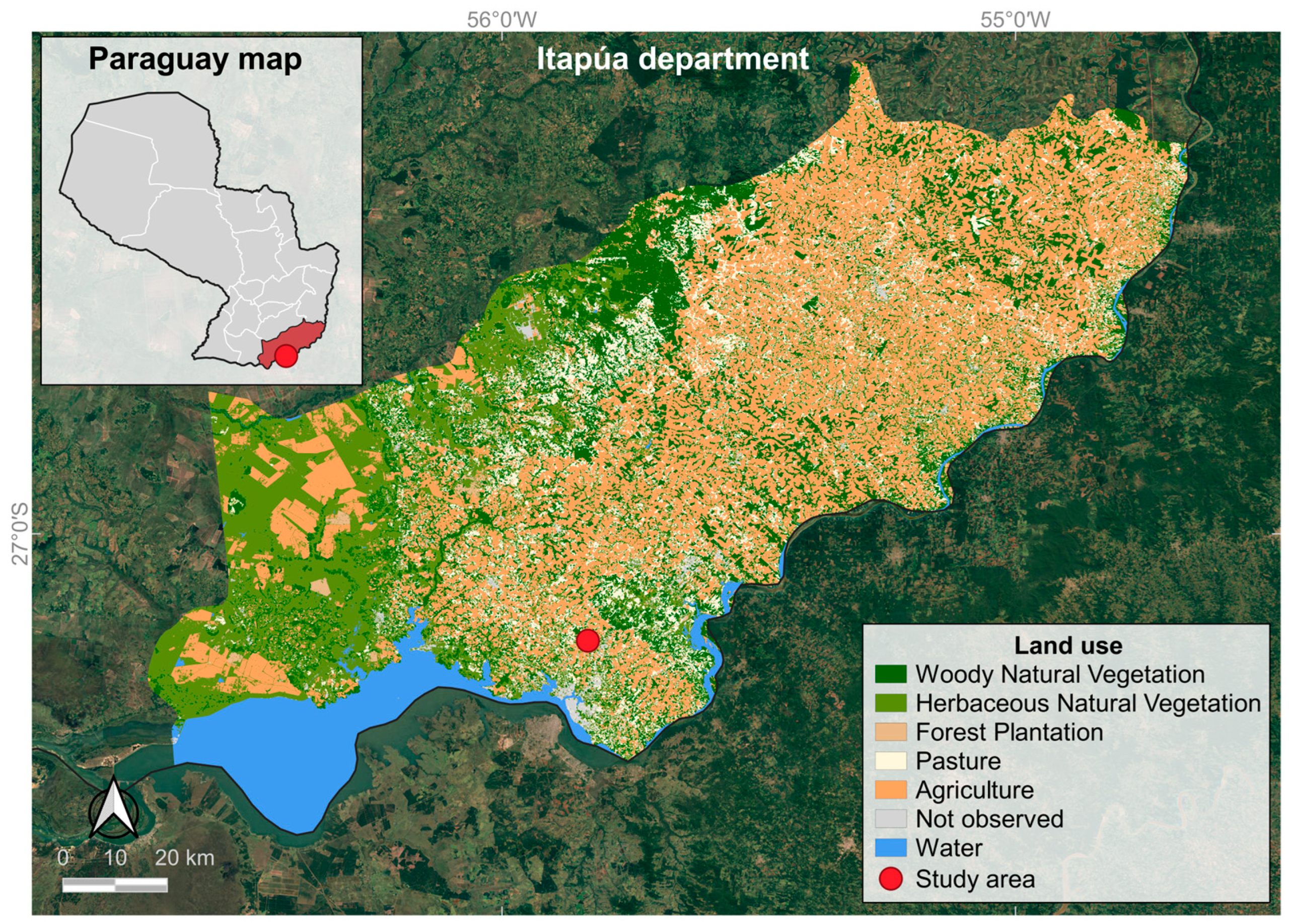
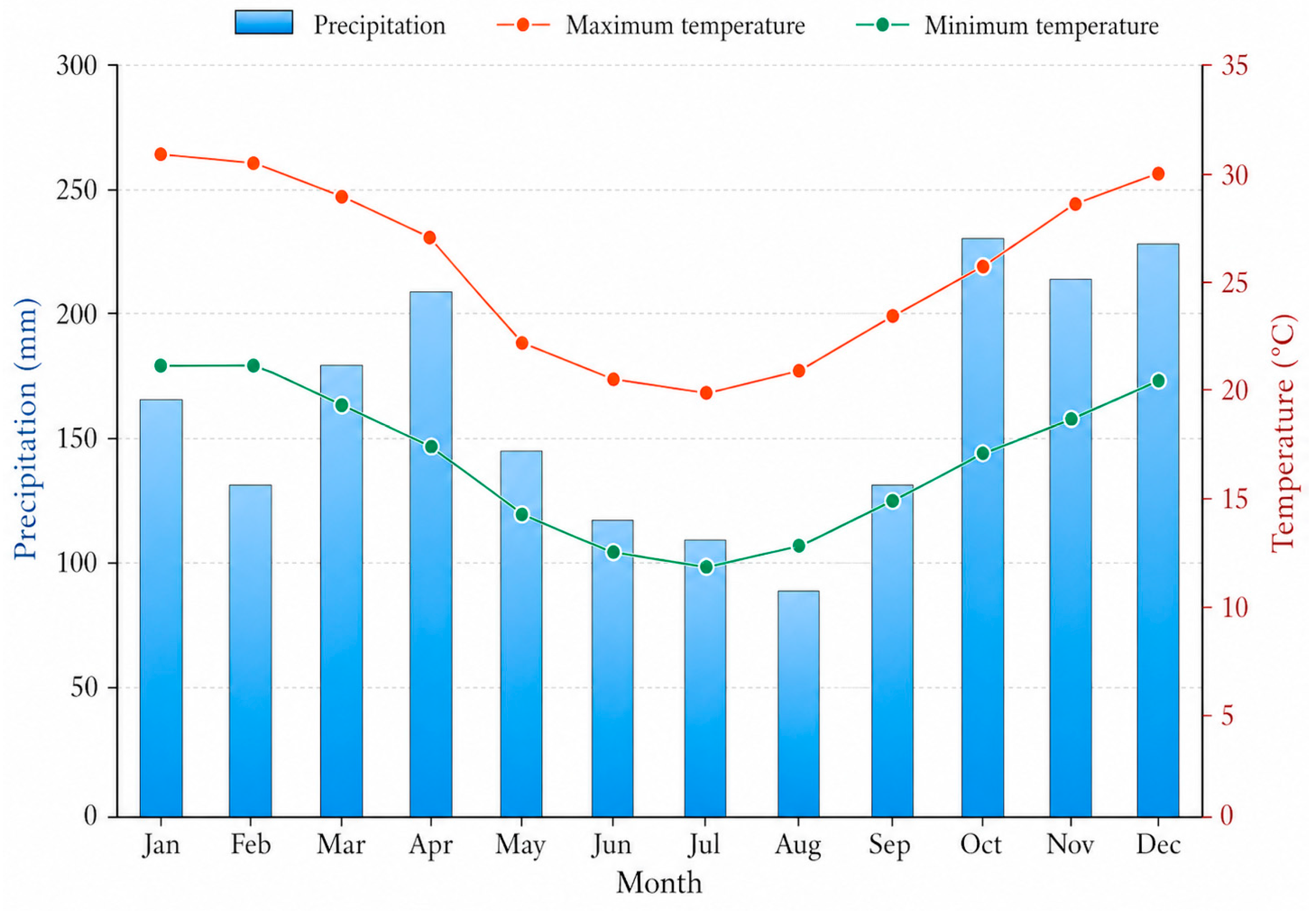
Field assessments were conducted in a long-term experiment maintained at the experimental station of the Instituto Paraguayo de Tecnología Agraria (IPTA), located in Capitán Miranda, Itapúa, eastern Paraguay (27°17′ S, 55°29′ W; 196 m a.s.l.; Figure 1). Itapúa is one of the main agricultural departments of Paraguay and plays a major role in national grain production [45]. The landscape is characterized by flat to gently undulating relief, with slopes lower than 4%. According to the Köppen–Geiger system, the regional climate is classified as humid subtropical (Cfa) [46]. Based on meteorological records from the IPTA Agrometeorology Department over the last 20 years, the site has a mean annual temperature of 21.6 °C and annual rainfall of 1950 mm (Figure A1). The soil is classified as an Oxisol [47] and has a clayey texture, with 683 g kg−1 clay, 217 g kg−1 sand, and 100 g kg−1 silt. The initial chemical attributes of the 0–20 cm soil layer are presented in Table 1.

2.2. Experimental Design and Treatments

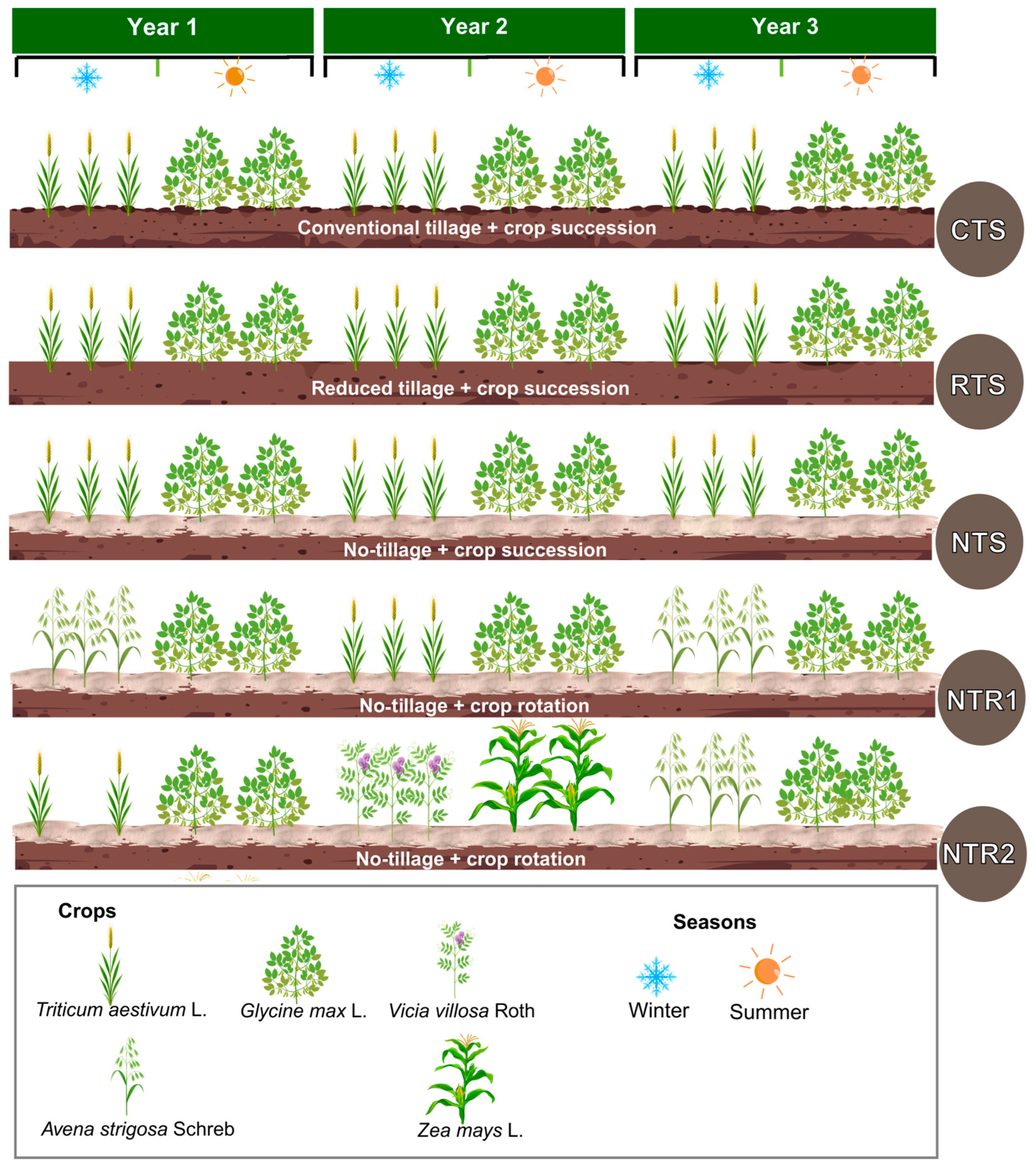
This study was conducted in a field experiment initiated in 1991 to monitor the sustainability of the predominant agricultural systems of the region. At the time of evaluation, the trial had accumulated 32 years of continuous management. Five treatments were evaluated from combinations of soil preparation method and crop sequence. A wheat (Triticum aestivum L.)–soybean (Glycine max L.) succession was maintained in three systems that differed only in soil preparation, namely CTS (conventional tillage), RTS (reduced tillage), and NTS (no-tillage). Two additional no-tillage systems were included, differing in the level of crop rotation diversification through the incorporation of cover crops: NTR1 followed a three-phase sequence of black oat (Avena strigosa Schreb)–soybean, wheat–soybean, and black oat–soybean, whereas NTR2 included wheat–soybean, vetch (Vicia villosa Roth)–maize (Zea mays L.), and black oat–soybean (Figure 2). In both no-tillage rotation systems, the full rotational cycle extended over three years and was repeated continuously during the 32-year experimental period.
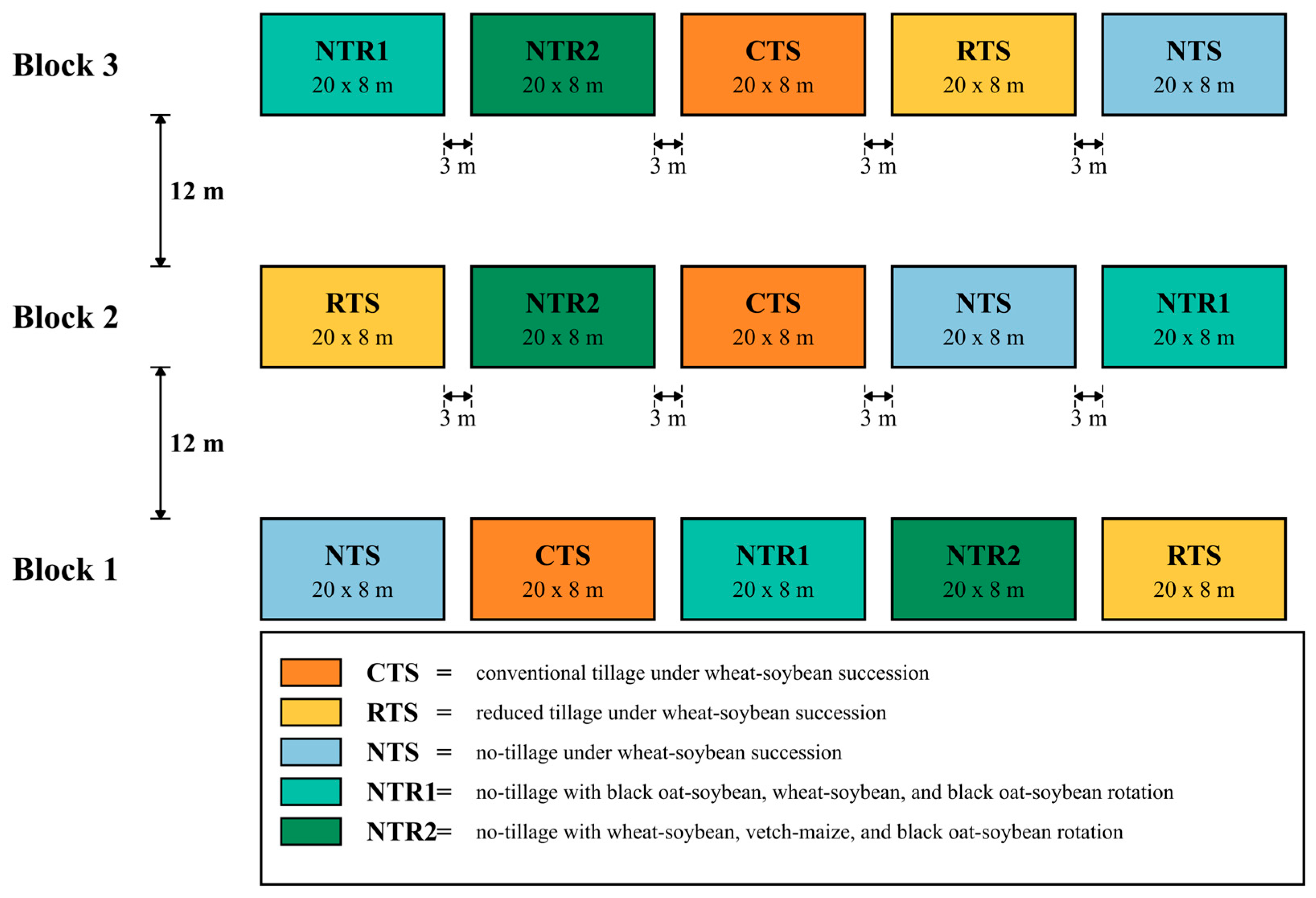
The experiment was arranged in a randomized complete block design with three replicates per treatment, totaling 15 plots. Each block contained one plot of each cropping system, and the five treatments were randomly assigned to the experimental plots within each block at the establishment of the trial. The original treatment allocation was maintained throughout the 32-year experimental period. Thus, the same plots were used repeatedly under their respective soil preparation method and crop sequence over time. Each plot measured 20 m × 8 m, corresponding to 160 m2, and represented the experimental unit for treatment comparison. To reduce border effects and operational interference among plots, plots were separated by 3 m alleys and blocks by 12 m alleys. A schematic representation of the experimental layout, including block arrangement, treatment distribution, plot size, and distances between plots and blocks, is provided in Figure A2.

2.3. Agronomic Management

Regarding soil preparation, CTS consisted of moldboard plowing followed by disk harrowing. In RTS, soil preparation was limited to a single light harrowing, whereas in NTS, NTR1, and NTR2, crops were established by direct sowing over the residues of the previous crop, without prior soil disturbance. The annual cropping comprised a winter cycle from May to September and a summer cycle from October to March. To reflect agronomic practices commonly adopted by grain farmers in eastern Paraguay, no amendments were applied to correct soil acidity, such as lime or gypsum, throughout the experimental period. Fertilizer rates for commercial crops were maintained without major changes over time: soybean and maize received 150 kg ha−1 of NPK 4-30-10 at sowing, whereas wheat received 150 kg ha−1 of NPK 18-46-0 at sowing; in addition, both maize and wheat received 28 kg ha−1 of N as urea topdressing. Black oat and vetch were grown without mineral fertilization. Weed management was generally based on pre-sowing desiccation with glyphosate-based formulations at 2.0–2.5 L ha−1 across all cropping systems. After crop establishment, post-emergence herbicide use varied according to the commercial crop and weed pressure. In wheat, weed control commonly included metsulfuron-methyl at 6 g ha−1 combined with a clodinafop-propargyl-based formulation at 350 mL ha−1 for grass weed control. In soybean, post-emergence weed control before the flowering stage generally consisted of two applications of glyphosate-based formulation at 2.0 L ha−1, combined with clethodim-based formulation at 800 mL ha−1. In maize, post-emergence weed control generally included two applications of glyphosate-based formulation at 2.0 L ha−1. Cover crops did not receive post-emergence herbicide applications and were managed with one manual weeding per cycle. Phytosanitary control was carried out whenever necessary for each crop. Wheat and soybean were harvested mechanically using a combine harvester, maize was harvested manually, and cover crops were rolled at the milk stage, leaving the biomass on the soil surface. A summary of the main agronomic management practices is presented in Table A1.

2.4. Soil Sampling and Laboratory Analyses

In October 2023, soil was collected during the interval between the winter and summer cropping seasons, after the winter crop harvest and before summer crop sowing. Sampling was performed before the soil preparation operations for the subsequent summer crop in CTS and RTS. Sampling focused on the 0–20 cm layer, where residue inputs, root activity, and management effects are more pronounced. In each plot, disturbed soil samples were obtained with a tubular auger from eight randomly distributed points. The subsamples were thoroughly homogenized to obtain one composite sample per plot (approximately 500 g), placed in properly identified plastic bags, and sent for laboratory analyses.
In the laboratory, enzyme activity determinations were prioritized and completed within 15 days after soil sampling. Soil samples were air-dried, and roots, plant residues, and other coarse fragments were manually removed. The material was then passed through a 2 mm sieve before the analytical determinations. The activities of beta-glucosidase (BG), acid phosphatase (AP), and arylsulfatase (ARS) were quantified by colorimetric assays based on the release of p-nitrophenol from p-nitrophenyl-β-D-glucopyranoside, p-nitrophenyl phosphate, and p-nitrophenyl sulfate, following previously described procedures [48,49,50]. Urease (URE) activity was determined by colorimetric quantification of NH4+ released after incubation with urea [51]. Microbial biomass carbon (MBC) was determined by the chloroform fumigation–extraction method [52]. Briefly, fumigated and non-fumigated soil subsamples were extracted with 0.5 M K2SO4, and MBC was calculated from the difference between extractable C in fumigated and non-fumigated samples using the conversion factor proposed by Vance et al. [52] (MBC = 2.64 × EC, equivalent to kEC = 0.38).
To support the interpretation of soil biological activity and its relationship with the nutrient cycles represented by the biological indicators, additional chemical analyses were performed using the same air-dried soil material previously processed through a 2 mm sieve. Soil pH was measured in 0.01 M CaCl2 using a soil:solution ratio of 1:2.5. Available phosphorus (P) was extracted with ion-exchange resin and quantified colorimetrically, and sulfur (S) was extracted using 0.01 mol L−1 Ca(H2PO4)2, according to Raij et al. [53]. Soil organic carbon (SOC) and total nitrogen (TN) were determined by dry combustion using a LECO CN 2000 elemental analyzer (LECO Corporation, St. Joseph, MI, USA) at 1350 °C under a pure oxygen atmosphere [54]. These attributes were selected because they are directly linked to the nutrient cycles represented by the biological indicators, while soil pH acts as a key regulator of biological activity [6].

2.5. Statistical Analyses

All statistical analyses and graphical outputs were performed in R version 4.4.1 [55]. The data were analyzed according to a randomized complete block design. Residual normality was assessed using the Shapiro–Wilk test. Treatment effects were evaluated by analysis of variance (ANOVA) at the 5% significance level and, when significant, means were compared using Duncan’s multiple range test at the 5% probability level. To complement the univariate analyses, principal component analysis (PCA) was performed using standardized soil biological indicators and chemical attributes, including MBC, BG, URE, AP, ARS, SOC, TN, P, S, and pH, to explore the integrated response of soil biological activity and chemical conditions across the long-term cropping systems. Relationships between individual soil biological indicators and selected chemical attributes were explored using Spearman’s rank correlation. In addition, Mantel tests were performed to examine the association between grouped biological indicators and individual soil chemical attributes, using Euclidean distance matrices calculated from standardized variables and Spearman’s method with 999 permutations. Graphical outputs were generated in R software version 4.4.1 using the packages ggplot2, ggrepel, patchwork, and base R functions, while Duncan’s test and Mantel analyses were performed using the agricolae and vegan packages, respectively.

3. Results

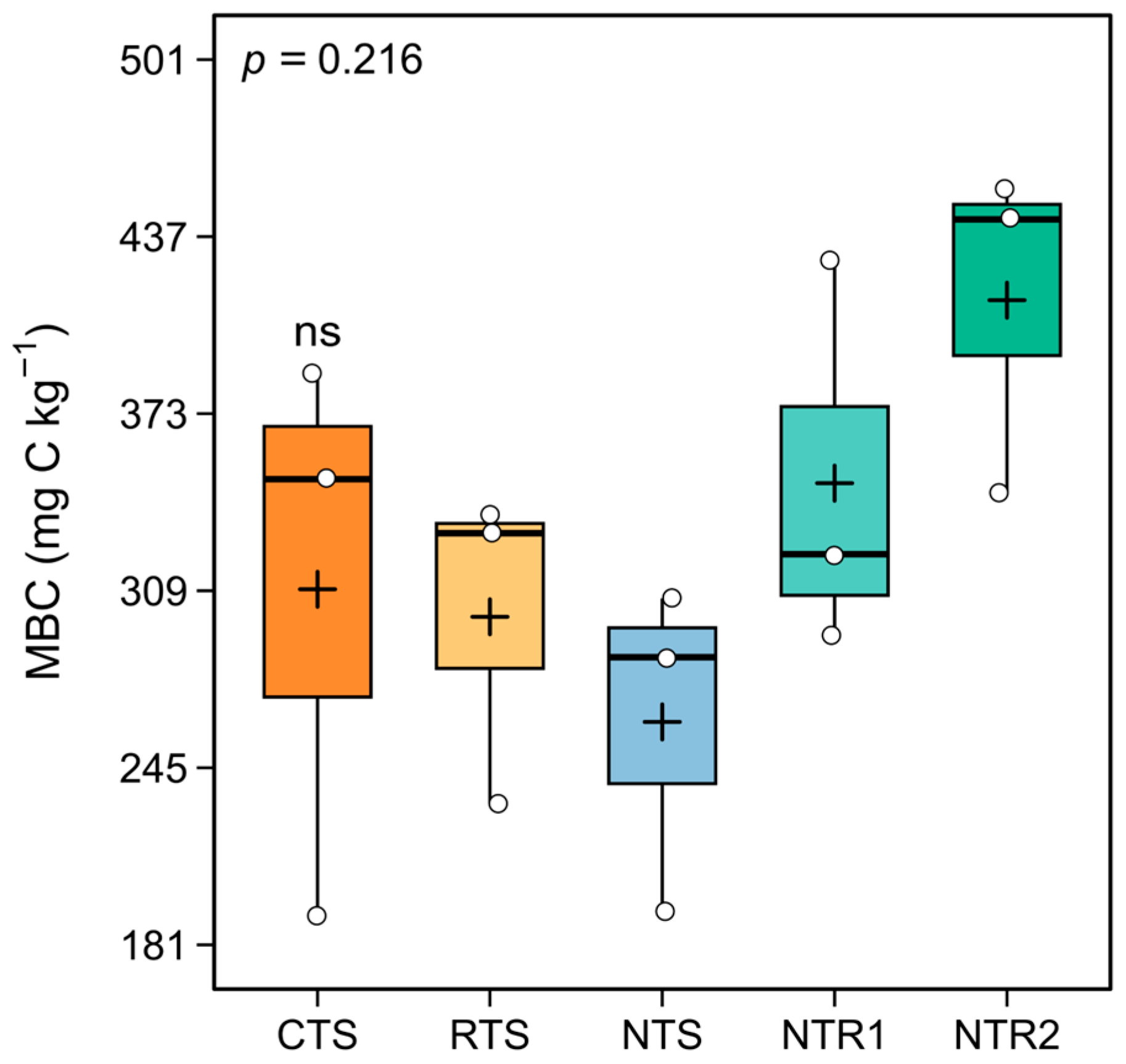
After 32 years of continuous management, MBC in the 0–20 cm layer showed no significant response to cropping systems (p > 0.05; Figure 3), with treatment means ranging from approximately 262 mg C kg−1 in NTS to 414 mg C kg−1 in NTR2.
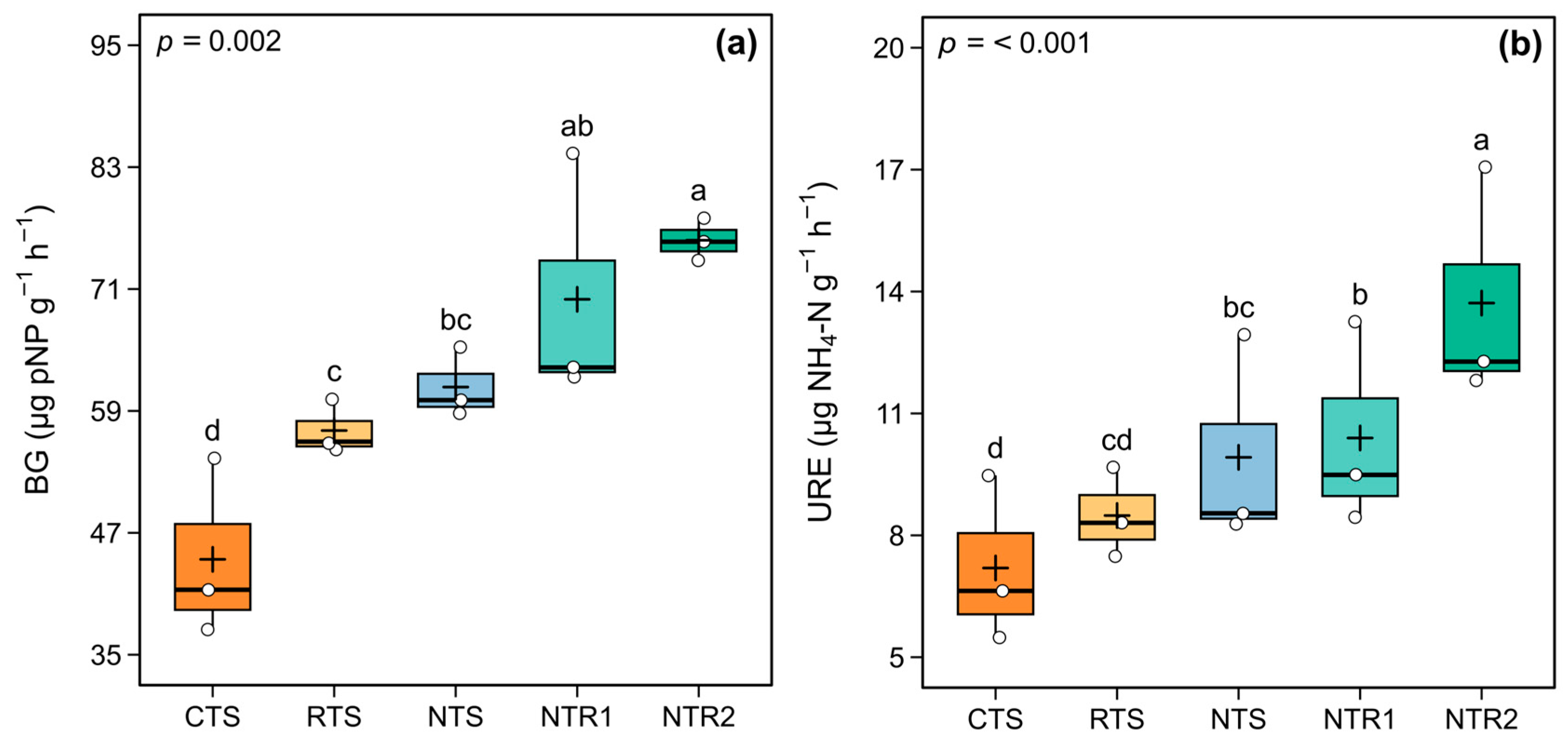
The activities of BG and URE responded clearly to the cropping systems, increasing under no-tillage and reaching their highest expression in the system with the greatest di-versification in crop rotation (NTR2) (Figure 4). For BG, CTS recorded the lowest activity (44.39 µg pNP g−1 h−1), whereas NTR2 reached 75.80 µg pNP g−1 h−1, representing a 71% increase. NTR2 differed significantly from CTS, RTS, and NTS, but remained statistically comparable to NTR1; in turn, NTS and NTR1 did not differ from each other (Figure 4a). A similar but more pronounced pattern was observed for URE. Activity increased from 7.20 µg NH4-N g−1 h−1 in CTS to 13.72 µg NH4-N g−1 h−1 in NTR2, corresponding to a 90% in-crease, and NTR2 differed significantly from all other systems, whereas RTS, NTS, and NTR1 remained statistically similar at intermediate levels (Figure 4b).
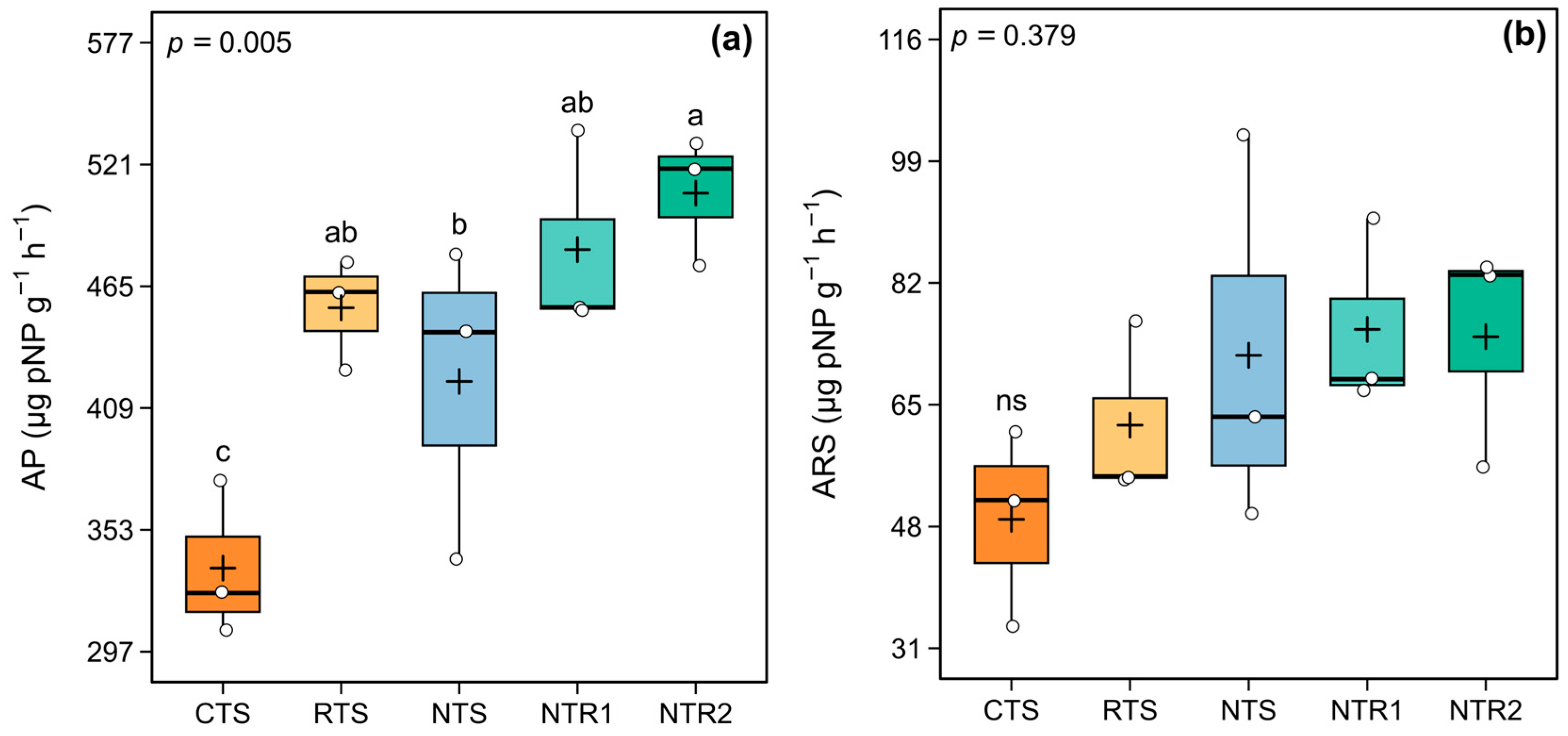
For AP, the cropping systems produced a significant response, with the highest activity recorded in NTR2 (507.86 µg pNP g−1 h−1) and the lowest in CTS (335.39 µg pNP g−1 h−1), corresponding to a 51% increase between both treatments (Figure 5a). NTR2 differed significantly from CTS and NTS, but not from RTS or NTR1. In contrast, ARS was not affected by the cropping systems, with mean values ranging from 48.99 to 74.51 µg pNP g−1 h−1 across treatments (Figure 5b).
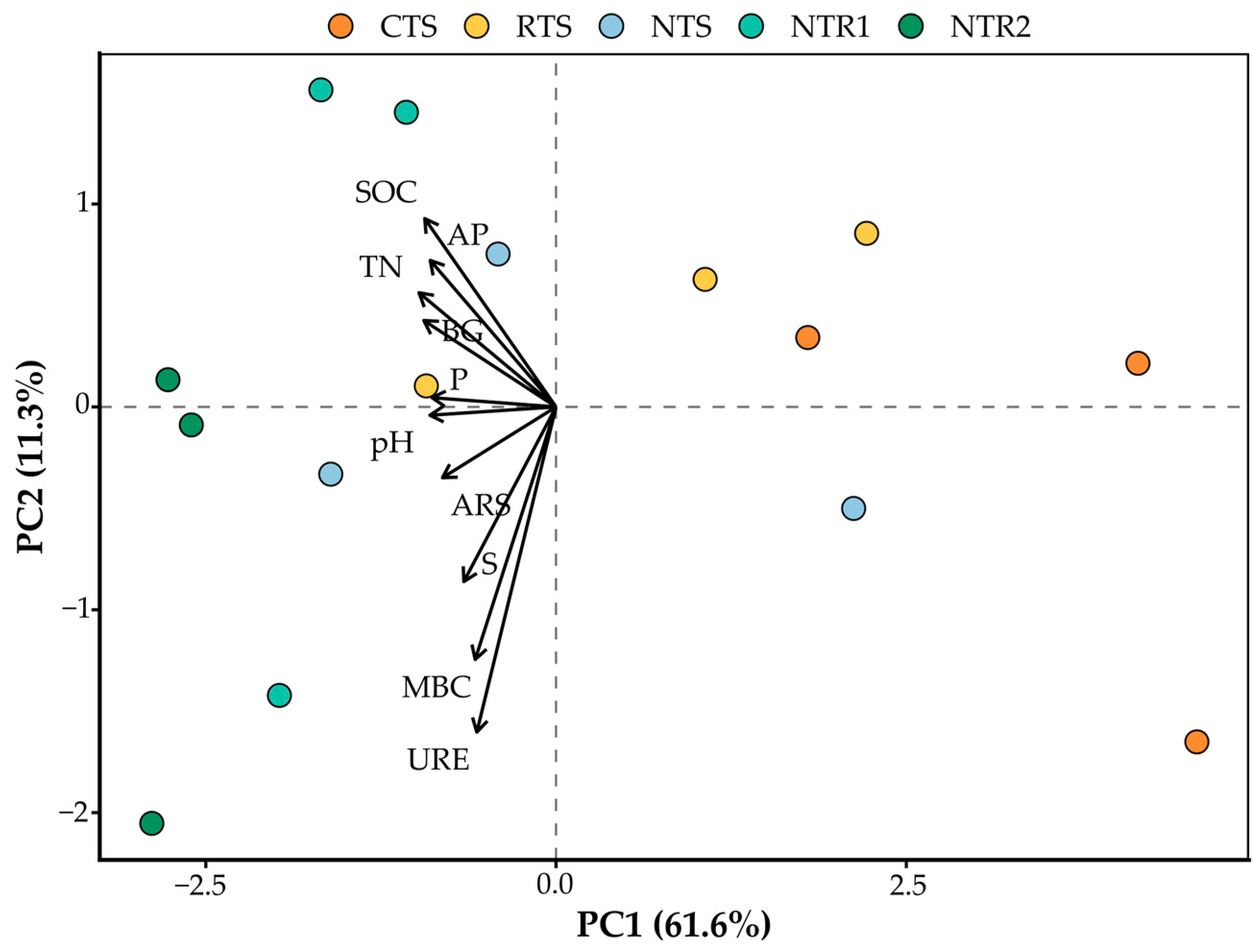
Principal component analysis (PCA) explained 72.9% of the total variation, with PC1 accounting for 61.6% and PC2 for 11.3% (Figure 6). The ordination showed that PC1 was the main axis separating the cropping systems according to the integrated biological and chemical response. CTS and RTS were positioned mainly on the positive side of PC1, opposite to the direction of most biological and chemical vectors, indicating lower association with MBC, BG, URE, AP, ARS, SOC, TN, P, S, and pH. In contrast, NTR1 and NTR2 were positioned mainly on the negative side of PC1, following the direction of these variables, showing a closer association with the integrated biological activity and soil chemical attributes. NTS showed a more variable distribution, with some points closer to the center of the ordination, indicating a weaker and less consistent separation compared with the no-tillage rotation systems.
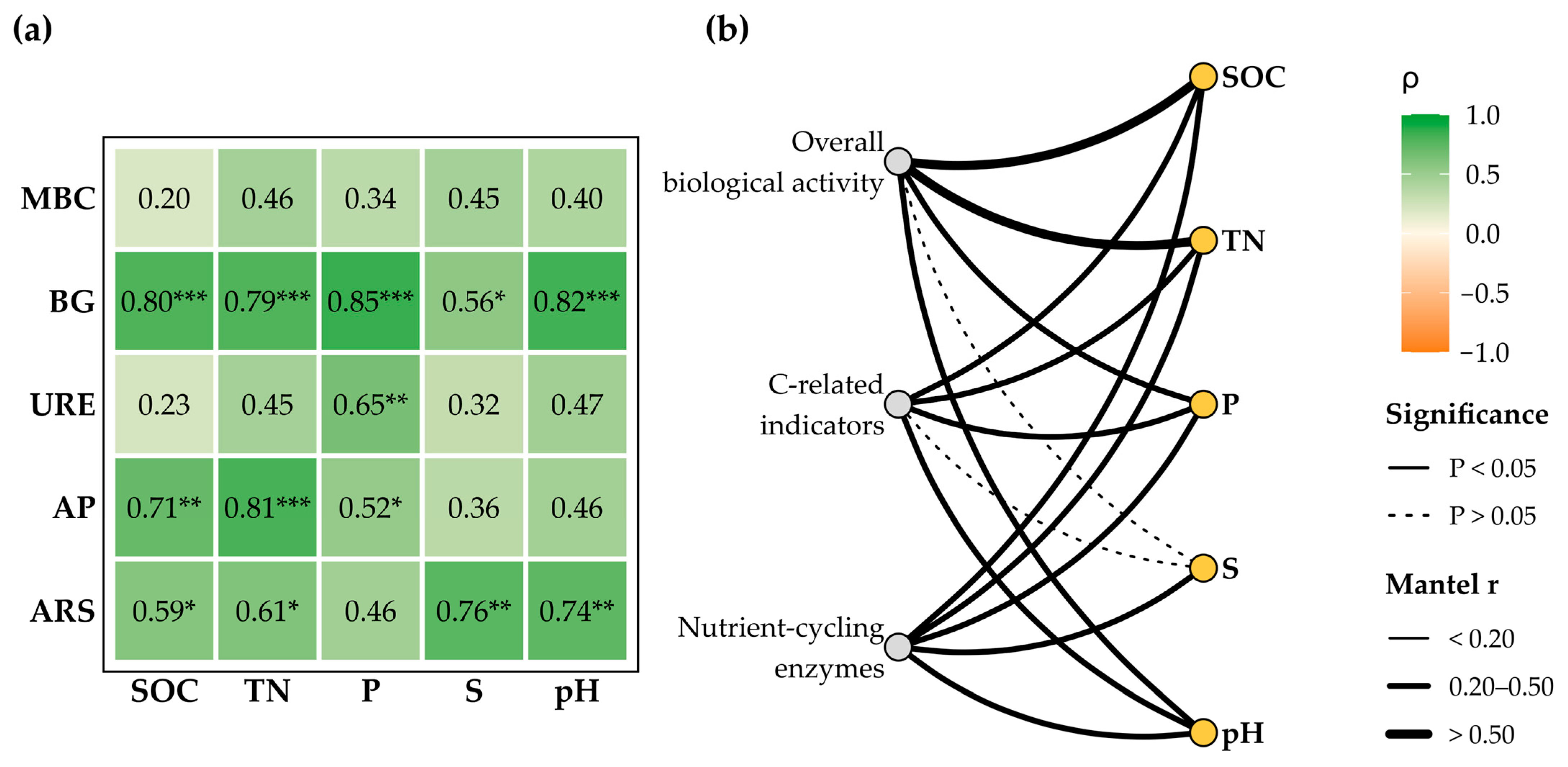
Spearman’s correlation analysis showed a predominantly positive but variable association between biological indicators and soil chemical attributes (Figure 7a). BG was the only indicator significantly correlated with all evaluated chemical attributes, with positive associations with SOC, TN, P, S, and pH. AP was significantly correlated with SOC, TN, and P, whereas ARS was significantly correlated with SOC, TN, S, and pH. URE showed a significant positive correlation only with P, while MBC presented positive but non-significant correlations with all chemical attributes. The Mantel analysis showed that these relationships were also expressed at the grouped level, but with distinct association patterns among biological groups (Figure 7b). Integrated biological indicators and C-related biological indicators were significantly associated with SOC, TN, P, and pH, while S was the only attribute without a significant association with these two groups. In contrast, N-, P-, and S-cycling enzymes were significantly associated with all evaluated chemical attributes, including SOC, TN, P, S, and pH. This indicates that the enzymatic group related to nutrient cycling captured a broader biological response to the soil chemical environment, whereas the integrated and C-related groups were mainly aligned with SOC, TN, P, and pH.

4. Discussion

Conservation-oriented agricultural practices represent a key strategy to improve the biological quality of soil by reducing mechanical disturbance and promoting more stable conditions for microbial activity through residue retention and a more continuous supply of organic inputs [56,57]. In our study, this pattern was mainly expressed in the long-term no-tillage system with the greatest diversification in crop rotation, where most indicators of soil biological activity showed their highest values, particularly BG, URE, and AP. This response suggests that the biological benefits of no-tillage were strengthened when reduced soil disturbance was accompanied by more heterogeneous organic inputs capable of sustaining microbial and enzymatic processes over time [58,59]. The PCA also supported this pattern, showing that the no-tillage systems with crop rotation were more closely associated with the set of biological indicators and soil chemical attributes, whereas the systems with soil disturbance were positioned in the opposite direction of most vectors. Similarly, the correlation and Mantel patterns indicate that these biological responses were linked to SOC, TN, P, pH, and broader soil fertility conditions that regulate microbial activity and extracellular enzyme expression. In this sense, our results support the view that the biological dimension of soil quality in agricultural systems depends not only on minimizing soil disturbance, but also on how crop diversification interacts with the chemical fertility conditions that regulate microbial and enzymatic processes [60,61].
Beta-glucosidase plays a central role in the hydrolysis of cellulose-derived compounds and in labile C turnover, and is considered a sensitive indicator of the microbial processing of plant-derived organic inputs [62]. In our study, the higher BG activity observed in NTR2, together with its statistical similarity to NTR1, suggests that, once soil disturbance was reduced, the diversification of crop sequences favored greater continuity of organic substrates for the microbial community. This interpretation is consistent with previous studies showing that conservation systems with more complex organic inputs tend to stimulate BG activity and the microbial turnover of soil organic compounds [63,64,65]. Conversely, the lower activity observed in CTS is coherent with the effects of recurrent soil mobilization on microbial habitat stability, substrate continuity, and the physical protection of organic matter within the soil matrix [65]. Therefore, in this long-term subtropical system, BG activity appears to respond not only to reduced disturbance, but also to the quality and continuity of organic inputs generated by crop rotation.
The higher activities UREAP under NTR2 indicate that the response of this system was not restricted to C-related enzymatic activity, but also involved biochemical processes associated with N and P cycling. This result is consistent with evidence reporting higher urease and phosphatase activities under no-tillage, crop rotation, and residue retention, especially when management favors the continuity and quality of organic inputs [27,29,66]. In the case of URE, the higher activity under NTR2 may be associated with the presence of legume species, whose N-rich residues and lower C:N ratio tend to decompose more rapidly, stimulating microbial N transformation and recycling [67,68]. For AP, the response may reflect the combined effect of greater plant diversity and the presence of legumes, as more complex rotations can increase root exudation, the availability of organic substrates, and the enzymatic mineralization of organic P. In addition, legumes often present more intensive rhizosphere strategies for P acquisition, including higher phosphatase activity compared with non-legume species [69,70,71], which is coherent with their high P demand for biological N fixation, nodule functioning, and nitrogenase activity [71,72,73]. Although residue quality, root traits, and microbial community composition were not directly measured, these mechanisms are consistent with the observed responses of URE and AP and with previous evidence linking legume-derived inputs, root activity, and rhizosphere processes to N and P cycling enzymes [14,74].
Nevertheless, the biological response to the management gradient was not uniform across all indicators. MBC did not show a significant response, despite the fact that no-tillage and residue retention systems are frequently associated with higher microbial biomass carbon values [63,64,65,75]. In our study, MBC means ranged from approximately 262 mg C kg−1 in NTS to 414 mg C kg−1 in NTR2, but this numerical separation was not statistically significant. This result is consistent with the high temporal sensitivity of MBC, since previous studies have shown that microbial biomass can vary markedly according to sampling date, season, soil moisture, temperature, C availability, and soil depth [76,77,78,79]. In our case, soil sampling was performed after the winter crop harvest and before soil preparation for the subsequent summer crop in CTS and RTS. Therefore, MBC was probably measured during a transitional post-harvest period, when active root exudation was reduced, recent winter-crop residues and root turnover became the main substrate sources, and the immediate microbial contrast caused by a new tillage operation had not yet occurred [80,81]. In addition, no-tillage effects on microbial biomass are often more pronounced near the soil surface, especially in the 0–5 and 0–10 cm layers [63,82]. The sensitivity analysis also supported this explanation, indicating considerable residual variability and limited statistical power to detect moderate MBC differences under the current three-block design (Table A3). Thus, the absence of significant differences in MBC does not contradict the enzymatic responses observed for BG, URE, and AP, but suggests that microbial biomass reflected a more transient and depth-integrated biological pool than the extracellular enzyme activities measured in this study.
Unlike the enzymatic responses associated with C, N, and P cycling, the S-related enzymatic response was less clearly separated by the cropping systems. This pattern agrees with studies showing that ARS activity is not regulated only by residue inputs or tillage intensity, but also by soil chemical and physicochemical controls, particularly SOC, pH, texture, and sulfate availability [83,84]. Because organic S compounds are the main substrates for this enzyme, ARS is usually closely linked to organic matter dynamics; however, its expression can also be constrained by soil acidity and by the stabilization of enzymes and substrates on mineral surfaces [83,84]. In our experiment, the absence of a strong textural gradient among treatments may have reduced the possibility of detecting a physical control on ARS activity, while the acidic soil condition likely remained an important chemical constraint. Although crop diversification under no-tillage improved pH relative to the systems under soil disturbance, mean pH values remained below 5.5 across all cropping systems (Table A2), indicating that the chemical environment was still relatively restrictive for a clearer S-related enzymatic response. Consistently, ARS was positively associated with SOC, TN, S, and pH in the correlation analysis (Figure 7a), suggesting that its activity was more closely aligned with the broader chemical status of the soil than with the management gradient alone. Therefore, the absence of significant differences among cropping systems does not reduce the ecological relevance of ARS, but indicates that S-cycle enzymatic activity was probably controlled by soil chemical conditions that were not sufficiently differentiated among treatments.
The integration of the biological and chemical responses indicates that crop diversification under no-tillage strengthened the functional connection between soil biological activity and nutrient-cycling attributes, even under a low-input management context. This context is particularly relevant because the experiment was maintained without regular acidity correction and with fertilization practices not fully adjusted to crop demand, conditions that can constrain microbial activity, enzyme expression, and nutrient transformation processes. This result is aligned with evidence from other edaphoclimatic regions showing that diversified rotations and cover crops improve soil biological functioning not only by increasing the amount of organic inputs, but also by modifying their temporal continuity, chemical quality, and diversity of residue- and root-derived substrates available to microorganisms [29,63]. In our study, this mechanism was reflected in NTR1 and NTR2, which showed higher SOC, TN, P, and pH than the systems under soil disturbance (Table A2), although soil acidity remained an important constraint across all systems. These chemical changes were aligned with the PCA, where diversified no-tillage systems were positioned closer to the biological and chemical vectors, and with the Spearman and Mantel analyses, which showed positive associations between enzymatic indicators and SOC, TN, P, S, and pH. Therefore, our hypothesis was supported mainly through the enzymatic pathways related to C, N, and P cycling, indicating that crop diversification under no-tillage can strengthen soil biological activity and its functional linkage with soil chemical attributes. At the same time, the weaker responses of MBC and ARS show that some biological pools and S-related enzymatic processes remained more dependent on temporal variability, depth-integrated sampling, and chemical constraints such as soil acidity. This long-term experiment provides an important insight into the biological functioning of subtropical Oxisols by showing that diversified no-tillage can improve soil biological processes even under non-optimized fertility management, and that this potential could be further expanded through more refined soil fertility strategies, particularly acidity correction and more balanced nutrient inputs.

5. Conclusions and Future Perspectives

To our knowledge, this study represents one of the first field-based evaluations of soil biological activity under representative agricultural systems of Paraguay, using a valuable long-term experiment maintained under continuous management for 32 years. Our hypothesis was generally supported, since long-term no-tillage combined with greater crop rotation diversification promoted higher values for most biological responses than systems with greater soil disturbance and less diversified crop succession. This response was expressed mainly through increases in beta-glucosidase, urease, and acid phosphatase activities, indicating that diversified no-tillage strengthened enzymatic pathways associated with C, N, and P transformations. The PCA, Spearman correlations, and Mantel analysis further showed that these biological responses were functionally linked with soil chemical attributes, particularly SOC, TN, P, S, and pH. At the same time, the absence of significant responses in microbial biomass carbon and arylsulfatase indicates that not all components of soil biological activity were equally sensitive to the management gradient. These findings show that diversified no-tillage provides measurable biological benefits under realistic production conditions in Paraguay, even within a low-input management context, and suggest that additional gains in soil functioning may be achieved when these systems are accompanied by more refined fertility management, especially acidity correction and balanced nutrient inputs.
Future studies should consider some aspects that may help to better resolve the effects of long-term management systems on soil biological activity. First, more stratified soil sampling, (e.g., 0–5, 5–10, and 10–20 cm) would help characterize the vertical distribution of biological responses under no-tillage systems. Second, plot-level texture characterization would strengthen the interpretation of spatial variability and its influence on biological indicators. Third, repeated sampling across seasons, together with measurements of soil moisture and temperature at the time of sampling, would improve the interpretation of highly dynamic variables such as microbial biomass carbon. In addition, the sensitivity analysis for MBC showed considerable residual variability and limited statistical power under the current three-block design, indicating that future experiments should consider increasing the number of independent experimental units when the objective is to detect moderate differences in microbial variables. Finally, future evaluations should test whether improved agronomic management, including more balanced fertilization, acidity correction, and diversified cover crop strategies, can further enhance the biological potential of no-tillage systems in subtropical climates.

Author Contributions

C.A.V.A.: Conceptualization, Investigation, Data curation, Methodology, Formal analysis, Visualization, Validation, Writing—original draft, Writing—review and editing. M.F.S.F.: Validation, Writing—original draft, Writing—review and editing. A.C.G.: Investigation, Methodology, Validation, Writing—review and editing. J.L.: Investigation, Methodology, Supervision, Project administration, Resources, Writing—review and editing. All authors have read and agreed to the published version of the manuscript.

Funding

C. A. Villalba Algarin was supported by the BECAL “Don Carlos Antonio López” National Scholarship Program, Paraguay, through a doctoral scholarship, contract No. 21/2025, code FPEX04-9.

Institutional Review Board Statement

Not applicable.

Informed Consent Statement

Not applicable.

Data Availability Statement

The data used in this study were derived from the master’s dissertation of the first author, C. A. Villalba Algarin, developed as part of his postgraduate training. The data supporting the findings of this study are available from the corresponding author upon reasonable request.

Acknowledgments

This study was based on a long-term field experiment maintained by the Instituto Paraguayo de Tecnología Agraria (IPTA), to which the authors express their gratitude for providing access to the experimental area and logistical support. The authors are especially grateful to the Soil Department of the Capitán Miranda Research Center for its institutional and technical support during the experiment, including assistance with field sampling and maintenance of the experimental plots. J. Lavres also acknowledges the Conselho Nacional de Desenvolvimento Científico e Tecnológico (CNPq), Brazil, for institutional support.

Conflicts of Interest

The authors declare no conflicts of interest. The funders had no role in the design of the study, data collection, analysis, interpretation of results, writing of the manuscript, or in the decision to publish the results.

Abbreviations

The following abbreviations are used in this manuscript:
BGBeta-glucosidase
UREUrease
APAcid phosphatase
ARSArylsulfatase
MBCMicrobial biomass carbon
SOCSoil organic carbon
CCarbon
TNTotal Nitrogen
PPhosphorus
SSulfur
CTConventional tillage
RTReduced tillage
NTNo-tillage
NTR1No-tillage crop rotation 1
NTR2No-tillage crop rotation 2
IPTAInstituto Paraguayo de Tecnología Agraria

Appendix A

Table A1. Agronomic management of the crops included in the experimental systems.
CropSeasonSeeding Rate
(kg ha−1)
Nutrient Application
(kg ha−1)
Harvest Method
SoybeanOctober–March60At planting: N 6, P 45, and K 15 kg ha−1Experimental harvester
MaizeOctober–March25At planting: N 6, P 45, and K 15 kg ha−1; topdressing: N 28 kg ha−1Manual harvest
WheatMay–September120At planting: N 27, P 69, and K 0 kg ha−1; topdressing: N 28 kg ha−1Experimental harvester
Black oatMay–August80No fertilizer appliedKnife roller
VetchMay–August60No fertilizer appliedKnife roller
Table A2. Soil chemical attributes of contrasting cropping systems used to interpret soil biological activity and its correlation with biological indicators.
TreatmentsSOCTNPSpH
........g kg −1............mg dm−3.... CaCl2
CTS9.24 ± 0.39 b1.09 ± 0.05 b5.71 ± 0.59 c4.20 ± 0.30 a4.50 ± 0.06 c
RTS10.85 ± 0.53 a1.21 ± 0.05 ab7.38 ± 0.76 b6.34 ± 2.58 a4.55 ± 0.04 bc
NTS10.81 ± 0.51 a1.21 ± 0.07 ab8.71 ± 0.30 ab10.39 ± 4.69 a4.62 ± 0.02 abc
NTR111.81 ± 0.45 a1.29 ± 0.03 a9.81 ± 0.22 a7.23 ± 1.76 a4.65 ± 0.05 ab
NTR211.71 ± 0.25 a1.33 ± 0.01 a10.25 ± 0.13 a11.20 ± 2.43 a4.74 ± 0.03 a
Note: Values are means ± standard error (n = 3). Different lowercase letters within each column indicate significant differences among treatments according to Duncan’s multiple range test at p < 0.05. SOC, soil organic carbon; TN, total nitrogen; P, available phosphorus; S, sulfur. Soil pH was determined in CaCl2. CTS, conventional tillage with wheat–soybean succession; RTS, reduced tillage with wheat–soybean succession; NTS, no-tillage with wheat–soybean succession; NTR1, no-tillage crop rotation with black oat–soybean, wheat–soybean and black oat–soybean; NTR2, no-tillage crop rotation with wheat–soybean, vetch–maize and black oat–soybean.
Table A3. Sensitivity and statistical power analysis for microbial biomass carbon (MBC) in the 0–20 cm soil layer.
ParameterValueUnit/Statistical Basis
Statistical ModelMBC~Treatment + Block
Treatments5n
Blocks3n
Residual degrees of freedom8df
Treatment p-value0.216ANOVA
Overall mean326.5mg C kg−1
MSE5469.5(mg C kg−1)2
RMSE74mg C kg−1
Residual CV22.7%
Mean MBC in NTS261.6mg C kg−1
Mean MBC in NTR2414mg C kg−1
Observed difference NTR2–NTS152.5mg C kg−1
Estimated power for overall treatment effect34%
Estimated power for NTS vs. NTR2 contrast60.1%
Minimum difference required for 80% power193.3mg C kg−1
Significance level used for power analysis0.05α

Appendix B

Figure A1. Mean monthly precipitation and temperature for the study area.
Soilsystems 10 00066 g0a1
Figure A2. Schematic representation of the experimental layout showing the distribution of treatments within the three randomized blocks, plot dimensions (20 m × 8 m), 3 m alleys between adjacent plots, and 12 m alleys between blocks.
Soilsystems 10 00066 g0a2

References

  1. Vogel, H.-J.; Amelung, W.; Baum, C.; Bonkowski, M.; Blagodatsky, S.; Grosch, R.; Herbst, M.; Kiese, R.; Koch, S.; Kuhwald, M.; et al. How to adequately represent biological processes in modeling multifunctionality of arable soils. Biol. Fertil. Soils 2024, 60, 263–306. [Google Scholar] [CrossRef]
  2. Romero, F.; Labouyrie, M.; Orgiazzi, A.; Ballabio, C.; Panagos, P.; Jones, A.; Tedersoo, L.; Bahram, M.; Eisenhauer, N.; Sünnemann, M.; et al. The Soil Microbiome as an Indicator of Ecosystem Multifunctionality in European Soils. Nat. Commun. 2025, 17, 705. [Google Scholar] [CrossRef] [PubMed]
  3. Daunoras, J.; Kačergius, A.; Gudiukaitė, R. Role of soil microbiota enzymes in soil health and activity changes depending on climate change and the type of soil ecosystem. Biology 2024, 13, 85. [Google Scholar] [CrossRef]
  4. Shah, A.; Huang, J.; Han, T.; Khan, M.N.; Tadesse, K.A.; Daba, N.A.; Khan, S.; Ullah, S.; Sardar, M.F.; Fahad, S.; et al. Impact of soil moisture regimes on greenhouse gas emissions, soil microbial biomass, and enzymatic activity in long-term fertilized paddy soil. Environ. Sci. Eur. 2024, 36, 120. [Google Scholar] [CrossRef]
  5. Chettri, D.; Sharma, B.; Verma, A.K.; Verma, A.K. Significance of microbial enzyme activities in agriculture. In Microbiological Activity for Soil and Plant Health Management; Soni, R., Suyal, D.C., Bhargava, P., Goel, R., Eds.; Springer: Singapore, 2021; pp. 351–373. [Google Scholar] [CrossRef]
  6. Burns, R.G.; DeForest, J.L.; Marxsen, J.; Sinsabaugh, R.L.; Stromberger, M.E.; Wallenstein, M.D.; Weintraub, M.N.; Zoppini, A. Soil enzymes in a changing environment: Current knowledge and future directions. Soil Biol. Biochem. 2013, 58, 216–234. [Google Scholar] [CrossRef]
  7. Zhu, Y.; Zhang, H.; Wang, Q.; Zhu, W.; Kang, Y. Soil extracellular enzyme activity linkage with soil organic carbon under conservation tillage: A global meta-analysis. Eur. J. Agron. 2024, 155, 127135. [Google Scholar] [CrossRef]
  8. Adetunji, A.T.; Lewu, F.B.; Mulidzi, R.; Ncube, B. The biological activities of β-glucosidase, phosphatase and urease as soil quality indicators: A review. J. Soil Sci. Plant Nutr. 2017, 17, 794–807. [Google Scholar] [CrossRef]
  9. Chen, H.; Liu, J.; Li, D.; Xiao, K.; Wang, K. Controls on soil arylsulfatase activity at a regional scale. Eur. J. Soil Biol. 2019, 90, 9–14. [Google Scholar] [CrossRef]
  10. Gao, D.; Shi, W.; Wang, H.; Liu, Z.; Jiang, Q.; Lv, W.; Wang, S.; Zhang, Y.-L.; Zhao, C.; Hagedorn, F. Contrasting global patterns of soil microbial quotients of carbon, nitrogen, and phosphorus in terrestrial ecosystems. Catena 2024, 243, 108145. [Google Scholar] [CrossRef]
  11. Lammirato, C.; Miltner, A.; Wick, L.Y.; Kästner, M. Hydrolysis of cellobiose by β-glucosidase in the presence of soil minerals: Interactions at solid–liquid interfaces and effects on enzyme activity levels. Soil Biol. Biochem. 2010, 42, 2203–2210. [Google Scholar] [CrossRef]
  12. Feng, T.; Miao, P.; Zheng, B.; Li, W.; Sukkaew, E.; Chen, Y.; Wang, J.; Peng, Y.; Zheng, W.; Zhai, B. Soil urease activity is mediated more by ureC microbial diversity in wet regions than dry regions: Key roles of generalist-abundant and -rare species. Funct. Ecol. 2025, 39, 2015–2028. [Google Scholar] [CrossRef]
  13. Janes-Bassett, V.; Blackwell, M.S.A.; Blair, G.; Davies, J.; Haygarth, P.M.; Mezeli, M.M.; Stewart, G. A meta-analysis of phosphatase activity in agricultural settings in response to phosphorus deficiency. Soil Biol. Biochem. 2022, 165, 108537. [Google Scholar] [CrossRef]
  14. Liu, M.; Hu, Z.; Fan, Y.; Hua, B.; Yang, W.; Pang, S.; Mao, R.; Zhang, Y.; Bai, K.; Fadda, C.; et al. Effects of leguminous green manure–crop rotation on soil enzyme activity and stoichiometry. J. Plant Ecol. 2024, 17, rtae065. [Google Scholar] [CrossRef]
  15. Serrano-Grijalva, L.; van der Putten, W.H.; Ochoa-Hueso, R.; Margenot, A.J.; van Rijssel, S.Q.; Koorneef, G.J.; Veen, G.F.C. Soil extracellular enzyme activity increases during the transition from conventional to organic farming. Agric. Ecosyst. Environ. 2024, 375, 109202. [Google Scholar] [CrossRef]
  16. Kumar, A.; Dorodnikov, M.; Splettstößer, T.; Kuzyakov, Y.; Pausch, J. Effects of maize roots on aggregate stability and enzyme activities in soil. Geoderma 2017, 306, 50–57. [Google Scholar] [CrossRef]
  17. Pagliai, M.; De Nobili, M. Relationships between soil porosity, root development and soil enzyme activity in cultivated soils. Geoderma 1993, 56, 243–256. [Google Scholar] [CrossRef]
  18. Fraser, T.D.; Duddigan, S.; Diaz, A.; Green, I.; Tibbett, M. Optimizing pH for soil enzyme assays reveals important biochemical functions in low pH soil. J. Soil Sci. Plant Nutr. 2024, 24, 6236–6247. [Google Scholar] [CrossRef]
  19. Borase, D.N.; Nath, C.P.; Hazra, K.K.; Senthilkumar, M.; Singh, S.S.; Praharaj, C.S.; Singh, U.; Kumar, N. Long-term impact of diversified crop rotations and nutrient management practices on soil microbial functions and soil enzymes activity. Ecol. Indic. 2020, 114, 106322. [Google Scholar] [CrossRef]
  20. Zuber, S.M.; Villamil, M.B. Meta-analysis approach to assess effect of tillage on microbial biomass and enzyme activities. Soil Biol. Biochem. 2016, 97, 176–187. [Google Scholar] [CrossRef]
  21. Roger-Estrade, J.; Anger, C.; Bertrand, M.; Richard, G. Tillage and soil ecology: Partners for sustainable agriculture. Soil Tillage Res. 2010, 111, 33–40. [Google Scholar] [CrossRef]
  22. Villalba Algarin, C.A. Avanzando hacia una agricultura climáticamente inteligente: El papel del carbono orgánico en las funciones del suelo, los servicios ecosistémicos y la sostenibilidad de agroecosistemas. Investig. Agrar. 2025, 27, e2701825. [Google Scholar] [CrossRef]
  23. Pandey, D.; Agrawal, M.; Bohra, J.S. Effects of conventional tillage and no tillage permutations on extracellular soil enzyme activities and microbial biomass under rice cultivation. Soil Tillage Res. 2014, 136, 51–60. [Google Scholar] [CrossRef]
  24. Trybek, M.; Villalba Algarin, C.A.; Grande, L.H.Q.; Sebim, J.P.M.; Canisares, L.P.; Morgan, C.L.S.; Cerri, C.E.P.; Cherubin, M.R. Aggregate stability measurements of tropical soils under conservation agriculture using the Slakes smartphone app. Soil Tillage Res. 2026, 257, 106984. [Google Scholar] [CrossRef]
  25. Thiengo, C.C.; de Souza, G.S.; Villalba Algarin, C.A.; da Silva, D.M.N.; de Sá Mendonça, E. Effects of soil tillage practices on soil conservation in pasture-based integrated management systems: A case study on steep slopes in southeastern Brazil. Discov. Soil 2024, 1, 26. [Google Scholar] [CrossRef]
  26. Wang, X.; Qi, J.; Zhang, X.; Li, S.; Latif, A.; Zhao, X. Effects of tillage and residue management on soil aggregates and associated carbon storage in a double paddy cropping system. Soil Tillage Res. 2019, 194, 104339. [Google Scholar] [CrossRef]
  27. Wen, L.; Peng, Y.; Lin, Y.; Zhou, Y.; Cai, G.; Li, B.; Chen, B. Conservation tillage increases nutrient accumulation by promoting soil enzyme activity: A meta-analysis. Plant Soil 2025, 508, 531–546. [Google Scholar] [CrossRef]
  28. Wen, L.; Peng, Y.; Zhou, Y.; Cai, G.; Lin, Y.; Li, B. Effects of conservation tillage on soil enzyme activities of global cultivated land: A meta-analysis. J. Environ. Manag. 2023, 345, 118904. [Google Scholar] [CrossRef]
  29. Li, T.; Li, G.; Lu, Z.; Zhao, D.; Li, Y.; Wang, Z.; Wen, X.; Liao, Y. Crop diversification increases soil extracellular enzyme activities under no tillage: A global meta-analysis. Soil Tillage Res. 2024, 235, 105870. [Google Scholar] [CrossRef]
  30. Liu, Y.; Qin, Z.; Li, Y.; Zhang, Y.; Xiong, H.; Huang, X.; Yang, Y.; Zhu, H.; Zhang, M.; Jiang, T. Effects of different long-term crop rotation patterns on soil microbial biomass carbon and its turnover characteristics in yellow paddy soil. Appl. Soil Ecol. 2025, 214, 106367. [Google Scholar] [CrossRef]
  31. Seitz, V.A.; McGivern, B.B.; Borton, M.A.; Chaparro, J.M.; Schipanski, M.E.; Prenni, J.E.; Wrighton, K.C. Cover crop root exudates impact soil microbiome functional trajectories in agricultural soils. Microbiome 2024, 12, 183. [Google Scholar] [CrossRef] [PubMed]
  32. Li, C.; Shi, L.; Wang, K.; Liu, B.; Liao, J.; An, Z.; Chang, S.X. Crop rotation differentially increases soil bacterial and fungal diversities in global croplands: A meta-analysis. Nat. Commun. 2025, 16, 11686. [Google Scholar] [CrossRef]
  33. Sharma, S.; Kumawat, K.C.; Kaur, P.; Kaur, S.; Gupta, N. Crop residue heterogeneity: Decomposition by potential indigenous ligno-cellulolytic microbes and enzymatic profiling. Curr. Res. Microb. Sci. 2024, 6, 100227. [Google Scholar] [CrossRef] [PubMed]
  34. Zhu, W.; Liu, C.; Butterly, C.R.; Ouyang, S.; Su, L.; Zhang, L.; Wang, L. Crop residues reshape microbial community composition and function across acidic soils via interactions between carbon chemistry, soil pH and nutrient availability. Geoderma 2025, 461, 117496. [Google Scholar] [CrossRef]
  35. Ding, K.; Chen, L.; Zhang, Y.; Ge, S.; Zhang, Y.; Lu, M.; Shen, Z.; Tong, Z.; Zhang, J. Long-term cover crops boost multi-nutrient cycling and subsurface soil carbon sequestration by alleviating microbial carbon limitation in a subtropical forest. Catena 2024, 244, 108252. [Google Scholar] [CrossRef]
  36. Liu, Q.; Zhao, Y.; Li, T.; Chen, L.; Chen, Y.; Sui, P. Changes in soil microbial biomass, diversity, and activity with crop rotation in cropping systems: A global synthesis. Appl. Soil Ecol. 2023, 186, 104815. [Google Scholar] [CrossRef]
  37. Souza, V.S.; Canisares, L.P.; Schiebelbein, B.E.; Santos, D.C.; Menillo, R.B.; Pinheiro Junior, C.R.; Cherubin, M.R. Cover crops enhance soil health, crop yield and resilience of tropical agroecosystem. Field Crops Res. 2025, 322, 109755. [Google Scholar] [CrossRef]
  38. Jia, L.; Zhang, H.; Lu, J.; Liang, Y.; Li, Y.; Xu, L.; Ye, J.; Yang, R.; Li, P.; Jiao, J.; et al. Green manuring with balanced fertilization improves soil ecosystem multifunctionality by enhancing soil quality and enzyme activities in a smooth vetch-maize rotation system. Agric. Ecosyst. Environ. 2025, 387, 109632. [Google Scholar] [CrossRef]
  39. Dent, D. Advances in conservation agriculture: By Amir Kassam. Int. J. Environ. Stud. 2021, 78, 358–362. [Google Scholar] [CrossRef]
  40. Blanco-Canqui, H.; Ruis, S.J. No-tillage and soil physical environment. Geoderma 2018, 326, 164–200. [Google Scholar] [CrossRef]
  41. Derpsch, R.; Lange, D.; Birbaumer, G.; Moriya, K. Why do medium- and large-scale farmers succeed practicing CA and small-scale farmers often do not? Experiences from Paraguay. Int. J. Agric. Sustain. 2016, 14, 269–281. [Google Scholar] [CrossRef]
  42. Villalba Algarin, C.A.; Thiengo, C.C.; Cherubin, M.R.; Bieluczyk, W.; Mariano, E.; Amorim, D.J.; Sanabria Franco, M.F.; González, A.C.; Lavres, J. Can no-tillage and crop diversification sustain nutrient stocks in acidic and poorly-fertilized soils? Evidence from 32 years of real-world agricultural management in Paraguay. Soil Adv. 2025, 4, 100084. [Google Scholar] [CrossRef]
  43. Ortigoza Guerreño, J.; Torres Ferreira, A.M.; Alonso Giménez, B.B.; Báez Arzamendia, M.E.; Villalba Algarin, C.A.; Sanabria Franco, M.F. Plantas de cobertura en sistemas de agricultura familiar: Evidencias experimentales iniciales sobre las propiedades del suelo y los rendimientos de los cultivos en Paraguay. Rev. Soc. Cient. Parag. 2026, 31, e3108. [Google Scholar] [CrossRef]
  44. Villalba Algarin, C.A.; González, A.C.; Szostak, J.E.; Sanabria Franco, M.F. Explorando el estado del arte de la labranza y su impacto en la calidad del suelo y la productividad agrícola: Una revisión crítica de los últimos 20 años. Investig. Agrar. 2024, 26, 111–124. [Google Scholar] [CrossRef]
  45. CAPECO. Área de Siembra, Producción y Rendimiento. Available online: https://capeco.org.py/area-de-siembra-produccion-y-rendimiento/ (accessed on 7 June 2026).
  46. Peel, M.C.; Finlayson, B.L.; McMahon, T.A. Updated world map of the Köppen–Geiger climate classification. Hydrol. Earth Syst. Sci. 2007, 11, 1633–1644. [Google Scholar] [CrossRef]
  47. Soil Survey Staff. Keys to Soil Taxonomy, 13th ed.; USDA Natural Resources Conservation Service: Washington, DC, USA, 2022. Available online: https://www.nrcs.usda.gov/resources/guides-and-instructions/keys-to-soil-taxonomy (accessed on 7 June 2026).
  48. Eivazi, F.; Tabatabai, M.A. Glucosidases and galactosidases in soils. Soil Biol. Biochem. 1988, 20, 601–606. [Google Scholar] [CrossRef]
  49. Tabatabai, M.A.; Bremner, J.M. Use of p-nitrophenyl phosphate for assay of soil phosphatase activity. Soil Biol. Biochem. 1969, 1, 301–307. [Google Scholar] [CrossRef]
  50. Tabatabai, M.A. Soil enzymes. In Methods of Soil Analysis: Part 2, Microbiological and Biochemical Properties; Weaver, R.W., Angle, J.S., Bottomley, P.S., Bezdicek, D.F., Smith, S., Tabatabai, M.A., Wollum, A.G., Eds.; Soil Science Society of America: Madison, WI, USA, 1994; pp. 775–833. [Google Scholar] [CrossRef]
  51. Kandeler, E.; Gerber, H. Short-term assay of soil urease activity using colorimetric determination of ammonium. Biol. Fertil. Soils 1988, 6, 68–72. [Google Scholar] [CrossRef]
  52. Vance, E.D.; Brookes, P.C.; Jenkinson, D.S. An extraction method for measuring soil microbial biomass C. Soil Biol. Biochem. 1987, 19, 703–707. [Google Scholar] [CrossRef]
  53. Van Raij, B.; de Andrade, J.C.; Cantarella, H.; Quaggio, J.A. Análise Química para Avaliação da Fertilidade de Solos Tropicais; Instituto Agronômico: Campinas, Brazil, 2001; 285p. [Google Scholar]
  54. Nelson, D.W.; Sommers, L.E. Total carbon, organic carbon, and organic matter. In Methods of Soil Analysis: Part 3, Chemical Methods; Sparks, D.L., Ed.; Soil Science Society of America: Madison, WI, USA, 1996; pp. 961–1010. [Google Scholar] [CrossRef]
  55. R Core Team. R: A Language and Environment for Statistical Computing; R Foundation for Statistical Computing: Vienna, Austria, 2025; Available online: https://www.R-project.org/ (accessed on 7 June 2026).
  56. Lv, C.; Wang, C.; Cai, A.; Zhou, Z. Global magnitude of rhizosphere effects on soil microbial communities and carbon cycling in natural terrestrial ecosystems. Sci. Total Environ. 2023, 856, 158961. [Google Scholar] [CrossRef]
  57. Wu, L.; Weston, L.A.; Zhu, S.; Zhou, X. Editorial: Rhizosphere interactions: Root exudates and the rhizosphere microbiome. Front. Plant Sci. 2023, 14, 1281010. [Google Scholar] [CrossRef]
  58. Li, J.; Xu, Z.; Zhang, W.; Yang, X.; Struik, P.C.; Jiang, S.; Wang, Z.; Jin, K. Soil microbiome mediates plant community productivity in grass–legume mixtures. Plant Soil 2025, 510, 149–168. [Google Scholar] [CrossRef]
  59. Souza, V.S.; Santos, D.C.; Ferreira, J.G.; de Souza, S.O.; Gonçalo, T.P.; de Sousa, J.V.A.; Cruvinel, A.G.; Vilela, L.; do Prado Paim, T.; de Almeida, R.E.M.; et al. Cover crop diversity for sustainable agriculture: Insights from the Cerrado biome. Soil Use Manag. 2024, 40, e13014. [Google Scholar] [CrossRef]
  60. Xie, Y.; Ouyang, Y.; Han, S.; Se, J.; Tang, S.; Yang, Y.; Ma, Q.; Wu, L. Crop rotation stage has a greater effect than fertilisation on soil microbiome assembly and enzymatic stoichiometry. Sci. Total Environ. 2022, 815, 152956. [Google Scholar] [CrossRef]
  61. Morugán-Coronado, A.; Pérez-Rodríguez, P.; Insolia, E.; Soto-Gómez, D.; Fernández-Calviño, D.; Zornoza, R. The impact of crop diversification, tillage and fertilization type on soil total microbial, fungal and bacterial abundance: A worldwide meta-analysis of agricultural sites. Agric. Ecosyst. Environ. 2022, 329, 107867. [Google Scholar] [CrossRef]
  62. Cañizares, R.; Benitez, E.; Ogunseitan, O.A. Molecular analyses of β-glucosidase diversity and function in soil. Eur. J. Soil Biol. 2011, 47, 1–8. [Google Scholar] [CrossRef]
  63. Pires, C.A.B.; Amado, T.J.C.; Reimche, G.; Schwalbert, R.; Sarto, M.V.M.; Nicoloso, R.S.; Fiorin, J.E.; Rice, C.W. Diversified crop rotation with no-till changes microbial distribution with depth and enhances activity in a subtropical Oxisol. Eur. J. Soil Sci. 2020, 71, 1173–1187. [Google Scholar] [CrossRef]
  64. Singh, G.; Bhattacharyya, R.; Das, T.K.; Sharma, A.R.; Ghosh, A.; Das, S.; Jha, P. Crop rotation and residue management effects on soil enzyme activities, glomalin and aggregate stability under zero tillage in the Indo-Gangetic Plains. Soil Tillage Res. 2018, 184, 291–300. [Google Scholar] [CrossRef]
  65. Malobane, M.E.; Nciizah, A.D.; Nyambo, P.; Mudau, F.N.; Wakindiki, I.I.C. Microbial biomass carbon and enzyme activities as influenced by tillage, crop rotation and residue management in a sweet sorghum cropping system in marginal soils of South Africa. Heliyon 2020, 6, e05513. [Google Scholar] [CrossRef]
  66. Adetunji, A.T.; Ncube, B.; Meyer, A.H.; Olatunji, O.S.; Mulidzi, R.; Lewu, F.B. Soil pH, nitrogen, phosphatase and urease activities in response to cover crop species, termination stage and termination method. Heliyon 2021, 7, e05980. [Google Scholar] [CrossRef] [PubMed]
  67. Qin, S.; Yeboah, S.; Cao, L.; Zhang, J.; Shi, S.; Liu, Y. Breaking continuous potato cropping with legumes improves soil microbial communities, enzyme activities and tuber yield. PLoS ONE 2017, 12, e0175934. [Google Scholar] [CrossRef] [PubMed]
  68. Qian, X.; Gu, J.; Pan, H.J.; Zhang, K.Y.; Sun, W.; Wang, X.J.; Gao, H. Effects of living mulches on the soil nutrient contents, enzyme activities, and bacterial community diversities of apple orchard soils. Eur. J. Soil Biol. 2015, 70, 23–30. [Google Scholar] [CrossRef]
  69. Maseko, S.T.; Dakora, F.D. Rhizosphere acid and alkaline phosphatase activity as a marker of P nutrition in nodulated Cyclopia and Aspalathus species in the Cape fynbos of South Africa. S. Afr. J. Bot. 2013, 89, 289–295. [Google Scholar] [CrossRef]
  70. Zhu, Y.; Chen, S.; Zhou, X.; Li, J.; Liu, Z.; Liu, L.; Zhu, T.; Ma, J.; Bai, K.; Li, D.; et al. Rhizosphere microbial processes of legume species regulate soil phosphorus dynamics in subtropical karst ecosystems. J. Plant Ecol. 2025, 18, rtaf157. [Google Scholar] [CrossRef]
  71. Hummel, C.; Boitt, G.; Santner, J.; Lehto, N.J.; Condron, L.; Wenzel, W.W. Co-occurring increased phosphatase activity and labile P depletion in the rhizosphere of Lupinus angustifolius assessed with a novel, combined 2D-imaging approach. Soil Biol. Biochem. 2021, 153, 107963. [Google Scholar] [CrossRef]
  72. Divito, G.A.; Sadras, V.O. How do phosphorus, potassium and sulphur affect plant growth and biological nitrogen fixation in crop and pasture legumes? A meta-analysis. Field Crops Res. 2014, 156, 161–171. [Google Scholar] [CrossRef]
  73. Wang, Y.; Yang, Z.; Kong, Y.; Li, X.; Li, W.; Du, H.; Zhang, C. GmPAP12 is required for nodule development and nitrogen fixation under phosphorus starvation in soybean. Front. Plant Sci. 2020, 11, 450. [Google Scholar] [CrossRef] [PubMed]
  74. Wang, Y.; Shi, M.; Zhang, R.; Zhang, W.; Liu, Y.; Sun, D.; Wang, X.; Qin, S.; Kang, Y. Legume–potato rotation affects soil physicochemical properties, enzyme activity, and rhizosphere metabolism in continuous potato cropping. Chem. Biol. Technol. Agric. 2023, 10, 132. [Google Scholar] [CrossRef]
  75. Govaerts, B.; Mezzalama, M.; Unno, Y.; Sayre, K.D.; Luna-Guido, M.; Vanherck, K.; Dendooven, L.; Deckers, J. Influence of tillage, residue management, and crop rotation on soil microbial biomass and catabolic diversity. Appl. Soil Ecol. 2007, 37, 18–30. [Google Scholar] [CrossRef]
  76. Singh, S.; Ghoshal, N.; Singh, K.P. Variations in soil microbial biomass and crop roots due to differing resource quality inputs in a tropical dryland agroecosystem. Soil Biol. Biochem. 2007, 39, 76–86. [Google Scholar] [CrossRef]
  77. Gosai, K.; Arunachalam, A.; Dutta, B.K. Tillage effects on soil microbial biomass in a rainfed agricultural system of northeast India. Soil Tillage Res. 2010, 109, 68–74. [Google Scholar] [CrossRef]
  78. Costa, R.M.; Araujo, E.M.B.; Silva, D.E.O.; Rocha, S.M.B.; Bonifácio, A.; Sousa, R.S.; Pereira, A.P.A.; de Medeiros, E.V.; Sagrilo, E.; de Oliveira Junior, J.O.L.; et al. Seasonal responses of soil microbial biomass C and enzymatic activity comparing no-tillage and integrated crop-livestock systems. Eur. J. Soil Biol. 2024, 121, 103628. [Google Scholar] [CrossRef]
  79. Lepcha, N.T.; Devi, N.B. Effect of land use, season, and soil depth on soil microbial biomass carbon of Eastern Himalayas. Ecol. Process. 2020, 9, 65. [Google Scholar] [CrossRef]
  80. Chahal, I.; Van Eerd, L.L. Cover crop and crop residue removal effects on temporal dynamics of soil carbon and nitrogen in a temperate, humid climate. PLoS ONE 2020, 15, e0235665. [Google Scholar] [CrossRef] [PubMed]
  81. Schnecker, J.; Baldaszti, L.; Gündler, P.; Pleitner, M.; Sandén, T.; Simon, E.; Spiegel, F.; Spiegel, H.; Urbina Malo, C.; Zechmeister-Boltenstern, S.; et al. Seasonal dynamics of soil microbial growth, respiration, biomass, and carbon use efficiency in temperate soils. Geoderma 2023, 440, 116693. [Google Scholar] [CrossRef]
  82. Mondal, S.; Chakraborty, D.; Paul, R.K.; Mondal, A.; Ladha, J.K. No-till is more of sustaining the soil than a climate change mitigation option. Agric. Ecosyst. Environ. 2023, 352, 108498. [Google Scholar] [CrossRef]
  83. Wang, Q.; Bauke, S.L.; Döring, T.F.; Yin, J.; Cooledge, E.C.; Jones, D.L.; Chadwick, D.R.; Tietema, A.; Bol, R. Soil pH and phosphorus availability regulate sulphur cycling in an 82-year-old fertilised grassland. Soil Biol. Biochem. 2024, 194, 109436. [Google Scholar] [CrossRef]
  84. Yu, M.; Wu, M.; Secundo, F.; Liu, Z. Detection, production, modification, and application of arylsulfatases. Biotechnol. Adv. 2023, 67, 108207. [Google Scholar] [CrossRef]
Figure 1. Location of the long-term experimental area and surrounding land use in Itapúa, Paraguay.
Soilsystems 10 00066 g001
Figure 2. Schematic representation of the cropping systems evaluated in the experiment over a three-year cycle. CTS, RTS, and NTS correspond to conventional tillage, reduced tillage, and no-tillage, respectively, all under wheat–soybean succession. NTR1 represents a no-tillage system with rotation of black oat–soybean, wheat–soybean, and black oat–soybean, whereas NTR2 represents a no-tillage system with rotation of wheat–soybean, vetch–maize, and black oat–soybean.
Soilsystems 10 00066 g002
Figure 3. Effect of cropping systems on microbial biomass carbon (MBC) in the 0–20 cm layer. CTS, conventional tillage; RTS, reduced tillage; NTS, no-tillage under wheat–soybean succession; NTR1, no-tillage with crop rotation of black oat–soybean, wheat–soybean, and black oat–soybean; and NTR2, no-tillage with crop rotation of wheat–soybean, vetch–maize, and black oat–soybean. Dots represent individual observations, and + symbols indicate treatment means. ns indicates no significant differences according to Duncan’s test (p < 0.05).
Soilsystems 10 00066 g003
Figure 4. Effect of cropping systems on (a) beta-glucosidase (BG) and (b) urease (URE) activity in the 0–20 cm layer. CTS, conventional tillage; RTS, reduced tillage; NTS, no-tillage under wheat–soybean succession; NTR1, no-tillage with crop rotation of black oat–soybean, wheat–soybean, and black oat–soybean; and NTR2, no-tillage with crop rotation of wheat–soybean, vetch–maize, and black oat–soybean. Dots represent individual observations, and + symbols indicate treatment means. Different letters indicate significant differences among cropping systems according to Duncan’s test (p < 0.05).
Soilsystems 10 00066 g004
Figure 5. Effect of cropping systems on (a) acid phosphatase (AP) and (b) arylsulfatase (ARS) activity in the 0–20 cm layer. CTS, conventional tillage; RTS, reduced tillage; NTS, no-tillage under wheat–soybean succession; NTR1, no-tillage with crop rotation of black oat–soybean, wheat–soybean, and black oat–soybean; and NTR2, no-tillage with crop rotation of wheat–soybean, vetch–maize, and black oat–soybean. Dots represent individual observations, and + symbols indicate treatment means. Different letters indicate significant differences among cropping systems according to Duncan’s test (p < 0.05), whereas ns indicates no significant differences.
Soilsystems 10 00066 g005
Figure 6. Principal component analysis (PCA) integrating soil biological indicators and chemical attributes in the 0–20 cm layer under long-term cropping systems. Points represent individual plot replicates, and colors indicate the cropping systems. Vectors indicate the direction and contribution of the variables to the ordination. CTS, conventional tillage; RTS, reduced tillage; NTS, no-tillage under wheat–soybean succession; NTR1, no-tillage with crop rotation of black oat–soybean, wheat–soybean, and black oat–soybean; and NTR2, no-tillage with crop rotation of wheat–soybean, vetch–maize, and black oat–soybean. MBC, microbial biomass carbon; BG, beta-glucosidase; URE, urease; AP, acid phosphatase; ARS, arylsulfatase; SOC, soil organic carbon; TN, total nitrogen; P, available phosphorus; S, sulfur; pH, soil pH.
Soilsystems 10 00066 g006
Figure 7. Relationships between soil biological indicators and chemical attributes in the 0–20 cm layer under long-term cropping systems. (a) Spearman correlation heatmap between individual biological indicators and soil chemical attributes. Values inside the cells indicate Spearman’s correlation coefficients, and asterisks indicate significant correlations (* p < 0.05, ** p < 0.01, *** p < 0.001). (b) Mantel network between biological indicator groups and individual soil chemical attributes. The three groups shown on the left side of the Mantel network were defined as follows: Overall biological activity, including MBC, BG, URE, AP, and ARS; C-related indicators, including MBC and BG; and Nutrient-cycling enzymes, including URE, AP, and ARS. Line width represents Mantel’s r, and line type indicates statistical significance. MBC, microbial biomass carbon; BG, beta-glucosidase; URE, urease; AP, acid phosphatase; ARS, arylsulfatase; SOC, soil organic carbon; TN, total nitrogen; P, available phosphorus; S, sulfur; pH, soil pH.
Soilsystems 10 00066 g007
Table 1. Soil chemical attributes of the 0–20 cm layer prior to treatment establishment.
DepthSOCpHPCa2+Mg2+K+Al3+
cm% mg dm−3cmolc dm−3
0–20 1.016.039.005.410.670.540.00
SOC, soil organic carbon, estimated from Walkley–Black organic matter using a conversion factor of 1.724; pH was measured in H2O at a 1:2.5 soil:solution ratio; available P was extracted by Bray II; exchangeable Ca2+, Mg2+, and K+ were determined by the Schollenberger method; exchangeable Al3+ was extracted with KCl.
Disclaimer/Publisher’s Note: The statements, opinions and data contained in all publications are solely those of the individual author(s) and contributor(s) and not of MDPI and/or the editor(s). MDPI and/or the editor(s) disclaim responsibility for any injury to people or property resulting from any ideas, methods, instructions or products referred to in the content.