
Article

Assessing the Crucial Role of Marine Fog in Early Soil Development and Biocrust Dynamics in the Atacama Desert

by
María del Pilar Fernandez-Murillo
1,
Erasmo Cifuentes
1,
Antonia Beggs
1,
Marlene Manzano
1,
Ignacio Gutiérrez-Cortés
2,
Constanza Vargas
3,
Camilo del Río
3,4 and
Fernando D. Alfaro
1,*
1
GEMA Center for Genomics, Ecology & Environment, Universidad Mayor, Camino La Pirámide, 5750, Huechuraba 8580000, Chile
2
Extreme Ecosystem Microbiomics & Ecogenomics Lab., Facultad de Ciencias Biológicas, Pontificia Universidad Católica de Chile, Santiago 8330025, Chile
3
Instituto de Geografía, Pontificia Universidad Católica de Chile, Macul 7820436, Chile
4
Centro UC Desierto de Atacama, Pontificia Universidad Católica de Chile, Alameda 340, Santiago 8331150, Chile
*
Author to whom correspondence should be addressed.
Soil Syst. 2026, 10(1), 12; https://doi.org/10.3390/soilsystems10010012
Submission received: 23 October 2025 / Revised: 10 December 2025 / Accepted: 15 December 2025 / Published: 13 January 2026
(This article belongs to the Special Issue Microbial Community Structure and Function in Soils)

Abstract

Marine fog is a key non-rainfall water source that sustains microbial activity and transports dissolved nutrients inland, influencing early soil development in hyperarid ecosystems. However, the mechanisms through which sustained fog inputs drive soil surface modification and biocrust formation remain poorly understood. This study evaluated the effects of long-term fog augmentation on soil surface development, biocrust dynamics, and associated microbial communities in the Atacama Desert. We implemented a four-year fog addition field experiment with three sampling times (T0, T24, T48) to assess changes in soil physicochemical properties, biocrust composition, and the integrated multi-diversity of archaea, bacteria, fungi and protist. Sustained fog input transformed bare soils into biological soil crusts, particularly lichen- and moss-dominated stages. This transition was accompanied by increases in soil nitrogen, variations in organic matter accumulation, a shift from alkaline to near-neutral pH, and improvements in soil stability and water retention. Multi-diversity increased over time and was positively associated with ecosystem variables linked to water availability, structural stabilization, and decomposition. These functions, integrated into an ecosystem multifunctionality index, also increased under prolonged fog input, revealing a positive relationship between multifunctionality and multi-diversity. Overall, the results demonstrate that sustained fog input strongly enhances early soil surface development and biocrust establishment, highlighting the ecological importance of marine fog in shaping biodiversity and ecosystem functioning in hyperarid landscapes.

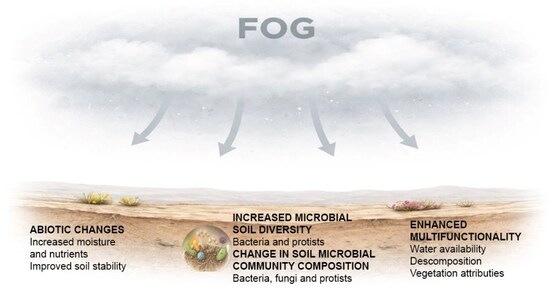
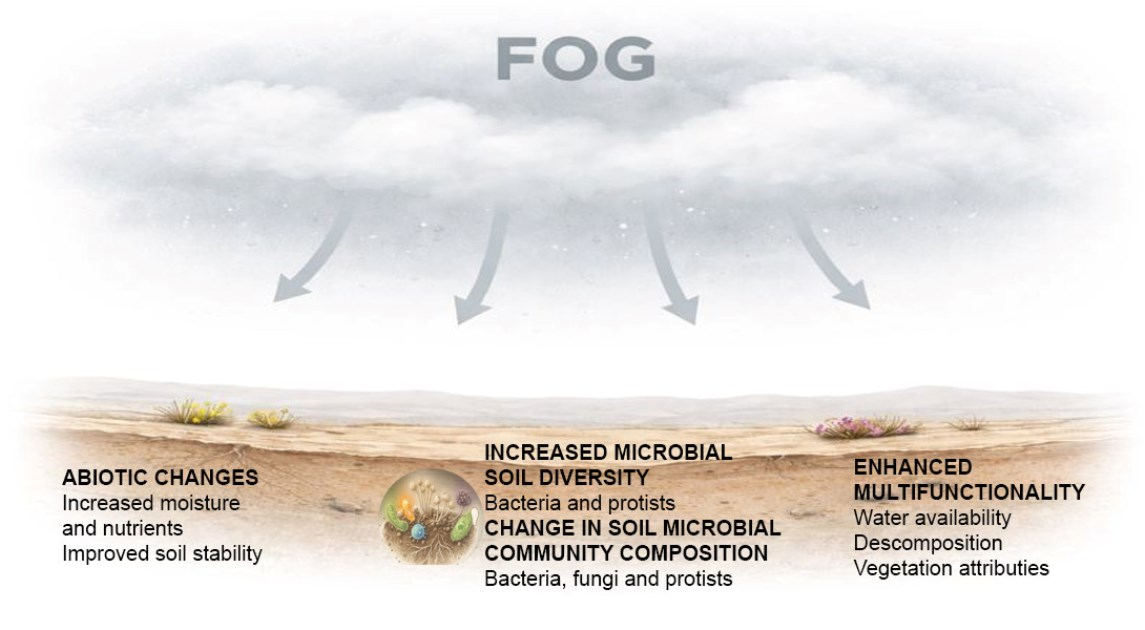
Graphical Abstract

1. Introduction

Hyperaridity is a condition characterized by an extreme water deficit [1]. Under such conditions, organic matter accumulation cannot be maintained over long periods and is restricted to sporadic increases in productivity triggered by short precipitation pulses [2]. In the absence of rainfall, other forms of atmospheric water, such as fog and dew, can play pivotal roles in supporting different life forms and maintaining ecosystem functions [3,4,5]. As plant cover is sparse, non-vegetated soils are mostly covered by different stages of development of a biological consortium comprising cyanobacteria, lichens, bacteria, fungi, algae, and mosses. This evolves into a multi-specific association known as biocrusts [6,7,8]. Biocrusts regulate key soil surface processes, including water capture, nutrient accumulation, and early-stage stabilization, making them essential drivers of soil development in drylands [8]. In drylands, this biological cover represents the functional interface between soils and non-rainfall water, as it captures and regulates the input of fog and dew water, and elements (e.g., carbon and nitrogen) [9,10].
Although this multi-trophic assembly is common in drylands, under hyperarid conditions bare soils exhibit early-stage biocrust development, often dominated by cyanobacteria and green algae. Over time and with increased water availability, these pioneer assemblages can give way to more complex communities dominated by lichens and mosses [11,12]. These biocrusts have enhanced carbon and nitrogen fixation, which in turn promotes soil aggregation and stability [9,13]. Such stabilization increases soil cohesion and decreases vulnerability to wind and water transport, thus preventing erosion and surface runoff [14]. These successional changes are often associated with shifts in the dominant photoautotrophic components, which typically include cyanobacteria, lichens, and mosses [15]. However, under hyperarid conditions, the mechanisms underlying this critical transition from bare soils to the onset of biocrust formation are far less understood [16]. Moreover, it remains unclear how sustained increases in fog availability influence these earliest stages of soil surface development and biocrust establishment.
Soil biocrust development can be understood as an early, biologically driven stage of soil formation. This gradual process involves changes in physical, chemical, and biological properties over time [8]. In hyperarid conditions, where conventional soil formation is severely limited by the lack of water and vegetation, the establishment and succession of biocrust communities represent one of the few active pathways for pedogenesis [6]. As biocrusts evolve from cyanobacteria-dominated to lichen- and moss-dominated stages, they contribute to nutrient accumulation and surface stabilization, while mediating water retention and microbial colonization, thereby reinforcing the coupled progression of soil and ecosystem development [7,15].
In the coastal dry environments of northern Chile (between 20° and 32° S), near the core of the Atacama Desert, marine fog acts as a suspension medium that carries common ions, sulfates, nitrates, and organic compounds from the ocean to inland areas [3,17]. In this hyperarid environment, marine fog represents the primary source of water and nutrients (notably nitrogen) supporting microbial and plant growth [17,18,19]. Here, fog synchronizes a dynamic and productive marine system with a comparatively less productive inland environment [20], representing a functional and biogeochemical link between these contrasting ecosystems. Recent reports indicate a neutral to slightly positive trend in the presence of fog and low clouds over the last decades for latitudes between 18° S and 25° S. This trend is strongly influenced by the stability of the lower troposphere and its relationship to the strength of the thermal inversion layer, a key factor for the formation of marine advective fog [21]. Furthermore, the influence of the El Niño-Southern Oscillation (ENSO) on the interannual variability of fog presence has been described, where its positive phase (El Niño) is associated with a greater presence of fog, especially during the summer [22]. Additionally, a decrease in the altitude of the thermal inversion layer, which corresponds to the cloud ceiling, has been observed, resulting in changes in the territories that interact with the fog [23]. These potential variations in fog arrival at the soil surface of this hyperarid environment could modify the diversity and productivity of soil microbial communities, which would otherwise develop under permanent resource and water restrictions. In addition to fog variability, other stochastic factors such as windborne dust deposition and occasional rainfall events can also influence soil surface processes and biocrust development in this region.
Because long-term experimental evaluations of fog inputs are rare in hyperarid environments, here we explore how persistent non-rainfall water availability shapes early soil formation and biocrust dynamics. This study experimentally evaluates how sustained fog input influences soil surface development and biocrust succession in the driest desert on Earth. The experiment assessed whether four years of enhanced fog water in bare soils promote microbial diversity (bacteria, fungi, and protists) and soil functionality. The central hypothesis posited that sustained fog input increases soil water availability and enriches nutrient levels, thereby facilitating early soil development. Such changes were expected to elevate above- and below-ground diversity and biomass, and to modify key soil surface properties with potential consequences for ecosystem functioning.

2. Materials and Methods

2.1. Study Site

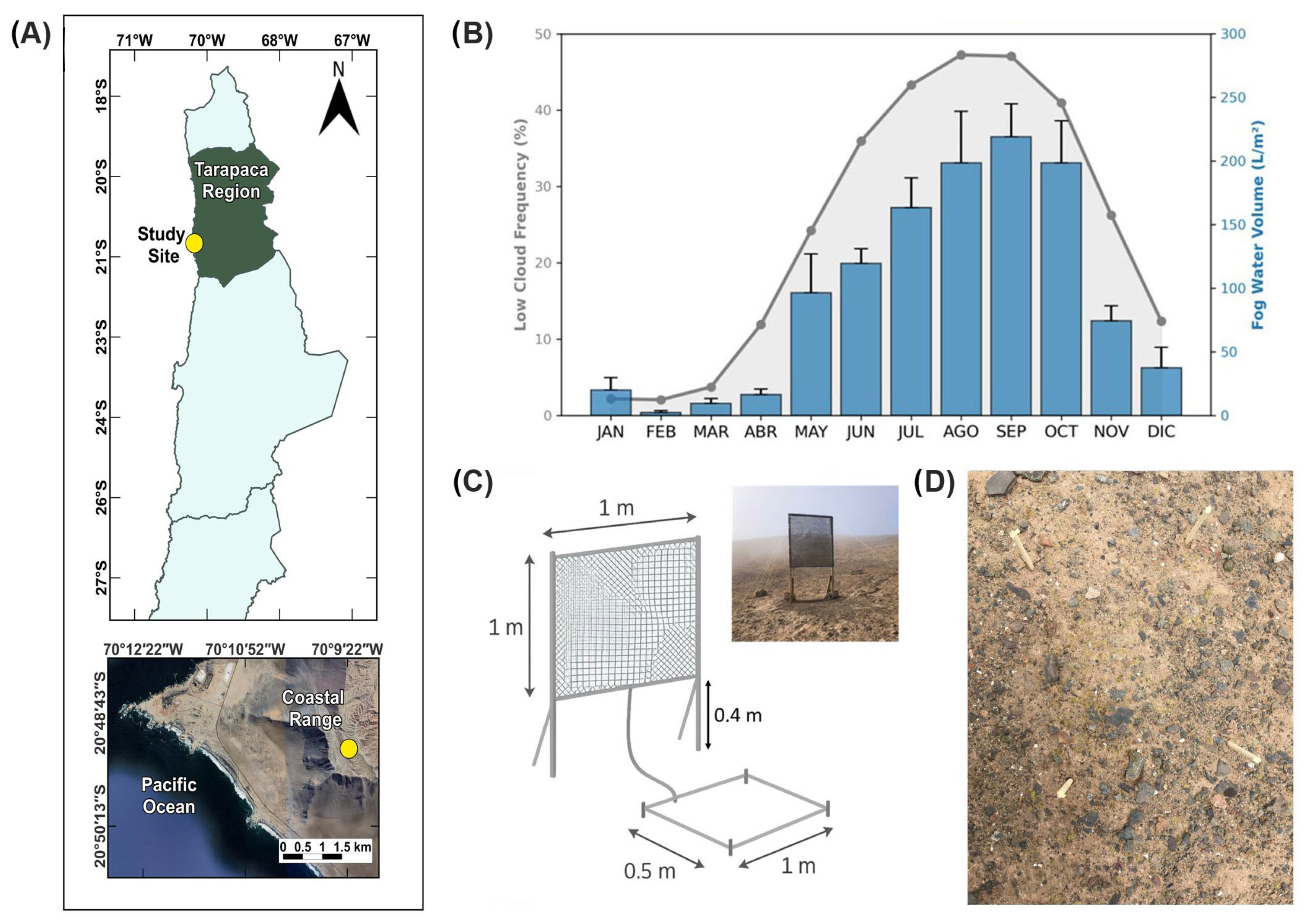
The study site is located in the core of the Atacama Desert (20°49′14.77′′ S; 70°09′14.70′′ W), three kilometers from the Pacific Ocean coastline (Figure 1A). This region is considered hyperarid, with a mean annual temperature of 12.5 °C and a mean annual precipitation of approximately 0.8 mm [24]. Satellite-based estimates of low cloud cover indicate that fog ranges from approximately 0% to 50% throughout the year, based on data from 1998 to 2023. There is a marked seasonal pattern, peaking during the winter and early spring months (Figure 1B) [21]. Field-based measurements using standard fog collectors show that daily fog water input can reach up to ~3.4 L m−2 day−1 during the fog season [22], resulting in monthly water volumes exceeding 250 L m−2 at the peak of the season (August–September; Figure 1B). Soil and other surfaces (e.g., stones and quartz) in contact with fog frequently are covered by a diverse community of biocrust in different stages of development. In this site, fog rises from the Pacific Ocean, creating a consistent flow from southwest to east. Accordingly, soils with west-side exposition have ~60–75% of the surface covered by biocrust, mostly of stage two (i.e., lichen-dominated biocrusts). In contrast, soils with east-side exposition are mostly bare soils.

2.2. Experimental Design

The study involved conducting a field experiment to assess the importance of marine fog in promoting biological diversity and ecosystem functions in hyperarid Atacama Desert soils. In this experiment, we set six 1 m × 1 m standardized mesh collectors (MC) to enhance fog water input on soils (Figure 1C). Immediately below each MC, we established a plot (0.5 m × 1 m) to evaluate the impact of fog input on soil biogeochemistry, and above and belowground development (Figure 1D). The water collected by each MC was retained in a plastic trough at the base and directed to the ground through a plastic hose with a diameter of 1 cm and a length of 1.5 m (Figure 1B). The four-year average annual fog capture was 1178.75 ± 31.85 mm per year (mean ± SD). This corresponded to 1157.48 mm in the first year, 1189.64 mm in the second, 1218.72 mm in the third, and 1149.17 mm in the fourth year. The above-ground portion of the plastic hose had holes every 10 cm, allowing water to drain evenly onto the ground within the plot. The MCs were established in sites where the biocrust cover was less than 5%, and bare soils represented more than 95% of the surface. All MCs were established in sites where the arrival of fog was recorded previously during the last 26 years (Figure 1B). We did not establish additional control plots without fog input due to the persistent natural fog regime in the area and logistical constraints related to the installation of rainout shelters. Instead, we used a before–after repeated-measures design on the same plots (T0, T24, T48), treating T0 as a baseline and interpreting subsequent changes as temporal responses to sustained fog.

2.3. Sample Collection and Determination of Soil and Plant Features

On each plot, soil variables were assessed before the MCs were established (T0), and at 24 (T24) and 48 months (T48) after the experiment was initiated. Plant cover and species richness were assessed in each plot (1 m × 0.5 m) by recording the presence of annual and perennial plants. The same plots were used to determine changes in biocrust cover and soil physical properties. Composite soil samples (five subsamples per plot) were collected from the topsoil (~5 cm depth) using sterilized spatulas. Coarse fragments and organic debris were removed by sieving the samples through a 2 mm mesh, and the remaining material was stored in plastic bags. At more advanced stages of the experiment, when the soil surface was largely covered by biological soil crusts, soil sampling included intact surface material. Soil moisture measurements were therefore performed on samples that encompassed both the biological soil crust layer and the underlying mineral soil. Consequently, the reported moisture values represent the combined soil–biocrust moisture. Samples were divided into two fractions: one fraction was immediately frozen (−20 °C) for molecular analyses, and the second fraction was air-dried for physicochemical analyses.

2.4. Soil Physicochemical Analyses

Total soil carbon and nitrogen were determined by combustion using 200 mg of air-dried soil on a C/N analyzer (Vario MAX C/N; Elementar, Germany). Stable isotopes of carbon (δ13C) and nitrogen (δ15N) were measured to characterize the isotopic composition of soil organic matter. Soil pH was measured in a 1:2.5 mass-to-volume soil–water suspension, shaken for 30 min at 200 rpm, using a compound electrode connected to a pH meter (Accumet Excel XL60, Fisher Scientific Inc., Waltham, MA, USA). Soil water-holding capacity (WHC) was determined gravimetrically using 5 g of soil placed on a filter and saturated with 10 mL of water; WHC was expressed as the percentage of water retained relative to dry soil weight [25]. Gravimetric soil moisture (SM) was obtained by drying the samples at 75 °C for 3 days and calculating the difference between initial and final masses, to account for combined moisture inputs from fog and dew, although these sources were not distinguished. Soil organic matter (SOM) content in dry and sieved soil was quantified by loss-on-ignition at 400 °C for 4 h [26].

2.5. Soil Physical Properties

Soil physical properties were quantified following standard procedures. Bulk density (BD) was measured using intact cylindrical soil cores. Samples were oven-dried at 105 °C to constant mass, and BD was calculated as the ratio of dry mass to core volume. Total soil porosity was derived from BD assuming a particle density of 2.65 g cm−3, Porosity was calculated as: 1 − (bulk density/particle density) * 100. Aggregate stability was assessed using the drop test [27], which quantifies the number of water drops required to disrupt an aggregate and is strongly correlated with susceptibility to water erosion. Soil compaction was measured in the field using a handheld penetrometer, with penetration resistance expressed in megapascals (MPa). Values < 1 MPa were interpreted as low compaction (low resistance), whereas values > 2 MPa indicate high compaction. Penetration measurements were taken directly in each plot under field natural conditions.

2.6. Enzyme Assays

The activities of seven extracellular enzymes representing major microbial pathways of C, N, P, and S cycling were quantified: alkaline phosphatase (AP), β-glucosidase (BG), leucine aminopeptidase (LAP), arylsulfatase A (ApsA), chitinase (ChiA), sulfatase-like alkaline phosphatase (Alps), and polyphenol oxidase (PPO). AP catalyzes the hydrolysis of organic phosphorus compounds, reflecting microbial P acquisition strategies. BG facilitates cellulose-derived carbon turnover. LAP targets peptide-bound nitrogen and indicates microbial N demand. ApsA and Alps mediate the hydrolysis of organic sulfate esters and thus contribute to organic S mineralization. ChiA degrades chitin, linking microbial C and N turnover in detrital pathways. PPO oxidizes phenolic and lignin-derived substrates and serves as an index of microbial oxidative capacity [28].
For these assays, 3 g of soil were mixed with 100 mL of autoclaved 5 mM Tris buffer (pH ~7.5) and continuously stirred on a magnetic stirrer. A 100 μL aliquot of the homogenized suspension was dispensed into 96-well microplates. Saturation-level substrate analogs were added as follows: 4-nitrophenyl phosphate for AP, 4-nitrophenyl-β-D-glucopyranoside for BG, leucine p-nitroanilide for LAP, p-nitrophenyl sulfate for ApsA and Alps, 4-nitrophenyl-N-acetyl-β-D-glucosaminide for ChiA, and L-3,4-dihydroxyphenylalanine (L-DOPA) for PPO. Microplates were incubated at 20 °C for 3 h with continuous agitation. Absorbance was measured using a Thermo Scientific Multiskan SkyHigh microplate reader [M13.1] (Thermo Fisher Scientific, Waltham, MA, USA) at 405 nm for AP, BG, LAP, ApsA, Alps, and ChiA, and at 460 nm for PPO [29].

2.7. Amplicon Sequencing

DNA was extracted from 500 mg of soil using the FastDNA™ Spin Kit for Soil (BIO101, MP Biomedical, Solon, OH, USA), following the manufacturer’s instructions. Samples were lysed using a FastPrep® homogenizer (40 s at speed 6.0). DNA concentration was quantified using a Nanodrop ND-2000c spectrophotometer (Thermo Scientific), and purified DNA was stored at −20 °C until processing.
Amplicon sequencing was conducted by ZymoBIOMICS® (Zymo Research, Irvine, CA, USA) using the Illumina® MiSeq™ platform. The following genetic markers were targeted: 16S rRNA for bacteria and archaea, ITS for fungi, and 18S rRNA for protists and microalgae (Plantae clade). Primers were provided by the sequencing service: V3–V4 region primers for bacteria and archaea, ITS1 and ITS2 for fungi, and clade-specific V4 region primers for protists and microalgae. Bioinformatic processing was performed by Zymo Research, including quality filtering, chimera removal, and the identification of exact amplicon sequence variants (ASVs). Taxonomic assignment was carried out using updated, publicly available reference databases. To ensure comparability across samples, we performed rarefaction independently for each major microbial group: bacteria, fungi, protists, and microalgae (Plantae). This standardization ensured that diversity estimates were not biased by differences in sequencing depth among samples.

2.8. Soil Functioning

Ecosystem functioning was evaluated by integrating environmental variables into five functional groups. To ensure comparability of variables with different units and scales, all variables were standardized using Z-score transformation prior to aggregation. Ecosystem functions were defined as follows: (1) soil physicochemical properties, which include soil pH, nitrogen (N) and carbon (C) content, and measurements of carbon and nitrogen isotopes (15N and 13C), along with soil organic matter (SOM); (2) soil structure, which encompasses variables such as the proportion of soil compaction, soil stability and bulk density; (3) vegetation attributes, characterized by variables such as plant cover, the richness of perennial plants, the richness of annual plants, and the cover of biological soil crusts; (4) water availability, which includes soil moisture, soil porosity, and water holding capacity (WHC); and (5) decomposition, which includes the measurement of enzymatic activity, ChiA, ApsA, Alps, BG, LAP, AP, and PPO. To ensure comparability among variables with different units and scales, all individual variables were standardized using a Z-score transformation before aggregation. For each ecosystem function, a composite index was calculated as the arithmetic mean of the standardized variables within that group. Averaging Z-scores is a common approach in multifunctionality studies as it captures the joint contribution of multiple complementary attributes, preventing any single variable from dominating the functional estimate. Finally, the ecosystem multifunctionality index was calculated as the mean of the five functional indices [30]. This method gives equal weight to each ecosystem function and provides a unitless, integrative metric of overall ecosystem performance.

2.9. Data Analysis

Microbial community analyses and biodiversity indices (Shannon, Simpson, and Chao 1) were performed using the MicroEco package in R [31]. To assess variations in environmental variables and enzymatic activity, we conducted one-way ANOVA tests, considering time as the main factor (T0, T24, T48). To evaluate changes in species composition, we calculated the relative abundance of the dominant phyla for bacteria and fungi. Phyla with a relative abundance of <2% were grouped into the “others” category. The analysis uses Pearson correlations among 21 environmental variables grouped into five ecosystem functions: water availability, soil physicochemical properties, vegetation attributes, decomposition, and soil structure, to examine the linear relationships between these factors and soil biodiversity. Only the dominant soil phyla were included in the correlation analysis, representing 98% of the bacterial, 68% of the fungal, and approximately 90% of the protist and microalgae communities.
The analysis uses the R (v4.5.0) package randomForest [32] to identify key predictors of changes in soil biodiversity. The ranking of predictors follows their explained variance (%IncMSE), and the interpretation considers only those contributing more than 1% of the variance as significant. A set of linear regression analyses evaluates how changes in biodiversity influence multifunctionality during soil development. The measure of soil biodiversity relies on a composite index that integrates the richness of bacteria, fungi, and archaea, calculated as the mean Z-score across these groups. All statistical tests were two-tailed with significance set at p < 0.05. Effect sizes and F-values were reported for all ANOVA models. Data visualization and summaries were generated using ggplot2 and base R (v4.5.0) [33].

3. Results

3.1. Above- and Below-Ground Changes in Physicochemical and Enzymatic Activity Indicators over Time

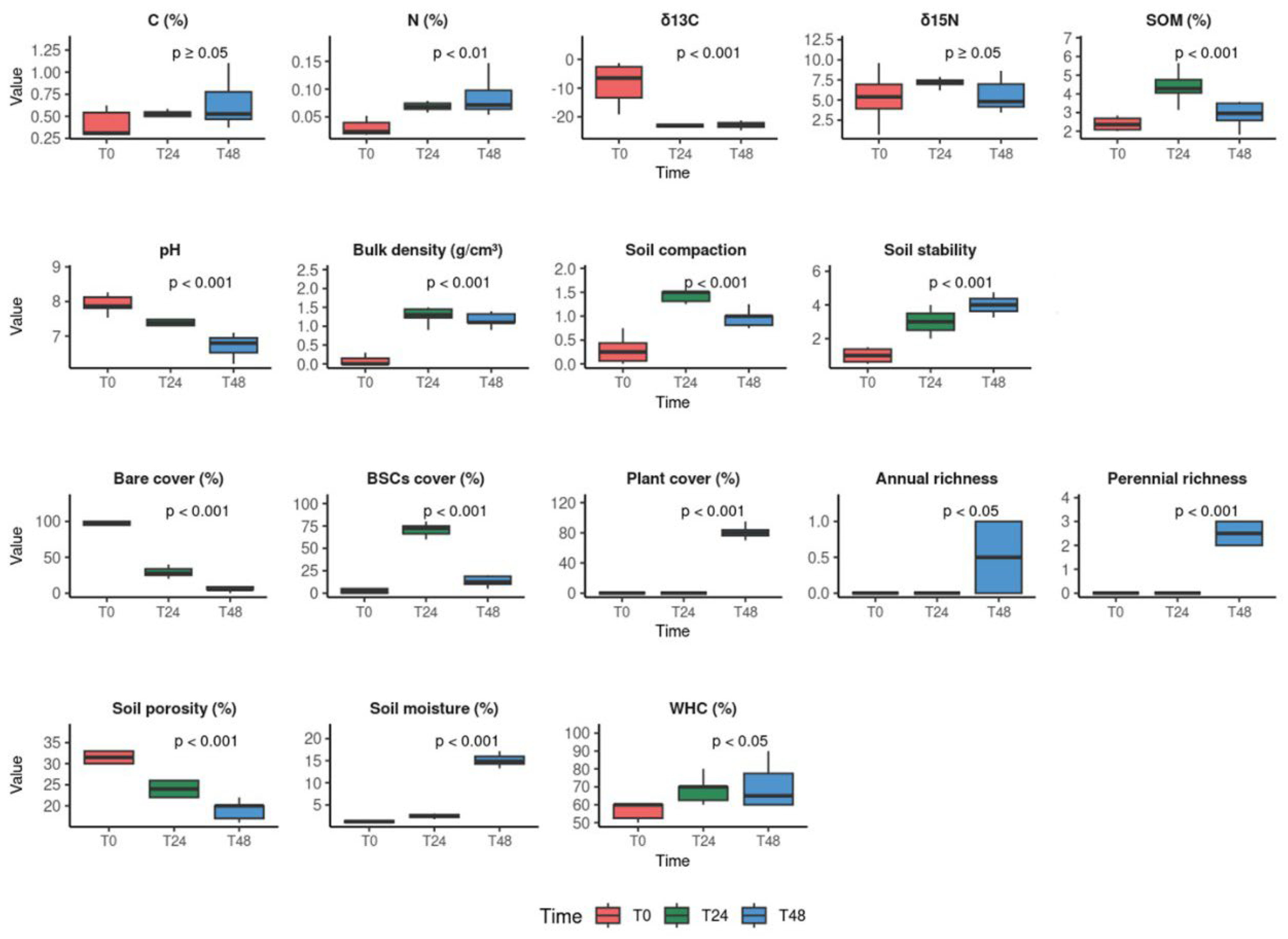
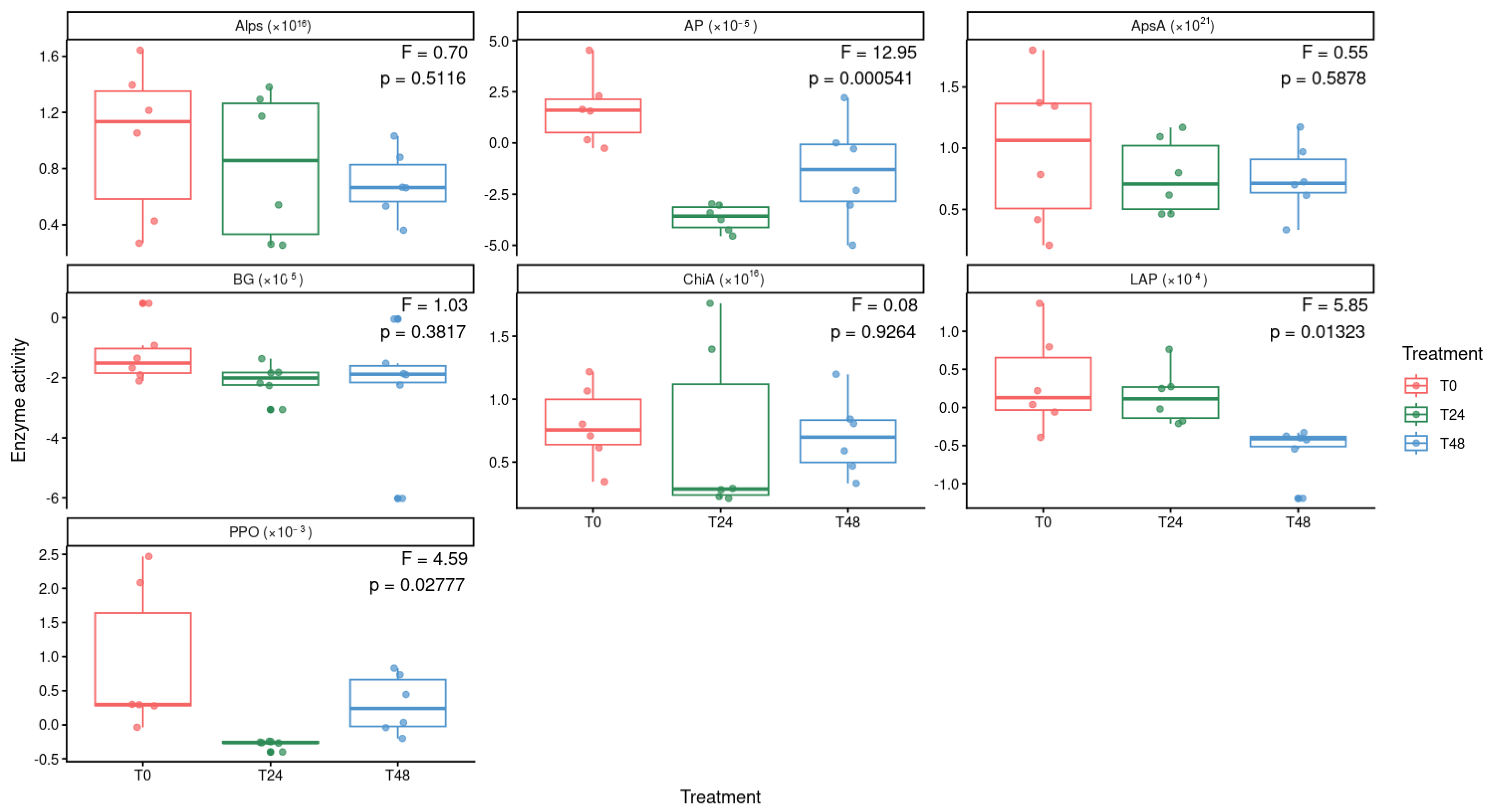
After 48 months, significant changes were observed in soil physicochemical properties and vegetation/biocrust attributes (Figure 2). Soil pH (p < 0.01), δ13C (p = 0.02), soil porosity (p < 0.05), and bare soil cover (p < 0.001) significantly decreased between T0 and T48. In contrast, nitrogen content, bulk density, field-measured soil stability, soil moisture, vegetation cover, and the richness of annual and perennial plants increased (all p < 0.05; Figure 2). Soil organic matter (SOM) exhibited a bell-shaped pattern, with an initial increase followed by a decline at later stages. A similar transient pattern was observed for biocrust cover and soil compaction, with a peak at T24 and a moderate decrease at T48 (Figure 2). The response of extracellular enzyme activity varied across enzymes (Figure 3). AP, LAP, and PPO all decreased significantly from T0 to T48 (AP: F = 12.95, p < 0.001; LAP: F = 5.85, p = 0.013; PPO: F = 4.59, p = 0.028), whereas BG, ChiA, ApsA, and Alps showed no significant changes over time (p > 0.38). Overall, enzyme activities associated with nutrient acquisition (AP, LAP) and oxidative processes (PPO) were lower at T48 than at T0.

3.2. Changes in Soil Diversity and Functional Indicators over Time

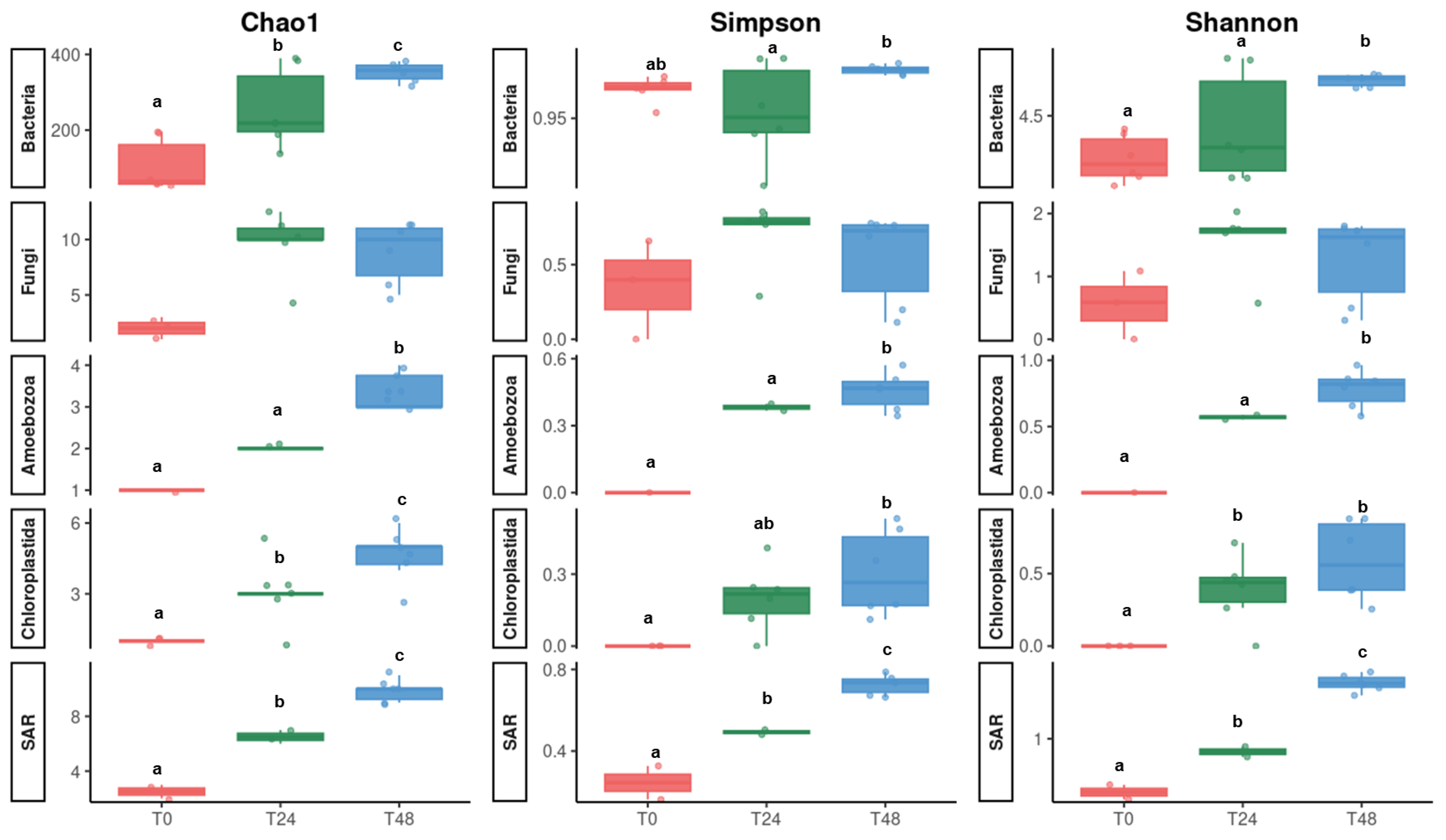
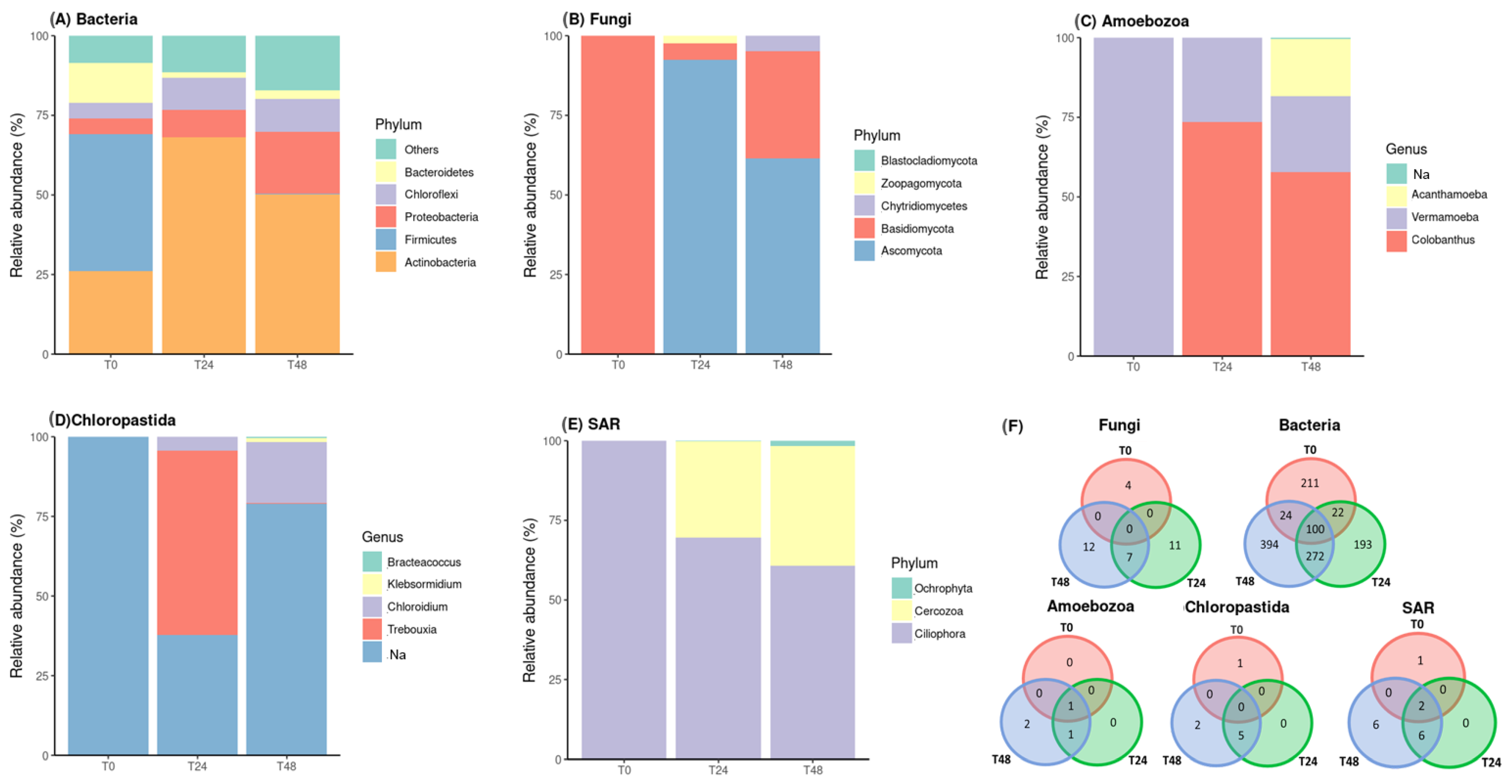
Soil microbial diversity increased significantly between T0 and T48 for bacteria, Plantae, and protists (Amoebozoa and SAR), but not for fungi (Figure 4). PERMANOVA analyses confirmed significant compositional changes over time for bacterial (p < 0.001) and fungal (p = 0.02) communities. At the phylum level, all major groups exhibited significant compositional shifts (Figure 5). In bacterial assemblages, Actinobacteria, Firmicutes, and Bacteroidetes were most abundant at early stages (T0, T24). In contrast, Firmicutes declined significantly at T48 (Figure 5A). Basidiomycota initially dominated fungal communities. However, later stages exhibited greater phylum-level richness with a more balanced contribution of Ascomycota and Basidiomycota (Figure 5B). Within Plantae, Trebouxia was dominant at T24 but decreased sharply at T48, whereas Chloroidium appeared exclusively at T48. In the SAR group, ciliophorans were consistently dominant across stages, but Cercozoa and Ochrophyta increased after 24 months. Among Amoebozoa, Vermamoeba dominated the early stages, while Colobanthus and Acanthamoeba became more abundant at T48. The total number of unique ASVs was highest at T48, revealing distinct stage-specific compositional patterns across microbial groups (Figure 5F).
Correlation analyses revealed significant associations between dominant microbial groups and soil physicochemical properties over time (Figure S1). Among bacteria, Actinobacteria and Chloroflexi showed positive correlations with soil properties measured at T48, including total nitrogen content, and soil stability. In contrast, Firmicutes correlated positively with δ13C values and soil conditions associated with lower structural quality, such as higher compaction and lower nitrogen content, which characterize earlier sampling stages. Proteobacteria and Bacteroidetes were mainly associated with vegetation-related attributes, including plant cover and soil organic matter (SOM). Within fungi, Ascomycota exhibited positive correlations with soil carbon and nitrogen, whereas Basidiomycota showed weaker and more variable associations. Protists, particularly Ciliophora and Cercozoa, as well as Chlorophyta algae, displayed significant positive correlations with soil moisture and water-holding capacity (WHC), indicating strong co-variation with moisture availability during the experiment. These associations indicate co-variation between soil properties and microbial groups across stages.

3.3. The Interplay Between Soil Development and Ecosystem Multifunctionality

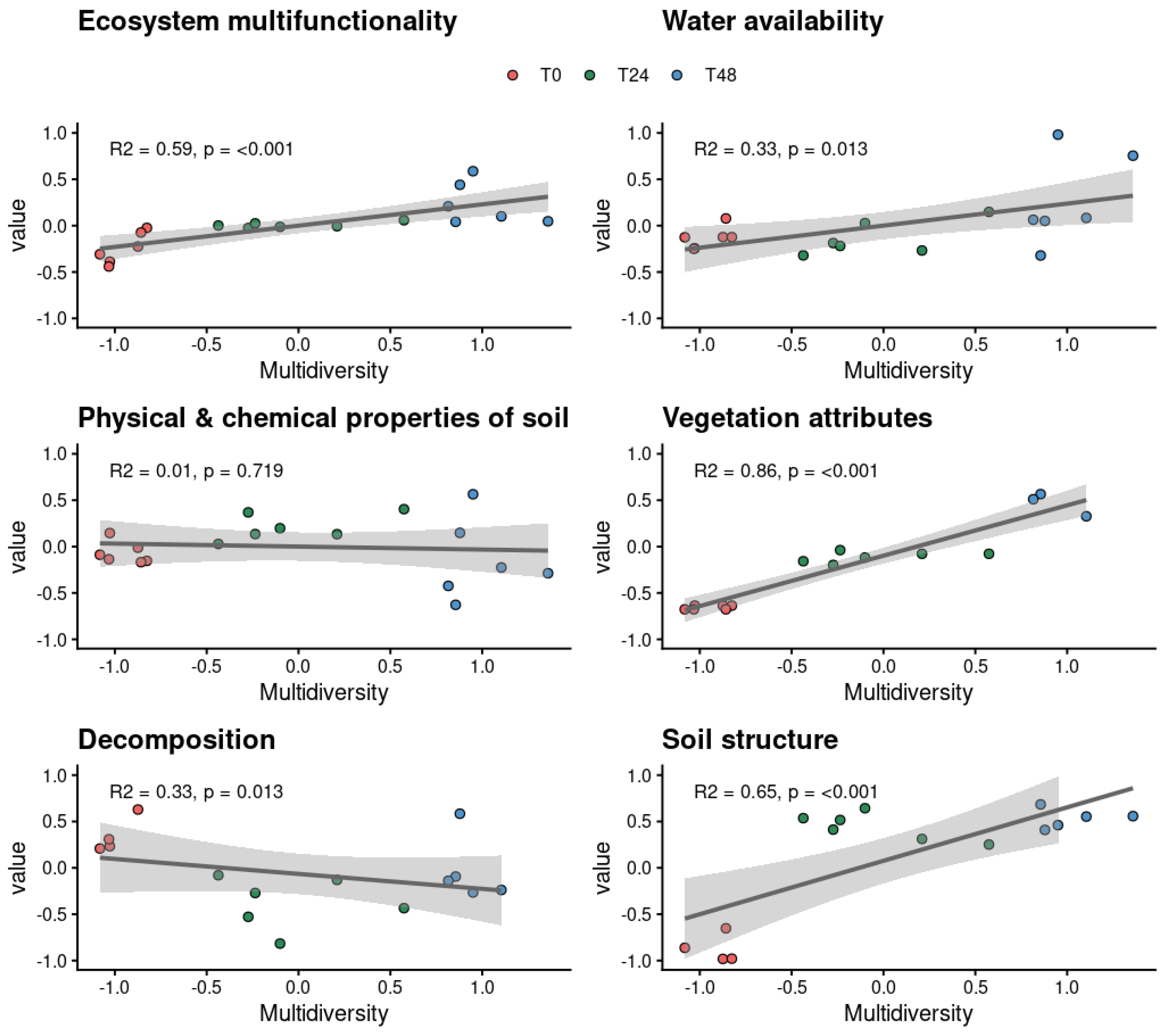
Changes in soil physicochemical properties over time were associated with shifts in microbial community diversity. Random forest analysis identified soil moisture, pH, and bare soil cover as the top predictors of soil biodiversity (explained variance: 47%; Figure S2), with soil moisture contributing the highest variable importance (%IncMSE = 21.4). Linear regression analyses revealed a positive and significant relationship between the multi-diversity and multifunctionality indices (R2 = 0.41, p < 0.01), indicating that higher microbial diversity coincided with higher ecosystem multifunctionality scores. Samples collected at T48 showed both higher taxonomic diversity and higher average multifunctionality values than earlier stages (T0, T24). A similar positive trend was observed in four out of five individual ecosystem functions (water availability, vegetation attributes, decomposition, and soil structure), whereas soil physicochemical properties exhibited a non-linear response (Figure 6).

4. Discussion

The results indicate that sustained fog exposure coincided with substantial changes in the biotic and abiotic properties of hyperarid soils, including shifts in soil structure, moisture, and microbial communities. Over a four-year period, experimental fog augmentation was associated with increased plant and microbial diversity, improved soil stability and enhanced ecosystem multifunctionality.

4.1. Fog as a Key Driver of Early Soil Surface Modification

In hyperarid ecosystems, where rainfall is negligible, fog can represent a critical source of liquid water [34]. In our experiment, sustained fog input was associated with changes in surface soil properties, enhanced stability, and increased compaction, which are consistent with more consolidated soil conditions [35,36]. Biocrust cover increased during the first 24 months and shifted toward moss-dominated communities in later stages. This temporal pattern may reflect a facilitative yet transient role of biocrusts in modifying soil surfaces and potentially promoting conditions suitable for vascular plant colonization in hyperarid environments [11,35,37]. Previous studies have demonstrated that biocrusts play a pivotal role in enhancing soil structure and stability [37,38], mediate nutrient cycling [39,40], improve soil fertility [35], and influence microclimate and plant recruitment [6,8,10,39]. The findings align with these observations, emphasizing the functional importance of biocrusts under fog-driven moisture regimes and fog-associated nutrient inputs in hyperarid landscapes.
Although increases in bulk density are typically associated with reduced water retention, our results show a positive linear relationship between bulk density, soil moisture, and water-holding capacity. Similar patterns have been reported in biologically structured soils, particularly those influenced by biological soil crusts, where changes in pore-size distribution rather than total porosity control water retention [10]. In such systems, biological aggregation and the accumulation of organic matter and microbial exopolymers can promote microporosity and soil stabilization, leading to enhanced water retention despite moderate increases in bulk density [7]. The stratified distribution of soil organic matter and biocrust cover in the surface layer likely explains the relationship observed in our study, as similar biogenic restructuring processes have been shown to reduce evaporative losses and improve soil moisture efficiency in arid and hyperarid environments [16,35,39].

4.2. Biodiversity Responses to Sustained Moisture Increases

Soil microbial diversity increased during the period of sustained fog input, particularly within bacterial communities. Over time, the observed shifts in dominant bacterial phyla are consistent with a transition from stress-tolerant taxa (e.g., Firmicutes) toward more taxonomically diverse assemblages. This pattern is consistent with findings from chronosequences in arid and semiarid systems [41], although in our case it occurred over a relatively short, four-year experimental period.
Together, these patterns highlight the importance of moisture availability in shaping microbial community assembly and promoting ecological succession [41,42]. Although fungal diversity indices did not show significant changes, community composition shifted from a Basidiomycota-dominated assemblage toward greater phylum-level richness, and a more balanced representation of both Ascomycota and Basidiomycota. These compositional adjustments coincided with more buffered soil conditions, including higher moisture, which favors taxa less adapted to drought stress [42,43], and a shift toward near-neutral pH, which also promotes the establishment of a broader range of fungal groups [44]. Similar successional trends were observed in Plantae and protist communities. For example, the abundance of Trebouxia, a key photobiont associated with biocrusts in the Atacama Desert, declined by the final year of the experiment, paralleling a reduction in biocrust cover [45]. Collectively, these results suggest that sustained fog input can modulate multiple components of the soil microbiome, with potential implications for ecosystem functions linked to nutrient cycling and soil surface stabilization.
Multiple studies have reported that sustained fog water input can alter the structure of soil microbial communities during the early stages of soil formation in hyperarid environments [46,47]. Some authors have also proposed that increased marine fog inputs could accelerate biogeochemical cycling and enhance ecosystem functioning [18,48]. Fog-derived water has been shown to prolong microbial metabolic activity, reduce desiccation stress, and allow both heterotrophic and phototrophic microorganisms to remain active for longer periods [49]. Such sustained physiological activity has been proposed to increase decomposition rates, nutrient mineralization, and the expression of extracellular enzymes involved in C, N and P cycling. In addition, fog can transport dissolved ions, organic compounds, and other nutrients inland, providing an external source of limiting elements that may stimulate microbial growth and nutrient transformation [48]. Our results align with these expectations in terms of increases in microbial diversity, moisture, and improvements in soil structure and nutrient content. However, extracellular enzyme activities did not follow the predicted pattern: AP, LAP, and PPO declined over time, while others remained stable. These patterns suggest that, although fog inputs create more favorable conditions for microbial establishment and diversification, they do not necessarily translate into higher enzyme activity. Overall, the combination of increased soil moisture, improved soil structure, and higher microbial diversity, indicates that fog plays a key ecological role in promoting early soil development. Fog appears to facilitate microbial succession and the emergence of nascent soil functions, even if the enzymatic response does not mirror classical expectations from wetter arid systems.

4.3. Biodiversity Gains Shape Soil Multifunctionality

The analysis revealed a positive relationship between microbial multi-diversity and ecosystem multifunctionality, consistent with previously reported biodiversity–function relationships [50]. Vegetation attributes, soil structure, and decomposition functions showed positive associations, whereas soil physicochemical properties exhibited non-linear patterns. This may reflect, among other factors, the legacy of extreme aridity on nutrient pools or temporal lags between biological inputs and chemical transformations.
The identification of soil pH, moisture, and bare soil cover as key predictors of microbial diversity supports the idea that both chemical and structural properties shape microbial colonization during early soil development [51]. In the Atacama Desert, where soils have extremely low organic matter and strong constraints on nutrient retention [52], fog water input is considered a major source of moisture and dissolved nutrients [51,52]. By buffering hydric stress and enhancing resource availability, fog appears to create more favorable conditions for microbial establishment and diversification.
The composition and functioning of soil microbiome are tightly linked to abiotic factors, including pH, texture, moisture, and nutrient availability [50,53]. In other arid ecosystems, more complex microbial communities have been shown to support a broader range and higher intensity of ecosystem functions [53,54]. In line with these patterns, the findings indicate that sustained moisture inputs may support increases in microbial diversity and functional potential, even under hyperarid conditions. Although the study is limited in duration and based on correlational relationships, these results suggest that increasing microbial complexity may contribute to the emergence of ecosystem multifunctionality during the early stages of soil surface modification in hyperarid landscapes.

4.4. Influence of Natural Fog Variability on Soil and Microbial Responses

Over a period of four years, our experiment showed that sustained augmentation of fog water was accompanied by consistent and directional shifts in soil structure, microbial diversity, and the expression of multiple ecosystem functions, despite the high natural variability associated with coastal fog systems. Regional evidence indicates that, above ~1000 m a.s.l., the arrival of fog can vary strongly depending on the ENSO state [23]. Therefore, interannual fluctuations in fog availability are likely to affect the rate at which these processes occur, but not whether they occur, under conditions of sustained moisture input, as suggested by the temporal patterns observed in our experiment.

5. Conclusions

This four-year experiment shows that sustained fog input may act as a key driver of early soil development in the hyperarid Atacama Desert. Fog additions increased soil moisture and nutrient availability and resulted in marked shifts in soil physical and chemical properties, including higher nitrogen content, soil stability, bulk density, vegetation cover, and plant richness, together with reductions in pH, δ13C, porosity, and bare soil cover. Microbial diversity increased in bacteria, protists, and Chloroplastida, while fungal diversity remained stable but showed significant compositional turnover. These community-level changes, combined with the restructuring observed in bacterial and protist assemblages, are consistent with fog facilitating microbial succession by modifying moisture regimes and soil physicochemical conditions. Enzymatic responses revealed declines in P- and N-acquisition and oxidative activities, while C- and S-associated enzymes remained stable, suggesting selective adjustments in organic matter processing under prolonged fog influence. Multi-diversity was positively associated with ecosystem multifunctionality, indicating that fog-driven increases in biodiversity coincided with multiple ecosystem functions. Soil pH and nitrogen content emerged as important correlates of bacterial community structure, underscoring the influence of fog-mediated chemical inputs during early soil assembly.
Overall, these results support the initial hypothesis that sustained fog input may facilitate the development of soils by increasing moisture availability, restructuring microbial communities, and strengthening ecosystem functioning. The observed increase and subsequent decline in biocrust cover emphasizes its transitional role in facilitating early soil consolidation and microbial succession, before giving way to more stable surface states. Despite its relatively short duration, this study provides important empirical evidence from one of the driest regions on Earth, emphasizing the ecological significance of non-rainfall water inputs in promoting soil formation and enhancing ecosystem resilience in extremely arid conditions.

Supplementary Materials

The following supporting information can be downloaded at: https://www.mdpi.com/article/10.3390/soilsystems10010012/s1, Figure S1. Heatmap, correlation among environmental variables, and the relative abundance of major soil phyla. Figure S2. Random Forest analysis.

Author Contributions

Conceptualization, C.V., E.C., F.D.A. and C.d.R.; methodology, C.V., E.C., A.B., M.M. and I.G.-C.; software, M.d.P.F.-M.; validation, M.d.P.F.-M., F.D.A. and C.d.R.; formal analysis, M.d.P.F.-M.; investigation, C.V., E.C., F.D.A. and C.d.R.; resources, A.B., M.M. and I.G.-C.; data curation, M.d.P.F.-M. and F.D.A.; writing—original draft preparation, M.d.P.F.-M. and F.D.A.; writing—review and editing, all authors; visualization, M.d.P.F.-M.; supervision, F.D.A.; project administration, F.D.A.; funding acquisition, F.D.A. All authors have read and agreed to the published version of the manuscript.

Funding

This work was supported by the Fondo Nacional de Desarrollo Científico y Tecnológico (FONDECYT), grant number 1220358.

Institutional Review Board Statement

Not applicable.

Informed Consent Statement

Not applicable.

Data Availability Statement

https://figshare.com/s/d688b7c0471197561179, accessed on 17 December 2025.

Conflicts of Interest

The authors declare no conflicts of interest.

References

  1. De Martonne, E. Lindice daridé. Bull. L’association Géographes Français 1926, 3, 3–5. [Google Scholar] [CrossRef]
  2. Hu, Q.; Zhang, Y.; Niu, D.; Liu, Y. Biological soil crusts in deserts: Mechanisms, ecological functions, and restoration. Land Degrad. Dev. 2021, 32, 4146–4161. [Google Scholar] [CrossRef]
  3. Weathers, K.C.; Groffman, P.M.; Van Dolah, E.; Bernhardt, E.; Grimm, N.B.; McMahon, K.; Hinckley, E. Frontiers in ecosystem ecology from a community perspective: The future is boundless and bright. Ecosystems 2016, 19, 753–770. [Google Scholar] [CrossRef]
  4. Wang, F.; Liu, Y.; Li, R.; Wu, L.; Zheng, Y. Effects of dew and fog on biological soil crusts: Moisture availability and photosynthetic activity. Plant Soil 2019, 436, 289–303. [Google Scholar]
  5. Yu, F.H.; Zhang, J.; Xie, Y.H.; Liao, J.X.; Wang, F. The overlooked roles of dew in dryland ecosystems. Land Degrad. Dev. 2020, 31, 332–343. [Google Scholar] [CrossRef]
  6. Belnap, J.; Phillips, S.L.; Miller, M.E. Response of desert biological soil crusts to alterations in precipitation frequency. Oecologia 2004, 141, 306–316. [Google Scholar] [CrossRef]
  7. Belnap, J.; Büdel, B.; Lange, O.L. Biological soil crusts: Characteristics and distribution. In Biological Soil Crusts: Structure, Function, and Management; Belnap, J., Lange, O.L., Eds.; Springer: Berlin/Heidelberg, Germany, 2001; pp. 3–30. [Google Scholar] [CrossRef]
  8. Belnap, J. The world at your feet: Desert biological soil crusts. Front. Ecol. Environ. 2003, 1, 181–189. [Google Scholar] [CrossRef]
  9. Elbert, W.; Weber, B.; Burrows, S.; Steinkamp, J.; Büdel, B.; Andreae, M.O.; Pöschl, U. Contribution of cryptogamic covers to the global cycles of carbon and nitrogen. Nat. Geosci. 2012, 5, 459–462. [Google Scholar] [CrossRef]
  10. Chamizo, S.; Cantón, Y.; Miralles-Mellado, I.; Domingo, F. Biocrusts positively affect the soil water balance in semiarid ecosystems. Ecohydrology 2016, 9, 1208–1221. [Google Scholar] [CrossRef]
  11. Havrilla, C.A.; Chaudhary, V.B.; Ferrenberg, S.; Antoninka, A.J.; Belnap, J.; Bowker, M.A.; Barger, N.N. Towards a predictive framework for biocrust mediation of plant performance: A meta-analysis. J. Ecol. 2019, 107, 2789–2807. [Google Scholar] [CrossRef]
  12. Li, X.; Sun, J.; Zhang, H.; Tan, H.; Hui, R.; Qi, J.; Zhang, P.; Ward, N.D. Warming decreases desert ecosystem functioning by altering biocrusts in drylands. J. Appl. Ecol. 2023, 60, 2676–2687. [Google Scholar] [CrossRef]
  13. Delgado-Baquerizo, M.; Soliveres, S.; Maestre, F.T.; Eldridge, D.J.; Bowker, M.A.; Val, J.; Gallardo, A. Biological soil crusts drive carbon and nitrogen cycling in dryland ecosystems across the globe. Soil Biol. Biochem. 2013, 52, 1–8. [Google Scholar] [CrossRef]
  14. Eldridge, D.J.; Leys, J.F. Exploring some relationships between biological soil crusts, soil aggregation and wind erosion. J. Arid Environ. 2003, 53, 457–466. [Google Scholar] [CrossRef]
  15. Maier, S.; Tamm, A.; Wu, D.; Caesar, J.; Grube, M.; Weber, B. Photoautotrophic organisms control microbial abundance, diversity, and physiology in different types of biological soil crusts. ISME J. 2018, 12, 1032–1046. [Google Scholar] [CrossRef]
  16. Chen, N.; Yu, K.; Jia, R.; Teng, J.; Zhao, C. Biocrust as one of multiple stable states in global drylands. Sci. Adv. 2020, 6, eaay3763. [Google Scholar] [CrossRef]
  17. González, A.L.; Fariña, J.M.; Pinto, R.; Pérez, C.; Weathers, K.C.; Armesto, J.J.; Marquet, P.A. Bromeliad growth and stoichiometry: Responses to atmospheric nutrient supply in fog-dependent ecosystems of the hyper-arid Atacama Desert, Chile. Oecologia 2011, 167, 835–845. [Google Scholar] [CrossRef]
  18. Fuentes, B.; Gómez, F.; Valdez, C.; Videla, A.; Castro-Severyn, J.; Barahona, S.; Remonsellez, F. Effects of altitude on soil properties in coastal fog ecosystems in Morro Moreno National Park, Antofagasta, Chile. Eur. J. Soil Sci. 2022, 73, e13217. [Google Scholar] [CrossRef]
  19. Weathers, K.C.; Lovett, G.M.; Likens, G.E. Cloudwater inputs of nitrogen to forest ecosystems in southern Chile: Forms, fluxes, and sources. Ecosystems 2000, 3, 590–595. [Google Scholar] [CrossRef]
  20. Koračin, D.; Dorman, C.E.; Lewis, J.M.; Hudson, J.G.; Wilcox, E.M.; Torregrosa, A. Marine fog: A review. Atmos. Res. 2014, 143, 142–175. [Google Scholar] [CrossRef]
  21. Espinoza, V.; Lobos-Roco, F.; y del Río, C. Control sinóptico de la variabilidad espaciotemporal de la niebla y las nubes bajas bajo el fenómeno ENSO a lo largo de la costa chilena (17°–36° S). Atmos. Res. 2024, 308, 107533. [Google Scholar] [CrossRef]
  22. del Río, C.; Garcia, J.L.; Osses, P.; Zanetta, N.; Lambert, F.; Rivera, D.; Lobos, F. ENSO influence on coastal fog-water yield in the Atacama Desert, Chile. Aerosol Air Qual. Res. 2018, 18, 127–144. [Google Scholar] [CrossRef]
  23. Del Río, C.; Lobos-Roco, F.; Latorre, C.; Koch, M.A.; García, J.L.; Osses, P.; Siegmund, A. Spatial distribution and interannual variability of coastal fog and low clouds cover in the hyperarid Atacama Desert and implications for past and present Tillandsia landbeckii ecosystems. Plant Syst. Evol. 2021, 307, 58. [Google Scholar] [CrossRef]
  24. Cereceda, P.; Larrain, H.; Osses, P.; Farias, M.; Egaña, I. The spatial and temporal variability of fog and its relation to fog oases in the Atacama Desert 2021, Chile. Atmos. Res. 2008, 87, 312–323. [Google Scholar] [CrossRef]
  25. Jenkinson, D.S.; Brookes, P.C.; Powlson, D.S. Measuring soil microbial biomass. Soil Biol. Biochem. 2004, 36, 5–7. [Google Scholar] [CrossRef]
  26. Eyherabide, M.; Saínz Rozas, H.; Barbieri, P.; Echeverría, H.E. Comparación de métodos para determinar carbono orgánico en suelo. Cienc. Del Suelo 2014, 32, 13–19. [Google Scholar]
  27. Imeson, A.C.; Vis, M. Assessing soil aggregate stability by water-drop impact and ultrasonic dispersion. Geoderma 1984, 34, 185–200. [Google Scholar] [CrossRef]
  28. Zhang, H.; Liu, X.; Long, J.; Yang, T.; Huo, H.; Jia, C.; Peng, X. Phosphorus addition stimulates overall carbon acquisition enzymes but suppresses overall phosphorus acquisition enzymes: A global meta-analysis. Agric. Ecosyst. Environ. 2024, 375, 109219. [Google Scholar] [CrossRef]
  29. Frossard, A.; Ramond, J.B.; Seely, M.; Cowan, D.A. Water regime history drives responses of soil Namib Desert microbial communities to wetting events. Sci. Rep. 2015, 5, 571–578. [Google Scholar] [CrossRef] [PubMed]
  30. Maestre, F.T.; Quero, J.L.; Gotelli, N.J.; Escudero, A.; Ochoa, V.; Delgado-Baquerizo, M.; Zaady, E. Plant species richness and ecosystem multifunctionality in global drylands. Science 2012, 335, 214–218. [Google Scholar] [CrossRef] [PubMed]
  31. Liu, C.; Cui, Y.; Li, X.; Yao, M. microeco: An R package for data mining in microbial community ecology. FEMS Microbiol. Ecol. 2021, 97, fiaa255. [Google Scholar] [CrossRef]
  32. Liaw, A.; Wiener, M. Classification and regression by randomForest. R News 2002, 2, 18–22. [Google Scholar]
  33. R Core Team. A Language and Environment for Statistical Computing. R Foundation for Statistical Computing 2025, Vienna, Austria. Available online: https://www.R-project.org/ (accessed on 15 July 2025).
  34. Richter, A. Fog collection in buildings as a method to meet the future water needs. Master’s Thesis, Lund University, Department of Architecture and Built Environment, Lund, Sweden, 2020. [Google Scholar]
  35. Mallen-Cooper, M.; Ding, J.; Eldridge, D.J. Contrasting effects of vegetation cover and site condition on biocrust communities in subhumid drylands. J. Veg. Sci. 2020, 33, e13161. [Google Scholar] [CrossRef]
  36. Bahram, M.; Hildebrand, F.; Forslund, S.K.; Anderson, J.L.; Soudzilovskaia, N.A.; Bodegom, P.M.; Bork, P. Structure and function of the global topsoil microbiome. Nature 2018, 560, 233–237. [Google Scholar] [CrossRef] [PubMed]
  37. Zhang, Y.; Aradottir, A.L.; Serpe, M.; Boeken, B. Interactions of Biological Soil Crusts with Vascular Plants. In Biological soil crusts: An Organizing Principle in Drylands; Springer International Publishing: Cham, Switzerland, 2016; pp. 385–406. [Google Scholar]
  38. Song, G.; Hui, R.; Yang, H.; Wang, B.; Li, X. Biocrusts mediate the plant community composition of dryland restoration ecosystems. Sci. Total Environ. 2022, 844, 157135. [Google Scholar] [CrossRef]
  39. Rodríguez-Caballero, E.; Castro, A.J.; Chamizo, S.; Quintas-Soriano, C.; Garcia-Llorente, M.; Cantón, Y.; Weber, B. Ecosystem services provided by biocrusts: From ecosystem functions to social values. J. Arid Environ. 2018, 159, 45–53. [Google Scholar] [CrossRef]
  40. Barger, N.N.; Weber, B.; Garcia-Pichel, F.; Zaady, E.; Belnap, J. Patterns and Controls on Nitrogen Cycling of Biological Soil Crusts. In Biological Soil Crusts: An Organizing Principle in Drylands; Springer International Publishing: Cham, Switzerland, 2016; pp. 257–285. [Google Scholar]
  41. Maestre, F.T.; Delgado-Baquerizo, M.; Jeffries, T.C.; Eldridge, D.J.; Ochoa, V.; Gozalo, B.; Singh, B.K. Increasing aridity reduces soil microbial diversity and abundance in global drylands. Proc. Natl. Acad. Sci. USA 2015, 112, 15684–15689. [Google Scholar] [CrossRef]
  42. Evans, S.E.; Wallenstein, M.D. Soil microbial community response to drying and rewetting stress: Does historical precipitation regime matter? Biogeochemistry 2012, 109, 101–116. [Google Scholar] [CrossRef]
  43. Pointing, S.B.; Belnap, J. Microbial colonization and controls in dryland systems. Nat. Rev. Microbiol. 2012, 10, 551–562. [Google Scholar] [CrossRef]
  44. Slam, W.; Noman, A.; Naveed, H.; Huang, Z.; Chen, H.Y. Role of environmental factors in shaping the soil microbiome. Environ. Sci. Pollut. Res. 2020, 27, 41225–41247. [Google Scholar] [CrossRef]
  45. Jung, P.; Brand, R.; Briegel-Williams, L.; Werner, L.; Jost, E.; Lentendu, G.; Lakatos, M. The symbiotic alga Trebouxia fuels a coherent soil ecosystem on the landscape scale in the Atacama Desert. Environ. Microbiome 2024, 19, 59. [Google Scholar] [CrossRef]
  46. Barnard, R.L.; Osborne, C.A.; Firestone, M.K. Responses of soil bacterial and fungal communities to extreme desiccation and rewetting. ISME J. 2013, 7, 2229–2241. [Google Scholar] [CrossRef]
  47. Belnap, J.; Weber, B.; Büdel, B. Biological Soil Crusts as an Organizing Principle in Drylands; Springer International Publishing: Cham, Switzerland, 2016; pp. 3–13. [Google Scholar]
  48. Khoury, D.; Millet, M.; Jabali, Y.; Delhomme, O. Fog water: A general review of its physical and chemical aspects. Environments 2023, 10, 224. [Google Scholar] [CrossRef]
  49. Leung, P.M.; Bay, S.K.; Meier, D.V.; Chiri, E.; Cowan, D.A.; Gillor, O.; Greening, C. Energetic basis of microbial growth and persistence in desert ecosystems. Msystems 2020, 5, 10–1128. [Google Scholar] [CrossRef] [PubMed]
  50. Delgado-Baquerizo, M.; Maestre, F.T.; Reich, P.B.; Jeffries, T.C.; Gaitan, J.J.; Encinar, D.; Singh, B.K. Microbial diversity drives multifunctionality in terrestrial ecosystems. Nat. Commun. 2016, 7, 10541. [Google Scholar] [CrossRef] [PubMed]
  51. Azua-Bustos, A.; Urrejola, C.; Vicuña, R. Life at the dry edge: Microorganisms of the Atacama Desert. FEBS Lett. 2012, 586, 2939–2945. [Google Scholar] [CrossRef]
  52. Alfaro, F.D.; Manzano, M.; Almiray, C.; Juan-Luis, G.; Pablo, O.; del Rio, C.; Constanza, V.; Claudio, L.; Marcus, A.K.; Alexander, S.; et al. Soil bacterial community structure of fog-dependent Tillandsia landbeckii dunes in the Atacama Desert. Plant Syst. Evol. 2021, 307, 56. [Google Scholar] [CrossRef]
  53. Qiu, L.; Zhang, Q.; Zhu, H.; Reich, P.B.; Banerjee, S.; van der Heijden, M.G.; Wei, X. Erosion reduces soil microbial diversity, network complexity and multifunctionality. ISME J. 2021, 15, 2474–2489. [Google Scholar] [CrossRef] [PubMed]
  54. Wagg, C.; Bender, S.F.; Widmer, F.; Van Der Heijden, M.G. Soil biodiversity and soil community composition determine ecosystem multifunctionality. Proc. Natl. Acad. Sci. USA 2014, 111, 5266–5270. [Google Scholar] [CrossRef]
Figure 1. (A) Map showing the geographical location of the study site. (B) Monthly variation in fog arrival throughout the year. Blue bars indicate the average fog water volume (L/m2) collected monthly, with error bars representing standard error. The gray line represents the monthly frequency of low clouds (%), indicating the occurrence of fog. (C) Diagram of the fog collector installed at the study site, and (D) plot with lichen-dominated biocrusts.
Soilsystems 10 00012 g001
Figure 2. Variation in soil properties across time points. The measured variables are arranged in four rows, corresponding to four of the five key ecosystem functions evaluated in the study: (1) Physical and chemical properties, including soil, total nitrogen (N) and carbon (C) content, carbon and nitrogen isotopes (δ15N and δ13C), and soil organic matter (SOM) and pH; (2) soil structure, including soil compaction, stability, and bulk density; (3) vegetation attributes, characterized by plant cover, richness of perennial and annual species, biological soil crust cover, and bare soil cover; and (4) water availability, including soil moisture, porosity, and water-holding capacity (WHC). p-values correspond to one-way ANOVA results, where p < 0.05 indicates significant differences among time points. Measurements were taken at 0 months (T0), 24 months (T24), and 48 months (T48).
Soilsystems 10 00012 g002
Figure 3. Variation in soil enzymatic activity across time points. The enzymes considered here represent the ecosystem function of decomposition. Activities shown include chitinase (ChiA), arylsulfatase A (ApsA), alkaline phosphatase (AP), β-glucosidase (BG), leucine aminopeptidase (LAP), polyphenol oxidase (PPO), and alkaline phosphatase-like sulfatase (Alps). F and p values correspond to one-way ANOVA testing the effect of treatment on each enzyme, with statistical significance set at p < 0.05.
Soilsystems 10 00012 g003
Figure 4. Comparison of Shannon, Simpson, and Chao1 diversity indices for bacterial, fungal, Chloroplastida/plantae and two groups protist (Amoebozoa and SAR) communities over time. Different letters indicate significant differences between time points based on ANOVA followed by post hoc tests, with shared letters denoting no significant differences on the time 0 months (T0 red), 24 months (T24 green), and 48 months (T48 blue).
Soilsystems 10 00012 g004
Figure 5. Relative abundance of the five most dominant phyla in (A) bacteria, (B) fungi, (C) Amoebozoa, (D) Chloroplastida and (E) SAR across soil development. (F) Venn diagrams show the number of shared and unique ASVs among time points for the five groups.
Soilsystems 10 00012 g005
Figure 6. The relationship between soil biodiversity (multi-diversity index) and the ecosystem multifunctionality index, and associations between multi-diversity and each ecosystem function: water availability, physical and chemical properties of soil, vegetation attributes, decomposition, and soil structure. Lines show linear regressions; points are colored by sampling time: T0 (red), T24 (green), T48 (blue). For each panel, R2 and p are reported; values of p < 0.05 are considered statistically significant.
Soilsystems 10 00012 g006
Disclaimer/Publisher’s Note: The statements, opinions and data contained in all publications are solely those of the individual author(s) and contributor(s) and not of MDPI and/or the editor(s). MDPI and/or the editor(s) disclaim responsibility for any injury to people or property resulting from any ideas, methods, instructions or products referred to in the content.