Case Report

Diagnostic Pitfall in Cardiac Angiosarcoma: Initial Misdiagnosis as Masson Tumor Due to Sampling of Necrotic Tissue

1
Department of Internal Medicine, MedStar Health Georgetown University (Baltimore) Program, Baltimore, MD 21218, USA
2
Department of Internal Medicine, MedStar HealthFranklin Square Medical Center, Baltimore, MD 21237, USA
3
Department of Hematology and Oncology, University of Maryland Medical Center, Baltimore, MD 21202, USA
4
Department of Internal Medicine, University of Maryland Medical Center, Baltimore, MD 21202, USA
*
Author to whom correspondence should be addressed.
Reports 2026, 9(3), 201; https://doi.org/10.3390/reports9030201 (registering DOI)
Submission received: 22 April 2026 / Revised: 11 June 2026 / Accepted: 23 June 2026 / Published: 25 June 2026
(This article belongs to the Section Oncology)

Abstract

Background and Clinical Significance: Cardiac and mediastinal angiosarcomas are rare, aggressive malignancies that often present with nonspecific symptoms and pose significant diagnostic challenges. Tumor heterogeneity and necrosis may lead to false-negative biopsy results; Case Presentation: We report a 64-year-old man who initially presented with cardiac tamponade of unclear etiology. Despite an extensive workup, the patient remained asymptomatic for five months before re-presenting with dyspnea and a large mediastinal mass compressing the right heart, along with a lytic rib lesion. Initial ultrasound-guided biopsy of the rib lesion demonstrated a benign vascular proliferation consistent with Masson tumor (intravascular papillary endothelial hyperplasia), which was discordant with aggressive imaging findings. Further evaluation with positron emission tomography–computed tomography (PET-CT) revealed peripheral metabolic activity, and cardiac magnetic resonance imaging (MRI) demonstrated a heterogeneous mass with central necrosis and peripheral enhancement. A repeat CT-guided biopsy targeting the metabolically active region confirmed angiosarcoma, with immunohistochemical staining demonstrating diffuse positivity for ERG, CD31, and CD34. The patient was treated with palliative radiation and paclitaxel-based chemotherapy but experienced rapid clinical decline and transitioned to comfort-focused care; Conclusions: This case highlights the importance of correlating imaging with pathology and emphasizes the risk of sampling error in necrotic tumors. PET-guided biopsy targeting viable tumor regions is essential in cases with discordant findings.

1. Introduction and Clinical Significance

Angiosarcoma is a rare and highly aggressive malignant tumor of endothelial origin, accounting for less than 2% of all soft tissue sarcomas [1]. A recent analysis of the US Surveillance, Epidemiology, and End Results (SEER) database demonstrated an increasing age-adjusted incidence from 0.13/100,000 in 1975 to 0.33/100,000 in 2016, with the most significant increase observed in patients aged ≥60 years [2]. Cardiac angiosarcoma, the most common primary malignant cardiac tumor, typically arises from the right atrium and is characterized by rapid progression, local invasion, and early metastasis [3]. Known risk factors for angiosarcoma include prior radiation exposure, chronic lymphedema, and exposure to exogenous toxins such as vinyl chloride, thorium dioxide, and arsenic; however, the majority of cases arise spontaneously without identifiable predisposing factors. Recent molecular profiling has revealed subtype-specific mutational signatures, including MYC amplification in radiation-associated angiosarcoma, PIK3CA mutations in breast angiosarcoma, and UV-driven high tumor mutational burden in cutaneous head and neck angiosarcoma [4].
Clinical presentation is often nonspecific and may include dyspnea, chest pain, or signs of right-sided heart failure. In some cases, patients initially present with pericardial effusion or cardiac tamponade, which can delay diagnosis [4].
Tumor heterogeneity, including areas of necrosis and hemorrhage, represents a major diagnostic challenge. Biopsy specimens obtained from necrotic regions may yield benign or nondiagnostic findings, including lesions such as intravascular papillary endothelial hyperplasia (IPEH, Masson tumor), a benign vascular proliferation that can mimic malignant vascular tumors [5]. We present a case of cardiac angiosarcoma initially misdiagnosed as Masson tumor due to sampling of a necrotic tumor core, highlighting the importance of imaging-guided biopsy and multidisciplinary evaluation.

2. Case Presentation

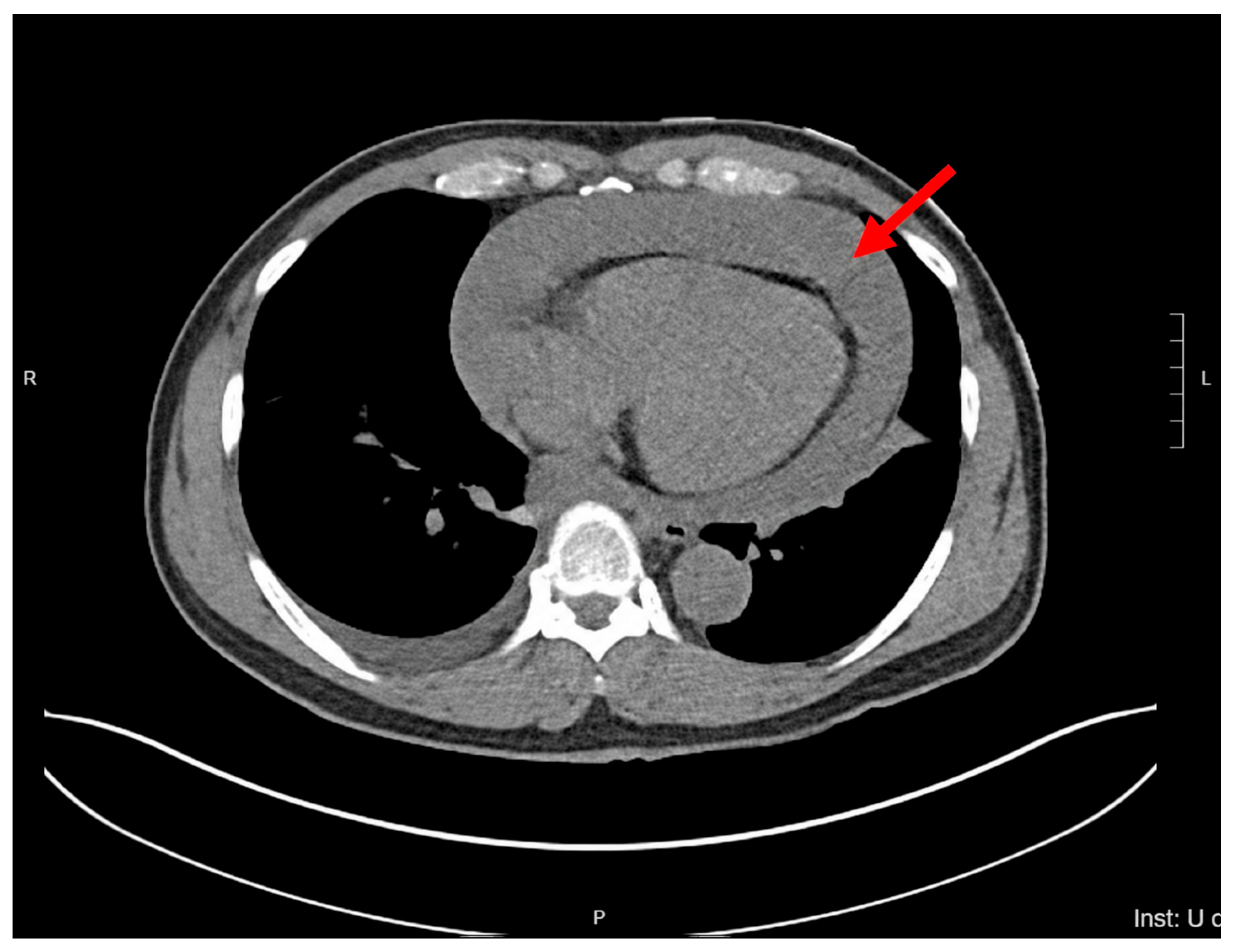
A 64-year-old man with a history of hypertension and a 20 pack-year smoking history presented with progressive dyspnea on exertion, bilateral lower extremity edema, abdominal distension, and fatigue. Evaluation revealed acute kidney injury, transaminitis, hyperbilirubinemia, and elevated cardiac biomarkers. A computed Tomography (CT) scan of the chest demonstrated cardiomegaly, bilateral pleural effusions, and a large pericardial effusion with tamponade physiology (Figure 1). Transthoracic echocardiography confirmed a large circumferential pericardial effusion with echocardiographic features of tamponade, including diastolic right ventricular collapse and a dilated inferior vena cava with minimal respiratory variation. Left ventricular ejection fraction was preserved at this time. He underwent urgent pericardiocentesis with drainage of 570 mL of serosanguineous fluid, with subsequent clinical improvement. Pericardial fluid cytology was negative for malignant cells. Extensive workup for infectious, malignant, and autoimmune causes including ANA, RF, HIV, QuantiFERON TB, and hepatitis panel showed no evidence of infectious, autoimmune, or malignant etiologies, and the underlying cause remained unclear.
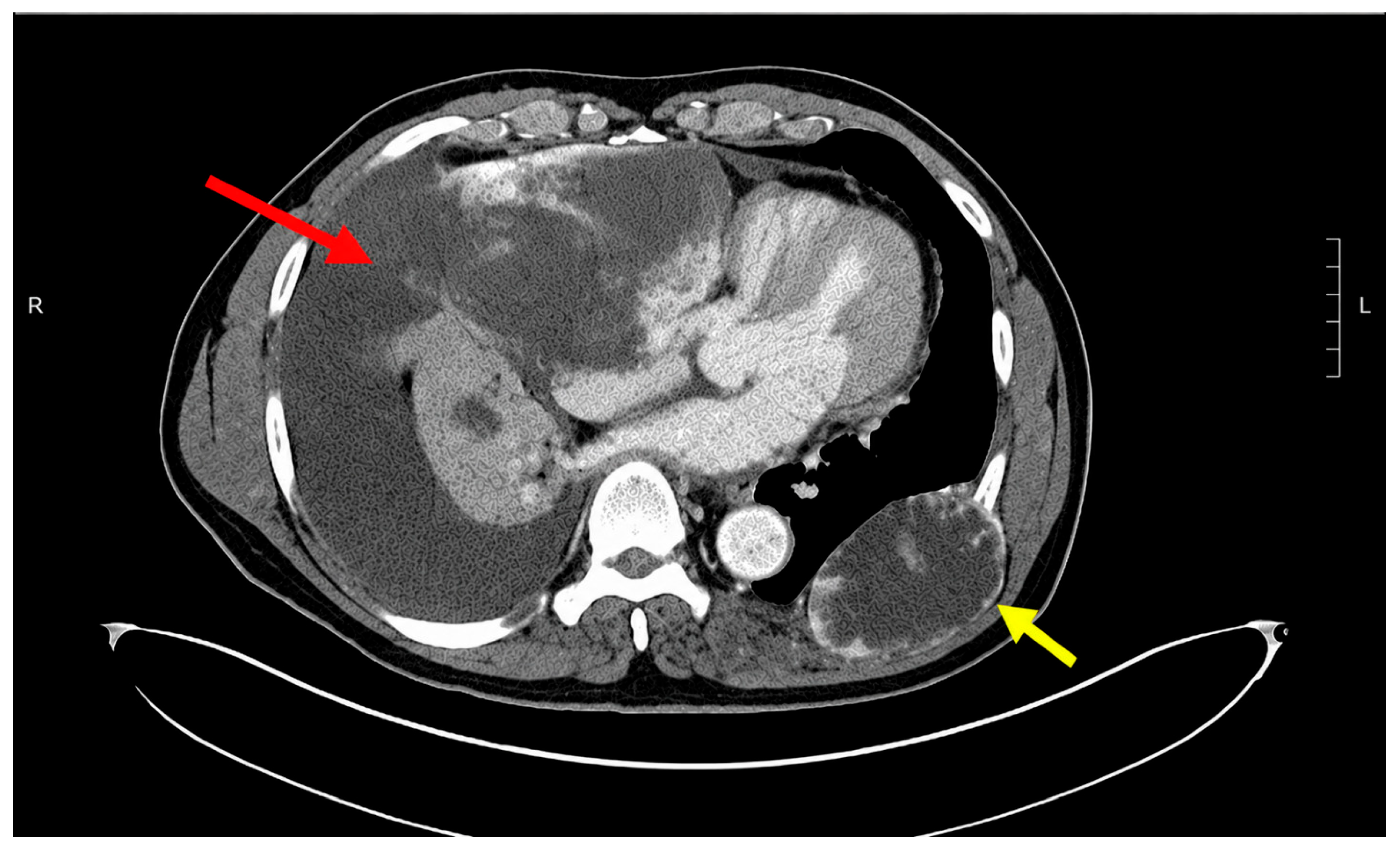
The patient remained asymptomatic for five months before re-presenting with worsening shortness of breath. CT angiography of the chest revealed a large right pleural effusion and identified a large heterogeneous mass measuring greater than 10 × 11 cm in the right mediastinum/right lung base, originating from the epicardial/pericardial region and extending into the mediastinum. The mass exerted significant mass effect on the right heart, displacing it into the left hemithorax. A concurrent expansile lytic lesion of the left posterior ninth rib measuring approximately 6–8 cm was also identified (Figure 2). These findings were not present on prior imaging. A chest tube was placed, and pleural fluid analysis showed hemorrhagic characteristics with atypical cells on cytology.
A whole-body bone scan demonstrated a destructive lesion involving the left posterior ninth rib. An ultrasound-guided core needle biopsy of the chest wall/rib lesion was performed. Histopathologic analysis revealed benign intravascular papillary endothelial proliferation consistent with Masson tumor.
Multidisciplinary tumor board discussion among Hematology/Oncology, Thoracic Surgery, and Interventional Radiology concluded that the discordance between benign pathology and aggressive imaging warranted further evaluation with PET-CT and cardiac MRI to assist with diagnosis which would require repeat biopsy planning.
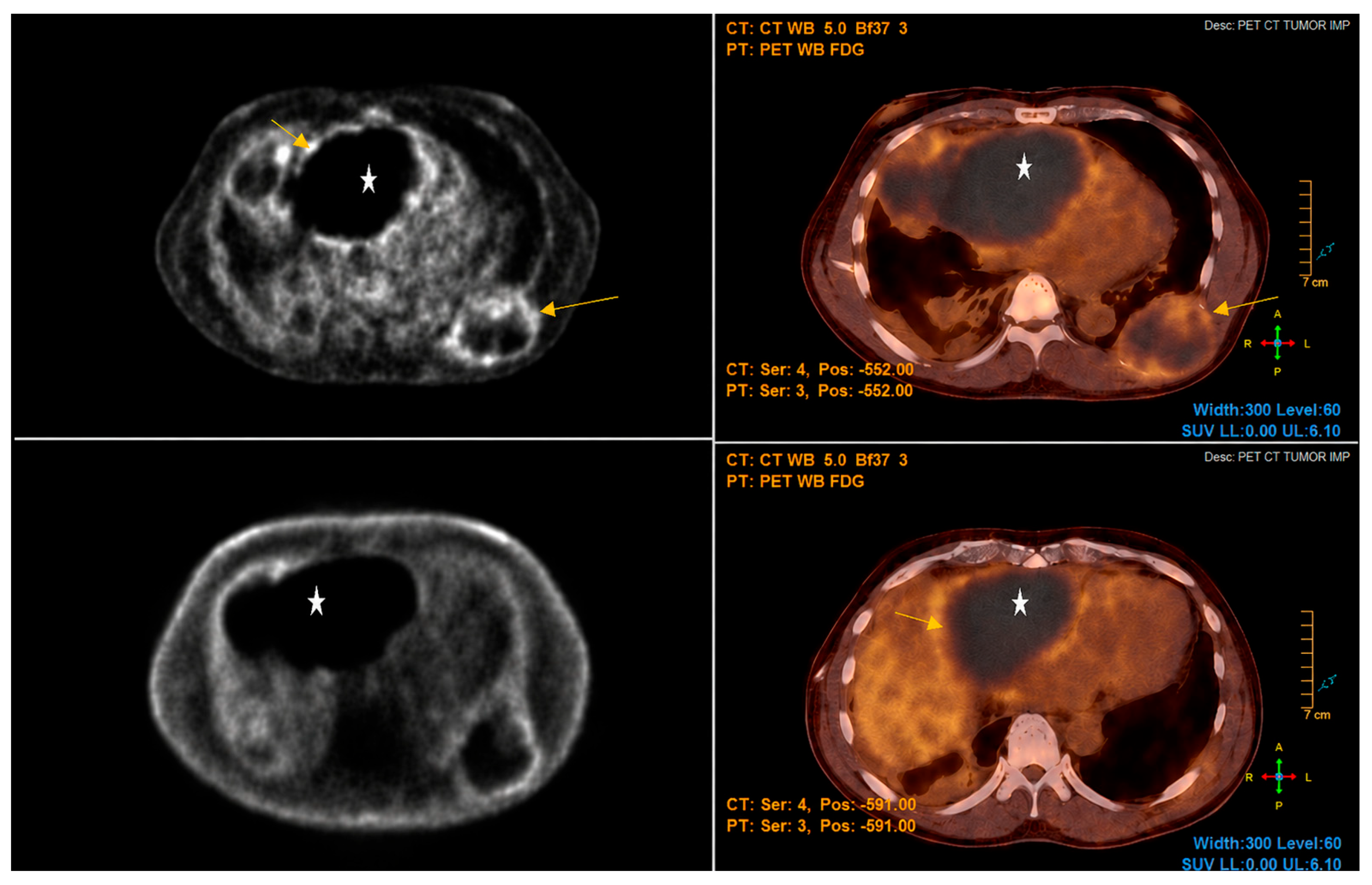
A PET-CT scan demonstrated that both lesions were largely photopenic with mild heterogeneous peripheral FDG uptake, with the most metabolically active region located at the periphery of the mediastinal mass (Figure 3).
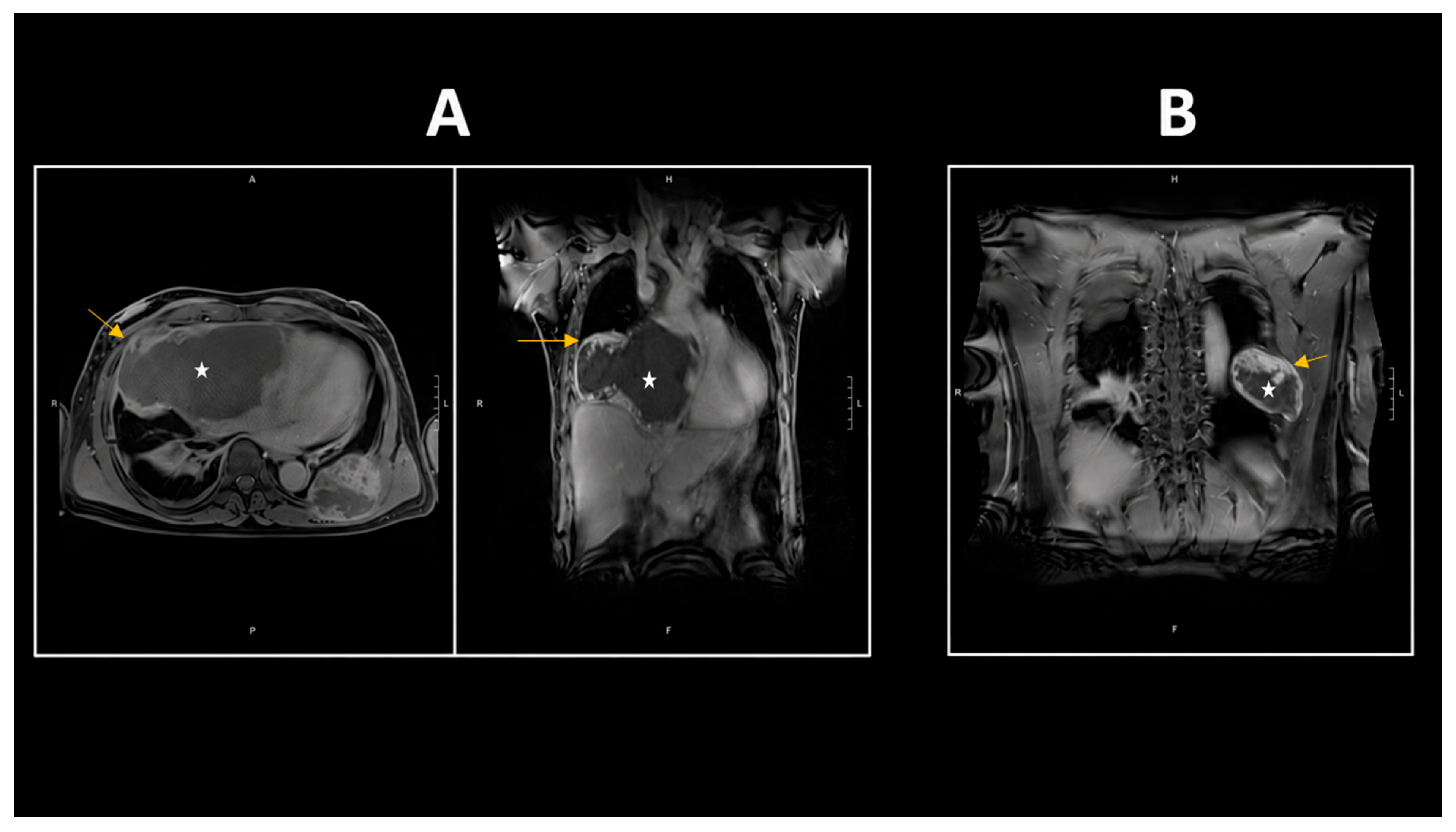
Cardiac MRI further characterized the mass as originating from the right anterior epicardial/pericardial region. The mass demonstrated heterogeneous signal intensity, with a centrally non-enhancing component suggestive of necrosis or hemorrhage and a peripherally enhancing nodular component (Figure 4). The mass involved adjacent structures including the ascending aorta and compressed the right atrium and right ventricle, impairing cardiac filling. Possible compression or involvement of the right coronary artery was also noted.
Given the persistent diagnostic uncertainty and high clinical suspicion of malignancy, a second, CT-guided core needle biopsy was performed targeting the metabolically active peripheral component of the rib lesion identified on PET-CT.
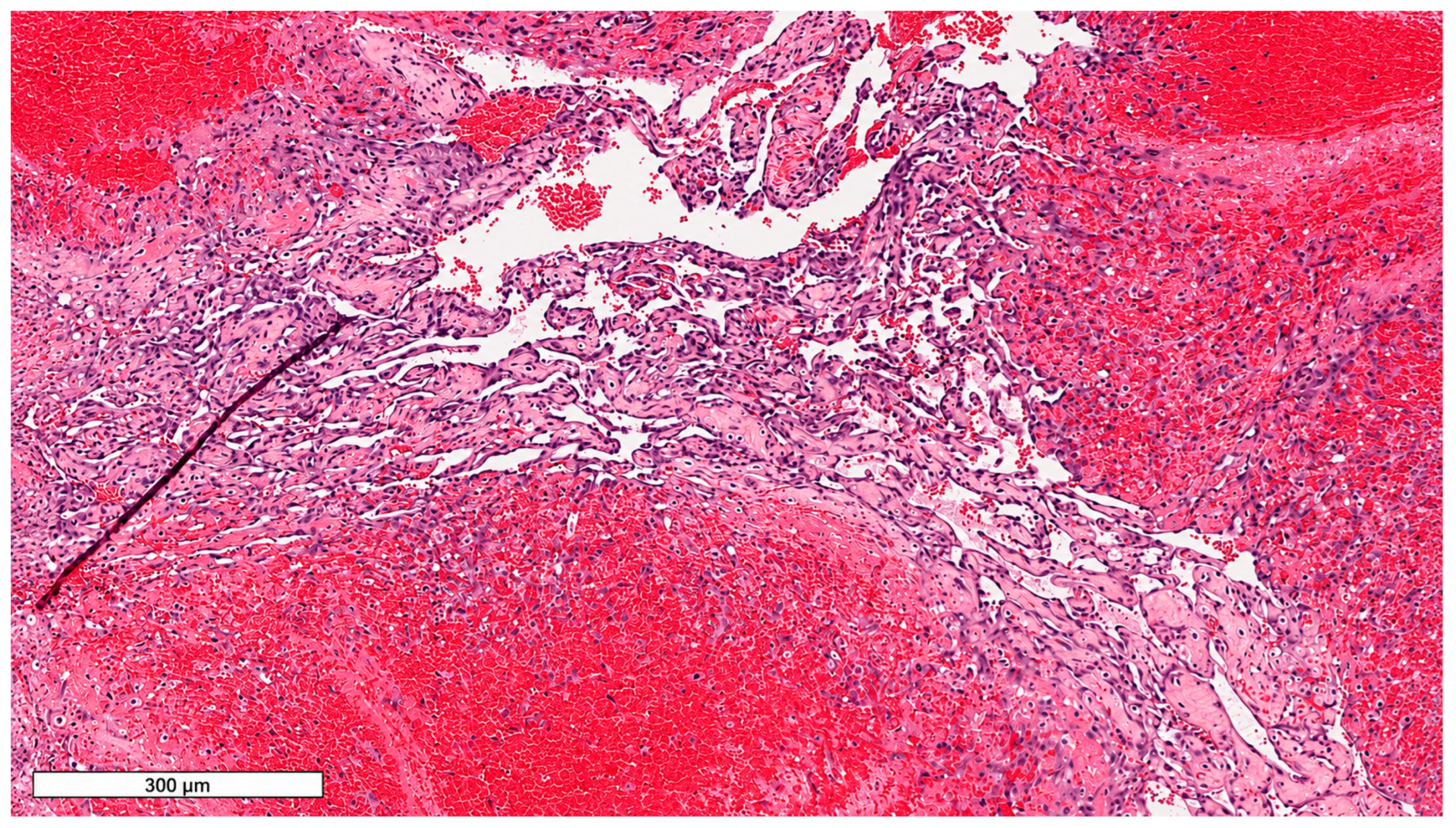
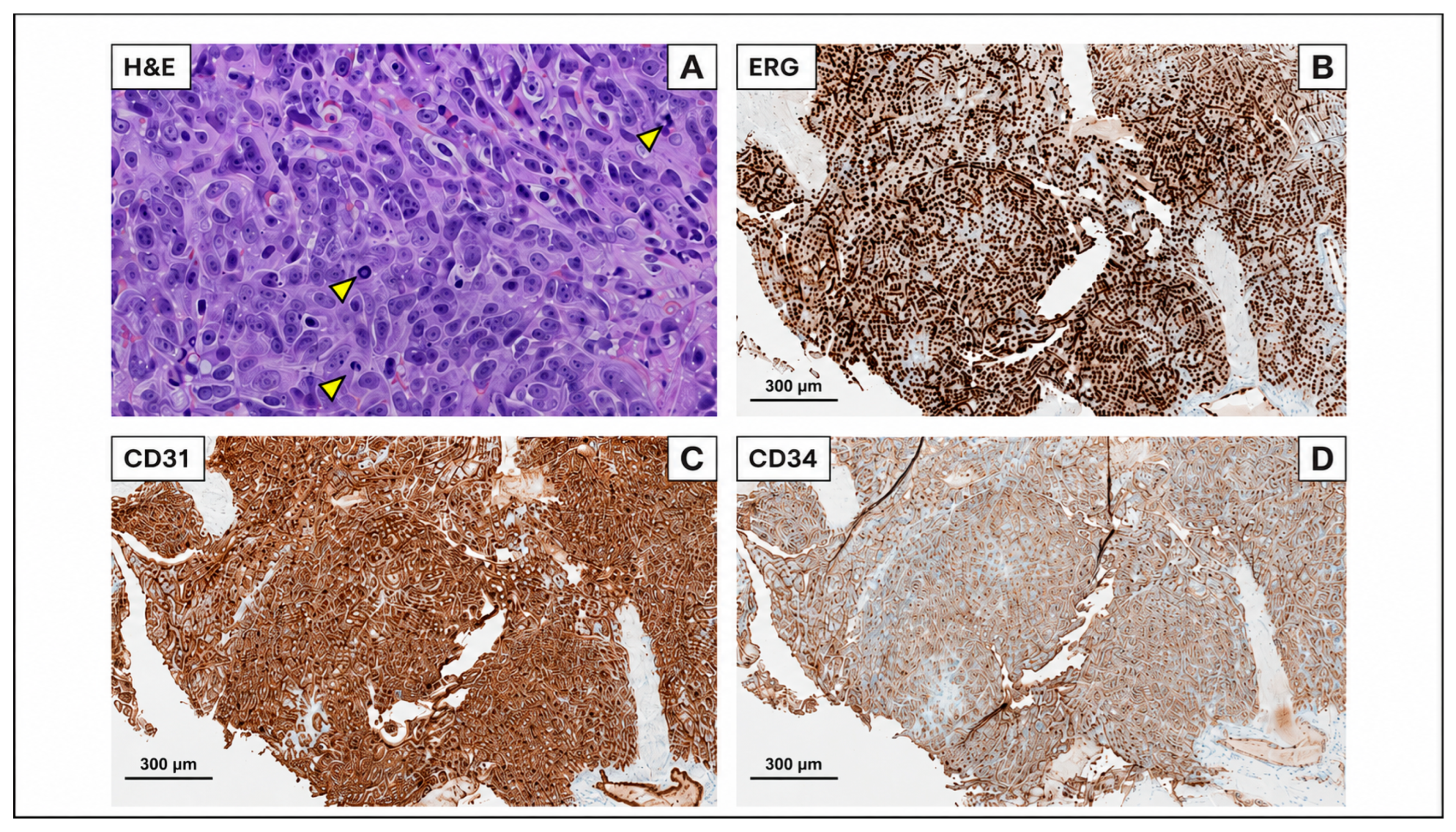
Histopathologic analysis of the repeat biopsy demonstrated an infiltrative mass of endothelial cells forming irregularly shaped, abortive vascular channels with abundant background hemorrhage (Figure 5). High-power examination revealed hypercellular regions with epithelioid morphology and frequent mitotic figures (Figure 6A). Immunohistochemical staining demonstrated diffuse positivity for the vascular markers ERG, CD31, and CD34 (Figure 6B–D), confirming endothelial differentiation and establishing the diagnosis of angiosarcoma.
During this admission, the patient’s course was complicated by progressive cardiopulmonary compromise. Repeat echocardiography demonstrated a new reduction in left ventricular ejection fraction to 40–45%, consistent with heart failure with reduced ejection fraction (HFrEF), along with right ventricular dysfunction. These findings were attributed to extrinsic compression of cardiac structures by the tumor and possible involvement of the right coronary artery. He also experienced recurrent pleural effusions and anemia requiring transfusion.
Given the extent of disease and high surgical risk, the patient was deemed not to be a candidate for surgical resection. He underwent palliative radiation therapy followed by initiation of systemic chemotherapy with weekly paclitaxel.
After receiving the first cycle of paclitaxel, the patient was scheduled for repeat dosing in three weeks. However, he was readmitted to the hospital due to worsening dyspnea. Given his guarded prognosis and progressive decline, the patient elected to transition to comfort-focused care and unfortunately passed away the week after.

3. Discussion

This case highlights the risk of false-negative biopsy results in the evaluation of heterogeneous vascular tumors. The initial ultrasound-guided biopsy demonstrated features consistent with Masson tumor (IPEH), a benign vascular lesion characterized by reactive endothelial proliferation [5,6]. Histologically, IPEH is distinguished from angiosarcoma by several key features: IPEH demonstrates papillary fronds of hyperplastic endothelial cells supported by fibrous stalks, confined within the vascular lumen, and intimately associated with organizing thrombus, without cytologic atypia, tissue necrosis, or mitotic activity [7,8]. In contrast, angiosarcoma is characterized by infiltrative growth beyond vessel walls, cytologic atypia with pleomorphic endothelial cells, frequent mitotic figures, multilayered endothelial proliferation, and areas of hemorrhage and necrosis [4,5]. A key factor contributing to the initial misdiagnosis was tumor necrosis and sampling error. Angiosarcoma frequently contains areas of hemorrhage and central necrosis [4]. Biopsy specimens obtained from these nonviable regions may fail to capture malignant cells and instead demonstrate reactive or benign-appearing vascular proliferation. In this case, the benign pathology was discordant with aggressive radiographic findings including a large mass with cardiac compression and a destructive rib lesion, and the ultrasound-guided biopsy was obtained from a region that did not represent the biologically active component of the tumor.
While IPEH is well recognized as a histologic mimic of angiosarcoma, the literature predominantly describes cases where IPEH is overdiagnosed as angiosarcoma, leading to unnecessary aggressive treatment [9,10,11]. The reverse scenario of angiosarcoma misdiagnosed as Masson tumor due to sampling of necrotic tumor regions has not been well described. This case therefore adds a novel perspective on the diagnostic relationship between these two entities, emphasizing that IPEH-like histology in the setting of aggressive imaging findings should prompt re-biopsy rather than reassurance.
Advanced imaging played a critical role in resolving this diagnostic dilemma. FDG-PET/CT has demonstrated high sensitivity and specificity in detecting metastatic sarcoma lesions and is increasingly recognized as a valuable tool for guiding biopsy through the visualization of areas with prominent metabolic activity [12,13]. In this case, PET-CT demonstrated predominantly photopenic lesions with focal peripheral FDG uptake, suggesting a necrotic tumor core with a viable tumor at the periphery, which directed the subsequent CT-guided biopsy. On echocardiography, cardiac angiosarcomas typically appear as echogenic nodular or lobulated masses in the right atrium with associated pericardial effusion [14,15]. The constellation of hemorrhagic pericardial effusion and a right-sided cardiac mass should raise strong suspicion for angiosarcoma. Cardiac MRI is the modality of choice for tissue characterization of cardiac masses, with angiosarcomas demonstrating variable T1 and T2 signal intensities due to hemorrhage and necrosis, and heterogeneous gadolinium enhancement [14,15]. The 2026 ACR Appropriateness Criteria confirm that MRI correctly classifies cardiac masses as benign versus malignant in 89–98% of cases [16]. In this case, the CMR pattern of central non-enhancement with peripheral nodular enhancement was critical in guiding the repeat biopsy to the viable tumor periphery. Notably, pericardial fluid cytology at the initial presentation was negative for malignant cells, which is consistent with the known low diagnostic yield of pericardial fluid cytology in cardiac angiosarcoma; a recent meta-analysis of pericardial effusion cytology found that 8.7% of specimens classified as “negative for malignancy” were ultimately associated with an underlying malignancy [6,17,18].
The immunohistochemical profile in this case is consistent with the established diagnostic approach for angiosarcoma. A recent systematic review of angiosarcoma biomarkers confirmed that ERG and CD31 are the most sensitive markers of endothelial differentiation, with sensitivities approaching 100% in angiosarcoma, whereas CD34 is variably expressed in approximately 50–60% of cases [19,20,21]. A panel-based approach using multiple endothelial markers is recommended, as progressive tumor dedifferentiation can lead to loss of individual markers. ERG, a nuclear stain, complements the cytoplasmic/membranous staining pattern of CD31, and their combined use strengthens diagnostic confidence, particularly in limited biopsy specimens. FLI-1, another ETS family transcription factor, is also expressed in vascular tumors but has limited specificity due to positivity in other neoplasms including melanoma and squamous cell carcinoma [20,22].
Management of cardiac angiosarcoma remains challenging, particularly in cases where the disease is locally advanced or unresectable at diagnosis. Surgical resection offers the best chance for improved survival but is often not feasible due to extensive local invasion [3]. In a SEER database analysis of 442 patients with primary cardiac sarcoma, the median overall survival was 7 months, with 1-year and 5-year survival rates of 40.7% and 9.8%, respectively [23]. Both surgery and chemotherapy were independently associated with improved survival. A systematic review of multimodality treatment in primary cardiac angiosarcoma found that median overall survival increased from 6 months with surgery alone to 13 months with adjuvant chemotherapy and 27 months with adjuvant chemo-radiotherapy [24]. In the French Sarcoma Group series of 124 patients, median overall survival was 17.2 months for the entire cohort, 38.8 months after complete resection, and 11.2 months in non-resected patients [25]. Paclitaxel has demonstrated activity in advanced angiosarcoma, with the ANGIOTAX phase II trial reporting a median survival of 8 months, and retrospective data suggest comparable efficacy to doxorubicin-based regimens [26,27,28]. In our patient, the extent of disease and associated surgical risk precluded operative intervention, and rapid clinical deterioration after the first cycle of paclitaxel led to a transition to comfort-focused care—an outcome consistent with the poor prognosis reported for unresectable cardiac angiosarcoma. Emerging technologies such as circulating tumor DNA (ctDNA) liquid biopsy may offer future promise for noninvasive disease detection and monitoring in sarcomas, though clinical utility in angiosarcoma specifically remains to be established [29,30].

4. Conclusions

This case underscores a critical diagnostic pitfall in vascular tumors, where biopsy of necrotic tumor regions may yield misleading benign results. Clinicians should maintain a high index of suspicion when imaging findings are discordant with pathology. PET-guided biopsy targeting metabolically active tumor regions is essential to avoid sampling errors and establish an accurate diagnosis. The immunohistochemical panel of ERG, CD31, and CD34 is critical for confirming endothelial differentiation in suspected angiosarcoma cases. As molecular profiling and liquid biopsy technologies continue to evolve, they may provide complementary diagnostic tools in cases with persistent diagnostic uncertainty. Early recognition of tumor heterogeneity and appropriate biopsy planning remain crucial in aggressive malignancies such as angiosarcoma, where delays in diagnosis may significantly impact patient outcomes.

Author Contributions

Conceptualization, H.O. and H.T.R.; writing—original draft preparation, H.O.; writing—review and editing, H.O., H.T.R., M.T., K.L., S.J.S., H.O., H.T.R., M.T., K.L. and S.J.S. All authors have read and agreed to the published version of the manuscript.

Funding

This research received no external funding.

Institutional Review Board Statement

Ethical review and approval of this study were not required by the Institutional Review Board of MedStar Health because this is a single-patient case report and is not considered human subject research under institutional policy. The patient’s information has been de-identified.

Informed Consent Statement

Written informed consent has been obtained from the patient to publish this paper.

Data Availability Statement

The original contributions presented in this study are included in the article. Further inquiries can be directed to the corresponding author.

Conflicts of Interest

The authors declare no conflicts of interest.

References

  1. Wang, T.K.M.; Klein, A.L.; Cremer, P.C.; Imazio, M.; Kohnstamm, S.; Luis, S.A.; Mardigyan, V.; Mukherjee, M.; Ordovas, K.; Vakamudi, S.; et al. 2025 Concise Clinical Guidance: An ACC Expert Consensus Statement on the Diagnosis and Management of Pericarditis: A Report of the American College of Cardiology Solution Set Oversight Committee. J. Am. Coll. Cardiol. 2025, 86, 2691–2719. [Google Scholar] [CrossRef] [PubMed]
  2. Cremer, P.C.; Klein, A.L.; Imazio, M. Diagnosis, Risk Stratification, and Treatment of Pericarditis: A Review. JAMA 2024, 332, 1090–1100. [Google Scholar] [CrossRef] [PubMed]
  3. Meyers, D.G.; Meyers, R.E.; Prendergast, T.W. The Usefulness of Diagnostic Tests on Pericardial Fluid. Chest 1997, 111, 1213–1221. [Google Scholar] [CrossRef] [PubMed]
  4. Li, Y.; Ahn, Y.M.; Niu, S. Primary cardiac angiosarcoma initially diagnosed on pericardial fluid cytology with histology and autopsy correlation. Diagn. Cytopathol. 2023, 51, E263–E266. [Google Scholar] [CrossRef] [PubMed]
  5. Lam, J.C.Y.; Liu, I.Y.H.; Ng, J.K.M.; Li, J.J.X. A Case Series and Literature Review of Angiosarcoma with Malignant Effusion—A Challenging Cytologic Diagnosis with Dire Prognostic Implications. Diagn. Cytopathol. 2025, 53, E119–E126. [Google Scholar] [CrossRef] [PubMed]
  6. Maleszewski, J.J.; Bois, M.C.; Bois, J.P.; Young, P.M.; Stulak, J.M.; Klarich, K.W. Neoplasia and the Heart: Pathological Review of Effects with Clinical and Radiological Correlation. J. Am. Coll. Cardiol. 2018, 72, 202–227. [Google Scholar] [CrossRef] [PubMed]
  7. Thomas, K.; Trinh, H.; Fei, A.; Khazai, L.; Sun, H.; Gan, Q.J. Cytologic Features of Angiosarcoma in Fluid Specimens: A Retrospective Study of 22 Cases. Cancer Cytopathol. 2025, 133, e70004. [Google Scholar] [CrossRef] [PubMed]
  8. Sullivan, A.; Dennis, A.S.C.; Rathod, K.; Jones, D.; Rosmini, S.; Manisty, C.; Bhattacharyya, S.; Foggo, V.; Conibear, J.; Koh, T.; et al. Pericardial Fluid Analysis in Diagnosis and Prognosis of Patients Who Underwent Pericardiocentesis. Am. J. Cardiol. 2023, 198, 79–87. [Google Scholar] [CrossRef] [PubMed]
  9. Farahani, S.J.; Baloch, Z. Are we ready to develop a tiered scheme for the effusion cytology? A comprehensive review and analysis of the literature. Diagn. Cytopathol. 2019, 47, 1145–1159. [Google Scholar] [CrossRef] [PubMed]
  10. Song, M.J.; Jo, U.; Jeong, J.S.; Cho, K.J.; Gong, G.; Cho, Y.M.; Song, J.S. Clinico-cytopathologic analysis of 574 Pericardial Effusion Specimens: Application of the International System for Reporting Serous Fluid Cytopathology (ISRSFC) and long-term clinical follow-up. Cancer Med. 2021, 10, 8899–8908. [Google Scholar] [CrossRef] [PubMed]
  11. Thway, K.; Jordan, S.; Fisher, C.; Nicholson, A.G. Updates in the approach to intrathoracic sarcomas. Histopathology 2015, 67, 755–770. [Google Scholar] [CrossRef] [PubMed]
  12. Young, R.J.; Brown, N.J.; Reed, M.W.; Hughes, D.; Woll, P.J. Angiosarcoma. Lancet Oncol. 2010, 11, 983–991. [Google Scholar] [CrossRef] [PubMed]
  13. Leon-Castillo, A.; Chrisinger, J.S.A.; Panse, G.; Samdani, R.T.; Ingram, D.R.; Ravi, V.; Prieto, V.G.; Wang, W.L.; Lazar, A.J. Index report of cutaneous angiosarcomas with strong positivity for tyrosinase mimicking melanoma with further evaluation of melanocytic markers in a large angiosarcoma series. J. Cutan. Pathol. 2017, 44, 692–697. [Google Scholar] [CrossRef] [PubMed]
  14. Sullivan, H.C.; Edgar, M.A.; Cohen, C.; Kovach, C.K.; HooKim, K.; Reid, M.D. The Utility of ERG, CD31 and CD34 in the Cytological Diagnosis of Angiosarcoma: An Analysis of 25 Cases. J. Clin. Pathol. 2015, 68, 44–50. [Google Scholar] [CrossRef] [PubMed]
  15. McKay, K.M.; Doyle, L.A.; Lazar, A.J.; Hornick, J.L. Expression of ERG, an Ets family transcription factor, distinguishes cutaneous angiosarcoma from histological mimics. Histopathology 2012, 61, 989–991. [Google Scholar] [CrossRef] [PubMed]
  16. Luong, H.T.T.; Vercammen, S.; de Marco, A.; de Rooster, H.; Cosma, A. Angiosarcoma: A Systematic Review of Biomarkers in Diagnosis, Prognosis, and Therapeutic Strategies. Front. Oncol. 2025, 15, 1623327. [Google Scholar] [CrossRef] [PubMed]
  17. Constantine, G.; Shan, K.; Flamm, S.D.; Sivananthan, M.U. Role of MRI in Clinical Cardiology. Lancet 2004, 363, 2162–2171. [Google Scholar] [CrossRef] [PubMed]
  18. Cai, Y.; Yang, H.; Yuan, D.; Jin, S.H.; Xu, J.; Hu, W.; Bai, Y.; Li, X.; Wang, Z.; Zhang, D.; et al. A Synthetic Cohort Analysis of Postoperative Management of Primary Cardiac Angiosarcoma and a Case Report. Front. Oncol. 2025, 15, 1625049. [Google Scholar] [CrossRef] [PubMed]
  19. National Comprehensive Cancer Network. NCCN Clinical Practice Guidelines in Oncology (NCCN Guidelines®): Soft Tissue Sarcoma; Version 3.2026; National Comprehensive Cancer Network: Plymouth Meeting, PA, USA, 2026; Available online: https://www.nccn.org/professionals/physician_gls/pdf/sarcoma.pdf (accessed on 11 June 2026).
  20. Penel, N.; Bui, B.N.; Bay, J.O.; Cupissol, D.; Ray-Coquard, I.; Piperno-Neumann, S.; Kerbrat, P.; Fournier, C.; Taieb, S.; Jimenez, M.; et al. Phase II Trial of Weekly Paclitaxel for Unresectable Angiosarcoma: The ANGIOTAX Study. J. Clin. Oncol. 2008, 26, 5269–5274. [Google Scholar] [CrossRef] [PubMed]
  21. Yin, K.; Luo, R.; Wei, Y.; Wang, F.; Zhang, Y.; Karlson, K.J.; Zhang, Z.; Reardon, M.J.; Dobrilovic, N. Survival Outcomes in Patients with Primary Cardiac Sarcoma in the United States. J. Thorac. Cardiovasc Surg. 2021, 162, 107–115.e2. [Google Scholar] [CrossRef] [PubMed]
  22. Isambert, N.; Ray-Coquard, I.; Italiano, A.; Rios, M.; Kerbrat, P.; Gauthier, M.; Blouet, A.; Chaigneau, L.; Duffaud, F.; Piperno-Neumann, S.; et al. Primary Cardiac Sarcomas: A Retrospective Study of the French Sarcoma Group. Eur. J. Cancer 2014, 50, 128–136. [Google Scholar] [CrossRef] [PubMed]
  23. Italiano, A.; Cioffi, A.; Penel, N.; Levra, M.G.; Delcambre, C.; Kalbacher, E.; Chevreau, C.; Bertucci, F.; Isambert, N.; Blay, J.Y.; et al. Comparison of Doxorubicin and Weekly Paclitaxel Efficacy in Metastatic Angiosarcomas. Cancer 2012, 118, 3330–3336. [Google Scholar] [CrossRef] [PubMed]
  24. Huntington, J.T.; Jones, C.; Liebner, D.A.; Chen, J.L.; Pollock, R.E. Angiosarcoma: A rare malignancy with protean clinical presentations. J. Surg. Oncol. 2015, 111, 941–950. [Google Scholar] [CrossRef] [PubMed]
  25. Kim, J.; Kim, Y.; Shin, J. Post-Traumatic Intravascular Papillary Endothelial Hyperplasia (Masson Tumor) of the Eyelid. J. Craniofacial Surg. 2026. [Google Scholar] [CrossRef] [PubMed]
  26. Ronen, S.; Ivan, D.; Torres-Cabala, C.A.; Curry, J.L.; Tetzlaff, M.T.; Aung, P.P.; Nagarajan, P.; Suster, S.; Prieto, V.G. Post-radiation vascular lesions of the breast. J. Cutan. Pathol. 2019, 46, 52–58. [Google Scholar] [CrossRef] [PubMed]
  27. Guilbert, M.C.; Frost, E.P.; Brock, J.E.; Lester, S.C. Distinguishing Papillary Endothelial Hyperplasia and Angiosarcoma on Core Needle Biopsy of the Breast: The Importance of Clinical and Radiologic Correlation. Breast J. 2018, 24, 487–492. [Google Scholar] [CrossRef] [PubMed]
  28. Kuo, T.; Sayers, C.P.; Rosai, J. Masson’s “Vegetant Intravascular Hemangioendothelioma”: A Lesion Often Mistaken for Angiosarcoma: Study of Seventeen Cases Located in the Skin and Soft Tissues. Cancer 1976, 38, 1227–1236. [Google Scholar] [CrossRef]
  29. Clearkin, K.P.; Enzinger, F.M. Intravascular Papillary Endothelial Hyperplasia. Arch. Pathol. Lab Med. 1976, 100, 441–444. [Google Scholar] [PubMed]
  30. Kjartansdóttir, S.; Malchau, E.; Berger, C.; Styring, E.; Bergh, P.; Wennergren, D. Low Overall Survival After Treatment for Angiosarcoma: A Single-Centre Retrospective Observational Cohort Study of 64 Patients. BMC Cancer 2025, 25, 1378. [Google Scholar] [CrossRef] [PubMed]
Figure 1. Axial contrast-enhanced CT of the chest demonstrating pericardial effusion. Axial CT image shows a circumferential low-attenuation fluid collection (arrow) surrounding the cardiac silhouette, consistent with pericardial effusion.
Reports 09 00201 g001
Figure 2. CTA chest demonstrating large mediastinal mass with mass effect. CTA demonstrates a large heterogeneous mass (>10 × 11 cm) in the right mediastinum/right lung base (Red arrow) causing significant mass effect on the right heart with leftward displacement. An expansile lytic lesion of the left posterior ninth rib (6–8 cm) is also noted (Yellow arrow).
Reports 09 00201 g002
Figure 3. Axial FDG PET/CT demonstrating predominantly photopenic mediastinal and left posterior ninth rib masses with peripheral metabolic activity. Axial fused FDG PET/CT images show a large mediastinal mass and associated left posterior ninth rib lesion that are largely photopenic (stars) with mild heterogeneous peripheral FDG uptake (arrows), suggesting central necrosis with viable tumor at the periphery.
Reports 09 00201 g003
Figure 4. Cardiac MRI demonstrating heterogeneous pericardial mass with mass effect. (A): Cardiac MRI shows a mass arising from the right anterior epicardial/pericardial region with central non-enhancement suggestive of necrosis (stars) and peripheral nodular enhancement (arrows), compressing the right atrium and right ventricle. (B): Left posterior ninth rib lesion with central non enhancement suggestive of necrosis (star) and peripheral enhancement (arrow).
Reports 09 00201 g004
Figure 5. H&E image of representative tumor. An infiltrative mass of endothelial cells forming irregularly shaped, abortive vessels with abundant background hemorrhage, characteristic of angiosarcoma. Scale bar: 300 µm.
Reports 09 00201 g005
Figure 6. Histopathologic and immunohistochemical characterization of angiosarcoma. (A) Hypercellular region with epithelioid morphology and multiple mitotic figures (arrowheads; H&E, 40×). (BD) Immunohistochemical stains demonstrating diffuse positivity for vascular markers ERG, CD31, and CD34, confirming endothelial differentiation. Scale bar: 300 µm.
Reports 09 00201 g006
Disclaimer/Publisher’s Note: The statements, opinions and data contained in all publications are solely those of the individual author(s) and contributor(s) and not of MDPI and/or the editor(s). MDPI and/or the editor(s) disclaim responsibility for any injury to people or property resulting from any ideas, methods, instructions or products referred to in the content.