1. Introduction and Clinical Significance
Acute angle-closure crisis is an ophthalmic emergency characterized by a sudden rise in intraocular pressure (IOP), leading to ocular pain, headache, nausea, corneal edema, and potential irreversible vision loss if not promptly treated. The condition typically occurs in anatomically predisposed eyes, with well-established risk factors including a shallow anterior chamber, short axial length, increased lens thickness, hyperopia, and a family history of angle closure [
1,
2,
3]. These anatomical features are often bilateral, explaining the frequent involvement of both eyes during acute events.
Drug-induced angle closure represents an important secondary form of this condition and is commonly bilateral due to systemic medication exposure [
4]. It may arise through pupillary block caused by mydriasis-inducing agents or through anterior rotation of the ciliary body and forward displacement of the iris–lens diaphragm, a mechanism associated with medications such as topiramate, phenothiazines, and sulfonamide derivatives [
4,
5,
6,
7,
8,
9,
10]. Early recognition of drug-induced angle closure is clinically important, as discontinuation of the offending agent can significantly influence the clinical course.
Tramadol, an opioid analgesic structurally related to morphine and codeine, is widely prescribed for moderate-to-severe pain, particularly in postoperative settings [
11,
12]. Its pharmacologic effects include µ-opioid receptor agonism and inhibition of serotonin and norepinephrine reuptake, mechanisms that may lead to pupillary dilation through opioid or adrenergic pathways [
13,
14,
15]. In anatomically predisposed individuals, such effects may lower the threshold for an acute angle-closure event.
Acute angle-closure glaucoma associated with tramadol appears to be rare and has been reported only once in the literature, exclusively following subcutaneous administration [
16]. We report a case of bilateral acute angle-closure crisis following oral tramadol use in a hyperopic woman shortly after an uneventful robotic-assisted hysterectomy, highlighting a previously unreported route of exposure in this clinical context.
2. Case Presentation
A 38-year-old woman underwent an uncomplicated robotic-assisted total laparoscopic hysterectomy for adenomyosis. The surgical procedure and immediate postoperative period were uneventful, and she remained hemodynamically stable throughout. During the first 48 h after surgery, she received routine postoperative analgesia, including diclofenac 75 mg IM, dipyrone 1250 mg PO, and paracetamol 1000 mg IV, all of which provided adequate pain relief. On postoperative day 3, she met discharge criteria and was released home with oral Tramadol (Zaldiar 37.5/325 mg) prescribed for continued pain control.
Within 24 h of initiating Tramadol, the patient developed progressive and severe headache accompanied by nausea, vomiting, periocular pain, and blurred vision, symptoms that she initially interpreted as postoperative discomfort or dehydration. Due to the increasing intensity of her complaints, she sought medical evaluation and was assessed sequentially by an obstetrician-gynecologist, an internist, and a neurologist. Despite her significant symptoms, neurological examination remained unremarkable, and a CT scan of the brain demonstrated an empty sella but no acute intracranial abnormalities. No ocular etiology was initially suspected, and the patient continued to deteriorate symptomatically.
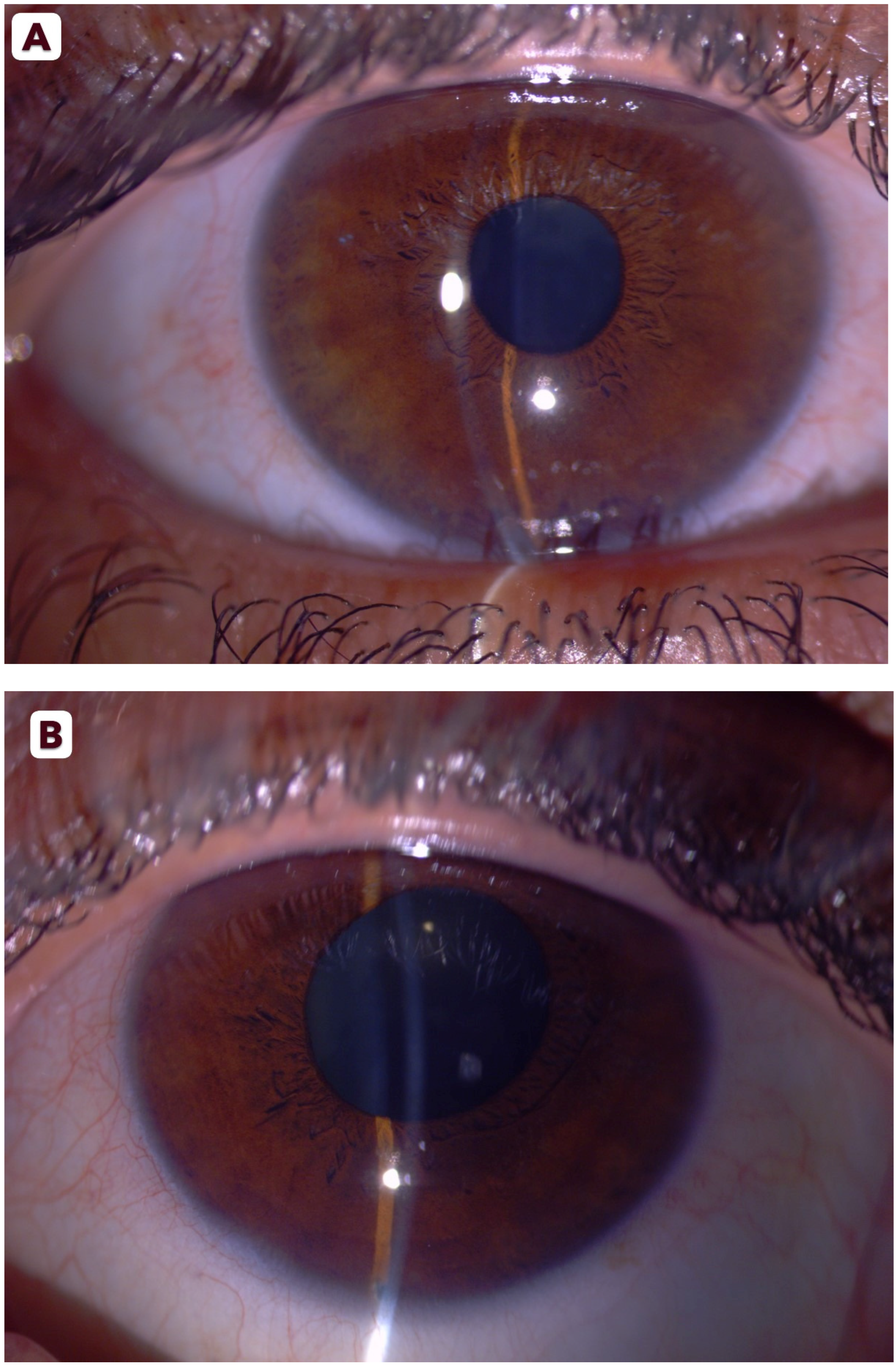
Upon ophthalmic referral, she reported a history of amblyopia in the left eye and bilateral hyperopia. Corrected visual acuity measured 20/40 OD and 20/60 OS. Slit-lamp examination revealed bilateral conjunctival injection, epithelial corneal edema, and shallow anterior chambers (
Figure 1A,B). Pupils in both eyes were mid-dilated and sluggishly reactive to light. IOP measured 45 mmHg OD and 39 mmHg OS using Goldmann applanation tonometry. Gonioscopy demonstrated 360° appositional angle closure bilaterally without peripheral anterior synechiae. Bilateral fundus examination revealed healthy, pink optic disks with a C/D ratio of 0.4 OU, without retinal pathology or signs of glaucomatous optic neuropathy.
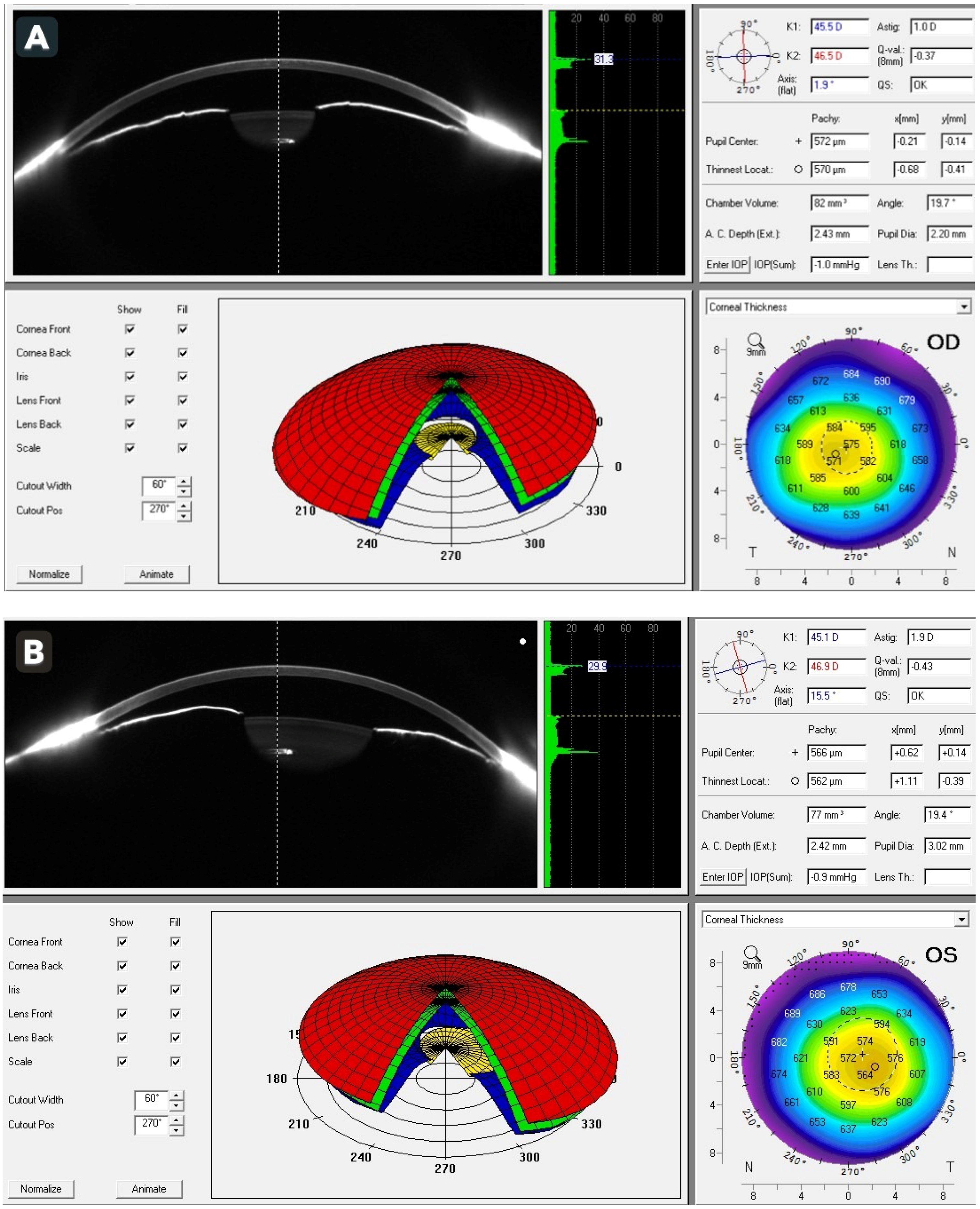
Treatment was initiated immediately with intravenous acetazolamide together with intensive topical therapy, including dorzolamide 2%, timolol 0.5%, brimonidine 0.15%, latanoprost 0.005%, and pilocarpine 2%. Tramadol was discontinued at once due to the suspected drug-induced mechanism. The patient tolerated the treatment well, and over the subsequent several hours, IOP decreased significantly to 12 mmHg OD and 29 mmHg OS, accompanied by noticeable clinical improvement in corneal clarity and subjective relief of ocular discomfort. To further characterize the anterior chamber configuration after IOP reduction, additional anterior segment imaging was performed. Scheimpflug imaging (Pentacam, Oculus Optikgeräte GmbH, Wetzlar, Germany) demonstrated markedly shallow anterior chambers with chamber volumes of 82 mm
3 OD and 77 mm
3 OS and extremely narrow chamber angles measuring 19.7° and 19.4°, respectively. These findings supported the diagnosis of anatomical predisposition to angle closure and were consistent with hyperopic ocular morphology (
Figure 2A,B). Auto-refraction further confirmed hyperopia, revealing +3.75 D OD and +4.75 D OS. Biometric assessment demonstrated short axial lengths, measuring 20.34 mm OD and 19.99 mm OS, reinforcing the presence of a structural susceptibility to angle-closure mechanisms and correlating well with the patient’s refractive and anterior segment characteristics.
Within 24 h of initiating medical therapy and discontinuing Tramadol, the patient became completely asymptomatic. Her headache, nausea, and periocular discomfort had resolved, and she reported a marked improvement in visual clarity. Visual acuity improved significantly, measuring 20/20 OD and 20/30 OS, and IOP stabilized at 10 mmHg bilaterally. With IOP adequately controlled and the corneas sufficiently clear to permit safe laser treatment, Nd:YAG laser peripheral iridotomies were performed in both eyes without complication. The procedures were well tolerated and resulted in immediate deepening of the anterior chamber periphery on clinical examination.
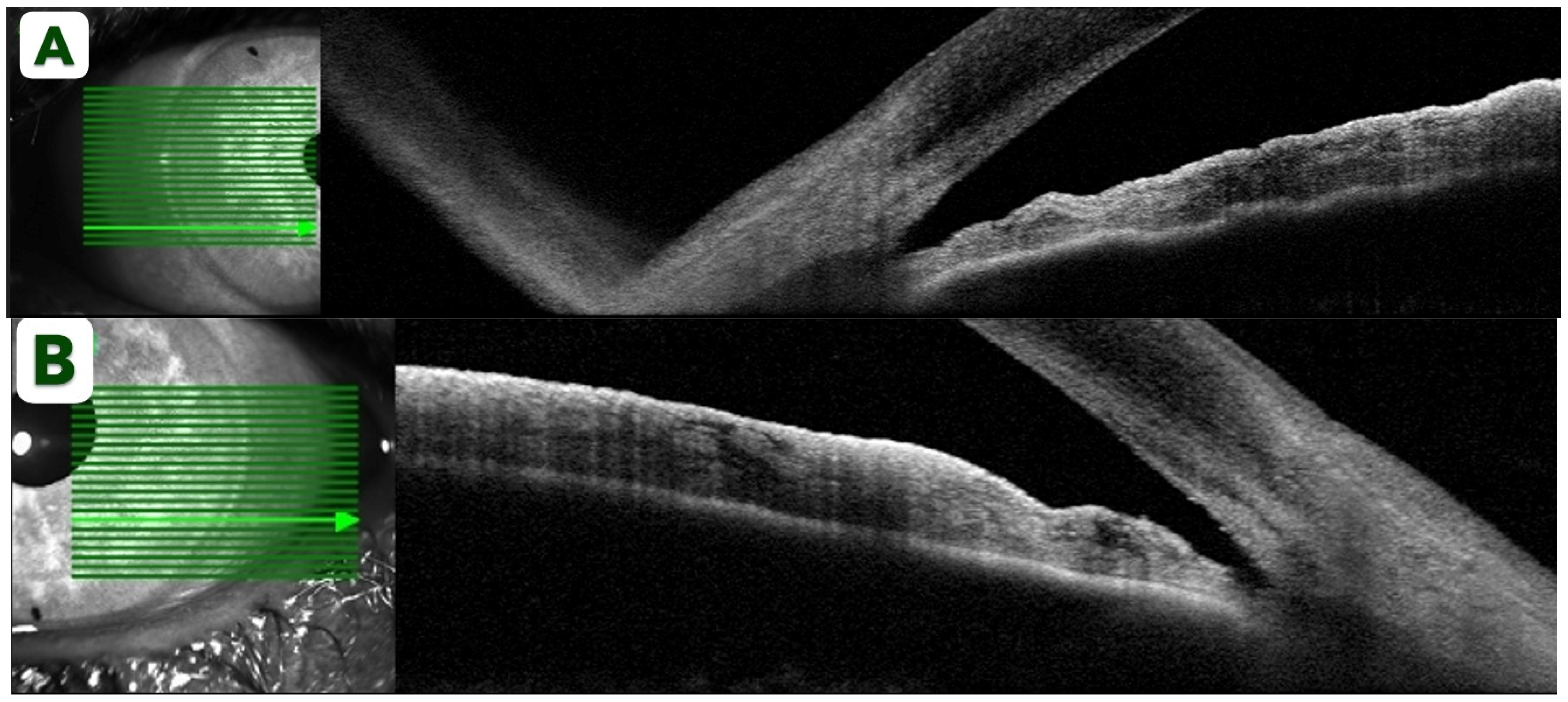
Post-procedure anterior segment imaging was obtained to evaluate the anatomical response. AS-OCT (Spectralis AS-OCT, Heidelberg Engineering GmbH, Heidelberg, Germany) demonstrated partially opened angles without evidence of peripheral anterior synechiae (
Figure 3A,B). Although automated angle metrics are not provided by this device, manual measurements were performed to quantify angle opening. The mean angle opening distance at 500 µm from the scleral spur (AOD500) measured 0.20 mm in the right eye and 0.23 mm in the left eye, while the mean angle recess area at 500 µm (ARA500) was 0.09 mm
2 and 0.10 mm
2, respectively. These findings objectively confirm relief of the pupillary block component and restoration of aqueous outflow pathways [
17]. Over the subsequent days, the patient continued to recover, and all topical medications were gradually tapered.
At one-month follow-up, IOP remained stable at 11 mmHg OU without the need for ongoing glaucoma therapy. OCT RNFL and standard automated perimetry were within normal limits, with no structural or functional evidence of glaucomatous damage, indicating complete resolution of the acute event and favorable mid-term outcomes. The patient expressed satisfaction with the outcome, and during subsequent follow-up no additional ocular complications or recurrent symptoms were observed.
3. Discussion
The acute angle-closure glaucoma crisis, often referred to as acute angle-closure glaucoma (AACG), is a sight-threatening ophthalmic emergency characterized by a rapid and substantial elevation of IOP due to abrupt obstruction of aqueous humor outflow. If not recognized and treated promptly, AACG may lead to irreversible optic nerve damage and permanent visual loss. The global burden of this condition is considerable, particularly in densely populated regions of Asia, where Primary Angle-Closure Glaucoma (PACG) is responsible for visual impairment and blindness at rates comparable to, or exceeding, those of primary open-angle glaucoma worldwide [
1,
2]. Importantly, a substantial proportion of AACG episodes have been reported as adverse reactions to systemic or topical medications, with some studies suggesting that up to one-third of acute angle-closure events may be drug-related. Recognition of the precipitating mechanism is therefore critical, as subsequent management strategies differ substantially according to the underlying pathophysiology [
3,
4].
Drug-induced AACG is broadly classified into two principal mechanisms: pupillary block and non-pupillary block. The pupillary block mechanism is the most common and typically occurs in eyes with pre-existing narrow iridocorneal angles. Systemic or topical agents with α
1-adrenergic or anticholinergic properties may induce pupillary dilation, leading to obstruction of aqueous humor flow at the pupil, posterior pressure buildup, and forward displacement of the iris–lens diaphragm with secondary trabecular meshwork obstruction [
2,
3,
4]. Numerous psychotropic agents, including tricyclic antidepressants, selective serotonin reuptake inhibitors, serotonin–norepinephrine reuptake inhibitors, and antipsychotics, have been implicated through this pathway, with serotonergic and noradrenergic activity contributing to passive or active mydriasis. In such cases, management consists of discontinuation of the offending medication and laser peripheral iridotomy, which is typically curative by equalizing pressure between the posterior and anterior chambers [
2,
3,
4].
In contrast, the non-pupillary block mechanism represents an idiosyncratic drug reaction that may occur even in eyes without pre-existing narrow angles and is frequently bilateral. This mechanism involves ciliary body edema and choroidal effusion, resulting in anterior rotation of the ciliary body, forward displacement of the lens–iris diaphragm, and secondary narrowing of the anterior chamber angle. Sulfonamide-derived medications, particularly the anticonvulsant topiramate [
5,
6,
7,
8,
9,
10], are classically associated with this mechanism, which may also be accompanied by an acute myopic shift due to zonular relaxation. Several newer psychotropic agents, including venlafaxine, escitalopram, and bupropion, have also been linked to uveal effusion–related angle closure [
5,
6,
7,
8,
9,
10]. Because pupillary block is not the primary mechanism, laser peripheral iridotomy is ineffective in these cases, and management relies on immediate cessation of the causative drug, IOP reduction, and cycloplegia to deepen the anterior chamber [
2,
3,
4,
18,
19,
20,
21].
Large population-based studies further emphasize the clinical relevance of drug-induced AACG. A recent analysis utilizing Korean national data identified 61 medications significantly associated with acute angle-closure events, with the highest odds ratios observed for centrally acting agents such as sumatriptan and duloxetine, in addition to topiramate [
4]. Other implicated drugs included antidepressants, anxiolytics, antihistamines, and even non–central nervous system agents such as lactulose, with a median onset of AAC occurring within days to weeks after drug initiation. Demographic risk factors included older age and female sex, while anatomical predispositions such as short axial length, hyperopia, and shallow anterior chambers further increased susceptibility [
3,
4,
18,
19,
20,
21].
A summary of the major pharmacologic classes, representative agents, and proposed mechanisms associated with drug-induced acute angle closure is presented in
Table 1, highlighting the diverse pathways through which medications may precipitate this potentially devastating condition.
Tramadol, an opioid analgesic widely prescribed for moderate-to-severe pain, is classically associated with miosis as part of its typical opioid effect [
11,
12]. However, paradoxical mydriasis has been reported in specific clinical settings, particularly in cases of overdose, altered metabolism, or hypoxic states, reflecting its complex pharmacologic profile that extends beyond pure opioid receptor agonism [
13,
14,
15]. Tramadol metabolism involves multiple CYP450 pathways, and interindividual variations may potentiate adrenergic or serotonergic effects leading to mydriasis or forward rotation of the iris-lens diaphragm [
11,
12]. Such mechanisms mirror other drug-induced crises, including those associated with topiramate and sulfonamide derivatives
Tramadol exerts additional serotonergic and noradrenergic reuptake inhibition, which may influence autonomic control of the pupil and predispose susceptible individuals to pupillary dilation [
12]. Mydriasis is a well-established precipitating factor for acute angle closure in anatomically predisposed eyes, as it promotes iris–lens apposition, pupillary block, and abrupt obstruction of aqueous humor outflow, resulting in a rapid rise in intraocular pressure [
2,
18,
19,
20,
21]. Accordingly, the American Academy of Family Physicians emphasizes medication-induced pupillary dilation as one of the most common triggers of acute angle-closure glaucoma in susceptible patients, underscoring the clinical relevance of this mechanism [
18].
Although tramadol was not identified among the 61 medications associated with acute angle closure in the population-based analysis [
4], its central nervous system activity and combined serotonergic and noradrenergic effects place it within a broader pharmacological category that has previously been linked to angle-closure events.
To date, only a single case in the literature has described acute angle-closure glaucoma following Tramadol administration [
16]. Mahmoud et al. reported a case of bilateral AACG occurring after subcutaneous Tramadol injections in a previously healthy 42-year-old man who presented with severe bilateral visual loss, headache, and vomiting several hours after drug administration. The clinical presentation was notable for markedly elevated intraocular pressure, mid-dilated pupils, corneal edema, and closed angles confirmed by gonioscopy and AS-OCT. The attack resolved following prompt medical treatment, discontinuation of Tramadol, and subsequent bilateral Nd:YAG laser peripheral iridotomy, with full visual recovery. The authors proposed that Tramadol may precipitate AACG through paradoxical mydriasis rather than its typical miotic opioid effect, mediated by adrenergic stimulation and inhibition of serotonin and noradrenaline reuptake [
16].
In the present case, the patient’s markedly short axial lengths and significant hyperopia represent dominant predisposing factors for acute pupillary block, placing the eyes at the extreme end of anatomical susceptibility to angle closure. In such configurations, even minimal pupillary dilation may be sufficient to precipitate an acute event. The rapid onset of bilateral symptoms shortly after tramadol initiation suggests that the medication may have contributed to triggering the attack in this highly vulnerable setting. We acknowledge the absence of detailed dose–response information, including exact dosing frequency and cumulative exposure, and the limited ability to isolate its effect from overlapping perioperative factors. Postoperative pain, anxiety, sympathetic activation, and low-light environments, are well recognized causes of physiologic mydriasis and likely played a role in lowering the threshold for angle closure. Tramadol, through its central serotonergic and noradrenergic effects, may therefore be best viewed as a contributory or permissive factor rather than the sole causative agent. This case highlights that even medications not traditionally considered high risk may precipitate acute angle-closure crises in anatomically predisposed individuals, particularly when central nervous system–active agents are involved.
Importantly, the patient underwent multiple evaluations before ophthalmic referral, including neurological and systemic assessments, without recognition of the underlying ocular cause. Earlier consideration of an ophthalmic etiology in patients presenting with headache, nausea, vomiting, or blurred vision following recent medication changes may facilitate more timely referral to an eye-care professional and potentially prevent unnecessary investigations. Increased awareness of drug-induced angle-closure events across medical specialties may therefore improve diagnostic efficiency and patient outcomes.