1. Introduction
The illicit trafficking of nuclear and radioactive materials remains a persistent global security concern. Incidents involving materials outside regulatory control continue to be reported annually, highlighting vulnerabilities in storage, transport, and border inspection systems [
1]. Shielded nuclear materials, particularly neutron-emitting sources, pose a significant detection challenge, as dense or hydrogen-rich materials can attenuate emissions and reduce the effectiveness of conventional monitoring systems [
2].
Current detection technologies deployed at borders and ports rely primarily on scintillation-based radiation portal monitors (RPMs), which are effective for unshielded gamma-emitting sources but struggle to detect shielded special nuclear materials (SNM). Active interrogation systems can overcome shielding effects but are costly, complex, and require strict safety controls. These limitations motivate the exploration of alternative detection concepts capable of identifying shielded neutron sources in a passive, low-cost manner [
3].
Superheated liquid detectors (SLDs) offer several advantages for this purpose. Their sensitivity to fast neutrons, combined with intrinsic insensitivity to gamma radiation, makes them attractive for environments where benign gamma backgrounds or shielding complicate detection [
4]. SLDs have been extensively used in dark matter searches, but their application to nuclear security remains underexplored. In particular, integrating acoustic and optical readout systems may enhance detection reliability and provide redundancy in challenging inspection scenarios.
Unlike previous SIMPLE studies focused on dark matter searches, this study investigates the feasibility of using SLDs to detect shielded neutron sources relevant to illicit trafficking scenarios. We evaluate detector response under various attenuating materials, implement a machine-learning-based optical detection algorithm, and compare acoustic and optical performance. The remainder of the paper is organized as follows:
Section 2 provides background on nuclear trafficking and detection technologies;
Section 3 describes the detector fabrication and instrumentation;
Section 4 presents experimental results;
Section 5 discusses implications and limitations; and
Section 6 summarizes conclusions.
2. Background
2.1. International Nuclear Context
Established in 1995, the Incident and Trafficking Database (ITDB) serves as the IAEA’s primary system for reporting and analyzing unauthorized activities involving nuclear and other radioactive materials outside regulatory control. It supports IAEA member states and select international organizations in countering illicit trafficking and enhancing global nuclear security [
5].
The ITDB records a wide array of incidents, including the theft, loss, unauthorized possession, use, transfer, or disposal of nuclear materials. It also documents incidents involving materials falsely claimed to be radioactive, such as scams and fraudulent activities [
2,
6].
The database covers all nuclear materials defined by the IAEA statute, including uranium, plutonium, thorium, radioisotopes (both natural and artificial), and contaminated materials like radioactive scrap metal. Incidents are categorized into three groups:
Group I—Incidents confirmed or likely linked to trafficking or malicious use.
Group II—Incidents with undetermined intent.
Group III—Incidents not associated with trafficking or malicious use.
Between 1993 and 2022, the ITDB recorded 4075 reported incidents, with 344 in Group I, 1036 in Group II, and 2695 in Group III [
2].
In 2022, 5 out of 146 reported incidents were confirmed to be linked to trafficking or malicious intent, including 3 scams [
2,
3]. These incidents often involve attempts to sell materials such as highly enriched uranium, plutonium, and neutron sources—detected primarily through undercover operations.
Approximately 47% of Group I incidents involve nuclear materials, 37% involve other radioactive materials, and 16% involve fraudulent non-radioactive materials. Due to the covert nature of these events, actual trafficking cases may be underreported, necessitating stronger detection and enforcement systems [
2].
These incidents lack sufficient evidence to confirm malicious intent. They frequently involve stolen or missing materials, often representing the initial stage of a potential trafficking event. Such incidents reveal vulnerabilities in security at facilities, during storage, or in transit [
2].
In 2022, radioactive sources made up 87.5% of Group II incidents, including two Category 2 sources and one Category 3 source.
Group III includes incidents definitively not linked to malicious use or trafficking. Common examples include unauthorized disposal, such as radioactive sources in scrap metal; unintentional shipment, in which contaminated material crosses borders; or the discovery of uncontrolled radioactive sources [
2].
Despite improved detection technologies (e.g., radiation portal monitors), these cases underscore gaps in control and disposal systems. Indeed, 53% of these incidents involved radioactive sources, 10% involved nuclear materials, and the rest involved contaminated or fraudulent materials.
2.2. Existing Detection Technologies
Detection technologies are critical in identifying radioactive materials outside regulatory control. Development priorities include [
7]:
Detecting shielded special nuclear materials (SNM)
Long-range detection (~100 m)
Cost-effective, sensitive devices
Robust handheld isotopic sensors
Active inspection systems for cargo
Detection methods fall into two categories:
Passive Detection: Measures natural radiation emissions. These systems are simpler and cost-effective but are prone to false alarms due to naturally occurring radioactive material (NORM). Spectroscopic systems can mitigate this by distinguishing NORM [
8].
Active Detection: Involves inducing nuclear reactions using high-energy radiation (e.g., neutrons, X-rays), enabling identification of shielded SNM. While more effective, these methods are costly and can pose safety risks [
9].
Each approach has trade-offs. Passive systems are easy to deploy but struggle with shielded sources. Active systems provide better results but require careful application due to safety and cost concerns [
7,
8].
More effective systems are deployed at airports, ports, and borders, especially maritime facilities, where about 80% of global trade occurs [
10,
11].
Radiation portal monitors (RPMs) are the standard at shipping terminals. These passive detectors scan vehicles for gamma and neutron emissions in under a minute. Alarms are triggered when levels exceed thresholds [
12]. Authorities then compare the container’s radiation profile to its declared contents to confirm whether it is a false, innocent, or non-innocent alarm.
RPMs typically use polyvinyl-toluene scintillators with photomultiplier tubes but are frequently triggered by benign NORM (e.g., cat litter with potassium). Research suggests a ratio-based detection criterion could reduce false alarms [
13].
Active detection systems such as the “Nuclear Car Wash” illuminate cargo containers with neutron generators. Detectors then identify delayed gamma rays and neutrons produced via fission [
14].
Another method involves photo-fission using a 9 MV electron linear accelerator to produce high-energy X-rays, sufficient to trigger fission without producing neutrons in benign cargo [
14].
Limitations:
Shielding drastically reduces gamma signatures.
Neutron moderation in cargo complicates spectral interpretation.
Many systems lack portability or affordability for widespread deployment.
Superheated emulsion droplets of halocarbons suspended in a medium can detect fast neutrons via nucleation, offering high sensitivity and radiation discrimination.
This approach mirrors detectors used in the SIMPLE dark matter experiment, where bubble formation from radiation creates an acoustic signal recorded by microphones. Adding optical confirmation could enhance detection reliability [
15,
16].
These technologies point toward the potential development of low-cost, portable, passive detectors capable of identifying shielded SNM, addressing many shortcomings of existing detection systems.
Advantages of Superheated Liquid Detectors
SLDs offer:
Strong sensitivity to fast neutrons
Intrinsic insensitivity to gamma radiation
Low cost and simple construction
Passive operation without external radiation sources
Compatibility with acoustic and optical readout
These characteristics motivate their evaluation for detecting shielded neutron-emitting materials in illicit trafficking scenarios.
3. Materials and Methods
3.1. Detector Fabrication and Principle
The detectors used in this work are based on superheated liquid technology, initially inspired by bubble chambers as introduced by Glaser [
17,
18].
The working principle of superheated droplet detectors (SDDs) relies on superheated droplets of C3F8 (octafluoropropane) suspended in a gel matrix. Ionizing radiation interacting with the droplets induces nucleation, forming vapor bubbles that can be acoustically and optically detected. The droplets are maintained in a metastable superheated state, achieved by dispersing the active liquid into fine droplets through emulsification, which minimizes heterogeneous nucleation.
Based on chemical stability, environmental considerations, and availability, octafluoropropane (C
3F
8, R-218) (Air Liquide, Marseille, France) was selected as the active halocarbon. C
3F
8 is chlorine-free, thus avoiding the environmental impact associated with chlorofluorocarbons. Other candidate halocarbons and fabrication methods [
19] were excluded due to poor compatibility with the gel matrix (e.g., CF
3I) or unavailability. The gel matrix was prepared using porcine gelatin and polyvinylpy,rrolidone (PVP) (Merck KGaA, Darmstadt, Germany). Gelatin was dissolved in distilled water (1:4
w/
w) at 60 °C for 20 min under magnetic agitation (200 rpm). In parallel, PVP was dissolved in water at the same temperature and agitation conditions. Both solutions were combined at 60 °C and homogenized, then transferred to a glycerin flask and equilibrated at 77 °C in a water bath. To eliminate nucleation sites, the gel was degassed under vacuum (~0.3 bar) at 77 °C for 1.5 h. After returning to atmospheric pressure, surface foam was aspirated. The gel was reheated overnight at 47 °C under slow agitation to ensure homogeneity and minimize bubble formation. Freon was introduced into the degassed gel using a hyperbaric chamber (14–20 bar). The gel, preheated to 43 °C, was exposed to liquefied C
3F
8 via a temperature-controlled injection system. The freon passed through a condenser and micro-syringe filter before entering the gel. Agitation and temperature (raised briefly to 46 °C) were controlled to ensure droplet dispersion. The system was maintained at 43 °C for 4.5 h to stabilize droplet size (mean diameter of approximately 20.4 μm). Subsequently, the temperature was lowered to 11 °C over 40 min using a copper serpentine refrigerant coil, and pressure was reduced gradually from 20 bar to 11 bar, then to atmospheric pressure overnight (~15 h at 1 °C). Final freon mass was determined by differential weighing.
Detectors were fabricated in 150 mL volumes to investigate performance variations with freon loading. All detectors were sealed post-fabrication and prepared for use with an acoustic and optical readout system.
3.2. The Acoustic Instrumentation System and Signal Identification Algorithm
Nucleation events in superheated liquid detectors (SLDs) can be identified through the detection of acoustic pulses generated during bubble formation when exposed to high-energy sources such as neutrons [
20]. The acoustic instrumentation system employed in this project builds on the design used in the SIMPLE dark matter search experiment [
21].
The acoustic data acquisition system includes a high-quality electret microphone cartridge (MCE-200) with a frequency response range of 20 Hz to 16 kHz (Panasonic Marketing, Lisbon, Portugal). The microphone is connected to a low-noise, high-gain, digitally controlled preamplifier (PGA2500, Texas Instruments, Dallas, TX, USA), which feeds into a National Instruments digitizer (National Instruments Corp., Lisbon, Portugal). The microphone is submerged in a thick layer of glycerin above the detector and then enclosed within a latex sheath to prevent glycerin damage. This configuration improves the microphone’s ability to detect acoustic signals resulting from nucleation-induced bubble formation.
When an acoustic signal is first captured, it undergoes a processing routine involving event counting and validation. An amplitude threshold is applied to identify significant spikes, which mark potential events. The start and end of each spike are defined based on this threshold. By comparing each spike against this threshold and previous baseline levels, it becomes possible to distinguish nucleation signals from background noise fluctuations.
Each spike is demodulated to observe its amplitude variation over time. During this analysis, the decay time constant (τ) of the pulse is calculated. Signals with time constants below a predetermined threshold are considered noise and are discarded.
After assembling the acoustic instrumentation system, validation tests were performed to confirm the functionality and calibrate the setup for realistic detection scenarios involving nuclear and radioactive materials. All tests were carried out in a low-noise environment, and the electronics (including the preamplifier and digitizer) were shielded to ensure signal integrity.
Validation experiments were conducted using an 80 SDD (manufactured in-house, Bobadela, Portugal) operated at room temperature (~22 °C). The acoustic system used in this study, based on the SIMPLE experiment design, is optimized to operate at temperature and pressure conditions that ensure a minimal nuclear recoil threshold, while avoiding false triggers from α, β, or γ radiation.
As noted in Ref. [
16], this microphone-based system is capable of distinguishing nucleation events from all other types of noise and false positives. A valid nucleation event generally exhibits a primary frequency between 450–750 Hz, a decay time constant (τ) between 5–40 ms, and a power level between −70–20 dB.
3.3. The Optical System Development and Bubble Detection Algorithm
The camera system used in this study is a GoPro Hero 5 (GoPro Inc., San Mateo, CA, USA). Initial recordings were made at a resolution of 1080p, providing the high image quality necessary for capturing faint nucleation events. Since this research emphasizes the number rather than the timing of nucleation events, frame rate was deemed less critical. A frame rate of 30 fps was selected to balance video quality and memory usage, ensuring extended recording capacity and reduced interruptions during tests. An essential consideration when using a camera for nucleation event detection is the field of vision (FOV), which refers to the observable area that can be captured by the lens [
22]. GoPro cameras have a fixed focal length of 2.92 mm [
23], meaning their angular field of view (AFOV) is constant unless modified.
Three main strategies exist to change a camera’s FOV:
GoPro cameras emulate variable FOVs by cropping the sensor. Wider FOVs may enhance image quality but introduce a fisheye distortion, which can hinder bubble detection. Therefore, a medium FOV was selected to provide a balance between coverage and detection accuracy.
Our setup records video at 1920 × 1080 resolution, 30 fps, 16:9 aspect ratio, and medium FOV; a configuration that optimizes the identification of nucleation events while maintaining manageable data sizes.
It is important to note that while GoPros are not optimized for scientific imaging, the current setup still delivers sufficient quality for effective event detection.
3.4. Bubble Detection Algorithm
The following algorithmic development should be interpreted as an exploratory demonstration of optical event identification rather than a mature detection solution. Once camera configuration was finalized, a machine learning algorithm was developed to automatically detect nucleation events. The algorithm’s development followed three main stages: Data Preparation, Model Training, and Model Validation.
Data collection and annotation are fundamental in building effective computer vision models. In this project, videos from initial tests with a 150 mL SDD detector exposed to an Americium–Beryllium neutron source were used for training.
Each frame of these videos was labeled manually using the CVAT annotation tool (CVAT.ai Corporation, Paphos, Cyprus). Three videos (one 15-s and two 1-min) were selected. Bubbles were marked with bounding boxes, and the coordinates were saved in .txt files with matching filenames to their corresponding .jpg frames.
This structured dataset was then used to train the object detection model.
3.5. Model Training
The machine learning model is based on YOLOv5, developed by Ultralytics (Los Angeles, CA, USA). YOLO (You Only Look Once) reframes object detection as a regression task, allowing for high-speed, real-time detection critical for deployment in scenarios like border security and maritime inspections [
25,
26].
Compared to its predecessors, YOLOv5 introduces improvements like multi-scale training, where input images are randomly rescaled between 0.5× and 1.5× their original size, enhancing the model’s ability to detect objects of varying dimensions [
27].
The dataset was split into 70% training and 30% validation, using a random sampling method to minimize bias and prevent data leakage [
28,
29,
30].
Each video dataset was trained for 10 epochs, a compromise between training depth and risk of overfitting.
3.6. Model Validation
After training, model performance was evaluated using standard object detection metrics:
Box Loss (Training and Validation): Measures alignment accuracy between predicted and true bounding boxes.
Objectness Loss: Indicates how well the model predicts the presence of an object.
Precision: Proportion of correctly predicted bubbles among all predictions.
Recall: Ratio of correctly predicted bubbles to the total actual events.
mAP@0.5: Mean Average Precision at an IoU threshold of 0.5, quantifying the average overlap accuracy between predicted and actual bubbles.
Initial training on a single video showed promising results, with precision, mAP, and recall increasing while loss metrics generally declined. However, instability in the objectness loss hinted at the need for more training data.
Subsequent training with two additional videos yielded improved results, notably lower loss values, and quicker stabilization of precision-related metrics. Since the model was trained for a single object class (bubbles), class loss (cls loss) remained at zero.
3.7. Model Testing
As further manual labeling proved laborious, the model was tested against new data to evaluate real-world performance.
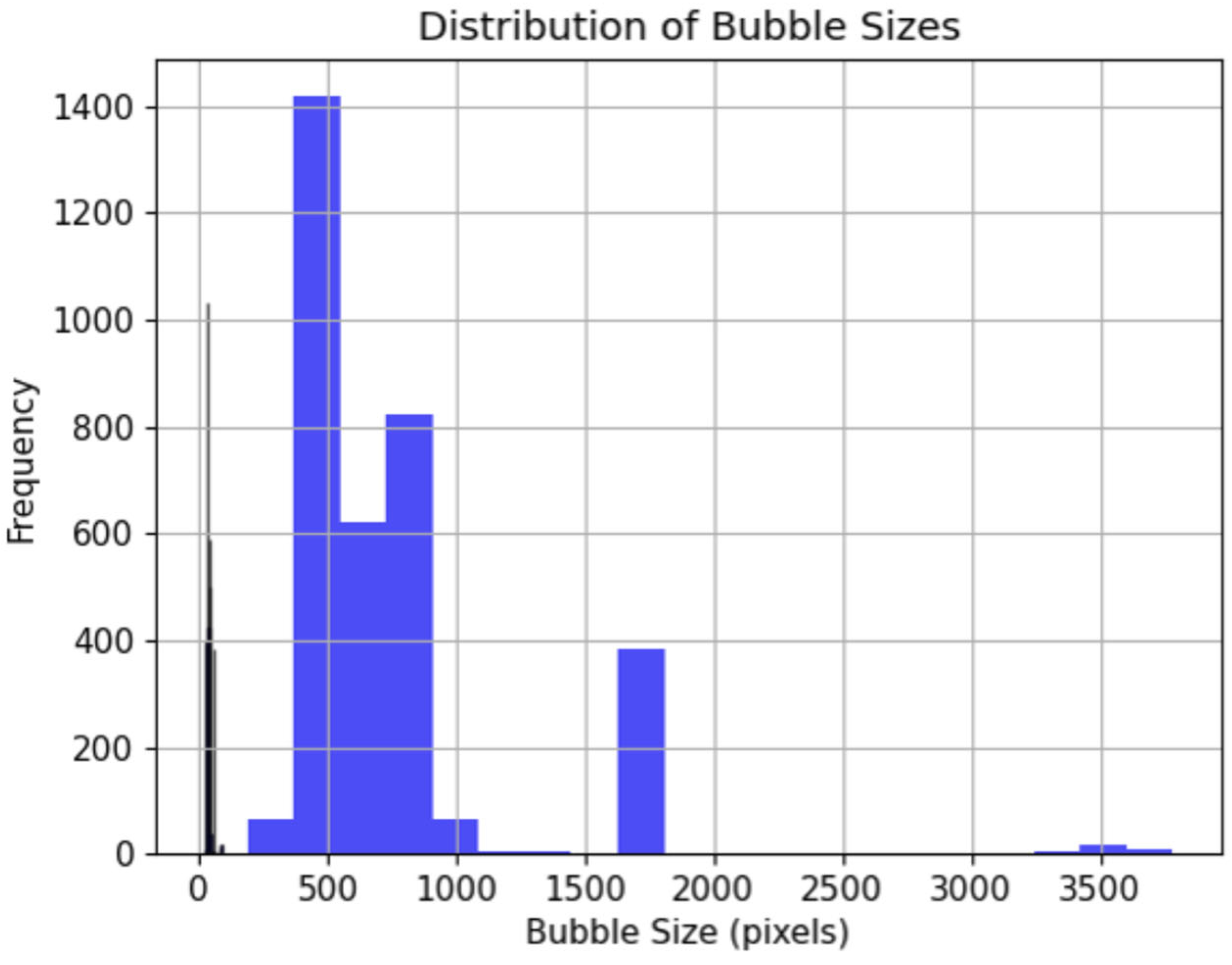
Initial results showed false positives due to small light reflections and overcounting repeated bubbles across frames (
Figure 1). These were mitigated by:
Ignoring small detections (<100 pixels).
Adjusting the algorithm to avoid double-counting.
Handling overlapping detections as separate events.
Figure 1.
Initial bubble detection histogram.
Figure 1.
Initial bubble detection histogram.
The refined algorithm produced a more realistic bubble count, though it was still slightly overestimated (20 detected vs. 13 actual).
Further errors were traced to detections outside the region of interest (ROI), primarily due to sunlight interference. Limiting detection to the ROI significantly improved results, bringing the count to 16, and yielding a precision rate of 80%.
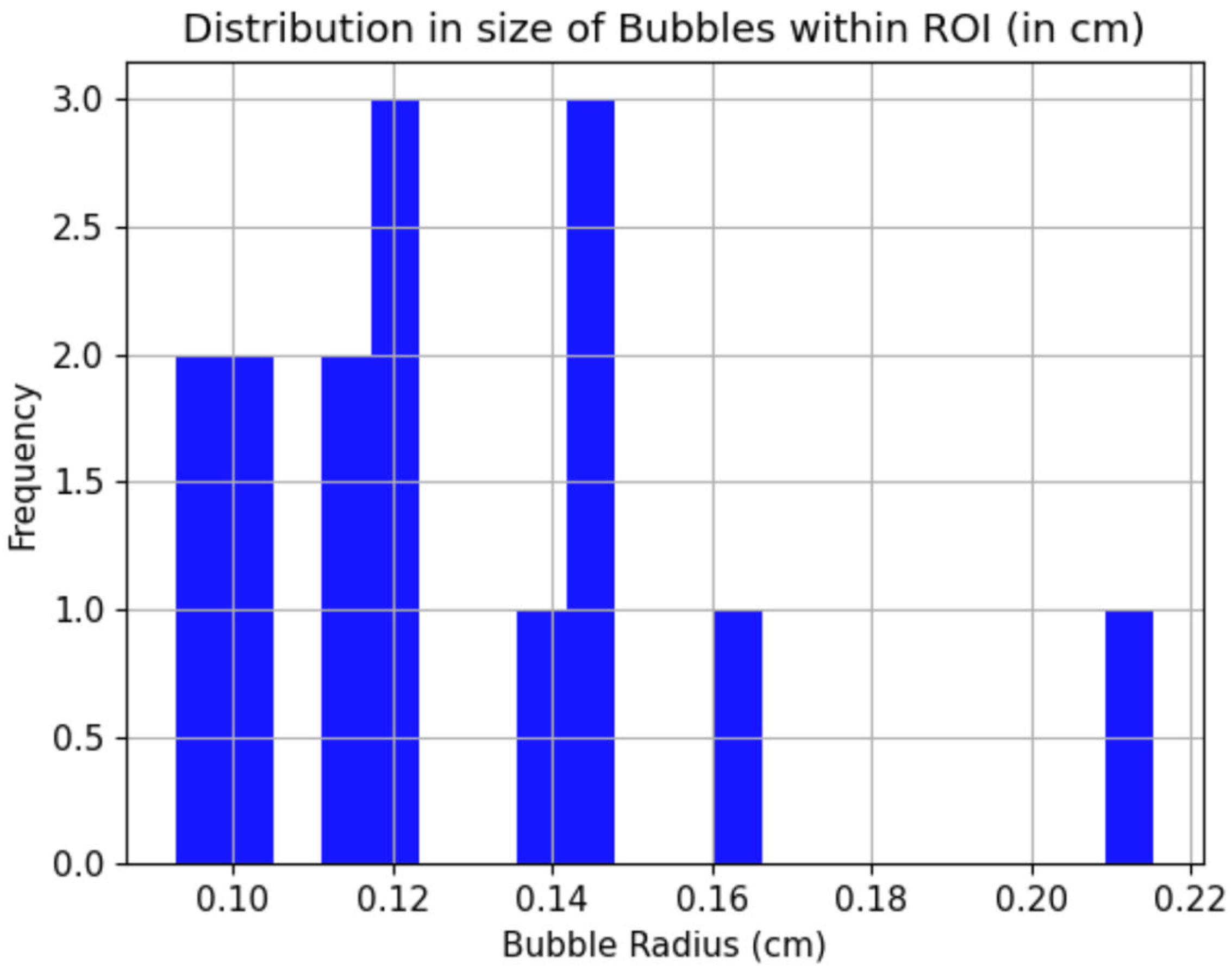
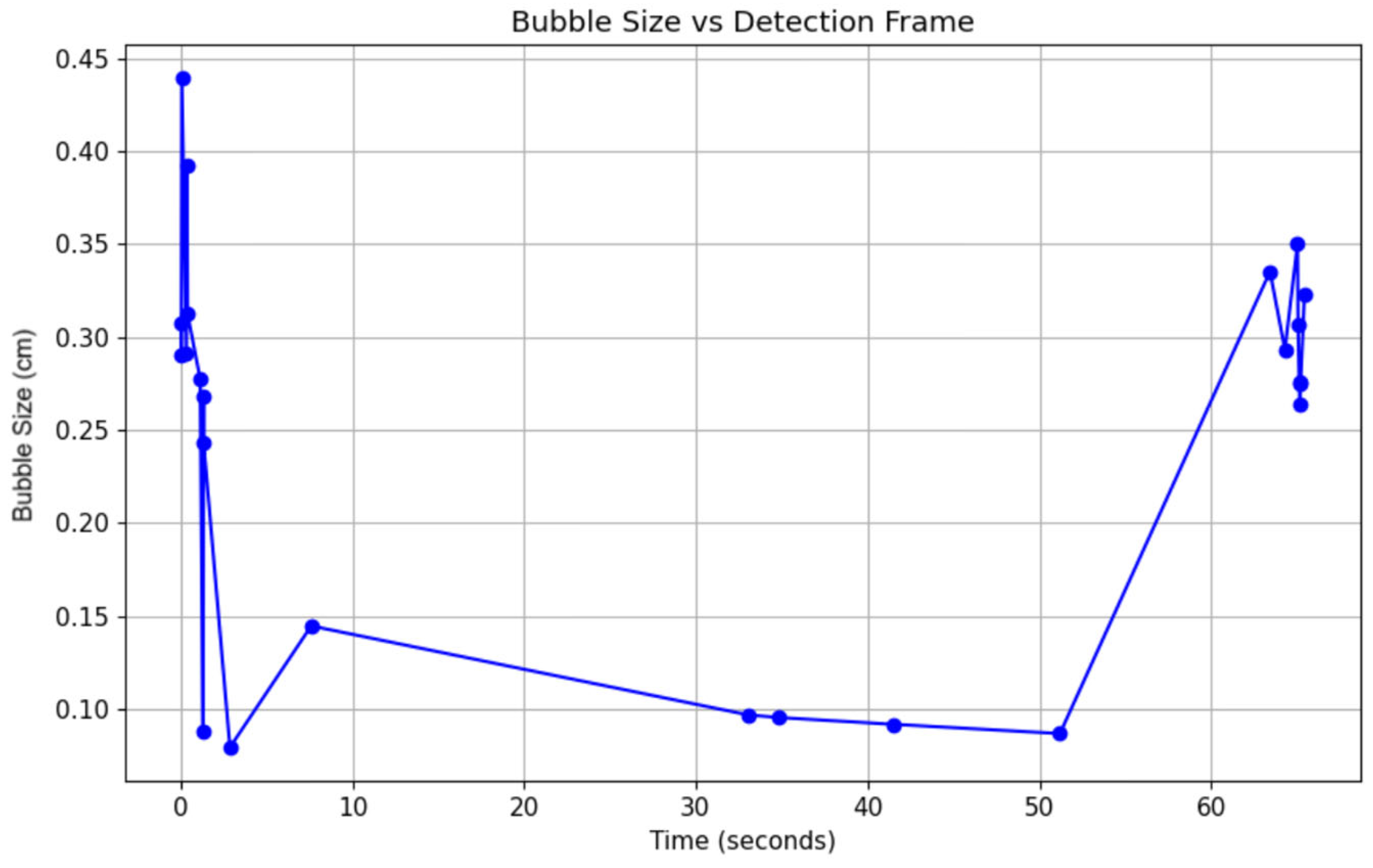
Additionally, bubble size measurement was updated from rectangular area approximation to a circular fit, and a conversion factor was applied to translate pixel measurements into physical dimensions. The resulting distribution is shown in
Figure 2, with an average bubble radius of 0.14895 cm.
This final implementation demonstrated that the system is operational and capable of size estimation with reasonable accuracy. However, larger datasets and improved camera systems beyond the GoPro Hero 5 will probably be necessary for enhanced performance and deployment in real-world scenarios.
Although the refined model demonstrates that optical detection is feasible, its performance and robustness remain below the level required for operational use. For now, the method should therefore be regarded as an auxiliary proof-of-concept that highlights potential rather than readiness for deployment.
4. Results
The initial detector tests were performed with a weak (0.1 mCi) AmBe neutron source, emitting neutrons in every direction. In addition to this, as neutrons travel through the different materials, they will undergo attenuation. We utilized five different attenuating materials, each with its own specific characteristics: Aluminum is one of the utilized materials with the lowest attenuation factor and highest transmission factor (0.9998), with it not being that effective at attenuating thermal neutrons due to its low neutron capture cross-section, meaning that most neutrons will pass through it. Another material utilized was a 3 cm thick plank of wood, having a relatively more effective attenuation coefficient, with a lower transmission factor (0.74). This is due to the wood’s hydrogen-rich cellulose composition, making it more effective at attenuating neutrons. Plastics have varying effectiveness as an attenuating material; hence, the results depend on their composition. The plastic barrier utilized had a moderate transmission factor (0.9048). The other type of material utilized was polyethylene, being a somewhat special type of material given its high hydrogen composition, making it an efficient moderator of neutrons with a good transmission factor (0.8187). Finally, a block of paraffin was utilized. Also known as wax, this material is extremely rich in hydrogen, making it commonly used in neutron shielding, having a very low transmission factor (0.0498). This information allowed us to better conduct the experimental tests. The longer the detector is exposed to the neutron source, the more nucleations will occur within the detector and decrease the amount of active mass present within the gel. Knowing this information beforehand allowed us to strategize the optimal method to test the detectors with different attenuating materials. To guarantee the quality and efficiency of the tests, the more attenuating materials were analyzed first, while the less attenuating materials were analyzed after.
4.1. Experimental Setup
A 0.1 mCi AmBe neutron source (≈3.7 × 10⁶ Bq; neutron emission ≈ 2.2 × 10⁶ n/s) was used to evaluate detector response. The source was placed at fixed distances from the SDD, and various attenuating materials were inserted between them. The attenuators were positioned directly in front of the source to simulate shielding commonly encountered in illicit trafficking scenarios.
Table 1 summarizes the materials used.
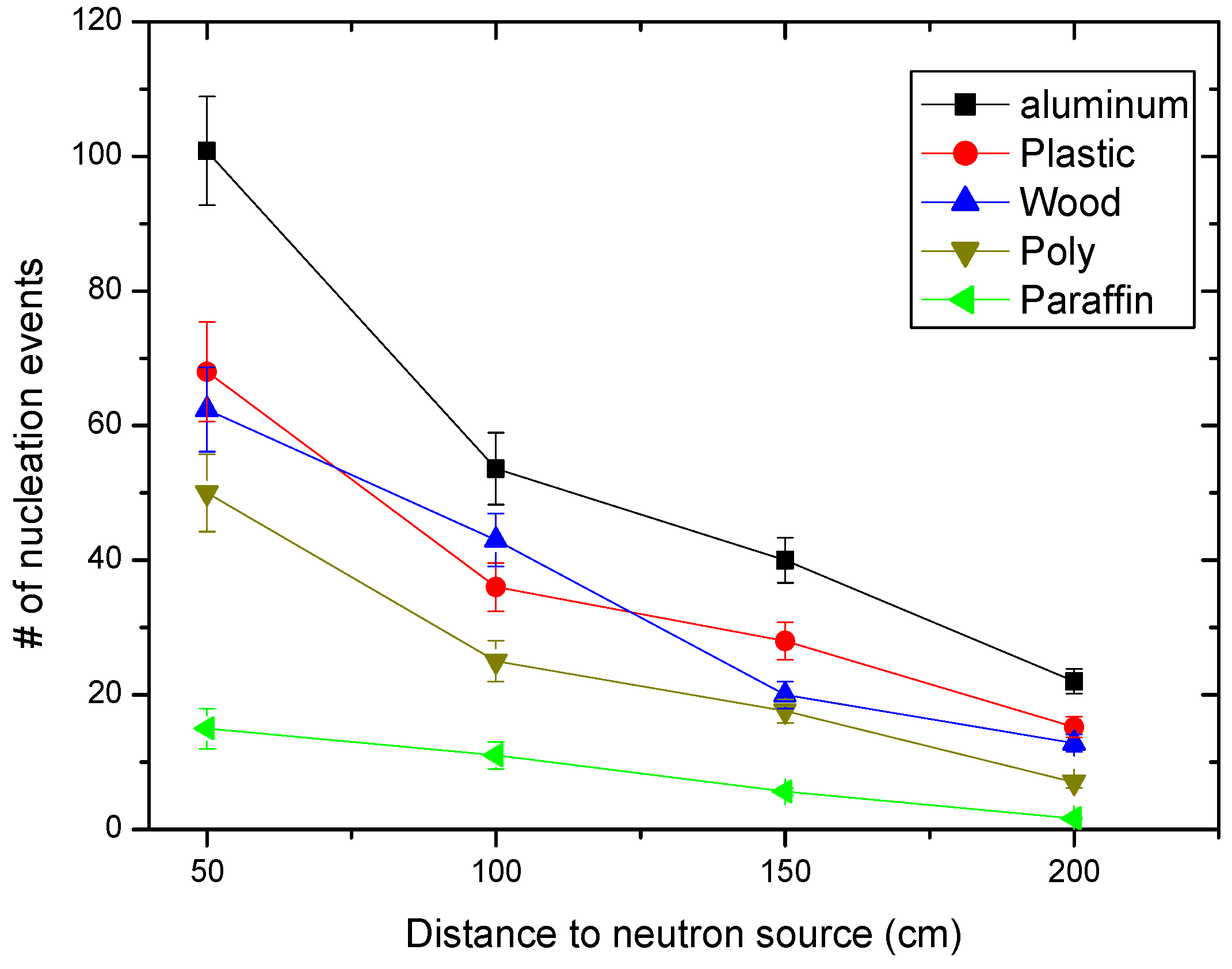
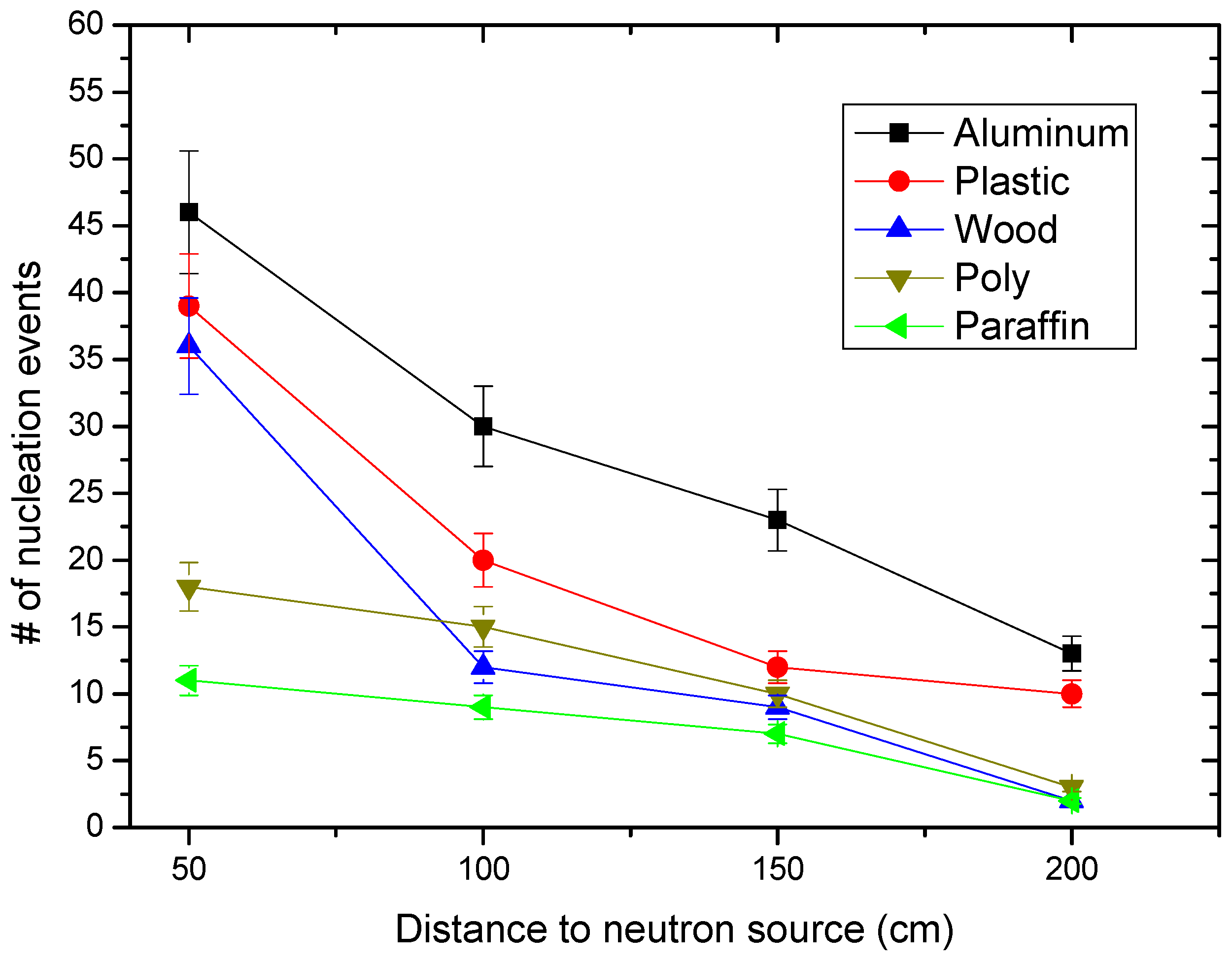
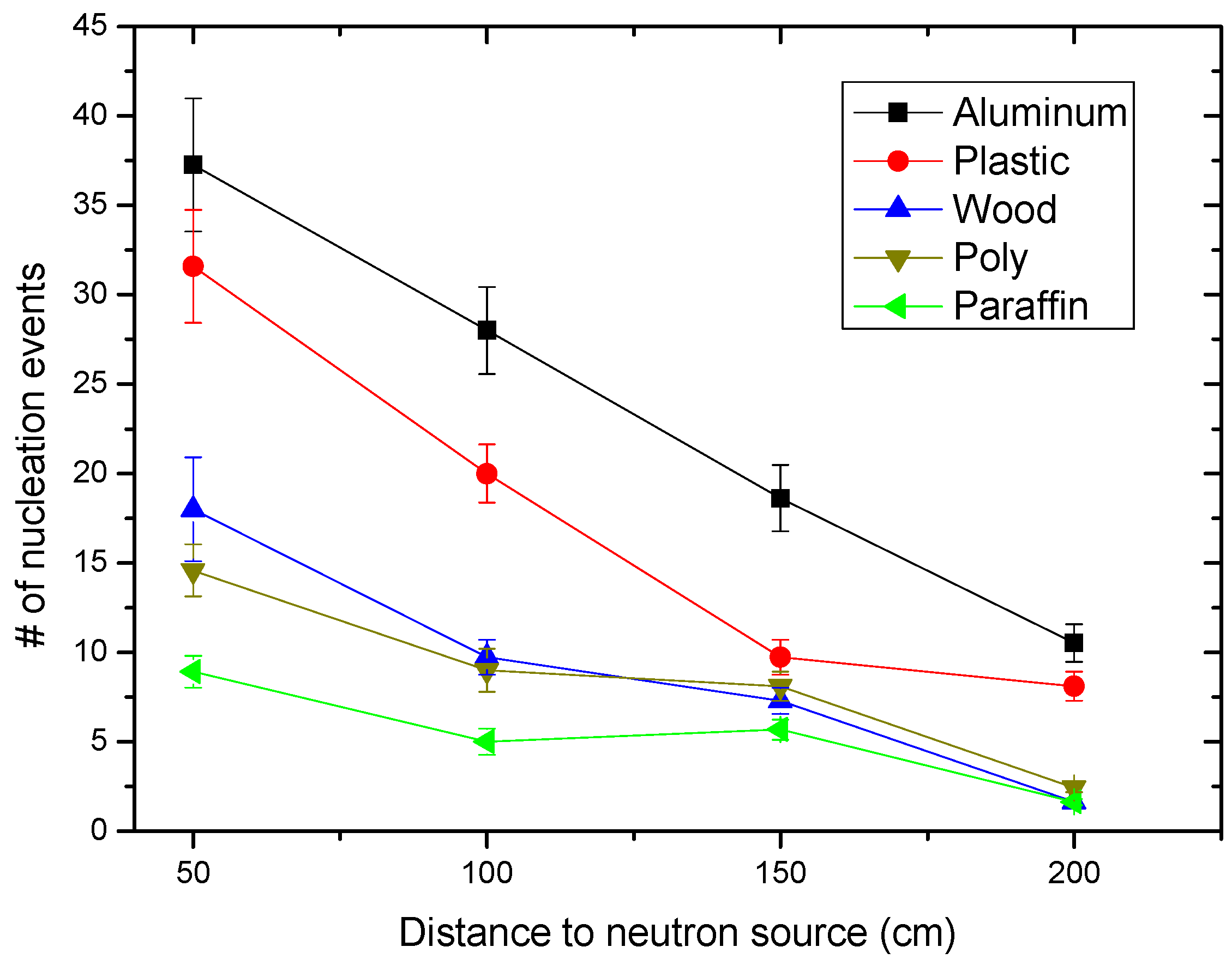
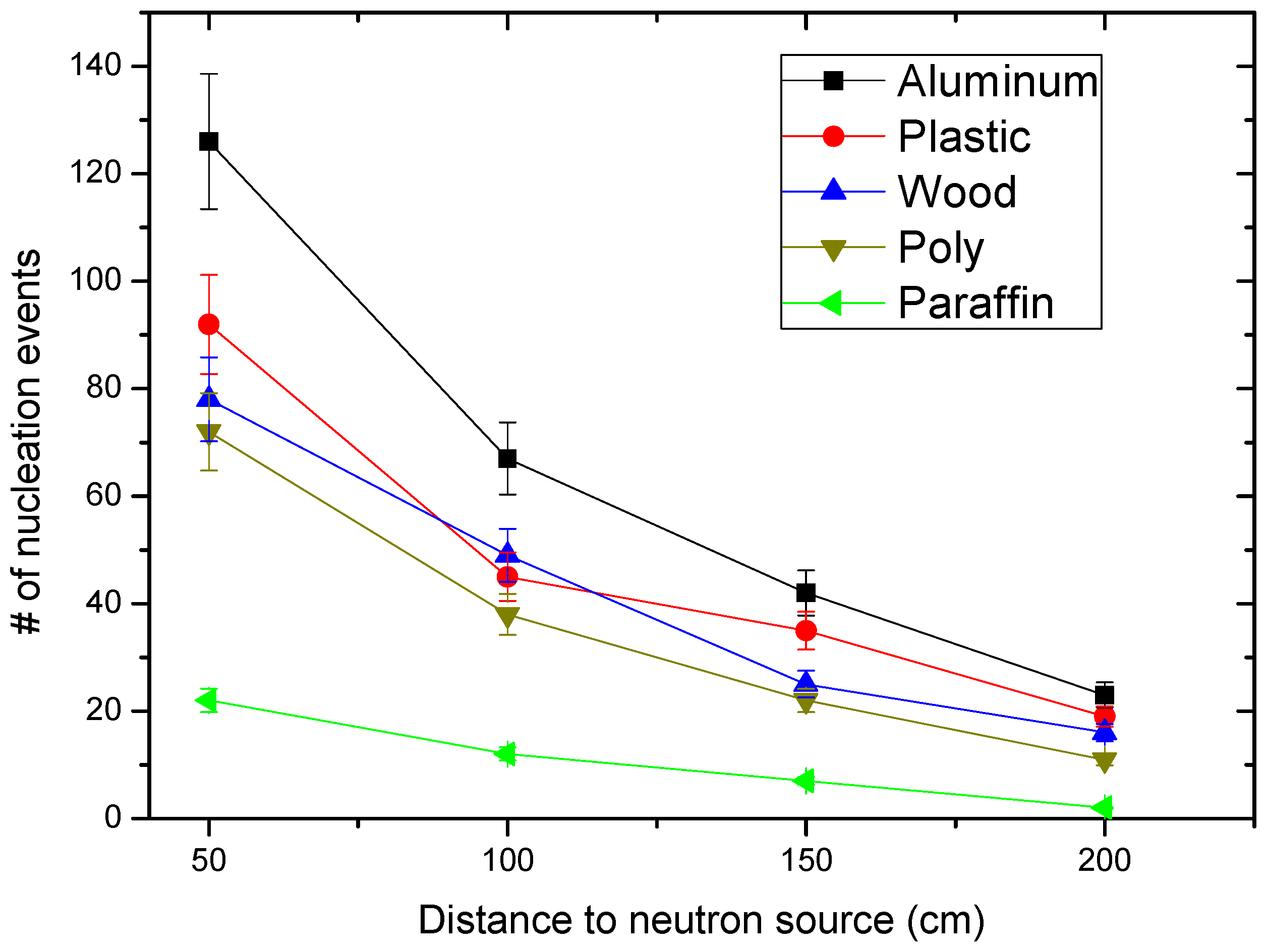
These tests were conducted at room temperature (20 °C) where the detector was exposed to the AmBe neutron source for the duration of 1 min and at several distances [50, 100, 150, 200 cm]. Error bars in all plots represent 1σ Poisson uncertainties.
4.2. Acoustic Detection Results
Figure 3 shows the acoustic count rate as a function of shielding material. As expected, aluminum produces the smallest reduction in neutron-induced nucleation, while wood and concrete produced noticeable decreases due to neutron moderation. Steel and lead produced the strongest attenuation.
The acoustic system consistently detected more events than the optical system, reflecting its higher sensitivity and immunity to visual obstructions within the gel.
By comparing the acquired images, we observe an interesting trend where the optical system is able to detect highly attenuated neutrons for large distances from the source, while it has difficulty detecting signals from less attenuated neutrons from the source. The optical system observed 81.25% of the events measured by the acoustic system.
4.3. Optical Detection Results
Figure 4 presents the optical bubble counts obtained using the YOLOv5 detection algorithm. After applying region-of-interest constraints and filtering small false positives, the optical system achieved a precision of ~80%.
The optical system undercounted relative to the acoustic system, primarily due to:
Partial opacity of the gel
Bubbles forming outside the camera’s field of view
Overlapping bubbles in dense regions
Reflections and lighting variations
Nevertheless, the optical system reproduced the same qualitative trends observed acoustically.
4.4. Comparison of Acoustic and Optical Systems
Both systems show consistent attenuation trends across materials, with the acoustic system yielding higher absolute counts.
The optical system’s undercounting factor ranged from 20–40%, depending on bubble density and visibility. Despite this, the correlation between the two systems remained strong, demonstrating that optical detection can complement acoustic measurements.
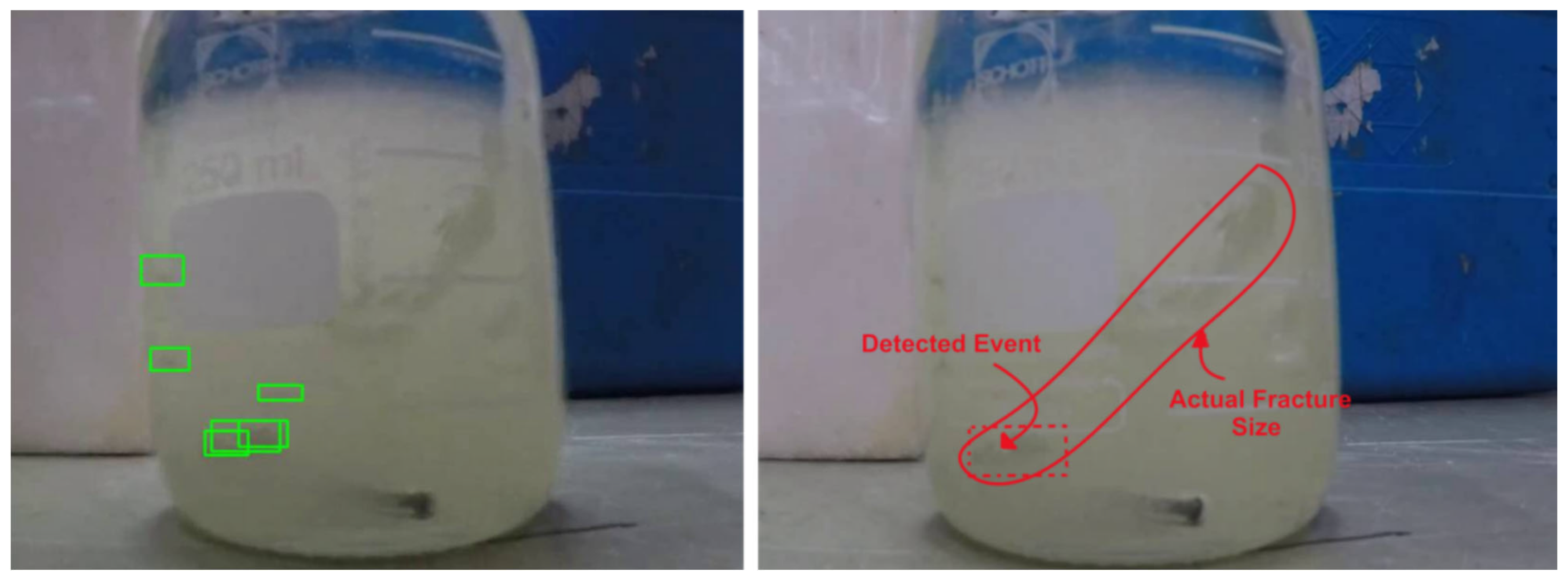
Figure 5 shows the evolution of bubble detection for the case of plastic at a distance of 100 cm from the neutron source. We can see that around the 2 s mark, there is a large spike in detections associated with the occurrence of a fracture in the gel. This crack in the gel can be seen in
Figure 6, in addition to how the algorithm detects this crack. While the current algorithm cannot handle these fractures, we can still clean these detections from the obtained data.
Figure 6 shows how the bubble detection algorithm currently handles fractures.
The same study was performed with a CF-252 (0.1 mCi ≈
n/s) radiation source in order to see if these detectors still worked when exposed to heavier fluxes. The testing conditions were the same as the previous ones, and a fresh 150 mL SDD was utilized.
Figure 7 shows the results for the acoustic system as was previously shown for
Figure 3.
Once again, just as with the earlier weaker source, the optical system demonstrated slightly worse performance at obtaining the same results. This time, only 76% of the nucleation events were verified, as seen in
Figure 8.
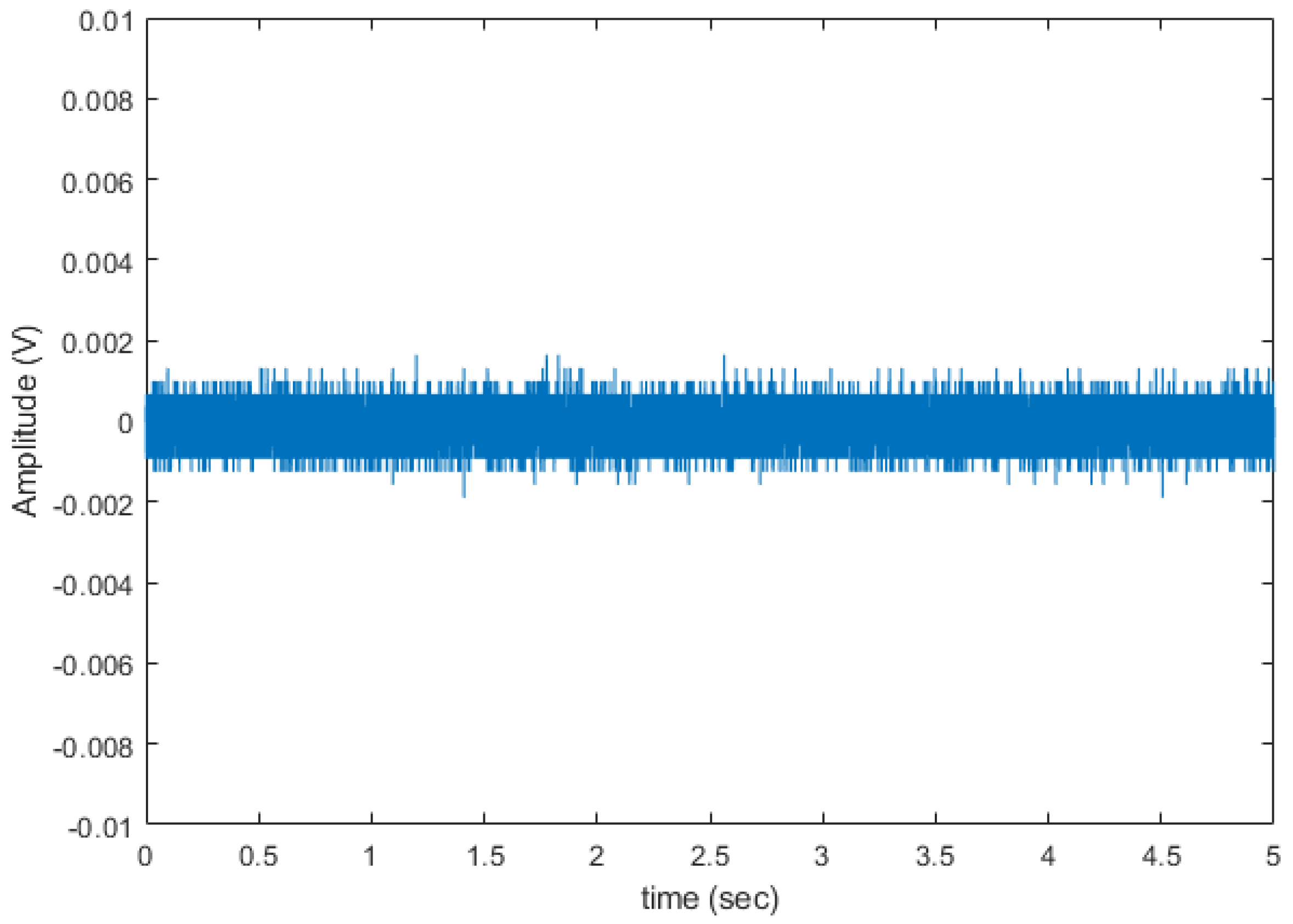
4.5. Gamma Source Test
To confirm gamma insensitivity, the SDD was exposed to a 10 µCi Cs-137 source (≈3.7 × 10
5 Bq). No nucleation events were observed over a 5-min acquisition period in either detection system (
Figure 9). This result is consistent with the known energy threshold of C
3F
8 droplets, which is above typical gamma interaction energies.
5. Discussion
5.1. Detector Response to Shielded Neutrons
The results demonstrate that SDDs reliably detect fast neutrons even when shielded by common materials. Moderating materials such as wood and concrete reduce the neutron energy spectrum, decreasing the probability of exceeding the nucleation threshold. This explains the reduced count rates observed.
The acoustic system showed greater sensitivity to low-energy neutrons than the optical system, likely because acoustic signals are generated regardless of bubble visibility; bubbles forming near the detector walls remain acoustically detectable, whereas optical detection is limited by line-of-sight and gel opacity.
5.2. Limitations of Optical Detection
The optical system’s performance was constrained by the limited dataset size for training, non-uniform lighting, the partial opacity of the gel, and the camera resolution and frame rate. Despite these limitations, the ~80% precision demonstrates the feasibility of machine-learning-based bubble detection.
5.3. Practical Implications for Nuclear Security
As shown by the results, SLDs offer several advantages for field deployment. The passive operation without external radiation sources is unique. At present, the low cost and simple construction are assets; these detectors rely on strong neutron sensitivity and gamma insensitivity; and finally, they have the potential for portable, modular detection arrays.
These characteristics make SLDs promising for screening cargo, vehicles, or containers where shielded neutron sources may be present.
5.4. Need for Simulation and Future Work
As noted, a full understanding of detector response requires neutron transport simulations through attenuators, a full understanding of the energy-dependent efficiency curves for C3F8, and possibly a spatial mapping of neutron interactions within the detector.
These simulations will be incorporated in future work to strengthen quantitative interpretations.
6. Conclusions
This study demonstrates the feasibility of using superheated liquid detectors for detecting shielded neutron-emitting materials relevant to illicit trafficking scenarios. The combined acoustic and optical readout system successfully identified nucleation events under various shielding conditions, with the optical machine-learning model achieving approximately 80% precision. The detectors remained insensitive to gamma radiation, confirming their suitability for environments with mixed radiation backgrounds.
While the acoustic system demonstrated reliable and consistent performance across all shielding scenarios, the optical system should be regarded as a proof-of-concept auxiliary method. Its current implementation confirms the feasibility of optical bubble detection but does not yet meet the robustness or stability required for operational deployment. Future work will focus on improving camera hardware, expanding training datasets, and enhancing algorithmic resilience to enable the optical channel to evolve from a feasibility demonstration into a practical complementary tool.