
Monoclonal Antibodies in Neuromyelitis Optica Spectrum Disease: A Systematic Review of Pharmacotherapeutic Alternatives, Current Strategies and Prospective Biological Targets

 ,
,
Abstract
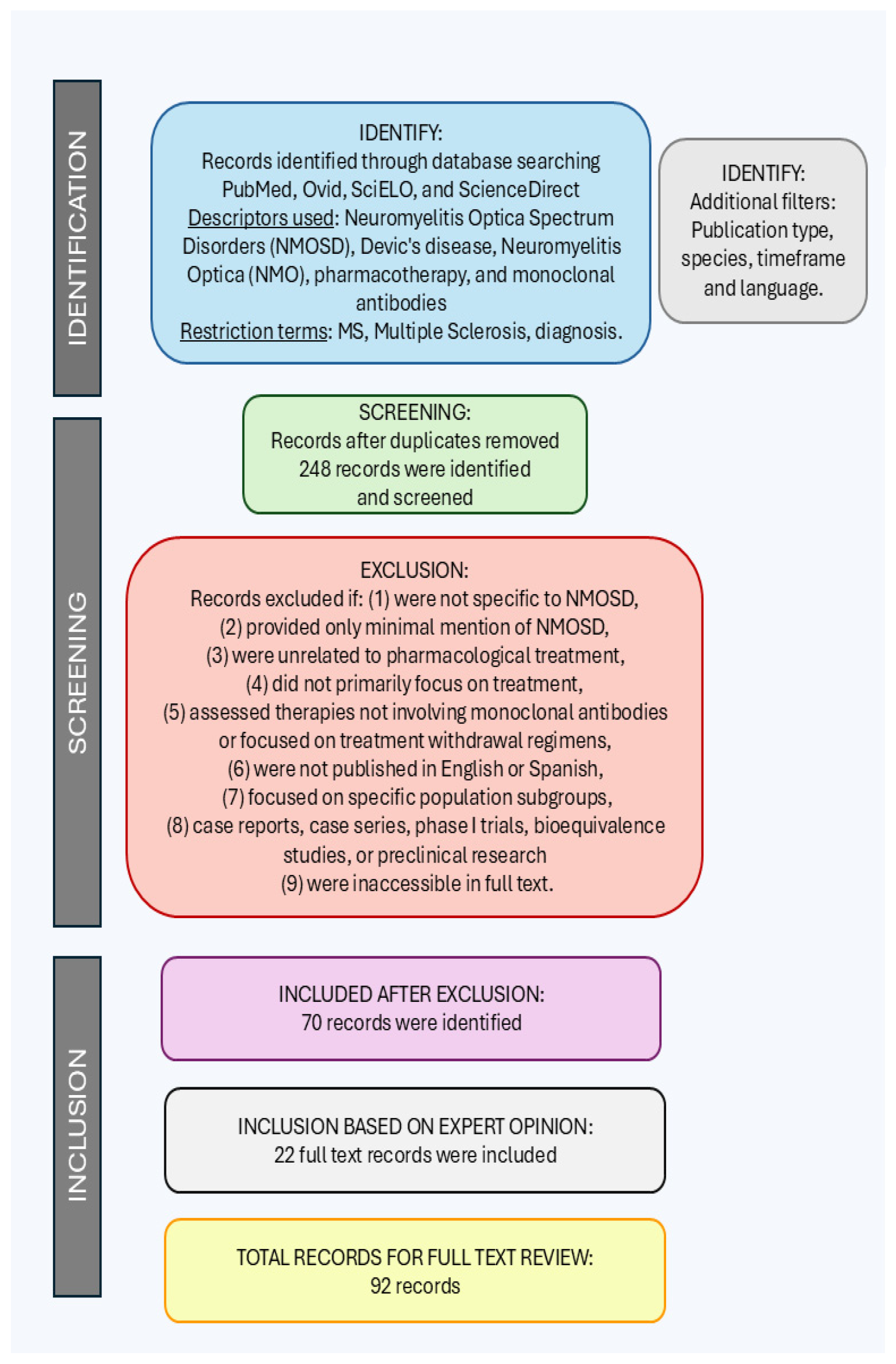
1. Search Strategy and Selection Criteria
2. Neuromyelitis Optica Spectrum Disease (NMOSD)
3. Therapeutic Approach to NMOSD
4. Maintenance Therapies
4.1. B-Cell-Depleting Agents
4.1.1. Anti-CD20 Monoclonal Antibodies
Rituximab
Other Anti-CD20 Antibodies Under Investigation
- BAT4406F
- Ofatumumab
- Divozilimab
- MIL62
- Ocrelizumab
4.1.2. Anti-CD19 Monoclonal Antibodies
Inebilizumab
4.1.3. Anti-CD38 Monoclonal Antibodies
Daratumumab
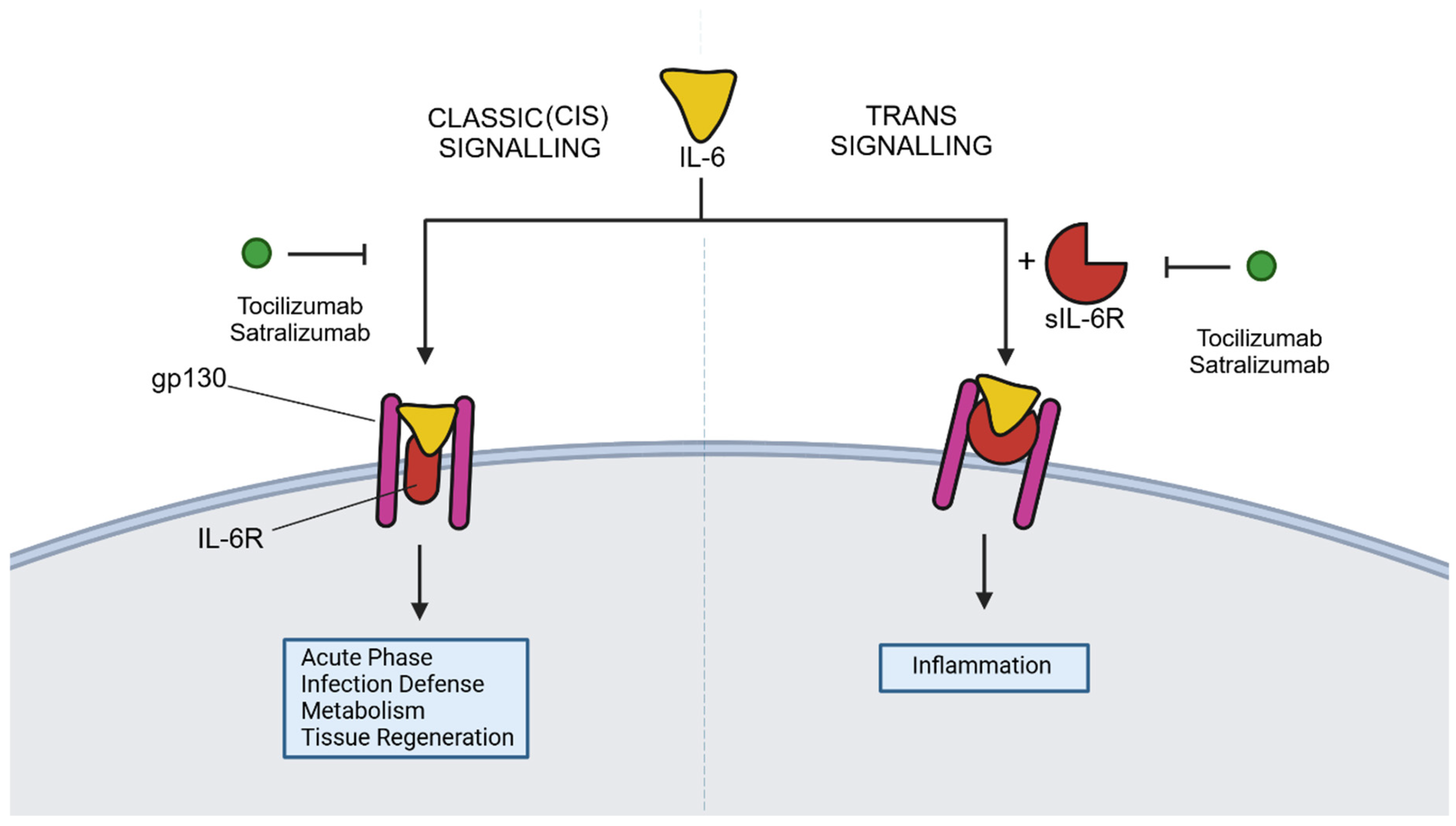
4.2. Interleukin-6 Pathway Inhibitors
4.2.1. Satralizumab
4.2.2. Tocilizumab
4.3. Complement Inhibitors
4.3.1. Eculizumab
4.3.2. Ravulizumab

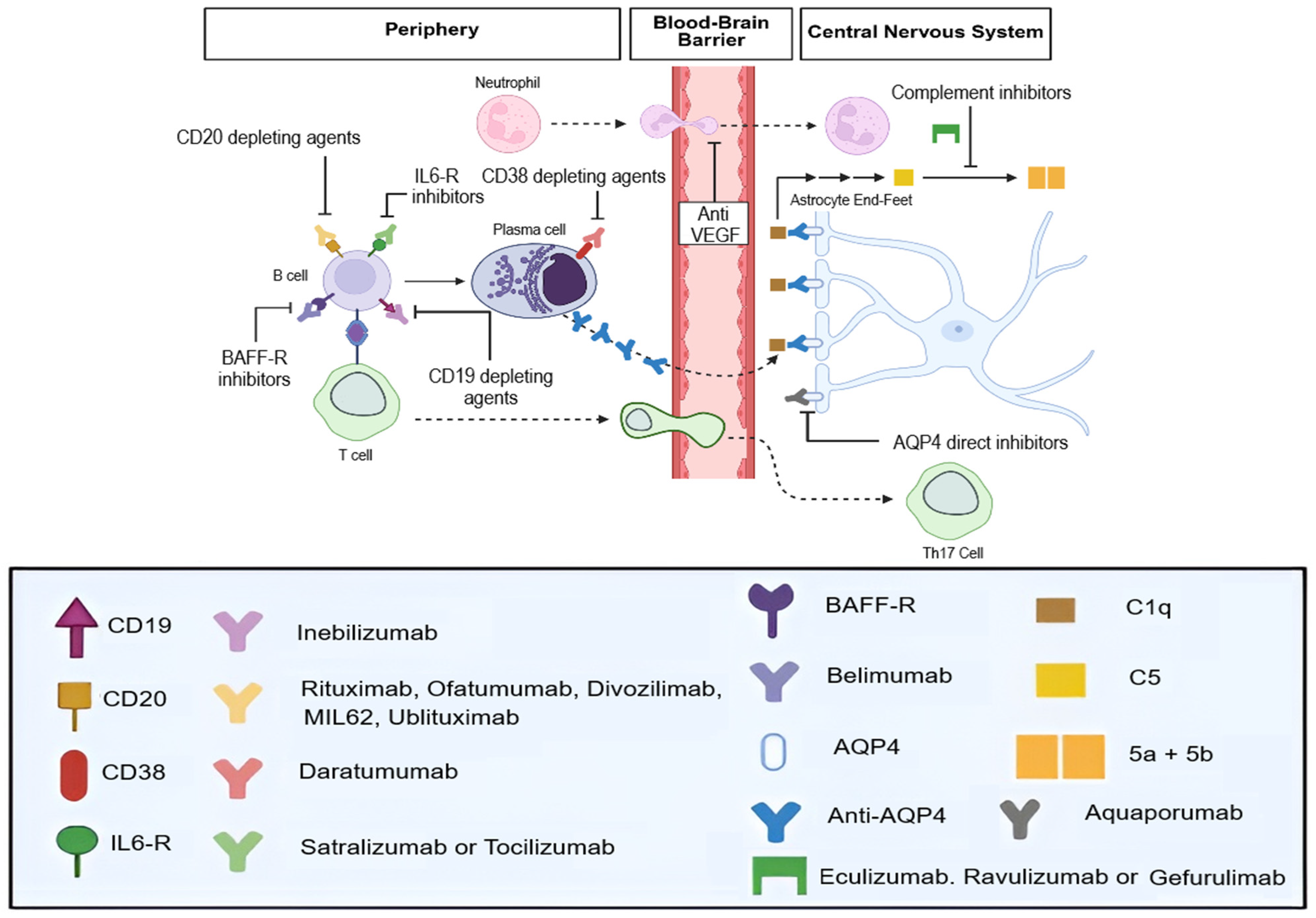
| Therapy Type | Regulatory Status NMOSD | mAb | Mechanism of Action | Clinical Trial Strategy/Evidence Status |
|---|---|---|---|---|
| Maintenance | Approved | Inebilizumab | Humanized anti-CD19 mAb; depletes a broader spectrum of B cells (including plasmablasts/plasma cells) via ADCC. | In the pivotal phase 2/3 N-MOmentum trial time to the onset of an adjudicated NMOSD attack was considered the primary endpoint and a randomization ratio 3:1 was used. Inebilizumab reduced the risk of NMOSD attacks compared with placebo and significantly reduced the risk of disability score worsening. Primarily enrolled AQP4-IgG seropositive patients, with a small percentage of seronegative patients [176,177]. |
| Maintenance | Approved | Satralizumab | Humanized anti-IL-6 receptor (IL-6R) mAb; inhibits IL-6 signaling pathways. Reduces inflammation and BBB dysfunction. | Specifically developed for NMOSD; utilizes “recycling antibody” technology for prolonged circulation and repeated binding. Pivotal, randomized, placebo-controlled phase 3 trials SAkuraStar (2:1) and SAkuraSky (1:1) included both seropositive and seronegative patients. Primary endpoint was time to the first protocol-defined relapse [234]. |
| Maintenance | Approved | Eculizumab | Humanized anti-C5 complement protein mAb; blocks C5 cleavage preventing terminal complement activation. | The primary end point was the first adjudicated relapse; clinical trials established efficacy in reducing relapse rates. Trials focused heavily on AQP4-IgG seropositive patients (around 90% of the cohort) and used a randomization ratio 2:1 [272]. |
| Maintenance | Approved | Ravulizumab | Humanized anti-C5 mAb; structurally related to eculizumab with a longer half-life due to recycling modifications. | Phase III CHAMPION-NMOSD trial (open label) considered time to first adjudicated on-trial relapse as primary endpoint. Showed zero relapses in treated patients; primary treatment period extends from 26 weeks to 2.5 years. Exclusively tested in AQP4-IgG seropositive patients [288,293,294] |
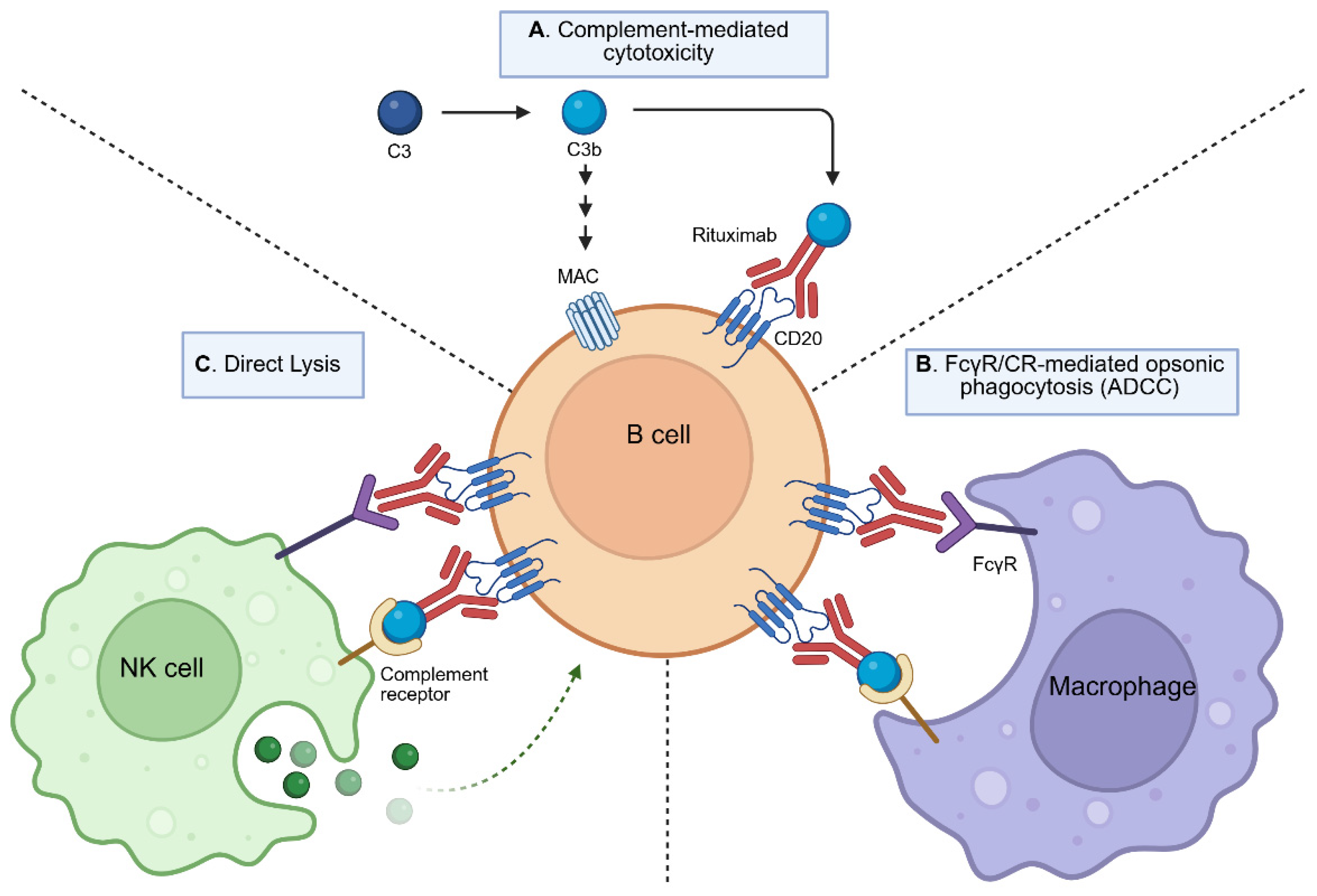
| Maintenance | Not approved used in most countries | Rituximab | Chimeric anti-CD20 mAb; depletes B cells via complement-dependent cytotoxicity (CDC), antibody-dependent cellular cytotoxicity (ADCC), and apoptosis. | Widely used “off-label”; approved in Japan after academic randomized, double-blind, placebo-controlled trial. Primary outcome was defined as time to first relapse within 72 weeks and participants were randomly allocated (1:1). Trial included seropositive for aquaporin 4 (AQP4) antibody patients and showed 50–90% reduction in ARR [113,114]. |
| Maintenance | Not approved Use | Tocilizumab | Anti-IL-6R mAb; inhibits IL-6 signaling and prevents autoimmune activation. | Used off-label as escalation or rescue therapy; demonstrated reduction in relapse rates, including in RTX-refractory patients [73,249]. |
| Maintenance | In clinical development | Belimumab | Anti-BLyS (B lymphocyte stimulator) mAb; inhibits B-cell survival and maturation into plasma cells. | Clinical development as NMOSD maintenance therapy is currently in early stages. Drug approved for the treatment of high activity autoantibody-positive SLE and lupic nephritis. |
| Maintenance | In clinical development | Aquaporumab | Nonpathogenic humanized anti-AQP4 mAb; competitively inhibits binding of pathogenic AQP4-IgG without triggering complement activation. | No current known clinical development program despite high specificity and low toxicity in animal models. |
| Acute Relapse | In clinical development | Ublituximab | Type I chimeric anti-CD20 mAb with enhanced affinity for FcγR3A (CD16) aspect that increases ADCC potency. | Investigated for use during acute relapses; glycoengineered for higher potency compared to RTX. Early studies have shown that used in combination with corticosteroids may be potentially effective. |
| Acute Relapse | In clinical development | Bevacizumab | Humanized mAb against VEGF reduces BBB disruption | Stabilization of the BBB and reduction of AQP4-IgG and inflammatory cells entry to the CNS. Limited reports available |
4.3.3. Gefurulimab (ALXN1720)
4.4. Direct AQP4 Inhibitors
Aquaporumab
4.5. BLyS Inhibitors
Belimumab
4.6. Non-Depleting B-Cell Modulators
Obexelimab
5. Acute Relapse Treatment
5.1. Ublituximab
5.2. Neonatal Fc Receptor (FcRn) Inhibitors
5.2.1. Batoclimab
5.2.2. Rozanolixizumab
5.3. Vascular Endothelial Growth Factor Blockade
Bevacizumab
6. Conclusions
Supplementary Materials
Author Contributions
Funding
Institutional Review Board Statement
Informed Consent Statement
Data Availability Statement
Acknowledgments
Conflicts of Interest
References
- Wingerchuk, D.M.; Banwell, B.; Bennett, J.L.; Cabre, P.; Carroll, W.; Chitnis, T.; de Seze, J.; Fujihara, K.; Greenberg, B.; Jacob, A.; et al. International consensus diagnostic criteria for neuromyelitis optica spectrum disorders. Neurology 2015, 85, 177–189. [Google Scholar] [CrossRef]
- De Carvalho Jennings Pereira, W.L.; Reiche, E.M.V.; Kallaur, A.P.; Kaimen-Maciel, D.R. Epidemiological, clinical, and immunological characteristics of neuromyelitis optica: A review. J. Neurol. Sci. 2015, 355, 7–17. [Google Scholar] [CrossRef] [PubMed]
- Pittock, S.J.; Berthele, A.; Fujihara, K.; Kim, H.J.; Levy, M.; Palace, J.; Nakashima, I.; Terzi, M.; Totolyan, N.; Viswanathan, S.; et al. Eculizumab in Aquaporin-4-Positive Neuromyelitis Optica Spectrum Disorder. N. Engl. J. Med. 2019, 381, 614–625. [Google Scholar] [CrossRef] [PubMed]
- Waters, P.; Reindl, M.; Saiz, A.; Schanda, K.; Tuller, F.; Kral, V.; Nytrova, P.; Sobek, O.; Nielsen, H.H.; Barington, T.; et al. Multicentre comparison of a diagnostic assay: Aquaporin-4 antibodies in neuromyelitis optica. J. Neurol. Neurosurg. Psychiatry 2016, 87, 1005–1015. [Google Scholar] [CrossRef] [PubMed]
- Kitley, J.; Woodhall, M.; Waters, P.; Leite, M.I.; Devenney, E.; Craig, J.; Palace, J.; Vincent, A. Myelin-oligodendrocyte glycoprotein antibodies in adults with a neuromyelitis optica phenotype. Neurology 2012, 79, 1273–1277. [Google Scholar] [CrossRef]
- Wingerchuk, D.M.; Marignier, R.; Palace, J.; Paul, F.; Aktas, O.; Bennett, J.L.; Banwell, B.; Cabre, P.; Carrol, W.; Chitnis, T.; et al. IPND 2025: Revised Consensus Criteria, Classification, and Nomenclature for Neuromyelitis Optica Spectrum Disorders. In Proceedings of the ECTRIMS Congress, Barcelona, Spain, 24–26 September 2025. [Google Scholar]
- Wingerchuk, D.M.; Hogancamp, W.F.; O’Brien, P.C.; Weinshenker, B.G. The clinical course of neuromyelitis optica (Devic’s syndrome). Neurology 1999, 53, 1107–1114. [Google Scholar] [CrossRef]
- De Seze, J.; Kremer, L.; Collongues, N. Neuromyelitis optica spectrum disorder (NMOSD): A new concept. Rev. Neurol. 2016, 172, 256–262. [Google Scholar] [CrossRef]
- Borisow, N.; Mori, M.; Kuwabara, S.; Scheel, M.; Paul, F. Diagnosis and Treatment of NMO Spectrum Disorder and MOG-Encephalomyelitis. Front. Neurol. 2018, 9, 888. [Google Scholar] [CrossRef]
- Hor, J.Y.; Asgari, N.; Nakashima, I.; Broadley, S.A.; Leite, M.I.; Kissani, N.; Jacob, A.; Marignier, R.; Weinshenker, B.G.; Paul, F.; et al. Epidemiology of Neuromyelitis Optica Spectrum Disorder and Its Prevalence and Incidence Worldwide. Front. Neurol. 2020, 11, 501. [Google Scholar] [CrossRef]
- Mori, M.; Kuwabara, S.; Paul, F. Worldwide prevalence of neuromyelitis optica spectrum disorders. J. Neurol. Neurosurg. Psychiatry 2018, 89, 555–556. [Google Scholar] [CrossRef]
- Flanagan, E.P.; Cabre, P.; Weinshenker, B.G.; Sauver, J.S.; Jacobson, D.J.; Majed, M.; Lennon, V.A.; Lucchinetti, C.F.; McKeon, A.; Matiello, M.; et al. Epidemiology of aquaporin-4 autoimmunity and neuromyelitis optica spectrum. Ann. Neurol. 2016, 79, 775–783. [Google Scholar] [CrossRef] [PubMed]
- Papp, V.; Magyari, M.; Aktas, O.; Berger, T.; Broadley, S.A.; Cabre, P.; Jacob, A.; Kira, J.I.; Leite, M.I.; Marignier, R.; et al. Worldwide Incidence and Prevalence of Neuromyelitis Optica: A Systematic Review. Neurology 2021, 96, 59–77. [Google Scholar] [CrossRef] [PubMed]
- Devic, E. Myélite subaiguë compliquée de névrite optique. Bull. Méd. 1894, 8, 1033. [Google Scholar]
- Kümpfel, T.; Giglhuber, K.; Aktas, O.; Ayzenberg, I.; Bellmann-Strobl, J.; Häußler, V.; Havla, J.; Hellwig, K.; Hümmert, M.W.; Jarius, S.; et al. Update on the diagnosis and treatment of neuromyelitis optica spectrum disorders (NMOSD)—Revised recommendations of the Neuromyelitis Optica Study Group (NEMOS). Part II: Attack therapy and long-term management. J. Neurol. 2024, 271, 141–176. [Google Scholar] [CrossRef] [PubMed]
- Chavarro, V.S.; Mealy, M.A.; Simpson, A.; Lacheta, A.; Pache, F.; Ruprecht, K.; Gold, S.M.; Paul, F.; Brandt, A.U.; Levy, M. Insufficient treatment of severe depression in neuromyelitis optica spectrum disorder. Neurol. Neuroimmunol. Neuroinflamm. 2016, 3, e286. [Google Scholar] [CrossRef]
- Elsone, L.; Townsend, T.; Mutch, K.; Das, K.; Boggild, M.; Nurmikko, T.; Jacob, A. Neuropathic pruritus (itch) in neuromyelitis optica. Mult. Scler. 2013, 19, 475–479. [Google Scholar] [CrossRef]
- Lana-Peixoto, M.A.; Callegaro, D.; Talim, N.; Talim, L.E.; Pereira, S.A.; Campos, G.B.; Brazilian Committee for Treatment and Research in Multiple Sclerosis. Pathologic yawning in neuromyelitis optica spectrum disorders. Mult. Scler. Relat. Disord. 2014, 3, 527–532. [Google Scholar] [CrossRef]
- Penner, I.K.; Paul, F. Fatigue as a symptom or comorbidity of neurological diseases. Nat. Rev. Neurol. 2017, 13, 662–675. [Google Scholar] [CrossRef]
- Qian, P.; Lancia, S.; Alvarez, E.; Klawiter, E.C.; Cross, A.H.; Naismith, R.T. Association of neuromyelitis optica with severe and intractable pain. Arch. Neurol. 2012, 69, 1482–1487. [Google Scholar] [CrossRef]
- Weinshenker, B.G.; Wingerchuk, D.M. Neuromyelitis Spectrum Disorders. Mayo Clin. Proc. 2017, 92, 663–679. [Google Scholar] [CrossRef]
- Cabre, P. Do modern therapies change natural history of Neuromyelitis optica? Rev. Neurol. 2021, 177, 567–570. [Google Scholar] [CrossRef] [PubMed]
- Iorio, R.; Pittock, S.J. Neuromyelitis optica and the evolving spectrum of autoimmune aquaporin-4 channelopathies. Clin. Exp. Neuroimmunol. 2014, 5, 175–187. [Google Scholar] [CrossRef]
- Pittock, S.J.; Lucchinetti, C.F. Neuromyelitis optica and the evolving spectrum of autoimmune aquaporin-4 channelopathies: A decade later. Ann. N. Y. Acad. Sci. 2016, 1366, 20–39. [Google Scholar] [CrossRef] [PubMed]
- Duchow, A.; Paul, F.; Bellmann-Strobl, J. Current and emerging biologics for the treatment of neuromyelitis optica spectrum disorders. Expert Opin. Biol. Ther. 2020, 20, 1061–1072. [Google Scholar] [CrossRef]
- Jarius, S.; Paul, F.; Weinshenker, B.G.; Levy, M.; Kim, H.J.; Wildemann, B. Neuromyelitis optica. Nat. Rev. Dis. Primers 2020, 6, 85. [Google Scholar] [CrossRef]
- Jarius, S.; Wildemann, B.; Paul, F. Neuromyelitis optica: Clinical features, immunopathogenesis and treatment. Clin. Exp. Immunol. 2014, 176, 149–164. [Google Scholar] [CrossRef]
- Araki, M. Blockade of IL-6 signaling in neuromyelitis optica. Neurochem. Int. 2019, 130, 104315. [Google Scholar] [CrossRef]
- Chihara, N.; Aranami, T.; Sato, W.; Miyazaki, Y.; Miyake, S.; Okamoto, T.; Ogawa, M.; Toda, T.; Yamamura, T. Interleukin 6 signaling promotes anti-aquaporin 4 autoantibody production from plasmablasts in neuromyelitis optica. Proc. Natl. Acad. Sci. USA 2011, 108, 3701–3706. [Google Scholar] [CrossRef]
- Jarius, S.; Aktas, O.; Ayzenberg, I.; Bellmann-Strobl, J.; Berthele, A.; Giglhuber, K.; Häußler, V.; Havla, J.; Hellwig, K.; Hümmert, M.W.; et al. Update on the diagnosis and treatment of neuromyelits optica spectrum disorders (NMOSD)—Revised recommendations of the Neuromyelitis Optica Study Group (NEMOS). Part I: Diagnosis and differential diagnosis. J. Neurol. 2023, 270, 3341–3368. [Google Scholar] [CrossRef]
- Amiry-Moghaddam, M.; Ottersen, O.P. The molecular basis of water transport in the brain. Nat. Rev. Neurosci. 2003, 4, 991–1001. [Google Scholar] [CrossRef]
- Nielsen, S.; Nagelhus, E.A.; Amiry-Moghaddam, M.; Bourque, C.; Agre, P.; Ottersen, O.P. Specialized membrane domains for water transport in glial cells: High-resolution immunogold cytochemistry of aquaporin-4 in rat brain. J. Neurosci. 1997, 17, 171–180. [Google Scholar] [CrossRef]
- Matà, S.; Lolli, F. Neuromyelitis optica: An update. J. Neurol. Sci. 2011, 303, 13–21. [Google Scholar] [CrossRef] [PubMed]
- Jarius, S.; Wildemann, B. The history of neuromyelitis optica. J. Neuroinflamm. 2013, 10, 797. [Google Scholar] [CrossRef] [PubMed]
- Hinson, S.R.; Roemer, S.F.; Lucchinetti, C.F.; Fryer, J.P.; Kryzer, T.J.; Chamberlain, J.L.; Howe, C.L.; Pittock, S.J.; Lennon, V.A. Aquaporin-4-binding autoantibodies in patients with neuromyelitis optica impair glutamate transport by down-regulating EAAT2. J. Exp. Med. 2008, 205, 2473–2481. [Google Scholar] [CrossRef]
- Iorio, R.; Fryer, J.P.; Hinson, S.R.; Fallier-Becker, P.; Wolburg, H.; Pittock, S.J.; Lennon, V.A. Astrocytic autoantibody of neuromyelitis optica (NMO-IgG) binds to aquaporin-4 extracellular loops, monomers, tetramers and high order arrays. J. Autoimmun. 2013, 40, 21–27. [Google Scholar] [CrossRef] [PubMed]
- Tradtrantip, L.; Jin, B.J.; Yao, X.; Anderson, M.O.; Verkman, A.S. Aquaporin-Targeted Therapeutics: State-of-the-Field. Adv. Exp. Med. Biol. 2017, 969, 239–250. [Google Scholar]
- Jarius, S.; Aboul-Enein, F.; Waters, P.; Kuenz, B.; Hauser, A.; Berger, T.; Lang, W.; Reindl, M.; Vincent, A.; Kristoferitsch, W. Antibody to aquaporin-4 in the long-term course of neuromyelitis optica. Brain 2008, 131, 3072–3080. [Google Scholar] [CrossRef]
- Kessler, R.A.; Mealy, M.A.; Jimenez-Arango, J.A.; Quan, C.; Paul, F.; López, R.; Hopkins, S.; Levy, M. Anti-aquaporin-4 titer is not predictive of disease course in neuromyelitis optica spectrum disorder: A multicenter cohort study. Mult. Scler. Relat. Disord. 2017, 17, 198–201. [Google Scholar] [CrossRef]
- Akaishi, T.; Takahashi, T.; Nakashima, I.; Abe, M.; Ishii, T.; Aoki, M.; Fujihara, K. Repeated follow-up of AQP4-IgG titer by cell-based assay in neuromyelitis optica spectrum disorders (NMOSD). J. Neurol. Sci. 2020, 410, 116671. [Google Scholar] [CrossRef]
- Jitprapaikulsan, J.; Fryer, J.P.; Majed, M.; Smith, C.Y.; Jenkins, S.M.; Cabre, P.; Hinson, S.R.; Weinshenker, B.G.; Mandrekar, J.; Chen, J.J.; et al. Clinical utility of AQP4-IgG titers and measures of complement-mediated cell killing in NMOSD. Neurol. Neuroimmunol. Neuroinflamm. 2020, 7, e727. [Google Scholar] [CrossRef]
- Kang, H.; Cao, S.; Chen, T.; Jiang, Z.; Liu, Z.; Li, Z.; Wei, Y.; Ai, N.; Xu, Q.; Lin, Q.; et al. The poor recovery of neuromyelitis optica spectrum disorder is associated with a lower level of CXCL12 in the human brain. J. Neuroimmunol. 2015, 289, 56–61. [Google Scholar] [CrossRef]
- Bennett, J.L.; Lam, C.; Kalluri, S.R.; Saikali, P.; Bautista, K.; Dupree, C.; Glogowska, M.; Case, D.; Antel, J.P.; Owens, G.P.; et al. Intrathecal pathogenic anti-aquaporin-4 antibodies in early neuromyelitis optica. Ann. Neurol. 2009, 66, 617–629. [Google Scholar] [CrossRef]
- Zhu, W.; Zhang, Y.; Wang, Z.; Fu, Y.; Yan, Y. Monoclonal Antibody-Based Treatments for Neuromyelitis Optica Spectrum Disorders: From Bench to Bedside. Neurosci. Bull. 2020, 36, 1213–1224. [Google Scholar] [CrossRef] [PubMed]
- Carnero Contentti, E.; Correale, J. Neuromyelitis optica spectrum disorders: From pathophysiology to therapeutic strategies. J. Neuroinflamm. 2021, 18, 208. [Google Scholar] [CrossRef] [PubMed]
- Frampton, J.E. Eculizumab: A Review in Neuromyelitis Optica Spectrum Disorder. Drugs 2020, 80, 719–727. [Google Scholar] [CrossRef] [PubMed]
- Cacciaguerra, L.; Flanagan, E.P. Updates in NMOSD and MOGAD Diagnosis and Treatment: A Tale of Two Central Nervous System Autoimmune Inflammatory Disorders. Neurol. Clin. 2024, 42, 77–114. [Google Scholar] [CrossRef]
- Fujihara, K.; Misu, T.; Nakashima, I.; Takahashi, T.; Bradl, M.; Lassmann, H.; Takano, R.; Nishiyama, S.; Takai, Y.; Suzuki, C.; et al. Neuromyelitis optica should be classified as an astrocytopathic disease rather than a demyelinating disease. Clin. Exp. Neuroimmunol. 2012, 3, 58–73. [Google Scholar] [CrossRef]
- Li, J.; Bazzi, S.A.; Schmitz, F.; Tanno, H.; McDaniel, J.R.; Lee, C.H.; Joshi, C.; Kim, J.E.; Monson, N.; Greenberg, B.M.; et al. Molecular Level Characterization of Circulating Aquaporin-4 Antibodies in Neuromyelitis Optica Spectrum Disorder. Neurol. Neuroimmunol. Neuroinflamm. 2021, 8, e1034. [Google Scholar] [CrossRef]
- Takeshita, Y.; Obermeier, B.; Cotleur, A.C.; Spampinato, S.F.; Shimizu, F.; Yamamoto, E.; Sano, Y.; Kryzer, T.J.; Lennon, V.A.; Kanda, T.; et al. Effects of neuromyelitis optica-IgG at the blood-brain barrier in vitro. Neurol. Neuroimmunol. Neuroinflamm. 2016, 4, e311. [Google Scholar] [CrossRef]
- Chang, V.T.W.; Chang, H.M. Review: Recent advances in the understanding of the pathophysiology of neuromyelitis optica spectrum disorder. Neuropathol. Appl. Neurobiol. 2020, 46, 199–218. [Google Scholar] [CrossRef]
- Wu, Y.; Zhong, L.; Geng, J. Neuromyelitis optica spectrum disorder: Pathogenesis, treatment, and experimental models. Mult. Scler. Relat. Disord. 2019, 27, 412–418. [Google Scholar] [CrossRef]
- Levin, M.H.; Bennett, J.L.; Verkman, A.S. Optic neuritis in neuromyelitis optica. Prog. Retin. Eye Res. 2013, 36, 159–171. [Google Scholar] [CrossRef] [PubMed]
- Fujihara, K.; Bennett, J.L.; de Seze, J.; Haramura, M.; Kleiter, I.; Weinshenker, B.G.; Kang, D.; Mughal, T.; Yamamura, T. Interleukin-6 in neuromyelitis optica spectrum disorder pathophysiology. Neurol. Neuroimmunol. Neuroinflamm. 2020, 7, e841. [Google Scholar] [CrossRef] [PubMed]
- Forsthuber, T.G.; Cimbora, D.M.; Ratchford, J.N.; Katz, E.; Stüve, O. B cell-based therapies in CNS autoimmunity: Differentiating CD19 and CD20 as therapeutic targets. Ther. Adv. Neurol. Disord. 2018, 11, 1756286418761697. [Google Scholar] [CrossRef] [PubMed]
- Marignier, R.; Nicolle, A.; Watrin, C.; Touret, M.; Cavagna, S.; Varrin-Doyer, M.; Cavillon, G.; Rogemond, V.; Confavreux, C.; Honnorat, J.; et al. Oligodendrocytes are damaged by neuromyelitis optica immunoglobulin G via astrocyte injury. Brain 2010, 133, 2578–2591. [Google Scholar] [CrossRef]
- Brod, S.A. Review of approved NMO therapies based on mechanism of action, efficacy and long-term effects. Mult. Scler. Relat. Disord. 2020, 46, 102538. [Google Scholar] [CrossRef]
- Shi, M.; Chu, F.; Jin, T.; Zhu, J. Progress in treatment of neuromyelitis optica spectrum disorders (NMOSD): Novel insights into therapeutic possibilities in NMOSD. CNS Neurosci. Ther. 2022, 28, 981–991. [Google Scholar] [CrossRef]
- Kawachi, I.; Lassmann, H. Neurodegeneration in multiple sclerosis and neuromyelitis optica. J. Neurol. Neurosurg. Psychiatry 2017, 88, 137–145. [Google Scholar] [CrossRef]
- Hinson, S.R.; Clift, I.C.; Luo, N.; Kryzer, T.J.; Lennon, V.A. Autoantibody-induced internalization of CNS AQP4 water channel and EAAT2 glutamate transporter requires astrocytic Fc receptor. Proc. Natl. Acad. Sci. USA 2017, 114, 5491–5496. [Google Scholar] [CrossRef]
- Collongues, N.; Ayme-Dietrich, E.; Monassier, L.; de Seze, J. Pharmacotherapy for Neuromyelitis Optica Spectrum Disorders: Current Management and Future Options. Drugs 2019, 79, 125–142. [Google Scholar] [CrossRef]
- Abdelhak, A.; Foschi, M.; Abu-Rumeileh, S.; Yue, J.K.; D’Anna, L.; Huss, A.; Oeckl, P.; Ludolph, A.C.; Kuhle, J.; Petzold, A.; et al. Blood GFAP as an emerging biomarker in brain and spinal cord disorders. Nat. Rev. Neurol. 2022, 18, 158–172. [Google Scholar] [CrossRef]
- Weinstock, C.; Anliker, M.; von Zabern, I. CD59: A long-known complement inhibitor has advanced to a blood group system. Immunohematology 2015, 31, 145–151. [Google Scholar] [CrossRef] [PubMed]
- Saadoun, S.; Papadopoulos, M.C. Role of membrane complement regulators in neuromyelitis optica. Mult. Scler. 2015, 21, 1644–1654. [Google Scholar] [CrossRef] [PubMed]
- Bennett, J.L.; O’Connor, K.C.; Bar-Or, A.; Zamvil, S.S.; Hemmer, B.; Tedder, T.F.; von Büdingen, H.C.; Stuve, O.; Yeaman, M.R.; Smith, T.J.; et al. B lymphocytes in neuromyelitis optica. Neurol. Neuroimmunol. Neuroinflamm. 2015, 2, e104. [Google Scholar] [CrossRef] [PubMed]
- Möckel, T.; Basta, F.; Weinmann-Menke, J.; Schwarting, A. B cell activating factor (BAFF): Structure, functions, autoimmunity and clinical implications in Systemic Lupus Erythematosus (SLE). Autoimmun. Rev. 2021, 20, 102736. [Google Scholar] [CrossRef] [PubMed]
- Wang, S.; Yang, T.; Wan, J.; Zhang, Y.; Fan, Y. Elevated C-X-C motif ligand 13 and B-cell-activating factor levels in neuromyelitis optica during remission. Brain Behav. 2017, 7, e00648. [Google Scholar] [CrossRef]
- Chen, J.; Zhang, L.; Lin, J.; Wang, Z.; Lin, A. Excessive MALAT1 promotes the immunologic process of neuromyelitis optica spectrum disorder by upregulating BAFF expression. Transl. Neurosci. 2023, 14, 20220306. [Google Scholar] [CrossRef]
- Sudhakar, P.; Abusamra, K.; Thandampallayam, M.; Kini, A. New advancements in the management of Neuromyelitis Optica spectrum disease: Literature review. Front. Ophthalmol. 2023, 3, 1130971. [Google Scholar] [CrossRef]
- Kumar, G.; Axtell, R.C. Dual Role of B Cells in Multiple Sclerosis. Int. J. Mol. Sci. 2023, 24, 2336. [Google Scholar] [CrossRef]
- Tenembaum, S.; Yeh, E.A.; Guthy-Jackson Foundation International Clinical Consortium (GJCF-ICC). Pediatric NMOSD: A Review and Position Statement on Approach to Work-Up and Diagnosis. Front. Pediatr. 2020, 8, 339. [Google Scholar] [CrossRef]
- Chen, H.; Qiu, W.; Zhang, Q.; Wang, J.; Shi, Z.; Liu, J.; Lian, Z.; Feng, H.; Miao, X.; Zhou, H. Comparisons of the efficacy and tolerability of mycophenolate mofetil and azathioprine as treatments for neuromyelitis optica and neuromyelitis optica spectrum disorder. Eur. J. Neurol. 2017, 24, 219–226. [Google Scholar] [CrossRef]
- Zhang, C.; Zhang, M.; Qiu, W.; Ma, H.; Zhang, X.; Zhu, Z.; Yang, C.S.; Jia, D.; Zhang, T.X.; Yuan, M.; et al. Safety and efficacy of tocilizumab versus azathioprine in highly relapsing neuromyelitis optica spectrum disorder (TANGO): An open-label, multicentre, randomised, phase 2 trial. Lancet Neurol. 2020, 19, 391–401. [Google Scholar] [CrossRef]
- Costello, F.; Burton, J.M. Contemporary management challenges in seropositive NMOSD. J. Neurol. 2022, 269, 5674–5681. [Google Scholar] [CrossRef]
- Sahraian, M.A.; Moghadasi, A.N.; Azimi, A.R.; Asgari, N.; Akhoundi, F.H.; Abolfazli, R.; Alaie, S.; Ashtari, F.; Ayromlou, H.; Baghbanian, S.M.; et al. Diagnosis and management of Neuromyelitis Optica Spectrum Disorder (NMOSD) in Iran: A consensus guideline and recommendations. Mult. Scler. Relat. Disord. 2017, 18, 144–151. [Google Scholar] [CrossRef]
- Holian, A.H.; Weinshenker, B.G. Emerging Role of Targeted Monoclonal Antibodies in Neuromyelitis Optica Spectrum Disorders. BioDrugs 2025, 39, 573–589. [Google Scholar] [CrossRef] [PubMed]
- Saitakis, G.; Chwalisz, B.K. Treatment and Relapse Prevention of Typical and Atypical Optic Neuritis. Int. J. Mol. Sci. 2022, 23, 9769. [Google Scholar] [CrossRef]
- Huda, S.; Whittam, D.; Bhojak, M.; Chamberlain, J.; Noonan, C.; Jacob, A. Neuromyelitis optica spectrum disorders. Clin. Med. J. R. Coll. Physicians Lond. 2019, 19, 169–176. [Google Scholar] [CrossRef]
- Trebst, C.; Jarius, S.; Berthele, A.; Paul, F.; Schippling, S.; Wildemann, B.; Borisow, N.; Kleiter, I.; Aktas, O.; Kümpfel, T. Update on the diagnosis and treatment of neuromyelitis optica: Recommendations of the Neuromyelitis Optica Study Group (NEMOS). J. Neurol. 2014, 261, 1–16. [Google Scholar] [CrossRef] [PubMed]
- Duchow, A.; Chien, C.; Paul, F.; Bellmann-Strobl, J. Emerging drugs for the treatment of neuromyelitis optica. Expert Opin. Emerg. Drugs 2020, 25, 285–297. [Google Scholar] [CrossRef] [PubMed]
- Azzopardi, L.; Cox, A.L.; McCarthy, C.L.; Jones, J.L.; Coles, A.J. Alemtuzumab use in neuromyelitis optica spectrum disorders: A brief case series. J. Neurol. 2016, 263, 25–29. [Google Scholar] [CrossRef]
- Kowarik, M.C.; Soltys, J.; Bennett, J.L. The treatment of neuromyelitis optica. J. Neuroophthalmol. 2014, 34, 70–82. [Google Scholar] [CrossRef]
- Heo, Y.A. Satralizumab: First Approval. Drugs 2020, 80, 1477–1482. [Google Scholar] [CrossRef]
- Frampton, J.E. Inebilizumab: First Approval. Drugs 2020, 80, 1259–1264. [Google Scholar] [CrossRef]
- Sherman, E.; Han, M.H. Acute and Chronic Management of Neuromyelitis Optica Spectrum Disorder. Curr. Treat. Options Neurol. 2015, 17, 48. [Google Scholar] [CrossRef] [PubMed]
- Wootla, B.; Watzlawik, J.O.; Stavropoulos, N.; Wittenberg, N.J.; Dasari, H.; Abdelrahim, M.A.; Henley, J.R.; Oh, S.H.; Warrington, A.E.; Rodriguez, M. Recent Advances in Monoclonal Antibody Therapies for Multiple Sclerosis. Expert Opin. Biol. Ther. 2016, 16, 827–839. [Google Scholar] [CrossRef] [PubMed]
- Voge, N.V.; Alvarez, E. Monoclonal Antibodies in Multiple Sclerosis: Present and Future. Biomedicines 2019, 7, 20. [Google Scholar] [CrossRef] [PubMed]
- Xu, X.; Xie, L.; Wei, L.; Li, M.; Wang, H.; Zhou, H.; Sun, M.; Yang, M.; Xu, Q.; Yang, K.; et al. Efficacy and safety of monoclonal antibodies in neuromyelitis optica spectrum disorders: A survival meta-analysis of randomized controlled trials. Adv. Ophthalmol. Pract. Res. 2022, 2, 100064. [Google Scholar] [CrossRef]
- Isaacs, D. Infectious risks associated with biologics. Adv. Exp. Med. Biol. 2013, 764, 151–158. [Google Scholar]
- Demuth, S.; Collongues, N. Disease-modifying treatments for neuromyelitis optica spectrum disorder in the context of a new generation of biotherapies. Rev. Neurol. 2025, 181, 42–51. [Google Scholar] [CrossRef]
- Wingerchuk, D.M.; Lennon, V.A.; Lucchinetti, C.F.; Pittock, S.J.; Weinshenker, B.G. The spectrum of neuromyelitis optica. Lancet Neurol. 2007, 6, 805–815. [Google Scholar] [CrossRef]
- Mitsdoerffer, M.; Kuchroo, V.; Korn, T. Immunology of neuromyelitis optica: A T cell-B cell collaboration. Ann. N. Y. Acad. Sci. 2013, 1283, 57–66. [Google Scholar] [CrossRef]
- Sabatino, J.J.; Pröbstel, A.K.; Zamvil, S.S. B cells in autoimmune and neurodegenerative central nervous system diseases. Nat. Rev. Neurosci. 2019, 20, 728–745. [Google Scholar] [CrossRef]
- Lin, J.; Li, X.; Xia, J. Th17 cells in neuromyelitis optica spectrum disorder: A review. Int. J. Neurosci. 2016, 126, 1051–1060. [Google Scholar] [CrossRef] [PubMed]
- Lin, J.; Xue, B.; Li, X.; Xia, J. Monoclonal antibody therapy for neuromyelitis optica spectrum disorder: Current and future. Int. J. Neurosci. 2017, 127, 735–744. [Google Scholar] [CrossRef] [PubMed]
- Huang, H.; Benoist, C.; Mathis, D. Rituximab specifically depletes short-lived autoreactive plasma cells in a mouse model of inflammatory arthritis. Proc. Natl. Acad. Sci. USA 2010, 107, 4658–4663. [Google Scholar] [CrossRef] [PubMed]
- Huang, Z.; Liu, Y.; An, X.; Zhang, C.; Zhang, T.X.; Li, H.; Feng, B.; Li, Y.Y.; Zhang, C. Rituximab induces a transient fluctuation of peripheral and follicular helper T cells in neuromyelitis optica spectrum disorder. J. Neuroimmunol. 2023, 382, 578167. [Google Scholar] [CrossRef]
- Cree, B.A.C.; Lamb, S.; Morgan, K.; Chen, A.; Waubant, E.; Genain, C. An open label study of the effects of rituximab in neuromyelitis optica. Neurology 2005, 64, 1270–1272. [Google Scholar] [CrossRef]
- Avouac, A.; Maarouf, A.; Stellmann, J.P.; Rico, A.; Boutiere, C.; Demortiere, S.; Marignier, R.; Pelletier, J.; Audoin, B. Rituximab-Induced Hypogammaglobulinemia and Infections in AQP4 and MOG Antibody-Associated Diseases. Neurol. Neuroimmunol. Neuroinflamm. 2021, 8, e977. [Google Scholar] [CrossRef]
- Hansel, T.T.; Kropshofer, H.; Singer, T.; Mitchell, J.A.; George, A.J.T. The safety and side effects of monoclonal antibodies. Nat. Rev. Drug Discov. 2010, 9, 325–338. [Google Scholar] [CrossRef]
- Stashenko, P.; Nadler, L.; Hardy, R.; Schlossman, S. Characterization of a human B lymphocyte-specific antigen. J. Immunol. 1980, 125, 1678–1685. [Google Scholar] [CrossRef]
- Delgado, S.R.; Faissner, S.; Linker, R.A.; Rammohan, K. Key characteristics of anti-CD20 monoclonal antibodies and clinical implications for multiple sclerosis treatment. J. Neurol. 2024, 271, 1515–1535. [Google Scholar] [CrossRef] [PubMed]
- Chen, T.X.; Fan, Y.T.; Peng, B.W. Distinct mechanisms underlying therapeutic potentials of CD20 in neurological and neuromuscular disease. Pharmacol. Ther. 2022, 238, 108180. [Google Scholar] [CrossRef] [PubMed]
- Kim, S.H.; Hyun, J.W.; Kim, H.J. Individualized B cell-targeting therapy for neuromyelitis optica spectrum disorder. Neurochem. Int. 2019, 130, 104347. [Google Scholar] [CrossRef]
- Chamberlain, N.; Massad, C.; Oe, T.; Cantaert, T.; Herold, K.C.; Meffre, E. Rituximab does not reset defective early B cell tolerance checkpoints. J. Clin. Investig. 2016, 126, 282–287. [Google Scholar] [CrossRef] [PubMed]
- Kim, H.J.; Shin, W.; Seo, D.; Jang, I.; Ryu, J.; Choi, L.; Kim, J.; Kim, H.; Lim, Y.M.; Lee, E.J. B cell receptor repertoire reconstitution in patients with neuromyelitis optica spectrum disorder receiving B-cell depletion therapy. Front. Immunol. 2025, 16, 1673508. [Google Scholar] [CrossRef]
- Pescovitz, M.D. Rituximab, an anti-cd20 monoclonal antibody: History and mechanism of action. Am. J. Transplant. 2006, 6, 859–866. [Google Scholar] [CrossRef]
- Yan, L.; Wang, B.; She, D.; Mitchell, B.; Criste, R.; Cimbora, D.; Katz, E.; Rees, W.A. Pharmacodynamic modelling and exposure-response assessment of inebilizumab in subjects with neuromyelitis optica spectrum disorders. Br. J. Clin. Pharmacol. 2022, 88, 3803–3812. [Google Scholar] [CrossRef]
- Luke, P.P.W.; Scantlebury, V.P.; Jordan, M.L.; Vivas, C.A.; Hakala, T.R.; Jain, A.; Somani, A.; Fedorek, S.; Randhawa, P.; Shapiro, R. Reversal of steroid- and anti-lymphocyte antibody-resistant rejection using intravenous immunoglobulin (IVIG) in renal transplant recipients. Transplantation 2001, 72, 419–422. [Google Scholar] [CrossRef]
- Basta, M.; Van Goor, F.; Luccioli, S.; Billings, E.M.; Vortmeyer, A.O.; Baranyi, L.; Szebeni, J.; Alving, C.R.; Carroll, M.C.; Berkower, I.; et al. F(ab)’2-mediated neutralization of C3a and C5a anaphylatoxins: A novel effector function of immunoglobulins. Nat. Med. 2003, 9, 431–438. [Google Scholar] [CrossRef]
- Walshe, C.A.; Beers, S.A.; French, R.R.; Chan, C.H.; Johnson, P.W.; Packham, G.K.; Glennie, M.J.; Cragg, M.S. Induction of cytosolic calcium flux by CD20 is dependent upon B Cell antigen receptor signaling. J. Biol. Chem. 2008, 283, 16971–16984. [Google Scholar] [CrossRef]
- Delate, T.; Hansen, M.L.; Gutierrez, A.C.; Le, K.N. Indications for Rituximab Use in an Integrated Health Care Delivery System. J. Manag. Care Spec. Pharm. 2020, 26, 832–838. [Google Scholar] [CrossRef] [PubMed]
- Tahara, M.; Oeda, T.; Okada, K.; Kiriyama, T.; Ochi, K.; Maruyama, H.; Fukaura, H.; Nomura, K.; Shimizu, Y.; Mori, M.; et al. Safety and efficacy of rituximab in neuromyelitis optica spectrum disorders (RIN-1 study): A multicentre, randomised, double-blind, placebo-controlled trial. Lancet Neurol. 2020, 19, 298–306. [Google Scholar] [CrossRef] [PubMed]
- Tahara, M.; Oeda, T.; Okada, K.; Ochi, K.; Maruyama, H.; Fukaura, H.; Nomura, K.; Shimizu, Y.; Nakashima, I.; Misu, T.; et al. Compassionate open-label use of rituximab following a randomised clinical trial against neuromyelitis optica (RIN-2 study): B cell monitoring-based administration. Mult. Scler. Relat. Disord. 2022, 60, 103730. [Google Scholar] [CrossRef] [PubMed]
- Kimbrough, D.J.; Fujihara, K.; Jacob, A.; Lana-Peixoto, M.A.; Leite, M.I.; Levy, M.; Marignier, R.; Nakashima, I.; Palace, J.; de Seze, J.; et al. Treatment of Neuromyelitis Optica: Review and Recommendations. Mult. Scler. Relat. Disord. 2012, 1, 180–187. [Google Scholar] [CrossRef]
- Wang, Y.; Chang, H.; Zhang, X.; Yin, L. Efficacy of rituximab in the treatment of neuromyelitis optica spectrum disorders: An update systematic review and meta-analysis. Mult. Scler. Relat. Disord. 2021, 50, 102843. [Google Scholar] [CrossRef]
- Damato, V.; Evoli, A.; Iorio, R. Efficacy and Safety of Rituximab Therapy in Neuromyelitis Optica Spectrum Disorders: A Systematic Review and Meta-analysis. JAMA Neurol. 2016, 73, 1342–1348. [Google Scholar] [CrossRef]
- Banerjee, S.; Butcher, R. Rituximab for the Treatment of Neuromyelitis Optica Spectrum Disorder. In Rituximab for the Treatment of Neuromyelitis Optica Spectrum Disorder; Canada Agency for Drugs and Technologies in Health: Ottawa, ON, Canada, 2021. Available online: https://www.ncbi.nlm.nih.gov/books/NBK571350/ (accessed on 16 October 2025).
- Kim, W.; Kim, H.J. Monoclonal Antibody Therapies for Multiple Sclerosis and Neuromyelitis Optica Spectrum Disorder. J. Clin. Neurol. 2020, 16, 355–368. [Google Scholar] [CrossRef]
- Nikoo, Z.; Badihian, S.; Shaygannejad, V.; Asgari, N.; Ashtari, F. Comparison of the efficacy of azathioprine and rituximab in neuromyelitis optica spectrum disorder: A randomized clinical trial. J. Neurol. 2017, 264, 2003–2009. [Google Scholar] [CrossRef]
- Cabre, P.; Mejdoubi, M.; Jeannin, S.; Merle, H.; Plumelle, Y.; Cavillon, G.; Smadja, D.; Marignier, R. Francophone Society of Multiple Sclerosis and OFSEP investigators. Treatment of neuromyelitis optica with rituximab: A 2-year prospective multicenter study. J. Neurol. 2018, 265, 917–925. [Google Scholar] [CrossRef]
- Trewin, B.P.; Adelstein, S.; Spies, J.M.; Beadnall, H.N.; Barton, J.; Ho, N.; Gallagher, K.J.; Barnett, M.H. Precision therapy for neuromyelitis optica spectrum disorder: A retrospective analysis of the use of class-switched memory B-cells for individualised rituximab dosing schedules. Mult. Scler. Relat. Disord. 2020, 43, 102175. [Google Scholar] [CrossRef]
- Annovazzi, P.; Capobianco, M.; Moiola, L.; Patti, F.; Frau, J.; Uccelli, A.; Centonze, D.; Perini, P.; Tortorella, C.; Prosperini, L.; et al. Rituximab in the treatment of Neuromyelitis optica: A multicentre Italian observational study. J. Neurol. 2016, 263, 1727–1735. [Google Scholar] [CrossRef]
- Cui, L.; Jiao, J.; Zhang, Y.; Wang, R.; Peng, D.; Jiao, Y.; Zhang, W. FCGR3A-V158F gene polymorphism: A potential predictor for rituximab dosing optimization in Chinese patients with neuromyelitis optica spectrum disorder. Mult. Scler. Relat. Disord. 2024, 86, 105600. [Google Scholar] [CrossRef]
- Vollmer, B.L.; Wallach, A.I.; Corboy, J.R.; Dubovskaya, K.; Alvarez, E.; Kister, I. Serious safety events in rituximab-treated multiple sclerosis and related disorders. Ann. Clin. Transl. Neurol. 2020, 7, 1477–1487. [Google Scholar] [CrossRef]
- Vallerskog, T.; Heimbürger, M.; Gunnarsson, I.; Zhou, W.; Wahren-Herlenius, M.; Trollmo, C.; Malmström, V. Differential effects on BAFF and APRIL levels in rituximab-treated patients with systemic lupus erythematosus and rheumatoid arthritis. Arthritis Res. Ther. 2006, 8, R167. [Google Scholar] [CrossRef] [PubMed]
- Shi, B.; Zhao, M.; Qiao, L.; Huang, F.; Zhou, S.; Wei, Y.; Wang, J.; Wang, N. Relapses shortly after rituximab treatment in neuromyelitis optica spectrum disorder. Mult. Scler. Relat. Disord. 2021, 54, 103143. [Google Scholar] [CrossRef] [PubMed]
- Nakashima, I.; Takahashi, T.; Cree, B.A.; Kim, H.J.; Suzuki, C.; Genain, C.P.; Vincent, T.; Fujihara, K.; Itoyama, Y.; Bar-Or, A. Transient increases in anti-aquaporin-4 antibody titers following rituximab treatment in neuromyelitis optica, in association with elevated serum BAFF levels. J. Clin. Neurosci. 2011, 18, 997–998. [Google Scholar] [CrossRef] [PubMed]
- Lee, J.; Hong, Y.-H. Early relapse after rituximab treatment in a patient with seronegative neuromyelitis optica spectrum disorder: A case report. Ann. Clin. Neurophysiol. 2024, 26, 54–56. [Google Scholar] [CrossRef]
- Collongues, N.; De Seze, J. An update on the evidence for the efficacy and safety of rituximab in the management of neuromyelitis optica. Ther. Adv. Neurol. Disord. 2016, 9, 180–188. [Google Scholar] [CrossRef]
- Siriratnam, P.; Gosling, S.; Bhojak, M.; Griffiths, M.; Kneen, R.; Wassmer, E.; Huda, S. A first report of progressive multifocal leukoencephalopathy in childhood-onset NMOSD. Mult. Scler. 2025, 31, 1604–1607. [Google Scholar] [CrossRef]
- Evens, A.M.; Jovanovic, B.D.; Su, Y.C.; Raisch, D.W.; Ganger, D.; Belknap, S.M.; Dai, M.S.; Chiu, B.C.; Fintel, B.; Cheng, Y.; et al. Rituximab-associated hepatitis B virus (HBV) reactivation in lymphoproliferative diseases: Meta-analysis and examination of FDA safety reports. Ann. Oncol. 2011, 22, 1170–1180. [Google Scholar] [CrossRef]
- Zografou, C.; Vakrakou, A.G.; Stathopoulos, P. Short- and Long-Lived Autoantibody-Secreting Cells in Autoimmune Neurological Disorders. Front. Immunol. 2021, 12, 686466. [Google Scholar] [CrossRef]
- Lee, D.S.W.; Rojas, O.L.; Gommerman, J.L. B cell depletion therapies in autoimmune disease: Advances and mechanistic insights. Nat. Rev. Drug Discov. 2021, 20, 179–199. [Google Scholar] [CrossRef] [PubMed]
- Durozard, P.; Rico, A.; Boutiere, C.; Maarouf, A.; Lacroix, R.; Cointe, S.; Fritz, S.; Brunet, C.; Pelletier, J.; Marignier, R.; et al. Comparison of the Response to Rituximab between Myelin Oligodendrocyte Glycoprotein and Aquaporin-4 Antibody Diseases. Ann. Neurol. 2020, 87, 256–266. [Google Scholar] [CrossRef] [PubMed]
- Haghikia, A.; Schett, G.; Mougiakakos, D. B cell-targeting chimeric antigen receptor T cells as an emerging therapy in neuroimmunological diseases. Lancet Neurol. 2024, 23, 615–624. [Google Scholar] [CrossRef] [PubMed]
- Zhong, M.; van der Walt, A.; Campagna, M.P.; Stankovich, J.; Butzkueven, H.; Jokubaitis, V. The Pharmacogenetics of Rituximab: Potential Implications for Anti-CD20 Therapies in Multiple Sclerosis. Neurotherapeutics 2020, 17, 1768–1784. [Google Scholar] [CrossRef]
- Kim, H.J.; Aktas, O.; Patterson, K.R.; Korff, S.; Kunchok, A.; Bennett, J.L.; Weinshenker, B.G.; Paul, F.; Hartung, H.P.; Cimbora, D. Inebilizumab reduces neuromyelitis optica spectrum disorder risk independent of FCGR3A polymorphism. Ann. Clin. Transl. Neurol. 2023, 10, 2413–2420. [Google Scholar] [CrossRef]
- Kim, S.H.; Jeong, I.H.; Hyun, J.W.; Joung, A.; Jo, H.J.; Hwang, S.H.; Yun, S.; Joo, J.; Kim, H.J. Treatment Outcomes with Rituximab in 100 Patients with Neuromyelitis Optica: Influence of FCGR3A Polymorphisms on the Therapeutic Response to Rituximab. JAMA Neurol. 2015, 72, 989–995. [Google Scholar] [CrossRef]
- Li, T.; Zhang, L.J.; Zhang, Q.X.; Yang, C.S.; Zhang, C.; Li, Y.J.; Shi, F.D.; Yang, L. Anti-Rituximab antibody in patients with NMOSDs treated with low dose Rituximab. J. Neuroimmunol. 2018, 316, 107–111. [Google Scholar] [CrossRef]
- Chisari, C.G.; Sgarlata, E.; Arena, S.; Toscano, S.; Luca, M.; Patti, F. Rituximab for the treatment of multiple sclerosis: A review. J. Neurol. 2022, 269, 159–183. [Google Scholar] [CrossRef]
- Harjunpää, A.; Wiklund, T.; Collan, J.; Janes, R.; Rosenberg, J.; Lee, D.; Grillo-López, A.; Meri, S. Complement activation in circulation and central nervous system after rituximab (anti-CD20) treatment of B-cell lymphoma. Leuk. Lymphoma 2001, 42, 731–738. [Google Scholar] [CrossRef]
- Lampson, L.A. Monoclonal antibodies in neuro-oncology: Getting past the blood-brain barrier. MAbs 2011, 3, 153–160. [Google Scholar] [CrossRef]
- Kim, S.H.; Hyun, J.W.; Joung, A.; Park, E.Y.; Joo, J.; Kim, H.J. Predictors of response to first-line immunosuppressive therapy in neuromyelitis optica spectrum disorders. Mult. Scler. 2017, 23, 1902–1908. [Google Scholar] [CrossRef] [PubMed]
- Collongues, N.; Brassat, D.; Maillart, E.; Labauge, P.; Ouallet, J.C.; Carra-Dalliere, C.; Moreau, T.; Bourre, B.; Papeix, C.; Brochet, B.; et al. Efficacy of rituximab in refractory neuromyelitis optica. Mult. Scler. 2016, 22, 955–959. [Google Scholar] [CrossRef] [PubMed]
- Collongues, N.; Alves Do Rego, C.; Bourre, B.; Biotti, D.; Marignier, R.; da Silva, A.M.; Santos, E.; Maillart, E.; Papeix, C.; Palace, J.; et al. Pregnancy in Patients with AQP4-Ab, MOG-Ab, or Double-Negative Neuromyelitis Optica Disorder. Neurology 2021, 96, E2006–E2015. [Google Scholar] [CrossRef] [PubMed]
- Saadoun, S.; Waters, P.; Leite, M.I.; Bennett, J.L.; Vincent, A.; Papadopoulos, M.C. Neuromyelitis optica IgG causes placental inflammation and fetal death. J. Immunol. 2013, 191, 2999–3005. [Google Scholar] [CrossRef]
- Reuß, R.; Bolz, M.; Zett, U.K. Anti-AQP4 ab might be relevant in pregnancy. BMJ 2025, 339, 1375. [Google Scholar]
- Ringelstein, M.; Harmel, J.; Distelmaier, F.; Ingwersen, J.; Menge, T.; Hellwig, K.; Kieseier, B.; Mayatepek, E.; Hartung, H.P.; Kuempfel, T.; et al. Neuromyelitis optica and pregnancy during therapeutic B cell depletion: Infant exposure to anti-AQP4 antibody and prevention of rebound relapses with low-dose rituximab postpartum. Mult. Scler. 2013, 19, 1544–1547. [Google Scholar] [CrossRef]
- Das, G.; Damotte, V.; Gelfand, J.M.; Bevan, C.; Cree, B.A.C.; Do, L.; Green, A.J.; Hauser, S.L.; Bove, R. Rituximab before and during pregnancy: A systematic review, and a case series in MS and NMOSD. Neurol. Neuroimmunol. Neuroinflamm. 2018, 5, e453. [Google Scholar] [CrossRef]
- Palmeira, P.; Quinello, C.; Silveira-Lessa, A.L.; Zago, C.A.; Carneiro-Sampaio, M. IgG placental transfer in healthy and pathological pregnancies. Clin. Dev. Immunol. 2012, 2012, 985646. [Google Scholar] [CrossRef]
- Ahadi, M.S.; Sahraian, M.A.; Shaygannejad, V.; Anjidani, N.; Mohammadiani Nejad, S.E.; Beladi Moghadam, N.; Ayromlou, H.; Yousefi Pour, G.A.; Yazdanbakhsh, S.; Jafari, M.; et al. Pregnancy outcome in patients with neuromyelitis optica spectrum disorder treated with rituximab: A case-series study. Caspian J. Intern. Med. 2021, 12, S491–S494. [Google Scholar]
- Chakravarty, E.F.; Murray, E.R.; Kelman, A.; Farmer, P. Pregnancy outcomes after maternal exposure to rituximab. Blood 2011, 117, 1499–1506. [Google Scholar] [CrossRef] [PubMed]
- Ladha, P.; Suban Amatya, S.; Kagzi, Y.; Savaliya, R.; Akkuş, S.; Xu, J.; Lulla, D.; Sriwastava, S. Pregnancy Outcomes in Neuromyelitis Optica Spectrum Disorder: A Meta-Analysis of Pharmacotherapeutic Agents (P11-8.020). Neurology 2025, 104, 2004. [Google Scholar] [CrossRef]
- Friedrichs, B.; Tiemann, M.; Salwender, H.; Verpoort, K.; Wenger, M.K.; Schmitz, N. The effects of rituximab treatment during pregnancy on a neonate. Haematologica 2006, 91, 1426–1427. Available online: https://haematologica.org/article/view/4194 (accessed on 15 September 2025). [PubMed]
- Klink, D.T.; Van Elburg, R.M.; Schreurs, M.W.J.; Van Well, G.T.J. Rituximab administration in third trimester of pregnancy suppresses neonatal B-cell development. Clin. Dev. Immunol. 2008, 2008, 271363. [Google Scholar] [CrossRef] [PubMed]
- Giglhuber, K.; Berthele, A. Adverse Events in NMOSD Therapy. Int. J. Mol. Sci. 2022, 23, 4154. [Google Scholar] [CrossRef]
- Bragnes, Y.; Boshuizen, R.; de Vries, A.; Lexberg, Å.; Østensen, M. Low level of Rituximab in human breast milk in a patient treated during lactation. Rheumatology 2017, 56, 1047–1048. [Google Scholar] [CrossRef]
- Krysko, K.M.; LaHue, S.C.; Anderson, A.; Rutatangwa, A.; Rowles, W.; Schubert, R.D.; Marcus, J.; Riley, C.S.; Bevan, C.; Hale, T.W.; et al. Minimal breast milk transfer of rituximab, a monoclonal antibody used in neurological conditions. Neurol. Neuroimmunol. Neuroinflamm. 2019, 7, e637. [Google Scholar] [CrossRef]
- Kümpfel, T.; Thiel, S.; Meinl, I.; Ciplea, A.I.; Bayas, A.; Hoffmann, F.; Hofstadt-van Oy, U.; Hoshi, M.; Kluge, J.; Ringelstein, M.; et al. Anti-CD20 therapies and pregnancy in neuroimmunologic disorders: A cohort study from Germany. Neurol. Neuroimmunol. Neuroinflamm. 2020, 8, e913. [Google Scholar] [CrossRef]
- Ciplea, A.I.; Langer-Gould, A.; de Vries, A.; Schaap, T.; Thiel, S.; Ringelstein, M.; Gold, R.; Hellwig, K. Monoclonal antibody treatment during pregnancy and/or lactation in women with MS or neuromyelitis optica spectrum disorder. Neurol. Neuroimmunol. Neuroinflamm. 2020, 7, e723. [Google Scholar] [CrossRef]
- Levy, M.; Fujihara, K.; Palace, J. New therapies for neuromyelitis optica spectrum disorder. Lancet Neurol. 2021, 20, 60–67. [Google Scholar] [CrossRef]
- Wang, Y.; Xu, Y. Advances in maintenance therapies for neuromyelitis optica spectrum disorders: A new era of targeted drugs. Mult. Scler. Relat. Disord. 2025, 96, 106351. [Google Scholar] [CrossRef]
- Yu, H.; Chen, Y.; Qi, Y.; Yang, H.; Cao, G.; Yang, W.; Li, S.; Yang, X.; Wang, H.; Zhang, J.; et al. First-in-Human Study of BAT4406F, an ADCC-Enhanced Fully Humanized Anti-CD20 Monoclonal Antibody in Patients with Neuromyelitis Optica Spectrum Disorders. CNS Neurosci. Ther. 2024, 30, e70126. [Google Scholar] [CrossRef]
- National Library of Medicine (NLM). A Clinical Trial of BAT4406F Injection in Patients with Neuromyelitis Optica Spectrum Disorders; National Library of Medicine (NLM): Bethesda, MD, USA, 2025.
- Hauser, S.L.; Zielman, R.; Das Gupta, A.; Xi, J.; Stoneman, D.; Karlsson, G.; Robertson, D.; Cohen, J.A.; Kappos, L. Efficacy and safety of four-year ofatumumab treatment in relapsing multiple sclerosis: The ALITHIOS open-label extension. Mult. Scler. 2023, 29, 1452–1464. [Google Scholar] [CrossRef] [PubMed]
- Zhu, L.; Li, L.; Wu, J. FcRn inhibitors: Transformative advances and significant impacts on IgG-mediated autoimmune diseases. Autoimmun. Rev. 2025, 24, 103719. [Google Scholar] [CrossRef] [PubMed]
- Yang, X.; Jia, Z.; Lian, X.; Zhang, R.; Li, B.; Tian, D.; Gao, X.; Guo, S.; Wang, B.; Liu, H.; et al. Ofatumumab treatment in patients with neuromyelitis optica spectrum disorder: A retrospective multicenter cohort study. J. Neurol. 2025, 272, 655. [Google Scholar] [CrossRef] [PubMed]
- Zhan, Y.; Zhao, M.; Li, X.; Ouyang, H.; Du, C.; Chen, G.; Lou, Z.; Chen, H.; Zhao, Y.; Xu, H. A meaningful exploration of ofatumumab in refractory NMOSD: A case report. Front. Immunol. 2023, 14, 1208017. [Google Scholar] [CrossRef]
- National Library of Medicine (NLM). Efficacy and Safety of Divozilimab in Patients with Neuromyelitis Optica Spectrum Disorders (AQUARELLE); National Library of Medicine (NLM): Bethesda, MD, USA, 2024.
- Boyko, A.N.; Zakharova, M.; Simaniv, T.; Alifirova, V.M.; Arefieva, E.G.; Barabanova, M.A.; Goncharova, Z.A.; Greshnova, I.V.; Dorogov, N.V.; Dudin, V.A.; et al. Divozilimab reduces the risk of exacerbations in patients with neuromyelitis optica spectrum disorders. Neurol. Neuropsychiatry Psychosom. 2025, 17, 16–25. [Google Scholar] [CrossRef]
- Shi, Y.; Zhou, K.; Zhou, H.; Qin, Y.; Jing, H.; Xiang, Y.; Wang, Z.; Wang, Z.; Zang, A.; Bai, O.; et al. Efficacy and safety of MIL62, a novel glycoengineered type II anti-CD20 monoclonal antibody, combined with lenalidomide in patients with relapsed/refractory follicular lymphoma or marginal zone lymphoma: A multicentre, single-arm, phase 1b/2 trial. eClinicalMedicine 2024, 73, 102702. [Google Scholar] [CrossRef]
- Shi, Y.; Song, Y.; Qin, Y. Phase I study results of the type II glycoengineered humanized anti-CD20 monoclonal antibody MIL62 in Chinese patients with relapsed/refractory CD20-positive B-cell non-Hodgkin’s lymphoma. Ann. Oncol. 2020, 31, S652. [Google Scholar] [CrossRef]
- National Library of Medicine (NLM). A Study of MIL62 in Patients with Neuromyelitis Optica Spectrum Disorder (NMOSD); National Library of Medicine (NLM): Bethesda, MD, USA, 2025.
- Levy, M.; Mealy, M.A. B-Cell Targeted Treatments for Neuromyelitis Optica Spectrum Disorder: A Focus on CD19 and CD20. ImmunoTargets Ther. 2021, 10, 325–331. [Google Scholar] [CrossRef]
- Marignier, R.; Bennett, J.L.; Kim, H.J.; Weinshenker, B.G.; Pittock, S.J.; Wingerchuk, D.; Fujihara, K.; Paul, F.; Cutter, G.R.; Green, A.J.; et al. Disability Outcomes in the N-MOmentum Trial of Inebilizumab in Neuromyelitis Optica Spectrum Disorder. Neurol. Neuroimmunol. Neuroinflamm. 2021, 8, e978. [Google Scholar] [CrossRef] [PubMed]
- Cree, B.A.C.; Bennett, J.L.; Kim, H.J.; Weinshenker, B.G.; Pittock, S.J.; Wingerchuk, D.M.; Fujihara, K.; Paul, F.; Cutter, G.R.; Marignier, R.; et al. Inebilizumab for the treatment of neuromyelitis optica spectrum disorder (N-MOmentum): A double-blind, randomised placebo-controlled phase 2/3 trial. Lancet 2019, 394, 1352–1363. [Google Scholar] [CrossRef] [PubMed]
- Herbst, R.; Wang, Y.; Gallagher, S.; Mittereder, N.; Kuta, E.; Damschroder, M.; Woods, R.; Rowe, D.C.; Cheng, L.; Cook, K.; et al. B-cell depletion in vitro and in vivo with an afucosylated anti-CD19 antibody. J. Pharmacol. Exp. Ther. 2010, 335, 213–222. [Google Scholar] [CrossRef] [PubMed]
- Chen, D.; Blazek, M.; Ireland, S.; Ortega, S.; Kong, X.; Meeuwissen, A.; Stowe, A.; Carter, L.; Wang, Y.; Herbst, R.; et al. Single dose of glycoengineered anti-CD19 antibody (MEDI551) disrupts experimental autoimmune encephalomyelitis by inhibiting pathogenic adaptive immune responses in the bone marrow and spinal cord while preserving peripheral regulatory mechanisms. J. Immunol. 2014, 193, 4823–4832. [Google Scholar] [CrossRef]
- Chen, D.; Gallagher, S.; Monson, N.L.; Herbst, R.; Wang, Y. Inebilizumab, a B Cell-Depleting Anti-CD19 Antibody for the Treatment of Autoimmune Neurological Diseases: Insights from Preclinical Studies. J. Clin. Med. 2016, 5, 107. [Google Scholar] [CrossRef]
- Gallagher, S.; Yusuf, I.; McCaughtry, T.M.; Turman, S.; Sun, H.; Kolbeck, R.; Herbst, R.; Wang, Y. MEDI-551 Treatment Effectively Depletes B Cells and Reduces Serum Titers of Autoantibodies in Mice Transgenic for Sle1 and Human CD19. Arthritis Rheumatol. 2016, 68, 965–976. [Google Scholar] [CrossRef]
- Schuh, E.; Berer, K.; Mulazzani, M.; Feil, K.; Meinl, I.; Lahm, H.; Krane, M.; Lange, R.; Pfannes, K.; Subklewe, M.; et al. Features of Human CD3+CD20+ T Cells. J. Immunol. 2016, 197, 1111–1117. [Google Scholar] [CrossRef]
- Palanichamy, A.; Jahn, S.; Nickles, D.; Derstine, M.; Abounasr, A.; Hauser, S.L.; Baranzini, S.E.; Leppert, D.; von Büdingen, H.C. Rituximab efficiently depletes increased CD20-expressing T cells in multiple sclerosis patients. J. Immunol. 2014, 193, 580–586. [Google Scholar] [CrossRef]
- Tullman, J.M.; Zabeti, A.; Vuocolo, S.; Dinh, Q. Inebilizumab for treatment of neuromyelitis optica spectrum disorder. Neurodegener. Dis. Manag. 2021, 11, 341–352. [Google Scholar] [CrossRef]
- Nie, T.; Blair, H.A. Inebilizumab: A Review in Neuromyelitis Optica Spectrum Disorder. CNS Drugs 2022, 36, 1133–1141. [Google Scholar] [CrossRef]
- Yan, L.; Kimko, H.; Wang, B.; Cimbora, D.; Katz, E.; Rees, W.A. Population Pharmacokinetic Modeling of Inebilizumab in Subjects with Neuromyelitis Optica Spectrum Disorders, Systemic Sclerosis, or Relapsing Multiple Sclerosis. Clin. Pharmacokinet. 2022, 61, 387–400. [Google Scholar] [CrossRef]
- Boye, J.; Elter, T.; Engert, A. An overview of the current clinical use of the anti-CD20 monoclonal antibody rituximab. Ann. Oncol. 2003, 14, 520–535. [Google Scholar] [CrossRef]
- Valencia-Sanchez, C.; Wingerchuk, D.M. Emerging Targeted Therapies for Neuromyelitis Optica Spectrum Disorders. BioDrugs 2021, 35, 7–17. [Google Scholar] [CrossRef]
- Redenbaugh, V.; Flanagan, E.P. Monoclonal Antibody Therapies Beyond Complement for NMOSD and MOGAD. Neurotherapeutics 2022, 19, 808–822. [Google Scholar] [CrossRef] [PubMed]
- Bennett, J.L.; Aktas, O.; Rees, W.A.; Smith, M.A.; Gunsior, M.; Yan, L.; She, D.; Cimbora, D.; Pittock, S.J.; Weinshenker, B.G.; et al. Association between B-cell depletion and attack risk in neuromyelitis optica spectrum disorder: An exploratory analysis from N-MOmentum, a double-blind, randomised, placebo-controlled, multicentre phase 2/3 trial. EBioMedicine 2022, 86, 104321. [Google Scholar] [CrossRef] [PubMed]
- Holmøy, T.; Høglund, R.A.; Illes, Z.; Myhr, K.M.; Torkildsen, Ø. Recent progress in maintenance treatment of neuromyelitis optica spectrum disorder. J. Neurol. 2021, 268, 4522–4536. [Google Scholar] [CrossRef] [PubMed]
- Zhu, S.H.; Liu, D.H.; Liu, Q.; Chen, Q.; Shen, Y.; Yang, S.Y.; Pan, B.X.; Yang, F.; Jiang, P.F. Inebilizuma treatment for acute serum AQP4—IgG neuromyelitis optica: Case report. Medicine 2025, 104, e45293. [Google Scholar] [CrossRef]
- Wallach, A.I.; Tremblay, M.; Kister, I. Advances in the Treatment of Neuromyelitis Optica Spectrum Disorder. Neurol. Clin. 2021, 39, 35–49. [Google Scholar] [CrossRef]
- Held, F.; Klein, A.K.; Berthele, A. Drug Treatment of Neuromyelitis Optica Spectrum Disorders: Out with the Old, in with the New? Immunotargets Ther. 2021, 10, 87–101. [Google Scholar] [CrossRef]
- Roach, C.A.; Cross, A.H. Anti-CD20 B Cell Treatment for Relapsing Multiple Sclerosis. Front. Neurol. 2021, 11, 595547. [Google Scholar] [CrossRef]
- Chen, X.; Shi, Z.; Wang, R.; Zhou, H. A rare adverse effect in inebilizumab therapy for neuromyelitis optica spectrum disorder: A case report. Ther. Adv. Neurol. Disord. 2024, 17, 17562864241258787. [Google Scholar] [CrossRef] [PubMed]
- Bisht, K.; Fukao, T.; Chiron, M.; Richardson, P.; Atanackovic, D.; Chini, E.; Chng, W.J.; Van De Velde, H.; Malavasi, F. Immunomodulatory properties of CD38 antibodies and their effect on anticancer efficacy in multiple myeloma. Cancer Med. 2023, 12, 20332–20352. [Google Scholar] [CrossRef] [PubMed]
- Glaría, E.; Valledor, A.F. Roles of CD38 in the Immune Response to Infection. Cells 2020, 9, 228. [Google Scholar] [CrossRef] [PubMed]
- Holzer, M.T.; Ruffer, N.; Huber, T.B.; Kötter, I.; Ostendorf, L.; Krusche, M. Daratumumab for autoimmune diseases: A systematic review. RMD Open 2023, 9, e003604. [Google Scholar] [CrossRef]
- Scheibe, F.; Ostendorf, L.; Prüss, H.; Radbruch, H.; Aschman, T.; Hoffmann, S.; Blau, I.W.; Meisel, C.; Alexander, T.; Meisel, A. Daratumumab for treatment-refractory antibody-mediated diseases in neurology. Eur. J. Neurol. 2022, 29, 1847–1854. [Google Scholar] [CrossRef]
- Yamaoka, K.; Irie, K.; Hiramoto, N.; Hirabatake, M.; Ikesue, H.; Hashida, T.; Shimizu, T.; Ishikawa, T.; Muroi, N. Safety and blood levels of daratumumab after switching from intravenous to subcutaneous administration in patients with multiple myeloma. Investig. New Drugs 2023, 41, 761–767. [Google Scholar] [CrossRef]
- National Library of Medicine (NLM). Safety and Efficacy of Daratumumab in Patients with Anti-Aquaporin 4 Antibody Positive Neuromyelitis Optica Spectrum Disorders (DAWN); National Library of Medicine (NLM): Bethesda, MD, USA, 2025.
- Uzawa, A.; Masahiro, M.; Kuwabara, S. Cytokines and chemokines in neuromyelitis optica: Pathogenetic and therapeutic implications. Brain Pathol. 2014, 24, 67–73. [Google Scholar] [CrossRef]
- Xue, T.; Yang, Y.; Lu, Q.; Gao, B.; Chen, Z.; Wang, Z. Efficacy and Safety of Monoclonal Antibody Therapy in Neuromyelitis Optica Spectrum Disorders: Evidence from Randomized Controlled Trials. Mult. Scler. Relat. Disord. 2020, 43, 102166. [Google Scholar] [CrossRef]
- Fung, S.; Shirley, M. Satralizumab: A Review in Neuromyelitis Optica Spectrum Disorder. CNS Drugs 2023, 37, 363–370. [Google Scholar] [CrossRef]
- Sellner, J.; Sitte, H.H.; Rommer, P.S. Targeting interleukin-6 to treat neuromyelitis optica spectrum disorders: Implications from immunology, the FcRn pathway and clinical experience. Drug Discov. Today 2021, 26, 1591–1601. [Google Scholar] [CrossRef]
- Garbers, C.; Heink, S.; Korn, T.; Rose-John, S. Interleukin-6: Designing specific therapeutics for a complex cytokine. Nat. Rev. Drug Discov. 2018, 17, 395–412. [Google Scholar] [CrossRef] [PubMed]
- Vallejo, R.; Tilley, D.M.; Vogel, L.; Benyamin, R. The role of glia and the immune system in the development and maintenance of neuropathic pain. Pain Pract. 2010, 10, 167–184. [Google Scholar] [CrossRef] [PubMed]
- Atzeni, F.; Nucera, V.; Masala, I.F.; Sarzi-Puttini, P.; Bonitta, G. Il-6 Involvement in pain, fatigue and mood disorders in rheumatoid arthritis and the effects of Il-6 inhibitor sarilumab. Pharmacol. Res. 2019, 149, 104402. [Google Scholar] [CrossRef] [PubMed]
- Eriksson, U.; Kurrer, M.O.; Schmitz, N.; Marsch, S.C.; Fontana, A.; Eugster, H.P.; Kopf, M. Interleukin-6-deficient mice resist development of autoimmune myocarditis associated with impaired upregulation of complement C3. Circulation 2003, 107, 320–325. [Google Scholar] [CrossRef]
- Erta, M.; Quintana, A.; Hidalgo, J. Interleukin-6, a major cytokine in the central nervous system. Int. J. Biol. Sci. 2012, 8, 1254–1266. [Google Scholar] [CrossRef]
- Uzawa, A.; Mori, M.; Arai, K.; Sato, Y.; Hayakawa, S.; Masuda, S.; Taniguchi, J.; Kuwabara, S. Cytokine and chemokine profiles in neuromyelitis optica: Significance of interleukin-6. Mult. Scler. 2010, 16, 1443–1452. [Google Scholar] [CrossRef]
- Barros, P.O.; Cassano, T.; Hygino, J.; Ferreira, T.B.; Centurião, N.; Kasahara, T.M.; Andrade, R.M.; Linhares, U.C.; Andrade, A.F.; Vasconcelos, C.C.; et al. Prediction of disease severity in neuromyelitis optica by the levels of interleukin (IL)-6 produced during remission phase. Clin. Exp. Immunol. 2016, 183, 480–489. [Google Scholar] [CrossRef]
- Papadopoulos, M.C.; Bennett, J.L.; Verkman, A.S. Treatment of neuromyelitis optica: State-of-the-art and emerging therapies. Nat. Rev. Neurol. 2014, 10, 493–506. [Google Scholar] [CrossRef]
- Pittock, S.J.; Zekeridou, A.; Weinshenker, B.G. Hope for patients with neuromyelitis optica spectrum disorders—From mechanisms to trials. Nat. Rev. Neurol. 2021, 17, 759–773. [Google Scholar] [CrossRef]
- Sanabria-Castro, A.; Flores-Díaz, M.; Alape-Girón, A. Biological models in multiple sclerosis. J. Neurosci. Res. 2020, 98, 491–508. [Google Scholar] [CrossRef]
- Uzawa, A.; Mori, M.; Ito, M.; Uchida, T.; Hayakawa, S.; Masuda, S.; Kuwabara, S. Markedly increased CSF interleukin-6 levels in neuromyelitis optica, but not in multiple sclerosis. J. Neurol. 2009, 256, 2082–2084. [Google Scholar] [CrossRef] [PubMed]
- Hou, M.M.; Li, Y.F.; He, L.L.; Li, X.Q.; Zhang, Y.; Zhang, S.X.; Li, X.Y. Proportions of Th17 cells and Th17-related cytokines in neuromyelitis optica spectrum disorders patients: A meta-analysis. Int. Immunopharmacol. 2019, 75, 105793. [Google Scholar] [CrossRef] [PubMed]
- Jiao, L.; Guo, S. Anti-IL-6 therapies in central nervous system inflammatory demyelinating diseases. Front. Immunol. 2022, 13, 966766. [Google Scholar] [CrossRef] [PubMed]
- Kharel, S.; Shrestha, S.; Ojha, R.; Guragain, N.; Ghimire, R. Safety and efficacy of interleukin-6-receptor inhibitors in the treatment of neuromyelitis optica spectrum disorders: A meta-analysis. BMC Neurol. 2021, 21, 458. [Google Scholar] [CrossRef]
- Uzawa, A.; Mori, M.; Sato, Y.; Masuda, S.; Kuwabara, S. CSF interleukin-6 level predicts recovery from neuromyelitis optica relapse. J. Neurol. Neurosurg. Psychiatry 2012, 83, 339–340. [Google Scholar] [CrossRef]
- Kimura, A.; Kishimoto, T. IL-6: Regulator of Treg/Th17 balance. Eur. J. Immunol. 2010, 40, 1830–1835. [Google Scholar] [CrossRef]
- Agasing, A.M.; Wu, Q.; Khatri, B.; Borisow, N.; Ruprecht, K.; Brandt, A.U.; Gawde, S.; Kumar, G.; Quinn, J.L.; Ko, R.M.; et al. Transcriptomics and proteomics reveal a cooperation between interferon and T-helper 17 cells in neuromyelitis optica. Nat. Commun. 2020, 11, 2856. [Google Scholar] [CrossRef]
- Yun, J.H.; Park, S.W.; Kim, K.J.; Bae, J.S.; Lee, E.H.; Paek, S.H.; Kim, S.U.; Ye, S.; Kim, J.H.; Cho, C.H. Endothelial STAT3 Activation Increases Vascular Leakage Through Downregulating Tight Junction Proteins: Implications for Diabetic Retinopathy. J. Cell Physiol. 2017, 232, 1123–1134. [Google Scholar] [CrossRef]
- Xu, S.; Deng, K.Q.; Lu, C.; Fu, X.; Zhu, Q.; Wan, S.; Zhang, L.; Huang, Y.; Nie, L.; Cai, H.; et al. Interleukin-6 classic and trans-signaling utilize glucose metabolism reprogramming to achieve anti- or pro-inflammatory effects. Metabolism 2024, 155, 155832. [Google Scholar] [CrossRef]
- Garbers, C.; Aparicio-Siegmund, S.; Rose-John, S. The IL-6/gp130/STAT3 signaling axis: Recent advances towards specific inhibition. Curr. Opin. Immunol. 2015, 34, 75–82. [Google Scholar] [CrossRef]
- Rothaug, M.; Becker-Pauly, C.; Rose-John, S. The role of interleukin-6 signaling in nervous tissue. Biochim. Biophys. Acta 2016, 1863, 1218–1227. [Google Scholar] [CrossRef] [PubMed]
- Manore, S.G.; Doheny, D.L.; Wong, G.L.; Lo, H.W. IL-6/JAK/STAT3 Signaling in Breast Cancer Metastasis: Biology and Treatment. Front. Oncol. 2022, 12, 866014. [Google Scholar] [CrossRef] [PubMed]
- Fu, C.; Wang, L.; Cai, W. IL6 receptor inhibitors: Exploring the therapeutic potential across multiple diseases through drug target Mendelian randomization. Front. Immunol. 2024, 15, 1452849. [Google Scholar] [CrossRef]
- Magro, G. Satralizumab might not be enough. Olamkicept (sgp130Fc) in Neuromyelitis Optica Spectrum Disorder. Mult. Scler. Relat. Disord. 2022, 65, 104037. [Google Scholar] [CrossRef] [PubMed]
- Lokau, J.; Garbers, Y.; Grötzinger, J.; Garbers, C. A single aromatic residue in sgp130Fc/olamkicept allows the discrimination between interleukin-6 and interleukin-11 trans-signaling. iScience 2021, 24, 103309. [Google Scholar] [CrossRef]
- Traboulsee, A.; Greenberg, B.M.; Bennett, J.L.; Szczechowski, L.; Fox, E.; Shkrobot, S.; Yamamura, T.; Terada, Y.; Kawata, Y.; Wright, P.; et al. Safety and efficacy of satralizumab monotherapy in neuromyelitis optica spectrum disorder: A randomised, double-blind, multicentre, placebo-controlled phase 3 trial. Lancet Neurol. 2020, 19, 402–412. [Google Scholar] [CrossRef]
- Levy, M. Interleukin-6 receptor blockade for the treatment of NMOSD. Lancet Neurol. 2020, 19, 370–371. [Google Scholar] [CrossRef]
- Yamamura, T.; Kleiter, I.; Fujihara, K.; Palace, J.; Greenberg, B.; Zakrzewska-Pniewska, B.; Patti, F.; Tsai, C.P.; Saiz, A.; Yamazaki, H.; et al. Trial of Satralizumab in Neuromyelitis Optica Spectrum Disorder. N. Engl. J. Med. 2019, 381, 2114–2124. [Google Scholar] [CrossRef]
- Igawa, T.; Ishii, S.; Tachibana, T.; Maeda, A.; Higuchi, Y.; Shimaoka, S.; Moriyama, C.; Watanabe, T.; Takubo, R.; Doi, Y.; et al. Antibody recycling by engineered pH-dependent antigen binding improves the duration of antigen neutralization. Nat. Biotechnol. 2010, 28, 1203–1207. [Google Scholar] [CrossRef]
- Lotan, I.; McGowan, R.; Levy, M. Anti-IL-6 Therapies for Neuromyelitis Optica Spectrum Disorders: A Systematic Review of Safety and Efficacy. Curr. Neuropharmacol. 2021, 19, 220–232. [Google Scholar] [CrossRef]
- Zhou, Y.Q.; Liu, Z.; Liu, Z.H.; Chen, S.P.; Li, M.; Shahveranov, A.; Ye, D.W.; Tian, Y.K. Interleukin-6: An emerging regulator of pathological pain. J. Neuroinflamm. 2016, 13, 141. [Google Scholar] [CrossRef]
- Brod, S.A. Immune reconstitution therapy in NMOSD. Mult. Scler. Relat. Disord. 2021, 52, 102971. [Google Scholar] [CrossRef]
- Yamamura, T.; Weinshenker, B.; Yeaman, M.R.; De Seze, J.; Patti, F.; Lobo, P.; von Büdingen, H.C.; Kou, X.; Weber, K.; Greenberg, B. Long-term safety of satralizumab in neuromyelitis optica spectrum disorder (NMOSD) from SAkuraSky and SAkuraStar. Mult. Scler. Relat. Disord. 2022, 66, 104025. [Google Scholar] [CrossRef]
- Yoshida, T.; Watanabe, O.; Nomura, M.; Yoshimoto, Y.; Maki, Y.; Takashima, H. Neuromyelitis optica spectrum disorder safely and successfully treated with satralizumab during pregnancy and breastfeeding: A case report. Front. Neurol. 2023, 14, 1322412. [Google Scholar] [CrossRef] [PubMed]
- Park, J.W.; Yoon, J.S. A Review of Novel Medical Treatments for Thyroid Eye Disease. Korean J. Ophthalmol. 2024, 38, 249–259. [Google Scholar] [CrossRef] [PubMed]
- Preuss, C.V.; Anjum, F. Tocilizumab. In StatPearls; National Library of Medicine: Bethesda, MD, USA, 2024. Available online: https://www.ncbi.nlm.nih.gov/books/NBK570644/ (accessed on 2 November 2025).
- Nishimoto, N.; Terao, K.; Mima, T.; Nakahara, H.; Takagi, N.; Kakehi, T. Mechanisms and pathologic significances in increase in serum interleukin-6 (IL-6) and soluble IL-6 receptor after administration of an anti-IL-6 receptor antibody, tocilizumab, in patients with rheumatoid arthritis and Castleman disease. Blood 2008, 112, 3959–3964. [Google Scholar] [CrossRef]
- Speake, C.; Habib, T.; Lambert, K.; Hundhausen, C.; Lord, S.; Dufort, M.J.; Skinner, S.O.; Hu, A.; Kinsman, M.; Jones, B.E.; et al. IL-6-targeted therapies to block the cytokine or its receptor drive distinct alterations in T cell function. JCI Insight 2022, 7, e159436. [Google Scholar] [CrossRef]
- Diaz-Torne, C.; Ortiz, M.D.A.; Moya, P.; Hernandez, M.V.; Reina, D.; Castellvi, I.; De Agustin, J.J.; Fuente, D.; Corominas, H.; Sanmarti, R.; et al. The combination of IL-6 and its soluble receptor is associated with the response of rheumatoid arthritis patients to tocilizumab. Semin. Arthritis Rheum. 2018, 47, 757–764. [Google Scholar] [CrossRef]
- Harmet, J.; Ringelstein, M.; Ingwersen, J.; Mathys, C.; Goebels, N.; Hartung, H.P.; Jarius, S.; Aktas, O. Interferon-β-related tumefactive brain lesion in a Caucasian patient with neuromyelitis optica and clinical stabilization with tocilizumab. BMC Neurol. 2014, 14, 247. [Google Scholar]
- Breu, M.; Glatter, S.; Höftberger, R.; Freilinger, M.; Kircher, K.; Kasprian, G.; Seidl, R.; Kornek, B. Two Cases of Pediatric AQP4-Antibody Positive Neuromyelitis Optica Spectrum Disorder Successfully Treated with Tocilizumab. Neuropediatrics 2019, 50, 193–196. [Google Scholar] [CrossRef]
- Hao, Q.; Grobelna, A. Tocilizumab for Neuromyelitis Optica Spectrum Disorder. In Tocilizumab for Neuromyelitis Optica Spectrum Disorder: CADTH Health Technology Review; Canada Agency for Drugs and Technologies in Health: Ottawa, ON, Canada, 2023. Available online: https://www.ncbi.nlm.nih.gov/books/NBK596339/ (accessed on 6 October 2025).
- Araki, M.; Matsuoka, T.; Miyamoto, K.; Kusunoki, S.; Okamoto, T.; Murata, M.; Miyake, S.; Aranami, T.; Yamamura, T. Efficacy of the anti-IL-6 receptor antibody tocilizumab in neuromyelitis optica: A pilot study. Neurology 2014, 82, 1302–1306. [Google Scholar] [CrossRef]
- Ayzenberg, I.; Kleiter, I.; Schröder, A.; Hellwig, K.; Chan, A.; Yamamura, T.; Gold, R. Interleukin 6 receptor blockade in patients with neuromyelitis optica nonresponsive to anti-CD20 therapy. JAMA Neurol. 2013, 70, 394–397. [Google Scholar] [CrossRef]
- Carreón Guarnizo, E.; Hernández Clares, R.; Castillo Triviño, T.; Meca Lallana, V.; Arocas Casañ, V.; Iniesta Martínez, F.; Olascoaga Urtaza, J.; Meca Lallana, J.E. Experience with tocilizumab in patients with neuromyelitis optica spectrum disorders. Neurologia 2022, 37, 178–183. [Google Scholar] [CrossRef] [PubMed]
- Ringelstein, M.; Ayzenberg, I.; Harmel, J.; Lauenstein, A.S.; Lensch, E.; Stögbauer, F.; Hellwig, K.; Ellrichmann, G.; Stettner, M.; Chan, A.; et al. Long-term Therapy with Interleukin 6 Receptor Blockade in Highly Active Neuromyelitis Optica Spectrum Disorder. JAMA Neurol. 2015, 72, 756–763. [Google Scholar] [CrossRef] [PubMed]
- Araki, M.; Aranami, T.; Matsuoka, T.; Nakamura, M.; Miyake, S.; Yamamura, T. Clinical improvement in a patient with neuromyelitis optica following therapy with the anti-IL-6 receptor monoclonal antibody tocilizumab. Mod. Rheumatol. 2013, 23, 827–831. [Google Scholar] [CrossRef]
- Lotan, I.; Charlson, R.W.; Ryerson, L.Z.; Levy, M.; Kister, I. Effectiveness of subcutaneous tocilizumab in neuromyelitis optica spectrum disorders. Mult. Scler. Relat. Disord. 2020, 39, 101920. [Google Scholar] [CrossRef]
- Borisow, N.; Hellwig, K.; Paul, F. Neuromyelitis optica spectrum disorders and pregnancy: Relapse-preventive measures and personalized treatment strategies. EPMA J. 2018, 9, 249–256. [Google Scholar] [CrossRef]
- Mao-Draayer, Y.; Thiel, S.; Mills, E.A.; Chitnis, T.; Fabian, M.; Katz Sand, I.; Leite, M.I.; Jarius, S.; Hellwig, K. Neuromyelitis optica spectrum disorders and pregnancy: Therapeutic considerations. Nat. Rev. Neurol. 2020, 16, 154–170. [Google Scholar] [CrossRef]
- Rigal, J.; Pugnet, G.; Ciron, J.; Lépine, Z.; Biotti, D. Off-label use of tocilizumab in neuromyelitis optica spectrum disorders and MOG-antibody-associated diseases: A case-series. Mult. Scler. Relat. Disord. 2020, 46, 102483. [Google Scholar] [CrossRef]
- Pawar, A.; Desai, R.J.; Solomon, D.H.; Santiago Ortiz, A.J.; Gale, S.; Bao, M.; Sarsour, K.; Schneeweiss, S.; Kim, S.C. Risk of serious infections in tocilizumab versus other biologic drugs in patients with rheumatoid arthritis: A multidatabase cohort study. Ann. Rheum. Dis. 2019, 78, 456–464. [Google Scholar] [CrossRef]
- Sarosiek, S.; Shah, R.; Munshi, N.C. Review of siltuximab in the treatment of multicentric Castleman’s disease. Ther. Adv. Hematol. 2016, 7, 360. [Google Scholar] [CrossRef] [PubMed]
- Scott, L.J. Sarilumab: First Global Approval. Drugs 2017, 77, 705–712. [Google Scholar] [CrossRef] [PubMed]
- Fulciniti, M.; Hideshima, T.; Vermot-Desroches, C.; Pozzi, S.; Nanjappa, P.; Shen, Z.; Patel, N.; Smith, E.S.; Wang, W.; Prabhala, R.; et al. A high-affinity fully human anti-IL-6 mAb (OP-R003-1, 1339) for the treatment of Multiple Myeloma. Clin. Cancer Res. 2009, 15, 7144. [Google Scholar] [CrossRef]
- Uciechowski, P.; Dempke, W.C.M. Interleukin-6: A Masterplayer in the Cytokine Network. Oncology 2020, 98, 131–137. [Google Scholar] [CrossRef]
- Manthey, H.D.; Woodruff, T.M.; Taylor, S.M.; Monk, P.N. Complement component 5a (C5a). Int. J. Biochem. Cell Biol. 2009, 41, 2114–2117. [Google Scholar] [CrossRef]
- Asavapanumas, N.; Tradtrantip, L.; Verkman, A.S. Targeting the complement system in neuromyelitis optica spectrum disorder. Expert Opin. Biol. Ther. 2021, 21, 1073–1086. [Google Scholar] [CrossRef]
- Loda, E.; Arellano, G.; Perez-Giraldo, G.; Miller, S.D.; Balabanov, R. Can Immune Tolerance Be Re-established in Neuromyelitis Optica? Front. Neurol. 2021, 12, 783304. [Google Scholar]
- Soltys, J.; Liu, Y.; Ritchie, A.; Wemlinger, S.; Schaller, K.; Schumann, H.; Owens, G.P.; Bennett, J.L. Membrane assembly of aquaporin-4 autoantibodies regulates classical complement activation in neuromyelitis optica. J. Clin. Investig. 2019, 129, 2000–2013. [Google Scholar] [CrossRef]
- Phuan, P.W.; Zhang, H.; Asavapanumas, N.; Leviten, M.; Rosenthal, A.; Tradtrantip, L.; Verkman, A.S. C1q-targeted monoclonal antibody prevents complement-dependent cytotoxicity and neuropathology in in vitro and mouse models of neuromyelitis optica. Acta Neuropathol. 2013, 125, 829–840. [Google Scholar] [CrossRef]
- Pittock, S.J.; Lennon, V.A.; McKeon, A.; Mandrekar, J.; Weinshenker, B.G.; Lucchinetti, C.F.; O’Toole, O.; Wingerchuk, D.M. Eculizumab in AQP4-IgG-positive relapsing neuromyelitis optica spectrum disorders: An open-label pilot study. Lancet Neurol. 2013, 12, 554–562. [Google Scholar] [CrossRef]
- Rother, R.P.; Rollins, S.A.; Mojcik, C.F.; Brodsky, R.A.; Bell, L. Discovery and development of the complement inhibitor eculizumab for the treatment of paroxysmal nocturnal hemoglobinuria. Nat. Biotechnol. 2007, 25, 1256–1264. [Google Scholar] [CrossRef] [PubMed]
- Reichhardt, M.P.; Johnson, S.; Tang, T.; Morgan, T.; Tebeka, N.; Popitsch, N.; Deme, J.C.; Jore, M.M.; Lea, S.M. An inhibitor of complement C5 provides structural insights into activation. Proc. Natl. Acad. Sci. USA 2020, 117, 362–370. [Google Scholar] [CrossRef] [PubMed]
- Lee, J.; Kielhorn, A.; Fam, S.; Riser, E.; Flanagan, E.P. Switching from Rituximab to Eculizumab in US Patients with Neuromyelitis Optica Spectrum Disorder: Impact on Hospitalizations. Neurol. Ther. 2025, 14, 2723–2736. [Google Scholar] [CrossRef]
- Wingerchuk, D.M.; Fujihara, K.; Palace, J.; Berthele, A.; Levy, M.; Kim, H.J.; Nakashima, I.; Oreja-Guevara, C.; Wang, K.C.; Miller, L.; et al. Long-Term Safety and Efficacy of Eculizumab in Aquaporin-4 IgG-Positive NMOSD. Ann. Neurol. 2021, 89, 1088–1098. [Google Scholar] [CrossRef]
- National Library of Medicine (NLM). A Study of the Safety and Activity of Eculizumab in Pediatric Participants with Relapsing Neuromyelitis Optica Spectrum Disorder; National Library of Medicine (NLM): Bethesda, MD, USA, 2024.
- Soni, R.H.; Garcia, M.; Oak, E.; Applbaum, E.J.; Rajagopalan, L.; Krupp, L.B.; O’Neill, K.A. Acute eculizumab treatment in a pediatric patient with AQP4-IgG+ NMOSD. Mult. Scler. 2025, 31, 612–614. [Google Scholar] [CrossRef]
- Enriquez, M.; Rosenthal, S.; McLendon, L.A.; Bennett, J.L.; Piquet, A.L.; Kammeyer, R. Efficacy of eculizumab in acute refractory pediatric neuromyelitis optica: A case report. Neuroimmunol. Rep. 2024, 5, 100213. [Google Scholar] [CrossRef]
- Brandsema, J.F.; Ginsberg, M.; Hoshino, H.; Mimaki, M.; Nagata, S.; Rao, V.K.; Ruzhansky, K.; Suresh, N.; Tiongson, E.; Yamanouchi, H.; et al. Eculizumab in Adolescent Patients with Refractory Generalized Myasthenia Gravis: A Phase 3, Open-Label, Multicenter Study. Pediatr. Neurol. 2024, 156, 198–207. [Google Scholar] [CrossRef]
- Chatterton, S.; Parratt, J.D.E.; Ng, K. Eculizumab for acute relapse of neuromyelitis optica spectrum disorder: Case report. Front. Neurol. 2022, 13, 951423. [Google Scholar] [CrossRef]
- Jore, M.M.; Johnson, S.; Sheppard, D.; Barber, N.M.; Li, Y.I.; Nunn, M.A.; Elmlund, H.; Lea, S.M. Structural basis for therapeutic inhibition of complement C5. Nat. Struct. Mol. Biol. 2016, 23, 378–386. [Google Scholar] [CrossRef]
- Gusarova, V.; Degterev, M.; Lyagoskin, I.; Simonov, V.; Smolov, M.; Taran, S.; Shukurov, R. Analytical and functional similarity of biosimilar Elizaria® with eculizumab reference product. J. Pharm. Biomed. Anal. 2022, 220, 115004. [Google Scholar] [CrossRef]
- Ringelstein, M.; Asseyer, S.; Lindenblatt, G.; Fischer, K.; Pul, R.; Skuljec, J.; Revie, L.; Giglhuber, K.; Häußler, V.; Karenfort, M.; et al. Eculizumab Use in Neuromyelitis Optica Spectrum Disorders: Routine Clinical Care Data from a European Cohort. Neurology 2024, 103, e209888. [Google Scholar] [CrossRef]
- Infante, C.C.; Mujeebuddin, A. Eculizumab and ravulizumab clinical trial and real-world pharmacovigilance of meningococcal infections across indications. PLoS ONE 2025, 20, e0332073. [Google Scholar]
- Kelly, R.J.; Höchsmann, B.; Szer, J.; Kulasekararaj, A.; de Guibert, S.; Röth, A.; Weitz, I.C.; Armstrong, E.; Risitano, A.M.; Patriquin, C.J.; et al. Eculizumab in Pregnant Patients with Paroxysmal Nocturnal Hemoglobinuria. N. Engl. J. Med. 2015, 373, 1032–1039. [Google Scholar] [CrossRef] [PubMed]
- Rondeau, E.; Ardissino, G.; Caby-Tosi, M.P.; Al-Dakkak, I.; Fakhouri, F.; Miller, B.; Scully, M. Global aHUS Registry. Pregnancy in Women with Atypical Hemolytic Uremic Syndrome. Nephron 2022, 146, 1–10. [Google Scholar] [CrossRef] [PubMed]
- Nishimura, J.; Yamamoto, M.; Hayashi, S.; Ohyashiki, K.; Ando, K.; Brodsky, A.L.; Noji, H.; Kitamura, K.; Eto, T.; Takahashi, T.; et al. Genetic variants in C5 and poor response to eculizumab. N. Engl. J. Med. 2014, 370, 632–639. [Google Scholar] [CrossRef]
- Mannes, M.; Dopler, A.; Zolk, O.; Lang, S.J.; Halbgebauer, R.; Höchsmann, B.; Skerra, A.; Braun, C.K.; Huber-Lang, M.; Schrezenmeier, H.; et al. Complement inhibition at the level of C3 or C5: Mechanistic reasons for ongoing terminal pathway activity. Blood 2021, 137, 443–455. [Google Scholar] [CrossRef]
- Bleuez, C.; Koch, W.F.; Urbach, C.; Hollfelder, F.; Jermutus, L. Exploiting protease activation for therapy. Drug Discov. Today 2022, 27, 1743–1754. [Google Scholar] [CrossRef]
- Schatz-Jakobsen, J.A.; Zhang, Y.; Johnson, K.; Neill, A.; Sheridan, D.; Andersen, G.R. Structural Basis for Eculizumab-Mediated Inhibition of the Complement Terminal Pathway. J. Immunol. 2016, 197, 337–344. [Google Scholar] [CrossRef]
- Ortiz, S.; Pittock, S.; Berthele, A.; Levy, M.; Nakashima, I.; Oreja-Guevara, C.; Kim, J.H. Pharmacokinetics and Pharmacodynamics of Ravulizumab in Adults with Anti-Aquaporin-4 Antibody-Positive Neuromyelitis Optica Spectrum Disorder During the Phase 3 CHAMPION-NMOSD trial (S5.004). Neurology 2023, 100, 3713. [Google Scholar] [CrossRef]
- Ladwig, P.M.; Willrich, M.A.V. Ravulizumab: Characterization and quantitation of a new C5 inhibitor using isotype specific affinity purification and high-resolution mass spectrometry. J. Mass Spectrom. Adv. Clin. Lab. 2021, 21, 10–18. [Google Scholar] [CrossRef]
- Sheridan, D.; Yu, Z.X.; Zhang, Y.; Patel, R.; Sun, F.; Lasaro, M.A.; Bouchard, K.; Andrien, B.; Marozsan, A.; Wang, Y.; et al. Design and preclinical characterization of ALXN1210: A novel anti-C5 antibody with extended duration of action. PLoS ONE 2018, 13, e0195909. [Google Scholar] [CrossRef] [PubMed]
- Cone, J.; Kimmel, L.; Zhang, Y.; Johnson, K.; Sheridan, D.; Tamburini, P. Characterization of multivalent complexes formed in the presence of more than one conventional antibody to terminal complement component C5. PLoS ONE 2023, 18, e0284502. [Google Scholar] [CrossRef] [PubMed]
- Peffault de Latour, R.; Brodsky, R.A.; Ortiz, S.; Risitano, A.M.; Jang, J.H.; Hillmen, P.; Kulagin, A.D.; Kulasekararaj, A.G.; Rottinghaus, S.T.; Aguzzi, R.; et al. Pharmacokinetic and pharmacodynamic effects of ravulizumab and eculizumab on complement component 5 in adults with paroxysmal nocturnal haemoglobinuria: Results of two phase 3 randomised, multicentre studies. Br. J. Haematol. 2020, 191, 476–485. [Google Scholar] [CrossRef]
- Pittock, S.J.; Barnett, M.; Bennett, J.L.; Berthele, A.; de Sèze, J.; Levy, M.; Nakashima, I.; Oreja-Guevara, C.; Palace, J.; Paul, F.; et al. Ravulizumab in Aquaporin-4-Positive Neuromyelitis Optica Spectrum Disorder. Ann. Neurol. 2023, 93, 1053–1068. [Google Scholar] [CrossRef]
- Pittock, S.; Barnett, M.; Bennette, J. ABSTRACT 0109 Long-term efficacy and safety of ravulizumab in anti-aquaporin-4 antibody-positive neuromyelitis optica spectrum disorder: Final analysis of the phase 3 CHAMPION-NMOSD trial. In Proceedings of the ECTRIMS Congress, Barcelona, Spain, 24–26 September 2025. [Google Scholar]
- Vu, T.; Meisel, A.; Mantegazza, R.; Annane, D.; Katsuno, M.; Aguzzi, R.; Enayetallah, A.; Beasley, K.N.; Rampal, N.; Howard, J.F. Terminal Complement Inhibitor Ravulizumab in Generalized Myasthenia Gravis. NEJM Evid. 2022, 1, EVIDoa2100066. [Google Scholar] [CrossRef]
- Rondeau, E.; Scully, M.; Ariceta, G.; Barbour, T.; Cataland, S.; Heyne, N.; Miyakawa, Y.; Ortiz, S.; Swenson, E.; Vallee, M.; et al. The long-acting C5 inhibitor, Ravulizumab, is effective and safe in adult patients with atypical hemolytic uremic syndrome naïve to complement inhibitor treatment. Kidney Int. 2020, 97, 1287–1296. [Google Scholar] [CrossRef]
- Lee, J.W.; Sicre de Fontbrune, F.; Wong Lee Lee, L.; Pessoa, V.; Gualandro, S.; Füreder, W.; Ptushkin, V.; Rottinghaus, S.T.; Volles, L.; Shafner, L.; et al. Ravulizumab (ALXN1210) vs eculizumab in adult patients with PNH naive to complement inhibitors: The 301 study. Blood 2019, 133, 530–539. [Google Scholar] [CrossRef]
- Howard, J.; Rakhade, S.; Scholz, J.; Ortiz, S.; Shang, S.; Vu, T. Study design and methodology of the PREVAIL trial: A phase 3, randomized, double-blind, placebo-controlled study of the safety and efficacy of subcutaneous ALXN1720 in adults with generalized myasthenia gravis (P1-5.008). Neurology 2023, 100, 3060. [Google Scholar] [CrossRef]
- Gwathmey, K. Efficacy and safety of subcutaneous self-administered gefurulimab in generalized myasthenia gravis: Topline results from a phase 3, randomized, double-blind, placebo-controlled study (PREVAIL). In Proceedings of the American Association of Neuromuscular & Electrodiagnostic Medicine (AANEM) Annual Meeting, San Francisco, CA, USA, 29 October 2025. [Google Scholar]
- Jovčevska, I.; Muyldermans, S. The Therapeutic Potential of Nanobodies. BioDrugs 2020, 34, 11–26. [Google Scholar] [CrossRef]
- Jindal, S.; Pedersen, D.V.; Gera, N.; Chandler, J.; Patel, R.; Neill, A.; Cone, J.; Zhang, Y.; Yuan, C.X.; Millman, E.E.; et al. Characterization of the bispecific VHH antibody gefurulimab (ALXN1720) targeting complement component 5, and designed for low volume subcutaneous administration. Mol. Immunol. 2024, 165, 29–41. [Google Scholar] [CrossRef]
- Tradtrantip, L.; Zhang, H.; Anderson, M.O.; Saadoun, S.; Phuan, P.W.; Papadopoulos, M.C.; Bennett, J.L.; Verkman, A.S. Small-molecule inhibitors of NMO-IgG binding to aquaporin-4 reduce astrocyte cytotoxicity in neuromyelitis optica. FASEB J. 2012, 26, 2197–2208. [Google Scholar] [CrossRef] [PubMed]
- Duan, T.; Tradtrantip, L.; Phuan, P.W.; Bennett, J.L.; Verkman, A.S. Affinity-matured ‘aquaporumab’ anti-aquaporin-4 antibody for therapy of seropositive neuromyelitis optica spectrum disorders. Neuropharmacology 2020, 162, 107827. [Google Scholar] [CrossRef] [PubMed]
- Wingerchuk, D.M.; Weinshenker, B.G.; McCormick, D.; Barron, S.; Simone, L.; Jarzylo, L. Aligning payer and provider strategies with the latest evidence to optimize clinical outcomes for patients with neuromyelitis optica spectrum disorder. J. Manag. Care Spec. Pharm. 2022, 28, S2–S27. [Google Scholar] [CrossRef] [PubMed]
- Tradtrantip, L.; Zhang, H.; Saadoun, S.; Phuan, P.W.; Lam, C.; Papadopoulos, M.C.; Bennett, J.L.; Verkman, A.S. Anti-aquaporin-4 monoclonal antibody blocker therapy for neuromyelitis optica. Ann. Neurol. 2012, 71, 314–322. [Google Scholar] [CrossRef]
- Jarius, S.; Wildemann, B. AQP4 antibodies in neuromyelitis optica: Diagnostic and pathogenetic relevance. Nat. Rev. Neurol. 2010, 6, 383–392. [Google Scholar] [CrossRef]
- Li, H.; Yang, M.; Song, H.; Sun, M.; Zhou, H.; Fu, J.; Zhou, D.; Bai, W.; Chen, B.; Lai, M.; et al. ACT001 Relieves NMOSD Symptoms by Reducing Astrocyte Damage with an Autoimmune Antibody. Molecules 2023, 28, 1412. [Google Scholar] [CrossRef]
- Blair, H.A.; Duggan, S.T. Belimumab: A Review in Systemic Lupus Erythematosus. Drugs 2018, 78, 355–366. [Google Scholar] [CrossRef]
- Scott, L.J.; Burness, C.B.; McCormack, P.L. Belimumab: A guide to its use in systemic lupus erythematosus. BioDrugs 2012, 26, 195–199. [Google Scholar] [CrossRef]
- Frieri, M.; Heuser, W.; Bliss, J. Efficacy of novel monoclonal antibody belimumab in the treatment of lupus nephritis. J. Pharmacol. Pharmacother. 2015, 6, 71–76. [Google Scholar] [CrossRef]
- Hu, M.Y.; Stathopoulos, P.; O’connor, K.C.; Pittock, S.J.; Nowak, R.J. Current and future immunotherapy targets in autoimmune neurology. Handb. Clin. Neurol. 2016, 133, 511–536. [Google Scholar] [CrossRef]
- Wang, X.; Kirk, R.; Matijevic, M.; Gao, M.; Poma, A.; Quinn, S.; Arora, S.; Fischer, T. Pharmacokinetics, Pharmacodynamics, Bioavailability, and Immunogenicity of Obexelimab Following Subcutaneous Administration in Healthy Japanese and Non-Japanese Volunteers. Adv. Ther. 2025, 42, 813–829. [Google Scholar] [CrossRef] [PubMed]
- Le Garff-Tavernier, M.; Herbi, L.; de Romeuf, C.; Nguyen-Khac, F.; Davi, F.; Grelier, A.; Boudjoghra, M.; Maloum, K.; Choquet, S.; Urbain, R.; et al. Antibody-dependent cellular cytotoxicity of the optimized anti-CD20 monoclonal antibody ublituximab on chronic lymphocytic leukemia cells with the 17p deletion. Leukemia 2014, 28, 230–233. [Google Scholar] [PubMed]
- Payandeh, Z.; Bahrami, A.A.; Hoseinpoor, R.; Mortazavi, Y.; Rajabibazl, M.; Rahimpour, A.; Taromchi, A.H.; Khalil, S. The applications of anti-CD20 antibodies to treat various B cells disorders. Biomed. Pharmacother. 2019, 109, 2415–2426. [Google Scholar] [CrossRef] [PubMed]
- De Romeuf, C.; Dutertre, C.A.; Le Garff-Tavernier, M.; Fournier, N.; Gaucher, C.; Glacet, A.; Jorieux, S.; Bihoreau, N.; Behrens, C.K.; Béliard, R.; et al. Chronic lymphocytic leukaemia cells are efficiently killed by an anti-CD20 monoclonal antibody selected for improved engagement of FcgammaRIIIA/CD16. Br. J. Haematol. 2008, 140, 635–643. [Google Scholar] [CrossRef]
- Golay, J.; Andrea, A.E.; Cattaneo, I. Role of Fc Core Fucosylation in the Effector Function of IgG1 Antibodies. Front. Immunol. 2022, 13, 929895. [Google Scholar] [CrossRef]
- Leipold, D.; Prabhu, S. Pharmacokinetic and Pharmacodynamic Considerations in the Design of Therapeutic Antibodies. Clin. Transl. Sci. 2019, 12, 130–139. [Google Scholar] [CrossRef]
- Martin, S.J.; Guenette, M.; Oh, J. Evaluating the Therapeutic Potential of Ublituximab in the Treatment of MS: Design, Development and Place in Therapy. Drug Des. Devel. Ther. 2024, 18, 3025–3042. [Google Scholar] [CrossRef]
- Fox, E.; Lovett-Racke, A.E.; Gormley, M.; Liu, Y.; Petracca, M.; Cocozza, S.; Shubin, R.; Wray, S.; Weiss, M.S.; Bosco, J.A.; et al. A phase 2 multicenter study of ublituximab, a novel glycoengineered anti-CD20 monoclonal antibody, in patients with relapsing forms of multiple sclerosis. Mult. Scler. 2021, 27, 420–429. [Google Scholar] [CrossRef]
- Roeker, L.E.; Feldman, T.A.; Soumerai, J.D.; Falco, V.; Panton, G.; Dorsey, C.; Zelenetz, A.D.; Falchi, L.; Park, J.H.; Straus, D.J.; et al. Adding Umbralisib and Ublituximab (U2) to Ibrutinib in Patients with CLL: A Phase II Study of an MRD-Driven Approach. Clin. Cancer Res. 2022, 28, 3958–3964. [Google Scholar] [CrossRef]
- Hill, B.T.; Ma, S.; Zent, C.S.; Baran, A.M.; Wallace, D.S.; Advani, A.; Winter, A.; Winter, J.; Gordan, L.; Karmali, R.; et al. Response-adapted, time-limited venetoclax, umbralisib, and ublituximab for relapsed/refractory chronic lymphocytic leukemia. Blood Adv. 2024, 8, 378–387. [Google Scholar] [CrossRef]
- Mealy, M.A.; Levy, M. A pilot safety study of ublituximab, a monoclonal antibody against CD20, in acute relapses of neuromyelitis optica spectrum disorder. Medicine 2019, 98, e15944. [Google Scholar] [CrossRef]
- Graf, J.; Mares, J.; Barnett, M.; Aktas, O.; Albrecht, P.; Zamvil, S.S.; Hartung, H.P. Targeting B Cells to Modify MS, NMOSD, and MOGAD: Part 1. Neurol. Neuroimmunol. Neuroinflamm. 2020, 8, e918. [Google Scholar] [CrossRef]
- Rowley, M.J.; Whittingham, S.F. The Role of Pathogenic Autoantibodies in Autoimmunity. Antibodies 2015, 4, 314–353. [Google Scholar] [CrossRef]
- Eibl, M.M. History of immunoglobulin replacement. Immunol. Allergy Clin. N. Am. 2008, 28, 737–764. [Google Scholar] [CrossRef] [PubMed]
- Peter, H.H.; Ochs, H.D.; Cunningham-Rundles, C.; Vinh, D.C.; Kiessling, P.; Greve, B.; Jolles, S. Targeting FcRn for immunomodulation: Benefits, risks, and practical considerations. J. Allergy Clin. Immunol. 2020, 146, 479–491.e5. [Google Scholar] [CrossRef] [PubMed]
- Pyzik, M.; Sand, K.M.K.; Hubbard, J.J.; Andersen, J.T.; Sandlie, I.; Blumberg, R.S. The Neonatal Fc Receptor (FcRn): A Misnomer? Front. Immunol. 2019, 10, 1540. [Google Scholar] [CrossRef]
- Li, Z.; Huang, J.; Zhu, Q.; Yang, X.; Zhang, M.; Zhang, S.; Huang, S.; Yu, G.; Zheng, P.; Qin, X.; et al. Efgartigimod as rescue treatment in acute phase of neuromyelitis optica spectrum disorder: A Case Report. Heliyon 2024, 10, e30421. [Google Scholar] [CrossRef]
- Wang, Y.; Zhong, X.; Wang, H.; Peng, Y.; Shi, F.; Jia, D.; Yang, H.; Zeng, Q.; Quan, C.; ZhangBao, J.; et al. Batoclimab as an add-on therapy in neuromyelitis optica spectrum disorder patients with acute attacks. Eur. J. Neurol. 2023, 30, 195–203. [Google Scholar] [CrossRef]
- Collins, J.; Jones, L.; Snyder, M.; Sicard, E.; Griffin, P.; Webster, L.; Fong, R.; Coquery, C.; Piscitelli, S. RVT-1401, A Novel Anti-FcRn Monoclonal Antibody, Is Well Tolerated in Healthy Subjects and Reduces Plasma IgG Following Subcutaneous or Intravenous Administration. Neurology 2019, 92, P5.2-079. [Google Scholar] [CrossRef]
- Sockolosky, J.T.; Szoka, F.C. The neonatal Fc receptor, FcRn, as a target for drug delivery and therapy. Adv. Drug Deliv. Rev. 2015, 91, 109–124. [Google Scholar] [CrossRef]
- Kahaly, G.J.; Dolman, P.J.; Wolf, J.; Giers, B.C.; Elflein, H.M.; Jain, A.P.; Srinivasan, A.; Hadjiiski, L.; Jordan, D.; Bradley, E.A.; et al. Proof-of-concept and Randomized, Placebo-controlled Trials of an FcRn Inhibitor, Batoclimab, for Thyroid Eye Disease. J. Clin. Endocrinol. Metab. 2023, 108, 3122–3134. [Google Scholar] [PubMed]
- Nowak, R.J.; Breiner, A.; Bril, V.; Allen, J.A.; Khan, S.; Levine, T.; Jacobs, D.H.; Sahagian, G.; Siddiqi, Z.A.; Xu, J.; et al. Subcutaneous batoclimab in generalized myasthenia gravis: Results from a Phase 2a trial with an open-label extension. Ann. Clin. Transl. Neurol. 2024, 11, 194–206. [Google Scholar] [CrossRef] [PubMed]
- Benatar, M.; Wiendl, H.; Nowak, R.; Zheng, Y.; Macias, W. Batoclimab as induction and maintenance therapy in patients with myasthenia gravis: Rationale and study design of a phase 3 clinical trial. BMJ Neurol. Open 2024, 6, e000536. [Google Scholar] [CrossRef]
- Zhu, L.-N.; Hou, H.M.; Wang, S.; Zhang, S.; Wang, G.G.; Guo, Z.Y.; Wu, J. FcRn inhibitors: A novel option for the treatment of myasthenia gravis. Neural Regen. Res. 2023, 18, 1637–1644. [Google Scholar] [PubMed]
- Alfaidi, N.; Karmastaji, S.; Matic, A.; Bril, V. FcRn Inhibitor Therapies in Neurologic Diseases. CNS Drugs 2024, 38, 425–441. [Google Scholar] [CrossRef]
- National Library of Medicine (NLM). A Study of HBM9161 in NMOSD Patients; National Library of Medicine (NLM): Bethesda, MD, USA, 2022.
- Yan, C.; Duan, R.S.; Yang, H.; Li, H.F.; Zou, Z.; Zhang, H.; Zhou, H.; Li, X.L.; Zhou, H.; Jiao, L.; et al. Therapeutic Effects of Batoclimab in Chinese Patients with Generalized Myasthenia Gravis: A Double-Blinded, Randomized, Placebo-Controlled Phase II Study. Neurol. Ther. 2022, 11, 815–834. [Google Scholar] [CrossRef]
- Yap, D.Y.H.; Hai, J.; Lee, P.C.H.; Zhou, X.; Lee, M.; Zhang, Y.; Wang, M.; Chen, X. Safety, tolerability, pharmacokinetics, and pharmacodynamics of HBM9161, a novel FcRn inhibitor, in a phase I study for healthy Chinese volunteers. Clin. Transl. Sci. 2021, 14, 1769–1779. [Google Scholar] [CrossRef]
- Yunce, M.; Katyal, N.; Monis, G.F.; Muppidi, S. Neonatal Fc receptor blockade as emerging therapy in diseases with plasma exchange indications. J. Clin. Apher. 2023, 38, 632–640. [Google Scholar] [CrossRef]
- Shimizu, F.; Nakamori, M. Blood-Brain Barrier Disruption in Neuroimmunological Disease. Int. J. Mol. Sci. 2024, 25, 10625. [Google Scholar] [CrossRef]
- Obermeier, B.; Daneman, R.; Ransohoff, R.M. Development, maintenance and disruption of the blood-brain barrier. Nat. Med. 2013, 19, 1584–1596. [Google Scholar] [CrossRef]
- Tradtrantip, L.; Asavapanumas, N.; Verkman, A.S. Emerging therapeutic targets for neuromyelitis optica spectrum disorder. Expert Opin. Ther. Targets 2020, 24, 219–229. [Google Scholar] [CrossRef]
- Wang, Y.; Fei, D.; Vanderlaan, M.; Song, A. Biological activity of bevacizumab, a humanized anti-VEGF antibody in vitro. Angiogenesis 2004, 7, 335–345. [Google Scholar] [CrossRef]
- Argaw, A.T.; Asp, L.; Zhang, J.; Navrazhina, K.; Pham, T.; Mariani, J.N.; Mahase, S.; Dutta, D.J.; Seto, J.; Kramer, E.G.; et al. Astrocyte-derived VEGF-A drives blood-brain barrier disruption in CNS inflammatory disease. J. Clin. Investig. 2012, 122, 2454–2468. [Google Scholar] [CrossRef]
- Shimizu, F.; Sano, Y.; Takahashi, T.; Haruki, H.; Saito, K.; Koga, M.; Kanda, T. Sera from neuromyelitis optica patients disrupt the blood-brain barrier. J. Neurol. Neurosurg. Psychiatry 2012, 83, 288–297. [Google Scholar] [CrossRef]
- Mealy, M.A.; Shin, K.; John, G.; Levy, M. Bevacizumab is safe in acute relapses of neuromyelitis optica. Clin. Exp. Neuroimmunol. 2015, 6, 413–418. [Google Scholar] [CrossRef]
- Aungsumart, S.; Youngkong, S.; Dejthevaporn, C.; Chaikledkaew, U.; Thadanipon, K.; Tansawet, A.; Khieukhajee, J.; Attia, J.; McKay, G.J.; Thakkinstian, A. Efficacy and safety of monoclonal antibody therapy in patients with neuromyelitis optica spectrum disorder: A systematic review and network meta-analysis. Front. Neurol. 2023, 14, 1166490. [Google Scholar] [CrossRef]


| Biological Targets | Specific Antibodies | Key Findings/Clinical Outcomes | Data Extraction & Review (Initials) | Search Confirmation (Initials) |
|---|---|---|---|---|
| B-cell–Depleting Agents | Rituximab, BAT4406F, Ofatumumab, Divozilimab, Daratumumab, MIL62, Inebilizumab, Ublituximab | Consolidated pharmacotherapeutic strategies—including approved, off-label, and investigational drugs—that reduce the risk of NMOSD attacks | A.S.-C., J.D.V.-R. | V.M.-G. |
| Interleukin-6 Pathway Inhibitors | Tocilizumab, Satralizumab | IL-6 pathway inhibitors typically demonstrate lower efficacy than other therapeutic categories in NMOSD but offer superior tolerability | A.S.-C., V.M.-G. | R.C.-C. |
| Complement Inhibitors | Eculizumab, Ravulizumab | Among the most efficacious treatments for NMOSD, frequently demonstrating superior relapse prevention and a rapid onset of action | A.S.-C., R.C.-C. | J.D.V.-R. |
| In Clinical Development (Maintenance, Acute Relapses) | Gefurulimab, Aquaporumab, Belimumab, Batoclimab, Rozanolixizumab, Bevacizumab | Key trends in the clinical development of monoclonal antibodies for NMOSD include the exploration of diverse biological targets and the glycoengineering of molecules to further optimize their efficacy and safety profiles | A.S.-C., J.D.V.-R., R.C.-C. | V.M.-G. |
Disclaimer/Publisher’s Note: The statements, opinions and data contained in all publications are solely those of the individual author(s) and contributor(s) and not of MDPI and/or the editor(s). MDPI and/or the editor(s) disclaim responsibility for any injury to people or property resulting from any ideas, methods, instructions or products referred to in the content. |
© 2026 by the authors. Licensee MDPI, Basel, Switzerland. This article is an open access article distributed under the terms and conditions of the Creative Commons Attribution (CC BY) license.
Share and Cite
Sanabria-Castro, A.; Villegas-Reyes, J.D.; Madrigal-Gamboa, V.; Chin-Cheng, R. Monoclonal Antibodies in Neuromyelitis Optica Spectrum Disease: A Systematic Review of Pharmacotherapeutic Alternatives, Current Strategies and Prospective Biological Targets. Neuroglia 2026, 7, 12. https://doi.org/10.3390/neuroglia7020012
Sanabria-Castro A, Villegas-Reyes JD, Madrigal-Gamboa V, Chin-Cheng R. Monoclonal Antibodies in Neuromyelitis Optica Spectrum Disease: A Systematic Review of Pharmacotherapeutic Alternatives, Current Strategies and Prospective Biological Targets. Neuroglia. 2026; 7(2):12. https://doi.org/10.3390/neuroglia7020012
Chicago/Turabian StyleSanabria-Castro, Alfredo, José David Villegas-Reyes, Verónica Madrigal-Gamboa, and Roxana Chin-Cheng. 2026. "Monoclonal Antibodies in Neuromyelitis Optica Spectrum Disease: A Systematic Review of Pharmacotherapeutic Alternatives, Current Strategies and Prospective Biological Targets" Neuroglia 7, no. 2: 12. https://doi.org/10.3390/neuroglia7020012
APA StyleSanabria-Castro, A., Villegas-Reyes, J. D., Madrigal-Gamboa, V., & Chin-Cheng, R. (2026). Monoclonal Antibodies in Neuromyelitis Optica Spectrum Disease: A Systematic Review of Pharmacotherapeutic Alternatives, Current Strategies and Prospective Biological Targets. Neuroglia, 7(2), 12. https://doi.org/10.3390/neuroglia7020012