


Abstract
Pipes conveying fluids are important fluid–structure interaction systems encountered in aerospace, energy, marine, and industrial applications. Their dynamic behavior is strongly influenced by the interaction between structural motion and internal or external flow, leading to complex phenomena such as divergence, flutter, and flow-induced vibration. This review presents a comprehensive assessment of the dynamics and stability of pipes conveying fluids by integrating classical theories with recent developments in modeling, computation, materials, and control. The review covers mathematical formulations based on Euler–Bernoulli, Rayleigh, Timoshenko, and shell theories, together with analytical and numerical solution methods used for stability and vibration analysis. The effects of geometry, boundary conditions, flow configuration, damping, and material properties on dynamic response and instability thresholds are discussed. Special attention is given to composite, viscoelastic, functionally graded, and smart materials, as well as micro- and nanoscale pipe systems. Recent advances in vibration suppression, reduced-order modeling, machine learning, and physics-informed computational approaches are also reviewed. Finally, the paper identifies current challenges and future research directions, including multiphysics coupling, experimental validation, digital twins, and AI-assisted predictive modeling for fluid-conveying pipe systems.
1. Introduction
Pipelines and tubular conduits that convey fluids are central to a wide range of engineering systems, as shown in Figure 1: from the hydraulic lines in aerospace and aircraft systems [1], to deep-sea risers in oil and gas production [2] and oil and gas transportation [3,4], and from large-scale nuclear plant coolant loops [5] to emerging micro- and nanoscale biomedical fluidic tubes [6,7,8]. For example, in aerospace hydraulic systems, structural pipes carry high-pressure fluid, traverse complex routing and suffer from dynamic loads and pulses. In offshore energy systems, long slender risers and pipelines conveying oil or gas intimately couple with ocean currents, internal flow dynamics, and structural support conditions. In biomedical and microfluidic domains, compliant tubes conveying non-Newtonian flows pose fluid–structure coupling challenges that are quite different from the conventional rigid-beam scenario.
Figure 1.
Actual applications of pipes conveying fluid: (a) Aircraft engine pipeline layout diagram [9]. (b) Hydraulic-lift-based deep-sea mining system layout [10]. (c) An assembled microfluidic device comprising 48 multiplexed controlled incremental filtration (CIF) elements. [8] (d) Setup with microfluidic chip: scale bar is 50 µm [7].
The coupling between fluid flow and structural motion places pipes conveying fluid into a distinct category of fluid–structure interaction (FSI) problems. Here the inertial, Coriolis and centrifugal effects of the moving or pulsating fluid may significantly alter the stability and vibration behavior of the pipe. The mutual interaction means that structural deformation affects the flow field and vice versa, leading to unique phenomena such as divergence (static buckling under flow), flutter (self-excited vibration), and fluidelastic instabilities, which are discussed in detail in Section 2.2. Moreover, boundary conditions are often far from the “simple supported beam” assumptions: pipes may be curved, branched, partially restrained, on viscoelastic supports, subject to internal/external flow, and even embedded in complex infrastructures. All of this amplifies the challenge of predicting their dynamic and stability behavior under realistic service conditions.
The importance of understanding the dynamics and stability of pipes conveying fluid is underscored by real-world incidents and failures, as shown in Figure 2. For instance, in the offshore oil and gas industry, failures of hydrocarbon risers and associated piping systems inside caissons and tubes have triggered serious environmental and safety consequences [11]. Even in water conveyance systems, fluid–structure coupling during transient events such as water hammer can lead to pressure oscillations, pipe motion, fatigue damage and eventual failure [12]. These examples highlight that inadequate treatment of the FSI aspects can compromise safety, reliability and the lifespan of infrastructure.
Figure 2.
Failure modes of flexible risers: carcass collapse; rupture of external sheath due to blocked vent tubes; torsion at riser top due to ruptured armor wires; tensile armor wire rupture due to fatigue; birdcaging; water hammer [13].
The study of pipes conveying fluid has a long and rich history that transformed a collection of classical elasticity problems into a canonical fluid–structure interaction (FSI) research theme. Early theoretical treatments in the mid-20th century established the fundamental equations and revealed the essential destabilizing role of axial flow, Coriolis and centrifugal effects, and non-conservative fluid forces [14], as shown in Equation (1). Over the following decades, the field matured through a series of landmark contributions that clarified the types of instability (divergence, flutter [15,16,17], and fluid-elastic instabilities [18,19]), as well as the influence of boundary conditions [20,21], geometry [22] and material behavior [23,24].
Building upon the early foundational work of and the subsequent classical developments by Niordson [14], Benjamin [25], Gregory and Paidoussis [26], Paidoussis [27], Paidoussis and Issid [28], Paidoussis [29] and others, the governing equation commonly adopted for fluid-conveying pipes can be expressed as follows:
where is the flexural rigidity of the pipe, is the mass of the fluid per unit length, is the steady flow velocity, is the mass of the pipe per unit length, and is the lateral deflection of the pipe; and are the axial coordinate and time, respectively.
To quantify how these shifts map into the published literature, this review incorporates a Scopus-based bibliometric analysis and related visualizations. The bibliometric study is reproducible and follows these steps: (i) query Scopus using the search string TITLE-ABS-KEY (“pipe” OR “pipes” OR “tube” OR “tubes”) AND TITLE-ABS-KEY (“conveying” OR “conveying fluid” OR “conveying fluids” OR “conveying-fluid”), (ii) apply a time window (1958–2026), (iii) extract annual publication counts, and (iv) produce figures showing annual publication trends. No additional manual filtering, inclusion/exclusion screening, or independent deduplication was performed beyond the Scopus export. It is important to note that the bibliometric analysis presented herein is inherently dependent on the selected search strategy and database coverage. For example, the use of TITLE-ABS-KEY filtering with terms such as “pipe(s)” and “tube(s)” captures a substantial portion of the literature on fluid-conveying structures; however, it does not fully encompass the broader field of fluid–structure interaction (FSI). Relevant studies may be indexed under alternative terminologies such as flow-induced vibration, hydroelasticity, aeroelasticity, or internal flow instability without explicit reference to pipes or tubes in their titles or abstracts. In addition, Scopus indexing limitations and journal coverage biases may affect absolute publication counts. Therefore, the presented results should be interpreted as indicative trends rather than a complete representation of the global research activity in this domain. The Scopus figures document the results by year, type, and subject area, as shown in Figure 3, Figure 4 and Figure 5.
Figure 3.
Scopus statistical distribution of documents by year for pipes conveying fluid [30].
Figure 4.
Scopus statistical distribution of documents by type for pipes conveying fluid [30].
Figure 5.
Scopus statistical distribution of documents by subject area for pipes conveying fluid [30].
Figure 3 presents a bibliometric trend based on data retrieved from the Scopus database. The results demonstrate a steady and significant growth in publication volume, particularly over the past two decades, reflecting the increasing scientific and industrial interest in fluid–structure interaction phenomena and their relevance to modern engineering systems. This trend aligns with the broader expansion of computational mechanics, advanced materials, and multiphysics modeling capabilities that have enabled more realistic analysis of pipe–flow systems.
In terms of document types, Figure 4 shows that journal articles represent the dominant share of publications (77.1%), followed by conference papers (19.0%) and a small fraction of reviews and book chapters. This distribution highlights that most contributions in this domain are research-focused, emphasizing continuous methodological advancement rather than retrospective summarization. The low fraction of reviews (1.2%) is not necessarily a true measure of the field’s maturity; rather, it may reflect the query’s failure to capture review articles that discuss the FSI generically and only mention “pipes” tangentially. Similarly, influential conference proceedings outside Scopus’s core coverage are likely omitted. The distribution of research areas in Figure 5 further demonstrates the interdisciplinary nature of this field. The majority of publications are categorized as engineering (41.5%), followed by Chemical Engineering (11.6%), Physics and Astronomy (10.3%), materials science (7.2%), mathematics (6.5%), energy (4.1%), and computer science (3.6%). Notably, the emerging computer science category reflects the integration of artificial intelligence and data-driven maintenance techniques aimed at improving condition monitoring and predictive control of fluid-conveying structures, an increasingly important direction in intelligent infrastructure and Industry 4.0 applications. This low percentage should not be interpreted as weak AI/ML integration. Instead, it likely results from the search string’s engineering-centric keywords: many data-driven FSI papers use terms like “surrogate model,” “digital twin,” or “anomaly detection” without explicitly stating “pipe conveying fluid” in the title/abstract. Therefore, the query systematically underestimates contributions from computer science, applied mathematics, and control engineering.
These bibliometric insights not only quantify the historical progression of research on pipes conveying fluids but also emphasize the ongoing shift toward data-assisted modeling, smart monitoring, and interdisciplinary problem-solving that now defines the modern landscape of FSI research.
Comprehensive reviews and monographs have periodically synthesized the advances in the mechanics of pipes conveying fluids and established research directions for subsequent decades. Chen [31] and Blevins [32] provided foundational treatments of flow-induced vibrations in cylindrical structures, systematically categorizing instability mechanisms and experimental observations that remain relevant to fluid-conveying pipes. Paıdoussis and Li [33] provided one of the earliest comprehensive syntheses, portraying the pipe-conveying-fluid system as a model dynamical problem comparable in importance to the classical Euler column, yet capable of exhibiting far richer nonlinear, chaotic, and flow-induced behaviors. Their review highlighted the vast diversity of configurations, ranging from straight, curved, and articulated pipes to systems carrying compressible or unsteady flow, and emphasized the need for modern nonlinear dynamic tools to capture these effects.
Later, Ibrahim’s [34,35] two-part review offered a structured and pedagogical consolidation of the field. Part I focused on the fundamental modeling and stability analysis of pipes under different boundary conditions, including the influence of elastic barriers and viscoelastic materials, while Part II concentrated on applications and fluidelastic phenomena in heat exchangers and nuclear plant tubing. Together, these reviews provided a detailed classification of analytical, numerical, and experimental approaches, as well as an assessment of fretting-wear mechanisms and critical instabilities such as Connors’ velocity in tube arrays.
More recently, the literature has shifted toward integration with advanced control and intelligent monitoring strategies. Ding and Ji [36] surveyed the state-of-the-art in vibration control, organizing developments into passive, active, semi-active, and structural-optimization categories, and identifying nonlinear energy sinks and smart damping as promising techniques for fatigue mitigation. Extending this line, Tang et al. [37] provided the most up-to-date synthesis on the dynamics and control of fluid-conveying pipes, linking classical stability theory to modern trends in composite and functionally graded materials, complex geometries, and the use of machine learning and data-driven control for health monitoring and design improvement. These review milestones collectively illustrate the progression of the field from analytical modal and asymptotic formulations toward large-scale CFD–FEM coupling, reduced-order modeling, and intelligent, data-assisted experimental platforms capable of reproducing realistic high-Reynolds-number FSI dynamics.
Given the expanding multidisciplinary nature of research on pipes conveying fluids, this review aims to establish a unified framework that connects classical theories with emerging developments across modeling, materials, and intelligent control. Specifically, it seeks to (i) consolidate the wide spectrum of mathematical modeling approaches ranging from beam-type to shell and fully coupled fluid–structure formulations used to describe the dynamics and stability of fluid-conveying pipes under various boundary conditions, flow regimes, and material configurations; (ii) summarize and interpret the diverse stability mechanisms, including divergence, flutter, and fluidelastic instabilities, as well as the influence of nonlinearities and multiphysics effects; and (iii) critically review existing and emerging control strategies, both passive and active, which aim to mitigate flow-induced vibration and enhance system reliability.
In addition, this paper identifies current research gaps and points to promising future directions. These include extending classical analyses toward biomedical and biofluidic applications, where compliant or microscale conduits interact with complex non-Newtonian fluids; exploring smart and multifunctional materials such as piezoelectric, magneto-electro-elastic, and functionally graded structures for adaptive control; and integrating artificial intelligence, machine learning, and data-driven models to improve predictive maintenance and health monitoring of piping systems.
The remainder of this paper is structured to provide a logical and comprehensive discussion of the topic. Section 2 introduces the fundamental principles of fluid–structure coupling and the governing equations that describe the dynamic interaction between the fluid and the pipe structure. Section 3 presents an overview of the various mathematical modeling approaches and their underlying assumptions, while Section 4 introduces the different solution methods for the governing differential equations. Section 5 discusses the effects of geometry and boundary conditions on the system’s dynamic response. Section 6 and Section 7 focus on flow-induced instabilities and the influence of material properties, respectively, emphasizing how these factors shape the stability behavior of fluid-conveying pipes. Section 8 presents the recent experimental work in pipe conveying fluids Section 9 extends the discussion to scaling effects and special applications such as micro- and biofluidic systems. Section 10 summarizes existing vibration control methods and suppression strategies, followed by Section 11, which highlights recent computational and data-driven developments. Section 12 presents the open challenges, and potential directions for future investigations. Finally, Section 13 presents the main conclusions.
It should be emphasized that certain studies are cited in multiple sections of this review. This overlap is intentional, as some publications present hybrid contributions, such as the development of a numerical model alongside corresponding experimental verification, and therefore fit naturally within more than one thematic category.
2. Fundamentals of Fluid–Structure Coupling
2.1. Overview
The investigation of fluid-conveying pipe dynamics has a long history. Early experiments by Aitken [38] on moving chains and elastic cords demonstrated the influence of motion-induced tensile and centrifugal forces in momentum transport systems. Early observations of self-excited oscillations in cantilevered fluid-conveying pipes were reported by Brillouin in 1885 and later documented by Bourrières [39], whose work provided one of the earliest comprehensive analyses of the governing equations and stability characteristics of such systems. Although initially overlooked, these contributions were later recognized in subsequent studies on fluid-conveying pipe dynamics [28].
2.2. Governing Equations and Fundamental Physical Mechanisms
2.2.1. Conservative and Non-Conservative Systems
In the dynamic analysis of fluid-conveying pipes, the classification into conservative and non-conservative systems plays a central role in understanding their stability behavior [25,26,40]. A conservative system is one in which the total mechanical energy (kinetic plus potential) is preserved over time, assuming no energy loss due to damping, friction, or fluid viscosity [41]. Such systems are typically modeled under idealized conditions and exhibit reversible dynamics. In contrast, non-conservative systems involve forces that do not derive from a potential energy function, such as damping, follower forces, and friction-induced forces [42]. These forces lead to energy dissipation or gain, often resulting in instabilities like flutter or divergence, even in otherwise stable configurations [26]. In fluid-conveying pipes, the flow-induced Coriolis and centrifugal forces are inherently non-conservative, and their influence becomes prominent in systems with curved pipes, axial movement, or pulsatile flow. Additionally, internal flow velocity can introduce non-conservative gyroscopic effects, which complicate stability boundaries and can lead to Hopf bifurcations (oscillatory instabilities). Modern studies have shown that non-conservative effects can play a major role in the stability and dynamic response of certain fluid-conveying pipe configurations, particularly cantilevered systems where flutter-type instabilities may arise under flow-induced forces [43,44].
In addition to the foundational distinctions between conservative and non-conservative systems, it is important to recognize that the boundary conditions and geometric configurations of fluid-conveying pipes play a decisive role in determining the nature of the system’s dynamic response. For instance, pipes with both ends supported typically behave as conservative systems, where instabilities such as buckling (divergence) occur at critical flow velocities. In contrast, cantilevered (one-end-free) pipes are classic examples of non-conservative systems, exhibiting complex behaviors like flutter and self-excited oscillations due to the presence of follower forces and flow-induced Coriolis effects [25,28,45]. The transition from conservative to non-conservative behavior can also be influenced by factors such as internal damping, friction, and the presence of geometric imperfections or curvature, which introduce additional non-conservative forces and can lower the threshold for instability or alter the post-buckling dynamics [45].
Overall, the literature demonstrates that the distinction between conservative and non-conservative behavior is fundamental to understanding instability mechanisms in fluid-conveying pipes. Conservative formulations are generally sufficient for idealized systems with symmetric supports and negligible damping, whereas realistic industrial systems often require non-conservative modeling to capture flow-induced flutter, gyroscopic coupling, and energy transfer effects. Consequently, non-conservative formulations are particularly important for cantilevered pipes, flexible risers, and high-speed transport systems operating near critical flow conditions.
2.2.2. Momentum Balance, Coriolis and Centrifugal Terms
The dynamic behavior of fluid-conveying pipes is fundamentally governed by the balance of momentum between the structure and the internal fluid. As fluid moves through a deformable pipe, it generates inertial forces that significantly influence the pipe’s stability. Two of the most critical forces are the Coriolis force and the centrifugal force, both of which emerge from the relative motion between the pipe and the fluid. The Coriolis force term, as presented in Equation (1), acts perpendicular to the direction of fluid flow and pipe motion, introducing gyroscopic effects that can induce flutter-type instabilities, especially in cantilevered or curved pipes [43]. The centrifugal force, previously presented in Equation (1), on the other hand, acts along the direction of the pipe’s curvature and generally provides a restoring force, although at high velocities may also contribute to system instability [28].
Kutin and Bajsić [46] presented an analytical study of how a laminar mean flow velocity profile affects the fluid-dynamic loading on vibrating pipes, as shown in Figure 6a, through developing an asymptotic model that accounts for translational, Coriolis, and centrifugal accelerations, as well as fluid compressibility and finite pipe length. Using the Pridmore-Brown equation and Frobenius method, the study provides correction factors for these forces and compares them with earlier models. The model is then used to predict changes in the first natural frequency of a clamped pipe, improving accuracy for engineering use. Askarian and Kheiri [47] investigated the three-dimensional nonlinear dynamics of an extensible pipe. They modeled the effects of fluid flow, including inertia, Coriolis, and centrifugal forces, and derived the equations of motion using the Euler–Bernoulli beam theory and extended Hamilton’s principle. The equations are solved numerically to study how parameters like flow velocity, mass, and gravity affect the pipe’s dynamic behavior. Results showed that increasing these parameters changes the pipe’s dynamic behavior and stability levels. The findings help clarify how such factors influence safe and efficient pipe design. Santi et al. [48] presented a numerical analysis of how the Coriolis force affects the vibration of annulus pipes conveying fluids, which are commonly used in hydraulic control and aircraft fuel lines. Using a mono-dimensional finite element method (FEM), the study develops a technique to solve the dynamic equations of these pipes, specifically accounting for the Coriolis force alongside centrifugal forces. The analysis considers both fixed and hinged boundary conditions, as shown in Figure 6b. The results show that the Coriolis force plays a significant role in the vibration behavior of annulus pipes, especially at high fluid speeds, and must be included for accurate prediction and prevention of catastrophic failures. The study concludes that incorporating Coriolis effects is essential for the reliable design and safety of fluid-conveying pipelines.
Figure 6.
Schematic representation of the mathematical modeling framework for a fluid-conveying pipe: (a) a pipe conveying fluid and the first three circumferential mode shapes [46], (b) fluid moving through a fixed and hinged pipe [48].
The reviewed studies collectively indicate that Coriolis-induced gyroscopic coupling becomes increasingly important as flow velocity and modal interactions increase, particularly in flexible and cantilevered systems. While centrifugal effects often contribute to stiffness modification, the Coriolis contribution is more directly associated with dynamic instability and flutter onset. Therefore, accurate representation of these terms is essential for reliable prediction of critical flow velocities and post-critical dynamic behavior.
2.2.3. Differences Between Internal vs. External Flow
When analyzing fluid flow in pipes, it is essential to distinguish between internal flow, where the fluid is confined within the pipe, and external flow, where the fluid moves along the outside of the pipe; to aid conceptual understanding of internal vs. external flow, see Figure 7. Internal flow is characterized by the fluid being fully bounded by the pipe walls, which imposes impermeability boundary conditions and leads to well-defined velocity profiles, such as plug, laminar, or turbulent flow, depending on the Reynolds number. The internal flow exerts force on the pipe, including centrifugal and Coriolis effects, which can significantly influence the pipe’s vibration and stability, especially at higher velocities or with non-uniform velocity distributions [49,50]. In contrast, external flow involves fluid moving around the pipe, often in an annular or cross-flow configuration. Here, the pipe is subjected to forces from the surrounding fluid, such as drag and lift, and phenomena like vortex-induced vibrations (VIVs) become prominent. The external flow can also interact with the pipe’s motion, leading to complex fluid–structure interactions, especially when both internal and external flows are present simultaneously [49,50,51]. The stability and dynamic response of the pipe are thus influenced by both the internal flow (which can destabilize or dampen vibrations depending on conditions) and the external flow (which can induce additional oscillatory forces and alter the vibration modes). Furthermore, the modeling of these systems often requires different assumptions: internal flow is typically assumed to have a uniform velocity profile (plug flow), though real conditions may involve non-uniform or turbulent profiles, while external flow effects are often linearized for small-amplitude oscillations and may neglect phenomena like cavitation or wake effects for simplicity [50]. In summary, internal flow primarily affects the pipe through pressure and inertial forces within the pipe, while external flow influences the pipe through surface forces and fluid–structure interactions outside the pipe, with both playing critical roles in the overall dynamics and stability of fluid-conveying pipes.
Figure 7.
Schematic illustration distinguishing internal flow and external flow [52].
From an engineering standpoint, internal-flow-dominated systems are commonly encountered in process pipelines, fuel transport lines, and microfluidic devices, whereas external-flow-induced vibrations are particularly important in offshore risers, heat exchanger tubes, and submerged flexible structures. Systems subjected simultaneously to internal and external flows represent one of the most challenging classes of FSI problems due to the coexistence of multiple excitation and damping mechanisms.
2.3. Fundamental Instability Types and Their Identification
Divergence, flutter, and parametric resonance are three fundamental types of instability that can occur in pipes conveying fluid, each with distinct physical mechanisms, occurrence conditions, and identification methods. Divergence, also known as static buckling, typically arises in pipes with both ends supported (such as clamped–clamped or pinned–pinned configurations) when the internal fluid velocity exceeds a critical threshold, causing the pipe to lose its straight equilibrium and deform into a new, statically deflected shape; this instability is identified by a sudden, non-oscillatory lateral deflection and a drop in the lowest natural frequency to zero; to aid conceptual understanding of this, see Figure 8a–d and Figure 9b, signaling a loss of stiffness and the onset of buckling [28]. Flutter is a dynamic instability characterized by self-excited, sustained oscillations that arise when the flow velocity exceeds a critical threshold. It is typically identified by the coalescence of two natural frequencies and the emergence of complex conjugate eigenvalues, leading to growing oscillatory motion. In fluid-conveying pipes, flutter may occur in different forms depending on boundary conditions and system parameters. Single-mode flutter involves instability within a single vibration mode and is commonly observed in cantilevered (clamped–free) pipes, as illustrated in Figure 8e,f and Figure 9a. In contrast, coupled-mode flutter results from the interaction of two or more vibration modes and is more likely to occur in pipes with both ends supported (e.g., simply supported or clamped–clamped configurations), in systems with elastic foundations, or under conditions of low damping or high mass ratio, as shown in Figure 8a,b and Figure 9c [53,54,55]. Paidoussis coupled-mode flutter refers to the theoretical and experimental work by M.J. Paidoussis, who extensively studied and characterized this type of instability. In the classic Paidoussis model, coupled-mode flutter is most observed in simply supported pipes conveying fluid, where the interaction between the first and second (or higher) modes leads to instability at a critical flow velocity, as shown in Figure 8c,d and Figure 9c. This is sometimes called “classical coupled-mode flutter” or “Paidoussis flutter” in the literature [56].
Figure 8.
Variation in the real (a,c,e) and imaginary (b,d,f) components of the natural frequencies versus fluid velocity for pipes under different boundary conditions: (a,b) clamped–clamped [57]; (c,d) simply supported [57]; and (e,f) cantilevered [33,57,58]. Divergence instability is identified by the real part of the natural frequency approaching zero, whereas flutter instability is characterized by mode coalescence and the emergence of complex conjugate eigenvalues. Supported pipes exhibit divergence at lower velocities, followed by Paidoussis or coupled-mode flutter at higher flow velocities via mode coalescence [33,57,58]; cantilevered pipes (e,f) lose stability directly via flutter.
Figure 9.
Argand diagram representing three types of instability: (a) flutter, (b) static divergence, (c) Paidoussis coupled-mode flutter [54]. The green color indicates first mode and the purple colour indicates second mode. F indicates flutter, D divergence, and CF coupled flutter.
It should be noted that while cantilevered pipes lose stability exclusively via flutter, supported configurations (clamped–clamped, clamped–pinned) first undergo divergence and subsequently exhibit coupled-mode flutter at higher flow velocities through mode coalescence, as established by [33,57].
Furthermore, addressing inconsistencies in simply supported fluid-conveying pipes, ref. [59] demonstrated that the traditional Galerkin method generates spurious supercritical flutter predictions due to improper Coriolis decoupling, emphasizing that the conservative system strictly undergoes static divergence rather than artificial coupled-mode flutter at high flow velocities. To resolve this convergence failure, they introduced a modified Galerkin approach with revised orthogonal weighting functions. Aligning with this, ref. [60] highlighted in their discussion the potential emergence of such numerical issues, indicating that the formulation of strong numerical schemes to mitigate these artifacts remains an important direction for future investigations.
Parametric resonance, on the other hand, occurs when system parameters such as flow velocity or pipe stiffness vary periodically in time, often due to pulsating flow or thermal fluctuations leading to resonance when the excitation frequency matches or is a multiple of the system’s natural frequencies; this is identified by instability regions often called “tongues” in the parameter space, where small periodic perturbations cause large amplitude oscillations, and is observed in both pre- and post-buckled states, with higher-order resonances and complex nonlinear behaviors such as period-doubling, combination resonances, and even chaos [61]. The mathematical formulation and instability boundaries for a pipe conveying pulsating fluid with an initial geometric imperfection, as shown in Figure 10, were rigorously derived using the multi-scale method in [61], where analytical solutions were shown to agree well with numerical simulations. The corresponding instability regions and dynamic responses for different parameters clearly identify stable regions, non-trivial steady responses, and sensitivity to initial conditions.
Figure 10.
Mechanical model of a fluid-conveying pipe with slight sinusoidal initial geometric imperfection [61].
In summary, divergence is a static instability marked by sudden buckling at a critical flow velocity, flutter is a dynamic instability with sustained oscillations and mode interactions at higher velocities or with free ends, and coupled-mode flutter, especially as described by Paidoussis, is a hallmark instability in pipes conveying fluid with both ends supported, resulting from the interaction of two or more vibration modes at critical flow velocities. It is best identified by the merging of natural frequencies and the onset of oscillations involving multiple mode shapes, and is less common in cantilevered pipes, where single-mode flutter dominates. Parametric resonance is a dynamic amplification due to periodic parameter variation, each identifiable by their unique signatures in frequency response, mode shapes, and system parameters.
Among the various instability mechanisms, flutter remains the most critical from an operational safety perspective because it can lead to rapidly growing oscillations and fatigue failure even in the absence of large static deformation. Divergence, although easier to predict analytically, may still trigger severe geometric nonlinearities and secondary instabilities in flexible systems. Parametric resonance is comparatively less studied in practical piping systems despite its relevance to pulsating flow environments such as reciprocating pumps and thermal-fluid transport systems, indicating an important direction for future investigations.
2.4. Influence of Dimensionless Parameters on Dynamic Stability
The dynamic behavior and instability characteristics of fluid-conveying pipes are governed not only by the dimensional physical properties of the system, but also by several key dimensionless parameters that define the relative importance of fluid inertia, structural stiffness, damping, and geometric effects. These non-dimensional groups provide a unified framework for comparing different configurations and identifying the dominant instability mechanisms across a wide range of operating conditions.
Among the most influential parameters is the mass ratio , commonly defined as the ratio between the fluid mass and the total system mass per unit length. denotes the fluid mass per unit length and is the pipe mass per unit length. An increase in mass ratio intensifies the fluid–structure coupling and generally lowers the critical flow velocity required for instability onset. Systems with high mass ratios are therefore more susceptible to flutter-type instabilities and strong modal interactions, particularly in cantilevered configurations.
The dimensionless flow velocity, , represents the relative magnitude of flow-induced inertial forces compared with structural bending stiffness and serves as one of the primary control parameters governing divergence and flutter instabilities. As the dimensionless velocity increases, gyroscopic and non-conservative effects become increasingly dominant, leading to frequency coalescence, mode coupling, and, eventually, dynamic instability.
Geometric parameters such as the slenderness ratio also play a decisive role in determining both the validity of mathematical models and the resulting stability behavior. Highly slender pipes are generally well represented by Euler–Bernoulli beam theory, whereas thick or short pipes require Timoshenko or shell-based formulations to accurately capture shear deformation and rotary inertia effects.
Damping-related parameters exert a more complex influence on stability. External damping typically increases the stability margin and suppresses flutter amplitudes, while internal material damping may in some cases destabilize non-conservative systems by modifying the energy transfer mechanisms associated with fluid motion. Similarly, axial tension introduces an additional stabilizing stiffness effect that increases critical flow velocities and delays the onset of buckling and flutter.
Additional dimensionless groups associated with Reynolds number, reduced frequency, and nonlinear geometric effects become increasingly important in turbulent flow conditions, external-flow-induced vibrations, and large-amplitude oscillations. Collectively, these parameters govern the transition between stable motion, divergence, flutter, and nonlinear post-critical dynamics, and therefore provide essential guidance for both the modeling and engineering design of fluid-conveying systems. Table 1 presents the influence of major dimensionless parameters on stability behavior.
Table 1.
Influence of major dimensionless parameters on the stability behavior of fluid-conveying pipes.
2.5. Synthesis and Engineering Implications of Fundamental Coupling Mechanisms
The reviewed studies collectively demonstrate that the dynamic behavior of fluid-conveying pipes is governed primarily by the interaction between flow-induced inertial effects, structural flexibility, boundary conditions, and energy transfer mechanisms associated with non-conservative forces, (see, for example, ref. [40]). Although the governing equations may appear similar across different studies, the predicted instability mechanisms and critical flow velocities are highly sensitive to modeling assumptions, particularly regarding the treatment of Coriolis effects, damping, geometric nonlinearities, and flow profile representation.
From a physical perspective, conservative systems such as pipes with both ends constrained are generally dominated by divergence-type instabilities, whereas cantilevered configurations exhibit stronger non-conservative behavior and are therefore more susceptible to flutter and self-excited oscillations (see, for example, ref. [57]). The literature further indicates that the accurate representation of Coriolis coupling terms is essential for reliable stability prediction, especially in high-velocity flows and systems with significant modal interactions. Simplified formulations may lead to artificial coupled-mode flutter predictions or inaccurate critical velocities if convergence and orthogonality conditions are not properly satisfied.
For engineering applications, simplified internal-flow models based on plug-flow assumptions remain useful for preliminary stability estimation and parametric analysis, particularly in slender metallic pipes operating under moderate flow velocities. However, more advanced formulations incorporating shear deformation, nonlinear geometric effects, realistic velocity profiles, and fluid compressibility become necessary in high-speed flow systems, curved pipes, flexible risers, microscale devices, and composite structures where classical assumptions lose validity.
Despite significant progress, several challenges remain insufficiently addressed in the literature. These include the coupled influence of turbulence-induced fluctuations, nonlinear damping mechanisms, multiphase flow effects, and simultaneous internal–external flow interactions under realistic operating environments. In addition, the transition between linear flutter, nonlinear post-critical oscillations, and chaotic behavior remains incompletely understood for many practical configurations, particularly in pipes manufactured from advanced or functionally graded materials.
3. Mathematical Modeling Approaches
3.1. Classical Beam-Type Models
Mathematical modeling of pipes conveying fluid is fundamentally based on classical beam theories to describe their dynamic behavior, vibration response, and stability characteristics. The three principal models, Euler–Bernoulli, Timoshenko, and Rayleigh, differ primarily in their treatment of shear deformation and rotary inertia, effects whose significance increases with variations in pipe geometry, material properties, and flow velocity. The inclusion or neglect of shear deformation and rotary inertia plays a decisive role in accurately predicting natural frequencies, critical flow velocities, and instability thresholds. As these factors directly influence the dynamic response and stability boundaries of fluid-conveying pipes, the selection of an appropriate beam model becomes essential. Therefore, in the analysis of the vibration and stability of pipes conveying fluid, the choice of mathematical formulation must be carefully aligned with the physical characteristics of the system and the required level of accuracy.
From a practical standpoint, the selection of a mathematical model for fluid-conveying pipes should be guided by the balance between physical accuracy and computational efficiency. Simplified beam theories remain highly valuable for preliminary design, parametric studies, and analytical stability investigations, whereas higher-order beam and shell formulations become necessary when shear deformation, rotary inertia, geometric nonlinearities, or complex material behavior significantly influence the response. Consequently, the hierarchy of modeling approaches discussed in this section should not be viewed as competing alternatives, but rather as complementary tools whose applicability depends on the pipe slenderness ratio, flow regime, vibration frequency range, material characteristics, and the intended level of predictive fidelity.
3.1.1. Euler–Bernoulli Beam Theory
The Euler–Bernoulli model assumes that cross-sections of the pipe remain plane and perpendicular to the neutral axis, as shown in Figure 11, neglecting shear deformation and rotary inertia [62,63]. This theory is suitable for slender pipes and low-frequency vibrations. It provides a foundational framework for analyzing the stability and vibration of pipes conveying fluid, especially in early studies and for long, thin pipes with small deflections. The governing equations are typically derived using Hamilton’s principle and are widely used for initial stability and flutter analysis in fluid–structure interaction problems.
Figure 11.
Schematic representation of beam models: (a) undeformed beam geometry; (b) Euler-Bernoulli model assuming plane sections remain perpendicular to the neutral axis; (c) Timoshenko model accounting for shear deformation and rotary inertia [64].
The Euler–Bernoulli beam theory is widely used for modeling the dynamics of pipes conveying fluid, but its applicability depends on the pipe’s geometry, flow conditions, and the required accuracy. The Euler–Bernoulli model is mathematically straightforward, making it computationally efficient and easy to implement for initial analyses, especially for slender pipes with high length-to-diameter ratios and low-frequency vibrations [65]. For pipes with large aspect ratios (long and thin), the model provides results that closely match more advanced theories, particularly for lower vibration modes and moderate flow velocities. It serves as a baseline for more complex models, allowing for quick preliminary assessments before considering more detailed effects like shear deformation and rotary inertia.
The model assumes that cross-sections remain perpendicular to the neutral axis, which is not valid for thick or short pipes, or at higher vibration modes and flow velocities. This can lead to significant errors in predicting natural frequencies and stability thresholds [65]. Compared to Timoshenko theory, Euler–Bernoulli often overestimates critical velocities for instability and natural frequencies, especially as the aspect ratio decreases or flow velocity increases. For high flow velocities or pipes with small aspect ratios, the differences between Euler–Bernoulli and more advanced models become pronounced, making the former unreliable for accurate vibration and stability analysis [66]. The model cannot capture certain resonance behaviors, mode interactions, or nonlinear effects that are important in real-world applications, particularly in the supercritical flow regime or for pipes with complex boundary conditions. The governing equation of motion for a fluid-conveying pipe based on the Euler–Bernoulli beam theory can be derived using Hamilton’s principle and is commonly expressed as Equation (2).
To account for internal material damping and viscoelastic energy dissipation within the pipe structure, some extended Euler–Bernoulli formulations introduce a Kelvin–Voigt-type constitutive relation in which the bending moment depends not only on curvature but also on its time rate of change. This modification gives rise to the viscoelastic damping term proportional to [28,67]. Such formulations have been widely adopted in the modeling of viscoelastic pipes and internally damped fluid-conveying structures.
where represents the transverse displacement of the pipe, is Young’s modulus, denotes the Kelvin–Voigt viscoelastic damping modulus, and is the second moment of area of the pipe cross-section. The quantities and correspond to the fluid and pipe mass per unit length, respectively, while represents the mean internal fluid velocity. Furthermore, is the externally applied axial tension, denotes the internal fluid pressure, is the internal flow area, is Poisson’s ratio, and is the external viscous damping coefficient. All terms in Equation (2) possess dimensions of force per unit length, thereby ensuring the dimensional consistency of the governing equation [43]. For the case of constant axial tension and neglecting viscoelastic effects, Equation (2) reduces to the classical Euler–Bernoulli formulation previously introduced in Equation (1).
Collectively, the reviewed studies confirm that the Euler–Bernoulli formulation remains highly effective for slender pipes operating under moderate flow velocities and low-frequency vibration conditions, where shear deformation and rotary inertia contribute minimally to the overall response. Its mathematical simplicity makes it particularly attractive for analytical stability studies, reduced-order modeling, and preliminary engineering design. However, the literature consistently demonstrates that the model becomes increasingly inaccurate for thick-walled pipes, short-span configurations, high-order vibration modes, and systems operating near or beyond critical flow velocities. In such cases, the neglect of shear and rotational effects may lead to overestimation of critical velocities and underprediction of deformation amplitudes. Therefore, while Euler–Bernoulli theory remains valuable as a baseline modeling framework, its applicability should be restricted to slender systems where geometric and inertial coupling effects remain limited.
3.1.2. Timoshenko Beam Theory
Timoshenko beam theory incorporates both shear deformation and rotary inertia, as shown in Figure 11c [68,69,70,71,72,73,74]. This makes the theory more suitable for thick pipes, high-frequency vibrations, and cases where the flow velocity is high or the pipe is short. This model provides a more accurate description of the dynamic response, especially in the supercritical flow regime or for pipes with significant thickness. The inclusion of shear deformation and rotary inertia leads to noticeable differences in both equilibrium bifurcation behavior and post-critical deformation when compared with the Euler–Bernoulli model. Specifically, the Timoshenko formulation predicts lower critical flow velocities and larger midpoint equilibrium displacements, with discrepancies becoming increasingly pronounced for shorter and thicker pipes.
Furthermore, the variation trends with respect to pipe length and thickness, as shown in Figure 12a,b, demonstrate that the Euler–Bernoulli model exhibits nearly linear growth in displacement, whereas the Timoshenko model shows a nonlinear increase, particularly under higher flow velocities. These findings confirm that the addition of shear deformation and rotary inertia is essential for accurately capturing complex resonance and stability phenomena in practical applications [75]. The Timoshenko model thus reliably predicts vibration characteristics, critical velocities, and resonance behavior in pipes operating at or beyond critical flow conditions, where simpler formulations may significantly overestimate stability boundaries or underestimate deformation amplitudes.
Figure 12.
Comparison between Euler–Bernoulli and Timoshenko pipe models illustrating the influence of shear deformation and rotary inertia on midpoint displacement versus [75]: (a) pipe length; (b) pipe thickness.
Timoshenko theory often matches experimental results more closely, especially for short or thick pipes, and can predict phenomena like buckling that Euler–Bernoulli may miss [76]. The theory is necessary for analyzing pipes made from advanced composites, functionally graded materials, or micro/nanoscale structures, where size effects and shear become significant [77].
The inclusion of shear and rotary inertia leads to more complex equations, requiring advanced numerical methods and higher computational resources. For long, slender pipes at low flow velocities, Timoshenko theory may offer little improvement over Euler–Bernoulli, making it unnecessarily complex for such cases [77]. Results are highly sensitive to accurate input of shear modulus, pipe thickness, and other material properties, which may not always be precisely known. Accurately modeling real-world boundary conditions and damping effects can be more difficult due to the theory’s complexity [78].
The transverse force equation (Equation (3)) is as follows [65,77,78,79,80]:
The bending moment equation (Equation (4)) is as follows:
Here, denotes the rotation of the pipe cross-section, is the shear correction factor, is the shear modulus of the pipe material, is the cross-sectional area, and and represent the mass moment of inertia of the pipe and the fluid, respectively.
The literature clearly establishes Timoshenko beam theory as the preferred formulation for fluid-conveying pipes in which shear deformation and rotary inertia substantially affect the dynamic response. This is particularly important for short or thick pipes, composite and functionally graded materials, microscale structures, and systems operating at elevated flow velocities where higher vibration modes become significant. Compared with Euler–Bernoulli formulations, Timoshenko models generally provide lower and more realistic predictions of critical flow velocity and improved agreement with experimental observations. Nevertheless, these advantages come at the expense of increased computational complexity and greater sensitivity to material characterization and shear correction parameters. For practical engineering applications, Timoshenko theory is recommended when accurate prediction of post-critical behavior, modal interaction, or high-frequency response is required, whereas its use may be unnecessary for highly slender pipes operating far below instability thresholds.
3.1.3. Rayleigh Beam Theory
The Rayleigh model extends Euler–Bernoulli by including rotary inertia effects but still neglects shear deformation [81,82]. This makes it more accurate than Euler–Bernoulli for higher-frequency vibrations or shorter pipes, where rotational effects are significant, but shear effects remain negligible. The Rayleigh model thus occupies an intermediate position between the highly simplified Euler–Bernoulli and the more comprehensive Timoshenko theory, offering a refined approximation of the system’s dynamic response for moderately slender pipes [81].
In the context of pipes conveying fluid, including rotational inertia is important for accurately predicting natural frequencies, critical flow velocities, and instability phenomena such as flutter and divergence. The governing equation for a Rayleigh beam conveying fluid can be written as follows [83]:
By including the rotational inertia term, this model provides more accurate predictions of dynamic behavior than Euler–Bernoulli theory without the full complexity of Timoshenko theory. However, its accuracy is limited when shear deformation becomes significant, such as in short, thick pipes or materials with low shear stiffness [84,85]. In such cases, Timoshenko beam theory, which accounts for both rotary inertia and shear deformation, is required for reliable results.
The Rayleigh beam formulation occupies an important intermediate position between Euler–Bernoulli and Timoshenko theories. By incorporating rotary inertia while neglecting shear deformation, it offers improved accuracy for moderately slender pipes and intermediate frequency ranges without introducing the full complexity of Timoshenko formulations. Consequently, Rayleigh theory can provide an efficient compromise for systems where rotational inertia influences stability and modal characteristics but shear effects remain relatively small. However, its practical applicability diminishes for thick-walled pipes and advanced composite structures, where shear deformation becomes an essential contributor to the overall dynamic response. For practical engineering applications, the validity of classical beam formulations is commonly assessed according to the pipe slenderness ratio , vibration frequency range, and the relative importance of shear deformation and rotary inertia effects. Table 2 summarizes the typical applicability ranges, assumptions, and limitations of the most widely used beam models for fluid-conveying pipes. The comparison presented in Table 2 demonstrates that no single beam theory is universally optimal for all fluid-conveying pipe systems. Instead, the appropriate formulation depends strongly on geometric slenderness, excitation frequency, flow velocity, and the desired balance between computational efficiency and predictive accuracy. In practical engineering analyses, Euler–Bernoulli theory remains suitable for highly slender systems and preliminary design studies, whereas Timoshenko formulations become increasingly necessary as shear deformation, rotary inertia, and high-frequency effects become dominant. The Rayleigh model provides an intermediate alternative when rotational inertia is significant but shear effects remain moderate.
Table 2.
Comparative applicability ranges and limitations of classical beam models for fluid-conveying pipes.
3.2. Thin- and Thick-Walled Shell Pipes Conveying Fluid
The analysis of fluid-conveying shell pipes is rooted in classical shell vibration theory developed for cylindrical and laminated shell structures. General shell formulations for free and forced vibration, including the effects of anisotropy and shell curvature, have been extensively presented in the shell vibration literature [86,87]. These formulations provide the structural mechanics basis that later fluid–structure interaction studies adapt and extend to include internal flow effects, pressure coupling, and flow-induced instabilities.
This section reviews key contributions that have shaped our understanding of fluid–structure interaction (FSI) in thin- and thick-walled shell pipes, tracing the development of theoretical and numerical methodologies from early simplified models to advanced finite element and hyperelastic constitutive formulations. The progression of research highlights a continuous effort to accurately predict structural responses and instabilities under complex fluid loading conditions, addressing challenges such as nonlinear behavior, material orthotropy, and the influence of fluid viscosity.
Among the earlier contributions, Selmane and Lakis [88] investigated the nonlinear fluid–structure interaction in thin, orthotropic, non-uniform cylindrical shells conveying fluid. Their analysis combined a hybrid fluid formulation with thin shell theory, discretizing the coupled governing equations via the finite element method and solving the resulting nonlinear system using Runge–Kutta time integration. Shortly thereafter, Amabili et al. [89] addressed a complementary aspect of shell dynamics by examining the nonlinear stability of simply supported circular cylindrical shells containing inviscid, incompressible fluid flow. By coupling Donnell’s shallow shell theory with linear potential flow and employing a seven-degree-of-freedom Galerkin model, they demonstrated that the system primarily loses stability through divergence, with dynamical behavior strongly governed by fluid boundary conditions. Although these studies differ in theoretical formulation, numerical methodology, and physical focus, they collectively represent foundational early efforts that established the necessity of transitioning from one-dimensional beam theories to two-dimensional shell models. Together, they highlight the methodological divergence in early shell modeling time-domain computational approaches for complex geometries versus reduced-order analytical frameworks for stability prediction and set the stage for subsequent developments in high-fidelity, multiphysics shell formulations discussed later in this section.
Firouz-Abadi et al. [90] investigated the fluid–structure interaction for the stability analysis of shells conveying fluid using a finite element-based formulation. Their study addressed shells with arbitrary geometries and structural configurations by coupling structural dynamics with fluid flow effects. The proposed model demonstrated very good agreement with published results and successfully predicted divergence and flutter instabilities in complex shell geometries.
For thick shells, Krishna R and Kochupillai [91] developed a novel finite element formulation for fluid-conveying flexible shells by coupling eight-noded Mindlin shell elements with twenty-noded three-dimensional acoustic fluid elements, as shown in Figure 13. The model uniquely accounted for transverse shear deformations and rotary inertia, while the fluid domain was described via a velocity potential formulation satisfying the wave equation. Through combined numerical analysis and experimental validation on silicone rubber tubes, the authors demonstrated that gravity-induced sagging causes a significant deviation from circular cross-sections, leading to a beat phenomenon and a measurable discrepancy in natural frequencies between orthogonal bending planes. To address this, they introduced a laser scanning technique to capture the true teardrop-shaped geometry, which substantially improved the agreement between numerical predictions and experimental results, particularly for longer tubes requiring adequate pre-stretch to restore cylindrical integrity.
Figure 13.
(a) Eight-noded Mindlin shell finite element [92]; (b) geometry of a twenty-noded fluid element used in fluid–structure interaction analysis [91].
More recent investigations have delved into even more nuanced aspects of the FSI. Cao et al. [93] investigated the flexural wave propagation characteristics in submerged pipes conveying viscous flowing fluid, addressing a critical gap in non-destructive interrogation techniques for underwater pipeline systems. The authors developed a fully coupled wave motion model based on first-order shear deformation shell theory, wherein the internal fluid was described via the Navier–Stokes equation to account for viscosity effects while the external fluid was treated as ideal and irrotational. The analysis revealed that increasing internal or external flow velocities and reducing internal fluid mass density elevated the phase velocity of the first flexural mode, whereas higher internal fluid viscosity substantially increased wave attenuation. Notably, the study demonstrated that the phase velocities of the first three flexural modes remained nearly constant under large axial wavenumbers, and that ignoring the internal fluid resulted in zero wave attenuation—underscoring the necessity of incorporating fluid viscosity and coupled fluid–structure interactions for accurate wave-based diagnostics of submerged pipelines. Extending the scope toward hyperelastic structural behavior and nonlinear resonance characteristics in fluid-filled shells, Zhang et al. [94] conducted a comparative investigation into the nonlinear primary resonance behaviors of fluid-filled rubber cylindrical shells by considering three distinct hyperelastic constitutive models (neoHookean, Yeoh, and Ishihara) alongside a linear elastic model. The dynamical framework was established by coupling the improved Donnell’s nonlinear shell theory with velocity potential theory for the inviscid, incompressible contained fluid, and the governing equations were solved via the harmonic balance method coupled with pseudo-arc length continuation. The analysis revealed that the neoHookean model yielded the highest natural frequencies while the Ishihara model produced the most pronounced hardening behavior and the smallest response amplitudes. Critically, the linear model substantially overestimated vibration amplitudes and exhibited the widest chaotic regions, demonstrating that neglecting material nonlinearity in rubber shells leads to significant inaccuracies in predicting both resonant and chaotic responses. The findings underscore that constitutive model selection fundamentally alters the predicted dynamic behavior of fluid-filled hyperelastic shells, with the Ishihara model capturing the earliest onset of chaotic transitions and the neoHookean model providing the most stable vibratory response.
Overall, shell-based formulations provide a substantially more realistic representation of fluid-conveying structures when cross-sectional deformation, shell curvature effects, material orthotropy, or local fluid–structure coupling become important. Compared with beam theories, shell models are better suited for thick-walled pipelines, submerged cylindrical structures, flexible risers, rubber tubes, and composite shells subjected to complex loading conditions. The literature further demonstrates that constitutive nonlinearities and fluid viscosity can significantly alter instability thresholds, wave propagation characteristics, and chaotic responses, particularly in soft or hyperelastic materials. Despite their improved physical fidelity, shell formulations remain computationally demanding and highly sensitive to geometric imperfections, material characterization, and boundary condition modeling. Consequently, their practical use is often restricted to high-fidelity simulations, specialized industrial applications, and advanced research investigations where simplified beam models fail to capture the dominant physics.
3.3. Reduced-Order Models for Fluid-Conveying Systems
The development of efficient yet accurate modeling techniques is becoming paramount. Full-scale numerical simulations, while comprehensive, can be computationally prohibitive, especially for nonlinear and transient analyses. This has spurred significant interest in reduced-order models (ROMs), which aim to capture the essential dynamics of these intricate systems with fewer degrees of freedom, thereby enabling faster computations and deeper insights into their fundamental behaviors. This sub-subsection explores recent advancements in ROMs, highlighting new approaches to handle nonlinearities, transient dynamics, and the critical aspects of mass conservation and material properties.
One notable contribution to the field of nonlinear ROMs comes from Orsino and Pesce [95], who introduced a modular methodology for deriving a nonlinear reduced-order model for an inextensible cantilevered pipe conveying fluid. Their approach is based on a hierarchical formulation of the equations of motion, as illustrated in Figure 14. In this approach, compatibility constraints are enforced a posteriori within a structured multi-level framework. By judiciously employing cantilevered Euler–Bernoulli beam modes as projection functions in the Galerkin discretization, they ensured that boundary conditions were identically satisfied a priori, thus confining the modular constraint enforcement solely to the inextensibility condition. The efficiency of their method was demonstrated through comparisons with the classical benchmark results of Gregory and Paidoussis [26] and the comprehensive treatise by Paıdoussis [40], where the linearized model showed good agreement in reproducing the reported eigenvalue loci and critical flow velocities, even with a mere eight modes. Furthermore, numerical simulations demonstrated that their 16-degree-of-freedom reduced model accurately captured the large-amplitude nonlinear responses previously computed by a far more complex 164-degree-of-freedom finite element formulation. This methodology effectively generated amplitude-modulated modal functions through constraint projection, illustrating that geometrically nonlinear FSI problems can be successfully tackled by enforcing compatibility conditions after a straightforward linear discretization.
Figure 14.
Multi-level hierarchical finite element formulation developed for a cantilevered pipe conveying fluid, illustrating the four-stage FEM framework [95].
Building on the need for robust analysis of dynamic behaviors, Fan et al. [96] discussed the complex transient dynamics of damped fluid-conveying pipes with elastic torsion constraints, considering both gyroscopic and damping effects. To overcome the limitations of traditional modal decoupling, the authors proposed a hybrid methodology integrating complex modal superposition with state-space techniques. This approach yields robust semi-analytical solutions for both free and forced vibrations under arbitrary initial conditions and external excitations.
Further refining the understanding of fundamental physical principles, de Oliveira Tomin et al. [97] advanced the development of nonlinear reduced-order models by deriving one for a cantilevered extensible pipe conveying fluid. Their work applied the extended Hamilton principle for nonmaterial volumes, critically incorporating the previously neglected transport of the kinetic energy term. The central novelty of their formulation resided in enforcing a consistent mass conservation condition for the internal plug flow. This crucial step rendered the relative flow velocity explicitly dependent on both the instantaneous axial strain and its time rate of change, a significant departure from prior extensible models where velocity relied solely on strain. This rigorous approach introduced new terms into the equations of motion and unveiled that Poisson’s ratio directly influenced the axial damping characteristics of the stable system. Through comprehensive linear stability analysis and numerical integration, the authors demonstrated that the critical flow velocities predicted by their mass-consistent model diverged significantly from those of both inextensible and earlier extensible formulations, particularly at higher mass ratios and lower axial-to-flexural stiffness ratios. This underscores the profound practical importance of enforcing full mass conservation in the dynamics of extensible pipes. Heaney et al. [98] studied the significant challenge of modeling multiphase flow in pipes, particularly in subsea applications where pipes have a high aspect ratio (length over diameter), making high-resolution computational fluid dynamics (CFD) models computationally intensive. To address this, the authors developed a novel AI-based non-intrusive reduced-order model within a domain decomposition framework (AI-DDNIROM). Their methodology involved several key subdomain and domain decomposition approaches, applying dimensionality reduction techniques like proper orthogonal decomposition and autoencoders to create a low-dimensional space for approximating CFD models, training a neural network to predict for a single subdomain, and employing an iteration-by-subdomain technique to converge the solution across the entire domain. For time-dependent predictions, they utilized an adversarial network to learn data distribution and input–output mappings. The primary finding and contribution is that this AI-DDNIROM is capable of accurately making predictions for domains significantly larger than those used in training. For instance, a model trained on a 10 m pipe (aspect ratio of 13:1) successfully simulated flow in a 98 m pipe (aspect ratio of almost 130:1), demonstrating good agreement with high-fidelity models for liquid volume fractions and flow statistics. Beetham [99] addressed the challenge of identifying simple, physics-based, and computationally tractable fluid mechanical reduced order models, particularly in contrast to many data-driven approaches that often yield complex, over-fitted models with impressive accuracy but questionable physical representation. The researchers developed an alternative methodology that formulates compact, algebraic fluid closures. Their approach involves applying sparse regression to ‘trusted data’ to identify a minimal set of basis tensors necessary to capture relevant physics. Coefficients for these tensor bases are then postulated via a mathematical classifier, and the optimal model is chosen by minimizing a cost function that penalizes both model error and model complexity. Model complexity is quantified by the standardized computational cost of the mathematical operations within each model. This methodology was demonstrated for the closure of the polymeric stress tensor in Oldroyd-B steady pipe flow, specifically in two contexts: a transport closure for the anisotropic conformation tensor and an algebraic closure of the polymeric stress tensor. The main contribution is a novel method to create simple, physics-based reduced-order models that balance accuracy and computational cost, offering improved results over traditional data-driven techniques by avoiding over-fitting and ensuring physical relevance. Behbahani-Nejad and Shekari [100] investigated the transient flow of natural gas in pipelines, focusing on developing a more efficient modeling approach. The researchers studied this by first considering the Euler equations as the governing equations, which were then numerically solved using the implicit Steger–Warming flux vector splitting method. Following this, they derived the linearized form of these equations and obtained their corresponding eigensystem. Their methodology involved constructing an efficient reduced-order model using a few dominant flow eigenmodes. The key finding and contribution of this study is the demonstration that their proposed reduced-order model accurately predicts transient flow, showing good agreement with both direct numerical methods and field data. Moreover, the paper highlights that this reduced-order model offers greater computational efficiency compared to conventional numerical techniques for analyzing transient natural gas flow in pipelines.
Reduced-order models have emerged as a powerful compromise between computational efficiency and physical accuracy in the analysis of fluid-conveying pipes. The reviewed studies demonstrate that carefully constructed ROMs can accurately reproduce critical flow velocities, nonlinear oscillations, and transient dynamics using only a limited number of generalized coordinates. Their efficiency makes them particularly attractive for parametric studies, control-oriented modeling, real-time simulations, and uncertainty quantification. However, the reliability of reduced-order formulations strongly depends on the selection of modal bases, enforcement of compatibility constraints, and preservation of fundamental conservation laws. Future developments are expected to increasingly integrate physics-based ROMs with machine learning techniques and data-driven identification methods to improve predictive capability for strongly nonlinear and multiphysics FSI systems.
4. Solution Methodologies for Fluid-Conveying Pipe Equations
4.1. Overview
The literature reveals that researchers primarily employ two broad categories of approaches (analytical/semi-analytical and numerical) to solve the governing differential equations for fluid-conveying pipes. Analytical methods, while offering exact solutions and deep theoretical insights, are typically confined to simplified problem formulations and scenarios where the differential equations remain linear [63,101,102,103,104,105,106,107].
These methods often leverage techniques such as the separation of variables to decouple spatial and temporal solutions. Subsequently, the temporal components can be resolved through various exact solution strategies, including the dynamic stiffness matrix method, spectral element method, Green’s function approach [108], or Laplace transformations.
However, when confronted with the complexities of nonlinear behavior or intricate geometries, numerical methods become indispensable. The field has seen the widespread adoption of a diverse array of numerical techniques. Prominent among these are the finite element method (FEM) [78,109,110,111,112], Galerkin method [113,114,115,116], and the Finite Difference Method (FDM) [66,117]. Other frequently utilized approaches encompass the wavelet-based finite element method [118], the variational iteration method (VIM) [63,119,120,121], Differential Transform Method (DTM) [57,60,122,123], differential quadrature method [124,125,126,127,128], harmonic balance method [129,130], Incremental Harmonic balance method [131], multi-frequency harmonic balance method (MFHBM) [132], homotopy analysis method [133,134,135] and the Harmonic Differential Quadrature (HDQ) [54].
A structured summary of the principal analytical and numerical solution methodologies reported in the literature is presented in Table 3.
Table 3.
Summary of solution methodologies for fluid-conveying pipe equations.
4.2. Analytical Solutions
Analytical modeling has long played a central role in understanding the dynamic behavior and stability of fluid-conveying pipes. Unlike purely numerical approaches, analytical solutions provide direct physical insight into instability mechanisms, parameter sensitivity, and the influence of boundary and support conditions. Over the decades, researchers have progressively expanded analytical frameworks addressing increasingly complex configurations such as curved geometries, elastic supports, and multi-span systems. The following studies collectively illustrate this evolution and highlight the continued relevance of analytical methods in fluid–structure interaction research.
In a foundational theoretical work, Paidoussis [101] developed a general theory for the small, free lateral motions of a flexible, slender cylinder in axial flow, a problem central to the dynamics of fluid-conveying pipes. The study established that for sufficiently large flow velocities, the cylinder may be subject to buckling and oscillatory instabilities, and it extensively evaluated the critical stability conditions for various boundary conditions.
Building upon classical beam-based formulations, Li et al. [105] applied the Dynamic Stiffness Method (DSM), based on the exact wave solution of the modified Timoshenko beam model, for the free vibration analysis of multi-span pipes conveying fluid. As illustrated in Figure 15, their formulation was established from the element free-body diagram and the corresponding transverse vibration equations, and subsequently applied to simply supported multi-span configurations. The study demonstrated that the DSM maintains high precision even with large element sizes, offering a significant computational advantage over the conventional finite element method.
Figure 15.
Dynamic Stiffness Method (DSM) framework for multi-span fluid-conveying pipes: (a) free-body representation of a pipe element; (b) governing transverse vibration relations derived from the modified Timoshenko beam formulation; (c) simply supported pipe model; and (d) three-span pipe system with equal span lengths of 4 m [105].
Curved geometries and forced responses were later investigated. Zhao and Sun [137] employed Green’s function method combined with Laplace transform techniques to analyze the in-plane forced vibration of curved fluid-conveying pipes, successfully obtaining closed-form steady-state responses for various boundary conditions. Their investigation demonstrated that longitudinal motion-related damping and added mass exerted more pronounced effects on vibration suppression than their transverse counterparts, while distributed excitations produced consistently lower displacement amplitudes compared to concentrated forces. The authors validated their analytical solutions against differential transformation and Galerkin methods, confirming excellent agreement and establishing the Green function approach as an accurate and efficient alternative to purely numerical techniques for curved pipe dynamics. Tembely [138] derived an exact closed-form analytical solution for the forced vibration of a cantilevered tube conveying fluid, as illustrated in Figure 16, by applying Green’s function method in conjunction with Laplace transforms. The proposed approach yielded continuous solutions with smooth derivatives that satisfied the governing differential equations for harmonic point forces, and it eliminated the requirement to predetermine eigenfunctions and eigenvalues essential to classical Galerkin and series expansion techniques. Numerical validation against eigenfunction expansion solutions for an empty tube demonstrated excellent agreement, while parametric analysis revealed that fluid velocity negligibly influenced deflection for shorter tube lengths under the conditions considered. This work established a more direct and inherently accurate analytical pathway for predicting the forced response of cantilevered fluid-conveying systems.
Figure 16.
Cantilevered pipe conveying fluid at a constant axial velocity and subjected to an external harmonic point excitation . The figure also illustrates the governing transverse motion equation and the mathematical representation of the localized harmonic force employed within the Green’s function–Laplace transform formulation [138].
The analytical treatment of nonlinear and super-critical behavior has also received significant attention. Zhu et al. [136] developed analytical solutions for the super-critical vibration of fluid-conveying pipes with elastic supports, as shown in Figure 17a, incorporating geometric nonlinearity to solve the nonlinear buckling problem. By combining the Laplace transform method and complex mode methodology, they successfully obtained equilibrium configurations, natural frequencies, and transient responses, providing a valuable tool for the design and optimization of super-critical fluid systems. Zhu et al. [136] derived an exact closed-form solution for the buckling and free vibration of elastically supported pipes conveying fluid, utilizing the generalized function method to determine the equilibrium configuration without continuity conditions. This novel solution, which employs complex mode superposition and Laplace transformation, allows for the optimization of intermediate support conditions, as shown in Figure 17b, to maximize the critical flow velocity and natural frequency of the pipe.
Figure 17.
Elastically supported fluid-conveying pipe systems: (a) undeformed and deformed configurations showing nonlinear equilibrium behavior under supercritical flow conditions [136]; (b) pipe model with intermediate elastic supports and associated stiffness parameters and boundary conditions [104].
Lolov and Lilkova-Markova [108] applied Green’s function method to examine the dynamic stability of a fluid-conveying pipe supported by intermediate linear elastic springs, demonstrating that this analytical approach yielded exact solutions to the governing differential equation. Their numerical investigation revealed that increasing both the number and rigidity of the elastic supports systematically enhanced the critical flow velocity, thereby improving system stability, while higher fluid density produced a destabilizing effect. The authors validated their results through comparison with the transfer matrix method, observing good agreement with discrepancies below 5.4%. This work established Green’s function method as a viable analytical alternative to purely numerical techniques, offering the distinct advantage of solution accuracy independent of discretization parameters. Fan et al. [139] introduced a novel systematic approach for analyzing multi-span fluid-conveying pipe systems by recasting the complex configuration as an equivalent single-span pipe subjected to support forces, thereby transforming the multi-support problem into a more tractable dynamic formulation. The authors employed Green’s functions derived via Laplace transforms to obtain closed-form steady-state solutions for forced vibration under grounded spring–damper supports, with the multi-span Green function expressed through superposition of single-span counterparts. Their numerical investigation demonstrated that support position and stiffness substantially influenced both vibration response and frequency characteristics, while the proposed method offered distinct advantages in analytical clarity and programming convenience. This work established a fresh analytical perspective that rendered multi-span pipe dynamics accessible to exact solution techniques previously limited to single-span configurations.
4.3. Numerical Solutions
While analytical models provide valuable insight into the fundamental mechanisms governing fluid-conveying pipes, many practical configurations involve geometric complexity, elastic supports, nonlinearities, and multi-span layouts that are difficult to treat in closed form. Consequently, numerical and semi-analytical techniques have become indispensable tools for investigating stability, vibration, and nonlinear response.
One of the earliest comprehensive numerical studies was conducted by Langthjem [110], who performed a finite element analysis and design optimization for a cantilevered, fluid-conveying pipe to maximize its critical flow velocity. The study found that the optimal designs resulted in a double Hopf bifurcation, where the loss of stability corresponds to the onset of two oscillatory modes, highlighting the complex stability evolution during the optimization process. Olson and Jamison [109] demonstrated the application of a general-purpose finite element method (FEM) to simulate the coupled fluid–structure interaction of elastic pipes conveying fluid. Using a nonlinear Lagrangian–Eulerian formulation, they successfully validated the computational results against analytical solutions, as shown in Figure 18, for various boundary conditions, confirming the viability of using the advanced FEM for these complex systems.
Figure 18.
Comparison between analytical predictions and finite element solutions for a simplified cantilevered fluid-conveying pipe [109]: (a) , ; (b) , .
Attia et al. [112] developed a finite element formulation for the natural vibration analysis of fluid-conveying pipes, focusing on the physical significance of complex mode shapes resulting from the quadratic eigenvalue problem. They proposed a robust mathematical procedure to combine the complex eigenvectors into physically attainable (real) mode shapes, offering new insights into the effects of damping and flexible supports on the pipe’s response.
Oke et al. [118] developed an efficient wavelet-based finite element method using B-spline wavelets on the interval to analyze the dynamic behavior of multi-span pipes conveying fluid under various support conditions. The pipe system was modeled using both Euler–Bernoulli and Timoshenko beam theories, and the governing equations were derived via Hamilton’s principle and formulated as a generalized eigenvalue problem. Compared with conventional finite element methods, the proposed approach achieved comparable accuracy with significantly fewer elements. Numerical results showed excellent agreement with published data and ANSYS simulations (2025 R1), demonstrating the method’s accuracy and computational efficiency for complex multi-span pipe systems.
In recent years, attention has shifted toward improving both the mathematical robustness and physical interpretation of numerical solutions. For instance, Liu et al. [113] proposed a novel hybrid method, termed LTMM-Galerkin, for analyzing the dynamics of cantilevered fluid-conveying pipes with periodic and elastic supports. This approach combines the Laplace-based transfer matrix method (LTMM) to deduce normalized modal functions with the Galerkin discretization method to solve the pipe’s motion equation. The LTMM-Galerkin method was validated against several existing numerical techniques and is demonstrated to be effective for determining eigenfunction and steady-state displacement responses. The validation of this method against the classical results of Paidoussis [43] shows close agreement in the predicted dynamic behavior and Argand diagram trends for a mass ratio .
Similarly, Zhao et al. [114] introduced a novel hybrid method for analyzing the dynamics of fluid-conveying straight pipes by combining differential transformation and Galerkin discretization. In this approach, the Differential Transformation Method is utilized to deduce the normalized mode functions of the Euler–Bernoulli beam, which are then employed as shape functions in the Galerkin discretization of the pipe’s governing equation. This hybrid technique successfully yields expressions for the eigenfunction and steady-state displacement response, offering a robust and verified numerical tool that can be extended to more complex problems like curved pipe dynamics.
Lv et al. [140] introduced a refined governing equation based on a fifth-order Taylor expansion of bending curvature. Derived using Hamilton’s principle and the axial inextensibility condition, this model effectively bridges the gap between computationally intensive geometrically exact models and less accurate third-order approximations. The authors utilized the Galerkin method and Runge–Kutta integration to demonstrate that the fifth-order framework provides improved accuracy and wider applicability in capturing complex dynamic responses, as shown in Figure 19. Their analysis further elucidates how critical parameters, such as mass ratio and gravity, influence the system’s stability and nonlinear behavior across a broad range of flow velocities.
Figure 19.
(a) Bifurcation behavior of the dimensionless transverse displacement for a cantilevered pipe predicted using fifth-order Taylor expansion, third-order Taylor expansion, and geometrically exact formulations [140]; (b) corresponding percentage error relative to the exact solution.
Alongside finite element-based developments, semi-analytical iterative and transform-based methods have gained considerable attention. Yun-dong and Yi-ren [119] demonstrated the applicability of He’s variational iteration method (VIM) for the free vibration analysis of fluid-conveying pipes. Their semi-analytical approach successfully determined the critical flow velocity and natural frequencies under various boundary conditions, proving to be a precise and efficient computational method comparable to the Differential Transform Method (DTM). El-Sayed and El-Mongy [63] introduced a novel formulation for the free vibration and stability analysis of multi-span pipes conveying fluid by combining the variational iteration method (VIM) with the transfer matrix method (TMM). The general configuration of the multi-span pipe system with spans and stations is illustrated in Figure 20a, while the computational framework of the hybrid VIM–TMM procedure is summarized in Figure 20b. The VIM was shown to be highly accurate, yielding results identical to the exact solution by adjusting the number of iterations, while successfully overcoming the computational difficulties associated with complex root finding. This hybrid approach, which uses the TMM to assemble the system equations, provides a promising and precise tool for analyzing the dynamics of effective, multi-span pipeline structures.
Figure 20.
Proposed analytical framework for multi-span pipes conveying fluid [63]: (a) configuration of an -span pipe system including starting, intermediate, and terminal stations; (b) computational procedure of the combined Variational Iteration Method–Transfer Matrix Method (VIM–TMM).
Similarly, the Differential Transformation Method (DTM) has been widely adopted. Ni et al. [57] generalized the Differential Transformation Method (DTM) for the free vibration analysis of fluid-conveying pipes under various boundary conditions. Their work demonstrated that the DTM is a semi-analytical technique with high precision and computational efficiency for accurately determining the natural frequencies and critical flow velocities of the system. An analytical investigation of fluid-conveying pipes resting on a viscoelastic foundation was conducted using the Differential Transform Method (DTM) [60]. This study incorporated a modified Winkler viscoelastic model to analyze the effects of foundation stiffness and damping, concluding that the viscoelastic foundation provides improved superior vibration control and results in an increase in the pipe’s inherent frequencies. Bozyigit et al. [122] analyzed the free vibration of fluid-conveying Timoshenko pipelines using a combination of the Differential Transform Method (DTM) and the Adomian Decomposition Method (ADM). This study, which derived the governing equations based on Timoshenko beam theory, successfully calculated the natural frequencies and critical fluid velocities for various boundary conditions, demonstrating excellent agreement with analytical methods. Ma et al. [54] developed the Harmonic Differential Quadrature (HDQ) method for the one-dimensional vibration analysis of fluid-conveying pipes. Numerical simulations demonstrated that the HDQ method offers superior computational efficiency and accuracy compared to other numerical models, making it particularly suitable for the rapid calculation of a large number of numerical cases.
The spectral element method (SEM) has emerged as a powerful tool for analyzing the vibrations of pipes conveying fluids, demonstrating significant advantages in accuracy and computational efficiency compared to traditional finite element methods. The SEM effectively addresses the complexities of fluid–structure interactions, as evidenced by its application in various studies. For instance, Zhu et al. [102] proposed a spectral element method (SEM) to investigate the dynamic behavior of three-dimensional pipes conveying fluid. Based on a comprehensive fluid-filled beam formulation, the model incorporates shear deformation, gravity effects, initial axial tension, fluid friction, and full fluid–structure coupling, enabling a more realistic representation compared to earlier simplified models. The proposed SEM was validated through numerical comparisons with finite element simulations (ABAQUS) on T-shaped pipe, as shown in Figure 21a, and experimental measurements on branched and L-shaped pipe systems, as shown in Figure 21b. The results demonstrated that the SEM achieves high accuracy with significantly fewer elements than the conventional finite element method, particularly in the high-frequency range, while maintaining superior computational efficiency. The comparison between SEM predictions and experimental measurements for the in-plane vibration of an L-shaped pipe, as shown in Figure 21b, shows close agreement and confirms the reliability of the proposed formulation. These findings highlight the strong potential of the SEM for analyzing complex pipeline configurations in engineering applications.
Figure 21.
Branched pipe configurations conveying fluid [102]: (a) T-shaped branching system; (b) L-shaped pipe arrangement.
Zhao et al. [141] introduced an improved frequency-domain SEM (IFSEM) specifically for non-uniform pipes, enhancing analysis accuracy by incorporating structural wave propagation coefficients related to pipe characteristics. Additionally, refs. [142,143] focused on uniform straight pipelines, employing the SEM to derive dynamic equations and validate results against finite element analyses, confirming the SEM’s capability to handle complex internal fluid dynamics. Overall, the SEM’s versatility and precision make it a valuable method for vibration analysis in fluid-conveying pipelines across various engineering applications [144].
Nonlinear and forced vibration analyses have also benefited from modern numerical strategies. Mao et al. [129] introduced an approximate approach combining modal correction and projection to handle strongly nonlinear and non-homogeneous boundary conditions. Wu et al. [130] investigated the nonlinear vibration of fluid-conveying pipes under harmonic excitation, specifically considering the effects of elastic boundary constraints in both sub- and super-critical flow regimes. The Galerkin method is used to discretize the governing differential equation and the harmonic balance method (HBM) in solving the differential equation. Then, they derived the non-trivial equilibrium configuration and analyzed the impact of boundary vertical and torsional stiffness on the amplitude–frequency response. Extending this line of work, Zhang et al. [132] developed the multi-frequency harmonic balance method (MFHBM) to analyze the nonlinear vibration of fluid-conveying pipes subjected to arbitrary dual-frequency excitation. Their work demonstrated that under dual-frequency excitation, particularly near resonance, the nonlinear responses do not satisfy the superposition principle of single-frequency excitations, highlighting the necessity of their proposed method.
5. Influence of Geometry and Boundary Conditions
5.1. Overview
The dynamic and stability characteristics of fluid-conveying pipe systems are profoundly shaped by their geometry and boundary conditions. Unlike conservative beam problems, these systems are inherently non-conservative, influenced by the presence of follower forces, Coriolis effects, and flow-induced inertia. Consequently, even subtle alterations in the pipe’s geometric configuration or support mechanisms can qualitatively transform instability mechanisms, bifurcation structures, and post-critical responses. This section delves into the multifaceted interplay between the physical form of these systems and the nature of their constraints, exploring how they collectively govern the complex behaviors observed in fluid-conveying pipes.
Real-world piping networks routinely incorporate curved, helical, and multi-span configurations to satisfy spatial and functional constraints, yet the straight pipe remains the canonical theoretical baseline for isolating fundamental fluid–structure interaction mechanisms. This idealization is not merely a mathematical convenience; it provides a controlled reference framework for quantifying how internal flow progressively degrades effective structural stiffness until instability thresholds are reached. Within this linear baseline, boundary conditions strictly dictate the primary instability pathway: symmetrically restrained configurations (e.g., pinned–pinned or clamped–clamped) typically lose stability via static divergence, whereas cantilevered arrangements are prone to dynamic flutter driven by non-conservative follower forces. As flow velocities approach critical values, however, linear formulations become insufficient. The inclusion of geometric nonlinearities such as axial extensibility, finite curvature, and large-amplitude coupling is essential for capturing post-critical phenomena including limit-cycle oscillations, “pipe walking,” and three-dimensional chaotic transitions [35,145]. Building upon this foundational understanding, the literature demonstrates that deviations from the straight-pipe ideal, combined with non-ideal boundary constraints, fundamentally reshape stability landscapes and modal interactions. A structured classification of these contributions, spanning curved and articulated geometries, nonlinear support representations, and damage-sensitive dynamics, is presented in Table 4.
Table 4.
Summary of research on geometry and boundary conditions in fluid-conveying pipes.
5.2. Geometric Configurations and Topological Complexity in Fluid-Conveying Pipe Systems
In practical engineering applications, fluid-conveying pipes rarely remain perfectly straight. Instead, they often adopt curved, coiled, L-shaped, helical, or spatially complex configurations dictated by functional and spatial constraints, as seen in Figure 22. These geometric features fundamentally alter the governing dynamics by introducing strong coupling between in-plane and out-of-plane motions, enhancing geometric nonlinearity and amplifying sensitivity to boundary conditions. Consequently, the stability and vibration behavior of non-straight pipes cannot be inferred directly from classical straight-pipe theory and dedicated analytical and numerical frameworks have been developed to address this increased topological complexity.
Figure 22.
Typical geometric configurations of fluid-conveying pipe systems investigated in the literature: (a) curved pipe geometry [164]; (b) L-shaped pipe system [150]; and (c) helical tube configuration [165].
Curved pipes represent one of the earliest and most intensively studied departures from straight configurations. Their analytical treatment has historically generated debate, particularly concerning the proper application of Hamilton’s principle for open systems and the consistent inclusion of centrifugal and Coriolis forces. Foundational and subsequent works [126,127,164,166,167,168,169] demonstrated that curvature induces intrinsic coupling between bending directions, leading to distinct in-plane and out-of-plane instability mechanisms. Importantly, stability characteristics were shown to depend strongly on boundary conditions and angular length. While some studies reported unconditional stability for clamped–clamped curved pipes, others identified divergence or flutter regions emerging beyond specific arc angles, highlighting the delicate interplay between geometry and support constraints.
To address arbitrary boundary conditions and overcome limitations of conventional eigenvalue approaches, Hu et al. [106] proposed a new Dynamic Stiffness Method (DSM) for the vibration analysis of curved pipes conveying fluid, which can accommodate arbitrary boundary conditions. Their research demonstrated that as the radian angle of the curve increases, both the natural frequency and critical flow velocity for in-plane and out-of-plane vibrations decrease.
Helical or spiral-shaped tubes, frequently employed in heat exchangers, require finite element algorithms to manage arbitrary curvatures and torsions, with numerical results highlighting high sensitivity to shear deformation and rotary inertia [165,170,171,172].
Recent advances have increasingly relied on the absolute nodal coordinate formulation (ANCF) to capture large deformations and three-dimensional coupling. Yan et al. [164] employed the absolute nodal coordinate formulation (ANCF) to conduct a comprehensive bifurcation and stability analysis of a clamped–clamped curved pipe conveying fluid. They revealed crucial multistability behavior, where a saddle-node bifurcation introduces a new, isolated branch of stable equilibrium configurations beyond a critical flow velocity, as shown in Figure 23a,b, distinct from the extensional mode traditionally studied. Their analysis further demonstrated how arc angles, as shown in Figure 23c, and external loads, such as gravity, qualitatively alter the system’s nonlinear response, leading to either snap-through or pitchfork bifurcation buckling.
Figure 23.
Bifurcation characteristics and equilibrium configurations for (a) a straight pipe ; (b) a slightly curved pipe ; and (c) geometric model of an arc-type curved pipe with fixed arc length . Solid and dashed curves correspond to stable and unstable solution branches, respectively, while red circles and green diamonds denote saddle-node and branch bifurcation points [164].
Extending the analysis to initially imperfect geometries, Zhu et al. [148] investigated slightly curved cantilevered pipes under transverse base excitation Figure 24. By developing an inextensible model that accounts for geometrical and inertial nonlinearities, they demonstrated that initial curvature significantly alters the system’s static equilibrium configuration and post-flutter asymmetric responses, while the flutter instability itself remains a second-mode Hopf bifurcation. Their study reveals complex modal interactions leading to nonplanar oscillations, with transitions between planar and three-dimensional motions strongly dependent on excitation amplitude and direction. The analysis further shows that initial curvature in the shape of the second mode has a more pronounced effect on the system’s static and nonlinear dynamic behavior compared to first-mode curvature.
Figure 24.
Schematic configuration of a slightly curved cantilevered pipe conveying internal fluid flow [148].
Guo et al. [146] developed a novel three-dimensional theoretical model based on the absolute nodal coordinate formulation (ANCF) to analyze the dynamics of supported pipes conveying fluid with arbitrary initial spatial shapes, as shown in Figure 25. Their approach, using the spatial Frenet frame, effectively captures the coupled tensile, torsional, and bending deformations in complex geometries like U-shaped, helical, and spatially straight–curved pipes. The study demonstrated that the proposed 3D ANCF model accurately predicts nonlinear static deformations, natural frequencies, and mode shapes under fluid flow, providing a versatile and efficient tool for analyzing fluid–structure interaction in pipes with realistic, non-standard configurations.
Figure 25.
Geometrical models of fluid-conveying pipes analyzed using the three-dimensional absolute nodal coordinate formulation (ANCF) [146]: straight pipe, helical pipe, semi-circular curved pipe, and U-shaped pipe configurations.
In a subsequent extension, Guo et al. [147] employed the absolute node coordinate formulation (ANCF) to investigate the large-amplitude vibrations of cantilevered pipes with arbitrary initial configurations conveying fluid. Their analysis reveals that the system possesses distinct critical flow velocities for in-plane and out-of-plane flutter instabilities, with the out-of-plane critical velocity being significantly lower, indicating a higher susceptibility to three-dimensional motion under small disturbances. The nonlinear dynamics are highly sensitive to the initial perturbation direction, where in-plane conditions yield planar oscillations consistent with 2D models, while out-of-plane conditions induce complex 3D responses including periodic, period-doubling, and non-periodic motions. This work establishes a universal framework for analyzing the complex three-dimensional dynamics of non-conservative fluid-conveying pipe systems with complex geometries.
Beyond smoothly curved systems, pipes with sharp geometric discontinuities such as L-shaped configurations exhibit even richer dynamics. Zhou et al. [149] developed a comprehensive nonlinear model for L-shaped fluid-conveying pipes, as shown in Figure 26, using the absolute nodal coordinate formulation (ANCF), enabling the analysis of straight–curved pipe systems with arbitrary initial configurations and boundary conditions. The model was rigorously validated and was employed to investigate static deformation, linear stability, and nonlinear self-excited and forced vibrations under base excitation. The study demonstrated that supercritical flow and excitation parameters strongly influenced the emergence of limit-cycle, quasi-periodic, and chaotic responses, highlighting the rich nonlinear dynamics of L-shaped pipe systems. Complementing this theoretical effort, Guo and Ding [150] conducted a theoretical and experimental investigation into the dynamic characteristics of L-shaped fluid-conveying pipes, utilizing the absolute nodal coordinate formulation (ANCF) to model the geometrically complex structure. Their analysis reveals that internal fluid velocity significantly influences static deformation, reduces natural frequencies, alters modal shapes, and can lead to modal combination phenomena beyond critical velocities. The study also demonstrates the method’s efficacy by validating predictions against experimental data and finite element simulations, confirming its utility as an efficient analytical tool for predicting flow-induced vibrations in non-straight pipe configurations commonly found in aerospace and hydraulic systems.
Figure 26.
Numerical and experimental analysis of L-shaped pipes conveying fluid: (a) cantilevered L-shaped pipe subjected to base excitation [149]; (b,c) equilibrium configurations as functions of the dimensionless flow velocity [149].
Finally, the influence of geometric and cross-sectional variation was highlighted in offshore applications. Olunloyo et al. [145] developed an analytical Euler–Bernoulli model coupling transverse and longitudinal motions of hot pressurized pipelines. By incorporating thermal gradients, prestress, Coriolis and centrifugal effects, seabed interaction, and area variation, they derived closed-form expressions for axial accumulation. Their analysis demonstrated that thermally induced cross-sectional changes significantly contribute to the pipe-walking (ratcheting) phenomenon, revealing a strong interdependence between transverse dynamics and longitudinal drift.
5.3. Realistic Boundary Conditions and Support Complexity in Fluid Conveying Pipe Systems
In classical analyses, fluid-conveying pipes are typically examined under idealized boundary conditions, clamped–clamped, simply supported, clamped–pinned, or cantilevered, because such configurations permit closed-form solutions and clear stability maps. However, practical pipe systems are rarely supported by perfectly rigid or ideal constraints. Real installations include elastic joints, clamps, distributed clips, viscoelastic foundations, and partially restrained connections, as shown in Figure 27. As a result, the accurate prediction of divergence, flutter, and post-critical behavior increasingly requires models that move beyond conventional supports toward physically realistic boundary representations.
Figure 27.
Examples of non-conventional support and boundary conditions for pipes conveying fluid [173].
Studies confirmed that classical support conditions provide a useful stability hierarchy. For example, investigations by Balkaya and Kaya [151] demonstrated that fully clamped pipes generally exhibit the highest critical flow velocities, simply supported pipes the lowest, and mixed conditions intermediate thresholds. These studies showed that boundary choice not only shifts divergence and flutter velocities but also modifies mode shapes and affects the efficiency of passive vibration mitigation devices such as tuned mass dampers. Thus, even within ideal constraints, boundary conditions strongly govern stability margins. Refinements to classical Euler–Bernoulli formulations have emphasized the role of rotary inertia and support stiffness. Dagli and Ergut [174] adopted Rayleigh beam theory to investigate pipes under non-classical boundary conditions, as shown in Figure 28. Their analytical solutions, validated against one-way FSI simulations, demonstrated that rotational spring stiffness, slenderness ratio, and mass ratio significantly influence natural frequencies and critical flow velocities. The study confirmed that accurate representation of boundary flexibility is essential for reliable stability prediction, particularly for higher modes.
Figure 28.
Non-classical support conditions for fluid-conveying pipes: (a) simply supported pipe with torsional spring; (b) pinned–sliding support incorporating torsional stiffness [174].
Recognizing that real support is seldom perfectly rigid, many researchers replaced ideal constraints with translational and rotational end springs, thereby introducing a continuous transition between free and clamped conditions. In this framework, boundary stiffness becomes a tunable parameter rather than a discrete classification, as shown in Figure 29. Studies by [136,152] showed that increasing end-spring stiffness typically raises natural frequencies and critical velocities, thereby delaying instability, as shown in Figure 30. Nevertheless, the relationship is not always monotonic; certain partially restrained or pinned–free configurations displayed destabilizing stiffness ranges, revealing that intermediate restraint may sometimes reduce stability before improvement occurs.
Figure 29.
Fluid-conveying pipe system with flexible end constraints [152]: (a) generalized model including translational and rotational flexibility at both pipe ends; (b) representative physical realization employing flexible support conditions.
Figure 30.
Influence of support spring stiffness on the stability response of a fluid-conveying pipe system [136]. The figure illustrates the variation in critical flow velocity with rotational spring stiffness. Here, and denote the dimensionless rotational stiffnesses at the left and right boundaries, whereas and represent the corresponding translational stiffnesses.
Intermediate elastic supports distributed along the span further complicate the stability landscape. For multi-span systems, Fan et al. [175] demonstrated that the placement and stiffness of supports can be optimized to enhance critical velocities, particularly in spinning or functionally graded material (FGM) pipes, as shown in Figure 31. Similarly, Deng et al. [156] investigated multi-span pipes constrained by distributed retaining clips. Their results revealed highly non-monotonic effects of clip number, stiffness, and location on both critical velocity and supercritical oscillations, underscoring the importance of detailed multiple distributed retaining clip layouts in practical design.
Figure 31.
Schematic configuration of a multi-span spinning functionally graded material (FGM) pipeline conveying fluid [175].
Moving beyond purely elastic supports, viscoelastic boundaries and foundations are modeled with Kelvin–Voigt or fractional Zener or Kelvin–Voigt elements, introducing frequency-dependent stiffness and damping [154,176,177]. For pipes on fractional viscoelastic foundations with end springs, increasing viscoelastic stiffness and damping typically enlarges stability margins and critical velocities, while fractional-order parameters strongly influence flutter and divergence boundaries. For layered pipes simply supported with an additional viscoelastic boundary constraint, boundary stiffness markedly alters linear and nonlinear resonance curves, whereas boundary damping may have limited effect on steady-state amplitudes. In viscoelastic pipes themselves, fractional Zener models show that both material viscoelasticity and boundary stiffness interact to shape the stability domain under follower and distributed axial loads.
Complex supports also exhibit geometric or material nonlinearity. Nonlinear end springs, cubic rotational springs modeling imperfect clamps, and realistic pipe clamps all introduce amplitude-dependent effective stiffness and can qualitatively change dynamics [178,179]. Nonlinear boundary conditions can lead to multiple equilibria, quasi-periodic oscillations, and altered post-critical behavior compared with ideal supports. For pipes conveying pulsating fluid, linear support stiffness shifts both resonance regions and amplitudes, while nonlinear stiffness mainly affects resonance amplitude, not instability tongues [180,181]. In addition to elastic and nonlinear boundary representations, the interaction between support conditions and arbitrary initial geometries has also been addressed. Yun-dong and Ze-gang [182] developed a unified nonlinear planar dynamic model for fluid-conveying pipes with arbitrary initial configurations, incorporating extensible centerlines and large displacements under small-strain assumptions. Using Green–Lagrange strain theory within an Euler–Bernoulli framework and discretizing the equations via the differential quadrature method, they systematically analyzed semi-circular, elliptic, arc-type, and imperfect geometries under flow.
More intricate boundary couplings have also been explored. Wang et al. [153] established a governing model for a system where a rigid pipe is hinged to a flexible cantilever via a rotational spring. Their theoretical investigation demonstrates that this coupling significantly alters the system’s dynamic behavior, with the rotational spring stiffness critically influencing both the critical flow velocity and the mode in which flutter instability occurs. Notably, they find that a low spring stiffness can precipitate higher-mode instabilities, while a rigid connection typically leads to classical second-mode flutter, revealing complex instability transfers not observed in uniform pipes. Likewise, Wang et al. [128] investigated the stability and nonlinear dynamics of a fluid-conveying pipe featuring a unique combined boundary support and motion constraints. The authors modeled the system as a cantilever beam with rotational elastic support and a Q-apparatus at the free end, incorporating motion constraints via both cubic and trilinear spring models, as shown in Figure 32. Utilizing the differential quadrature method (DQM), they demonstrated that the system’s route to chaos proceeds through period-doubling bifurcations, with the stiffness of the rotational support significantly influencing the critical flow velocity and the onset of chaotic vibrations.
Figure 32.
Mechanical configuration of a cantilever beam with rotational elastic restraint and a Q-apparatus attached at the free end [128].
Local rigidity variations provide another form of intermediate support. Zhou et al. [167] investigated the static and dynamic behavior of cantilevered straight and curved pipes conveying fluid that incorporate a local rigid segment, as shown in Figure 33. They employed an absolute nodal coordinate formulation (ANCF) to derive universal nonlinear governing equations capable of handling large deformations. Their analysis revealed that the presence, location, and length of the rigid segment significantly influence the system’s critical flow velocity and static equilibrium configurations, with the rigid segment generally raising the flutter threshold. They also found that while the rigid segment could induce complex period-2 motions in the curved pipe system, it did not qualitatively alter the limit-cycle oscillations of the straight pipe.
Figure 33.
Configurations of straight and curved fluid-conveying pipes incorporating a localized rigid segment [167].
Meanwhile, Shui et al. [124] applied the weak-form quadrature element method (QEM) to investigate the free vibration of Timoshenko pipes conveying fluid under the influence of gravity and various boundary conditions. The authors demonstrated that advanced discretization methods efficiently handle complex Timoshenko boundary conditions, confirming that gravity, slenderness, and mass ratio interact strongly with support type in determining the dimensionless natural frequencies and critical flow velocities. Atashgah et al. [183] provided simplified analytical expressions showing that increasing mean internal pressure consistently reduces natural frequencies and critical velocities under various support conditions. For moving pipes, as shown in Figure 34a, Luo and Zhang [157] highlighted how Kelvin–Voigt viscoelastic damping significantly influences the system’s higher vibrational modes, while the overall dynamic stability is intensely affected by the interplay between the axial moving speed and internal pulsating flow, as illustrated in Figure 34a. Luo and Zhang [157] highlighted how Kelvin–Voigt viscoelastic damping significantly influences the system’s higher vibrational modes, while the overall dynamic stability is intensely affected by the interplay between the axial moving speed, internal pulsating flow (as illustrated in Figure 34b–d), and the unique hydrodynamic forces from the surrounding fluid. Similarly, Pieber et al. [184] developed a hybrid arbitrary Lagrangian–Eulerian (ALE) formulation combined with the absolute nodal coordinate formulation (ANCF) to investigate the stability of pipes conveying fluid and axially moving beams undergoing large deformations. By introducing an independent Eulerian coordinate, the model consistently captures axial motion while preserving constant shape functions and mass matrices.
Figure 34.
Dynamic characteristics of an underwater bio-inspired robotic system: (a) schematic illustration of the robotic configuration; (b) bifurcation diagram of pipe midpoint displacement under pulsating excitation; (c) bifurcation response with respect to moving speed; and (d) instability regions in the parameter space [157].
Finaly the effect of surrounding environment temperature was studied by Mao et al. [185], who presented a comprehensive analytical investigation of static bifurcation and nonlinear vibrations of pipes conveying fluid in a thermal environment. Exact non-trivial equilibrium configurations and critical flow velocities are derived using Euler–Bernoulli beam theory and Hamilton’s principle, with stability rigorously examined. The study reveals that increasing temperature reduces critical flow velocity and alters resonance characteristics differently in subcritical and supercritical regimes. The analytical predictions are validated through harmonic balance and differential quadrature element methods, providing valuable guidance for vibration design of thermally affected pipe systems.
5.4. Geometric Imperfections, Contact Nonlinearities, and Damage-Sensitive Dynamics
In realistic engineering systems, fluid-conveying pipes are rarely perfectly straight, uniform, or ideally supported. Manufacturing tolerances, installation misalignments, diameter variations, local damage, and motion-limiting constraints introduce geometric imperfections and contact nonlinearities that fundamentally modify stability and vibration characteristics. Unlike idealized models, these systems may exhibit asymmetric equilibria, impact-induced chaos, internal resonances, or altered instability thresholds. Consequently, understanding imperfection-sensitive and contact-driven dynamics has become essential for both stability prediction and structural health monitoring.
One important class of geometric imperfection arises from non-uniform cross-sections. Zhao et al. [141] introduced an improved frequency-domain spectral element method (IFSEM) for the vibration analysis of non-uniform pipes conveying fluid, as illustrated in Figure 35. They addressed a key limitation of the classical spectral element method by incorporating structural wave propagation coefficients to construct an equivalent dynamic stiffness matrix, effectively capturing the fluid–structure interaction effects at diameter changes. Their method demonstrated high computational efficiency and accuracy in modal analysis across various non-uniform configurations, including linearly convergent and trumpet-shaped, as seen in Figure 35. Zhou et al. [186] further explored the impact of geometric imperfections on the stability of supported pipes; three distinct types of small geometric imperfections were investigated for horizontally placed pinned–pinned pipes conveying fluid. These imperfections were modeled based on the eigen functions of a simply supported beam, as shown in Figure 36. Model I represents a half sinusoidal wave, corresponding to the first-mode eigenfunction. Model II features one sinusoidal wave, which is based on the second-mode eigenfunction. Lastly, Model III incorporates one and a half sinusoidal waves, corresponding to the third-mode eigenfunction. These models were critical because initial geometric imperfections are always present in real-world engineering practices due to manufacturing errors, making it necessary to explore their dynamics. They revealed that certain imperfections can lead to buckling instability at high flow velocities, thus underscoring the importance of considering physical imperfections in stability analyses.
Figure 35.
(a) Flowchart illustrating the vibration analysis methodology for tubes conveying fluid; (b) three representative pipe configurations with hinged end conditions used in modal analysis [141].
Figure 36.
(a) Schematic illustration of fluid-conveying pipes containing three types of geometric imperfections; (b) dimensionless critical flow velocities for Models II and III, demonstrating the influence of imperfections on system stability [186].
Ye et al. [158] examined the nonlinear forced vibrations of a pinned–pinned pipe conveying supercritical fluid, explicitly accounting for a slight initial geometric curvature. Their analysis, combining the harmonic balance and pseudo-arc length methods, revealed that this small imperfection fundamentally alters the system’s post-buckled dynamics, creating two asymmetric equilibrium states. Crucially, they demonstrated that the system’s amplitude–frequency response, natural frequencies, and sensitivity to external excitation differed markedly depending on which of these asymmetric equilibria served as the vibration baseline.
The influence of geometric defects becomes even more pronounced when coupled with multiphysics effects. Ma and Wang [163] analyzed complex vibration characteristics under coupled thermal–magnetic fields while accounting for initial geometric imperfections, as seen in Figure 37. The authors employed a Kelvin–Voigt viscoelastic model and derived nonlinear governing equations based on Timoshenko beam theory, which they linearized and solved using the Galerkin method. Their results demonstrated that increasing the magnetic field intensity enhances the system’s critical flow velocity and stability, whereas a rising temperature gradient has a destabilizing effect, with the two influences partially offsetting each other when applied simultaneously. Furthermore, they found that the type and amplitude of initial geometric defects significantly influence specific higher-order vibration modes.
Figure 37.
(a) Computational model of a functionally graded viscoelastic fluid-conveying pipe with initial geometric imperfections, operating under coupled thermal and magnetic fields; (b) schematic flowchart outlining the analytical solution procedure [163].
Support and geometric imperfections were also systematically studied by Tabatabaei et al. [160], who investigated the influence of geometric and support imperfections on the dynamics and stability of flexible cylinders in confined axial flow, a problem with direct relevance to industrial applications like brine-string systems in solution-mined caverns, as shown in Figure 38. Their linear theoretical model reveals that while support imperfections at the upstream end generally reduce critical flow velocities, geometric imperfections in the form of an initial inclination can increase the divergence threshold but have a variable effect on flutter, depending on slenderness and end-piece shape. Notably, they find that for very slender cylinders or those with highly streamlined ends, geometric imperfections can significantly lower the flutter velocity, highlighting the critical importance of accounting for real-world imperfections in stability assessments.
Figure 38.
(a) Conceptual diagram of the direct solution mining technique; (b) schematic of a vertically suspended flexible cylindrical structure with geometric and upstream support imperfections subjected to channel flow [160].
When constraints include motion gaps or impact limits, contact nonlinearities introduce additional complexity. Alvis et al. [155] explored the critical importance of accurately modeling contact forces in loosely constrained cantilevered pipes conveying fluid. Their work highlights how different mathematical representations of the vibro-impact force, derived from motion-limiting constraints, can drastically alter the predicted nonlinear dynamics, including the onset of chaos and sticking phenomena. Using bifurcation diagrams, basins of attraction, and nonlinear characterization, they demonstrated that relying solely on measured constraint stiffness without knowledge of the maximum force can lead to significant inaccuracies in predicting the system’s response.
Experimental evidence further confirmed the importance of realistic imperfections. Shaaban et al. [187] presented a comprehensive experimental investigation of the dynamics of fluid-conveying hanging pipes with imperfect upstream supports. By examining both discharging and aspirating configurations, the study demonstrates that support imperfections significantly influence static deformation and the onset of flutter instability. The results reveal distinct instability mechanisms governed by added translational freedom in discharging pipes and rotational freedom in aspirating pipes, providing valuable experimental evidence for realistic boundary conditions in fluid–structure interaction systems.
Zhang and She [159] investigated the 1:2 internal resonance of graphene-reinforced metal foam pipes, as shown in Figure 39, highlighting a non-monotonic interaction where geometric imperfections compress instability regions while simultaneously amplifying vibration amplitudes. Their analysis captured complex phenomena, including double-jump responses and transitions into chaotic motion, driven by the interplay of material distribution and flow velocity.
Figure 39.
A sketch of fluid-conveying pipeline [159].
Beyond stability and nonlinear dynamics, geometric irregularities and damage have also been studied from a health-monitoring perspective. Oke et al. [162] showed that approximate mode shapes constructed from complex eigenvectors could identify velocity-dependent transitions and detect structural degradation. Similarly, Khomarian et al. [161] proposed a vibration-based damage index using a matching pursuit residual, successfully localizing damage under various boundary conditions and severity levels. These studies highlight how imperfection-sensitive dynamics can be leveraged for structural integrity assessment.
6. Flow Environment-Dependent Instability Mechanisms in Fluid-Conveying Pipes
The dynamic stability of fluid-conveying pipes is strongly governed by the surrounding flow environment. Depending on whether the pipe is subjected to internal axial flow, external cross-flow, counter-current annular flow, or multiphase transport, distinct instability mechanisms may arise, including divergence (buckling), flutter, vortex-induced vibration (VIV), and fluid-elastic instability (FEI). This section organizes the literature according to these physically distinct flow environments, highlighting how each modifies stiffness, damping, mode interaction, and post-instability behavior.
6.1. Internal Axial Flow-Induced Instabilities
Internal axial flow represents the classical configuration in fluid–structure interactions. Instability occurs primarily through divergence or flutter as flow velocity increases, driven by centrifugal and Coriolis forces.
6.1.1. Influence of Fluid Compressibility
Fluid compressibility has traditionally been neglected in metallic pipeline systems. However, Hao et al. [188] showed that this assumption becomes inaccurate for flexible pipes. By incorporating fluid bulk modulus into the governing equations, they demonstrated that compressibility produces a non-monotonic variation in natural frequency with internal pressure in compliant pipes. While metallic pipes exhibited negligible sensitivity, rubber pipes showed substantial deviations in predicted critical velocities when incompressible models were employed. The authors further proposed criteria based on material stiffness and operating pressure to determine when compressible modeling becomes necessary. Beyond quasi-steady stability effects, fluid compressibility also introduces wave propagation phenomena in deformable conduits. Bernabé [189] demonstrated that oscillatory compressible flow propagates as dispersive and attenuated flow waves governed by frequency-dependent behavior, leading to variations in phase velocity, attenuation, and hydraulic conductivity. The study further showed that wave reflections and interference effects can substantially influence pressure transmission and apparent hydraulic response, particularly at high excitation frequencies. Although this work was primarily developed in a geophysical context, the analytical formulation for oscillatory compressible flow in deformable pipes remains mathematically applicable to engineering pipe systems. Consequently, neglecting fluid compressibility may lead to inaccuracies in predicting wave speeds, resonance characteristics, and dynamic hydraulic response under pulsating or high-frequency flow conditions [190].
6.1.2. Immersion and Added-Mass Effects
The impact of an immersive fluid environment on pipeline dynamics was quantified by Kumaresan et al. [191] through coupled fluid–structure interaction (FSI) simulations and experimental validation. Their work demonstrated that immersion in liquid significantly reduces the natural frequency and increases damping due to added mass and viscous effects, respectively. They established a benchmarked simulation procedure using ANSYS MFX solver, showing good agreement with experimental data for a polyimide pipeline.
6.2. External Cross-Flow-Induced Instabilities
Unlike axial flow, where instabilities often grow gradually, cross-flow configurations trigger sudden and energetic responses. Here, the structural response is dictated by two dominant phenomena: the rhythmic shedding of vortices (VIV) and the self-excited “galloping” motion known as fluid-elastic instability (FEI).
6.2.1. Dynamic Coupling and Stability Thresholds in Tube Bundles
To understand how these instabilities manifest in real-world systems, we must first look at the foundational mechanics of how fluid and metal interact. Price [18] introduced a review of fluid-elastic instability models, identifying the phase-lag between cylinder motion and unsteady fluid forces as the primary driver of instability within arrayed structures. The review further bridges theoretical analysis with practical application by evaluating the transition from two-dimensional models to three-dimensional heat exchanger dynamics while examining how structural nonlinearities can precipitate chaotic motion and accelerated wear in loosely supported tubes.
Later on, Païdoussis et al. [192] provided a comprehensive guide to flow-induced instabilities of bluff bodies and structures, methodically progressing from single prisms and vortex-induced vibrations to complex multi-cylinder arrays and unique cases like ovalling oscillations and rain–wind-induced cable vibration. Specifically investigating tube bundles, they demonstrated that fluid-elastic instabilities are governed by stability thresholds that depend strongly on the mass-damping parameter of the system. They found that at lower mass-damping values, the instability is primarily driven by a damping-controlled, single-degree-of-freedom mechanism, whereas at higher values, a stiffness-controlled “wake-flutter” mechanism becomes the dominant cause of instability. Crucially, they established that this wake-flutter instability relies entirely on the dynamic coupling between the motions of adjacent cylinders at least two degrees of freedom. Their findings showed that this dynamic coupling arises because the rotational and viscous nature of the interstitial flow field creates asymmetric, non-conservative fluid-dynamic forces between the tubes, preventing mechanical reciprocity. By evaluating these mutual interactions between structural displacement and resulting fluid forces, their work established comprehensive stability boundaries and models to accurately predict the critical flow velocities at which tube bundles will cross the threshold into destructive fluid-elastic instability.
While the early literature focused on smooth cylinders, recent research has pivoted toward the specialized geometries used in modern high-efficiency systems. Desai and Pavitran [193] conducted a theoretical analysis of fluid-elastic instability in parallel triangular-finned tube arrays subjected to single-phase water cross-flow. Using Connors’ equation, they predicted the critical instability velocity for arrays with a pitch ratio of 2.6 and two fin densities. Their finding was that welding solid rods to the fin tubes effectively reduced the system’s natural frequency, thereby lowering the experimental flow capacity required to induce instability. This work provides a practical methodological framework for designing experimental studies on flow-induced vibrations in enhanced heat exchanger geometries.
As computational and measurement tools have evolved, researchers have begun to look closer at “spatial” instability, how it starts and where it spreads. Xiong et al. [194] utilized a novel high-speed visual measurement technique to investigate flow-induced vibration in a tube bundle subjected to transversely non-uniform cross-flow, as seen in Figure 40. Their experiment demonstrated that a partial-opening baffle, creating a severe vibration region, lowered the critical velocity for fluid-elastic instability (FEI) by nearly 5% compared to a uniform baffle. The study provided crucial spatial insights, mapping the bundle into distinct vibration regions and identifying the central columns facing the flow opening as the primary initiation zone for the FEI, a key finding for heat exchanger design. Guo et al. [195] experimentally investigated the complex dynamics of a cantilevered aspirating pipe under combined internal and external flows. Their work revealed that internal flow induces a first-mode dynamic instability with near-periodic motion, while external flow drives vortex-induced vibrations. Crucially, they found that while internal flow primarily affects response amplitudes and mode transitions, factors like boundary conditions and clump weights can fundamentally alter the system’s vibrational behavior.
Figure 40.
Cross-section in a tube bundle [194].
6.2.2. Vortex-Induced Vibrations with Internal Flow Coupling
Xie et al. [196] investigated the dynamic response of a flexible pipe subjected to coupled cross-flow and in-line vortex-induced vibrations (VIVs) while conveying a variable-density internal fluid, such as a multiphase oil–gas–water mixture. Utilizing a nonlinear dynamic model derived from Hamilton’s principle, the authors demonstrated that temporal and spatial variations in internal fluid density can induce parametric resonances. Their results reveal that these internal flow fluctuations significantly affect VIV amplitudes, excited structural modes, and vibration trajectories, underscoring a critical interaction between internal multiphase flow and external fluid–structure phenomena. Feng et al. [197] presented a theoretical framework for modeling the vortex-induced vibrations (VIVs) of a flexible tube subjected to concurrent internal and external fluid flows. Their study advanced a new improved wake oscillator model that effectively captures the coupling between the structural dynamics and the cross-flow, demonstrating its quantitative feasibility in predicting vibration amplitudes, particularly within the lock-in regime. Their work provided a computationally efficient phenomenological alternative to full fluid–structure interaction simulations for analyzing complex flow-induced vibrations in engineering systems such as nuclear reactor components.
Balaji et al. [198] investigated the stability of a cross-flow heat exchanger tube with asymmetric cladding supports, introducing a crucial sign-function nonlinearity due to differing stiffness in upward and downward directions. The authors developed an infinite-dimensional, nonlinear delay differential equation (DDE) model for the tube’s fluid-elastic instability, which, due to its non-analytic nature, precluded traditional linear stability analysis. By exploiting the scalable property of the solutions, they employed a novel Lyapunov-like exponent method to construct comprehensive stability charts, revealing that increased asymmetry in support stiffness significantly reduced the stable operating region for the system.
Xu et al. [179] investigated the nonlinear vortex-induced vibration (VIV) of a viscoelastic fluid-conveying pipe installed with realistic pipe clamps and subjected to an external cross-flow. Their study developed a novel theoretical model for the pipe clamp, deriving equivalent support and torsional stiffnesses, and employed the van der Pol oscillator model coupled with the differential quadrature method to analyze the system’s dynamics. The results demonstrated that increasing the clamp’s torsional stiffness can suppress vibration amplitudes, while material viscoelasticity and internal flow velocity can significantly reduce the peak response in the lock-in region, providing practical guidance for the safe and economical design of pipeline supports. Xu et al. [168] investigated the vortex-induced vibration (VIV) of slightly curved pipes conveying internal fluid under both steady and oscillatory external flows. Their nonlinear dynamic model, which incorporates initial geometric imperfections and employs van der Pol wake oscillators, effectively captures the characteristic “build-up–lock-in–die-out” cycle observed in oscillatory conditions. The study demonstrated that the initial curvature significantly influences in-line vibration responses and alters the lock-in regions, highlighting a complex interaction between structural imperfection, internal flow, and unsteady hydrodynamic loading.
6.3. Counter-Current and Confined Axial Flow Systems
The dynamics of a pipe conveying fluid become significantly more complex when it is subjected to a second, external flow in the opposite direction, especially within a confined space. This configuration, a central challenge in understanding the failure of brine-strings in hydrocarbon storage caverns, has been the focus of intense recent research. The studies below build upon one another to explain how multiple fluids and flow direction interact to dictate the stability and post-instability behavior of these systems.
Abdelbaki et al. [199] developed a third-order accurate theoretical model for the dynamics of a hanging cantilevered pipe discharging fluid and subjected to a partially confined, reverse external annular flow, as shown in Figure 41. Their analysis demonstrated that the system loses stability via second-mode flutter, with the critical flow velocity and oscillation amplitude heavily influenced by the length and tightness of the external confinement. Their model shows excellent qualitative agreement and good quantitative agreement with prior experimental data.
Figure 41.
Illustration of the coordinate system and the displacement of point G on the pipe’s neutral axis, where represents the undeformed state and G′(x,y) the deformed configuration [199].
Building directly on this theoretical framework, Chehreghani et al. [200] investigated the complex dynamics of a cantilevered pipe discharging fluid and subjected to a reverse, partially confined external annular flow, a configuration relevant to brine-strings in hydrocarbon storage caverns. Their results demonstrated that the system loses stability via second-mode flutter at low external-to-internal flow velocity ratios, while higher ratios induce static deformation and subsequent impacting against confinement. The post-instability phase reveals a rich dynamical behavior, including periodic and chaotic oscillations, as well as partial rubbing or sticking to the outer rigid tube, providing crucial experimental validation for failure mechanisms in such industrial systems, as shown in Figure 42.
Figure 42.
Experimental setup for a fluid–structure interaction system, showing internal and external flow velocities (), pipe length L, and auxiliary fluid volume used for calibrating the velocity ratio [200].
Recognizing that the fluid in a real salt cavern is not uniform, Chehreghani et al. [201] developed a linear analytical model to predict fluid-elastic instabilities during product retrieval. Their work demonstrated that the cantilevered pipe system, conveying brine and subjected to a confined, counter-current external axial flow of a lighter product, can lose stability via buckling or flutter at sufficiently high flow rates. Crucially, they find that models which simplify the cavern to contain a single fluid significantly overpredict the critical flow velocity, underscoring the importance of their more realistic two-fluid approach for accurate failure prediction in engineering applications. This body of work was synthesized and expanded by [200].
Chehreghani [202] introduced a comprehensive experimental and theoretical investigation into the dynamics of slender cantilevered cylinders under various axial flow configurations. His research demonstrated that seemingly minor details such as initial pipe curvature, flow direction (discharging vs. aspirating), and the presence of a second fluid profoundly alter stability thresholds and failure modes, moving between static divergence and flutter. Crucially, his analytical model for brine-string systems in salt caverns shows that simplifying real-world conditions (e.g., assuming a single fluid) leads to non-conservative overpredictions of safe flow velocities, offering vital insights for preventing catastrophic industrial failures.
While the aforementioned studies focused on internal discharge, the equally important reverse scenario, an aspirating pipe with external flow, was tackled computationally by Daneshmand et al. [203]. They investigated the complex dynamics of a confined cantilevered pipe subjected to simultaneous internal and external axial flows. Their study compares two relevant flow configurations—discharging pipe with aspirating annulus and the reverse—revealing that the annular flow has a profoundly destabilizing effect and that the system can exhibit unusual destabilization at higher flow velocities. The computational results show good agreement with prior experimental data, validating the FSI approach as a powerful tool for predicting instability thresholds in such intricate multi-flow systems, which are idealized models of brine-strings in salt cavern storage.
6.4. Multiphase and Turbulent Flow-Induced Instabilities
While single-phase flow in pipes has been extensively studied, most industrial applications involve the transport of mixtures of gas and liquid, or liquid and solid particles. This multiphase reality introduces a new layer of complexity, as the internal flow is no longer a steady, uniform force but a dynamic, time-varying load that can profoundly alter a pipe’s stability and vibration.
The challenge of two-way coupling in multiphase systems was addressed by Vieiro et al. [204], who advanced the modeling of offshore flexible production systems by establishing a robust two-way coupled fluid–structure interaction (FSI) framework that integrates structural dynamics with a dynamic slug-tracking scheme. By validating their numerical results against small-scale experiments of floating and submerged pipes, the authors elucidated how internal gas–liquid slugging significantly alters pipe geometry, which subsequently influences the internal flow patterns. This research underscores the necessity of accounting for bidirectional feedback mechanisms to accurately assess the movement and stability of compliant offshore risers.
This understanding was then deepened by Zheng et al. [205], who conducted three-dimensional direct numerical simulations (DNSs) of a flexible pipe conveying two-phase flow. Their high-fidelity, phase-field-based FSI analysis revealed that the system loses stability at lower Reynolds numbers compared to single-phase flow and that the most severe vibrations occur within the slug/churn flow regime (void fraction α ~ 0.6–0.8). Their work provides detailed stability diagrams and quantifies the critical role of void fraction and Reynolds number in triggering planar and out-of-plane oscillatory instabilities.
Later on, Lai et al. [206] investigated the complex nonlinear dynamics of a flexible tube bundle subjected to two-phase cross-flow, with a specific focus on the coupled effect of concurrent internal flow. Their study systematically analyzes vibration responses across a range of two-phase void fractions (20% to 80%), revealing that the void fraction is a critical parameter governing bifurcation sequence. The work demonstrates that internal flow significantly modifies the instability thresholds and post-instability behavior induced by the two-phase cross-flow.
Matos et al. [207] investigated flexural wave propagation in horizontal pipes conveying two-phase periodic intermittent flow, proposing a novel wave-based approach to overcome limitations of traditional modal analyses for field applications. They modeled the slug flow pattern as a periodic unit cell with mass density represented by a Fourier series, enabling an analytical derivation of the wave dispersion characteristics via the plane wave expansion method. Their experimental results, validated against this analytical model, demonstrated that the wave dispersion curve of a pipe under intermittent flow could be approximated by that of an equivalent homogeneous fluid and was sensitive to the gas fraction of the mixture. Liu et al. [208] investigated the instability prediction of simply supported pipes conveying gas–liquid two-phase slug flow by analyzing the system’s natural vibration characteristics and introducing a novel dimensionless velocity criterion. Their study emphasized the intermittent nature of slug flow parameters, demonstrating that the equivalent natural frequency of the pipe first increased and then decreased with increasing superficial gas velocity, with instability (divergence) occurring when this frequency approached zero. The authors successfully adapted classical correlations for single-phase flow natural frequency by incorporating mean liquid holdup and an equivalent velocity with an optimal adjustment coefficient, enabling the prediction of critical conditions for system instability.
Most recently, the field has expanded to include not only the complexity of the flow regime but also the complexity of the pipe material itself. Wang et al. [134] investigated the nonlinear dynamic and post-buckling behaviors of fiber-reinforced composite pipes conveying a solid–liquid two-phase flow. Using Hamilton’s principle and the homotopy analysis method, they demonstrated that the composite material’s fiber orientation angle served as a key tunable parameter for enhancing structural stability, as shown in Figure 43. Their analysis revealed that this material property critically influenced the system’s nonlinear vibration frequency and post-buckling configuration, offering a pathway to mitigate complex mechanical behaviors induced by multiphase flow transport.
Figure 43.
Effect of changing the fiber orientation on the critical flow velocity dynamics [134].
7. Material Influence on Dynamics and Stability
The mechanical behavior of fluid-conveying pipes has traditionally been analyzed under the assumption of material homogeneity and time-independent response. However, the escalating demands of modern engineering, from deep-sea exploration and aerospace applications to high-temperature energy systems, have necessitated a fundamental reexamination of this paradigm. This section explores how the intentional departure from conventional material uniformity is reshaping the landscape of pipeline dynamics. We begin by examining functionally graded and composite materials, where properties are deliberately varied in space to achieve optimized performance under thermal, mechanical, and flow-induced loads. This is followed by an investigation of materials exhibiting time-dependent and nonlinear constitutive behavior, including viscoelasticity, hyperelasticity, and advanced nanoparticle reinforcements, which introduce damping, energy dissipation, and enhanced stiffness characteristics that profoundly alter stability boundaries and vibration responses. Finally, we discuss the active and smart materials, piezoelectrics, magneto-electro-elastics, and shape memory alloys, which endow pipelines with sensing, actuation, and energy harvesting capabilities, enabling adaptive control strategies that can dynamically counteract instabilities.
7.1. From Uniformity to Tailored Design: Functionally Graded and Composite Materials
While traditional isotropic materials have long served as the foundation for pipeline engineering, the relentless demand for higher performance, greater resilience, and multifunctional capabilities has spurred a revolution in materials science. The limitations of conventional metals (particularly in harsh thermal, corrosive, or high-pressure environments) have paved the way for the adoption of advanced composites and functionally graded materials (FGMs). These materials are not just stronger or lighter; they are intelligently designed with tailored properties that can be optimized to meet specific operational demands. This section explores the shift from isotropic uniformity to the engineered complexity of FGMs and composites, examining how these next-generation materials are redefining the stability, dynamic response, and even energy harvesting potential of fluid-conveying pipes.
Mao et al. [209] investigated the dynamics of axially functionally graded (AFG) pipes conveying fluid, where the Young’s modulus varies continuously along the length to model temperature gradients. Their analysis reveals that the material gradient significantly influences the system’s critical flow velocity and post-buckling behavior: in the supercritical regime, the gradient induces an asymmetric non-trivial equilibrium (buckled) configuration and shifts the system’s nonlinear response from hardening to softening, introducing additional resonance peaks and a zero-shift phenomenon. Building directly upon this framework, Jing et al. [210] extended the analysis to pipes subjected to pulsating flow excitation. They demonstrated that, when vibrating around the same non-trivial equilibrium configuration identified in [209], AFG pipes exhibit heightened sensitivity to parametric resonance and retain the hardening-to-softening transition under time-varying flow conditions. Together, these sequential studies establish a consistent picture of gradient-induced nonlinearity in supercritical AFG pipes.
Khodabakhsh et al. [107] presented an exact closed-form analytical solution for the nonlinear stability and post-buckling behavior of porous functionally graded (FG) pipes conveying fluid. The authors derived governing equations using the Timoshenko beam theory and von Kármán nonlinear strain, then obtained exact solutions for the buckling configurations and critical fluid velocities of pipes with clamped–clamped, clamped–hinged, and hinged–hinged boundary conditions. Their work was the first to consider both even and uneven porosity distributions within the FG material, revealing that porosity significantly reduces the critical flow velocity and that the Timoshenko model is essential for accurately analyzing short, thick pipes where shear deformation cannot be neglected. Tuo et al. [211] analyzed the linear stability of axially functionally graded (AFG) pipes conveying fluid using the generalized integral transform technique (GITT). Their semi-analytical approach transforms the governing partial differential equation into a system of ordinary differential equations, efficiently solving for complex frequencies and critical flow velocities. The study demonstrated that the elastic modulus gradient has a significant influence on both the critical buckling velocity and the onset of coupled-mode flutter, while the density gradient primarily affects the system’s natural frequencies. Ihmood et al. [212] introduced a novel functionally graded material (FGM) pipe design for conveying fluid, featuring ceramic–alumina–ceramic layering across its thickness. Applying Hamilton’s principle and the differential quadrature method (GDQ), they analyzed its free vibration under clamped-free conditions. Their results demonstrated that this new architecture yielded improved dynamic stiffness, achieving up to a 21.7% increase in natural frequencies compared to conventional FGM models, with performance enhancing alongside the gradient index.
The application of these advanced materials extends beyond mere structural integrity. Heshmati and Daneshmand [213] investigated the wave propagation in composite pipes conveying fluid subjected to highly transient lateral impact loads. Employing the Hamilton principle and a finite element method with Newmark integration, they found that the composite pipe acts as a dispersive medium for lateral impact waves. Their results demonstrated that the presence of a fluid significantly reduces wave amplitude and propagation speed, although the fluid’s flow velocity itself has a negligible effect compared to quiescent fluid. The study highlights the critical influence of boundary conditions on the dynamic response and wave reflection characteristics of such hybrid fluid–structure systems.
Yu et al. [214] and [215] conducted a sequential investigation into the nonlinear dynamics of viscoelastic axially functionally graded (AFG) pipes, as shown in Figure 44. In their initial study [214], they briefly developed a state core model, e.g., a multi-scale electro-mechanical framework for 3D-FG bimorph pipes, demonstrating that the axial gradient index most significantly enhances energy harvesting performance, though excessive flow velocities induce instability. Building directly upon this foundation, their follow-up work [215] extended the analysis to a brief state extension, e.g., slightly curved Maxwell viscoelastic pipes conveying two-phase flow, revealing that the viscoelastic parameter strongly modulates higher-order modes in conservative systems and smoothens bifurcation curves under two-phase flow conditions. Together, these studies establish a clear progression from gradient-driven performance optimization to viscoelastic and multiphase dynamic refinement, offering complementary design guidelines for nonlinear AFG pipeline systems.
Figure 44.
Schematic of a 3D functionally graded material (FGM) fluid-conveying pipe used for vibration energy harvesting: (a) overall configuration; (b) cross-sectional view [214].
7.2. Viscoelastic and Rubber-like Materials
Moving beyond the static properties of materials, the dynamic behavior of fluid-conveying pipes is profoundly influenced by their time-dependent mechanical characteristics. Viscoelastic and hyperelastic materials, along with advanced composite reinforcements, introduce a new layer of complexity and opportunity. These materials, unlike their purely elastic counterparts, energy dissipation, and highly nonlinear stress–strain relationships, can be leveraged for enhanced stability, vibration control, and even novel functionalities. This subsection delves into how the intrinsic properties of these materials (from the damping mechanisms of viscoelasticity to the improved strength of graphene-reinforced composites) are shaping the next generation of pipeline design and analysis.
Oyediran and Oyelade [215] investigated the nonlinear dynamics of a slightly curved Maxwell viscoelastic pipe conveying two-phase fluid under multiple boundary conditions. Their analysis revealed that the Maxwell viscoelastic parameter significantly affects the system’s third and fourth vibration modes in conservative (simply supported, clamped) systems, while having minimal impact on the first Hopf bifurcation in cantilevered pipes. The study demonstrated that for fluids with comparable densities, a single-phase model can suffice, but a two-phase model becomes essential when the density ratio of the dispersed to the dense phase exceeds unity. Their nonlinear results further showed that the viscoelastic parameter smoothens the bifurcation curve and reduces the critical bifurcation position at lower parameter values. Askarian et al. [154] employed a fractional-order Zener constitutive model, which more accurately captures the material’s memory-dependent damping behavior over a wide frequency range. The researchers analyzed the effects of model parameters and boundary conditions on the critical flow velocity, finding that the fractional-order derivative significantly influenced the flutter instability margin while leaving divergence boundaries largely unaffected. Their work provided a refined framework for predicting stability in such fluid–structure interaction systems. Guo et al. [216] presented a comparative analysis of the nonlinear dynamic responses of fluid-conveying pipes modeled by four different phenomenological hyperelastic constitutive models: Mooney–Rivlin, Neo-Hookean, Yeoh, and Ogden. Based on a geometrically exact formulation, the authors established the corresponding dynamic models and explored the systems’ natural frequencies, stabilities, and post-flutter limit-cycle oscillations. They found that while the choice of hyperelastic model influenced the Hopf bifurcation and post-critical dynamics, particularly under large flow velocities, the differences were not extreme, which they attributed to the relatively small strains occurring even during large deformations. Furthermore, they mathematically demonstrated that the symmetry observed in the pipe’s displacement response stemmed from its cross-sectional symmetry and the centerline’s inextensibility assumption, with hyperelasticity having no effect on this property.
The integration of viscoelasticity with other advanced material concepts, such as functional grading, further expands the design space. Fu et al. [217] investigated the complex nonlinear dynamics of viscoelastic axially functionally graded (AFG) material pipes conveying pulsating fluid, where elastic modulus, density, and viscoelastic damping vary continuously along the pipe’s length. Using the generalized integral transform technique (GITT), they transformed the governing partial differential equation into a system of ordinary differential equations, enabling the analysis of chaotic, periodic, and quasi-periodic motions through bifurcation diagrams, phase portraits, and Poincaré maps. Their results demonstrated that the exponent parameter () governing the material property gradient significantly influences the system’s dynamic behavior, with a pronounced effect on the transition between motion types, particularly in the high-frequency pulsation regime. In an extended work, Fu et al. [218] investigated the nonlinear transverse dynamics of a viscoelastic pipe conveying pulsating fluid under combined base excitation. Based on Euler–Bernoulli beam theory and a Kelvin–Voigt viscoelastic model, the governing nonlinear partial differential equation was transformed into a reduced-order nonlinear ordinary differential system using the generalized integral transform technique. Bifurcation analysis revealed that pulsation parameters and base excitation significantly influence resonance mechanisms, inducing multi-periodic, quasi-periodic, and chaotic responses.
Beyond intrinsic material properties, external damping and reinforcement strategies are critical for managing vibrations. Huang et al. [219] investigated the passive vibration control of a viscoelastic pipe conveying sinusoidal internal and external fluid flow using a nonlinear energy sink (NES) with cubic stiffness and damping; the model adopted in this work is shown in Figure 45. Through analytical and numerical methods, they demonstrated that the NES could effectively mitigate flow-induced vibrations, with its performance being highly sensitive to its installation location and damping characteristics. The authors found that the occurrence of strongly modulated responses (SMRs), which are optimal for energy dissipation, increased with higher internal fluid velocities but decreased when the NES was positioned near the pipe supports.
Figure 45.
Schematic representation of a fluid-conveying pipe system equipped with a nonlinear energy sink (NES) and exposed to external flow conditions [219].
In the realm of advanced reinforcements, graphene platelets have emerged as a transformative material. Khodabakhsh et al. [133] presented the first analytical investigation of nonlinear vibrations in fluid-conveying thin-walled pipes with rectangular cross-sections reinforced by multilayer graphene platelets. Using thin-walled Euler–Bernoulli beam theory with von Kármán nonlinearities and Hamilton’s principle, the governing equations are derived and solved analytically via the homotopy analysis method. The study systematically reveals the effects of cross-sectional geometry, fluid velocity, pipe length, and graphene platelet distribution on nonlinear frequency, backbone curves, and time response, highlighting the significant role of reinforcement patterns and non-circular cross-sections in vibration control. Liu et al. [220] demonstrated that graphene nanoplatelet reinforcement significantly enhanced the blast resistance and vibration frequency of fluid-conveying composite pipes in a thermal environment. The authors found that while the distribution pattern of the nanofillers had negligible influence, increasing their weight fraction effectively improved the structural stiffness and mitigated transient vibrations. Their study also revealed that the nonlinear transient response was critically sensitive to fluid velocity, temperature, and blast load parameters, with the vibration amplitudes decaying over time due to fluid–structure interaction effects. Li et al. [221] investigated the nonlinear dynamics and vibration suppression of graphene platelet-reinforced composite (GPLRC) pipes conveying fluid. They demonstrated that increasing the GPL weight fraction and length-to-thickness ratio enhanced the critical flow velocity for bifurcation, effectively suppressing vibration amplitude. Furthermore, their study incorporated an inertial nonlinear energy sink (NES), showing that its optimal parameters, particularly when the inertial mass was approximately 10% of the main structure, significantly attenuated resonant peaks while preserving the system’s frequency characteristics.
7.3. Smart Pipes: Harnessing Active Materials for Adaptive Control and Energy Harvesting
To address the increasing requirements for durable and responsive pipeline networks, current studies have increasingly focused on active materials; researchers are increasingly turning to active materials that can sense, respond, and adapt to their environment. This exciting frontier moves beyond passive material properties to integrate functionalities like self-powered vibration isolation, active damping, and even harvesting directly into the pipe structure. By embedding or coating pipes with materials such as piezoelectrics, shape memory alloys, and magneto-electro-elastics, engineers are designing “smart pipes” capable of dynamically mitigating instabilities, controlling vibrations, and potentially generating power from the very fluid flow they convey. This subsection explores these modern advancements, highlighting how these intelligent material systems are transforming the landscape of fluid-conveying pipe dynamics, extending the application of piezoelectric materials.
One of the most promising avenues for active control lies in piezoelectric materials, which can convert mechanical strain into electrical energy and vice versa. Liang et al. [222] proposed a self-powered vibration isolation strategy for fluid-conveying laminated composite pipes by integrating periodically distributed piezoelectric sensor–actuator pairs. Through a negative proportional feedback mechanism, tunable active stiffness is introduced, enabling controllable phononic band gaps and effective suppression of flexural vibrations. Using spectral element and transfer matrix methods, the study demonstrates excellent vibration isolation performance and clarifies the roles of laminate configuration, piezoelectric parameters, feedback gain, and fluid effects on stability and wave attenuation. Ebrahimi and Ziaei-Rad [223] developed a novel dynamical model to investigate the nonplanar vibration and flutter of vertically spinning cantilevered pipes conveying fluid with surface-mounted piezoelectric layers. The authors derived coupled nonlinear partial differential equations using Hamilton’s principle, incorporating gyroscopic effects from spinning, electromechanical coupling, and gravitational influences for a vertically hanging configuration. Their Galerkin-based analysis revealed complex stability maps, showing that the critical flutter velocity can be controlled by tuning the spinning speed, flow velocity, and the electrical resistive load connected to the piezoelectric layers. A key finding was that a piezoelectric layer in series with a low resistive load can significantly increase the system’s critical flow velocity, offering a pathway for stability enhancement or energy harvesting in such electromechanical systems.
Gao et al. [224] investigated the nonlinear dynamics of a novel piezoelectric energy harvesting system designed for cantilevered fluid-conveying pipes integrated with a mechanical stopper, as shown in Figure 46. By applying Hamilton’s principle and the harmonic balance method, the authors demonstrated that the impact force nonlinearity significantly enhances energy harvesting efficiency and broadens the operational bandwidth through softening and hardening effects. Their analysis revealed complex behaviors, including the coexistence of periodic and chaotic motions, underscoring the system’s dual utility in vibration suppression and self-powered sensing.
Figure 46.
(a) Configuration of a piezoelectric fluid-conveying pipe energy harvesting system; (b,c) first and second vibration mode shapes of cantilevered piezoelectric pipes for different piezoelectric layer lengths (0, 0.2, and 0.7 corresponding to cases 1–3) [224].
Another fascinating class of active materials are magneto-electro-elastic materials, which exhibit coupled magnetic, electrical, and mechanical responses. Dehrouyeh-Semnani [225] developed a nonlinear geometrically exact model to investigate the magneto-hydro-elastic dynamics of a cantilevered hard magnetic soft pipe conveying fluid under a uniform parallel magnetic field. The author considered both uniform and axially functionally graded (non-uniform) magnetization patterns and solved the governing equations using the Galerkin technique combined with a Runge–Kutta scheme. A key finding was that while uniform magnetization within a magnetic field could increase the critical flutter velocity, it did not consistently reduce the post-flutter oscillation amplitude, making its performance in the unstable regime unreliable. Conversely, a designed non-uniform magnetization (λ = 1 − s5) was shown to not only significantly enhance the critical flow velocity but also effectively lessen both the oscillation amplitude and longitudinal stress in the post-flutter region, presenting a more reliable control strategy for such active fluid-conveying systems. Guo et al. [226] investigated a novel approach for regulating the mechanical behavior of a cantilevered pipe conveying fluid by integrating a hard-magnetic soft (HMS) segment, as shown in Figure 47. Utilizing the absolute nodal coordinate formulation (ANCF), they demonstrated that both the strength and direction of an applied external magnetic field significantly influence the system’s stability, nonlinear dynamics, and static equilibrium. Their findings reveal that the magnetic actuation can effectively increase the critical flow velocity for flutter instability, suppress vibration amplitudes, and enable precise control over the fluid ejection direction, offering promising applications in targeted biomedical and soft robotic systems.
Figure 47.
Schematic of (a) a cantilevered pipe incorporating an HMS segment and (b) an ANCF-based finite element formulation [226].
Beyond these, shape memory alloys (SMAs) offer another pathway to active control through their unique ability to recover a pre-defined shape upon heating. Shaik et al. [227] investigated the active control of parametric instabilities in pipes conveying pulsating fluid using shape memory alloy (SMA) wire actuators, analyzing both primary and secondary instability regions via Bolotin’s method. Their study demonstrated that SMA actuation, modeled through an Equivalent Coefficient of Thermal Expansion (ECTE) approach, significantly delayed the onset of principal primary instability and reduced the unstable region, provided the harmonic fluctuation of the flow remained below a critical limit. The results indicated that while increased mean flow velocity () and fluid–pipe mass ratio () enlarged the instability regions, the SMA actuator’s current input and offset from the pipe axis had a comparatively modest effect.
8. Experimental Work Pipe Conveying Fluid
The experimental study of pipes conveying fluid has received significant attention due to its critical applications in various engineering fields, including aerospace and medical engineering. Recent research emphasizes the importance of fluid–structure interaction (FSI) models, which analyze the dynamic behavior and stability of these systems under different conditions. Higuchi et al. [228] proposed a novel experimental method to identify complex eigenmodes of self-excited oscillations in cantilevered pipes conveying fluid, accounting explicitly for system non-selfadjointness induced by non-conservative follower forces, as shown in Figure 48. By decomposing experimentally measured steady-state vibration histories into real and imaginary modal components, the method enables direct experimental characterization of complex, non-orthogonal mode shapes. Nonlinear analysis showed that nonlinear effects primarily govern oscillation amplitude while exerting negligible influence on modal structure. Excellent agreement between experimentally identified and theoretically predicted complex modes validated the proposed identification approach.
Figure 48.
Experimental validation of modal dynamics and the hydraulic test rig configuration for a fluid-conveying pipe system. (a–d) Comparison of modal shapes, illustrating the correspondence between experimentally obtained vibration modes (a,b) and their theoretical counterparts (c,d) [228].
Jweeg and Ntayeesh [229] developed a comprehensive experimental rig to validate analytical and numerical models, revealing that natural frequencies decrease with increasing fluid velocity. Demenois et al. [230] introduced a modular and cost-effective experimental setup that facilitates the observation of various phenomena in fluid-conveying pipes, highlighting the need for experimental validation of theoretical models. Furthermore, Tijsseling [231] and Wiggert [232] provided thorough reviews of FSI models, categorising them based on underlying mechanisms and discussing their engineering applications, which underscores the necessity of experimental data to support numerical simulations. Ameen et al. [233] reviewed experimental investigations on pipe vibration, highlighting the influence of fluid temperature on frequency and amplitude. It references studies on welding effects, the stability of clamped pipes, and numerical simulations of fluid–structure interactions in piping systems. Ibrahim [35] discussed in his review paper the experimental techniques related to fluid-elastic instability and fretting wear in pipes conveying fluids, particularly in heat exchangers and steam generators, assessing their dynamic response and stability through various analytical and numerical methods. Zhou and Shah’s review of coiled tubing highlights the complexities of fluid flow in such systems, particularly for non-Newtonian fluids, which remain less studied compared to Newtonian fluids [234]. Experimental investigations of fluid flow in coiled pipes date back to the 1910s, with Eustice using colored filaments to observe streamline flow. White correlated pressure drop data using the Dean number, noting that laminar flow persists at higher Reynolds numbers in curved pipes. Recent studies have focused on frictional pressure losses across various fluids, emphasizing the need for full-scale experimental facilities to enhance understanding of coiled tubing hydraulics, particularly for non-Newtonian fluids, which remain less explored. Farsirotou et al. [235] presented an experimental investigation into the characteristics of essentially incompressible fluid flow within horizontal pipe systems featuring various cross-section geometries. The study was conducted using experimental equipment that included a horizontal pipe with components such as a gate valve, Venturi meter, wide-angle diffuser, orifice plate, 90-degree elbow, and multiple pressure tappings connected to manometers. The methodology involved measuring pressure distribution and estimating head losses across specific stream-wise cross-sections for mass flow rates ranging from 0.056 to 0.411 L/s. The key findings revealed that head losses decrease as the mass flow rate decreases across all pipe geometries. Furthermore, higher minor head losses were observed at greater mass flow rates, with this increase being more pronounced at abrupt cross-section changes. The paper’s contribution lies in providing experimental results that can be utilized to verify numerical simulation results and aid in the development and refinement of existing computational codes for calculating head loss variations in horizontal circular pipe systems with diverse cross-section geometries. Shaaban et al. [187] investigated the dynamics of imperfectly supported hanging pipes conveying fluid, focusing on how imperfections in the clamping of cantilevered pipes affect their behavior. The study was conducted experimentally, examining six distinct cases: three involving water-discharging pipes surrounded by air and three involving water-aspirating pipes submerged in water. For both discharging and aspirating scenarios, cases included a perfectly supported cantilevered pipe and two imperfectly supported pipes where the positive clamping was replaced by a short flexible rubber tube, allowing for non-zero lateral and rotational motion at the supported end. The key findings and contributions include the observation that imperfectly supported discharging pipes exhibited larger static deformations, leading to static instability before the onset of oscillatory instability. Similarly, imperfect cantilevered aspirating pipes also showed increased static deformation. A crucial distinction was identified in the source of this increased static deformation: for imperfectly hanging discharging pipes, it was primarily linked to added translational motion, whereas for imperfectly supported aspirating pipes, it was mainly due to rotation at the support. This research contributes to understanding the complex dynamics of fluid-conveying pipes, particularly in industrial applications where such geometric imperfections are common, by detailing how different types of support imperfections influence static and oscillatory instabilities. Overall, the integration of experimental work with theoretical and numerical approaches is essential for advancing the understanding of fluid-conveying pipe dynamics.
9. Scale Effects and Special Applications
A major scientific milestone of the past century has been the development of nanomaterials, which have attracted extensive interest due to their exceptional and often unconventional physical properties. Among these, one-dimensional (1D) nanostructures represent a particularly important class of materials. Examples include carbon nanotubes (CNTs), first reported by Iijima [236,237], zinc oxide nanotubes reported Liu and Zeng [238], and boron nitride nanotubes reported Chopra et al. [239]. These nanoscale tubular structures exhibit unique mechanical, thermal, and transport characteristics that enable a wide range of applications across advanced engineering.
Extensive research has been devoted to understanding nanostructures through both experimental and analytical approaches. Experimental studies are often challenging because nanoscale parameters are difficult to control accurately, whereas analytical methods are generally classified into quantum-based and continuum-based approaches. Although quantum mechanical methods provide highly accurate predictions, they are computationally expensive and impractical for large atomic systems. Consequently, continuum-based formulations remain attractive for nanoscale structural analysis. However, classical continuum mechanics cannot accurately capture nanoscale behavior because it neglects size-dependent effects. Experimental observations and atomistic simulations have repeatedly demonstrated that the mechanical and transport properties of nanotubes strongly depend on structural dimensions and nanoscale interactions [240,241,242,243,244]. To address these limitations, several modified continuum theories have been proposed, among which Eringen’s nonlocal elasticity theory [245] is one of the most widely used. This theory accounts for small-scale interactions by assuming that the stress at a point depends on the strains within its surrounding region.
Several studies have provided evidence for these size-dependent phenomena in nanotubes and related nanostructures. Ref. [240] demonstrated that the crystal phase formation in TiO2 nanotubes strongly depends on nanotube diameter during thermal annealing. Ref. [241] showed that the inter-shell spacing in multi-walled carbon nanotubes increases as nanotube diameter decreases due to curvature-induced repulsive forces. Similarly, ref. [242] investigated the tensile deformation of single-walled carbon nanotubes using molecular dynamics simulations and found that larger nanotubes exhibit enhanced tensile ductility, whereas smaller nanotubes tend to fail in a brittle manner. Ref. [243] further reported that the elastic properties of carbon nanotubes are strongly influenced by nanotube diameter and the selected interatomic potential, particularly for very small nanotubes. In addition to mechanical behavior, ref. [244] showed that nanoscale dimensions also affect electronic transport properties, especially in short nanotubes where current oscillations depend strongly on nanotube geometry and contact conditions.
The dynamics of pipes conveying fluids undergo significant modifications when the characteristic dimensions are reduced to the micro- and nanoscale. At such scales, surface forces, interfacial interactions, and size-dependent effects become comparable to, and may even dominate over, inertia and bulk elasticity. Consequently, classical theories developed for macroscopic fluid–structure systems often fail to accurately describe the behavior of micro- and nano-pipes conveying fluid. Experimental and theoretical studies have shown that reducing the geometric scale leads to phenomena such as slip-flow and molecular ordering inside nanotubes [246], electrokinetically driven flow [247], and size-dependent stiffness effects predicted by nonlocal and strain gradient theories [245].
Particular attention has been given to molecular-scale fluid transport in carbon nanotubes and similar nanostructures. Experimental and simulation studies have demonstrated that CNTs can support exceptionally high fluid velocities and near-frictionless transport due to atomically smooth surfaces and slip-flow boundary conditions [248,249]. These hydrodynamic characteristics significantly influence vibration and stability behavior because the reduced fluid–wall interaction and modified velocity profiles alter the effective Coriolis, centrifugal, and damping terms in the governing equations. Consequently, the critical flow velocity and instability boundaries of nano-pipes may differ substantially from predictions based on classical continuum mechanics. Therefore, accurate modeling of fluid-conveying nano-pipes generally requires advanced size-dependent theories, including nonlocal elasticity [250,251,252,253,254], strain gradient elasticity, surface elasticity models [255], and hybrid atomistic–continuum frameworks [256].
Size-Dependent Dynamics and Stability of Micro- and Nanoscale Fluid-Conveying Pipes
At micro- and nanoscales, fluid–structure interaction (FSI) departs fundamentally from classical continuum assumptions. As structural dimensions approach intrinsic material length scales and flow channels shrink toward the mean free path of the fluid molecules, size-dependent mechanics, rarefaction effects, and surface phenomena become dominant. Consequently, both the constitutive description of the structure (e.g., nonlocal, strain gradient, or couple stress theories) and the flow model (e.g., slip boundary conditions characterized by the Knudsen number) must be reconsidered. The following studies collectively demonstrate how these multi-scale effects reshape vibration characteristics, bifurcation behavior, and stability thresholds in micro- and nano-fluidic systems.
Early nanoscale investigations emphasized the importance of rarefaction effects. Mirramezani and Mirdamadi [257] introduced a Knudsen-dependent analytical formulation for nano-pipes conveying gas, showing that slip boundary conditions could drastically reduce critical flow velocities and even trigger coupled-mode flutter in clamped–pinned configurations—an instability mode absent under classical no-slip assumptions. Extending this framework, Mirramezani et al. [258] clarified that viscosity should not explicitly appear in the equation of motion and proposed a fully coupled FSI model for carbon nanotubes (CNTs) incorporating both slip flow and size-dependent elasticity. Their results revealed competing mechanisms: slip flow significantly increased critical flow velocities.
Parallel developments at the microscale highlighted the structural contribution of material length scale parameters. Wang et al. [259] conducted a comprehensive theoretical investigation into the flexural vibrations of clamped–clamped microscale pipes, emphasizing the concurrent size effects of both the micro-structure and the micro-flow. Their model demonstrated that the micro-structural effect enhanced stiffness and increased the critical flow velocity for divergence instability, while the non-uniform laminar flow profile reduced it. Ali-Asgari et al. [260] incorporated nonlocal elasticity, slip flow, and von Kármán nonlinearity into a unified analytical model, showing that both nonlocality and rarefaction reduced the critical divergence velocity.
Functionally graded (FG) micro-pipes introduced additional tunability. Setoodeh and Afrahim [261] investigated the size-dependent effects via strain gradient elasticity theory. Their results demonstrated that both the functional graded material gradient index and the micro-structural length scale parameters significantly influenced the system’s fundamental frequency and critical flow velocity, with the strain gradient model predicting a stiffer response and enhanced stability compared to classical or couple stress theories. Similarly, Elaikh et al. [262] demonstrated that increasing the material gradient index and the micro-structural length scale parameter significantly enhanced both the natural frequencies and the critical flutter velocities, thereby improving the overall stability of the interconnected system. Aghazadeh [263] developed a novel, size-dependent stability model for axially functionally graded micro-pipes conveying fluid by integrating the modified couple stress theory with a refined higher-order shear deformable tube model. The work demonstrated that axial grading could be strategically used to enhance the stability of microfluidic systems. Lyu et al. [264] developed a comprehensive thermo-mechanical model for bidirectional functionally graded nano-pipes conveying fluid, wherein material properties varied exponentially along the axial direction and according to a power law along the radial direction within a nonlocal strain gradient. Their analysis revealed that the axial and radial FG indices produced opposing effects on system stability, with an increasing axial index stiffening the structure and elevating both natural frequencies and critical flow velocities, while larger radial indices rendered the pipe more flexible and reduced its stability thresholds.
A consistent finding across microscale studies is the stabilizing role of strain gradient-based theories. Investigations using modified strain gradient theory (MSGT), such as Hosseini and Bahaadini [265], demonstrated that the inclusion of micro-structural size effects substantially increased the predicted natural frequencies and critical flutter velocities compared to predictions from the modified couple stress or classical theories. Similarly, Hu et al. [266] demonstrated that increasing the material length scale parameter raised the critical flow velocity for flutter instability. Their work also demonstrated that post-critical behavior may involve limit cycles or chaotic oscillations. Complementing this, Dehrouyeh-Semnani et al. [267] investigated the nonlinear size-dependent forced vibration of simply supported, extensible micro-pipes conveying fluid, and their results demonstrated that the system response exhibits a hardening-type nonlinearity characterized by limit-point bifurcations. Their parametric study revealed that this hardening behavior intensifies with increasing flow velocity and slenderness ratio but diminishes with the micro-structural size effect.
Boundary conditions and environmental interactions further modify stability landscapes. For hanging pinned–free configurations, Hu et al. [268] demonstrated that this flexible system becomes unstable via a Hopf bifurcation (flutter), with the instability initiating in either the second or third mode depending on the mass ratio, and they identified the phenomenon of mode exchange between these modes. Mirtalebi et al. [269] demonstrated that embedding the system in elastic media, including variable, partial, series, and Pasternak foundations, could significantly enlarge the stability region, particularly for higher mass ratios, while counterintuitively decreasing stability for lower mass ratios. The authors confirmed that the material length scale parameter played a substantial stabilizing role, increasing the critical flow velocity for flutter instability.
A particularly important contribution was made by Abbasnejad et al. [270], who investigated the dynamic stability of a cantilevered micro-pipe conveying fluid, which was actively controlled by piezoelectric layers, as seen in Figure 49. Their analysis further revealed that introducing intermediate support could not only enhance the critical flow velocity but also fundamentally change the instability type from flutter to divergence under specific conditions.
Figure 49.
(a) Piezoelectrically actuated micro-pipe conveying fluid with an intermediate simple support; (b–d) variation in non-dimensional critical velocity with mass ratio for different support positions and applied voltage levels [270].
At the nanoscale, double-walled and composite systems introduce additional interactions. Vassilev and Valchev [271] revealed a counter-intuitive stabilizing trend, where critical velocity increased with nanotube length, a phenomenon they attributed to the dominant, length-sensitive influence of the inter-tube van der Waals forces over traditional geometric effects, as seen in Figure 50. Furthermore, multiphysics effects such as magnetic fields and surface elasticity, examined by Zandi-Baghche-Maryam et al. [272], found that increasing the magnetic field strength and surface effects significantly reduced vibration amplitudes, while the pipe’s response was highly sensitive to boundary conditions, fluid velocity, and the moving load’s speed.
Figure 50.
Model of a double-walled carbon nanotube (DWCNT) conveying fluid with uniform flow velocity U, including geometric cross-sectional parameters. Here, h denotes wall thickness, δ represents initial tube spacing, and R1 and R2 are the inner radii of the inner and outer tubes, respectively [271].
10. Control and Suppression of Instabilities
The dynamic behavior of fluid-conveying pipes, integral to numerous engineering applications, from oil and gas to aerospace, is characterized by complex fluid–structure interactions that often lead to significant vibrations and instabilities, such as flutter. These phenomena pose substantial risks, including material fatigue, structural degradation, and operational failures. Consequently, the development and implementation of effective control strategies are paramount to ensuring system integrity and reliability. Research in this domain has explored a diverse array of methodologies, broadly categorized into active, semi-active, passive [222], and hybrid approaches. Active control often leverages mechanisms such as piezoelectric actuators, electromagnetic devices, and effective feedback systems to counteract vibrations. Passive methods, conversely, rely on inherent material properties or structural modifications, including viscoelastic layers, tuned mass dampers, supports, and antivibration bars, to dissipate or redirect vibrational energy. Hybrid and adaptive control strategies integrate these concepts, frequently incorporating smart materials and machine learning-based optimization for enhanced performance. Furthermore, a significant body of work, exemplified by studies combining experimental and analytical approaches work on piezoelectric active control, underscores the importance of validating theoretical models with empirical data. This section of the literature review systematically synthesizes recent advancements in these methodologies aimed at mitigating vibrations in fluid-conveying pipes.
10.1. Active Control Strategies
Early efforts in active vibration suppression for fluid-conveying pipes demonstrated the potential of control algorithms. Doki et al. [273] developed a robust control strategy for cantilevered pipes conveying fluid under strict input energy constraints. Utilizing an iterative Linear Quadratic Gaussian (LQG) algorithm, they optimized the controller to balance performance against the dynamic range of the actuator. Their experimental validation confirmed that the system’s critical flow velocity, and thus its resistance to flutter instability, could be accurately predicted and extended based on the specific variance limits of the control input. Further advancing the field, Demir et al. [274] investigated the vibration of a pipe conveying fluid; they derived the equation of motion using Newtonian approach. The governing equation is solved using finite element method. Subsequently, both state-feedback and neural-network-based control strategies are evaluated, demonstrating that adaptive neural network control provides improved vibration suppression and robustness under varying and high-flow velocities.
In another study, Pisarski et al. [275] investigated the dynamic stability and optimal control of a fluid-conveying cantilever pipe actuated by electromagnetic devices. Firstly, the governing equation of the cantilever fluid-conveying pipe system is derived. Then, Galerkin’s procedure is used to obtain the solution of the system equation after converting it to differential equations. The study demonstrated that motional-type electromagnetic actuators, generating eddy-current-based viscous damping, can effectively stabilize the system even in regimes where passive control fails. An optimal control strategy is formulated to maximize the rate of energy dissipation and suppress flow-induced vibrations.
Li et al. [276] proposed a feedforward vibration suppression strategy for industrial cantilever pipelines, applied specifically to concrete pump truck configurations where pulsating fluid flow induces significant terminal oscillations. The authors modeled the pipeline as an Euler–Bernoulli beam and represented the pulsating pressure input using a Fourier series expansion, subsequently optimizing the excitation parameters (amplitude, phase, and base frequency) to minimize the predicted tip displacement. Experimental validation on a full-scale concrete pump truck demonstrated that adjusting the pressure pulse timing and frequency (shifting the base excitation from 0.29 Hz to 0.383 Hz) reduced the peak vibration amplitude from approximately 485 mm to 95 mm under the reported operating conditions. The study documented an approximate 80% reduction in terminal displacement; however, statistical uncertainty bounds, measurement error estimates, and replication across multiple operating cycles were not provided in the original publication. Notably, the approach operates without additional vibration sensors or actuators, relying instead on the optimization of existing hydraulic control parameters, which the authors identify as a practical advantage for industrial implementation. Yu et al. [277] contributed a significant theoretical and experimental stabilization method for flutter in cantilevered pipes conveying fluid. The authors demonstrated that the non-self-adjoint nature of this classic problem can be directly countered by actively controlling the downstream boundary condition. Their implementation of a proportional feedback law, using piezoactuators to apply a displacement-dependent bending moment, successfully suppresses self-excited oscillation and increases the critical flow velocity, as seen in Figure 51. Their analysis highlights a critical mode exchange phenomenon occurring at high feedback gains, where the stability characteristics of the system shift between the second and third modes. Ultimately, this work provided a robust framework for suppressing flow-induced vibrations, transforming a potentially unstable system into a non-conservative dissipative one through active feedback control.
Figure 51.
Analytical model for flexible pipe conveying fluid [277].
Zhang et al. [278] proposed a comprehensive active vibration control framework for fluid-conveying pipelines utilizing macro-fiber composites (MFCs). The authors integrated a semi-analytical modeling approach with a novel Runge–Kutta–Gear (RKG) numerical method, specifically designed to overcome the computational challenges of rigid state-space equations. By validating LQR and PID controller performance through both simulation and experimental testing, this study provides a robust technical blueprint for real-time vibration suppression while elucidating the critical impact of fluid velocity and pressure on control efficiency.
Liang and Chen [279] investigated the enhancement of dynamical stability in rotating, laminated composite pipes conveying fluid using a smart piezoelectric feedback design. Their study integrated piezoelectric sensor–actuator pairs with a displacement feedback circuit to provide additional dynamic stiffness, effectively raising the natural frequencies and critical flow velocities for both divergence and flutter instabilities, particularly in the out-of-plane direction. Through a coupled axial–in-plane–out-of-plane theoretical model, they demonstrated that this active control strategy not only improves static and dynamic stability but also induces a unique periodic vibration attenuation, resembling a beat phenomenon, due to the gyroscopic effect of the internal flow.
Feng et al. [280] explored the use of piezoelectric control with inherent time delay to actively manage the flutter instability of a cantilevered pipe conveying fluid. Their nonlinear analysis, incorporating motion-limiting constraints, revealed that the time-delayed feedback could significantly enhance the critical flow velocity and stabilize previously unstable configurations. The study systematically mapped stability regions, demonstrating how the delay parameter could be actively tuned to induce or suppress stable periodic oscillations via Hopf bifurcations, as seen in Figure 52.
Figure 52.
Schematic of a controlled fluid-conveying pipe system along with its cross-sectional representation [280].
10.2. Semi-Active Control Strategies
Semi-active control strategies offer an effective balance between the adaptability of active systems and the simplicity of passive approaches, often achieving enhanced performance with reduced energy consumption. Szmidt et al. [281] investigated the application of eddy-current dampers for stabilizing a cantilevered pipe conveying fluid prone to flutter. They designed and experimentally validated a state-feedback optimal controller that modulates the magnetic field to produce a controlled viscous damping force. Their results demonstrated that this closed-loop, semi-active strategy outperforms an equivalent passive damping system, achieving effective vibration suppression by 6 to 23% across a range of flow velocities while consuming the same electrical energy. The study confirms the efficacy and robustness of using electromagnetic actuators for contactless, adaptable stabilization of fluid-conveying structures. Building upon this foundation, Szmidt et al. [282] presented a comprehensive investigation into stabilizing cantilever pipes conveying fluid through the application of transformer-type electromagnetic actuators. Their work explored the complex interplay between the actuators’ destabilizing negative stiffness and motion-impeding damping effects, which arise from induction and hysteresis. Crucially, the authors demonstrated both theoretically and experimentally that these actuators effectively enhanced the critical flow velocity and mitigated post-critical vibrations, offering a significant advancement in managing fluid-conveying pipe instabilities.
10.3. Passive Control Strategies
Passive control methods, characterized by their inherent simplicity and lack of external power requirements, represent a fundamental approach to vibration mitigation. Ding et al. [283] demonstrated that quasi-zero stiffness (QZS) isolators offer a modern approach to vibration control in fluid-conveying pipes by shifting resonance frequencies into a lower range to enhance high-frequency stability. While this nonlinear strategy effectively mitigates high-frequency excitations, it introduces a trade-off where complex resonance peaks concentrate at lower frequencies, potentially leading to rigid-body motion. Ultimately, the researchers highlighted that internal fluid velocity acts as a critical disruptor, as increasing flow speeds can significantly impair the isolator’s overall efficiency.
Innovations in passive control also extend to metamaterial-inspired designs. Bu et al. [284] introduced an advanced passive strategy for suppressing vibrations in fluid-conveying pipes by integrating periodic ABH wedges into the pipeline structure, as seen in Figure 53. Inspired by metamaterial principles, this design creates low-frequency band gaps that prohibit the propagation of elastic waves. Their analysis demonstrated that the tapered ABH cells effectively scatter and absorb vibrational energy at the wedge edges, leading to significant self-suppression. Furthermore, the periodic ABH configuration enhances the critical flow velocity of the system, improving its dynamic stability. This work is considered as a foundation for designing self-attenuating pipelines through geometric tailoring, offering a passive alternative to complex damping mechanisms. Further expanding acoustic black hole (ABH) concepts, Bu et al. [285] introduced four novel periodic pipe configurations integrated with acoustic black hole (ABH) cells to achieve high-performance vibration suppression in spinning fluid-conveying systems. By employing Timoshenko beam theory and the spectral element method, the study characterizes a dual-mechanism band gap formed by the interplay between the ABH effect and Bragg scattering. The results demonstrated that these periodic structures effectively generate broad, low-frequency band gaps while simultaneously increasing the system’s critical flow velocity.
Figure 53.
Illustration of a pipe segment incorporating a periodic acoustic black hole (ABH) structure for vibration control in fluid-conveying systems [284].
In a similar vein, Shoaib et al. [286] investigated the application of periodic inertial amplification mechanisms to facilitate vibration reduction in fluid-conveying piping systems, utilizing the transfer matrix method to analyze flexural wave band structures. Their research demonstrated that these mechanisms effectively generate frequency band gaps where elastic wave propagation is physically restricted, offering a robust alternative to traditional damping methods. While internal flow velocity was found to marginally shift the attenuation zones, the authors highlighted that strategic increases in amplification mass and angle significantly broaden the band gap width.
Metamaterial approaches continue to evolve, as evidenced by Du et al. [287], who studied the efficacy of passive vibration control in fluid-conveying systems by modeling macro- and micro-tubes composed of axially functionally graded (AFG) materials. Their analysis demonstrated that strategically tuning the material distribution profile, in conjunction with optimizing the downstream elbow angle and applying an external magnetic field, significantly elevates the system’s fundamental frequency. Lu et al. [288] introduced a novel piezoelectric metamaterial pipe designed for tunable vibration suppression, featuring shunted sectorial patches along the fluid-conveying structure. They developed a combined analytical model, validated against finite element simulations, to investigate the formation of both Bragg scattering and electromechanical local resonance band gaps for low-frequency vibration control. Their results demonstrated that internal flow damping induces non-reciprocal wave propagation, where vibration attenuation differs between upstream and downstream directions.
Beyond metamaterials, structural modifications also play a crucial role. Chen et al. [289] formulated the nonlinear governing equation for a fluid-conveying pipe with parallel retaining clips using the Hamilton principle and discretized it via the Galerkin method. Their analysis demonstrated that the strategically arranged retaining clips achieve excellent performance in both system stability and vibration isolation. The study concluded that vibration isolation performance is highly sensitive to clip parameters, necessitating extensive parametric studies to achieve an optimal configuration, as shown in Figure 54.
Figure 54.
Schematic of a fluid-conveying pipe equipped with intermediate retaining clips (Chen et al. [289]).
Further enhancing structural control, Dou et al. [290] introduced a novel pipe clamp model featuring piecewise-linear stiffness to significantly enhance the vibration reduction capability over traditional linear clamps. The mathematical model for a fluid-conveying pipe constrained by these novel clamps was established, with the governing equations discretized using the Galerkin truncation method. Numerical and experimental results confirmed that the piecewise stiffness characteristic provides an improved vibration attenuation efficiency, particularly maintaining effectiveness under strong excitation conditions.
Nonlinear energy absorbers also represent a potent passive control avenue. Javad Pourmohammadi and Eftekhari [291] investigated the implementation of a longitudinal nonlinear absorber with nonlinear damping to mitigate the transverse vibrations of fluid-conveying pipes made of functionally graded materials (FGMs). By precise modeling curvature and inertia nonlinearities, the authors demonstrated that a 1:1 internal resonance condition facilitates a highly efficient modal interaction for energy transfer. Their findings reveal that the integration of nonlinear damping induces a strongly modulated response (SMR), which achieves an exceptional vibration reduction of over 84% in the pipe structure. Expanding on nonlinear absorber concepts, Pourmohammadi and Eftekhari [292] introduced a novel nonlinear absorber oriented in the longitudinal direction, designed to exploit internal resonance for energy transfer. The authors demonstrated that by strategically tuning the absorber’s natural frequency to establish 1:1, 2:1, or 3:1 internal resonance with the pipe’s first transverse mode, vibrational energy can be effectively channeled from the pipe to the absorber. Their analytical and numerical results confirmed significant vibration suppression across a wide range of flow velocities and excitation levels, with the 3:1 resonance condition notably leading to a saturation phenomenon that further enhances performance.
Addressing the practical challenges of nonlinear energy sinks (NESs), Khazaee et al. [293] investigated the sensitivity of nonlinear energy sinks (NESs) to system uncertainties by developing a stochastic multi-objective optimization framework for pipes conveying fluid. Contrasting their results with deterministic methods, they demonstrated that accounting for random variables, such as flow velocity and initial excitation, yields designs with significantly higher robustness and consistent efficiency. Furthermore, they identified an optimal number of NESs for each configuration, beyond which additional units provide diminishing returns. Duan et al. [294] provided a rigorous stability analysis for systems integrated with a nonlinear energy sink (NES). Leveraging a Galerkin-based reduction in the governing high-order partial differential equations into a tractable quadratic autonomous model, the authors employed Lyapunov’s direct method and an energy disturbance technique to prove global exponential stability. Their theoretical framework confirms that the NES serves as a high-reliability, passive controller capable of rapidly absorbing and dissipating vibration energy in industrial piping networks.
Further contributions to passive control include the work of Rezaee and Arab Maleki [295], which demonstrated the effectiveness of passive dynamic vibration absorbers (DVAs) for simply supported pipes, as shown in Figure 55. By utilizing a semi-analytical model based on Euler–Bernoulli beam theory, they established that optimizing the absorber’s stiffness parameters can yield a vibration amplitude reduction of up to 80% near critical flow velocities.
Figure 55.
(a) Fluid-conveying pipe coupled with a tuned mass damper (TMD); (b) frequency response of the system under varying stiffness values of the absorber [295].
10.4. Hybrid Control Strategies
Hybrid control strategies represent a synergistic integration of active and passive elements, aiming to leverage the strengths of both approaches to achieve vibration suppression across a broader range of conditions. Tang et al. [296] introduced a novel active–passive hybrid piezoelectric network (HPN) specifically designed to suppress vibrations in cantilevered fluid-conveying pipes. Their approach included the integration of piezoelectric actuators with resistive–inductive shunt circuits and active feedback control, enabling effective attenuation across both low- and high-frequency ranges, as seen in Figure 56. A comprehensive dynamic model was developed using Hamilton’s principle and the assumed mode method, accounting for electromechanical coupling and neutral-axis variation. Their numerical results demonstrated that the hybrid approach provides a significantly broader frequency suppression range compared to purely active or passive systems. Addressing the critical challenge of flexural vibration in fluid-conveying pipe systems, which poses a significant risk of damage, Shen et al. [297] introduced a novel control strategy. Their work models the pipe as a periodic material composite structure, combining a Bragg scattering mechanism with a locally resonant mechanism, drawing inspiration from Phononic Crystals. Through the application of the transfer matrix method, the authors accurately analyzed the pipe’s flexural vibration characteristics, determining its band structure and frequency response function to delineate gap frequency ranges and attenuation properties.
Figure 56.
Schematic of a cantilevered fluid-conveying pipe integrated with a hybrid piezoelectric network (HPN), including a sectional view showing actuator and sensor placement [296].
Duan et al. [298] investigated the severe vibration problem in conveying fluid pipes which occur at high subcritical fluid velocities, where general vibration absorbers are often insufficient. They solved it by introducing an enhanced nonlinear energy sink (NES), as shown in Figure 57, as an effective solution to this challenge through deriving a partial differential equation (PDE) model, converting it to an ordinary differential equation (ODE), and proving global stability using Lyapunov theory. Sensitive analysis and energy functional-based optimization are used to fine-tune the controller parameters. Then, they validated the control effectiveness and theoretical results of the proposed system by numerical examples. Crucially, the study demonstrates that the enhanced NES outperforms general NESs, highlighting its advantages in vibration suppression.
Figure 57.
Schematics of a fluid-conveying pipe enhanced with nonlinear energy sink (NES) devices: (a) configuration in [294], (b) alternative implementation in [299].
Yang et al. [299] introduced an enhanced nonlinear energy sink (NES) integrated with a negative stiffness element to achieve improved, passive, and adaptive vibration suppression for pipes conveying fluid. The primary objective was to enhance vibration isolation effectiveness compared to classical NES designs. The enhanced NES combined a negative linear stiffness with a cubic nonlinearity. This is achieved through a specific configuration of two linear springs that are preloaded. The enhanced NES showed a faster vibration energy decay rate compared to classical NESs. It also achieved a smaller threshold, higher energy dissipation efficiency, and greater robustness.
11. Emerging Computational and Data-Driven Techniques
The increasing complexity of modern fluid-conveying pipe systems, characterized by geometric nonlinearities, size-dependent material behavior, multiphysics coupling, and parameter variability, has pushed conventional analytical and purely numerical approaches to their limits. While classical formulations provide fundamental insight, they often become computationally intensive when extended to nonlinear regimes, parametric studies, or real-time applications. In response, recent research has embraced machine learning, reduced-order modeling, and physics-informed neural networks as complementary tools. These emerging computational strategies aim not only to accelerate simulations but also to enhance predictive capability, portability, and adaptability across a wide range of operating conditions.
To ensure conceptual clarity and methodological distinction, it is essential to define the core paradigms currently shaping data-assisted and model-reduced FSI research.
Machine learning (ML) refers to data-driven algorithms that learn complex input–output mappings from historical or simulated datasets without explicit reliance on first principles governing equations. In fluid-conveying pipe systems, ML is primarily deployed for rapid response prediction, instability classification, feature extraction from sensor signals, and surrogate-based design optimization. Its strength lies in computational speed and pattern recognition, but it often lacks physical interpretability and may struggle to generalize beyond training conditions.
Reduced-order modeling (ROM) denotes physics-based mathematical frameworks that systematically project high-dimensional governing equations onto a low-dimensional subspace while preserving core conservation laws and dynamical structures. Techniques such as Galerkin projection, proper orthogonal decomposition (POD), and spectral submanifold (SSM) reduction fall under this category. ROMs are particularly valuable for parametric studies, bifurcation tracking, and control-oriented modeling, offering a transparent bridge between full-order physics and computational efficiency.
Digital twins (DTs) represent a dynamic, bidirectional coupling between a physical pipeline asset and its continuously updated virtual counterpart. A digital twin integrates real-time sensor data, physics-informed or data-driven surrogate models (often ROMs or ML), and uncertainty quantification algorithms to enable live state estimation, predictive maintenance, and closed-loop adaptive control. Unlike standalone ML or ROM approaches, a digital twin requires continuous data assimilation, error correction, and operational context awareness to maintain fidelity with the physical system over its lifecycle.
These frameworks are not mutually exclusive; rather, they form a complementary hierarchy where ML accelerates prediction, ROM preserves physical consistency, and DT operationalizes both for real-time engineering deployment. The following subsections review recent advancements in each domain as applied to fluid-conveying pipes.
One of the early applications of machine learning in this field was presented by Keshtegar and Nehdi [300], who explored the application of Support Vector Regression (SVR) and feedforward neural networks (FFBNNs) to characterize the seismic response of fluid-conveying nanocomposite pipes. While SVR achieved high precision during training, the FFBNN model demonstrated superior generalization and predictive accuracy during the testing phase. Their findings indicated that increasing the length-to-radius ratio and fluid velocity, or reducing the carbon nanotube content, significantly enhances maximum displacement under seismic loads. This machine learning framework effectively minimizes the computational burden typically required by traditional analytical modeling for such complex fluid–structure interactions. Building upon this data-driven philosophy, Xu et al. [301] developed a data-driven hybrid framework for the hydroelastic analysis of an elastically supported semi-circular pipe conveying fluid. They constructed separate reduced-order models (ROMs) for the structural and hydrodynamic subsystems using radial basis function neural networks (RBFNNs), autoregressive with exogenous input (ARX) models, and proper orthogonal decomposition (POD), integrating them to efficiently handle variable structural parameters like support stiffness, as seen in Figure 58. Their key finding was that the inclusion of the steady fluid force as a preload fundamentally changed the system’s stability behavior, preventing divergence instability and aligning the predictions with extensible theory, thereby identifying this force, rather than pipe extensibility, as the primary factor distinguishing the results from inextensible theory. This work demonstrated a portable and efficient data-driven methodology for complex hydroelastic systems with preloads and variable parameters.
Figure 58.
(a) Reduced-order modeling framework comprising PSTF-ROM for prestressed frequency estimation and PSTM-ROM for prestressed mode prediction; (b) schematic of hydrodynamic reduced-order model [301].
As the field progressed, attention shifted toward overcoming the intrinsic limitations of traditional neural networks in solving partial differential equations governing FSI systems. Zhang et al. [302] proposed a Fourier Feature-embedded Physics-Informed Neural Network (FF-PINN) to solve the complex spatiotemporal multi-scale vibration problem of a pipe conveying fluid with fixed supports. By embedding Fourier feature mapping to decompose spatial and temporal scales, their method overcomes the spectral bias of traditional PINNs, enabling accurate learning of both low-frequency macroscopic and high-frequency microscopic dynamic responses. The model achieves a low relative L2 error (1.8 × 10⁻²) compared to a reference solution and demonstrated a significant computational speed-up, offering a powerful new tool for analyzing fluid–structure interaction problems characterized by multi-modal frequency superposition, as seen in Figure 59.
Figure 59.
Schematic of a spatiotemporal multi-scale Fourier Feature Neural Network (FFNN) embedded within a physics-informed neural network (PINN) framework for pipeline vibration analysis [302].
A further step toward robust and generalizable reduced-order modeling was taken by Li et al. [303], who introduced a data-driven model reduction framework for the nonlinear dynamics of pipes conveying fluid, utilizing spectral submanifolds (SSMs) via the open-source package SSMLearn, as seen in Figure 60. Their approach unified the analysis of pipes with various boundary conditions and flow velocities by constructing low-dimensional, two-dimensional reduced-order models (ROMs) directly from simulation data, without requiring prior analytical models. The authors demonstrated that these ROMs, trained exclusively on unforced transient response data, exhibited remarkable extrapolation capability, accurately predicting complex forced vibrations including periodic and quasi-periodic orbits, isolated branches, and bifurcations under varying excitation frequencies and amplitudes. This method enables efficient, near real-time prediction of nonlinearizable dynamics, such as pre- and post-buckling and flutter behaviors, providing a powerful tool for the design and digital twin applications of complex fluid–structure interaction systems.
Figure 60.
(a) Overview of the study showing data-driven model reduction using spectral submanifolds (SSMs) for simply supported and cantilevered fluid-conveying pipes, enabling efficient prediction of vibration, bifurcation, and post-buckling or post-flutter behavior; (b) schematic of simply supported and cantilevered pipes subjected to harmonic base excitation [303].
For multiphase flow in pipes, data-driven models have been developed to predict liquid holdup and pressure gradients more accurately than traditional empirical models, especially under varying flow conditions and pipe inclinations. These models utilize automated flow loops to generate real-time data, improving prediction accuracy by at least 15% for liquid holdup and 10% for pressure gradients compared to existing models [304]. The paper reviews various data-driven techniques for anomaly detection in pipelines conveying fluids such as water, oil, and gas. It highlights the application of machine learning (ML) approaches to identify irregularities in fluid transport. The literature indicates a significant focus on generic solutions, yet it reveals gaps, particularly in water anomaly detection and the consideration of human and environmental factors. Additionally, there is limited research on detecting anomalies in fluids transported beneath soil, indicating areas for future exploration [305]. Manian et al. [306] investigated the problem of leaks in fluid and water distribution networks, which cause significant water loss, infrastructure damage, and environmental pollution, with a specific focus on water distribution pipelines. The researchers addressed this by proposing a data-driven solution that employs Acoustic Emission (AE) sensors placed at discrete locations within pipelines to measure flow-induced sound. They studied this by using computational models to deduce leak locations from sensor input and localized leaks through cross-correlation and Time Difference of Arrival (TDOA) methods. The main findings and contributions include the development of a data-driven in-line leak detection system that enables precise leak localization through acoustic data analysis, cross-correlation, and TDOA methods, particularly for water distribution pipelines. Beit-Sadi [307] explored data-driven techniques for the analysis and extraction of reduced-order models for fluid flows, emphasizing practicality and interpretability for practitioners in flow control and estimation. The research made three key contributions: Firstly, it introduced a graph theoretic approach to analyze the similarity of modes extracted by data-driven decomposition algorithms like DMD, enabling a more intuitive understanding of system degrees of freedom by clustering spatially and spectrally similar modes. Secondly, it proposed a method to extract coherent structures from high-dimensional measurements that can be mapped to a low-dimensional system output, which is crucial for active flow control and estimation where practitioners rely on limited measurable outputs to estimate flow states. Finally, the authors utilized neural networks to exploit nonlinear relationships among linearly extracted modal time series, forming a reduced-order state for modeling flow dynamics. This involved recurrent neural networks for encoding high-dimensional modal time series and fully connected neural networks to map the encoded state to physically interpretable modal coefficients, thereby maintaining an automatically extracted relationship to a higher-dimensional, interpretable state within a significantly reduced-order representation.
Collectively, these emerging computational approaches demonstrate that machine learning, reduced-order modeling, and physics-informed neural networks possess considerable potential for accelerating simulation, predicting nonlinear instabilities, and enabling digital twin technologies for fluid-conveying systems. Nevertheless, the current literature remains largely focused on proof-of-concept studies and numerical demonstrations, with comparatively limited validation against large-scale experimental datasets or industrial operating conditions. The long-term success of AI-driven fluid–structure interaction frameworks will therefore depend not only on predictive accuracy, but also on physical interpretability, robustness under uncertain conditions, and seamless integration with physics-based modeling principles.
12. Challenges and Future Directions
The comprehensive review of pipes conveying fluids highlights significant advancements in understanding their complex fluid–structure interaction (FSI) dynamics. However, several persistent challenges and promising future directions remain, necessitating continued research efforts. This section delineates these critical areas, ranging from advanced modeling techniques to novel applications and control strategies.
12.1. The Gap Between Analytical and Numerical Modeling
A major challenge in the study of fluid-conveying pipe vibrations is the over-reliance on numerical methods, which, despite their capability to handle complex geometries and boundary conditions, often lack the physical transparency offered by analytical approaches. This has led to a gap in rigorous analytical frameworks for diverse pipe configurations. Analytical models, such as those based on Galerkin’s method, provide valuable insight into fundamental dynamic behavior, including nonlinear phenomena like vortex-induced vibrations and lock-in [308], but they typically rely on simplifying assumptions (e.g., neglecting fluid compressibility), which can reduce their accuracy in flexible systems [188].
In contrast, numerical methods, particularly finite element approaches, enable detailed modeling of fluid–structure interactions by incorporating effects such as compressibility, material randomness, and complex constraints [309]. These models have demonstrated strong agreement with experimental results and effectively captured the influence of key parameters such as flow velocity and geometry. However, they are often computationally demanding and require advanced algorithms to address challenges such as mode evolution and vibro-impact effects in passive vibration control of fluid systems [166,229]. The integration of smart materials and stochastic techniques has further enhanced their predictive capability by accounting for uncertainties [229,309].
Despite these advances, stability analysis of non-conservative systems remains challenging, as it depends on complex eigenvalue problems that are difficult to solve analytically in high-dimensional coupled systems. Consequently, there is a growing need for hybrid analytical–numerical frameworks that can balance physical interpretability with modeling complexity, thereby improving both theoretical understanding and practical applicability.
12.2. Modeling Complexities and Multiphysics Coupling
Accurately modeling the intricate interplay of various physical phenomena is a primary challenge. Integrating multiphysics coupling (e.g., thermal, magnetic, acoustic) with the FSI remains challenging, requiring robust, computationally efficient models for extreme conditions or novel materials.
Multi-scale modeling is another hurdle, specifically bridging micro/nanoscale flow dynamics with macro-scale continuum theories. Future efforts should develop hierarchical or coupled multi-scale models to seamlessly integrate different length scales, from biofluidic devices to industrial pipelines.
12.3. Advanced Materials and Smart Structures
Advanced materials such as auxetic materials, functionally graded materials (FGMs), and smart materials provide enhanced stiffness-to-weight ratios, tailored anisotropy, and multifunctional capabilities for fluid–structure systems. However, their effective implementation remains limited by the difficulty of accurately characterizing and modeling their complex, often nonlinear constitutive behavior under dynamic fluid loading and varying environmental conditions. Experimental validation under realistic multiphysics environments is still insufficient.
The integration of smart materials (e.g., piezoelectric and shape memory materials) for active sensing and control represents a promising direction. Future research should focus on self-sensing actuators, distributed sensor networks, and robust closed-loop control strategies capable of handling nonlinearities, coupling effects, and time delays in fluid–structure interaction systems.
12.4. Data-Driven Approaches and Digital Twins
The complexity of FSI problems and abundant data have driven data-driven approaches, including machine learning (ML) and artificial intelligence (AI), for predictive modeling and health monitoring. The vibration control of these pipes is critical due to the risks of flow-induced and acoustic-induced vibrations, which can lead to significant structural damage and system failures [36]. Building on the ML, ROM, and digital twin architectures detailed in Section 11, future efforts must transition from proof-of-concept demonstrations to field-deployable systems. Essential priorities include developing robust data assimilation protocols, addressing sensor noise and dropout in harsh environments, and establishing standardized validation frameworks that bridge numerical surrogates with full-scale industrial monitoring.
12.5. Open Challenges for ML/AI in Fluid-Conveying Pipe Systems
Despite the growing interest in machine learning and artificial intelligence for fluid–structure interaction problems, as discussed earlier in Section 11, several major challenges continue to limit their widespread application to fluid-conveying pipe systems.
One of the primary limitations is the scarcity of high-quality experimental datasets suitable for training and validating data-driven models. Unlike conventional machine learning applications with abundant labeled data, fluid-conveying pipe systems often involve highly specialized experimental setups, nonlinear instabilities, multiphysics coupling, and safety-critical operating conditions that make data acquisition both expensive and limited in scope. Consequently, many existing ML models are trained primarily on numerical simulation data, raising concerns regarding their robustness and generalization capability under realistic operating environments.
Another important challenge is the identification of physically meaningful reduced-order representations from complex nonlinear dynamics. Many fluid–structure interaction systems exhibit modal interactions, bifurcations, hysteresis, and chaotic oscillations that are difficult to capture using purely data-driven black-box approaches. While neural networks can achieve impressive predictive accuracy, they often lack physical interpretability and may fail to preserve fundamental conservation laws, stability constraints, or causality relationships embedded within the governing equations.
Interpretability and explainability therefore remain critical concerns for engineering deployment, particularly in safety-sensitive applications such as nuclear pipelines, aerospace fuel transport systems, offshore risers, and biomedical flow devices. In such systems, engineers require not only accurate predictions but also transparent understanding of the mechanisms responsible for instability onset, damage evolution, and control decisions. This limitation has motivated increasing interest in physics-informed neural networks (PINNs), hybrid reduced-order frameworks, and physics-constrained machine learning approaches that embed governing equations directly into the learning process.
Additional challenges arise in real-time structural health monitoring and digital twin implementation. Practical systems operate under uncertain and time-varying conditions involving turbulence, temperature fluctuations, material degradation, sensor noise, and changing boundary conditions. Developing adaptive AI frameworks capable of robust online learning, uncertainty quantification, and reliable extrapolation beyond training conditions remains an open research problem.
Future research should therefore focus on the development of standardized experimental benchmark datasets, interpretable hybrid physics–AI models, uncertainty-aware learning frameworks, and autonomous digital twins capable of integrating experimental measurements, reduced-order modeling, and real-time predictive control. The successful integration of these technologies is expected to play an effective role in the next generation of intelligent fluid-conveying systems and smart infrastructure applications. Table 5 represented the current opportunities and open challenges of ML/AI techniques in fluid-conveying pipe systems.
Table 5.
Current opportunities and open challenges of ML/AI techniques in fluid-conveying pipe systems.
12.6. Novel Applications and Bio-Inspired Systems
The expanding application of fluid-conveying pipes in biofluidic and energy systems has catalyzed a paradigm shift from conventional instability suppression toward the strategic harnessing of fluid–structure interactions (FSIs) and dynamic nonlinearities for enhanced hydrodynamic performance and sustainability. In biofluidic contexts, the accurate characterization of complex non-Newtonian and pulsatile flows within compliant micro-tubes necessitates advanced FSI modeling frameworks, while macro-scale engineering systems increasingly adopt bio-inspired architectures that emulate natural hydrodynamic adaptations. These include drag-reducing surface topographies derived from shark and dolphin integument [310], flexible kinematic principles observed in aquatic and terrestrial organisms [311], and nonlinear oscillatory mechanics analogous to serpentine locomotion. Notably, the controlled exploitation of fluid-elastic instabilities has transitioned from a design constraint to a functional enabler; for instance, Dai et al. [312] demonstrated that second-mode flutter in a fluid-conveying bio-inspired tail can generate swimming-like propulsion, augmenting underwater robot speed by 21%, as shown in Figure 61, thereby exemplifying the viability of instability-driven actuation. Complementary advancements encompass the structural optimization of axially functionally graded pipes and compliant soft-pipe architectures to enhance dynamic stability under variable operational loads [34,313], alongside the development of bio-mimetic inspection robots inspired by parasitic wasp ovipositors for navigating complex pipeline geometries [314]. Concurrently, the integration of piezoelectric transduction mechanisms enables the harvesting of waste vibrational energy, further aligning fluid-conveying systems with sustainable engineering objectives. Collectively, the synergistic integration of bio-mimetic principles, rigorous FSI analysis, and instability exploitation not only refines the structural and hydrodynamic performance of fluid-transport networks but also establishes a robust foundation for next-generation, energy-efficient technologies across biofluidic, robotic, and industrial domains [315,316].
Figure 61.
(a) Bio-inspired snake robot concept design; (b) locomotion sequence of the robot; (c) comparison between theoretical and experimental oscillation shapes [312].
The expanding scope of applications for fluid-conveying pipes presents new challenges and opportunities, particularly in biofluidic and energy systems. Biofluidic systems involve complex non-Newtonian and pulsatile flows in compliant micro-tubes, requiring deeper FSI understanding.
Bio-inspired designs and energy harvesting represent an exciting frontier. For instance, Dai et al. [312] demonstrated the innovative application of flow-induced vibrations for underwater bio-inspired robot propulsion, where a second-mode flutter of a fluid-conveying tail generated swimming-like motion, enhancing propulsion speed by 21%, as seen in Figure 61. This exemplifies a shift from suppressing instabilities to harnessing them for sustainable engineering solutions, alongside piezoelectric energy harvesting from waste vibrational energy.
Despite theoretical and computational progress, experimental validation remains critical but challenging, especially at micro- and nanoscales. There is a continuous need for well-designed experiments and innovative techniques, including non-intrusive measurements, to provide high-quality data for validating advanced numerical models and establishing standardized benchmark problems.
13. Conclusions
This review has systematically consolidated the state-of-the-art in the dynamics, stability, and control of pipes conveying fluids, tracing the evolution from classical beam formulations to advanced multiphysics, data-driven, and smart material frameworks. The dynamic behavior of these systems is fundamentally governed by the intricate coupling between fluid inertia, structural flexibility, and non-conservative flow-induced forces. While classical Euler–Bernoulli and Timoshenko theories remain indispensable for preliminary design and analytical stability assessments, their applicability has been significantly extended through higher-order shell models, absolute nodal coordinate formulations (ANCFs), and nonlinear reduced-order models capable of capturing complex topologies, large deformations, and post-critical bifurcations. The accurate resolution of the governing equations has been progressively enhanced by hybrid analytical–numerical techniques, including spectral element methods, differential transform and variational iteration methods, and emerging physics-informed neural networks, which collectively bridge the gap between theoretical insight and computational efficiency.
Instability mechanisms, primarily divergence, flutter, and parametric resonance, are highly sensitive to boundary conditions, geometric imperfections, and flow configurations. The literature consistently demonstrates that idealized support assumptions often yield non-conservative stability predictions. Realistic elastic, viscoelastic, and nonlinear constraints, alongside initial geometric defects and distributed retaining clips, fundamentally alter critical flow thresholds, mode interactions, and post-instability dynamics. Furthermore, the distinction between internal, external, counter-current, and multiphase flow environments necessitates tailored modeling approaches, as each introduces distinct excitation, damping, and coupling mechanisms that dictate failure modes in practical engineering systems.
The integration of advanced and smart materials has transformed conventional pipelines into adaptive, multifunctional structures. Functionally graded composites, graphene-reinforced matrices, and hyperplastic/viscoelastic polymers offer tunable stiffness, enhanced damping, and improved fatigue resistance. Concurrently, the embedding of piezoelectric, magneto-electro-elastic, and shape memory alloy actuators has enabled active stability control, self-sensing capabilities, and vibration energy harvesting. At reduced dimensions, micro- and nanoscale fluid-conveying systems require nonlocal elasticity and strain gradient theories to account for size-dependent stiffening, slip-flow boundary conditions, and interfacial phenomena that dominate classical continuum assumptions.
Vibration suppression strategies have evolved from conventional tuned mass dampers to effective passive nonlinear energy sinks, acoustic black hole metamaterials, and active–passive hybrid networks. The recent emergence of machine learning, data-driven reduced-order modeling, and digital twin frameworks offers unprecedented potential for real-time stability prediction, structural health monitoring, and autonomous control. However, their industrial deployment remains constrained by the scarcity of high-quality experimental datasets, limited physical interpretability, and challenges in preserving fundamental conservation laws within black-box algorithms.
Despite substantial theoretical and computational progress, several critical gaps persist. Future research must prioritize the development of robust hybrid analytical–numerical frameworks that balance computational tractability with physical transparency, particularly for non-conservative, multiphysics-coupled systems operating under turbulent or multiphase flow conditions. Standardized experimental benchmarking, especially at micro/nanoscales and under realistic operational environments, is urgently needed to validate advanced numerical models and AI-driven predictors. Furthermore, the integration of physics-constrained machine learning, uncertainty quantification, and adaptive closed-loop control will be essential for the deployment of autonomous digital twins. Finally, the paradigm shift from instability suppression to instability harnessing, as demonstrated in bio-inspired propulsion and waste-energy harvesting, represents a highly promising frontier for sustainable engineering design.
In the end, the continued interdisciplinary convergence of advanced continuum mechanics, multifunctional materials, artificial intelligence, and rigorous experimental validation will be instrumental in designing the next generation of resilient, efficient, and intelligent fluid-conveying infrastructure across aerospace, energy, biomedical, and deep-sea applications.
Author Contributions
Conceptualization, T.A.E.-S. and M.S.T.; methodology, M.S.T.; formal analysis, M.S.T., F.E.S. and T.A.E.-S.; investigation, M.S.T., F.E.S. and T.A.E.-S.; resources, M.S.T., F.E.S. and T.A.E.-S.; data curation, M.S.T., F.E.S., M.M.Z.A. and T.A.E.-S.; writing—original draft preparation, M.S.T., F.E.S. and T.A.E.-S.; writing—review and editing, M.S.T., F.E.S., M.M.Z.A. and T.A.E.-S.; visualization, M.S.T., F.E.S., M.M.Z.A. and T.A.E.-S.; supervision, M.S.T. and T.A.E.-S.; project administration, T.A.E.-S.; funding acquisition, T.A.E.-S. All authors have read and agreed to the published version of the manuscript.
Funding
The authors extend their appreciation to Prince Sattam bin Abdulaziz University for funding this research work through the project number (PSAU/2025/01/36795).
Data Availability Statement
The original contributions presented in this study are included in the article. Further inquiries can be directed to the corresponding author.
Conflicts of Interest
The authors declare no conflict of interest.
References
- Zhu, L.; Chen, C.; Jiang, Y. Simulation Analysis and Experimental Investigation on the Fluid–Structure Interaction Vibration Characteristics of Aircraft Liquid-Filled Pipelines under the Superimposed Impact of External Random Vibration and Internal Pulsating Pressure. Appl. Sci. 2024, 14, 8008. [Google Scholar] [CrossRef] [Scilit]
- Li, J.; Zhan, K.; Zhang, M.; Cheng, Y.; Wang, Y. The Spatial Configuration and Force Analyses of Hoses in a Fully Hose-Based Conveyance System. J. Mar. Sci. Eng. 2025, 13, 1395. [Google Scholar] [CrossRef] [Scilit]
- Yang, J.; Li, P.; Zhang, X.; Lu, X.; Li, Q.; Mi, L. Experimental investigation of oil–water flow in the horizontal and vertical sections of a continuous transportation pipe. Sci. Rep. 2021, 11, 20092. [Google Scholar] [CrossRef] [Scilit]
- Hamied, R.-S.; Ali, A.-N.-M.; Sukkar, K.-A. Enhancing Heavy Crude Oil Flow in Pipelines through Heating-Induced Viscosity Reduction in the Petroleum Industry. Fluid Dyn. Mater. Process. 2023, 19, 2027–2039. [Google Scholar] [CrossRef] [Scilit]
- Hassan, M.; Riznic, J. Probabilistic Evaluation of the Integrity of Steam Generator Tubes Subjected to Flow Induced Vibrations. In Proceedings of the ASME 2013 Pressure Vessels and Piping Conference, Paris, France, 14–18 July 2013. [Google Scholar]
- Zarifi, M.H.; Sadabadi, H.; Hejazi, S.H.; Daneshmand, M.; Sanati-Nezhad, A. Noncontact and Nonintrusive Microwave-Microfluidic Flow Sensor for Energy and Biomedical Engineering. Sci. Rep. 2018, 8, 139. [Google Scholar] [CrossRef] [Scilit]
- Berendsen, J.T.W.; Eijkel, J.C.T.; Wetzels, A.M.; Segerink, L.I. Separation of spermatozoa from erythrocytes using their tumbling mechanism in a pinch flow fractionation device. Microsyst. Nanoeng. 2019, 5, 24. [Google Scholar] [CrossRef] [Scilit]
- Lezzar, D.L.; Lam, F.W.; Huerta, R.; Mukhamedshin, A.; Lu, M.; Shevkoplyas, S.S. A high-throughput microfluidic device based on controlled incremental filtration to enable centrifugation-free, low extracorporeal volume leukapheresis. Sci. Rep. 2022, 12, 13798. [Google Scholar] [CrossRef] [Scilit]
- Butowski, P. Sukhoi Su-35: The Ultimate Flanker. Available online: https://www.key.aero/article/sukhoi-su-35-ultimate-flanker (accessed on 4 May 2026).
- Wang, Y.-Y.; Liu, Y.-D.; Lin, Z.-Q.; Sun, H.-B.; Cheng, Z.; Wang, K.; Huang, D.-W. Particle dynamics and wear characteristics of lining layers in curved non-metallic flexible pipes for deep-sea mining. Pet. Sci. 2026, 23, 447–463. [Google Scholar] [CrossRef] [Scilit]
- Drumond, G.P.; Pasqualino, I.P.; Pinheiro, B.C.; Estefen, S.F. Pipelines, risers and umbilicals failures: A literature review. Ocean. Eng. 2018, 148, 412–425. [Google Scholar] [CrossRef] [Scilit]
- Guha, T. Transient Analysis of a Piped Water Network Using Hammer Software: A Case Study of South Mizoram. Master’s Thesis, Jadavpur University, Kolkata, India, 2019. [Google Scholar]
- Amaechi, C.V.; Chesterton, C.; Butler, H.O.; Wang, F.; Ye, J. An Overview on Bonded Marine Hoses for Sustainable Fluid Transfer and (Un)Loading Operations via Floating Offshore Structures (FOS). J. Mar. Sci. Eng. 2021, 9, 1236. [Google Scholar] [CrossRef] [Scilit]
- Niordson, F.I. Vibrations of a Cylindrical Tube Containing Flowing Fluid; Elanders Boktr.: Gothenburg, Sweden, 1953. [Google Scholar]
- Qian, Q.; Wang, L.; Ni, Q. Instability of simply supported pipes conveying fluid under thermal loads. Mech. Res. Commun. 2009, 36, 413–417. [Google Scholar] [CrossRef] [Scilit]
- Wang, L. Flutter instability of supported pipes conveying fluid subjected to distributed follower forces. Acta Mech. Solida Sin. 2012, 25, 46–52. [Google Scholar] [CrossRef] [Scilit]
- Schouveiler, L.; Chermette, F. Flutter instability of freely hanging articulated pipes conveying fluid. Phys. Fluids 2018, 30, 034105. [Google Scholar] [CrossRef] [Scilit]
- Price, S.J. A Review of Theoretical Models for Fluidelastic Instability of Cylinder Arrays in Cross-Flow. J. Fluids Struct. 1995, 9, 463–518. [Google Scholar] [CrossRef] [Scilit]
- Saeed, H.; Shahab, K.; Muhammad Waqas, M.; Waqas, J.; Moin, K.; Azeem, M.; Mubeen, S. Experimental study on fluid-elastic instability in a heat exchanger tube bundle having a normal triangular tube arrangement, subjected to cross flow of water. Spectr. Eng. Sci. 2025, 3, 1195–1207. [Google Scholar]
- Impollonia, N.; Elishakoff, I. Effect of elastic foundations on divergence and flutter of an articulated pipe conveying fluid. J. Fluids Struct. 2000, 14, 559–573. [Google Scholar] [CrossRef] [Scilit]
- Sugiyama, Y.; Tanaka, Y.; Kishi, T.; Kawagoe, H. Effect of a spring support on the stability of pipes conveying fluid. J. Sound Vib. 1985, 100, 257–270. [Google Scholar]
- Xu, J.; Li, P.; Yang, Y. Effects of Imperfections on the Instability of a Pipe Conveying Fluid: Data-Driven Modeling and Instability Transition. Int. J. Struct. Stab. Dyn. 2024, 24, 2450175. [Google Scholar] [CrossRef] [Scilit]
- Elaikh, T.E.H.; Abed, N.M. Stability of FG material micro-pipe conveying fluid. Int. J. Energy Environ. 2019, 10, 211–221. [Google Scholar]
- Deng, J.; Liu, Y.; Zhang, Z.; Liu, W. Stability analysis of multi-span viscoelastic functionally graded material pipes conveying fluid using a hybrid method. Eur. J. Mech. A/Solids 2017, 65, 257–270. [Google Scholar] [CrossRef] [Scilit]
- Benjamin, T.B. Dynamics of a system of articulated pipes conveying fluid-I. Theory. Proc. R. Soc. London. Ser. A. Math. Phys. Sci. 1962, 261, 457–486. [Google Scholar] [CrossRef] [Scilit]
- Gregory, R.; Paidoussis, M.P. Unstable oscillation of tubular cantilevers conveying fluid II. Experiments. Proc. R. Soc. London. Ser. A. Math. Phys. Sci. 1966, 293, 528–542. [Google Scholar] [CrossRef] [Scilit]
- Paidoussis, M.P. Dynamics of tubular cantilevers conveying fluid. J. Mech. Eng. Sci. 1970, 12, 85–103. [Google Scholar] [CrossRef] [Scilit]
- Paidoussis, M.P.; Issid, N. Dynamic stability of pipes conveying fluid. J. Sound Vib. 1974, 33, 267–294. [Google Scholar] [CrossRef] [Scilit]
- Paidoussis, M. Flutter of conservative systems of pipes conveying incompressible fluid. J. Mech. Eng. Sci. 1975, 17, 19–25. [Google Scholar] [CrossRef] [Scilit]
- Scopus—Analyze Search Results. Documents by Year. Available online: https://www.scopus.com/term/analyzer.uri?sort=plf-f&src=s&sid=cbbd2e383d3753bf30164e86bcd52a58&sot=a&sdt=a&sl=137&s=TITLE-ABS-KEY%28%22pipe%22+OR+%22pipes%22+OR+%22tube%22+OR+%22tubes%22+AND+%28+%22conveying%22+OR+%22conveying+fluid%22+OR+%22conveying+fluids%22+OR+%22conveying-fluid%22+%29%29&origin=resultslist&count=10&analyzeResults=Analyze+results (accessed on 3 June 2026).
- Chen, S.-S. Flow-Induced Vibration of Circular Cylindrical Structures; Hemisphere Publishing Corp: Washington, DC, USA, 1987. [Google Scholar]
- Blevins, R.D. Flow-Induced Vibration, 2nd ed.; Van Nostrand Reinhold: New York, NY, USA, 1990. [Google Scholar]
- Paıdoussis, M.; Li, G. Pipes conveying fluid: A model dynamical problem. J. Fluids Struct. 1993, 7, 137–204. [Google Scholar] [CrossRef] [Scilit]
- Ibrahim, R.A. Overview of Mechanics of Pipes Conveying Fluids—Part I: Fundamental Studies. J. Press. Vessel. Technol. 2010, 132, 034001. [Google Scholar] [CrossRef] [Scilit]
- Ibrahim, R.A. Mechanics of Pipes Conveying Fluids—Part II: Applications and Fluidelastic Problems. J. Press. Vessel. Technol. 2011, 133, 024001. [Google Scholar] [CrossRef] [Scilit]
- Ding, H.; Ji, J.C. Vibration control of fluid-conveying pipes: A state-of-the-art review. Appl. Math. Mech. 2023, 44, 1423–1456. [Google Scholar] [CrossRef] [Scilit]
- Tang, Y.; Zhang, H.-J.; Chen, L.-Q.; Ding, Q.; Gao, Q.; Yang, T. Recent progress on dynamics and control of pipes conveying fluid. Nonlinear Dyn. 2025, 113, 6253–6315. [Google Scholar] [CrossRef] [Scilit]
- Aitken, J. XIV. An account of some experiments on rigidity produced by centrifugal force. Lond. Edinb. Dublin Philos. Mag. J. Sci. 1878, 5, 81–105. [Google Scholar] [CrossRef] [Scilit]
- Bourrières, F.-J. Sur un Phénomène D’oscillation Auto-Entretenue en Mécanique des Fluides Réels; Blondel la Rougery: Paris, France; Gauthier-Villars: Paris, France, 1939. [Google Scholar]
- Paıdoussis, M.P. Fluid-Structure Interactions: Slender Structures and Axial Flow; Academic Press: Cambridge, MA, USA, 1998. [Google Scholar]
- Meirovitch, L. Elements of Vibration Analysis; McGraw-Hill: New York, NY, USA, 1975. [Google Scholar]
- Bolotin, V.V.; Hermann, G. Nonconservative Problems of the Theory of Elastic Stability; Pergamon Press: Oxford, UK, 1963. [Google Scholar]
- Paidoussis, M.P. Fluid-Structure Interactions, Volume 2: Slender Structures and Axial Flow; Elsevier: Amsterdam, The Netherlands, 2003. [Google Scholar]
- Paidoussis, M.P. The canonical problem of the fluid-conveying pipe and radiation of the knowledge gained to other dynamics problems across Applied Mechanics. J. Sound Vib. 2008, 310, 462–492. [Google Scholar] [CrossRef] [Scilit]
- ElNajjar, J.; Daneshmand, F. Stability of horizontal and vertical pipes conveying fluid under the effects of additional point masses and springs. Ocean. Eng. 2020, 206, 106943. [Google Scholar] [CrossRef] [Scilit]
- Kutin, J.; Bajsić, I. Fluid-dynamic loading of pipes conveying fluid with a laminar mean-flow velocity profile. J. Fluids Struct. 2014, 50, 171–183. [Google Scholar] [CrossRef] [Scilit]
- Askarian, A.; Kheiri, M. Three-dimensional nonlinear dynamics of an extensible pipe conveying fluid. In Proceedings of the FIV2018 Conference, Toronto, ON, Canada, 8–11 July 2018. [Google Scholar]
- Santi, G.M.; Francia, D.; Cesari, F. Effect of Coriolis Force on Vibration of Annulus Pipe. Appl. Sci. 2021, 11, 1058. [Google Scholar] [CrossRef] [Scilit]
- Duan, J.; Zhou, J.; Wang, X.; You, Y.; Bai, X. Cross-flow vortex-induced vibration of a flexible fluid-conveying riser undergoing external oscillatory flow. Ocean. Eng. 2022, 250, 111030. [Google Scholar] [CrossRef] [Scilit]
- Ebrahimi-Mamaghani, A.; Koochakianfard, O.; Mostoufi, N.; Khodaparast, H.H. Dynamics of spinning pipes conveying flow with internal elliptical cross-section surrounded by an external annular fluid by considering rotary inertia effects. Appl. Math. Model. 2023, 120, 330–354. [Google Scholar] [CrossRef] [Scilit]
- Duan, J.; Zhou, J.; You, Y.; Wang, X. Time-domain analysis of vortex-induced vibration of a flexible mining riser transporting flow with various velocities and densities. Ocean. Eng. 2021, 220, 108427. [Google Scholar] [CrossRef] [Scilit]
- Fukuda, T.; Tsukahara, T. Heat transfer of transitional regime with helical turbulence in annular flow. Int. J. Heat Fluid Flow 2020, 82, 108555. [Google Scholar] [CrossRef] [Scilit]
- Nematollahi, M.S.; Mohammadi, H.; Taghvaei, S. Fluttering and divergence instability of functionally graded viscoelastic nanotubes conveying fluid based on nonlocal strain gradient theory. Chaos Interdiscip. J. Nonlinear Sci. 2019, 29, 033108. [Google Scholar] [CrossRef] [Scilit]
- Ma, Y.; You, Y.; Chen, K.; Hu, L.; Feng, A. Application of harmonic differential quadrature (HDQ) method for vibration analysis of pipes conveying fluid. Appl. Math. Comput. 2023, 439, 127613. [Google Scholar] [CrossRef] [Scilit]
- Zhong-min, W.; Zhen-yu, F.; Feng-qun, Z.; Hong-zhao, L. Analysis of coupled-mode flutter of pipes conveying fluid on the elastic foundation. Appl. Math. Mech. 2000, 21, 1177–1186. [Google Scholar] [CrossRef] [Scilit]
- Païdoussis, M.P. Pipes conveying fluid: A fertile dynamics problem. J. Fluids Struct. 2022, 114, 103664. [Google Scholar] [CrossRef] [Scilit]
- Ni, Q.; Zhang, Z.; Wang, L. Application of the differential transformation method to vibration analysis of pipes conveying fluid. Appl. Math. Comput. 2011, 217, 7028–7038. [Google Scholar] [CrossRef] [Scilit]
- Ma, Y.; You, Y.; Chen, K.; Feng, A. Analysis of vibration stability of fluid conveying pipe on the two-parameter foundation with elastic support boundary conditions. J. Ocean. Eng. Sci. 2024, 9, 616–629. [Google Scholar] [CrossRef] [Scilit]
- Ming, D.; Shuai, M.; Zhen, L.; Junhan, Z. An Explanation for the Flutter Paradox in the Supercritical Region of a Simply-Supported Fluid-Conveying Pipe. J. Offshore Mech. Arct. Eng. 2024, 146, 021802. [Google Scholar] [CrossRef] [Scilit]
- Adeleye, O.A.; Yinusa, A.; Diwe, I.V. Analytical Studies of Fluid Conveying Pipes on Viscoelastic Foundation Using Differential Transforms Method. Appl. Mech. Mater. 2024, 919, 123–137. [Google Scholar] [CrossRef] [Scilit]
- Hao, M.-Y.; Ding, H.; Mao, X.-Y.; Wei, S.; Chen, L.-Q. Parametric resonance of pipe conveying pulsating fluid with initial geometric imperfection. Ocean. Eng. 2024, 303, 117733. [Google Scholar] [CrossRef] [Scilit]
- El-Sayed, T.A.; El-Mongy, H.H. Application of variational iteration method to free vibration analysis of a tapered beam mounted on two-degree of freedom subsystems. Appl. Math. Model. 2018, 58, 349–364. [Google Scholar] [CrossRef] [Scilit]
- El-Sayed, T.A.; El-Mongy, H.H. Free vibration and stability analysis of a multi-span pipe conveying fluid using exact and variational iteration methods combined with transfer matrix method. Appl. Math. Model. 2019, 71, 173–193. [Google Scholar] [CrossRef] [Scilit]
- Taima, M.S.; El-Sayed, T.A.; Shehab, M.B.; Farghaly, S.H.; Hand, R.J. Vibration analysis of cracked beam based on Reddy beam theory by finite element method. J. Vib. Control 2023, 29, 4589–4606. [Google Scholar] [CrossRef] [Scilit]
- Gu, J.; Ma, T.; Duan, M. Effect of aspect ratio on the dynamic response of a fluid-conveying pipe using the Timoshenko beam model. Ocean. Eng. 2016, 114, 185–191. [Google Scholar] [CrossRef] [Scilit]
- Tan, X.; Tang, Y.-Q. Free vibration analysis of Timoshenko pipes with fixed boundary conditions conveying high velocity fluid. Heliyon 2023, 9, e14716. [Google Scholar] [CrossRef] [Scilit]
- Li, Z.; Qu, J.; Chen, Y.; Cui, Y.; Yang, A.; Yan, D. Variable Fractional Order Dynamic Analysis of Viscoelastic Pipes Using Shifted Bernstein Polynomial-Based Numerical Algorithm. Fractal Fract. 2025, 9, 747. [Google Scholar] [CrossRef] [Scilit]
- El-Sayed, T.A.; Farghaly, S.H. Exact free vibration analysis of Timoshenko stepped shaft carrying elastically supported eccentric masses with application on SWRO mechanical system. Desalination 2016, 385, 194–206. [Google Scholar] [CrossRef] [Scilit]
- El-Sayed, T.A.; Farghaly, S.H. Exact vibration of Timoshenko beam combined with multiple mass spring sub-systems. Struct. Eng. Mech. 2016, 57, 989–1014. [Google Scholar] [CrossRef] [Scilit]
- Farghaly, S.H.; El-Sayed, T.A. Exact free vibration of multi-step Timoshenko beam system with several attachments. Mech. Syst. Signal Process. 2016, 72–73, 525–546. [Google Scholar] [CrossRef] [Scilit]
- El-Sayed, T.A.; Farghaly, S.H. A Normalized Transfer Matrix Method for the Free Vibration of Stepped Beams: Comparison with Experimental and FE(3D) Methods. Shock. Vib. 2017, 2017, 8186976. [Google Scholar] [CrossRef] [Scilit]
- Farghaly, S.H.; El-Sayed, T.A. Exact free vibration analysis for mechanical system composed of Timoshenko beams with intermediate eccentric rigid body on elastic supports: An experimental and analytical investigation. Mech. Syst. Signal Process. 2017, 82, 376–393. [Google Scholar] [CrossRef] [Scilit]
- El-Sayed, T.A.; Farghaly, S.H. Frequency equation using new set of fundamental solutions with application on the free vibration of Timoshenko beams with intermediate rigid or elastic span. J. Vib. Control 2018, 24, 4764–4780. [Google Scholar] [CrossRef] [Scilit]
- Ahmed, E.; Tamer, E.; Said, F. Optimal Design for Maximum Fundamental Frequency and Minimum Intermediate Support Stiffness for Uniform and Stepped Beams Composed of Different Materials. In Proceedings of the SAE Technical Papers; SAE International: Warrendale, PA, USA, 2020. [Google Scholar]
- Tan, X.; Mao, X.-Y.; Ding, H.; Chen, L.-Q. Vibration around non-trivial equilibrium of a supercritical Timoshenko pipe conveying fluid. J. Sound Vib. 2018, 428, 104–118. [Google Scholar] [CrossRef] [Scilit]
- Paıdoussis, M.; Luu, T.; Laithier, B. Dynamics of finite-length tubular beams conveying fluid. J. Sound Vib. 1986, 106, 311–331. [Google Scholar] [CrossRef] [Scilit]
- Xia, W.; Wang, L. Microfluid-induced vibration and stability of structures modeled as microscale pipes conveying fluid based on non-classical Timoshenko beam theory. Microfluid. Nanofluid. 2010, 9, 955–962. [Google Scholar] [CrossRef] [Scilit]
- Shao, Y.-F.; Fan, X.; Shu, S.; Ding, H.; Chen, L.-Q. Natural Frequencies, Critical Velocity and Equilibriums of Fixed–Fixed Timoshenko Pipes Conveying Fluid. J. Vib. Eng. Technol. 2022, 10, 1623–1635. [Google Scholar] [CrossRef] [Scilit]
- Yi, X.; Li, B.; Wang, Z. Vibration Analysis of Fluid Conveying Carbon Nanotubes Based on Nonlocal Timoshenko Beam Theory by Spectral Element Method. Nanomaterials 2019, 9, 1780. [Google Scholar] [CrossRef] [Scilit]
- Askarian, A.R.; Permoon, M.R.; Rahmanian, M. Stability analysis of fluid conveying Timoshenko pipes resting on fractional viscoelastic foundations. Mech. Res. Commun. 2025, 144, 104369. [Google Scholar] [CrossRef] [Scilit]
- Bogacz, R.; Krzyżyński, T.; Popp, K. Influence of Shear Deformation and Rotatory Inertia on the Solutions of the Generalized Mathews Problem. J. Appl. Math. Mech. Z. Für Angew. Math. Und Mech. 1993, 73, 5–13. [Google Scholar] [CrossRef] [Scilit]
- Nguyen, A.R. Comparative Spectral Analysis of Flexible Structure Models: The Euler-Bernoulli Beam Model, the Rayleigh Beam Model, and the Timoshenko Beam Model. Master’s Thesis, University of New Hampshire, Durham, NH, USA, 2017. [Google Scholar]
- Ergut, A. Analysis of Transverse Vibration in a Concentrated Mass Rayleigh Pipe. Symmetry 2025, 17, 371. [Google Scholar] [CrossRef] [Scilit]
- Wang, G. Analysis of bimorph piezoelectric beam energy harvesters using Timoshenko and Euler–Bernoulli beam theory. J. Intell. Mater. Syst. Struct. 2012, 24, 226–239. [Google Scholar] [CrossRef] [Scilit]
- Aldraihem, O.J.; Wetherhold, R.C.; Singh, T. Distributed Control of Laminated Beams: Timoshenko Theory vs. Euler-Bernoulli Theory. J. Intell. Mater. Syst. Struct. 1997, 8, 149–157. [Google Scholar] [CrossRef] [Scilit]
- Reddy, J.N. Theory and Analysis of Elastic Plates and Shells, 2nd ed.; CRC Press: Boca Raton, FL, USA, 2006. [Google Scholar]
- Qatu, M.S. Vibration of Laminated Shells and Plates; Elsevier: Amsterdam, The Netherlands, 2004. [Google Scholar]
- Selmane, A.; Lakis, A.A. Non-linear dynamic analysis of orthotropic open cylindrical shells subjected to a flowing fluid. J. Sound Vib. 1997, 202, 67–93. [Google Scholar] [CrossRef] [Scilit]
- Amabili, M.; Pellicano, F.; PaÏDoussis, M.P. Non-linear dynamics and stability of circular cylindrical shells containing flowing fluid. Part i: Stability. J. Sound Vib. 1999, 225, 655–699. [Google Scholar] [CrossRef] [Scilit]
- Firouz-Abadi, R.D.; Noorian, M.A.; Haddadpour, H. A fluid–structure interaction model for stability analysis of shells conveying fluid. J. Fluids Struct. 2010, 26, 747–763. [Google Scholar] [CrossRef] [Scilit]
- Krishna, R.K.; Kochupillai, J. A new formulation for fluid–structure interaction in pipes conveying fluids using Mindlin shell element and 3-D acoustic fluid element. J. Braz. Soc. Mech. Sci. Eng. 2020, 42, 388. [Google Scholar] [CrossRef] [Scilit]
- Jung, W.-Y.; Han, S.-C. An 8-Node Shell Element for Nonlinear Analysis of Shells Using the Refined Combination of Membrane and Shear Interpolation Functions. Math. Probl. Eng. 2013, 2013, 276304. [Google Scholar] [CrossRef] [Scilit]
- Cao, D.Y.; Zhang, Y.F.; Wang, Y.Q. Wave Propagation Characteristics in Submerged Pipes Conveying Viscous Flowing Fluid Based on the Shear Deformation Shell Theory. J. Vib. Eng. Technol. 2022, 10, 827–839. [Google Scholar] [CrossRef] [Scilit]
- Zhang, J.; Guo, X.T.; Zhang, Y.F.; Zhang, W.; Li, H.B. Vibration behaviors of fluid-filled rubber cylindrical shell with different constitutive models: Hyperelasticity and linearity. Thin-Walled Struct. 2025, 217, 113904. [Google Scholar] [CrossRef] [Scilit]
- Orsino, R.M.M.; Pesce, C.P. Reduced order modeling of a cantilevered pipe conveying fluid applying a modular methodology. Int. J. Non-Linear Mech. 2018, 103, 1–11. [Google Scholar] [CrossRef] [Scilit]
- Fan, J.; Yang, Y.; Chang, X.; Li, Y. Semi-analytical solutions for forced and free vibration of damped fluid-conveying pipe systems based on complex modal superposition method. Appl. Math. Model. 2024, 131, 717–736. [Google Scholar] [CrossRef] [Scilit]
- de Oliveira Tomin, D.; Orsino, R.M.M.; Pesce, C.P. A reduced-order model of a cantilevered extensible pipe conveying fluid: An investigation based on a consistent mass conservation approach via the extended Hamilton’s principle for nonmaterial volumes. Acta Mech. 2025, 236, 959–981. [Google Scholar] [CrossRef] [Scilit]
- Heaney, C.E.; Wolffs, Z.; Tómasson, J.A.; Kahouadji, L.; Salinas, P.; Nicolle, A.; Navon, I.M.; Matar, O.K.; Srinil, N.; Pain, C.C. An AI-based non-intrusive reduced-order model for extended domains applied to multiphase flow in pipes. Phys. Fluids 2022, 34, 055111. [Google Scholar] [CrossRef] [Scilit]
- Beetham, S. Discovery of Reduced Order Models Using Complexity-Penalized Sparse Regression. In Proceedings of the ASME 2025 Fluids Engineering Division Summer Meeting, Philadelphia, PA, USA, 27–30 July 2025. [Google Scholar]
- Behbahani-Nejad, M.; Shekari, Y. Reduced order modeling of natural gas transient flow in pipelines. Int. J. Eng. Appl. Sci. 2008, 5, 148–152. [Google Scholar]
- Paidoussis, M.P. Dynamics of flexible slender cylinders in axial flow Part 1. Theory. J. Fluid Mech. 1966, 26, 717–736. [Google Scholar] [CrossRef] [Scilit]
- Zhu, H.-Z.; Wang, W.-B.; Yin, X.-W.; Gao, C. Spectral element method for vibration analysis of three-dimensional pipes conveying fluid. Int. J. Mech. Mater. Des. 2018, 15, 345–360. [Google Scholar] [CrossRef] [Scilit]
- Païdoussis, M.P.; Curling, L.R. An analytical model for vibration of clusters of flexible cylinders in turbulent axial flow. J. Sound Vib. 1985, 98, 493–517. [Google Scholar] [CrossRef] [Scilit]
- Zhu, B.; Feng, J.Z.; Guo, Y.; Wang, Y.Q. Exact closed-form solution for buckling and free vibration of pipes conveying fluid with intermediate elastic supports. J. Sound Vib. 2025, 596, 118762. [Google Scholar] [CrossRef] [Scilit]
- Li, B.-H.; Gao, H.-S.; Zhai, H.-B.; Liu, Y.-S.; Yue, Z.-F. Free vibration analysis of multi-span pipe conveying fluid with dynamic stiffness method. Nucl. Eng. Des. 2011, 241, 666–671. [Google Scholar] [CrossRef] [Scilit]
- Hu, Y.; Wang, S.; Xiao, L. Research on Vibration Characteristics of the Curved Pipes Conveying Fluid Based on Dynamic Stiffness Method. Int. J. Front. Eng. Technol. 2022, 4, 62–69. [Google Scholar] [CrossRef] [Scilit]
- Khodabakhsh, R.; Saidi, A.R.; Bahaadini, R. Exact Closed-Form Solution for Nonlinear Stability Analysis of Porous Functionally Graded Pipes Conveying Fluid Under Various Boundary Conditions. J. Vib. Eng. Technol. 2022, 10, 2877–2891. [Google Scholar] [CrossRef] [Scilit]
- Lolov, D.S.; Lilkova-Markova, S.V. Green’s function method in the investigation of dynamic stability of a fluid-conveying pipe. Вестник ПHИПУ. Mexaникa 2025, 84–90. [Google Scholar] [CrossRef] [Scilit]
- Olson, L.G.; Jamison, D. Application of a general purpose finite element method to elastic pipes conveying fluid. J. Fluids Struct. 1997, 11, 207–222. [Google Scholar] [CrossRef] [Scilit]
- Langthjem, M. Finite element analysis and optimization of a fluid-conveying pipe. J. Struct. Mech. 1995, 23, 343–376. [Google Scholar] [CrossRef] [Scilit]
- Sinha, J.K.; Singh, S.; Rama Rao, A. Finite element simulation of dynamic behaviour of open-ended cantilever pipe conveying fluid. J. Sound Vib. 2001, 240, 189–194. [Google Scholar] [CrossRef] [Scilit]
- Attia, S.; Mohareb, M.; Martens, M.; Adeeb, S. Finite element analysis for free vibration of pipes conveying fluids–physical significance of complex mode shapes. Thin-Walled Struct. 2024, 200, 111894. [Google Scholar] [CrossRef] [Scilit]
- Liu, J.; Zhao, Q.; Wu, D. Dynamics of cantilevered fluid-conveying pipes by Galerkin method combined with Laplace-based transfer matrix method. J. Braz. Soc. Mech. Sci. Eng. 2024, 46, 549. [Google Scholar] [CrossRef] [Scilit]
- Zhao, Q.; Liu, W.; Yu, W.; Cai, F. Dynamics of a Fluid-Conveying Pipe by a Hybrid Method Combining Differential Transformation and Galerkin Discretization. Iran. J. Sci. Technol. Trans. Mech. Eng. 2024, 48, 647–659. [Google Scholar] [CrossRef] [Scilit]
- Alvis, T.; Ceballes, S.; Abdelkefi, A. Sensitive parameter identification and uncertainty quantification for the stability of pipeline conveying fluid. Int. J. Mech. Mater. Des. 2022, 18, 327–351. [Google Scholar] [CrossRef] [Scilit]
- Guo, Z.; Ni, Q.; Wang, L.; Zhou, K.; Meng, X. Influence of Dry Friction on the Dynamics of Cantilevered Pipes Conveying Fluid. Appl. Sci. 2022, 12, 724. [Google Scholar] [CrossRef] [Scilit]
- Feng-qun, Z.; Zhong-min, W.; Zhen-yu, F.; Hong-zhao, L. Stability analysis of Maxwell viscoelastic pipes conveying fluid with both ends simply supported. Appl. Math. Mech. 2001, 22, 1436–1445. [Google Scholar] [CrossRef] [Scilit]
- Oke, W.A.; Khulief, Y.A.; Owolabi, T.O.; Ikumapayi, O.M. Dynamic Analysis of a Multi-span Pipe Conveying Fluid Using Wavelet Based Finite Element Method. Arab. J. Sci. Eng. 2024, 49, 14663–14682. [Google Scholar] [CrossRef] [Scilit]
- Yun-dong, L.; Yi-ren, Y. Vibration analysis of conveying fluid pipe via He’s variational iteration method. Appl. Math. Model. 2017, 43, 409–420. [Google Scholar] [CrossRef] [Scilit]
- Pashaki, P.V.; Ji, J.-C. Nonlocal nonlinear vibration of an embedded carbon nanotube conveying viscous fluid by introducing a modified variational iteration method. J. Braz. Soc. Mech. Sci. Eng. 2020, 42, 174. [Google Scholar] [CrossRef] [Scilit]
- Martin, O. Convergence of a variational iterative algorithm for nonlocal vibrations analysis of a nanotube conveying fluid. Math. Model. Anal. 2023, 28, 360–373. [Google Scholar] [CrossRef] [Scilit]
- Bozyigit, B.; Yesilce, Y.; Catal, S. Differential transform method and Adomian decomposition method for free vibration analysis of fluid conveying Timoshenko pipeline. Struct. Eng. Mech. 2017, 62, 65–77. [Google Scholar] [CrossRef] [Scilit]
- Gbeminiyi, M.S. Nonlinear analysis of flow-induced vibration in fluid-conveying structures using differential transformation method with cosine-after treatment technique. Iran. J. Mech. Eng. 2017, 18, 5–42. [Google Scholar]
- Shui, B.; Li, Y.-D.; Luo, Y.-M.; Luo, F. Free vibration analysis of Timoshenko pipes conveying fluid with gravity and different boundary conditions. J. Mech. 2023, 39, 367–384. [Google Scholar] [CrossRef] [Scilit]
- Qiao, N.; Yuying, H. Differential quadrature method to stability analysis of pipes conveying fluid with spring support. Acta Mech. Solida Sin. 2000, 13, 320–327. [Google Scholar]
- Lin, W.; Qiao, N. In-plane vibration analyses of curved pipes conveying fluid using the generalized differential quadrature rule. Comput. Struct. 2008, 86, 133–139. [Google Scholar] [CrossRef] [Scilit]
- Qiao, N.; Lin, W.; Qin, Q. Bifurcations and chaotic motions of a curved pipe conveying fluid with nonlinear constraints. Comput. Struct. 2006, 84, 708–717. [Google Scholar] [CrossRef] [Scilit]
- Wang, L.; Ni, Q.; Huang, Y.Y. Stability and Chaotic Vibrations of a Fluid-Conveying Pipe with Additional Combined Constraints. J. Mech. 2009, 25, 85–93. [Google Scholar] [CrossRef] [Scilit]
- Mao, X.-Y.; Shu, S.; Fan, X.; Ding, H.; Chen, L.-Q. An approximate method for pipes conveying fluid with strong boundaries. J. Sound Vib. 2021, 505, 116157. [Google Scholar] [CrossRef] [Scilit]
- Wu, Y.; Chen, E.; Ruan, Z.; Zhang, P.; Chen, P.; Lu, Y. Nonlinear vibration analysis of a fluid-conveying pipe under harmonic excitation with elastic boundary constraints. Int. J. Non-Linear Mech. 2025, 170, 104981. [Google Scholar] [CrossRef] [Scilit]
- Tang, A.Y.; Chen, Y.M.; Zhuo, D.B. Bifurcation Analysis and Parameter Influences in Pipes Conveying Fluid with Nonlinear Energy Sink. Int. J. Struct. Stab. Dyn. 2025, 2750165. [Google Scholar] [CrossRef] [Scilit]
- Zhang, J.-N.; Ding, H.; Mao, X.-Y.; Chen, L.-Q. Multi-frequency harmonic balance method for nonlinear vibration of pipe conveying fluid under arbitrary dual-frequency excitation. Nonlinear Dyn. 2025, 113, 6181–6196. [Google Scholar] [CrossRef] [Scilit]
- Khodabakhsh, R.; Saidi, A.R.; Bahaadini, R. Homotopy solution for nonlinear vibration analysis of multilayer graphene platelets-reinforced thin-walled pipes conveying fluid with rectangular cross-section. Acta Mech. 2023, 234, 577–598. [Google Scholar] [CrossRef] [Scilit]
- Wang, Y.-X.; Tang, Y.; Yang, T.-Z. Nonlinear mechanic analysis of a composite pipe conveying solid-liquid two-phase flow. Appl. Ocean. Res. 2024, 144, 103905. [Google Scholar] [CrossRef] [Scilit]
- Chen, Y.; Gao, M.; Hu, D.; Zong, Y.; Liu, Y.; Feng, W. Structural vibration analysis and critical velocity of FGM pipeline conveying fluid system using Homotopy Analysis Method. Pet. Sci. Bull. 2022, 7, 252–260. [Google Scholar] [CrossRef]
- Zhu, B.; Chen, B.; Guo, Y.; Wang, Y.Q. Analytical solutions for free and forced vibrations of elastically supported pipes conveying super-critical fluids. Acta Mech. 2023, 234, 831–853. [Google Scholar] [CrossRef] [Scilit]
- Zhao, Q.; Sun, Z. In-plane forced vibration of curved pipe conveying fluid by Green function method. Appl. Math. Mech. 2017, 38, 1397–1414. [Google Scholar] [CrossRef] [Scilit]
- Tembely, M. Derivation of an Analytical Solution of a Forced Cantilevered Tube Conveying Fluid. Dynamics 2024, 4, 889–899. [Google Scholar] [CrossRef] [Scilit]
- Fan, J.; Chang, X.; Li, Y. Closed-form solutions for forced vibration of multi-span fluid-conveying pipe system based on Green’s functions. Int. J. Struct. Stab. Dyn. 2026. [Google Scholar] [CrossRef] [Scilit]
- Lv, H.; Jiang, T.; Chen, W.; Dai, H.; Wang, L. A new dynamical model for cantilevered pipe conveying fluid based on fifth-order Taylor expansion. J. Fluids Struct. 2026, 141, 104489. [Google Scholar] [CrossRef] [Scilit]
- Zhao, L.; Yang, X.; Wang, J.; Chai, Y.; Li, Y.; Wang, C. Improved frequency-domain Spectral Element Method for vibration analysis of nonuniform pipe conveying fluid. Thin-Walled Struct. 2023, 182, 110254. [Google Scholar] [CrossRef] [Scilit]
- Seo, B.-S.; Cho, J.-Y.; Lee, U.-S. Vibration Analysis of the Pipeline with Internal Unsteady Fluid Flow by Using Spectral Element Method. Trans. Korean Soc. Noise Vib. Eng. 2006, 16, 387–393. [Google Scholar] [CrossRef] [Scilit]
- Hyuckjin, O.; Kwanho, K.; Usik, L. Spectral Element Vibration Analysis of the Pipeline Conveying Internal Flow. Trans. Korean Soc. Mech. Eng. A 2003, 27, 294–301. [Google Scholar]
- Wonseok, Y. Spectral Element Method for Vibration Analysis of Underwater Structures Coupled with Surrounding Fluids. Trans. Korean Soc. Noise Vib. Eng. 2021, 31, 270–278. [Google Scholar] [CrossRef] [Scilit]
- Olunloyo, V.O.S.; Oyediran, A.A.; Adewale, A.; Adelaja, A.O.; Osheku, C.A. Concerning the Transverse and Longitudinal Vibrations of a Fluid Conveying Beam and the Pipe Walking Phenomenon. In Proceedings of the 26th International Conference on Offshore Mechanics and Arctic Engineering, San Diego, CA, USA, 10–15 June 2007; pp. 285–298. [Google Scholar]
- Guo, Z.; Ni, Q.; Zhou, X.; Yan, H.; Chen, W.; Dai, H.; Wang, L. Three-dimensional dynamics of supported pipe conveying fluid with arbitrary initial spatial shape. Eur. J. Mech. A/Solids 2024, 104, 105196. [Google Scholar] [CrossRef] [Scilit]
- Guo, Z.; Ni, Q.; Cao, R.; Chen, W.; Dai, H.; Wang, L. Large-amplitude vibrations of cantilevered pipe conveying fluid with arbitrary initial configuration in three-dimensional sense. Nonlinear Dyn. 2025, 113, 3079–3096. [Google Scholar] [CrossRef] [Scilit]
- Zhu, B.; Guo, Y.; Li, Y.D.; Wang, Y.Q. Three-dimensional nonlinear vibrations of slightly curved cantilevered pipes conveying fluid. J. Fluids Struct. 2023, 123, 104018. [Google Scholar] [CrossRef] [Scilit]
- Zhou, K.; Yi, H.R.; Dai, H.L.; Yan, H.; Guo, Z.L.; Xiong, F.R.; Ni, Q.; Hagedorn, P.; Wang, L. Nonlinear analysis of L-shaped pipe conveying fluid with the aid of absolute nodal coordinate formulation. Nonlinear Dyn. 2022, 107, 391–412. [Google Scholar] [CrossRef] [Scilit]
- Guo, Y.; Ding, H. Theoretical and experimental study on dynamic characteristics of L-shaped fluid-conveying pipes. Appl. Math. Model. 2024, 129, 232–249. [Google Scholar] [CrossRef] [Scilit]
- Balkaya, M.; Kaya, M.O. Analysis of the instability of pipes conveying fluid resting on two-parameter elastic soil under different boundary conditions. Ocean. Eng. 2021, 241, 110003. [Google Scholar] [CrossRef] [Scilit]
- Kheiri, M.; Païdoussis, M.; Pozo, G.; Amabili, M. Dynamics of a pipe conveying fluid flexibly restrained at the ends. J. Fluids Struct. 2014, 49, 360–385. [Google Scholar] [CrossRef] [Scilit]
- Wang, Y.; Hu, Z.; Wang, L.; Qin, T.; Yang, M.; Ni, Q. Stability analysis of a hybrid flexible-rigid pipe conveying fluid. Acta Mech. Sin. 2022, 38, 521375. [Google Scholar] [CrossRef] [Scilit]
- Askarian, A.; Permoon, M.; Zahedi, M.; Shakouri, M. Stability analysis of viscoelastic pipes conveying fluid with different boundary conditions described by fractional Zener model. Appl. Math. Model. 2021, 103, 750–763. [Google Scholar] [CrossRef] [Scilit]
- Alvis, T.; Saunders, B.E.; Abdelkefi, A. Dynamical responses of constrained pipe conveying fluids and its dependence on the modeling of the contact force. Int. J. Non-Linear Mech. 2023, 150, 104364. [Google Scholar] [CrossRef] [Scilit]
- Deng, T.-C.; Ding, H.; Mao, X.-Y.; Chen, L.-Q. Natural vibration of pipes conveying high-velocity fluids with multiple distributed retaining clips. Nonlinear Dyn. 2023, 111, 18819–18836. [Google Scholar] [CrossRef] [Scilit]
- Luo, Y.; Zhang, D. Dynamic analysis of an axially moving underwater pipe conveying pulsating fluid. Front. Mar. Sci. 2022, 9, 982374. [Google Scholar] [CrossRef] [Scilit]
- Ye, S.-Q.; Ding, H.; Wei, S.; Ji, J.-C.; Chen, L.-Q. Nonlinear forced vibrations of a slightly curved pipe conveying supercritical fluid. J. Vib. Control 2022, 29, 3634–3645. [Google Scholar] [CrossRef] [Scilit]
- Zhang, Y.-W.; She, G.-L. Investigation on internal resonance of fluid conveying pipes with initial geometric imperfection. Appl. Ocean. Res. 2024, 146, 103961. [Google Scholar] [CrossRef] [Scilit]
- Tabatabaei, S.S.; Kheiri, M.; Dargahi, J. Dynamics and stability of imperfect flexible cylinders in axial flow. J. Fluids Struct. 2021, 105, 103321. [Google Scholar] [CrossRef] [Scilit]
- Khomarian, N.; Jafari-Talookolaei, R.-A.; Saadatmorad, M.; Haghani, R. Damage Detection of the Pipes Conveying Fluid on the Pasternak Foundation Using the Matching Pursuit Method. J. Mar. Sci. Appl. 2025, 24, 1122–1140. [Google Scholar] [CrossRef] [Scilit]
- Oke, W.A.; Adeyemi, O.A.; Salau, A.O. Investigation of approximate mode shape and transition velocity of pipe conveying fluid in failure analysis. Adv. Mech. Eng. 2022, 14, 16878140211072410. [Google Scholar] [CrossRef] [Scilit]
- Ma, Y.; Wang, Z.-M. Vibration Characteristics of a Functionally Graded Viscoelastic Fluid-Conveying Pipe with Initial Geometric Defects under Thermal–Magnetic Coupling Fields. Mathematics 2024, 12, 840. [Google Scholar] [CrossRef] [Scilit]
- Yan, H.; Li, M.; Wang, L. Bifurcation and stability analysis of static equilibrium configuration of curved pipe conveying fluid. Eur. J. Mech. A/Solids 2023, 97, 104813. [Google Scholar] [CrossRef] [Scilit]
- Łuczko, J.; Czerwiński, A. Three-dimensional dynamics of curved pipes conveying fluid. J. Fluids Struct. 2019, 91, 102704. [Google Scholar] [CrossRef] [Scilit]
- Yuan, J.-R.; Fan, X.; Shu, S.; Ding, H.; Chen, L.-Q. Free Vibration Analysis and Numerical Simulation of Slightly Curved Pipe Conveying Fluid Based on Timoshenko Beam Theory. Int. J. Appl. Mech. 2022, 14, 2250014. [Google Scholar] [CrossRef] [Scilit]
- Zhou, K.; Ni, Q.; Guo, Z.L.; Yan, H.; Dai, H.L.; Wang, L. Nonlinear dynamic analysis of cantilevered pipe conveying fluid with local rigid segment. Nonlinear Dyn. 2022, 109, 1571–1589. [Google Scholar] [CrossRef] [Scilit]
- Xu, A.; Chai, Y.; Li, F.; Chen, Y. Nonlinear vortex-induced vibrations of slightly curved pipes conveying fluid in steady and oscillatory flows. Ocean. Eng. 2023, 270, 113623. [Google Scholar] [CrossRef] [Scilit]
- Jung, D.; Chung, J.; Mazzoleni, A. Dynamic stability of a semi-circular pipe conveying harmonically oscillating fluid. J. Sound Vib. 2008, 315, 100–117. [Google Scholar] [CrossRef] [Scilit]
- Sigalotti, L.D.G.; Alvarado-Rodríguez, C.E.; Rendón, O. Fluid Flow in Helically Coiled Pipes. Fluids 2023, 8, 308. [Google Scholar] [CrossRef] [Scilit]
- Tang, X.; Dai, X.; Zhu, D. Experimental and numerical investigation of convective heat transfer and fluid flow in twisted spiral tube. Int. J. Heat Mass Transf. 2015, 90, 523–541. [Google Scholar] [CrossRef] [Scilit]
- Brockmeyer, L.; Solberg, J. One-Way Coupled Flow-Induced Vibration Analysis for a Twisted-Tube Heat Exchanger; Lawrence Livermore National Laboratory (LLNL): Livermore, CA, USA; Argonne National Laboratory (ANL): Argonne, IL, USA, 2019. [Google Scholar]
- Yang, Y.; Zhang, Y. Random vibration response of three-dimensional multi-span hydraulic pipeline system with multipoint base excitations. Thin-Walled Struct. 2021, 166, 108124. [Google Scholar] [CrossRef] [Scilit]
- Dagli, B.Y.; Ergut, A. Dynamics of fluid conveying pipes using Rayleigh theory under non-classical boundary conditions. Eur. J. Mech. B/Fluids 2019, 77, 125–134. [Google Scholar] [CrossRef] [Scilit]
- Fan, J.; Chang, X.; Chen, B.; Yang, Y.; Luo, Q.; Li, Y. Stability optimization of spinning FGM pipes conveying fluid via intermediate elastic supports. Ocean. Eng. 2024, 292, 116368. [Google Scholar] [CrossRef] [Scilit]
- Askarian, A.; Permoon, M.; Shakouri, M. Vibration analysis of pipes conveying fluid resting on a fractional Kelvin-Voigt viscoelastic foundation with general boundary conditions. Int. J. Mech. Sci. 2020, 179, 105702. [Google Scholar] [CrossRef] [Scilit]
- Wang, Z.; Meng, Q. The Influence of Boundary Constraint Viscoelasticity on the Nonlinear Forced Vibration of Fluid-Conveying Layered Pipes. Eng. Proc. 2025, 80, 19. [Google Scholar] [CrossRef] [Scilit]
- Riazat, M.; Kheiri, M. Three-dimensional nonlinear dynamics of imperfectly supported pipes conveying fluid. J. Fluids Struct. 2023, 123, 104011. [Google Scholar] [CrossRef] [Scilit]
- Xu, Y.; Zhang, L.; Wei, H.; Zhang, Z.; Yang, F.; Hu, H.; Hu, Y. Nonlinear dynamics of viscoelastic fluid-conveying pipe installed within uniform external cross flow by pipe clamps. Appl. Ocean. Res. 2023, 135, 103547. [Google Scholar] [CrossRef] [Scilit]
- Wei, S.; Yan, X.; Fan, X.; Mao, X.; Ding, H.; Chen, L. Vibration of fluid-conveying pipe with nonlinear supports at both ends. Appl. Math. Mech. 2022, 43, 845–862. [Google Scholar] [CrossRef] [Scilit]
- Wei, S.; Yan, X.; Li, X.; Ding, H.; Chen, L. Parametric vibration of a nonlinearly supported pipe conveying pulsating fluid. Nonlinear Dyn. 2023, 111, 16643–16661. [Google Scholar] [CrossRef] [Scilit]
- Yun-dong, L.; Ze-gang, S. Analysis of Planar Motion for Curved Pipe Conveying Fluid with Different Types of Initial Configuration. J. Vib. Eng. Technol. 2022, 10, 2033–2048. [Google Scholar] [CrossRef] [Scilit]
- Atashgah, M.B.; Iranmanesh, M.; Mojtahedi, A. Developing a Simplified Method to Investigate the Dynamic Behavior of Fluid Conveying Pipes under Mean Internal Pressure. Math. Probl. Eng. 2022, 2022, 5320019. [Google Scholar] [CrossRef] [Scilit]
- Pieber, M.; Ntarladima, K.; Winkler, R.; Gerstmayr, J. A Hybrid Arbitrary Lagrangian Eulerian Formulation for the Investigation of the Stability of Pipes Conveying Fluid and Axially Moving Beams. J. Comput. Nonlinear Dyn. 2022, 17, 051006. [Google Scholar] [CrossRef] [Scilit]
- Mao, X.-Y.; Gao, S.-Y.; Ding, H.; Chen, L.-Q. Static bifurcation and nonlinear vibration of pipes conveying fluid in thermal environment. Ocean. Eng. 2023, 278, 114418. [Google Scholar] [CrossRef] [Scilit]
- Zhou, K.; Ni, Q.; Chen, W.; Dai, H.; Peng, Z.; Wang, L. New insight into the stability and dynamics of fluid-conveying supported pipes with small geometric imperfections. Appl. Math. Mech. 2021, 42, 703–720. [Google Scholar] [CrossRef] [Scilit]
- Shaaban, A.; Chehreghani, M.; Misra, A.K.; Païdoussis, M.P. The dynamics of imperfectly supported hanging pipes conveying fluid: An experimental study. J. Fluids Struct. 2023, 121, 103951. [Google Scholar] [CrossRef] [Scilit]
- Hao, M.-Y.; Ding, H.; Ji, J.-C.; Mao, X.-Y. Influence of fluid compressibility on the vibration of pipe conveying fluid. Phys. Fluids 2025, 37, 096119. [Google Scholar] [CrossRef] [Scilit]
- Bernabé, Y. Oscillating Flow of a Compressible Fluid through Deformable Pipes and Pipe Networks: Wave Propagation Phenomena. Pure Appl. Geophys. 2009, 166, 969–994. [Google Scholar] [CrossRef] [Scilit]
- Kargaudas, V.; Žmuida, M. Compressible fluid-structure interaction and modal representation. Mechanika 2012, 18, 68–71. [Google Scholar] [CrossRef] [Scilit]
- Kumaresan, D.; Lekshmi, A.; Srinivas, K.; Thomas, S.M.; Sruthy, S. Fluid structure interaction simulations and experimental validation of a pipeline immersed in liquid. J. Phys. Conf. Ser. 2019, 1355, 012002. [Google Scholar] [CrossRef] [Scilit]
- Païdoussis, M.P.; Price, S.J.; De Langre, E. Fluid-Structure Interactions: Cross-Flow-Induced Instabilities; Cambridge University Press: Cambridge, UK, 2010. [Google Scholar]
- Desai, S.R.; Pavitran, S. Theoretical analysis of fluid elastic vibrations of finned tube arrays subjected to cross flow of water. J. Vib. Eng. Technol. 2016, 4, 21–29. [Google Scholar]
- Xiong, Z.; Li, X.; Wang, S.; Shi, L.; Gong, S. Non-uniform cross flow induced vibration of tube bundle based on High-Speed visual measurement. Ann. Nucl. Energy 2024, 207, 110715. [Google Scholar] [CrossRef] [Scilit]
- Guo, H.; Li, J.; Liu, M.; Xiao, L.; Guo, L. Experimental investigation on dynamic responses of cantilevered aspirating pipe under the combined action of internal and external flow. Ocean. Eng. 2024, 313, 119446. [Google Scholar] [CrossRef] [Scilit]
- Xie, W.; Liang, Z.; Jiang, Z.; Zhu, L. Dynamic responses of a flexible pipe conveying variable-density fluid and experiencing cross-flow and in-line coupled vortex-induced vibrations. Ocean. Eng. 2022, 260, 111811. [Google Scholar] [CrossRef] [Scilit]
- Feng, Z.; Zang, F.; Qi, H.; Huang, X.; Liu, S. Modeling of vortex-induced vibrations for a flexible tube subjected to both internal fluid flow and external cross-flow. Ann. Nucl. Energy 2022, 175, 109203. [Google Scholar] [CrossRef] [Scilit]
- Balaji, A.; Thani, A.; Biswas, S.; Vyasarayani, C.P. Stability of a Cross-Flow Heat-Exchanger Tube With Asymmetric Supports. J. Comput. Nonlinear Dyn. 2022, 17, 111009. [Google Scholar] [CrossRef] [Scilit]
- Abdelbaki, A.R.; Païdoussis, M.P.; Misra, A.K. A nonlinear model for a hanging cantilevered pipe discharging fluid with a partially-confined external flow. Int. J. Non-Linear Mech. 2020, 118, 103290. [Google Scholar] [CrossRef] [Scilit]
- Chehreghani, M.; Abdelbaki, A.R.; Misra, A.K.; Païdoussis, M.P. Experiments on the dynamics of a cantilevered pipe conveying fluid and subjected to reverse annular flow. J. Sound Vib. 2021, 515, 116480. [Google Scholar] [CrossRef] [Scilit]
- Chehreghani, M.; Misra, A.K.; Païdoussis, M.P. Dynamics of a cantilevered pipe conveying fluid and partially subjected to a confined counter-current external axial flow of a different fluid. J. Sound Vib. 2024, 590, 118574. [Google Scholar] [CrossRef] [Scilit]
- Chehreghani, M. Dynamics of Slender Cantilevered Cylinders Subjected to Internal and External Axial Flows; McGill University: Montreal, QC, Canada, 2024. [Google Scholar]
- Daneshmand, F.; Liaghat, T.; Paidoussis, M.P. Dynamics of a Confined Cantilevered Pipe Concurrently Subjected to Internal and External Axial Flows: A Computational Study. In Proceedings of the ASME 2023 International Mechanical Engineering Congress and Exposition, New Orleans, LA, USA, 29 October–2 November 2023. [Google Scholar]
- Vieiro, J.; Ita, E.I.; Nydal, O.J. Two-Way Fluid-Structure Interaction in a Flexible Pipe Conveying Gas-Liquid Slug Flow. In Proceedings of the OTC Brasil, Rio de Janeiro, Brazil, 27–29 October 2015. [Google Scholar]
- Zheng, X.; Wang, Z.; Triantafyllou, M.S.; Karniadakis, G.E. Fluid-structure interactions in a flexible pipe conveying two-phase flow. Int. J. Multiph. Flow 2021, 141, 103667. [Google Scholar] [CrossRef] [Scilit]
- Lai, J.; Yang, S.; Tan, T.; Sun, L. The influence of internal flow on the nonlinear dynamics of a flexible tube in tube bundles subjected to two-phase cross-flow. Ann. Nucl. Energy 2022, 165, 108684. [Google Scholar] [CrossRef] [Scilit]
- Matos, P.H.M.C.; das Neves, D.A.; Vieira, S.C.; der Geest, C.V.; Iceri, D.M.; Castro, M.S.; Fabro, A.T. Analytical and experimental investigation of flexural waves in horizontal pipes conveying two-phase periodic intermittent flow. Appl. Acoust. 2022, 192, 108714. [Google Scholar] [CrossRef] [Scilit]
- Liu, G.; Wang, Y.; Hao, Z.; Wang, Y.; Ren, W. Prediction of the instability for simply supported pipes conveying gas-liquid two-phase slug flow. Ocean. Eng. 2022, 244, 110388. [Google Scholar] [CrossRef] [Scilit]
- Mao, X.-Y.; Jing, J.; Ding, H.; Chen, L.-Q. Dynamics of axially functionally graded pipes conveying fluid. Nonlinear Dyn. 2023, 111, 11023–11044. [Google Scholar] [CrossRef] [Scilit]
- Jing, J.; Mao, X.; Ding, H.; Chen, L. Parametric resonance of axially functionally graded pipes conveying pulsating fluid. Appl. Math. Mech. 2024, 45, 239–260. [Google Scholar] [CrossRef] [Scilit]
- Tuo, Y.-H.; Fu, G.-M.; Sun, B.-J.; Lou, M.; Su, J. Stability of axially functionally graded pipe conveying fluid: Generalized integral transform solution. Appl. Ocean. Res. 2022, 125, 103218. [Google Scholar] [CrossRef] [Scilit]
- Ihmood, S.M.; Elaikh, T.E.; Al-Umar, M. Free vibration of new type functionally graded materials pipe conveying fluid using differential quadrature method. AIP Conf. Proc. 2022, 2386, 080012. [Google Scholar] [CrossRef] [Scilit]
- Heshmati, M.; Daneshmand, F. Time domain analysis of wave propagation in composite pipes conveying fluid under highly transient lateral impact loads. Appl. Math. Model. 2025, 142, 115943. [Google Scholar] [CrossRef] [Scilit]
- Yu, T.; Liang, F.; Yang, H. Vibration energy harvesting of a three-directional functionally graded pipe conveying fluids. Appl. Math. Mech. 2025, 46, 795–812. [Google Scholar] [CrossRef] [Scilit]
- Oyediran, A.A.; Oyelade, A.O. Nonlinear vibrations of a slightly curved Maxwell viscoelastic pipe conveying two phase flow under various boundary conditions. Appl. Math. Model. 2024, 128, 82–102. [Google Scholar] [CrossRef] [Scilit]
- Guo, Y.; Zhu, B.; Li, J.-a.; Li, Y. Nonlinear geometrically exact dynamics of hyperelastic pipes conveying fluid: Comparative study of different hyperelastic models. Thin-Walled Struct. 2024, 205, 112526. [Google Scholar] [CrossRef] [Scilit]
- Fu, G.; Tuo, Y.; Zhang, H.; Su, J.; Sun, B.; Wang, K.; Lou, M. Effects of Material Characteristics on Nonlinear Dynamics of Viscoelastic Axially Functionally Graded Material Pipe Conveying Pulsating Fluid. J. Mar. Sci. Appl. 2023, 22, 247–259. [Google Scholar] [CrossRef] [Scilit]
- Fu, G.-m.; Tuo, Y.-h.; Su, J.; Wang, K.; Li, L.; Sun, B.-j. Nonlinear Dynamics of Viscoelastic Pipe Conveying Pulsating Fluid Subjected to Base Excitation. China Ocean. Eng. 2023, 37, 781–793. [Google Scholar] [CrossRef] [Scilit]
- Huang, Q.; Lin, T.; Safarpour, M. Flow-induced vibration attenuation of a viscoelastic pipe conveying fluid under sinusoidal flow using a nonlinear absorber. Mech. Based Des. Struct. Mach. 2022, 50, 1673–1703. [Google Scholar] [CrossRef] [Scilit]
- Liu, S.; Wang, A.; Li, W.; Chen, H.; Xie, Y.; Wang, D. Nonlinear Transient Dynamics of Graphene Nanoplatelets Reinforced Pipes Conveying Fluid under Blast Loads and Thermal Environment. Mathematics 2022, 10, 2349. [Google Scholar] [CrossRef] [Scilit]
- Li, H.; Wang, A.; Liu, S.; Zhang, W.; Li, W.; Chen, H.; Xiao, B. Nonlinear Dynamics and Vibration Suppression of Graphene Platelets Reinforced Pipes Conveying Fluid. J. Vib. Eng. Technol. 2024, 12, 5705–5714. [Google Scholar] [CrossRef] [Scilit]
- Liang, F.; Chen, Z.-Q.; Xu, W.-H. Vibration isolation of a self-powered piezoelectric pipe conveying fluid composed of laminated fiber-reinforced composites. Appl. Ocean. Res. 2023, 138, 103664. [Google Scholar] [CrossRef] [Scilit]
- Ebrahimi, R.; Ziaei-Rad, S. Nonplanar vibration and flutter analysis of vertically spinning cantilevered piezoelectric pipes conveying fluid. Ocean. Eng. 2022, 261, 112180. [Google Scholar] [CrossRef] [Scilit]
- Gao, C.; Tang, Y.; Yang, T. Nonlinear dynamics of energy harvesting system for cantilevered fluid-conveying pipes with stopper. Nonlinear Dyn. 2024, 112, 18767–18805. [Google Scholar] [CrossRef] [Scilit]
- Dehrouyeh-Semnani, A.M. Nonlinear geometrically exact dynamics of fluid-conveying cantilevered hard magnetic soft pipe with uniform and nonuniform magnetizations. Mech. Syst. Signal Process. 2023, 188, 110016. [Google Scholar] [CrossRef] [Scilit]
- Guo, Z.; Ni, Q.; Chen, W.; Dai, H.; Wang, L. Dynamic analysis and regulation of the flexible pipe conveying fluid with a hard-magnetic soft segment. Appl. Math. Mech. 2022, 43, 1415–1430. [Google Scholar] [CrossRef] [Scilit]
- Shaik, N.H.; Sharma, A.K.; Bhattacharya, B. Effect of Shape Memory Alloy Actuation on Parametric Instability in Pipes Conveying Pulsating Fluid. J. Vib. Eng. Technol. 2023, 11, 3003–3016. [Google Scholar] [CrossRef] [Scilit]
- Higuchi, E.; Yabuno, H.; Yamashita, K. Method of experimentally identifying the complex mode shape of the self-excited oscillation of a cantilevered pipe conveying fluid. Nonlinear Dyn. 2022, 109, 589–604, Correction in Nonlinear Dyn. 2022, 109, 605–608. https://doi.org/10.1007/s11071-022-07540-1.. [Google Scholar] [CrossRef] [Scilit]
- Jweeg, M.J.; Ntayeesh, T.J. Dynamic analysis of pipes conveying fluid using analytical, numerical and experimental verification with the aid of smart materials. Int. J. Sci. Res. 2015, 4, 1594–1605. [Google Scholar] [CrossRef]
- Demenois, M.; Miao, H.Y.; Gosselin, F.P. Easy to build, modular and large scale pipe conveying fluid experimental setup. HardwareX 2023, 15, e00460. [Google Scholar] [CrossRef] [Scilit]
- Tijsseling, A.S. Fluid-structure interaction in liquid-filled pipe systems: A review. J. Fluids Struct. 1996, 10, 109–146. [Google Scholar] [CrossRef] [Scilit]
- Wiggert, D.C. Fluid transients and fluid-structure interaction in flexible liquid-filled piping. Appl. Mech. Rev. 2001, 54, 455–481. [Google Scholar] [CrossRef] [Scilit]
- Ameen, K.A.; Al-Dulaimi, M.J.; Hatem, A.A. Experimental Study of Vibration on Pipe Conveying Fluid at Different End Conditions for Different Fluid Temperatures. Eng. Technol. J. 2019, 37, 512–515. [Google Scholar] [CrossRef] [Scilit]
- Zhou, Y.; Shah, S. Fluid flow in coiled tubing: A literature review and experimental investigation. J. Can. Pet. Technol. 2004, 43. [Google Scholar] [CrossRef] [Scilit]
- Farsirotou, E.; Kasiteropoulou, D.; Stamatopoulou, D. Experimental investigation of fluid flow in horizontal pipes system of various cross-section geometries. EPJ Web Conf. 2014, 67, 02026. [Google Scholar] [CrossRef] [Scilit]
- Iijima, S. Helical microtubules of graphitic carbon. Nature 1991, 354, 56–58. [Google Scholar] [CrossRef] [Scilit]
- Iijima, S.; Ichihashi, T. Single-shell carbon nanotubes of 1-nm diameter. Nature 1993, 363, 603–605. [Google Scholar] [CrossRef] [Scilit]
- Liu, B.; Zeng, H.C. Direct growth of enclosed ZnO nanotubes. Nano Res. 2009, 2, 201–209. [Google Scholar] [CrossRef] [Scilit]
- Chopra, N.G.; Luyken, R.J.; Cherrey, K.; Crespi, V.H.; Cohen, M.L.; Louie, S.G.; Zettl, A. Boron Nitride Nanotubes. Science 1995, 269, 966–967. [Google Scholar] [CrossRef] [Scilit]
- Bauer, S.; Pittrof, A.; Tsuchiya, H.; Schmuki, P. Size-effects in TiO2 nanotubes: Diameter dependent anatase/rutile stabilization. Electrochem. Commun. 2011, 13, 538–541. [Google Scholar] [CrossRef] [Scilit]
- Kiang, C.H.; Endo, M.; Ajayan, P.M.; Dresselhaus, G.; Dresselhaus, M.S. Size Effects in Carbon Nanotubes. Phys. Rev. Lett. 1998, 81, 1869–1872. [Google Scholar] [CrossRef] [Scilit]
- Tang, C.; Guo, W.; Chen, C. Molecular dynamics simulation of tensile elongation of carbon nanotubes: Temperature and size effects. Phys. Rev. B 2009, 79, 155436. [Google Scholar] [CrossRef] [Scilit]
- Xiao, S.; Hou, W. Studies of Size Effects on Carbon Nanotubes’ Mechanical Properties by Using Different Potential Functions. Fuller. Nanotub. Carbon Nanostruct. 2006, 14, 9–16. [Google Scholar] [CrossRef] [Scilit]
- Zienert, A.; Schuster, J.; Streiter, R.; Gessner, T. Transport in carbon nanotubes: Contact models and size effects. Phys. Status Solidi (B) 2010, 247, 3002–3005. [Google Scholar] [CrossRef] [Scilit]
- Eringen, A.C.; Edelen, D.G.B. On nonlocal elasticity. Int. J. Eng. Sci. 1972, 10, 233–248. [Google Scholar] [CrossRef] [Scilit]
- Majumder, M.; Chopra, N.; Andrews, R.; Hinds, B.J. Enhanced flow in carbon nanotubes. Nature 2005, 438, 44. [Google Scholar] [CrossRef]
- Schoch, R.B.; Han, J.; Renaud, P. Transport phenomena in nanofluidics. Rev. Mod. Phys. 2008, 80, 839–883. [Google Scholar] [CrossRef] [Scilit]
- Holt, J.K.; Park, H.G.; Wang, Y.; Stadermann, M.; Artyukhin, A.B.; Grigoropoulos, C.P.; Noy, A.; Bakajin, O. Fast Mass Transport Through Sub-2-Nanometer Carbon Nanotubes. Science 2006, 312, 1034–1037. [Google Scholar] [CrossRef] [Scilit] [PubMed]
- Whitby, M.; Quirke, N. Fluid flow in carbon nanotubes and nanopipes. Nat. Nanotechnol. 2007, 2, 87. [Google Scholar] [CrossRef] [Scilit] [PubMed]
- Wang, Q.; Varadan, V.K. Vibration of carbon nanotubes studied using nonlocal continuum mechanics. Smart Mater. Struct. 2006, 15, 659. [Google Scholar] [CrossRef] [Scilit]
- Reddy, J.N. Nonlocal theories for bending, buckling and vibration of beams. Int. J. Eng. Sci. 2007, 45, 288–307. [Google Scholar] [CrossRef] [Scilit]
- Taima, M.S.; El-Sayed, T.A.; Farghaly, S.H. Free vibration analysis of multistepped nonlocal Bernoulli–Euler beams using dynamic stiffness matrix method. J. Vib. Control 2021, 27, 774–789. [Google Scholar] [CrossRef] [Scilit]
- Taima, M.S.; El-Sayed, T.A.; Friswell, M.I. Thermal vibration analysis of cracked nanobeams submerged in elastic foundations by nonlocal continuum mechanics. Thin-Walled Struct. 2023, 193, 111249. [Google Scholar] [CrossRef] [Scilit]
- Taima, M.S.; El-Sayed, T.; Farghaly, S.H. Longitudinal Vibration Analysis of a Stepped Nonlocal Rod Embedded in Several Elastic Media. J. Vib. Eng. Technol. 2022, 10, 1399–1412. [Google Scholar] [CrossRef] [Scilit]
- Cuenot, S.; Frétigny, C.; Demoustier-Champagne, S.; Nysten, B. Surface tension effect on the mechanical properties of nanomaterials measured by atomic force microscopy. Phys. Rev. B 2004, 69, 165410. [Google Scholar] [CrossRef] [Scilit]
- Junemo, K.; Clement, K. Liquid flow in microchannels: Experimental observations and computational analyses of microfluidics effects. J. Micromech. Microeng. 2003, 13, 568. [Google Scholar] [CrossRef] [Scilit]
- Mirramezani, M.; Mirdamadi, H.R. The effects of Knudsen-dependent flow velocity on vibrations of a nano-pipe conveying fluid. Arch. Appl. Mech. 2012, 82, 879–890. [Google Scholar] [CrossRef] [Scilit]
- Mirramezani, M.; Mirdamadi, H.R.; Ghayour, M. Innovative coupled fluid–structure interaction model for carbon nano-tubes conveying fluid by considering the size effects of nano-flow and nano-structure. Comput. Mater. Sci. 2013, 77, 161–171. [Google Scholar] [CrossRef] [Scilit]
- Wang, L.; Liu, H.T.; Ni, Q.; Wu, Y. Flexural vibrations of microscale pipes conveying fluid by considering the size effects of micro-flow and micro-structure. Int. J. Eng. Sci. 2013, 71, 92–101. [Google Scholar] [CrossRef] [Scilit]
- Ali-Asgari, M.; Mirdamadi, H.R.; Ghayour, M. Coupled effects of nano-size, stretching, and slip boundary conditions on nonlinear vibrations of nano-tube conveying fluid by the homotopy analysis method. Phys. E Low-Dimens. Syst. Nanostruct. 2013, 52, 77–85. [Google Scholar] [CrossRef] [Scilit]
- Setoodeh, A.R.; Afrahim, S. Nonlinear dynamic analysis of FG micro-pipes conveying fluid based on strain gradient theory. Compos. Struct. 2014, 116, 128–135. [Google Scholar] [CrossRef] [Scilit]
- Elaikh, T.E.H.; Abed, N.M.; Ebrahimi-Mamaghani, A. Free vibration and Flutter Stability of Interconnected Double Graded Micro Pipes System Conveying Fluid. IOP Conf. Ser. Mater. Sci. Eng. 2020, 928, 022128. [Google Scholar] [CrossRef] [Scilit]
- Aghazadeh, R. Stability Analysis of Fluid Conveying Axially Functionally Graded Micro-Pipes Using a Refined Tube Model. Arab. J. Sci. Eng. 2022, 47, 8739–8750. [Google Scholar] [CrossRef] [Scilit]
- Lyu, Z.; Tang, H.; Xia, H. Thermo-mechanical vibration and stability behaviors of bi-directional FG nano-pipe conveying fluid. Thin-Walled Struct. 2023, 188, 110784. [Google Scholar] [CrossRef] [Scilit]
- Hosseini, M.; Bahaadini, R. Size dependent stability analysis of cantilever micro-pipes conveying fluid based on modified strain gradient theory. Int. J. Eng. Sci. 2016, 101, 1–13. [Google Scholar] [CrossRef] [Scilit]
- Hu, K.; Wang, Y.K.; Dai, H.L.; Wang, L.; Qian, Q. Nonlinear and chaotic vibrations of cantilevered micropipes conveying fluid based on modified couple stress theory. Int. J. Eng. Sci. 2016, 105, 93–107. [Google Scholar] [CrossRef] [Scilit]
- Dehrouyeh-Semnani, A.M.; Nikkhah-Bahrami, M.; Yazdi, M.R.H. On nonlinear vibrations of micropipes conveying fluid. Int. J. Eng. Sci. 2017, 117, 20–33. [Google Scholar] [CrossRef] [Scilit]
- Hu, K.; Dai, H.L.; Wang, L.; Qian, Q. Dynamics and Stability of Pinned-Free Micropipes Conveying Fluid. J. Mech. 2018, 34, 533–539. [Google Scholar] [CrossRef] [Scilit]
- Mirtalebi, S.H.; Ahmadian, M.T.; Ebrahimi-Mamaghani, A. On the dynamics of micro-tubes conveying fluid on various foundations. SN Appl. Sci. 2019, 1, 547. [Google Scholar] [CrossRef] [Scilit]
- Abbasnejad, B.; Shabani, R.; Rezazadeh, G. Stability analysis of a piezoelectrically actuated micro-pipe conveying fluid. Microfluid. Nanofluid. 2015, 19, 577–584. [Google Scholar] [CrossRef] [Scilit]
- Vassilev, V.M.; Valchev, G.S. Dynamics and Stability of Double-Walled Carbon Nanotube Cantilevers Conveying Fluid in an Elastic Medium. Dynamics 2024, 4, 222–232. [Google Scholar] [CrossRef] [Scilit]
- Zandi-Baghche-Maryam, A.; Hosseini, M.; Bahaadini, R. Surface effects and size-dependent dynamic analysis of Timoshenko micro-pipes conveying fluid under moving harmonic loads and magnetic fields. Int. J. Dyn. Control 2025, 13, 64. [Google Scholar] [CrossRef] [Scilit]
- Doki, H.; Hiramoto, K.; Skelton, R.E. Active control of cantilevered pipes conveying fluid with constraints on input energy. J. Fluids Struct. 1998, 12, 615–628. [Google Scholar] [CrossRef] [Scilit]
- Demir, M.H.; Yesildirek, A.; Yigit, F. Control of a cantilever pipe conveying fluid using neural network. In Proceedings of the 2015 6th International Conference on Modeling, Simulation, and Applied Optimization (ICMSAO), Istanbul, Turkey, 27–29 May 2015; pp. 1–6. [Google Scholar]
- Pisarski, D.; Konowrocki, R.; Szmidt, T. Dynamics and optimal control of an electromagnetically actuated cantilever pipe conveying fluid. J. Sound Vib. 2018, 432, 420–436. [Google Scholar] [CrossRef] [Scilit]
- Li, J.; Deng, H.; Jiang, W. Dynamic response and vibration suppression of a cantilevered pipe conveying fluid under periodic excitation. J. Vib. Control 2019, 25, 1695–1705. [Google Scholar] [CrossRef] [Scilit]
- Yu, B.; Yabuno, H.; Yamashita, K. Stabilization of a flexible pipe conveying fluid with an active boundary control method. J. Vib. Control 2020, 26, 1824–1834. [Google Scholar] [CrossRef] [Scilit]
- Zhang, Y.; Sun, W.; Zhang, H.; Du, D.; Xu, K. Active vibration control of fluid-conveying pipelines: Theoretical and experimental studies. Int. J. Mech. Sci. 2024, 270, 109106. [Google Scholar] [CrossRef] [Scilit]
- Liang, F.; Chen, Z.-Q. Enhanced dynamical stability of rotating composite pipes conveying fluid by a smart piezoelectric design. Appl. Math. Model. 2025, 138, 115798. [Google Scholar] [CrossRef] [Scilit]
- Feng, C.; Li, Y.-D.; Ou, G.-Y. Hopf Bifurcation of a Standing Cantilever Pipe Conveying Fluid with Time Delay. Math. Probl. Eng. 2022, 2022, 3588068. [Google Scholar] [CrossRef] [Scilit]
- Szmidt, T.; Pisarski, D.; Konowrocki, R. Semi-active stabilisation of a pipe conveying fluid using eddy-current dampers: State-feedback control design, experimental validation. Meccanica 2019, 54, 761–777. [Google Scholar] [CrossRef] [Scilit]
- Szmidt, T.; Konowrocki, R.; Pisarski, D. Stabilization of a cantilever pipe conveying fluid using electromagnetic actuators of the transformer type. Meccanica 2021, 56, 2879–2892. [Google Scholar] [CrossRef] [Scilit]
- Ding, H.; Ji, J.; Chen, L.-Q. Nonlinear vibration isolation for fluid-conveying pipes using quasi-zero stiffness characteristics. Mech. Syst. Signal Process. 2019, 121, 675–688. [Google Scholar] [CrossRef] [Scilit]
- Bu, Y.; Tang, Y.; Ding, Q. Novel vibration self-suppression of periodic pipes conveying fluid based on acoustic black hole effect. J. Sound Vib. 2023, 567, 118077. [Google Scholar] [CrossRef] [Scilit]
- Bu, Y.; Tang, Y.; Wu, J.; Yang, T.; Ding, Q.; Li, Y. Novel vibration suppression of spinning periodically acoustic black hole pipes based on the band-gap mechanism. Thin-Walled Struct. 2025, 212, 113198. [Google Scholar] [CrossRef] [Scilit]
- Shoaib, M.; Pang, W.; Li, F. Vibration reduction of pipes conveying fluid with periodic inertial amplification mechanisms. Waves Random Complex Media 2024, 34, 2089–2104. [Google Scholar] [CrossRef] [Scilit]
- Du, J.; Mirtalebi, S.H.; Ahmadian, M.T.; Cao, Y.; Suhatril, M.; Assilzadeh, H. Dynamic control of supported macro/micro-tubes conveying magnetic fluid utilizing intelligibly designed axially functionally graded materials. Int. J. Comput. Integr. Manuf. 2022, 35, 345–358. [Google Scholar] [CrossRef] [Scilit]
- Lu, Q.; Song, H.; Du, R.; Ma, W.; Liu, C. Vibration suppression characteristics of piezoelectric metamaterial pipe conveying fluid based on shunt circuits. J. Fluids Struct. 2026, 140, 104474. [Google Scholar] [CrossRef] [Scilit]
- Chen, Y.; Liang, F.; Nan, T.; Yang, J.-H.; Yang, X.-D. Vibration isolation of fluid-conveying pipes with parallel retaining clips. Thin-Walled Struct. 2025, 216, 113744. [Google Scholar] [CrossRef] [Scilit]
- Dou, B.; Luo, Z.; Deng, T.; Mao, X.; Ding, H. A vibration-reduction pipe clamp with piecewise stiffness. Appl. Math. Model. 2026, 151, 116452. [Google Scholar] [CrossRef] [Scilit]
- Javad Pourmohammadi, M.; Eftekhari, M. Vibration control of FG-pipe conveying fluid using a nonlinear absorber with nonlinear damping in longitudinal direction. Mech. Syst. Signal Process. 2025, 223, 111875. [Google Scholar] [CrossRef] [Scilit]
- Pourmohammadi, M.J.; Eftekhari, M. Vibration suppression of pipe conveying fluid using a nonlinear absorber in longitudinal direction. Appl. Ocean. Res. 2023, 141, 103797. [Google Scholar] [CrossRef] [Scilit]
- Khazaee, M.; Khadem, S.E.; Moslemi, A.; Abdollahi, A. A comparative study on optimization of multiple essentially nonlinear isolators attached to a pipe conveying fluid. Mech. Syst. Signal Process. 2020, 141, 106442. [Google Scholar] [CrossRef] [Scilit]
- Duan, N.; Lin, S.; Wu, Y.; Sun, X.-M.; Zhong, C. Stability analysis of a pipe conveying fluid with a nonlinear energy sink. Sci. China Inf. Sci. 2021, 64, 152201. [Google Scholar] [CrossRef] [Scilit]
- Rezaee, M.; Arab Maleki, V. Passive vibration control of the fluid conveying pipes using dynamic vibration absorber. Amirkabir J. Mech. Eng. 2019, 51, 111–120. [Google Scholar]
- Tang, Y.; Gao, C.; Li, M.; Ding, Q. Novel active-passive hybrid piezoelectric network for vibration suppression in fluid-conveying pipes. Appl. Math. Model. 2023, 117, 378–398. [Google Scholar] [CrossRef] [Scilit]
- Shen, H.; Wen, J.; Yu, D.; Wen, X. Control of flexural vibration in a periodic pipe conveying fluid based on a Bragg scattering mechanism coupled with a locally resonant mechanism. In Proceedings of the 2011 IEEE International Conference on Mechatronics and Automation, Beijing, China, 7–10 August 2011; pp. 1700–1705. [Google Scholar]
- Duan, N.; Wu, Y.; Sun, X.M.; Zhong, C. Vibration Control of Conveying Fluid Pipe Based on Inerter Enhanced Nonlinear Energy Sink. IEEE Trans. Circuits Syst. I Regul. Pap. 2021, 68, 1610–1623. [Google Scholar] [CrossRef] [Scilit]
- Yang, T.; Liu, T.; Tang, Y.; Hou, S.; Lv, X. Enhanced targeted energy transfer for adaptive vibration suppression of pipes conveying fluid. Nonlinear Dyn. 2019, 97, 1937–1944. [Google Scholar] [CrossRef] [Scilit]
- Keshtegar, B.; Nehdi, M.L. Machine learning model for dynamical response of nano-composite pipe conveying fluid under seismic loading. Int. J. Hydromechatron. 2020, 3, 38–50. [Google Scholar] [CrossRef] [Scilit]
- Xu, J.; Li, P.; Yang, Y. An application of data-driven modeling for hydroelasticity of an elastically supported semi-circular pipe conveying fluid. Eng. Comput. 2023, 40, 1195–1227. [Google Scholar] [CrossRef] [Scilit]
- Zhang, T.; Yan, R.; Zhang, S.; Yang, D.; Chen, A. Application of Fourier feature physics-information neural network in model of pipeline conveying fluid. Thin-Walled Struct. 2024, 198, 111693. [Google Scholar] [CrossRef] [Scilit]
- Li, M.; Yan, H.; Wang, L. Data-driven model reduction for pipes conveying fluid via spectral submanifolds. Int. J. Mech. Sci. 2024, 277, 109414. [Google Scholar] [CrossRef] [Scilit]
- Xavier Teles, F.B. A Data-Driven Model for Multiphase Flow in Pipes. Master’s Thesis, Louisiana State University, Baton Rouge, LA, USA, 2020. [Google Scholar]
- Adamu, I.A.; Zambuk, F.U.; Ya’u, B.I.; Hussaini, H. A Review on An Flow-Induced Vibration alytic Anomaly Detection of Fluid in Pipeline Using Machine Learning. Int. J. Comput. Sci. Mob. Comput. 2024, 13, 44–56. [Google Scholar] [CrossRef] [Scilit]
- Saravanabalaji, M.; Shakthi, S.; Yogesh, K.; Sneha, S.; Hariharasudhan, P. Data-Driven Inline Leak Detection for Pipelines Using Flow-Induced Acoustics Analysis. Int. J. Innov. Res. Eng. 2024, 5, 200–207. [Google Scholar] [CrossRef] [Scilit]
- Beit-Sadi, M. Data Driven Techniques for Modal Decomposition and Reduced-Order Modelling of Fluids. Ph.D. Thesis, Imperial College London, London, UK, 2023. [Google Scholar]
- Liu, J.; Wang, Y. Analytical Analysis of Nonlinear Vortex-Induced Vibration of Pipes Conveying Fluid. In Proceedings of the The International Conference on Applied Nonlinear Dynamics, Vibration and Control, Kowloon, Hong Kong, 4–6 December 2023; Jing, X., Ding, H., Ji, J., Yurchenko, D., Eds.; Springer: Singapore, 2023; pp. 259–272. [Google Scholar]
- Gu, Z.; Bai, C.; Zhang, H. Stochastic finite-element modeling and dynamic characteristics analysis of pipe-conveying fluid. J. Vib. Eng. Technol. 2019, 7, 251–259. [Google Scholar] [CrossRef] [Scilit]
- Yu, C.; Liu, M.; Zhang, C.; Yan, H.; Zhang, M.; Wu, Q.; Liu, M.; Jiang, L. Bio-inspired drag reduction: From nature organisms to artificial functional surfaces. Giant 2020, 2, 100017. [Google Scholar] [CrossRef] [Scilit]
- Wang, C.; Tang, H.; Zhang, X. Fluid-structure interaction of bio-inspired flexible slender structures: A review of selected topics. Bioinspir. Biomim. 2022, 17, 041002. [Google Scholar] [CrossRef] [Scilit] [PubMed]
- Dai, H.; He, Y.; Zhou, K.; Peng, Z.; Wang, L.; Hagedorn, P. Utilization of nonlinear vibrations of soft pipe conveying fluid for driving underwater bio-inspired robot. Appl. Math. Mech. 2022, 43, 1109–1124. [Google Scholar] [CrossRef] [Scilit]
- An, C.; Duan, M.; Estefen, S.F.; Su, J. Axially Functionally Graded Pipes Conveying Fluid. In Structural and Thermal Analyses of Deepwater Pipes; Springer: Berlin/Heidelberg, Germany, 2020; pp. 155–172. [Google Scholar]
- Atalla, M.A.; Trauzettel, F.; van Gelder, S.P.; Breedveld, P.; Wiertlewski, M.; Sakes, A. Mechanically-Inflatable Bio-Inspired Locomotion for Robotic Pipeline Inspection. In Proceedings of the 2024 IEEE 7th International Conference on Soft Robotics (RoboSoft), San Diego, CA, USA, 14–17 April 2024; pp. 586–592. [Google Scholar]
- Sun, S.; Wang, L.; Zhang, Y. Structure-enabled liquid manipulation: Bioinspired control across all dimensions. Lab A Chip 2026, 26, 1547–1565. [Google Scholar] [CrossRef] [Scilit] [PubMed]
- Paidoussis, M.P. Chapter 4: Pipes conveying fluid: Linear dynamics II. In Fluid-Structure Interactions. Volume 1, Slender Structures and Axial Flow, 2nd ed.; Academic Press: Amsterdam, The Netherlands, 2014; pp. 235–332. [Google Scholar]
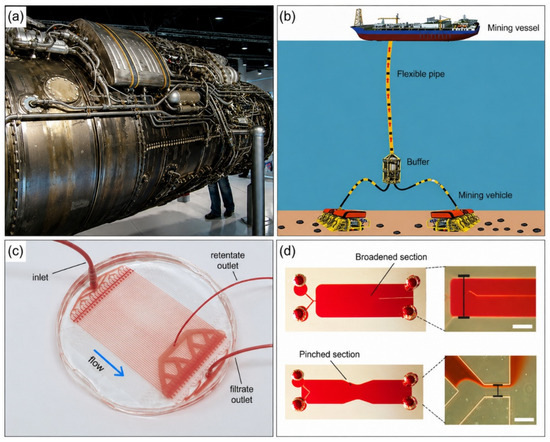
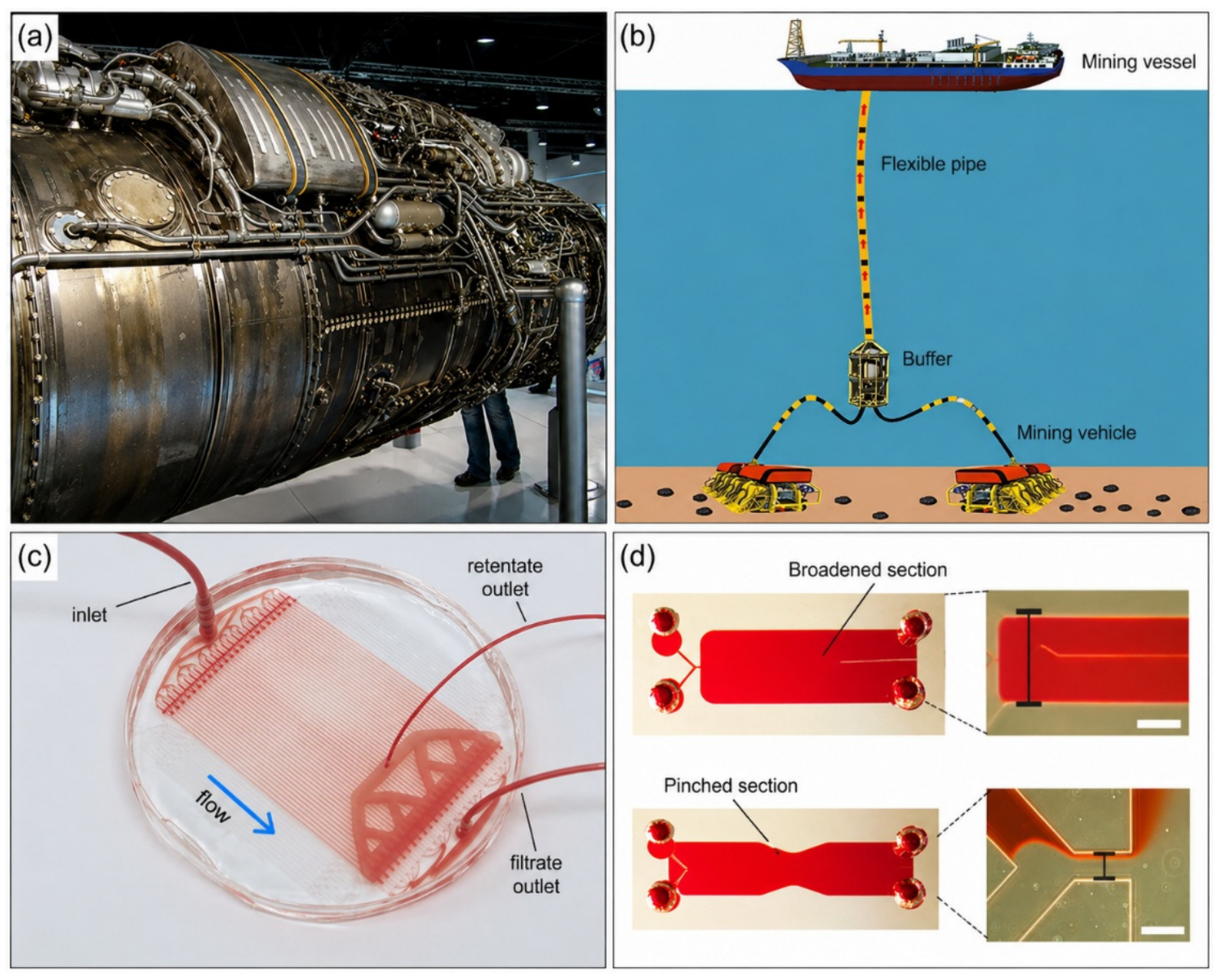
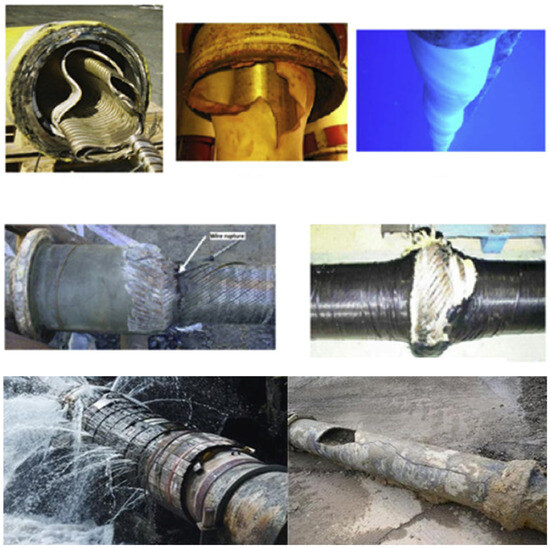
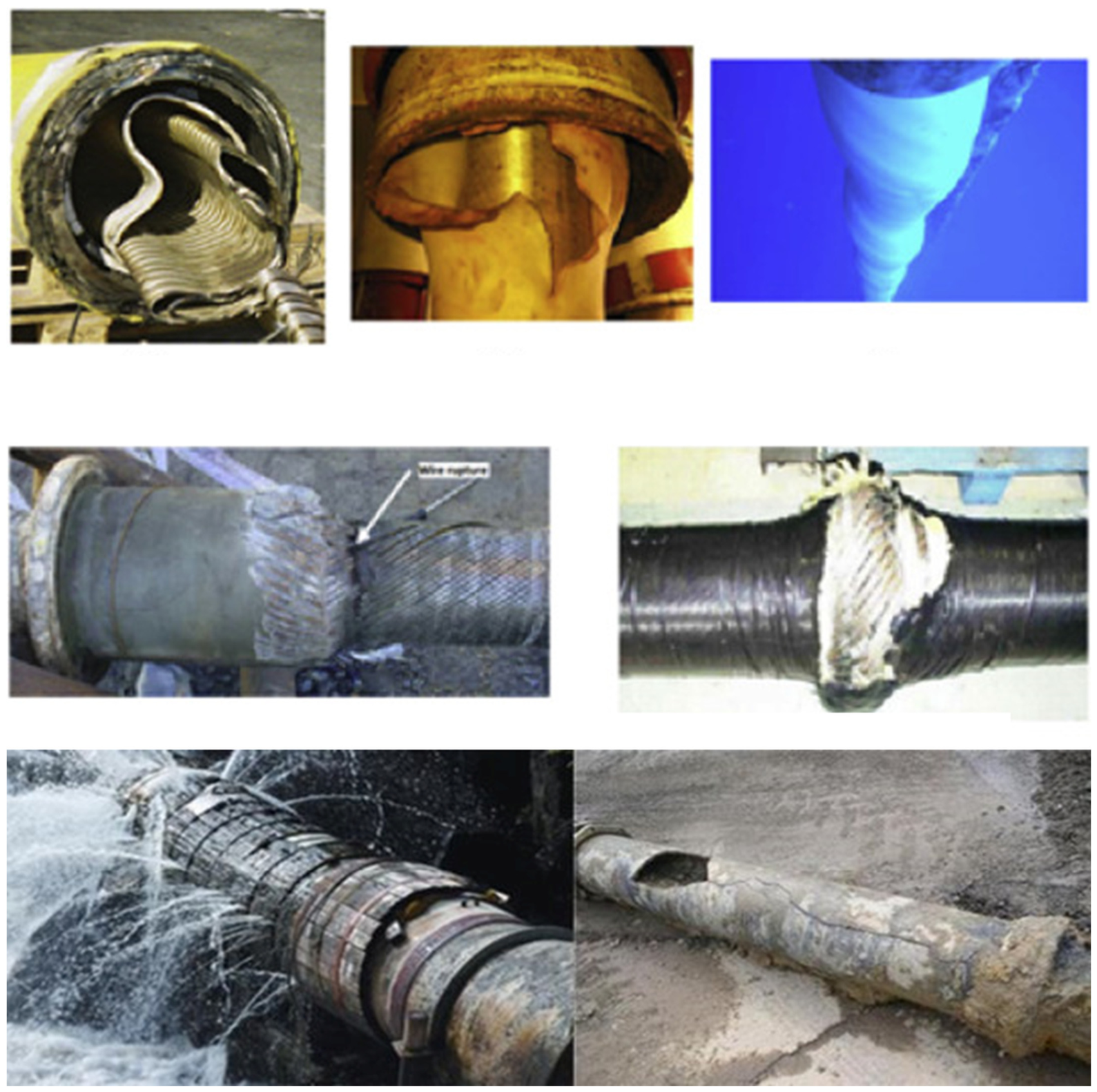
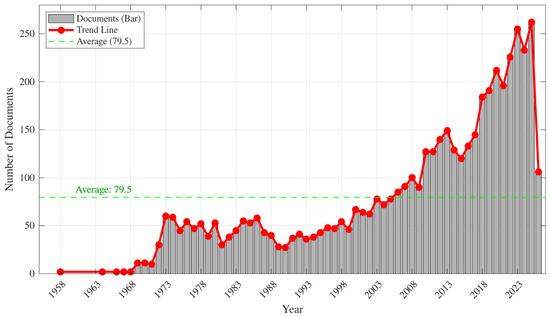
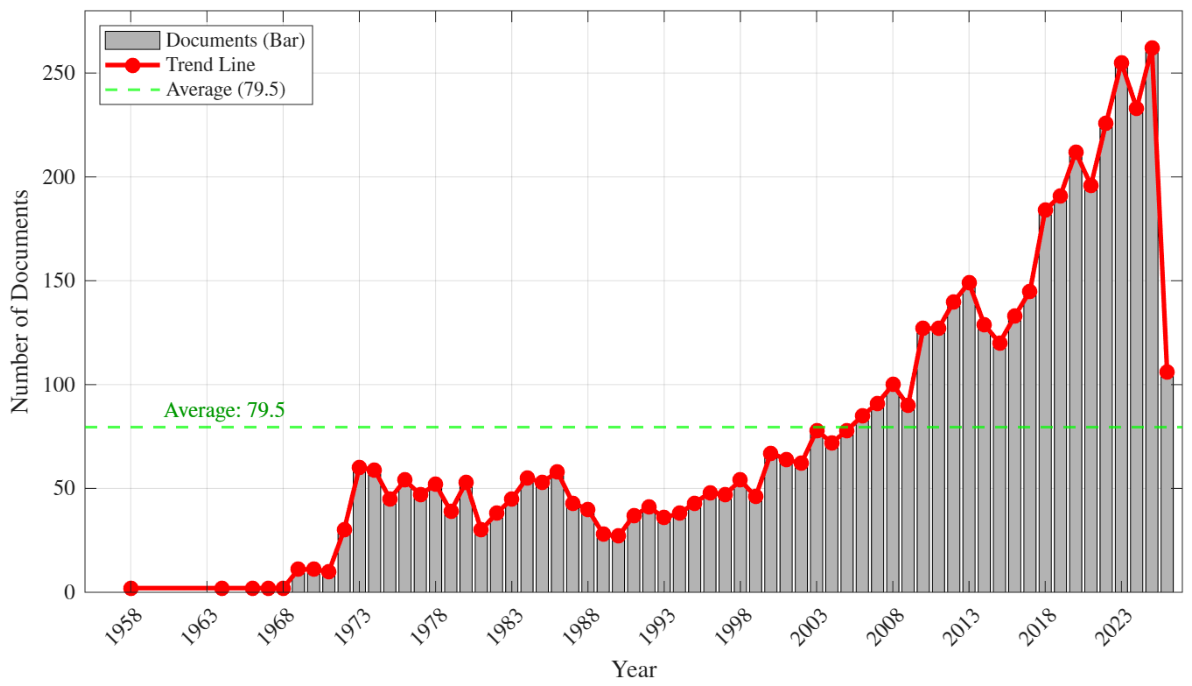
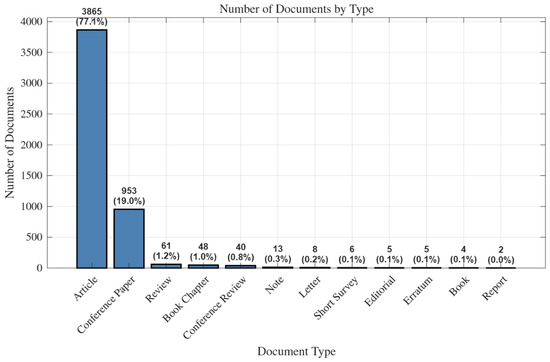
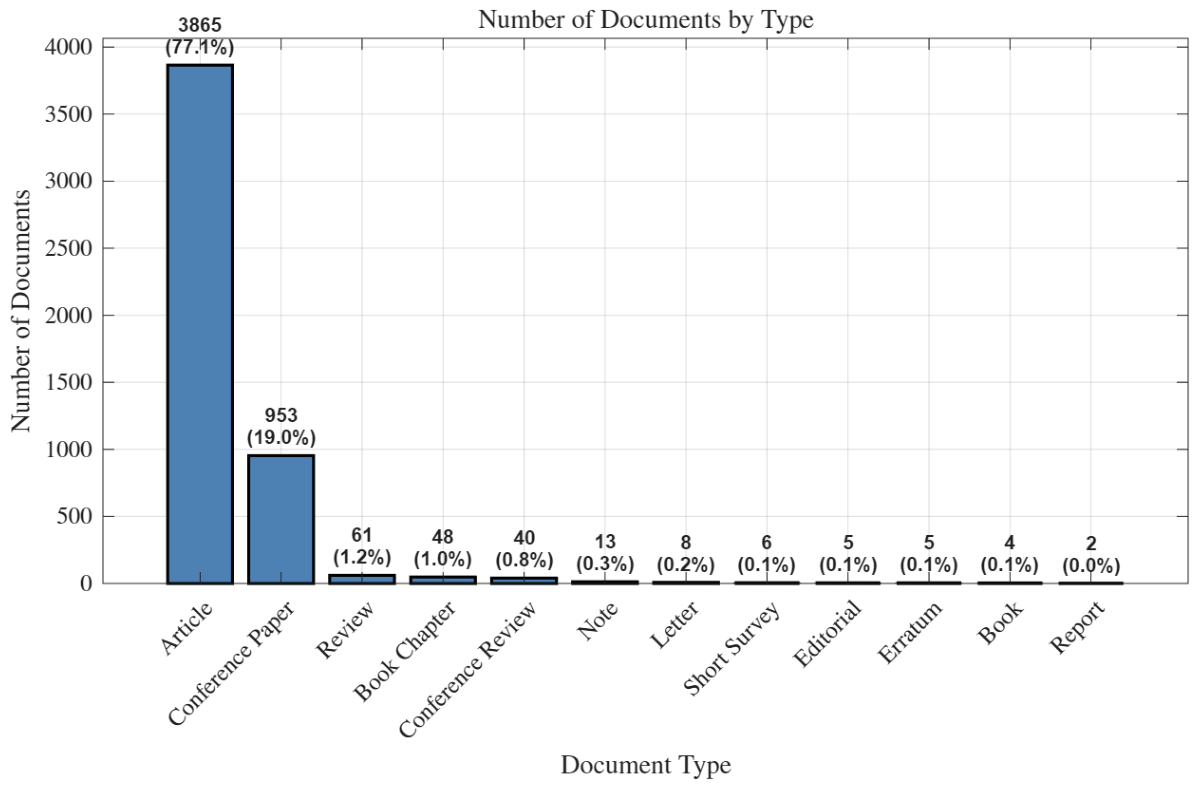
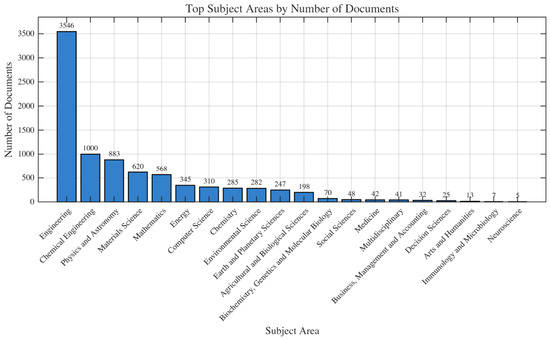
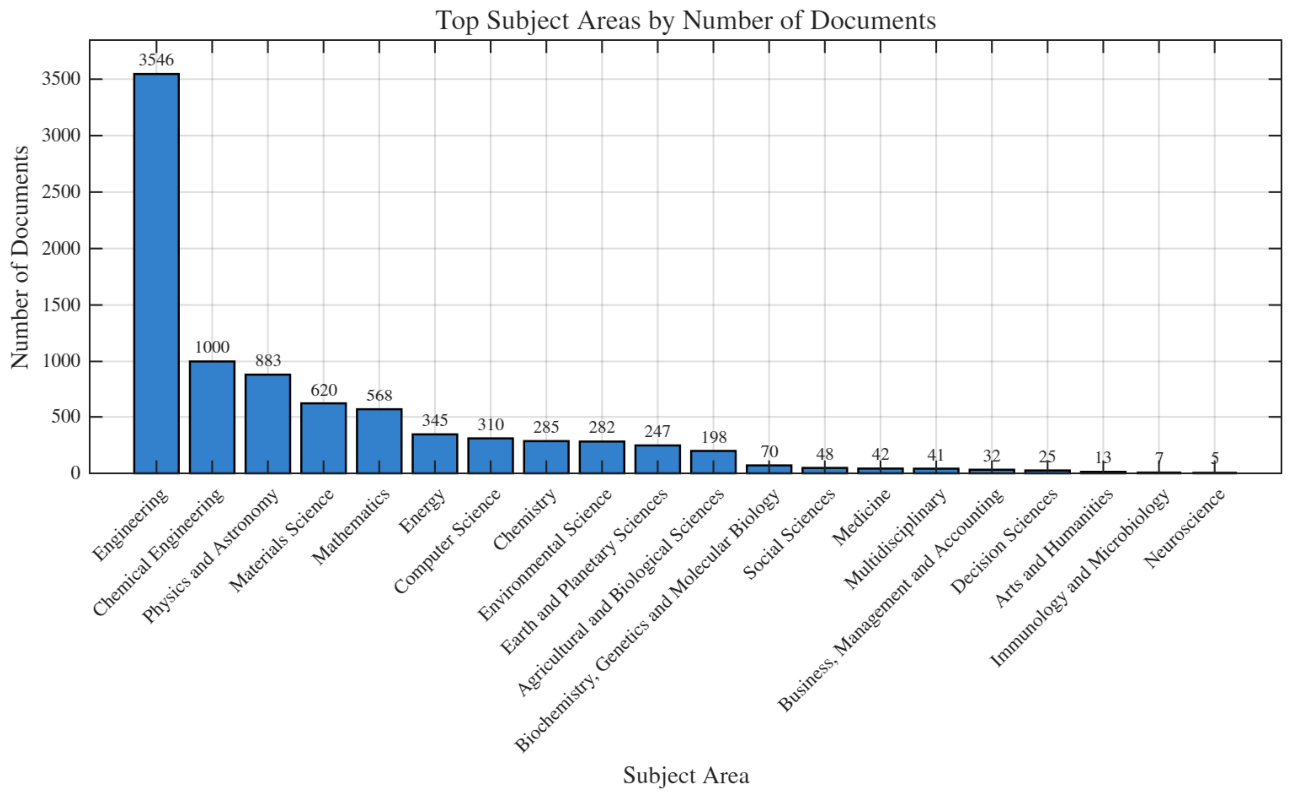
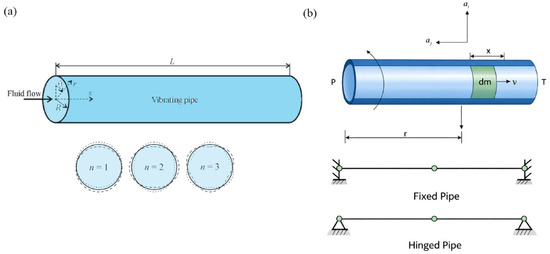
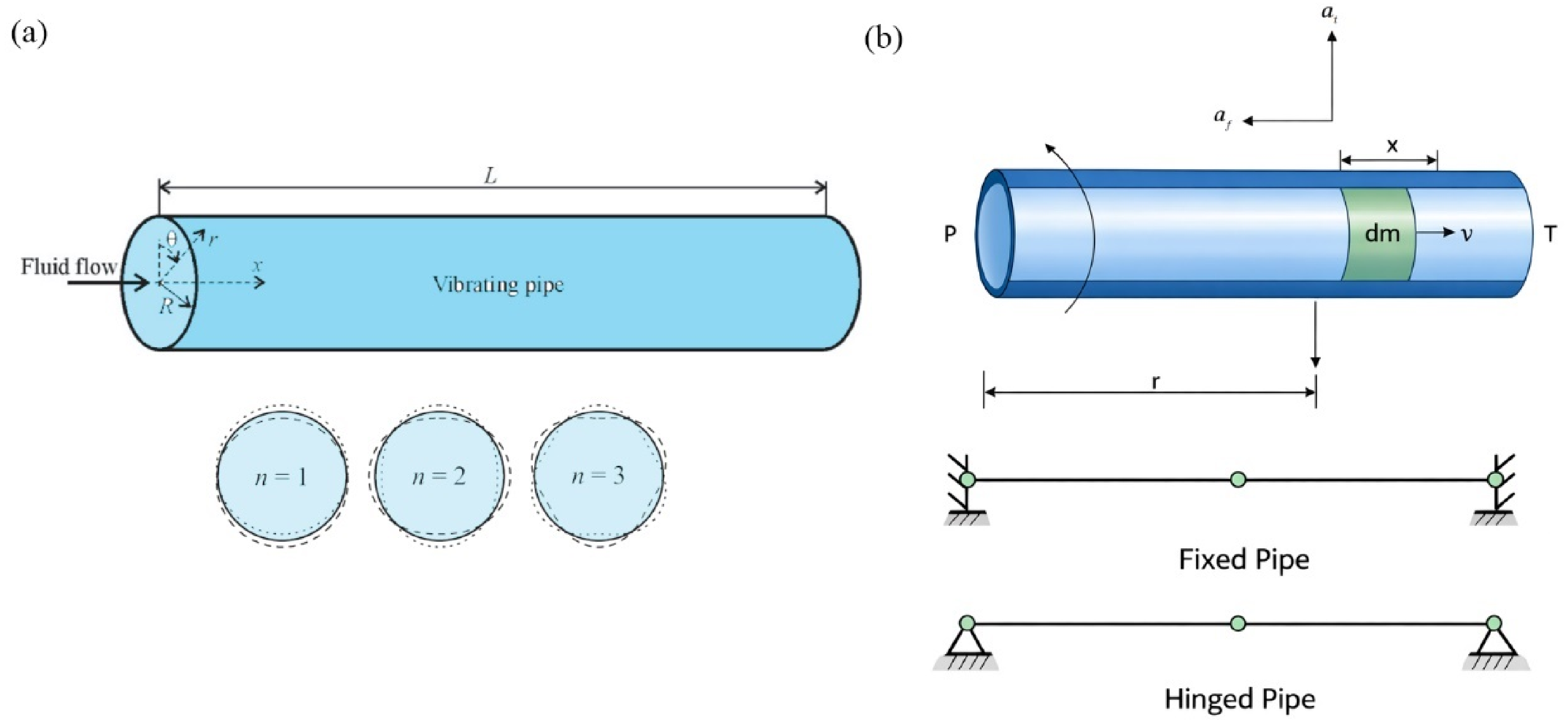
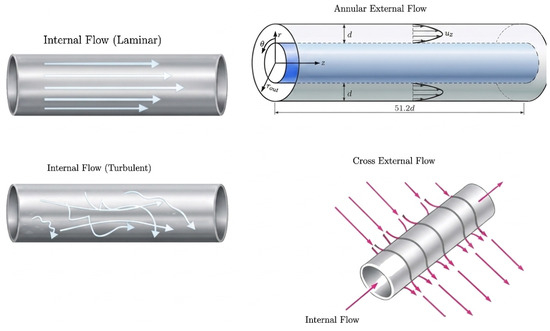
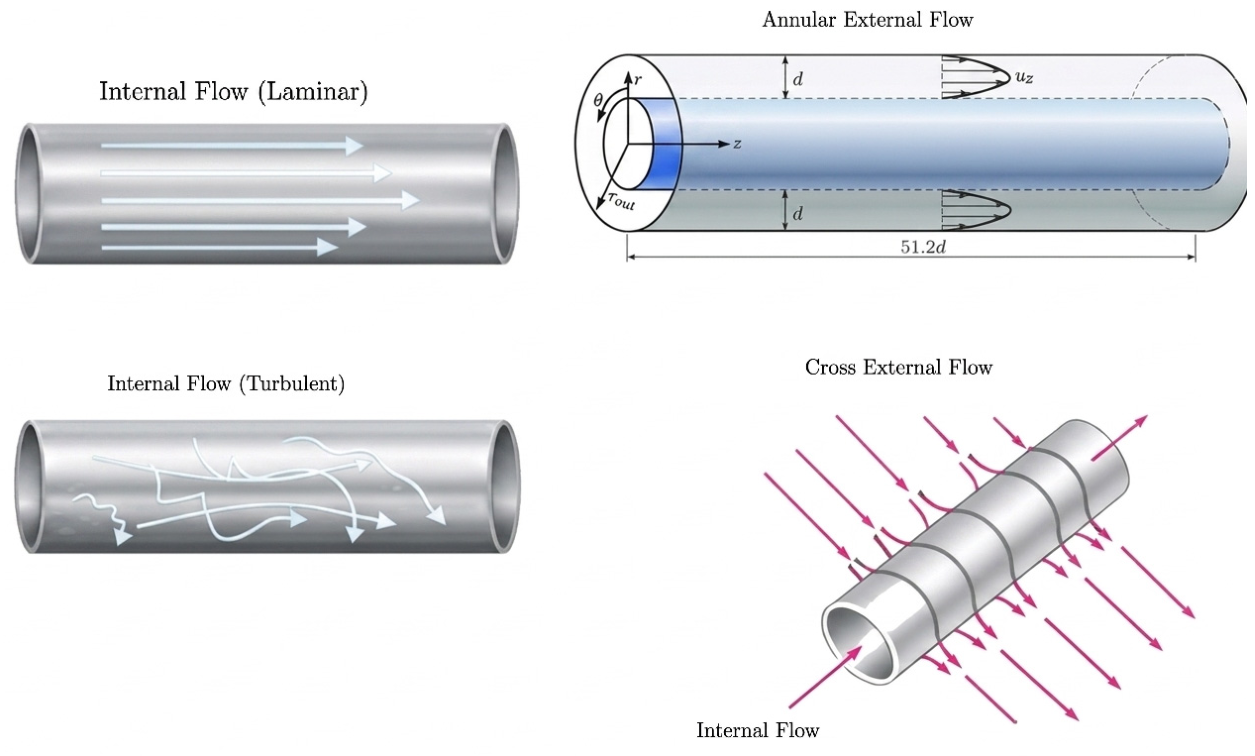
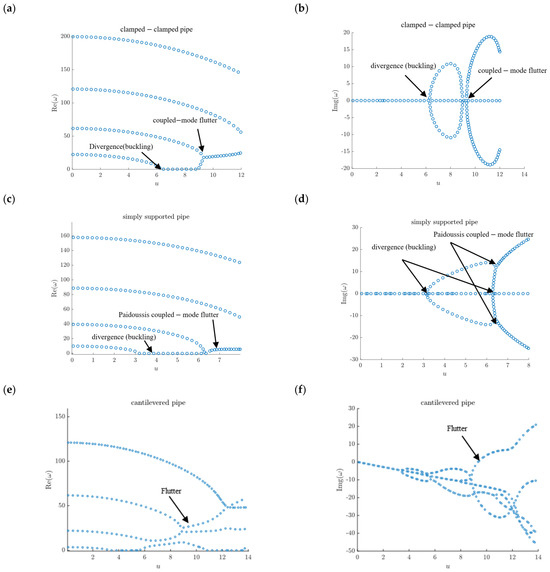
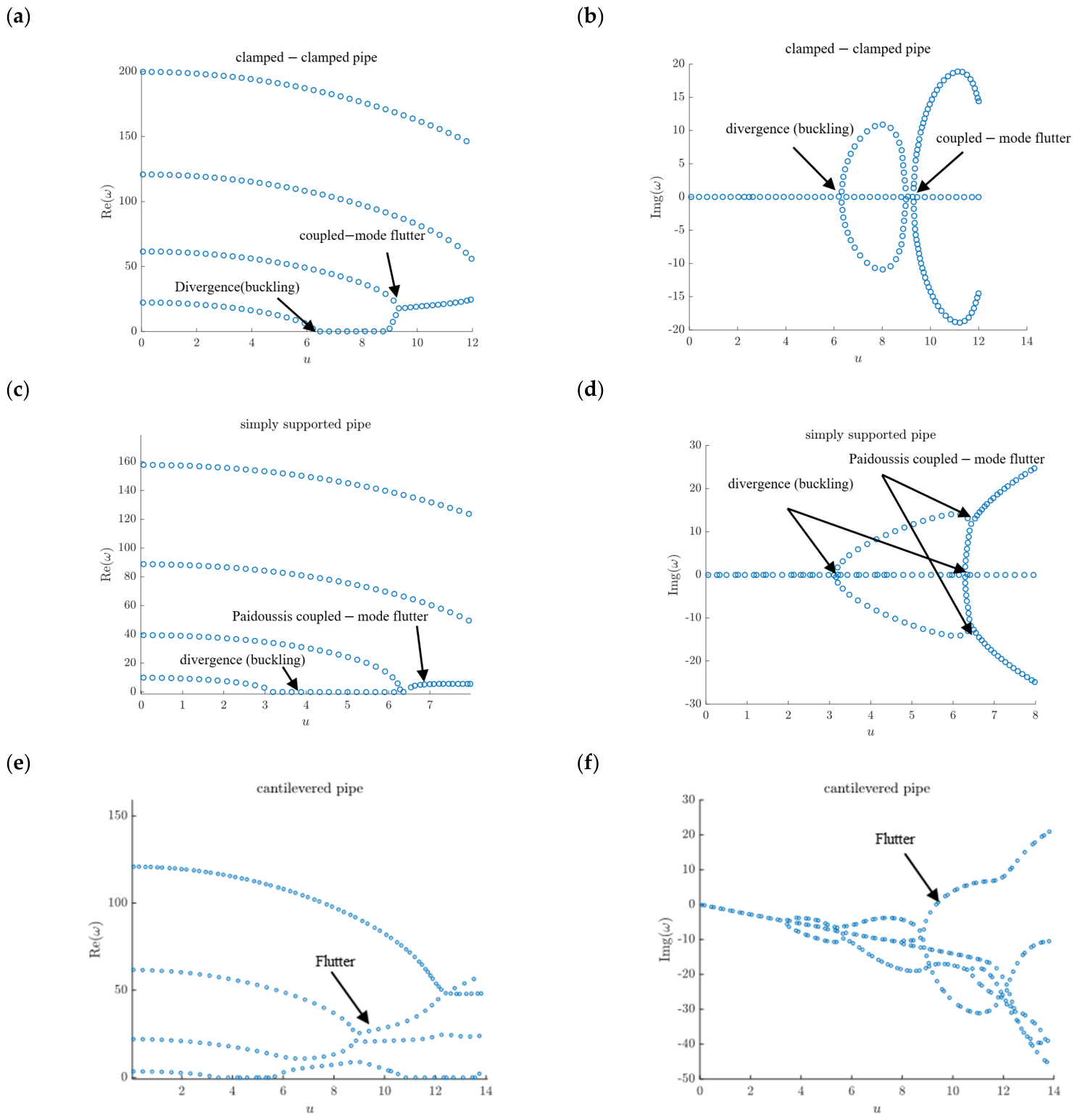
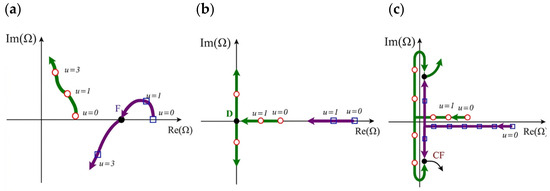
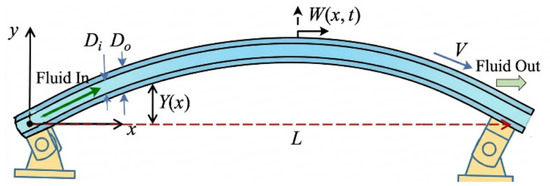
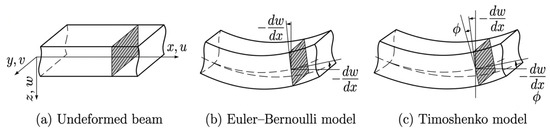
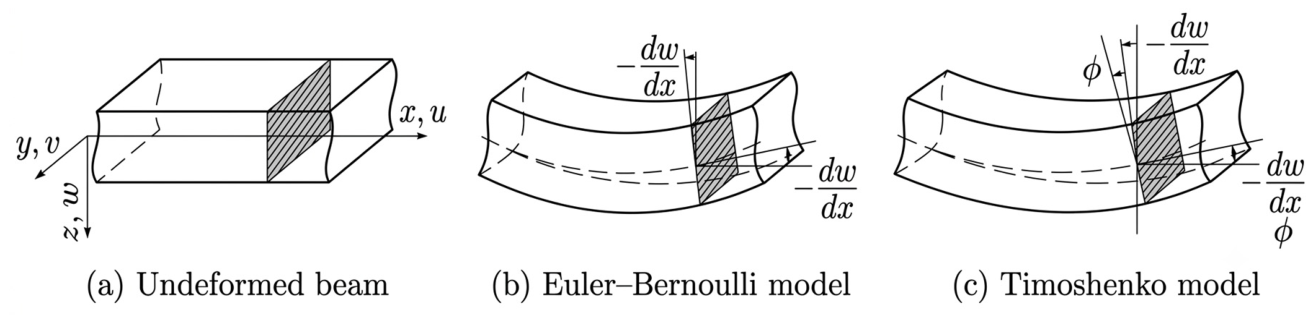
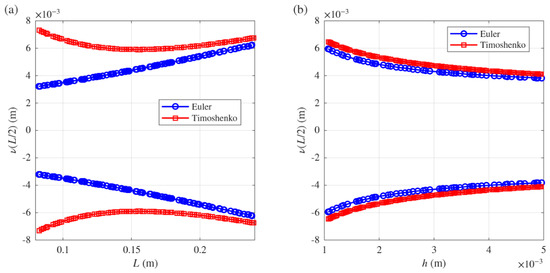
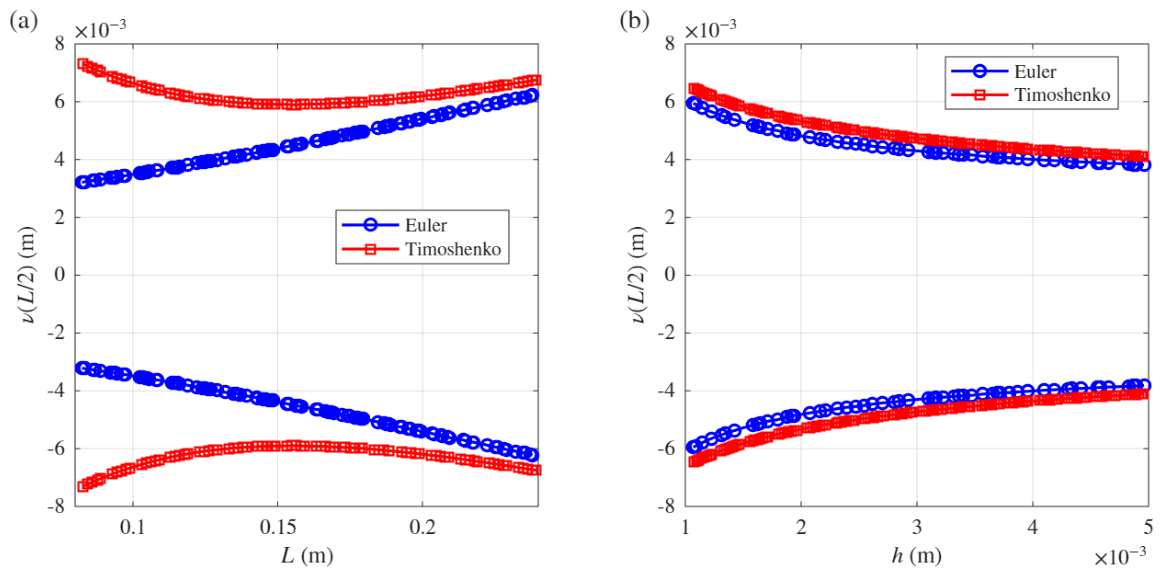
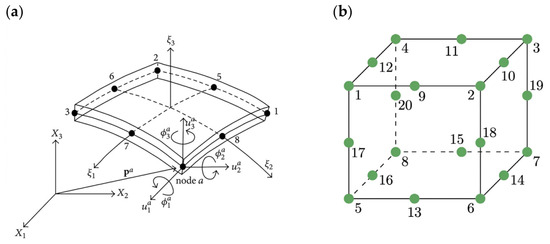
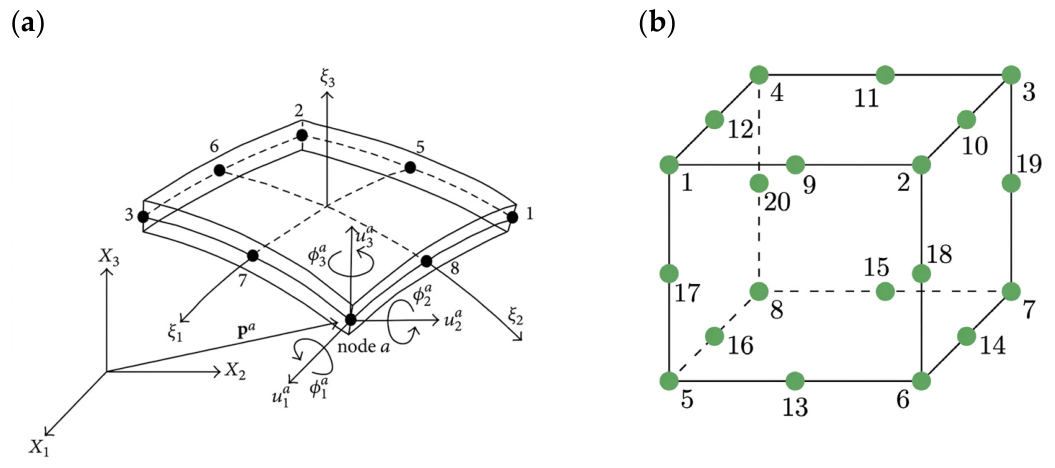
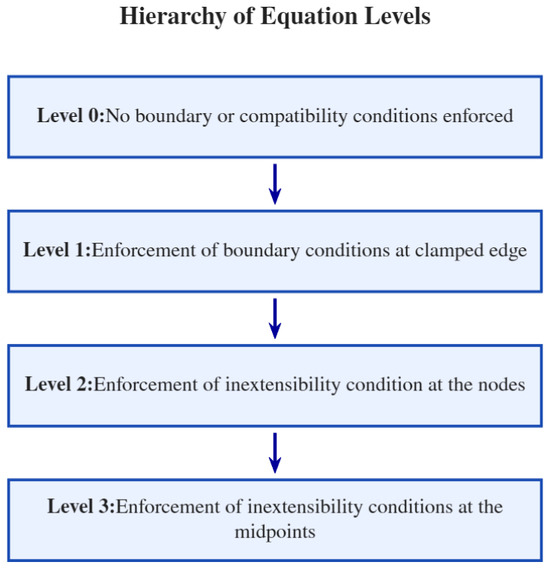
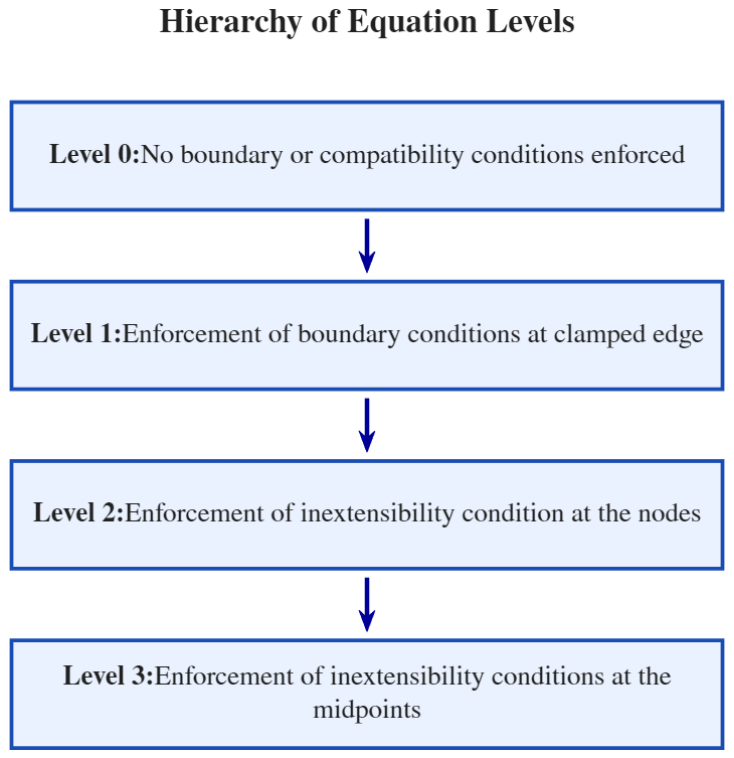
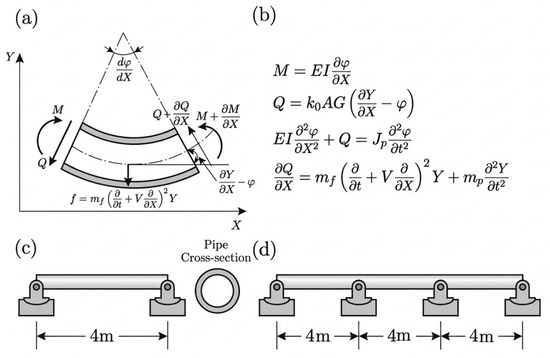
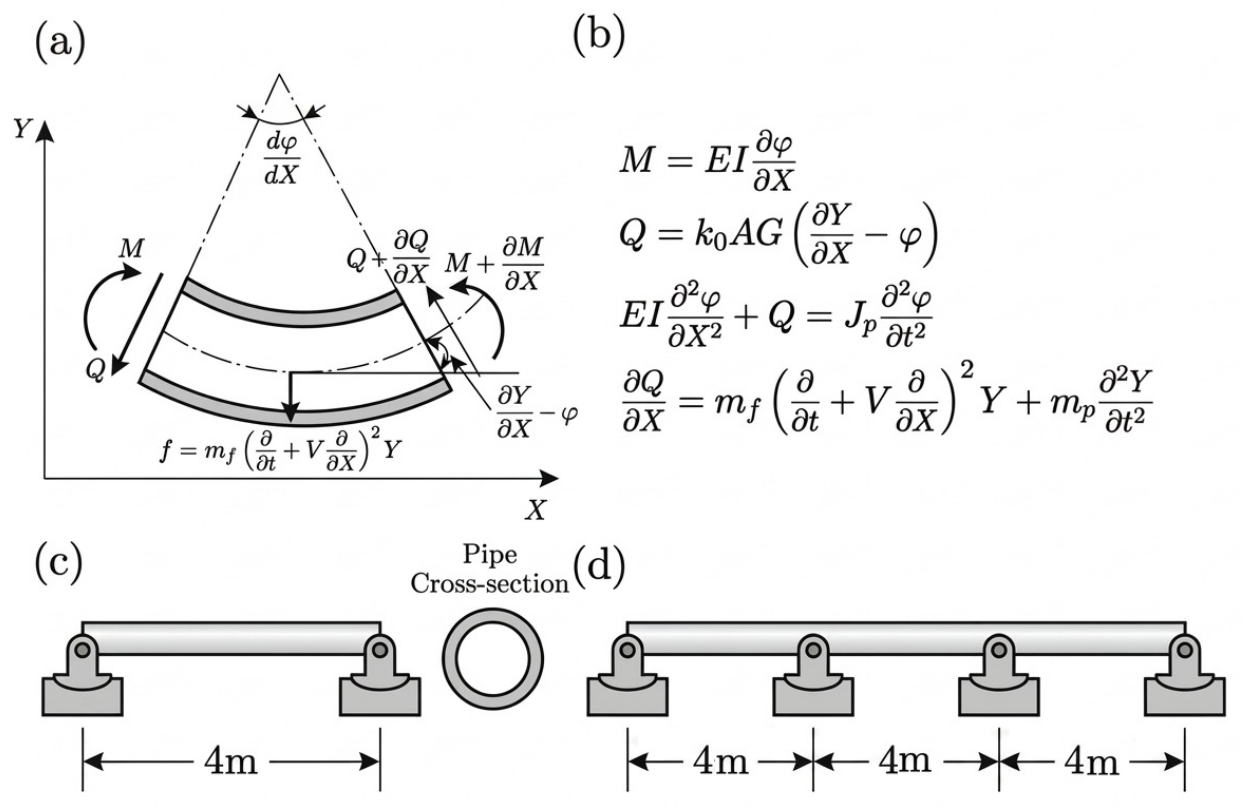
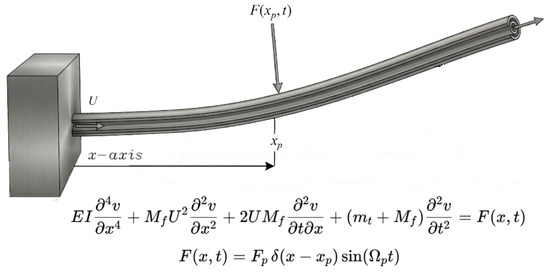
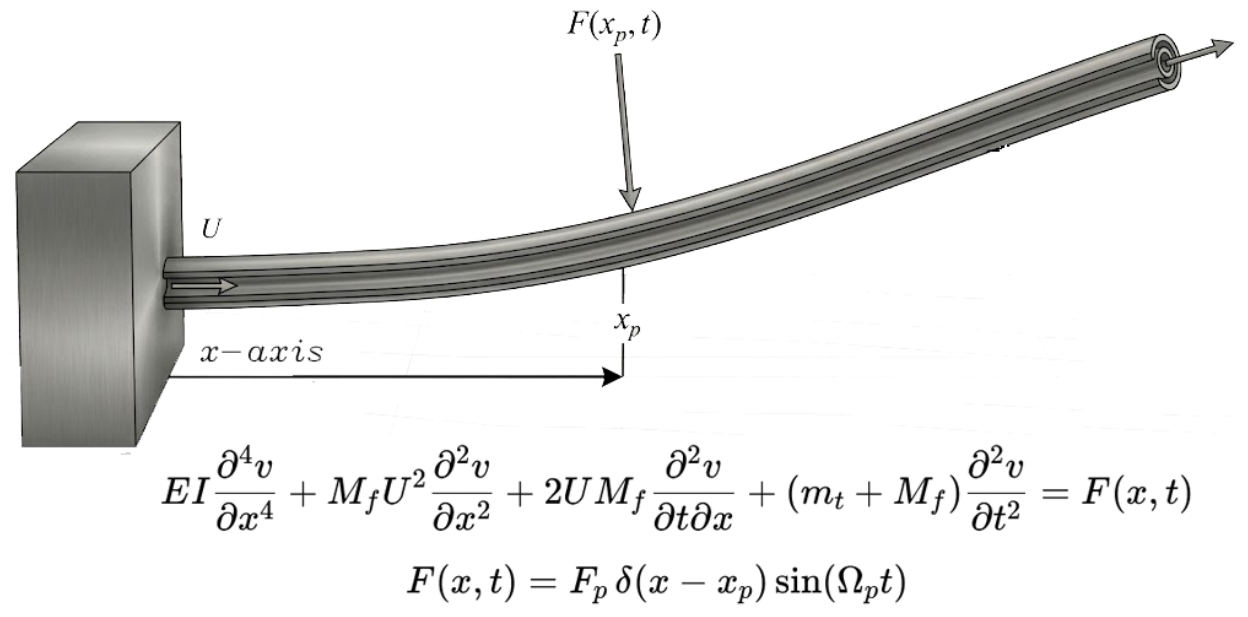
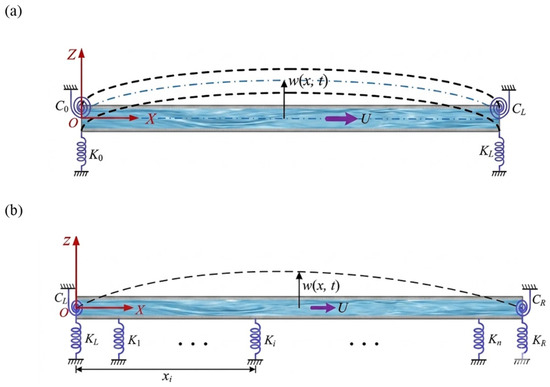
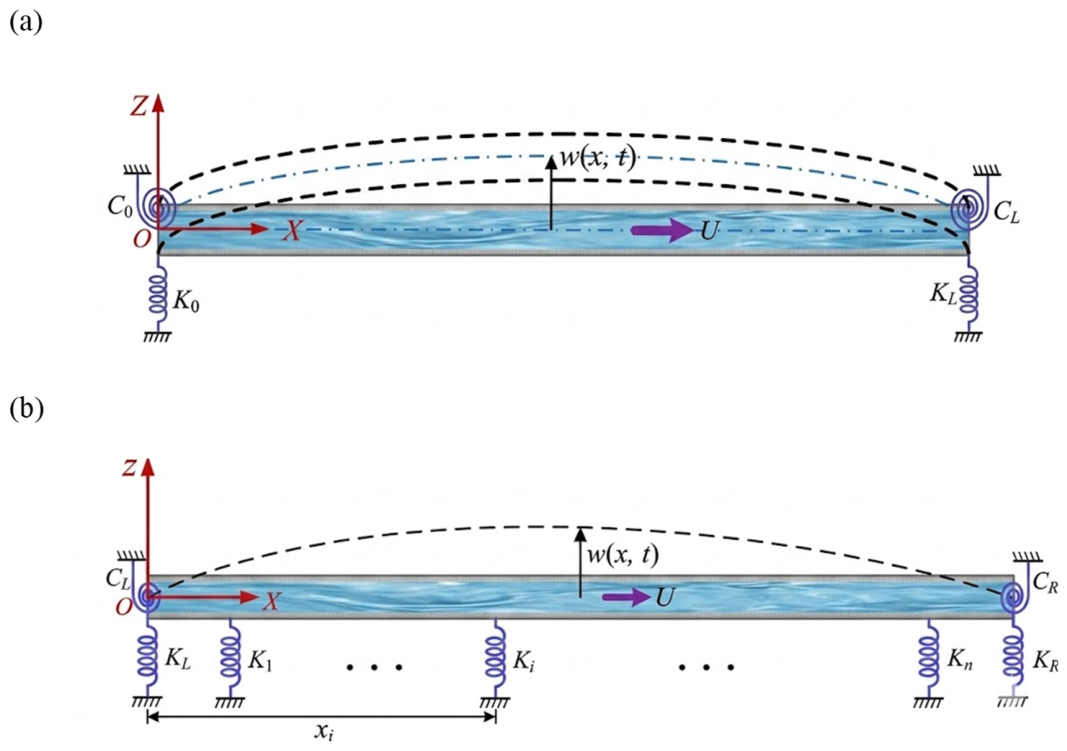
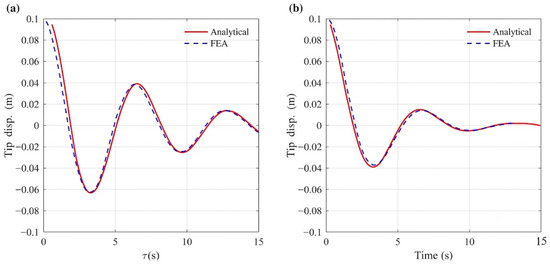
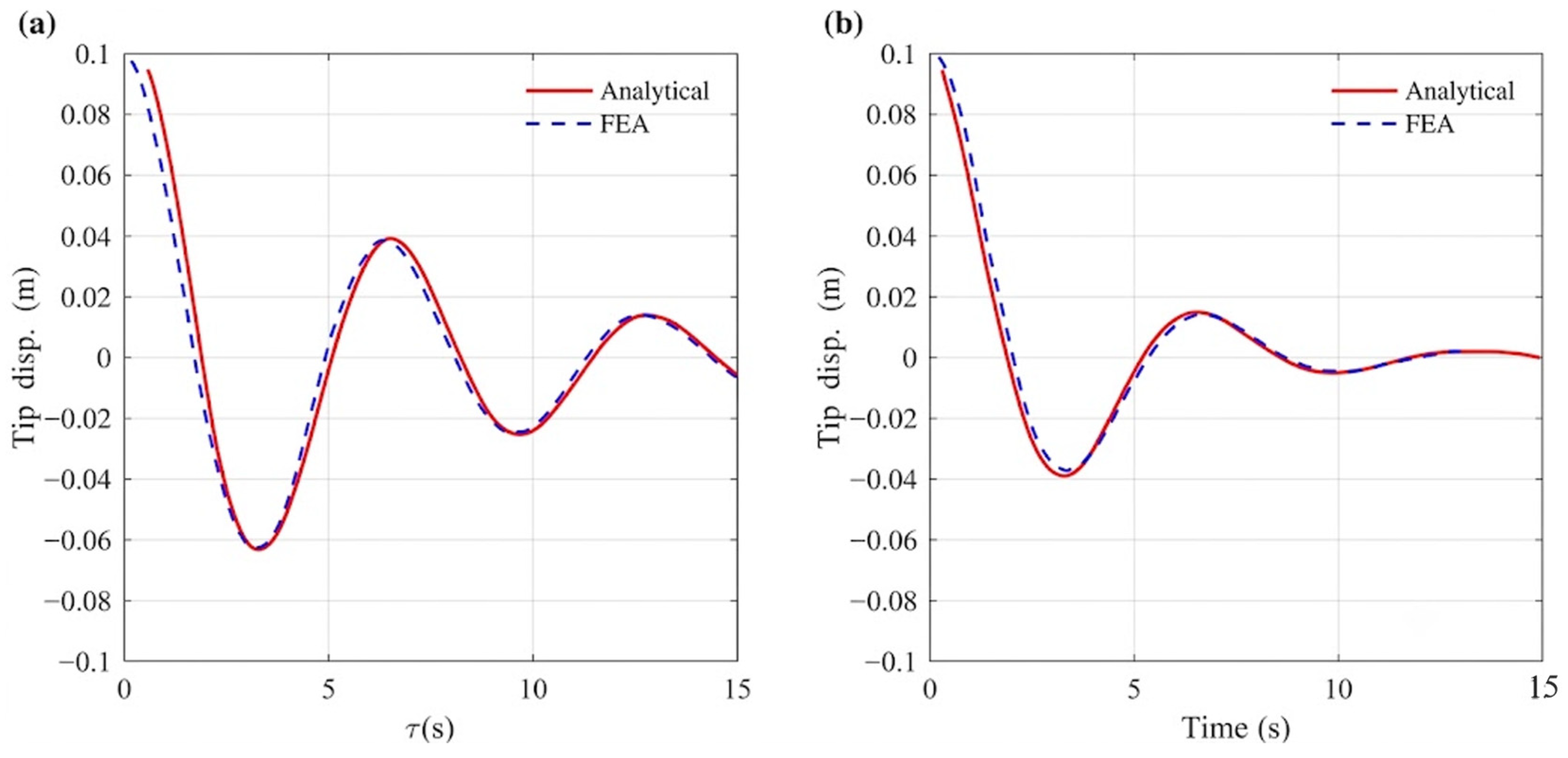
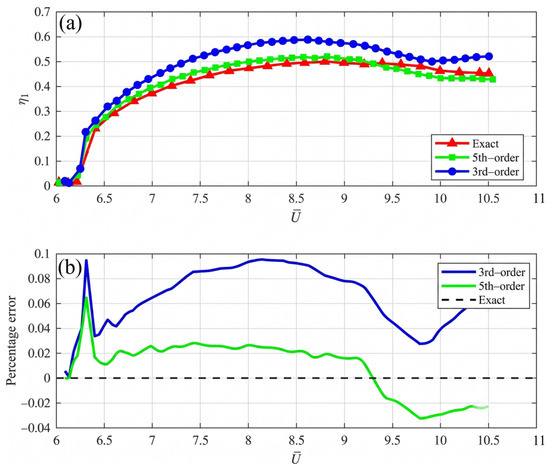
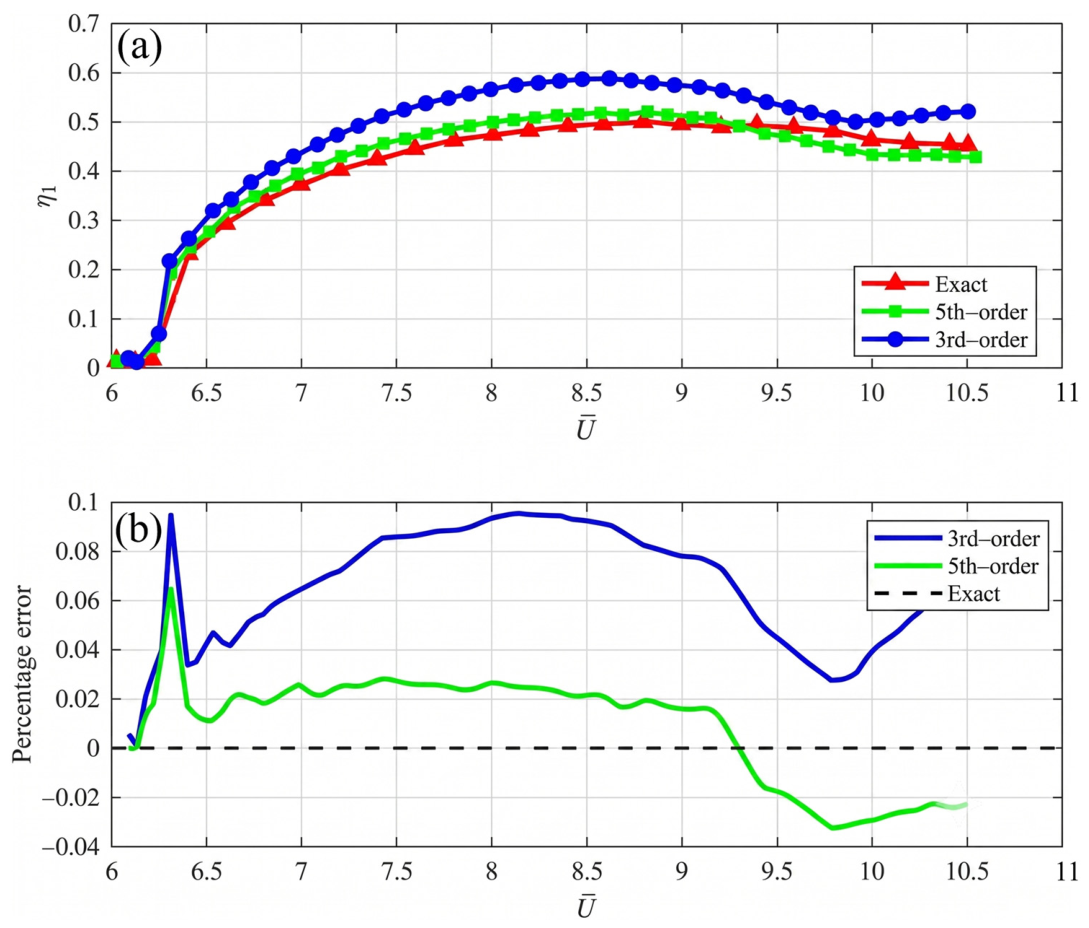
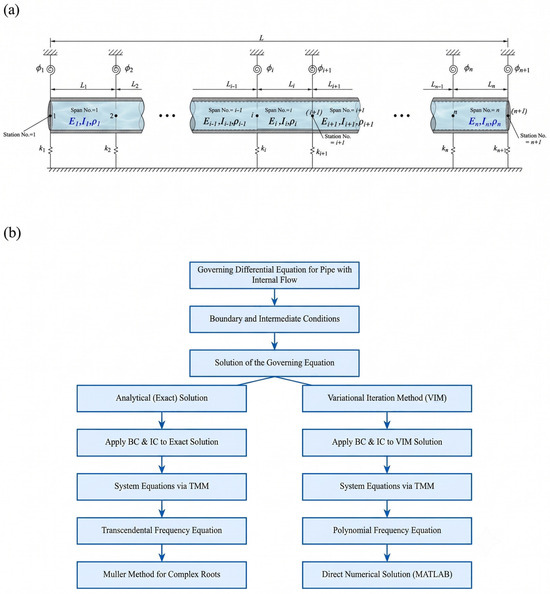
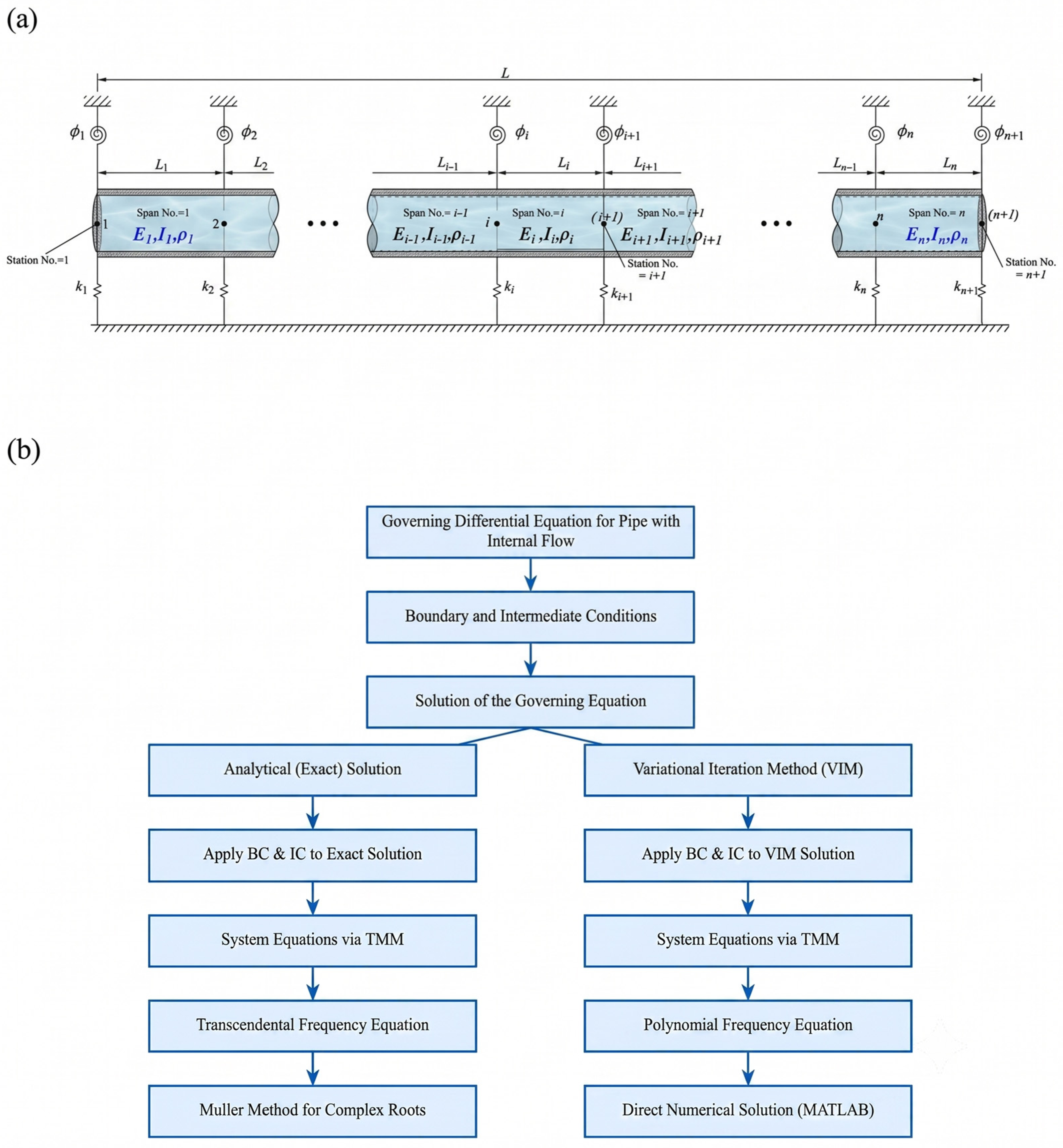
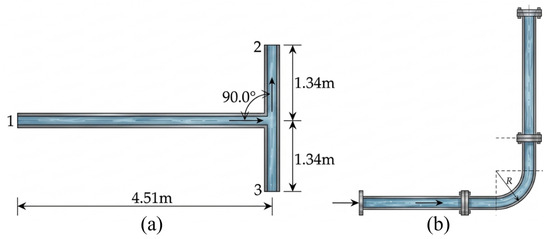
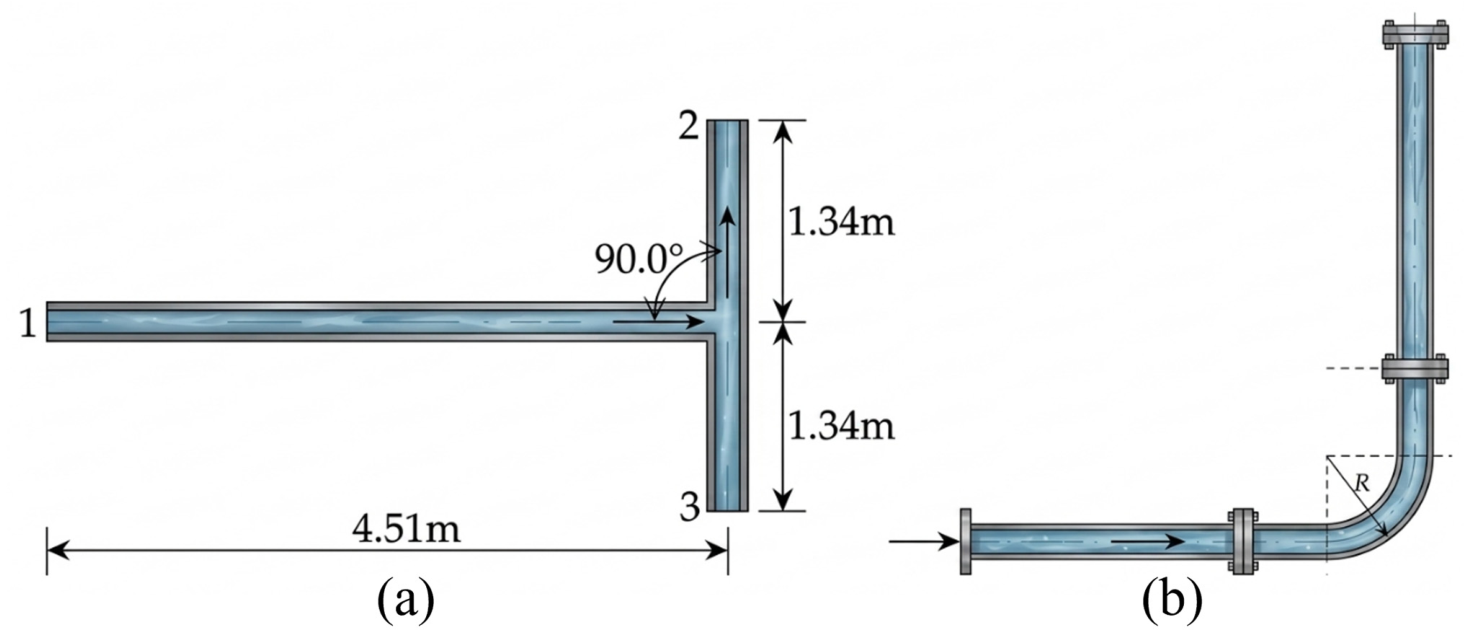
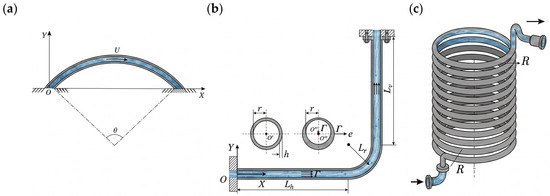
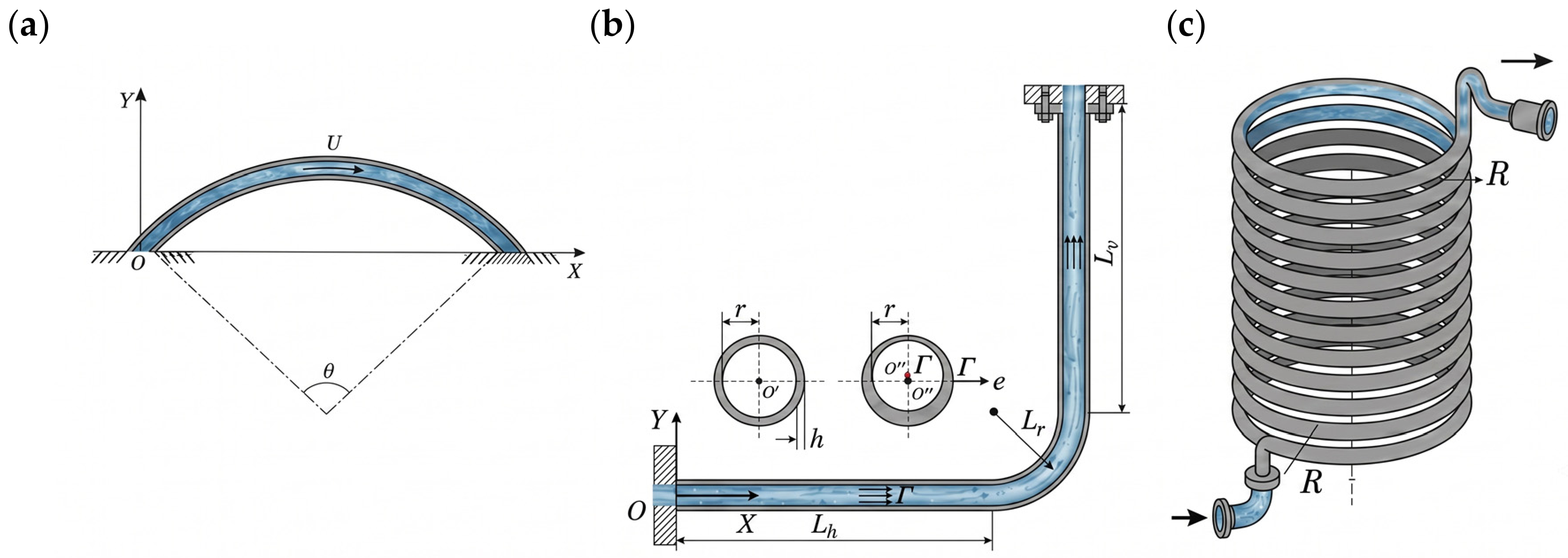
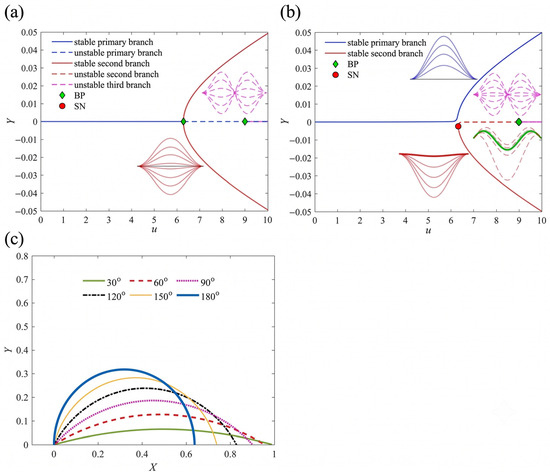
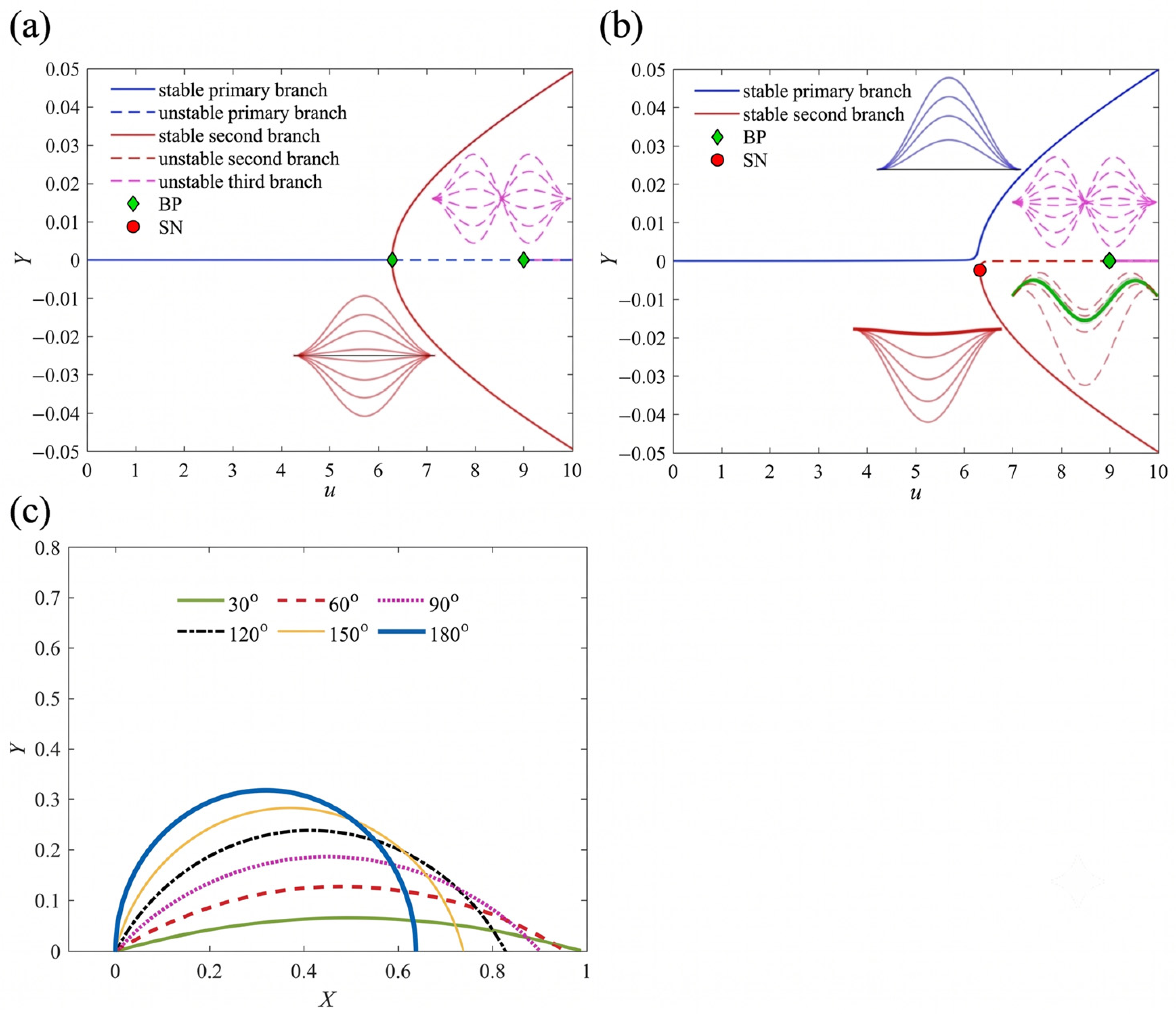
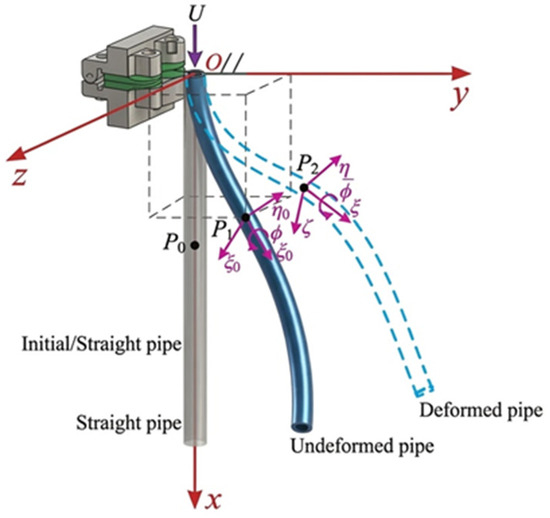
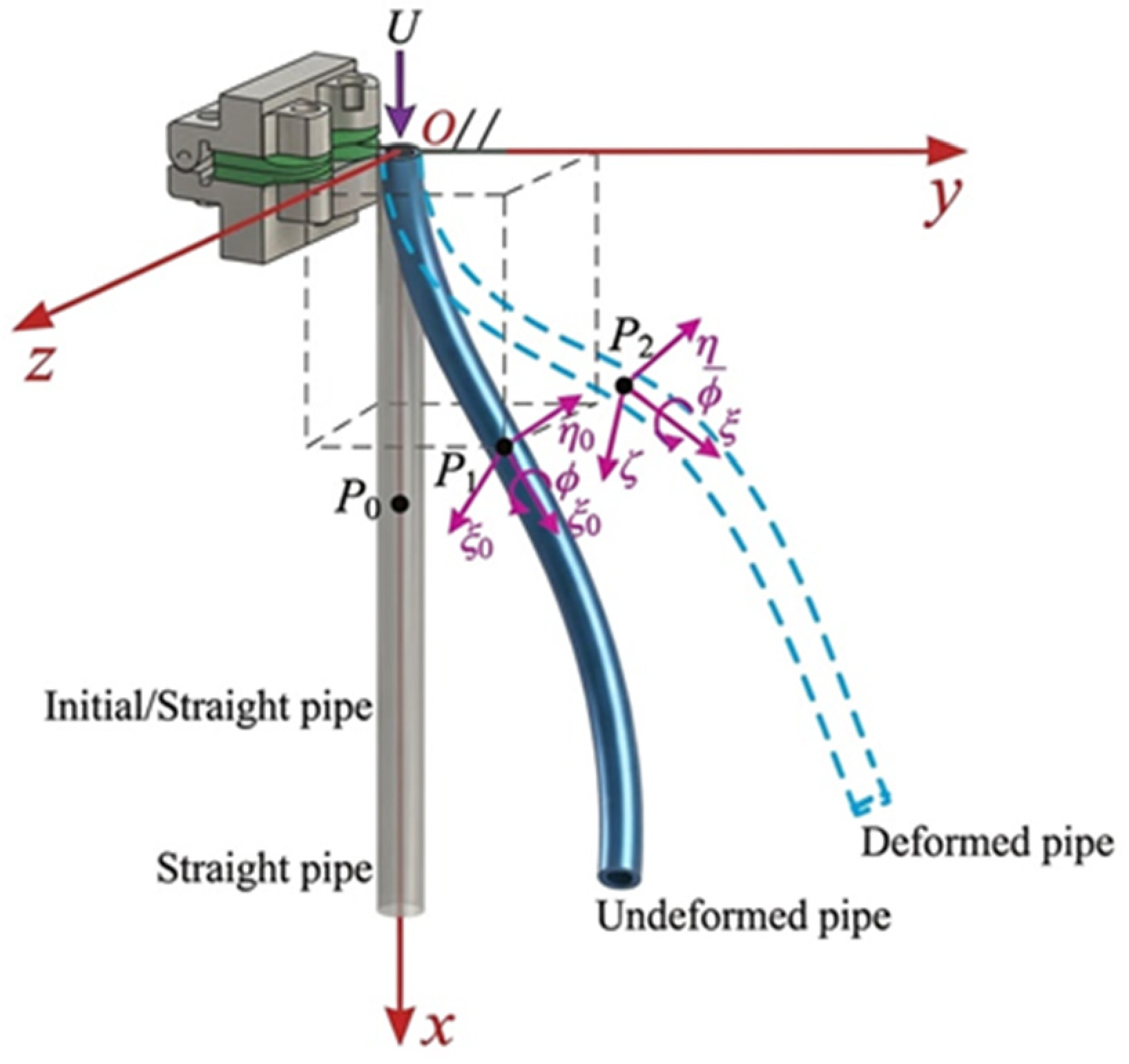
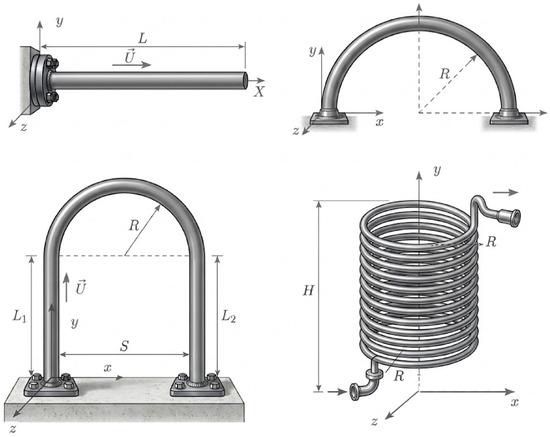
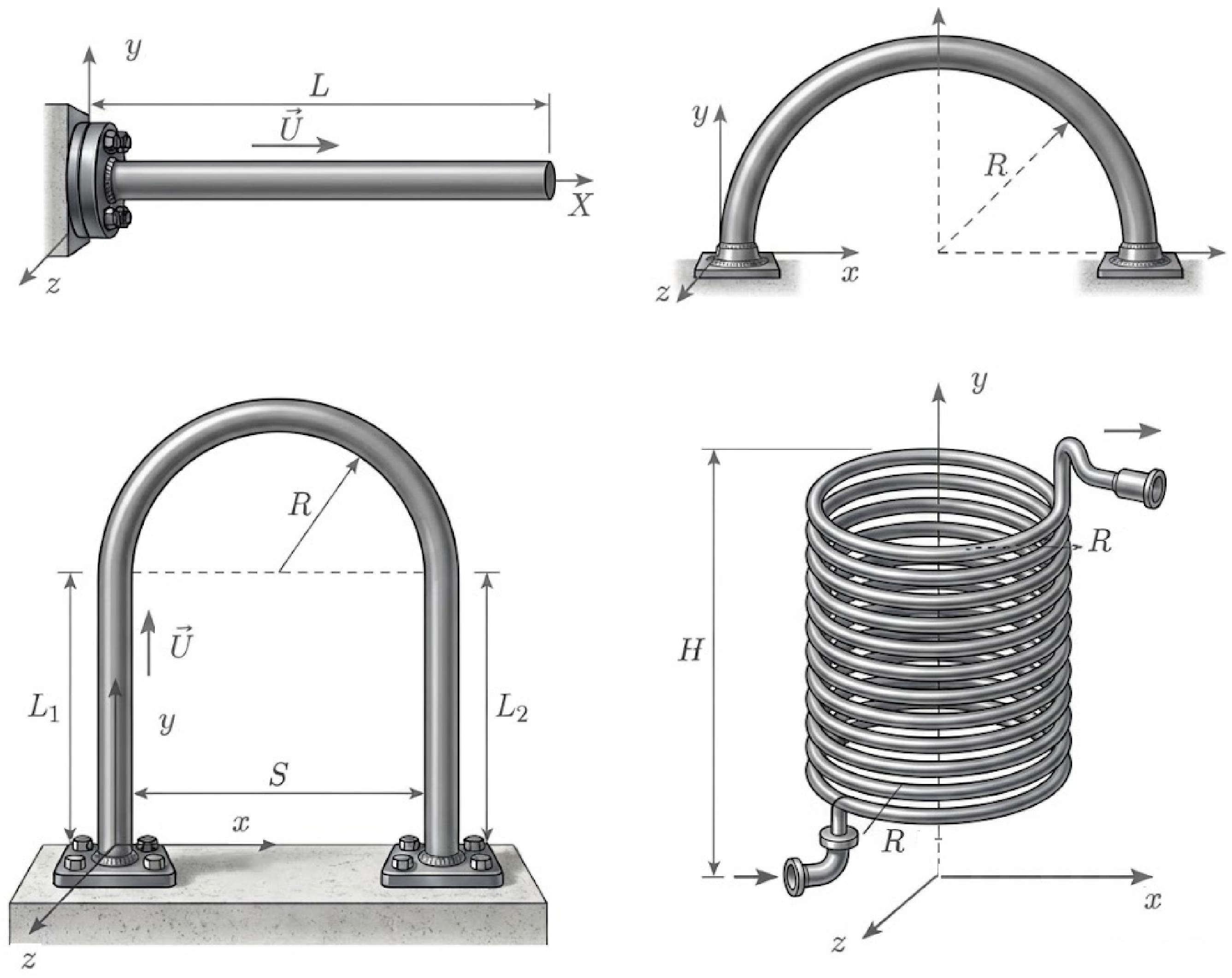
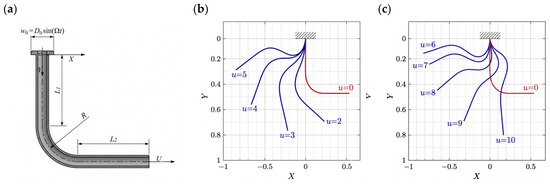
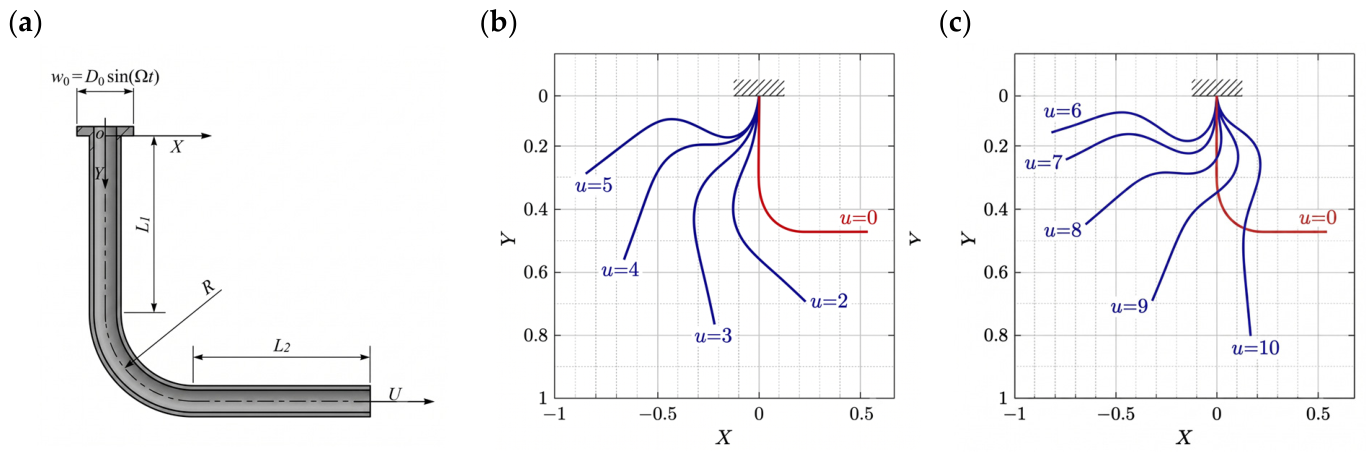
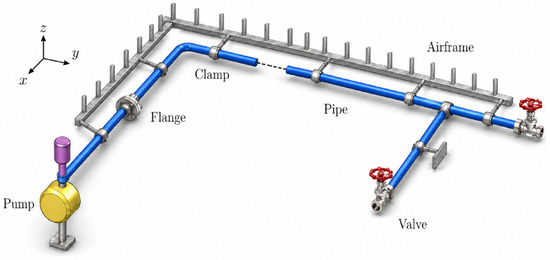
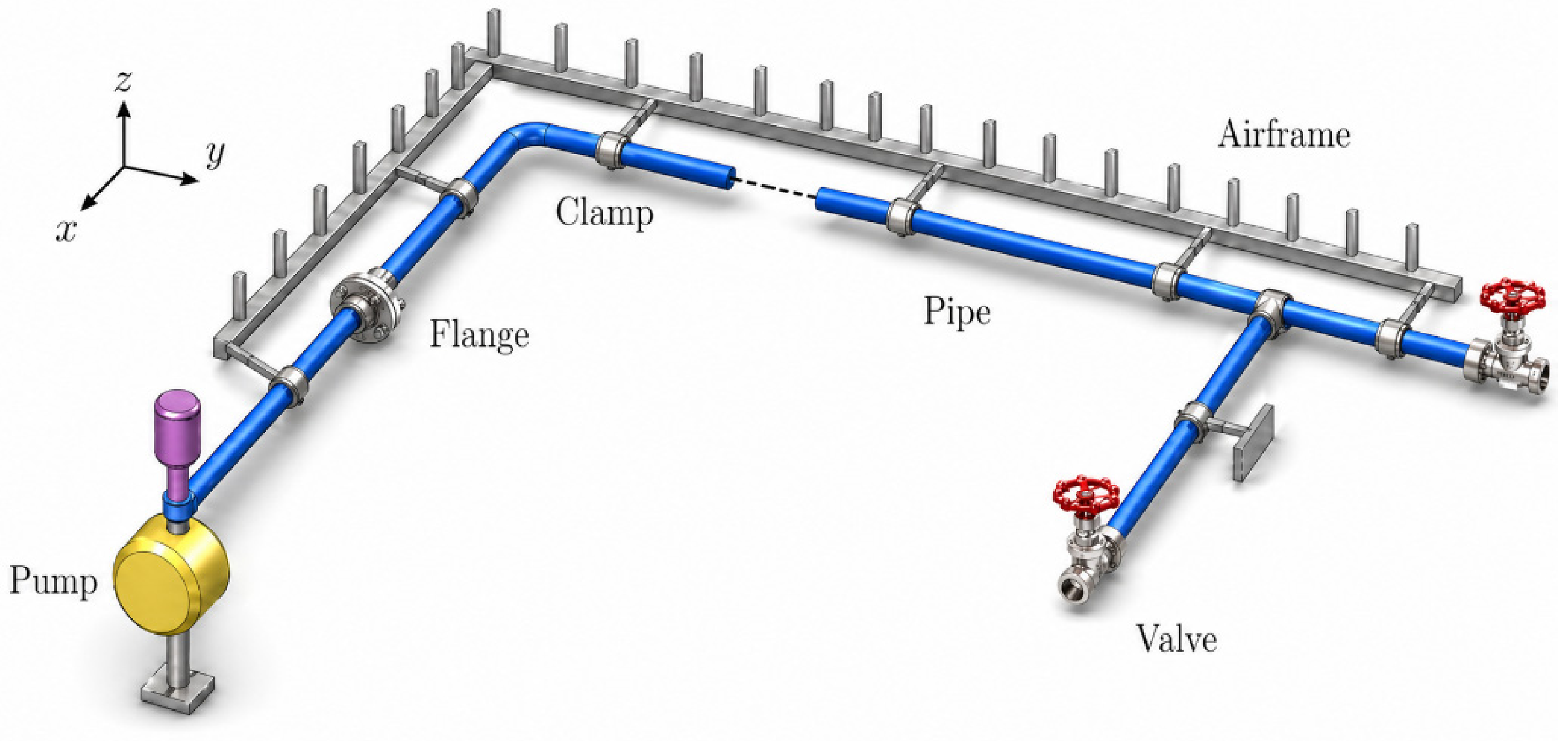
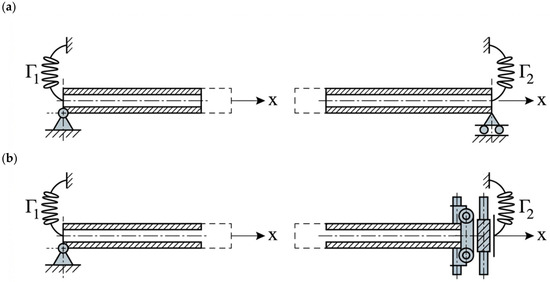
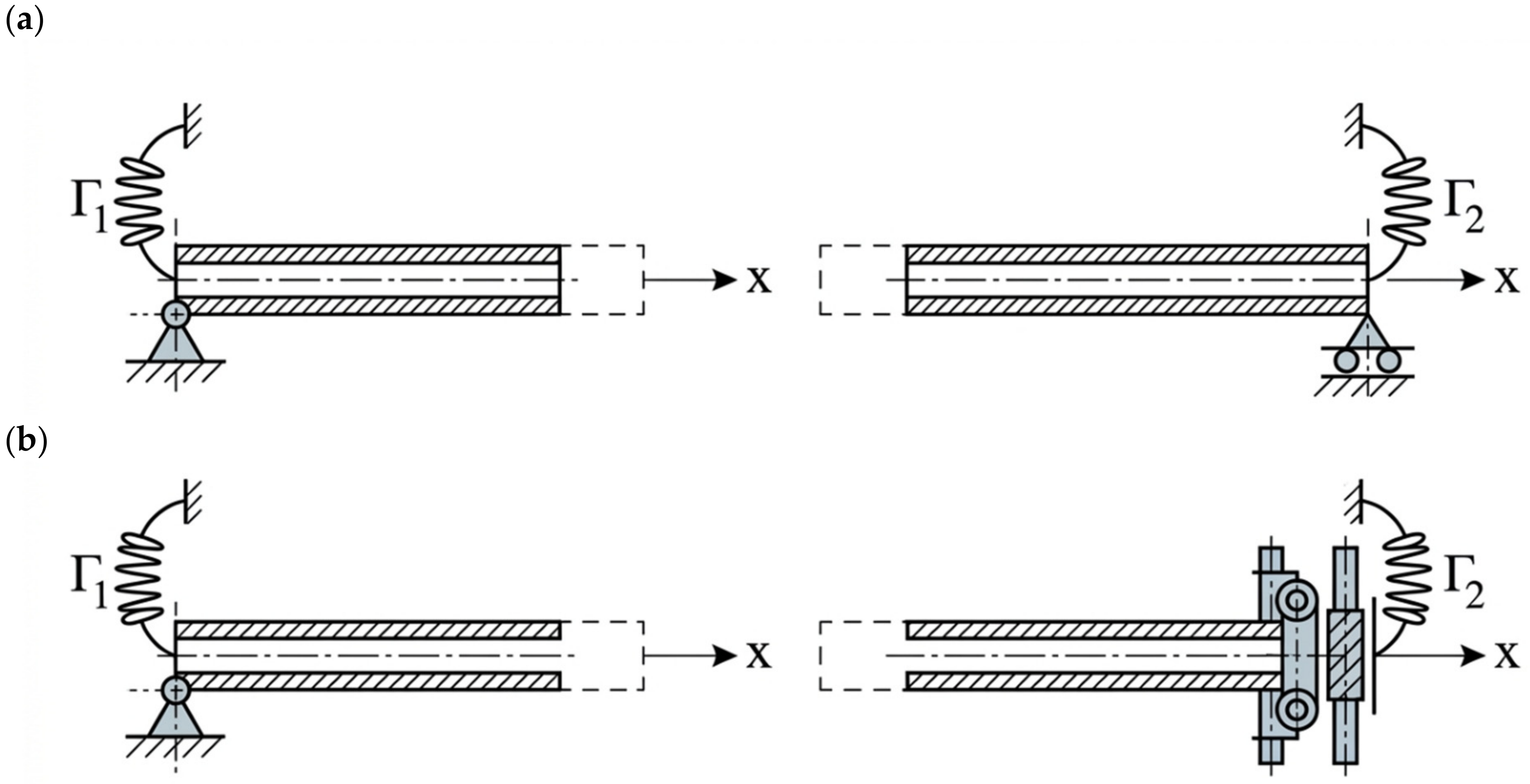
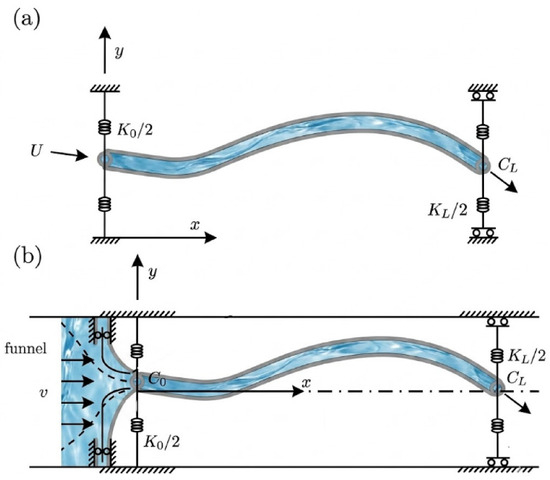
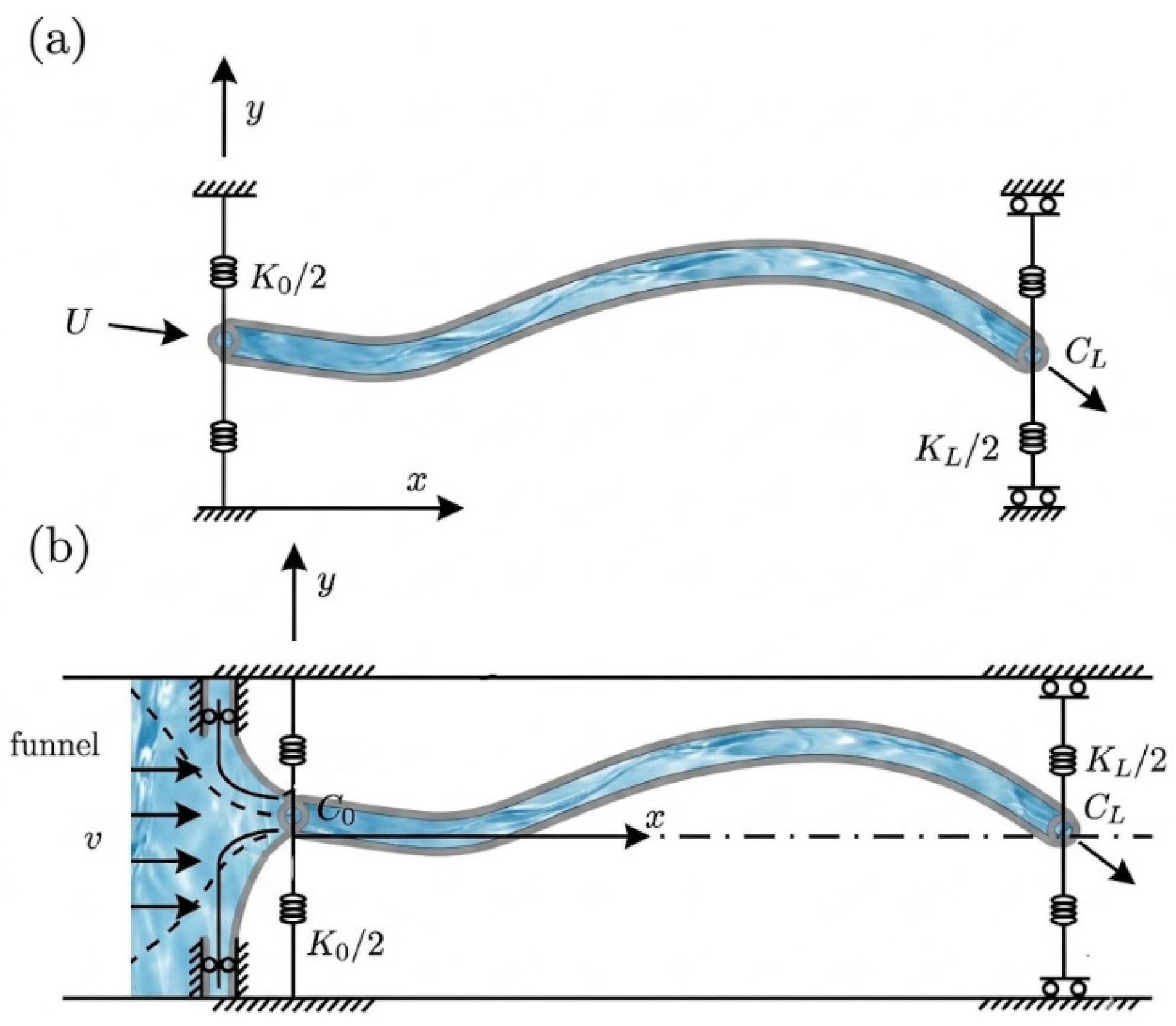
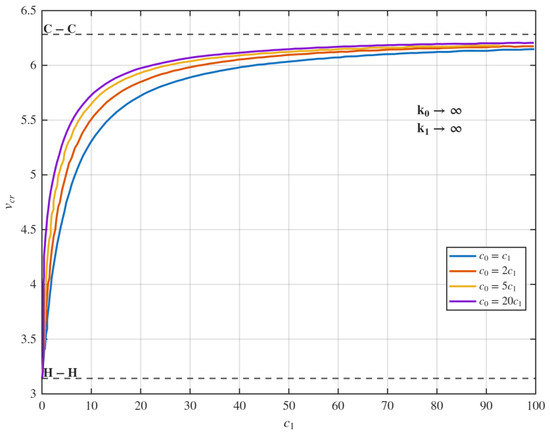
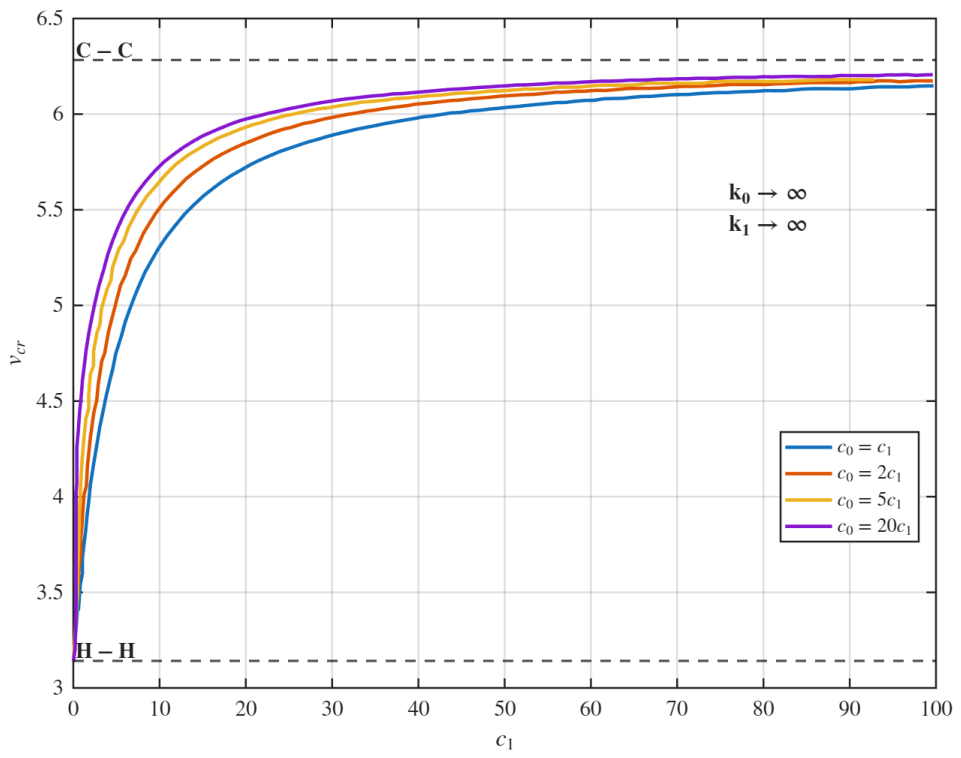
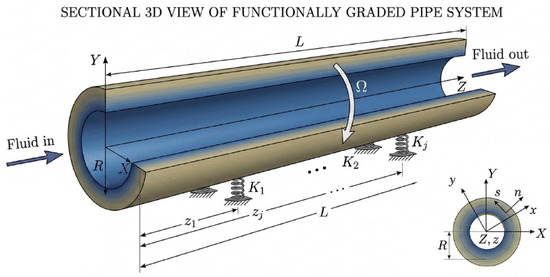
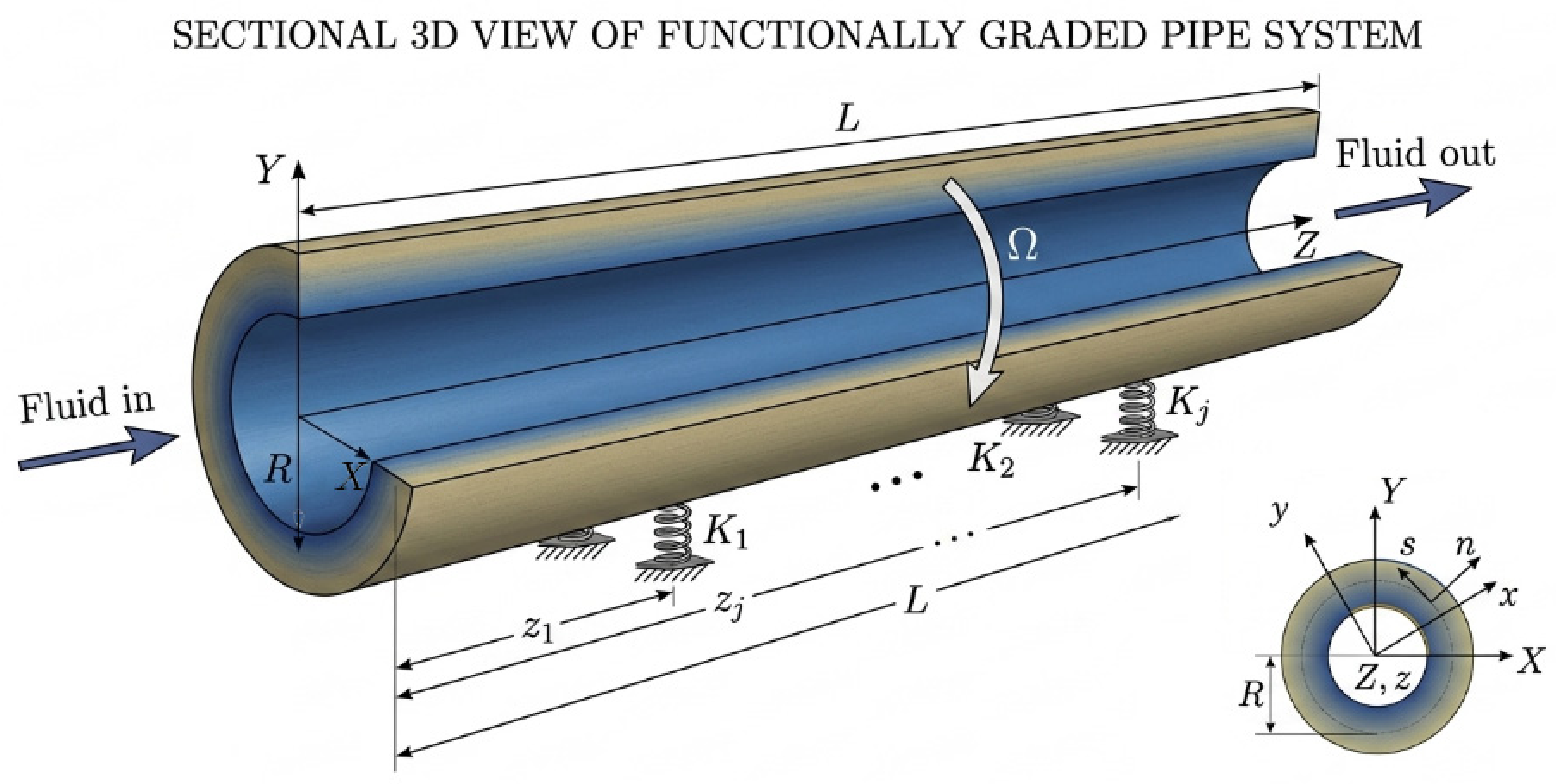
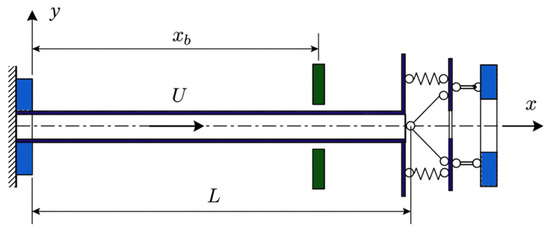
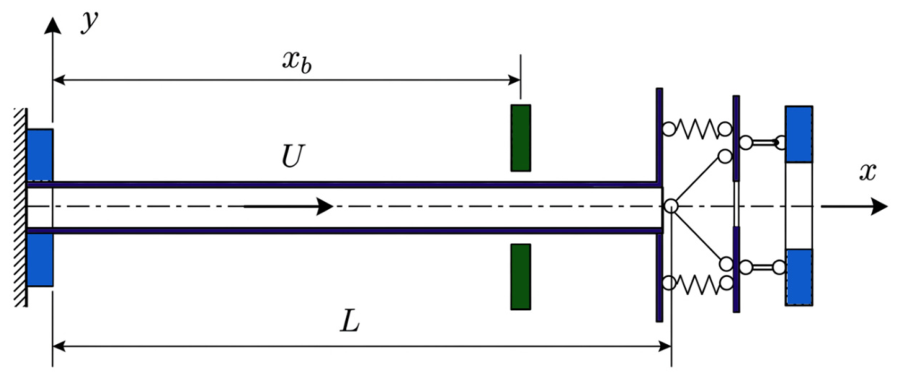
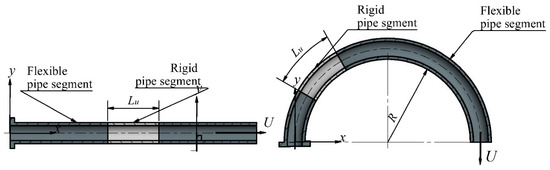
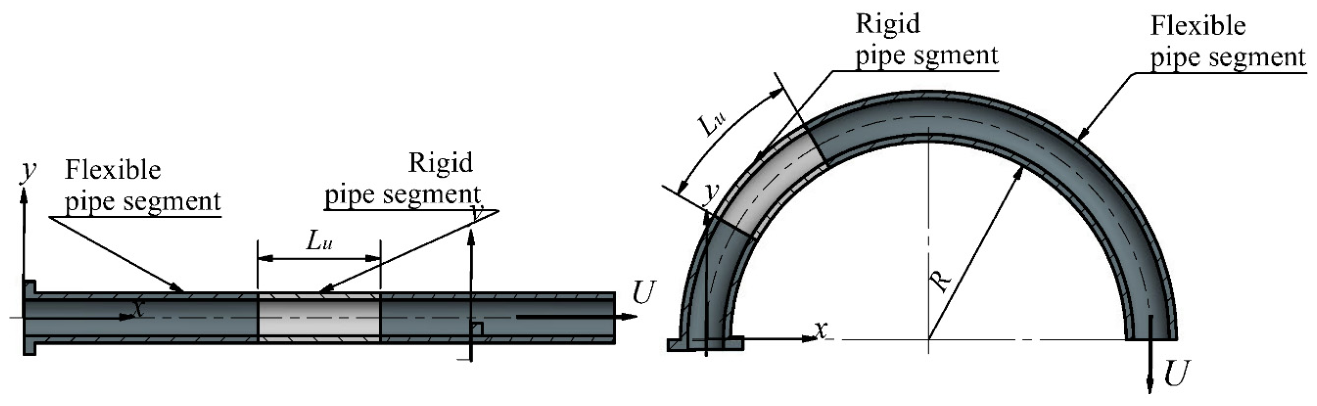
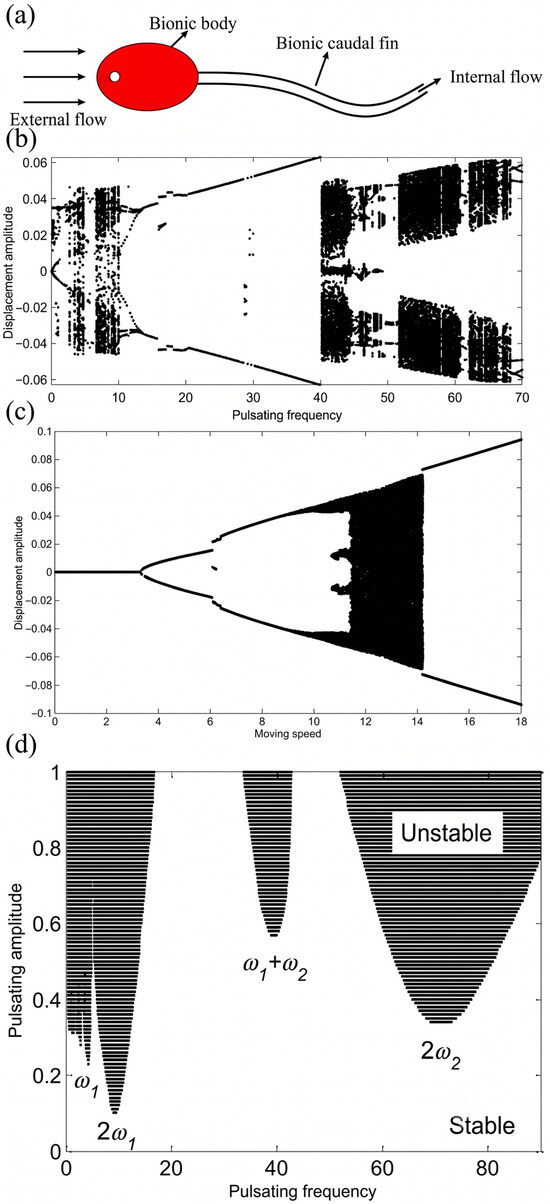
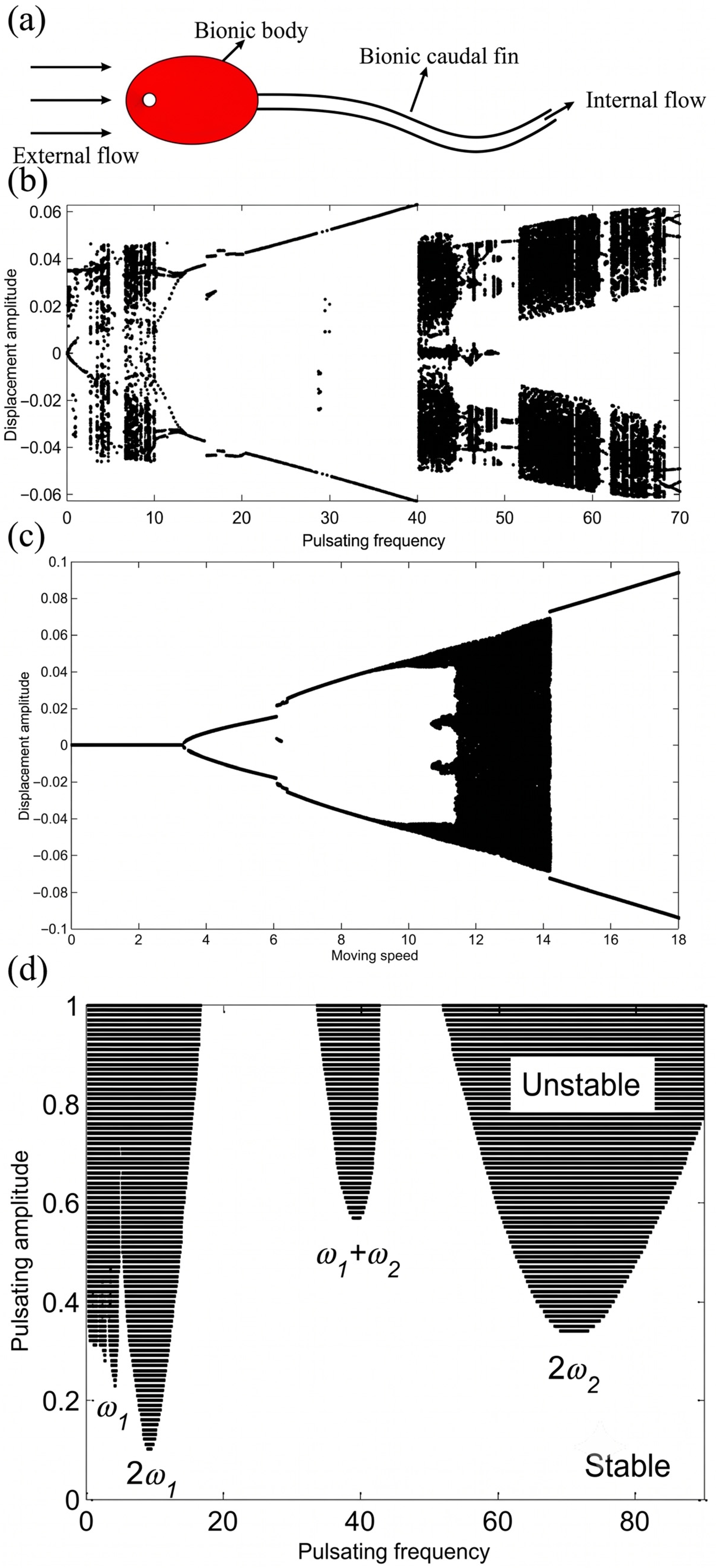
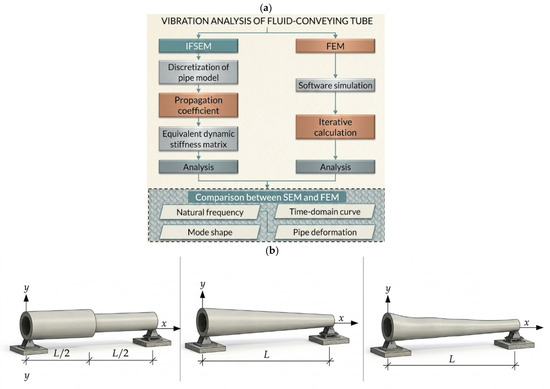
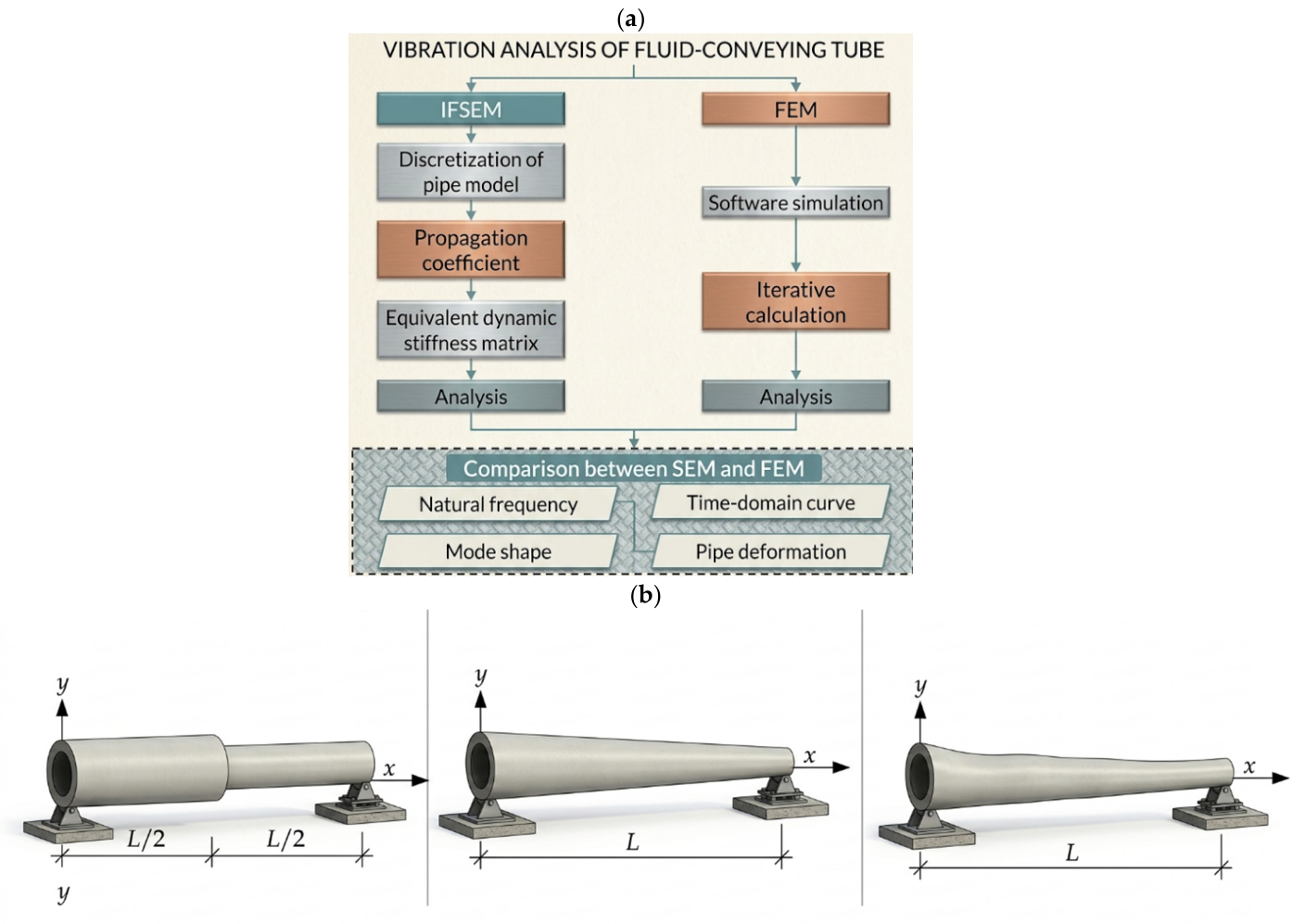
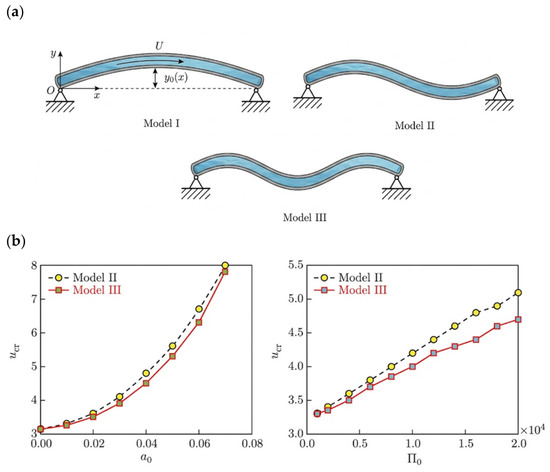
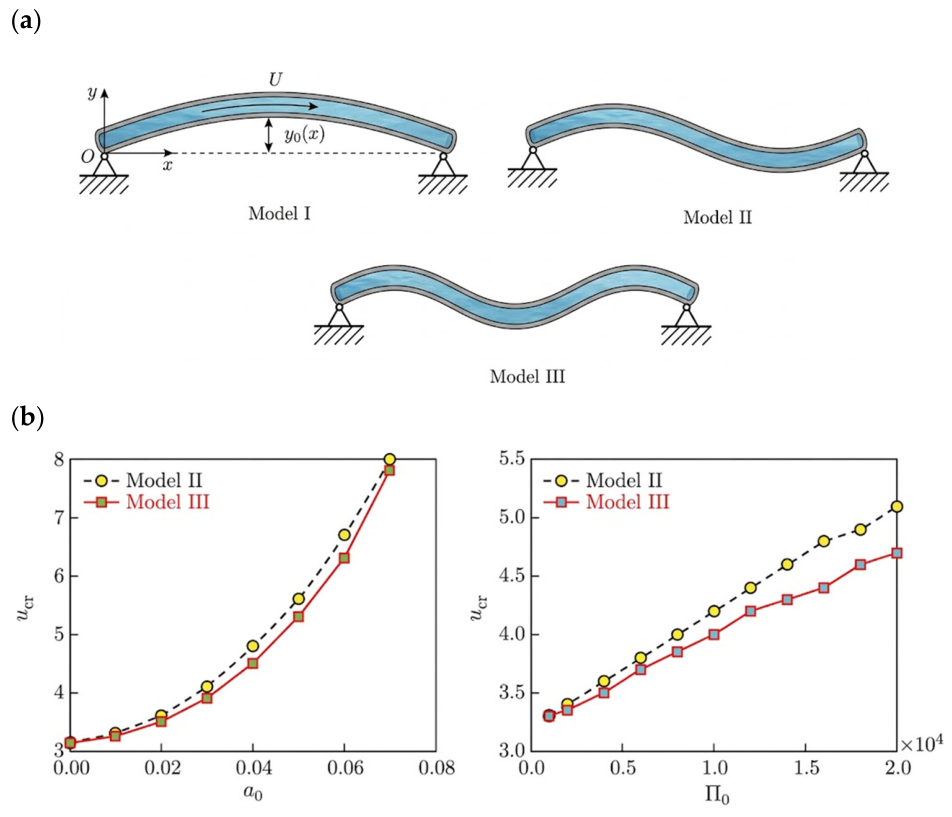
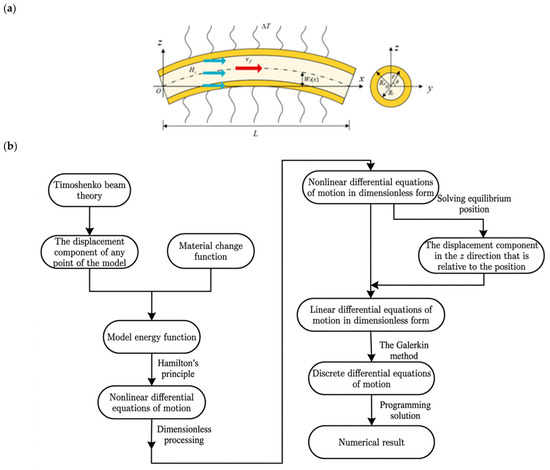
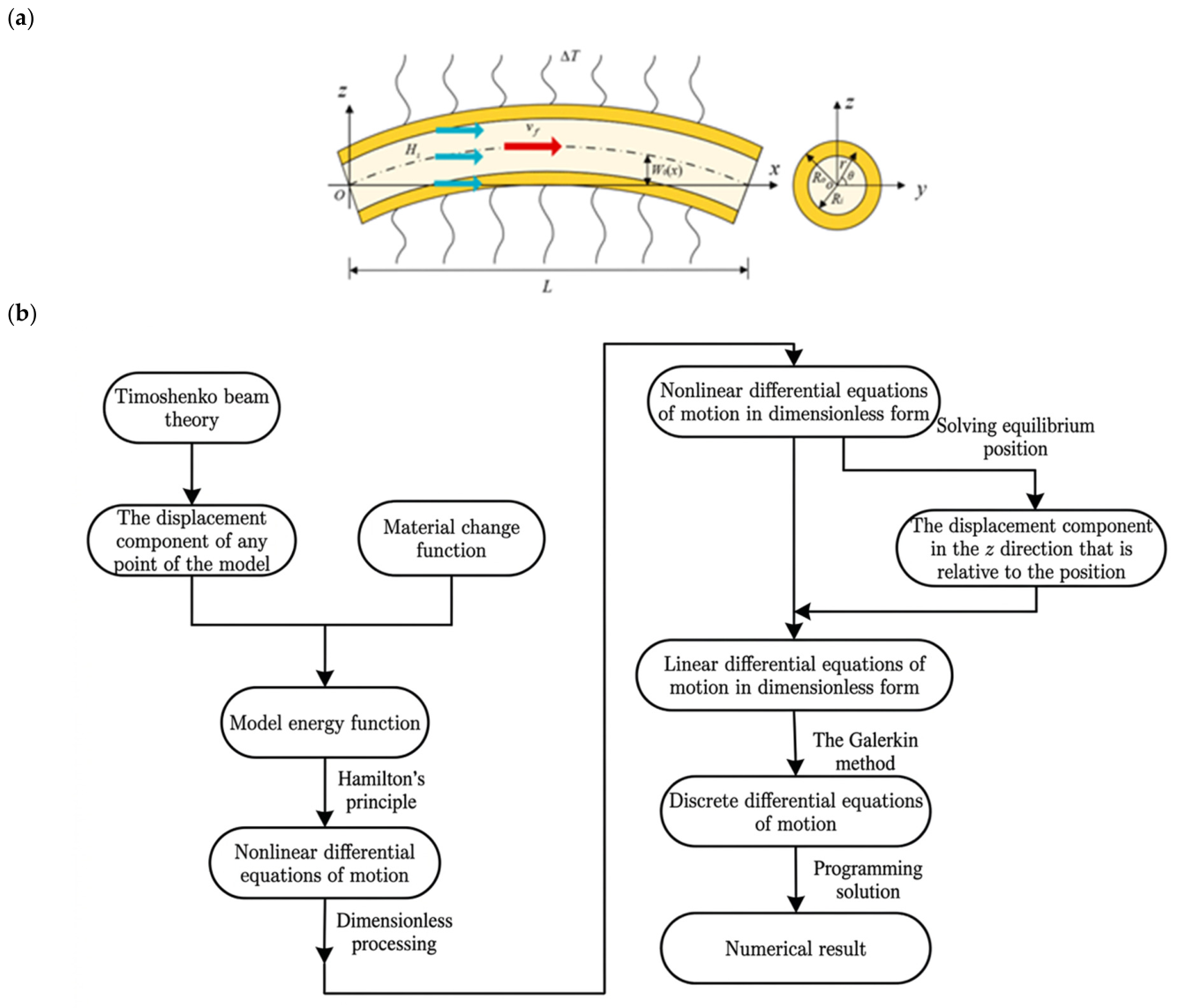
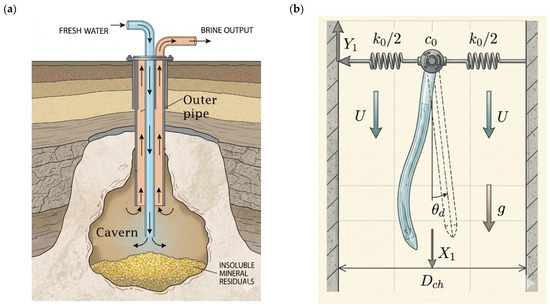
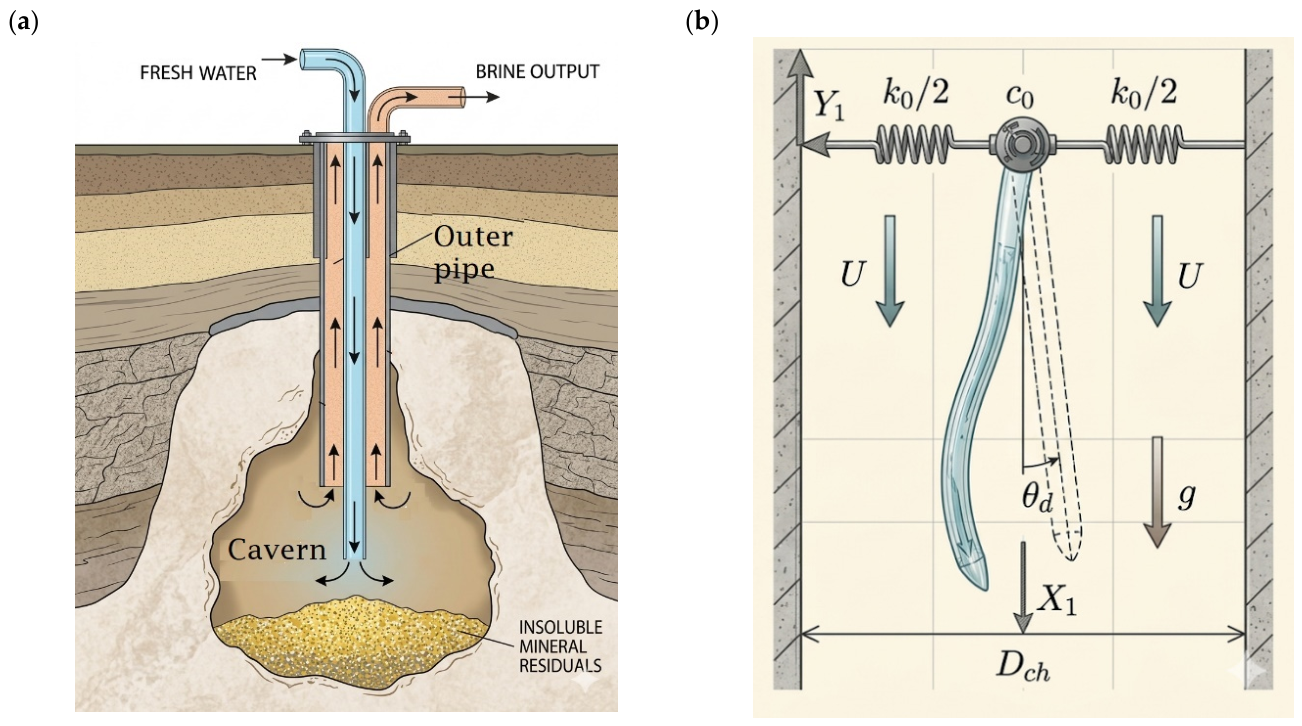
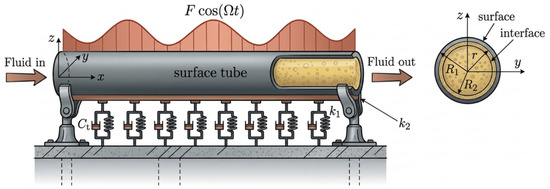
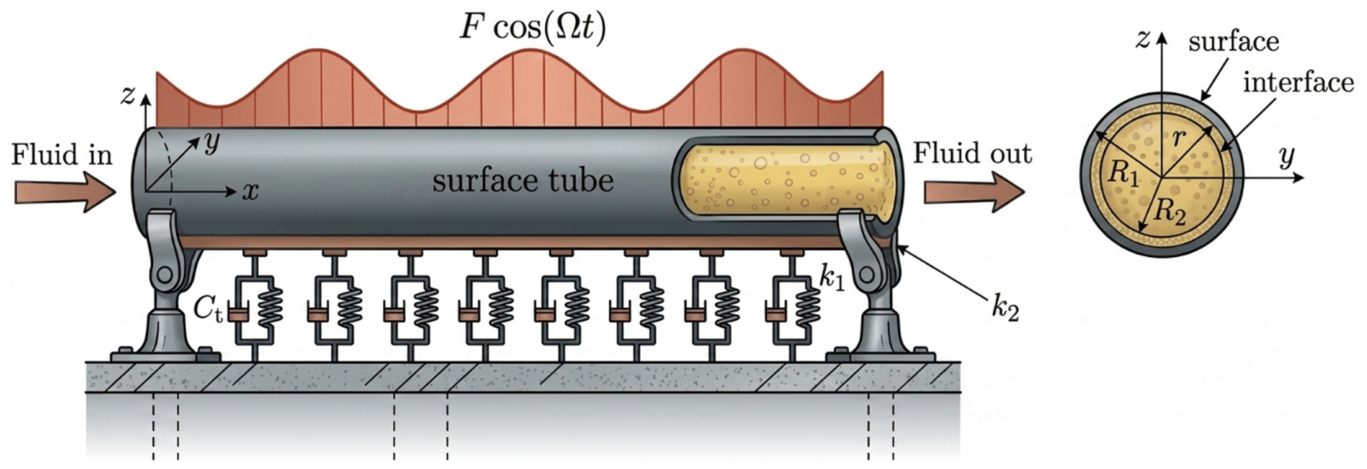
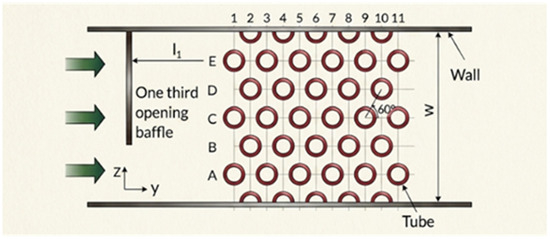
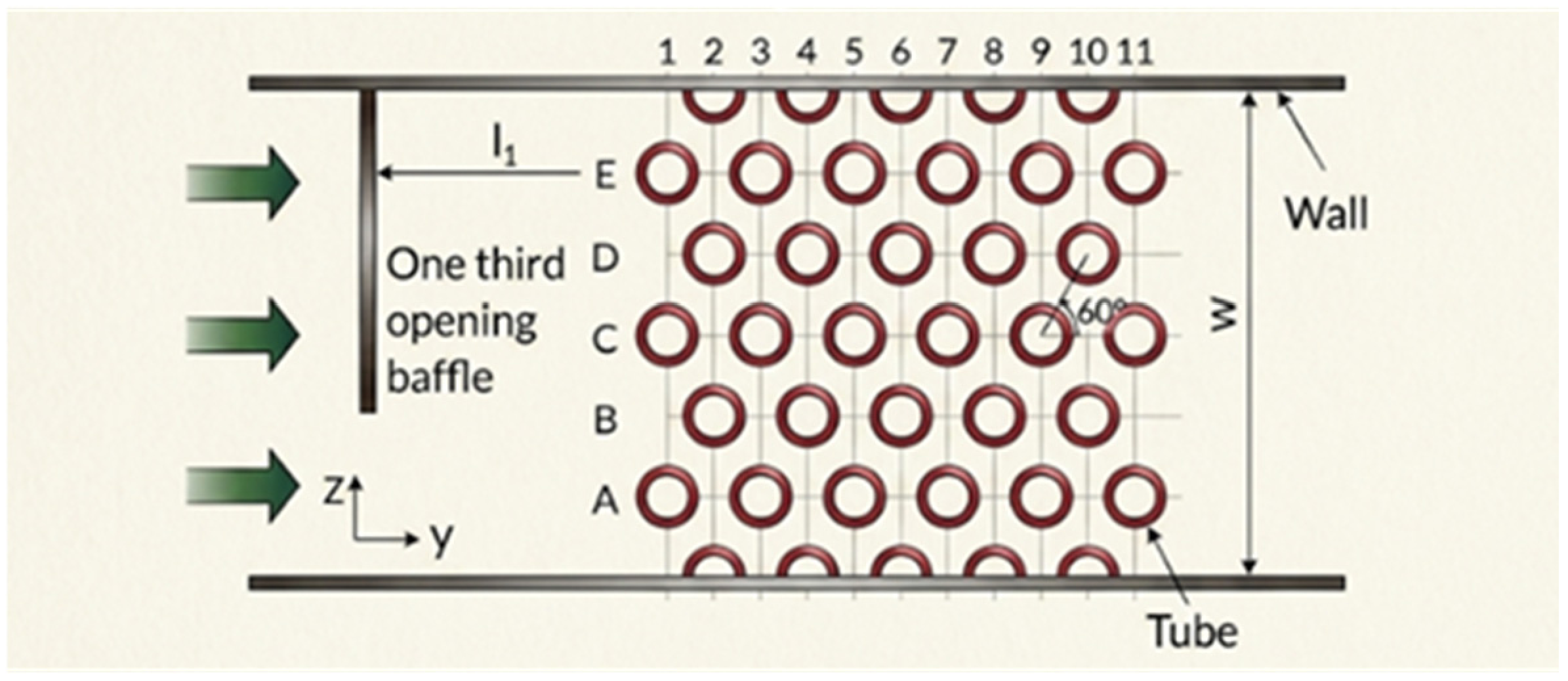
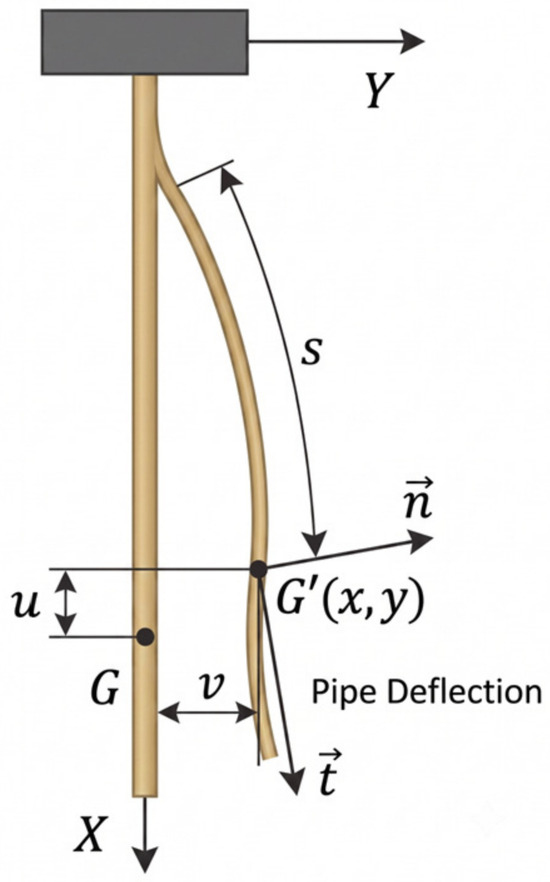
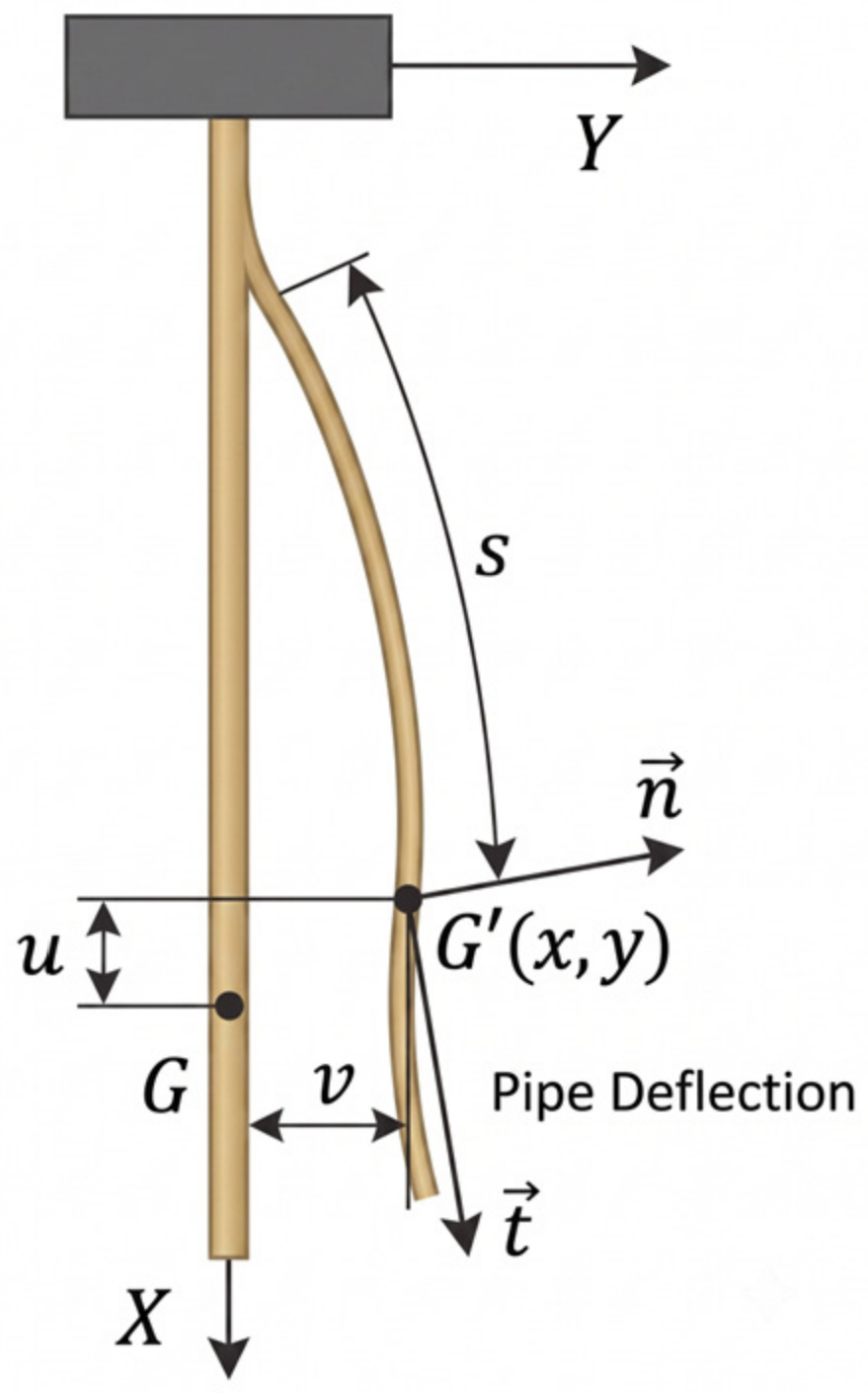
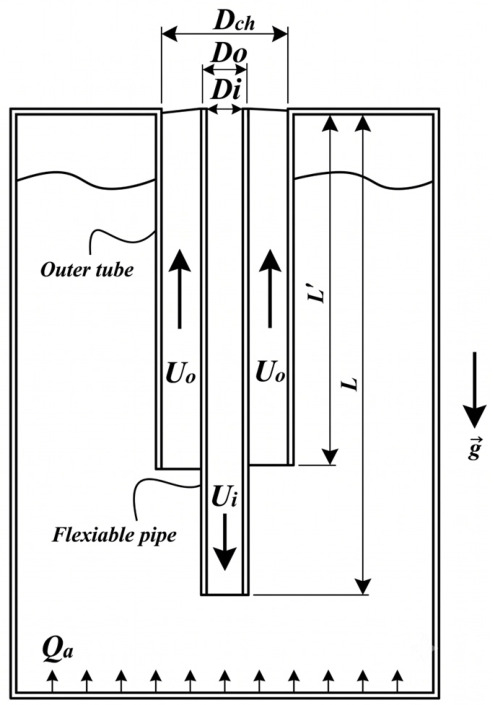
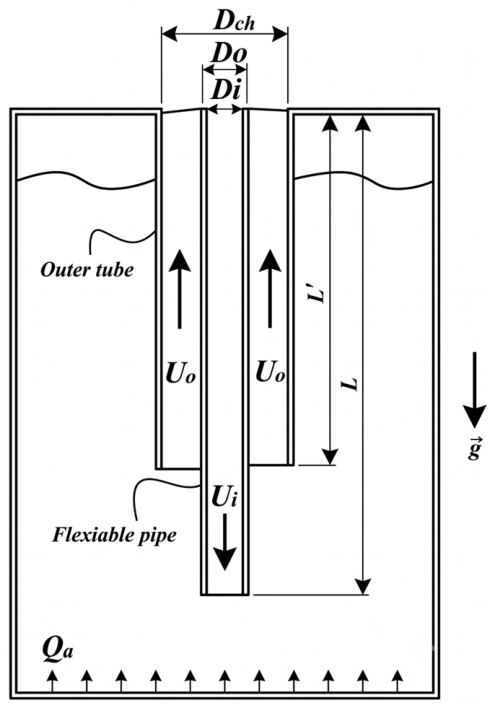
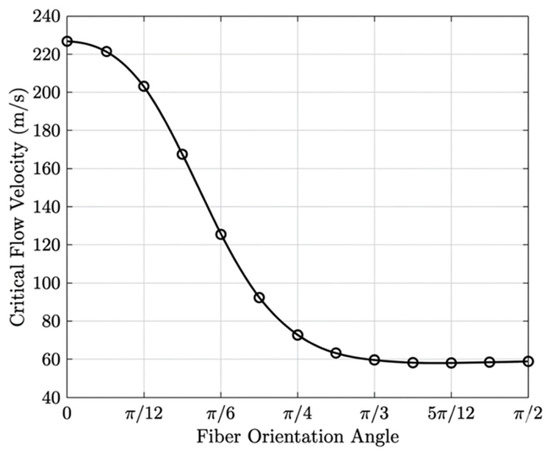
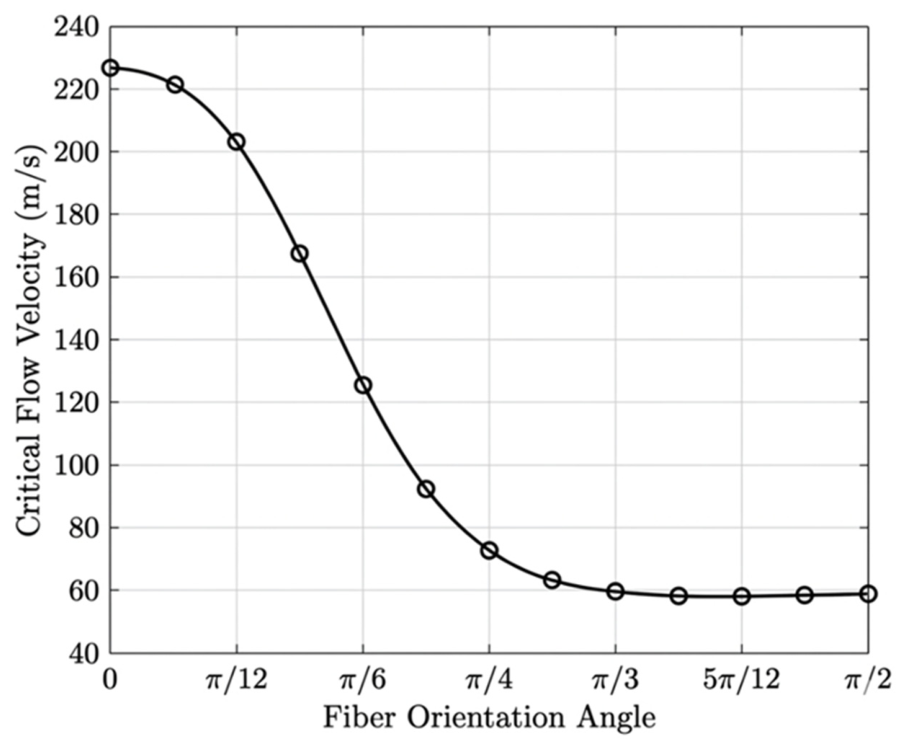
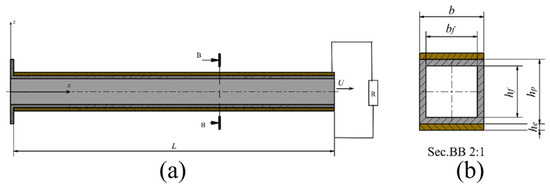
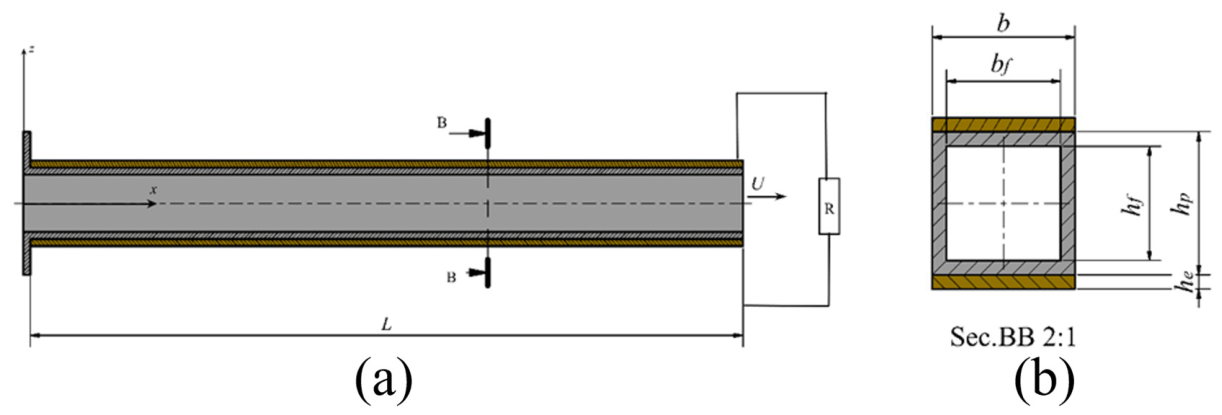
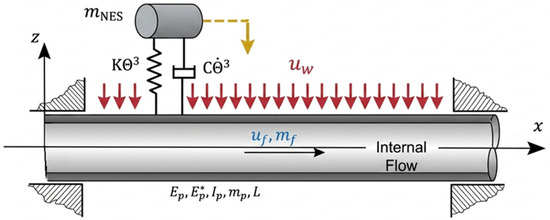
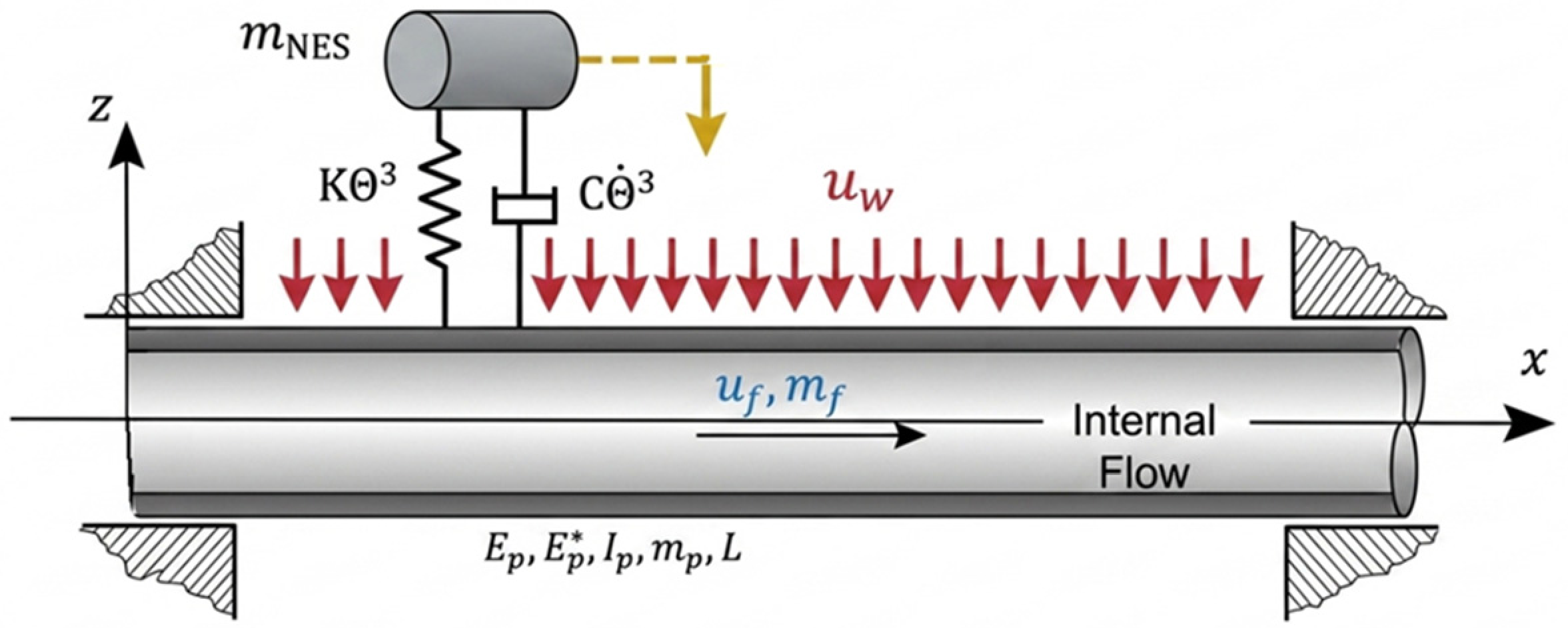
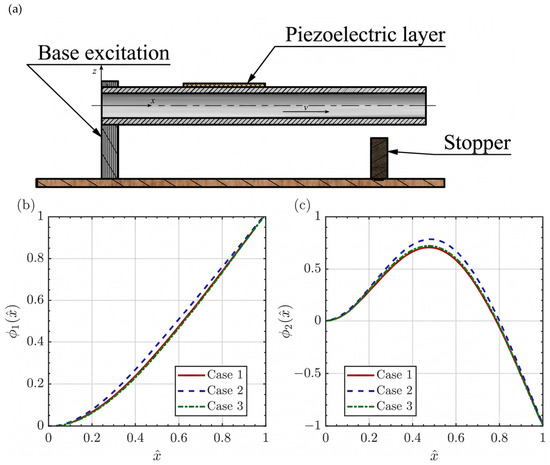
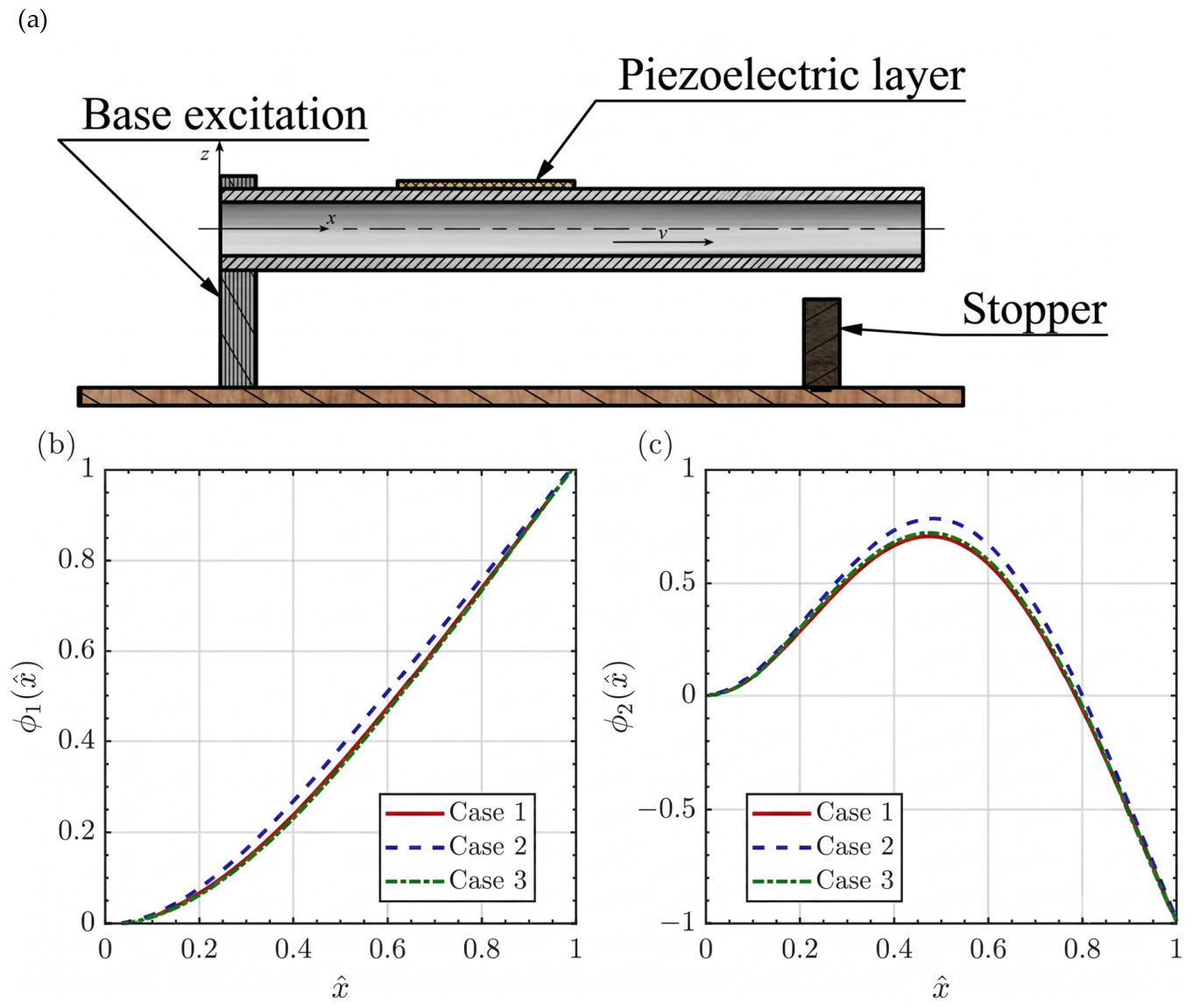
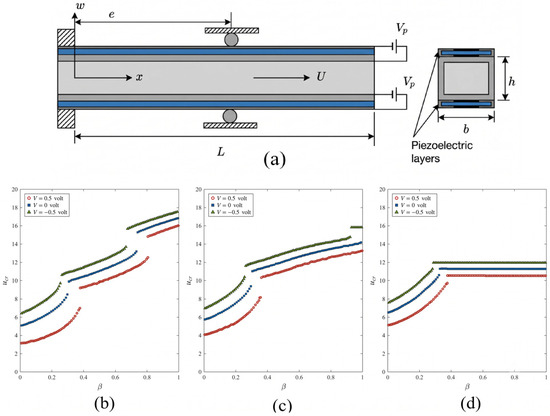
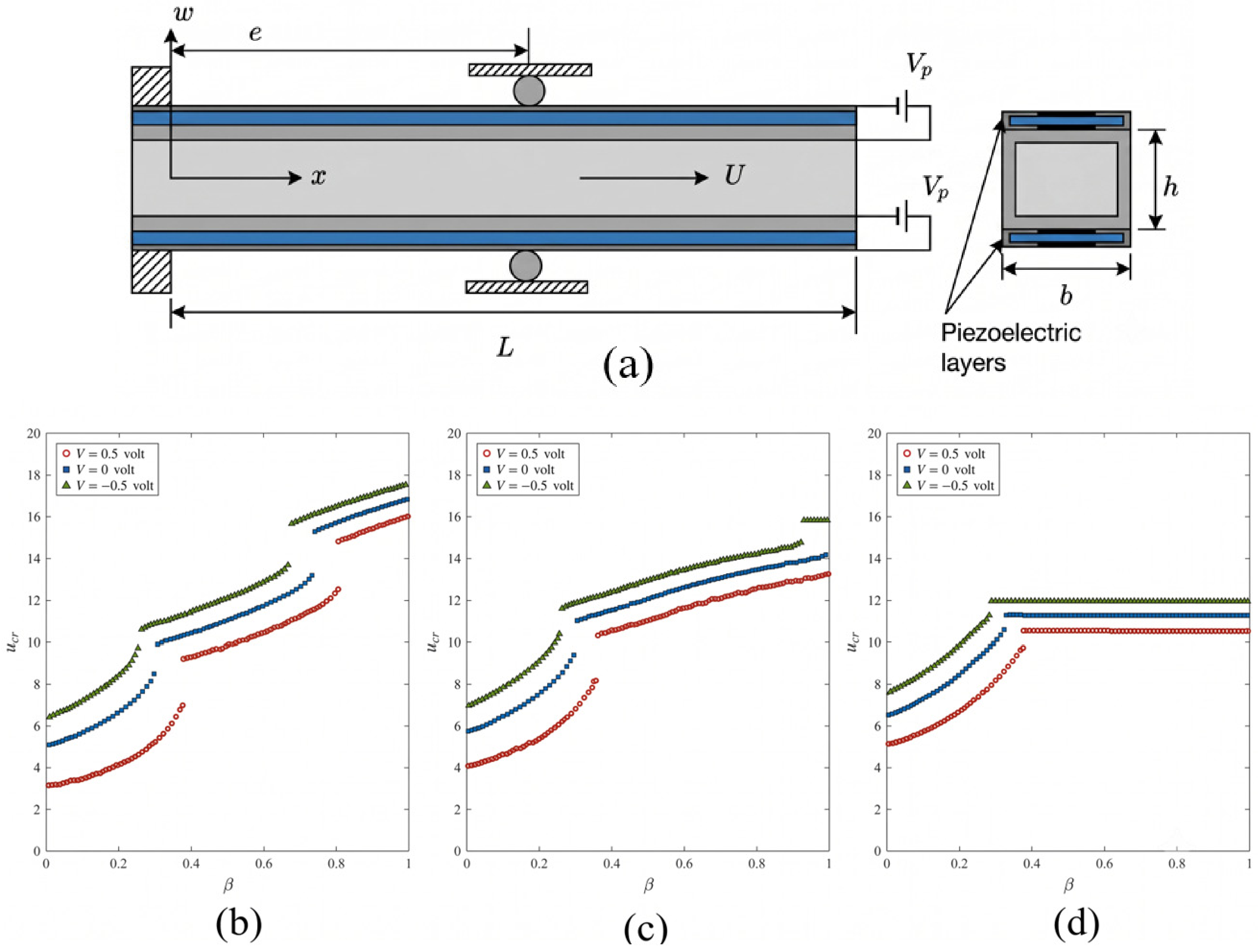
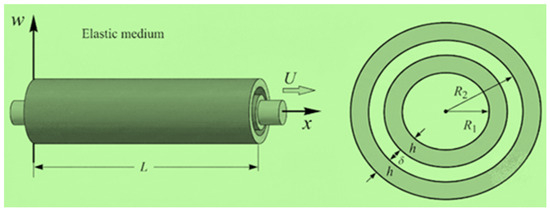
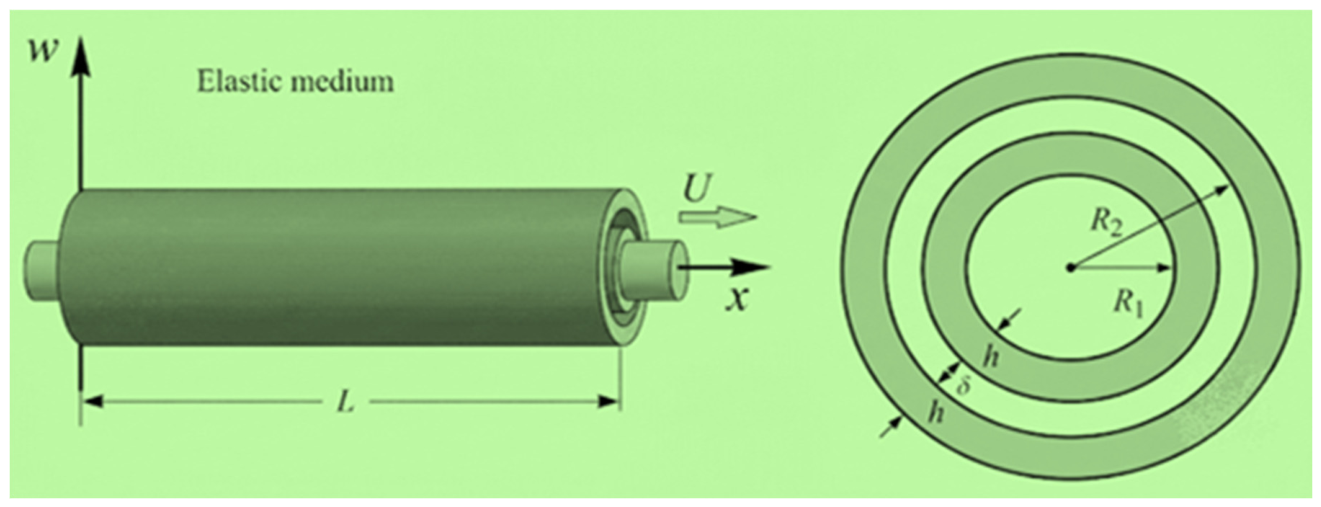
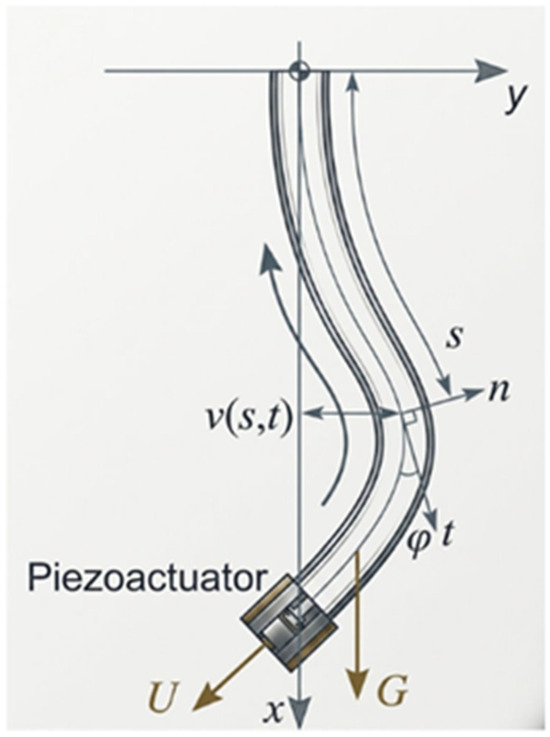
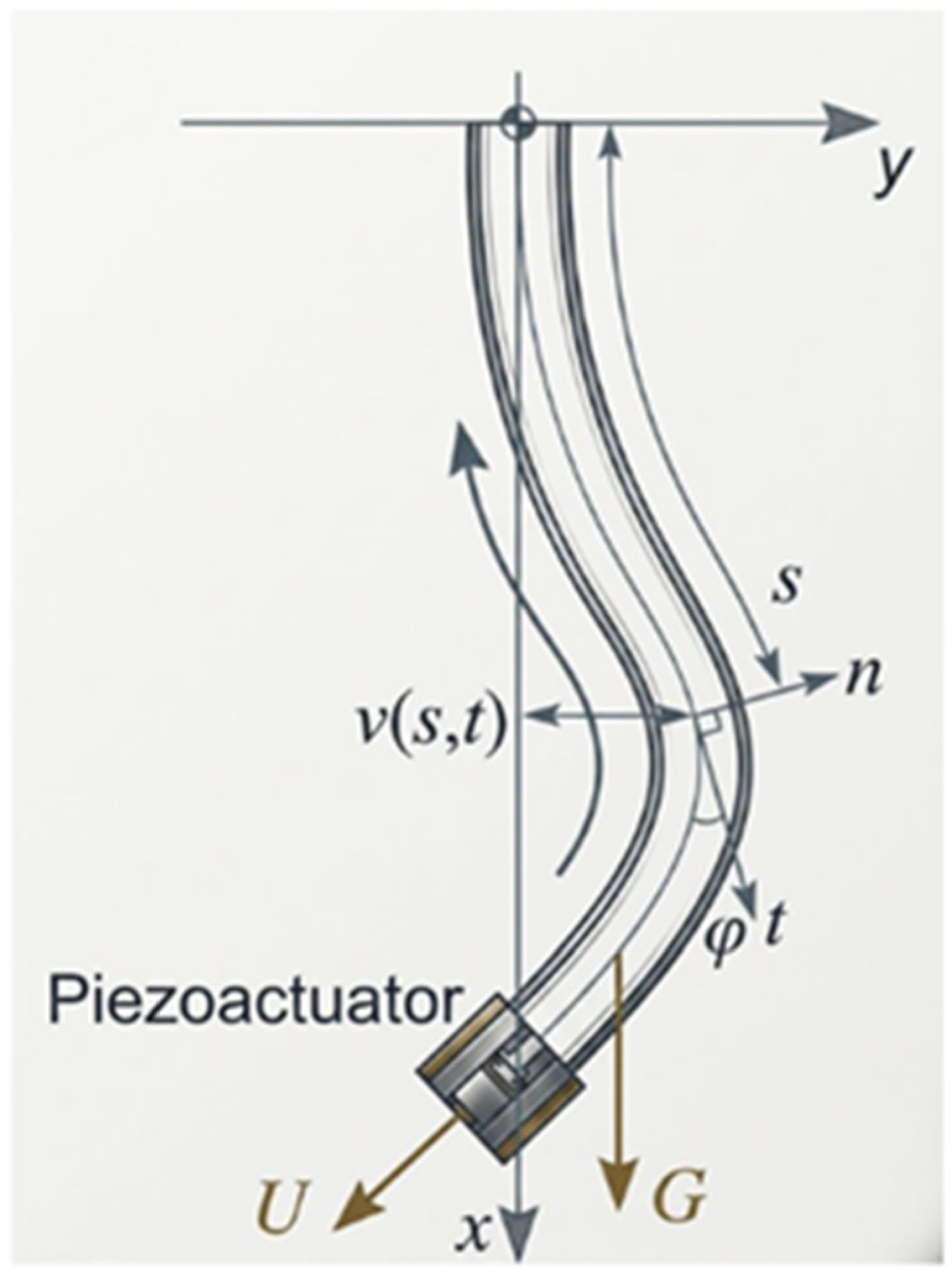
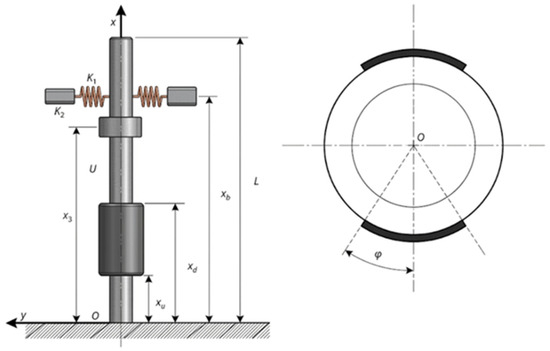
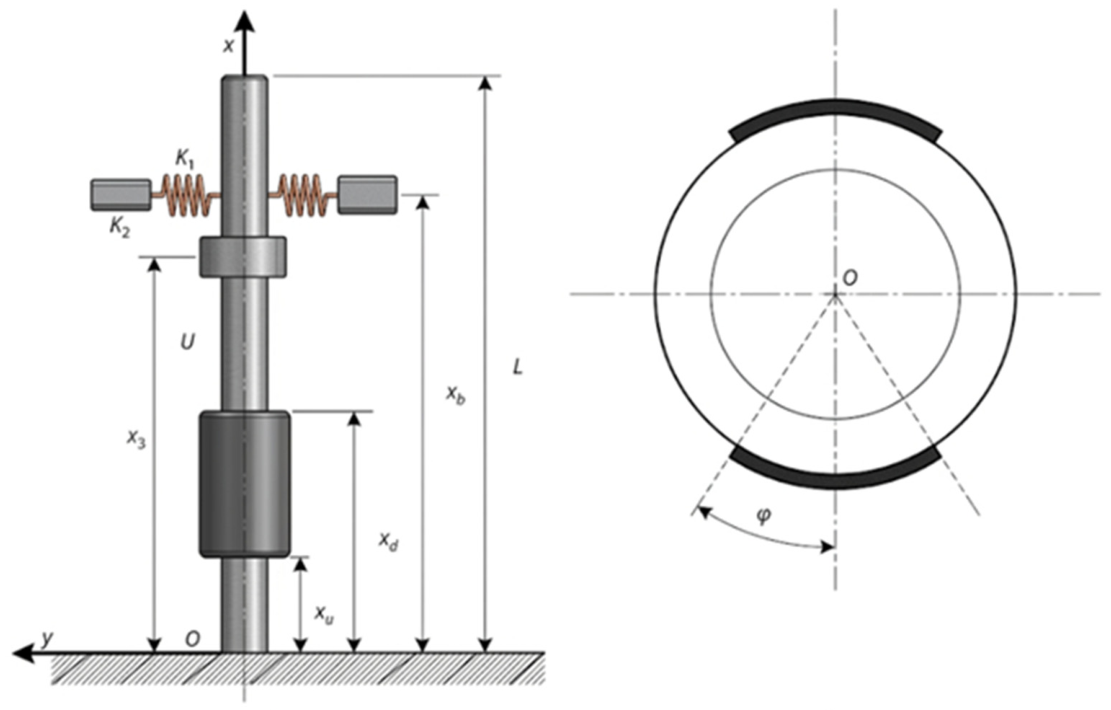
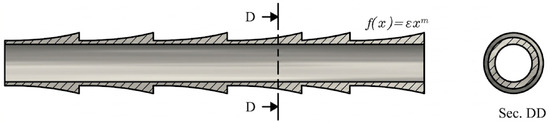
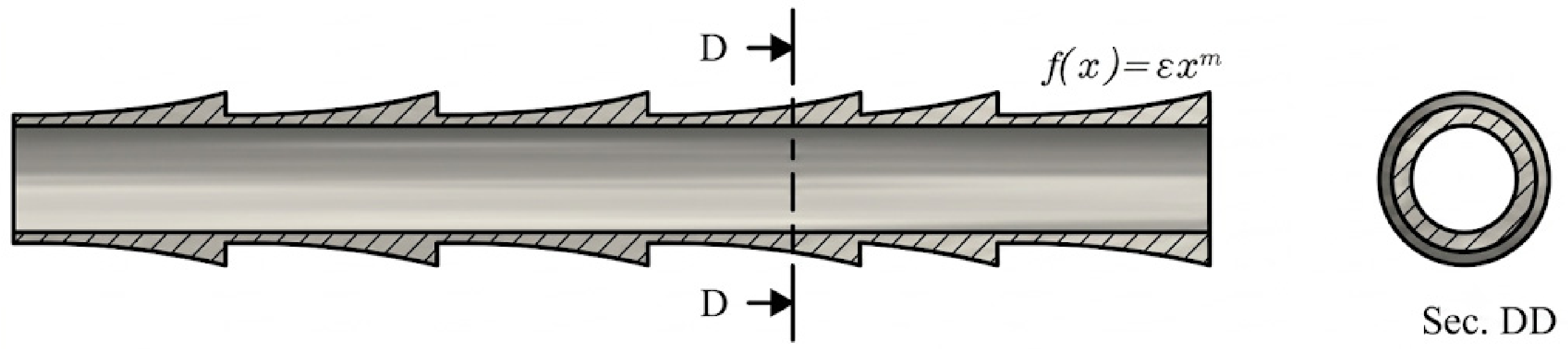
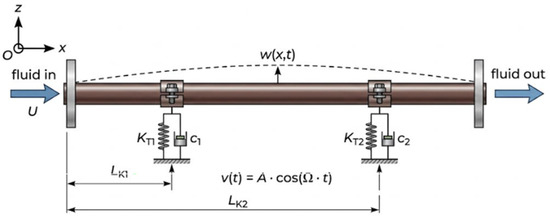
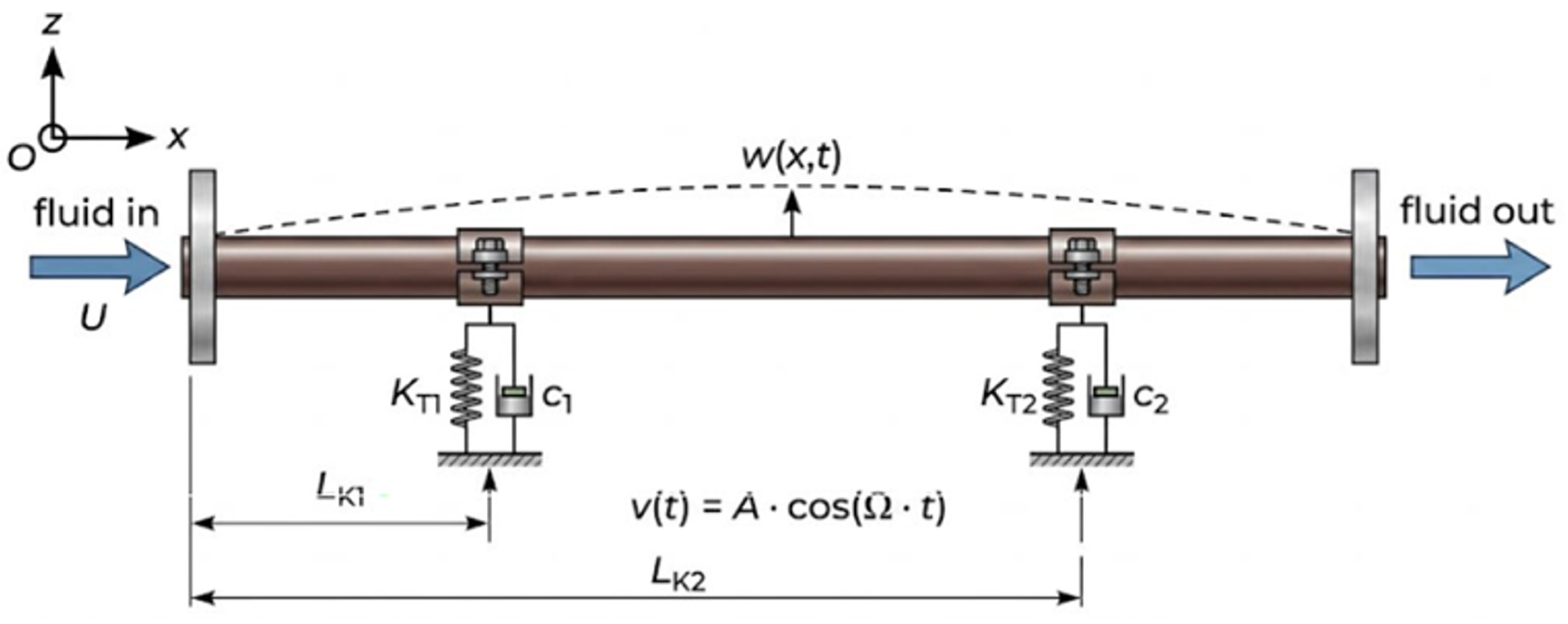
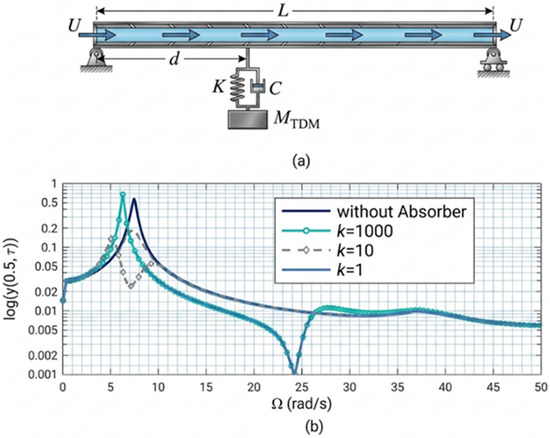
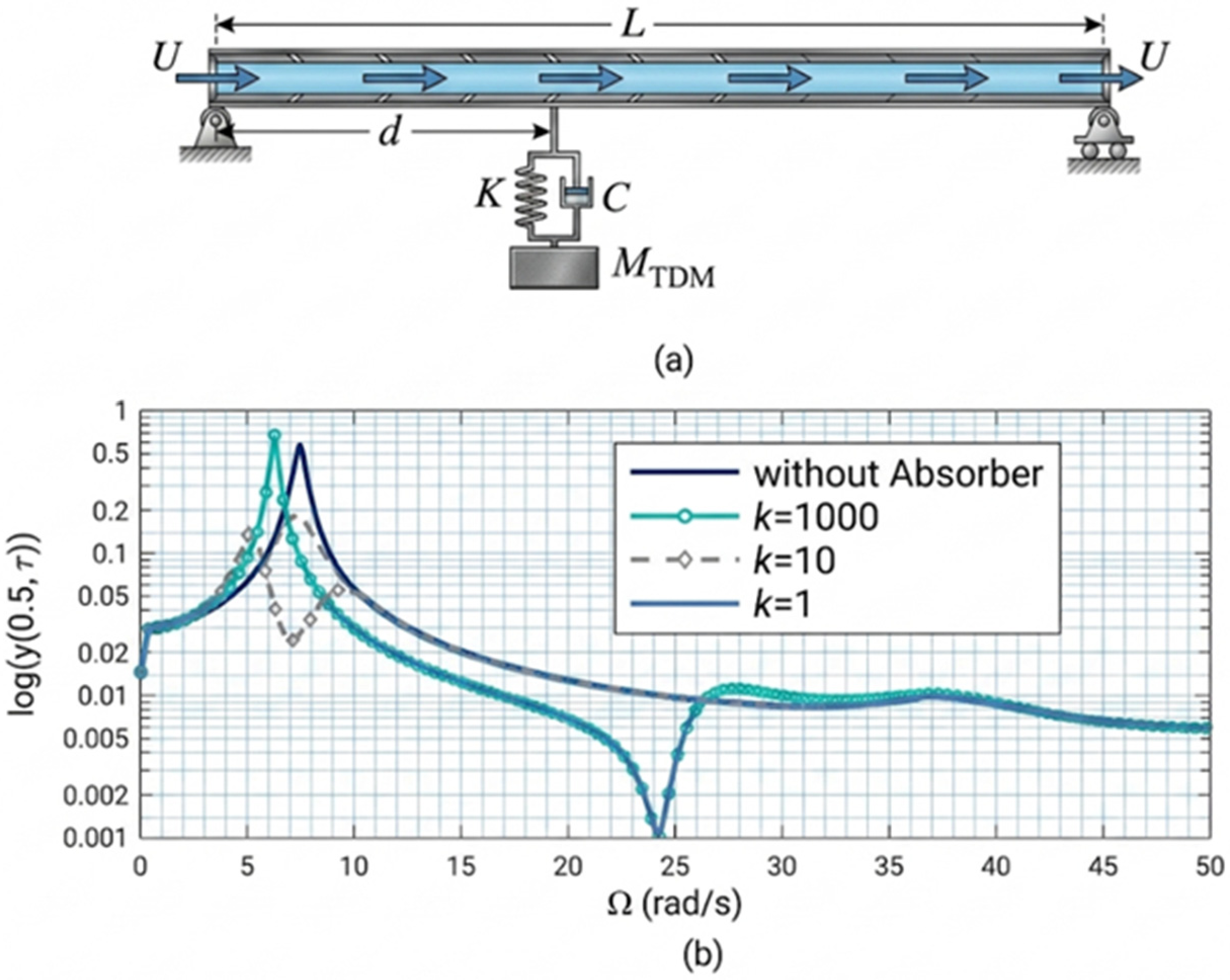
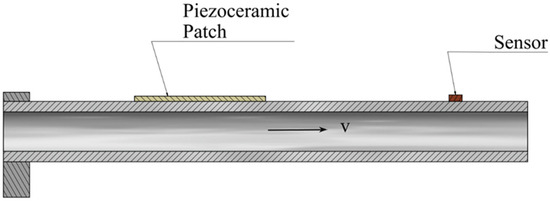
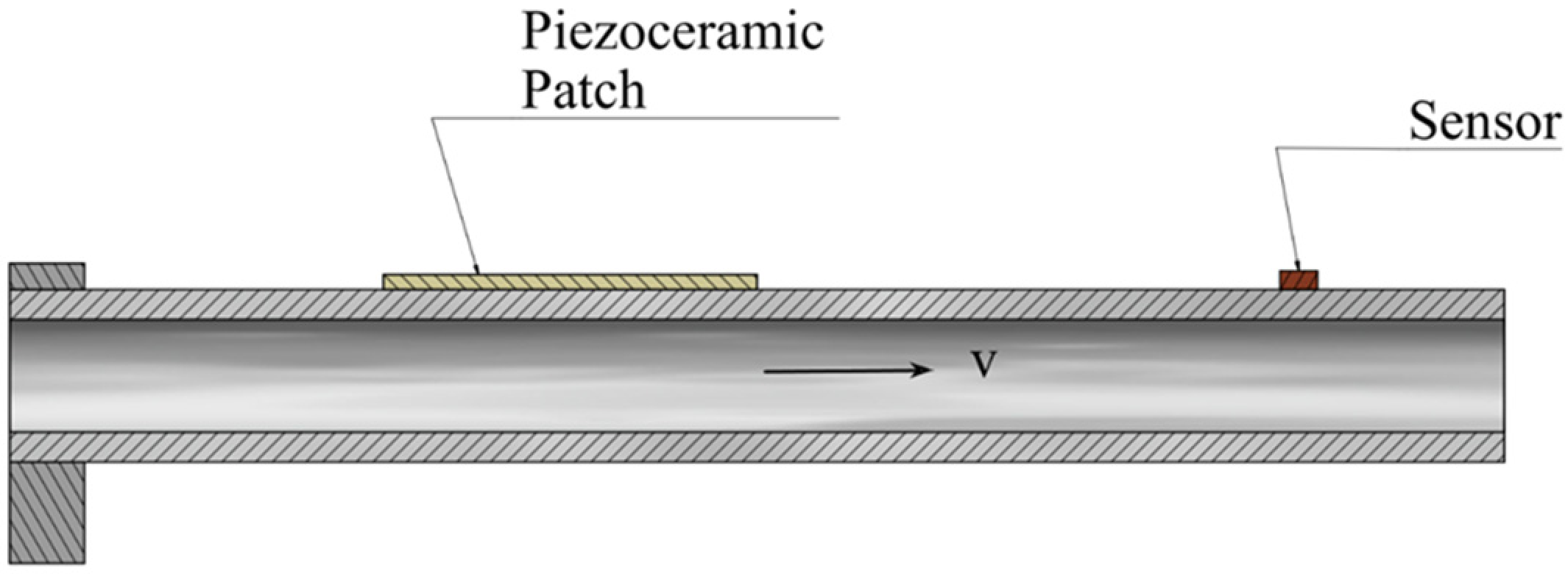
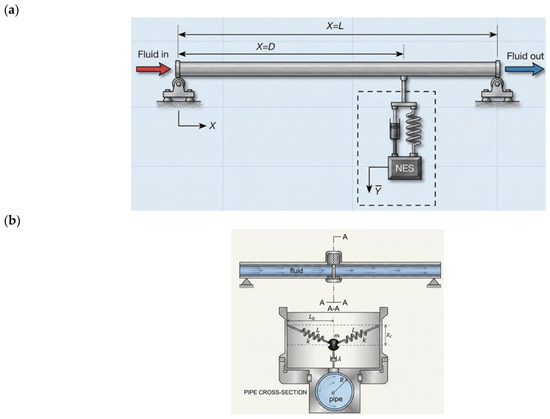
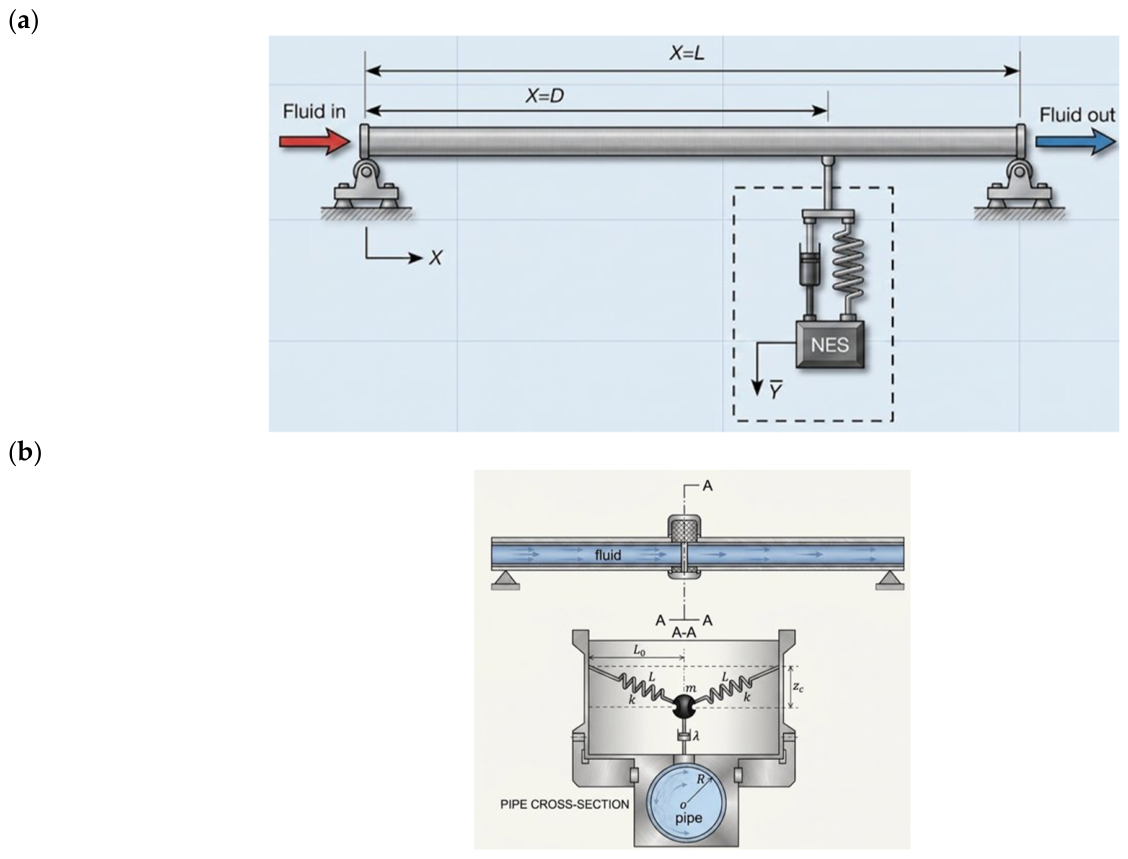
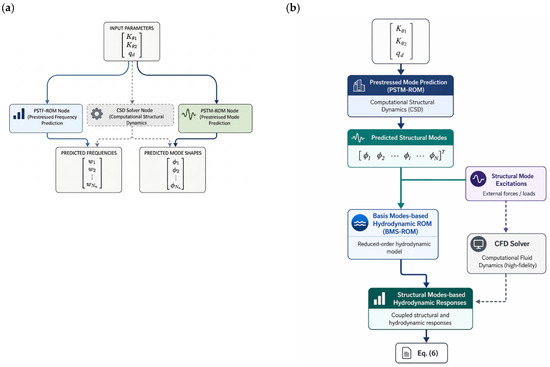
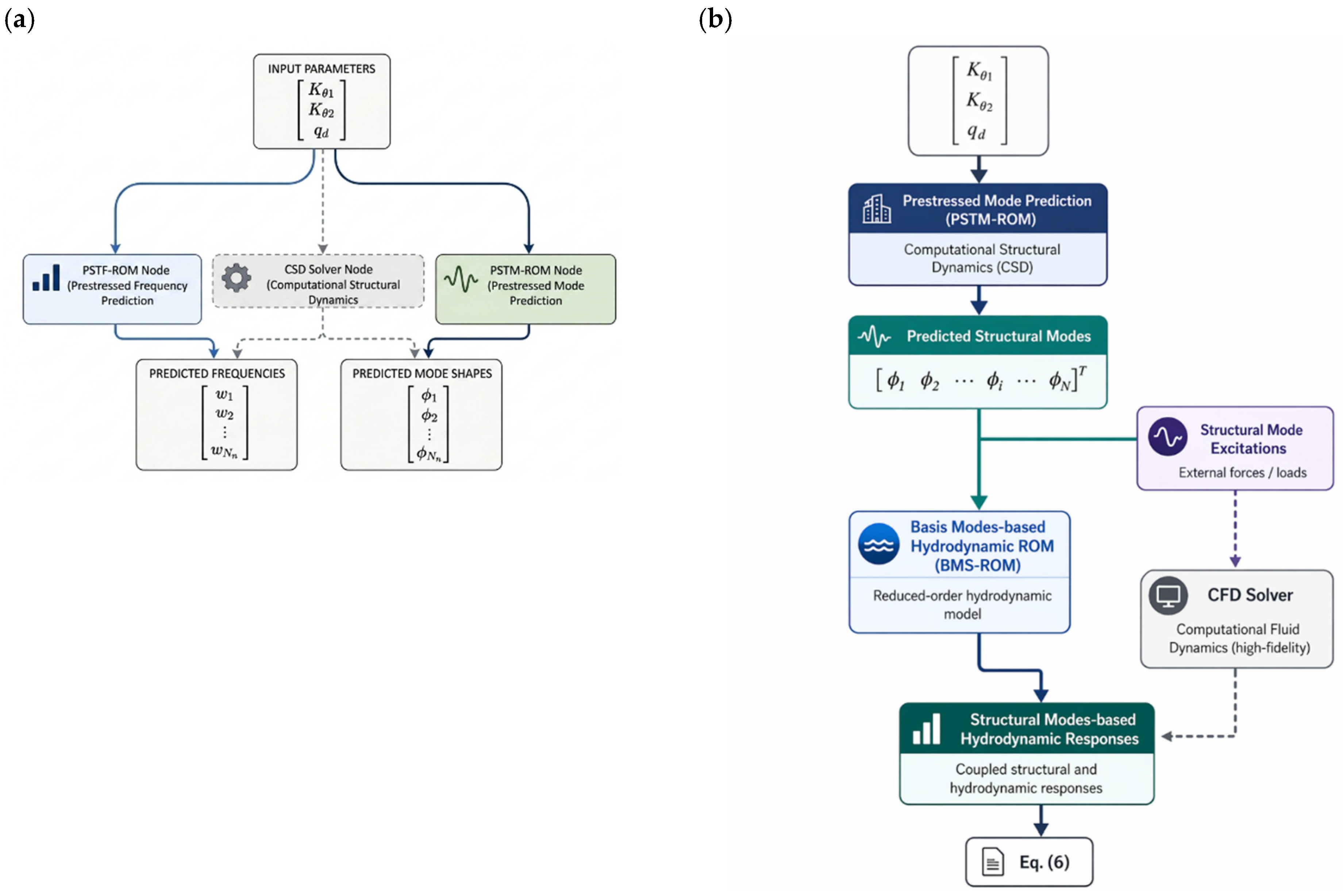
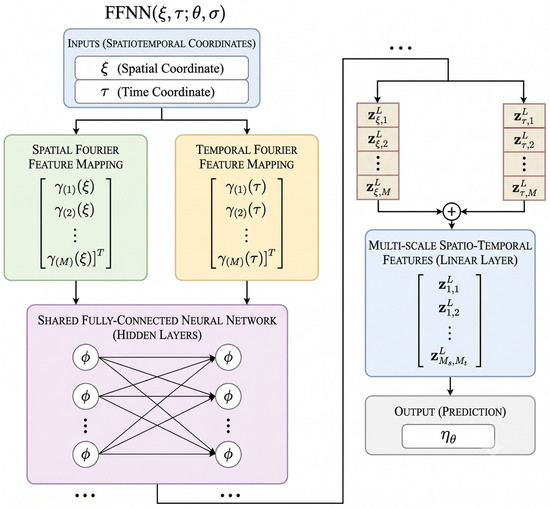
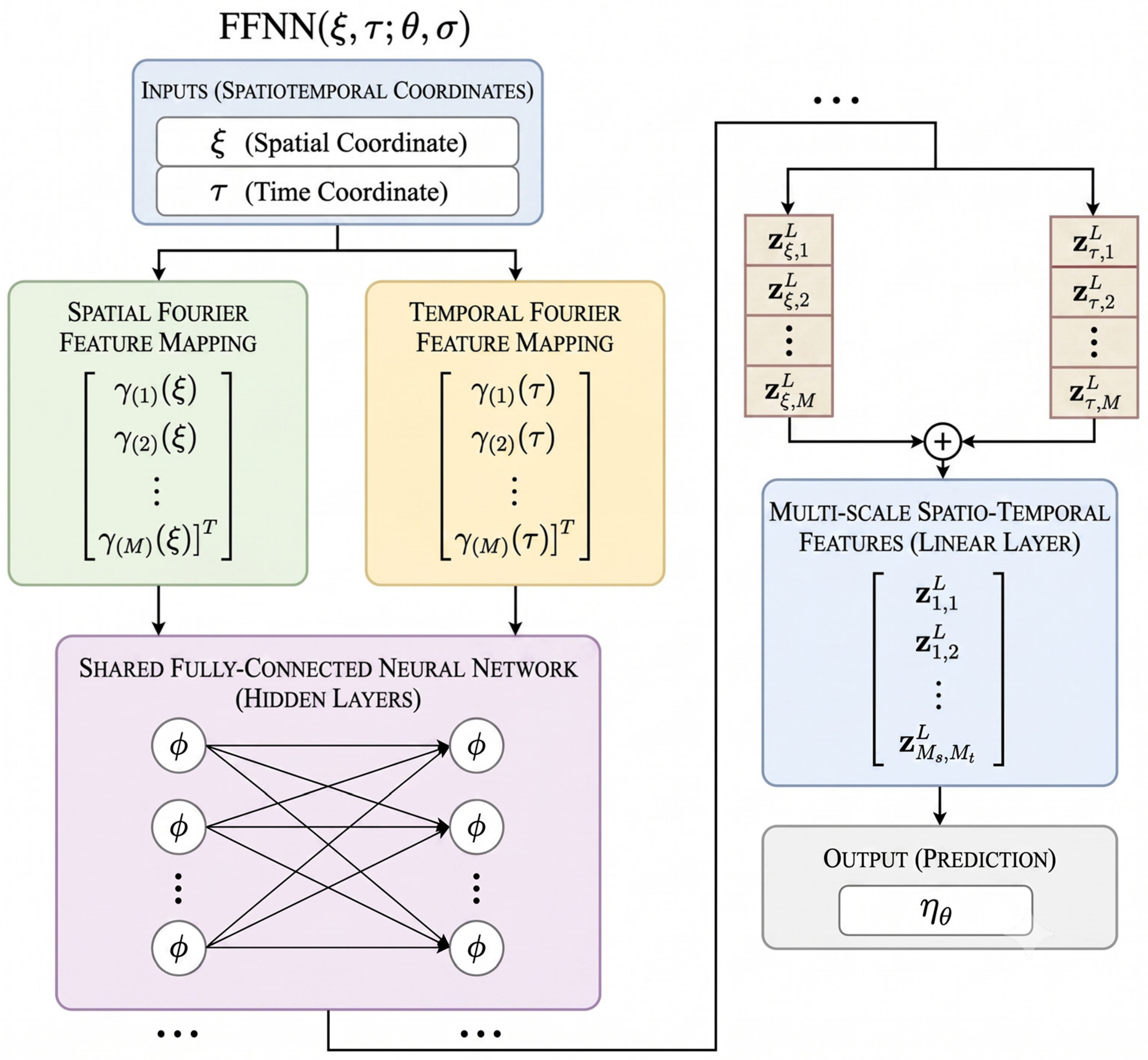
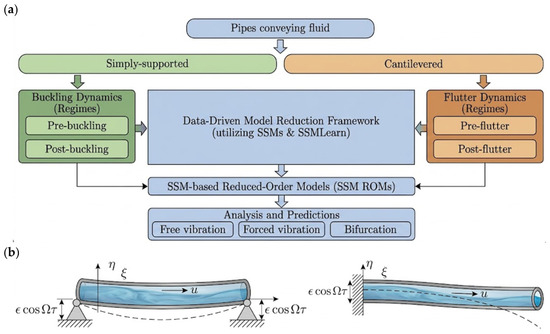
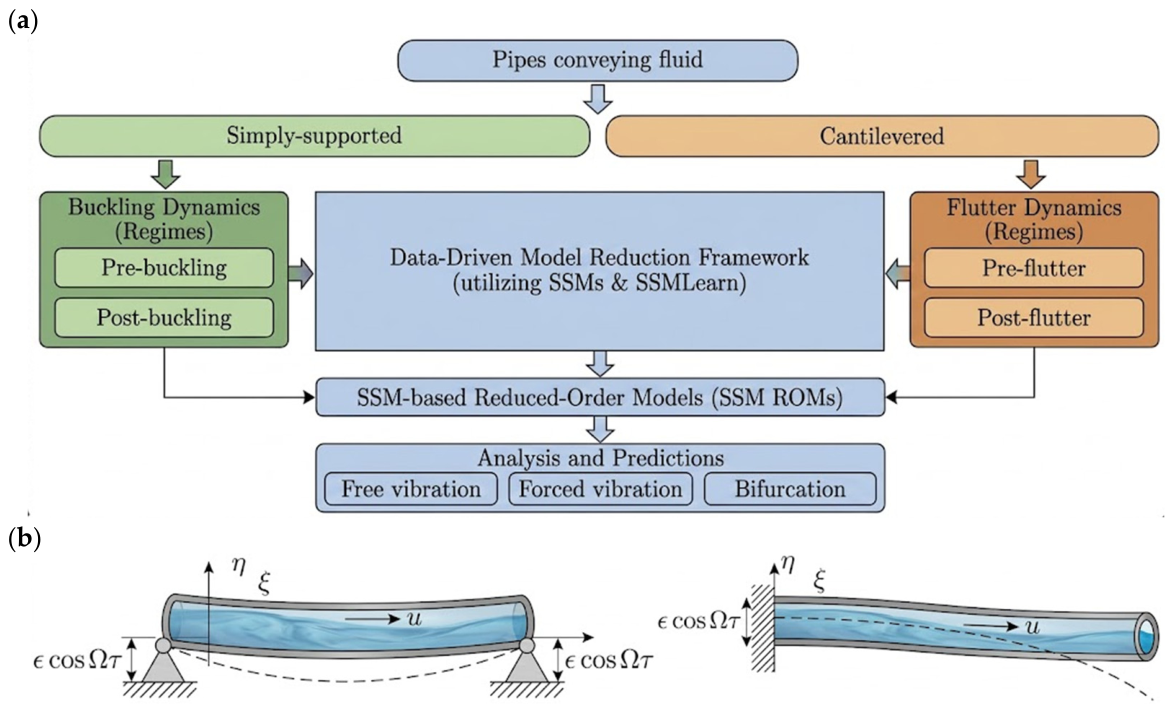
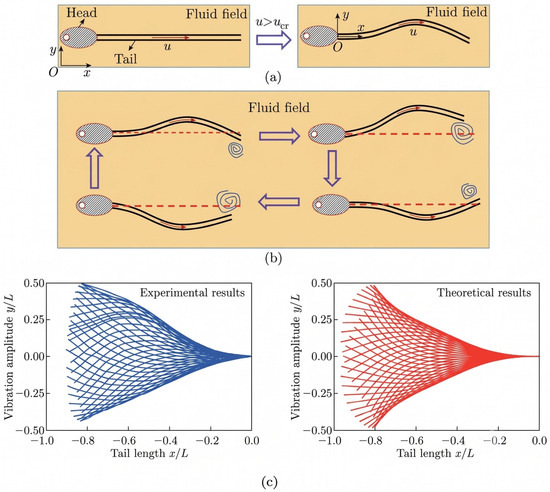
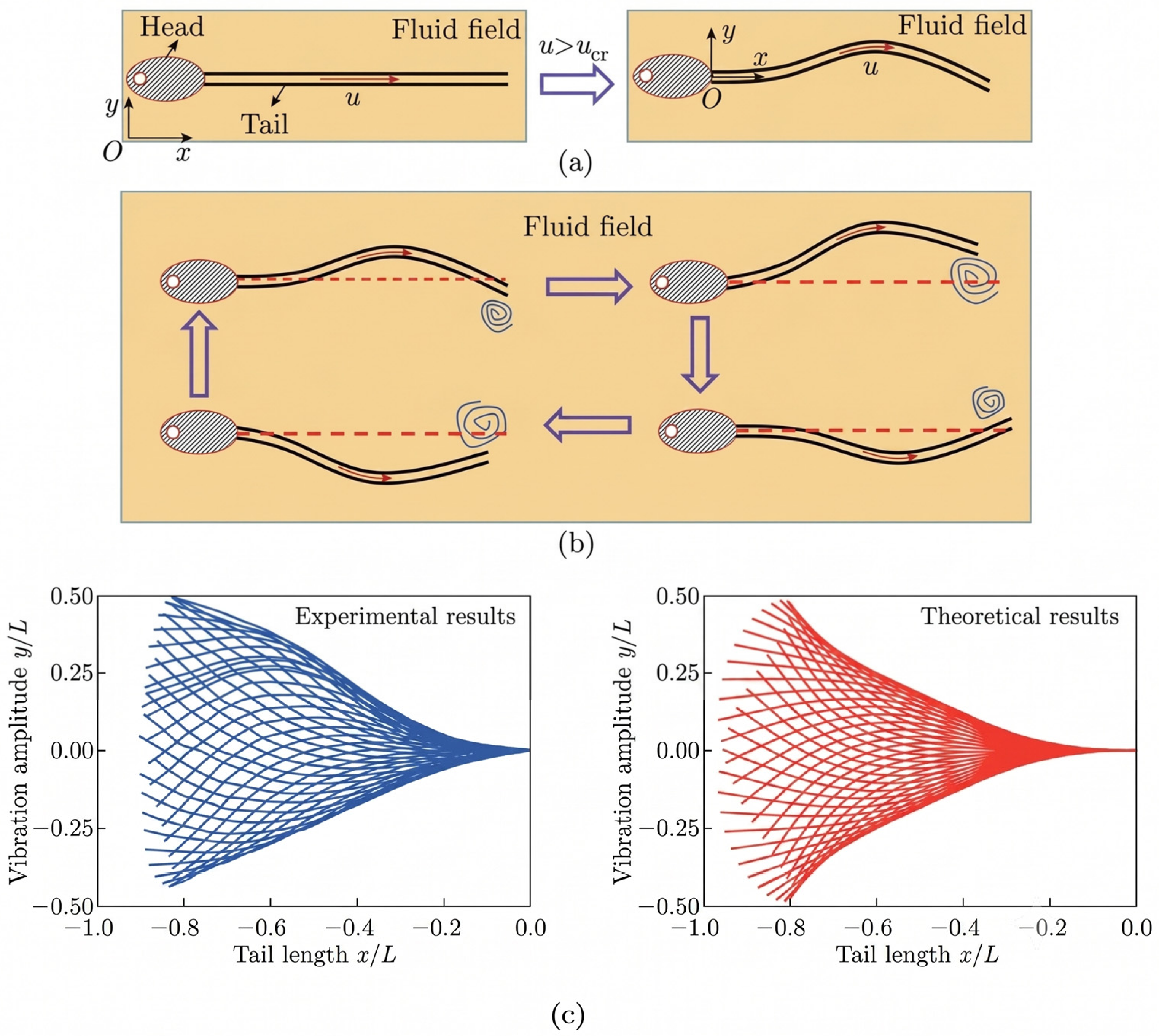

Disclaimer/Publisher’s Note: The statements, opinions and data contained in all publications are solely those of the individual author(s) and contributor(s) and not of MDPI and/or the editor(s). MDPI and/or the editor(s) disclaim responsibility for any injury to people or property resulting from any ideas, methods, instructions or products referred to in the content. |
© 2026 by the authors. Licensee MDPI, Basel, Switzerland. This article is an open access article distributed under the terms and conditions of the Creative Commons Attribution (CC BY) license.