1. Introduction
The automotive steering system represents a fundamental subsystem that ensures directional stability, maneuverability, and safety for both the driver and other road users. Its critical role is reflected in the strict performance requirements established by manufacturers and enforced through safety standards. According to Calvo-Poyo et al. (2020), road accidents generate socio-economic losses equivalent to nearly 3% of GDP in high-income countries, which further emphasizes the importance of traffic safety within the broader concept of sustainable mobility [
1]. It should be noted that such socio-economic implications highlight not only the human cost but also the economic relevance of improving steering system reliability. At the center of this system lies the tie rod-tie rod end assembly, whose function is to transmit motion and forces from the steering gear to the wheel knuckle.
Among the various degradation processes affecting this assembly, one of the most significant is the gradual development of clearance within the spherical joint of the tie rod end [
2]. At first, this clearance may be almost imperceptible, but it progressively increases during service as a result of repeated loading cycles, micro-sliding, wear of the polymer bushing, corrosion, and the presence of contaminants. Once clearance becomes measurable, the stiffness of the assembly decreases, the natural frequencies shift toward lower values, and the overall dynamic response of the system changes. These effects can amplify vibrations, reduce steering precision, and shorten the component’s service life.
The study of clearance in mechanical joints has a long and established tradition in mechanical engineering. In real-world mechanisms, clearances are unavoidable due to manufacturing tolerances and assembly conditions. However, their evolution during operation raises serious reliability issues. The nonlinear dynamics induced by joint clearances are particularly critical in safety-related automotive systems such as steering mechanisms. For this reason, understanding and quantifying the influence of clearance on steering dynamics is essential for improving both safety and component reliability. This concern aligns with the current trend in the transportation field toward predictive maintenance strategies based on vibration signatures and data-driven diagnostics, as documented in the systematic review conducted by Ersöz et al. (2022) [
3].
Extensive research has been devoted to revolute joints, crank mechanisms, and general ball joints; however, relatively few studies have addressed the steering tie rod assembly specifically. This gap is notable, considering the direct relationship between steering dynamics and vehicle safety.
The objectives of the present work are therefore defined as follows:
To model the tie rod-steering linkage assembly using finite element analysis (FEA);
To quantify the influence of clearance on natural frequencies and vibration modes;
To validate the numerical predictions through experimental measurements;
To propose guidelines supporting diagnostics and condition-based maintenance.
The dynamics associated with clearance have been widely investigated in general mechanical systems. Bai et al. (2022) analyzed revolute joints and demonstrated that clearance induces vibration, decreases stiffness, and accelerates wear [
4]. Kang (2022) studied nonlinear oscillations in ball-on-socket joints and reported transitions from periodic to chaotic vibration regimes [
5]. Lu et al. (2010) incorporated steering linkage clearance into vehicle shimmy models, showing a reduction in system stability [
6]. Wei et al. (2017) investigated rack-and-pinion steering mechanisms with two clearances, identifying chaotic vibrations and period-doubling bifurcations [
7].
Condition monitoring and vibration-based diagnostics have also been explored as methods for assessing the health of mechanical joints. Krot et al. (2020) demonstrated the feasibility of detecting radial clearance in bearing supports through vibration analysis, while Tiboni et al. (2022) presented a comprehensive review of vibration-based condition monitoring for rotating machinery [
8,
9]. Peng et al. (2017) optimized the vibration characteristics of steering systems using finite element models combined with genetic algorithms [
10]. More recently, Jing et al. (2025) carried out experimental studies on joint wear and coating techniques aimed at reducing vibration [
11].
Despite these contributions, only a limited number of studies have directly examined the tie rod-tie rod end assembly using realistic geometry and experimental validation of clearance effects. Many of the available models represent the joint as a simplified single-degree-of-freedom system, disregarding the complex geometry and nonlinear contact behavior between the ball and socket. Furthermore, the link between experimentally observed wear and the corresponding shifts in modal frequencies remains scarcely documented.
The present study addresses these research gaps by combining finite element modeling with experimental validation. Unlike most previous works, this investigation quantifies how incremental clearance in the spherical joint influences the modal characteristics of the steering linkage, supported by direct measurements performed on real components.
Although previous studies have examined clearance effects in mechanical linkages, including revolute and spherical joints, no prior research has systematically analyzed the modal behavior of the steering tie-rod assembly using experimentally measured wear-induced radial clearance. Existing works mainly address high-speed mechanisms, simplified joint geometries, or nonlinear dynamic regimes unrelated to steering systems.
The novelty of this study lies in (i) introducing experimentally measured radial clearance values into a detailed finite element modal model of an automotive tie rod-tie rod end assembly, (ii) quantifying the nonlinear sensitivity of the first natural frequency to small clearance levels, and (iii) supporting the numerical findings through experimental inspection of worn components. This fills an existing gap in the vibration-based diagnosis of steering mechanisms.
2. Materials and Methods
The analysis of natural frequencies and vibration modes of the tie rod-tie rod end assembly within the automotive steering system was performed using the Modal mod-ule of the Ansys Workbench software (ANSYS R19.2). Because the two components are joined by a threaded connection, the investigation considered the entire assembly, which behaves as a single vibrating unit. For the present study, the input data comprised the geometric model of the structure, the mechanical properties of the materials (steel and Polytetrafluoroethylene-PTFE), the boundary conditions, and the defined clearance values. The simulation output included the natural frequencies and corresponding mode shapes, both for the ideal configuration without clearance and for several cases with increasing clearance in the spherical joint. Particular attention was given to analyzing how the magnitude of clearance affects the fundamental natural frequency of the assembly.
The overall dimensions of the steering linkage assembly were determined based on direct measurement of the real components. The assembled length is approximately 378 mm, corresponding to a 193 mm tie rod connected to a 213 mm tie rod end through an M14 × 1.5 threaded interface (19 threads). The tie rod exhibits a maximum outer width of 36 mm, while the tie rod end presents envelope dimensions of 35 × 72 mm. These values are characteristic of the left-hand mounting configuration of the analyzed vehicle model.
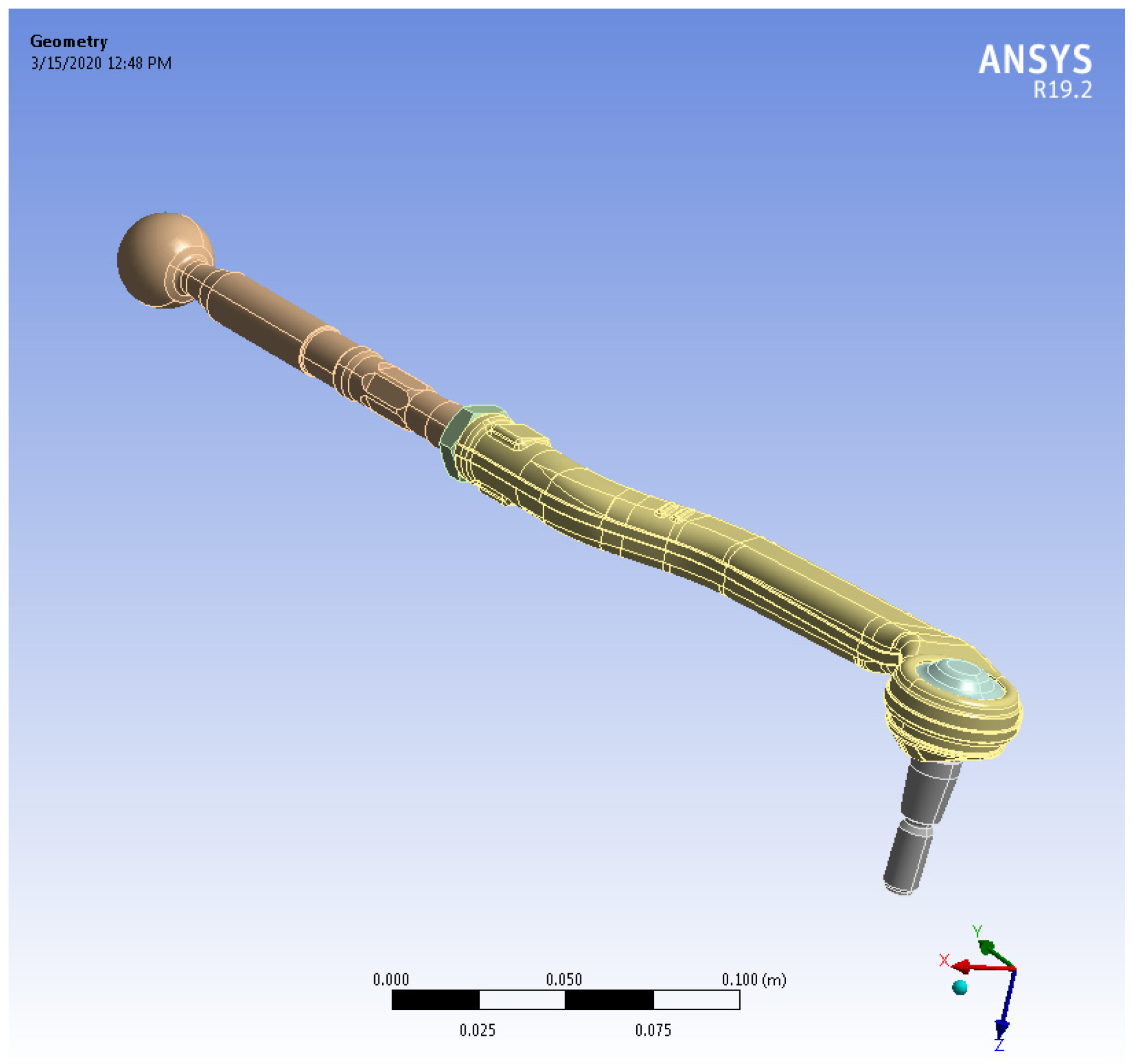
The three-dimensional geometry of the tie rod-tie rod end assembly was developed in Catia V5, based on direct measurements of the real components, and subsequently imported into Ansys Workbench in step format (
Figure 1). The material properties were determined through examination of a sectioned tie rod end and consulting relevant technical standards and databases. For the metallic elements, the characteristic parameters of structural steel were adopted from the Ansys material library (E = 210 GPa; ρ = 7850 kg/m
3; ν = 0.3). For the PTFE components, the following mechanical properties were applied (E = 0.482 GPa; ρ = 2160 kg/m
3; ν = 0.42) [
12]. These values correspond to typical ranges reported in the literature and ensure a realistic representation of the materials’ elastic behavior.
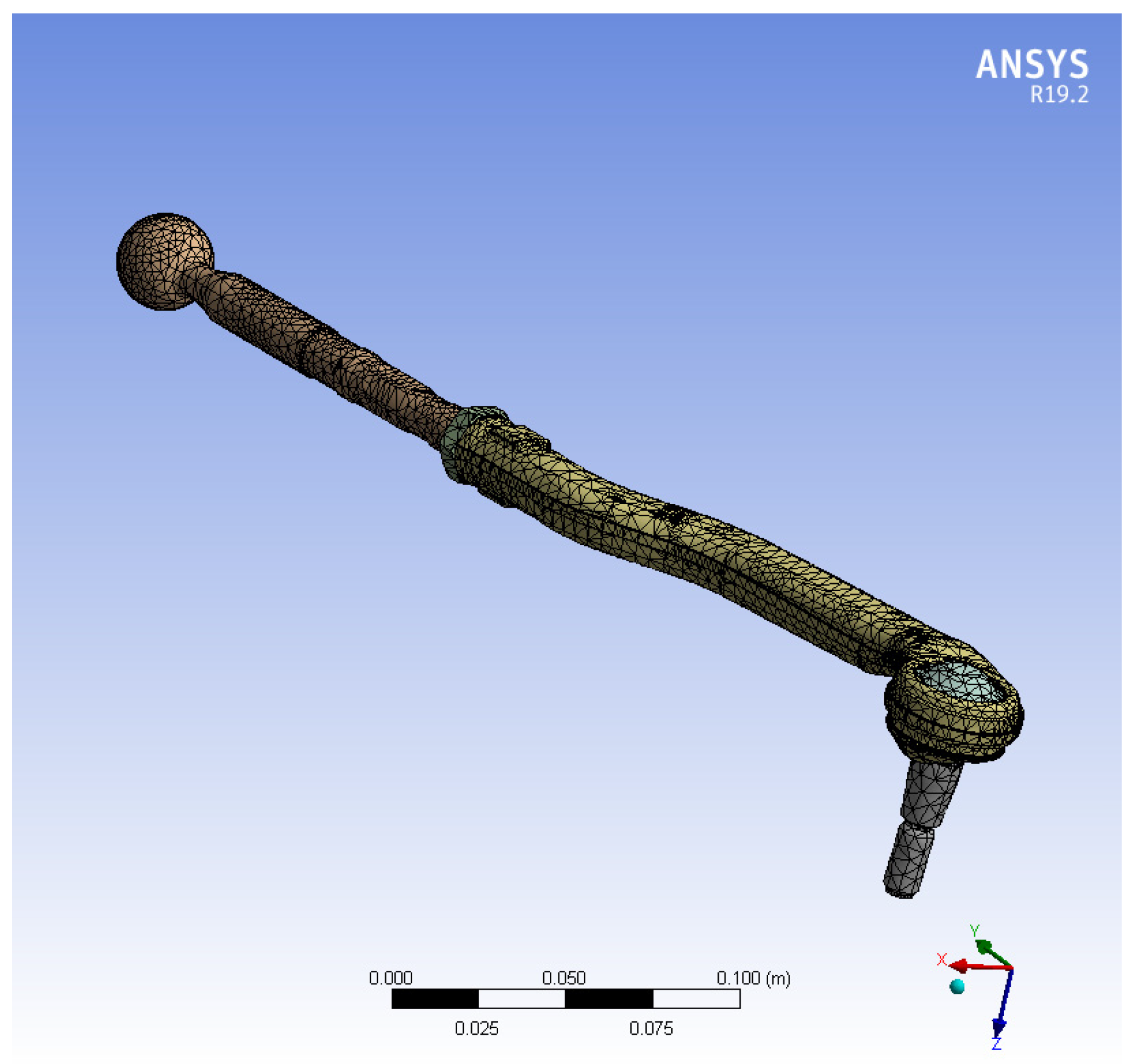
To ensure accurate representation of the joint behavior, the meshing strategy was carefully designed. Thus, to perform the analysis, the geometric model was discretized with second-order tetrahedral finite elements (SOLID187), with a refined mesh near the spherical joint to better capture the contact behavior and local stress gradients. Curvature-based refinement and local element sizing were applied to maintain consistency with the boundary-represented CAD geometry, particularly in the regions of high curvature around the spherical joint and contact surfaces. Mesh quality indicators (skewness, Jacobian ratio, and aspect ratio) were evaluated to confirm the stability of the eigenvalue solution. This refinement procedure follows standard FEM practice for curved geometries and complements the baseline mesh used for the modal analysis. Each mesh node includes three translational degrees of freedom, ensuring accurate representation of the displacement field during modal analysis. The resulting mesh consisted of 66,734 nodes and 37,784 elements, as illustrated in
Figure 2. This level of discretization was verified to provide a stable modal response while maintaining a practical balance between computational time and numerical accuracy [
12]. The chosen element type and refinement density were found suitable for reproducing both the global and local dynamic characteristics of the assembly.
The inner spherical joint, which connects the tie rod to the moving end of the steering rack, was constrained in the model to reproduce the straight-ahead driving condition, during which the rack does not undergo transverse motion. In this operating state, the inner joint behaves as a quasi-fixed support, as it is free of wear and does not contribute to the local dynamic response. Conversely, the outer spherical joint (tie rod end) is subjected to road-induced impacts and progressive wear, and therefore represents the actual source of the clearance-related vibration modes investigated in this study. The boundary conditions were defined to reproduce the actual operating constraints of the steering mechanism. A fixed support was applied at the spherical head of the tie rod to simulate its rigid attachment to the steering gear housing. To investigate the influence of spherical joint clearance on the dynamic behavior of the tie rod end, four radial clearance values were introduced into the model: 1 × 10
−6 mm (representing an ideal condition with negligible clearance), 0.1 mm and 0.5 mm (values typically observed in service due to progressive wear), and 1 mm (corresponding to a severe degradation scenario). The range of radial clearances introduced into the FEM model (0–1 mm) was obtained from measurements performed on ten worn tie-rod ends collected during maintenance procedures on vehicles in service. These components reflect realistic wear patterns and service-induced degradation. In all cases, the clearance value represents the radial gap between the ball stud and the inner spherical surface of the PTFE bushing. Although the modal analysis implemented in Ansys is linear, the actual contact interaction between the stud and the housing is inherently nonlinear. To reflect this, the contact was modeled by introducing specific stiffness values at the interface, adjusted according to the analyzed case (with or without clearance). Such a modeling strategy made it possible to capture the effect of clearance growth on the natural frequencies and vibration modes while preserving computational efficiency [
12].
3. Results
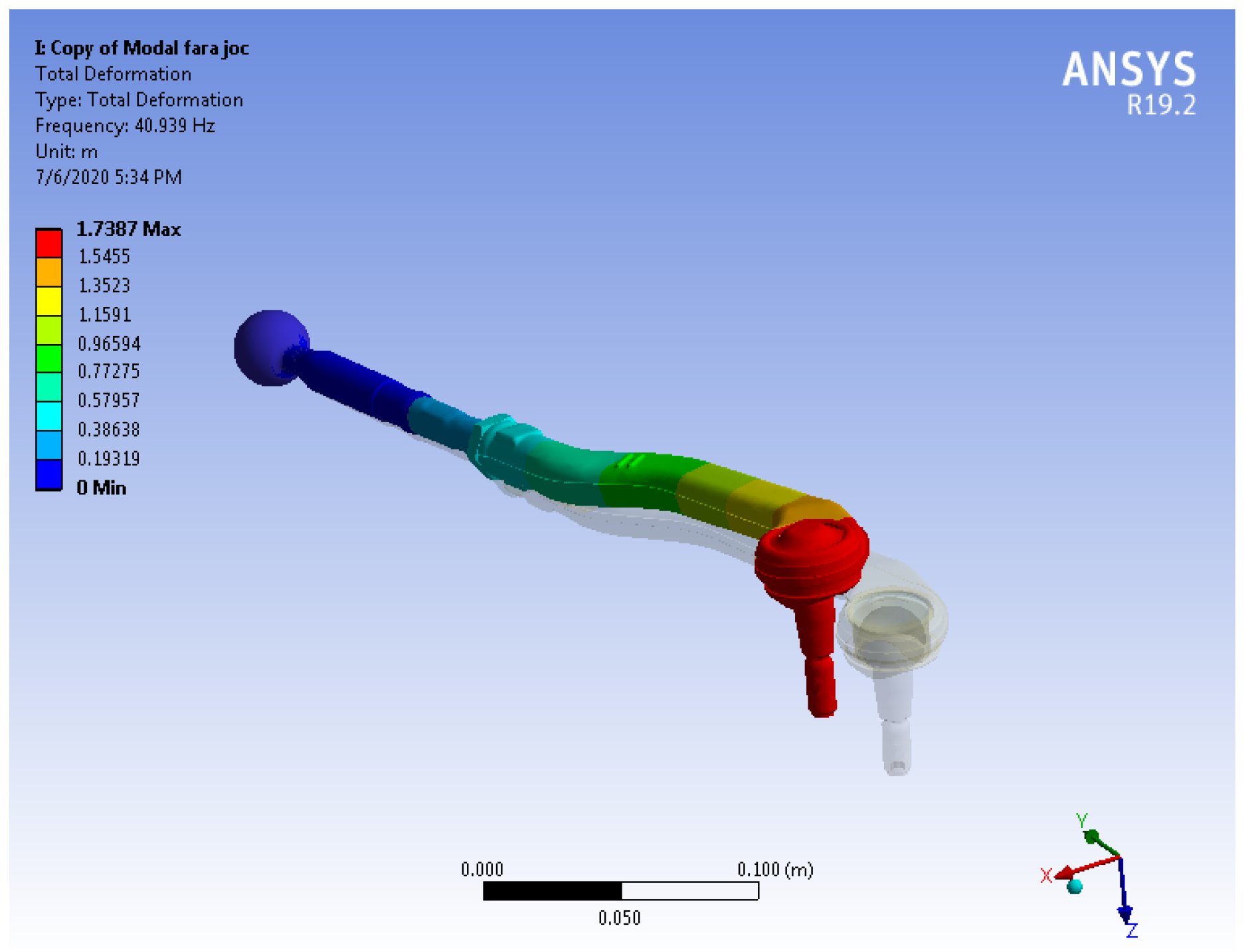
The results of the modal analysis revealed that the clearance within the spherical joint had a strong and progressive influence on the natural frequencies of the steering linkage assembly. In the reference configuration without clearance, the first vibration mode occurred at 40.9 Hz, as illustrated in
Figure 3.
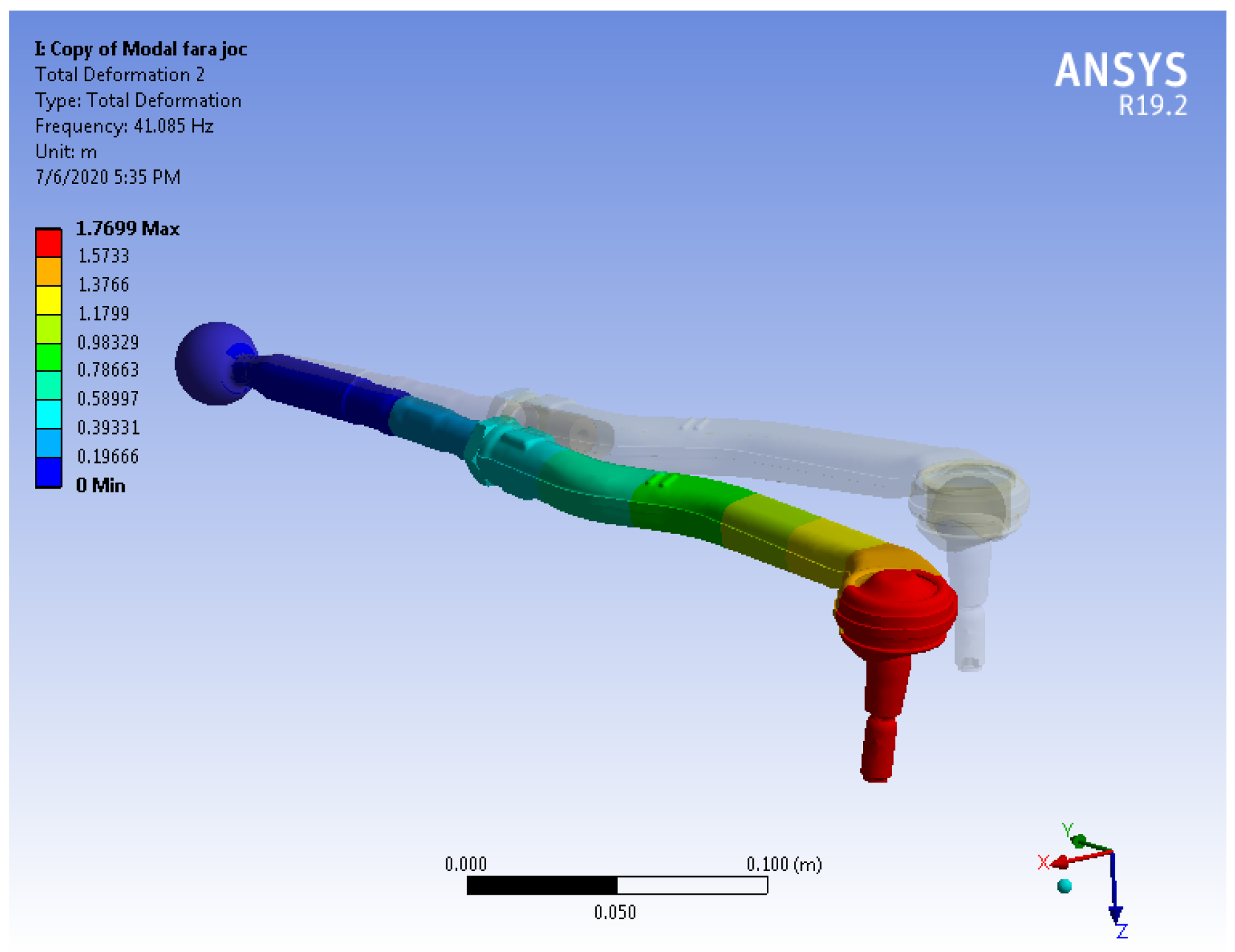
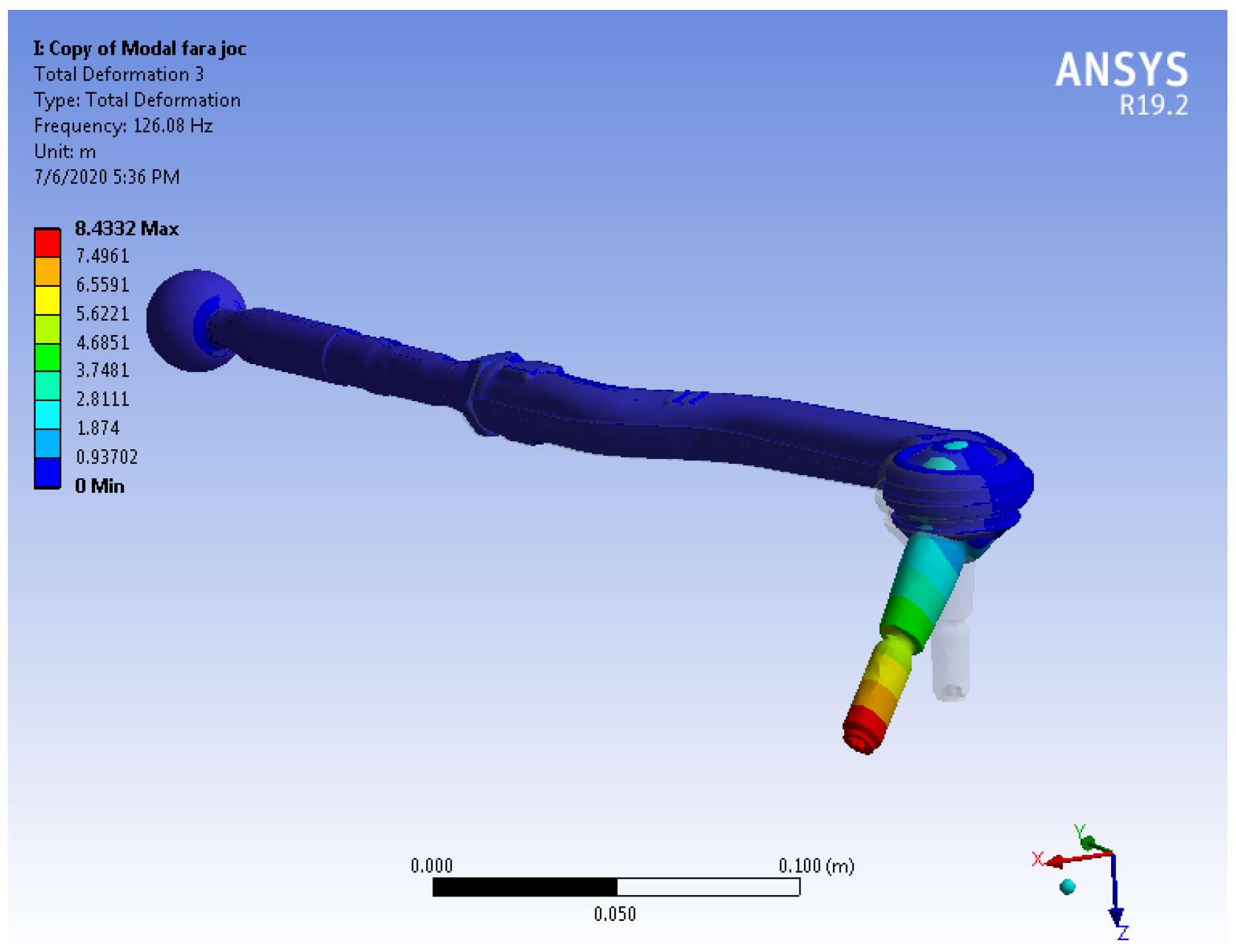
The second and third vibration modes for this configuration are presented in
Figure 4 and
Figure 5, respectively, showing a consistent and stable dynamic behavior of the assembly.
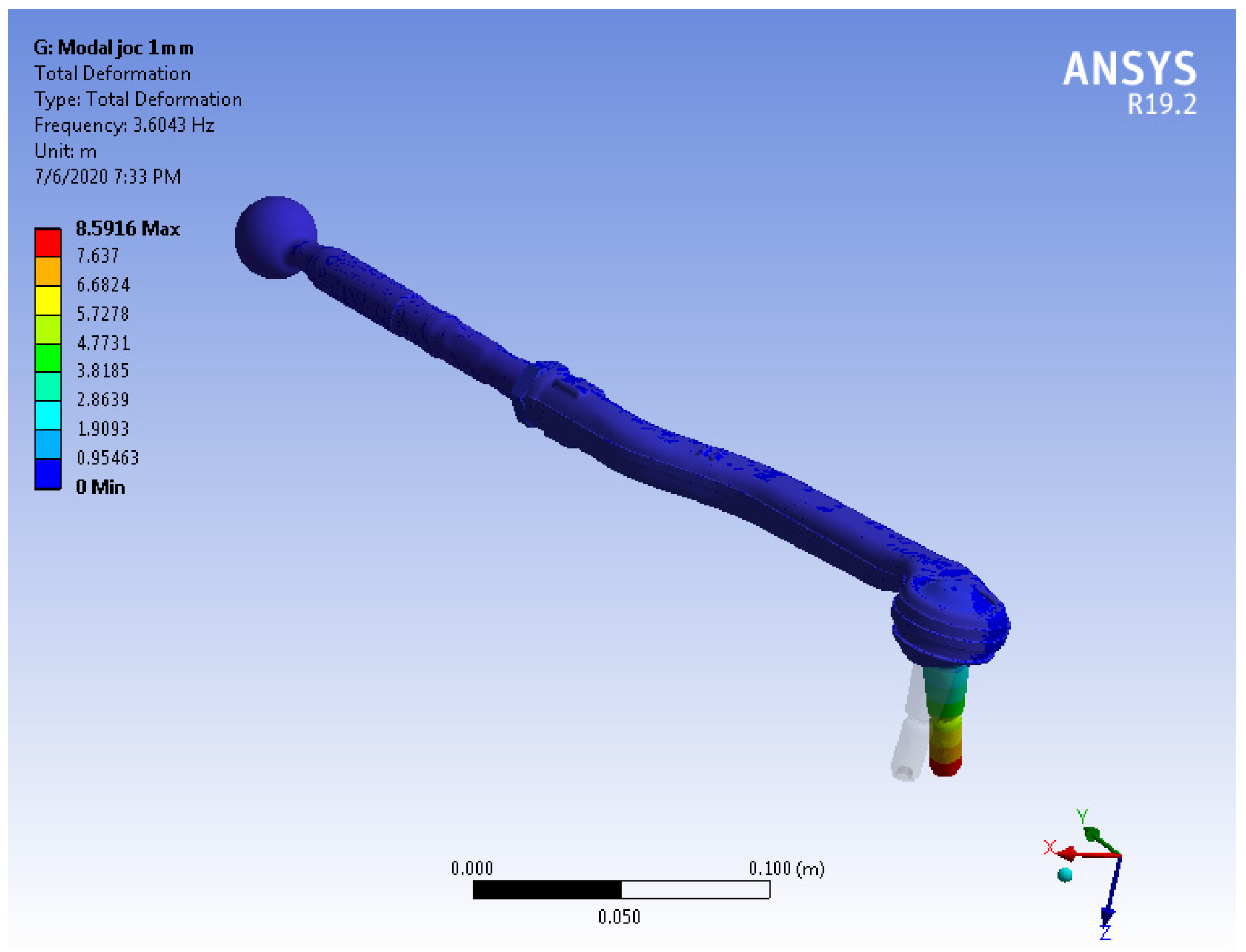
As the clearance increased, a marked reduction in natural frequencies was observed. When the clearance reached 1 mm, the first vibration mode dropped dramatically to only 3.6 Hz (
Figure 6).
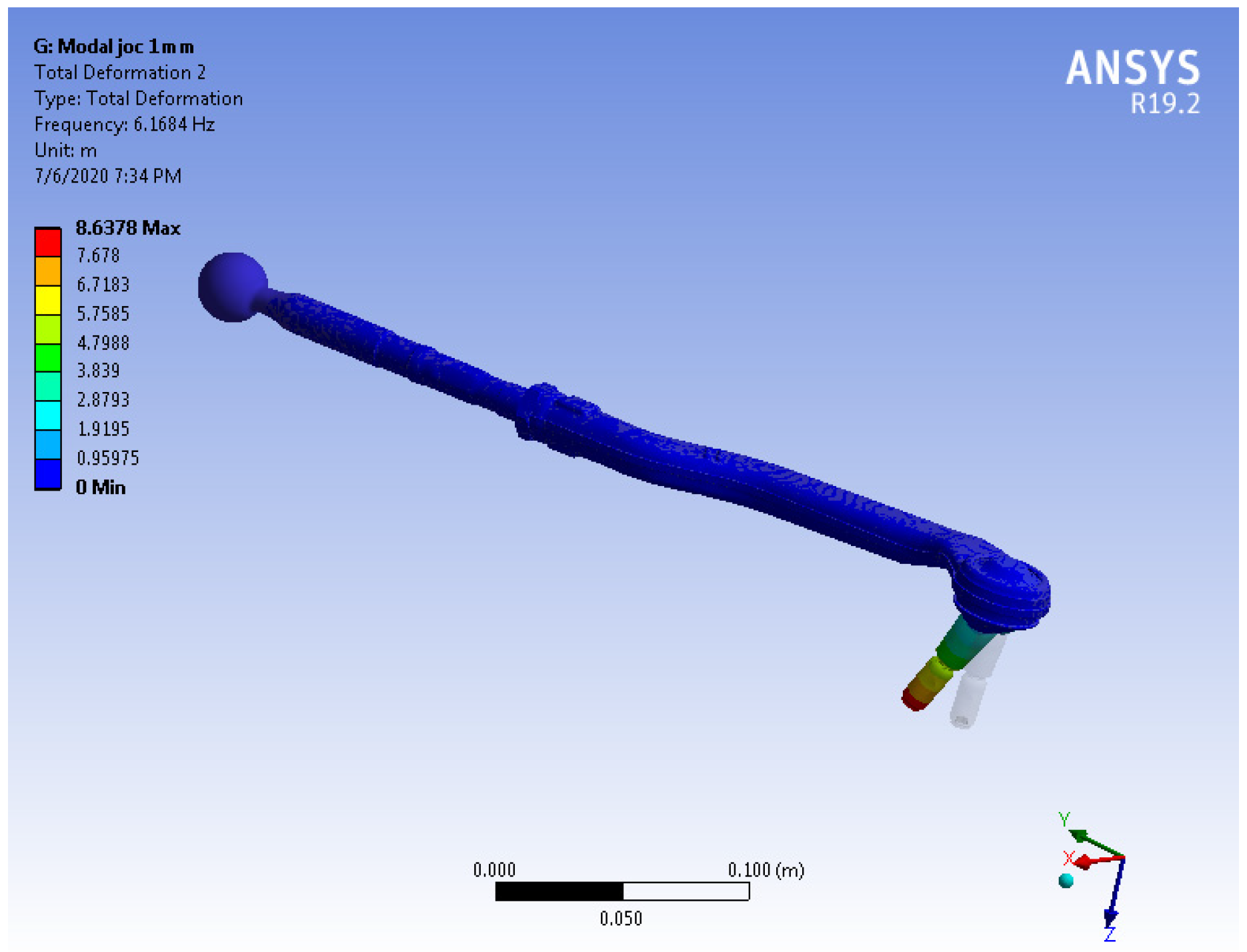
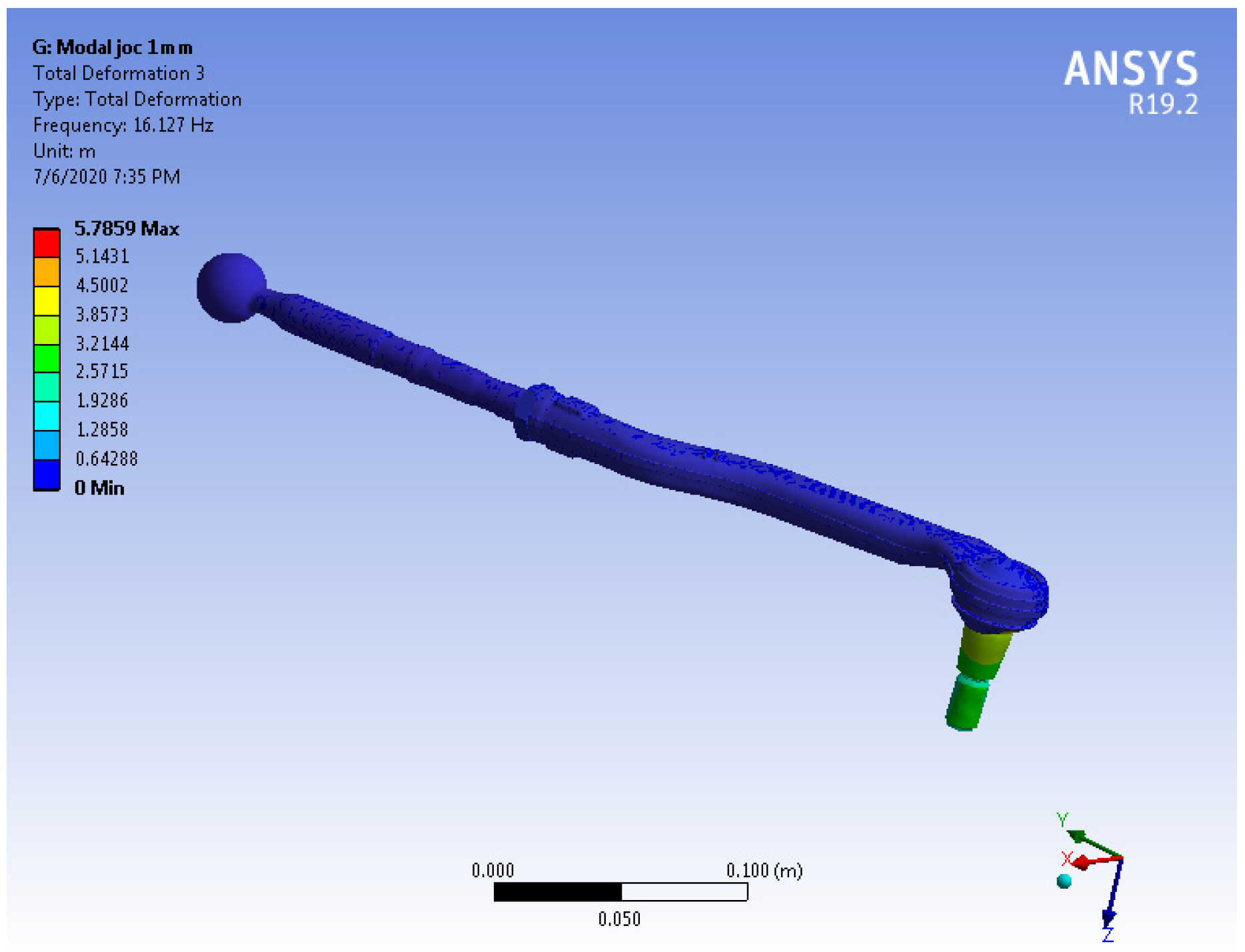
The corresponding higher vibration modes for this configuration, shown in
Figure 7 and
Figure 8, also exhibited significant decreases, reaching 6.2 Hz and 16.1 Hz, respectively. This clearly indicates that increasing clearance leads to a pronounced softening effect in the structural response of the tie rod-tie rod end assembly.
A detailed summary of all the identified vibration modes for each analyzed configuration—without clearance and with clearance values of 1 × 10
−6, 0.1, 0.5, and 1 mm—is presented in
Table 1.
The results show that only the first three natural modes follow a clear downward trend as the clearance increases, their frequencies decreasing progressively with each clearance level due to the reduced local stiffness at the spherical joint. In contrast, Modes 4–9 remain effectively unchanged across all simulated conditions, exhibiting only minor numerical variations within the typical tolerance range of the finite element solution. This distinction between the lower and higher modes is evident in the frequency table, where significant shifts appear exclusively in Modes 1–3.
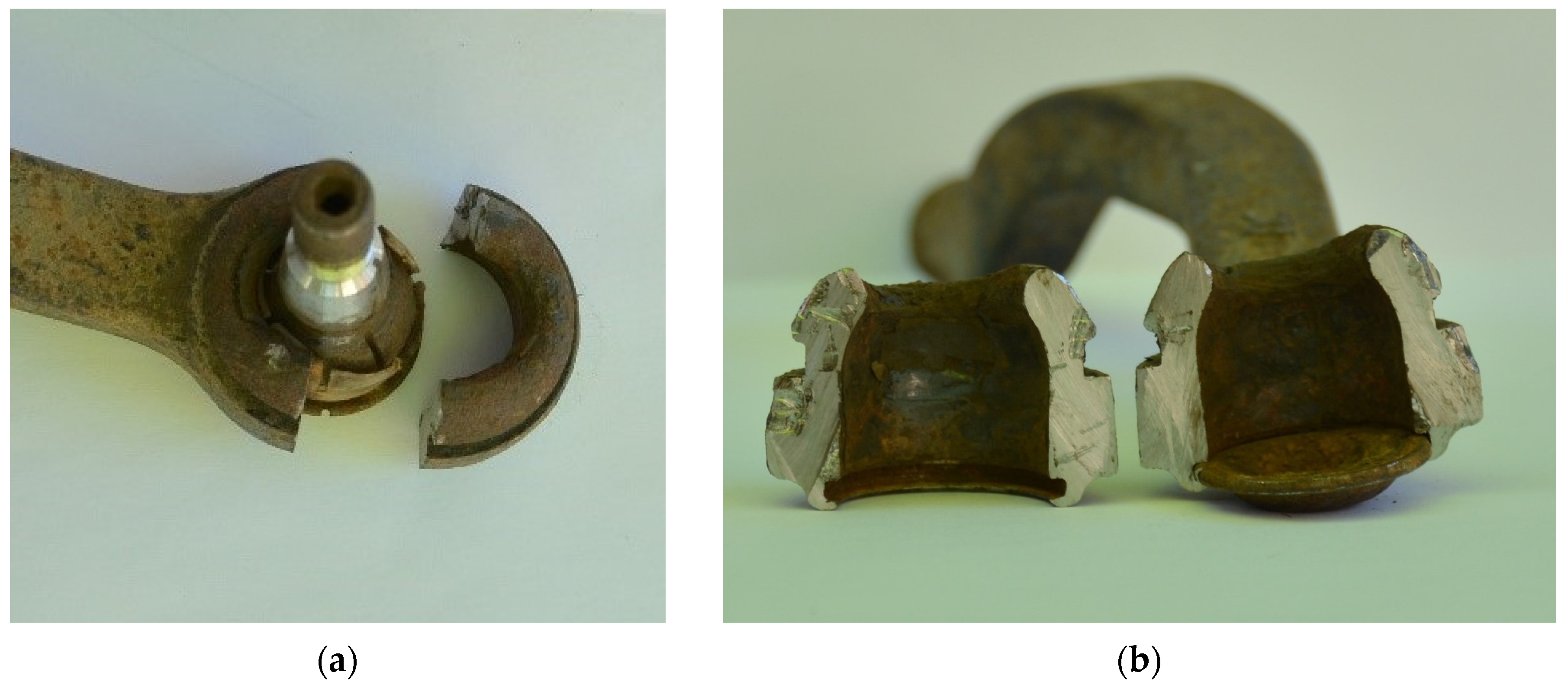
Figure 9 shows the internal condition of a tie rod end removed from service and sectioned for inspection.
In
Figure 9a, the PTFE bushing presents visible degradation, with the material locally thinned and displaced from the nominal spherical profile.
Figure 9b reveals circumferential wear marks on the outer spherical housing, indicating repeated micro-sliding and contact impacts between the ball stud and the socket during steering motion. These wear signatures confirm that the clearance observed in the numerical model is physically realistic and help explain why the first three natural frequencies are the most affected, as the local stiffness at the joint is progressively reduced.
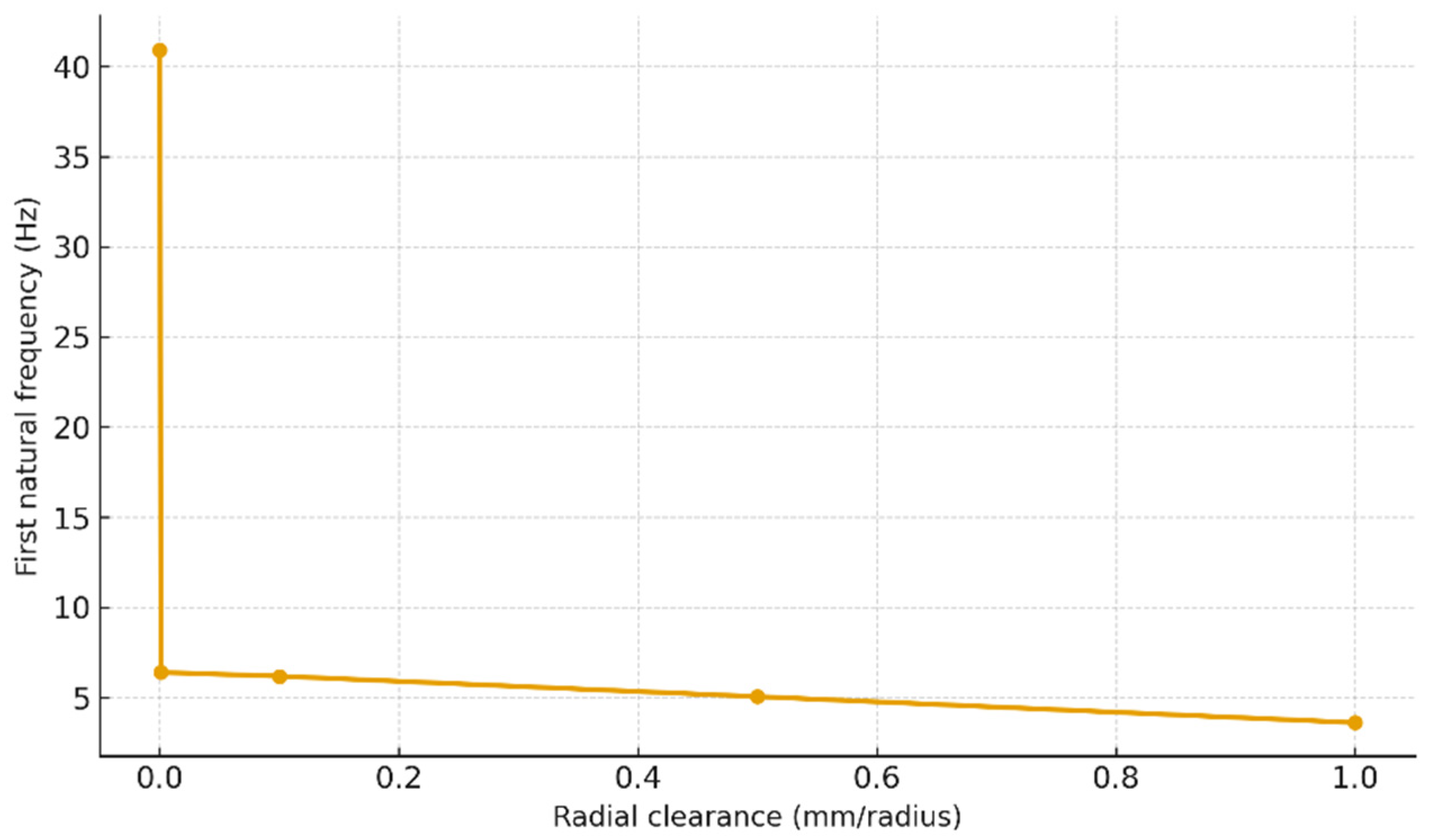
Figure 10 illustrates the variation in the first natural frequency as a function of the radial clearance introduced in the spherical joint.
The sharp decrease observed between a micro-clearance of 1 × 10
−6 mm and a severe clearance of 1 mm confirms the nonlinear trend already noted in the frequency table, with the most pronounced drop occurring at very small clearance levels. This sensitivity indicates that even minor wear-induced changes in the radial gap can significantly alter the dynamic response of the steering linkage, making the first natural frequency a suitable candidate for vibration-based condition monitoring and predictive maintenance. It should be noted that the curve shown in
Figure 10 represents deterministic FEM results, for which statistical dispersion or confidence intervals are not applicable. Its purpose is to illustrate the nonlinear sensitivity of the first natural frequency to clearance growth, rather than to provide a regression-based predictive model.
4. Discussion
The numerical findings, supported by experimental inspection and measured clearance values, clearly demonstrate that the clearance within the spherical joint of the tie rod-steering linkage assembly plays a decisive role in shaping its dynamic response. A pronounced reduction in the first natural frequency is already observed at micro-clearance levels, decreasing from 40.9 Hz (no clearance) to 6.4 Hz for a radial clearance of 1 × 10
−6 mm. This behavior corroborates the nonlinear sensitivity reported by Bai et al. (2022) for revolute joints [
4].
An additional observation concerns the behavior of the higher vibration modes. Only the first three modes exhibit a marked sensitivity to spherical joint clearance, as they involve local rotations and bending concentrated around the ball-socket interface. The loss of stiffness introduced by the radial gap primarily affects these localized deformation patterns, leading to the significant frequency reductions documented in this study. By contrast, modes 4–9 are dominated by global bending and axial deformation of the tie rod, whose dynamic response is governed largely by the rod’s geometry and material properties rather than by joint compliance. Similar distinctions between locally and globally dominated mode shapes have been reported in clearance-affected mechanical systems by Wei et al. [
7] and in vibration-based diagnostic studies by Krot et al. [
8] and Tiboni et al. [
9], supporting the observation that higher-order modes remain comparatively insensitive to joint-level clearance. Experimental inspection confirmed circumferential wear patterns on the PTFE bushing, consistent with the modal softening observed in the first three vibration modes.
Unlike Bai’s investigation, which focused on high-speed rotational mechanisms, the present results reveal that steering components, although operating under lower excitation frequencies, exhibit a much higher sensitivity to clearance variations due to their safety-critical function in vehicle control.
A relevant comparison can also be made with the study of Kang (2022), who reported transitions from periodic to chaotic vibration responses in ball joints influenced by frictional effects [
5]. In contrast, the current work demonstrates that clearance alone—without explicitly modeling friction—is sufficient to induce significant shifts in modal frequencies, bringing them into the range of typical vehicle excitation. This finding highlights the distinctive vulnerability of steering assemblies to seemingly minor wear-induced defects, which can lead to noticeable changes in dynamic behavior.
Another important observation concerns the strong consistency between finite element simulations and physical inspections of worn PTFE bushings. This agreement reinforces the reliability of computational modeling as a predictive diagnostic tool. Experimental shock tests performed on worn tie-rod ends exhibiting approximately 0.5 mm radial clearance revealed dominant vibration peaks in the 4–7 Hz range. These values are consistent with the numerically predicted first natural frequency for comparable clearance levels. Although these tests do not constitute a full modal validation, the qualitative agreement supports the modeling assumptions and confirms the sensitivity of the assembly to clearance growth.
It should also be noted that the linear modal analysis performed in Ansys does not capture the full nonlinear contact behavior of the ball–socket interface. The use of equivalent contact stiffness values reproduces the global stiffness reduction caused by radial clearance but cannot reflect amplitude-dependent or asymmetric contact effects. For this reason, the results presented here should be interpreted as physically meaningful yet preliminary indicators of clearance influence, while a fully quantitative diagnostic model will require nonlinear contact simulations and experimental modal testing in future studies.
In addition, it is well known that standard FEM formulations may experience reduced convergence rates when modeling curved geometries, as polynomial basis functions cannot exactly reproduce non-polynomial boundary shapes. Advanced techniques such as isogeometric analysis (IGA) combined with boundary-element formulations offer a promising path forward by enabling Computer-Aided Design (CAD)-native geometry representation and improved numerical accuracy. These methods may provide future enhancements to the steering-joint modeling framework proposed in this study [
13].
From a practical standpoint, the obtained results provide a clear explanation for steering vibrations frequently reported in high-mileage vehicles. The decrease in natural frequencies causes the system’s resonance range to fall within the excitation spectrum generated by road irregularities, tire imbalance, and suspension compliance. This resonance overlap increases driver discomfort and may compromise vehicle safety. Consequently, monitoring the progression of clearance during service becomes a critical aspect of preventive maintenance strategies.
The implications of this study also extend to the field of diagnostic technologies. Vibration-based condition monitoring, which is already well established for rotating machinery, can be effectively adapted for steering systems. By continuously tracking shifts in modal frequencies, onboard diagnostic modules could identify the onset of clearance growth before severe instability occurs. Such an approach aligns well with the ongoing transition toward predictive and condition-based maintenance practices, particularly within the framework of Industry 4.0 applications in the automotive sector.
Overall, the discussion confirms both the scientific novelty of integrating finite element modeling with experimental analysis of steering clearance and the practical relevance of the obtained results for improving automotive reliability and road safety.
5. Conclusions
This research contributes to a deeper understanding of how clearance in steering tie rod assemblies affects their dynamic behavior. The key conclusions derived from the numerical and experimental analyses are summarized below:
Theoretical contribution: Even minimal clearance levels produce nonlinear shifts in the natural frequencies, confirming the high sensitivity of steering components compared with other mechanical systems. This provides new theoretical evidence that enriches the literature on nonlinear dynamics and vibration analysis.
Practical implications: The observed reduction in the first natural frequency—from 40.9 Hz to 3.6 Hz—indicates that the steering assembly becomes prone to resonance with vibrations commonly generated by road irregularities. This result offers a clear explanation for steering shimmy and dynamic instability often reported in vehicles during service.
Diagnostic potential: The established correlation between clearance growth and modal frequency shifts represents a measurable indicator for vibration-based diagnostics. This finding opens the possibility of implementing onboard monitoring systems capable of detecting dangerous wear conditions in real time, enhancing vehicle reliability.
Engineering relevance: The methodology adopted in this study—integrating CAD modeling, finite element analysis, and experimental inspection—proves to be applicable not only to steering assemblies but also to other safety-critical joints, such as suspension ball joints and control arm connections.
Future perspective: Further development of this research should include nonlinear contact simulations, fatigue modeling, and full-vehicle vibration experiments. Such advancements will help establish more robust frameworks for predictive maintenance and could ultimately contribute to updating automotive safety and inspection standards.
In summary, the present study demonstrates that clearance in tie rod-tie rod end assemblies is not merely a manufacturing tolerance issue but a critical factor influencing automotive safety. By combining numerical simulation with experimental validation, this work provides both fundamental insights and practical tools to support advanced diagnostic techniques and improve the overall reliability of vehicle steering systems.
The present study was limited to a linear modal analysis in which the clearance was represented through a simplified stiffness model. Nonlinear contact behavior, time-dependent loading, and thermal effects were not considered at this stage. Future research should expand the scope to include transient dynamic simulations, fatigue testing under service-like conditions, and the development of onboard diagnostic systems based on real-time vibration monitoring.