1. Introduction
China’s power grid spans vast territories [
1,
2], with numerous overhead transmission corridors traversing densely forested mountainous regions [
3]. Annual power system failures caused by wildfires are steadily increasing [
4,
5,
6]. As critical infrastructure components, transmission towers are vulnerable to severe thermal loading under wildfire exposure, which can degrade galvanized coatings, reduce the mechanical properties of steel, and ultimately increase the risk of structural instability and service failure [
7,
8,
9,
10,
11]. For example, in 2006, a 220 kV transmission line under the jurisdiction of awildfireply company experienced a tripping incident when overhead towers were burned by a wildfire, causing structural deformation and collapse due to loss of strength [
12]. Therefore, investigating the impact of thermal damage on transmission towers under wildfire conditions holds significant importance.
Zinc is widely used to protect tower steels due to its cathodic protection mechanism and excellent corrosion resistance [
13,
14,
15]. However, in wildfire conditions where temperatures can exceed 800 °C, such high heat causes severe damage to the galvanized coating of transmission towers. Deng et al. conducted experiments on the thermal changes in hot-dip galvanized color-coated steel sheets at high temperatures, obtaining the characteristics of thermal damage traces in the coating and steel at different temperatures [
16]. Zhang et al. investigated the oxidation trace characteristics of common galvanized steel sheets under varying heating temperatures, exposure times, and cooling methods. Experimental results demonstrated significant differences in oxidation traces among galvanized steel sheets at different heating temperatures [
17]. Additionally, high temperatures and flame ablation can cause a reduction in the strength of transmission tower materials, leading to distortion and deformation of the tower structure. Wang experimentally investigated the high-temperature mechanical properties of different steel grades, concluding that the load-bearing capacity of steel deteriorates sharply with increasing temperature. Mechanical properties begin to decline rapidly after 400 °C, and steel loses nearly all strength above 800 °C [
18]. Shi et al. experimentally obtained stress–strain curves for Q235 and Q345 steels under high-temperature conditions and after cooling via air and water methods, presenting mechanical models for steel at elevated temperatures [
19,
20]. These studies have provided valuable information on coating degradation and material property reduction under elevated temperatures. Nevertheless, most of them were conducted under furnace heating or other relatively uniform thermal conditions, and they mainly focused on isolated materials or specimens rather than the response of tower structures subjected to localized and non-uniform fire exposure.
In actual wildfire environments, the thermal exposure imposed on transmission tower legs is highly non-uniform and time-dependent, and the structure continues to sustain mechanical loads during fire attack. As a result, the thermal damage pattern and structural response of tower legs cannot be fully represented by conventional uniform-heating tests. There is still limited understanding of how localized wildfire heating affects damage zoning and global response at the tower-leg level. Compared with previous studies that mainly focused on galvanized steel sheets, isolated material specimens, furnace-heating conditions, or general numerical analysis of transmission tower structures, the present study focuses on the tower-leg level response under localized and non-uniform fire exposure. The novelty of this work does not lie in proposing a new constitutive model for steel at elevated temperatures, but in linking localized wood-crib fire exposure, measured height-dependent temperature histories, macroscopic galvanized-coating damage, laser-scanned deformation, and temperature-informed finite element analysis within a unified experimental–numerical framework. To address this issue, a 1:4 scale tower-leg model of a 220 kV transmission tower was subjected to a localized wood-crib fire exposure. Temperature histories, surface damage patterns, and deformation of the fire-exposed members were obtained experimentally. On the basis of the measured temperature histories, a temperature-informed elastic–plastic finite element model was established to interpret the global structural response of the tower leg under localized heating. This study provides preliminary experimental evidence and an engineering interpretation method for post-fire damage identification, inspection prioritization, and rapid structural assessment of transmission tower legs in wildfire-prone corridors.
2. Experimental Program
2.1. Test Specimen and Loading Design
Full-scale wildfire exposure tests on transmission towers are difficult to conduct because of safety, cost, and field-control limitations [
21]. Since tower legs are the structural components most directly exposed to near-ground flames during vegetation fires, a scaled tower-leg model was adopted in this study to investigate thermal damage evolution and structural response under controlled vegetation-fire exposure.
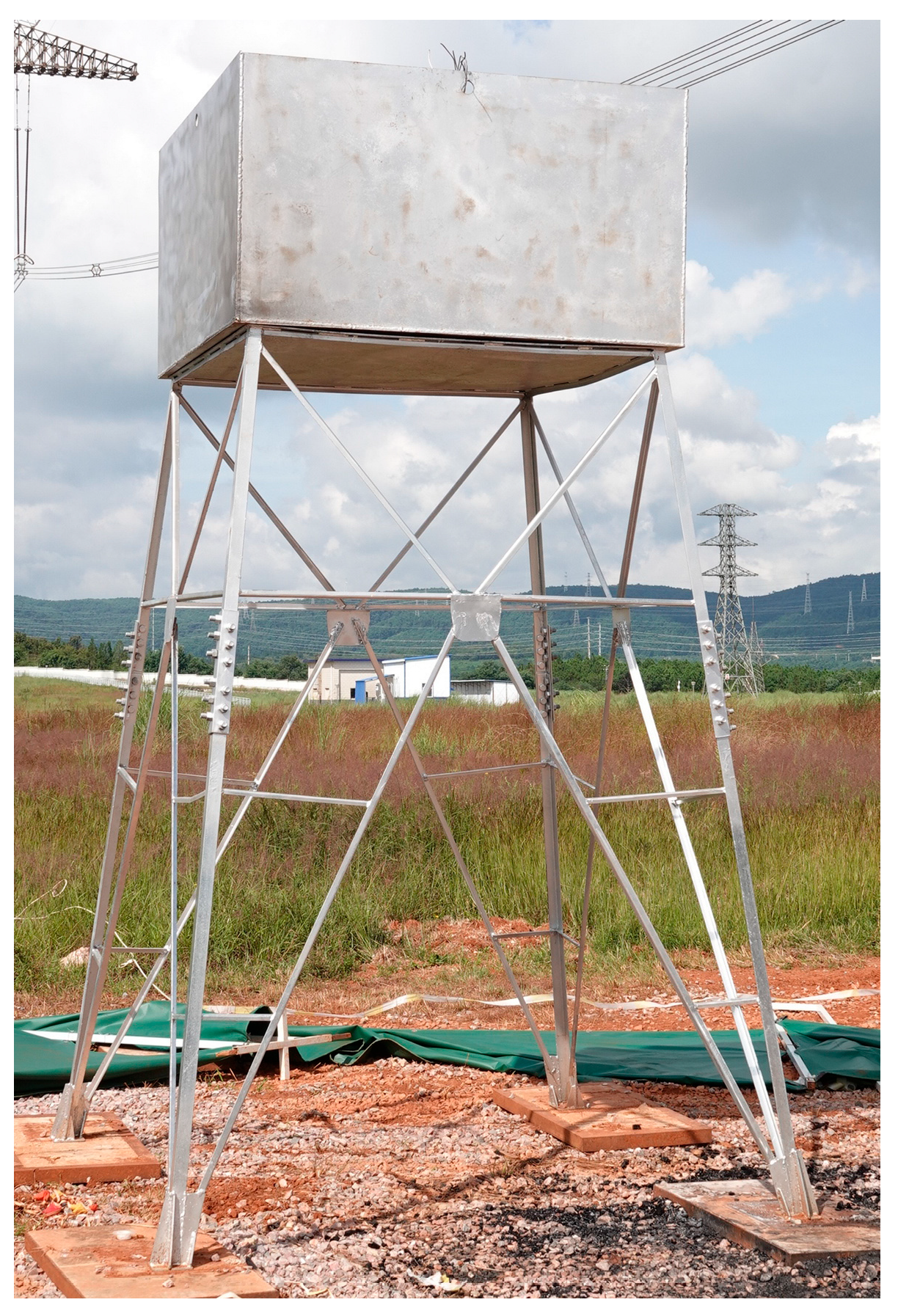
A 1:4 scale model of the leg structure of a 220 kV dry-type tension tower (JG1) was used as the test specimen. The scaled model was designed to preserve the main load-transfer path and overall geometric characteristics of the prototype tower-leg structure. Therefore, the primary load-carrying members, principal diagonal members, gusset plates, and major connection forms were retained. The omitted secondary auxiliary members mainly served as local bracing or constructional members in the prototype tower. Their omission was intended to reduce fabrication complexity and avoid excessive geometric congestion in the scaled model. Although this simplification may influence local stiffness to some extent, it is considered acceptable for the purpose of this study, which focuses on the thermal damage evolution and global deformation response of the primary tower-leg system under localized fire exposure. The model had a base span of 1.91 m and a height of 2.62 m. The main members were connected by bolts and gusset plates, whereas several slender diagonal members were welded because of geometric limitations in the scaled model. In the 1:4 scaled specimen, the available space at several slender diagonal-member joints was insufficient to arrange bolts and gusset plates without changing the original member layout. Therefore, welding was adopted only for these limited connections to ensure the constructability and geometric integrity of the scaled model. Compared with bolted connections, welded connections may locally increase joint stiffness and reduce possible connection slip. Therefore, the local deformation near these welded joints should be interpreted with this simplification in mind. However, the primary load-carrying members and major connections were still assembled using bolts and gusset plates, and the main load-transfer path of the prototype tower-leg structure was retained. Thus, this connection simplification may influence local joint behavior to some extent, but it is not expected to dominate the global thermal deformation response and overall damage evolution investigated in this study. The scaled tower-leg model is shown in
Figure 1.
The external load applied to the scaled tower-leg model was determined according to similarity theory and dimensional analysis. In this study, the geometric similarity coefficient is defined as
, where
and
are the characteristic dimensions of the scaled model and the prototype, respectively. Since a 1:4 scaled specimen was adopted,
. The elastic modulus similarity coefficient is defined as
, where
and
are the elastic moduli of the model and prototype materials, respectively. Because the scaled specimen used the same steel grades as the prototype tower,
. The stress similarity coefficient can therefore be expressed as
. Since load has the dimension of stress multiplied by area, the load similarity coefficient can be obtained as:
where
is the load similarity coefficient,
is the stress similarity coefficient,
is the elastic modulus similarity coefficient, and
is the geometric similarity coefficient [
22]. Therefore:
The actual mass of the prototype tower was 7214.0 kg, of which the lower tower-leg segment corresponding to the scaled specimen accounted for 2671.0 kg. Therefore, the mass of the remaining upper tower sections that should be equivalently applied to the scaled tower-leg model was:
Applying the load similarity coefficient, the equivalent load mass for the scaled model was calculated as:
In the test, a steel container filled with sand and gravel was placed on the top loading region of the scaled tower-leg model to apply this equivalent vertical load. The use of sand and gravel allowed the load magnitude to be adjusted and helped maintain a stable gravitational load during the fire test. This loading method was intended to reproduce the vertical compression effect of the upper tower sections on the lower tower-leg structure.
2.2. Wood-Crib Fire Exposure Setup
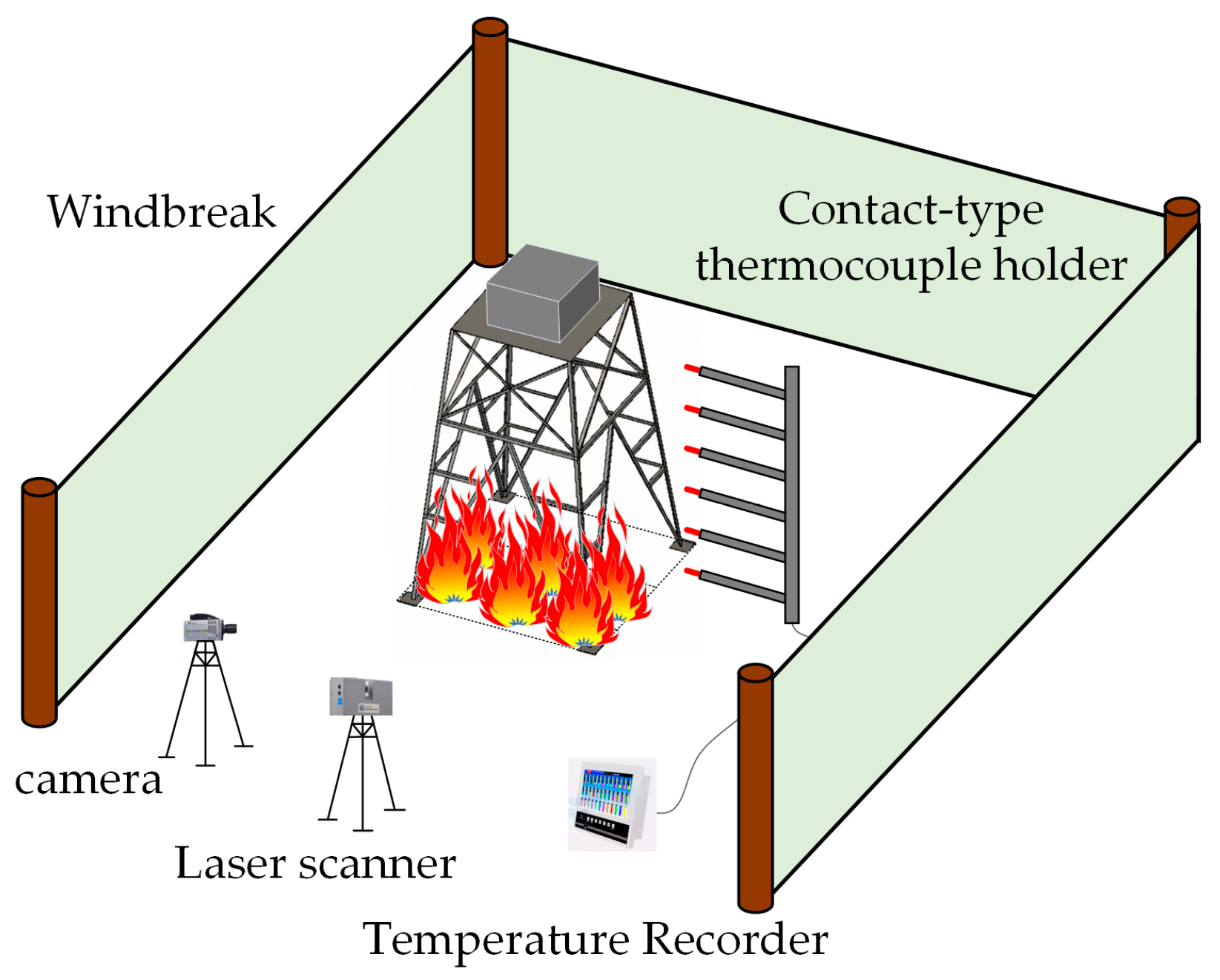
The fire exposure test was conducted in an outdoor test field, as shown in
Figure 2. Because wood combustion generates a large amount of smoke and is sensitive to ambient wind, three windbreak walls were installed around the test area to reduce the disturbance of crosswinds on flame morphology, effective burning duration, and temperature distribution. Wind conditions may affect wood-crib fire exposure by changing flame inclination, smoke movement, burning intensity, and the temperature distribution around the tower-leg members. In the present test, three windbreak walls were installed to reduce crosswind disturbance and to maintain a relatively stable localized thermal exposure. Therefore, the measured temperature histories and damage patterns should be interpreted as results obtained under wind-shielded outdoor fire-test conditions. The enclosed test zone measured 8 m × 8 m × 2 m.
Chinese fir wood was selected as the fuel to represent vegetation-fire exposure. A wood crib was arranged around two adjacent tower legs on the fire-exposed side of the specimen to simulate localized fire attack near the tower-leg region. The overall size of the wood crib was approximately 2.0 m in length, 1.0 m in width, and 0.5 m in height. Each wood strip had a length of 1.0 m and a cross-section of 30 mm × 30 mm. The wood crib was constructed in a crisscross pattern with 18 layers. In the odd-numbered layers, the wood strips were placed along the width direction of the crib. Each layer consisted of 12 strips, which were uniformly arranged along the 2.0 m length direction, with a clear spacing of approximately 150 mm between adjacent strips. In the even-numbered layers, the wood strips were placed along the length direction of the crib. Two 1.0 m long strips were connected end to end to form one row, and six rows were arranged along the 1.0 m width direction; therefore, each even-numbered layer also contained 12 wood strips, with a clear spacing of approximately 160 mm between adjacent rows. The placing directions of two adjacent layers were perpendicular to each other, forming ventilation gaps between the upper and lower layers. This arrangement was adopted to provide relatively stable oxygen supply and flame morphology during combustion.
The moisture content of the Chinese fir wood strips was measured using a moisture meter before the fire test, and the measured value was approximately 15%. The wind speed inside the wind-shielded test zone was monitored during the test and remained within the range of 0–1.5 m/s. The wood crib was ignited using uniformly distributed alcohol-soaked cotton balls. These alcohol-soaked cotton balls were placed at multiple positions around the lower part of the wood crib and then ignited to promote relatively uniform initial ignition and stable flame development. After ignition, the wood crib was allowed to burn naturally. The total fire exposure duration was approximately 20 min.
The nominal fire load of the wood crib was estimated based on the total solid volume of the wood strips, the density of Chinese fir wood, and the effective heat of combustion of wood. Since the wood crib consisted of 18 layers and each layer contained 12 wood strips, the total number of wood strips was 216. The solid volume of a single wood strip was calculated as:
Therefore, the total solid wood volume was:
According to reported density values for Chinese fir wood, a nominal density of 434 kg/m
3 was adopted in this study. Thus, the estimated fuel mass was:
The nominal total fire load was calculated as:
where
is the nominal total fire load,
is the estimated fuel mass, and
is the effective heat of combustion of wood. Since the heat of combustion of wood is generally reported to be approximately 15–20 MJ/kg, the net heat of combustion was taken as 18 MJ/kg in this calculation. Therefore:
The corresponding nominal fire load density was calculated as:
where
is the plan area of the wood crib. Since
, the nominal fire load density was:
Considering the approximately 20 min fire exposure duration, the equivalent average heat release rate was estimated as approximately 1.27 MW.
It should be noted that the heat release rate and mass loss rate were not directly measured in this test. Therefore, the above calculation provides a nominal estimate of the available fuel energy, while the experimentally measured temperature histories were used as the primary thermal input for interpreting the structural response and for the subsequent temperature-informed finite element analysis. This setup was intended to provide a localized wood-crib fire exposure condition for evaluating the thermal damage evolution and structural response of the tower-leg specimen, rather than to reproduce the full complexity of natural wildfire spread.
2.3. Temperature Measurement and Deformation Monitoring
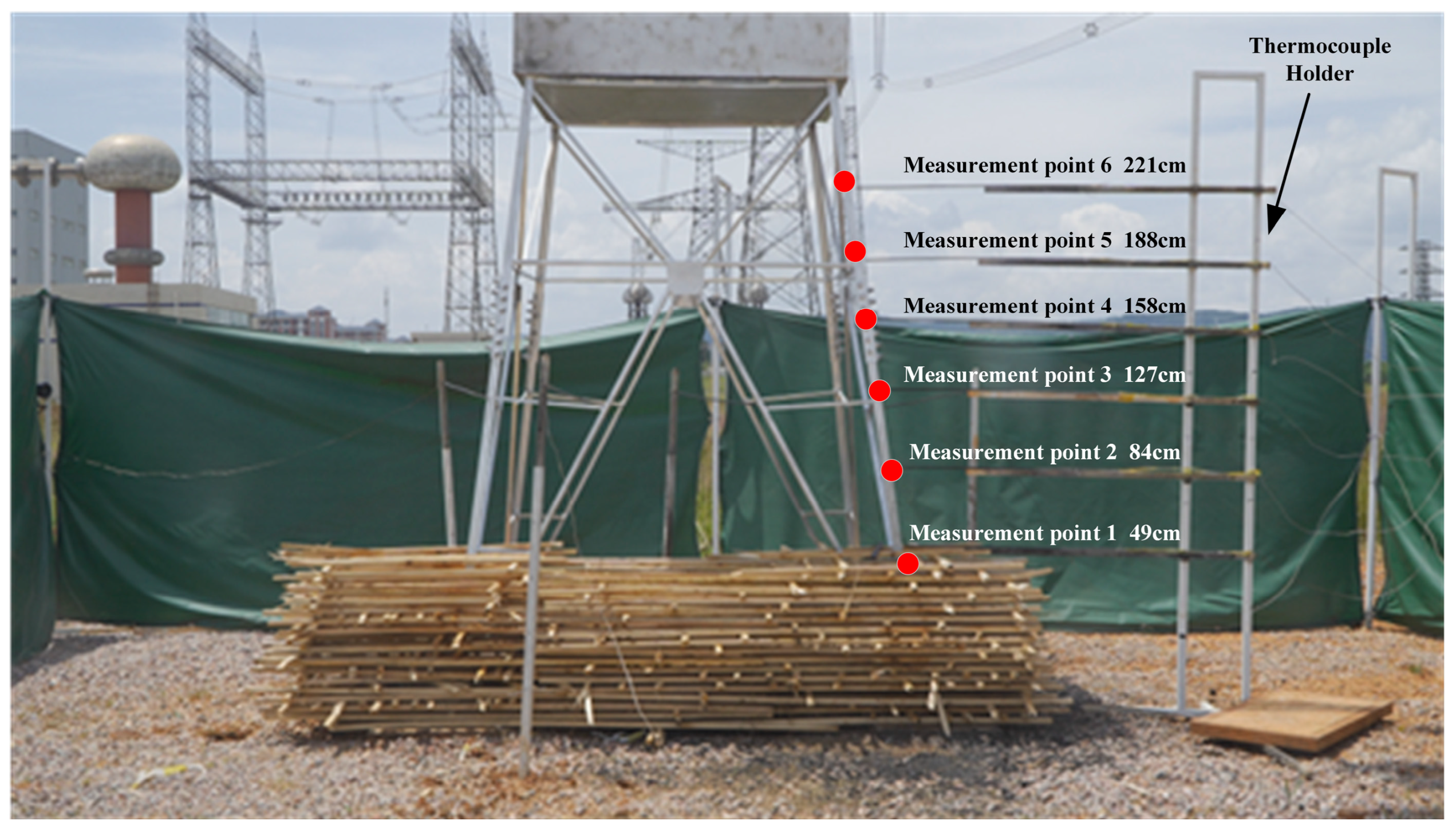
The completed experimental setup is shown in
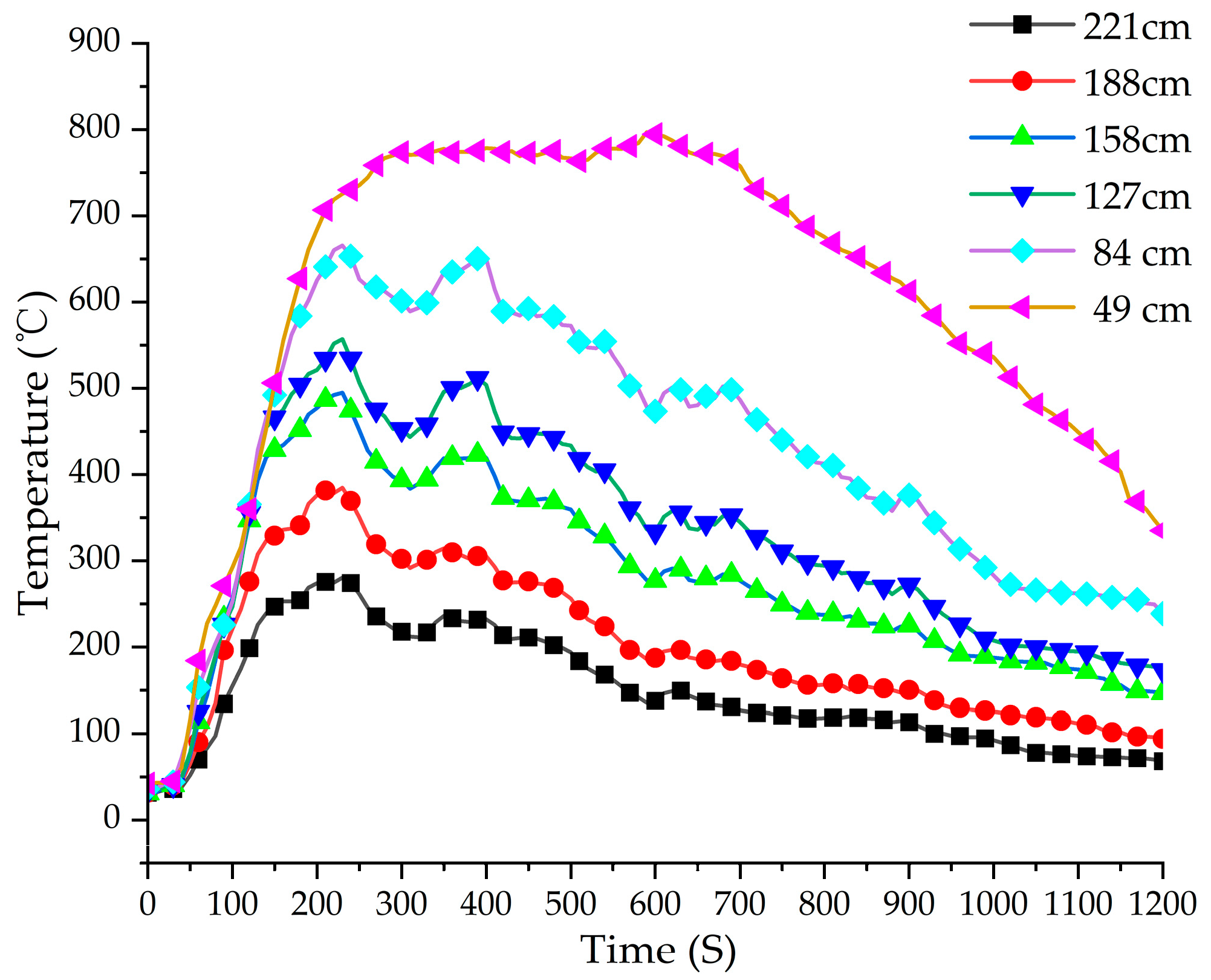
Figure 3. Six K-type sheathed thermocouples with a measurement range of −50–1000 °C were used to record the temperature histories of the fire-exposed members. Before the fire test, the thermocouple signals were checked by measuring the ambient room temperature to confirm the accuracy and normal response of the measurement system. The thermocouples were fixed on independent steel brackets, and their probe tips were kept in direct contact with the surfaces of the selected fire-exposed members. To reduce movement during the fire test, the thermocouple wires were fastened to the brackets and routed away from direct flame impingement as far as possible. The temperature data were recorded at a sampling interval of 5 s. The measurement points were located at heights of 49 cm, 84 cm, 127 cm, 158 cm, 188 cm, and 221 cm, respectively, along the tower leg. The temperature histories recorded at these positions were used to characterize the vertical thermal gradient during the wood-crib fire exposure.
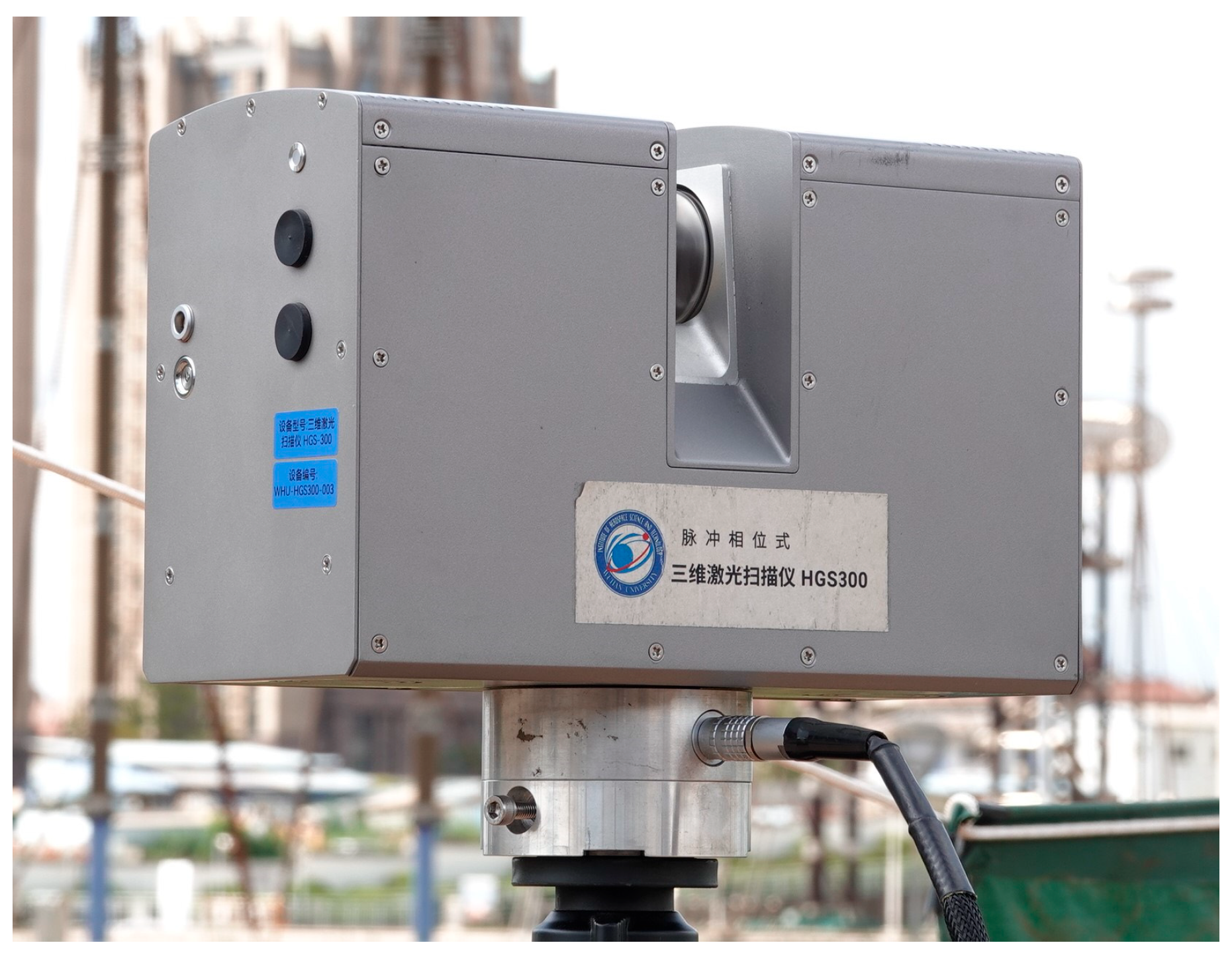
Because conventional contact-based displacement measurements are difficult to implement reliably in high-temperature and smoke-filled environments, an HGS-300 three-dimensional laser scanner (Wuhan LuoJiaYiYun Optoelectronic Technology Co., Ltd., Wuhan, China) was employed to monitor structural deformation during the fire exposure process, as shown in
Figure 4. The HGS-300 scanner used in this study has a measurement range of 0.5–300 m, an angular resolution of 0.001°, and a distance measurement accuracy of 1 mm. The scanner was placed outside the direct flame region and used to acquire point-cloud data of the tower-leg specimen at 0, 5, 10, 15, and 20 min. It should be noted that the scanner was not used to measure the fire field directly; instead, it was used to obtain discrete geometric information of the specimen during the fire exposure process.
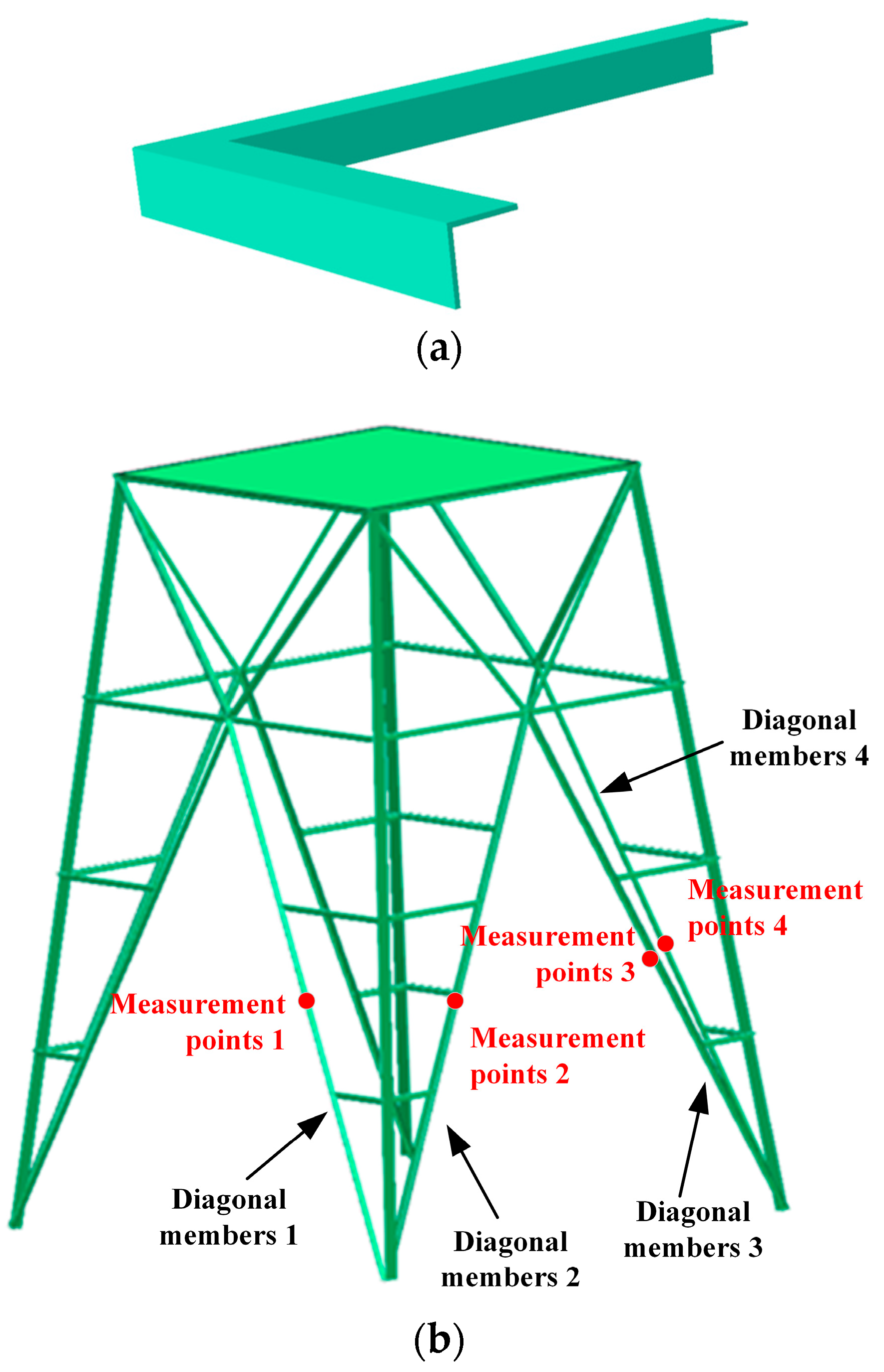
For point-cloud processing, the point cloud obtained before ignition was used as the reference configuration. The point clouds obtained at subsequent times were registered to the reference point cloud using the non-heated base region and support frame as relatively stable reference regions. After registration, irrelevant points caused by smoke, flame interference, and background objects were manually removed. The displacement of the selected members was then extracted by comparing the coordinates of the same geometric locations in the registered point-cloud models. Specifically, Nodes 1–4 were selected at the midpoints of the four diagonal members on the fire-exposed side that exhibited the most obvious deformation. These midpoints were selected because they were representative of the lateral deflection and torsional distortion of slender diagonal members and could be identified more consistently in different point-cloud models. The displacement at each time was calculated as the coordinate difference between the corresponding point at that time and its initial position at 0 min.
In addition, cameras were installed to continuously record flame coverage and visible damage evolution of the fire-exposed members throughout the test. Since laser scans were performed at 5 min intervals, the resulting deformation data should be interpreted as discrete observations rather than continuous displacement histories.
3. Results
3.1. Temperature Histories Under Single Wood-Crib Fire Exposure
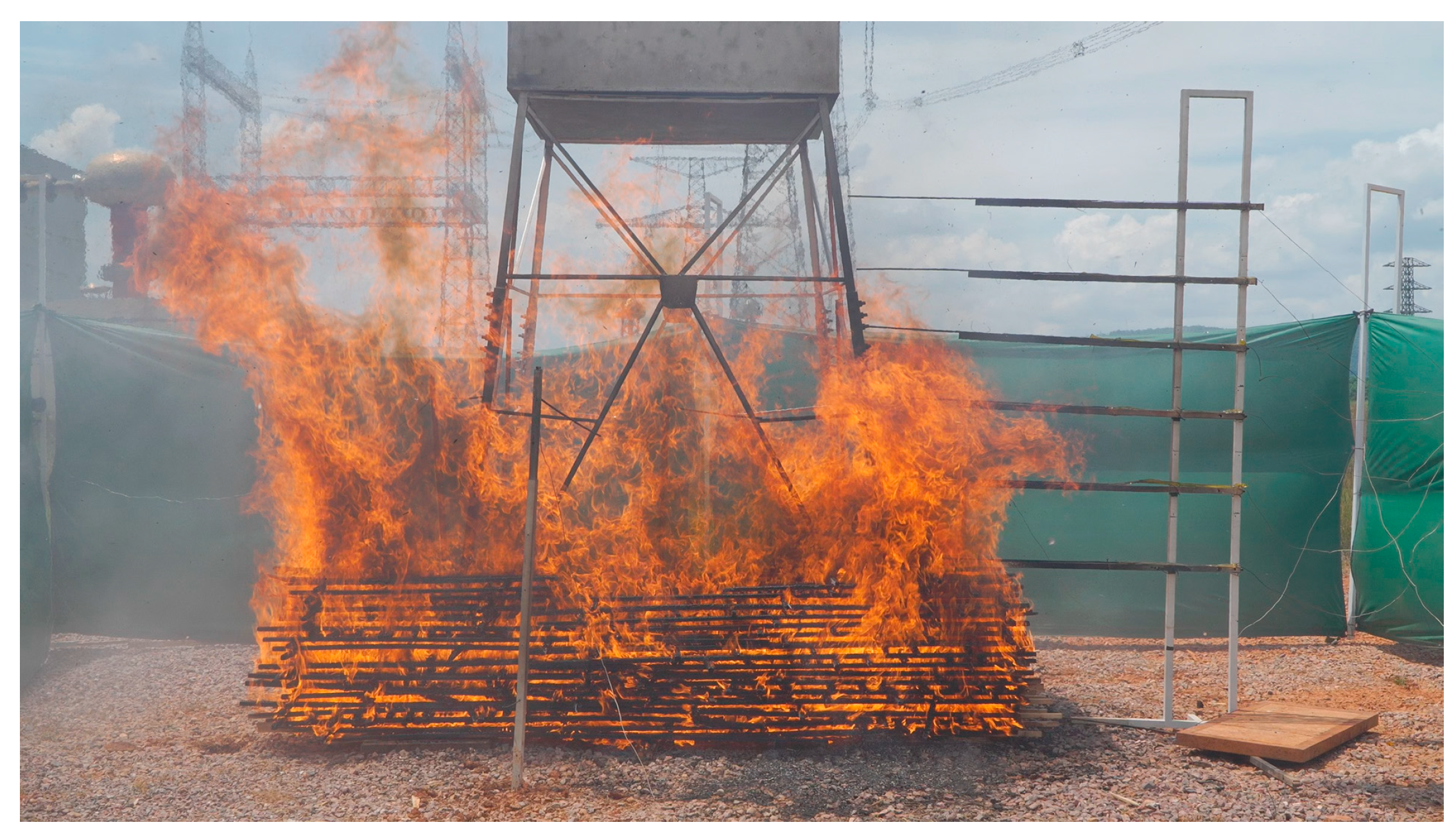
The flame morphology of the wood crib during combustion is shown in
Figure 5.
The temperature histories recorded at different heights of the tower-leg specimen during the single wood-crib fire exposure are shown in
Figure 6. The fire exposure lasted for approximately 20 min. Unlike a uniform furnace-heating condition, the wood-crib fire produced a localized and time-dependent thermal field around the fire-exposed tower legs.
After ignition, the temperatures at all measurement positions increased rapidly, indicating the development of the wood-crib fire and flame impingement on the tower-leg members. The maximum measured temperature reached approximately 803 °C at the lowest measurement position of 49 cm. With increasing height, the peak temperature decreased gradually, showing an approximately linear decreasing trend along the height of the tower leg [
23]. This indicates that the thermal exposure was concentrated mainly in the lower region close to the wood crib.
The temperature histories can be divided into three typical stages: rapid heating, high-temperature burning, and cooling. During the rapid heating stage, the temperatures increased sharply as the wood crib ignited and the flame developed. In the high-temperature burning stage, the lower measurement positions remained at relatively high temperature levels, whereas the upper positions experienced much lower temperatures. During the cooling stage, the temperatures gradually decreased as the fuel was consumed and the flame intensity weakened. Overall, the measured temperature histories confirm that the tower-leg specimen was subjected to a localized and vertically non-uniform thermal exposure, which provides the basis for interpreting the subsequent surface damage zoning and structural deformation.
3.2. Surface Damage Evolution and Damage Zoning
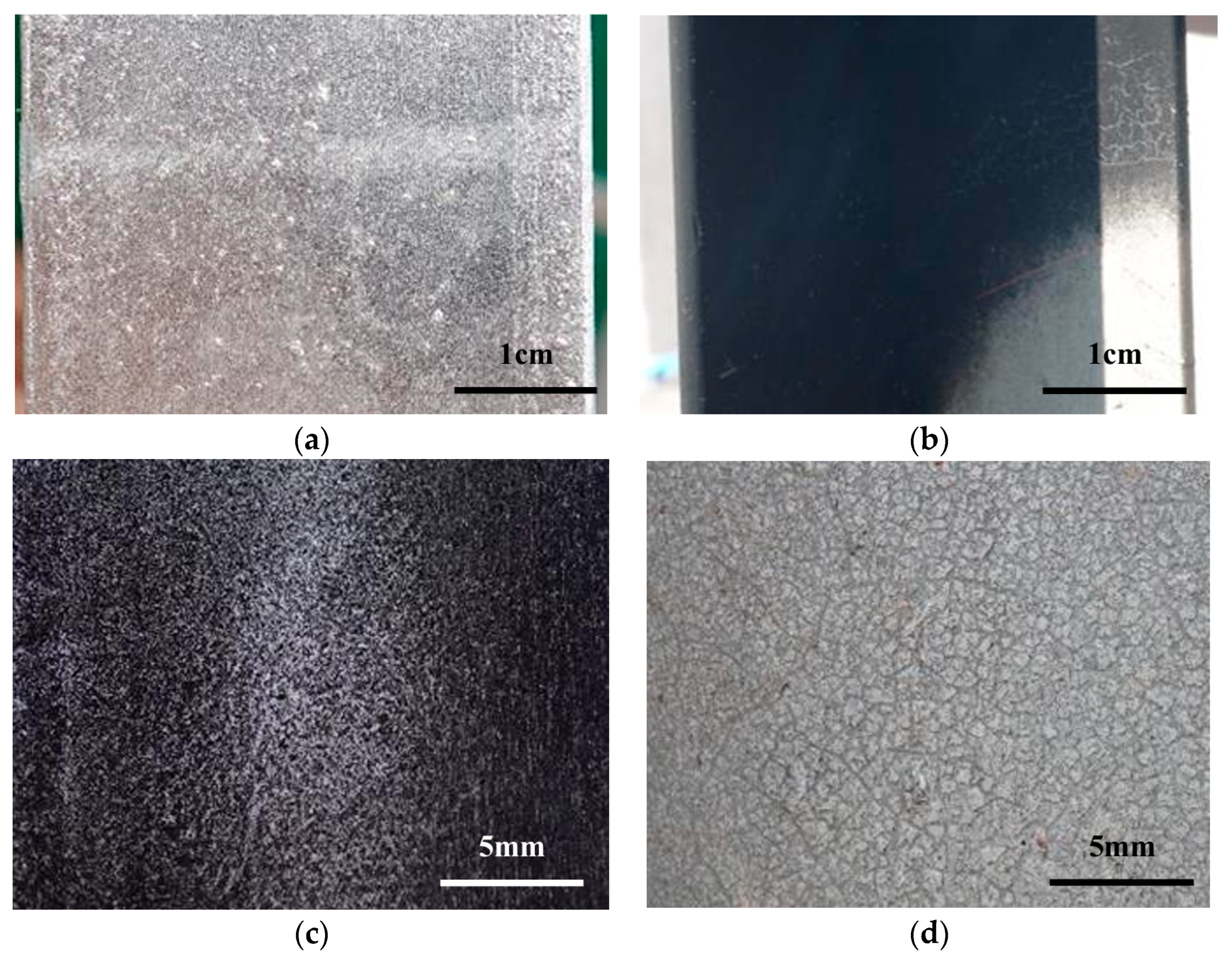
Before fire exposure, the galvanized surface was bright silver and metallic, indicating that the coating remained intact and provided effective protection for the steel substrate. During fire exposure, the surface color changed gradually from bright silver to dark black because of soot deposition, ash adhesion, and oxidation of the galvanized layer. In the lower regions subjected to higher temperatures, the surface further changed to gray-white with reddish-brown areas, indicating severe coating degradation, local exposure of the steel substrate, and oxidation of the underlying steel.
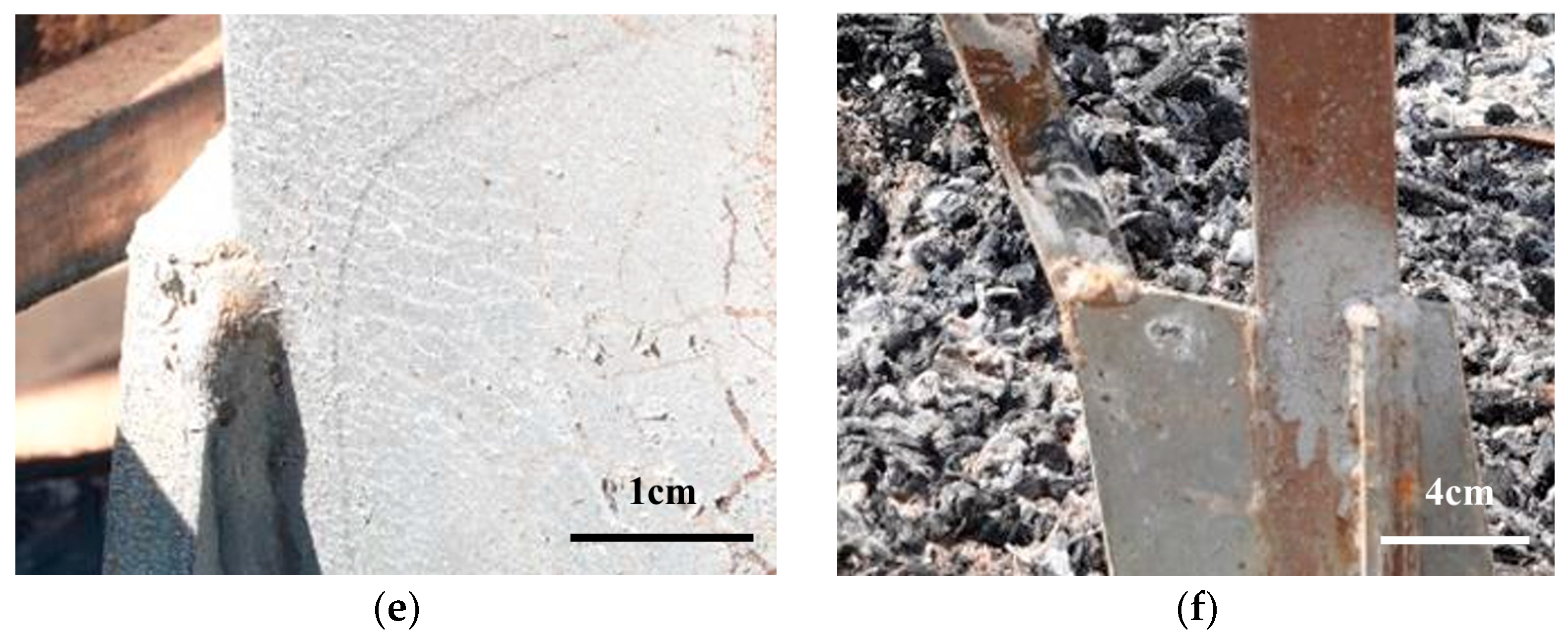
After localized wood-crib fire exposure, distinct surface damage patterns were observed along the height of the tower-leg specimen, as shown in
Figure 7. The damage zone boundaries were determined by combining the measured temperature histories at different heights, the corresponding height ranges of the observed members, and repeated macroscopic observations of the accessible fire-exposed members after the test. The observations were made on several members within the same height range on the fire-exposed side, rather than on a single local point. Where accessible, both the front surfaces directly facing the wood crib and the adjacent side surfaces of the members were checked. Based on the observed surface appearance and the corresponding temperature levels, the thermal damage of the galvanized coating was classified into several preliminary zones, including intact coating, oxidized coating, partially melted coating, cracked coating, and locally peeled coating. It should be noted that this classification is based on macroscopic surface observations and limited temperature measurements, and therefore should be interpreted as a preliminary damage description under the present test condition.
The observed damage distribution is consistent with the measured vertical temperature gradient. As the temperature increased toward the lower region, the degree of coating degradation became more severe, forming a clear damage zoning pattern along the tower leg. The correspondence between the measured temperature levels, measurement heights, and observed coating damage characteristics is summarized in
Table 1.
In the upper region of the tower leg, particularly near the 1.7–2.2 m measurement positions, the recorded peak temperatures were within the range of approximately 250–420 °C. Since this temperature range is below the melting point of zinc, no obvious melting of the galvanized coating was observed. However, the coating lost part of its original metallic brightness and became gray-black because of surface oxidation and ash adhesion [
24]. In this region, the protective function of the coating was weakened but not completely lost.
In the middle region, corresponding approximately to the 1.3–1.5 m measurement positions, the peak temperatures were mainly within the range of 450–550 °C. This range exceeds the melting point of zinc. As a result, the galvanized coating showed signs of softening and partial melting. The surface became uneven and locally rippled, with gray-black regions and occasional bright spots. This indicates that the coating had undergone significant thermal degradation but still partially covered the steel substrate.
At the lower-middle region, particularly near the 0.6–1.2 m measurement position, the peak temperature reached approximately 600–750 °C. In this region, the coating was severely damaged and exhibited obvious cracking. The oxide layer appeared block-like and discontinuous, indicating that the coating had lost its integrity. This phenomenon can be attributed to the combined effects of thermal stress, coating/substrate thermal expansion mismatch, and the growth of oxidation products during high-temperature exposure.
The most severe damage occurred in the area below 0.5 m, where the peak temperatures exceeded 800 °C. In this region, the galvanized coating and oxide products were difficult to retain on the member surface under sustained high-temperature exposure and flame-induced gas flow. Local peeling occurred, exposing the steel substrate. The exposed steel surface showed reddish-brown oxidation products, indicating that the steel substrate had undergone high-temperature oxidation after the loss of galvanized protection. The loss of galvanized protection may accelerate corrosion of the exposed steel substrate, thereby reducing the durability of the tower members [
25].
The observed damage zoning demonstrates a clear correlation between temperature, height, and coating degradation. Therefore, the surface color and coating morphology after fire exposure can be used as practical indicators for rapid post-fire assessment of transmission tower components.
3.3. Structural Deformation Characteristics
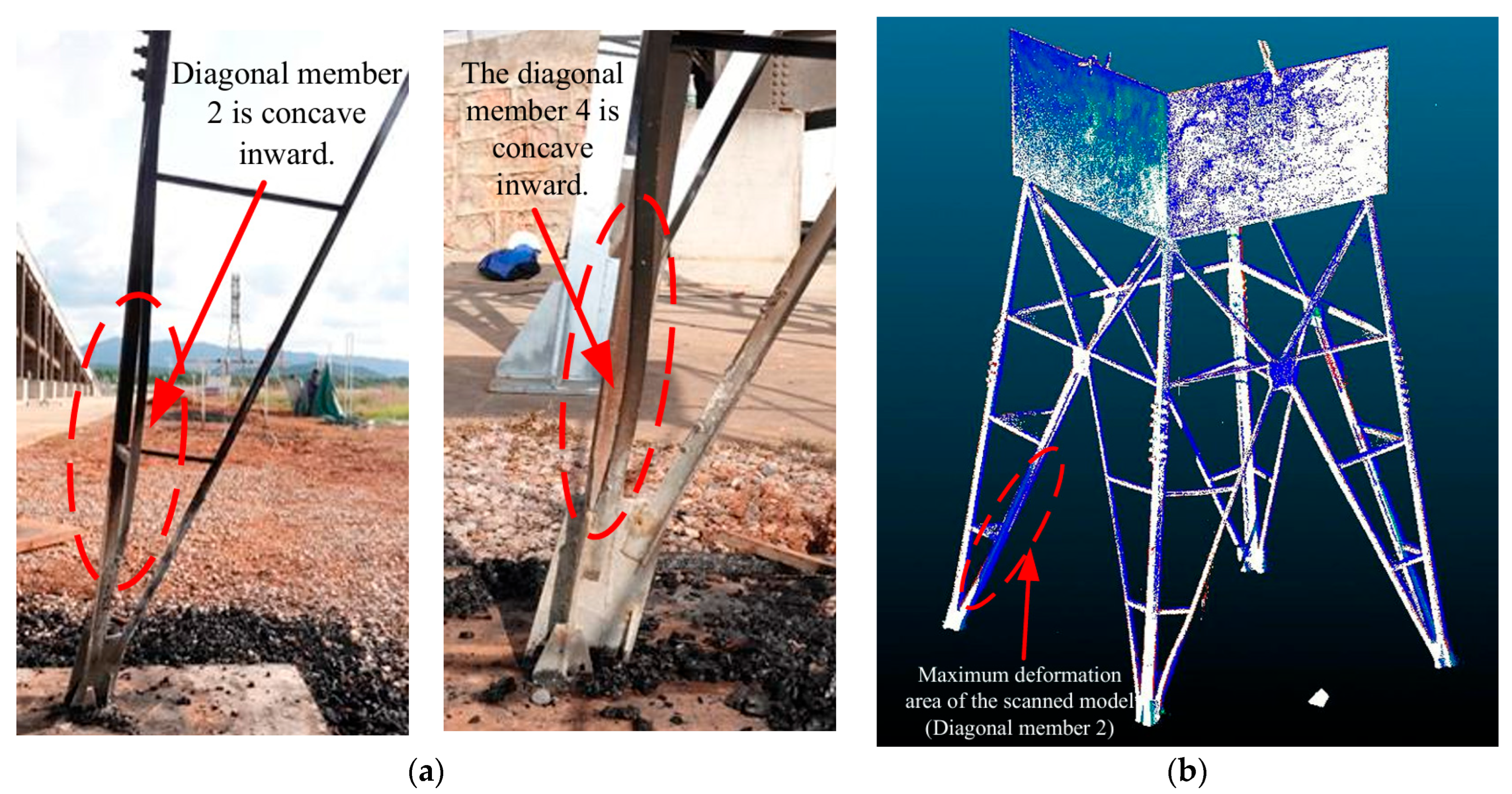
Significant structural deformation was observed in several members after fire exposure, particularly in the diagonal members located on the fire-exposed side, as shown in
Figure 8. The deformation was mainly characterized by inward deflection and torsional distortion.
To quantify the structural deformation, a total of five laser scans were performed during the test to capture the evolution of member deformation. The point-cloud model obtained before fire exposure was used as the initial reference configuration. In
Figure 8b, the different colors in the point-cloud model represent the spatial position and geometric differences of the specimen surface before and after fire exposure. Nodes 1–4 were selected at the midpoints of the four diagonal members on the fire-exposed side that exhibited the most obvious deformation after the localized wood-crib fire exposure, as indicated in
Figure 9. The midpoints of these slender diagonal members were selected because they are representative locations for evaluating lateral deflection and torsional distortion. In addition, these positions have clear geometric features and can be more easily identified in the point-cloud models at different scanning times, which improves the consistency and reliability of displacement extraction. The displacement values at 5, 10, 15, and 20 min were obtained by comparing the corresponding node positions in the reconstructed point-cloud models with their initial positions at 0 min. The corresponding displacement data are summarized in
Table 2. The results indicate that deformation was highly non-uniform, with certain members exhibiting significantly larger displacements than others.
The displacement evolution indicates that the deformation developed rapidly during the first 10 min of fire exposure. By 10 min, the measured displacement had reached 81.6–88.0% of the final displacement at the selected nodes, indicating that the initial high-temperature stage dominated the deformation development. After 10 min, the displacement continued to increase, but the incremental growth became much smaller. This suggests that the subsequent response was mainly associated with gradual deformation accumulation under sustained heating rather than abrupt instability.
Because the laser scanning was conducted at 5 min intervals, the instantaneous peak deformation and rapid deformation evolution during the fully developed fire stage may not have been fully captured. Therefore, the measured deformation results should be interpreted as discrete observations rather than a continuous record of structural response. Nevertheless, the obtained point-cloud data still provide useful information for identifying the overall deformation tendency and the locations of deformation concentration in the tower-leg specimen. Overall, the results indicate that non-uniform thermal exposure leads to localized deformation concentration, particularly in slender diagonal members, which are more sensitive to temperature-induced material degradation.
3.4. Temperature-Informed Structural Analysis
3.4.1. Finite Element Modeling Procedure and Temperature Assignment Strategy
To further interpret the structural response of the tower-leg specimen under localized wood-crib fire exposure, a temperature-informed elastic–plastic finite element model was established using Abaqus. The L-shaped angle steel members were modeled using B31 beam elements, which are capable of representing axial, bending, torsional, and shear behaviors of slender structural members [
26], as shown in
Figure 9. A global element length of 50 mm was adopted for the beam-element mesh.
The material properties of Q235 and Q345 steels at ambient temperature were defined according to standard values, as shown in
Table 3.
The degradation of elastic modulus and yield strength at elevated temperatures was incorporated based on the reduction factors specified in Eurocode 3 [
27]. The relevant specifications are outlined in
Table 4. It should be noted that Eurocode 3 was not used to replace the ambient-temperature material properties of Q235 and Q345 steels. In the finite element model, the ambient-temperature density, elastic modulus, yield strength, and Poisson’s ratio were defined according to the steel grades used in the scaled tower-leg specimen. Eurocode 3 was adopted only to describe the normalized temperature-dependent reduction in elastic modulus and yield strength at elevated temperatures. At present, there is still no single unified Chinese design specification that provides a complete and widely accepted set of reduction factors for the mechanical properties of structural steels under elevated temperatures. Existing experimental studies on Chinese structural steels, including Q235 and Q345 steels, have shown that the overall degradation trends of yield strength and elastic modulus at elevated temperatures are generally similar to those specified in Eurocode 3. Moreover, Eurocode 3 is an internationally recognized fire design standard and has been widely used in numerical simulations of steel structures under fire or elevated-temperature conditions. Therefore, the Eurocode 3 reduction factors were adopted in this study as an engineering approximation to represent the general temperature-dependent degradation of structural steel properties. Specifically, the yield strength and elastic modulus at a given temperature were obtained by multiplying the ambient-temperature values of Q235 or Q345 steels by the corresponding reduction factors specified in Eurocode 3.
The connections between intersecting beam members were idealized as shared-node connections in the finite element model. For the primary members connected by bolts and gusset plates in the test specimen, the joints were simplified as rigid connections without explicitly considering bolt slip, bearing deformation, or gusset-plate local deformation. The welded connections of several slender diagonal members were also represented as fully connected beam nodes. This simplification was adopted because the present model focused on the global deformation tendency and load-transfer response of the tower-leg system rather than detailed local joint failure.
The bottom nodes of the tower-leg model were fixed in all translational and rotational degrees of freedom to represent the support condition of the test specimen. The equivalent mass applied in the test was 284 kg, corresponding to a vertical gravitational load of approximately 2.79 kN. In the finite element model, this load was applied downward to the top loading region of the tower-leg model and distributed to the top load-bearing nodes to reproduce the vertical compression effect of the upper tower sections.
Thermal expansion of steel was considered in the analysis. A linear thermal expansion coefficient of 1.2 × 10⁻⁵ °C−1 was adopted for both Q235 and Q345 steels, and the reference temperature was taken as 20 °C. Geometric nonlinearity was activated in the analysis to account for large-displacement effects and the influence of thermal deformation on the structural load path.
An elastic–plastic material model was adopted for both Q235 and Q345 steels. The steel was assumed to follow the von Mises yield criterion with isotropic plasticity. At each temperature level, the elastic modulus and yield strength were reduced according to the temperature-dependent reduction factors specified in Eurocode 3. The measured temperature histories were introduced into the finite element model as time-dependent thermal loads. Based on the thermocouple locations along the tower-leg height, the fire-exposed members were divided into several vertical temperature zones. The temperature–time curve recorded by the nearest thermocouple was assigned to each corresponding zone. For members located between two adjacent thermocouple heights, linear interpolation was used to represent the vertical thermal gradient. The temperature assignment was mainly applied to the fire-exposed side, while the non-fire-exposed members were assumed to remain at much lower temperatures because they were not directly impinged by flame. This procedure allowed the structural response to be evaluated under the experimentally measured non-uniform heating condition.
3.4.2. Comparison Between Measured and Simulated Deformation
To further examine the influence of mesh density on the numerical results, a mesh-sensitivity analysis was conducted using three global element lengths: 100 mm, 50 mm, and 25 mm. The final displacements of Nodes 1–4 at 20 min were compared, as summarized in
Table 5. The 100 mm mesh produced relatively smaller displacement values than the adopted 50 mm mesh, with a maximum difference of approximately 11%. This indicates that the coarse mesh was insufficient to accurately capture the deformation of the fire-exposed diagonal members. In contrast, the maximum difference between the 50 mm and 25 mm meshes was approximately 4%, indicating that further mesh refinement had only a limited influence on the predicted global deformation response. Therefore, the 50 mm mesh was adopted in this study to balance numerical accuracy and computational efficiency.
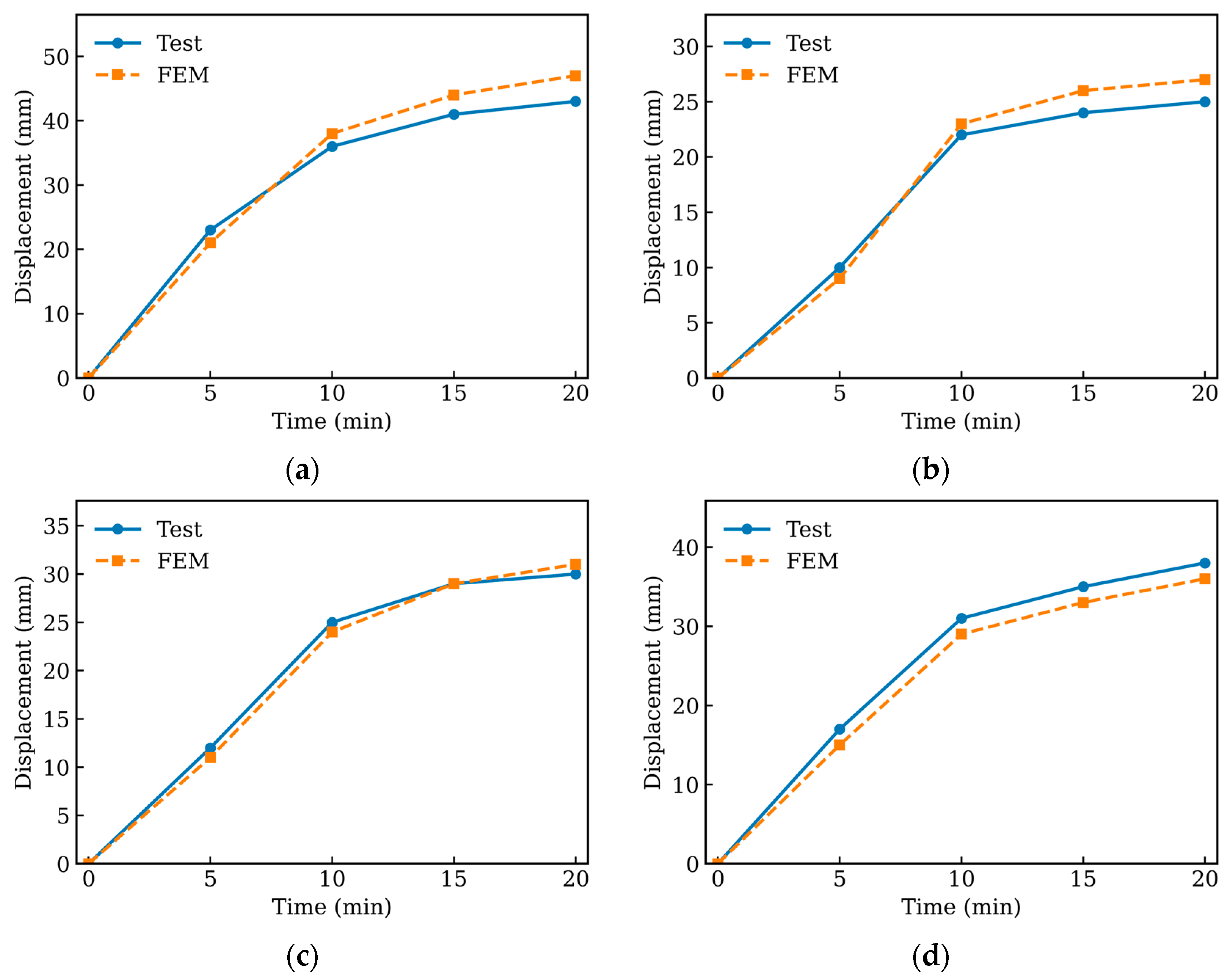
To further validate the finite element model, the simulated displacements of Nodes 1–4 were extracted at the same time points as the laser-scanning measurements, namely 0, 5, 10, 15, and 20 min. The node locations used in the numerical model were consistent with those selected from the point-cloud reconstruction.
Figure 10 compares the time-dependent displacement histories obtained from the experiment and the finite element simulation, while
Table 6 summarizes the final displacement magnitudes and relative errors at 20 min.
The time-dependent comparison shows that the finite element model reasonably reproduces the overall deformation development trend of the selected nodes. Both the measured and simulated results indicate that the deformation increased rapidly during the first 10 min of fire exposure and then developed more gradually during the later stage. This trend is consistent with the measured temperature histories, in which the early high-temperature stage dominated the structural deformation development. The final displacement comparison in
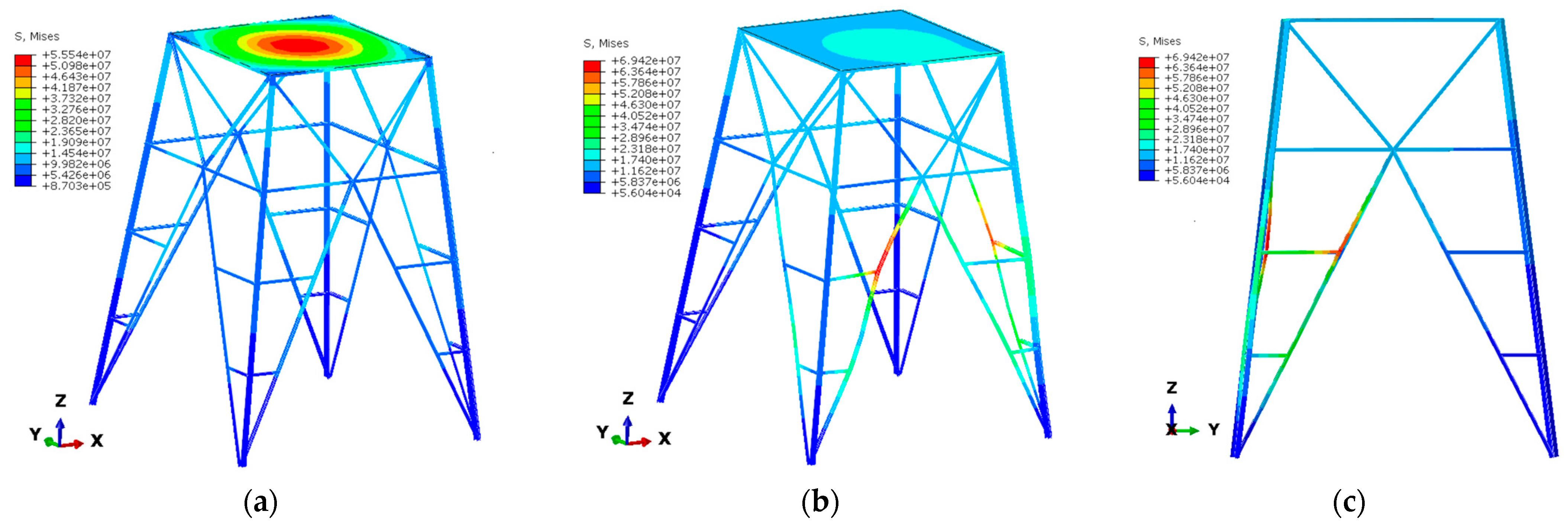
Table 6 further shows that the simulated final displacements are in reasonable agreement with the experimental measurements, with relative differences ranging from 3.33% to 9.30%. In addition to the nodal displacement comparison, the simulated deformation shape was compared with the experimental observation. As shown in the side view of
Figure 11, the fire-exposed side exhibited an inward concave deformation tendency, which is consistent with the inward deformation observed from the side of the tested specimen. Therefore, the model is considered capable of interpreting the main deformation tendency and structural response of the tower-leg specimen under the measured non-uniform fire exposure. Nevertheless, local differences between the measured and simulated displacement histories may still exist because of the discrete nature of laser scanning, connection simplifications, and the use of beam elements in the numerical model.
3.4.3. Stress Redistribution and Structural Response
After the temperature-dependent material properties and thermal loading were introduced, the structural response changed significantly. The fire-exposed tower leg experienced a reduction in stiffness and load-bearing capacity due to elevated temperature, resulting in stress redistribution within the structure. The stress distribution of the tower-leg structure before and after thermal loading is shown in
Figure 11.
The stress contour results show a clear change in the load-transfer mechanism after thermal loading. Under mechanical loading alone, the stress distribution of the tower-leg structure was relatively uniform, with the main stress concentration located on the top load-bearing surface. The stress distribution on the top load-bearing surface exhibited a circular pattern. This indicates that the applied load was transferred through the tower-leg system in a comparatively balanced manner. After the temperature load was introduced, the high-stress region shifted from the top load-bearing surface to the fire-exposed side members, particularly the diagonal members. This change can be attributed to the temperature-dependent reduction in stiffness and yield strength of the heated steel members, which weakened the load-bearing capacity of the fire-exposed side. The torsional deformation of the members also caused the tower structure to tilt, with the center of gravity gradually shifting toward the fire-exposed tower leg. Consequently, the stress distribution on the top plane changed from a uniform distribution centered on the tower to a non-uniform distribution biased toward the fire-exposed tower leg.
The diagonal members exhibited the most pronounced stress concentration because of their smaller cross-sectional dimensions and higher sensitivity to thermal degradation. This numerical result is consistent with the experimental observation that inward buckling and torsional deformation were mainly concentrated in the fire-exposed diagonal members.
4. Discussion
4.1. Representativeness and Scope of the Wood-Crib Fire Scenario
The present study employed a localized wood-crib fire exposure to reproduce controlled local heating on tower-leg structures. Compared with natural wildfires, this setup does not aim to replicate the full complexity of fire dynamics, including wind-driven flame spread, moving flame fronts, fuel heterogeneity, radiation variability, and different heating durations. Instead, it focuses on capturing several key features relevant to structural response, namely localized heating, transient temperature evolution, and vertical thermal gradients around the tower-leg members.
The measured temperature histories showed a typical single wood-crib fire development process, including rapid heating, high-temperature burning, and gradual cooling stages. The maximum measured temperature reached approximately 803 °C at the lower measurement position, and the peak temperature decreased approximately linearly with height. This vertical temperature gradient reflects the localized nature of flame exposure generated by the wood crib.
Therefore, the localized wood-crib fire exposure adopted in this study should be understood as a controlled fire scenario for investigating the thermal damage evolution and structural response of tower-leg members under localized heating. The purpose of this setup was not to reproduce the full spreading process of natural wildfires, but to provide a repeatable thermal exposure condition with clear transient heating characteristics and vertical temperature gradients. Under this controlled scenario, the measured temperature histories, observed coating damage, and deformation response provide experimental evidence for understanding how localized fire exposure affects transmission tower legs.
4.2. Engineering Implications of Damage Zoning
The experimental observations revealed a clear correlation between temperature distribution and surface damage evolution along the tower-leg height. Based on the combined analysis of temperature histories and post-fire surface characteristics, the galvanized coating exhibited progressive degradation, transitioning from intact coating to oxidation, melting, cracking, and eventual peeling in the most severely heated regions.
This damage zoning pattern may provide a preliminary framework for post-fire inspection of transmission towers. The intended use of the coating damage categories is to support rapid visual screening rather than to replace detailed thermal or structural analysis. In a preliminary assessment procedure, the visible coating condition can first be used to infer an approximate temperature exposure range according to
Table 1. If direct temperature measurements are not available, a representative temperature may then be selected from the inferred range for conservative evaluation. In this study, the upper bound of each temperature range is recommended as the representative temperature to avoid underestimating thermal degradation. For example, coating cracking and block-like oxide layers correspond to an inferred temperature range of approximately 600–750 °C, and 750 °C may be used as a conservative representative temperature for preliminary residual-performance evaluation. For the most severe category with coating peeling and exposed steel, the maximum measured temperature of approximately 803 °C in the present test was used as the test-specific reference value.
The inferred representative temperature can be linked to residual structural assessment by applying temperature-dependent reduction factors to the elastic modulus and yield strength of the steel members. A higher inferred temperature corresponds to a larger reduction in stiffness and strength, which may increase the likelihood of local deformation, stress redistribution, and load-path change in the tower-leg structure. Therefore, the coating damage category can serve as a preliminary indicator for identifying members that require further residual-strength evaluation or detailed finite element analysis. However, when the inferred temperature range is wide or when critical load-bearing members are involved, a lower- and upper-bound temperature analysis should be performed instead of relying on a single representative temperature. The coating damage categories should therefore be regarded as a screening tool for post-fire assessment rather than as direct universal input parameters for structural analysis.
Although the present classification is based on macroscopic observations and temperature correspondence rather than detailed microstructural analysis, it provides test-specific evidence for linking visible post-fire surface characteristics with approximate thermal exposure levels. The proposed damage categories should therefore be regarded as preliminary visual indicators for rapid inspection and maintenance prioritization, rather than as universal criteria or direct input parameters for structural analysis. For critical load-bearing members or cases with a wide inferred temperature range, detailed residual assessment should be further supported by coating-thickness measurement, cross-sectional observation, material testing, and, where necessary, finite element analysis.
4.3. Structural Vulnerability of Diagonal Members
Both experimental observations and numerical analysis consistently indicate that diagonal members are the most vulnerable components under localized wood-crib fire exposure. Significant inward deformation and torsional distortion were concentrated in the fire-exposed diagonal members, as evidenced by laser scanning results and point-cloud reconstruction.
This behavior can be attributed to several factors. First, diagonal members typically have smaller cross-sectional dimensions compared with primary load-bearing members, making them more sensitive to temperature-induced material degradation. Second, the non-uniform thermal exposure leads to asymmetric stiffness reduction between the fire-exposed and non-exposed sides of the structure. As a result, the global load path is redistributed, increasing the stress demand on specific members.
The displacement data show that the most rapid deformation occurred during the early stage of fire exposure, when the temperature reached its peak. After this stage, deformation continued at a slower rate, likely associated with sustained high-temperature effects such as creep. This indicates that the initial high-temperature phase plays a dominant role in structural damage development.
From an engineering perspective, these findings highlight the importance of paying particular attention to diagonal members during post-fire inspection. Localized deformation in these members may serve as an early indicator of structural instability and reduced load-bearing capacity.
These results indicate that the deformation of diagonal members is not only a local member-level phenomenon, but also a manifestation of load-path redistribution caused by asymmetric thermal degradation. Therefore, diagonal members on the fire-exposed side should be treated as key inspection targets during post-fire assessment of transmission tower legs.
4.4. Limitations and Future Work
Several limitations of the present study should be acknowledged. First, the localized wood-crib fire exposure provided a controlled heating condition, but it could not fully reproduce the spatial variability, flame spread, fuel heterogeneity, radiation fluctuation, and wind-driven behavior of natural wildfires. Second, the experimental results were obtained from one scaled tower-leg specimen under a single fire-exposure condition. Therefore, the proposed temperature ranges, damage zones, and deformation characteristics should be regarded as test-specific observations rather than universal assessment criteria. Third, the thermal damage characterization was mainly based on macroscopic surface observations and measured temperature histories, without detailed coating-thickness measurement, microscopic observation, or material testing after fire exposure. In addition, the laser-scanning measurements were conducted at discrete time intervals, and rapid deformation evolution during the fully developed fire stage may not have been fully captured. Finally, the temperature-informed finite element model assigned measured temperatures directly to the structural members and did not explicitly simulate fire dynamics, heat-transfer processes, local buckling of angle sections, bolt slip, gusset-plate deformation, or coating failure.
Future work will involve repeated fire tests using additional specimens and different fire-exposure conditions, including variations in fuel arrangement, moisture content, wind speed, and heating duration. Coating-thickness measurements, microscopic observations, and post-fire material characterization will also be introduced to better clarify the degradation mechanism of galvanized coatings and exposed steel substrates. In addition, deformation monitoring with higher temporal resolution and refined numerical models, such as shell- or solid-element models with more detailed connection representation, will be developed to further investigate local buckling, connection behavior, and coupled fire–thermal–structural response under wildfire-related exposure conditions.
5. Conclusions
This study investigated the thermal damage evolution and structural response of transmission tower legs under localized wood-crib fire exposure through a combined experimental and numerical approach. Unlike general conclusions that can be inferred from the known high-temperature degradation of steel, the findings of this study are based on the measured temperature histories, observed coating damage, laser-scanned deformation, and temperature-informed finite element analysis of a scaled tower-leg specimen under localized wood-crib fire exposure. Based on the results obtained, the following conclusions can be drawn:
With increasing temperature and prolonged fire exposure, the galvanized coating exhibited a clear staged thermal damage evolution. The coating successively underwent oxidation and darkening, melting and deformation, surface cracking, and local peeling. Correspondingly, the surface color of the tower members gradually changed from bright silver to black, and finally to gray-white with reddish-brown areas in severely heated regions.
The temperature of the localized wood-crib fire exposure decreased with increasing height. As a result, the tower-leg members at different heights showed distinct zoned thermal damage characteristics. In the low-temperature region, the galvanized coating remained largely intact. In the moderate-temperature region, oxidation and melting of the coating were observed. In the high-temperature region, coating cracking and peeling occurred, eventually exposing the steel substrate. This degradation may reduce the corrosion protection capacity and long-term durability of the transmission tower.
Elevated temperature caused material degradation and stiffness reduction on the fire-exposed side of the tower leg. Compared with the main members, the diagonal members were more susceptible to torsional deformation induced by plastic yielding. The main structural deformation occurred during the initial high-temperature stage of fire exposure, while subsequent deformation caused by sustained high-temperature effects was relatively limited. This process ultimately led to asymmetric structural response and a shift in the structural load path.
The temperature-informed finite element model reasonably reproduced the final deformation pattern of the selected diagonal members, with relative differences between measured and simulated displacements ranging from 3.33% to 9.30%. The stress contour results further indicated that thermal degradation caused stress redistribution and deformation concentration in the fire-exposed diagonal members.
Overall, the present localized wood-crib fire test and temperature-informed numerical analysis demonstrate that fire-induced high temperature affects transmission tower legs not only through the physicochemical degradation of the galvanized coating, but also through asymmetric stiffness reduction, deformation concentration, and load-path redistribution on the fire-exposed side. These study-specific findings provide preliminary experimental evidence for post-fire inspection and rapid safety assessment of transmission tower legs.
- (1)
The color distribution of tower members can be used as a rapid indicator for identifying fire-damaged regions and assessing the degree of coating degradation. Bright silver regions can generally be regarded as intact areas requiring no immediate repair; blackened regions indicate oxidation or melting and require inspection and maintenance; gray-white regions with reddish-brown areas indicate severe damage and should be prioritized during post-fire inspection.
- (2)
The macroscopic thermal damage characteristics of the galvanized coating, including intact coating, oxidation, melting, cracking, and peeling, can be used to infer the approximate temperature level experienced by the tower members. This information can further support the evaluation of residual material strength in the affected regions.
- (3)
In wildfire-prone transmission corridors, heat-resistant coatings or additional fire-insulation layers should be considered for tower-leg members. Since diagonal members are more vulnerable to fire-induced deformation, these members should be strengthened or manufactured using steel with improved high-temperature resistance so as to delay galvanized coating failure and reduce steel strength degradation under fire exposure.