2.1. Materials and Sample Preparation
The PCM-integrated concrete panels were designed to represent a typical façade-scale composite element with embedded latent heat functionality. The system combined ordinary Portland cement (OPC)-based concrete as the structural matrix and macro-encapsulated organic PCM enclosed within 3D-printed acrylonitrile butadiene styrene (ABS) shells serving as thermal reservoirs. ABS was selected as the PCM encapsulation material to serve as a representative thermoplastic shell for macro-encapsulated PCM systems. ABS is commonly employed in PCM encapsulation studies due to its compatibility with fused-deposition modelling (FDM), dimensional stability, and ease of fabrication, which allow precise control over encapsulation geometry and PCM mass fraction. Importantly, ABS exhibits a well-defined glass transition temperature (Tg ≈ 95 °C), making it suitable for investigating encapsulation softening, loss of containment, and degradation under elevated temperatures.
Alternative encapsulation materials such as polyethylene, polypropylene, epoxy-based shells, aluminium capsules, or fully inorganic containment systems offer higher thermal stability or non-combustibility. However, these materials introduce trade-offs related to manufacturing complexity, brittleness, cost, or reduced adaptability for façade-scale integration. In the present study, ABS was intentionally selected as a conservative polymeric encapsulation to quantify the fire-induced limitations of organic PCM systems and to establish thermal safety thresholds. This choice enables a clear comparison with inorganic PCM systems, which are subsequently evaluated numerically as fire-resilient alternatives.
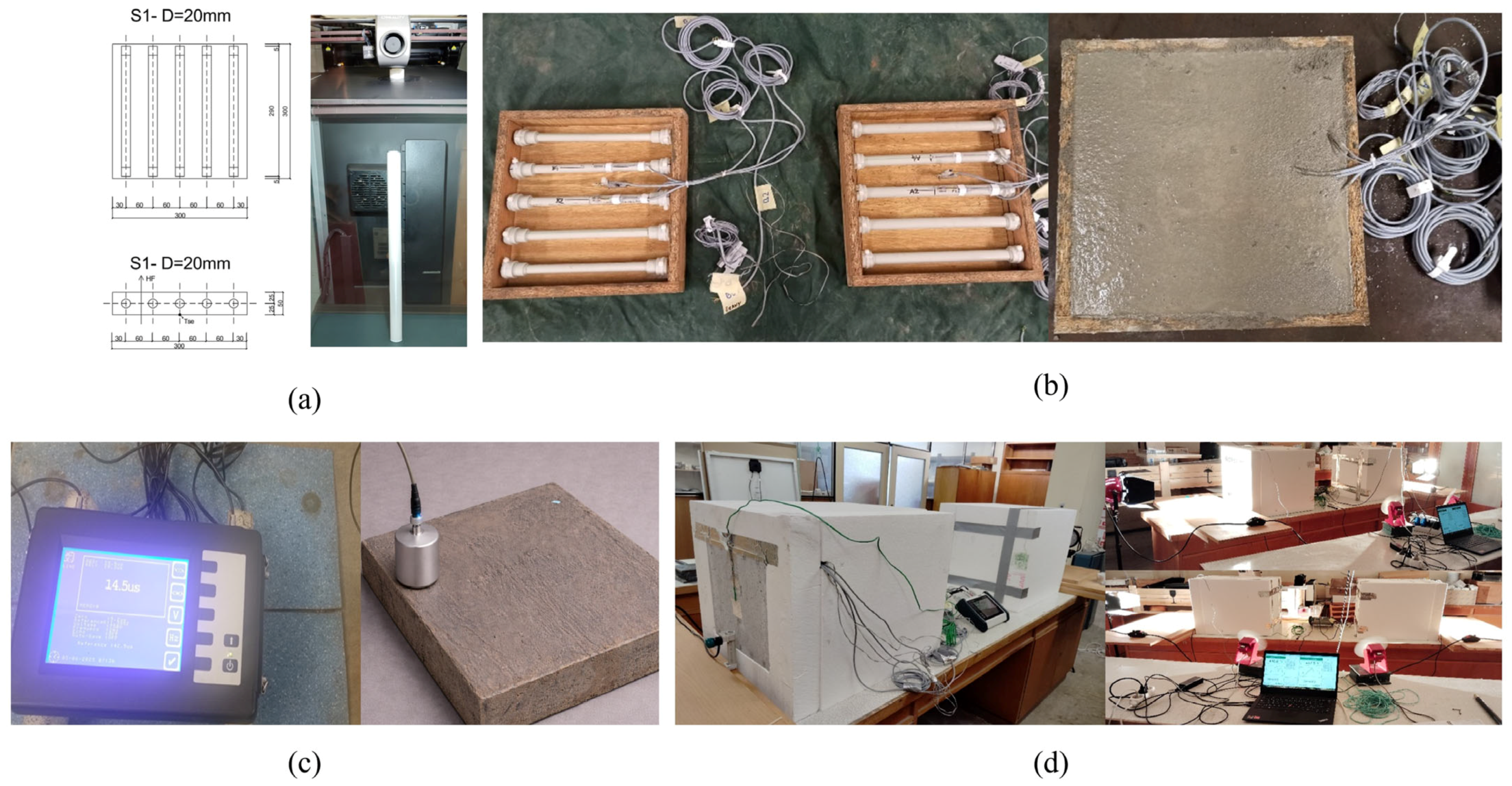
The PCM-filled ABS macro-encapsulation moulds (PCM container) were first prepared separately and allowed to solidify at ambient temperature. During panel fabrication, the filled ABS mould was positioned at the centre of the panel thickness using a temporary wooden frame, which served only as an alignment and positioning aid.
The assembled unit was then placed inside a rigid steel mould with internal dimensions of 300 × 300 × 50 mm3, which acted as the external formwork for concrete casting. Fresh concrete was poured into the steel mould in a single casting operation, fully embedding the ABS macro-encapsulation within a monolithic concrete panel. The wooden frame was removed after initial setting and was not part of the final panel.
After casting, the panels were demoulded following standard curing procedures. The final test panels therefore consisted of a single concrete panel with an internally embedded PCM-filled ABS macro-encapsulation, rather than a sandwich of separate concrete layers.
Commercial paraffin-based RT35 (PCM melting point ≈ 31 °C, latent heat ≈ 190–200 kJ kg−1) was selected owing to its widespread use in building envelope applications and prior thermal reliability in energy-efficiency studies by the authors. To enhance thermal conductivity and stability, 5 wt% expanded graphite (EG) was mixed into the PCM prior to encapsulation, yielding a composite PCM (RT35–EG) with improved heat diffusion and reduced leakage tendency. An EG content of 5 wt% was selected as a practical compromise to enhance PCM thermal conductivity and stability while maintaining acceptable molten-fill viscosity and limiting the reduction in latent heat capacity that would occur at higher EG loadings.
The PCM containers were fabricated via fused-deposition modelling 3D printing using ABS filament (glass transition temperature (Tg) ≈ 95 °C, melting ≈ 105 °C). The PCM container refers to the 3D-printed ABS macro-encapsulation unit (ABS wall thickness: 2.5 mm) filled with PCM. After printing, molten RT35–EG was injected into the macro-encapsulation at 50 °C under vacuum and sealed using a solvent-bonded ABS lid. The nominal PCM mass fraction per panel was 8 ± 0.5 wt%.
Panels were cast as monolithic concrete panels using rigid steel moulds (300 × 300 × 50 mm
3), which define the final panel dimensions. During casting, a temporary wooden frame was used only as a positioning aid to hold RT35 PCM-filled ABS macro-encapsulation at the intended location within the mould; the wooden frame was removed after initial setting and was not part of the final panel.
Figure 1 summarises the overall fabrication, instrumentation, and testing workflow.
The PCM–EG composite (RT35 paraffin PCM modified with 5 wt% expanded graphite) was injected in molten state at 50 ± 2 °C into the 3D-printed ABS macro-encapsulation mould cavities using a vacuum-assisted filling procedure to minimise air entrapment and ensure complete cavity filling. A vacuum level of approximately −0.08 MPa was applied during injection, followed by gradual pressure equalisation. The typical filling time for each mould cavity was 3–5 min depending on volume. After filling, the moulds were sealed using solvent-assisted ABS bonding and allowed to cool to ambient temperature prior to embedding into the concrete panels.
The injection temperature of 50 °C was selected to ensure complete liquefaction and low viscosity of RT35 while remaining well below the glass transition temperature of ABS (≈95 °C), thereby enabling uniform filling without inducing thermal deformation or degradation.
Concrete was prepared using OPC (42.5 R), river sand, and 10 mm crushed granite aggregate, with a water–cement ratio of 0.45 and a target density of 2300 kg m−3. The mixture exhibited an average compressive strength of 37 MPa (28 days). Concrete casting was performed in two successive steps to ensure correct placement of RT35 PCM-filled ABS macro-encapsulation and to obtain uniform concrete cover. An initial concrete layer was placed and lightly compacted, the ABS macro-encapsulation was positioned, and the remaining concrete was poured to reach the final thickness; each step was lightly tamped and vibrated to minimise air entrapment.
Panels were demolded after 24 h and water-cured for 28 days at 23 ± 2 °C. Prior to fire testing, panels were oven-dried at 40 °C for 48 h to remove residual moisture. Final test panels measured 300 × 300 × 50 mm
3. The numerical model represents an equivalent cross-sectional (through-thickness) domain consistent with the panel thickness (50 mm) and the embedded PCM-container configuration, rather than the full 300 × 300 mm plan area. Thermocouple ports (Ø 2 mm) were drilled at 5 mm from the hot face, mid-plane, and 5 mm from the rear face to facilitate direct comparison between experimental and simulated temperature histories. Thermocouples were embedded in the concrete at 5 mm from the exposed face, at mid-thickness, and 5 mm from the rear face. The PCM core temperature was not measured directly, as instrumenting the PCM within the sealed ABS mould would require breaching the encapsulation and could influence leakage/heat-transfer behaviour. PCM thermal response was therefore inferred from the measured concrete temperatures and the validated numerical model. The sample preparation is further detailed in ref. [
23].
Table 1 summarizes the thermophysical properties used in both experimental evaluation and modelling. The PCM–EG composite showed a thermal conductivity of 0.52 W m
−1 K
−1, a density of 870 kg m
−3, and an effective specific heat varying between 2.2 and 3.8 kJ kg
−1 K
−1 across the phase-change range. The concrete matrix exhibited
λ = 1.45 W m
−1 K
−1 and
ρ = 2300 kg m
−3. ABS encapsulation softened above 95 °C, and its conductivity decreased from 0.18 to 0.12 W m
−1 K
−1 during heating, consistent with manufacturer data and differential scanning calorimetry (DSC) analysis.
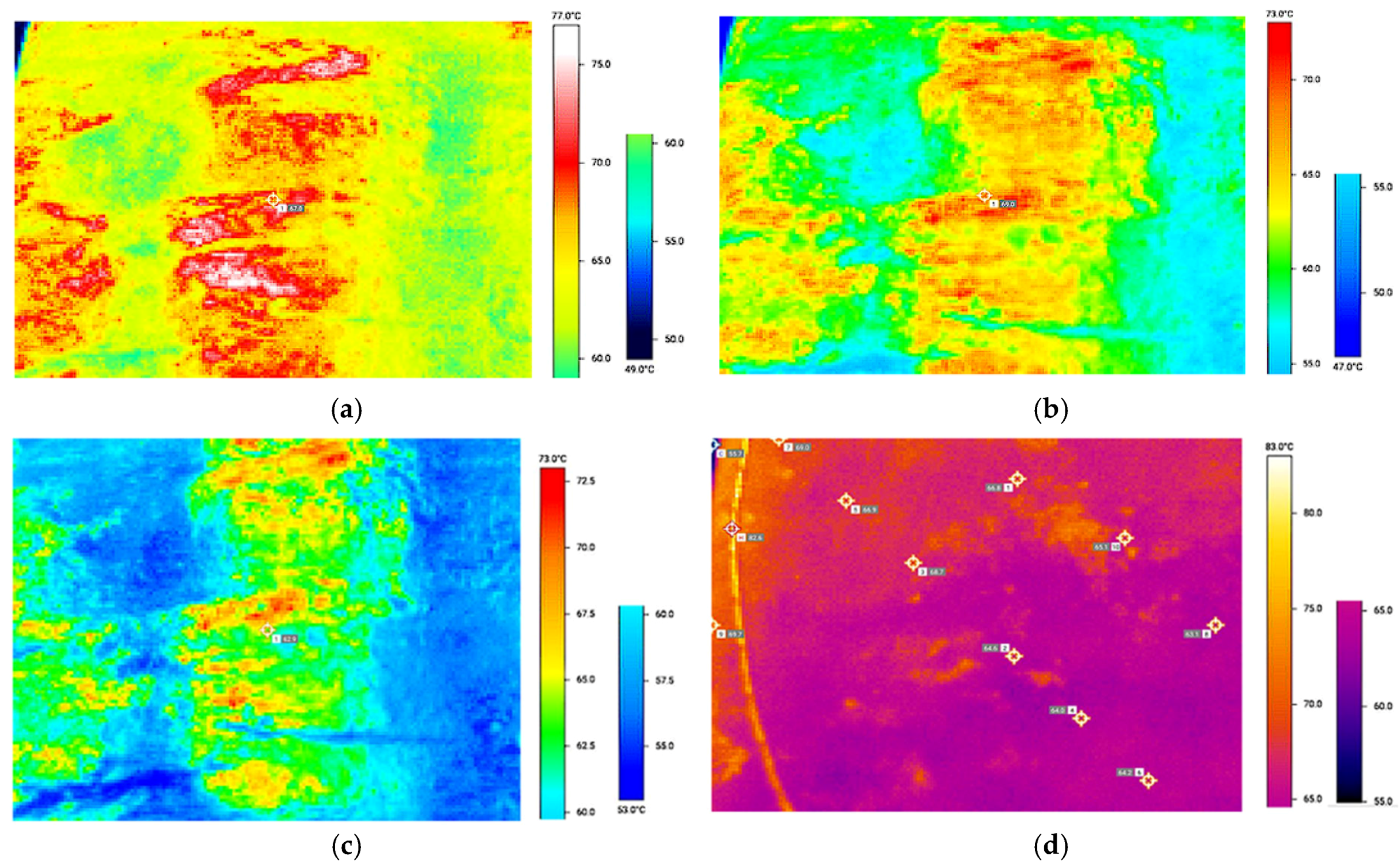
To ensure the reliability of results, all thermal measurements were performed in triplicate using identical panels fabricated under the same materials, encapsulation, and curing conditions. Temperatures were recorded with calibrated K-type thermocouples (±0.5 °C accuracy) at one-second intervals, and surface temperatures were verified with a Testo 834 infrared camera (thermal sensitivity = 0.06 °C). The standard deviation of repeated tests remained below 1.2%, confirming the excellent repeatability of PCM melting and overall thermal response, and validating the robustness of the experimental–numerical methodology.
2.2. Fire Exposure Setup and Conditions
Fire testing was conducted using a programmable vertical furnace designed to replicate both steady-state and ISO 834 standard heating conditions. The furnace comprised a refractory-lined steel chamber (0.6 × 0.6 × 0.6 m
3) with uniformly distributed electrical heating elements, capable of maintaining stable temperatures up to 900 °C. Temperature control was achieved through a closed-loop PID system, with feedback from shielded thermocouples located near the panel’s exposed surface (
Figure 1).
Two heating regimes were employed:
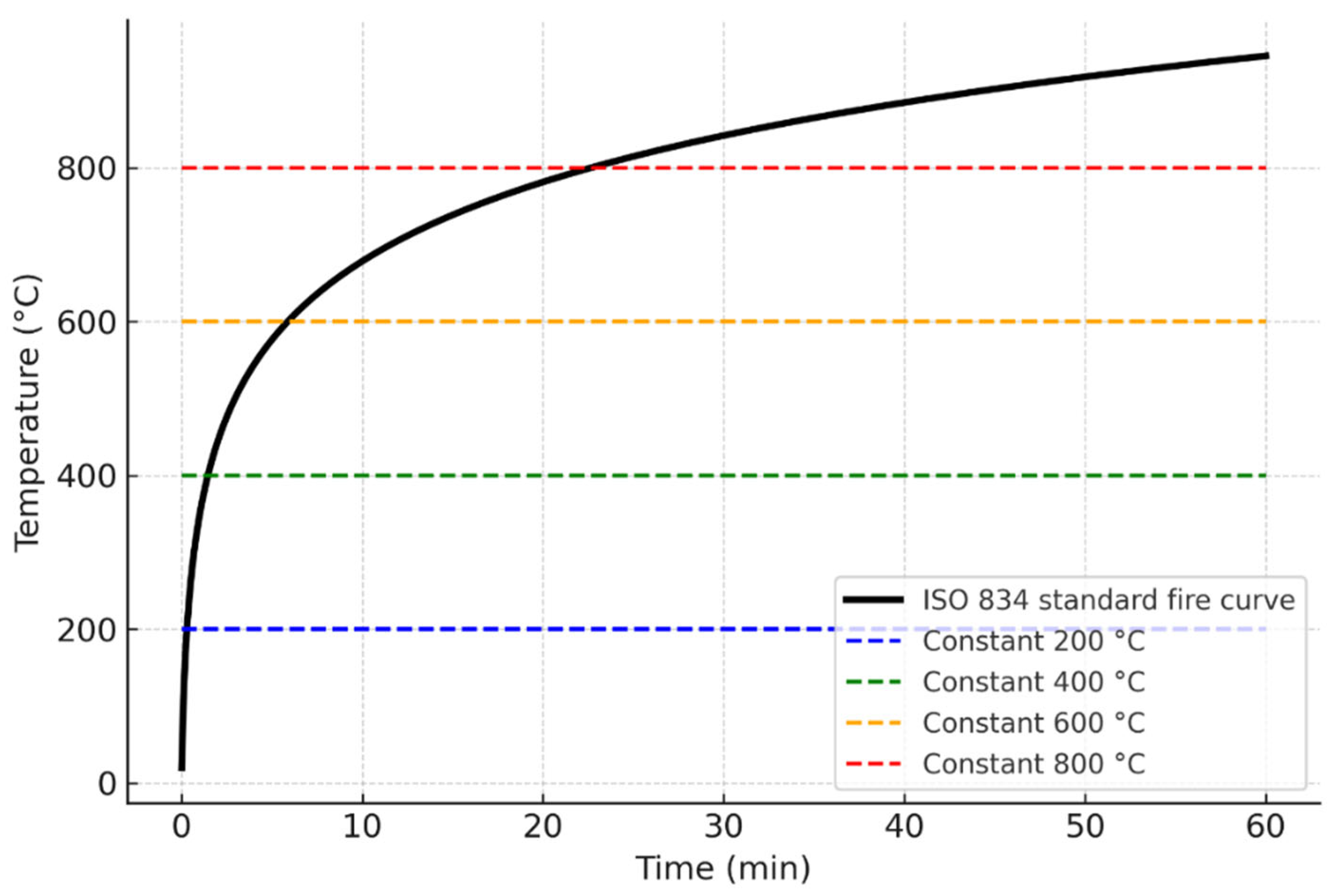
Constant-temperature exposures at 200 °C, 400 °C, 600 °C, and 800 °C for 60 min each, representing controlled façade fire scenarios of increasing severity.
Standard ISO 834 fire exposure, following the temperature–time relationship (Equation (1)):
where
Tg is the furnace temperature (°C) and
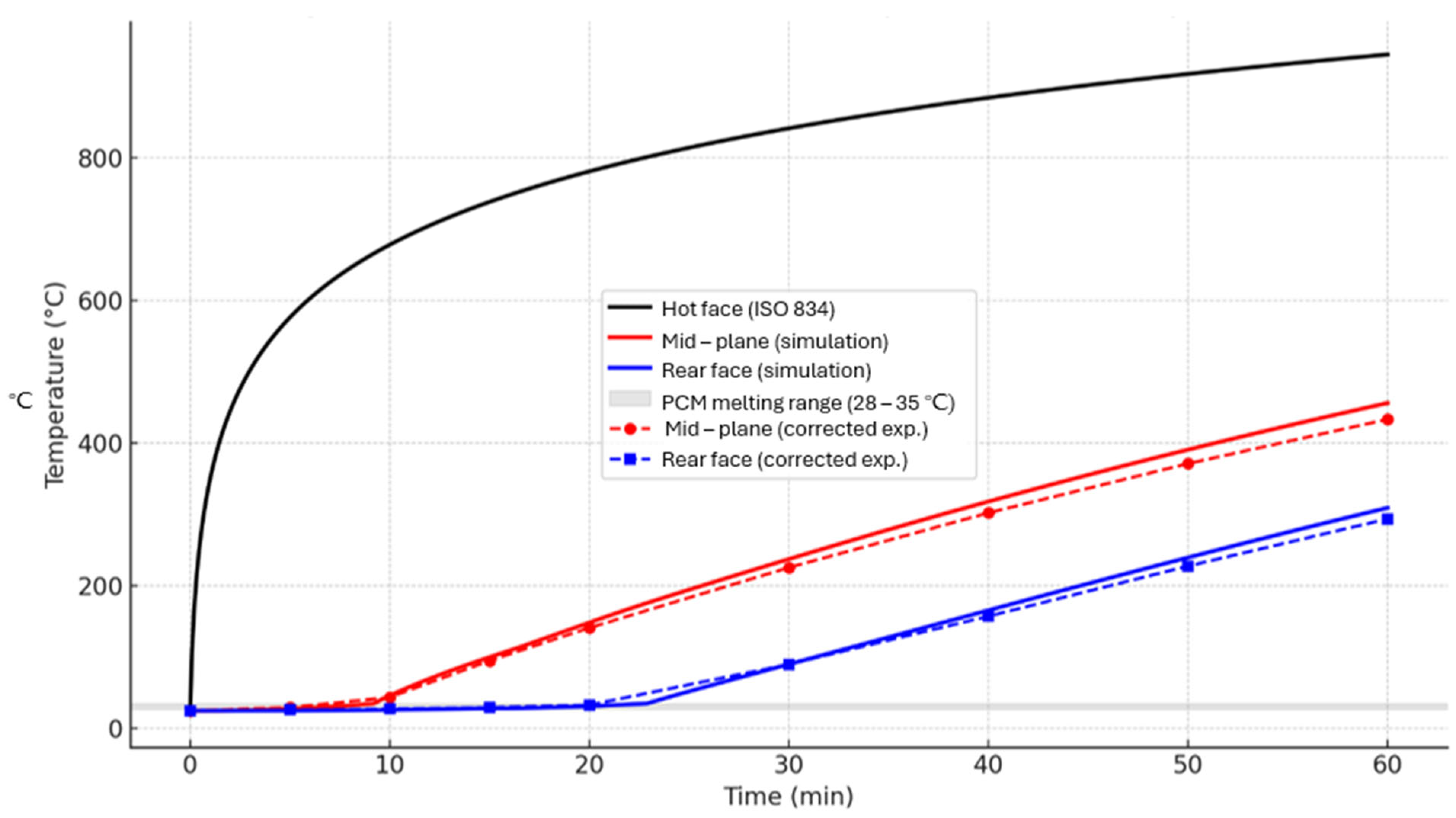
t is the exposure time (min). All fire exposure tests were conducted in an electrically heated furnace (electric resistance heating) operated under closed-loop PID temperature control. The ISO curve was executed for 60 min, reaching approximately 840 °C at the end of the test. The furnace was controlled to follow the ISO 834-1 standard time–temperature curve. The furnace was programmed to follow the ISO 834 time–temperature curve, for which the theoretical value at 60 min is approximately 945 °C according to the ISO expression. In this study, the furnace temperature was regulated using a closed-loop PID controller based on internal control thermocouple feedback within the furnace chamber. However, because the tests were conducted in a small-scale configuration with a partially open furnace interface and unavoidable heat exchange at the panel boundary, the measured exposed-surface temperature of the panel was lower than the ISO setpoint. “Here, ‘open furnace configuration’ refers to the panel being mounted at the furnace opening (front-face exposure) without a fully sealed enclosure around the panel perimeter. The furnace was electrically heated and controlled via a closed-loop PID system to follow the ISO 834 time–temperature curve based on internal thermocouple feedback (gas/control temperature). Owing to the open-front interface and associated air exchange and heat losses, the effective heat flux to the panel and the measured exposed-surface temperature can be lower than the theoretical ISO gas temperature; this does not indicate a lack of ISO curve control, but reflects panel-level thermal coupling. This reduction is attributed to combined effects of (i) radiative losses and reduced radiation view factor at the opening, (ii) convective losses and air exchange/leakage near the panel interface, (iii) spatial gradients between the furnace control location and the panel surface, and (iv) the panel acting as a heat sink during transient heating. Therefore, the reported ≈840 °C corresponds to the measured panel exposed-surface temperature at 60 min, while the ISO value of ≈945 °C refers to the standard furnace temperature defined by ISO 834 (EN 1363-1 [
24]).
Each PCM-integrated concrete panel (300 × 300 × 50 mm
3) was mounted vertically with its hot face exposed to the furnace cavity and lateral faces insulated using ceramic fiber wool to enforce near one-dimensional heat transfer. Type K thermocouples (±0.5 °C accuracy) were embedded at 5 mm from the exposed face, mid-thickness (25 mm), and 5 mm from the rear face to measure transient temperature profiles. Readings were acquired at 1 Hz using a 16-channel NI-9213 data acquisition system. The heating regimes employed in the experiments, including constant-temperature exposures and the ISO 834 standard fire curve, are illustrated in
Figure 2.
The ISO 834 standard fire curve defines a continuous transient furnace temperature profile, with characteristic reference times of 30, 60, 90, and 120 min corresponding to increasing fire-severity levels commonly used in fire-resistance classification. In the present study, the ISO 834 exposure was applied directly according to the standard equation, and the thermal response was analysed primarily up to 60 min. This duration was selected because it represents a typical façade and wall fire-resistance benchmark (EI 60) and allows direct experimental validation without compromising panel integrity. Although longer durations such as 90 and 120 min were not investigated experimentally, the validated numerical framework can be readily extended to these durations in future studies.
To verify thermal uniformity, the furnace temperature was continuously logged and cross-checked with the programmed profile. Surface temperatures were independently monitored using a Testo 834 infrared thermal imaging camera (thermal sensitivity = 0.06 °C), calibrated with a reference blackbody. The emissivity of concrete (0.92 ± 0.02) was used to ensure reliable readings.
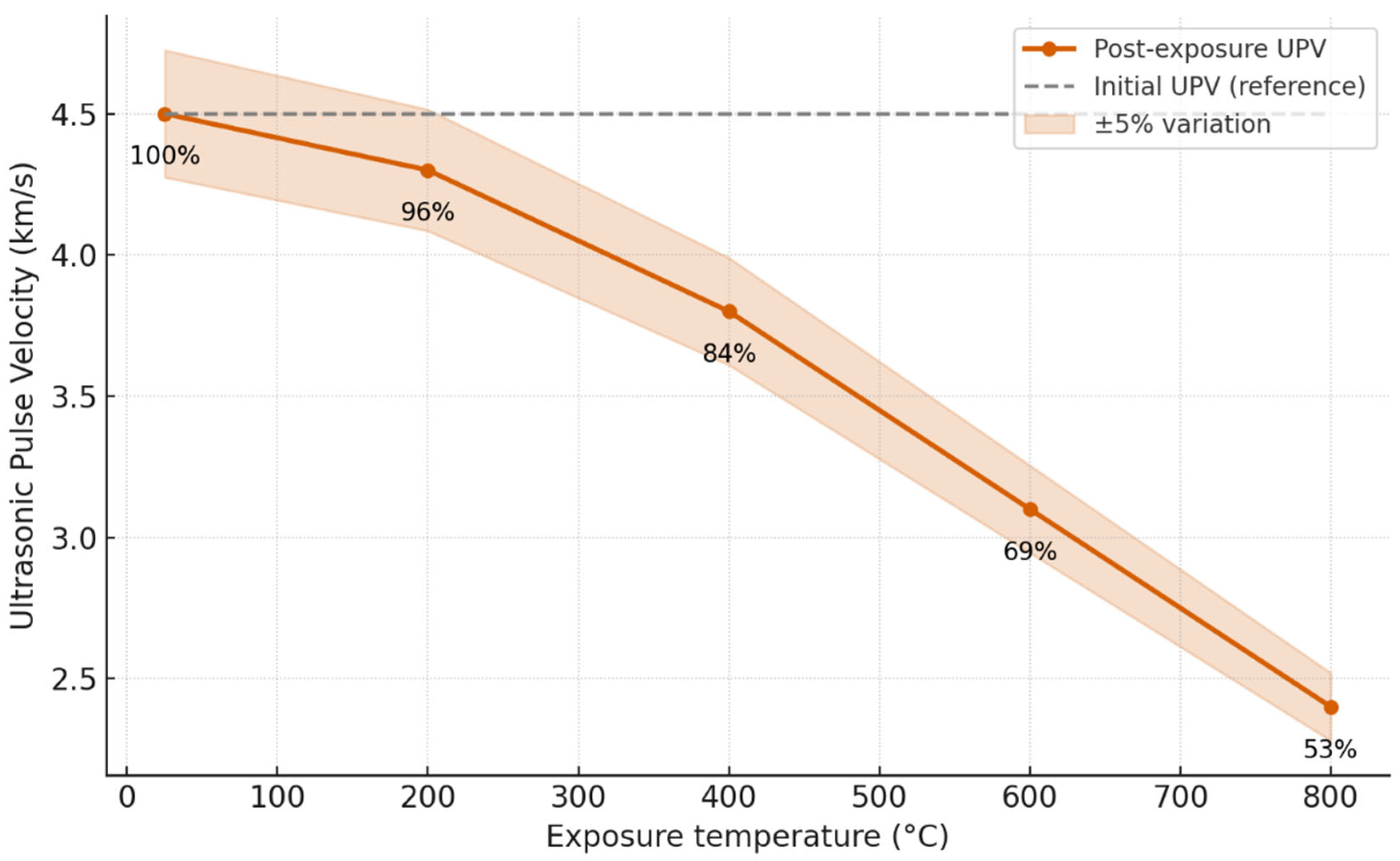
After exposure, panels were cooled to ambient temperature before UPV testing to assess internal cracking and residual stiffness. The combined use of embedded thermocouples, IR imaging, and controlled heating profiles provided high-fidelity thermal data for validation of the numerical simulations presented in
Section 4.
2.3. Numerical Modelling Framework
A two-dimensional transient heat transfer model was developed using the finite element method (FEM) implemented in FEniCS (v2023.1) to simulate the coupled thermal response of the PCM-integrated concrete panels during fire exposure. The computational domain replicated the experimental panel (300 × 50 mm), consisting of a concrete matrix with embedded PCM container arranged at mid-depth. The model aimed to capture temperature-dependent conductivity, latent heat absorption during melting, and the softening behavior of the ABS encapsulant under elevated temperatures.
The governing heat-transfer equations employed in this study are based on standard transient heat conduction and apparent heat-capacity formulations for phase change materials. All numerical constants and material parameters appearing in the equations are reported in
Table 1 and in the boundary-condition descriptions, and were obtained from experimental measurements, manufacturer data, and calibration against the present experimental results. The numerical solution was implemented by the authors in FEniCS using these established formulations. The source codes are available from the corresponding author upon reasonable request.
The transient heat conduction equation with phase change is expressed in Equation (2).
where
is the material density (kg·m
−3),
is the specific heat capacity (J·kg
−1·K
−1),
is temperature (K),
is time (s),
is the thermal conductivity (W·m
−1·K
−1),
is the latent heat of fusion of the PCM (J·kg
−1), and
is the liquid fraction of the PCM, defined in Equation (3).
This formulation explicitly accounts for latent heat absorption and release through the liquid fraction function, ensuring a physically consistent representation of the phase transition during melting and solidification.
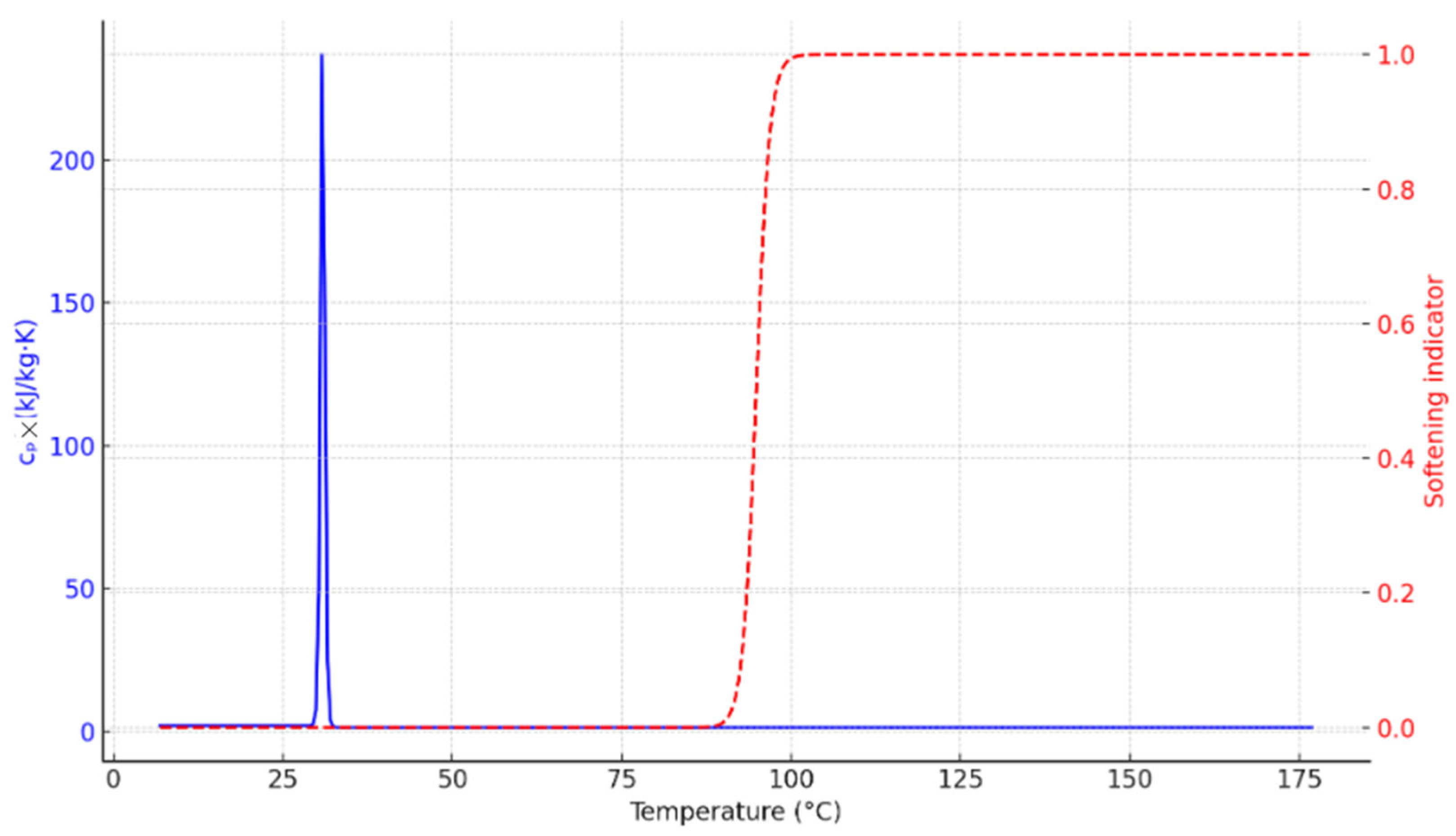
The latent heat of the PCM was represented using the apparent heat capacity method, which distributes
over a small temperature interval
(solidus to liquidus) (Equation (4)):
for
.
Outside this range, .
For the RT35–EG PCM, °C and °C, with . This approach allows smooth energy absorption and release during melting and solidification without tracking phase interfaces explicitly.
Phase change is captured via an apparent heat capacity
that embeds latent heat within a narrow “mushy” interval around
. For the PCM subdomain (Equation (5)):
Here,
φ ∈ [0,1] is a smooth surrogate for the liquid fraction,
the mushy-zone width (we use
unless otherwise reported), and
the latent heat. Thermal conductivity and density are interpolated similarly (Equation (6)):
This regularization provides (i) a differentiable response for robust nonlinear solves and (ii) a physically consistent plateau in temperature–time histories during melting.
The thermal and mechanical response of the ABS encapsulation was temperature-dependent. Softening was incorporated by reducing its thermal conductivity
and density
above the glass transition temperature
°C using exponential degradation functions (Equation (7)):
with
°C
−1 and
°C
−1, based on manufacturer data and DSC analysis. This representation allowed the model to reproduce the loss of encapsulant stiffness and increased heat transfer once the PCM container integrity began to degrade.
To represent macro-encapsulation failure under fire, we introduce a smooth softening indicator
based on the PCM-adjacent temperature (Equation (8)):
with
a small smoothing constant (e.g., 2 K). The effective PCM properties used in simulation are then blended as (Equation (9)):
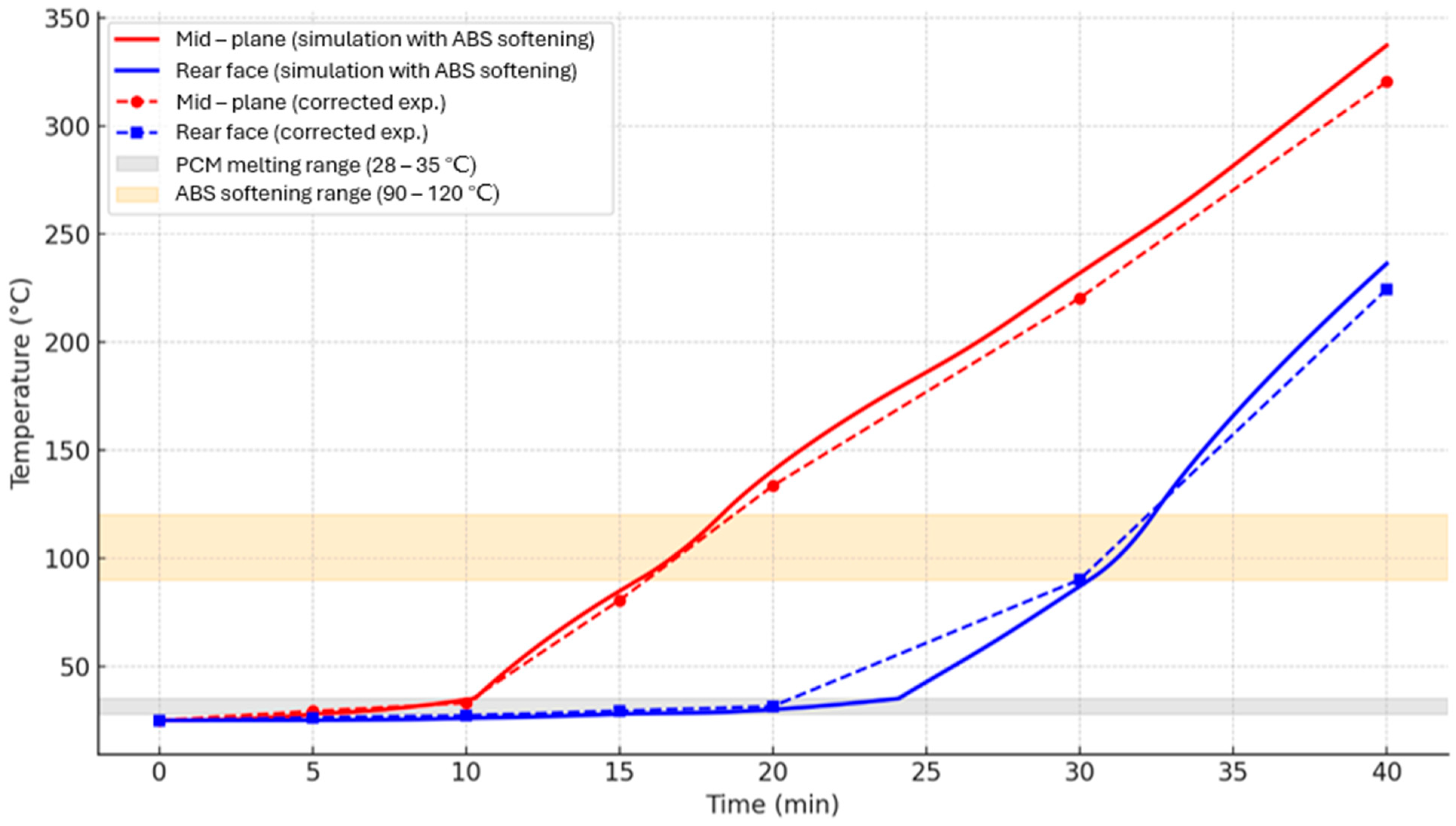
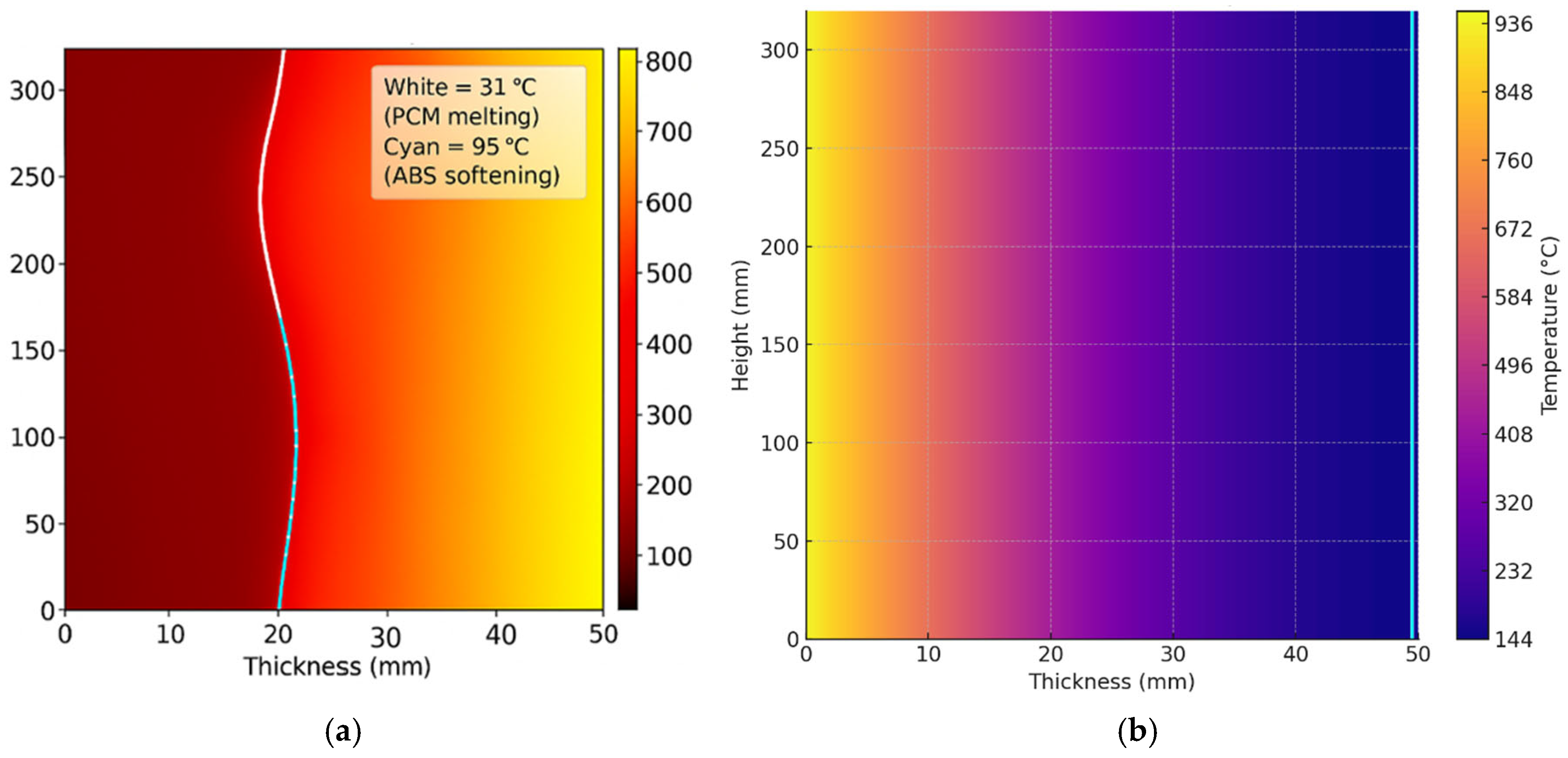
Physically, for , the PCM behaves with full latent-heat capability; for , the latent term vanishes and the PCM conducts/stores heat as liquid only, mimicking leakage/rupture or the practical loss of latent buffering once containment softens.
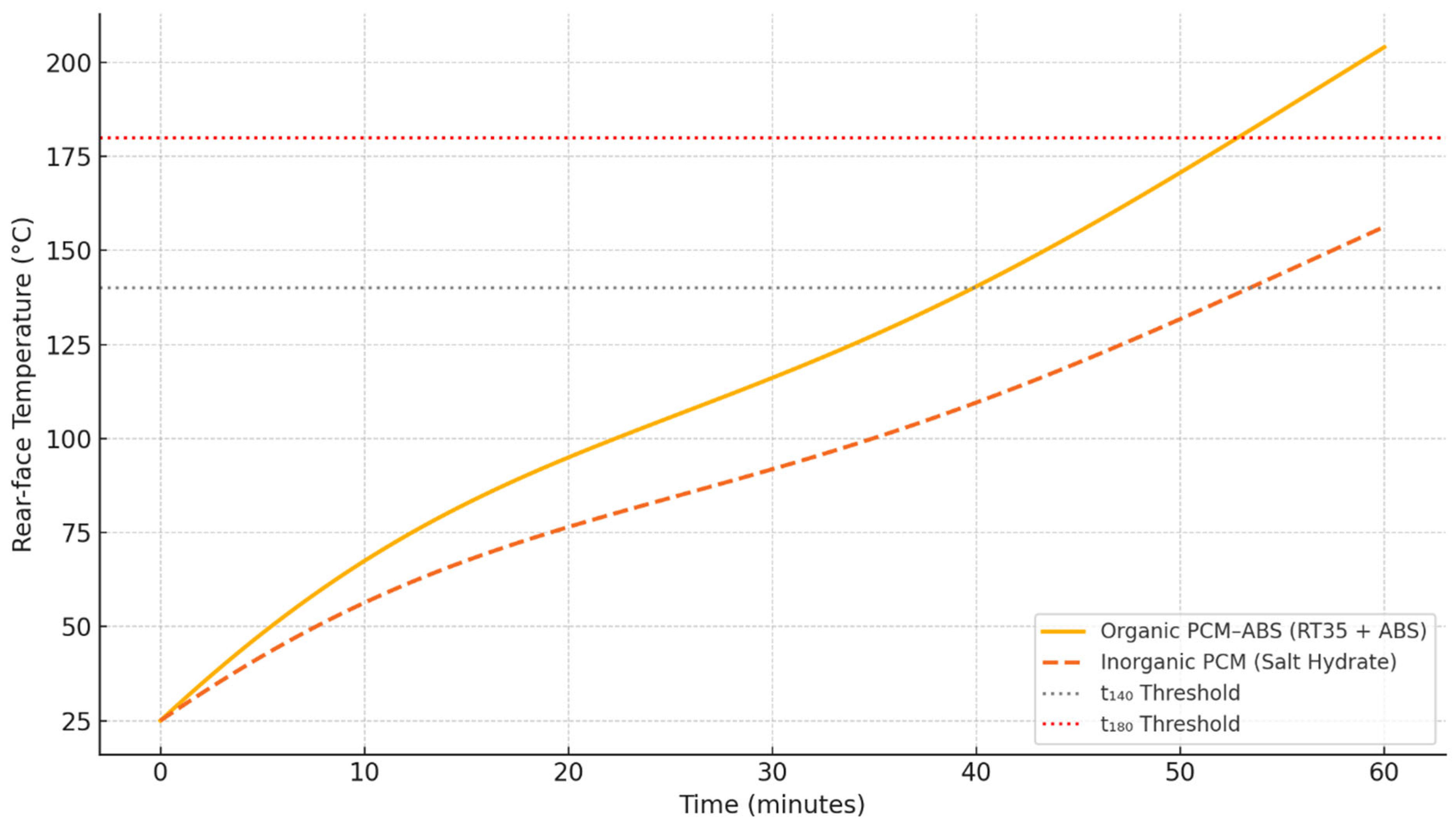
Why does this matter for fire safety? This switch is intentionally conservative for the insulation criterion: once softening begins, the model stops crediting the latent-heat buffer, so rear-face temperatures rise faster, matching the risk-focused aim of this study.
At the exposed (hot) surface, a combined convective–radiative heat flux boundary condition (Neumann type) was applied. The furnace temperature (constant or ISO 834 profile) was used as the reference temperature in the convection and radiation terms driving the heat flux into the panel. The opposite (rear) surface was assigned a convective–radiative boundary (Equation (10)):
Here, is the surface temperature of the panel and is the ambient temperature (both in K); the terms and represent the fourth powers of temperature, corresponding to radiative heat transfer as per the Stefan–Boltzmann law, where , , and . All other surfaces were assumed to be adiabatic. The initial temperature of the entire domain was set to 25 °C.
At the hot face (furnace side), the net heat flux is the sum of convection to furnace and thermal radiation (Equation (11)):
with
and
baseline values, and
either a constant (200/400/600/800 °C plateaus for 60 min) or ISO 834
. At the rear face, we apply natural convection to ambient:
with
,
. Laterals are adiabatic.
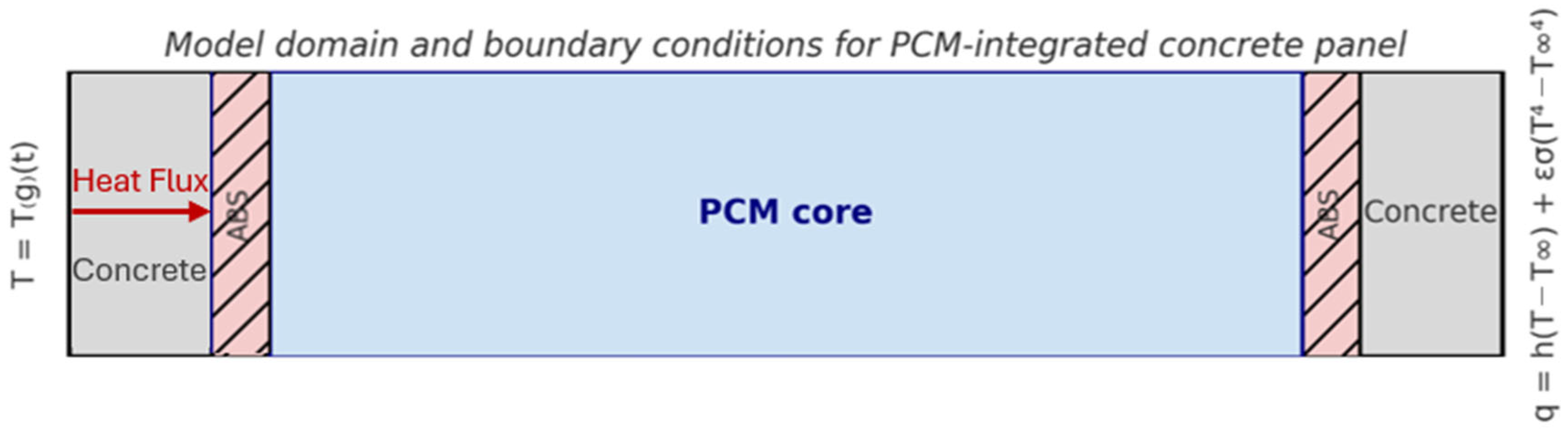
In the model, the exposed surface was subjected to a combined convective–radiative heat flux boundary (Neumann condition) interacting with a furnace following the ISO-834 temperature–time curve. The surface temperature therefore evolved naturally during the simulation and was not fixed, preventing over-specification of boundary conditions. The numerical model geometry and applied thermal boundary conditions used for the finite element simulations are illustrated in
Figure 3. The numerical geometry is an equivalent 2D cross-sectional representation of the experimentally embedded ABS macro-encapsulation mould. The concrete–ABS–PCM–ABS–concrete arrangement preserves the actual through-thickness thermal path (concrete cover → ABS wall → PCM cavity → ABS wall → concrete cover) that governs rear-face temperature evolution under furnace exposure. The equivalent 2D representation was configured to remain consistent with the experimental PCM/ABS fraction (including the measured PCM mass fraction) and was used because the side faces were insulated during testing, promoting predominantly one-dimensional through-thickness heat transfer.
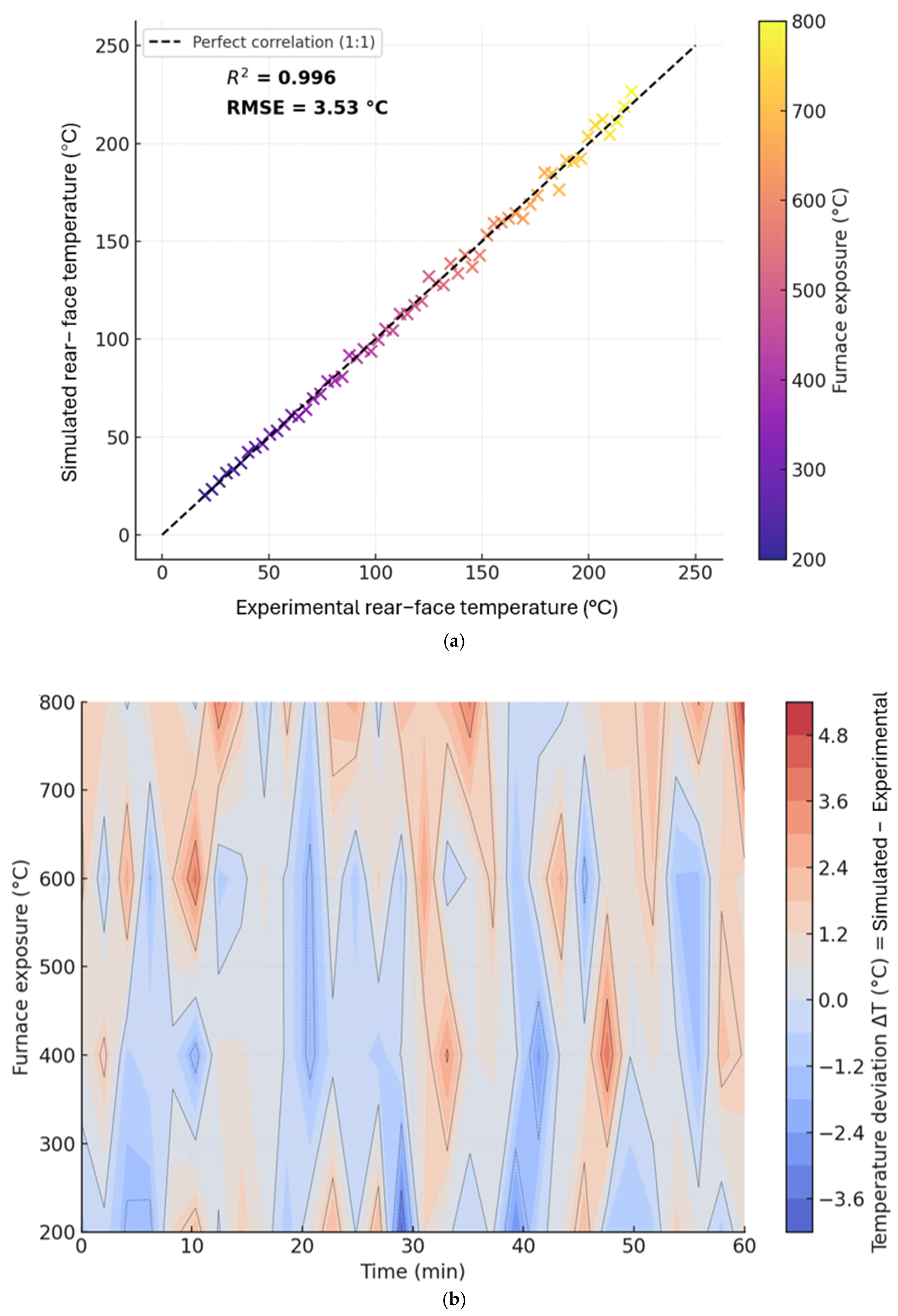
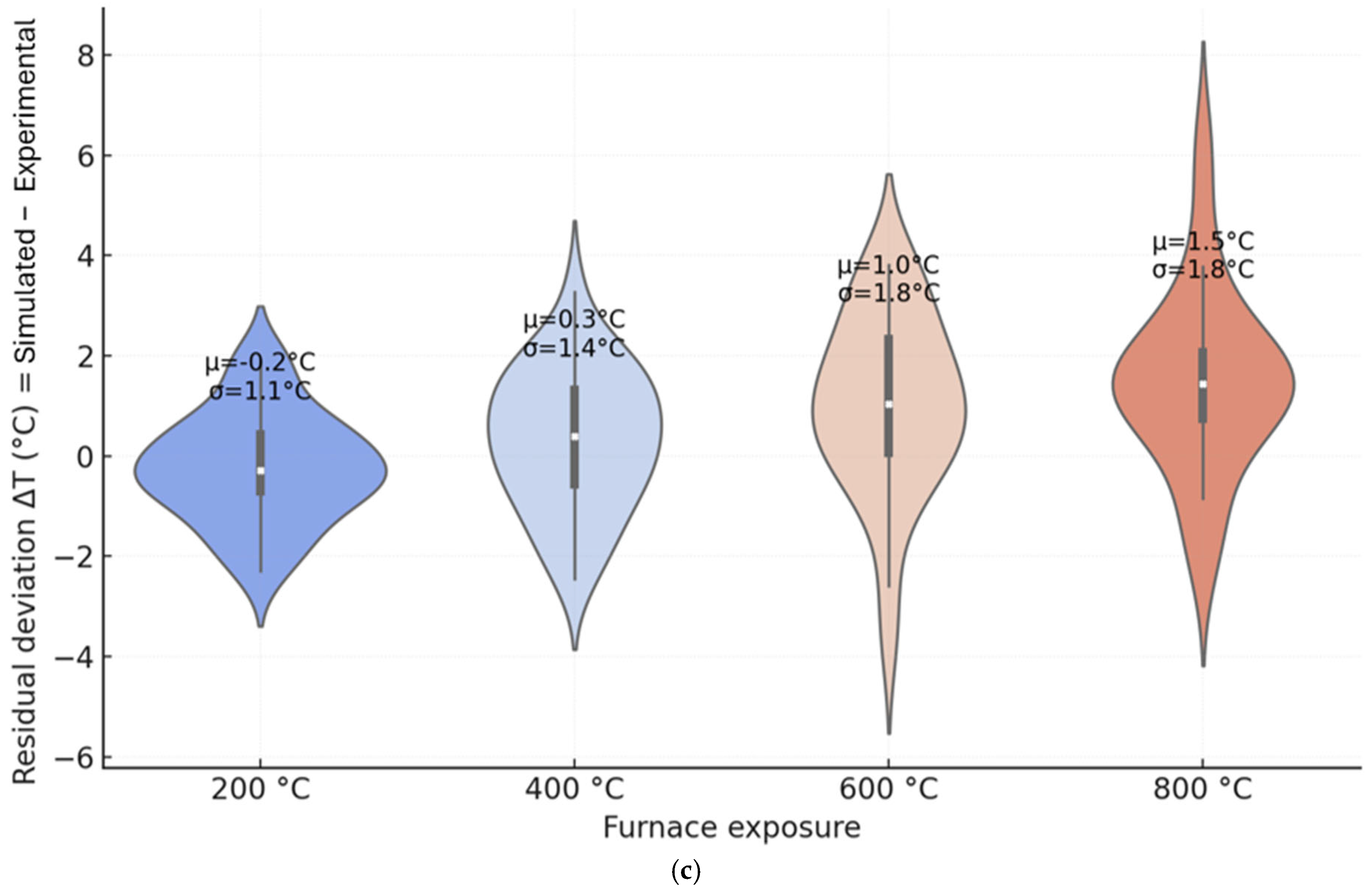
Although the experimental specimen possesses a three-dimensional embedded PCM geometry, the thermal response during furnace exposure is governed primarily by through-thickness heat transfer due to: (i) the relatively large in-plane dimensions compared with panel thickness (300 × 300 × 50 mm3), (ii) lateral insulation applied during testing, and (iii) symmetric placement of the PCM insert within the panel. Accordingly, an equivalent two-dimensional cross-sectional representation was adopted to preserve the dominant thermal resistance path between the exposed and rear surfaces. The equivalence of this simplification is supported quantitatively by the strong agreement between simulated and experimental temperature histories. Nevertheless, the model does not explicitly capture localized three-dimensional phenomena such as edge heat losses, corner effects, or preferential leakage channels, which may contribute to the small deviations observed at prolonged exposure durations.
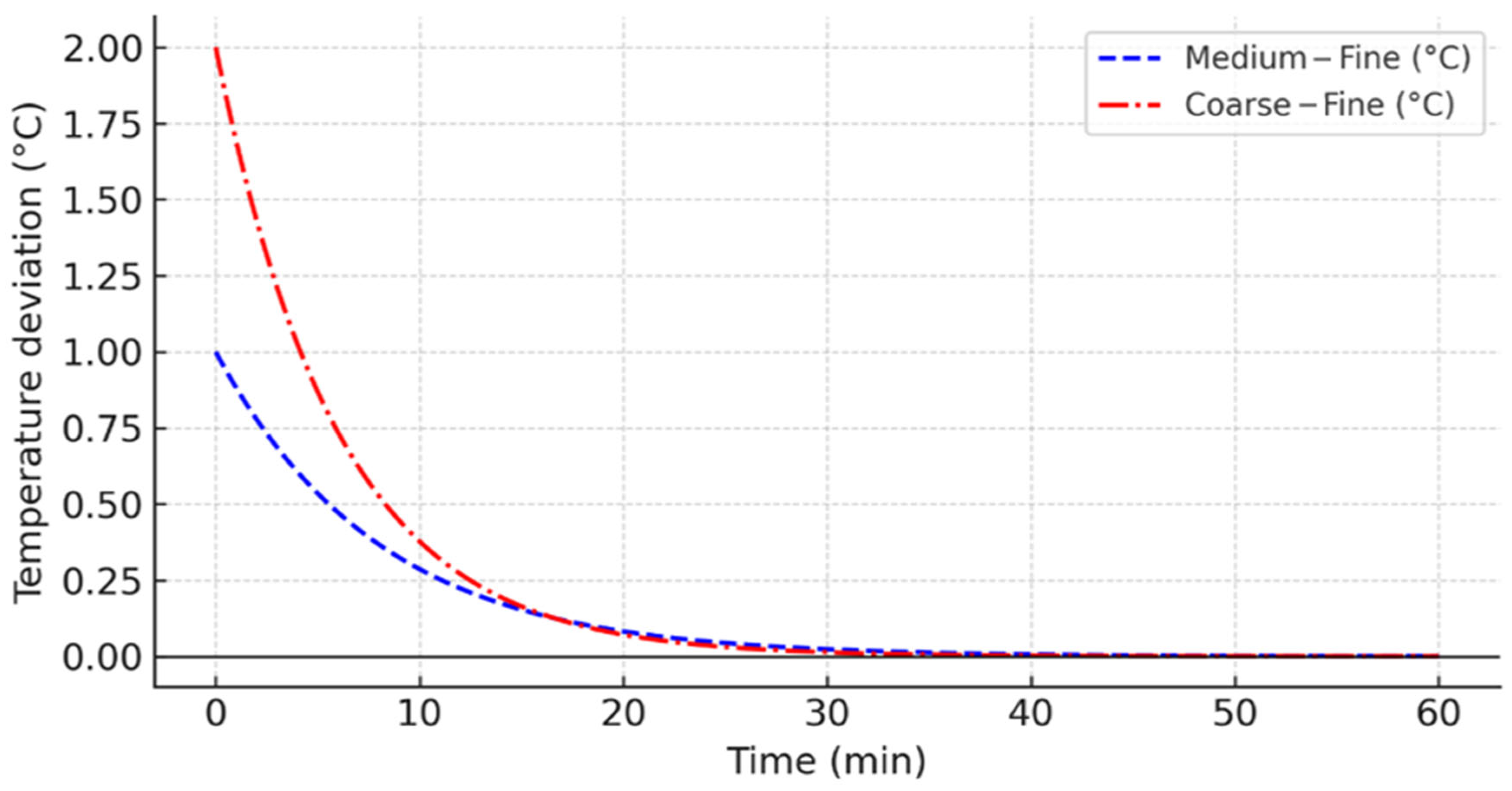
A structured quadrilateral mesh with local refinement around the PCM container was used to accurately resolve steep temperature gradients. A mesh independence study ensured that the difference in rear-face temperature between successive mesh refinements was less than 1 °C, corresponding to ~18,000 elements in the final model. Temporal discretization employed an implicit backward Euler scheme with adaptive time-stepping (
Δt = 0.1–1 s), providing numerical stability at high temperature gradients. Mesh sensitivity analysis confirming the spatial convergence of the finite element model is presented in
Figure 4, showing that temperature deviations between successive refinements remain below 1 °C throughout the simulation.
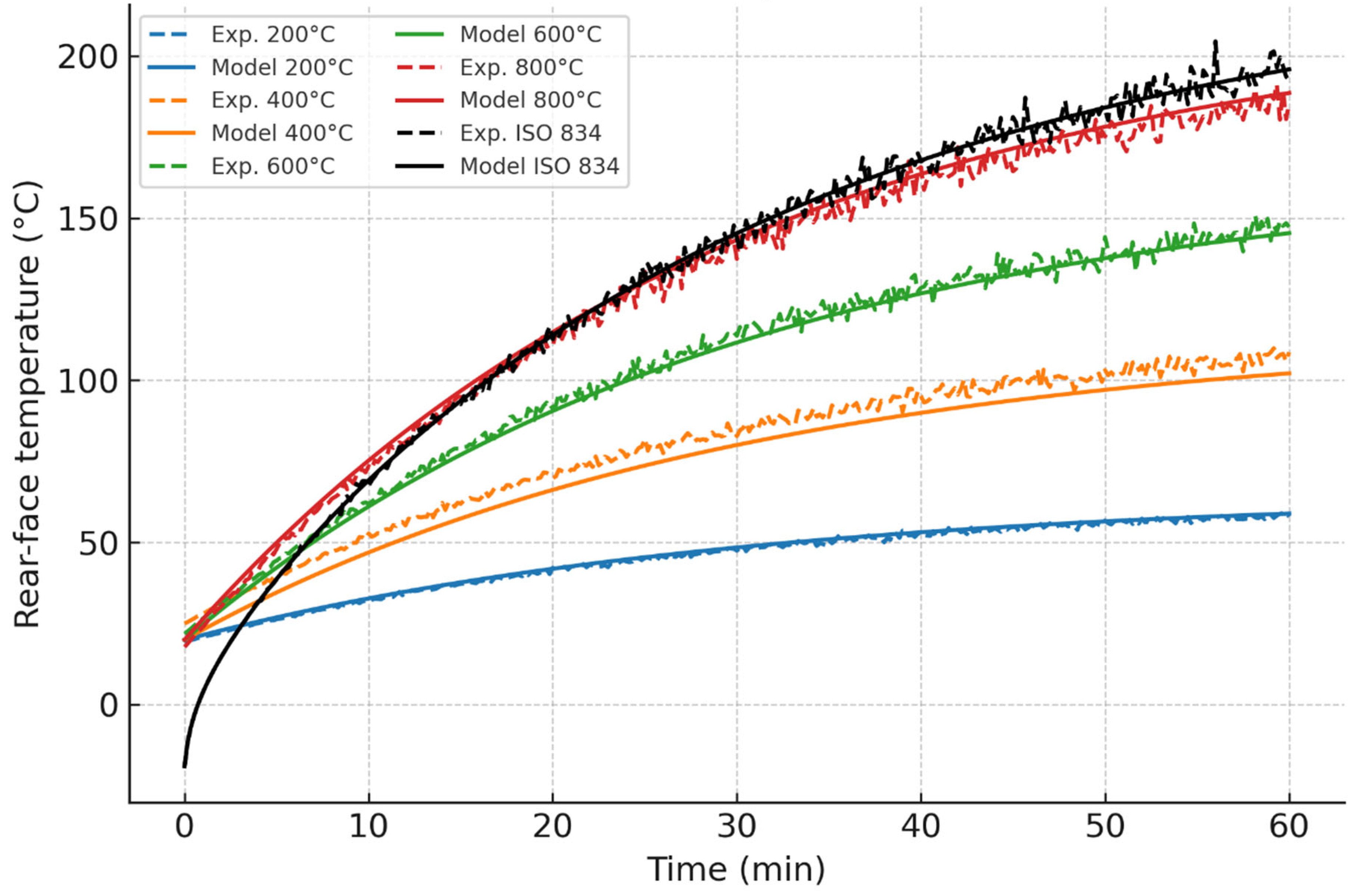
The model was validated against experimental data for all exposure regimes, showing close agreement in temperature evolution and insulation performance (see
Section 3.4).
The following points represent model options for sensitivity (fire-focused):
Mushy-zone width : 1.0–3.0 K (affects the sharpness of melting plateau).
Softening threshold : ±10 K about the nominal value to bracket filament variability.
Surface coefficients: and ±20% to bound furnace flow/emissivity uncertainty.
Concrete : include/exclude moisture-peak in to assess its impact on rear-face rise at 200–400 °C plateaus.