3.1. Basic Condition Setting and Analysis of Mixture Evolution in Ammonia–Hydrogen Engines
In the basic setup, the hydrogen energy ratio was fixed at 20%, spark ignition timing at −15° CA aTDC, hydrogen injection timing at −90° CA aTDC, hydrogen injection pressure at 8 MPa, and EGR rate at 0. Under 100% engine load, the equivalence ratio was varied by adjusting the fuel quantity to simulate and investigate the combustion process of the spark ignition ammonia–hydrogen dual-fuel engine. The simulated operating conditions are listed in
Table 6.
An equivalence ratio Φ = 1 corresponds to the stoichiometric mixture at which fuel and air are completely combusted. Φ < 1 indicates excess air and a low ammonia–hydrogen proportion in the mixture, representing lean combustion. Φ > 1 indicates excess fuel and a high ammonia–hydrogen proportion, corresponding to fuel-rich combustion. Lean mixtures help to improve engine thermal efficiency and reduce combustion temperature, thereby reducing NOx emissions to some extent. However, for ammonia–hydrogen dual-fuel engines, the variation in NOx emissions with equivalence ratio differs from that of conventional fossil fuel engines: the NOx emission peak in traditional gasoline engines typically occurs at a slightly lean equivalence ratio of 0.85–0.9, whereas, in this study, the NO emission peak appears at an equivalence ratio of 0.74. This difference is primarily attributed to two factors: The flame temperature of ammonia combustion is lower than that of gasoline, requiring a higher oxygen concentration to reach the critical temperature for thermal NO formation (1800 K). Ammonia fuel inherently contains nitrogen, resulting in a higher proportion of fuel–NO in total NOx, and fuel–NO formation is more sensitive to oxygen concentration.
Lhuillier et al. [
11] and Chen et al. [
16] also observed a similar NO emission peak position in their experimental studies on ammonia–hydrogen engines, validating the rationality of the findings in this study. However, under lean-burn conditions, ammonia exhibits a slow burning rate and incomplete combustion; therefore, hydrogen is added to compensate for the low combustion efficiency of ammonia. In summary, this study primarily focuses on equivalence ratios below 1 while employing equivalence ratios of 1.05 and 1.48 as control cases to directly reveal the combustion and emission characteristics of ammonia–hydrogen dual-fuel engines.
The selection of the above baseline operating parameters in this study is primarily based on the following considerations:
A 20% hydrogen energy ratio: Based on a comprehensive review of the existing studies, this ratio ensures combustion stability while avoiding a sharp increase in NOx emissions, making it a commonly used blending ratio for ammonia–hydrogen dual-fuel engines. An excessively low hydrogen ratio leads to combustion instability, while an excessively high ratio increases NOx emissions and knock risk.
Ignition timing of −15° CA aTDC: Determined through preliminary experiments, this timing achieves high thermal efficiency while avoiding knock. Overly advanced ignition timing leads to knock, while overly retarded timing reduces thermal efficiency and increases unburned ammonia emissions.
Hydrogen injection timing of −90° CA aTDC: Injection during the mid-compression stroke ensures sufficient mixing time between hydrogen and the ammonia–air mixture while avoiding wall impingement caused by premature hydrogen diffusion. Overly early injection causes hydrogen to adhere to the cylinder walls, while overly late injection leads to uneven mixing.
Hydrogen injection pressure of 8 MPa: This pressure ensures appropriate penetration depth and atomization of hydrogen within the cylinder. An excessively low pressure results in insufficient penetration and non-uniform mixing, while an excessively high pressure increases the cost and complexity of the injection system.
A 0% EGR rate: As the baseline condition, EGR effects are excluded to isolate the influence of the equivalence ratio. The effects of EGR will be investigated in subsequent studies.
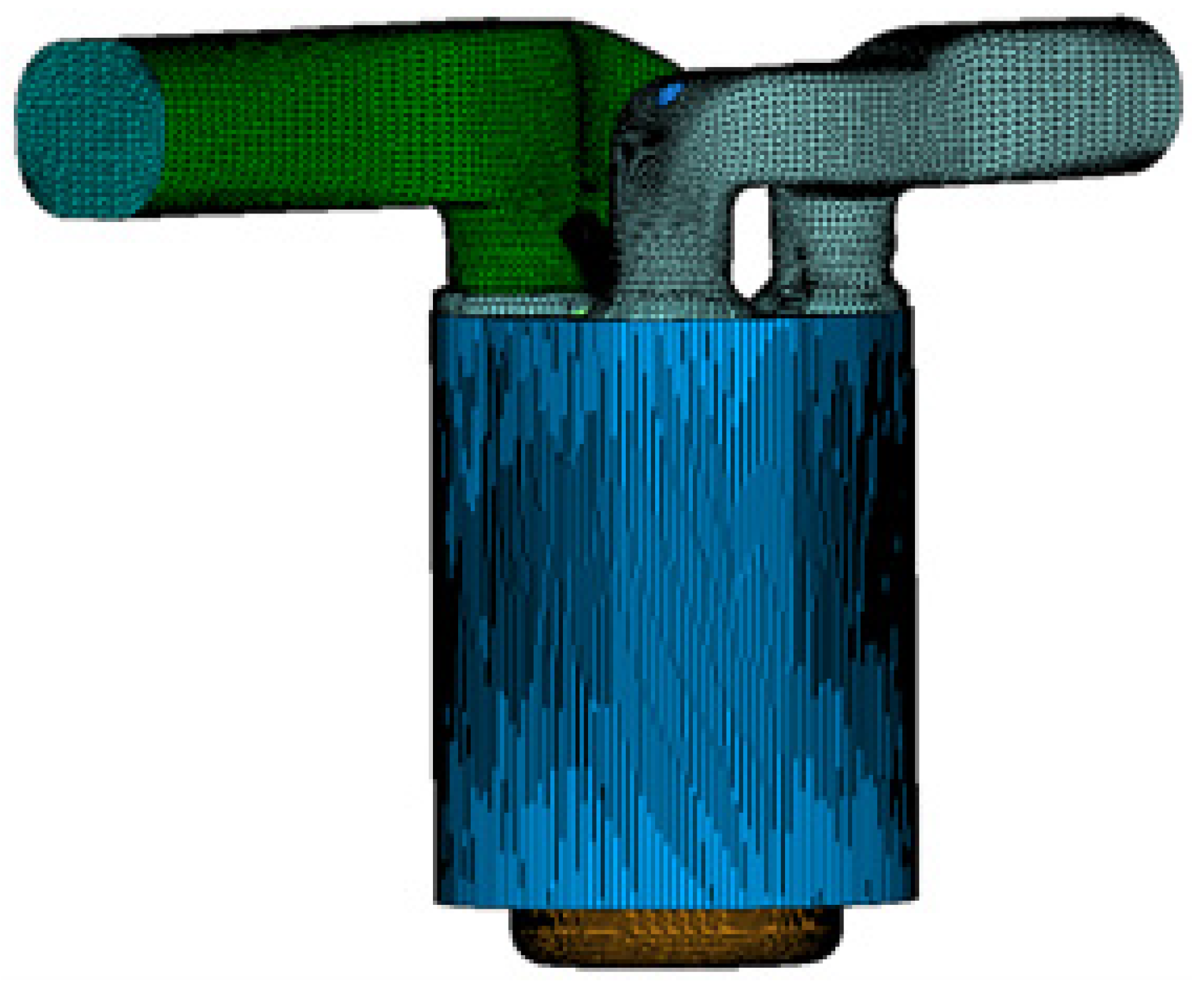
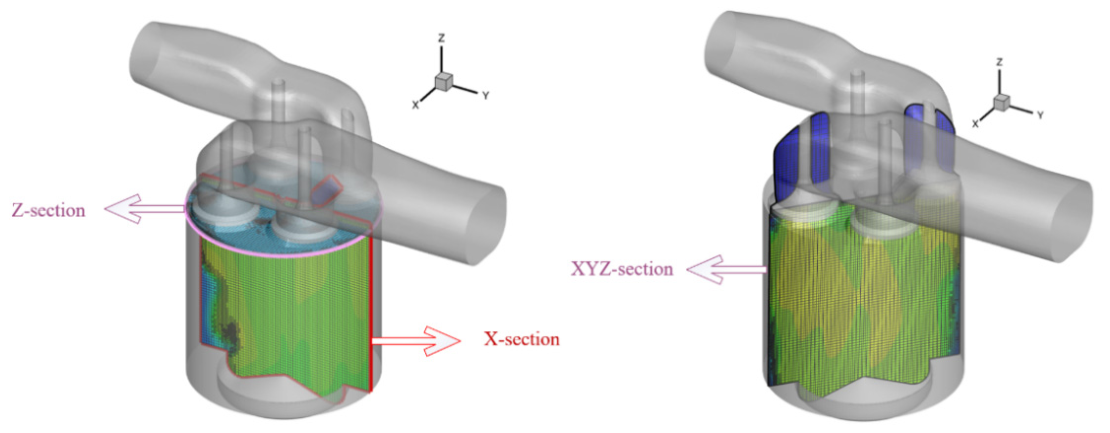
The flow velocity and temperature vary at different locations in the engine. Therefore, different regions were refined, and sections from different orientations were selected for analysis. The sectional views in different directions are shown in
Figure 5.
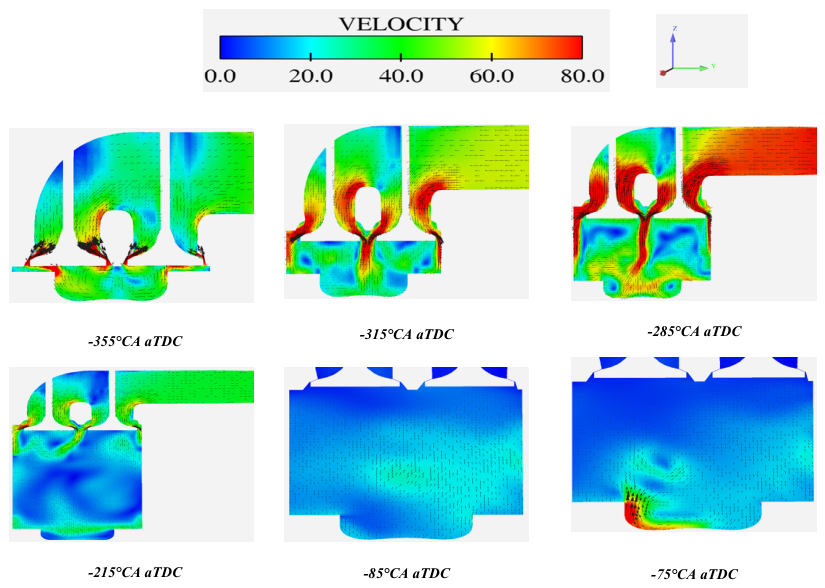
In this study, ammonia fuel is introduced into the cylinder through intake port injection. After the intake valve opens, ammonia enters the engine cylinder together with fresh air. To clearly illustrate the in-cylinder motion and mixing process of hydrogen,
Figure 6 shows the in-cylinder velocity contours from the entry of ammonia fuel into the cylinder until hydrogen injection from the hydrogen injector.
It can be clearly observed that, when the intake valve opens, the in-cylinder gas velocity directs a small portion of gas to diffuse into the intake port through the intake valve gap. This occurs because, at −355° CA aTDC, the pressure inside the cylinder is higher than that in the intake port, causing a small amount of in-cylinder gas to diffuse back into the intake port through the valve gap. With the periodic and continuous injection of ammonia from the intake port, the direction of in-cylinder gas velocity shifts from the valve gap toward the cylinder interior after −315° CA aTDC. After −90° CA aTDC, high-pressure hydrogen is injected into the cylinder by the hydrogen injector. As the piston moves upward, an obvious upward flow can be seen on the lower-left side of the cylinder wall.
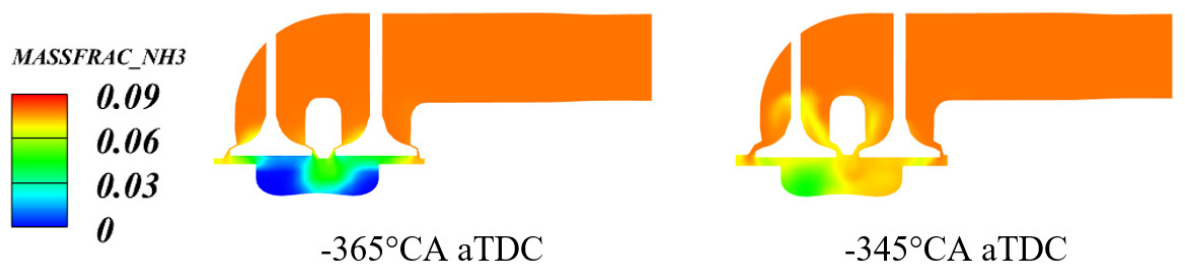
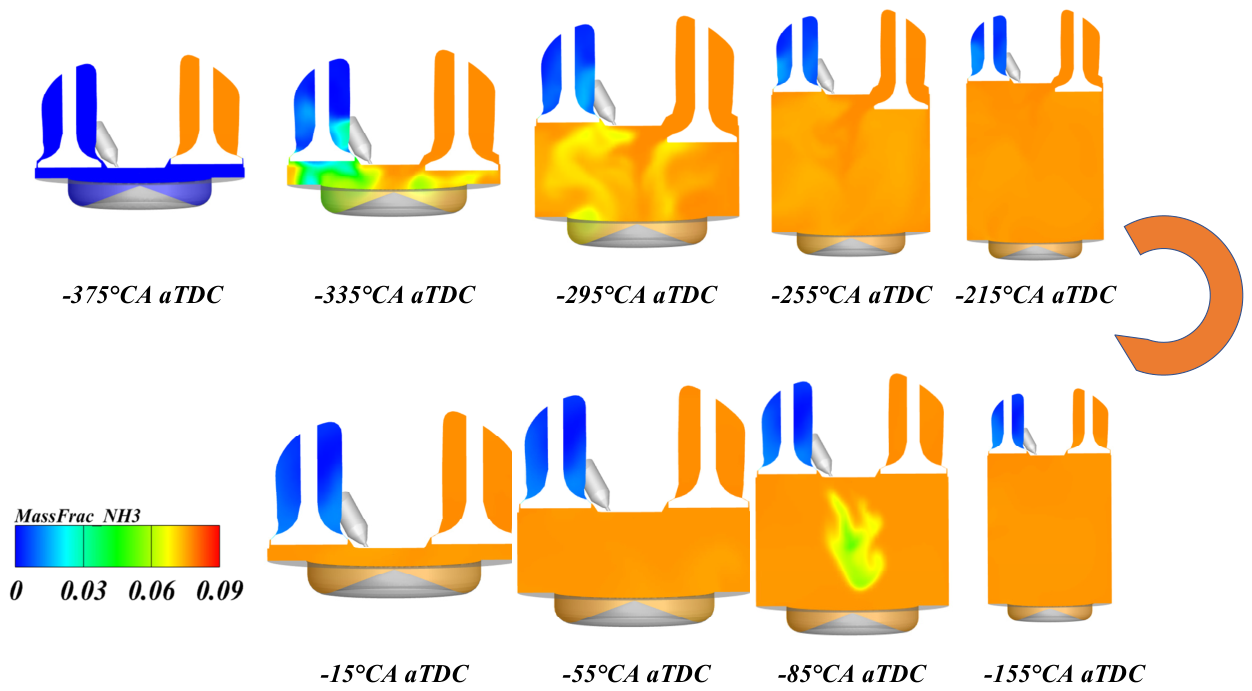
Figure 7 shows the ammonia mass distribution in the intake port cross-section. It can be observed that, at −365° CA aTDC after the intake valve opens, ammonia is mainly distributed on the right side of the cylinder. With continuous injection of ammonia, the in-cylinder ammonia–air mixture gradually becomes uniform, and ammonia has sufficient time to mix with air. The in-cylinder mixing process of ammonia is analyzed in detail below.
Figure 8 illustrates the in-cylinder mixing process of ammonia. Combined with
Figure 7, it can be seen that, during the initial intake stage, from −365° CA aTDC to −345° CA aTDC, a larger proportion of ammonia enters the cylinder through the outer valve of the intake port, forming a local ammonia-rich region on the right side of the cylinder. As mentioned above, the intake port temperature is 350 K, and the intake pressure is 1 atm. Under this condition, the density of ammonia is approximately 0.60 kg/m
3, while the density of air is about 1.0 kg/m
3. Therefore, ammonia is lighter and has lower flow inertia in the mixture, making it more susceptible to flow paths and the geometric structure of the intake port.
Observing the intake port geometry, the intake path of the inner valve features a downward curved arc. Air, with higher density, tends to continue flowing downward along the curved arc under inertial effects during flow. In contrast, ammonia, with lower density and smaller inertia, is more easily deflected toward the upper part of the flow path in the curved region, thus reducing the proportion of ammonia entering the inner valve. Meanwhile, the geometric structure of the inner intake port increases flow resistance, which reduces the gas flow velocity through the inner valve. With decreased flow velocity, the inertia of denser air weakens, allowing it to more easily fill the entire inner valve path. On the contrary, the intake passage of the outer valve is relatively smooth with a more streamlined flow path, where ammonia and air undergo no obvious deflection or separation. Consequently, the mixture tends to retain its original distribution characteristics, resulting in a higher ammonia proportion being drawn in through the outer valve.
During the intake stroke as the piston moves downward, ammonia diffuses and mixes further inside the cylinder. By −215° CA aTDC, the in-cylinder ammonia distribution becomes relatively uniform. At −85° CA aTDC, high-pressure hydrogen injection causes a local reduction in ammonia mass fraction. During the compression stroke, as the piston continues to move upward, the mixture of ammonia, hydrogen, and air diffuses and mixes further within the cylinder. It can be seen from the figure that, by −15° CA aTDC, just before spark ignition, ammonia achieves a homogeneous state with uniform mixing throughout the cylinder.
Hydrogen injection timing was fixed from −90° CA aTDC to −83° CA aTDC.
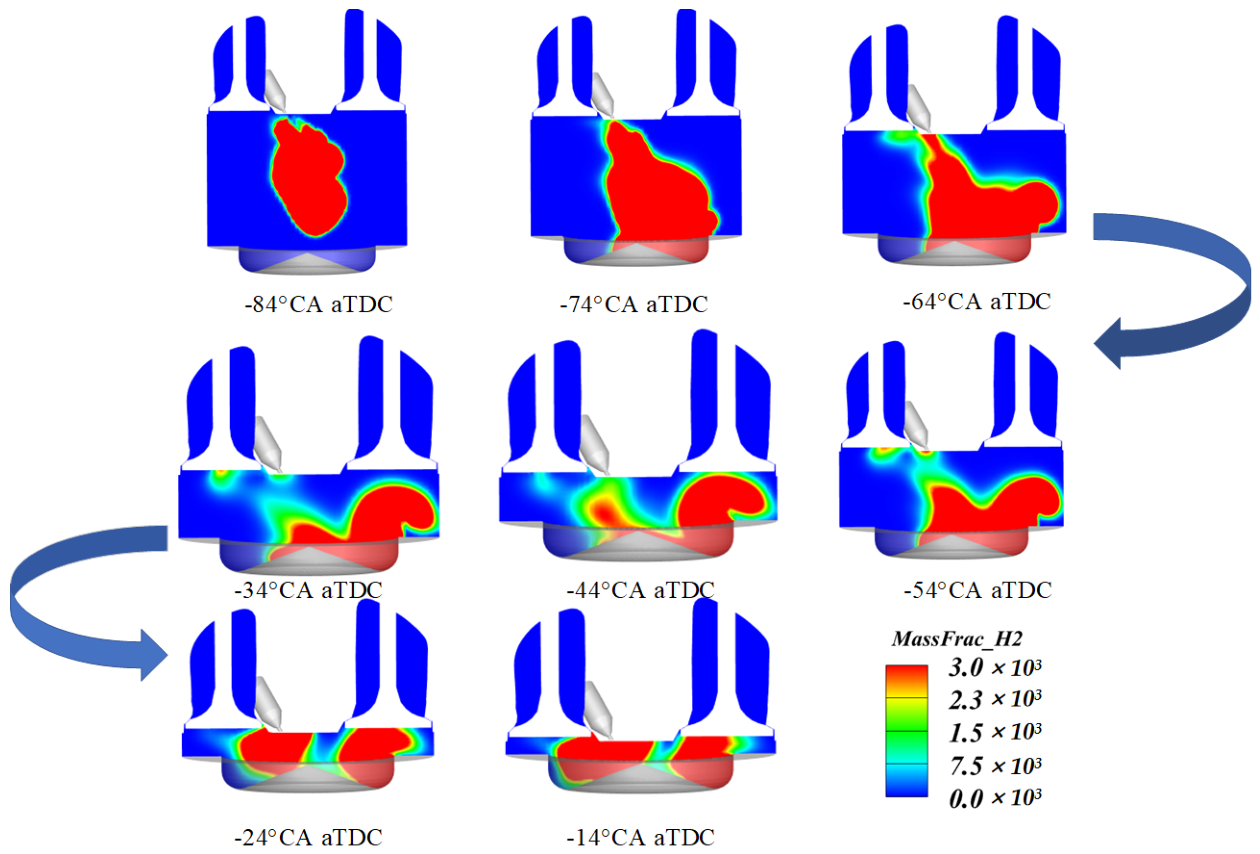
Figure 9 shows the in-cylinder mixing process of hydrogen. During the compression stroke, the piston moves upward, and the in-cylinder gas turbulence intensity gradually increases. At −90° CA aTDC, the cylinder volume has decreased significantly, and hydrogen is injected into the cylinder at a high speed, generating turbulence and mixing rapidly with the ammonia–air mixture. Before spark ignition at −14° CA aTDC, two hydrogen-rich regions exist in the cylinder.
Since hydrogen has a high laminar burning velocity, a uniform hydrogen distribution would greatly shorten the combustion duration but lead to an excessively high in-cylinder peak pressure. Therefore, the presence of two hydrogen-rich regions can appropriately delay the combustion process to ensure that the in-cylinder pressure remains within a reasonable range.
The above analysis indicates that the in-cylinder mixing process of ammonia and hydrogen has a significant impact on mixture homogeneity. Due to its lower density, ammonia tends to accumulate on the outer valve side of the intake port, while hydrogen, owing to its high injection velocity, forms two localized hydrogen-rich zones within the cylinder. This non-uniform mixture distribution affects the subsequent combustion process and pollutant formation. The following section provides a detailed analysis of the effects of equivalence ratio on engine combustion characteristics.
3.2. Effect of Equivalence Ratio on Engine Combustion Characteristics and Performance
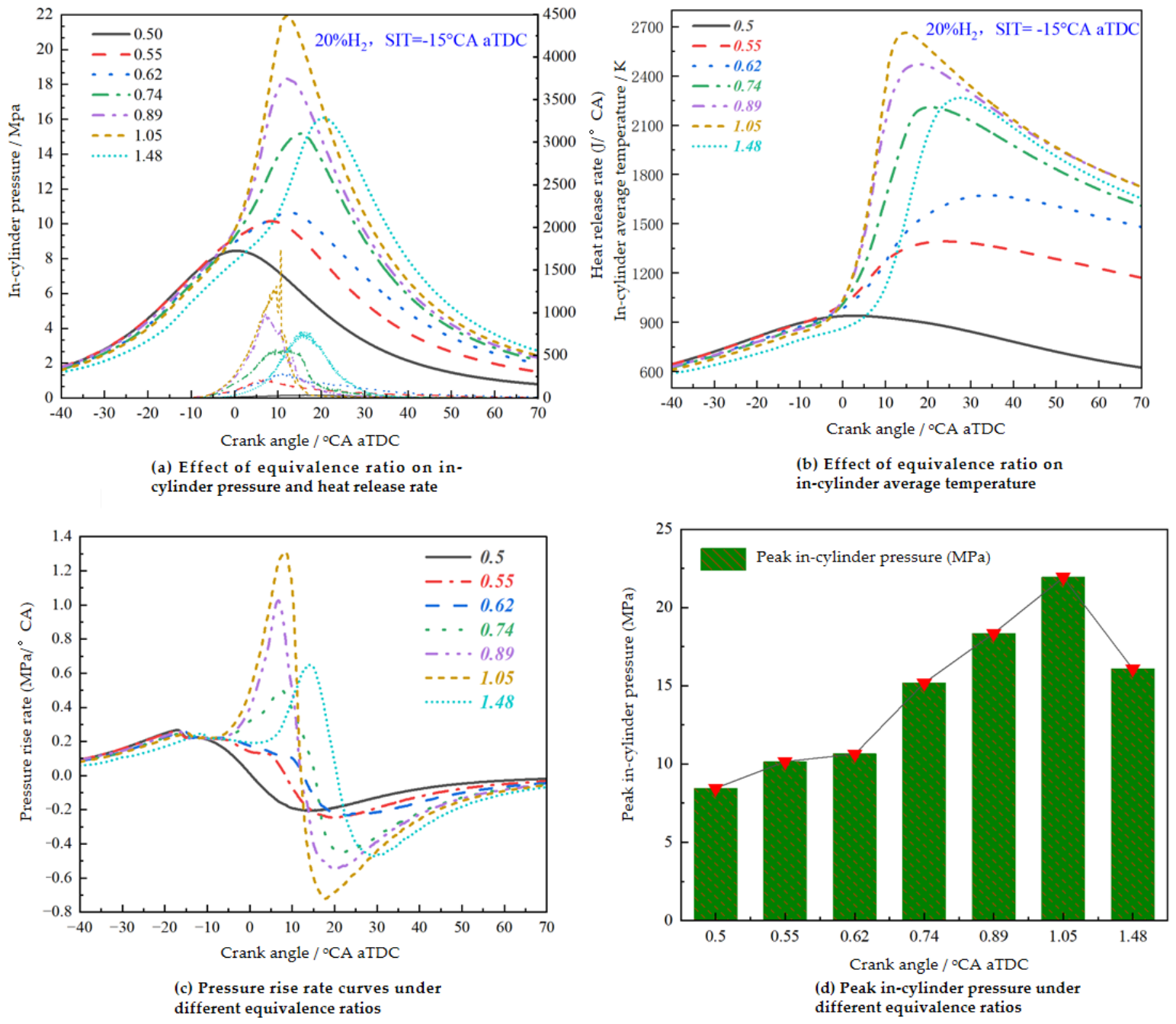
Figure 10a,b show the variations in in-cylinder pressure, heat release rate, and in-cylinder average temperature under different equivalence ratios, respectively.
Figure 10c,d present the changes in pressure rise rate and peak pressure at various equivalence ratios.
As shown in
Figure 10a, with an increase in the equivalence ratio, the in-cylinder pressure and heat release rate first increase and then decrease. Meanwhile,
Figure 10b indicates that the in-cylinder average temperature exhibits the same trend. This is because a higher equivalence ratio corresponds to a larger amount of ammonia–hydrogen fuel, which theoretically releases more total energy. Under lean-burn conditions, sufficient air is available to support mixture combustion, so the in-cylinder pressure and heat release rate continuously increase, which also leads to a continuous rise in the in-cylinder average temperature.
When the equivalence ratio reaches 1.05, the fuel–air ratio is closest to the theoretical requirement for complete combustion. Under this condition, the ammonia–hydrogen mixture burns at the fastest rate, thus producing the highest heat release. When the equivalence ratio is further increased to 1.48, the in-cylinder ammonia–hydrogen mixture concentration is much higher than that of air. Although the fuel quantity increases, insufficient air causes partial fuel to fail in complete combustion, resulting in reduced combustion efficiency.
Notably, at an equivalence ratio of 1.05, the in-cylinder instantaneous heat release rate rises sharply at 8.3° CA aTDC, which further causes the in-cylinder pressure to reach 21.9 MPa at 9.8° CA aTDC. However, excessively high in-cylinder pressure is detrimental to the stable operation of the engine. Combined with
Figure 9 and the following Figure 13, the cause can be concluded: at 8° CA aTDC, the hydrogen-rich region far from the spark plug reaches autoignition conditions due to high temperature and pressure, and the rapid combustion of the mixture leads to a sharp increase in the heat release rate.
It can be seen from
Figure 10c,d that, when the equivalence ratio exceeds 0.62, the in-cylinder pressure rise rate and peak pressure become relatively high, which is unfavorable for the smooth operation of the engine. Therefore, equivalence ratio parameters corresponding to high pressure will not be adopted in subsequent studies.
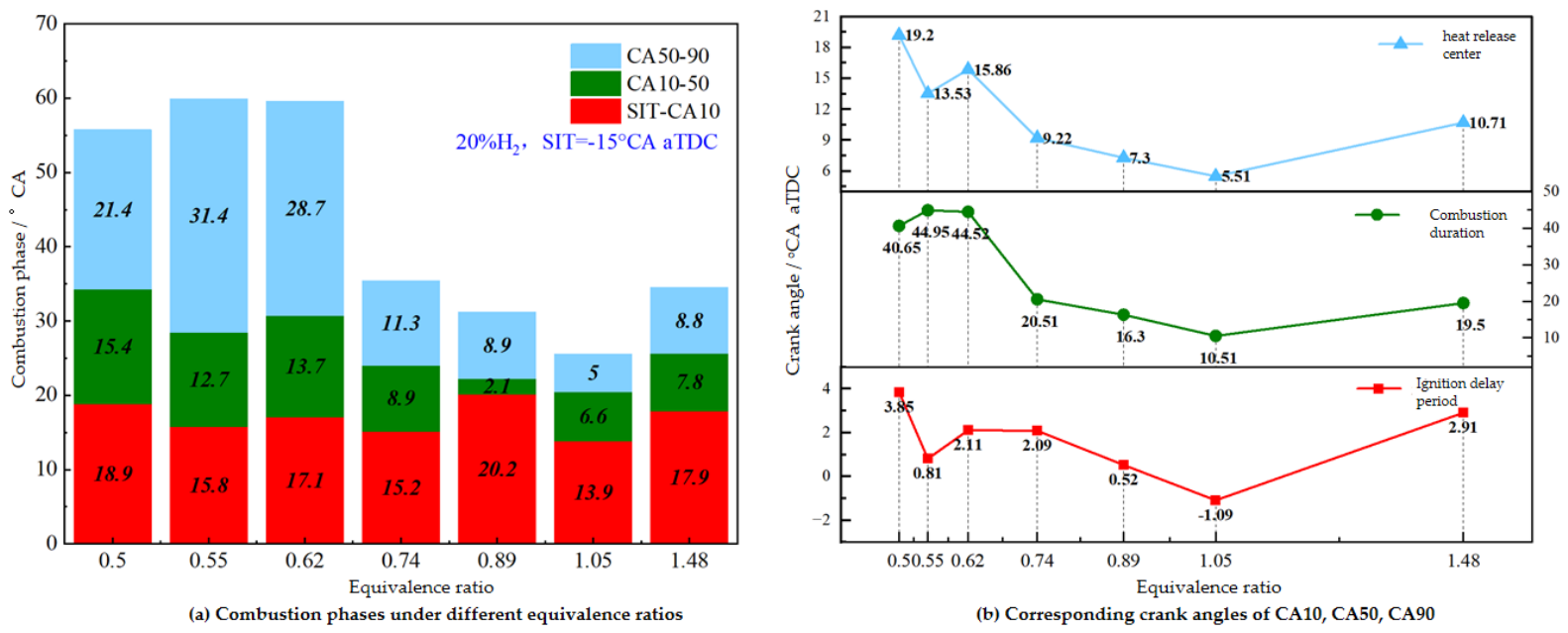
In this study, spark ignition timing is denoted by SIT. CA10, CA50 and CA90 represent the crank angles at which the cumulative heat release reaches 10%, 50% and 90% of the total, respectively. The flame development period is defined as the duration from SIT to CA10, the flame propagation period as that from CA10 to CA50, the flame acceleration period as that from CA50 to CA90, and the total combustion duration as that from SIT to CA90.
Figure 11a,b show the combustion phases and the corresponding crank angles of CA10, CA50 and CA90 under different equivalence ratios, respectively.
As shown in
Figure 11a, under lean-burn conditions, the combustion duration first increases and then decreases with the increase in the equivalence ratio. When the equivalence ratio reaches 1.05, the combustion duration is the shortest, only 25.5° CA. As the equivalence ratio further increases to 1.48, the combustion duration slightly prolongs to 34.5° CA. This is because the fuel quantity in the cylinder is higher than the air supply, resulting in incomplete combustion and a longer combustion duration.
It can be clearly observed from
Figure 11b that, with the increase in the equivalence ratio, the combustion duration, ignition delay period and heat release center all show a trend of rising first, falling, and then rising again. Under the equivalence ratio of 1.05, the crank angle corresponding to CA50 is the smallest, which is 5.51° CA.
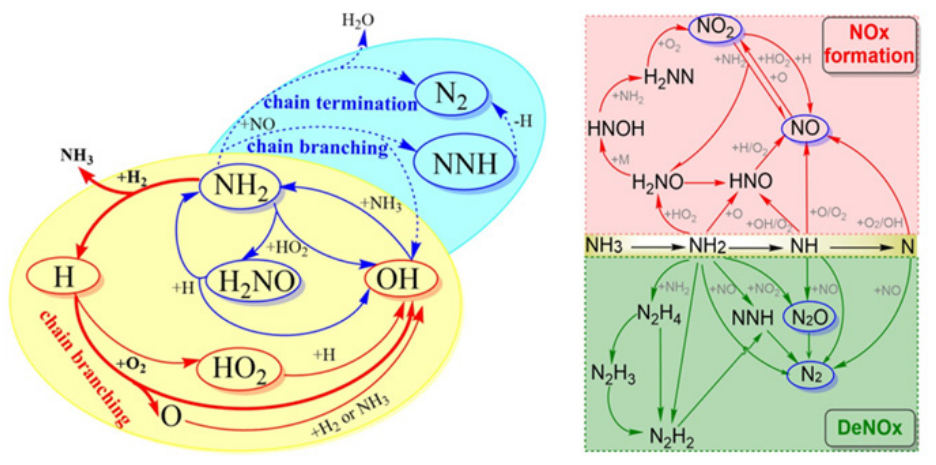
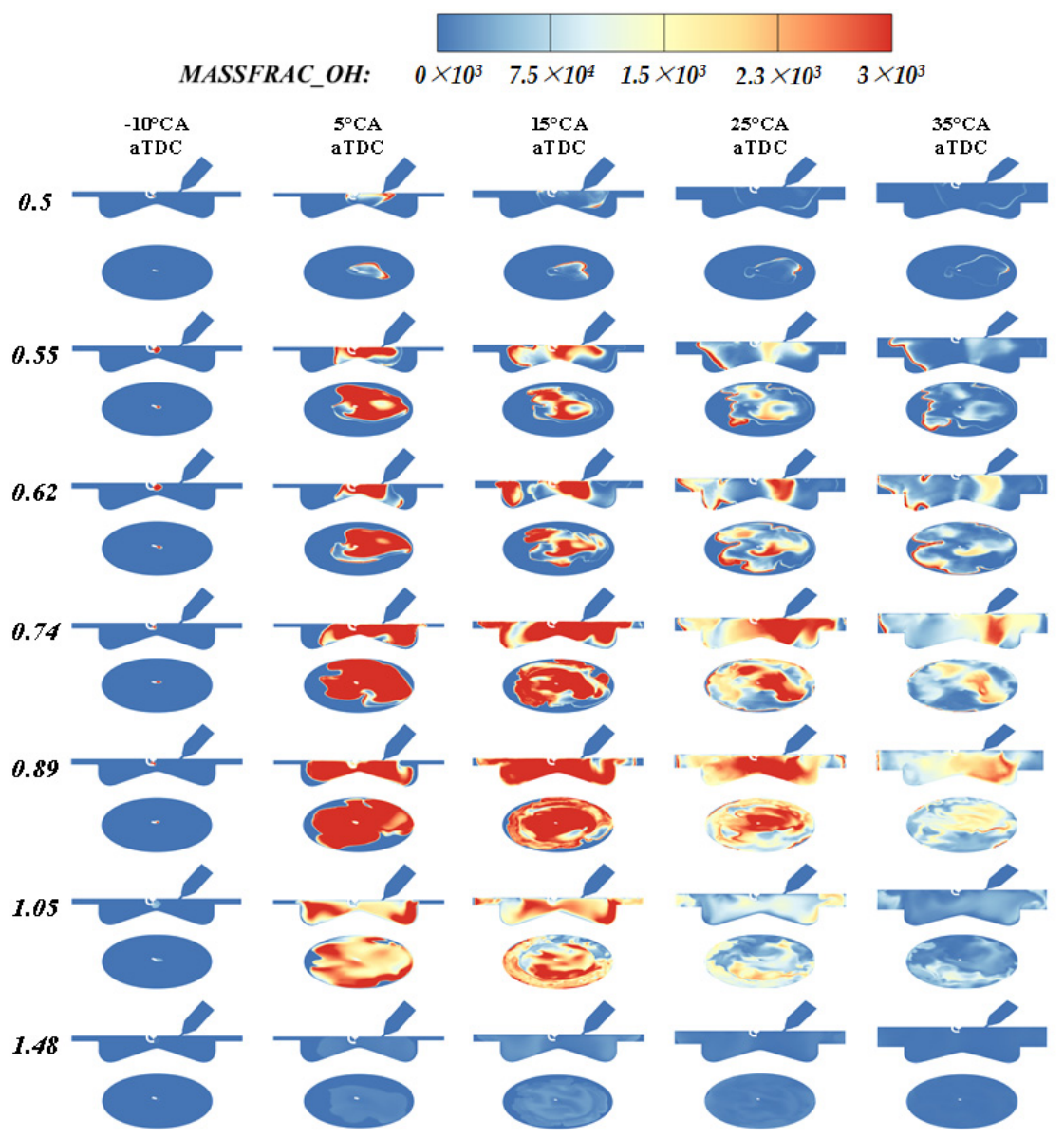
OH radicals exist at the flame front and serve as a key indicator of fuel energy release. In ammonia–hydrogen dual-fuel engines, OH radicals dissociated from hydrogen combustion promote the decomposition of NH3. During ammonia oxidation, the first step is typically the dehydrogenation of NH3 by OH or H radicals to form NH2 or NH. Most intermediates are then converted to N2H2, which further reacts with O2 via NNH to produce the complete combustion product N2. Meanwhile, Zhu et al. observed in their research that the distribution of OH radicals is highly consistent with the temperature distribution: high temperatures favor the formation of OH radicals and thus promote flame propagation.
The laminar flame speed of pure ammonia is only about 0.15 m/s, whereas that of hydrogen can reach up to 2.7 m/s. Under the 20% hydrogen energy share condition in this study, the laminar flame speed of the mixture increases to approximately 0.45 m/s, representing an improvement of over 200% compared to pure ammonia. This significantly shortens the combustion duration, shifts the combustion phasing closer to top dead center (TDC), and thereby improves thermal efficiency. As can be seen from the OH radical distribution in
Figure 12, hydrogen blending results in a more distinct flame front with a faster propagation speed, enabling the flame to cover the entire combustion chamber in a shorter period of time.
Figure 12 shows the effect of different equivalence ratios on the in-cylinder OH radical distribution. It can be clearly seen that, after spark ignition, OH radicals are distributed spherically around the spark plug. As the flame front advances toward the unburned region of the combustion chamber, OH radicals begin to diffuse toward both sides of the chamber, and their concentration increases, reaching a maximum at 15° CA aTDC. OH radicals are more concentrated near the spark plug, with the highest density in the center of the cylinder and a gradual radial decrease.
With increasing equivalence ratio, the in-cylinder OH radical concentration rises gradually and reaches its maximum at an equivalence ratio of 0.89. Notably, at equivalence ratios of 0.5 and 1.48, the OH radical concentration is relatively low. As shown previously in
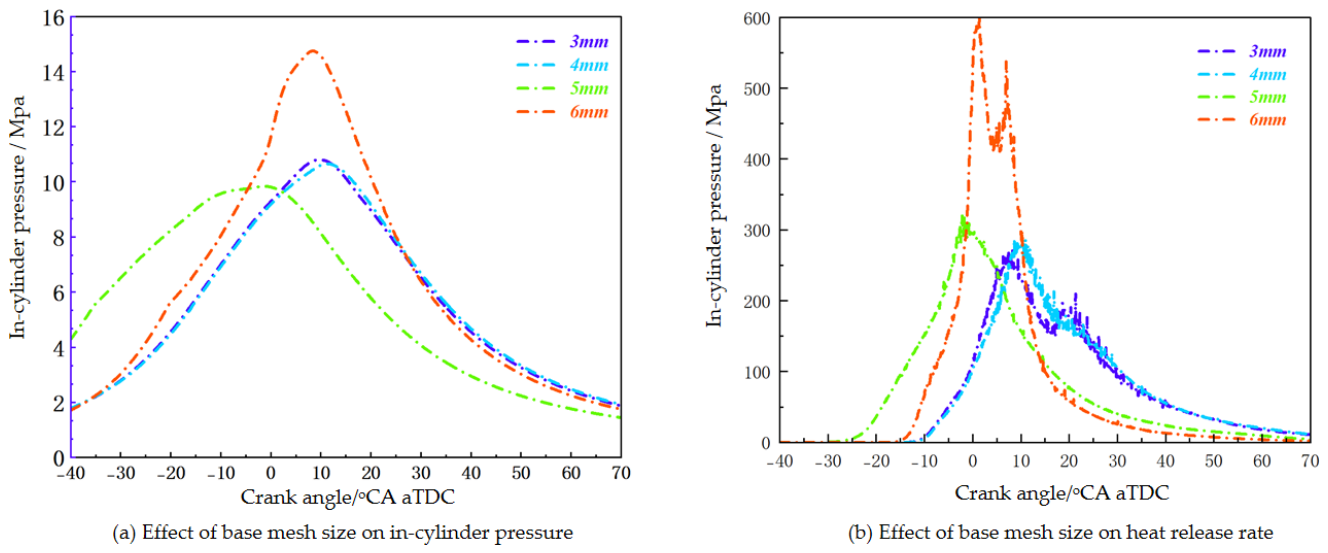
Figure 4, both excessively low and excessively high equivalence ratios are unfavorable for flame propagation, resulting in slow laminar flame speeds.
OH radicals mainly exist in the flame front where the temperature exceeds 1500 K. At an equivalence ratio of 0.5, excess air dilutes the mixture and absorbs combustion heat, lowering the overall in-cylinder temperature and suppressing OH formation. At an equivalence ratio of 1.48, insufficient oxygen leads to incomplete combustion, creating a fuel-rich oxygen-deficient reducing atmosphere that inhibits OH generation.
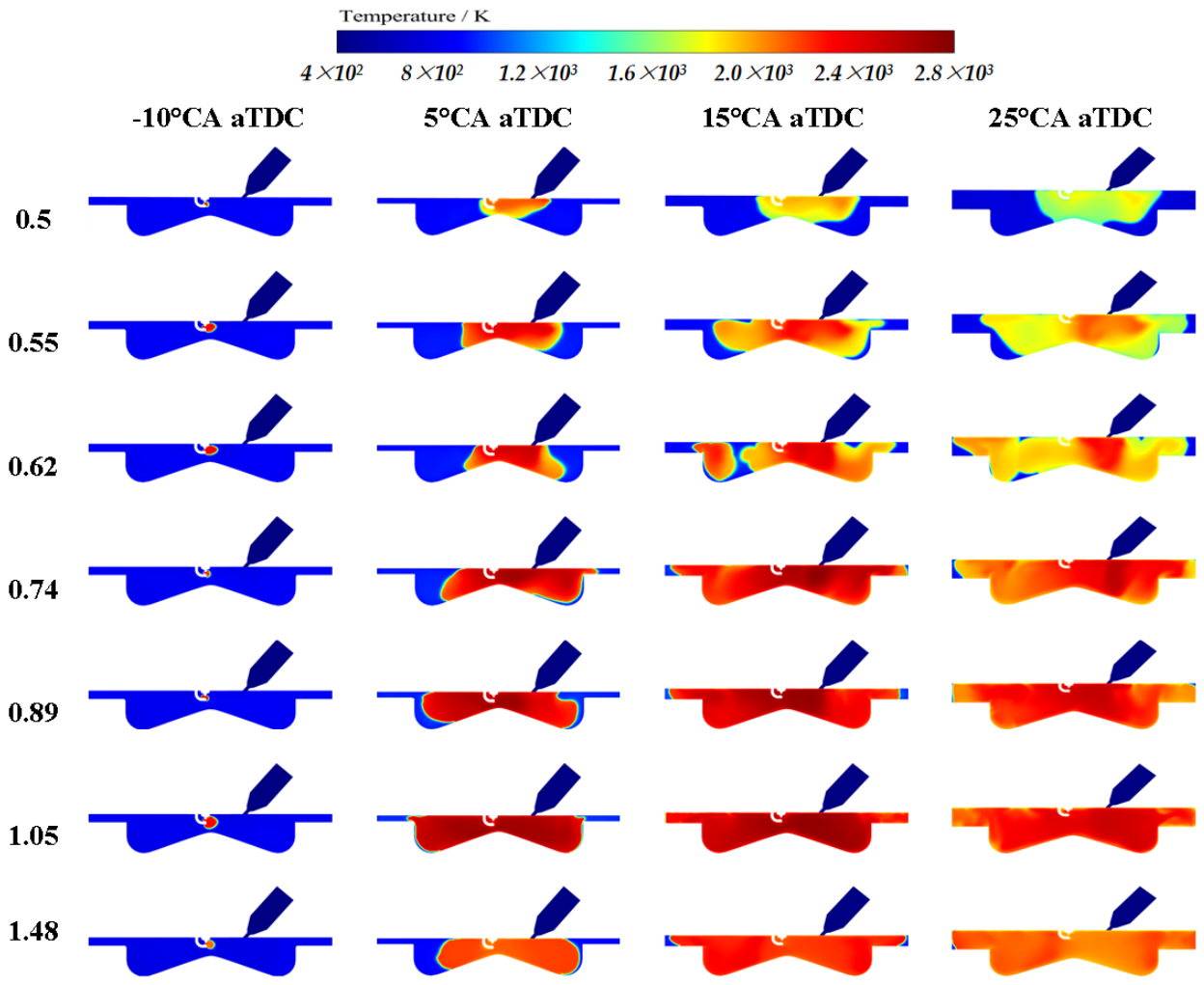
Figure 13 shows the in-cylinder cross-sectional temperature distribution of the engine at crank angles ranging from −10° CA aTDC to 25° CA aTDC. The spark ignition timing is fixed at −15° CA aTDC. It can be clearly observed that, under different equivalence ratios, high-temperature regions basically appear near the cylinder head side close to the spark plug. This is because, after spark ignition, the fuel–air mixture around the spark plug is ignited rapidly, forming a high-temperature burned zone. As the piston moves upward, the high-temperature region gradually expands toward both sides and eventually spreads throughout the combustion chamber.
At 5° CA aTDC, the area of the high-temperature burned zone in the cylinder gradually increases with increasing equivalence ratio. As can be seen from
Figure 11, a larger equivalence ratio leads to an earlier heat release center, shorter combustion duration, and faster combustion speed of the in-cylinder mixture, which explains the above phenomenon. Meanwhile, it can be intuitively observed from the slice contours that the combustion of the fuel–air mixture in the chamber is poor at an equivalence ratio of 0.5. When the equivalence ratio increases to 0.62, the in-cylinder temperature rises significantly, and the flame front approaches the cylinder wall at 25° CA aTDC. When the equivalence ratio rises to 1.05, the flame front reaches near the cylinder wall as early as 5° CA aTDC. As the equivalence ratio further increases to 1.48, the flame front approaches the cylinder wall at 15° CA aTDC.
This further indicates that, when the equivalence ratio is close to the stoichiometric ratio, the high-temperature combustion zone expands faster, combustion intensity is enhanced, and flame stability is improved. However, the rapid and high in-cylinder pressure rise tends to induce engine knock.
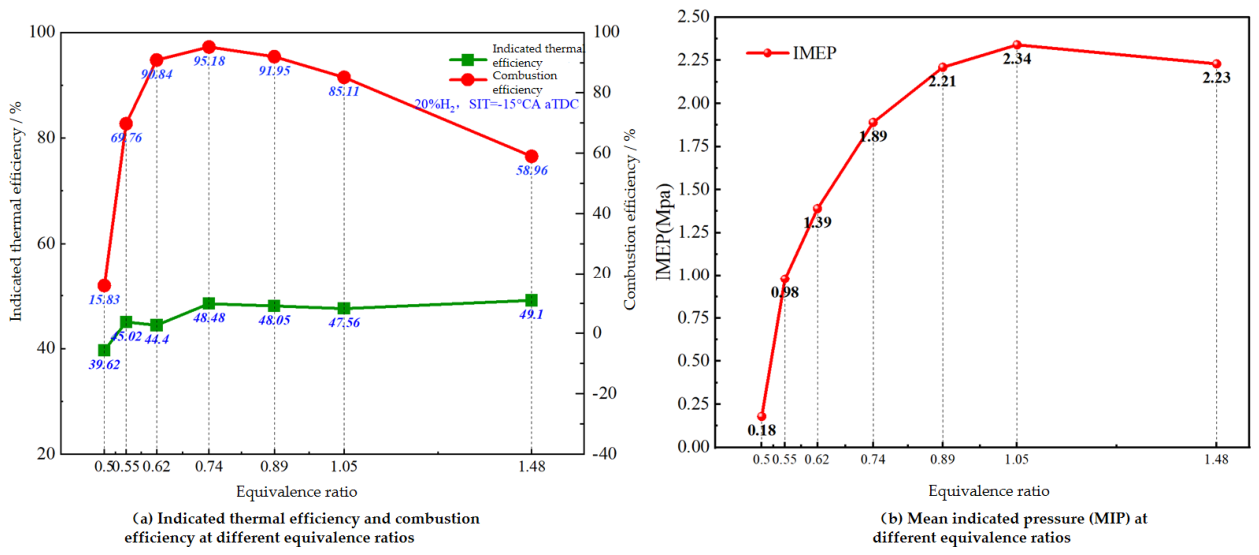
This study further investigated the effects of equivalence ratio on engine performance, including combustion efficiency (CE), indicated thermal efficiency (ITE), and indicated mean effective pressure (IMEP). The combustion efficiency, indicated thermal efficiency, and IMEP under different equivalence ratios are shown in
Figure 14.
As shown in
Figure 14a, with an increase in the equivalence ratio, both combustion efficiency and indicated thermal efficiency first increase and then decrease. The combustion efficiency reaches its maximum of 95.18% at an equivalence ratio of 0.74. Notably, when the equivalence ratio increases to 1.48, the combustion efficiency is only 58.96%, while the indicated thermal efficiency is as high as 49.1%. The low combustion efficiency is attributed to the overly rich fuel mixture and suppressed ammonia cracking, whereas the high indicated thermal efficiency is driven by the rapid combustion characteristics of hydrogen, reduced heat loss, and optimized thermodynamic cycle.
Figure 14b shows that the indicated mean effective pressure first rises and then falls with increasing equivalence ratio, reaching a maximum of 2.34 MPa at an equivalence ratio of 1.05.
It is worth noting that, at equivalence ratios of 0.5 and 0.55, the combustion efficiency, indicated thermal efficiency, and IMEP are all relatively low. When the equivalence ratio increases to 0.62, the combustion efficiency rises rapidly to 90.84%, indicating that the mixture in the combustion chamber burns more completely under this condition. However, as the equivalence ratio continues to increase to 0.89, the combustion efficiency begins to decrease. As shown previously in
Figure 10a,b, the further increase in equivalence ratio leads to a higher in-cylinder average temperature and shorter combustion duration. The concentrated heat release increases heat transfer loss to the cylinder wall, so the heat cannot be effectively converted into mechanical work, resulting in a decline in both combustion efficiency and indicated thermal efficiency. In contrast, the IMEP continues to increase because, despite the lower energy conversion efficiency, the increased total fuel quantity still drives IMEP to a higher level.
3.3. Effects of Equivalence Ratio on Engine Emission Characteristics
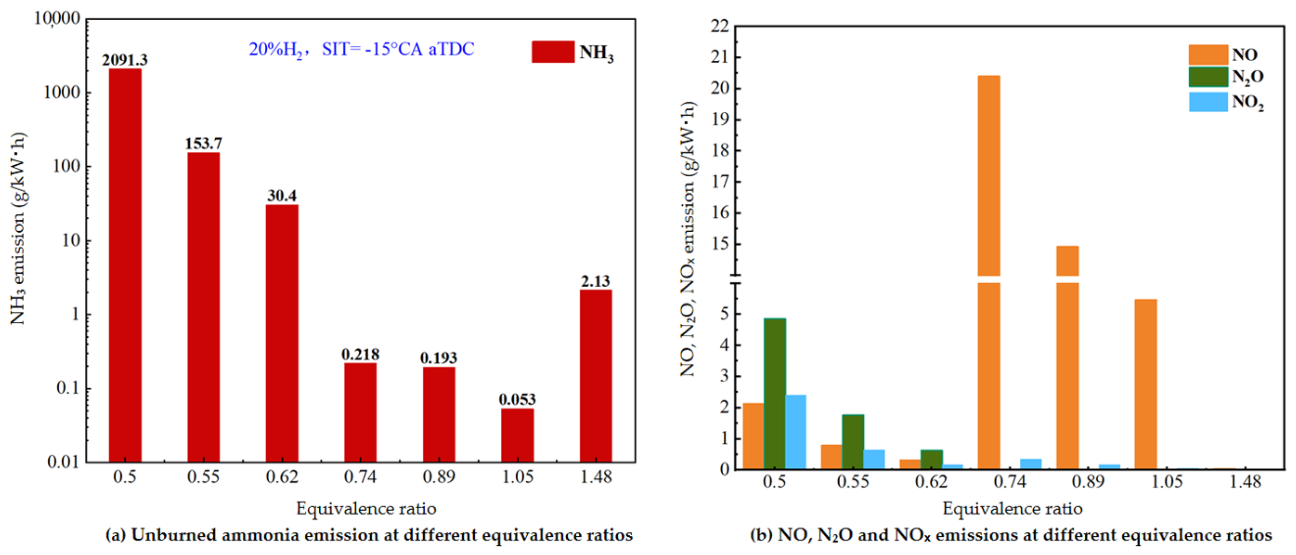
In the research regarding the development and application of ammonia–hydrogen dual-fuel engines, nitrogen-based pollutants mainly consist of NOx (including NO, NO2, N2O, etc.) and unburned ammonia. NO is the main component of NOx emissions, which can cause acid rain and ozone formation, posing direct harm to the environment and human beings. Therefore, NO is the focus of research on nitrogen-based pollutants. Although N2O has the smallest emission magnitude, it is a potent greenhouse gas that destroys the ozone layer and causes long-term harm to Earth’s ecosystem, requiring focused research in the field of clean energy. NO2 is a highly oxidizing gas that is directly toxic to the human respiratory system. Meanwhile, as an important precursor of photochemical smog, ozone and PM2.5, it affects air quality and also requires key research.
Figure 15b shows the emission characteristics of NO, N
2O, and NO
2 under different equivalence ratios. It is noteworthy that, although unburned NH
3 emissions are nearly zero at Φ = 1.05, NO emissions remain at a relatively high level (approximately 15 g/kW·h). This is because the in-cylinder average temperature exceeds 2200 K under this condition, leading to a significant increase in thermal NO formation. This indicates that Φ = 1.05 represents a typical performance–emission trade-off operating condition: the highest IMEP (2.34 MPa) and the lowest unburned NH
3 emissions (0.053 g/kW·h) are achieved, with a combustion efficiency as high as 93.1%. NO emissions are relatively high, necessitating a selective catalytic reduction (SCR) aftertreatment system to meet emission regulation requirements.
In contrast, although the combustion efficiency at Φ = 0.62 is slightly lower (90.8%), the NO emissions are only 2.1 g/kW·h and N2O emissions are 1.2 g/kW·h, resulting in superior overall emission performance. This indicates that, in practical applications, the appropriate equivalence ratio operating range should be selected based on specific emission regulations and performance requirements.
It can be seen from
Figure 15b that NO emission is low in the equivalence ratio range of 0.5 to 0.62 because the combustion efficiency of the in-cylinder mixture is low and the average in-cylinder temperature is insufficient to support the formation of thermal NO and fuel NO. When the equivalence ratio increases to 0.74, NO emission reaches the maximum. As shown previously in
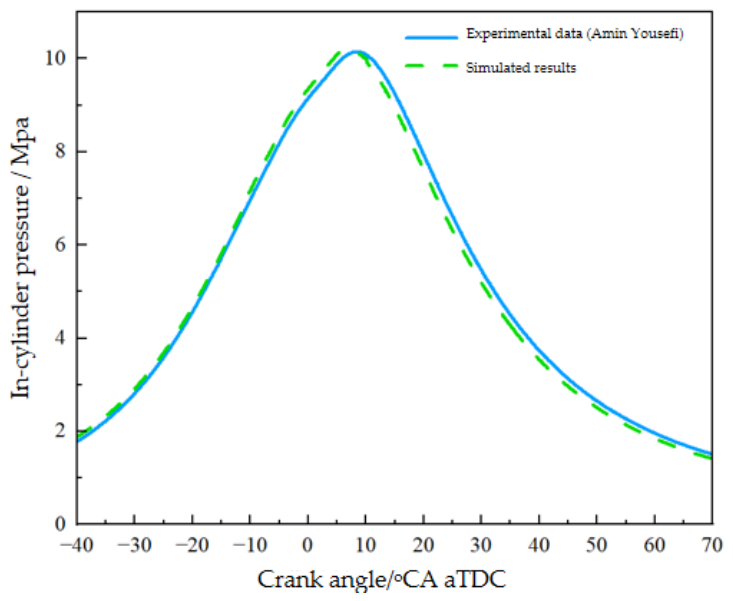
Figure 10a,b, at an equivalence ratio of 0.74, the combustion efficiency is the highest (95.18%) and the average in-cylinder temperature generally exceeds 1800 K. According to the Zeldovich mechanism, a large amount of thermal NO is produced under such conditions, thus increasing NO emission [
32]. When the equivalence ratio increases to 1.48, NO emission is nearly zero. This is because, under fuel-rich conditions, the combustion efficiency is only 55.2% and the average temperature decreases, which significantly reduces the formation of fuel NO and thermal NO.
This non-monotonic evolution of nitrogen-based pollutants in our ammonia–hydrogen engine exhibits strong qualitative consistency with the multi-species emission behaviors reported in broader advanced alternative dual-fuel combustion systems [
33]. As systematically demonstrated, the local equivalence ratio and corresponding flame temperature command the shifting boundaries between fuel–NO
x reactions and thermal Zeldovich mechanisms. Specifically, at lower combustion temperatures typical of lean-burn regions (below 1400 K), the interaction between amine-intermediate radicals and NO
2 serves as a major chemical contributor to N
2O accumulation, while the abundance of HO
2 radicals actively recycles NO into NO
2. When the equivalence ratio approaches closer to the stoichiometric point (Φ = 1.05), the drastically intensified radical pool (H, O, and OH) combined with elevated peak thermal fields accelerates the consumption and self-reduction pathways of both N
2O and NO
2, thereby forcing their final concentration profiles downwards. This cross-species kinetic balancing perfectly supports the validity of our 3D CFD simulation results.
Meanwhile, it can be observed that N2O is the main pollutant with the highest emission at equivalence ratios of 0.5 to 0.62. With an increase in equivalence ratio, N2O emission gradually decreases and becomes nearly zero when the equivalence ratio exceeds 0.62. This is because N2O is mainly formed under high-pressure and medium–low-temperature conditions (between 800 and 1200 K). NO2 emission also shows a gradual decreasing trend with an increase in equivalence ratio. It can be seen from the figure that NO2 emission is the highest at an equivalence ratio of 0.5, indicating that low combustion efficiency under lean-burn conditions promotes the formation of NO2.
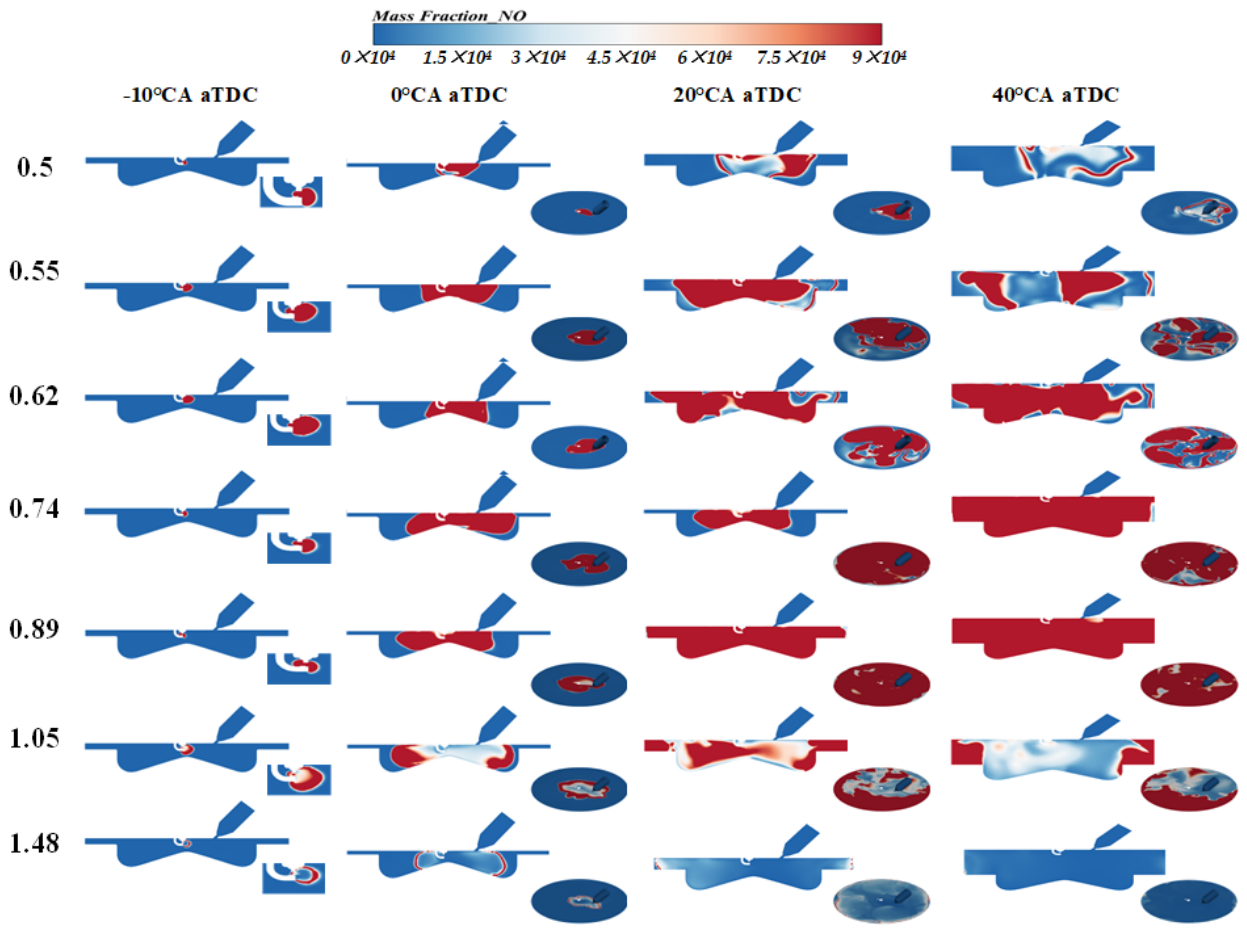
Figure 16 shows the evolution of the in-cylinder cross-sectional NO mole fraction under different equivalence ratios. It can be seen from the figure that, after spark ignition, at −10° CA aTDC, the ammonia–hydrogen mixture on one side of the spark plug is ignited rapidly, and a large amount of thermal NO and fuel NO are generated quickly in the high-temperature burned zone. As combustion proceeds continuously, NO gradually diffuses to the low-temperature regions on both sides of the combustion chamber. This is because the flame front gradually spreads to the unburned zone, and important intermediates such as HNO, NH and N are mainly formed at the flame front, which favors the formation of fuel NO. Meanwhile, it can be observed that, with the continuous increase in the equivalence ratio, NO forms faster at the same crank angle. This is because the average in-cylinder temperature rises gradually and the mass of the ammonia–hydrogen mixture increases with the rising equivalence ratio, which further intensifies the formation of fuel NO and thermal NO.
Notably, at an equivalence ratio of 0.5, low combustion efficiency results in a low average in-cylinder temperature, and a large amount of ammonia–hydrogen mixture is not fully burned, thus inhibiting NO formation. At 40° CA aTDC, it can be clearly seen that NO appears mainly in stripes on both sides of the combustion chamber and tends to diffuse outward, where NO exists mainly at the flame front. When the equivalence ratio is increased to 1.05, the in-cylinder NO mass fraction shows a downward trend at 20° CA aTDC and decreases substantially at 40° CA aTDC. This is mainly because the in-cylinder temperature is the highest and the combustion duration is the shortest under this operating condition, so a large amount of ammonia–hydrogen mixture is burned out rapidly. As the piston moves downward, the in-cylinder temperature drops quickly, and a large amount of NO is reduced to N2 and H2O through reactions with N, O and H radicals.
It is worth noting that, at an equivalence ratio of 1.48, insufficient oxygen and a low average in-cylinder temperature lead to incomplete combustion of a large amount of mixture, which restricts the formation of thermal NO.
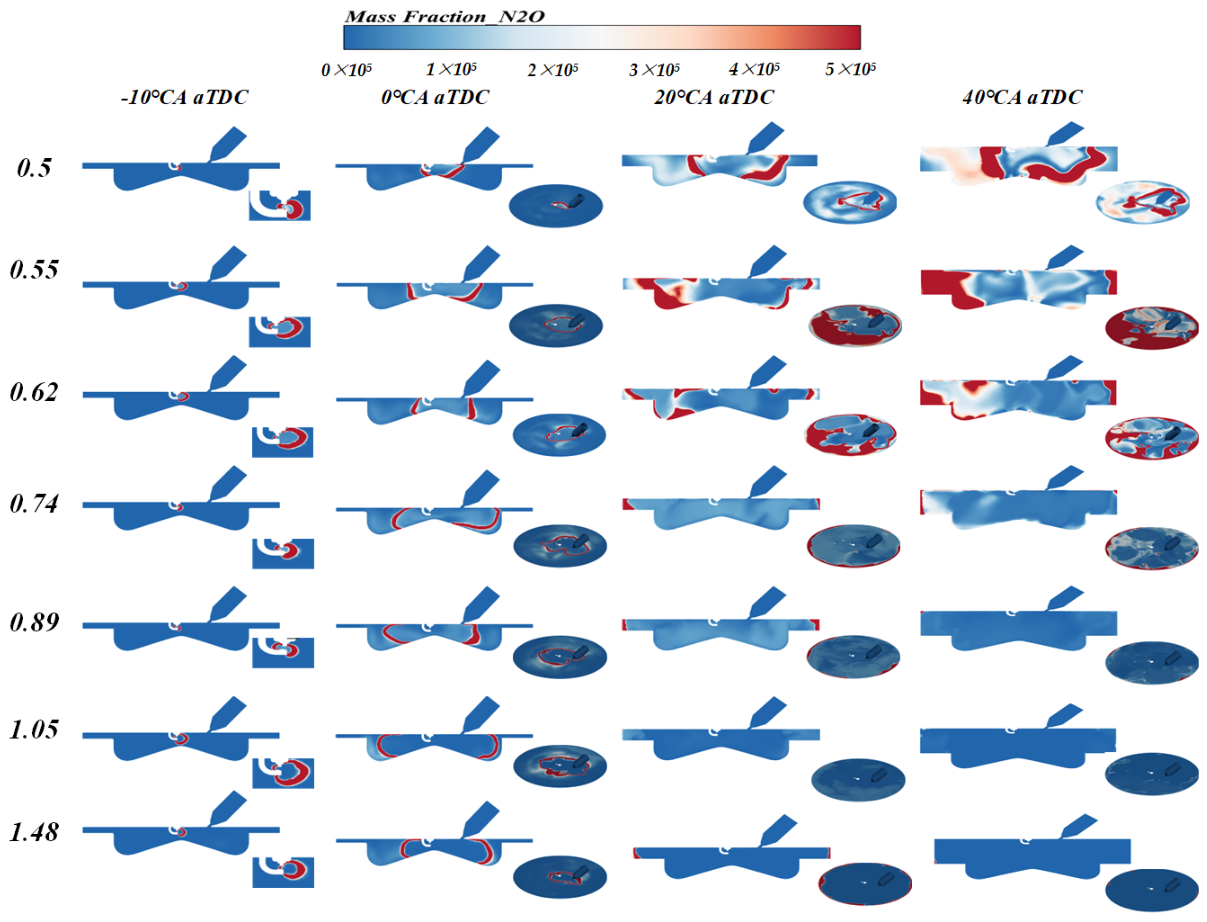
Figure 17 shows the evolution of the in-cylinder cross-sectional N
2O mole fraction under different equivalence ratios. It can be clearly observed from the figure that the in-cylinder N
2O mass shows a decreasing trend with the increase in the equivalence ratio. The N
2O mole fraction is the highest under the equivalence ratio range of 0.5–0.62. This is because the average in-cylinder temperature is relatively low under low equivalence ratios, and N
2O is mainly formed under high-pressure and medium–low-temperature conditions (800–1200 K). As shown in Equation 10 above, NH reacts with NO to form N
2O. This also explains why the distribution of N
2O appears in a ring shape diffusing to both sides. NO formed at the flame front diffuses toward the low-temperature unburned zone along with the flame front, and the temperature in the burned zone decreases to meet the formation conditions of N
2O. Meanwhile, a large amount of N
2O is produced during the low-temperature oxidation of NH
3 via the reaction NH
3 + O
2 → N
2O + H
2O.
When the equivalence ratio is increased to 0.74–1.05, the higher combustion efficiency promotes the rise of in-cylinder temperature. High temperature is unfavorable to the formation of N2O, and N2O is oxidized and reduced to NO at high temperatures, which further promotes the formation of NO. When the equivalence ratio is increased to 1.48, insufficient oxygen in the cylinder and an average temperature above 1500 K inhibit the formation of N2O.
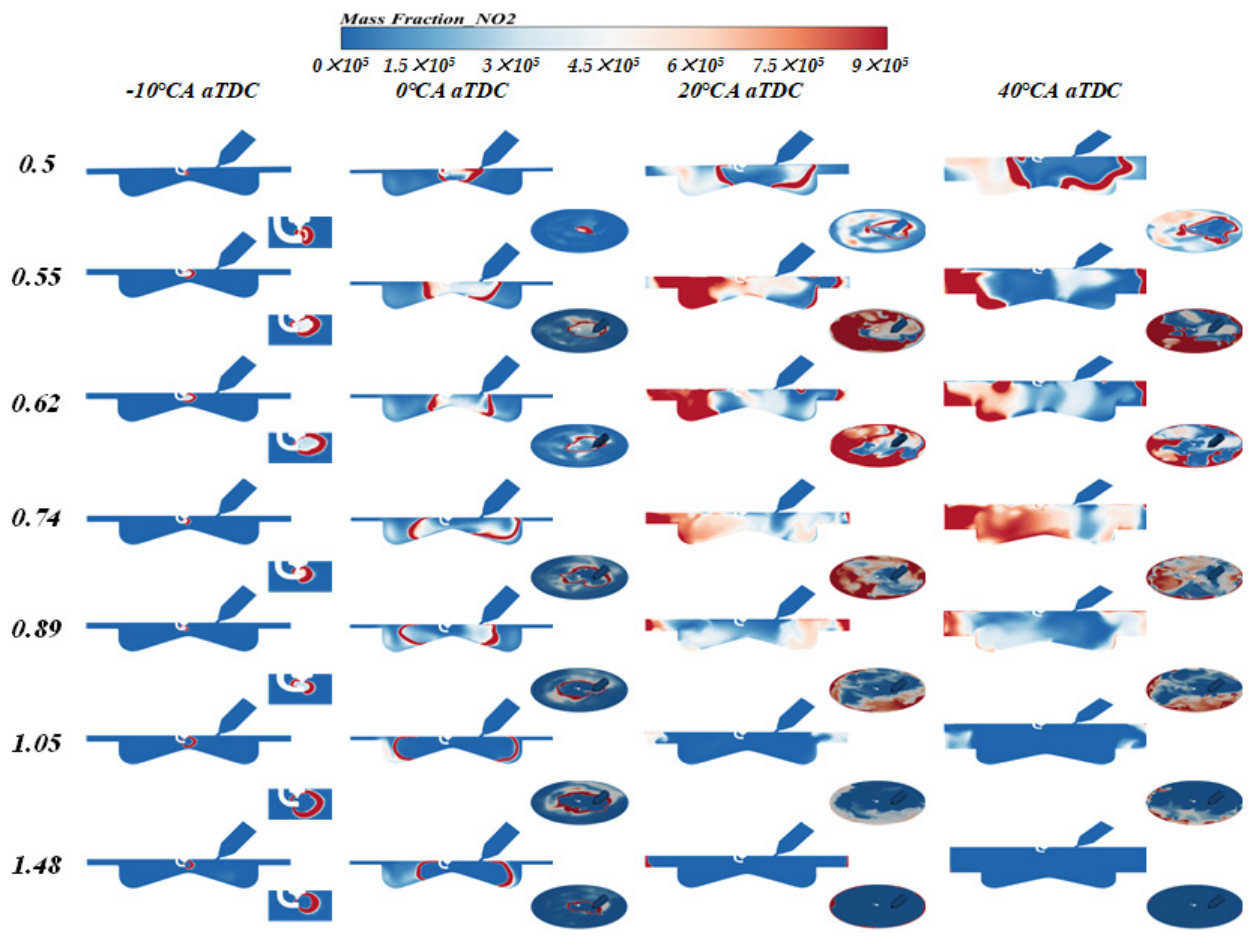
Figure 18 shows the evolution of the in-cylinder cross-sectional NO
2 mole fraction at different equivalence ratios. It can be clearly observed that NO
2 is mainly distributed in the low-temperature regions on both sides of the combustion chamber under low equivalence ratios. This is because NO
2 is mainly formed in low-temperature regions below 1000 K, and important precursors for NO
2 formation are NO and O atoms. Moreover, NO
2 tends to decompose into NO and O
2 at high temperatures, so the formation conditions of NO
2 are relatively stringent. Therefore, under low equivalence ratios, improving combustion efficiency can reduce NO
2 formation.
It is worth noting that, when the equivalence ratio exceeds 0.74, NO2 emission is nearly zero due to the high in-cylinder temperature. The formation of NO2 is the lowest under fuel-rich conditions.