Article

Scars on the Steppe: A Comparative Analysis of Soyuz First Stage and Abort Mode Impacts on Arid Ecosystems in Kazakhstan at 2024


by
Ivan N. Semenkov
*,
Andrey M. Karpachevskiy
,
Sergey A. Lednev
and
Tatyana V. Koroleva
Faculty of Geography, M.V. Lomonosov Moscow State University, 119991 Moscow, Russia
*
Author to whom correspondence should be addressed.
Fire 2026, 9(6), 234; https://doi.org/10.3390/fire9060234
Submission received: 12 March 2026 / Revised: 8 May 2026 / Accepted: 25 May 2026 / Published: 2 June 2026
(This article belongs to the Special Issue Fire and Explosion Prevention in Maritime and Aviation Transportation)

Abstract

In 2024, eight Soyuz launch vehicles launched from the Baikonur Cosmodrome created 40 falling sites in Central and Northern Kazakhstan. During field work at all falling sites, the area of disturbances was assessed. The average area of zones containing large fragments was 63 m2, and the average area of scatter fields of small fragments was 11,605 m2. The maximum area of jet fuel spills reached 125 m2, and that of hydrogen peroxide spills reached 196 m2. In 2024, due to falling debris, total mechanical disturbances covered 6912 m2, and total pyrogenic impact effected 1,211,453 m2. At the first stage falling sites during the plant growing season, the area affected by fires and H2O2 spills was significantly larger, while the area of very weak mechanical disturbance was smaller (p < 0.05). During the mud season, the area with very strong mechanical impact was greater compared to winter and summer (p < 0.002). Compared to the first stage falling sites, the Soyuz abort mode falling sites were characterized by a larger area of very strong mechanical impact (p < 0.02), evidenced by deep craters, and a smaller area covered by large fragments. The data obtained can be used when planning launch dates from the Baikonur Cosmodrome to minimize negative environmental impact on the fragile and slow-recovering arid ecosystems of Central and Northern Kazakhstan. Information on disturbance areas can be used to monitor the natural recovery of affected ecosystems and to calculate the environmental damage caused by rocket and space activities in 2024.

1. Introduction

Space launch activity relies on multi-stage rockets to deliver payloads into the orbit. Special designated areas, namely falling zones, an integral part of any cosmodrome, are used for the landing of the spent fragments (e.g., rocket stages, abort mode, fairing, etc.) of launch vehicles (LVs) [1].
The Baikonur Cosmodrome most frequently uses falling zones located in Central Kazakhstan (Figure 1). This zone lies under the flight path ‘Soyuz-2.1a’ LVs for crewed and cargo missions to the International Space Station, as well as ‘Proton-M’ LVs. Other flight inclination used seldom results in the first stage separation of the ‘Soyuz-2.1b’ LV over Northern Kazakhstan.
The Baikonur Cosmodrome, built during the Soviet era and now located in the Republic of Kazakhstan, has exclusively land-based falling zones. This distinguishes it from most other launch sites [2], the falling impact zones of which lie in the oceans [3]. Land-based falling zones exist, for example in Iran, China, and Russia [4]. The landing of spent rocket stages causes mechanical disturbance to soils and vegetation. In addition, vegetation fires and propellent spills are also possible. Some propellants are highly carcinogenic, mutagenic, teratogenic, and embryotoxic compounds (unsymmetrical 1,1-dimethylhydrazine), while others contribute to black carbon emission and the depletion of the ozone layer [5,6].
Unlike ‘Proton’ LVs, which use highly toxic heptyl, ‘Soyuz’ LVs use liquid jet fuel (i.e., kerosene of grade ‘T-1’ and ‘RG-1’) and oxygen as propellants [1,7,8,9]. The jet fuel used in ‘Soyuz’ LVs consists primarily of cycloalkanes (70% by mass and 85–88% by volume), alkanes (25–30% by mass and 10–12% by volume), and, to a lesser extent, aromatic hydrocarbons (<5% by mass and <3% by volume) [10].
During the normal operation of ‘Soyuz’ LVs, the jet fuel is spilled only in the impact zones of the spent first stage, and released from the stage engines and the fuel tank, which break apart upon hitting the ground [9]. Hydrocarbons undergo chemical and biological oxidation [11,12], which alters their original composition. In soils, biodegradation plays the main role in hydrocarbon transformation. The microbiological activity of oxidizing bacteria leads to the partial mineralization of hydrocarbons, as well as to the formation of metabolic products that are insoluble in organic solvents [10].
‘Soyuz’ LVs’ first stage of operation also involves concentrated hydrogen peroxide (H2O2) and liquid nitrogen (N2) [13], which is evaporated in the atmosphere and does not reach the ground. Highly concentrated grade ‘PV-85’ hydrogen peroxide reacts vigorously with certain fuels, causing the latter to ignite. Under specific conditions, it can form explosive mixtures [14].
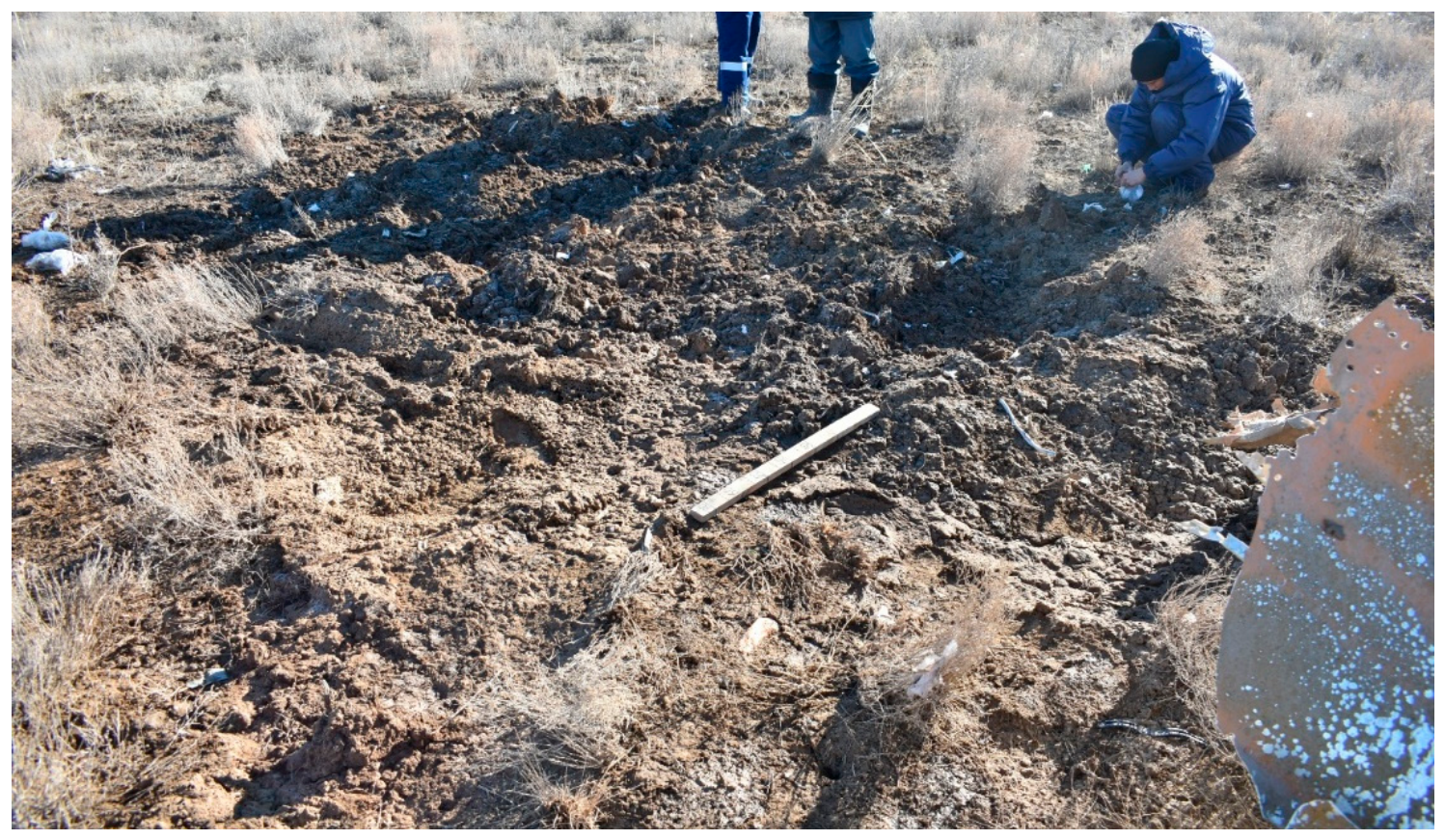
The Soyuz abort mode (SAM) of crewed ‘Soyuz-2.1a’ LVs is used solid rocket propellant. During a normal launch, it is not used and explodes upon landing to create a crater in the ground and, usually, vast fires among vegetation.
Historically, less attention has been paid to the pyrogenic impact of falling spent rocket stages than to the chemical and mechanical impacts, because fires are considered a natural factor in the formation of arid vegetation [15]. However, pyrogenic impacts can spread much further from the point where rocket fragments land than scattered fragments or propellent spills. It is assumed that beyond the immediate impact site, a fire caused by falling rocket stages does not differ from other fires of natural or other anthropogenic origin, although the composition of the resulting aerosols may differ due to the specific fuel that burns.
In Central Kazakhstan, fires occur at 28 and 80% of the first-stage falling sites of the ‘Proton-M’ and ‘Soyuz’ LVs, respectively [2]. This is attributed to differences in the flammability of the propellant used. In most cases, however, fires are limited to small areas. At the first-stage falling sites of ‘Proton-M’ and ‘Soyuz’ launch vehicles, the burned area is typically less than 5 m2 and 100 m2, respectively [2,16]. In addition, large fires can occasionally result from emergency rocket crashes [3,17,18].
Under a combination of unfavorable conditions (dry and hot summer weather with strong winds, desiccation of plant aboveground parts, and absence of firebreaks), even the normal landing of spent rocket stages can result in large fires [2,19,20]. In June 2017, a fire caused by the side boosters of the first-stage ‘Soyuz’ LV burned only within the falling zone ‘U-25’—specifically, 251.7 million m2. At the same time, fires in falling zones not related to LV debris landings (the ignition sources of which are usually far outside the zone boundaries) can affect much larger areas. Most large fires recorded in falling zone ‘U-25’ during the period for which Landsat data are available originated outside the zone—i.e., not from falling rocket stages [15].
Compared to forest fires, the low intensity of fires in the treeless arid ecosystems of Central Kazakhstan means that narrow linear barriers such as stream valleys or dirt road ruts can effectively stop the spread of fire, even in relatively large fires. Overall, fires caused by falling rocket separated parts should not be considered a special class of fire. In Central Kazakhstan, such fires differ from natural fires only in that small and large fragments act as additional barriers (along with roads and rivers) to fire spreading, leaving some areas unburned. These unburned patches subsequently serve as sources for the plant recolonization of burned areas. LV launches during the fire season may simply increase the frequency of fires and locally reduce the fire return interval in the falling zones of Central and Northern Kazakhstan [15].
Raw data on the spatial extent of areas disturbed by airspace transportation remain limited [1,21,22,23]. In contrast, numerous speculative publications, conducted without specialized fieldwork at the impact sites, claim the existence of extensive impact zones (including burning areas) causing long-term ecosystem degradation and health issues for peoples of nearby territories [7,23,24,25,26,27]. Other studies based on modeling improbable scenarios (e.g., ≥104 space launches per year versus an actual recent average of 100–150) conclude that space launches have a considerable ecological footprint [7,28].
The objective of this work was to assess the influence of seasonality on the occurrence of primary disturbances caused directly by the landing of separating parts of the ‘Soyuz’ LVs launched from the Baikonur Cosmodrome in 2024. We distinguish between direct (primary) and indirect (secondary) impacts from rocket and space activities in the falling zones of separating parts of LVs. Direct impacts result directly from the fall of debris, which leads to littering of the area with metallic and non-metallic fragments of various sizes, as well as disruptions to the integrity of vegetation and soil cover (mechanical impact), and may be accompanied by propellent spills and vegetation fires—chemical and pyrogenic impacts, respectively.
After fragmentation of the launch vehicle debris, additional disturbances appear. For example, the integrity of soil and vegetation cover is disrupted by the use of heavy machinery (creating ruts). Dragging the largest fragments along the ground (when they are difficult to access) for easier subsequent cutting creates furrows. All these disturbances are attributed to a secondary mechanical impact. In addition, new spills of propellent may occur from the engine unit pipelines and from fuel tanks containing so-called residual guaranteed propellent reserves. All of this can be considered secondary (indirect) impact from rocket and space activities on the ecosystems of the impact zones, because these disturbances are not caused by the falling of separating LV parts, but rather arise from activities aimed at minimizing the already existing impact—primarily the removal of metal fragments that litter the ecosystems.
To assess the full range of direct and indirect impacts on the ecosystems of Central and Northern Kazakhstan—resulting both directly from the fall of separating LV parts and from fragmentation and removal operations—monitoring is carried out during the nearest summer-autumn period [2,8]. Remote sensing data can also be used for this purpose [29].

2. Materials and Methods

2.1. Regional Setting

The falling zone ‘U-25’ in Central Kazakhstan is situated in the Ulytau Region, approximately 50 km southwest of Zhezkazgan (the capital of the Ulytau Region), within the northern desert subzone. The falling zone no. 120-a in Northern Kazakhstan is located in the Kostanay Region, about 60 km southeast of Torghai village, in the southern steppe subzone. Soil cover includes Gypsisols and Solonetz according to [30] which dominate both areas, and Solonchaks that are less common. The vegetation is characterized by the communities of cespitose grasses (predominately Stipa sareptana and Agropyron desertorum) and sagebrushes (predominantly Artemisia terrae-albae in Central Kazakhstan and A. semiarida in the Northern Kazakhstan).
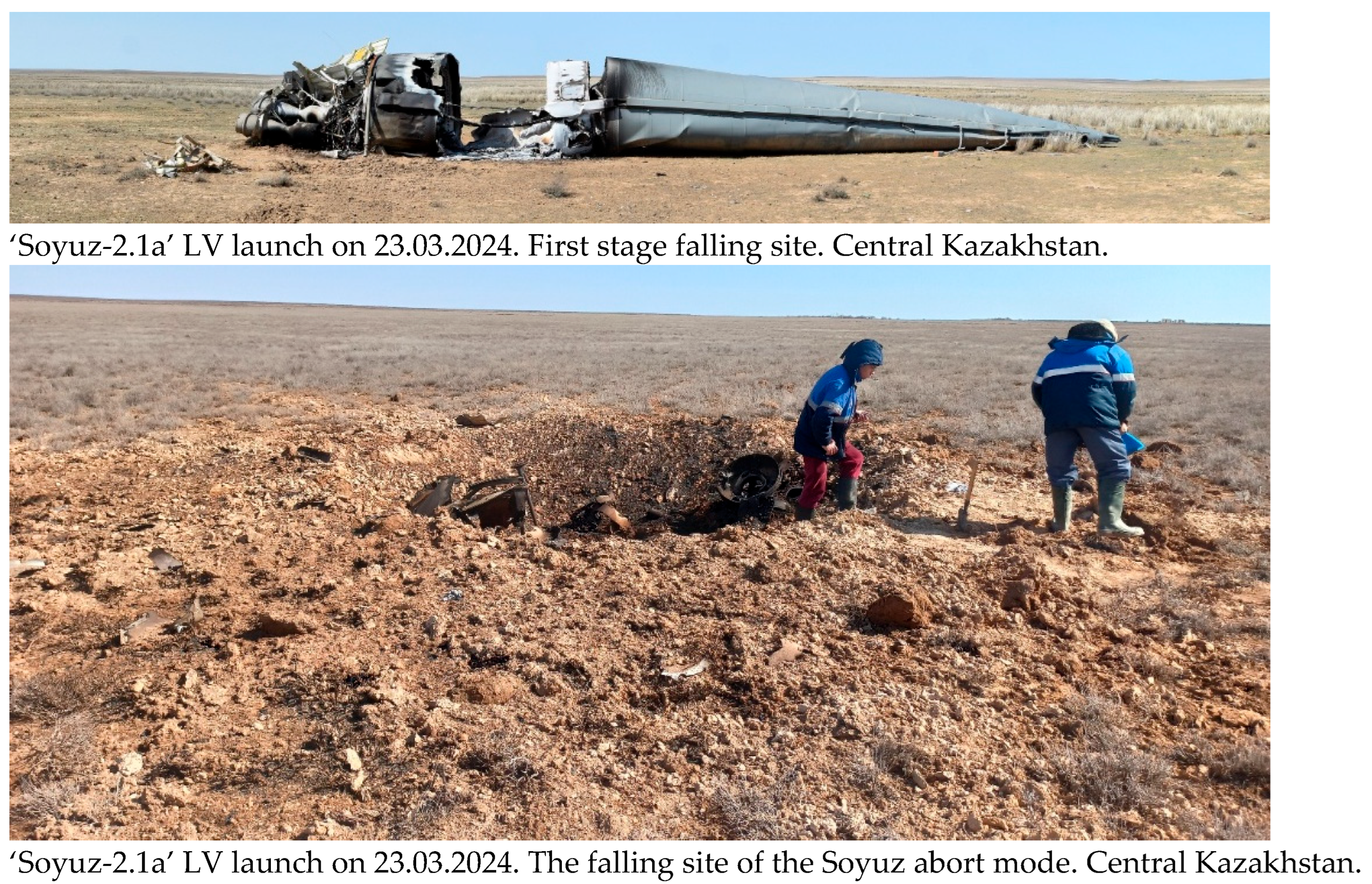
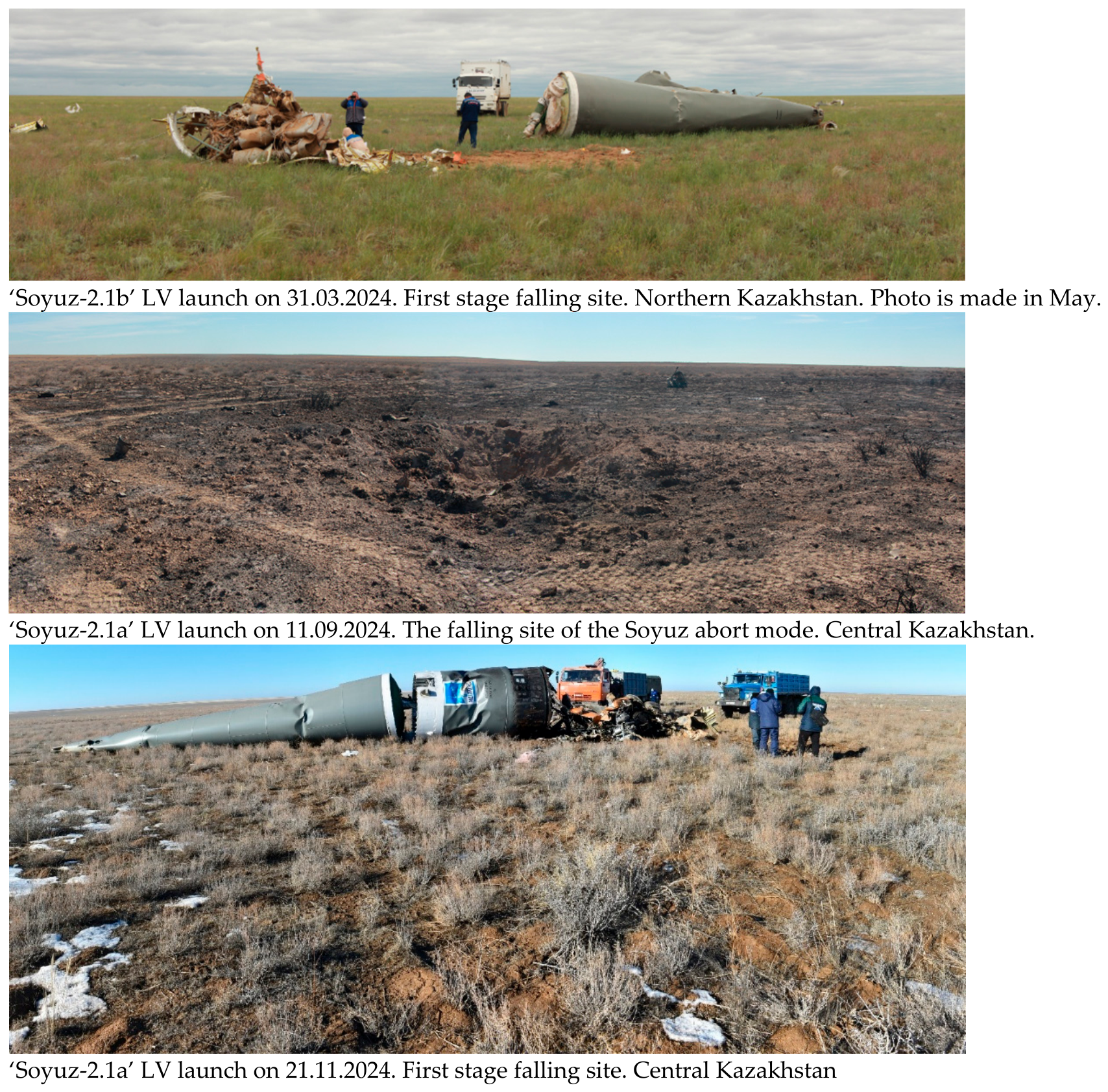
In 2024, eight ‘Soyuz’ LVs were launched from the Baikonur Cosmodrome. In Central and Northern Kazakhstan, these launches created 40 falling sites (Figure 1) due to landing of spent fragments of the ‘Soyuz’ LVs, namely the first stage and the Soyuz abort mode (SAM). Typically, the first stage of the ‘Soyuz’ LV, comprising four blocks, generates four distinct falling sites. However, during the launches on 23 and 31 March, and 24 December, one block exploded, forming three, four, and two falling sites, respectively. Furthermore, the SAM of the crewed ‘Soyuz’ LV (23 March and 11 September), which is not used during a normal launch and explodes upon landing, causes one additional falling site with a crater.
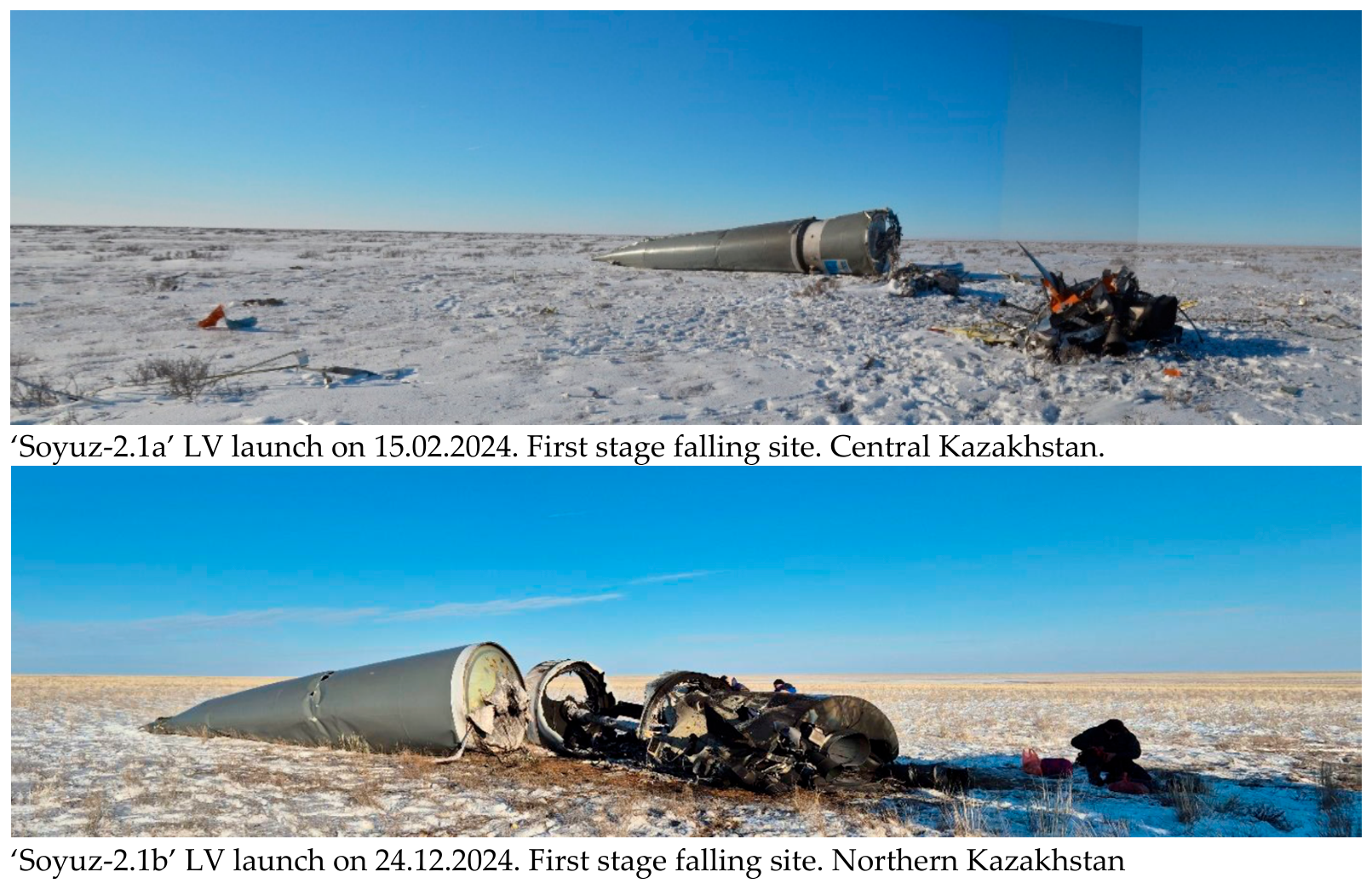
Two launches (15 February and 24 December) occurred in winter, when the ground was frozen and covered with 10–20 cm of snow (Figure 2). Ecosystems are most resilient to direct impact of fallen fragments during this period: snow protects hibernating perennial plants, and the frozen soil is highly resistant to mechanical disturbance.
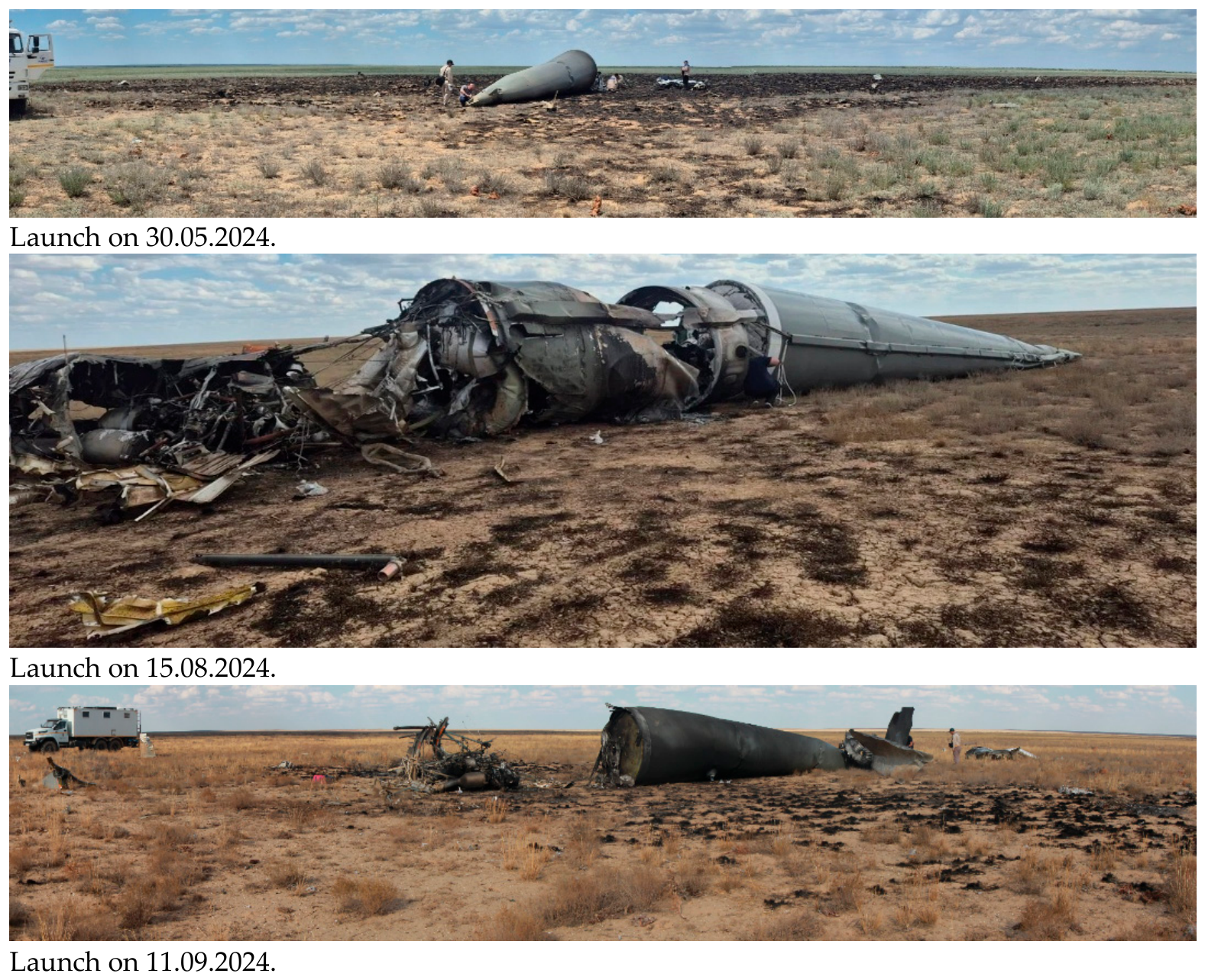
Three launches (30 May, 15 August, and 11 September; Figure 3) took place during the active vegetation season in Kazakhstan. During this period, aboveground phytomass and dead litter are not protected by snow cover and become desiccated under high temperatures, when daytime temperatures in Central and Northern Kazakhstan exceed +30 °C and there may be no rain for several weeks (https://rp5.ru/Weather_archive_in_Zhezkazgan_(airport),_METAR; accessed on 1 May 2026). All of this increases the risk of vegetation fires and the spread of fire over large areas. In Central Kazakhstan, the fire-hazard period lasts from the second half of March to mid-November and correlates with the timing of snow cover onset and disappearance, since snow cover prevents the ignition of dry vegetation and spread of fire [29].
Three launches occurred in spring (23 and 31 March) and autumn (21 November; Figure 4), corresponding to the mud season. During this time, the soil is soft (due to high moisture content) and highly susceptible to mechanical impact by large fallen fragments [31,32,33].

2.2. Field Survey and Data Processing

Predominantly, the field survey in falling sites was conducted within three days after the launch, before the fragments were removed by authorized workers. An only exception was the 31 March launch. Immediate access to the falling zone was prevented by an emergency situation in Northern Kazakhstan caused by severe spring flooding and road damage. These four sites were surveyed 50 days post-launch.
The following types of disturbances were documented (Table 1): zones containing large fragments and scatter fields of small fragments, spills of jet fuel and hydrogen peroxide, mechanical disturbances to vegetation and/or soil, and pyrogenic effects (fire). All of these disturbances differ from one another in their mechanism of occurrence and their environmental consequences. Therefore, the areas where they occur may overlap. That is, up to five types of impact may be diagnosed within a single area. For example, within a zone containing small fragments, vegetation fire may occur, with recorded spills of jet fuel and hydrogen peroxide, accompanied by mechanical disturbance of vegetation and the soil surface.
The territory containing large fragments corresponds to areas where heavy metallic fragments with a projection cover of ≥1 m2 are located. These fragments cannot be moved manually to reliably assess the presence or absence of any impact underneath them (such as small fragment occurrence, mechanical, pyrogenic, or chemical effects). Since we had no physical means to carefully move such fragments on our own, it is important to note that disturbances concealed beneath large fragments were not assessed. Therefore, the data presented characterize the situation at all falling sites under consideration as ‘immediately after debris falling’.
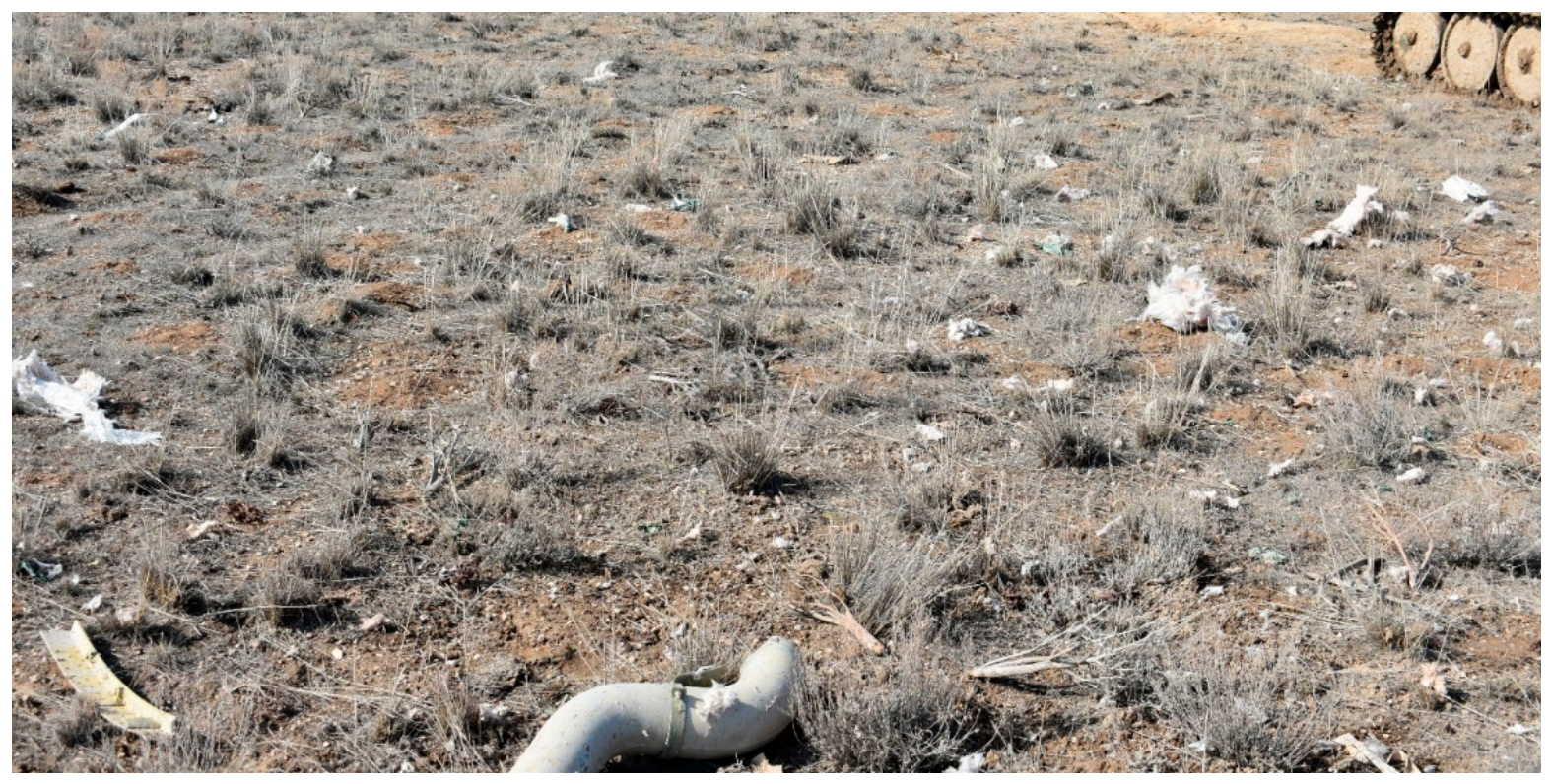
The zone containing small fragments is delineated based on the locations where small (projection cover < 1 m2) metallic and non-metallic fragments were found (Figure 5). These fragments can be easily moved to assess the presence or absence of other impacts. Small fragments appear and are scattered as a result of an explosion caused by the interaction of residual propellents. When they hit the ground, they can create small, relatively shallow depressions (typically only a few centimeters deep) and break individual plants. On the periphery of the small-fragment zones, fragments are spaced 3–5 m apart. When they are farther apart than that, they become difficult to detect due to the vegetation cover.
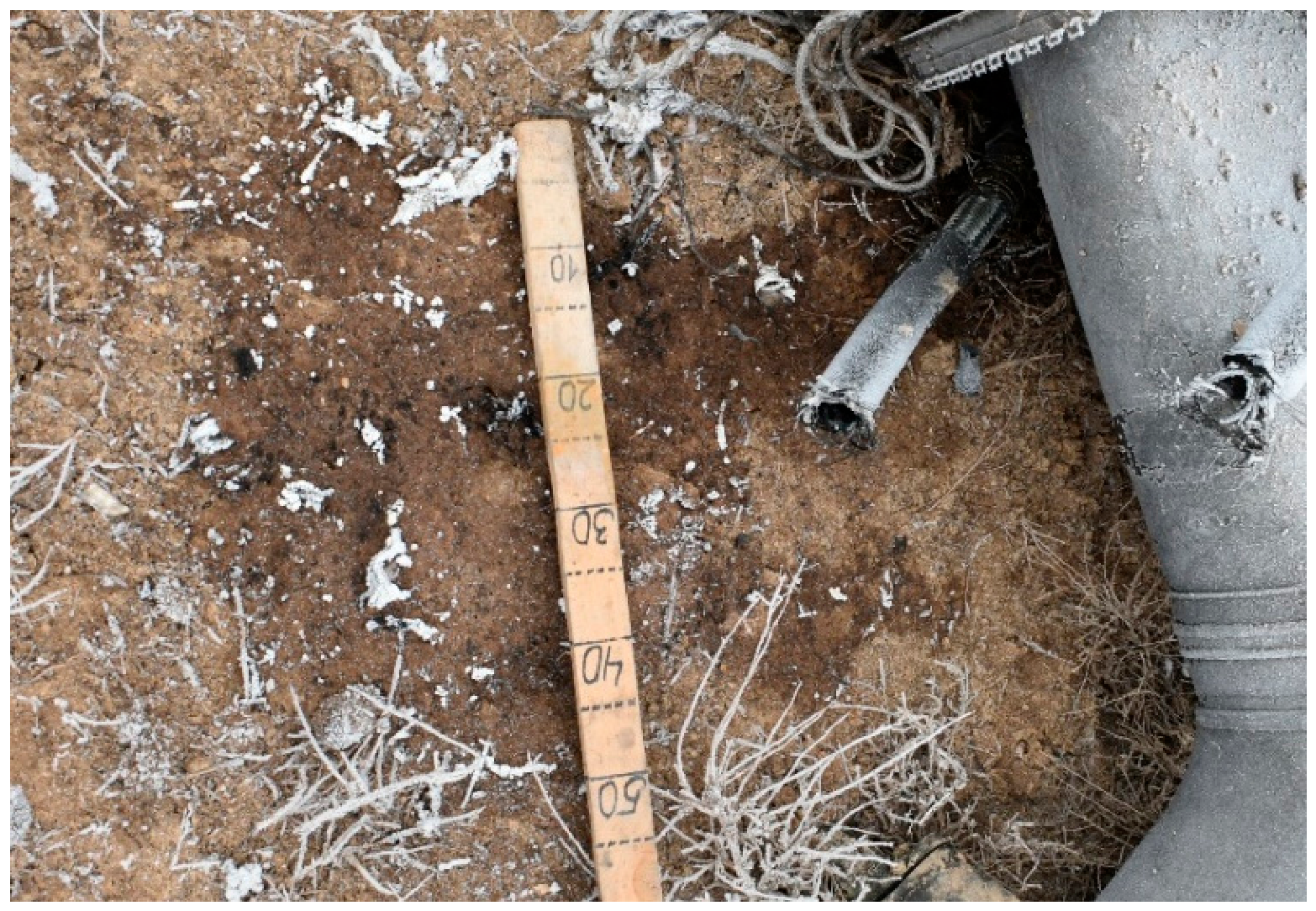
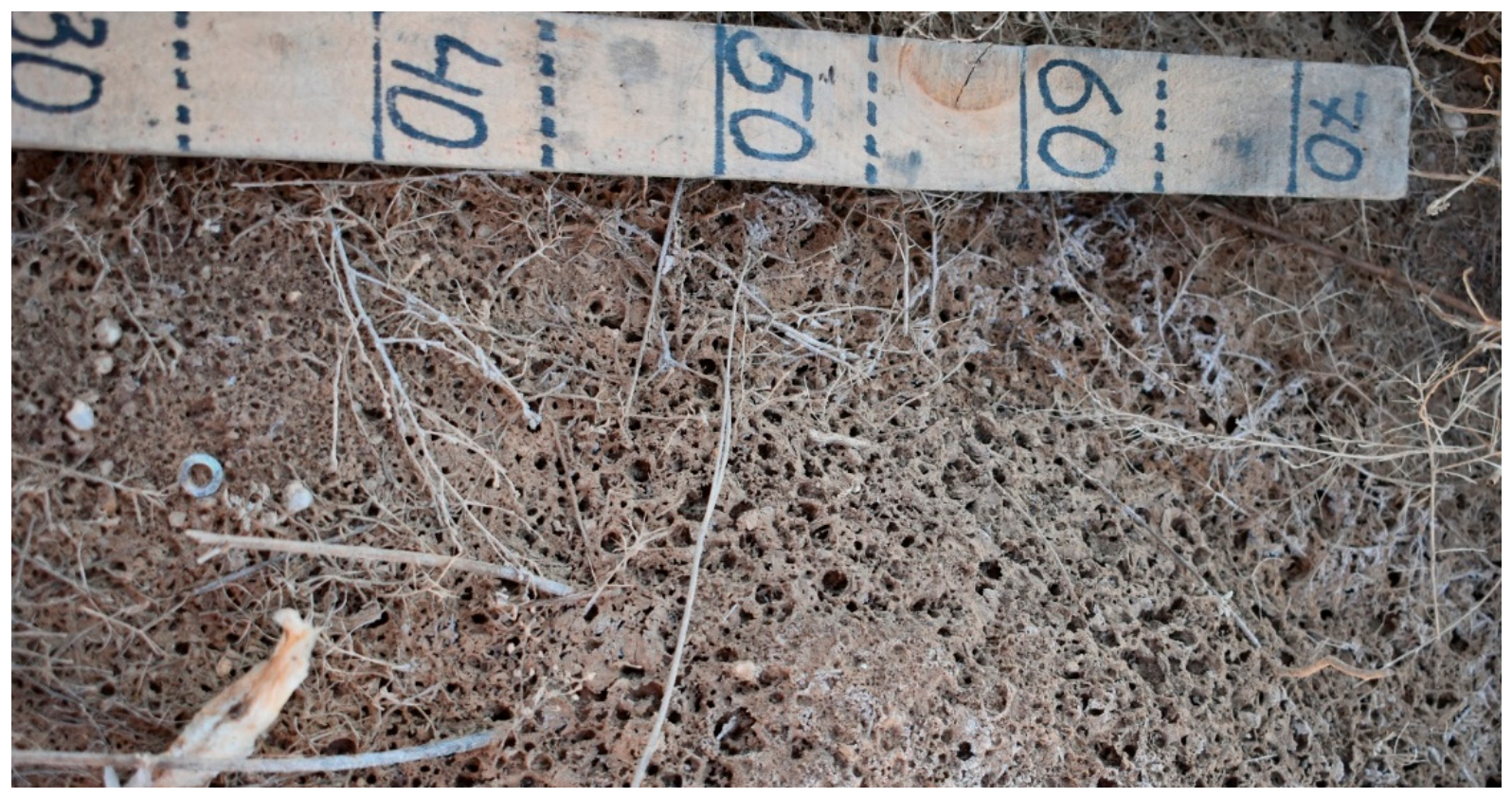
Chemical impact is associated with spills of jet fuel and hydrogen peroxide (H2O2). Jet fuel spills onto the ground from the engine unit pipelines and the fuel tank (Figure 6). Such spills are noticeable in the first few days via the darkening of the soil surface, which is typical of liquid spills (wetter soils are darker than dry soils [34]). In addition, a characteristic odor of hydrocarbons may be noticeable in the air. If it is not present in the air, the soil material contaminated with jet fuel itself has this smell. Spilling of H2O2 leads to the formation of a very specific soil structure (Figure 7) that is not typical of natural soils. The concentrated hydrogen peroxide used in the first stage of the ‘Soyuz’ launch vehicle can, upon contact with jet fuel or dry plant residues, cause the fuel and vegetation to ignite.
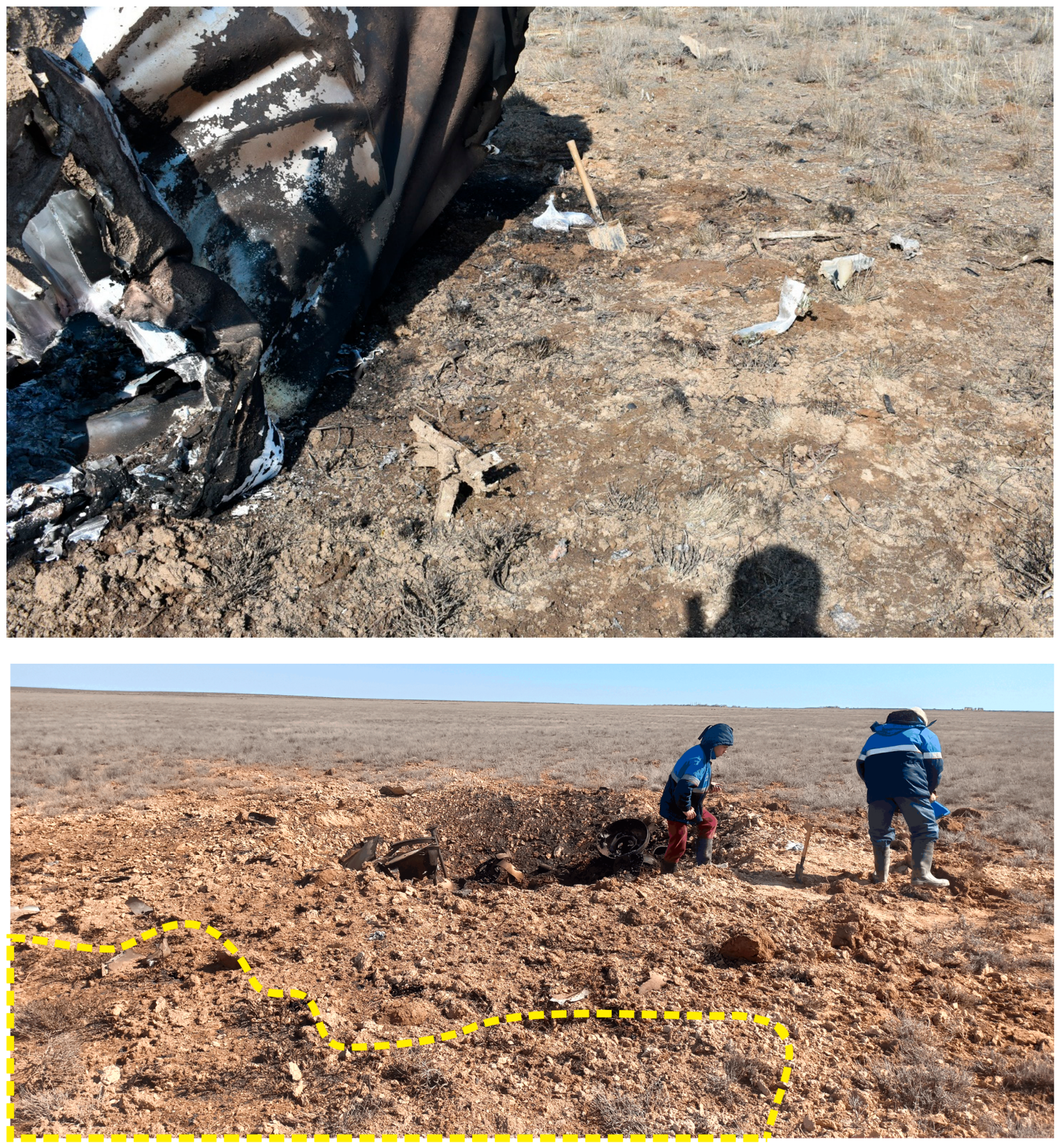
Pyrogenic impact can be divided by severity. Strong pyrogenic impact occurs where vegetation has been completely burned (Figure 3, Figure 4 and Figure 8). If a substantial portion of the plants remains undamaged or survives, the pyrogenic impact can be considered weak. Distinguishing pyrogenic impact by severity is important for subsequent assessments of the rate of natural vegetation recovery. When individual plants survive (in the case of weak impact), recovery can proceed faster. After intense pyrogenic impact, when mother plants are destroyed [35,36] and the seed bank in the topsoil layer of Aridisols is strongly affected, the plant community may take longer to recover. However, in this study, we did not differentiate pyrogenic impact by severity because strong impact predominated at the vast majority of impact sites. Only at the falling sites of block III and the SAM of the 23 March 2024 launch weak pyrogenic impact was observed (strong pyrogenic impact was absent at all).
Mechanical impact can also be classed by severity—from very weak to very strong—based on previous research [2,8]. Very weak mechanical disturbance corresponds to impact that can be easily eliminated by snowmelt, wind activity, and rainfall. Weak mechanical disturbance is limited to effects on individual plants and the uppermost 0–5 cm topsoil layer, which includes the humus horizon of Aridisols. Medium mechanical disturbance affects the upper part of the subsoil (0–10 cm layer) and leads to the partial destruction of vegetation. Strong mechanical disturbance provokes the near-total destruction of vegetation and mixing of the humus horizon with infertile subsoil, which may contain CaCO3, MgCO3, CaSO4, and phytotoxic salts (e.g., NaCl). Very strong mechanical disturbance results in changes in microtopography and the complete destruction of vegetation.
Areas of mechanical disturbance of different severity were mapped as non-overlapping (Figure 9), because it is assumed that less intense mechanical disturbance occurs within the area of more intense disturbance. Based on the area distribution data for each type of mechanical disturbance, the total area of mechanical disturbance was calculated.
Using a Garmin GPSMap 64 navigator (Garmin Ltd., Olathe, Kansas, U.S.), the position and boundaries of each anthropogenic disturbance area were mapped following a standardized protocol (Table 1). This survey captured the disturbance areas immediately after falling fragment impact, except for one falling site of the 31 March launch, which was surveyed during removal of the fragments. Consequently, data on its fragment scatter area were excluded from statistical analysis.
The total technogenic impact is limited to areas where at least one type of impact is observed. According to our long-term (mostly unpublished) observations since 2014 in the falling zones of Central and Northern Kazakhstan, the majority of the total impact area is generally due to the scatter of small fragments or vegetation fires. In the absence of extensive fire or a small-fragment scatter zone, the area occupied by large fragments accounts for most of the total impact. The total area for each disturbance type was calculated using ArcGIS Pro 3.4.0 (Esri, Redlands, California, U.S.).
The significance of differences between sample means was assessed using the Mann-Whitney U test, with a default significance threshold of p = 0.05 and a stricter threshold of p = 0.01 after correction for multiple testing.

3. Results

In the falling zones of Central Kazakhstan, where spent rocket parts from six launches landed, the total impact area was 21 times greater than in the falling zone of Northern Kazakhstan, which received first stages from two launches in 2024. The total area for most disturbance types was 3 to 6974 times larger in Central Kazakhstan (Table 2). However, before correction for multiple testing, only the difference in medium mechanical disturbance was significant (p = 0.046). It is worth noting that in Central Kazakhstan, the total area of strong mechanical disturbance was only 1.7 times larger, and the total area of overall mechanical disturbance was 1.3 times larger. Very weak mechanical disturbance covered the same area in both regions, even though three times fewer side boosters landed in Northern Kazakhstan than in Central Kazakhstan.
It should be emphasized that when analyzing disturbances per individual side booster, no significant differences were found. This reflects high variability and the need to analyze a larger dataset.

3.1. Comparative Analysis of Impact from Crewed Versus Cargo ‘Soyuz’ Launches on Ecosystems in Central and Northern Kazakhstan

Compared to first-stage block falling sites, the SAM falling sites featured a smaller area covered by large fragments (p = 0.019) and a larger area with very strong mechanical impact (p = 0.016) resulting from the explosion, which created a deep crater and scattered very few small fragments. No significant differences were found for other disturbances. These results may be influenced by the small data set (two SAM falling sites versus the 32 first stage blocks). When winter falling sites were excluded to create a more homogeneous data set, the aforementioned differences persisted. Additionally, significant differences were found: the area of very weak mechanical impact (p = 0.021) and total mechanical impact (p = 0.027) were 147 and 14 times larger, respectively, at the SAM falling sites due to soil clods being ejected from the crater.
We found no significant differences in the overall environmental impact between launches of crewed and cargo ‘Soyuz’ LVs (when comparing the aggregated disturbance area from all falling sites per a launch). This may result from the small number of launches be compared and the high variability in disturbance area among falling sites from a single launch.

3.2. Intraseasonal Variations in the Environmental Impact

At the first stage falling sites during the growing season, the area affected by vegetation fires (p < 0.001) and hydrogen peroxide spills (p = 0.049) was larger, while the area showing very weak mechanical impact (p = 0.007) and the consequent total mechanical impact (p = 0.002) were smaller (Table 2).
During the mud season, compared to winter, the area affected by very strong and strong mechanical impact on soil and vegetation was significantly larger (p < 0.002). Notably, mechanical impact of this severity did not occur in winter falling sites due to soil freezing. Conversely, the area of very weak and total mechanical impact was larger in winter compared to the snow-free mud and growing seasons (p < 0.002), facilitated by the easier detection of soil particles on white snow than on brown soil surface and pale or green plants. The area of very strong mechanical impact was smaller in summer compared to the mud season (p = 0.001) likely due to soil desiccation and increased strength from mineral salt cementation. However, the area of strong mechanical impact was larger in summer than in winter (p = 0.002) suggesting that freezing offers better protection for these arid soils than desiccation. The area of pyrogenic impact was significantly larger (p < 0.001) during the growing season (≥100 m2 per falling site) compared to winter and the mud season (≤90 m2 per falling site).

4. Discussion

Our field-based study research provides a unique, empirical assessment of the immediate environmental disturbances caused by space transportation activities in the fragile arid ecosystems of Kazakhstan. Our findings challenge the narrative, often propagated by speculative publications [2,5,6,7,8,9], that landing of separated parts of launch vehicles result in widespread degradation of ecosystems. By surveying impact sites within days of eight ‘Soyuz’ launches in 2024, we have quantified the several variants of disturbances, revealing a total affected area of approximately 1.5 km2. Critically, a single vegetation fire following the May 30 launch accounted for 76% (1.2 km2) of this total, underscoring the disproportionate role of stochastic effects like fire over the primary mechanical impact of the falling fragments themselves.
The mechanical impact was highly localized and its severity was overwhelmingly modulated by seasonal ground conditions, a factor largely ignored in previous modeling researches. The significant differences in mechanical disturbance between seasons—from the protective effect of frozen ground in winter to the deep rutting and soil compaction observed during the mud season—align with established principles of soil physics and ecology. Frozen soils show high compressive strength, resisting penetration and fragmentation, which explains the absence of very strong mechanical impacts in winter. Conversely, the high moisture content and reduced cohesion of soils during the mud season make them exceptionally vulnerable to the shearing and compressive forces of space transportation impact, leading to the significantly larger areas of very strong and strong disturbance we documented. So, seasonal timing is a primary determinant of the initial ecological indicators of landing fragments of launch vehicles.
The role of vegetation fires as the dominant disturbance type, particularly during the dry growing season, was more pronounced than anticipated. The significantly larger burn areas in summer (p < 0.001) confirm that the presence of dry, abundant aboveground biomass and litter creates a high-risk scenario [37]. While our data show the fire area from a single event can be large, its long-term ecological consequences—on soil seed banks, nutrient cycling, and plant community composition—remain an open question and a key avenue for future research [38,39].
Our pilot analysis comparing crewed and cargo missions, while limited by a small sample size, revealed intriguing differences regarding the environmental consequences of SAM system landing. The significantly larger area of very strong mechanical impact from the SAM landing, due to the explosive creation of a crater, contrasts with the broader scatter of large fragments from first-stage blocks of the ‘Soyuz’ launch vehicles. This suggests that the type of separating parts of launch vehicles—specifically, whether it explodes on impact—is a more important determinant of localized, high-severity disturbance than the mission’s primary payload (crew vs. cargo). This finding refines our understanding of launch vehicle impacts, moving beyond a simple “fragment falls” model to one that considers the specific engineering and fate of each component.
Placing our findings in a broader context, the total disturbed area of ~1.54 km2 from eight launches represents a minute fraction of the vast Kazakh desert ecosystems. Furthermore, the impact is largely mechanical and, based on the resilience of these arid ecosystems to natural disturbances like drought, fire, and pasture, potentially recoverable. The dominant vegetation, consisting of perennial grasses and semishrubs, is well-adapted to these disturbances [15].
This localized and often transient disturbance starkly contrasts with the conclusions of studies that model improbable, high-frequency launch scenarios [7]. Our empirical data ground the discussion in reality: the current, actual ecological footprint of routine space operations from Baikonur is small-scale and site-specific. This does not imply that the impact is negligible, but it reframes the problem from one of massive, systemic degradation to one of managing discrete, localized disturbances within a vast landscape. The primary environmental concern for space agencies and local authorities should therefore shift from broad-stroke remediation to targeted prevention and monitoring, particularly of fire risk during the dry season and soil damage during the vulnerable mud season.

5. Conclusions

In 2024 in Central and Northern Kazakhstan, the average (and standard deviation)-area of zones containing large fragments and scatter fields of small fragments of separated parts of the ‘Soyuz’ launch vehicles (the first stage and the abort mode) was 63 ± 23 and 11,605 ± 8859 m2, respectively. Spills of jet fuel and hydrogen peroxide (maximal values) were found at 125 and 196 m2, respectively. Due to debris falling, total mechanical disturbances and pyrogenic impact occurred at 6912 and 1,211,453 m2, respectively.
Comparing the extent and type of damage at the 40 falling sites across seasons, we found that fires and chemical spills are more extensive during the growing season, while mechanical damage varies with other environmental conditions. At the first stage falling sites in Central and Northern Kazakhstan during the plant growing season, the area affected by fires and H2O2 spills was significantly larger, while the area of very weak mechanical disturbance was smaller. During the mud season, the area with very strong mechanical impact was greater compared to winter and summer. Compared to the first stage falling sites, the Soyuz abort mode falling sites were characterized by a larger area of very strong mechanical impact, evidenced by deep craters, and a smaller area covered by large fragments.
In the falling zones at Central and Northern Kazakhstan, approximately 1.5 km2 were disturbed due to falling of the first stage blocks from the eight ‘Soyuz’ launch vehicles launched from the Baikonur Cosmodrome in 2024. The majority of this disturbance (80%) resulted from an extensive vegetation fire appeared due to falling of one block of the first stage on 30 May 2024.
Two Soyuz abort systems disturbed 0.041 km2. Also, one vegetation fire following the launch on 21 November 2024 caused most of this area (96%).

6. Scientific Gaps and Future Perspectives

This study, while providing a robust snapshot of immediate impacts, opens several critical avenues for future investigation:
  • To generalize our findings, similar field-based surveys should be conducted at other falling zones globally e.g., the falling zones of the Jiuquan, Kapustin Yar, Plesetsk, Semnan, Shahrud, Songlin, Vostochny, which operate in diverse climatic zones and use vehicles with different propellents.
  • Longitudinal studies are urgently needed to assess the medium-term and long-term recovery of these disturbed sites. Permanent monitoring plots should be made to control revegetation, soil erosion, and the persistence of any contaminants.
  • Future research should focus on the ecological effects of fire, comparing post-fire plant community composition and soil health in burned zones with those in unburned control areas and natural fire scars.
  • A more detailed analysis of soil contamination is required, moving beyond visual observation of spills to chemical analysis of soil samples for residual rocket propellents and their derivatives [40,41,42].
  • The largest fires caused by the falling of separated parts of launch vehicles could be used as markers in studying the chronology of ice accumulation in the mountains of Central Asia. Furthermore, such large fires occurring in the falling zones of the cosmodromes of Russia, China, and Iran may represent hidden sources of atmospheric dust in high and middle latitudes [43].
  • The interaction between these small-scale disturbances and larger environmental pressures, such as climate change-induced desertification and overgrazing, warrants investigation to understand potential cumulative or synergistic effects on arid ecosystem resilience. By pursuing these research directions, we can move from documenting impact to predicting recovery and developing evidence-based mitigation strategies for the evolving era of space exploration.

Author Contributions

I.N.S.: Conceptualization, Data Curation (leading), Formal Analysis, Funding Acquisition (supporting), Investigation (leading), Supervision, Visualization, Writing—Original Draft Preparation, Writing—Review & Editing. A.M.K.: Conceptualization, Data Curation (supporting), Investigation (supporting), Software, Visualization, Writing—Review & Editing. S.A.L.: Conceptualization, Investigation (supporting), Visualization, Writing—Review & Editing. T.V.K.: Conceptualization, Funding Acquisition (leading), Project Administration, Supervision, Writing—Review & Editing. All authors have read and agreed to the published version of the manuscript.

Funding

This study was supported by the Russian Science Foundation (project no. 25-74-20011).

Data Availability Statement

Data is contained within the article.

Acknowledgments

We are grateful to D. Bardashov for participating in a field work and providing photographs made at the falling site.

Conflicts of Interest

The authors declare no conflicts of interest.

References

  1. Semenkov, I.; Koroleva, T. Review on the environmental impact of emissions from space launches: A case study for areas affected by the Russian space programme. Environ. Sci. Pollut. Res. 2022, 29, 89807–89822. [Google Scholar] [CrossRef] [PubMed]
  2. Koroleva, T.V.; Krechetov, P.P.; Semenkov, I.N.; Sharapova, A.V.; Lednev, S.A.; Karpachevskiy, A.M.; Kondratyev, A.D.; Kasimov, N.S. The environmental impact of space transport. Transp. Res. Part D Transp. Environ. 2018, 58, 54–69. [Google Scholar] [CrossRef]
  3. Koroleva, T.V.; Semenkov, I.N.; Sharapova, A.V.; Krechetov, P.P.; Lednev, S.A. Ecological consequences of space rocket accidents in Kazakhstan between 1999 and 2018. Environ. Pollut. 2021, 268, 115711. [Google Scholar] [CrossRef]
  4. Sharapova, A.V.; Semenkov, I.N.; Koroleva, T.V.; Krechetov, P.P.; Lednev, S.A.; Smolenkov, A.D. Snow pollution by nitrogen-containing substances as a consequence of rocket launches from the Baikonur Cosmodrome. Sci. Total Environ. 2020, 709, 136072. [Google Scholar] [CrossRef]
  5. Ryan, R.G.; Marais, E.A.; Balhatchet, C.J.; Eastharm, S.D. Impact of Rocket Launch and Space Debris Air Pollutant Emissions on Stratospheric Ozone and Global Climate. Earth’s Futur. 2022, 10, e2021EF002612. [Google Scholar] [CrossRef]
  6. Prather, M.J.; Garcia, M.M.; Douglass, A.R.; Jackman, C.H.; Ko, M.K.W.; Sze, N.D. The Space Shuttle’s impact on the stratosphere. J. Geophys. Res. 1990, 95, 18583–18590. [Google Scholar] [CrossRef]
  7. Dallas, J.A.; Raval, S.; Alvarez Gaitan, J.P.; Saydam, S.; Dempster, A.G. The environmental impact of emissions from space launches: A comprehensive review. J. Clean. Prod. 2020, 255, 120209. [Google Scholar] [CrossRef]
  8. Kasimov, N.S.; Kondrat’ev, A.D.; Koroleva, T.V.; Krechetov, P.P.; Neronov, V.V.; Popik, M.V.; Smolenkov, A.D.; Fadeev, A.S.; Chernitsova, O.V.; Shpigun, O.A. Environmental Monitoring of Rocket and Space Activities; Restart: Moscow, Russia, 2011. [Google Scholar]
  9. Koroleva, T.V.; Semenkov, I.N.; Lednev, S.A.; Soldatova, O.S. Jet fuel as a source of soil pollution: A review. Eurasian Soil Sci. 2024, 57, 1519–1524. [Google Scholar] [CrossRef]
  10. Semenkov, I.N.; Koroleva, T.V.; Lednev, S.A. Soil pollution with jet-fuel by the Russian aerospace transportation. Sci. Total Environ. 2025, 972, 179131. [Google Scholar] [CrossRef]
  11. Shelyakin, P.V.; Semenkov, I.N.; Tutukina, M.N.; Nikolaeva, D.D.; Sharapova, A.V.; Sarana, Y.V.; Lednev, S.A.; Smolenkov, A.D.; Gelfand, M.S.; Krechetov, P.P.; et al. The influence of kerosene on microbiomes of diverse soils. Life 2022, 12, 221. [Google Scholar] [CrossRef]
  12. Sharapova, A.V.; Semenkov, I.N.; Krechetov, P.P.; Lednev, S.A.; Koroleva, T.V. The effect of kerosene pollution on the cellulolytic activity of Albic Retisols and Arenosols (Aridic): A laboratory experiment. Eurasian Soil Sci. 2022, 55, 235–241. [Google Scholar] [CrossRef]
  13. Koroleva, T.V.; Krechetov, P.P.; Sharapova, A.V.; Kondratyev, A.D. Technogenic transformation of terrestrial ecosystems in the operation of rocket and space technology. Ecol. Ind. Russ. 2017, 21, 26–32. [Google Scholar] [CrossRef]
  14. Galeev, A.G.; Gusev, E.V.; Pichuzhkin, P.V. Analysis of pollution and assessment of impacts of abnormal situation during ground training space-rocket complex “Soyuz-2”. Altern. Energy Ecol. 2017, 1–3, 61–72. [Google Scholar] [CrossRef]
  15. Lednev, S.A. Pyrogenic Dinamics of Vegetation in the Nothern Deserts at Central Kazakhstan. Ph.D. Thesis, Lomonosov Moscow State University, Moscow, Russia, 2026. [Google Scholar]
  16. Lednev, S.; Koroleva, T.; Krechetov, P.; Sharapova, A.; Semenkov, I.; Karpachevskiy, A. Revegetation of areas disturbed by rocket impact in Central Kazakhstan. Ecoscience 2018, 25, 25–38. [Google Scholar] [CrossRef]
  17. Lednev, S.A.; Koroleva, T.V.; Semenkov, I.N.; Klink, G.V.; Krechetov, P.P.; Sharapova, A.V.; Karpachevskiy, A.M.; Klink, G.V. The natural regeneration of desert ecosystem vegetation at the 2013 crash site of a Proton-M launch vehicle, Republic of Kazakhstan. Ecol. Indic. 2019, 101, 603–613. [Google Scholar] [CrossRef]
  18. Lednev, S.A.A.; Semenkov, I.N.; Koroleva, T.V.; Sharapova, A.V.V. State of Desert Phytocenoses in the Republic of Kazakhstan at Crash Sites of Launch Vehicles. Arid Ecosyst. 2020, 26, 88–95. [Google Scholar] [CrossRef]
  19. Kasimov, N.S.; Kondrat’ev, A.D.; Krechetov, P.P.; Koroleva, T.V.; Chernitsova, O.V.; Sharapova, A.V. Ecological Safety of Rocket and Space Activities; Kasimov, N.S., Ed.; Sputnik Plus: Moscow, Russia, 2015. [Google Scholar]
  20. Zhubatov, Z.; Kozlovskiy, V.A.; Pozdnyakova, A.P.; Koroleva, T.V.; Krechetov, P.P.; Kenesov, B.N.; Adilgireyuly, Z.; Ashirbekov, G.K. Studies of changes in environment and public health due to heptyl transport in Kazakhstan republic territory. Russ. J. Occup. Health Ind. Ecol. 2017, 5, 38–44. [Google Scholar]
  21. Donou-Adonsou, F.; Larick, M.; Schupp, A.; Besenfelder, C.; Bohan, Y.; Cuddy, J. Cointegration analysis of US space activity and its environmental impact. Environ. Pollut. 2024, 352, 124142. [Google Scholar] [CrossRef]
  22. Donou-Adonsou, F. Space launches and the environment: As the earth orbit level matters, what can be done? J. Policy Model. 2024, 46, 369–390. [Google Scholar] [CrossRef]
  23. UNDP. Environment and Development Nexus in Kazakhstan; UNDP: Almaty, Kazakhstan, 2004. [Google Scholar]
  24. Kopack, R. Baikonur 2.0: ‘inland-offshore’ space economies in post-Soviet Kazakhstan. Cult. Theory Crit. 2021, 62, 96–112. [Google Scholar] [CrossRef]
  25. Kopack, R.A. Rocket Wastelands in Kazakhstan: Scientific Authoritarianism and the Baikonur Cosmodrome. Ann. Am. Assoc. Geogr. 2019, 109, 556–567. [Google Scholar] [CrossRef]
  26. Giles, J. Study links sickness to Russian launch site. Nature 2005, 433, 95. [Google Scholar] [CrossRef]
  27. Byers, M.; Byers, C. Toxic splash: Russian rocket stages dropped in Arctic waters raise health, environmental and legal concerns. Polar Rec. 2017, 53, 580–591. [Google Scholar] [CrossRef]
  28. Larson, E.J.L.; Portmann, R.W.; Rosenlof, K.H.; Fahey, D.W.; Daniel, J.S.; Ross, M.N. Global atmospheric response to emissions from a proposed reusable space launch system. Earth’s Futur. 2017, 5, 37–48. [Google Scholar] [CrossRef]
  29. Karpachevskiy, A.; Lednev, S.; Semenkov, I.; Sharapova, A.; Nagiyev, S.; Koroleva, T. Delineation of burned arid landscapes using Landsat 8 OLI data: A case study of Karaganda region in Kazakhstan. Arid L. Res. Manag. 2021, 35, 292–310. [Google Scholar] [CrossRef]
  30. IUSS Working Group WRB. World Reference Base for Soil Resources. International Soil Classification System for Naming Soils and Creating Legends for Soil Maps, 4th ed.; International Union of Soil Sciences: Vienna, Austria, 2022. [Google Scholar]
  31. dos Santos, T.A.; Pinheiro, R.J.B.; Specht, L.P. Effects of moisture content and soil suction on the permanent deformation of tropical subgrade soils: Experimental investigations and modelling. Road Mater. Pavement Des. 2024, 25, 2358–2381. [Google Scholar] [CrossRef]
  32. Zhou, M.; Zhu, Q.; Wang, H.; Wang, X.; Zhan, Y.; Lin, J.; Zhang, Y.; Huang, Y.; Jiang, F. Effect of Soil Moisture Content on the Shear Strength of Dicranopteris Linearis-Rooted Soil in Different Soil Layers of Collapsing Wall. Forests 2024, 15, 460. [Google Scholar] [CrossRef]
  33. Ahmed, A.E.E.; El Hariri, A.; Kiss, P. Soil Spectral Behavior Related to Its Load-Bearing Capacity Based on Moisture Content. Appl. Sci. 2023, 13, 3498. [Google Scholar] [CrossRef]
  34. Klink, G.V.; Prilipova, E.S.; Sobolev, N.S.; Semenkov, I.N. Perceptual variance of natural soil aggregates with the Munsell soil colour charts by unexperienced observers: Case study for diverse soils. Geoderma 2023, 438, 116645. [Google Scholar] [CrossRef]
  35. Simard, S.W.; Perry, D.A.; Jones, M.D.; Myrold, D.D.; Durall, D.M.; Molina, R. Net transfer of carbon between ectomycorrhizal tree species in the field. Nature 1997, 388, 579–582. [Google Scholar] [CrossRef]
  36. Bingham, M.A.; Simard, S.W. Do mycorrhizal network benefits to survival and growth of interior Douglas-fir seedlings increase with soil moisture stress? Ecol. Evol. 2011, 1, 306–316. [Google Scholar] [CrossRef]
  37. Klink, G.V.; Lednev, S.A.; Semenkov, I.N.; Konyushkova, M.V.; Karpachevskiy, A.M.; Chemidov, M.M.; Ulanova, S.S.; Fedorova, N.L.; Sharapova, A.V.; Bogun, S.A.; et al. Influence of Fires on Desert Plant Communities at the Chernye Zemli (SW Russia). Fire 2024, 7, 96. [Google Scholar] [CrossRef]
  38. Semenkov, I.N.; Koroleva, T.V.; Karpachevsky, A.M.; Lednev, S.A.; Sharapova, A.V. Short-term changes in chemical properties of topsoil (0–10 cm) after low-intensity fires caused by landings of first stages of space rockets Proton-M in Central Kazakhstan. IOP Conf. Ser. Earth Environ. Sci. 2021, 862, 012109. [Google Scholar] [CrossRef]
  39. Semenkov, I.N.; Lednev, S.A.; Klink, G.V.; Kasymov, D.P.; Agaontsev, M.V.; Kostrova, S.N.; Koroleva, T.V. Influence of spring burns on the properties of humus horizon of chernozem in the southeast of Western Siberia. Eurasian Soil Sci. 2024, 57, 493–501. [Google Scholar] [CrossRef]
  40. Ul’yanovskii, N.V.; Lakhmanov, D.E.; Pikovskoi, I.I.; Falev, D.I.; Popov, M.S.; Kozhevnikov, A.Y.; Kosyakov, D.S. Data on the spatial distribution of 1,1-dimethylhydrazine and its transformation products in peat bog soil of rocket stage fall site in Russian North. Data Br. 2020, 30, 105614. [Google Scholar] [CrossRef] [PubMed]
  41. Ul’yanovskii, N.V.; Lakhmanov, D.E.; Pikovskoi, I.I.; Falev, D.I.; Popov, M.S.; Kozhevnikov, A.Y.; Kosyakov, D.S. Migration and transformation of 1,1-dimethylhydrazine in peat bog soil of rocket stage fall site in Russian North. Sci. Total Environ. 2020, 726, 138483. [Google Scholar] [CrossRef]
  42. Kenessov, B.; Alimzhanova, M.; Sailaukhanuly, Y.; Baimatova, N.; Abilev, M.; Batyrbekova, S.; Carlsen, L.; Tulegenov, A.; Nauryzbayev, M. Transformation products of 1,1-dimethylhydrazine and their distribution in soils of fall places of rocket carriers in Central Kazakhstan. Sci. Total Environ. 2012, 427–428, 78–85. [Google Scholar] [CrossRef] [PubMed]
  43. Meinander, O.; Dagsson-Waldhauserova, P.; Amosov, P.; Aseyeva, E.; Atkins, C.; Baklanov, A.; Baldo, C.; Barr, S.L.; Barzycka, B.; Benning, L.G.; et al. Newly identified climatically and environmentally significant high-latitude dust sources. Atmos. Chem. Phys. 2022, 22, 11889–11930. [Google Scholar] [CrossRef]
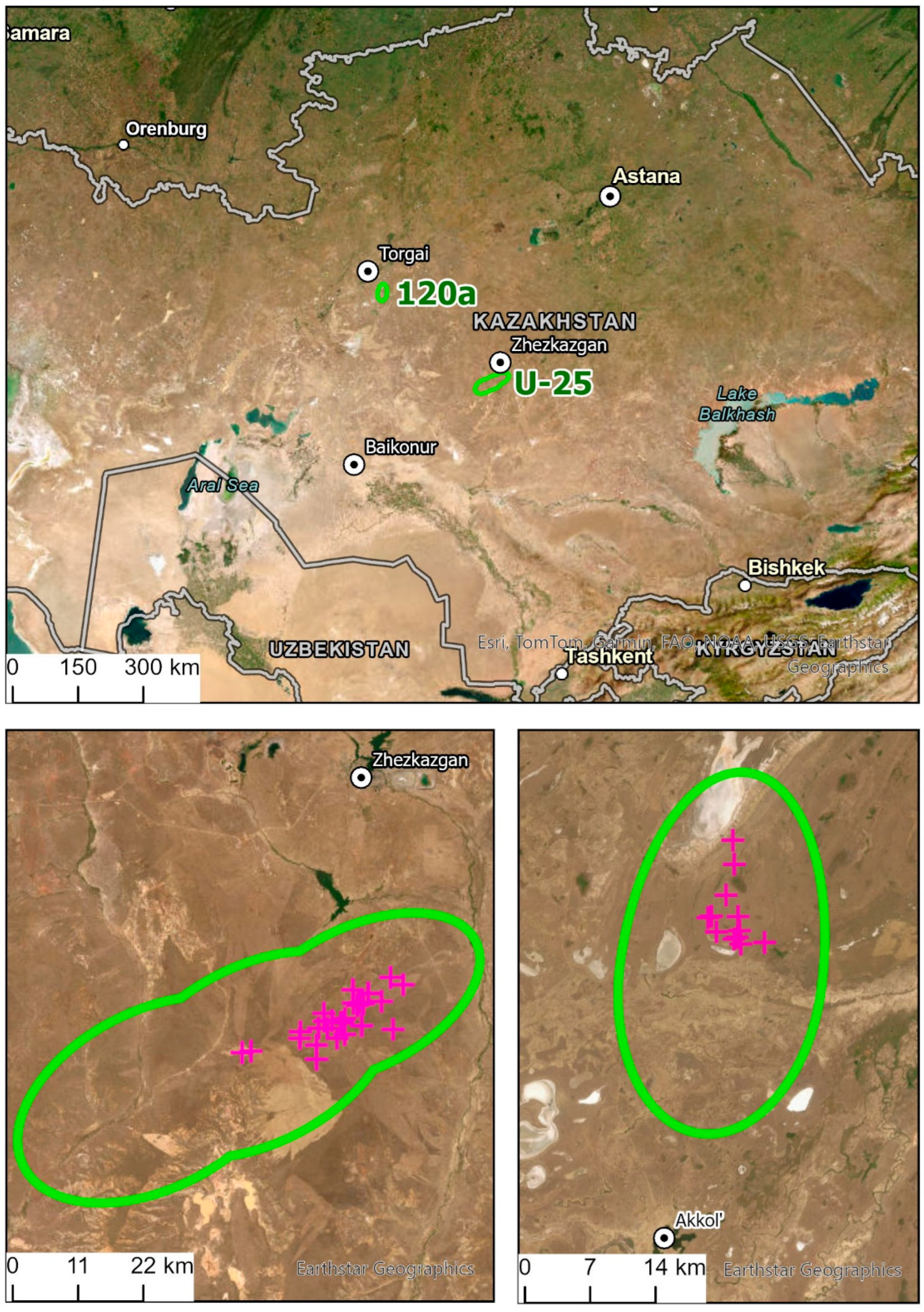
Figure 1. Locations of falling sites (in falling zones at Central and Northern Kazakhstan) of separated fragments of the ‘Soyuz’ LVs launched in 2024. Green line, the boundary of the falling zones (upper and lower panels): in Central Kazakhstan, the falling zone ‘U-25’ (lower left panel) and in Northern Kazakhstan, falling zone no. 120a (lower right panel). Falling sites are marked with pink “+” labels.
Fire 09 00234 g001
Figure 2. Panoramic views of situation at the winter falling sites of the ‘Soyuz’ LV spent fragments surveyed in 2024 in Central and Northern Kazakhstan.
Fire 09 00234 g002
Figure 3. Panoramic views of situation at the three falling sites of the ‘Soyuz-2.1a’ LV spent fragments surveyed in 2024 in Central Kazakhstan (landing during the active vegetation season).
Fire 09 00234 g003
Figure 4. Panoramic views of situation at the falling sites of the ‘Soyuz’ LV spent fragments surveyed in 2024 in Central and Northern Kazakhstan (landing during the mud season).
Fire 09 00234 g004aFire 09 00234 g004b
Figure 5. Small fragment scatter field at the first stage falling site. Launch on 23 March 2024. Central Kazakhstan.
Fire 09 00234 g005
Figure 6. Jet fuel spill at the first stage falling site. Launch on 21 November 2024. Central Kazakhstan.
Fire 09 00234 g006
Figure 7. Soil blistering caused by interaction with spilled H2O2 at the first stage falling site. Launch on 21 November 2024. Central Kazakhstan.
Fire 09 00234 g007
Figure 8. Strong (up) and weak (down) pyrogenic impact (outlined manually by the yellow dotted line) at the ‘Soyuz’ LV first stage and SAM falling sites, respectively. Launch on 23 March 2024. Central Kazakhstan.
Fire 09 00234 g008
Figure 9. Strong (center) and weak (periphery) mechanical impact on soil and vegetation at the first stage falling site. Launch on 21 November 2024. Central Kazakhstan.
Fire 09 00234 g009
Table 1. Disturbances identified at the falling sites of the ‘Soyuz’ LV first stages and abort modes in Central and Northern Kazakhstan, and their diagnostic criteria.
Environmental ImpactDiagnostics
Fragment scatteringlarge fragmentsLocation of the largest structural components (fuel and oxidizer tanks, rocket engine, etc.). The debris fragments are the primary source of anthropogenic impact. The area containing the debris is potentially subject to mechanical disturbance and chemical contamination
small fragmentsPresence of small structural elements spaced up to 5 m apart. Within this area, fragments are collected using motor vehicles. This territory is a potential zone for secondary mechanical disturbances (ruts) to the vegetation and soil
Mechanicalvery strongComplete destruction of vegetation and soil with deep craters caused by the engine’s impact with the ground or an explosion
strongNear-total destruction of vegetation, combined with soil disturbance to a depth of >10 cm (mixing of fertile and infertile substrates) or the formation of soil berms > 10 cm high due to falling fragments
mediumPartial destruction of vegetation, disturbance of topsoil to a depth of 5–10 cm, or formation of soil berms 5–10 cm high
weakFlattening, breaking, and scalping of vegetation, disturbance of topsoil to a depth of up to 5 cm, or (near-)complete burial of the surface under a 1–5 cm layer of soil
very weakDeposition of soil clods onto the ground or snow, partially covering the surface (layer no more than 1 cm thick)
PyrogenicBurning and/or charring of plant aboveground parts or presence of soot on the ground
Propellent spillsjet fuelDark, wet patches on the soil surface. The contaminated material has a distinct smell of hydrocarbons
H2O2A distinctive foamy pattern on the soil surface caused by the decomposition of hydrogen peroxide
TotalPresence of at least one of the impact types listed above
Table 2. Areas of disturbances (in m2) caused by falling of spent parts of the ‘Soyuz’ LVs in 2024.
Launch Date Part *Fragment ScatteringMechanical ImpactPyrogenic ImpactSpillsTotal Impact
LFsSFsVery StrongStrongMediumWeakVery WeakJet FuelH2O2
15 FebruaryI8913,9080050447210013,908
II5970690008460007070
III5718,5320086537700018,532
IV8214,2870080298200014,287
all28653,7960021696183710053,797
23 MarchI41923809018341340962
II3514,294210024345524214,294
III (3)4263562411227361251236398
IV60430057131027143552
SAM7279231653144118885001445
all18522,282762270183184413816320823,651
31 MarchI6956432468002015643
II7586894582101018689
III (4)01333380048600261
IV6710,52703110044010,527
all21024,85881731014944125,119
30 MayI8814,555062923026610014,782
II12842,886052010101,172,675041,181,344
III8618,4771343581197140019,723
IV84897000105005564109901
all38584,88914661140201,190,614141,225,750
15 AugustI221310300010000198
II4744900019030901578
III7221,381002102014610021,381
IV7619,619012402810560019,619
all21641,5790346194829261141,775
11 SeptemberI499606010000048160010,284
II5413,290023220074620016,076
III617980014700576007980
IV4817,172055001348091017,321
SAM1458615370019039,1600039,260
all21252,6341522929020356,8221090,922
21 NovemberI69233013012366048296
II4011,53002718001219611,530
III2020,14365192379514220,143
IV3594821917756801919482
all16441,3882546261697823757741,451
24 DecemberI644470003202311490
II8821,4590061251181241621,459
III (2)4913,482000793121113,522
IV9478030012235352107805
all29443,1900071572667803843,276
Note: * Number of falling sites formed by each side block is shown in parentheses (excepts typical situation of one falling site per block). SAM, Soyuz Abort Mode. LFs, large fragments. SFs, small fragments.
Disclaimer/Publisher’s Note: The statements, opinions and data contained in all publications are solely those of the individual author(s) and contributor(s) and not of MDPI and/or the editor(s). MDPI and/or the editor(s) disclaim responsibility for any injury to people or property resulting from any ideas, methods, instructions or products referred to in the content.