
Simulation and Experimental Study on Parameters of High-Frequency Acoustic Waves Affecting Kitchen Oil Fires


Abstract
1. Introduction
2. Acoustic Wave Fire Suppression Technology
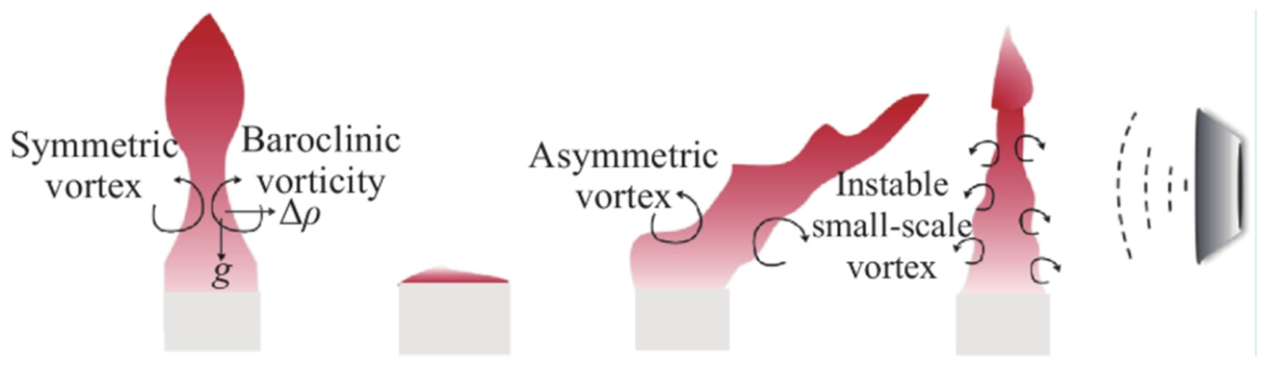
2.1. Sound Pressure Oscillations and Flame Response
2.2. Acoustic Waves and Their Fire Suppression Effects
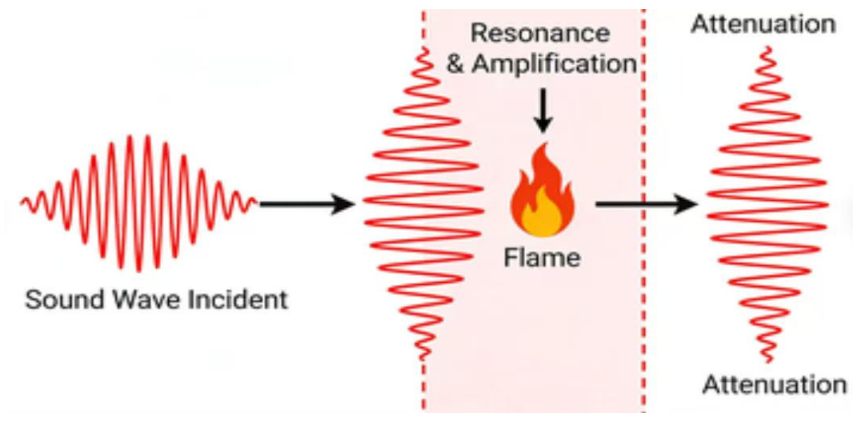
2.3. Coupling of Acoustic Resonance and Combustion Instability
2.4. Thermoacoustic Interaction and Combustion Chemistry
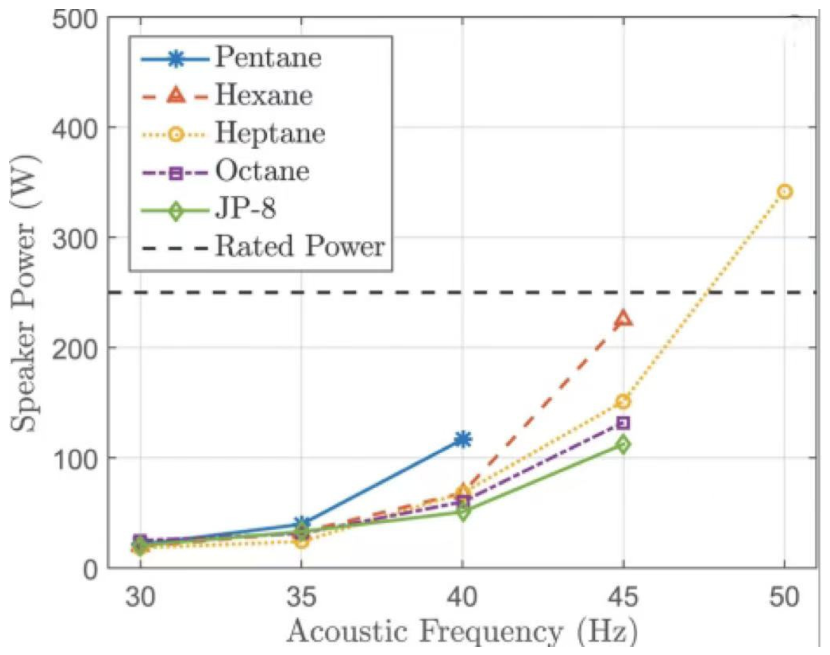
2.5. Related Studies on the Effects of Sound Waves on Flames
3. Numerical Simulation of High-Frequency Acoustic Waves on Grease Fires
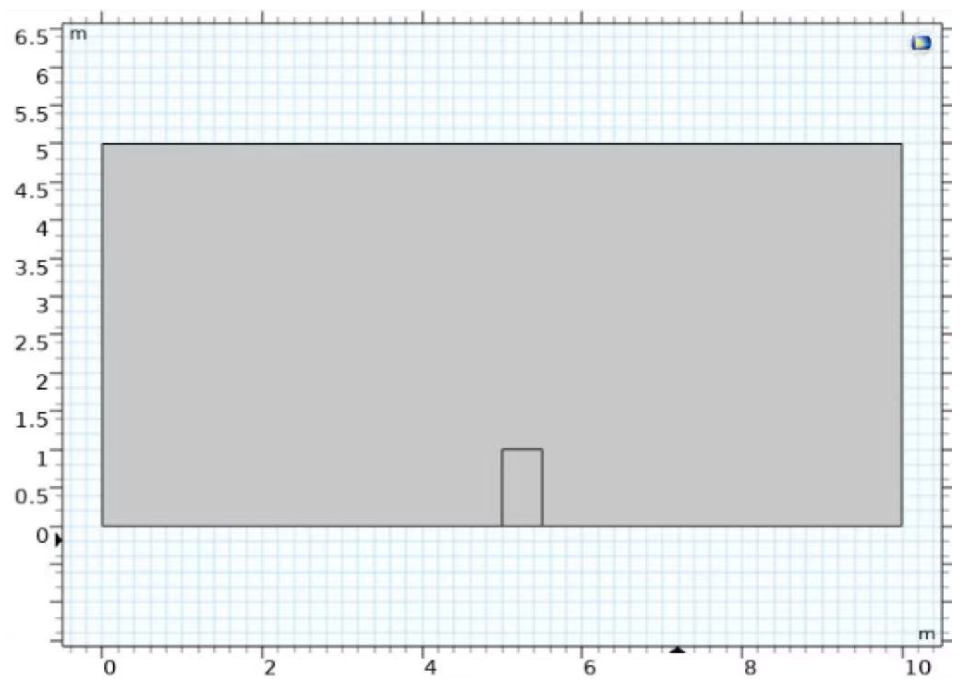
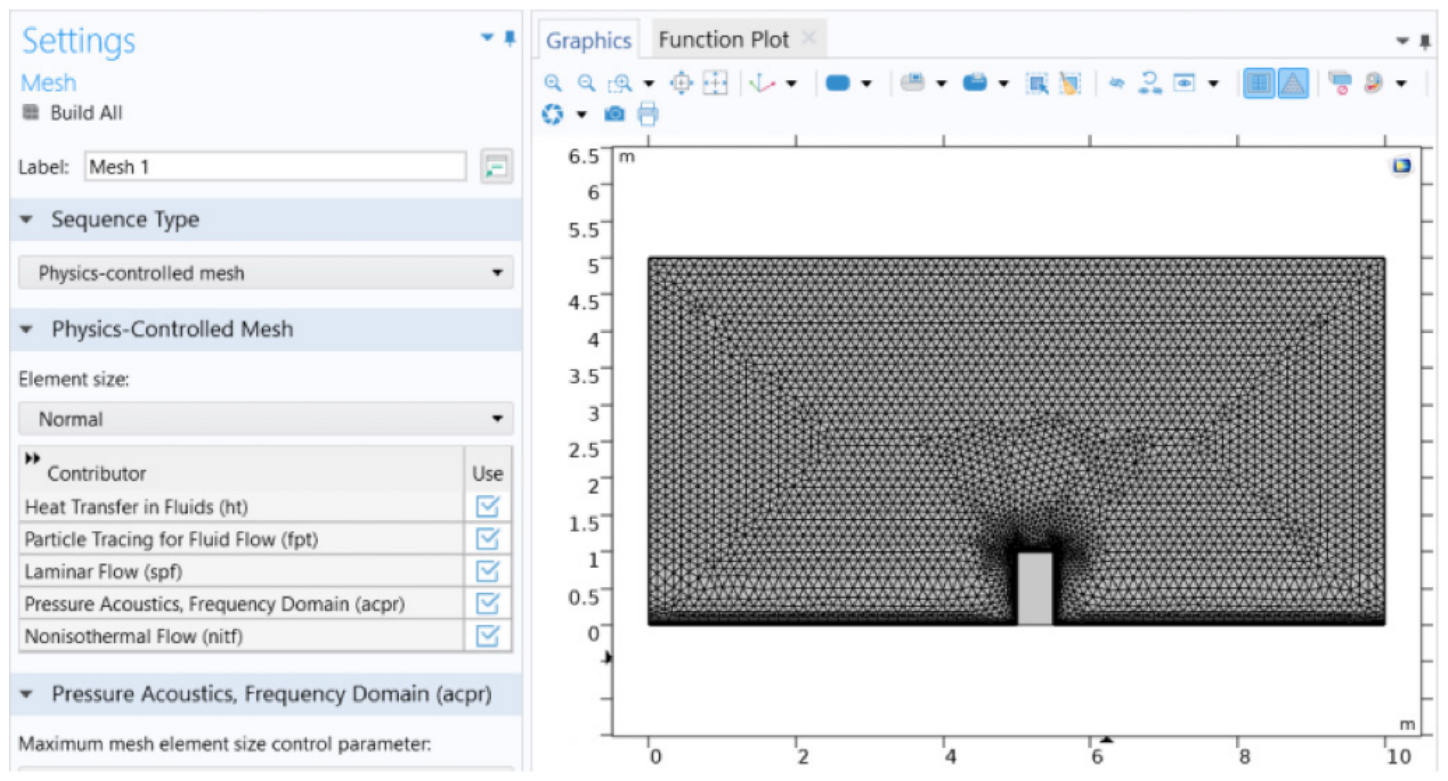
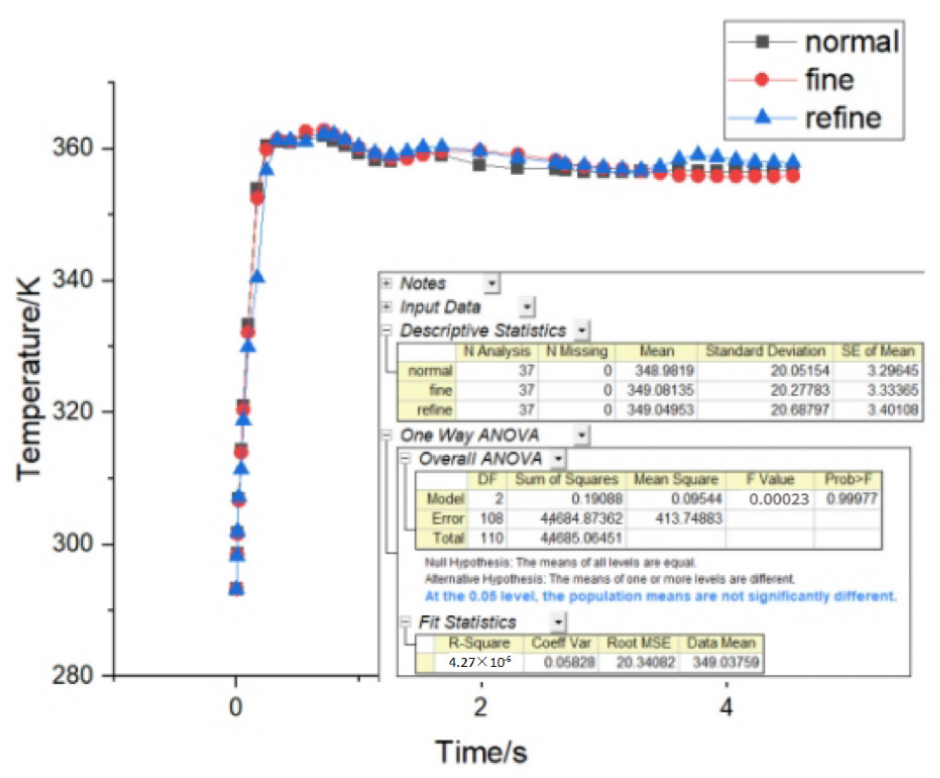
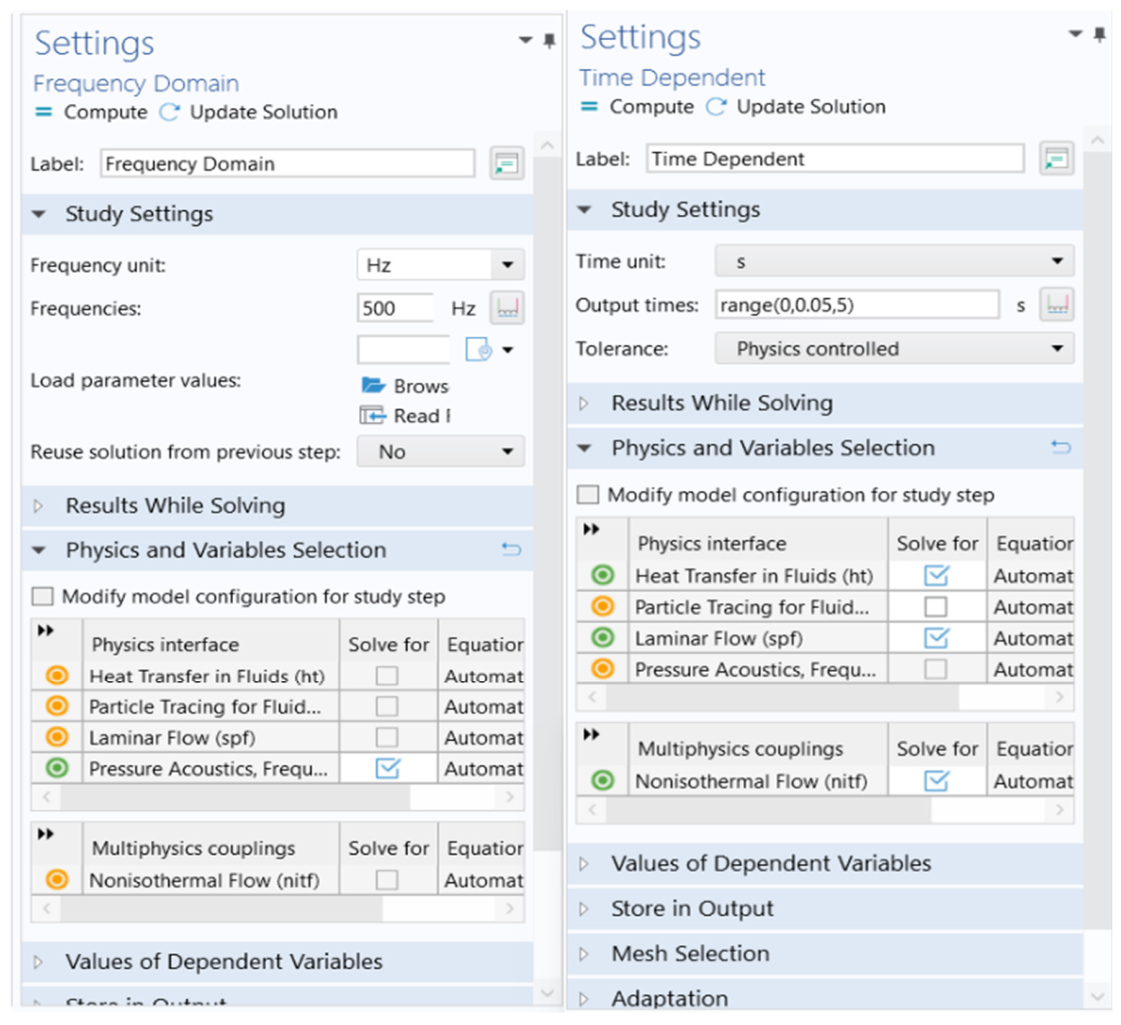
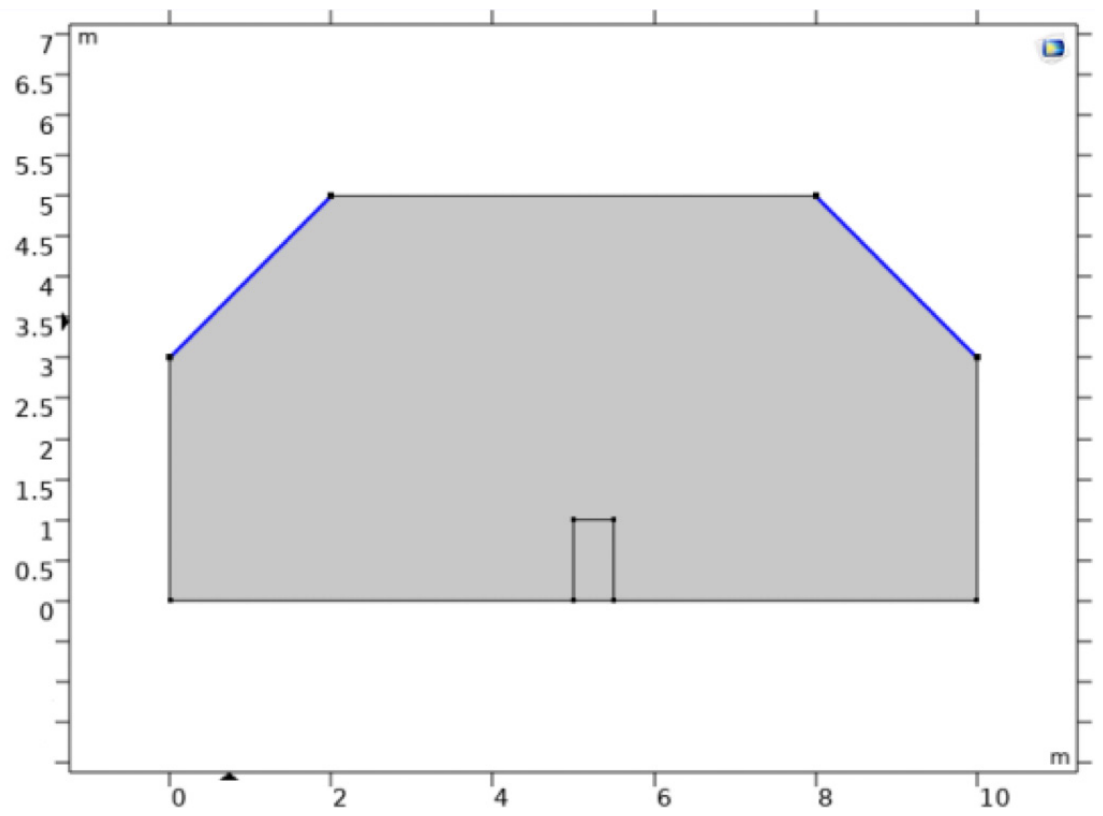
3.1. Model Development and Mesh Independence Verification
3.2. Effect of Different Sound Source Arrangements on the Flame
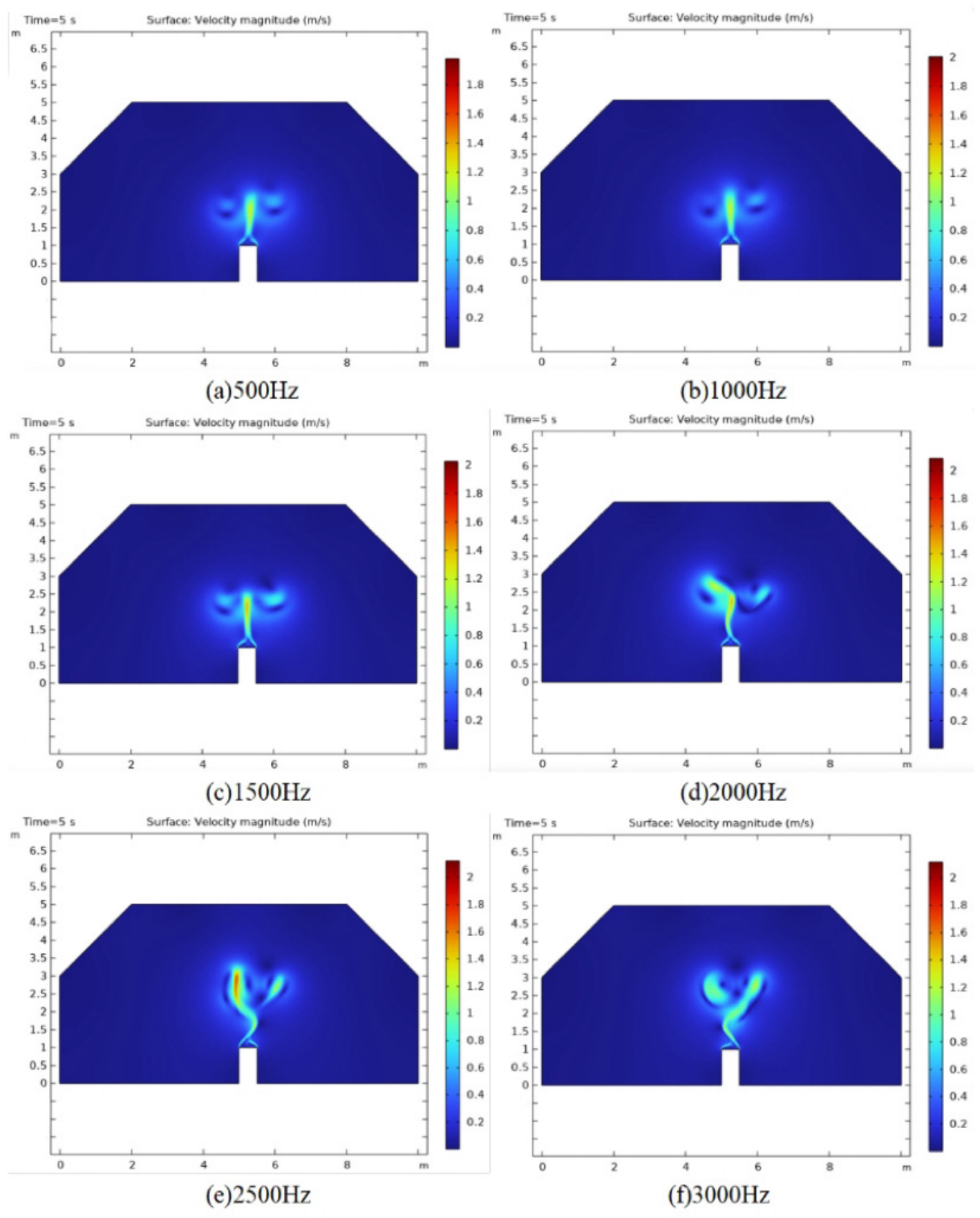
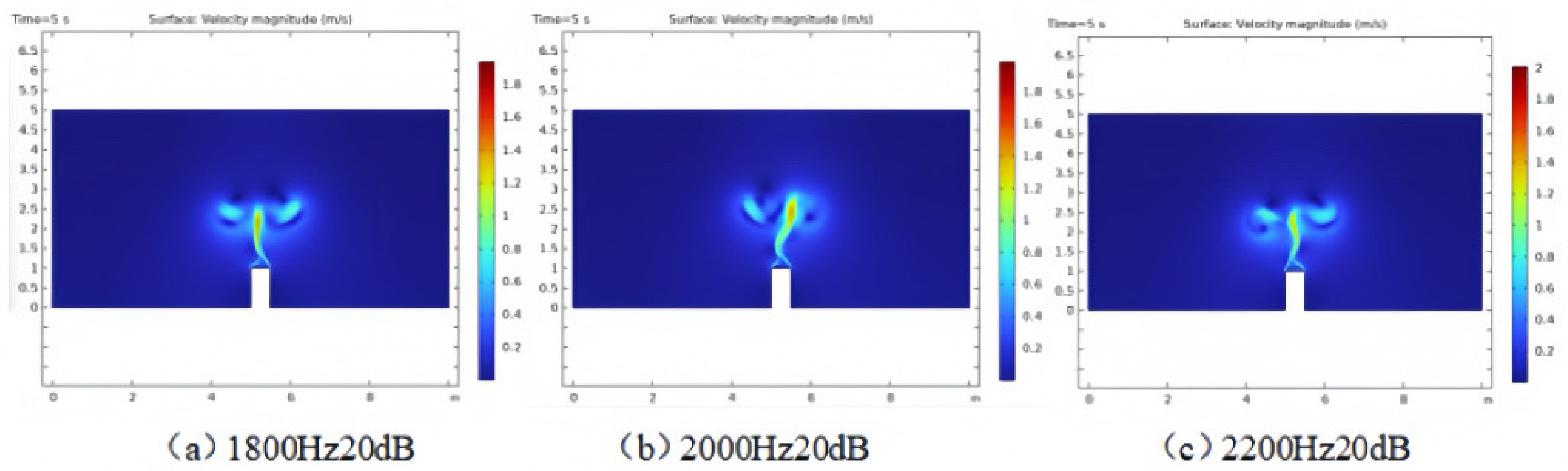
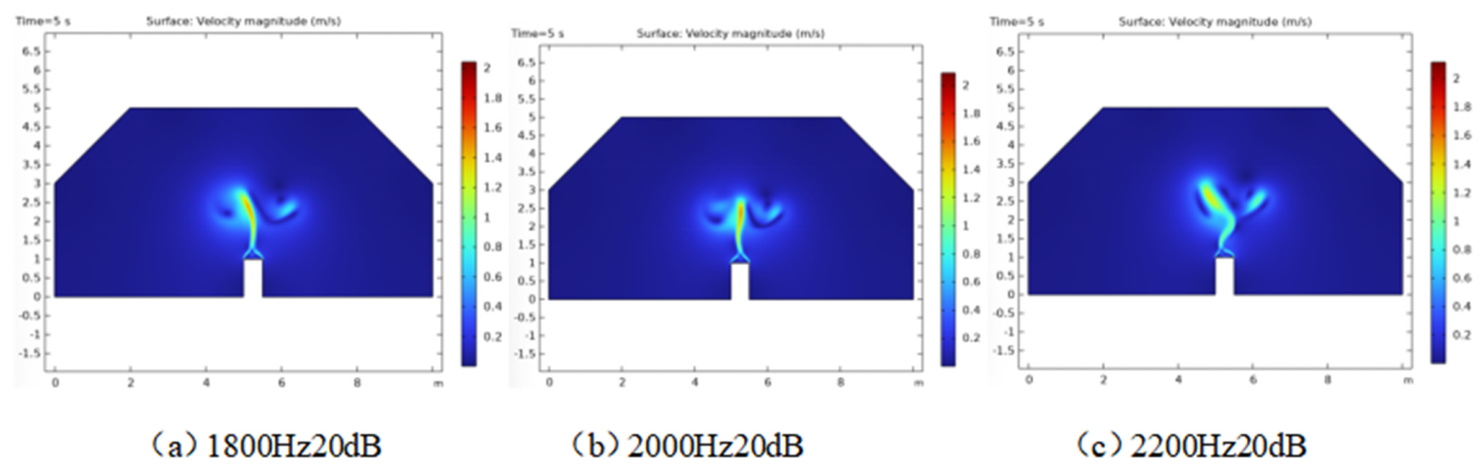
3.3. Effects of Different Frequencies and Sound Pressure Levels on the Flame
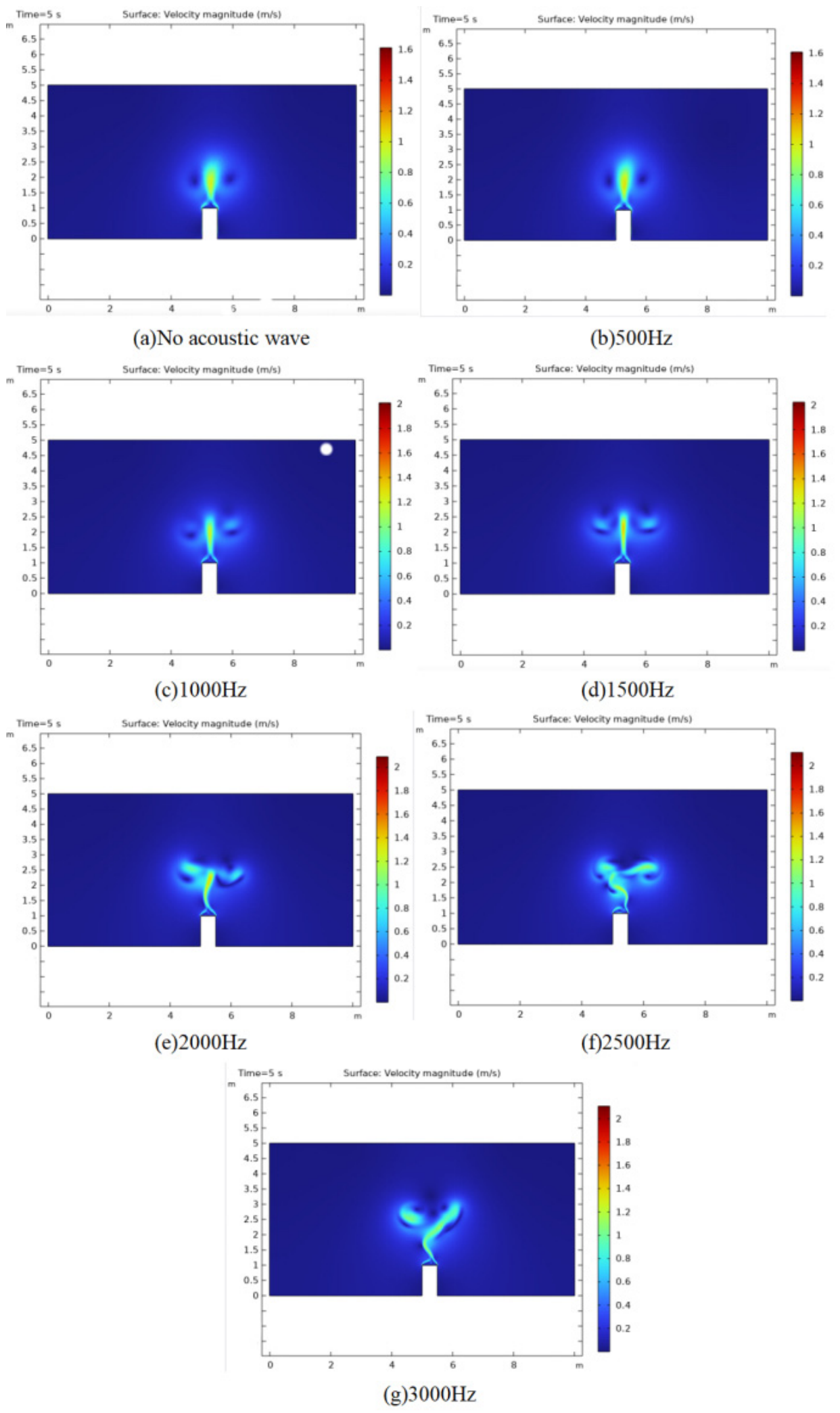
3.4. Analysis of Flame Morphology Evolution Under Different Parameters
4. Experimental Study on the Effects of High-Frequency Sound Waves on Grease Fires
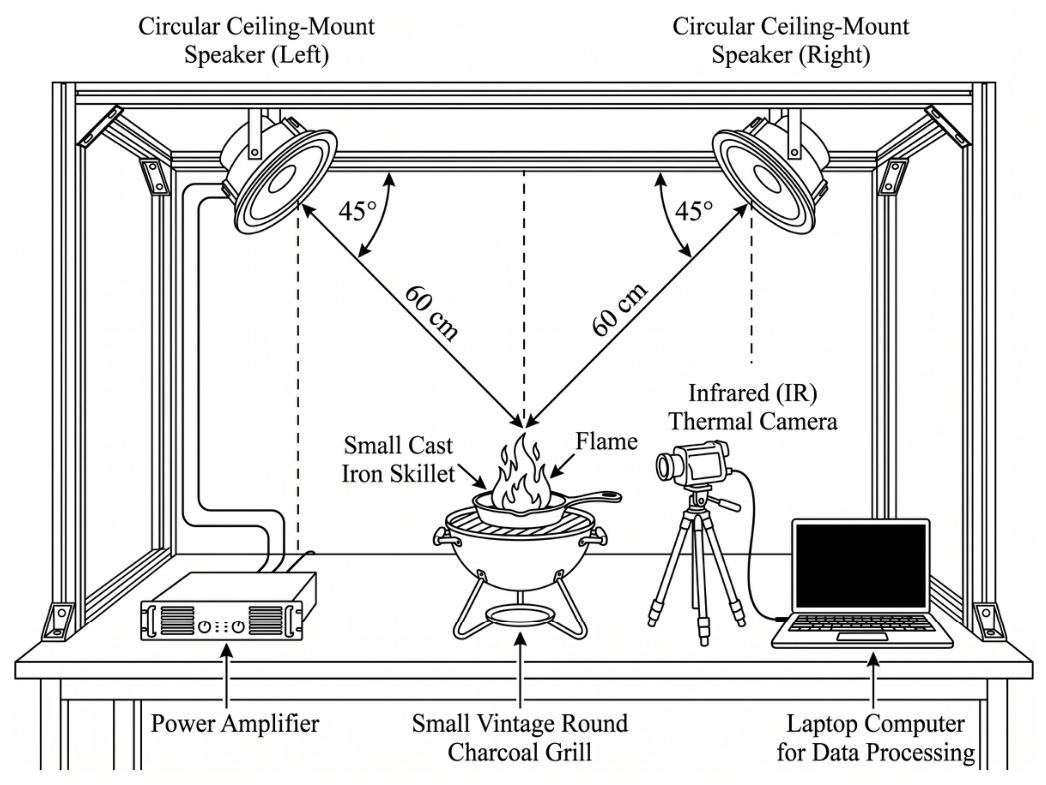
4.1. Experimental Setup and Procedure
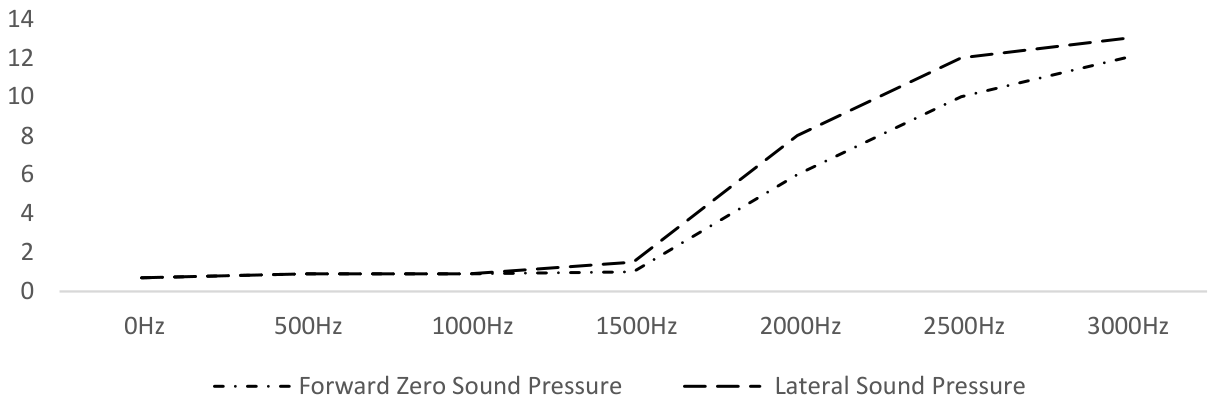
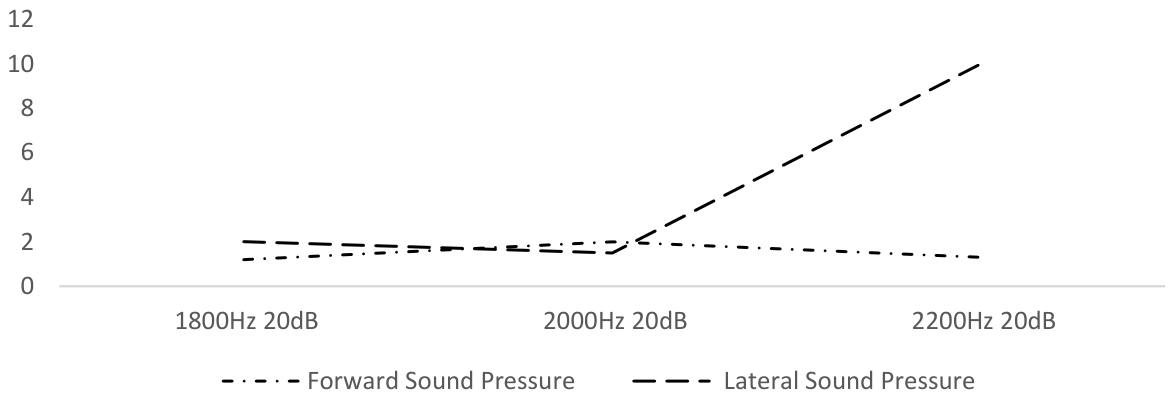
4.2. Effect of Different Sound Source Arrangements on Flames
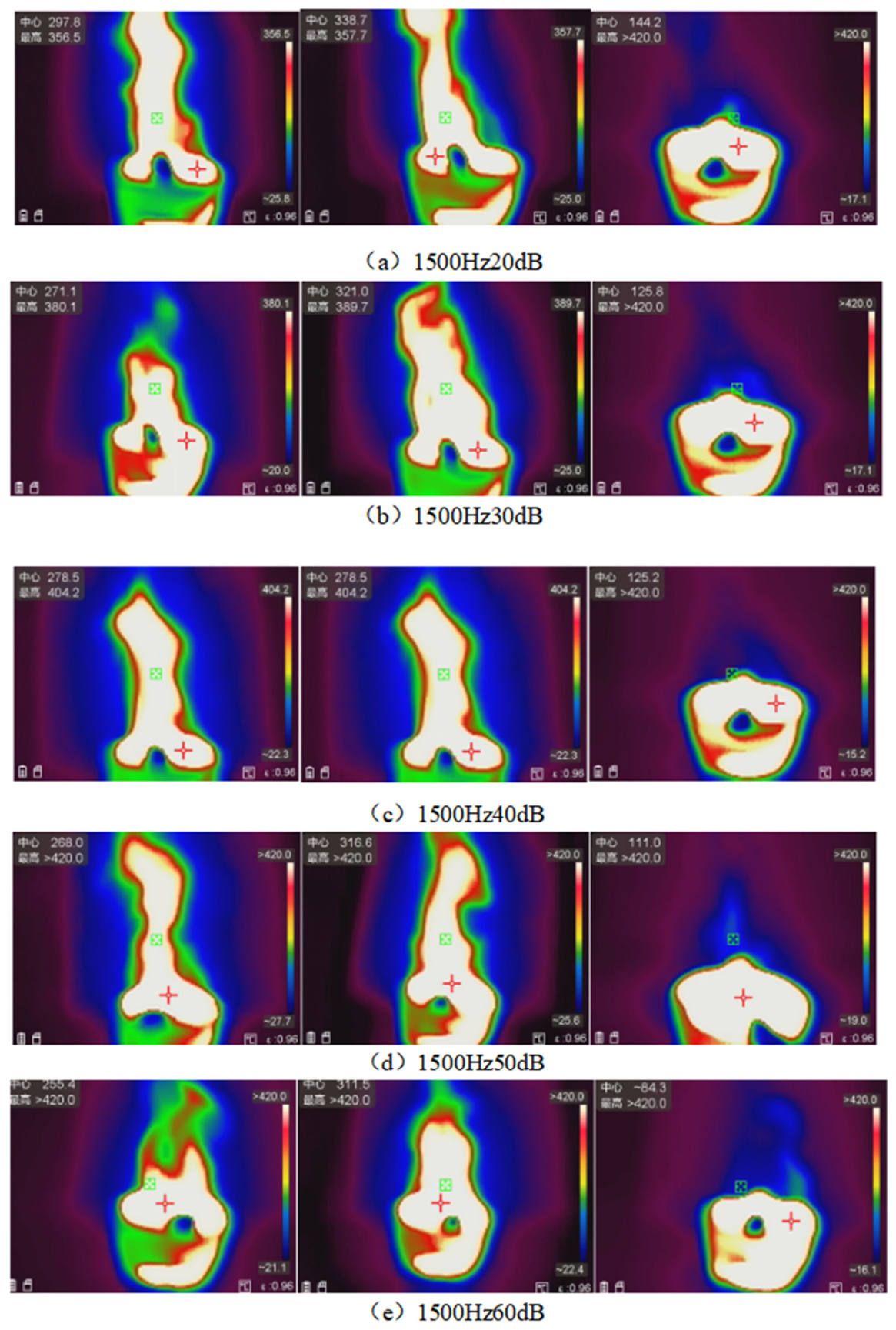
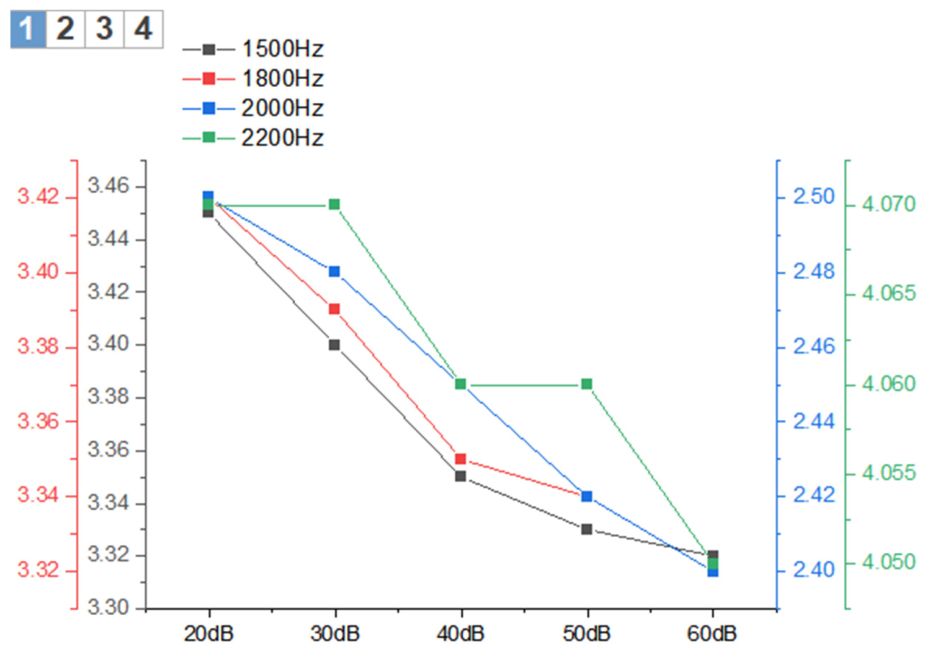
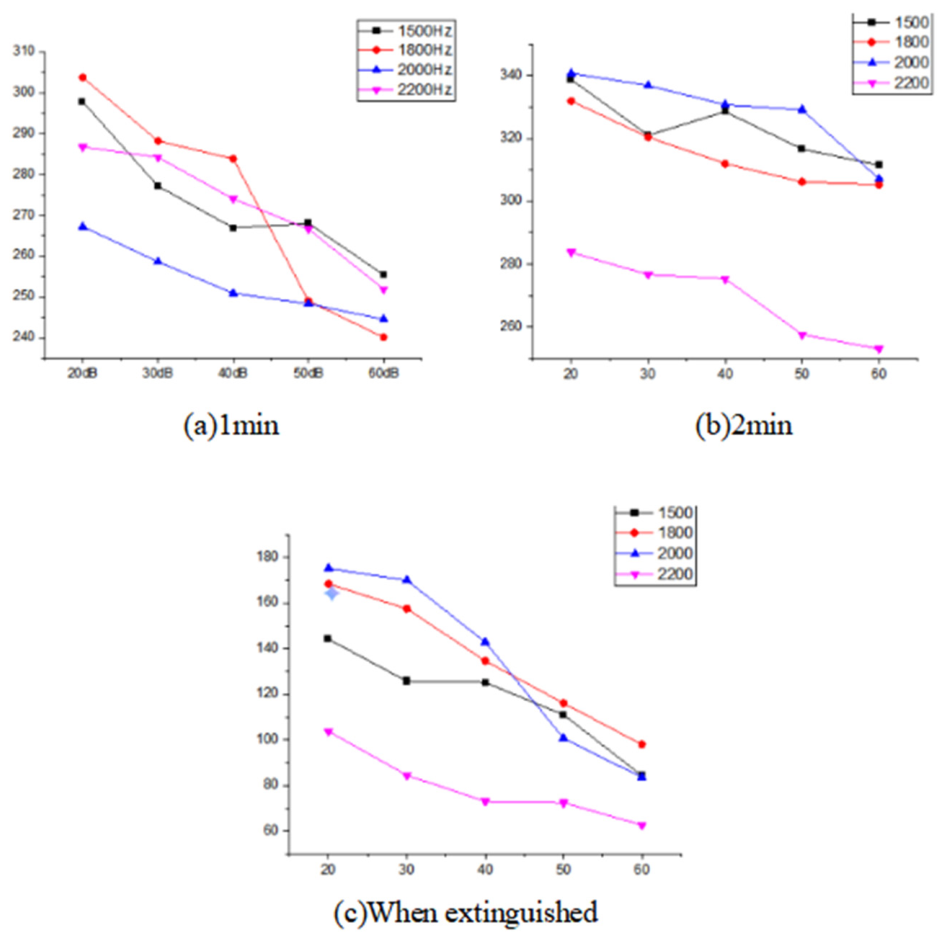
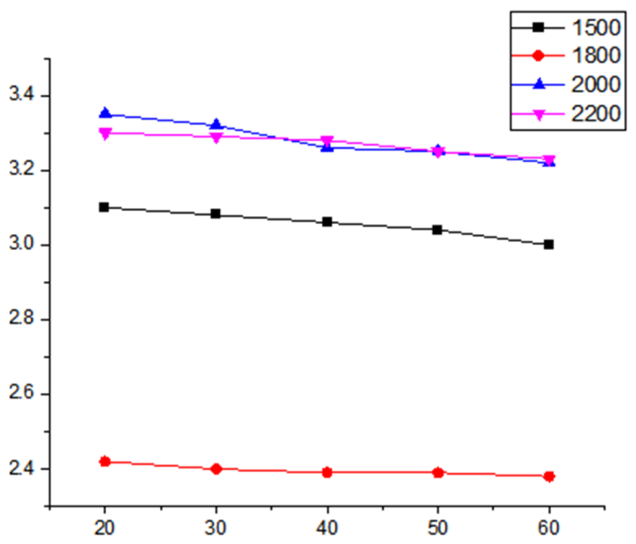
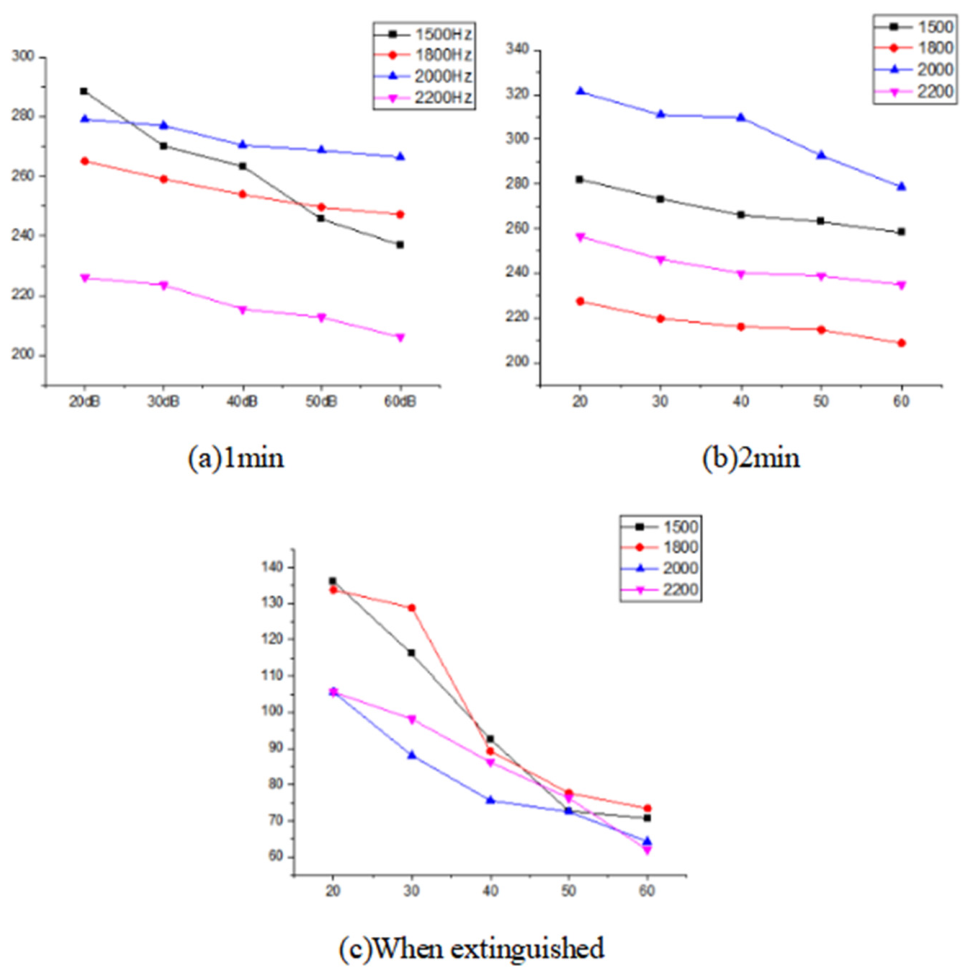
4.3. Influence of Different Acoustic Field Parameters on Flames
5. Conclusions
- Acoustic waves can effectively destabilize oil pan flames. The suppression effect increases first and then decreases with the increase in frequency, showing a nonlinear law.
- On the basis of the optimal frequency, increasing the sound pressure level can significantly enhance the suppression effect, but it has saturation characteristics.
- The bilateral oblique sound source acts on both sides of the flame root at the same time, which can realize uniform suppression and compensate for the high-frequency deflection effect of a single sound field, with higher efficiency.
Author Contributions
Funding
Data Availability Statement
Conflicts of Interest
Appendix A
| Symbol | Description | Unit |
| α | Thermal diffusivity or air absorption coefficient | m2/s or dB/m |
| αp | Thermal expansion coefficient at constant pressure | 1/K |
| αp, ref | Reference thermal expansion coefficient | 1/K |
| Adiv | Attenuation due to geometrical divergence | dB |
| Aatm | Attenuation due to atmospheric absorption | dB |
| c | Speed of sound in air | m/s |
| cc | Complex speed of sound (in pressure acoustics) | m/s |
| cε1, cε2 | Turbulence model constants (k-ε) | – |
| Cμ | Turbulence model constant | – |
| Cp | Specific heat capacity at constant pressure | J/(kg·K) |
| dz | Thickness (2D model depth) | m |
| f | Acoustic frequency | Hz |
| F | Body force vector | N/m3 |
| Fg | Buoyancy force due to thermal expansion | N/m3 |
| fε, fμ | Damping functions in low-Re k-ε model | – |
| g | Gravitational acceleration (9.81 m/s2) | m/s2 |
| G2 | Wall distance variable (turbulence model) | 1/m |
| I | Sound intensity (acoustic flux) | W/m2 |
| Identity tensor (in Equation (4)) | – | |
| k | Thermal conductivity | W/(m·K) |
| k2 | Turbulent kinetic energy (in spf module) | m2/s2 |
| kcq | Complex wave number | 1/m |
| keq | Equivalent acoustic wave number | |
| kz | Out-of-plane wave number | 1/m |
| K | Effective stress tensor (viscous + turbulent) | Pa |
| lref | Reference length scale (turbulence model) | m |
| lw | Distance to nearest wall | m |
| L | Characteristic length (e.g., flame height) | m |
| Lp | Sound pressure level at the flame location | dB |
| Lp0 | Reference sound pressure level measured at distance r0 | dB |
| n | Outward normal unit vector | – |
| p | Sound pressure | Pa |
| p2 | Pressure field (in laminar flow) | Pa |
| pA | Absolute pressure (pressure acoustics) | Pa |
| pb | Background pressure | Pa |
| Pk | Production term of turbulent kinetic energy | W/m3 |
| Pt, pt | Total acoustic pressure | Pa |
| Pr | Prandtl number | – |
| PrT | Turbulent Prandtl number | – |
| q | Heat flux vector | W/m2 |
| q0 | Boundary heat flux | W/m2 |
| qd | Dipole source term | N/m3 |
| Q | General heat source | W/m3 |
| Qm | Monopole source term | 1/s2 |
| Qp | Pressure work term | W/m3 |
| Qv | Viscous dissipation term | W/m3 |
| Qvd | Viscous dissipation in coupled flow | W/m3 |
| r | Distance from sound source | m |
| r0 | Reference distance | m |
| S | Surface area | m2 |
| St | Strouhal number = fL/U | – |
| t | Time | s |
| T | Temperature | K or °C |
| T+ | Dimensionless temperature (wall function) | – |
| Tref | Reference temperature | K |
| Tw | Wall temperature | K |
| u | Velocity vector (heat transfer module) | m/s |
| u2 | Velocity vector (laminar flow module) | m/s |
| uτ | Friction velocity | m/s |
| U | Characteristic flow velocity | m/s |
| y+ | Dimensionless wall distance | – |
| ε | Turbulent dissipation rate | m2/s3 |
| ϵ | Same as ε (in spf module) | m2/s3 |
| κ | Von Kármán constant (~0.41) | – |
| μ | Dynamic viscosity | Pa·s |
| μT | Turbulent eddy viscosity | Pa·s |
| ρ | Density | kg/m3 |
| ρc | Complex density (pressure acoustics) | kg/m3 |
| ρref | Reference density | kg/m3 |
| σk, σε | Turbulent Prandtl numbers for k and ε | – |
| σw | Constant for wall distance equation | – |
| τ | Viscous stress tensor | Pa |
| ω | Angular frequency = 2πf | rad/s |
| ∇ | Gradient operator | 1/m |
Appendix B

| Frequency Setting | SPL Setting | 1 | 2 | 3 | CV (%) |
|---|---|---|---|---|---|
| 1500 Hz | 20 dB | 3.44 | 3.42 | 3.45 | 0.44 |
| 1500 Hz | 30 dB | 3.40 | 3.38 | 3.41 | 0.45 |
| 1500 Hz | 40 dB | 3.35 | 3.33 | 3.36 | 0.46 |
| 1500 Hz | 50 dB | 3.33 | 3.31 | 3.34 | 0.46 |
| 1500 Hz | 60 dB | 3.32 | 3.30 | 3.33 | 0.46 |
| 1800 Hz | 20 dB | 3.42 | 3.43 | 3.40 | 0.45 |
| 1800 Hz | 30 dB | 3.39 | 3.40 | 3.37 | 0.45 |
| 1800 Hz | 40 dB | 3.35 | 3.36 | 3.33 | 0.46 |
| 1800 Hz | 50 dB | 3.34 | 3.32 | 3.35 | 0.46 |
| 1800 Hz | 60 dB | 3.32 | 3.31 | 3.33 | 0.30 |
| 2000 Hz | 20 dB | 2.50 | 2.48 | 2.51 | 0.61 |
| 2000 Hz | 30 dB | 2.48 | 2.46 | 2.49 | 0.62 |
| 2000 Hz | 40 dB | 2.45 | 2.43 | 2.46 | 0.62 |
| 2000 Hz | 50 dB | 2.42 | 2.40 | 2.43 | 0.63 |
| 2000 Hz | 60 dB | 2.40 | 2.42 | 2.42 | 0.48 |
| 2200 Hz | 20 dB | 4.07 | 4.03 | 4.10 | 0.86 |
| 2200 Hz | 30 dB | 4.07 | 4.10 | 4.03 | 0.86 |
| 2200 Hz | 40 dB | 4.06 | 4.03 | 4.09 | 0.74 |
| 2200 Hz | 50 dB | 4.06 | 4.02 | 4.09 | 0.87 |
| 2200 Hz | 60 dB | 4.05 | 4.01 | 4.08 | 0.87 |
| Frequency Setting | SPL Setting | 1 | 2 | 3 | CV (%) |
|---|---|---|---|---|---|
| 1500 Hz | 20 dB | 3.11 | 3.09 | 3.12 | 0.49 |
| 1500 Hz | 30 dB | 3.09 | 3.07 | 3.10 | 0.50 |
| 1500 Hz | 40 dB | 3.07 | 3.05 | 3.08 | 0.50 |
| 1500 Hz | 50 dB | 3.05 | 3.03 | 3.06 | 0.50 |
| 1500 Hz | 60 dB | 3.03 | 3.01 | 3.04 | 0.50 |
| 1800 Hz | 20 dB | 2.43 | 2.44 | 2.41 | 0.63 |
| 1800 Hz | 30 dB | 2.41 | 2.42 | 2.39 | 0.63 |
| 1800 Hz | 40 dB | 2.40 | 2.41 | 2.38 | 0.64 |
| 1800 Hz | 50 dB | 2.40 | 2.41 | 2.38 | 0.64 |
| 1800 Hz | 60 dB | 2.39 | 2.40 | 2.37 | 0.46 |
| 2000 Hz | 20 dB | 3.35 | 3.33 | 3.36 | 0.46 |
| 2000 Hz | 30 dB | 3.32 | 3.30 | 3.33 | 0.46 |
| 2000 Hz | 40 dB | 3.28 | 3.26 | 3.29 | 0.46 |
| 2000 Hz | 50 dB | 3.27 | 3.28 | 3.25 | 0.46 |
| 2000 Hz | 60 dB | 3.25 | 3.26 | 3.23 | 0.46 |
| 2200 Hz | 20 dB | 3.30 | 3.28 | 3.31 | 0.46 |
| 2200 Hz | 30 dB | 3.30 | 3.28 | 3.31 | 0.46 |
| 2200 Hz | 40 dB | 3.29 | 3.30 | 3.27 | 0.46 |
| 2200 Hz | 50 dB | 3.27 | 3.25 | 3.28 | 0.46 |
| 2200 Hz | 60 dB | 3.26 | 3.24 | 3.27 | 0.46 |
| Frequency Setting | SPL Setting | 1 | 2 | 3 | CV (%) |
|---|---|---|---|---|---|
| 1 min | |||||
| 1500 Hz | 20 dB | 298.2 | 297.8 | 298.0 | 0.07 |
| 1500 Hz | 30 dB | 278.3 | 271.1 | 276.5 | 1.37 |
| 1500 Hz | 40 dB | 267.5 | 278.5 | 273.0 | 2.02 |
| 1500 Hz | 50 dB | 269.1 | 268.0 | 268.5 | 0.21 |
| 1500 Hz | 60 dB | 256.6 | 255.4 | 255.0 | 0.33 |
| 1800 Hz | 20 dB | 304.3 | 303.8 | 304.0 | 0.08 |
| 1800 Hz | 30 dB | 290.7 | 290.2 | 290.5 | 0.09 |
| 1800 Hz | 40 dB | 285.2 | 284.7 | 285.0 | 0.09 |
| 1800 Hz | 50 dB | 248.0 | 247.5 | 247.8 | 0.10 |
| 1800 Hz | 60 dB | 240.6 | 240.1 | 240.3 | 0.10 |
| 2000 Hz | 20 dB | 267.1 | 266.6 | 266.9 | 0.09 |
| 2000 Hz | 30 dB | 260.3 | 259.8 | 260.0 | 0.10 |
| 2000 Hz | 40 dB | 251.0 | 250.5 | 250.8 | 0.10 |
| 2000 Hz | 50 dB | 250.8 | 250.3 | 250.5 | 0.10 |
| 2000 Hz | 60 dB | 248.9 | 248.4 | 248.6 | 0.10 |
| 2200 Hz | 20 dB | 287.1 | 286.6 | 286.9 | 0.09 |
| 2200 Hz | 30 dB | 285.6 | 285.1 | 285.4 | 0.09 |
| 2200 Hz | 40 dB | 275.2 | 274.7 | 275.0 | 0.09 |
| 2200 Hz | 50 dB | 268.4 | 267.9 | 268.1 | 0.09 |
| 2200 Hz | 60 dB | 252.4 | 251.9 | 252.1 | 0.10 |
| 2 min | |||||
| 1500 Hz | 20 dB | 339.1 | 338.7 | 338.9 | 0.06 |
| 1500 Hz | 30 dB | 321.2 | 321.0 | 321.1 | 0.03 |
| 1500 Hz | 40 dB | 330.9 | 331.5 | 334.7 | 0.61 |
| 1500 Hz | 50 dB | 318.6 | 316.6 | 317.6 | 0.32 |
| 1500 Hz | 60 dB | 312.2 | 311.5 | 311.8 | 0.11 |
| 1800 Hz | 20 dB | 332.3 | 331.8 | 332.0 | 0.08 |
| 1800 Hz | 30 dB | 320.9 | 320.4 | 320.7 | 0.08 |
| 1800 Hz | 40 dB | 312.5 | 312.0 | 312.2 | 0.08 |
| 1800 Hz | 50 dB | 309.6 | 309.1 | 309.4 | 0.08 |
| 1800 Hz | 60 dB | 308.1 | 307.6 | 307.9 | 0.08 |
| 2000 Hz | 20 dB | 340.3 | 339.8 | 340.0 | 0.07 |
| 2000 Hz | 30 dB | 338.2 | 337.7 | 338.0 | 0.07 |
| 2000 Hz | 40 dB | 332.7 | 332.2 | 332.5 | 0.08 |
| 2000 Hz | 50 dB | 331.2 | 330.7 | 331.0 | 0.08 |
| 2000 Hz | 60 dB | 308.6 | 308.1 | 308.4 | 0.08 |
| 2200 Hz | 20 dB | 284.5 | 284.0 | 284.2 | 0.09 |
| 2200 Hz | 30 dB | 278.2 | 277.7 | 278.0 | 0.09 |
| 2200 Hz | 40 dB | 276.9 | 276.4 | 276.7 | 0.09 |
| 2200 Hz | 50 dB | 257.2 | 256.7 | 257.0 | 0.09 |
| 2200 Hz | 60 dB | 253.7 | 253.2 | 253.5 | 0.10 |
| When extinguished | |||||
| 1500 Hz | 20 dB | 143.5 | 144.2 | 143.9 | 0.24 |
| 1500 Hz | 30 dB | 125.1 | 125.8 | 125.5 | 0.28 |
| 1500 Hz | 40 dB | 124.5 | 125.2 | 124.9 | 0.28 |
| 1500 Hz | 50 dB | 110.3 | 111.0 | 110.7 | 0.32 |
| 1500 Hz | 60 dB | 85.6 | 84.3 | 85.0 | 0.77 |
| 1800 Hz | 20 dB | 168.1 | 167.6 | 167.9 | 0.15 |
| 1800 Hz | 30 dB | 158.3 | 157.8 | 158.1 | 0.16 |
| 1800 Hz | 40 dB | 136.2 | 135.7 | 136.0 | 0.19 |
| 1800 Hz | 50 dB | 119.0 | 118.5 | 118.8 | 0.21 |
| 1800 Hz | 60 dB | 101.3 | 100.8 | 101.1 | 0.25 |
| 2000 Hz | 20 dB | 175.3 | 174.8 | 175.1 | 0.14 |
| 2000 Hz | 30 dB | 172.6 | 172.1 | 172.4 | 0.15 |
| 2000 Hz | 40 dB | 146.0 | 145.5 | 145.8 | 0.17 |
| 2000 Hz | 50 dB | 102.1 | 101.6 | 101.9 | 0.25 |
| 2000 Hz | 60 dB | 85.4 | 84.9 | 85.2 | 0.30 |
| 2200 Hz | 20 dB | 103.5 | 103.0 | 103.3 | 0.24 |
| 2200 Hz | 30 dB | 84.7 | 84.2 | 84.5 | 0.30 |
| 2200 Hz | 40 dB | 73.6 | 73.1 | 73.4 | 0.34 |
| 2200 Hz | 50 dB | 73.0 | 72.5 | 72.8 | 0.35 |
| 2200 Hz | 60 dB | 64.2 | 63.7 | 64.0 | 0.39 |
| Frequency Setting | SPL Setting | 1 | 2 | 3 | CV (%) |
|---|---|---|---|---|---|
| 1 min | |||||
| 1500 Hz | 20 dB | 288.7 | 289.3 | 289.9 | 0.21 |
| 1500 Hz | 30 dB | 271.9 | 272.5 | 273.1 | 0.22 |
| 1500 Hz | 40 dB | 268.1 | 268.7 | 269.3 | 0.22 |
| 1500 Hz | 50 dB | 246.3 | 246.9 | 247.5 | 0.24 |
| 1500 Hz | 60 dB | 239.3 | 240.0 | 240.7 | 0.29 |
| 1800 Hz | 20 dB | 265.6 | 266.3 | 267.0 | 0.26 |
| 1800 Hz | 30 dB | 259.7 | 260.4 | 261.1 | 0.27 |
| 1800 Hz | 40 dB | 257.8 | 258.5 | 259.2 | 0.27 |
| 1800 Hz | 50 dB | 252.4 | 253.2 | 254.0 | 0.32 |
| 1800 Hz | 60 dB | 249.5 | 250.3 | 251.1 | 0.32 |
| 2000 Hz | 20 dB | 280.0 | 280.7 | 281.4 | 0.25 |
| 2000 Hz | 30 dB | 279.2 | 279.9 | 280.6 | 0.25 |
| 2000 Hz | 40 dB | 273.4 | 274.2 | 275.0 | 0.29 |
| 2000 Hz | 50 dB | 272.5 | 273.3 | 274.1 | 0.29 |
| 2000 Hz | 60 dB | 270.3 | 271.1 | 271.9 | 0.30 |
| 2200 Hz | 20 dB | 226.4 | 227.0 | 227.6 | 0.26 |
| 2200 Hz | 30 dB | 225.1 | 225.7 | 226.3 | 0.27 |
| 2200 Hz | 40 dB | 218.6 | 219.2 | 219.8 | 0.27 |
| 2200 Hz | 50 dB | 216.2 | 216.8 | 217.4 | 0.28 |
| 2200 Hz | 60 dB | 209.6 | 210.2 | 210.8 | 0.29 |
| 2 min | |||||
| 1500 Hz | 20 dB | 281.3 | 281.9 | 282.5 | 0.21 |
| 1500 Hz | 30 dB | 274.9 | 275.5 | 276.1 | 0.22 |
| 1500 Hz | 40 dB | 270.0 | 270.6 | 271.2 | 0.22 |
| 1500 Hz | 50 dB | 268.1 | 268.7 | 269.3 | 0.22 |
| 1500 Hz | 60 dB | 265.5 | 266.1 | 266.7 | 0.23 |
| 1800 Hz | 20 dB | 228.4 | 228.9 | 229.4 | 0.22 |
| 1800 Hz | 30 dB | 220.1 | 220.6 | 221.1 | 0.23 |
| 1800 Hz | 40 dB | 219.0 | 219.5 | 220.0 | 0.23 |
| 1800 Hz | 50 dB | 217.7 | 218.3 | 218.9 | 0.28 |
| 1800 Hz | 60 dB | 210.0 | 210.6 | 211.2 | 0.29 |
| 2000 Hz | 20 dB | 321.6 | 322.3 | 323.0 | 0.22 |
| 2000 Hz | 30 dB | 310.4 | 311.1 | 311.8 | 0.23 |
| 2000 Hz | 40 dB | 310.2 | 310.9 | 311.6 | 0.23 |
| 2000 Hz | 50 dB | 293.5 | 294.3 | 295.1 | 0.27 |
| 2000 Hz | 60 dB | 283.8 | 284.6 | 285.4 | 0.28 |
| 2200 Hz | 20 dB | 257.6 | 258.3 | 259.0 | 0.27 |
| 2200 Hz | 30 dB | 248.4 | 249.1 | 249.8 | 0.28 |
| 2200 Hz | 40 dB | 242.2 | 242.9 | 243.6 | 0.29 |
| 2200 Hz | 50 dB | 241.5 | 242.2 | 242.9 | 0.29 |
| 2200 Hz | 60 dB | 239.8 | 240.5 | 241.2 | 0.29 |
| When extinguished | |||||
| 1500 Hz | 20 dB | 136.2 | 137.1 | 138.0 | 0.66 |
| 1500 Hz | 30 dB | 116.2 | 117.0 | 117.8 | 0.69 |
| 1500 Hz | 40 dB | 93.0 | 93.7 | 94.4 | 0.75 |
| 1500 Hz | 50 dB | 75.0 | 75.6 | 76.2 | 0.79 |
| 1500 Hz | 60 dB | 71.1 | 71.6 | 72.1 | 0.70 |
| 1800 Hz | 20 dB | 134.4 | 135.3 | 136.2 | 0.66 |
| 1800 Hz | 30 dB | 130.1 | 131.0 | 131.9 | 0.69 |
| 1800 Hz | 40 dB | 90.2 | 90.9 | 91.6 | 0.77 |
| 1800 Hz | 50 dB | 79.1 | 79.7 | 80.3 | 0.75 |
| 1800 Hz | 60 dB | 75.2 | 75.7 | 76.2 | 0.66 |
| 2000 Hz | 20 dB | 106.3 | 107.1 | 107.9 | 0.75 |
| 2000 Hz | 30 dB | 87.8 | 88.4 | 89.0 | 0.68 |
| 2000 Hz | 40 dB | 76.1 | 76.7 | 77.3 | 0.78 |
| 2000 Hz | 50 dB | 75.0 | 75.6 | 76.2 | 0.79 |
| 2000 Hz | 60 dB | 65.3 | 65.8 | 66.3 | 0.76 |
| 2200 Hz | 20 dB | 106.1 | 106.8 | 107.5 | 0.66 |
| 2200 Hz | 30 dB | 97.0 | 97.6 | 98.2 | 0.62 |
| 2200 Hz | 40 dB | 87.2 | 87.8 | 88.4 | 0.68 |
| 2200 Hz | 50 dB | 77.8 | 78.4 | 79.0 | 0.77 |
| 2200 Hz | 60 dB | 64.0 | 64.4 | 64.8 | 0.62 |
References
- Li, K.; Wang, E.; Wang, Q.; Husnain, N.; Li, D.; Fareed, S. Improving the removal of inhalable particles by combining flue gas condensation and acoustic agglomeration. J. Clean. Prod. 2020, 261, 121270. [Google Scholar] [CrossRef]
- Yang, X.; Feng, X.; Deng, L.; Xue, H.; Tang, E. Experimental study on combustion characteristics of cooking oil pan fires in residential kitchens. J. Saf. Environ. 2025, 26, 913–923. (In Chinese) [Google Scholar] [CrossRef]
- Loo, H.K.; Lee, S.T.; Bee, T.S. A Comparative Review of IG-541 System Use in Total Flooding Application for Energized Electrical Fire. Processes 2025, 13, 485. [Google Scholar] [CrossRef]
- Liang, T.; Lin, Z.; Mao, S.; Zhong, W.; Zhao, J. Study on the Synergistic Fire Extinguishing Effect of Typical Ultra-Fine Dry Powder and Inert Gas. J. Chin. J. Saf. Sci. 2021, 31, 148–154. (In Chinese) [Google Scholar] [CrossRef]
- Liao, G. Recent Progress in Methods of Generating Water Mist for Fire Suppression. J. ILASS Korea 2006, 11, 251–265. [Google Scholar]
- Li, K.; Zhu, S.; Tao, Z.; Wang, H. Experimental Study on Suppression of Lithium Iron Phosphate Battery Fires Using Composite Water-Based Fire Extinguishing Agents. Energy Storage Sci. Technol. 2025, 14, 140–151. [Google Scholar] [CrossRef]
- Li, Y. Discussion on the Extinguishing Mechanism and Application of Fine Water Mist. Chem. Eng. Saf. Environ. 2022, 35, 13–16+20. (In Chinese) [Google Scholar]
- Smirnov, N.V.; Kazakov, A.V.; Agafonov, V.V.; Kopilov, N.P. Study of the Efficiency and Transparency of Fire Extinguishing Aerosols. Occup. Saf. Ind. 2023, 2, 21–27. [Google Scholar] [CrossRef]
- Matskiv, O. Analysis of Modern Methods for Preventing the Spread and Extinguishing Fires. Environ. Probl. 2024, 9, 136–143. [Google Scholar] [CrossRef]
- Friedman, A.; Stoliarov, S. Acoustic extinction of laminar line-flames. Fire Saf. J. 2017, 93, 102–113. [Google Scholar] [CrossRef]
- Xiong, C.; Liu, Y.; Xu, C.; Huang, X. Extinguishing the dripping flame by acoustic wave. Fire Saf. J. 2021, 120, 103109. [Google Scholar] [CrossRef]
- Xiong, C.; Liu, Y.; Xu, C.; Huang, X. Acoustical extinction of flame on moving firebrand for the fire protection in wildland-urban interface. Fire Technol. 2020, 57, 1365–1380. [Google Scholar] [CrossRef]
- Xiong, C.; Liu, Y.; Fan, H.; Huang, X.; Nakamura, Y. Fluctuation and extinction of laminar diffusion flame induced by external acoustic wave and source. Sci. Rep. 2021, 11, 14402. [Google Scholar] [CrossRef]
- McKinney, D.J.; Dunn-Rankin, D. Acoustically driven extinction in a droplet stream flame. Combust. Sci. Technol. 2000, 161, 27–48. [Google Scholar] [CrossRef]
- Taspinar, Y.; Koklu, M.; Altin, M. Acoustic-driven airflow flame extinguishing system design and analysis of capabilities of low frequency in different fuels. Fire Technol. 2022, 58, 1579–1597. [Google Scholar] [CrossRef]
- O’Connor, J.; Acharya, V.; Lieuwen, T. Transverse combustion instabilities: Acoustic, fluid mechanic, and flame processes. Prog. Energy Combust. Sci. 2015, 49, 1–39. [Google Scholar] [CrossRef]
- Riley, N. Acoustic Streaming. Encycl. Acoust. 1997, 1, 321–327. [Google Scholar] [CrossRef]
- Niegodajew, P.; Łukasiak, K.; Radomiak, H.; Musiał, D.; Zajemska, M.; Poskart, A.; Gruszka, K. Application of acoustic oscillations in quenching of gas burner flame. Combust. Flame 2018, 194, 245–249. [Google Scholar] [CrossRef]
- Plascencia, M.A.; Roa, M.; Karagozian, A.R.; Talley, D.G. Turbulent Nonpremixed Jet Flames under Transverse Acoustic Forcing. In Proceedings of the AIAA Propulsion and Energy 2020 Forum, Virtual Event, 24–28 August 2020; p. 3905. [Google Scholar] [CrossRef]
- Shi, X.; Zhang, Y.; Chen, X.; Zhang, X.; Ma, Q.; Lin, G. The response of an ethanol pool fire to transverse acoustic waves. Fire Saf. J. 2021, 125, 103416. [Google Scholar] [CrossRef]
- Wilk-Jakubowski, J.L. Experimental Study of the Influence of Even Harmonics on Flame Extinguishing by Low-Frequency Acoustic Waves with the Use of High-Power Extinguisher. Appl. Sci. 2024, 14, 11809. [Google Scholar] [CrossRef]
- Loboichenko, V.; Jakubowski, W.G.; Jakubowski, W.L.J.; Ciosmak, J. Application of Low-Frequency Acoustic Waves to Extinguish Flames on the Basis of Selected Experimental Attempts. Appl. Sci. 2024, 14, 8872. [Google Scholar] [CrossRef]
- Rayleigh, L. The explanation of certain acoustical phenomena. Nature 1878, 18, 319–321. [Google Scholar] [CrossRef]
- Oh, J.; Heo, P.; Yoon, Y. Acoustic excitation effect on NOx reduction and flame-stability in a lifted non-premixed turbulent hydrogen jet with coaxial air. Int. J. Hydrogen Energy 2009, 34, 7851–7861. [Google Scholar] [CrossRef]
- Lee, K.M.; Kim, T.K.; Kim, W.J.; Kim, S.G.; Park, J.; Keel, S.I. A visual study on flame behavior in tone-excited non-premixed jet flames. Fuel 2002, 81, 2249–2255. [Google Scholar] [CrossRef]
- Steinbacher, T.; Albayrak, A.; Ghani, A.; Polifke, W. Response of premixed flames to irrotational and vortical velocity fields generated by acoustic perturbations. Proc. Combust. Inst. 2019, 37, 5367–5375. [Google Scholar] [CrossRef]
- Yılmaz-Atay, H.; Wilk-Jakubowski, J.L. A Review of Environmentally Friendly Approaches in Fire Extinguishing: From Chemical Sciences to Innovations in Electrical Engineering. Polymers 2022, 14, 1224. [Google Scholar] [CrossRef]
- Vovchuk, T.S.; Wilk-Jakubowski, J.L.; Telelim, V.M.; Loboichenko, V.M.; Shevchenko, R.I.; Shevchenko, O.S.; Tregub, N.S. Investigation of the Use of the Acoustic Effect in Extinguishing Fires of Oil and Petroleum Products. SOCAR Proc. 2021, SOCAR Proceedings, 24–31. [Google Scholar] [CrossRef]
- Yadav, R.; Shirazi, R.; Choudhary, A.; Yadav, S.; Raghuvanshi, R. Designing of Fire Extinguisher Based on Sound Waves. Int. J. Eng. Adv. Technol. 2020, 9, 2249–8958. [Google Scholar] [CrossRef]
- Stawczyk, P.; Wilk-Jakubowski, J. Non-invasive attempts to extinguish flames with the use of high-power acoustic extinguisher. Open Eng. 2021, 11, 349–355. [Google Scholar] [CrossRef]
- Zheng, L.; Ji, S.; Zhang, Y. Lifted and reattached behaviour of laminar premixed flame under external acoustic excitation. Exp. Therm. Fluid Sci. 2018, 98, 683–692. [Google Scholar] [CrossRef]
- Shi, X.Q.; Zhang, J.R.; Zhang, Y.B.; Zhang, Y.T.; Zhao, Y.; Sun, K.Y.; Li, S.H.; Yu, Y.W.; Jiao, F.Y.; Cao, W.G. Combustion and extinction characteristics of an ethanol pool fire perturbed by low–frequency acoustic waves. Case Stud. Therm. Eng. 2024, 60, 104829. [Google Scholar] [CrossRef]
- Kashiwagi, T.; Newman, D.L. Flame spread over an inclined thin fuel surface. Combust. Flame 1976, 26, 163–177. [Google Scholar] [CrossRef]
- Hirano, T.; Noreikis, S.E.; Waterman, T.E. Postulations of flame spread mechanisms. Combust. Flame 1974, 22, 353–363. [Google Scholar] [CrossRef]
- Wen, Y.; Li, X.; Li, L.; Liu, Y. Design and ground testing of an acoustic slot burner for microgravity combustion experiments aboard the China Space Station. J. Tsinghua Univ. (Sci. Technol.) 2025, 65, 1705–1716. [Google Scholar] [CrossRef]
- Mao, Z.; Zhang, G.; Gu, H. Experimental study of acoustic agglomeration coupled with water droplets on eliminating cable fire smoke. Powder Technol. 2022, 412, 117977. [Google Scholar] [CrossRef]
- University of Dammam. Systems and Methods for Sound Waves Fire Extinguishers. U.S. Patent US9907987, 6 March 2018. Available online: https://www.freepatentsonline.com/y2018/0056103.html (accessed on 6 March 2018).
- ISO 9613-1; Acoustics—Attenuation of Sound During Propagation Outdoors—Part 1: Calculation of the Absorption of Sound by the Atmosphere. International Organization for Standardization: Geneva, Switzerland, 1993.
- Teodorescu, L.H.; Cojocaru, P.V. Experimental investigation of the reliability of reception of ultrasound signals in fire conditions. Fire Saf. J. 2014, 66, 25–34. [Google Scholar] [CrossRef]
- Pan, H.; Badawi, D.; Zhang, X.; Cetin, A.E. Additive neural network for forest fire detection. Signal Image Video Process. 2020, 14, 675–682. [Google Scholar] [CrossRef]
- Koklu, M.; Taspinar, Y.S. Determining the Extinguishing Status of Fuel Flames With Sound Wave by Machine Learning Methods. IEEE Access 2021, 9, 86207–86216. [Google Scholar] [CrossRef]
- Ivanov, S.; Stankov, S. The Artificial Intelligence Platform with the Use of DNN to Detect Flames: A Case of Acoustic Extinguisher. In Intelligent Computing & Optimization, Proceedings of the 4th International Conference on Intelligent Computing and Optimization 2021 (ICO2021); Springer: Cham, Switzerland, 2022; Volume 371, pp. 24–34. [Google Scholar] [CrossRef]
- Wilk-Jakubowski, J.; Stawczyk, P.; Ivanov, S.; Stankov, S. High-power acoustic fire extinguisher with artificial intelligence platform. Int. J. Comput. Vis. Robot. 2022, 12, 236–249. [Google Scholar] [CrossRef]


| Fuel Type | Representative Authors | Research Object | Core Findings |
|---|---|---|---|
| Gaseous Fuel | Niegodajew et al. [18] | Methane jet flame | Acoustic oscillation with St~O(1) can effectively quench gaseous jet flames by stretching the flame front and enhancing heat loss. |
| Gaseous Fuel | Xiong et al. [13] | Propane diffusion flame | Low-frequency acoustic waves (50–70 Hz) show better suppression effect on gaseous flames than high-frequency waves. |
| Gaseous Fuel | Plascencia et al. [19] | Turbulent methane flame | At a pressure anti-node, the coupling of the acoustics and flame gave rise to an axisymmetric response, which prompted the flame to become unstable at the anchoring region. |
| Liquid Fuel | Xiong et al. [11] | Dripping liquid flame | Acoustic waves can disrupt the thermal boundary layer of liquid fuel, reducing evaporation and inducing flame extinction. |
| Liquid Fuel | Shi et al. [20] | Pool fire | Tests on an ethanol pool fire perturbed by acoustic waves were conducted at acoustic frequencies of 20–100 Hz and acoustic pressures of up to 1.2585 Pa. |
| Solid Fuel | Wilk-Jakubowski [21] | Candle containing paraffin wax | Using a high-power acoustic fire extinguisher and an ignition source (specifically, a paraffin candle), the study analyzed how the order of the even-order harmonics affects the acoustic fire extinguishing process. |
| Solid Fuel | Xiong et al. [12] | Dry wood ball | The cumulative effect of firebrand motion and acoustic oscillation was found to facilitate flame extinction. A characteristic Damköhler number (~1), is used to quantify the extinction limit of the flaming firebrand. |
| Solid Fuel | Loboichenko et al. [22] | Candle | Low-frequency modulated and unmodulated acoustic waves generated by a 1700 W high-power acoustic extinguisher can effectively extinguish candle flames. |
| Mechanism | Effect on Evaporation | Dominant Condition | Corresponding Acoustic Parameters |
|---|---|---|---|
| Convective heat transfer enhancement | Increase (Promote evaporation) | Low frequency, low sound pressure | Frequency: 500–1000 Hz; Sound Pressure Level (SPL): 30–50 dB |
| Flame thermal feedback weakening | Decrease (Inhibit evaporation) | High frequency, high sound pressure | Frequency: 1500–2500 Hz; Sound Pressure Level (SPL): 50–70 dB |
| Experimental System | Experimental Setup | Specifications | Function |
|---|---|---|---|
| Oil Fume Combustion System | Household Small Cast Iron Pot | Diameter: 11 cm Depth: 5 cm | Holds fuel rapeseed oil |
| Heating Stove | Diameter: 16 cm Depth: 3 cm | For cast iron pots Continuous heat supply | |
| Acoustic Interference System | Acoustic Interference Device | Sensitivity: 0~85 dB Frequency response: 80 Hz–20 kHz | Emit sound waves Flame Disturbance |
| Data Measurement System | Infrared Thermal Imager | ±2 °C or ± 2% −20–150 °C, 100–550 °C | Capturing the combustion process |
| Stopwatch | Calculating extinguishing time |
| Laboratory Equipment | Manufacturer | Model | Parameters |
|---|---|---|---|
| Speaker | AIGO | X131 | Sensitivity: 0~85 dB Frequency response: 80 Hz–20 kHz |
| Power amplifier | SAST | SU-8008 | Power: 80 W Bluetooth connection |
| Infrared thermal imager | HIKMICRO | HIKMICROH16 | Accuracy: ±2 °C or ±2% Operating temperature: −20–150 °C, 100–550 °C |
| 1 | 2 | 3 | CV | |
|---|---|---|---|---|
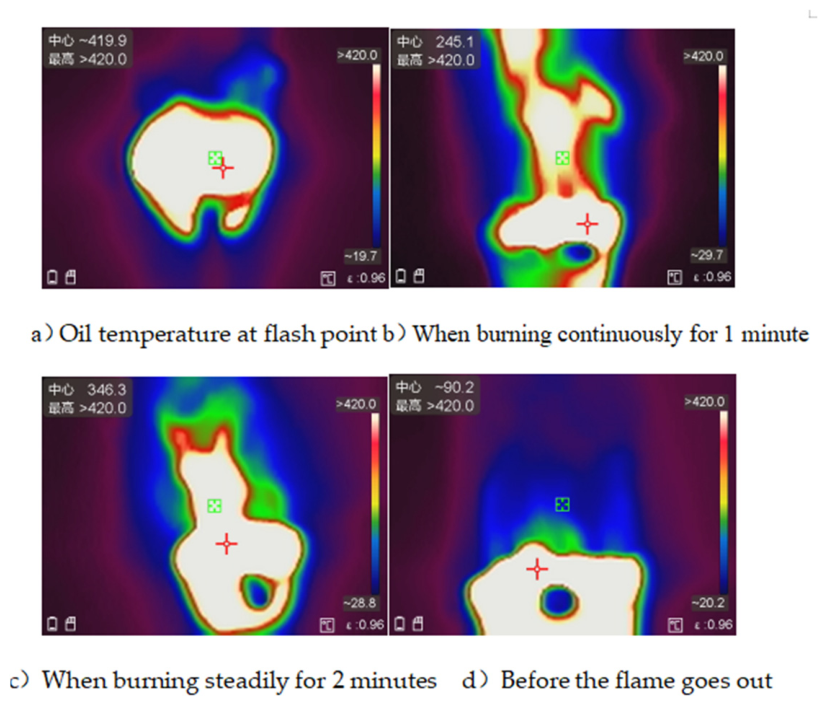
| Oil temperature at flash ignition | 418.3 °C | 419.9 °C | 420.1 °C | 0.24% |
| Time from flash to ignition | 00.32.02 | 00.29.45 | 00.30.67 | 0.7% |
| (When sustained combustion reaches 1 min) Flame center temperature | 244.7 °C | 245.1 °C | 247.9 °C | 1.8% |
| (When continuously burning for 2 min) Flame center temperature | 341.6 °C | 346.3 °C | 353.8 °C | 4.4% |
| Temperature before flame extinguishes | 84.1 °C | 90.2 °C | 91.4 °C | 4.2% |
| Burning time | 03.54.89 | 03.55.24 | 03.56.34 | 0.32% |
Disclaimer/Publisher’s Note: The statements, opinions and data contained in all publications are solely those of the individual author(s) and contributor(s) and not of MDPI and/or the editor(s). MDPI and/or the editor(s) disclaim responsibility for any injury to people or property resulting from any ideas, methods, instructions or products referred to in the content. |
© 2026 by the authors. Licensee MDPI, Basel, Switzerland. This article is an open access article distributed under the terms and conditions of the Creative Commons Attribution (CC BY) license.
Share and Cite
Ge, W.; Tian, Z. Simulation and Experimental Study on Parameters of High-Frequency Acoustic Waves Affecting Kitchen Oil Fires. Fire 2026, 9, 226. https://doi.org/10.3390/fire9060226
Ge W, Tian Z. Simulation and Experimental Study on Parameters of High-Frequency Acoustic Waves Affecting Kitchen Oil Fires. Fire. 2026; 9(6):226. https://doi.org/10.3390/fire9060226
Chicago/Turabian StyleGe, Wenyue, and Zhaojun Tian. 2026. "Simulation and Experimental Study on Parameters of High-Frequency Acoustic Waves Affecting Kitchen Oil Fires" Fire 9, no. 6: 226. https://doi.org/10.3390/fire9060226
APA StyleGe, W., & Tian, Z. (2026). Simulation and Experimental Study on Parameters of High-Frequency Acoustic Waves Affecting Kitchen Oil Fires. Fire, 9(6), 226. https://doi.org/10.3390/fire9060226