Article

A Hybrid Soot-MixFormer-Based Reconstruction Model for 2D Soot Spatial Distribution Inversion

1
State Key Laboratory of Fire Science, University of Science and Technology of China, Hefei 230009, China
2
Yichang Fire and Rescue Division, Hubei Provincial Fire and Rescue Department, Yichang 443000, China
*
Author to whom correspondence should be addressed.
Fire 2026, 9(5), 184; https://doi.org/10.3390/fire9050184
Submission received: 9 March 2026 / Revised: 7 April 2026 / Accepted: 16 April 2026 / Published: 27 April 2026

Abstract

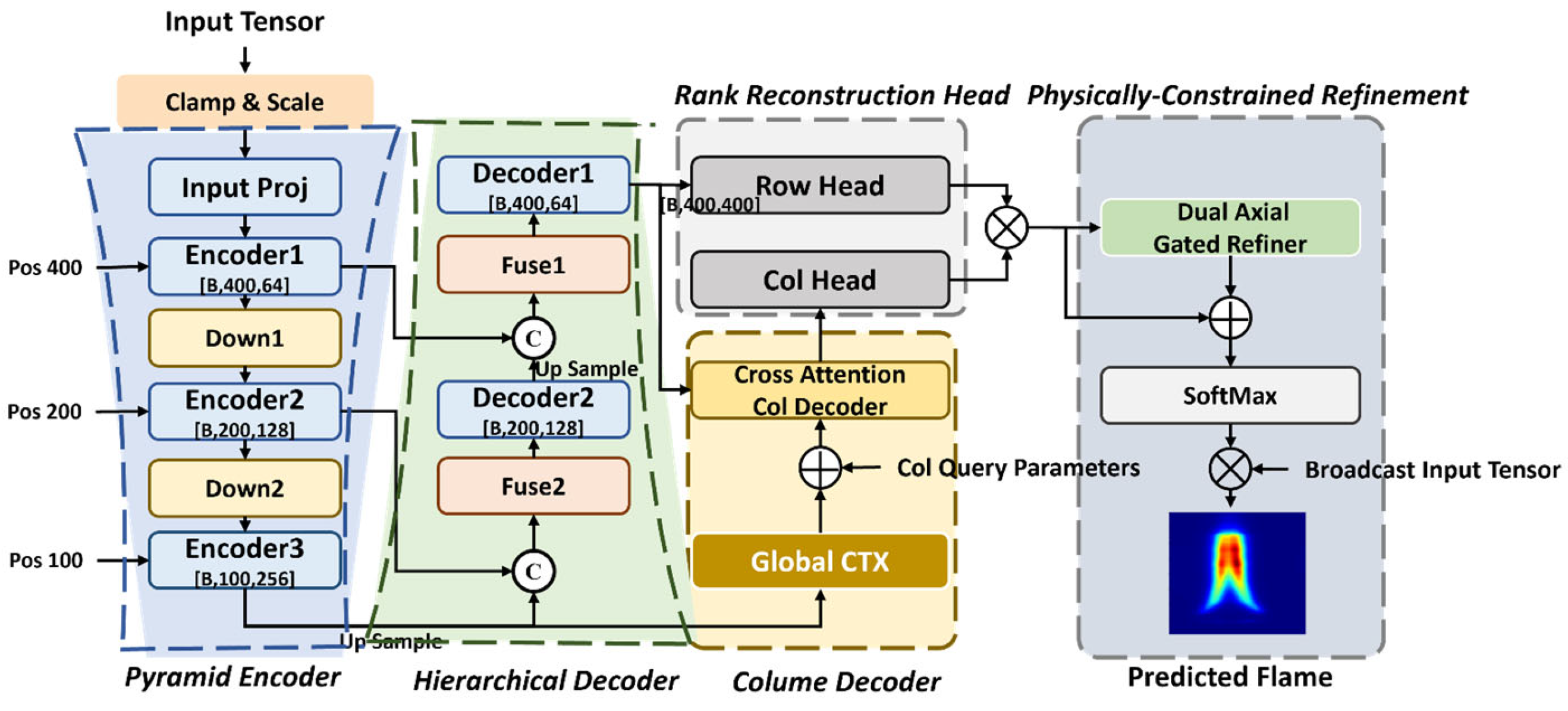
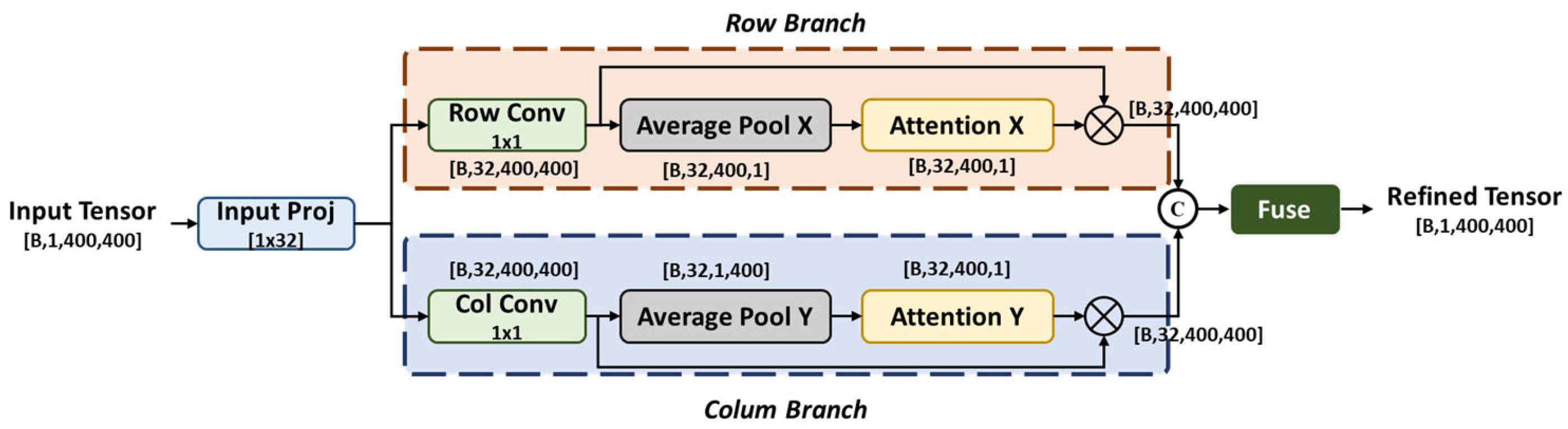
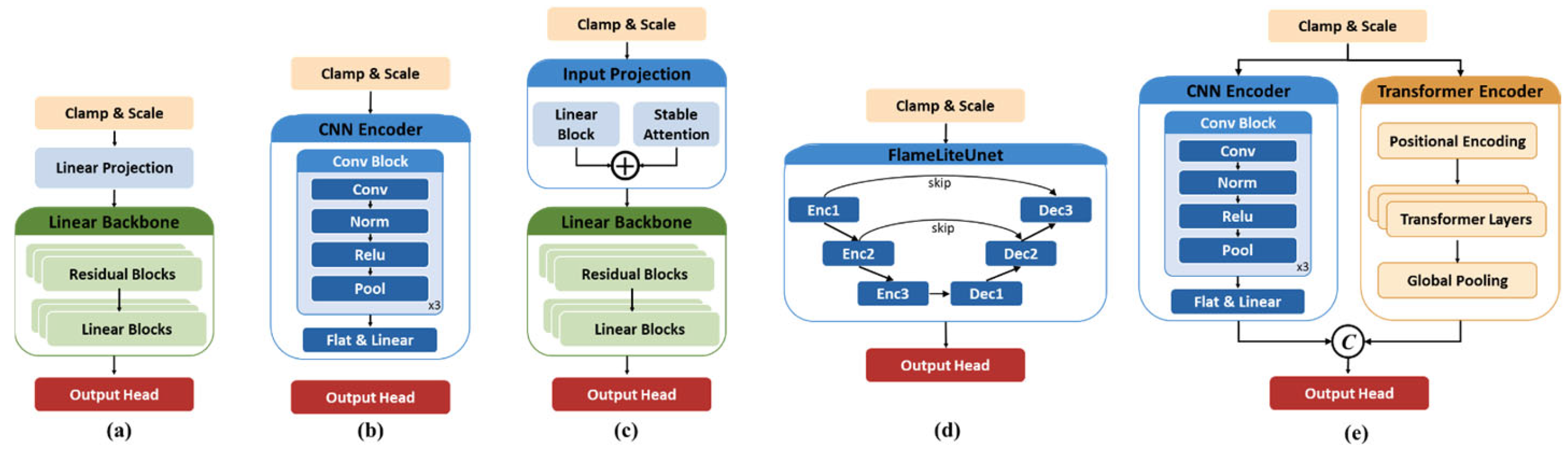
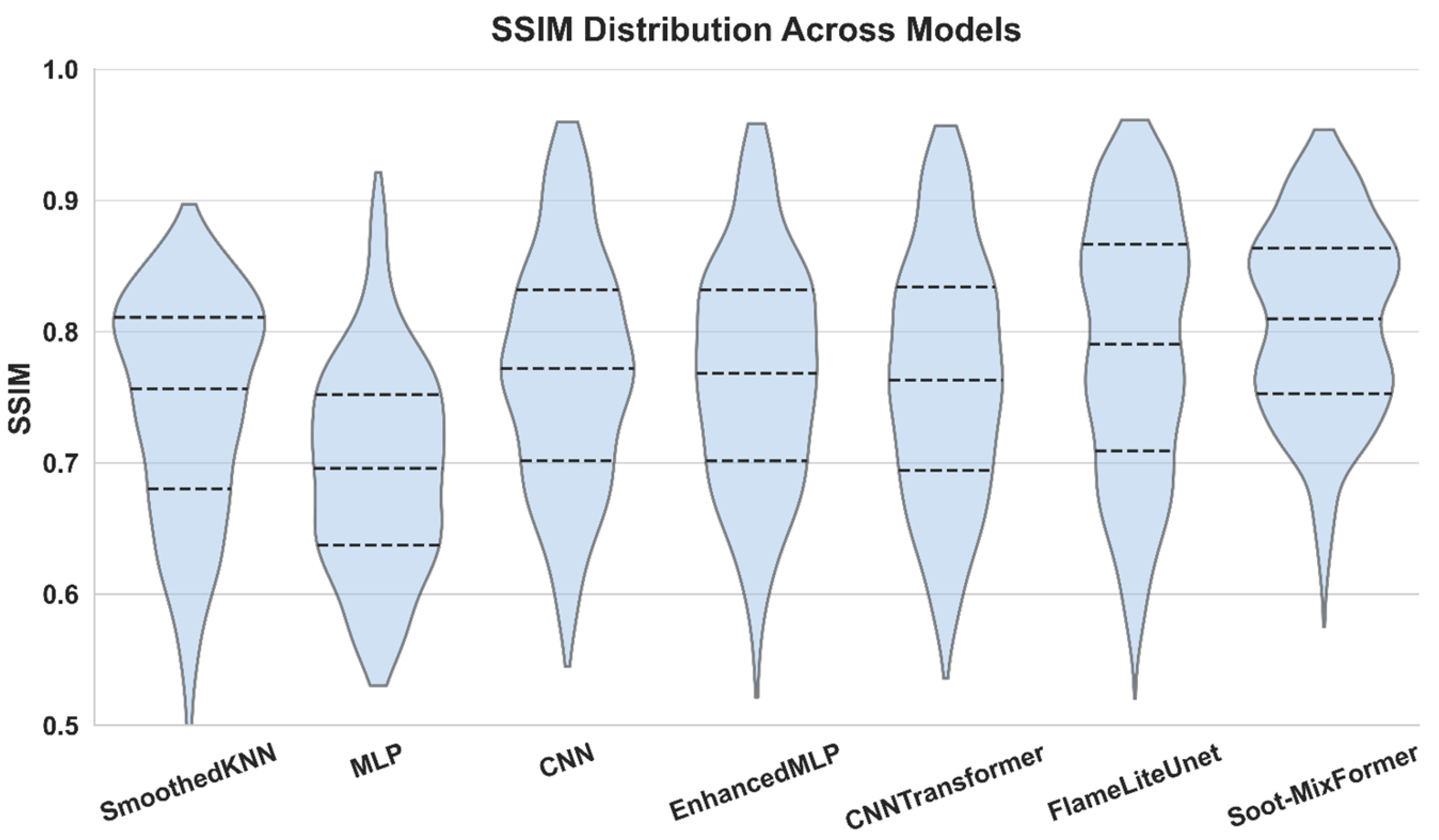
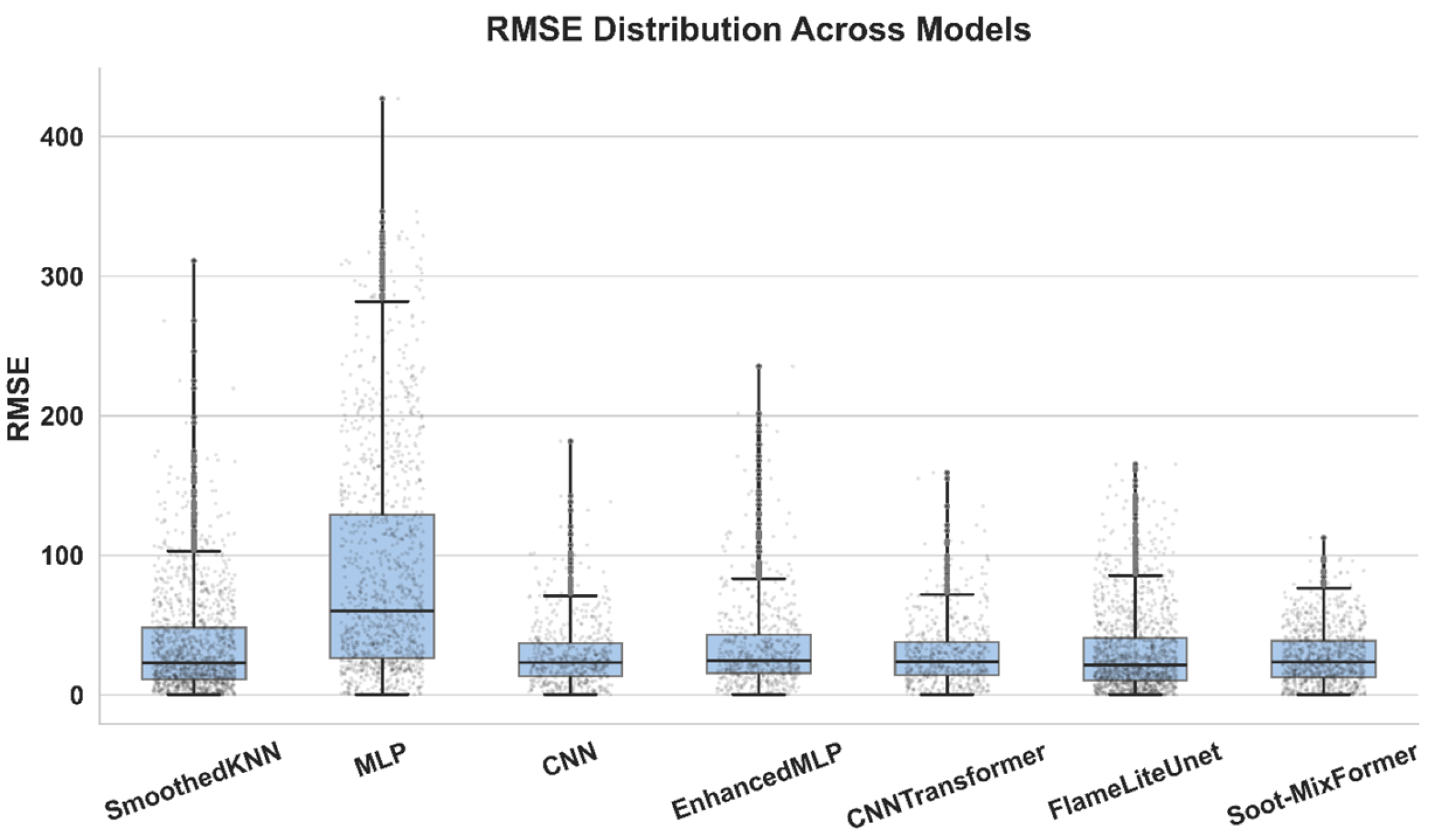
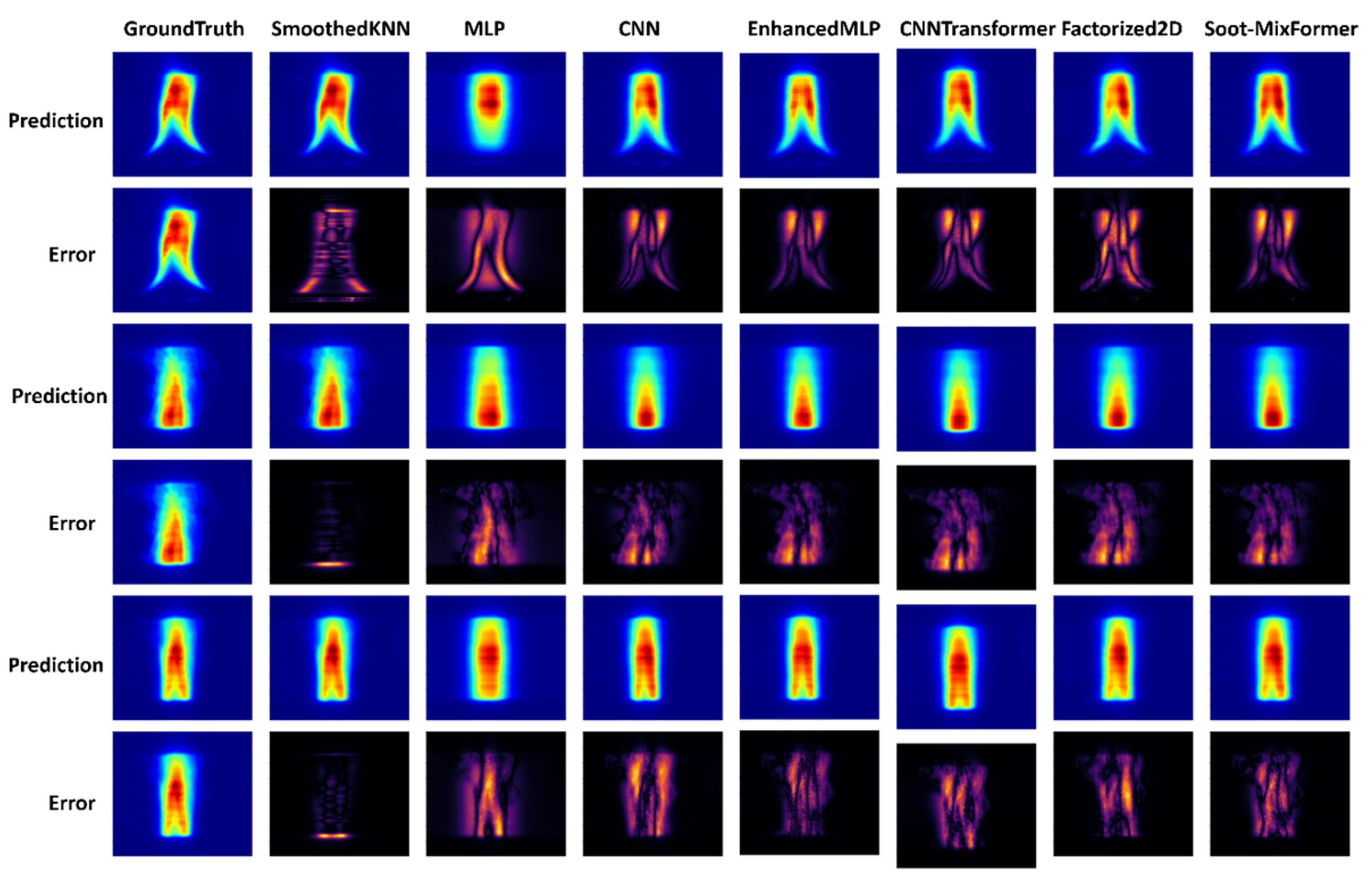
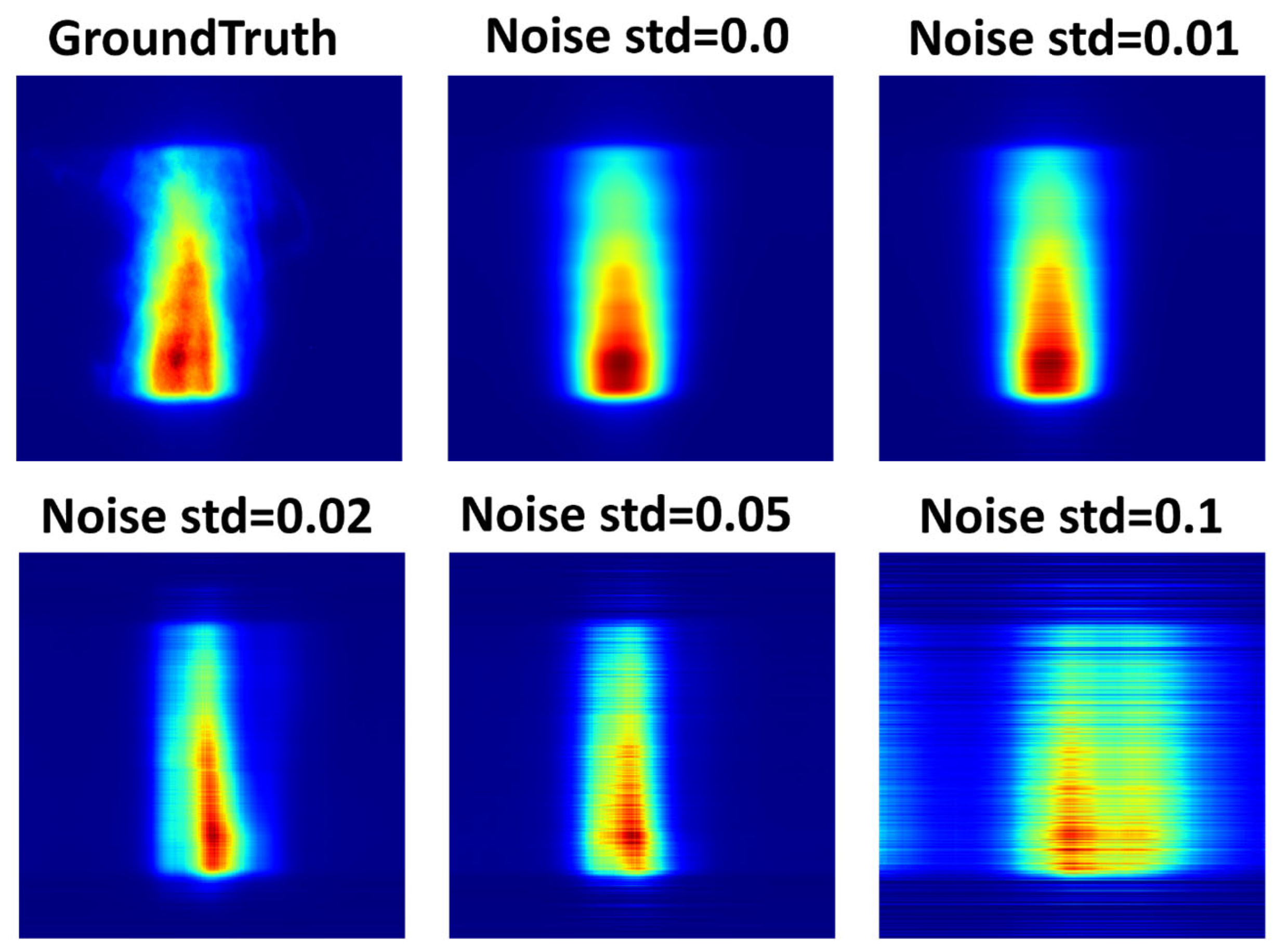
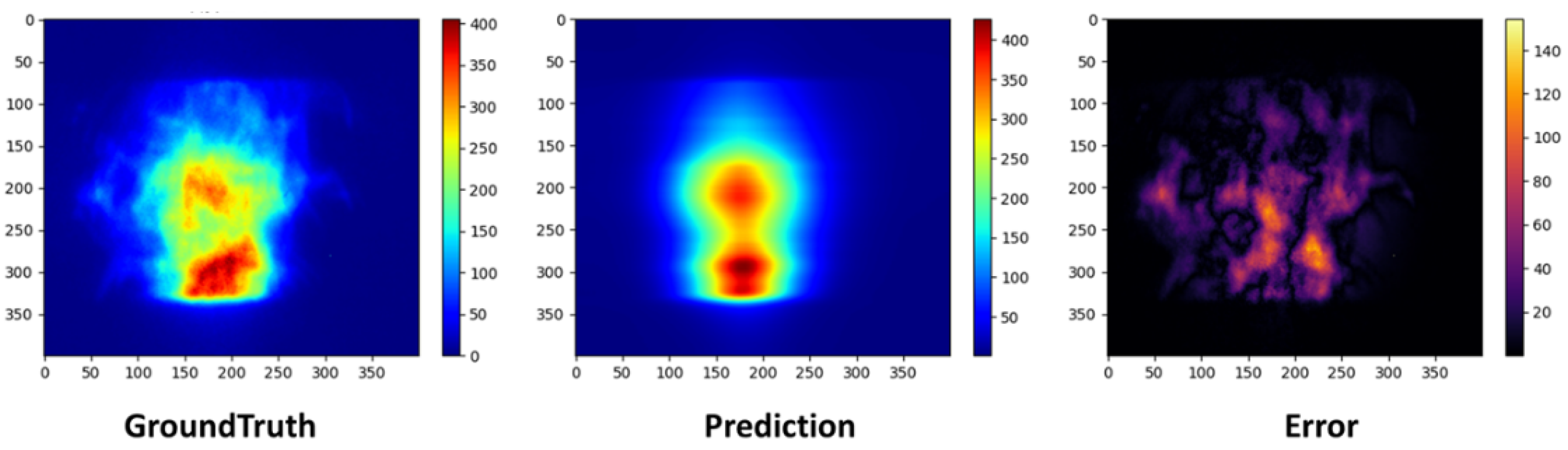
Accurate measurement of the 2D soot spatial distribution is vital for optimizing combustion efficiency and reducing pollutant emissions. While 1D laser extinction (LE) is robust and cost-effective, it provides only line-of-sight integrated information, lacking the spatial resolution required to resolve complex soot topologies. We propose Soot-MixFormer, a hybrid deep learning model designed for the high-fidelity inversion of 2D soot distributions from 1D extinction data. The architecture integrates CNN-based local feature extraction with Transformer-based global dependency modeling. Key innovations include a dynamic decoupled generation head and a Dual-Axial Gated Refinement (DAGR) module coupled with a physical hard constraint layer to ensure mass conservation and physical consistency. Experimental results demonstrate that Soot-MixFormer significantly outperforms baseline MLP and CNN models, achieving a Structural Similarity Index (SSIM) of 0.800 and a Pearson Correlation Coefficient (PCC) of 0.915, and a highly suppressed Root Mean Square Error (RMSE) representing less than 10% relative error in high-concentration zones. Furthermore, the model exhibits exceptional robustness, maintaining a cosine similarity above 0.72 even under 10% simulated measurement noise. The model is highly efficient, with only 0.97 M parameters and a real-time inference speed of ~246 FPS. This study provides a novel, low-cost diagnostic paradigm for real-time, high-accuracy monitoring of soot fields in industrial combustion environments, effectively bridging the gap between simple 1D sensing and complex 2D spatial reconstruction.
Keywords: soot; 2D reconstruction; laser extinction; deep learning; physical constraint soot; 2D reconstruction; laser extinction; deep learning; physical constraint