


Numerical Investigation on Thermal-Mechanical Coupling Behavior and Fire Resistance Performance of Steel Structures in Substation Fires
 ,
,
Abstract
1. Introduction
- High-fidelity fire modeling: Utilize the Computational Fluid Dynamics (CFD) software ANSYS Fluent 2021 to accurately reconstruct the combustion process of a transformer oil leak. This involves solving for fluid flow, turbulence, and reaction kinetics to generate a precise, time-dependent, non-uniform temperature field within the substation.
- Coupled mechanical analysis: Employ the Finite Element Analysis (FEA) software Abaqus 2024 to perform a sequential coupled analysis. By importing the CFD-generated thermal data as a boundary condition, the study analyzes the transient thermal stress and deformation response of key steel components.
- Performance evaluation of coatings: Systematically investigate the protective effects of two water-based, non-intumescent fire-retardant coatings (Material A and Material B). By varying their thermophysical parameters (thermal conductivity) and application thicknesses, the study aims to quantify their ability to suppress temperature rise and maintain load-bearing capacity.
2. Mathematical Models and Numerical Simulation Configuration
2.1. Engineering Overview and Geometric Modeling
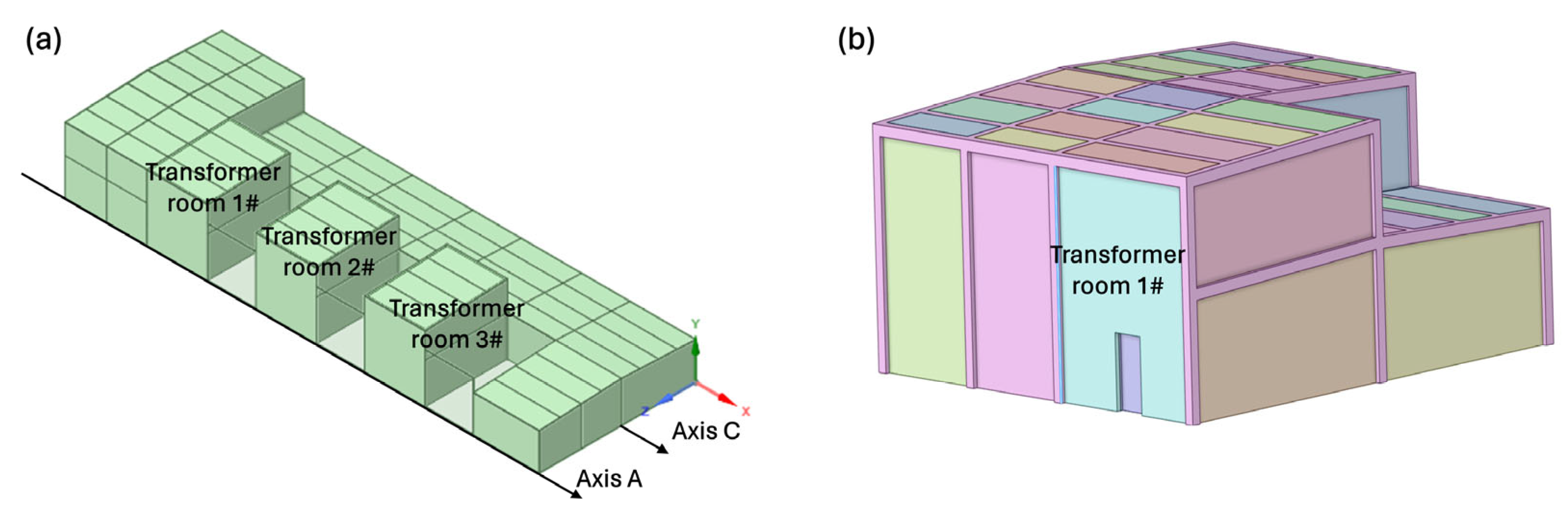
- Structural specifications: The columns and beams of the frame are constructed from H-type steel, grade Q355B. Moreover, the transformer chamber features a column span of 7.5 m × 10.2 m. It is a double-height space with a sloped roof elevation ranging from 8.1 m to 8.6 m.
- Wall assemblies: Exterior walls are composed of 100 mm thick fiber-reinforced cement siding paired with a 100 mm thick polystyrene granule cement composite board as an inner liner. This assembly provides a fire resistance rating of 3.0 h. Internal partitions are constructed from 150 mm thick polystyrene granule cement composite boards, also rated for 3.0 h. An integrated fireproof pressure-relief wall, with inspection doors, is positioned along the A-axis, while the other three sides are secured by firewalls or fire-rated doors. Simultaneously, an electrically powered double-layer waterproof aluminum alloy louver is installed on the C-axis at the second-story level for ventilation.
2.2. Simulation of Fire Temperature Field
2.2.1. Mathematical Models and Governing Equations
Basic Conservation Equations
Species Transport and Combustion Models
Turbulence and Radiation Models
2.2.2. Boundary Conditions and Solution Parameters
2.3. Sequential Thermal-Mechanical Coupling
2.3.1. Coupling Methodology
2.3.2. Structural Model and Material Constitutive Laws
2.3.3. Loading Criteria
2.3.4. Fireproof Coating Parameters
3. Results and Discussion
3.1. Analysis of Fire Dynamics and Temperature Field Evolution
3.1.1. Temperature Field Evolution
3.1.2. Spatial Thermal Stratification
3.1.3. Distribution of Combustion Products
3.1.4. Thermal Response of Steel Members
3.2. The Thermal Mechanical Response of Steel Structures
3.2.1. Thermo-Mechanical Response of Unprotected Structures
3.2.2. Verification of Fire Resistance Performance of Coating Materials
3.3. Evaluation of Fire Protection Effectiveness
3.3.1. Impact of Coating Thickness
3.3.2. Impact of Material Properties
4. Conclusions
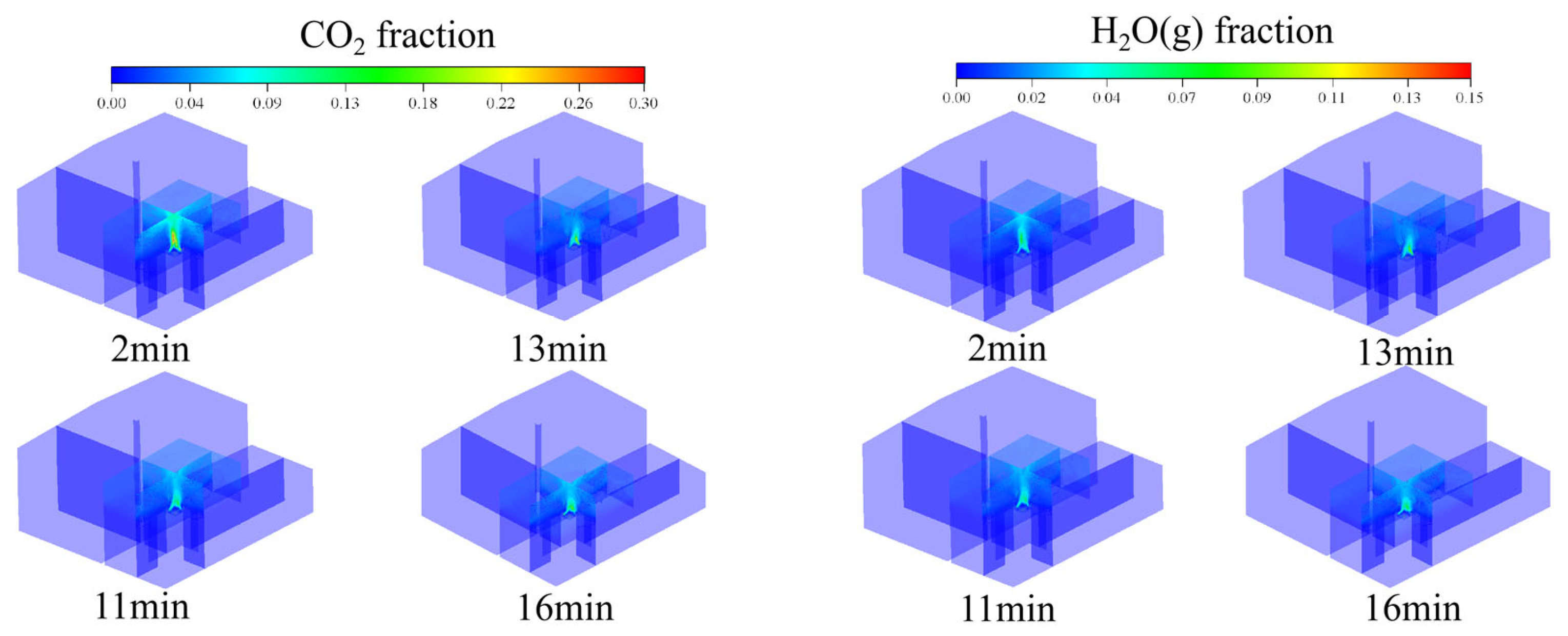
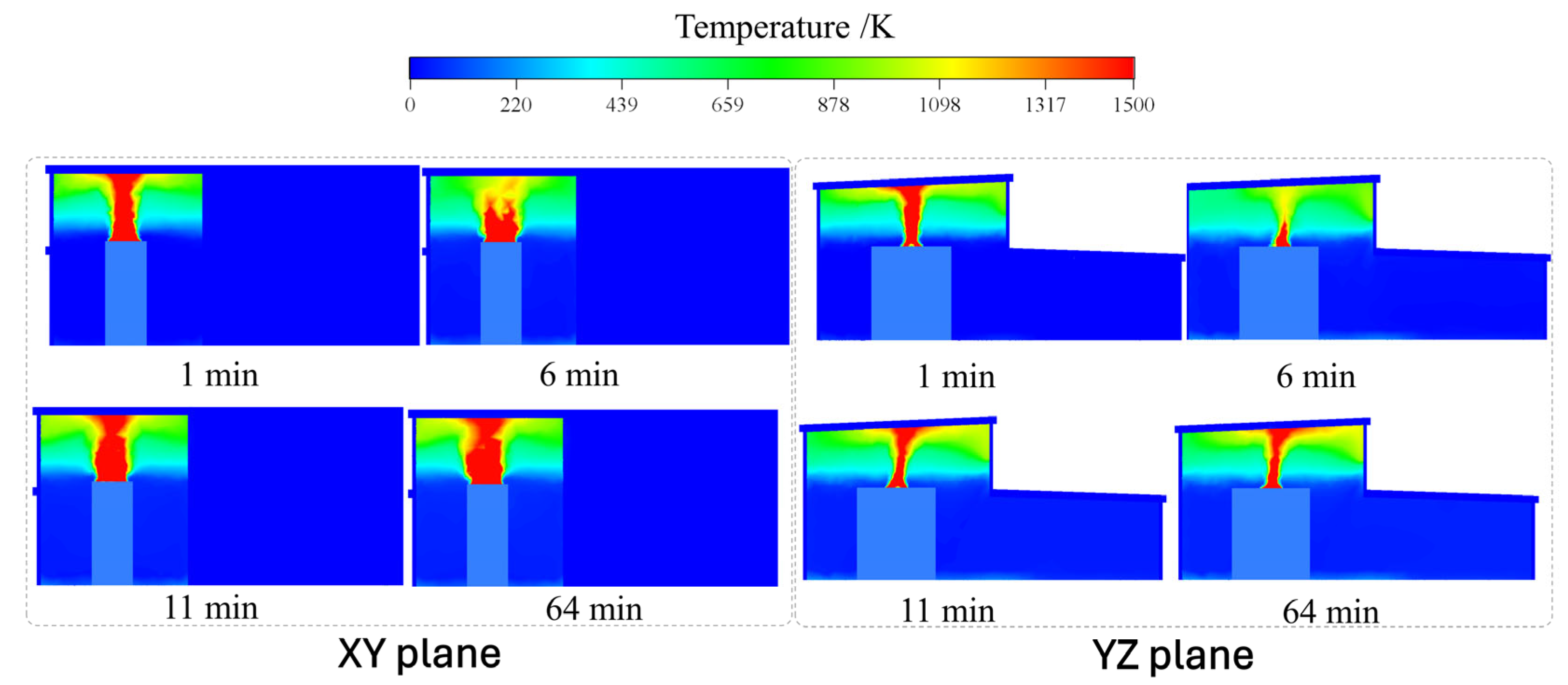
- During fire development, a pronounced temperature stratification was observed within the substation. Combustion products such as CO2 rose with hot airflows and accumulated at the ceiling, forming a stable high-temperature smoke layer that continuously heated the upper enclosure. As a result, the top-mounted steel structures remained exposed to extreme temperatures of ~1500 K for extended durations.
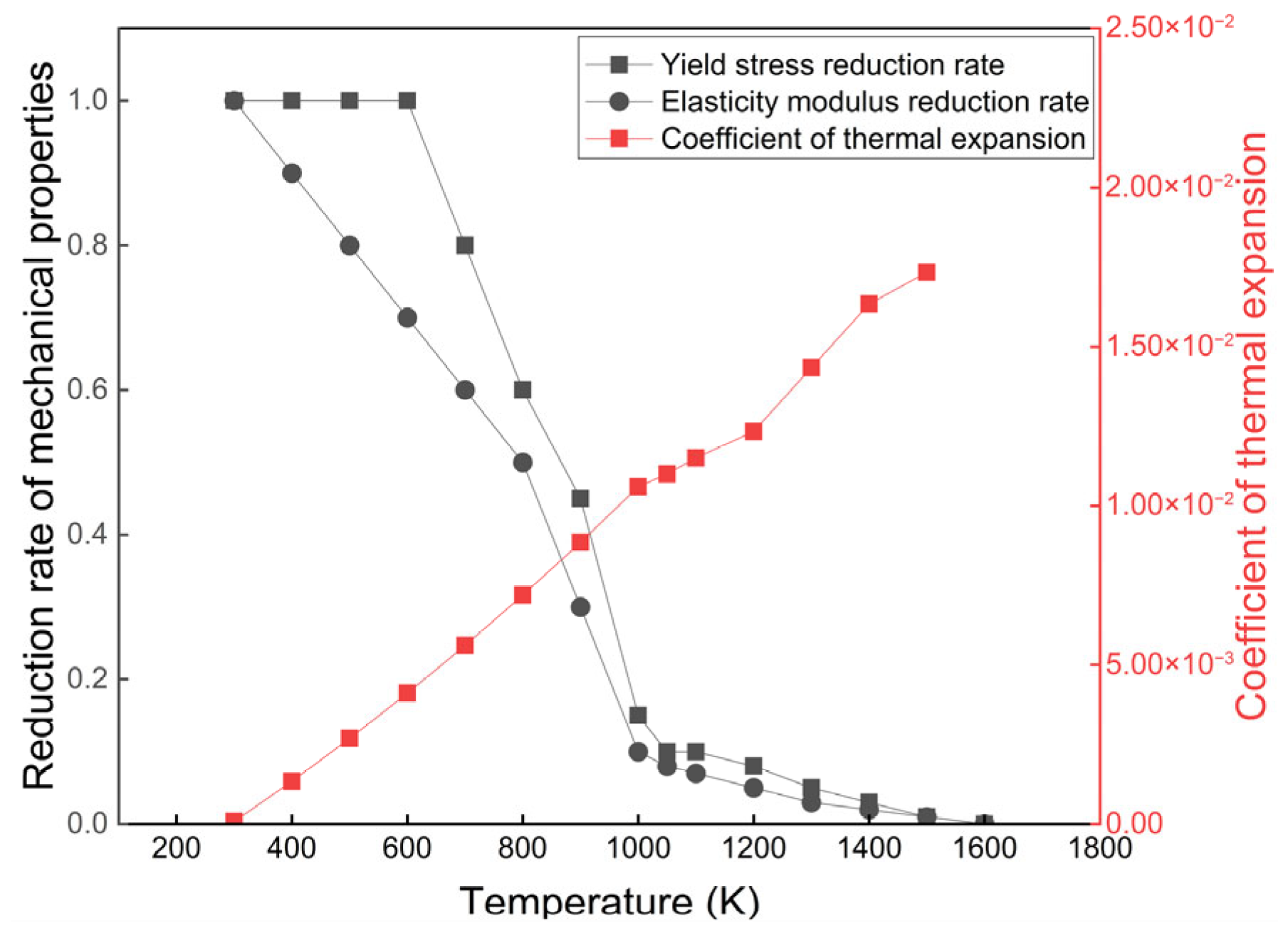
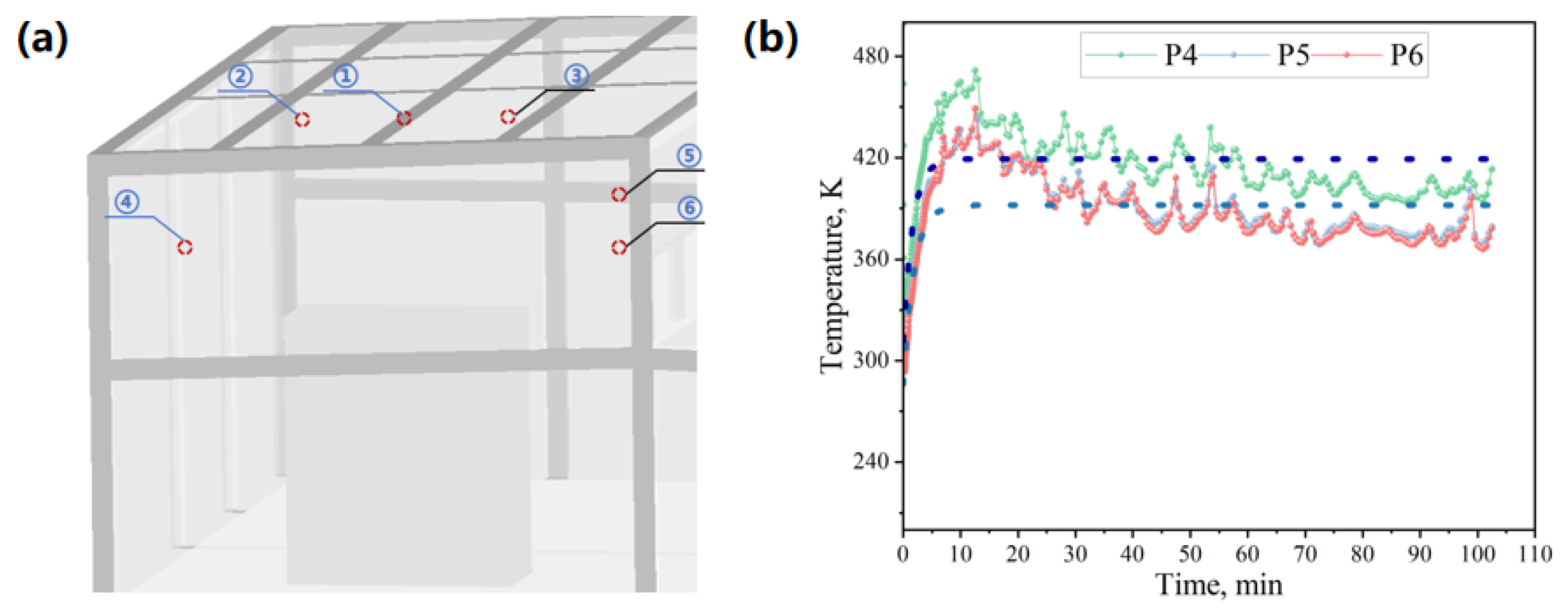
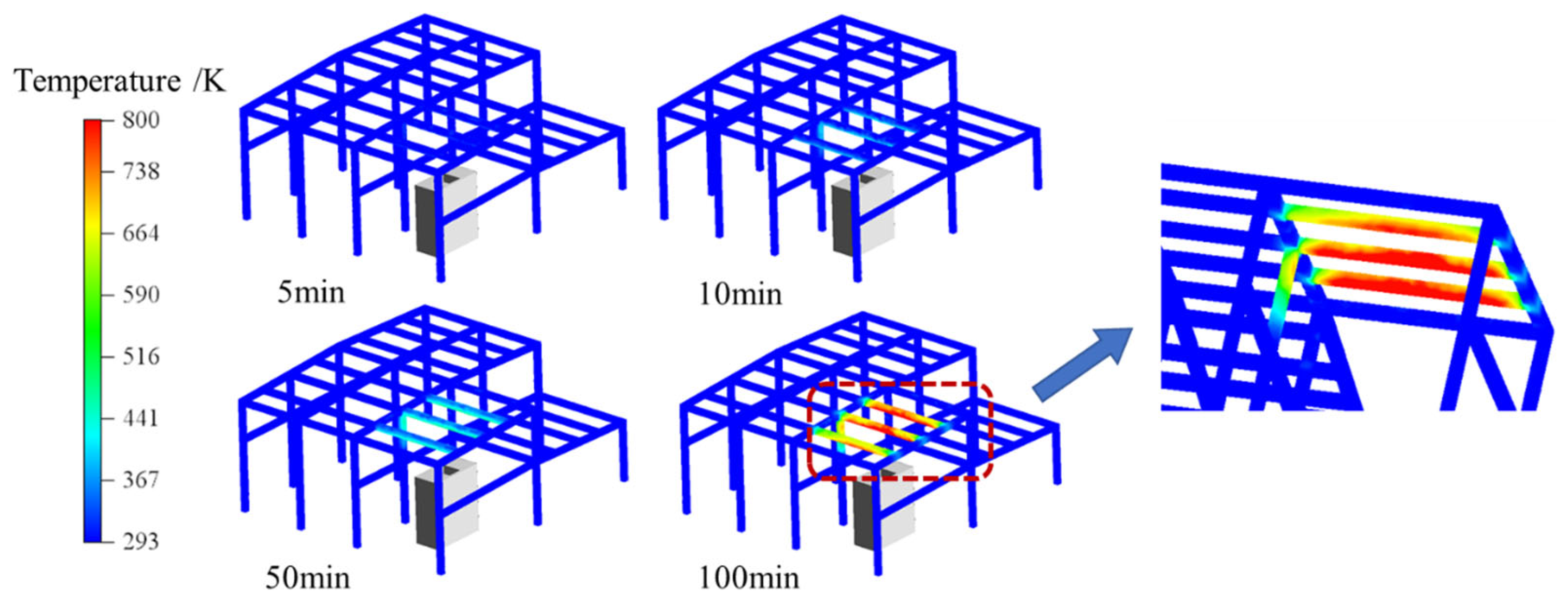
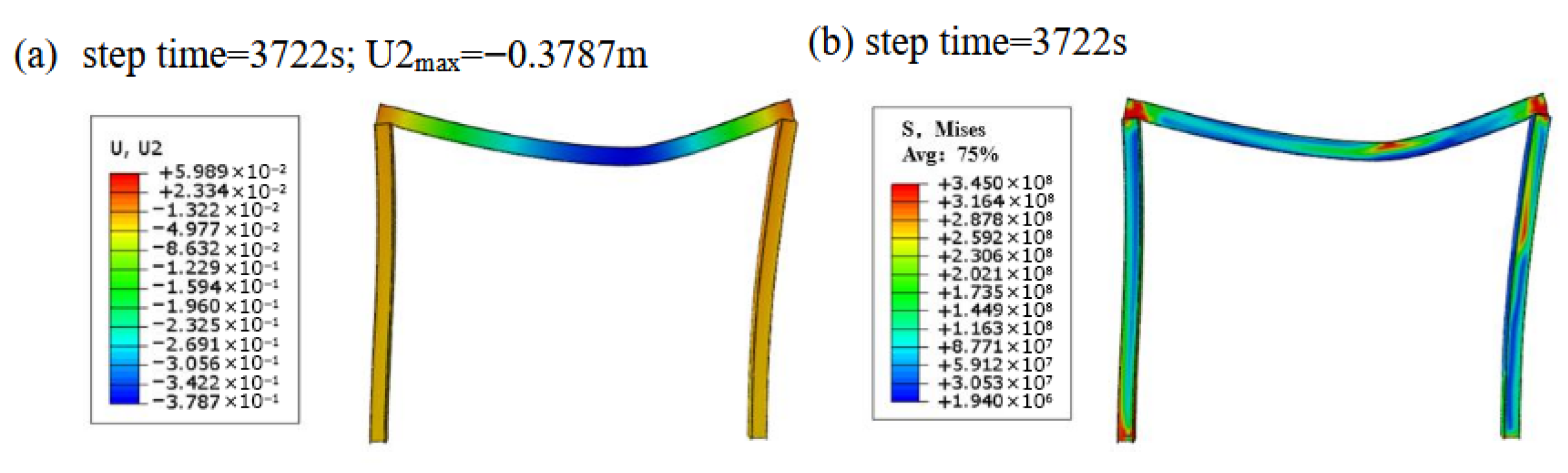
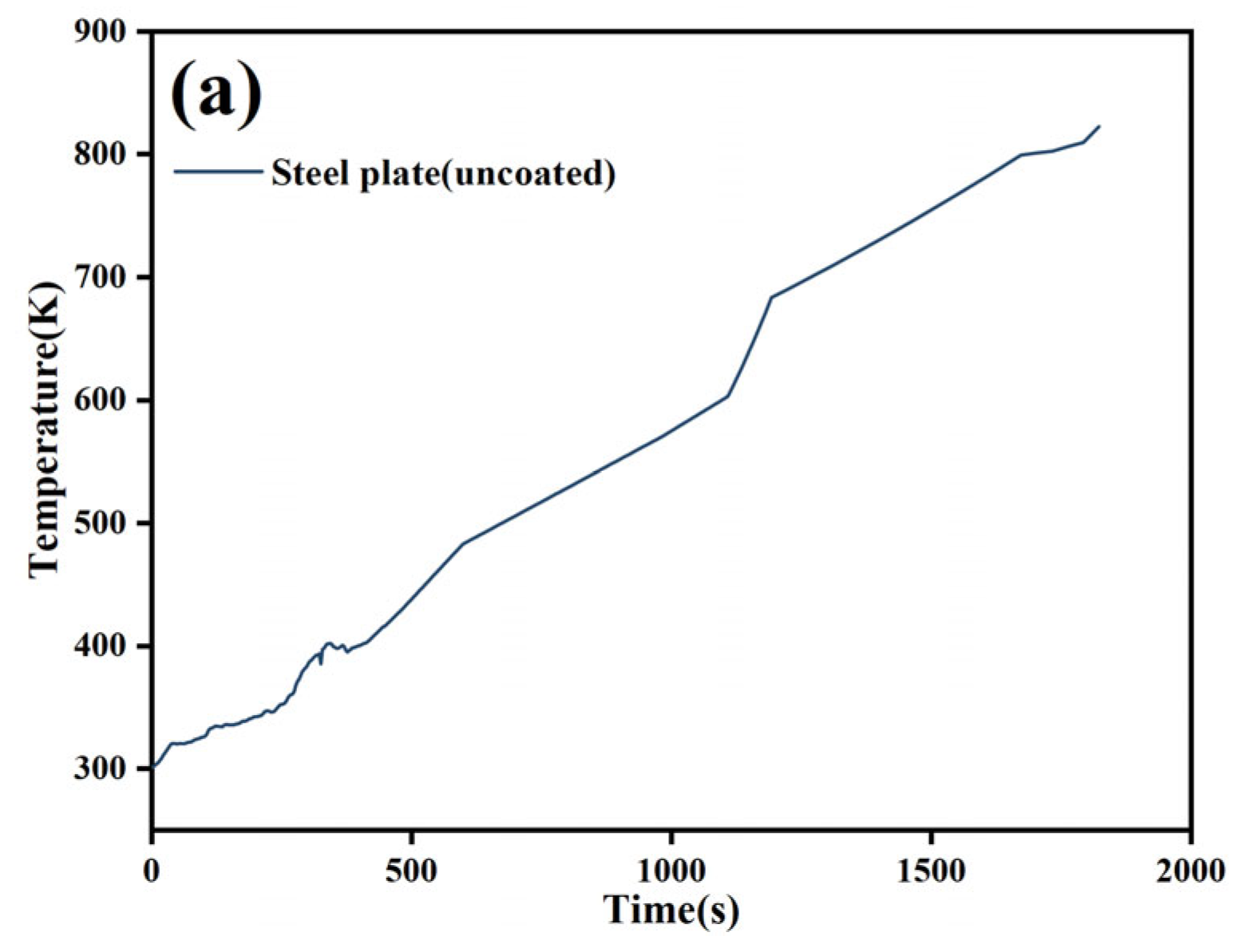
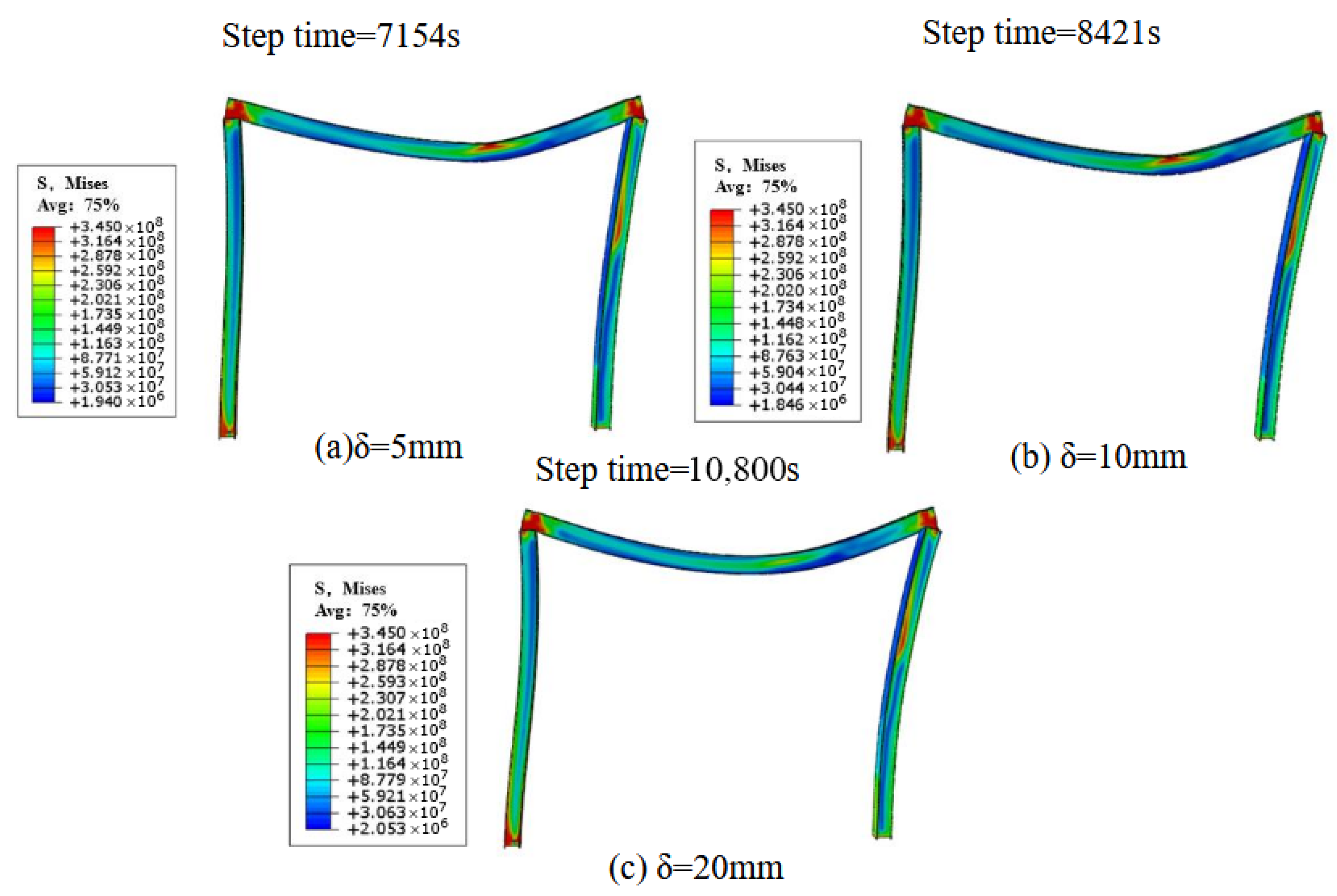
- Steel components near the fire source experienced progressive temperature increase due to direct thermal exposure, with local temperatures reaching up to 800 K. This led to significant degradation of their mechanical properties. In the absence of coating protection, high stress and large deformations were concentrated in the directly exposed regions. The maximum mid-span vertical displacement of the steel beam exceeded the load-bearing limit of 355 mm, leading to structural failure within a relatively short time frame.
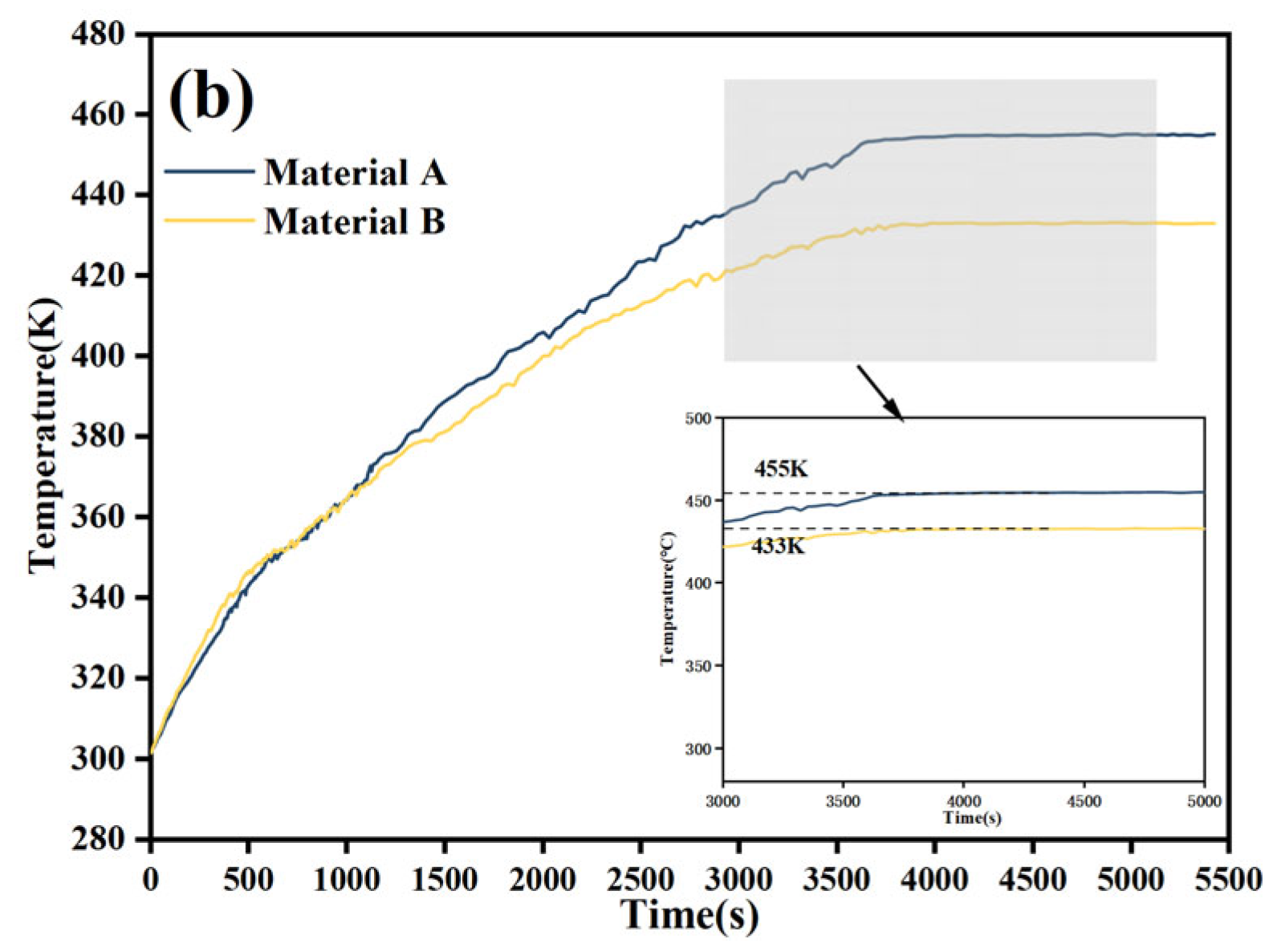
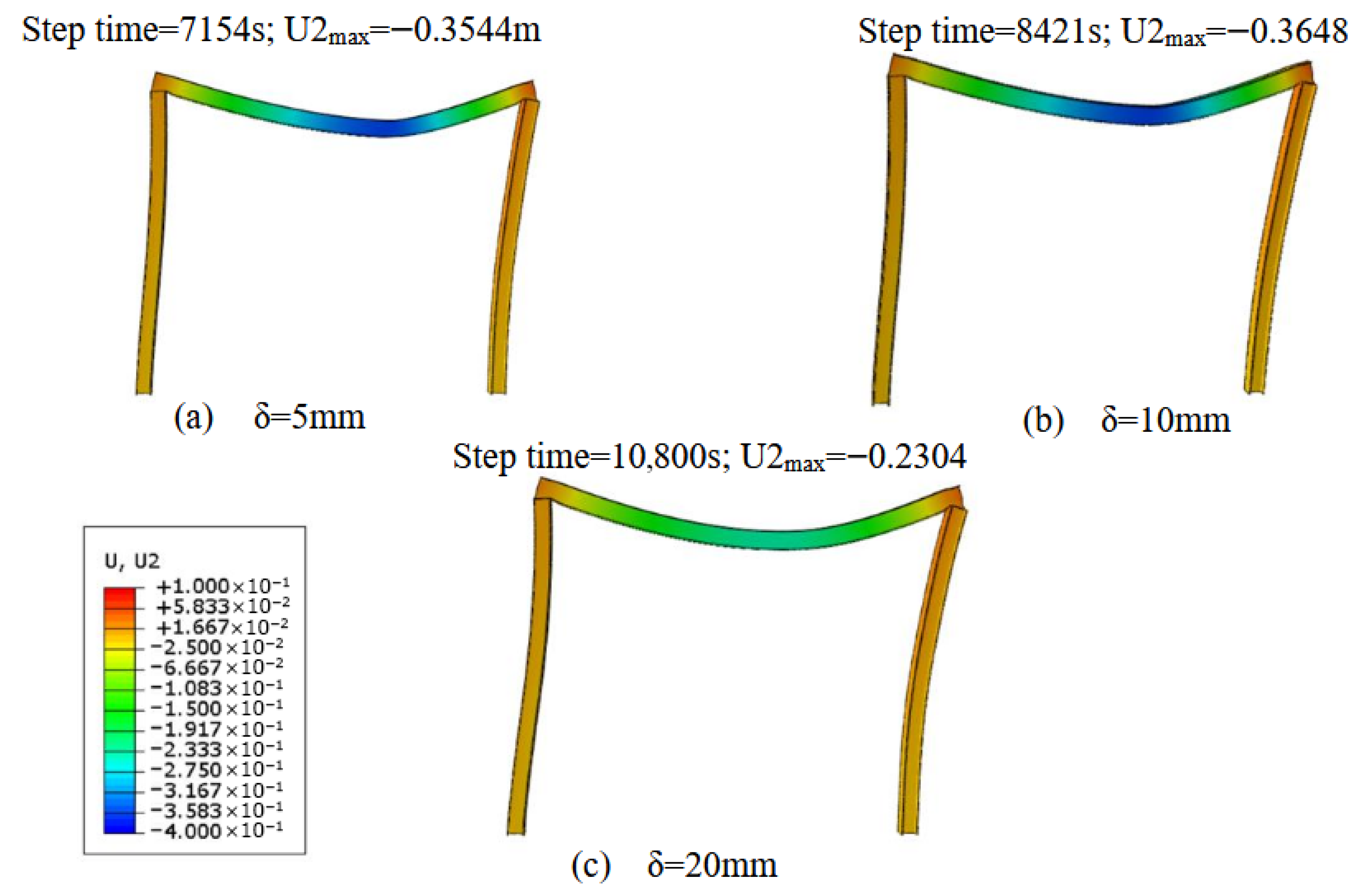
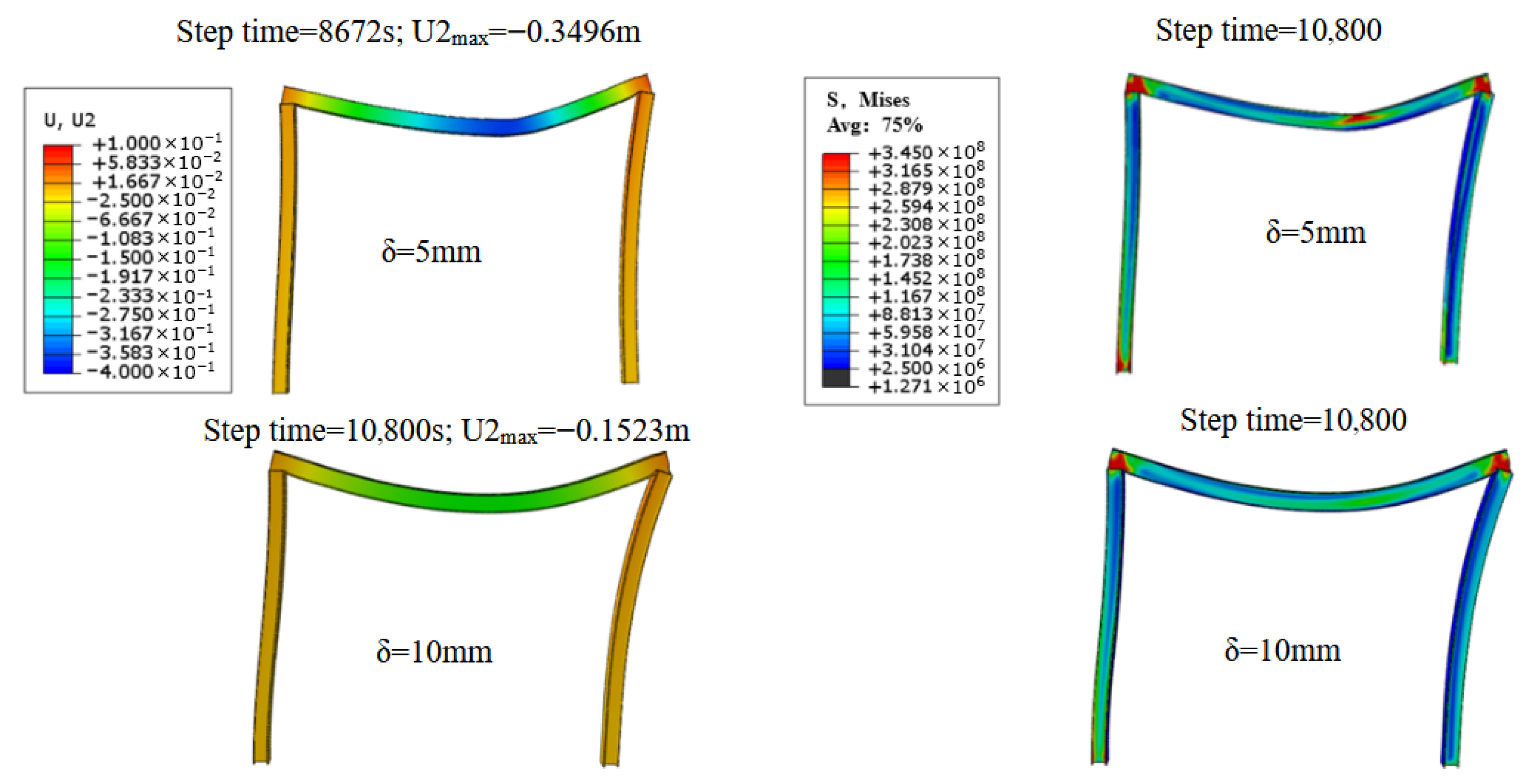
- The application of non-intumescent fireproof coatings substantially improved the thermo-mechanical behavior of steel structures during fire events by effectively retarding heat transfer and delaying temperature rise, thereby extending the fire resistance period. Applying 20 mm-thick Material A (equivalent thermal conductivity: 0.20 W/(m·K)) or 10 mm-thick Material B (lower equivalent thermal conductivity: 0.10 W/(m·K)) effectively mitigated thermal stress concentration at critical locations. Both configurations ensured that structural deformation remained within the safety threshold throughout the full 3 h fire exposure duration, preserving structural integrity and load-bearing capacity.
- It should be noted that while numerical results indicate fireproof coatings significantly enhance the fire resistance of steel structures, their engineering application requires comprehensive consideration of potential risks and limitations. First, thicker coatings increase material and construction costs, potentially imposing significant economic burdens on large-scale substation structures. Second, the additional weight of the coating increases the structure’s dead load, necessitating re-verification of member load-bearing capacity and stability during the design phase. Additionally, practical implementation may encounter issues such as uneven coating thickness, localized voids, or material performance degradation during long-term service, all of which could compromise actual protective efficacy. Therefore, the proposed protective scheme should undergo comprehensive optimization—balancing fire resistance requirements with economic analysis, structural load-bearing verification, and long-term maintenance strategies. Future research could further integrate life-cycle cost assessment and durability analysis to enhance the engineering applicability of fire protection design solutions.
Author Contributions
Funding
Institutional Review Board Statement
Informed Consent Statement
Data Availability Statement
Conflicts of Interest
References
- Guo, X.; Ding, L.; Ji, J. Method for Fire Risk Assessment of Urban Power Substation Considering Data Uncertainty. Fire Technol. 2025, 61, 5291–5317. [Google Scholar] [CrossRef] [Scilit]
- Shi, S.; Liu, G.; Li, Z.; Ye, X. Elevation-Dependent Growth Trends of Forests as Affected by Climate Warming in the Southeastern Tibetan Plateau. For. Ecol. Manag. 2021, 498, 119551. [Google Scholar] [CrossRef] [Scilit]
- Sun, R.; Wang, J.; Yang, X.; Chen, P. Experimental Research on the Combustion Characteristics of Transformer Oil Jet Fires in Oil-Filled Equipment under Heat. ACS Omega 2021, 6, 31843–31853. [Google Scholar] [CrossRef] [Scilit] [PubMed]
- Wu, C.; Zhou, T.; Chen, B.; Liu, Y.; Liang, P. Experimental Study on Burning Characteristics of the Large-Scale Transformer Oil Pool Fire with Different Extinguishing Methods. Fire Technol. 2021, 57, 461–481. [Google Scholar] [CrossRef] [Scilit]
- Mashhadimoslem, H.; Ghaemi, A.; Behroozi, A.H.; Palacios, A. A New Simplified Calculation Model of Geometric Thermal Features of a Vertical Propane Jet Fire Based on Experimental and Computational Studies. Process Saf. Environ. Prot. 2020, 135, 301–314. [Google Scholar] [CrossRef] [Scilit]
- Harmathy, T.Z. Effect of Moisture on the Fire Endurance of Building Elements; Research Paper; National Research Council of Canada, Division of Building Research: Ottawa, ON, Canada, 1965; p. DBR-RP-270. [CrossRef]
- Jiang, B.; Wang, M.; Shen, Y.; Li, Y. Robustness Assessment of Planar Steel Frames Caused by Failure of a Side Column under Localized Fire. Struct. Des. Tall Spec. Build. 2020, 29, e1711. [Google Scholar] [CrossRef] [Scilit]
- Venkatachari, S.; Kodur, V.K.R. Effect of Transient Creep on Fire Induced Instability in Steel Framed Structures. J. Constr. Steel Res. 2021, 181, 106618. [Google Scholar] [CrossRef] [Scilit]
- Qi, H.-H.; Hou, J.; Lou, G.-B.; Jiang, Y.; Zhong, B.; Li, G.-Q. Experimental and Numerical Study on Fire-Induced Collapse of Unprotected Steel Framed Structures. J. Constr. Steel Res. 2024, 218, 108730. [Google Scholar] [CrossRef] [Scilit]
- Lou, G.; Wang, C.; Jiang, J.; Jiang, Y.; Wang, L.; Li, G.-Q. Fire Tests on Full-Scale Steel Portal Frames against Progressive Collapse. J. Constr. Steel Res. 2018, 145, 137–152. [Google Scholar] [CrossRef] [Scilit]
- Wei, X.; Liu, J.; Xu, L. The Collapse Mechanism and Paths of Steel Frame Structures under Designed Fire Scenarios. Structures 2025, 76, 108942. [Google Scholar] [CrossRef] [Scilit]
- Gu, L.; Kodur, V. Role of Insulation Effectiveness on Fire Resistance of Steel Structures under Extreme Loading Events. J. Perform. Constr. Facil. 2011, 25, 277–286. [Google Scholar] [CrossRef] [Scilit]
- Liew, J.Y.R.; Ma, K.Y. Advanced Analysis of 3D Steel Framework Exposed to Compartment Fire. Fire Mater. 2004, 28, 253–267. [Google Scholar] [CrossRef] [Scilit]
- Sun, R.; Huang, Z.; Burgess, I.W. The Collapse Behaviour of Braced Steel Frames Exposed to Fire. J. Constr. Steel Res. 2012, 72, 130–142. [Google Scholar] [CrossRef] [Scilit]
- Qin, C.; Mahmoud, H. Collapse Performance of Composite Steel Frames under Fire. Eng. Struct. 2019, 183, 662–676. [Google Scholar] [CrossRef] [Scilit]
- Jiang, J.; Li, G.-Q.; Usmani, A. Progressive Collapse Mechanisms of Steel Frames Exposed to Fire. Adv. Struct. Eng. 2014, 17, 381–398. [Google Scholar] [CrossRef] [Scilit]
- Ji, J.; Nie, J.; Zhu, H.; Han, Y.; Liu, H.; Wang, X. Experimental Analysis of Intumescence Fireproofing Coating on Base Material of Substation Frames. Case Stud. Therm. Eng. 2024, 64, 105478. [Google Scholar] [CrossRef] [Scilit]
- Lucherini, A.; Maluk, C. Intumescent Coatings Used for the Fire-Safe Design of Steel Structures: A Review. J. Constr. Steel Res. 2019, 162, 105712. [Google Scholar] [CrossRef] [Scilit]
- Weil, E.D. Fire-Protective and Flame-Retardant Coatings—A State-of-the-Art Review. J. Fire Sci. 2011, 29, 259–296. [Google Scholar] [CrossRef] [Scilit]
- Yew, M.C.; Yew, M.K.; Saw, L.H.; Ng, T.C.; Durairaj, R.; Beh, J.H. Influences of Nano Bio-Filler on the Fire-Resistive and Mechanical Properties of Water-Based Intumescent Coatings. Prog. Org. Coat. 2018, 124, 33–40. [Google Scholar] [CrossRef] [Scilit]
- Yasir, M.; Ahmad, F.; Yusoff, P.S.M.M.; Ullah, S.; Jimenez, M. Latest Trends for Structural Steel Protection by Using Intumescent Fire Protective Coatings: A Review. Surf. Eng. 2020, 36, 334–363. [Google Scholar] [CrossRef] [Scilit]
- Song, W.-B.; Meng, F.-Q.; Zhou, K.; Clifton, G.C.; Zhu, M.-C. Structural performance analysis of steel columns under the single-vehicle fire using CFD-FEM simulation. J. Build. Eng. 2026, 119, 115065. [Google Scholar] [CrossRef] [Scilit]
- Peng, X.; Zhou, M. Thermo-mechanical behavior of composite beams with corrugated steel webs exposed to localized fire. J. Constr. Steel Res. 2023, 211, 108180. [Google Scholar] [CrossRef] [Scilit]
- Janardhan, R.K.; Shakil, S.; Lu, W.; Hostikka, S.; Puttonen, J. Coupled CFD-FE analysis of a long-span truss beam exposed to spreading fires. Eng. Struct. 2022, 259, 114150. [Google Scholar] [CrossRef] [Scilit]
- Zhang, S.; Zhao, J.; Zhang, Q.; Zhang, J.; Jiang, H. Experimental Study and Numerical Analysis of Thermal Hazard for Fire Accident in Converter Transformers. Therm. Sci. Eng. Prog. 2023, 45, 102108. [Google Scholar] [CrossRef] [Scilit]
- GB/T 9978.1-2008; Fire-Resistant Building Materials—Part 1: General Requirements. Standards Press of China: Beijing, China, 2008.
- EN 1991-1-2; Eurocode 1: Actions on Structures—Part 1-2: General Actions—Actions on Structures Exposed to Fire. European Committee for Standardization (CEN): Brussels, Belgium, 2002.
- EN 1993-1-2; Eurocode 3: Design of Steel Structures. Part 1-2: General Rules. Structural Fire Design. European Committee for Standardization (CEN): Brussels, Belgium, 2005.
- Gravit, M.; Dmitriev, I.; Shcheglov, N.; Radaev, A. Oil and Gas Structures: Forecasting the Fire Resistance of Steel Structures with Fire Protection under Hydrocarbon Fire Conditions. Fire 2024, 7, 173. [Google Scholar] [CrossRef] [Scilit]
- Ma, X.; Pan, J.; Cai, J.; Zhang, Z.; Han, J. A Review on Cement-Based Materials Used in Steel Structures as Fireproof Coating. Constr. Build. Mater. 2022, 315, 125623. [Google Scholar] [CrossRef] [Scilit]









| Case | Coating Material | Thermal Conductivity (W/(m·K)) | Density (kg/m3) | Specific Heat (J/(kg·K)) | Thickness (mm) |
|---|---|---|---|---|---|
| Case 1 | Material A | 0.20 | 637 | 900 | 5 |
| Case 2 | Material A | 0.20 | 637 | 900 | 10 |
| Case 3 | Material A | 0.20 | 637 | 900 | 20 |
| Case 4 | Material B | 0.10 | 400 | 1100 | 5 |
| Case 5 | Material B | 0.10 | 400 | 1100 | 10 |
Disclaimer/Publisher’s Note: The statements, opinions and data contained in all publications are solely those of the individual author(s) and contributor(s) and not of MDPI and/or the editor(s). MDPI and/or the editor(s) disclaim responsibility for any injury to people or property resulting from any ideas, methods, instructions or products referred to in the content. |
© 2026 by the authors. Licensee MDPI, Basel, Switzerland. This article is an open access article distributed under the terms and conditions of the Creative Commons Attribution (CC BY) license.
Share and Cite
Qiu, L.; Zhou, Z.; Ou, W.; Zhou, Y.; Hu, J.; Zhao, Z.; Liu, H.; Lu, K.; Jian, S. Numerical Investigation on Thermal-Mechanical Coupling Behavior and Fire Resistance Performance of Steel Structures in Substation Fires. Fire 2026, 9, 183. https://doi.org/10.3390/fire9050183
Qiu L, Zhou Z, Ou W, Zhou Y, Hu J, Zhao Z, Liu H, Lu K, Jian S. Numerical Investigation on Thermal-Mechanical Coupling Behavior and Fire Resistance Performance of Steel Structures in Substation Fires. Fire. 2026; 9(5):183. https://doi.org/10.3390/fire9050183
Chicago/Turabian StyleQiu, Lvchao, Zheng Zhou, Wenjun Ou, Yutong Zhou, Jingrui Hu, Zhoufeng Zhao, Huimin Liu, Kuangda Lu, and Shouwei Jian. 2026. "Numerical Investigation on Thermal-Mechanical Coupling Behavior and Fire Resistance Performance of Steel Structures in Substation Fires" Fire 9, no. 5: 183. https://doi.org/10.3390/fire9050183
APA StyleQiu, L., Zhou, Z., Ou, W., Zhou, Y., Hu, J., Zhao, Z., Liu, H., Lu, K., & Jian, S. (2026). Numerical Investigation on Thermal-Mechanical Coupling Behavior and Fire Resistance Performance of Steel Structures in Substation Fires. Fire, 9(5), 183. https://doi.org/10.3390/fire9050183