Review

Critical Review on Photovoltaic Fire Safety in Buildings from Ignition to Smoke Control and Intervention

1
Building Services Faculty, Technical University of Civil Engineering Bucharest, 020396 Bucharest, Romania
2
Advanced Research Center for Ambiental Quality and Building Physics (CAMBI Research Center), Technical University of Civil Engineering Bucharest, 020396 Bucharest, Romania
3
AtFlow Research Center, Technical University of Cluj-Napoca, 400020 Cluj-Napoca, Romania
*
Author to whom correspondence should be addressed.
Fire 2026, 9(4), 163; https://doi.org/10.3390/fire9040163
Submission received: 4 March 2026 / Revised: 28 March 2026 / Accepted: 7 April 2026 / Published: 13 April 2026

Abstract

Photovoltaic (PV) systems are important for sustainable energy infrastructure, but their rapid deployment introduces complex fire dynamics that current regulations fail to address adequately. While existing standards focus on the electrical safety of individual components, they often neglect the risks arising from the interaction between the PV array and the building envelope. This review synthesizes current research on ignition mechanisms, thermal behavior, and the aerodynamic propagation of smoke to evaluate these overlooked hazards. A primary finding is that the interstitial space between the panel and the roof functions as a “heat trap,” significantly altering airflow patterns and accelerating flame spread even across fire-rated materials. The analysis further highlights that standard testing protocols do not sufficiently account for the urban dispersion of toxic combustion byproducts, such as hydrogen fluoride and volatile organic compounds. By evaluating recent advancements in Computational Fluid Dynamics (CFD) and helium-based surrogate testing, this paper demonstrates that accurate prediction of pollutant transport requires coupled modeling of wind effects and thermal buoyancy. The study concludes that ensuring urban fire resilience demands an evolution from component certification to integrated system assessments that include installation geometry, ventilation strategies, and environmental impact.

1. Introduction

As the demand for energy resources has been rising and greenhouse gas emissions are majorly affecting the environment, the need for a more affordable and sustainable source of energy is obvious [1]. But with the rising integration of photovoltaic (PV) installations in recent years, the need for fire safety and environmental sustainability strategies has increased. These systems represent a safe technology in general, but like any other electrical installation, they imply an additional risk of fire. This risk was quantified as 30 fires annually for 1,000,000 PV systems, by analyzing 180 cases of fire and heat damage collected through online and literature research. There are a few known cases of PV fires that have taken place since photovoltaic modules have been implemented widely. One of them is the Bakersfield fire of a Target store in California that was caused by a primary undetected ground fault on a string grounded conductor, and a secondary ground fault on an ungrounded conductor. The Mount Holly fire in North Carolina was also caused by two ground faults. Another example is a fire that occurred at a warehouse in Goch, Germany, that involved an area of approximately 4000 m2 and it was caused by a defect in the PV system. In 2009, seven of the solar energy systems operated by Tesla on the roofs of numerous Walmart stores have caught fire because of negligence in the installation, operation, and maintenance of the systems.
There are two main types of PV systems: building-attached (BAPV) systems and building-integrated (BIPV) systems. BAPV systems are installed on the surface of roofs or walls without constituting a structural part of the building, while BIPV systems are incorporated into roofs or facades taking the role of either construction material or electricity generator [2,3,4,5,6]. Among these, BIPV systems, especially the ones with roof integrated PV generators, have even a higher fire risk [3]. Italy has reported 298 cases only in 2011, and in Germany, 390 interventions have been made in 2012 in fires of this type [7].
Over the past decade, research on photovoltaic modules has accelerated globally, driven by rapid PV deployment and increased fire incidents. One of the initiatives is the International Energy Agency Photovoltaic Power Systems Programme (IEA PVPS), particularly Task 7 with the goal of increasing the architectural and technical quality and economic viability of photovoltaic systems, linking the development of photovoltaics in Europe, Japan, the USA, and Australia [8]. Another influential comparative work is the cross-country analysis of Yang et al., who examined regulatory frameworks for BIPV across multiple regions, their work being fundamental for understanding global regulatory fragmentation [9]. Large-scale experimental fire tests are rare due to high cost, but Stolen et al. carried out one of the most significant full-scale facade fire tests for BIPV systems, confirming that small-scale tests cannot predict real facade behavior [10].
PV systems face multiple ignition sources such as arc faults driven by direct currents, modules overheating under high thermal radiation transfer, and problems like rooftop combustible materials.
Electrical arcs can be generated in small gaps, which represent discontinuities in the conduction path of high voltage DC systems. These arcs can continue for a long time if the gap is narrow enough and the electrodes are firmly held in place [11]. Laboratory experiments revealed that series arcs can generate extreme localized heating—even exceeding 1800 °C [12] depending on arc length and material proximity, with the possibility of flame-retardant materials to ignite within three seconds at the anode. Arcing can also be caused by the development of a ground fault through a low resistance path to the ground, which can lead to overheating [11]. These findings emphasize the need for preventive measures such as arc-fault circuit interrupters and high-speed sensors to prevent fault currents prior to thermal runaway [13].
The materials used for building the PV modules influence the spread rate of the fire and the heat and toxic gases released during such incidents, the heat release rate (HRR), time to ignition, and smoke release all being affected by the PV composition. Besides structural materials, coatings can influence fire performance, coated modules being much more effective in mitigating PV fires [14].
In addition to electrical and structural faults, geometric and thermal factors also have a role in fire propagation. Controlled burner experiments and radiant-panel tests reveal that tilt angle and enclosure geometry directly influence flame spread rates and reradiated heat flux. For instance, Kristensen et al. quantified transferred fluxes of 4–6 kW/m2 beneath flat roof arrays, highlighting the need for minimum clearances and optimized tilt regulations [15]. Similarly, Backstrom et al. demonstrated that a metal flashing prevents flames from entering the interstitial space between the roof assembly surface and the PV module, preserving Class A fire ratings [16].
Among the most notable studies mentioned in this review is that of Wang et al., which found that photovoltaic modules installed on roofs accelerate flame propagation, but the speed and length are significantly influenced by design and installation factors such as roof slope, appliance of waterproof membranes, and spacing between modules [17]. Abdollahi et al. researched heat transfer in PV systems by examining the thermal efficiency of copper and aluminum oxides in combination with nanofluids, in order to identify changes in electrical efficiency regarding unused solar radiation, which results in elevated cell temperature. The method used in their study is the finite volume method (FVM). Their findings suggest that using this combination can improve efficiency, thus proving another method for reducing the risk of cell temperature elevation that could lead to elevated risk of PV fires [18]. Another factor for improving PV efficiency is protecting the modules from dust accumulation, which has a more pronounced effect on PV power than wind speed as indicated by Zhao et al. in their study [19].
All of these factors increase PV module fire risks, which can lead to building materials losing strength at the high temperatures of the fire, structural collapse, and exacerbation of fire hazard. Strong winds and typhoons, heavy snowfall, high temperatures, and other meteorological conditions can damage PV modules or compromise their fixing devices, resulting in their detachment and increasing the risk of fire [6].
The outcome of PV fires includes possible damage to the fire detection and suppression systems in the building. Smoke and flames could propagate inside the building from the external PV fire with fumes entering the building through roof openings and windows [2], occupants having reported smoke coming from PV panels into the stores and smoke and flame penetration to the roof or building. The smoke toxicity of combustion products from photovoltaic fires is not sufficiently studied or taken into account. Firefighting is also a matter of concern as photovoltaic modules can react both to water and to fire, generating electricity which endangers firefighters and evacuees too by electric shock. Overall, PV fires can cause indoor and environmental pollution and threaten human health [20].
A comprehensive bibliometric review on fires in photovoltaic systems from 1990 to 2024 was conducted, documenting publications that mirror PV market growth. Chinese researchers published the most articles covering subjects like fault detection methods and risk mitigation strategies. Keyword analysis revealed five major themes as follows: hotspots, installation faults, risk assessment, elevated temperatures, and flammable materials, highlighting evolving research priorities. Notably, some causes of PV fires, like the damaged protective foil underneath the panels, remain underrepresented as ignition sources in broader fire statistics, underscoring the need to integrate these findings into preventive and regulatory frameworks [21].
The main goal of this review is to comprehend current knowledge on fire behavior, thermal dynamics, and safety strategies in photovoltaic (PV) systems and highlight the existing gaps. While recent reviews have extensively characterized electrical ignition mechanisms and component-level flammability [20,21], uncertainties remain regarding how these hazards translate into real fire behavior once the system is installed on a building. The present review identifies a deeper systemic issue: PV fire safety is not determined by the module alone, but by its interaction with the building envelope. Specifically, the interplay between building aerodynamics, smoke dispersion in dense urban environments, and the toxicological footprint of burning modern photovoltaic polymers is under researched. The existing literature often treats the PV module as an isolated electrical component, neglecting its role as a modifier of the building envelope’s aerodynamic and thermal behavior. The facade geometry, inclination, ventilation, and cavity affect post ignition results much more than the electrical properties captured in normatives and regulations, which causes them to fail in reflecting real fire dynamics. These gaps raise several questions that the present review aims to answer. First, do current standards and regulations cover all the testing requirements for PV and BIPV systems in a uniform way across countries and continents and what can be carried out to cover possible gaps? Second, how does the interaction between electrically active PV modules and the building envelope, particularly the roof–module cavity, modify ignition likelihood, flame propagation, and heat transfer compared to module-only fire tests and what impact do the cavity effect and the roof geometry have on flame propagation? Third, what are the smoke toxicity characteristics and post-ignition outcomes of combustion products released by modern PV materials on the environment and its inhabitants? Consequently, this review pivots from the traditional focus on ignition prevention to a holistic analysis of post-ignition dynamics, specifically focusing on smoke propagation, pollutant dispersion, and heat transfer to adjacent urban infrastructure.
By synthesizing data from recent CFD modelling and sub-scale helium experiments, this paper aims to make a connection between electrical engineering safety and urban fire dynamics.
A systematic literature survey was conducted targeting the intersection of photovoltaic electrical safety and building fire dynamics. The review prioritized the literature published between 2000 and 2025, with most citations being published after 2015, to capture the rapid evolution in BIPV materials and simulation capabilities (FDS, PyroSim). Three databases were used for searching. The first one was Science Direct, which is Elsevier’s platform for peer-reviewed journals, containing indexing and abstracts from over 2500 journals. The second one was MDPI, publisher of open-access scientific articles from over 390 peer-reviewed journals. The third one was Scopus, which is a massive abstract and citation database of peer-reviewed literature that includes records from multiple sources and publishers. The search was carried out in August–September 2025.
Queries were structured to isolate two directions: (1) Ignition and Flame Spread; (2) Smoke and Toxicity. Different queries were used for the three databases in order to obtain significant results. For the first subject, we used the word string ‘PV fire’ AND ‘flame spread‘ AND ‘heat release rate’ for Science Direct, obtaining a number of 1019 results; the word string ‘photovoltaic’ AND ‘fire’ for MDPI, obtaining a number of 116 results; and the word string ‘photovoltaic’ AND ‘fire’ AND ‘flame spread’ for Scopus, obtaining 22 results. Regarding the second subject, we used the word string ‘photovoltaic’ AND ‘smoke dispersion’ AND ‘toxicity’ for Science Direct, with a number of 584 results; the word string ‘photovoltaic’ AND ‘smoke dispersion’ for MDPI, with a count of 4 results; and the word string ‘photovoltaic’ AND ‘smoke’ for Scopus, with a number of 115 results.
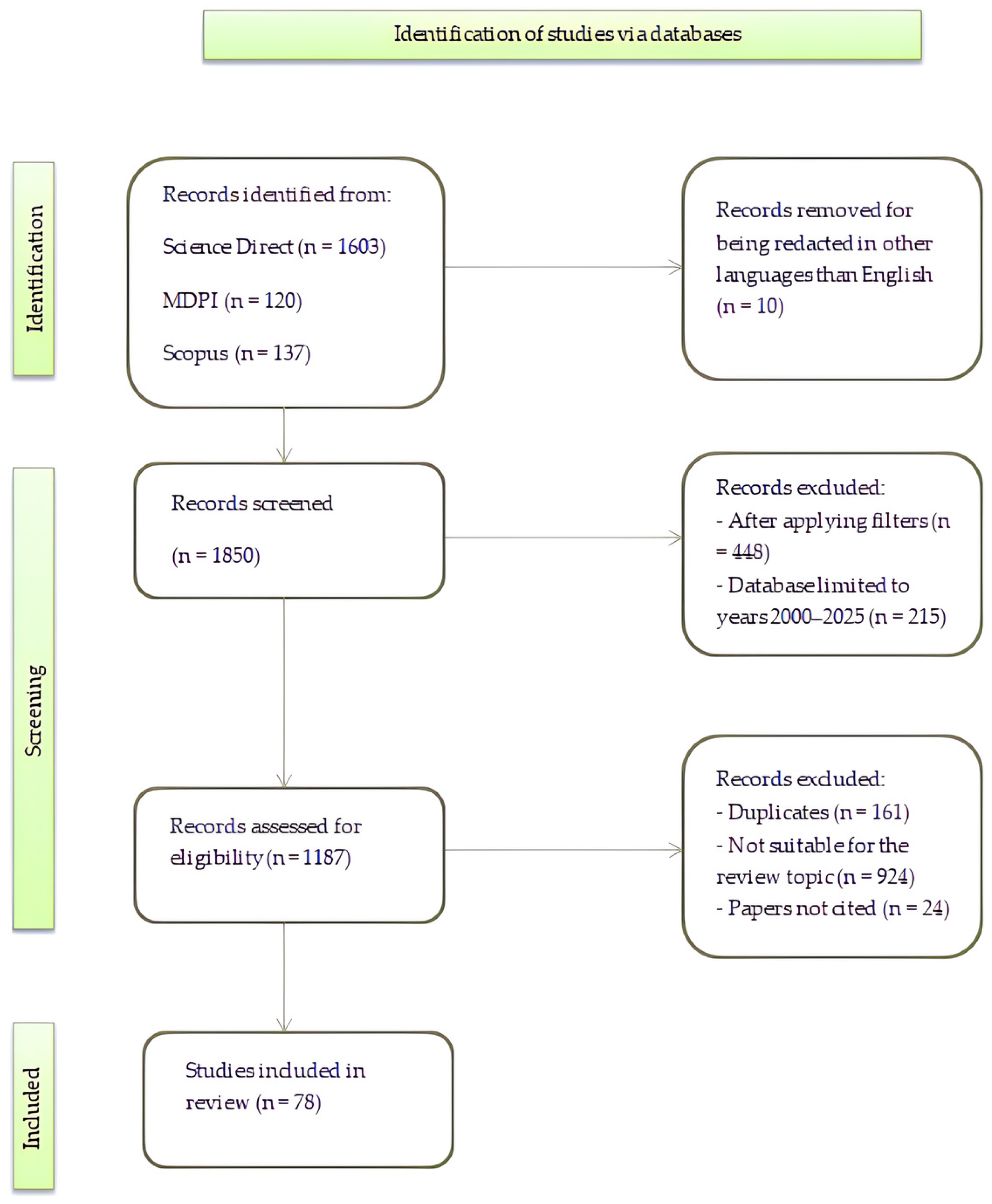
The search resulted in a database that consisted of 1860 documents, 1603 from the Science Direct database, 120 from the MDPI database, and 137 from the Scopus database, reflecting the rapid growth of PV fire safety research in recent decades. The nest stage included a gradual refinement of this broad data set through exclusion criteria. First, 10 articles were removed as they were published in French, German, Spanish, Chinese, Japanese, and Korean, and for the current review, we only used articles written in English.
A few filters were applied so that we could restrain our database to only contain reviews and research articles, book chapters, and conference abstracts, with the subject areas focused on energy, engineering, materials science, and environmental science. This ensured that only scientifically validated and methodologically sound contributions remained, and that only domains containing technical evidence on ignition, HRR, smoke, CFD, and regulatory standards. After this, we limited the search to only include papers published between the years 2000 and 2025, guaranteeing relevance to modern PV technologies, which have evolved significantly in materials, installation practices and fire safety compared to earlier generations. This left us with 1187 papers.
Exclusion criteria were applied to studies with no relevant implications for the present review and to pure electrical studies lacking thermal or fire safety implications, ensuring the analysis remains focused on the thermo-fluid dynamics of the fire event. A total of 161 duplicates was also removed, leaving us with 97 papers of which 78 were cited in this review. The PRISMA flow chart in Figure 1 provides a transparent overview of the systematic screening process applied during the literature review and demonstrates the methodology behind the selection of the final 78 studies included in this article. Overall, the PRISMA flowchart visually communicates the structured and selective methodology applied throughout the literature review.
Given the heterogeneity of the literature on PV fires, a structured classification was necessary to map the research directions and identify dominant themes of the existent literature. Each source was therefore categorized by article type, by the core topic addressed, and by the PV system configuration examined. This organization, presented in Table 1, clarifies how different strands of research contribute to the broader understanding of PV fire dynamics.
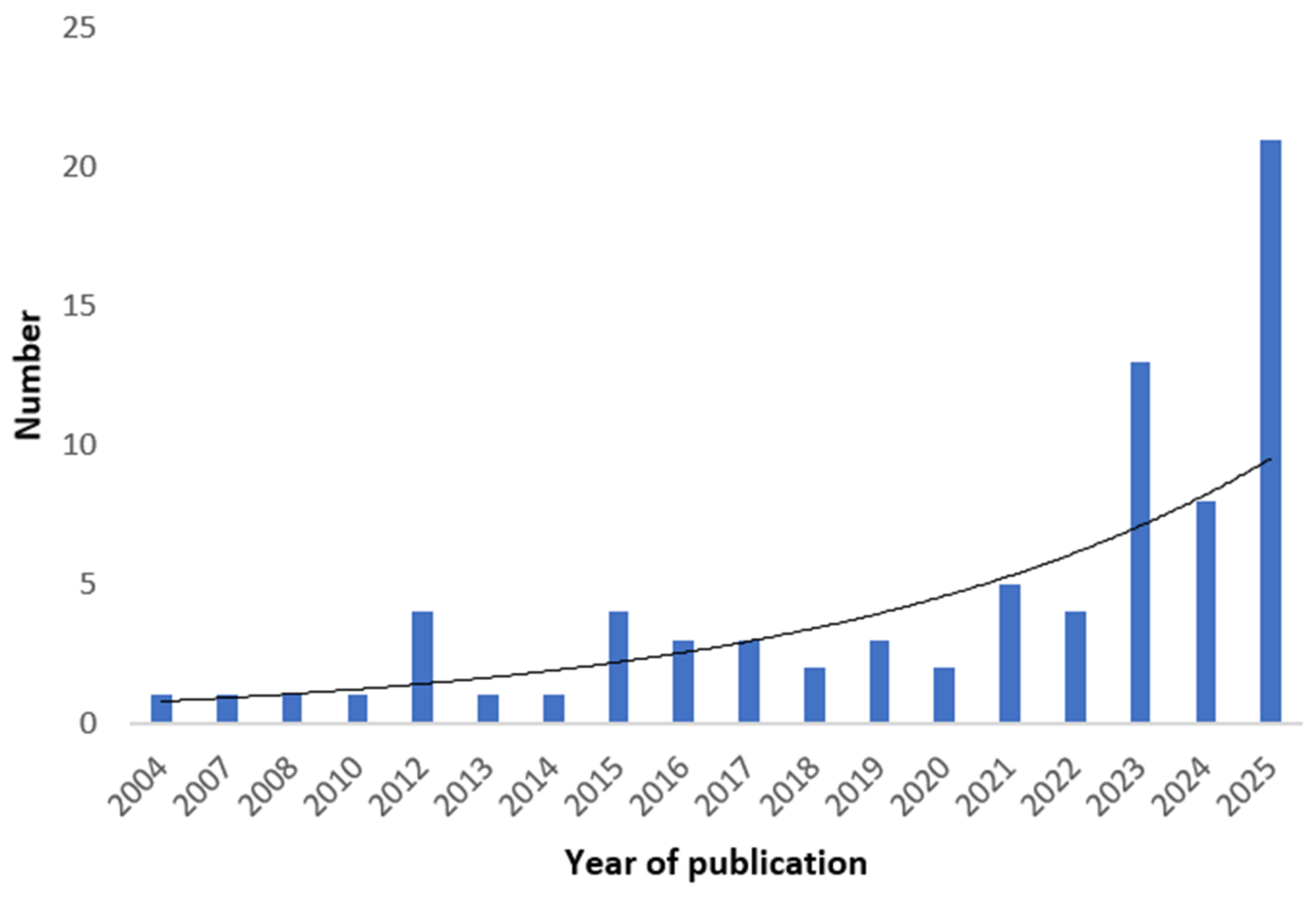
Figure 2 presents the distribution of the articles studied in this review by year of publication, between 2004 and 2025. Few of the cited papers were published before 2015, most of them being published after this date, where a general gradual increase in publications is observed, with peaks in 2023 and 2025, confirmed by the trend line, which shows a clear upward trajectory in the number of publications on PV fire safety, illustrating the accelerating scientific interest on the subject. More than 70 articles, papers, and reports were cited in this review.
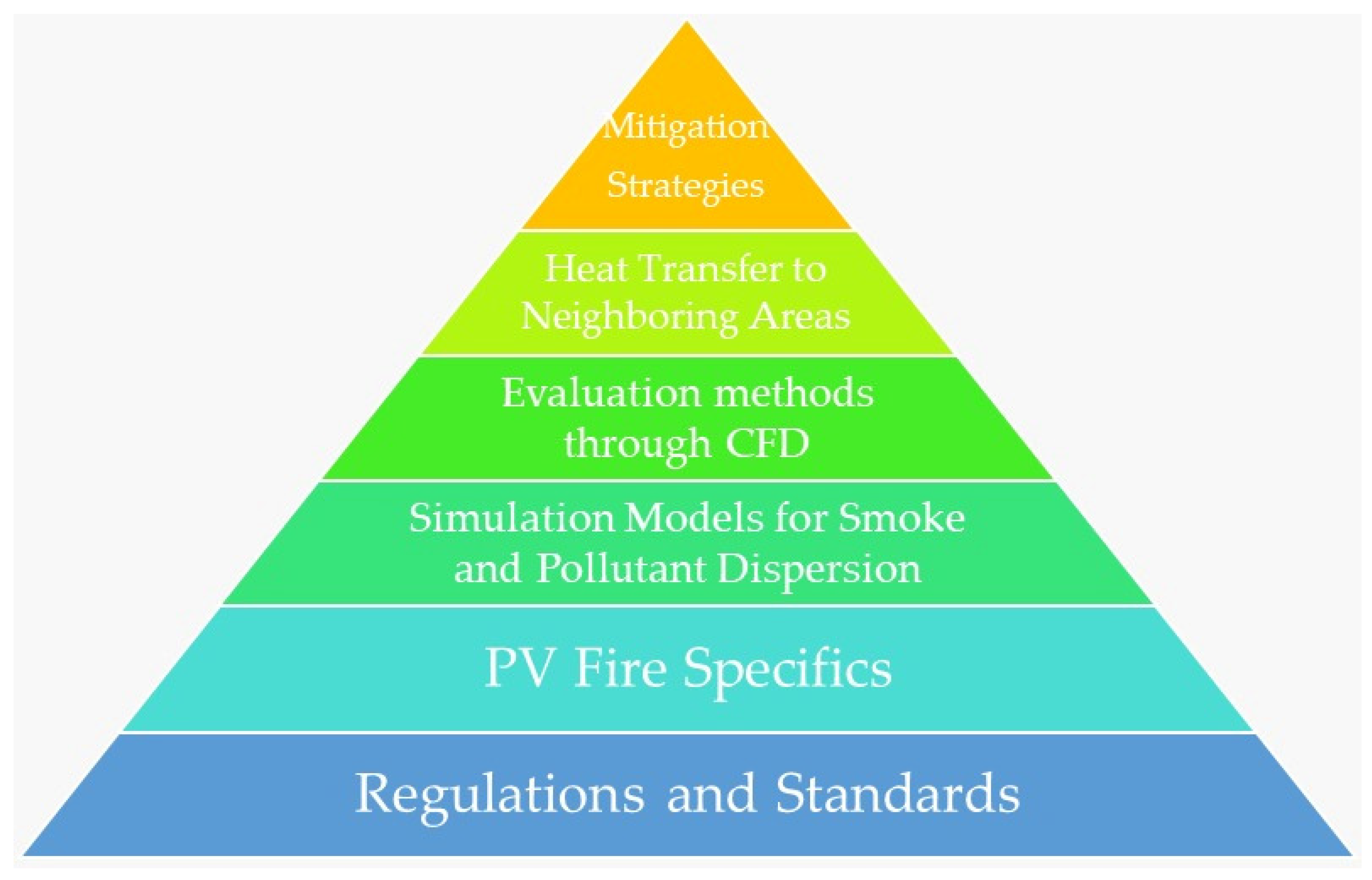
Figure 3 presents this review article’s workflow, beginning with regulations and standards existent regarding photovoltaic modules, and ending with PV fires mitigation strategies. It begins with current regulations and standards that aim to direct and control the design, installation, and maintenance of photovoltaics, bringing into light the present gaps and irregularities. The next section talks about the critical subject of common causes of PV fires, the dispersion of smoke, and combustion products released and heat release rate, a major fire safety metric that quantifies the hazard potential of burning materials. The review continues with the topic of simulation models for PV fires, which are especially important for studying the consequences of PV fires that take place in different settings. The results of such simulations can help cover the existing gaps in current regulations, without the implications that come along with large-scale experiments. After this, heat transfer to neighboring areas is discussed. The importance of this subject comes from the connection between factors such as insulation materials, installation of PV panels, and spacing between buildings and fire spread to adjacent structures. This procedure narrows down the analysis reaching the point where mitigation strategies are considered the most important aspect of prevention. The personal opinions of the authors that conclude the extended analysis highlight the lacks and areas that need to be further investigated.

2. Existing Regulations and Standards

2.1. Global Regulatory and Norms

Across all major markets, PV modules must pass IEC 61215 [22,23] and IEC 61730 [24,25] performance and safety tests, with the United States and Canada complying with UL 1703 [26]. On top of these electrical sector standards, BIPV installations must satisfy the fire performance requirements for building elements, roofs, facades, skylights, windows, and attachments, prescribed by each country’s building code. Table 2 shows a comparison between standards applied across multiple countries.
Europe uniformly applies EN 13501-1 classifications, Canada relies on ULC S134, and Australia enforces AS 1530.3 [31] for external fire exposure; other regions follow their own fire-rating schemes for cladding. This regulatory patchwork results in inconsistent flammability thresholds, test setups, and classification labels for BIPV products, creating barriers to global harmonization [9].

2.2. Current Gaps in PV Fire Standards

Current fire tests and building codes follow generic construction standards, thereby overlooking PV-specific hazards, according to Aram et al., who document the lack of BIPV-specific fire testing protocols, the dual function of BIPV systems as both electrical generators, and building envelope components, while current codes often treat them as either electrical devices or construction materials—but not both simultaneously, the combustible materials in their structure that are not regulated by international codes and the toxic emissions like HF, HCN, SO2, and VOCs from burning PV laminates, which are underrepresented in current fire safety evaluations [20]. IEC 61730 demands small-scale reaction to fire tests for BIPV facades, while large-scale facade tests are only required by some regulations applied in the UK, Switzerland, Canada, USA, and Australia. Stølen and colleagues showed, through their study, gaps regarding BIPV façade installations. They combined large-scale SP FIRE 105 façade fire tests of a 4000 mm × 6000 mm BIPV façade system with complementary cone-calorimeter assays to provide material properties of the combustible parts of the installation. The full-scale test exposed the façade to a window-flashover fire plume, revealing critical failure modes: falling debris and rapid vertical flame spread within the cavity. Small-scale calorimetry quantified ignition delays, peak heat release rates (HRRs), and mass-loss profiles for junction boxes and backsheets [10]. These dual-scale insights show us the necessity of standardized testing protocols and precise specifications for PV module reaction to fire, smoke toxicity evaluation, and mounting details to ensure safe BIPV façade installations [10,20]. Table 3 presents a comparison between some of the codes and standards mentioned in text.
Ko et al. point out in their study numerous gaps that are identified in the current codes and standards. Regarding the material reaction to fire, testing methods and fire resistance standards are not provided by IEC/UL 61730, although ignitability and fire resistance tests are required. In general, current regulations do not consider alterations of the burning behavior of PV modules while being electrically active, nor fire suppression problems even though PV modules are electrical systems. Regarding BIPV roof systems, the flammable components of PV modules are not regulated, but the roof system should be tested as a whole because the reaction to fire is influenced by all of the components. For the electrical parts, national codes such as UL 4703 [33] for wires, UL 6703 [34] for connectors, and UL 3730 for junction boxes are used in the USA and Canada.
On the other hand, for the building part, the requirements are determined by the building classification, which differs from one country to another and results in different fire safety assessments. The materials selected for buildings are usually non-combustible, but the conditions for a material to be considered non-combustible depend on factors like temperature rise, flaming, debris, and smoke, which are differently tested from one region to another. Temperature rise is referred to in Australia, USA, and Canada. In Australia, the temperature rise must be under 50 °C, while in the USA, it has to be less than 30 °C if the weight loss is 50% or less.
Sustained flaming must have a mean duration of zero in Australia, while the required duration in European regulations (EN 13501-1) is less than 20 s. Differences among regulations are also found at the component level. For external walls, Australia demands that temperature rise does not exceed 600 °C and 250 °C for the exposed specimen face, and the USA demands that the temperature of the components does not exceed 417 °C above the temperature measured immediately after the start of the fire test.
These are all examples of the differences that appear even in the smaller details of fire testing demands of photovoltaic modules. Even though building elements such as roofs, facades, or skylights behave differently in fires, their specific risks are not uniformly integrated into PV fire testing.
Perhaps the most important issue that is missing from regulations is the release of toxic smoke and its effects on life safety. Smoke toxicity is not currently implemented or addressed although toxic gases have been detected from PET laminated fires [9,20].
Current PV fire assessments rely on bench scale tests such as ISO 11925, which only measure ignitability and cannot reproduce full-scale dynamics, such as cavity fires or vertical flame spread. Another limitation of fire tests is the fact that they do not thoroughly evaluate design configurations such as ventilated cavities or double-skin facades that affect heat transfer, smoke movement, and flame spread. These tests do not incorporate results from actual fire incidents either, although it is crucial to update protocols and testing methods as to include documented case studies and errors observed in real fires in order to avoid the same mistakes [6,9].
The placement of photovoltaic panels within the building envelope must also comply with national fire safety regulations, particularly in relation to façade integration. The analysis of Slovak building codes (e.g., STN 92 0201 [35]) highlights the absence of harmonized European standards for PV placement relative to fire hazard zones. Avoiding fire-hazardous areas and using non-combustible structural elements should be mandatory to prevent flames spread across façades [36].
In one review of firefighter intervention data from Germany (390 incidents) and Italy (298 incidents), it is showed that standard fire-reaction tests, specifically the SBI test (EN 13823 [37]) and the small-flame method (EN ISO 11925-2), underestimate the fire vulnerability of sample inclination. Differences in module inclination, ignition flame power and duration, and initial deterioration of sample appear between test protocols. In order to more accurately simulate fire circumstances, these findings highlight the flaws in the present PV fire reaction standards and advocate for incorporating PV-specific changes regarding these factors into fire testing standards [7,38].
The UL 1741 [39] is criticized by Falvo and Capparella, specifically the 4–5 A ground fault prevention devices (GFPDs) that fail to detect low-current initial ground faults. They suggest revising the standards and combining two devices: an insulation monitoring device that monitors the insulation resistance, and a residual current monitoring device and multiple small inverters that would split the total number to PV arrays among more inverters with a smaller leakage capacitive current in the GFPD of each inverter and a better sensitivity to detect ground faults [4].
Research on Norway’s fire regulations demonstrates that PV installations cannot rely only on fixed separation tables or one-size-fits-all guidelines. Each project requires a tailored risk assessment that takes into consideration building occupancy, roof construction, module orientation, and electrical parameters at the string level. Interviews with beneficiaries show that early coordination between fire engineers, architects, and PV system designers is critical to increase focus on the fire safety design of PV installations [40].
These discrepancies reinforce the central argument of the review: fire behavior in PV systems is controlled by the interaction between the module and the building assembly, yet tests and fragmented building codes treat these elements independently. Consequently, current regulations underestimate BIPV fire risks and their toxic emissions.

2.3. Proposed Enhancements and Future Criteria

Existing module-only fire tests (e.g., UL 1703, UL 61730) verify electrical integrity and enclosure tightness but do not capture system-level interactions in the field. To reduce the risk, mandatory arc-fault detection devices, enhanced grounding schemes, rigorous installation and maintenance protocols, and revisions to building and electrical codes to incorporate PV-specific fire safety requirements are recommended. Moreover, it is necessary to unify terminology across global regulations, making explicit fire resistance ratings for backsheets and encapsulants mandatory and integrating PV-specific clauses into the International Building Code to close loopholes in installation and maintenance language [5,20].
Cancelliere et al. [41,42] propose a protocol that evaluates photovoltaic modules mounted on roofs as integrated assemblies, rather than as isolated components. They measured key reaction-to-fire metrics—including peak heat release rate (HRR), total heat release (THR), and fire growth rate index (FIGRA)—across common roof substrates. HRR represents the speed at which heat energy is released during combustion, measuring the burning intensity of a fire. FIGRA is the speed at which this burning intensity increases during a fire, and it is used for fire hazard classification of buildings and materials. The experiment identified weaknesses of European testing protocols about fire behavior rating and proposed new protocols that have a better identification of modules’ reaction to fire features. Despinasse and Krueger [43] also introduced a simplified small-scale test specifically for PV modules as roofing components. Their protocol exposes the module front face to a uniform external heat flux while recording backsheet temperature evolution and flame-spread distance. Initial trials on representative glass–foil and glass–glass modules demonstrated strong repeatability and clear differentiation in thermal response and fire propagation. These first developments pave the way for standardized fire-rating methods and EN 13501-5 classification adaptations specific for photovoltaic roofing materials. These studies highlight the variability in fire behavior depending on substrate type, Cancelliere et al. [41,42] recommending a combined test rather than only applying the IEC 61730-2 small test flame or specific state regulations.
To address the fragmented regulatory landscape, an essential step is the harmonization of PV system classification across major standards. At present, IEC 61730, UL 1703, and EN 13501-1 classify PV modules and BIPV products differently, with no international agreement on a common fire rating classification, making it necessary to retest PV systems in different countries [9,44] and leading to inconsistent quality standards and fire safety expectations. A unified classification framework for PV and BIPV systems should be developed at the international level, clearly defining categories, minimum performance criteria, and fire safety requirements for PV components such as backsheets, encapsulants, junction boxes, and mounting systems. This would reduce ambiguity in how manufacturers select applicable standards and prevent the current situation where similar products are tested and certified under nonequivalent conditions.
Relying solely on local building codes is insufficient when key tests and requirements are missing or inconsistent in international standards. International codes should explicitly prescribe PV-specific fire tests rather than deferring entirely or even partially to national regulations. Where tests already exist, their parameters should be aligned. For example, electrical safety tests currently differ in voltage requirements between American and international standards [9], which can lead to uneven detection of insulation faults and arc risks. Developing globally consistent electrical test protocols, with harmonized voltage levels, leakage current thresholds, and ground-fault detection criteria, would ensure that PV modules and inverters meet comparable safety levels regardless of the market.
For BIPV systems, a fundamental shift is needed: they must be treated and tested as integrated assemblies, not as separate electrical devices and building components. Fire tests should evaluate the complete system, including the PV laminate, mounting hardware, cavity geometry, roof or façade substrate, and electrical operation, under realistic boundary conditions. This includes testing modules while electrically active, since current flow, hotspots, and arc formation can significantly alter ignition and burning behavior. Roof and façade tests should therefore incorporate electrical loading, tilt angles, and cavity configurations to capture the true fire dynamics of BIPV installations.
Another major critical gap is the absence of standardized smoke toxicity and smoke propagation tests for PV systems. Given the presence of fluoropolymers, PET, EVA, adhesives, sealants, and novel cladding and glazing materials, PV fires can release toxic gases and particulates with serious implications for occupants, firefighters, and the environment. New test methods should be developed to quantify toxic gas output and smoke production under realistic fire exposures for PV modules and BIPV assemblies. These tests must be periodically updated to reflect emerging materials and designs, ensuring that innovations in encapsulants, backsheets, and façade systems are accompanied by toxicity and smoke spread assessments.

3. PV Fire Specifics

3.1. Common Causes

3.1.1. Ignition Mechanisms and Fault Analysis

Electrical defects, such as arc faults and insulation breakdown, installation errors, flammable materials, and environmental stressors constitute the primary drivers of spontaneous PV module ignition [1]. Arcing can have many causes, one of them being the presence of an open circuit where the system voltage can occur across a small gap. If the gap is narrow enough, it can initiate an electrical arc, and if the two electrodes are mechanically held in place, the arc continues for a long time. Ground faults are also a cause of fire in PV systems. A low resistance path to the ground leads to overheating, arcing, and fire.
Loose or corroded connections and insulation failures generate localized heating and sparking that can trigger thermal runaway, while improper installation practices (inadequate torque on connectors) concentrate currents at point contacts and promote hotspot development.
Another condition that could cause hotspot formation is partial shading, which produces reverse bias in PV cells, causing them to dissipate electricity rather than transferring it, resulting in excessively high temperatures. The reverse current of a solar cell is usually negligible, but a junction breakdown could also cause the current to increase dramatically and lead to overheating and fire.
Over time, environmental factors such as ultraviolet exposure, humidity, and thermal cycling degrade polymeric encapsulants and backsheets, increasing their flammability and raising ignition risks under operating conditions. Quantitative evaluation shows that installing arc-fault circuit interrupters, scheduling regular electrical inspections, and integrating fire-resistant roof barriers can collectively reduce fire initiation probability [9,11,45,46,47].

3.1.2. Component-Level Combustion Behavior

A PV system is a multi-layered device that contains several components, each of them with different chemical properties and behavior to fire. Component-level fire testing using cone calorimetry revealed that polymeric constituents of photovoltaic panels, particularly epoxy resin and polyurethane adhesives, are the dominant contributors to combustion [48], with ignition critical temperature and ignition time lowering with higher heat fluxes, according to fire calorimetry testing on multilayered PV modules [49]. Thus, it is recommended to isolate combustible layers in PV modules to assess fire risk and smoke toxicity under realistic thermal exposures.
In a comparison of single-glass and double-glazed PV panels, glass–glass PV modules showed significantly better fire resistance than single-glass panels. Double-glazed modules exhibited prolonged ignition time and reduced combustible mass with lower HRRs, without sustained combustion after flame extinction, all due to adding a second layer of tempered glass, confirming that polymeric backsheets have a higher risk of combustion. Therefore, double-glazed modules should be prioritized in high-risk fire areas in order to enhance fire safety [50].

3.1.3. Electrical Wiring and Connector Hazards

Regarding electrical wiring, burner experiments were carried out both horizontally and vertically on polyethylene-insulated wires with solid copper, hollow stainless steel, and no core in order to distinguish between the roles of core conductivity and molten-insulation dripping. The copper core acts as a heat source, cooling molten insulation upstream to reduce leaking and speeding up the spread of flames downstream. This mechanism implies the dual heat-source/heat-sink effect and dripping dynamics [51].
A Swiss survey on connector dangers concluded that using cheaper versions of standard connectors, called cross connections, causes damage and rapid aging and are more likely to develop thermal hotspots [52]. This is confirmed by Wang et al. who identified that series arc faults are more likely to happen when the connector is broken or corroded [12]. These findings support the integration of preventive diagnostics into PV system maintenance protocols.

3.1.4. Field Incident Surveys

An extensive survey of PV fire incidents in Germany between 1995 and 2012 documented over 400 reported events, of which about 180 fires were directly attributed to PV installations. Statistical analysis shows that most stem from component failures and installation errors, particularly improper handling of aluminum cabling leading to hotspots and defective DC disconnect switches with elevated contact resistance after aging. Therefore, rigorous cabling quality control, periodic DC switch maintenance, and best-practice installation protocols should be followed to minimize PV-related fire hazards [3].
In conclusion, electrical malfunctions, combustible materials, connector deterioration, and installation mistakes all contribute to photovoltaic fire risks. Field data demonstrates that improper cabling and DC switch maintenance are frequent drivers of fire, whereas arc faults, aged polymers, and mismatched connectors increase the chance of hotspot formation and combustion. The advantages of double-glazed modules and low-flammability components are demonstrated by material testing and fire simulations. Collectively, these results highlight the necessity of strict installation guidelines, preventive testing, and fire-safe design to lower the risk of ignition and restrict the spread of fire in PV systems.
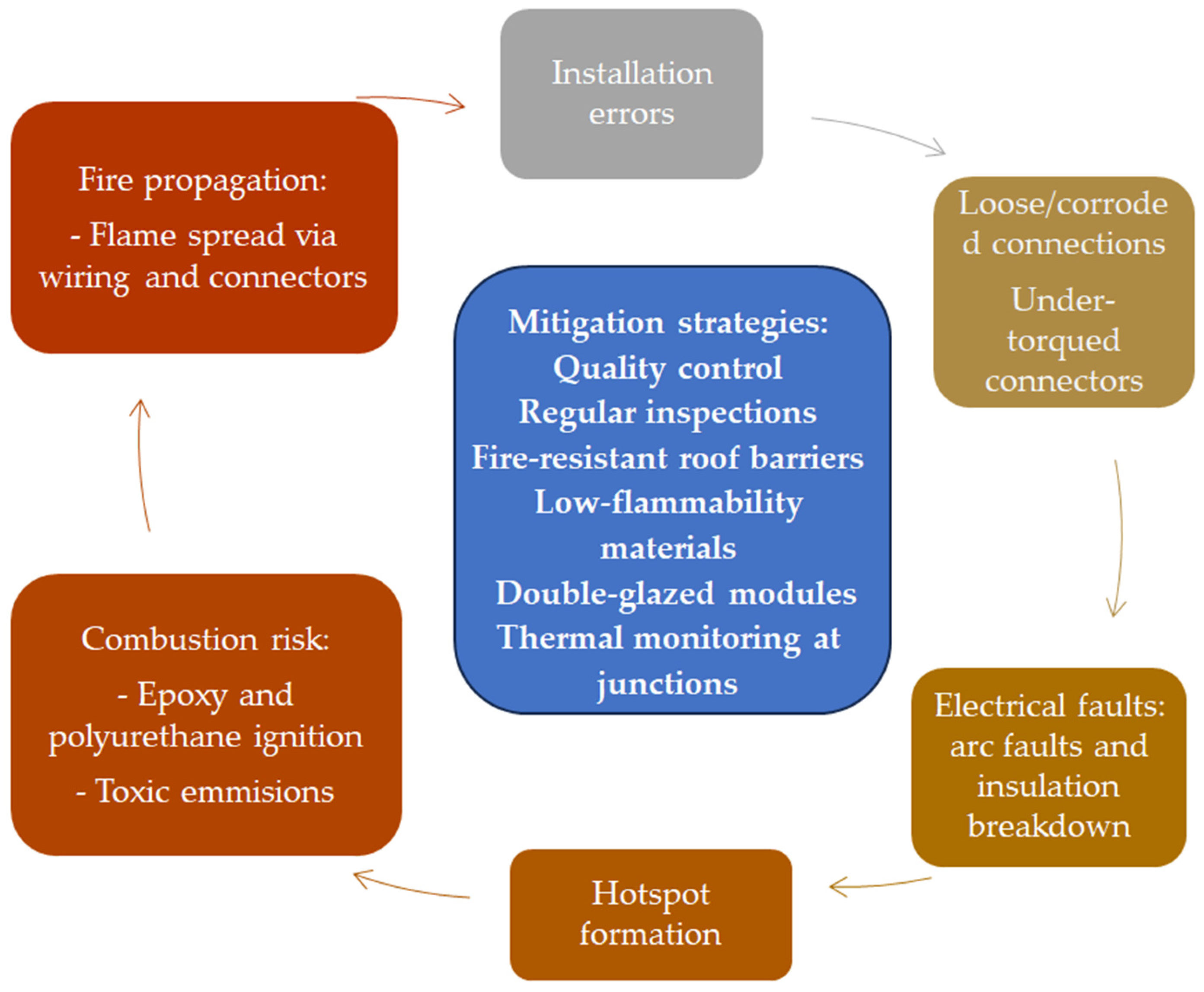
Figure 4 presents a summary of the main causes of PV fires from ignition to propagation, along with possible mitigation strategies.

3.2. Heat Release Rate (HRR)

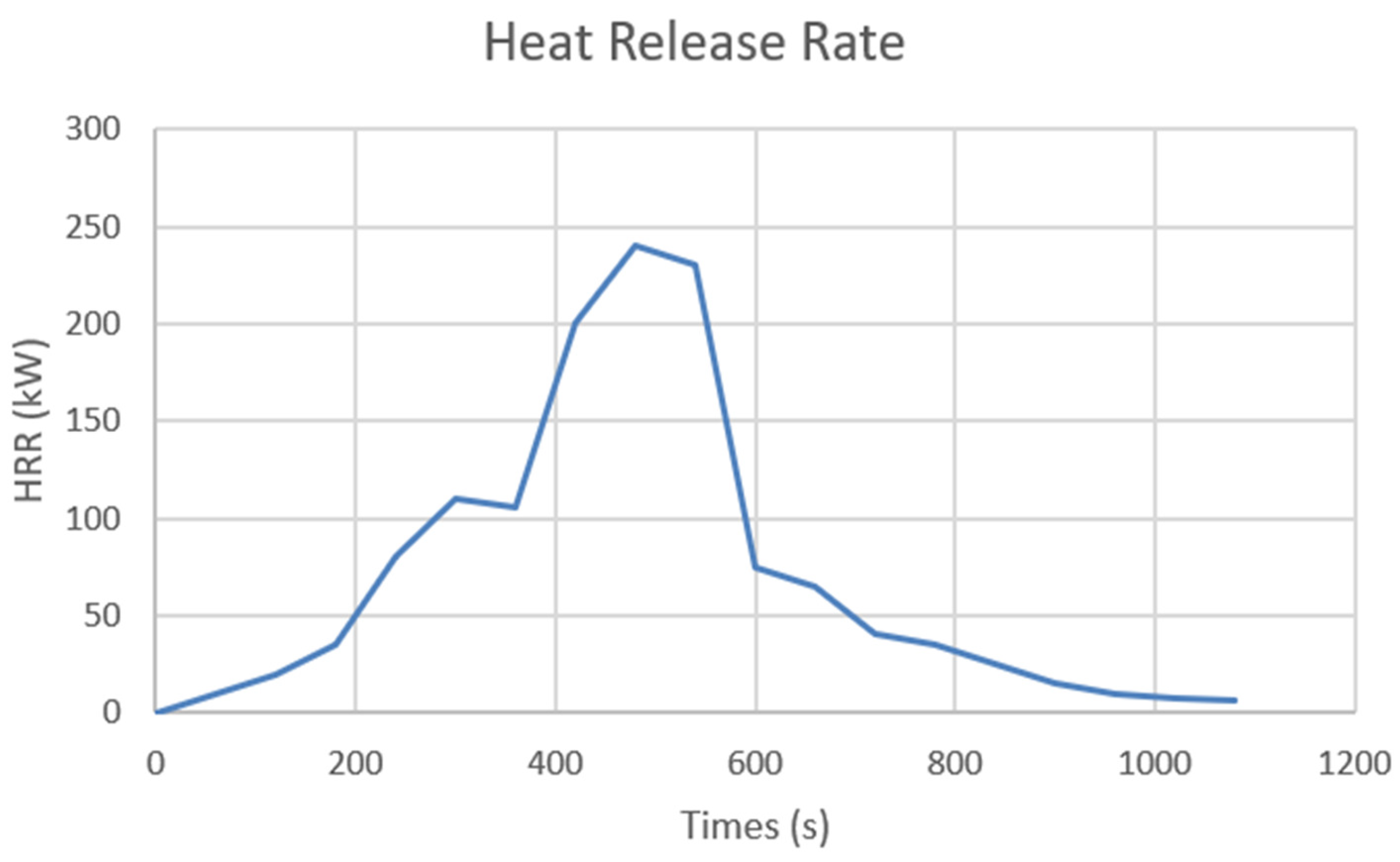
By quantifying the rate at which heat energy is released during combustion, reflecting both the intensity and growth potential of a fire, HRR is especially important in PV systems because it reveals how different materials—encapsulants, backsheets, adhesives, and junction boxes—contribute to fire escalation. An example of an HRR diagram can be seen in Figure 5.
With the use of oxygen-consumption (OC) or CO2/CO generation (CDG) calorimetry, it is possible to accurately assess the heat release rate (HRR) of PV-module polymers, particularly multilayer encapsulants and fluoropolymer backsheets, without knowing their formulas. Biteau et al. showed that, for a variety of polymers, nanocomposites, energetic materials, and biomass, applying average energy-per-mass constants to OC and CDG measurements results in HRR estimations that converge within experimental uncertainty.
Standardized OC/CDG energy constants allow for quick evaluation of novel PV module formulations for risk assessment and fire simulation. By anticipating HRR development curves for new encapsulant chemistries, designers can identify high-risk materials ahead of full-scale testing, reducing certification times and enhancing installation safety [53].

3.3. Combustion of Products and Smoke Dispersion

3.3.1. Module Composition and Flammable Constituents

Photovoltaic modules are built from multiple polymeric layers that become combustible under fire exposure. The front sheet usually consists of tempered glass bonded to a polymeric film such as polyethylene terephthalate or polymethyl methacrylate. Ethylene-vinyl acetate encapsulates the silicon cells providing protection and insulation, while backsheets incorporate PET or polyamide substrates that protect the active PV part on the back side of the module. Frame gaskets, adhesives, and junction boxes introduce additional organic materials. This multilayer assembly provides both fuel and pathways for flame spread across the module surface and, in building-integrated installations, into adjacent structures [2,54].
Fire spread between adjacent buildings happens when the said building receives higher radiation heat flux than the ignition heat flux of combustible materials on it, with a greater chance of igniting when the radiation changes from 12.5 kW/m2 to 18 kW/m2 [9].
Combustion of PV-module polymers releases a complex mixture of toxic gases and volatile organics. Small-scale fire tests on PET-laminated modules have detected sulfur dioxide (SO2), hydrogen fluoride (HF), hydrogen cyanide (HCN), and a range of volatile organic compounds (VOCs) [55].
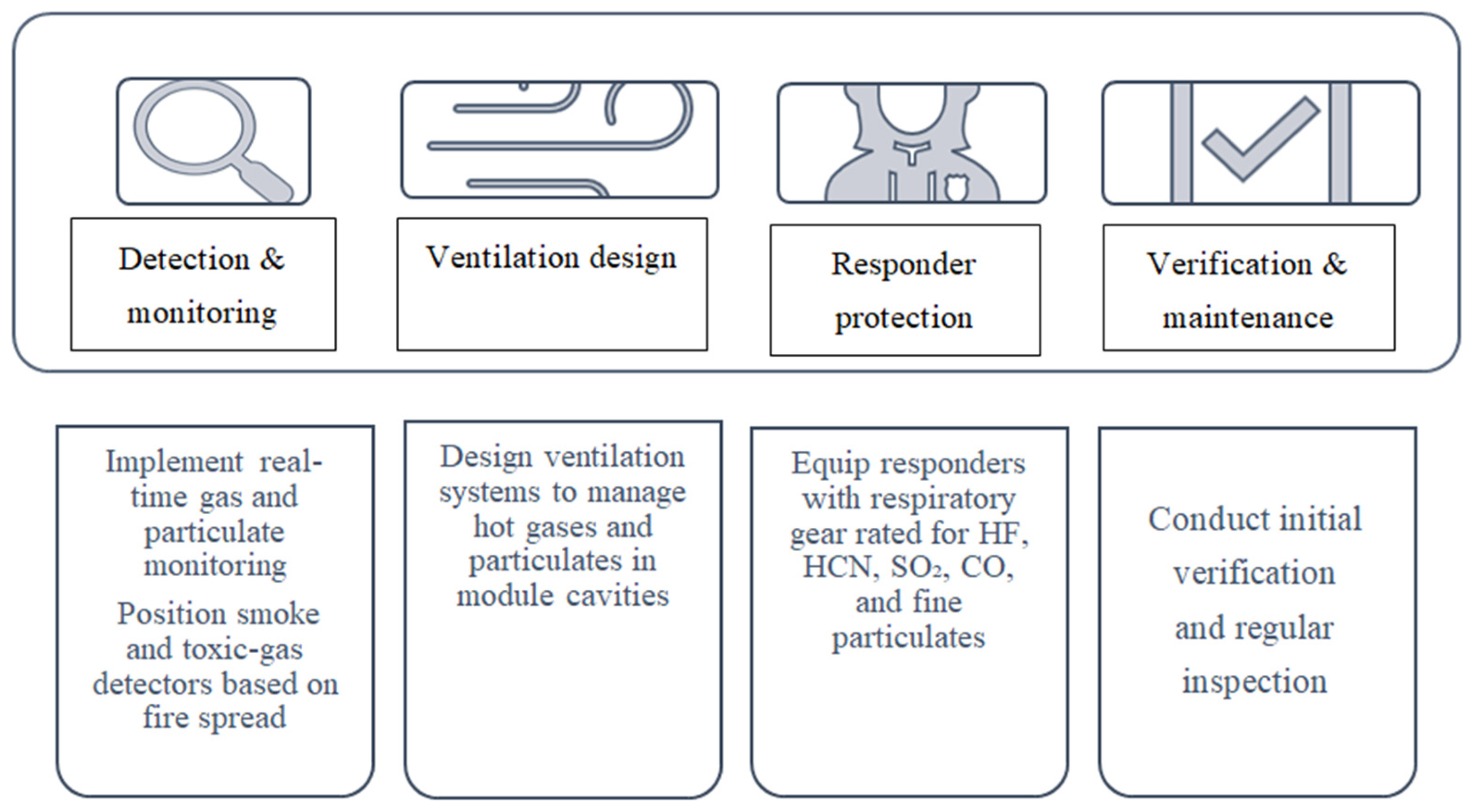
Although these effluents pose acute inhalation hazards and can elevate smoke toxicity above that of many conventional construction materials, there are no specific test methods for the evaluation of toxic gas generation [9]. Real-time monitoring of CO, CO2, HF, HCN, and VOC concentrations during fire testing is essential to guide detector placement, ventilation design, and the selection of respiratory protection for firefighters [56].
Safety measures regarding toxic particulates released from PV fires are summarized in Figure 6.
Burlacu’s doctoral research quantified the optical characteristics of PV fire smoke extinction coefficients, single-scattering albedo, and phase functions to improve the accuracy of small-scale test correlations. His numerical heat-transfer model couples’ conduction through encapsulants, convection within module cavities, and surface-to-surface radiation, refining predictions of total heat release over 600 s (THR600) and fire-growth rate (FIGRA). Incorporating these smoke–radiation interactions tightens the correlation between bench-scale and full-scale fire behavior [57].
Together, these measures address the multifaceted hazards—gaseous, particulate, and chemical—associated with PV-module combustion [2,3,52,55].

3.3.2. Smoke and Pollutant Dispersion

Computational fluid dynamics (CFD) simulations of an 8 MW fire in an urban warehouse reveal how external wind dramatically alters venting performance and smoke behavior. ANSYS Fluent, version R19.2, at wind velocities of 5 m/s, and 10 m/s, each tested at 12 inflow angles, shows smoke exhaust performance could be better in in strong wind. Because of the pressure differences between the roof outlets and façade inlets, some wind-angle combinations actually increase the mass flow of ventilators. Meanwhile, high pollutant concentrations were observed behind tall buildings associated with strong vortices, highlighting the need for coupled wind–fire dispersion analyses in dense environments [58].
In comparison to full-scale CFD methods, sub-scale testing provides a safe, cost-effective means to examine smoke movement under controlled conditions. A novel sub-scale wind-tunnel method uses helium to replicate smoke spread beneath PV-roof fires by treating the fire plume as a buoyant jet and enforcing similar criteria for Froude, Reynolds, and density ratios. Helium velocities and concentration fields match real-smoke conditions with an error of within 5.5% in velocity and 11.5% in dimensionless temperature when validated against full-scale FDS simulations, confirming helium’s suitability as a non-smoking surrogate [59,60].
Helium testing is also validated by Aram et al. [61,62], who extended it to BIPV double-skin façades, applying Froude similarity to replicate buoyancy-driven smoke movement. The scaled experiments reproduced key features of smoke layering and stratification within a 1.2 m wide cavity, showing strong agreement with full-scale CFD simulations. It is demonstrated that dimensionless velocity and concentration profiles from helium tests closely mirrored CFD predictions, validating this approach as a low-risk, high-fidelity framework for optimizing natural ventilation strategies in sustainable façade design, but also for assessing roof pitch and HRR effects on smoke dispersion through rooftop openings, as Zhang et al. [63] stated in their study, which also uses helium in the experiments. Models with skylights were tested at inclinations of 0°, 15°, 30°, 45°, and 60° under wind velocities equivalent to full-scale 10 m/s and 30 m/s. Roof angles above 45° markedly reduced smoke infiltration into interior spaces, whereas shallow pitches (≤15°) under high wind speeds produced rapid smoke ingress. The 45° angle is also the threshold for peak flame spread rate. These findings highlight the importance of optimal skylight geometry, roof tilt, and natural ventilation strategies to minimize occupant smoke exposure during PV fires.

4. Modelling and Simulation of PV Fire Dynamics

CFD allows researchers to model rising smoke plumes, layers of hot air, and the movement of pollutants with good accuracy, avoiding the costs and environmental effects of full-scale experiments [64].
Among CFD, there are specialized fire simulation tools designed for complex settings. One example is a three-dimensional OpenFOAM-10 model created to study smoke movement and heat distribution in a ship’s engine-room fire. Tests showed that the model could accurately match experimental results, capturing how the highest concentrations of smoke collect at the top of the room, with the fire position affecting the temperature distribution and smoke dispersion the most, followed by the fire area [65].
Adiabatic surface temperature (AST) [66] and t-squared curves [67] are practical ways that make fire modeling in CFD easier, faster, and more efficient by setting boundary conditions in fire simulations and removing the need for complex calculations while still yielding accurate predictions of temperatures and airflow. AST can predict heat flow to nearby surfaces and assess how PV fires affect mounting frames and solar modules, while t-squared curves are useful for studying how smoke moves and how heat spreads to structures in enclosed areas, such as PV-integrated spaces.
When modeling façade-integrated PV systems, it is important to set fire boundary conditions that match how panels are placed and exposed. Iringova’s simulations show that heat release rate (HRR) profiles differ greatly between panels in open areas and those in hazard zones. Recognizing these differences allows CFD and zone-model simulations to better represent the complex fire behavior of building-integrated PV assemblies [36]. Extending this perspective to the system level, the Fire and Smoke Simulator (FSSIM) Version 1 uses a zone-based approach to study roof-mounted PV fires. It divides a building into connected sections and calculates how mass and energy move between them. It predicts smoke-layer heights, gas temperatures, and airflow through vents and doors. Because it runs quickly, FSSIM can test different vent sizes and room layouts, helping improve evacuation planning and the placement of smoke detectors in PV-equipped buildings [68].
To check the accuracy of CFD models and improve detector design, small-scale physical experiments are very useful. Węgrzyński et al. [69] built a reduced-size enclosure and used Froude number similarity to mimic the airflow patterns of real fires. By measuring smoke with laser obscuration techniques, they created calibration curves linking heat release rate (HRR) to smoke density. This provides a straightforward way to scale up small-model data for validating CFD predictions in rooftop or cavity fire scenarios. These calibration curves also improve smoke detection strategies. Tracking how smoke density changes as a fire grows helps define the right obscuration thresholds for optical smoke detectors. Programming detectors with these thresholds ensures faster alarm activation in homes with rooftop PV systems, where burning backsheets can produce large amounts of smoke.
On the other hand, CFD simulations also present some disadvantages and limitations. The most prominent is the requirement of high expertise. A thorough understanding of numerical methods, fluid mechanics, and the specific physics of each case is needed. Wrong modelling choices can lead to incorrect results that look credible. Input data like geometry, material properties, and boundary conditions must be chosen wisely for the program to yield reliable results. Operating times for these simulations are very long, which can be a problem for tight timelines. Also, for CFD simulations to be trusted for making real-life decisions, they must be validated against experimental data, confirming that reality was reproduced within an acceptable error margin [70].
Table 4 compares the three main methods utilized in fire simulations, mentioning advantages, limitations, and situations in which each of them is the most suitable.
CFD, helium-based testing, and reduced-scale experiments consistently demonstrate that the dominant drivers of fire spread and smoke behavior are geometric and aerodynamic factors like cavity flow, roof pitch, and openings, not just the electrical characteristics emphasized in current standards. These simulation insights validate the argument that fire testing methods must shift from module-only evaluation to building-integrated, system-level assessment.

5. Heat Transfer to Neighboring Areas

Fire-induced heat can propagate from a PV array to adjacent structures through one of three ways: conduction, convection, and radiation. Architectural and environmental factors influence the extent of heat transfer to neighboring areas. Higher wind speeds and sloped roofs increase convective heat transfer, which happens when heat is carried from the fire source to the flame front. In the case of flames with high temperatures, heat is transferred from the flame to unburned materials through the form of radiant energy.
CFD models can predict these heat transfer modes, but experiments can only measure total heat transfer, making it difficult to identify the discrepancies in heat transfer modes between models and experiments [17]. A 2025 review makes an effort to evaluate four principal techniques for decoupling convective and radiative heat transfer in fire testing: windowed radiometry, which measures radiative flux through a thermally transparent window; transpiration-cooled gauges, which maintain a constant surface temperature via fluid flow; differential emissivity sensors, which use contrasting coatings to isolate radiant and convective contributions; and dual-temperature probes, which simultaneously record surface and air temperatures to infer flux partitioning [71].
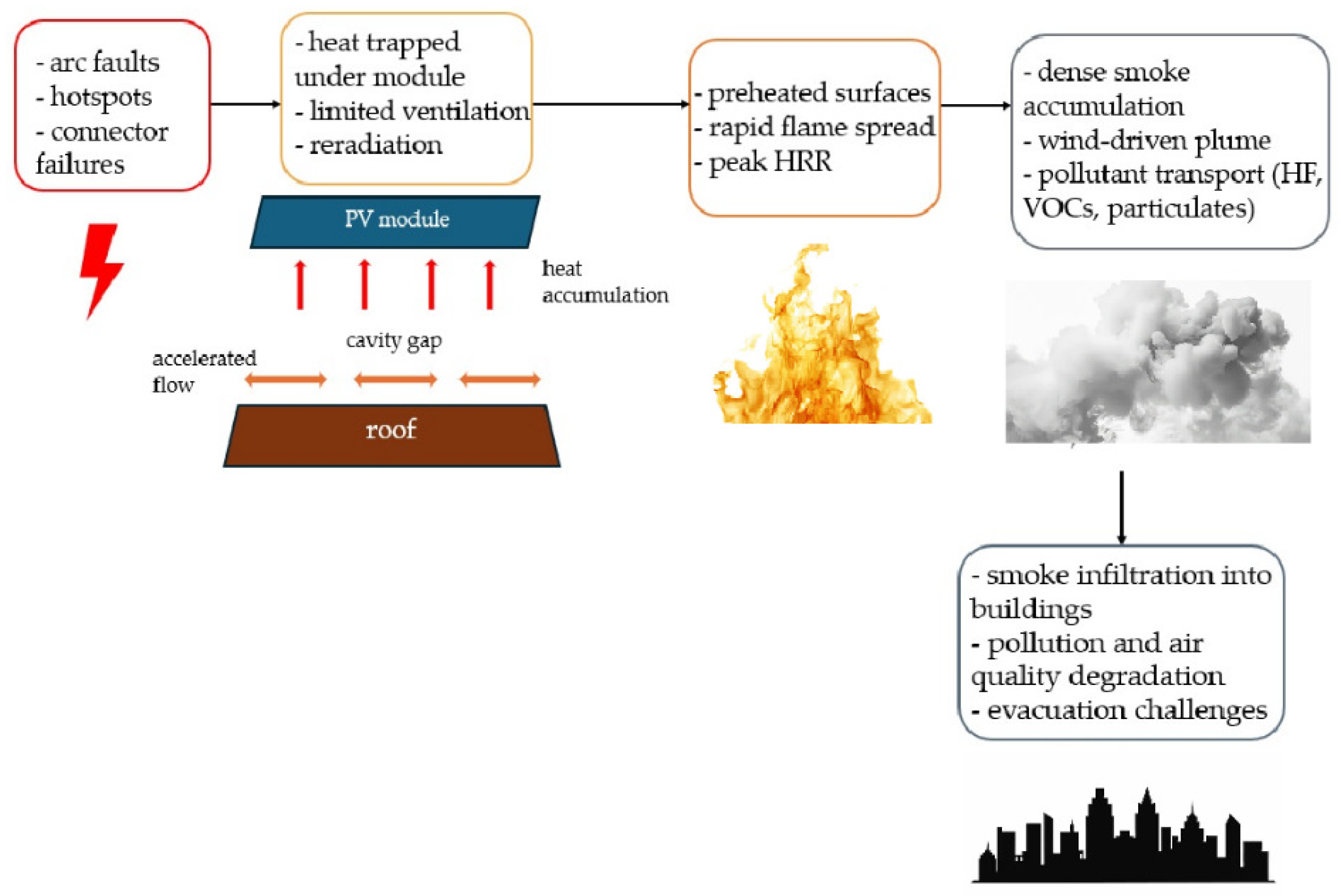
Facade-integrated systems also represent risks regarding dangerous heat transfer to environment, with BIPV modules installed vertically having higher risks of fire than the ones installed on roofs [9]. Studies have found that fires at the level of cavities between the PV module and the substrate produce higher temperatures and faster flame spread. This causes what is referred to as the “cavity effect”, which is an increased intensity and acceleration of fire spread in the case of a fire that takes place in the narrow space behind solar panels, allowing it to travel upwards with a much higher speed. Buildings are usually designed with fire-resistant materials for walls and roof coverings, but materials like wood, plastic frames, and electrical connections present in the cavity are not considered and PV modules are not tested enough regarding fire in the cavity [40]. Stolen et el. tested a glass–polymer BIPV façade mounted with a ventilated cavity on gypsum boards. The first stage was preheating the fire room and the façade; then, the large heptane flames severely damaged the two lowest rows of modules, causing them to fall; and finally, the fire became self-sustained, propagating past the cavity barrier and producing more damage. It is concluded that vertical flame propagation in the cavity happens even with very limited amounts of combustible materials; so, using combustible materials would produce even higher temperatures and more intense flames [10]. Mazziotti et al. reported that panels used as thermal cladding often run hotter and employ combustible polymer backsheets. Their experiments with the Italian National Fire Service demonstrate accelerated vertical fire spread within the façade cavity [72]. The installation of non-combustible cavity barriers and adaptation of maintenance and rescue protocols for vertical assemblies are recommended. Processes that escalate the fire are majorly controlled by the speed of the released heat. When a fire takes place inside the cavity, heat is concentrated above the fire, in comparison to a room where heat is distributed and diluted across the room. Therefore, peak HRR is an important parameter that can be used to predict fire spread in cavity-like spaces [10]. Figure 7 explains the cavity effect in summary.
The cavity effect illustrates the core limitation of existing fire standards: PV modules are certified under open air, flat plate conditions, yet in reality, they form semi-enclosed combustion channels that accelerate fire growth far beyond what module tests predict; because regulations do not measure cavity-driven flame acceleration and do not require system-level testing, they underestimate heat transfer and ignition risk. PV fire safety cannot be meaningfully evaluated without accounting for architectural integration.
Zhang et al. studied the flame behavior of near-wall rectangular-source fires, focusing on flame height transitions and air entrainment at varying wall distances. According to their findings, heat transfer near walls is governed by how the wall restricts air entrainment: close to the wall, flames become taller and transfer more heat, while increasing the wall-fire distance allows more cooling air to enter, reducing flame height and heat flux to the surface [73]. Not only distance, but also inclination angles of adjacent surfaces to PV modules influence flame morphology and heat transfer during fire spread. Results show that the presence of an inclined surface intensifies upward flame acceleration and reradiated heat flux, especially at angles between 30° and 60°. This geometric configuration traps convective plumes and enhances thermal feedback to the PV surface, increasing the likelihood of sustained combustion [74]. These slope-dependent effects should be considered in fire risk assessments for BIPV installations.
Electric shock currents that form during extinguishing PV fires could act as vectors for electrically mediated heat transfer, potentially propagating thermal energy to adjacent modules or structural elements and endanger responders. A validated test platform simulating PV fire extinguishing scenarios quantified the currents induced by water jets, showing that nozzle type, flow rate, and firefighting distance critically affect current transmission [75].
To reduce heat transfer and fire spread from PV systems to adjacent structures, designers should prioritize non-combustible insulation, elevated mounting configurations, and adequate spacing from nearby buildings. For façade-integrated PV, non-combustible cavity barriers are essential to limit vertical flame spread. Fire testing should incorporate advanced flux-partitioning tools, and firefighting protocols must account for electric shock risks from water jets. Inclined surfaces and nearby walls intensify flame behavior and should be factored into BIPV fire risk assessments.
Critically analyzing the above references, the mechanism of heat transfer in PV fires is fundamentally altered by the channeling effect created by the module–roof gap. Unlike standard roof fires, the cavity beneath a PV array acts as a combustion chamber, accelerating hot gas flows and increasing convective heat flux to the roof deck, often bypassing Class A fire ratings tested in open conditions. Furthermore, in dense urban settings, the reflection of thermal radiation by the glass surfaces of adjacent PV arrays and the cavity radiation effect can create localized feedback loops, raising temperatures above the auto-ignition threshold of nearby façade materials. Current separation distance guidelines (building codes) are derived from standard pool fires and do not account for this enhanced radiative view factor inherent to high-density BIPV installations.

6. Mitigation Strategies

Building on the mechanisms of heat transfer and flame behavior outlined in Section 5, it becomes clear that effective fire safety in PV installations requires mitigation strategies that address both material combustibility and system-level geometric effects. The accelerated flame spread within cavities, high radiative loads on adjacent structures, and sensitivity to roof pitch and clearance highlight the need for design choices and operational measures that directly counter these hazards. The following section presents passive, geometric, electrical, and firefighting strategies that can limit ignition, reduce flame propagation, and minimize heat transfer to neighboring areas.

6.1. Passive Mitigation: Materials and Design

The quality of photovoltaic modules has a direct impact on their safety and durability, with low-quality modules being more prone to fire because of the high probability of material aging or encapsulation layer cracking [6]. Choosing photovoltaic materials with high resistance to ignition is essential for reducing fire risk. By characterizing components based on their probability to ignite or propagate flame under thermal stress, designers can prioritize materials that mitigate ignition potential, especially in systems exposed to elevated ambient temperatures [76].
Wang et al. demonstrated that basalt fibers retain most of their tensile strength up to 600 °C and show negligible mass loss, outperforming steel under similar conditions. Including basalt-fiber mats within module encapsulants or backing layers can significantly boost fire resistance and preserve mechanical integrity during high-temperature exposure [77].
Park et al. provided a quantitative evaluation of flame-retardant (FLRT) and fire-resistant (FRT) coatings applied directly to BIPV modules. In cone-calorimeter experiments using a relative fire risk scoring, they measured average risk, initial combustion, overall combustion, and emission characteristics. They found that the 6 mm coating of FRT demonstrated the lowest overall fire risk, providing the most reliable fire protection for BIPV modules and confirming their potential as effective fire mitigation strategies for BIPV applications [14].
Another study investigated applying an acrylic fire-resistance paint to a solar module. The coating acted as a heat shield through a combustion reaction mechanism, formed a porous layer and decreased the flame diffusion rate by 25% [78].
In addition to properly choosing coatings and material quality, cable insulation is of a similar importance. Numerical studies show that ambient temperatures beneath photovoltaic modules can reach 60–75 °C even when the surrounding air is only 25 °C, significantly impacting the ampacity of nearby power cables. This temperature elevation requires careful selection of cable cross-sections and insulation types. PVC-insulated cables, with a continuous temperature rating of 70 °C, are unsuitable for such environments due to the risk of thermal degradation. XLPE-insulated (cross-linked polyethylene) cables offer greater resilience, but their ampacity must still be corrected for elevated temperatures. These findings support the development of rooftop specific ampacity tables and reinforce the need for careful insulation selection and thermal modeling in PV electrical design [79].

6.2. System-Level Design: Geometry and Ventilation

Roof pitch is a first line of defense against the spread of fire under panels. In controlled burner tests conducted beneath flat-roof PV panels, researchers created a correlation that maps reradiated heat-flux distributions on the membrane and predicted local flame thickness by combining tilt, panel-to-roof clearance, and heat-release rate into a single nondimensional parameter, demonstrating that increasing tilt angles shorten the horizontal flame-extension length and the vertical flame thickness [80]. Tests conducted at inclination angles of 0°, 15°, 30°, 45°, and 60° studied the onset of PV glass cracking, with slightly different results. Wang et al. [81] concluded that the onset of glass cracking is postponed as the angle increases, with significant results above 30°, which represents the critical angle for the thermal failure of the PV panel. Above 45°, crack initiation sites start moving from panel edges to convergence zones, with pockets of flammable gas between layers adding a higher ignition risk. Xiao et al. [82] revealed a peak of the burning damage extent at the angle of 15°, with a falling profile afterwards.
Gap height beneath modules is another geometrical factor that governs whether flames self-sustain or self-extinguish. In small-scale experiments on sloped roofs, steel plates installed at different distances over bituminous membranes show that gaps under 9 cm significantly extend lateral fire propagation, whereas clearances above 9 cm, or 11 cm as stated in another experimental study, effectively limit flame spread, emphasizing the need for regular debris removal beneath panels [83,84].
Kristensen et al. [85,86] also tested the importance of gap height on flame spread by conducting experiments on thermally thin polymethyl methacrylate (PMMA) substrates. Their study highlights a critical clearance, below which flame spread accelerates sharply due to flame deflection beneath the panel and intensified radiative and convective heat flux toward the preheating zone. This feedback loop can drive flame front acceleration up to 38 times faster than baseline conditions, triggered by a 2–3 cm change in gap height. Moreover, flame spread was not only affected by gap height, but also by the width of the samples, with the critical gap height reducing when the width increased. It is therefore clear that PV installations are sensitive to geometric design.
UL 1703 and UL 790 [87] radiant panel Phase 5 tests on steep slopes confirm that a 12-inch clearance preserves Class A fire ratings, while low slope roof tests, even at 24-inch gaps, had higher flame spread rates [16]. A metal flashing that fully sealed the gap between the rooftop and elevated PV modules effectively prevented flame intrusion into the interstitial space, also meeting Class A roof rating criteria. The same metal flashing but with a ½-inch opening allowed flames to enter the space but they did not spread laterally beyond 6 feet in steep-sloped roofs only, still conforming to Class A standards, as opposed to low-sloped roofs. Thus, gap height and tilt angle both must be taken into consideration when designing PV modules with lower flame spread risks [88].
Flame spread is also influenced by airflow direction and velocity, as revealed by studies on fire dynamics under longitudinal ventilation. While these findings originate from tunnel environments, they highlight the broader relevance of engineered ventilation strategies in controlling thermal escalation. In enclosed or semi-enclosed PV installations, intentional airflow management can serve as passive control to limit fire growth and thermal load distribution [89].

6.3. Electrical Safety and Active Mitigation

Arc faults, module overheating, and environmental stressors, like moisture intrusion or dust carried by the wind, can all cause PV arrays to ignite [90]. Fault currents can be stopped before thermal runaway happens by integrating sub-second arc-fault circuit interrupters (AFCIs). According to laboratory studies conducted on DC strings, series arcs can reach extremely high temperatures in a very short time, which could determine the ignition of the backsheets. Sudden weather changes can induce current, producing heat accumulation and sustaining the DC arc, during which the ignition capability of the positive electrode can be much higher than the negative one. If flame ignition occurs, a synergistic coupling effect takes place between the DC arc and the flame, producing a positive feedback mechanism, with the flame and the DC arc inflaming each other [13]. The necessity for high-speed sensors and rapid response interruption designs is highlighted by the requirement that detection systems eliminate errors in no time.
Building on these performance findings, Ko et al. advocate reviewing existent guidelines and implementing new ones that take into consideration the burning behavior of PV modules when electrically active in operation; they mandate the necessity of enhancing the fire protection system designs for smoke detection, fire suppression, and smoke control and design-dedicated fire detection/suppression systems [20]. Cancelliere et al. also recommend installing rapid-acting DC isolators at both the string and combiner levels. Proper switches interrupt fault currents before arcing develops and reduce thermal stress on cables and modules [91].
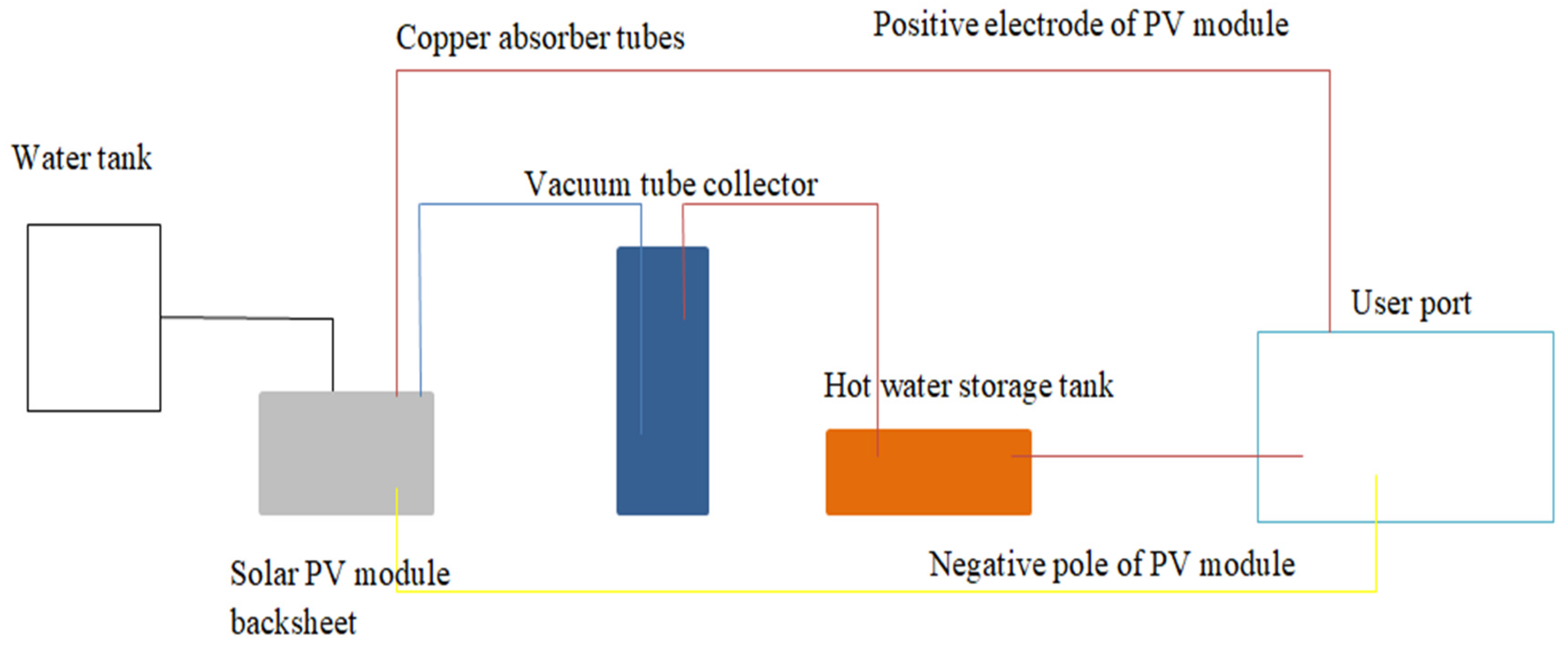
Active cooling serves as both performance enhancer and fire mitigator. Zhu et al. developed a solar-cooled PV/T loop that circulates coolants behind modules, extracting waste heat and maintaining cell temperatures below ignition thresholds. Their prototypes achieved 18.58% utilization of backplate heat and a 1.92% rise in electrical efficiency versus standard PV/T systems. Mathematical models further support integrating such loops into residential arrays, boosting energy efficiency while suppressing thermal hotspots [92]. A similar active cooling system is represented in Figure 8.
Incorporating these code amendments and strict recommendations into installation guidelines promises to reduce both the incidence and severity of PV-related fires.

6.4. Firefighting and Suppression Strategies

Firefighter safety during suppression depends on electrical hazard guidelines. Experiments on 50 V DC modules reveal that higher water-jet pressures and longer hose-to-panel distances lower leakage currents. Such data is important for operational protocols and protective equipment requirements for crews dealing with PV panel fires [93].
Prevention comes first, and some suppression strategies proposed by specialty studies include predictive maintenance using thermal imaging, particularly UAV-based scans, in installations lacking solar tracking or optimal orientation, for early overheating detection.
The study of Juarez-Lopez et al. emphasizes the importance of proper electrical installation practices, including the use of certified components, appropriately sized control and conversion equipment, and monitoring systems that track electrical parameters in real time. These strategies are especially important in high-temperature environments, where heat can accelerate component degradation and increase fire risk [94].
Litzbarski et al. [95] warn against improper installation and aging components, which can elevate fire risk as mentioned before, while Liciotti and Cancelliere [96] advocate for routine maintenance that should include thermographic inspections to identify overheating and early-stage faults, and regular checks of electrical connections and system components to prevent arc faults and thermal anomalies. All these recommendations are essential for reducing fire risk and improving the reliability of residential PV systems.

7. Conclusions

Although photovoltaic systems are widely spread in today’s world and are an important part of managing the energetic crisis that affects the environment, several fire-related risks remain insufficiently addressed in both regulation and research. Our review has critically analyzed the existent research on topics related to risks, causes, and mitigation strategies of PV fires and classified the most important problems found according to their level of urgency, as shown in Table 5.
Terminology and performance for fire testing should be unified across international building codes with the input of fire engineers, architects, PV designers, and firefighters, taking into consideration different factors like roof and module characteristics, electrical parameters, egress requirements, and optimal spacing for each case. Computational modeling tools such as CFD and FSSIM provide insights into fire-driven flows, heat transfer, gas temperature, and smoke and pollutant movement. They can be used along with parameters like AST and t-squared curves to facilitate these simulations and make them more efficient, but they still require further refinement and validation for PV-specific scenarios and comparisons with real-life tests. Experimental techniques have advanced our understanding of thermal behavior and detector calibration. They reveal the importance of geometry and material selection on flame spread, and the influence of HRR and wind speed on smoke dispersion. Taken together, the findings of this review address the three guiding research questions. When it comes to existing regulations and standards, they offer only partial coverage, not unified across countries or continents, which require different tests and conditions and use different classifications and labels for PV system components. This results in uneven fire safety expectations and requires either the development of a unified classification that takes into consideration the different types of PV components with explicit thresholds for testing, or a revision of the various current standards used internationally with an update that involves their unification into one single code that covers all the different characteristics and types of PV systems. Also, current standards do not evaluate electrically active burning or cavity flame acceleration, despite them being high-risk factors. They do provide electrical component safety, but leave national building codes to regulate facades, roofs, and skylights, resulting in a fragmented landscape. As a result, there is no unified method that tests PV systems as integrated building assemblies.
This leads us to the most pressing missing piece, which refers to BIPV systems, as current regulations do not treat them as electrical and building components at the same time, but rather either one of them, which creates gaps in fire safety evaluations. Experimental and numerical studies confirm that the interaction between electrically active PV modules and the building envelope, particularly the roof–module cavity, fundamentally alters ignition likelihood, flame propagation, and heat transfer, revealing why module-only tests fail to capture real fire dynamics. The cavity beneath PV modules produces heat accumulation and flame acceleration, with rapid vertical spread. Roof slope, gap height, and module inclination alter reradiation, heat transfer, and ignition. Therefore, real-life behavior is not only dominated by the module material, but by system-level interactions that are currently insufficiently addressed. More experimental tests on the cavity effect and its implications have to be executed, and tilt angle along with the gap distance under the modules must be adapted in order to lower the risk of flame propagation.
In contrast, the third research question exposes the most significant unresolved gap: post-ignition smoke and pollutant characterization still lack relevant research results. Combustion of PV laminates releases HF, HCN, SO2, and VOCs, forming a toxic plume with major impact on occupants, firefighters, and urban air quality. Current standards do not require toxicity testing, and they do not include smoke yield criteria or evaluation of pollutant dispersion. Simulations highlight how roof geometry and cavity channels affect smoke infiltration into buildings. To help address this gap, our future work will focus on experimentally investigating smoke dispersion associated with PV fires. Our plan involves developing a controlled fire simulation in PyroSim using a PV roof configuration that will test ignition, pollutant formation, and smoke movement. By varying parameters such as tilt angle, distance beneath the modules, environmental conditions, and HRR profiles, we will be able to generate detailed data on smoke formation, optical density, and pollutant transport and toxicity. These results will be compared with the already available findings and used to calibrate and validate smoke detection thresholds and generate the missing data needed for future smoke toxicity protocols and photovoltaic smoke propagation standards.
In conclusion, the fire safety of photovoltaic systems has evolved from an electrical reliability issue into a complex challenge of urban fluid dynamics and toxicology. This review highlights that, while ignition risks are well-mitigated, post-ignition behavior remains the most important vulnerability. The gap between the panel and the building envelope is the primary driver of flame acceleration, yet it is also the least regulated geometric parameter in building codes. Future research must prioritize three axes: (i) coupled simulations: integrating pyrolysis models of aging polymers with urban-scale wind field CFD; (ii) toxic source terms: quantifying the specific yields of HF and heavy metals from burning BIPV facades to update evacuation zones; and (iii) dynamic standards: moving from static flammability ratings to system-level tests that account for inclination, ventilation, and interaction with neighboring structures. Only by treating the PV array as an integral part of the building’s aerodynamic anatomy can we ensure that the transition to sustainable energy does not compromise urban fire resilience.

Funding

This research was funded by Unitatea Executiva Pentru Finantarea Invatamantului Superior a Cercetarii Dezvoltarii si Inovarii, grant number PN-IV-P6-6.1-CoEx-2024-0102.

Data Availability Statement

No new data were created or analyzed in this study.

Acknowledgments

This work was supported by a grant of the Ministry of Education and Research, CCCDI—UEFISCDI, project number PN-IV-P6-6.1-CoEx-2024-0102, within PNCDI IV.

Conflicts of Interest

The authors declare no conflicts of interest.

References

  1. Rataj, M.; Berezovska, I. Assessing Fire Risks in Photovoltaic Panels: A Literature Review in the Context of Blackout Concerns. Energies 2025, 18, 3407. [Google Scholar] [CrossRef] [Scilit]
  2. Aram, M.; Zhang, X.; Qi, D.; Ko, Y. A state-of-the-art review of fire safety of photovoltaic systems in buildings. J. Clean. Prod. 2021, 308, 127239. [Google Scholar] [CrossRef] [Scilit]
  3. Laukamp, H.; Bopp, G.; Grab, R.; Wittwer, C.; Häberlin, H.; Heeckeren, B.V.; Phillip, S.; Reil, F.; Schmidt, H.; Sepanski, A.; et al. PV Fire Hazard-Analysis and Assessment of Fire Incidents. In Proceedings of the 28th European Photovoltaic Solar Energy Conference and Exhibition, Paris, France, 30 September–4 October 2013. [Google Scholar]
  4. Falvo, M.C.; Capparella, S. Safety issues in PV systems: Design choices for a secure fault detection and for preventing fire risk. Case Stud. Fire Saf. 2015, 3, 1–16. [Google Scholar] [CrossRef] [Scilit]
  5. Allianz Global Corporate & Specialty SE. Fire Hazards of Photovoltaic (PV) Systems at-a-Glance; Allianz Commercial: Munich, Germany, 2019. [Google Scholar]
  6. Fang, P.; Zhao, L.; Song, G.; Dong, J.; Zhao, J.; Wang, Z. Fire Safety Assessment of Building-Integrated Photovoltaics (BIPVs). Fire 2025, 8, 52. [Google Scholar] [CrossRef] [Scilit]
  7. Manzini, G.; Gramazio, P.; Guastella, S.; Liciotti, C.; Baffoni, G.L. The fire risk in photovoltaic installations-Checking the PV modules safety in case of fire. Energy Procedia 2015, 81, 665–672. [Google Scholar] [CrossRef] [Scilit]
  8. Zamrazilova, M. Fire safety of building integrated photovoltaic systems—State of the art. J. Infrastruct. Policy Dev. 2024, 8, 1–15. [Google Scholar] [CrossRef] [Scilit]
  9. Yang, R.; Zang, Y.; Yang, J.; Wakefield, R.; Nguyen, K.; Shi, L.; Trigunarsyah, B.; Parolini, F.; Bonomo, P.; Frontini, F.; et al. Fire safety requirements for building integrated photovoltaics (BIPV): A cross-country comparison. Renew. Sustain. Energy Rev. 2023, 173, 113112. [Google Scholar] [CrossRef] [Scilit]
  10. Stølen, R.; Li, T.; Wingdahl, T.; Steen-Hansen, A. Large- and small-scale fire test of a building integrated photovoltaic (BIPV) façade system. Fire Saf. J. 2024, 144, 104083. [Google Scholar] [CrossRef] [Scilit]
  11. Dhere, N.G.; Shiradkar, N.S. Fire hazard and other safety concerns of photovoltaic systems. J. Photonics Energy 2012, 2, 022006. [Google Scholar] [CrossRef] [Scilit]
  12. Xie, Z.; Hou, L.; He, P.; Hu, W.; Wang, Y.; Sheng, D. Research on the Fire Risk of Photovoltaic DC Fault Arcs Based on Multiphysical Field Simulation. Energies 2025, 18, 1396. [Google Scholar] [CrossRef] [Scilit]
  13. Wei, Z.; Liu, L.; Huang, W.; Yang, Y.; Zhen, H.; Lin, Y. Experimental Investigation on Thermal and Ignition Characteristics of Direct Current (DC) Series Arc in a Lab-Scale Photovoltaic (PV) System. Fire 2025, 8, 200. [Google Scholar] [CrossRef] [Scilit]
  14. Park, H.K.; Chan Jung, Y.; Song, M.J.; Lee, M.C. Quantitative assessment of fire risk in building-integrated photovoltaic (BIPV) modules coated with fire retardant materials for enhanced fire resistance performance. Case Stud. Therm. Eng. 2025, 72, 106285. [Google Scholar] [CrossRef] [Scilit]
  15. Kristensen, J.S.; Merci, B.; Jomaas, G. Fire-induced reradiation underneath photovoltaic arrays on flat roofs. Fire Mater. 2018, 42, 316–323. [Google Scholar] [CrossRef] [Scilit]
  16. Backstrom, B.; Sloan, D.; Gandhi, P. Report of Experiments of Minimum Gap and Flashing for Rack Mounted Photovoltaic Modules Phase 4; UL LLC: Northbrook, IL, USA, 2012. [Google Scholar]
  17. Wang, Y.; Wang, S.; Zhao, Q. Experimental investigation on fire propagation characteristics and influencing factors in rooftop photovoltaic modules. J. Build. Eng. 2025, 110, 113063. [Google Scholar] [CrossRef] [Scilit]
  18. Amirreza Abdollahi, S.; Faramarz Ranjbar, S.; Jafari, M. Numerical investigation of increasing the efficiency of thermal photovoltaic system by changing the level of heat transfer distribution. Case Stud. Therm. Eng. 2024, 54, 103989. [Google Scholar] [CrossRef] [Scilit]
  19. Zhao, W.; Hu, S.; Dong, Z.; Zhao, F.; Lv, F.; Guan, X.; Lv, Y. Multifactor heat transfer modeling and performance evaluation of photovoltaic modules: Simulation and experimental study. Appl. Therm. Eng. 2025, 278, 127117. [Google Scholar] [CrossRef] [Scilit]
  20. Ko, Y.; Aram, M.; Zhang, X.; Qi, D. Fire safety of building integrated photovoltaic systems: Critical review for codes and standards. Indoor Built Environ. 2023, 32, 25–43. [Google Scholar] [CrossRef] [Scilit]
  21. Salmerón-Manzano, E.; Muñoz-Rodríguez, D.; Perea-Moreno, A.J.; Hernandez-Escobedo, Q.; Manzano-Agugliaro, F. Worldwide scientific landscape on fires in photovoltaic. J. Clean. Prod. 2024, 461, 142614. [Google Scholar] [CrossRef] [Scilit]
  22. BS/EN 61215:2016; Terrestrial Photovoltaic (PV) Modules-Design Qualification and Type Approval. The British Standards Institute: London, UK, 2016.
  23. IEC 61215:2021; Terrestrial Photovoltaic (PV) Modules-Design Qualification and Type Approval. International Electrotechnical Commission: Geneva, Switzerland, 2021.
  24. IEC 61730-1:2016; Photovoltaic (PV) Module Safety Qualification Part 1: Requirements for Construction. International Electrotechnical Commission: Geneva, Switzerland, 2016.
  25. IEC 61730-2:2016; Photovoltaic (PV) Module Safety Qualification–Part 2: Requirements for Testing. International Electrotechnical Commission: Geneva, Switzerland, 2016.
  26. UL 1703:2019; Standard for Flat-Plate Photovoltaic Modules and Panels. Underwriters Laboratories: Northbrook, IL, USA, 2019.
  27. EN 13501-1:2018; Fire Classification of Construction Products and Building Elements–Classification Using Data from Reaction to Fire Tests. BSI Standards Limited: Brussels, Belgium, 2018.
  28. EN 13501-2:2016; Fire Classification of Construction Products and Building Elements. Classification Using Data from Fire Resistance Tests, Excluding Ventilation Services. European Committee for Standardization: Brussels, Belgium, 2016.
  29. EN 13501-5:2016; Fire Classification of Construction Products and Building Elements–Part 5: Classification Using Data from External Fire Exposure to Roofs Tests. European Committee for Standardization: Brussels, Belgium, 2016.
  30. National Building Code of Canada 2015; Canadian Commission on Building and Fire Codes: Ottawa, ON, Cananda, 2015.
  31. FP-018; Australian/New Zealand Standard 1530.3: Methods for Fire Tests on Building Materials, Components and Structures, Part 3: Simultaneous Determination of Ignitability, Flame Propagation, Heat Release and Smoke Release. Fire Safety: Mulgrave, Australia; Wellington, New Zealand, 1999.
  32. ISO 11925-2:2020; Reaction to Fire Tests—Ignitability of Products Subjected to Direct Impingement of Flame—Part 2: Single-Flame Source Test. International Organization for Standardization: Geneva, Switzerland, 2020.
  33. UL 4703:2014; Photovoltaic Wire. Underwriters Laboratories Inc.: Northbrook, IL, USA, 2014.
  34. UL 6703:2017; Standard for Connectors for Use in Photovoltaic Systems. Underwriters Laboratories Inc.: Northbrook, IL, USA, 2017.
  35. STN 92 0201; Fire Safety of Buildings-Fire Risk, Size of Fire Compartment. Slovak Standards Institute: Bratislava, Slovenia, 2000.
  36. Iringova, A. Location of Photovoltaic Panels in the Building Envelope in Terms of Fire Safety. Civ. Environ. Eng. 2022, 18, 523–531. [Google Scholar] [CrossRef] [Scilit]
  37. BS/EN 13823:2010; Reaction to Fire Tests for Building Products. Building Products Excluding Floorings Exposed to the Thermal Attack by a Single Burning Item. The British Standards Institute: London, UK, 2010.
  38. Manzini, G.; Gramazio, P.; Guastella, S.; Liciotti, C.; Baffoni, G.L. The fire risk in photovoltaic installations-Test protocols for fire behavior of PV modules. Energy Procedia 2015, 82, 752–758. [Google Scholar] [CrossRef] [Scilit]
  39. UL1741; Standard: Inverters, Converters, Controllers and Interconnection System Equipment for Use with Distributed Energy Resources. Underwriters Laboratories: Northbrook, IL, USA, 1999.
  40. Olsø, B.G.; Stølen, R.; Mikalsen, R.F.; Bunkholt, N.S.; Friquin, K.L.; Hjertnes, J. Factors Affecting the Fire Safety Design of Photovoltaic Installations Under Performance-Based Regulations in Norway. Fire Technol. 2023, 59, 2055–2088. [Google Scholar] [CrossRef] [Scilit]
  41. Cancelliere, P.; Manzini, G.; Traina, G.; Cavriani, M.G. PV modules on buildings–Outlines of PV roof samples fire rating assessment. Fire Saf. J. 2021, 120, 103139. [Google Scholar] [CrossRef] [Scilit]
  42. Cancelliere, P.; Manzini, G.; Traina, G.; Parolini, F. Photovoltaics and buildings: A proposal for a Fire rating classification of PV modules on roofs. In Proceedings of the 14th International Symposium on Fire Safety Science (IAFSS 2023), Tsukuba, Japan, 22–27 October 2023. [Google Scholar]
  43. Despinasse, M.C.; Krueger, S. First developments of a new test to evaluate the fire behavior of photovoltaic modules on roofs. Fire Saf. J. 2015, 71, 49–57. [Google Scholar] [CrossRef] [Scilit]
  44. Aurrekoetxea-Arratibel, O.; Otano-Aramendi, N.; Valencia-Caballero, D.; Vidaurrazaga, I.; Oregi, X.; Olano-Azkune, X. Flame Spread on an Active Photovoltaic–Roof System. Fire 2025, 8, 105. [Google Scholar] [CrossRef] [Scilit]
  45. Mohd Nizam Ong, N.A.F.; Sadiq, M.A.; Md Said, M.S.; Jomaas, G.; Mohd Tohir, M.Z.; Kristensen, J.S. Fault tree analysis of fires on rooftops with photovoltaic systems. J. Build. Eng. 2022, 46, 103752. [Google Scholar] [CrossRef] [Scilit]
  46. Gradecka, M.; Lethbridge, Y. Fire and Solar PV Systems-Investigations and Evidence; BRE National Solar Centre: Cornwall, UK, 2018. [Google Scholar]
  47. Hadj, M.; Sandous, H.; Farid, M. Fire Risk Simulation of Photovoltaic Panels Installed in Green Buildings. Eurasia Proc. Sci. Technol. Eng. Math. 2025, 38, 90–101. [Google Scholar] [CrossRef] [Scilit]
  48. Chow, C.L.; Han, S.S.; Ni, X.M. A study on fire behaviour of combustible components of two commonly used photovoltaic panels. Fire Mater. 2017, 41, 65–83. [Google Scholar] [CrossRef] [Scilit]
  49. Liao, B.; Jiang, S.; Lai, D.; Yang, L. Investigation of combustion hazards of glass photovoltaic panels with multilayer material structures in fire scenarios. Sol. Energy 2025, 292, 113447. [Google Scholar] [CrossRef] [Scilit]
  50. Wang, Y.; Wang, S.; Zhao, Q. Experimental investigation on the combustion performance of single-glass and double-glazed photovoltaic modules. Sol. Energy Mater. Sol. Cells 2025, 285, 113528. [Google Scholar] [CrossRef] [Scilit]
  51. Kobayashi, Y.; Huang, X.; Nakaya, S.; Tsue, M.; Fernandez-Pello, C. Flame spread over horizontal and vertical wires: The role of dripping and core. Fire Saf. J. 2017, 91, 112–122. [Google Scholar] [CrossRef] [Scilit]
  52. Muntwyler, U. New Findings in Fire Prevention and Fire Fighting of PV Installations. In Proceedings of the 32nd European Photovoltaic Solar Energy Conference and Exhibition, Munich, Germany, 20–24 June 2016; pp. 1764–1767. [Google Scholar]
  53. Biteau, H.; Steinhaus, T.; Simeoni, A.; Schemel, C.; Marlair, G.; Bal, N.; Torero, J.L. Calculation Methods for the Heat Release Rate of Materials of Unknown Composition. Fire Saf. Sci. 2008, 9, 1165–1176. [Google Scholar] [CrossRef] [Scilit]
  54. Cancelliere, P.; Manzini, G.; Traina, G.; Parolini, F. Test protocols and criteria for PV roofs fire behaviour characterization. J. Phys. Conf. Ser. 2024, 2885, 012111. [Google Scholar] [CrossRef] [Scilit]
  55. Liao, B.; Yang, L.; Ju, X.; Peng, Y.; Gao, Y. Experimental study on burning and toxicity hazards of a PET laminated photovoltaic panel. Sol. Energy Mater. Sol. Cells 2020, 206, 110295. [Google Scholar] [CrossRef] [Scilit]
  56. Liciotti, C.; Cancelliere, P.; Cardinali, M.; Puccia, V.; Solare, B. Analysis of the Combustion Fumes and Gases Released during the Burning of Some C-Si PV Modules. In Proceedings of the 29th European Photovoltaic Solar Energy Conference and Exhibition, Amsterdam, The Netherlands, 22–26 September 2014. [Google Scholar] [CrossRef] [Scilit]
  57. Burlacu, I.D. Determinarea și Simularea Numerică a Proprietăților Optice ale Fumului Generat în Incendii. Ph.D. Thesis, Universitatea Tehnică de Construcții București, Bucharest, Romania, 2021. [Google Scholar]
  58. Węgrzyński, W.; Krajewski, G.; Kimbar, G.; Lipecki, T. Fire smoke dispersion inside and outside of a warehouse building in moderate and strong wind conditions. Fire Saf. J. 2023, 136, 103760. [Google Scholar] [CrossRef] [Scilit]
  59. Zhang, X.; Dghim, M.; Qi, D.; Wang, L.; Fellouah, H. Similarity analysis between helium and fire smoke in sub-scale wind tunnel test for investigation of smoke spread during photovoltaic roof fires. Int. J. Heat Mass Transf. 2023, 209, 124156. [Google Scholar] [CrossRef] [Scilit]
  60. Zhang, X.; Reda, I.; Aram, M.; Qi, D.; Wang, L. Scaling method between sub-scale helium and full-scale smoke tests of smoke spread during solar roof fires. J. Build. Eng. 2023, 70, 106426. [Google Scholar] [CrossRef] [Scilit]
  61. Aram, M.; Zhang, X.; Reda, I.; Dghim, M.; Qi, D.; Ko, Y. Similarity assessment of using helium to predict smoke movement through buildings with double skin façades during building integrated photovoltaics fires. J. Clean. Prod. 2023, 405, 136996. [Google Scholar] [CrossRef] [Scilit]
  62. Aram, M.; Zhang, X.; Qi, D.; Ko, Y. Scaling Study of Smoke Spread from Building Integrated Photovoltaic (BIPV) Double Skin Façade Fire for Achieving Sustainable Buildings and Cities. Sustain. Cities Soc. 2023, 97, 104648. [Google Scholar] [CrossRef] [Scilit]
  63. Zhang, X.; Reda, I.; Aram, M.; Qi, D.; Wang, L.; Fellouah, H. Wind-driven smoke dispersion in rooftop photovoltaic fires: An experimental investigation with helium smoke. J. Build. Eng. 2024, 83, 108467. [Google Scholar] [CrossRef] [Scilit]
  64. Adjailia, F.; Takáč, M. Computational Methods in Computational Fluid Dynamics. In Artificial Intelligence and Sustainable Computing; Springer: Singapore, 2023. [Google Scholar]
  65. Zhao, Y.; Zhao, H.; Miao, Z.; Ai, D.; Wang, Q. A Numerical Study on the Smoke Dispersion and Temperature Distribution of a Ship Engine Room Fire Based on OpenFOAM. Sustainability 2023, 15, 15093. [Google Scholar] [CrossRef] [Scilit]
  66. Wickström, U.; Duthinh, D.; Mcgrattan, K. Adiabatic surface temperature for calculating heat transfer to fire exposed structures. In Proceedings of the Eleventh International Interflam Conference, London, UK, 3–5 September 2007. [Google Scholar]
  67. Hietaniemi, J. Design Fires for Fire Safety Engineering; VTT: Espoo, Finland, 2010. [Google Scholar]
  68. Floyd, J.E. Fire and Smoke Simulator (FSSIM) Version 1-User’s Guide; Naval Research Laboratory: Washington, DC, USA, 2004. [Google Scholar]
  69. Węgrzyński, W.; Antosiewicz, P.; Burdzy, T.; Zimny, M.; Krasuski, A. Smoke obscuration measurements in reduced-scale fire modelling based on froude number similarity. Sensors 2019, 19, 3628. [Google Scholar] [CrossRef] [Scilit]
  70. Martin, F. Advantages and Disadvantages of Computational Fluid Dynamics. Available online: https://www.quadco.engineering/en/know-how/cfd-advantages-and-disadvantages.htm (accessed on 26 March 2026).
  71. Hodges, J.L.; Floyd, J.E.; DiDomizio, M.J. Separation of heat transfer modes in fire: Review and analysis. Fire Saf. J. 2025, 153, 104353. [Google Scholar] [CrossRef] [Scilit]
  72. Mazziotti, L.; Cancelliere, P.; Paduano, G.; Setti, P.; Sassi, S. Fire risk related to the use of PV systems in building facades. MATEC Web Conf. 2016, 46, 05001. [Google Scholar] [CrossRef] [Scilit]
  73. Zhang, X.; Hu, L.; Zhang, X.; Ren, F. Experimental investigation and analysis of flame height transition and air entrainment of near-wall rectangular-source fires at various distances. Proc. Combust. Inst. 2021, 38, 4505–4513. [Google Scholar] [CrossRef] [Scilit]
  74. Lin, Y.; Jiang, Y.; Li, S.; Zhang, Z.; Zhang, Y. An experimental study on the morphology and behaviors of fire with nearby inclined surface during flame spread on building integrated photovoltaic (BIPV). Fuel 2025, 383, 133566. [Google Scholar] [CrossRef] [Scilit]
  75. Wang, Y.; Wang, S.; Zhao, Q.; Zhang, W. Modelling and calculation method of minimum safety distance for photovoltaic fire extinguishing under energized conditions. Sol. Energy 2025, 288, 113300. [Google Scholar] [CrossRef] [Scilit]
  76. Gandhi, P. Characterization of Photovoltaic Materials-Critical Flux for Ignition/Propagation Phase 3; UL LLC: Northbrook, IL, USA, 2012. [Google Scholar]
  77. Wang, B.; Xu, L.; Chen, T.; Hou, B.; Liu, J.; Shen, Y.; Kuang, R. High-Temperature Mechanical Properties of Basalt Fibers: A Step Towards Fire-Safe Materials for Photovoltaic Applications. Sustainability 2024, 16, 10853. [Google Scholar] [CrossRef] [Scilit]
  78. Jung, Y.C.; Song, M.J.; Park, H.K.; Lee, M.C.; Lee, S.Y. A Study on Prevention of Fire Proliferation in Building-Type Solar Modules. Fire 2025, 8, 194. [Google Scholar] [CrossRef] [Scilit]
  79. Czapp, S.; Szultka, S.; Tomaszewski, A.; Khan, L. The effect of PV modules on temperature conditions of nearby power cables. Front. Energy Res. 2025, 13, 1499171. [Google Scholar] [CrossRef] [Scilit]
  80. Ju, X.; Zhou, X.; Gong, J.; Zhao, K.; Peng, Y.; Zhang, C.; Ren, X.; Yang, L. Impact of flat roof–integrated solar photovoltaic installation mode on building fire safety. Fire Mater. 2019, 43, 936–948. [Google Scholar] [CrossRef] [Scilit]
  81. Wang, Y.; Xiao, C.; Bedon, C. Performance of photovoltaic panels with different inclinations under uniform thermal loading. Int. J. Therm. Sci. 2025, 208, 109489. [Google Scholar] [CrossRef] [Scilit]
  82. Xiao, J.; Lin, D.; Zeng, J.; Zhang, S.; Zhao, J. Experimental Study on the Burning Characteristics of Photovoltaic Modules with Different Inclination Angles Under the Pool Fire. Fire 2025, 8, 143. [Google Scholar] [CrossRef] [Scilit]
  83. Stølen, R.; Fjærestad, J.S.; Mikalsen, R.F.; Jomaas, G. Experimental study of fire propagation on sloped roof with building applied photovoltaics. J. Phys. Conf. Ser. 2024, 2885, 012047. [Google Scholar] [CrossRef] [Scilit]
  84. Kristensen, J.S.; Jacobs, B.; Jomaas, G. Experimental Study of the Fire Dynamics in a Semi-enclosure Formed by Photovoltaic (PV) Installations on Flat Roof Constructions. Fire Technol. 2022, 58, 2017–2054. [Google Scholar] [CrossRef] [Scilit]
  85. Kristensen, J.S.; Faudzi, F.B.M.; Jomaas, G. Experimental study of flame spread underneath photovoltaic (PV) modules. Fire Saf. J. 2021, 120, 103027. [Google Scholar] [CrossRef] [Scilit]
  86. Kristensen, J.S. Fire Risk Associated with Photovoltaic Installations on Flat Roof Constructions Experimental Analysis of Fire Spread in Semi-Enclosures. Ph.D. Thesis, The University of Edinburgh, Edinburgh, UK, 2022. [Google Scholar]
  87. UL 790:2018; Standard for Standard Test Methods for Fire Tests of Roof Coverings. Underwriters Laboratories Inc.: Northbrook, IL, USA, 2018.
  88. Gandhi, P. Considerations of Module Position on Roof Deck During Spread of Flame Tests Phase 5; UL LLC: Northbrook, IL, USA, 2012. [Google Scholar]
  89. Song, J.; Chen, J.; Wang, H.; Li, H.; Meng, D. Spread dynamics and heat transfer mechanism of tunnel spill fire under longitudinal ventilation. Int. Commun. Heat Mass Transf. 2025, 164, 108882. [Google Scholar] [CrossRef] [Scilit]
  90. Wu, Z.; Hu, Y.; Wen, J.X.; Zhou, F.; Ye, X. A Review for Solar Panel Fire Accident Prevention in Large-Scale PV Applications. IEEE Access 2020, 8, 132466–132480. [Google Scholar] [CrossRef] [Scilit]
  91. Cancelliere, P. Analisi dei Sistemi di Sgancio Lato DC per Impianti Fotovoltaici-Fire Safety DC switch and disconnectors for PV plant installations. In Proceedings of the VGR 2016 Valutazione e Gestione del Rischio negli Insediamenti Civili ed Industriali, Rome, Italy, 13–15 September 2016. [Google Scholar]
  92. Zhu, Y.; Zhu, H.; Zhu, Y. Research on the Output Performance of a Solar-Cooled PV/T System. J. Electron. Res. Appl. 2025, 9. [Google Scholar] [CrossRef] [Scilit]
  93. Murugan, S.S.; Ramanujam, P.S.; Ragavendiran, R.; Girisankar, S. Experimental Investigation into Safe Distances for Enhancing Firefighter Safety in Photovoltaic Fire Suppression. Natl. Acad. Sci. Lett. 2025. [Google Scholar] [CrossRef] [Scilit]
  94. Juarez-Lopez, J.M.; Franco, J.A.; Hernandez-Escobedo, Q.; Muñoz-Rodríguez, D.; Perea-Moreno, A.J. Analysis of a Novel Proposal Using Temperature and Efficiency to Prevent Fires in Photovoltaic Energy Systems. Fire 2023, 6, 196. [Google Scholar] [CrossRef] [Scilit]
  95. Litzbarski, L.S.; Seklecki, K.; Adamowicz, M.; Grochowski, J. PV installations and the safety of residential buildings. Inżynieria Bezpieczeństwa Obiektów Antropog 2023, 4, 1–10. [Google Scholar] [CrossRef] [Scilit]
  96. Liciotti, C.; Cancelliere, P. Maintenance of PV systems: How to reduce fire risk and enhance the overall reliability. In Proceedings of the IFiress 2017: 2nd International Fire Safety Symposium 2017, Naples, Italy, 7–9 June 2017. [Google Scholar]
Figure 1. PRISMA flow chart. Source: our own study.
Fire 09 00163 g001
Figure 2. Articles studied by year of publication.
Fire 09 00163 g002
Figure 3. Main subjects discussed in the present review.
Fire 09 00163 g003
Figure 4. Common causes of PV fires and recommended mitigation strategies.
Fire 09 00163 g004
Figure 5. Measurements of heat release rate in PV modules taken by TÜV Rheinland e. V. in cooperation with Current as they appear in the study conducted by Iringova et al. [36].
Fire 09 00163 g005
Figure 6. Safety recommendations regarding combustion products of PV fires.
Fire 09 00163 g006
Figure 7. Conceptual representation of the cavity effect in PV roof fires. Ignition from arc faults or hotspots initiates localized heating beneath the module. The cavity formed between the PV panel and the roof traps heat, limits ventilation, and enhances reradiation, creating conditions for rapid flame acceleration. The resulting smoke plume disperses pollutants influenced by wind and geometry, ultimately affecting nearby buildings and urban air quality.
Fire 09 00163 g007
Figure 8. Operational schematic of the solar-cooled PV/T system after the study conducted by Zhu et al. [92].
Fire 09 00163 g008
Table 1. Classification of cited papers.
Type of ArticleThemeType of PV System
experimental40Ignition14BIPV10
full-scale2heat release rate and heat transfer13BAPV12
simulation15smoke and toxicity15not specified37
survey/report6codes and regulations10double-skin2
review/study analysis10safety and mitigation24
design and flame propagation18
Table 2. Comparison between codes and standards used in different countries [9].
CountryElectrical Standards UsedFire Regulations for BIPV
EUIEC 61215, IEC 61730EN 13501 [27,28,29] classifications, national façade rules
USANational Fire Protection Association (NFPA), UL 1703NFPA, local building codes
CanadaCanadian Electrical Code, UL 1703ULC-S134 (UL Solutions of Canada) [30]
SwitzerlandAICAA (Cantonal Fire Insurance Institutions Association), with reference to IEC standardsNational façade regulations, specific BIPV guidelines
Table 3. Comparison between codes and standards requirements for PV modules [9,20].
General OverviewElectrical RequirementsMaterial Requirements for Fire BehaviorFire Safety Requirements for BIPV RoofsBuilding-Level Requirements
IEC 61730Electrotechnical requirements, PV module classifications with fundamental construction requirementsModule temperature, hot-spot endurance, bypass diode thermal test, current overload testsIgnitability tests with modifications to ISO 11925-2 [32] for set-ups and sample preparations Used globally, but countries rely on their own facade/roof fire codes to evaluate BIPV application beyond this standard
EN/IEC 61215Electrotechnical requirements, testing specifications, applied to all terrestrial flat plate module productsHot-spot endurance tests--Universally adopted, but does not replace building fire safety rules (external walls, roofs, skylights)
UL 1703Flat-plate PV modules and panels integral with buildings or freestandingModule temperature, hot-spot endurance, current overload test, reactions to fire suppressants or sudden impacts PV resistance to external fire with roof classificationIntegrated with North American building codes, which often require large-scale fire tests for facades
EN 13501General European fire safety standards for ordinary construction products-Ignitability, combustibility, flame spread, and heat and smoke production testsFire resistance to exposure from within the building through furnace tests and resistance to external fireApplied to BIPV facades in Europe. Each EU country sets additional rules for external walls and roof assemblies
ISO 11925Reaction to fire-Flame spread and ignitability tests (bench-scale tests), smoke density tests-Often part of reaction to fire assessment, but not sufficient for facade-integrated PV
Table 4. Comparison between most notable methods mentioned.
MethodAdvantagesLimitationsBest Use Cases
CFDPyrosim
- High-resolution modeling of buoyant plumes, thermal layering, and pollutant transport
- Adaptive mesh refinement improves hotspot prediction
- Suitable for large-scale urban scenarios
- Computationally intensive
- Requires detailed boundary conditions and expert setup
- Long runtimes for parametric sweeps
- Urban warehouse fires
- Detailed smoke plume behavior
- Thermal impact on PV arrays and structures
OpenFoam
- Customizable solvers for fire and smoke dispersion
- Validated against experimental data
- Captures stratification and ventilation effects in confined spaces
- Requires programming expertise
- Less user-friendly than commercial CFD packages
- Limited built-in fire libraries
- Engine room fires
- Shipboard PV systems
- Ventilation-sensitive environments
FSSIM- Fast runtime using network-zone modeling
- Supports parametric sweeps for vent sizing and layout
- Predicts smoke layer heights and gas temperatures
- Lower spatial resolution
- Simplified compartment interactions
- Less accurate for detailed plume dynamics
- Roof-mounted PV fires
- Egress planning
- Smoke detector placement in residential PV structures
Table 5. Critical view on the major problems, with personal recommendations after the review process.
AssumptionStatementCritical JudgementRecommendationsUrgency
“If the module is certified, the installed system is safe”Many tests focus on the module, not the full roof or façade build-up, the mounting gap, or the cavity flow.Component compliance does not predict system behavior once mounting and cavities are involved.Add a system-level class that ties the rating to mounting details, gap height range, substrate type, and cavity barriers.High
“Ignition prevention is the only thing that counts”Strong coverage on electrical faults and ignition mechanisms. Less coverage on what happens after ignition, spread under the array, smoke movement, and exposure beyond the building.The risk that matters for people and cities is post-ignition, yet it is treated as a side topic.Require post-ignition reporting in tests and guidance, spread under arrays, penetration risk, smoke release, and entry paths reported with time dependence.High
“Standard small-scale fire tests predict real roofs and façades”Bench tests provide repeatable comparisons, but installed tilt, cavities, membranes, wind, and aging shift outcomes.The common test set-up leans toward underestimating installed hazard.Update test protocols to include tilt and a defined cavity configuration including the roof or façade build-up.Medium
“Ground fault settings and protection are enough”Practical limits exist for detecting early low-current issues that can precede ignition.There is a detection gap at the stage where intervention would help most.Set performance requirements for incipient fault detection, report detection time, and false positive rate under realistic leakage conditions.Medium
“Simple separation distances solve the risk”Real outcomes depend on roof build-up, string routing, voltage level, vents, openings, and access for responders.Fixed distances alone do not cover the combinations that drive bad outcomes.Require a PV fire risk assessment checklist with geometry, roof layers, routing, isolation points, access, and nearby openings.High
“CFD makes results reliable by default”Modelling is strong as a tool, yet validation depth varies. The key limitation is boundary conditions and source terms.Many papers need further details on calibration.Each model should state what it was checked against and which outputs were matched, HRR, smoke layer, toxicants, and dispersion patterns.Low
Disclaimer/Publisher’s Note: The statements, opinions and data contained in all publications are solely those of the individual author(s) and contributor(s) and not of MDPI and/or the editor(s). MDPI and/or the editor(s) disclaim responsibility for any injury to people or property resulting from any ideas, methods, instructions or products referred to in the content.