Article

Knowledge Domain Mapping in Powder Coating Explosion Research: A Visualization and Analysis Study


1
College of Energy Environment and Safety Engineering, China Jiliang University, Hangzhou 310018, China
2
School of Safety Engineering, China University of Mining and Technology, Xuzhou 221116, China
*
Authors to whom correspondence should be addressed.
Fire 2026, 9(4), 145; https://doi.org/10.3390/fire9040145
Submission received: 10 February 2026 / Revised: 15 March 2026 / Accepted: 28 March 2026 / Published: 31 March 2026

Abstract

Powder coatings, as a widely used green surface treatment material, face significant combustion and explosion risks due to the simultaneous presence of high-concentration combustible dust clouds and electrostatic ignition sources in their application environments. With the advancement of new materials and emerging industrial sectors, research on powder coating explosions has become increasingly interdisciplinary, resulting in a somewhat fragmented knowledge base. To systematically reveal the knowledge structure, research hotspots, and development trends in this field, this study employs bibliometric methods based on 857 relevant publications retrieved from the Web of Science (WOS) Core Collection database between 2015 and September 2025. Using VOSviewer (Version 1.6.20) and CiteSpace (Version 6.4), the analysis examines institutional collaboration, journal distribution, author collaboration patterns, regional differences, co-citation relationships, knowledge foundations, and research frontiers. The results indicate that powder coating explosion research has gradually developed an integrated knowledge system centered on materials science, chemical engineering, and combustion science. Institutions from China, Russia, and India represent some of the most productive contributors in this field. Current research hotspots focus on the explosion mechanisms of powder coatings, explosion-proof materials, risk assessment, numerical simulation, and protective measures for emerging industrial applications. Future trends are expected to focus increasingly on intelligent explosion suppression systems, multi-scale coupling mechanisms, and international collaborative governance. This study provides a comprehensive knowledge map to support scientific planning and safety strategy development in powder coating explosion research.

1. Introduction

As an efficient and environmentally friendly surface treatment technology, powder coatings have experienced rapid industrial growth in recent years. They are widely applied in automobile manufacturing, household appliances, building profiles, and pipeline corrosion protection, among other fields. Compared with traditional solvent-based coatings, powder coatings offer advantages such as zero volatile organic compound (VOC) emissions, high recovery rates, and excellent coating performance [1,2,3]. However, with the continuous expansion of the industry, frequent combustion and explosion accidents in electrostatic spraying workplaces have gradually become a major bottleneck restricting the safe development of the industry [4]. Unlike industries such as coal mining or grain processing, the powder coating spraying process involves unique safety hazards: it inherently requires the formation of a high-concentration suspended dust cloud within the spray booth and relies on high-voltage electrostatic generators (typically 60–100 kV) to charge the powder. This coexistence of a “combustible dust cloud” and a “high-voltage electrostatic ignition source” creates an inherent explosion hazard [5,6,7,8,9].
Regarding the combustion and explosion characteristics of powder coatings, considerable experimental research has been conducted in academic studies. These studies primarily focus on three aspects: explosion processes and flame dynamics, combustion mechanisms and product analysis, and root causes of hazards. In the study of explosion processes and flame dynamics, Lv et al. demonstrated that powder coating/air mixtures in typical painting lines exhibit distinct flame propagation behaviors, with explosion severity quantified using parameters such as peak flame speed [8]. Concerning combustion mechanisms and product analysis, Polanczyk et al. elucidated that coating materials decompose at high temperatures, releasing flammable gases such as formaldehyde and benzene, which increase the complexity of combustion processes [4]. Similarly, Akkus et al. confirmed that electrostatic powder-coated wood composite panels emit formaldehyde during combustion, providing important evidence for fire risk assessment [10]. Regarding root causes of hazards, Xu and Mu verified that reductions in particle size and the addition of modifiers like such as aluminum flakes significantly increase explosion risks [11,12,13]. As for the high-voltage electrostatic spraying process itself, its nature intrinsic characteristics constitutes a major ignition hazard. In this context, Qin et al. clarified the underlying explosion mechanisms associated with electrostatically sprayed powders [6], while Choi et al. validated the role of electrostatic sparks as a common ignition source through studies on the electrostatic discharge ignitability of pure aluminum powder [9].
With advancements in new materials and safety technologies, research has gradually shifted toward explosion suppression and protective strategies. For instance, Yan et al. developed a melamine polyphosphate composite suppressant from sludge, which effectively inhibits aluminum powder explosions through combined physical and chemical mechanisms, offering insights into waste recycling and new material design [14]. In terms of inherent safety design, Catarina et al. showed that montmorillonite clay acts as an effective flame-retardant additive in acrylic-based powder coatings [2], while Tomczak et al. improved the thermal insulation performance and char strength of intumescent coatings using nanofillers such as graphene and montmorillonite [15]. For industrial risk prevention, Yang et al. proposed a risk assessment method for electrostatic powder coating operations based on the structural entropy weight method and D-number theory, supporting routine safety management [7]. Despite these advances, current research remains fragmented across multiple disciplines, including safety engineering, materials science, and chemical engineering. Studies on functional metal-containing powders (e.g., fluoropolymer-coated [16] or nickel-coated aluminum powders [17]) and emerging risks from intelligent spraying lines—such as dynamic concentration fields and complex electrostatic environments [6,9]—still lack a macroscopic map of the evolution of knowledge, research hotspots, and future trends in this field [13,18]. Research in safety engineering focuses mainly on explosion parameter testing and risk modeling [19]; materials science examines powder properties, surface modification, and combustion mechanisms [20,21,22,23]; and chemical engineering emphasizes dust cloud kinetics and process-scale reaction analysis [6,8].
Over the past three decades, the rapid growth of emerging industries such as nanomaterials and new energy has made powder coating explosion research increasingly interdisciplinary, spanning fields including safety engineering, materials science, fluid mechanics, and thermodynamics [8,16,19,24]. While this interdisciplinary nature has advanced the depth of research, it has also contributed to a fragmented knowledge system. Researchers from different disciplines often approach this topic from different perspectives, leading to relatively isolated research trajectories and compartmentalized knowledge structures [13]. This fragmentation has reduced research efficiency and created uncertainty regarding developmental trends within the field [7,14,25].
Faced with an increasingly complex body of literature, traditional qualitative review methods—which rely heavily on expert judgment—struggle to comprehensively map the field’s evolving landscape. The inherent limitations of experts’ disciplinary backgrounds may cause significant research directions to be overlooked [26]. Moreover, the inefficiency of manually processing large volumes of literature often results in review findings lagging behind actual research progress [27]. Collectively, these challenges limit researchers’ ability to accurately assess the overall state status and emerging trends in powder coating explosion research [7].
“Dust explosion” broadly refers to rapid combustion of suspended combustible dust upon ignition. “Powder explosion” remains within the dust explosion category. The core object of this paper, “powder coating explosion,” specifically denotes explosions during powder coating production and electrostatic spraying, characterized by the coexistence of a high-concentration combustible dust cloud and a high-voltage electrostatic ignition source (60–100 kV). We primarily use “powder coating explosion”; when discussing broader contexts or citing the literature, “dust explosion” or “powder explosion” may appear, but the conceptual distinction is maintained.
As a methodology combining mathematical statistics and knowledge mapping techniques, bibliometrics objectively and systematically reveals knowledge structures and developmental dynamics of a discipline. This approach has been successfully applied across multiple safety engineering subfields—including gas explosions and coal mine safety—demonstrating its effectiveness in identifying research hotspots and tracking emerging trends. Consequently, this study employs bibliometric methods to conduct a visual knowledge mapping analysis of research outputs concerning powder coating explosions within the Web of Science (WOS) Core Collection. This study aims to overcome the limitations of traditional review methods by clarifying the knowledge structure of powder coating explosion research, identifying core research forces, and revealing the evolutionary transition from “fundamental parameter determination” to “intrinsically safe material design” and “intelligent explosion suppression technologies”. This study provides a scientific reference for subsequent accident prevention and safety standard formulation.

2. Data and Methods

2.1. Data Sources

To ensure the comprehensiveness and reliability of the literature dataset, this study selected the Web of Science (WOS) Core Collection as the retrieval source. This database is globally recognized as a major academic indexing platform, containing numerous high-quality, peer-reviewed journal articles, thereby enhancing the reliability of the analytical results. The search scope encompassed three major indexes within the WOS Core Collection: Science Citation Index Expanded (SCI-Expanded), Social Sciences Citation Index (SSCI), and Conference Proceedings Citation Index Science (CPCI-S). The search timeframe spanned from 2015 to 2025. To achieve comprehensive coverage of the relevant literature, three distinct retrieval strategies were employed for data collection.
The literature data obtained through different search strategies were archived separately: 270,204 documents retrieved using the first search strategy were stored in Dataset I; 24,646 documents retrieved using the second strategy were stored in Dataset II; and 857 documents retrieved using the third search strategy were stored in Dataset III (as shown in Table 1). Comparative analysis revealed that Dataset III demonstrated optimal literature relevance. Although Dataset I yielded a large volume of literature due to its broad search terms, it also contained a substantial number of documents unrelated to the research topic, compromising the focus of the analysis. In contrast, dataset III employed a triple-screened retrieval strategy, ensuring a high degree of alignment between the literature content and the research topic. Consequently, Dataset III was selected as the final dataset for subsequent bibliometric analysis to guarantee the accuracy and validity of the research findings. To ensure the quality of data analysis, duplicate records were removed from Dataset III using CiteSpace (Version 6.4), ultimately retaining 857 valid publications. This dataset served as the basis for the subsequent knowledge mapping visualization analysis.
Dataset III comprises five document types, with Table 2 detailing information for each category. The most prevalent type is Article, comprising 831 publications (6.97%). This is followed by Proceedings Paper, with 18 publications (2.10%). The remaining document types include Early Access and Review Article. As some articles are classified into multiple categories, the total number of categorized records exceeds the original count of 857 unique publications.

2.2. Method

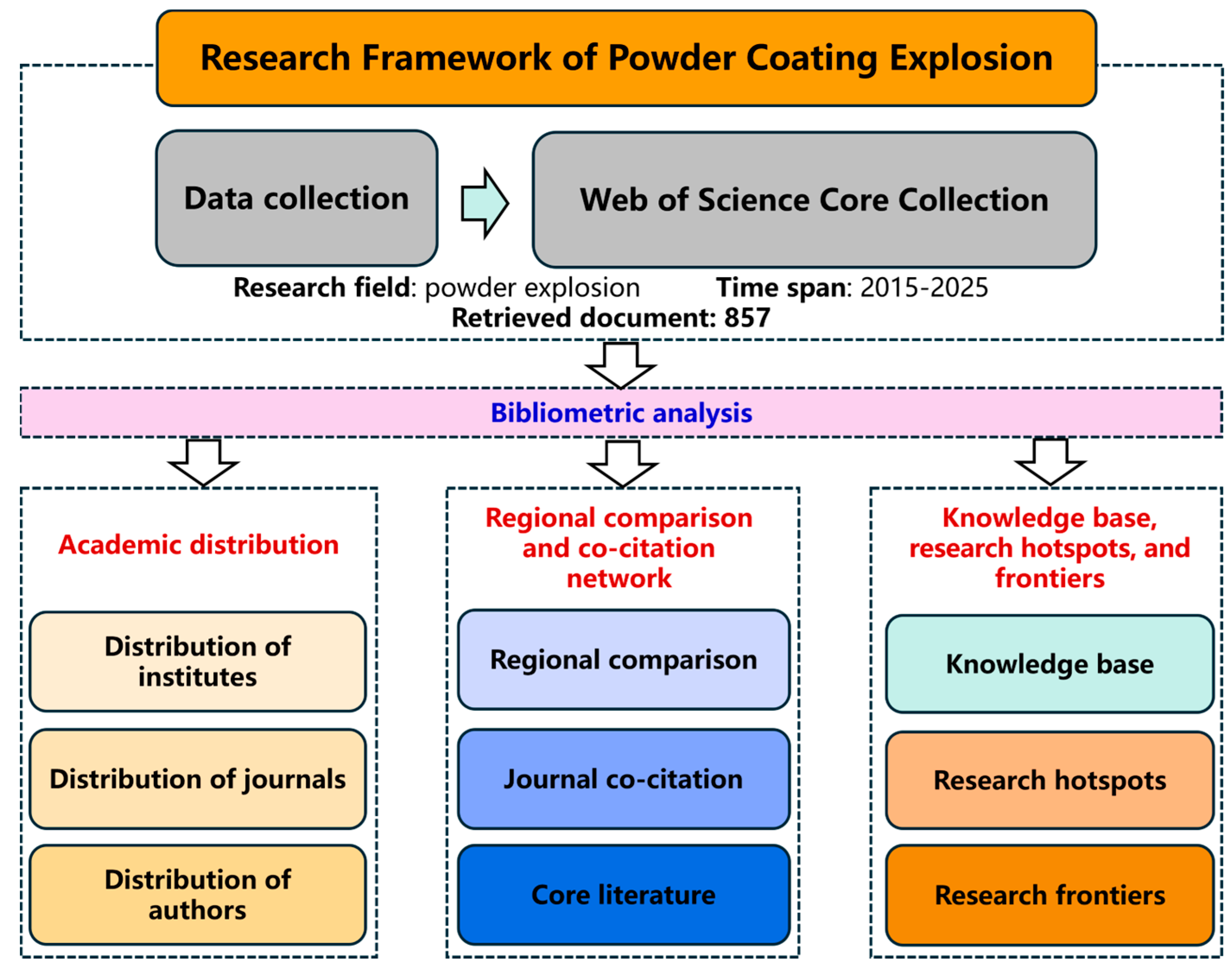
Bibliometrics constitutes a literature analysis technique grounded in statistical methodologies, employing quantitative assessment of scholarly publications to uncover intrinsic patterns in disciplinary development. Originating from library and information science, this approach is now extensively applied to identify disciplinary frontiers, analyze academic influence, and explore the developmental trajectories of research fields. Within this study, bibliometric software tools were employed to analyze research trends within the powder coating explosion domain. To process the extensive literature dataset and achieve visualized analysis, VOSviewer (Version 1.6.20) and CiteSpace (Version 6.4) were selected as the core analytical tools. These specialized software packages possess distinct advantages in bibliometric data processing: VOSviewer (Version 1.6.20) efficiently handles large-scale literature datasets, mapping collaboration networks among institutions, journals, and authors to clearly illustrate the structure of the field’s academic community; CiteSpace (Version 6.4) excels at revealing the evolutionary trajectories and developmental dynamics of research themes through time-series bibliometric analysis. Specifically, this study employed VOSviewer (Version 1.6.20) to conduct co-citation analysis, identifying core knowledge sources and comparing major research directions among Asia, Europe, and North America. Concurrently, CiteSpace (Version 6.4) was utilized for highly cited literature analysis, thereby revealing the knowledge foundation of powder coating explosions. Through methods such as keyword clustering, timeline visualization, and burst detection, the evolution of research hotspots was traced, and emerging research frontier were identified. The synergistic application of these two tools provides robust methodological support for grasping the developmental trajectory of powder coating explosion research. The overall research framework and analytical process are illustrated in Figure 1.

3. Results and Discussion

Through bibliometric analysis, this study reveals a multidimensional knowledge system within powder coating explosion research, centered on materials science and characterized by multidisciplinary integration. The following sections elucidate the research landscape by first examining the macro-level distribution of research capacity, followed by micro-level knowledge structures and emerging research frontiers.

3.1. Academic Distribution in Powder Coating Explosions Research

3.1.1. Distribution of Institutes

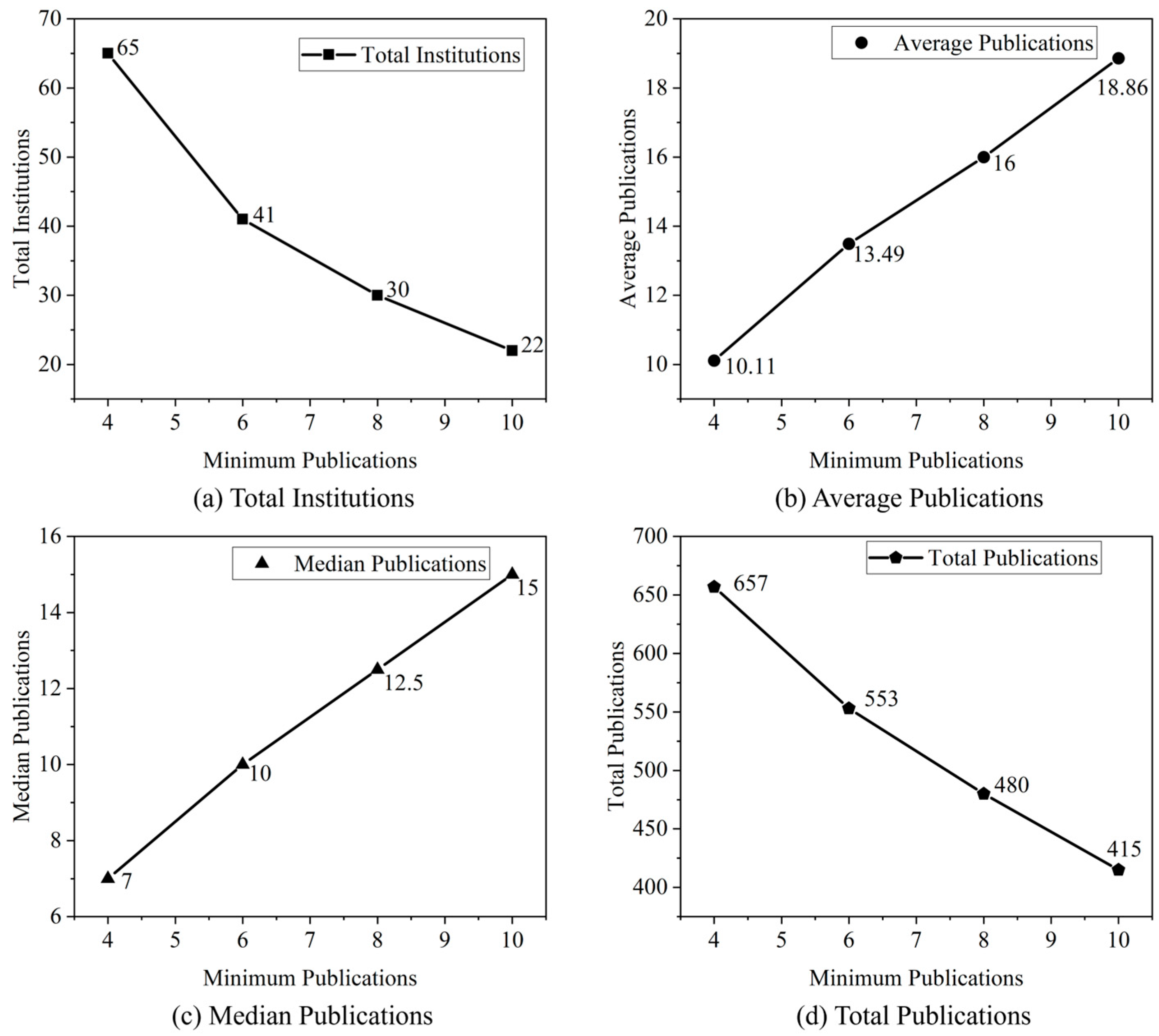
To investigate the distribution characteristics of institutional research contributions and their impact on collaborative networks, this study employed threshold analysis method. Systematic evaluations were conducted by setting different minimum publication thresholds (≥4, ≥6, ≥8, and ≥10 publications). Under varying threshold conditions, several key indicators were collected and analyzed, including total number of institutions, average publications per institution, median publications, and total publications. This aims to determine the optimal analytical threshold by identifying patterns in data variation.
As demonstrated by the data analysis in Figure 2, with the increase in threshold standards, the total number of institutions exhibits a decreasing trend, while the average publications per institution and the median number of publications show significant increase. This pattern holds important implications: higher thresholds effectively identify core institutions with sustained and stable research output, which typically possess more mature research systems and stronger academic influence. However, excessively high thresholds may exclude emerging institutions that have limited publication output but strong innovative potential. Through the evaluation of institutional numbers and output concentration across varying thresholds, this study sets the core institution inclusion threshold at six publications, aiming to achieve a balance between analytical coverage and research focus.
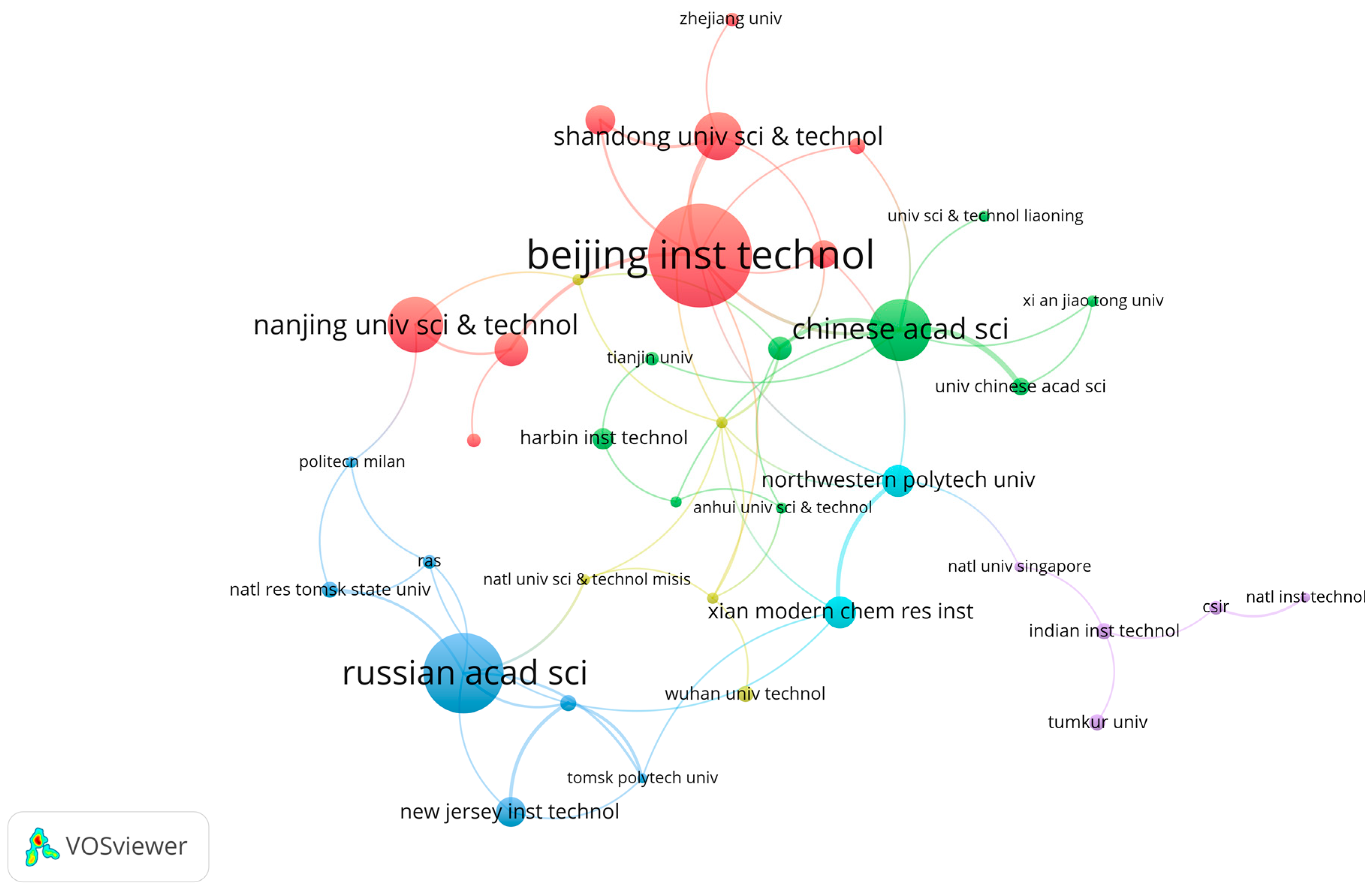
Based on Dataset III, VOSviewer software (Version 1.6.20) was employed to conduct a collaboration network analysis of research institutions with at least six publications. As depicted in Figure 3, this network comprises 55 institutional nodes forming eight distinct clusters. Within the visualized network, node size correlates positively with an institution’s publication output, while inter-node connections represent collaboration intensity, with denser connections indicating closer research collaboration between institutions. Color coding distinguishes different clusters, with institutions within the same cluster exhibiting stronger collaborative ties, thereby revealing distinct academic community structures. This analytical approach identified the top ten most influential research institutions based on the H-index in the field (see Table 3), revealing the core research forces and collaborative patterns within powder coating explosion research.
Based on H-index (this metric comprehensively assesses both the quantity and quality of academic output, effectively reflecting the overall influence of research entities) evaluation results, this study analyzed the principal research institutions within the powder coating explosion field. As shown in Table 3, the top ten institutions exhibit a pronounced geographical concentration: five are based in China, three in Russia, and two in India. Notably, the Beijing Institute of Technology, the Russian Academy of Sciences, and the Chinese Academy of Sciences rank among the top three in both publication volume and H-index. These data unequivocally demonstrate these three institutions’ exceptional academic productivity and extensive influence within the field, underscoring their leading position and significant scholarly contributions to powder coating explosion research.

3.1.2. Distribution of Journals

To analyze the disciplinary distribution characteristics of powder coating explosion research, the top 16 relevant disciplines ranked by publication volume (Table 4) were examined. The data indicate that the top five disciplines are materials science (27.42%), engineering (chemical) (21.12%), chemistry (physical) (15.05%), physics (applied) (13.89%), and materials science (coatings and films) (10.74%). Collectively accounting for 88.22%, these disciplines form the core disciplines of this field. Notably, materials science features in the top five via two distinct sub-disciplines, underscoring the central role of material-related research in powder coating explosion studies. Concurrently, the significant contributions from chemical engineering and applied physics reveal the dual nature of powder coating explosion research, encompassing both chemical process safety and the investigation of physical mechanisms. This multidisciplinary framework reflects both the research scope of powder coating explosions—spanning from microscopic material properties to macroscopic engineering applications—and the broad applicability of relevant explosion scenarios, extending from laboratory studies to industrial storage and production practices.
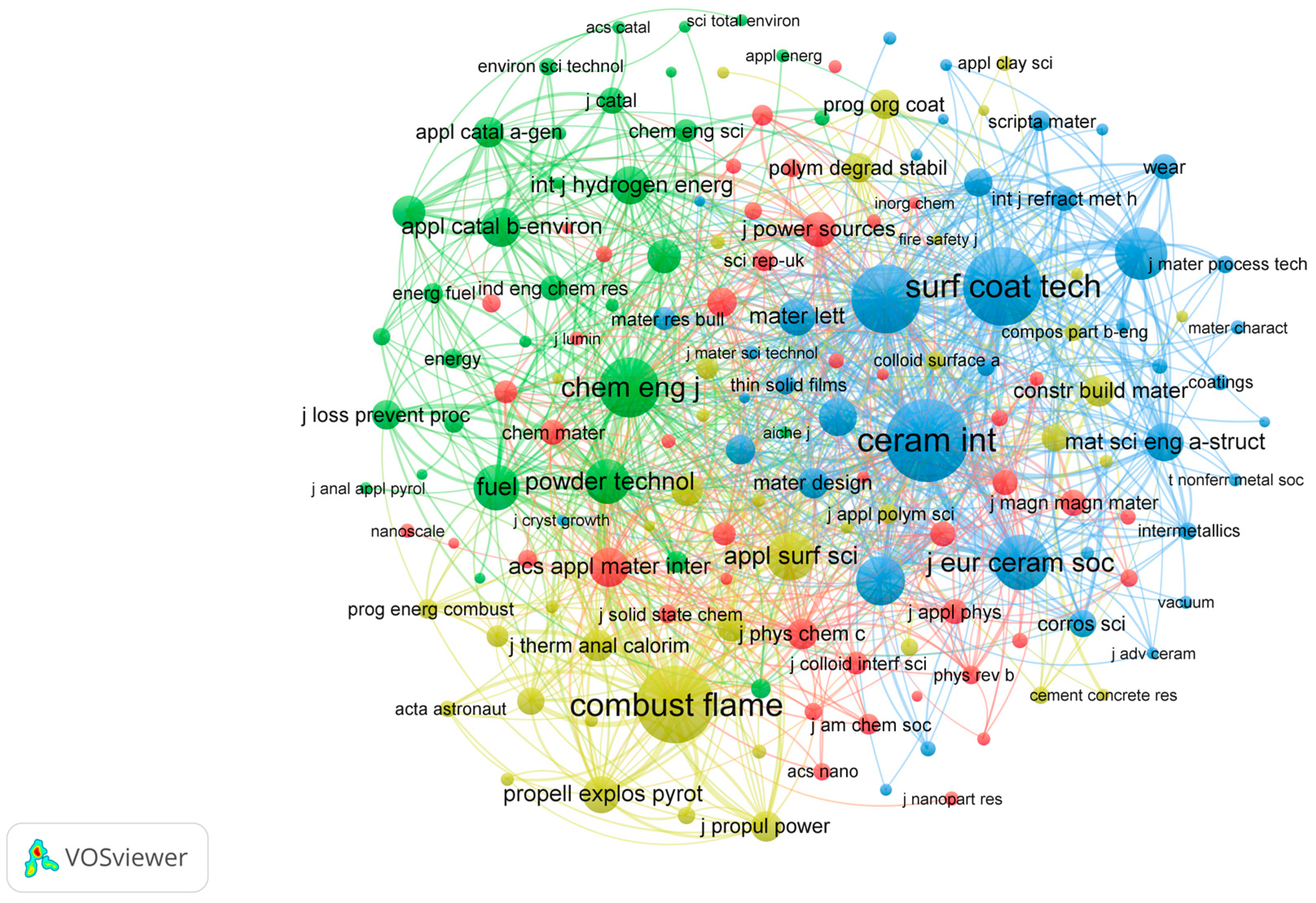
Building upon the disciplinary distribution analysis, the journal distribution characteristics of the field were further examined within the field of powder coating explosion research. Using VOSviewer software (Version 1.6.20) to conduct a systematic analysis of journals publishing at least five relevant papers, a total of 43 core journals were identified. These journals were naturally grouped into six distinct clusters. Figure 4 illustrates the distribution of the top ten journals by publication volume. Visual network analysis reveals that the three largest clusters (denoted in red, green, and blue, respectively) primarily encompass the following research domains: materials science and engineering, chemical engineering, and energy and fuels. Notably, the journal group within the yellow cluster exhibits a close association with research on the characteristics of dust. This finding further corroborates the foundational role of materials science in powder coating explosion studies. This clear journal clustering structure not only reveals the knowledge dissemination pathways within powder coating explosion research but also provides crucial insights into the structural characteristics of knowledge within this field.
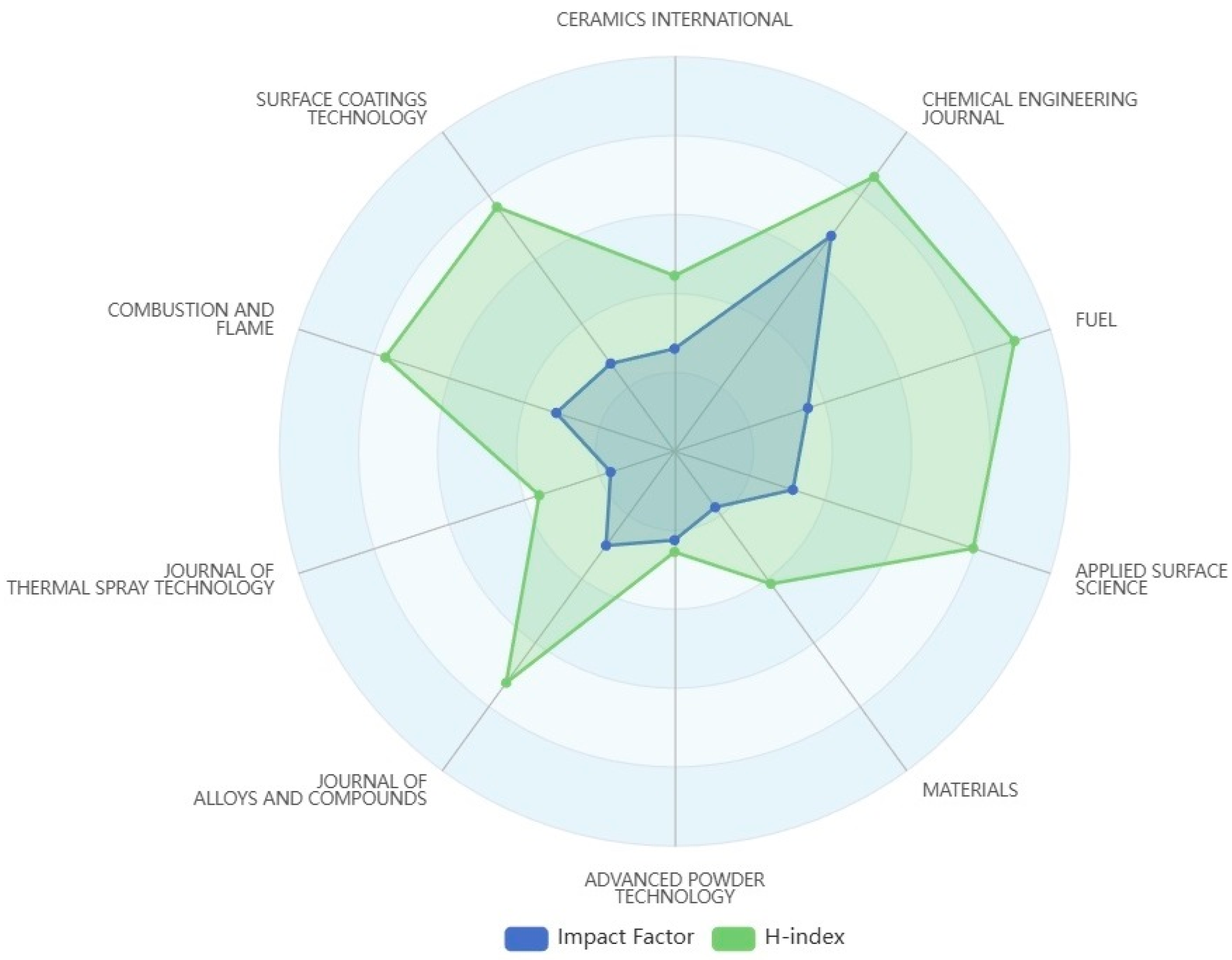
An analysis of the top ten journals listed in Table 5 reveals that Ceramics International, Surface Coatings Technology, and Combustion and Flame demonstrate outstanding performance in both key metrics: publication volume and the H-index. Cluster analysis indicates that these three journals form a stable core group within the knowledge network, suggesting a high degree of thematic similarity in their research focus. Notably, the radar chart in Figure 5 suggests that there is no clear correlation between a journal’s impact factor and its H-index. A comprehensive evaluation of bibliometric indicators confirms that powder coating explosion research papers published in Ceramics International, Surface Coatings Technology, and Combustion and Flame not only constitute a substantial volume but also exert high academic influence. These journals thus represent the most significant vehicles for knowledge dissemination and core sources of research output within this field.

3.1.3. Distribution of Authors

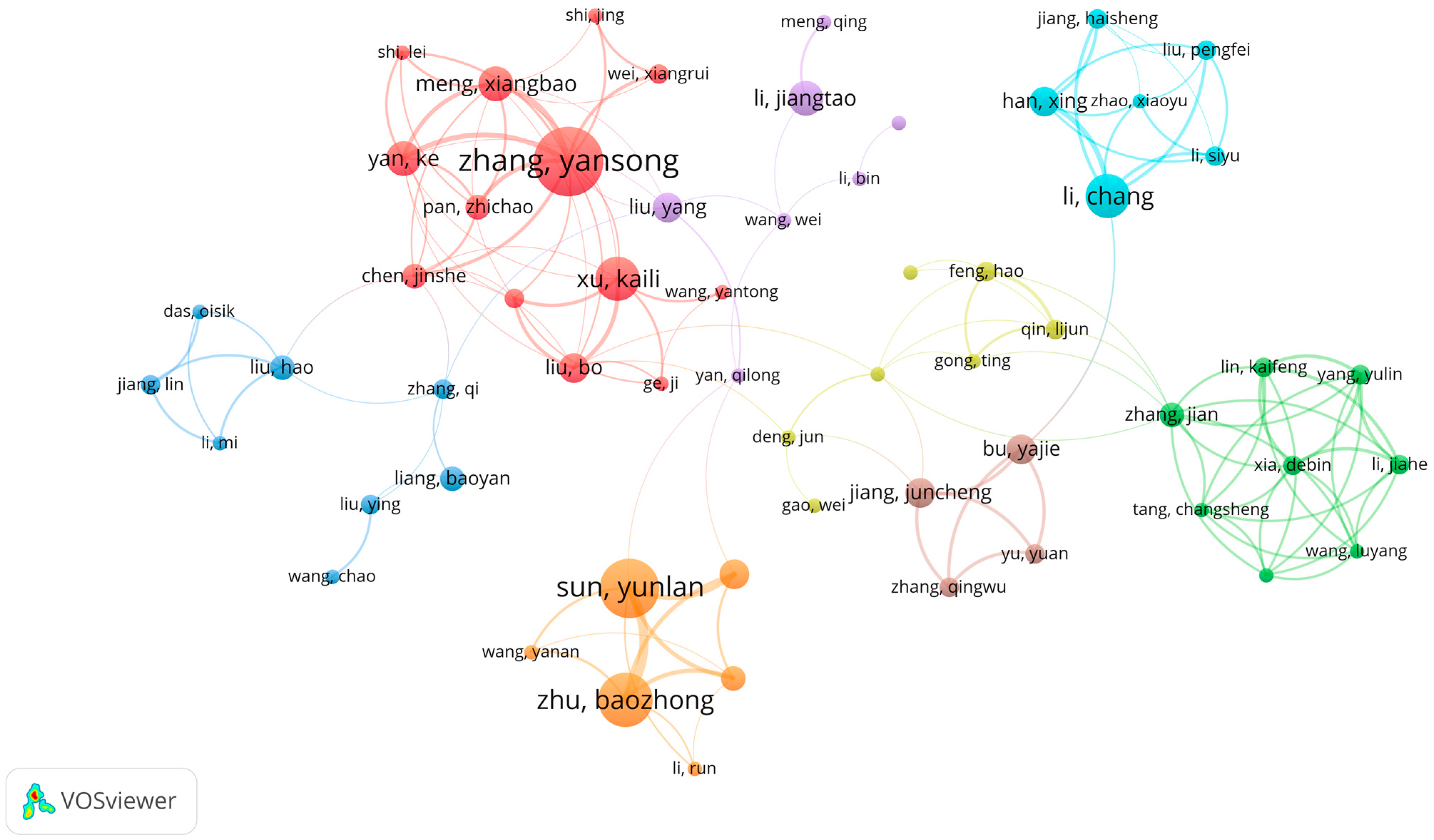
To identify core contributors and collaboration patterns within the field of powder coating explosion research, a collaboration network analysis of authors with at least four publications was conducted, as illustrated in Figure 6. The network comprises 71 researcher nodes, naturally forming 11 collaborative clusters. Within the visualized network, node size correlates positively with an author’s publication output, while edge thickness indicates collaboration intensity. The analysis results reveal that the red, green, and orange clusters stand out prominently within the collaboration network. These clusters not only contain a significant number of highly productive researchers but also exhibit dense inter-node connections. Particularly noteworthy is the red cluster, which has demonstrated remarkable research activity in recent years. It leads in both team size and output efficiency (the total number of citations from this cluster accounts for the highest proportion of all citations among all clusters). The green cluster, though relatively smaller in scale, similarly demonstrates outstanding academic capability and sustained research capacity, highlighting the scholarly impact of its contributions (despite trailing in publication volume, its highly cited papers garner substantial attention). This indicates the formation of stable academic collaboration networks among these core research groups, collectively advancing the frontiers of research in this field.
As shown in Table 6, the three most influential authors in powder coating explosion research—Edward L. Dreizin, Mirko Schoenitz, and Yansong Zhang—have published 15, 15, and 12 papers, respectively. Their work fundamentally reveals the dual dimensions of powder coating explosion research: on the one hand, explosion suppression and engineering safety; on the other hand, explosion mechanisms and materials science. Zhang’s research established an applied paradigm for industrial powder coating explosion prevention. Through a systematic investigation of the suppression mechanisms of NaHCO3, chitin-based composites, and bio-protein modified dust suppressants, he developed practical explosion control techniques [28]. His academic influence, evidenced by over 1900 total citations and an H-index of 26, underscores the significant value of this research direction. Correspondingly, Schoenitz [29,30,31] and Dreizin [29,31,32] have elucidated the physicochemical foundations of powder coating explosions at the material level. Their research centers on the combustion behavior, ignition mechanisms, and reaction kinetics of metals such as aluminum, boron, and zirconium, alongside their nanocomposite energetic materials (e.g., Al-MoO3 and Al-CuO). This work not only establishes a theoretical framework for metal powder coating explosions but also advances innovative applications of these materials in explosion suppression and controlled combustion. The trio has garnered nearly 9000 citations in total with an impressive H-index of 36. Their research trajectory collectively demonstrates the inherent connection between powder coating explosion studies spanning engineering safety and material reaction mechanisms, providing systematic support from theory to practice for the field’s sustained advancement.

3.2. Regional Comparison and Co-Citation Network

3.2.1. Regional Comparison of Research Themes

To elucidate differences in the global knowledge structure of powder coating explosion research, this study extracted the literature data from three major regions—Asia, Europe, and North America—based on Dataset III, employing CiteSpace (Version 6.4) for keyword cluster analysis. The results indicate that regional industrial structures, risk exposure characteristics, and scientific traditions have shaped distinct research priorities and knowledge clusters across these areas. This regionally differentiated research landscape underscores the necessity for comparative analysis across geographical dimensions. Such analysis facilitates a deeper understanding of the regional specificity of powder coating explosion issues and provides a theoretical foundation for developing targeted safety strategies and research collaboration directions.
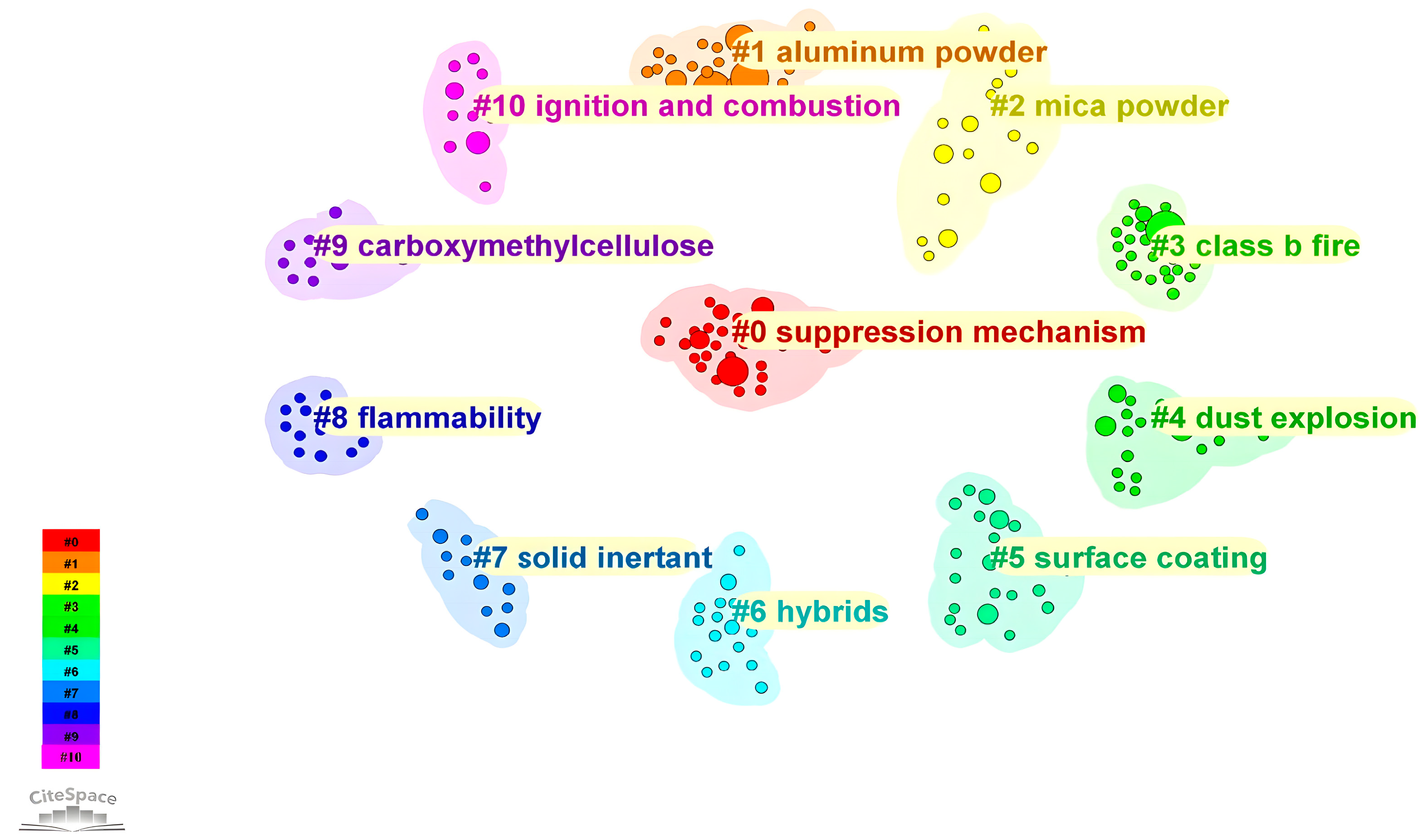
As illustrated in the research landscape shown in Figure 7, Asian research exhibits a pronounced orientation toward industrialization and pragmatism, with its core investigations centering on major industrial safety issues such as “dust explosion” and “suppression mechanism,” directly reflecting the industrial context and practical safety demands of Asia as the global hub for coal extraction and utilization. Concurrently, keywords such as “solid inertant” indicates that regional research, while addressing challenges arising from rapid industrialization, not only focuses on disaster prevention and control but also actively develops functional materials for environmental remediation and solid waste recycling technologies (e.g., “waste magnesium alloys”). Overall, Asian research focuses on solving specific engineering, safety, and environmental problems encountered in large-scale industrial production, with clearly defined application objectives. Research in Asia exhibits an industrialization oriented and pragmatic focus, concentrating on industrial safety issues such as “coal dust explosion.” This focus stems from the region’s industrial background as a global center for coal extraction, particularly driven by China’s rapid industrialization and the presence of numerous research teams dedicated to coal mine safety. Consequently, research in this region tends to emphasize safety solutions and engineering applications that address the challenges of large-scale industrial activities.
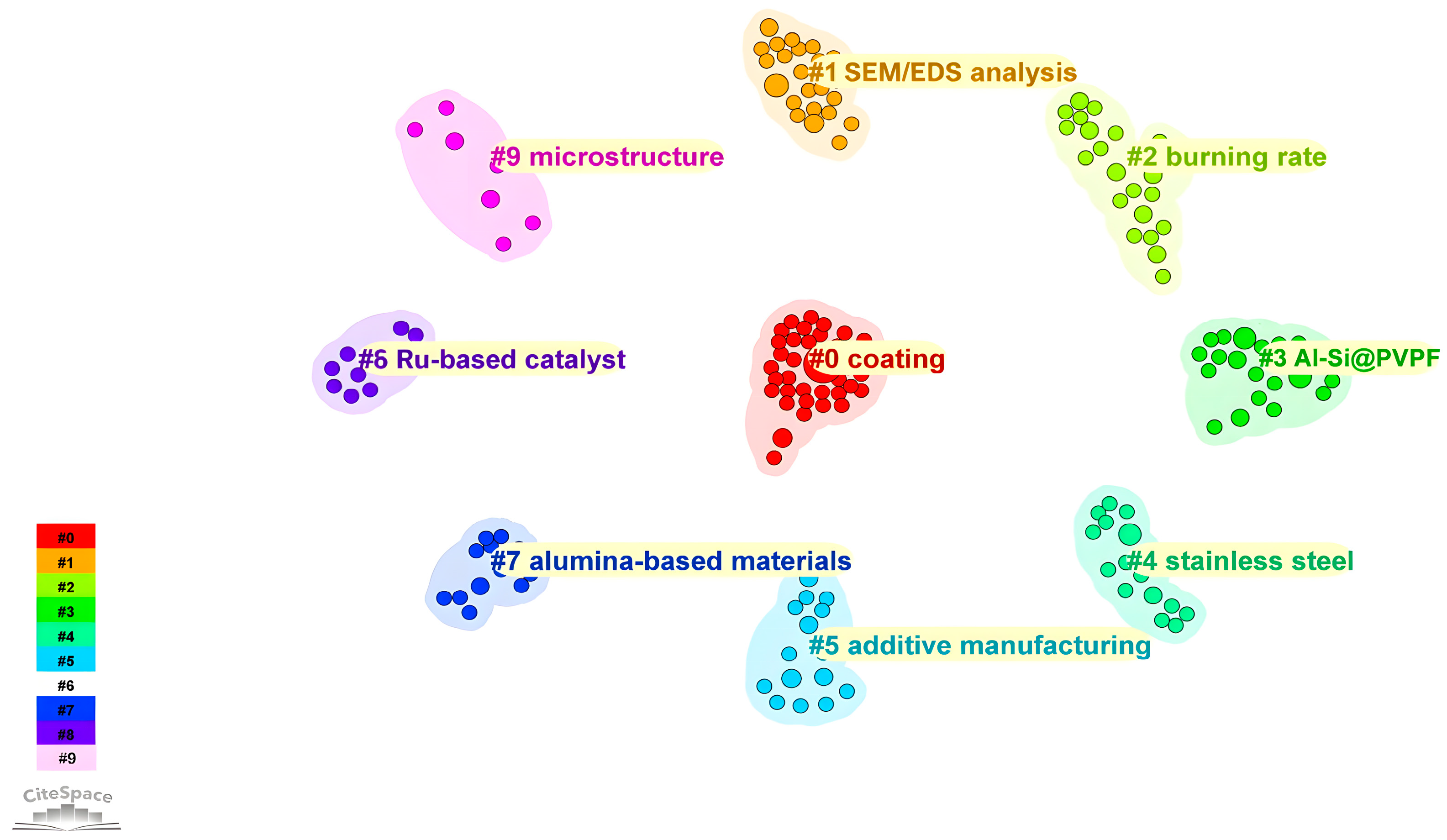
Figure 8’s research focus highlights European scholars’ in-depth efforts in advanced materials science and chemical engineering. Keyword clusters reveal the exploration of material properties and processes, such as “SEM/EDS analysis” and “alumina-based materials”. These research directions concentrate on material microstructure, surface characteristics, and advanced functionality, aiming not at addressing specific disasters but at enhancing fundamental material properties and expanding application boundaries. Keywords such as “Ru-based catalyst”, “Al-Si@PVDF”, and “additive manufacturing” emphasize the application orientation of multi-field coupling under extreme environments, reflecting the cutting-edge development direction where manufacturing empowers materials and materials support applications.
This pattern is strongly influenced by Europe’s long-standing tradition in materials science research and its policy-driven emphasis on sustainable development and green technologies. European research funding frameworks, such as Horizon Europe, actively promote interdisciplinary studies on advanced functional materials and environmentally sustainable processes, which further explains the prominence of materials-related keyword clusters in this region.
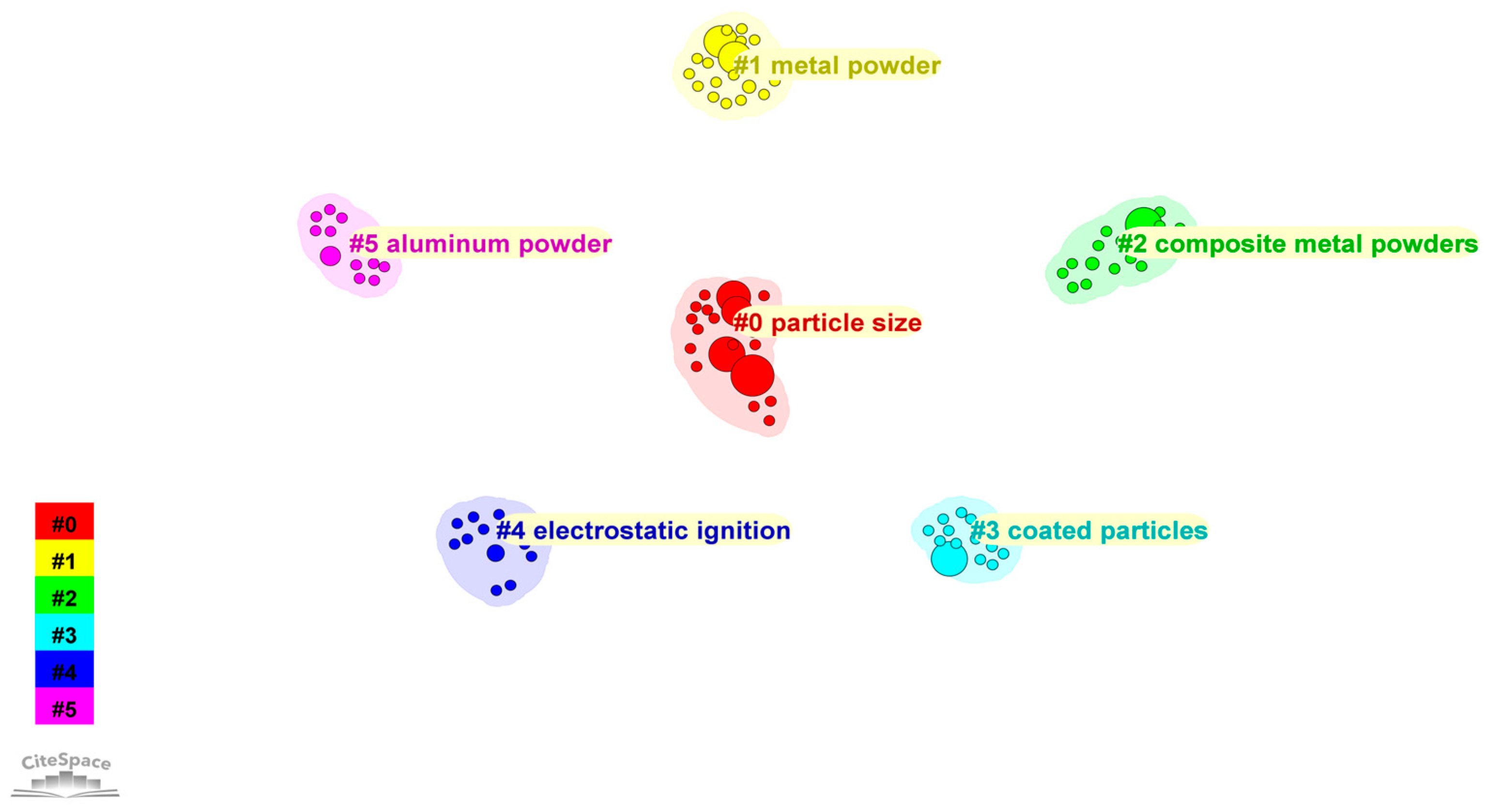
Meanwhile, Figure 9 reveals North American research institutions’ leading position in cutting-edge energetic materials and combustion science. “Particle size”, “metal powder”, and “aluminum powder” collectively reveal how understanding the microscopic physicochemical properties of powders enables the accurate assessment and effective control of explosion risks. “Composite metal powders” and “coated particles” together demonstrate that through the deliberate design of microstructures, proactive control over the combustion and explosion behaviors of powders can be achieved, thereby enhancing safety while maintaining functionality. Research on powder coating explosions is undergoing a profound transformation from testing the inherent properties of materials to the design and precise regulation of material functions. North America, leveraging its substantial long-term investment and technological advantages in combustion science, defense, and aerospace, conducts in-depth research into fundamental combustion mechanisms of powders. This work is centered on themes like “combustion synthesis” and “nanoenergetic materials.” Building upon its robust foundational research capabilities, the region extends these findings to cross disciplinary applications, including energy catalysis.
These regional variations are summarized in Table 7, revealing how explosion research and prevention strategies across different regions profoundly reflect their specific industrial structures and risk profiles. Understanding this regional knowledge structure is essential, as it bridges cognitive gaps inherent in single-region perspectives and provides a foundation for developing highly targeted safety protocols. By synergistically integrating each region’s unique strengths in fundamental mechanisms, advanced materials, and engineering applications, it is expected to promote the establishment of a more comprehensive, universal, and efficient global explosion prevention strategy system.

3.2.2. Journal Citation

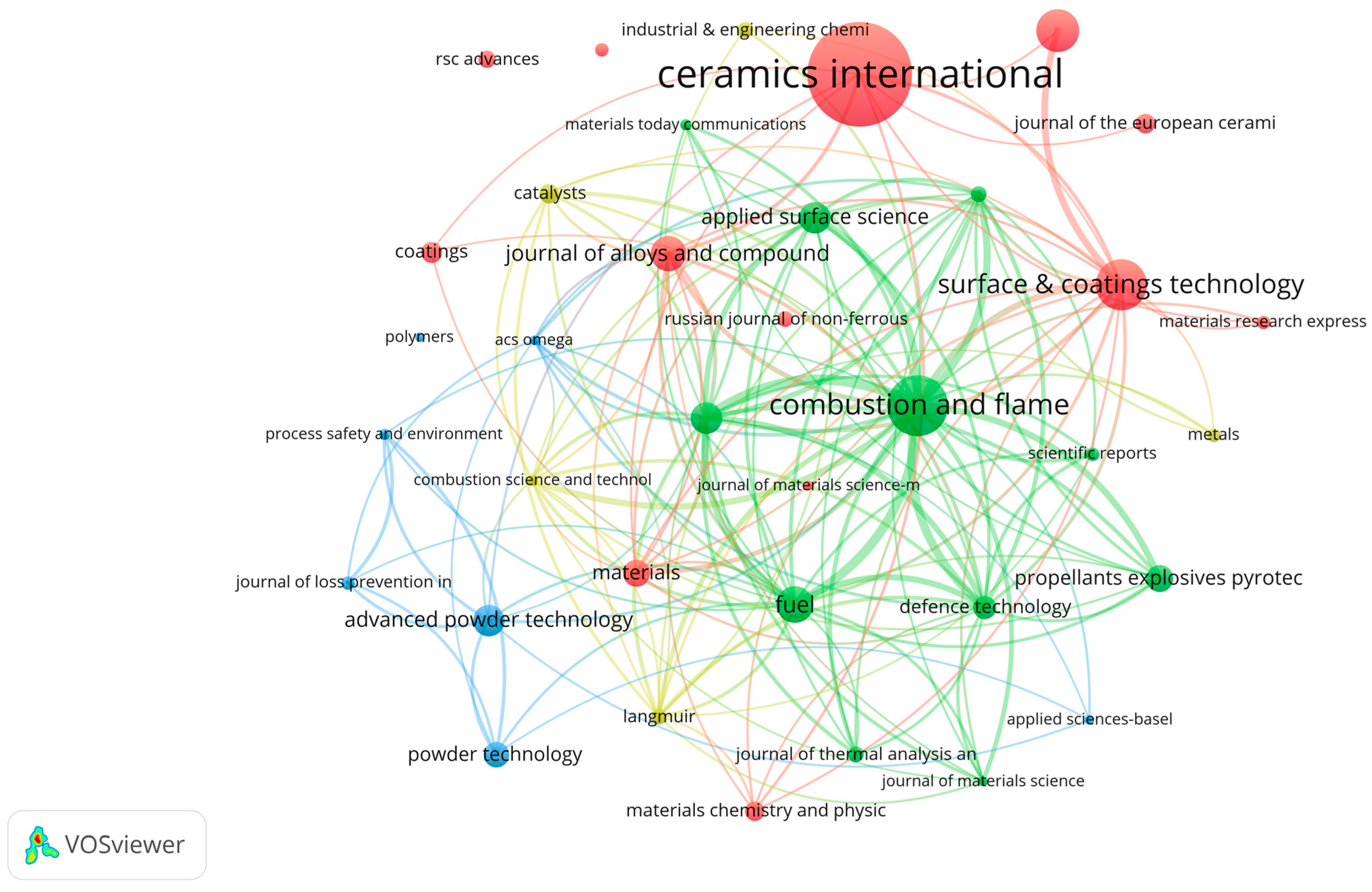
Co-citation analysis of journals serves as a crucial method for identifying disciplinary knowledge structures and inter-journal relationships. Utilizing VOSviewer (Version 1.6.20) to analyze journals with co-citation frequencies of at least 50 yielded a co-citation network comprising 161 nodes, forming four primary clusters (as shown in Figure 10). Within this network, node size represents a journal’s total co-citation count, while the width and length of connecting lines reflect the strength of co-citation relationships. The top 10 ten journals with the most citations are shown in Table 8.
The analysis results reveal that the blue cluster centers on materials science and engineering, with representative journals including Ceramics International (1244 co-citations), Surface Coatings Technology (1131), and Journal of Alloys and Compounds (929 co-citations). This cluster concentrates research strengths in advanced ceramics, coating technologies, and alloy-based materials. The yellow-green transitional cluster integrates combustion science and chemical engineering research, exemplified by Combustion and Flame (1118 citations) and Chemical Engineering Journal (747 citations), focusing on combustion mechanisms and chemical process optimization. The green cluster, centered on Fuel (482 citations) and Powder Technology (468 citations), emphasizes energy and powder technology research. Notably, Applied Surface Science (529 citations), representing surface science within the red cluster, exhibits significant co-citation links with materials and chemical engineering journals, further underscoring the bridging role of surface-interface research across multiple disciplines. The network structure reveals dense connections between the blue cluster (materials science) and the yellow-green clusters (combustion and chemical engineering), reflecting the deep integration of materials design and chemical engineering within energy research. This co-citation network map delineates an applied research framework centered on materials as the foundation, chemical engineering as the methodology, and energy and combustion as the core focus.

3.2.3. Core Literature

Through the analysis of the highly cited literature on powder coating combustion and explosion (Table 9), this study reveals the field’s research framework and trends mainly focused on metal dust combustion, energetic material design, and explosion suppression material. Bibliometric data show that most of high-impact studies involve inter-institutional collaboration, with international partnerships constituting a smaller proportion of these. This demonstrates the pivotal role of cross disciplinary and cross-regional collaboration in driving research progress. A key metric, the Annual Citation Rate (ACY), clearly traces the evolution for research hotspots and the distribution of academic influence, providing quantitative evidence of the field’s development. Several core publications show significant impact. For instance, Wu et al.’s 2023 study in Energy on the suppression of coal dust explosion by silica aerogel has an ACY of 8.40 [33], reflecting strong recent interest in explosion suppression materials and inhibition mechanisms. Nie et al.’s 2020 paper in Combustion and Flame on the combustion of fluoropolymer-coated Al and Al-Mg alloy powders has an ACY of 7.29 [16], indicating the sustained influence of surface coating modification on the combustion behavior of metal powders. Tang et al.’s 2020 study in Chemical Engineering Journal on the controlled reactivity of metastable n-Al@Bi(IO3)3 by employing tea polyphenols as an interfacial layer achieved an ACY of 7.14 [34], highlighting the importance of interfacial engineering and core–shell structural design in regulating the reactivity of energetic particles. These high-ACY studies collectively form the frontier knowledge system base in this field.
From the distribution characteristics of the ACY indicator, high-impact research primarily concentrates on three directions: innovations in material preparation techniques, optimization of material structural design, and development of explosion suppression materials. Qiu et al.’s study on a modified fly ash-based core–shell inhibitor [35] demonstrates the potential of structural design in suppressing Al-Mg alloy dust explosions; Shi et al.’s work on approximately core–shell structured Al@CuO nanothermite [36] reflects continued interest in improving heat release and combustion characteristics through microstructural design, while studies such as Nie et al.’s research on fluoropolymer-coated metal powders [16,37] and Zhao et al.’s investigation of titanium-enhanced Al/I2O5 mesoparticle composites [38] exemplify the role of surface and interface engineering in controlling ignition and combustion behavior, underscoring materials science’s pivotal role in powder coating explosion research. These distinct technical pathways collectively advance explosion protection technologies for powder coatings. Notably, the published literature exhibits marked variations in ACY metrics across different eras. In general, earlier studies tend to show relatively lower ACY values, whereas recent studies on emerging energetic materials and explosion suppression systems have attracted attention more rapidly. For instance, DeLuca’s 2018 review on Al-based nanoenergetic ingredients for solid rocket propulsion [39] (ACY = 1.13) continues to provide important background knowledge and theoretical support despite its earlier publication, while more recent work such as Wu et al.’s 2023 study on silica aerogel-based explosion suppression materials [33] (ACY = 8.40) demonstrates the developmental potential of emerging research directions. This temporal distribution pattern not only reflects shifts in research focus but also reveals the evolutionary trajectory of combustion- and explosion-related material technology innovation. Overall, these core studies indicate that research on coating powder dust explosion is gradually shifting from basic combustion characterization toward the integrated development of reactivity regulation, structural design, and explosion suppression, thereby providing important theoretical support and practical guidance for the prevention and control of coating powder explosion hazards.
Table 9. Top 10 core literature cited frequency in powder coating explosion research.
No.TitleJournalAuthorYearINCNACY
1Preparation of modified fly ash-based, core-shell inhibitor and its effect on suppression of Al-Mg alloy dust explosionChemical Engineering JournalQiu, DY [35]2023412.25
2Combustion of fluoropolymer coated Al and Al-Mg alloy powdersCombustion and FlameNie, H [16]2020117.29
3Viewing internal bubbling and microexplosions in combusting metal particles via X-ray phase contrast imagingCombustion and FlameWainwright, E., Lakshman, [40]2019214.33
4Alcohol-thermal synthesis of approximately core-shell structured Al@CuO nanothermite with improved heat-release and combustion characteristicsChemical Engineering JournalShi, K., Guo, X [36]2021116.67
5Controlled reactivity of metastable n-Al@Bi(IO3)3 by employment of tea polyphenols as an interfacial layerChemical Engineering JournalTang, D., Chen, S [34]2020327.14
6Titanium enhanced ignition and combustion of Al/I2O5 mesoparticle compositesCombustion and FlameZhao, W., Wang, X [38]2020221.75
7Combustion characteristics of fluoropolymer coated boron powdersCombustion Science and TechnologyNie, H [37]2022111.60
8Overview of Al-based nanoenergetic ingredients for solid rocket propulsionProgress in Energy and Combustion ScienceDeLuca, L. [39]2018221.13
9Experimental study on the suppression of coal dust explosion by silica aerogelEnergyWu, Y [33]2023218.40
10Experimental study on explosion characteristics of epoxy electrostatic coating powder mixed with CaCO3Powder TechnologyZou, X [41]2024111.00
Note: IN—institute number, CN—country number, and ACY—average citations per year.

3.3. Knowledge Base, Research Hotspots, and Frontiers

3.3.1. Knowledge Base

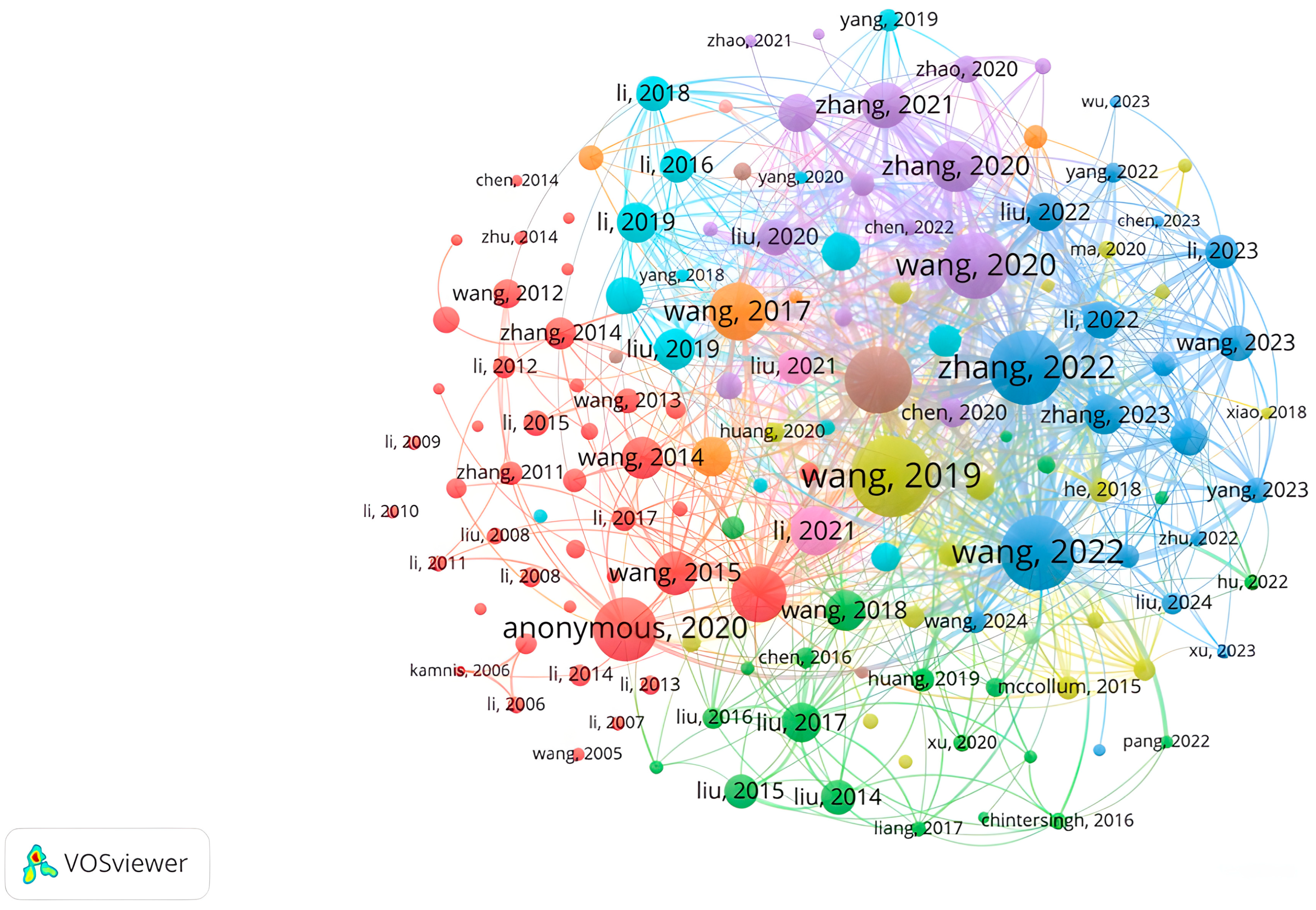
Co-citation relationships among references reflect the knowledge base and structural framework of a research field. Researchers studying powder coating explosions can reference or consult the highly relevant literature based on this knowledge foundation. Analyzing the literature data in Dataset III using VOSviewer (Version 1.6.20) yielded seven clusters, as illustrated in Figure 11: Cluster 1 (cyan): self-propagating high-temperature synthesis technology and material preparation; Cluster 2 (red): modification and combustion characteristics of boron-based fuels; Cluster 3 (yellow): ignition and combustion enhancement of highly reactive metal fuels [38,42,43,44]; Cluster 4 (green): fluoropolymer coatings and surface activation of aluminum powder [24,45,46]; Cluster 5 (purple): suppression techniques and inhibitor development for powder coating explosions [28,33,47,48]; Cluster 6 (orange): surface engineering and combustion safety regulation of zirconium powder [49,50,51,52]; and Cluster 7 (blue): interface modification of aluminum fuel in solid propellants [17,53,54,55]. Nodes within the same cluster represent publications sharing similar thematic content. Following the analysis of each cluster’s content, these clusters may be broadly categorized into three principal thematic groups: combustion characteristics of materials, surface modification techniques for powders, and explosion suppression and protection.
(1) Combustion characteristics of materials: This group encompasses Cluster 2 (red), modification and combustion characteristics of boron-based fuels [18,37,56,57], and Cluster 3 (yellow), ignition and combustion enhancement of highly reactive metal fuels [38,42,43,44]. These two clusters primarily investigate the intrinsic combustion behaviors of high-energy powders such as boron, titanium, and aluminum–lithium alloys without complex surface engineering treatments. That is, they examine the inherent properties of these materials: At what temperature do they ignite? What ignition energy is required? How rapidly do they burn? Such research reveals the chemical characteristics inherent to the materials themselves, contributing to our assessment of their explosive hazards.
(2) Surface modification techniques for powders: This shifts from pure materials research toward “engineered materials”, primarily encompassing the following clusters: Cluster 1 (cyan): self-propagating high-temperature synthesis technology and materials preparation [58,59,60]; Cluster 4 (green): fluoropolymer coating and surface activation of aluminum powder [24,45,46]; Cluster 6 (orange): surface engineering and combustion safety regulation of zirconium powder [49,50,51,52]; and Cluster 7: interface modification of aluminum fuel in solid propellants [17,53,54,55]. The common thread linking these four clusters is their focus on coating and surface engineering approaches. Research regulates powder reactivity by encapsulating metal powders with layers of polymers (e.g., Cluster 4), oxides (e.g., Cluster 6), or other metals (e.g., Cluster 7). Such operations may either lead to dust reaction passivation or more vigorous reactions, directly reflecting the complex behavior of modern powder coatings (resin-coated pigments/metal powders) within electrostatic fields [49,50,51,52].
(3) Explosion suppression and protection: This represents the ultimate research focus at this level, addressing the aforementioned risks through engineered solutions. This domain encompasses Cluster 5 (purple): powder coating explosion suppression technologies and inhibitor development [28,33,47,48]. Research within this cluster focuses on “negative feedback” (i.e., halting the reaction process). Rather than investigating how to intensify powder combustion, it explores materials such as aerogels [33] and sodium bicarbonate [28] to interrupt the explosion chain. The research scope extends beyond evaluating combustion intensity to concentrate on efficiently “extinguishing” the explosion flame: aerogels [33] achieve physical heat absorption and cooling through their ultra-high specific surface area; sodium bicarbonate [28] enhances its thermal decomposition heat absorption and chemical suppression capabilities through ultrafine particle processing. These technologies collectively form the core theoretical foundation of active explosion prevention systems used in electrostatic spraying workshops.

3.3.2. Research Hotspots

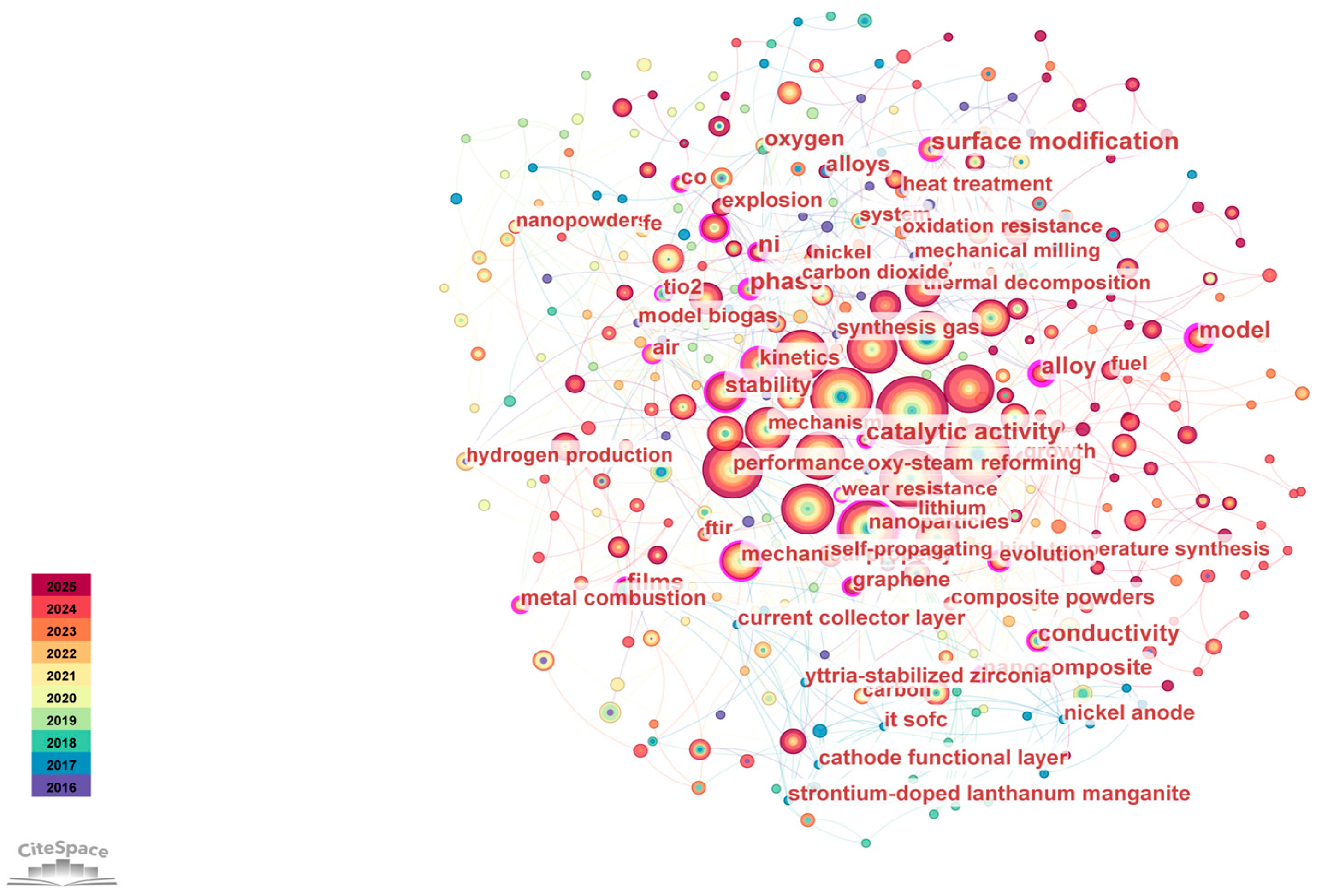
To identify recent research hotspots and evolving trends in the fields of powder coating explosion research, we employed CiteSpace (Version 6.4) to conduct a co-occurrence analysis of keywords within the relevant literature published over the past decade. Keywords provide a concise summary of an article’s core content. Analyzing the co-occurrence network of these terms effectively reveals the knowledge structure and frontier directions within the field. After importing the literature data into CiteSpace (Version 6.4), the generated keyword co-occurrence network is shown in Figure 12 and Figure 13. This network comprises multiple nodes and connections, exhibiting a pronounced community clustering structure.
Within the generated co-occurrence network, node size represents keyword frequency, while node color intensity indicates the average year of occurrence (darker shades denote more recent publications). The width of the purple annulus surrounding each node reflects its betweenness centrality. Keywords with high betweenness centrality serve as pivotal “bridges” within the knowledge network, acting as effective indicators for identifying potential research hotspots. Combined with the keyword statistics in Table 10, the analysis reveals that keywords such as “combustion” (frequency 146), “powder” (134), “coatings” (117), “nanoparticles” (92), and “microstructure” (85) not only exhibit high occurrence frequencies but also demonstrate elevated betweenness centrality. This indicates that these themes constitute the core knowledge foundation of the field. Notably, “ignition” (63 occurrences), a relatively late-emerging (2017) yet frequently occurring keyword, alongside mechanism-oriented terms like “aluminum” (58),”mechanism” (55), “thermal decomposition” (55), “kinetics” (32), “dust explosion” (27), “reactivity” (25), “surface” (18), and “particle size” (18), suggests a shift in research focus from macro-level performance characterization toward deeper exploration of ignition response, oxidation behavior, reaction mechanism, and the effects of particle structure and surface properties on explosion hazards.
Cluster quality was assessed using the modularity coefficient (Q-value) and the average silhouette coefficient (S-value). The Q-value for this network was 0.7594, significantly exceeding the threshold of 0.3, indicating a robust clustering structure. The S-value was 0.8984, substantially surpassing the critical value of 0.7, demonstrating high internal consistency and clear structural definition within the clusters. Based on this, we identified 11 clusters with distinct themes: #0 composite coatings, #1 material degradation mechanisms, #2 thin-film preparation techniques, #3 synthesis gas production, #4 fire resistance properties, #5 energy release behavior, #6 biomedical applications, #7 ultrafine aluminum particles, #8 green recycling methods, #9 explosion characteristics, and #10 solid oxide fuel cells.
Based on keyword frequency, centrality, and intrinsic connections between clusters, current research hotspots can be consolidated into five primary directions: combustion and ignition characteristics of powder coatings, effects of particle microstructure and surface properties, reaction mechanism and kinetic behavior, explosion suppression and safety control, and application-oriented explosion protection in emerging industries. These directions are mainly associated with clusters related to composite coatings, material degradation mechanisms, fire resistance properties, energy release behavior, ultrafine aluminum particles, explosion characteristics, green recycling methods, biomedical applications, and solid oxide fuel cells. This framework outlines a coherent innovation chain spanning from fundamental research to engineering applications: elucidating the core processes of powder ignition, oxidation, combustion propagation, thermal decomposition, and dust explosion development; designing and synthesizing novel suppressants and protective coatings; and developing precise risk assessment models and dynamic mitigation strategies. The high frequency of keywords such as “nanoparticles,” “microstructure,” “surface,” “aluminum,” and “particle size” further indicates that increasing attention is being paid to the influence of microscopic particle characteristics on macroscopic combustion and explosion behavior. This integrated knowledge structure reflects a deep synergy between theory and practice, highlighting the field’s evolution toward precision, intelligence, and proactive safety. It also underscores the essential role of multidisciplinary approaches in tackling complex industrial safety challenges. The contents of the five primary directions are as follows:
(1) Combustion and ignition characteristics of powder coatings: In recent years, the application of advanced characterization techniques has provided new perspectives for understanding micro-scale explosion processes [16,17]. For instance, in the characterization of microscopic mechanisms, Wainwright et al. [40] introduced X-ray phase-contrast imaging technology, enabling in situ observation of the morphological evolution within combusting metal particles. Choi et al. [9] specifically studied the ignition characteristics of pure aluminum powder under electrostatic discharge. By measuring the minimum ignition energy (MIE) under different conditions, their research found that reducing oxygen concentration by introducing nitrogen significantly increased the difficulty of ignition, suggesting that controlling environmental parameters can prevent explosions. Furthermore, Zou et al. [41] experimentally tested the explosion parameters of epoxy-based electrostatic coating powder after adding calcium carbonate (as a filler). Their study revealed that both the maximum explosion pressure and the rate of pressure rise decreased significantly with increasing amounts of calcium carbonate additive. These studies show that combustion response, ignition sensitivity, and explosion characteristics remain central concerns in powder coating explosion research.
(2) Explosion suppression and safety control: This field focuses on the development of novel, high-efficiency explosion suppression systems and functional materials, encompassing two main technical pathways: passive protection and active suppression. In terms of material development, efforts proceed in parallel to modify and optimize traditional inert suppressants and to design new composite suppression materials. Regarding the modification of traditional suppressants, Zhang et al. [28] prepared and investigated the suppression mechanism of ultrafine sodium bicarbonate powder, a classic explosion suppressant material. Dai et al. [61] developed a composite inhibitor composed of floating beads and melamine cyanurate. They studied its suppressive effect on coal dust deflagration, confirming that this composite system can effectively interrupt the chain reaction of flame propagation. In the research on the application of novel porous functional materials, Qiu et al. [35] constructed a core–shell structured inhibitor based on modified fly ash, which effectively suppressed the explosion behavior of aluminum–magnesium alloy dust. This exemplifies the green suppression concept of “using waste to control explosions.” Within the pathway of active suppression systems and technologies, Han et al. [62] developed an environmentally friendly gel dry-water extinguishing agent containing additives. It demonstrates high-efficiency combustion suppression performance and is suitable for rapid fire extinguishing in enclosed spaces.
(3) Reaction mechanism and kinetic behavior: This field is dedicated to establishing a systematic risk management framework for powder coating explosions. The research methodology is evolving from traditional qualitative analysis toward quantitative [19,63] and dynamic [8] approaches. In terms of risk assessment methodology, traditional methods such as Fault Tree Analysis (FTA) and Event Tree Analysis (ETA) are being deeply integrated with emerging technologies like machine learning and Bayesian networks. Regarding specific risk assessment methods, the team led by Addai [63] precisely determined the minimum ignition energy of hybrid mixtures of combustible dusts and gases through experiments. Obtaining this key parameter enabled the transition from qualitative judgment to quantitative analysis in assessing this significant industrial risk. The research by Lv et al. [8] further emphasized the importance of dynamic environmental factors in risk assessment. At the level of prevention and control strategies, the high-efficiency KHCO3@HM dry powder fire extinguishing agent developed by Wang et al. [64] is based on a profound understanding of the extinguishing mechanism (rapid heat absorption and free radical quenching). Its design fundamentally enhances fire suppression efficiency by optimizing the material structure.
(4) Effects of particle microstructure and surface properties: This field employs computational fluid dynamics (CFD) methods to gain in-depth insights into the powder coating explosion process. The development of simulation models has progressed from simple empirical formulas towards complex multi-physics coupling approaches [65,66]. In recent years, the coupled application of Large Eddy Simulation (LES) and the Discrete Element Method (DEM) has enabled researchers to accurately reconstruct the entire process from dust dispersion and cloud formation to flame propagation. For instance, Jadidi et al. [65] conducted a three-dimensional numerical simulation of the suspension high-velocity oxy-fuel (HVOF) spraying process. Their work detailed droplet breakup, atomization, and particle acceleration within the flow field, demonstrating the depth of multi-phase flow simulation techniques in addressing complex flow problems. Similarly, the team led by Li [67] performed a full-cycle numerical simulation and experimental study on random multi-particle impact behavior during the high-velocity air-fuel (HVAF) spraying process. Their model can accurately predict particle flight behavior, thermal history, and the resulting coating microstructure. Furthermore, Meng et al. [68] investigated the mechanism and dynamics of inert powders suppressing aluminum dust explosions. Their study provided crucial insights into the micro-scale physicochemical mechanisms of the suppression process, which form the fundamental basis for constructing high-fidelity numerical models.
(5) Application-oriented explosion protection in emerging industries: This research area focuses on the systematic investigation of powder coating explosion risks unique to emerging industries such as additive manufacturing [69], lithium battery recycling [70], and the pharmaceutical industry [19]. The metal powders and organic compounds involved in these sectors possess distinct explosion characteristics. In the field of additive manufacturing, Batistella et al. [69] investigated the combustion behavior of coated polyamide 12 material used in laser sintering technology. Their study revealed the changes in flammability of surface-modified polymer powders during processing, offering a basis for fire safety design in such manufacturing. During material handling associated with lithium battery recycling and manufacturing, the team led by Chen [70] synthesized LiFePO4 cathode material using a thermal explosion method. This research contributes to the understanding of the reaction characteristics and thermal safety of high-energy-density battery materials during synthesis. In the pharmaceutical industry, the research group of Bu [19] specifically explored the dust explosion hazard of pharmaceutical powders in the presence of flow aids. This research underscores the need to evaluate the potential safety risks of processing excipients in drug powders, which is fundamental to developing robust safety protocols for pharmaceutical manufacturing.

3.3.3. Research Frontiers

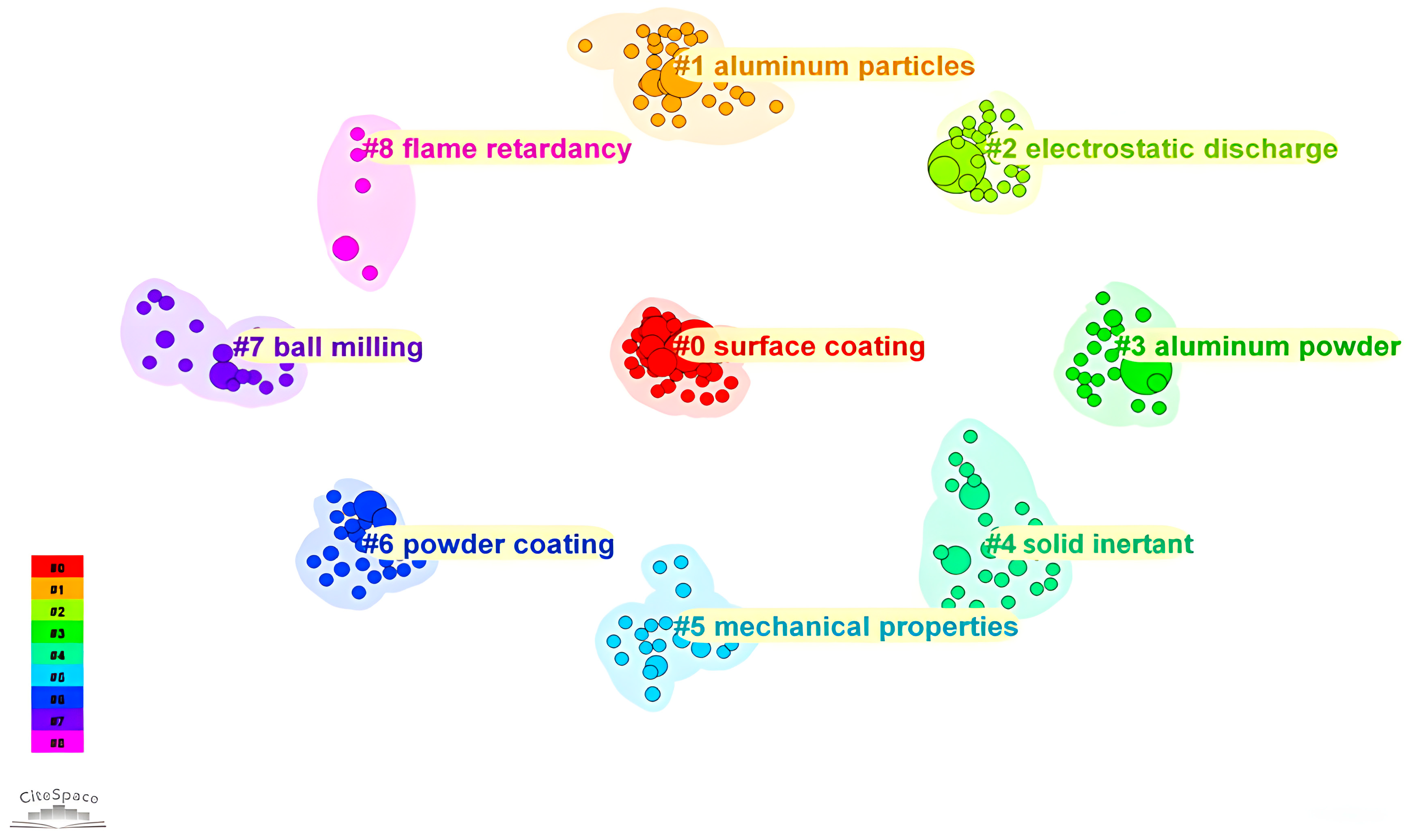
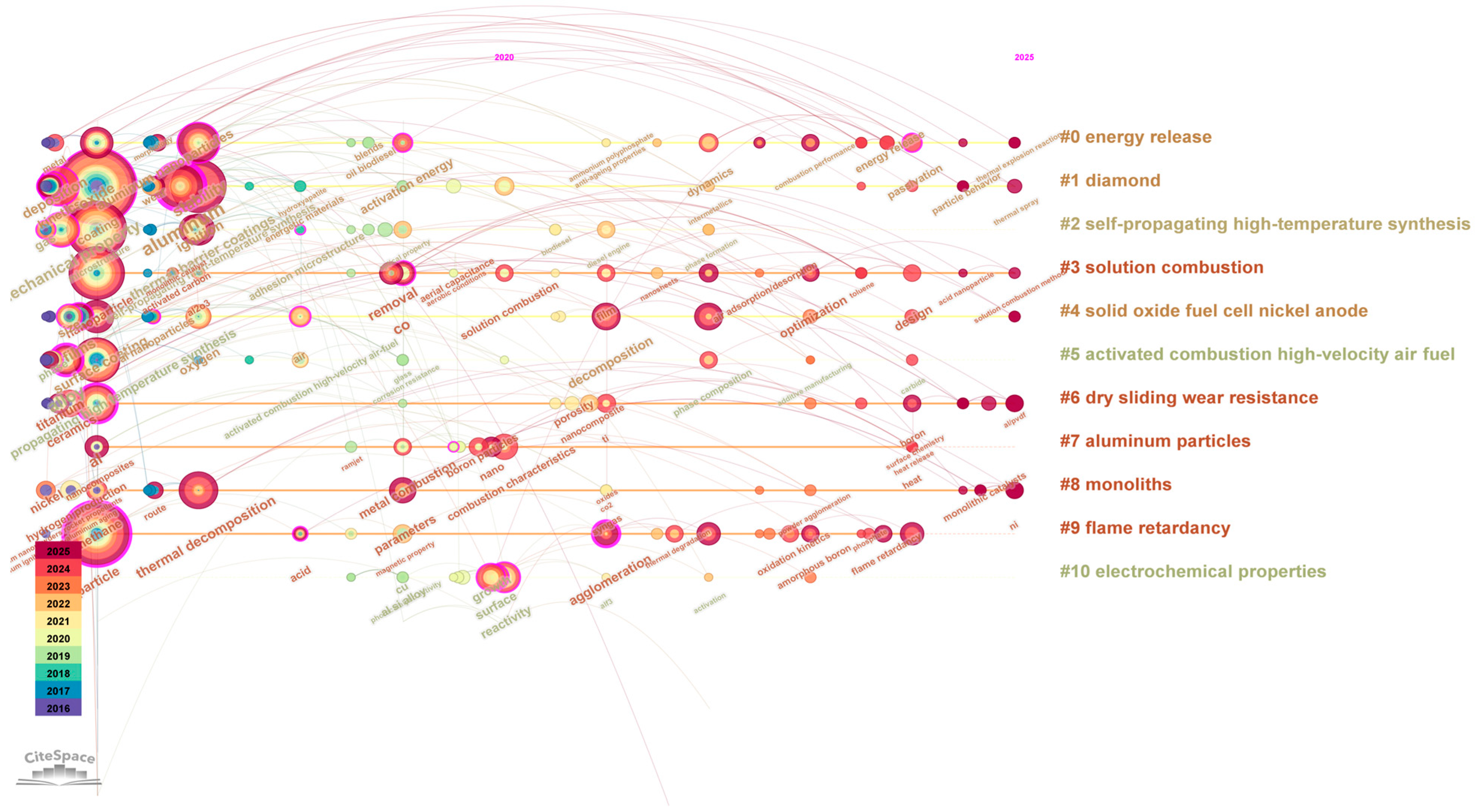
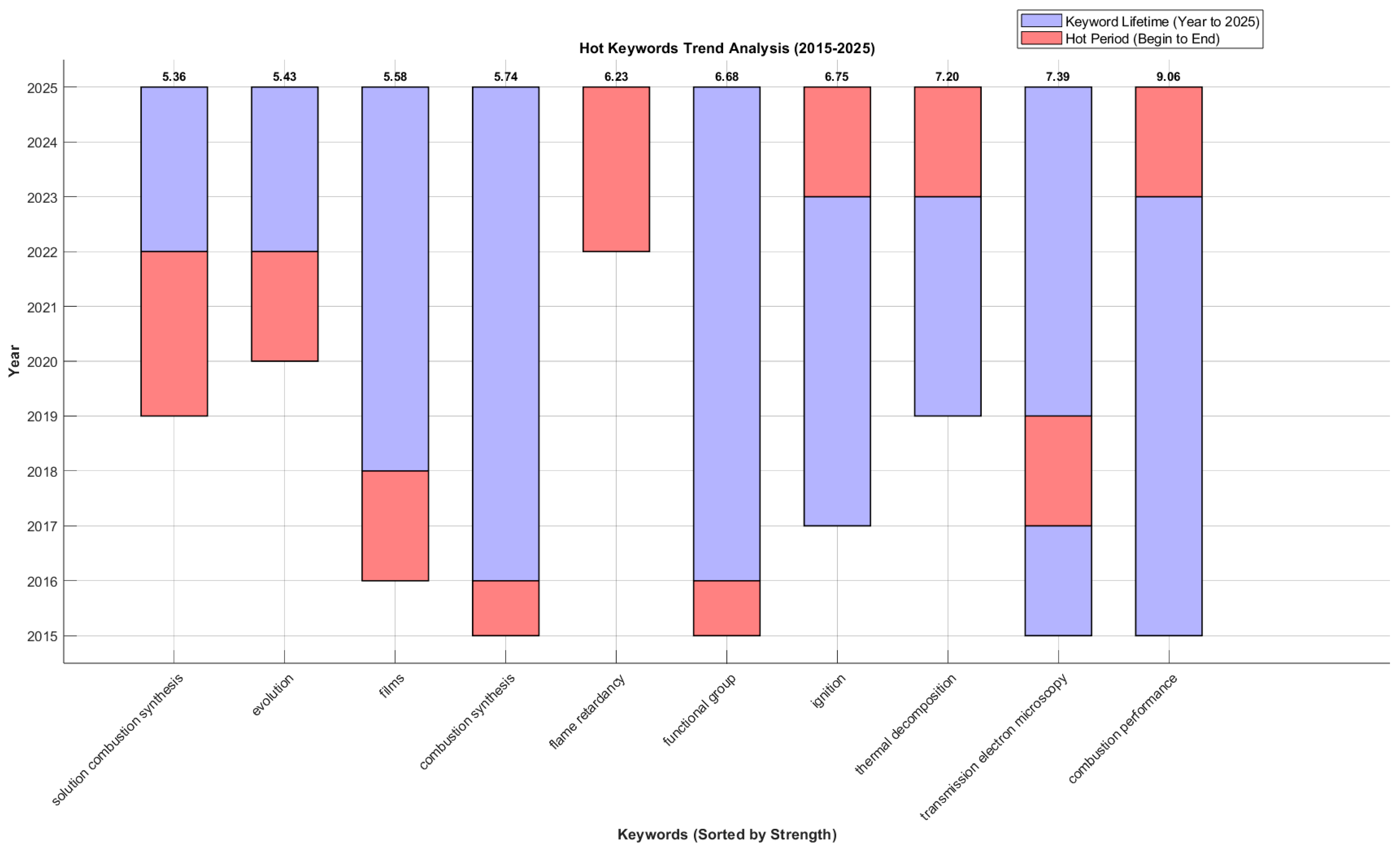
Through burst detection analysis of keywords in the field of powder coating explosion research, key terms that reflect the dynamic evolution of research focus were identified in this domain. Figure 14 shows that the research activity of Cluster #0 (energy release) [71,72], Cluster #3 (solution combustion), Cluster #6 [29,73] (dry sliding wear resistance), and Cluster #7 [19,48] (aluminum particles) remains active through 2025, indicating these directions constitute the mainstream of recent powder coating explosion studies. Utilizing the burst detection function of CiteSpace (Version 6.4), a list of the top 25 keywords was generated based on burst strength, and the 10 most representative keywords were selected for display in Figure 15. Burst keywords are terms whose frequency increases significantly within a specific period; they typically mark emerging research trends or shifts in key areas. This analytical method helps capture the dynamic trajectory of disciplinary development. Before conducting the keyword co-occurrence and burst detection analyses, the extracted keywords were manually cleaned and standardized. Synonymous terms were merged, singular and plural forms were unified, and non-thematic terms (such as organization names or indexing artifacts) were removed to improve the accuracy of the keyword network.
The analysis of burst and high-frequency keywords revealed that certain terms sharing conceptual relevance were present as independent items in the dataset. For example, “surface modification” [20,21] and “core-shell structure” [48,74], while both involving material functionalization design, belong to different semantic categories and application contexts in the research literature. “Surface modification” is a broader concept encompassing various surface engineering techniques, including chemical treatment, plasma modification, and mechanical processing. In contrast, “core–shell structure” specifically refers to a composite material design strategy with a distinct core–shell configuration, which demonstrates unique advantages in suppressant design and energetic material performance control. These two terms correspond to distinct tiers within a technical pathway in materials engineering and were therefore retained as separate keywords in the analysis.
Similarly, “combustion characteristics” [29,48] and “explosion severity” [19,75], while both describing explosion behavior, have distinct research emphases. “Combustion characteristics” primarily focuses on the kinetic properties and reaction mechanisms of the combustion process, including fundamental scientific questions such as ignition delay, burning rate, and reaction pathways. “Explosion severity,” however, emphasizes engineering safety, studying application-oriented issues like explosion intensity, destructive effects, and safety protection. This terminological distinction reflects the natural progression of the powder coating explosion research field from fundamental combustion mechanisms to engineering safety applications, also demonstrating the maturity of the discipline.
To further clarify the conceptual distinction between these two commonly used terms, a brief comparison is provided in Table 11.
Through this meticulous terminological analysis, we can more precisely grasp the developmental trajectory of the powder coating explosion research field: from early studies on basic material properties, to mid-stage surface engineering and structural design, and to current intelligent protection and risk assessment. The research focus exhibits a clear trajectory from fundamental to applied and from singular to systemic. This evolution not only reflects the inherent developmental logic of the discipline but also demonstrates the guiding role of societal needs in scientific research.
In the keyword timeline view analysis presented in Figure 14, each node represents a keyword, and its horizontal position indicates its temporal location on the axis, i.e., the time when the keyword emerged. The color bar at the bottom left of Figure 14 maps the color of each ring in a node to a specific year, and the concentric colored rings within a node represent the temporal span of the keyword’s relevance. Node size is proportional to frequency of occurrence, and the connecting lines between nodes represent co-occurrence strength. In the burst analysis shown in Figure 15, each timeline rectangle represents the active period of a corresponding keyword in the research field. The time coordinate at the bottom of a rectangle marks the first time the term became a focus of attention in the literature. The color coding inside a rectangle reflects the dynamic change in research intensity: the red segment indicates a period of high burst strength, marking it as a significant research direction; the blue segment corresponds to a period of relative dormancy, indicating lower research activity. This temporal visualization method provides an intuitive basis for tracking the evolution of research hotspots. Analyzing the frontiers of powder coating explosion research by combining Figure 14 and Figure 15 yields the following specific descriptions:
The keyword cluster timeline view reveals a clear thematic evolution path in the field, shifting from fundamental material research towards safety applications and hazard characterization. Overall Evolution Trajectory: The research focus shows a distinct evolution from “Fundamental Material Preparation” to “Explosion Characteristics and Safety Applications.” The left side of the timeline (corresponding to earlier years) is predominantly led by clusters such as #0 “energy release” and #1 “diamond,” with their nodes mostly in cool colors. This indicates that the early research stage primarily concentrated on the basic physical morphology of energetic materials, thin-film preparation processes, and fundamental erosion phenomena.
In contrast, the right side of the timeline, extending to the most recent period (2020–2025), shows a significant shift in active research frontiers. The focus has now turned to clusters including # dry sliding wear resistance,” #7 “aluminum particles,” and #5 “monoliths.” These areas are dense with nodes, predominantly in warm colors, signifying that current research priorities have fully shifted towards studying the dynamic behavior of dust as a hazard source.
Identification of Frontier Hotspots: Node Scale and Research Activity: Within the #9 “explosion characteristics” cluster on the right, notably large nodes appear. Given that node size is proportional to keyword frequency, this confirms that “explosion characteristics” is the most frequently discussed core topic in the current literature. Focus on Specific Substances: The #7 “aluminum particles” cluster extends continuously to the end of the timeline. This indicates that “metal dust,” particularly nano/ultrafine aluminum powder, due to its high reactivity and wide industrial application, has become one of the most representative frontier subjects in current research.
Early burst keywords such as “combustion synthesis,” “films,” and “transmission electron microscopy” primarily experienced their burst phases (red segments) between 2015 and 2019. Subsequent nodes transitioned to cool tones and eventually terminated, indicating that research centered on the preparation of thin-film materials via combustion routes and fundamental microstructure characterization has matured. These topics have evolved from exploratory frontiers into established methodologies within the field. Keywords including “solution combustion synthesis” and “evolution” emerged during this transitional period, reflecting a paradigm shift from conventional solid-phase combustion toward more refined liquid-phase synthesis routes. Concurrently, there was a marked increase in focus on the dynamic evolution of reaction processes, laying the methodological foundation for subsequent frontier directions. Keywords with burst periods extending into 2025 form the current core of research. Notably, “combustion performance” leads with the highest burst strength of 9.06, while themes such as “flame retardancy” (6.23), “ignition” (6.75), and “thermal decomposition” (7.20) also maintain high levels of activity. Integrating the CiteSpace (Version 6.4) cluster analysis results, cluster nodes such as “energy release,” “solution combustion,” “flame retardancy,” and “electrochemical properties” still appear in deep purplish-red in 2025. This confirms that combustion performance regulation, flame retardancy mechanisms, thermal decomposition kinetics, and electrochemical properties are current and future research frontiers. This trend illustrates a strategic shift in research focus from fundamental synthesis and characterization toward functional performance and application-oriented directions.
The research content reflected in Figure 14 can be broadly analyzed in three main directions:
(1) Explosion Suppression Materials for Powder Coatings: Clusters #0 (release), #3 (solution combustion), and #7 (aluminum particles) collectively point to the research frontier concerning explosion suppression materials for powder coatings. Compared to traditional passive protection measures, modern explosion suppression technologies place greater emphasis on developing novel composite materials with active suppression functions [47]. Among these, core–shell structured materials demonstrate unique advantages. Their precisely designed interfacial engineering achieves a synergistic effect of physical oxygen isolation and chemical inhibition. For example, Gou et al. [76] developed AP@Co/BIM composites, which effectively improved the thermal performance and moisture resistance of traditional suppressants through a core–shell structure, exemplifying a new paradigm of enhancing material suppression performance via micro–nano-structural design. The team led by Chen [77] constructed a ferrocene-based hyperbranched polymer coating on the surface of ammonium perchlorate. This design not only suppressed oxidizer migration but also significantly enhanced its catalytic decomposition performance, realizing a synergistic suppression mechanism combining physical isolation and chemical catalysis.
(2) Propagation Mechanisms of Powder Coating Explosions: Clusters #6 (dry sliding wear resistance) and #9 (flame retardance) together constitute an important direction in studying the propagation mechanisms of powder coating explosions. Although the fundamental laws governing powder coating explosions are widely understood, recent research is revealing their microscopic mechanisms under more complex conditions using advanced characterization techniques and multi-scale simulation methods. In the study of material degradation mechanisms, Araí et al. [78] investigated the thermal degradation behavior of flame-retardant poly (butylene terephthalate) during laser sintering using thermal analysis techniques, revealing the intrinsic link between material thermal stability and processing technology. The team led by Abdelkhalik [79] developed a novel multifunctional flame-retardant coating for cotton fabric. Characterization methods such as thermogravimetric analysis and cone calorimetry confirmed the coating’s dual flame-retardant action mechanism in both the gas and condensed phases. In the field of thin films and coating technologies, Cirstea et al. [80] studied the effect of adding alkali-activated materials to intumescent silicate coatings on their fire performance, using thermal analysis to clarify the expansion behavior and thermal insulation performance changes of different formulations at high temperatures. The team led by Akkus [10] evaluated the combustion characteristics of electrostatic powder-coated wood composite panels, revealing the regulatory mechanisms of coating thickness and composition on formaldehyde release and combustion performance. In fire resistance research, Bej et al. [81] experimentally studied the thermal behavior and fire protection performance of thin-film intumescent coatings, establishing a quantitative relationship between coating thickness and fire protection rating.
(3) Emerging Risks and Intelligent Prevention and Control: With the development of new industrial technologies, research on the prevention and control of emerging risks represented by Cluster #4 (solid oxide fuel cell nickel anode) and Cluster #5 (activated combustion high-velocity air fuel), is becoming increasingly important. In the field of synthesis gas production, the team led by Vita [82] studied the activity and stability of Ni/GDC catalysts loaded on cordierite monoliths for CO2 methanation, providing key data for preventing catalyst deactivation and reactor safety risks during downstream syngas processing. Regarding green recycling methods, the team led by Li [83] developed a recycling technology for the high-value utilization of coal-based solid waste using polyurethane composites. This research not only achieves the resource utilization of solid waste, but the resulting products themselves possess good engineering properties, thereby reducing the dust and environmental risks associated with the accumulation of traditional waste from the source. In the direction of solid oxide fuel cells, Bae et al. [84] prepared a BaZr0.8Y0.2O3-δ electrolyte layer at low temperatures using the aerosol deposition method. This dense thin-film coating can effectively prevent fuel leakage and crossover, enhancing the intrinsic safety of fuel cell stack operation.

4. Discussion

Research on powder coatings is increasingly becoming a global focus in the field of industrial safety, a trend driven by the shared pursuit of sustainable development and safe production across nations [75]. Examining the global research landscape, different regions have developed distinctive research orientations due to variations in their industrial structures and historical contexts.
European research institutions excel in fundamental theoretical research, particularly in conducting in-depth explorations into the explosion mechanisms of nano-scale dust [19]. Teams from institutions like the German Federal Institute for Materials Research have, through precise experiments, revealed differences in the combustion characteristics of dust particles of varying sizes. These findings provide crucial theoretical support for preventing explosions involving fine powder coatings [29]. Meanwhile, North America places greater emphasis on translating research outcomes into practical technologies. Risk assessment models for powder coating explosions developed by relevant US institutions have been applied across multiple industries, effectively enhancing corporate safety management levels [48].
Research in Asia is more targeted. Chinese research teams have made significant progress in the field of coal mine dust prevention and control, developing a series of explosion suppression devices that demonstrate excellent protective performance in underground environments [85]. Italian experts have accumulated extensive experience in dust management for precision manufacturing, particularly exhibiting unique expertise in the collection and treatment technologies for metal dust [86]. The formation of these regional research characteristics reflects both local industrial demands and different approaches to safety governance.
With the development of emerging industries, researchers face new challenges. Dusts generated by sectors such as lithium-ion battery recycling and 3D printing possess unique properties, and their explosion characteristics differ significantly from those of traditional industrial dusts [87]. For example, dust from battery materials often contains metal compounds, which may catalyze combustion reactions and increase explosion risk [88]. These new circumstances necessitate continuous innovation in protective measures and the development of more targeted explosion suppression technologies.
In the field of explosion suppression material development, intelligence is emerging as a new direction. While traditional suppressants are cost effective, they suffer from limitations such as finite efficiency and potential secondary pollution [47]. Currently, a type of “intelligent explosion suppression material” capable of automatically adjusting its performance based on environmental conditions is showing promising potential in laboratory stages [89]. For example, Chen et al. [48] developed a novel core–shell suppressor designed to inhibit coal dust explosion flames, demonstrating how engineered microstructures can significantly improve explosion suppression performance. Such materials typically feature special structural designs, such as undergoing phase transitions at specific temperatures, thereby more effectively absorbing the heat generated by explosions. Recent studies have also explored engineered inhibitors with tailored structures. For example, Qiu et al. [35] prepared a modified fly ash-based core–shell inhibitor that significantly reduced the flame propagation intensity of Al–Mg alloy dust explosions.
Regarding the evolution of protection system design philosophies, contemporary explosion suppression technology is undergoing a paradigm shift from traditional “passive protection” to intelligent “predictive protection.” The core of this transformation lies in constructing an active defense system with early identification and precise response capabilities through multi-sensor data fusion and intelligent algorithms [85]. Specifically, modern suppression systems dynamically assess explosion risk by monitoring multidimensional parameters—such as real-time dust concentration distribution, turbulence intensity, temperature gradients, and electrostatic potential—combined with machine learning algorithms [19]. Experimental studies have also demonstrated the effectiveness of chemical suppressants in explosion mitigation. For instance, Yang et al. [90] investigated the suppression of flour dust explosions using NaCl and NaHCO3 powders and analyzed the inhibition mechanisms through thermal decomposition and reaction kinetics. When the system detects signatures of an impending explosion, it can automatically initiate corresponding suppression strategies based on the explosion’s development stage: releasing ultrafine suppression powder to interrupt chain reactions in the initial stage [48], activating inert gas curtains to inhibit flame propagation in the development stage [62], and triggering pressure relief devices to control system pressure at the peak stage [75]. This phased response mechanism, grounded in explosion dynamics, achieves precise protection from millisecond-level rapid suppression to second-level sustained control. By minimizing the destructive effects of explosions, this approach effectively safeguards social stability and public safety.
Although bibliometric analysis provides a systematic overview of research trends, several limitations should be acknowledged. First, this study relied on the Web of Science Core Collection, which may introduce database bias because some regional journals or non-indexed publications are not included. Second, the results are sensitive to keyword selection, and variations in terminology may affect the completeness of the dataset. Third, bibliometric analyses mainly rely on the published literature and therefore cannot fully incorporate negative results or the gray literature. In addition, co-citation relationships do not necessarily indicate conceptual influence but instead reflect citation patterns within the literature. To reduce these potential limitations, this study adopted a carefully designed search strategy and combined multiple bibliometric indicators to improve the robustness of the analysis.
At the level of international cooperation, the field of powder coating explosion research is demonstrating significant globalization, with its collaborative innovation model evolving from initial information exchange to the systematic co-creation of knowledge [75]. Multinational research teams, through the establishment of joint laboratories and shared experimental platforms, integrate global data on powder coating explosion incidents and experimental results. This effort has established a broadly applicable database of explosion parameters [19]. This deep-level collaborative mechanism has not only significantly accelerated the iterative innovation of explosion suppression materials and protective technologies but has also propelled the scientization and standardization process of safety standards systems. For instance, multinational projects funded under the European Union’s “Horizon Europe” framework, by comparing the explosion characteristics of powder coatings across different industrial environments, have provided critical evidence-based support for the revision of the Guidelines for the Prevention and Mitigation of Dust Explosions in Industry. Based on extensive empirical research, these guidelines have established quantitative indicators for risk assessment and engineering specifications for protective design. They now serve as an essential technical benchmark for industrial safety management in over 80 countries worldwide [75]. This cross-border integration of knowledge and technological standardization has not only elevated the overall level of global powder coating explosion protection but has also established an international collaborative mechanism for addressing emerging industrial risks, providing a crucial paradigm for global industrial safety production governance.

Author Contributions

Z.C.: Writing—original draft, data curation, and visualization. N.L.: Writing—review and editing and conception. C.G.: Methodology and software. X.L.: Software. C.Z.: Data curation, investigation, and visualization. All authors have read and agreed to the published version of the manuscript.

Funding

This work was supported by the National Natural Science Foundation of China (12302448) and the Fundamental Research Funds for the Provincial Universities of Zhejiang (2024YW16).

Institutional Review Board Statement

Not applicable.

Informed Consent Statement

Not applicable.

Data Availability Statement

Data will be available on request from the authors.

Conflicts of Interest

The authors declare that they have no known competing financial interests or personal relationships that could have appeared to influence the work reported in this paper.

References

  1. Velicka, R.; Velickova, E. Assessment of the Normative Requirements for Ensuring the Safety of Powder Coating Booths in Terms of the Risk of Explosion. In Proceedings of the 9th International Scientific Symposium on Electrical Power Engineering (Elektroenergetika), Slara Lesna, Slovakia, 12–14 September 2017; pp. 359–364. [Google Scholar]
  2. Catarina, G.; Borsoi, C.; Romanzini, D.; Piazza, D.; Kunst, S.; Scienza, L.; Zattera, A. Development of acrylic-based powder coatings with incorporation of montmorillonite clays. J. Appl. Polym. Sci. 2017, 134, 45031. [Google Scholar] [CrossRef]
  3. Bolelli, G.; Cannillo, V.; Gadow, R.; Killinger, A.; Lusvarghi, L.; Manfredini, T.; Müller, P. Properties of Al2O3 coatings by High Velocity Suspension Flame Spraying (HVSFS): Effects of injection systems and torch design. Surf. Coat. Technol. 2015, 270, 175–189. [Google Scholar] [CrossRef]
  4. Polanczyk, A.; Majder-Lopatka, M.; Dmochowska, A.; Salamonowicz, Z. Analysis of Combustion Process of Protective Coating Paints. Sustainability 2020, 12, 4008. [Google Scholar] [CrossRef]
  5. Ndama, A.; Ndong, E.; Obame, H.; Blampain, E. Electrostatic devices related to pneumatic conveying of powders. A short literature review. Part. Sci. Technol. 2021, 39, 285–297. [Google Scholar] [CrossRef]
  6. Qin, X.; Zhang, Y.; Shi, J.; Wei, X. Study on Explosion Characteristics and Mechanism of Electrostatic Spray Powder. ACS Omega 2024, 9, 19645–19656. [Google Scholar] [CrossRef]
  7. Yang, K.; Zhai, M.; Pang, L.; Zhang, Y. Research on risk assessment method of dust explosion in electrostatic powder coating firms. J. Loss Prev. Process Ind. 2023, 86, 105198. [Google Scholar] [CrossRef]
  8. Lv, C.; Wang, X.; Xue, S.; Wang, X.; Wang, S. Flame propagation characteristics of industrial flue gas on explosion of powder coating/air mixtures. J. Loss Prev. Process Ind. 2024, 88, 105268. [Google Scholar] [CrossRef]
  9. Choi, K.; Sakasai, H.; Nishimura, K. Experimental study on ignitability of pure aluminum powders due to electrostatic discharges and Nitrogen’s effect. J. Loss Prev. Process Ind. 2015, 35, 232–235. [Google Scholar] [CrossRef]
  10. Akkus, M.; Akbulut, T.; Candan, Z. Formaldehyde emission, combustion behavior, and artificial weathering characteristics of electrostatic powder coated wood composite panels. Wood Mater. Sci. Eng. 2022, 17, 540–550. [Google Scholar] [CrossRef]
  11. Santandrea, A.; Pacault, S.; Bau, S.; Oudart, Y.; Vignes, A.; Perrin, L.; Dufaud, O. Safer and stronger together? Effects of the agglomeration on nanopowders explosion. J. Loss Prev. Process Ind. 2021, 69, 11. [Google Scholar] [CrossRef]
  12. Xu, H.; Mu, J. Effects of Modified Formulations and Inerting Measures on Dust Explosion Propagation of Powder Coating. ACS Omega 2025, 10, 6643–6649. [Google Scholar] [CrossRef] [PubMed]
  13. Chintersingh, K.; Schoenitz, M.; Dreizin, E. Effect of Purity, Surface Modification and Iron Coating on Ignition and Combustion of Boron in Air. Combust. Sci. Technol. 2021, 193, 1567–1586. [Google Scholar] [CrossRef]
  14. Yan, K.; Yuan, M.; Qi, S.; Sun, H.; Wang, K.; Shen, X.; Li, M. Effect of sludge-based suppression materials on the explosive flame characteristics of aluminium dust. Combust. Flame 2024, 260, 113241. [Google Scholar] [CrossRef]
  15. Tomczak, M.; Lopinski, J.; Kowalczyk, K.; Schmidt, B.; Rokicka, J. Vinyl intumescent coatings modified with platelet-type nanofillers. Prog. Org. Coat. 2019, 126, 97–105. [Google Scholar] [CrossRef]
  16. Nie, H.; Pisharath, S.; Hng, H. Combustion of fluoropolymer coated Al and Al-Mg alloy powders. Combust. Flame 2020, 220, 394–406. [Google Scholar] [CrossRef]
  17. Kim, K.; Kim, D.; Kim, S.; Kim, C.; Choi, Y. Synthesis and improved explosion behaviors of aluminum powders coated with nano-sized nickel film. Appl. Surf. Sci. 2017, 415, 104–108. [Google Scholar] [CrossRef]
  18. Valluri, S.; Schoenitz, M.; Dreizin, E. Boron-Metal Fluoride Reactive Composites: Preparation and Reactions Leading to Their Ignition. J. Propul. Power 2019, 35, 802–810. [Google Scholar] [CrossRef]
  19. Bu, Y.; Addo, A.; Amyotte, P.; Yuan, C.; Li, C.; Hou, X. Insight into the dust explosion hazard of pharmaceutical powders in the presence of flow aids. J. Loss Prev. Process Ind. 2022, 74, 104655. [Google Scholar] [CrossRef]
  20. Akbi, H.; Mekki, A.; Rafai, S.; Boulkadid, M.; Touidjine, S.; Belgacemi, R.; Chabane, H.; Sayeh, Z. Preventing Agglomeration and Enhancing the Energetic Performance of Fine Ammonium Perchlorate through Surface Modification with Hydrophobic Reduced Graphene Oxide. ChemistrySelect 2024, 9, 202301795. [Google Scholar] [CrossRef]
  21. Bian, T.; Mei, S.; Zhang, T.; Yu, Y.; Bu, Y.; Bi, Y.; Huang, Z.; Zhang, Q.; Chen, T.; Chen, Z.; et al. Influence of stearate dry coating on ibuprofen powder: What about the combustibility? Process Saf. Environ. Prot. 2024, 192, 1344–1355. [Google Scholar] [CrossRef]
  22. Li, H.; Li, H.; Wang, C.; Shen, Z.; Zeng, S.; Shi, S.; Cai, Q.; Xu, W.; Wang, R.; Luo, C.; et al. In situ iron coating of amorphous boron and characterization of its energy release behavior. Chem. Eng. J. 2024, 500, 14. [Google Scholar] [CrossRef]
  23. Ma, S.; Shu, Q.; Zhang, M.; Huang, H.; Shi, Y.; Lv, X.; Zhao, S. Anti-aging performance improvement and enhanced combustion efficiency of boron via the coating of PDA. Def. Technol. 2024, 33, 399–410. [Google Scholar] [CrossRef]
  24. McCollum, J.; Pantoya, M.; Iacono, S. Activating Aluminum Reactivity with Fluoropolymer Coatings for Improved Energetic Composite Combustion. ACS Appl. Mater. Interfaces 2015, 7, 18742–18749. [Google Scholar] [CrossRef]
  25. Fabrizi, L.; Nigro, L.; Spagnoli, F.; Ballirano, P.; De Vito, C. The Red Slip Ware from Motya (Sicily, Italy): A multi-analytical approach for determining the production technology and the nature of the raw materials. Ceram. Int. 2020, 46, 1640–1651. [Google Scholar] [CrossRef]
  26. Kim, J.; Park, C.; Dal Park, H.; Shin, B.; Tae, H. Effects of MgO Nanocrystal Powder on Long-Term Sustain and Address Discharge Characteristics in ac-Plasma Display Panel. J. Nanosci. Nanotechnol. 2017, 17, 335–340. [Google Scholar] [CrossRef]
  27. Ostermann, M.; Velicsanyi, P.; Bilotto, P.; Schodl, J.; Nadlinger, M.; Fafilek, G.; Lieberzeit, P.; Valtiner, M. Development and Up-Scaling of Electrochemical Production and Mild Thermal Reduction of Graphene Oxide. Materials 2022, 15, 4639, Correction in Materials 2022, 15, 3323. https://doi.org/10.3390/ma17133323. [Google Scholar] [CrossRef]
  28. Zhang, Y.; Wu, G.; Cai, L.; Zhang, J.; Wei, X.; Wang, X. Study on suppression of coal dust explosion by superfine NaHCO3/shell powder composite suppressant. Powder Technol. 2021, 394, 35–43. [Google Scholar] [CrossRef]
  29. Abraham, A.; Nie, H.; Schoenitz, M.; Vorozhtsov, A.; Lerner, M.; Pervikov, A.; Rodkevich, N.; Dreizin, E. Bimetal Al-Ni nano-powders for energetic formulations. Combust. Flame 2016, 173, 179–186. [Google Scholar] [CrossRef]
  30. Monk, I.; Schoenitz, M.; Dreizin, E. Combustion of Magnesium-Sulfur Composite Particles Ignited by Different Stimuli. Propellants Explos. Pyrotech. 2018, 43, 1178–1183. [Google Scholar] [CrossRef]
  31. Gandhi, P.; Das, S.; Schoenitz, M.; Dreizin, E. Aluminum powders with modified morphology and enhanced reactivity prepared by emulsion-assisted milling. Combust. Flame 2025, 275, 114116. [Google Scholar] [CrossRef]
  32. Hastings, D.; Schoenitz, M.; Ryan, K.; Dreizin, E.; Krumpfer, J. Stability and Ignition of a Siloxane-Coated Magnesium Powder. Propellants Explos. Pyrotech. 2020, 45, 621–627. [Google Scholar] [CrossRef]
  33. Wu, Y.; Meng, X.; Zhang, Y.; Shi, L.; Wu, Q.; Liu, L.; Wang, Z.; Liu, J.; Yan, K.; Wang, T. Experimental study on the suppression of coal dust explosion by silica aerogel. Energy 2023, 267, 126372. [Google Scholar] [CrossRef]
  34. Tang, D.; Chen, S.; Liu, X.; He, W.; Yang, G.; Liu, P.; Gozin, M.; Yan, Q. Controlled reactivity of metastable n-Al@Bi(IO3)3 by employment of tea polyphenols as an interfacial layer. Chem. Eng. J. 2020, 381, 10. [Google Scholar] [CrossRef]
  35. Qiu, D.; Dong, Z.; Liu, L.; Huang, C.; Yue, Y.; Zhang, G.; Hao, L.; Chen, X. Preparation of modified fly ash-based, core-shell inhibitor and its effect on suppression of Al-Mg alloy dust explosion. Chem. Eng. J. 2023, 468, 143741. [Google Scholar] [CrossRef]
  36. Shi, K.; Guo, X.; Chen, L.; Huang, S.; Zhao, L.; Ji, J.; Zhou, X. Alcohol-thermal synthesis of approximately core-shell structured Al@CuO nanothermite with improved heat-release and combustion characteristics. Combust. Flame 2021, 228, 331–339. [Google Scholar] [CrossRef]
  37. Keerthi, V.; Nie, H.; Pisharath, S.; Hng, H. Combustion Characteristics of Fluoropolymer Coated Boron Powders. Combust. Sci. Technol. 2022, 194, 1183–1198. [Google Scholar] [CrossRef]
  38. Zhao, W.; Wang, X.; Wang, H.; Wu, T.; Kline, D.; Rehwoldt, M.; Ren, H.; Zachariah, M. Titanium enhanced ignition and combustion of Al/I2O5 mesoparticle composites. Combust. Flame 2020, 212, 245–251. [Google Scholar] [CrossRef]
  39. DeLuca, L. Overview of Al-based nanoenergetic ingredients for solid rocket propulsion. Def. Technol. 2018, 14, 357–365. [Google Scholar] [CrossRef]
  40. Wainwright, E.; Lakshman, S.; Leong, A.; Kinsey, A.; Gibbins, J.; Arlington, S.; Sun, T.; Fezzaa, K.; Hufnagel, T.; Weihs, T. Viewing internal bubbling and microexplosions in combusting metal particles via x-ray phase contrast imaging. Combust. Flame 2019, 199, 194–203. [Google Scholar] [CrossRef]
  41. Zou, X.; Wang, Y.; Wang, K.; Bu, Y.; Zhang, Q.; Yu, Y.; Jiang, J. Experimental study on explosion characteristics of epoxy electrostatic coating powder mixed with different proportions of calcium carbonate. Powder Technol. 2024, 448, 120243. [Google Scholar] [CrossRef]
  42. Rehwoldt, M.; Yang, Y.; Wang, H.; Holdren, S.; Zachariah, M. Ignition of Nanoscale Titanium/Potassium Perchlorate Pyrotechnic Powder: Reaction Mechanism Study. J. Phys. Chem. C 2018, 122, 10792–10800. [Google Scholar] [CrossRef]
  43. Zhang, D.; Zou, H.; Cai, S. Effect of Iron Coating on Thermal Properties of Aluminum-Lithium Alloy Powder. Propellants Explos. Pyrotech. 2017, 42, 953–959. [Google Scholar] [CrossRef]
  44. Le, W.; Zhao, W.; Zhu, Y.; Wei, Z.; Liu, Z.; Liu, D.; Jiao, Q. Stable aluminum-lithium alloy fuels for solid propellants by facile surface modifying. Chem. Eng. J. 2024, 497, 154451. [Google Scholar] [CrossRef]
  45. Zhang, L.; Su, X.; Wang, S.; Li, X.; Zou, M. In situ preparation of Al@3-Perfluorohexyl-1, 2-epoxypropane@glycidyl azide polymer (Al@PFHP@GAP) high-energy material. Chem. Eng. J. 2022, 450, 137118. [Google Scholar] [CrossRef]
  46. Mathe, V.; Varma, V.; Raut, S.; Nandi, A.; Pant, A.; Prasanth, H.; Pandey, R.; Bhoraskar, S.; Das, A. Enhanced active aluminum content and thermal behaviour of nano-aluminum particles passivated during synthesis using thermal plasma route. Appl. Surf. Sci. 2016, 368, 16–26. [Google Scholar] [CrossRef]
  47. Liu, B.; Zhang, Y.; Zhang, Y.; Liu, E.; Xu, K.; Tian, Z.; Chen, J.; Meng, X.; Yan, K. Study on resource utilization of composite powder suppressor prepared from acrylic fiber waste sludge. J. Clean Prod. 2021, 291, 125914. [Google Scholar] [CrossRef]
  48. Chen, J.; Chen, K.; Shi, W.; Pan, Z.; Yang, J.; Zhang, G.; Meng, X.; Zhang, Y. The preparation of novel core-shell suppressor and its suppression mechanism on coal dust explosion flame. Fuel 2022, 313, 122997. [Google Scholar] [CrossRef]
  49. Qin, L.; Gong, T.; Li, J.; Yan, N.; Hui, L.; Feng, H. Tuning ignition and energy release properties of Zirconium powder by atomic layer deposited metal oxide coatings. J. Hazard. Mater. 2019, 378, 120655. [Google Scholar] [CrossRef]
  50. Wang, Q.; Deng, J.; Sun, J.; Shu, C.; Luo, Z.; Liu, B. Flame propagation characteristics and combustion mechanism of FeOOH-coated zirconium particles. J. Therm. Anal. Calorim. 2016, 126, 649–657. [Google Scholar] [CrossRef]
  51. Wang, Q.; Sun, J.; Deng, J.; Wen, H.; Xu, Y. Combustion behaviour of Fe2O3-coated zirconium particles in air. Energy Procedia 2015, 66, 269–272. [Google Scholar] [CrossRef]
  52. Qin, L.; Yan, N.; Hao, H.; An, T.; Zhao, F.; Feng, H. Surface engineering of zirconium particles by molecular layer deposition: Significantly enhanced electrostatic safety at minimum loss of the energy density. Appl. Surf. Sci. 2018, 436, 548–555. [Google Scholar] [CrossRef]
  53. Nie, H.; Yang, S.; Yan, Q. Enhancement in ignition and combustion of solid propellants by interfacial modification of Al/AP composites with transition metals. Combust. Flame 2023, 256, 112968. [Google Scholar] [CrossRef]
  54. Lee, H.; Kim, J.; Kang, S.; Deshmukh, P.; Sohn, Y.; Hyun, H.; Shin, W. Ignition of nickel coated aluminum agglomerates using shock tube. Combust. Flame 2020, 221, 160–169. [Google Scholar] [CrossRef]
  55. Wang, C.; Liu, Y.; Niu, K.; Li, J.; Cao, Q.; Zhao, X.; Li, H.; Wang, N.; Shi, B. In-situ constructing nano ternary Ni-P-Cu alloy shell on the micro-aluminum surface: Enhancing its ignition and combustion performances. Fuel 2023, 342, 127874. [Google Scholar] [CrossRef]
  56. Hashim, S.; Karmakar, S.; Roy, A. Effects of Ti and Mg particles on combustion characteristics of boron-HTPB-based solid fuels for hybrid gas generator in ducted rocket applications. Acta Astronaut. 2019, 160, 125–137. [Google Scholar] [CrossRef]
  57. Chintersingh, K.; Schoenitz, M.; Dreizin, E. Boron doped with iron: Preparation and combustion in air. Combust. Flame 2019, 200, 286–295. [Google Scholar] [CrossRef]
  58. Levashov, E.; Mukasyan, A.; Rogachev, A.; Shtansky, D. Self-propagating high-temperature synthesis of advanced materials and coatings. Int. Mater. Rev. 2017, 62, 203–239. [Google Scholar] [CrossRef]
  59. Mohammadkhani, S.; Jajarmi, E.; Nasiri, H.; Vahdati-Khaki, J.; Haddad-Sabzevar, M. Applying FeAl coating on the low carbon steel substrate through self-propagation high temperature synthesis (SHS) process. Surf. Coat. Technol. 2016, 286, 383–387. [Google Scholar] [CrossRef]
  60. Rosa, R.; Veronesi, P.; Casagrande, A.; Leonelli, C. Microwave ignition of the combustion synthesis of aluminides and field-related effects. J. Alloys Compd. 2016, 657, 59–67. [Google Scholar] [CrossRef]
  61. Dai, H.; Yin, H.; Zhai, C. Experimental investigation on the inhibition of coal dust deflagration by the composite inhibitor of floating bead and melamine cyanurate. Energy 2022, 261, 125207. [Google Scholar] [CrossRef]
  62. Han, Z.; Gong, L.; Du, Z.; Duan, H. A Novel Environmental-Friendly Gel Dry-Water Extinguishant Containing Additives with Efficient Combustion Suppression Efficiency. Fire Technol. 2020, 56, 2365–2385. [Google Scholar] [CrossRef]
  63. Addai, E.K.; Gabel, D.; Kamal, M.; Krause, U. Minimum ignition energy of hybrid mixtures of combustible dusts and gases. Process Saf. Environ. Prot. 2016, 102, 503–512. [Google Scholar] [CrossRef]
  64. Wang, M.; Zhou, Z.; Liang, Z.; Du, S.; Cai, G.; Wang, X.; Zhou, Y.; Zhang, H. The preparation and fire extinguishing mechanism research of a novel high-efficiency KHCO3 @HM dry powder. Mater. Today Commun. 2024, 38, 107817. [Google Scholar] [CrossRef]
  65. Jadidi, M.; Moghtadernejad, S.; Dolatabadi, A. Numerical Modeling of Suspension HVOF Spray. J. Therm. Spray Technol. 2016, 25, 451–464. [Google Scholar] [CrossRef]
  66. Li, C.; Chen, X.; Han, X.; Jiang, H.; Liu, Z. Research of numerical simulation for HVAF thermal spraying process on rotational roll. Int. J. Appl. Ceram. Technol. 2023, 20, 2829–2846. [Google Scholar] [CrossRef]
  67. Li, C.; Liu, Z.; Jiang, H.; Deng, S.; Han, X. Full-Cycle Numerical Modeling and Experimental Study of Random Multiparticle Impact in High-Velocity Air-Fuel Spraying of Titanium Alloys. J. Therm. Spray Technol. 2023, 32, 1985–2013. [Google Scholar] [CrossRef]
  68. Meng, X.; Yan, K.; Pan, Z.; Zhang, Y.; Liu, J.; Shi, L.; Wu, Y. Study on mechanism and dynamics of inert powder explosion inhibitor inhibiting aluminum powder explosion. Adv. Powder Technol. 2022, 33, 103773. [Google Scholar] [CrossRef]
  69. Batistella, M.; Kadri, O.; Regazzi, A.; Pucci, M.; Lopez-Cuesta, J.; Ayme, F.; Bordeaux, D. Laser sintering of coated polyamide 12: A new way to improve flammability. J. Mater. Sci. 2022, 57, 739–754. [Google Scholar] [CrossRef]
  70. Chen, X.; Peng, X.; Zhang, P.; Sun, B. Thermal explosion synthesis of LiFePO4 as a cathode material for lithium ion batteries. Res. Chem. Intermed. 2020, 46, 4345–4357. [Google Scholar] [CrossRef]
  71. Cernuschi, F.; Guardamagna, C.; Capelli, S.; Lorenzoni, L.; Mack, D.; Moscatelli, A. Solid particle erosion of standard and advanced thermal barrier coatings. Wear 2016, 348, 43–51. [Google Scholar] [CrossRef]
  72. Ghazanfari, H.; Blais, C.; Alamdari, H.; Gariépy, M.; Savoie, S.; Schulz, R. Characterization of dry-sliding wear of HVOF coatings made of Fe3Al powders reinforced with sub-micrometer TiC particles produced by combustion synthesis. Surf. Coat. Technol. 2019, 360, 29–38. [Google Scholar] [CrossRef]
  73. Campbell, L.; Hill, K.; Smith, D.; Pantoya, M. Thermal analysis of microscale aluminum particles coated with perfluorotetradecanoic (PFTD) acid. J. Therm. Anal. Calorim. 2021, 145, 289–296. [Google Scholar] [CrossRef]
  74. Cui, R.; Zhang, X.; Mao, H.; Zhang, C.; Ji, J.; Zhou, X. Reactive Characteristics of Novel Core-Shell Al-CuO Microspheres Prepared by Alcohol-Thermal Treatment of Cu(OH)2. Propellants Explos. Pyrotech. 2023, 48, 202200157. [Google Scholar] [CrossRef]
  75. Eckhoff, R.K. Current status and expected future trends in dust explosion research. J. Loss Prev. Process Ind. 2005, 18, 225–237. [Google Scholar] [CrossRef]
  76. Gou, X.; Liu, W.; Ma, Z.; Zheng, M.; Li, X.; Zhang, X. In-situ synthesis of AP@Co/BIM composites with improved thermal performance and anti-hygroscopicity. Mater. Chem. Phys. 2023, 309, 128347. [Google Scholar] [CrossRef]
  77. Chen, D.; Yu, H.; Wang, L.; Liu, J.; Wang, Y.; Wu, X. Establishing a coating of ferrocene-based hyperbranched polymer on ammonium perchlorate: Enhancing the anti-migration and catalytic performance. Mater. Res. Bull. 2024, 174, 112708. [Google Scholar] [CrossRef]
  78. Arai, S.; Tsunoda, S.; Yamaguchi, A.; Ougizawa, T. Characterization of flame-retardant poly(butylene terephthalate) processed by laser sintering. Opt. Laser Technol. 2019, 117, 94–104. [Google Scholar] [CrossRef]
  79. Abdelkhalik, A.; Makhlouf, G.; Ameen, H.; El-Gamal, A. A new multifunctional flame-retardant coating for cotton fabric to enhance smoke suppression, and UV shielding properties. Ind. Crop. Prod. 2023, 205, 117469. [Google Scholar] [CrossRef]
  80. Cirstea, N.; Badanoiu, A.; Boscornea, A. Intumescent Silicate Coatings with the Addition of Alkali-Activated Materials. Polymers 2022, 14, 1937. [Google Scholar] [CrossRef] [PubMed]
  81. Beh, J.; Yew, M.; Yew, M.; Saw, L. Fire Protection Performance and Thermal Behavior of Thin Film Intumescent Coating. Coatings 2019, 9, 483. [Google Scholar] [CrossRef]
  82. Vita, A.; Italiano, C.; Pino, L.; Frontera, P.; Ferraro, M.; Antonucci, V. Activity and stability of powder and monolith-coated Ni/GDC catalysts for CO2 methanation. Appl. Catal. B-Environ. 2018, 226, 384–395. [Google Scholar] [CrossRef]
  83. Li, X.; Liu, Y.; Li, M.; Zhang, S.; Jia, L.; Zhu, F.; Yu, W. High-Value and Environmentally Friendly Recycling Method for Coal-Based Solid Waste Based on Polyurethane Composite Materials. Polymers 2024, 16, 2044. [Google Scholar] [CrossRef]
  84. Bae, H.; Choi, J.; Kim, K.; Park, D.; Choi, G. Low-temperature fabrication of protonic ceramic fuel cells with BaZr0.8Y0.2O3−δ electrolytes coated by aerosol deposition method. Int. J. Hydrogen Energy 2015, 40, 2775–2784. [Google Scholar] [CrossRef]
  85. Liu, B.; Zhang, Y.; Xu, K.; Zhang, Y.; Hao, Z.; Ma, N. Study on a New Type of Composite Powder Explosion Inhibitor Used to Suppress Underground Coal Dust Explosion. Appl. Sci. 2021, 11, 8512. [Google Scholar] [CrossRef]
  86. Marmo, L.; Riccio, D.; Danzi, E. Explosibility of metallic waste dusts. Process Saf. Environ. Prot. 2017, 107, 69–80. [Google Scholar] [CrossRef]
  87. Li, J.; Huang, J.; Zhai, Q.; Zhen, Y.; Liu, Z.; Zhang, Y. A novel flexible composite phase change material applied to the thermal safety of lithium-ion batteries. J. Energy Storage 2024, 86, 111292. [Google Scholar] [CrossRef]
  88. Li, S.; Cheng, Y.; Wang, R.; Li, M.; Li, R.; Ma, H. Suppression effects and mechanisms of three typical solid suppressants on titanium hydride dust explosions. Process Saf. Environ. Prot. 2023, 177, 688–698. [Google Scholar] [CrossRef]
  89. Liu, X.; Zhu, M.; Zhu, J.; Liu, Z.; Geng, Y.; Xie, C.; Chen, X.; Liu, L.; Song, P. A ceramifiable organic-inorganic fire extinguishing hybrid coating capable of cyclic fire-warning. Polym. Degrad. Stabil. 2025, 234, 111208. [Google Scholar] [CrossRef]
  90. Yang, P.; Meng, X.; Zhang, Y.; Liu, J.; Yan, K.; Li, F.; Wang, Z.; Liu, Y.; Dai, W.; Wang, Z. Experimental study and mechanism analysis on the suppression of flour explosion by NaCl and NaHCO3. Combust. Sci. Technol. 2023, 195, 4053–4068. [Google Scholar] [CrossRef]
Figure 1. Research framework.
Fire 09 00145 g001
Figure 2. Threshold sensitivity analysis of institutional publication volume in powder coating explosion research.
Fire 09 00145 g002
Figure 3. Collaboration network among institutions in powder coating explosion.
Fire 09 00145 g003
Figure 4. Journal network distribution in powder coating explosion research.
Fire 09 00145 g004
Figure 5. Journal metrics radar chart.
Fire 09 00145 g005
Figure 6. Collaboration network of researchers in powder coating explosion research.
Fire 09 00145 g006
Figure 7. High-frequency keyword clustering in the Asian region.
Fire 09 00145 g007
Figure 8. High-frequency keyword clustering in the European region.
Fire 09 00145 g008
Figure 9. High-frequency keyword clustering in the North American region.
Fire 09 00145 g009
Figure 10. Co-cited journal network in powder coating explosion research.
Fire 09 00145 g010
Figure 11. Co-cited literature network in powder coating explosion.
Fire 09 00145 g011
Figure 12. Co-occurrence of high-frequency keywords in powder coating explosion research.
Fire 09 00145 g012
Figure 13. Clustering map of high-frequency keywords in powder coating explosion research.
Fire 09 00145 g013
Figure 14. Timeline view of keywords in powder coating explosion research.
Fire 09 00145 g014
Figure 15. Burst map of top 10 keywords in powder coating explosion research.
Fire 09 00145 g015
Table 1. Dataset establishment.
DatasetRetrieval StrategiesNumber of
Records
PeriodDataset
Used in Each
Section
ITS = (“powder”)270,2042015–2025NOT USED
IITS = (“powder”) AND TS = (“coating or coated or paint or painting”)24,6462015–2025NOT USED
IIITS = (“powder”) AND TS = (“coating or coated or paint or painting”) AND
TS = (“explosion or deflagration or combustion or “ignition energy””)
8572015–2025Section 3.1, Section 3.2 and Section 3.3
Note: TS means topic search, which searches title, abstract, keyword plus, and author keywords.
Table 2. Types of literature related to powder coating explosion.
No.TDQuantitySOTCACIProportion/
%
H-Index
1Article83111,40913.7396.9745
2Proceedings Paper18396222.1011
3Review Article26141254.313.0316
4Early Access7131.860.812
Note: TD means document type, which is the category of publication in the dataset, such as article, proceedings paper, review article, or early access. SOTC means sum of times cited, as in the total number of citations received by all publications in the dataset. ACI means average citations per item, or the average number of citations received per publication, usually calculated as the SOTC divided by the number of records.
Table 3. Top 10 institutions of H-index in powder coating explosion research.
No.InstituteCountryClusterH-Index
1Beijing Institute of TechnologyChinaRed17
2Chinese Academy of SciencesChinaBrown15
3Russian Academy of SciencesRussiaOrange13
4Indian Institute of Technology SystemIndiaBlue11
5Shandong University of Science and TechnologyChinaRed11
6Nanjing University of Science TechnologyChinaGreen10
7Northeastern University ChinaChinaPink10
8Siberian Branch of The Russian Academy of SciencesRussiaOrange8
9Council of Scientific Industrial Research IndiaIndiaBlue8
10Institute of Strength Physics Materials Science Siberian Branch of The RasRussiaGreen6
Note: H-index represents the institutional H-index calculated based on the publications included in the present dataset.
Table 4. Disciplinary distribution related to powder coating explosion research.
Web of Science CategoriesQuantityWeb of Science CategoriesQuantity
Materials Science, Multidisciplinary235Chemistry, Multidisciplinary72
Engineering, Chemical181Engineering, Multidisciplinary 64
Chemistry, Physical 129Thermodynamics 64
Physics, Applied 119Physics, Condensed Matter 61
Materials Science, Coatings and Films92Engineering, Mechanical51
Energy, Fuels 89Engineering, Environmental 37
Metallurgy, Metallurgical Engineering89Nanoscience, Nanotechnology36
Materials Science, Ceramics 87Chemistry, Applied 29
Table 5. Top 10 journals in powder coating explosion research.
Literature ResourcesPublicationsImpact Factor (2024–2025)H-Index
Ceramics International535.689
Surface Coatings Technology266.1153
Combustion and Flame316.2154
Journal of Thermal Spray Technology223.472
Journal Of Alloys and Compounds186.3145
Advanced Powder Technology164.251
Materials143.283
Applied Surface Science166.9159
Fuel197.5181
Chemical Engineering Journal1613.2172
Note: Impact factor values are obtained from the 2024 Journal Citation Reports (JCR) published by Clarivate Analytics.
Table 6. Top 10 authors in terms of publications in powder coating explosion research.
No.AuthorInstitutionCountryNumbers of PublicationACIH-IndexLinks
1Dreizin, Edward L.Tomsk State UniversityRussia1533.65319
2Schoenitz, MirkoNew Jersey Institute of TechnologyAmerica1526.663519
3Zhang, YansongShandong University of Science & TechnologyChina1222.812529
4Zou, MeishuaiBeijing Institute of TechnologyChina1012.682031
5ren, huiBeijing Institute of TechnologyChina1016.54203
6Zhu, BaozhongChangzhou UniversityChina911.692218
7Sun, YunlanChangzhou UniversityChina911.692318
8ST Reddy, ArunaNational Aerospace LaboratoriesIndia838.112916
9Nagabhushana, H.Tumkur UniversityIndia830.38653
10Li, xiaodongJinan UniversityChina818.385329
Note: Dreizin and Schoenitz are widely recognized for their fundamental studies on metal particles combustion, ignition mechanisms, and energetic materials. Their research provides important theoretical and experimental foundations for understanding the combustion behavior of metal powders, which is directly relevant to the ignition and explosion characteristics of powder coatings containing metallic or energetic components.
Table 7. Regional differences in powder coating explosion research.
RegionCore ThemesResearch OrientationNotable Features
AsiaCoal powder coating explosion; mechanical properties; aluminate cement; photocatalytic removalApplication-driven, problem-solvingStrong emphasis on industrial safety and environmental remediation in the context of rapid industrialization.
EuropeCoated graphite flake; nanocrystalline cobalt oxide powder; new ceramic colorant; structured catalystFundamental materials science and process optimizationFocus on high-performance materials, sustainable chemistry, and precision engineering.
North AmericaCombustion synthesis; nanoenergetic material; extinguishing mechanism; calcium iodate oxidizerExploration of reaction mechanisms and advanced functionalitiesPioneering research in energetic materials and combustion science, with strong cross-cutting applications in energy and environment.
Table 8. Top 10 journals with the most citations in powder coating explosion research.
No. 1Highly Co-Cited JournalsCitationLinksCluster
1Ceramics International1244385Blue
2Surface Coatings Technology1131352Blue
3Journal of Alloys and Compounds929352Blue
4Combustion and Flame1118331Yellow-Green
5Chemical Engineering Journal747274Yellow-Green
6Journal of the European Ceramic Society662204Blue
7Journal of the American Ceramic Society539182Blue
8Fuel482158Green
9Applied Surface Science529158Red
10Powder Technology468155Green
Table 10. Top 20 high-frequency keywords in powder coating explosion research.
No.KeywordsYearFrequencyNo.KeywordsYearFrequency
1combustion201514611mechanism201555
2powder 201513412thermal decomposition 201755
3coatings201511713stability201536
4nanoparticles20159214kinetics 201632
5microstructure20158515combustion performance 202029
6oxidation20157816dust explosion202227
7particles20157717reactivity201625
8temperature20157218oxide201624
9ignition20156319surface201718
10aluminum20175820particle size 202018
Table 11. The conceptual distinction between “combustion characteristics” and “explosion severity” in dust explosion research.
ConceptDefinitionTypical Research FocusRepresentative Parameters
Combustion characteristicsDescribes the fundamental burning behavior of combustible dust during oxidation reactions.Reaction mechanisms, ignition processes, flame propagation, and particle oxidationIgnition temperature, burning rate, flame speed, and reaction kinetics
Explosion severityRefers to the intensity and destructive potential of a dust explosion event once ignition occurs.Explosion dynamics, overpressure development, and hazard assessmentMaximum explosion pressure (Pmax), rate of pressure rise ((dP/dt)max), and Kst index
Disclaimer/Publisher’s Note: The statements, opinions and data contained in all publications are solely those of the individual author(s) and contributor(s) and not of MDPI and/or the editor(s). MDPI and/or the editor(s) disclaim responsibility for any injury to people or property resulting from any ideas, methods, instructions or products referred to in the content.