1. Introduction
Peatlands are ecosystems that have a naturally accumulated layer of peat at the surface, which comprises dead and partially decomposed plant material situated in waterlogged, oxygen-limited conditions [
1,
2]. Peatlands cover 500–580 million ha globally [
3], with almost half located in boreal, temperate, and Arctic areas of the Northern Hemisphere [
4]. Intact peatlands are long-term carbon sinks, with estimates of around 500 Pg C sequestered in northern peatlands [
5,
6]. Although they are also sources of methane emissions, northern peatlands have historically had a net cooling effect [
7], although a recent study suggests that the Arctic–Boreal zone has become CO
2-neutral [
8]. Peatland degradation through drainage or land conversion contributes to around 4% of global anthropogenic emissions [
3]. In addition, peat fires can rapidly release large carbon stocks to the atmosphere [
9], a risk that is increasing under climate change due to declining water tables and more frequent fire activities [
10,
11]. For example, 44% of the burned area in the Siberian Arctic over the period 1982–2020 occurred in the last two years of this period, with 2020 being one of the warmest on record [
12]. Modeling studies further project increasing fire frequency and intensity in boreal regions [
13,
14].
Wildfires are generally classified as flaming and smoldering, the latter characterized by slow, flameless, burning at low temperatures and occurring in peat soils [
15]. Smoldering peat fires can persist underground throughout the winter period and re-ignite again in the spring; these are commonly referred to as overwintering or ‘zombie fires’ [
16,
17,
18]. Originating from standard wildfires in spring, summer or fall in northern latitudes, overwintering fires create a continuous burning process in ecosystems that are crucial for climate preservation, including permafrost regions that can subsequently thaw [
19], releasing carbon accumulated over millennia from peatlands and carbon-rich soils [
17,
20]. These wildfires can also pose significant threats to human health and infrastructure [
21,
22] and degrade valuable landscapes [
23].
Despite increasing attention, large uncertainties remain due to a lack of data on peat fires, especially those that overwinter. Existing models address some of the complex tipping behaviors, persistence, feedback loops and ‘domino effects’ associated with overwintering fires, showing that accelerated warming and extremes can push peat/soil carbon systems into a metastable, smoldering-permissive state via “rate-induced tipping,” helping explain spring reappearance without an obvious new ignition [
24]. Yet significant gaps still remain in understanding their underlying mechanisms, conditions and drivers. In particular, limited field data exists on the development of these fires such as burn depths, soil moisture, groundwater levels and greenhouse gas (GHG) emissions [
16,
17,
20] as well as the drivers that allow them to persist through the winter period [
17]. For example, overwintering fires have been linked to exceptionally hot summers, which enable deeper organic-layer combustion, emphasizing the carbon significance of boreal soils and the need for early warning systems [
17], and to low fuel moisture content in peat [
25]. In another study, seasonal climate sequences—dry summers followed by mild winters—have been identified as elevating overwintering risk, highlighting the need to undertake seasonal monitoring [
16]. Warming and declining water tables have also been found to increase peatland susceptibility to prolonged burning and overwintering persistence, arguing for the need for more adaptive management [
20].
Another key area of research is in the detection of overwintering peat fires for enabling their timely suppression [
17]. These fires often occur in remote areas with limited monitoring, and available fire services are typically insufficient to identify persistent smoldering hotspots. Remote sensing approaches are useful but remain limited, as overwintering fires are often small in size, low in intensity, and obstructed by cloud cover or snow [
11]. A recent study demonstrated that overwintering fires could be predicted both in space and time using the locations of fires detected during the previous fire season with remotely sensed data. The main drivers identified were extreme summer temperatures, large burned areas in the previous season, and deep peat burning [
17], although additional drivers were significant in NWT but not in Alaska, revealing the complexity of the processes controlling these fires. In another study, Selman [
26] focused on operational detection, combining multispectral satellite data (e.g., VIIRS with SMAP) to overcome limitations posed by cloud cover and frozen soils. The author emphasizes the importance of improving remote sensing capabilities to identify these fires, which are difficult to detect due to the insulative properties of snow cover. This study is particularly relevant for fire management and mitigation efforts in remote boreal and Arctic regions, providing practical tools for early detection.
There is also a need for more robust fire management practices in the Arctic as highlighted in [
11], including how to extinguish overwintering peat fires, yet this task is complicated not only by the difficulty in detecting these fires but also by the ineffectiveness of traditional fire suppression techniques in winter [
27]. In Russia, the standard method involves thoroughly mixing burning peat with water, which requires about 1 ton of water per m
2 of the peat fire surface [
28]. However, in winter, this method proves challenging as fire hoses freeze and cannot be reused until thawed, pumps may fail due to freezing, and personnel can only endure such conditions for limited periods [
29]. Moreover, participants have noted the unreliability of this approach in the winter because snow conceals the true fire boundary, water freezes on the ground and obstructs access to deeper layers, and the ice layer formed over the fire acts as additional insulation, allowing the fire hotspot to retain heat and potentially reignite as it gradually warms and dries the surrounding peat [
29,
30]. By investigating the development of overwintering fires in real field conditions, we have found differences between the behavior of fire in the field versus laboratory settings. In field conditions and at larger spatial scales, the snow does not melt, unlike in laboratory experiments, where it fully melts over small hotspots and suppresses them with meltwater. Instead, the snow provides thermal insulation and protects hotspots from cold temperatures and precipitation.
Experiments with submerging hotspot zones by raising water levels in drainage channels and streams have shown promise [
31]. When damming efforts are successful in late summer, autumn precipitation allows enough water to accumulate to submerge the hotspots or raise the groundwater level sufficiently to inhibit hotspot activity. In beaver habitats, dams built by beavers are often ideally situated. These dams have been used for suppression by reinforcing them or slightly raising their height with soil or sandbags [
32]. Unfortunately, this method cannot be universally applied, as water shortages can be so severe that even autumn rains fail to raise the water levels in drainage channels and streams. Additionally, many overwintering hotspots are beyond the potential reach of flooding, typically found on high bog banks at the forest’s edge, on elevated ground, embankments, or former peat storage sites from past peat extraction [
33]. These hotspots can survive any water level rise and may produce open flames in the spring as soon as grass and forest litter dry out. Flooding for extinguishment during spring is also possible, as snowmelt raises the water levels in channels and streams [
34]. However, leaving hotspots until spring is highly risky, as there is no guarantee that spring water levels will be sufficient, even with dams to retain water. Additionally, access to bog areas in spring is challenging, particularly when flood control measures are in place. Here we present a different approach to peatland fire suppression in the winter that has proven more effective than previous approaches.
Overall, these studies highlight the complexity of overwintering peat fires and the need for enhanced detection, understanding of the drivers, and more effective suppression strategies. The aim of this paper is to address three of these key themes: (i) the need to improve methods of identification of overwintering fires in boreal forests as highlighted in [
20], employing a combination of remotely sensed and field data collection to detect fires in the Sverdlovsk region during the winters of 2022/2023 and 2023/2024; (ii) the need to understand more about the main drivers of overwintering fires as highlighted in [
17] using data collected in the field, and what conditions enable overwintering fires to survive; and (iii) the need for more effective techniques for extinguishing peatland fires for more robust management practices as highlighted in [
11], which we have developed and validated. The results of this study have implications for reduced greenhouse gas emissions and improved fire management practices.
2. Materials and Methods
2.1. Overview of Methodological Framework
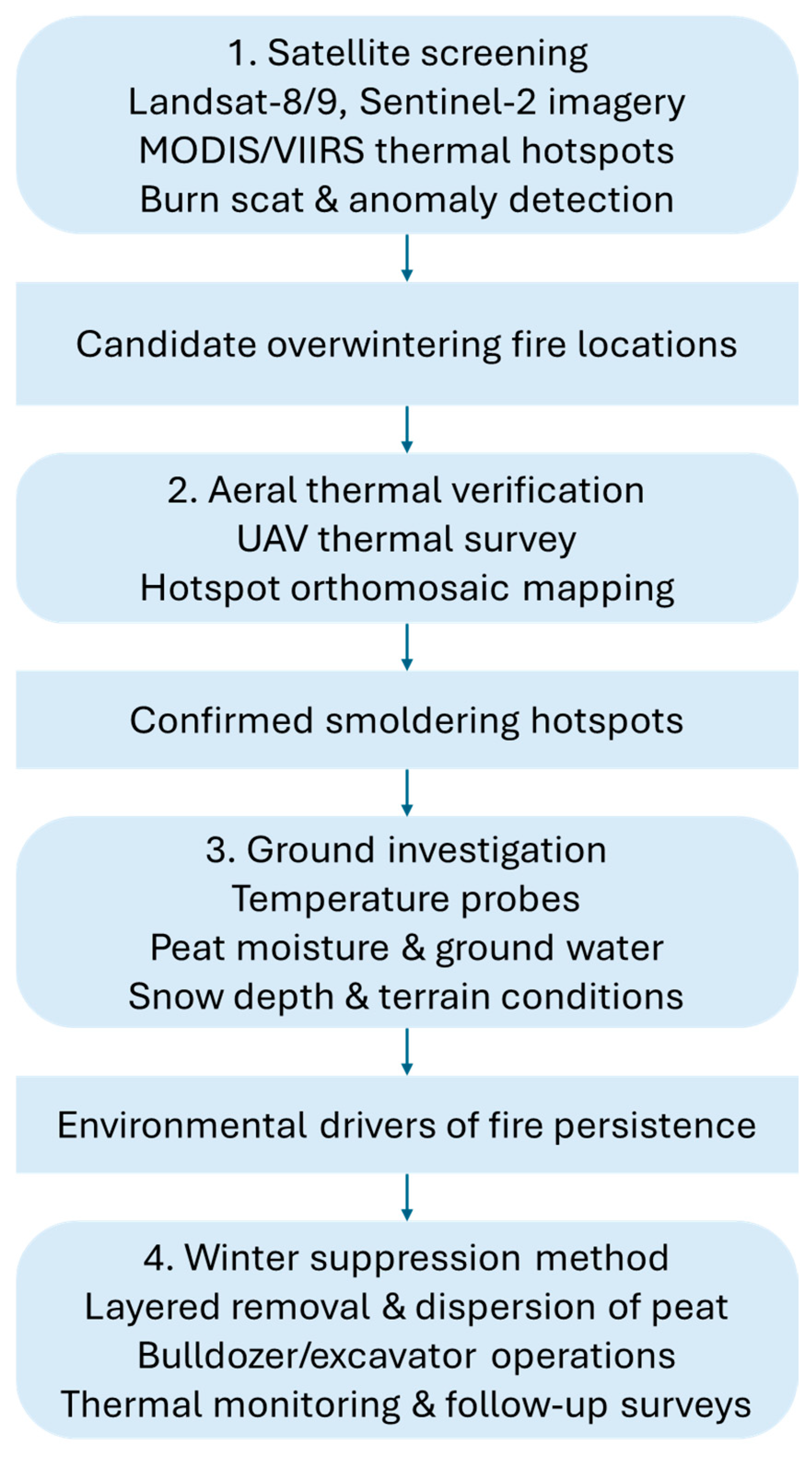
This study applied an integrated, multi-scale approach to detect, validate, and suppress overwintering peat fires. The methodology combined satellite remote sensing, aerial thermal surveys using unmanned aerial vehicles (UAVs), and ground-based field investigations. These complementary methods enabled the identification of overwintering fire hotspots, assessment of their environmental controls, and evaluation of the suppression effectiveness under winter conditions.
The overall workflow is illustrated in
Figure 1. Satellite observations were first used to identify potential overwintering fire locations based on thermal anomalies and changes in fire boundaries over time. These locations were subsequently verified using UAV-based thermal imaging and ground surveys to detect subsurface smoldering hotspots. Environmental conditions, including peat moisture, groundwater levels, and peat structure, were measured to characterize factors influencing fire persistence. Finally, suppression methods were applied and evaluated based on their effectiveness in extinguishing smoldering peat under frozen conditions.
2.2. Detection of Overwintering Peat Fires with Satellite Imagery
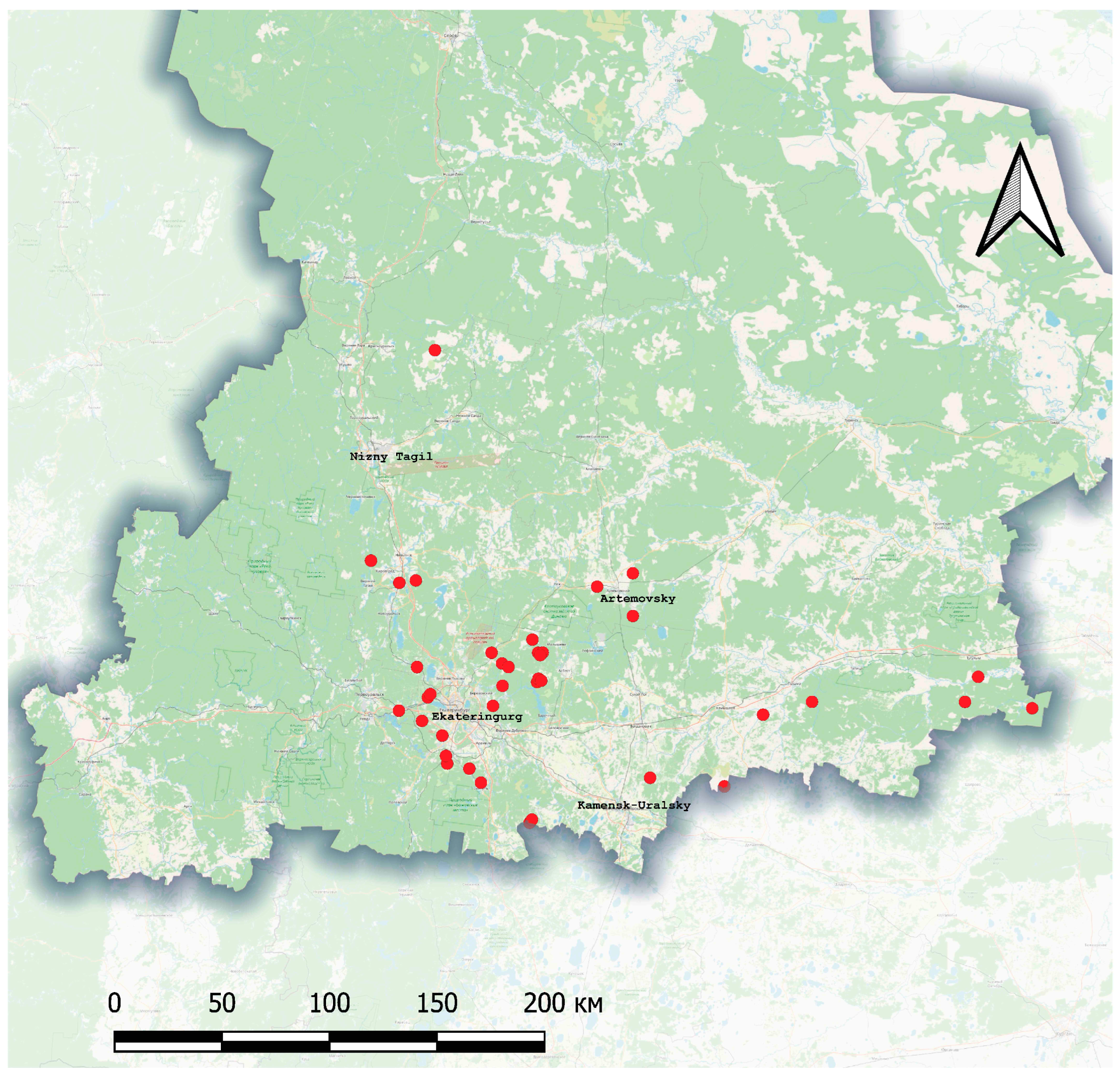
We compiled information on more than 45 active overwintering peat fires in the Sverdlovsk region during the winters of 2022/2023 and 2023/2024 (
Figure 2). The dataset included geographic coordinates of smoldering hotspots, field observations from fire suppression teams, photographs, and records from regional firefighting services (detection date, area affected, suppression measures). Fire boundaries were determined through visual interpretation of multispectral Landsat imagery (Landsat-8 and Landsat-9 Operational Land Imager, OLI), accessed through the Sentinel-Hub platform (
https://www.sentinel-hub.com, Sinergise Ltd., Ljubljana, Slovenia). Image interpretation was performed at mapping scales ranging from 1:10,000 to 1:50,000 using. Burned areas and potential overwintering fire locations were identified based on persistent thermal and surface anomalies, including darker burn scars, exposed peat surfaces, localized snow melt, and subtle smoke or heat-related discoloration visible in multispectral imagery.
Two spectral band combinations were used to enhance visual detection of burned areas and smoldering peat zones: 11-8-2 and 4-3-2. The 11-8-2 combination (shortwave infrared–near-infrared–blue) enhances burned surfaces and areas with reduced vegetation moisture, as peat combustion alters soil moisture and surface reflectance in the SWIR region. The 4-3-2 combination (red–green–blue) provides a natural-color visualization that helps identify burn scars, vegetation damage, and surface disturbances associated with peat fires.
These composites were interpreted concurrently, with the 11-8-2 combination used to enhance burned and moisture-related anomalies and the 4-3-2 combination used for natural-color verification of identified features. Together, these complementary composites enabled the identification of burn scars from the previous fire season and the detection of areas where smoldering persisted during winter.
The remote sensing analysis followed the general approach of identifying potential overwintering fires based on locations of previous-season fires and persistent burn scars, as described in Scholten et al. [
17], but here it was applied using higher-resolution Landsat imagery and supported by available ground observations.
To assess the transferability of our overwintering fire detection methodology in areas where precise ground data were limited or unavailable, we applied the spectral and spatial patterns identified in the Sverdlovsk region to additional regions. Specifically, we examined fires in the Kostroma and Omsk regions, as well as previously undocumented fires within the Sverdlovsk region. For initial fire selection, we relied on thermal hotspot detections from MODIS and VIIRS satellite sensors, which provide daily observations at spatial resolutions of approximately 375–1000 m and are commonly used for large-scale fire monitoring. These datasets were used only for initial screening and identification of potential fire locations. Because of their coarse spatial resolution, the detected hotspots were subsequently verified using higher-resolution satellite imagery.
Candidate sites were further analyzed using Sentinel-2 multispectral imagery (10–20 m spatial resolution) and Landsat imagery (30 m resolution). Burned areas and potential overwintering fire locations were identified through visual interpretation of spectral composites and surface anomalies, using criteria similar to those applied for Landsat imagery, including burn scars, exposed peat surfaces, localized snow melt, and vegetation damage associated with peat combustion. Sentinel-2 imagery allowed more precise delineation of burn boundaries and detection of small, burned patches that could not be resolved in MODIS or VIIRS data.
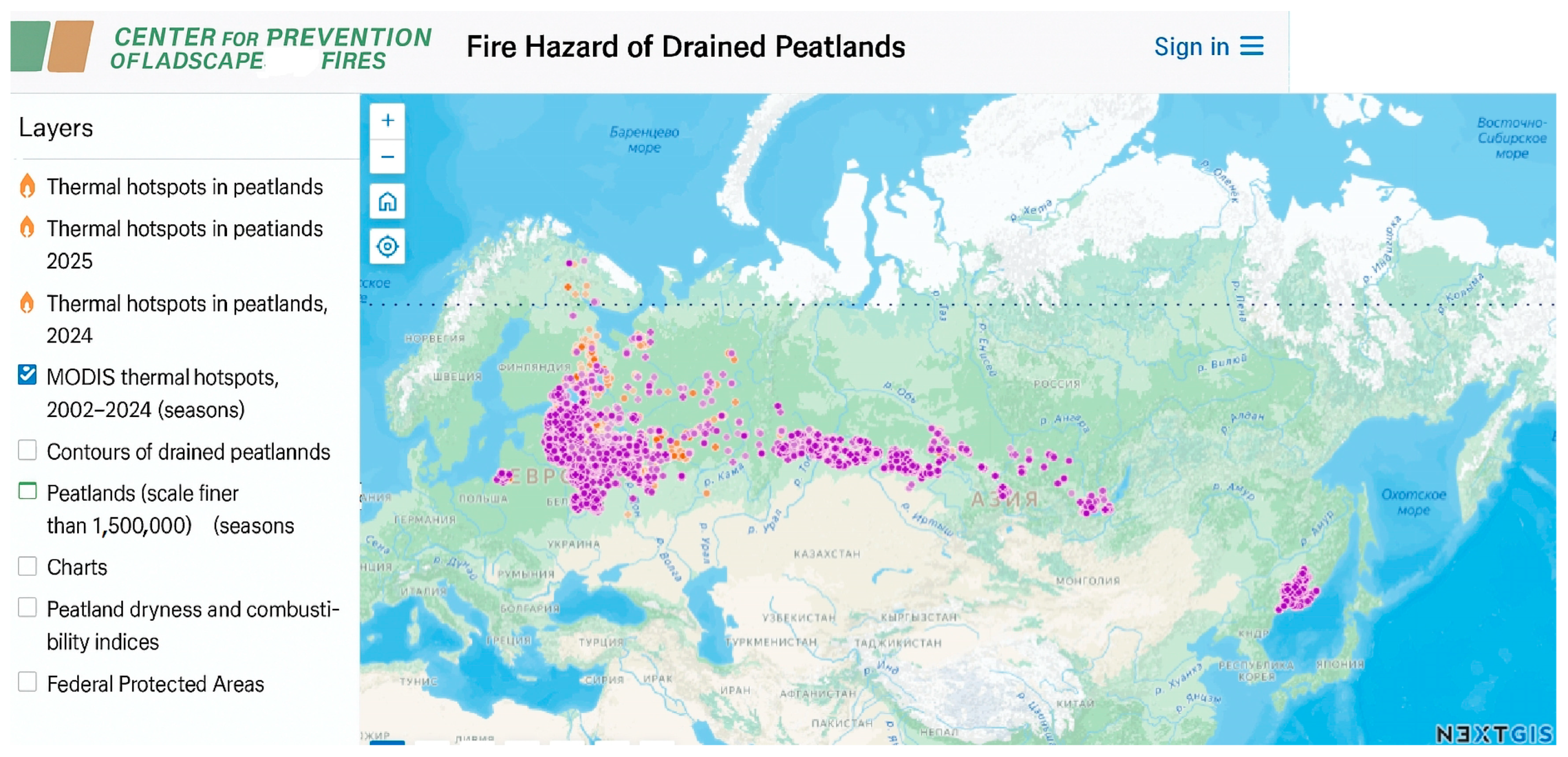
Thermal hotspots were cross-referenced with peatland boundaries using an automated web tool developed by the NGO Wildfire Prevention Center (
https://peatfires.nextgis.com), which integrates hotspot data with mapped peatland boundaries (
Figure 3). In addition, hotspots located on undrained peatlands in regions affected by unusual droughts were manually assessed.
To support burned area detection, we also used a machine learning tool developed by the NGO “The Earth Touches Everyone”, which automatically maps burned areas from Sentinel-2 imagery using a model trained on a large dataset of manually delineated fire boundaries (
https://maps.earthtouches.me/maps/fires_ml/, accessed on 1 February 2026). The outputs from this tool were visually verified and compared with manually interpreted satellite imagery of known fire events. Based on this combined analysis, candidate overwintering fire sites were selected for further investigation and field verification.
For testing our peat fire detection method, we chose suspected overwintering fires in the Omsk region (Siberia), the Kostroma region (European Russia), and the Sverdlovsk region (Ural). In all cases, we found active peat smoldering sites within 500 m of the locations identified by the satellite images (with altered fire boundaries). We cannot confirm whether this method detects all overwintering fires or specific peat smoldering hotspots. However, the observed indicators (i.e., altered boundaries of autumn peat fires under drought conditions) can help to identify probable overwintering fire areas for further verification using aerial thermal imaging equipment.
2.3. Detection of Overwintering Fires with Manned and Unmanned Aerial Vehicles (UAV)s and Thermal Cameras
We conducted aerial thermal surveys to determine if smoldering hotspots remained in areas where satellite images had shown fire boundary changes in late autumn and early winter of 2022–2024. We used two unmanned aerial vehicles (UAVs) platforms (multicopters) and fixed-wing manned aircraft (AN-2) equipped with thermal cameras to map fire hotspots. The specifications of the UAVs are provided in
Table 1. Note that all UAV operations were conducted in accordance with Russian UAV regulations and with appropriate flight permissions for the survey areas. In the case of the AN-2 aircraft, a UAV-mounted camera was installed in a hatch on the floor to capture nadir images.
For systematic hotspot surveys, UAV flights were conducted in automated grid patterns with the following parameters:
Flight altitude: 50–300 m above ground level (AGL), adjusted based on survey area size and required ground sampling distance (GSD).
Typical GSD: 8–15 cm/pixel for thermal imagery.
Flight speed: 3–5 m/s.
Image overlap: 80% forward (longitudinal), 60% lateral (side), to ensure complete coverage and enable ortho-mosaic generation.
Thermal detection threshold: Objects with surface temperature >0 °C above ambient background were flagged for analysis.
Flight timing: Surveys were conducted during the coldest periods (early mornings or evenings) to maximize the thermal contrast between hotspots and snow-covered surroundings.
To ensure reliable hotspot detection, we used automatic flights with at least 30–40% overlap of the visual and thermal camera fields of view. Under these conditions and at a flight altitude that provides an image resolution of around 10 cm per pixel or better (up to 300 m for most UAVs), this method allowed for the smoldering hotspots to be detected. For multi-hotspot fires, we used DJI Terra (version 4.0; SZ DJI Technology Co., Ltd., Shenzhen, China) and Agisoft Metashape Professional Edition (version 2.2.1; Agisoft LLC, St. Petersburg, Russia) software to process the thermal images, and we then generated thermal orthophoto maps to map the smoldering hotspots. The final product for firefighting teams included the identified hotspot contours overlaid on the orthophoto maps (created from visual imagery).
2.4. Ground Surveys and Data Collection
During field surveys, we used two handheld thermal devices: (i) Doogee S20V Pro smartphone with an integrated thermal imaging module (256 × 192 thermal sensor, spectral range 8–14 μm, temperature range −15 °C to +550 °C, thermal sensitivity <50 mK; Doogee, Shenzhen, China) operating with the default specifications from the manufacturer; and (ii) Seek Thermal Compact Pro, attached to an Android smartphone (Seek Thermal Inc., Santa Barbara, CA, USA), with the following specifications:
Sensor: 320 × 240 pixel thermal array;
Spectral range: 7.2–13 μm;
Temperature range: −40 °C to +330 °C;
Thermal sensitivity: <70 mK;
Field of view: 32°;
Detection range: Up to 550 m for human-sized heat sources;
Interface: USB-C smartphone attachment (Android).
Surface temperature measurements were additionally obtained using infrared pyrometers (Fluke 62 Max+; Fluke Corporation, Everett, WA, USA; spectral response 8–14 μm, temperature range −30 °C to +650 °C, accuracy ±1.5 °C). Ground temperature within smoldering hotspots was measured using custom stainless-steel thermometer probes (length 1.5–2 m) equipped with K-type thermocouples (measurement range −50 °C to +800 °C, accuracy ±1 °C) connected to handheld digital readers. Positioning and elevation measurements were obtained using high-precision GNSS receivers (PrinCe i50; Shanghai Huace Navigation Technology Ltd., Shanghai, China), multi-constellation RTK/PPK capable systems, horizontal accuracy ±2–3 cm and vertical accuracy ±3–5 cm when corrected) operating with a local ground-based correction station using differential GNSS (DGPS) post-processed kinematic (PPK) correction.
During field investigations, we measured several environmental and fire-related variables, including hotspot temperature, hotspot depth, peat moisture content, groundwater level, snowpack depth, burn scar boundaries, and terrain characteristics.
On active overwintering peat fires, approximately 60 days before the planned extinguishment, we installed trail cameras (Reconyx HyperFire series; Reconyx, Inc., Holmen, WI, USA) that captured hourly images and triggered additional photos upon detecting movement or changes in the frame. These cameras were equipped with built-in thermometers to record air temperature. This setup allowed us to assess the rate of fire edge progression, document events such as trees falling due to burned roots, and correlate the fire edge progression rate and hotspot activity with snowfall and snowpack depth.
For typical multi-hotspot overwintering peat fires in the Ural, Siberia, the Russian Far East, and European Russia, ground survey data were collected during suppression efforts and, where possible, through targeted field investigations. In total, approximately 70 overwintering peat fire locations were documented. Some of these locations consisted of multiple spatially isolated smoldering hotspots, making it difficult to determine whether they represented independent fires or separate manifestations of a single parent fire.
Detailed field measurements suitable for quantitative analysis were conducted at 47 sites, where systematic observations of fire characteristics were possible. At additional sites, data collection was limited to operational firefighting observations, photographs, and incident reports, due to logistical constraints and the primary focus on suppression rather than scientific investigation. In some cases, information was reconstructed retrospectively from archived firefighting documentation. Despite variability in data completeness, these records provide valuable insight into the occurrence and characteristics of overwintering peat fires across multiple regions.
Smoldering hotspots were also examined during periodic visits by our team, using handheld thermal cameras and pyrometers. Temperature within, near, and beneath the hotspots was measured with thermometer probes specifically designed for peat. These probes were made of stainless steel, 1.5 to 2 m long, with a thermocouple at the tip and a small display on the handle. Groundwater levels near the hotspots were determined through drilled monitoring wells, while peat moisture and other characteristics were assessed from soil samples collected at the fire sites.
Soil samples were collected both from pits dug manually with shovels and using specialized peat augers designed by the East European Peat Institute (Tver, Russia). In some cases, to better understand the internal structure of hotspots and create large cross-sections through deep smoldering zones, motorized soil cutters (georippers with bar-chain blades) were used.
Peat moisture content was measured using two methods. Preliminary measurements were obtained using portable electronic moisture meters, although these proved to have limited accuracy under large temperature fluctuations. Final moisture values were therefore determined using the standard gravimetric method accepted in Russian soil analysis. Peat samples were weighed in the field, transported to the laboratory, dried at 95 °C until constant mass, and reweighed to calculate the evaporated water mass.
For all elevation measurements, including soil surface profiling, snowpack depth, hotspot depth, and water levels in drainage channels, high-precision GNSS measurements with a ground-based correction station were used.
2.5. A New Method for Extinguishing Overwintering Fires in the Winter
Based on our experiences with fire suppression in laboratory versus field settings, we have developed a fundamentally different suppression approach, both thermodynamically and operationally [
35,
36,
37]. Instead of cooling through infiltrating meltwater, suppression is achieved by increasing the contact area with other cold agents—namely air and snow. The core of this method is to dismantle the hotspot by scattering smoldering peat and hot ash over the surrounding frozen ground and snow. Contact with oxygen causes the hottest particles to burn quickly with open flames, while cooler particles are extinguished by the cold air.
Most extinguishment operations were carried out using two B10-M and B10-MB bulldozers (swamp bulldozers with wide tracks; Chelyabinsk Tractor Plant, Chelyabinsk, Russia) to spread the material until cooled. For peat mounds and similar elevated fires, excavators on tracks were also used. The use of multiple heavy machines simultaneously is crucial on low-load-bearing soils, where the risk of becoming stuck is high. Paired machines mitigate this risk and facilitate the retrieval of any stalled or broken equipment from the hazard zone. The method operates as follows:
Step 1: When trees are present, uproot them within a 3–5 m radius of the smoldering hotspot using bulldozers. The trees are then pushed onto the already burned area with their burning roots exposed, and laid onto frozen, snow-covered ground.
Step 2: Distribute the smoldering soil from the hotspot on the ground. Care must be taken to ensure that the thickness of the removed burning peat does not exceed 0.5 m, and that it is evenly spread over snow or frozen ground, with no large clumps. The material must be spread in a thin (10–20 cm) layer to ensure it cools within a few hours without creating new hotspots. The entire hotspot (all heated material) must be removed down to the non-burning layer of peat or the underlying mineral soil. It is important to note that this process significantly increases smoke and steam production, which may falsely appear to indicate increased burning intensity. However, this is a sign of active peat cooling and the release of substantial water vapor.
Step 3: Upon removal of the burning peat, two scenarios may occur upon contact with air. The most heated portions, having undergone pyrolysis and charring, may flare up with open flames when exposed to oxygen. In contrast, less heated and non-charred peat from the hotspot begins to cool down upon exposure to air, generating a substantial amount of steam. The bulldozer then reverses, lowering its blade and compacting the burn site with its tracks to enhance soil thermal conductivity, breaking up remaining clumps, and leveling any formed mounds.
Step 4: Wait 24 h once the primary extinguishment stage is complete and then check for any newly emerging burn points (in large soil clumps or piles). If needed, these can be extinguished by further spreading over the frozen ground.
To ensure the reliability of the layered removal and dispersion method for extinguishing smoldering peat in winter, we used thermal cameras at all stages of the process as well as thermometer probes. This allows for immediate identification of problematic areas and any remaining smoldering hotspots.
We applied this technique to 21 hotspots in the winters of 2022 in the Sverdlovsk region and flew UAV missions during the spring of 2023. After the snowmelt and the onset of the fire season, a follow-up inspection of the extinguished fires was conducted. In addition, we applied the same technique to 5 smaller hotspots in the Sverdlovsk, Omsk, and Kostroma regions but without the use of heavy machinery. These hotspots were exposed using shovels and hoes, and in some cases, we used motorized trenchers (georippers). For each visible hotspot area of about one square meter, at least 4 cubic meters of soil were excavated and dispersed, as heated soil from the hotspot walls, covered by snow, also needed to be removed. The extracted soil was spread over the surrounding frozen ground and snow. Quality control was ensured using thermometer probes and thermal cameras.
3. Results and Discussion
3.1. Detection of Overwintering Fires
Analysis shows that individual Landsat-8 and Sentinel-2 images of confirmed active fires often do not conclusively detect winter fire activity [
38]. Exceptions occur when open flames coincide with satellite overpasses. However, comparing multiple images of the same fire across late autumn and early winter, particularly all cloud-free autumn images and the first snow-covered scenes, reveals changes in fire boundary shape and spectral characteristics, allowing inference of continued fire activity.
Our experience indicates that the most effective detection methodology requires a combination of complementary approaches. First, monitoring begins with satellite data, using thermal hotspots and medium-resolution imagery to track fire boundary changes and identify areas where smoldering hotspots may persist into autumn (
Figure 1 and
Figure 2). This is followed by aerial surveys with thermal cameras configured for automatic detection of objects with temperatures above 0 °C. Finally, detailed ground inspections are conducted on snowmobiles and skis, using handheld thermal cameras and thermometer probes at locations where aerial thermal anomalies were detected.
Ground surveys alone, although essential for confirming hotspot presence, cannot detect all smoldering peat fires. Many hotspots are hidden beneath fallen, snow-covered trees, making access by snowmobiles or skis difficult. Aerial surveys of known hotspots further confirm that visual inspection alone is insufficient for reliable detection. While large hotspots may occasionally be identified during extreme cold and atmospheric inversions, when steam plumes are visible, visual detection alone cannot ensure comprehensive identification of all active smoldering areas.
The use of UAVs equipped with thermal cameras enabled reliable detection of all known smoldering hotspots during inspections, as heat emissions beneath snow were detectable from distances up to 500 m and, in some cases, up to 2–3 km. Comparing different winter fire detection methods, it can be concluded that UAVs with thermal imaging provide the most accurate and reliable results among all tested approaches (
Table 2).
Although all tested methods demonstrated relatively high efficiency (
Table 2), none alone was sufficient to identify all smoldering peat hotspots. The most effective method involved a UAV with thermal camera operating in automatic mode, which detected 98% of the existing hotspots, with only 4% false detections.
3.2. Drivers of Persistence in Overwintering
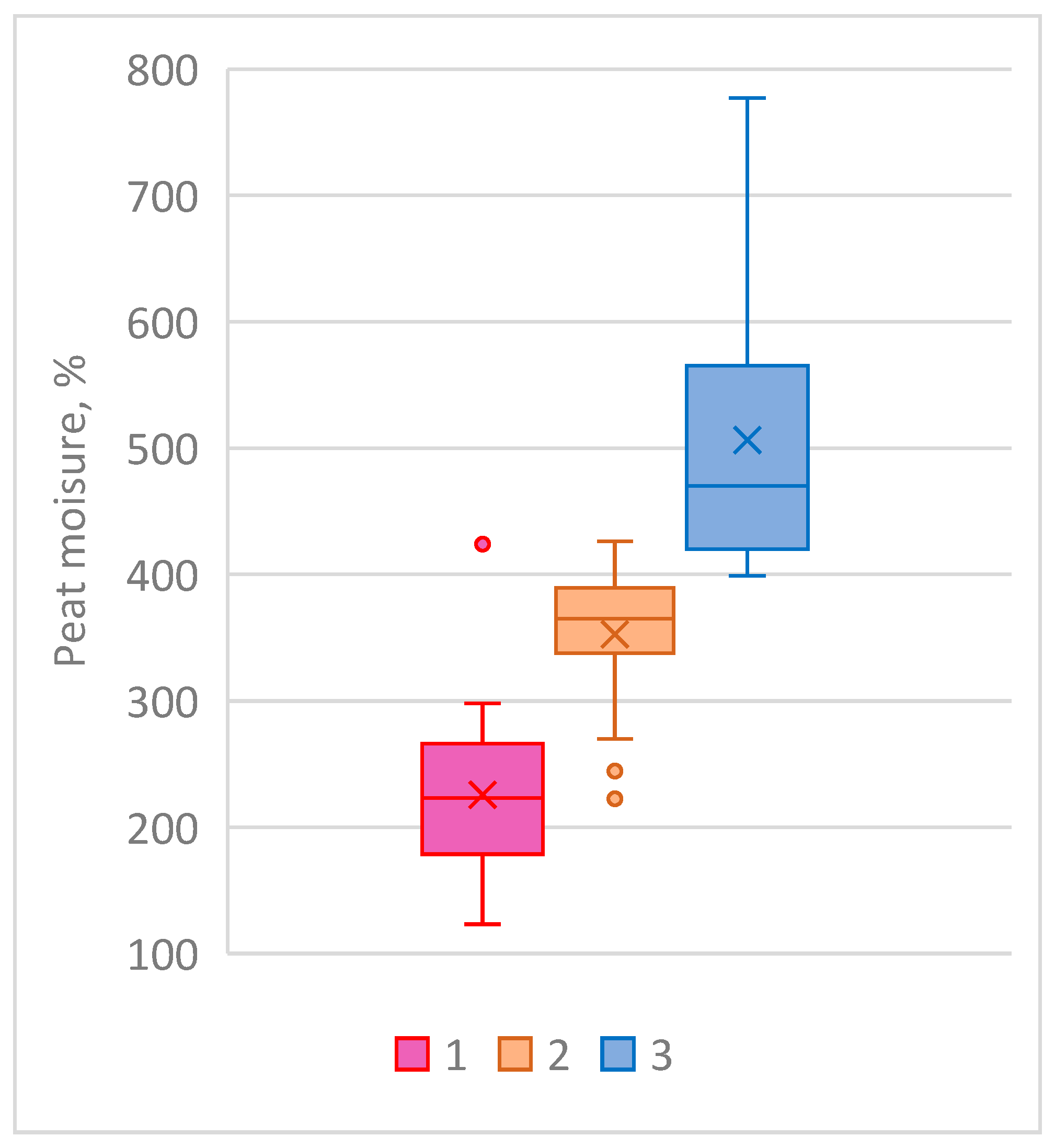
Our analysis identified peat moisture content as a key factor controlling the persistence of overwintering fires. To quantify this relationship, peat samples were collected from three distinct zones representing different stages of smoldering activity: (1) active smoldering zones, characterized by ongoing combustion and formation of charcoal and ash; (2) transition zones, where peat was heated but not actively smoldering; and (3) unaffected zones without evidence of smoldering (
Figure 4).
The active smoldering zones exhibited significantly lower peat moisture content, with a mean water content of 223 ± 62% (ratio of water mass to dry peat mass). In contrast, transition zones had intermediate moisture levels (352 ± 48%), while zones without smoldering showed substantially higher moisture content (488 ± 107%). These results indicate that lower peat moisture promotes sustained smoldering, whereas higher moisture levels inhibit combustion and contribute to fire extinction.
These findings support the conclusion that peat moisture is a primary environmental control on the overwintering persistence of peat fires.
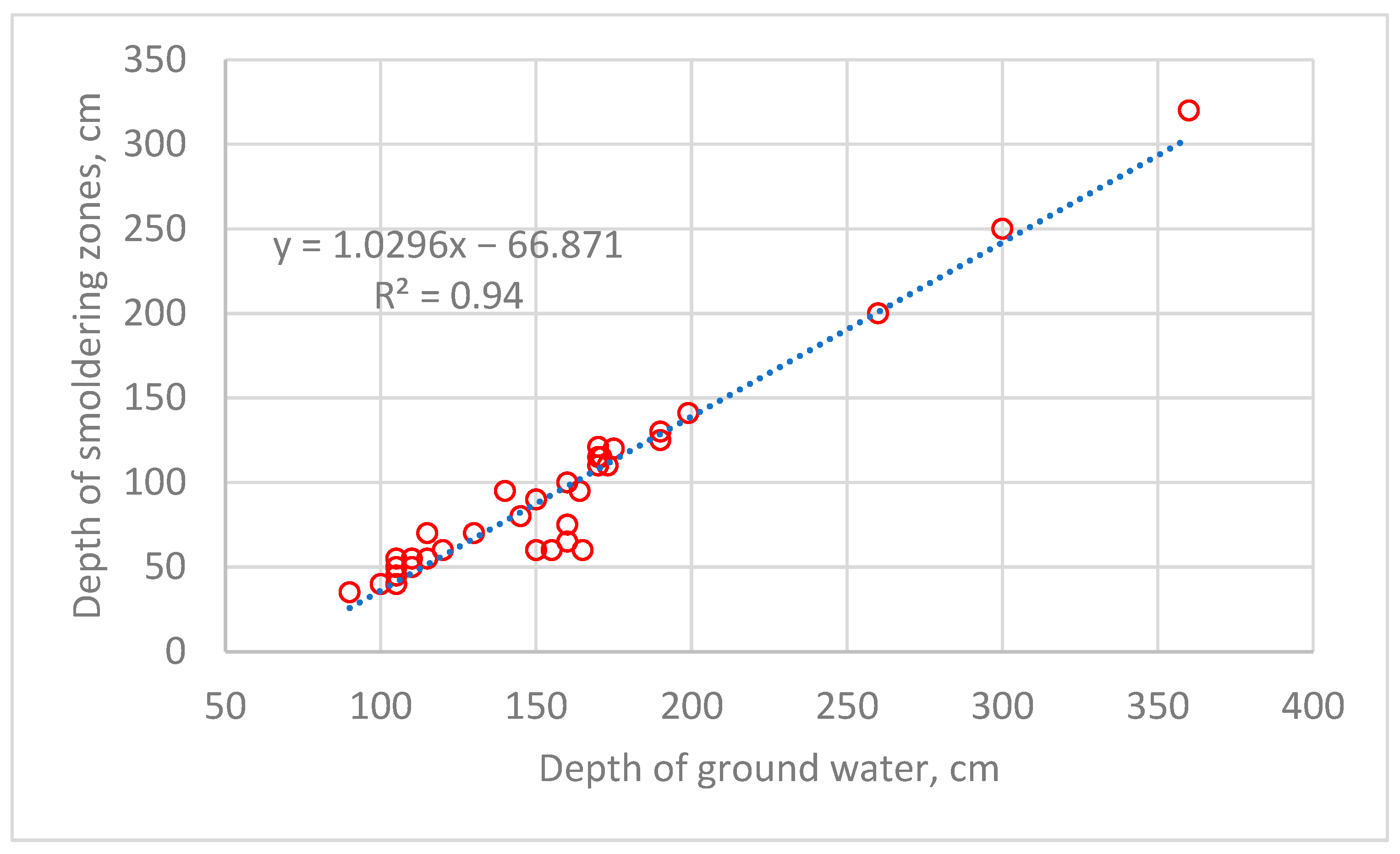
The depth of smoldering peat is closely related to the depth of groundwater. On average, peat stops smoldering when the groundwater level is above 62 ± 13 cm (
Figure 5).
These efforts have enabled us to gather valuable data on how zombie fires develop over the winter, and the influence of factors such as cold, snow, upper soil layer density, peat moisture, and groundwater fluctuations. Analyzing this data now allows us to assess the likelihood that an overwintering fire will become active in the next fire season and spark new surface wildfires.
Notably, our findings indicate that overwintering fires did not occur in areas where groundwater levels in the fall were higher than 60 cm from the soil surface. This observation aligns with data indicating that groundwater levels and peat moisture also inhibit peat fire development in the summer [
39,
40].
The average depth of overwintering hotspots was 1.5 m, although some were as shallow as 60 cm, while others reached depths of around 3 m. According to the methodology used by Russian fire services [
41,
42], the depth of a hotspot is defined as the lowest boundary where peat temperatures exceed 40 °C and/or signs of peat conversion to charcoal or ash are visible.
Based on repeated field observations at overwintering peat fire sites, we identified several environmental and structural conditions that were commonly associated with the persistence of overwintering hotspots into the following season:
Groundwater levels in autumn are deeper than 60–70 cm below the soil surface, allowing deeper peat layers to remain sufficiently dry for sustained smoldering.
Turf-covered soil above the hotspots, which can retain heat and protect the smoldering zone from precipitation.
Tree root systems shielding hotspots from precipitation and creating locally drier and structurally loosened peat layers.
Compacted soil layers above hotspots, such as roadbeds or heavily trampled surfaces, which may limit water infiltration.
Thick snow cover around the edges of hotspots, which acts as an insulating layer and reduces heat loss during winter.
Overwintering hotspots tend to assume an energetically favorable shape as frost intensifies, resembling a circle at the soil surface and a sphere underground.
Observations in forested areas confirm that hotspots, after consuming all available fuel under one tree, spread relatively quickly (within a few days) along the root system to the next tree, where they resume a spherical shape. Once trees fall, smoldering beneath their roots typically ceases.
Peat moisture measurements around overwintering hotspots revealed that smoldering occurs in peat with moisture levels between 200 and 400%. In areas with lower moisture (200–300%), hotspots dry and heat adjacent peat, leading to gradual pyrolysis, charring, and smoldering. In the lower layers, near or below the hotspot’s base, peat moisture reached 400–500%, at which point smoldering generally ceased (likely due to insufficient energy to evaporate such high water content). As with summer peat fires, a moisture level of 400% and above typically prevents downward hotspot development.
It is suggested that during winter, the common drop in groundwater levels in peatlands (winter low water levels) means that water evaporated by the hotspot from the surrounding drying zone is not replenished by precipitation due to the frozen upper soil layer. Consequently, hotspots have more favorable conditions for deeper and lateral spread beneath the soil surface in winter.
We identified a key feature that makes overwintering fire hotspots more resistant to precipitation and suppression efforts in the following fire season. This feature is the formation of a complex multilayered structure consisting of alternating layers of charcoal, ash, and peat. This structure develops as the overhanging winter edges of the hotspot collapse in spring, burying hot ash beneath them. The newly fallen peat layers subsequently ignite, while the buried layers retain heat, creating a dense, hydrophobic, and poorly permeable system. Such a structure is considerably more difficult to extinguish than newly ignited hotspots and introduces a positive feedback loop: the longer the fire persists, the more resistant it becomes to suppression.
In the Sverdlovsk Region, during a spring follow-up to extinguish remaining hotspots, we were able to directly observe and document the transition of smoldering peat in overwintered hotspots to open flames on the soil surface (burning dry grass), demonstrating the renewal of zombie fires in a new season.
A notable observation during hotspot surveys was that many hoofed animals—such as roe deer, wild boar, and elk—are drawn to these hotspots during cold weather, seeking warmth nearby. This occasionally aids in hotspot detection, as animal tracks and thermal images may reveal not only the warm hotspots but also the warm bodies of animals resting at the edges. However, there were also instances of animal fatalities, likely due to carbon monoxide exposure.
3.3. Effective Methods for Extinguishing Overwintering Fires
To extinguish smoldering hotspots in winter, we developed and successfully implemented a method involving the layered removal of burning peat with bulldozers and the dispersion of smoldering material over frozen ground [
36]. This technique has been applied to more than 50 fires over three winter seasons in the Sverdlovsk (using bulldozers), Omsk (manual extinguishment), and Kostroma (mixed bulldozer and manual) regions, yielding excellent results.
Ground inspections have confirmed the accuracy of UAV data, ensuring that no hotspots survive the winter and reignite fires in the spring once all identified sites have been extinguished. After the snowmelt and the onset of the fire season, follow-up inspection of treated sites showed no remaining active hotspots. The thickness of the removed soil did not exceed 30 cm, and some of the pits created during hotspot removal had partially filled with water.
The use of bulldozers to peel off and spread layers of smoldering peat proved highly effective. Once dispersed onto the cold, frozen surface, the material rapidly cooled, and no re-ignition was observed in any of the treated areas.
From an operational perspective, this method is also cost-efficient. The direct cost of winter suppression using bulldozers typically ranges from 100 to 500 USD per hectare, depending on site accessibility and hotspot depth, with a productivity of approximately 0.5–2.0 ha per bulldozer per day [
37]. For comparison, suppression using water in the autumn or spring generally requires higher labor input and longer operational time [
43]. While spring suppression costs may be comparable in some cases due to rising groundwater levels and partial natural extinguishment, it is significantly slower and associated with higher risks, as incomplete suppression may lead to re-ignition and renewed fire spread.
Direct water extinguishment of peat fires during winter presents significant challenges. Winter smoldering fires tend to develop a complex multi-layered structure consisting of alternating layers of charcoal, ash, and peat, which reduces the efficiency of water penetration. As a result, the water requirement for direct extinguishing (i.e., mixing peat with a water jet) in our winter experiments was approximately 3 tons per square meter of fire surface—compared to the typical ~1 ton per square meter required during summer. This approach would not be successful in the summer, as scattered burning peat would ignite everything around it, only expanding the burned area. However, in winter, there is no such risk, and even large hotspots can be extinguished within 2–3 h.
When applied correctly, this method ensures that no further combustion will occur in these areas. The result is a cleared area with the formerly smoldering peat now safely spread over the surface.
When there are deviations from the prescribed method, e.g., covering hotspots with snow or mixing only the top (hottest) layer of smoldering peat with snow without removing the heated layers below, then the hotspots tend to reignite within a few days. The peat hotspot reconstructs its structure, enabling it to maintain an optimal temperature and dry the surrounding fuel within its walls.
4. Conclusions
This study advances our understanding of overwintering peat fires (“zombie fires”) by identifying the environmental conditions that enable their persistence and by demonstrating practical methods for their detection and suppression in winter. Through a combination of satellite imagery, aerial thermal surveys, and ground-based investigations, we documented how these fires smolder beneath the surface through freezing temperatures and reignite in spring, contributing to early wildfire outbreaks and greenhouse gas emissions.
We found that overwintering fires are strongly associated with low groundwater levels (below 60 cm), drier peat conditions (200–300% moisture), and protective surface structures such as turf layers, compacted soil, and tree root systems that insulate the smoldering zone. Our observations also reveal that many overwintering hotspots form multilayered structures of charcoal, ash, and unburned peat, which significantly increase resistance to suppression and pose a risk of re-ignition.
Among the tested detection approaches, UAV-based thermal imaging emerged as the most effective, reliably identifying over 98% of hotspots. Satellite data, while limited in detecting active winter smoldering on its own, proved valuable when analyzed as time series, especially when paired with hotspot and snow cover analysis.
Importantly, we developed and validated a winter-specific extinguishment method involving the mechanical removal and dispersion of smoldering peat over frozen ground. This approach proved highly effective in both large-scale and manual applications, achieving full suppression with no observed re-ignition in spring.
While these findings are based on overwintering fires in human-disturbed peatlands across Russia’s boreal zone, additional research is needed in undisturbed Arctic peatlands, particularly in permafrost regions without drainage networks, where fire behavior and suppression dynamics may differ significantly.
By combining operational field methods with remote sensing and thermal technologies, this work provides a replicable framework for monitoring and mitigating overwintering fires. Such strategies are increasingly important as climate change amplifies peatland fire risks, challenging traditional fire management and demanding new tools for early detection and response.
5. Limitations
This method of surveying does come with its own limitations. One of the main constraints during winter flights is the operating temperature range of thermal cameras. Most thermal cameras used on UAVs cannot function below −10 °C. Ideally, flights should be conducted at temperatures of up to −5 °C, taking into account that temperatures drop by an average of 2 degrees at an altitude of 300 m. Therefore, it is best to choose survey days when the daytime temperature is around −3 °C.
Survey participants noted significantly higher reliability in detecting smoldering hotspots during winter, due to the stark temperature contrast between the hotspots and their surroundings. This is more challenging in summer, where dark surfaces heated by sunlight can interfere with thermal imaging. Even in winter, however, sunny days can reduce the effectiveness of thermal cameras, as heated tree canopies and exposed surfaces create noise and false targets.
An unexpected challenge was the presence of groundwater springs that do not freeze, even during severe cold spells. These springs, typically at +3 to +4 °C, can resemble smoldering hotspots on thermal cameras due to their high temperature contrast with the surrounding snow (for example, −15 °C). Consequently, even on optimal survey days (overcast with moderate frost), each detected thermal anomaly had to be verified in both infrared and visual spectra to confirm the presence of a smoldering hotspot.
To date, we have surveyed a significant number of overwintering fires in human-disturbed peatlands across the boreal zone in Russia, covering a wide range of natural conditions (including European Russia, the Urals, Siberia, and the Russian Far East). This research has provided insights into how these hotspots originate, develop, and reignite with open flames in spring, as well as how they can be detected using aerial methods. We have also developed and validated suppression techniques, such as flooding and winter extinguishment through layered removal and spreading of burning soil. However, we still lack sufficient data on the behavior of overwintering fires in undisturbed peatlands of the Russian Arctic, where there are no drainage networks. Furthermore, there is a need for more direct observations on the behavior of these fires in permafrost zones and their interactions with permafrost.