

Applying an Interpretable Deep Learning Model to Identify Wildfire-Prone Areas in Southwest China
 ,
,
Abstract
1. Introduction
2. Materials and Methods
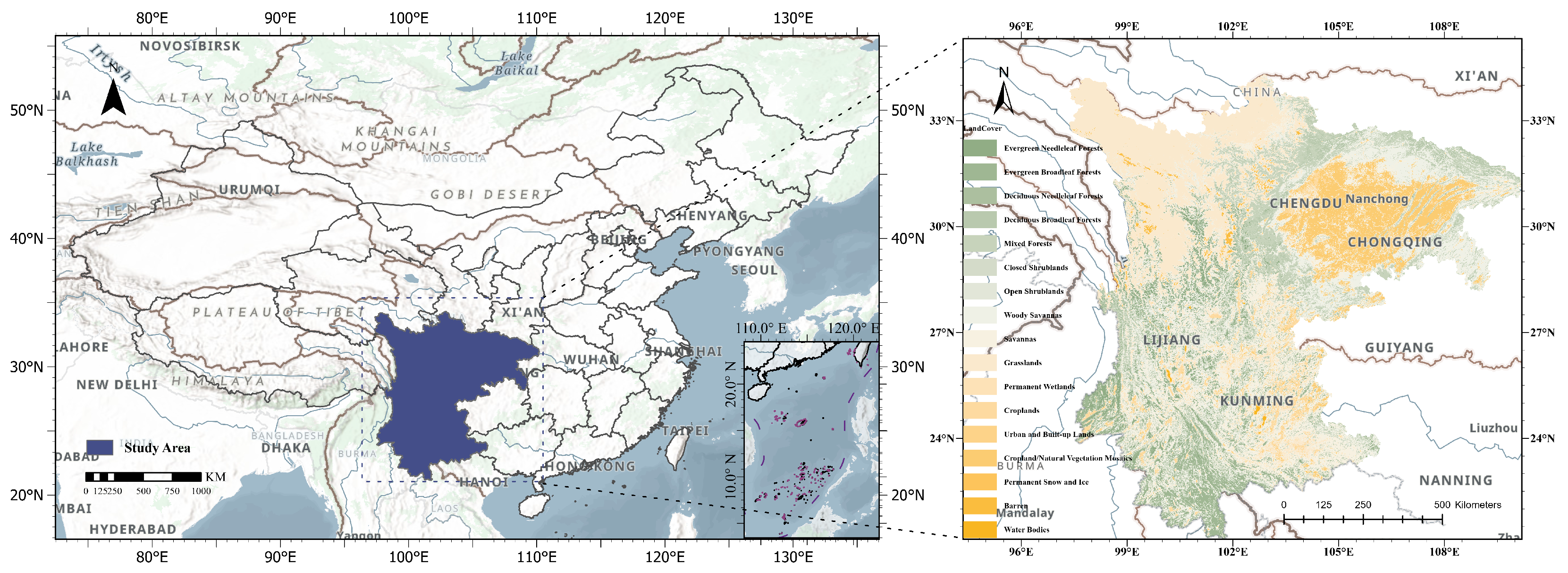
2.1. Study Area
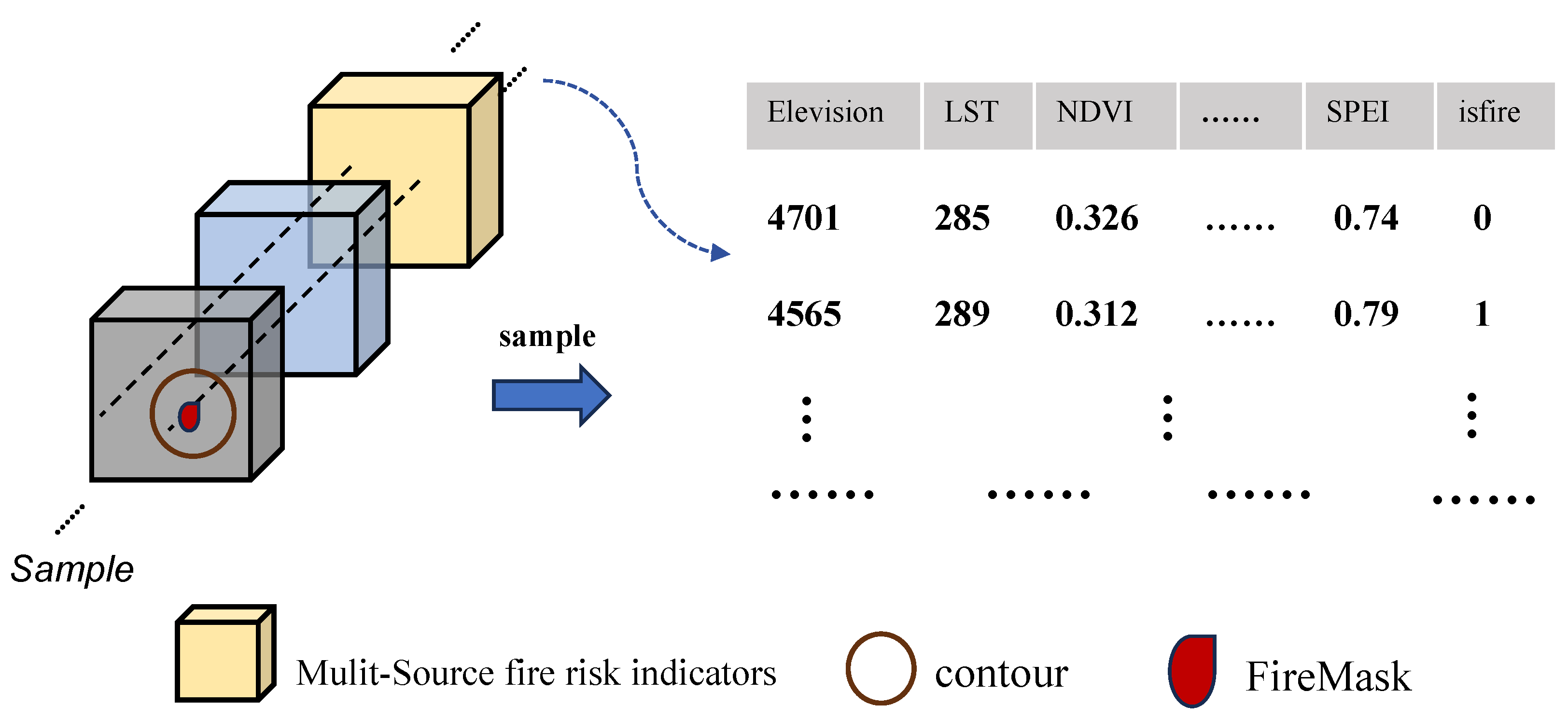
2.2. Data and Data Preprocessing
- is the reflectance in the near-infrared band (dimensionless);
- is the reflectance in the shortwave infrared band from MODIS band 7 (dimensionless).
Reproducibility and Sensitivity to Key Assumptions
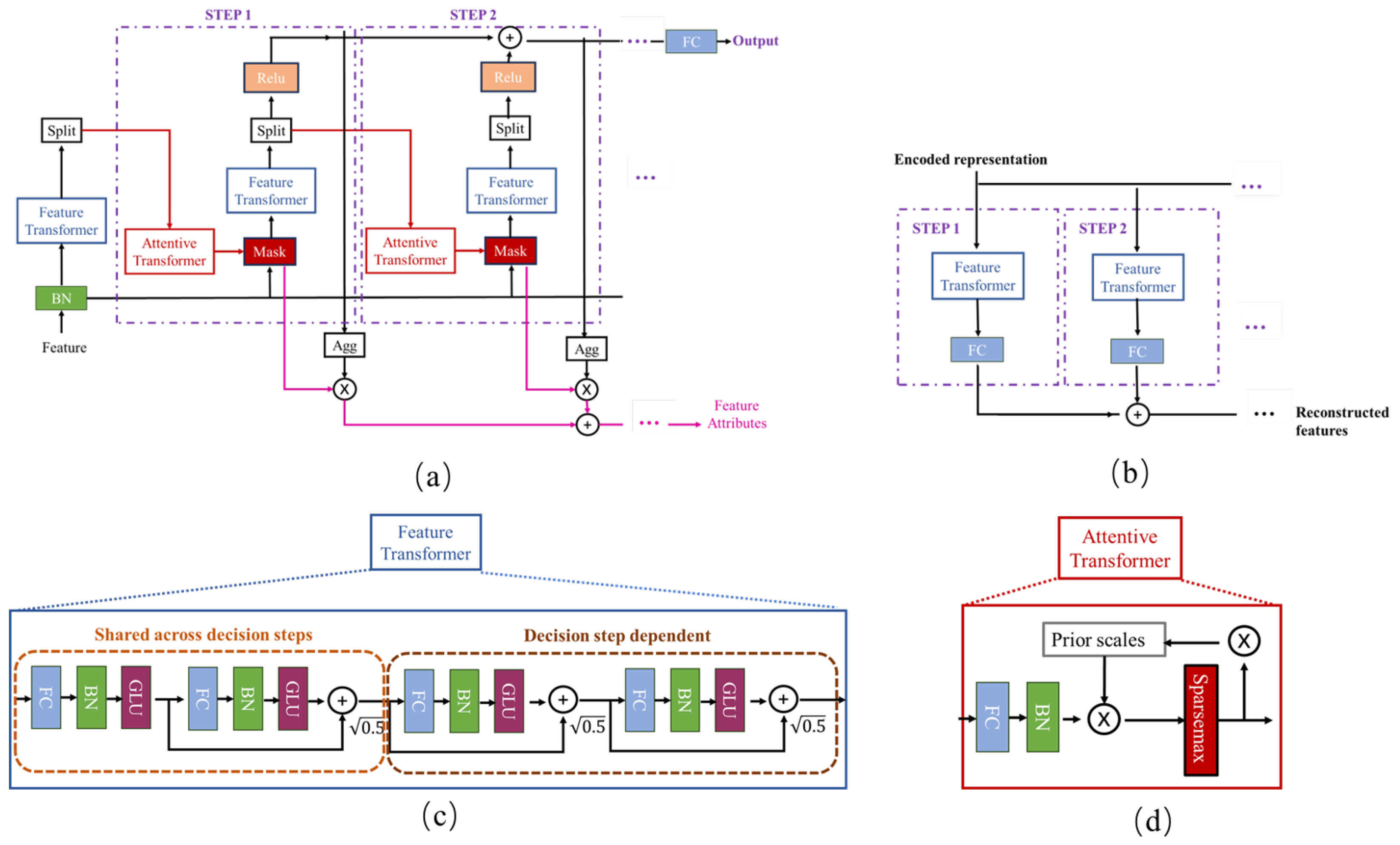
2.3. Model Selection and Methodology
2.4. Model Evaluation and Comparison
- Independent test set retention: 20% of the original samples were set aside as an independent test set, with fixed random seeds to ensure reproducibility.
- Category-balanced processing: The remaining 80% of the data underwent category-balancing treatment, which included optional oversampling (SMOTE) or undersampling techniques to address class imbalance.
- Stratified sampling: The balanced set was then divided into a training subset (75%) and a validation subset (25%) using stratified sampling, ensuring consistent class distribution across the subsets and minimizing sampling bias.
- Hyperparameter search: Hyperparameters were optimized using Bayesian optimization (Hyperopt TPE) combined with K-fold hierarchical cross-validation. In each iteration, the features were standardized using Z-score normalization, and the mean score across validation folds was used as the optimization objective.
- Retraining with complete training data: The model was then retrained using the entire training set, including both training and validation data. The optimal classification threshold was determined via grid search with a step size of 0.01.
- Final evaluation: The final model performance was assessed on the independent test set using metrics such as the score, precision, recall, and AUC.
- Random Forest (RF): A classical ensemble learning algorithm based on bootstrap aggregation of decision trees.
- XGBoost: A gradient boosting framework employing second-order optimization of the loss function.
- LightGBM: A high-efficiency gradient boosting implementation using leaf-wise tree growth with histogram-based splitting.
3. Results and Case Studies
3.1. Results Overview
3.2. Model Training Results
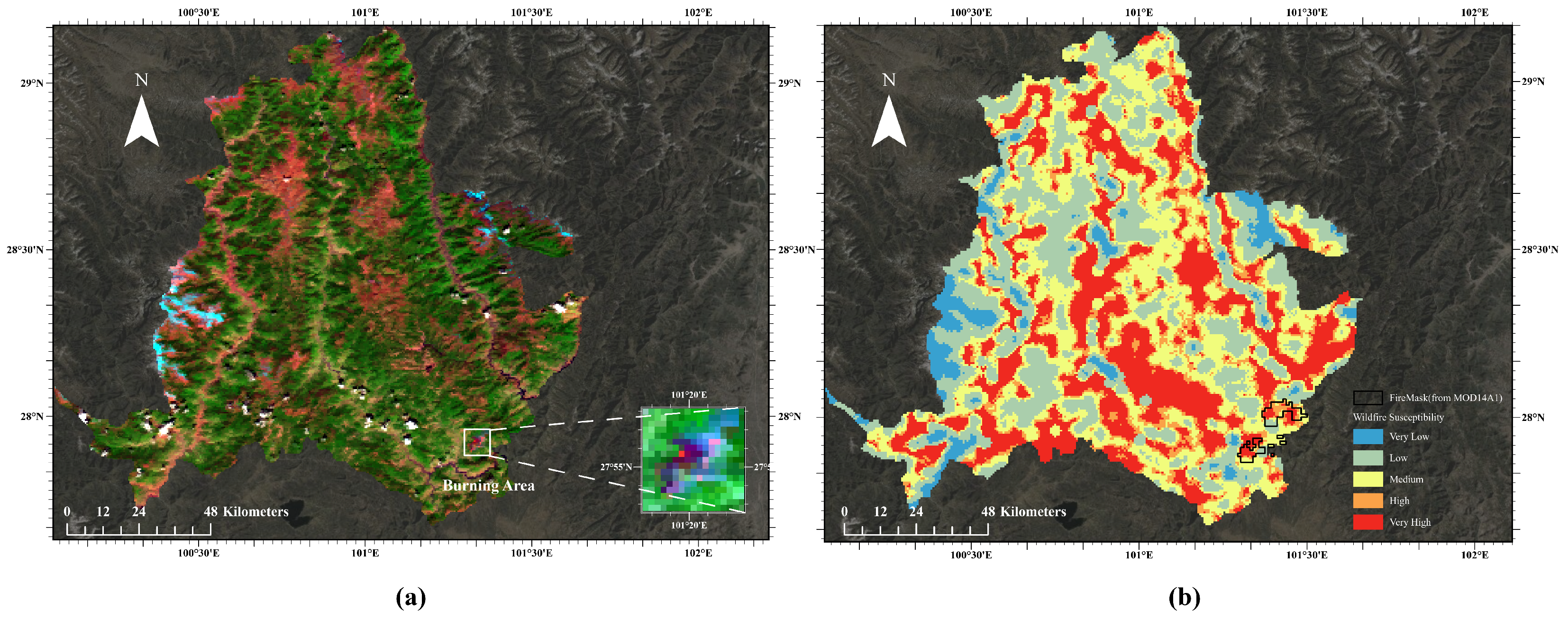
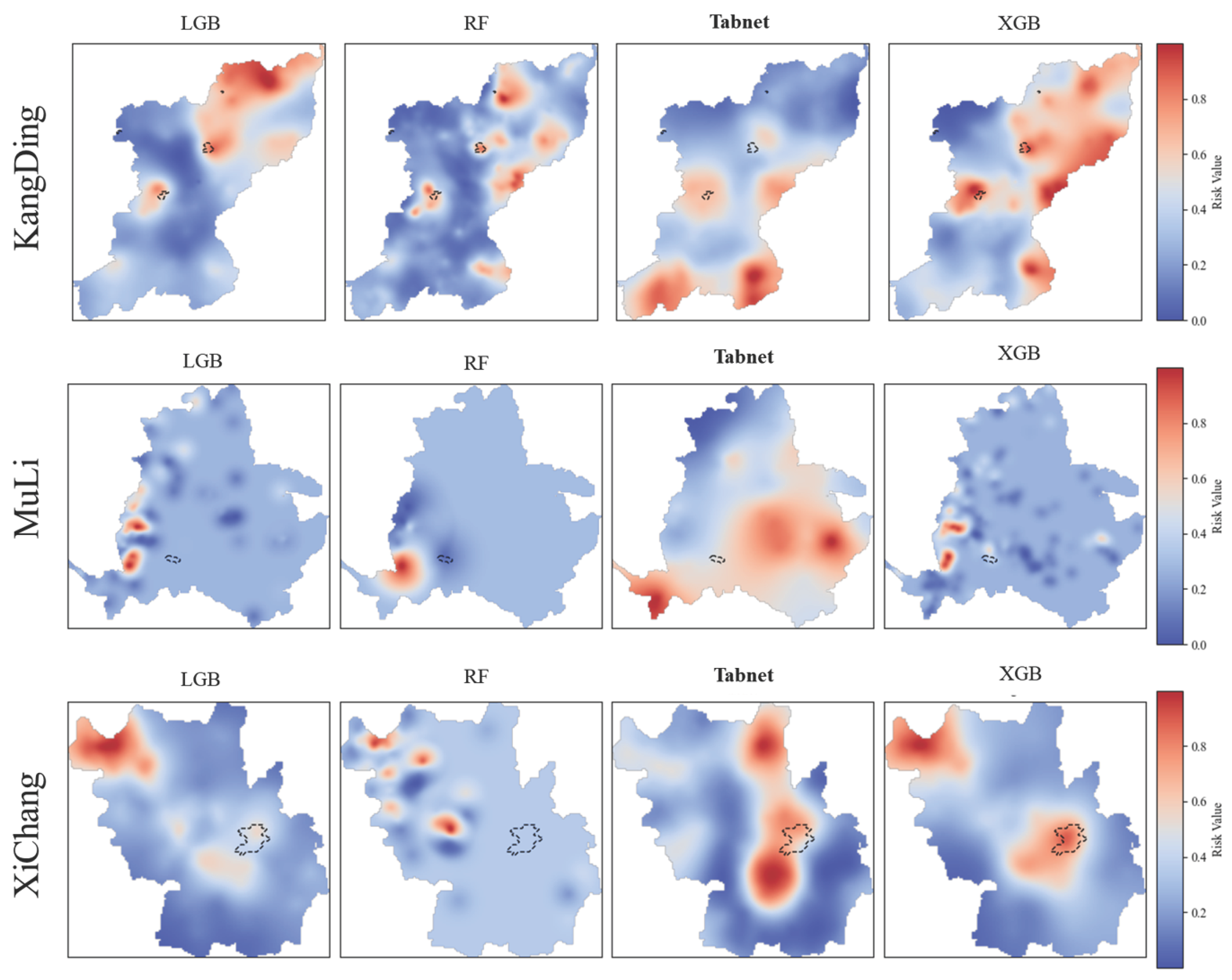
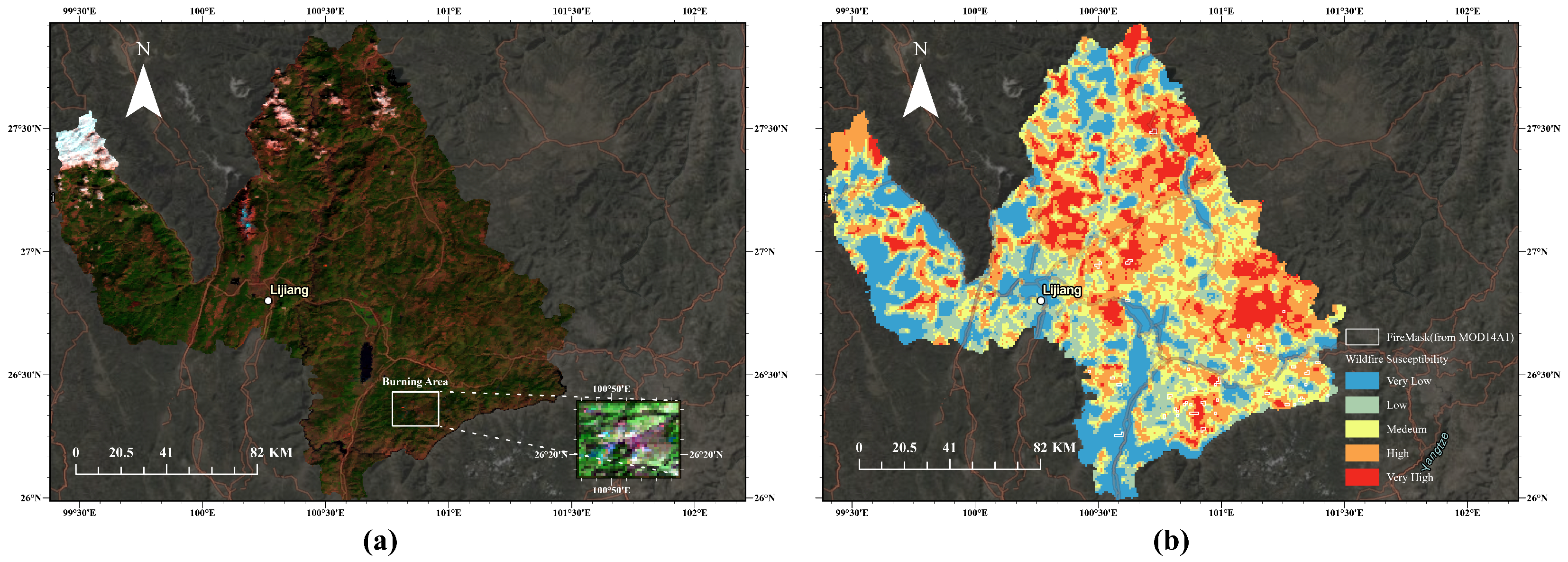
3.3. Case Study Results
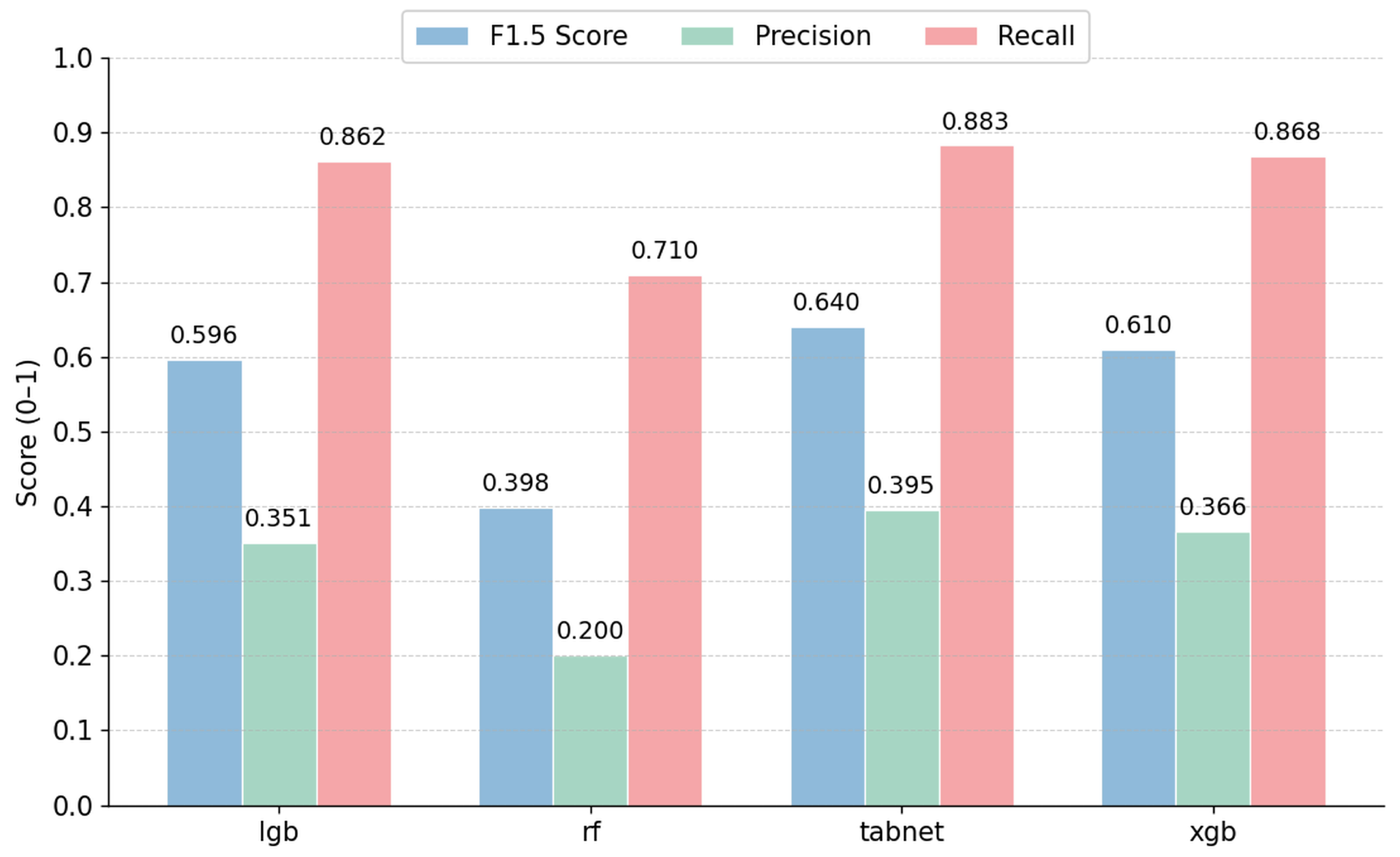
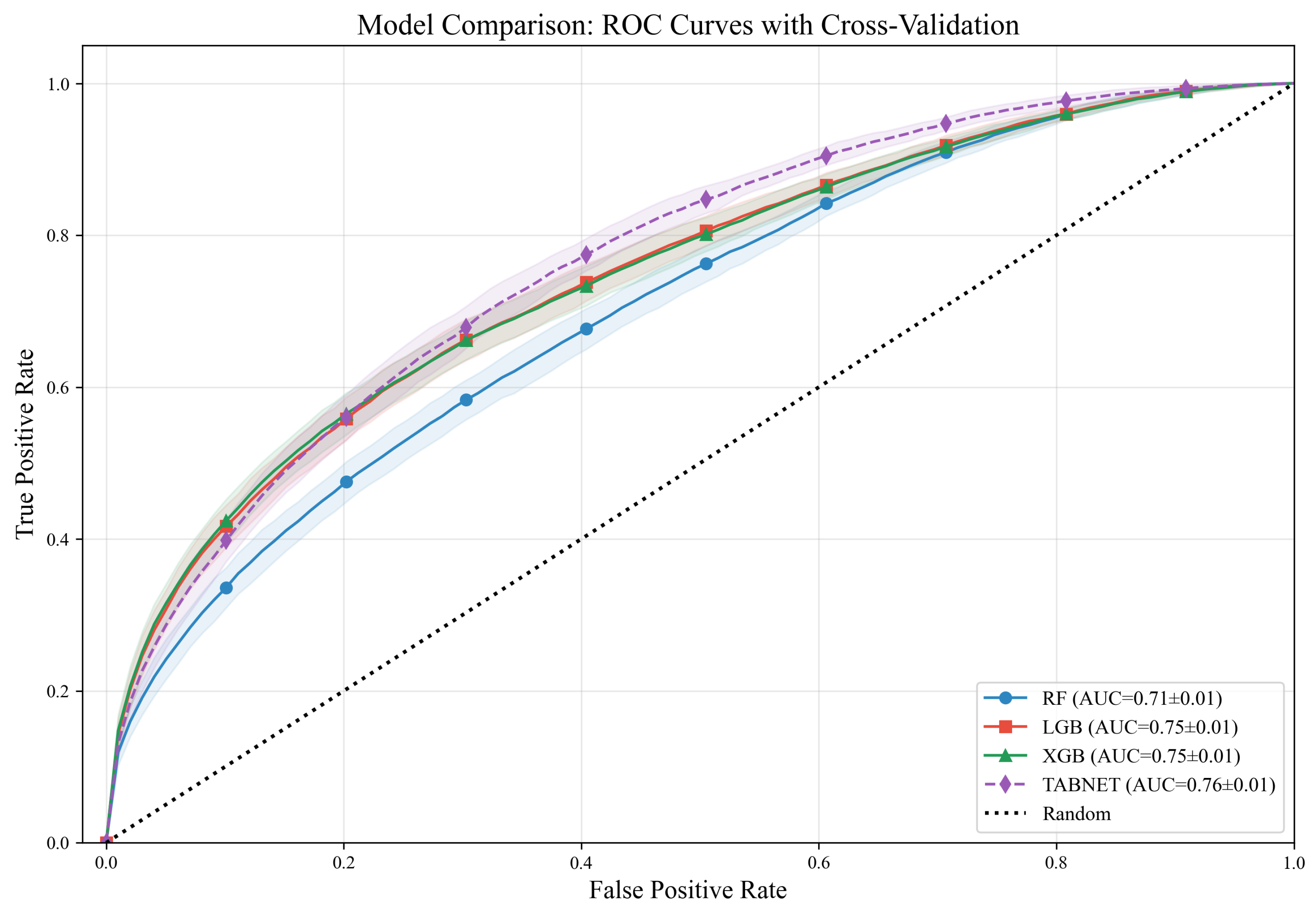
3.4. Model Comparison
4. Model Interpretability and Discussion
4.1. Model Performance and Weakness
4.1.1. Weakness Discussion Based on the Muli Case
4.1.2. Limitations and Stability Considerations
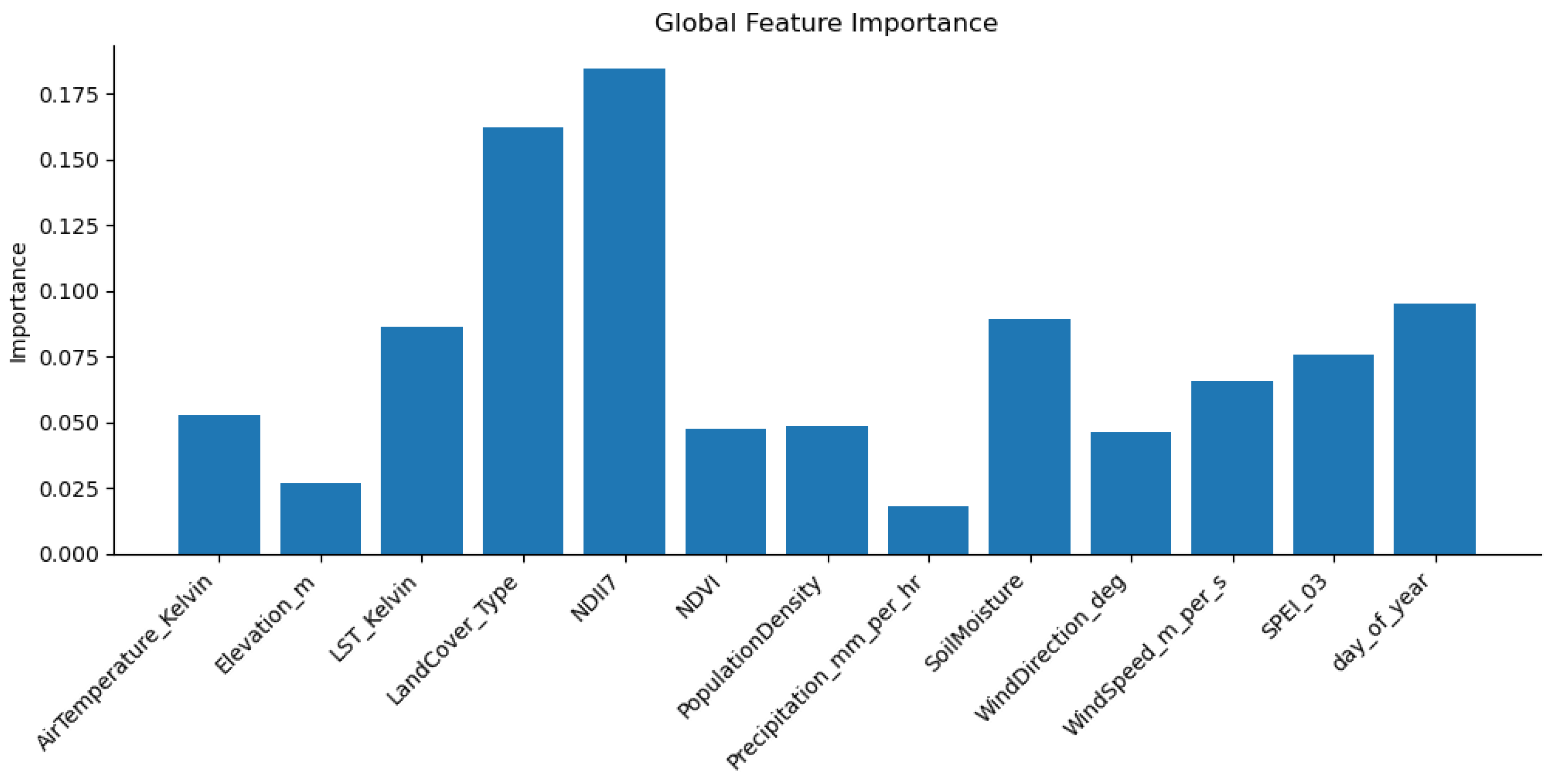
4.2. Feature Importance and Geographical Distribution
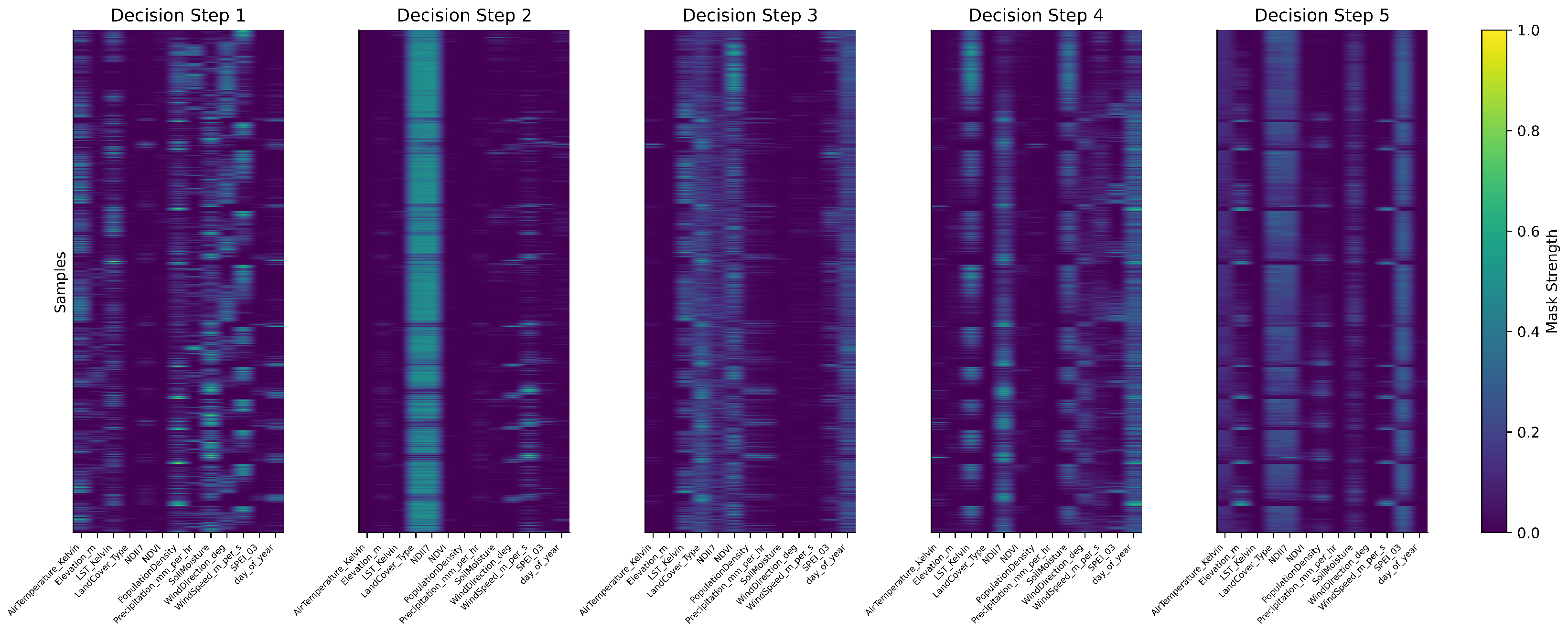
4.3. Interpretable Methods and Their Applications
Practical Application Value
5. Conclusions
Author Contributions
Funding
Data Availability Statement
Conflicts of Interest
Abbreviations
| GEE | Google Earth Engine |
| NDVI | Normalized Difference Vegetation Index |
| NDII | Normalized Difference Infrared Index |
References
- Canadell, J.G.; Meyer, C.P.; Cook, G.D.; Dowdy, A.; Briggs, P.R.; Knauer, J.; Pepler, A.; Haverd, V. Multi-decadal increase of forest burned area in Australia is linked to climate change. Nat. Commun. 2021, 12, 6921. [Google Scholar] [CrossRef]
- Kelly, L.T.; Giljohann, K.M.; Duane, A.; Aquilue, N.; Archibald, S.; Batllori, E.; Bennett, A.F.; Buckland, S.T.; Canelles, Q.; Clarke, M.F.; et al. Fire and biodiversity in the Anthropocene. Science 2020, 370, eabb0355. [Google Scholar] [CrossRef]
- Byrne, B.; Liu, J.; Bowman, K.W.; Pascolini-Campbell, M.; Chatterjee, A.; Pandey, S.; Miyazaki, K.; van der Werf, G.R.; Wunch, D.; Wennberg, P.O.; et al. Carbon emissions from the 2023 Canadian wildfires. Nature 2024, 633, 835–839. [Google Scholar] [CrossRef]
- Park, C.Y.; Takahashi, K.; Fujimori, S.; Jansakoo, T.; Burton, C.; Huang, H.; Kou-Giesbrecht, S.; Reyer, C.P.O.; Mengel, M.; Burke, E.; et al. Attributing human mortality from fire PM2.5 to climate change. Nat. Clim. Change 2024, 14, 1193–1200. [Google Scholar] [CrossRef]
- Burke, M.; Childs, M.L.; de la Cuesta, B.; Qiu, M.; Li, J.; Gould, C.F.; Heft-Neal, S.; Wara, M. The contribution of wildfire to PM2.5 trends in the USA. Nature 2023, 622, 761–766. [Google Scholar] [CrossRef]
- Kolden, C.A.; Abatzoglou, J.T.; Jones, M.W.; Jain, P. Wildfires in 2024. Nat. Rev. Earth Environ. 2025, 6, 367. [Google Scholar] [CrossRef]
- Luz, A.E.O.; Negri, R.G.; Massi, K.G.; Colnago, M.; Silva, E.A.; Casaca, W. Mapping Fire Susceptibility in the Brazilian Amazon Forests Using Multitemporal Remote Sensing and Time-Varying Unsupervised Anomaly Detection. Remote Sens. 2022, 14, 2429. [Google Scholar] [CrossRef]
- Üstek, İ; Arana-Catania, M.; Farr, A.; Petrunin, I. Deep Autoencoders for Unsupervised Anomaly Detection in Wildfire Prediction. Earth Space Sci. 2024, 11, e2024EA003997. [Google Scholar] [CrossRef]
- Barzani, A.R.; Pahlavani, P.; Ghorbanzadeh, O. Ensembling of decision trees, knn, and logistic regression with soft-voting method for wildfire susceptibility mapping. ISPRS Ann. Photogramm. Remote Sens. Spat. Inf. Sci. 2023, 10, 647–652. [Google Scholar] [CrossRef]
- Jiang, W.; Qiao, Y.; Zheng, X.; Zhou, J.; Jiang, J.; Meng, Q.; Su, G.; Zhong, S.; Wang, F. Wildfire risk assessment using deep learning in Guangdong Province, China. Int. J. Appl. Earth Obs. Geoinf. 2024, 128, 103750. [Google Scholar] [CrossRef]
- Wang, N.; Zhao, S.; Wang, S. A novel clustering-based resampling with cost-sensitive boosting method to model and map wildfire susceptibility. Reliab. Eng. Syst. Saf. 2024, 242, 109742. [Google Scholar] [CrossRef]
- Rui, C.; He, B.; Li, Y.; Zhang, Y.; Liao, Z.; Fan, C.; Yin, J.; Zhang, H. Incorporating fire spread simulation and machine learning algorithms to estimate crown fire potential for pine forests in Sichuan, China. Int. J. Appl. Earth Obs. Geoinf. 2024, 132, 104080. [Google Scholar]
- Sazib, N.; Bolten, J.D.; Mladenova, I.E. Leveraging NASA Soil Moisture Active Passive for Assessing Fire Susceptibility and Potential Impacts Over Australia and California. IEEE J. Sel. Top. Appl. Earth Obs. Remote Sens. 2022, 15, 779–787. [Google Scholar] [CrossRef]
- Ting, Y.; Li, J.; Ma, L.; Zhou, J.; Wang, R.; Eichhorn, M.P.; Zhang, H. Status, advancements and prospects of deep learning methods applied in forest studies. Int. J. Appl. Earth Obs. Geoinf. 2024, 131, 103938. [Google Scholar]
- Nur, A.S.; Kim, Y.J.; Lee, J.; Lee, C.W. Spatial Prediction of Wildfire Susceptibility Using Hybrid Machine Learning Models Based on Support Vector Regression in Sydney, Australia. Remote Sens. 2023, 15, 760. [Google Scholar] [CrossRef]
- Di Giuseppe, F.; McNorton, J.; Lombardi, A.; Wetterhall, F. Global data-driven prediction of fire activity. Nat. Commun. 2025, 16, 2918. [Google Scholar] [CrossRef]
- Bui, D.T.; Le, K.T.T.; Nguyen, V.C.; Le, H.D.; Revhaug, I. Tropical Forest Fire Susceptibility Mapping at the Cat Ba National Park Area, Hai Phong City, Vietnam, Using GIS-Based Kernel Logistic Regression. Remote Sens. 2016, 8, 347. [Google Scholar]
- Li, Y.; Xu, S.; Fan, Z.; Zhang, X.; Yang, X.; Wen, S.; Shi, Z. Risk Factors and Prediction of the Probability of Wildfire Occurrence in the China-Mongolia-Russia Cross-Border Area. Remote Sens. 2023, 15, 42. [Google Scholar] [CrossRef]
- Sun, Y.; Zhang, F.; Lin, H.; Xu, S. A Forest Fire Susceptibility Modeling Approach Based on Light Gradient Boosting Machine Algorithm. Remote Sens. 2022, 14, 4362. [Google Scholar] [CrossRef]
- Janizadeh, S.; Tran, T.T.K.; Bateni, S.M.; Jun, C.; Kim, D.; Trauernicht, C.; Heggy, E. Advancing the LightGBM approach with three novel nature-inspired optimizers for predicting wildfire susceptibility in Kauaʻi and Molokaʻi Islands, Hawaii. Expert Syst. Appl. 2024, 258, 124963. [Google Scholar] [CrossRef]
- Xie, L.; Zhang, R.; Zhan, J.; Li, S.; Shama, A.; Zhan, R.; Wang, T.; Lv, J.; Bao, X.; Wu, R. Wildfire Risk Assessment in Liangshan Prefecture, China Based on An Integration Machine Learning Algorithm. Remote Sens. 2022, 14, 4592. [Google Scholar] [CrossRef]
- Zhang, G.; Wang, M.; Liu, K. Deep neural networks for global wildfire susceptibility modelling. Ecol. Indic. 2021, 127, 107735. [Google Scholar] [CrossRef]
- Kanwal, R.; Rafaqat, W.; Iqbal, M.; Song, W. Data-Driven Approaches for Wildfire Mapping and Prediction Assessment Using a Convolutional Neural Network (CNN). Remote Sens. 2023, 15, 5099. [Google Scholar] [CrossRef]
- Rezaie, F.; Panahi, M.; Bateni, S.M.; Lee, S.; Jun, C.; Trauernicht, C.; Neale, C.M.U. Development of novel optimized deep learning algorithms for wildfire modeling: A case study of Maui, Hawai‘i. Eng. Appl. Artif. Intell. 2023, 125, 106699. [Google Scholar] [CrossRef]
- Iban, M.C.; Aksu, O. SHAP-Driven Explainable Artificial Intelligence Framework for Wildfire Susceptibility Mapping Using MODIS Active Fire Pixels: An In-Depth Interpretation of Contributing Factors in Izmir, Türkiye. Remote Sens. 2024, 16, 2842. [Google Scholar] [CrossRef]
- Abdollahi, A.; Pradhan, B. Explainable artificial intelligence (XAI) for interpreting the contributing factors feed into the wildfire susceptibility prediction model. Sci. Total Environ. 2023, 879, 163004. [Google Scholar] [CrossRef]
- Ramayanti, S.; Kim, B.; Park, S.; Lee, C.W. Wildfire susceptibility mapping by incorporating damage proxy maps, differenced normalized burn Ratio, and deep learning algorithms based on sentinel-1/2 data: A case study on Maui Island, Hawaii. GIScience Remote Sens. 2024, 61, 2353982. [Google Scholar] [CrossRef]
- Arik, S.; Pfister, T. TabNet: Attentive Interpretable Tabular Learning. Proc. AAAI Conf. Artif. Intell. 2021, 35, 6679–6687. [Google Scholar] [CrossRef]
- Li, W.; Kang, J.; Wang, Y. Exploring the interactions and driving factors among typical ecological risks based on ecosystem services: A case study in the Sichuan-Yunnan ecological barrier area. Ecol. Indic. 2025, 170, 113000. [Google Scholar] [CrossRef]
- Ying, L.; Cheng, H.; Shen, Z.; Guan, P.; Luo, C.; Peng, X. Relative humidity and agricultural activities dominate wildfire ignitions in Yunnan, Southwest China: Patterns, thresholds, and implications. Agric. For. Meteorol. 2021, 307, 108540. [Google Scholar] [CrossRef]
- Du, J.; Wang, K.; Cui, B. Attribution of the Extreme Drought-Related Risk of Wildfires in Spring 2019 over Southwest China. Bull. Am. Meteorol. Soc. 2021, 102, S83–S90. [Google Scholar] [CrossRef]
- Yin, J.; He, B.; Fan, C.; Chen, R. Fire has become a major disturbance agent in the forests of Southwest China. Ecol. Indic. 2024, 160. [Google Scholar] [CrossRef]
- Xing, H.; Fang, K.; Yao, Q.; Zhou, F.; Ou, T.; Liu, J.; Zhou, S.; Jiang, S.; Chen, Y.; Bai, M.; et al. Impacts of changes in climate extremes on wildfire occurrences in China. Ecol. Indic. 2023, 157, 111288. [Google Scholar] [CrossRef]
- Jiao, M.; Quan, X.; Yao, J.; Wang, W. How Does the Management Paradigm Contain Wildfire Over Southwest China? Evidence From Remote Sensing Observation. IEEE Geosci. Remote Sens. Lett. 2023, 20, 2504205. [Google Scholar] [CrossRef]
- Liu, J.; Wang, Y.; Lu, Y.; Zhao, P.; Wang, S.; Sun, Y.; Luo, Y. Application of Remote Sensing and Explainable Artificial Intelligence (XAI) for Wildfire Occurrence Mapping in the Mountainous Region of Southwest China. Remote Sens. 2024, 16, 3602. [Google Scholar] [CrossRef]
- Wilson, N.R.; Norman, L.M. Analysis of vegetation recovery surrounding a restored wetland using the normalized difference infrared index (NDII) and normalized difference vegetation index (NDVI). Int. J. Remote Sens. 2018, 39, 3243–3274. [Google Scholar] [CrossRef]
- Giglio, L.; Loboda, T.; Roy, D.P.; Quayle, B.; Justice, C.O. An active-fire based burned area mapping algorithm for the MODIS sensor. Remote Sens. Environ. 2009, 113, 408–420. [Google Scholar] [CrossRef]





| Data Type | Description | Data Source |
|---|---|---|
| Soil Moisture | Monthly average soil moisture at 0–10 cm depth | NASA/FLDAS/NOAH01/C/GL/M/V001 |
| SPEI_03 | 3-month Standardized Precipitation Evapotranspiration Index (SPEI) | CSIC/SPEI/2–9 |
| FireMask | Binary mask indicating fire points | MODIS/061/MOD14A1 |
| NDII7 | Short-wave infrared moisture index, calculated from MODIS reflectance bands | MODIS/006/MOD09GA |
| Precipitation | Daily total precipitation in mm | NASA/GPM_L3/IMERG_V07 |
| LST | Daily land surface temperature in Kelvin | MODIS/061/MOD11A1 |
| Wind Speed | Daily maximum wind speed at 10 m height in m/s | ECMWF/ERA5/DAILY |
| Wind Direction | Wind direction at 10 m height in degrees | ECMWF/ERA5/DAILY |
| Air Temperature | 2 m daily mean air temperature in Celsius | ECMWF/ERA5/DAILY |
| Elevation | 30 m digital elevation model in meters | USGS/SRTMGL1_003 |
| NDVI | 16-day composite vegetation index | MODIS/061/MOD13A1 |
| Land Cover | IGBP classification of land cover types | MODIS/061/MCD12Q1 |
| Population Density | Gridded population density (persons per unit area) | CIESIN/GPWv411/GPW_Population_Density |
| Day of the Year | Fire occurrence day in the year | MODIS/061/MCD64A1 |
| Component | Setting/Rule | Value/Notes |
|---|---|---|
| Study period | Temporal coverage of all variables and labels | January 2010 to September 2020 |
| Spatial grid | Target spatial resolution and grid definition | 1 km × 1 km; CRS: EPSG:4326 (WGS84) |
| Resampling (continuous) | Resampling/aggregation method for continuous predictors | Nearest-neighbor aggregation/resampling on GEE (applied to continuous predictors after harmonization to 1 km) |
| Resampling (categorical) | Resampling method for categorical predictors (land cover) | As described in Section 2.2 (IGBP land-cover classes preserved during 1 km harmonization); exact categorical resampling operator not separately reported |
| Fire label definition | Positive and negative label mapping from MOD14A1 FireMask | Positive (fire): FireMask = 7, 8, 9; Negative (non-fire): FireMask = 5 |
| Fire label exclusions | Excluded FireMask categories (invalid/unobserved conditions) | Not explicitly reported in the main text; see the released dataset documentation and sampling script/configuration in the GitHub repository https://github.com/machenyu2023/wildfire-dataset (accessed on 28 December 2025) |
| Sampling design | Spatial sampling rule for positives and negatives | Positive samples randomly selected within buffers around historical fire detections; negative samples randomly drawn from areas outside all buffers |
| Buffer radius | Radius for spatial separation around historical fire detections | 5 km |
| Sampling balance | Class balance and sampling size control | Final dataset size: ; class ratio/ stratification scheme not separately reported (see repository documentation) |
| Randomness control | Random seed(s) for sampling and preprocessing | Random seed(s) not separately reported in the manuscript; see repository documentation |
| Missing value handling | Masking/imputation rule prior to modeling | Not separately reported; missing values and outliers were handled during data cleaning (see Section 2.2 and repository documentation) |
| Outlier screening | Outlier detection algorithm and hyperparameters | Isolation Forest used for outlier identification; hyperparameters not separately reported (see repository documentation) |
| Outlier impact | Fraction of samples removed as outliers (optional but recommended) | Not separately reported |
| Data versioning | Dataset identifiers (GEE collection/version IDs) | All input datasets and GEE collection/version IDs are listed in Table 1 (Data Sources) |
| Hyperparameter | Definition | Search Space | Selected |
|---|---|---|---|
| Decision layer dimension in feature processing | {8, 16, 24} | 16 | |
| Attention layer width for feature selection | {8, 16, 24} | 16 | |
| Number of sequential processing steps | {4, 5, 6} | 6 | |
| Mask relaxation coefficient (sparsity control) | {1.0, 1.2} | 1.0 | |
| Independent GLU blocks per step | {1, 2} | 1 | |
| Shared GLU blocks across steps | {2, 3} | 2 | |
| Regularization for sparse feature selection | {0.001, 0.005, 0.01} | 0.001 | |
| Learning rate | Learning rate configuration | {0.002, 0.005} | 0.005 |
| Dataset | Samples (n) | Features (d) | Precision | Recall | |
|---|---|---|---|---|---|
| Validation | 48,433 | 13 | 0.9701 | 0.9274 | 0.9903 |
| Test | 26,763 | 13 | 0.7746 | 0.5416 | 0.9577 |
| Location | Date | MODIS Fire Points (n) | Matched (n) | Rate (%) |
|---|---|---|---|---|
| XiChang | 30 March 2020 | 41 | 13 | 31.7 |
| MuLi | 16 January 2017 | 28 | 0 | 0.0 |
| MuLi | 30 March 2020 | 109 | 86 | 78.9 |
| LiJiang | 7 February 2017 | 89 | 45 | 50.6 |
| KangDing | 28 February 2013 | 45 | 20 | 44.4 |
| Region | Samples | Random Forest | LightGBM | XGBoost | TabNet | ||||||||
|---|---|---|---|---|---|---|---|---|---|---|---|---|---|
| Fires | >70% | >90% | Fires | >70% | >90% | Fires | >70% | >90% | Fires | >70% | >90% | ||
| Xichang | 2434 | 1814 | 74.5 | 0.0 | 1510 | 62.0 | 0.2 | 1397 | 12.6 | 0.1 | 807 | 13.8 | 2.9 |
| Kangding | 13,355 | 8508 | 63.7 | 0.0 | 4197 | 5.7 | 0.5 | 3676 | 6.8 | 0.3 | 4443 | 19.5 | 4.5 |
| Muli (2017) | 15,000 | 205 | 1.4 | 0.0 | 395 | 1.0 | 0.2 | 839 | 1.0 | 0.2 | 456 | 1.2 | 0.3 |
Disclaimer/Publisher’s Note: The statements, opinions and data contained in all publications are solely those of the individual author(s) and contributor(s) and not of MDPI and/or the editor(s). MDPI and/or the editor(s) disclaim responsibility for any injury to people or property resulting from any ideas, methods, instructions or products referred to in the content. |
© 2026 by the authors. Licensee MDPI, Basel, Switzerland. This article is an open access article distributed under the terms and conditions of the Creative Commons Attribution (CC BY) license.
Share and Cite
Ma, C.; Yang, S.; Cui, J.; Li, Q.; Yao, Q.; Zhang, D.; Guo, J.; Wang, X.; Qu, C. Applying an Interpretable Deep Learning Model to Identify Wildfire-Prone Areas in Southwest China. Fire 2026, 9, 107. https://doi.org/10.3390/fire9030107
Ma C, Yang S, Cui J, Li Q, Yao Q, Zhang D, Guo J, Wang X, Qu C. Applying an Interpretable Deep Learning Model to Identify Wildfire-Prone Areas in Southwest China. Fire. 2026; 9(3):107. https://doi.org/10.3390/fire9030107
Chicago/Turabian StyleMa, Chenyu, Siquan Yang, Jing Cui, Qiang Li, Qichao Yao, De Zhang, Jiachang Guo, Xinqian Wang, and Chong Qu. 2026. "Applying an Interpretable Deep Learning Model to Identify Wildfire-Prone Areas in Southwest China" Fire 9, no. 3: 107. https://doi.org/10.3390/fire9030107
APA StyleMa, C., Yang, S., Cui, J., Li, Q., Yao, Q., Zhang, D., Guo, J., Wang, X., & Qu, C. (2026). Applying an Interpretable Deep Learning Model to Identify Wildfire-Prone Areas in Southwest China. Fire, 9(3), 107. https://doi.org/10.3390/fire9030107