3.1. Burning Process
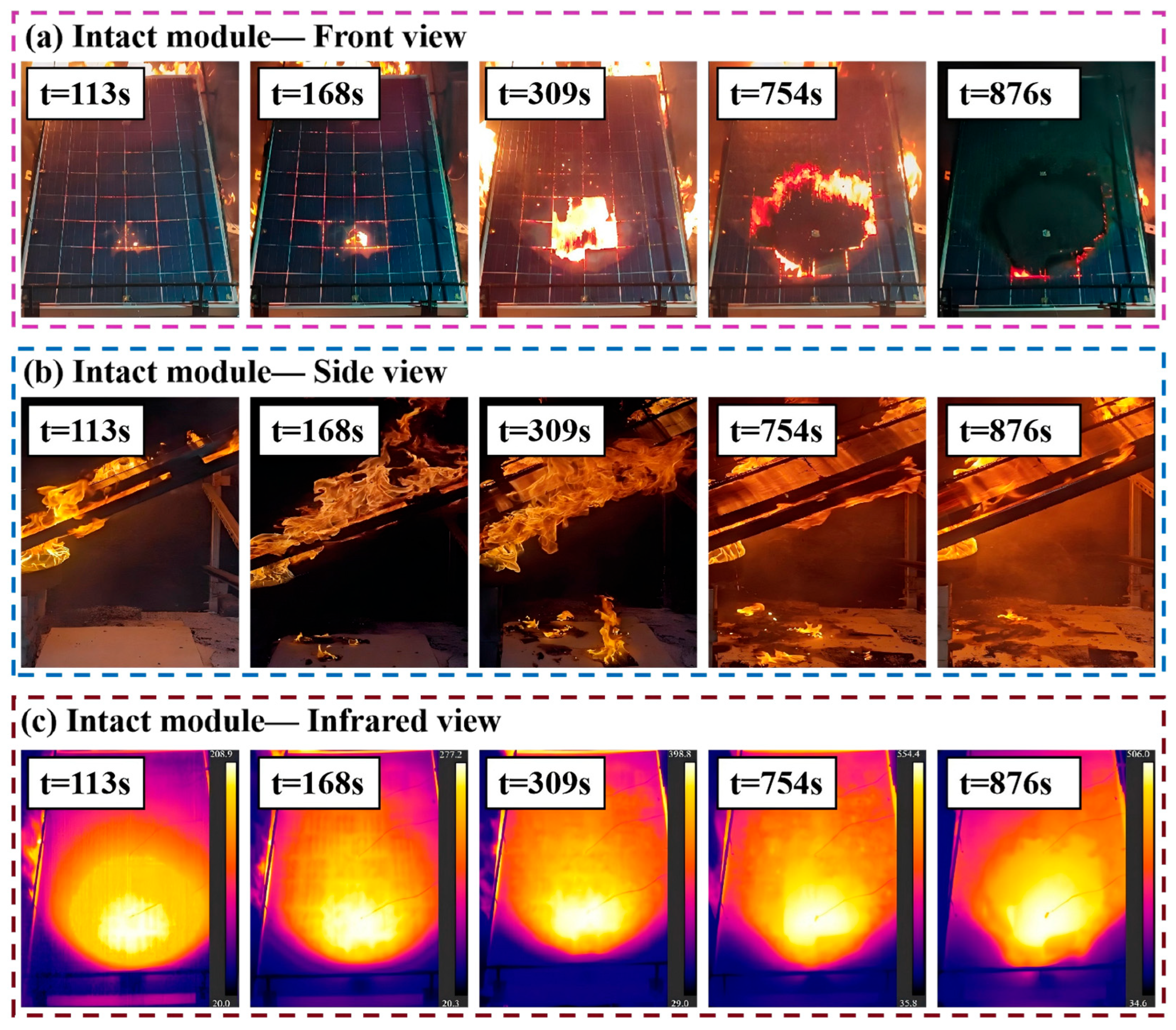
Figure 2 illustrates the front and side views, as well as infrared thermal images, of an intact PV module at a 30° inclination angle under a representative test condition (Test No. 3), all captured at the same time instants. As demonstrated in
Figure 2a, the height of the pool fire increased rapidly, with its flame spreading along the backsheet of the PV module after ignition. Under the radiative heating of the fire plume, a grayish blistering region appeared on the module surface directly above the pool fire. As the pool fire continued to burn, this grayish region progressively expanded, and the crystalline silicon cells located above the fire began to crack and spall off. Meanwhile, the side view in
Figure 2b shows that the burn damage of the PV module was accompanied by dripping of molten droplets, and these molten dripping flames continued to burn for a period after reaching the fireproof fabric. Once the silicon cells had fragmented, the tempered glass was directly exposed to the flame. At this stage, both the dripping frequency and the burning duration of the molten dripping flames began to decrease. Eventually, as the pool fire was gradually extinguished, the degree of burning damage to the PV modules ceased to expand, the dripping phenomenon stopped, and the molten dripping flames on the fireproof fabric gradually faded away, with no sustained combustion observed. Details of the burning process are provided in the
Supplementary Materials.
Figure 2c shows the temperature distribution on the front surface of the intact PV module at the corresponding moment. It can be clearly observed from the figure that after exposure to the pool fire, the front surface of the intact PV module exhibited a rapid temperature rise, with a notable temperature gradient formed on its surface. As the pool fire persisted in burning, the overall temperature of the module’s front surface rose slowly, the high-temperature zone continued to expand, and the temperature in the areas where crystalline silicon cells had detached was significantly higher than that in the areas where they remained attached. Eventually, the pool fire gradually diminished and was extinguished, and the overall surface temperature of the PV module gradually decreased.
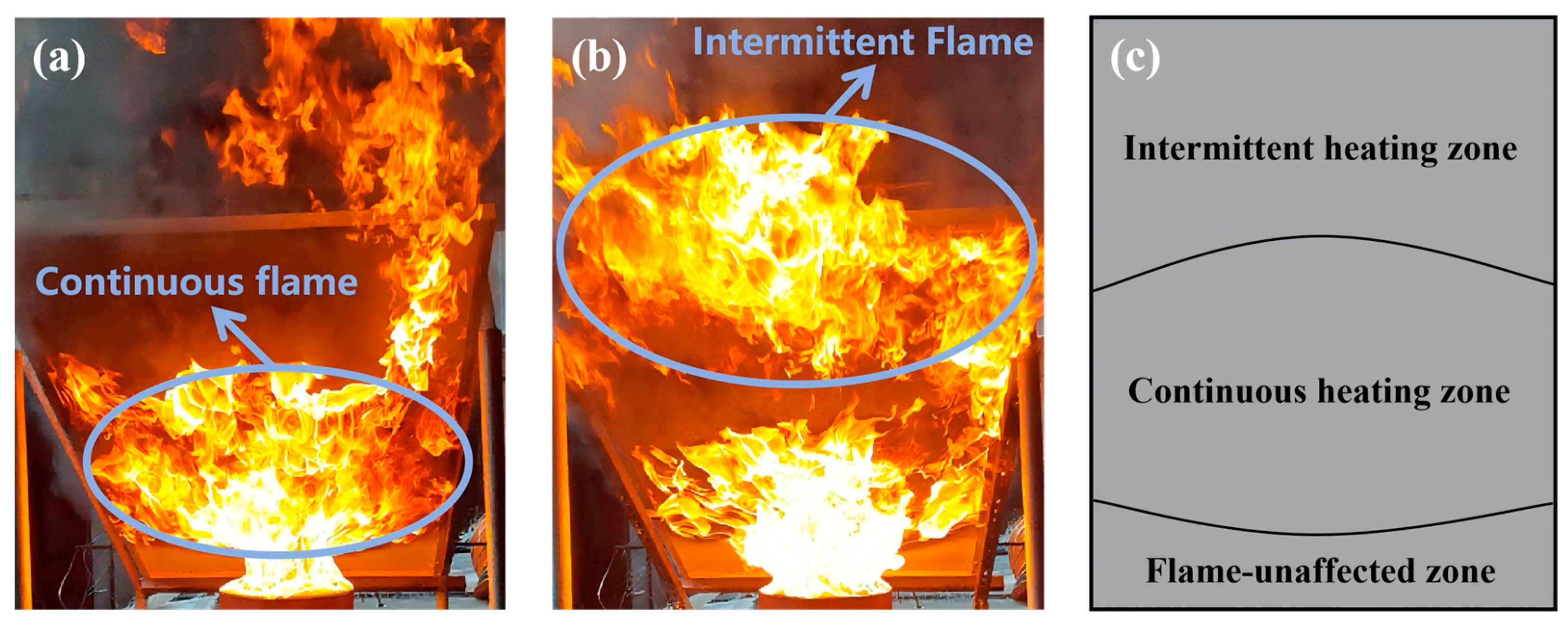
Figure 3 presents a flame morphology diagram and schematic of the flame-affected zone on the backsheet. It can be distinctly observed that the external flame beneath the PV module could not fully cover its backsheet. Based on the flame coverage on the PV module backsheet under different inclination angles, the PV module could be divided into three zones: the flame-unaffected zone, the continuous heating zone, and the intermittent heating zone, as illustrated in
Figure 3c. Combined with the systematic analysis depicted in
Figure 2, there existed distinct differences in the temperature-rise characteristics and burning behaviors across the three zones of the PV module. The temperature of the flame-unaffected zone was significantly lower than that of the other zones, and no ignition of the TPT film backsheet was observed in this zone. The flame in the continuous heating zone remained stably attached to the PV module, exhibiting the highest temperature-rise rate and burning damage rate, thereby resulting in the most severe degradation of the module throughout the fire exposure period. The intermittent heating zone, affected by air entrainment, experienced intermittent contact between the pool fire plume and the TPT film backsheet, resulting in a lower temperature compared to that of the continuous heating zone. There was a direct correlation between the temperature characteristics, burning damage severity, and the flame contact conditions.
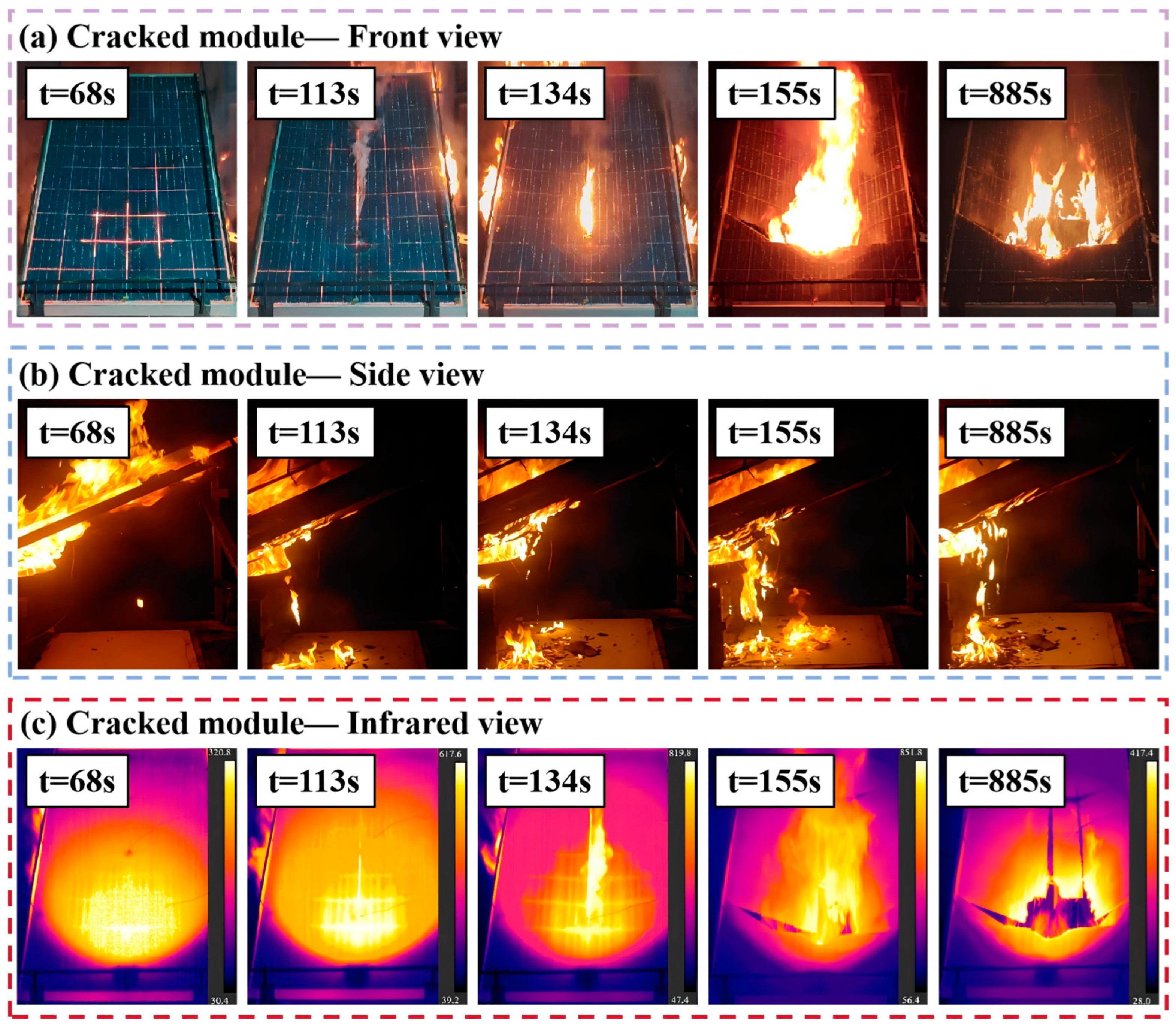
To clarify the differences between intact and cracked modules under the pool fire,
Figure 4 presents the front view, side view, and simultaneous infrared images of the cracked module at a 30° inclination angle under the corresponding condition (Test No. 8). Compared to intact PV modules, the burning process of the cracked modules was significantly faster. The backsheet of the cracked module initiated the rapid generation of molten dripping flames, which mostly demonstrated spontaneous self-extinction during their descent. Subsequently, longitudinal surface fissures propagated across the cracked PV module, with flames and copious quantities of gas issuing from the fissures. Concurrently, the backsheet sustainably generated molten dripping flames that sustained combustion over a brief duration upon dripping onto the ground. As the pool fire continued to burn, the flames penetrated the longitudinal surface fissures, accompanied by the generation of a substantial amount of molten dripping flames that combusted persistently upon contacting the ground. Under sustained exposure to the external fire source, extensive detachment was observed on the cracked module. The pool fire directly penetrated the module rather than propagating along its backsheet, with the delaminated components persisting in combustion on the fireproof fabric placed beneath the module. Ultimately, the pool fire diminished progressively, with sustained stable flames occurring at the edges of the module burn-through zones. Concurrently, the dripping frequency and combustion duration of the molten dripping flames exhibited a gradual reduction.
Figure 4b presents the surface temperature distribution characteristics of the cracked module. It could be distinctly observed that the cracked module underwent a rapid temperature rise upon exposure to the pool fire, with its temperature at corresponding time points being significantly higher than that of the intact module. Subsequently, the high-temperature zone was penetrated by the pool fire, and fissures propagated around the burn-through zone, with high-temperature flames issuing from both the burn-through zone and the fissures. With the pool fire continuing to burn, the cracked module experienced extensive fragmentation and spalling across its structure. The pool fire directly penetrated burn-through zones, thereby compromising the heat transfer capability of the module and resulting in a diminished spatial extent of the surface high-temperature zone. Ultimately, as the pool fire progressively diminished, the high-temperature zone on the module surface experienced continuous contraction, and the surface temperature exhibited a gradual reduction, while the temperature at the edges of the burn-through zone maintained a relatively heightened level.
As can be inferred from the preceding descriptions, the burning process of intact modules was relatively sluggish with a lower overall surface temperature. Conversely, the cracked module exhibited an accelerated burning process and was therefore susceptible to rapid penetration by the pool fire. Meanwhile, both the continuous dripping duration and the combustion time of the molten dripping flames of the cracked modules were significantly longer than those of the intact PV modules. This phenomenon indicated that the integrity of the front glass was a critical factor determining the fire resistance of the PV modules.
3.2. Temperature Characteristics
During the burning process, the temperature fields of both the front glass and backsheet of the PV modules demonstrated a non-uniform distribution, with a pronounced temperature gradient.
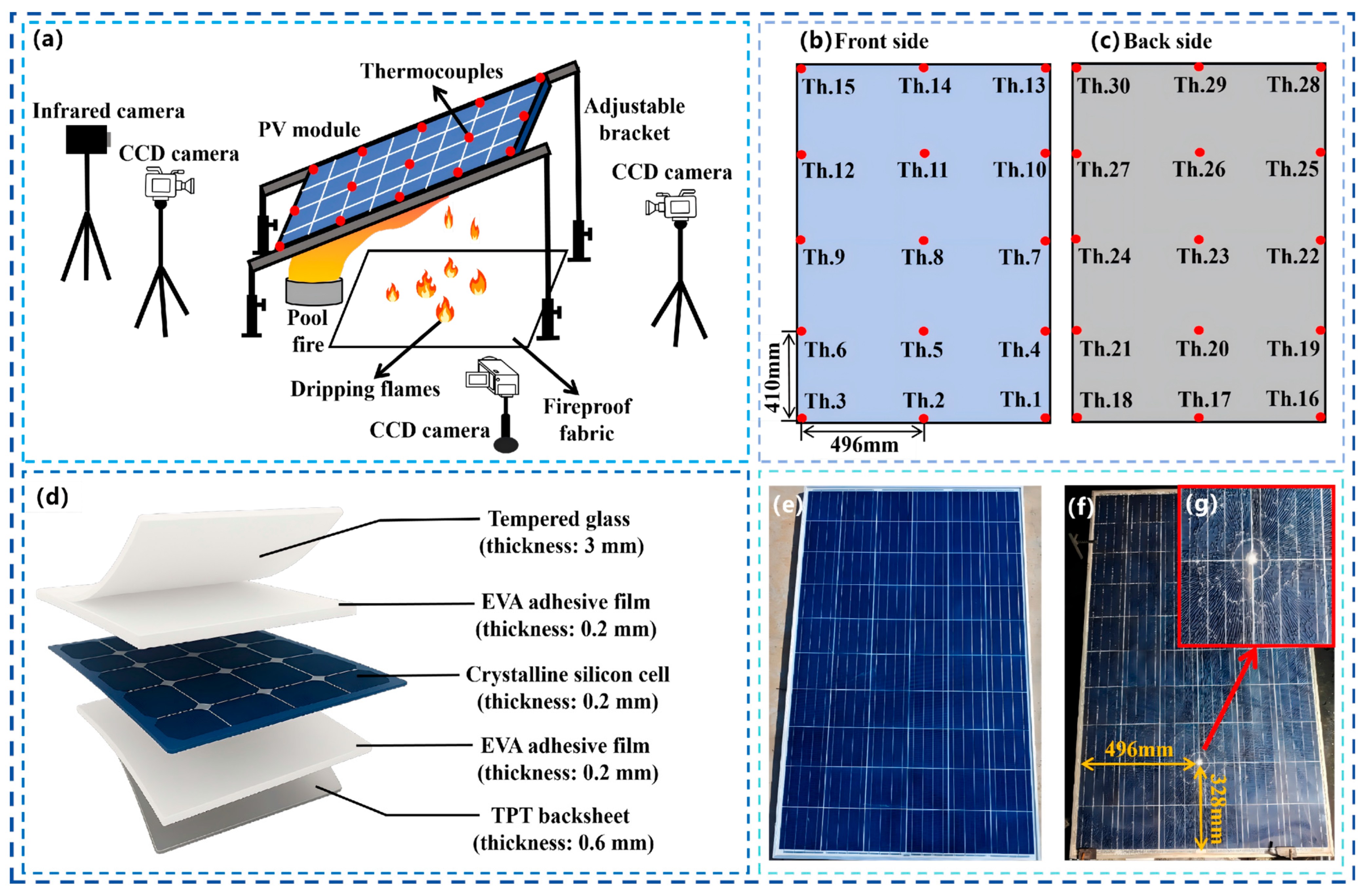
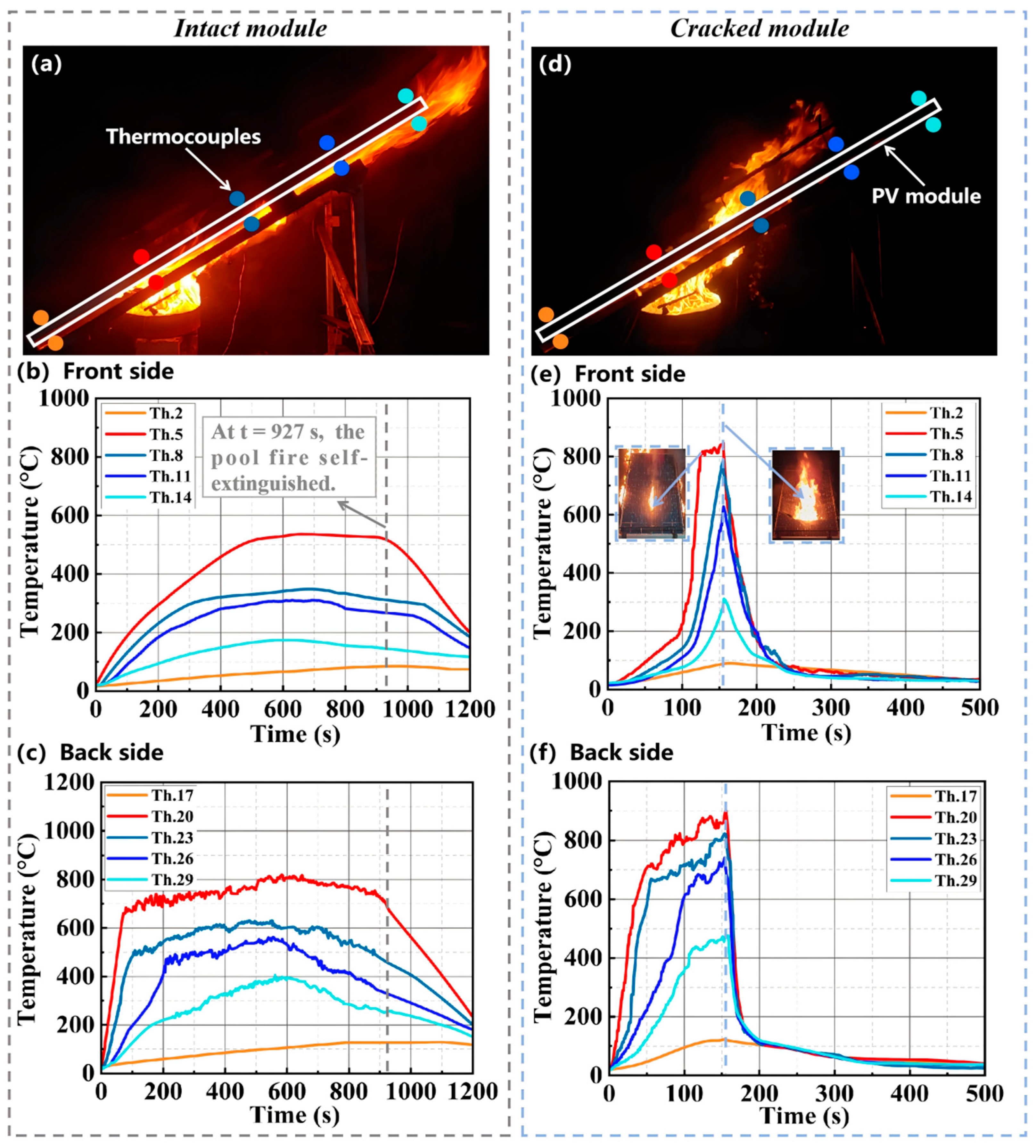
Figure 5 presents the temperature variation curves for ten temperature measurement locations along the central axis of the module’s front surface and backsheet, using Test 3 (30°, intact) and Test 8 (30°, cracked) as representative cases.
Figure 5b illustrates that under pool fire exposure, the temperatures of five measurement points on the front surface of the intact module first rose rapidly, followed by a more gradual increase, and ultimately decreased as the pool fire weakened and was extinguished. Among these points, Th.5—located directly above the fire source and closest to the pool fire—exhibited the fastest temperature rise, with a peak temperature of 537.4 °C, which was 1.55 times that of the peak temperature at Th.8. This was primarily attributed to the fact that Th.8 was farther from the external fire source and thus subjected to a lower incident radiative heat flux. As the distance from the fuel pool center increased, the temperature-rise rates at Th.11 and Th.14 decreased further. Notably, before the pool fire was extinguished, the temperature at Th.2 (near the module bottom) increased almost linearly at a nearly constant rate, reaching a maximum of only 84.6 °C—markedly lower than those recorded at the other thermocouples. Furthermore, as the external fire steadily subsided and was fully extinguished, the temperatures at the other locations exhibited noticeable fluctuations, whereas the temperature at Th.2 displayed significantly smoother variations. This behavior stemmed from the observation that, under the tested conditions, most of the backsheet was directly engulfed by the pool fire, while the region surrounding Th.2 did not come into direct contact with the flame. Consequently, the temperature rise at Th.2 was dominated by heat conduction within the PV module.
As shown in
Figure 5c, both the temperature-rise rates and peak temperatures at the corresponding points on the backsheet of the intact module were significantly higher than those on the front surface. For example, the maximum temperature at Th.20, which was located directly above the fire source on the backsheet, reached 813.5 °C. In contrast, the peak temperature at the corresponding front-surface point Th.5 was only 66% of this value. At the bottom of the module, Th.17, which was not directly in contact with the pool fire, maintained a relatively low temperature and exhibited an almost linear increase similar to that of the front-surface point Th.2, but its temperature was still markedly higher than that at Th.2. This was mainly because the pool fire directly heated the back surface of the PV module, and the multilayer laminated polymer composition of the PV module behaved as a thermally thick material, so that heat transfer to the front surface required a finite time [
22]. In addition, the backsheet temperature was influenced by the comprehensive effects of the external fire and combustion of the encapsulated polymer materials, leading to small-amplitude oscillations in the temperature curves.
Overall, a combined analysis of the front-side and back-side temperature trend indicated a strong correlation between the temperature-rise characteristics at the corresponding positions, while zones subjected to different flame-attachment conditions exhibited distinctly different temperature tendencies. This observation was consistent with the exponential temperature decay model proposed by Liu [
23]. As the distance from the fire source increased, the temperature of the photovoltaic modules followed a clear exponential decay pattern. This behavior suggested that the rate of temperature decrease accelerated with distance, thereby confirming the consistent pattern of heat transfer and temperature decay under inclined fire source conditions.
Figure 5e,f present the temperature histories along the centerline of the cracked PV module. Under pool fire exposure, the temperature of the cracked module rose sharply. At t = 134 s, the external fire source burned through the module, and the flame penetrated the vertical crack, causing the temperature at Th.5 to surge rapidly to 809.2 °C. By t = 155 s, large-scale fracture and spalling of the module occurred, and the temperatures at the front-side measurement points reached their respective maximum values. Subsequently, the external flames broke through the burn-through zones rather than continuously impinging on the backsheet, resulting in a steep decline in the module temperature. Meanwhile, the temperatures of the back side at various locations also plummeted abruptly after attaining their peak values, with a pronounced temperature gradient evident between thermocouples at the centerline.
Compared with the intact module, both the temperature-rise rates and peak temperatures at the measuring points of the cracked module were significantly higher, indicating a more intense thermal response. This was mainly because cracks in the front glass of the cracked module facilitate air ingress into the encapsulation layers, thereby accelerating the heating of the EVA encapsulant to its ignition conditions and promoting more vigorous combustion.
Based on the above analysis, the temperature-rise characteristics of single-glass PV modules exhibited distinct spatial variations across different locations. To further quantify the temperature-rise rates in different flame contact zones, a CCD camera deployed behind the PV module was used to record the flame contact area on the PV module during the steady burning stage, and the video data were post-processed in MATLAB 2023 to divide the module into different flame-affected zones according to the definitions given in
Section 3.1. Subsequently, in combination with the temperature data from the measurement points within each region and using Equation (1), the average temperature-rise rates of the front and back surfaces were calculated for each region, thus facilitating the precise quantification of region-specific thermal response under different inclination angles and front-glass integrity conditions.
where
represents the average temperature-rise rate, °C/s;
and
refer to the maximum and initial temperatures at the measurement point respectively, °C;
represents the time from ignition of the external fire source to the moment when the temperature at the measurement point
i reaches its peak value (s); and
represents the number of measurement points within the zone.
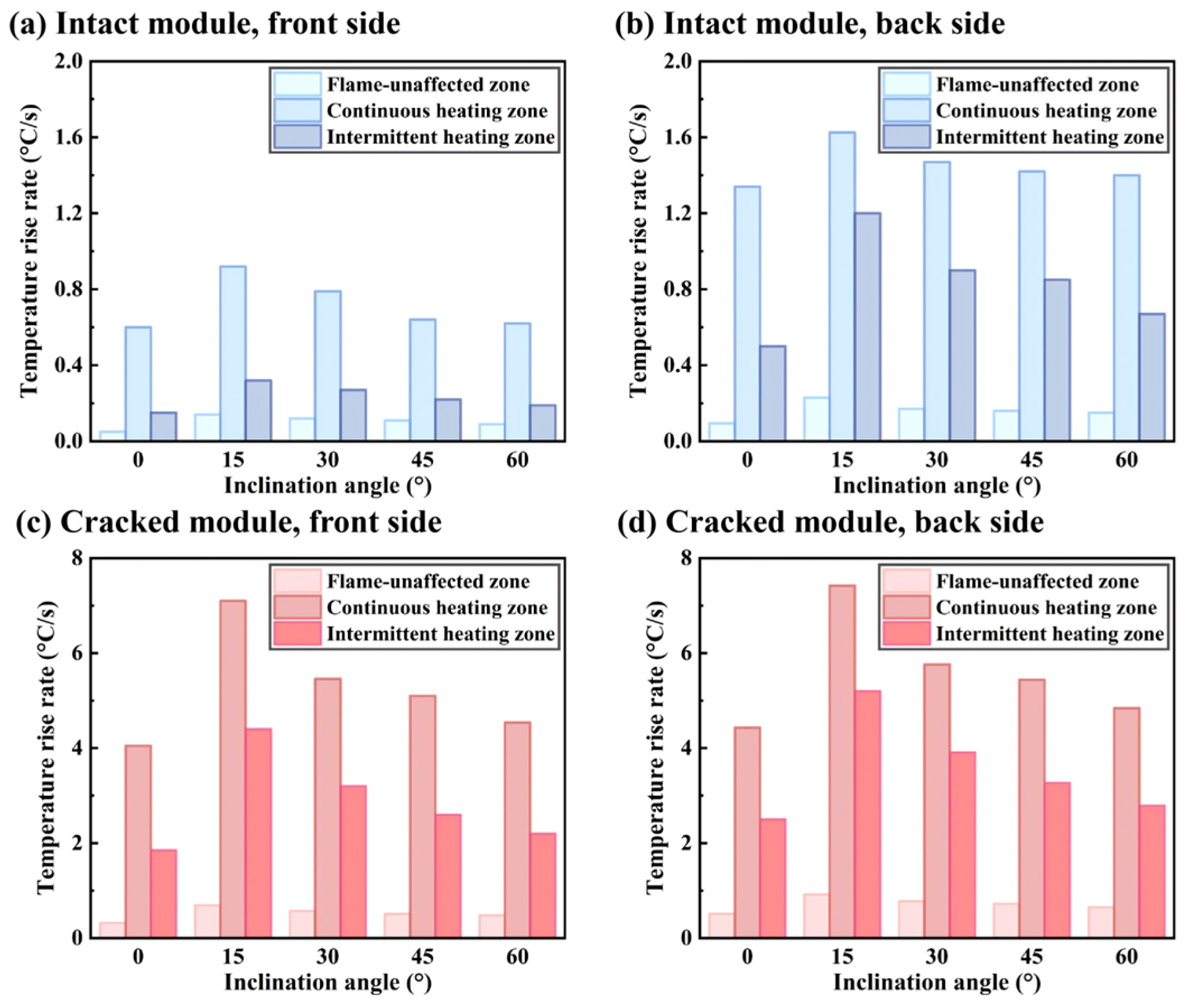
Figure 6a presents the average temperature-rise rates of the different regions on the front surface of the intact PV modules at various inclination angles. In general, the continuous heating zones consistently exhibited much higher average temperature-rise rates than the other regions, whereas the flame-unaffected zones exhibited the lowest average temperature-rise rates, indicating that stable flame attachment and prolonged heating dominated the rapid temperature increase in the PV module. As the inclination angle increased from 0° to 60°, the average temperature-rise rates in all regions displayed a non-monotonic trend of first increasing and then decreasing, reaching their maxima at an inclination angle of 15°. When the inclination angle was set to 0°, the average temperature-rise rates in the flame-unaffected zone and the intermittent heating zone were only 0.05 °C/s and 0.16 °C/s respectively, which were significantly lower than those at the other inclination angles. This behavior can be primarily attributed to the fact that horizontal installation markedly modified the flame morphology and the associated air entrainment pattern. Under this configuration, the flame plume impinged on the underside of the module and transitioned into a ceiling jet flow that propagated laterally beneath the backsheet, rather than spreading along the panel. A similar phenomenon was also reported by Kristensen in a study of flame spread in rooftop PV fires [
24]. As a result, the effective flame-affected zone and the duration of sustained flame attachment were reduced. The weakened convective and radiative heating consequently limited the expansion of pyrolysis in the encapsulation materials, delayed the development of continuous flaming, and ultimately suppressed the temperature-rise rates observed across monitored zones. This interpretation was consistent with a prior PV fire study, which indicated that changes in flame attachment and entrainment asymmetry can significantly regulate heat transfer and thermal response [
23].
When the inclination angle was increased to 15°, the average temperature-rise rates of the continuous heating zones and the intermittent heating zones respectively rose to 0.92 °C/s and 0.33 °C/s, corresponding to percentage increases of 53.33% and 106.25% relative to the 0° inclination angle. This enhancement stemmed from the observation that a moderate increment in the inclination of the PV module mitigated the impedance to air entrainment imposed by the module itself, thereby facilitating enhanced heat transfer from the pool fire to the PV module [
25]. With a further increase in inclination to 60°, the average temperature-rise rates across all zones exhibited a subsequent decline. This phenomenon was primarily attributed to the synergistic effects of flame attachment behavior and the module-induced restriction of air entrainment [
17], which collectively reduced both the lateral spread and vertical thickness of the flame plume, diminished the local external heat flux incident on the module, and ultimately resulted in a continuous decrease in the regional average temperature-rise rates.
Figure 6b shows that, as the inclination angle of the PV module increased from 0° to 60°, the average temperature-rise rates in the various zones on the backsheet of the intact module first increased rapidly and then gradually decreased. This trend was generally consistent with that observed on the front surface, but the values were systematically higher than those of the corresponding zones on the front side. For example, at an inclination angle of 45°, the average temperature-rise rate in the intermittently heated zone on the back surface was 0.85 °C/s, which was approximately 3.86 times that of the corresponding zone on the front surface, further confirming the thermally thick characteristics of single-glass PV modules. Specifically, the pronounced discrepancy indicated that the heat imposed by external fire was not conducted through the module rapidly enough to eliminate the through-thickness temperature gradient. Consequently, a substantial through-thickness temperature gradient persisted, such that the backsheet exhibited a markedly stronger and faster thermal response than the front side under the same fire exposure conditions.
Figure 6c,d demonstrate the average temperature-rise rates of the different zones of the cracked modules. It was evident from the results that, with increasing inclination angle, the front and back surfaces of the cracked module exhibited the consistent evolutionary trend that characterized the intact module. However, for the same inclination angle, the average temperature-rise rates of the cracked module were markedly higher than those of the intact module, indicating a much more rapid heating process. For instance, at an inclination angle of 60°, the average temperature-rise rate in the intermittent heating zone on the front side of the cracked module reached 2.2 °C/s, which was 11.58 times that of the corresponding zone on the intact module. The temperature-rise rates in all zones on both sides of the cracked module were substantially higher than those in intact counterparts, thus exhibiting a markedly more rapid heating process. This pronounced enhancement was attributed to the presence of cracks in the tempered glass, which substantially degraded its fire resistance and allowed external air to more readily penetrate the encapsulation layer, thereby facilitating the attainment of ignition conditions and promoting more vigorous combustion.
The above analysis demonstrated that single-glass PV modules exhibited pronounced spatial variations in temperature-rise rates across both front and back surfaces under varying glass integrity conditions. The continuous heating zone consistently showed the highest temperature-rise rate. In contrast, the flame-unaffected zone displayed the lowest rate, with this phenomenon underscoring that stable flame attachment and prolonged thermal exposure were the dominant contributors to the rapid temperature elevation. As the inclination angle increased from 0° to 60°, the average temperature-rise rates of all zones displayed a non-monotonic variation trend, first increasing and then decreasing.
3.3. Comprehensive Analysis of the Fire Characteristics of PV Modules
A more intuitive and comprehensive characterization of PV fire behavior is achieved by systematically comparing the influence of the glass integrity on the burning process of single-glass PV modules at different inclination angles, utilizing six fire characteristic parameters: maximum temperature-rise rate on the front surface (, °C/s); maximum temperature-rise rate on the backsheet (, °C/s); burn-through rate (, cm2/s); dripping frequency of molten droplets (, s−1); expansion rate of the pyrolysis zone (, cm2/s); and average combustion duration of molten dripping flames (, s). Among these parameters, and are obtained from Equation (2), is obtained from Equation (3), is obtained from Equation (4), and is obtained from Equation (5). The parameter represents the average time elapsed from the moment a molten dripping flame first contacts the ground until its flame is completely extinguished.
To quantitatively compare the temperature-rise rates on the front and back surfaces of the PV module, the thermocouple data were processed using Equation (2) to obtain the maximum temperature-rise rates on the front and back surfaces, denoted by
and
respectively.
where
denotes the maximum temperature-rise rate on either the front or back surface (°C/s),
and
represent the peak and initial temperatures at measurement point
respectively (°C),
refers to the time elapsed from ignition of the pool fire to the instant when the temperature at measurement point i reaches its peak value (s).
Under external fire exposure, cracked modules are burned through within a relatively short time. To quantify the effect of the module inclination angle on the burning process, a burn-through rate,
, was defined, calculated as the ratio of the burn-through area of the PV module to the time required for being burned through.
where
denotes the burn-through rate (cm
2/s),
represents the area of the burn-through zone of the module (cm
2), and
is the time required for the occurrence of the large-area detachment of the module (s).
To quantify the dripping characteristics of the PV module, the dripping frequency of molten droplets,
, was calculated using Equation (4). This parameter reflects the activity level of the dripping behaviour and is thus employed to evaluate the potential of PV modules to generate secondary ignition sources under external fire exposure.
where
denotes the dripping frequency (s
−1),
represents the total number of molten dripping flames during the experiments, and
refers to the total burning duration of the pool fire (s).
Thermal infrared video data were processed using MATLAB 2023. Given that the minimum temperature at which the EVA encapsulant in PV modules starts to generate pyrolysis gases is 320 °C [
26], this temperature was adopted as the threshold for defining the pyrolysis zone. Accordingly, areas of the module with temperatures above 320 °C were identified as pyrolyzing zones. On this basis, the expansion rate of the pyrolysis zone,
, was calculated from Equation (5) to quantify the pyrolysis behavior of PV modules under external fire exposure.
where
represents the expansion rate of the pyrolysis zone (cm
2/s),
denotes the maximum area of the pyrolysis zone over the entire burning process (cm
2), and
refers to the time required for the high-temperature region on the PV module to develop from its initial appearance to its maximum extent (s).
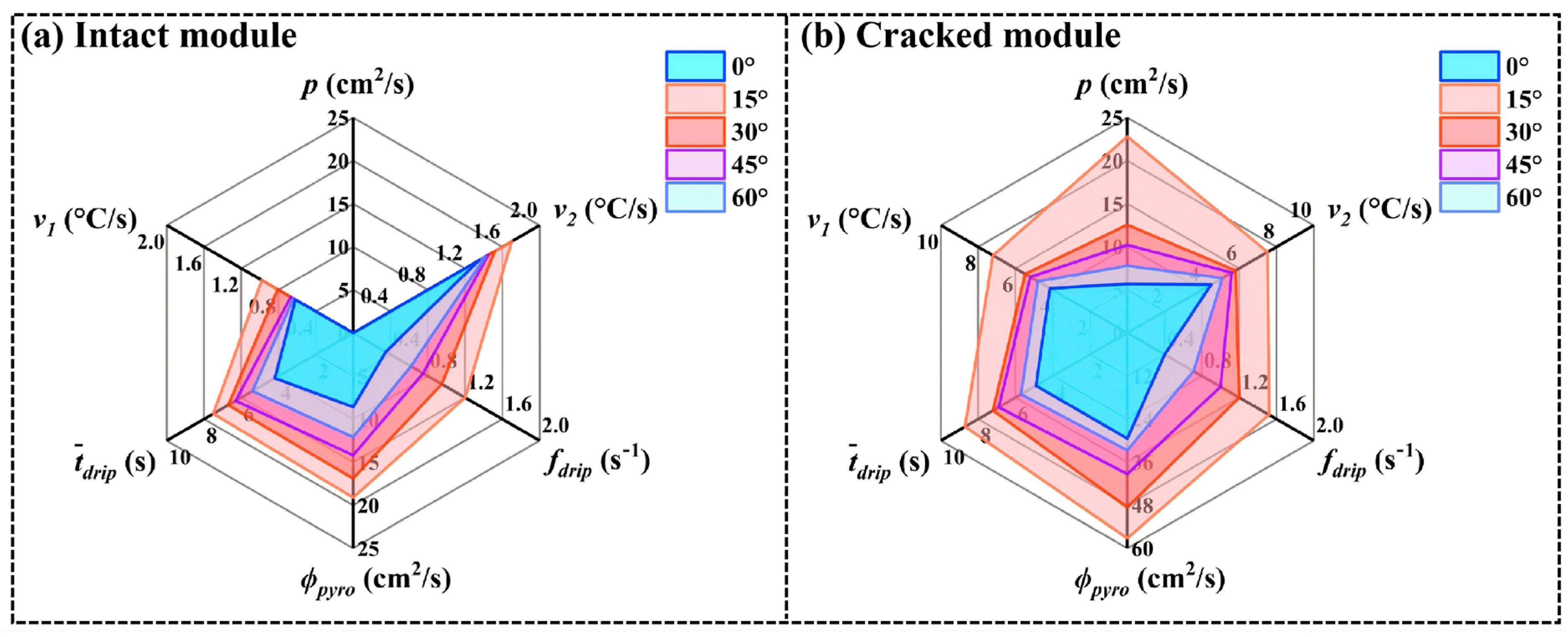
Figure 7 illustrates comparative radar plots of six fire characteristic parameters for intact and cracked PV modules across varying inclination angles. A comparison of the intact modules in
Figure 7a shows that the inclination angle has a pronounced influence on the fire behaviour of the PV modules. Under external flame exposure, the module installed at an inclination of 15° exhibits generally higher values for all parameters, indicating that the comprehensive fire risk at this angle is greater than at the other inclination angles. In contrast, the horizontally mounted module (0°) shows consistently lower values for all indicators and thus a comparatively lower fire risk. Consistent with the temperature-rise behavior observed across different zones, the fire characteristic parameters also exhibit a non-monotonic variation trend with varying inclination angle.
Compared with the intact modules, the cracked modules exhibit a markedly higher fire hazard at all inclination angles. For any given inclination angle, the six fire characteristic parameters are consistently higher for cracked modules, indicating a marked overall increase in fire intensity and associated risk. For example, at an inclination angle of 15°, the values of and of the cracked modules are significantly higher than those for the intact modules, while and also increase simultaneously, reflecting faster heating, more rapid pyrolysis development and a stronger tendency toward structural failure. At the same time, both and consistently attain the maximum values among all inclination angles, implying that molten dripping flames not only occur more frequently but also feature an extended combustion duration, thereby enhancing the probability of igniting adjacent combustibles. It is noteworthy that , , , , and exhibit positive correlations. As the temperature rise rates of the PV modules increase, the fire characteristic parameters , , and all exhibit a corresponding elevation. This demonstrates that rapid temperature rise, pyrolysis, burn-through, and molten droplet formation during the burning process are not independent phenomena, but rather interrelated and synergistic in their development. Faster temperature-rise rates accelerate the evolution of pyrolysis behavior, promote more extensive burn-through, and result in more frequent molten dripping flames with longer combustion durations. The strong positive correlations among these fire characteristics further demonstrate that, under external fire exposure, the heating, pyrolysis, burn-through and dripping behaviour of PV modules are governed by an intrinsically coupled mechanism.
Fundamentally, these differences stem from the presence of cracks in the tempered glass of cracked modules, which compromises both the fire resistance and oxygen blocking capability for the multi-layered encapsulation materials. As a result, ambient air can more easily penetrate the EVA and other combustible encapsulation materials, thereby facilitating quicker attainment of ignition conditions and more vigorous combustion under external fire exposure. Consequently, cracked modules exhibit greater magnitude values, more rapid progression, and more pronounced responses across various fire characteristic indicators.