Article

Cable Fire Risk Prediction via Dynamic Q-Learning-Driven Ensemble of Deep Temporal Networks

1
Research Institute of Macro-Safety Science, University of Science and Technology Beijing, Beijing 100083, China
2
Beijing BOE Chuang Yuan Technology Co., Ltd., Beijing 100176, China
*
Author to whom correspondence should be addressed.
Submission received: 27 November 2025 / Revised: 6 January 2026 / Accepted: 13 January 2026 / Published: 29 January 2026
(This article belongs to the Special Issue Building Fire Prediction and Suppression)

Abstract

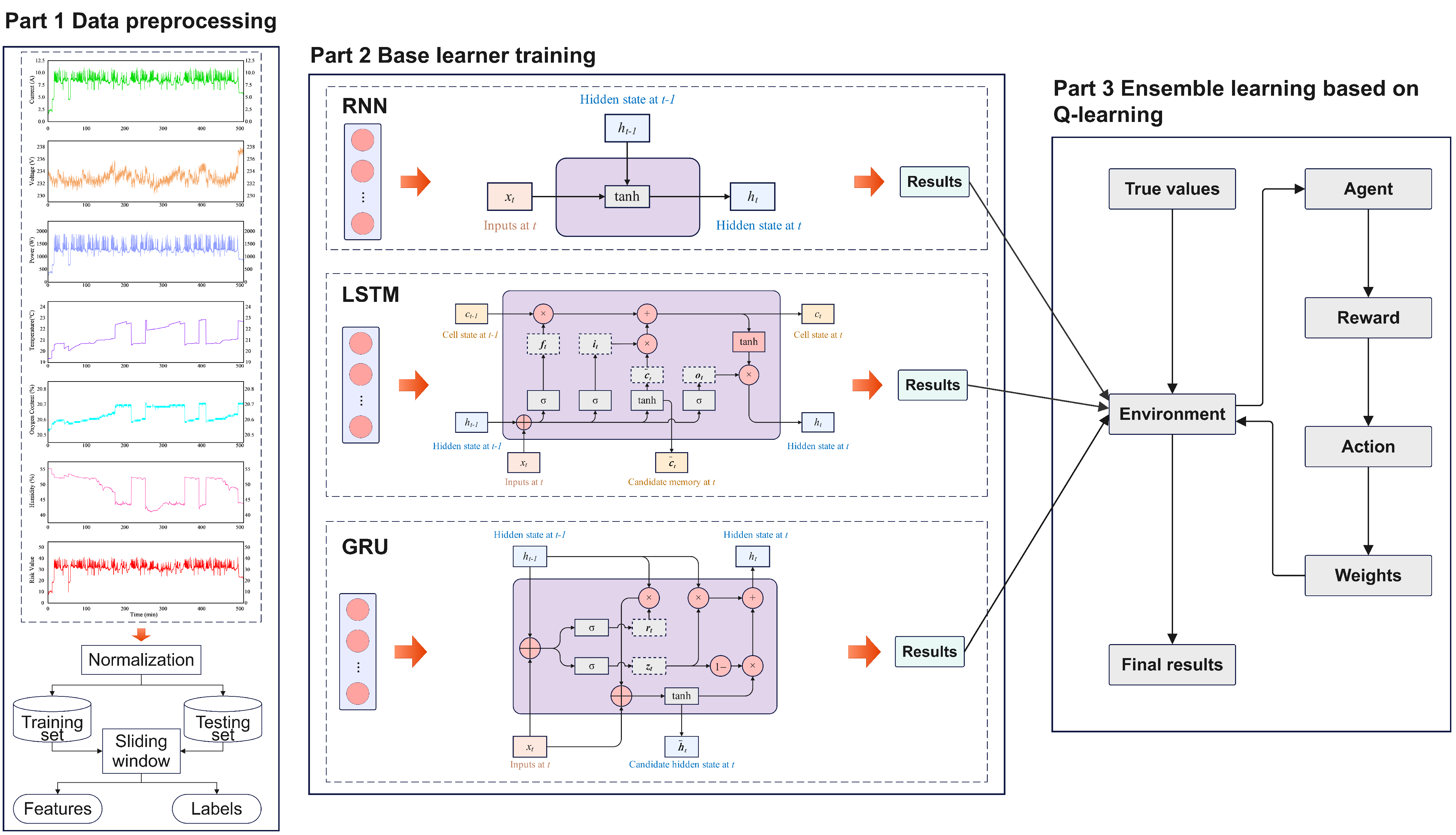
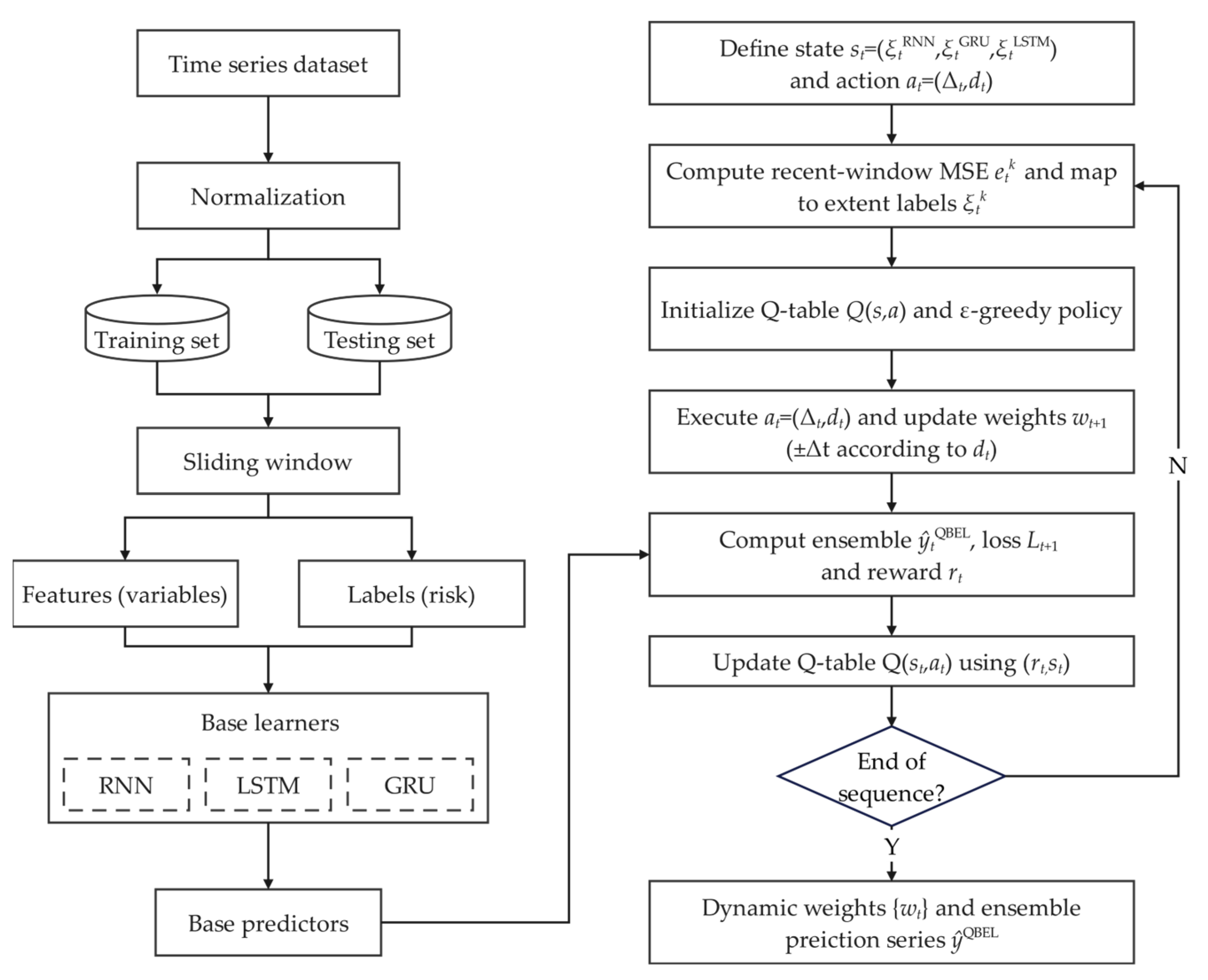
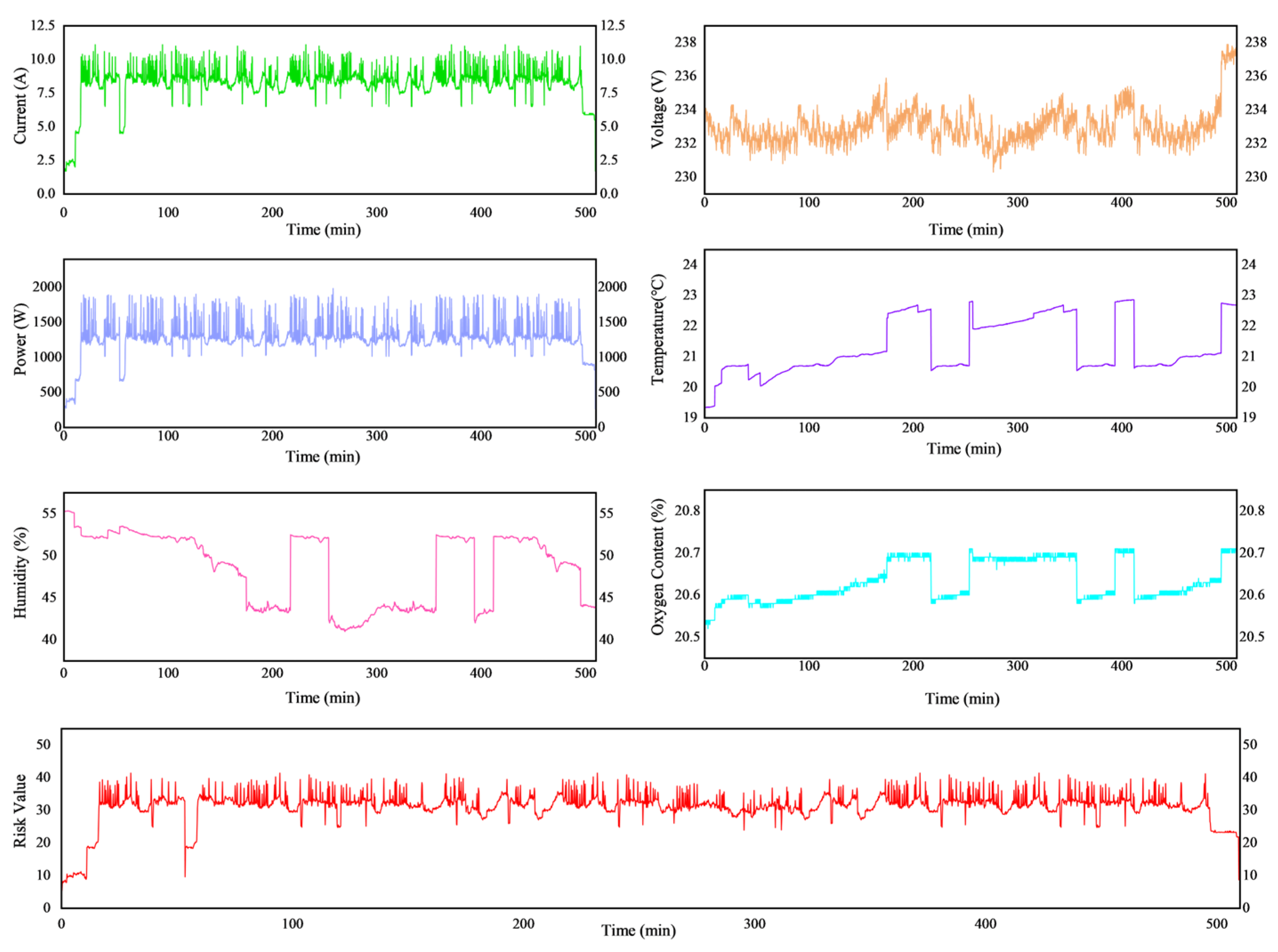
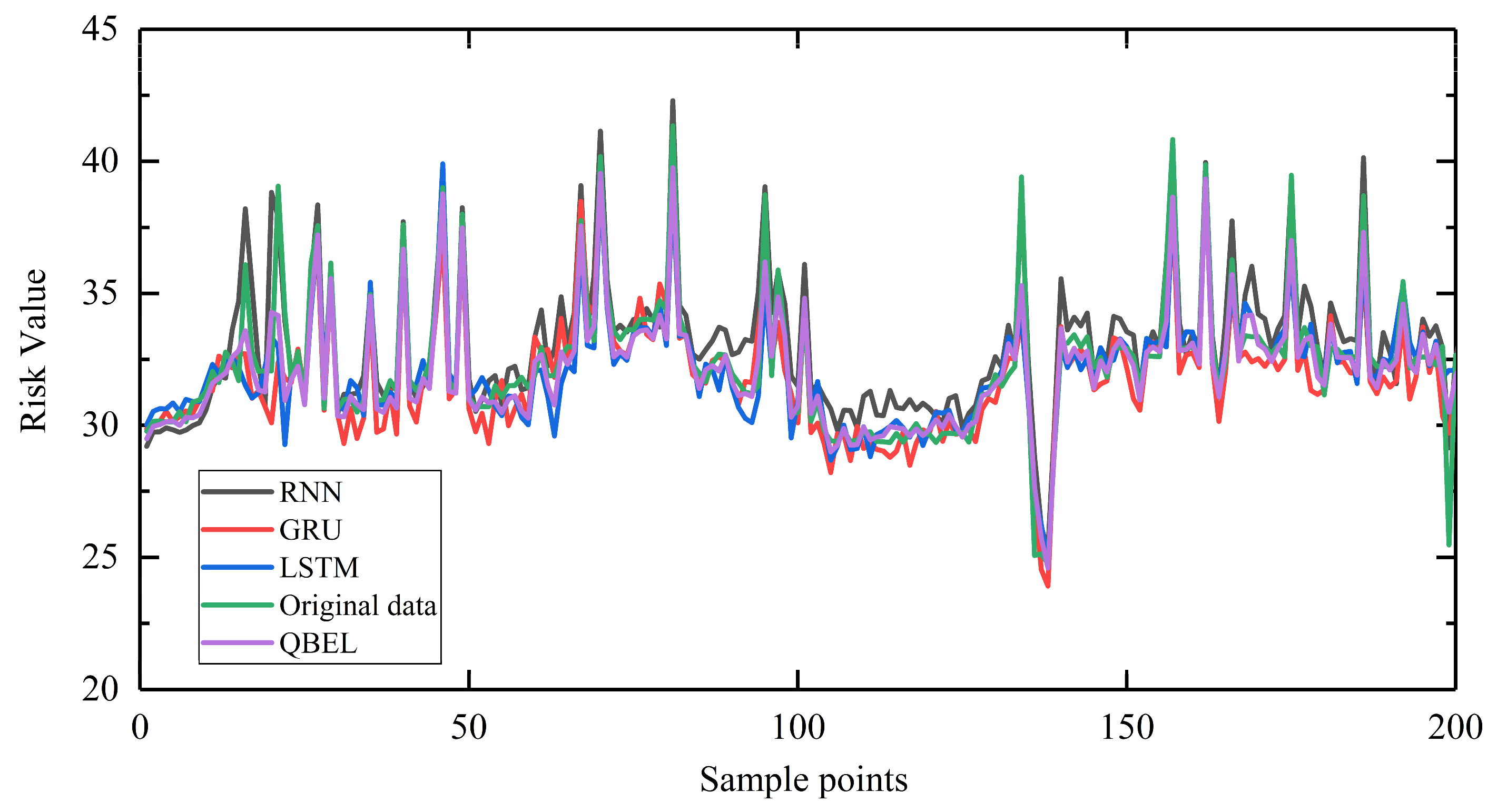
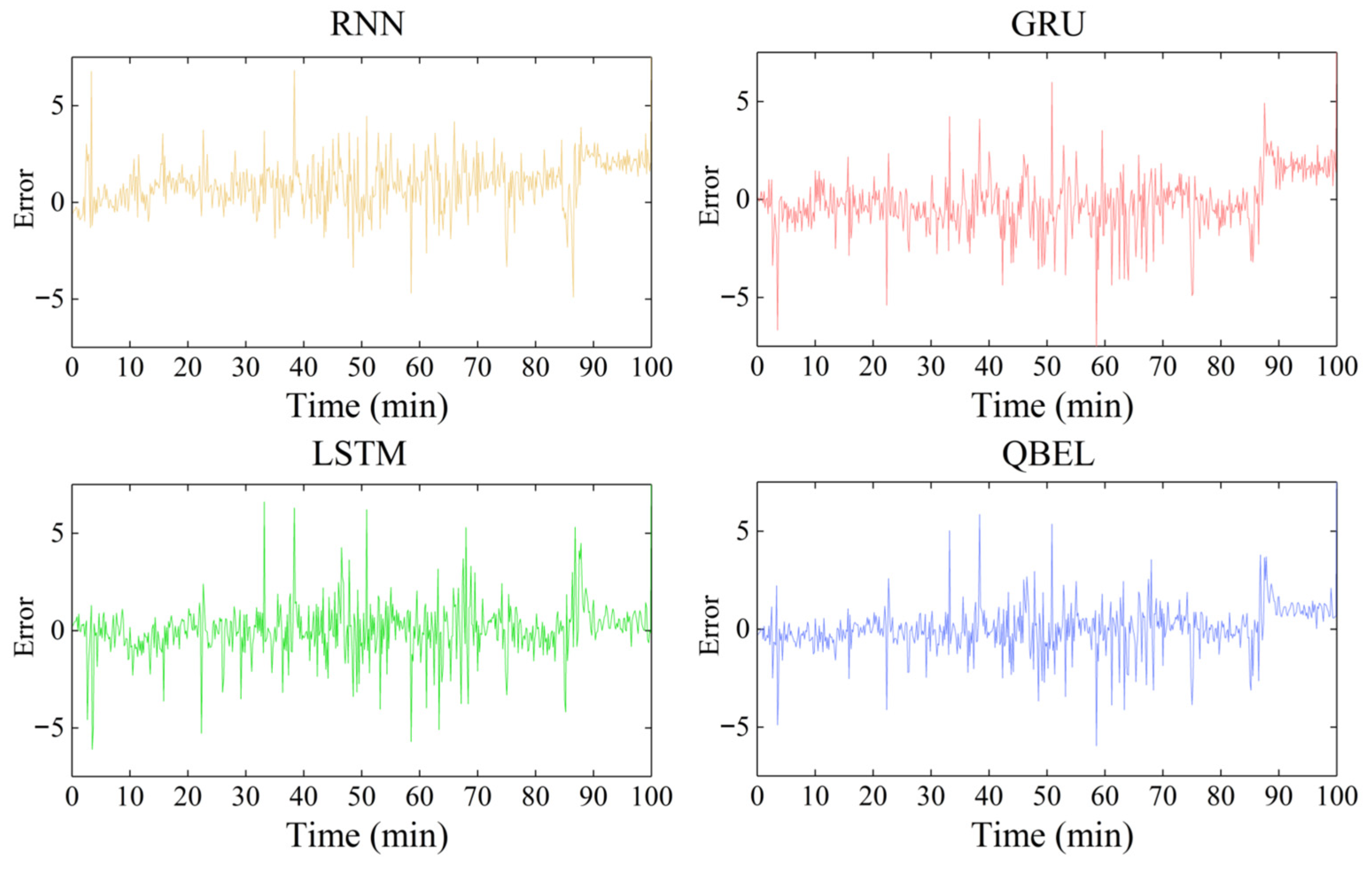
Cables, which are critical for power and signal transmission in complex buildings and underground infrastructure, are exposed to elevated fire risks during operation, making reliable risk prediction essential for building fire safety. This study proposes a multivariate cable fire risk prediction model that integrates three deep temporal networks (RNN, LSTM, and GRU) through a Q-learning-based ensemble learning (QBEL). The model uses current, voltage, power, temperature, humidity, oxygen concentration, and system risk values acquired from an intelligent fire alarm system as inputs. Using a real-world dataset comprising 3060 seven-dimensional time steps collected from a tobacco logistics center, QBEL achieves a test-set MSE of 1.73, RMSE of 1.31, MAE of 0.84, and MAPE of 2.66%, improving the MAE and MAPE of the best single recurrent network by approximately 10–12%. Comparative experiments against conventional ensemble approaches based on XGBoost (Python package, version 3.0.0) boosting and stacking, as well as recent time-series forecasting models including DLinear, PatchTST, MoLE, and Fredformer, demonstrate that QBEL attains the lowest MAE and MAPE among all methods, while maintaining an MSE close to that of the best linear baseline and a moderate computational cost of approximately 5.5 × 10⁻³ GFLOPs and 45 MB of memory per inference. These results indicate that QBEL provides a favorable balance between prediction accuracy and computational efficiency, supporting its potential use in edge-oriented monitoring pipelines for timely cable fire risk warnings in building environments.
Keywords: cable fire risk; time series prediction; ensemble learning; Q-learning cable fire risk; time series prediction; ensemble learning; Q-learning