
CFD Simulation and Experimental Investigation of Water Distribution Patterns in Transitional Attack

Abstract
1. Introduction
- (1)
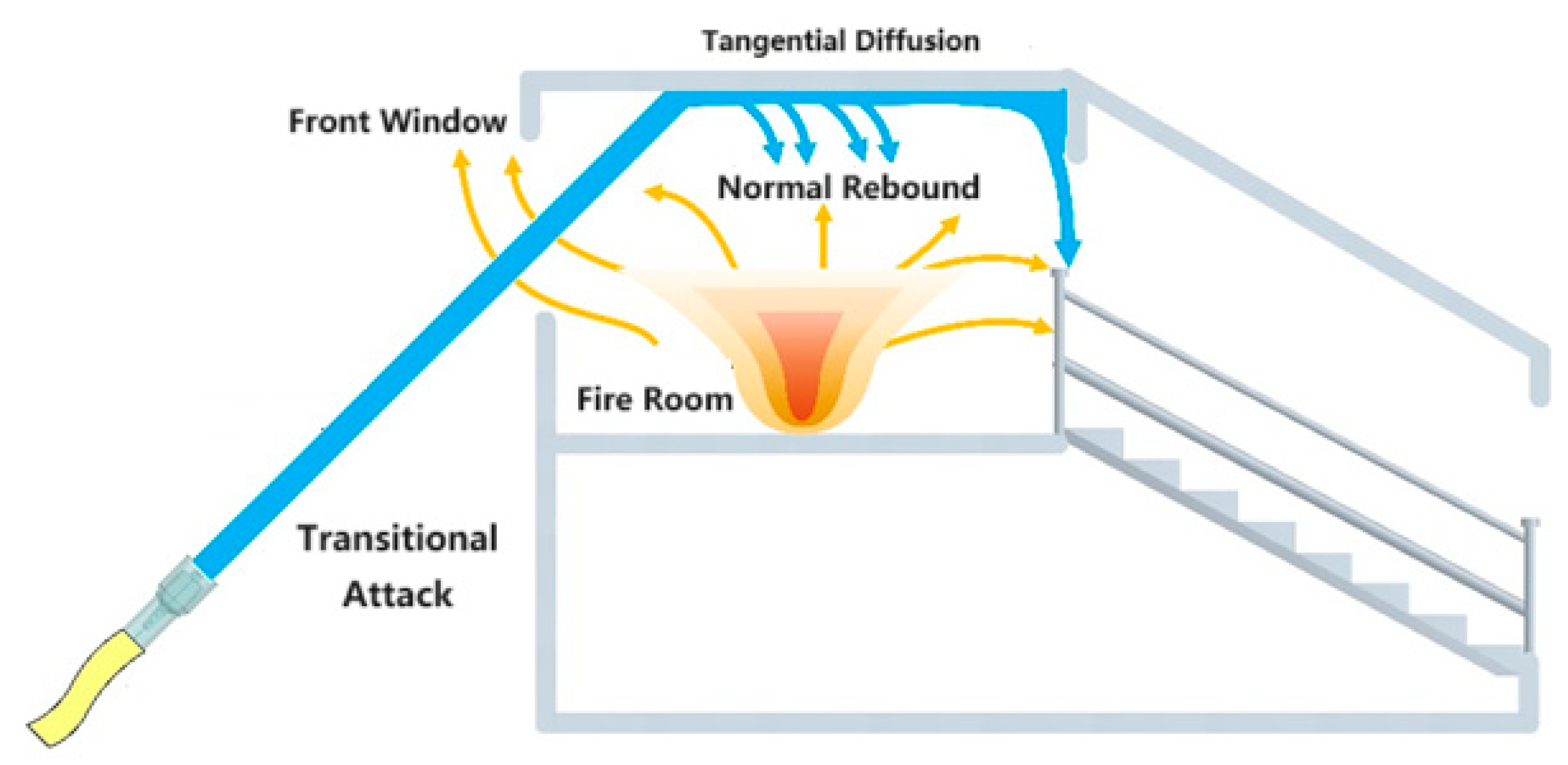
- To establish a momentum-decomposition model for ceiling jet impingement, clarifying the key physical mechanisms responsible for water distribution.
- (2)
- To analyze the respective effects of tangential spreading and normal rebound on water distribution, validating the model through integrated CFD simulations.
- (3)
- To investigate the effects of jet angle, water pressure, and nozzle horizontal distance on water distribution characteristics, and to propose optimized water deployment strategies for transitional firefighting operations based on hydraulic distribution patterns.
2. Materials and Methods
2.1. Theoretical Model
2.1.1. Model Assumptions
2.1.2. Initial Jet Motion and the Instant of Ceiling Impact
2.1.3. Modeling of Post-Impact Jet Behavior upon Ceiling Strike
2.1.4. Distribution Pattern of Water on the Ground
2.1.5. Effect of Wall Boundary Conditions
2.1.6. Analysis of Mathematical Modeling Results
2.2. Experimental Study
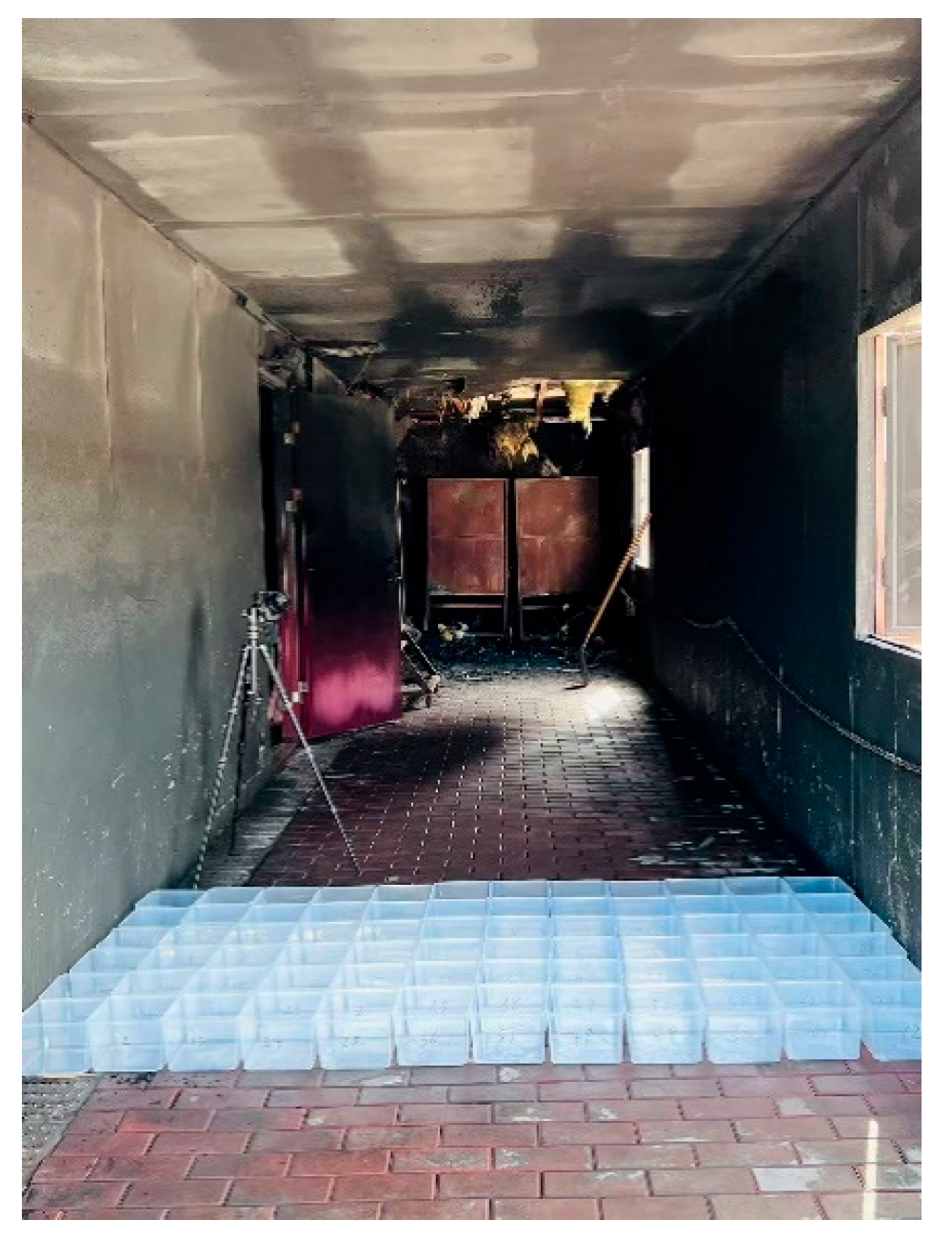
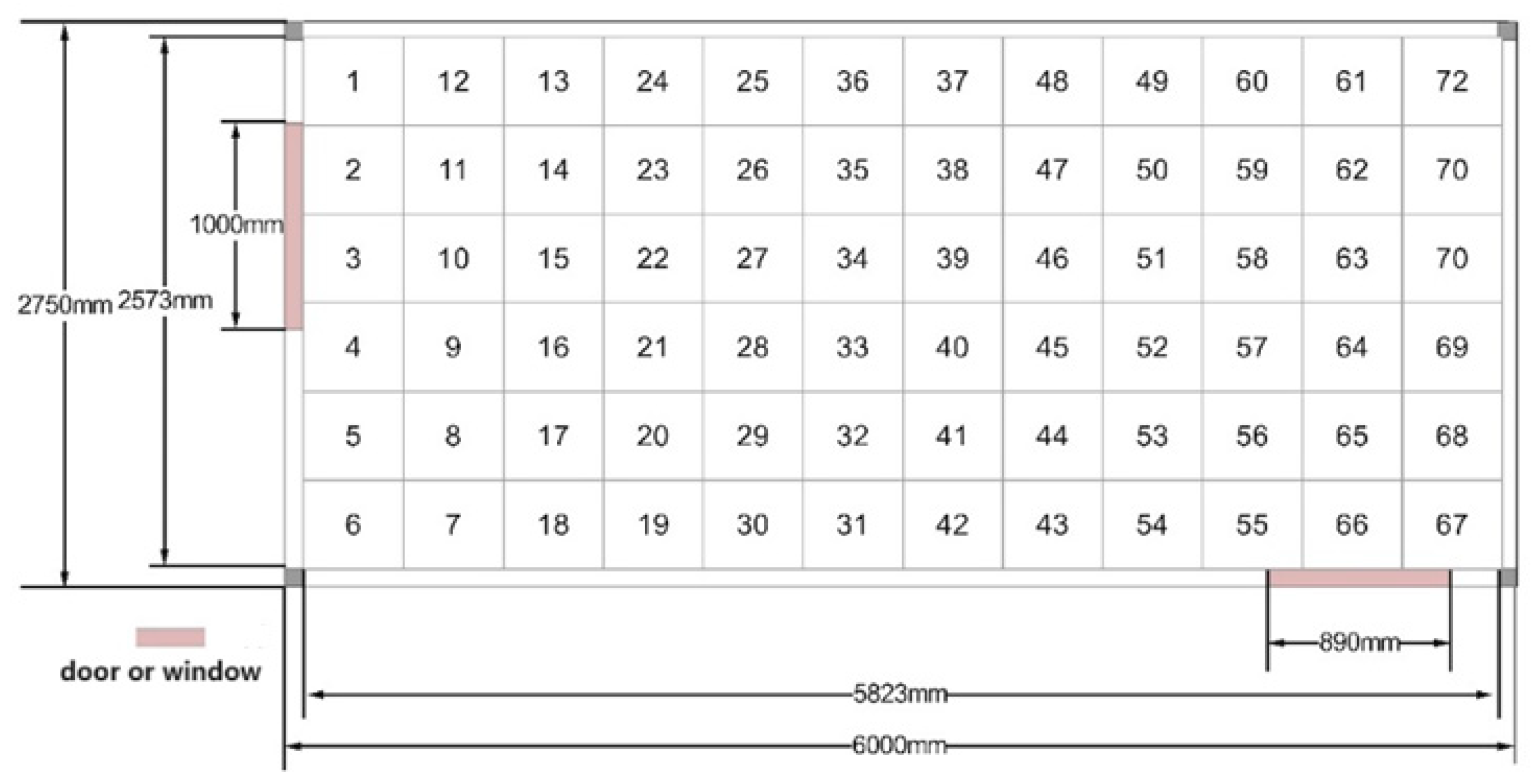
2.2.1. Experimental Site and Setup
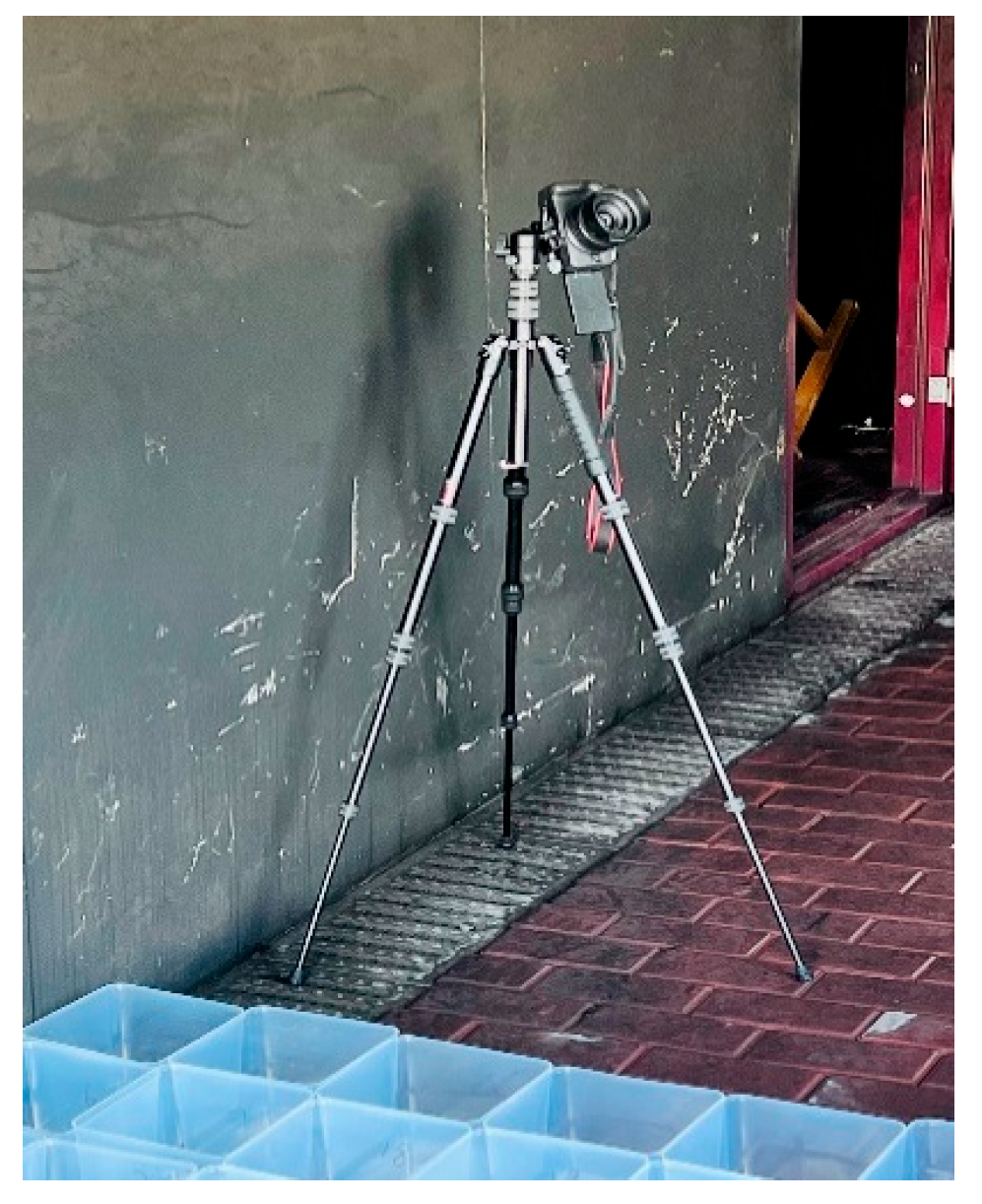
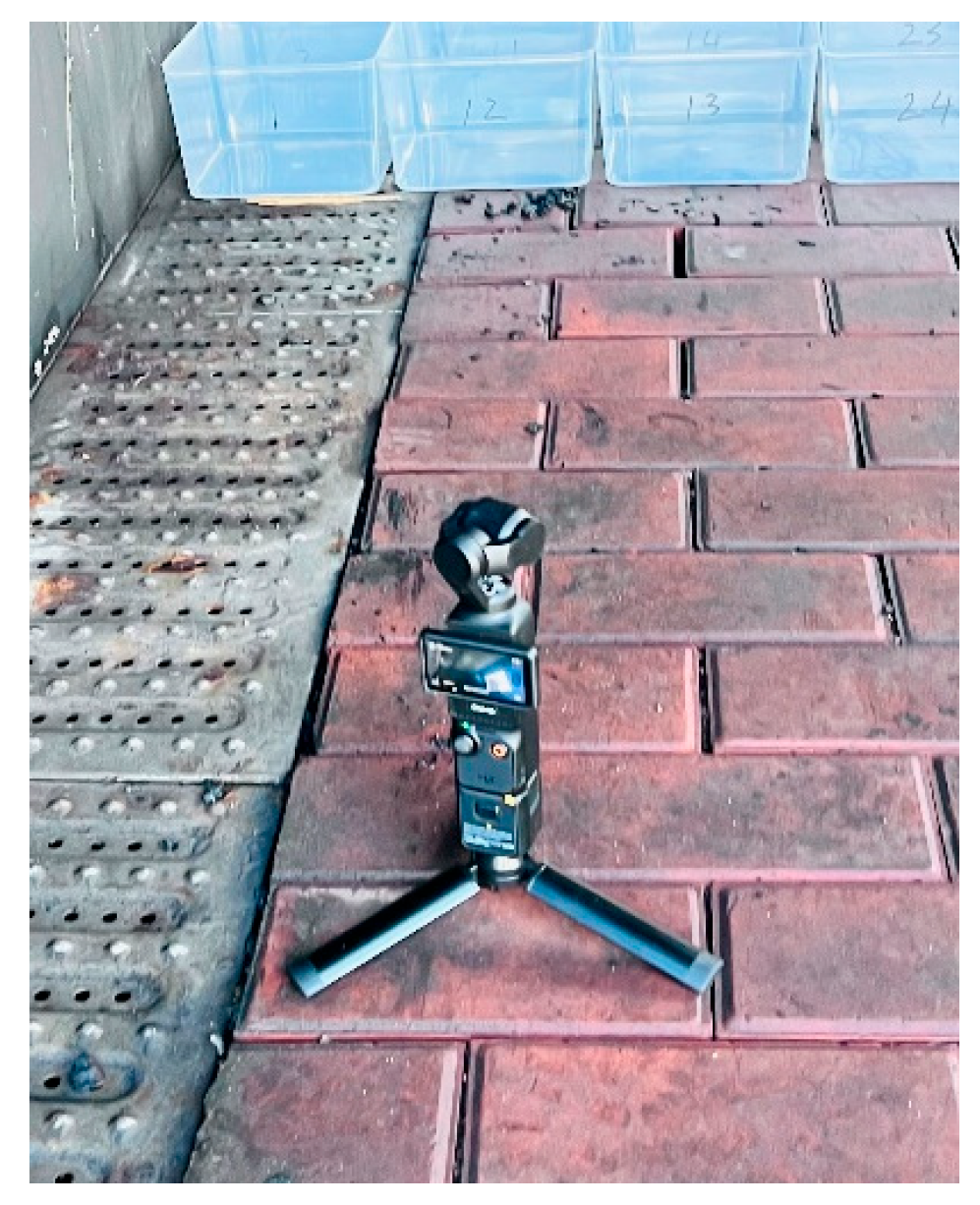
2.2.2. Data Acquisition
2.2.3. Experimental Procedure
2.3. Numerical Simulation Study
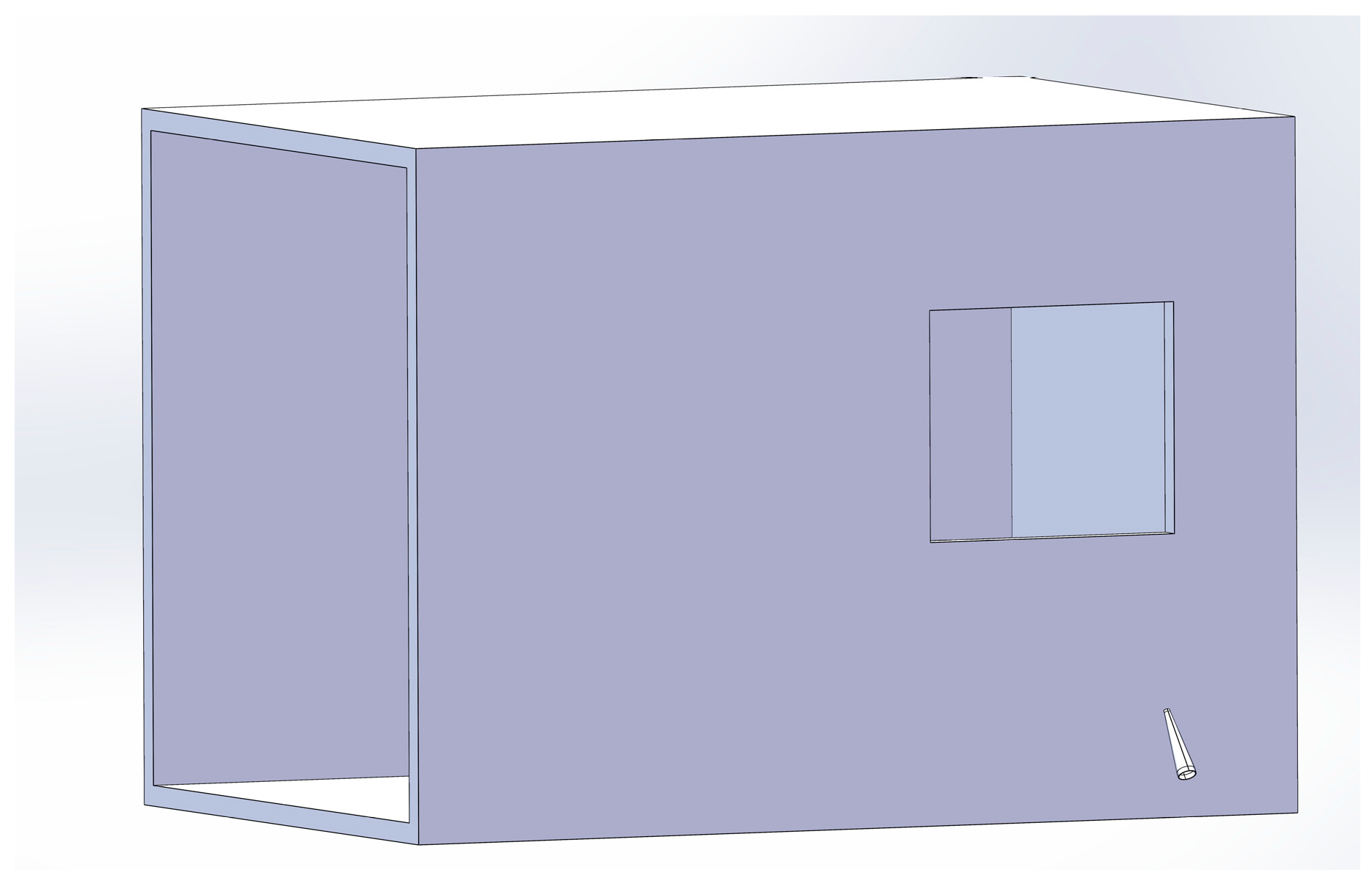
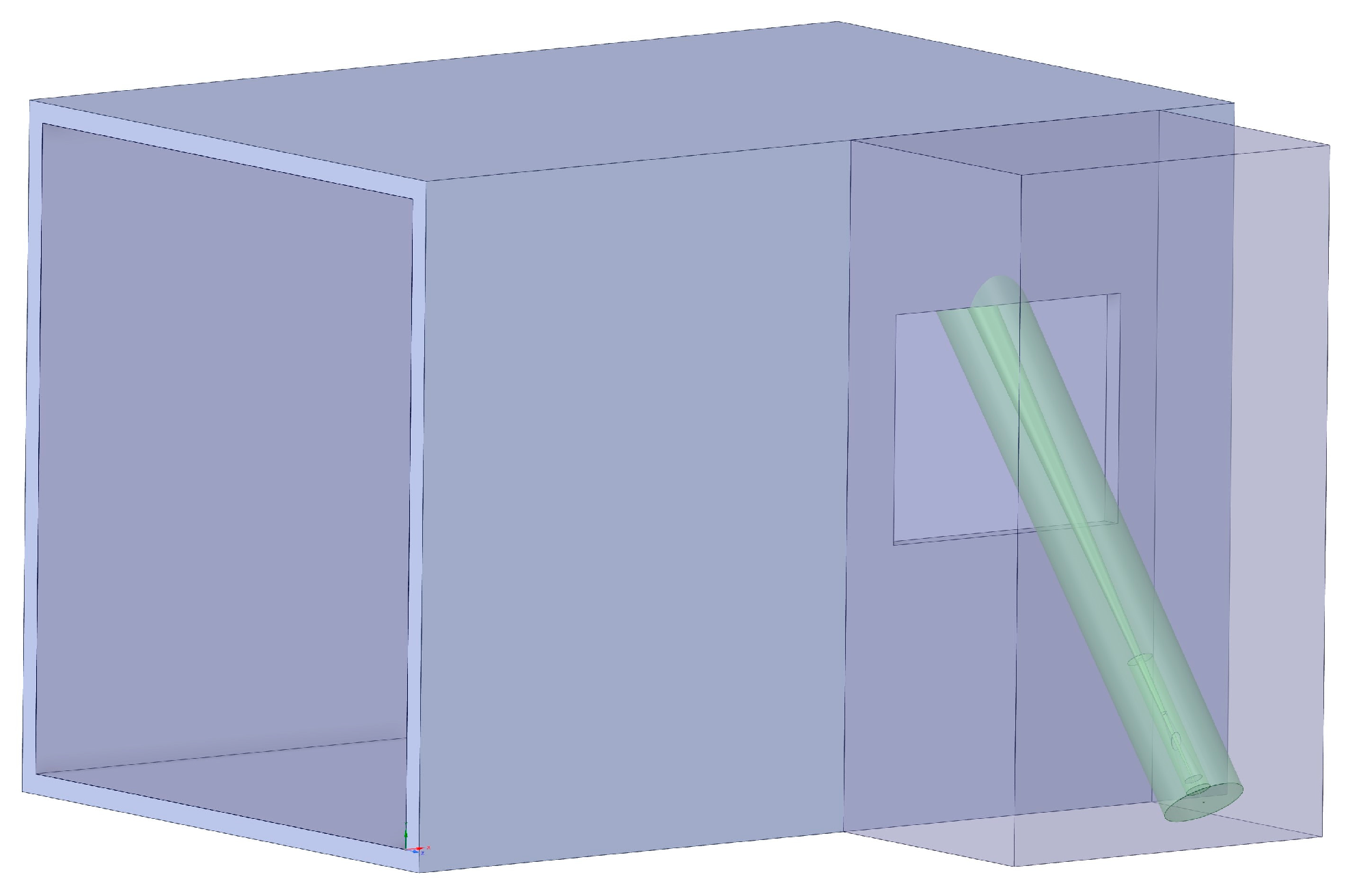
2.3.1. Geometric Model
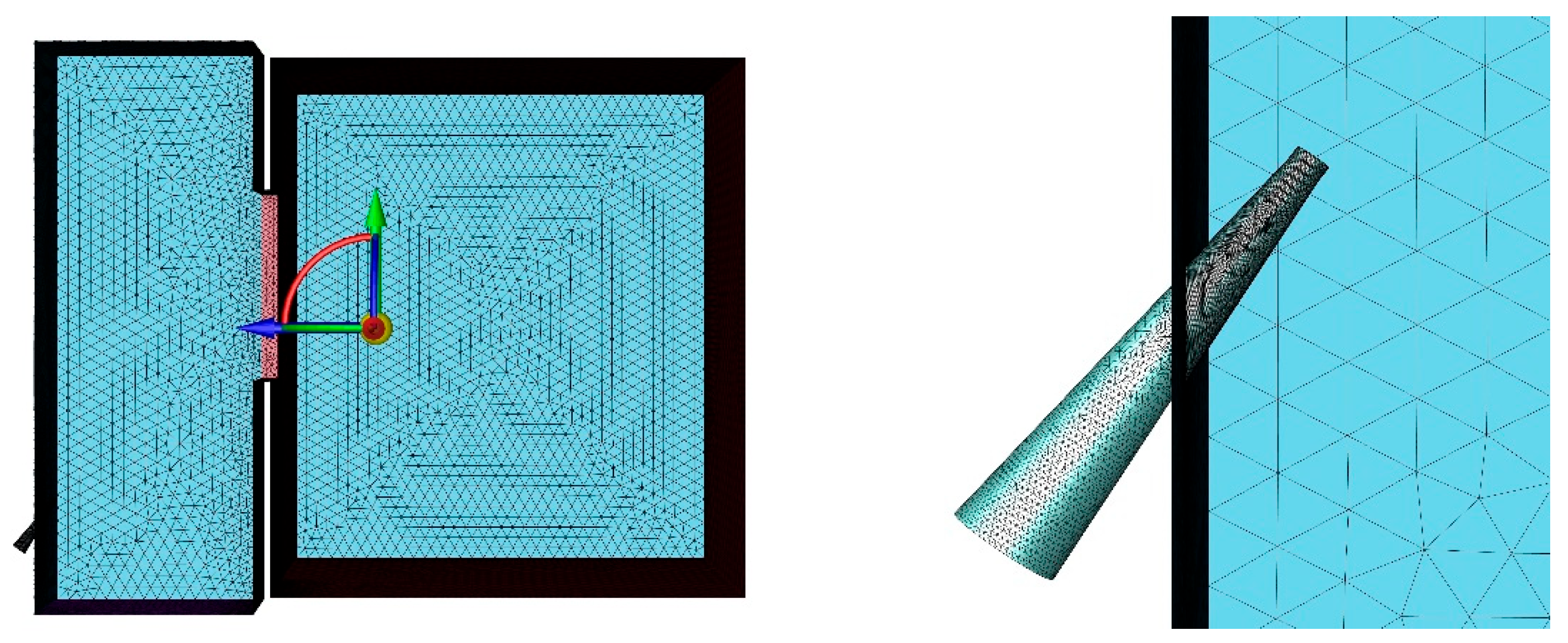
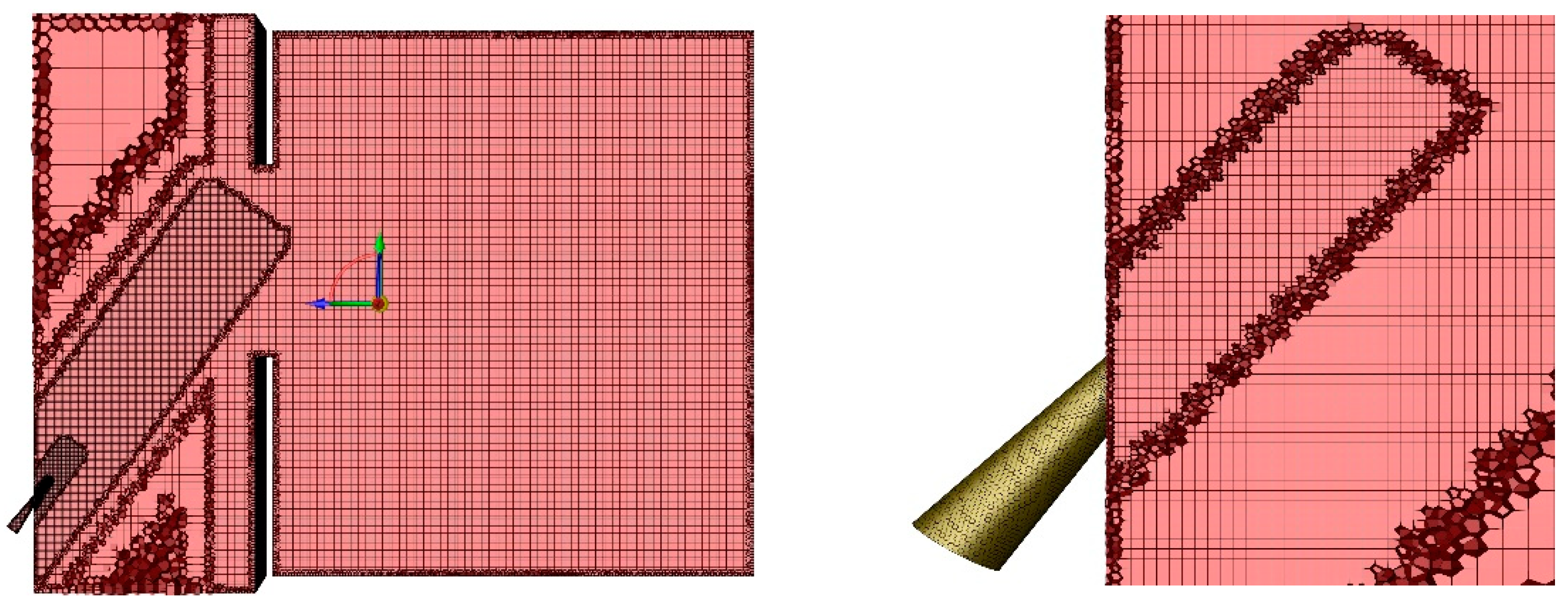
2.3.2. Mesh Generation
2.3.3. Boundary Conditions and Solver Settings
2.3.4. Design of Numerical Simulation Cases
3. Results
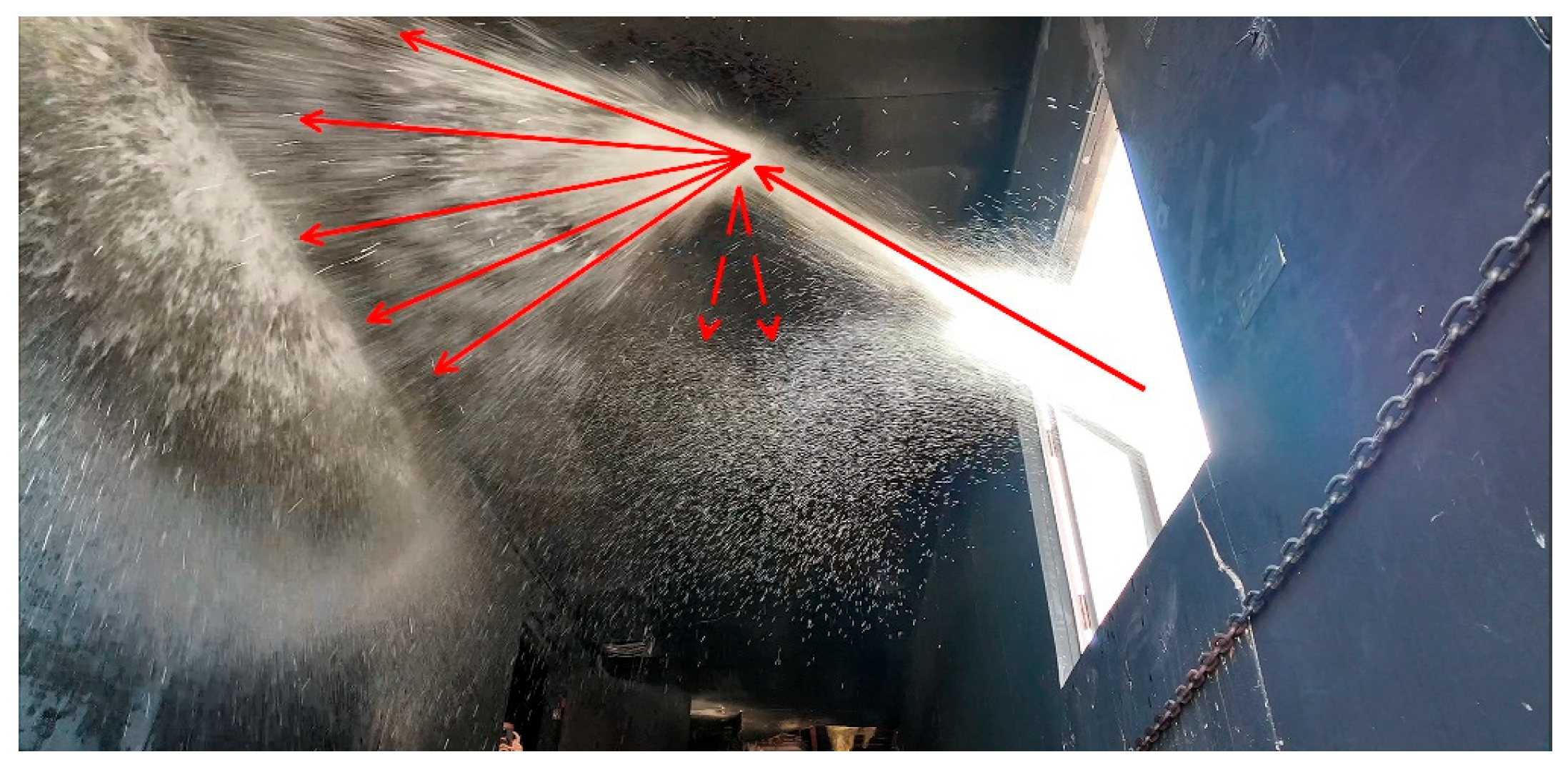
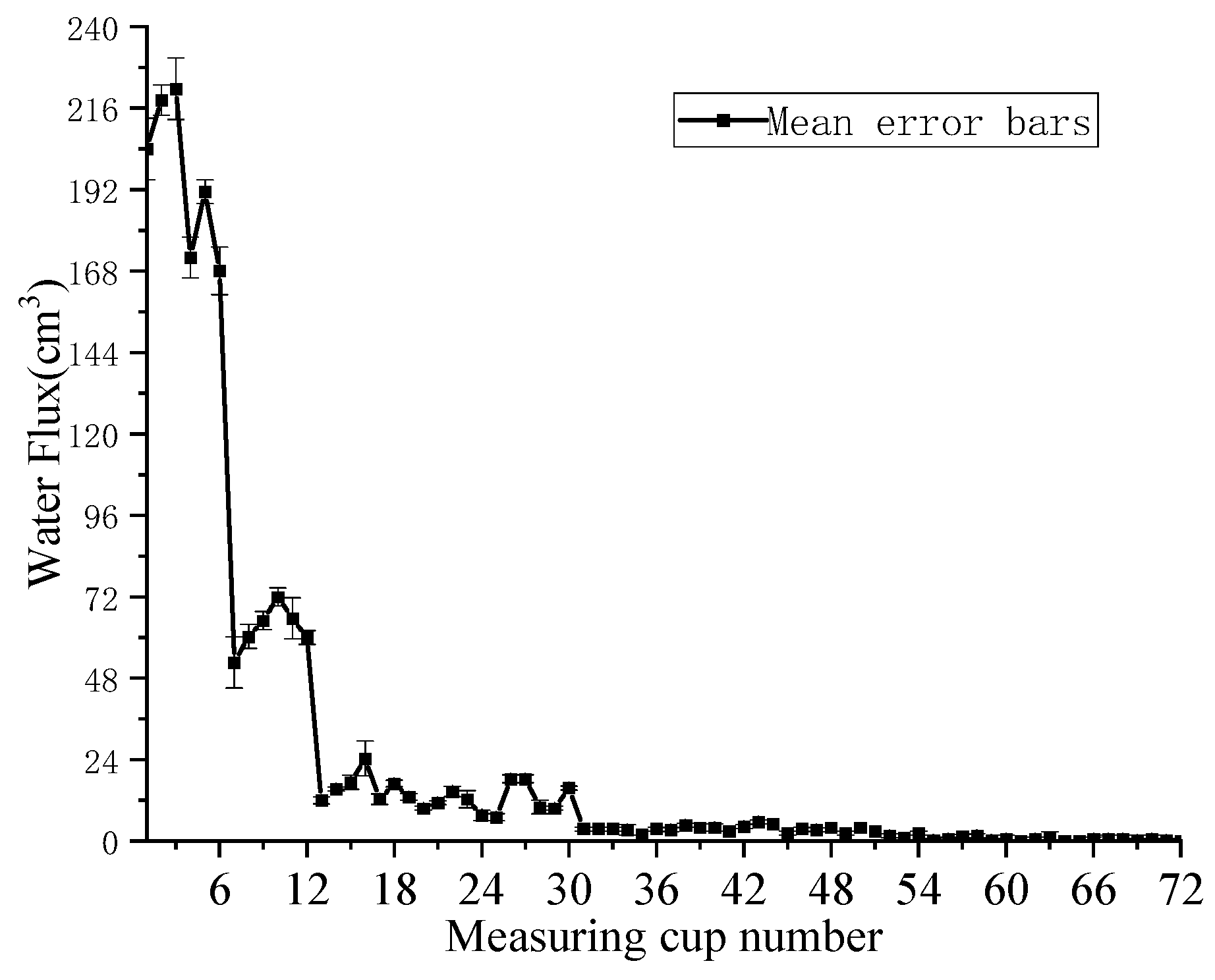
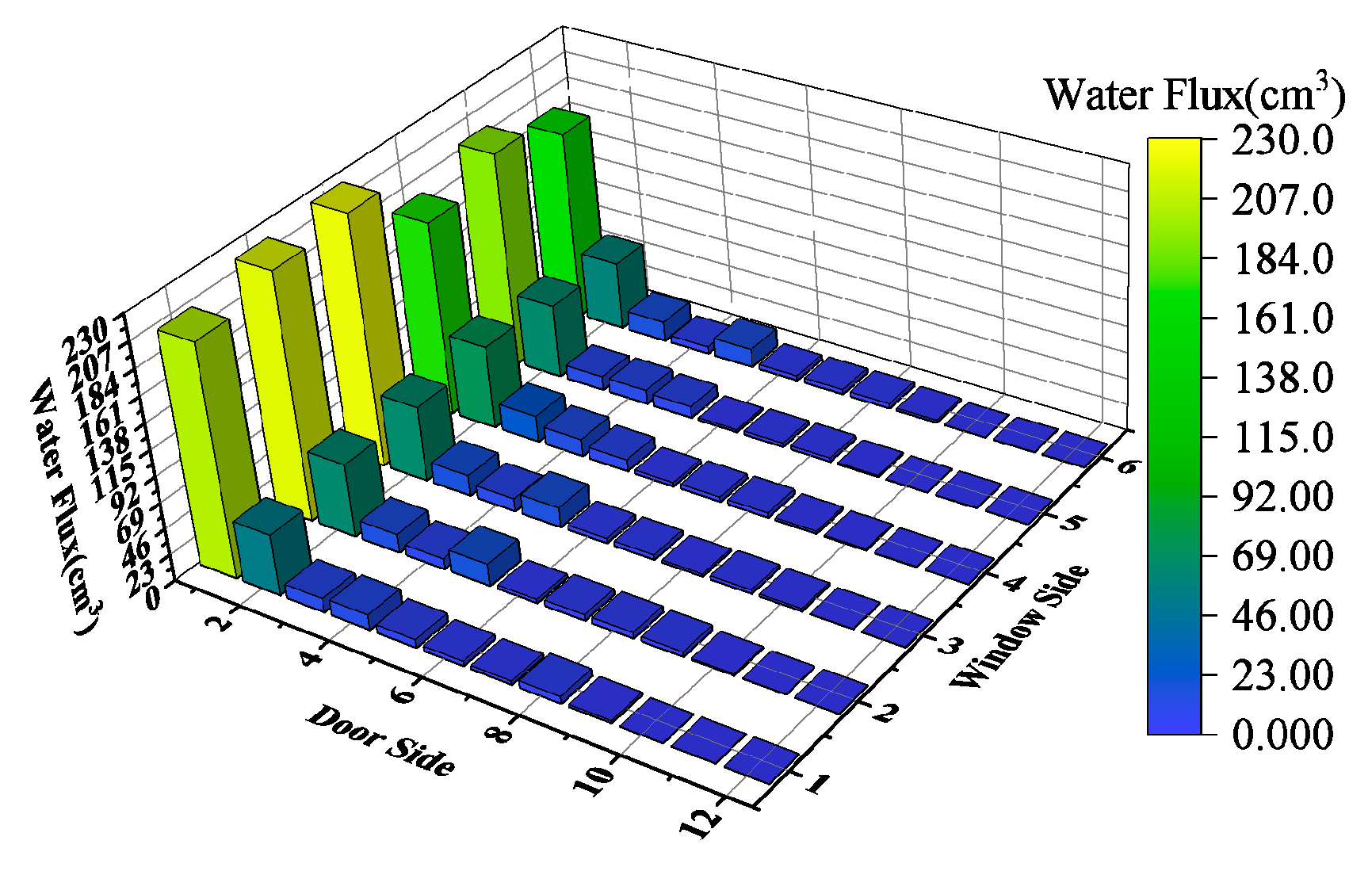
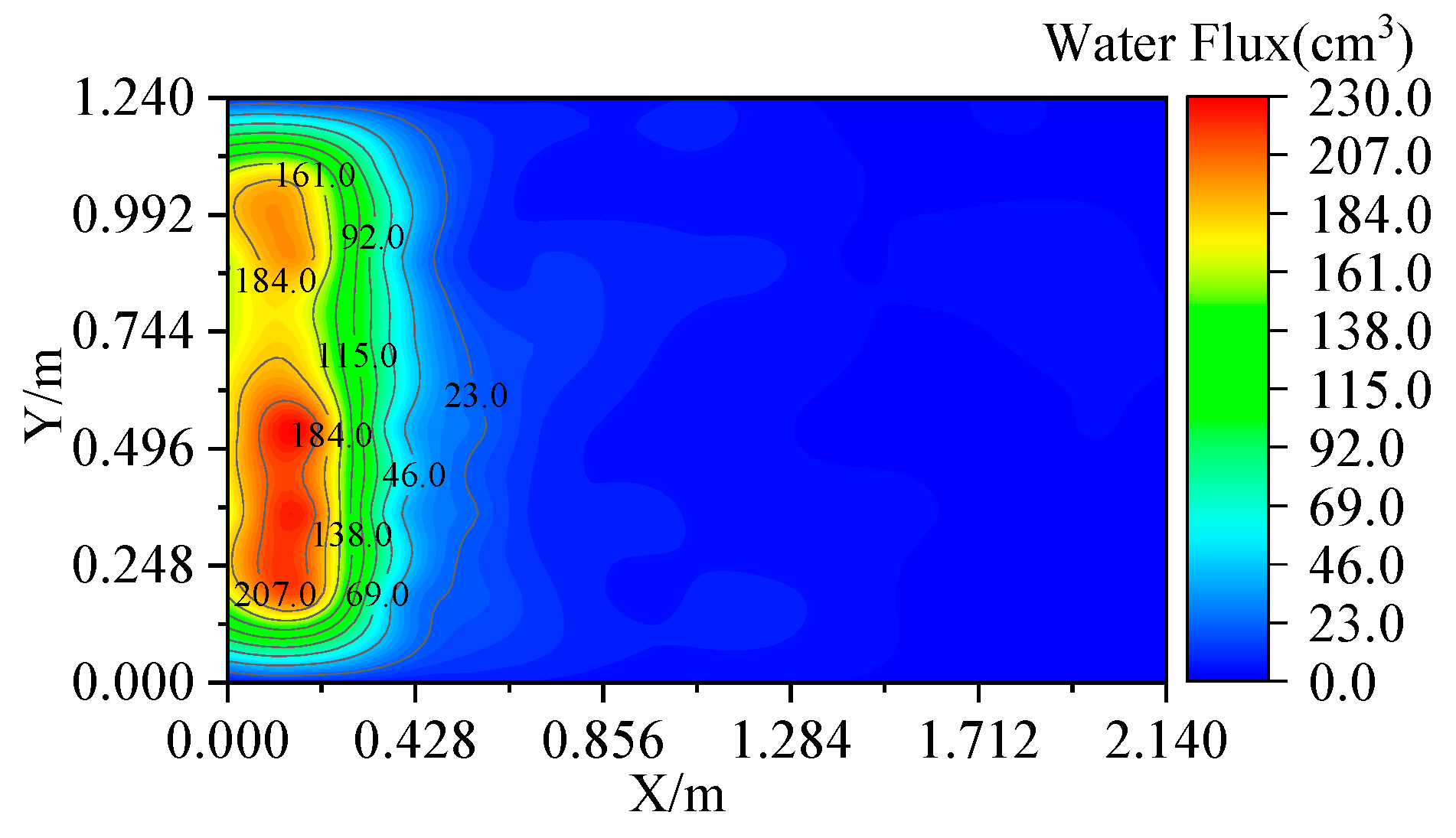
3.1. Observation and Analysis of Water Jet Experimental Results
3.2. Comparative Analysis of Simulation and Experimental Results
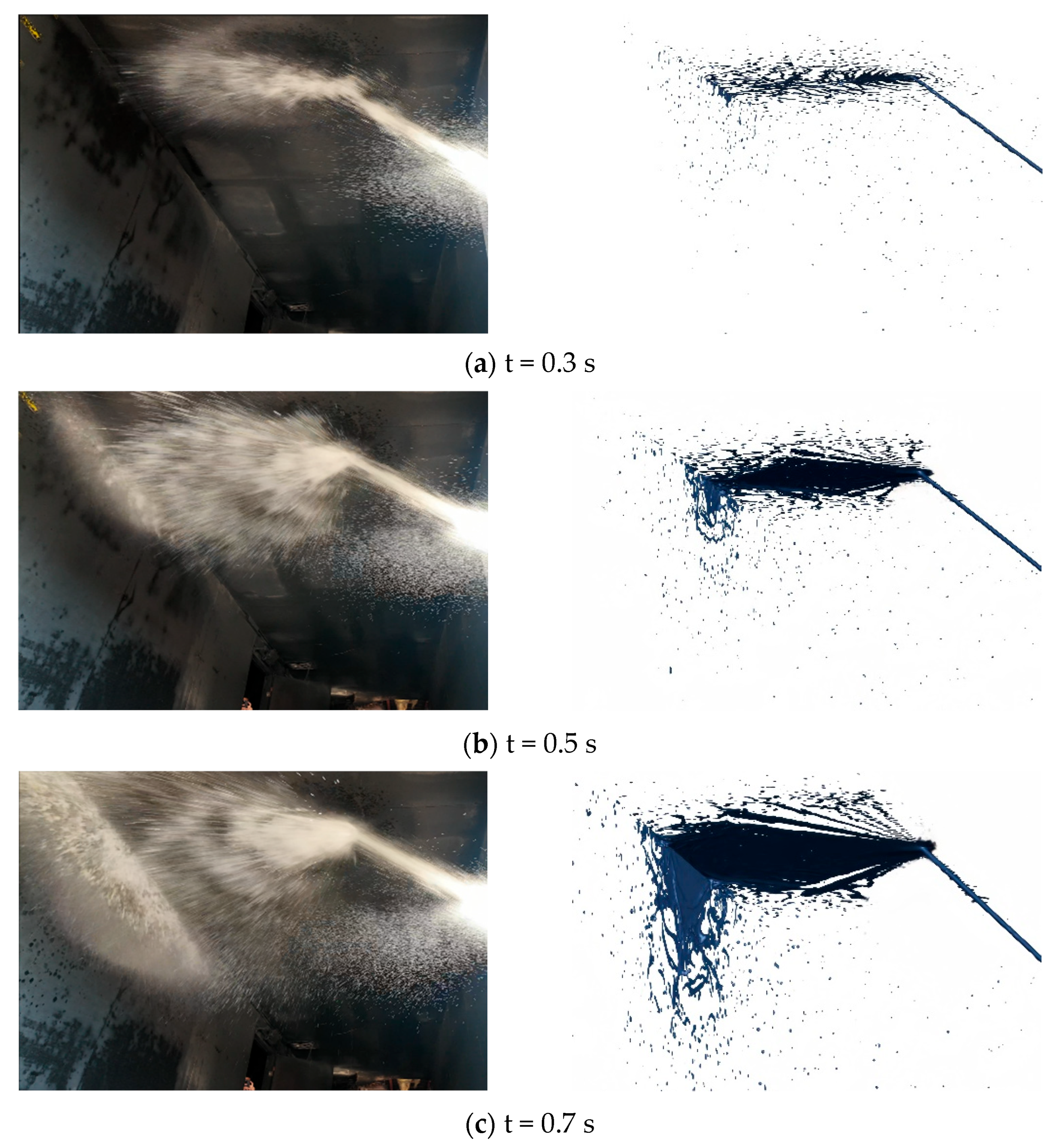
- At t = 0.3 s, corresponding to the initial jet development phase, the flow is characterized by a coherent, high-momentum stream. Minimal flow dispersion is observed upon entry into the compartment, with propagation predominantly aligned with the jet trajectory and absent of significant backflow or splashing.
- At t = 0.5 s, subsequent to ceiling impingement, the primary flow transitions into a radially spreading film along the ceiling surface. Concurrently, a downward-directed component emerges due to splash and rebound. The simulation captures this expanding distribution, illustrating the initial reflection and dispersion mechanisms.
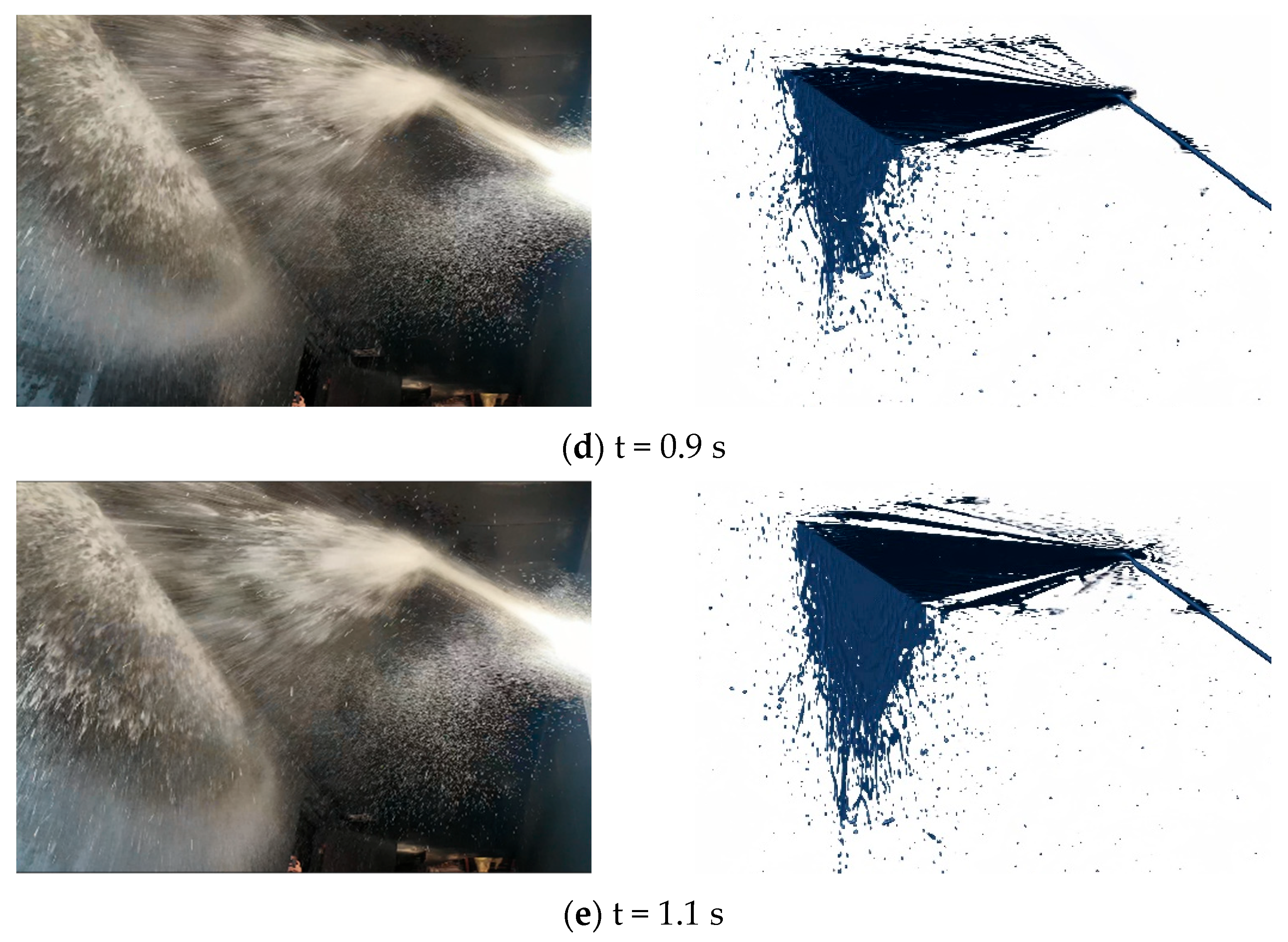
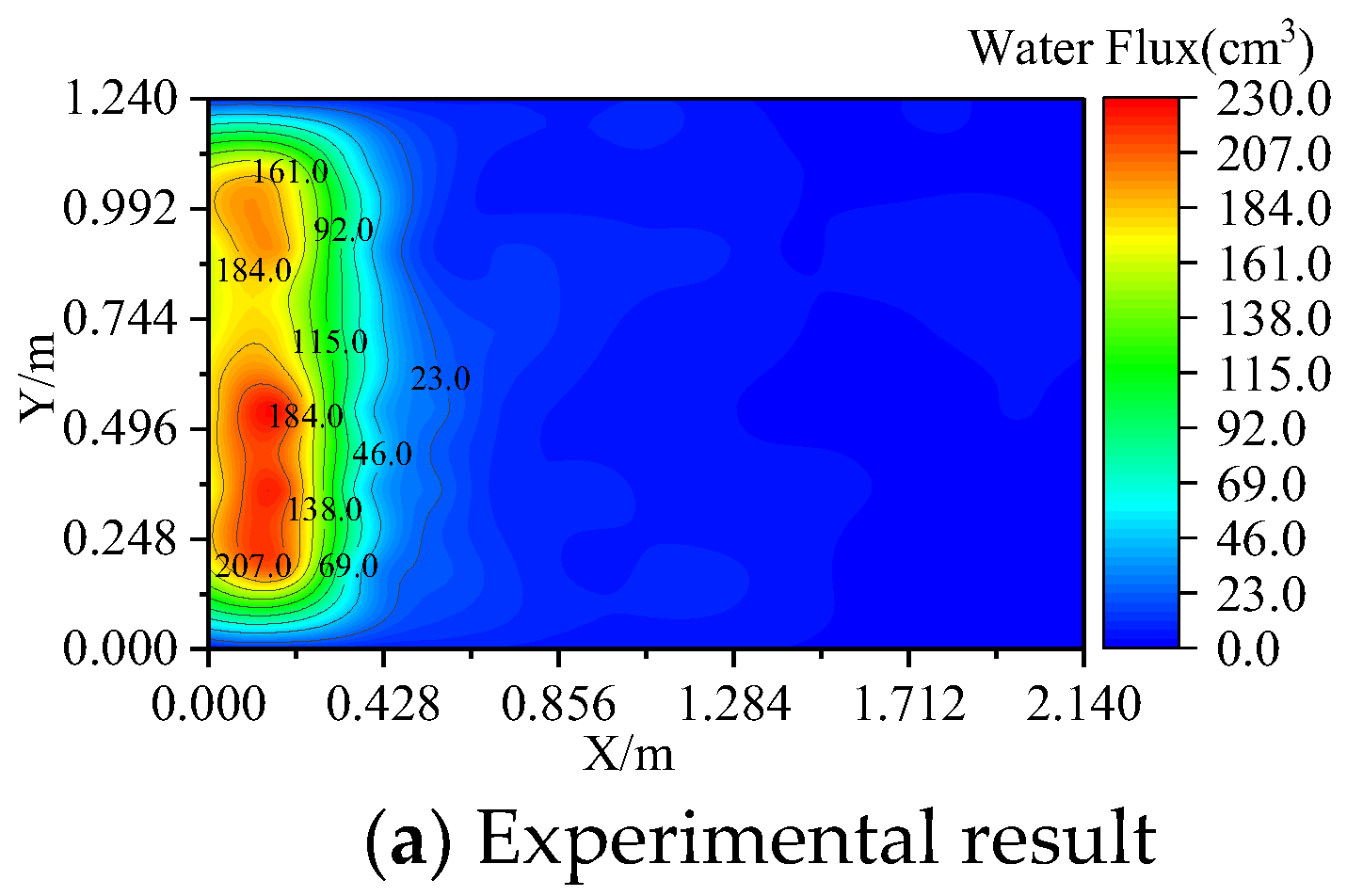
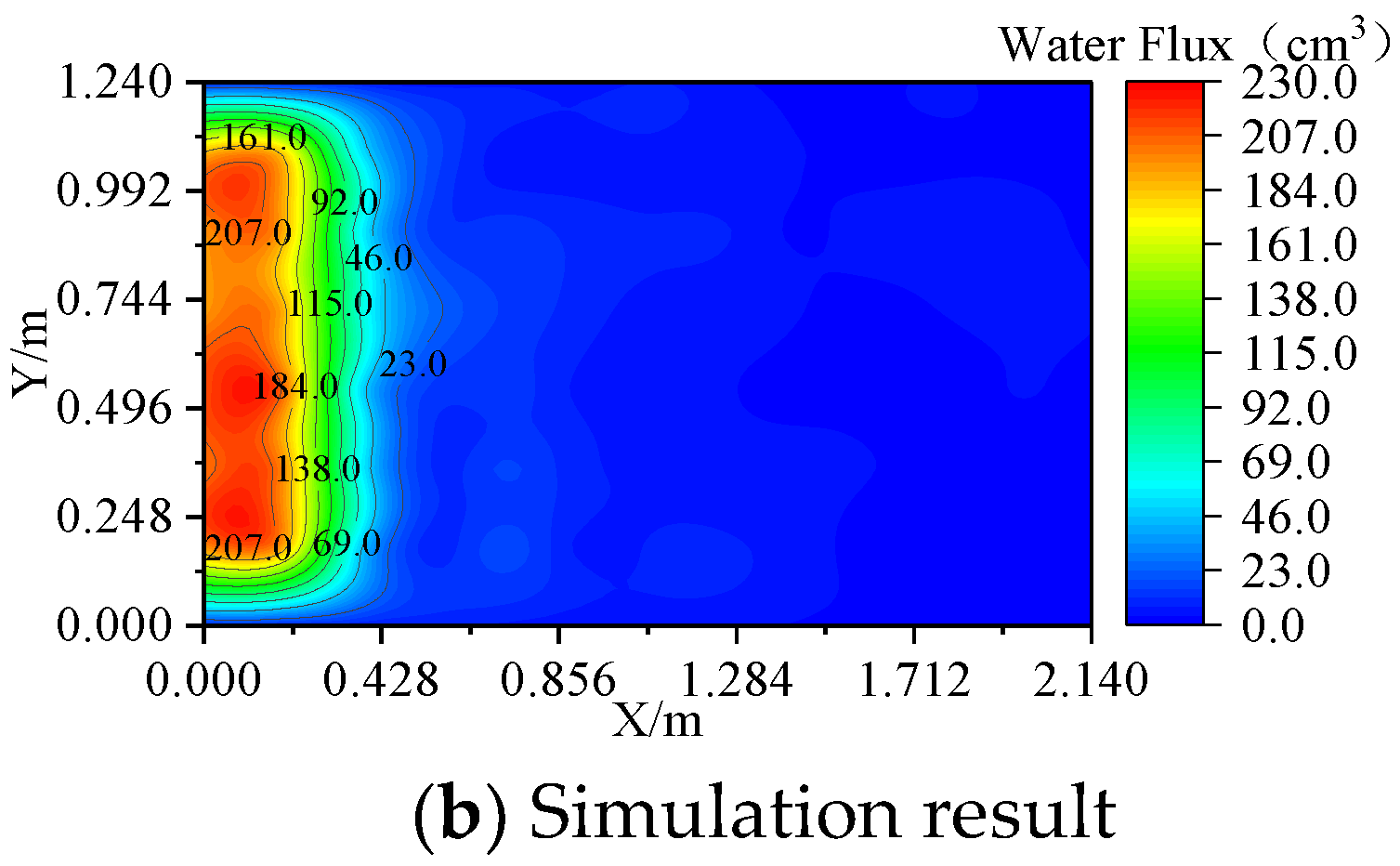
- At t = 0.7 s, further propagation and attenuation of the ceiling film occur. The flow distribution area increases while its local intensity diminishes. Gravity-driven descent of water along the wall becomes evident. The close agreement between the simulated and experimental flow patterns at this stage validates the numerical model’s fidelity.
- At t = 0.9 s, the ceiling film achieves its maximum lateral extent as the jet’s kinetic energy is largely dissipated. The distribution assumes a fan-shaped morphology, with flow accumulation prominent near the ceiling-wall junction and minor drainage towards the floor.
- At t = 1.1 s, a quasi-steady flow distribution is established under continuous injection, marked by maximal spatial coverage and an energy balance between incoming and draining flow. Pronounced backflow and dispersion are evident in both datasets, with significant water accumulation persisting in the vicinity of the impingement zone.
3.3. Analysis of Simulation Results on Influencing Factors of Water Distribution in Transitional Attack
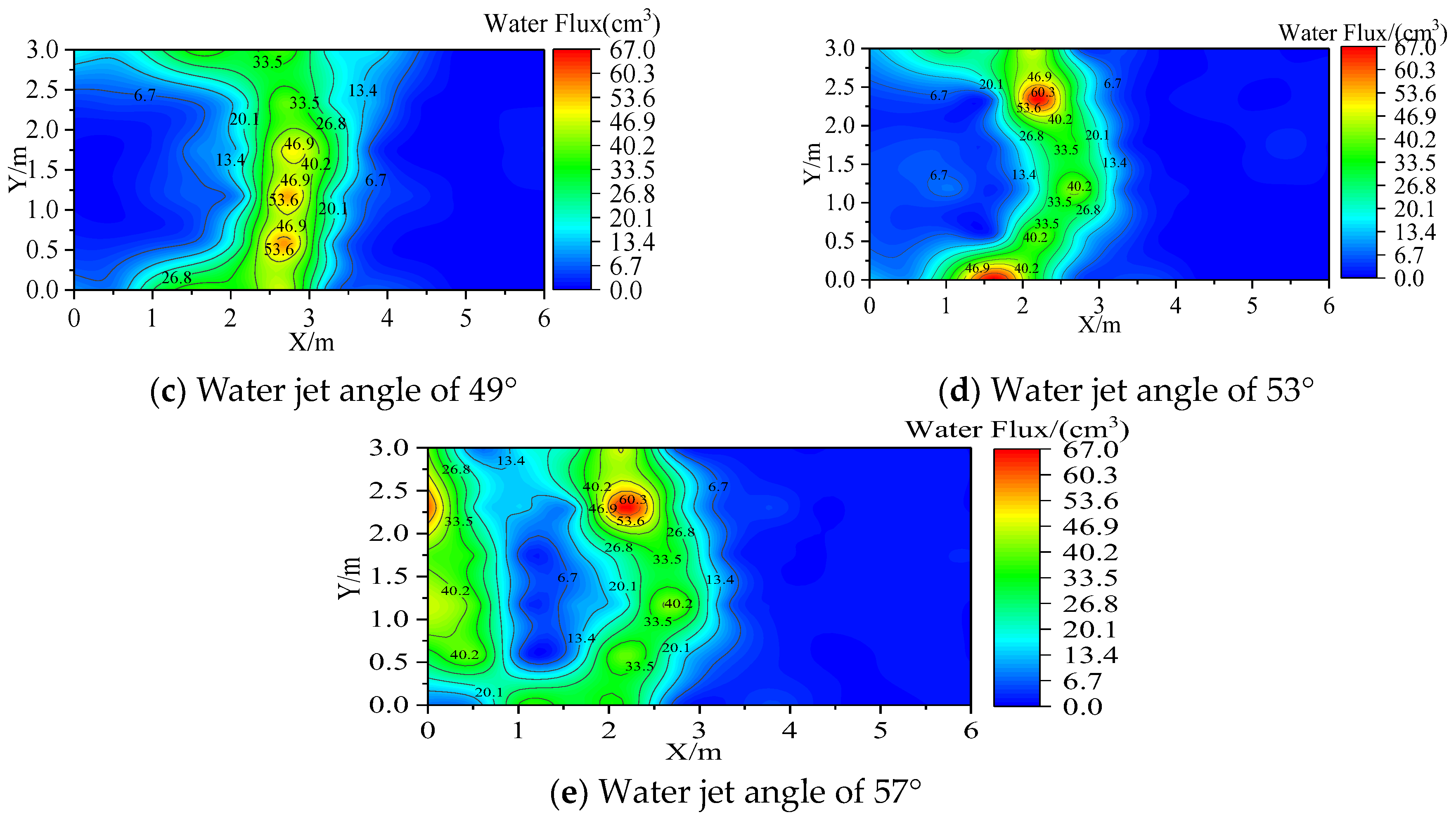
3.3.1. Effect of Water Jet Angle
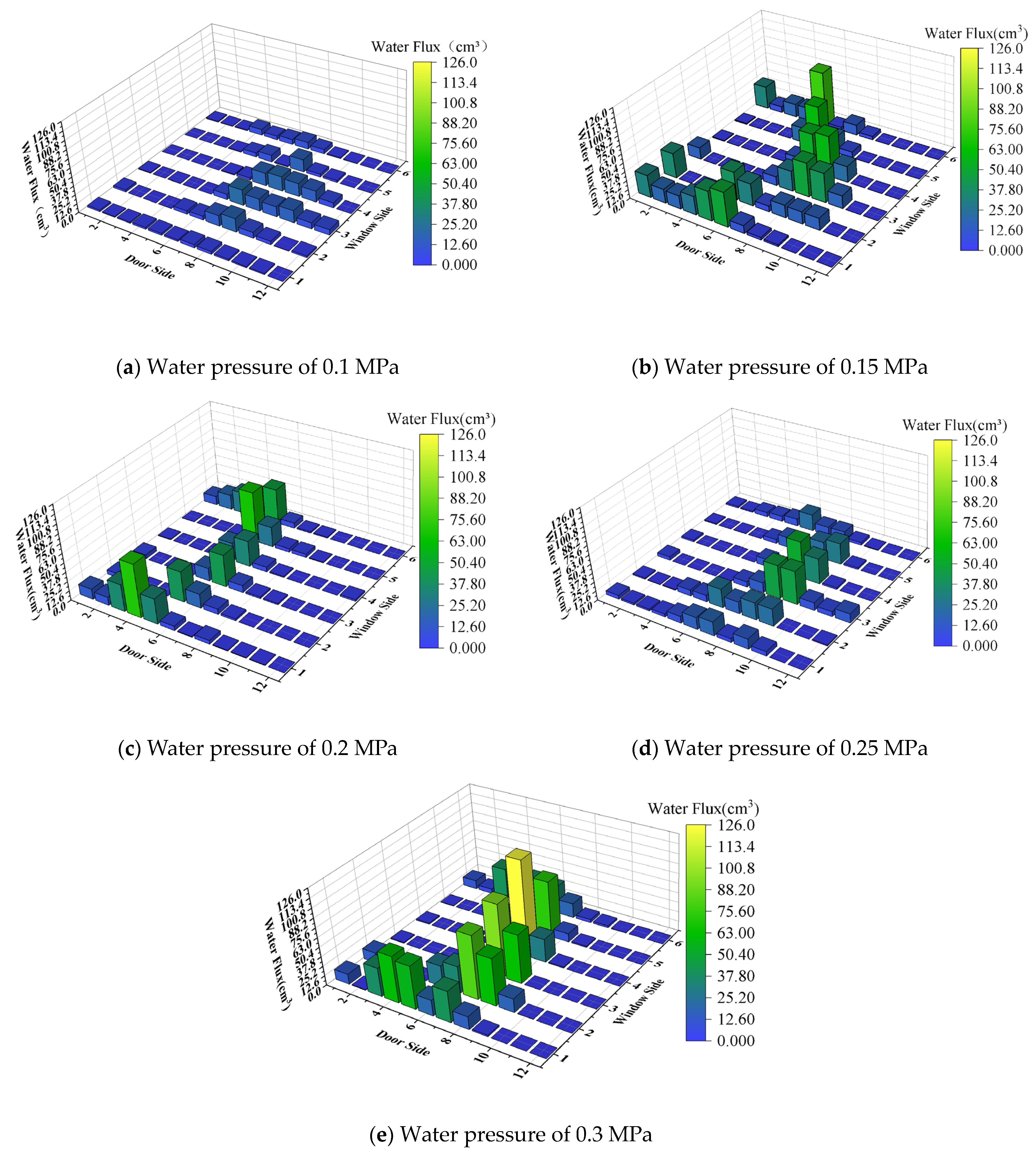
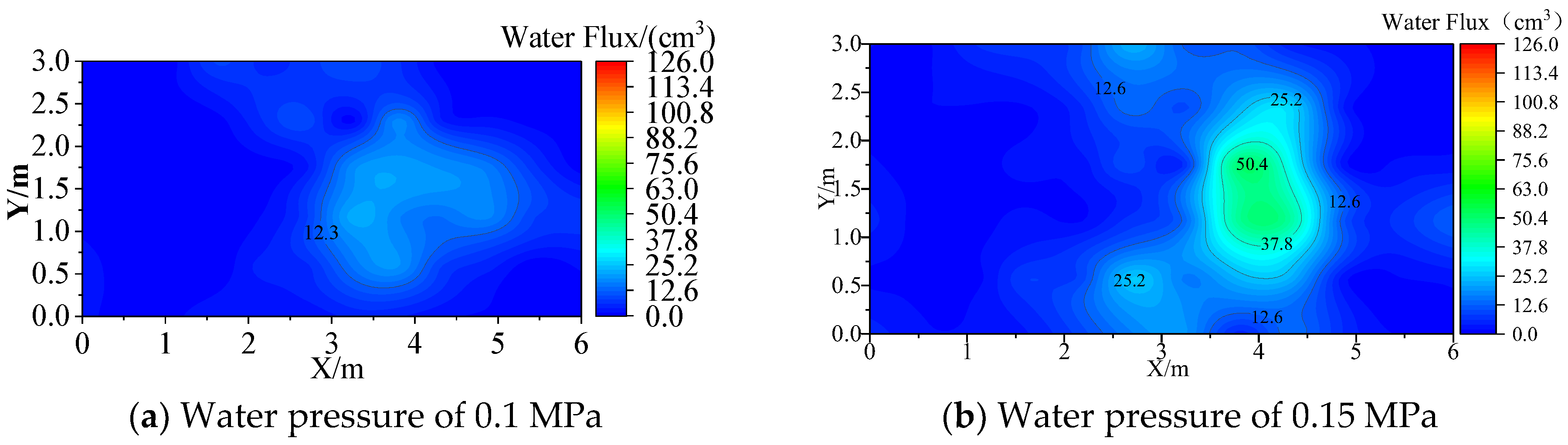
3.3.2. Influence of Water Pressure
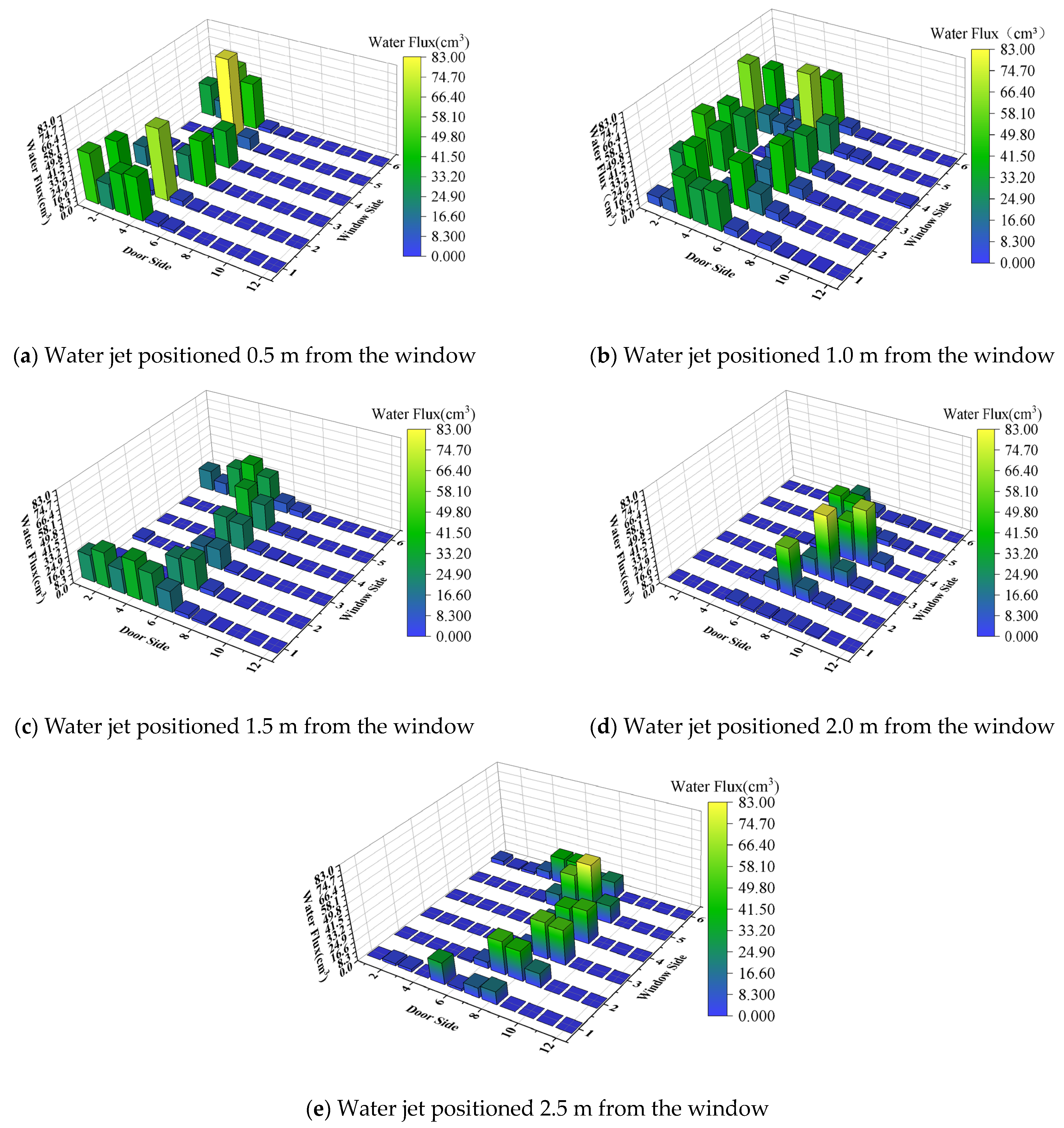
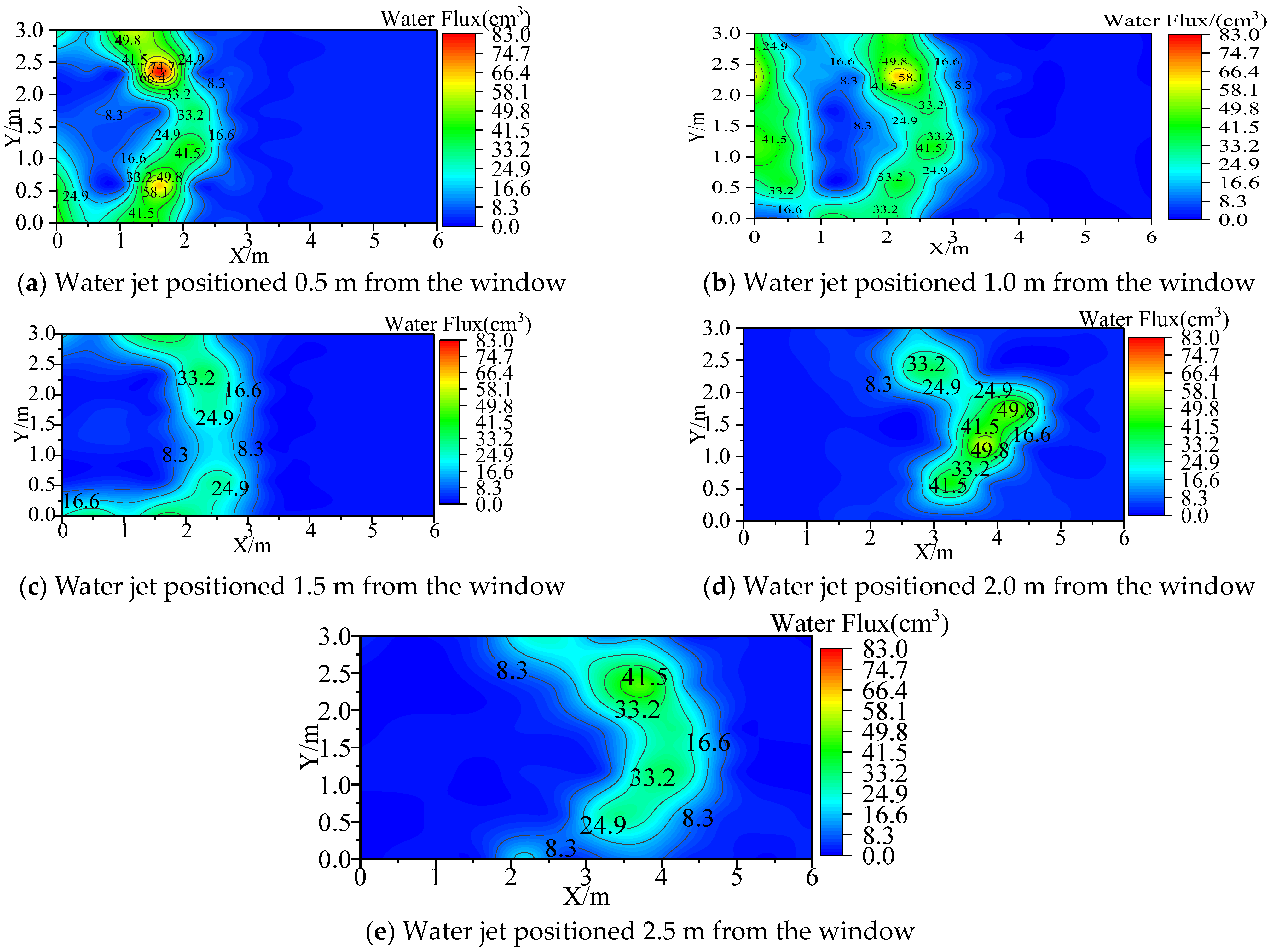
3.3.3. Influence of Water Jet Horizontal Position
4. Discussion and Conclusions
4.1. Discussion
4.1.1. Evolution of Water-Jet Impingement and Rebound
- (1)
- Formation of the impact zone. The kinetic energy of the jet is rapidly dissipated near the impact point, causing a local pressure rise and generating both reflected and radially spreading flows. This zone is characterized by highly turbulent flow and represents the region of peak energy dissipation.
- (2)
- Decay of the normal rebound. Water rebounding vertically loses momentum quickly under the influence of gravity and air resistance. Only a small fraction of droplets retain sufficient kinetic energy to travel downward, which accounts for the limited water reflection observed at ground level during transitional fire-attack operations.
- (3)
- Dominance of tangential spreading flow. After impact, the tangential momentum component becomes predominant due to ceiling constraint. This leads to a spreading flow along the ceiling surface, which gradually develops into a thin water film or a field of fine droplets.
- (4)
- Atomization of water. A portion of the impacting water is atomized into fine droplets under the high impingement force. These droplets promote evaporation and cooling, thereby contributing to temperature reduction and smoke dilution in the fire environment.
4.1.2. Water Distribution Characteristics of Fire Suppression Jet Flows
- (1)
- Localized concentration. The water density flux is highest in the immediate vicinity of the impact point, indicating a highly concentrated flow distribution. This concentration occurs because a substantial fraction of the jet’s initial kinetic energy is dissipated at the primary impact zone, thereby limiting its capacity for immediate radial expansion.
- (2)
- Constrained radial spreading. The water flow propagating along the ceiling surface exhibits radial spreading, the rate of which is constrained by both the ceiling’s surface roughness and the fluid’s viscosity. The eventual coverage area is strongly influenced by key parameters, including the jet’s impact angle, its initial kinetic energy, and the thermophysical properties of the ceiling material.
- (3)
- Directional flow dominance. The flow demonstrates pronounced directionality, with the majority of water forming a confined horizontal film along the ceiling. Only a minor fraction of the flow is redirected back toward the injection opening (e.g., a window) or undergoes significant vertical rebound.
4.1.3. Optimization Strategy for Transitional Attack Water Distribution Based on Hydraulic Distribution Patterns
- (1)
- Optimization of the Jet Impact Angle
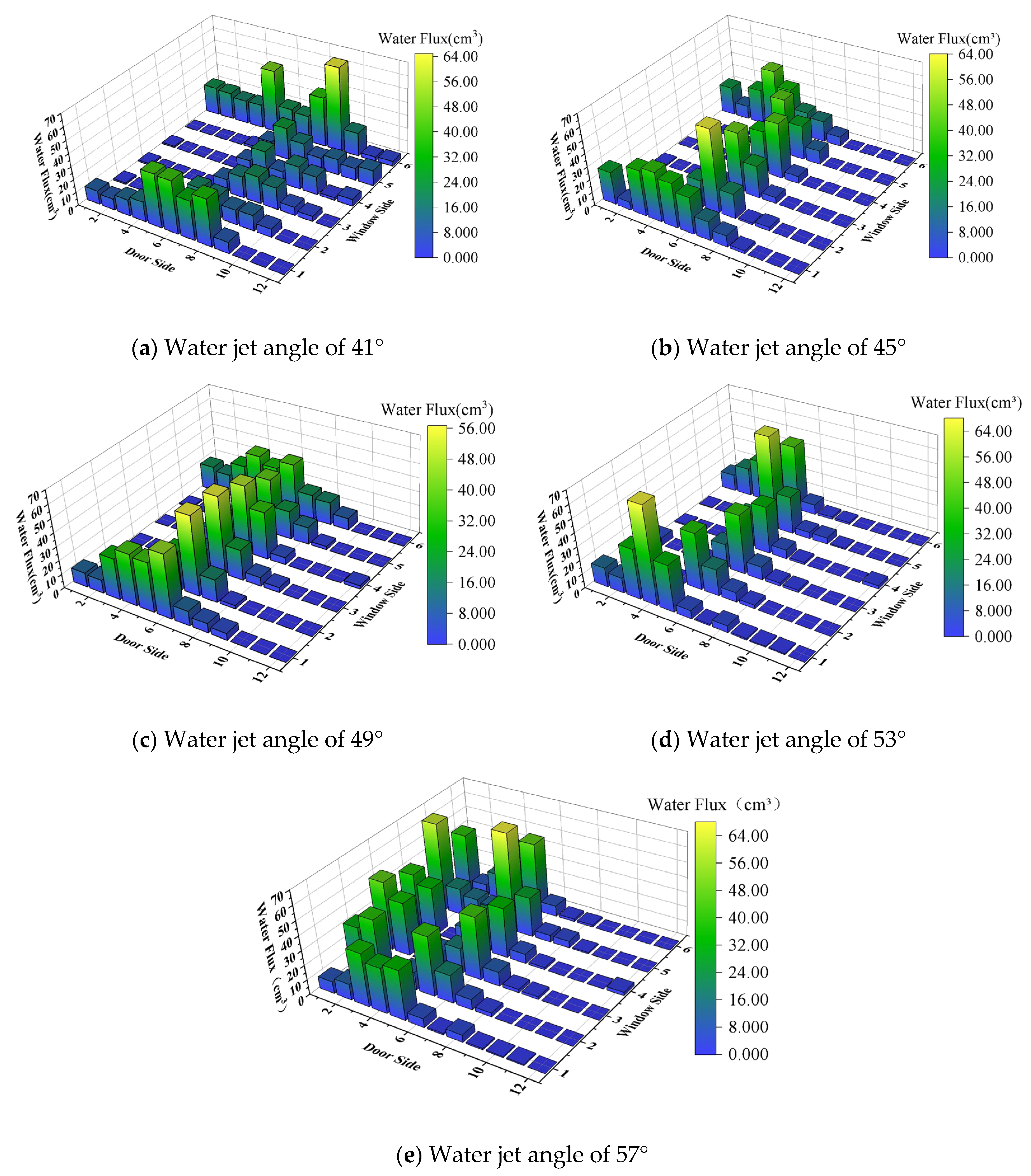
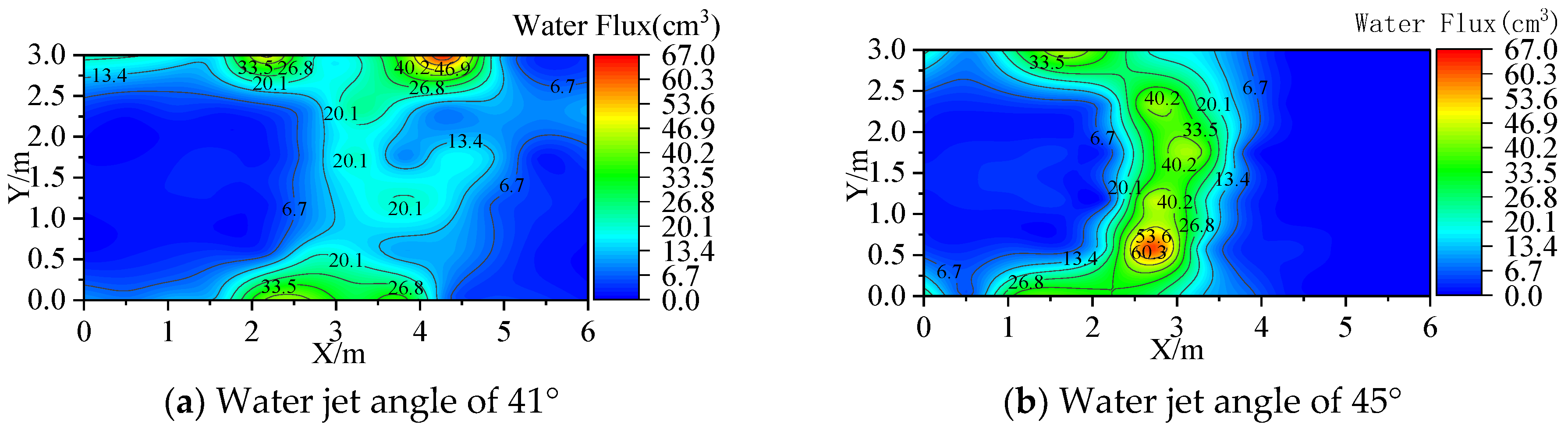
- Shallow Angles (41–45°): Jets incident at shallow angles approach the ceiling nearly horizontally. This results in an extended rebound path and a fan-shaped water dispersion pattern, which promotes wide-area coverage suitable for space cooling. A primary limitation is the concomitant reduction in water flux density in the central floor region, thereby weakening direct fire suppression capability in that zone.
- Medium Angle (−49°): An impact angle of approximately 49° generates a moderate rebound path. This configuration yields a favorable compromise, producing a water distribution that is both sufficiently uniform and adequately widespread, effectively balancing coverage with concentration. It is therefore recommended as the default angle for generalized transitional attack operations.
- Steep Angles (53–57°): Near-vertical jet impingement leads to a short rebound path and concentrated water fallout directly beneath the point of impact or window. This creates a region of high water density, optimizing this strategy for the direct suppression of localized, intense fire sources.
- (2)
- Optimization of the Operating Pressure
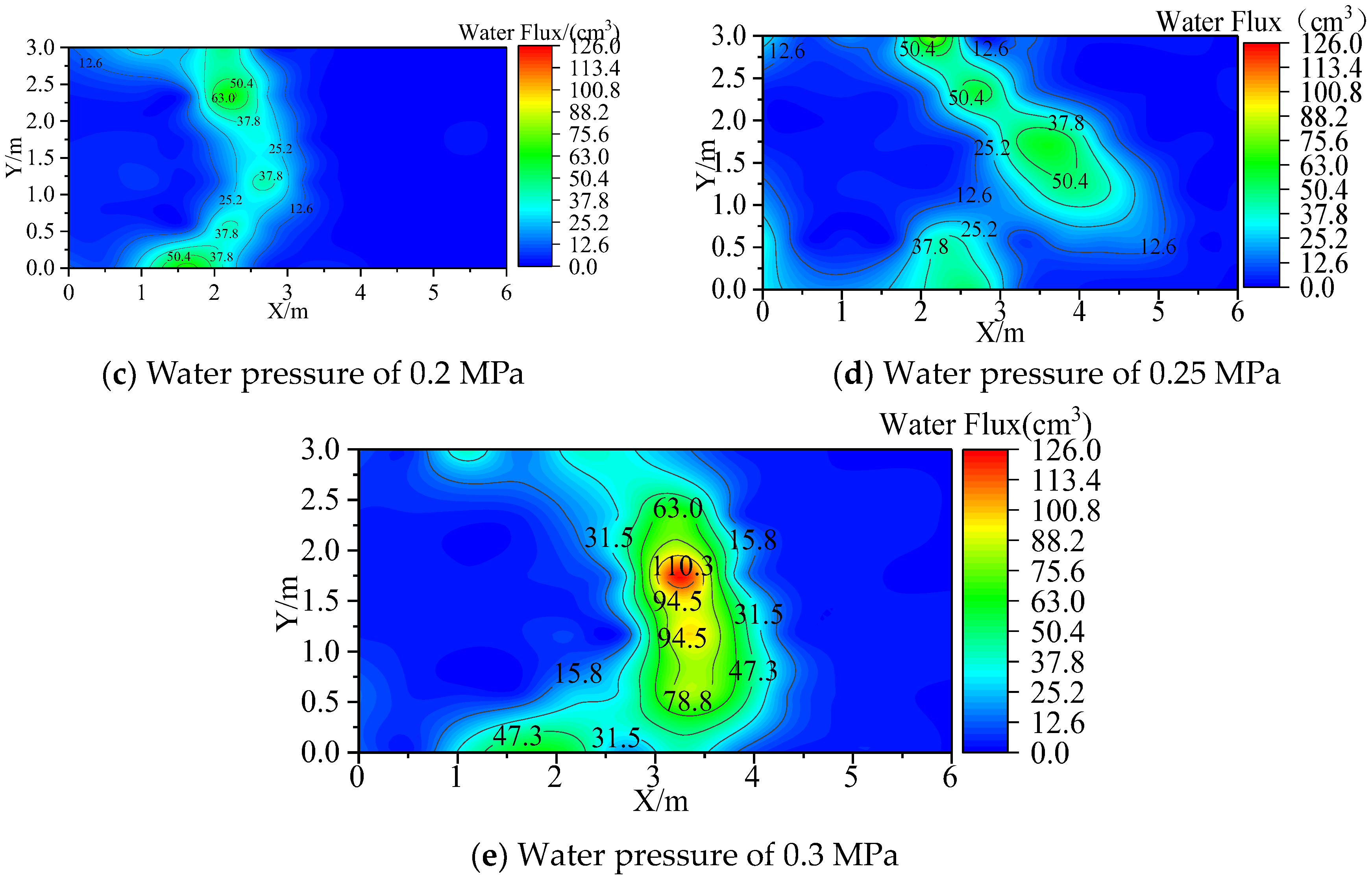
- Low Pressure (0.1–0.15 MPa): The low flow momentum at this pressure range results in minimal air entrainment and limited post-impingement dispersion. Consequently, the area of effective water coverage is restricted, making it suitable only for incipient stage or very small-scale fires.
- Medium Pressure (0.2–0.25 MPa): This pressure range provides balanced flow momentum. It ensures effective water dispersion upon ceiling impact, leading to uniform floor coverage. Air entrainment—a critical mechanism for cooling smoke and gases—is also significantly enhanced. This represents the recommended operating pressure for the majority of compartment fire scenarios.
- High Pressure (0.3 MPa): High-pressure operation delivers superior flow momentum, translating to rapid coverage and deeper penetration of the fire plume. However, the associated short rebound path concentrates water in a smaller area. This setting is advantageous when the tactical priority is the rapid knockdown of a well-defined fire.
- (3)
- Optimization of Water Jet Horizontal Position
- Close Distance (0.5–1 m): Deployment at a close distance focuses the impingement zone, but the shortened rebound path confines the majority of the water to the ceiling layer. This leads to a highly non-uniform distribution on the floor and poor coverage of fire sources remote from the entrance.
- Medium Distance (1.5–2 m): A medium deployment distance allows for optimal development of the jet prior to impingement and a subsequent rebound path that promotes extensive and uniform water distribution across the floor. This position is identified as yielding the best overall performance for most configurations.
- Far Distance (−2.5 m): While maximizing the spatial spread of water, deployment from a far distance is subject to significant jet momentum decay before ceiling impact. This markedly reduces the resulting water density on the floor, rendering the strategy more appropriate for large-volume cooling than for direct fire suppression.
4.2. Conclusions
- (1)
- Regarding the evolution of stream impact and rebound, upon impacting the ceiling, the kinetic energy of the fire hose stream is rapidly dissipated near the impact point, forming both reflected and diffused flows. The normal component of the rebound stream undergoes swift kinetic energy attenuation due to gravity and air resistance, with only a small fraction of droplets retaining sufficient momentum to propagate downward. The majority of the flow propagates along the ceiling surface, exhibiting a distinct diffusive trend. During the impact process, the impulsive force causes atomization, generating fine droplets that are beneficial for fireground cooling.
- (2)
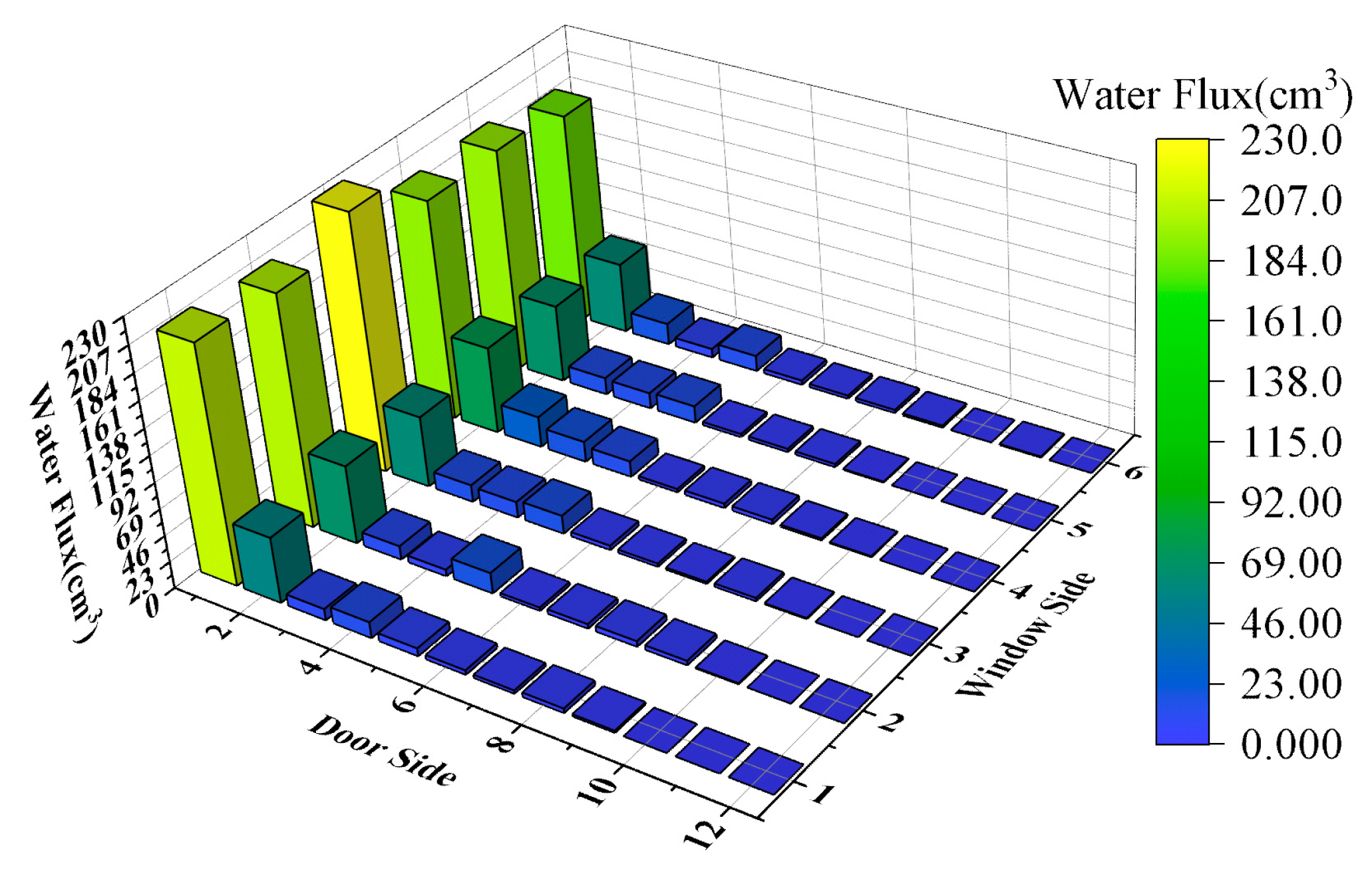
- In terms of water distribution patterns, the experimental results demonstrate a high degree of concordance with the mathematical model and CFD simulations, thereby substantiating the reliability of the theoretical framework. The water flux density is highest near the impact point, where the distribution is relatively concentrated. A significant portion of the water flows horizontally along the ceiling, forming a relatively concentrated distribution band, with only a small fraction being redirected toward the window or rebounding vertically. Experimental measurements determined that the water density directly beneath the impact point accounts for merely 10–15% of the total volume, indicating that the majority of the water flows horizontally along the ceiling post-impact.
- (3)
- Concerning influencing factors and optimization strategies, this study proposes water distribution optimization measures under pure water jet conditions based on simulation results of three operational parameters: jet angle, water pressure, and nozzle position. A medium jet angle (approximately 49°) achieves an optimal balance between distribution uniformity and coverage area, making it the recommended angle for most scenarios. A medium working pressure range (0.2–0.25 MPa) ensures effective water diffusion and is recommended as the standard pressure for mainstream firefighting operations. A medium nozzle distance (1.5–2 m) provides the best comprehensive performance in terms of ground coverage and distribution uniformity.
Author Contributions
Funding
Data Availability Statement
Conflicts of Interest
References
- Schwarz, L.G.; Wheeler, D. Transitional fire attack. Fire Eng. 2009, 162, 53–54. [Google Scholar]
- Weinschenk Craig, G.; Keith, S.; Robin, Z. Impact of Fire Attack Utilizing Interior and Exterior Streams on Firefighter Safety and Occupant Survival: Air Entrainment; Underwriters Laboratory, Firefighter Safety Research Institute: Columbia, MD, USA, 2017. [Google Scholar]
- Zevotek, R.; Stakes, K.; Willi, J.M. Impact of Fire Attack Utilizing Interior and Exterior Streams on Firefighter Safety and Occupant Survival: Full Scale Experiments; Underwriters Laboratory, Firefighter Safety Research Institute: Columbia, MD, USA, 2018. [Google Scholar]
- Traina, N.; Kerber, S.; Kyritsis, D.C.; Horn, G.P. Occupant tenability in single family homes: Part II: Impact of door control, vertical ventilation and water application. Fire Technol. 2017, 53, 1611–1640. [Google Scholar] [CrossRef]
- Horn, G.P.; Kesler, R.M.; Kerber, S. Thermal response to firefighting activities in residential structure fires: Impact of job assignment and suppression tactic. Ergonomics 2018, 61, 404–419. [Google Scholar] [CrossRef]
- Miyashita, T.; Sugawa, O.; Imamura, T.; Kamiya, K.; Kawaguchi, Y. Modeling and Analysis of Water Discharge Trajectory with Large Capacity Monitor. Fire Saf. J. 2014, 63, 1–8. [Google Scholar] [CrossRef]
- Miyashita, T.; Sugawa, O.; Wada, Y.; Ishikawa, R.; Kawaguchi, Y. Development of two-dimensional simple simulation model and evaluation of discharge ability for water discharge of firefighting. Bull. Jpn. Assoc. Fire Sci. Eng. 2012, 62, 13–19. [Google Scholar]
- Valencia, A.; Zheng, Y.; Marshall, A.W. A Model for Predicting the Trajectory and Structure of Firefighting Hose Streams. Fire Technol. 2021, 58, 793–815. [Google Scholar] [CrossRef]
- Ponziani, F.A.; Tinaburri, A. Water jet streams modeling for firefighting activities with the aid of CDF. Saf. Secur. Eng. VI 2015, 1, 323–334. [Google Scholar] [CrossRef]
- Salyers, B.E. Spray Characteristics from Fire Hose Stream Nozzles. Master’s Thesis, University of Maryland, College Park, MD, USA, 2010. [Google Scholar]
- Weinschenk, C.; Stakes, K.; Zevotek, R. Impact of Fire Attack Utilizing Interior and Exterior Streams on Firefighter Safety and Occupant Survival: Water Mapping; Underwriters Laboratory, Firefighter Safety Research Institute: Columbia, MD, USA, 2017. [Google Scholar]
- Quintiere, J.G. Fundamentals of Fire Phenomena; Wiley: Hoboken, NJ, USA, 2006. [Google Scholar]
- Cengel, Y.A.; Cimbala, J.M. Fluid Mechanics: Fundamentals and Applications, 4th ed.; McGraw-Hill: New York, NY, USA, 2019. [Google Scholar]
- GB 8181-2015; Fire Nozzles. General Administration of Quality Supervision, Inspection and Quarantine of the People’s Republic of China. Standardization Administration of the People’s Republic of China: Beijing, China, 2015.









| Controlling Factor | Case No. | Horizontal Distance from Window (m) | Nozzle Pressure (MPa) | Jet Elevation Angle (°) |
|---|---|---|---|---|
| Jet Elevation Angle | 1 | 1.0 | 0.20 | 41 |
| 2 | 1.0 | 0.20 | 45 | |
| 3 | 1.0 | 0.20 | 49 | |
| 4 | 1.0 | 0.20 | 53 | |
| 5 | 1.0 | 0.20 | 57 | |
| Nozzle Pressure | 6 | 1.0 | 0.10 | 53 |
| 7 | 1.0 | 0.15 | 53 | |
| 4 | 1.0 | 0.20 | 53 | |
| 8 | 1.0 | 0.25 | 53 | |
| 9 | 1.0 | 0.30 | 53 | |
| Horizontal Distance | 10 | 0.5 | 0.20 | 63 |
| 5 | 1.0 | 0.20 | 57 | |
| 11 | 1.5 | 0.20 | 46 | |
| 12 | 2.0 | 0.20 | 38 | |
| 13 | 2.5 | 0.20 | 33 |
Disclaimer/Publisher’s Note: The statements, opinions and data contained in all publications are solely those of the individual author(s) and contributor(s) and not of MDPI and/or the editor(s). MDPI and/or the editor(s) disclaim responsibility for any injury to people or property resulting from any ideas, methods, instructions or products referred to in the content. |
© 2025 by the authors. Licensee MDPI, Basel, Switzerland. This article is an open access article distributed under the terms and conditions of the Creative Commons Attribution (CC BY) license.
Share and Cite
Xu, H.; Men, J.; Zhang, T.; Liu, Z.; Liang, Q.; Wang, X. CFD Simulation and Experimental Investigation of Water Distribution Patterns in Transitional Attack. Fire 2026, 9, 14. https://doi.org/10.3390/fire9010014
Xu H, Men J, Zhang T, Liu Z, Liang Q, Wang X. CFD Simulation and Experimental Investigation of Water Distribution Patterns in Transitional Attack. Fire. 2026; 9(1):14. https://doi.org/10.3390/fire9010014
Chicago/Turabian StyleXu, Hui, Jianan Men, Tianze Zhang, Zhen Liu, Qiang Liang, and Xiaopo Wang. 2026. "CFD Simulation and Experimental Investigation of Water Distribution Patterns in Transitional Attack" Fire 9, no. 1: 14. https://doi.org/10.3390/fire9010014
APA StyleXu, H., Men, J., Zhang, T., Liu, Z., Liang, Q., & Wang, X. (2026). CFD Simulation and Experimental Investigation of Water Distribution Patterns in Transitional Attack. Fire, 9(1), 14. https://doi.org/10.3390/fire9010014