
Article

Numerical Simulation of Flow and Flame Dynamics of a Pool Fire Under Combined Effects of Wind and Slope

1
School of Atmospheric Physics, Nanjing University of Information Science and Technology, Nanjing 210044, China
2
School of Safety Science and Engineering, Nanjing University of Science and Technology, Nanjing 210094, China
3
School of Environment Engineering, Wuhan Textile University, Wuhan 430200, China
*
Authors to whom correspondence should be addressed.
Fire 2024, 7(11), 421; https://doi.org/10.3390/fire7110421
Submission received: 1 October 2024 / Revised: 14 November 2024 / Accepted: 18 November 2024 / Published: 20 November 2024
(This article belongs to the Special Issue Pool Fire Behavior in Wind)

Abstract

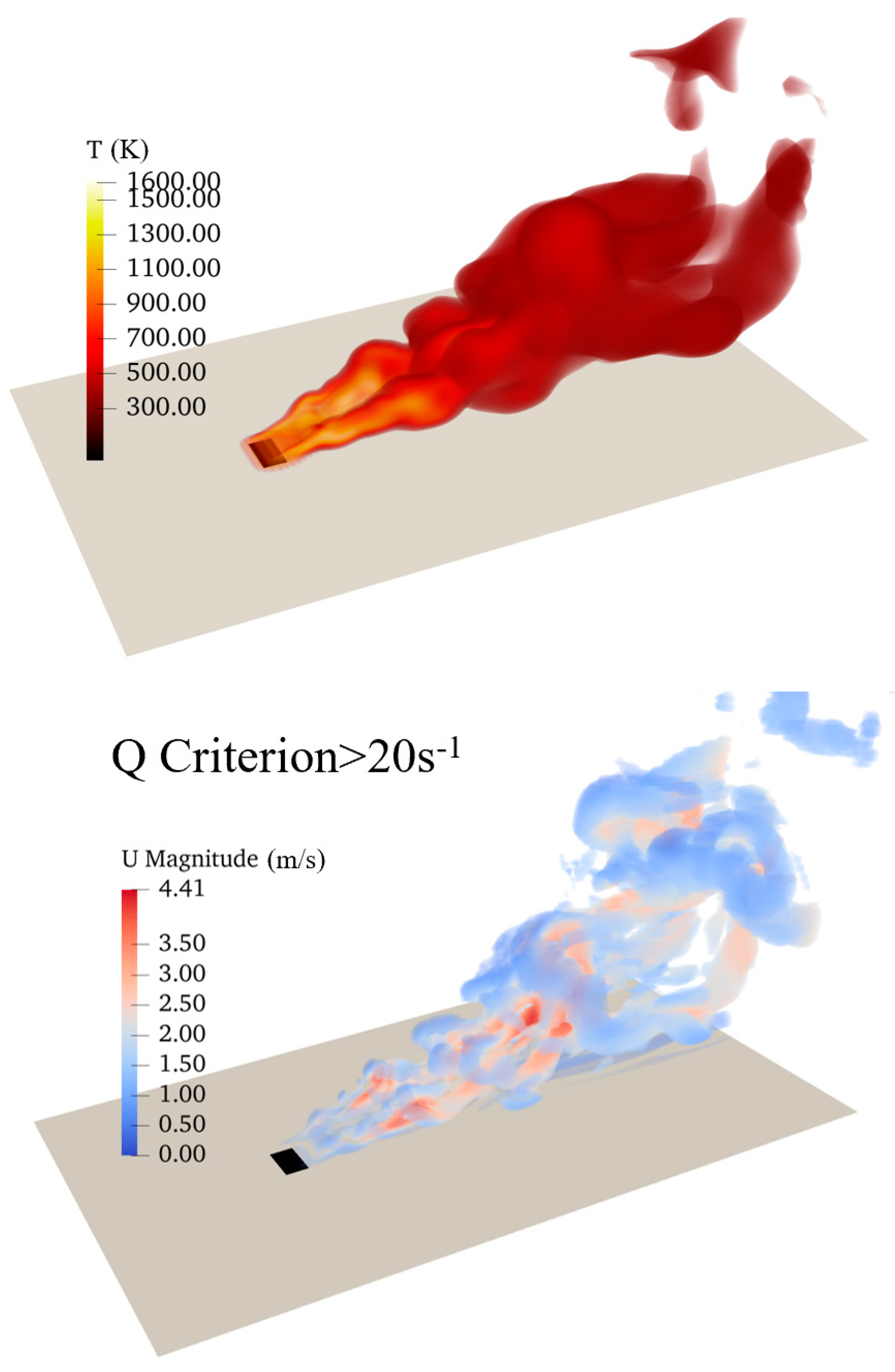
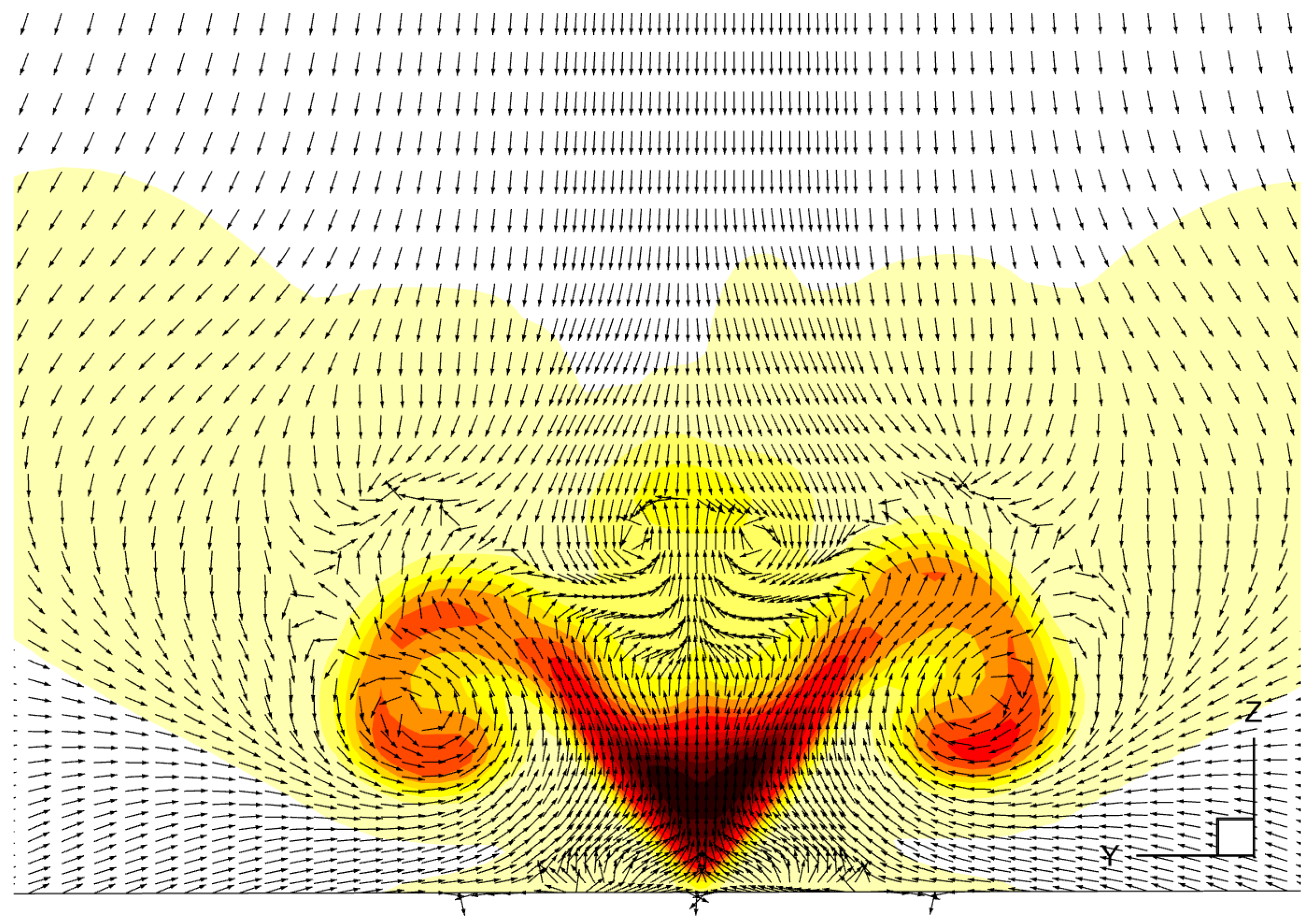
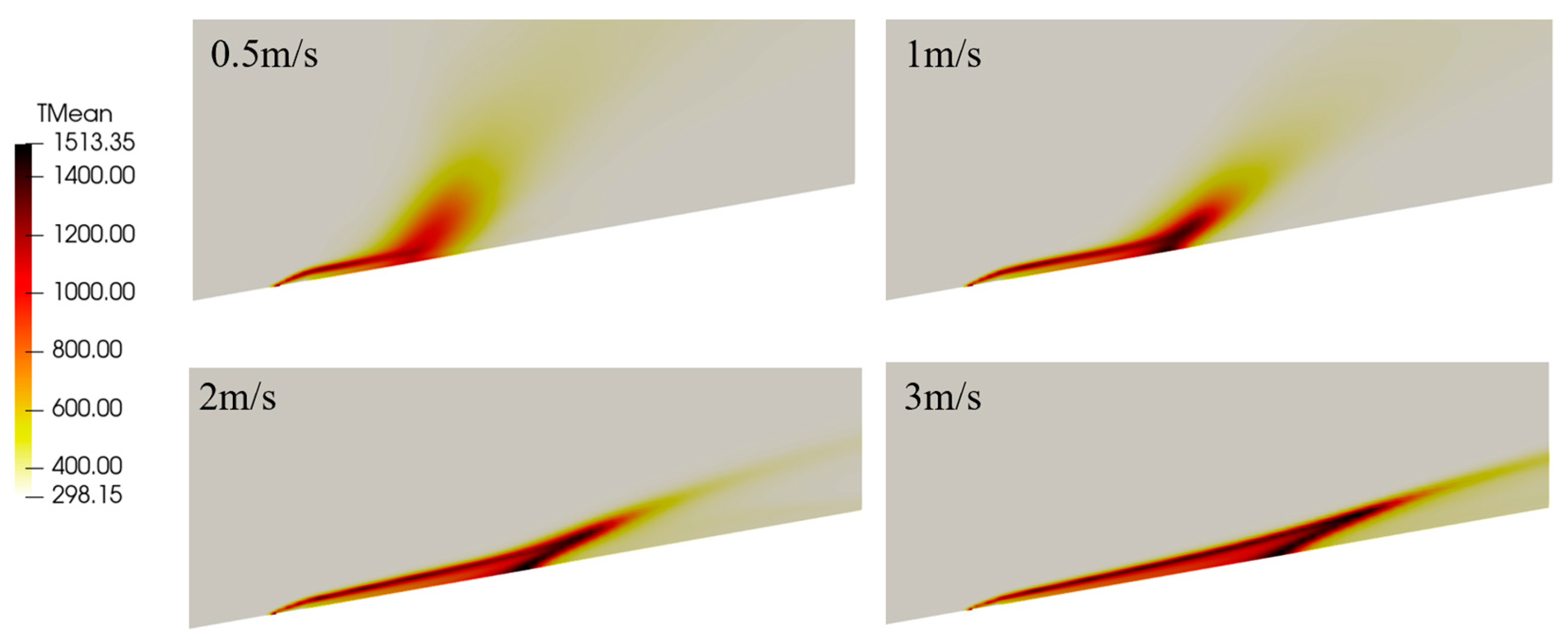
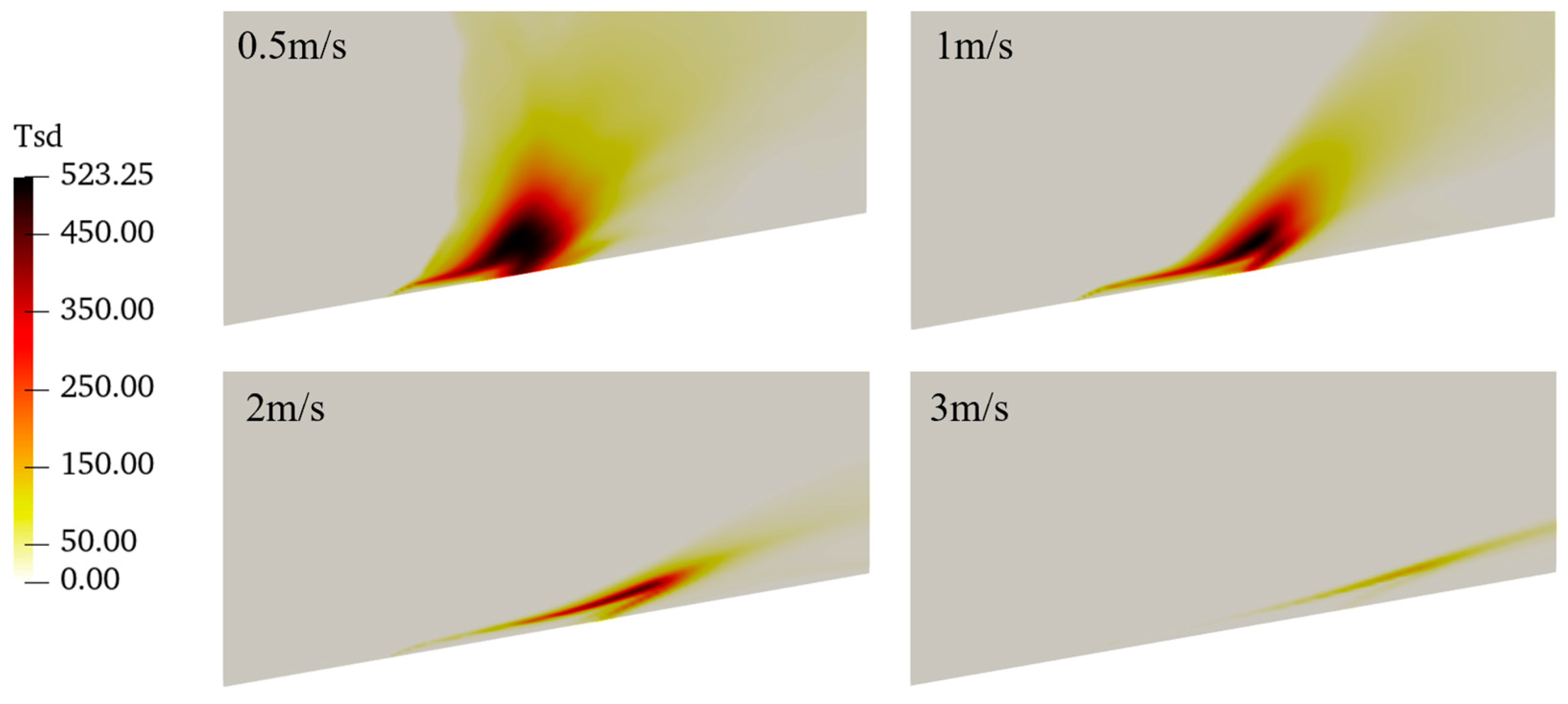
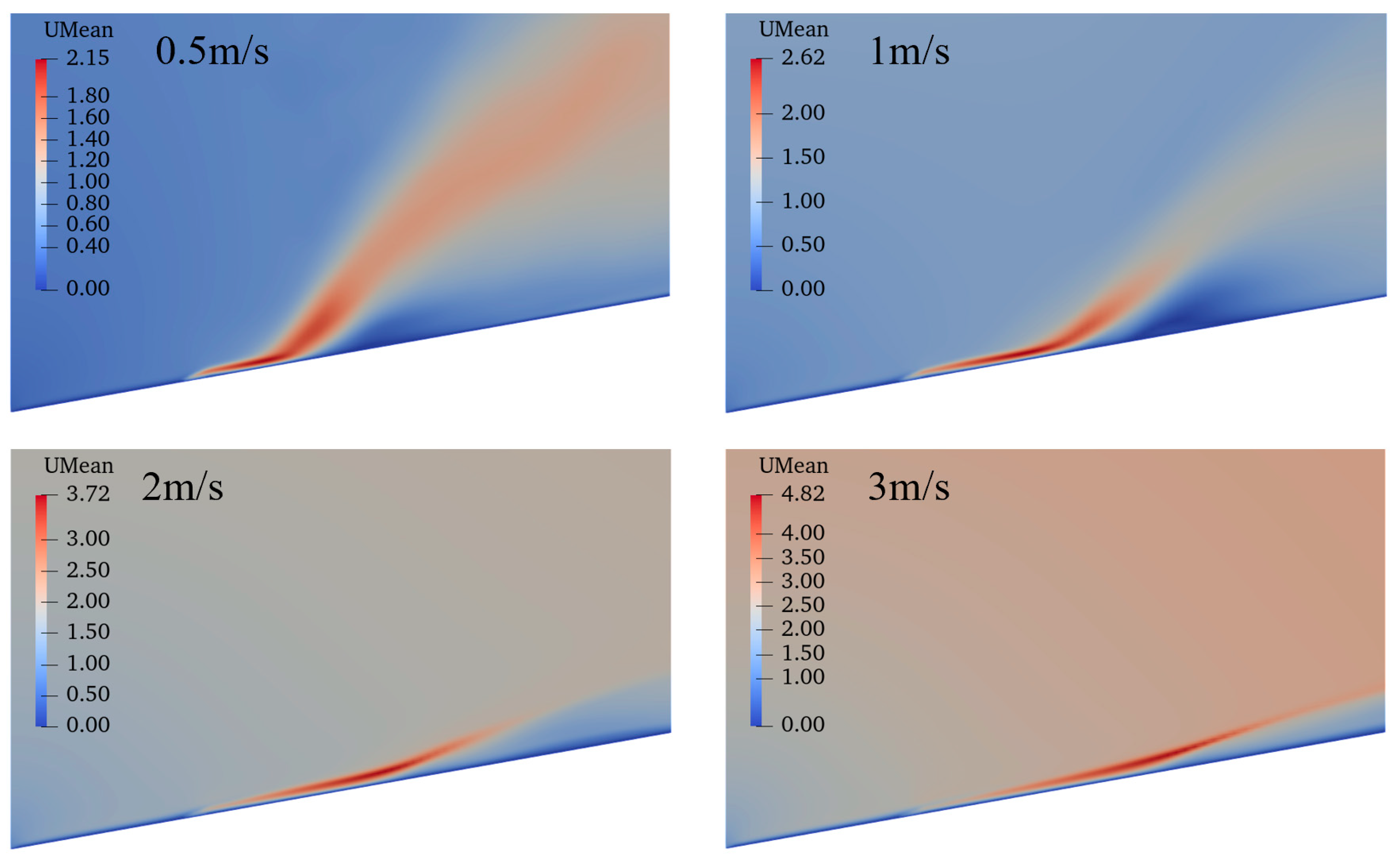
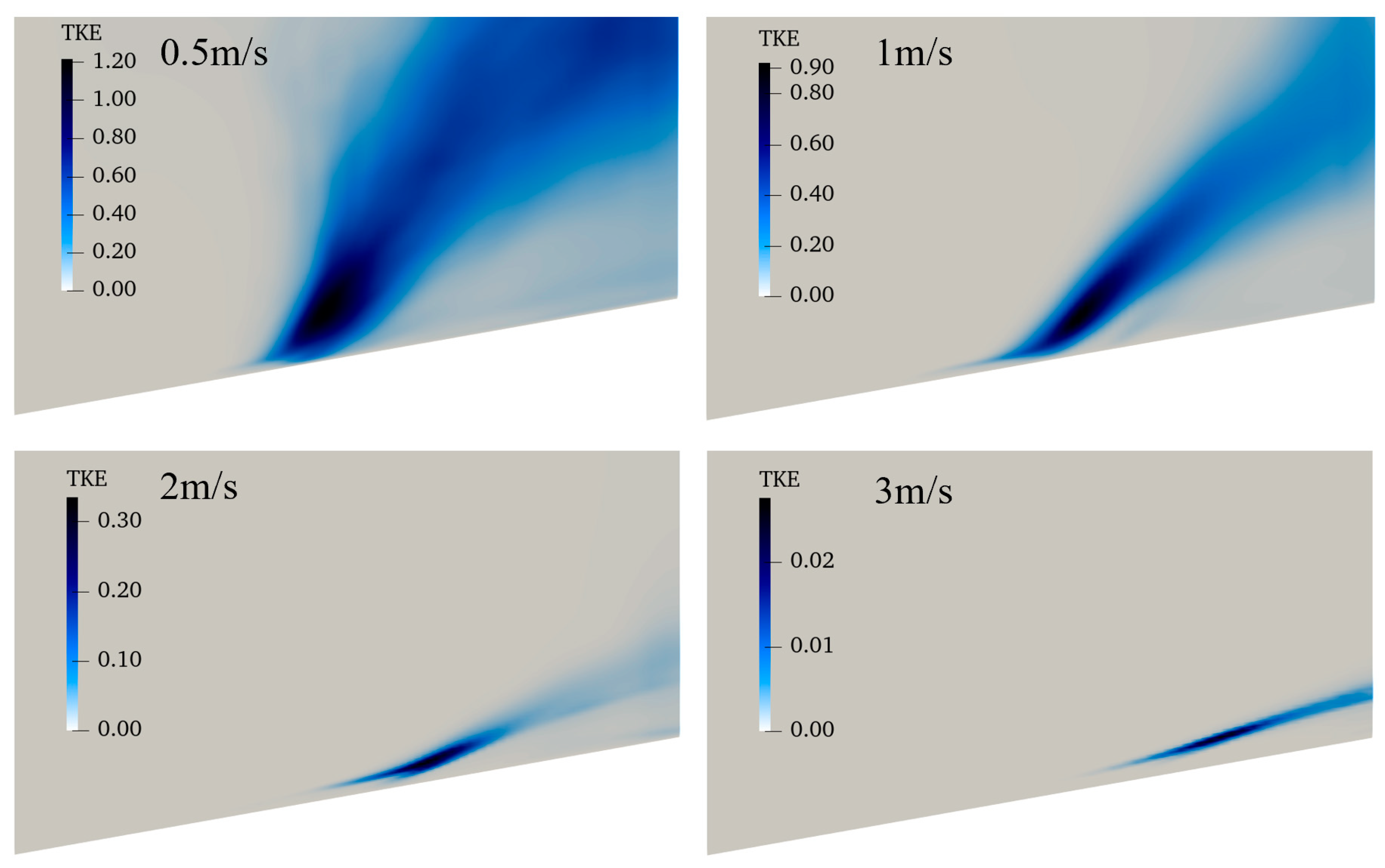
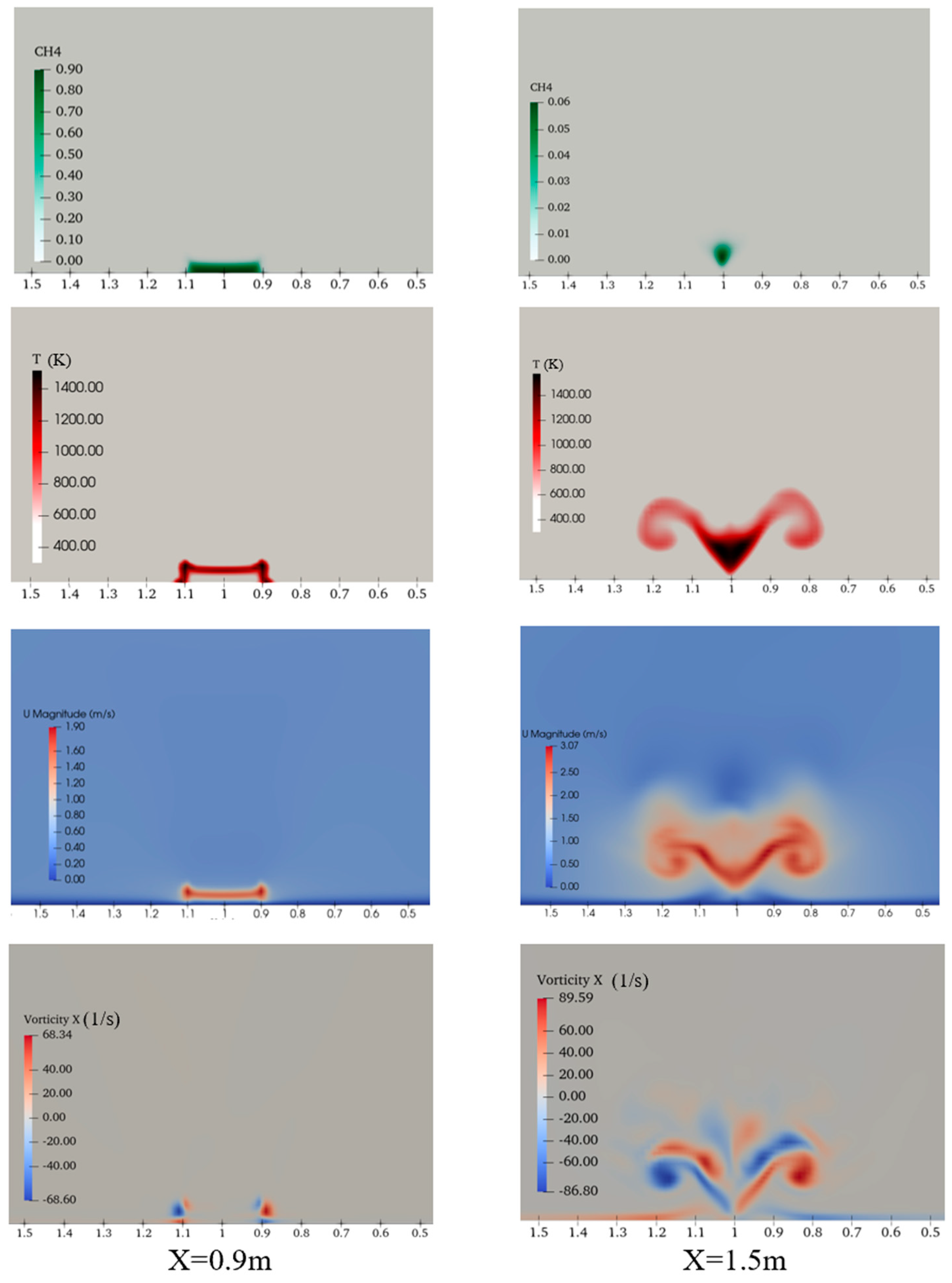
Wind has a significant effect on pool fire behavior, which is relevant to many fire conditions, such as wildfires, building fires, and oil transportation fires. Although fire behavior and morphology changes have received considerable attention and been widely researched, there are few works concerning the flow and flam dynamics of pool fire. A large eddy simulation model is adopted to investigate the flow and flame dynamics of a rectangular pool fire considering the combined effects of wind and slope. The results show that, with a wind speed of 0.5 m/s, a flame develops immediately downstream of the fire source and sustains two flanks of plume. Further downstream, the plume starts to rise due to buoyant force. Temperature, velocity, and vorticity distributions show significantly different shapes at different streamwise locations. Near the fire source, the flame is confined to a small region around the fire source. The air circulation downstream shows a cylindrical spiring pattern. When the wind speed increases, the temperature and velocity become more parallel to the surface and their maximum values increase. On the contrary, the temperature fluctuations and turbulent kinetic energy decrease with the wind speed, and they are more frequent near the flame tails.
Keywords: pool fire; wind; slope; buoyance pool fire; wind; slope; buoyance