1. Introduction
MAX phases are a class of ternary layered compounds with the general formula
Mn+1AXn, where
M represents an early transition metal,
A is an A-group element, and
X is carbon or nitrogen [
1,
2]. These materials typically exhibit a hexagonal close-packed (hcp) structure and possess a unique combination of metallic and ceramic properties, including high thermal and electrical conductivity, excellent mechanical strength, corrosion resistance, and oxidation resistance [
3,
4]. Some MAX phases also demonstrate favorable irradiation tolerance, which has attracted significant interest for their potential applications in nuclear environments [
5,
6].
Among various
M elements (such as Ti, Cr, and V), zirconium (Zr) is particularly notable for its low neutron absorption cross-section. ZrC-based ceramics have already shown promising performance under reactor conditions, making Zr-based MAX phases a subject of increasing attention [
7]. In 2016, Lapauw et al. [
8] successfully synthesized Zr
3AlC
2, which has been proposed as a potential Accident Tolerant Fuel (ATF) coating material due to its ability to prolong fuel life and enhance accident resistance. However, the synthesis of high-purity Zr
3AlC
2 remains challenging. Many research groups have attempted various sintering approaches, yet the resulting MAX phase content is typically below 70 wt% [
9,
10]. To improve phase purity, some researchers have explored doping strategies. For instance, Zapata-Solvas et al. introduced Si and Ti into the precursor powders and synthesized Zr
3(Al
x,Si
1−x)C
2 [
11] and (Zr
1−xTi
x)
3AlC
2 [
12]; similar approaches were also reported by Lapauw et al. [
13].
To date, irradiation studies of MAX phases have primarily focused on Ti-, Cr-, and V-based systems, while investigations on Zr-based MAX phases remain limited. Bowden et al. [
14] examined the effect of 2 MeV proton irradiation on Zr
3AlC
2 and found that it exhibits excellent defect recovery capabilities above 400 °C. They also reported lattice parameter changes under irradiation, characterized by a decrease in the
a-lattice constant and an increase in the
c-lattice constant. Qarra et al. [
15] studied the effects of 22 MeV Au
+ ions on Zr
2AlC at different temperatures and observed that at room temperature, Zr
2AlC becomes largely amorphous after irradiation, whereas it retains structural stability above 350 °C. In another study, Qarra [
16] further investigated the structural response of Zr
3(Al
0.9Si
0.1)C
2 under 52 MeV I
9+ irradiation at room temperature, finding that this material displayed poor irradiation tolerance, with phase transformations from α-Zr
3(Al
0.9Si
0.1)C
2 to β-Zr
3(Al
0.9Si
0.1)C
2 and subsequent decomposition into ZrC and Zr(Si/Al)
2.
Helium is a significant fission product generated during the transmutation of actinides. High-energy He ions can directly displace atoms via elastic collisions, introducing structural damage [
17]. Additionally, implanted He tends to migrate and agglomerate, leading to the formation of He bubbles that cause significant volumetric swelling and embrittlement [
18,
19,
20,
21]. Therefore, He-induced damage is a critical concern for nuclear structural materials. To date, there have been no reports on the effects of He ion irradiation on Zr
3AlC
2.
In addition, previous studies have predicted that Zr
3AlC
2 exhibits better chemical compatibility with zirconium-based alloys compared to many other MAX phases, making it particularly attractive for integration with existing cladding materials in nuclear reactors [
22].
In this study, high-purity Zr3AlC2 samples (>92 wt%) were synthesized and irradiated with 100 keV He+ ions at room temperature. Two fluences were applied: 2 × 10¹⁶ ions/cm2 and 1 × 10¹⁷ ions/cm2, corresponding to approximately 1.3 dpa and 6.6 dpa, respectively. After irradiation, a significant increase in ZrC content was observed in the irradiated region, accompanied by the disappearance of the layered MAX phase structure. At a fluence of 1 × 10¹⁷ ions/cm2, cracks were observed on the sample surface, primarily occurring within individual grains.
2. Experimental Procedure
High-purity Zr
3AlC
2 was synthesized by spark plasma sintering (SPS) combined with a powder-stacking technique [
23]. The starting materials included ZrH
2 (>99% purity), ZrC (>99% purity, particle size < 3 μm), and Al (>99% purity, particle size < 45 μm). ZrH
2 was prepared in-house by heating metallic zirconium at 350 °C for 2 h under a hydrogen atmosphere, while ZrC and Al powders were purchased from Nilaco Corporation. A powder mixture with a molar ratio of ZrH
2:ZrC:Al = 2:3:2 was loaded into the bottom of a graphite die, and a layer of pure ZrC powder was subsequently placed on top of the mixed powder. SPS was carried out at 1450 °C for 1 h. During sintering, a liquid phase L(Zr–Al) formed in the lower mixed-powder region and migrated upward, where it reacted with the upper ZrC layer to form Zr
3AlC
2. After sintering, the consolidated bulk could be clearly divided into two regions. The upper region exhibited a high Zr
3AlC
2 purity of approximately 93 wt%, whereas the lower region contained a lower Zr
3AlC
2 fraction of about 47 wt%. A distinct interface was observed between the two regions, and high-purity Zr
3AlC
2 could be obtained by mechanically cutting along this interface. Part of the material was ground into powder for X-ray diffraction (XRD) analysis, while the remaining bulk specimens were used for irradiation experiments.
For irradiation, the bulk Zr
3AlC
2 samples were cut and polished into thin plates with dimensions of approximately 1 mm × 7 mm × 7 mm, followed by final polishing using a colloidal silica suspension. Helium ion irradiation was carried out at Hokkaido University using a 200 keV ion implanter. The He
+ ion energy was 100 keV, and the fluences were 2 × 10
16 and 1 × 10
17 ions/cm
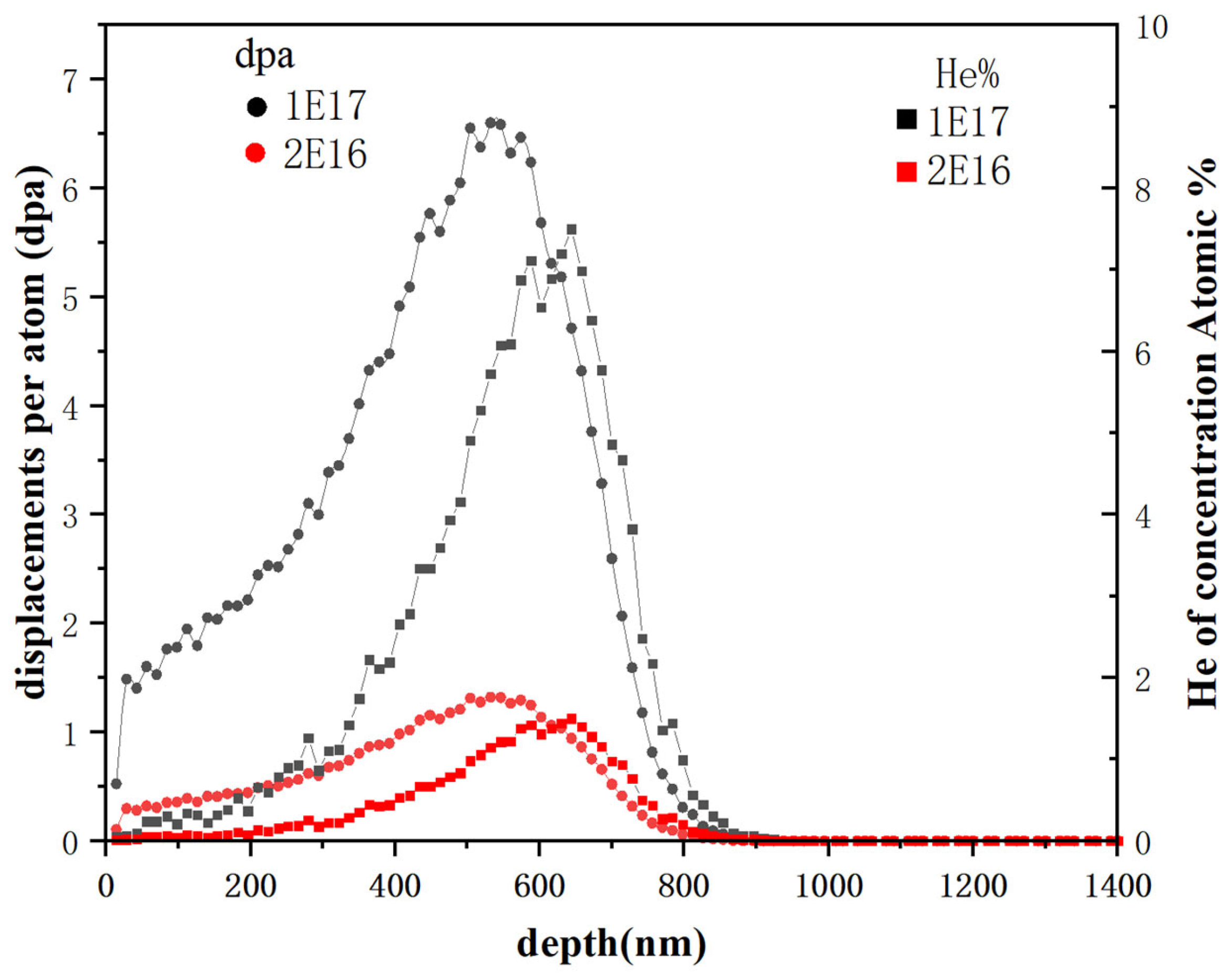
2. The damage profiles in Zr
3AlC
2 were simulated using the SRIM 2013 software package (
Figure 1), employing standard displacement threshold energies of 25 eV for Zr and Al, and 28 eV for C, with the density of Zr
3AlC
2 set to 5.62 g/cm
3. The maximum damage depth was located at approximately 530 nm. The fluences of 1 × 10
17 and 2 × 10
16 ions/cm
2 corresponded to peak damage levels of approximately 6.6 and 1.3 dpa, respectively.
The phase composition of the powdered samples was characterized using X-ray diffraction (XRD, Rigaku SmartLab, Tokyo, Japan) with Cu Kα radiation (λ = 1.5406 Å). The diffraction patterns were collected at room temperature using a grazing-incidence geometry with an incident angle of 3° and a scanning rate of 1°/min.
Rietveld refinement of the XRD data was performed using the RIETAN-2000 software (RIETAN-FP 3.12). The initial structural models for all identified phases were obtained from standard crystallographic databases in the form of crystallographic information files (CIFs).
The instrument resolution function (IRF) was experimentally determined using a Si powder measured under identical instrumental and geometric conditions. The obtained IRF was incorporated into the refinement to correct for instrumental broadening effects, enabling a more reliable determination of phase composition.
To investigate the surface structure of the irradiated samples, grazing incidence X-ray diffraction (GIXRD, Rigaku SmartLab) was employed with an incident angle of 0.5° and a scanning rate of 0.01°/min. The surface morphology before and after irradiation was examined using a scanning electron microscope (SEM, JEOL JSM-6510LA, JEOL Ltd., Tokyo, Japan). High-resolution scanning transmission electron microscopy (JEM-ARM200F NEOARM, JEM-ARM200F NEOARM, Tokyo, Japan) was used to observe the atomic arrangement of the samples, and energy-dispersive X-ray spectroscopy (EDS) equipped on the instrument was utilized to analyze the elemental distribution. The specimens for STEM observation were prepared by focused ion beam (FIB, FB-2100) milling.
3. Results
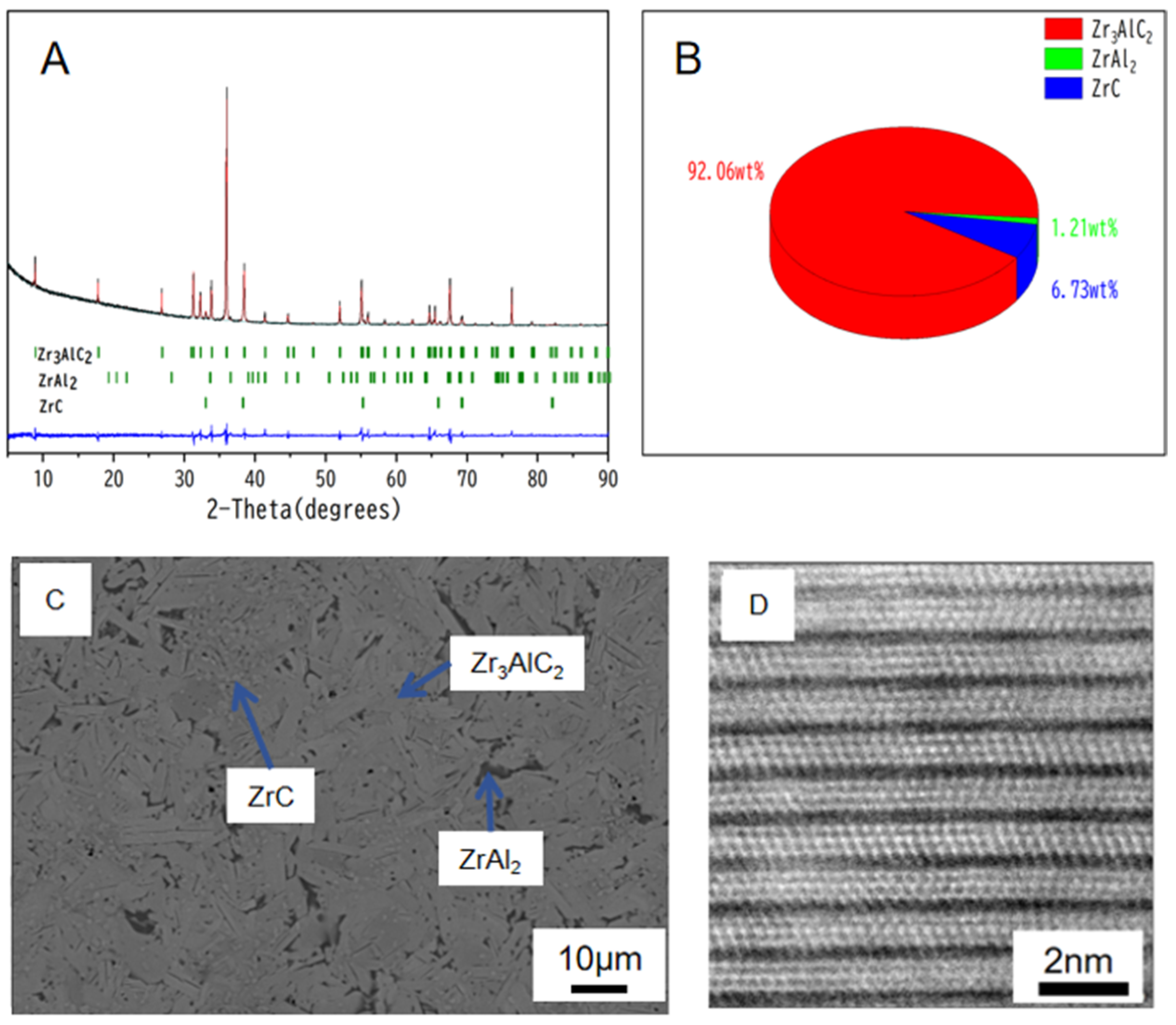
Figure 2A shows the Rietveld refinement of the XRD pattern collected from powdered Zr
3AlC
2 obtained by crushing the high-purity bulk sample prior to irradiation. The observed diffraction pattern is well reproduced by the calculated profile, indicating a satisfactory refinement quality. The diffraction peaks are predominantly indexed to the Zr
3AlC
2 phase, with minor contributions from ZrC and ZrAl
2.
Figure 2B presents the quantitative phase analysis obtained from the Rietveld refinement. The content of Zr
3AlC
2 in the upper region exceeds 92 wt%.
During SPS, a significant amount of liquid-phase ZrAl2 diffused upward from the mixed powder region into the ZrC layer. ZrAl2 reacts with the top-layer ZrC to form Zr3AlC2, and with continued holding at high temperature, the excess ZrAl2 gradually migrates toward the outer edge of the die, leaving only a small amount of residual ZrAl2 in the final product. This reaction–diffusion mechanism ensures the formation of a high-purity Zr3AlC2 layer in the upper region of the bulk sample.
The sintered samples exhibit two distinct regions. As the Zr
3AlC
2 fraction in the lower region is relatively low, the detailed SEM results of this region are presented in
Supplementary Figure S1, while the following discussion focuses on the upper region.
Figure 2C displays a scanning electron microscopy (SEM) image of the bulk sample. The microstructure is dominated by elongated, bar-like Zr
3AlC
2 grains, with ZrAl
2 mainly located at the grain boundaries. Additionally, a small number of granular ZrC particles are observed.
Figure 2D shows a scanning transmission electron microscopy (STEM) image taken along the [11–20] zone axis. The typical layered structure of the MAX phase is clearly visible. The brighter contrast corresponds to Zr atomic columns, while the darker contrast indicates the positions of Al atoms.
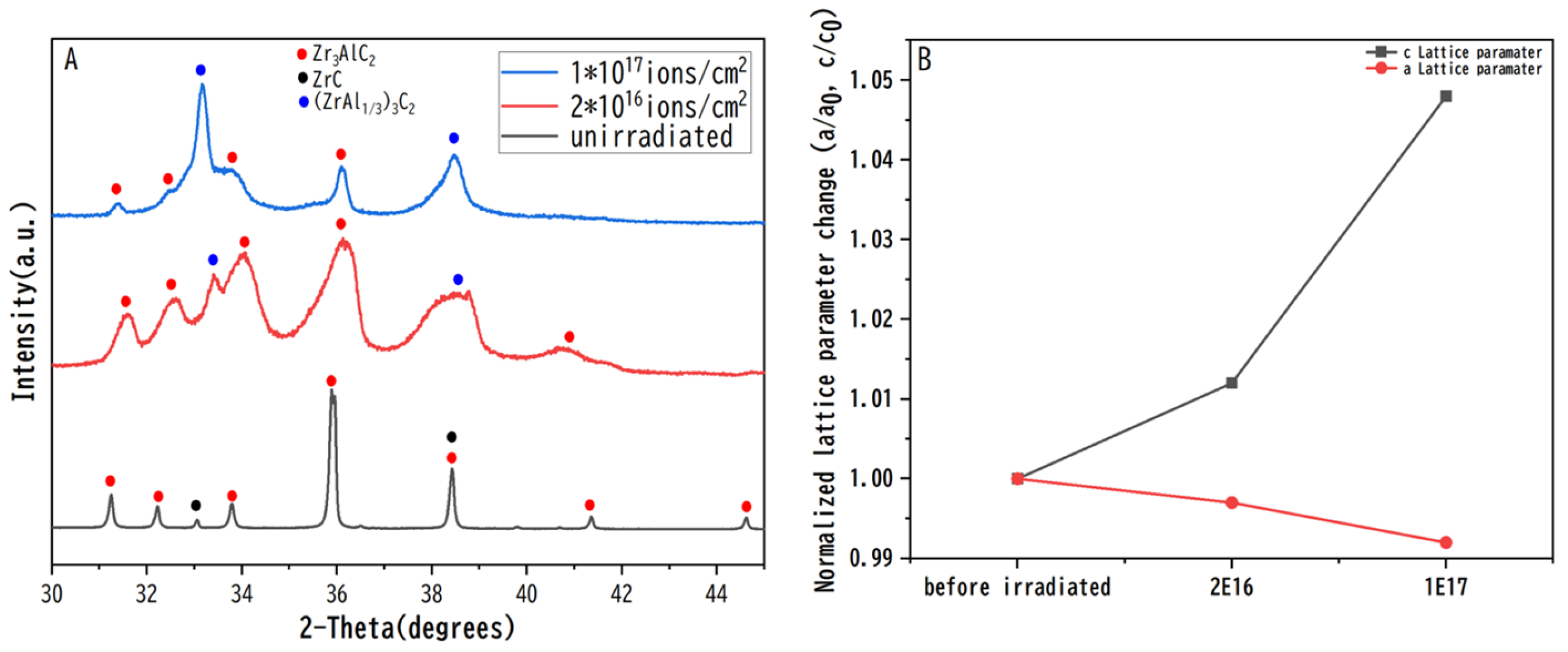
Figure 3 presents the XRD pattern of bulk Zr
3AlC
2 prior to irradiation (incident angle: 5°, scanning rate: 2° min
−1) and the grazing-incidence XRD (GIXRD) patterns of the irradiated samples (incident angle: 0.5°, scanning rate: 0.1° min
−1). New diffraction peaks are observed in the irradiated region, which can be indexed to the (ZrAl
1/3)
3C
2 phase. The intensities of these peaks increase with increasing irradiation dose, indicating a progressive irradiation-induced phase evolution within the near-surface region.
In Zr
3AlC
2, the bonding between Zr and Al layers is relatively weaker compared with the strong Zr–C bonds. Ion irradiation is therefore expected to preferentially disrupt the Al atomic layers, which is likely to result in the formation of a high density of Zr–Al antisite defects. The accumulation of such defects is believed to drive the structural evolution toward the so-called β-MAX phase. Similar irradiation-induced phase transformations associated with antisite defect formation have been widely reported in Ti
3AlC
2 [
19], Cr
2AlC [
24,
25], and high-entropy MAX-phase materials [
26].
Another prominent feature is the pronounced shift in the residual Zr
3AlC
2 diffraction peaks after irradiation, indicating irradiation-induced changes in the lattice parameters.
Figure 3B summarizes the variations in the lattice constants a and c. The lattice parameter a exhibits a slight decrease, whereas the lattice parameter c increases significantly, revealing a clear anisotropic lattice response. Such behavior is consistent with previous observations reported for He
+-irradiated Ti
3AlC
2 [
27,
28].
The observed expansion of the lattice parameter c can be reasonably interpreted in light of simulation results reported by Ling [
29], who suggested that irradiation-induced
c-axis expansion in Al-containing MAX phases mainly originates from two factors: (i) the formation of a high density of M–A antisite defects, which alters the charge density distribution, and (ii) the displacement of A atoms into interstitial positions under ion impacts. By contrast, the conversion of C atoms into interstitials induced by ion irradiation has been reported to result in a slight contraction of the lattice parameter a, in agreement with the experimental trend observed in this study.
In addition, significant peak broadening of Zr3AlC2 is observed after irradiation, indicating the formation of a high density of defects within the irradiated region. However, no amorphization is detected, suggesting that Zr3AlC2 exhibits good resistance to irradiation-induced amorphization.
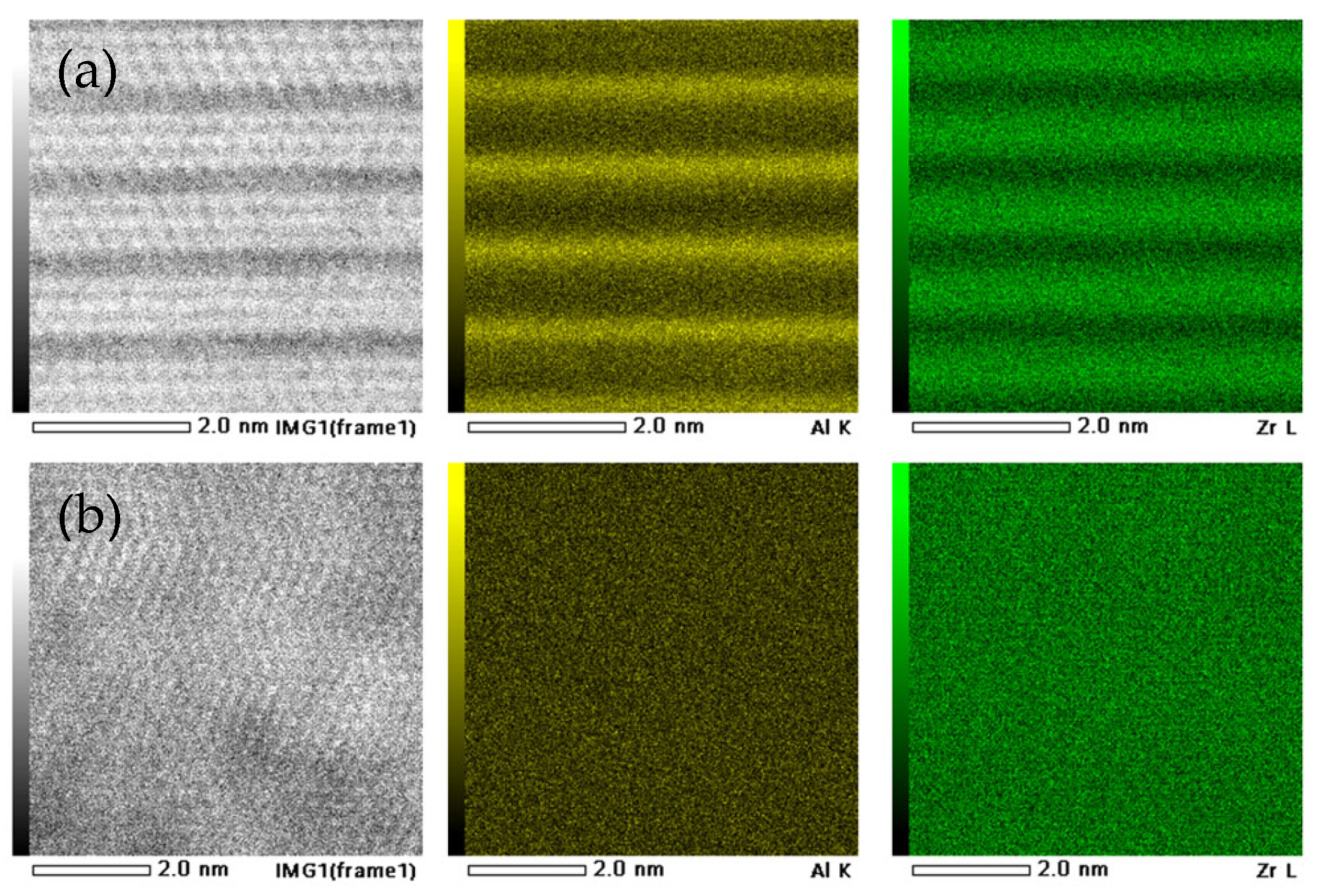
Figure 4a shows a STEM image of the unirradiated Zr
3AlC
2 sample observed along the [11–20] zone axis. The pristine Zr
3AlC
2 exhibits a well-defined layered structure, where every three Zr atomic layers are separated by a single Al atomic layer. The Al atoms appear in the darker contrast regions, while the Zr atoms correspond to the brighter regions.
Figure 4b shows a STEM image of the maximum damage region in the sample irradiated with 1 × 10
17 ions/cm
2 of 100 keV He
+ ions. After irradiation, the layered structure of Zr
3AlC
2 disappears, and Zr and Al atoms are uniformly distributed throughout the crystal. This structural change is attributed to the formation of numerous anti-site defects (Zr_Al and Al_Zr), which cause atomic rearrangement.
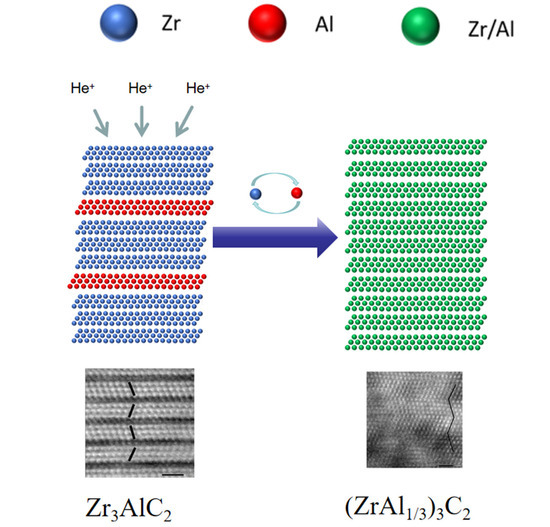
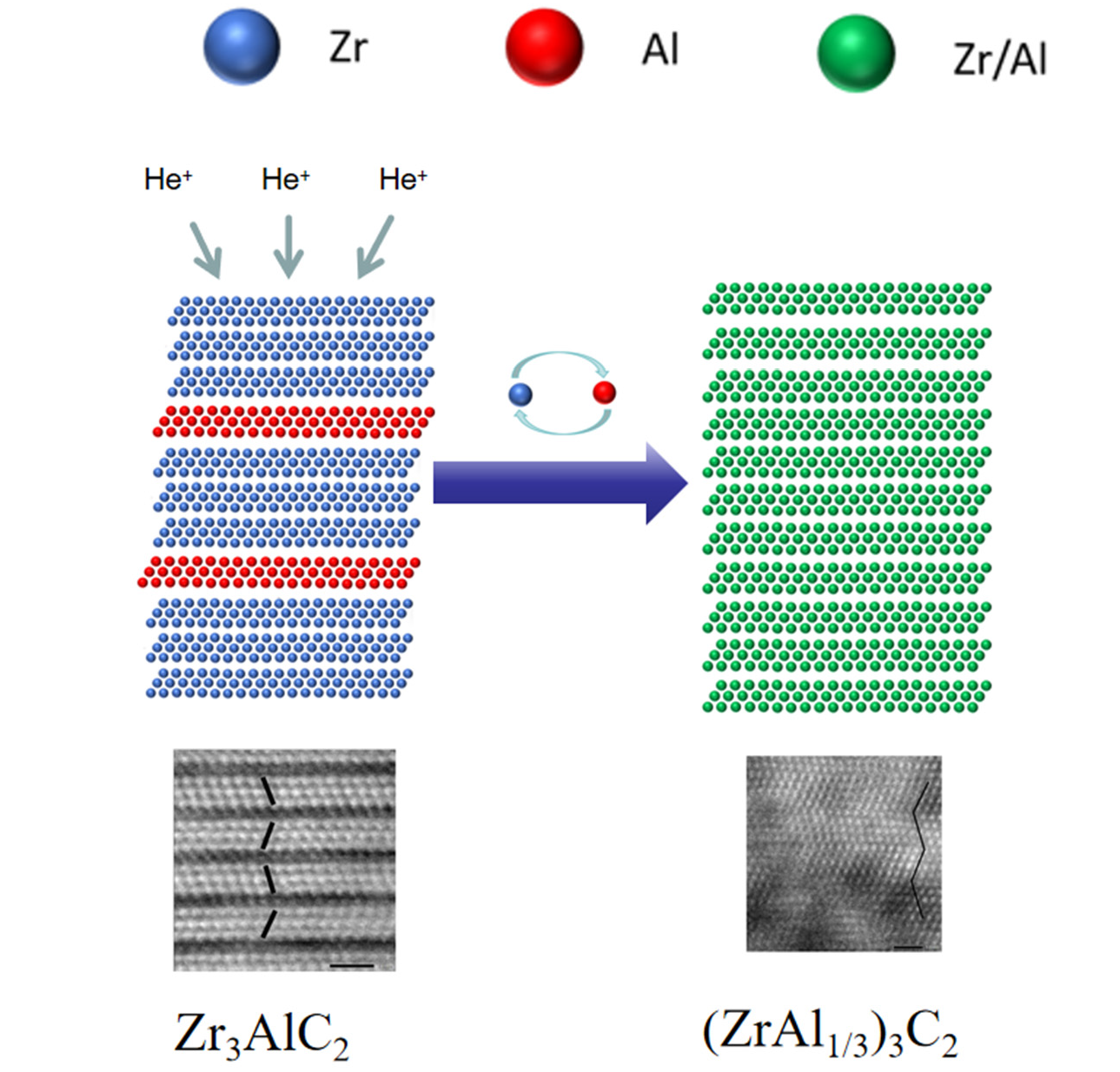
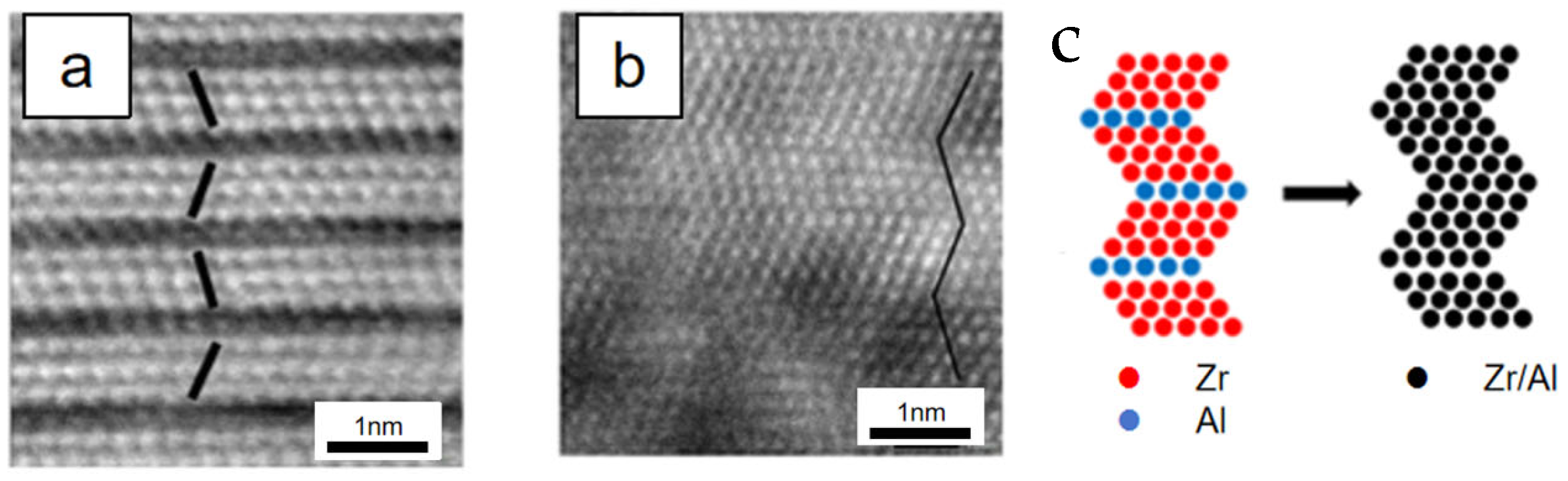
Figure 5 illustrates the stacking sequence of Zr
3AlC
2 before and after irradiation. Prior to irradiation, the stacking sequence of Zr
3AlC
2 can be described as …a–b–c–Al–c–b–a–Al–a–b–c…, where adjacent Zr–C layers separated by Al layers exhibit a symmetric distribution. After helium ion irradiation, Zr and Al atoms become indistinguishable, yet the crystal structure still maintains a symmetric arrangement. This suggests that He ion irradiation induces atomic rearrangement in Zr
3AlC
2 but does not completely destroy its crystalline structure. Such structural changes correspond to the enhanced (103) diffraction peak observed in the XRD results.
A similar phenomenon was reported by Yang et al. [
19], who irradiated Ti
3AlC
2 with 50 keV He ions at room temperature. They concluded that the irradiation induced a structural transformation from Ti
3AlC
2 to β-Ti
3AlC
2. By analogy, the post-irradiation structure of Zr
3AlC
2 can be represented by the chemical formula (ZrAl
0.33)
3C
2.
This irradiation-induced degradation of the layered structure in MAX phases has also been reported in irradiation studies of other MAX-phase materials, such as Ti
3AlC
2 [
30] and Ti
3SiC
2 [
31]. It is widely accepted that this structural degradation is primarily associated with the formation of M–A antisite defects, in which M and A atoms partially occupy each other’s original lattice sites, thereby disrupting the characteristic layered ordering.
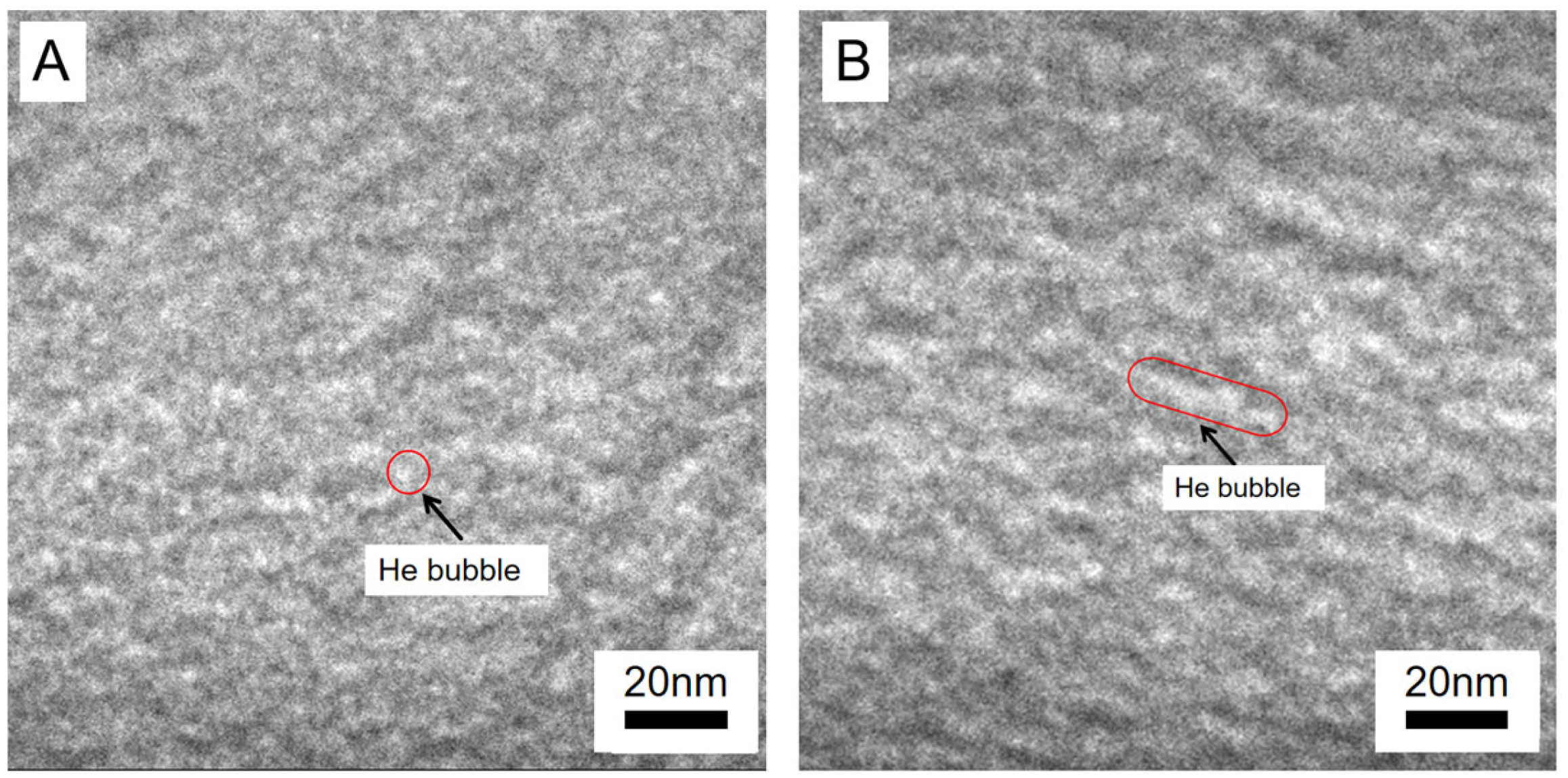
Figure 6A,B present STEM images of the samples irradiated with He ions at fluences of 2 × 10
16 ions·cm
−2 and 1 × 10
17 ions·cm
−2, respectively. The observations were performed along the [0001] zone axis. The bright contrast features observed in the images are attributed to He bubbles, which is consistent with previous STEM observations reported for He-ion-irradiated MAX-phase materials.
The average size of He bubbles at the two irradiation fluences was quantified using ImageJ software (1.54p) based on statistical analysis of multiple regions. With increasing irradiation fluence, the average He bubble diameter increases from 0.74 nm to 1.43 nm, indicating a clear fluence-dependent bubble growth behavior.
As shown in
Figure 6B, when the irradiation fluence increases to 1 × 10
17 ions·cm
−2, partial coalescence of adjacent He bubbles is observed, leading to the formation of elongated, band-like, large He bubbles. A similar bubble coalescence behavior has been reported by Zhang et al. [
32] in their study on He-ion-irradiated Ti
3SiC
2. Furthermore, Pang et al. [
33] reported that during He-ion irradiation of Ti
3AlC
2, He atoms preferentially accumulate in the Al layers, which can promote
c-axis lattice expansion and potentially increase the susceptibility of MAX phases to irradiation-induced cracking.
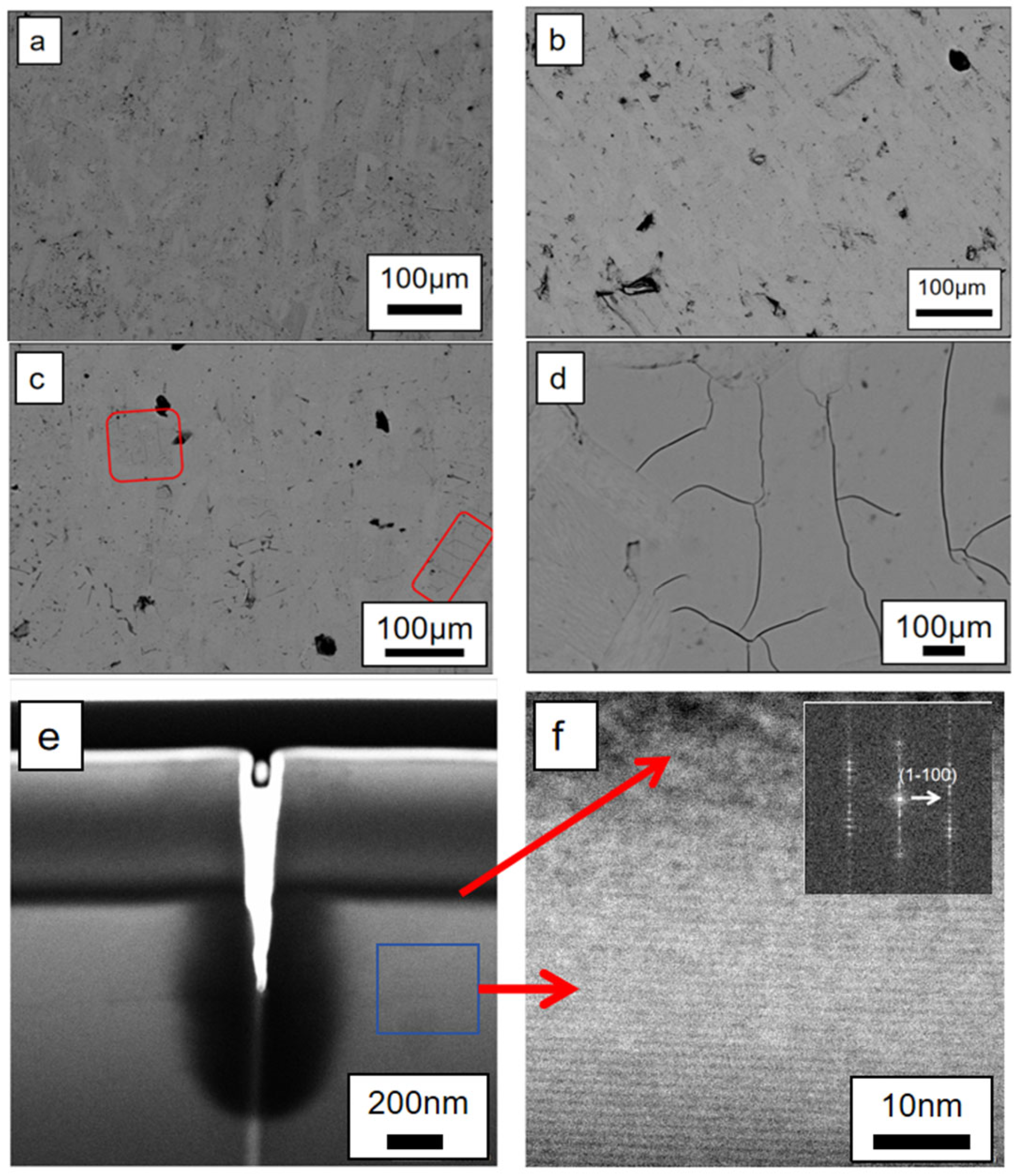
Figure 7a,b show SEM images of the sample before irradiation and after irradiation at a fluence of 2 × 10
16 ions/cm
2, respectively. No cracks are observed on the sample surface either before irradiation or under this relatively low irradiation dose.
Figure 7c presents the SEM image of the sample irradiated at a fluence of 1 × 10
17 ions/cm
2, where distinct cracks can be seen within the red-circled region.
Figure 7d shows that the cracks occur within the grains rather than along the grain boundaries, which is consistent with observations reported for various MAX-phase materials, such as Ti
2AlC [
34], Ti
3AlC
2 [
32], and Zr
3(Al
0.9Si
0.1)C
2 [
16].
A focused ion beam (FIB) was used to prepare a TEM lamella from the cracked region.
Figure 7e reveals that the crack penetrates through the entire irradiated zone and extends into the underlying unirradiated region, terminating in a spherical damage zone at its tip.
Figure 7f presents a selected area electron diffraction (SAED) pattern from the cracked region, showing that the crack preferentially propagates along the (100) crystallographic plane. The cracking behavior of Zr
3AlC
2 under helium ion irradiation is similar to that observed in Ti
3AlC
2. Shen et al. [
20] reported that irradiation of Ti
3AlC
2 with 50 keV He
+ ions at room temperature also led to crack formation, with cracks predominantly growing along the (100) planes.
It is generally believed that MAX phases can develop cracks under irradiation through two main mechanisms. The first is the generation of internal stresses due to anisotropic changes in lattice parameters caused by irradiation. The second involves the accumulation of radiation-induced defects, which tend to concentrate near the Al atomic layers located on the (100) planes. This defect localization promotes preferential crack formation along the (100) planes.
Irradiation induces pronounced structural changes in Zr3AlC2. Owing to the relatively weak bonding between Zr and Al atoms, the Al atomic layers are preferentially disrupted under irradiation, leading to the formation of a high density of Zr–Al antisite defects. The accumulation of these defects is believed to give rise to two concurrent effects.
First, the original α-MAX phase (Zr3AlC2) partially transforms into the β-MAX phase, which can be described as (ZrAl1/3)3C2. Second, the residual Zr3AlC2 phase undergoes pronounced lattice distortion, characterized by a slight contraction of the a-axis lattice parameter and a significant expansion of the c-axis lattice parameter.
In addition, Pang et al. [
33] reported that during He-ion irradiation of Zr
3AlC
2, He bubbles preferentially accumulate within the Al atomic layers, which further enhances the expansion of the
c lattice parameter. The combined effects of defect accumulation, phase transformation, lattice distortion, and He-bubble-induced
c-axis expansion generate substantial internal stresses within the material, ultimately promoting the initiation and propagation of irradiation-induced cracks.
In summary, high-purity Zr3AlC2 samples (>92 wt%) were successfully synthesized using a spark plasma sintering (SPS) method combined with a powder stacking technique. Helium ion irradiation experiments conducted at room temperature revealed that Zr3AlC2 exhibits limited irradiation resistance under low-temperature conditions. Irradiation induced a phase transformation from α-Zr3AlC2 to β-Zr3AlC2 and partial decomposition into ZrC. The lattice parameters were also affected by irradiation, with a decrease in the a-lattice constant and an increase in the c-lattice constant. At a fluence of 1 × 10¹⁷ ions/cm2, transgranular cracks appeared on the sample surface, preferentially propagating along the (100) crystallographic planes.