1. Introduction
When studying the carbonization process of waste activated sludge (WAS) [
1,
2,
3,
4] and mixtures of WAS with clay, glass [
5,
6,
7], and iron oxides [
8,
9,
10] it was found that the biocomponent easily burns out during temperature treatment in air, forming a porous structure in glass or ceramics. However, when processed under conditions of oxygen deficiency or vacuum, depending on temperature and time, a wide range of carbon materials with varying degrees of order in the carbon structure are formed from WAS: from amorphous to crystalline, and in the region of T
tr ≥ 1000 °C even graphite-like. In the presence of inorganic impurities in the form of metal oxides in WAS, along with the formation of a carbon component, processes of carbothermal reduction in oxides develop. The simultaneous presence of the carbon component and metal reduction products gives the newly formed synthesis product (be it powder or a 3D sample) a number of properties that differ significantly from the properties of the original components.
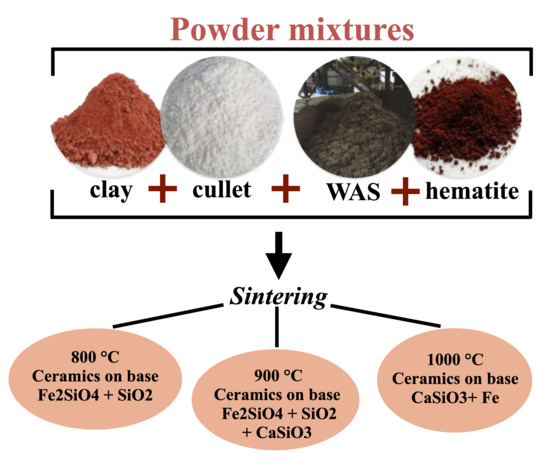
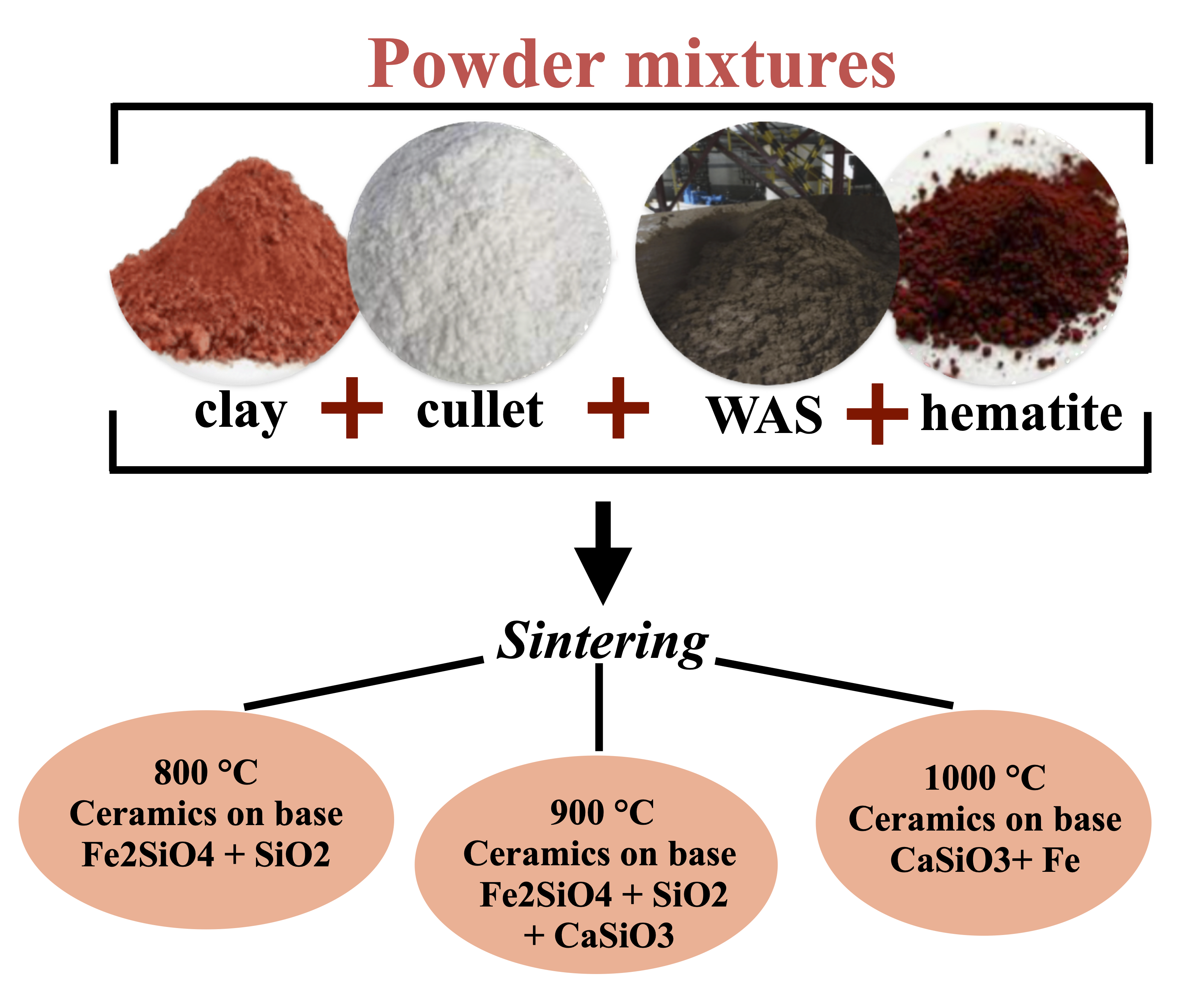
The purpose of this work was to study phase formation in a multicomponent mixture consisting of clay, low-melting glass (bottled glass), hematite (Fe2O3) and WAS subjected to temperature treatment in the range of 800–1000 °C under conditions of oxygen deficiency. The complexity of the initial composition implied not only the formation of the carbon component from WAS, but also its active participation in the processes of reduction in oxide systems and the formation of new compounds, and, consequently, ceramic materials with new properties.
The novelty of this work lies in the fact that WAS, when heated in a low-oxygen gas environment, becomes a source of highly active nanocarbon. Consequently, the processes of metal oxide reduction and the formation of new compounds are significantly activated. This method of producing nanocarbon not only reduces carbon dioxide emissions but also synthesizes new multicomponent compounds with a range of unique properties. It should be noted that the use of WAS, which is a slurry, allows the use of plastic forming methods for blanks without the additional introduction of free water (implementation of water-saving technology), and the variations in the composition of mixtures open up broad prospects for obtaining composite ceramics with a new phase composition and new operational properties.
2. Method Preparation and Investigation
In the present work, 3D-specimens obtained from powder mixtures of red clay, milled glass (cullet), waste activated sludge (WAS), and Fe
2O
3 were studied.
Table 1 presents the composition of quaternary mixtures in two spellings: (a) as a mixture of two compositions (red clay + milled glass) + (WAS + Fe
2O
3); (b) as a generalized mixture. The particle size of glass was 60 μm ≤ d ≤ 250 μm. WAS containing water was used as a plasticizer for powder mixtures.
Table 2 shows the chemical composition of the materials used. Powders of hematite, glass, and clay were mixed with WAS containing 60% wt. free water, for 15 min for homogenization. The plasticized mixtures were placed in molds with sizes of 20 mm × 20 mm × 20 mm and dried for two days. After that, semi-products were burnt at temperatures of 800, 900, and 1000 °C during 3 h at P ~10
−1 mm Hg. The heating rate of temperature was 10 °C/min.
The content oxides in raw materials were determined by X-ray Fluorescence S8 TIGER spectrometer (Bruker, Karlsruhe, Germany). The synthesized products were investigated by X-ray diffraction (XRD) in Cu Kα radiation (a DRON-3M diffractometer, bruker, Karlsruhe, Germany). SEM and EDS measurements were carried out with a LEO 1450VP scanning electron microscope (ZEISS, Oberkochen, Germany). Water absorption was determined by the formula: W, % = 100 − [(P1 − P0)/P0] × 100, where P0 is the initial weight of a specimen and P1 is the weight of the specimen after water absorption. The shrinkage of specimens was determined in two stages: free shrinkage (Σ1, % and shrinkage after temperature treatment Σ2, %). The total shrinkage was calculated by the formula Σ, % = Σ1 + Σ2; Σ1, % = 100 − [(1 − 0)/0] × 100; Σ2, % = 100 − [(1 − 0)/0] × 100. Compression and fracture tests were carried out using standard methods (Forney universal press equipment, Forney, Zelienople, PA, USA). Electrical resistance was measured by the two-point method with the use of the digital multimeter with a capacity of 200 MΩ. The electrical resistivity (ρ) of specimens was calculated with the following formula: ρ (Ω·m) = RS/L, where R(Ω) is the linear electrical resistance, S(m2) is the cross-sectional area of specimens, and L(m) is the length of specimens. The adsorption properties of the synthesized mixtures were evaluated with the UV–vis method using an USB4000-XR1 Ocean Optics spectrometer (Ocean Optics, Orlando, FL, USA). In this work, a concentration of 30 ppm aqueous solution of Methylene Blue (MB) was used. The MB content was evaluated from changes in the intensity of the band in the UV–vis spectra at λ~665 nm and preliminarily prepared calibration graphs of C = f(I), where C is the dye concentration, and I is the intensity of the band in the UV–vis spectra. The paper presents the average values of properties obtained during testing of three ceramic samples.
3. Results and Discussion
3.1. General Characteristics of Sintered Samples
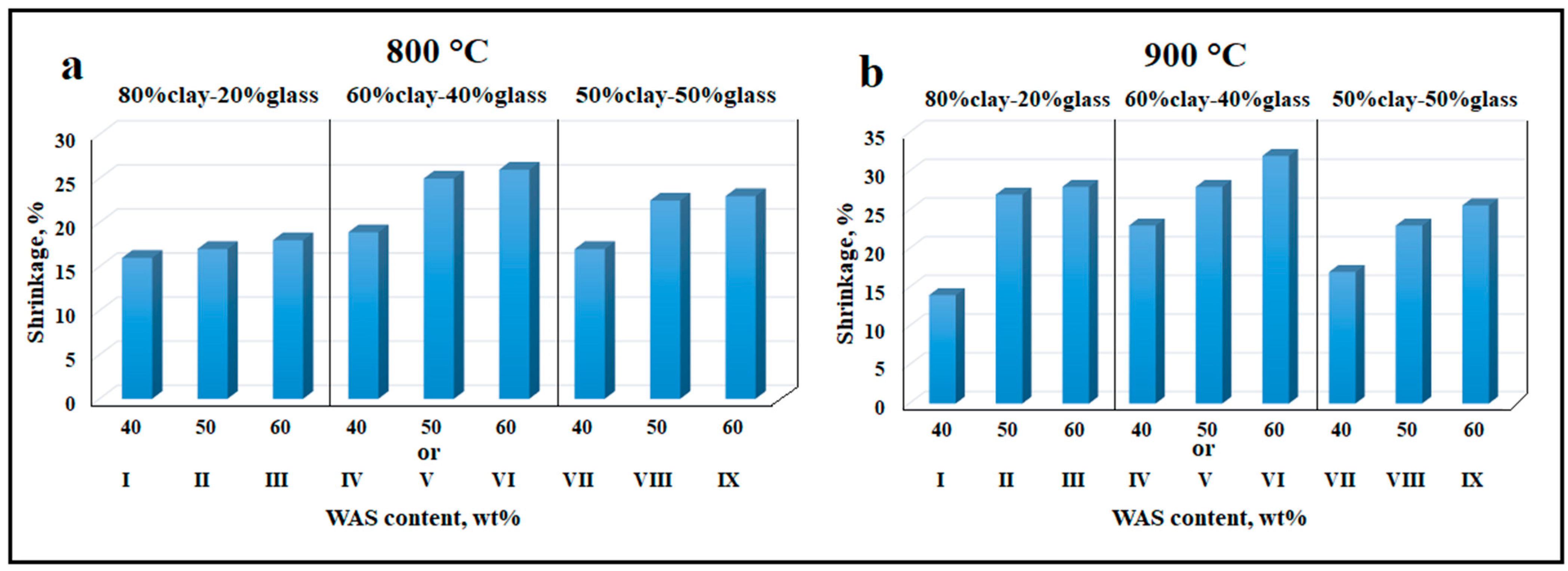
When samples are sintered at 800 and 900 °C for 3 h, linear shrinkage of the samples is noted (see
Figure 1). For each series of samples I–III, IV–VI and VII–IX, the shrinkage value is consistent with an increase in the WAS content in the initial mixtures (see
Figure 1 and
Table 1), that is, with an increase in the yield of vapor and gaseous products of thermal destruction of WAS and the dehydration–dehydroxylation of clay. In turn, differences in the amount of shrinkage depend on the content of clay and glass in the initial mixtures. During the sintering process, the action of these components of the mixtures was in the opposite direction. Thus, the dehydration of clay is accompanied by the formation of ceramic porous material (including due to burnout of the organic component). At the same time, the glass, as well as the resulting low-melting products of the interaction of the components of the mixtures, melts and penetrates the porous body. This prevents the samples from shrinking. The predominance of one of these processes over the other ultimately affects the shrinkage of the samples.
Temperature treatment of mixtures at 1000 °C is accompanied by intense gas and vapor release and leads to the formation of macroporous ceramics, swelling of samples and loss of the 3D standard shape of the specimens.
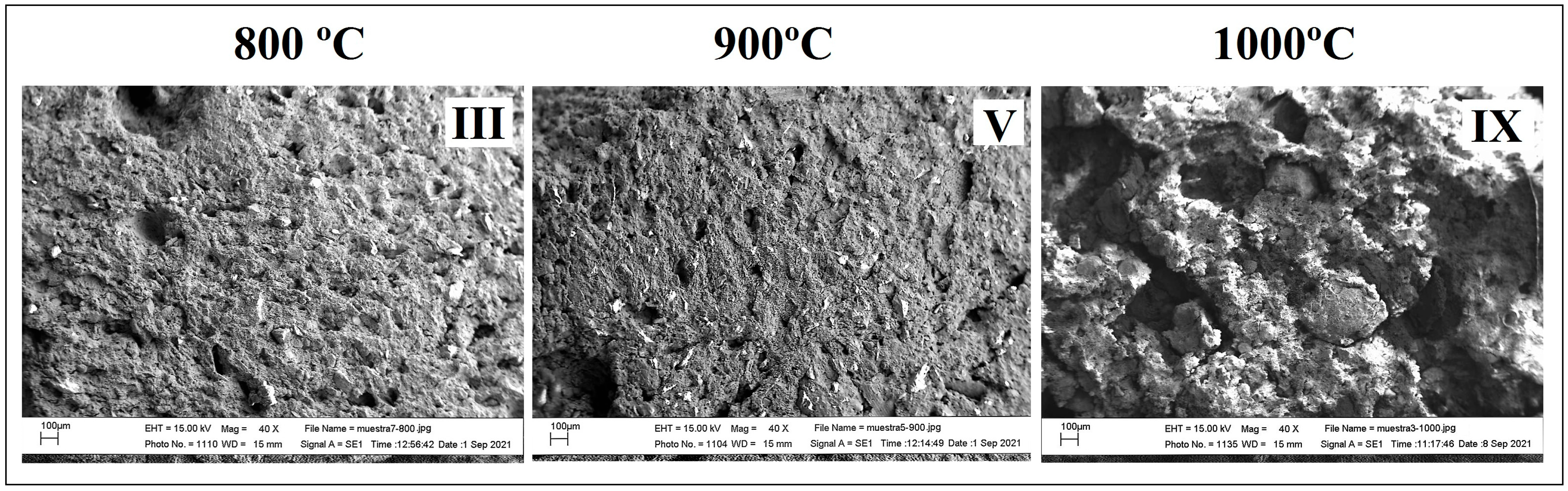
SEM-study of the fracture surface showed the specimens have a porous structure (
Figure 2). The porosity and pore size decrease noticeably as the clay content in the initial mixtures decreases and the sintering temperature of the mixtures increases from 800 to 900 °C. However, after sintering at 1000 °C, porosity increases significantly as a result of intense release of H
2O and CO/CO
2 vapors.
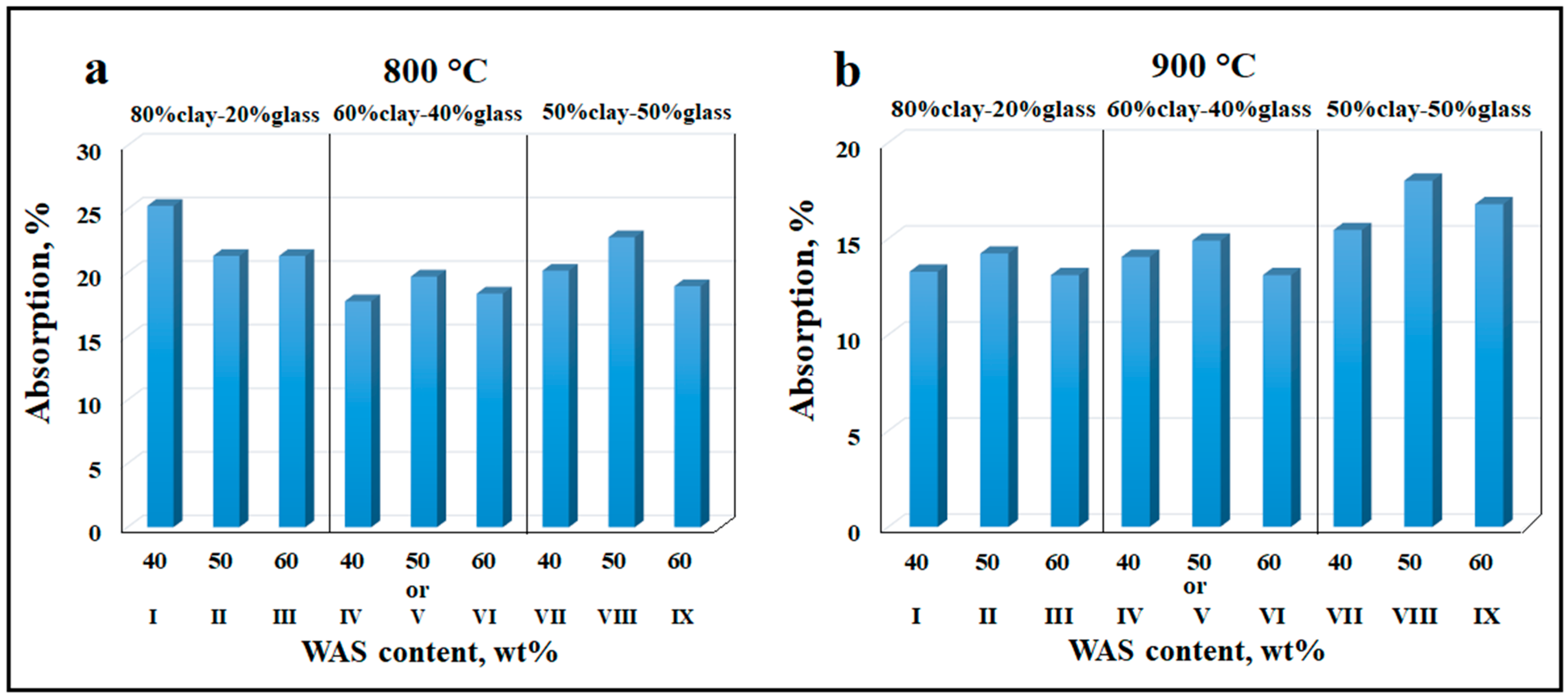
Water absorption (W) tests (
Figure 3) indicate the presence of open pores in the sintered material. It can be noted that after sintering at 900 °C, the open porosity is less than it was after sintering at 800 °C, which is consistent with the data on sample shrinkage (see
Figure 1) and the micrographs presented in
Figure 2. The porosity of the material is influenced not only by the clay and glass content in the initial mixtures, but also by the iron oxide content, because during the transformation of WAS into carbonizate/carbon the reaction WAS + Fe
2O
3 → Fe
xO
y + CO/CO
2↑ occurs. This process also contributes to the poro-formation of the material. Since after sintering at 1000 °C spongy samples with interconnected pore sizes much larger than 100 μm are formed, assessing water absorption is meaningful.
3.2. X-Ray Data
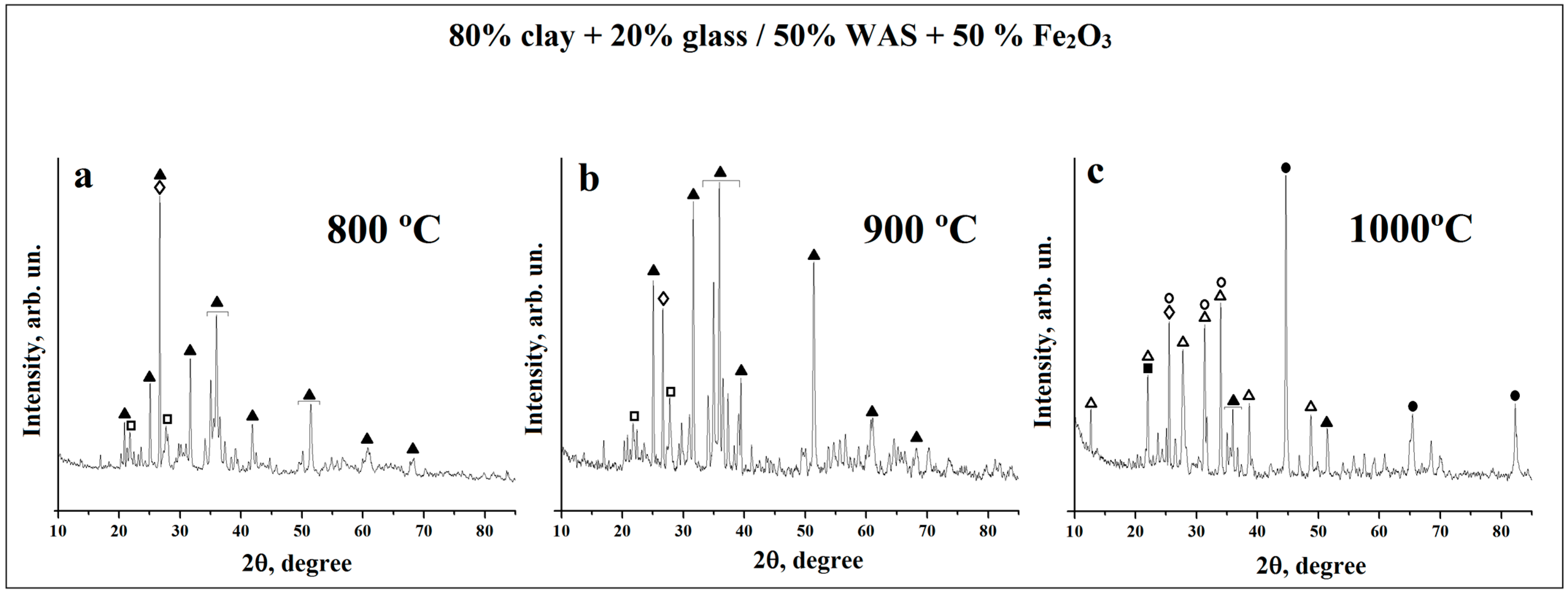
XRD results showed that temperature treatment of mixtures in the range of 800–1000 °C is accompanied by the formation of several new crystalline phases (see
Table 3). Thus, after T
sint = 800 °C, the most representative in the samples are fayalite (Fe
2SiO
4) and quartz with a slight admixture of cristobalite (SiO
2) (
Figure 4a). Less representative phases are silicates of complex composition such as feldspars as (NaAlSi
3O
8) and (K,Na)Al
3Si
8.
When processing mixtures with low glass content at 900 °C, the main crystalline phases are fayalite (Fe
2SiO
4) and quartz. The content of wollastonite (CaSiO
3) and iron increases as the glass content in the initial mixtures increases (
Figure 4b,
Table 3).
As a result of sintering mixtures at 1000 °C, the phase composition of the samples changes significantly: the main phases are wollastonite and iron. The content of quartz, cristobalite and feldspars decreases, and Fe
2O
3 appears (
Figure 4c,
Table 3).
During temperature treatment of mixture IX with a high glass content, wollastonite and iron are already registered at T
tr = 800 °C (see
Table 3).
The absence of a halo characteristic of the glass phase in the diffraction patterns and the registration of the above-mentioned crystalline phases indicate the occurrence of interaction processes between the initial components of the mixtures (clay/aluminosilicate, glass, WAS/C, SiO2, Fe2O3), as a result of which new compounds are formed. The absence of traces of carbon in the diffraction patterns indicates the active development of oxide reduction processes.
3.3. EDS Data
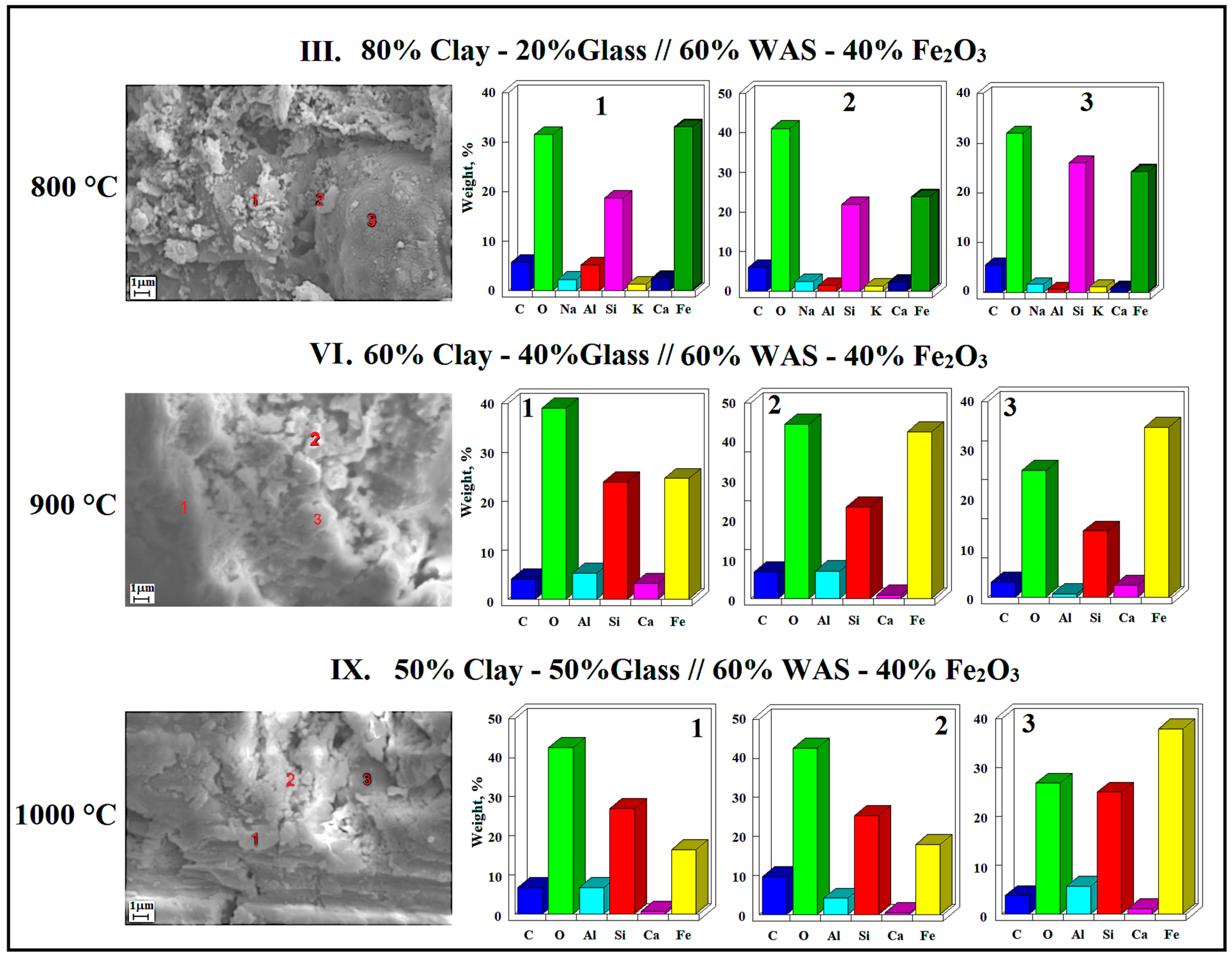
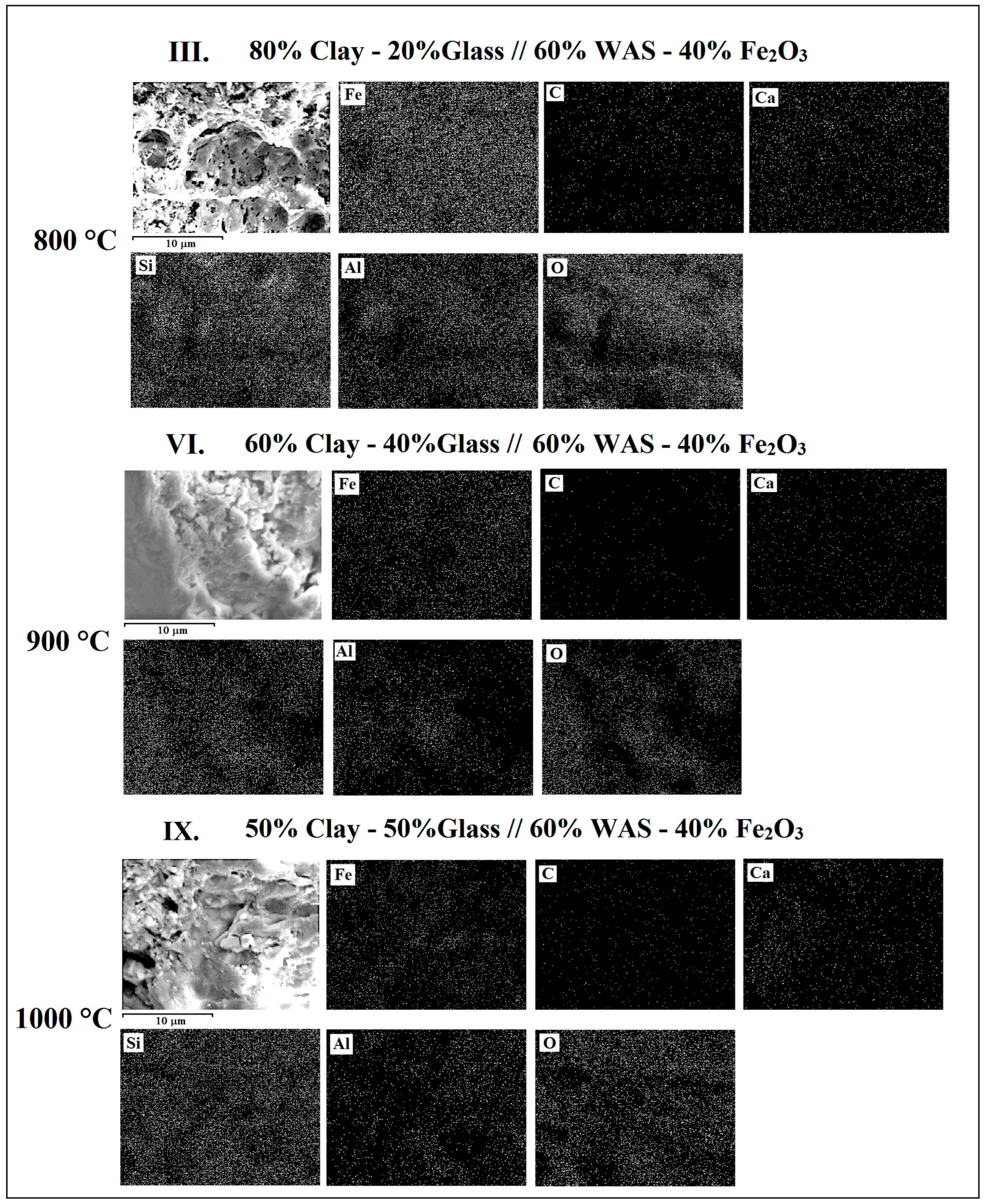
As shown by local EDS analysis and EDS analysis in map mode (see
Figure 5 and
Figure 6), the samples contain elements belonging to the components of the original mixtures. However, their content varies (changes) in different places. EDS analysis indicated the presence of small amounts of carbon in the samples. It should be noted that the presence of a small amount of carbon in
Figure 5 and
Figure 6 compared to the amount introduced into the WAS mixture (20–30%), see
Table 1, indicates the active participation of carbon formed during the thermal destruction of viscous matter in the reduction processes. On the other hand, during the heat treatment of mixtures in the range of 800–1000 °C, the formation of carbides, such as silicon, iron, etc., may begin. Since the probability of carbide formation increases with rising temperature, the carbon content in samples after sintering at 1000 °C is higher than after sintering at 900 °C.
Map EDS analysis showed an almost ubiquitous distribution of elements such as Al and Ca, even in places where Fe is localized. Considering that for wollastonite T
melt = 1540 °C, for fayalite T
melt = 1205 °C, for different feldspars T
melt ~800–1120 °C, and for the glass used T
melt ~800 °C [
11,
12,
13,
14,
15,
16,
17,
18,
19,
20,
21], it can be assumed that eutectic melts are formed when mixtures are sintered in the range 800–1000 °C, from which new compounds crystallize.
3.4. Some Macro-Properties of Samples
It has been established that sintering a mixture of clay–cullet–WAS–hematite at 800–1000 °C leads to the direct synthesis of 3D samples that are made of composite ceramics. Thus, specimens obtained at 800–900 °C are characterized by an increased addition of fayalite. Fayalite (Fe
2SiO
4) belongs to the olivine group. It finds application in various fields of technology. Thus, it is used in steel production [
22] as a raw material for the production of refractories [
23,
24], as an anode material for lithium-ion batteries [
25,
26], as a catalyst for tar removal during biomass gasification [
27], and for CO
2 adsorption [
28,
29]. Recently, special attention has been paid to the synthesis of fayalite nanopowders, but there is no work on obtaining 3D samples.
In samples obtained at 1000 °C, wollastonite (CaSiO
3) prevails. CaSiO
3 is used in the manufacturing of refractory and insulating materials, special radioceramics, and insulators with low dielectric losses; it is also used as a mineral filler and reinforcing additive, a highly effective sorbent of high molecular weight organic substances, dyes, oil and petroleum products, and heavy metal ions from aqueous media, etc. [
30,
31,
32,
33]. Since reserves of natural wollastonite are limited, technologies are being developed for the synthesis of synthetic wollastonite, which in its properties is almost identical to a natural one. CaSiO
3 is produced, as a rule, at 1000 °C by the solid-state reaction: CaO + SiO
2 → CaSiO
3 [
30]. Currently, the synthesis of synthetic wollastonite from mixtures of chalk, quartz sand, spodumene and feldspar, and other mixtures is known [
34,
35,
36,
37,
38].
3.4.1. Strength Properties of Samples
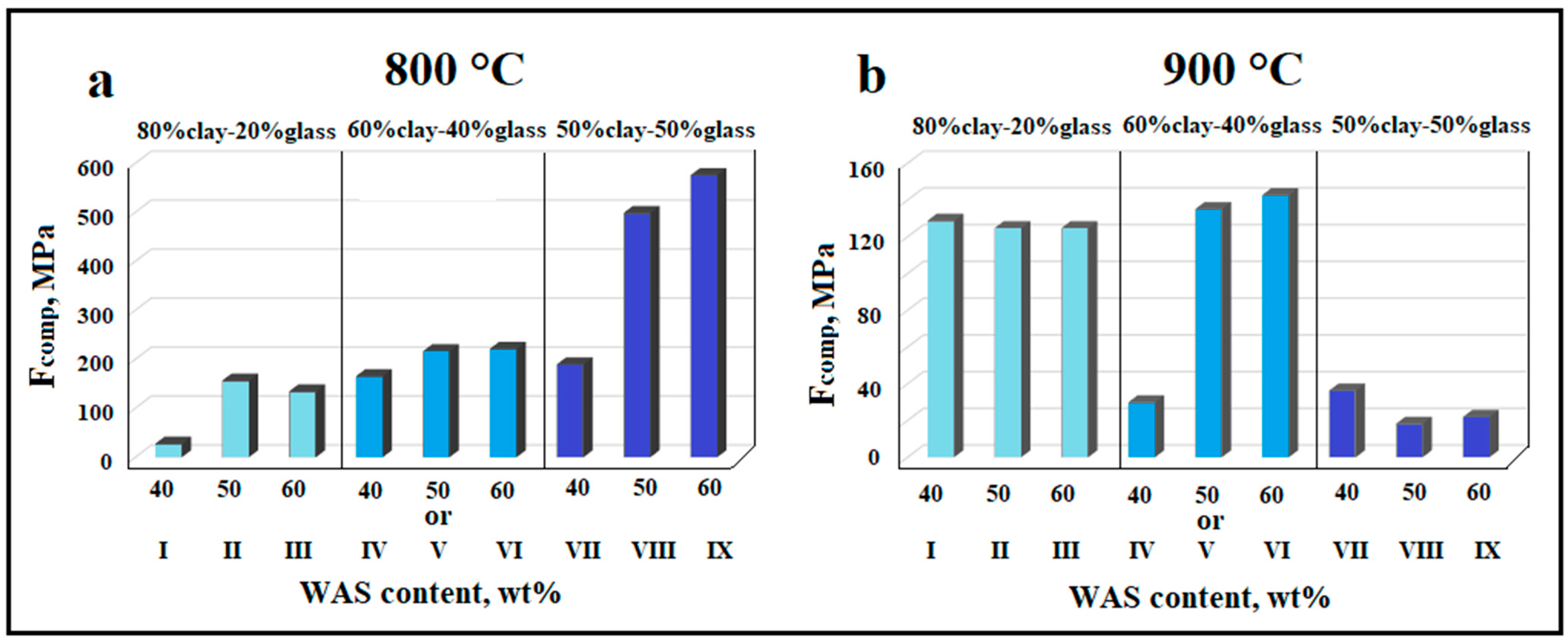
Considering that the synthesized samples contain varying amounts of fayalite and wollastonite, it could be assumed that such composite ceramics are promising for use as structural wall ceramics. As can be seen from
Figure 7, the compressive strength of the samples significantly depends on the composition and the sintering temperature of these mixtures (see
Table 3). It should be noted that the sintering of mixtures at 800 °C leads to the synthesis of ultra-strong samples, and after T
tr = 900 °C the compressive strength of the samples corresponds to the standard values required for brick products (7–15 MPa). The decrease in the compressive strength of the samples may be associated with the formation of a large number of compounds that are fragile compared to fayalite (F
compr~260 MPa) such as wollastonite (F
compr~60 MPa) [
39,
40,
41] and a mixture of feldspar and quartz particles (F
compr~50–100 MPa) [
42,
43,
44]. The effect of carbon (carbonized from WAS) is not so obvious.
However, the release of iron as a result of hematite reduction by carbon can reduce the strength of the samples.
3.4.2. Electrophysical Properties of Samples
Since the synthesized samples contain electrically conductive phases (fayalite and iron) [
45,
46] and dielectrics (silica, wollastonite, feldspars) [
47,
48,
49,
50,
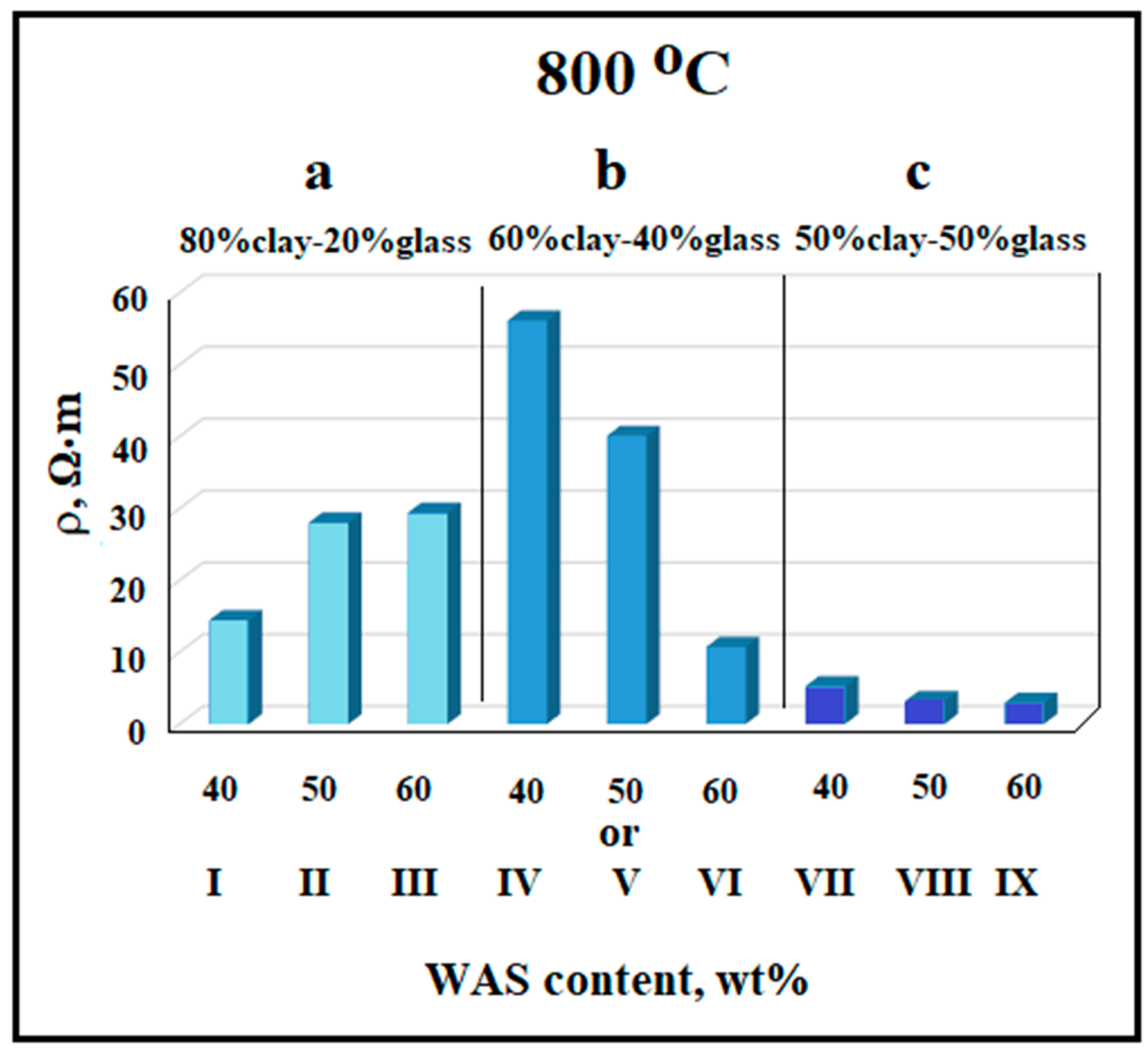
51], it can be assumed that the measured resistance of the samples (ρ) should change depending on their content. As measurements have shown (see
Figure 8a,b) in samples sintered at 800 °C and that have a high fayalite content (see
Table 3), the values of ρ vary from 15 to 55 Ωm. Such samples can be classified as resistors. Samples with a predominant content of fayalite and iron have a low ρ value (
Figure 8c) and have properties similar to conductors. The samples obtained after 900 °C treatment contain predominantly fayalite and iron. They have a low ρ value.
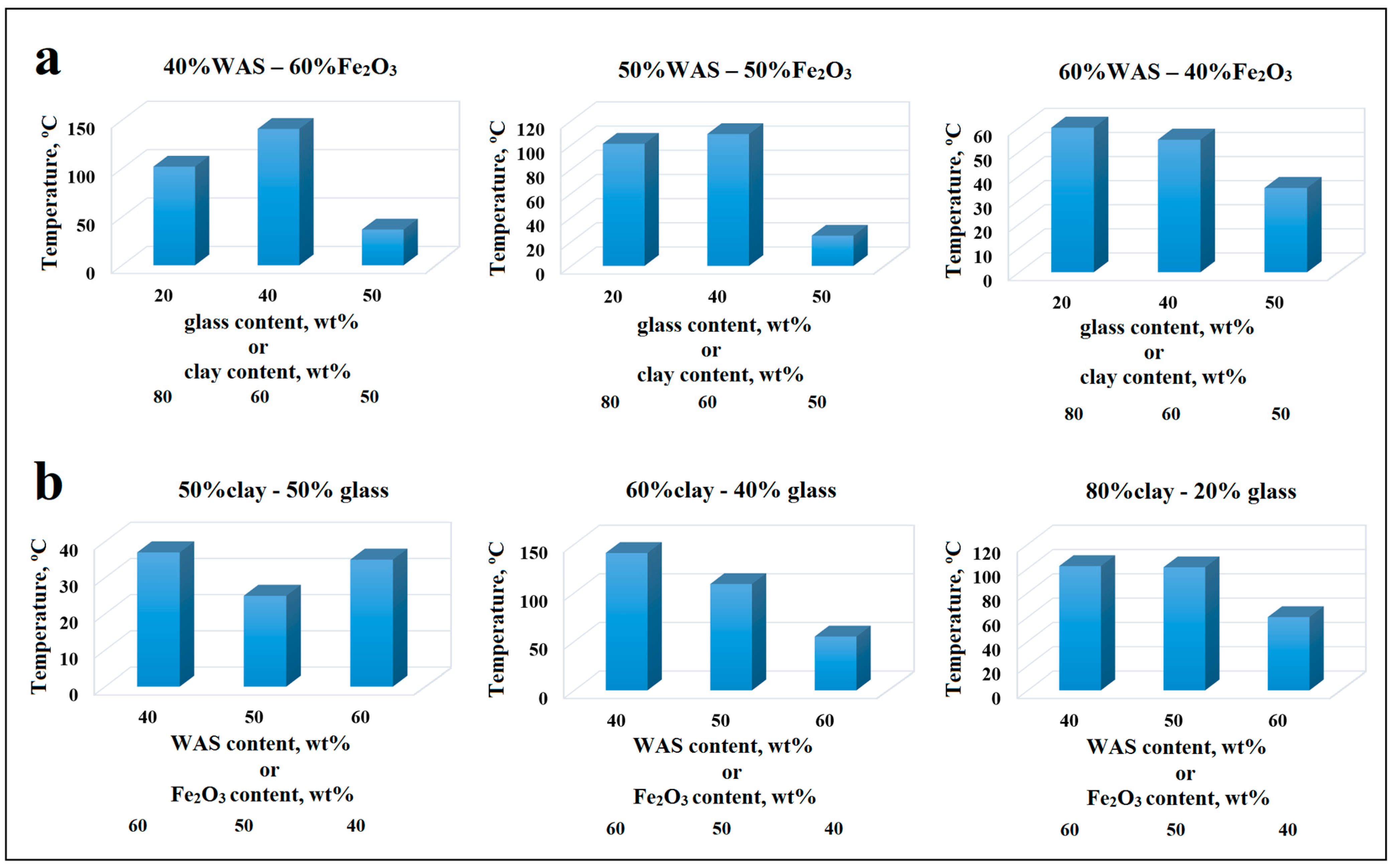
When the current is passed through the samples obtained after sintering mixtures at T
tr = 800 °C, their heating is observed.
Figure 9 shows the results of their heating. The heating range of the samples varies from 50 °C to 100 °C depending on the composition of the initial mixtures. Such samples can be used as low-temperature heating elements. When passing current through samples obtained after T
tr = 900 °C, there is no heating effect due to the low value of ρ.
3.4.3. Adsorption Properties of Samples
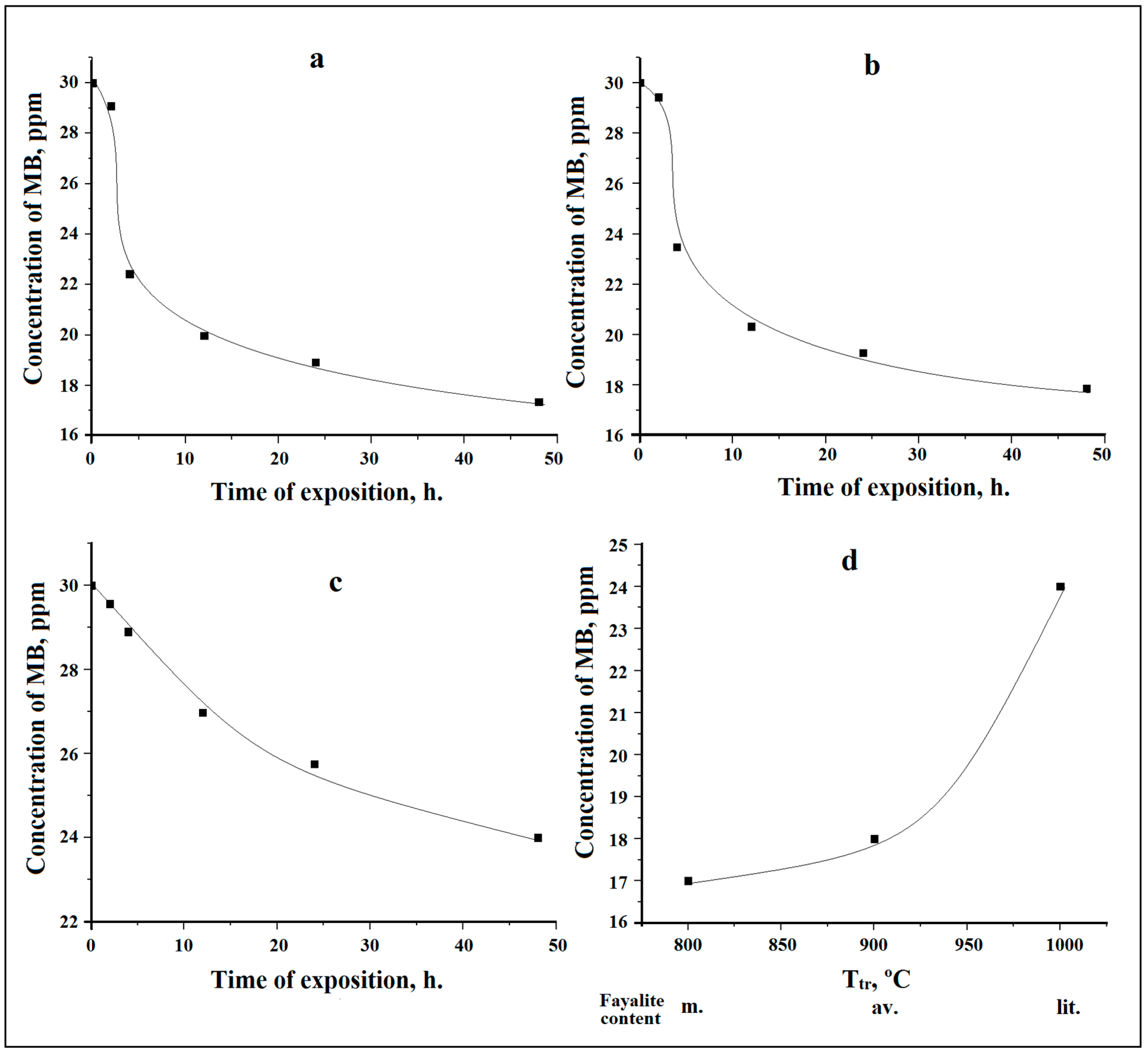
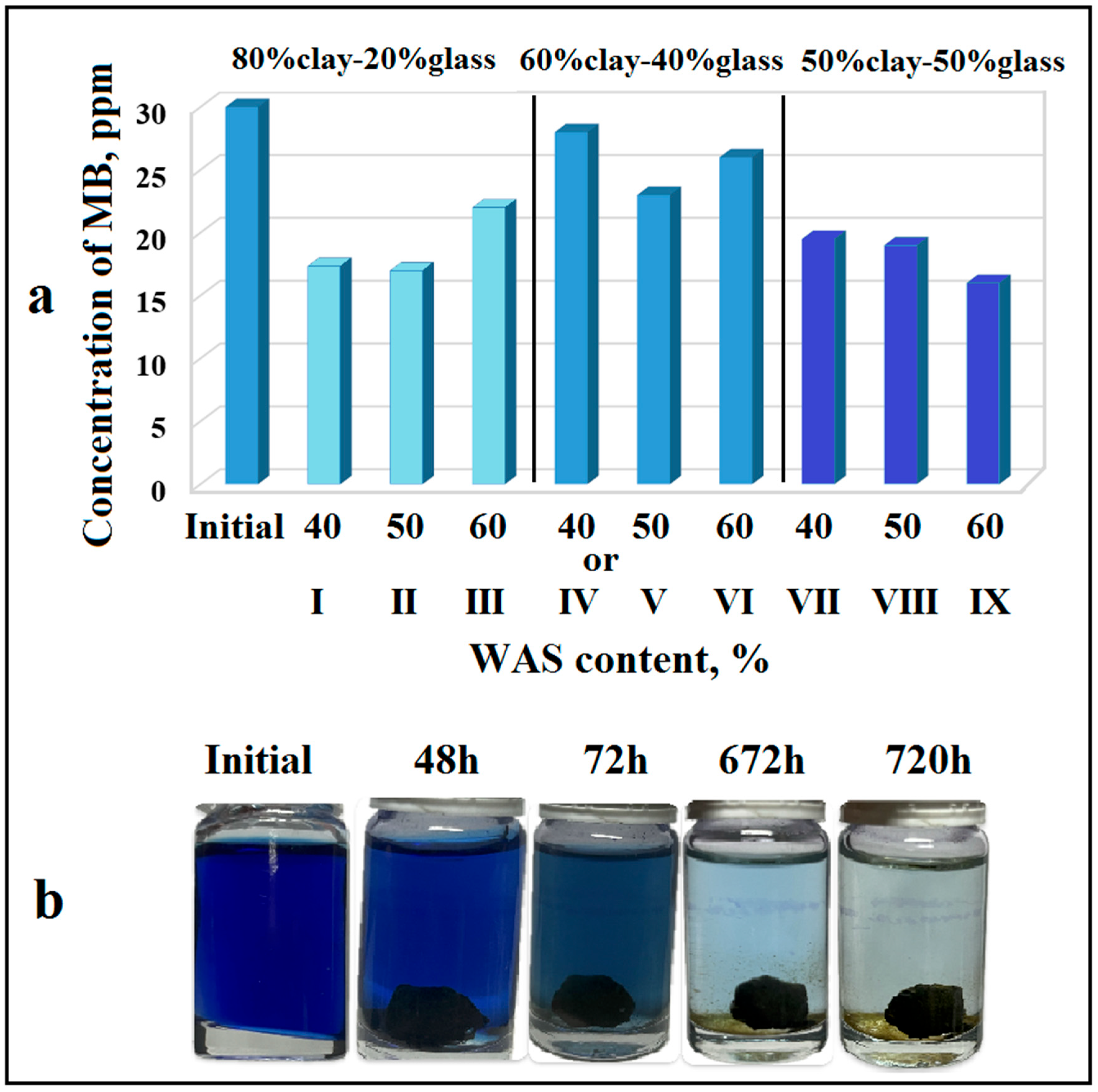
Studies of adsorption of MB from an aqueous solution by sample fragments were carried out. The adsorption properties depended on the initial content of components in mixtures and the temperature treatment of the samples (
Figure 10 and
Figure 11). Nevertheless, this process is long and slow and dependent on the content of fayalite in specimens (
Figure 10d and
Table 3): higher fayalite content in the samples increases the adsorption properties. It is known from the literature that fayalite has adsorptive properties [
52,
53,
54,
55,
56]. It was determined that samples treated at 800 °C showed better adsorption during the first four hours followed by the samples treated at 900 °C. Samples treated at 1000 °C processed slowly during this time (
Figure 10a–c).
4. Conclusions
Analysis of phase transformations in quaternary mixtures (clay–glass–WAS–hematite), heat treated at 800–900 °C, showed that several processes occur simultaneously during temperature treatment: (a) thermodestruction of WAS with carbon formation; (b) phase transformations in silicate subsystem with carbon participation and formation of fayalite, wollastonite, and feldspars.
Temperature treatment at 1000 °C, along with the thermodestruction process of WAS with carbon formation (process a) is accompanied by phase transformations in the silicate subsystem, including: (c) the predominant formation of wollastonite (rather than fayalite), feldspars such as anorthite (Ca(Al2Si2O8)) and albite (Na(AlSi3O8)), and the allocation of iron and hematite phases.
The presence of quartz and cristobalite is due to their presence in the clay used. The formation of feldspars of different compositions is associated with interaction processes between the glass melt and clay components.
Depending on the content of the components in the initial mixtures and the sintering temperature, it is possible to change both the composition of the newly formed phases and their content, and eventually to obtain composites of different compositions with different physical and chemical properties.
The conducted studies have shown that heat treatment of WAS under oxygen-deficient conditions in a gas environment is a valuable source formation of highly active nanocarbon. The presence of clay and sand impurities in WAS, as well as the addition of cullet and hematite, stimulates a complex of reducing and phase-forming processes that, depending on the percentage of components in the mixture and the processing temperature, lead to the production of ceramics for various purposes—from structural to functional.
Author Contributions
Conceptualization, A.P.P., P.A.M.A. and M.V.; methodology, A.P.P. and R.G.T.; validation, P.A.M.A., X.C.R.L. and M.V.; formal analysis, A.P.P.; investigation, R.G.T.; resources, M.V.; data curation, A.P.P.; writing—original draft preparation, A.P.P.; writing—review and editing, P.A.M.A. and M.V.; supervision, P.A.M.A.; project administration, P.A.M.A. All authors have read and agreed to the published version of the manuscript.
Funding
This research received no external funding.
Institutional Review Board Statement
Not applicable.
Informed Consent Statement
Not applicable.
Data Availability Statement
The original contributions presented in this study are included in the article. Further inquiries can be directed to the corresponding author.
Conflicts of Interest
The authors declare no conflicts of interest.
References
- Vlasova, M.; Parra, A.P.; Aguilar, P.A.M.; Estrada, A.T.; Molina, V.G.; Kakazey, M.; Tomila, T.; Gómez-Vidales, V. Closed cycle of recycling of waste activated sludge. Waste Manag. 2018, 71, 320–333. [Google Scholar] [CrossRef] [Scilit]
- Parra, P.; Vlasova, M.; Márquez, A.; Tomila, T. Peculiarities of a glass-sludge mixture subjected to low-temperature treatment. Sci. Sinter. 2017, 49, 207–224. [Google Scholar] [CrossRef] [Scilit]
- Rio, S.; Faur-Brasquet, C.; Le Coq, L.; Lecomte, D.; Le Cloirec, P. Preparation and characterization of activated carbon from sewage sludge: Carbonization step. Water Sci. Technol. 2004, 49, 139–146. [Google Scholar] [CrossRef] [Scilit] [PubMed]
- Wan, J.; Feng, X.; Li, B.; Wang, M.; Tang, X.; Chen, J.; Rong, J.; Ma, S.; Jiang, Y.; Zhang, Z. Effects of carbonization temperature and time on the characteristics of carbonized sludge. Water Sci. Technol. 2024, 89, 2342–2366. [Google Scholar] [CrossRef] [Scilit] [PubMed]
- Vlasova, M.; Gonzalez Molina, V.; Parra Parra, A.; Trujillo Estrada, A.; Márquez Aguilar, P.A.; Kakazey, M.; Campos Alvarez, J. Synthesis and properties of carbonized silicate ceramics. J. Progress. Res. Chem. 2017, 6, 255–264. [Google Scholar]
- Nicolas, M.F.; Vlasova, M.; Aguilar, P.A.M.; Kakazey, M.; Cano, M.M.C.; Matus, R.A.; Puig, T.P. Development of an energy-saving technology for sintering of bricks from high-siliceous clay by the plastic molding method. Constr. Build. Mater. 2020, 242, 118142. [Google Scholar] [CrossRef] [Scilit]
- Nzivulu, D.K.; Hashim, N.O.; Musila, N.; Otieno, K.E.; Wanjala, F.O. Investigation of red clay and waste glass composite bricks for ionizing radiation shielding. MethodsX 2024, 12, 102744. [Google Scholar] [CrossRef] [Scilit] [PubMed]
- González, M.V.; Parra, P.A.; Aguilar, P.M.; Tapia, R.G.; González, M.R.; Rosales-Cadena, I.; Vlasova, M. Peculiarities of glass ceramics formation from red clay-cullet-waste activated sludge-hematite mixtures. Sci. Sinter. 2022, 54, 249–264. [Google Scholar] [CrossRef] [Scilit]
- Vlasova, M.; Aguilar, P.A.M.; Morelos, J.L.H.; Parra, A.P.; Tapia, R.G.; González, M.R. Obtaining Electroheating Elements Based on Products of Carbothermal Reduction of Fe2O3 by Waste Activated Sludge (WAS). Waste Biomass Valorization 2023, 14, 1319–1332. [Google Scholar] [CrossRef] [Scilit]
- Vlasova, M.; Aguilar, P.A.M.; Morelos, J.L.H.; Parra, A.P.; Serrano, M.; González, M.C.R.; Tapia, R.G. Formation of the amorphous multicomponent iron-based alloy during carbothermal reduction of Fe2O3 by waste activated sludge. J. Non-Cryst. Solids X 2022, 16, 100122. [Google Scholar] [CrossRef] [Scilit]
- Azarov, G.M.; Maiorova, E.V.; Oborina, M.A.; Belyakov, A.V. Wollastonite raw materials and their applications (a review). Glas. Ceram. 1995, 52, 237–240. [Google Scholar] [CrossRef] [Scilit]
- Swamy, V.; Dubrovinsky, L.S. Thermodynamic data for the phases in the CaSiO3 system. Geochim. Cosmochim. Acta 1997, 61, 1181–1191. [Google Scholar] [CrossRef] [Scilit]
- Smyth, J.R. High temperature crystal chemistry of fayalite. Am. Mineral. J. Earth Planet. Mater. 1975, 60, 1092–1097. [Google Scholar]
- Jackson, W.E.; de Leon, J.M.; Brown, G.E.; Waychunas, G.A.; Conradson, S.D.; Combes, J.M. High-Temperature XAS Study of Fe2SiO4 Liquid: Reduced Coordination of Ferrous Iron. Science 1993, 262, 229–233. [Google Scholar] [CrossRef] [Scilit] [PubMed]
- Brady, J. Forsterite–Fayalite Binary Diagram. Smith College Petrology. Available online: https://www.science.smith.edu/~jbrady/petrology/igrocks-diagrams/binary/forsterite-fayalite.php (accessed on 26 December 2025).
- Fuertes, V.; Reinosa, J.; Fernández, J.; Enríquez, E. Engineered feldspar-based ceramics: A review of their potential in ceramic industry. J. Eur. Ceram. Soc. 2022, 42, 307–326. [Google Scholar] [CrossRef] [Scilit]
- Parsons, I. Feldspars and Their Reactions, 1st ed.; Springer: Berlin/Heidelberg, Germany, 1994. [Google Scholar] [CrossRef] [Scilit]
- De Villiers, J.P.R.; Buseck, P.R. Mineralogy and instrumentation. In Encyclopedia of Physical Science and Technology, 3rd ed.; Meyers, E.R.A., Ed.; Academic Press: Cambridge, MA, USA, 2003; pp. 1–27. [Google Scholar] [CrossRef] [Scilit]
- Vlasova, M.; Rosales, I.; Kakazey, M.; Parra, P.A.; Guardian, R. Formation of porous ceramics using cullet and biological waste of water purification. Sci. Sinter. 2011, 43, 81–94. [Google Scholar] [CrossRef] [Scilit]
- Yaro Getso, I.; Hassan, U.J.; Musa, F.; Ahmad, U.S.; Idris, M.S.; Durumin-Iya, S.G. Comprehensive evaluation of chemical, mineralogical, and physical properties of cullet for industrial applications. Int. J. Phys. Appl. Sci. 2024, 11, 24–32. [Google Scholar]
- Silva, D.; Mateus, J.; Almeida, M.; Monteiro, H. Glass Cullet Valorization: Benefits and Limitations for Alternative Applications. In International Conference on Energy and Environment Research; Caetano, N., Felgueiras, C., Eds.; Springer: Cham, Switzerland, 2025. [Google Scholar] [CrossRef] [Scilit]
- Pack, A.; Hoernes, S.; Walther, T.; Bross, R. Behavior of basic refractories at high temperatures in steelmaking processes thermodynamics and implications for the usability of olivine as refractory material. Eur. J. Miner. 2003, 15, 193–205. [Google Scholar] [CrossRef] [Scilit]
- Routschka, G.; Wuthnow, H. Refractory Materials: Pocket Manual; Design, Properties, Testing; Vulkan-Verlag GmbH: Essen, Germany, 2008. [Google Scholar]
- Acar, I. Sintering properties of olivine and its utilization potential as a refractory raw material: Mineralogical and microstructural investigations. Ceram. Int. 2020, 46, 28025–28034. [Google Scholar] [CrossRef] [Scilit]
- Guo, P.; Wang, C. Good lithium storage performance of Fe2SiO4 as an anode material for secondary lithium ion batteries. RSC Adv. 2017, 7, 4437–4443. [Google Scholar] [CrossRef] [Scilit]
- Zhang, Q.; Yan, C.; Dai, Q.; Su, C. Facile synthesis and lithium storage properties of engineered ultrafine porous Fe2SiO4/C composites. J. Electroanal. Chem. 2017, 807, 29–36. [Google Scholar] [CrossRef] [Scilit]
- Pinto, R.G. Synthesis of Fayalite Fe2SiO4 as a Tar Removal Catalyst for Biomass Gasification. Master’s Thesis, University of Aveiro, Aveiro, Portugal, 2017. [Google Scholar] [CrossRef]
- Kerisit, S.; Bylaska, E.J.; Felmy, A.R. Water and carbon dioxide adsorption at olivine surfaces. Chem. Geol. 2013, 359, 81–89. [Google Scholar] [CrossRef] [Scilit]
- Escamilla-Roa, E.; Martin-Torres, J.; Sainz-Díaz, C.I. Adsorption of methane and CO2 onto olivine surfaces in Martian dust conditions. Planet. Space Sci. 2018, 153, 163–171. [Google Scholar] [CrossRef] [Scilit]
- Isaev, V.A.; Prasolov, D.S. Justification of synthetic wollastonite on Stoilensky Mining and Processing Plant from a mixture of chalk and quartz sand. Mt. Inf.-Anal. Bull. 2012, 9, 158–166. [Google Scholar]
- Alshaaer, M.; Alharbi, B.; Alqahtani, O.; Alotaibi, M.S.; Alzayed, A.; Al-Kafawein, J. Synthesis and Characterization of Metakaolin–Wollastonite Geopolymer Foams for Removal of Heavy Metal Ions from Water. Materials 2025, 18, 678. [Google Scholar] [CrossRef] [Scilit] [PubMed]
- Peres, C.B.; Resende, P.R.; Nunes, L.J.R.; de Morais, L.C. Circular Economy: A Comprehensive Review of Eco-Friendly Wollastonite Applications. Sustainability 2022, 14, 3070. [Google Scholar] [CrossRef] [Scilit]
- Mohammadi, M.; Alizadeh, P.; Atlasbaf, Z. Effect of frit size on sintering, crystallization and electrical properties of wollastonite glass-ceramics. J. Non-Cryst. Solids 2011, 357, 150–156. [Google Scholar] [CrossRef] [Scilit]
- Yarusova, S.B.; Gordienko, P.S.; Sharma, Y.C.; Perfilev, A.V.; Kozin, A.V. Industrial Waste as Raw Material for Producing Synthetic Wollastonite in Russia. Int. J. Environ. Sci. Dev. 2017, 8, 130–134. [Google Scholar] [CrossRef] [Scilit]
- Kartal, A.; Akpinar, S. Synthesis of Wollastonite by Using Various Raw Materials. Key Eng. Mater. 2004, 264, 2469–2472. [Google Scholar] [CrossRef] [Scilit]
- Kotsis, I.; Balogh, A. Synthesis of wollastonite. Ceram. Int. 1989, 15, 79–85. [Google Scholar] [CrossRef] [Scilit]
- Wang, Y.; Song, J.; Guo, Q.; Xi, X.; Hou, G.; Wei, G.; Qu, J. The environmental sustainability of synthetic wollastonite using waste from zirconium oxychloride production. J. Clean. Prod. 2018, 172, 2576–2584. [Google Scholar] [CrossRef] [Scilit]
- Obeid, M. Crystallization of Synthetic Wollastonite Prepared from Local Raw Materials; GRIN Verlag: Munich, Germany, 2014; Available online: https://www.grin.com/document/294571 (accessed on 26 December 2025).
- Wahab, M.A.; Latif, I.A.; Kohail, M.; Almasry, A. The use of Wollastonite to enhance the mechanical properties of mortar mixes. Constr. Build. Mater. 2017, 152, 304–309. [Google Scholar] [CrossRef] [Scilit]
- Kalkan, Ş.O.; Yavaş, A.; Güler, S.; Kayalar, M.T.; Sütçü, M.; Gündüz, L. An experimental approach to a cementitious lightweight composite mortar using synthetic wollastonite. Constr. Build. Mater. 2022, 341, 127911. [Google Scholar] [CrossRef] [Scilit]
- Low, N.M.; Beaudoin, J. Mechanical properties of high performance cement binders reinforced with wollastonite micro-fibres. Cem. Concr. Res. 1992, 22, 981–989. [Google Scholar] [CrossRef] [Scilit]
- Wang, F.; Konietzky, H.; Herbst, M. Influence of heterogeneity on thermo-mechanical behaviour of rocks. Comput. Geotech. 2019, 116, 103184. [Google Scholar] [CrossRef] [Scilit]
- Tugrul, A.; Hasdemir, S.; Yılmaz, M. The effect of feldspar, mica and clay minerals on compressive strength of mortar. In Engineering Geology for Society and Territory-Volume 5: Urban Geology, Sustainable Planning and Landscape Exploitation; Springer International Publishing: Berlin/Heidelberg, Germany, 2015; pp. 93–96. [Google Scholar]
- Bó, M.D.; Gilabert, F.A.; Boschi, A.O.; Sánchez, E.; Cantavella, V.; Hotza, D. Quartz particle size and cooling rate effects on microstructural defects and mechanical properties of feldspar-based ceramic materials. J. Eur. Ceram. Soc. 2023, 43, 6590–6598. [Google Scholar] [CrossRef] [Scilit]
- Yoshino, T.; Shimojuku, A.; Shan, S.; Guo, X.; Yamazaki, D.; Ito, E.; Higo, Y.; Funakoshi, K. Effect of temperature, pressure and iron content on the electrical conductivity of olivine and its high-pressure polymorphs. J. Geophys. Res. 2012, 117. [Google Scholar] [CrossRef] [Scilit]
- Farla, R.J.M.; Peach, C.J.; Grotenhuis, S.M.T. Electrical conductivity of synthetic iron-bearing olivine. Phys. Chem. Miner. 2010, 37, 167–178. [Google Scholar] [CrossRef] [Scilit]
- Shanmugasundram, H.P.P.V.; Jayamani, E.; Soon, K.H. A comprehensive review on dielectric composites: Classification of dielectric composites. Renew. Sustain. Energy Rev. 2022, 157, 112075. [Google Scholar] [CrossRef] [Scilit]
- Von Hippel, A.R. Dielectric Materials and Applications; MIT Press: Cambridge, MA, USA, 1954. [Google Scholar]
- Wang, C.H.; Wei, Q.H.; Wang, H.S.; Li, L.; Luan, Q.; Liao, R. Dielectric Properties of Silica Fiber Reinforced Silica Composites. Key Eng. Mater. 2012, 512, 547–550. [Google Scholar] [CrossRef] [Scilit]
- Yadavalli, R.; Sinha, R. Influence of Wollastonite on Processing and Dielectric Behaviour of Barium Titanate. Key Eng. Mater. 1991, 29, 599–608. [Google Scholar] [CrossRef] [Scilit]
- Fuertes, V.; Cabrera, M.; Seores, J.; Muñoz, D.; Fernández, J.; Enríquez, E. Microstructural study of dielectric breakdown in glass-ceramics insulators. J. Eur. Ceram. Soc. 2019, 39, 376–383. [Google Scholar] [CrossRef] [Scilit]
- Schneider, M.; Ballweg, T.; Groß, L.; Gellermann, C.; Sanchez-Sanchez, A.; Fierro, V.; Celzard, A.; Mandel, K. Magnetic Carbon Composite Particles for Dye Adsorption from Water and their Electrochemical Regeneration. Part. Part. Syst. Charact. 2019, 36, 1800537. [Google Scholar] [CrossRef] [Scilit]
- da Silva, M.T.P.; Barbosa, F.F.; Torre, M.A.M.; Villarroel-Rocha, J.; Sapag, K.; Pergher, S.B.C.; Braga, T.P. Synthesis of Fe2SiO4-Fe7Co3 Nanocomposite Dispersed in the Mesoporous SBA-15: Application as Magnetically Separable Adsorbent. Molecules 2020, 25, 1016. [Google Scholar] [CrossRef] [Scilit]
- Yu, W.; Sun, Y.; Lei, M.; Chen, S.; Qiu, T.; Tang, Q. Preparation of micro-electrolysis material from flotation waste of copper slag and its application for degradation of organic contaminants in water. J. Hazard. Mater. 2019, 361, 221–227. [Google Scholar] [CrossRef] [Scilit]
- Cai, X.; Zhang, Y.; Hu, H.; Huang, Z.; Yin, Y.; Liang, X.; Qin, Y.; Liang, J. Valorization of manganese residue to prepare a highly stable and active Fe3O4@SiO2/starch-derived carbon composite for catalytic degradation of dye waste water. J. Clean. Prod. 2020, 258, 120741. [Google Scholar] [CrossRef] [Scilit]
- Dong, Y.; Liang, J.; Song, J.; Liu, C.; Ding, Z.; Wang, W.; Zhang, W. Preparation of biochar/iron mineral composites and their adsorption of methyl orange. RSC Adv. 2024, 14, 33977–33986. [Google Scholar] [CrossRef] [Scilit]
Figure 1.
Shrinkage of samples during sintering at: (a) Ttr = 800 °C; (b) Ttr = 900 °C. ttr = 3 h.
Figure 1.
Shrinkage of samples during sintering at: (a) Ttr = 800 °C; (b) Ttr = 900 °C. ttr = 3 h.
Figure 2.
Surface of specimens fracture obtained at T
tr = 800 °C, T
tr = 900 °C, and 1000 °C. t
tr = 3 h. For designations of samples III, V, and IX see in
Table 1.
Figure 2.
Surface of specimens fracture obtained at T
tr = 800 °C, T
tr = 900 °C, and 1000 °C. t
tr = 3 h. For designations of samples III, V, and IX see in
Table 1.
Figure 3.
Water absorption in specimens, obtained at: (a) Ttr = 800 °C; (b) Ttr = 900 °C. ttr = 3 h.
Figure 3.
Water absorption in specimens, obtained at: (a) Ttr = 800 °C; (b) Ttr = 900 °C. ttr = 3 h.
Figure 4.
X-ray diffraction patterns of (80 wt.% clay + 20 wt.% glass) + (50 wt.% WAS + 50 wt.% Fe2O3) mixtures treated at 800 °C (a), 900 °C (b), and 1000 °C (c). For ▲—fayalite (Fe2SiO4), ◇—quartz (SiO2), □—silicates (feldspars) ((K, Na)AlSi3O8), △—wollastonite (CaSiO3), ○—hematite (Fe2O3), ●—iron (Fe), ■—cristobalite (SiO2).
Figure 4.
X-ray diffraction patterns of (80 wt.% clay + 20 wt.% glass) + (50 wt.% WAS + 50 wt.% Fe2O3) mixtures treated at 800 °C (a), 900 °C (b), and 1000 °C (c). For ▲—fayalite (Fe2SiO4), ◇—quartz (SiO2), □—silicates (feldspars) ((K, Na)AlSi3O8), △—wollastonite (CaSiO3), ○—hematite (Fe2O3), ●—iron (Fe), ■—cristobalite (SiO2).
Figure 5.
Local EDS analysis in different places of specimens. Content of mixtures components is in wt.%.
Figure 5.
Local EDS analysis in different places of specimens. Content of mixtures components is in wt.%.
Figure 6.
EDS analysis of element distribution in map mode on the fracture of samples obtained from different mixtures of clay–glass–WAS–Fe2O3 treated at different temperatures. The content of the components of the mixtures is given in wt.%.
Figure 6.
EDS analysis of element distribution in map mode on the fracture of samples obtained from different mixtures of clay–glass–WAS–Fe2O3 treated at different temperatures. The content of the components of the mixtures is given in wt.%.
Figure 7.
Change in compressive strength of specimens compacted from clay–glass–WAS–Fe2O3 mixtures subjected to temperature treatment at 800 °C (a) and 900 °C (b). The measurement error is ±3 MPa.
Figure 7.
Change in compressive strength of specimens compacted from clay–glass–WAS–Fe2O3 mixtures subjected to temperature treatment at 800 °C (a) and 900 °C (b). The measurement error is ±3 MPa.
Figure 8.
Change in the electrical resistivity of specimens compacted from clay–glass–WAS–Fe2O3 mixtures subjected to temperature treatment at 800 °C. The measurement error is ±2 Ωm. (a) mixture with 80% clay-20% glass; (b) mixture with 60% clay-40% glass and (c) mixture with 50% clay-50% glass.
Figure 8.
Change in the electrical resistivity of specimens compacted from clay–glass–WAS–Fe2O3 mixtures subjected to temperature treatment at 800 °C. The measurement error is ±2 Ωm. (a) mixture with 80% clay-20% glass; (b) mixture with 60% clay-40% glass and (c) mixture with 50% clay-50% glass.
Figure 9.
Changes in the heating temperature of samples depending on the composition of the initial mixtures. Samples were obtained at T = 800 °C, t = 3 h. The measurement error is ±10 °C. (a) x% WAS-y% Fe2O3; (b) x% Clay-y% Glass.
Figure 9.
Changes in the heating temperature of samples depending on the composition of the initial mixtures. Samples were obtained at T = 800 °C, t = 3 h. The measurement error is ±10 °C. (a) x% WAS-y% Fe2O3; (b) x% Clay-y% Glass.
Figure 10.
Adsorption of MB depending on the time of exposition (a–c); depending on the temperature treatment of the samples (d). In (a) Ttr = 800 °C; in (b) Ttr = 900 °C and (c) Ttr = 1000 °C. In (d) mixture was 80% clay and 20% glass, and 40% WAS and 60% Fe2O3. The measurement error is ±2 ppm.
Figure 10.
Adsorption of MB depending on the time of exposition (a–c); depending on the temperature treatment of the samples (d). In (a) Ttr = 800 °C; in (b) Ttr = 900 °C and (c) Ttr = 1000 °C. In (d) mixture was 80% clay and 20% glass, and 40% WAS and 60% Fe2O3. The measurement error is ±2 ppm.
Figure 11.
Adsorption of MB depending on the initial content of the samples (a); view of water decolorization from MB by sample fragment (b). In (a) CMB = 30 ppm; time of exposition = 48 h. In (b) composition of sample: 60% clay and 40% glass, and 60% WAS and 40% Fe2O3. The measurement error is ±2 ppm.
Figure 11.
Adsorption of MB depending on the initial content of the samples (a); view of water decolorization from MB by sample fragment (b). In (a) CMB = 30 ppm; time of exposition = 48 h. In (b) composition of sample: 60% clay and 40% glass, and 60% WAS and 40% Fe2O3. The measurement error is ±2 ppm.
Table 1.
Composition of quaternary components in mixtures for preparation of blanks (wt.%).
Table 1.
Composition of quaternary components in mixtures for preparation of blanks (wt.%).
| N | As Mixture of Two Compositions | As a Generalized Mixture |
|---|
| I | 80% clay + 20% glass/
40% WAS + 60% Fe2O3 | 40% clay + 10% glass + 20% WAS + 30% Fe2O3 |
| II | 80% clay + 20%glass/
50% WAS + 50% Fe2O3 | 40% clay + 10% glass + 25% WAS + 25% Fe2O3 |
| III | 80% clay + 20% glass/
60% WAS + 40% Fe2O3 | 40% clay + 10% glass + 30% WAS + 20% Fe2O3 |
| IV | 60% clay + 40% glass/
40% WAS + 60% Fe2O3 | 30% clay + 20% glass + 20% WAS + 30% Fe2O3 |
| V | 60% clay + 40% glass/
50% WAS + 50% Fe2O3 | 30% clay + 20% glass + 25% WAS + 25% Fe2O3 |
| VI | 60% clay + 40% glass/
60% WAS + 40% Fe2O3 | 30% clay + 20% glass + 30% WAS + 20% Fe2O3 |
| VII | 50% clay + 50% glass/
40% WAS + 60% Fe2O3 | 25% clay + 25% glass + 20% WAS + 30% Fe2O3 |
| VIII | 50% clay + 50% glass/
50% WAS + 50% Fe2O3 | 25% clay + 25% glass + 25% WAS + 25% Fe2O3 |
| IX | 50% clay + 50% glass/
60% WAS + 40% Fe2O3 | 25% clay + 25% glass + 30% WAS + 20% Fe2O3 |
Table 2.
Chemical composition of used components.
Table 2.
Chemical composition of used components.
| Component | Content, wt.% |
|---|
| | SiO2 | Fe2O3 | Al2O3 | K2O | CaO | Na2O | TiO2 | P2O5 | MgO | MnO | Σ |
| Clay | 56 | 2.8 | 33 | 2.5 | 1.5 | 0.65 | 0.85 | - | 0.6 | - | 2.1 |
| Glass | 72.81 | 1.08 | 0.29 | 0.45 | 11.29 | 13.25 | 0.14 | 0.03 | 0.5 | 0.02 | 0.15 |
| WAS | organic material: 80.20; clay + sand: 19.80 |
| 43.47 | 13.51 | 18.41 | 2.18 | 9.85 | - | 3.61 | 7.08 | 1.24 | 0.29 | 1.6 |
Table 3.
The phase composition of specimens.
Table 3.
The phase composition of specimens.
| N | A Mixture of Two Compositions | Phases |
|---|
| Ttr = 800 °C | Ttr = 900 °C | Ttr = 1000 °C |
|---|
| I | 80% clay + 20% glass/
40% WAS + 60% Fe2O3 | (Q, F)m., Slit. | (F)m., Qav., Slit. | (Fe, W)m., (Q, C, H)av., Flit. |
| II | 80% clay + 20%glass/
50% WAS + 50% Fe2O3 | (Q, F)m., Slit. | (F)m., Qav., Slit. | (Fe, W)m., (Q, C, H)av., Flit. |
| III | 80% clay + 20% glass/
60% WAS + 40% Fe2O3 | (Q, F)m., (S, Fe)lit. | (F, Q)m., Slit. | (Fe, W)m., (Q, C, H)av., Flit. |
| IV | 60% clay + 40% glass/
40% WAS + 60% Fe2O3 | (Q)m., (F, C)av., (S, W, Fe)lit. | Fm., (W, S, Fe)lit. | |
| V | 60% clay + 40% glass/
50% WAS + 50% Fe2O3 | (Q, F, C)m., (W, S)av., Felit. | Fm., Sav, Qlit. | (Fe, W, Q)m., (C, H)av., Flit. |
| VI | 60% clay + 40% glass/
60% WAS + 40% Fe2O3 | Qm., (F, W)av., (S, Fe)lit. | Fm., Sav., Qlit. | |
| VII | 50% clay + 50% glass/
40% WAS + 60% Fe2O3 | Fm., Wav., (C, Q, S, Fe)lit. | (F, W)m., (S, Fe)lit. | |
| VIII | 50% clay + 50% glass/50% WAS + 50% Fe2O3 | (F, W)m., (Fe, S)av., (C, Q)lit. | (F, W)m., (S, Fe)lit. | |
| IX | 50% clay + 50% glass/60% WAS + 40% Fe2O3 | (F, C, Q, W)m., Feav. | Fem., (F, W)av., (S, Q)lit | (Fe, Q, W)m., (C, H)av. |
| Disclaimer/Publisher’s Note: The statements, opinions and data contained in all publications are solely those of the individual author(s) and contributor(s) and not of MDPI and/or the editor(s). MDPI and/or the editor(s) disclaim responsibility for any injury to people or property resulting from any ideas, methods, instructions or products referred to in the content. |





 ,
,