
Article

The Contribution of Malacological Studies to Understanding the Occupation Dynamics of the Prehistoric Site at Colombare di Villa-Negrar di Valpolicella (VR): Preliminary Report on the Remains from Trenches 4 and 15

1
Centro Ambientale Archeologico Pianura di Legnago–Museo Civico, Fondazione Fioroni, Via Enrico Fermi 10, Legnago, 37045 Verona, VR, Italy
2
PrEcLab-Laboratory of Prehistory, Protohistory and Preihistoric Ecology, Department of Cultural and Environmental Heritage, University of Milan, Via Noto 6, 20141 Milan, MI, Italy
3
Department of Political and Social Science, University of Pavia, C.so Strada Nuova 65, 27100 Pavia, PV, Italy
*
Author to whom correspondence should be addressed.
Quaternary 2026, 9(3), 42; https://doi.org/10.3390/quat9030042
Submission received: 24 February 2026 / Revised: 30 April 2026 / Accepted: 18 May 2026 / Published: 20 May 2026

Abstract

Archaeomalacological analyses have been carried out as part of the interdisciplinary project of Colombare di Negrar, a prehistoric site in the Lessini Mountains (northern Italy). The palaeoenvironmental and economic reconstruction from the Late to Final Neolithic was based on 1047 mollusc remains taken from two contiguous Trenches 4 and 15. The landscape reconstruction shows natural clearings in the woods. The faunal associations indicate that the environment from the Late to Final Neolithic became wetter. Finally, stony-soil species remained constant over time.

1. Introduction

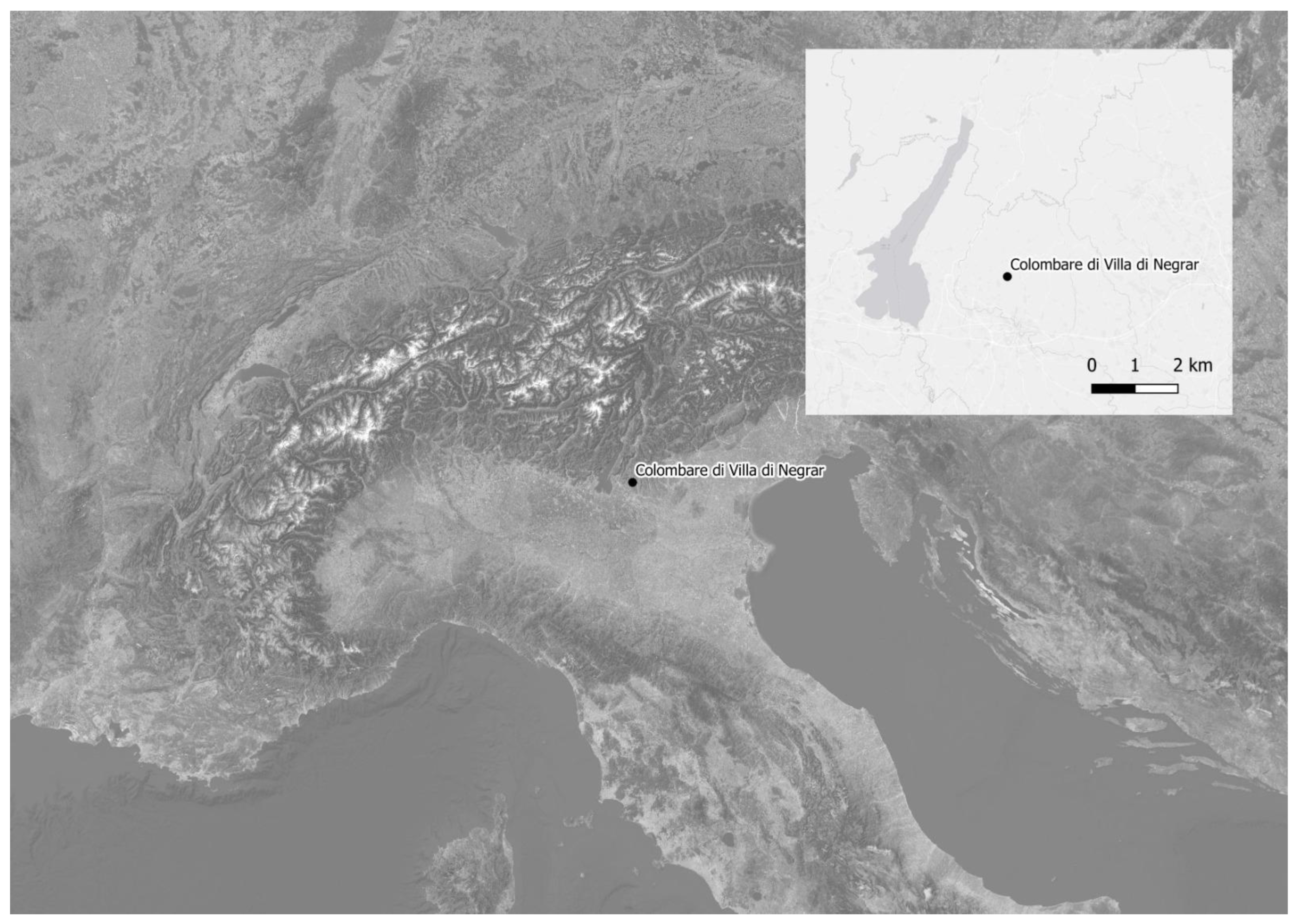
The prehistoric site of Colombare di Villa di Negrar (VR) is at the centre of a broader research project aimed at understanding the dynamics of occupation and exploitation of the southern Lessini area between the 5th and 2nd millennia BC (Figure 1).
The area has been recognised for its archaeological potential since the 1950s, it has been investigated during two excavation campaigns directed by Francesco Zorzi [1], then Director of the Natural History Museum of Verona, who reported the discovery of nine Copper Age [2] hut floors.
Since 2019, the site has been the focus of seven excavation campaigns conducted by the University of Milan (Chair of Prehistory and Prehistoric Ecology), in collaboration with the Superintendency of Archaeology, Fine Arts and Landscape for the provinces of Verona, Rovigo, and Vicenza. These investigations have significantly expanded the chronological range of occupation of the area, from the 5th millennium BC (Late Neolithic) to the final 2nd millennium BC (Late Bronze Age) [3].
Field research has not been limited to on-site archaeological investigation. However, it has been designed with the broader aim of reconstructing the site’s main characteristics and contextualising it within its natural environment and networks of exchange and cultural interaction [4]. This has been achieved through collaboration with specialists from a wide range of disciplines, including geomorphology, petrography, chemistry, geology, palynology, archaeobotany and archaeozoology.

1.1. Archaeological Context

The site of the Colombare di Villa di Negrar is located in the southwestern Lessini mountains, at an altitude of 650 m asl, virtually linked to important communication routes that lead south, through the western Venetian plain, into the Po Valley, and towards the Alpine territories to the north, along the waterway represented by the Adige-Isarco axis.
The Venetian Prealps, on whose western edge lies the Valpolicella, are known for their excellent-quality flint, which has been intensively exploited since the 6th millennium BC (Lugo di Grezzana (VR) [5]).
The availability of this raw material, together with the site’s strategic location and its intrinsic visibility—large natural limestone “towers” make it visible from the valley floor [6]—should be considered the driving force behind the long-term occupation of the area. An open archaeological question concerns the type of occupation, which must have been characterised by long periods of continuous use, such as between the Late Neolithic and the Final Neolithic (late 5th-late 3th millennium BC), and by repeated, temporary abandonments and resumptions of settlement. The study of the archaeomalacological record, which we explore in depth in this paper, aims to gather further information on environmental conditions and how they may have influenced the site’s occupation, abandonment, and reoccupation dynamics.
The paleoenvironmental data available to date (Table 1) [7], collected in the excavation campaigns conducted between 2019 and 2025, have allowed us to sequence a first occupation, probably not structured for a long and permanent occupation, which began in the last centuries of the 5th millennium BC, which was followed, around 3900–3800 cal BC, by the construction of a wooden house, evidenced by a series of aligned negative structures (post holes), dated to the Late Neolithic [8]. In the second half of the 3rd millennium cal BC (2464–2239 cal BC), the area was subject to occupations, reoccupations and interventions to alter the slope, through the construction of terraces.
However, the type of occupation of the site during the Bronze Age is difficult to establish due to the lack of detailed stratigraphic investigations: the long chronological span is testified by the material culture, the types of which place the Colombare within the pile-dwelling-terramare facies. The presence of an active community at the Colombare in the 2nd millennium BC is perhaps to be related, in addition to the raw material (flint) which was indeed still highly sought after up until the Middle Bronze Age, to the ascent to the high altitudes of the Lessinia area for the carrying out of pastoral activities at high altitude. The numerous findings of bronze artefacts offered at high altitude (Höhenfunde) could reflect this interest [10,11].

1.2. Trenches 4 and 15

The malacological sample examined in this study was selected from two specific contexts: Trenches 4 (2021) and 15 (2022).
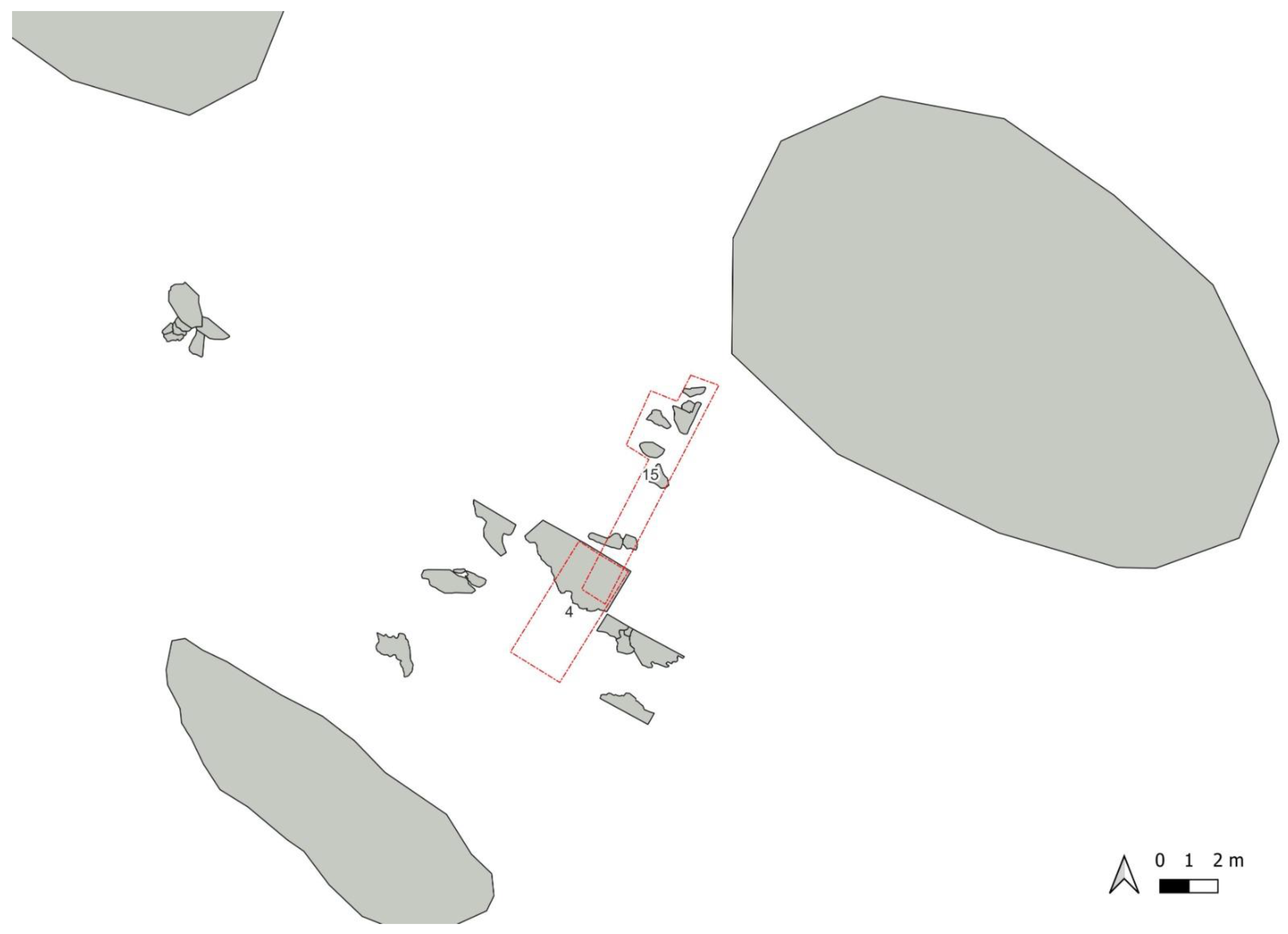
The two excavation areas are contiguous and cover almost the entire length of the space between two large limestone boulders, designated Boulder 1 and Boulder 2 (Figure 2).
This area includes a flat surface—occupied by a house during the Late Neolithic—and a sector that becomes progressively steeper towards the southern face of Boulder 2, which was terraced during the Final Neolithic.
In Trench 4, it was possible to uncover, in the Late Neolithic horizon, two negative structures (postholes), set following the trend of the ridges of outcropping bedrock that characterise the entire area, which represent part of the substructure supporting an aerial platform on which the aforementioned building must have stood.
Trench 15, on the other hand, extends for a length of 7 m and an average width of 1 m from the upper limit of Trench 4 towards the north and led to the identification of two use levels with a difference in height of approximately 1 m, delimited by large boulders, interpreted as slope adjustment works (terracing), dated in absolute chronology to the end of the Final Neolithic (2464–2239 cal BC).
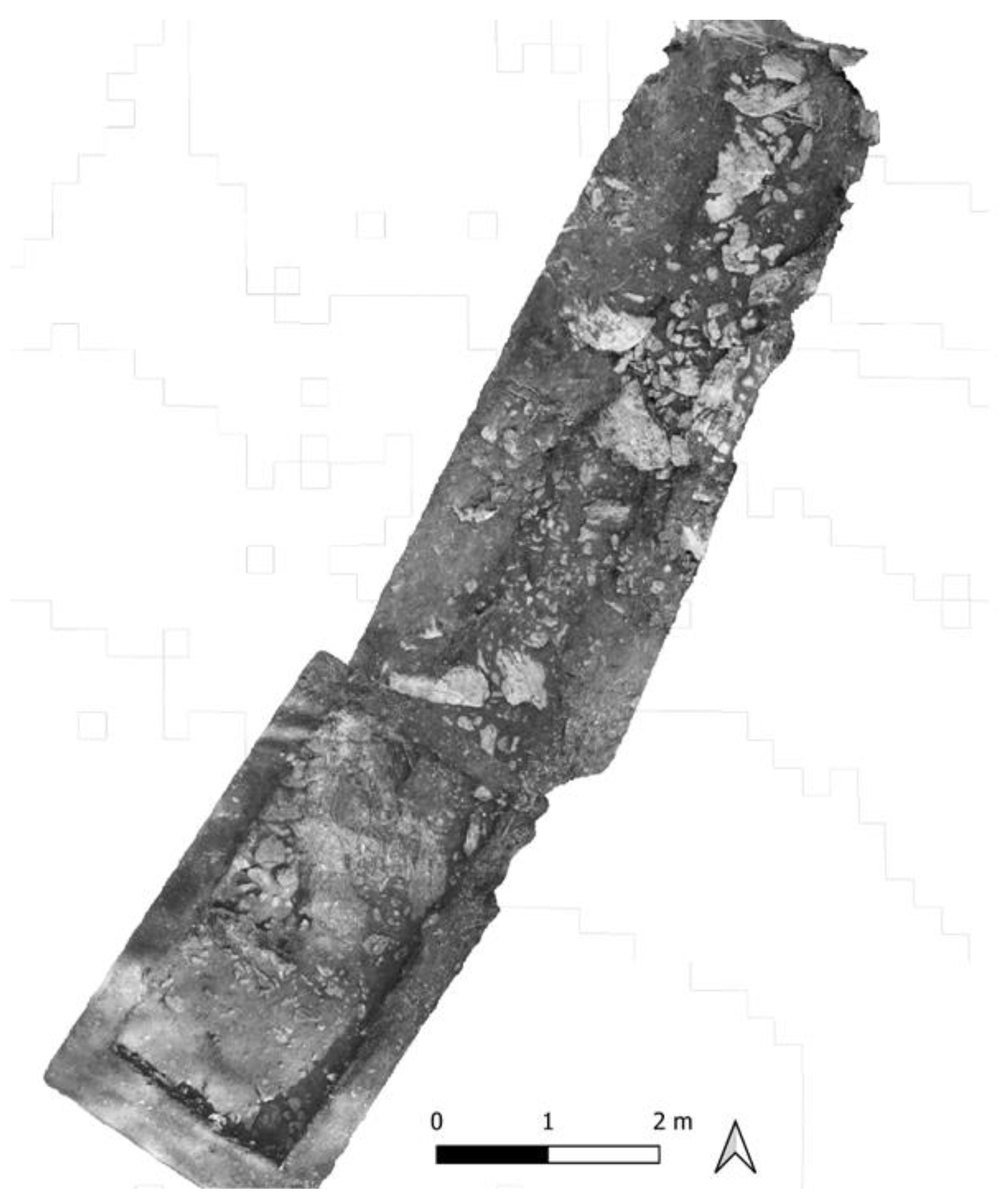
The two contiguous excavation areas (Figure 3) display distinct morphologies that likely influenced both their patterns of occupation and their stratigraphic development. In Trench 4, it was possible to document a stratigraphic sequence (excluding stratigraphic units 1–4, which are in secondary deposition) attesting to phases of occupation from the Late Neolithic to the Final Neolithic (Early Copper Age). In Trench 15, the earliest occupation horizons date to the latest phase of Final Neolithic (Late Copper Age) and are associated with the terracing of the area.
The stratigraphic sequence of Trench 4 concludes with the early phase of Final Neolithic, apparently not continuous with the latest phase of Final Neolithic occupation phases. However, it is important to consider the historical excavation work carried out by Zorzi, which may have influenced the overall understanding of the context. The historical excavations of Hut 1 Zorzi (one meter south of the boundary of Trench 4) yielded material culture attributable to the whole Final Neolithic [12]. The absence of such evidence in Trench 4 may therefore be due more to anthropogenic depositional or post-depositional phenomena than to a hiatus in the occupation of the plateau.

2. Materials and Methods

The malacological study was conducted on the remains from Trenches 4 and 15, excavated in 2021 and 2022. These were collected following sediment flotation by Dr. Barbara Proserpio and Dr. Gianluca Simonini (during the malacological study, an unspecified number of finds consisting of minute or very minute fragments were recovered, which, for convenience, were not counted) carried out in collaboration with the Archaeobiology Laboratory of the Civic Museums of Como (Dr. Mauro Rottoli and Dr. Elisabetta Castiglioni). The determination was conducted with the aid of a personal collection of comparative material, a species identification atlas [13], and the constantly updated online resource Molluscabase [14]. The minimum number of individuals was counted according to the methodology outlined in the archaeomalacology volume [15], as was the habitat reconstruction.

3. Results

Malacological Study

From a taphonomic point of view, no traces were found on the surface of the gastropods, such as those related to rodent feeding remains. It should be noted that stratigraphic unit 2 in Trench 5 was described as heavily bioturbated by the roots of the surrounding vegetation, and this may have influenced the movement of some fragments.
The excavation allowed the recovery of abundant malacofauna, thanks to the careful collection techniques and soil flotation adopted. The sieving was conducted in conjunction with sediment washing during the archaeobotanical study, using mesh sizes of 0.5, 1 and 2 mm. The total study is still ongoing, and the total number currently exceeds 9900 individuals, including 32 terrestrial species and one fragment of marine species (Cardium sp.), but the present article is based only on Trenches 4 and 15, so on a sample of 1047 remains. All specimens were examined and counted individually, allowing us to verify the state of conservation of the shells, which, in general, appear to be in good condition. This paper delves into the study of the malacological remains found only in Trenches 4 and 15, and here the species examined (Table 2, Figure 4) are terrestrial gastropods.
The species Cecilioides acicula and Cecilioides veneta were excluded from the statistical analysis because they are pollutants: the former has a historical distribution [16], while the latter penetrates deeply into the subsoil via the root canals of herbaceous vegetation [17].
In Trench 4 (Table 3), the most abundant molluscs are those adapted to mesophilic conditions, with intermediate water requirements and tolerance of alternating dry and wet seasons. These are followed by xerophilous species, more adapted to arid conditions that can occur in mountainous areas with south-facing slopes or sparse vegetation cover (Chondrula tridens and Truncatellina cylindrica).
Phyticolous species, which prefer woodland environments where vegetation offers shade and coolness, are also significantly present; among these, some species prefer more open forests (Cochlodina comensis/dubiosa and Gonyodiscus rotundatus) and live on rock faces, old walls, and rocky debris, sometimes in the leaf litter of deciduous forests. Others, however, prefer shadier forests (Argna biplicata, Pagodulina pagodula, Trochulus leucozonus), as well as conifer forests (Clausilia cruciata [18], Vitrina pellucida [13]).
The situation in Trench 15 (Table 4) remains essentially unchanged, and mesophilic molluscs prevail (Charpentieria itala, Cochlostoma sp. and Pomatias elegans).

4. Discussion

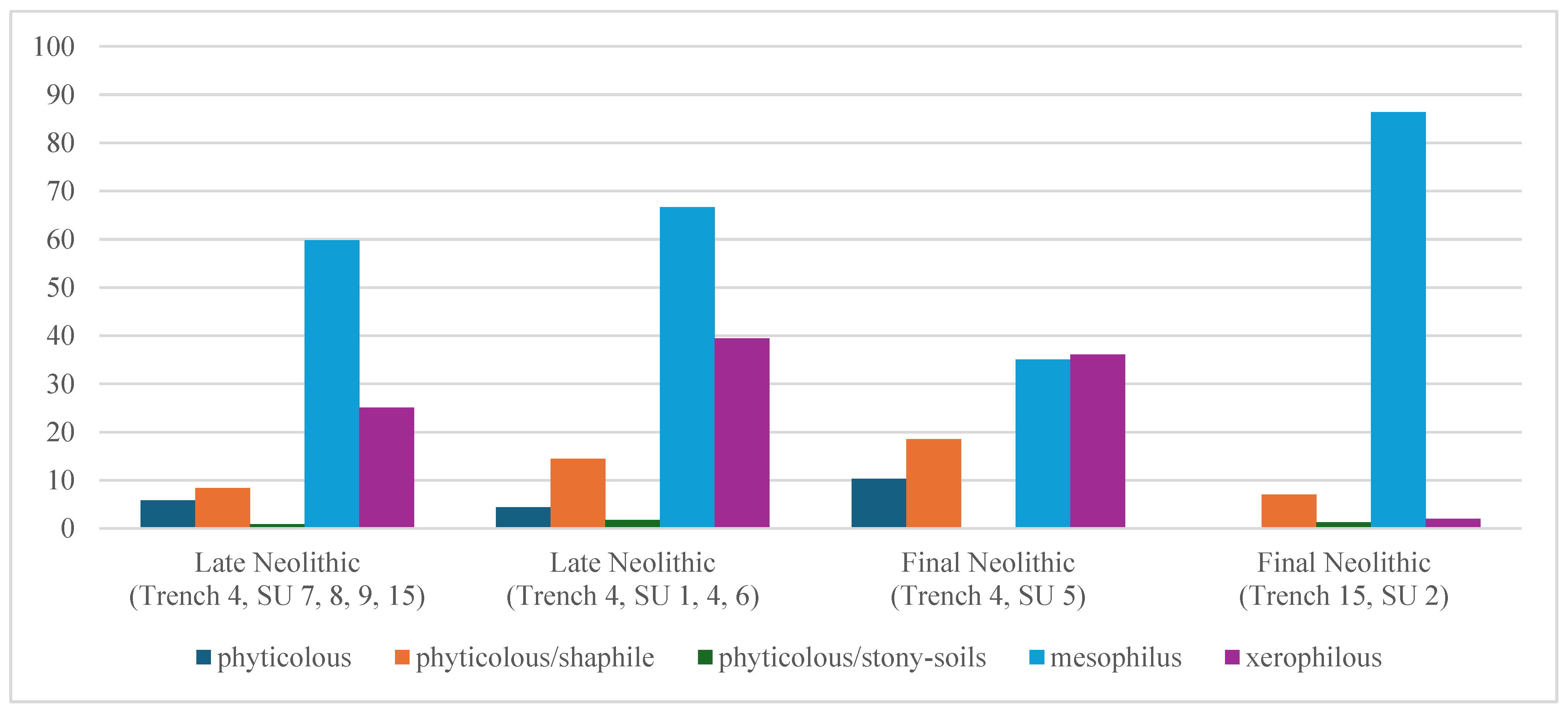
The frequency graphs (Figure 5) of mesophilous and xerophilous faunal associations indicate that from the Late Neolithic to Final Neolithic, the environment became wetter. The phyticolous species remained roughly constant, indicating relatively stable vegetation and forest cover, as also noted in the archaeobotanical data [3], with a slight increase in phyticolous/shade-loving and phyticolous/stony-soils species during the Final Neolithic. Among these, Clausilia cruciata and Vitrina pellucida are noteworthy, suggesting the presence of conifers in this area.
In the Final Neolithic, a small percentage of phyticolous/shade-loving species remained, indicating that the area had been cleared to make way for terraces.
Finally, stony-soils species remained constant over time, albeit at very low percentages, which is not surprising given that the area’s geology is characterised by outcropping limestone cliffs and rugged terrain with abundant rocky debris.
Unfortunately, the archaeopalynological record currently available for the site considered in this study is restricted to the Late Neolithic. Consequently, it is not possible to correlate the archaeomalacological evidence with the structure and composition of the vegetation assemblages during the second half of the third millennium cal BC. At the local scale, a major limitation is the general lack of archaeopalynological studies. Consequently, potential comparative sites are located either in the Po Plain and central Italy [19,20,21] or within the Alpine domain, that is, in climatic and environmental settings markedly different from those characterising the Lake Garda region.
The Lake Garda basin is characterised by a transitional sub-Mediterranean climate, shaped by Alpine orography and by the buffering effect of a large lacustrine water body, resulting in relatively mild temperatures, winter attenuation, and precipitation maxima during the transitional seasons, including frequent intense convective events. In palaeoclimatic terms, this setting represents a functional analogue for southern Alpine lacustrine systems such as Ledro Lake, where low or unstable lake-level phases during the mid- to late Holocene are better interpreted as reflecting strong seasonality and variability of precipitation rather than a sustained reduction in mean annual rainfall [19,22,23,24].
From a methodological perspective, regional comparisons are constrained by the uneven chronological resolution of the available palaeoenvironmental records. Many of the sites commonly used as references do not satisfactorily document the second half of the third millennium cal BC (e.g., Ledro Lake, located approximately 41 km to the north–northwest of Colombare di Villa within the southern Alpine domain [19]). As a result, such records primarily support long-term or millennial-scale interpretations, which are not fully compatible with the higher chronological resolution provided by the radiocarbon framework established for the Colombare di Villa site.
In pre-Alpine and Alpine Italy, archaeomalacological investigations comparable to those at the Colombare di Villa di Negrar, as described here, are scarce. From a chronological and environmental perspective, only the case of Monte Mezzana near Trento can be cited [25]. In the site, dated to the Final Neolithic-transition to the Early Bronze Age (second half of the 3rd millennium BC), the finds, rather fragmentary and ruined, included the families Cochlostomidae, Clausilidae, Chondrinidae, Pupillidae, Helicidae (Chilostoma cornea Draparnaud, Helicodonta sp.). These terrestrial gastropods characterise similar environments (stony and calcareous; shady and humid with moss-covered stones; water-soaked soils between woodland edges and meadows; and open cracks in the rock filled with water) [25].
Monte Mezzana and Colombare di Villa present similar environmental conditions and an identical calcareous rocky substrate. The first occupies the somewhat rugged but substantially flat summit of a hilltop, and the second a locally steep slope with relatively short shelves placed behind erratic boulders.
Shady environments characterised by widespread surface humidity seem characteristic of relatively dense forests, but in the case of Colombare we know from pollen surveys that the forest environment must have been relatively open since the first phase of settlement (before 4000 cal BC). It would therefore seem plausible that the humidity conditions deducible from the archaeomalacological record can be attributed to more generalised cool-humid climatic conditions on a regional or supra-regional scale [26,27,28].
It is known that in the second half of the third millennium BC the Alps passed from the still relatively mild conditions of the Middle Holocene to a cooler and more unstable regime, with a cooling episode around 2200 BC marking the start of a neoglacial trend. Hydrological investigations, such as those conducted near Petit Lake in the Mercantour massif, indicate increased detrital input and hydrological instability around 2200 BC [29].
Within this broader climatic framework, increasing humidity and precipitation levels would have exerted a profound influence on the hydrological balance of alpine and peri-alpine landscapes, intensifying surface runoff, soil saturation and erosional dynamics on slopes. In highly sensitive mountain environments, even moderate increases in rainfall, or frequently repeated “normal” convective episodes, are sufficient to disturb delicately equilibrated hydro-geomorphological systems, with attendant impacts on cultivated areas through flooding and sediment redistribution, often preceding any direct damage to settlement structures [30].
From this perspective, the introduction of terraced infrastructures at Colombare can be interpreted as an intentional and anticipatory form of landscape management, designed to mitigate slope instability, retain soils and regulate water circulation under conditions of growing hydroclimatic variability. Terracing thus emerges as an opportunistic adaptation to local topography, and as part of a broader strategy aimed at buffering environmental uncertainty during the late third millennium BC, foreshadowing more formalised systems of slope engineering that become increasingly characteristic during the Bronze Age [31].
The presence of water erosion processes appears to be indirectly documented in Trench 15 by the absence of finds that can be definitively dated to the Late Neolithic. This absence is difficult to explain given that the slope extending between erratic boulder number 2, located a few meters north of the Trench’s northern boundary, and the small flat area where test pits number 4 and 9 were excavated, forms a morphological continuum with that plateau. Slope erosion immediately north of and upslope from the flat area may represent a plausible mechanism accounting for the presence of apparently asynchronous materials within Layer 1 of the excavations conducted by Francesco Zorzi in the early 1950s [2]. In this context, post-depositional reworking and sediment redistribution downslope cannot be excluded.
Beyond their immediate functional role in controlling slope processes, terracing works should be understood as a clear manifestation of infrastructural investment and long-term planning. The construction, maintenance and periodic renewal of terrace systems require sustained inputs of labour, technical expertise and organisational capacity, conditions that are fundamentally incompatible with short-lived or highly mobile settlement regimes. The initiation of such works at Colombare therefore implies an explicit commitment to durable occupation and to the stabilisation of settlement within a deliberately structured landscape. In this sense, terracing represents not only an adaptive response to environmental stress, but also a material expression of the progressive anchoring of subsistence strategies, land-use practices and social organisation to a fixed territory. This form of landscape investment anticipates patterns of prolonged occupation and infrastructural permanence that become increasingly widespread in northern Italy from the Early Bronze Age onwards.
Future investigations will verify to what extent this infrastructural development represents not only a functional response to slope instability [31] driven by climate change, but also a consequence of broader settlement stabilisation processes attested in northern Italy from the Early Bronze Age onwards.

Author Contributions

Introduction, U.T. and F.G.; The archaeological context, U.T. and F.G.; Trenches 4 and 15, U.T. and F.G.; Malachological study, S.B.; Conclusions e future perspective, S.B. and U.T. All authors have read and agreed to the published version of the manuscript.

Funding

European Union funding–NextGeneration EU, Mission 4, Component C2, Funding 1.1 Advisor n. 104 of 2.02.2022—PRIN 2022, Title: P:ANIS/A, State University of Milan.

Institutional Review Board Statement

Not applicable.

Informed Consent Statement

Not applicable.

Data Availability Statement

The data that support the findings of this study are available from the corresponding author upon request.

Conflicts of Interest

The authors declare no conflicts of interest.

References

  1. Zorzi, F. Resti di un abitato capannicolo eneolitico alle Colombare di Negrar (Verona). In Actes du IV Congrès International du Quaternarie (Rome-Pise, Août-Septembre 1953); Blanc, G.A., Ed.; Istituto Italiano di Paleontologia Umana: Roma, Italy, 1956; pp. 3–15. [Google Scholar]
  2. Tecchiati, U.; Gulino, F.; Saracino, M.; Martinelli, N.; Zorzin, R.; Salzani, P. Scavando nei depositi e negli archivi: La (ri)-scoperta del sito delle Colombare di Villa di Negrar 70 anni dopo. In Francesco Zorzi (1900–1964) L’uomo e lo Studioso; Saracino, M., Ed.; Memorie del Museo Civico di Storia Naturale di Verona—2 Serie, Sezione Scienze dell’Uomo; MeMorie del Museo CiviCo di Storia Naturale di VeroNa: Verona, Italy, 2025; Volume 17, pp. 81–100. [Google Scholar] [CrossRef]
  3. Tecchiati, U.; Salzani, P.; Putzolu, C.; Viola, S.; Magnini, L.; Boracchi, C.; Gulino, F.; Proserpio, B.; Reggio, C. Negrar di Valpolicella (VR). Indagini archeologiche e paleoambientali nel sito delle Colombare di Villa. In Archeologia del Veneto 2015–2019 Notiziario delle Soprintendenze; SAP: Walldorf, Germany, 2022; pp. 59–76. [Google Scholar]
  4. Tecchiati, U.; Gulino, F. Alcune osservazioni sulla transizione Preistoria—Protostoria in Italia settentrionale (IV-III millennio a.C.). Aspetti cronologici e culturali. In Dall’Uomo del Rame All’homo Faber. Il Sostrato Profondo della Storia, III Convegno Internazionale di Studi (Ragusa, 27–28 Luglio 2023); Ruta, C., Ed.; Edizioni di Storia: Rome, Italy; Laboratorio degli Annali di Storia: Ragusa, Italy, 2024; pp. 101–128. [Google Scholar]
  5. Cavulli, F.; Pedrotti, A. L’insediamento del Neolitico antico di Lugo di Grezzana: La palizzata lignea. Preist. Alp. 2001, 37, 11–24. [Google Scholar]
  6. Tecchiati, U.; Salzani, P.; Putzolu, C.; Magnini, L.; Donadel, G. Dinamiche insediative nel Neolitico e nell’età del Rame dei Lessini occidentali: Riflessioni a margine della ripresa delle attività nel sito delle Colombare di Negrar di Valpolicella (Provincia di Verona). In Traces of Complexity: Studi in Onore di Armando de Guio = Studies in Honour of Armando de Guio; Magnini, L., Bettineschi, C., Burigana, L., Eds.; All’Insegna del Giglio: Sesto Fiorentino, FI, Italy, 2021; pp. 51–67. [Google Scholar]
  7. Tecchiati, U.; Salzani, P.; Gulino, F.; Proserpio, B.; Reggio, C.; Putzolu, C.; Rattighieri, E.; Clò, E.; Mercuri, A.M.; Florenzano, A. Palaeoenvironment, Settlement, and Land Use in the Late Neolithic—Bronze Age Site of Colombare di Negrar di Valpolicella (N Italy, On-Site). Quaternary 2022, 5, 50. [Google Scholar] [CrossRef]
  8. Gulino, F.; Tecchiati, U. Una casa del Neolitico tardo individuata alle Colombare di Villa di Negrar di Valpolicella (VR): Osservazioni preliminari. Archeol. Veneta 2024, 47, 112–127. [Google Scholar]
  9. De Marinis, R.C.; Pedrotti, A. L’età del Rame nel versante italiano delle Alpi centro-meridionali. In La Valle d’Aosta nel Quadro della Preistoria e Protostoria Dell’arco Alpino Centro-Occidentale, Atti della XXXI Riunione Scientifica (Courmayeur, 2–5 Giugno 1994); Istituto Italiano di Preistoria e Protostoria: Firenze, FI, Italy, 1997; pp. 247–299. [Google Scholar]
  10. Catena, L.; Tecchiati, U. Gli Höhenfunde protostorici delle Alpi Lombarde: Censimento, distribuzione e loro significato storico-culturale. Not. Dell’istituto Archeol. Valtellin. 2019, 19, 57–78. [Google Scholar]
  11. Arzone, A.; Azzetti, D.; Chelidonio, G.; Migliavacca, M.; Saggioro, F.; Salzani, L.; Sauro, U.; Stringher, A. Aspetti archeologici, etnografici e cronologici. In Tracce di Antichi Pastori Negli Alti Lessini; Sauro, U., Migliavacca, M., Pavan, V., Saggioro, F., Azzetti, D., Eds.; Gianni Bussinelli Editore: Vago di Lavagno, VR, Italy, 2013; pp. 191–254. [Google Scholar]
  12. Fasani, L.; Visentini, P. L’insediamento Neolitico e dell’età del Rame di Colombare di Negrar sui Monti Lessini. Atti del convegno (Pordenone 2001). Quad. Mus. Archeol. Friuli Occident. 2002, 2001, 229–235. [Google Scholar]
  13. Welter-Shultes, F. European Non-Marine Molluscs, a Guide for Species Identification. Bestimmungbuch für Europäische Land- und Süsswassermollusken; Planet Poster Editions: Göttingen, Germany, 2012. [Google Scholar]
  14. Molluscabase. Available online: https://www.molluscabase.org/index.php (accessed on 17 April 2026).
  15. Girod, A. Appunti di Archeomalacologia; All’Insegna del Giglio: Sesto Fiorentino, FI, Italy, 2015. [Google Scholar]
  16. Giusti, F. Notule malacologiche XXIII. I molluschi terrestri, salmastri e di acqua dolce dell’Elba, Giannutri e scogli minori dell’Arcipelago Toscano. Lav. Soc. Ital. Biogeogr. 1974, 5, 99–355. [Google Scholar]
  17. Girod, A.; Starnini, E. Mollusc assemblage from the early Neolithic site of Isorella (BS, northern Italy) and its palaeoenvironmental significance. J. Archaeol. Sci. Rep. 2022, 43, 103489. [Google Scholar] [CrossRef]
  18. Girod, A. La malacofauna dell’Epigravettiano recente e del Sauveterriano al Riparo Cogola. Preist. Alp. 2004, 40, 193–200. [Google Scholar]
  19. Magny, M.; Galop, D.; Bellintani, P.; Desmet, M.; Didier, J.; Haas, J.-N.; Martinelli, N.; Pedrotti, A.; Scandolari, R.; Stock, A.; et al. Late-Holocene climatic variability south of the Alps as recorded by lake-level fluctuations at Lake Ledro, Trentino, Italy. Holocene 2009, 19, 575–589. [Google Scholar] [CrossRef]
  20. Magny, M. Holocene fluctuations of lake levels in west-central Europe: Methods of reconstruction, regional pattern, palaeoclimatic significance and forcing factors. Encycl. Quat. Geol. 2006, 2, 1389–1399. [Google Scholar]
  21. Magny, M.; de Beaulieu, J.-L.; Drescher-Schneider, R.; Vannière, B.; Walter-Simonnet, A.-V.; Miras, Y.; Millet, L.; Bossuet, G.; Peyron, O.; Brugiapaglia, E.; et al. Holocene climate changes in the central Mediterranean as recorded by lake-level fluctuations at Lake Accesa (Tuscany, Italy). Quat. Sci. Rev. 2007, 26, 1736–1758. [Google Scholar] [CrossRef]
  22. Magny, M.; Joannin, S.; Galop, D.; Vannière, B.; Haas, J.-N.; Bassetti, M.; Bellintani, P.; Scandolari, R.; Desmet, M. Holocene palaeohydrological changes in the northern Mediterranean borderlands as reflected by the lake-level record of Lake Ledro, northeastern Italy. Quat. Res. 2012, 77, 382–396. [Google Scholar] [CrossRef]
  23. Lionello, P. The Climate of the Mediterranean Region: From the Past to the Future; Elsevier: Amsterdam, The Netherlands, 2012. [Google Scholar]
  24. Baroni, C. Lake Garda: An Outstanding Archive of Quaternary Geomorphological Evolution. In Landscapes and Landforms of Italy; Soldati, M., Marchetti, M., Eds.; World Geomorphological Landscapes; Springer: Cham, Switzerland, 2017; pp. 169–179. [Google Scholar] [CrossRef]
  25. Riedel, A. Die Fauna der vorgeschichtlichen Siedlung von Monte Mezzana in Trentino. Preist. Alp. 1979, 15, 93–98. [Google Scholar]
  26. Lotter, A.F. Late-glacial and Holocene vegetation history and dynamics as shown by pollen and plant macrofossil analyses in annually laminated sediments from Soppensee, central Switzerland. Veget. Hist. Archaebot. 1999, 8, 165–184. [Google Scholar] [CrossRef]
  27. Furlanetto, G.; Ravazzi, C.; Pini, R.; Vallè, F.; Brunetti, M.; Comolli, R.; Novellino, M.D.; Garozzo, L.; Maggi, V. Holocene vegetation history and quantitative climate reconstructions in a high-elevation oceanic district of the Italian Alps: Evidence for a middle to late Holocene precipitation increase. Quat. Sci. Rev. 2018, 200, 212–236. [Google Scholar] [CrossRef]
  28. Ravazzi, C.; Artioli, G.; Badino, F.; Baioni, M.; Banino, R.; Castellano, L.; Castelletti, C.; Chiesa, S.; Colombaroli, D.; Comolli, R.; et al. Scenari di ricostruzione delle interazioni uomo-ambiente-clima in Lombardia (N-Italia) dal Paleolitico medio all’età del Ferro. Preist. Protostoria Riv. Sci. Preist. 2022, 2022, 9–36. [Google Scholar]
  29. Cartier, R.; Sylvestre, F.; Paillès, C.; Sonzogni, C.; Couapel, M.; Alexandre, A.; Mazur, J.-C.; Brisset, E.; Miramont, C.; Guiter, F. Diatom-oxygen isotope record from high-altitude Lake Petit (2200 m asl) in the Mediterranean Alps: Shedding light on a climatic pulse at 4.2 ka. Clim. Past 2019, 15, 253–263. [Google Scholar] [CrossRef]
  30. Menotti, F. Climate variations in the Circum-Alpine region and their influence on Neolithic–Bronze Age lacustrine communities: Displacement and/or cultural adaptation. Doc. Praehist. 2009, 36, 551–583. [Google Scholar] [CrossRef][Green Version]
  31. Tecchiati, U.; Gulino, F. Terrazzamenti e occupazione dei versanti montani nell’età del Bronzo dell’Italia settentrionale. In Studi in Onore di Andrea Cardarelli; Archeologie: Temi, Contesti, Materiali, 6, Collana del Centro Interdipartimentale di Studi per la Magna Grecia; Università degli Studi di Napoli Federico II, Naus Editoria: Pozzuoli, Italy, 2024; pp. 297–312. [Google Scholar]
Figure 1. Location of the Colombare di Villa site in Negrar di Valpolicella (VR).
Quaternary 09 00042 g001
Figure 2. Colombare di Villa di Negrar. Location of Trenches 4 and 15 (inside the red hatching). In light grey to the south is Boulder 1 and to the north Boulder 2. In dark grey is the bedrock.
Quaternary 09 00042 g002
Figure 3. Orthophoto of Trenches 4 (to the south) and 15.
Quaternary 09 00042 g003
Figure 4. Selection of some gastropods covered in this paper (from left to right and from top to bottom: Pomatias elegans, Helicodonta obvoluta, Truncatellina cylindrica, Abida secale, Cochlostoma sp., Cochlostoma herincae, Pagodulina pagodula, Pyramidula rupestris, Chondrula tridens, Charpentieria itala, Gonyodiscus rotundatus, Sphyradium doliolum, Chilostoma cingulatum).
Quaternary 09 00042 g004
Figure 5. Percentage frequency of association over time in Trenches 4 and 15 (for dates, please refer to Table 1).
Quaternary 09 00042 g005
Table 1. Table of available radiocarbon (C14) dates for Trenches 4 and 15. In this contribution, following the chronological framework established for the Neolithic and the Copper Age of northern Italy, the term Late Neolithic is used to encompass the Neolitico recente and the Neolitico tardo, while Final Neolithic refers to the entire Copper Age. The latter is subdivided by de Marinis and Pedrotti [9] into three Phases: Rame 1 (Early Copper Age), Rame 2 (Middle Copper Age), and Rame 3 (Late Copper Age), the last of which is characterized by the appearance of the Bell Beaker phenomenon. * Absolute dating refers to Stratigraphic Unit 10 sample 4, a pit fill associated with the same Late Neolithic structure (house) as Stratigraphic Unit 15.
TrenchSUDating
(cal BC 2σ)
Chronology Interpretation
413891–3653Late Neolithichumic deposit
443627–3377Late Neolithicredeposited layer
453358–3102Final Neolithicoccupation/change in use
463892–3653Late Neolithicoccupation/house abandonment
474321–4054Late Neolithicuse surface/initial occupation phase
484333–4064Late Neolithicuse surface/initial occupation phase
494314–4052Late Neolithicuse surface/initial occupation phase
4153976–3803Late Neolithicfill of negative feature (domestic structure) *
1522455–2206Final Neolithicuse surface (terracing system)
1542464–2239Final Neolithicuse surface (terracing system)
Table 2. Trenches 4 and 15. List of terrestrial molluscs and numbers of individuals with associations and habitat (MNI: Minimum Number of Individuals).
Terrestrial SpeciesMNIAssociationsHabitat
Abida secale (Draparnaud 1801)2XerophilousBroken-up soil, stony soils
Acicula lineata (Draparnaud 1801)5PhyticolousStony soils, rupestral
Aegopis gemonensis (Férussac 1832)13Phyticolous/shaphilousWoodland, stony soils/rupestral
Argna biplicata (Michaud 1831)1Phyticolous/shaphilousWoodland, stony soils/rupestral
Cecilioides acicula (Müller 1774)9Recent immigration
Cecilioides veneta (Strobel 1855)9Recent immigration
Charpentieria itala (von Martens 1824)10MesophilicStony soils
Chilostoma cingulatum (Studer 1820)55MesophilicRupestral
Chondrula tridens (Müller 1774)4XerophilousOpen grounds
Clausilia cruciata (Studer 1820)38Phyticolous/shaphilousWoodland, stony soils/rupestral
Cochlodina comensis (Pfeiffer 1850)2Phyticolous/heliofileOpen woodland, stony soils/rupestral
Cochlodina dubiosa (Clessin 1882)11PhyticolousWoodland
Cochlostoma sp.319MesophilicWoodland, rupestral
Gonyodiscus rotundatus (Müller 1774)38MesophilicOpen woodland, stony soils
Granaria frumentum (Draparnaud 1801)6XerophilousOpen woodland, broken-up soil
Helicodonta obvoluta (Müller 1774)4Phyticolous/shaphilousWoodland
Helix cincta (Müller 1774)5MesophilicOpen woodland, broken-up soil
Macrogastra attenuata (Rossmässler 1835)6Phyticolous/shaphilousWoodland, stony soils/rupestral
Oxychilus clarus (Held 1838)6Phyticolous/shaphilousWoodland
Oxychilus draparnaudi (Beck 1837)10Phyticolous/shaphilousWoodland, stony soils/rupestral
Pagodulina pagodula (Des Moulins 1830)1Phyticolous/shaphilousWoodland
Pomatias elegans (Müller 1774)304MesophilicOpen woodland, open grounds, shade-loving
Pyramidula rupestris (Draparnaud 1801)1MesophilicOpen woodland, rupestral
Sphyradium doliolum (Bruguière 1792)15Phyticolous/shaphilousWoodland, stony soils/rupestral
Trochulus leucozonus (Pfeiffer 1828)7Xerophilous/shaphilousWoodland
Truncatellina cylindrica (Férussac 1807)181Subterranean xerophilousXerotermic in open grounds
Vitrina pellucida (Müller 1774)3MesophilicWoodland
Table 3. Numerical frequency of molluscs in Trench 4 with indication of the stratigraphic unit of origin.
Stratigraphic UnitAcicula lineataArgna biplicataCecilioides aciculaCecilioides venetaChondrula tridensClausilia cruciataCochlodina comensisCochlodina dubiosaCochlostoma sp.Gonyodiscus rotundatusHelicodonta obvolutaMacrogastra attenuataOxychilus clarusOxychilus draparnaudiPagodulina pagodulaPomatias elegansPyramidula rupestrisSphyradium doliolumTrochulus leucozonusTruncatellina cylindricaVitrina pellucida
1 4 2 2 2 10
4 2 1 184 6 173
5 111 2710 1 17 1434
6 18216 3855 11 2 3347
7 1 4 1426 1 3 22
8112 2 1413 1 1615 38
9 1 191 1 3
10 121 28111 14 13
12 3 1 17 2 5 1
151 202 3
Table 4. Numerical frequency of molluscs in Trench 15 with indication of the stratigraphic unit of origin.
Stratigraphic UnitAbida secaleAcicula lineataAegopis gemonensisCharpentieria italaChilostoma cingulatumClausilia cruciataCochlodina dubiosaCochlostoma sp.Gonyodiscus rotundatusGranaria frumentumHelicodonta obvolutaHelix cinctaMacrogastra attenuataOxychilus draparnaudiPomatias elegans
22313105525286635410245
3 2
7S 1
Disclaimer/Publisher’s Note: The statements, opinions and data contained in all publications are solely those of the individual author(s) and contributor(s) and not of MDPI and/or the editor(s). MDPI and/or the editor(s) disclaim responsibility for any injury to people or property resulting from any ideas, methods, instructions or products referred to in the content.