
Article

Eighty Years Later–Persistence of World War II ‘Conflict Sands’ in the Beaches of Normandy, France

1
Geology in Motion, Department of Geological Sciences, Brigham Young University, Provo, UT 84602, USA
2
Geology in Motion, Calgary, AB T3G 5H8, Canada
*
Author to whom correspondence should be addressed.
Quaternary 2026, 9(3), 41; https://doi.org/10.3390/quat9030041
Submission received: 5 March 2026 / Revised: 29 April 2026 / Accepted: 14 May 2026 / Published: 20 May 2026

Abstract

On 6 June 1944, more than 156,000 Allied troops landed along the heavily fortified beaches of Normandy, France, during Operation Overlord, the largest amphibious assault in modern history. Intensive naval bombardment, ground combat, and subsequent occupation resulted in the introduction and emplacement of substantial quantities of anthropogenic metal into the coastal environment. Previous work has documented the presence of shrapnel and other metallic detritus within Normandy beach sands, with estimates suggesting ~1% of sediment may be derived from wartime activity; however, these observations were based on limited sampling. This study presents the first systematic, coast-wide investigation of sediment across all five Allied landing beaches (Utah, Omaha, Gold, Juno and Sword). A total of 460 surface and subsurface samples were collected in June 2024 and April 2025 and analyzed for metallic grain abundance, grain size, morphology and composition. Metallic grains comprise an average of 0.4 wt.% of the total sediment across the D-Day beaches. These grains are dominantly iron-rich based on geochemical characterization of a representative subset of samples (n = 33), with lower concentrations of aluminum, titanium and trace amounts of other metallic elements. These grains display a range of morphologies indicative of anthropogenic origin, including angular fragments and metallic spherules and rounded grains consistent with primary fragmentation and subsequent reworking. The combined evidence of morphology, magnetic properties, spatial distribution, and regional sediment compartmentalization supports a predominantly anthropogenic origin. Potential contributions from natural magnetite and industrial sources are considered but are unlikely to account for the observed patterns across all sites. Metallic grains are non-uniformly distributed and partitioned along the beach profile, with consistent enrichment within the swash zone relative to supratidal environments. Subsurface profiles show metallic grain persistence to depths exceeding 1 m, with peak concentrations consistently observed at 5–15 cm and 45–75 cm. These results demonstrate that the sedimentary record of Operation Overlord remains preserved within the modern Normandy coastline eighty years after emplacement. This anthropogenic material provides a temporally constrained stratigraphic tracer within a dynamic macrotidal system, offering insight into sediment redistribution, beach aggradation rates, and coastal processes operating on decadal timescales.

1. Introduction

On D-Day, 6 June 1944, Allied forces launched a massive amphibious assault along the coast of Normandy, France, opening the Western Front in the European theater of World War II [1,2]. Codenamed Operation Overlord, the invasion followed extensive geologic assessments conducted by Allied military geologists to identify beaches capable of supporting a large-scale amphibious assault [3,4]. Selection criteria involved the presence of firm, trafficable sediment capable of supporting heavy vehicles, favorable beach gradients, and accessible routes for inland egress. Based on these factors, five beaches along the Normandy coast were ultimately selected for the assault [3,4].
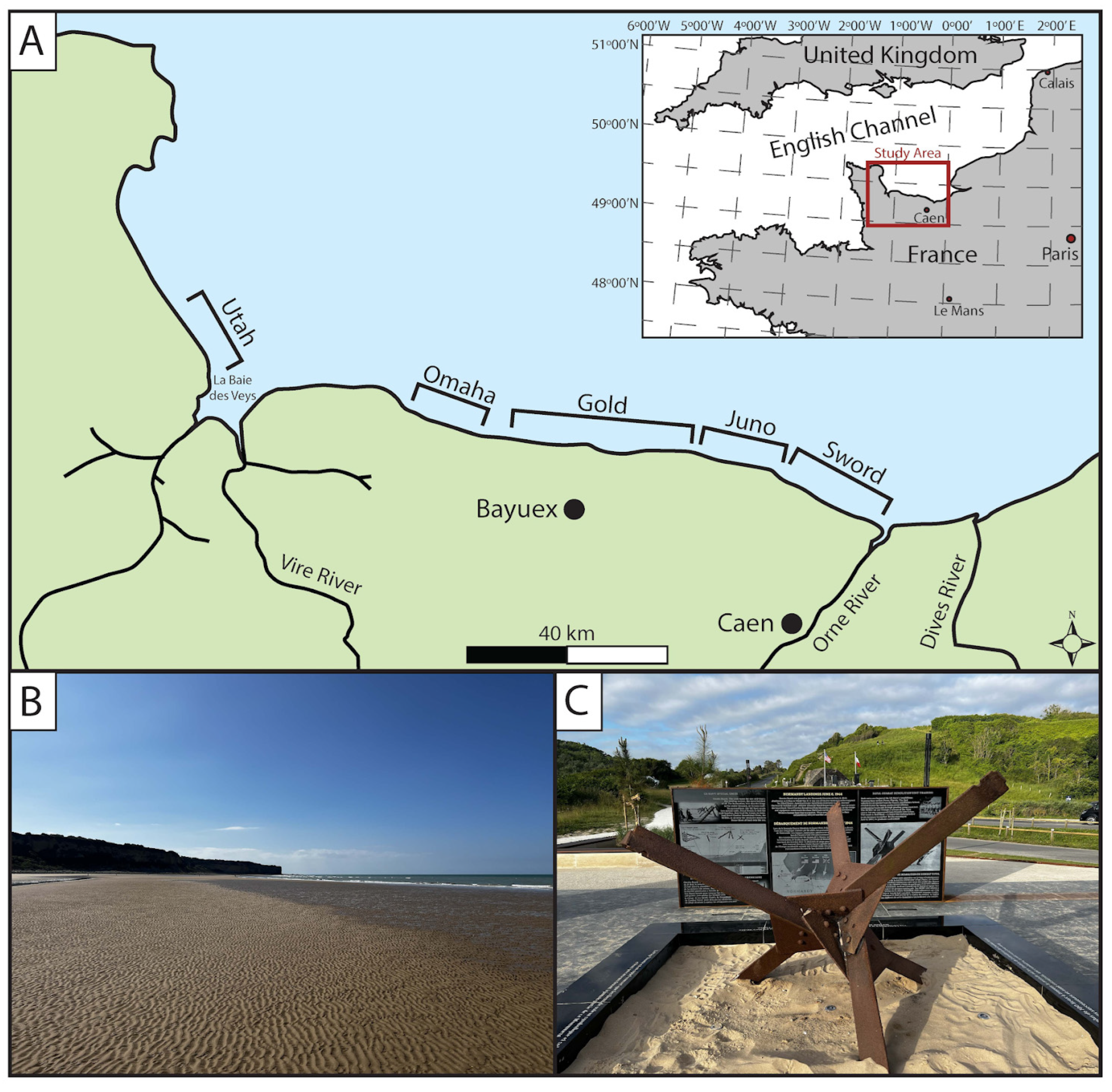
The invasion involved coordinated landings across these five beaches, each assigned to specific Allied forces (Figure 1). American troops, under the command of General Omar Bradley, landed on two beaches: Utah Beach and Omaha Beach. Utah Beach, located on the western margin of the invasion zone, was assigned to the U.S. 4th Infantry Division, with support from airborne units of the 82nd and 101st Airborne Divisions [5]. Omaha Beach, immediately to the east, was attacked by the U.S. 1st Infantry Division along with elements of the 29th Infantry Division and experienced some of the fiercest fighting of the invasion [5,6,7].
British and Canadian forces were tasked with the eastern beaches [8]. The British 50th Infantry Division, led by General John Crocker, landed on Gold Beach, supported by specialized armored units and engineers responsible for obstacle clearance [8]. To the east, the British 3rd Infantry Division, under General Tom Rennie, landed at Sword Beach, with airborne support from the British 6th Airborne Division [8]. Juno Beach, located between Gold and Sword beaches, witnessed the landing of the Canadian 3rd Infantry Division, commanded by General Rodney Keller [9].
The scale of the invasion was unprecedented in modern times. In total, the invasion included a formidable array of vehicles, including nearly 7000 ships, of which over 4000 were landing craft, along with numerous other types ranging from battleships, destroyers, coastguard cutters, minesweepers, fire control vessels and submarines. The Allies landed roughly 1000 tanks on June 6th alone, with thousands more in the days and weeks that followed. This was done with the support of more than 11,500 aircraft providing air cover, bombing runs, and other airborne operations [6,7,9,10,11].
The intensity of naval bombardment, aerial attack, and ground combat, combined with the emplacement (and subsequent removal) of obstacles, fortifications, and military equipment, introduced vast quantities of anthropogenic metallic material into the Normandy coastal zone [12,13]. Much of this material consisted of ferrous metals—steel and iron associated with munitions, vehicles, ships, and defensive warfare-related infrastructure (Figure 1).
After the war was over, abandoned vehicles, beach obstacles, mines, and other large debris were eventually removed from the beaches. This involved the use of heavy machinery and explosives, which is potentially an additional source of war-related anthropogenic metals [13,14]. Some items remain, such as Mulberry harbors and German bunkers [9]. However, it was not documented until decades later that more subtle metallic remnants of anthropogenic detritus and shrapnel persisted within the sedimentary system. McBride and Picard [15] published findings of shrapnel found in a single sand sample collected from Omaha Beach on 8 June 1988, while a contemporaneous single sand sample from Utah Beach contained no metallic fragments. However, this limited dataset was insufficient to characterize the persistence of anthropogenic detritus on these beaches and does not address the regional abundance, spatial distribution or vertical persistence of this material. Furthermore, the other three Allied beaches (Gold, Juno and Sword) were not evaluated, leaving many questions about the broader sedimentological imprint unresolved.
This study addresses these limitations through systematic sampling and comprehensive analysis of sediment from all five Allied landing beaches, conducted almost exactly 80 years after D-Day (Early June 2024 and infill sampling April 2025), and 36 years after the initial datapoint from McBride and Picard [15]. The objectives of this research are to determine: (1) whether anthropogenic metallic sediment remains present across each of the five landing beaches in Normandy, France after 80 years; and (2) how the quantity, composition and distribution of this unique sediment varies both laterally along the coast and vertically within the sediment column. In total, 460 samples were collected to resolve these questions and evaluate the effectiveness of this anthropogenic wartime signal as a tracer of coastal processes.

Geologic Background

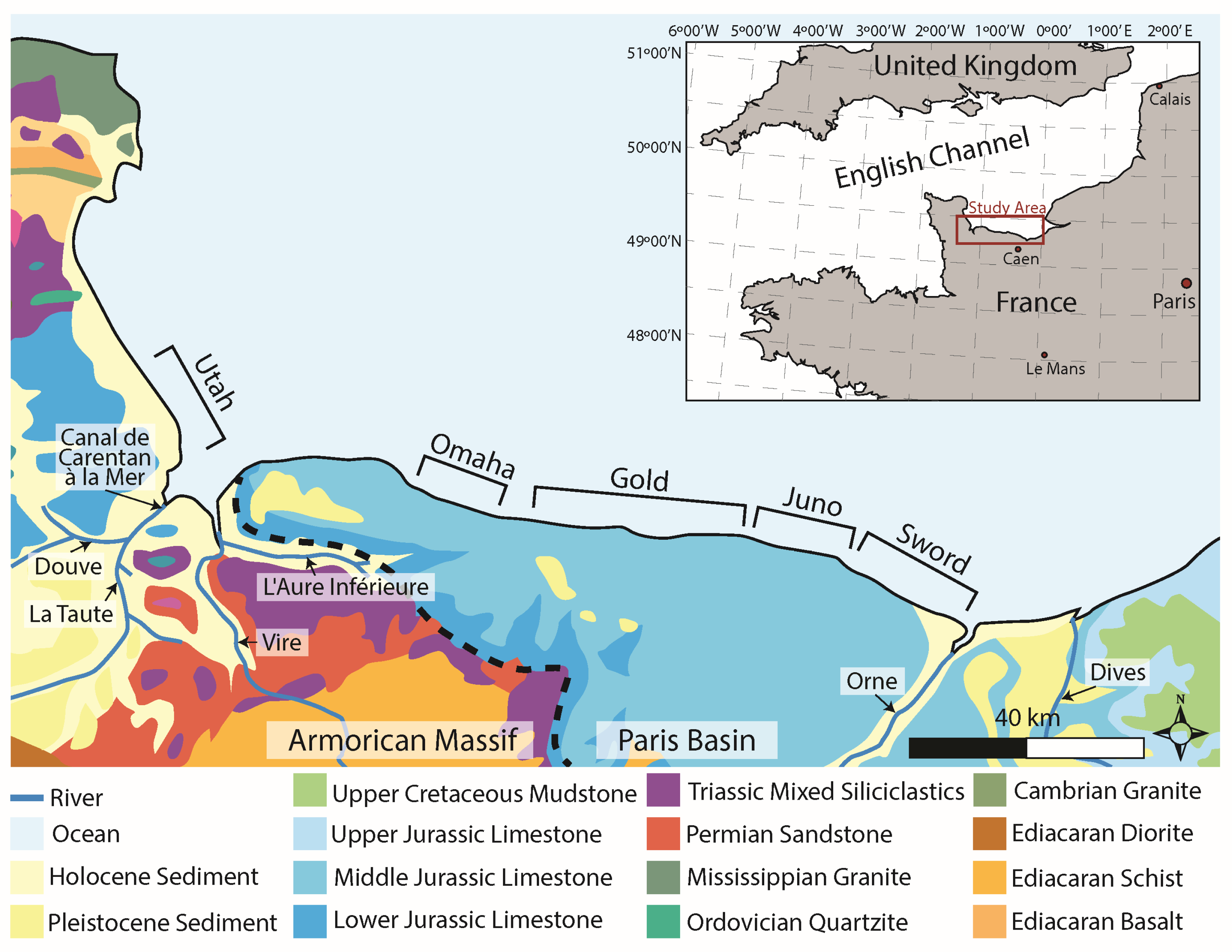
The beaches of the D-Day assault lie on the north-western margin of the Paris Basin, a broad intracratonic sedimentary basin dominated by Mesozoic to Cenozoic strata (Figure 2) [16]. The landing beaches of Omaha, Gold, Juno and Sword lie within the Paris Basin. Coastal bedrock and sediment sources include Jurassic and Cretaceous limestones and marls, interbedded sandstones and mudstones [16,17,18]. To the west, the coastline sits within the Armorican Massif, composed primarily of Precambrian and Paleozoic igneous and metamorphic basement, with locally preserved siliciclastic and carbonate sedimentary successions [17,18,19]. Utah Beach sits within the Armorican Massif, though Jurassic limestones are locally exposed (Figure 2).
Multiple river systems deliver sediment to the Normandy coast from the Paris Basin and Armorican Massif including: the Seine, Dives, Orne, l’Aure Inferieure, Vire, Taute, and Douve, as well as artificial channels such as the Canal de Carentan (Figure 2). These fluvial systems provide both fine-grained suspended load and coarser bedload sediment that is subsequently reworked by marine processes [20,21,22]. Of these, the Dives and River drainages lie partially within the Amorican Massif, while the others lie completely within the Paris Basin. While the Amorican Massif is a potential source of natural magnetite [23], the Paris Basin is unlikely to produce any natural magnetic minerals. Additionally, estuaries such as La Baie des Veys and the Seine estuary can act as significant sediment transport barriers, limiting longshore transport of coarse and dense material between coastal compartments [20].
Figure 2. Geologic map of Normandy, France. Modified from European Geological Data Infrastructure (2025) [24]. Black dashed line shows the boundary of the igneous/metamorphic rocks of the Amorican Massif to the west and Mesozoic sedimentary rocks of the Paris Basin to the east.
Quaternary 09 00041 g002
The D-day beaches are characterized by gently sloping, high-energy sandy beaches with pronounced tidal influence. The region experiences a macrotidal regime, with mean tidal ranges commonly exceeding 6 m and reaching up to roughly 8 m during spring tides. This large tidal range produces wide intertidal zones, extensive swash and surf environments, and strong tidal currents that play a dominant role in sediment redistribution [25]. Wave energy is modulated by prevailing westerly and northwesterly winds from the English Channel with storm events capable of significant erosion, overwash and sediment reworking [20].
Beach morphology varies along the coast, influenced by sediment supply, proximity to river mouths and underlying geology. Utah and Omaha beaches are broad, gently sloping, and characterized by relatively well-sorted sands. In contrast, Sword Beach at the mouth of the Orne River exhibits coarser grain sizes, poorer sorting, and higher sedimentation rates due to fluvial input [26]. Seasonal beach reworking, storm-driven erosion, and modern beach maintenance (beach raking for debris removal) all contribute to dynamic sedimentary conditions.
These energetic coastal processes provide an effective mechanism for the redistribution, winnowing and vertical mixing of dense, resistant particles such as iron-rich anthropogenic grains. As a result, the Normandy beaches represent an ideal natural laboratory for examining the long-term preservation and sedimentary behavior of anthropogenic material introduced during a single, well-constrained historical event.

2. Materials and Methods

Sediment samples were collected from each of the five Allied landing beaches of Normandy: Utah, Omaha, Gold, Juno and Sword (Figure 1). At Omaha Beach, where previous work identified metallic shrapnel within beach sands and combat intensity was particularly high, additional spatial resolution was achieved by sampling all eight designated landing sectors.
Surface samples were collected along shore-perpendicular transects extending from the upper limit of the active beach to the low-tide mark. Sampling was conducted at or near low tide in order to maximize the exposure of the beach profile. Sample spacing ranges from 20 to 50 m, depending on the width of exposed beach at low tide. Transect spacing and sampling intervals were adjusted based on beach width, with a target of 15–20 evenly spaced samples per transect.
Subsurface samples were collected using a manual hand auger. Sediment was sampled at discrete depth intervals, with the upper three samples collected in 5 cm increments (0–5 cm, 5–10 cm, and 10–15 cm) in order to capture near-surface variability. Deeper samples were collected at 15 cm intervals and homogenized across each depth increment. Sampling continued until tool refusal or hole collapse occurred upon encountering the water table. Maximum depths of sampling ranged from 75 cm to 1.2 m depending on beach conditions. All sample locations, including surface transects and subsurface auger sites, were recorded using handheld GPS (3–5 m accuracy). Sample weights ranged from 50 to 100 g for both surface and subsurface samples.
All samples were dried at 60 °C to remove pore water and promote complete disaggregation. Dried samples were homogenized to prevent clumping of grains and weighed prior to magnetic separation. A strong magnet was passed repeatedly through each sample to ensure the majority of the magnetic grains were retrieved. The magnetic fraction was isolated, weighed, and retained for further analysis. It is important to note that the magnetic fraction represents an operationally defined subset of the sediment and does not inherently correspond exclusively to anthropogenic material. Subsequent interpretation of grain origin is based on integrated morphological, compositional, and sedimentological observations.
Following magnetic separation, the remaining bulk sediment from each sample was dry sieved using US Standard Test Sieves in order to characterize grain size distribution. Four size fractions were quantified: very coarse-grained and larger (>2.00 mm; No. 10), coarse-grained (1.00–2.00 mm; No. 18), medium-grained (500 µm–1.00 mm; No. 35) and fine-grained to smaller (<500 µm; No. 60). After sieving the sample, the separated fractions were weighed individually, recorded, then recombined for photomicrographic imaging and geochemical analysis.
Representative metallic fractions from selected samples, surface transects, and depth profiles were examined microscopically to characterize grain size, morphology, and textural maturity. Qualitative descriptions of angularity, rounding and surface textures were also recorded following standard sedimentological terminology [27]. Elemental composition was analyzed using an Olympus Vanta portable X-ray fluorescence (pXRF) analyzer (Evident Scientific, Hachiojo, Tokyo, Japan) on a representative subset of samples (n = 33; ~7% of total) to assess metallic content, composition and variability. This subset was selected to capture variability across beaches, grain types, and depth intervals. This study prioritizes integration of compositional data with sedimentological and morphological observations. Advanced analytical techniques (e.g., SEM-EDS or alloy specific identification) were not employed in this study; however, their potential value for future work is acknowledged.

3. Results

3.1. Presence, Composition and Abundance of Metallic Grains

Metallic grains were identified in all 460 samples analyzed as part of this study. Elemental analysis (pXRF) of representative metallic fractions (n = 33 samples) indicates that these grains are iron-rich, with all samples containing >40 wt.% Fe. Additional major elemental fractions include aluminum, calcium, potassium, magnesium, silicon, and titanium, with trace amounts of manganese, phosphorus and sulfur detected in some samples (Table 1).
When elemental abundances are normalized to exclude quartz-derived silicon and seawater-derived salts (Ca, K, Mg), iron constitutes a minimum of 55% of the metallic fraction in all samples, reaching a maximum of 91% Fe. Aluminum and titanium represent the most significant secondary metallic components included in the samples (Table 1). The elevated iron content accounts for the strong magnetic susceptibility observed in these grains.
Across all samples, metallic grains account for an average of 0.4 wt.% of total sediment. However, abundance of metallic grains varies substantially by beach, with the highest mean concentrations observed at Sword Beach (0.66 wt.%), followed by Gold Beach (0.25 wt.%), Utah Beach (0.21 wt.%), Omaha Beach (0.18 wt.%), and finally Juno Beach (0.06 wt.%).

3.2. Grain Types and Morphology

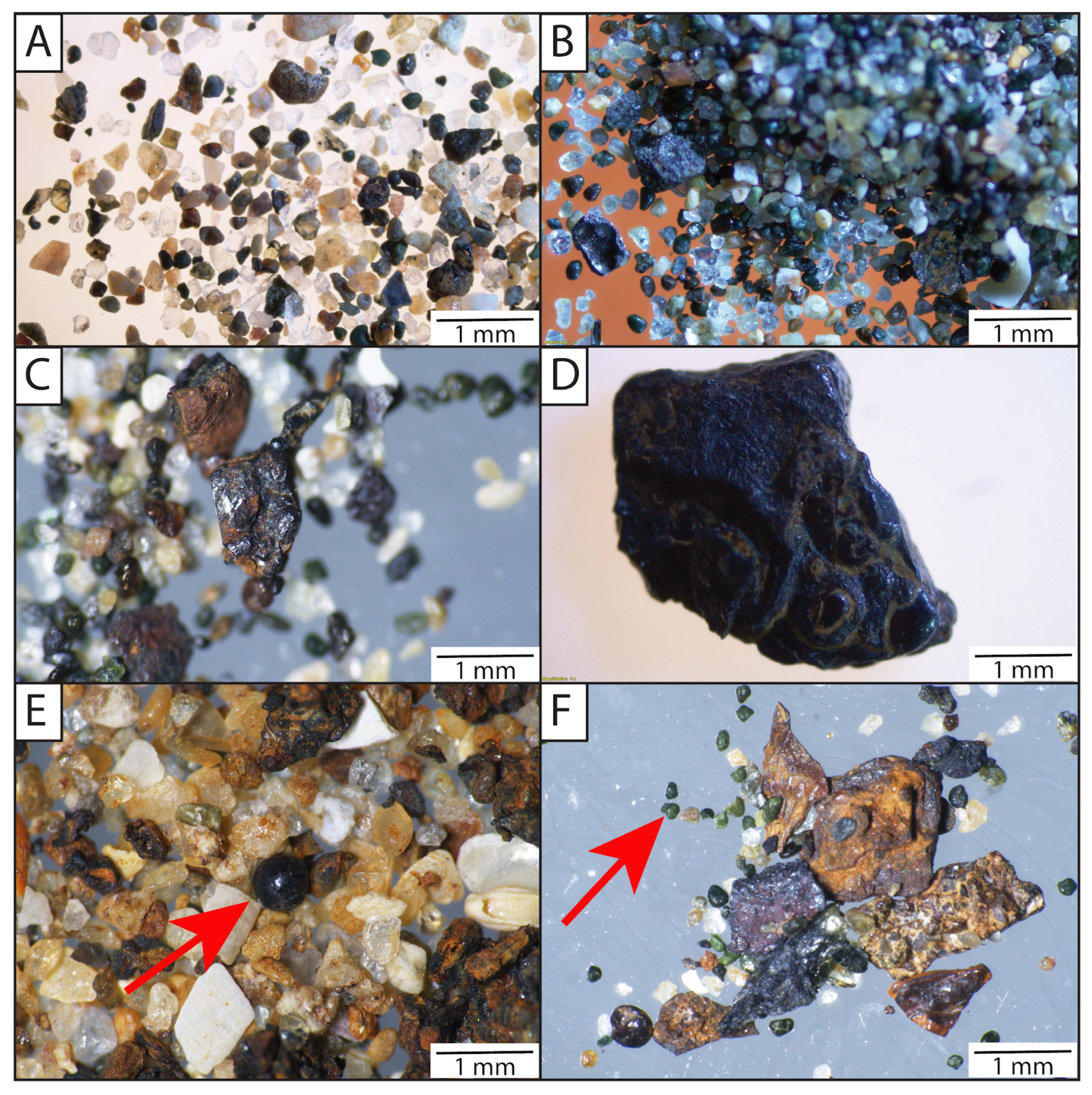
There are two dominant types of metallic clasts within the collected samples—(1) very fine to fine-grained, well rounded, oblate to equant metallic grains and (2) medium to very coarse, angular, texturally immature metallic grains (Figure 3). The larger, more angular grains are present in the majority of samples, while the fine-grained, texturally mature metallic grains are ubiquitous throughout the sample suite. Other metallic grains, though less abundant, are also present. Metallic spherules, previously recorded by McBride and Picard [15], and attributed to high energy fragmentation of metal during wartime activities, are found in low abundance throughout the sample suite (Figure 3E,F). Paramagnetic, pelleted glauconite grains, which are enriched in potassium relative to other samples, and similar to glauconitic grains found along the French coast [28], are also common at Utah Beach, but absent elsewhere (Figure 3C,F). These four distinct types of magnetic grains make up the metallic fraction of sediment analyzed in this study.

3.3. Quantity and Distribution

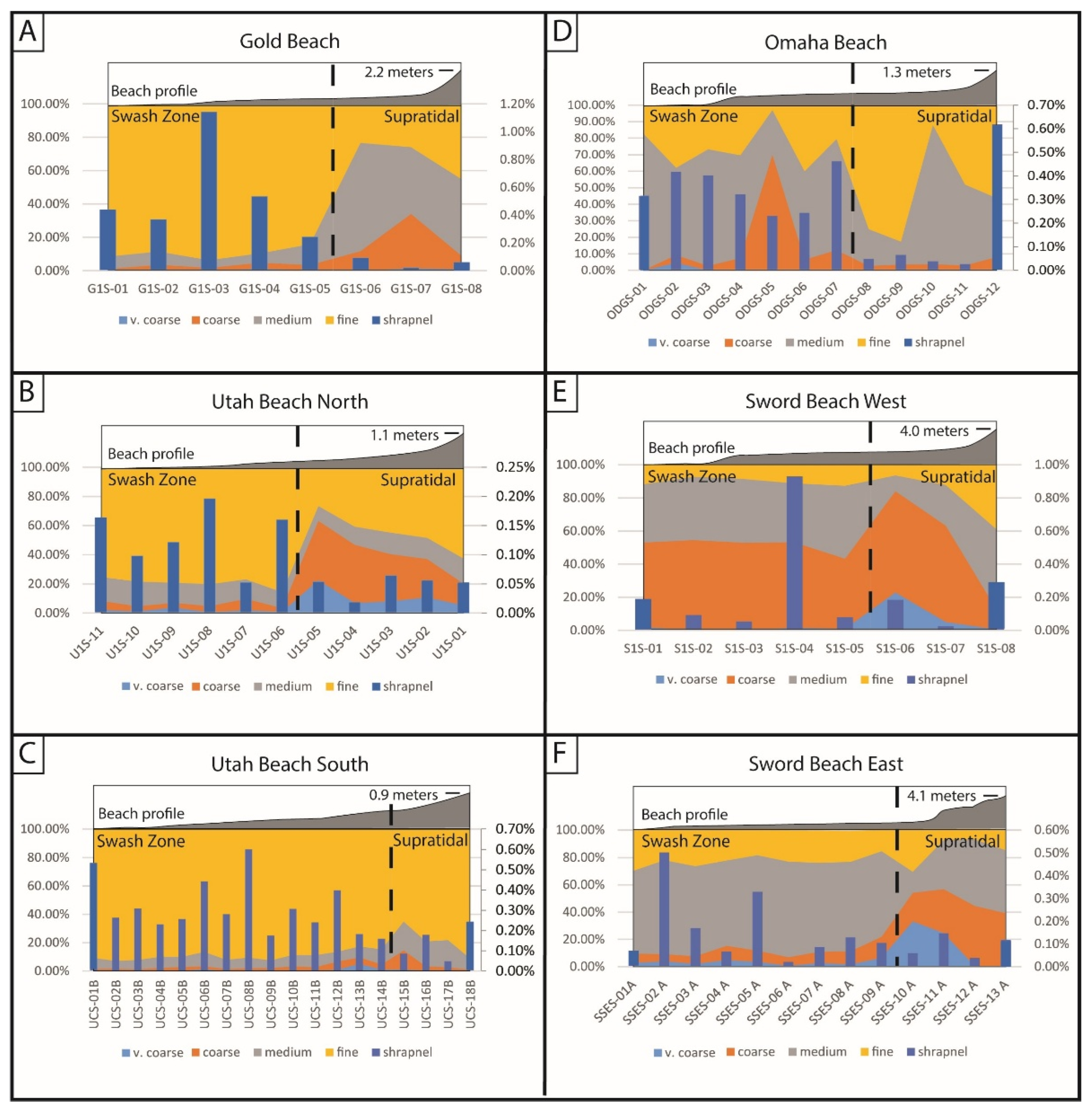
Though metallic grains are found in some concentration in all samples, distribution is not uniform along the beaches of Normandy. Samples were taken from the highest part of the active beach to at or near low tide as part of this study, and abundance of metallic grains shows consistent patterns in the majority of surface transects. Across the five beaches, there is a clear enrichment of metallic grains within the swash zone and less overall concentration in the supratidal zone of the beach (Figure 4). Samples from Gold Beach (Figure 1 and Figure 4A) contain 0.2–1.2 wt.% metallic grains within the swash zone, but all samples above the high tide mark have less than 0.1 wt.% metallic grains, for example. At Utah Beach two surface transects were sampled (Figure 1 and Figure 4B,C), with concentrations consistently higher within the swash zone relative to the supratidal portion of the beach. Concentration of metallic grains is higher in the swash zone at Omaha Beach as well, with ranges of 0.2–0.5 wt.% compared to values below 0.05 wt.% in the supratidal zone (Figure 1 and Figure 4D). Two transects were taken across Sword Beach (Figure 1 and Figure 4E,F), and although there is still metallic enrichment in the swash zone, the pattern of metallic grain enrichment is more chaotic. Across the study area there is a positive correlation between finer median grain size and increased concentration of metallic grains (Figure 4).
Large angular metallic clasts are found in all relative positions along the beach, as are well-rounded fine metallic grains. Relative concentration of large, angular grains does not show correlation to relative beach position, while fine-grained, rounded metallic grains increase in abundance within the swash zone. Metallic spherules do not represent a large proportion of metallic sediment at any beach, but their presence is seen across the supratidal and swash zones. Finally, glauconite grains are only observed at Utah Beach, and are not present in samples from the other four landing sites.

3.4. Vertical Distribution

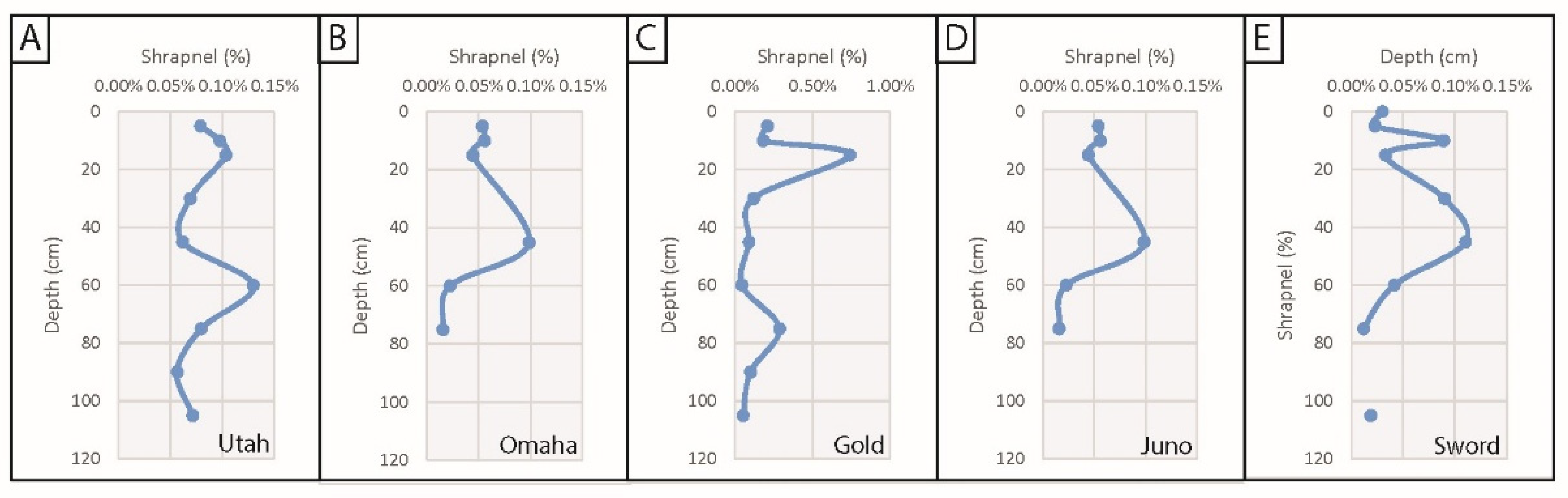
Examination of sediment from shallow coring shows a general decrease in metallic grain abundance with depth. All sampled cores contain some proportion of metallic grains, but concentrations decline sharply at approximately 45–75 cm below the surface (Figure 5). Enrichment of metallic grains occurs just below the surface between 5 and 15 cm depth, as well as at a depth of ~60 cm. This trend is consistent across Utah, Omaha, Gold, Juno, and Sword beaches. Both coarse angular and fine rounded metallic grains are present throughout all samples collected at depth. Coarse angular grains are more prevalent at depths with greater concentrations, particularly between 5 and 15 cm depth. Metallic spherules, though less common, are documented at all depths. Glauconite is present at all depths sampled at Utah Beach and shows no strong trend of abundance with depth at this locality.

4. Discussion

4.1. Origin and Persistence of Anthropogenic Metals

Metallic grains were identified in all 460 samples. Much, if not all of this material is attributed to anthropogenic sources as evidenced by angular morphologies and metallic spherules with widespread presence (Figure 3). However, anthropogenic attribution is not based solely on morphology or magnetism. Instead, interpretation integrates multiple lines of evidence such as the absence of natural metallic mineral sources in the Paris Basin; limited transport across estuarine barriers; consistent presence across all invasion beaches; vertical confinement to the upper 1m of sediment; as well as grain morphologies inconsistent with typical detrital metallic minerals such as magnetite. While natural magnetite may contribute locally (particularly at Utah Beach due to the Amorican Massif), it cannot explain the regional consistency observed across all five beaches or the enrichment of the metallic grains through vertical profiles and swash zones.
These grains were attributed to Operation Overlord and the occupation of Normandy by previous authors [15], but this previous study was based on only a handful of samples. The present study demonstrates that these materials are not an isolated anomaly. These grains are present across all D-Day beaches and are common to a depth of 75–90 cm within the accumulated sediment. Previous estimates suggest that as much as 1% of the beaches at Normandy could be shrapnel or other anthropogenic metallic sediment [15]; however, this study suggests lower concentrations. Average concentrations for the individual beaches range from 0.06% to 0.66%, with an overall average of 0.4% for all samples taken (Utah = 0.21% Omaha = 0.18%, Gold = 0.25%, Juno = 0.06%, and Sword = 0.66%). Several factors may explain this discrepancy including physical degradation of metal over time (previous samples were collected 38 years ago), dilution by post-war sediment accretion, storm-driven dispersal of metallic sediment, and the limited scope of earlier investigation. Importantly, this study targets only magnetic grains, though microscopic inspection has not revealed metallic sediment not captured by magnetic sieving in any substantial abundance.
Importantly, the absence of control sites limits definitive exclusion of non-military sources. However, the convergence of geomorphic, sedimentological, and compositional evidence supports a predominantly wartime origin. Future work incorporating control sites and advanced geochemical fingerprinting will further refine source attribution.

4.2. Alternative Metal Sources and Sediment Compartmentalization

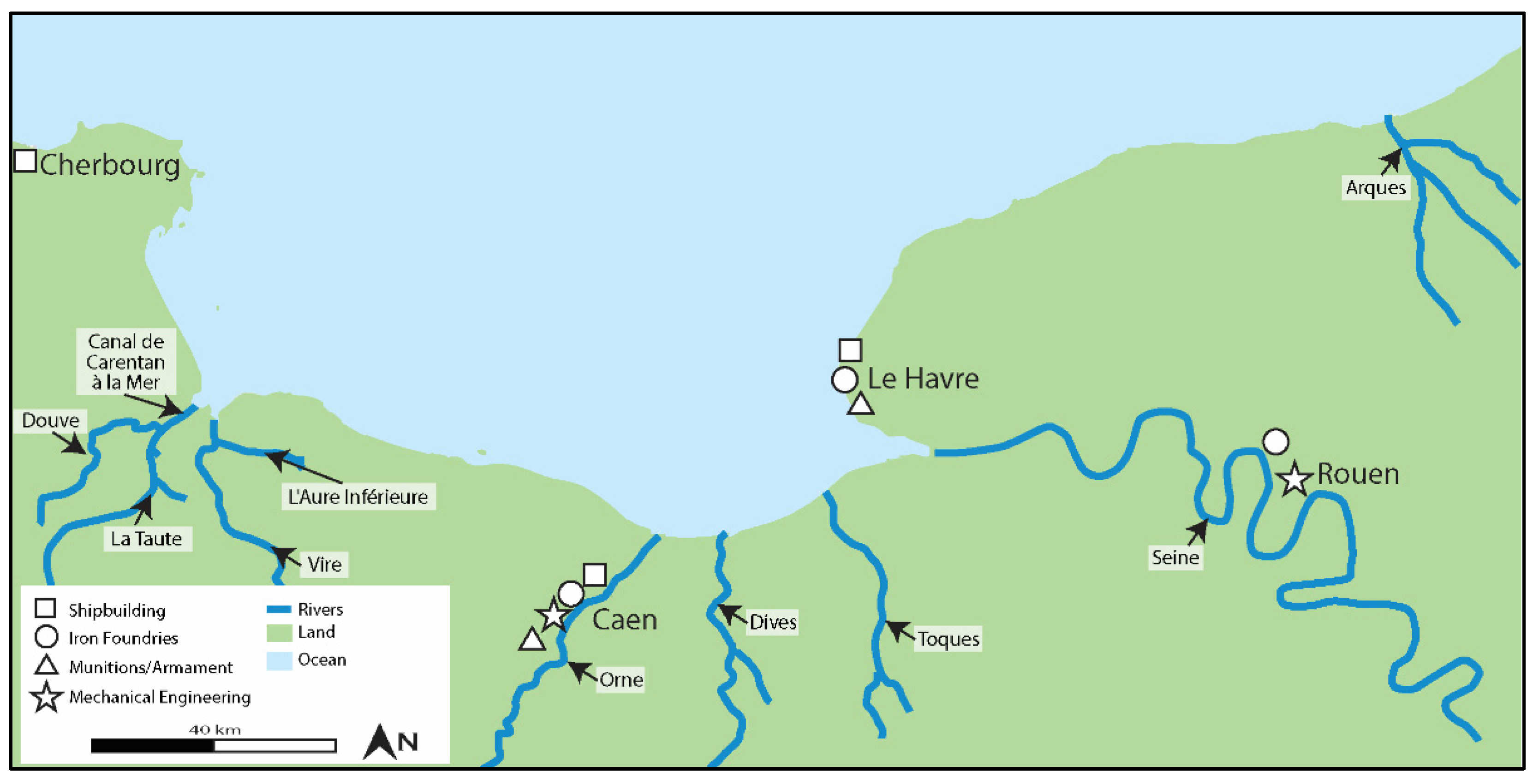
Operation Overlord, along with the subsequent military occupation of the coast by the Allies, brought an enormous influx of metals to the Normandy coast. However, it should be noted that metals could also be from other anthropogenic sources. Prior to World War II, the industrial footprint in the region of Normandy was minor, though not nonexistent. The most important potential contributor of ferrous (magnetic) metal to the beaches of Normandy was the Société Métallurgique de Normandie, a steel mill in Caen connected to the coast by the Orne River (Figure 6). Iron foundries in Le Havre and Rouen could have contributed from the east, near the estuary of the Seine River. None of these steel foundries were large, however. Shipbuilding in Cherbourg, Caen and Le Havre could have also been a contributor of ferrous metals, along with mechanical engineering activities in Rouen and Caen. Finally, manufacturing of munitions and armaments in Caen and Le Havre could have been a contributor as well, though most of this manufacturing was coincident with the war and as such is time correlative.
Each of these potential sources of ferrous metals is detached from the beaches of Normandy in some way. La Baie des Veys on the west end of Normandy provides a clear barrier for sediment transport via longshore drift from Cherbourg and the Amorican Massif, and the estuarine mouth of the Seine to the east is a barrier for coarse, dense materials from Le Havre and Rouen (along with the rest of the Seine drainage system). The effectiveness of these estuaries as barriers to longshore sediment transport can be seen based on the distribution of glauconitic grains across the coast–glauconite grains are abundant at Utah Beach but are not observed across La Baie des Veys at Omaha Beach, only 20 km away. These grains are likely sourced from the igneous and metamorphic rocks of the Amorican Massif, which is a likely provenance for Utah Beach, but they are absent across the estuary at Omaha Beach.
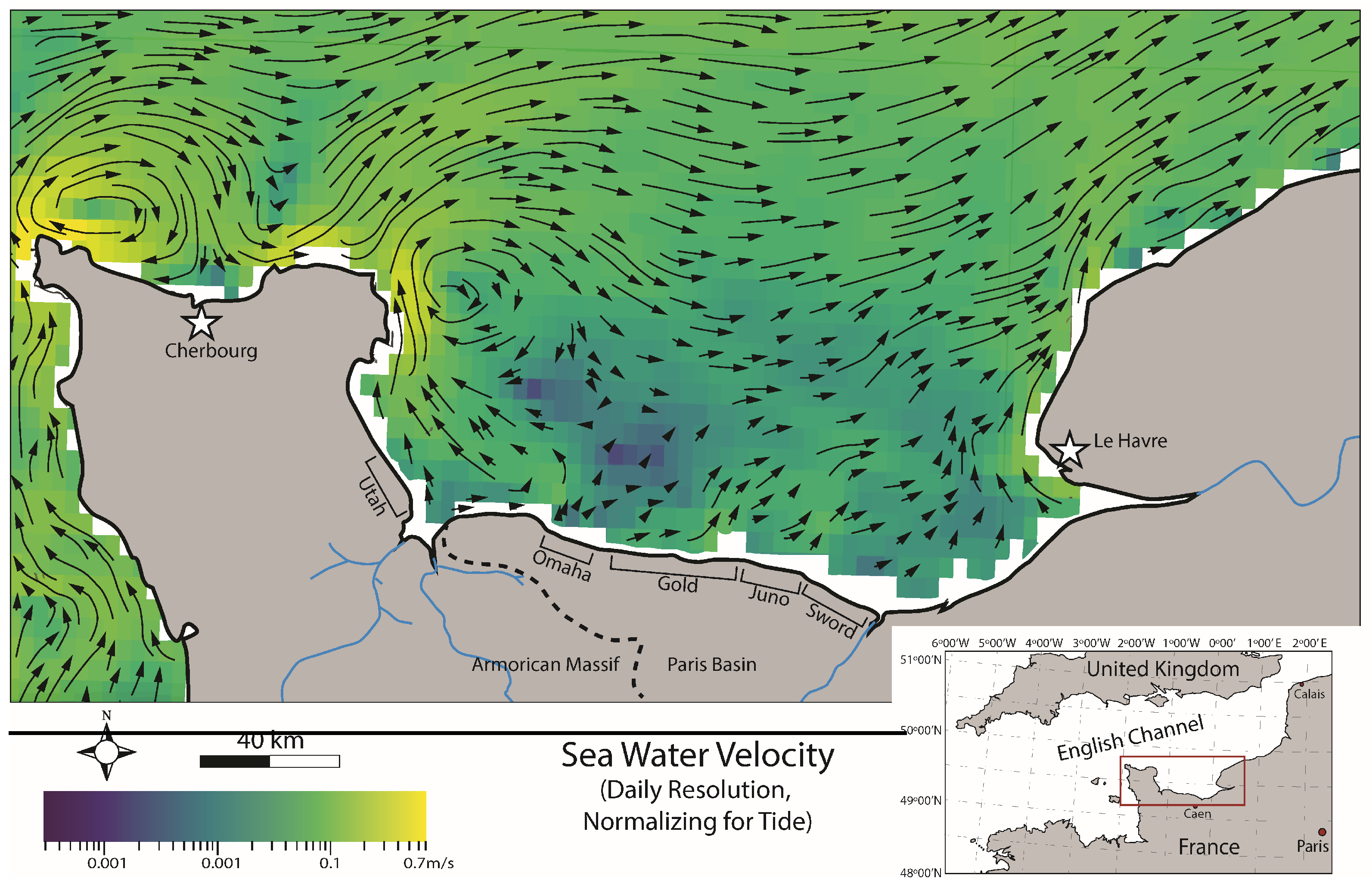
As the igneous/metamorphic Amorican Massif is also a potential source of magnetite, it is possible that there is some component of naturally occurring magnetite at Utah Beach, but this is unlikely at the other beaches to the east (Figure 2). Modern measurements reinforce this; the Vire River, which drains the Amorican Massif, likely only supplies sediment to Utah Beach to the north of La Baie des Veys based on ocean current patterns (Figure 7). Additionally, ocean current patterns show that the Normandy coastline from Omaha to Sword is effectively isolated from external longshore currents, with currents to the west and east of these beaches moving away from this coast rather than towards it. Along those beaches, there is weak longshore current from Omaha moving towards Sword from west to east (Figure 7). This suggests that the impact of the Orne River is also relatively small within the study area, effectively limiting the effect of the Orne River to the delta-proximal areas of Sword Beach.
For industrial metals from Caen to affect the coastal sediment, they would still have to be efficiently transported down the Orne River and remobilized by wave energy at the river mouth. The average annual discharge of the Orne River is ~27.5 cubic meters per second, with a maximum discharge of roughly 300 cubic meters per second during high flow events [29,30]. The bedload of the Orne River ranges from granule/pebbles to fine sand, and sediment is effectively carried in suspension, especially during flood events [30]. There is sedimentological evidence for fluvial energy at Sword Beach; grain size distribution data from this study shows that 43% of sediment at Sword Beach is coarse-grained or greater, while this proportion drops sharply at Juno to the east (28%) and is lower at all other beaches. It should be noted, however, that some of this material represents shell fragments, which are more common at Sword Beach than other beaches. Sands are also more poorly sorted at Sword Beach compared to all other beaches as well, reflective of local fluvial energy (Figure 4). While it is feasible that the Orne River could have contributed metallic sediment locally at Sword Beach, it is important to note that the Société Métallurgique de Normandie, which was the major source of steel along the Orne River, operated from 1912 to 1993. Importantly, however, the Rabondanges Dam on the Orne River, built for hydroelectric power in 1960, is believed to have sequestered much of the industrial output of the river following its construction, limiting the effects of industrial activity for the last 65 years [30,31]. While transport barriers likely limit the movement of coarse and dense material, they are not absolute, and limited transport of finer or suspended industrial material may occur under certain conditions. For these reasons, and consistent with previous interpretations, we conclude that a substantial portion of the metallic sediment preserved within the beaches of Normandy is related directly to wartime activity.
Figure 7. Surface currents within the Bay of Normandy. Modified from Copernicus Marine Service IBI-MFC velocity fields (European Union Copernicus Marine Service, 2025) [32]. Arrows represent mean daily direction and velocity for surface currents.
Quaternary 09 00041 g007

4.3. Sedimentary Processes and Metal Partitioning

Though regional trends in metal concentration are complex, anthropogenic metals are preferentially concentrated in the high energy fair-weather swash zone at each individual beach (Figure 4). This enrichment coincides with an abrupt change in grain size, highlighting the increase in energy in the swash zone vs. the supratidal area of the coast. Given the resistance to weathering of steel and other iron-rich metallic grains, we interpret that these grains are being enriched over time in the swash zone. In contrast, metallic grains are far less abundant in the supratidal area of the beaches of Normandy. The supratidal zone experiences frequent reworking from storms, seasonal beach management, and post-war debris removal which has likely reduced the retention of metallic grains.

4.4. Vertical Trends and Sediment Accretion Rates

Metals show an overall decrease in abundance with depth, though this trend is less clear than the surface trend of enrichment. Enrichment of metallic grains occurs near the surface (5–15 cm), with a second common spike at ~60 cm (Figure 5). Concentration of metallic grains falls off sharply by 75 cm at all locations except Sword, which exhibits a decrease at approximately 90 cm. We attribute this to a higher sedimentation rate at Sword Beach due to the proximity of the Orne River. While some beaches have been more modified (Omaha Beach, for example, was cleaned after the war and is regularly raked as it is a major tourist attraction), other beaches such as Utah Beach remain fairly undeveloped. This decrease in metallic grains at depth suggests that the effects of WWII anthropogenic metals is likely limited to the uppermost ~75 cm of sediment since the emplacement of this anthropogenic signal in 1944.
Assuming emplacement in 1944, the observed depth of metallic penetration over the past 80 years suggests a potential upper limit on beach aggradation rates of ~90 mm/year along the coast of Normandy, with rates up to 1.2 cm/year at Sword Beach due to fluvial input from the Orne River. Aggradation rates are inherently uncertain in dynamic coastal environments; this unique anthropogenic tracer provides a rare and valuable constraint on sedimentary dynamics and yields insight into geomorphic processes and rates along the Normandy coast. Due to uncertainty, this interpretation should be viewed as a first-order estimate rather than a precise measurement, pending validation through independent dating methods.

5. Conclusions

Systematic and extensive sampling across all five Normandy landing beaches confirms that anthropogenic metallic sediment remains ubiquitous eighty years after emplacement. Average concentrations (~0.4 wt.%) are lower than previously suggested, reflecting either dilution, degradation or improved sampling resolution. While alternative sources such as natural magnetite and industrial inputs cannot be entirely excluded, multiple independent lines of evidence support a predominantly wartime origin. Despite limitations, including the absence of control sites and limited geochemical fingerprinting, the dataset provides the first coast-wide assessment of this phenomenon and establishes a framework for future work and analysis.
Distribution of metals within the sediment of the Normandy coastline is not uniform. Metallic sediment is hydrodynamically partitioned, with a clear enrichment of metallic grains within the swash zone at all beaches relative to the supratidal portion of the beach. These denser, more resistant grains are concentrated in the zone of highest energy although they are present in some concentration at all locations along each beach. The increase in metallic grains in the swash zone is largely the result of increased volume of fine-grained, well-rounded metallic grains. Coarse, angular metallic grains are present in all positions along the beach profile as well, and these texturally immature grains are evidence of the anthropogenic nature of this metallic detritus.
Metallic sediments persist to depths of 60–90 cm before falling off sharply. Metals are enriched just below the surface at 5–15 cm, and again at approximately 60–75 cm in depth. The sharp fall-off of metallic sediment below this depth suggests that deeper sediment pre-dates the events responsible for addition of anthropogenic metals to these beaches, and specifically the events of D-Day. Given this assumption, we make a very rough, first-order estimate that sediment accumulation rates along the Normandy coastline may range from ~0.9–1.2 cm/year over the past 80 years. These enriched metallic horizons provide a rare, precisely dated anthropogenic stratigraphic marker within a macrotidal coastal system.
The influence of anthropogenic activities on coastal environments is important to understand, and the residence time of this material is often poorly constrained. This study shows that detritus from Operation Overlord in June 1944 is still ubiquitous across the coast of Normandy. However, lower concentrations than previously reported suggest that this influence may be lessening on fairly short time scales. With additional research, this anthropogenic signal can be used as an important control to increase our understanding of the rates of change and the processes which shape coastal environments. The beaches of Normandy preserve not only historical memory but also a measurable geological archive of modern conflict and a stratigraphic reminder of human actions within the Earth’s dynamic sedimentary systems. This remaining fingerprint of warfare along the now-peaceful coast serves as a silent, important reminder of the heroic sacrifice of so many for the freedoms and rights of all on that fateful morning 82 years ago.

Author Contributions

Conceptualization, D.L., E.A.L.P., S.M.H. and G.B.; methodology, S.M.H., E.A.L.P., D.L. and G.B.; sample collection, S.M.H., E.A.L.P., D.L., G.B., O.J.T., J.R., C.G., S.C., K.R. and A.T.; sample analysis, S.C., C.G. and K.R.; writing—original draft preparation, S.M.H., D.L., E.A.L.P. and G.B.; project administration, S.M.H. All authors have read and agreed to the published version of the manuscript.

Funding

This research received no external funding.

Data Availability Statement

The raw data supporting the conclusions of this article will be made available by the authors on request.

Acknowledgments

Special thanks to Paul Bremner, Han Byul Woo, Richard Mackenzie, and Sean Fletcher for the early discussions on this topic.

Conflicts of Interest

The authors declare no conflicts of interest.

References

  1. Beevor, A. D-Day: The Battle for Normandy; Viking: London, UK, 2009. [Google Scholar]
  2. Ryan, C. The Longest Day: June 6, 1944; Simon & Schuster: New York, NY, USA, 1959. [Google Scholar]
  3. Rose, S. World War II; DK Publishing: New York, NY, USA, 2019. [Google Scholar]
  4. Rose, E.P.F.; Pareyn, C. Geology and the liberation of Normandy, France, 1944. Geol. Today 1995, 11, 58–63. [Google Scholar] [CrossRef]
  5. Balkoski, J. Utah Beach: The Amphibious Landing and Airborne Operations on D-Day, June 6, 1944; Stackpole Books: Mechanicsburg, PA, USA, 2000. [Google Scholar]
  6. Balkoski, J. Omaha Beach: D-Day, June 6, 1944; Stackpole Books: Mechanicsburg, PA, USA, 2004. [Google Scholar]
  7. Harrison, G.A. Cross-Channel Attack; Department of the Army: Washington, DC, USA, 1951.
  8. Ellis, L.F. Victory in the West: Volume I. The Battle of Normandy; HM Stationery Office: London, UK, 1962.
  9. Stacey, C.P. The Victory Campaign: The Operations in North-West Europe 1944 to 1945; Queen’s Printer and Controller of Stationery: Ottawa, ON, Canada, 1960.
  10. Ambrose, S.E. D-Day, June 6, 1944: The Climactic Battle of World War II; Simon & Schuster: New York, NY, USA, 1994. [Google Scholar]
  11. Symonds, C.L. Neptune: The Allied Invasion of Europe and the D-Day Landings; Oxford University Press: Oxford, UK, 1994. [Google Scholar]
  12. Beck, A.M. The Corps of Engineers: The War Against Germany; Center of Military History, United States Army: Washington, DC, USA, 1985; Volume 6.
  13. Clout, H. Beyond the landings: The reconstruction of Lower Normandy after June 1944. J. Hist. Geogr. 2006, 32, 127–148. [Google Scholar] [CrossRef]
  14. Voldman, D. Le Déminage de la France Après 1945; Odile Jacob: Paris, France, 1998. [Google Scholar]
  15. McBride, E.F.; Picard, M.D. Shrapnel in Omaha Beach sand. Sediment. Rec. 2011, 9, 4–8. [Google Scholar] [CrossRef]
  16. Brigaud, B.; Vincent, B.; Pagel, M.; Gras, A.; Noret, A.; Landrein, P.; Huret, E. Sedimentary architecture, depositional facies and diagenetic response to intracratonic deformation and climate change inferred from outcrops for a pivotal period (Jurassic/Cretaceous boundary, Paris Basin, France). Sediment. Geol. 2018, 373, 48–76. [Google Scholar] [CrossRef]
  17. Faure, M.; Mézème, E.B.; Duguet, M.; Cartier, C.; Talbot, J.Y. Paleozoic tectonic evolution of medio-Europa from the example of the French Massif Central and Massif Armoricain. J. Virtual Explor. 2005, 19, 1–25. [Google Scholar] [CrossRef]
  18. Torelli, M.; Traby, R.; Teles, V.; Ducros, M. Thermal evolution of the intracratonic Paris Basin: Insights from 3D basin modelling. Mar. Pet. Geol. 2020, 119, 104487. [Google Scholar] [CrossRef]
  19. Sinnesael, M.; Loi, A.; Dabard, M.P.; Vandenbroucke, T.R.; Claeys, P. Cyclostratigraphy of the Middle to Upper Ordovician successions of the Armorican Massif (western France) using portable X-ray fluorescence. Geochronology 2022, 4, 251–267. [Google Scholar] [CrossRef]
  20. Anthony, E.J.; Vanhee, S.; Ruz, M.H. Short-term beach–dune sand budgets on the North Sea coast of France: Sand supply from shoreface to dunes, and the role of wind and fetch. Geomorphology 2006, 81, 316–329. [Google Scholar] [CrossRef]
  21. Waeles, B.; Le Hir, P.; Lesueur, P.; Delsinne, N. Modelling sand/mud transport and morphodynamics in the Seine river mouth (France): An attempt using a process-based approach. Hydrobiologia 2007, 588, 69–82. [Google Scholar] [CrossRef]
  22. Sedrati, M.; Anthony, E.J. Storm-generated morphological change and sediment transport in macrotidal sandy beaches, northern France. Mar. Geol. 2007, 243, 209–226. [Google Scholar] [CrossRef]
  23. Chantraine, J.; Egal, E.; Thiéblemont, D.; Le Goff, E.; Guerrot, C.; Ballèvre, M.; Guennoc, P. The Cadomian active margin (North Armorican Massif, France): A segment of the North Atlantic Panafrican belt. Tectonophysics 2001, 331, 1–18. [Google Scholar] [CrossRef]
  24. European Geological Data Infrastructure. EGDI Map Viewer: Pan-European Surface Geology (1:1,000,000 Lithology). 2025. Available online: https://www.europe-geology.eu/ (accessed on 2 March 2026).
  25. Masselink, G.; Short, A.D. The effect of tide range on beach morphodynamics and morphology: A conceptual beach model. J. Coast. Res. 1993, 9, 785–800. [Google Scholar]
  26. Gresselin, F.; Dardaillon, B.; Bordier, C.; Parais, F.; Kauffmann, F. Use of statistical methods to characterize the influence of groundwater on the thermal regime of rivers in Normandy, France: Comparison between the highly permeable chalk catchment of the Touques River and the low permeability crystalline rock catchment of the Orne River. Geol. Soc. Lond. Spec. Publ. 2023, 517, 351–378. [Google Scholar] [CrossRef]
  27. Boggs, S., Jr. Principles of Sedimentology and Stratigraphy, 5th ed.; Pearson: Boston, MA, USA, 2012. [Google Scholar]
  28. Tribovillard, N.; Bout-Roumazeilles, V.; Delattre, M.; Ventalon, S.; Abraham, R.; Nzié, O. Syndepositional glauconite as a paleoenvironmental proxy—The Lower Cenomanian Chalk of Cap Blanc-Nez (N France). Chem. Geol. 2021, 584, 120508. [Google Scholar] [CrossRef]
  29. Lepesqueur, J.; Hostache, R.; Martínez-Carreras, N.; Montarges-Pelletier, E.; Hissler, C. Sediment transport modelling in riverine environments: On the importance of grain-size distribution, sediment density, and suspended sediment concentrations at the upstream boundary. Hydrol. Earth Syst. Sci. 2019, 23, 3901–3915. [Google Scholar] [CrossRef]
  30. Kanbar, H.J. What the Orne River Tells About the Former Steelmaking Activities: Chemical and Mineralogical Investigations on Sediments. Doctoral Dissertation, Université de Lorraine, Lorraine, France, 2017. Available online: https://hal.univ-lorraine.fr/tel-01761640 (accessed on 2 March 2026).
  31. Rollet, A.J.; Reulier, R.; Fantino, G.; Glais, A. Investigating the influence of weirs and small dams on coarse sediment connectivity in low-energy rivers: A case study of the Orne and Vire rivers in Normandy, France. Geomorphology 2024, 465, 109356. [Google Scholar] [CrossRef]
  32. European Union Copernicus Marine Service. Atlantic-Iberian Biscay Irish-Ocean Physics Analysis and Forecast; European Union Copernicus Marine Service: Toulouse, France, 2025. [CrossRef]
Figure 1. (A) Location map of Normandy, France and Operation Overlord landing zones. (B) Landing Zone Charlie on Omaha Beach near low tide. (C) A ‘Czech hedgehog,’ which was a common type of beach obstacle used by the Germans to hinder allied amphibious operations. This represents one of many potential sources of metallic sediment associated with the invasion.
Quaternary 09 00041 g001
Figure 3. Metallic grains. (A,B)—very fine to fine-grained metallic grains with rare angular fragments. (C,D)—welded, angular coarse to very coarse metallic grains. (E)—iron spherule (arrow) among metallic and non-metallic grains. (F)—iron spherule, angular welded grains and very fine-grained paramagnetic glauconite composite grains (arrow).
Quaternary 09 00041 g003
Figure 4. Metals concentration vs. position relative to shore. Grain size data acquired through sample sieving shown in the background with shrapnel concentration shown by blue bars. (A)—Gold Beach, (B,C)—Utah Beach, (D)—Omaha Beach, and (E,F)—Sword Beach. All plots move from basinward to landward (left to right) with the top of the swash zone marked by a dashed black line. Geomorphological transects shown above each plot for reference.
Quaternary 09 00041 g004
Figure 5. Metallic grain concentration vs. depth below the surface for (A) Utah Beach, (B) Omaha Beach, (C) Gold Beach, (D) Juno Beach, and (E) Sword Beach. Consistent spikes in metallic grains present at all beaches at depths of 10–15 cm and 45–75 cm.
Quaternary 09 00041 g005
Figure 6. Potential sources of anthropogenic metals along the Normandy Coast.
Quaternary 09 00041 g006
Table 1. Elemental concentrations for 33 samples from Utah, Omaha, and Sword Beaches. Concentrations are normalized after removal of Si (entrained quartz) Ca, K, and Mg (precipitated salts from seawater).
Major ComponentsWeight %
Fe71.0%
Al18.6%
Ti6.8%
Minor ComponentsWeight %
S1.1%
Mn1.0%
P0.7%
Other0.7%
Disclaimer/Publisher’s Note: The statements, opinions and data contained in all publications are solely those of the individual author(s) and contributor(s) and not of MDPI and/or the editor(s). MDPI and/or the editor(s) disclaim responsibility for any injury to people or property resulting from any ideas, methods, instructions or products referred to in the content.