
Article

Inferring Human Predation and Land Use: An Examination of the Northwestern Guyana Coast Shell Midden Records Amid Environmental Change


1
Department of Language and Cultural Studies, University of Guyana, Turkeyen Campus, Georgetown 83725, Guyana
2
Department of Anthropology, Boise State University, 1910 University Drive, Boise, ID 83725, USA
*
Authors to whom correspondence should be addressed.
Quaternary 2026, 9(2), 24; https://doi.org/10.3390/quat9020024
Submission received: 22 November 2025 / Revised: 22 January 2026 / Accepted: 14 February 2026 / Published: 5 March 2026

Abstract

Shell middens of Guyana’s northwestern coast are a tangible stratified archive of prehistoric occupation and land use during the Holocene, an era of increased human impacts on the landscape. This study integrates stable isotope and zooarchaeological evidence to understand prehistoric land use, shell midden function, and the complex relationship between archaic populations and their landscape. We synthesize recently excavated data and archival museum collection for seven sites dating between 7500 and 2000 BP including stable isotope results of 37 individuals. Zooarchaeological materials are pooled to provide long-term patterns of human predation during the Holocene while reducing site-specific noise. This we believe highlights patterns of prey selection and exploitation intensity. We conclude that climate fluctuations during the mid Holocene influenced fishing intensification and subsequently a shift in human predation, which affected small to medium-sized fauna, estuary productivity and changes in vegetation patterns including mangrove expansion. These changes were shaped by landscape manipulation and influenced by shoreline movement and population mobility and seasonal resource use. Altogether, these processes left enduring ecological legacies along the northwestern coast of Guyana.

1. Introduction

The Holocene transitions in Guyana are presently known from regional palynological studies [1,2,3,4,5,6,7,8]. The lack of paleoenvironmental data has resulted in numerous gaps in the knowledge of long-term climate and anthropogenic influences on the landscape along the coastal littoral. In this regard, early to mid-Holocene shell middens provide a unique opportunity to employ a multi proxy approach to deepen our understanding of the human environment interplay linked to coastal foraging strategies and economies with the earliest occupation dating to 7500 BP.
The coastal littoral of Guyana represents what is believed to be among the earliest occupations of the coastal landscape, and it provides substantial evidence of long-term human interaction with the environment and its resources [1,2,9,10,11]. These early to mid-Holocene-age shell mounds are accumulations of faunal, human remains and material culture, demonstrating archaic populations’ diet breadth, cultural complexity and varying adaptations to the tropical environment [9]. These sites constitute a built environment producing early evidence of colonization by prehistoric fisher populations along Guyana’s coast. They also support mounting evidence of population movement across the Amazon and highlight the role of archaic populations in shaping the landscape through anthropogenic influences [11,12,13], although the latter is widely disputed in Amazonia particularly during the Holocene [12,14]. These interactions can be seen as a signal of human adaptation to the Holocene environment [1,2,15], suggesting dispersed seasonal landscape use and mobility influenced by seasonally available resources (see Capriles [16] for discussion). This line of coastal interaction is important in understanding the role of the marine ecosystems on the development of past human societies and economies [17]. The effects of environmental change during the Pleistocene and Holocene resulted in shoreline movement and submersion of portions of the coastal zone and past anthropogenic features including shell middens in various parts of the globe [18,19], as recently demonstrated along the coast of northern Brazil (see Calippo [20]), (refer to Farebridge, [21] for discussion on Pleistocene, Holocene Boundary). In Guyana’s context, this human environmental interaction is further demonstrated in the presence of over 33 shell midden features and vegetation changes throughout the northwestern coast, referred to as Zone 1 environments by Johnson [22]. Although only eleven Guyanese shell middens have been radiocarbon dated, eight middens produced early to mid-Holocene range dates (see Table 1). However, only seven of these sites are well documented and have produced extensive museum archaeological collections (see Figure 1). The goal of this study is to reconstruct Holocene human responses to changing coastal environments by integrating zooarchaeological records and stable isotope data from shell middens to infer how human environmental interactions shaped land and resource use along the northwestern coast of Guyana over time. In this study, zooarchaeological records provide critical insights into past environments, human adaptation strategies, and diets of the past across time and space [23,24,25,26]. Faunal assemblages have broader applications in areas of environmental reconstruction including climate variability, vegetation and landscape [24,27]. To provide greater insight into human environment interaction, stable isotopes are not used in isolation, instead we integrate zooarchaeological/faunal records as an independent proxy to strengthen interpretations of human interactions, interpreting environmental conditions at the study locations (see previously published paper [1] for discussion on environmental conditions across site). By combining both stable isotope compositions of human remains with quantifiable zooarchaeological data sets, this study reconstructs patterns of human predation and land use.
Plants and animals have specific ratios of stable isotopes, which are passed on to the consumer in the process of fractionation (in parts per thousand or parts per mil or ‰). Once the isotopic composition of the food consumed is known, it is possible to infer the menu and/or the ecology of a given landscape [28], as carbon isotopes can communicate the Earth’s history [29,30]. Carbon isotope ratios indicate change, as carbon is processed by primary consumers, with different types of plants having different carbon isotope ratios [31,32] On the other hand, oxygen isotope ratios have the potential of lending insight into past climate once the ratio is preserved, usually in ice cores, water, sediments, fossils and in teeth and bone. Using δ18O as a climate proxy can complement behavioral and dietary information obtained across the study area.
This multi proxy approach is applied across seven study sites to infer land-use strategies and foraging behaviors (see Palmisano [33], for comparable methodologies), thereby offering new insights into possible patterns of land use and human environmental interactions in the Amazon by prehistoric populations.

1.1. Theoretical Underpinning

This paper addresses the question of variability based on isotopic signals across sites along the northwestern coast of Guyana. We explore weather environmental variability and seasonality shape, human foraging strategies, and land use along the northwestern coast during the mid Holocene. The assumption is that the number of shell middens distributed along the coast is primarily influenced by seasonal resource distribution. We further investigate what stable oxygen isotopes (δ18O) reveal about paleoecological conditions such as canopy cover, hydrological variation and the biological environment during periods of shell midden occupation. The assumption is that paleoecological condition shifts influenced foraging behaviors and cultural adaptation.

1.2. The Guyanese Shell Middens

The shell middens of Guyana’s coast are a unique feature of the northeastern South American coastline; they do not occur in Suriname or French Guiana but are common in the southern Caribbean, where at 6000 BP the Barwari Trace and El Conchero shell midden occupations are an archaic pattern similar to the Alaka phase sites of the Guyana shell mounds. It is important to note that the Araquinoid coastal sites in Suriname such as Hertenrits and Kwatta Tingiholo contain stratified shell deposits and worked shell assemblages [34], providing insights into the broader regional tradition. These early to middle-Holocene-age pre-ceramic sites are located near mangrove swamps ranging in heights between 1 and 15 m [35]. Within the vicinity of the northwestern coast there are 33 documented shell midden sites geographically located between 5 to 15 km apart situated along major tributaries, creeks and estuaries. These accumulations served as living areas and as places for burial dating prior to the emergence of agriculture economies. The mounds are composed primarily of alternating layers of zooarchaeological remains including, but not limited to, small striped snails, clams, oysters and crab remains, brackish water fish remains including occasional whales, rockfish, and small to large terrestrial mammals including jaguars, peccaries, and occasional reptiles including caymans, snakes and turtles; birds have been reported [10,11,36]. There is a strong connection with shell middens and funerary practices. Human burials are well documented across the seven sites included in this study. Whether internments occurred during occupation or after abandonment of the site has yet to be determined.
Excavations by Williams [11] and others have produced evidence of features including hearths, post molds and several storage pits [10,37]. There are a range of chipped and ground stone artifacts that date to the pre-ceramic occupations of a number of shell mound deposits as early as ca. 7200 BP, and forms the basis of Evans & Meggers [35] description of the so-called pre-ceramic Alaka phase, which is associated with these sites [1,9,10,11]. It is worth noting that these sites do produce a small assemblage of shell-tempered ceramics of the Wanaian plain [9] (see Rick [38] for detailed categorization and discussion of shell midden compositions on a global scale).

1.3. Characterization of Study Sites

The Siriki shell mound measures 5.2–4.4 m in height, 62 m at its greatest length and approximately 36 m at its greatest width. The site has a history of excavations dating from 1868 by Brett [39], Evans & Meggers [35], and Plew & Daggers [10,36,40]. A total of n = 9, 1 × 2 m test units and n = 1, 2 × 14 m trenches were excavated. The site consists of nerites and isolated accumulations of thick Lucid mollusks at the lower elevations of the mound, and dense concentrations of crabs and fishes are evident at intervals throughout the deposit, with large terrestrial mammals including birds, rodents, large cats appearing occasionally, as do cayman remains. The partial/incomplete skeletons and teeth representing n = 10 individuals, both adults and subadults, were recovered from the site.
The Piraka shell mound measures 14.5 m at its greatest length and approximately 12 m in width. The site was first excavated by Williams [41] and Daggers [40]. A total of n = 3, 1 × 2 m test units, n = 1, 3 × 4 m block and a 12 × 5 m trench were excavated. The site comprises extensive nerites and accumulations of thick Lucid mollusks and a lesser concentration of crabs and fishes and terrestrial mammals. A total of n = 19 human remains were excavated from the site.
The Kabakaburi shell mound is approximately 20 × 30 m at the base and 2.5 m high. The mound is historically known, as it was visited and excavated by several investigators, including Brett [39], Thurn [42], Osgood [43], Williams [44], and Plew et al. [37]. Though little detailed reporting exists of previous excavations, the 2007 study included excavation of n = 2 test units and a series of n = 20 shovel test probes across the site. The site is composed primarily of nerite and bivalve mollusks and crabs, but also produced fish, birds and occasional mammal remains. Human remains recovered from this site are fragmented and are representative of a single individual.
The Waramuri shell mound is a large conical feature. The mound measures 120 ft in diameter and rises to between 20 and 25 ft above sea level. The midden has a history of excavations by Brett [39], Im Thurn [42], Osgood [43], and Evans & Meggers [35]. However, the most systematic excavation was conducted by Williams [45] who reported two well-defined zones. Waramuri contained a dense concentration of bivalve mollusks, crabs, conchs, nerites, fish, and mammals including a bird bone awl and human remains.
The Wyva Creek shell mound measures 27 × 28 m and is 8 m high. Plew and Wilson undertook the first systematic data collection at the site, during which n = 2, 1 × 2 m test units were excavated [46]. The site was revisited in 2016 and 2020 by Plew and Daggers [10,40] for the purpose of data collection for this study, where stratigraphy was documented and a 1 × 2 m unit was excavated towards the base of the mound. The midden consists of extensive nerites and accumulations of thick Lucid mollusks at the lower elevations of the mound, mammals, crabs and fishes, and whale or porpoise remains and giant rockfish. It is worth noting that the site is degraded due to increasing commercial shell mining.
The Little Kaniballi shell mound measures 22 × 24 m and is approximately 6 m at the highest point. This site does not have a history of excavation or survey. The first systematic excavation of the site was undertaken by Daggers [40]. n = 1, 1 × 1 m test unit was excavated at a depth of 60 cm as well as n = 4 shovel test probes at the base of the mound. The mound produced a range of faunal remains including nerites, fish remains, and a high density of thick Lucid mollusks as well as mammal remains. Several fragments of human bones were recovered.
The Barabina shell mound measures 150 × 300 m. The site is an isolated Island surrounded by swamps. The site has a history of excavation by researchers, the earliest by Virrill [47], Osgood [44], and geologist Bleackley [48]. Evans and Meggers [35] characterized the material culture of the site. Williams conducted the first systematically excavated n = 3, 2 × 2 m units (1981), reported in Williams [44]. The site composition includes small striped nerites, bivalve mollusks associated with brackish water environment, crabs and fish remains, as well as remains of peccaries, agouti, turtles, large birds and caymans. Barabina produced evidence of fire hearts, storage pits, post-molds and flexed burials; n = 26 individual human remains were recovered.
All shell midden sites included in this study produced material culture/artifacts; please refer to Table 2 for a list of artifacts recovered by site.

2. Methods

The extent of northwestern coast land use and spatial distribution of sites is drawn from field surveys. Understanding the distribution and density of sites and resources along the northwestern coast can lend insight into the archaic environment and foraging behavior on a spatial and temporal scale that can be used as a proxy for determining demography, predation and land use [49,50]. In the absence of high-resolution paleoenvironment data, early researchers such as Williams [11,51] argued that the Early Holocene was a period of substantial instability during which people relied heavily on different shellfish species common during sea-level fluctuations and the presence of brackish and fresh waters. Assessment of William’s arguments requires determining the extent to which Holocene coastal environments changed and a re-evaluation of the faunal record of shell middens. The seven early to mid-Holocene sites included in this study were excavated between 1981 and 2020. These Holocene middens were selected because of the availability of archival archaeological museum collections, published materials, and the presence of human burials and multiple radiocarbon dates. These data prove valuable to assess responses to environmental change [52,53,54,55,56,57].

2.1. Framework

The methodological approach used in this study integrates geochemical, archaeological, and stratigraphic data sets within an interdisciplinary framework, using a convergent multi proxy approach in which zooarchaeological observations and stable isotopes are interpreted together to reconstruct land use and human predation.
The study draws from field surveys and pre-existing archival archaeological materials dated between ~7500 and 2000 BP. We investigate spatial and temporal variations across multiple sites in the northwestern coastal region of Guyana, South America. The study facilitated the collection of both qualitative and quantitative data at the same time in this context site for data analysis, in addition to the recording of descriptive observational data including stratigraphic profile and resource distribution within and between sites. This research approach facilitates quantitative isotopic modeling and zooarchaeological assessment to inferring coastal land and resource use.

2.2. Zooarchaeological Data Set

Faunal data associated with each site were pooled in this study. The use of pooled faunal assemblages provides a framework for examining long-term patterns of human predation during the Holocene while reducing site-specific noise. This we believe highlights patterns of prey selection, exploitation intensity, cumulative harvesting pressure, and human impacts on ecosystems, especially in coastal environments characterized by seasonal variability. Here, only presence/absence data were reported, and taxa were treated conservatively as indicators of resource use rather than measures of intensity.

2.3. Human Remains and Stable Isotopes

A total of n = 37 individual human remains were sampled across the seven (7) sites, resulting in a total of n = 76 human teeth and bone samples collected for carbon and oxygen isotope analysis, refer to Table 3 and Table 4 for sample distribution across sites. Remains were sampled based on the level of preservation of biological materials (soft tissue) in addition to the presence of appropriate elements for data analysis. Human bones were sampled from the rib and femur, considering their turnover rate, a process of reabsorption and replacement that occurs throughout a person’s life at different periods [58] in different parts of the human body. For dental analysis, first, second, or third molars were sampled depending on availability.
All shell middens of Guyana’s northwestern coast are exposed to similar environmental conditions; hence, few differences exist in the preservation of site materials. All carbon isotopes and oxygen isotopes presented correspond to the International Atomic Energy Agency (IAEA) standard of NBS-19. This standard establishes a δ13C value of +1.95‰ relative to the Vienna Peedee belemnite (VPDB) standard of belemnite and an δ18O value of −55.5‰ relative to (VSMOW) Vienna Standard Mean Ocean Water [59,60].
Bioapatite samples were then hand milled using a Dremel® (Mount Prospect, IL, USA) rotary tool equipped with a 0.5 mm carbide dental drill bit. Pretreatment followed established protocols [61,62] Samples were analyzed by digestion in phosphoric acid using a Thermo Delta V Plus continuous flow isotope ratio mass spectrometer coupled with a Thermo Gas Bench II located in the Stable Isotope Laboratory, Department of Geosciences, Boise State University, USA (see Daggers [1] for discussion).

2.4. Data Presentation

General descriptive statistics were used to discuss the faunal data sets and site observations. Data were organized and presented in the form of tables and graphs including scatterplots for exploratory visualization. Statistical analyses were completed using the R statistical package. One-way ANOVA was used to compare pooled bone and tooth data between localities, to determine if there were statistically significant differences between the isotopic ratios produced by samples from the teeth and bone samples. The t-tests corrected for multiple comparisons were used to isolate significant differences at the p < 0.05 level across the seven sites, to determine which site presented isotopic differences in terms of the mean value of the pooled teeth and bone ratios. The post hoc test was used to determine which group differs significantly. Linear discriminant analysis was used to determine whether different groups (in this case the archaeological populations based on δ18O isotopic values, ecological zones, time periods) based on their isotopic signatures.

3. Results and Discussion

3.1. Environmental Reconstruction of the Northwestern Coast

Holocene environmental data for the northwestern coast was derived from the analysis of human and faunal remains from seven (7) sites excavated by Denis Williams during the 1980s and more recent field seasons conducted for the excavations of Little Kaniballi [1,40], Siriki [10,36,40] and Wyva Creek [10,40,46]. The variations in stable carbon δ13C and oxygen δ18O isotope compositions were analyzed to assess the degree of dietary constancy and moisture variability during the early Holocene against radiocarbon dates obtained from varying chronologies across the seven sites. These data sets were used as a proxy for determining the likelihood of any significant changes in the environment that may have influenced the use of marine and terrestrial resources in the northwest [1,2]. We found that oxygen isotope values showed no significant differences between localities (25.7‰ to 26.7‰, ANOVA, p = 0.2274), while carbon isotope values exhibited differences between sites (−14.7‰ to −11.1‰) [1].
These were also consistent with the bone and tooth enamel sample compositions.
Locations with 14C dates indicate uniformity over time and between sites. Pooled δ18O compositions of bone and tooth apatite suggest that isotopically similar drinking water sources were accessed at all sites, and that other variables known to influence oxygen isotopic compositions in surface water (precipitation sources, temperature, evaporative enrichment) were relatively similar across all sites, a fact that fails to support Williams’ assertions [11,51]. Data indicated an increasing reliance on C3-based resources and fauna that are C3 fed, suggesting that these populations were utilizing resources from an open canopy environment consistent with an open forest landscape common in the Amazon region [63,64,65,66], who reported a series of dry periods in the Central Amazon Basin during the early and mid-Holocene. This suggests vegetation changes and forest retreat associated with dry climatic conditions between 11,000 and 4500 BP [1]. Common species noted from the pollen record during this period include, but are not limited to, Maurita Flexuosa, Avicennia, Alnus, Melastomataceae, Gramineae, ulmaceae, alchornea, Brysonima and Curatella.
The later Holocene saw increasing use of multiple resources, including niche resources, specifically starchy plants [11,36,67]. However, shellfish remained the primary diet. The emergence of mangrove forest during this period [8], would have provided favorable habitats for both marine resources and small to medium terrestrial fauna. The depletion of δ13C approaching the mid Holocene is reflected in the δ13C values, by depth and age, of transported sediments at the Wyva, Siriki, Piraka and Barabina mounds, suggesting an environment dominated by C3 plants (see previously published paper [1] for discussion). This is also supported by the study of soil charcoal in the wet tropical forest of Guyana [68].
To further evaluate the range of early to mid-Holocene resources exploited by northwestern coastal fisher populations and their dependance on shellfish beyond a secondary resource, we analyze the faunal assemblages reported by Williams and those resulting from more recent investigations of the mounds. We note that Williams reports few faunal remains; there are instances where none were reported for some excavations. This is attributed to his research questions at the time and his methods of excavation and data collection.

3.2. Faunal Record

Faunal collections are not abundant or well documented in Guyana’s museum archaeological records. As a result, the representation of different fauna and the distribution of species across sites is currently deficient. Where possible, identifiable faunal remains were grouped by taxa (see Table 5). Considering the historic deficiencies of reporting faunal remains recovered in Guyanese shell mounds, the faunal remains in this study were pooled to provide a full picture of the early–mid Holocene. Using both qualitative and quantitative methods to categorize and quantify the presence, absence and abundance of resources to infer environmental parameters and human predation, these assemblages supported the interpretation of Holocene sea surface temperature, marine productivity, seasonal exploitation patterns, and long-term human impacts on faunal resources [67,69,70,71,72,73,74,75,76]; These remains recovered from middens are believed to be the result of harvesting and consumption and can provide insight into past subsistence and economy of past populations [77,78,79]. Faunal remains recovered from several sites were charred, specifically Barabina, Piraka and Siriki, likely because of cooking activities on site that resulted in the formation of conglomerates of shell and charcoal [10,44]. A diversity of fauna was recovered from the seven archaeological sites including the dominant marine resources Puperita pupa (zebra nerites), and crab remains represent 80% of the assemblages in some instances while reptiles, amphibians, fishes, birds, and unidentifiable mammals account for the remaining 20% of resources exploited during occupation at most locations.

3.3. Molluska

Guyanese shell middens as noted are dominated by mollusk species, specifically Puperita pupa or zebra nerite. These snails range between 0.5 and 1.7 cm in diameter. The mean live weight of a nerite is estimated to be 0.133 g per shell for discussion see [44]. Based on estimates provided [37], each 10 cm level of a 1 × 2 m unit at Kabakaburi produced approximately two gallons of nerite shells. However, it is important to note that the shell density at this site per unit level was much less when compared to other sites. Other species present include Phacoides pectinatus, commonly known as Thick Lucid, clams, mangrove oyster, Modiolus americanus (or tulip mussel), and conch of the species Lobatus gigas and rock shell of the family Purpuridae. These deposits occurred abundantly at the lower levels of several sites [44,80,81]. Nerites and thick lucid are common within mangrove swamps and brackish water environments of Guyana. These sites present the earliest evidence of the use of mollusks by archaic hunter gatherer populations in Guyana. Bivalves such Phacoides pectinatus were recovered across the seven sites, occurring primarily at the lower depths of the middens. These shell remains range in size between 4 and 5.5 cm, indicating the harvesting of mature Lucid species. Recent studies have suggested that the Phacoides pectinatus populations can be affected by salinity, increased precipitation and sea level rise due to climate change [82]; however, Lucids are mature and available year round. Mangrove oysters, on the other hand, were recorded in significant density in only two (2) of the seven (7) study sites, Barabina and Waramuri. Within the context of both sites, oyster distributions were concentrated in the lower levels, at depths below 280 cm. These contexts yielded early-Holocene dates, with both sites situated in proximity to the shoreline and primary drainage areas. The average size of oyster shells within the collection ranges from 4 to 7 cm, the suggested arrangement of maturity [83], which is attained within 18 months in temperatures between 25 and 30 °C. Given the average weight of a fully mature oyster is approx. 50 g, this provides 5–10 calories per medium oyster. This nutrient-packed resource is also high in B12 and other essential minerals.

3.4. Crustaceans

The pinchers of crabs were commonly found throughout the seven archaeological sites. The common species identified in the northwestern middens include Ucides cordatus, commonly referred to as the swamp ghost crab, which are commonly found today and widely exploited during the period of December and May, typically the rainy period, by native coastal populations. These species live in brackish water environments of the tropics and are nutrient-dense resources, providing more calories than that of a mangrove oyster while contributing other minerals to the diet [84]. The remains of crabs are found across all sites in high densities at specific intersections or stratigraphy, indicating seasonal opportunistic exploitation.

3.5. Mammals

The remains of terrestrial mammals within the shell midden deposits are relatively limited, though, as noted, we attribute this to recovery techniques. The isolated remains of a mineralized porpoise bone were recovered at the 210–220 cm level at Wyva Creek [46]. The recovery of such remains may suggest scavenging along the shorelines, which is believed to be approximately 13 km inland from the modern shoreline. Given the tropical environment of the mounds, the preservation of terrestrial faunal remains has proven difficult; hence, a large percentage of recovered terrestrial faunal remains are heavily fragmented and unidentifiable. Identifiable fauna include peccaries, agouti, and other rodents. In addition, remains of jaguar teeth were documented at the sites of Piraka, Barabina and Siriki [40,44,81]. The limited presence of terrestrial mammals suggests that shell middens were used to accommodate seasonal moves and exploitation of marine resources within specific areas that are attributed to occupation of an open-canopy environment.

3.6. Fishes

Fish remains include vertebra, otoliths, and skull fragments. The vertebrae vary in size from 0.5 mm to 4 cm, with growth rings on caudal vertebrae that suggest fish in a range of 3–5 years old with live weights of 10–15 pounds and more [10,44]. There are cases where fishes are unidentifiable by species; however, the identifiable fish remains recovered across the seven sites include those of brackish water and sea catfish including, but not limited to, Sciades parkeri commonly referred to as Gilbacker, and Sciades herzbergii commonly called the Cuirass. Occasional remains of giant rockfish and stingrays were recovered at Wyva Creek and Siriki [36,46]. Of note is the significant number of fish remains recovered by Williams [44] at Barabina (see Table 5). We attribute this to multiple field seasons of excavation and site location. To some extent, the foraging economy was driven by predictability or seasonal resource exploitation. Macronutrient data of the Gilbacker, a member of the catfish family, were used to estimate the nutrient values. Voiding minor differences in gender, the Gilbacker measures roughly 30 cm in length and weighs slightly more than three pounds. The general Kilocalorie (Kcal) values for catfish are c. 150 calories per 100 g. At this return rate, an average Gilbacker might produce 1260 calories and 216 mg of protein at 18 mg per 100 g. The resource is also high in B12, omega-3 and selenium. Assessing the potential of the nutrient values of fish reported at Barabina, where over 15,000 remains were reported, clearly demonstrates the predominance of fish in the mound population diet. The importance of fish among Amazonian populations is, as noted by Gragson [85], more dependable than game.

3.7. Reptiles and Birds

Reptiles and birds are represented within the shell midden’s faunal assemblages. The remains of skulls with teeth of caymans were recovered at several sites, as well as fragments of tortoise shells and vertebrates of unidentified snakes. Fragments of medium to large bird remains have been documented within middens, including bones at Barabina. The beak of a bird at Piraka and the claw of a bird that appears to have been partially modified were recovered at a Siriki and bird bone awl was recovered from Waramuri [10,44,80]. Ethnographically, birds are important cultural symbols and biological indicators among indigenous groups of Guyana. However, medium to large-sized birds such as the Macca and the Crax alector (or Powis) are sometimes seasonally incorporated into the diet.
The majority of remains are from small and medium-sized mammals with most medium-sized specimens from Kabakaburi and Siriki. Small taxa are present in six sites, but they are abundant in one. Medium-sized mammals are found in five sites but rank first in frequency twice. Of greater interest is the ubiquity of fish, which occur in all seven sites and ranks first in frequency at Barabina and Siriki.
As seen in Table 5, more than n = 19,821 faunal remains have been recovered. This score does not include the Puperita pupa, which dominated the sites at approximately 80% of the site content. Small, medium, and large mammals were represented by more than n = 2110 remains. Mammals ranked first in the assemblages of two sites when compared to other resources. Unidentifiable mammals accounted for n = 1180 of the total sample. Birds were scarcely represented. Fish n = 15 appeared across five sites and ranked first in the assemblages of two sites. Reptiles n = 6 only appear within the record of four sites. Crabs numbering greater than n= 347 were present across all n = 7 study sites but ranked first only in the assemblage of one site. Mollusks (n = 2365) were present across all sites but ranked first in the record of one site.
Oxygen δ18O isotope compositions of early to mid-Holocene shell middens provide a new understanding of Holocene climatic conditions of Guyana, improving our understanding of the role a changing environment in land use, food security and resource use during the early to mid-Holocene. The time span represented by much of the dated materials falls within the Holocene Climatic Optimum (HCO), spanning the period of 8000–5000 years BP. Areas of the northern Amazon may have seen reduced precipitation, leading to shifts toward more drought-tolerant dry forest taxa and savannah in ecotonal areas [86]. The broadening of the diet breadth and the value of small mammals incorporated into the diet is demonstrated across all sites and supports our findings that suggest a more open-canopy environment during warmer intervals followed by gradual changes in the vegetation structure to forested environments during the mid Holocene (see [1] for discussion on vegetation), the latter resulting from shoreline movement and possible human habitation. Dietary variation is noted in the zooarchaeological and isotope data produced across the seven sites. These records indicate a period of warming in the early Holocene as noted at Piraka, Wyva, Siriki and Little Kaniballi, with δ18O ranges between 26 and 28‰ and marked depletion of δ18O ranges at Barabina during the mid Holocene, suggesting climate fluctuation to a wetter environment. This variability is not believed to have altered marine resource availability. As observed across sites, it may have played a role in resource abundance, since fluctuations in the environment will influence variables including, but not limited to, water temperatures, precipitation and salinity, all of which are factors affecting marine and brackish water resources. This appears to be the case with Waramuri and Barabina, where mid-Holocene deposits produced higher densities of oyster, conch and large fish remains. Similarly, the decreasing density and distribution of Phacoides pectinatus across the seven sites is observed in the mid Holocene following increased precipitation, a variable that is known to impact productivity of this resource [87].
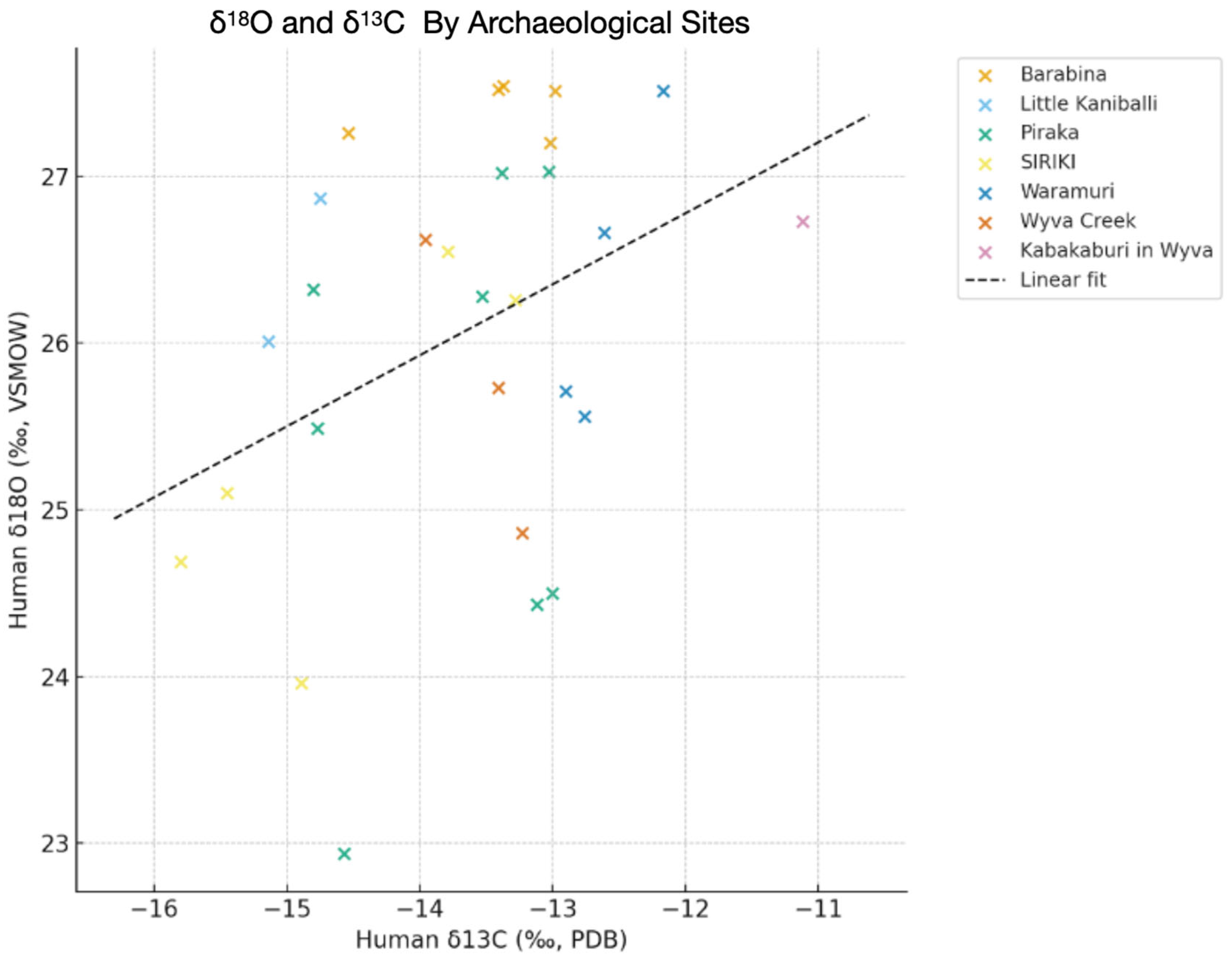
Data indicate the probability of a strategy of foraging consistent with seasonal resource selection and mobility [1]. Isotope ratios suggest that the archaic Guyanese coastal populations’ mobility and land-use strategies were influenced by environmental factors coupled with resource availability, a position posited by Kelly [88] and Kuhn [89], regarding modern hunter–gatherer mobility as reflected in δ18O records of the data set [1]. Most samples cluster around ~26–28‰ Vienna Standard Mean Ocean Water (VSMOW), with one smaller cluster centered around ~24.3‰ and ~25‰. The lower δ18O cluster may reflect different water sources or possibly different mobility or seasonal intake (see Figure 2).
In this context, shifting shorelines and ecological structures would have impacted the availability of niche marine and terrestrial resources as demonstrated above, undermining the productivity of estuarine or marine resources such as fish resources.
These factors would have undoubtedly influenced foraging range and resulted in the exploitation of alternative food resources including small and medium-sized mammals, though this is sparsely represented in the records. These adaptations would have increased populations’ exposure to a broader diet [89], as demonstrated in the zooarchaeological record. Notably, the zooarchaeological records of Barabina, Wyva and Warmuri suggest a broader diet of aquatic resources.
Carbon δ13C isotopic compositions of archaeological human and faunal records signal variations in the environments across the seven study sites (ANOVA, p = 0.001) (Figure 3). Tukey’s HSD post hoc pairwise comparison found significant differences between the locations of Kaniballi and Barabina (p < 0.001), Piraka and Barabina (p < 0.001), Siriki and Barabina (p < 0.001), Waramuri and Little Kaniballi (p < 0.001), Waramuri and Piraka (p < 0.01), and Waramuri and Siriki (p < 0.001), suggesting greater changes to an environment with less forest cover during the mid Holocene. The δ13C values are indicative of a C3-dominant diet and fit a near-shore estuarine adaptation. The presence and absence of resources within and across sites may, however, reflect occupation intensity and seasonal resource exploitation and site use by archaic populations occupying the northwestern coast of Guyana.
The data suggest that the environmental structure and vegetation of the Holocene may have influenced the distribution and abundance of terrestrial mammalian biodiversity [90] as Lambert et al. [91] demonstrated that variables such as openness of forest correlate with the appearance of small mammals in the Amazon. Resource exploitation is seen as being influenced by group size and available opportunities, taking into consideration tradeoffs in terms of calories and required effort exerted into resource acquisition coupled with the productivity of the environment. In favorable periods, fish resources appeared to be highly sought after by populations when considering the greater caloric return rates of fish to mammals and shellfish. The exploitation of fish is demonstrated in the faunal record across the seven sites and ranks first in abundance after Puperita pupa (nerites) at two locations during the early Holocene. Land use intensity may be linked to productivity, resource acquisition for both consumption and increasing hunting and gathering efficiency. Analyzed sediments provide evidence of fires, although there is no clear evidence that these were human induced. Landscape firing could indicate early evidence of resource landscape alterations for purposes of increasing resource availability.
Van der Hammem’s [92] documentation of the emergence of mangrove swamps between ca. 6000 and 4000 BP supports a model of environmentally dynamic coastal conditions, consistent with fluctuations noted in δ18O isotopic records. The recorded fluctuations may have resulted in the silting of the coastline, creating a more favorable environment for vegetation changes to occur, including the emergence of mangrove forest. Comparable patterns are reflected in the pollen record along the coast of Brazil, suggesting changes to the marine ecosystem at 2000 BP, resulting in silting of the estuarine [75]. These ecosystem shifts would have played a role in vegetation structure, with cascading impacts on the availability of marine resources such as fish and mollusks as well as the availability of terrestrial fauna. A similar process sequence is inferred along the northwestern coast of Guyana, where fluctuation facilitated the expansion of mangrove forest.
It is argued that evidence of vegetation changes and the appearance of charcoal within the archaeological record can be used to infer human activity in the Amazon and Guiana shield, [93,94]. While records have produced evidence of fires along the northwestern coast, we fail to provide evidence of human involvement. On the other hand, the northeastern coast clearly demonstrates the use of human-induced fires for landscape manipulation during the mid Holocene in the production of Amazonian Dark Earth (ADE). Anthropogenically engineered precolonial raised fields and AED sites are also reported in the archaeology of Suriname and French Guiana [95,96,97,98,99,100]. These sites were produced with charcoal, refuse and added minerals [101,102]. Resource manipulation and land use by past populations along the northwestern coast is, however, reflected in the volume of shell middens throughout the northwestern coast and the vegetation distribution within proximity of the known shell midden sites.
Of additional relevance, Andel [103] alludes to the reliance of indigenous populations for thousands of years on non-timber forest products along Guyana’s northwestern coast for food, medicine, and equipment. Recent studies [104] suggest that pre-Colombian populations in the Guiana shield influenced modern forest structure and diversity by the introduction of edible fruit trees. While the ecological impact of prehistoric populations on forest in the Guiana shield is relatively unexplored, recent population intervention to vegetation in Suriname suggests that past vegetation manipulation occurred within 0 to 8 km from archaeological sites and resulted in long-lasting ecological legacies in the modern forest [105,106]. This ecological impact on vegetation composition is evident in the immediate proximity of Guyanese shell midden sites, where the relative usefulness of tree species increases significantly [103]. Such patterns reflect the long-term influence of human activity on Guyana’s coastal ecosystems, as nutrient enrichment from midden deposits altered soil chemistry and promoted the growth of species valuable for food, medicine, and material culture. These dynamics influenced the processes of niche construction, in which past human settlement and subsistence practices actively shaped ecological trajectories. These modifications produced enduring ecological legacies, reflecting cultural adaptation within the forest composition and contributing to the mosaic landscapes observed along the northwestern coast of Guyana.
Shell midden density and distribution along the Waini and Pomeroon Rivers suggest that climate oscillation would have seen hunter–gatherer populations adjust to an ever-changing and increasingly diverse environment by adopting a foraging strategy geared towards broadening of the diet. This included the acquisition of marginal resources during periods where the abundance and diversity of resources was most likely influenced by the onset of a wetter environment, as indicated in the isotopic records produced at Barabina.

4. Conclusions

Drawing from available data, we conclude that the northwestern coast remained productive until the late Holocene, as the size and distribution of the studied mounds decreased in the late Holocene due to shoreline regression.
A noted decline in the number of mounds possibly signals decreasing productivity of the area and the gradual adaptation to horticultural dependency. Archaeological evidence of raised fields containing ADE is taken to represent the emergence of horticultural activities during the mid Holocene along the northeastern coast of Guyana within a range of cal. 6270 to 790 BP [107]. The appearance of pottery dated between 3550 and 1450 BP at Barabina suggests the incipient stages of domestication along the northwestern coast. However, radiocarbon dates indicate continuous seasonal use of the mounds into historic periods, as is evident at Siriki, which produced a more recent date of 270 ± 30 BP, though it is not clear that utilization of shellfish is the primary cause.
The seasonal exploitation of mollusks as a dietary protein supplement remained the core of the prehistoric economy during the early to mid-Holocene, as it likely relates to resource availability and group size. In this regard, the zooarchaeological record documents evidence of fishing intensification that is coupled with increased utilization of small mammal species adapted to warmer landscapes (see [2] for discussion). Shoreline regression during the mid Holocene is believed to have further influenced the productivity and distribution of resources along the coast, minimizing travel and increasing residential mobility of populations over time. The emergence of mangrove forests and the gradual development of the modern forest environment during the mid to late-Holocene transition were keys in the building resilience of coastal populations. These emerging physical environments are believed to have produced ecosystems supporting and increasing the use of non-molluskan fauna, especially fish. We conclude, in part, that shellfish collection as well as an increasing use of vertebrate resources may have varied significantly by virtue of localized coastal landscapes, as seen in coastal Puerto Rico [108].

Author Contributions

Conceptualization, L.B.D.; methodology, L.B.D.; investigation, L.B.D. and M.G.P.; data curation, L.B.D. and M.G.P.; writing—original draft preparation, L.B.D.; writing—review and editing, L.B.D.; visualization, L.B.D.; supervision, M.G.P.; funding acquisition, L.B.D. and M.G.P. All authors have read and agreed to the published version of the manuscript.

Funding

This research received partial funding from the University of Guyana Science and Technology Support Project EH1/1/2014.

Data Availability Statement

The original contributions presented in this study are included in the article. Further inquiries can be directed to the corresponding authors.

Acknowledgments

We are indebted to the communities for allowing us to conduct our fieldwork and the Walter Roth Museum of Anthropology for granting access to the archival archaeological collection.

Conflicts of Interest

The authors declare no conflicts of Interest.

References

  1. Daggers, L.B.; Plew, M.G.; Edwards, A.; Evans, S.; Trayler, R.B. Assessing the Early Holocene Environment of Northwestern Guyana: An Isotopic Analysis of Human and Faunal Remains. Lat. Am. Antiq. 2018, 29, 279–292. [Google Scholar] [CrossRef]
  2. Daggers, L.B.; Plew, G.M. Moving Beyond New Methods to Assess Holocene Environmental Change in the Northwestern coast. In Archaeology on the Threshold: Studies in the Processes of Change; Waddle, J.D., Hitchcock, R.K., Schmader, M., Yu, P.-L., Eds.; University of Florida Press: Gainesville, FL, USA, 2023; pp. 206–219. [Google Scholar]
  3. DeGranville, J.J. Rain Forest and Xeric Flora Refuges in French Guiana. In Biological Diversification in the Tropics; Prance, G.T., Ed.; Columbia University Press: New York, NY, USA, 1982; pp. 159–181. [Google Scholar]
  4. Hoock, J. Les Savanes Guyanaises: Kourou. Essai de Phytoécologie Numérique; ORSTOM Mémoires: Paris, France, 1971; p. 44. [Google Scholar]
  5. Roeleveld, W. Pollen Analysis in the Young Coastal Plain of Suriname. Geol. Mijnb. 1969, 48, 215–224. [Google Scholar]
  6. Rull, V. Paleoclimatology and Sea-Level History in Venezuela. New Data, Land-Sea Correlations, and Proposals for Future Studies in the Framework of the IGBP-Pages Project. Interciencia 1999, 24, 92–101. [Google Scholar]
  7. Van der Hammen, T. A Palynological Study of the Quaternary of British Guiana. Leidse Geol. Meded. 1963, 29, 125–180. [Google Scholar]
  8. Wijmstra, T.A.; van der Hammen, T. Palynological data on the history of tropical south America. Leidse Geol. Meded. 1966, 38, 71–90. [Google Scholar]
  9. Plew, M.G.; Daggers, L.B. The Archaeology of Guyana, 2nd ed.; University of Guyana Press: Georgetown, Guyana, 2022. [Google Scholar]
  10. Plew, M.G.; Daggers, L.B. Archaeological Test Excavations at Siriki Shell Mound, Northwest Guyana; Monographs in Archaeology No. 5; University of Guyana: Georgetown, Guyana, 2017. [Google Scholar]
  11. Williams, D. Prehistoric Guiana; Ian Randle Publishers: Kingston, Jamaica, 2003. [Google Scholar]
  12. Lombardo, U.; McMichael, C.N.H.; Tamanaha, E. Mapping pre-Columbian land use in Amazonia. Past Glob. Changes Mag. 2018, 26, 14–15. [Google Scholar] [CrossRef][Green Version]
  13. Lombardo, U.; Iriarte, J.; Hilbert, L.; Ruiz-Pérez, J.; Capriles, J.M.; Veit, H. Early Holocene crop cultivation and landscape modification in Amazonia. Nature 2020, 581, 190–193. [Google Scholar] [CrossRef]
  14. McMichael, C.N.H.; Bush, M.B.; Jiménez, J.C.; Gosling, W.D. Past human-induced ecological legacies as a driver of modern Amazonian resilience. People Nat. 2023, 5, 1415–1429. [Google Scholar] [CrossRef]
  15. Plew, M.G. The Archaeology of Guyana; Archaeopress: Oxford, UK, 2005. [Google Scholar]
  16. Capriles, J.M.; Lombardo, H.; Maley, B.; Zuna, C.; Veit, H.; Kennett, D.J. Persistent Early to Middle Holocene Tropical Foraging in Southwestern Amazonia. Sci. Adv. 2019, 5, eaav5449. [Google Scholar] [CrossRef]
  17. Bas, M.; Salemme, M.; Santiago, F.; Ivan Briz i Godino Álvarez, M.; Cardona, L. Patterns of Fish consumption by Hunter-Fisher-Gatherer People from the Atlantic coast of Tierra del Fuego during the Holocene: Human-environmental Interactions. J. Archaeol. Sci. 2023, 152, 105755. [Google Scholar] [CrossRef]
  18. Álvarez, M.; Godino, B.I.; Balbo, A.; Madella, M. Shell Middens as Archives of Past Environments, Human Dispersal and Specialized Resource Management. Quat. Int. 2011, 239, 1–7. [Google Scholar] [CrossRef]
  19. Hale, J.C.; Benjamin, J.; Woo, K.; Astrup, P.M.; McCarthy, J.; Hale, N.; Stankiewicz, F.; Wiseman, C.; Skriver, C.; Garrison, E. Submerged landscapes, marine transgression and underwater shell middens: Comparative analysis of site formation and taphonomy in Europe and North America. Quat. Sci. Rev. 2021, 258, 106867. [Google Scholar] [CrossRef]
  20. Calippo, F. Os Sambaquis submersos do Baixo Vale do Ribeira: Um estudo de caso de Arqueologia Subaquática. Rev. Arqueol. Am. 2008, 26, 153–172. [Google Scholar]
  21. Fairbridge, R.W. The Pleistocene-Holocene Boundary. Quat. Sci. Rev. 1982, 1, 215–244. [Google Scholar] [CrossRef]
  22. Johnson, A.L.; Jamski, G.; McNellis, T.; Niesen, R.; Scimeca, A.; Pruett, N. Differentiating Ecological context of Plant Cultivation and Animal Herding on the Northwestern coast. In Archaeology in the Threshold; Waddle, J.D., Hitchcock, R.K., Schmader, M., Yu, P.-L., Eds.; University Press of Florida: Gainesville, FL, USA, 2023; pp. 269–284. [Google Scholar]
  23. Broughton, J.M. Zooarchaeology. In International Encyclopedia of the Social & Behavioral Sciences, 2nd ed.; Wright, J.D., Ed.; Elsevier: Amsterdam, The Netherlands, 2015; pp. 849–853. [Google Scholar] [CrossRef]
  24. Branch, N. Environmental Archaeology. In International Encyclopedia of the Social & Behavioral Sciences, 2nd ed.; Wright, J.D., Ed.; Elsevier: Amsterdam, The Netherlands, 2015; pp. 692–698. [Google Scholar] [CrossRef]
  25. Grayson, D.K. Zooarchaeology. In International Encyclopedia of the Social & Behavioral Sciences; Smelser, N.J., Baltes, P.B., Eds.; Elsevier: Pergamon, Turkey, 2001; pp. 16691–16695. [Google Scholar] [CrossRef]
  26. Kazantzis, G. Vertebrate Zooarchaeology. In Encyclopedia of Archaeology, 2nd ed.; Rehren, T., Nikita, E., Eds.; Academic Press: Cambridge, MA, USA, 2024; pp. 793–820. [Google Scholar] [CrossRef]
  27. Bartosiewicz, L. Zooarchaeology. In Encyclopedia of Global Archaeology; Smith, C., Ed.; Springer: New York, NY, USA, 2014. [Google Scholar] [CrossRef]
  28. Bumsted, P.M. Past human behavior from bone chemical analysis—Respects and prospects. J. Hum. Evol. 1985, 14, 539–551. [Google Scholar] [CrossRef]
  29. Knauth, L.; Kennedy, M. The late Precambrian greening of the Earth. Nature 2009, 460, 728–732. [Google Scholar] [CrossRef]
  30. Sial, N.A.; Gaucher, C.; Ferreira, P.V.; Pereira, S.N.; Cezario, S.W.; Chiglino, L.; Lima, M.H. Chapter 2—Isotope and Elemental Chemostratigraphy. In Chemostratigraphy; Ramkumar, M., Ed.; Elsevier: Amsterdam, The Netherlands, 2015; pp. 23–64. [Google Scholar] [CrossRef]
  31. Ben-David, M.; Flaherty, A.E. Stable isotopes in mammalian research: A beginner’s guide. J. Mammal. 2012, 93, 312–328. [Google Scholar] [CrossRef]
  32. Cherry, S.G.; Derocher, A.E.; Hobson, K.A.; Stirling, I.; Thiemann, G.W. Quantifying dietary pathways of proteins and lipids to tissues of a marine predator. J. Appl. Ecol. 2011, 48, 373–381. [Google Scholar] [CrossRef]
  33. Palmisano, A.; Woodbridge, J.; Roberts, C.N.; Bevan, A.; Fyfe, R.; Shennan, S.; Cheddadi, R.; Greenberg, R.; Kaniewski, D.; Langgut, D.; et al. Holocene landscape dynamics and long-term population trends in the Levant. Holocene 2019, 29, 708–727. [Google Scholar] [CrossRef]
  34. Versteeg, A.H. Barrancoid and Arauquinoid Mound Builders in Coastal Surinam. In Handbook of South American Archaeology; Silverman, H., Isbell, W., Eds.; Springer: New York, NY, USA, 2008; pp. 303–318. [Google Scholar]
  35. Evans, C.A.; Meggers, B.J. Archeological Investigations in British Guiana; Bureau of American Ethnology, Bulletin 197; Smithsonian Institution: Washington, DC, USA, 1960. [Google Scholar]
  36. Plew, M.G.; Willson, C.; Daggers, L.B. Archaeological Excavations of Siriki Shell Mound Northwest Guyana; Monographs in Archaeology No 4; Walter Roth Museum of Anthropology: Georgetown, Guyana; Boise State University: Boise, ID, USA; University of Guyana: Georgetown, Guyana, 2012. [Google Scholar]
  37. Plew, M.G.; Pereira, G.; Simon, G. Archaeological Survey and Test Excavations of the Kabakaburi Shell Mound, Northwestern Guyana; Monographs in Archaeology No. 1; University of Guyana: Georgetown, Guyana, 2007. [Google Scholar]
  38. Rick, T.C. Shell Midden Archaeology: Current Trends and Future Directions. J. Archaeolological Res. 2004, 32, 309–366. [Google Scholar] [CrossRef]
  39. Brett, W.H. Indian Tribes of Guiana: Their Condition and Habits; Bell and Dalby: New York, NY, USA, 1868. [Google Scholar]
  40. Daggers, L.B. Excavations of Siriki, Piraka, Little Kanaballi and Wyva Shell Midden: Field Report; Unpublished Manuscript; University of Guyana: Georgetown, Guyana, 2021. [Google Scholar]
  41. Williams, D. Excavation of Piraka Field Notebooks; Walter Roth Museum of Anthropology: Georgetown, Guyana, 1987. [Google Scholar]
  42. Im Thrun, E. Among the Indians of Guiana; Kegan Paul, Trench & Company: London, UK, 1884. [Google Scholar]
  43. Osgood, C.A. British Guiana Archaeology to 1945; Yale University Publicationsin Anthropology Number 36; Yale University Press: New Haven, CT, USA, 1946. [Google Scholar]
  44. Williams, D. Excavation of the Barabina Shell Mound, Northwest District: An Interim Report. Archaeol. Anthropol. 1981, 2, 125–140. [Google Scholar]
  45. Williams, D. Arcaico en el noroeste de Guyana y los comienzos de la horticultura. In Prehistoric Sudamericana: Nuevas Perspectivas; Meggers, B.J., Ed.; Taraxacum: Washington, DC, USA, 1992. [Google Scholar]
  46. Plew, M.G.; Willson, C. Archaeological Test Excavations at Wyva Creek Northwestern Guyana; Monographs in Archaeology No. 3; University of Guyana: Georgetown, Guyana, 2010. [Google Scholar]
  47. Verrill, A.H. Prehistoric mounds and relics of the Northwest District of British Guiana. Timehri 1918, 5, 11–20. [Google Scholar]
  48. Bleackley, D. The Geology of the Superficial Deposits and Coastal Sediments of British Guiana; Geological Survey of British Guiana Bulletin 30; Daily Chronicle: Georgetown, Guyana, 1956; 46p. [Google Scholar]
  49. Palmisano, A.; Bevan, A.; Shennan, S. Comparing archaeological proxies for long-term population patterns: An example from central Italy. J. Arch. Sci. 2017, 87, 59–72. [Google Scholar] [CrossRef]
  50. Palmisano, A.; Lawrence, D.; de Gruchy, M.W.; Bevan, A.; Shennan, S. Holocene regional population dynamics and climatic trends in the Near East: A first comparison using archaeo-demographic proxies. Quat. Sci. Rev. 2020, 252, 106739. [Google Scholar] [CrossRef]
  51. Williams, D. Some Subsistence Implications of Holocene Climatic Change in Northwestern Guyana. Archaeol. Anthropol. 1982, 5, 82–93. [Google Scholar]
  52. Balsera, V.; Bernabeu Auban, J.; Costa Carame, M.; Díaz del Río, P.; García Sanjuan, L.; Pardo, S. The Radiocarbon Chronology of Southern Spain’s Late prehistory (5600e1000 cal BC): A comparative review. Oxf. J. Archaeol. 2015, 34, 139–156. [Google Scholar] [CrossRef]
  53. Crema, E.R.; Habu, J.; Kobayashi, K.; Madella, M. Summed Probability Distribution of 14 C dates Suggests Regional Divergences in the Population Dynamics of the Jomon Period in Eastern Japan. PLoS ONE 2016, 11, e0154809. [Google Scholar] [CrossRef]
  54. Flohr, P.; Fleitmann, D.; Matthews, R.; Matthews, W.; Black, S. Evidence of Resilience to Past Climate Change in Southwest Asia: Early Farming Communities and the 9.2 and 8.2 ka events. Quat. Sci. Rev. 2016, 136, 23–39. [Google Scholar] [CrossRef]
  55. Maher, L.A.; Banning, E.B.; Chazan, M. Oasis or mirage? Assessing the Role of Abrupt Climate Change in the Prehistory of the Southern Levant. Camb. Archaeol. J. 2011, 21, 1–30. [Google Scholar] [CrossRef]
  56. Timpson, A.; Colledge, S.; Crema, E.; Edinborough, K.; Kerig, T.; Manning, K.; Thomas, M.G.; Shennan, S. Reconstructing Regional Population Fluctuations in the European Neolithic Using Radiocarbon Dates: A New Case-study Using an Improved Method. J. Archaeol. Sci. 2014, 52, 549–557. [Google Scholar] [CrossRef]
  57. Woodbridge, J.; Fyfe, R.M.; Roberts, N.; Downey, S.; Edinborough, K.; Shennan, S. The impact of the Neolithic Agricultural Transition in Britain: A comparison of pollen-based land-cover and archaeological 14C Date-inferred Population change. J. Archaeol. Sci. 2014, 51, 216–224. [Google Scholar] [CrossRef]
  58. Fahy, G.E.; Deter, C.; Pitfield, R.; Miszkiewicz, J.J.; Mahoney, P. Bone deep: Variation in stable isotope ratios and histomorphometric measurements of bone remodelling within adult humans. J. Archaeol. Sci. 2017, 87, 10–16. [Google Scholar] [CrossRef]
  59. Coplen, B.T. Reporting of stable hydrogen, carbon, and oxygen isotopic abundances (Technical Report). Pure App. Chem. 1994, 66, 273–276. [Google Scholar] [CrossRef]
  60. Hornberger, G.M. New manuscript guidelines for the reporting of stable hydrogen, carbon, and oxygen isotope-ratio data. Water Resour. Res. 1995, 31, 2895. [Google Scholar]
  61. Koch, P.; Tuross, N.; Fogel, M. The effects of sample treatment and diagenesis on the isotopic integrity of carbonate in biogenic hydroxyapatite. J. Archaeol. Sci. 1997, 24, 417–429. [Google Scholar] [CrossRef]
  62. Lee-Thorp, J.; Sponheimer, M. Contributions of biochemistry to understanding hominin dietary ecology. Am. J. Phys. Anthropol. 2006, 131, 131–148. [Google Scholar] [CrossRef]
  63. Van der Hammen, T. Paleoecology of Tropical South America. In Biological Diversification in the Tropics; Pranc, G.T., Ed.; Columbia University Press: New York, NY, USA, 1982; pp. 60–66. [Google Scholar]
  64. Ledru, M.-P. Late Quaternary Environmental Climatic Changes in Central Brazil. Quat. Res. 1993, 39, 90–98. [Google Scholar] [CrossRef]
  65. Pessanda, L.C.R.; Aravena, R.; Melfi, A.J.; Telles, E.C.C.; Boulet, R.; Valencia, E.P.E.; Mario, T. The Use of Carbon Isotopes (13C, 14C) in Soil to Evaluate Vegetation Changes During the Holocene in Central Brazil. Radiocarbon 1996, 38, 191–201. [Google Scholar]
  66. Tardy, C. Paléoincendies Naturels Feux Anthropiques et Environnements Forestiers de Guyane Française du Tardig-Laciaire á L’holocène Récent: Approaches Chronologique et Anthracologique. Ph.D. Thesis, Université Montpellier II, Montpellier, France, 1998. [Google Scholar]
  67. Bourque, B.J.; Johnson, B.J.; Steneck, R. Possible prehistoric fishing effects on coastal marine food webs in the Gulf of Maine. In Human Impacts on Ancient Marine Ecosystems; Rick, T.C., Erlandson, J.M., Eds.; University of California Press: Oakland, CA, USA, 2008; pp. 165–185. [Google Scholar]
  68. Hammond, D.S.; Steege, H.T.; van der Borg, K. Upland Soil Charcoal in the Wet Tropical Forests of Central Guyana. Biotropica 2007, 39, 153–160. [Google Scholar] [CrossRef]
  69. Arroyo-Kalin, M. Human Niche Construction and Population Growth in Pre-Columbian Amazonia. Archaeol. Int. 2017, 20, 122–136. [Google Scholar] [CrossRef]
  70. Erlandson, J.M.; Vellanoweth, R.L.; Rick, T.C.; Reid, M.R. Coastal Foraging at Otter Cave: A 6600-Year-Old Shell Midden on San Miguel Island, California. J. Calif. Great Basin Anthropol. 2005, 25, 69–86. [Google Scholar]
  71. Erlandson, J.M.; Braje, T.J.; Rick, T.C.; Jew, N.P.; Knnett, D.J.; Dwyer, N.; Ainis, A.F.; Vellanoweth, R.L.; Watts, J. 10,000 years of human predation and size changes in the owl limpet (Lottia gigantea) on San Miguel Island, California. J. Archaeol. Sci. 2011, 38, 1127–1134. [Google Scholar] [CrossRef]
  72. Erlandson, J.M.; Ainis, A.F.; Braje, T.J.; Jew, N.P.; McVey, M.; Rick, T.C.; Vellanoweth, R.L.; Watts, J. 12,000 Years of Human Predation on Black Turban Snails (Chlorostoma funebralis) on Alta California’s Northern Channel Islands. Calif. Archaeol. 2015, 7, 59–91. [Google Scholar] [CrossRef]
  73. García-Escárzaga, A.; Gutiérrez-Zugasti, I.; Marín-Arroyo, A.B.; Fernandes, R.; Núñez de la Fuente, S.; Cuenca-Solana, D.; Iriarte, E.; Simões, C.; Martín-Chivelet, J.; González-Morales, M.R.; et al. Human forager response to abrupt climate change at 8.2 ka on the Atlantic coast of Europe. Sci. Rep. 2022, 12, 6481. [Google Scholar] [CrossRef] [PubMed]
  74. Harris, M.; Weisler, M. Prehistoric Human Impacts to Marine Mollusks and Intertidal Ecosystems in the Pacific Islands. J. Isl. Coast. Archaeol. 2017, 13, 235–255. [Google Scholar] [CrossRef]
  75. Toso, A.; Hallingstad, E.; McGrath, K.; Fossile, T.; Conlan, C.; Ferreirs, J.; da Rocha Bandeira, D.; Giannini, C.F.P.; Gilson, S.; Bueno, L.; et al. Fishing Intensification as Response to Late Holocene Socio-ecological Instability in Southeastern South America. Sci. Rep. 2021, 11, 23506. [Google Scholar] [CrossRef] [PubMed]
  76. Mannino, M.A.; Thomas, K.D. Depletion of a Resource? The Impact of Prehistoric Human Foraging on Intertidal Mollusc Communities and Its Significance for Human Settlement, Mobility and Dispersal. World Archaeol. 2002, 33, 452–474. [Google Scholar] [CrossRef]
  77. Åhrberg, E. Fishing for Storage: Mesolithic Short-Term Fishing for Long Term Consumption in Shell Middens in Atlantic Europe; Milner, N., Craig, O., Bayley, G., Eds.; Oxbow Press: Oxford, UK, 2007; pp. 46–53. [Google Scholar]
  78. Bailey, G.N. The role of Molluscs in Coastal Economies: The Results of Midden Analysis in Australia. J. Archaeol. Sci. 1975, 2, 45–62. [Google Scholar] [CrossRef]
  79. Álvarez, M.; Briz i Godino, I.; Pal, N.; Bas, M.; Lacrouts, A. Climatic change and human-marine interactions in the uttermost tip of South America in Late Holocene. Quat. Int. 2020, 549, 197–207. [Google Scholar] [CrossRef]
  80. Plew, M.G. Excavations of Waramuri Shell Mound, Northwest Guyana. Archaeol. Anthropol. J. 2018, 22, 46–55. [Google Scholar]
  81. Plew, M.G. The Archaeology of the Piraka Shell Mound. Archaeol. Anthropol. 2016, 30, 69–82. [Google Scholar]
  82. Doty, W.T. Environmental Controls on the Diversity and Distribution of Endosymbionts Associated with Phacoides pectinatus (Bivalvia: Lucinidae) from Shallow Mangrove and Seagrass Sediments, St. Lucie County, Florida. Master’s Thesis, University of Tennessee, Knoxville, TN, USA, 2015. Available online: https://trace.tennessee.edu/utk_gradthes/3548 (accessed on 15 September 2022).
  83. Menzel, W.; Nacimento, I.A. Crossostra rhizophorae (GUILDING) and C. brasiliana (Lamarck) in South and Central America. In Estuarine and Marine Bivalve Mollusk Culture; CRC Press: Boca Raton, FL, USA, 1991; pp. 125–134. [Google Scholar] [CrossRef]
  84. Carvalho, A.O. Bioanthropologie des necrópoles de Justino et de São José II, Xingó, Brésil. Docterate Thesis, Faculte des Sciences de L’université de Génove, Genève, Switzerland, 2007. [Google Scholar]
  85. Gragson, T.L. Strategic Procurement of Fish by the Pune. As south America fishing culture. Hum. Ecol. 1992, 20, 109–130. [Google Scholar] [CrossRef]
  86. Mayle, F.E.; Beerling, D.J.; Gosling, W.D.; Bush, M.B. Responses of Amazonia Ecosystems to Climatic and Atmospheric Carbon Dioxide Changes Since the Last Glacial Maximum. Philos. Trans. R. Soc. Lond. 2004, 559, 499–514. [Google Scholar]
  87. Barreira, C.A.R.; Santana, L.M.B.Q. Rainfall Seasonal Variation Effect on the Productive Cycle of the Bivalve Phacoides pectinatus from Semiarid coast of Brazil. Arq. Ciências Mar. Fortaleza 2018, 51, 84–97. [Google Scholar] [CrossRef]
  88. Kelly, R.L. Mobility/Sedentism: Concepts, Archaeological Measures, and Effects. Annu. Rev. Anthropol. 1992, 21, 43–66. [Google Scholar] [CrossRef]
  89. Kuhn, S.L.; Raichlen, D.A.; Clark, A.E. What moves us? How mobility and Movement are at the Center of Human Evolution. Evol. Anthropol. Issues News Rev. 2016, 25, 86–97. [Google Scholar] [CrossRef]
  90. Benedek, A.M.; Sîrbu, I.; Lazăr, A. Responses of Small Mammals to Habitat Characteristics in Southern Carpathian forests. Sci. Rep. 2021, 11, 12031. [Google Scholar] [CrossRef]
  91. Lambert, T.D.; Malcom, J.R.; Zimmerman, B.L. Amazonian Small Mammal Abundances in Relation to Habitat Structure and Resource Abundance. J. Mammal. 2006, 87, 766–776. [Google Scholar] [CrossRef]
  92. Van der Hammen, T.; Wijmstra, T.A. A Palynological Study on the Teitary and Upper Cretaceous of British Guiana. Leidse Geol. Meded. 1964, 30, 183–241. [Google Scholar]
  93. Nascimento, M.N.; Heijink, B.M.; Bush, M.B.; Gosling, W.D.; McMichael, C.N.H. Early to Mid-Holocene Human Activity Exerted Gradual Influences on Amazonian Forest Vegetation. Phil. Trans. R. Soc. 2022, 377, 20200498. [Google Scholar] [CrossRef]
  94. Bush, M.B.; Sales, R.K.; Neill, D.; Valencia, B.G.; León-Yánez, S.; Stanley, A.; Sinkler, W.; Bennett, I.; Gomes, B.T.; Land, K.; et al. Ecological legacies and recent footprints of the Amazon’s Lost City. Nat. Commun. 2025, 16, 7408. [Google Scholar] [CrossRef] [PubMed]
  95. Boomert, A. Pre-Columbian raised-fields in Coastal Surinam. In Proceedings of the Sixth International Congress for the Study of pre-Columbian Cultures of the Lesser Antilles, Point-à-Pitre 1975; Bullen, R.P., Ed.; Département d’Histoire et d’Archéologie: Guadeloupe, France; Société d’Histoire de la Guadeloupe: Guadeloupe, France; Municipalité de Pointe à Pitre: Guadeloupe, France, 1976; pp. 134–144. [Google Scholar]
  96. Versteeg, A.H. The Prehistory of the Young Coastal Plain of West Suriname. Ph.D. Thesis, University of Leiden, Leiden, The Netherlands, 1985. [Google Scholar]
  97. McKey, D.; Rostain, S.; Iriarte, J.; Glaser, B.; Birk, J.J.; Holst, I.; Renard, D. Pre-Columbian Agricultural Landscapes, Ecosystem Engineers, and Self-Organized Patchiness in Amazonia. Proc. Natl. Acad. Sci. USA 2010, 107, 7823–7828. [Google Scholar] [CrossRef] [PubMed]
  98. Rostain, S. Agricultural Earthworks on the French Guisana Coast. In Handbook of South American Archaeology; Silverman, H., Isbell, W., Eds.; Springer: New York, NY, USA, 2008; pp. 217–234. [Google Scholar]
  99. Rostain, S. Pre-Columbian Earthworks in Coastal Amazonia. Diversity 2010, 2, 331–352. [Google Scholar] [CrossRef]
  100. van den Bel, M. Archaeological Investigations Between Cayenne Island and the Maroni River: A Cultural Sequence of Western Coastal French Guiana from 5000 BP to Present; Sidestone Press: Leiden, The Netherlands, 2015. [Google Scholar]
  101. Lucheta, A.R.; de Souza Cannavan, F.; Tsai, S.M.; Kuramae, E.E. Amazonian dark earth and its black carbon particles harbor different fungal abundance and diversity. Pedosphere 2017, 27, 832–845. [Google Scholar] [CrossRef]
  102. Silva, L.C.R.; Corrêa, R.S.; Wright, J.L.; Macedo, R.S. A new hypothesis for the origin of Amazonian Dark Earths. Nat. Commun. 2021, 12, 127. [Google Scholar] [CrossRef]
  103. van Andel, T. Non-Timber Forest Products of the North-West District of Guyana, Part II (Field Guide); Tropenbos-Guyana Series 8b; Tropenbos-Guyana Programme: Georgetown, Guyana, 2000. [Google Scholar]
  104. Odonne, G.; van den Bel, M.; Burst, O.; Brunaux, M.; Bruno, E.; Dambrine, D.; Davy, M.; Desprez, J.; Engel, B.; Ferry, V.; et al. Long-term influence of Early Human Occupations on Current Forests of the Guiana Shield. Ecology 2019, 100, e02806. [Google Scholar] [CrossRef]
  105. Witteveen, N.H.; White, C.; Sánchez-Martínez, B.A.; Philip, A.; Boyd, F.; Booij, R.; Christ, R.; van der Hoek, Y. Pre-contact and post-colonial ecological legacies shape Surinamese rainforests. Ecology 2024, 105, e4272. [Google Scholar] [CrossRef]
  106. Witteveen, N.H.; White, C.; Martinez, S.B.A.; Booij, R.; Philip, A.; Gosling, W.D.; Bush, M.B.; McMichael, C.N.H. Phytolith Assemblages Reflect Variability in Human Land Use and the Modern Environment. Veg. Hist. Archaeobotany 2024, 33, 221–236. [Google Scholar] [CrossRef]
  107. Shearn, I.; Heckenberger, M.; Simon, G. Ceramic innovation at Dublay: An early agricultural village in the Middle Berbice, Guyana. Archaeol. Anthropol. 2017, 21, 4–19. [Google Scholar]
  108. Pestle, W.J.; Laguer-Díaz, C.; Schneider, M.J.; Carden, M.; Sherman, C.E.; Koski-Karell, D. Shellfish Collection Practices of the First Inhabitants of Southwestern Puerto Rico: The Effects of Site Type and Paleoenvironment on Habitat Choice. Lat. Am. Antiq. 2021, 32, 850–857. [Google Scholar] [CrossRef]
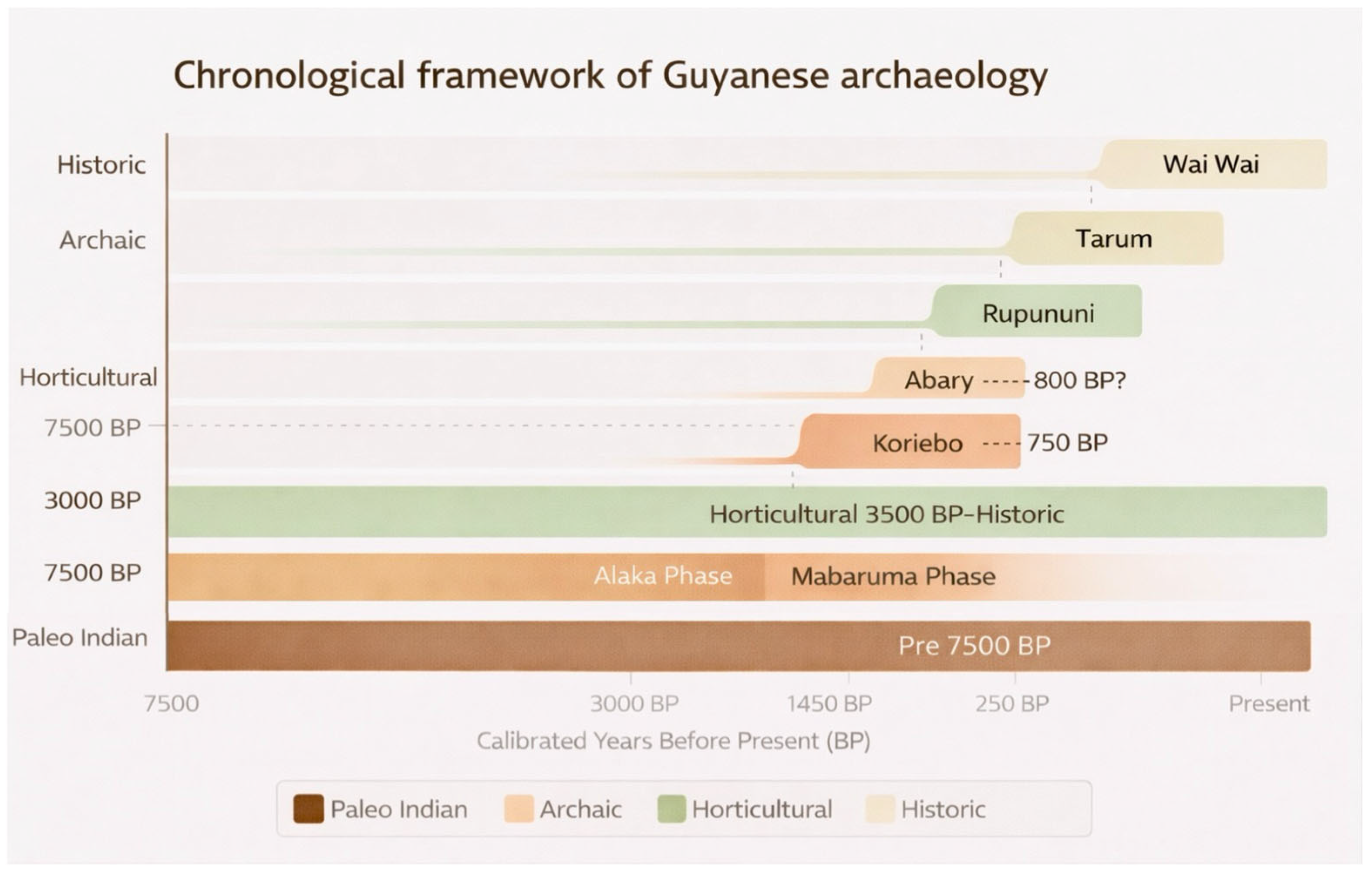
Figure 1. A Graphic illustration of the archaeological periods in Guyana.
Quaternary 09 00024 g001
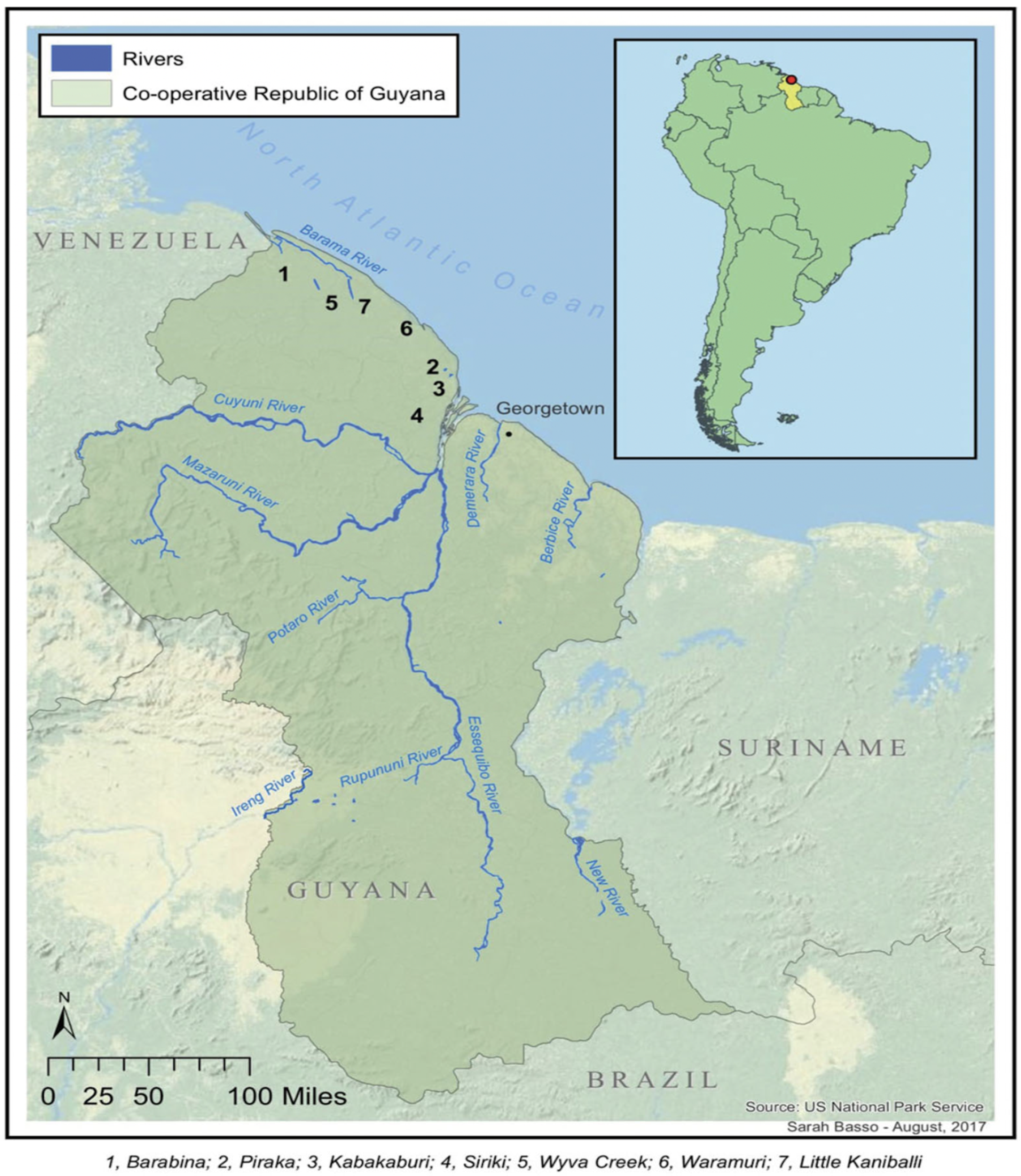
Figure 2. Map of Guyana highlighting the seven study sites.
Quaternary 09 00024 g002
Figure 3. Scatter plot with samples color coded by archaeological site. The plot demonstrates that site populations had access to distinct hydrological/water influences. Particularly, Piraka shows a spread of 3 distinct water intakes, possibly influencing seasonal mobility; Barabina samples suggest hydrological heterogeneity with both high and low δ18O values; and Siriki samples present depleted values for both δ18O and δ13C when compared the other sites. The data document inter-site contrasts.
Quaternary 09 00024 g003
Table 1. Radiocarbon dates for site discussed in this study.
SiteSample MaterialLevelC14 DatesCal. DatesLaboratory Number
BarabinaCharcoal40–604470 ± 30 BPCal: 3260–5210 BP(Beta 449112)
PirakaCharcoal60–80 cm6940 ± 30 BPCal: 5835–7785 BP(Beta 449114)
SirikiCharcoal50 cm6690 ± 30 BPCal: 5625–7575 BP(Beta 449110)
WaramuriCharcoal240–260 cm5960–3790 ± 50 BPCal: 4900–2200 BP(Beta 57586)
KabakaburiCharcoal140 cm5340–3390 ± 100 BPCal: 4230–1600 BP(Beta 32188)
Little KanaballiCharcoal40–50 cm6340 ± 30 BPCal: 5315 BP(Beta 449111)
Wyva CreekCharcoal180 cm6340 ± 50 BPCal: 5320–7260 BP(Beta 264970)
Table 2. The presence and absence of artifacts found at each study site. (x) represents the presence of pottery.
SiteFlakeAxe/
Adze/
Celt/
Gouge
Chopper/KnifeHammer StoneStone Ball/Pebble/CobblesCorePicks/ChiselsScraper/BifaceLine SinkerProjectile PointsBird Bone AwlWhet StonePottery
Siriki108202136261000x
Barabina642000376300x
Waramuri0201100000100
Pirakax710504x0300030
Wyva Creek541101577160010
Kabakaburi1710103520001x
Little
Kanaballi
10000000000000
Table 3. The number of human remains sampled for isotopic analysis from each study site.
Name of SiteNumber of Human Remains Sampled
Barabinan = 18
Pirakan = 10
Sirikin = 4
Waramurin = 4
Wyvan = 3
Kabakaburin = 3
Little Kanaballin = 1
Table 4. List of stable isotopes data set published by Daggers et al., 2018 [1].
CodeLocationHuman Remains SampledLevel (cm)Radiocarbon Date Conventional of the Level (BP) (Charcoal Sample)δ13C (PDB)δ18O (VSMOW)
B-29BarabinaEnamel40 −12.9827.51
B-76BarabinaEnamel20–40 −13.0227.20
B-24BarabinaEnamel42 −13.3727.54
B-22BarabinaEnamel50 −13.4127.52
B-1BarabinaEnamel100 −14.5427.26
B-17BarabinaBone Fragment0–15 −13.1525.07
B-3BarabinaEnamel135 −14.1628.06
B-30BarabinaEnamelunknown −13.2026.61
B-71BarabinaEnamel38 −12.3126.09
B-49BarabinaEnamel148 −12.6627.27
B-33BarabinaEnamel454470 ± 30 BP−13.4926.92
B-25BarabinaEnamel26–35 −13.8327.97
B-17BarabinaEnamel15 −13.6527.02
B-69BarabinaEnamel71 −12.5926.28
B-12BarabinaEnamel24–40 −14.1527.70
B-24BarabinaRib Fragment42 −12.3626.31
B-22BarabinaRib Fragment50 −12.0926.05
B-76BarabinaRib Fragment32 −11.9226.17
B-29BarabinaRib Fragment40 −13.0923.60
B-5BarabinaRib Fragment57 −13.3726.41
B-3BarabinaPhalanx238 −11.8826.60
B-62BarabinaRib Fragment18 −12.1426.35
B-12BarabinaRib Fragment60 −12.5023.90
B-30BarabinaRib Fragmentunknown −11.6025.23
B-71BarabinaRib Fragment38 −13.2526.98
B-13BarabinaRib Fragment68 −13.2024.31
B-49BarabinaRib Fragment1484420 ± 30 BP−11.0326.59
B-25BarabinaRib Fragment26–35 −12.1626.83
B-1BarabinaRib Fragment100 −14.5427.26
B-69BarabinaRib Fragment71 −13.7426.63
B-33BarabinaRib Fragment45470 ± 30 BP−12.1026.85
B-5BarabinaUpper right 2nd molar57 −13.4927.19
B-13BarabinaUpper right 2nd molar68 −13.4626.82
B-62BarabinaUpper Right 3rd molar18 −11.7626.20
BLKLittle Kaniballilesser trochanter0–20 −14.7526.87
BLKLittle Kaniballiproximal humerus20–30 −15.1426.01
BLKLittle Kaniballigreater trochanter30–40 −15.0226.79
BLKLittle Kaniballiproximal ulna fragment40–506340 ± 30 BP−14.8026.67
BLKLittle KaniballiBone fragment 50–60 −13.6226.81
BP-13aPirakaEnamel80–100 −13.5326.28
BP-13bPirakaEnamel80–100 −13.9225.97
BP-13PirakaFemur Fragment 80–100 −14.7725.49
BP-8aPirakaTibia sub adult 80–100 −14.0226.99
BP-8bPirakaEnamel80–100 −13.5127.02
BP-8PirakaBone Fragment80–100 −14.6026.18
BP-16aPirakaEnamel20–40 −13.5426.06
BP-16bPirakaEnamel20–40 −13.8526.98
BP-16PirakaBone Fragment45 −14.5722.94
BP-2aPirakaEnamel50–60 −13.8926.39
BP-2bPirakaEnamel50–606940 ± 30 BP−13.3827.02
BP-5aPirakaEnamel1206920 ± 30 BP−13.0327.03
BP-5bPirakaEnamel120 −13.4626.92
BP-5PirakaBone Fragment120 −14.8026.32
BP-6aPirakaEnamel60–80 −13.7026.48
BP-6bPirakaEnamel60–80 −14.5025.76
BP-6PirakaBone Fragment60–80 −14.2326.54
BP-4 PirakaEnamelunknown −13.9726.04
BP-4 PirakaBone Fragment120–140 −13.0024.50
BP-4 PirakaBone Fragment120–140 −14.3826.11
BP-2PirakaBone Fragment60 −14.4726.62
BP-14Pirakasub adult Femur40–60 −13.1224.43
BP-11PirakaFemur Fragment20–40 −15.0925.96
BSSirikiBone Fragmentunknown −13.2826.26
BSSirikiBone Fragment0–20270 ± 30 BP−15.4525.10
BSSirikiEnamel0–205490 ± 30 BP−13.7926.55
BSSirikiBone Fragment60–80 −14.8923.96
BSSirikiTibia, sub adult20–40 −14.5126.67
BSSirikiRib fragment80–1004140+ ± 30 BP−15.8024.69
BWWaramuriBone Fragment0–20 −12.6126.66
BWWaramuriBone Fragment0–20 −12.9025.71
BWWaramuriBone Fragmentunknown −12.7625.56
BWWaramuriEnamelunknown −14.3026.30
BWWyva CreekEnamel706430 ± 30 BP−13.9626.62
BWWyva CreekBone Fragment180 −13.2324.86
BWWyva CreekBone Fragmentsurface −13.4125.73
BKKabakaburi Ribunknown 5340 BP−11.1226.73
Table 5. Presence of fauna from seven early to mid-Holocene study sites. In the absence of a true count, (x) represents the presence of a specific faunal record within a respective site.
SitesMammalBirdFishReptileCrabMolluskUnidentifiable FaunaPeriodReference
Siriki26113542264481180Early–Mid
Holocene
Plew, Wilson & Daggers 2012 [36]; Plew & Daggers, 2017, 2022 [9,10]
Kabakaburi3012501146Mid HolocenePlew, Pereira & Simon 2007 [37]
Little
Kanaballi
7000010xEarly HoloceneDaggers etal, 2018 [1]; Plew & Daggers 2022 [9]
Barabinax115,2392782273xMid HoloceneWilliams, 1981 [44]
Pirakax1x1x14xEarly HoloceneWilliams 2003 [11]; Daggers et al., 2018 [1]; Plew & Daggers, 2022 [9]
Waramurix1xxx8xEarly–Mid HoloceneWilliams 1992 [45] Plew 2018 [80]
Wyva12051411xEarly HolocenePlew & Wilson 2010 [46]; Daggers et al. 2018 [1]; Plew [15]
Disclaimer/Publisher’s Note: The statements, opinions and data contained in all publications are solely those of the individual author(s) and contributor(s) and not of MDPI and/or the editor(s). MDPI and/or the editor(s) disclaim responsibility for any injury to people or property resulting from any ideas, methods, instructions or products referred to in the content.