
Article

Climate and Vegetation Change, Hillslope Soil Erosion, and the Complex Nature of Late Quaternary Environmental Transitions, Eastern Mojave Desert, USA

by
Joseph R. McAuliffe
1,*,
Leslie D. McFadden
2,
Lyman P. Persico
3 and
Tammy M. Rittenour
4
1
Department of Research, Conservation & Collections, Desert Botanical Garden, 1201 N. Galvin Pkwy., Phoenix, AZ 85008, USA
2
Department of Earth & Planetary Sciences, University of New Mexico, Albuquerque, NM 87131, USA
3
Geology Department, Whitman College, Walla Walla, WA 99362, USA
4
Department of Geosciences, Utah State University, Logan, UT 84322, USA
*
Author to whom correspondence should be addressed.
Quaternary 2022, 5(4), 43; https://doi.org/10.3390/quat5040043
Submission received: 10 September 2022 / Revised: 5 October 2022 / Accepted: 10 October 2022 / Published: 14 October 2022
(This article belongs to the Special Issue Climate Change and Vegetation Evolution during the Holocene)

Abstract

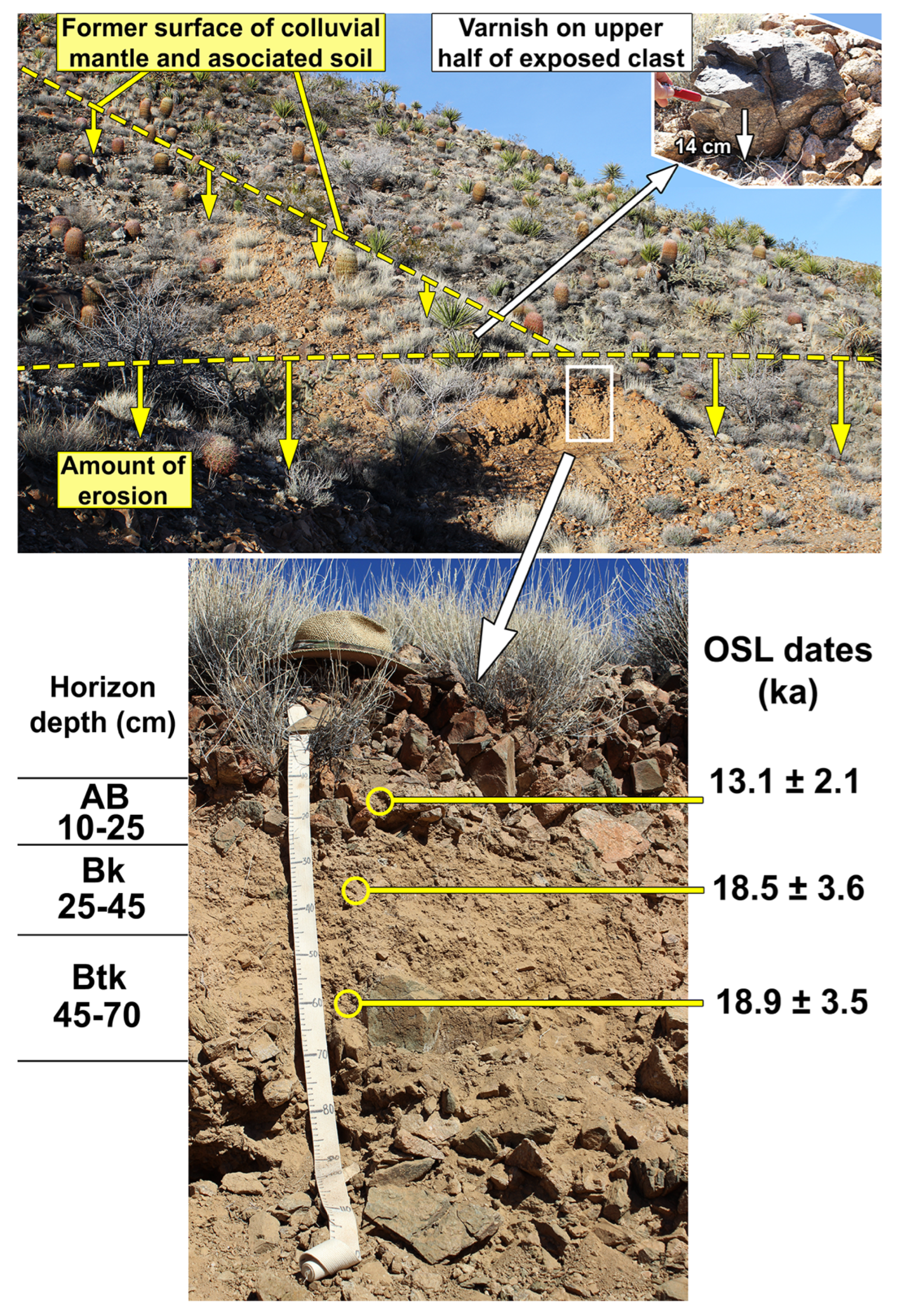
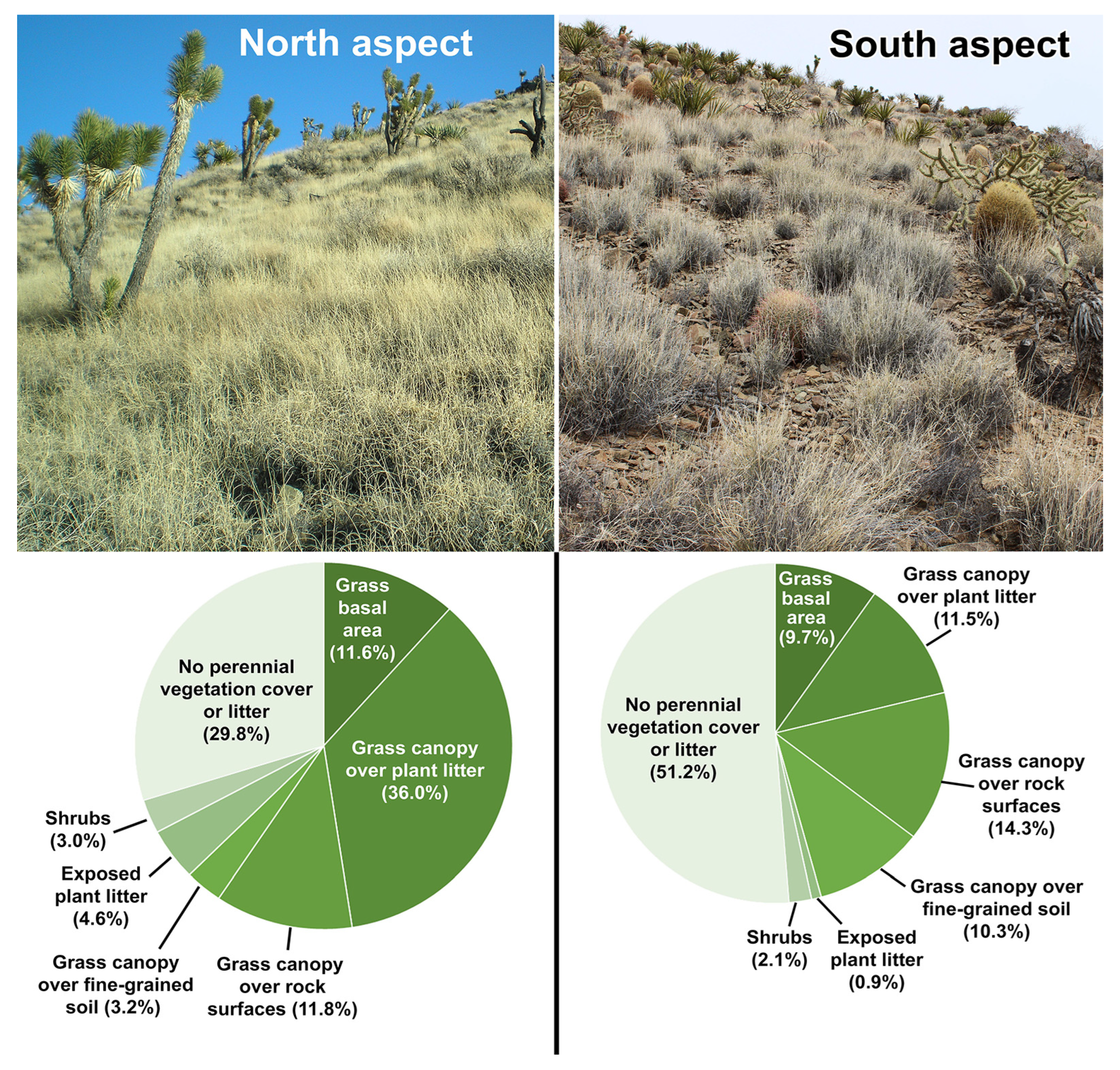
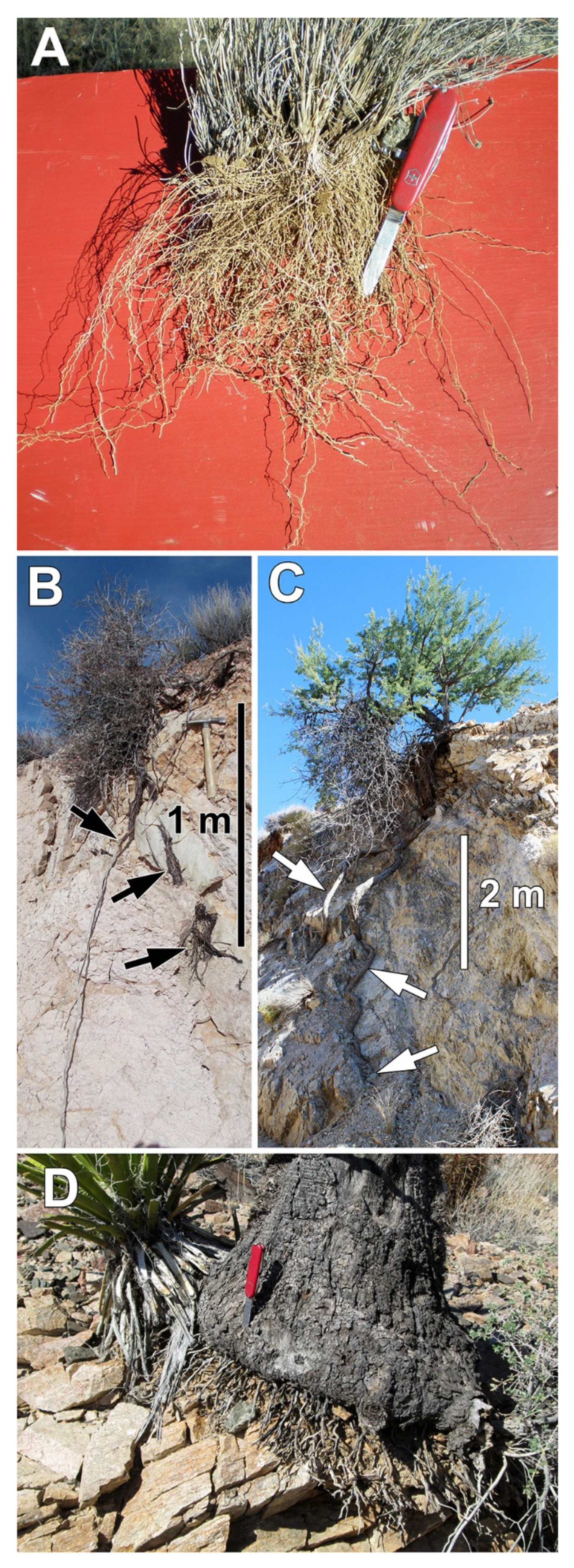
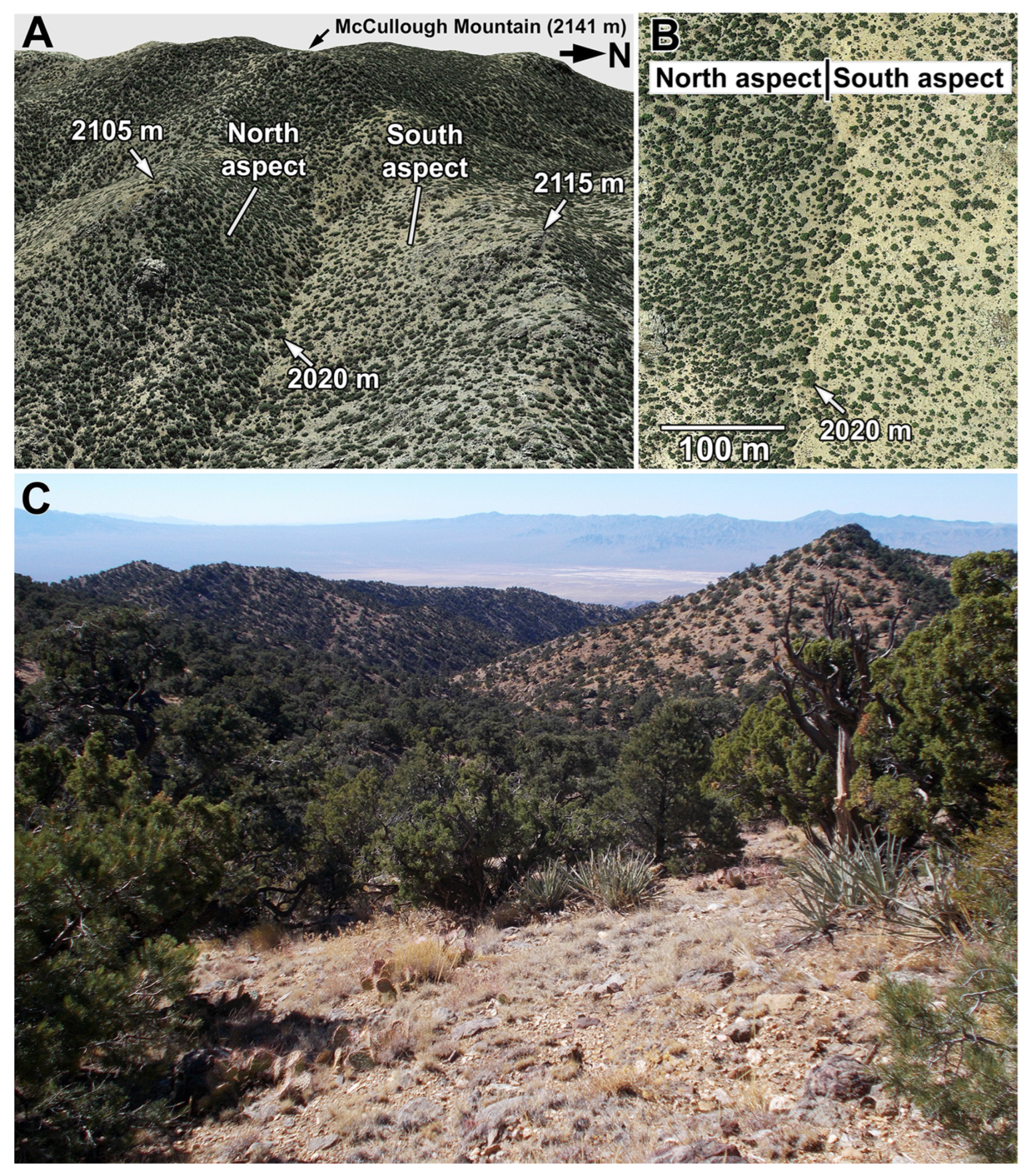
In what are now the warm deserts of the American Southwest, direct effects of changing climate on plant distributions are typically viewed as the principal driver of vegetation changes that followed the late Pleistocene–Holocene transition (LPH). However, at a semi-arid site in the eastern Mojave Desert, the transition to modern, shrub-dominated desert scrub on xeric, south-aspect hillslopes occurred only after the erosion of relatively thick soils toward the end of the mid-Holocene. Soils with well-developed Bt horizons began to form in the late Pleistocene on both north- and south-aspect hillslopes through the entrapment and accumulation of aeolian sediments in coarse colluvium. Those soils are capable of absorbing and retaining substantial moisture and support relatively dense stands of perennial C4 grasses that have diffuse, fibrous root systems. The age of alluvial deposits on the basin floor indicates a surge in sediment production through the erosion of some of those hillslope soils toward the end of the mid-Holocene. However, that erosion was largely limited to the more xeric, more sparsely vegetated, south-aspect hillslopes. The soils formed on mesic north-aspect hillslopes remain largely non-eroded to the present day, demonstrating the central role of vegetation in modulating erosion and sediment supply. The loss of soils from south-aspect hillslopes fundamentally changed the capacity of those environments to absorb and store moisture, and altered the depth and temporal durations of plant-available moisture. Those hydrological changes drove a loss of perennial C4 grasses and a transition to dominance by xerophytic plants—shrubs with deeper taproots capable of extracting moisture stored within bedrock joints and fractures, and shallow-rooted succulent plants that store moisture internally. Following the LPH, vegetation change at the site apparently occurred in two distinct phases separated in time: (1) initial vegetation changes driven directly by increasing climatic aridity and (2) subsequent changes linked to the later episode of soil erosion. Although climate shifts ultimately generate vegetation changes, the proximate mechanisms to which plants directly respond can lag far behind climatic transitions and involve complex relationships of vegetation, soils, and changing soil hydrologic conditions.
Keywords: climate change; Pleistocene-Holocene transition; soil erosion; vegetation change; woodrat middens; Quaternary palaeoecology climate change; Pleistocene-Holocene transition; soil erosion; vegetation change; woodrat middens; Quaternary palaeoecology