1. Introduction
Five to 25% of pelvic fracture cases are associated with pelvic fracture urethral injuries (PFUI) [
1]. The treatment modalities are endoscopic realignment, laser urethrotomy, and end-to-end anastomosis. The laser urethrotomy has a low success rate of about 9% [
2]. Delayed end-to-end anastomotic urethroplasty yields better results, but the recurrence rates are also significant. It is about 3.8% immediately and about 9.1% even 24 months after surgery [
3]. Practising urologists most commonly prefer uroflowmetry after urethroplasty to detect stricture recurrence [
4]. But how accurate is uroflowmetry as a surveillance tool in predicting the calibre of the urethral lumen after end-to-end anastomosis (EEA) urethroplasty done for PFUI? Is the maximum flow rate (Qmax) in the surveillance period a reliable surrogate for urethral calibre?
2. Materials and Methods
A prospective, single-blinded study was conducted from January 2017 to September 2022. The study was conducted in accordance with the Declaration of Helsinki and approved by the Ethics Committee of Kovai Medical Center and Hospital, Coimbatore, India (EC/AP/882/01/2022) on 31 January 2022.
Inclusion criteria were all male patients who underwent end-to-end anastomotic urethroplasty for PFUI. Revision surgeries were also included in this study. Exclusion criteria were female sex and patients with concomitant urethral pathology, such as Balanitis Xerotica Obliterans (BXO). The study pro forma included uroflowmetry, urethroscopy, International Prostate Symptom Score (IPSS) score, and the quality of life because of urinary symptoms score. The same urologist performed urethroscopy throughout the study, who was blinded to the rest of the data, in particular the uroflowmetry result.
As per institute protocol, EEA urethroplasty patients were discharged with a per-urethral catheter and suprapubic catheter (SPC). The first follow-up visit was at 4 weeks, when the per-urethral catheter was removed, a voiding study and uroflowmetry were done, and the SPC was removed after reviewing the uroflowmetry results. The second follow-up was done at 6 months.
Parameters recorded during uroflowmetry included Qmax (maximum flow rate), Q average (average flow rate), voided volume, and residual volume. The maximum flow rates were rounded to the nearest whole number, and the voided volume was rounded to the nearest 10.
Qmax was divided into three categories: Qmax less than 10 mL/s (poor flow), 10 to 15 mL/s (intermediate/borderline), and more than 15 mL/s (normal). A volume of more than 150 mL was required for all patients. Uroflowmetry was repeated if the voided volume was less than 150 mL. In paediatric cases, the required voided volume was the calculated bladder capacity.
Post-void residual urine was recorded for all patients. It ranged from 0 to 170 mL.
Urethroscopy was done for all patients 6 months after surgery under local anaesthesia only, except those who needed analgesics too. In adults, a 14 Fr rigid cystoscope was used. In paediatric patients, eight Fr Cystoscopes were used. No attempt was made to enter the bladder, as the intention was only to assess urethral patency and avoid discomfort or pain to the patient.
Those patients who had undergone EEA urethroplasty at the time of conducting this study were followed up at 4 weeks with uroflowmetry (when catheter and SPC were removed). The second follow-up was at 6 months, when uroflowmetry and urethroscopy (after uroflowmetry) were performed, and their IPSS and quality of life (QoL) scores were evaluated. Patients who had undergone surgery before the commencement of the study were followed up with uroflowmetry, urethroscopy, IPSS, and QoL scores, and this data was considered as the 6-month post-surgery data. In these patients, uroflowmetry data collected 4 weeks after surgery were retrospectively analysed.
A urine culture was performed, and an appropriate antibiotic was administered just before the procedure. Urethroscopy was delayed in the presence of an active urinary tract infection (UTI) and performed after the infection resolved. Parameters recorded at Urethroscopy were: (a) Scope easily passable or not. (b) Any area of pallor, necrosis, rigidity or distortion at the site of anastomosis.
Statistical analysis was carried out using SPSS software, version 29 and Social Science Statistics. p values less than 0.05 were considered significant. For statistical analysis, data were entered into a Microsoft Excel spreadsheet. The categorical variables were analysed using the Pearson chi-square test. Statistical analysis was carried out using social science statistics. A p-value of <0.05 was considered statistically significant.
3. Results
In total, 26 patients were included in this study, aged 13 to 56 years. The mean age was 32 and the mean body mass index (BMI) was 23. Two patients had diabetes, and ten patients were smokers. Five patients were referred for surgery and were considered failed cases. Three patients had earlier undergone internal fixation for pelvic fracture, and the remaining 23 were treated conservatively for the fracture. Most of the patients had a pubic rami fracture. Six patients had sacral fractures. Three patients had pubic diastasis, and one patient had a bladder neck injury.
Four weeks after surgery, when the per-urethral catheter was removed, uroflowmetry was done. All the patterns were either bell-shaped or delayed. The maximum flow rate (Maximum Flowrate at 1 month [Qmax1mo]) ranged from 4 to 32 mL/s, with a mean and median of 19 mL/s. At the second visit (at least 6 months after surgery), the maximum flow rate ranged from 9 to 32 mL/s, with a mean of 19 mL/s and a median of 19. The difference between Qmax1mo and Maximum flow rate at or after 6 months (Qmax6mo) was not significant (p-value = 0.345).
The IPSS score was evaluated for all 26 patients: 22 had scores <7 (Mild lower urinary tract symptoms [LUTS]), 3 had scores 8–19 (moderate LUTS), and 1 had a score >20 (severe LUTS). This has been shown in
Table 1.
The quality of life due to urinary symptoms was evaluated in all patients.
Table 2 shows the results. Eighteen patients said they were delighted, 1 patient said he was pleased, 4 patients said they were mostly satisfied, 1 had a mixed response, 1 was mostly dissatisfied, and 1 was unhappy.
Urethroscopy was done for all 26 patients by the same urologist throughout the study. He was blinded to the rest of the data. His urethroscopy report was that all 26 patients had easily passable, patent urethrae with healthy anastomotic sites after at least 6 months of surgery.
Analysis
After obtaining the results, the data were analysed and interpreted. The maximum flow rates at 1 month were divided into three categories: less than 10 mL/s, 10 to 15 mL/s, and more than 15 mL/s. After 1 month, uroflowmetry showed that 4 patients had poor flow, 2 had borderline flow, and 20 had normal flow (
Table 3).
Uroflowmetry performed after 6 months (Qmax6mo) showed that 1 patient had poor flow, 7 patients had borderline flow, and 18 patients had normal flow. Here, we see that despite normal urethroscopy findings, the number of patients with borderline flow rates increased (
Table 4).
In
Table 4, four patients with Qmax1mo <10 mL/s and two patients with Qmax1mo between 10 and 15 mL/s showed an increase in peak flow rates 6 months after surgery.
Table 5 compares peak flow rates at 1 month and 6 months.
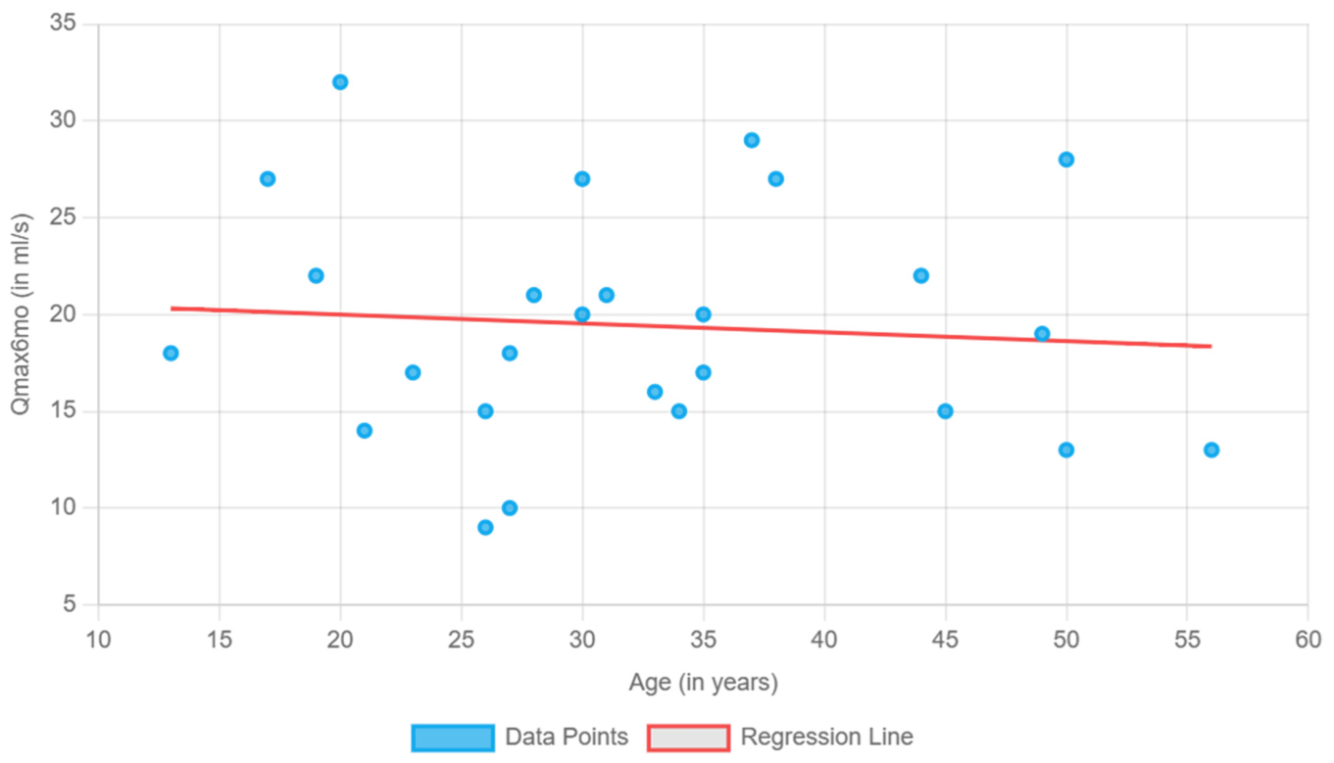
There was a weak negative correlation between age and maximum flow rate after 6 months of surgery (Qmax6mo), with a Pearson’s correlation coefficient of −0.085.
Figure 1 shown below is a line fit plot with age on the
X axis and Qmax6mo on the
Y axis.
Among 26 patients, 11 showed a subsequent decrease in maximum flow rates (i.e., their maximum flow rates at the second follow-up were lower than at the time of first follow-up). On applying the Student t-test, the difference was statistically significant (p-value = 0.011; p-value < 0.05 is significant). Although the fall in the maximum flow rate was statistically significant, urethroscopy showed that all 11 had normal, easily passable urethrae with a healthy anastomotic site. The table below lists the maximum flow rates for these patients at 4 weeks and 6 months, along with their urethroscopy findings.
As mentioned earlier, it was observed that out of 26 patients, one patient had poor and seven had borderline maximum flow rates 6 months after surgery. Even though the flow rates were lower, these patients had normal, easily passable urethrae, and the QoLs of five patients were satisfactory; one had mixed reactions, and two patients were unsatisfied.
In total, 22 patients out of 26 (84.6%) had mild LUTS, including 14 (53.8%) who were asymptomatic and had an IPSS score of 0. Patients were mostly satisfied with their urine flow. A total of 23 patients (88.4%) had a satisfactory response to the quality of life question regarding urinary symptoms.
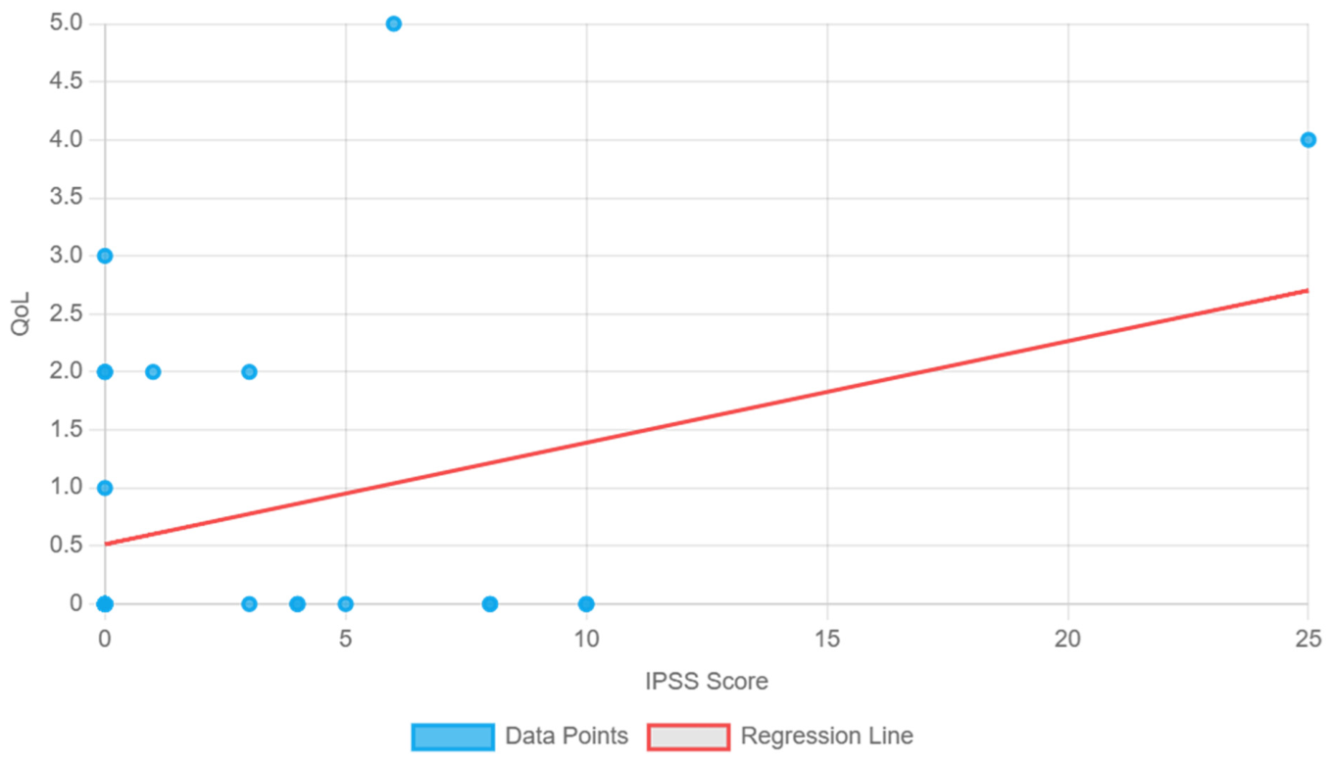
We compared the IPSS and quality of life scores. We applied Pearson’s correlation test. The R value was 0.3442, which meant a positive correlation. The
p-value was 0.085, which was not significant (
p < 0.05 is significant), suggesting that the IPSS score and quality of life due to urinary symptoms were not independent and showed a positive correlation.
Figure 2 shows the line-fit plot for Pearson’s correlation mentioned above. Here, the
X axis is the IPSS score, and the
Y axis is the QoL score.
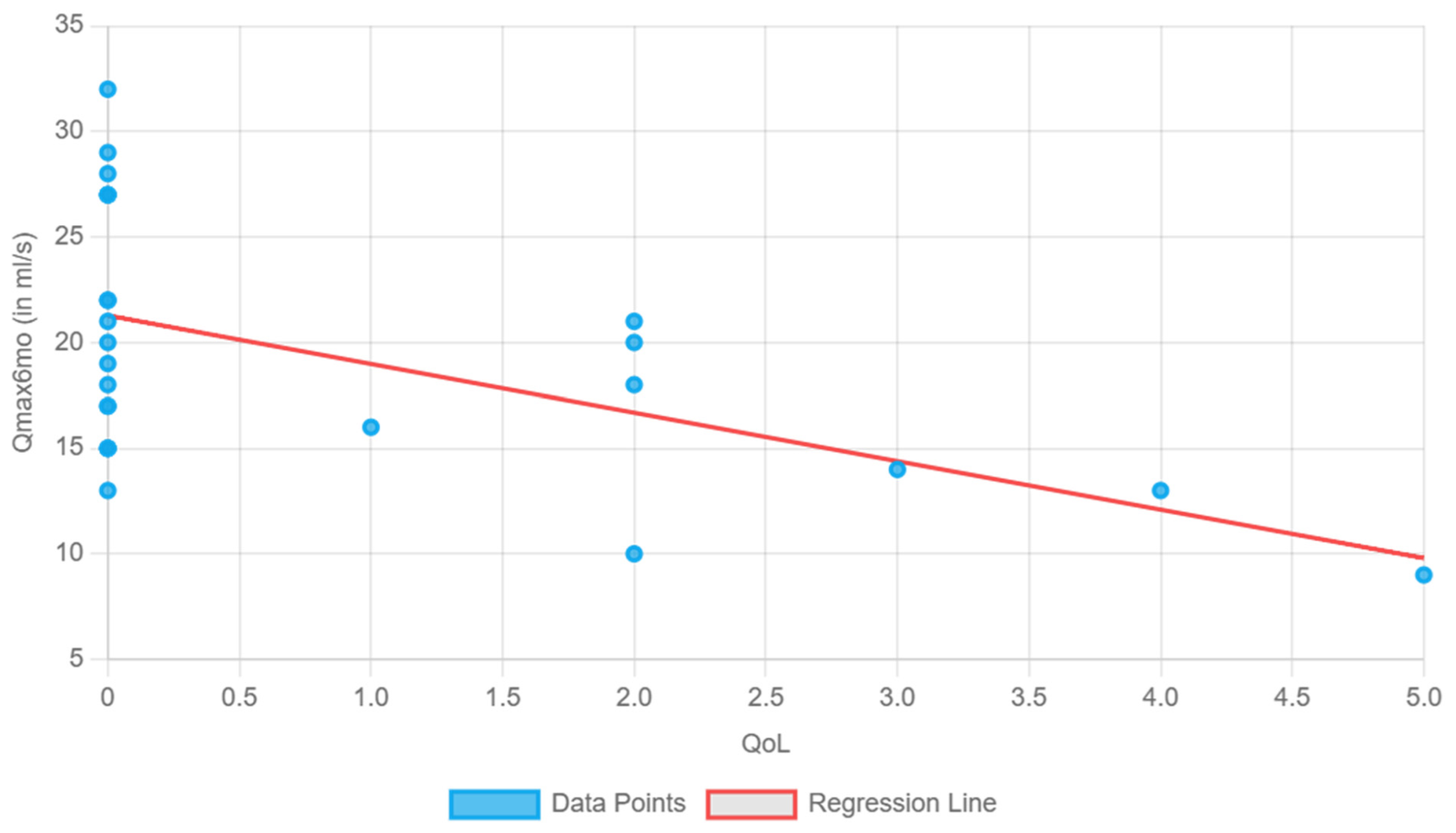
The Pearson correlation coefficient between QoL and maximum flow rate was calculated. The R value was −0.5383, suggesting a strong negative correlation.
Figure 3 shows the line fit plot with QoL on the
X axis and Qmax6mo on the
Y axis.
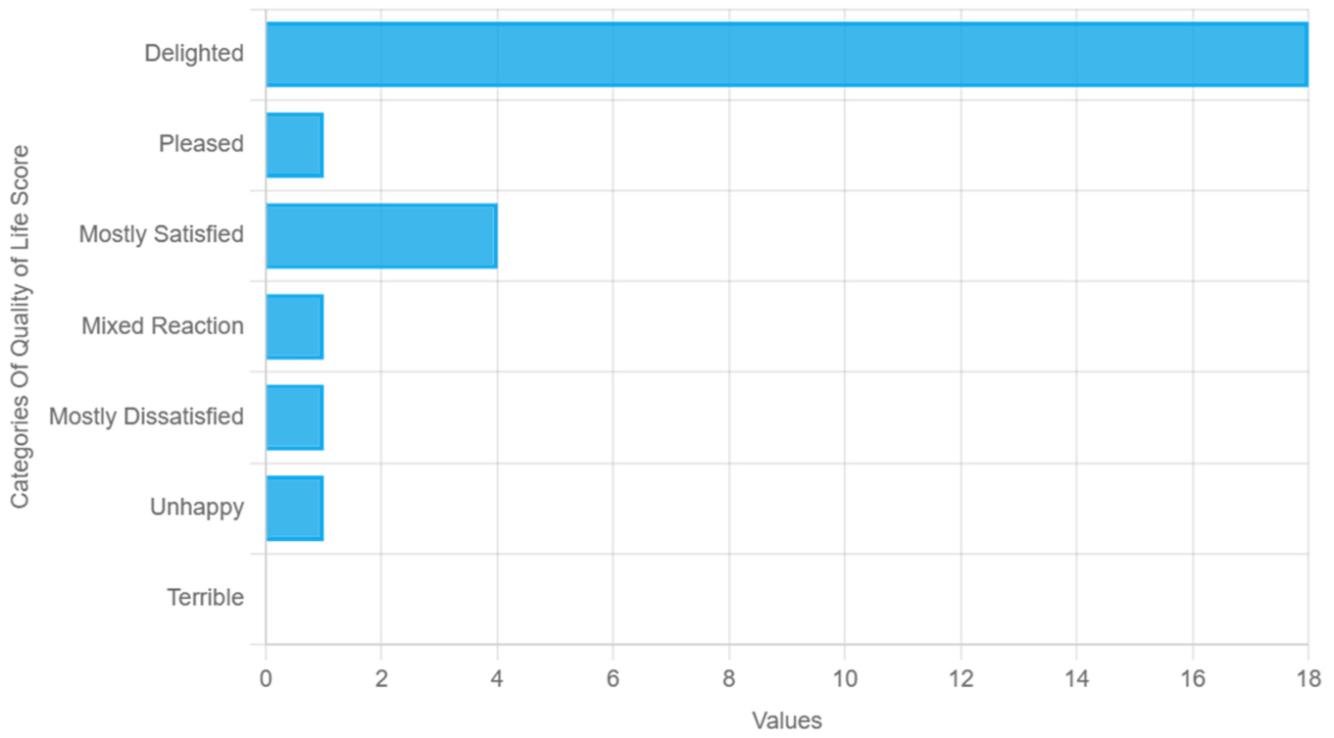
Among 26 patients, 18 were delighted with their urine flow, 1 was pleased, 4 were mostly satisfied, 1 had mixed reactions, 1 was mostly dissatisfied, and one was unhappy. This is shown in
Figure 4.
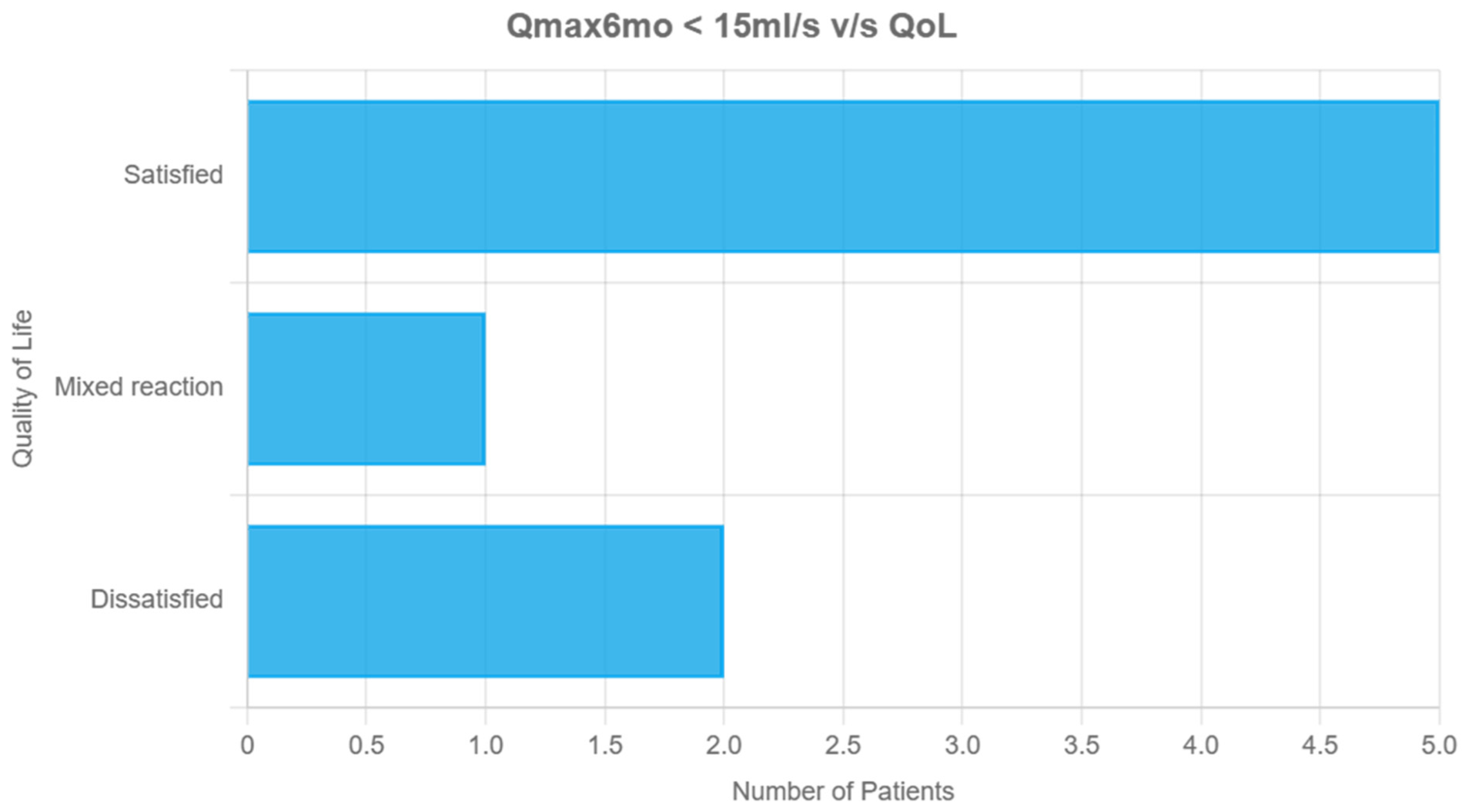
We analysed the quality of life of patients with Qmax6mo <10 mL/s and 10–15 mL/s. Six months after surgery, 8 patients had a peak flow rate of less than 15 mL/s, 5 were satisfied with their urine flow (QoL 0–2), 1 had mixed reactions (QoL 3), and 2 patients were dissatisfied (QoL 4 and 5). This has been shown graphically in
Figure 5.
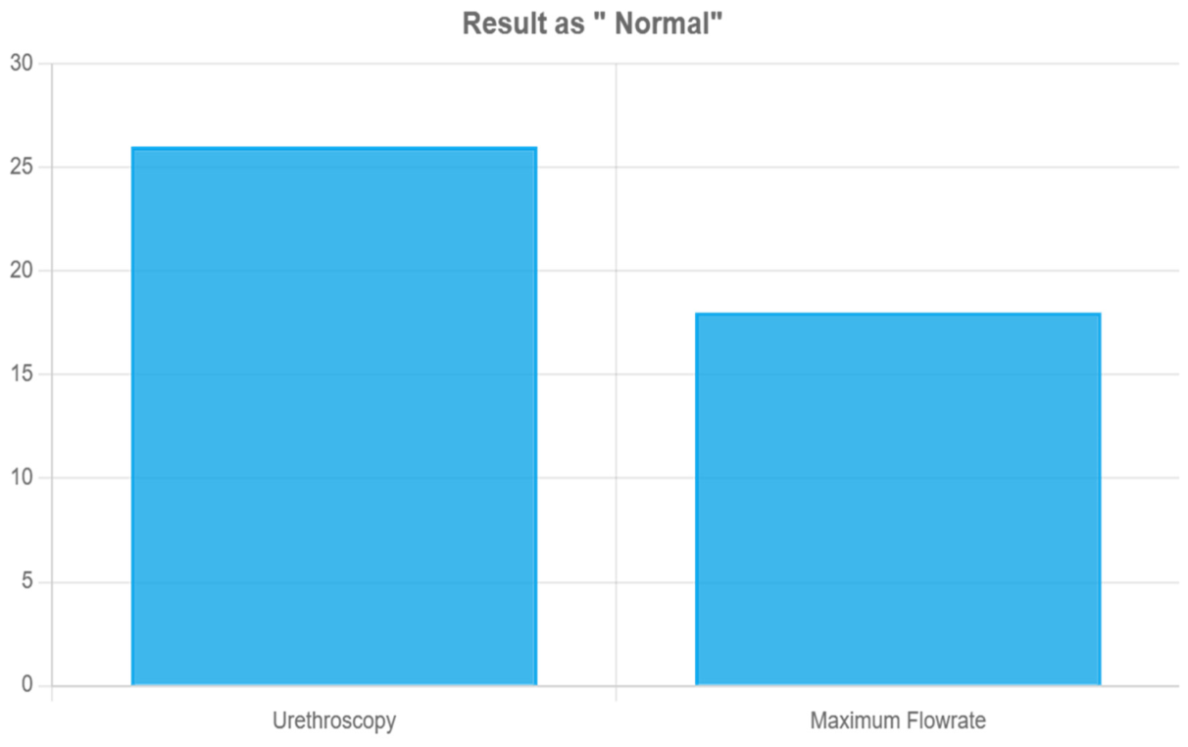
The urologist, performing urethroscopy, was blinded. His conclusion at the end of the study was that all 26 patients (100%) had normal urethrae with easily passable anastomotic sites. The investigators analysing the flow rates and other data were also blinded to the urethroscopy findings. They concluded that, out of 26 patients, 1 had poor, 7 had borderline, and 18 had normal maximum flow rates 6 months after surgery.
Figure 6 shows the number of patients considered “Normal” by the urologist performing urethroscopy and by the investigators assessing uroflowmetry and maximum flow rate.
4. Discussion
Uroflowmetry is a common test performed during follow-up after EEA urethroplasty for PFUI. The advantage is that it is a non-invasive test. While most urologists use uroflowmetry, it alone does not appear to be a reliable test for recurrence of strictures [
5]. This could be attributed to concomitant bladder pathologies or post-surgical periurethral adhesions, which may result in abnormal uroflowmetry patterns or flow rates. One or two tests may not accurately reflect the maximum flow rate. Multiple uroflowmetry measurements are most reliable for accurate assessment [
6]. Quality control is another pertinent requirement that affects the outcome of uroflowmetry results. Environmental factors can significantly affect voiding outcomes.
In a seminal paper, Smith demonstrated that the urethral calibre must be less than 11 Fr with a normally functioning bladder before the urine flow rate is diminished. It is only when the urethral calibre is reduced to 11 Fr that the patient begins to experience LUTS during voiding [
7]. This suggests that uroflowmetry may be normal at a given point in time, but the patient may develop symptoms later and should therefore be kept on prolonged follow-up. Each follow-up visit is an economic burden.
In this study, we set the follow-up period at 6 months, based on the work of Andrich and Mundy, in which patients with normal flow and urethrogram 6 months after surgery (end-to-end anastomotic urethroplasty for PFUI) rarely deteriorated. The literature suggests that if the initial post-catheter removal flow is good, it usually does not deteriorate over time, and evaluation at 3 months is needed to identify at-risk patients [
8].
In our study, we observed that the maximum flow rates were inconsistent across the two visits. Some patients had decreased, and some had increased maximum flow rates during the second visit. Regardless of the maximum flow rate, urethroscopy in all patients was normal. Patients with poor flow rates and borderline flow rates had easily passable urethrae. As expected, there was a positive correlation between the IPSS and QoL scores, and a strong negative correlation between QoLs and maximum flow rates. There was a notable disparity between the conclusions drawn by the urologist performing urethroscopy and those of the investigators analysing flow rates and other data: the former concluded normal results in all 26 patients, whereas the latter found normal results in 18 of 26 patients, with the remaining eight patients having poor/borderline flow rates.
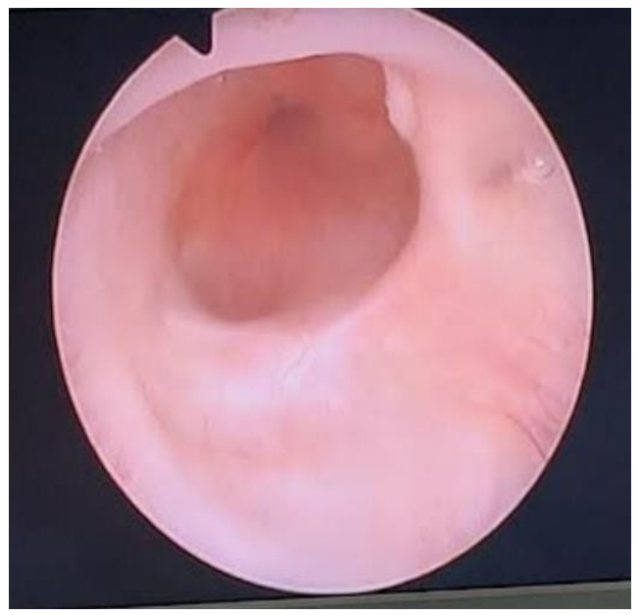
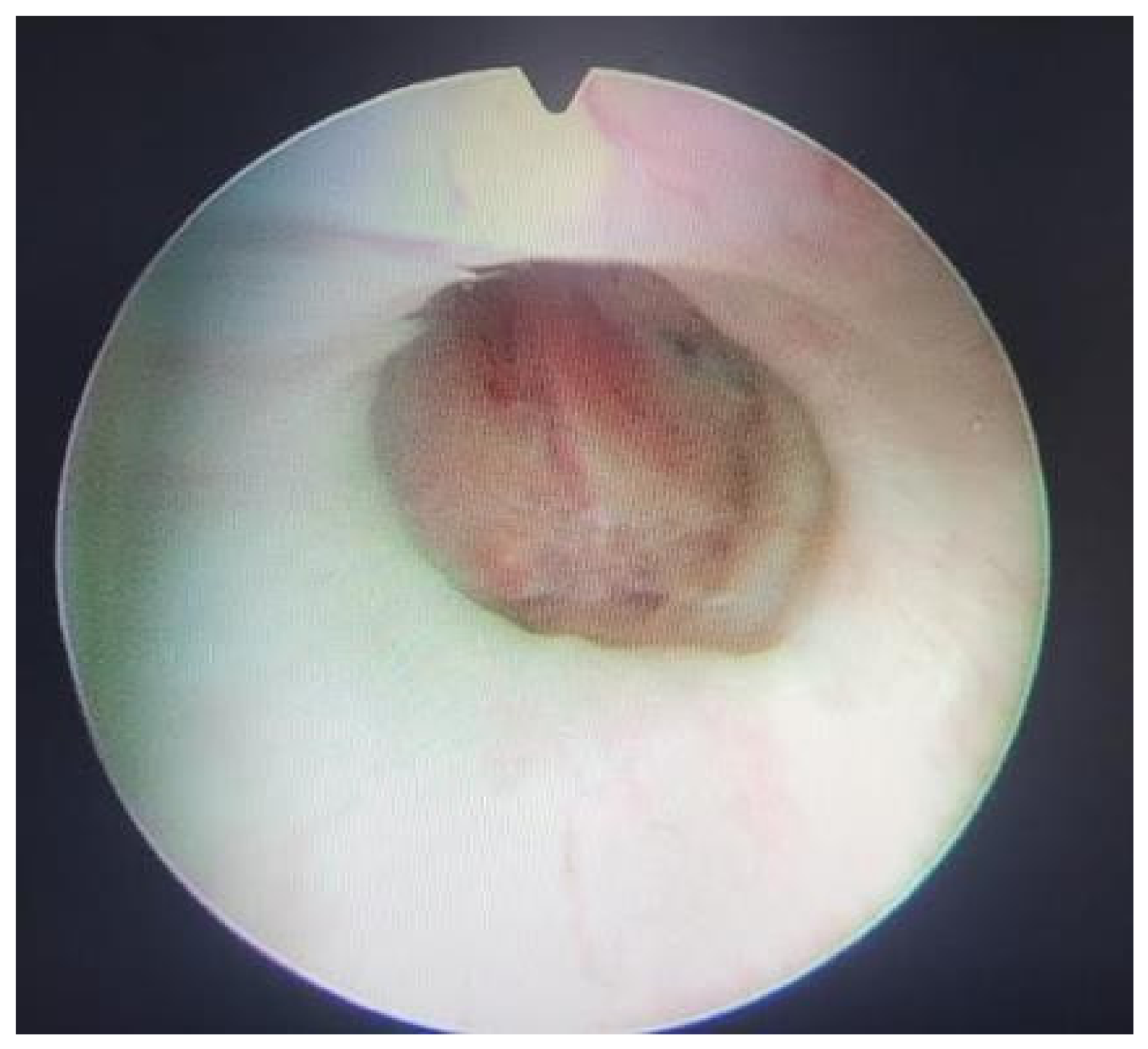
The images below show urethroscopy findings from two patients. Though peak flow rates were 9 mL/s and 16 mL/s, respectively, the anastomotic sites were easily passable with a 14 Fr integrated cystoscope.
Figure 7 shows the urethroscopy image showing the anastomotic site of the patient with maximum flowrate of 9 mL/s at 6 months.
Figure 8 is the urethroscopy image showing the anastomotic site of the patient with maximum flowrate of 16 mL/s.
A limitation of this study is the small sample size, as it was conducted during the pandemic.
5. Conclusions
Based on our study, we conclude that any patient with a borderline or poor urinary flow rate should undergo urethroscopy. Urethroscopy enables direct visualisation of the anastomotic site in PFUI cases who have undergone EEA urethroplasty and provides more detailed information than uroflowmetry. The maximum flow rate alone cannot serve as a surrogate for anatomical success. While a Qmax >15 mL/s is a sign of a patent urethra, importantly, a flow rate <15 mL/s does not always indicate re-stricture. Quality of life is an important tool for evaluation. We advocate for routine urethroscopy at 6 months after surgery to look for urethral patency and reduce the number of follow-up visits.
Author Contributions
Conceptualisation, S.S.P., G.G. and S.B.V.; methodology S.S.P., G.G. and S.B.V.; software, S.S.P.; validation, not applicable; formal analysis, S.S.P.; investigation S.B.V., N.S., M.K. and M.A.; resources, S.V.K.; data curation, S.S.P.; writing—original draft preparation, S.S.P.; writing—S.S.P. and G.G.; visualisation, S.S.P.; supervision, G.G.; project administration, S.V.K.; funding acquisition, not applicable. All authors have read and agreed to the published version of the manuscript.
Funding
This research received no external funding.
Institutional Review Board Statement
The study was conducted in accordance with the Declaration of Helsinki and approved by the Ethics Committee of Kovai Medical Center and Hospital, Coimbatore, 641002, India (EC/AP/882/01/2022) on 31 January 2022.
Informed Consent Statement
Informed consent was obtained from all subjects involved in the study. Written informed consent has been obtained from the patients to publish this paper.
Data Availability Statement
Data available on request (to the corresponding author) for privacy reasons.
Conflicts of Interest
The authors declare no conflicts of interest.
Abbreviations
The following abbreviations are used in this manuscript:
| EEA | End-to-End Anastomotic Urethroplasty |
| PFUI | Pelvic Fracture Urethral Injury |
| IPSS | International Prostate Symptom Score |
| QoL | Quality of Life |
| Qmax | Maximum Flowrate |
| Qmax1mo | Maximum Flowrate at 1 month |
| Qmax6mo | Maximum Flowrate at or after 6 months |
| BXO | Balanitis Xerotica Obliterans |
| SPC | Suprapubic Catheter |
| Q average | Average Flow Rate |
| UTI | Urinary Tract Infection |
| BMI | Body Mass Index |
| LUTS | Lower Urinary Tract Symptoms |
References
- Demetriades, D.; Karaiskakis, M.; Toutouzas, K.; Alo, K.; Velmahos, G.; Chan, L. Pelvic fractures. Epidemiology and predictors of associated abdominal injuries and outcomes. J. Am. Coll. Surg. 2002, 195, 1–10. [Google Scholar] [CrossRef] [Scilit] [PubMed]
- Kulkarni, S.B.; Barbagli, G.; Kulkarni, J.S.; Romano, G.; Lazzeri, M. Posterior urethral stricture after pelvic fracture urethral distraction defects in developing and developed countries, and choice of surgical technique. J. Urol. 2010, 183, 1049–1054. [Google Scholar] [CrossRef] [Scilit] [PubMed]
- Mathur, R.K.; Sharma, A.K.; Grover, J. Comprehensive Analysis and Urethroscopic Evaluation of “U” Shaped Prostatobulbar Anastomotic Urethroplasty. Asian J. Surg. 2009, 32, 151–156. [Google Scholar] [CrossRef] [Scilit] [PubMed]
- Bullock, T.L.; Brandes, S.B. Adult anterior urethral strictures: A national practice patterns survey of board certified urologists in the United States. J. Urol. 2007, 177, 685–690. [Google Scholar] [CrossRef] [Scilit] [PubMed]
- Smith, J.C. Urethral resistance to micturition. Br. J. Urol. 1968, 40, 125–156. [Google Scholar] [CrossRef] [Scilit] [PubMed]
- Blaivas, J.G. Techniques of evaluation. In Neurourology and Urodynamics: Principles and Practice; Macmillan: New York, NY, USA, 1988; pp. 155–198. [Google Scholar]
- Meeks, J.J.; Erickson, B.A.; Granieri, M.A.; Gonzalez, C.M. Stricture recurrence after urethroplasty: A systematic review. J. Urol. 2009, 182, 1266–1270. [Google Scholar] [CrossRef] [Scilit] [PubMed]
- Bhagat, S.K.; Gopalakrishnan, G.; Kumar, S.; Devasia, A.; Kekre, N.S. Redo-urethroplasty in pelvic fracture urethral distraction defect: An audit. World J. Urol. 2011, 29, 97–101. [Google Scholar] [CrossRef] [Scilit] [PubMed]
| Disclaimer/Publisher’s Note: The statements, opinions and data contained in all publications are solely those of the individual author(s) and contributor(s) and not of MDPI and/or the editor(s). MDPI and/or the editor(s) disclaim responsibility for any injury to people or property resulting from any ideas, methods, instructions or products referred to in the content. |
© 2026 by the authors. Published by MDPI on behalf of the Société Internationale d’Urologie. Licensee MDPI, Basel, Switzerland. This article is an open access article distributed under the terms and conditions of the Creative Commons Attribution (CC BY) license.





 ,
,