
Article

The Efficacy and Safety Profile of UroLift for Management of Benign Prostatic Hyperplasia in Australia

1
Department of Urology, Western Health, Footscray, VIC 3011, Australia
2
Department of Surgery, University of Melbourne, Parkville, VIC 3050, Australia
3
Department of Urology, Sunshine Coast University Hospital, Birtinya, QLD 4575, Australia
4
Victorian Comprehensive Cancer Centre, Parkville, VIC 3050, Australia
5
Department of Urology, Royal Melbourne Hospital, Parkville, VIC 3050, Australia
*
Author to whom correspondence should be addressed.
Soc. Int. Urol. J. 2026, 7(2), 26; https://doi.org/10.3390/siuj7020026
Submission received: 31 December 2025 / Revised: 30 March 2026 / Accepted: 8 April 2026 / Published: 18 April 2026

Abstract

Background/Objectives: For men with bothersome lower urinary tract symptoms (LUTS) secondary to benign prostatic hyperplasia (BPH) requiring surgical intervention, UroLift has been shown to be an effective and durable, minimally invasive method. Methods: A retrospective review was conducted for 72 patients who underwent UroLift at a single hospital in Australia between 2018 and 2025. Data regarding baseline demographics, the pre- and post-operative International Prostate Symptom Score (IPSS), maximum urinary flow rate (Qmax), the post-void residual (PVR), and complications were collected prospectively. Inclusion criteria for patients selected for UroLift were males over 50 years with a prostate volume between 20 and 70 mL, pre-operative PVR of <350 mL and Qmax and IPSSs of <15 mL/s and >12 respectively. The purpose of this study is to assess the clinical outcomes of patients treated with UroLift at our institution and compare these findings to the existing literature. Results: Complete data was available for 34 patients. Our cohort had a median age of 63.0 years (interquartile range [IQR] 58.0–69.0) and UroLift was performed using a median number of 4.05 implants per patient. Median prostate volume (mL) was 43.0 (IQR 38.0–59.0). Post-operatively, the median percentage changes in the IPSS, Qmax (mL/s) and PVR (mL) were −30.9% (IQR 5.8–−71.1, p = 0.0048), 40.1% (IQR −6.6–165.1, p = 0.0159) and −36.4% (IQR −84.6–29.8, p = 0.0232), respectively. Most patients (n = 24, 73.5%) were discharged on the same day of the UroLift procedure with the remainder (n = 9, 26.5%) being discharged on day 1 post-operatively. The median time (months) for post-operative review was 2 (IQR 0.9–3.3). Conclusions: UroLift is safe, effective, and a minimally invasive treatment option in suitable patients with bothersome LUTS requiring surgical intervention.

1. Introduction

Benign prostatic hyperplasia (BPH) is a common condition that affects approximately 50% of men aged between 50 and 60 years of age [1]. The prevalence of BPH increases with age and is associated with lower urinary tract symptoms (LUTS), negatively impacting a patient’s quality of life (QoL) [2,3]. In recent years, several new treatment modalities have emerged for the management of BPH. Collectively, these are referred to as minimally invasive surgical therapies (MISTs). MISTs aim to reduce the frequency of side effects associated with transurethral resection of the prostate (TURP), which was the traditional surgical management for BPH. Patients undergoing TURP have a risk of developing complications of urinary incontinence, urethral strictures and ejaculatory and or erectile dysfunction [4]. Unlike TURP and laser therapies, the UroLift procedure aims to avoid alteration of the prostate tissue that might affect these functions [5,6]. This is supported by current international guidelines, including the American Urological Association (AUA) for LUTS attributed to BPH and the European Association of Urology (EAU) guidelines for Non-neurogenic Male LUTS, which recommend clinicians consider UroLift in patients wishing to preserve sexual function [7,8]. However, these guidelines note that patients with a prominent obstructing median lobe or large prostate volume exceeding 80 g should not be considered for this procedure, highlighting the importance of patient selection for optimising outcomes [7,8].
The UroLift® system (UroLift) is a MIST that was first recognised to show benefits for patients who require surgical intervention for bothersome LUTS from BPH in 2011 [9]. UroLift is performed by inserting several transprostatic suture implants via a cystoscope to widen the prostatic urethra and improve LUTS [10].
The efficacy of the UroLift system has been shown to improve both subjective and objective symptoms of BPH. In particular, it has been demonstrated to have a marked reduction in the International Prostate Symptom Score (IPSS) and an enhancement in QoL metrics within a few months post-procedure [11]. The average IPSS reduction has been observed to be around 10–12 points, with significant improvements in the maximum urinary flow rate (Qmax) and post-void residual (PVR), which show a sustained benefit of up to 5 years [5,6]. The UroLift system has also been shown to preserve sexual function, which is a major consideration for many patients opting for this minimally invasive BPH treatment option [12].
Since these favourable outcomes have been demonstrated, attention is now directed toward investigating the performance of UroLift in real-world settings, with a focus on any complications, such as urinary retention, as well as retreatment rates. This study presents the outcomes of UroLift in an Australian cohort over the past eight years. Comparing our findings with the published literature will further contribute to the safety profile and efficacy of UroLift as a MIST for BPH. And, although UroLift outcomes have been reported internationally, Australian real-world data remains limited. This study provides a current Australian cohort with follow-up data, complication outcomes, and re-intervention timing, which improves our understanding of UroLift in clinical practice in a local context.

2. Materials and Methods

A retrospective review was conducted on prospectively collected data for 72 male patients who underwent the UroLift (Teleflex Incorporated, Pleasanton, CA, USA) procedure at Western Health, Victoria, Australia, from January 2018 to December 2025. These patients had symptomatic BPH with lower urinary tract symptoms that were refractory to medical therapy, defined as persistent bothersome LUTS despite treatment with either alpha-blockers and/or 5-alpha reductase inhibitors. Complete data were available for n = 34 patients. Many patients recruited for UroLift did not have a pre-operative IPSS and Qmax recorded because external referrals to our urology service for LUTS do not mandate these measurements. Inclusion criteria for patients selected for UroLift were males over 50 years with a prostate volume between 20 and 70 mL, pre-operative PVR of <350 mL and Qmax and IPSSs of <15 mL/s and >12, respectively. These thresholds were selected to allow comparisons between our cohort with other UroLift studies, as well as identifying patients that may not be suitable for MISTs, such as those at risk of chronic urinary retention (CUR). This term is not universally defined, but has been detailed in the American Urological Association CUR workgroup as a PVR > 300 mL that has persisted for >6 months and has been documented on at least two occasions [13]. Pre-operative patient variables that were collected included: age (years), prostate volume (mL), IPSS, Qmax (mL/s) and PVR (mL). Exclusion criteria for patients undergoing UroLift were a history of urinary retention or catheter dependency, bladder neck contracture, other urethral obstruction or a prostate volume >100 cc. There was one patient with a prostate volume of 104 mL but after detailed pre-operative surgical counselling, the patient decided to proceed with the UroLift procedure. Prostate volume was confirmed by transabdominal renal tract ultrasound done within 12 months before the procedure. Pre-operative assessments included full blood examination, urea, electrolytes and creatinine, and urine microscopy and culture. Routine antibiotics at induction were determined by local guidelines for urology surgical antibiotic prophylaxis: Gentamicin IV 2 mg/kg (if contraindicated Cefazolin IV 2 g (3 g if weight >120 kg) OR ciprofloxacin IV 200 mg). Any positive pre-operative urine specimen was treated with antibiotics in the pre-operative period for 3–7 days, depending on the number of leucocytes and the culture result. All UroLift procedures were conducted by a consultant urologist or urology registrar, under supervision by a consultant using either a general or spinal anaesthetic. In the procedure, a rigid cystoscopy was performed to assess the urethra and bladder before delivery of the UroLift implants. Following this, implants were deployed in the prostatic urethra to retract the lateral lobes, supported by a capsular and urethral anchor. The implants are subsequently introduced until the lumen is unobstructed, and then a 3-way indwelling catheter is inserted with continuous bladder irrigation.
It was planned for the patients to be discharged on the day of surgery after successfully passing a trial of void (TOV). The pathway for patients undergoing UroLift at our centre is accessible as a quick reference guide for clinicians on the Western Health intranet. Clinicians discussed all surgical options for management of LUTS pre-operatively and patients provided informed consent to proceed with UroLift. Patients were followed up according to the UroLift protocol, with a urology nurse phone consultation at 2–4 weeks post-operatively. At 12 weeks, patients underwent a UroFlow test, to measure Qmax, followed by a PVR measurement. Patients were then reviewed by a urology consultant in the outpatient clinic. At this appointment, any complications of UroLift were recorded. In this study, the following were recorded: no complications, urinary retention, sepsis, acute bacterial prostatitis (ABP) and LUTS. Sepsis was defined using the Intention Consensus Definition of Sepsis and Septic Shock, which states that sepsis is a life-threatening condition from dysregulated host response to infection leading to organ dysfunction [14]. Urosepsis was defined as sepsis in patients with a urinary tract infection (UTI). ABP was defined as an infection of the prostate gland, characterised by LUTS with fever and other systemic symptoms [15]. Importantly, patients could report multiple complications from UroLift if they were affected. As a result, the total number of complications (n = 36) exceeds the sample size evaluated for statistical analysis (n > 34). In addition, the re-intervention rate was calculated for all patients who underwent UroLift. In our study, a re-intervention was defined as an additional surgical procedure undertaken for the management of BPH, after UroLift was performed.
Statistical analysis was undertaken for patients who met the inclusion criteria with a complete data set. Descriptive statistics were used to summarise age, length of stay, prostate volume and number of UroLift implants used. Categorical variables were described using frequencies and percentages and continuous variables were described with the median and interquartile range (IQR). Analysis was performed to compare the pre- and post-operative IPSS, Qmax and PVR values. Firstly, the Shapiro–Wilk test was used to determine if IPSS, Qmax and PVR variables were normally distributed. All tests were performed at a 5% level of significance. Since the normality assumption did hold for the IPSS, a paired t-test was used to compare the results between the pre- and post-IPSS groups. For Qmax and PVR, the normality assumption did not hold so a paired Wilcoxon signed rank test was used for each. We also compared our findings for the post-operative IPSS, Qmax and PVR with a recent paper in the literature: Prostatic Urethral Lift for Subjects in Urinary Retention (PULSAR) study [16]. This comparison was analysed using a Welch Modified Two-Sample t-test. All tests were performed at a 5% level of significance (p < 0.05). All analyses were performed using Excel (Microsoft Corporation, Redmond, CA, USA) and SPSS version 30.0 (SPSS Inc., IBM Corp., Armonk, NY, USA).
This study is a quality assurance project, as determined by the Western Health Low Risk Ethics Panel (WH LREP), under the Western Health Office of Research and granted ethics approval (QA2018.59, 21 August 2018). Additional informed consent was not required given there were no added ethical risks to patients, apart from those of the UroLift procedure itself. This study was conducted according to local laws and regulations and according to the Western Health Research Code of Conduct (2023), National Health and Medical Research Council’s (NHMRC) statement on ethical conduct in human research, including Section 2 (e) titled: “Ethical Considerations in Quality Assurance and Evaluation Activities” and the Guidelines for Good Clinical Practice.

3. Results

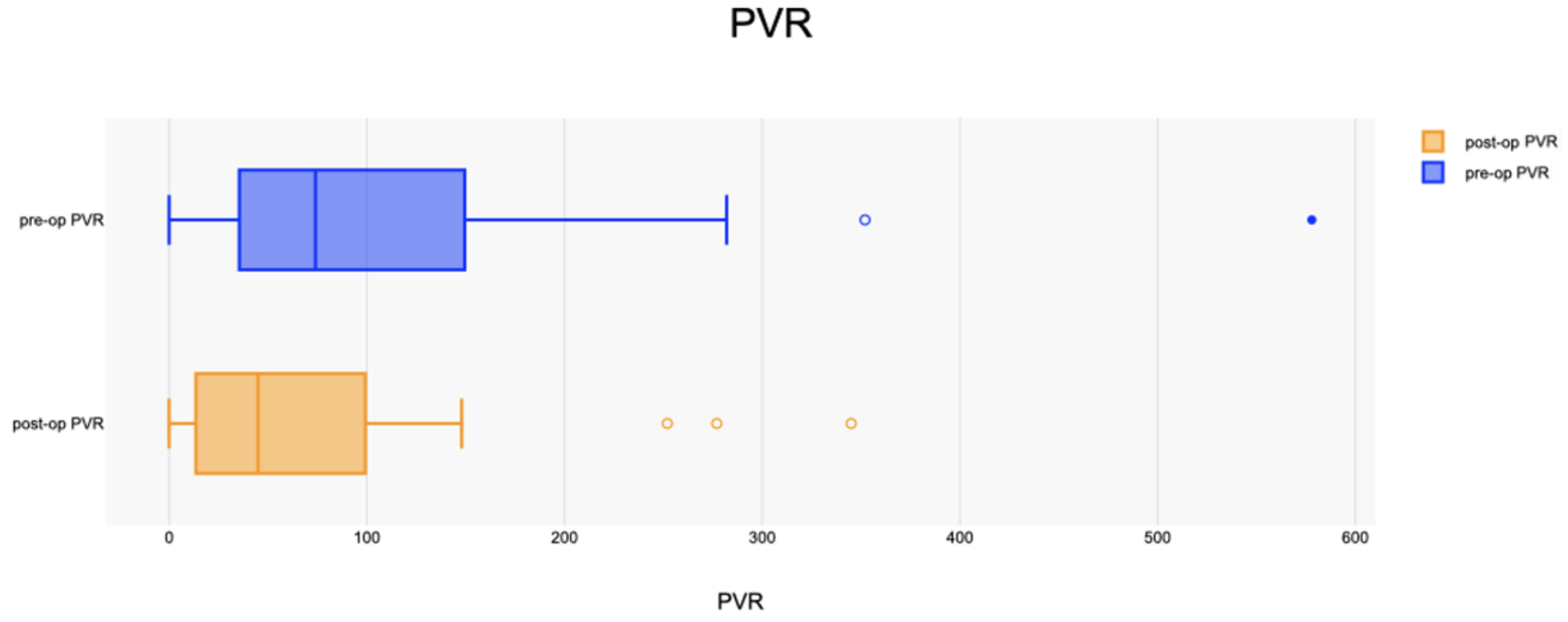
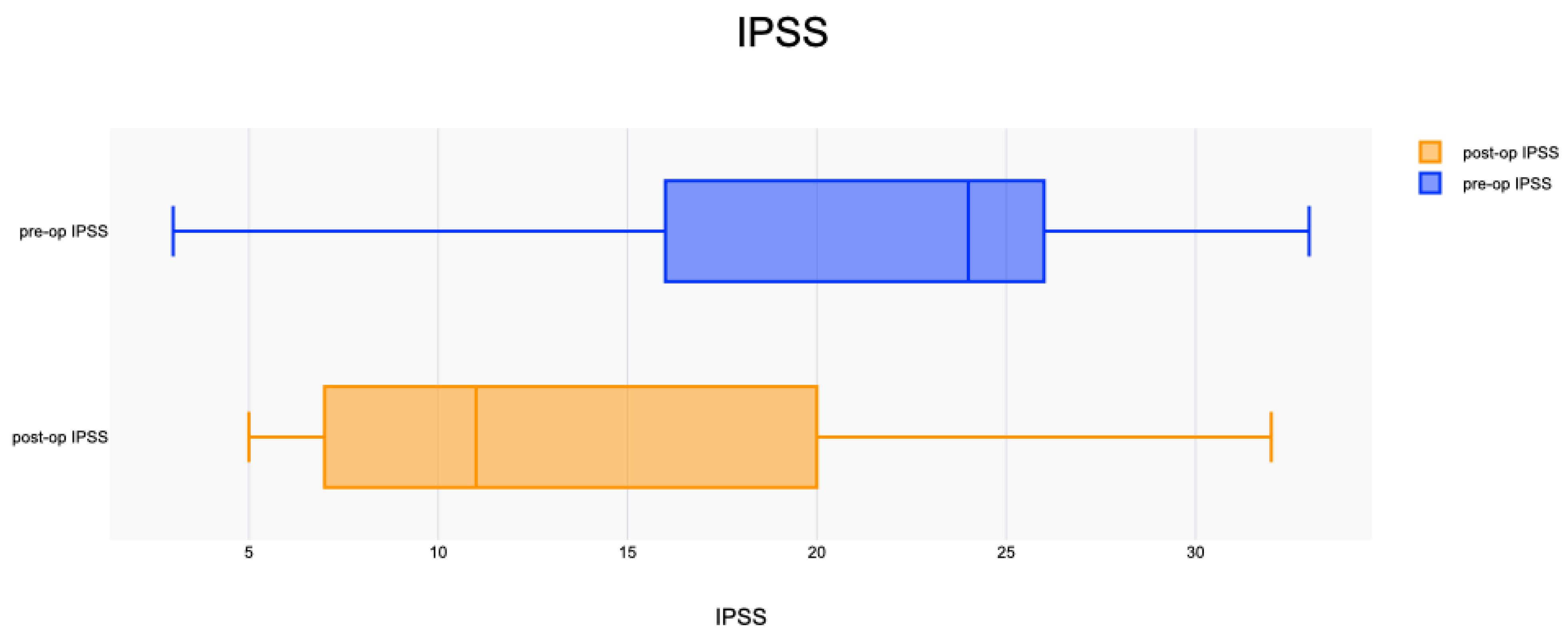
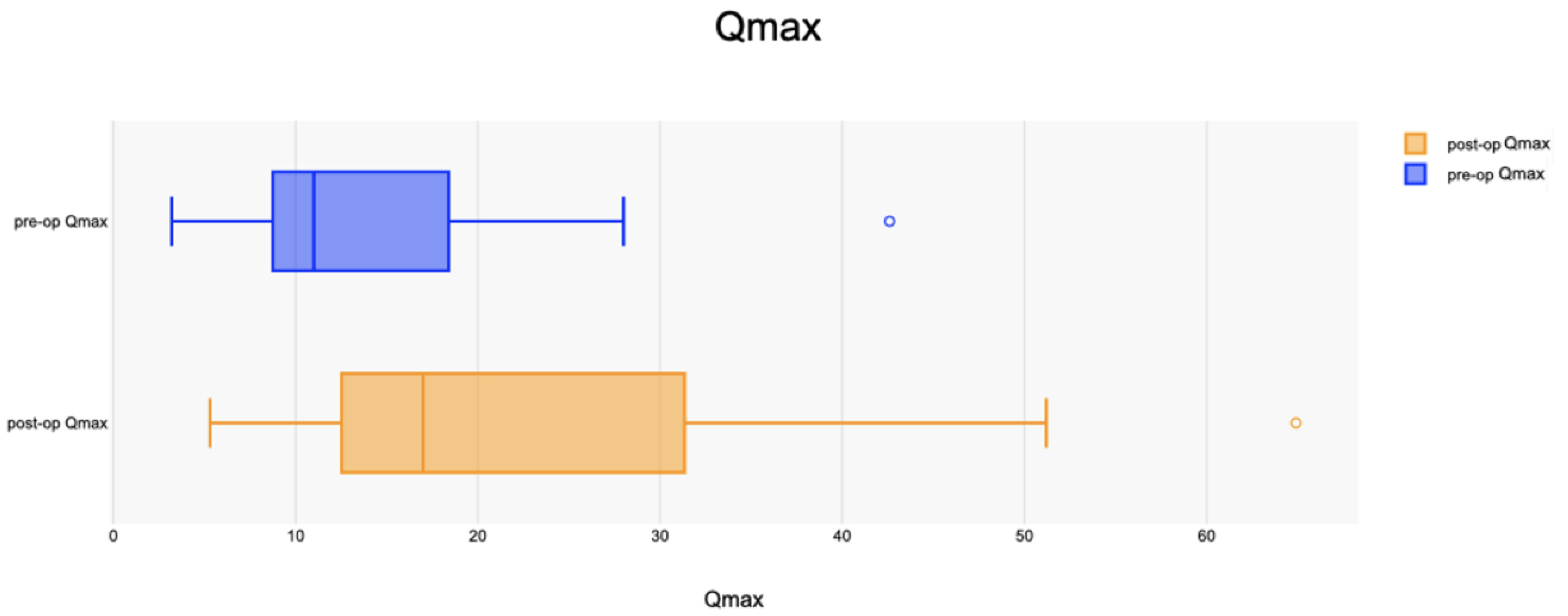
From the initial cohort of 72 patients, complete data was available for 34 patients. Missing variables for incomplete data (n = 38) included pre-op IPSS (n = 29), pre-op Qmax (n = 16) and post-op IPSS (n = 6). The median age was 63.0 years. An average of 4.05 UroLift implants were used per patient. The median prostate volume was 43.0 mL (IQR 38.0–59.0). The median IPSS decreased from 24.0 to 11.0 (p = 0.0048) (Table 1 and Figure 1), the median Qmax increased from 11.0 mL/s to 17.0 mL/s (p = 0.0159) (Figure 2) and the median PVR decreased from 74.0 ml to 45.0 ml (p = 0.0232) (Figure 3). The median time (months) for post-operative review was 2 (IQR 0.9, 3.3). The majority of patients (n = 24, 73.5%) were discharged the same day as the procedure and the remainder were discharged on day 1 post-operatively (n = 9, 26.5%). Following UroLift, most patients had no complications (n = 26, 76.5%) but four patients (11.8%) reported LUTS and four patients had urinary retention (Table 2). These patients all successfully passed a TOV after initial re-catheterisation. No patients developed sepsis or ABP. Two patients (5.9%) required surgical re-intervention with TURP following UroLift. The mean time to re-intervention for these two patients was 802 days, (773 and 831 days, individually).
Importantly, we also recorded any complications in the cohort without complete data (n = 72). For these patients we found one case of extended spectrum beta-lactamase urinary sepsis, occurring 7 days post-UroLift and requiring intravenous antibiotics. Two other patients developed prostatitis 24 days and 18 days post-operatively and were treated with oral antimicrobial therapy. Six patients (8.3%) required surgical re-intervention with TURP following UroLift, with a mean rate of intervention post-op of 710 days.

4. Discussion

Recent studies support the efficacy of the UroLift system in alleviating urinary symptoms with a relatively low risk of adverse events [17]. In this study, there was an overall improvement in the IPSS, Qmax and PVR volume compared to pre-operative measurements, which validate the existing evidence in the literature. However, our findings should be interpreted within the context of a short follow-up period (median follow-up 2.04 months) and longer-term outcomes were not directly measured in this study. Whilst this is important to demonstrate, there is a shift towards focusing on the evaluation of UroLift regarding its complications and re-intervention rate. Understandably, clinicians want to optimise the treatment of LUTS secondary to BPH and minimise the complications associated with any procedure. Specifically, men prefer treatments that have a lower risk of sexual side effects such as ejaculatory and erectile dysfunction [18]. However, when determining the most appropriate management option, clinicians must consider the balance of improving LUTS with reducing side effects. As a comparator, TURP has been shown to have a larger improvement in the IPSS and Qmax results compared to UroLift, but it is inferior to UroLift with respect to ejaculatory dysfunction and quality of recovery [19]. This shows the importance of pre-operative counselling and shared decision making with patients to determine the most appropriate treatment for the individual. This study provides important evaluation of UroLift in a real-world setting to increase our understanding of its role in managing LUTS secondary to BPH.
In our cohort, we found a statistically significant difference between pre- and post-operative changes in the IPSS, Qmax and PVR for patients undergoing UroLift (p = 0.0048, 0.0159 and 0.0232, respectively) (Table 1). This underlines the benefit of UroLift for improving LUTS in patients who met the inclusion criteria with respect to the IPSS, Qmax and PVR. We compared our findings to a recent prospective UroLift review, which reviewed prostatic urethral lift for subjects in urinary retention (PULSAR study) across six different centres in the United Kingdom [16]. Compared with our cohort, the PULSAR study enrolled patients with a higher age (mean = 71.3 years) and a larger prostate volume (mean = 55.17 mL) [16]. In this study, the median IPSS at 3 months post-operatively was 8.0 (n = 44) compared with 11.0 (n = 34) for our study [16]. Median Qmax and PVR values at 3 months in the PULSAR study were respectively 9.7 mL/s (n = 50) and 116.0 mL (n = 51) [16]. Our study found median Qmax and PVR results of 17.0 mL/s and 45.0 mL respectively (n = 34). We compared post-operative IPSS, Qmax and PVR results at 3 months post-operatively in the PULSAR study to our results (median follow-up 2.04 months) using a Welch Modified Two-Sample t-test. We found that between studies, IPSS, Qmax and PVR showed a statistically significant difference, with p values of 0.0033, p = 0.0001 and p = 0.0128, respectively. The difference between the two studies may be secondary to our cohort having a small sample size (n = 34), as well as a shorter median follow-up in our cohort (2.04 months), which may influence outcomes. Despite these differences, both our study and the PULSAR study show favourable outcomes when comparing pre- and post-operative IPSS, Qmax and PVR.
Post-operative infection is a potential complication of UroLift as the procedure involves insertion of permanent transprostatic implants. The risk of UTI following UroLift in previous studies has been reported at rates from 0.98% to 2.86% [20,21,22]. A recent single-centre study of 50 patients undergoing UroLift also demonstrated no cases of post-operative infection (n = 0) [23]. In our study, there were no cases of either ABP or sepsis for patients with a complete data set (n = 34). However, when considering all patients in our review (n = 72), two patients (2.8%) developed ABP and one patient (1.4%) developed sepsis. In both instances, our findings demonstrate a low risk of post-operative infection, consistent with the existing literature.
Moreover, patients may require re-intervention despite UroLift for management of LUTS. The rates of re-intervention have been reported to increase by approximately 2–3% annually following UroLift according to 5-year follow-up data in the L.I.F.T study [6]. In a retrospective review of patients who underwent UroLift between 2015 and 2018 in the United States, the rates of patients requiring a procedure at 1 year post-UroLift were 5.1% (n = 14343) and 16.1% (n = 710) at 4 years post-operatively [24]. Comparatively, TURP is reported to have re-intervention rates at 1 year and 4 years post-UroLift of 4.6% and 7.6% respectively [25]. In our study cohort (n = 34) the rate of patients requiring surgical re-intervention with TURP was 5.9% (n = 2), with a mean time to re-intervention of 802 days. This figure is not directly comparable given the variability of the follow-up period. For example, some patients underwent UroLift as early as 2018 and have subsequently had eight years of follow-up to record any re-intervention, whereas more recent patients could be less than 12 months post-operatively. Despite this, the re-intervention rates for our cohort are low. Currently, there is no recommended procedure to offer patients who still require surgical intervention for LUTS secondary to BPH after a UroLift procedure. All patients that required surgical re-intervention in this study underwent TURP.
In addition, one patient required a re-do UroLift procedure due to a migrate implant from the initial operation. This case was also complicated by post-operative urinary retention after the initial procedure. He required a return to theatre to remove the implant, which had been displaced from the prostate into the bladder. In the initial operation, all implants were confirmed on cystoscopy to be correctly positioned in the prostate. During the second operation an additional two implants were deployed. Following this, the patient successfully passed a TOV, was discharged the same day of procedure and reported no other complications at his 3-month post-operative visit. Incorrect deployment of implants is the most reported issue with the UroLift device, as reported in a retrospective review between 2016 and 2023 of the US Manufacturer and User Facility Device Experience (MAUDE) database, which records adverse events from surgical devices [26]. Rarely, implants have been reported to migrate, despite correct deployment and positioning in the prostate, with one case of a migrated implant reported to cause an acute bowel obstruction [26]. Another case of a migrated implant has been shown to occur as late as 3 years post-operatively, with the potential mechanism postulated to be tissue remodelling of the prostate, secondary to long-term finasteride use [27]. In our study, the migrated implant occurred very soon after the initial operation, with a return to theatre within 48 h of the initial operation. This may have been the result of insufficient anchoring of the implant to the prostate, with possible displacement occurring due to tissue relaxation and/or oedema post-operatively. However, further research is required given a limited number of cases reported on the complications of UroLift, with fewer describing the aetiology of migrated implants.
Post-operative haematuria is another potential complication of UroLift, which has been reported to occur at rates of 24.5% to 74.5% of patients in other studies [22,28]. Although Shore et al. [26] found most patients reported haematuria (n = 40, 80%), it was described as mild–moderate, only lasting for a median of four days. The risk of haematuria requiring surgical intervention for patients undergoing UroLift is around 2% [29]. This is likely low due to the absence of cautery in performing the procedure. Whilst haematuria was not directly reported as a complication of this study, no patients required surgical intervention to manage post-operative haematuria. As a precaution, any patients on anticoagulants and/or antiplatelets were asked to withhold these medications pre-operatively if clinically appropriate. Instructions to restart anticoagulants and/or antiplatelets were specified in the surgeon’s post-operative orders.
The main limitations of our study include evaluating patients from a single centre with a small sample size of complete data (n = 34). Even though more patients underwent UroLift (n = 72), IPSS and investigations (UroFlow) lowered the number of patients for analysis. During the early stages of this study, this drew attention to the potential burden of completing these pre-operative tests. To increase our sample size of complete data, the urology nursing team at Western Health (WH), led by S.W., developed a UroLift protocol with a quick reference guide (QRG) for clinicians. This was highly important for this study to ensure patients had timely completion of the IPSS and UroFlow, prior to UroLift. After implementation of this protocol, patients were more likely to have a pre-operative IPSS and UroFlow completed. This demonstrates that accurate measurement of outcomes for operations can be optimised by implementing a clear workflow. This ensures clinicians are aware of any required tests pre-operatively and can accurately give post-operative instructions for follow-up. The overall benefit of UroLift in our study was limited to a median follow-up of 2.04 months, which limits the interpretation of durability for the procedure. However, in a busy tertiary centre, long-term follow-up for post-operative patients may not always be feasible due to limited space for outpatient appointments.
Another limitation is that our study did not compare UroLift to other MISTs for BPH, such as Aquablation or Rezum. Studies that compare the outcomes of MISTs at multiple hospitals could provide a more detailed comparison and evaluate their respective complication and re-intervention rates. In our study, four different surgeons performed UroLift, with the majority performed by one (83.6%). Ensuring a diversity of high-volume surgeons may provide a more representative assessment of outcomes. It may also bring to attention any learning curve associated with UroLift, given that it is performed less frequently than many other urological procedures. One final aspect not directly evaluated was the impact of UroLift on sexual function, which is an important limitation of this study, given a key reason patients choose UroLift over other surgical treatments for LUTS secondary to BPH is the preservation of sexual function. Understanding the pre- and post-operative changes using a validated questionnaire, such as the International Index of Erectile Function (IIEF), would enable clinicians to appropriately inform patients about the outcomes on sexual function from UroLift at our centre. In future research, our UroLift QRG could be optimised to include this variable.

5. Conclusions

In our limited retrospective study, the UroLift procedure demonstrated significant improvements in the IPSS, Qmax and PVR. It offers valuable insight into the duration of benefit of UroLift, marked by the low rates of surgical re-intervention post-operatively for patients across eight years. As a MIST, UroLift should be considered as a treatment option for certain patients with BPH who require surgical intervention. Future studies should evaluate the role of UroLift over a longer follow-up period and compare other MISTs for surgical management of LUTS secondary to BPH.

Author Contributions

Conceptualization, H.L. and M.R.; methodology, H.L. and M.R.; software, H.L., S.W. and M.R.; validation, M.R., N.M.C. and H.O.; formal analysis, H.L.; investigation, J.C. and H.L.; resources, H.L. and S.W.; data curation, S.W., D.H., V.T. and H.L.; writing—original draft preparation, H.L.; writing—review and editing, H.L., D.H. and M.R.; visualisation, M.R.; supervision, N.M.C. and M.R.; project administration, N.M.C.;. All authors have read and agreed to the published version of the manuscript.

Funding

This research received no external funding.

Institutional Review Board Statement

This project is a quality assurance (QA) project, as determined by the Western Health Low Risk Ethics Panel, and granted ethics approval (QA2018.59, 21 August 2018). This study was conducted according to local laws and regulations and according to the Western Health Research Code of Conduct (2023), NHMRC National Statement on Ethical Conduct in Human Research and the International Council for Harmonisation of Technical Requirements for Pharmaceuticals for Human Use (ICH) Guidelines for Good Clinical Practice.

Informed Consent Statement

As this study is a QA initiative, formal informed consent, was not required, given there were no added ethical risks to patients, other than the UroLift procedure itself. This study was conducted according to local laws and regulations and according to the Western Health Research Code of Conduct (2023), National Health and Medical Research Council’s (NHMRC) statement on ethical conduct in human research, including Section 2 (e) titled: “Ethical Considerations in Quality Assurance and Evaluation Activities” and the Guidelines for Good Clinical Practice.

Data Availability Statement

The full dataset is available under motivated reasonable request to the corresponding author.

Conflicts of Interest

The authors declare no conflicts of interest.

Abbreviations

The following abbreviations are used in this manuscript:
LUTSLower urinary tract symptoms
BPHBenign prostatic hyperplasia
QmaxMaximum urinary flow rate
PVRPost-void residual
IPSSInternational Prostate Symptom Score
QoLQuality of life
TURPTransurethral resection of prostate
MIST Minimally invasive surgical therapies
ABPAcute bacterial prostatitis
UTIUrinary tract infection
IQRInterquartile range
WH Western Health
LREPLow Risk Ethics Panel
NHMRCNational Health and Medical Research
ICHInternational Council for Harmonisation of Technical Requirements for Pharmaceuticals for Human Use
AUAAmerican Urological Association
EAUEuropean Association of Urology
PULSARProstatic Urethral Lift for Subjects in Urinary Retention
QRGQuick Reference Guide
CURChronic Urinary Retention
TOVTrial of Void
UTIUrinary Tract Infection
MAUDEManufacturer and User Facility Device Experience
IIEFInternational Index of Erectile Function

References

  1. Welliver, C.; Sulaver, R.; Whittington, A.; Helfand, B.T.; Çakır, Ö.O.; Griffith, J.T.; McVary, K.T. Analyzing why men seek treatment for lower urinary tract symptoms and factors associated with nonimprovement. Urology 2015, 86, 862–867. [Google Scholar] [CrossRef] [Scilit] [PubMed]
  2. Bushman, W. Etiology, epidemiology, and natural history of benign prostatic hyperplasia. Urol. Clin. N. Am. 2009, 36, 403–415. [Google Scholar] [CrossRef] [Scilit] [PubMed]
  3. Giuliano, F. Lower urinary tract symptoms and sexual dysfunction: A common approach. BJU Int. 2008, 101, 22–26. [Google Scholar] [CrossRef] [Scilit] [PubMed]
  4. Cornu, J.N.; Herrmann, T.; Traxer, O.; Matlaga, B. Prevention and management following complications from endourology procedures. Eur. Urol. Focus 2016, 2, 49–59. [Google Scholar] [CrossRef] [Scilit]
  5. Roehrborn, C.G.; Rukstalis, D.B.; Barkin, J.; Gange, S.N.; Shore, N.D.; Giddens, J.L.; Bolton, D.M.; Cowan, B.E.; Cantwell, A.L.; McVary, K.T.; et al. Three year results of the prostatic urethral L.I.F.T. study. Can. J. Urol. 2015, 22, 7772–7782. [Google Scholar] [PubMed]
  6. Roehrborn, C.G.; Barkin, J.; Gange, S.N.; Shore, N.D.; Giddens, J.L.; Bolton, D.M.; Cowan, B.E.; Cantwell, A.L.; McVary, K.T.; Te, A.E. Five year results of the prospective randomized controlled prostatic urethral L.I.F.T. study. Can. J. Urol. 2017, 24, 8802–8813. [Google Scholar] [PubMed]
  7. Sandhu, J.S.; Bixler, B.R.; Dahm, P.; Goueli, R.; Kirkby, E.; Stoffel, J.T.; Wilt, T.J. Management of lower urinary tract symptoms attributed to benign prostatic hyperplasia (BPH): AUA guideline amendment 2023. J. Urol. 2024, 211, 11–19. [Google Scholar] [CrossRef] [Scilit]
  8. Gravas, S.; Gacci, M.; Gratzke, C.; Herrmann, T.R.W.; Karavitakis, M.; Kyriazis, I.; Malde, S.; Mamoulakis, C.; Rieken, M.; Sakalis, V.I.; et al. Summary paper on the 2023 European Association of Urology guidelines on the management of non-neurogenic male lower urinary tract symptoms. Eur. Urol. 2023, 84, 207–222. [Google Scholar] [CrossRef] [Scilit]
  9. Woo, H.H.; Chin, P.T.; McNicholas, T.A.; Gill, H.S.; Plante, M.K.; Bruskewitz, R.C.; Roehrborn, C.G. Safety and feasibility of the prostatic urethral lift: A novel, minimally invasive treatment for lower urinary tract symptoms secondary to benign prostatic hyperplasia. BJU Int. 2011, 108, 82–88. [Google Scholar] [CrossRef] [Scilit]
  10. Rukstalis, D.; Grier, D.; Stroup, S.P.; Tutrone, R.; deSouza, E.; Freedman, S.; David, R.; Kamientsky, J.; Eure, G. Prostatic Urethral Lift (PUL) for obstructive median lobes: 12 month results of the MedLift Study . Prostate Cancer Prostatic Dis. 2019, 22, 411–419. [Google Scholar] [CrossRef] [Scilit]
  11. Woo, H.H.; Bolton, D.M.; Laborde, E.; Jake, G.; Chin, B.T.; Rashid, P.; Thavaseelan, J.; McVary, K.T. Preservation of sexual function with the prostatic urethral lift: A novel treatment for lower urinary tract symptoms secondary to benign prostatic hyperplasia. J. Sex. Med. 2012, 9, 568–575. [Google Scholar] [CrossRef] [Scilit] [PubMed]
  12. Loloi, J.; Feiertag, N.; Gautam, K.; Maria, P. An update on the outcomes of patients treated with UroLift for benign prostatic hyperplasia. Res. Rep. Urol. 2021, 13, 347–355. [Google Scholar] [CrossRef] [Scilit] [PubMed]
  13. Stoffel, J.T.; Peterson, A.C.; Sandhu, J.S.; Suskind, A.M.; Wei, J.T.; Lightner, D.J. AUA white paper on nonneurogenic chronic urinary retention: Consensus definition, treatment algorithm, and outcome end points. J. Urol. 2017, 198, 153–160. [Google Scholar] [CrossRef] [Scilit] [PubMed]
  14. Singer, M.; Deutschman, C.S.; Seymour, C.W.; Shankar-Hari, M.; Annane, D.; Bauer, M.; Bellomo, R.; Bernard, G.R.; Chiche, J.-D.; Coopersmith, C.M.; et al. The third international consensus definitions for sepsis and septic shock (Sepsis-3). JAMA 2016, 315, 801–810. [Google Scholar] [CrossRef] [Scilit]
  15. Krieger, J.N.; Nyberg, L., Jr.; Nickel, J.C. NIH consensus definition and classification of prostatitis. JAMA 1999, 282, 236–237. [Google Scholar] [CrossRef] [Scilit]
  16. Rochester, M.; Doherty, R.; Page, T.; Barber, N.; Kavia, R.; Thiruchelvam, N.; Gange, S.; Mueller, T.; Eure, G.; Chin, P.; et al. Prostatic urethral lift for subjects in urinary retention (PULSAR): 12-month results of a prospective controlled trial compared with real-world outcomes. BJUI Compass 2024, 5, 60–69. [Google Scholar] [CrossRef] [Scilit]
  17. Das, A.K.; Leong, J.Y.; Roehrborn, C.G. Office-based therapies for benign prostatic hyperplasia: A review and update. Can. J. Urol. 2019, 26, 2–7. [Google Scholar] [PubMed]
  18. Malde, S.; Umbach, R.; Wheeler, J.R.; Lytvyn, L.; Cornu, J.-N.; Gacci, M.; Gratzke, C.; Herrmann, T.R.W.; Mamoulakis, C.; Rieken, M.; et al. A systematic review of patients’ values, preferences, and expectations for the diagnosis and treatment of male lower urinary tract symptoms. Eur. Urol. 2021, 79, 796–809. [Google Scholar] [CrossRef] [Scilit]
  19. Gratzke, C.; Barber, N.; Speakman, M.J.; Berges, R.; Wetterauer, U.; Greene, D.; Sievert, K.-D.; Chapple, C.R.; Patterson, J.M.; Fahrenkrug, L.; et al. Prostatic urethral lift vs transurethral resection of the prostate: 2-year results of the BPH6 prospective, multicentre, randomized study. BJU Int. 2017, 119, 767–775. [Google Scholar] [CrossRef] [Scilit]
  20. Roehrborn, C.G.; Gange, S.N.; Shore, N.D.; Giddens, J.L.; Bolton, D.M.; Cowan, B.E.; Brown, B.T.; McVary, K.T.; Te, A.E.; Gholami, S.S.; et al. The prostatic urethral lift for the treatment of lower urinary tract symptoms associated with prostate enlargement: The L.I.F.T. study. J. Urol. 2013, 190, 2161–2167. [Google Scholar] [CrossRef] [Scilit]
  21. Rukstalis, D.; Rashid, P.; Bogache, W.K.; Tutrone, R.F.; Barkin, J.; Chin, P.T.; Woo, H.H.; Cantwell, A.L.; Cowan, B.E.; Bolton, D.M. 24-month durability after crossover to the prostatic urethral lift from randomised, blinded sham. BJU Int. 2016, 118, 14–22. [Google Scholar] [CrossRef] [Scilit] [PubMed]
  22. McNicholas, T.A.; Woo, H.H.; Chin, P.T.; Bolton, D.; Arjona, M.F.; Sievert, K.-D.; Schoenthaler, M.; Wetterauer, U.; Vrijhof, E.J.; Gange, S.; et al. Minimally invasive prostatic urethral lift: Surgical technique and multinational experience. Eur. Urol. 2013, 64, 292–299. [Google Scholar] [CrossRef] [Scilit] [PubMed]
  23. Anan, G.; Kaga, K.; Fujishima, Y.; Minami, H.; Mueller, T.; Sussman, D. Initial outcomes and surgical techniques of prostatic urethral lift for benign prostatic hyperplasia in Japan. Int. J. Urol. 2024, 31, 755–762. [Google Scholar] [CrossRef] [Scilit]
  24. Miller, L.E.; Chughtai, B.; Dornbier, R.A.; McVary, K.T. Surgical Reintervention Rate after Prostatic Urethral Lift: Systematic Review and Meta-Analysis Involving over 2000 Patients. J. Urol. 2020, 204, 1019–1026. [Google Scholar] [CrossRef] [Scilit] [PubMed]
  25. Feiertag, J.H.; Kane, J.A.; Clark, J.Y. Incidence of surgical reintervention for benign prostatic hyperplasia following prostatic urethral lift, transurethral resection of the prostate, and photoselective vaporization of the prostate: A TriNetX analysis. Eur. Urol. Open Sci. 2024, 59, 63–70. [Google Scholar] [CrossRef] [Scilit]
  26. Juliebø-Jones, P.; Somani, B.K.; Tzelves, L.; Haugland, J.N.; Moen, C.A.; Honoré, A.; Beisland, C. Complications and device failures associated with UroLift: Findings from the MAUDE database. Urologia 2023, 90, 636–641. [Google Scholar] [CrossRef] [Scilit]
  27. Biswas, K.; Pillai, R. Migration of UroLift clip into the bladder causing haematuria 3 years after insertion: A rare delayed complication of prostatic UroLift. Urol. Nephrol. Open Access J. 2021, 9, 68–69. [Google Scholar] [CrossRef] [Scilit]
  28. Shore, N.; Freedman, S.; Gange, S.; Moseley, W.; Heron, S.; Tutrone, R.; Brown, T.; Barkin, J. Prospective multicenter study elucidating patient experience after prostatic urethral lift. Can. J. Urol. 2014, 21, 7094–7101. [Google Scholar] [PubMed]
  29. Sønksen, J.; Barber, N.J.; Speakman, M.J.; Berges, R.; Wetterauer, U.; Greene, D.; Sievert, K.-D.; Chapple, C.R.; Montorsi, F.; Patterson, J.M.; et al. Prospective, Randomized, Multinational Study of Prostatic Urethral Lift Versus Transurethral Resection of the Prostate: 12-month Results from the BPH6 Study. Eur. Urol. 2015, 68, 643–652. [Google Scholar] [CrossRef] [Scilit]
Figure 1. Pre- and post-operative IPSS boxplot (blue = pre-operative IPSS, orange = post-operative IPSS). IPSS = International Prostate Symptom Score.
Siuj 07 00026 g001
Figure 2. Pre- and post-operative Qmax boxplot (blue = pre-operative Qmax, orange = post-operative Qmax, circles = outliers). Qmax = maximum flow rate (mL/s).
Siuj 07 00026 g002
Figure 3. Pre- and post-operative PVR boxplot (blue = pre-operative PVR, orange = post-operative PVR, circles = outliers.) PVR = post-void residual (mL).
Siuj 07 00026 g003
Table 1. Pre- vs. post-operative results of the IPSS, Qmax and PVR reported as median (IQR). Statistical analysis for the IPSS pre-op and post-op results utilised a paired t-test and for Qmax and PVR values a paired Wilcoxon signed rank test. Values are reported as median (IQR) with p-values. IPSS = International Prostate Symptom Score; Qmax = Maximum urinary flow rate, PVR = post-void residual volume; IQR = interquartile range.
Pre-Op
Median (IQR)
Post-Op
Median (IQR)
Change
Median (IQR)
Percentage Change
Median (IQR)
p-Value
IPSS24.0 (16.0, −26.0)11.0 (7.0, 20.0)−8.1 (1.0, −18.0)−30.9% (5.8, −71.1)0.0048
Qmax (mL/s)11.0 (8.8, 18.4)17.0 (12.53, 31.4)4.6 (−3.6, 16.9)40.1% (−6.6, 165.1)0.0159
PVR (mL)74.0 (35.5, 149.5)45.0 (13.5, 99.3)−22.0 (−71.0, 14.0)−36.4% (−84.6, 29.8)0.0232
Table 2. Post-operative complications. n = number; LUTS = lower urinary tract symptoms. ABP = acute bacterial prostatitis.
Frequency, n (%)
No Complications26 (76.5%)
Urinary retention4 (11.8%)
Sepsis0 (0.0%)
Prostatitis (ABP)0 (0.0%)
LUTS4 (11.8%)
Re-intervention2 (5.9%)
Disclaimer/Publisher’s Note: The statements, opinions and data contained in all publications are solely those of the individual author(s) and contributor(s) and not of MDPI and/or the editor(s). MDPI and/or the editor(s) disclaim responsibility for any injury to people or property resulting from any ideas, methods, instructions or products referred to in the content.