
Interesting Images

Multilocular Intratesticular Cyst with Testicular Microlithiasis
1
Department of Urology and Venereology, Maebashi Primary Clinic, Maebashi 371-0816, Gunma, Japan
2
Department of Urology, Gunma University Graduate School of Medicine, Maebashi 371-8511, Gunma, Japan
*
Author to whom correspondence should be addressed.
Soc. Int. Urol. J. 2026, 7(2), 22; https://doi.org/10.3390/siuj7020022
Submission received: 11 March 2026 / Revised: 8 April 2026 / Accepted: 8 April 2026 / Published: 14 April 2026
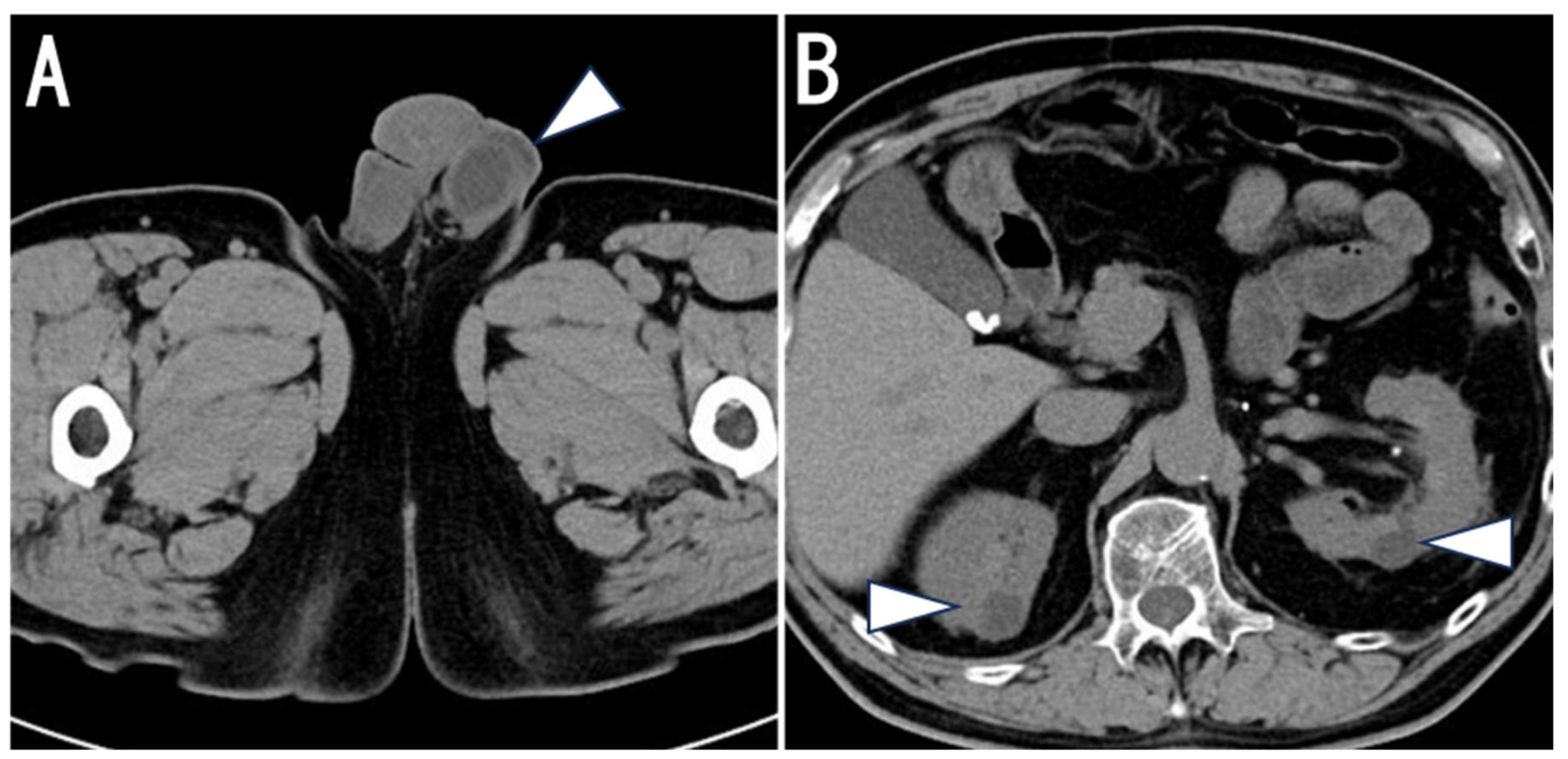
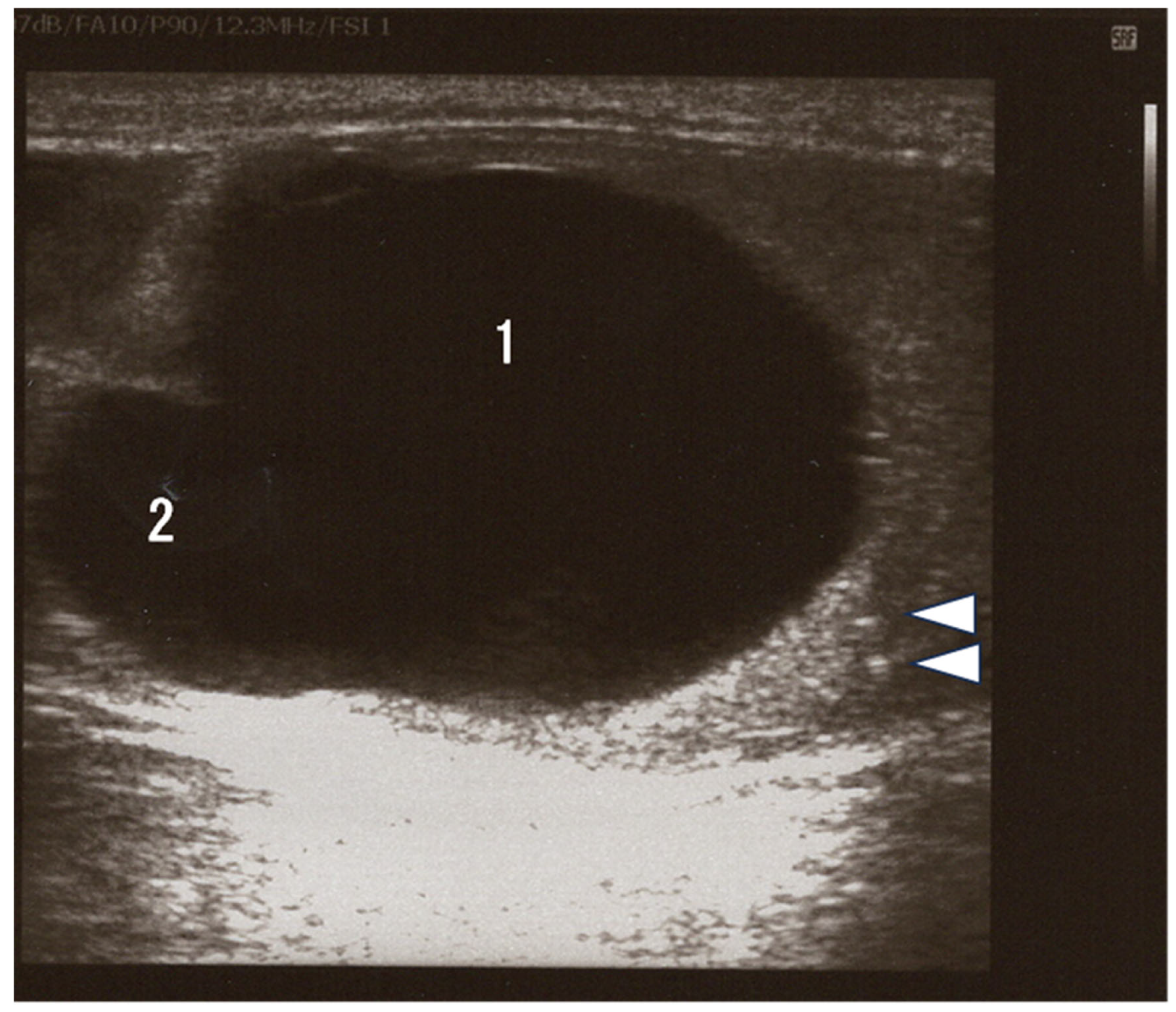
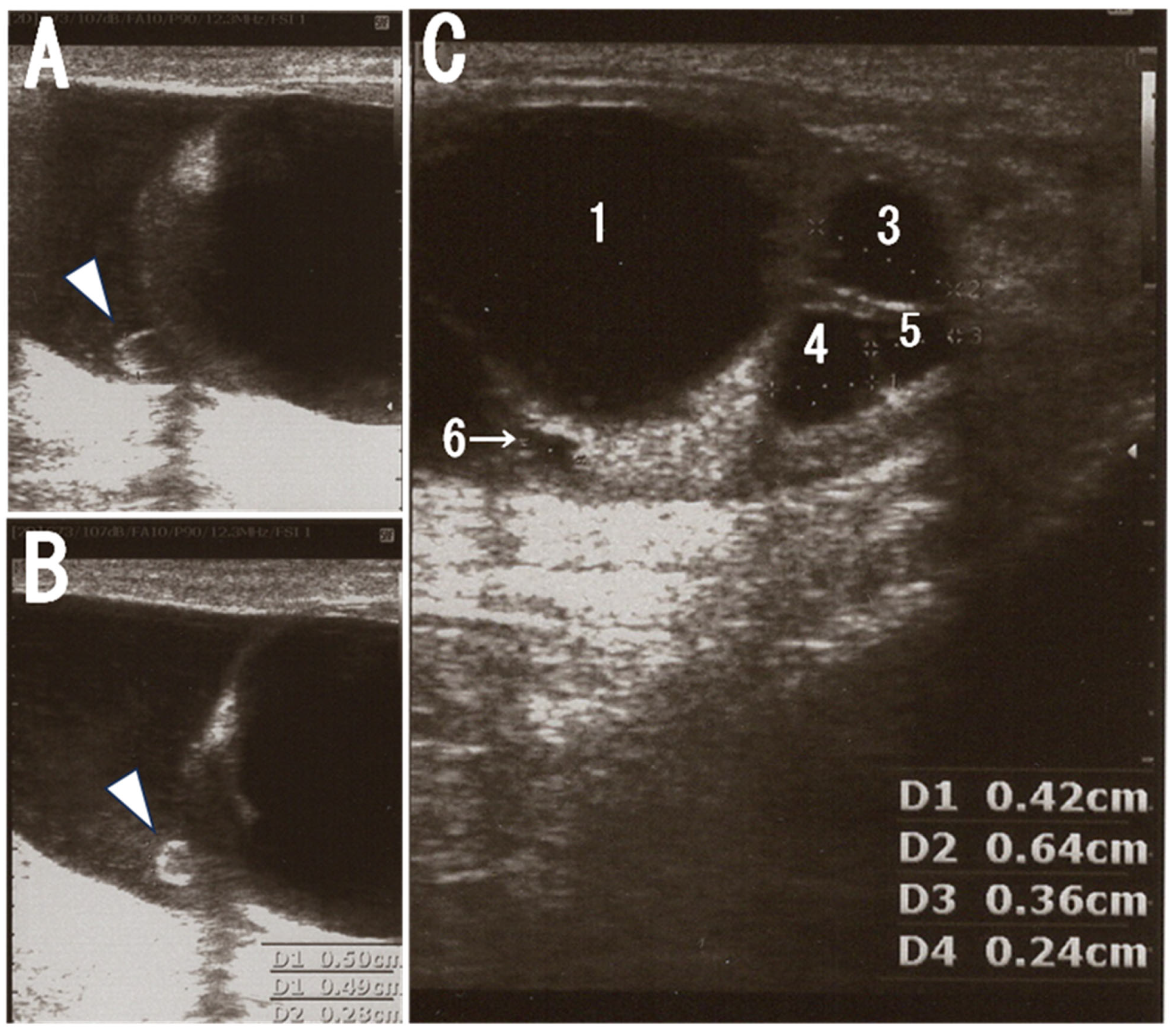
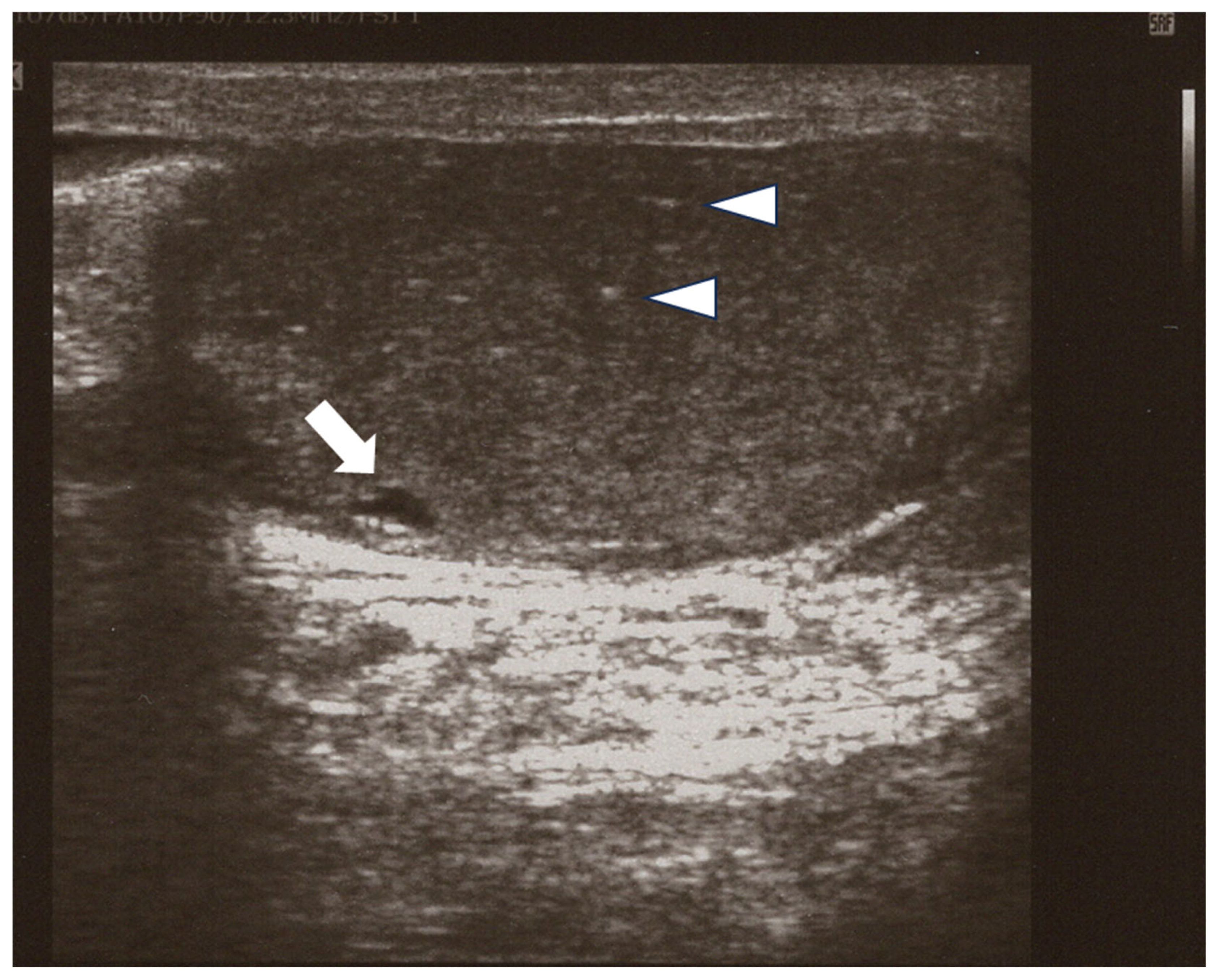
An 85-year-old man presented with painless enlargement of the left scrotum. Physical examination revealed small bilateral hydroceles, and the left testis was enlarged but smooth without palpable nodules (Figure 1). Scrotal ultrasonography demonstrated a multilocular cystic lesion in the left testis with a main cyst measuring approximately 3.0 cm. Bilateral testicular microlithiasis was also observed. Serum tumor markers were within normal limits. Computed tomography showed simple renal cysts without evidence of malignancy or lymphadenopathy (Figure 2). The patient was managed conservatively. At 36 months, ultrasonography demonstrated a stable multilocular cystic lesion consisting of a 3.2 cm main cyst, several smaller adjacent cysts, and epididymal cysts (Figure 3 and Figure 4). All cysts were well defined and anechoic with posterior acoustic enhancement, without mural thickening or solid components. A small contralateral cyst was also noted (Figure 5). Based on these findings, the lesions were considered benign. Follow-up was discontinued at the age of 88 years.
This case is notable for a multilocular intratesticular cyst occurring in an elderly patient with testicular microlithiasis and demonstrating long-term stability. Simple intratesticular cysts are typically small and solitary, whereas multilocular cysts are uncommon [1]. Ultrasonography plays a key role in diagnosis. Typical benign cysts appear as well-defined anechoic lesions with posterior acoustic enhancement, enabling conservative management. By contrast, mural irregularity or solid components raise concerns about malignancy [2]. An epidermoid cyst is an important differential diagnosis, often showing an “onion-ring” pattern. In this case, the absence of suspicious imaging findings and normal tumor markers supported a conservative approach, particularly given the patient’s advanced age. A limitation of this report is the lack of histopathological confirmation. Recognizing characteristic ultrasonographic features is important to avoid unnecessary surgical intervention.

Author Contributions

Y.O. drafted the manuscript and provided overall supervision. Y.M. managed the data and coordinated the study. S.A. contributed to manuscript preparation. Y.S. assisted in manuscript preparation. All authors have read and agreed to the published version of the manuscript.

Funding

This study received no external funding.

Institutional Review Board Statement

Ethical approval for this study was granted by the Clinical Research Ethics Committee of Maebashi Primary Clinic (Approval Code: I-2026-2; Approval Date: 20 January 2026).

Informed Consent Statement

Written informed consent was obtained from the patient after a full explanation.

Data Availability Statement

Data sharing is not applicable to this article as no datasets were generated or analyzed.

Conflicts of Interest

The authors declare no conflicts of interest.

References

  1. Kang, S.M.; Hwang, D.S.; Lee, J.W.; Chon, W.H.; Park, N.C.; Park, H.J. Multiple intratesticular cysts. World J. Mens Health 2013, 31, 79–82. [Google Scholar] [CrossRef] [PubMed] [PubMed Central][Green Version]
  2. Dogra, V.S.; Gottlieb, R.H.; Rubens, D.J.; Liao, L. Benign intratesticular cystic lesions: US features. Radiographics 2001, 21, S273–S281. [Google Scholar] [CrossRef] [PubMed]
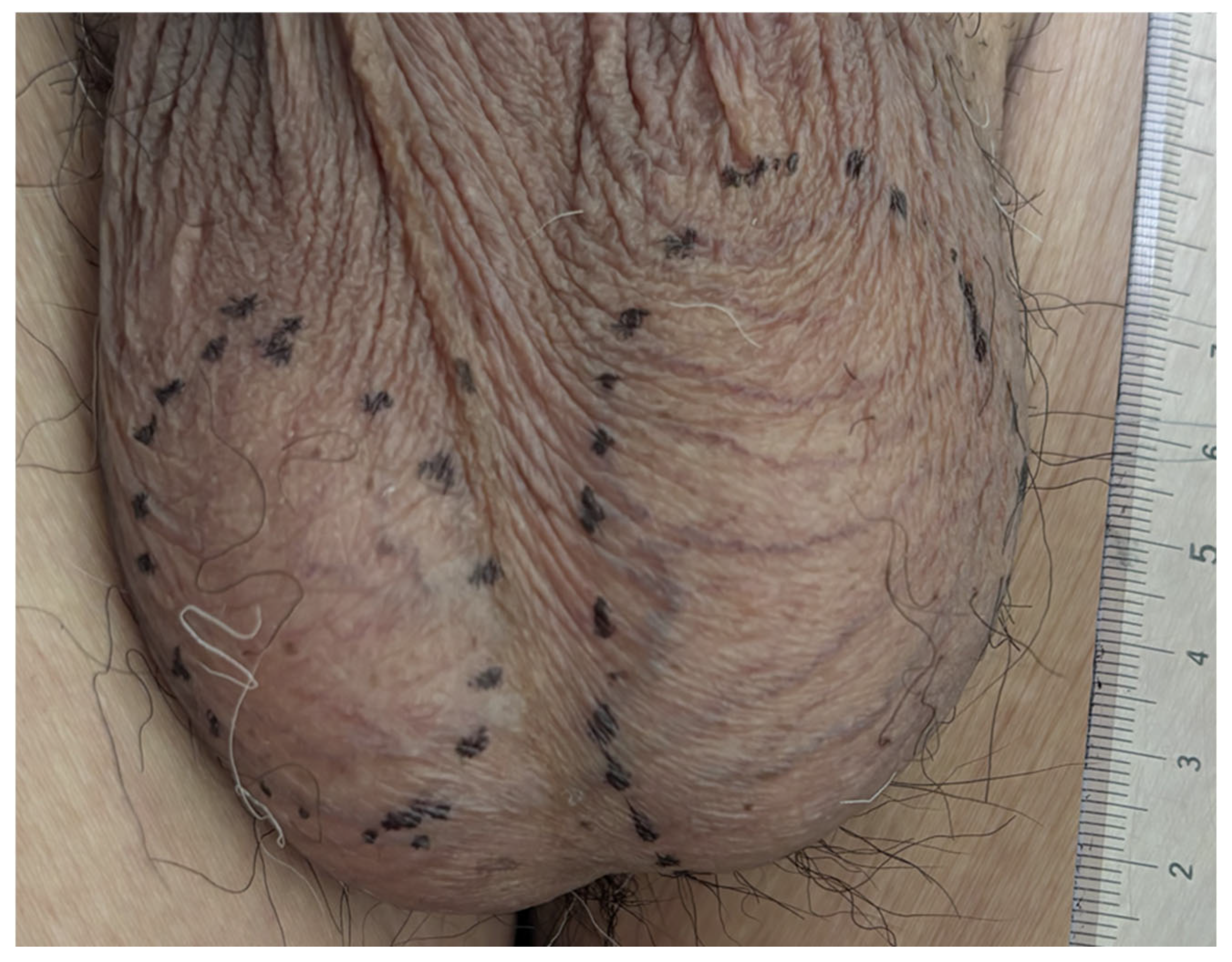
Figure 1. Gross appearance of the scrotum. Both testes were surrounded by a small amount of hydrocele fluid. The right testis measured 4.0 cm × 2.8 cm, whereas the left testis was enlarged, measuring 6.0 cm × 4.0 cm, with no palpable nodule.
Siuj 07 00022 g001
Figure 2. Computed Tomography (CT) images. (A) Pelvic CT showing a 3 cm intratesticular cyst in the left testis with a small hydrocele (arrowhead). The additional multilocular cysts were not clearly visualized with CT. (B) Abdominal CT showing simple renal cysts in both kidneys (arrowheads). No retroperitoneal lymphadenopathy is present.
Siuj 07 00022 g002
Figure 3. Ultrasonography of the left testis. A 3.2 cm main cyst (1) and a 2.3 cm cranial cyst (2) are present. The septum between the cysts is thin and not clearly visualized. Posterior acoustic enhancement is present. Numerous microliths can be seen in the testicular parenchyma (arrowheads).
Siuj 07 00022 g003
Figure 4. Ultrasonography of the left testis. (A) A 3.5 mm epididymal cyst in the head of the epididymis (arrowhead). (B) Another 3.5 mm epididymal cyst. (C) Multiple small cysts located caudal to the main cyst (1) measuring 6.4 mm (3), 4.2 mm (4), 2.4 mm (5), and 2 mm (6).
Siuj 07 00022 g004
Figure 5. Ultrasonography of the right testis. A 2 mm subcapsular cyst is present beneath the tunica albuginea (arrow). Numerous microliths can be seen within the testicular parenchyma (arrowheads).
Siuj 07 00022 g005
Disclaimer/Publisher’s Note: The statements, opinions and data contained in all publications are solely those of the individual author(s) and contributor(s) and not of MDPI and/or the editor(s). MDPI and/or the editor(s) disclaim responsibility for any injury to people or property resulting from any ideas, methods, instructions or products referred to in the content.