Review

Awake Prone Positioning in Non-Intubated Non-COVID-19 ARDS: A Comprehensive Review

by
Mairi Ziaka
1,2,* and
Aristomenis Exadaktylos
3
1
Department of Emergency Medicine, Inselspital, University Hospital, University of Bern, 3010 Bern, Switzerland
2
Department of Internal Emergency Medicine, Thusis Hospital, 7430 Thusis, Switzerland
3
Academic Department of Emergency Medicine, School of Medicine, University of Cyprus, 1678 Nicosia, Cyprus
*
Author to whom correspondence should be addressed.
Adv. Respir. Med. 2026, 94(4), 53; https://doi.org/10.3390/arm94040053
Submission received: 19 June 2026 / Revised: 22 July 2026 / Accepted: 23 July 2026 / Published: 27 July 2026

Abstract

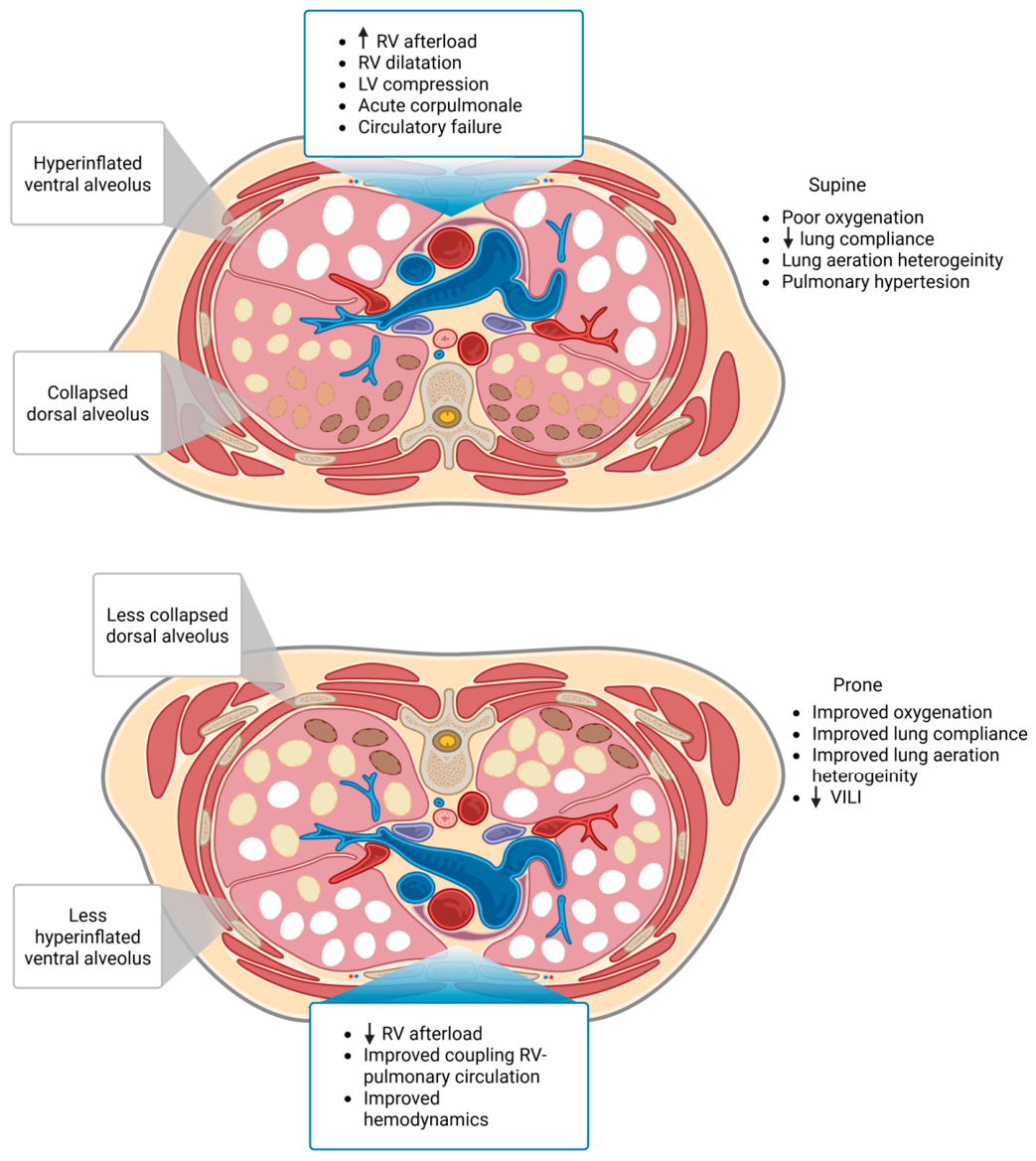
Despite advances in the understanding of the pathophysiology of acute respiratory distress syndrome (ARDS), treatment options remain limited and are mainly supportive, while mortality remains high. Prone positioning (PP) has been shown to improve oxygenation and lung mechanics in ARDS by reducing the imbalance in ventilation distribution between ventral and dorsal lung regions, altering pulmonary blood flow distribution, modifying the density distribution of edematous lung tissue, and limiting areas with low ventilation–perfusion ratios. During the coronavirus disease 2019 (COVID-19) pandemic, the use of PP, referred to as awake prone positioning (APP), was extended to non-intubated patients with severe hypoxemic respiratory failure. However, several concerns remain, including worsening oxygenation following the transition from prone to supine position, the potential development of patient self-inflicted lung injury (P-SILI), and delays in endotracheal intubation and initiation of invasive mechanical ventilation. Evidence regarding the use of APP in non-COVID-19 ARDS is scarce and consists mainly of small case series and a limited number of prospective studies with small and heterogeneous populations. Therefore, in the present work, we aim to summarize the existing evidence on APP in non-COVID-19 ARDS and acute hypoxemic respiratory failure (AHRF), describe the underlying pathophysiological mechanisms, and highlight areas for future research.
Keywords: acute hypoxemic respiratory failure; ARDS; awake prone positioning; intubation; mechanical ventilation; patient self-inflicted lung injury acute hypoxemic respiratory failure; ARDS; awake prone positioning; intubation; mechanical ventilation; patient self-inflicted lung injury