
Vertical Displacement Index and Early Treatment-Related Physiological Improvement in Acute Respiratory Failure: An Exploratory Ultrasound-Based Study

 , , and
Highlights
- VDI decreased significantly after initial treatment across oxygen saturation groups, while baseline VDI was higher in patients with more severe hypoxemia.
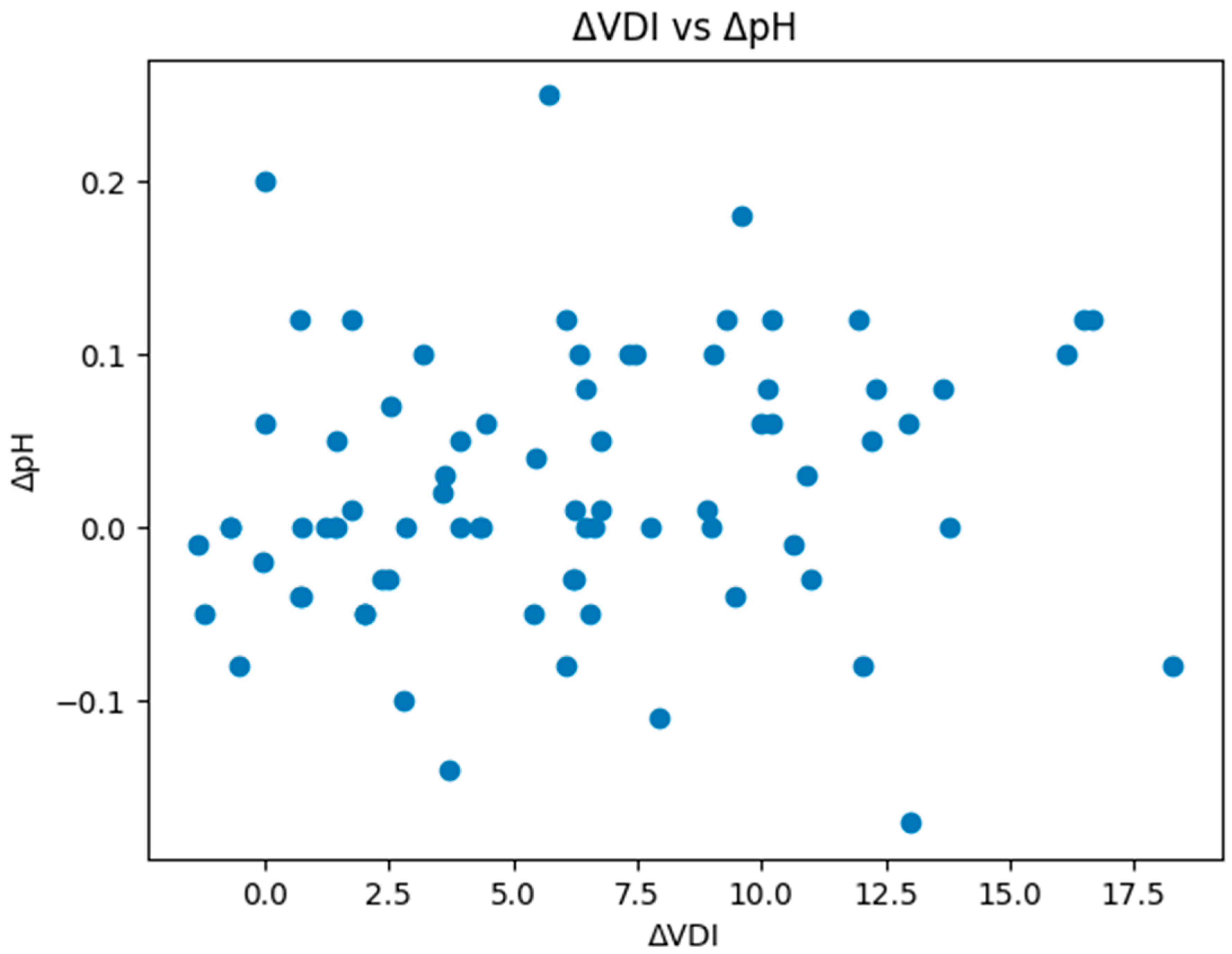
- ΔVDI was weakly associated with changes in oxygen saturation and pH; VDI decreased in pulmonary edema, COPD/asthma, and pneumonia, but not in pulmonary embolism.
- VDI may be explored as a non-invasive bedside parameter for the early reassessment of physiological improvement in acute respiratory failure.
- VDI should be interpreted as a complementary, hypothesis-generating parameter alongside clinical and laboratory findings, pending validation in larger standardized studies.
Abstract
1. Introduction
2. Materials and Methods
2.1. Study Design and Setting
2.2. Study Hypothesis and Methodological Rationale
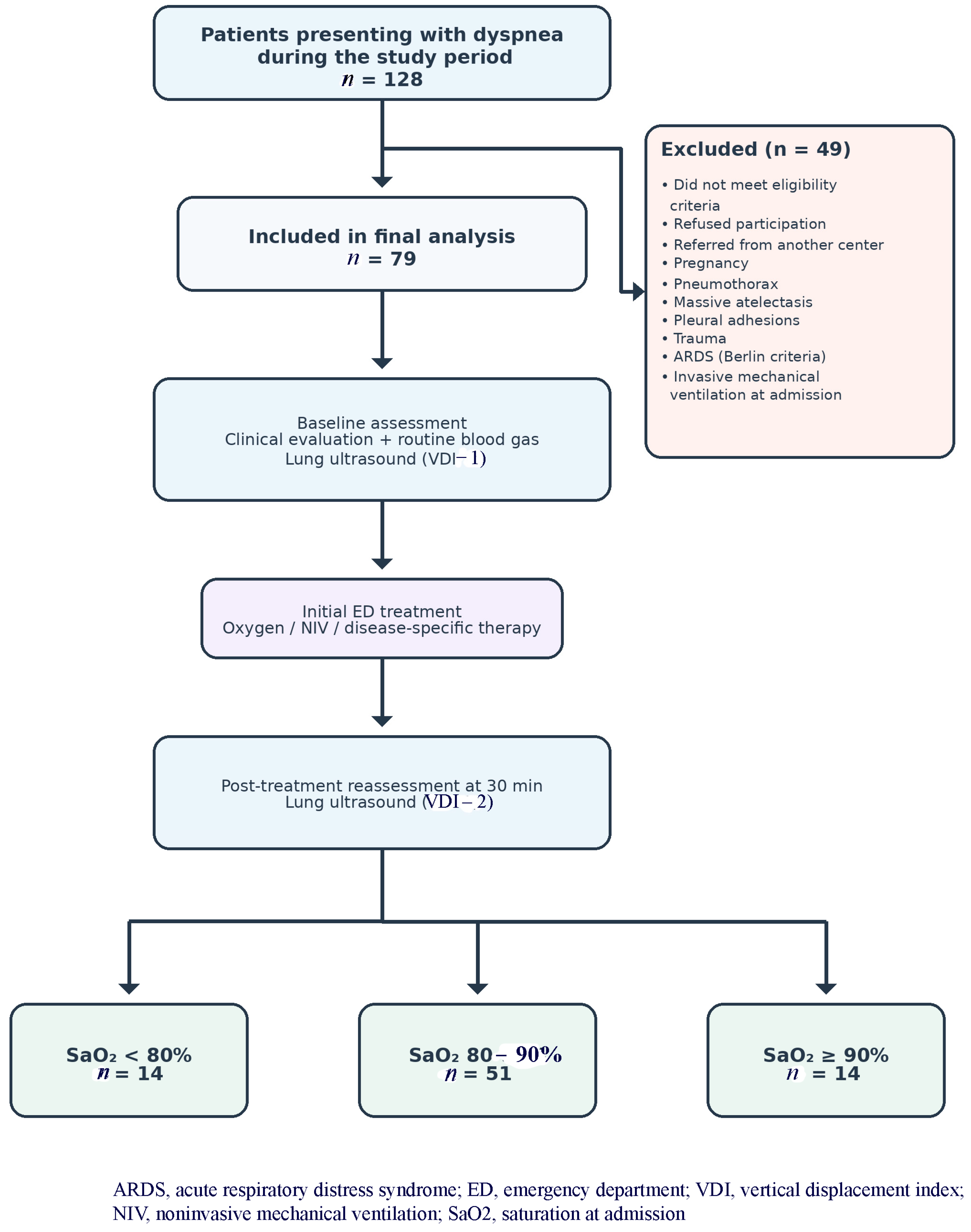
2.3. Study Population
2.4. Data Collection
2.5. Clinical Management and Operational Definition of Early Treatment-Related Physiological Improvement
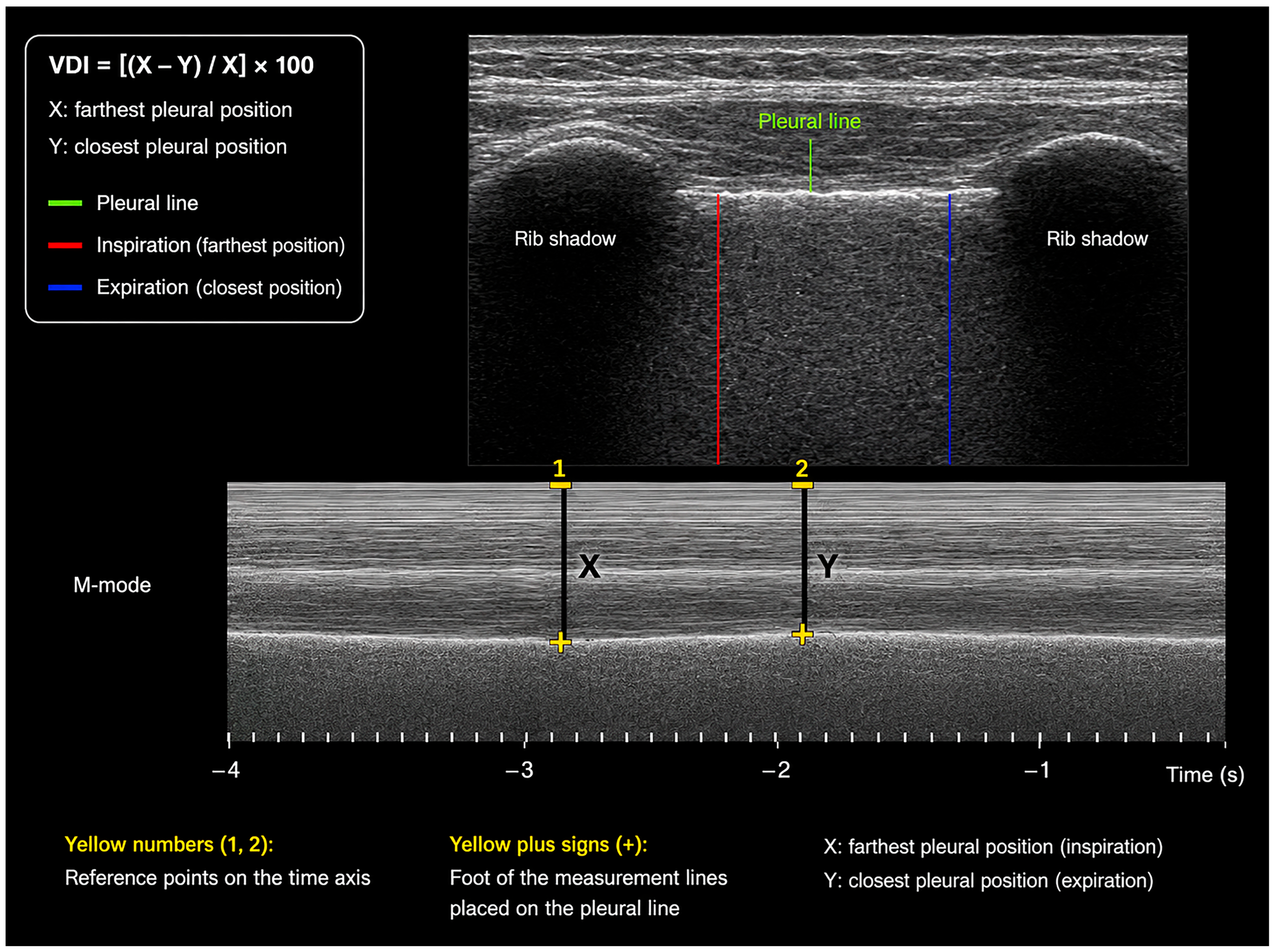
2.6. Ultrasound Measurements
2.7. Statistical Analyses
3. Results
3.1. Patient Characteristics
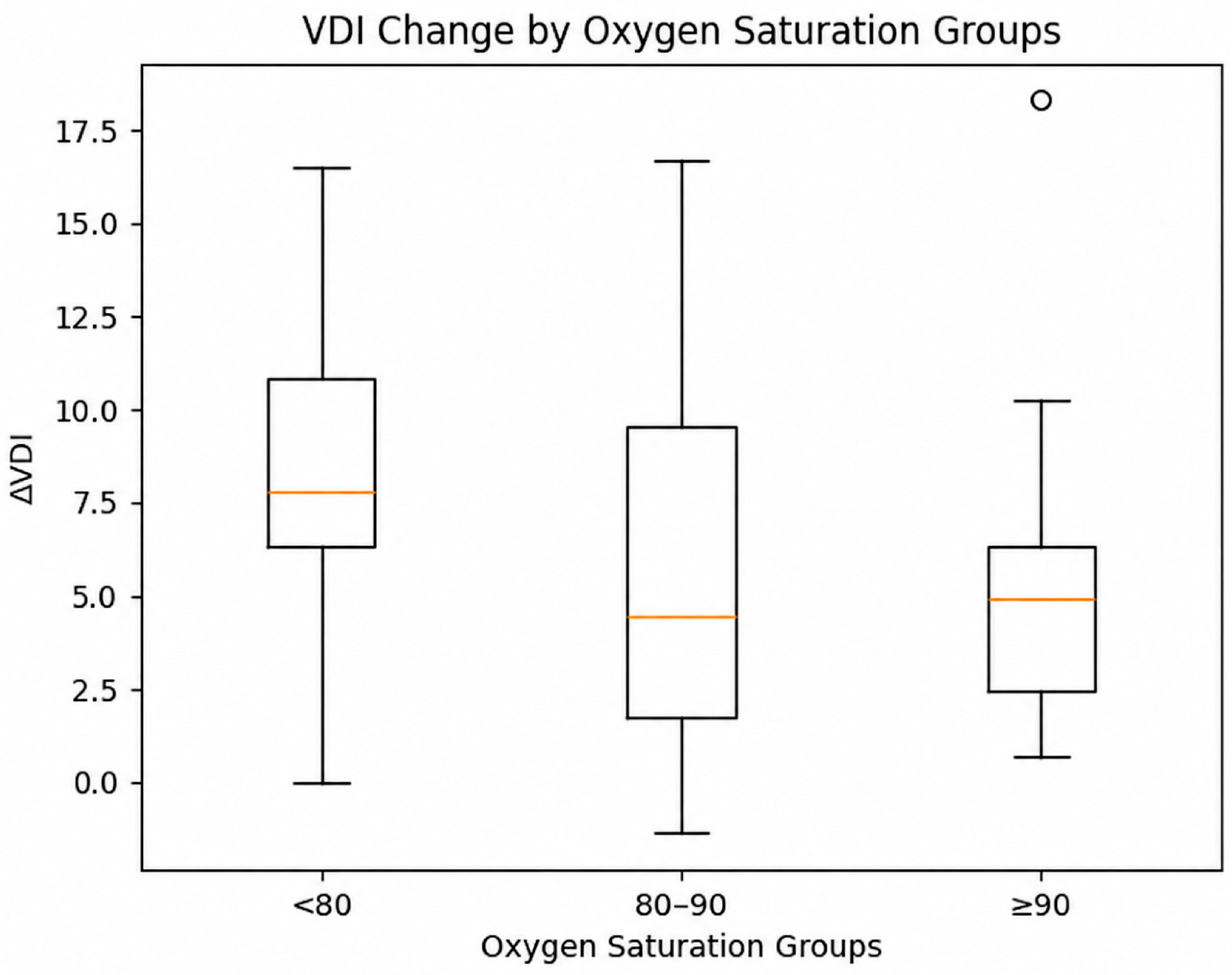
3.2. Changes in VDI According to Oxygen Saturation Groups
3.3. VDI Changes According to Underlying Diagnosis
3.4. Changes in Clinical and Laboratory Parameters
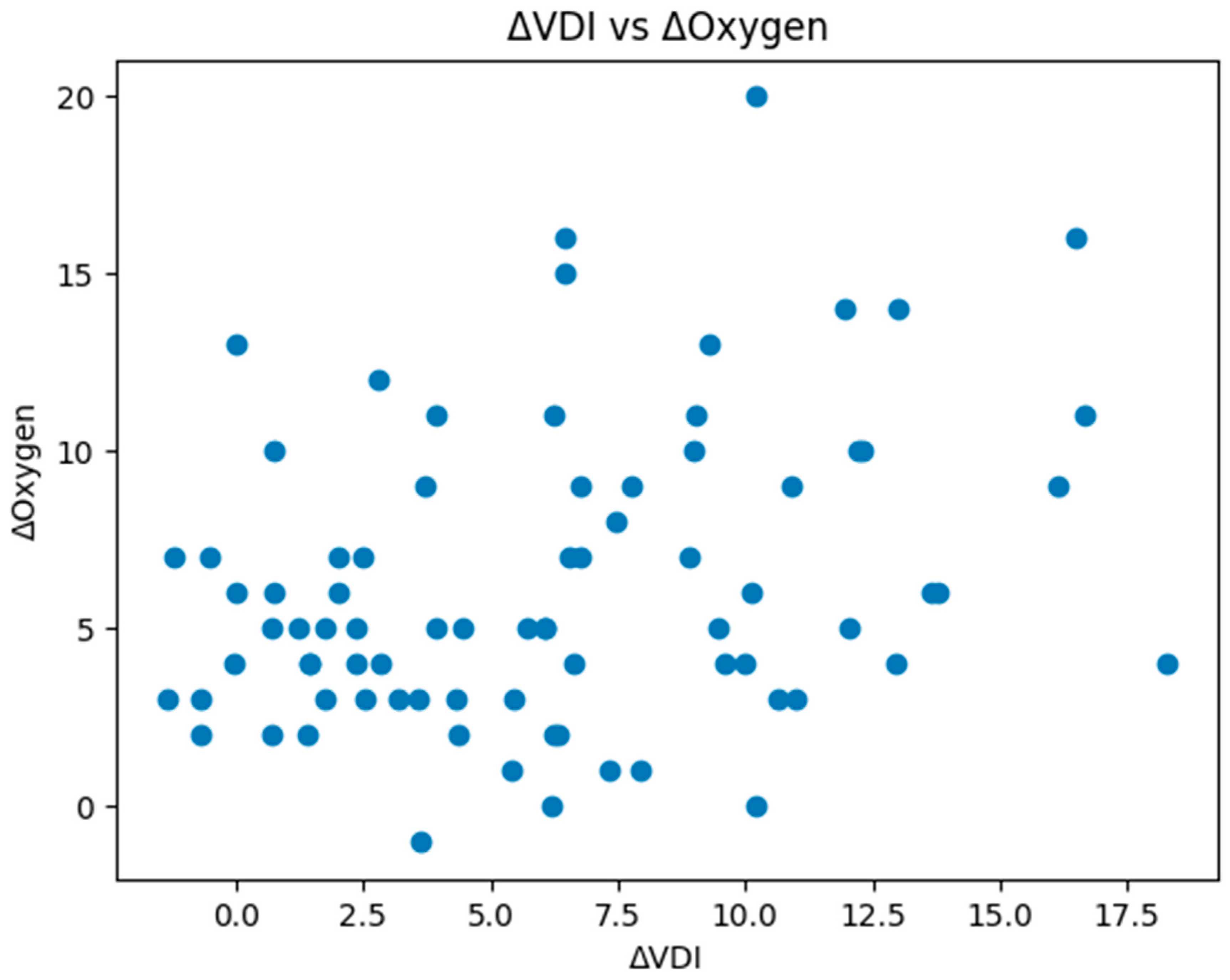
3.5. Correlation Analysis
4. Discussion
5. Conclusions
Author Contributions
Funding
Institutional Review Board Statement
Informed Consent Statement
Data Availability Statement
Acknowledgments
Conflicts of Interest
References
- Khan, M.A.; Arif, B.; Sharif, M.U.; Hameed, A.; Ahmed, N.; Khan, N.; Khan, M.U. Frequency and management of respiratory emergencies. J. Health Wellness Community Res. 2025, 3, e812. [Google Scholar] [CrossRef]
- Baugh, C.W.; Neuenschwander, J.F.; Lenox, J.; Hoh, J.; Ward, K.; Muramoto, S.; Casey, J.; Anzueto, A.; Ishaq, H.; Mount, J.; et al. Acute care of patients with moderate respiratory distress: Recommendations from an American College of Emergency Physicians expert panel. West J. Emerg. Med. 2025, 26, 1485–1494. [Google Scholar] [CrossRef] [PubMed]
- Perez, J.; Brandan, L.; Telias, I. Monitoring patients with acute respiratory failure during non-invasive respiratory support to minimize harm and identify treatment failure. Crit. Care 2025, 29, 147. [Google Scholar] [CrossRef] [PubMed]
- Cammarota, G.; Simonte, R.; Longhini, F.; Spadaro, S.; Vetrugno, L.; De Robertis, E. Advanced point-of-care bedside monitoring for acute respiratory failure. Anesthesiology 2023, 138, 317–334. [Google Scholar] [CrossRef] [PubMed]
- Lee, G.R. Clinical applications of blood gas analysis: A comparative review of arterial and venous blood gas monitoring in critical care. Acute Crit. Care 2025, 40, 153–159. [Google Scholar] [CrossRef] [PubMed]
- Castro, D.; Patil, S.M.; Zubair, M.; Keenaghan, M. Arterial blood gas. In StatPearls; StatPearls Publishing: Treasure Island, FL, USA, 2026. [Google Scholar]
- Santus, P.; Radovanovic, D.; Saad, M.; Zilianti, C.; Coppola, S.; Chiumello, D.A.; Pecchiari, M. Acute dyspnea in the emergency department: A clinical review. Intern Emerg. Med. 2023, 18, 1491–1507. [Google Scholar] [CrossRef] [PubMed]
- Wick, K.D.; Matthay, M.A.; Ware, L.B. Pulse oximetry for the diagnosis and management of acute respiratory distress syndrome. Lancet Respir. Med. 2022, 10, 1086–1098. [Google Scholar] [CrossRef] [PubMed]
- Vitazkova, D.; Foltan, E.; Kosnacova, H.; Micjan, M.; Donoval, M.; Kuzma, A.; Kopani, M.; Vavrinsky, E. Advances in respiratory monitoring: A comprehensive review of wearable and remote technologies. Biosensors 2024, 14, 90. [Google Scholar] [CrossRef] [PubMed]
- Simonte, R.; Cammarota, G.; Vetrugno, L.; De Robertis, E.; Longhini, F.; Spadaro, S. Advanced respiratory monitoring during extracorporeal membrane oxygenation. J. Clin. Med. 2024, 13, 2541. [Google Scholar] [CrossRef] [PubMed]
- Martins, S.R.; Nogué, R. Vertical displacement of pleura: A new method for bronchospasm evaluation? Ultrasound J. 2020, 12, 42. [Google Scholar] [CrossRef] [PubMed]
- Costamagna, A.; Smit, M.R.; Pivetta, E.; Persona, P.; Navalesi, P.; Pisani, L.; Schultz, M.J.; Brazzi, L.; Fanelli, V.; Tuinman, P.R.; et al. Tracking pleural sliding motion to assess lung overdistention using an open source algorithm: A proof-of-concept study on lung ultrasound scans. Crit. Care 2026, 30, 37. [Google Scholar] [CrossRef] [PubMed]
- Wong, T.K.; Lim, A.Y.H.; Lee, C.H. Non-Invasive Assessment of Respiratory Mechanics Using Anatomical M-Mode Ultrasound in Acute Pulmonary Oedema with Impending Respiratory Failure: A Case Report. Respirol. Case Rep. 2025, 13, e70203. [Google Scholar] [CrossRef] [PubMed]
- Vignon, P.; Repessé, X.; Vieillard-Baron, A.; Maury, E. Critical care ultrasonography in acute respiratory failure. Crit. Care 2016, 20, 228. [Google Scholar] [CrossRef] [PubMed]
- Mojoli, F.; Bouhemad, B.; Mongodi, S.; Lichtenstein, D. Lung Ultrasound for Critically Ill Patients. Am. J. Respir. Crit. Care Med. 2019, 199, 701–714. [Google Scholar] [CrossRef] [PubMed]
- Staub, L.J.; Biscaro, R.R.M.; Kaszubowski, E.; Maurici, R. Lung Ultrasound for the Emergency Diagnosis of Pneumonia, Acute Heart Failure, and Exacerbations of Chronic Obstructive Pulmonary Disease/Asthma in Adults: A Systematic Review and Meta-analysis. J. Emerg. Med. 2019, 56, 53–69. [Google Scholar] [CrossRef] [PubMed]
- Bianchini, A.; Zernini, I.S.; Notini, G.; Zangheri, E.; Felicani, C.; Vitale, G.; Siniscalchi, A. Visual lung ultrasound protocol (VLUP) in acute respiratory failure: Description and application in clinical cases. J. Clin. Monit. Comput. 2024, 38, 741–746. [Google Scholar] [CrossRef] [PubMed]
- Tzadok, B.; Blumberg, Y.; Shubert, M.; Halabi, M.; Tal-Or, E.; Bachner-Hinenzon, N.; Carasso, S. Speckled Tracking of Pleura-A Novel Tool for Lung Ultrasound; Distinguishing COVID-19 from Acute Heart Failure. J. Clin. Med. 2022, 11, 4846. [Google Scholar] [CrossRef] [PubMed]
- ARDS Definition of Task Force; Ranieri, V.M.; Rubenfeld, G.D.; Thompson, B.T.; Ferguson, N.D.; Caldwell, E.; Fan, E.; Camporota, L.; Slutsky, A.S. Acute respiratory distress syndrome: The Berlin definition. JAMA 2012, 307, 2526–2533. [Google Scholar] [CrossRef] [PubMed]
- Lagina, M.; Valley, T.S. Diagnosis and Management of Acute Respiratory Failure. Crit. Care Clin. 2024, 40, 235–253. [Google Scholar] [CrossRef] [PubMed]
- O’Driscoll, B.R.; Howard, L.S.; Earis, J.; Mak, V.; British Thoracic Society Emergency Oxygen Guideline Group; BTS Emergency Oxygen Guideline Development Group. BTS guideline for oxygen use in adults in healthcare and emergency settings. Thorax 2017, 72, ii1–ii90. [Google Scholar] [CrossRef] [PubMed]
- Chiumello, D.; Coppola, S.; Silva, P.L.; Lais, G.; Rocco, P.R.M.; Piquilloud, L. Bedside ventilatory settings guided by respiratory mechanics in acute respiratory distress syndrome. Ann. Intensive Care 2025, 15, 189. [Google Scholar] [CrossRef] [PubMed]
- Donley, E.R.; Holme, M.R.; Loyd, J.W. Anatomy, Thorax, Wall Movements. In StatPearls [Internet]; StatPearls Publishing: Treasure Island, FL, USA, 2024. [Google Scholar]
- Itagaki, T. Diaphragm-protective mechanical ventilation in acute respiratory failure. J. Med. Investig. 2022, 69, 165–172. [Google Scholar] [CrossRef] [PubMed]
- Grotberg, J.C.; Reynolds, D.; Kraft, B.D. Management of severe acute respiratory distress syndrome: A primer. Crit. Care 2023, 27, 289. [Google Scholar] [CrossRef] [PubMed]
- Villar, J.; Ferrando, C.; Tusman, G.; Berra, L.; Rodríguez-Suárez, P.; Suárez-Sipmann, F. Unsuccessful and Successful Clinical Trials in Acute Respiratory Distress Syndrome: Addressing Physiology-Based Gaps. Front. Physiol. 2021, 12, 774025. [Google Scholar] [CrossRef] [PubMed]
- Ma, H.; Fujioka, H.; Halpern, D.; Bates, J.H.T.; Gaver, D.P. Full-lung simulations of mechanically ventilated lungs incorporating recruitment/derecruitment dynamics. Front. Netw. Physiol. 2023, 3, 1257710. [Google Scholar] [CrossRef] [PubMed]
- Fatima, I.; Dass, J.; Aslam, Z.R.; Khan, M.M.; Imtiaz, H.; Bakka, H.S.A.; Mazhar, M.A.; Abdulsattar, S.; Zahid, A.; Rafiq, I. Role of arterial blood gas in risk stratification of patients with acute exacerbation of chronic obstructive pulmonary disease in the emergency department: A systematic review. Cureus 2025, 17, e94369. [Google Scholar] [CrossRef] [PubMed]
- Kurian, V.; Ghadipasha, N.; Gee, M.; Chalant, A.; Hamill, T.; Okossi, A.; Chen, L.; Yu, B.; Ogunnaike, B.A.; Beris, A.N. Systems Engineering Approach to Modeling and Analysis of Chronic Obstructive Pulmonary Disease. ACS Omega 2023, 8, 20524–20535. [Google Scholar] [CrossRef] [PubMed]
- Baarts, J.C.; Leuppi, J.D.; Boesing, M.; Lüthi-Corridori, G. Machine Learning Models for Differentiating Causes of Dyspnea in Emergency Department Patients: A Retrospective Study. J. Multidiscip. Healthc. 2025, 18, 6565–6577. [Google Scholar] [CrossRef] [PubMed]



| Variable | <80 (n = 14) | 80–90 (n = 51) | ≥90 (n = 14) | p-Value |
|---|---|---|---|---|
| Age (median, IQR) Gender, n (%) | 71.5 (62.3–86.5) | 74 (64–81) | 76.5 (63–84.3) | 0.679 |
| Female | 6 (42.9) | 31 (60.8) | 8 (57.1) | 0.487 |
| Male | 8 (57.1) | 20 (39.2) | 6 (42.9) | |
| SBP (median, IQR) | 138.5 (82.5–156.3) | 135 (110–160) | 121.5 (117.5–132.5) | 0.362 |
| DBP (median, IQR) | 80 (63.8–92) | 80 (70–90) | 70 (60–80) | 0.077 |
| Rales, n (%) | 12 (85.7) | 31 (60.8) | 7 (50) | 0.121 |
| Rhonchi, n (%) | 2 (14.3) | 19 (37.3) | 3 (21.4) | 0.184 |
| Creatinine (median, IQR) | 1.86 (1.15–3.11) | 1.16 (0.89–1.6) | 1.07 (0.76–1.82) | 0.280 |
| pH (median, IQR) | 7.33 (7.23–7.39) | 7.35 (7.30–7.39) | 7.38 (7.32–7.41) | 0.176 |
| CO2 (median, IQR) | 39 (35.5–58.8) | 41 (32.8–51) | 40 (33.8–45.5) | 0.813 |
| VDI pre-treatment | 13.2 (12.2–14.5) | 9.1 (7–13.9) | 9.3 (6.1–12.4) | 0.028 |
| VDI post-treatment | 5.3 (3.1–6.9) | 4.5 (3.1–6.4) | 3.7 (2.8–5.9) | 0.172 |
| VDI change | 7.8 (6.3–10.5) | 4.3 (1.6–9.2) | 4.9 (2.1–6.4) | 0.124 |
| Group | Pre-Treatment, Median (IQR) | Post-Treatment, Median (IQR) | Within-Group p-Value * | VDI Reduction, Median (IQR) |
|---|---|---|---|---|
| <80 | 13.2 (12.2–14.5) | 5.3 (3.1–6.9) | 0.001 | 7.8 (6.3–10.5) |
| 80–90 | 9.1 (7.0–13.9) | 4.5 (3.1–6.4) | <0.001 | 4.3 (1.6–9.2) |
| ≥90 | 9.3 (6.1–12.4) | 3.7 (2.8–5.9) | 0.001 | 4.9 (2.1–6.4) |
| Between-group p-value † | 0.027 | 0.173 | 0.124 |
| Diagnosis | Pre-Treatment | Post-Treatment | Within-Group p-Value | VDI Reduction |
|---|---|---|---|---|
| Pulmonary edema | 10.3 (7.6–13.9) | 4.9 (3.4–7.2) | <0.001 | 6.1 (1.8–9.5) |
| COPD/asthma | 14 (10.3–17.2) | 3.8 (3.1–6.5) | 0.001 | 9.0 (5.7–12.3) |
| Pneumonia | 8.3 (6–13.5) | 4.2 (2.7–6.4) | <0.001 | 5.4 (2.2–9.3) |
| Pulmonary embolism | 8.1 (5.5–10.5) | 6.7 (3.6–7.9) | 0.138 | 0.7 (0–4.9) |
| Source | F | p-Value | Partial η2 |
|---|---|---|---|
| Baseline VDI | 249.035 | <0.001 | 0.776 |
| Oxygen saturation group | 0.232 | 0.793 | 0.006 |
| Diagnosis group | 2.103 | 0.107 | 0.081 |
| Parameter | Pre-Treatment | Post-Treatment | p-Value |
|---|---|---|---|
| Respiratory rate | 24 (20–30) | 18 (16–22) | <0.001 |
| Oxygen saturation | 85 (82–89) | 92 (90–93.5) | <0.001 |
| pH | 7.36 (7.30–7.40) | 7.40 (7.32–7.42) | 0.007 |
| CO2 | 40 (34–50.75) | 38 (34–44) | 0.005 |
| Variable | Spearman’s Rho | 95% CI | p-Value |
|---|---|---|---|
| ΔSpO2 | 0.272 | 0.060 to 0.463 | 0.016 |
| ΔpH | 0.236 | 0.018 to 0.459 | 0.037 |
| ΔCO2 | −0.206 | −0.421 to 0.015 | 0.070 |
Disclaimer/Publisher’s Note: The statements, opinions and data contained in all publications are solely those of the individual author(s) and contributor(s) and not of MDPI and/or the editor(s). MDPI and/or the editor(s) disclaim responsibility for any injury to people or property resulting from any ideas, methods, instructions or products referred to in the content. |
© 2026 by the authors. Published by MDPI on behalf of the Polish Respiratory Society. Licensee MDPI, Basel, Switzerland. This article is an open access article distributed under the terms and conditions of the Creative Commons Attribution (CC BY) license.
Share and Cite
Sönmez, B.M.; Şirin, İ.; Akçay, G.; Özdemir, M.; Güner, N.G. Vertical Displacement Index and Early Treatment-Related Physiological Improvement in Acute Respiratory Failure: An Exploratory Ultrasound-Based Study. Adv. Respir. Med. 2026, 94, 40. https://doi.org/10.3390/arm94030040
Sönmez BM, Şirin İ, Akçay G, Özdemir M, Güner NG. Vertical Displacement Index and Early Treatment-Related Physiological Improvement in Acute Respiratory Failure: An Exploratory Ultrasound-Based Study. Advances in Respiratory Medicine. 2026; 94(3):40. https://doi.org/10.3390/arm94030040
Chicago/Turabian StyleSönmez, Bedriye Müge, İlker Şirin, Gülşen Akçay, Murat Özdemir, and Necip Gökhan Güner. 2026. "Vertical Displacement Index and Early Treatment-Related Physiological Improvement in Acute Respiratory Failure: An Exploratory Ultrasound-Based Study" Advances in Respiratory Medicine 94, no. 3: 40. https://doi.org/10.3390/arm94030040
APA StyleSönmez, B. M., Şirin, İ., Akçay, G., Özdemir, M., & Güner, N. G. (2026). Vertical Displacement Index and Early Treatment-Related Physiological Improvement in Acute Respiratory Failure: An Exploratory Ultrasound-Based Study. Advances in Respiratory Medicine, 94(3), 40. https://doi.org/10.3390/arm94030040