
Psychosocial Interventions for Improving Treatment Adherence in Tuberculosis Patients: A Scoping Review of Evidence-Based Approaches



Highlights
- Mental health comorbidities, especially depression and anxiety and, in MDR-TB, psychosis, are common among people with TB and are closely linked to socioeconomic vulnerability and stigma.
- Evidence-based psychosocial interventions, including TB psychoeducation, Motivational Enhancement Therapy, CBT, ACT, and multicomponent support, can improve psychological outcomes and may strengthen treatment adherence in both drug-susceptible and drug-resistant TB.
- TB services should routinely integrate mental health screening and brief, scalable psychosocial care to address stigma, distress, and other adherence barriers alongside biomedical treatment.
- Adherence may improve further when psychological and educational strategies are combined with social protection, such as peer support and practical assistance, using task-shifting models where feasible in resource-constrained settings.
Abstract
1. Introduction
2. Materials and Methods
2.1. Study Design and Approach
2.2. Search Strategy
2.3. Selection of Studies
2.4. Inclusion and Exclusion Criteria
2.4.1. Inclusion Criteria
- Adolescents’ and adults’ (≥15 years) adherence to active TB treatment (drug-susceptible TB and multidrug-/rifampicin-resistant TB [MDR/RR-TB]) and related psychopathology.
- Psychosocial variables associated with adherence to treatment for active tuberculosis.
- The efficacy or effectiveness of psychosocial interventions designed to improve adherence to active tuberculosis treatment in any healthcare or community TB-care setting.
2.4.2. Exclusion Criteria
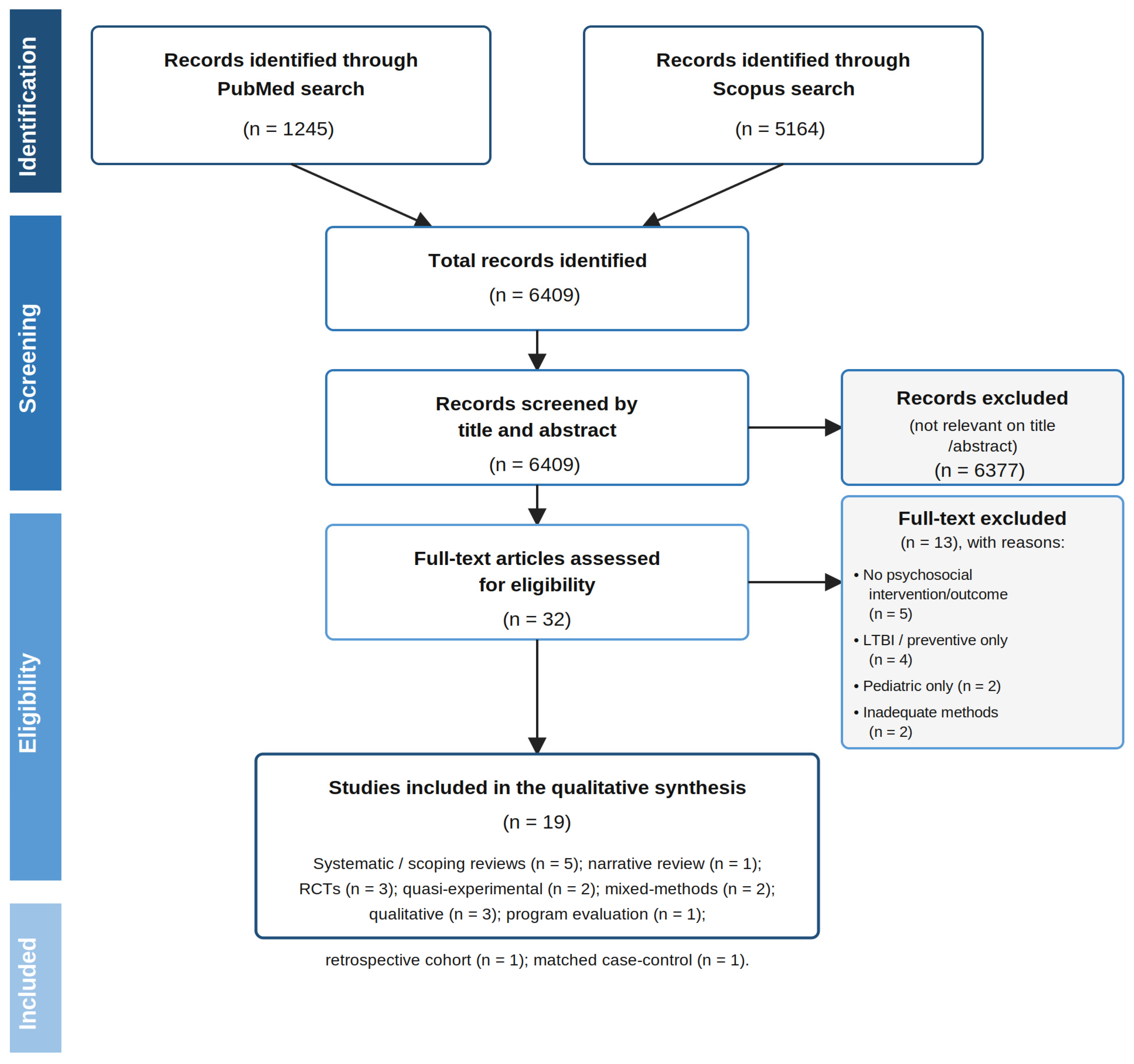
- Studies focused exclusively on latent TB infection (LTBI) or TB preventive therapy (TPT) without active TB.
- Studies that did not include psychosocial interventions or psychosocial outcomes of interest.
- Studies including pediatric populations only.
- Studies with inadequate methodological description.
2.5. Quality Evaluation and Integration
3. Results
3.1. Mental Health Burden Among Patients with Tuberculosis
3.2. Overview of Included Studies
3.3. Effectiveness of Psychosocial Interventions
3.4. Implementation Context and Delivery Models
3.5. Overall Quality of Included Studies
4. Discussion
4.1. Mental Health Burden: An Important but Under-Addressed Dimension
4.2. Integrated Care Models: Evidence of Intervention Effectiveness
4.3. Implementation Science Insights: Feasibility and Scalability
4.4. High-Risk Groups: The Need for Tailored Interventions
4.5. Stigma as a Cross-Cutting Barrier
4.6. Theoretical Models to Guide Intervention Design
4.7. Health Policy and Clinical Implications
4.8. Limitations
5. Conclusions
Supplementary Materials
Author Contributions
Funding
Informed Consent Statement
Data Availability Statement
Acknowledgments
Conflicts of Interest
Abbreviations
| ACT | Acceptance and Commitment Therapy |
| AOR | Adjusted Odds Ratio |
| AUDIT | Alcohol Use Disorder Identification Test |
| AYA | Adolescents and Young Adults |
| BDI/BDI-II | Beck Depression Inventory/Beck Depression Inventory-II |
| CAGE | Cut Down, Annoyed, Guilty, and Eye-Opener (alcohol-use screening tool) |
| CBT | Cognitive Behavioral Therapy |
| CI | Confidence Interval |
| CMD/CMDs | Common Mental Disorders |
| COM-B | Capability, Opportunity, Motivation, and Behavior (behavior change model) |
| DASS | Depression, Anxiety, and Stress Scale |
| DOT | Directly Observed Therapy |
| DOTS | Directly Observed Treatment, Short-course |
| DR-TB | Drug-Resistant Tuberculosis |
| DS-TB | Drug-Susceptible Tuberculosis |
| DSM-5/DSM-IV | Diagnostic and Statistical Manual of Mental Disorders (5th or 4th Edition) |
| FGDs | Focus Group Discussions |
| GAD-7 | Generalized Anxiety Disorder-7 scale |
| HADS | Hospital Anxiety and Depression Scale |
| HBM | Health Belief Model |
| HDRS | Hamilton Depression Rating Scale |
| HRQoL | Health-Related Quality of Life |
| IDIs | In-depth Interviews |
| ISCED | International Standard Classification of Education |
| JBI | Joanna Briggs Institute |
| K-10 | Kessler-10 psychological distress scale |
| MDR-TB | Multidrug-Resistant Tuberculosis |
| MET | Motivational Enhancement Therapy |
| mhGAP | Mental Health Gap Action Programme |
| MMAT | Mixed Methods Appraisal Tool |
| OR | Odds Ratio |
| PCC | Population, Concept, and Context framework |
| PGI Health Questionnaire | Postgraduate Institute Health Questionnaire (for psychosomatic status) |
| PHQ-9 | Patient Health Questionnaire-9 |
| PRISMA | Preferred Reporting Items for Systematic Reviews and Meta-Analyses |
| PROs/PROMs | Patient-Reported Outcomes/Patient-Reported Outcome Measures |
| PSS/PSSG | Psychosocial Support (Program/Group) |
| RCT | Randomized Controlled Trial |
| SF-36/SF-8 | 36-Item/8-Item Short-Form Health Survey |
| SRQ-20 | Self-Reporting Questionnaire-20 |
| SSRS | Social Support Rating Scale |
| TB | Tuberculosis |
| TPT | Tuberculosis Preventive Treatment |
| VAS | Visual Analogue Scale |
| WHO | World Health Organization |
References
- World Health Organization. Global Tuberculosis Report 2024; World Health Organization: Geneva, Switzerland, 2024; Available online: https://www.who.int/publications/i/item/9789240101531 (accessed on 10 May 2026).
- Munro, S.A.; Lewin, S.A.; Smith, H.J.; Engel, M.E.; Fretheim, A.; Volmink, J. Patient Adherence to Tuberculosis Treatment: A Systematic Review of Qualitative Research. PLoS Med. 2007, 4, e238. [Google Scholar] [CrossRef] [Scilit] [PubMed]
- Tola, H.H.; Tol, A.; Shojaeizadeh, D.; Garmaroudi, G. Tuberculosis treatment non-adherence and lost to follow up among TB patients with or without HIV in Developing Countries: A systematic review. Iran. J. Public Health 2015, 44, 1–11. [Google Scholar] [PubMed]
- Alipanah, N.; Jarlsberg, L.; Miller, C.; Linh, N.N.; Falzon, D.; Jaramillo, E.; Nahid, P. Adherence interventions and outcomes of tuberculosis treatment: A systematic review and meta-analysis of trials and observational studies. PLoS Med. 2018, 15, e1002595. [Google Scholar] [CrossRef] [Scilit]
- Pablos-Méndez, A.; Knirsch, C.A.; Barr, R.G.; Lerner, B.H.; Frieden, T.R. Nonadherence in Tuberculosis treatment: Predictors and Consequences in New York City. Am. J. Med. 1997, 102, 164–170. [Google Scholar] [CrossRef] [Scilit]
- Sweetland, A.C.; Kritski, A.; Oquendo, M.A.; Sublette, M.E.; Norcini Pala, A.; Silva, L.R.B.; Karpati, A.; Silva, E.C.; Moraes, M.O.; Silva, J.R.L.E.; et al. Addressing the tuberculosis–depression syndemic to end the tuberculosis epidemic. Int. J. Tuberc. Lung Dis. 2017, 21, 852–861. [Google Scholar] [CrossRef] [Scilit] [PubMed]
- Alene, K.A.; Clements, A.C.A.; McBryde, E.S.; Jaramillo, E.; Lönnroth, K.; Shaweno, D.; Gulliver, A.; Viney, K. Mental health disorders, social stressors, and health-related quality of life in patients with multidrug-resistant tuberculosis: A systematic review and meta-analysis. J. Infect. 2018, 77, 357–367. [Google Scholar] [CrossRef] [Scilit]
- Dos Santos, A.P.C.; Lazzari, T.K.; Silva, D.R. Health-Related Quality of Life, Depression and Anxiety in Hospitalized Patients with Tuberculosis. Tuberc. Respir. Dis. 2017, 80, 69–76. [Google Scholar] [CrossRef] [Scilit]
- Duko, B.; Bedaso, A.; Ayano, G. The prevalence of depression among patients with tuberculosis: A systematic review and meta-analysis. Ann. Gen. Psychiatry 2020, 19, 30. [Google Scholar] [CrossRef] [Scilit]
- Anye, L.C.; Bissong, M.E.A.; Njundah, A.L.; Siewe Fodjo, J.N. Depression, anxiety and medication adherence among tuberculosis patients attending treatment centres in Fako Division, Cameroon: Cross-sectional study. BJPsych Open 2023, 9, e65. [Google Scholar] [CrossRef] [Scilit]
- Husain, M.O.; Dearman, S.P.; Chaudhry, I.B.; Rizvi, N.; Waheed, W. The relationship between anxiety, depression and illness perception in tuberculosis patients in Pakistan. Clin. Pract. Epidemiol. Ment. Health 2008, 4, 4. [Google Scholar] [CrossRef] [Scilit]
- Pachi, A.; Bratis, D.; Moussas, G.; Tselebis, A. Psychiatric Morbidity and Other Factors Affecting Treatment Adherence in Pulmonary Tuberculosis Patients. Tuberc. Res. Treat. 2013, 2013, 489865. [Google Scholar] [CrossRef] [Scilit]
- World Health Organization. The End TB Strategy; World Health Organization: Geneva, Switzerland, 2015; Available online: https://www.who.int/publications/i/item/WHO-HTM-TB-2015.19 (accessed on 1 May 2026).
- Akyirem, S.; Forbes, A.; Wad, J.L.; Due-Christensen, M. Psychosocial interventions for adults with newly diagnosed chronic disease: A systematic review. J. Health Psychol. 2022, 27, 1753–1782. [Google Scholar] [CrossRef] [Scilit] [PubMed]
- Anindhita, M.; Haniifah, M.; Putri, A.M.N.; Karnasih, A.; Agiananda, F.; Yani, F.F.; Haya, M.A.N.; Pakasi, T.A.; Widyahening, I.S.; Fuady, A.; et al. Community-based psychosocial support interventions to reduce stigma and improve mental health of people with infectious diseases: A scoping review. Infect. Dis. Poverty 2024, 13, 90. [Google Scholar] [CrossRef] [Scilit] [PubMed]
- Maynard, C.; Tariq, S.; Sotgiu, G.; Migliori, G.B.; van den Boom, M.; Field, N. Psychosocial support interventions to improve treatment outcomes for people living with tuberculosis: A mixed methods systematic review and meta-analysis. eClinicalMedicine 2023, 61, 102057. [Google Scholar] [CrossRef] [Scilit] [PubMed]
- World Health Organization. Mental Health Gap Action Programme (mhGAP) Guideline for Mental, Neurological and Substance Use Disorders, 3rd ed.; World Health Organization: Geneva, Switzerland, 2023; Available online: https://www.who.int/publications/i/item/9789240084278 (accessed on 1 May 2026).
- Dhumal, G.; Nevrekar, N.; Gupte, N.; Shrisunder, R.; Kulkarni, P.; Sarpotdar, S.; Pm, A.; Hosmani, A.; Lokhande, R.; Gupta, A.; et al. Improving Treatment Adherence in Youths with Multidrug-Resistant Tuberculosis with Psychosocial Intervention. Brain Behav. 2025, 15, e70665. [Google Scholar] [CrossRef] [Scilit]
- Munteanu, I.; Kalambayi, F.; Toth, A.; Dendrino, D.; Burdusel, B.; Vlasceanu, S.-G.; Parliteanu, O.; Dragomir, A.; Nemes, R.M.; Mahler, B. The Role of Psychosocial Interventions in Increasing Adherence to Tuberculosis Treatment in People Belonging to Socially Vulnerable Categories. Appl. Sci. 2025, 15, 8173. [Google Scholar] [CrossRef] [Scilit]
- Parwitha, I.A.A.; Djunaidy, V.D.; Alfian, S.D.; Setyowibowo, H.; Pradipta, I.S. Psychosocial interventions to improve tuberculosis preventive treatment uptake and psychosocial outcomes: A systematic review. npj Prim. Care Respir. Med. 2025, 35, 40. [Google Scholar] [CrossRef] [Scilit]
- Viegas, P.; Ferreira, L.L.; Vieira, M.; Barbosa, P.; Ramos, J.P.; Duarte, R. Patient-reported outcomes in tuberculosis: A qualitative exploration of psychosocial, economic, and treatment-related challenges. J. Bras. Pneumol. 2025, 51, e20250159. [Google Scholar] [CrossRef] [Scilit]
- Tricco, A.C.; Lillie, E.; Zarin, W.; O’Brien, K.K.; Colquhoun, H.; Levac, D.; Moher, D.; Peters, M.D.J.; Horsley, T.; Weeks, L.; et al. PRISMA Extension for Scoping Reviews (PRISMA-ScR): Checklist and Explanation. Ann. Intern. Med. 2018, 169, 467–473. [Google Scholar] [CrossRef] [Scilit]
- Falagas, M.E.; Pitsouni, E.I.; Malietzis, G.A.; Pappas, G. Comparison of PubMed, Scopus, Web of Science, and Google Scholar: Strengths and weaknesses. FASEB J. 2008, 22, 338–342. [Google Scholar] [CrossRef] [Scilit]
- Gusenbauer, M.; Haddaway, N.R. Which academic search systems are suitable for systematic reviews or meta-analyses? Evaluating retrieval qualities of Google Scholar, PubMed, and 26 other resources. Res. Synth. Methods 2020, 11, 181–217. [Google Scholar] [CrossRef] [Scilit]
- Farooq, S.; Tunmore, J.; Comber, R. Pharmacological or non-pharmacological interventions for treatment of common mental disorders associated with Tuberculosis: A systematic review. Chronic Respir. Dis. 2021, 18, 14799731211003937. [Google Scholar] [CrossRef] [Scilit] [PubMed]
- Cannon, L.-A.L.; Oladimeji, K.E.; Ter Goon, D. Socio-economic drivers of drug-resistant tuberculosis in Africa: A scoping review. BMC Public Health 2021, 21, 488. [Google Scholar] [CrossRef] [Scilit] [PubMed]
- Aitambayeva, N.; Aringazina, A.; Nazarova, L.; Faizullina, K.; Bapayeva, M.; Narymbayeva, N.; Svetlanova, S. A systematic review of tuberculosis stigma reduction interventions. Healthcare 2025, 13, 1846. [Google Scholar] [CrossRef] [Scilit] [PubMed]
- Janmeja, A.K.; Das, S.K.; Bhargava, R.; Chavan, B.S. Psychotherapy Improves Compliance with Tuberculosis Treatment. Respiration 2005, 72, 375–380. [Google Scholar] [CrossRef] [Scilit]
- Tola, H.H.; Shojaeizadeh, D.; Tol, A.; Garmaroudi, G.; Yekaninejad, M.S.; Kebede, A.; Ejeta, L.T.; Kassa, D.; Klinkenberg, E. Psychological and Educational Intervention to Improve Tuberculosis Treatment Adherence in Ethiopia Based on Health Belief Model: A Cluster Randomized Control Trial. PLoS ONE 2016, 11, e0155147. [Google Scholar] [CrossRef] [Scilit]
- Zuo, X.; Dong, Z.; Zhang, P.; Zhang, P.; Zhu, X.; Qiao, C.; Yang, Y.; Lou, P. Cognitive-behavioral therapy on psychological stress and quality of life in subjects with pulmonary tuberculosis: A community-based cluster randomized controlled trial. BMC Public Health 2022, 22, 2160. [Google Scholar] [CrossRef] [Scilit]
- Suryani, S.; Widianti, E.; Hernawati, T.; Sriati, A. Psikoedukasi Menurunkan Tingkat Depresi, Stres dan Kecemasan Pada Pasien Tuberkulosis Paru. J. Ners 2016, 11, 128–133. [Google Scholar] [CrossRef] [Scilit]
- Sari, G.M.; Amin, M.; Hidayati, L. Acceptance and Commitment Therapy on Depression of Pulmonary Tuberculosis Patient: An Intervention Based on The Health Belief Model. Indones. Nurs. J. Educ. Clin. (INJEC) 2020, 5, 107–115. [Google Scholar] [CrossRef] [Scilit]
- Yin, J.; Wang, X.; Zhou, L.; Wei, X. The relationship between social support, treatment interruption and treatment outcome in patients with multidrug-resistant tuberculosis in China: A mixed-methods study. Trop. Med. Int. Health 2018, 23, 668–677. [Google Scholar] [CrossRef] [Scilit]
- Acha, J.; Sweetland, A.; Guerra, D.; Chalco, K.; Castillo, H.; Palacios, E. Psychosocial support groups for patients with multidrug-resistant tuberculosis: Five years of experience. Glob. Public Health 2007, 2, 404–417. [Google Scholar] [CrossRef] [Scilit]
- Mainga, T.; Gondwe, M.; Stewart, R.C.; Mactaggart, I.; Shanaube, K.; Ayles, H.; Bond, V. Conceptualization, detection, and management of psychological distress and mental health conditions among people with tuberculosis in Zambia: A qualitative study with stakeholders and TB health workers. Int. J. Ment. Health Syst. 2022, 16, 34. [Google Scholar] [CrossRef] [Scilit]
- Kaliakbarova, G.; Pak, S.; Zhaksylykova, N.; Raimova, G.; Temerbekova, B.; van den Hof, S. Psychosocial Support Improves Treatment Adherence Among MDR-TB Patients: Experience from East Kazakhstan. Open Infect. Dis. J. 2013, 7, 60–64. [Google Scholar] [CrossRef] [Scilit]
- Araújo, G.S.; Pereira, S.M.; Santos, D.N.; Marinho, J.M.; Rodrigues, L.C.; Barreto, M.L. Common Mental Disorders Associated with Tuberculosis: A Matched Case-Control Study. PLoS ONE 2014, 9, e99551. [Google Scholar] [CrossRef] [Scilit]
- Hofmann, S.G.; Asnaani, A.; Vonk, I.J.J.; Sawyer, A.T.; Fang, A. The Efficacy of Cognitive Behavioral Therapy: A Review of Meta-analyses. Cogn. Ther. Res. 2012, 36, 427–440. [Google Scholar] [CrossRef] [Scilit]
- Dindo, L.; Van Liew, J.R.; Arch, J.J. Acceptance and Commitment Therapy: A Transdiagnostic Behavioral Intervention for Mental Health and Medical Conditions. Neurotherapeutics 2017, 14, 546–553. [Google Scholar] [CrossRef] [Scilit]
- Twohig, M.P.; Levin, M.E. Acceptance and Commitment Therapy as a Treatment for Anxiety and Depression: A Review. Psychiatry Clin. N. Am. 2017, 40, 751–770. [Google Scholar] [CrossRef] [Scilit] [PubMed]
- Lundahl, B.; Moleni, T.; Burke, B.L.; Butters, R.; Tollefson, D.; Butler, C.; Rollnick, S. Motivational interviewing in medical care settings: A systematic review and meta-analysis of randomized controlled trials. Patient Educ. Couns. 2013, 93, 157–168. [Google Scholar] [CrossRef] [Scilit] [PubMed]
- Burke, A.; Davoren, M.P.; Arensman, E.; Harrington, J.M. Psychoeducational interventions for people living with chronic communicable disease: A systematic review. BMJ Open 2024, 14, e077007. [Google Scholar] [CrossRef] [Scilit] [PubMed]
- Harrison, R.E.; Shyleika, V.; Falkenstein, C.; Garsevanidze, E.; Vishnevskaya, O.; Lonnroth, K.; Sayakci, Ö.; Sinha, A.; Sitali, N.; Skrahina, A.; et al. Patient and health-care provider experience of a person-centred, multidisciplinary, psychosocial support and harm reduction programme for patients with harmful use of alcohol and drug-resistant tuberculosis in Minsk, Belarus. BMC Health Serv. Res. 2022, 22, 1217. [Google Scholar] [CrossRef] [Scilit]
- Nyamathi, A.; Morisky, D.; Wall, S.A.; Yadav, K.; Shin, S.; Hall, E.; Chang, A.H.; White, K.; Arce, N.; Parsa, T.; et al. Nurse-led intervention to decrease drug use among LTBI positive homeless adults. Public Health Nurs. 2022, 39, 778–787. [Google Scholar] [CrossRef] [Scilit]
- Pérez Guerrero, C.S.; Oliveira, T.A.C.; Bernardi, W.O.B.; Ribeiro, S.; Stacciarini, J.M.; Monroe, A.A.; Fernandes, H.; Hino, P. Evidence of tuberculosis treatment outcomes among people experiencing homelessness: A scoping review. BMC Health Serv. Res. 2025, 25, 497. [Google Scholar] [CrossRef] [Scilit]
- Biancarelli, D.L.; Biello, K.B.; Childs, E.; Drainoni, M.; Salhaney, P.; Edeza, A.; Mimiaga, M.J.; Saitz, R.; Bazzi, A.R. Strategies used by people who inject drugs to avoid stigma in healthcare settings. Drug Alcohol Depend. 2019, 198, 80–86. [Google Scholar] [CrossRef] [Scilit]
- Ritchie, L.; Horton, J. Community Supports for People with Tuberculosis: CADTH Health Technology Review; Canadian Agency for Drugs and Technologies in Health: Toronto, ON, Canada, 2023. Available online: https://www.ncbi.nlm.nih.gov/books/NBK601825/ (accessed on 1 May 2026).
- Azizi, N.; Karimy, M.; Salahshour, V.N. Determinants of adherence to tuberculosis treatment in Iranian patients: Application of health belief model. J. Infect. Dev. Ctries. 2018, 12, 706–711. [Google Scholar] [CrossRef] [Scilit]
- Parwati, N.M.; Bakta, I.M.; Januraga, P.P.; Wirawan, I.M.A. A Health Belief Model-Based Motivational Interviewing for Medication Adherence and Treatment Success in Pulmonary Tuberculosis Patients. Int. J. Environ. Res. Public Health 2021, 18, 13238. [Google Scholar] [CrossRef] [Scilit]


| Database | Search Strategy (String) | Filters/Limits |
|---|---|---|
| PubMed | (tuberculosis [MeSH Terms] OR tuberculosis [Title/Abstract] OR TB [Title/Abstract] OR “pulmonary tuberculosis” [Title/Abstract] OR MDR-TB [Title/Abstract] OR “multidrug-resistant tuberculosis” [Title/Abstract] OR “drug-resistant tuberculosis” [Title/Abstract] OR RR-TB [Title/Abstract]) AND (psychosocial [Title/Abstract] OR “mental health” [Title/Abstract] OR depression [Title/Abstract] OR depressive [Title/Abstract] OR anxiety [Title/Abstract] OR anxious [Title/Abstract] OR “psychological distress” [Title/Abstract] OR stress [Title/Abstract] OR stigma [Title/Abstract] OR “social support” [Title/Abstract] OR “quality of life” [Title/Abstract] OR counseling [Title/Abstract] OR psychoeducation [Title/Abstract] OR psychotherapy [Title/Abstract] OR “motivational enhancement” [Title/Abstract] OR CBT [Title/Abstract] OR “cognitive behavioral therapy” [Title/Abstract] OR ACT [Title/Abstract] OR “acceptance and commitment therapy” [Title/Abstract]) AND (adherence [Title/Abstract] OR compliance [Title/Abstract] OR default* [Title/Abstract] OR “treatment interruption” [Title/Abstract] OR “treatment completion” [Title/Abstract] OR “treatment success” [Title/Abstract] OR outcome* [Title/Abstract]) | Humans; English; Publication date from 1 January 2005 to 31 December 2025 |
| Scopus | TITLE-ABS-KEY (tuberculosis OR TB OR “pulmonary tuberculosis” OR MDR-TB OR “multidrug-resistant tuberculosis” OR “drug-resistant tuberculosis” OR RR-TB) AND TITLE-ABS-KEY (psychosocial OR “mental health” OR depress* OR anxi* OR “psychological distress” OR stress* OR stigma* OR “social support” OR “quality of life” OR counseling OR psychoeducation OR psychotherapy OR “motivational enhancement” OR CBT OR “cognitive behavioral therapy” OR ACT OR “acceptance and commitment therapy”) AND TITLE-ABS-KEY (adherence OR compliance OR default* OR “treatment interruption” OR “treatment completion” OR “treatment success” OR outcome*) | PUBYEAR > 2004 AND PUBYEAR < 2026 (equivalent to 2005–2025) |
| Author | Publication Year | Mental Health Outcome | Study Population | Pooled Prevalence (95% CI) | Heterogeneity (I2) |
|---|---|---|---|---|---|
| Alene et al. [7] | 2018 | Depression | MDR-TB patients (15 studies) | 25% (14–39) | 98% |
| Alene et al. [7] | 2018 | Anxiety | MDR-TB patients (3 studies) | 24% (2–57) | 96% |
| Alene et al. [7] | 2018 | Psychosis | MDR-TB patients (12 studies) | 10% (7–14) | 87% |
| Duko et al. [9] | 2020 | Depression (overall) | All TB patients (25 studies; n = 4903) | 45.19% (38.04–52.55) | 96.28% |
| Duko et al. [9] | 2020 | Depression (DS-TB) | Drug-susceptible TB (20 studies) | 43.47% (35.88–51.37) | 99.26% |
| Duko et al. [9] | 2020 | Depression (MDR-TB) | Multidrug-resistant TB (5 studies) | 52.34% (38.09–66.22) | 92.55% |
| No. | Author/Paper/Country | Type of Study | Sample | Research Objectives | Main Instrument and Measures | Intervention | Main Result |
|---|---|---|---|---|---|---|---|
| 1 | Sweetland et al. [6] Global/Multinational including Latin America, Sub-Saharan Africa, and South Asia | Review/Perspective piece reframing comorbidity as a syndemic | Narrative synthesis (including Peru cohort of 285 MDR-TB patients as a case study) | Reframe TB and depression as a syndemic to inform integrated care | Synthesis of biological, social, and behavioral mechanisms | Integrated care models, collaborative care, and psychosocial support | Conceptualized TB and depression as interacting syndemics, highlighting reciprocal effects of poverty, stigma, and mental illness on TB outcomes and arguing for integrated care models. |
| 2 | Alene et al. [7] 20 countries | Systematic review and meta-analysis | 40 quantitative studies involving MDR-TB patients | Quantify mental health disorders, social stressors, and HRQoL in MDR-TB patients | Systematic search and random-effects meta-analysis | Recommends integrating mental health services and social protection into clinical management | Meta-analysis demonstrated high pooled prevalence of mental health disorders and social stressors among MDR-TB patients, supporting the need for integration of mental health services within MDR-TB care. |
| 3 | Duko et al. [9] 7 countries | Systematic review and meta-analysis | 25 studies including 4903 participants with TB | Quantitatively summarize prevalence of depression among patients with TB | Meta-analysis of outcomes from PHQ-9, HADS, BDI, and HDRS scales | Recommends integration of depression screening and management within TB services. | Meta-analysis estimated a pooled prevalence of depression of approximately 45% among TB patients, with higher prevalence in MDR-TB populations. |
| 4 | Dhumal et al. [18] India | Mixed-method study | 81 (6 qualitative + 75 quantitative), but main reported dataset = 75 adolescents and young adults (AYA) with MDR-TB | Document psychosocial challenges and identify acceptable support interventions | In-depth interviews, semi-structured questionnaire, and DSM-5 scale | Preferred interventions: social media awareness, deep breathing, and exercise training | Adolescents and young adults with MDR-TB reported high psychological distress and stigma; participants expressed preference for accessible counseling and peer-support interventions. |
| 5 | Munteanu et al. [19] Romania | Retrospective cohort study | 4104 patients from disadvantaged groups (rural, drug users, homeless) | Identify predictors of therapeutic success through multidisciplinary support | Multivariate logistic regression; ISCED education levels | Multidisciplinary teams providing cash subsidies, peer support, and social assistance | Peer-to-peer support and social assistance were strong predictors of therapeutic success among disadvantaged TB patients (Exp(B) = 3.742, p < 0.001). |
| 6 | Viegas et al. [21] Portugal | Qualitative study | 17 adult TB patients | Explore multifaceted patient experiences and Patient-Reported Outcomes (PROs) | Semi-structured interviews; inductive and deductive thematic analysis | Recommends nutritional support and multidisciplinary care to improve outcomes | TB patients reported treatment fatigue, medication side effects, economic hardship, and social isolation; authors recommended nutritional and multidisciplinary psychosocial support to improve patient-reported outcomes. |
| 7 | Farooq et al. [25] Multiple | Systematic review | 13 studies: TB, MDR-TB, staff, and nurses | Review literature on interventions for treating Common Mental Disorders (CMD) in TB | PRISMA guidelines; Cochrane and Newcastle-Ottawa risk of bias tools | Psychosocial (CBT, ACT, counseling) and pharmacological (Imipramine, Vitamin D) interventions | High prevalence of depression and anxiety was observed among TB patients, significantly associated with lower treatment adherence. |
| 8 | Cannon et al. [26] Multiple African Countries | Scoping review | 22 articles (17 quantitative, 3 reviews, 2 additional studies) | Identify socio-economic drivers contributing to the burden of DR-TB in Africa | JBI scoping review approach using the PCC framework | Focus on socio-economic empowerment and holistic interventions | Socioeconomic factors including poverty, stigma, overcrowding, and substance use were consistently associated with poor MDR-TB treatment outcomes across African studies. |
| 9 | Aitambayeva et al. [27] Multiple | Systematic review | 15 studies; descriptive review | Identify and synthesize evidence for TB stigma reduction interventions | Mixed Methods Appraisal Tool (MMAT) and PRISMA guidelines | Educational programs, video-based therapy, peer-led support, and self-stigma toolkits | TB patients reported stigma, fear of disclosure, and social rejection, contributing to emotional distress and delayed care-seeking. |
| 10 | Janmeja et al. [28] India | Prospective single-blind, controlled trial | 200 TB outpatients (100 intervention, 100 control) | Evaluate behavior modification via psychotherapy to improve treatment compliance | Hamilton Rating Scale (Anxiety/Depression); PGI Health Questionnaire | 8 sessions of individual psychotherapy based on Motivational Enhancement Therapy | Motivational Enhancement Therapy-based psychotherapy improved TB treatment outcomes, with higher treatment success and lower default in the intervention group compared with standard care. |
| 11 | Tola et al. [29] Ethiopia | Cluster randomized controlled trial | 698 TB patients from 30 randomly selected Health Centers | Evaluate impact of psychological counseling and education on adherence using the Health Belief Model (HBM) | Structured questionnaire (HBM domains), Kessler-10 (K-10), AUDIT, and Visual Analogue Scale (VAS) | 7 sessions of counseling and adherence education targeting HBM domains | Health Belief Model-based counseling and education reduced treatment non-adherence compared with routine care, supporting integration into TB services. |
| 12 | Zuo et al. [30] China | Community-based cluster randomized controlled trial | 454 pulmonary TB patients (230 intervention, 224 control) | Explore the effects of Cognitive Behavioral Therapy (CBT) on psychological stress and QoL | PHQ-9, GAD-7, and SF-36 scales | 8 weekly CBT lessons delivered by general practitioners | Community-delivered CBT (8 weekly sessions over 2 months) reduced anxiety and depression symptoms compared with usual care; between-group differences at 2 months were significant (e.g., GAD-7 lower by ~1.72 points and PHQ-9 lower by ~2.05 points in the CBT group; p < 0.001). |
| 13 | Suryani et al. [31] Indonesia | Quasi-experimental study (pre–post test with control group) | 74 TB patients (37 intervention, 37 control) | Test the effect of psychoeducation on levels of depression, anxiety, and stress | Depression Anxiety Stress Scale (DASS) questionnaire | Combined active (counseling) and passive (booklets) psychoeducation | Psychoeducation reduced psychological distress, with substantially more participants achieving normal DASS scores in the intervention group compared with controls. |
| 14 | Sari et al. [32] Indonesia | Quantitative quasi-experiment (pre-posttest design) | 56 pulmonary TB respondents | Explain the effect of Acceptance and Commitment Therapy (ACT) on depression | Beck Depression Inventory-II (BDI-II) questionnaire | 4 sessions of ACT (30–45 min) via direct counseling | ACT based on the Health Belief Model significantly reduced depression scores (BDI-II) in the intervention group (mean 15.75 → 5.96; Δ = −9.79), with a greater reduction than the control group (Δ = −7.35); between-group difference significant (p = 0.001). |
| 15 | Yin et al. [33] China | Retrospective cohort and mixed-method study | 218 patients with MDR-TB | Examine the relationship between social support and MDR-TB treatment outcomes | Social Support Rating Scale (SSRS), pathway analysis, and in-depth interviews | Directly Observed Therapy (DOT), financial support ($10/month), and health education | Financial and social support were associated with improved adherence and treatment success among MDR-TB patients, with perceived social support mediating part of the effect of financial assistance. |
| 16 | Acha et al. [34] Peru | Detailed case history and qualitative study | 285 MDR-TB patients | Trace the first 5 years of a psychosocial support group aimed at improving treatment adherence | Participant observation, informal focus groups, session summaries, and transcripts | Bi-monthly support groups, recreational excursions, symbolic celebrations, and family workshops | Five years of facilitated TB patient support groups revealed persistent emotional distress, social isolation, stigma, and economic hardship among participants, while peer-group participation provided perceived emotional support and coping benefits. |
| 17 | Mainga et al. [35] Zambia | Qualitative study | 148 participants (57 IDIs; 91 FGDs) | Understand distress in TB | Focus Group Discussions (FGDs) and in-depth interviews (IDIs) | N/A (investigative qualitative study) | Health workers and research staff continued to use stigmatizing language for mental illness, and mental health was commonly conceptualized as character weakness rather than a treatable condition, indicating entrenched stigma in TB care settings. |
| 18 | Kaliakbarova et al. [36] Kazakhstan | Analysis of a pilot psychosocial support (PSS) program | 228 MDR-TB patients at high risk of treatment default | Assess the effects of Psychosocial Support on default rates and treatment adherence | Two rounds of interviews, medical records, and psychological profiles | Support packages (food/hygiene), psychological counseling, and assistance with documentation or housing | Implementation of a national psychosocial support program for MDR-TB patients was associated with improved treatment adherence and reduced default during program rollout. |
| 19 | Araújo et al. [37] Brazil | Matched case–control study | 1434 individuals (717 TB cases and 717 controls) | Investigate the association between common mental disorders (CMDs) and pulmonary TB | Self-Reporting Questionnaire (SRQ-20) and CAGE for alcoholism | Observational study (no specific intervention evaluated) | Common mental disorders were significantly associated with active TB, with higher odds of TB among participants screening positive for mental disorder (OR 1.34; 95% CI 1.05–1.70). |
| Study | Country | Design | Sample (n) | Intervention Type | Duration | Primary Outcome | Effect Size/ Results | Quality |
|---|---|---|---|---|---|---|---|---|
| Janmeja et al. [28] | India | Prospective single-blind, controlled trial | 200 outpatients (100 intervention, 100 control) | Individual psychotherapy based on Motivational Enhancement Therapy (MET) | 6 months (8 sessions: intensive for 2 months, monthly for 4 months) | Treatment compliance and successful treatment rate | Successful treatment was 83% in the intervention group vs. 47% in the control (p < 0.001) | Moderate (Controlled trial) |
| Tola et al. [29] | Ethiopia | Cluster randomized control trial (RCT) | 698 TB patients (368 intervention, 330 control) | HBM-based therapy: Counseling and education based on the Health Belief Model | 4 months (7 sessions) | Treatment non-adherence level (measured via VAS) | Non-adherence decreased from 19.4% to 9.5% in the intervention group (AOR = 0.31, p < 0.001) | High (Cluster RCT) |
| Zuo et al. [30] | China | Community-based cluster randomized controlled trial | 454 pulmonary TB patients | CBT: Cognitive Behavioral Therapy delivered by general practitioners | 2 months (8 weekly lessons) | Anxiety (GAD-7), Depression (PHQ-9), and Quality of Life (SF-36) | Significant relief in anxiety/depression; CBT group scores were ~2 points lower than control (p < 0.001) | High (Cluster RCT) |
| Suryani et al. [31] | Indonesia | Quasi-experimental (pre-post with control group) | 74 pulmonary TB patients (37 per group) | Psychoeducation: Combined active counseling and passive booklets | 5-month study period; 1-week post-intervention follow-up | Levels of depression, anxiety, and stress (DASS) | Significant reduction in symptoms; 75.7% reached “normal” levels post-intervention | Moderate (Quasi-experimental) |
| Sari et al. [32] | Indonesia | Quantitative quasi-experiment (pre-posttest control) | 56 pulmonary TB patients (28 per group) | ACT: Acceptance and Commitment Therapy based on HBM. | 4 sessions (once per week), 30–45 min each | Depression level (measured via BDI-II) | Significant drop in depression; intervention delta (−9.79) was higher than control (p = 0.001) | Moderate (MMAT) |
| Kaliakbarova et al. [36] | Kazakhstan | Programmatic pilot evaluation (non-randomized) | 228 MDR-TB patients at high risk of default | Holistic PSS: Psychological counseling, food/hygiene parcels, and social assistance | Throughout treatment duration | Patient default rates and adherence | Program implementation was associated with reduced default rates and improved dose adherence during program rollout. | Moderate (Pilot evaluation) |
| Delivery Feature | n | % | Examples |
|---|---|---|---|
| Setting | |||
| Community-based | 4 | 50% | Interventions in metropolitan Lima (Acha et al. [34]); Pilot support in East Kazakhstan cities (Kaliakbarova et al. [36]); Outreach in Romanian rural areas (Munteanu et al. [19]); Trial across 20 Chinese communities (Zuo et al. [30]) |
| Hospital/clinic-based | 4 | 50% | Outpatient departments in Chandigarh (Janmeja et al. [28]); primary health care centers in Sidoarjo (Sari et al. [32]); Garuda and Babakan Sari health centers (Suryani et al. [31]); 30 randomly selected health centers in Addis Ababa (Tola et al. [29]). |
| Provider Type | |||
| Multidisciplinary team | 3 | 37.5% | Teams of psychiatrists and nurses (Acha et al. [34]); psychologists, social workers, and TB nurses (Kaliakbarova et al. [36]); multidisciplinary teams providing psychological and social assistance (Munteanu et al. [19]) |
| Psychologist/psychiatrist | 1 | 12.5% | Therapy performed by a qualified clinical psychologist (Janmeja et al. [28]). |
| Trained general practitioners | 1 | 12.5% | CBT delivered by community GPs after an intensive 8 h skills training session (Zuo et al. [30]) |
| Nurses/community health workers | 3 | 37.5% | Interventions led by registered nurses (Sari et al. [32]); Health education by health center nurses (Suryani et al. [31]); Trained health professionals at TB clinics (Tola et al. [29]) |
| Session Frequency | |||
| Weekly (intensive phase) | 3 | 37.5% | 4 sessions once a week (Sari et al. [32]); Weekly for the first month of enrolment (Tola et al. [29]); 8 weekly lessons over two months (Zuo et al. [30]) |
| Bi-monthly | 1 | 12.5% | Facilitated MDR-TB patient support groups held twice per month over an extended treatment period (Acha et al. [34]) |
| Monthly (continuation phase) | 2 | 25% | Sessions held at monthly intervals during the continuation phase (Janmeja et al. [28]); Once a month until the end of follow-up (Tola et al. [29]). |
| Not clearly session-based/ongoing | 2 | 25% | Long-term PSS integrated throughout MDR-TB treatment (Kaliakbarova et al. [36]); Multidisciplinary psychosocial support provided across the full treatment course without fixed session frequency (Munteanu et al. [19]) |
| Intervention Duration | |||
| <1 month | 1 | 12.5% | Brief intervention consisting of 4 sessions over 4 weeks (Sari et al. [32]) |
| 2–6 months | 4 | 50% | Combined psychotherapy over a 6-month treatment course (Janmeja et al. [28]); Short-term study period (Suryani et al. [31]); Counseling and education for 4 months (Tola et al. [29]); CBT lessons delivered over 2 months (Zuo et al. [30]) |
| >6 months | 3 | 37.5% | Support provided over 5 years of experience with 2-year MDR-TB regimens (Acha et al. [34]); Long-term PSS program implementation for MDR-TB (Kaliakbarova et al. [36]); Multidisciplinary support spanning the full treatment course (Munteanu et al. [19]) |
Disclaimer/Publisher’s Note: The statements, opinions and data contained in all publications are solely those of the individual author(s) and contributor(s) and not of MDPI and/or the editor(s). MDPI and/or the editor(s) disclaim responsibility for any injury to people or property resulting from any ideas, methods, instructions or products referred to in the content. |
© 2026 by the authors. Published by MDPI on behalf of the Polish Respiratory Society. Licensee MDPI, Basel, Switzerland. This article is an open access article distributed under the terms and conditions of the Creative Commons Attribution (CC BY) license.
Share and Cite
Bin Qamar, R.A.; Pereira, H.; Alckmin-Carvalho, F. Psychosocial Interventions for Improving Treatment Adherence in Tuberculosis Patients: A Scoping Review of Evidence-Based Approaches. Adv. Respir. Med. 2026, 94, 32. https://doi.org/10.3390/arm94030032
Bin Qamar RA, Pereira H, Alckmin-Carvalho F. Psychosocial Interventions for Improving Treatment Adherence in Tuberculosis Patients: A Scoping Review of Evidence-Based Approaches. Advances in Respiratory Medicine. 2026; 94(3):32. https://doi.org/10.3390/arm94030032
Chicago/Turabian StyleBin Qamar, Rana Abdullah, Henrique Pereira, and Felipe Alckmin-Carvalho. 2026. "Psychosocial Interventions for Improving Treatment Adherence in Tuberculosis Patients: A Scoping Review of Evidence-Based Approaches" Advances in Respiratory Medicine 94, no. 3: 32. https://doi.org/10.3390/arm94030032
APA StyleBin Qamar, R. A., Pereira, H., & Alckmin-Carvalho, F. (2026). Psychosocial Interventions for Improving Treatment Adherence in Tuberculosis Patients: A Scoping Review of Evidence-Based Approaches. Advances in Respiratory Medicine, 94(3), 32. https://doi.org/10.3390/arm94030032